Saturday June 4th was supposed to be the Festival De Magie in Puimisson, a family magic show. Sadly it had to be postponed until September as, around 5.30pm, a huge thunderstorm broke over the area. Booming thunder and heavy rain were the main features as Puimisson and the wider region were treated to an alternative fireworks display to that scheduled in the Festival. Yet 2 hours later the skies were clear, the streets were dry again.
Flooded roads
Four of us though were treated to a magical evening. Jeff welcomed Cedric who runs the best website on French natural wines at vinsnaturels.fr (and I don’t say that because he chose one of my photographs on the opening page!) It gives great detail about vignerons, technical details about their wines and where they can be bought. His friend Ghislain was with him, another natural wine expert and promoter in the Grenoble area. Pat and I were invited along too and it was a real pleasure to meet up with them, they proved to be excellent company.
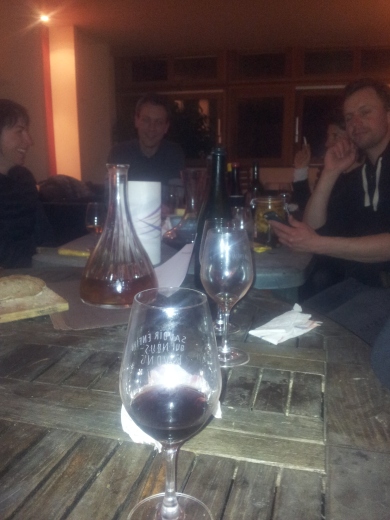
We were treated to 7 hours of tasting with Jeff in the cellars and at his home. And there was no question that Jeff is a true magician, conjuring up an amazing range of wines and of such a consistently high standard. I may be biased as he is my friend but the demand for his wines proves I am not alone in thinking so.
Error
This video doesn’t exist
We tasted all of the 2015 wines, those in bottle and already sold, those just bottled and those in tank and barrel. Whites, rosé, reds, sparkling and selection de grains nobles. Plus many wines from previous years in barrel and bottle. Before moving to the solera cave to taste, amongst others, the Grenaches wine I made. Hand on heart there was not one dud wine and there were many special wines.
Amongst white wines the Maccabeu and the macerated wine we bottled the previous day were showing well. So too the Bibonade sparkling wines, white and rosé. 5SO Simple was on form from the early wines alongside Vin Des Amis.
Of the next wave of wines, Classe was outstanding, Jeff thinks maybe the star of 2015. Tête À Claques was good, a blend of VdA and Syrah; Buvette À Paulette too, a blend of Mourvèdre and Cabernet Sauvignon. Flambadou will be excellent, it needs time but has all the ingredients to be especially good, just as it has been the last few years.
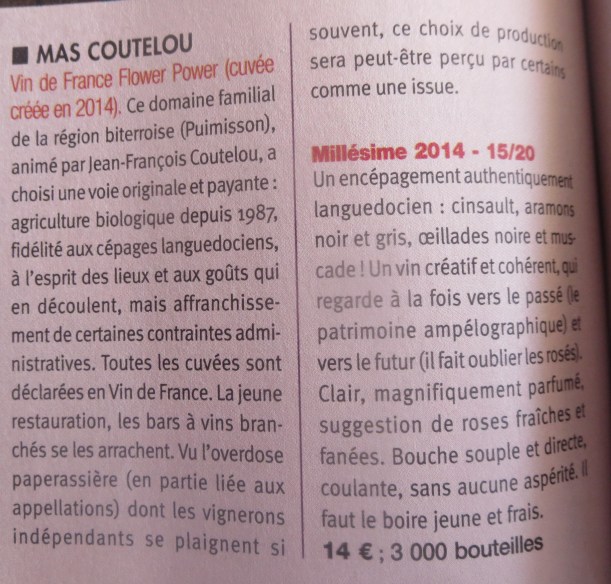
One wine which was noteworthy was Flower Power. This is the red produced from the complanted Font D’Oulette vineyard with its Aramon, Clairette Musquée, Cinsault, Oeillade and six other cépages. Its first vintage in 2014 won plaudits even from the conventional press. The 2015 I had tasted on Thursday and it was in a dumb moment, Jeff actually carried out a soutirage on Friday and by this Saturday evening it was singing. For me, this could be the star of 2015.
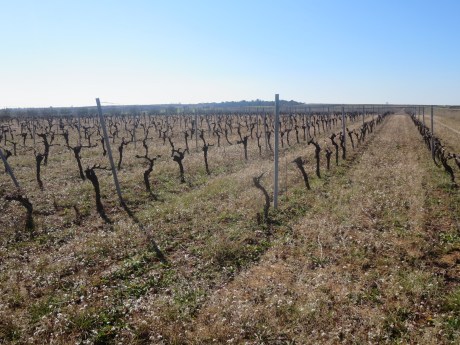
Flower Power’s complanted vineyard
Ghislain had brought some cheeses from Meilleur Ouvrier De France Bernard Ravaud. They were superb cheeses including a truffled comté which shall live long in the memory. Jeff opened one of the 2012 barrel aged 5J which I wrote about recently, and it is a great marriage with cheeses.
We moved to the solera cellar where we tasted some of the old Muscats and Grenaches. However, it was also good to taste my Grenaches wine from all three of its containers, the new 60l barrel, the old 30l barrel and the 27l glass bottle. As before the older barrel has a sweeter, fruitier profile whilst the new barrel gives a slightly leaner, more complex wine. The glass bottle is all sweet fruit and still fermenting! It was good to hear Cedric, Ghislain and Pat all give their approval.
My Grenaches from new barrel
The hours flew by, always the sign of a good night. Thirty wines or so, Jeff just keeps bringing them out from up his sleeve. Or have I just given away a magic secret?
On Wednesday June 8th more visitors to the cellar. Paco Mora of La Cave D’Ivry and a friend of his Charlotte, a caviste in Montpellier, visited. I have mentioned Paco before on here and I would love to visit his Cave. He takes time and trouble to visit the winemakers whose wines he stocks and to offer his support. He’s passionate about wine and good fun as well as having a keen social conscience. We shared wines, laughs and lunch and two more great wines.
La Vigne Haute 2010 was lovely, showing maturity, the Syrah fruit now brooding and dark with great length and depth. LVH has always been my favourite cuvée but even this had to bow down before Flambadou 2007. Pure Carignan, more leathery and plummy notes with a smooth as silk chocolate finish. If anyone tells you natural wines cannot age then I would ask you to quote this bottle as proof that not only can they age but they can become truly great! Spellbinding.
La Vigne Haute 2010
Flambadou 2007
And even time for a little levitation. Told you it was magic.
A detail from an illustration by Sir John Tenniel depicting Alice with the March Hare, Hatter and Dormouse at the Mad Tea Party. From Alice’s Adventures in Wonderland by Lewis Carroll.
It has been a most curious year and as it goes on it becomes curiouser and curiouser, just as Alice said. *
To quote another famous character, a certain Jeff Coutelou, during these last few months there was no proper autumn, no real winter, no true springtime. The last few months of 2015 and early 2016 were abnormally warm, not one single day of frost in Puimisson. Plant life started very early, there was blossom on trees in February, mimosa everywhere. People recorded their vines starting to ‘cry’ as the sap rose. And then, it all stopped. As March and April unfolded the weather was chilly with cold northerly winds. The plant life closed down its growth to a minimum. Budding (ébourgeonnage) was late even after the mild winter.
May is usually warm in the Languedoc and we have had some hot, sunny days but interspersed with cooler days and plenty with a lot of cloud cover. The vines pushed quickly some days, 25 – 30 cm the week before last and then… cooler weather slowed the growth again. Flowering (fleuraison) began last year around May 5th but this year Jeff and I spotted the first flowering on May 26th. Appropriately that was in the Flower Power vineyard, Font D’Oulette. Yet in the white grape vines, such as the Muscat in Peilhan, there is no flowering.
Premiere fleuraison 2016
It is likely that most of the vines will flower at the beginning of next week, most varieties at the same time which is, again, most unusual. Curiouser and curiouser. As the vendanges are calculated at 100 days after flowering, the likely date for harvest to get under way is now well into September, ie 10 – 14 days behind 2015. After a very precocious start to the year!
Carignan Noir, Rec D’Oulette
So why does this matter? Well, the vines have been unable to rest since last harvest. The lack of frost or cold weather in winter meant that the vines did not shut down fully. The sap has been on the move for months. Those early reports of vines crying in February, then delayed growth. Vines have sent out a lot of growth but the lack of sunshine has not produced much photosynthesis, the vines are often green in lower parts but lighter green higher up. The grafted vines in Font D’Oulette have been slow to send out growth, the sap flows and then cooler weather arrives.
Peilhan, note the lighter green near the tops
Humidity and grey clouds means a threat of mildew and some spots are evident on leaves in certain parcels. Jeff spent the night of May 20 spraying from 9pm to 1am, starting over again at 6am the next day. Why then? During the night and early morning the vines are more receptive to the influence of the spray as the pores are open in cooler temperatures. Not the usual spray of course. Mas Coutelou has been organic since 1987 and Jeff has gone much further. This spray was of nettles, horsetail, seaweed mixed with a tiny amount of sulphur and copper (allowed in organic farming). And also in that mix were essential oils of sweet orange and rosemary, pampered vines indeed. This prompt action has mastered the problem supported by timely sunshine and northerly winds.
Spots of mildew on the leaves and on the grappe
Whilst in Rome vineyard the other day we looked at the soils and Jeff pointed out the growth of good mushrooms and fungal life in there. The photos show this life, the white spots. Scientific research shows that it is through fungal life such as this that the vines communicate with each other and support each other. This has taken a lot of soil nurturing and management.
And to further demonstrate the health of the vineyards, remember the vandalism of the Carignan vineyard and the flowers that were planted there? Well they are growing back stronger than ever. Nature wins in the end. We can only choose to support it or fight it, but in the end nature will win.
Cinsault in Rome
At present despite this most curious of years the vines are in good health. The next three months will decide whether the grapes will be of good quality or not. Jeff reckons that the period from April 15 to July 15 the vigneron must be always present, always monitoring the vines to ensure that any problems can be sorted as soon as possible. That will make or break the vintage.
Flowers in the Coutelou vineyards
Meanwhile we have been treated to some beautiful flowers in the wild and around the vineyards. As well as birdsong in Rome vineyard. Nature at its best despite the curious year.
That is if the problems can be solved. Just this week Sancerre and Burgundy were hit by massive hail storms causing damage which means that the year is a write off in some vineyards. The third such storm this year in some of these areas. And on Saturday, May 28th Beaujolais was badly hit too. Again nature decides.
Hail damaged vines in Beaujolais (photo with permission from @duc_lionel)
A curious year, yes. But a disastrous one for some.
In the last article I wrote about the young up and coming winemakers whose wines I enjoyed at Bédarieux, La Remise and The Real Wine Fair. Whilst this new wave are producing good things there are still many good tunes from the some of the ‘older’ fiddles. As ever there were many vignerons present who have been making natural wines for longer. Many of these began as winemakers on a family domaine and learned about winemaking in conventional form before deciding to go natural. Others have moved into the world of wine with the intention of making natural wine.
Natural wines developed a reputation for faults amongst traditional wine drinkers (especially some journalists). Some of these appraisals were genuine, others a matter of perception. There is no doubt that some wines are faulty, I have tasted them myself. Problems such as mousiness and brett are genuine faults. Other issues can be a matter of taste, eg skin contact.
In contrast, however, I visited a wine fair in Vouvray on Sunday May 15th. It was full of conventional producers, bar one converting to biodynamics. There were many dull wines, often with high sulphur. There were many faulty wines. So, j’accuse les vins conventionels.
Natural wines are, in fact, the way that wines were made for generations, over hundreds of years. The conventional wines of 2016 are the product of more recent methods, of modern science and technology. Going back to the traditional methods involves a leap of faith and requires very healthy grapes if you are to abjure sulphur dioxide. As the natural wine movement has gained momentum in the last 20 years many of its producers have become more experienced in making wines without the safety net of modern science and technology. Standards are getting higher, the wines ever better. So, here are some that I enjoyed recently.
With Fred Rivaton
At Bédarieux I was very happy to meet up again with Fred Rivaton from Latour De France (66) who makes many of my favourite wines. Blanc Du Bec and Gribouille, both 2014s, were delicious. In the last few weeks I have selected both as Wine Of The Week, and would do so most weeks when I was fortunate enough to open a bottle. One of the best.
Another of my WOTW selections was the Pinot Blanc 2010 of Gérard Schueller. He was present at Bédarieux too and his 2014 Pinot Blanc and Riesling were both excellent. Next time I visit Alsace he’ll be top of my list of domaines to visit. I bought both of those wines.
Philippe Valette‘s Macon wines were another source of quality, I especially liked his Chaintré 2012, a beautifully clear, zesty and round expression of Chardonnay. As a third generation winemaker, Valette is a fine example of my comments above.
Didier Barral (Domaine Leon Barral) is one of natural wine’s great stars. His wines at Bédarieux were proof of how justified his reputation is. They require time to be at their peak but are pleasurable, profound and priced accordingly but worth it. Barral is a model of biodiversity and philosophical winemaking, a must try. My favourites were the Blanc 14 made mostly from Terret with lovely melon, grapefruit flavours and great length, together with the Faugères 13 of stunning depth.
Nicolas Carmarans is living proof that talent and good winemaking can make very drinkable, quality wines in regions not usually associated with wine. He works in the Aveyron. There is a direct, mineral side to his wines married to fruit and length. Wines such as Selves 14 and Maximus 14 reflect local grape varieties such as Fer Servadou at their best.
Clos Fantine is a domaine which features regularly in this blog and the 2015 wines which Corinne was showing at La Remise were the best of recent vintages in my opinion. La Lanterne Rouge and Faugères Tradition have pure fruit with structure, complexity and a beautiful expression of the schistous soils of the area.
Philppe Pibarotmakes wines in the Gard. As well as encouraging his young assistant John Almansa, Philippe makes first rate wines. I loved both his white wines, Blanc and Clos Domitia 14 with Clairette, Roussanne and Piquepoul and the delicious red fruit freshness of Cante Renard 15 made from Cabernet Sauvignon with Languedoc varieties such as Carignan and Syrah mixed in.
Guy and Thomas Jullien are still young but I have enjoyed their Ferme Saint Martin Rhone wines many times and met them in Arles and London. I especially enjoyed the Ventoux wine Estaillades 14 (Grenache and Counoise) with round, spicy flavours and the Beaumes De Venise Costancia 14 a 50/50 blend of Grenache and Syrah, more structured but balanced with lots of delicious fruit.
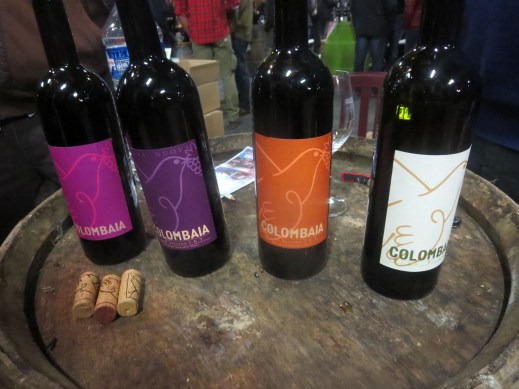
Italian producer Colombaia presented some lovely wines at La Remise, classic Tuscan wines with Sangiovese, Malvese and Colorino grapes. Lovely freshness and fruit were trademarks of the wines and I particularly appreciated their Rosso Toscano 12 from young vines.
From Galicia in Spain I enjoyed the wines of La Perdida. Perfumed, spicy aromas in their wines, nicely balanced too – signs of good winemaking. The Godello 14 with 20 days maceration on skins was one of the best examples of longer skin contact white wines that I have tasted and the Garnacha (with 30% Mencia) was even better, full of deep spice and dark fruits and very aromatic.
I could add other names like Yannick Pelletier, Julien Peyras and Alexandre Bain. Good producers all.
And, yes I am biased, there are the excellent wines of Jeff Coutelou. It is interesting to taste Mas Coutelou wines in the context of producers from around France and Europe. They more than hold their own, the 2015 freshness and restraint certainly lifting them to bear comparison with the best of the Rhone, Loire or anywhere.
Jeff is a 5th generation producer, he learned winemaking skills from his family before branching out into ‘real wine’ production. He has a natural talent of course but he has learned from experience and his wines are improving in quality as a result of that talent and learning about his vines, his soils and his cellar work. And passing it on to the new wave of producers who come to spend time with him.
Terms such as ‘real’, ‘natural’, ‘living’ are often applied to these wines, but don’t get hung up about them. The cuvées and producers I have listed here are just very very good wines and winemakers.
I even set my mother and sister to work picking off snails last week
Snails and vandals aside there have been plenty of positives at Mas Coutelou in recent weeks, not least in the cellar. The beams in the photograph below have been strengthened with iron as some of the wood beams were no longer in contact with the wall!
Before the changes
We saw recently the removal of the large, old press which used to dominate the top end of the cellar next to the cement tanks. Jeff has also removed a huge fibre glass tank which took up a lot of space. 145 hectolitres in size, it was now redundant as Jeff prefers to use smaller tanks for fermentation and maturation. Incidentally 145hl is almost 20,000 bottles of wine!
The large tan on the right =145hl
The photograph shows the number of doors in the cement tanks which have been divided to allow smaller amounts of wine. These two empty spaces now leave much more room in the cellar for all the machinery needed, during the vendanges for example. Jeff told me that the cellar had taken shape in 1956 so these are the first major changes in 60 years.
Michel porte la cuve! Mon héro
The floor has also been renovated with drains updated too. The surface you see in the photos from last week will be covered with resin, more practical in a wine cellar.
One of the more popular cuvées has also been the focus of work. Bibonade is a sparkling wine, white and rosé. This PetNat style is very refreshing but requires work just as any sparkling wine.
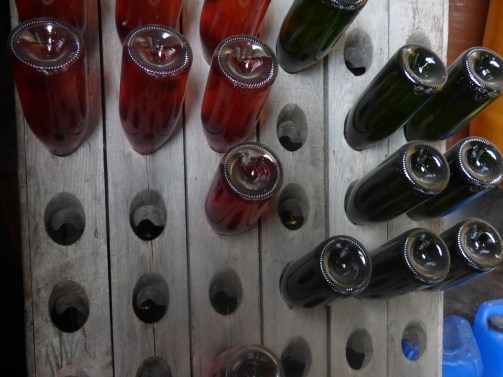
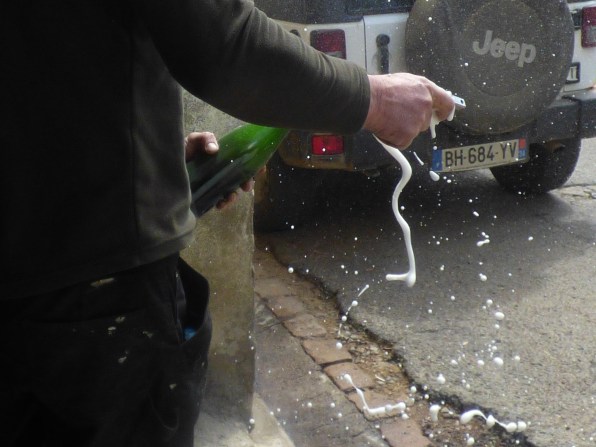
The fermentation in the bottle creates some residue which needs to be removed. The residue can be seen in the neck of the bottle as they are placed in these wooden frames known as pupitres (desks). Once the lees have gathered next to the capsule the bottle is opened so that they explode out with the force of the carbon dioxide made from fermentation. The bottle is then topped up and resealed.
Lees
Lees
Definitely a cuvée to enjoy, my wife’s favourite Coutelou wine for example.
There are three main aspects to the life of a winemaker and it’s time to bring you up to date with all three.
Vineyard work.
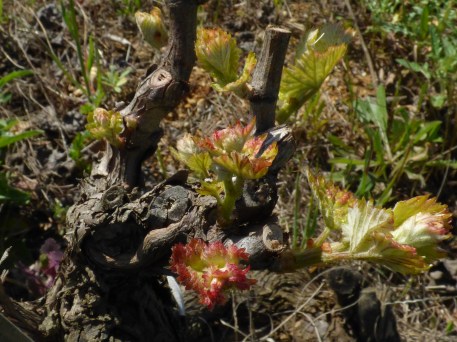
It is a lovely time of year to be in the vines as they start their growth for the year, buds of striking colour, first leaves and greenery.
In Rome vineyard on April 10th there were butterflies, birdsong and bees, beautiful.
Rome through a new Coeur de Pigeon cherry tree
Taille is complete, ploughing completed (for the moment) and we have even had some rain at last which has encouraged the growth we see in the vines. However, it’s not all green for go. The buds are fragile and any more high winds could cause some damage to them leading to reduced yields in September. Moreover, Jeff pointed out another problem. Some of the buds are actually auxiliary buds (contre bourgeons) which would reduce yields further. The contre bourgeons generally don’t yield fruit and also take energy from the main buds so these don’t grow to full height.
The winter saw not one single day of frost in Puimisson, the vines were restless and unable to sleep in the face of cold weather. Therefore sap, which should be still, continued to flow and with mild temperatures in January and February the sap nudged the buds. However, a cooler spell at the end of February and March meant that the sap retreated a little and the buds were left stirred but not able to unveil themselves. As warmer weather returned the sap nudged auxiliary buds as the main buds had already seemingly started. In fact they may not now emerge at all and it is these auxiliary buds which will be left. Something to raise concern at a preliminary stage of the season. The vines generally are starting well but a few have this issue. More importantly the vines have had little rest, will they be able to offer their best in 2016?
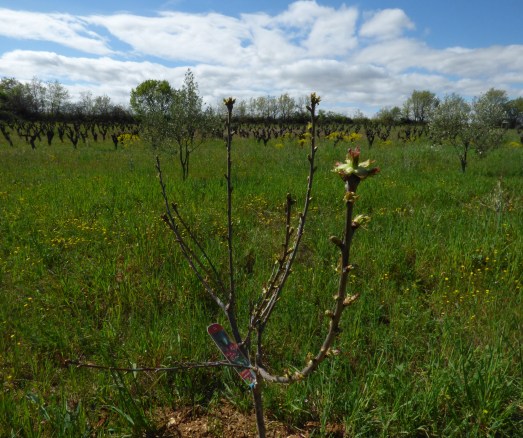
Nonetheless it was good to see the newly planted vines in Font D’Oulette are already budding, a promising start.
Vinification
Michel
The 2015 wines made for early drinking, e.g. Vin Des Amis, PM Rosé and Classe, have been bottled and dressed (habillage) with their labels. Other cuvées are still in tank resting after fermentation, maturing towards wines such as Flambadou.
Soutirage was carried out on some of these more complex wines as reported in the last article. Meanwhile Jeff continues to taste and to check their progress, to ensure the quality and health of the wines.
Some wines from previous vintages have been bottled, for example the new barrel aged Maccabeu / Grenache Gris wine ‘5J’. New labels have been designed for these and they will eventually become rare treasures for followers of Mas Coutelou wines. One new wine is the Syrah ‘On Peut Pas Vraiment Dire Que’ and I will be narrating its story in a coming article, a story which reveals again the vinification skills of M. Coutelou.
VAT, sales
It is all very well making good wines but, if you are to continue as a winemaker, you must be able to sell them. Jeff is in the position of being able to sell all of his wines and he could sell much more if he had it. That is the result of years of great wines which people want but also his ability to sell it. He has built loyal buyers around the world, often former students from his days as a teacher in Paris, for example his importers to Paris and New York, Fleur Godart and Camille Rivière.
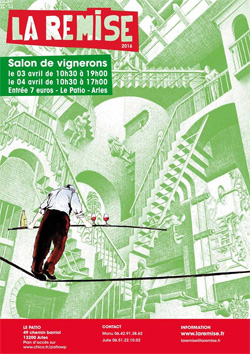
However, Jeff still attends salons such as Les Affranchis in Montpellier, La Dive Bouteille in the Loire and, last week, La Remise in Arles (again more about La Remise soon). He was very happy with the salon and sold more wine, Vincent was regularly spotted carrying cases from the van to various cars!
Last Wednesday palettes of wine were sent to Paris and it was good to see Paco Mora, whose Cave d’Ivry is a loyal customer, publish some photos of their arrival. He looked happy and was very complimentary about Jeff’s skills and the new syrah.
So, there we are. It’s a busy life being a vigneron. Jeff has lots of paper work and admin to carry out this week as well as spending time in the vines. All with a bad back which he has nursed for several weeks. As you sip, or quaff, your Mas Coutelou wine (hopefully) spare a thought for the work which has gone into the wine in your glass.
On March 17th we were in Font D’Oulette vineyard which, at just over 0,6 ha, is a small parcel replanted around 6 years ago with a variety of old Languedoc cépages such as Aramon Noir, Aramon Gris, Oeillade and the very rare Clairette Musquée. The grapes are picked together to make a single cuvée representing the parcel , Flower Power. This first appeared in 2014 and has made an impact already, selected by La Revue Du Vin De France as one of the Languedoc’s top 50 wines. As the vines age we can only anticipate eagerly what they will produce in future.
However, not all young vines thrive and some needed to be replaced. Two alternatives were in place this day as the rain fell steadily.
The second method was to graft onto the root stocks already in situ, something I had not seen before. The American root stock has to be used to protect against phylloxera which destroyed much of France’s vineyards in the 19th century. There are different methods of grafting such as ‘chip and bud’ but Jeff brought in a specialist, Tanguy, who uses a method known as ‘greffe en fente’.
The old vine is cut away to reveal the root stock. A very sharp knife, repeatedly sharpened through the day, cleans the surface and then inserts a cut through the wood revealing its core.
The cut is supported by tying string around it. The vine wood is also cut, as if sharpening it to make a thin wedge which is inserted into the cut root stock. The idea is to get the core of the two pieces as close as possible. This is then fastened tightly with the string. The graft is complete.
It looks simple but isn’t that the mark of a skilful worker, making something complicated look easy? Have a look at the video below to see the process in one go.
The vine is staked for support, always to the side which will help the vine against the prevailing north westerly winds. Jeff had brought some basalt soil from the Auvergne and this was then placed around the grafted vine poured into the body of a plastic bottle placed around the vine .
Basalt is one of the oldest forms of rock, roche mère (mother earth or bedrock) and is packed with nutrients. This will help the vine to grow well and by filling the bottle around the vine it is surrounded with top quality soil. Organic compost is added to the hole and then the earth is hoed back over it all, removing the bottle of course.
There is a risk. Up to 20% of vine grafts do not take in theory and with greffe en fente the whole vine would have to be grubbed up next year and replanted. Other methods can simply replace the graft. However, this method is the best for the vine itself and the most likely to take.
So what were the vines? Cinsault, Aramon Noir and Inconnue No.3. Inconnue means unknown, so why is it called this? The original vine was found in an old vineyard where it had never been catalogued. It was taken by the organic nursery where Jeff buys his vines and it was studied but was discovered to have never been indexed. it is unique, unknown, hence its name. One of its benefits is that it is resistant to oidium and it will also add diversity to this complanted vineyard with about 100 of the Inconnue No.3 vines being added. A hint of mystery to the blend.
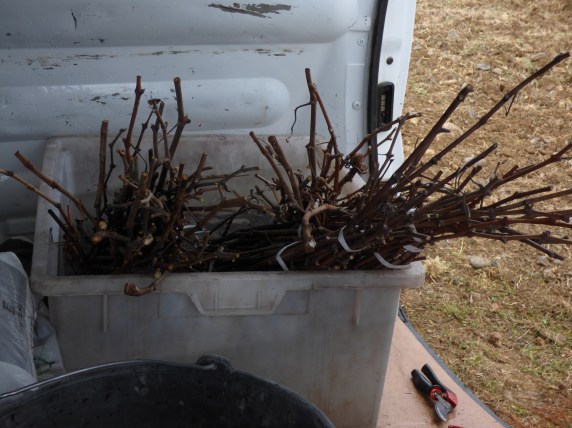
The vine canes, only about 7-8 cm will be used
A fascinating day despite the rain which soaked us all to the skin. It was hard graft but a rich, rewarding day celebrated at lunchtime with a magnum of… well it had to be Flower Power.
How do you follow the Perfect Day? Apparently you just wait and, like the proverbial London bus, two come along together.
March 8th dawned chilly, just 2°C when I left Margon at 8am, bright and clear, a perfect day for the last Spring bottling. The biodynamic calendar was favourable too, last day of the descending moon and a flower day.
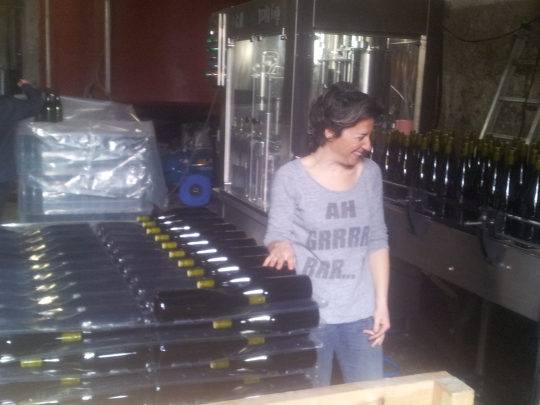
In fact we started with a morning of habillage (labelling and packaging). The start of a longer process of habillage to prepare wines to send to cavistes around the world, it’s time to earn some money! This morning palettes of ‘5SO Simple’ and ‘7, Rue De La Pompe’ were put together, a smooth enough process as Jeff, Michel, Vincent and I have all done this many times now (I’m getting to be an old hand!). One interesting feature is how different regions require different labels, customs stamps and even palettes, the USA different to Europe for example. So making sure you have the right matériel demands some time and attention.
So far, so good. The banter was enjoyable as ever, Icare provided some amusement when, hiding under the rollers, he gave himself a shock when a case of bottles passed over his head. The day improved with the arrival of Thomas, a sommelier who spent time with us at vendanges, excellent company. However, the day then took an unexpected turn for the better with a phone call from Sylvain, one of Jeff’s myriad friends. He is a scientist, intellectual and fisherman and phoned to say he was on his way. With him was a cool-box full of sea urchins, sea bass and black mullet – all freshly caught.
So, just after noon, we repaired to 7, Rue De La Pompe, the house rather than the bottle. There Sylvain prepared a feast. The oursins, fresh with their delicate tongues of iodine, concentrated flavours of the ocean; a sea urchin butter spread on fresh bread; sashimi of bass and mullet; sea bass marinated in olive oil and Jeff’s white wine vinegar; sea bass chips (little fried nuggets of flesh and skin); chunks of bass and mullet fried lightly in a tempura beer batter; fish egg omelette; barbecued sea bass; black mullet grilled with broccoli, then coated in a Japanese sauce. Totally delicious, everything was a delight, every morsel.
The freshness of the fish and Sylvain’s imagination and skill provided us with a 3 hour banquet, conversation around the role of fish and wine in religions, lighter topics too. Sometimes I have to pinch myself.
And, of course, wines.
Snow Balls 14, that curious cuvée of Sauvignon Blanc, Grenache Gris, Muscat and others, it shouldn’t work but it always does – so fresh, clean, dry and fruity, a perfect match with the sashimi for example.
5SO Simple 15, ( the best 5SO ever?), perfumed cherry Cinsault, dangerously fruity and moreish but with a little more texture this year. A good match for the cooked fish with its cleansing acidity.
La Vigne Haute 2010. Oh my word. This is my favourite Coutelou cuvée and the 2010 is stunning. Pure, pure Syrah, bottled joy. Deep brambly red fruit scents, as you sniff the wine you are drawn in to the luscious aromas. Rich, smooth texture with the softest of tannins supporting it, cassis and red fruit flavours and soooo long with flavours of chocolate and coffee emerging. OK I’m sounding poncey but seriously, this is fantastic wine. It will improve for a few years yet and I have some in my ‘cellar’, happy man.
2010 La Vigne Haute and its maker
An indulgence, the whole meal. The kind of life affirming meal which everyone should enjoy from time to time.
And yet, back to bottling on this clear, fresh day. A special cuvee, one of the little cuvées. A barrel of Maccabeu and Grenache Gris from 2012 which will be named after the top Spanish ham, 5J. The aim was to produce a wine like a light Fino, slightly oxidised but concentrated and fresh to match those hams. The barrel was formerly used for making cognac (adding more flavour) and the wine succeeds in its ambition.
Vincent, Sylvain (standing centre), Thomas (kneeling) and Jeff
It resembles a light fino, it is dry and the slight oxidation adds complexity but it is the clear fruit which lingers, lifted by that barrel influence. I was reminded of the Jura white wines I love, a Ganévat for example, but the fino / light amontillado sherry reference rings true. It is utterly delicious. A special cuvée demands a special bottle, so 50cl flute bottles were used with a glass stopper rather than a cork. Just a few hundred bottles of something very special.
The Maccabeu / Grenache Gris pressed in 2012 (photo by Jeff)
The barrel was then refilled with some of the top quality Maccabeu of 2015, ready for another delight in a few years. The treats continued though. Little fish are sweet. These were the words used by one of my heroes, WA (Arthur) Stephenson. He was a hugely successful horse racing trainer from my home area in County Durham and when his horse won the Cheltenham Gold Cup (jump racing’s top race) in 1987 he explained why he was at his local track instead of at the big meeting, “little fish are sweet”. As I had referenced Bowie last time I thought it was an apt and indulgent reference to the great man, who shared his time and thoughts generously whenever I spoke with him.
There was time to taste the Grenache wine which I made for my 100th blog post with the help of my friends. I intend to write a little more about this, suffice to say that the wine is developing very well in two different sized barrels and one super-sized glass bottle.
Tasting the grenache
A tasting too of the 2015 Grenache Sélection De Grains Nobles, quietly maturing. Dark plummy colour, rich and round but it was black grapes that I could taste believe it or not with a sweet, raisin edge. A wine to wait for, and it will repay the patience I am sure.
SGN Grenache
Finally, a 40 year old Muscat. Figgy aromas, black olive and molasses. No sign at all of tiredness just intense, thick, sweet nectar yet still an acidity to keep it in balance. Liquid sunshine, a long past summer captured in a bottle, revived in the glass for us. A perfect end to (another) perfect day.
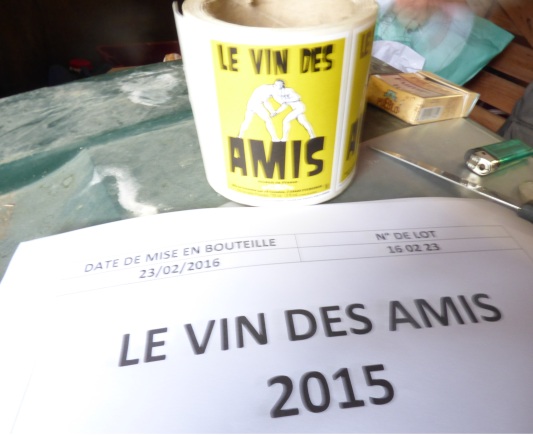
Yesterday (February 23rd) was the first big bottling day of Mas Coutelou 2015 wines. First in line was Vin Des Amis and 11,400 bottles were prepared. As Jeff put it, “Le vrai jour pour la belle cuvée”. (The bringing into the world of the beautiful wine). It proved to be the most aptly named of wines as Jeff welcomed friends from far and wide.
Vincent, a friend of many years who has featured before, was here from Paris. Another Paris based teacher, Sébastien, is spending a week in Puimisson in order to learn about being a vigneron (see his report on the domaine here). The most important visitor yesterday was Céline who was celebrating her birthday.
Birthday girl
Bordeaux based Céline has been a regular visitor to Puimisson for many years and helped me with picking grapes for my 100th blog wine last September. Her husband, restaurateur Brice, and friends Thibaut and Anne from Monein in the Béarn, were here to help her to celebrate and threw themselves into the bottling work with gusto. Michel, Julien and I were present too.
The bottling line was in operation from 7.30am to around 5.30pm. Cuve 7, which contains up to 100hl, was emptied and the bottles taken to be stored for a few months until they are ready to label and to market in springtime. With 10 of us available we were able to share the load and take the occasional break as Jeff provided food and wine to ease us through the day. The Vin Des Amis was opened of course and it is already a bright, clear, delicious vintage of this popular cuvée, fresh red fruits with a lingering spiciness. Another sign of how good the 2015 will be. Jeff also opened a 1997 Mas Coutelou, a wine from his first solo vintage which had a lovely earthy perfume combined with red fruits which carried into the taste. The age was showing, the flavours cut short a little but still very drinkable. We also tasted some of the white wines from tank, they are developing beautifully, an amazing Maccabeu in particular. Could this be the year white wines steal the show at Mas Coutelou?
I thought I was the star!
The theme of friendship continued as Pat and I were invited along to dinner at Jeff’s to celebrate Céline’s birthday. Brice prepared some delicious fish dishes; marinated mackerel, squid in garlic and parsley, fresh cockles in a seafood broth, monkfish with garlicky potato purée and delicious sauce. He is clearly a very talented chef as well as restaurateur, ably assisted by Thibaut who made some very tasty flour-free crêpes.
And then there were the wines. A veritable who’s who of natural wine’s top producers. Plageoles’ sparkling Mauzac was a good start with which to toast Céline. Her phone rang throughout the day, she clearly personifies vin des amis.
A delicious rosé from Clos Des Grillons in the Gard followed, full flavoured, very appetising. Much more fruity than many rosés, this originates in Tavel.
Perhaps my favourite wine was the Pinot Blanc 2010 of Gérard Schueller, very full, a honey edge but dry – not sure that I have ever tasted a Pinot Blanc of such quality. I must track down some other wines from the domaine.
Céline had brought along a 2012 Leon Barral Blanc, Terret Blanc and Gris with some Viognier and Roussanne. Textured, a golden colour but very fresh and a good match with the fish.
La Bégou 14 made by Maxime Magnon in the Corbières was lovely, fresh white peach flavoured and very round, Grenaches Gris and Blanc. I liked this wine a lot, more evidence of how good Grenache Gris can be.
JF Ganévat’s J’en veux encore is a light red wine from an amazing blend of umpteen local Jura grapes by a producer who makes up to 40 cuvées (he must have amazing powers of memory to keep on top of so many wines). I tasted some of the range earlier this year and must admit to preferring the white wines but this was nice, very drinkable red fruits and a good match with the monkfish in its seafood sauce.
Back to Barral for Jadis 2001. Shy at first but this opened up in carafe through the night. Plummy, spicy, very long and terrific Faugères, the Carignan shone through with roundness from the Grenache. I have not always ‘got’ Barral’s wines but this showed me that they need time and patience. Very good.
Sébastien brought along a biodynamic Sauternes from Rousset-Peyraguey, a 2000 yet youthful with lovely sweetness but also freshness.
And then, just when you think you have got to grips with Jeff’s wines, there appeared two remarkable bottles. The first was Robert A, despite the label. This was Grenache Gris and Blanc from 2003, his first year of going sulphur free in the cellar. It passed through some interesting stages in its development and early bottles spat out their cork so it was put into sparkling wine bottles. It was amazing. Unbelievably fresh for a 12-13 year old white wine, white fruits with a tight edginess but clean and bright. It continued to develop in glass and in bottle through the evening, wine of the night.
R for Robert
Then came another new cuvée to me BL002, also from 2003. A Sauvignon Blanc but I’d never have identified it as such, with a sweetness (from the Muscat in the blend) and delicious freshness. Many around the table chose this as their preferred wine and it was another amazing wine. How does he do it? Vincent chose this because it reminded him of those early days of Jeff’s winemaking adventures and of their long friendship, a perfect fit for the theme of the day.
A birthday. A long day. A rewarding day. A memorable day. A day for friends, for vin des amis.
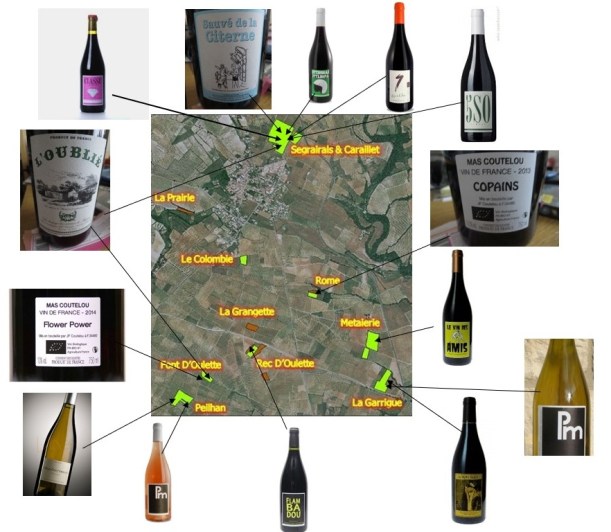
Jeff Coutelou produces a large range of different wines, or cuvées, every year. There are a number which are made every year, les incontournables. These are the biggest production wines, the breadwinners and, probably, his best known cuvées, Classe and Vin Des Amis. Depending upon the vintage Jeff will then decide what to do with the grapes he has left and which cuvées to produce. Some of these extra cuvées reappear regularly, others very occasionally and some will be new.
So, let’s start with the more celebrated wines.
Classe
A magnum of Classe
This is the wine which was described in The Guardian by wine writer David Williams like this in April 2015:
Mas Coutelou Classe, Languedoc 2013 For the natural wine-sceptic, it’s hard to think of a better place to start than the wines of Jeff Coutelou: full of vivid, finger-staining blackberry fruit, this carignan is explosively juicy and succulent: pure pleasure.
Usually a blend of 40% Grenache, 40% Syrah from Segrairals and Sainte Suzanne vineyards. In older years the remainder was Carignan, more recently Cinsault and a little Mourvèdre. Around 13,000 bottles of Classe are made with their distinctive pink labels showing a diamond. I always think of Classe as having a slightly darker fruit profile than Vin Des Amis whilst retaining its charm and drinkability.
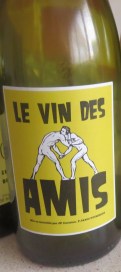
Le Vin Des Amis
The wine which was my first experience of Jeff’s wines and which blew away my preconceptions of good wine. It was the sheer vitality and energy of this Syrah and Grenache wine which impressed me. From the Metaierie or Sainte Suzanne vineyard it is made in similar quantity to Classe. The wine writer Jamie Goode described the 2012 as:
Rich, dense, vivid and pure. Quite backward with real grip under the vivid black fruits. Powerful and structure with amazing fruit quality, dominated by fresh blackberry and black cherries. 93/100
Whenever I share Vin Des Amis with people they always sing its praises and ask for it next time, it is well named. Another striking and unusual label gets it noticed but the fruity freshness are what makes people love it.
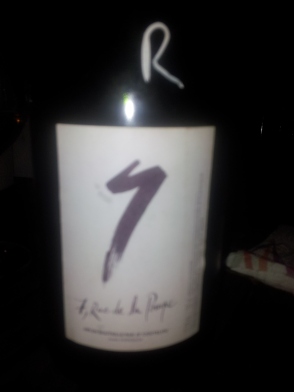
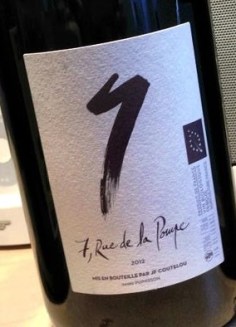
7, Rue De La Pompe
from wine anorak website
More Syrah from Segrairals with just a little Grenache from the same vineyard blended in. The different cuvées are based around different vinification methods as well as different parcels. The 2010 of Rue De La Pompe was a wine of the week for Jancis Robinson who also considered the 2012 as being like a northern Rhone wine with a bone dry profile. There are raspberry and pepper notes and the trademark freshness and vivacity.
Another large production in most years, around 10,000 bottles or so, it didn’t appear in 2014 because the Syrah was very low yielding that year and was used for the two big cuvées. The wine is called after Jeff’s address incidentally.
Sauvé De La Citerne
Citerne was another well known cuvée which did not appear in 2014. Largely Mourvèdre with some Grenache, again from Segrairals, this is wine which was originally made from grapes which Jeff didn’t use elsewhere, hence the name of the cuvée meaning saved from the tank. This was always one of my favourites with blackberry and blackcurrant flavours and an earthiness from the Mourvèdre. That cépage has done very well recently and was bottled as a single variety wine in 2014. Jeff has other plans for the Mourvèdre of 2015 with another cuvée planned mixed with Syrah and Cinsault, I have tasted it and it is lovely, very elegant and precise.
Sauvé De La Citerne will reappear with a 2015 however. It fits with the idea of making the cuvée from otherwise unused grapes that this year will see a blend of Grenache with a little Syrah. It will therefore be different but again my early tasting of it suggests a very attractive wine.
La Vigne Haute
This is probably my favourite cuvée of all and sadly it hasn’t appeared since 2013 and nor will it this year. Made purely from Syrah from the La Garrigue vineyard where the vines face northwards, this might explain the fresh acidity and vitality of La Vigne Haute. That acidity means that Vigne Haute ages extremely well and gains even more complexity. It is classic Syrah, red fruits and spice with great length and balance and beautiful aromas. It would be my desert island wine.
There was a pure Syrah in 2014 and another is planned for 2015 but under a different name, it is lovely but I do miss Vigne Haute, fortunately I have quite a few bottles tucked away until it reappears (please).
Jeff surveys the Vigne Haute vines
5SO Simple
5SO has quickly become established as a Coutelou favourite, around 7,000 bottles are made. Its name is a play on Cinsault and the wine is indeed pure Cinsault from the Segrairals vineyard. Designed as a light red, easy to drink it is delicious in summer slightly chilled and a great wine for drinking without food. Fresh cherry and raspberry flavours and a light structure make for a lovely wine.
Cinsault vine in Segrairals
Flambadou
Named after a barbecue tool Flambadou is pure Carignan from the vineyard Rec D’Oulette. It reappeared in 2013 and was also made in 2014 and 2015, made in smallish quantities as this is a small, low yielding vineyard. Jeff considered the 2013 as the star wine of that vintage and the 2014 is also amongst the best.
More full bodied than some of the other wines the Carignan brings dark fruit flavours and aromas. There is a brooding undertone of spice and plenty of red fruit freshness on the finish. Another wine which ages well. The vines are on an open parcel of ground so well exposed to the sun, the freshness a reflection of the healthy soils and skilled winemaking. Carignan is making a comeback in the Languedoc Roussillon and this is one of the best examples of why. Carignan enthusiast Michel Smith in his series on Carignan bottles praised Flambadou as follows, ” La bouteille a été vite vidée, ce qui est un bon signe”.
The Rec D’Oulette vineyard
Flower Power
from Roberson Wine website
cavepurjus.com
A relatively new addition to the Coutelou cannon. Flower Power is a true expression of terroir as this is a wine made from a variety of grapes from one parcel, Font D’Oulette (as the name suggests not far from where Flambadou originates). Jeff has begun to complant grape varieties more and more and to produce wine made from that mix of grapes. This is the first wine to show the results and it is a winner.
Aramon and Oeillade Noir are just some of the grapes in the mix of Flower Power. Aramon was once one of the most planted of all grapes in the Languedoc but went out of fashion as it was often overcropped and dilute. Now vignerons are realising that when it is grown with lower yields Aramon produces flavoursome wine. Oeillade is also interesting, a grape related to Cinsault, another old Languedoc variety which Jeff wants to bring back. Just to add some mystery there are some Clairette Musquée grapes in here, a white grape.
Font D’Oulette
Flower Power is lightly structured but packs a punch with flavours of black cherries and red fruits, and, appropriately, it is very aromatic, perhaps from the influence of the Clairette. As the vines age this will become more structured I would imagine but it is already a favourite.
In the last week La Revue Du Vin De France selected Flower Power as one of their top 50 Languedoc wines, an accolade from a source which does not usually favour natural wines.
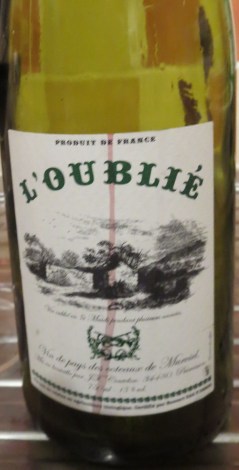
L’Oublié
Now here is a fascinating wine. L’Oublié is a blend of cépages AND vintages. The wines are aged in old barrels, not the usual practice of the domaine. Carignan was the forerunner with some 2001 and then more Carignan 2007 and 2010 were added. Then Syrah joins the assemblage, grapes from 09, 10, 12 and 13. This blend forms L’Oublié, the forgotten one. I imagine this refers to the original 2001 Carignan barrel.
It has aromas of dark fruits and leathery, spicy notes too. It is dark flavoured too, blackberries, liquorice and even coffee are just some of the many complex flavours. It benefits from decanting to allow that complexity to resolve itself a little, and it will stay fresh for days after opening. There are not many wines like this around and I honestly don’t know why. It is unusual and one of my favourite wines because of its complexity, its balance of older and more youthful flavours. Terrific.
Les Copains
roumegaire.com
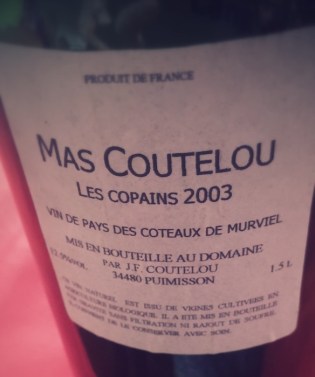
This was a wine which used to be a regular but disappeared after the 2003 vintage. It reappeared in 2013 and became my favourite wine (or have I already chosen another?!). Cinsault is the grape but it is a more complex wine than 5SO Simple, richer, darker and more structured. The grapes come from the beautiful Rome vineyard and are from 40 – 50 year old gobelet vines which bring low yielding fruit, rich and elegant. The wine is recognisably Cinsault with cherry notes but it has attractive depth and power, very long flavours of red fruit and peppery / spicy too. Sadly 2015 did not bring enough fruit to make Copains so enjoy what is available, it is worth ageing a couple of years but difficult to resist now.
Rome’s Cinsault vines
Other red cuvées are made for restaurants and and as one offs. A lovely pure Grenache was made in 2014 for example whilst Tete A Claques and Buvette A Paulette are others which appear from time to time.
It is fair to say that Mas Coutelou is best known for its red wines but there are some very good white wines too. They make up around 15% of the vineyards made up of a multitude of white grape varieties.
PM Blanc
vinogusto.com
The most regular of the white bottles though Jeff has started to experiment with various other blends and single variety wines. Most of the white grapes are grown in La Garrigue and Peilhan vineyards. PM usually contains Sauvignon Blanc from La Garrigue but assembled with other white grapes which are available such as Grenache Blanc, Macabeu, Muscat and Carignan Blanc. Dry, clean and full of flavour PM has texture and white fruits galore.
Single variety white wines in recent years have included, for example, Carignan Blanc from Peilhan. If Jeff feels that the grapes are of particularly high quality he will make a single variety wine. They always wear the mark of fresh acidity and the grape brings different fruit profiles, the Macabeu with aromatic yellow fruit for example. The Macabeu will appear from the 2015 vintage. I am a particular fan of Carignan Blanc and Jeff’s version was very clean, mineral and long lasting in flavour. This year he is combining it with Grenache Gris which did well in 2015 in Peilhan. Most of these white wines come in small quantities.
Roberson Wines
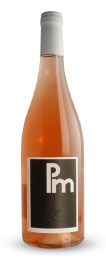
Muscat grapes grow in Peilhan and Rome and appear in some white blends as well as PM Rosé. The rosé is very aromatic and a dry wine, good with food and also on those hot, Languedoc summer days. It usually has juice from Syrah and Cinsault, pressed after a short time on skins.
Bibonade
Sparkling wines are also made at Mas Coutelou. Bibonade (think lemonade) has appeared in various forms, white and rosé and sometimes sweet! The dry version is fresh, clean and appley, a perfect quaffing wine and disappears very quickly after opening. There is usually Sauvignon Blanc, Muscat and some Grenache Blanc in there but again Jeff will play around with what he has available. This is my wife’s favourite wine!
Another sparkling wine which was popular in the 2013 vintage was Blanc Frisant. Macabeu and Grenache Gris grapes were bottled with a small quantity (8g) of sugar to encourage a second fermentation in the bottle. This produces a small quantity of CO2 bringing a light fizz when the bottle is opened. It was wonderfully refreshing with citrus and spice flavours. It is another example of Jeff’s inventiveness and experimental nature.
Carignan Blanc grapes in Peilhan
Sweet wines are made too, have a look at my article on the solera system.
So there we are, a huge array of different bottles, something for everyone. Fruit, freshness and drinkability are the hallmarks of Coutelou cuvées, they all contain those three qualities and many more. Jeff’s restless search for better wines means that the cuvées change every year (with two main exceptions). As he develops the cellar with more cuves available he will no doubt continue to produce new wines. As new plantations of grapes such as Riveyrenc, Terret, Morastel and Piquepoul Noir mature there will be even more variety. However, buy with confidence whatever is available is very good.
It’s been a few weeks since I updated about events at Mas Coutelou, partly due to Millésime Bio and, partly, because it’s a relatively quiet time. That is not to say nothing has been happening, far from it.
Maccabeu 2015
Flower Power 2015
Millésime Bio and Le Salon des Vins De Loire are two huge events in France attracting many thousands of trade visitors. As you have seen with Millésime Bio these salons also attract satellite events and Jeff takes part in those. Les Affranchis in Montpellier and La Dive Bouteille in Saumur last two days each and so adequate samples of the wines need to be prepared, transported and poured for guests to taste. Those events alone take about 7 days of the last month. I know from feedback from various people who sampled Mas Coutelou wines at both events that they enjoyed the wines which were samples from cuve (tank) of the 2015 cuvées such as Vin Des Amis, Classe, Syrah, PM Blanc and Flower Power. Hopefully the salons will spread the word about how good they are, the elegance and finesse of the vintage is obvious as you taste it.
Bottles of the 2015 wines made specially for the salons
Those visitors were also presented with Jeff’s annual Carte Des Voeux, his new year greetings card, together with his summary of the last year’s events, weather, vintage and cuvées. The Carte’s original is printed by hand and this year’s was especially complicated to print because of the different colours used. The message is worth the hard work.
For the last several weeks pruning (taille) has continued. Julien is leading the work this year and his back must be getting sore by now. It is hard work! The importance of good pruning should not be underestimated. It maintains the health of the vines, removing damaged or sick wood. It reduces the number of canes which will grow grapes so that the vine’s energy will produce quality rather than quantity, probably reducing potential yields by half. It also shapes the vine so that future work such as ploughing and harvesting will be more straightforward. I wrote about pruning last year describing the different methods.
I visited Julien in Peilhan vineyard on Monday, the same day as I saw a pruning machine at work in a nearby vineyard. It certainly does the job quickly and more cheaply but looking at the vines afterwards it was hard not to think that the machine did not reduce the number of canes to limit yields and, of course, cannot check the health of the vines. Julien and his fellow tailleurs are more costly but, to my mind, essential for good vineyard management and, ultimately, good wines.
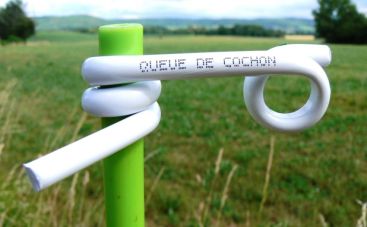
Michel was also in Peilhan, making sure that the pruned vines were tied to their trellis. If the vine is not straight he might stake itfor support and then tie the vine to the stake using a fastener called a ‘queue de cochon’ as it resembles a pig’s curly tail. This will help to avoid the vine being knocked during ploughing or other work.
Meanwhile, in the cellar it has been a hive of activity. One of the features of the cellar has been a large basket press which has been used by the Coutelou family for generations.
Sadly, it has been out of use for many years and became something of an obstacle as work was done, especially during the vendanges. Jeff reluctantly decided to remove it, I know this was a difficult choice for him. It proved to be a much more difficult task than anticipated as the press screw went deep into the ground and a massive hole still didn’t get to the bottom of it so, eventually, it was sawn through to enable the whole press to be moved.
photo from Jeff
photo from Jeff
The story does have a happy ending though as the press is on its way to Jeff’s friend Didier Barral where it will be put to good use. The result is certainly more space in the cellar, even if a part of the domaine’s history has disappeared.
Another big tank (cuve) has also been split into two. Jeff will be able to vinify smaller quantities of wine and have more choices about the most suitable cuve for grapes as they come in at harvest time.
Finally, for those of you who want to find out more about Mas Coutelou a new website is available. I have included a link at the top of my page and invite you to have a look at the site.
Jeff wrote the text for it (I did the English translation) and it will inform you about the philosophy, methods and wines of the domaine. And it is those wines, the different cuvées, that I shall be writing about next time.
Pour les lecteurs français je m’excuse, j’ai des grandes difficultés de mettre à jour la page en français. J’ai demandé à WordPress pour résoudre le problème.


















































 amarchinthevines