Saturday June 4th was supposed to be the Festival De Magie in Puimisson, a family magic show. Sadly it had to be postponed until September as, around 5.30pm, a huge thunderstorm broke over the area. Booming thunder and heavy rain were the main features as Puimisson and the wider region were treated to an alternative fireworks display to that scheduled in the Festival. Yet 2 hours later the skies were clear, the streets were dry again.
Flooded roads
Four of us though were treated to a magical evening. Jeff welcomed Cedric who runs the best website on French natural wines at vinsnaturels.fr (and I don’t say that because he chose one of my photographs on the opening page!) It gives great detail about vignerons, technical details about their wines and where they can be bought. His friend Ghislain was with him, another natural wine expert and promoter in the Grenoble area. Pat and I were invited along too and it was a real pleasure to meet up with them, they proved to be excellent company.
We were treated to 7 hours of tasting with Jeff in the cellars and at his home. And there was no question that Jeff is a true magician, conjuring up an amazing range of wines and of such a consistently high standard. I may be biased as he is my friend but the demand for his wines proves I am not alone in thinking so.
Error
This video doesn’t exist
We tasted all of the 2015 wines, those in bottle and already sold, those just bottled and those in tank and barrel. Whites, rosé, reds, sparkling and selection de grains nobles. Plus many wines from previous years in barrel and bottle. Before moving to the solera cave to taste, amongst others, the Grenaches wine I made. Hand on heart there was not one dud wine and there were many special wines.
Amongst white wines the Maccabeu and the macerated wine we bottled the previous day were showing well. So too the Bibonade sparkling wines, white and rosé. 5SO Simple was on form from the early wines alongside Vin Des Amis.
Of the next wave of wines, Classe was outstanding, Jeff thinks maybe the star of 2015. Tête À Claques was good, a blend of VdA and Syrah; Buvette À Paulette too, a blend of Mourvèdre and Cabernet Sauvignon. Flambadou will be excellent, it needs time but has all the ingredients to be especially good, just as it has been the last few years.
One wine which was noteworthy was Flower Power. This is the red produced from the complanted Font D’Oulette vineyard with its Aramon, Clairette Musquée, Cinsault, Oeillade and six other cépages. Its first vintage in 2014 won plaudits even from the conventional press. The 2015 I had tasted on Thursday and it was in a dumb moment, Jeff actually carried out a soutirage on Friday and by this Saturday evening it was singing. For me, this could be the star of 2015.
Flower Power’s complanted vineyard
Ghislain had brought some cheeses from Meilleur Ouvrier De France Bernard Ravaud. They were superb cheeses including a truffled comté which shall live long in the memory. Jeff opened one of the 2012 barrel aged 5J which I wrote about recently, and it is a great marriage with cheeses.
We moved to the solera cellar where we tasted some of the old Muscats and Grenaches. However, it was also good to taste my Grenaches wine from all three of its containers, the new 60l barrel, the old 30l barrel and the 27l glass bottle. As before the older barrel has a sweeter, fruitier profile whilst the new barrel gives a slightly leaner, more complex wine. The glass bottle is all sweet fruit and still fermenting! It was good to hear Cedric, Ghislain and Pat all give their approval.
My Grenaches from new barrel
The hours flew by, always the sign of a good night. Thirty wines or so, Jeff just keeps bringing them out from up his sleeve. Or have I just given away a magic secret?
On Wednesday June 8th more visitors to the cellar. Paco Mora of La Cave D’Ivry and a friend of his Charlotte, a caviste in Montpellier, visited. I have mentioned Paco before on here and I would love to visit his Cave. He takes time and trouble to visit the winemakers whose wines he stocks and to offer his support. He’s passionate about wine and good fun as well as having a keen social conscience. We shared wines, laughs and lunch and two more great wines.
La Vigne Haute 2010 was lovely, showing maturity, the Syrah fruit now brooding and dark with great length and depth. LVH has always been my favourite cuvée but even this had to bow down before Flambadou 2007. Pure Carignan, more leathery and plummy notes with a smooth as silk chocolate finish. If anyone tells you natural wines cannot age then I would ask you to quote this bottle as proof that not only can they age but they can become truly great! Spellbinding.
La Vigne Haute 2010
Flambadou 2007
And even time for a little levitation. Told you it was magic.
I mentioned recently that the cooler weather had delayed some of the growth in the vines and that flowering was late. Well, recent hotter weather has brought sudden change. Flowering happened around the turn of the month and was over very quickly, perhaps catching up lost time. In particular there was a heavy thunderstorm on Saturday June 4th which brought a torrent of rain. The water and the sunshine has really got the vines going. Tendrils reach for the skies and there is more bushiness to the vines.
The flowers gave way to the little hoods which cover the nascent grapes, capuchons. These quickly fall away too revealing the grapes for 2016. On some vines all of this is happening at the same time such as this Carignan (above) in Rec D’Oulette. The weather has also encouraged the growth of the grafted vines which we did back in March.
This brings work too. The palissage has to be lifted to support the vines, hard physical labour. And, sadly, the heat and rain bring problems of disease. Mildew has been around for a couple of weeks and I mentioned that Jeff was spraying in the very early hours and late at night last week. He worked until 1am Friday/Saturday and started again at 6am. Just as things seemed to be settling a big attack of mildew on the Grenache at Ste. Suzanne meant more treatment on Tuesday morning. This ‘curious’ year is proving to be hard work.
Jeff a Ste Suzanne (photo de La Garrigue)
Peilhan, feuilles pulverisées
Not all negatives though. The storm brought such a downfall that I was fearful for the flowering bunches. damage to them means no grapes. I happened to be in Puimisson during the storm (next article!) and the rain was lashing down, converting streets and roads to waterfalls and lakes. Yet as the rain eased I went to a couple of vineyards and the flowers were coping just fine. A trip round the vines on Monday morning revealed healthy growth and the soils had absorbed the rainfall.
Routes inondées
Grenache vines with flowers intact after the storm
This is not true of everyone. Much of the water on the roads was also full of clay from vineyards nearby, hence the yellowy brown colour. Vineyards which are treated with weedkillers, where the soils are ploughed deeply, even irrigated, were unable to cope so well with the heavy rain. Soils were carried away. Compare these photographs of Jeff’s vineyards with the parcel next door belonging to someone else. The difference is marked. Water can help or can damage.
Rec D’Oulette
Parcelle voisine
Rome
Parcelle voisine
Meanwhile back in the cellar there was more work to be done. Recent changes to the fabric of the cellar, especially the floor, have brought more efficient drains and a smoother surface, easier to clean. Further work will soon be done to the rest of the floor so the bottling of the next wave of wines had to be brought forward to allow the works to be done and dusted before vendanges.
Nouveau plancher en résine
Plancher plus vieux
The spring bottling of wines such as 5SO, PM Rosé, 7 Rue De La Pompe I described earlier. These are wines for early drinking, vins de plaisir. Now it was time for wines with a little more body. On Thursday June 2nd 10,000 bottles of Classe were made, and it is really something special in 2015. It took almost 12 hours and went very smoothly but believe me it is a hard day’s work. On Friday, Flambadou, made from the Carignan vines above, was bottled along with other smaller cuvées.
Vincent, Julien et Benoit
Julien prépare un magnum
Classe
Before anyone rushes in with orders Jeff will let these bottles rest for a few months to allow them to be at their peak when released, Flambadou probably in 2017 for example. There remains one or two cuvées still in tank which need a little more time, Flower Power being one.
So, most of the 2015 wine is now in bottle, the vines are revealing the grapes for 2016 and there are wines stored for 2017. Busy times at Mas Coutelou for everyone, well except one.
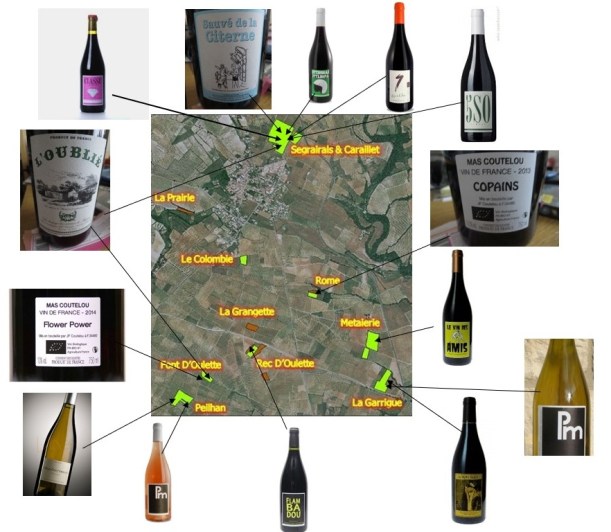
Jeff Coutelou produces a large range of different wines, or cuvées, every year. There are a number which are made every year, les incontournables. These are the biggest production wines, the breadwinners and, probably, his best known cuvées, Classe and Vin Des Amis. Depending upon the vintage Jeff will then decide what to do with the grapes he has left and which cuvées to produce. Some of these extra cuvées reappear regularly, others very occasionally and some will be new.
So, let’s start with the more celebrated wines.
Classe
A magnum of Classe
This is the wine which was described in The Guardian by wine writer David Williams like this in April 2015:
Mas Coutelou Classe, Languedoc 2013 For the natural wine-sceptic, it’s hard to think of a better place to start than the wines of Jeff Coutelou: full of vivid, finger-staining blackberry fruit, this carignan is explosively juicy and succulent: pure pleasure.
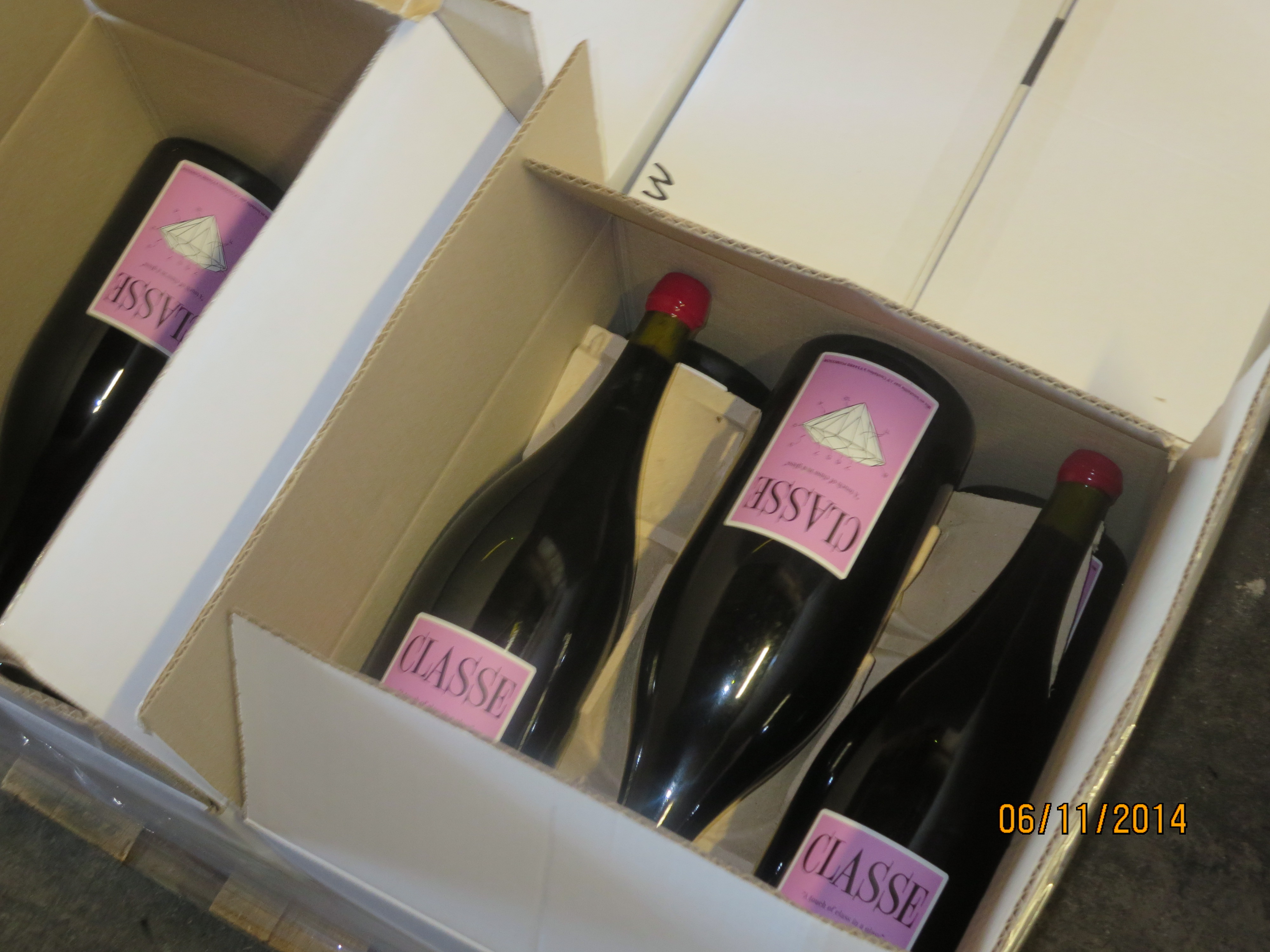
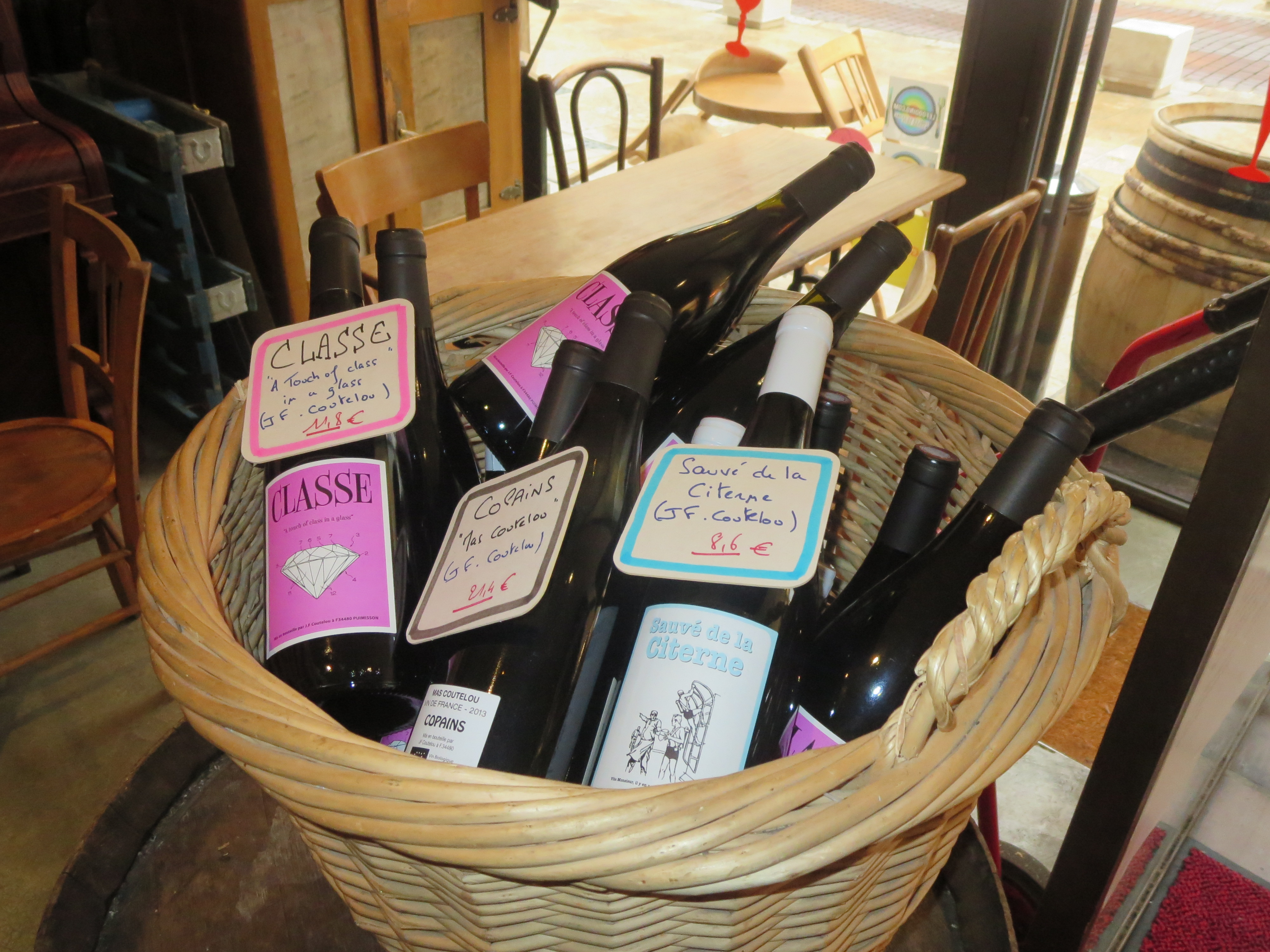
Usually a blend of 40% Grenache, 40% Syrah from Segrairals and Sainte Suzanne vineyards. In older years the remainder was Carignan, more recently Cinsault and a little Mourvèdre. Around 13,000 bottles of Classe are made with their distinctive pink labels showing a diamond. I always think of Classe as having a slightly darker fruit profile than Vin Des Amis whilst retaining its charm and drinkability.
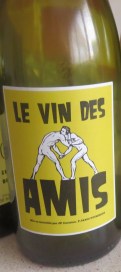
Le Vin Des Amis
The wine which was my first experience of Jeff’s wines and which blew away my preconceptions of good wine. It was the sheer vitality and energy of this Syrah and Grenache wine which impressed me. From the Metaierie or Sainte Suzanne vineyard it is made in similar quantity to Classe. The wine writer Jamie Goode described the 2012 as:
Rich, dense, vivid and pure. Quite backward with real grip under the vivid black fruits. Powerful and structure with amazing fruit quality, dominated by fresh blackberry and black cherries. 93/100
Whenever I share Vin Des Amis with people they always sing its praises and ask for it next time, it is well named. Another striking and unusual label gets it noticed but the fruity freshness are what makes people love it.
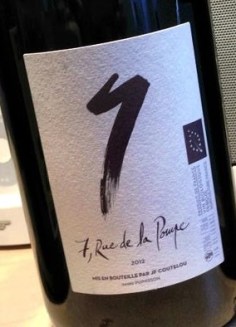
7, Rue De La Pompe
from wine anorak website
More Syrah from Segrairals with just a little Grenache from the same vineyard blended in. The different cuvées are based around different vinification methods as well as different parcels. The 2010 of Rue De La Pompe was a wine of the week for Jancis Robinson who also considered the 2012 as being like a northern Rhone wine with a bone dry profile. There are raspberry and pepper notes and the trademark freshness and vivacity.
Another large production in most years, around 10,000 bottles or so, it didn’t appear in 2014 because the Syrah was very low yielding that year and was used for the two big cuvées. The wine is called after Jeff’s address incidentally.
Sauvé De La Citerne
Citerne was another well known cuvée which did not appear in 2014. Largely Mourvèdre with some Grenache, again from Segrairals, this is wine which was originally made from grapes which Jeff didn’t use elsewhere, hence the name of the cuvée meaning saved from the tank. This was always one of my favourites with blackberry and blackcurrant flavours and an earthiness from the Mourvèdre. That cépage has done very well recently and was bottled as a single variety wine in 2014. Jeff has other plans for the Mourvèdre of 2015 with another cuvée planned mixed with Syrah and Cinsault, I have tasted it and it is lovely, very elegant and precise.
Sauvé De La Citerne will reappear with a 2015 however. It fits with the idea of making the cuvée from otherwise unused grapes that this year will see a blend of Grenache with a little Syrah. It will therefore be different but again my early tasting of it suggests a very attractive wine.
La Vigne Haute
This is probably my favourite cuvée of all and sadly it hasn’t appeared since 2013 and nor will it this year. Made purely from Syrah from the La Garrigue vineyard where the vines face northwards, this might explain the fresh acidity and vitality of La Vigne Haute. That acidity means that Vigne Haute ages extremely well and gains even more complexity. It is classic Syrah, red fruits and spice with great length and balance and beautiful aromas. It would be my desert island wine.
There was a pure Syrah in 2014 and another is planned for 2015 but under a different name, it is lovely but I do miss Vigne Haute, fortunately I have quite a few bottles tucked away until it reappears (please).
Jeff surveys the Vigne Haute vines
5SO Simple
5SO has quickly become established as a Coutelou favourite, around 7,000 bottles are made. Its name is a play on Cinsault and the wine is indeed pure Cinsault from the Segrairals vineyard. Designed as a light red, easy to drink it is delicious in summer slightly chilled and a great wine for drinking without food. Fresh cherry and raspberry flavours and a light structure make for a lovely wine.
Cinsault vine in Segrairals
Flambadou
Named after a barbecue tool Flambadou is pure Carignan from the vineyard Rec D’Oulette. It reappeared in 2013 and was also made in 2014 and 2015, made in smallish quantities as this is a small, low yielding vineyard. Jeff considered the 2013 as the star wine of that vintage and the 2014 is also amongst the best.
More full bodied than some of the other wines the Carignan brings dark fruit flavours and aromas. There is a brooding undertone of spice and plenty of red fruit freshness on the finish. Another wine which ages well. The vines are on an open parcel of ground so well exposed to the sun, the freshness a reflection of the healthy soils and skilled winemaking. Carignan is making a comeback in the Languedoc Roussillon and this is one of the best examples of why. Carignan enthusiast Michel Smith in his series on Carignan bottles praised Flambadou as follows, ” La bouteille a été vite vidée, ce qui est un bon signe”.
The Rec D’Oulette vineyard
Flower Power
from Roberson Wine website
cavepurjus.com
A relatively new addition to the Coutelou cannon. Flower Power is a true expression of terroir as this is a wine made from a variety of grapes from one parcel, Font D’Oulette (as the name suggests not far from where Flambadou originates). Jeff has begun to complant grape varieties more and more and to produce wine made from that mix of grapes. This is the first wine to show the results and it is a winner.
Aramon and Oeillade Noir are just some of the grapes in the mix of Flower Power. Aramon was once one of the most planted of all grapes in the Languedoc but went out of fashion as it was often overcropped and dilute. Now vignerons are realising that when it is grown with lower yields Aramon produces flavoursome wine. Oeillade is also interesting, a grape related to Cinsault, another old Languedoc variety which Jeff wants to bring back. Just to add some mystery there are some Clairette Musquée grapes in here, a white grape.
Font D’Oulette
Flower Power is lightly structured but packs a punch with flavours of black cherries and red fruits, and, appropriately, it is very aromatic, perhaps from the influence of the Clairette. As the vines age this will become more structured I would imagine but it is already a favourite.
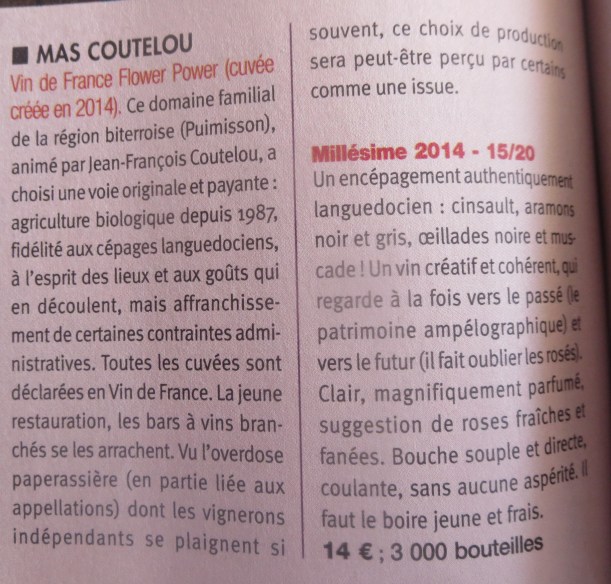
In the last week La Revue Du Vin De France selected Flower Power as one of their top 50 Languedoc wines, an accolade from a source which does not usually favour natural wines.
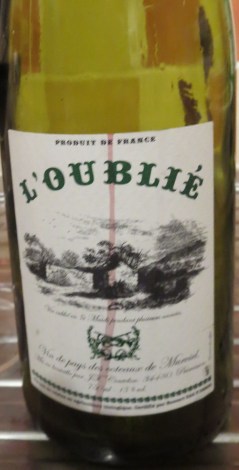
L’Oublié
Now here is a fascinating wine. L’Oublié is a blend of cépages AND vintages. The wines are aged in old barrels, not the usual practice of the domaine. Carignan was the forerunner with some 2001 and then more Carignan 2007 and 2010 were added. Then Syrah joins the assemblage, grapes from 09, 10, 12 and 13. This blend forms L’Oublié, the forgotten one. I imagine this refers to the original 2001 Carignan barrel.
It has aromas of dark fruits and leathery, spicy notes too. It is dark flavoured too, blackberries, liquorice and even coffee are just some of the many complex flavours. It benefits from decanting to allow that complexity to resolve itself a little, and it will stay fresh for days after opening. There are not many wines like this around and I honestly don’t know why. It is unusual and one of my favourite wines because of its complexity, its balance of older and more youthful flavours. Terrific.
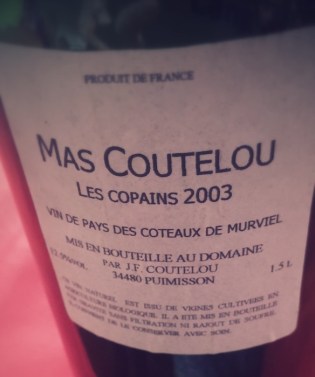
Les Copains
roumegaire.com
This was a wine which used to be a regular but disappeared after the 2003 vintage. It reappeared in 2013 and became my favourite wine (or have I already chosen another?!). Cinsault is the grape but it is a more complex wine than 5SO Simple, richer, darker and more structured. The grapes come from the beautiful Rome vineyard and are from 40 – 50 year old gobelet vines which bring low yielding fruit, rich and elegant. The wine is recognisably Cinsault with cherry notes but it has attractive depth and power, very long flavours of red fruit and peppery / spicy too. Sadly 2015 did not bring enough fruit to make Copains so enjoy what is available, it is worth ageing a couple of years but difficult to resist now.
Rome’s Cinsault vines
Other red cuvées are made for restaurants and and as one offs. A lovely pure Grenache was made in 2014 for example whilst Tete A Claques and Buvette A Paulette are others which appear from time to time.
It is fair to say that Mas Coutelou is best known for its red wines but there are some very good white wines too. They make up around 15% of the vineyards made up of a multitude of white grape varieties.
PM Blanc
vinogusto.com
The most regular of the white bottles though Jeff has started to experiment with various other blends and single variety wines. Most of the white grapes are grown in La Garrigue and Peilhan vineyards. PM usually contains Sauvignon Blanc from La Garrigue but assembled with other white grapes which are available such as Grenache Blanc, Macabeu, Muscat and Carignan Blanc. Dry, clean and full of flavour PM has texture and white fruits galore.
Single variety white wines in recent years have included, for example, Carignan Blanc from Peilhan. If Jeff feels that the grapes are of particularly high quality he will make a single variety wine. They always wear the mark of fresh acidity and the grape brings different fruit profiles, the Macabeu with aromatic yellow fruit for example. The Macabeu will appear from the 2015 vintage. I am a particular fan of Carignan Blanc and Jeff’s version was very clean, mineral and long lasting in flavour. This year he is combining it with Grenache Gris which did well in 2015 in Peilhan. Most of these white wines come in small quantities.
Roberson Wines
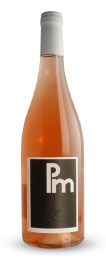
Muscat grapes grow in Peilhan and Rome and appear in some white blends as well as PM Rosé. The rosé is very aromatic and a dry wine, good with food and also on those hot, Languedoc summer days. It usually has juice from Syrah and Cinsault, pressed after a short time on skins.
Bibonade
Sparkling wines are also made at Mas Coutelou. Bibonade (think lemonade) has appeared in various forms, white and rosé and sometimes sweet! The dry version is fresh, clean and appley, a perfect quaffing wine and disappears very quickly after opening. There is usually Sauvignon Blanc, Muscat and some Grenache Blanc in there but again Jeff will play around with what he has available. This is my wife’s favourite wine!
Another sparkling wine which was popular in the 2013 vintage was Blanc Frisant. Macabeu and Grenache Gris grapes were bottled with a small quantity (8g) of sugar to encourage a second fermentation in the bottle. This produces a small quantity of CO2 bringing a light fizz when the bottle is opened. It was wonderfully refreshing with citrus and spice flavours. It is another example of Jeff’s inventiveness and experimental nature.
Carignan Blanc grapes in Peilhan
Sweet wines are made too, have a look at my article on the solera system.
So there we are, a huge array of different bottles, something for everyone. Fruit, freshness and drinkability are the hallmarks of Coutelou cuvées, they all contain those three qualities and many more. Jeff’s restless search for better wines means that the cuvées change every year (with two main exceptions). As he develops the cellar with more cuves available he will no doubt continue to produce new wines. As new plantations of grapes such as Riveyrenc, Terret, Morastel and Piquepoul Noir mature there will be even more variety. However, buy with confidence whatever is available is very good.
It’s been a few weeks since I updated about events at Mas Coutelou, partly due to Millésime Bio and, partly, because it’s a relatively quiet time. That is not to say nothing has been happening, far from it.
Maccabeu 2015
Flower Power 2015
Millésime Bio and Le Salon des Vins De Loire are two huge events in France attracting many thousands of trade visitors. As you have seen with Millésime Bio these salons also attract satellite events and Jeff takes part in those. Les Affranchis in Montpellier and La Dive Bouteille in Saumur last two days each and so adequate samples of the wines need to be prepared, transported and poured for guests to taste. Those events alone take about 7 days of the last month. I know from feedback from various people who sampled Mas Coutelou wines at both events that they enjoyed the wines which were samples from cuve (tank) of the 2015 cuvées such as Vin Des Amis, Classe, Syrah, PM Blanc and Flower Power. Hopefully the salons will spread the word about how good they are, the elegance and finesse of the vintage is obvious as you taste it.
Bottles of the 2015 wines made specially for the salons
Those visitors were also presented with Jeff’s annual Carte Des Voeux, his new year greetings card, together with his summary of the last year’s events, weather, vintage and cuvées. The Carte’s original is printed by hand and this year’s was especially complicated to print because of the different colours used. The message is worth the hard work.
For the last several weeks pruning (taille) has continued. Julien is leading the work this year and his back must be getting sore by now. It is hard work! The importance of good pruning should not be underestimated. It maintains the health of the vines, removing damaged or sick wood. It reduces the number of canes which will grow grapes so that the vine’s energy will produce quality rather than quantity, probably reducing potential yields by half. It also shapes the vine so that future work such as ploughing and harvesting will be more straightforward. I wrote about pruning last year describing the different methods.
I visited Julien in Peilhan vineyard on Monday, the same day as I saw a pruning machine at work in a nearby vineyard. It certainly does the job quickly and more cheaply but looking at the vines afterwards it was hard not to think that the machine did not reduce the number of canes to limit yields and, of course, cannot check the health of the vines. Julien and his fellow tailleurs are more costly but, to my mind, essential for good vineyard management and, ultimately, good wines.
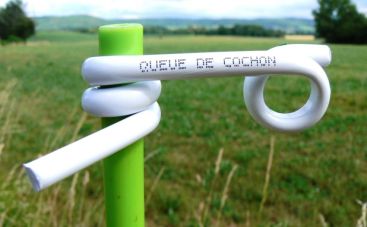
Michel was also in Peilhan, making sure that the pruned vines were tied to their trellis. If the vine is not straight he might stake itfor support and then tie the vine to the stake using a fastener called a ‘queue de cochon’ as it resembles a pig’s curly tail. This will help to avoid the vine being knocked during ploughing or other work.
Meanwhile, in the cellar it has been a hive of activity. One of the features of the cellar has been a large basket press which has been used by the Coutelou family for generations.
Sadly, it has been out of use for many years and became something of an obstacle as work was done, especially during the vendanges. Jeff reluctantly decided to remove it, I know this was a difficult choice for him. It proved to be a much more difficult task than anticipated as the press screw went deep into the ground and a massive hole still didn’t get to the bottom of it so, eventually, it was sawn through to enable the whole press to be moved.
photo from Jeff
photo from Jeff
The story does have a happy ending though as the press is on its way to Jeff’s friend Didier Barral where it will be put to good use. The result is certainly more space in the cellar, even if a part of the domaine’s history has disappeared.
Another big tank (cuve) has also been split into two. Jeff will be able to vinify smaller quantities of wine and have more choices about the most suitable cuve for grapes as they come in at harvest time.
Finally, for those of you who want to find out more about Mas Coutelou a new website is available. I have included a link at the top of my page and invite you to have a look at the site.
Jeff wrote the text for it (I did the English translation) and it will inform you about the philosophy, methods and wines of the domaine. And it is those wines, the different cuvées, that I shall be writing about next time.
Pour les lecteurs français je m’excuse, j’ai des grandes difficultés de mettre à jour la page en français. J’ai demandé à WordPress pour résoudre le problème.
This was the busiest week of the vendanges and required long hours of picking, sorting, pressing, remontage as well as lots and lots of carrying, lifting and often in confined spaces. In short it was hard work.
Why so busy? Well, Syrah which was the first of the red wine grapes to ripen makes up around a third of all the vines at Mas Coutelou and Grenache, the next to ripen, is also the next main cépage with up to 12% of the harvest. Together this meant that around half the 2015 harvest would be picked this week. Add in other smaller picking and the parcel of Merlot and this was definitely the crunch time.
Sunday September 6th was a day of rest for most but Cameron and Jeff were in the cellar working as usual, carrying out checks and analyses and remontages as necessary.
Monday 7th was a long day at work. It was around 8.45pm before we stopped. Syrah in Segrairals makes up around 2ha in total, though as with all land there are some prime areas whilst other vines, around the edges and in a few hollows where water gathers, are not of the same quality. In a typical year these would go towards cuvées such as Classe and 7, Rue De La Pompe but, as ever, plans are fluid.
Superb bunch of Carignan Blanc
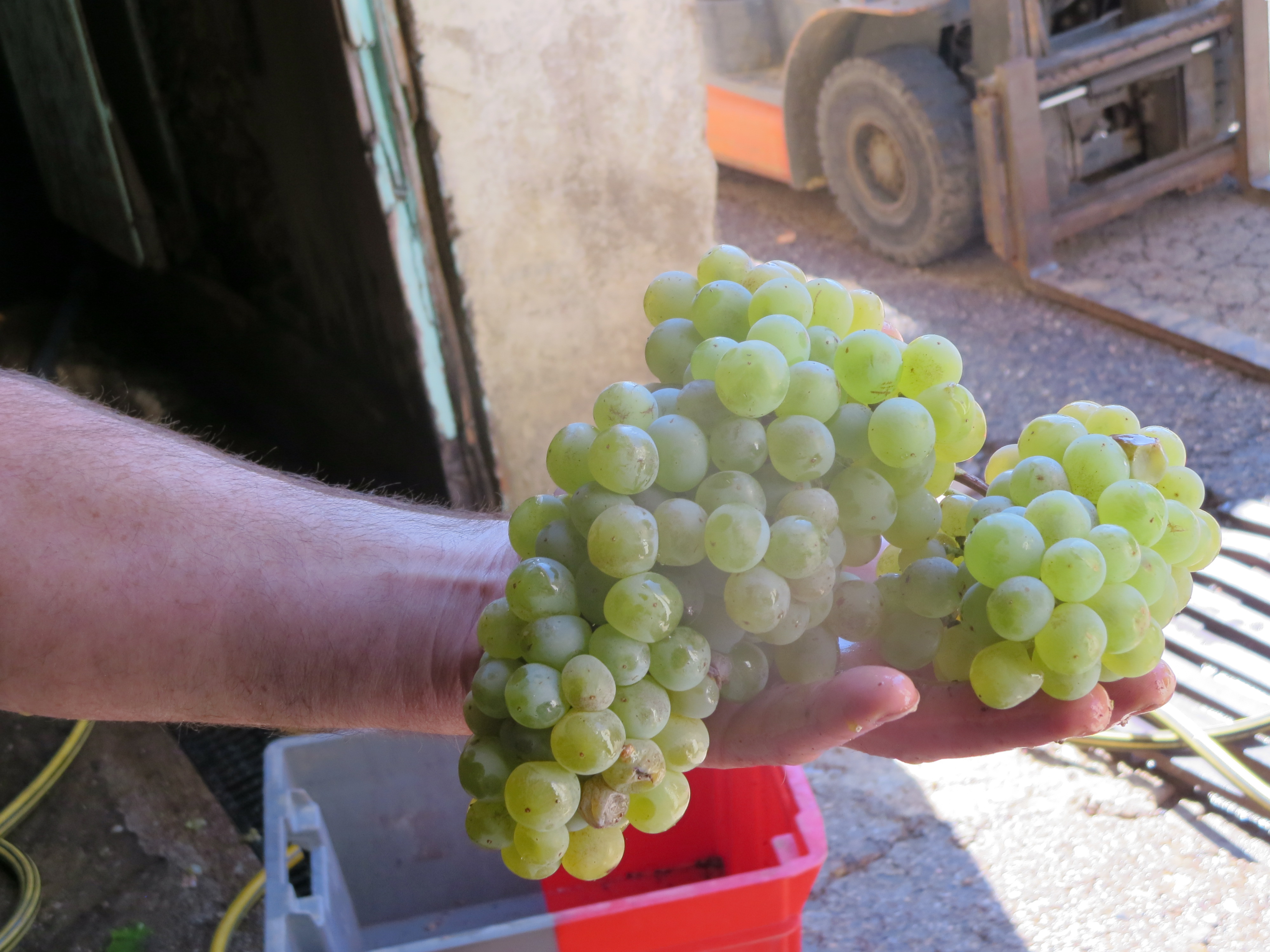
In addition a parcel of Carignan Blanc was harvested from Peilhan vineyard. There were some wonderful grapes and they were given special treatment, carefully sorted and then pressed using the small hydraulic press. The juice ran very clear and green and then gradually took on a slightly brown colour as it developed light oxidation. This is actually good as it helps to protect the juice later in its life and prevents damaging oxidation. Moreover, the effects of the oxidation from the pressing are removed through fermentation. Around 600l were produced in total, around 750 bottles worth. This makes a very good wine, something I was to be reminded of on Tuesday night, as we shall see.
This was a long day but much good work had been done.
Tuesday 8th brought more Syrah to the cellar, this time from La Garrigue. These are the vines I have described before which face north on a slight slope to preserve the freshness and fruit flavours, good quality grapes which are often used for my favourite cuvée, La Vigne Haute, so I was even more keen to help to sort carefully and there were some lovely bunches of healthy fruit. Here’s hoping for a good vintage of LVH, as ever Jeff will make the call.
Cameron unloading some Grenache Gris
Yet again another smaller harvest was done, again from Peilhan, this time with Grenache Gris. The lovely pink, grey berries are flexible in their use and might produce, white or rosé wines or be added to red wine as you will remember from my special cuvée post.
Grenache Gris after being pressed
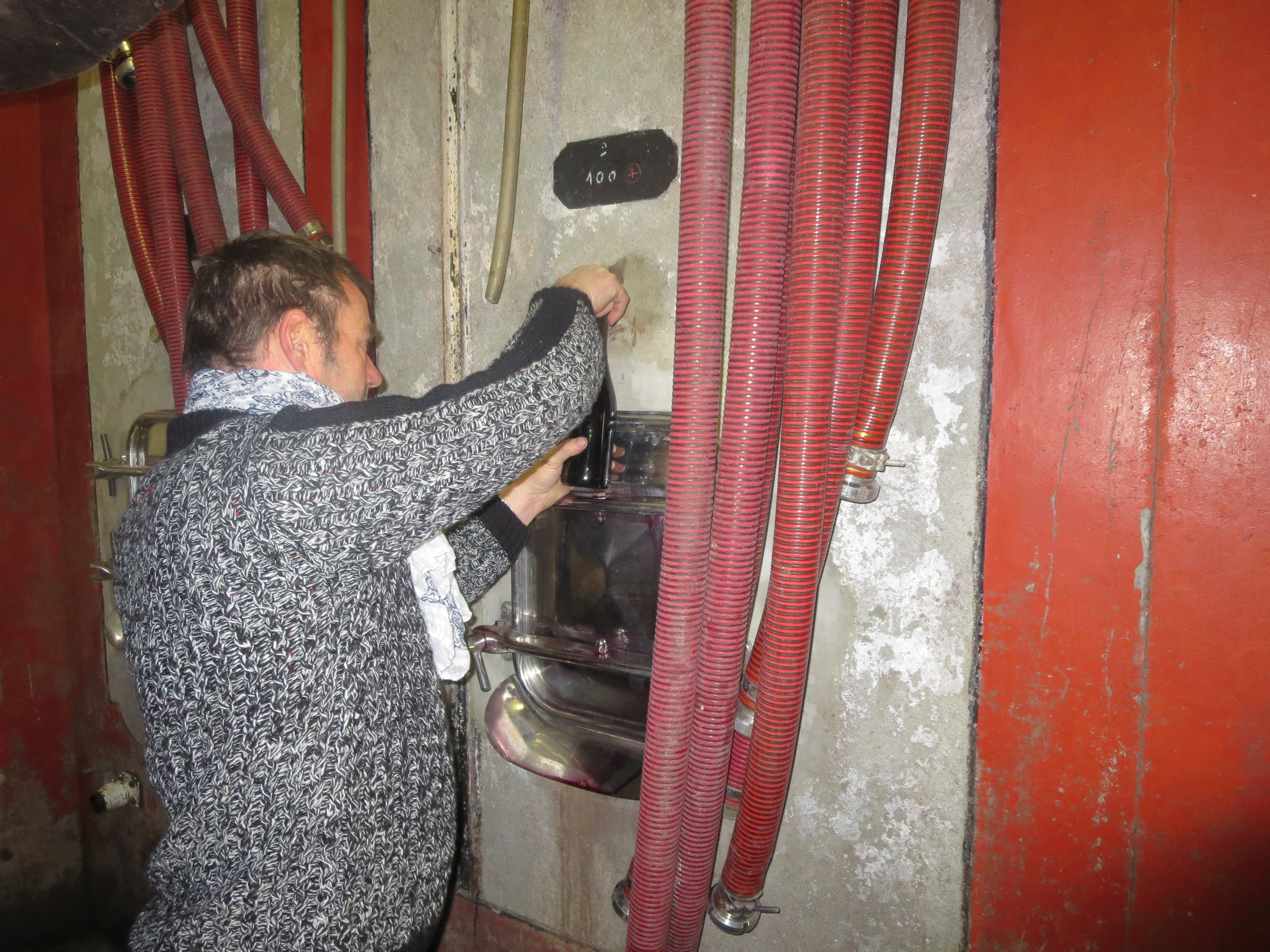
Meanwhile lots of analysis of the wines in tank and work to ensure that they are in good health. This even involved Jeff removing his trousers and jumping into the Flower Power tank to do some pigeage! Modesty means that I shall not share these photographs!
Cameron getting a sample for analysis
The after effects
And of course there was plenty of this… (I couldn’t resist adding the tune)
Error
This video doesn’t exist
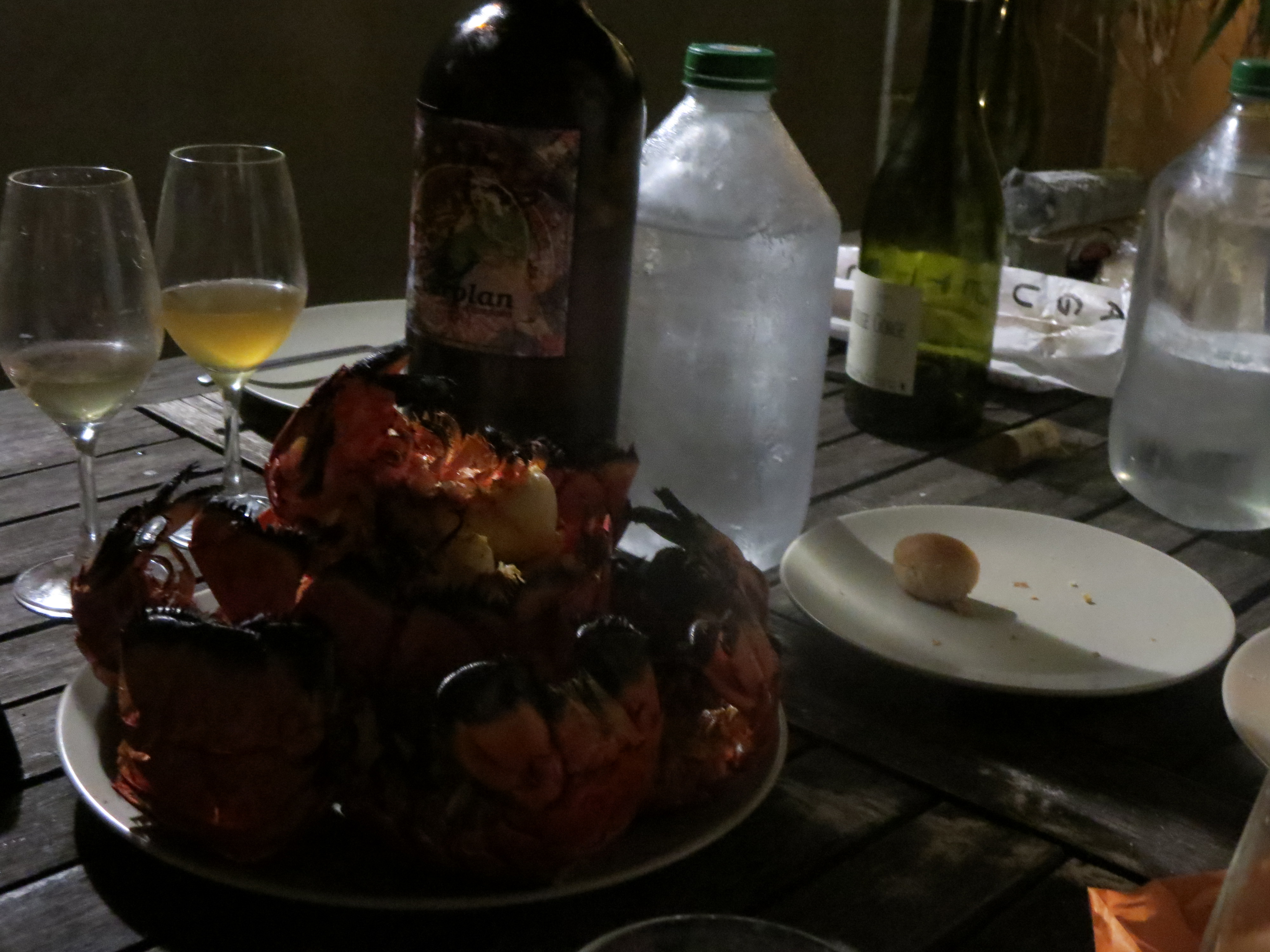
A bonus was to come though. We had been joined by two new additions to the team. Thomas is from Toulouse originally but has been working as a sommelier in the Languedoc and spent most of the week with us and will return next week. Karim is a fishmonger from Tours with an extensive knowledge of natural wines. He spent the week in Puimisson and brought a lovely surprise in the form of lobsters and scallops which made a wonderful dinner on Tuesday as Karim is also an excellent cook. We shared a magnum of Casa Pardet Chardonnay to accompany the shellfish as well as two Carignan Blancs, one from Mas Coutelou and the other from Jeff’s friend Cyril Fahl of Domaine Rouge Gorge in Roussillon. It was a special and hugely enjoyable meal, thanks to Karim and Jeff for the food and wine.
All photos taken on August 2nd unless otherwise stated
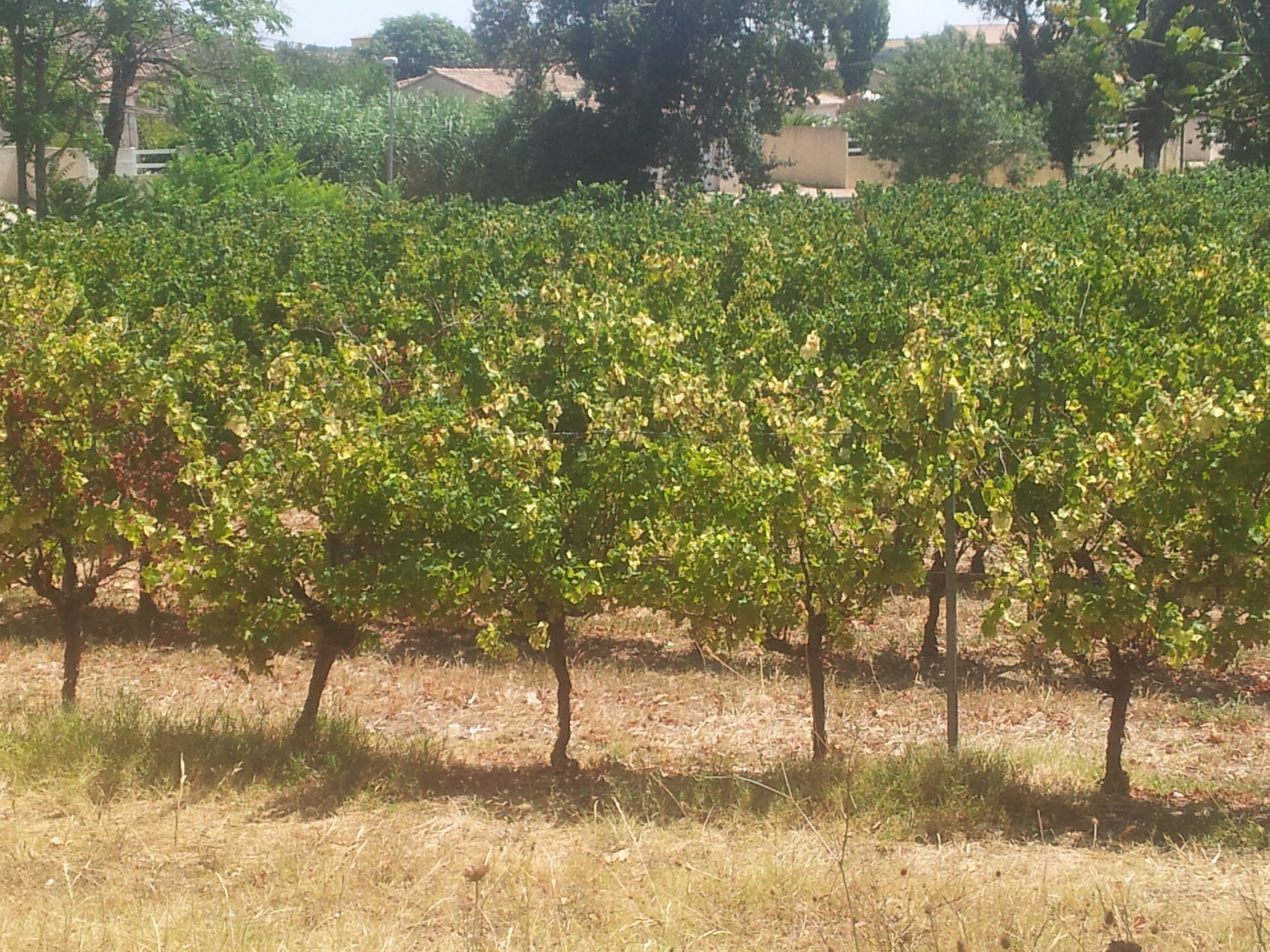
It was June 12th when rain last fell on Margon and the vines in the region, although generally doing well, were starting to show signs of fatigue and heat stress; leaves curled in upon themselves, some yellowing, a slight shrivelling.
Vines near Pézenas showing some stress
Vines in Margon which were not pruned in spring and are really suffe
A few drops fell on July 25th but the skies had been very dark and had promised much more, it was almost cruel to have that rain, a tease of what might have been. However, July 31st brought around 10mm to Puimisson. A decent rainfall, enough to give the vines a drink and to stop the drying out process. Not enough of course after weeks of lack of moisture and some more rain in the next few weeks would be very much welcome to swell the grapes and the harvest. The vines are now pouring their energy into their fruit rather than their vegetation, but they need the nutrients to do so.
So, how had the vines responded to the rain which fell? Well a tour on Sunday (August 2nd) showed the vineyards of Mas Coutelou to be in rude health, a decent harvest is now predicted though that extra rain would be most welcome.
Segrairals in full bloom, healthy, happy vines
Segrairals, biggest of the vineyards, showed some healthy Cinsault, Syrah and Grenache with no signs of stress or disease. As the home of Classe, 7,Rue De La Pompe and 5SO this is especially welcome, as they are some of the big sellers.
Cinsault in Segrairals
To Rome, my favourite vineyard. The gobelets were looking well, plenty of grapes both the white varieties and the Cinsault. There was a little mildew around the entrance but minimal, no cause for concern. Could there be a cuvée of Copains in 2015? Jeff tells me that no decisions are made as yet, caution prevails and he will wait to see what the harvest gives him before he makes final choices about how to use the grapes and the wines which result.
Rome’s centurion vines in good health
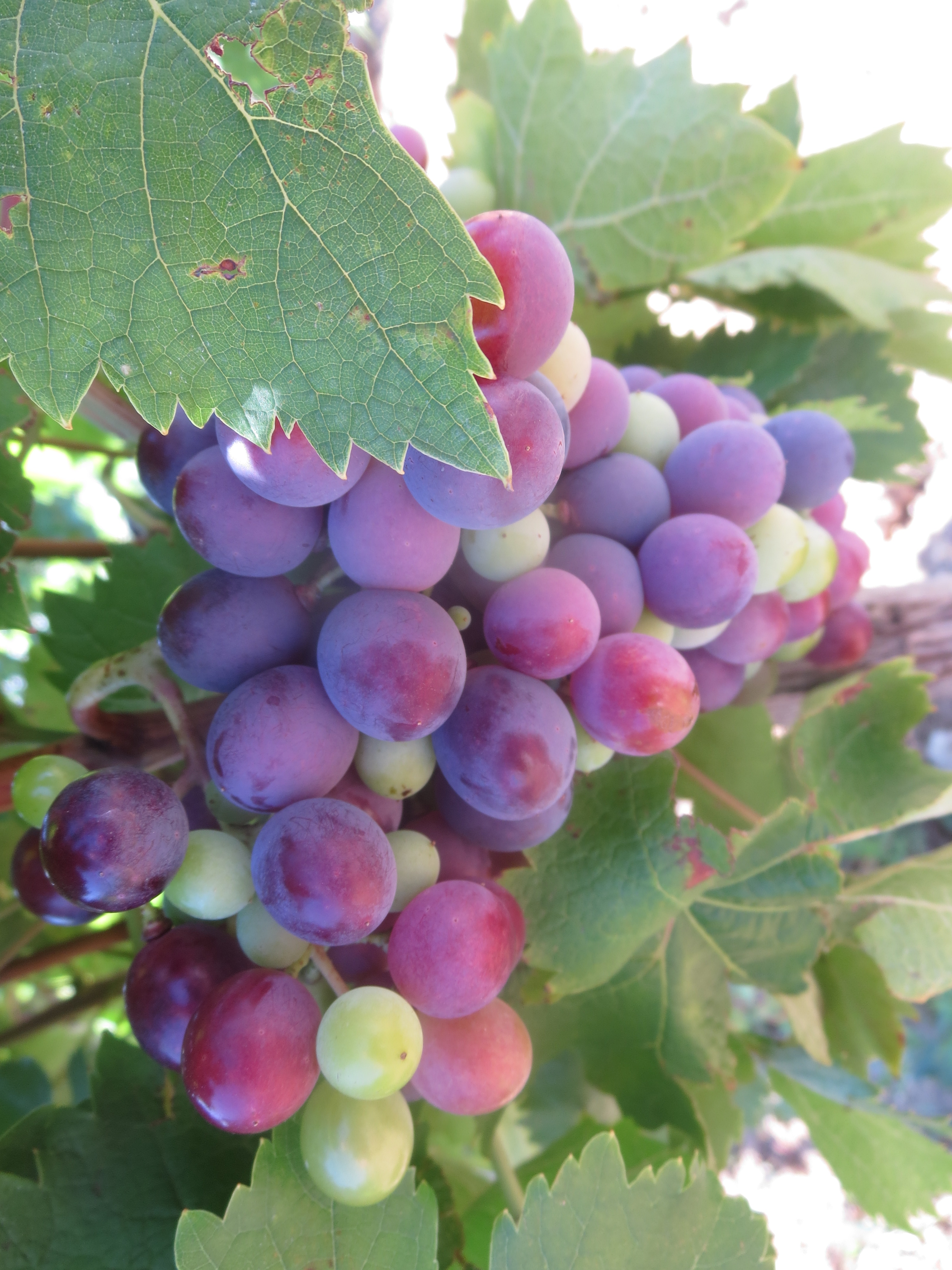
Muscat Noir grapes, a tiny bit of mildew top left
Sainte Suzanne (Metaierie) suffered from coulure in May with the strong winds blowing off some of the flowers on the vines, which will reduce yields a bit. However, the grapes there are growing well, what might have been a problem looks now a much brighter picture, good news for fans of Vin Des Amis.
Peilhan, just a little more tired and suffering
The only vineyard parcel which has shown stress is Peilhan, There was a lot of regrafting and replanting in the spring and the dryness has caused problems for these new vines. There was also oidium in this parcel, the only vineyard to be attacked by this powdery mildew. Yet amongst those problems there are plenty of healthy grapes, some careful picking and sorting will be needed but it will produce good wine.
The famous Castets grapes of Peilhan
La Garrigue was blooming, the white varieties such as the Muscats are swollen and changing hue to lovely golden shades.
Muscat a Petits Grains in La Garrigue
The Syrah is well advanced, a dark purple colour across virtually the whole bunches, the pips though betray a little immaturity as they taste and look green and sappy. A little more time and patience will pay dividends. As the world’s biggest fan of La Vigne Haute, I have my fingers crossed.
Syrah in La Garrigue, ripening beautifully in the shade of the vine
The Grenache in La Garrigue, despite facing south, is a little more delayed in colour but getting there and very healthy.
Grenache in La Garrigue
In fact despite risks of disease earlier in the year (see here) Jeff has been able to use minimal treatments in 2015. Oidium and mildew (powdery and downy mildew) can be controlled by copper sulphate, sometimes called the Bordeaux mix when added to slaked lime. This is a bluish colour when sprayed by conventional and organic vignerons and is often seen on the leaves of vines. Vignerons might also use chemical fungicides if they are not organic producers.
Neighbouring vineyard which was given herbicide shortly after harvest last year and whose new vines have been treated regularly
Some neighbours have also irrigated their vines and one alarming consequence is the changing of the soil and its pH as the calcium carbonate in the water shows through, you can see it in the white parts of the soil in this photo taken on July 22nd.
The irrigation is also causing the vines to grow quickly and tall with thin trunks as seen below. It should be acknowledged that there are many conventional producers who take great pride in the health of their soils and vines and would be horrified by some practices described here.
As a proud holder of Ecocert organic status and as a natural wine maker Jeff must use natural products only. Tisanes of plants which fight mildew such as horse tail, fern and nettles can be sprayed and this is the basis of many biodynamic treatments. However, the two main weapons in the armoury of organic producers are copper and sulphate, both natural products.
Copper is used against mildew, but is harmful to the soils and kills life in them if used in significant quantities. Organic producers are limited to 30kg per hectare over a 5 year period, allowing more to be used in years with more downy mildew for example but only if less is used in the other years. In fact Jeff has used just 200g per hectare in 2015 and this after years of well below average use, his use of copper is on a major downward trend. He is reluctant and very careful in using copper as he is aware of its danger to the soils, yet mildew has not been a major threat this year.
Oidium seen in May
Similarly Jeff has used sulphur in soluble form at doses much lower than the permitted level, three treatments over the course of the growing season. In addition one dose of sulphur powder was sprayed when the risk of oidium was high (May) and a second spraying for Peilhan only as it is the vineyard which was attacked by oidium. In contrast to neighbouring vignerons who have sprayed every 10 days including after the bunches closed up (so more than a dozen treatments) this really is minimal intervention.
So July’s parting gift of 10mm of rain was welcome, August might like to follow by offering some rain soon. Too near the harvest is bad as it would dilute the juice rather than help the grapes to reach a good size. Things look promising, let us hope that nature completes its bounty. There is an old saying that June makes the wine and August makes the must, ie the character of the wine with its colour, yeast and flavour. With 3 weeks or so until picking begins it is an exciting, and nervous, time, waiting to see what that character will be.
No Icare this time but look what we found amongst the vines, he’s been here!
NB there are lots of reports about recent wine tastings here.
Last Friday and Saturday, June 5th and 6th, was full steam ahead at Mas Coutelou, almost literally given the high temperatures. It was time to bottle some cuvées and especially one of the largest productions, the popular Classe.
The waning moon on Friday morning
The moon was descending so Jeff thought this a propitious time to bottle as this usually brings lower air pressure.
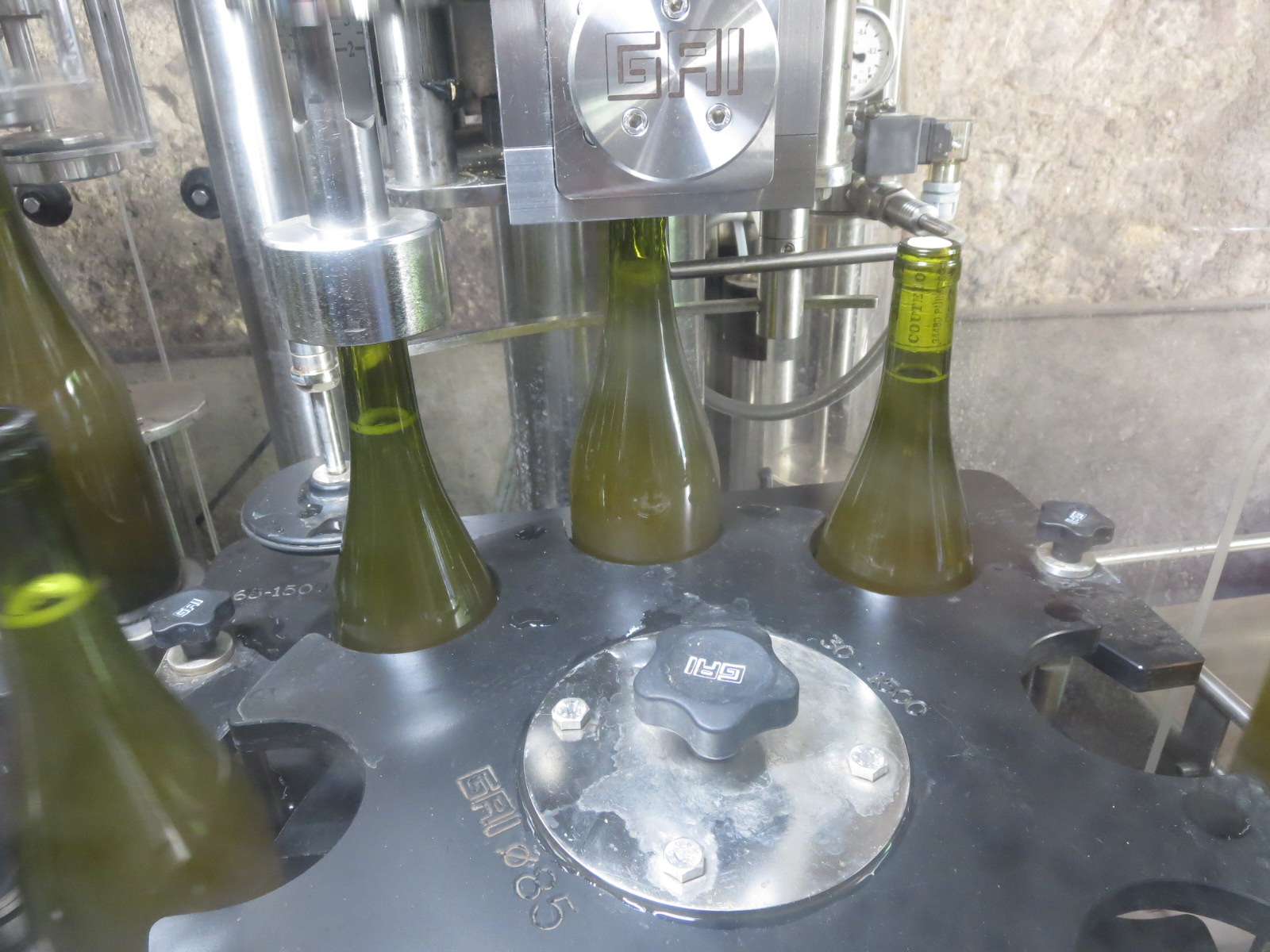
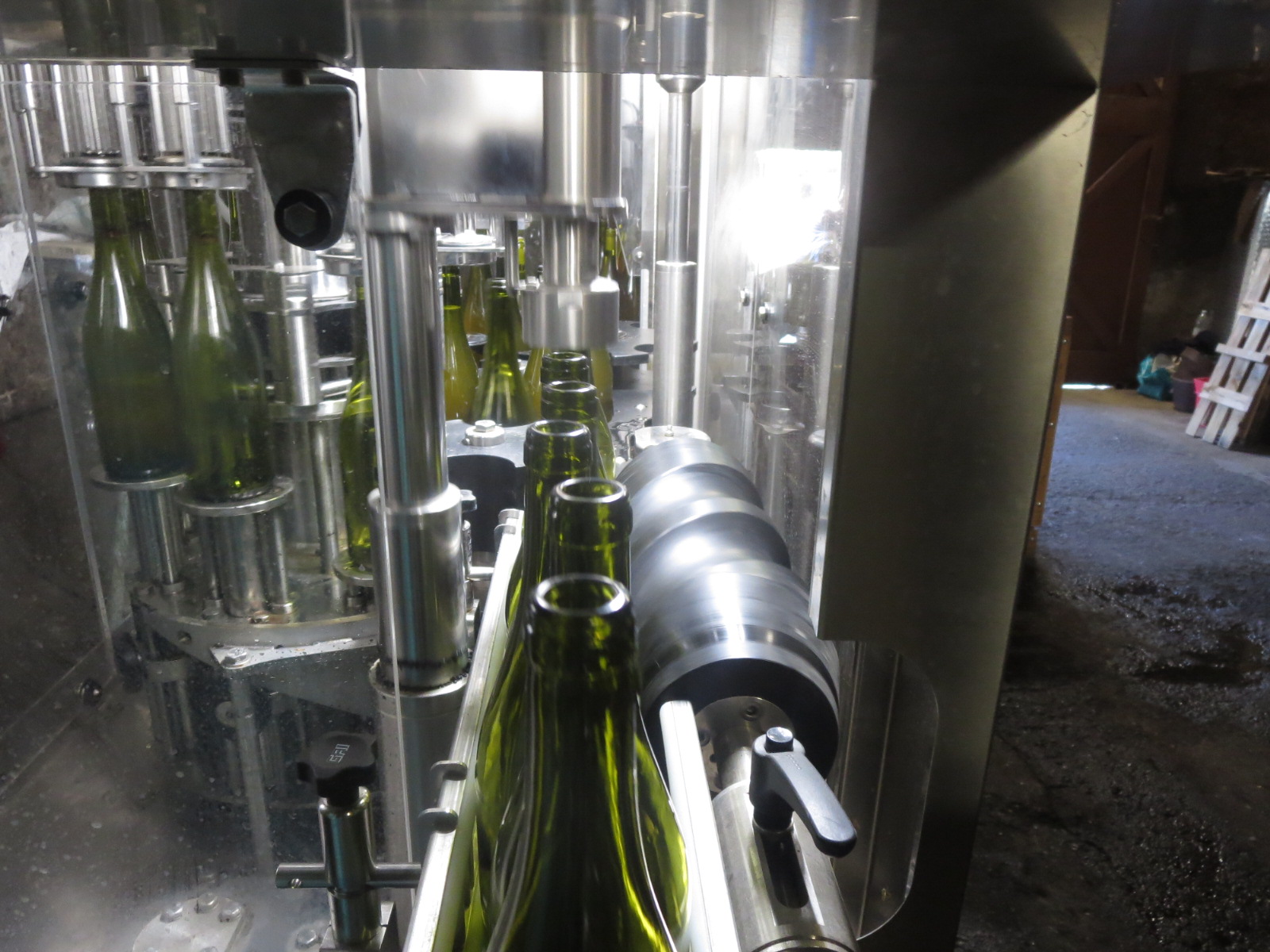
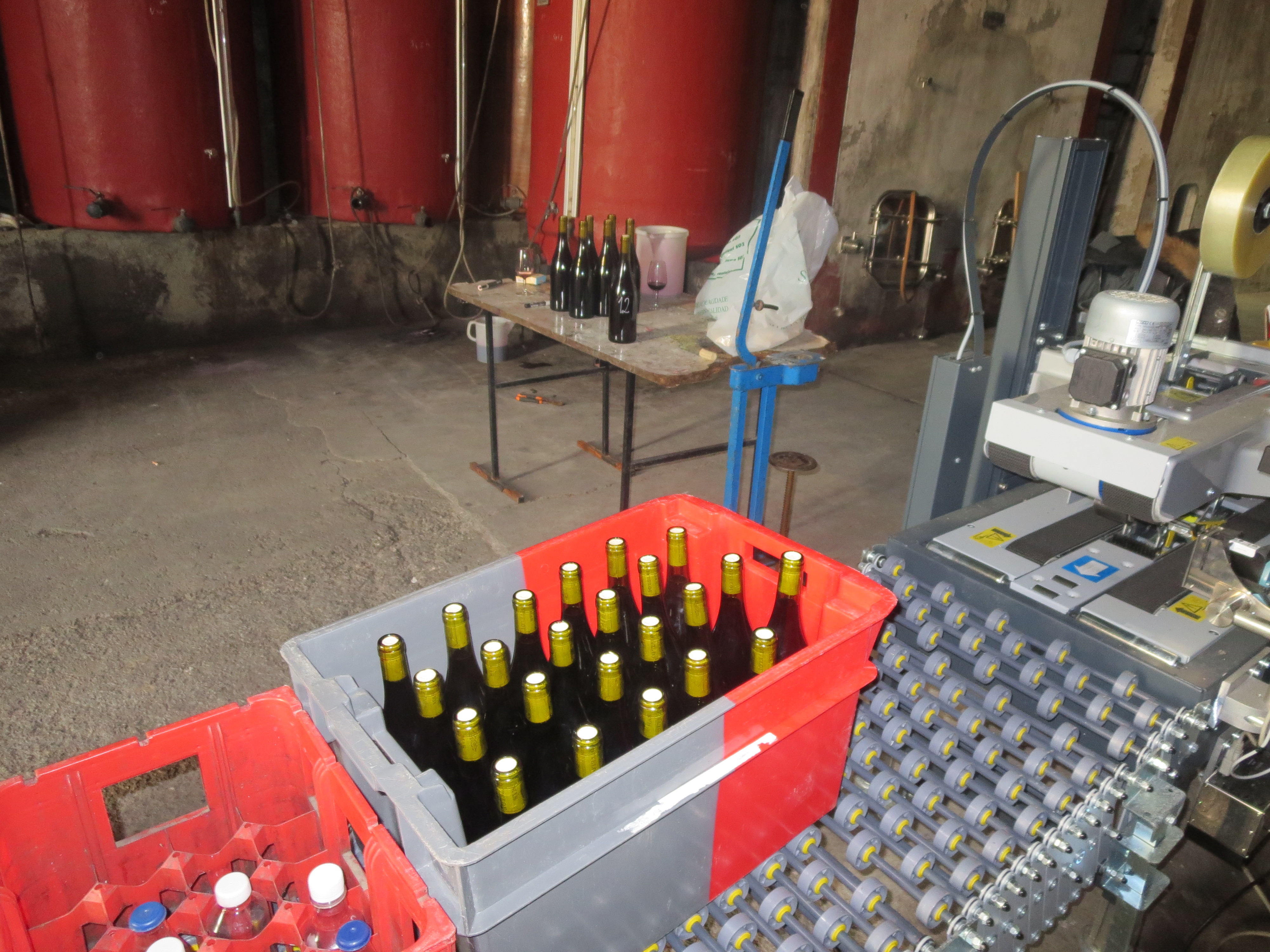
On Friday around 2,000 bottles were filled with 2 cuvées, Blanc Frisant and Tête À Claques. The former is a white wine made from Macabeu and Grenache Gris but it’s fermentation is halted to allow some residual sugar to remain, this ferments slightly in bottle and so creates a slight spritz making the wine even more refreshing. The 2014 had around 9g of residual sugar meaning there would be spritz without creating too much pressure that a special cork would be needed.
Bottling Blanc Frisant
Corking Blanc Frisant
End of the line with quality control tools awaiting
Tête À Claques is a special cuvée made for Roberson Wines in the UK and is usually destined for restaurants such as Hawksmoor. It is made from the same grapes as Vin Des Amis with added extras and is yet another winner. When I tweeted pictures of the bottling to them Roberson and Hawksmoor were so pleased they called it Coutelou Party!
View down the line
Tete A Claques, bottled and resting until it heads to London
Then preparations were made for Saturday as this would be a much bigger bottling, 11,500 bottles of Classe. Work began at 7am and ended around 6.30pm, non-stop. The team worked tirelessly even as temperatures outside reached 35c. Even after all the bottling there was work still to do. Everything had to be cleaned thoroughly, the bottling line, the tank where the wine developed the pump, everything. Hygiene is essential in all winemaking but especially when using no sulphites.
Friday evening, bottles ready to be put in place for Saturday’s bottling
The team needs some introduction. Michel is from Puimisson, has worked for Jeff for many years now and drives the team on with his knowledge of work in the vineyards and cellar. Honest, hard working and ever cheerful, Michel is a reflection of the wines he helps to produce.
Michel, supervising the moving of wine
Carole has featured many times in this blog with videos of her working in the vineyards, e.g. pruning and debudding. She is from the Loire and has worked in vineyards there and in other parts of France and other countries. She is a true expert, has great knowledge of wines and has great patience in talking me through the work she does. She also shared an excellent bottle of Domaine L’Ecu Muscadet Granit 2011, which was a revelation to me. In addition we shared a fantastic Cornas Brise Cailloux 2012 from Barret, fruity, long and structured beautifully.
When Carole talks everyone listens, including Icare
Renaud now lives in Puimisson and has started working for Jeff regularly in the last year. He works hard, has a mischievous sense of humour and is a good man to have around. He is learning from Michel and Carole and helps me a lot too.
Renaud, pictured in March, planting new vines
We also welcomed visitors to the cellar, including sommelière Sandra Martinez who brought along a very interesting wine from Domaine De Cressance in the Gard. Largely based on Chenanson, a new grape to me, apparently a cross of Grenache and Jurancon Noir. It was very good, long liquorice flavours and refreshing. Sandra and her friend Isabelle set to work with enthusiasm and became a welcome part of the team. The well known wine writer Guillaume Deschamps also called by, it was good to meet him as I have admired his writing for some time.
And of course there is the boss, Jeff himself. Passionate about his vines, his wines and nature. Tireless in working to make them healthy and top class, and doing so successfully. He knows every job, supervises his team, leads from the front. And has a great team who are loyal and willing to push themselves to help him to achieve his goals. They really are all Classe.
Jeff leading the line
Meanwhile they are all very tolerant and welcoming of this Englishman doing his best to learn and to help. I do some of the jobs around the cellar, stepping in when breaks were taken for example. Hopefully I do actually contribute! It is certainly a huge pleasure for me to be a part time member of the team.
Plus there is one other member of the team who keeps us all entertained and smiling. Icare.
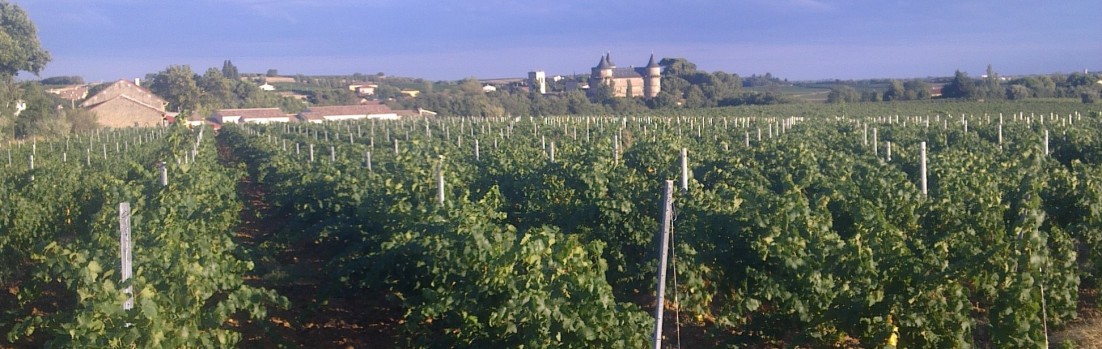
It was the 30th January and having promised to write about vineyard work in each month of the year, I felt that a deadline was looming! After tasting wines in Montpellier for a few days it was definitely time to get back to the vineyard the key component of those wines. Jeff took me to the vineyard called La Garrigue which is to the south east of Puimisson, home of Mas Coutelou. It is one of around a dozen parcels of land which Jeff owns, though some are home to olive and fig trees as well as hedgerows and other methods of reintroducing biodiversity into a district which has become one large vineyard. I shall be writing soon about the various parcels and Jeff’s work to safeguard and boost the local environment and biodiversity.
La Garrigue is rather like a small pyramid in form with a peak in the middle and vines around the sides.
Facing north is a parcel of Syrah planted in 2006, so the vines are still young. They face north so that the freshness and spiciness of the grape variety are preserved rather than being overcooked. They are also planted in rows facing north to south so that the wind blows down the rows, helping to prevent disease and to dry the grapes after rain. Carole was busy pruning this area and the preferred method is the gobelet style. This is the traditional and most natural way of growing vines in the Languedoc and Jeff has preferred to use this method for his vines for a number of years and so these Syrah vines are grown using gobelet.
Syrah vine pruned in the gobelet style
However, as you will see in the video, Carole studies each vine carefully and if she feels it would benefit from a different style she will prune in the more suitable way. This may be because the vine canes are growing too vigorously between the rows of vines and need shaping along the rows. As these are young vines they are being supported by wire trellising. In this case a cordon de royat system might be used.
Syrah vine pruned in cordon rather than the gobelet style which most of the Syrah vines are. It was felt its needs suited cordon better
Facing south is a parcel of Grenache vines. This is a variety which welcomes heat and is grown through Spain and around the Mediterranean. It adds spice and complexity to wines and, facing south, the sunshine brings out these characteristics. In this parcel cordon de royat is used as the pruning method. This was the system used when the Grenache vines were planted back in 2000 and so they continue to be grown in that style as it is not advisable or even possible to change them to gobelet now. The Grenache is usually used in the popular cuvee Classe.
Grenache vines,cordon pruning
A magnum of Classe
To the easterly side of La Garrigue is a block of Sauvignon Blanc. This is not a variety often grown in the Languedoc as it gives green, fresh almost acidic notes in its wines and the region is often too hot for it to show those qualities. Facing east, however, means that the sun hits the grapes in the morning so does not overheat or over ripen them, preserving the freshness of the fruit. In this parcel guyot is the preferred system of pruning. This system allows more air to circulate around the grapes and as the white grapes are more fragile guyot training helps to protect their health. The white grapes are usually used in the white blend, PM.
Sauvignon Blanc vines pruned in guyot style up the wire trellising
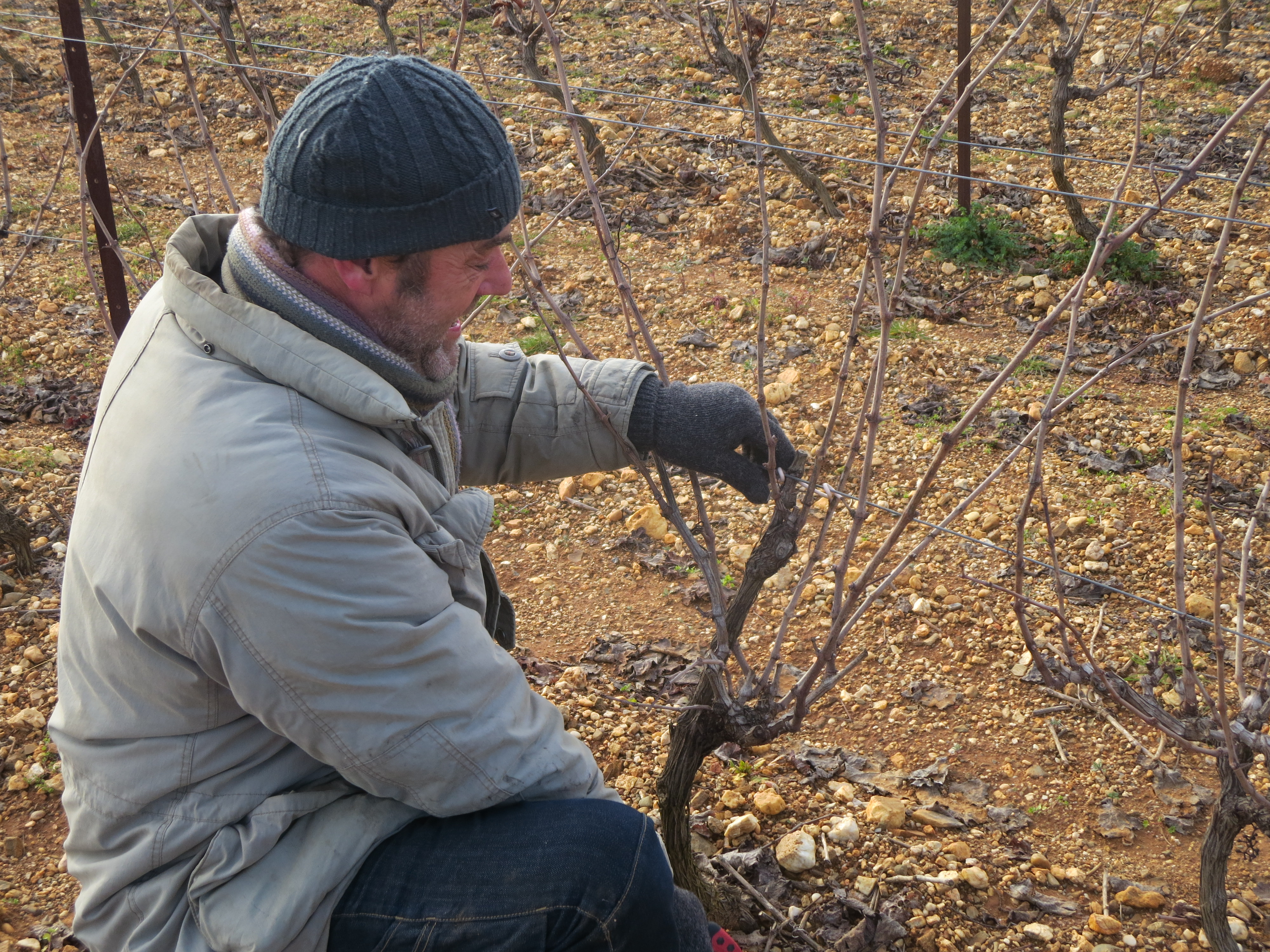
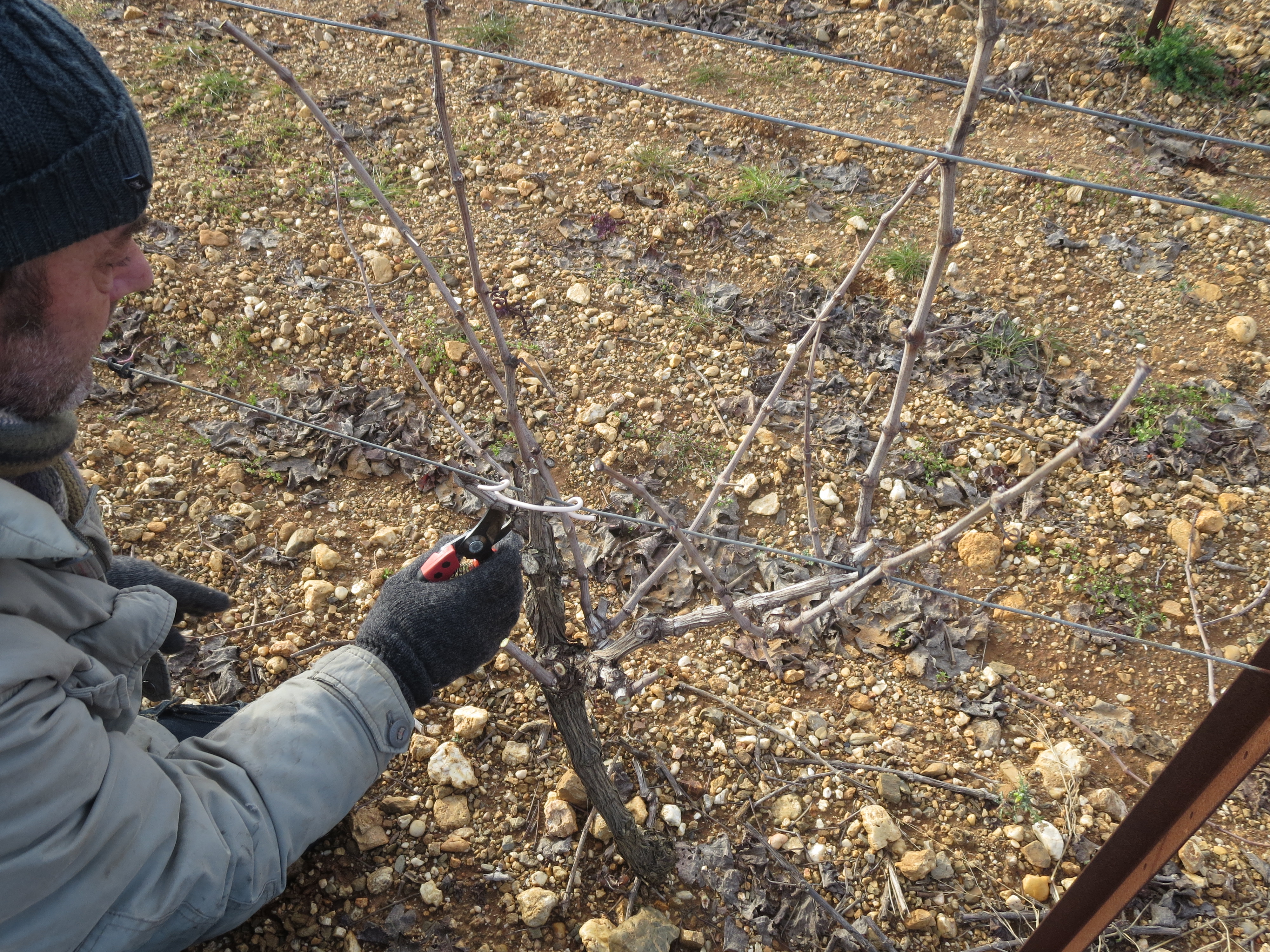
What struck me most, other than a bitingly cold, northerly wind, was how carefully Carole and Jeff study each vine to ensure that it is given a pruning which suits its needs. Direction, quality of the wood, crowding are all considered before they decide what to cut and at what length the remaining cane should be left. Some canes were cut very short, others had 8 to 10 eyes which will produce bunches of grapes. It depended upon the capability of the vine to bear such fruit. It is this care and attention which characterises the work of the skilled artisanal vineyard worker and winemaker.
Jeff studying a Syrah vine
First cuts
Getting to the heart of the vine
The finished vine
I would compare this with a machine I watched around Margon which cut the vines to the same shape and size regardless of their health and
needs. The cutting was fast and much easier work but the pruning was brutal and imprecise with no regard for the individual vines. For vignerons producing cheap, bulk wines I can understand their actions.However, it confirmed in my mind that artisanal vignerons are the ones producing the wines I want to drink
Machine pruning vines, the yellow arm contains the blades
Pruning is not glamorous. But is a vital part of the winemaking year, preparing the vines for when they reawaken in spring and enabling them to produce the right quantity of healthy grapes which in turn will produce great wine.
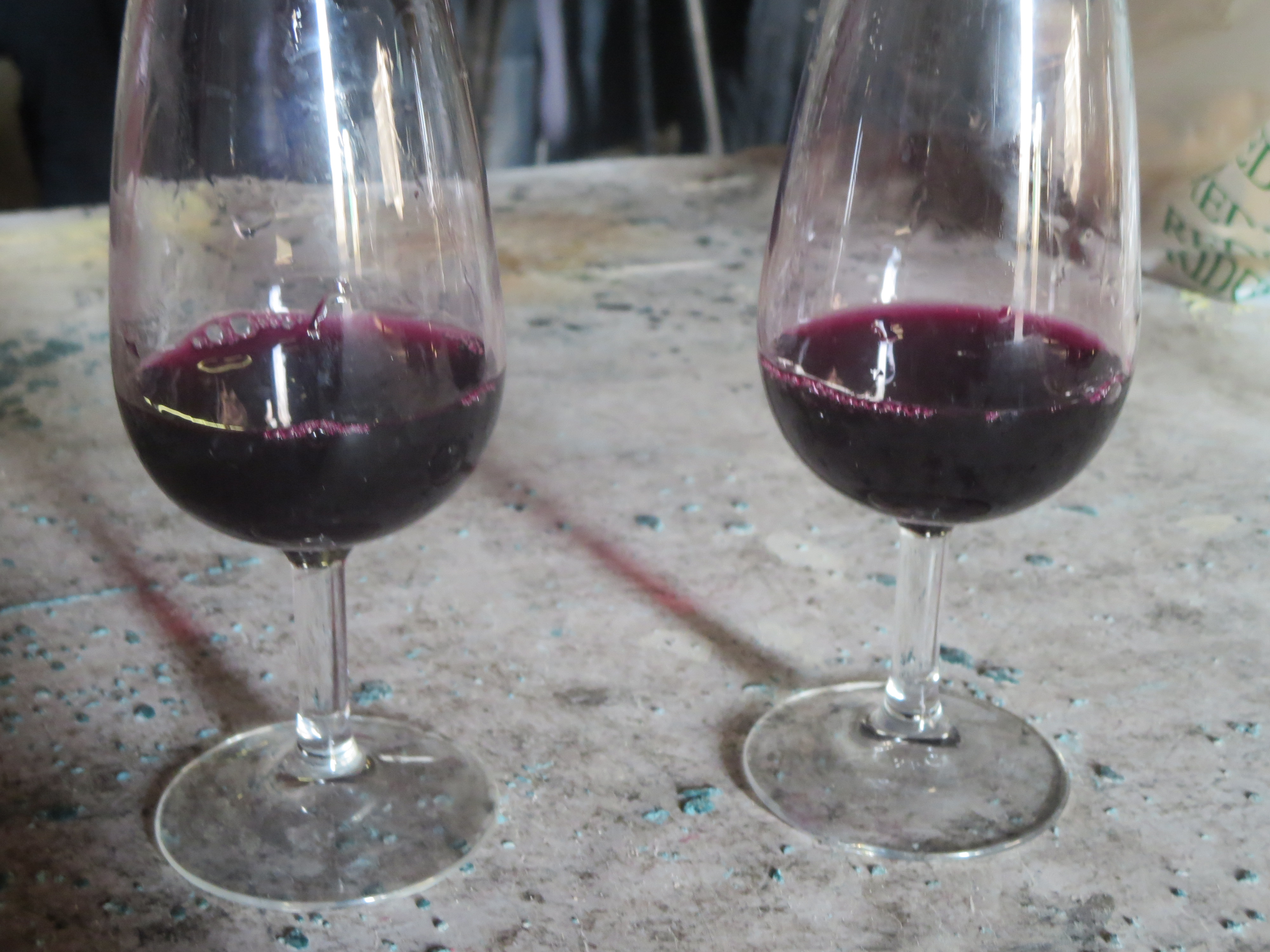
The assemblage for the 2014 wines is well under way, the wines are settling in tank for some of the well known cuvées such as Classe and Vin Des Amis. (Above are glasses of richly coloured Vin Des Amis). Both are delicious already and in the few days since I first tasted them they have shown development as they marry together. The fruit and freshness which characterise Mas Coutelou wines are evident and there is a marked concentration which shows that the wines will mature well.
Jeff has published his vintage report for 2014. Winter, spring and early summer were exceptionally dry (less than 150mm or 6 inches of rain in the 9 months to the end of June) and at that moment Jeff was far from sure that he would be able to harvest any grapes. Some relief came from a summer which was not too hot and peppered by storms. However, the vines had to dig deep into their reserves of energy in order to produce grapes. Troubles continued with some storms towards the end of harvest time and then the Marin wind with their warmth and high pressure meant that through the autumn and into December the wines in tank were not able to truly rest. It was a difficult year in short, a reminder that nature rules the life of the vigneron. Indeed some local producers have seen their crops virtually wiped out by hail and mildew so the wines that Jeff has produced are to be even more cherished.
Nevertheless there are some drawbacks. The harvest was smaller especially for Syrah, (down by 40%), Carignan and Mourvedre. Syrah is a major part of many Coutelou wines so Jeff has had to improvise and make the most of what he has. The lack of Mourvedre may mean that one of his popular wines ‘Sauvé De La Citerne’ will not be made. In addition the effort made by the vines means that they would benefit from a rest and yet this winter (thus far) has been so mild that they are starting to show signs of producing buds even in January (débourrement). Instead of resting they are starting to work hard already.
The wines I tasted from tank are marked by concentration and minerality. The vines had to push deep into the soil for water in the arid early part of 2014 so they have drawn up minerals from the soil’s depths. The mineral flavours are evident when drinking. A difficult vintage has produced some highly promising wines but in smaller quantity, so guard what you already have and appreciate the quality of the new wines.
Two wines to note.
PM, the rosé, is already gorgeous, full of fruit and perfume yet dry and absolutely delicious. At only 11% alcohol it is a wine to drink and enjoy.
A new wine made from old Cinsault, Aramon, Oeillade and Muscate. Tasted from tank this was already sensational, a red wine with grapey, perfumed scents and deep, concentrated red fruits. Can’t wait to see how this develops.
Jeff will be showing some of these new wines at a couple of tastings in the next 10 days, in Montpellier and the Loire. Today Jeff put the bottles together for those tastings, including some corking by hand. Nothing was easy about 2014!!













































 amarchinthevines