amarchinthevines

Learning about wine, vines and vignerons whilst living in the Languedoc


1 Comment

Summer wines – a tasting report

It was an honour to be asked back on Friday June 7th to Snod’s Edge Village Hall to lead a third wine tasting event there. When we started to plan back in March we had in mind that an event in early June would happen in warm, summer conditions, I recall saying that we might need plenty of ice and ice buckets. Well, the Spring and early Summer of 2024 have proved to be wet, cool and grey. Nonetheless, with a little imagination and plenty of enthusiasm the summer theme led to an enjoyable event with some interesting wines and discoveries. Bear in mind that this is a fund raising event and I stick to a budget for the wines, an average of £10 or less per bottle. The wines should also be readily available.

Whilst looking into the story of the eight wines I wanted to explore three themes; what to look for in a summer wine, trends in wine and buying wisely. The committee had suggested a tasting of rosé wines and though I broadened that out to include white, orange, red and sparkling wines I did select three rosés. Rather than the usual format of starting with lighter wines, eg white, and moving through to more structured red wines I decided to leave the rosé wines until the end with a sparkling wine to restart the tasting after a half time break. I think this worked well, especially given the final rosé wine, of which more soon.

I have copied up my notes, so if the writing looks a little ungrammatical please excuse me on this occasion. Feedback on the wines at the event are shown in italics.

Wine 1 – English White 2023 – Wine Society £9.95

Made by Three Choirs vineyard on the borders of Gloucestershire, Herefordshire and Worcestershire, the second largest in England (after Denbies) and one of the oldest, started in the 1970s.

A wine for aperitif though it is dry and would go with cheeses, seafood and goat’s cheese for example.It is aromatic; white flowers, hedgerows and gooseberries ; it is dry, not stone dry but good acidity ; it is light; 11% alc and should be drunk within 2 years.

Grapes not given but likely to include Bacchus, Madeleine, Reichensteiner, Siegerrebe (both crosses of Madeleine, latter with Gewurz) and Orion a hybrid grape (a crossing of vitis vinifera and other types of vitis eg rupestris and riparia). Hybrid grapes are becoming more important due to their ability to resist disease and cope with climate change, even Champagne has begun to experiment with hybrid grapes.

The Wine Society, £40 to join but £20 off first order, co-operative principles so prices low eg no tax rise after last Budget, events, information for wines, range, returns, free delivery no matter how small the order.

Wine 2 – Tbilvino Qvevri 2021 – M&S £10

Aperitif but also spicy and with some tannins so would match spicy food, Chinese, Thai or even Indian

Georgia, Kakheti (east of Tbilisi) where they have made wine in qvevri for over a thousand years, ie clay pots buried in the ground where the grapes are put to ferment. Can be for shorter or longer periods and that would affect the tannin, colour and flavour. This leaches the colouring pigments from the skins giving it an amber or orange hue, hence the term orange wine. One of the fastest growing trends in wine, sales have doubled in each of the last five years and now available in most supermarkets.

Tbilvino is now a big concern (7.5 million bottles) owned by 2 brothers and modernised in 2006 after the communist days.

Made from Rkatsiteli grapes, the most planted in Georgia, its name means red stem. Late budding and maturing and relatively resistant to mildew. Relatively neutral when conventionally made but qvevri elicits flavours of honey, dried orange peel, spices, apricot and other stone fruits. But also tannins which we can find unusual if not used to orange wine. 12% alc

M&S don’t do discounts like other supermarkets. Sometimes get discount on a case of 6, like Majestic. Most supermarkets and Majestic offer 25% at various times, especially round Bank Holidays so take advantage but make sure you know the price hasn’t been artificially raised beforehand.

Value of the wine in bottles – £5 bottle = 29p, £7.50 = £1.06,  £10 = £2.10,   £20 = £6.33

Tax hike next February, 50p per bottle over 11.5% abv. so stock up!

Wine 3 – Morandé Pais 2019 (Chile) (Majestic) – £8.99

Light red for those who prefer reds, a light chilling will concentrate the fruit flavour. Can match to prawns, salmon, meats and cheese as well as grilling. Raspberry, blackcurrant fruit aromatics and flavours. Still a tannic note and 14% alc. The name One To One because one vine produces one bottle, the average is 1.5 bottles per vine though some commercial wines are based on up to 5 bottles per vine.

Pais was brought to the Americas by Cortes and the conquistadors in the 16thC, known as Criolla grapes. Traditionally made for everyday drinking wine, jug wine and not meant to be complex.

Morandé founded in 1996 but bought older vines including the Pais, 60 year old vines. Carbonic maceration and open wood tanks to soften the wine and bring out the fruit. Based in Maulé Valley, towards cooler south of Chile which will help freshness. Trend for fresher regions – higher altitude wines, eg Alps and Jura in France.

2019 is quite old for such a light wine, look for younger vintages if possible, Majestic are now selling the 2021.

Wine 4 – Santa Tresa Frappato 2022 (Sicily) (Waitrose) – £11.99

Another light red, pale colour, almost rosé like colour. Floral, herbal aromas and red fruits. Red fruit flavours, some sweetness from the fruit but with refreshing acidity to match food though this would serve as an aperitif. Seared tuna, grilled veg or even aperitif. Red fruit, spice a little tannin but light and very drinkable at 13% alc.

Santa Tresa based in South East Sicily, quite low altitude of 24m. Frappato was developed in this region centuries ago and the estate has its own clones. Scientists have found that it is linked to the Sangiovese grape from Chianti. Rina Russa means red sands, the soils in the vineyard. Organic production, irrigated but with their own reservoir and using fertilizers based on their own beans and plants.

Supermarkets sometimes put out new wines and grapes such as the Found at M&S or Loved & Found at Waitrose. Try them.

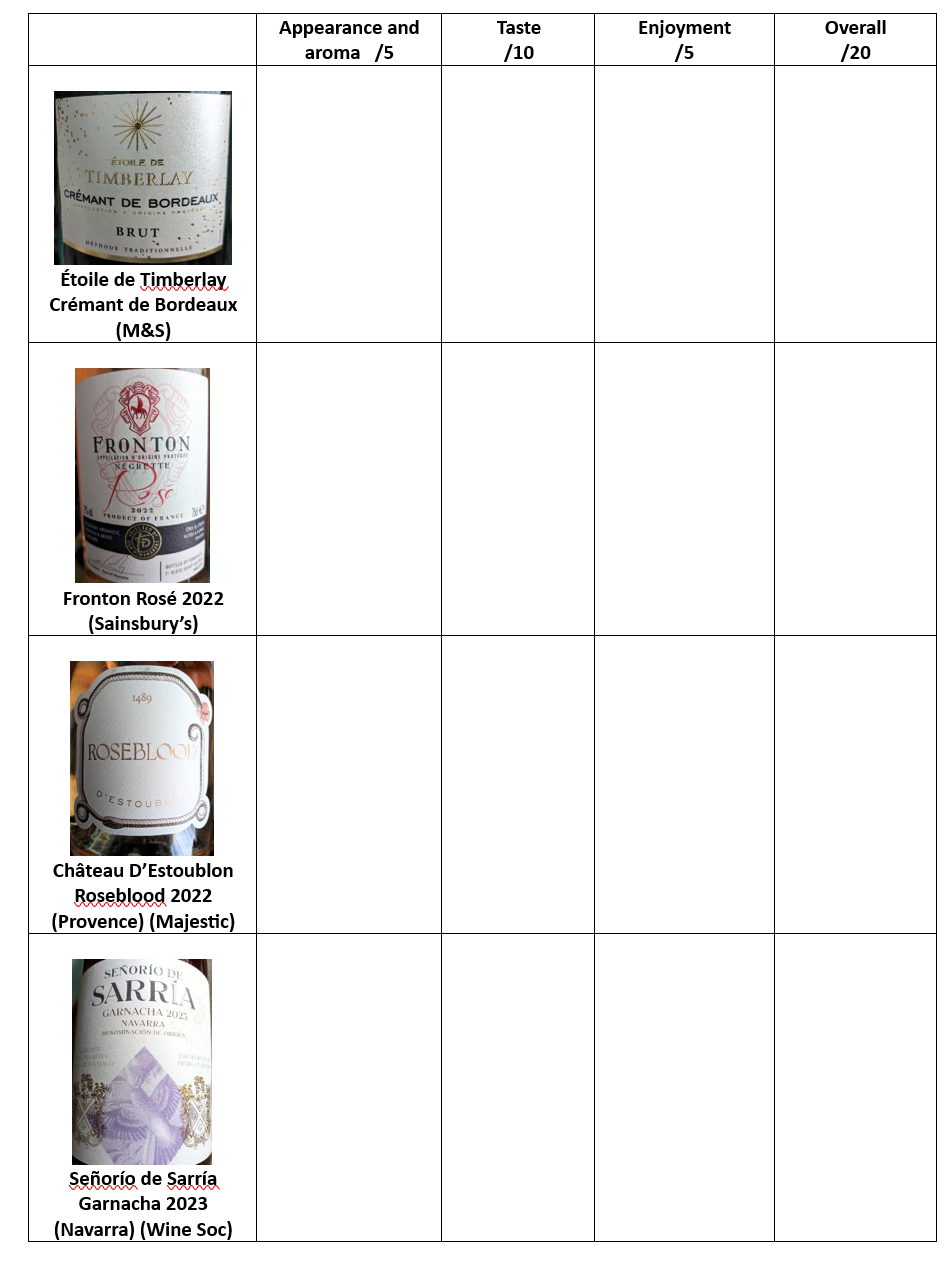
Wine 5 – Étoile de Timberlay Crémant de Bordeaux (M&S) – £10

Sparkling wines for aperitif but also food, fresh for summer dishes such as salads, fish, chicken.

Champagne the obvious choice, Prosecco too. Crémants are traditional French sparkling wines made in the Champagne method, Burgundy, Loire, Jura and others. Bordeaux is a huge area with 7,000 wineries so there are a lot of grapes and wines and the market turned against traditional wines so some producers are looking at other productions. Whites are making a comeback and Crémant too.

This is made from 33% Semillon but also 62% Merlot and a tiny bit of Cabernet Franc, the latter two being red grapes. Wine is taken off the skins straightaway to keep it white, though look out for Rosé Crémant too.

Apple and elderflower aromas? Anise? Lemony freshness? But also yeasty, hazelnut notes. 12% alc.

Yeasty notes come from secondary fermentation in bottle. Add sugar and lees to the wine and leave it in bottle to create bubbles and flavour. The yeast dies as it develops alcohol and the dead yeast cells (called lees) give flavour of bread, brioche to the wine. Prosecco and Asti use other methods so less likely to have this dimension., it’s a matter of choice.

PetNats a new trend where the wine isn’t fined or extra sugar added, it is simply bottled fresh wine so ferments in bottle. Sales have boomed, up 500% in the last two years.

Sparkling wines often on top shelf in supermarkets, be careful, if they are close to lights, light strike can damage wines with UV interacting with phenols in the wine to create sulphurous notes.

Rosés

THE biggest trend in wine in the last ten years, sales have risen from around 5-6% of all wine sold to 12%

Rosés started in Ancient Greece where they added water to wine and the Phoenician city of Marseilles was the starting point for modern rosé, Provence remains the heart of rosé. There are various styles and myths. Colour does not relate to quality, they can be drunk all year round like white wines, they are not all sweet and bubblegum, they can age and can be quality wines.

Methods of making

  • saignée (bleeding) – run juice off red wine early in its fermentation before the skins have given off colour just like we saw with orange wine. (By benefit, the juice on the skins becomes more concentrated)
  • direct press – press red grapes and run the juice straight off
  • Clarete – a Spanish technique of blending a mix of red and white grapes in tank to produce the desired colour
  • Assemblage – blend finished red and white wines (only allowed in Champagne)

Also known as Vin Gris, Rosado or Rosato.

Wine 6 – Fronton Rosé 2022 (Sainsbury’s) – £8

Made in SW France near Toulouse and with a local grape Négrette. This has good colour but not high acidity so good for light reds and rosé. Reviews all suggest this has sweet aromas of Turkish Delight, even Parma violets. However, the flavours are dry, red fruits such as raspberry, cranberry and cherry, sour notes and acidity for freshness, even minty.

The aromatics make it suitable for aperitif (12%alc) but the freshness suggests good match for light grilled foods, vegetables, halloumi perhaps.

Made by the cave cooperative, a source of good value for many supermarkets – some are better than others so try to do some research.

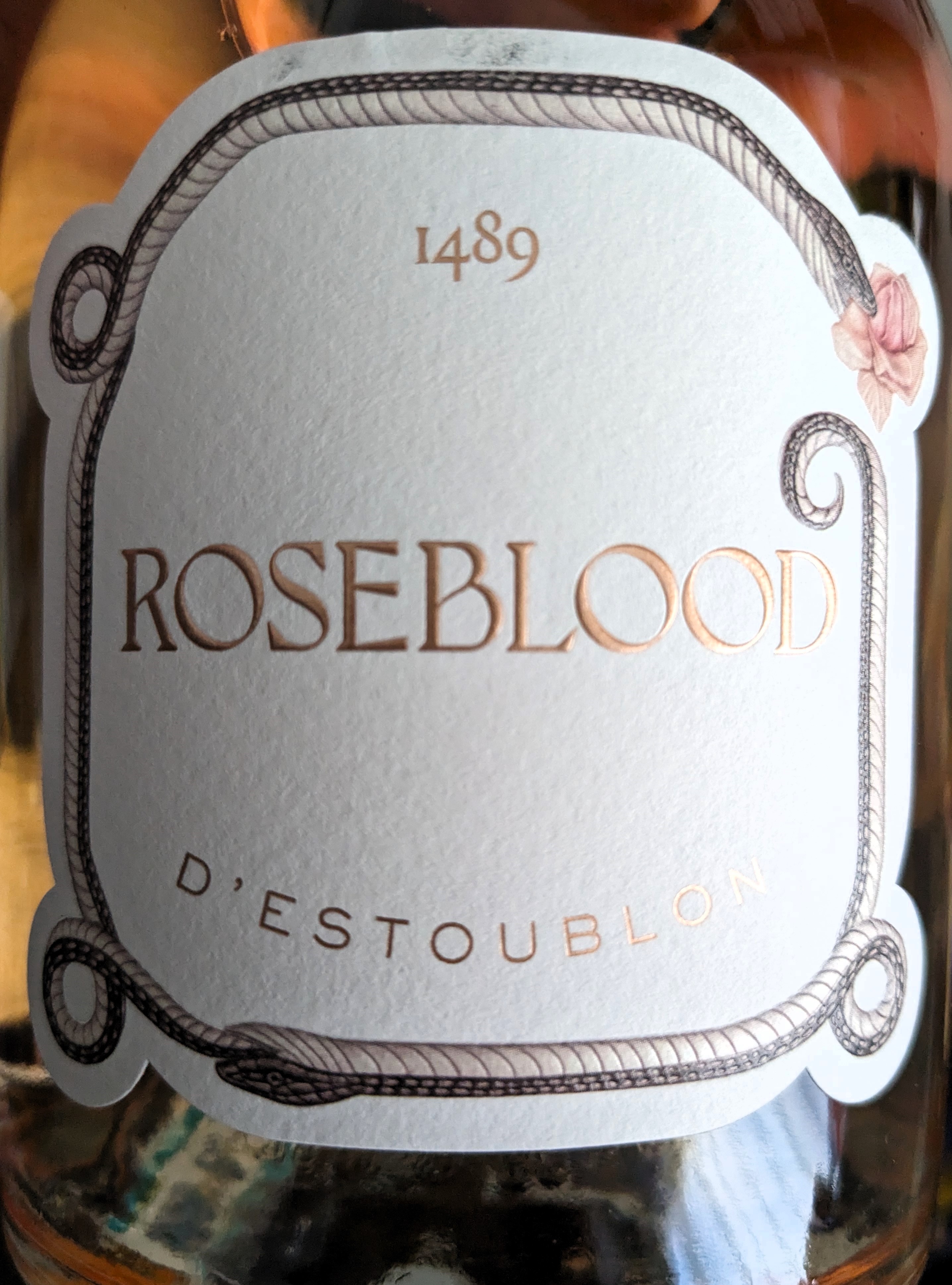
Wine 7 – Château D’Estoublon Roseblood 2022 (Provence) (Majestic) – £21.99

This was an exciting discovery as Majestic had it reduced even from the usual mix 6 discount. Therefore an expensive wine became viable on our budget.

Why exciting? As I said Provence is the heartland of rosé wine and there are some big estates – Esclans with Whispering Angel, Miraval of Brad and Angelina fame, Mirabeau and Estoublon, south of Avignon. A huge estate with olives, vines and a beautiful chateau. The estate is owned by some of France’s elite, including former President Sarkozy and Carla Bruni. They employed the winemaker from Cloudy Bay (Victor Joyeaux) to create it but the owners of Chateau Lafite also own some of the estate so plenty of investment and expertise.

This is the new flagship wine of the latter estate launched in 2020.

Made from Grenache, Cinsault and Tibouren. The latter was a Greek grape imported to Marseilles during its Phoenician time, matching the story of rosé wine I mentioned earlier.

Getting high marks from the likes of Decanter. Colour – pale, the Provencal style of onion skin.  Aromas – red berry, fresh fruit leaves. Flavours – delicate apricots, blackcurrant and fresh minerality, 12.5% alc. Made for Mediterranean dishes and aperitif

Celebrity wines – Caveat emptor – they all say they have been involved but at most that usually means they liked the wine made for them. There are exceptions but this is a marketing exercise and you’ll pay more than for the same wine under another name.

Wine 8 – Señorío de Sarría Garnacha 2023 (Navarra) (Wine Soc) – £7.95

The colour !!

This is a Rosado from Navarre in NE Spain, next door to Rioja. The area includes the driest area of Europe (Bardenas Reales) and the vineyard is based in the hills and influenced by the maritime winds too. Female winemaker Milagros Rodriguez wants a full coloured wine based on the Garnacha grape (25 year old vines with some aged 60). A 16thC wine domaine which was basically pulled down and restarted in 1953.

In articles on 2024 rosé wines this was selected by Decanter, Independent, GQ, Telegraph and Times as one of the best on the market despite its price.

Aperitif, but with enough body for a variety of foods, cheeses and even spicy food. Strawberry, cherry fruit aromas and flavours and the elongated saignée method gives it tannin to match food. It is bone dry, just 0.5g/l of residual sugar, though this means sugar turned to alcohol at 14% but the wine is very balanced.

Price isn’t everything, read reviews by those whose judgement you trust.

New trends – field blends and the clarete method described before, also known as assemblage or métisse, producing might red or rosé coloured wines.

The Rosado was certainly the most popular, followed by the Frappato and Crémant with the other two rosés just behind. Overall, this was a successful evening with a group of people keen to try new styles and explore the stories behind the wines. All we need next time is some warm weather!


Leave a comment

2019 – favourite orange wines

One of the key features of the wine world in recent years has been the rise to prominence of orange or amber wines. What was a traditional method of making wines on skins, for example in amphorae, in places like Georgia and Slovakia has become a trend around the world. Orange wines do not have to be based on organic grapes though that is often the idea many people have. Orange wines are simply wines made from white grapes but where the juice is left in contact with the skins to extract colour and tannin, they are sometimes referred to as skin contact wines.

So widespread are orange wines that I have decided to split up my long list of white wines of the year to post a fourth article focussed on orange wines. I tasted many such wines this year including Jeff Coutelou’s OW which is great. That is based on Muscat grapes and I often prefer orange wines based on aromatic grapes. One such is the Hungarian grape Rozsako and I was really impressed by the 2018 Rozsako of Bencze Birtok when I tasted it at The Real Wine Fair. The domaine of a young Hungarian couple produces a wine with great stone fruit character, apricots for example. Fresh, clean and with a little bite from the tannins. Very good indeed.

Still in central Europe but this time from the Franken region of Germany was another excellent wine, this time based on the often derided Sylvaner grape. In Germany and Alsace this grape often used to make dilute, flavourless wines but modern winemaking and climate change have helped to improve its reputation. I described Andi Weigand’s Skin 15 like this after tasting it at RAW in London, “Fermented in whole bunches for 8 weeks, kept in old barrels for 3 years then refermented using 20l of juice from 2018’s harvest. The result was a perfumed, peachy and clean, fresh wine, a real joy.”

I mentioned in the post on red wines of the year how much I liked Testalonga‘s range this year and Stay Brave 18 was another great wine. Chenin Blanc macerated for a shortish period of 11 days. Golden in colour with a fine texture of tannin this was my favourite orange wine this year because of its fruit and balance. Chenin is forging a new identity in South Africa, wines like Stay Brave suggest it has become the equal of its traditional Loire home.

Finally, closer to home. Ancre Hill is based in the Wye Valley in Wales, close to the English border. Its Orange Wine 2017 is predominantly based on Albarino grapes, traditionally from northern Spain. They are macerated in whole bunches for up to 50 days and aged for a minimum of 10 months on lees with no SO2 added. This is very much orange in colour but was fresh and full of flavour and lingered long in the mouth. Da iawn Cymru. It is good to see English and Welsh biodynamic wines emerging in such style.


1 Comment

Wine with friends, the 2017 Coutelou wines

20180911_223114

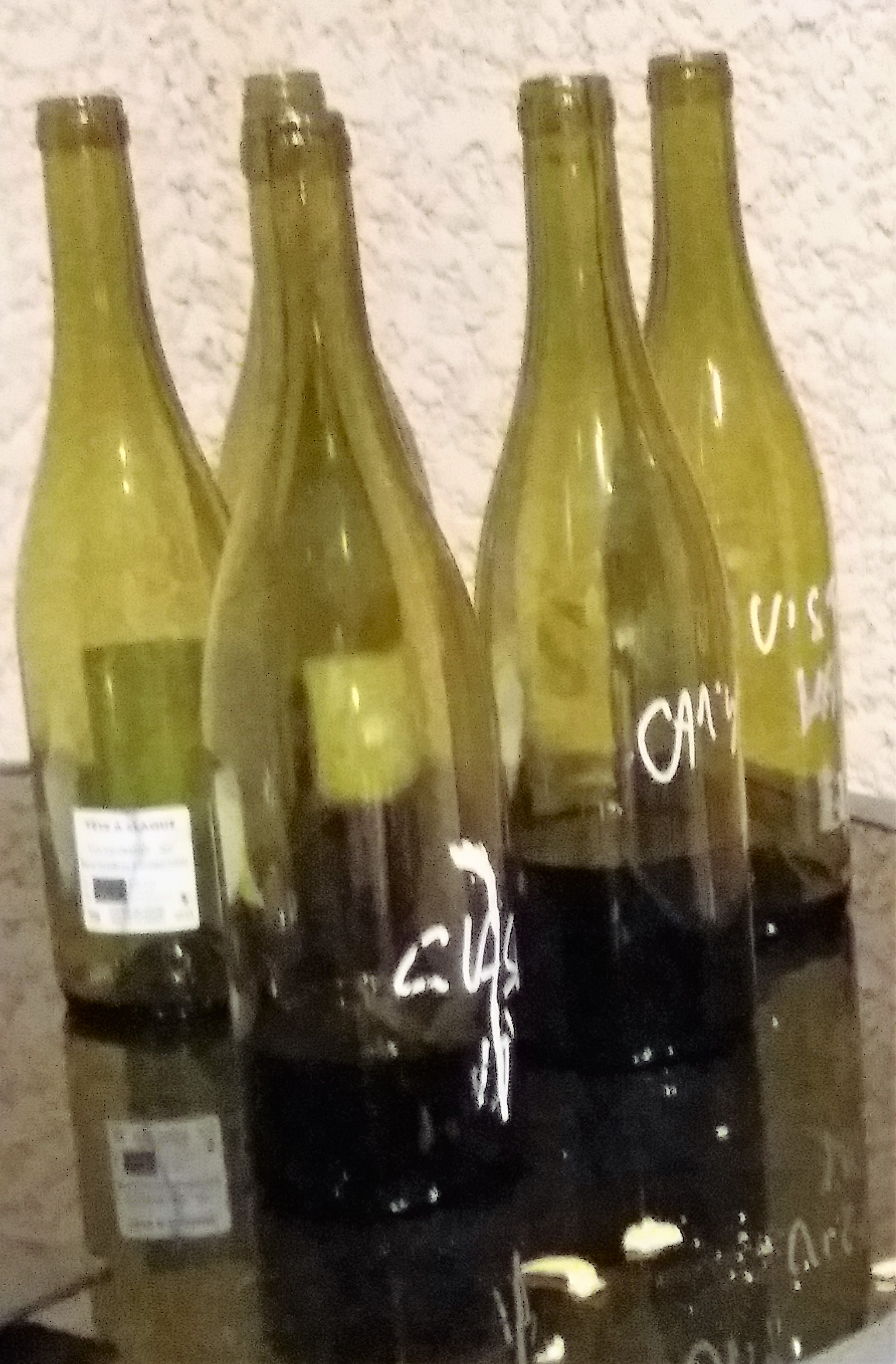
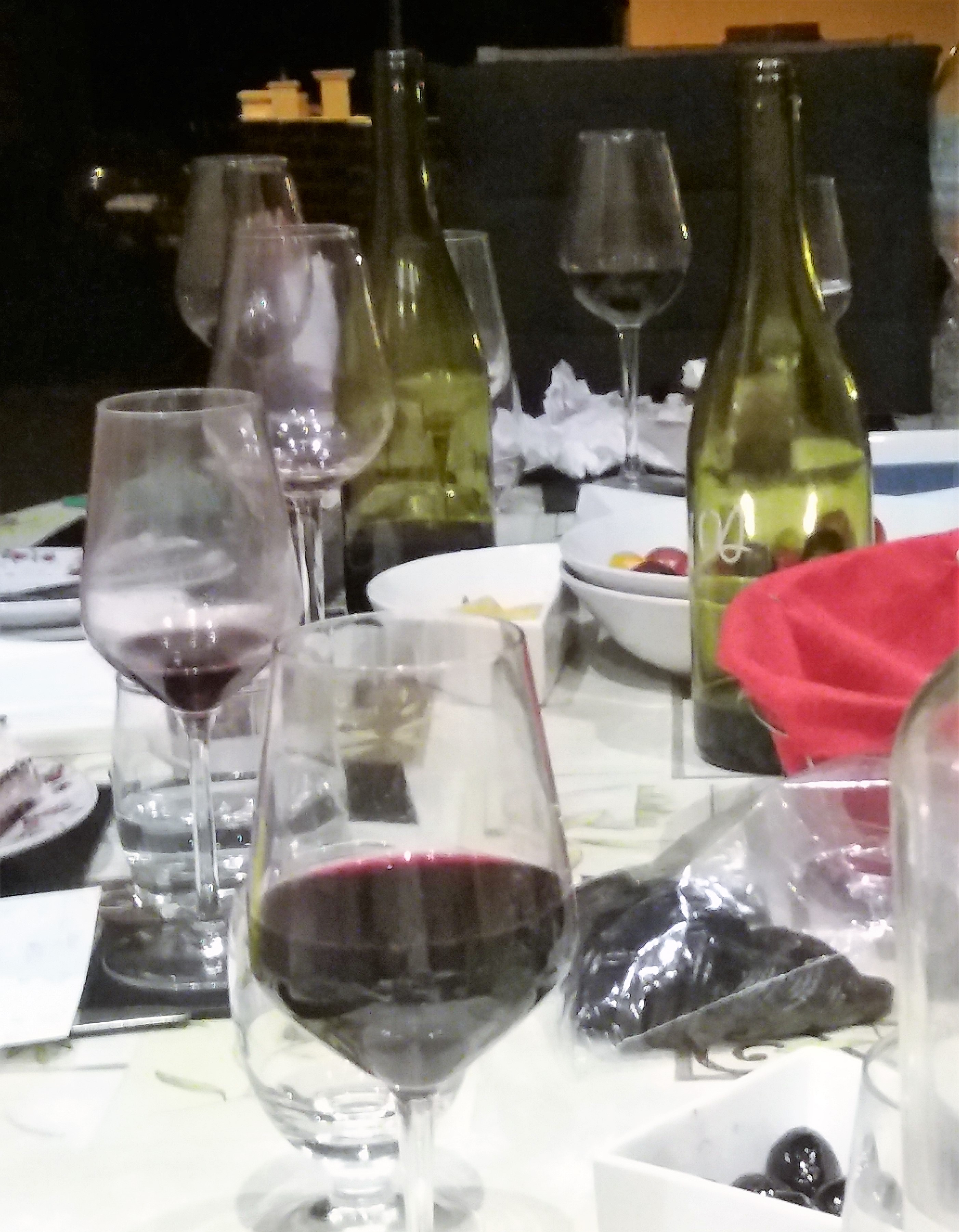
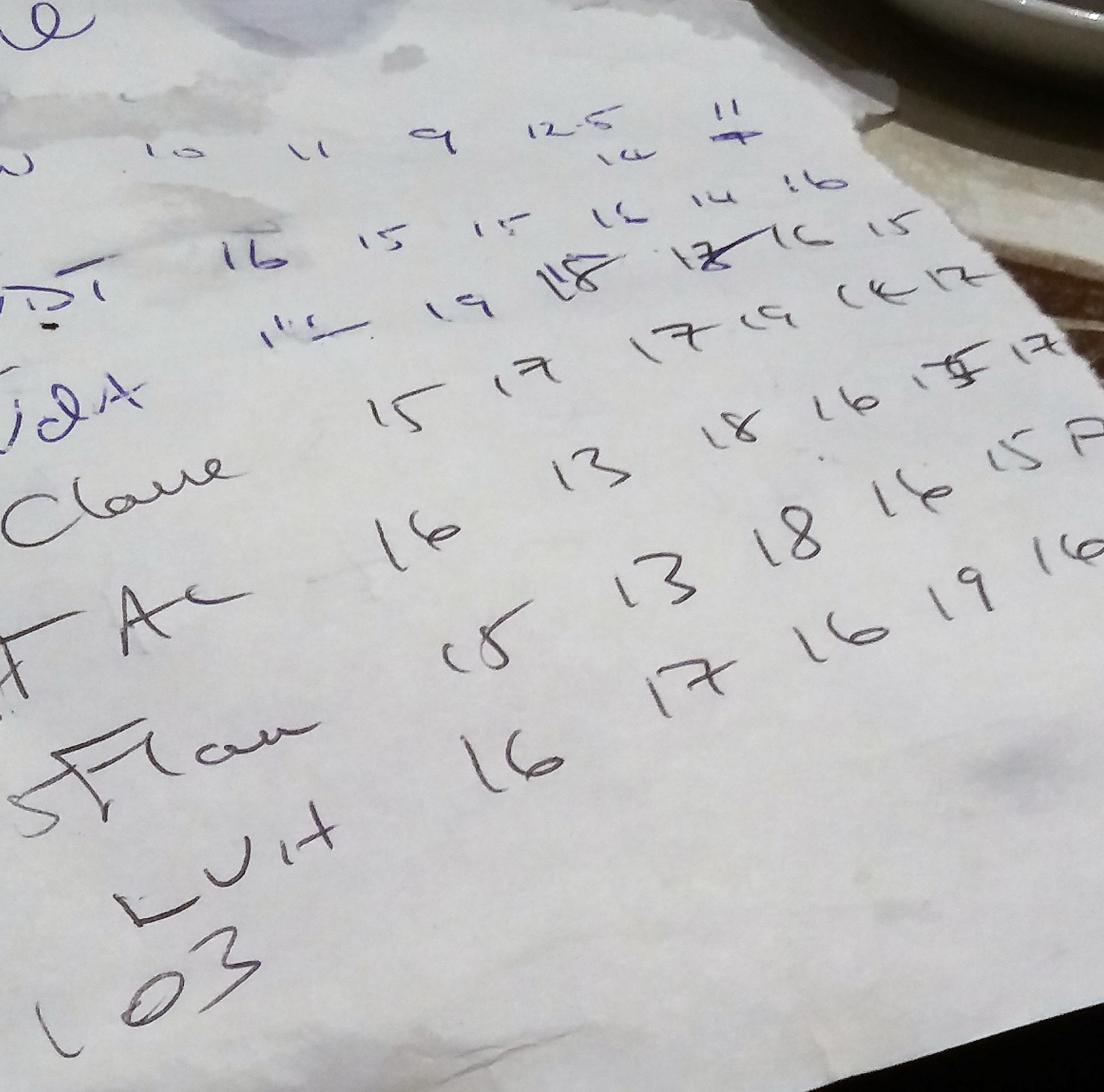
One of the highlights of the last few weeks of the 2018 vendanges was tasting the wines from 2017. A group of our friends gathered to enjoy bottles kindly given by Jeff and we tasted through them, scoring them as went. I am not a great fan of wine scores but it was a simple way of tracking our preferences, we revisited scores regularly to ensure there was some context for the earlier marks.

We started with the OW of 2016, so a different vintage but yet to be released. I have tasted it regularly in recent weeks at vendanges lunches and I really like it. Many orange wines are being made but often they are based on grapes which have fairly neutral skins. OW is made from Muscat D’Alexandrie and the skins have a lot of flavour which the long maceration brings out together with the tannins. This has real character, one of my wines of the night. It must be said that for some of my friends it was too much of a shock, unused to skin contact wines they found it too different. If you like orange wines though, believe me, this is excellent.

20180911_223132

On to the reds. 2017 was a vintage of low yields due to the long, dry summer. However, it must be said one of the consequences is a concentration of flavour and high quality. The six wines we shared were all very good and consistent in their length and full flavour. Perhaps the most consistent of any vintage I have been involved with since I started in 2014.

Vin De Table is a supposedly simple wine. Don’t be fooled, it is very good. Assembled from wines left over from the main cuvées with quite a large portion of Merlot for good measure. It received consistently good scores from everyone, it was simply enjoyable and very drinkable, belying its simple status with good fruit, freshness and length. A bargain at the price of well under 10€ seen in many caves.

Tête À Claques was a wine originally made for London restaurants but now sold from the cellars. It is based on Le Vin Des Amis (what was left) to which was added Mourvèdre and other remaining wine. The Mourvèdre boosts the wine with some crunchy, dark fruit flavours and this was one person’s favourite wine of the night.

20180911_223156

The natural successor was Le Vin Des Amis. For two of the group this was their favourite wine of the evening. The 2017 version is based on Cinsault, not the norm. Blended with Syrah and Grenache the Cinsault gives a real lift of red fruit and the result is a classic VDA, a bottle which will please anyone and disappear quickly.

On to the other headlining wine of the Coutelou range, Classe. Syrah, Grenache and more Mourvèdre (there was also a pure Mourvèdre released in 2017 under the name of On Peut Pas Vraiment Dire Que). Classe usually adds a depth and silkiness compared to VDA, it lives up to its name and label. This was no exception, it really is a very good wine and one I would love to age for a year or two even though it would be hard to resist now. One person chose it as their highlight.

Flambadou has been one of the best wines of the domaine for the last few years. Pure Carignan from a vineyard with complex geology the 2017 version is up to those high standards with dark fruits, freshness and ripe tannins. It needs time to mature before it reaches its peak but this is one of my favourite wines and, from experience of this wine, I can tell this will develop into a top class wine.

My absolute favourite Coutelou wine is La Vigne Haute, the pure Syrah from La Garrigue. North facing, villefranchien rock the wine is only released as La Vigne Haute when Jeff decides it is of the required quality, just seven of the last nineteen years. This is the first time I have been involved with making LVH and I am thrilled with it. The fruit is already evident, it is complex, has dark edges as well as the fruit. The flavours are long and fresh with more ripe tannins. It is a beauty, it could be mistaken for a wine from the Rhone or Ardèche. Previous examples of this wine have shown me that it needs 5 years or more to be at it best, 2009 is excellent at present. This will be a wine to treasure for years to come. Three of us chose it as wine of the night.

Overall, my friends showed great taste in selecting La Vigne Haute as the clear leader in scoring (I hope my influence wasn’t too strong!). Classe and Le Vin Des Amis followed on a few points behind. However, all agreed as we enjoyed a wonderful half bottle of Vieux Grenache that the wines were excellent, consistently so.

Thanks to May and Martin for being such great hosts and providing lovely food to accompany the wines. And to Pat, Afshin, Denise, Matt and Jonathan for joining in and making it so enjoyable.

A special night. Jeff told me from the beginning that he makes his wines to be shared with friends and loved ones. This was a night to prove the wisdom of those words as well as the immense talent and passion of Jeff Coutelou.

20180911_223143


Leave a comment

A Tour Down Under, Queensland

After the busy city, time to relax with a trip to the Whitsunday Islands off the Queensland coast at the southern edge of the Great Barrier Reef. Hamilton Island is a holiday resort essentially, famed for its exclusive residences used by the rich and famous as well as its family hotels. Island visitors are well catered for with restaurants, shops, beaches and pools. To get around the small island golf buggies can be hired as no cars are allowed. The system runs like a well oiled machine.

P1030922

Buggy driver outside the church

As well as relaxing in the warm sunshine we made two day trips. The second was to Whitehaven Beach on the largest of the 74 islands, Whitsunday itself. The beach is a shining white colour, the sand is almost pure silica and has a fine flour like texture. The waters are clear and a beautiful colour.

However, star of the visit was the day snorkelling on the Reef itself, notable Bait Reef. I had never snorkelled before but I took to it, well, like a duck to water. I wasn’t sure what to expect from the Reef, whatever expectations I had were surpassed a thousand times over. The magnificent colours of the coral and the fish lit up the ocean. The Reef here was badly damaged by Cyclone Debbie in April 2017 and yet, though some parts died off others were showing signs of recovery with beautiful blue, pink, yellow coral sprouting along with many other colours too.

                          Waves breaking on the coral reef and fish around the boat

Apparently 10% of the Earth’s fish species live on the Reef and it was impossible to keep track of the dozens of species I saw. However, two stood out. A blue spotted ray darted along the seabed and then, as we were returning to the boat I saw a black outline against the white sand. It could only be a shark from its shape but it took a while for me to get my head round that. It sat for a couple of minutes and then turned and swam straight towards me which made my heart skip a beat. It swam right under me and it was a few minutes I shall never forget. I was told by our guide that it was a white tipped reef shark, it was magnificent.

                    Butterfly fish, blue spotted ray and the white tipped reef shark

Then to Brisbane for the final few days of the trip. The city is dominated by the river of the same name, free ferries and buses help the traveller to get around easily. The beautiful botanic gardens sheltered a variety of birds, water dragons and beautiful plants, trees and flowers.


Strangely some of the better wines from shops and bars of the whole 2 months were experienced here in Queensland. The bottle shop on Hamilton Island carried good wines such as O’Leary Walker‘s Polish Hill Riesling, D’Arenberg‘s Custodian Grenache and the interesting Toru blend of Gewurztraminer, Riesling and Pinot Gris from Te Whare Ra in Marlborough. All very good. From another bottle shop in Brisbane I secured an old favourite in Coldstream Hills Pinot Noir 2016. I hadn’t tried this since James Halliday gave up the domaine but it proved to be as good, refreshing and fruity as it always was.

At the Silver Fox Wine Bar in Brisbane though came a real treat. We ordered an orange wine from the Barossa Valley and the sommelier advised me to try the Old Vines Grenache from the same producer Kalleske. It was excellent advice. The orange wine, Viognier, had aromas of, well, oranges. Lavender too. It was delicious with tangy zesty fruit and lovely texture. One of the most interesting orange wines I have come across. The old vines Grenache was concentrated black and red fruit delight too. Unlike many reds I have tried here it was full but also light, not jammy, not over oaked. When I looked up the producer online I found that it is a biodynamic domaine in the Barossa, I was not surprised. There was a real energy and finesse to these two wines and I will be seeking out more of them if I can find them in the UK.

So, some good wines to finish and some of the most memorable of experiences too. Australia and New Zealand, thank you.


Leave a comment

New Year, old favourites

Happy New Year to all of you who are good to enough to click on to my site, it is much appreciated. May 2018 bring you health and happiness.

The transition from one year to another is another excuse to open a good bottle or two and star of the show this time was, yes you guessed it, a Mas Coutelou wine. This time it was Copains 2013. This wine is based on grapes from my favourite vineyard, Rome, based on Cinsault grapes from those old twisted vines I love so much.

P1030212

Rome’s Cinsault vines

It is still youthful, bright fresh cherry fruits to the fore and a nice backbone of tannin. Further proof of how well Jeff’s wines will mature if resisted in their youth. A lovely red, worthy of the occasion.

mas-coutelou-vin-les-copains

photo by amicalementvin

On New Year’s Day itself I opened an orange wine. 2017 had been the year which saw me converted to orange wines and also beginning to understand the value of using amphorae to age wines. The wine in question came from Casa Pardet in the Costers del Segre, Catalonia. This domaine produced one of the most stunning wines I have ever tasted, a Cabernet Sauvignon and is one whose wines I have sought out ever since. This wine was a Chardonnay 2014 and the fruit shone through as well as the characteristic tannins and dusty influence imparted from the amphora. Yet more proof of the skills of Mia and Pep Torres.

20180101_212028

Amazing label of Casa Pardet

So 2017 ended and 2018 began with top class wines. May the standard be maintained!


8 Comments

Orange Is Not The Only Wine

20170624_200433

Orange wine (this was over extracted and medicinal)

Version francaise

Orange wine is very, very fashionable. Often associated with the natural wine movement that is not strictly true as many conventional winemakers are experimenting with orange wines too. Perhaps the fact that they have both emerged into the spotlight in recent years has brought the two such an association. I must say I like the idea but I have not always been convinced by the wines themselves, so here are some recent experiences.

First of all we should clarify what orange wine means. They are made from white wine grapes which are left on the skins for an extended period in order to extract more flavour. This long maceration also adds tannin and colour to the wine just as happens with red grapes when making red wine. The length of time for skin contact and the type of grapes will add more or less colour, flavour and texture to the wine.

This was how wines were made many years ago, the current trend is a revival of ancient practices. Some countries such as Georgia have always made wines like this. I have had the opportunity to taste such wines from all over the world including Georgia. Mostly I find them pleasing the mind and appreciating the technique rather than pleasing my palate. Academic rather than pleasurable. Often they lack charm, taste very dry and with no fruit, perhaps the result of overlong maceration.

However I have recently tasted some very attractive orange wines. Les Choix 2014 came from Turner Pageot in Gabian, a very well judged wine as there was still plenty of apricot fruit as well as being dry and textured, made from Marsanne grapes. Very good. Ora(n)ge Sur Les Canilles 2016 is made by Domaine Ribiera in Aspiran. Régis and Christine Pichon make this delicious wine from Clairette and Terret grapes, again they have extracted good texture and dry flavours as well as white fruit flavours. Both wines have the slightest note of Fino sherry which really appealed to me.

At Mas Coutelou in 2015 and 2016 Jeff used white grapes such as Muscat Petits Grains to make orange wines, usually supervised by our two Australian assistants Cameron in 2015 and James in 2016. The result in 2015 went to make OW1, a blend of eight grape varieties macerated for a couple of weeks. It is a bright colour, has good texture and plenty of fruit along with a herbal note. The following year James made the Muscat based wine and this is a real success, the muscat notes are there but restrained to give white fruit flavours which linger with good spicy notes and a dry finish.

Orange, skin contact, long maceration. Whatever name you give this style these are wines requiring judgement and skill from the winemaker. I encourage you to try them but select ones from winemakers you trust.

For more information from someone who knows orange wines much beter than me I would recommend this website from Simon J Woolf.


4 Comments

Vendanges Diaries (2)

IMG_2233

Version française

Aug 30th was a Sunday so no picking but Jeff was still in the cellar working. The early wines needed to be checked and moved as necessary.

Monday 31st dawned cloudy again and it was time to tackle the biggest of the vineyards at Mas Coutelou, Segrairals. The Syrah was ready to be picked and Jeff had decided to use carbonic maceration to ferment the grapes which are probably not of the same top quality as those from La Garrigue or Sainte Suzanne which were picked last week.

Grapes which are pressed like those described last week ferment in tank as yeasts react with the juice to change the sugar to ethanol, ie alcohol. The yeasts are natural from the skins of the grapes and the atmosphere of the cellar. In the case of Mas Coutelou and many artisanal winemakers this is the case though other winemakers will buy yeasts some of which are designed to add particular flavours to the wine. None of that in Puimisson, these are natural wines.

IMG_2232

        Carbon dioxide pumped into the tank

Carbonic maceration means that the whole bunches go into the tanks, grapes and stalks alike. The tank is filled with carbon dioxide which permeates the grape skins and starts the fermentation within the cells of the berry. Some of the berries at the bottom of the tank will be crushed by the weight of the grapes and so there will be some conventional fermentation too.

IMG_2245

Whole bunches in the tank

All the grapes are given a light crushing later by which time ethanol will have formed inside the skins and so the resultant juice is ready made wine. The result is often more fruity and juicy wine.

IMG_2239

Grapes arrive through the little back door above the cement tanks

To achieve this the tanks are filled from above so we worked in the space above the cement tank with the grapes arriving at the back door which is a level higher than the front door. The space is smaller and the heat from the grapes was high. It was hard work, believe me. Sorting still had to be done before the grapes could go into the tank, quality comes first.

IMG_2243

                 Some of the rejected bits

IMG_2246

 The pipe carries the CO2 into the tank

And after 9 hours of back breaking lifting, carrying and sifting it was, as ever, time to clean everything from top of the cellar to bottom as we see here with Jeff and Michel.

IMG_2248

IMG_2251

IMG_2247

        One visitor from the vineyard

IMG_2242

The boss letting us know we should get a move on

The night of the 31st brought a big storm with lots of rain, not the ideal conditions for harvest at all. Rain can cause rot and problems. However, it could have been much worse as news arrived of huge damage caused by hail in the Chablis region. For all the forecasts of how the harvest might turn out it is only when the grapes are safely in the tank that a vigneron can be assured of the quality of wine they might make. Commiserations to the Chablis producers.

September 1st was a quiet day as the rains from the storms meant the grapes were too wet to harvest. In the cellar more checking and remontage, the process of pumping the wine over the cap of skins and must. Further analysis of the wines showed that the yeasts are acting quickly and the fermentation is progressing very well.

IMG_2262

      Hard work!

Today, September 2nd, the remaining white grapes, Grenache Blanc, from La Garrigue. Then on to Peilhan to gather some of the white grapes there, Maccabeu, Grenache Gris, Carignan blanc and Clairette Musquée.

Grenache Gris

                                  Grenache Gris

Carignan Blanc

                                  Clairette Musquée

IMG_2260

      Michel

The core team of Jeff, Carole, Michel, Cameron and myself were joined by Matthieu who has worked the harvest before here. There were some lovely bunches though the wet weather has caused some rot inside some of them, Careful sorting took place in the vineyard to take only the best grapes which tasted really sweet and juicy, the Clairette was especially tasty.

IMG_2267

Cameron especially pleased with this bunch of Clairette

The white grapes were taken back to the cellar and placed in tank after being destemmed. It is possible that Jeff will make his first orange wine with them. An orange wine is a white wine made like a red wine, ir the wine is fermented on the skins thus extracting more colour, texture and flavour from them and giving the wine an orange tint. However, analysis and the next few days will be needed before the final decision is made.

Whites

In tank and the future might be orange

In the afternoon, Matthieu, Jeff and myself did more remontage of the Syrah grapes harvested in the last week, which is already tasting well, with very healthy technical analysis and beautiful aromas. And, then, as ever, the cleaning.

IMG_2277

              Matthieu carrying out remontage

IMG_2283

  Remontage, the juice flows over the cap of must

Syrah from Ste Suzanne

    Beautiful colour of the Syrah from Ste Suzanne

IMG_2269