amarchinthevines

Learning about wine, vines and vignerons whilst living in the Languedoc


Leave a comment

Natural terroir

P1010223

En français

The choice of my recent wine of the week, Olivier Leflaive’s Burgundy Oncle Vincent 2012, made me think about how wines change. When I used to regularly visit Leflaive and Burgundy in the 1990s the style of wine was very oak influenced, a response to the New World oaked wines and to the influence of Parker / Rolland in Bordeaux. The wines smelled of vanilla and tasted of wood. Subtlety was often lost, especially on the lower ranked wines. Happily those days are in the past (though I still come across some very heavily oaked wines even in the Languedoc) and this bottle was zesty and fresh with a little oak adding creaminess.

onc-1

Similarly if I choose to drink a Riesling from Alsace I can find two wines from grapes grown side by side in the same vineyard which will taste very different. One producer might prefer a lean, dry style of wine whilst his/her neighbour makes wine in a rounder style with more residual sugar. The same can be said of wines from any region of course. So where does that leave the notion of terroir?

Terroir is that elusive term which describes soil, micro-climate, slope etc. Effectively it means the location, the ‘in situ’ of the wine. However, some will also add the influence of the local culture upon the winemaking in the concept of terroir, Alsace with its traditional residual sweetness for example. However, different winemakers choose different methods and styles according to not just local tradition but outside influences, wines tasted, travels etc.

yellow tail

Amongst those influences has been the growth of the natural wine movement. I have read and heard numerous accounts by natural winemakers of how they came to choose this philosophy for their métier. Most include their discovery of a natural wine which made them tear up the rulebook and decide that this was the style of wine which they wanted to make because of their freshness, drinkability and flavours. A typical account can be found here.

Yet those who still find fault with natural wines are wont to declare that natural wines mask the flavour of grape and place because they often taste of natural wine and nothing else. Take this remark by Rosemary George*, English wine journalist and Languedoc resident, “if there is one thing that I reproach natural wines, it is that they all, irrespective of provenance, have a tendency to a similarity of style.  The best have that delicious mouth-watering freshness, but that somehow seems to mask their origins.”

geology

You will not be surprised to read that I disagree. I do accept that some, less well made natural wines do have aromas and flavours which resemble each other regardless of origin. However, I think in the vast majority of cases that natural winemaking has progressed and reflect their terroir and grape(s) much better than most conventional wines. How can it be otherwise? If a winemaker adds enzymes, artificial yeasts and SO2 how can than not be adding an extraneous element to the flavour of the wine which is nothing to do with the place? If you add oak chips or staves does that make the wine more Burgundy, Bordeaux or Barossa? Or does it simple meet the established concept of what a wine from those areas ought to taste like?

Winemakers will often aim for a flavour, they want their wine to be the same year after year. That is how the big companies retail Yellow Tail, Blossom Hill etc, the customer expects a certain flavour if wine and that is what they will be given. Like Coca Cola. This does not reflect terroir or vintage at all and, to be fair, the big companies would not claim otherwise. However, I do get the impression that many smaller winemakers follow a similar recipe.

A recent visit to a wine fair in Vouvray was a very disheartening experience. I tasted wine after wine which lacked character but did taste very much like the next sec or demi-sec from the next producer. The conformity was alarming. There was a Vouvray style common to most producers but it was bland and dull. There were one or two exceptions where a winemaker had taken deliberate steps to change their winemaking and vineyards, D’Orfeuilles for example.
P1010117

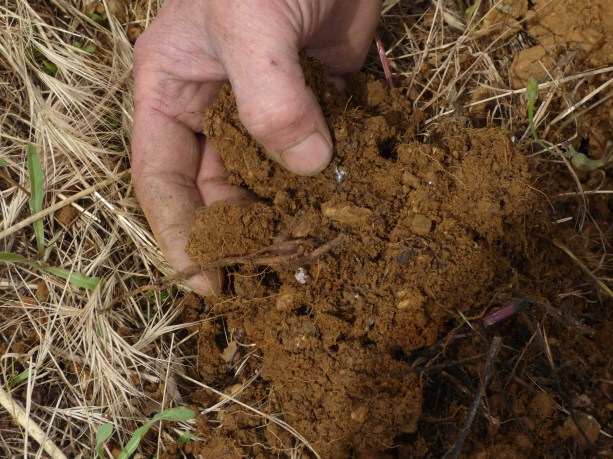
Healthy wines come from healthy soils including microbial life as here at Mas Coutelou’s Rome vineyard

So give me a wine of character. Give me a wine with nothing added where the vineyards’ health is reflected in the grape juice which makes the wine. Give me that grape juice with nothing extraneous added,  natural yeasts for example. Let that wine be carefully nurtured and not messed around with, no added flavourings. If it is aged in barrel then I would expect it to reflect that influence but not be dominated by it. I want to drink wines which reflect the vitality of healthy grapes in healthy vineyards. The wines will alter from year to year because nature alters from year to year. That is terroir and why natural wine reflects terroir in as pure a state as possible.

*(To be fair to Rosemary she does like some natural wines and it was her writing that first introduced me to Jeff Coutelou so I have much to thank her for.)


7 Comments

Natural desert

UK-wine

hospitalitybusiness.co.nz

I have been in the UK for the last two weeks and thought I would look around to see whether I could find natural, biodynamic or organic wines. If I lived in London then the experience would have been very different as there are a number of wine merchants who sell natural wines, even specialise in them. This website has a map showing such oases. Around the country there are merchants who also specialise in these wines, the excellent Vins Naturels website links to some.

However, I live in the North East and it is a desert for the sort of wines which I love. I walked around a number of supermarkets and it was a depressing experience. Rows of shelves loaded with branded wines from the usual suspects, Yellow Tail, Gallo etc. Hardly any artisanal wines and, in my regular supermarket, I could not find one organic wine let alone natural wine. On the websites of the big supermarkets, Tesco lists 5 organic wines from almost 600 wines, Morrisons just two from over 500. Other big chains don’t even show organic wines.

20160712_115723

A supermarket near me

The moral is, if you want to drink organic, biodynamic or natural wines, then search online for specialist merchants. The message is not getting out there to a wider wine drinking public. Just this week I read a thread on a well known wine forum which included comments about not buying natural wine in France as it doesn’t travel back to the UK. Complete nonsense of course. Many natural producers sell their wines in the USA, Australia and Japan in large quantities. I transport such wines regularly back to the north of England with no problem whatsoever. That people still go along with such nonsense shows that prejudice and clichés carry more weight than reality. But then after recent weeks why does that still surprise me?

The Real Wine Fair, RAW and other events show that there is a market in the UK but it is very London centric. We need change.

supermarket-logos-2015

from Britpoll.co.uk


2 Comments

Jean-Claude Coutelou

IMG_2430

I was truly saddened to hear from Jeff this morning that his father, Jean – Claude, passed away through the night.

Jean-Claude was a Physical Education teacher, running the family wine domaine at the same time. It was he who gained organic status for the domaine back in 1987, one of the first two hundred French wine domaines to be certified organic those 30 years ago.It was he who began the process which Jeff has taken on to make Mas Coutelou an oasis of biodiversity in a sea of conventional vineyards. I know from talking to him that Jean-Claude was very proud and very happy about the way the wines and the vineyards had developed under his son.

I enjoyed his company, his love of sport and poetry and his gentle teasing of we English. Indeed our last chat, just a couple of weeks ago, included some laughter at the current state of my home country. He was kind and generous with Pat and myself and we shall miss him.

So, thank you Jean-Claude for all you achieved, not least in your lovely family to whom I send my heartfelt sympathies. It was an honour to have got to know you. Every time I am in Rome vineyard, your vineyard, I shall think of you.


1 Comment

Last of the summer wine


Flower Power

Flower Power 2015

En français

As work on the cellar ratchets up a notch in the next few weeks it was time to bottle the last of the 2015 wines which will be made for the moment.

The framework for the new mezzanine floor is in place and actually looks quite beautiful. It will be reinforced with concrete however, and the metal cross bars will disappear (which might stop us knocking our heads). Plumbing has also been tidied up and improved. Cuves will be placed below and on top of the structure. More work on stairs, flooring and around the cellar will happen soon. As I am heading back to the UK for a couple of weeks or so, it will be exciting to see the changes upon my return.

P1010407

Peilhan June 30

The vines continue their growth in the sunshine and heat. Mildew problems are largely contained though some humidity leads to sporadic outbreaks (apologies for the pun). Sadly, there is a new threat of oïdium (powdery mildew) which likes that humidity and the warm days with cool nights we have been having. Powdery mildew shows as grey, white spots on the leaves and the grappe. Certain cépages are more vulnerable, including some of the traditional Languedoc varieties such as Carignan. The treatment is to spray sulphur powder and Jeff Coutelou made the first treatment this week in an effort to contain the problem, a job completed on Saturday morning. 2016 certainly has been a struggle.

P1010422

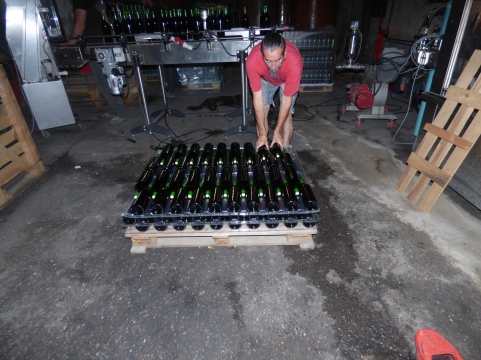
Meanwhile 2015 wines such as Flower Power and L’Oublié went into bottle on Wednesday June 29th. You might recall that the L’Oublié assemblage was made a few weeks ago and after spending time in tank, marrying together, it is now in bottle. Both of these wines are extremely good, well worth waiting for when they are finally released which won’t be for a while.

Jeff also put together a new cuvée exclusively for the French market, it will come in litre sized, Bordeaux style bottles as a «vin de table». An assemblage of various cépages it will be cheap, very drinkable and very desirable. The size of the bottles meant that they had to be filled by hand rather than the machine so Thursday was fully occupied with this cuvée. Jeff refers to it as a vin de gauche, after wine writer Vincent Pousson referred to Jeff as one of the last vignerons de gauche (left wing winemakers) because of his low prices making his wines accessible to all. It will be a wine to share and it will disappear down that litre bottle very quickly.

vin de table 2

The new litre bottle of the vin de gauche

2015 seems increasingly like a golden year, its wines are certainly glittering. 2016, well despite all it has thrown at us, there is hope. Meanwhile the summer wine is bottled and the heat is getting to some of us, even after his haircut.


3 Comments

Let’s be Candide

“Il faut cultiver notre jardin.”

19380

En français

Voltaire’s character Candide uttered this phrase as his philosophy to express the delights in, and benefits of, taking care of the small things in life. To occupy oneself with gardening is to take your mind off troublesome thoughts leaving one happier as a consequence.

Never has this phrase been more apt than the last week when my home country has lurched from its traditional sense of fair play, tolerance and progression towards isolationism, ignorance and prejudice. We are told, by  a former Education Minister, that British people ‘have had enough of listening to experts’ (Gove). Just remind yourself there, that’s a former Education Secretary advocating ignorance over education. We are told Britain will continue to welcome Europeans whilst some Leave supporters abuse migrants from all around the world.

baa13fqf2zrg85chz2dp

When I studied ‘Candide’ at university I was free to travel, live and work in Europe, now that freedom will be much more restrictive for our young people. And, life will be harder for those of us who have had the joy of living in Europe. Meanwhile US Presidential candidate Donald Trump tweeted:

“Just arrived in Scotland. Place is going wild over the vote. They took their country back, just like we will take America back.”

In fact Scotland voted overwhelmingly to Remain in the EU. Be very afraid.

That sounds more like Martin’s gloomy philosophy in the book that evil will win over good. Hence the need to look after our garden, to balance my spirit. What better way than by looking at the vines?

Hot temperatures and strong winds have helped to diminish the threat of mildew. Jeff completed his final spray against the disease last Tuesday, his battle has been a hard one but hopefully he has won the war. The vines themselves are making up for lost time, the young grapes swelling in size rapidly. There is a real vigour and energy there at present.

In the cellar work has begun to create a mezzanine floor at one side. This will allow the grapes to be put into the tanks from above rather than having to be pumped. Access to the tanks for pigeage. cleaning etc will be much easier too.

Martin was wrong, there are many good things in the world, the wonders of nature, not least in the vines. Pangloss, his counterbalance in the book, was wrong too, all is not for the best in this best of all possible worlds. Looking after the vines, and the wines, has never looked to be such a wise choice. Candide was right after all.

aaliberation-xlarge_trans_hs-gdo9an2vml8a2d7wio_o1cchhxari50txb6eoa0


2 Comments

Mildew

Su mildew

As I have posted regularly in 2016, this has been a most unusual year weather wise. After no real autumn in 2015, no real winter, no true spring we have had a stop start summer in June. Yes there have been a few hot sunny days but lots of rain and cloud too with many days in the mid 20s.

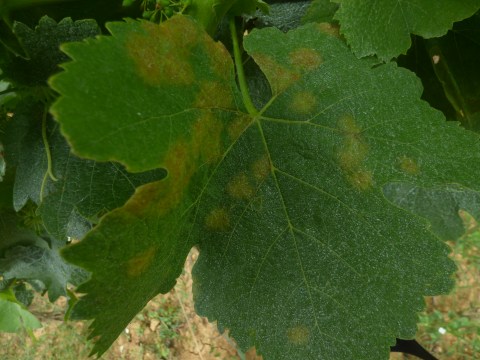
Sadly, humid days in the mid 20s and cool nights are exactly the conditions favoured by downy mildew, and it has prospered in 2016. Jeff Coutelou has spent many nights out on his tractor spraying the vines to try to protect them. As an organic producer (and much more) he cannot (and does not want to) use manufactured, chemical sprays. Instead he has used sprays based on rainwater with seaweed, nettles, horsetail and essential oils of sweet orange and rosemary. These are better absorbed by the vines in the cool of the night.

P1000885

On June 3rd Jeff spent much of the night spraying only for it be ruined by a storm on the 4th which had the effect of washing away the spray from the vines. The rainwater created other problems however. The humidity in the soils created ever more favourable conditions for mildew, the disease spread. And, there was a third effect; downy mildew lives as spores in the soils and the rain splashes them onto the vines. Mildiou is not a fungus as commonly believed, it is a one celled spore which germinates in warm, humid conditions especially between 16 and 24 Centigrade.

Once the spores are on the vine they attack the new growth and can create a downy white covering. Leaves show a mottled surface with oily spots, first of light green or yellow and then turning to brown as the mildew dries out. Underneath the leaf appears a downy white or grey growth.

The big question was whether to spray with copper. This is effective against mildew but has an effect on the soils, killing the micro organisms which live in them. It is allowed for organic production as long as no more than 25kg per hectare is used in a five year period, it is a natural product. Jeff has used hardly any in the last few years and was very reluctant to start this year. His belief was that it was better to have some losses this year from mildew than lose the life in the soils for a longer period. However, as the mildew spread so quickly he was forced to relent and use a little copper.

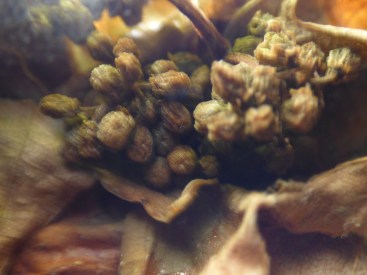
His long nights of unpleasant work have helped Jeff to contain the problem but there have been damages. In some parcels as much as 50% of the crop is lost. Mildew thrives on the leaves but spreads to the actual grapes and destroys them. We may go into the vines and cut away damaged bunches.When harvest arrives we will have to be even more vigilant than ever to ensure that affected bunches do not make their way into the  vats and, ultimately, the wines.

Car dead bunch

Dried out leaves and grappe

Meanwhile the sprays do not kill wildlife, such as that photographed below after the treatment.

The north wind which so often helps to dry out the vines has finally started to blow, though even it was humid for much of the past fortnight. The forecast is for hot, sunny weather which will stop mildew, so the threat should now diminish but it has left the vines looking mottled and a bit sickly. After a restless winter where the sap has been constantly on the move they have been less able to resist mildew’s effects.

The wire trellises which are used in many parcels have helped to ensure that air can circulate amongst the bunches to stop them becoming too humid and prone to mildew. Everything has been done but it has been a hard fight and losses suffered.

However, all is not doom and gloom. Most of the vines are now lush with growth. Flowering (fleuraison) was very late but last week the vines made up for lost time and the small grapes swelled greatly. Let’s hope for smoother progress in the next three months.


4 Comments

The Forgotten art of assemblage


IMG_0022

One of the more interesting wines at Mas Coutelou is L’Oublié. It is also one of my favourite wines. On Thursday, June 9th Jeff called in his oenologue, Thierry Toulouse, to help to decide on the blending (assemblage) of the new version of L’Oublié.

P1010228

So what is L’Oublié? It is a blend of grapes just like the vast majority of Languedoc wines and, indeed, Mas Coutelou wines. However, it is also a blend of wines from different years. For example the Carignan is a blend of wine from 2001, 2007 and 2010 which has been stored and aged in a barrel called a demi muid. Add in a similar blend of Grenache and Syrah from different years and then other wines to add even more complexity and depth. The name means ‘the forgotten one’ referring to the original barrel of wine which had been, well, forgotten.

P1010234

This is how I described L’Oublié in my article about the Coutelou cuvées:

“It has aromas of dark fruits and leathery, spicy notes too. It is dark flavoured too, blackberries, liquorice and even coffee are just some of the many complex flavours. It benefits from decanting to allow that complexity to resolve itself a little, and it will stay fresh for days after opening. There are not many wines like this around and I honestly don’t know why. It is unusual and one of my favourite wines because of its complexity, its balance of older and more youthful flavours. Terrific.”

It is the mix of darker flavours with the hallmark Coutelou freshness which really appeals to me about this wine. So, how is it made?

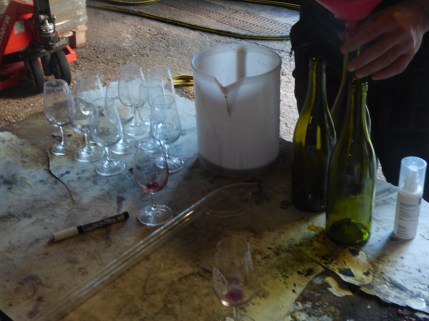
Jeff had taken samples from the demi muid barrels of old Carignan, Grenache and Syrah and also samples of other wines which he had, for example Copains 2013. This is a pure Cinsault, from Rome vineyard, released in 2014 but Jeff had aged some of it in barrel too. Younger wines were on the table too, available to be used. We tasted these separately first to get a feel of the flavours which would be in the mix. Frankly, the barrel aged Copains was so good I’d have made a wine just of that!

Using the base wines of the old blends the oenologue measured out the proportions based on the quantities of each wine available for the final cuvée.

The wine was left to mix for a few minutes and then we tasted. The first was very good but, perhaps, edging a little too much towards the dark side of flavours. So, some 2015 wine was added to freshen it up and … voilà. The characteristics of previous versions of L’Oublié but made with newer wines on top of the base wines.


The decision on the blend made, Jeff then set about blending the components together in tank where it will sit for a while to marry together. This will be bottled at a future date, yet to be determined as it depends upon when the wine is ready. It will tell Jeff the right moment. Yet another wine to look forward to.

P1010240

The secret code of L’Oublié

If you don’t want to take my word for how good L’Oublié is then here are other reviews and tasting notes:

http://www.lsfinewines.co.uk/acatalog/Mas_Coutelou.html

http://www.leblogdolif.com/archive/2011/12/05/grain-grain-le-petit-raisin-gnan-gnan.html


Leave a comment

It’s A Kind Of Magic

20160608_075213

En français

Saturday June 4th was supposed to be the Festival De Magie in Puimisson, a family magic show. Sadly it had to be postponed until September as, around 5.30pm, a huge thunderstorm broke over the area. Booming thunder and heavy rain were the main features as Puimisson and the wider region were treated to an alternative fireworks display to that scheduled in the Festival. Yet 2 hours later the skies were clear, the streets were dry again.

20160604_183831

Flooded roads

Four of us though were treated to a magical evening. Jeff welcomed Cedric who runs the best website on French natural wines at vinsnaturels.fr (and I don’t say that because he chose one of my photographs on the opening page!) It gives great detail about vignerons, technical details about their wines and where they can be bought. His friend Ghislain was with him, another natural wine expert and promoter in the Grenoble area. Pat and I were invited along too and it was a real pleasure to meet up with them, they proved to be excellent company.

20160604_190259

We were treated to 7 hours of tasting with Jeff in the cellars and at his home. And there was no question that Jeff is a true magician, conjuring up an amazing range of wines and of such a consistently high standard. I may be biased as he is my friend but the demand for his wines proves I am not alone in thinking so.

Error
This video doesn’t exist

We tasted all of the 2015 wines, those in bottle and already sold, those just bottled and those in tank and barrel. Whites, rosé, reds, sparkling and selection de grains nobles. Plus many wines from previous years in barrel and bottle. Before moving to the solera cave to taste, amongst others, the Grenaches wine I made. Hand on heart there was not one dud wine and there were many special wines.

20160604_222316

Amongst white wines the Maccabeu and the macerated wine we bottled the previous day were showing well. So too the Bibonade sparkling wines, white and rosé. 5SO Simple was on form from the early wines alongside Vin Des Amis.

Of the next wave of wines, Classe was outstanding, Jeff thinks maybe the star of 2015. Tête À Claques was good, a blend of VdA and Syrah; Buvette À Paulette too, a blend of Mourvèdre and Cabernet Sauvignon. Flambadou will be excellent, it needs time but has all the ingredients to be especially good, just as it has been the last few years.

One wine which was noteworthy was Flower Power. This is the red produced from the complanted Font D’Oulette vineyard with its Aramon, Clairette Musquée, Cinsault, Oeillade and six other cépages. Its first vintage in 2014 won plaudits even from the conventional press. The 2015 I had tasted on Thursday and it was in a dumb moment, Jeff actually carried out a soutirage on Friday and by this Saturday evening it was singing. For me, this could be the star of 2015.

P1010175

Flower Power’s complanted vineyard

Ghislain had brought some cheeses from Meilleur  Ouvrier De France Bernard Ravaud. They were superb cheeses including a truffled comté which shall live long in the memory. Jeff opened one of the 2012 barrel aged 5J which I wrote about recently, and it is a great marriage with cheeses.

We moved to the solera cellar where we tasted some of the old Muscats and Grenaches. However, it was also good to taste my Grenaches wine from all three of its containers, the new 60l barrel, the old 30l barrel and the 27l glass bottle. As before the older barrel has a sweeter, fruitier profile whilst the new barrel gives a slightly leaner, more complex wine. The glass bottle is all sweet fruit and still fermenting! It was good to hear Cedric, Ghislain and Pat all give their approval.

20160604_223304

My Grenaches from new barrel

The hours flew by, always the sign of a good night. Thirty wines or so, Jeff just keeps bringing them out from up his sleeve. Or have I just given away a magic secret?

On Wednesday June 8th more visitors to the cellar. Paco Mora of La Cave D’Ivry and a friend of his Charlotte, a caviste in Montpellier, visited. I have mentioned Paco before on here and I would love to visit his Cave. He takes time and trouble to visit the winemakers whose wines he stocks and to offer his support. He’s passionate about wine and good fun as well as having a keen social conscience. We shared wines, laughs and lunch and two more great wines.

La Vigne Haute 2010 was lovely, showing maturity, the Syrah fruit now brooding and dark with great length and depth. LVH has always been my favourite cuvée but even this had to bow down before Flambadou 2007. Pure Carignan, more leathery and plummy notes with a smooth as silk chocolate finish. If anyone tells you natural wines cannot age then I would ask you to quote this bottle as proof that not only can they age but they can become truly great! Spellbinding.

And even time for a little levitation. Told you it was magic.


P1010268


Leave a comment

Busy times

busy

En français

Busy times. In the vines and in the cellar.

I mentioned recently that the cooler weather had delayed some of the growth in the vines and that flowering was late. Well, recent hotter weather has brought sudden change. Flowering happened around the turn of the month and was over very quickly, perhaps catching up lost time. In particular there was a heavy thunderstorm on Saturday June 4th which brought a torrent of rain. The water and the sunshine has really got the vines going. Tendrils reach for the skies and there is more bushiness to the vines.

The flowers gave way to the little hoods which cover the nascent grapes, capuchons. These quickly fall away too revealing the grapes for 2016. On some vines all of this is happening at the same time such as this Carignan (above) in Rec D’Oulette. The weather has also encouraged the growth of the grafted vines which we did back in March.

This brings work too. The palissage has to be lifted to support the vines, hard physical labour. And, sadly, the heat and rain bring problems of disease. Mildew has been around for a couple of weeks and I mentioned that Jeff was spraying in the very early hours and late at night last week. He worked until 1am Friday/Saturday and started again at 6am. Just as things seemed to be settling a big attack of mildew on the Grenache at Ste. Suzanne meant more treatment on Tuesday morning. This ‘curious’ year is proving to be hard work.

Not all negatives though. The storm brought such a downfall that I was fearful for the flowering bunches. damage to them means no grapes. I happened to be in Puimisson during the storm (next article!) and the rain was lashing down, converting streets and roads to waterfalls and lakes. Yet as the rain eased I went to a couple of vineyards and the flowers were coping just fine. A trip round the vines on Monday morning revealed healthy growth and the soils had absorbed the rainfall.

This is not true of everyone. Much of the water on the roads was also full of clay from vineyards nearby, hence the yellowy brown colour. Vineyards which are treated with weedkillers, where the soils are ploughed deeply, even irrigated, were unable to cope so well with the heavy rain. Soils were carried away. Compare these photographs of Jeff’s vineyards with the parcel next door belonging to someone else. The difference is marked. Water can help or can damage.

Meanwhile back in the cellar there was more work to be done. Recent changes to the fabric of the cellar, especially the floor, have brought more efficient drains and a smoother surface, easier to clean. Further work will soon be done to the rest of the floor so the bottling of the next wave of wines had to be brought forward to allow the works to be done and dusted before vendanges.

The spring bottling of wines such as 5SO, PM Rosé, 7 Rue De La Pompe I described earlier. These are wines for early drinking, vins de plaisir. Now it was time for wines with a little more body. On Thursday June 2nd 10,000 bottles of Classe were made, and it is really something special in 2015. It took almost 12 hours and went very smoothly but believe me it is a hard day’s work. On Friday, Flambadou, made from the Carignan vines above, was bottled along with other smaller cuvées.

Before anyone rushes in with orders Jeff will let these bottles rest for a few months to allow them to be at their peak when released, Flambadou probably in 2017 for example. There remains one or two cuvées still in tank which need a little more time, Flower Power being one.

So, most of the 2015  wine is now in bottle, the vines are revealing the grapes for 2016 and there are wines stored for 2017. Busy times at Mas Coutelou for everyone, well except one.


6 Comments

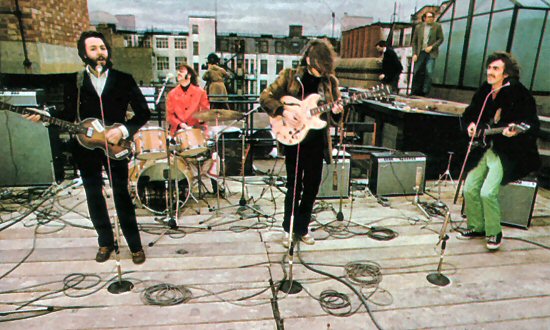
Get Back

the-beatles-get-back-session

En français

Whilst having a rather disappointing lunch in Marseillan the other day I ordered a 50cl of Faugères rosé from Sylva Plana and it was quite nice, pale pink, fresh with a little red fruit on the finish. I went to check the back label to see if my guess of Cinsault was correct and… nothing. There was no back label, nothing to inform me about the wine at all. I found this frustrating, Sylva Plana are normally very modern in their approach, have a good restaurant to promote their wines, they’re organic etc. However, they are far from alone. Lots of producers don’t add back labels.

I think this is a wasted opportunity. Most wine drinkers these days have some interest in the wine they are drinking and by supplying information the domaine (I speak generally now) is surely creating a connection to their customer which might be followed up with further sales.

20160430_104416

Jonathan and Rachel Hesford at Domaine Treloar provide information in French and English about the grapes in the wine, information about vines and vinification as well as advice on food pairing and when the wine will be at its best. This latter is followed up on their website where more detailed information is available on each wine. I think this is very good practice, the consumer can find out much more about the wine they drink if they choose.

The label from California producer Ridge on the left gives a lot of detail about vinification and what is actually in the wine. Rather surprised at the amount of added water I must say. Perhaps even more informative is this smart back label from Burgundy (right).

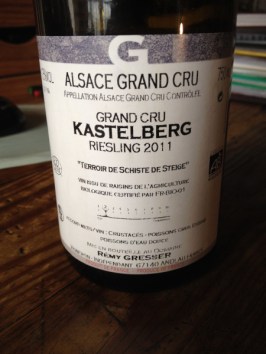
Even little things can help to explain the wine and advise the potential buyer about the wine in the bottle. Alsace wines are often criticised and misunderstood because they can range from dry to sweet from producer to producer even when the label says pretty much the same thing. I like the way this producer shows a scale to describe the level of dry – sweet.

img_7311

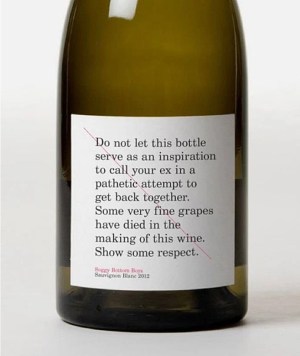
Some producers like to show a humorous side to their work and don’t take themselves too seriously. At least you get to know the grape variety at the bottom.

1459322682816-2060258914

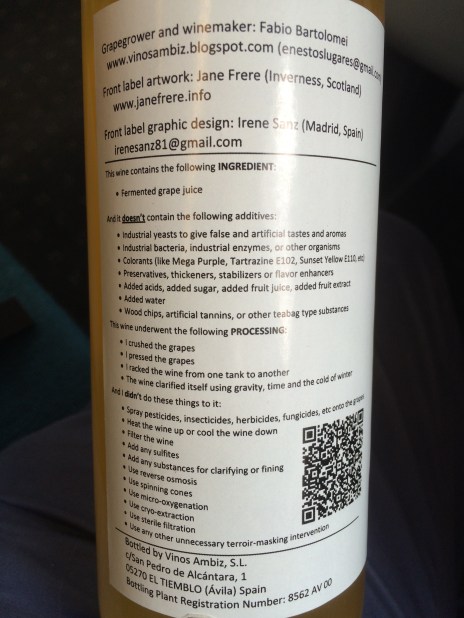
And finally, I do like this back label from a producer keen to emphasise their organic, even natural, credentials. Note also the QR code so that the buyer can link to the website to get more information. Extra points from me there.

image22

So, come on producers. Don’t leave us in the dark about your wines. We want to know about them, to find out the story which makes a wine special and more personal. At least give us the grape varieties.

Happily, for once I was right. The rosé was Cinsault dominated but please don’t leave us in the dark. And if you want something to really inspire you have a look at this, which is something I have already stared at for ages and makes me want to try the wine.

IMG_20160206_093142