amarchinthevines

Learning about wine, vines and vignerons whilst living in the Languedoc


4 Comments

2018 wine favourites

P1030312

With James and Flo at Little Things winery


As the new year began (and I wish you all a very happy and healthy one) I spent some time thinking back over wine related pleasures of 2018 as well as my favourite wines of the year.

TL – Barossa, BL – Nelson, NZ, R- Cloudy Bay

The trip to Australia and New Zealand was the highlight, visiting wine regions and wineries that had long interested me, indeed even got me interested in the wine, the Barossa and Marlborough for example. Wineries such as Cloudy Bay were part of my formative wine learning so it was a pleasure to actually be there in person.

The true highlight, however, was the days we spent in the Adelaide Hills with James Madden and his family. James was part of the 2016 team for the vendanges with Jeff Coutelou and now has his own winery in the Basket Range which I wrote about at the time. The immediate success he has made there with his excellent SO2 free wines and the community of winemakers he is part of there were inspirational. More about them in my wine choices.

                        James with James Erskine of Jauma, TR – barrels at Gentle Folk,                                                   BR – Basket Range vines

Vendanges was also a highlight of course, as ever. It was short this year because of the damage wreaked by mildew but the experience was enjoyable as always.

I read a few wine books through the year. I enjoyed ‘The Dirty Guide To Wine’ by Alice Feiring and Pascaline Lepeltier (who I was delighted to hear had been chosen as best sommelier in France this year, she visited Mas Coutelou a few years ago). I am very much looking forward to ‘Flawless’ by Jamie Goode which looks at wine flaws and faults, something which interests me greatly. However, my favourite book was The Amber Revolution by Simon J. Woolf. I must declare an interest as I helped to crowdfund the book but, bias apart, this is an excellent read. Simon examines the history of orange wine, the tradition of it in Georgia and Slovenia in particular and its recent renaissance led by producers such as Radikon and Gravner. The Amber Revolution is well written, flowing with stories and history and enriched by excellent photographs. Highly recommended.

I have tried all sorts of wine objects over the years. Ironically the one which I use and like the most is a simple decanter. Increasingly I find that a few minutes in the decanter opens up wines. Some natural wines in particular, and they are the major part of what I drink these days, just need a little air to blow off reductive aromas as some are made by minimising oxygen contact because they do not have SO2 to protect them as an antioxidant. White and orange wines as well as red seem to benefit from time in the decanter. It became common to decry this very traditional wine object as being simply for show. I am now a convinced decanter fan.

decanters

My decanters

Funniest wine moment. A photo that Veronique Attard of Mas Coris posted on Facebook. It shows a wine described as vegan but look at the recommendation for food to accompany it.

vegan wine

Wines? Well that is for next time.


Leave a comment

300


20170209_000255

Tasting the older barrel in 2017


En francais

Back in September 2015 I wrote my 100th blog post about a great day. Jeff had suggested I do something special to celebrate the event and offered me the chance to pick grapes from my favourite vineyard, Rome. The grapes were a mix of all three Grenaches, Blanc, Gris and Noir as well as a few Muscat grapes. To make it even more special our great friends Martin and May came along to help pick the grapes, it was a day when I was truly blessed to be surrounded by friendship, a day when the Coutelou motto of ‘Grapes, work and love’ was evident.


I trod the grapes, pressed them and stored the juice in two barrels and two large 27l bottles. I even used airlocks provided by my friend Barry back in the UK. One of the those bottles was used to top up the barrels over the intervening three years before the wines were ready to be bottled. The wine was racked occasionally to separate the juice from the sediment and dead lees. From time to time we tasted from all three containers and it was fascinating to monitor their development and how they matured differently according to the container they were in.

The newer 60l barrel allowed more oxygen into the wine and this added a drier note to the wine which aged quicker than the other two. The smaller, older 30l barrel had been used for more wines and the wood staves had sealed more as a result. The wine was fruitier, tasted younger and fresher. That was the reverse of what I had expected from the barrels at first but it is logical. Meanwhile the large glass bottle produced a wine like imprisoned fruit, almost as grapey and fruity as the day the juice first went in.

After three years it was time to assemble and bottle the wine. That was supposed to happen in the week before I left France in October but climatic conditions were unfriendly for bottling, heavy atmospheric conditions. Jeff, Michel and Julien kindly did the bottling when conditions were more suitable. I can’t wait to see them, and open one in January when I return.

24


I am a winemaker! It has been one of the great experiences of my life. That it is the result of the generosity and kinship of my friends made it even more so. In particular Jeff’s kindness and inspiration is something I appreciate more than he can know.

This is the 300th blog article. I have been delighted and amazed that people from 118 countries have turned to these pages over the last four years, often several thousand a day. Thank you for doing so, it means a lot. I started simply to occupy time and keep my own personal record, your readership has helped it become so much more. I hope that my love for wine, the Languedoc, real wines and, especially, the Coutelou team and wines have brought you some pleasure. And who knows, we may get to share a glass of the century wine.

4

A March in the vines (photo by Flora Rey)


1 Comment

Recent wine highlights

I have had some cracking wines in recent weeks. Let me share some of them with you before I get to my wines of the year in a future article.


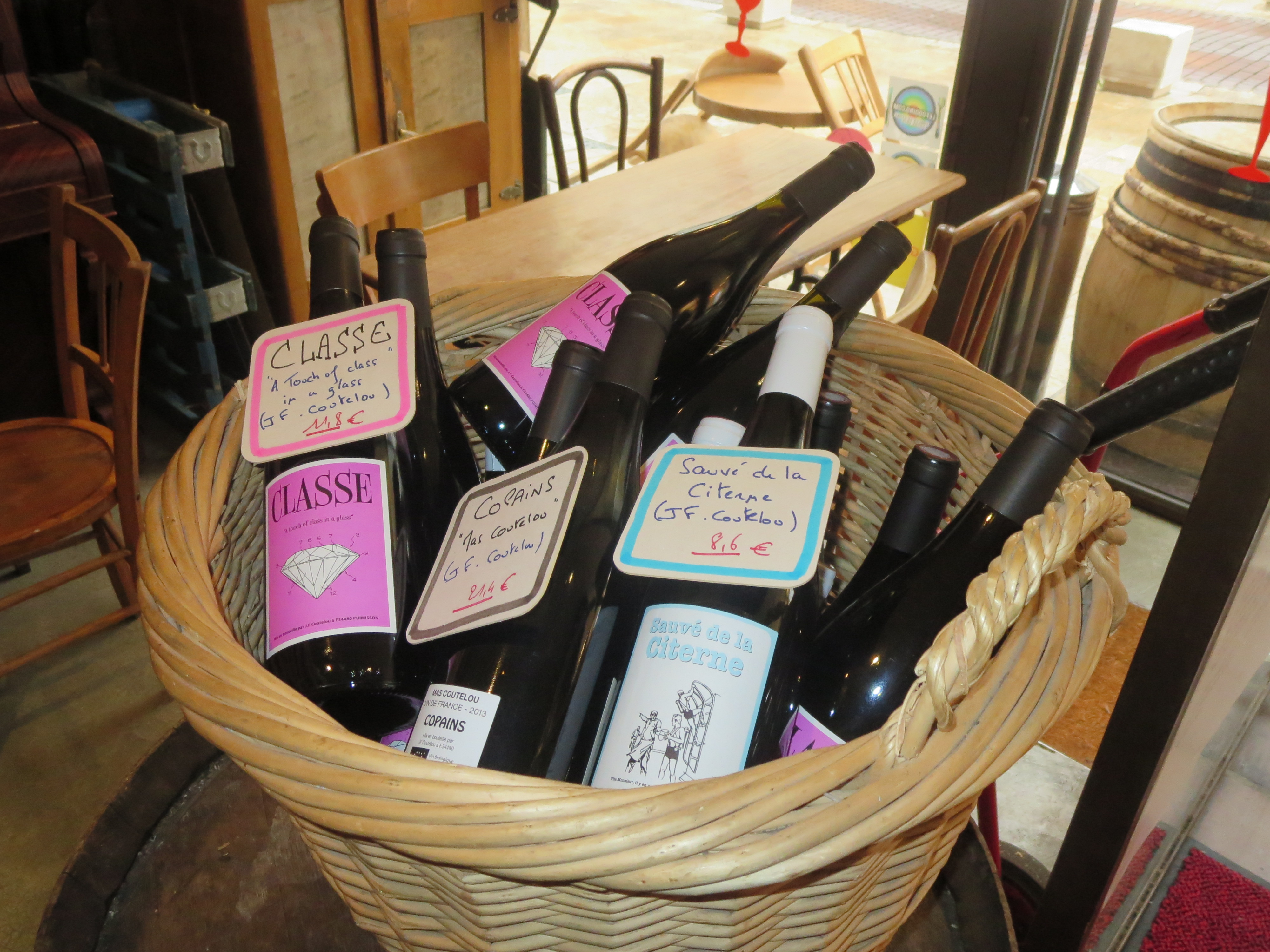
Jeff Coutelou always provides me with memorable wines and these two from 2017 underline what a great vintage that was from him. Classe is one of the headline acts of the domaine and the 17 is as good as any I recall. Syrah (50%), Grenache (40%) and Mourvedre (10%) with ripe red and black fruit flavours and a depth of flavour indicating many, many years of life ahead if you can resist drinking it now. The Vin De Table (Syrah and Grenache again but this time with Merlot) is made from what was left after the main cuvées were assembled. But, it is no leftover. Ripe, concentrated and very drinkable. Jeff’s wines gets better and better and that is the highest praise I can give him as I have long considered him an exceptional winemaker as well as a friend.

From the same stable comes my good friend Julien Banville who took some of Jeff’s grapes in 2017 to produce his Chateau Des Gueux. A light red wine of intense red fruit aromas and lingering flavours it shows Julien’s talents for stamping his won personality on his wines. Delicious but sadly unavailable commercially.

From Spain two excellent wines. Jordi Llorens‘ wines have long been a source of pleasure and the Blan 5.7 2017 of Macabeo and Parellada was a joy, refreshing but full of creamy, white fruit. Partida Creus XL 2016 made from Xarel.lo was equally good with perhaps a little more acidity. I preferred that to the red VN though that was still good.

Back to France and two eastern regions. Alsace has long been one of my favourite wine regions in the world and the biodynamic Zind Humbrecht domaine one of my favourite producers. This Riesling 2009 was classic of the grape, petrol nose, citrus fruit, dry but with just a slight suggestion of sweetness. Savoie is becoming ultra fashionable and the Altesse from Domaine Giachino was a clear example of why its reputation is high. Floral, fruity, complex and dry, it really convinced me that Savoie and the grape Altesse are top quality.

I mentioned how much I enjoyed Patrick Rols‘ Les Anciens 2016 in the last article with its Merlot and Cabernets from the Auvergne region. There’s an iron edge to the complex red fruit flavours, a wine showing the promise of a region only starting to develop its wines. From the Gard department came the Va Nu Pieds 2016 of the Frères Soulier. Classic Languedoc/Rhone Syrah and Grenache with plenty of black fruits as well as good tannins.

Finally and certainly not least. From England, yes you read that right. Davenport winery in East Sussex produces one of my favourite PetNats but this was the first still wine of theirs I had tasted, the Limney Horsmonden 2017. If Savoie shows promise then this is equally the case for English wine. Ortega, Bacchus, Huxulrebbe and Segerebbe are not grapes I know particularly but this blend had tremendous floral notes and a dry, clear expression of the place and grape. One of the best wines I have tasted this year.

davenport_horsmorden


Leave a comment

Rethinking

At a time when my country is in desperate need of a rethink I have had a couple of wine related examples myself recently. So, here they are.

IMG_0736

Merlot at Coutelou

Merlot. I must admit that I have always been very ambivalent towards this grape. Early wine ventures in my life often featured Merlot blended with Cabernet Sauvignon from Bordeaux or, more usually, Australia. However, it was always the underling, the supporting star. My attention was grabbed by the headline act. Then in recent years Merlot has been a bit of a whipping boy, scorned by me and many others. And yet. I recently noticed that Merlot has featured in a number of my favourite wines this year (of which more soon on these pages).


Little Things (James Madden) Joy’s Wild Fruits Field Blend which was the star of my trip Down Under this year, Basket Range Vineyard Blend, Jeff Coutelou‘s Vin De Table (and the 2018 wine in vat) and then Patrick Rols‘ Les Anciens 2016 all feature Merlot in the blends to a greater or lesser extent. The latter, from the up and coming Auvergne wine region, has Merlot as the main constituent together with Cabernets Sauvignon and Franc, and it is a delicious, fresh wine. So mea culpa, I have too easily dismissed this grape, Merlot is back. At least as a grape for blending, I’d happily receive recommendations for single variety wines.

The Rols wine was part of a case I ordered recently now that I am back in the UK. Having looked through the lists of several cavistes in this country I found a bigger range of wines, cheaper by buying from France and Spain. The cases arrived quickly, intact and I can safely and wholeheartedly recommend Petites Caves based in Toulouse and Gourmet Hunters based in Barcelona. Both have websites with English translations. So think wider than your local supermarket, enjoy some natural wines, and give a thought to Merlot!

Now, can we persuade my country to think a bit more?


Leave a comment

Vermouth, Kina

En francais

It was interesting to see Oz Clarke* on James Martin’s Saturday morning TV show this week looking at the topic of vermouth. I wrote earlier in the year about the vermouth which Jeff Coutelou is now making and selling, Kina.


Oz

Screenshot from the TV programme

The Languedoc is associated with vermouth since one of the most famous brands, Noilly Prat, is made in the lovely port of Marseillan. Vermouth was never a drink I enjoyed but Kina is changing that.

noilly

According to specialist website The Fine Spirits Corner, “The Kina is a type of fortified wine that is made ​​from dry and sweet wines of high quality to which are added extracts of quinine. Produced mainly in Andalusia, was formerly used as a tonic, invigorating and during the appetizer to open the food.”

After mixing various herbs and spices with the base wine back in July Jeff left the kina to macerate in the cellar for a few weeks. Time for an update.

During vendanges he also prepared some more wine to be mixed with the kina. The wine was mixed with pure alcohol to stop fermentation (mutage) and retain some of the sugars from the grapes. This was then blended with the macerated wine to make Kina.

As the quote above says, supported by Clarke’s introduction, vermouth should be a drink with plenty of flavour and sweetness from the herbs and spices but with a bitter finish to cleanse the palate. I have tried other examples of kina drinks from the commercial, e.g. Lillet or Martini as well as another artisan vermouth from Carcassonne. I liked the latter though it was certainly sweeter than Coutelou Kina. I like the bitter twang of Kina though Jeff is also making a sweeter version if that is your preference.

With Christmas and New Year celebrations on the horizon Kina will definitely be featuring as my aperitif of choice. Vermouth may be the new gin (also made in Puimisson!) and, to my surprise, I welcome its return to the spotlight.

P1040107

Taking its place in the Coutelou range

*Oz Clarke is an English wine writer and broadcaster who certainly did a lot to spark my passion for wine


3 Comments

Wine whinges


imagesCF942ZIX

I read a lot of time reading about wine, books, blogs and many forms of social media. Too much time probably. Spending much of the last four years or so on a wine domaine, learning about vines, winemaking and wines themselves I have developed a thirst for more knowledge as well as a thirst for wines. However on many occasions I become quite irritated by what I read or hear. Time to stop my whinges from fermenting further.

i-love-chablis

My biggest whinge is generalisation. I am undoubtedly guilty of this myself so when I criticise others, I am aware that I may well be hypocritical. By generalisation I refer to statements such as “I love Chablis”, “I don’t like Chardonnay” or “natural wines are full of faults”. This is palpable nonsense, sometimes said as a shortcut but just nonsense. There are great Chablis wines, there are very poor ones. There are bland, neutral Chardonnays but there are many great ones which would appeal to anyone who likes good wines. The latter is just nonsense. The importance of producers is often overlooked, give me a Macon from some producers to a Cote D’Or  from others.

macon

One Macon which I would certainly choose

I appreciate that nuance is too longhand for much social media comment but please, cut down simplistic generalisation.

af-poster

from Business Insider

Another whinge would be wine pairing. People get so hung up on this. If you know a wine goes well with a dish then great but, in my opinion, many wines will partner dishes, it’s a matter of personal taste. Of course there are some which will go better but if I like a wine and I want to drink it then I will, it doesn’t concern me whether it brings out certain flavours or not. Relax, enjoy the wine and the food.

One whinge which might upset some. Some producers get praise and an easy ride from Anglophones just because they are themselves Anglophone. I understand it is easier for some people to visit winemakers who speak your own language and there is a special interest in people from your own country making wine. And there are some excellent examples, the Cores of Mas Gabriel in Caux, Joe Jefferies in Caux, Jonathan Hesford and Rachel Treloar in Trouillas. I do come across others though who I think get an easy ride or too much praise simply because of who they are rather than their wines. Even some of the most famous critics are guilty of such bias in my view, and it is my view.

I could go on, please don’t get me started on wine competitions and judging, subsidised wine jaunts for journalists etc. So, if you have any wine whinges please let me know.

Or just whinge at me!


Leave a comment

The rise and fall of natural wines?


015

I read an interesting article by Alice Feiring last week. Ms Feiring is perhaps the most high profile, long term advocate of natural wines but in this article she raised a number of issues which have also been troubling me in recent months.

There is little doubt that natural wines have become fashionable around the world. New producers, cavistes and bar / restaurants spring up weekly. Even the North East of England (my home region) now has a wine bar offering natural wines “for the adventurous”! So, a half hearted effort but a start.

During vendanges we had a number of visits from cavistes seeking wines from Jeff. Alas they would leave disappointed as there are few enough wines to meet the demand of existing customers after low yields in 2017. This year’s mildew attacks mean even more rationing next year. We have reached the stage where even supermarkets and major chains such as Majestic in the UK are wanting to stock natural wines. Supply, not just from Jeff, does not meet the demand.

As ever where there is demand we see some jumping in to meet it. Some so called natural wines are not organically produced for example, to me that means they are not natural wines. There are lots of younger, newer producers who want to make genuine wines but there are also some who are undoubtedly riding the bandwagon to make a profit.

Demand also means that some producers are taking shortcuts to get their wines to market quickly. Feiring refers to this and the ensuing faults which may arise, I have seen other references to mousiness being one flaw caused by premature bottling. Some wine drinkers are complicit in this by accepting flaws as part of the character and style of natural wines. This is a complex area, I am more tolerant of brett (farmyard, band aid aromas caused by harmful bacteria) than some but very intolerant of mousiness which 20% of people can’t detect at all!*

9780520276901

However, I want to drink wines which taste of clean, healthy fruit not faults. I won’t buy from producers whose wines regularly exhibit such flaws, according to Feiring a lot of drinkers don’t see them as problems at all. To my mind there will be a reaction against natural wines, such is the nature of fashion. The wines which will still be in demand will be those of quality, made for easy drinking or for the long term.


Jeff Coutelou is certainly one producer of such wines. My advice is to drink Coutelou of course but also to seek out reliable, quality winemakers from around the world. Reliable merchants or cavistes will surely point you in the right direction much better than chains or supermarkets. For my part I shall also try to recommend wines and winemakers whom I trust. And, I hasten to point out, I have had more problem with conventional wines and faults than natural wines in the last year.

*Looking forward to reading the new book by Jamie Goode about wine flaws


2 Comments

After the 2017s, the Coutelou 2018s


IMG_1363

Just before leaving the Languedoc for hibernation in the UK I was invited by Jeff Coutelou to taste through this year’s wines. Most are now finishing both fermentations and starting to settle for the winter in cuve. They will change and develop over the next few months of course, they are living wines and still in their infancy. Consequently, these observations are preliminary but, after five years of similar tastings, I feel more confident about predicting which way the wines will go.

2018 has undoubtedly been a troubled year for Jeff and fellow Languedoc producers, in particular those who follow organic and biodynamic principles. The damage began with the long period of rain in Spring and the mildew outbreak which ensued. Mildew damaged the flowers, buds and young grapes. It damaged the leaves making it more difficult for the vines to produce the energy to feed those grapes. Jeff cannot recall a year of such blight. This was followed by a very hot, very dry summer making the vines suffer still further, compounding their difficulty in producing good sized fruit. Yields are down some 50-60% following on from 2017 when they were down 20%.

With all those problems could good wines be made?

We started with white wines. The white grapes from the 2015 Peilhan plantation have been blended with others from older vines in Peilhan such as Carignan Blanc, Maccabeu and Grenache Gris. The small quantity means this will be used for a barrel aged wine. It had finished fermentation and had good fruit with a liquorice streak and depth of flavour. Another batch of the Grenache Gris and Maccabeu was still in malolactic fermentation and cloudy with apples and a directness. Similarly the whites from La Garrigue were still fermenting but with great depth of flavour. There will only be small quantities of any Coutelou white wine, the last couple of years have not been kind to them.

P1040469

Onto the reds.

Grenache was the variety which was most affected by mildew, the vines were not pretty and yields were very small. Many of the bunches did not form, many which did suffered from coulure (where only a few berries form) or produced dried, dessicated fruit. The vendangeurs had to be very selective. So was it worth picking? The Grenache from La Garrigue tasted clean with good fruit and a nice acidity. The Grenache from Sainte Suzanne was worst hit of all. Jeff made the wine with only a couple of days on stems as the fruit was delicate. The wine is light as a result, juicy with red fruits, light but tasty.

Cinsault usually provides another light wine and this vintage was no exception. Despite that it was very fruity on the nose and on the finish, a surprising depth of flavour. For rosé, 5SO or both? Jeff will decide as the wine develops.

The tank which will make Flower Power 2018 has a bewildering mix of grapes, from the Flower Power vineyard itself, Rome, some Syrah from Segrairals and the reds from the 2015 Peilhan plantation, eg Morastel and Riveyrenc Noir. There was a lot of mouth feel in the wine, with tannin and substance and a concentration of dark fruits.

Cabernet Sauvignon from the last picking has produced a real glouglou wine, light and juicy. It will bring a fruity freshness to any wine it is used for.

Carignan was one grape which resisted mildew for a long time. This is the parcel producing Flambadou, one of the flagship Coutelou wines. Once again it has produced a high quality wine. Lighter in alcohol than usual yet managing to produce a full, ripe and fresh wine whose flavours lingered long after swallowing it. I look forward to this one a lot.

Carignan 2

Carignan grapes

Perhaps the biggest surprise was the Mourvèdre. It has made good wines before, try the 2015 or 2016 for example. However it could be a real star this year. There was a great depth and freshness with dark fruit flavours made to feel lighter by light acidity leading to an almost saline finish. It would be almost drinkable now but will keep for many years and develop beautifully, I am sure of that.

Syrah from Sainte Suzanne was made using grappe entire or whole bunch. Around 14% abv it has a clean acidity with red fruits and soft tannins (from the stems?) which will support a good wine. The Syrah from Segrairals was quite different, the place and destemming produced a more upfront fruity wine with a clean, dry finish.

And, of course, there was the Syrah from La Garrigue, home of my favourite wine La Vigne Haute. Amazingly, in such a horrible year, the quality of these grapes was excellent. Only made in very good years and yet, hopefully, there will be a 2018 La Vigne Haute. The wine has great character already, freshness, fruit, long flavours supported with lovely tannins which will help the wine to age well. Exciting.

So, out of the ashes rises the phoenix, very good wines despite the vintage. The resilience and quality of the vineyards and vines as well as the winemaking skills of Jeff Coutelou.


1 Comment

Wine with friends, the 2017 Coutelou wines

20180911_223114

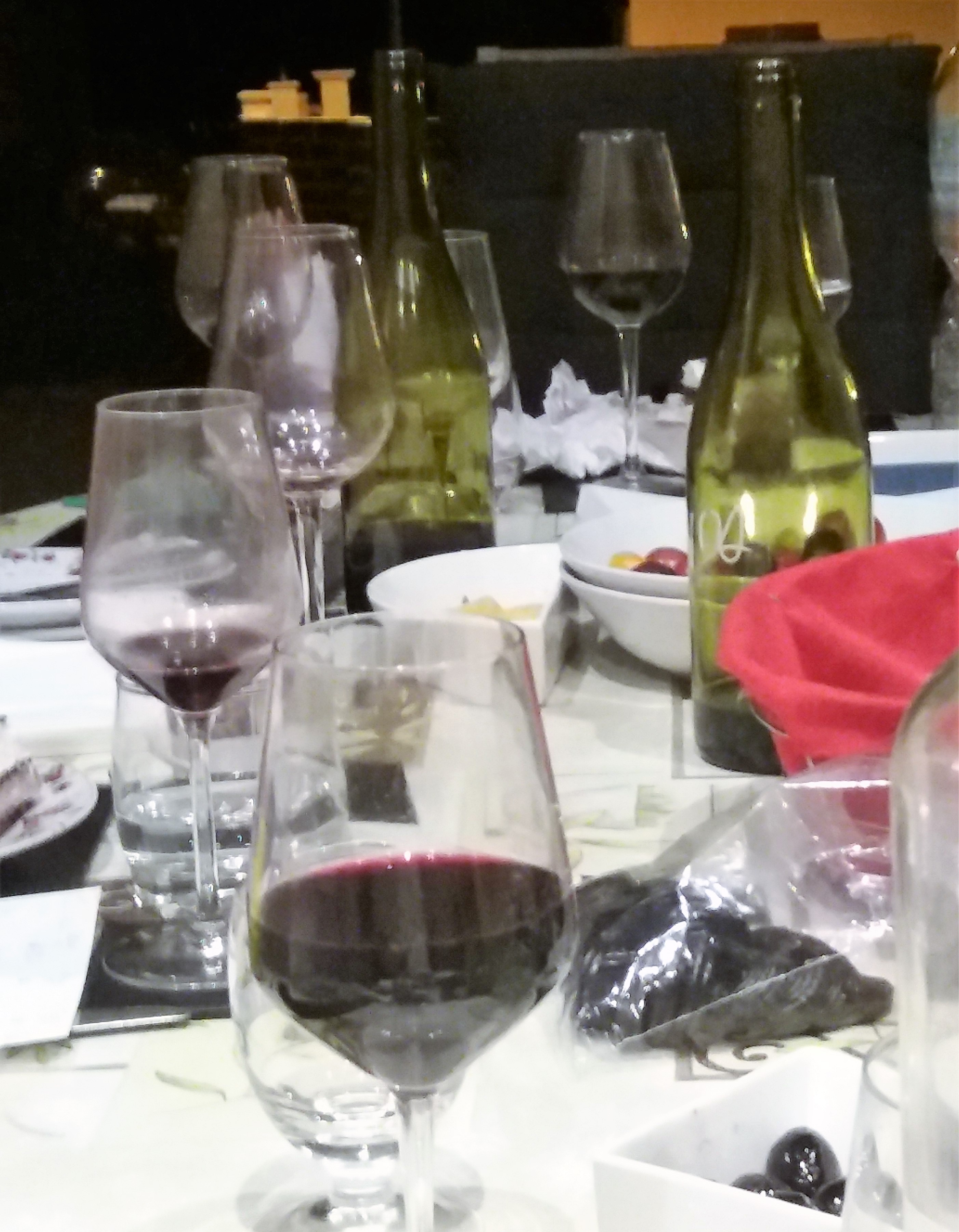
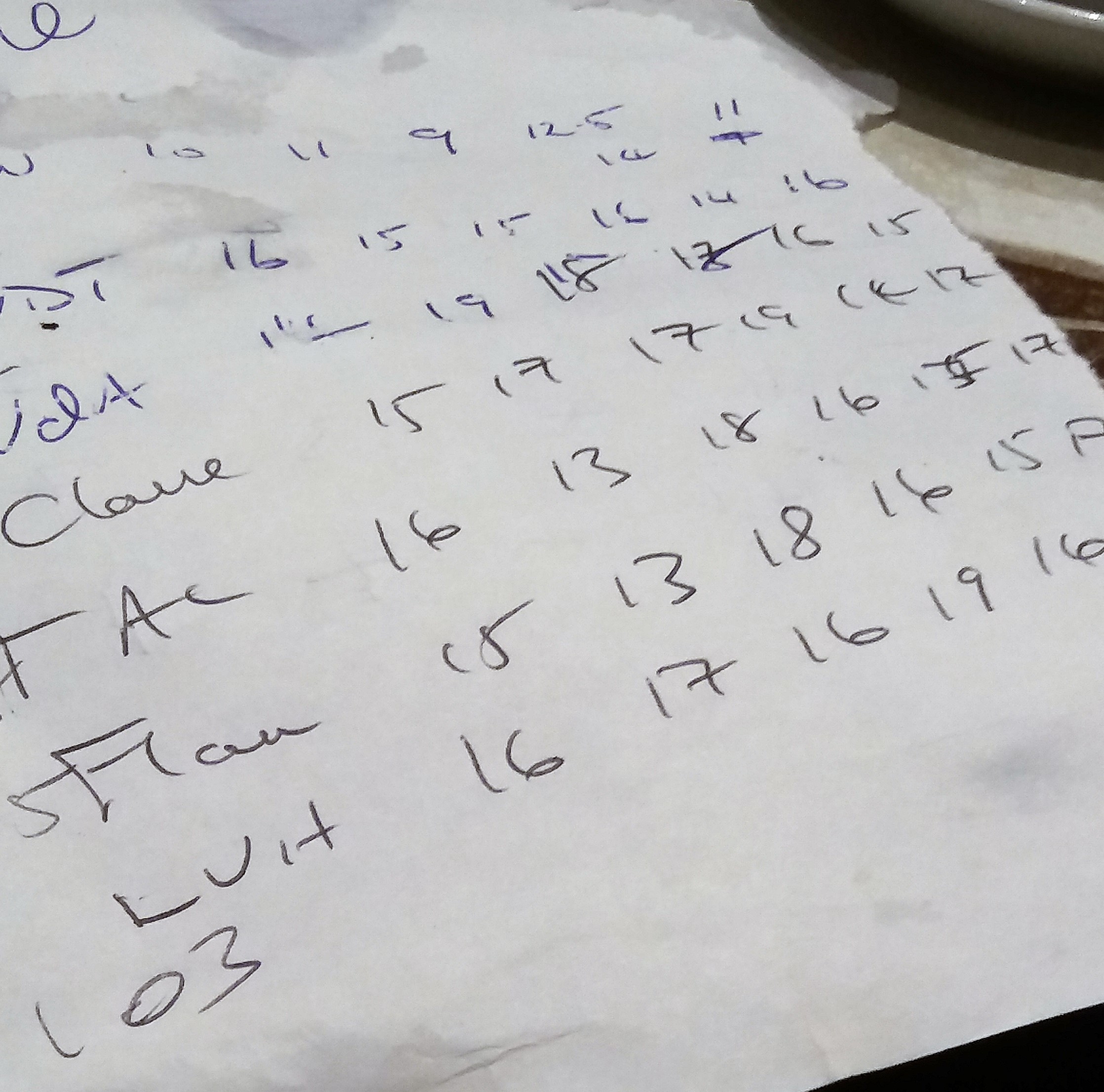
One of the highlights of the last few weeks of the 2018 vendanges was tasting the wines from 2017. A group of our friends gathered to enjoy bottles kindly given by Jeff and we tasted through them, scoring them as went. I am not a great fan of wine scores but it was a simple way of tracking our preferences, we revisited scores regularly to ensure there was some context for the earlier marks.

We started with the OW of 2016, so a different vintage but yet to be released. I have tasted it regularly in recent weeks at vendanges lunches and I really like it. Many orange wines are being made but often they are based on grapes which have fairly neutral skins. OW is made from Muscat D’Alexandrie and the skins have a lot of flavour which the long maceration brings out together with the tannins. This has real character, one of my wines of the night. It must be said that for some of my friends it was too much of a shock, unused to skin contact wines they found it too different. If you like orange wines though, believe me, this is excellent.

20180911_223132

On to the reds. 2017 was a vintage of low yields due to the long, dry summer. However, it must be said one of the consequences is a concentration of flavour and high quality. The six wines we shared were all very good and consistent in their length and full flavour. Perhaps the most consistent of any vintage I have been involved with since I started in 2014.

Vin De Table is a supposedly simple wine. Don’t be fooled, it is very good. Assembled from wines left over from the main cuvées with quite a large portion of Merlot for good measure. It received consistently good scores from everyone, it was simply enjoyable and very drinkable, belying its simple status with good fruit, freshness and length. A bargain at the price of well under 10€ seen in many caves.

Tête À Claques was a wine originally made for London restaurants but now sold from the cellars. It is based on Le Vin Des Amis (what was left) to which was added Mourvèdre and other remaining wine. The Mourvèdre boosts the wine with some crunchy, dark fruit flavours and this was one person’s favourite wine of the night.

20180911_223156

The natural successor was Le Vin Des Amis. For two of the group this was their favourite wine of the evening. The 2017 version is based on Cinsault, not the norm. Blended with Syrah and Grenache the Cinsault gives a real lift of red fruit and the result is a classic VDA, a bottle which will please anyone and disappear quickly.

On to the other headlining wine of the Coutelou range, Classe. Syrah, Grenache and more Mourvèdre (there was also a pure Mourvèdre released in 2017 under the name of On Peut Pas Vraiment Dire Que). Classe usually adds a depth and silkiness compared to VDA, it lives up to its name and label. This was no exception, it really is a very good wine and one I would love to age for a year or two even though it would be hard to resist now. One person chose it as their highlight.

Flambadou has been one of the best wines of the domaine for the last few years. Pure Carignan from a vineyard with complex geology the 2017 version is up to those high standards with dark fruits, freshness and ripe tannins. It needs time to mature before it reaches its peak but this is one of my favourite wines and, from experience of this wine, I can tell this will develop into a top class wine.

My absolute favourite Coutelou wine is La Vigne Haute, the pure Syrah from La Garrigue. North facing, villefranchien rock the wine is only released as La Vigne Haute when Jeff decides it is of the required quality, just seven of the last nineteen years. This is the first time I have been involved with making LVH and I am thrilled with it. The fruit is already evident, it is complex, has dark edges as well as the fruit. The flavours are long and fresh with more ripe tannins. It is a beauty, it could be mistaken for a wine from the Rhone or Ardèche. Previous examples of this wine have shown me that it needs 5 years or more to be at it best, 2009 is excellent at present. This will be a wine to treasure for years to come. Three of us chose it as wine of the night.

Overall, my friends showed great taste in selecting La Vigne Haute as the clear leader in scoring (I hope my influence wasn’t too strong!). Classe and Le Vin Des Amis followed on a few points behind. However, all agreed as we enjoyed a wonderful half bottle of Vieux Grenache that the wines were excellent, consistently so.

Thanks to May and Martin for being such great hosts and providing lovely food to accompany the wines. And to Pat, Afshin, Denise, Matt and Jonathan for joining in and making it so enjoyable.

A special night. Jeff told me from the beginning that he makes his wines to be shared with friends and loved ones. This was a night to prove the wisdom of those words as well as the immense talent and passion of Jeff Coutelou.

20180911_223143


Leave a comment

One More Time

En francais

“They think it’s all over, it is now,” were the famous words of commentator Kenneth Wolstenholme when England scored their fourth goal to win the World Cup of 1966. Well to mix metaphors one more time, Jeff decided it was time to get the band back together after we had thought the vendanges were completed.

P1040481

Not again! I’m sleeping

There remained a parcel of Cabernet Sauvignon that Jeff thought not to be worth collecting but the last couple of weeks they had ripened a bit more and there was enough to warrant one last pick on Tuesday 2nd October. The pickings were meagre, it took 7 or 8 pickers up to two hours to fill the 16 cases which are brought back to the cellar to be sorted again and then put in tank. Aching muscles and stuttering machinery protested a little at the reprise but the stainless steel tank in the photo was just about half filled by the end of the day. The grapes themselves were very good, Cabernet always gives small berries but they were healthy.

The juice went to Thierry for analysis as usual. A solid 14% potential alcohol, though lacking a little acidity. It tastes juicy and clean and I am sure will be used either for blending or in the spirits made for the Coutelou range.

Analyses old and new taking place

We went on to taste more of the tanks and the results are promising. The Syrah of La Garrigue is undoubtedly the star (even allowing for my bias towards this perennial favourite), the Carignan, Flower Power also very good. Perhaps the biggest surprise was a very long, fruity Grenache – the grape which had suffered most from this year’s dreadful mildew. Grapes are very hardy it would seem, helped by a skilful winemaker of course. That will not make up for the loss in yields this year, 50% would appear to be the figure. Sadly this might well bring price rises. We had another caviste at the cellar wanting to buy wine that day, the latest in a long line through the vendanges. Sadly, there is not enough to satisfy existing customers’ demand let alone new outlets.

P1040485

A lot more smaller tanks have been needed this year, a sign of low yields

it was good to have a day together again, the financial cost of picking was undoubtedly higher than usual but there is more wine in tank and hopefully that will offset some of this year’s hardships.

Traditional end of vendanges, the boss does some cleaning of the cases

and the workers are crowned with vines