amarchinthevines

Learning about wine, vines and vignerons whilst living in the Languedoc


1 Comment

Naturally RAW

As my last article said RAW promotes wine “in a natural state; not treated by manufacturing or other processes.” However, those vignerons who do work to make wine as naturally as possible might argue that wines with SO2 levels over 20mg/l are not truly what they would mean by natural. No doubt Isabelle Legeron would regard measures of one particular substance as not the whole issue about natural wine and she would be correct, especially regarding work in the vineyard. Nonetheless the RAW guide itself listed producers with no added sulphites, those with <35mg/l and the others. Some producers cross these boundaries making some wines with added SO2 especially at bottling whilst other bottles are sulphite free.

My favourite producers who mostly add no SO2 are described below, apologies to those I did not get to. I have included links to the excellent RAW website which has details of all the bottles. Have a look to at David Crossley’s articles, more detailed and descriptive than I can manage.

My favourite wines were those of The Scholium Project as I described last time, some of whose wines are sans sulfites. However, of those producers working wholly without sulphites, top of my list was the Aosta Valley producer Selve.

Azienda Vitivinicola Selve (RAW link)

Since this domaine was taken over by the Nicco family in 1948 they have been making wine naturally, in the early days selling it to local people on tap! Three generations later the wines continue to be made with respect to the terroir and nature. The grape here is Nebbiolo, one I often find difficult to like but here it was stunning, such vibrant, pure wines with structure typical of the grape but also delicious round dark fruits.

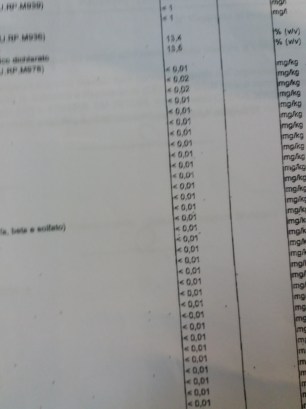
The main bottling is Picotendro. The 2012 was deep and complex but very drinkable even now. However, Jean louis also produced a 2012 aged in chestnut wood rather than oak and that was on a higher plateau altogether. Four years in old wood had softened and rounded the wine and added a nutty complexity,. In special years the family produce a cuvée called Pantheon and I tasted the 2003. Certainly there were signs of its 14 years, a brown edge to the colour but the wine was youthful, in good form and full of life ahead. It was simply delicious, balanced and pleased palate and brain. This is the domaine who showed me that their analyses show virtually no sulfites in the wine, less than 2mg/l mostly.

A great discovery for me, salve Selve!

Uva De Vida (RAW link)

I  had planned to taste more Spanish wines at RAW and I must admit I failed to do so. Of the half dozen I did taste Uva De Vida stood out a mile. Based near Toldeo, Carmen López and Luis Ruiz manage their vineyards biodynamically (Demeter certified) and I love their quote from the RAW biography, “The earth does not belong to man, but man belongs to the earth”. That should be the philosophy of every winemaker, indeed everyone.

The wines are made with the Graciano grape. It was the Latitud 40 wines which impressed me so much. The 2012 Crianza had real energy and the 14 months in old oak added spice to a red fruit profile. The Castilla cuvée was offered from 2014 and 2015. The 14 was bigger, spicier and had lots of power and depth but always balanced by fruit and life. I actually liked the 15 better, no oak and there was actually even more spice and complexity. Pure, well made wines.

Alexander Koppitsch (RAW link)

Austrian wines have rapidly become amongst my favourites in the last 2-3 years, producers such as the Tscheppes, Preisinger, Meinklang and Pittnauer have really excited me. The same was true at RAW and this was a new domaine to me. Low intervention, including virtually no use of machine in the vineyard together with no added SO2 is not an easy choice for a young winemaker but Alexander and Maria succeed in producing lovely fresh wines, white and red.

There were numerous cuvées on offer and all were good. My white wine highlights included a skin contact wine which still had plenty of fruit and zest as well as complexity (Welschriesling Maischevergoren 2015), a fascinating, lively field blend of varieties Gemischter Satz Maischevergoren 2013 again made with skin contact and best of all a beautiful Weissburgunder Unfiltriert 2016, loads of grapefruit, melon and long flavours.

My favourite reds were both from the St. Laurent grape, the Unfiltriert 2015 had beautiful clarity and fruit whilst the vat sample 2016 was as good if not better. 2016 was a harsh year for winemakers in Austria with yields well down and this St Laurent is testament to Alexander’s skill. My liking for recent vintages suggests that the wines are improving as the domaine progresses.

Rennersistas (RAW link)

Two sisters, Susanne and Stefanie, in the early years of their winemaking and already producing very good wines.My two favourite wines here were both called Waiting For Tom, in tribute to the two men with whom they learned about winemaking, Tom Lubbe and Tom Shobbrook. They clearly were good teachers and students. The rosé 2016 made from Zweigelt was one of the best rosés I have tasted, lovely aromas of fresh red fruits and citrus carried into the taste. Light, refreshing – a perfect rosé wine. The red 2016 combines Pinot Noir with Blaufrankisch and St. Laurent and has so much life, freshness and joy.
2F84AC1D-B3DC-40CD-8EF2-27C75CDF84BF


Champagne Laurent Bénard (RAW link)

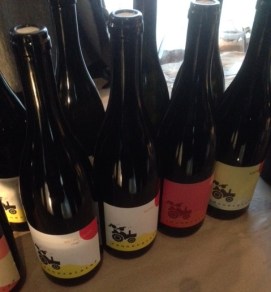
Champagnes formed many of the highlights of the January Montpellier tastings and again here at RAW. This domaine works organically (Ecocert) and uses horses to hoe the soils, no dosage, no added sulphites either. The Vibrato 2012 was lovely, slightly yeasty (which is how I like champagne). Refreshing, long flavours and bettered only by the 2013 where the fruit was even more prominent. I’d have these in my cellar every time.

Domaine Alexandre Bain (RAW link)
D8B6BE44-FA72-4EE3-90D6-3B8023F5E244

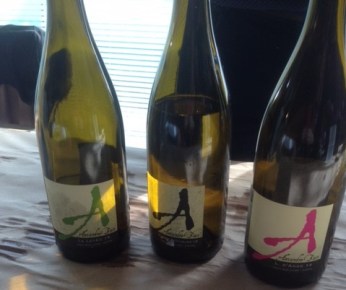
I have sung the praises of this domaine a few tomes on this blog, Alexandre works biodynamically (Ecocert and Demeter) and adds nothing to the grape juice. His pure way of working has got him into trouble with authorities in the past even though these are the purest examples of Pouilly Fumé! All 3 cuvées on offer were excellent, my favourite the Pierre Précieuse 2015 with its clean fruit and , yes, minerality. I do think he is a winemaker at the top level.

La Maison Romane (RAW link)
20170313_112235

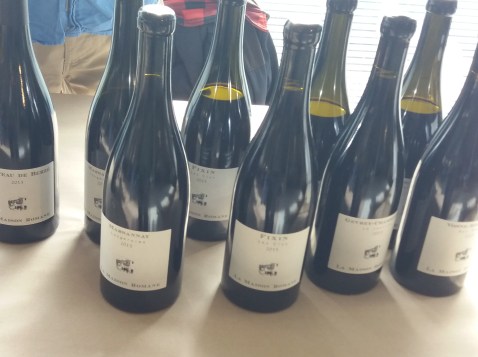
Oronce De Beler makes wines in Vosne-Romanée but is not a vigneron, he makes his wines from bought in grapes from organically grown sites. He works naturally with little or no SO2. Let’s face it when red Burgundy is made well there are not many better wines, hence the high prices these days. I liked all the wines here they showed good balance of fruit and complexity, promising long life in bottle as well as pleasure now. Favourites were the Fixin Les Clos 2015, tannins bolstering lovely fruit and a top class spicy Vosne-Romanée Aux Réas 2015 of great depth, all spice, red fruits but plenty of ripe tannins too.

Mas D’ Alezon (RAW link)

ABFE06C0-0A41-4B59-9D3E-94E946664332

I admit to some partiality here as I know these wines well, they are amongst my favourite Faugères wines and, if you know this site you will know that Faugères is my favourite Languedoc region. Catherine Roque made wines at Clovallon (now run very well by her daughter) and acquired Mas D’Alezon in 1997. Demeter certified and working sans sulfites has added zest to the wines and the classic Faugères is lovely but the wine which wowed me here was a new one to me. Le Presbytère 2016 has Cinsault and Carignan but also Lledoner Pelut as the major part. I only know of a few domaines working with the grape and, if winemakers drink this bottle, they will be clamouring for the vines. Delicious, drinkable, clean red fruits but with a depth and coffee notes on the finish. One of the wines of the tasting.

I should mention Clot De L’Oum in the Roussillon and Domaine Rapatel in the Gard who also offered some lovely wines. Also special mention to Olivier Cohen whose excellent wines I described here from a previous tasting.


6 Comments

The RAW and the cooked

7F92AC5B-92F8-4B77-8B2E-670AB323011E

Version française

French anthropologist Claude Lévi-Strauss proposed that cultural commonalities and differences and similarities are based on everyday opposites such as raw and cooked. I was reminded of that in attending the annual RAW Fair in London March 12th and 13th. It too served up some opposite emotions, to mix my metaphors a game of two halves.

RAW was formed by Isabelle Legeron whose book “Natural Wine” would be the best starting point for anyone who wants to find out about low intervention wines. On its website it describes itself thus: “RAW WINE (rɔː) – adj in a natural state; not treated by manufacturing or other processes.”

There begins my reflection of opposites after attending. Yes there were many wines there which were not treated by manufacturing or other processes but there were also many which, to my mind, are about wines being manipulated by various techniques and by additives, as up to 70 mg per litre of added sulfites are allowed for RAW. Are these natural wines? As there is no actual binding definition then I suppose they are but I doubt that some of the wines at the Fair are truly in the spirit of natural wine. During the posts which I will write about the event, the most important Fair in the UK based on natural wines, I shall be writing about different categories based on the amount of SO2 used.

20170313_115805

No added sulfites for Italian producer Azienda Vitivinicola Selve

The game of two halves? Well, that refers to the two days. Sunday was open to the public as well as press and trade and it was very, very busy. Crowds around the tasting tables, wines running out, no seats for eating, very warm conditions do not make sense of for an optimal tasting experience. Plans for the day (to taste everything bar France, Italy and Spain) were put aside as it was more a case of find a table where it was not necessary to barge through to the wine. The effect was that I was probably too harsh in judging the wines that day, my mood was affected. Monday was much more like it, more opportunity to access the tables, talk to the producers and, it was when I tasted my favourite wines of the weekend.

Other opposites?

  • Amphorae. It is THE most trendy winemaking technique, ferment and age your grapes in clay amphorae, usually 800l or bigger. I have tasted and enjoyed quite a few amphorae wines but generally I am not partial to the drying effect they have on wines (in my opinion). They do seem to give a sense of licking the clay container before drinking the wine ( a description given to me by my friend David Crossley). Winemakers do add a manufacturing process to their wine and quite rightly experiment to make the wines they want, but I don’t necessarily always enjoy the results. I prefer my wine truly raw rather than cooked earth.
  • Young and old. The natural wine movement is growing. Producers from all around the world, traditional producers experimenting with lesser amounts of sulfites (it was interesting to see a big name from Burgundy  at RAW) and most of all amongst younger wine drinkers. It seems to be true that younger wine drinkers, perhaps less weighed down by conventional expectations of what makes good wine, are attracted to natural wines. Those who predicted its demise are being defied by this growing band of supporters. I heard accents and languages from all around the world, long may it continue. And, meanwhile, older wine enthusiasts like myself can appreciate the energy and life in the wines and the people linked to them.
B1B8BD1D-14D2-4C67-8785-D9EDDD7700AE

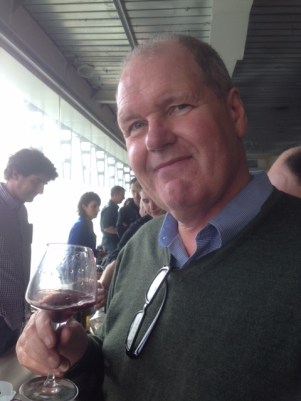
One older drinker enjoying his wine

  • Faults. Critics of natural wines most often levy accusations of faulty winemaking. I tasted several hundred wines during RAW and I found faults in less than a dozen, mainly mousiness and two corked wines. Some are a little volatile and acidic but personally I enjoy such wines if the volatility is not completely out of control. The winemakers should be praised for their skill, the % of faulty wines was certainly a lot less than the % of dull wines I taste at many conventional wine tastings.

The two days were very enjoyable overall despite the crowding on day one. I was able to get round most tables and to taste some excellent wine. The next posts will describe some of those and some conclusions I drew from the event. The RAW website has excellent profiles of the producers and the wines on show, I will provide links to this site whenever I can. Let me start with my favourite range of the weekend which epitomises the feeling of opposites I had after RAW.

The Scholium Project (California) RAW link

Abe Schoener is a winemaker who pushes the boundaries, restless in trying to improve his wines. The wines are superb, very drinkable yet with great complexity. They made me smile, gave me great pleasure but also made me think. By accident as much as design it was found that by not topping up the barrels and not using pigeage the juice protected itself, the cap of skins helping rather than hindering. Indeed the Chardonnay, Michael Faraday 2014, developed a flor like sherry does. The result was pure juice, no hint of off notes either in aroma or taste. I liked all four wines on show, but especially the 26 day skin contact, no SO2 added Sauvignon Blanc, The Prince In His Caves 2015, and the Petite Sirah, Babylon 2013, which spent 3 years in barrels, again not topped up. I would normally be put off wines aged for so long in wood, I am not a great fan of too much skin contact yet here the wines were full of life and energy. Truly outstanding wines.

See what I mean about contradictions and opposites! RAW played with my expectations and prejudices.

Next time: the sulfite free wines which pleased me.


3 Comments

Le Vin De Mes Amis – a sparkling event

mes-amis

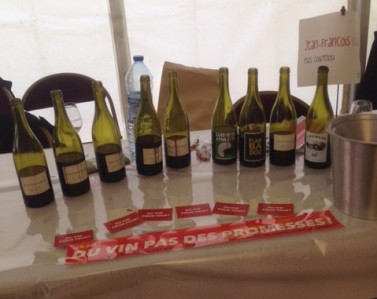
Le Vin De Mes Amis is the biggest of the offline events in Montpellier. It takes place at Domaine De Verchant, a luxurious hotel providing a very good lunch as well as the dozens of producers. Labelled a natural wine event, it actually includes many biodynamic and organic producers who do not make natural wines. There were many good wines available to taste, however, I would admit that, overall, I was slightly underwhelmed this year in comparison to the 2016 event.

There were some very good still wines notably:

Maxime Magnon (Corbières) – Magnon is a producer who Jeff recommended to me a few years ago and though I have had one or two of his wines this was the first occasion I had been able to taste a few together. Every single bottle was very good, white and red. The round white fruits of the Grenache Gris, the deeper Rozeta and Campagnès (all 2015) but especially the Métisse 2016 with delicious light, clear red fruit flavours of Grenache, Carignan and Cinsault. The star of the show.

3d16c818-4292-4c09-aabd-423c45052136

Christophe Pacalet (Beaujolais) – classic fruity Beaujolais wines but with some complexity especially the Julienas and Moulin À Vent (both 2015), the latter with darker fruit flavours, the former so very drinkable.

ac81c8dd-d38f-4d19-a8c2-589a349734d4

Olivier Cohen (Languedoc) – a young producer whose wines were very drinkable, especially the Rond SNoirS made from Syrah and Grenache with lovely round fruit flavours and some depth.

ba09710a-b2b2-4433-9219-4ff421480e5d


Chateau des Rontets (Pouilly Fuissé) – an organic producer with lovely clear wines, classically Pouilly Fuissé especially the minerally, zesty fruits of Una Tantum 2015 an assemblage from all parcels.

74541a10-9072-447c-9ad9-22424374583c

Domaine Vacheron (Sancerre) – one of the first domaines I visited in France many years ago, now a celebrated biodynamic producer of very clean and lovely Sancerre. I liked the range, especially the Guigne Chèvre 2015.

There were a few disappointments along the way I freely admit, including some well-known producers. However, what really made the event fizz was the range of sparkling wines. These are not usually my favourite types of wine at all so to have a number of such bottles amongst my favourites of the week’s tastings was a surprise to me. From Champagne to PetNat and, especially amazing to me, Limoux. Let me explain the latter point first.

I have stayed in Limoux a few times, I have tasted many Blanquettes and Crémants from there. Virtually all have been disappointing, lacking flavour and length. When my friends Benoît and Nicholas told me to try the wines of Monsieur S I was highly sceptical but they were correct and I discovered my favourite wines of the day along with those of Magnon. The white and red still wines were good but it was the sparklers which shone. A vibrant non dosage Blanquette showed lovely white fruit flavours; the Rosé De Saignée with just a little red Pinot Noir fruit and, especially, a delightful green apple Crémant (100% Chardonnay). These were far and away the best Limoux wines I have come across. Well done Étienne Fort, the producer. However, that would not be to give them enough validation, these are top class sparkling wines from any region.

54e90424-5eb3-4e1c-a398-a28884b632e6

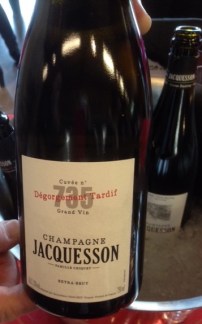
Champagne Jacquesson – very good champagnes with a clarity of fruit and minerality, I really liked them but Cuvée 735 (based on the classic combination of Chardonnay, Pinot Noir and Pinot Meunier) was my favourite with more evolved flavours from the base of 2007 wines.

Champagne Clandestin – biodynamic since 1998 but this was a new range to me and a lovely discovery. This seems to be a group of producers with Vouette et Sorbée as the principal one. There was a depth of fruit and fine mousse and I really enjoyed them all including the non SO2 Saignée De Sorbée 2012. Stars were the cuvées Fidèle, a 2014 of Pinot Noir with round, ripe Pinot Noir fruit and Blanc D’Argile a pure Chardonnay with an amazing (and delicious) rhubarb flavour, very clean and fresh.

Jousset (Montlouis) – Producers of very good still wines but it was the PetNats which were the stars. Mosquito had a very grapey flavour with a nice clean finish. Then two cuvées called Ėxilé, a rosé and a white, both were lovely. The rosé had lovely ripe Gamay fruit and a very dry yeasty freshness. The blanc was even better with vibrant, clean Chardonnay and Chenin Blanc fruit, a wine to simply enjoy.

It was these sparkling wines, along with Magnon’s, which left a lasting impression and would be top of my list to buy. Le Vin De Mes Amis is a great event in a beautiful setting which caters for its attendees with real style.

fa5f3309-3377-4d21-b9af-4dcbfa7619b4

Reflecting on a good day with a glass of .. water


2 Comments

200


20170208_224559

Version française

This is the 200th blog post of amarchinthevines.org. For the 100th post I wrote about the making of a wine which Jeff Coutelou encouraged me to make in celebration. It was based on the three types of Grenache (Noir, Blanc et Gris) which grow in Rome vineyard. The wine was then put into three separate containers; a younger barrel (60l), an older barrel (30l) and a 27l glass bottle.

IMG_2423

I have reported on their development in previous posts and, in particular, about the influence of the three containers. The older barrel has been used many times before and is almost  airtight, so, the fruit in the barrel is still youthful. The younger barrel shows more wood influence as the staves are less sealed and, therefore, there is more contact with the air. The wine tasted slightly less fruity and has a drier flavour. The glass bottle took much longer to finish fermentation and the wine tasted much more like new grape juice, full of fresh red fruits and still sweet as the sugars remained in the wine awaiting the completion of fermentation.

P1000771

Old and new barriques showing clear difference in October 2016

Well, on February 8th it was the day before my birthday and Jeff, as so often, was very generous in making  a bouillabaisse for our dinner and a lovely bottle of Boulard Champagne ‘Les Murgiers’ (the very cuvée I wrote about in my review of Les Affranchis in blog post 199!)

He suggested that we should re-taste the wine so that I could report on its development and make each century an update. So, as the hour approached midnight we were in the solera cellar and the tasting began. The wines tasted much rounder and more complete than the last time I tasted them in October, we discussed the possibility of bottling in early summer when I return to Puimisson. The two barrels showed the same influences, more fruit from the older barrel, more complex, secondary flavours from the newer barrel. The biggest change was from the glass bottle, still very fruity but much less residual sugar as fermentation has completed. This wine is now rounder, it is real wine rather than fermenting juice.

20170208_225324

The glass bottle

Then, in yet another act of incredible kindness, Jeff went into the family cellar and found a bottle of wine from birth year. The 1959 was a Muscat De Frontignan which Jeff thinks was gathered by his grandfather when he worked for an agricultural company, possibly the domaine of the owners of that company.

I have never tasted a 1959 wine before and when it was opened it delivered a delicious depth of old Muscat, deep brown in colour and deep, raisiny fruits which lingered long on the tongue. Just as the memories of a special night will linger long in my memory.


4 Comments

Les Affranchis 2017

affranchis

Two of the main salons of the year take place in Montpellier in January, Les Affranchis and Le Vin De Mes Amis. Both are based around natural producers though there are other producers present who follow organic or biodynamic methods but who do use SO2 in their wines.

Les Affranchis (The Liberated) meet at Chateau de Flaugergues, happily this year the event was back in the main rooms of the domaine rather than the marquees of 2016. The Sunday was relatively quiet and it made it easy to get around and talk to the producers as well as taste their wines. Though some were familiar, Jeff Coutelou and Olivier Lemasson for example, there was plenty of opportunity to meet producers whose wines were new to me.

0b2b027e-8273-4907-90c5-42558ff4d98e

A familiar range

Rather than a bottle by bottle description here are my highlights from Les Affranchis:

La Busattina (Tuscany) – completely new to me but what an impression. The white San Martino was lovely and came in two forms, the traditional and the longer maceration which I actually preferred with cleaner, direct fruit and acidity though both versions were very good. Legnotorto 2012 was a Sangiovese of real cherry fruit and impressive length, and the Ciliegiolo 2008 was even better showing the value of aging these wines with truffle, cherry and round flavours. It was pleasing to hear other friends also praise these wines, the real highlight of the day.

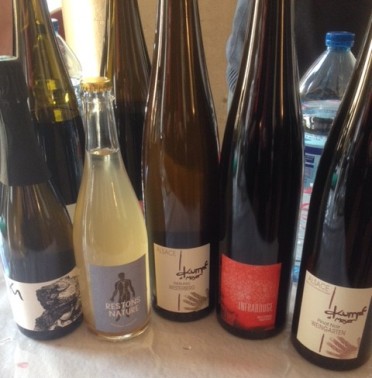
Kumpf et Meyer (Alsace) – I am a fan of Alsace wines but this was a new domaine to me and quickly became a favourite. Julien Albertus presented an excellent range from a lovely fresh PetNat, top still wines and a delicious sweeter wine. Favourites were a Crémant of Chardonnay and Auxerrois plus a Pinot Noir Weingarten 2014 of lovely fruit and depth. I never thought an Alsace Pinot Noir and Crémant would be highlights of any tasting so these were a lovely surprise. Best of all though was the Riesling Westerberg 2014, classic Riesling flavours with a freshness and drinkability all too rare. I shall be looking out for Julien’s wines in future.

d9933c68-0018-467b-93da-b616cf1fbfd6

Binner et Cie, Les Vins Pirouettes (Alsace) – yes Alsace again. This is a range of wines where Christian Binner has enabled young producers to move away from the co-ops and bottle their own wines. There was one producer, Stéphane, whose wines shone here. His Tutti Fruti, a blend, was lovely classic Alsace wines but the single cépage Riesling Bildstoeckle, Pinot Gris and Gewurztraminer were all just lovely, marked by freshness, fruit and flavour. The Riesling was top class and Gewurz is a grape I find difficult but was delicious. Prices are very affordable too.

More familiar wines which again proved worthy of a place at the top table came from:

  • La Ferme Saint Martin (Rhone), a long term favourite of mine and this time it was the Beaumes De Venise Vieilles Vignes 2015 and the delicious Le Blanc 15 which took the prize
  • La Sénéchalière (Muscadet), proving how the region has really moved on and is producing top fruity wines of distinction. Favourite cuvées were the well named Miss Terre 16 and, especially, the longer macerated Nuitage 15.
  • Pierre-Olivier Bonhomme (Touraine), more lovely, fresh Loire white wines from all across the river’s length. Lovely Melon De Bourgogne 16, round apple and pear fruits made from grapes bought from the Landon family. Very nice Pouilly Fumé 15 of real minerality and clean fruit and lots of other good cuvées too.
  • Boulard (Champagne), lovely wines, champagnes of real freshness and length. Les Murgiers was my favourite cuvée and came in two forms, non-dosage and 5mg dosage. Both had their merits though the former had clearer floral notes and a zesty finish.

Other wines I really enjoyed were:

  • Les Roches Sèches (Anjou) – Pentes Douces with a lovely, dry fruit and a well-judged touch of sweetness from Chenin Blanc
  • Tetramythos (Greece) – Muscat Sec 15, fresh and grapey
  • La Paonnerie (Anjou) – Les Champs Jumeaux 15, a lovely Chenin Blanc, clean, fresh and mineral; Loire white wine at its best


  • Rémi Dufaître (Beaujolais) – Côte De Brouilly 16, darker fruit and lovely Gamay, joyful
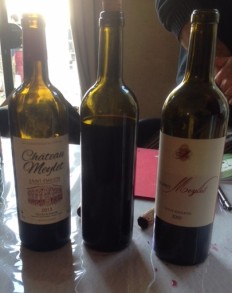
  • Chateau Meylet (Saint Ėmilion) – the 2010 showed the benefits of age for this lovely wine. I had forgotten how good Bordeaux wines can be and this has freshness and very deep fruits. The other vintages were good but this was lovely.

6aa32647-a908-485c-9ac3-28e62cfd4a87

An excellent event, relaxed atmosphere, great producers and not too crowded. I missed out on some other top producers as always at any tasting, however the wines above and many more made for a lovely day. Surprises in the form of enjoying Crémant and St Émilion, variety from Greece and Italy, favourites from previous years – liberating.

9245f926-0175-4e83-a81a-c0401c34d7a2


7 Comments

Vinisud 2017

bandeau_fr

En francais

January and February see wine fairs, or salons, appearing regularly including some of the bigger events. For some reason best known to themselves two of the larger fairs, Millésime Bio and Vinisud, fell out and decided to hold their events simultaneously, meaning that Millésime Bio moved to Marseilles from its usual Montpellier home. However as Many of the offline events remained in Montpellier I decided to attend those and Vinisud. (It was announced on Feb. 4th that a rapprochement has been found and next year will see both events back in Montpellier).

Vinisud is a huge event, 900+ producers from all around the Mediterranean gather and professional wine buyers, cavistes, restaurateurs and journalists make appointments with them, it is big business. For someone like me, who cannot offer to buy thousands of bottles it is a little daunting so I prefer to attend some of the help yourself areas such as the sparkling zone which is self- explanatory. Sadly, there was little of any real interest for me in this zone, some neutral Limoux and Proseccos which offered nothing exciting. Sadly neither did the Picpoul zone really offer much of interest.

19

There was also the Palais Méditerranéan where hundreds of bottles from some of the producers are available to serve yourself. If a bottle appeals then you can always pop along to the stand of that producer. I tasted almost a hundred wines here. Some decent white wines from:

  • Crouseilles co-op (Pacherenc du Vic Bilh)
  • Chateau Estanilles (Faugères), Inverso 2015, nice use of wood to add complexity
  • Jacques D’Albas (Minervois), Blanc 2013, fresh and zesty
  • Frères Laffitte, Côtes De Gascogne 2016, really well balanced demi-sec
  • Domaine Barreau (Gaillac), Caprice D’Automne 2014, nice clean, sweet wine

And reds from:

  • Dondona, ‘Chemin Des Cayrades’ 2014, a nice, fresh pure Carignan (Montpeyroux)
  • Cébène, ‘Ex Arena 2015’, (IGP Pays D’Oc from Faugères), fresh, full fruits
  • Mas Champart, ‘Causse Du Bousquet’ 2015 (St. Chinian), soft red fruits

22

My favourite area was that of Wine Mosaic, an organisation which promotes rare and unusual grape varieties. Again, you can serve yourself wines from unusual and rare grapes from Turkey, Greece, France etc. A real opportunity to try something different and to promote the growth of these cépages oubliés. Mollard, Viosinho, Sidalan, Kotsifali were just some of the cépages I had never even heard of before. Ironically, it was the very familiar Carignan which provided my favourite wine produced by Domaine Nizas near Pézenas.

I did also attend some producer stands notably Mas Des Capitelles, the Faugėres domaine which I really like. The Laugé family have converted to organic production in the last couple of years but they have been making classic Faugėres for many years. They reward patience in bottle developing real complexity and maintaining an admirable freshness. They are big, well-structured wines but they remain balanced between fruit and power ensuring you can enjoy them in the short or long term. My particular favourite is the Carignan based Loris 2013 but other older bottlings of special vintages (cuvées such as No.1 and No.2) are a real treat and deserve the multiple awards they garner.

Corvezzo is another domaine which captured my attention and admiration at the 2016 event, like Capitelles. This large Prosecco producer (125 hectares of vines) is again organic and, unlike any other Prosecco I have tried, these cuvées have depth, fruit, freshness and length. They hold their own against many champagnes. The Extra Dry, for example, has lovely spice and lemongrass notes, very good. They also produce some lovely white wines such as Manzoni and their Pinot Grigio Ramato full of fresh fruit flavours.

23

Even better was an amazing red, Rosso Riserva, produced in Amarone style with dried Robosa grapes and had great flavours and aromas of dark fruits along with a leathery complexity and which built in the mouth long after drinking the wine. A truly excellent wine.

8

The other stand of interest for me was Les Beaux Nez Rouges, a group of natural wine producers under the umbrella of oenologue Hervé Chabert. I declare an interest as I know some of these producers quite well, eg, Regis and Christine Pichon of Domaine Ribiera, Grégory White, David Caer (Clos Mathélisse) and Lionel Maurel (Mas D’Agalis). Hervé kindly gave up half an hour to lead me through tastings from Ribiera, Domaine Henry (St Georges D’Orques) and his own wines, Wine Drop.

Ribiera is a favourite of mine and wines such as Causse Toujours 2015 shows lovely fruit with some complexity. The Cartagène was also dangerously drinkable. Top on the day though was La Vista 2016 a pure Cinsault of lovely sweet fruit with a touch of tannin too. Lovely.

Domaine Henry was new to me and I really liked wines such as the fruity Paradines 2015 (not yet bottled for sale). Fascinating was a cuvée called Vermeille (pictured top left) which is a saignée from all the cuves of the year, ie they run some of the juice from each tank – sounds mad but it is an old practice in the region and Vermeille was light, fruity and delicious. Equally of interest was Le Mailhol 2015, a complantation of old Languedoc cépages which gave lovely fruit with a touch of raisin to add complexity.

Hervé’s own Wine Drop bottles were good, Cuvée No.5 2014 had lovely Cinsault red fruits with a touch of body from some Grenache. Grenache to the fore in No.6 2014 which had lovely aromas and a touch of spice and fruit. The 2013 No.4 had more structure and shows how well natural wines can develop with time, good balance of fruit, power and complexity.

20

Vinisud offered a very interesting day for me after the offline events I had visited the previous two days. There is much to offer the visitor from classic wines to natural, wines from all around the Mediterranean, business opportunities, masterclasses, seminars and the chance to match wine and food amongst others. A valuable day in my wine education.


Leave a comment

Return to Mas Coutelou – in the cellar

Version francaise 

p1020310

As pretty as the vineyards are, even in winter, it is the main cellar at Mas Coutelou which attracts attention this January. The continuing modernisation of the cave continues apace. Last year saw the relaying of much of the floor, new stainless steel tanks to replace some of the very large fibre glass ones and the introduction of a new mezzanine built on ironwork. On this level some of the cuves are stored but now there is the addition of two new rooms made from wood. These will form a new office for Jeff to work from (freeing up space in his own home) and, also, a tasting room with bottles laid out for visitors to try and buy. The old windows mean there will be plenty of light and air in here, as well as a good view over the village and countryside. A good view of those of us working down below too!

The cellar has changed so much in the last 3 years, all to make the winemaking more manageable and, now too, the admin side of Mas Coutelou moves forward. Not that the admin gets any easier, Jeff spent two hours on the phone the other day on a minor issue!

p1020301

Meanwhile, there were two main jobs being done in the cellar. Habillage of more 2015 wines (Buvette À Paulette, Classe and Flambadou) with Jeff, Michel and Lucas hard at work.

Then, Julien and Carole returned from pruning as the rain had started again They set to work preparing sample bottles for the salons which will dominate the next two weekends, in Montpellier and Saumur. The 2016 wines are still some time from going into bottle and so samples are taken to give clients a chance to taste how the wines are coming along. So, golden opportunity to taste 2-3 wines from cuve, with the Carignan (Flambadou) and one of the Syrahs really shining. With Michel, Carole, Julien and Vincent all there it really was a gathering of the Coutelou clan. And more friends will arrive this next two days as people gather for the salons. Of which, more next time.


2 Comments

A year in the vines, Mas Coutelou in photos (Part 2)

July

p1010428

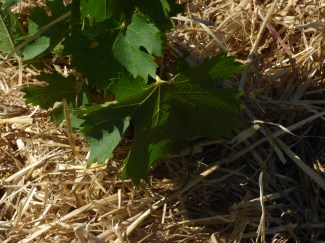
Young vines freshly grafted in March (see above) surrounded by straw? What is going on? The weather was so hot and dry over  a prolonged period that the vines were stressed. As these young vines would not be producing any grapes they could be watered to protect them, the straw keeps the moisture in the soil.

The grapes continued to grow though and July saw véraison, the colouring of the red grapes. They were smaller than most years but healthy in the main. Other than those vines affected by the widespread mildew of the spring and early summer, those grapes were dried and shrivelled by the disease.

August

More grape ripening, Carignan to the left, Grenache to the right. There were some beautiful bunches despite the weather problems of the year. Time to start thinking about harvest and that work began in the cellar itself where Jeff had taken out some very large fibre tanks and replaced them with smaller stainless steel tanks with a new steel staircase to take us above the tanks to place in the grapes and to carry out pigeage or remontage during the vendanges. And on the 24th Jeff was testing the grapes to check for ripeness and acidity to see if they were ready for harvest to begin (they weren’t quite!).

September

As dawn rose over Rome vineyard probably the most important month of the year began.

p1010639

Vendanges means hard work, fun, pressure, grapes and cleaning amongst other things. Selecting the best fruit from the vines’ year of growth, making the best of that fruit in the cellar to make a natural process work by using care, patience and analysis.

For each of the three harvests in which I have now taken part at Mas Coutelou my main memory is of the people, the teams who work to support Jeff. Friends all, and so many happy memories.

October

Cellar work continues as this year’s wines ferment and start their journey to bottle. Meanwhile time to prepare bottles of more of the 2015s, this time magnums. And in both photos Julien to the left and Michel to the right. The two figures who have been most present in Puimisson working at Mas Coutelou through the year. Two of the best, kindest people you would ever meet. Is it a coincidence that good people congregate together and that the best wines come from the best people?

Meanwhile autumn arrives in the vines, Puimisson in the background.

p1020227

November

Cases of wine leave Puimisson to head around the world. Mas Coutelou is sold in Australia, Japan, the USA, all over Europe and at the cellar door. As the end of year and Christmas holidays approach merchants want their wines and exporting the cases involves planning, spreadsheets and collation of the various cases.

Meanwhile, in one corner of North East England one happy vineyard worker sorts his own collection of Coutelou treasures.

December

15439861_10154009671412595_5814305575539506409_n

A photo from Camille Rivière who imports Jeff’s wines into the USA, those cases above have arrived safely and Camille shares her happiness with the bottles she has opened and enjoyed.

Jeff tells me that there has been a lot of rain in recent weeks, 400mm last month. That is certainly welcome but the weather has also been very mild. Reports of mimosa blossoming (it should happen in February) and Jeff told me he had seen a neighbour’s vines preparing to bud!! Frost is needed for the vines to enter a dormant stage and rest, recover after  a difficult year. More mild weather would mean two years of non-stop activity, which would weaken the vines.

A fantastic year, a memorable year, a complex year in the vines.  But also a year marked with sadness at the passing of Jean-Claude Coutelou. I raise my glass once more in his memory.

ddfce457-16d5-4dcf-9236-afcb4c40987b

Grapes, work and love


Leave a comment

A year in the vines, Mas Coutelou in photos (Part 1)

January

The year begins with a series of wine salons and assembling wines for those tastings from the previous year. Jeff took me through the various cuves to see how the 15s were developing. Meanwhile the serious work of pruning (la taille) dominates the early months of the year and Julien was hard at work, patiently shaping the vines to enable them to produce their best. This was especially important in such a mild winter where the vines were unable to lie dormant.
February

Bottling of the 2015s began, this time Vin Des Amis, perennial favourite. Jeff has his own bottling line and the full crates of wine now head to storage for a few months to get over the ‘shock’ of bottling (mise en bouteille).

March

A March in the vines for sure. One of the highlights of 2016 was also the wettest and filthiest I could possibly be. Grafting vines (la greffe) in Flower Power (Font D’Oulette) on a day when it became impossible to lift the pioche because of all the mud stuck on it. I learned a lot and I loved the whole day.

April

Spring brings the vines truly to life (though the mild winter meant they were restless all winter). Look at the tendril extending from the pink bud on the left, this vine is already growing fast. Small shoots in Rome vineyard and also the ladybirds, sign of  a healthy vineyard. (ébourgeonnage)

May

The grappes begin to form in clusters and spring flowers are everywhere around the various vineyards of Mas Coutelou. May is perhaps the most beautiful month of all in the vine, warm days, clear light and the colourful natural world – blossom, flowers, butterflies, birds. There is literally no place on earth I would rather be.

June

In the vines the flowering season (fleuraison) lasts just a few days. They are very delicate and easily damaged by strong winds or heavy rain. Here the Carignan vines of Rec D’Oulette (which make Flambadou) are in full flower.

Meanwhile in the cellar the bottling season restarts and the tanks are emptied and then cleaned with a vivid colouring for the floor. And welcome visitors arrive sometimes bringing delicious gifts of food with which we can accompany the wines. It’s a hard life, believe me.


Leave a comment

Nature can be harsh: Part 3 -pests

In Parts 1 & 2 I have tried to explain some of the difficulties encountered at Mas Coutelou during 2016 due to natural influences such as climate and disease. In this final part of the series I look at pests which have added to those woes.

Vers de la grappe

These are literally grape worms, more specifically caterpillars, which form and grow on bunches of grapes. The caterpillars are the larvae of Eudémis moths which prefer to lay their eggs on shiny surfaces, so grapes are the target more than the rest of the vine. The larvae obviously damage the grapes themselves but that damage is worsened because of juice running on the bunches attracting infection and disease.

The warm weather and humidity of 2016 definitely encouraged vers de la grappe though it is an ongoing problem. It can be treated chemically of course though that is not an option for organic producers. Substances such as clay can be sprayed in spring to add a chalkier, duller surface to new grapes so that moths are not attracted to them. However, the solution favoured by Jeff Coutelou is to plant hedges and trees. These not only act as barriers to less environmentally aware neighbours, add polyculture to a region which can appear solely planted by vines but also they can shelter bats.

img_0227

Bat shelter in Sainte Suzanne

Bats feed on Eudémis larvae and moths and can eat thousands every day. Bat shelters are to be found around Mas Coutelou, eg in Sainte Suzanne and Rome vineyards.

The photographs above show a vers de la grappe cocoon and, on the right distinctive holes showing where the moth laid its eggs. When the vendanges begin the pickers and sorters must look out for signs such as these but also damaged, shrivelled grapes in bunches where the larvae have been.

Snails

If I could have named 2016 in the Chinese form  I would have called it the year of the snail. They were everywhere. The two photos below show an olive tree in Segrairals. This was  one of many which were completely covered by snails, blanched by the sun and feeding on the greenery and moisture in the tree.

However, vines were equally attractive to them. I spent whole mornings picking snails from vines during the Spring only to find them covered again a day or two later. Flower Power (Font D’Oulette) was particularly badly affected with the snails heading straight for the new growth and buds in April and May.

The virtual drought in the first six months of 2016 meant that the snails were desperate for moisture and food and so the healthy, young vines were too good to miss. The consequence was obvious, production of this much lauded new wine was reduced drastically, partly by the weather but equally the work of the snails. Birds and other predators would help solve the problem but the monoculture of the area (outside of Mas Coutelou) means there are, sadly, no great numbers of them.

Vendangeurs and sorters must try to pick off snails as they hide in the bunches. Dozens get through to the cellar especially in the early morning when there is moisture around. The photo on the right shows a lot of rejected material, leaves, poor grapes but lots of snails as you will see if you enlarge it. Just imagine how many get through into the wine with machine picking and limited triage.

Neighbours

Yes they can be included under the title of pests. Well, one of them can be. As regular readers will know 2016 has been punctuated by two occasions of vandalism by one particular neighbour, both upon the Carignan Noir vineyard of Rec D’Oulette. First he mowed a patch of wildflowers which Jeff had sown to encourage insects and birds (for reasons identified above). Then he took a machine to some of the young trees Jeff planted around the vines, destroying four year old trees such as hazelnut.

p1010463

Vandalised trees with tyre tracks revealing the culprit

Jeff was justifiably upset by these attacks. He was simply trying to enrich the area, bring diversity to it but that was clearly too much for a traditionalist, more used to destroying wildlife for his own short term gain and dreadful wine. However, he was encouraged and revitalised by the massive support of friends and colleagues around the world. The flowers grew back and more densely, the trees replanted in greater numbers and Jeff Coutelou stands tall as the man trying hard to improve the reputation of Puimisson and its wines.

p1010116