amarchinthevines

Learning about wine, vines and vignerons whilst living in the Languedoc


2 Comments

With A Little Help From My Friends

P1040397

Sometimes we all need some support

Like many people I am prone to occasional bouts of depression and last weekend was one of those times. Fortunately it doesn’t hit me as hard as many people but it makes me (even more) difficult to live with. By Tuesday I was starting to feel better and toured the Coutelou vineyards. It proved to be a real tonic.

I started in Rome, where else? Surrounded by trees, birdsong, butterflies and even a hare who was far too speedy for my camera to catch. It is an inspiring place, so relaxing. The vines are hanging on to their leaves despite the long, dry spell, not always the case elsewhere.

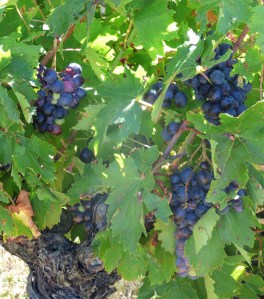
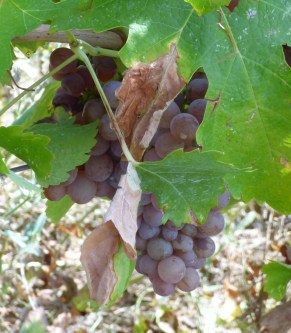
Carignan grapes left behind in Rec D’Oulette

As I was to see in other vineyards the soils are starting to dry significantly. In Peilhan, for example, the clay soils were soaked all Spring and they compacted meaning that the recent dry months have caused that upper crust to crack. Some rain is needed. It would also give the vines some relief. They have had a very tough time in the last couple of years. 2017 saw drought which stressed them then this year’s wet Spring and mildew have made them struggle too. One of the reasons for picking some grapes a little early was to give the vines a break so that they can look after themselves. Rain would help that to happen.

P1040433

In Flower Power (Font D’Oulette) the vines are much younger and the foliage more meagre. Compare these vines to those in a neighbouring vineyard. The watering and feeding of nitrates etc means that those vines are much greener and fuller with few signs of changing colour. The yields from such vines are much higher too. These are the issues which organic/biodynamic/natural producers face, they often have to accept lower yields and production in order to stick with their principles, and it explains the price premium.

Flower Power vines shining in the sunshine, the vivid green of neighbouring vines 

Mildew meant that Jeff was reluctant to plough his vineyards this year as that would release the spores from the soil. Now that autumn is here, however, they will be turned over to add compost to the earth from all the plant growth. The mildew spores won’t flourish in the cooler conditions. Jeff and Julien were using pickaxe and mattock to clear the ground around the new planting in Segrairals on Tuesday. Weeks of work remain to be done. Meanwhile back in the cellar more cleaning, the sorting table and other harvest equipment taken apart to ensure everything is spotless.

It was Louis’ last full day and he had kindly invited me to share a bottle of Mas Jullien over lunch. Jeff decided to make it a celebratory feast and we shared excellent food from the barbecue and a cake! A magnum of Macon from Valette was excellent and the 2012 La Vigne Haute magnum at least its match. We even went to taste my 2015 wine from barrel, soon to be in bottle!

A day to lift my spirits. Natural beauty, tranquillity and the company of wonderful friends. I am a fortunate man.

With Michel and Julien, man’s best friend

2 Comments

Vendanges 2018 – Part 6 (Grapes, work and love)

P1040363

2018 will be remembered by team Coutelou for mildew, hail, mechanical breakdowns and successive problems. Yet as we reached the end of the vendanges the habitual feelings of pride, camaraderie and friendship were to the fore.

Though the harvest of Mourvèdre the previous week was the last of the major parcels Jeff had left grapes in Peilhan to pick. The reason was a visit by a film crew from Netflix making a programme (or series) about different ways of making wine in the region from cave co-ops to big scale producers and négotiants like Bertrand to the natural producer which is Jeff Coutelou.

P1040382

Some of the camera equipment

Carignan Blanc and Muscat D’Alexandrie was picked in the morning, even I did 4.5 hours of picking. Over the final harvest lunch (my favourite Fideua plus jeroboams of the first Amphora wine) the crew joined us and then filmed the afternoon picking of the new plantation of Peilhan with its Piquepoul Gris and Riveyrenc Gris. They shot scenes in the cellar as we sorted and then carried out a long interview with Jeff. I am not really allowed to say much more until the broadcast and shall update when we get the date.

And that was it. The last grapes. There remains much work to do with the processes I described here needing to continue for all the wines in tank, from the first to these last. The Muscat will go to make a maceration orange wine as in 2016, a wine I truly love and which has featured regularly through harvest lunches.

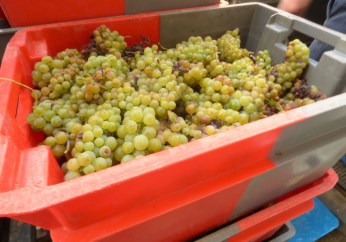
Carignan Blanc, Riveyrenc Gris, sorting the last cases

It is time for Jeff to count the costs of these vendanges in terms of actual production and I shall feedback when things settle down. Suffice to say we had a big drop in quantity, the Coutelou wines will be even harder to find. Having tasted most, if not all, as they ferment steadily I can say that quality remains high, Flower Power, Carignan, La Garrigue Syrah and Mourvedre especially.

Muscat and the new plantation grapes in cuve

Jeff’s motto of “grapes, work and love” is never more true than at this time of year. We have worked hard, we have formed friendships and made the best of what nature gave.

Amphora jeroboam poured by our resident sommelier Louis, Michel shows his team loyalty


1 Comment

Vendanges 2018 – Part 4

Monday 10th to Friday 14th

P1040334

Cuves containing new wine including, potentially, La Vigne Haute. Note how the near one is far from full, this is 2018!

A hectic and busy week, including 12 hour days. The picking team had reduced in number therefore Jeff Coutelou had to make the time work to best advantage. Grenache Gris was amongst grapes picked on Monday to head towards rosé and other cuvées. The main focus though was the Carignan of Flambadou, the flagship of the domaine for the last few years. It may well be joined in cuve by the small, juicy berries of that rare Cépage, Castets.

Cabernet Sauvignon followed on Tuesday and Wednesday with more Syrah and Cinsault from different parts of the vineyards. Mourvèdre was the last big block of vines to be tackled and took a very full day on Thursday to pick. This parcel in Segrairals has varied topography, the lower parts become a little damp and are more prone to rot. It is important for Michel to convey not just the grapes but also the location of the grapes picked so that triage is made more efficient.

Top left – Carignan, top right – Castets, below Grenache Gris

By now Jeff was concerned that some of the vines were becoming so stressed by all the issues this year, mildew above all, that they were struggling to ripen the grapes. In order to ensure the health of the vines for next year it was no longer worth pushing them that little bit further so that next year would be compromised. Vines are fragile, living things which need to be looked after, Jeff nurtures them carefully.

Whilst picking was in full swing and cases were stacked up for sorting there was plenty of activity in the cellar. Wines in cuve or tank need treating carefully too, ensuring the juice ferments into wine with nothing added to it requires the vigneron makes good decisions about, for example, levels of acidity and alcohol, exposure to air and skins. I shall be coming back to this in the next post in a couple of days time.

And, after all that work, it is all too tiring for some of us!


Leave a comment

Vendanges 2018 – Part 3

Friday 7th and Saturday 8th

P1040223

Some serious hard work. A lot of grapes came through the cellars in these two days and we worked longer hours than usual. I can almost hear regular readers thinking, “Hang on, you said there were fewer grapes this year!” That is, sadly, still the case. Whereas in previous years all the grapes that came through in similar quantities might have been from one or two parcels this time it was grapes from several different parcels. All the grapes from those parcels. What might have taken three or four days was done in two.

White grapes from Peilhan, Cinsault from Segrairals came in thick and fast on Friday. Cinsault is a generous grape with big, floppy leaves and big, juicy grapes to match. Problematically the size of those grapes means that bunches can grow to quite a size but with large gaps between the round berries. Into those gaps rot, leaves, insects and moths find their way. Therefore it needs careful sorting, the rolling sorting table was needed. Amongst the usual leaves, grass, snails, earwigs and spiders I spotted an unwelcome visitor.

Lobesia botrana or European grape moth (ver de la grappe in French) lays its eggs inside bunches of grapes and the cocoon resembles cotton wool. They emerge as worms which eat into the grapes for nourishment, leaving a trail of juice which can attract rot. The moth’s main predators are birds and bats which is why Jeff Coutelou and others try to attract these species into their vineyards. As you can see I found one worm clinging to its Cinsault grape.  I need to add this is rare, you will not be drinking worm juice in your wine!

P1040222

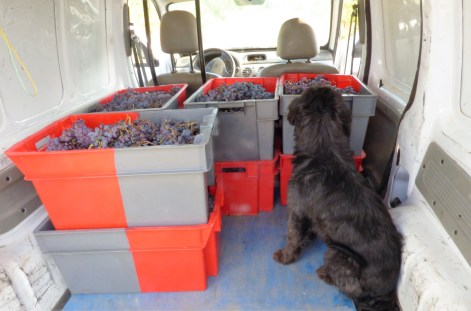
So keen to bring home the Syrah and part of the van!

Saturday and more parcels. My favourite wine of Jeff’s is La Vigne Haute, the pure Syrah from La Garrigue vineyard with its north facing vines with some villefranchien soils. Jeff only makes this when the grapes are very good, seven times in the last seventeen years, this decade there are only three. I love LVH and always hoped to help to make it and last year was the first time, having tasted it in bottle (not yet released) I can promise that the wait was worth it. Surprisingly, despite the problems of 2018, the Syrah from this vineyard is in very good shape and might just make it as La Vigne Haute. A lot less sorting, healthy bunches, fingers crossed for the first star wine of this troublesome vintage.

Syrah from La Garrigue

The afternoon brought in the Grenache from La Garrigue. Sadly, this is not of the same quality as Grenache was most susceptible to and damaged by the mildew epidemic. The juice will receive a short maceration before being separated from its skins and then used for a project as yet undecided. There were some lovely bunches harvested, you can only think of what might have been. That the Grenache and Syrah from this vineyard was picked in one day tells its own story.

Lovely bunch of Grenache which Julien and Élise help to sort

Meanwhile soutirages, débourbages and pressings all take place, the cellar is a hive of activity. And of course there is the endless cleaning of everything. Analyses of the wines so far are positive and the juices taste very good, I particularly liked the Flower Power / Rome assemblage.

As I said long hours, hard work, aching back, stained hands and dirty fingernails. In between there were the usual laughs and camaraderie, bottles shared at lunchtime and after work. Despite everything the year has thrown at the Languedoc and Coutelou we know that there will be some good wines.


Leave a comment

Vendanges 2018 – Part 2


P1040186

Tuesday 4th to Thursday 6th September

After the break harvest really kicked into gear this week. One of the effects of mildew (and compounded by the hail storm later) was damage to foliage. The vine uses the foliage to ripen the grapes but also to nourish itself via photosynthesis. Damaged and desiccated leaves mean that there comes a point where the vine struggles to ripen the grapes any more and, even worse for the winemaker, things go into reverse; the vine begins to take back nutrients from the grapes in order to feed itself. This will have consequences not just this year but into the future, as the vine has struggles so much and is weak, it will not be at its best next year and further ahead.

P1040193

Riveyrenc Gris grapes in good health but note the mildewed leaves 

Therefore, Jeff Coutelou has had to spend a lot of time in the vines ensuring that he knows exactly the health and condition of the vines to get the best possible grapes for this year whilst being mindful about the health of the vines. A balancing act to cause him more stress in a difficult year.

P1040183


Tuesday saw some lovely Muscat being harvested from Peilhan, the grape which smells of grapes. The video below shows them being pressed and I wish I could convey the lovely fresh, grapey aromas which emerged from the press.


Error
This video doesn’t exist

This is Muscat being made for dry wine, in 2016 for example the Muscat D’Alexandrie made a lovely orange wine which we have shared at lunch. Afterwards the pickers moved into the 2015 plantation at the top of Peilhan, the 12 rows of Morastel, Terret Noir and Riveyrenc Noir picked to blend with Syrah from Sainte Suzanne where the pickers headed next.

On a beautiful Wednesday morning the remaining Syrah was picked. Jeff decided to make a grappe entière wine so Julien and I headed into the top of the cellar to sort the grapes and send them through the chute into the tank. This had been given a dose of CO2 to encourage the fermentation of the grapes inside their skins. After a short period the skins will burst and the resulting juice will have a light, fruitiness. This process is called carbonic maceration. Sorting meant removing any leaves and other vineyard products such as spiders and snails. Mainly though we were looking for the dried grains of berries damaged by mildew and the green, unformed berries caused by millerandage.

P1040198

Onto Thursday and the deployment of two teams of pickers. The Moroccan crew picked some lovely bunches of Macabeu from Peilhan before moving on to Syrah from Segrairals.


Macabeu and Syrah (note the green unformed berries needing to be sorted

We were also joined by a number of pickers who would tackle some of the more interesting vineyards. As a result of mildew damage in Faugères some growers have little or nothing to harvest and some of their pickers came to join the Coutelou team. And we were joined by Louis who, having completed his professional baccalauréat has begun a course to help him achieve his ambition of becoming a sommelier. His stage will certainly teach him a lot about vines and wines, the numerous cépages he picked will certainly have opened his eyes to the wide world of wine.

This team picked my favourite vineyard, Rome, with its old Cinsault vines, Muscats of various kinds and all three versions of Grenache. In the afternoon the moved on to Font D’Oulette now simply referred to as Flower Power after the wine made from the numerous cépages in there. Using two teams meant that cases were returned thick and fast by Michel and Julien and I had a long, back breaking day sorting these grapes.

P1040219

Julien and Nathan sort the last case on Thursday from Flower Power

I have to say the juice tastes great, fruity with good acidity. Now all we need is for the yeasts to play their part and ferment that juice into good wines. The picture below shows yeasts at work in a tank where some of the skins from the pressing of last week’s Grenache. As with the grapey Muscat these bready aromas deserve to be more widely shared. Vendanges is all about the senses.

And, for Icare lovers around the world, he is taking a very keen interest in this year’s harvest.

P1040188


2 Comments

Harvest 2018 – Part 1


Everything scrubbed and cleaned in readiness

My fifth vendanges with Jeff Coutelou, time has flown and instead of a complete ignoramus helping where I can without getting in the way I now understand the different jobs and skills needed and can tackle most, if not all. This year’s reduced harvest (possibly up to 50% less than average) means we need a reduced team and so I hope I can put those years of experience to use to support Jeff along with Michel, Julien, Nathan and the team of pickers.

This year has been difficult due to the weather as I have tried to explain on here before. The long period of rain during the Spring meant that mildew hit hard across the region. Some friends have lost all their grapes, others significant amounts. Those in organic and biodynamic farming have been hit hardest as synthetic anti-mildew treatments proved more effective than organic ones. A couple of bursts of hail during thunderstorms triggered by the heatwave of July/August also damaged vines and bunches of grapes. One of the effects of both these problems is damage to the foliage, making it more difficult for the vine to have photosynthesis to produce energy to ripen the grapes easily.

Top left – mildew dried bunch on the left, top right – hail damage to grapes and leaves underneath

All of this meant that unlike other regions of France the vendanges began later than usual, the first picking was August 29th a full two weeks after 2015 for example. We began with white grapes, Sauvignon Blanc, Carignan Blanc and Muscat from La Garrigue vineyard. I did a little picking and then moved to the cellar for sorting.

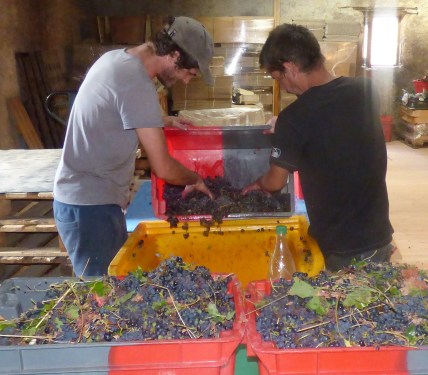
The pickers in action, my bucket and case, back to the cellar and first analysis

With the problems of 2018 sorting might have been very difficult but actually not so much so far. The ripened grapes are healthy, the dry heat of summer means there is no evidence of rot. Instead we are looking for grapes dried by mildew, many bunches have clusters of them, they can be easily separated from the healthy grapes. Another issue is the number of unformed grapes, like little hard, green peas amongst the bunches. This is due a problem called millerandage, where the flower was unable to set the fruit, a product of the rainy, cold Spring and early mildew.

P1040127

Cinsault with millerandage left side

The first red grapes soon followed, the Grenache from Sainte Suzanne, often the backbone of Le Vin Des Amis. This was the parcel hardest hit by mildew and the quantities are heartbreakingly reduced. Nonetheless there was enough to take picking on the afternoon of Wednesday and the Thursday morning. The sorted grapes were passed through the new destemmer (mercifully quieter than the previous one) and then sent for a short, cold maceration.

In the video Michel is putting the chapeau into the tank to cover the grapes. Dry CO2 has been added to make the grapes cold so that they do not get too hot and ferment too wildly. The juice was run off the skins on Saturday morning. Jeff has a number of options for using this juice, which was never going to be serious enough for using in a classic red wine.

We restart picking on Tuesday, September 4th. There are lots of healthy parcels ahead and things will perk up. This initial burst was a useful warm up, mechanical problems with the press and pump are now sorted and we head towards the main event. Wish us well.

P1040123

There are plenty of healthy, juicy grapes to look forward to like this Carignan for Flambadou

And one member of the team just loves this time of year, with lots of attention.


1 Comment

New vines, old grapes – back to the future

Version francaise

Following on from the new plantation of old and rare grape varieties in Segrairals, Jeff wants to develop further this aspect of the Coutelou vineyards. He has been consulting with the nursery in the Aude which specialises in organic and old vines and has placed orders for more.

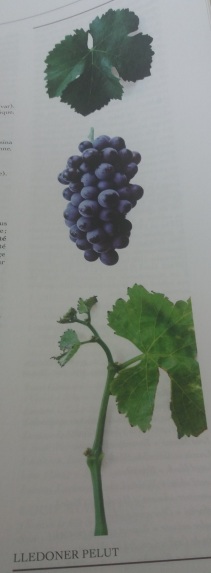
Amongst those are some known in other regions and countries. Alicante is a variety known in Spain as Grenache Tintorera, a cross between Grenache Noir and petit Bouschet. Widely grown in Portugal and Spain its red flesh which adds a deep colour to wine is becoming fashionable in the USA. Farana is a grape which was grown in Algeria mainly but after its independence from France plantings there have shrunk to very little. Spain has some and there is a little in the Barossa Valley in South Australia. Beni carlo is a grape better known as Bobal, usually grown in Spain and resistant to extreme climatic conditions. Like Alicante Beni carlo is good for adding colour and tannin to wine. Lledoner Pelut, a Spanish grape by origin, is a mutation of Grenache but has the advantage of being more resistant to rot.


More familiar varieties such as Aramon, Morrastel, Terret Noir and Clairette Blanche, already planted elsewhere in Jeff’s vineyards, will become more widely planted.

Varieties such as Villard Blanc, Lignan and Mancin are also little known grapes which will begin to bear fruit. Villard was a cross made by a horticulturist and his father-in-law who gave their names to it (also known as 12375 Seyve-Villard). There used to be 30,000ha in the South West of France as late as the 1960s, now only a handful of hectares remain in the Ardeche and Tarn but also in Hungary. Very resistant to mildew. Lignan is unusual in being a grape which ripens before Chasselas, the benchmark for maturity. Originally Italian (known as Luglienga) Lignan Blanc is widely grown as a table grape, is vigorous and needs heavy pruning. Mancin was originally a Bordeaux grape but has disappeared there and little grown elsewhere. Another early maturing grape it adds body to wine when assembled.


Jeff has ordered a few vines of each of these as well as more of the Inconnue which is already planted in Font D’Oulette (unknown elsewhere), Marocain Noir, Oeillade Noir and Valenci Blanco some of which are so rare I could not find any information about them! They will be added to vineyards to replace vines which don’t take after grafting or simply die.

Why is Jeff so dedicated to planting and conserving these grapes? Partly because he simply believes it is simply the right thing to do, partly through passion for vines and their history as well as the traditions of French viticulture. It is also a question of diversity in a sea of vineyards across the region. And, in an age of climate change, it behoves viticulteurs to look at how they are going to respond to more extreme weather conditions in future. Finally, these grapes will certainly add a unique character to the Coutelou wines. Old vines but the way forward too.

20180823_145749


2 Comments

New vines, old grapes – Segrairals

En francais

The new plantation, originally designed for the parcel at Sainte Suzanne contains a number of rare grape varieties. That parcel has been so wet that Jeff decided not to go ahead there, instead he planted them in Segrairals after grubbing up some of its Cabernet Sauvignon vines. To the right of the Cabernet the white vines were planted with red varieties to the left side.

White

  • Clairette

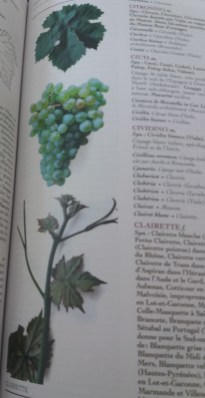
Origins: A Mediterranean grape, famously associated with Adissan in the Hérault. There are different varieties; Clairette Blanche, Clairette Rose, Clairette Musquée etc. (Jeff has had Musquée for some years, this was one of the grapes which Domaine de Vassal had not known about until Jeff visited). It is also known as Blanquette and Malvoisie (not to be confused with the Italian grape of that name). 2,200ha are planted, down from 14,000 in 1958.

20180805_153303

Clairette, from Pierre Galet’s Dictionnairedes cépages

Bunches: above average in size, compact, cylindrical with average sized grapes. Leaves are quite round though the top sinuses are distinct.

Growing: Late budding, ripens at a normal rate*, vigorous so might need pruning. Can be vulnerable to mildew and vers de la grappe (moth larvae which grow in the berry, the juice can then spoil the whole bunch).

Wine: Fresh, quite high alcohol with relatively low acidity

  • Picardan

Origins: South of France, Provence (this is a grape which can be used in Chateauneuf Du Pape). Sometimes called Oeillade Blanche (not related to Oeillade Noir which Jeff has already), Aragnan and Milhaud Blanc. In 2011 only 1 ha was being grown, that in Provence.

Bunches: average sized, compact, long stems with small to medium grapes which start a yellowy green and develop a pink tinge by maturity. Leaves have 5 distinct lobes with marked teeth

Growing: Late budding, vigorous, ripens at a normal rate. Quite hardy against disease but prone to mites.

Wine: usually blended with others, often in rosé wine, aromatic.

  • Olivette Blanche

Origins: Unknown though likely southern France, not related to Olivette Noire. Sometimes called Servan Olivet or Rognon. One advantage of Olivette Blanche is that the flowers are female so it is a handy variety to plant amongst others which are dominated by male flowers. Only 1,8ha are known to be planted so this is a coup for Jeff.

Bunches: average sized, straight rather than conical in shape. Stalks stay green. Irregular sized and shaped grapes which can grow big. Greeny yellow in colour and fleshy. Leaves are 5 lobed though these are not distinct V shaped sinuses help to distinguish it.

Growing: Average budding, vigour and ripening. Sensitive to coulure and millerandage (meaning some berries don’t develop in the bunches).

Wine: As a result of its irregular growth this is not an easy grape to prune and train so it has become little grown.

  • Servant

Servan

Origins: Probably Languedoc. Sometimes confused with Le Gros Vert which is a different grape. Also known as Servan, Colombal and Nonay. Only 75ha remain in the Hérault (there used to be more than 4,000ha) with another 50ha in Italy.

Bunches: Average to big in size with grapes which have quite thin skins and turn slightly pinkish on maturity. The grapes are quite fleshy. Leaves have 5 distinct lobes and deep sinuses.

Growing: Budding is normal, ripening later than average. Vigorous growth and as the vine ages it starts to grow lots of grapillons (side bunches). Quite a vulnerable variety, prone to millerandage, mildew, oidium and does not like the soil to be too dry.

Wine: Neutral, lasts well (The name Servan means conserves)

  • Terret

Origins: Languedoc. There are different types and Jeff has these in Peilhan vineyard too; Terret Bourret or gris and Terret Monstre or blanc. Another variety used in making Chateauneuf Du Pape and other Rhone wines. This variety has doubled in surface area in the Languedoc in the last 50 years.

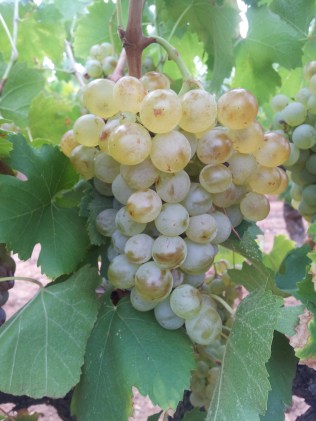
Terret_blanc

Terret Blanc, from wikimedia

Bunches: Average to big in size, the bunches develop in a pyramid shape and are compact. Grapes can be round, thick skinned and juicy. The leaves tend to redden in early autumn. Leaves are fairly compact the top 4 lobes looking like one large one.

Growing: Late budding and vigorous. Prone to mildew and oidium as well as vers de la grappe. Can get sunburned easily.

Wine: Fresh, light, dry and aromatic.

Reds

  • Aramon

Origins: Probably Languedoc. Used to be planted all over the region, one of its names was Pisse-vin because it is the most fertile of all grapes and produces large quantities of low alcohol wine. This was the grape which made most of the wine given to troops in the French Army in World War 1 as well as sold to the ordinary people of Paris. There were over 150,000ha in 1958 now there are only 2,260ha.

Bunches: Conical shaped and very big, weighing 400-600 grammes even over 1kg. The grapes are also large in size, spherical and very juicy with thin skins meaning the grapes can burst open if not handled carefully. Leaves are thin and 3 lobed

Growing: Early budding but average ripening dates. Sensitive to mildew but can resist oidium. Also vulnerable to mites, vers de la grappe and fungal problems.

Wine: Fairly neutral with little colour if allowed to grow unchecked. With careful pruning and green harvesting the wine can be fresh and juicy.

  • Grand Noir De La Calmette

Origins: This is a cross, made in 1855, of Petit Bouschet and Aramon, bears some resemblance to Piqupoul Noir which is also a cross of Petit Bouschet. It has almost disappeared so these few vines are a real rarity, now only 0,4ha in the whole of France though there are 1,000ha in Portugal and more around the New World. Also called Gros Noir and Sumo tinto.

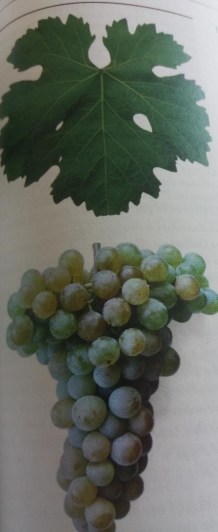
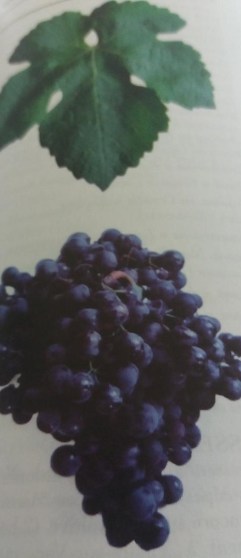
Grand Noir

Bunches: Average to big in size, cylindrical in shape with short, woody stalks. The grapes are average in size but some bunches are prone to undeveloped green berries. The skins are quite thick and a rich purple. The juice is quite sweet and reddish as are the pips. Leaves have 5 lobes with prominent teeth and look long.

Growing: Very late budding, vigorous in growth, normal maturity. A little sensitive to oidium, less so to mildew. Hates frosts.

Wine: Low alcohol and ages quite quickly.


Leave a comment

Coutelou renewed

untitled

En Francais

You may recall that for French bureaucratic reasons the Coutelou domaine name had to change this year. Mas Coutelou was a combination of the surnames of Jeff’s parents, Mas being his mother’s family name. However, Mas also means a homestead or farm and only wines under Appellation or IGP labels are allowed to have that name. So, family name or not, Jeff’s Vin De France wines, Mas Coutelou for many years, had to have new branding.

Since he was already planning to release new products such as a fine (eau de vie), a kina (like a vermouth) and other spirits Jeff chose ‘Vins et Spiritueux Coutelou’. I have tried the Kina and like it, even though it’s not really my thing. Made from wine and organic herbs from the vineyards it is a very enjoyable aperitif.

P1040020

It seems that renewal is the signature of the year. There has been much updating of the cellar in recent times; roof, insulation, a form of air conditioning, division of cuves to make it possible to vinify smaller parcels and quantities, resin flooring, better drainage, amphorae, temperature controlled stainless steel tanks. A new management space means that it is easier to see at a glance what is where and adds a tidiness to what was a more chaotic central space of the cellar.

Upstairs the new office space has been fitted out beautifully. Jeff commissioned a couple of local carpenters to make furniture. Using old barrels and a foudre of more than 130 years old they made a cupboard, with themed shelves and a stunning chair for the desk. They are real works of art, true craftsmanship. A table from the Coutelou family home has been skilfully renewed to add a feature to the space.

P1040083

The empty parcel next to Ste Suzanne

And, in the vineyards more renewal. The small parcel at Sainte Suzanne which has been fallow for many years was supposed to be planted last year, in 2017. A very wet spell then and another this Spring has meant that those plans had to be shelved as the parcel was too wet. However, the vines were already ordered so Jeff has planted them in Segrairals where he had grubbed up some Cabernet Sauvignon. Instead of that extraneous variety Jeff has planted Aramon Noir and Aramon Gris (Aramon being the original grape in the parcel next to Ste Suzanne), Terret, Clairette Blanche, Clairette Rose, Picardan, Olivette, Servan (related to Syrah) and Grand Noir De La Calmette. I must admit to never having heard of some of these. Time to consult my copy of Galet’s wonderful Encycolpedia of Grapes. The Coutelou vineyards are fast becoming a treasure store of rare grapes, there are now several dozen varieties planted.

The very hot and dry month combined with the widespread mildew outbreak have meant that Jeff has spent many hours tending this new plantation, spraying and watering to help the new plants to survive. Happily, all is well.

2018 will always be remembered by Languedoc vignerons as a year of headaches and heartaches, months spent on tractors fighting disease, easy to become disheartened. The Coutelou renewals help to remind us that such problems are temporary.


Leave a comment

Mainly Happy Returns?

P1030979

En francais

After eight months away from Puimisson and the Coutelou vines it was definitely a case of being very happy to return. As I stood in Rome vineyard there was the chorus of birdsong, hum of insects, flash of colour from butterflies and flowers. A resounding reminder of why this is one of my favourite places on Earth, capable of making me joyful just by being there.

Rome

In Font D’Oulette (Flower Power), the vines are maturing well, many now sturdy and thriving in their gobelet freedom. The change from when we grafted some of them just two years ago is dramatic, perhaps more to me as I haven’t seen them since last October.

Grafted vine 2016, same vine now

In Peilhan and Rec D’Oulette (Flambadou’s Carignan) the roses were still just in bloom at the end of the rows but starting to wilt under the hot sun.

Carignan left and top right, Peilhan bottom right

And there lies the rub. The hot sun has really only been out in the region for the last week, it has been a catastrophic Spring. Rain has fallen dramatically, almost three times the usual level from March onwards after a wetter winter than usual. The annual rainfall average has been surpassed just halfway through the year. Moreover the rain was not in sudden bursts but steady, regular, in most afternoons. Vineyards all over the region are sodden, tractors and machines unable to fight their way through the mud making vineyard work difficult if not impossible. Even after a week of sun if I press down onto the soil I can feel the dampness on the topsoil.

Mix damp and warmth around plants and there is a sadly inevitable result, mildew.

Look again at the photo of Peilhan, zoom in on the wines at the bottom,

there are the tell tale brown spots.

This downy mildew lives as spores in the soil and the rain splashes them up onto the vines. Jeff had warned me of the damage which I described from afar in my last post. Seeing the tell tale signs of brown spots on the upper leaves on such a scale across vineyards all over the Languedoc is another matter though. All those vines touched will yield nothing (though some will still put them into production, so be confident of your producer). I have heard that some producers have effectively lost most of their vines for this year and similar stories from right across the region. Grenache seems particularly susceptible to mildew and it has been devastated at Jeff’s, the Maccabeu too.

Meanwhile Jeff has been struggling against nature, not a normal situation. He has sprayed all kinds of organic products from seaweed, nettles, essential oils such as orange and lavender, horsetail, clay. He has used the two natural elements permitted under organic rules, copper and sulphur. Jeff is particularly reluctant to use copper but such is the battle this year that it was necessary. Unfortunately like Sisyphus the task is uphill. He sprays, it rains and the effects of the spray are greatly lessened by washing it off the vines, so he has to start again. At least this week that is no longer the case and Jeff has been working all hours to save what he can, to roll that rock uphill once more. He is discouraged, even heartbroken to see the state of some of the vines he tends and cares for so much.

Dare I mention that now is the time when oidium, powdery mildew makes itself known? Please, not this year.

So, production will be down enormously this year, we hold out best hope for Syrah, Mourvèdre, Carignan Noir. Lower production means lower income too, so expect price rises and please do not complain as now you are aware of the reasons.

So happy returns? Well on a personal level yes. To see my great friend again, to have Icare waiting to be tickled, to see the good side of nature. But. This is not a happy time for vignerons across this region and it hurts to see my friends knocked about like this. Let us hope for northerly, drying winds, sunshine and no more disease so that something can be rescued this year, for Sisyphus to reach his summit.
It really is Flower Power now. Jeff sowed wildflowers and plants to help the soils of that vineyard retain moisture, ironic given the Spring.