amarchinthevines

Learning about wine, vines and vignerons whilst living in the Languedoc


6 Comments

Wine and me, a journey to the Languedoc

Version française

I was reflecting on two wine blogs which I read recently (Frankie Cook and David Crossley) Independently they were writing about how we got into wine and how, over the years, our tastes have changed.

wpid-20150630_161948.jpg

Pat and myself with our tasting guide at Olivier Leflaive, Puligny Montrachet

I was brought up in a County Durham small town, Crook. My family were teetotal and brought me up as a Methodist. This meant that alcohol had virtually no impact upon my life for many years, the pub was not a part of lives other than the occasional meal whilst on holidays. Wine was an alien concept, something which posh people and foreigners drank. Even during my time at Liverpool University I drank some beer but never wine. That I should turn out to be horse racing fan with passion for wine may be seen as something of a reaction to that upbringing though it should be said that my childhood and youth were wonderful and I would not change anything about them.

So it was a school trip which ignited my interest in wine. As a teacher. I was asked to accompany a visit to the Rhine Valley in Germany in 1982. The hotel where we stayed was big and old fashioned, in the centre of Bacharach not far from Rüdesheim.

Bacharach am Rhein

The hotel owner was a very sociable and generous host and every evening he would offer us wine to accompany our meal and then he would teach us about the local wines and how they could vary in levels of dryness or sweetness and according to site and winemaker. (I hasten to record that two teachers would abstain to supervise the children). Well his teaching was a revelation! As far as I knew wine came in two types, red and white just as there were different flavours of soft drinks such as Cola, lemonade etc. Our host opened up a whole new world of how wines could vary so much even within the same place and vintage never mind from other regions. How I wish that I could remember the name of that German tutor, he set me on the road which leads to the Languedoc in 2015.

wpid-20150630_171421.jpg

With Oz Clarke at a London tasting, his books taught me so much

From Germany to Australia. 1980s Britain saw a boom in wine interest in Britain, fuelled by television coverage, magazines and books. My chosen guides were Oz Clarke and Hugh Johnson, different in approach but knowledgeable and with a great ability to communicate their enthusiasm and to educate me with their words. At the same time the arrival of New World wines, especially from Australia, and Oz’s championing of those wines widened my tastes from German Riesling, though that remains my favourite white wine type it should be said. Huge stonking Shiraz, colourful Chardonnay and cassis-heavy Cabernet Sauvignons were the order of the day. Wyndhams Bin 222 and 444, Penfolds Bins 128 and 389, then cheap! Massive amounts of oak (often from wood chips added to the barrel) which today would make me shudder and wince. 


Add in the Sauvignon Blancs which were starting to arrive from New Zealand, tropical fruits, cut grass and cat’s pee aromas. Cloudy Bay Sauvignon was the bottle to find, indeed it was rationed out. And trips to Oddbins, the most dynamic of wine retailers, who offered Penfolds Grange Hermitage for around £20 (now over £200), why didn’t I buy it all?

wpid-20150630_161644.jpg

Iain and I using Oz Clarke and Hugh Johnson to help us navigate Beaune

From the Antipodes to France. By the mid 1980s I was a regular holidaymaker in France, profiting from school holidays in summer. The Loire was the first region visited and particularly tasting wines in Vouvray. Dry, appley Chenin Blanc wines which could magically also be sweet and luscious vins moelleux in the hands of winemakers such as Huët, Foreau and Fouquet.

wpid-20150630_161215.jpg

A startlingly youthful me with my brother in law Iain in the Cave Madeleine, Vouvray.

My first wine fair was in the troglodyte Cave Madeleine on August 15th. I assumed you drank rather than spitting the wines and rolled happily down the street back to the accommodation. Then onto Burgundy, Alsace, Beaujolais, the Rhone Valley, Bordeaux and Jura. Some were more welcoming to wine drinkers than others. Great welcomes from people like Martin Schaetzel in Ammerschwihr who opened bottles generously. I met lovely people whose passion for their work and wines was freely shared with visitors. Louis Champagnon in Chénas was always a man who greeted you with a smile, food, a joke and great modesty.

wpid-20150630_162216.jpg

With the great Louis Champagnon, Chénas

The Échezeaux producer who shared her Grand Crus, knowing that as a young teacher I couldn’t afford them (sadly I still couldn’t 25 years later!). Sadly, Bordeaux was different, most producers kept their doors firmly closed, though I still loved the wines. I tasted first growths such as Haut Brion at generous merchants such as Hungerford Wines. I bought en primeur in 1990 and struck lucky with a great vintage and wines from La Lagune and d’Angludet at just over £100 a case.

My experiences broadened, more tastings, more wines from around the world but especially France. As a teacher my budget was limited and I relied upon Oddbins, The Wine Society and supermarkets to find good wines. Plus I got bolder in knocking on doors, a remarkable visit to Didier Dagueneau and his wonderful Pouilly Fumés for example. In Germany trockenbeerenauslese wines were offered and I even learned to pronounce it.

wpid-20150630_160900.jpg

A March in the vines of the Loire

wpid-20150630_161326.jpg

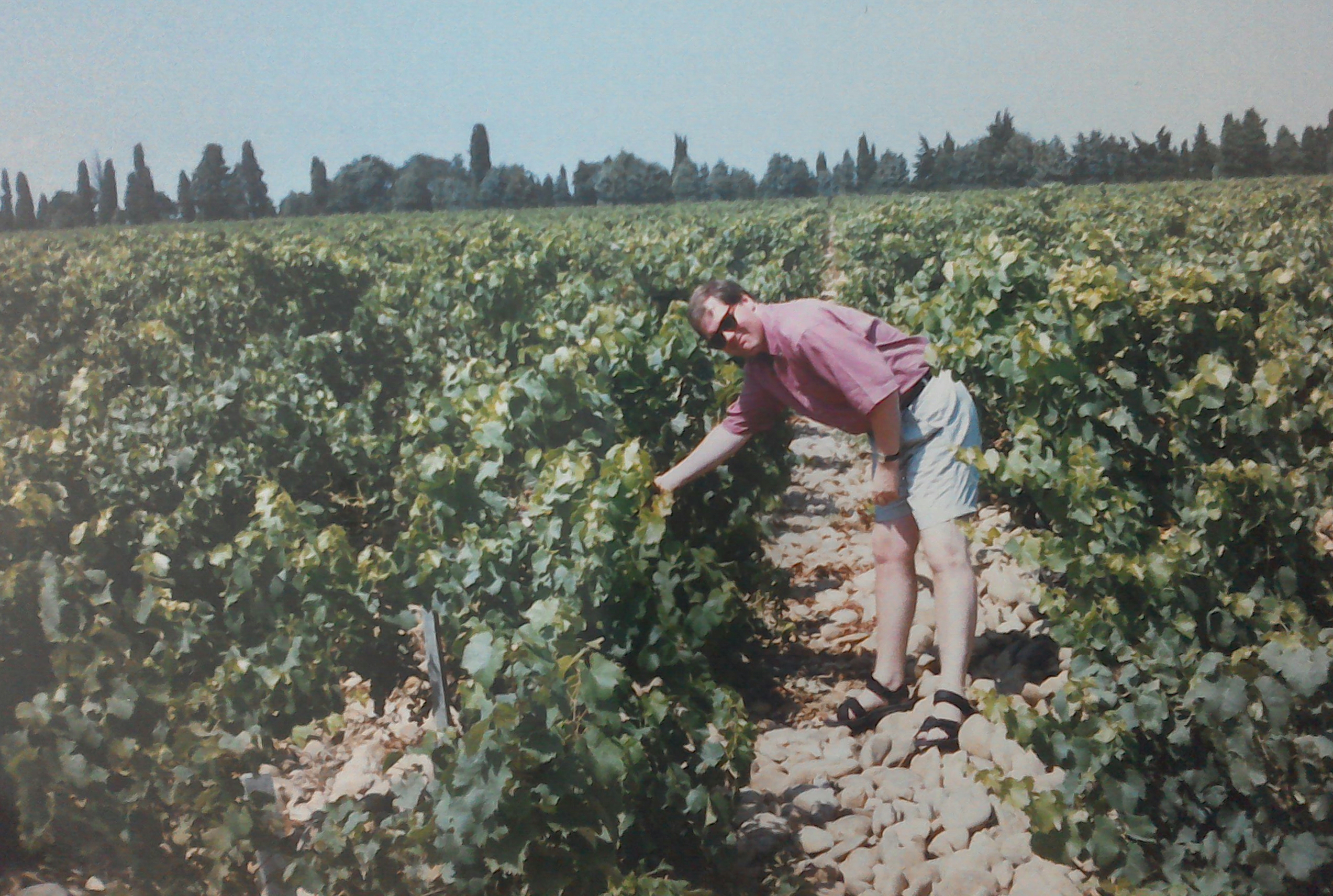
A March in the vines of the Rhone

wpid-20150630_162104.jpg

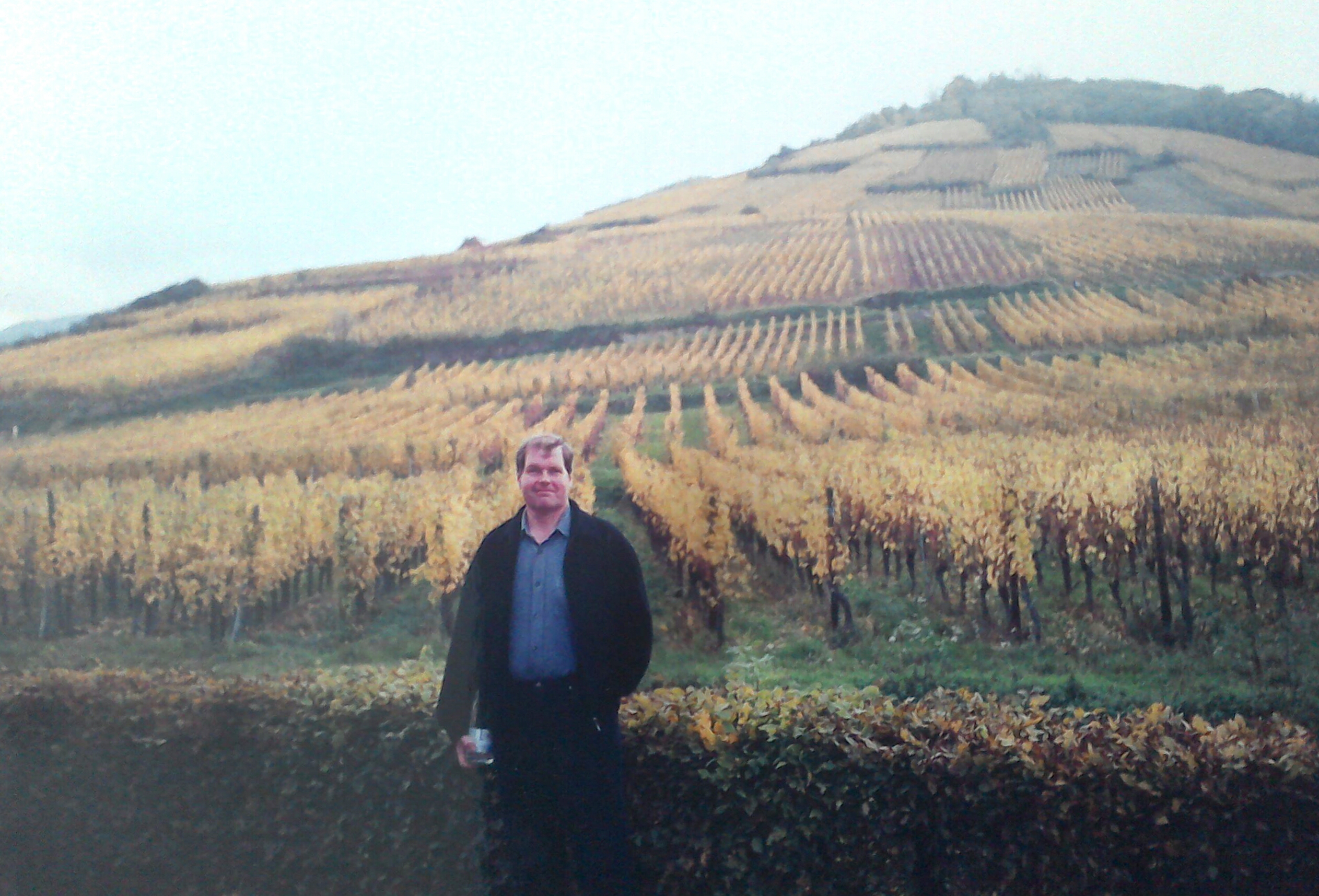
A March in the vines of Alsace, golden autumn 2001

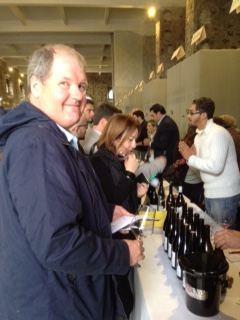
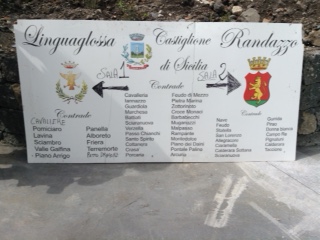
Blind spots remained however, Italy and Spain in particular, much to my brother in laws’s disbelief. California too though a visit to the USA (South Dakota and Seattle) showed me that good wines were abundant there, and oh those ice wines in Canada! Lovely. A trip to Sicily also opened my eyes to the possibilities of Italian wines, the Frappato grape and Etna wines were revelations.
IMG_0268 IMG_0269


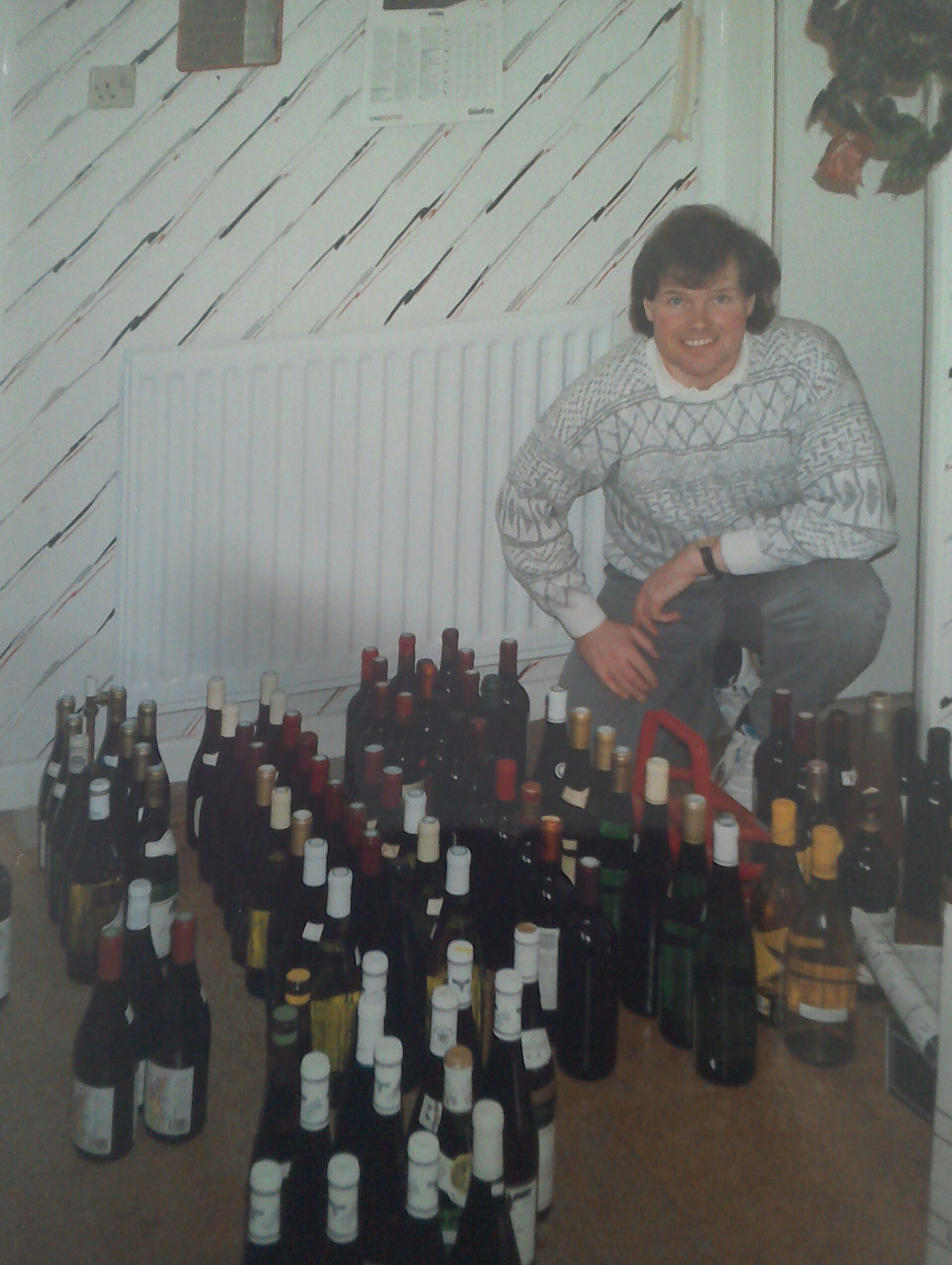
Well 30 years of wine drinking brought joys and disappointments, bargains and rip offs. Memorable bottles, glasses and also corked wines, a whole case of expensive Chablis was one painful low. A hundred bottles stored away has turned into five hundred. And then with age the question, when will I drink it? Why buy expensive en primeur which won’t be at its best until I’m too feeble to drink it or indeed incapable of drinking it.
wpid-20150630_161438.jpg

Sorting and happy (and hair!)

wpid-20150630_161756.jpg

Wine fair in Cahors

Tentative steps further south in France in the last decade. The Languedoc. Rosemary George was my guide through her book and blog to discovering the well priced and under rated wines of the region. Wines which offered pleasure but also, from many producers, complexity. A chance visit to Puimisson and Mas Coutelou as that was the domaine Rosemary wrote about when I was in the area. The expected half hour visit turned into three and a half hours. Even after visiting hundreds of vineyards and cellars I was flabbergasted. Vineyards without chemicals, wines without sulphur, a solera! In Puimisson?? All true. Above all a generous, passionate man and generous friend who happens to be a great winemaker. And a teacher about the vineyards and winemaking who encouraged my interest and deepens my understanding and who agreed to being the focus of a blog to keep me busy. Le Vin Des Amis indeed. Retirement, the chance to spend a year, indeed more, in this fabulous region. Learning, living.

Cheers

15 Comments

Clos Fantine – I Dreamed A Dream

IMG_1587

Version française

I have visited hundreds of vineyards over the years but very few have stirred the same excitement and admiration as those of Clos Fantine, run by the Andrieu family of Corine, Carole and Olivier. With a helping hand from their New York importer Camille Rivière, who also imports Mas Coutelou wines, Corine asked me to visit on May 21st and I returned on June 11th.

There are around 30ha of vines around their base in La Liquière high in the Faugères hills. The soil is schist, Corine told me of 3 types, grey, blue and pink. This slaty soil makes it difficult for vines to send their roots down into the bedrock as it ends to lie horizontally, so they must seek fissures and faults for their roots to penetrate as the topsoil is meagre. This undoubtedly adds to the qualities of freshness and energy which mark so many of the best Faugères wines and certainly those of Clos Fantine. Corine explained that they do not try to fight this natural acidity but rather they work with nature, a philosophy which is fundamental to every aspect of the domaine. Nature rules, the Andrieus guide it perhaps.

IMG_1577

Schist soils

The three siblings took over the running of Clos Fantine from their father in 1997 and continued to work conventionally until 2000 when they began to use the natural yeasts of their terroir and then, in 2004, more confident of their vineyards and of themselves and of their ideas and beliefs, they stopped adding sulphites. This was no trendy whim on their part, they were certainly not riding a natural wine bandwagon. Corine is a qualified oenologue who reads widely around viticulture and agronomy. She used, and still uses, her scientific background to guide her winemaking as well as the philosophy about nature which she shares with her family. As she said to me, “You have 3 core tenets; the use of science, faith in what you are doing and the art in creating the wine.”

As we drove around the vineyards with their stunning setting there was a true feeling of well being. We met Olivier who was hard at work in one parcel strimming grass between the vines. The Andrieus do not plough the soil as they feel that this upsets the balance of it, and that the hot Languedoc sunshine and strong winds would dry the soil out too much if ploughed, leading to erosion of the already thin topsoils. Sunshine is not a problem in the region, water is and by not ploughing the family also help to preserve the water in the soil. Grass, flowers and other plants grow naturally and when the grass is fully grown and starts to seed they strim it to add organic matter to the soils and seed for the following year.

IMG_1579

Olivier strimming the grass

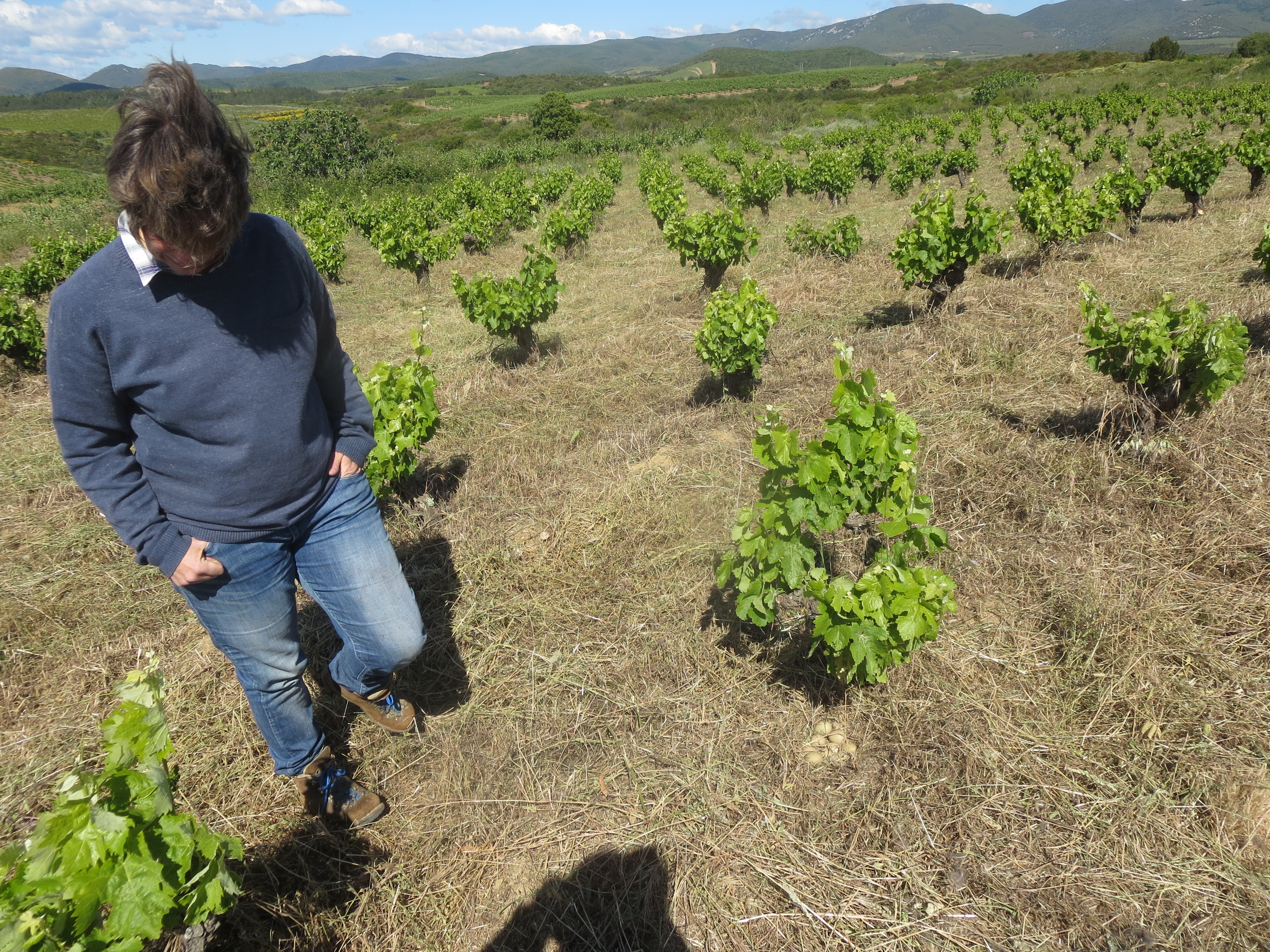
The grass also provides shelter for insects and spiders which in turn will help the vines by attacking grape parasites such as ver de la grappe. These are real living vineyards, illustrated by the discovery of two separate partridge nests, both filled with eggs, at the base of vines in that one parcel.
wpid-20150521094234_20150525233550198.jpg

Partridge eggs in their nest below one of the vines

Corine talked about how they see the land as between 3 stages, farm/grassland, garrigue and forest. They are seeking to keep their vines on the edge between the first two stages so that the vines are having to work a little to compete with flora and fauna without being overstressed. Meanwhile, Olivier also spoke about keeping good quality air around the vines, eg allowing the air to circulate freely around the vines to keep disease at bay and also about using the flowers and grass.

IMG_1578

The fresh air of La Liquiere


Disease, of course, is an issue at the domaine despite their hard work to minimise it. This is true of all vineyards. Mildew had hit when I was there in May, nothing too serious but a reminder that nature can also be cruel. Natural treatments available to them include the use of sulphur and copper which had been used for the first time in a few years. However, the vines were not in any danger, the mildew had been contained.

IMG_1588

Marcottage vine training, in fact this mother vine was attached to two offshoot vines

All the vines are gobelet, low to the ground. Corine described how they had recently bought a parcel of vines and their first action was to remove the palissage, the stakes and wires used to train the vines. The vines flopped and spread out as if relaxing, in Corine’s words, like a woman released from her corsets in Victorian times. Gobelet is the traditional method of growing vines in the Languedoc. The bushy vines have plenty of foliage to shelter the grapes from the sun but also have space to fan out allowing the air inside to stop humidity and defend against disease. The gobelets did give the impression of a vineyard which could have been from any period of the last few centuries, ageless.

IMG_1584

Gobelet vines

Corine used the word ‘energy’ a lot whilst I was there. She was referring to the soils and the vineyards. The nurturing of the soil and the vines is about channelling the energy of nature into those vines and ultimately the grapes and the wines through their management of soil and air. However, energy also describes the work of Corine, Olivier and Carole. They are relentless in their quest to improve the vineyards and the wines.

IMG_1585

Energy!

They read widely, for example Corine is an admirer of Jean Marie Pelt and his writings on plants and nature. She quotes science, history and nature readily and compares her wines to others in the region but also to wines and vineyard practices from the rest of France and internationally. Corine seeks to learn from these and we talked about viticulture in Australia and Chile, as there are little things done there which might help to improve wines, “we may never be perfect but we can try to be the best we can be.” This awareness of learning and the outside world is more widespread than it used to be in France but I have not come across that many vignerons who are so keen to learn from various sources.

IMG_1581

Corine, happy in her vines

At the start of this blog article I mentioned how happy and at ease I felt in the vineyards of Clos Fantine. The location, its touch of wildness and nature together with the philosophy of the Andrieus all rubbed off on me too.

At that point a wagon arrived to collect some palletts of wine to take to Belgium. As the domaine is up a narrow road Corine was going to have to transport the wines using the forklift down to the wagon in the village. I was actually quite pleased as it gave me the opportunity to return a few weeks later to visit the cellars and to taste the wines.

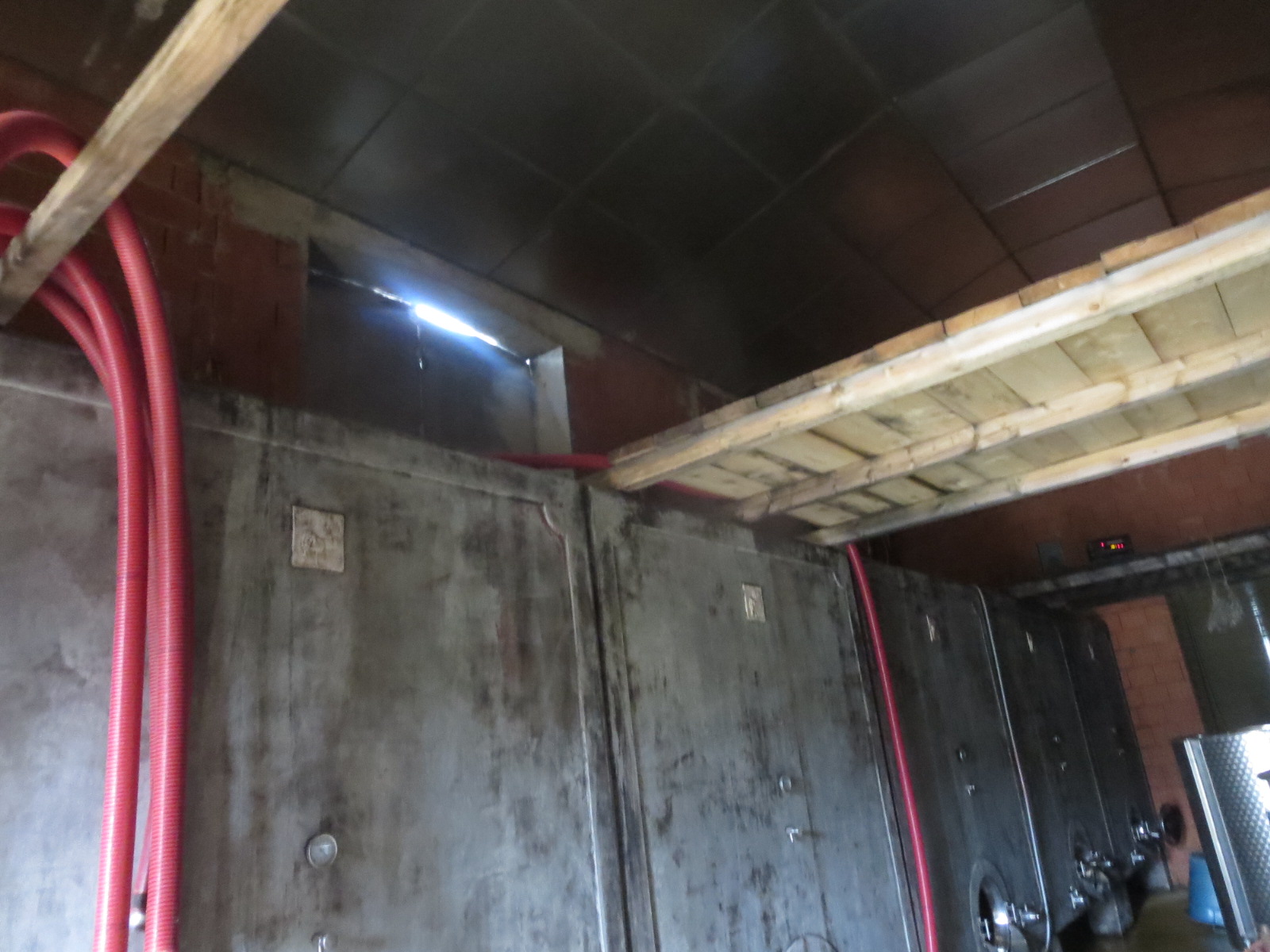
As a storm broke over La Liquière on June 11th it was a dramatic backdrop in which to return. The cellar has been designed to allow the grapes to be moved by gravity rather than pumping after being harvested by hand and gathered in small cagettes. The cement vats we tasted from were full of single variety wines busy fermenting. Corine uses no pigeage or remontage in the vats, something which was new to me, and as the weather cools down in autumn and winter the cellar doors are opened to allow the temperatures to drop and halt the fermentations naturally. These resume in spring as temperatures rise again. The result is a gentle, long and cool maceration with as little intervention as possible.

wpid-20150612111053.jpg

Doors lead over the vats meaning the grapes can be moved by gravity

And the results… Well we tasted Carignan, Syrah, Grenache, Mourvèdre from the vats and each was clear, direct, mineral and oh so fresh with fruit singing out. They were also classic in their cépage typicity, it was relatively straightforward even for me to identify each one. They were excellent as was a Terret from a barrel which contained wines from a number of vintages, in other words in a solera type system. Complex, long, mineral and the slight oxidative notes were refreshing and interesting.

We then retired to the kitchen and tasted from bottle. The Terret, Valcabrières, was a delight. Great depth of flavour with zesty refreshment and white fruits such as notes of pear. Long in the mouth it was delicious. Recently bottled it was already very good but will improve as it settles in bottle. Lanterne Rouge is Aramon and Cinsault, very much Languedoc varieties and a wine I have described on here a few times as it is a favourite with lively fruit aromas and a deceptively light first taste which grows more complex in the mouth. The Clos Fantine Tradition is mainly Carignan and Grenache and has real depth of dark fruit flavours and great complexity and a refreshing, clean finish. It is classic Languedoc red wine but with added zest and liveliness. Finally Cuvée Courtiol is made from the best grapes of the millésime. Ripe, full and delicious with length and soft tannins that will marry into the wine with age. I really love these wines and when Corine said there was no obligation for me to buy any wines when I asked if I could, I hastened to reassure her that I felt no obligation, I wanted to buy some and will certainly want to do so again!

wpid-p_20150619_102001_hdr.jpg

I learned so much in my time at Clos Fantine with the Andrieu family and I admire and respect their work, their philosophy, their passion for learning and nature and, of course, their wines. I implore you to seek out their wines and drink them.


Leave a comment

Changes

Time to head back to the UK for 3 weeks or so. Time to reflect on all that has happened since the dark, cold days of January. It has been wonderful to witness changes in seasons from almond blossom to irises to poppies to full bloom of flowers, fruits and, of course, vines. From the pruned sticks of January to the lush, verdant vines of June. Changes everywhere.

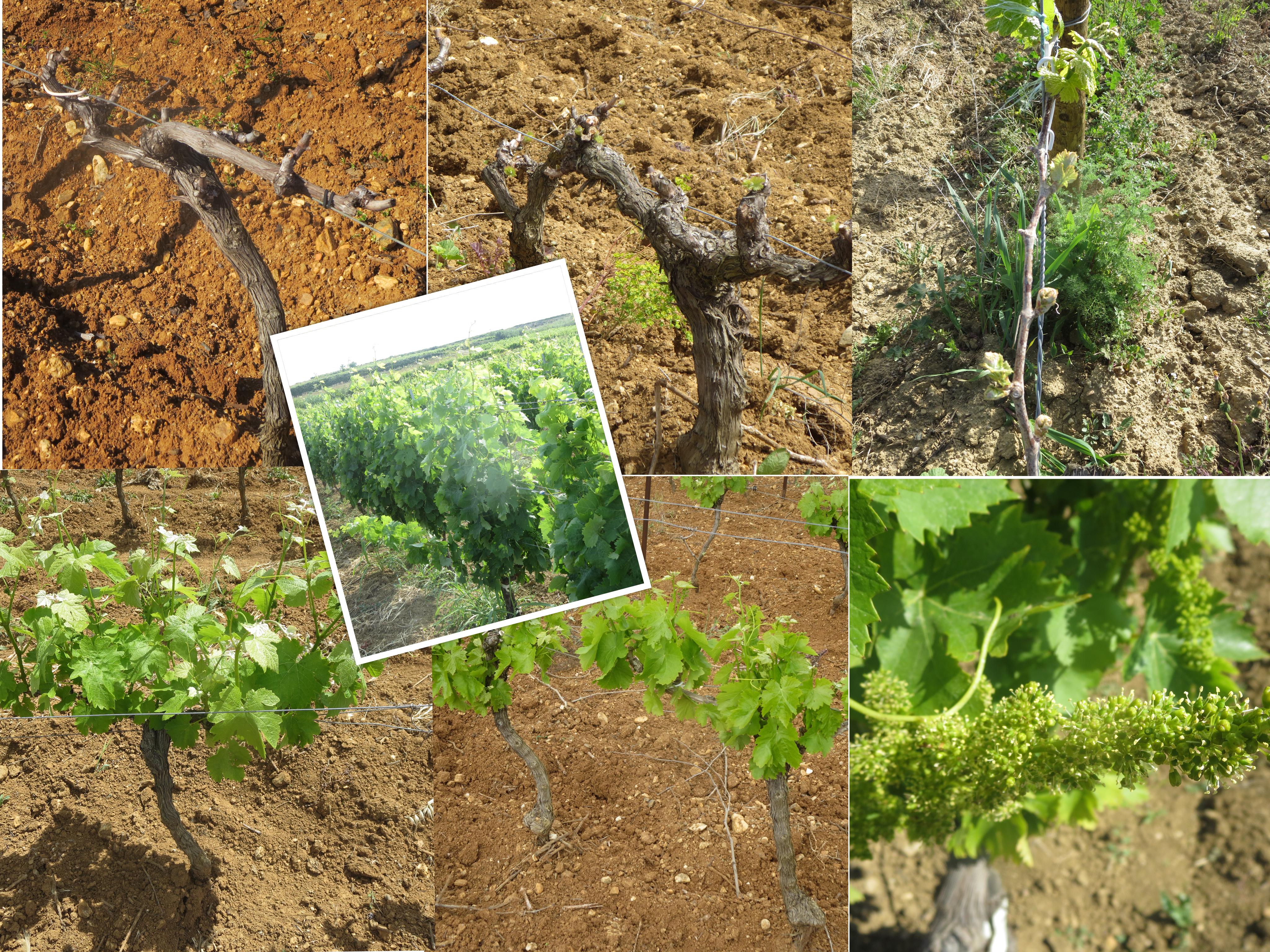
Let’s start in my favourite vineyard, Rome with photos from various months showing the gobelet vines I call the centurions in deference to their stature and location.

collage 5


La Garrigue, a vineyard of Syrah and Grenache as well as white varieties is one I have watched closely as it was where I watched Carole and Jeff prune in January. Read this collage left to right on both rows before the full growth in the centre.

collage3


So what has changed in the grapes?

Top row

left – bourgeons / buds with their cottony covering and green specks of leaf

2nd from left – Etaillage and grappes / first leaves with the formation of future bunches

3rd from left – grappes / buds form in bunches

right – the bunches separate

collage2


Bottom row

right – fleuraison with capuchons / the flowering of the grapes with little brown hoods

middle – fleuraison complete flowering bunch

left – boutons / the grapes begin to form

The grapes are starting to form their seeds which will gradually harden (nouaison). When I return here in July the black grapes will start to change colour (véraison). Can’t wait to see it.


1 Comment

Stormy weather

IMG_1773

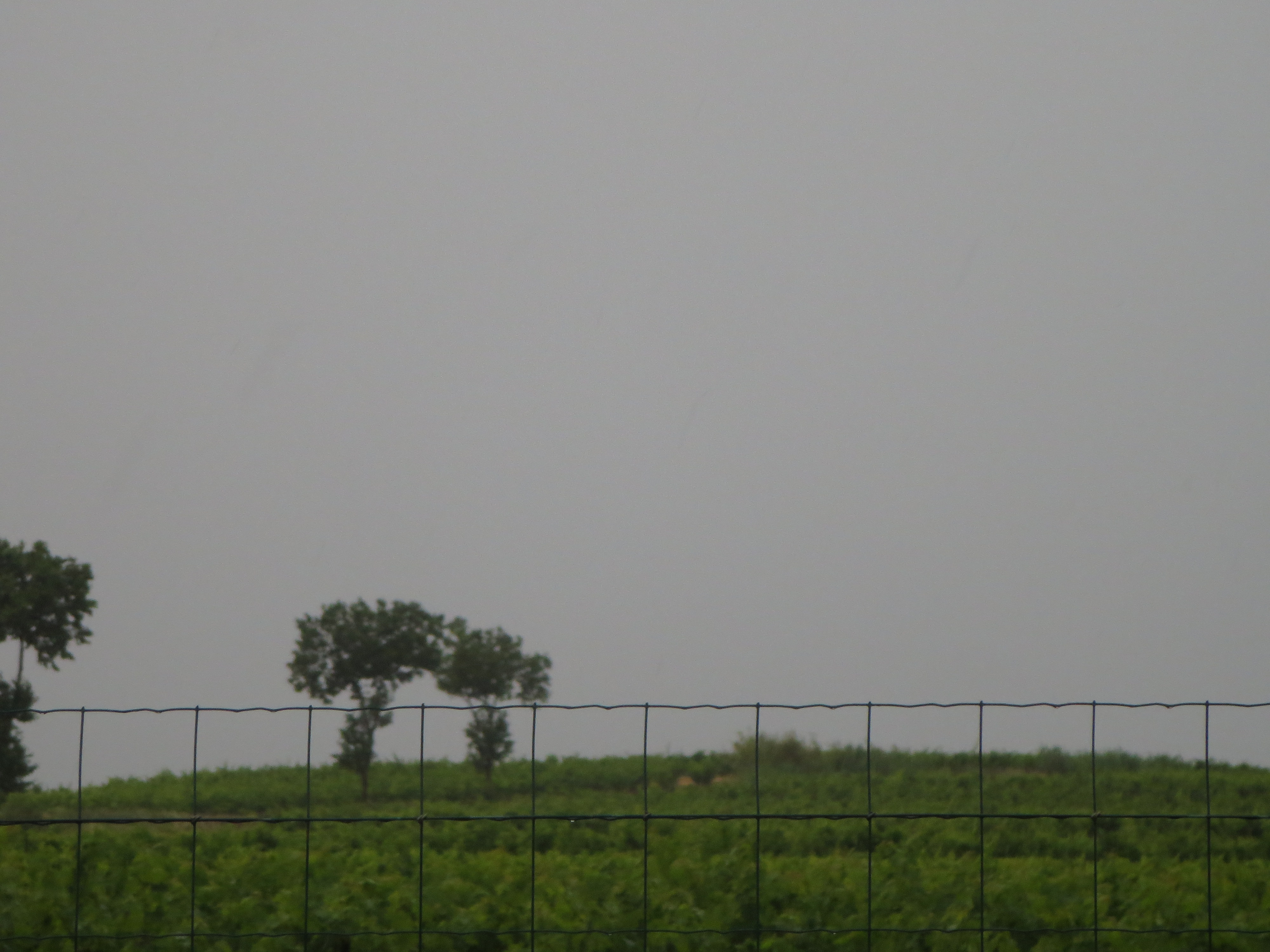
Dark sky over the vines today, June 12th

Version française

After weeks of sunny and hot weather storms have hit the region in the last few days. Monday (June 8th) saw the first and hail hit Faugères nearby damaging some vines at Domaine Sylva Plana for example. Hail is a nightmare for vignerons, it can strip the vines of leaves and budding grapes at this stage of the year. Today (June 12th) the storms are back with lots of heavy rain.

The water is welcome, the long weeks of sunshine and high winds have dried out the soils. Steady rain would be better but water will help the vines and reduce stress. However, if the rain turns to hail then disaster strikes.

IMG_1765

The vines have had a hard time in the last year or so, a dry winter and spring in 2014 certainly reduced yields as the vines were stressed. The mildew and oidium which arrived in early May added to their problems. I also mentioned that coulure hit Mas Coutelou as the high winds damaged the delicate flowers. Sadly the problem is widespread across cépages and vineyards. Jeff estimates that it could reduce yields this year by up to 30% compared to an average year and that after reduced yields in 2014.

IMG_1767

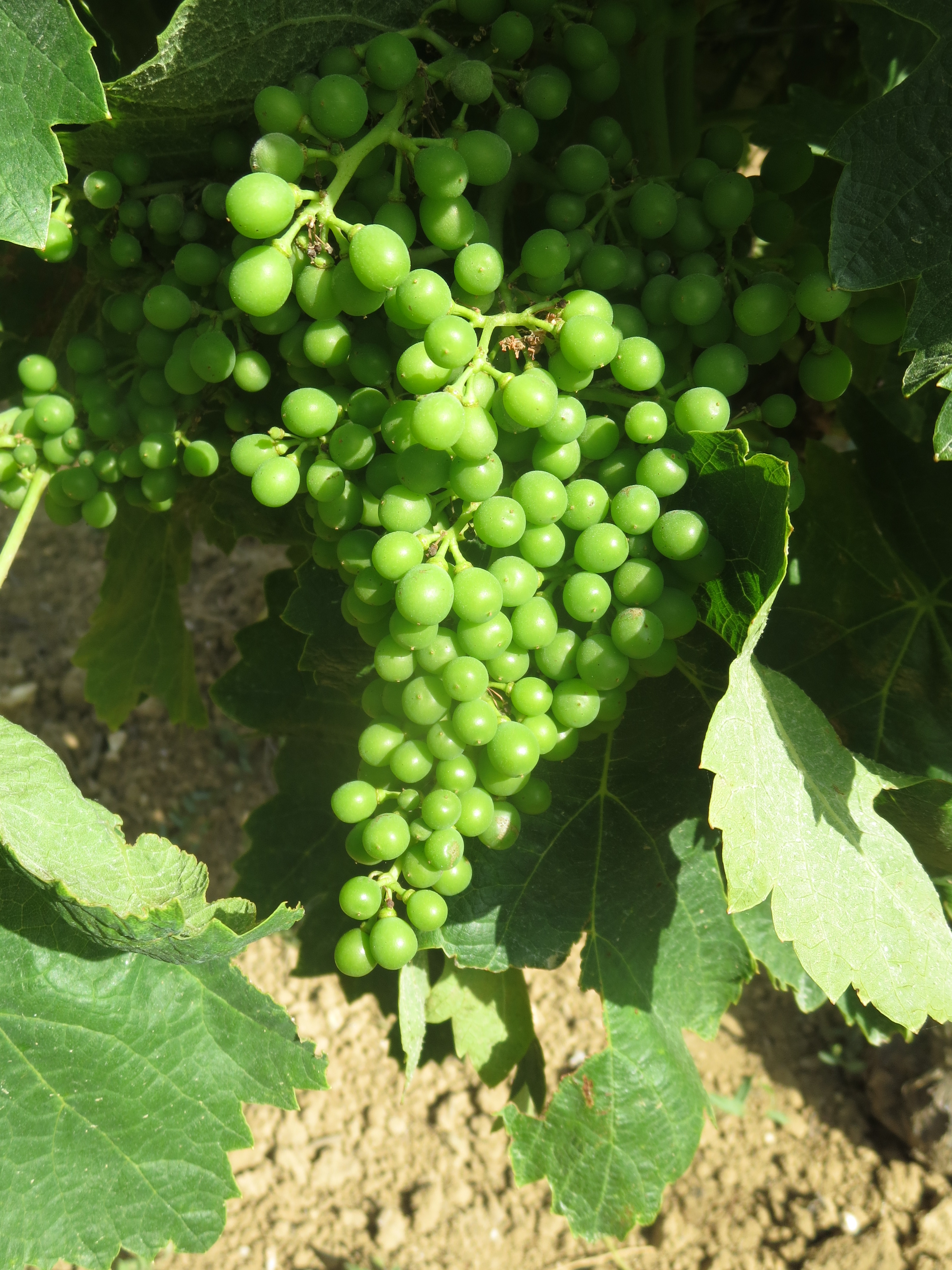
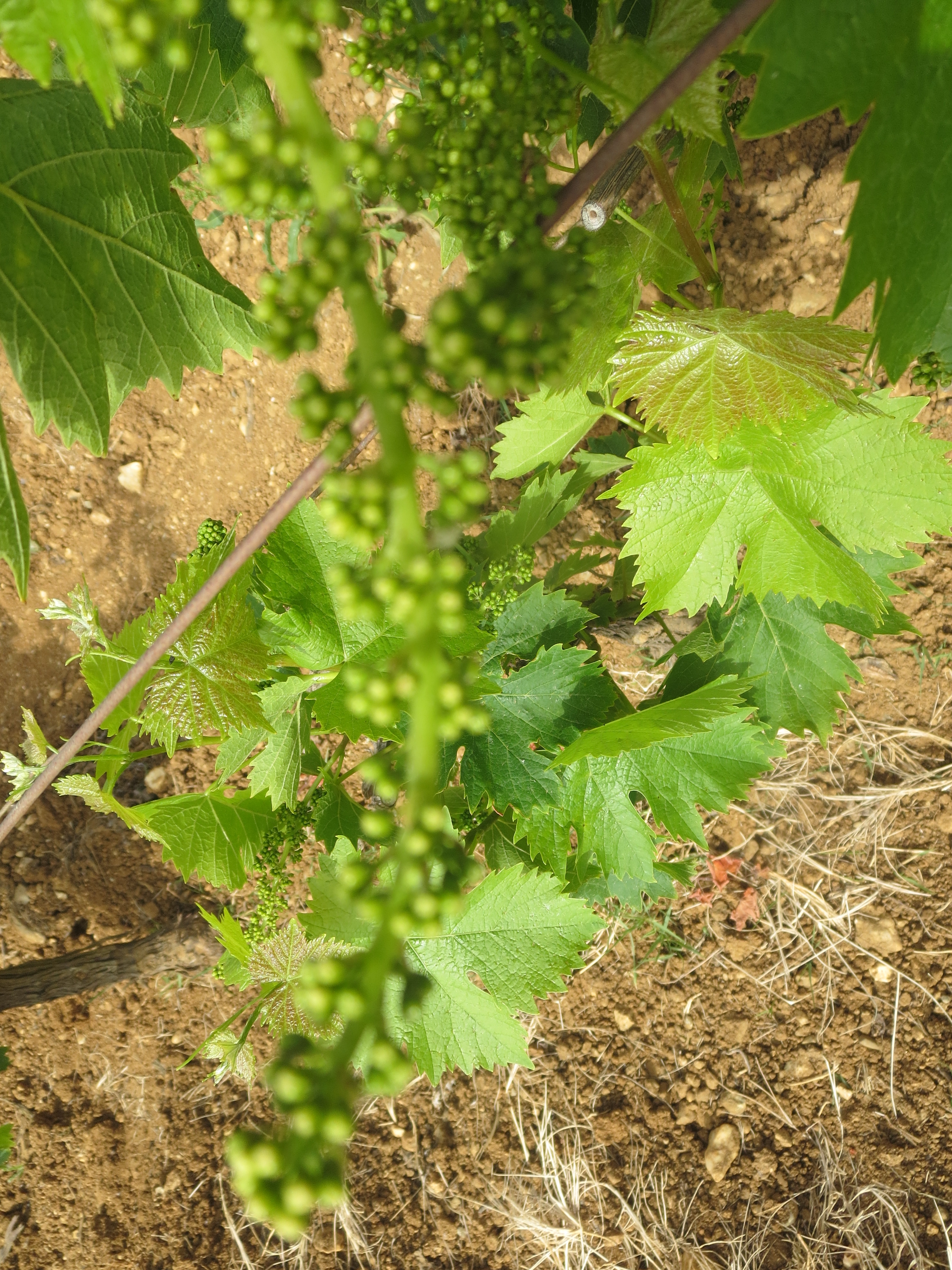
Healthy bunch developing

IMG_1761

Coulure in Rome vineyard

IMG_1769

And in Peilhan

Jeff already announced that certain cuvées would not appear from the 2014 harvest, it looks as if that will be repeated in 2015. Bad for those of us who love Coutelou wine but mostly for Jeff himself.

The storms and rains also bring humidity so mildiou will undoubtedly be a threat again. Treatments will be needed. Some vignerons in the area, and certainly in cooler regions, will be pruning and cutting back the lush growth of vines. This allows more air to circulate and therefore hopefully reduce the risk of mildiou. In the Languedoc, heat and sunshine is more common and the grapes will need protection from the direct sun so Jeff prefers not to cut back the main growth, the frequent winds will allow air to circulate naturally without it. However, some particularly vigorous branches will be cut.

IMG_1770

Some vine branches might need to be removed

The other main vineyard task will be to remove the gourmands, the buds and branches which grow directly on the bottom part of the vine trunk. These simply use up the vines’ energy.

gourmands

Gourmands (side branches) growing on the trunk of the vine

Finally the palissage wires need to be tightened as they have heavier vines to support. The vine branches can grow between 10cm and 15cm per day at present.

Meanwhile bottling, tidying, cleaning and alterations are happening in the cellars and wine salons/tastings have to be attended to sell the wines that remain (not so many this year). The vignerons must be as vigorous as their vines.

Let’s hope that the stormy weather passes without further damage and that nature helps the vines for the rest of this summer allowing them to produce as well as they can in 2015 and to recover and become stronger for 2016.

IMG_1759

Healthy growth in Rome vineyard


5 Comments

There May be trouble ahead – disease

wpid-20150530114927.jpg

Version française

May was a drying month. Lots of sunshine with temperatures comfortably in the high 20s almost every day. However, this year was also marked by high winds. The Tramontane / Mistral blew for over a week and was truly maddening. Other winds meant the vines spent almost three weeks blowin’ in them.

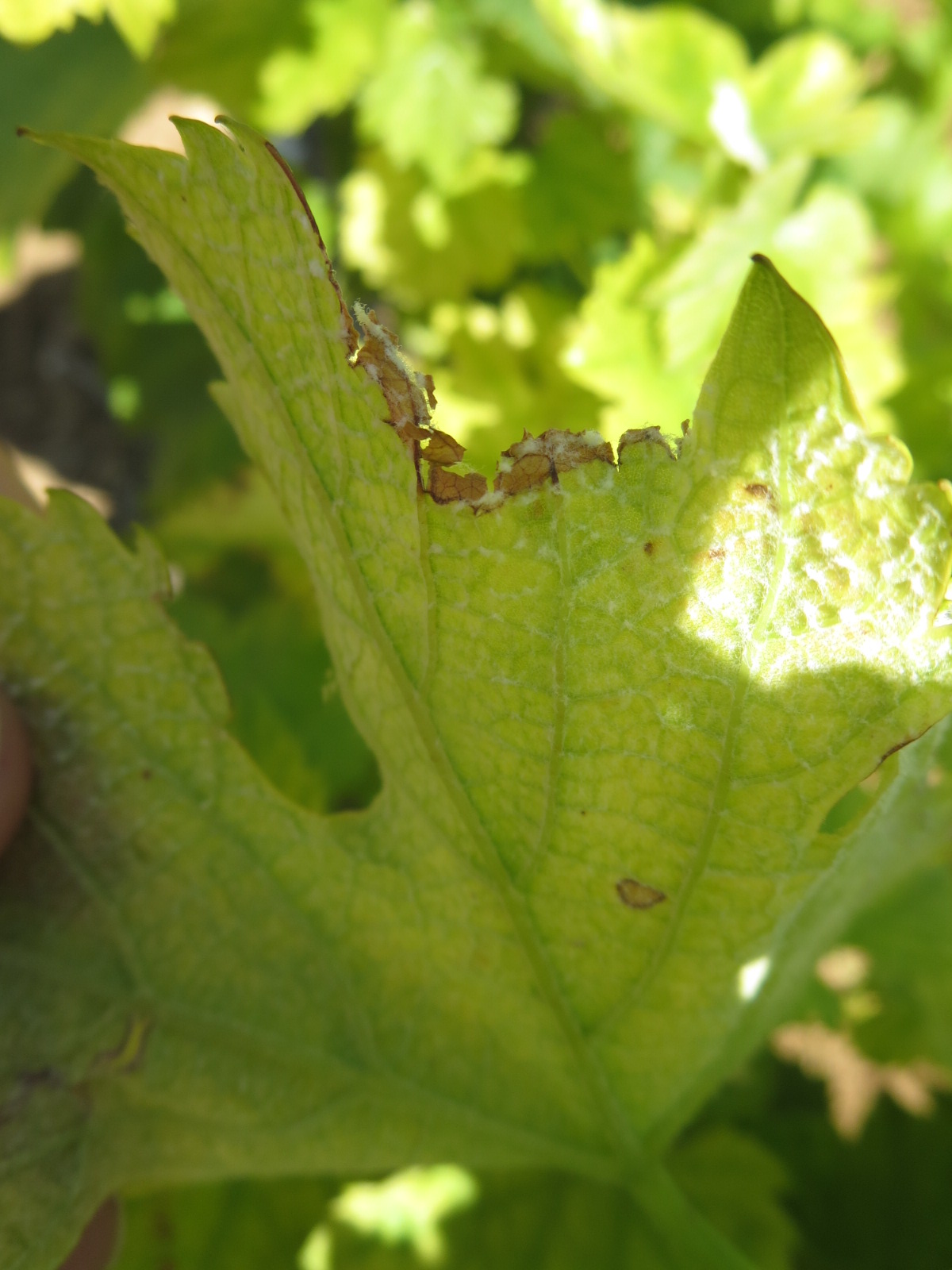
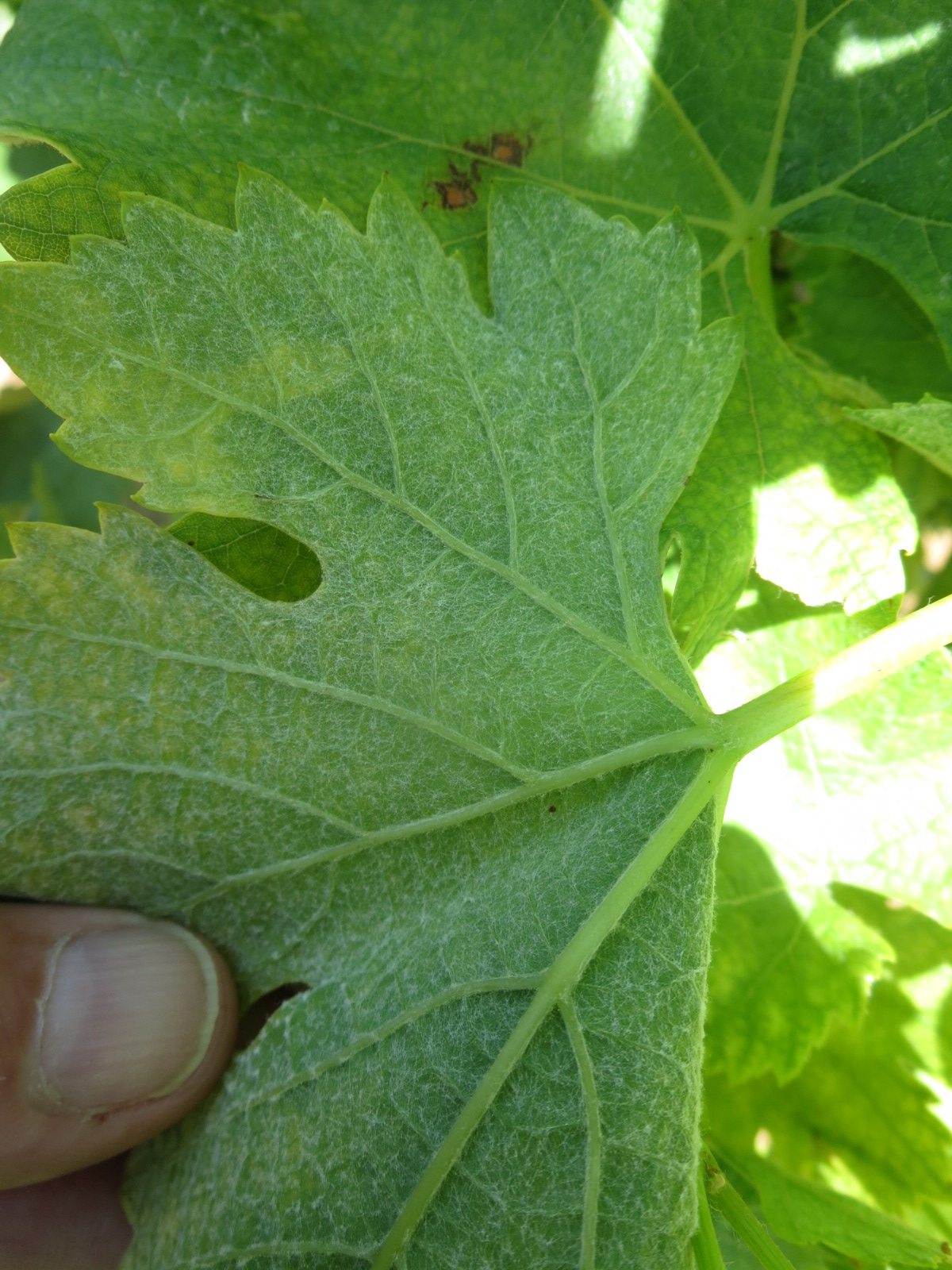
With the rise in temperatures during the day and cool nights natural problems emerged. Oidium or powdery mildew showed itself first encouraged by the humidity resulting from daytime heat and cold nights.

IMG_1552

Oidium on buds and leaves

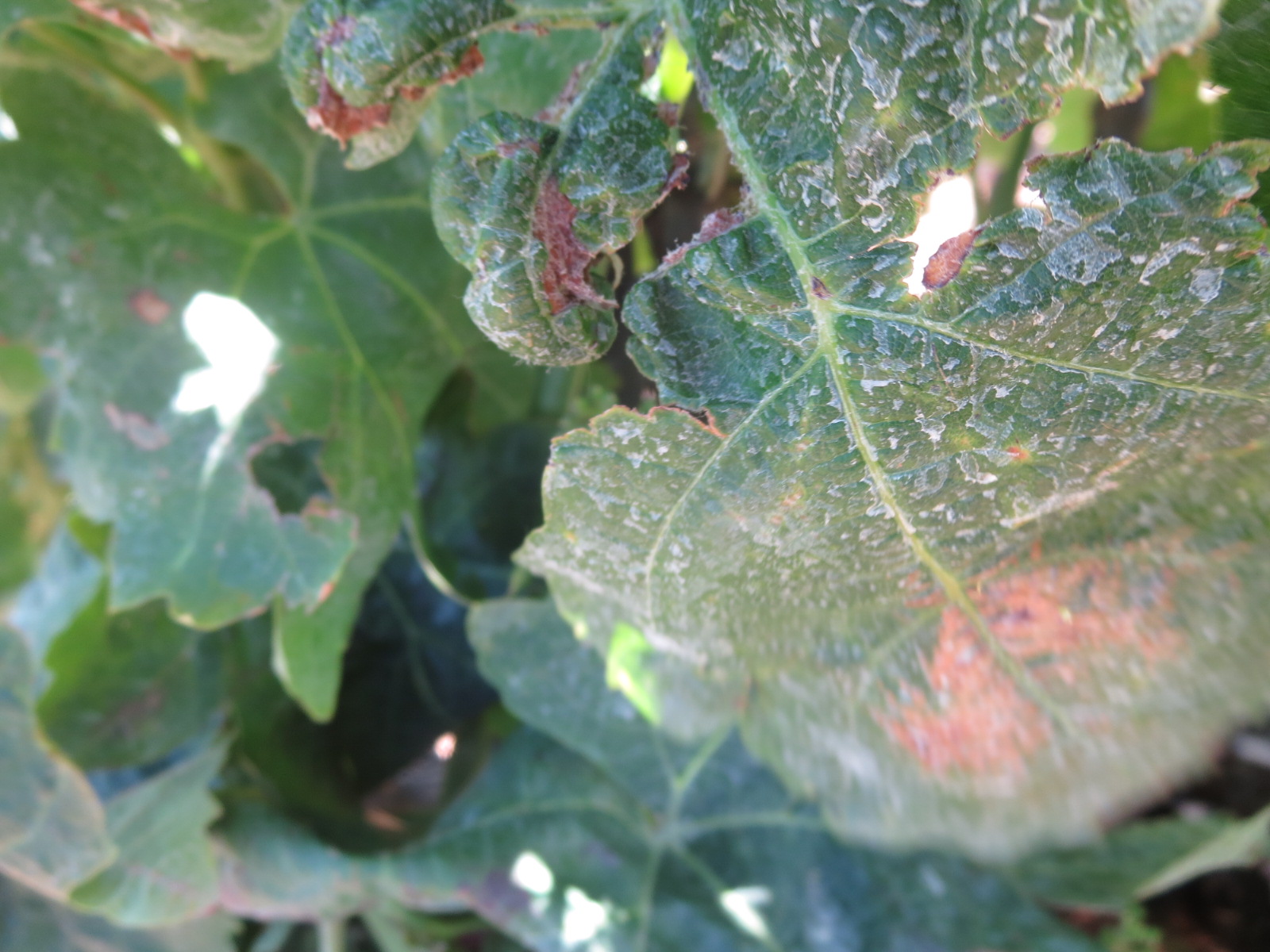
This was followed by mildiou or downy mildew and vignerons all around the region were talking about its appearance by mid May. And in fact the high winds were helpful here, drying the vines and lessening the impact of mildew. At this stage if the vigneron can get on top of the disease then it is not a huge problem unlike if it were to get amongst the grapes later in the season as this could influence the taste of the wine.

wpid-20150530114939.jpg

Mildiou on a leaf near Margon


wpid-20150530114706.jpg

Mildiou scars and chemical treatment used to treat it (Margon)


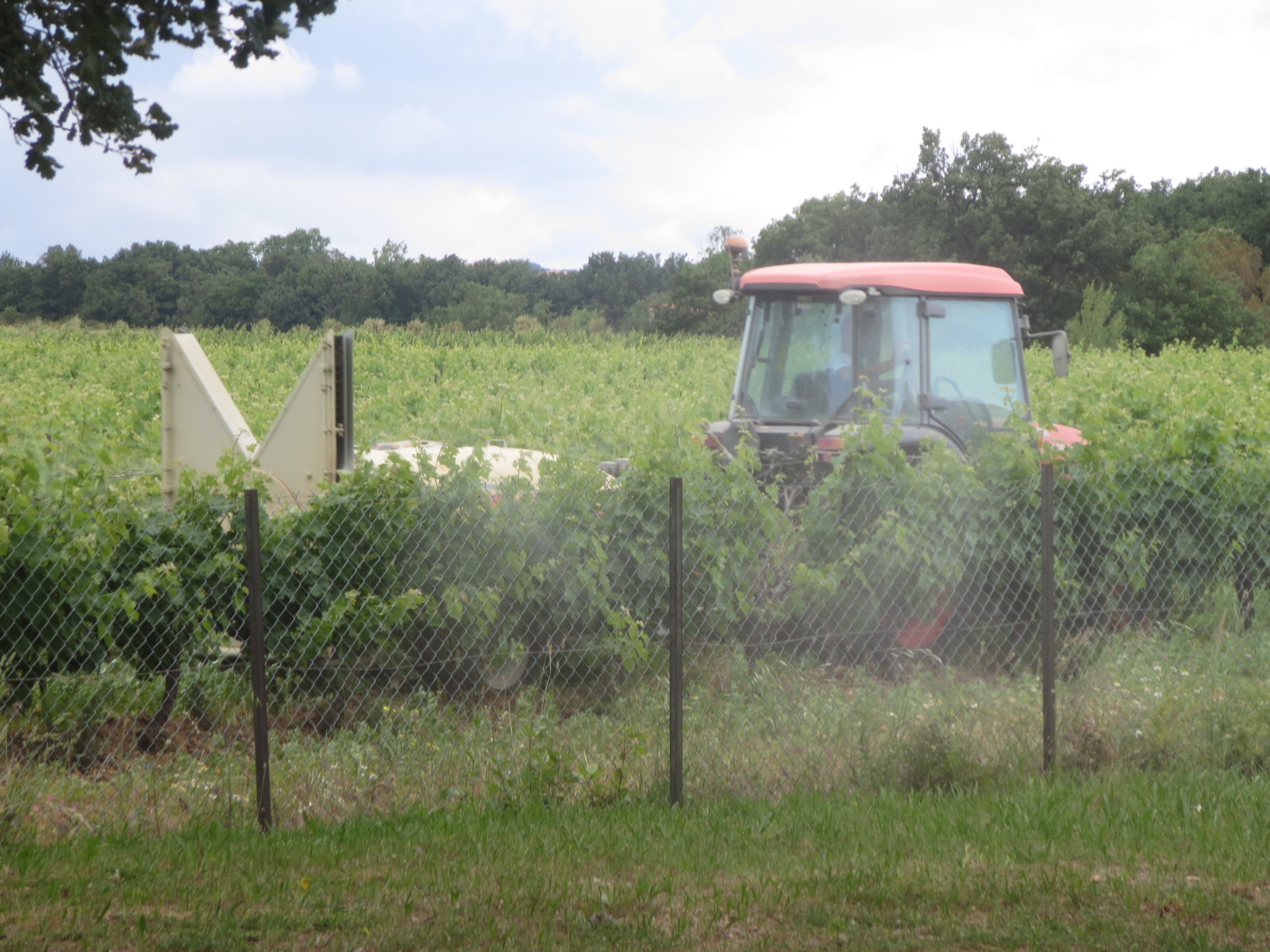
Oidium can be treated by pesticides. Pesticides refers to any treatment which will get rid of problems, animal or fungal. Conventional vignerons will use chemicals or synthetic products to spray onto the vines. Organic producers also use a chemical, sulphur (I shall use the UK spelling of sulfur). Many non organic producers point out that sulphur is chemical and does damage life in the vineyard such as yeasts. Organic producers would counter that sulphur has little lasting effect especially on the soils and that sulphur is natural. The amount used will vary depending on the year, in 2014 Jeff used less than a quarter of the amount he had to use in 2013 when there was more oidium around. Other organic / natural producers will no doubt have used more as Jeff uses the least possible. Indeed on Saturday morning he was spraying between 2 and 5 in the morning as he feels that during the night the vines are more relaxed and take the sulphur better, so needing less of it. Not all vignerons would be doing that! In addition he uses horsetail weed and nettles in a tisane to treat the vines so as to use less sulphur. This practice is common amongst organic and biodynamic producers. Conventional producers can use various chemicals instead.

wpid-20150526092210_1.jpg

A conventional spray


Organic producers would say that these are absorbed by the plant rather than just being in contact with it and so the vine becomes resistant and needs more of the treatment. Many conventional vignerons would deny this and say that synthetic chemicals are longer lasting and reduce quantities.

IMG_1555

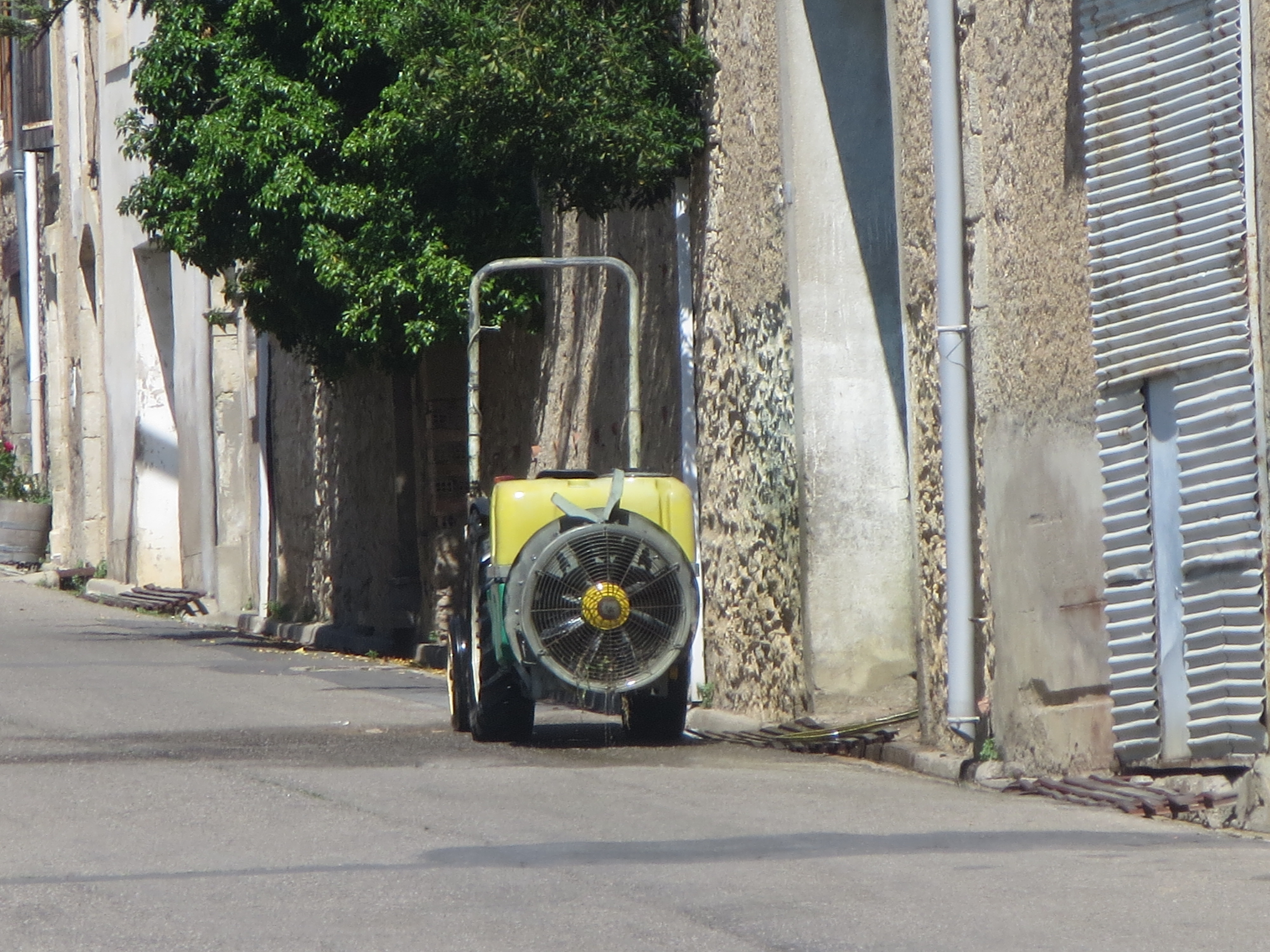
This monstrous looking machine directs spray onto the vines more directly (Alignan du Vent)


Mildew is more complex. The traditonal treatment is copper, again a natural product but one which does leave its impact upon the soils and their ecosystem, for example killing worms and some mushrooms/fungae which support the soil. This inevitably draws criticism from conventional producers. Organic producers in one of the licensing bodies, Ecocert, are allowed to use up to 30kg per hectare over a 5 year period, averaging 6kg per year but amounts can vary annually according to the risk of mildew within the 5 year limit. Jeff used 2.9kg in 2013 but only 0.9kg in 2014 so well under the limits allowed.

So as a wine buyer you have choices to make. As ever much depends on the producer. There are some who spray chemicals in large quantities, usually for cheaper, bulk wines. Select wines by the producer if you know them, knowing that their practices aim to support the health of their soils and their vines.

wpid-20150530085209.jpg

Healthy flowering

However, May brought one final twist in its tail. Just as the winds helped relieve the problem of mildew they created a new problem. Jeff contacted me on Friday to say that coulure was showing in the Syrah vines of one vineyard. Coulure is the uneven development of grapes. Flowering is a highly delicate time for the vigneron as they are very fragile. The wind damaged some of them and the Syrah vines especially. Without a flower the grape can’t develop. So the bunch will have some but not all grapes, leading to reduced yields.

wpid-20150530090616.jpg

Coulure, missing flowers means missing grapes

wpid-20150530085527.jpg

Not a clear picture but you can see the uneven development

The remaining grapes will grow a little larger to compensate but not enough to make up the losses. Not good news, especially for lovers of Vin Des Amis like me. All the vigneron can do is wait and see how things develop, patience is required. As ever nature rules the day.

wpid-20150530092156.jpg

At least one member of the team is laid back!


2 Comments

Flowering

wpid-20150523085449.jpg

Version francaise

During the last week the vines have started to change, again. Flowering (Floraison) has begun in Puimisson. The buds (boutons) which formed in the last few weeks and divided on the grappes are starting to flower as you can see in the photo. The boutons have little hoods (capuchons) which protect the forming flower and as they fall away the flower emerges. Technically it is officially called floraison when 50% of the buds have flowered but the process is usually given the name.

wpid-20150523085917.jpg

Capuchons on some of the buds

The flowers are in the form of stamens or pistils. Vines self fertilise and the pollen produced in the anther part of the stamen will be carried into the ovule of the pistil. The vines have no need for bees or other insects to pollinate and fertilise them despite popular belief. The flowers will then give way to the fruit, as with other fruit and vegetables.

wpid-20150523085500.jpg

Pistils and stamens are evident in this vine in Rome vineyard

Floraison is also a marking point in the vineyard calendar as traditionally there are 100 days between the flowering of the bud and the harvesting of the grape. In reality it is the white grape producing vines and precocious ones at that which are flowering, though the rest will follow in the next couple of weeks. So plans can be made for the harvest, the countdown starts … but let’s enjoy summer first.

wpid-20150523092625.jpg

wpid-20150523091337.jpg

Tendrils clinging to the wires


Leave a comment

May – the force be with you

IMG_1536

La Garrigue, vines flourish in the ploughed soils

 Version francaise

An old French saying runs as follows

“Nul ne sait ce que vaudra le vin

Avant du mois de mai la fin.”

( How the wine will turn out no-one can say, before the end of the month of May)

Hopefully the rest of this post will be better than my rhyming translation. The point is however, that May is the turning point. The preparation of pruning, ploughing and pampering paves the way for the lush growth of May. In the wild vines grow in forests and are climbing plants using trees to help them reach sunlight so that photosynthesis can take place to feed the grapes and their seeds. Cultivated vines still climb relentlessly and the growth is stunning to see. Tendrils reach for the sky pulling the vine higher and the leaves fill out.

wpid-20150501093812.jpg

Tendrils reach up

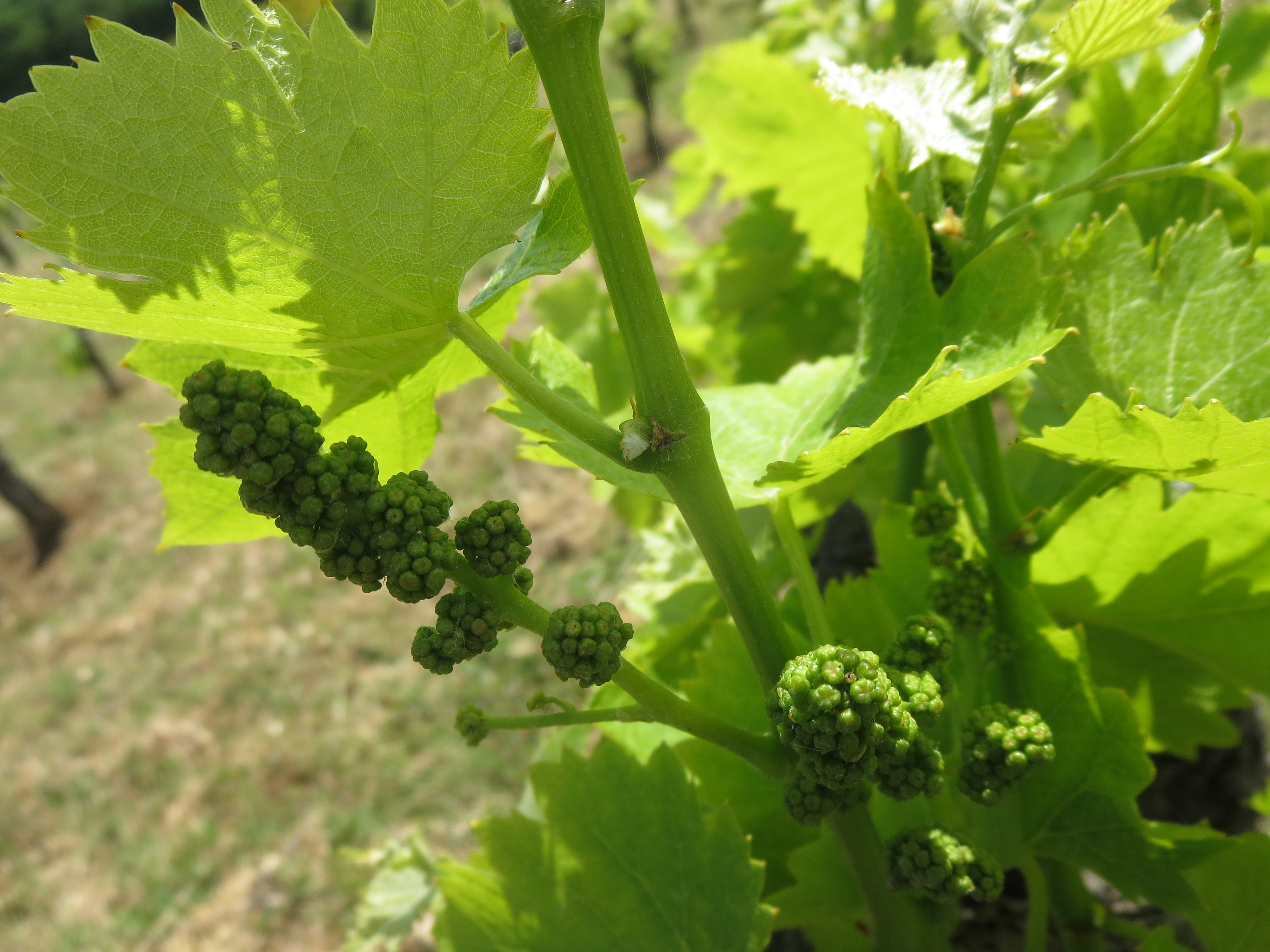
The buds have grown showing the development of the bunches and these in turn are now dividing ready for the start of flowering which will bring pollination and then the fruit.

wpid-20150501101743.jpg

Early buds

IMG_1468

The grappes divide

IMG_1544

The division accelerates

As for the vignerons it has become a very busy time. In the vineyards a second ploughing to prepare the soils with organic matter as they need help to sustain their rapid growth. In addition the first treatments of pesticides to protect the new growth. Insects are also growing fast and tender buds, leaves and shoots are welcome nourishment. Conventional vignerons use chemical sprays, those who prefer a lutte raisonnée use synthetic chemicals which do less damage to the soils.

IMG_1546

Conventional spraying

IMG_1555

A spraying machine with octopus like arms to reach different rows of vines, this one is used on a conventional vineyard

For organic producers the choice is a little diluted sulphur (some use more than others) but also treatments based on plants such as nettles, horsetail weeds and ferns. I shall be picking up this topic in a later post as it is a controversial issue.

IMG_1452

Tractor with tank of organic treatment for spraying

The other risk has been the development of mildew. Powdery mildew (oidium) is a threat as colder nights and hot days encourage humidity which oidium requires. The first signs appeared this week (May 10-17) and this is why sulphur and horsetail are used in the spray.

IMG_1552

Oidium, powdery mildew, photographed this week. Happily the only vine affected in Peilhan

The nettles and ferns act as insecticides. I am told that mildiou or downy mildew is also appearing in some vineyards in the area though not so far at Mas Coutelou, fingers crossed it stays away.

The other major job in the vineyard has been ébourgeonnage, the removal of some of the lush growth of the vines, sometimes also known as épamprage. They are so fertile at present that the vines need to be cut back so that their energy is not dissipated on surplus leaves and growth.

IMG_1533

Carole ties a young vine to support it

Carole is back in Puimisson and she demonstrated to me how ébourgeonnage works in the video below. She was working on newly grafted vines which won’t necessarily be producing much fruit this year but the process is the same. No prisoners are taken.

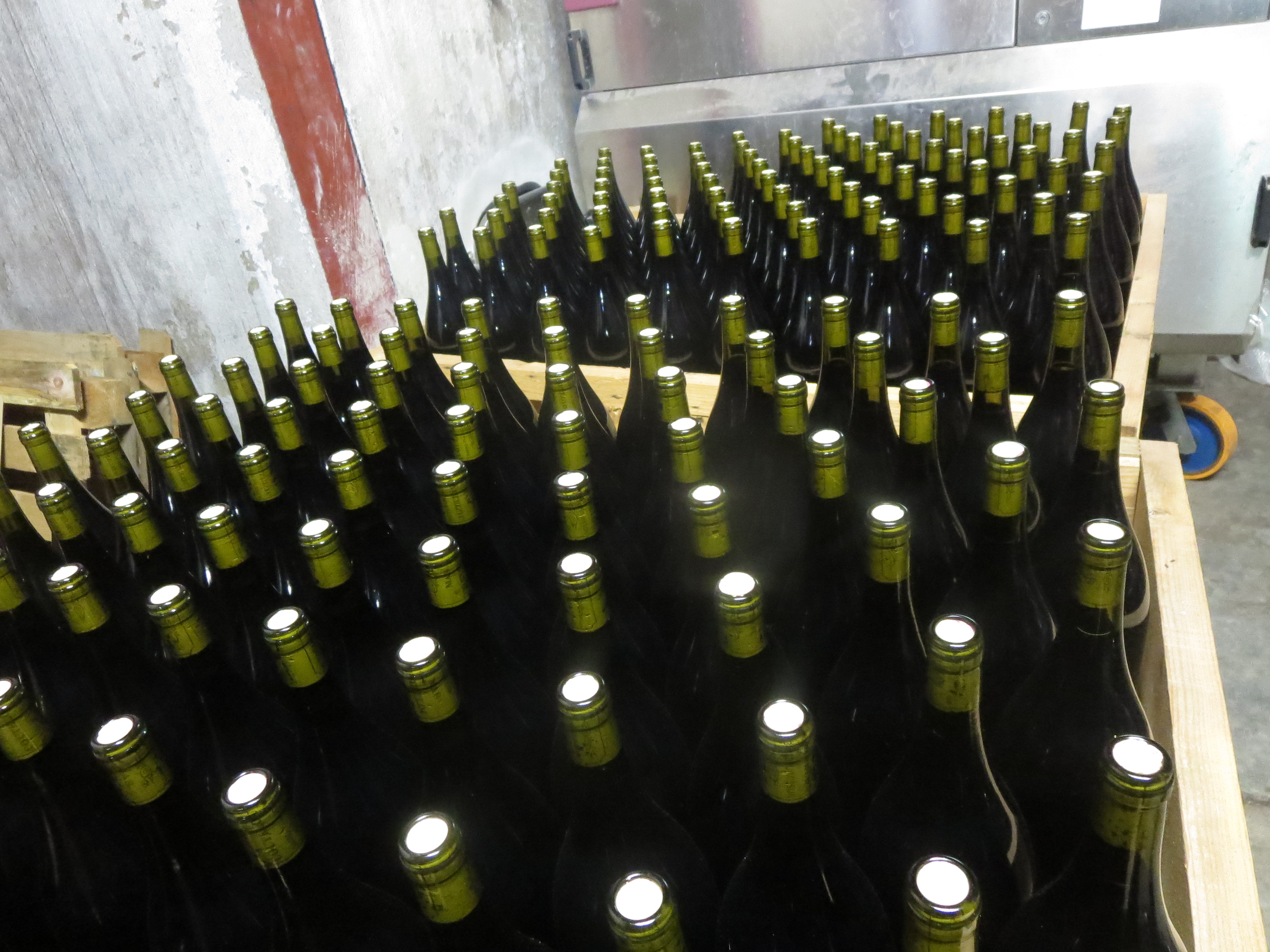
In the cellar work continues apace. As more of the 2014 wines are ready further bottling has been taking place. Not helped by the breakdown of one machine but older equipment was brought out to continue. In the picture you will see Jeff and Renaud corking a jereboam of Vin Des Amis. Magnums and even Balthazars were also bottled as well as the regular 75cl bottles. More deliveries were sent to various countries around Europe and the USA.

IMG_1527

IMG_1528

Jeff at the controls of the bottling machine

IMG_1554

Magnums standing after bottling. They stand to allow the large corks to expand and seal the bottle. They will then be laid horizontally

A third part of the work is commercialisation and there have been a number of salons where amateurs and professionals have tasted the wines and placed orders or bought wine. Jeff has been to salons in Paris and in the Languedoc and will shortly be heading to the Loire. All time consuming but a necessary part of the job, sales are after all what keep the vines growing.

Finally the office work. France loves its bureaucracy and there are many hours of paperwork to complete. Daily record keeping of work done, treatments used, employment data etc etc etc.

So whilst May has been a beautiful month to be here in the Languedoc with temperatures now consistently high and sunshine aplenty the vignerons are working hard. Ironically France has numerous bank holidays in May, yet I know at least one vigneron who doesn’t get time off.

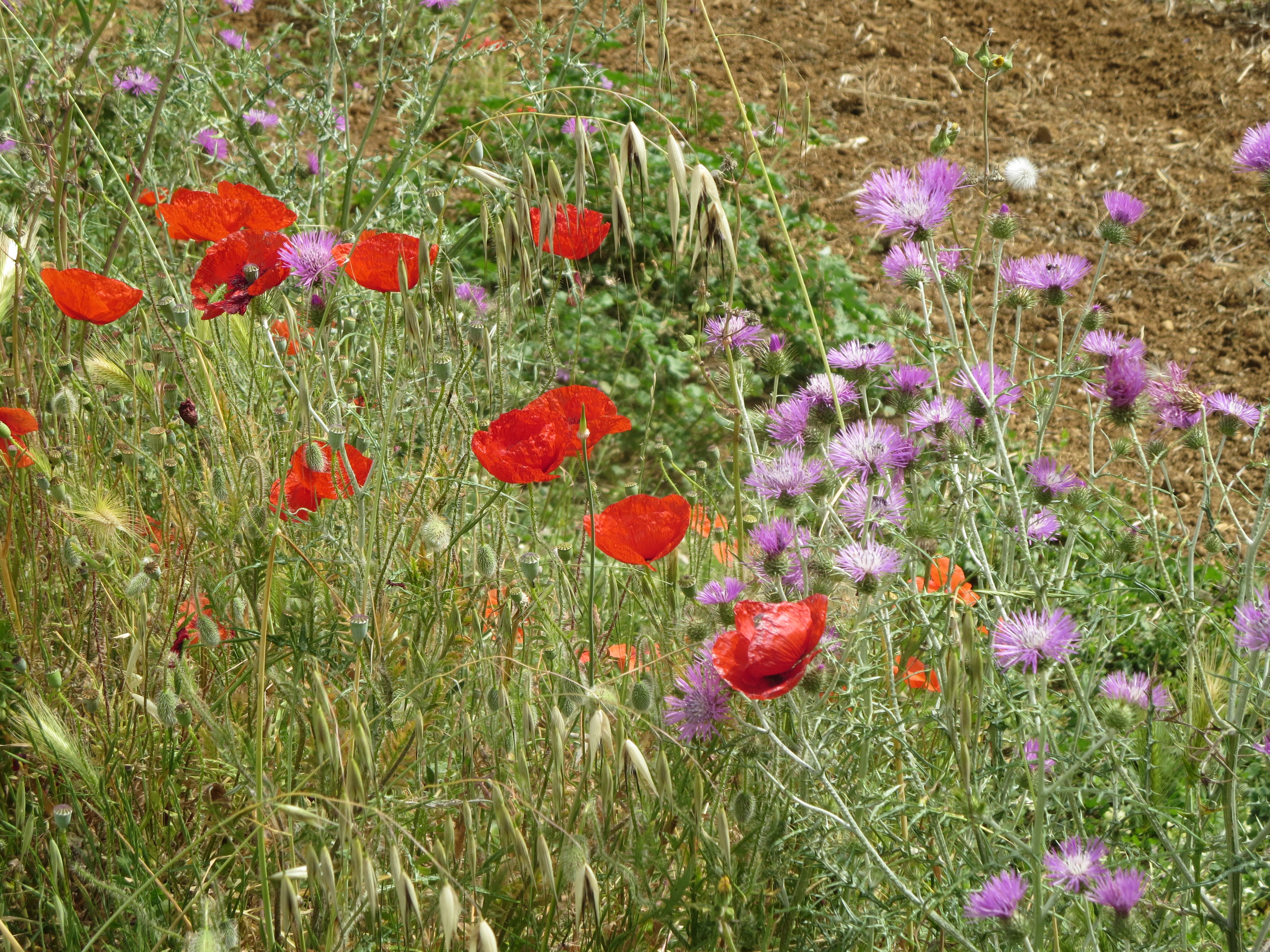
My favourite vineyard Rome is a lovely place to be at present, the work with the pioche (pick axe or hoe) and grass cutting has prepared the vines. Flowers, butterflies and birds enjoy the peace and shelter of this parcel, two partridges were there on Friday but sadly flew off before I could get my camera ready. The video shows Rome and its beautiful centurion gobelet vines and you can hear the birdsong in all its glory including a hoopoe.

Error
This video doesn’t exist

IMG_1543

Flowers and (right) butterflies in Rome vineyard

IMG_1545


Leave a comment

The year so far

Untitled

The vineyards of Mas Coutelou

We are a third of the way through 2015 already and the work of making wine has been hard throughout those 4 months. I have put the links together to show a summary of everything that Jeff, Carole, Michel and Renaud have been up to so far. And occasionally me too.

January Part 1  – work in the vineyard

January Part 2  – Pruning (La taille)

February Part 1 – vineyards

February Part 2  – vineyards and grass

February Part 3  – ploughing (labours)

March Part 1  – new planting

March Part 2  – bottling (embouteillage)

March Part 3  – vineyards

April – vineyards

IMG_0808


2 Comments

Turbine boosted

IMG_0977

Version française

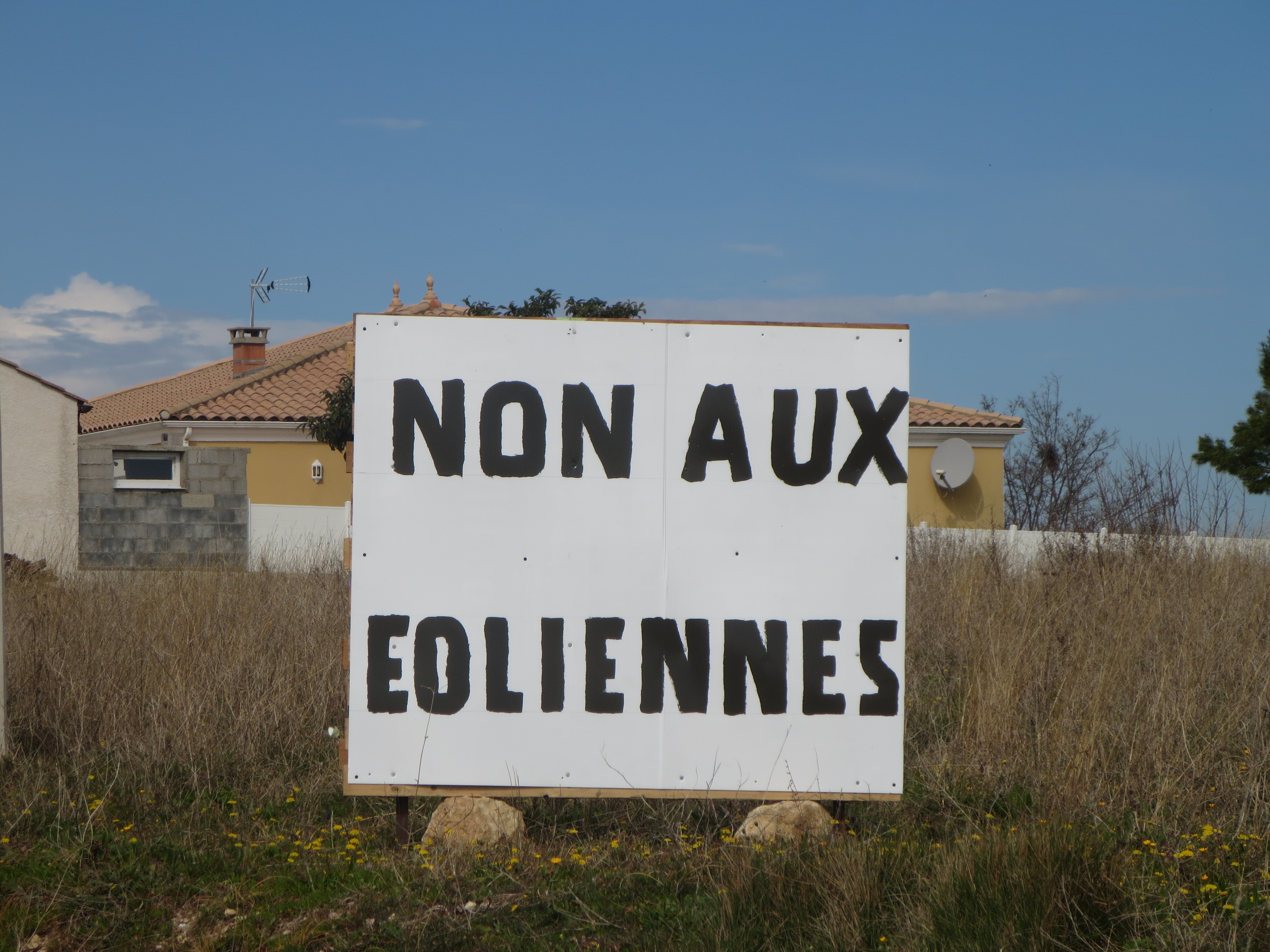
On March 11th I posted about the threat to some of the vineyards of Mas Coutelou. A neighbouring village drew up plans to install wind turbines across the lower end of the community, which happened to run across some of Jeff’s vineyards, Peilhan and Rec d’Oulette, as well as altering the nature of the whole area.

A thousand readers responded to the blog and many of Jeff’s friends rallied to his cause by signing the petition and sending messages of support. I was at the cellar when the lady who organised the online petition called to thank Jeff for mobilising support, it did make a difference.

The local campaign was undoubtedly helped by the timing of departmental  elections across France so pressure was put on local candidates to oppose the plans. The mayor of the local village was standing in those elections and he announced his opposition to the turbines. The council then went further and passed a motion stopping their development in future.

Clearly this is great news for everyone in the locality, especially Puimisson. It is, for this blog, the best possible news for Mas Coutelou and all of us who love the wines and the man behind them. The plans he has for Peilhan in particular can now move ahead with a renewed confidence, the new plantation of old cépages has a brighter future. We are all boosted.

wpid-20150423160343.jpg

So thank you to everyone who read, supported and signed. Your actions counted.

wpid-20150423150906.jpg


3 Comments

Vineyard practice – observations

wpid-p_20150412_123017_hdr.jpg

Version française

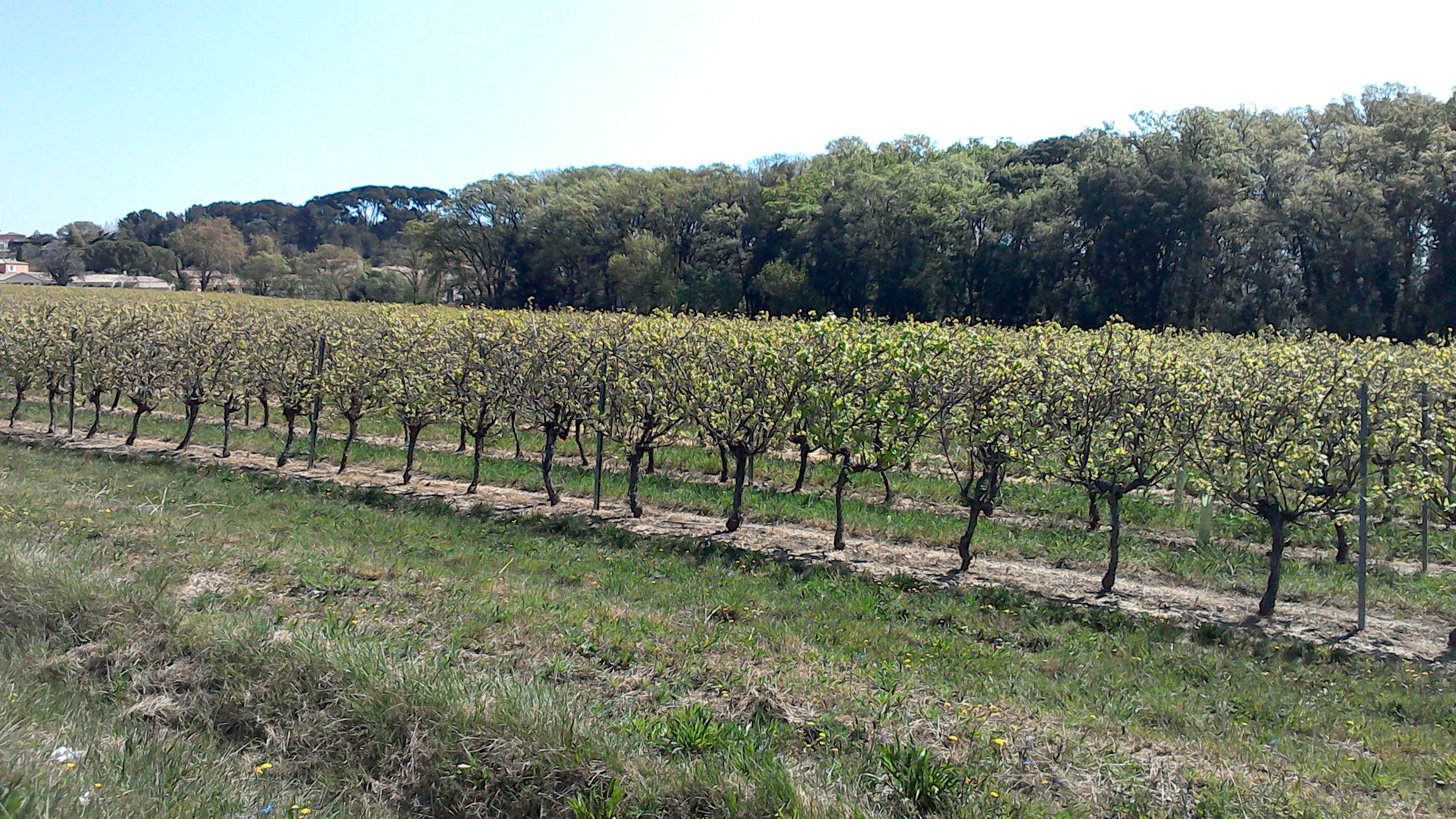
The photo above was taken around my village of Margon this week (April 14th). The vineyard is run by a well known  domaine in the area. The vines were not pruned and are now covered in foliage, showing them to be Chardonnay. Many leaves are quite yellow suggesting a disease. Is this why they were not pruned? If so should they not have been grubbed up rather than left to spread the problem?

IMG_0786

I shared the photo above back in February, taken in a vineyard around Alignan du Vent again in a well known domaine (different to the one above). New vines were being sprayed with herbicide to get rid of weeds and grass, competition for the new vines. Well the photo below, taken on April 8th, is of the same vines and shows the vines and dead grass, though it appears more like a moonscape.

wpid-screenshot_2015-04-15-08-42-38_20150417134503750.jpg


Finally, I also published this photo below in February. Taken in Laurens, part of the Faugères area. I was curious to know why the guyot vine was trained to the ground. Jonathan Hesford suggests it may be part of a nursery, to develop new vines. I would certainly take Jonathan’s word, any other observations?

IMG_0821