amarchinthevines

Learning about wine, vines and vignerons whilst living in the Languedoc


Leave a comment

Vendanges 2018 – Part 3

Friday 7th and Saturday 8th
P1040223

Some serious hard work. A lot of grapes came through the cellars in these two days and we worked longer hours than usual. I can almost hear regular readers thinking, “Hang on, you said there were fewer grapes this year!” That is, sadly, still the case. Whereas in previous years all the grapes that came through in similar quantities might have been from one or two parcels this time it was grapes from several different parcels. All the grapes from those parcels. What might have taken three or four days was done in two.

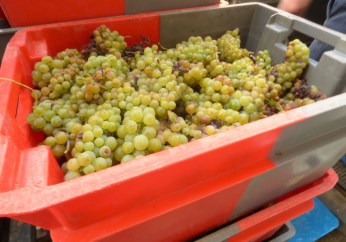
White grapes from Peilhan, Cinsault from Segrairals came in thick and fast on Friday. Cinsault is a generous grape with big, floppy leaves and big, juicy grapes to match. Problematically the size of those grapes means that bunches can grow to quite a size but with large gaps between the round berries. Into those gaps rot, leaves, insects and moths find their way. Therefore it needs careful sorting, the rolling sorting table was needed. Amongst the usual leaves, grass, snails, earwigs and spiders I spotted an unwelcome visitor.

Lobesia botrana or European grape moth (ver de la grappe in French) lays its eggs inside bunches of grapes and the cocoon resembles cotton wool. They emerge as worms which eat into the grapes for nourishment, leaving a trail of juice which can attract rot. The moth’s main predators are birds and bats which is why Jeff Coutelou and others try to attract these species into their vineyards. As you can see I found one worm clinging to its Cinsault grape.  I need to add this is rare, you will not be drinking worm juice in your wine!

P1040222

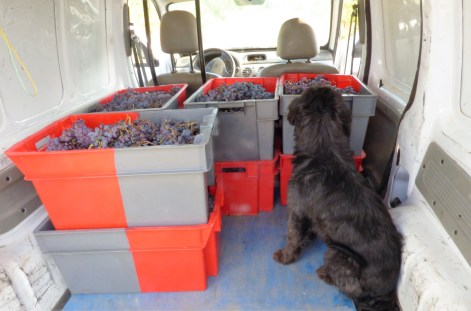
So keen to bring home the Syrah and part of the van!

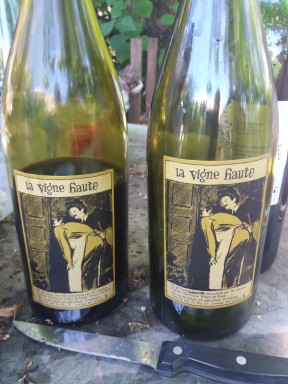
Saturday and more parcels. My favourite wine of Jeff’s is La Vigne Haute, the pure Syrah from La Garrigue vineyard with its north facing vines with some villefranchien soils. Jeff only makes this when the grapes are very good, seven times in the last seventeen years, this decade there are only three. I love LVH and always hoped to help to make it and last year was the first time, having tasted it in bottle (not yet released) I can promise that the wait was worth it. Surprisingly, despite the problems of 2018, the Syrah from this vineyard is in very good shape and might just make it as La Vigne Haute. A lot less sorting, healthy bunches, fingers crossed for the first star wine of this troublesome vintage.

Syrah from La Garrigue

The afternoon brought in the Grenache from La Garrigue. Sadly, this is not of the same quality as Grenache was most susceptible to and damaged by the mildew epidemic. The juice will receive a short maceration before being separated from its skins and then used for a project as yet undecided. There were some lovely bunches harvested, you can only think of what might have been. That the Grenache and Syrah from this vineyard was picked in one day tells its own story.

Lovely bunch of Grenache which Julien and Élise help to sort

Meanwhile soutirages, débourbages and pressings all take place, the cellar is a hive of activity. And of course there is the endless cleaning of everything. Analyses of the wines so far are positive and the juices taste very good, I particularly liked the Flower Power / Rome assemblage.

As I said long hours, hard work, aching back, stained hands and dirty fingernails. In between there were the usual laughs and camaraderie, bottles shared at lunchtime and after work. Despite everything the year has thrown at the Languedoc and Coutelou we know that there will be some good wines.


Leave a comment

Vendanges 2018 – Part 2


P1040186

Tuesday 4th to Thursday 6th September

After the break harvest really kicked into gear this week. One of the effects of mildew (and compounded by the hail storm later) was damage to foliage. The vine uses the foliage to ripen the grapes but also to nourish itself via photosynthesis. Damaged and desiccated leaves mean that there comes a point where the vine struggles to ripen the grapes any more and, even worse for the winemaker, things go into reverse; the vine begins to take back nutrients from the grapes in order to feed itself. This will have consequences not just this year but into the future, as the vine has struggles so much and is weak, it will not be at its best next year and further ahead.

P1040193

Riveyrenc Gris grapes in good health but note the mildewed leaves 

Therefore, Jeff Coutelou has had to spend a lot of time in the vines ensuring that he knows exactly the health and condition of the vines to get the best possible grapes for this year whilst being mindful about the health of the vines. A balancing act to cause him more stress in a difficult year.

P1040183


Tuesday saw some lovely Muscat being harvested from Peilhan, the grape which smells of grapes. The video below shows them being pressed and I wish I could convey the lovely fresh, grapey aromas which emerged from the press.


Error
This video doesn’t exist

This is Muscat being made for dry wine, in 2016 for example the Muscat D’Alexandrie made a lovely orange wine which we have shared at lunch. Afterwards the pickers moved into the 2015 plantation at the top of Peilhan, the 12 rows of Morastel, Terret Noir and Riveyrenc Noir picked to blend with Syrah from Sainte Suzanne where the pickers headed next.

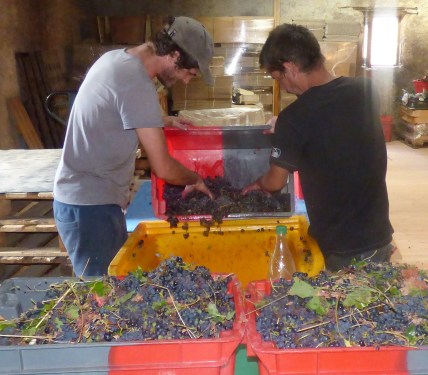
On a beautiful Wednesday morning the remaining Syrah was picked. Jeff decided to make a grappe entière wine so Julien and I headed into the top of the cellar to sort the grapes and send them through the chute into the tank. This had been given a dose of CO2 to encourage the fermentation of the grapes inside their skins. After a short period the skins will burst and the resulting juice will have a light, fruitiness. This process is called carbonic maceration. Sorting meant removing any leaves and other vineyard products such as spiders and snails. Mainly though we were looking for the dried grains of berries damaged by mildew and the green, unformed berries caused by millerandage.

P1040198

Onto Thursday and the deployment of two teams of pickers. The Moroccan crew picked some lovely bunches of Macabeu from Peilhan before moving on to Syrah from Segrairals.


Macabeu and Syrah (note the green unformed berries needing to be sorted

We were also joined by a number of pickers who would tackle some of the more interesting vineyards. As a result of mildew damage in Faugères some growers have little or nothing to harvest and some of their pickers came to join the Coutelou team. And we were joined by Louis who, having completed his professional baccalauréat has begun a course to help him achieve his ambition of becoming a sommelier. His stage will certainly teach him a lot about vines and wines, the numerous cépages he picked will certainly have opened his eyes to the wide world of wine.

This team picked my favourite vineyard, Rome, with its old Cinsault vines, Muscats of various kinds and all three versions of Grenache. In the afternoon the moved on to Font D’Oulette now simply referred to as Flower Power after the wine made from the numerous cépages in there. Using two teams meant that cases were returned thick and fast by Michel and Julien and I had a long, back breaking day sorting these grapes.

P1040219

Julien and Nathan sort the last case on Thursday from Flower Power

I have to say the juice tastes great, fruity with good acidity. Now all we need is for the yeasts to play their part and ferment that juice into good wines. The picture below shows yeasts at work in a tank where some of the skins from the pressing of last week’s Grenache. As with the grapey Muscat these bready aromas deserve to be more widely shared. Vendanges is all about the senses.

And, for Icare lovers around the world, he is taking a very keen interest in this year’s harvest.

P1040188


2 Comments

New vines, old grapes – Segrairals

En francais

The new plantation, originally designed for the parcel at Sainte Suzanne contains a number of rare grape varieties. That parcel has been so wet that Jeff decided not to go ahead there, instead he planted them in Segrairals after grubbing up some of its Cabernet Sauvignon vines. To the right of the Cabernet the white vines were planted with red varieties to the left side.

White

  • Clairette

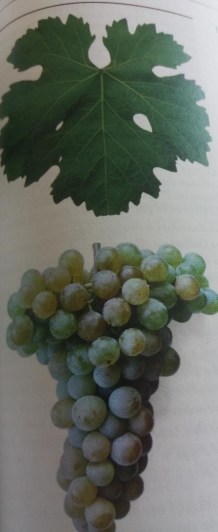
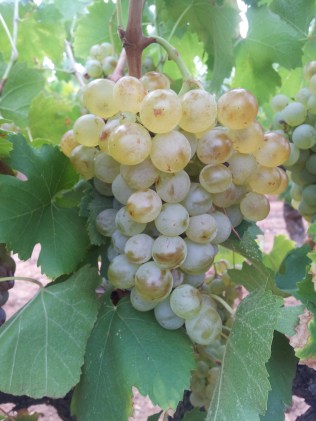
Origins: A Mediterranean grape, famously associated with Adissan in the Hérault. There are different varieties; Clairette Blanche, Clairette Rose, Clairette Musquée etc. (Jeff has had Musquée for some years, this was one of the grapes which Domaine de Vassal had not known about until Jeff visited). It is also known as Blanquette and Malvoisie (not to be confused with the Italian grape of that name). 2,200ha are planted, down from 14,000 in 1958.

20180805_153303

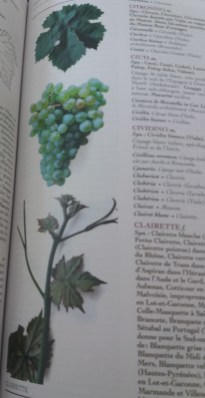
Clairette, from Pierre Galet’s Dictionnairedes cépages

Bunches: above average in size, compact, cylindrical with average sized grapes. Leaves are quite round though the top sinuses are distinct.

Growing: Late budding, ripens at a normal rate*, vigorous so might need pruning. Can be vulnerable to mildew and vers de la grappe (moth larvae which grow in the berry, the juice can then spoil the whole bunch).

Wine: Fresh, quite high alcohol with relatively low acidity

  • Picardan

Origins: South of France, Provence (this is a grape which can be used in Chateauneuf Du Pape). Sometimes called Oeillade Blanche (not related to Oeillade Noir which Jeff has already), Aragnan and Milhaud Blanc. In 2011 only 1 ha was being grown, that in Provence.

Bunches: average sized, compact, long stems with small to medium grapes which start a yellowy green and develop a pink tinge by maturity. Leaves have 5 distinct lobes with marked teeth

Growing: Late budding, vigorous, ripens at a normal rate. Quite hardy against disease but prone to mites.

Wine: usually blended with others, often in rosé wine, aromatic.

  • Olivette Blanche

Origins: Unknown though likely southern France, not related to Olivette Noire. Sometimes called Servan Olivet or Rognon. One advantage of Olivette Blanche is that the flowers are female so it is a handy variety to plant amongst others which are dominated by male flowers. Only 1,8ha are known to be planted so this is a coup for Jeff.

Bunches: average sized, straight rather than conical in shape. Stalks stay green. Irregular sized and shaped grapes which can grow big. Greeny yellow in colour and fleshy. Leaves are 5 lobed though these are not distinct V shaped sinuses help to distinguish it.

Growing: Average budding, vigour and ripening. Sensitive to coulure and millerandage (meaning some berries don’t develop in the bunches).

Wine: As a result of its irregular growth this is not an easy grape to prune and train so it has become little grown.

  • Servant

Servan

Origins: Probably Languedoc. Sometimes confused with Le Gros Vert which is a different grape. Also known as Servan, Colombal and Nonay. Only 75ha remain in the Hérault (there used to be more than 4,000ha) with another 50ha in Italy.

Bunches: Average to big in size with grapes which have quite thin skins and turn slightly pinkish on maturity. The grapes are quite fleshy. Leaves have 5 distinct lobes and deep sinuses.

Growing: Budding is normal, ripening later than average. Vigorous growth and as the vine ages it starts to grow lots of grapillons (side bunches). Quite a vulnerable variety, prone to millerandage, mildew, oidium and does not like the soil to be too dry.

Wine: Neutral, lasts well (The name Servan means conserves)

  • Terret

Origins: Languedoc. There are different types and Jeff has these in Peilhan vineyard too; Terret Bourret or gris and Terret Monstre or blanc. Another variety used in making Chateauneuf Du Pape and other Rhone wines. This variety has doubled in surface area in the Languedoc in the last 50 years.

Terret_blanc

Terret Blanc, from wikimedia

Bunches: Average to big in size, the bunches develop in a pyramid shape and are compact. Grapes can be round, thick skinned and juicy. The leaves tend to redden in early autumn. Leaves are fairly compact the top 4 lobes looking like one large one.

Growing: Late budding and vigorous. Prone to mildew and oidium as well as vers de la grappe. Can get sunburned easily.

Wine: Fresh, light, dry and aromatic.

Reds

  • Aramon

Origins: Probably Languedoc. Used to be planted all over the region, one of its names was Pisse-vin because it is the most fertile of all grapes and produces large quantities of low alcohol wine. This was the grape which made most of the wine given to troops in the French Army in World War 1 as well as sold to the ordinary people of Paris. There were over 150,000ha in 1958 now there are only 2,260ha.

Bunches: Conical shaped and very big, weighing 400-600 grammes even over 1kg. The grapes are also large in size, spherical and very juicy with thin skins meaning the grapes can burst open if not handled carefully. Leaves are thin and 3 lobed

Growing: Early budding but average ripening dates. Sensitive to mildew but can resist oidium. Also vulnerable to mites, vers de la grappe and fungal problems.

Wine: Fairly neutral with little colour if allowed to grow unchecked. With careful pruning and green harvesting the wine can be fresh and juicy.

  • Grand Noir De La Calmette

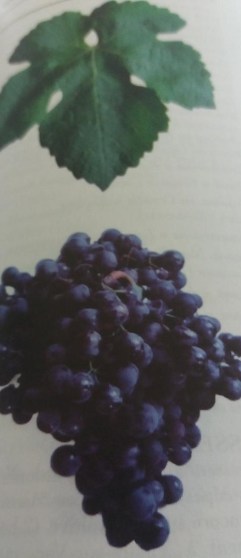
Origins: This is a cross, made in 1855, of Petit Bouschet and Aramon, bears some resemblance to Piqupoul Noir which is also a cross of Petit Bouschet. It has almost disappeared so these few vines are a real rarity, now only 0,4ha in the whole of France though there are 1,000ha in Portugal and more around the New World. Also called Gros Noir and Sumo tinto.

Grand Noir

Bunches: Average to big in size, cylindrical in shape with short, woody stalks. The grapes are average in size but some bunches are prone to undeveloped green berries. The skins are quite thick and a rich purple. The juice is quite sweet and reddish as are the pips. Leaves have 5 lobes with prominent teeth and look long.

Growing: Very late budding, vigorous in growth, normal maturity. A little sensitive to oidium, less so to mildew. Hates frosts.

Wine: Low alcohol and ages quite quickly.


Leave a comment

Coutelou renewed

untitled

En Francais

You may recall that for French bureaucratic reasons the Coutelou domaine name had to change this year. Mas Coutelou was a combination of the surnames of Jeff’s parents, Mas being his mother’s family name. However, Mas also means a homestead or farm and only wines under Appellation or IGP labels are allowed to have that name. So, family name or not, Jeff’s Vin De France wines, Mas Coutelou for many years, had to have new branding.

Since he was already planning to release new products such as a fine (eau de vie), a kina (like a vermouth) and other spirits Jeff chose ‘Vins et Spiritueux Coutelou’. I have tried the Kina and like it, even though it’s not really my thing. Made from wine and organic herbs from the vineyards it is a very enjoyable aperitif.

P1040020

It seems that renewal is the signature of the year. There has been much updating of the cellar in recent times; roof, insulation, a form of air conditioning, division of cuves to make it possible to vinify smaller parcels and quantities, resin flooring, better drainage, amphorae, temperature controlled stainless steel tanks. A new management space means that it is easier to see at a glance what is where and adds a tidiness to what was a more chaotic central space of the cellar.

Upstairs the new office space has been fitted out beautifully. Jeff commissioned a couple of local carpenters to make furniture. Using old barrels and a foudre of more than 130 years old they made a cupboard, with themed shelves and a stunning chair for the desk. They are real works of art, true craftsmanship. A table from the Coutelou family home has been skilfully renewed to add a feature to the space.

P1040083

The empty parcel next to Ste Suzanne

And, in the vineyards more renewal. The small parcel at Sainte Suzanne which has been fallow for many years was supposed to be planted last year, in 2017. A very wet spell then and another this Spring has meant that those plans had to be shelved as the parcel was too wet. However, the vines were already ordered so Jeff has planted them in Segrairals where he had grubbed up some Cabernet Sauvignon. Instead of that extraneous variety Jeff has planted Aramon Noir and Aramon Gris (Aramon being the original grape in the parcel next to Ste Suzanne), Terret, Clairette Blanche, Clairette Rose, Picardan, Olivette, Servan (related to Syrah) and Grand Noir De La Calmette. I must admit to never having heard of some of these. Time to consult my copy of Galet’s wonderful Encycolpedia of Grapes. The Coutelou vineyards are fast becoming a treasure store of rare grapes, there are now several dozen varieties planted.

The very hot and dry month combined with the widespread mildew outbreak have meant that Jeff has spent many hours tending this new plantation, spraying and watering to help the new plants to survive. Happily, all is well.

2018 will always be remembered by Languedoc vignerons as a year of headaches and heartaches, months spent on tractors fighting disease, easy to become disheartened. The Coutelou renewals help to remind us that such problems are temporary.


4 Comments

On higher ground

20180623_142310

En francais

The last article described the ongoing problems in the Languedoc with mildew spoiling vines and grapes. Last Saturday Jeff  invited me over to try and beat the blues a little. Steve from Besançon was staying with Jeff for a week to learn a bit more about being a vigneron. They had opened a bottle of La Vigne Haute 2013 on the previous evening and Jeff invited me over to try the last glass from the bottle.

When I arrived on the Saturday morning Jeff was spraying the Flower Power vineyard, Font D’Oulette. When he had finished we returned to his house and I had the remaining 2013, delicious it was too, still youthful but starting to add tertiary notes to the fruit. Jeff decided to open the 2010 to show how age helps La Vigne Haute to reveal its quality and depth; fruit, spice and leathery complexity. A bottle demonstrating perfectly why La Vigne Haute is my favourite wine of all. However, that was not the end. From his personal cellar emerged a 2001 LVH with no label. Still vibrant with fruit singing and yet more complexity of spice, classic black pepper notes. Simply excellent.

20180623_144031

So, was that the end? Not at all.  More Syrah from older vintages, 1998, 1997 and 1993. Each was still alive with black fruit and those spicy notes. The 91 was Jeff’s first solo bottling, a real privilege to taste it. He had added, all those years ago, a total of 5mg of SO2, pretty much absorbed now, and would certainly qualify as natural wine from a time when it was virtually unknown. A treasure trove of history as well as further proof of how well these wines do mature, there were no off notes at all.  Indeed, they were delicious.

A 1999 Cabernet Sauvignon showed the quality of that grape from the region and how well it aged. There were still currant flavours, violets and more spice. A fresh acidity cleansed the palate. I hadn’t known what to expect, I was bowled over.

20180623_164742

Legendary Roberta

And to finish the 5 hour lunch a bottle of Roberta, the 2003 white wine made from all three Grenache grapes, one of Jeff’s first no added sulphite wines, aged in a special barrel which gives the wine its name. It is a treat I have tasted on a handful of special occasions, its nutty, round fruit was a perfect ending to a special day. Whatever 2018 brings this was a reminder of the special Coutelou wines.

20180623_144014


Leave a comment

Mainly Happy Returns?

P1030979

En francais

After eight months away from Puimisson and the Coutelou vines it was definitely a case of being very happy to return. As I stood in Rome vineyard there was the chorus of birdsong, hum of insects, flash of colour from butterflies and flowers. A resounding reminder of why this is one of my favourite places on Earth, capable of making me joyful just by being there.

Rome

In Font D’Oulette (Flower Power), the vines are maturing well, many now sturdy and thriving in their gobelet freedom. The change from when we grafted some of them just two years ago is dramatic, perhaps more to me as I haven’t seen them since last October.

Grafted vine 2016, same vine now

In Peilhan and Rec D’Oulette (Flambadou’s Carignan) the roses were still just in bloom at the end of the rows but starting to wilt under the hot sun.

Carignan left and top right, Peilhan bottom right

And there lies the rub. The hot sun has really only been out in the region for the last week, it has been a catastrophic Spring. Rain has fallen dramatically, almost three times the usual level from March onwards after a wetter winter than usual. The annual rainfall average has been surpassed just halfway through the year. Moreover the rain was not in sudden bursts but steady, regular, in most afternoons. Vineyards all over the region are sodden, tractors and machines unable to fight their way through the mud making vineyard work difficult if not impossible. Even after a week of sun if I press down onto the soil I can feel the dampness on the topsoil.

Mix damp and warmth around plants and there is a sadly inevitable result, mildew.

Look again at the photo of Peilhan, zoom in on the wines at the bottom,

there are the tell tale brown spots.

This downy mildew lives as spores in the soil and the rain splashes them up onto the vines. Jeff had warned me of the damage which I described from afar in my last post. Seeing the tell tale signs of brown spots on the upper leaves on such a scale across vineyards all over the Languedoc is another matter though. All those vines touched will yield nothing (though some will still put them into production, so be confident of your producer). I have heard that some producers have effectively lost most of their vines for this year and similar stories from right across the region. Grenache seems particularly susceptible to mildew and it has been devastated at Jeff’s, the Maccabeu too.

Meanwhile Jeff has been struggling against nature, not a normal situation. He has sprayed all kinds of organic products from seaweed, nettles, essential oils such as orange and lavender, horsetail, clay. He has used the two natural elements permitted under organic rules, copper and sulphur. Jeff is particularly reluctant to use copper but such is the battle this year that it was necessary. Unfortunately like Sisyphus the task is uphill. He sprays, it rains and the effects of the spray are greatly lessened by washing it off the vines, so he has to start again. At least this week that is no longer the case and Jeff has been working all hours to save what he can, to roll that rock uphill once more. He is discouraged, even heartbroken to see the state of some of the vines he tends and cares for so much.

Dare I mention that now is the time when oidium, powdery mildew makes itself known? Please, not this year.

So, production will be down enormously this year, we hold out best hope for Syrah, Mourvèdre, Carignan Noir. Lower production means lower income too, so expect price rises and please do not complain as now you are aware of the reasons.

So happy returns? Well on a personal level yes. To see my great friend again, to have Icare waiting to be tickled, to see the good side of nature. But. This is not a happy time for vignerons across this region and it hurts to see my friends knocked about like this. Let us hope for northerly, drying winds, sunshine and no more disease so that something can be rescued this year, for Sisyphus to reach his summit.

It really is Flower Power now. Jeff sowed wildflowers and plants to help the soils of that vineyard retain moisture, ironic given the Spring.


1 Comment

Coutelou, news on 2016, 2017 and 2018

En francais

Cartes des voeux 2015 and 2016

thumbnail

Carte des Voeux 2017, election year

Every January Jeff Coutelou sends out to customers a Carte Des Voeux, a New Year’s card, in which he sends out information about the previous year’s events in Puimisson, thoughts about the vintage and general news. The card is always fronted by a striking, witty image and this year’s was no exception.

1

2018


The main headlines from this year’s card concerning the wines were:

  • The difficulties of the 2017 vintage, the extremely hot weather and drought and how only a timely wind from the sea (brise marine) saved the harvest
  • The small harvest, though one of very good quality
  • Details of the likely cuvées which Jeff blended in November, these include regulars such as 7, Rue De La Pompe, Vin Des Amis, PM Rosé, Classe, Flambadou, Flower Power and the Blanc but also the Amphora wine from 2016 and …… La Vigne Haute! (Happy writer here)
  • New products, spirits and ‘tonics’. Gin, Fine and Grappa together with a Kina (a wine flavoured with plants) which is delicious.

Other news headlines:

  • The 2016 vintage as proof of how nature decides. The wines were slow to develop and, so, Jeff decided to sit on up to 75% of them rather than commercialise unready wines. (That said, the 2016 bottles which I have opened recently have been very good indeed, well worth waiting for. Good news for the customer with patience, less so for Jeff’s turnover).
  • Problems in the vineyards due to heavy rain in late 2016 meant that new plantings had to be postponed.The problems caused by vandalism in autumn 2017 have damaged the work and progress of biodiversity in the vineyards, eg hedges and trees burned.

Perhaps most startling of all the Domaine will, in future, no longer be named Mas Coutelou. The authorities informed Jeff that a domaine releasing wines as Vin De France rather than AOC or IGP is not permitted to use the term Mas. In Jeff’s case this seems daft as that is the family name of his mother and founders of the Domaine. No matter the logic and common sense, the wines will now simply be called Coutelou.

As for 2018.

The plantations foreseen for 2017 will, hopefully, take place this Spring, eg next to Ste Suzanne where traditional and older grape varieties will take their place amongst the dozens already planted across the domaine.

P1020252

The sodden vineyard which could not be planted in 2017

Jeff intends to bring back to life the parcels in the Saint Chinian area which belonged to his father. They will be tidied, replanted as necessary and improved with biodiversity as a core principle. In ten years we can look forward to a whole new range of Coutelou wines from this renowned region.


Leave a comment

Grapes and climate change

Jeff forwarded me an interesting article from Le Figaro this week. The subject was research published in the journal Nature, Climate, Change focusing on the effects of climate change on viticulture and the likely need for change.

NCC

Some, such as Trump, deny such change of course but those of us in the real world can consider evidence. Vendanges in France now take place on average 2-3 weeks before they used to around 1970. The long history of wine writing means that we know that in Burgundy, for example, harvests are at their earliest in 700 years. Extreme weather in all seasons is more common, made worse by some agricultural practices such as soil impaction from machinery as well as the effects of herbicides which discourage rain from soaking into the soils.

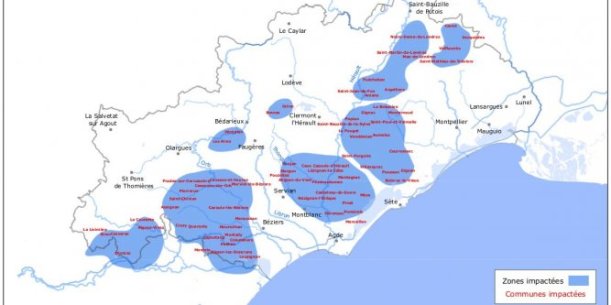
As average temperatures rise seemingly year on year and water shortages occur more frequently in the Languedoc and other regions then viticulteurs face the problem that traditional grape varieties ripen earlier and earlier and struggle in drought conditions such as those shown in the map below indicating ’emergency’ zones in summer 2017.

en-bleu-les-zones-touchees-en-rouge-les-communes-touchees_2371463_667x333

The researchers, such as Elizabeth Wolkovich from the Harvard University Centre for the Environment, suggest that testing different grape varieties will be necessary. At present many of the world’s leading wine producing countries are dominated by 12 ‘international varieties’ such as Cabernet Sauvignon, Merlot, Chardonnay, Sauvignon Blanc, Syrah, Riesling and Pinot Noir.* The list at the bottom of the page shows how much these vineyards are dominated by the international varieties.

France is more varied with 43.5% planted with these grapes (though 85% under the top 20 grapes). Altogether more than 300 grape varieties are planted around France. Organisations promoting rare and forgotten grapes, eg Wine Mosaic, are gaining traction and the researchers believe that by finding grapes with longer growing seasons and later ripening then regions badly affected by climate change might find ways to preserve their vineyards and traditions.

Labelled

I have reported many times how Jeff Coutelou has been planting many different cépages. He believes that not only do they provide variety in the vineyard and bottle but that the mix of different grapes in vineyards helps to prevent disease spreading. Castets, Piquepoul Noir, Terret Blanc, Morastel, and even an Inconnue (unknown) are grapes planted int he last few years and he is looking at others such as Picardan which is related to Clairette and Mauzac. Great wines such as Flower Power have resulted from these plantings, more will follow.

This is the way forward, experimenting to find grapes which make good quality wine and which can stand the climatic changes which we face.


* % area of vineyards under the 12 varieties

China – 93 (almost 75% Cabernet Sauvignon)

New Zealand 91.6

Australia 84.5

Chile 77.6

USA 70


4 Comments

Becoming naturalised

flags

En français

I have spent most of the last 25 months living in the Languedoc and as that period draws to an end I have begun to feel naturalised: my French has started to adopt a local accent such as ‘veng’ for ‘vin’; I tut at anybody and everybody; I rush for a jumper if the temperature dips below 20°C; I even went to a rugby match!

We are searching for a house to move more definitively to the area, it is where I feel happy, healthy and home. Sadly, when I look back across the Channel I see little to make me feel at home there. Brexit has seen a fall in the £ of more than 20% in less than four months. There has been a startling increase in racist and homophobic attacks. The government (with an unelected Prime Minister) is hell bent on going it alone, prepared to do without the EU single market even if it means damaging the economy. Companies such as Nissan have warned they will leave the UK if that is the case yet the government ploughs on determinedly. The 48% who voted to Remain in the EU are ignored, reviled and, today, told that they should be silenced.

2016-10-12

Mrs. May told her Party, “If you believe you’re a citizen of the world, you’re a citizen of nowhere. You don’t understand what the very word ‘citizenship’ means.”

Worrying times. Is it any wonder that I, proud to be a citizen of the world, feel more naturalised here in the Hérault? Though Robert Ménard, the far right mayor of Béziers, is doing his best to out do May’s government by opposing the housing of immigrants relocated from Calais to the town. He sanctioned this poster for example:


As for wine?

After a few tranquil months natural wine has again become the focus of attacks and disparaging remarks by those who seem threatened by it.

In France, Michel Bettane, elder statesman of wine critics, accused natural wine drinkers of being ‘peu democratique’ in their words and ways. No great surprise from a man whose connections make him part of the wine establishment.

In the UK one of the most respected and established of wine merchants, The Wine Society, published this statement from one of their senior buyers.

img_20161009_085649

“Prone to spoilage, high proportion not particularly pleasant to drink, rarely demonstrate varietal character or sense of place.” A damning list. And I am a member of this co-operative group!

Again I feel alienated from mainstream opinion. Sykes is talking complete rubbish and dismisses great wines and talented winemakers with generalisations and prejudice.

I don’t always agree with Alice Feiring, one of natural wine’s more celebrated advocates. However, in a recent article she stated that she cannot support faulty winemaking and those who seem to favour it as an expression of their anti-establishment credentials. I agree. Wine must be drinkable, must be pleasurable, must, above all, be interesting. I could name dozens of natural wine producers who make great wine, it just happens to be natural wine. Are Barral, Foillard, Métras, Coutelou, Occhipinti, Radikon, Ganévat etc making wines as Bettane or Sykes describe?

casa-pardet

Tasting Casa Pardet in 2015, a moment when wine stops you in your tracks and makes you say, wow

I have tasted many natural wines which sing of their cépage and origins, wines from France, Italy, Spain, South Africa, Australia. They tell a tale of their producer and their terroir. They are interesting, some stop you in your tracks and make you reflect on their beauty. Rather those than the very many dull, monotonous wines which taste the same as everybody else’s from Otago to Oregon.

I do enjoy conventional wines, I really like some of them. However, I often find more excitement and interest in the many, well-made natural wines.

Long live freedom of movement, long live the Languedoc and long live great wine.

I am becoming naturalised.


138da189-1095-4227-969a-8356828039df

Mas Coutelou Roberta 2003, fresh as a daisy in 2016. Take note Mr. Sykes


6 Comments

Living wine history

IMG_2170

Version française

As a History graduate and teacher I have always believed that to understand the present we must understand our history. Whether it be politics, culture, sport or, indeed, wine the route to the present gives us the fuller picture. In wine terms I relish the stories of the winemakers and how they came to their place in producing the wines we appreciate, that route often explains their philosophy and their hopes for the wines. I often hear from them, as in Clos Fantine or Domaine Montesquiou, how the family history and its relationship with the land influences how they nurture their soils, vines and wines.

Naturally, spending so much time at Mas Coutelou I have come to appreciate the story of the domaine and its roots and traditions through to its present. Nowhere is that history more alive than in one of its most unusual features, the solera system.

IMG_2173

I was talking to Rosemary George at the Mas Gabriel 10th anniversary dinner and I told her how a blog post she wrote first led me to Jeff’s door and, consequently, changed my story and journey to the Languedoc. Rosemary’s greatest memory of Mas Coutelou she said was of the solera system. It is certainly virtually unique in the region. After my initial tour of the vineyards and tasting with Jeff I was amazed by the discovery of a solera. Clearly it left an impact upon Rosemary too.

So, what is it? What is its own history?

IMG_2171

Soleras are usually associated with sherry. The word means ‘on the ground’ in Spanish. Barrels are filled with wine and the oldest wine is used to fill bottles though some of the wine is left. It is refilled from the next oldest barrel and that in turn by the third oldest. As each is only partly emptied the barrel’s contents become a mix of vintages. Traditionally, the oldest barrel is in on the ground and filled from above, hence the name solera. That ground barrel in Mas Coutelou’s solera is over 200 years old! The barrels also lose some of their contents through evaporation. The larger barrels (around 225 litres) lose around 6% of their wine per year, smaller barrels can lose up to 15%! Hence the need to replenish the barrels for natural reasons not just because they have been emptied.
IMG_2588

Michel removing must from muscat ready for the solera

The Coutelou system was started by Jeff’s great grandfather and has become a family tradition. Muscat and Grenache grapes are used to feed the solera each year. They can follow a route of being used for sweet or dry wines, they might be blended together or kept separately. Altogether there are 16 possible paths for the wines to take and Jeff must choose the most appropriate one based on his tasting experience.

The wines vary from the very dry to the very sweet and luscious. Some of the old Grenaches can be very like old amontillado sherries, lightly structured but packing power with long nutty, prune and raisin flavours which linger and fill your mouth. Others, especially the sweeter Muscats, are caramel, toffee and raisin in aroma and flavour and the wine clings to the glass with its viscosity. They are an utter delight and a special treat to savour slowly. Going from barrel to barrel in the two rooms where they lie there is an enormous range of wines, somehow Jeff keeps a record of them all in his head. As you taste them you are enjoying the results of decades of grapes from the lovingly tended vineyards, the work of generations of the family. This is tasting history.
IMG_2178     IMG_2177

IMG_2176

I love these wines, their complexity, aromas and flavours are captivating, making you smile, savour, sniff, speculate and sigh with pleasure. It is impossible to taste and to drink them without reflecting on the story of the wine and the people who made them. A sense of the past reinforced by the surroundings. The solera cellar contains all sorts of artefacts, equipment used in the vines and the cellars over the years as you can see above. It is a museum to great wines and to great people representing the history of the village and region too. The wines are that history in the glass, rich and rewarding.