amarchinthevines

Learning about wine, vines and vignerons whilst living in the Languedoc


6 Comments

Turning over a new leaf

IMG_0365

Version française

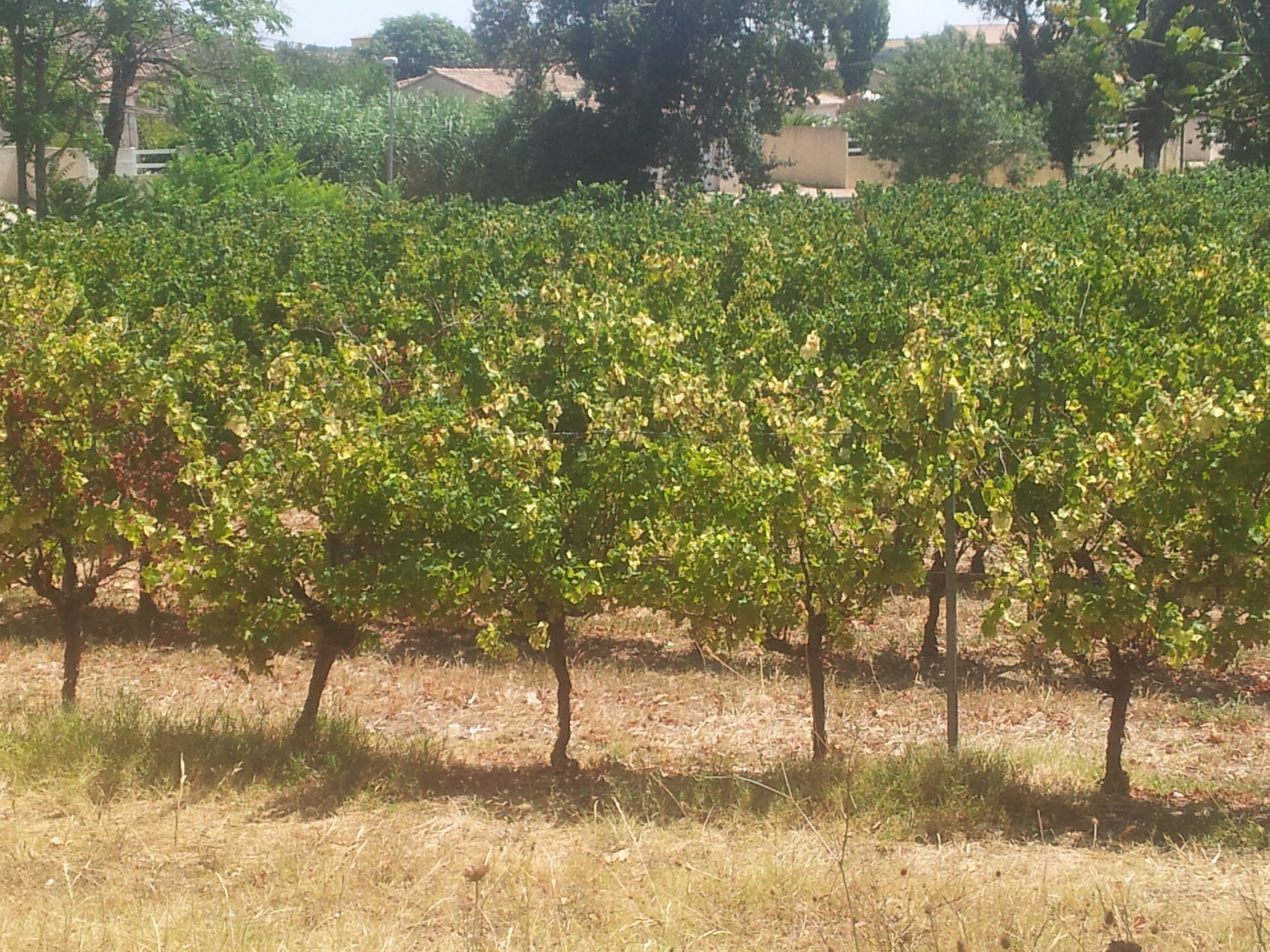
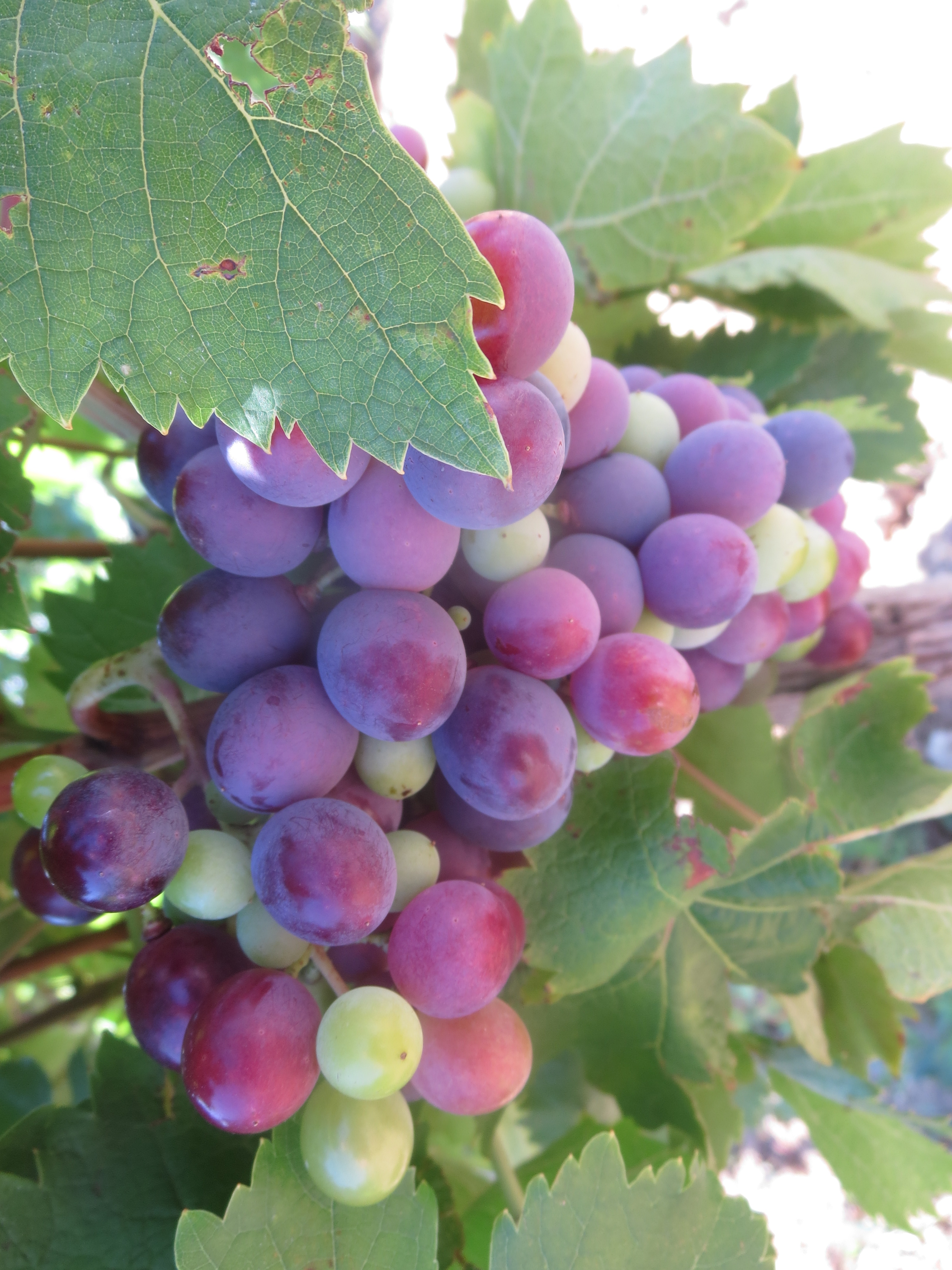
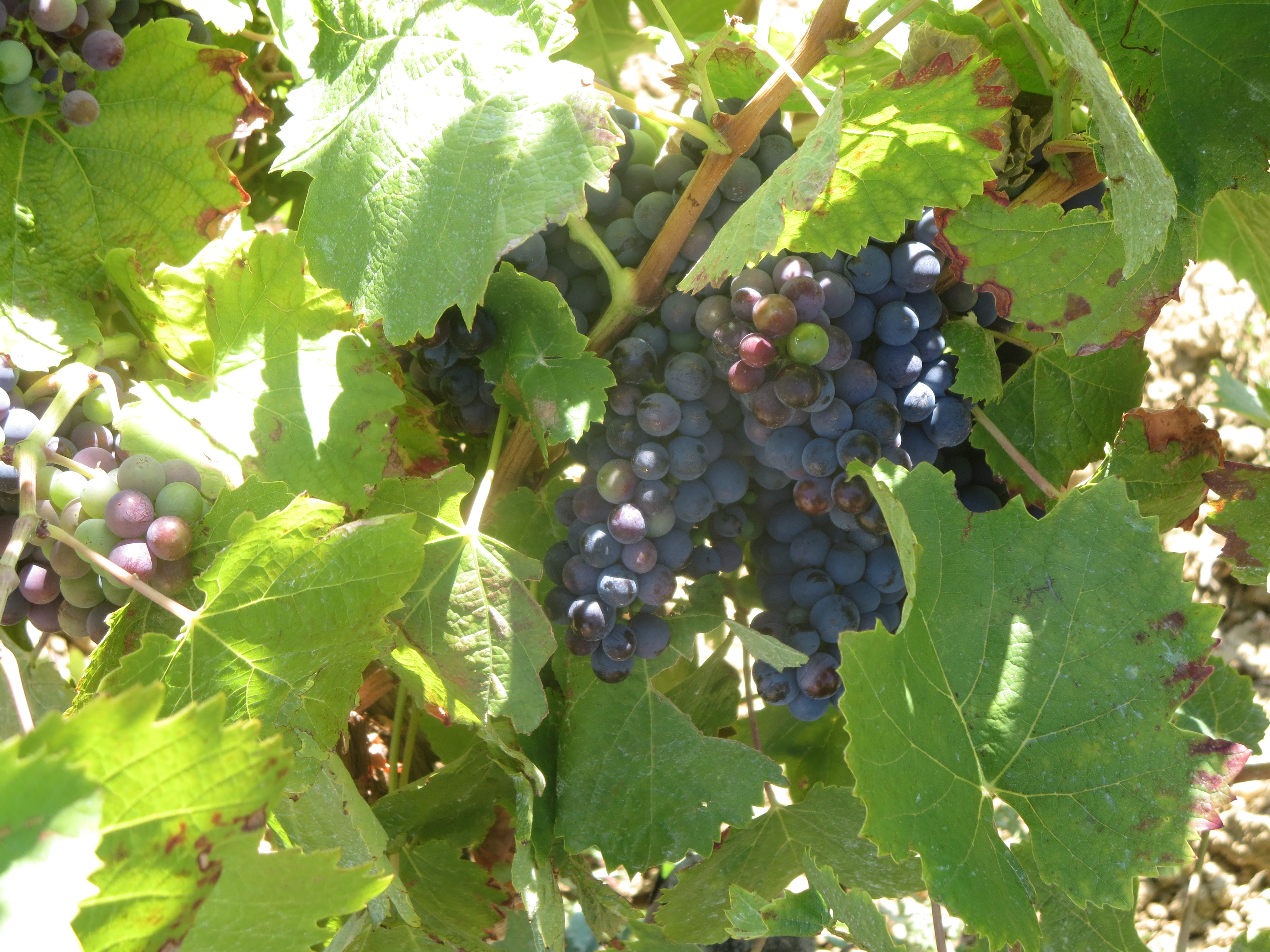
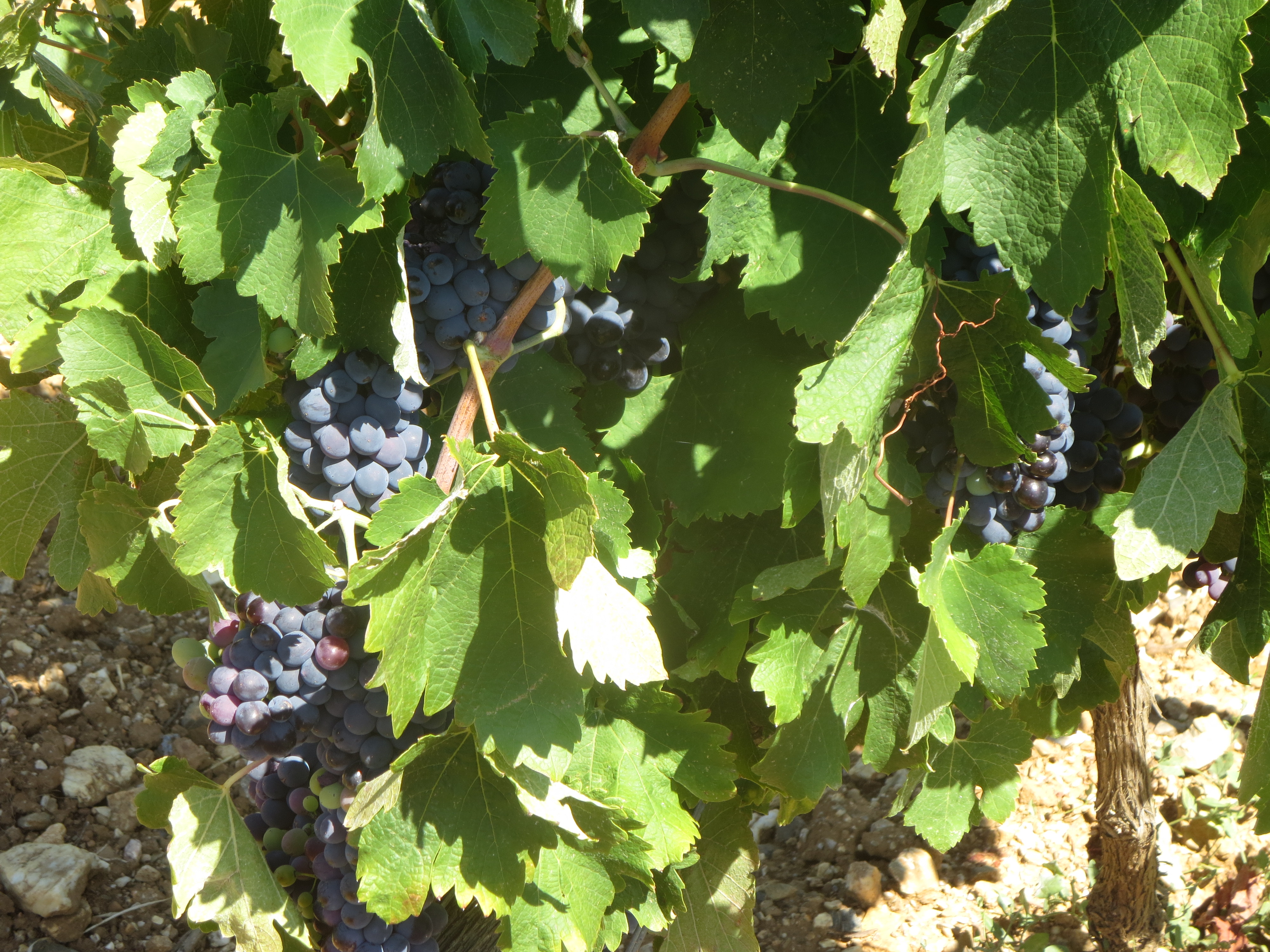
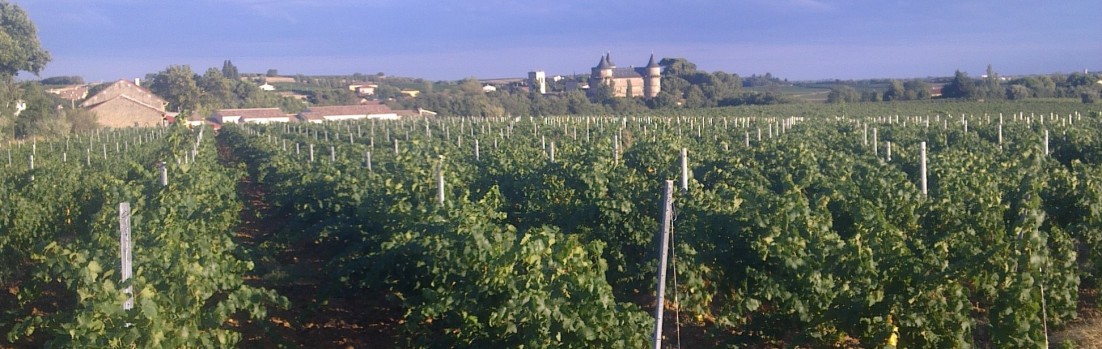
When you live in the Languedoc you are surrounded by vines. They are everywhere and form the world’s biggest vineyard area, producing one third of all France’s wine. Vines stretch over hill and valley, coastline and plains. As you walk around it is easy to think of vines as all being the same, part of one big plantation, but when we have received visitors and we go on walks through the vineyards they often ask me what sort of vine we are passing. Cue guesswork on my part unless I am in the vineyards of Mas Coutelou. To remedy this ignorance and to meet the brief at the top of this blog that I should be “learning about wine, vines and vignerons” I set myself the challenge of being able to identify the main types of vine in the region.


Ampelography is the study of identifying and classifying grapevines. There are many learned books on the subject, some running to hundreds of pages. However, I wanted a simple guide, to learn the basic varieties before expanding to others. I took some photographs in the parcels of vines of Mas Coutelou and using the internet and Jeff himself I hope I have put together a simple reference piece. As we enter harvest it has proved useful to me so that I know what I am picking or sorting. Hopefully it will be useful to you too, whether you visit vineyards or just take an interest in wine and vines.

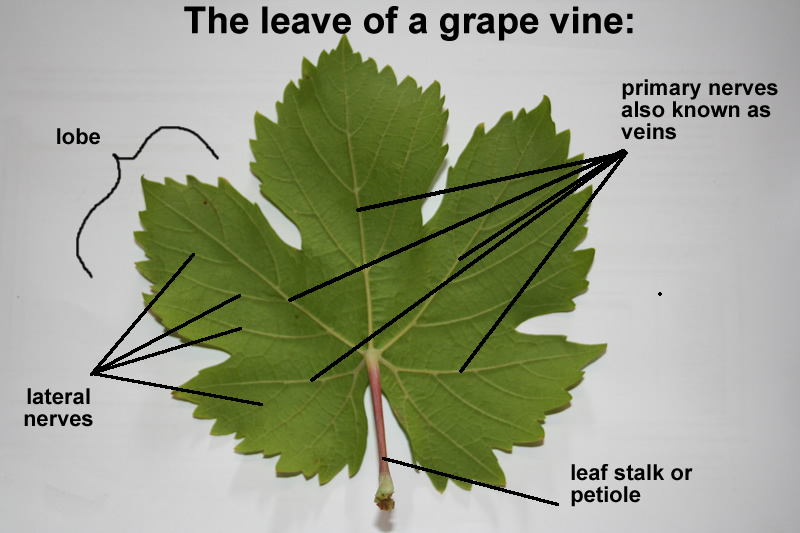
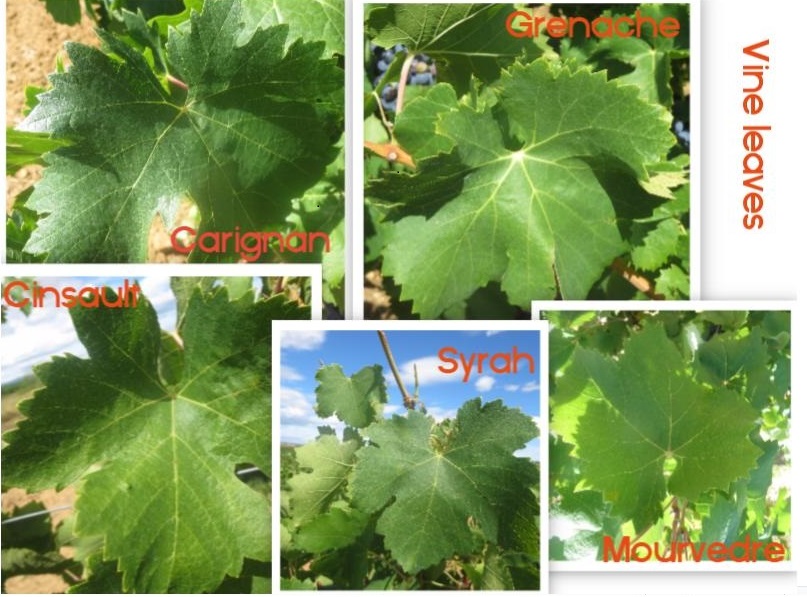
Experts use features such as the shape of the grape bunches, size and colour of the grapes. However, for me the most obvious way of distinguishing between vines are the shape of the leaves.

The colour of leaves varies but so too the number of lobes (from just one to seven), the colour of the veins and the shape of the sinus around the stalk (pétiole). The sinus is the gap between the lobes. So here is my simple guide to identifying some Languedoc vines. I have started in this post with the five main red wine varieties.

Red wine vines

Syrah

Syrah2

                              Syrah in Segrairals vineyard

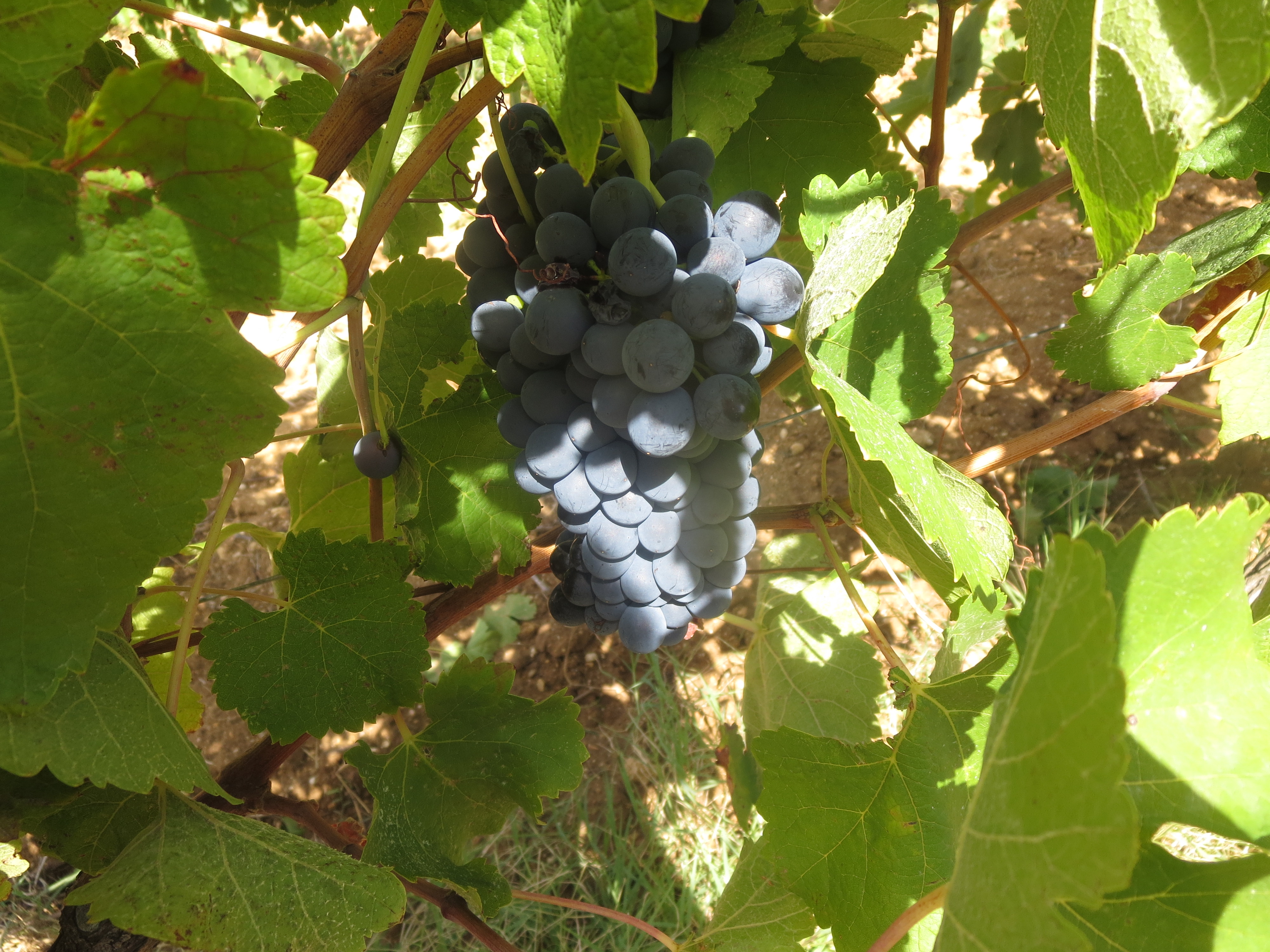
Syrah is one of the great varieties of the Languedoc. Famous for its wines in the Rhone Valley and around the world (Shiraz in Australia) Syrah produces great wines here too. The leaves are quite a light green in colour with 5 lobes which are well separated out including a big sinus (V shaped) around the stalk (pétiole). The veins are quite light and stand out. The leaf edge has small, gentle teeth shapes. The grapes tend to be oblong shaped and fairly small in size. Syrah is one of the earlier red varieties to ripen.

Recommended wines:

Mas Coutelou – La Vigne Haute

Others – Sylvain Bock, Raffut;      Plan De L’Homme, Alpha;      Haute Lignières, Sur Le Fil;      Terre Inconnue, Sylvie
Syrah3

                                    Syrah grapes

Grenache

Grenache

                                        Grenache in La Garrigue

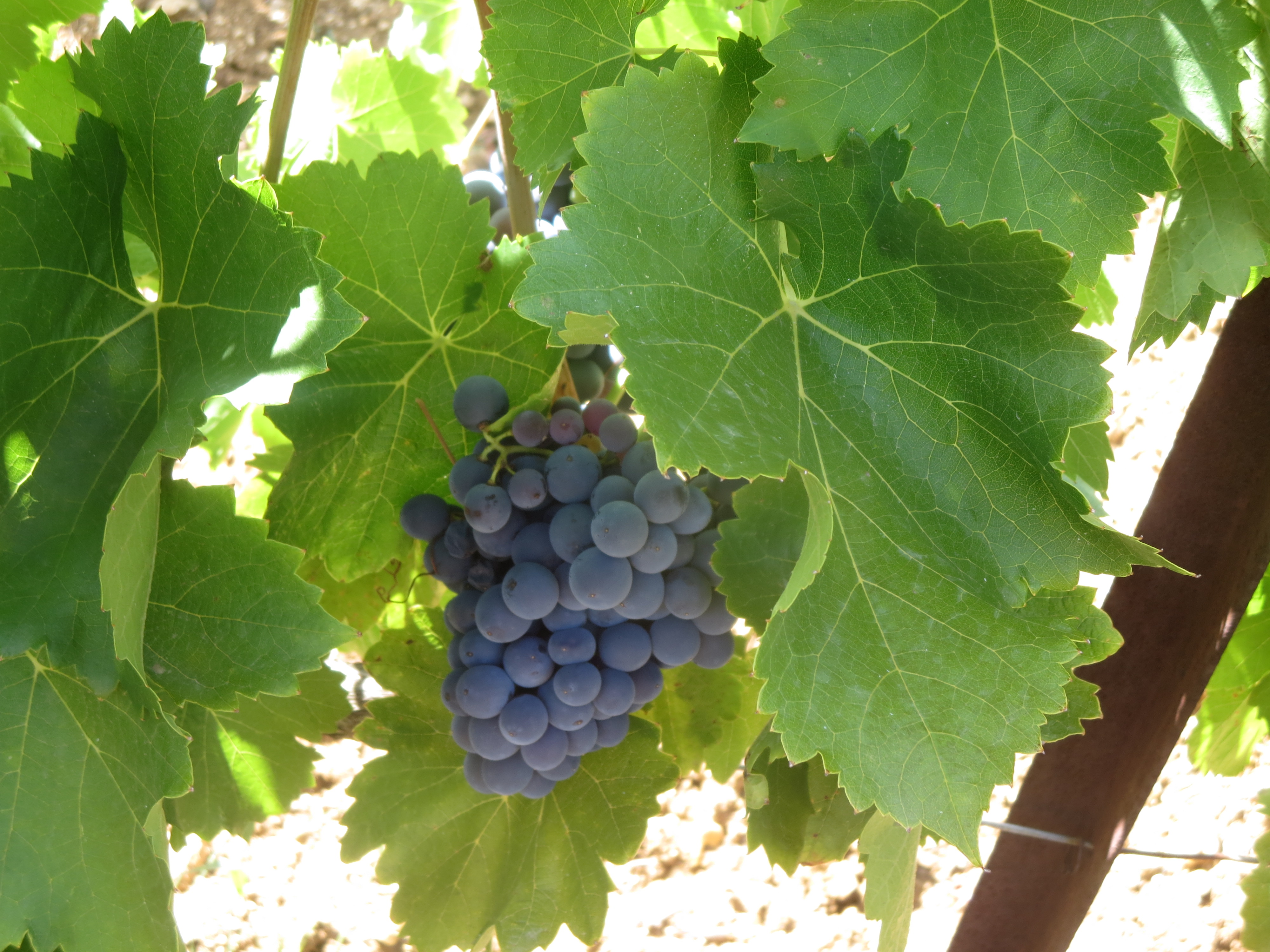
A variety which loves the heat, very much a Spanish and Mediterranean grape. Grenache leaves have a more round appearance than Syrah with big, wide lobes which are not so separated as the Syrah giving the impression of a big, whole leaf. There is a wide sinus around the stalk. The leaf edges have saw teeth which are quite marked. Light veins and round, medium sized grapes. Grenache is a late ripening variety. Often used to blend it is not often used for single variety wines.

Mas Coutelou – Grenache, Mise De Printemps

Others – Engelvin, Même-Si and Vieux Ronsard;       Treloar, One Block Grenache;
Grenache (2)

                                         Grenache grapes

Mourvèdre

Mourvedre2

                                        Mourvedre in Segrairals

                 Mourvedre3

Mourvèdre is a late ripening and, sometimes, a difficult grape to ripen. The lobes are broad and form three rather than five as you can see in the photo on the right of the page above.  There is a little green colouring in the veins and the sinus around the stalk is a lyre shape. The teeth around the edge are distinct and quite big all around. The grapes come in biggish bunches though the grapes are medium in size.

Mas Coutelou – Sauvé De La Citerne

Others – Clos Fantine, Cuvée Courtiol;     La Liquière, Tucade;     Treloar, Motus

Mourvedre grapes

                                Mourvedre grapes

Carignan

Carignan

                                 Carignan in Rec D’Oulette

Carignan has big leaves which are quite hairy underneath and have a more dimply appearance than most in the upper surface. Five lobes usually though in the photo above the lower lobes are small with big upper lobes and a distinct top lobe. The teeth are tapered and distinct. The veins are hardly coloured. This is a late ripening variety and you can see the grapes below which are still turning black, even though this was taken at the same time as the other photos. The grapes and clusters are medium to large in size.

Carignan grapes

                                Carignan grapes

Mas Coutelou – Flambadou

Others – Mas Des Capitelles, Loris;      Coume Mayou, La Loute     Mas Gabriel, Trois Terrasses    Deux Ânes – L’Enclos

Cinsault

Cinsault3

                       Cinsault in Segrairals

I like to think of Cinsault leaves as being very like the grape’s flavours, open, friendly and welcoming. These are big widely spaced lobes and a deep, open sinus around the stalk. The veins are light and clear and the teeth are big, almost rounded which cover all the leaf edge. Often used in rosé wines Cinsault is starting to be used to make some great red wines in the region.

Cinsault Rome

     Older Cinsault in Rome vineyard

Cinsault grapes are big and form big clusters.

Cinsault Rome (2)

  Cinsault grapes

Mas Coutelou – 5SO and Copains

Others – Pelletier, L’Oiselet;   La Fontude, Fontitude;     Thierry Navarre, L’Oeillade    Julien Peyras, Gourmandises
leaves


2 Comments

July’s parting gift

Colourful Cinsault

Colourful Cinsault

Version française

All photos taken on August 2nd unless otherwise stated

It was June 12th when rain last fell on Margon and the vines in the region, although generally doing well, were starting to show signs of fatigue and heat stress; leaves curled in upon themselves, some yellowing, a slight shrivelling.

Vines near Pézenas showing some stress

Vines near Pézenas showing some stress

Vines in Margon which were not pruned in spring and are really suffering

Vines in Margon which were not pruned in spring and are really suffe

A few drops fell on July 25th but the skies had been very dark and had promised much more, it was almost cruel to have that rain, a tease of what might have been. However, July 31st brought around 10mm to Puimisson. A decent rainfall, enough to give the vines a drink and to stop the drying out process. Not enough of course after weeks of lack of moisture and some more rain in the next few weeks would be very much welcome to swell the grapes and the harvest. The vines are now pouring their energy into their fruit rather than their vegetation, but they need the nutrients to do so.

Untitled

So, how had the vines responded to the rain which fell? Well a tour on Sunday (August 2nd) showed the vineyards of Mas Coutelou to be in rude health, a decent harvest is now predicted though that extra rain would be most welcome.

Segrairals in full bloom, healthy, happy vines

Segrairals in full bloom, healthy, happy vines

Segrairals, biggest of the vineyards, showed some healthy Cinsault, Syrah and Grenache with no signs of stress or disease. As the home of Classe, 7,Rue De La Pompe and 5SO this is especially welcome, as they are some of the big sellers.

IMG_1980

Cinsault in Segrairals

To Rome, my favourite vineyard. The gobelets were looking well, plenty of grapes both the white varieties and the Cinsault. There was a little mildew around the entrance but minimal, no cause for concern. Could there be a cuvée of Copains in 2015? Jeff tells me that no decisions are made as yet, caution prevails and he will wait to see what the harvest gives him before he makes final choices about how to use the grapes and the wines which result.

Rome's centurion vines in good health

Rome’s centurion vines in good health

Muscat Noir grapes, a tiny bit of mildew top left

Muscat Noir grapes, a tiny bit of mildew top left

Sainte Suzanne (Metaierie) suffered from coulure in May with the strong winds blowing off some of the flowers on the vines, which will reduce yields a bit. However, the grapes there are growing well, what might have been a problem looks now a much brighter picture, good news for fans of Vin Des Amis.

Peilhan, just a little more tired and suffering

Peilhan, just a little more tired and suffering

The only vineyard parcel which has shown stress is Peilhan, There was a lot of regrafting and replanting in the spring and the dryness has caused problems for these new vines. There was also oidium in this parcel, the only vineyard to be attacked by this powdery mildew. Yet amongst those problems there are plenty of healthy grapes, some careful picking and sorting will be needed but it will produce good wine.

The famous Castets grapes of Peilhan

The famous Castets grapes of Peilhan

La Garrigue was blooming, the white varieties such as the Muscats are swollen and changing hue to lovely golden shades.

Muscat a Petits Grains in La Garrigue

Muscat a Petits Grains in La Garrigue

The Syrah is well advanced, a dark purple colour across virtually the whole bunches, the pips though betray a little immaturity as they taste and look green and sappy. A little more time and patience will pay dividends. As the world’s biggest fan of La Vigne Haute, I have my fingers crossed.

Syrah in La Garrigue, ripening beautifully in the shade of the vine

Syrah in La Garrigue, ripening beautifully in the shade of the vine

The Grenache in La Garrigue, despite facing south, is a little more delayed in colour but getting there and very healthy.

Grenache in La Garrigue

Grenache in La Garrigue

In fact despite risks of disease earlier in the year (see here) Jeff has been able to use minimal treatments in 2015. Oidium and mildew (powdery and downy mildew) can be controlled by copper sulphate, sometimes called the Bordeaux mix when added to slaked lime. This is a bluish colour when sprayed by conventional and organic vignerons and is often seen on the leaves of vines. Vignerons might also use chemical fungicides if they are not organic producers.

Neighbouring vineyard which was given herbicide shortly after harvest last year and whose new vines have been treated regularly

Neighbouring vineyard which was given herbicide shortly after harvest last year and whose new vines have been treated regularly

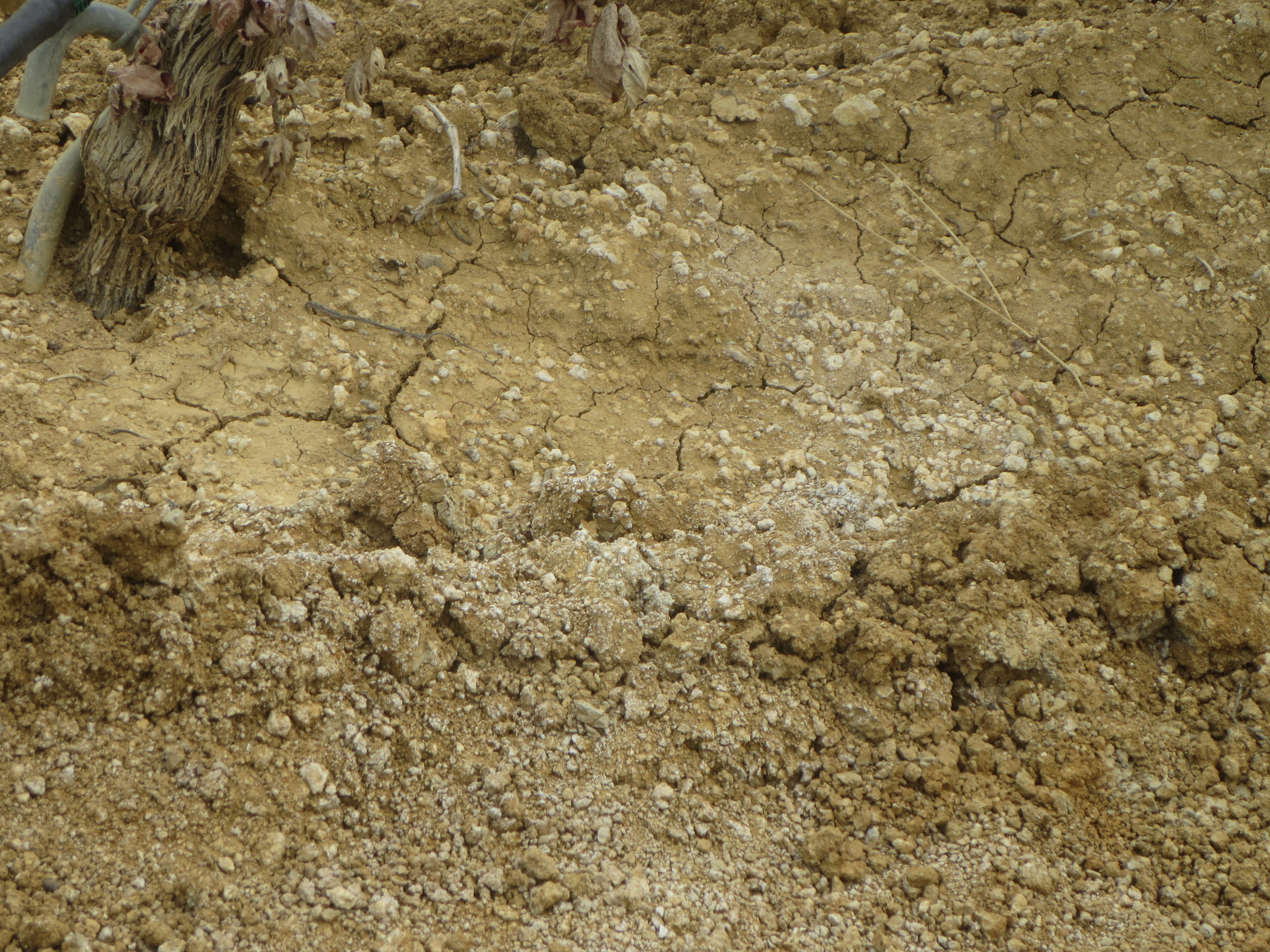
Some neighbours have also irrigated their vines and one alarming consequence is the changing of the soil and its pH as the calcium carbonate in the water shows through, you can see it in the white parts of the soil in this photo taken on July 22nd.

IMG_1932

The irrigation is also causing the vines to grow quickly and tall with thin trunks as seen below. It should be acknowledged that there are many conventional producers who take great pride in the health of their soils and vines and would be horrified by some practices described here.

IMG_2002

As a proud holder of Ecocert organic status and as a natural wine maker Jeff must use natural products only. Tisanes of plants which fight mildew such as horse tail, fern and nettles can be sprayed and this is the basis of many biodynamic treatments. However, the two main weapons in the armoury of organic producers are copper and sulphate, both natural products.

Copper is used against mildew, but is harmful to the soils and kills life in them if used in significant quantities. Organic producers are limited to 30kg per hectare over a 5 year period, allowing more to be used in years with more downy mildew for example but only if less is used in the other years. In fact Jeff has used just 200g per hectare in 2015 and this after years of well below average use, his use of copper is on a major downward trend. He is reluctant and very careful in using copper as he is aware of its danger to the soils, yet mildew has not been a major threat this year.

IMG_1552

Oidium seen in May

Similarly Jeff has used sulphur in soluble form at doses much lower than the permitted level, three treatments over the course of the growing season. In addition one dose of sulphur powder was sprayed when the risk of oidium was high (May) and a second spraying for Peilhan only as it is the vineyard which was attacked by oidium. In contrast to neighbouring vignerons who have sprayed every 10 days including after the bunches closed up (so more than a dozen treatments) this really is minimal intervention.
So July’s parting gift of 10mm of rain was welcome, August might like to follow by offering some rain soon. Too near the harvest is bad as it would dilute the juice rather than help the grapes to reach a good size. Things look promising, let us hope that nature completes its bounty. There is an old saying that June makes the wine and August makes the must, ie the character of the wine with its colour, yeast and flavour. With 3 weeks or so until picking begins it is an exciting, and nervous, time, waiting to see what that character will be.

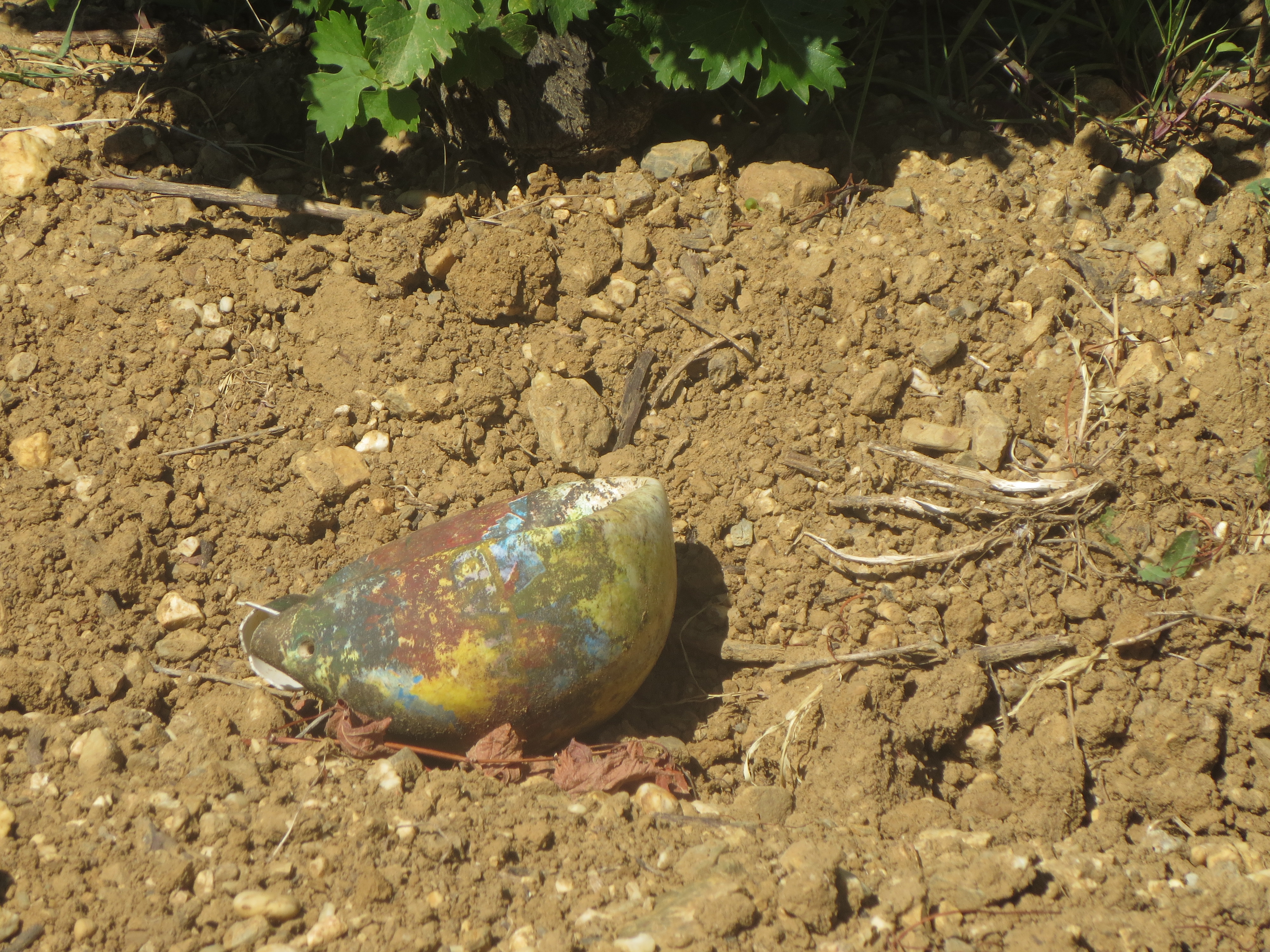
No Icare this time but look what we found amongst the vines, he's been here!

No Icare this time but look what we found amongst the vines, he’s been here!

NB there are lots of reports about recent wine tastings here.


2 Comments

Exploring the 7Cs – Day 6

Cinsault

Version Francaise

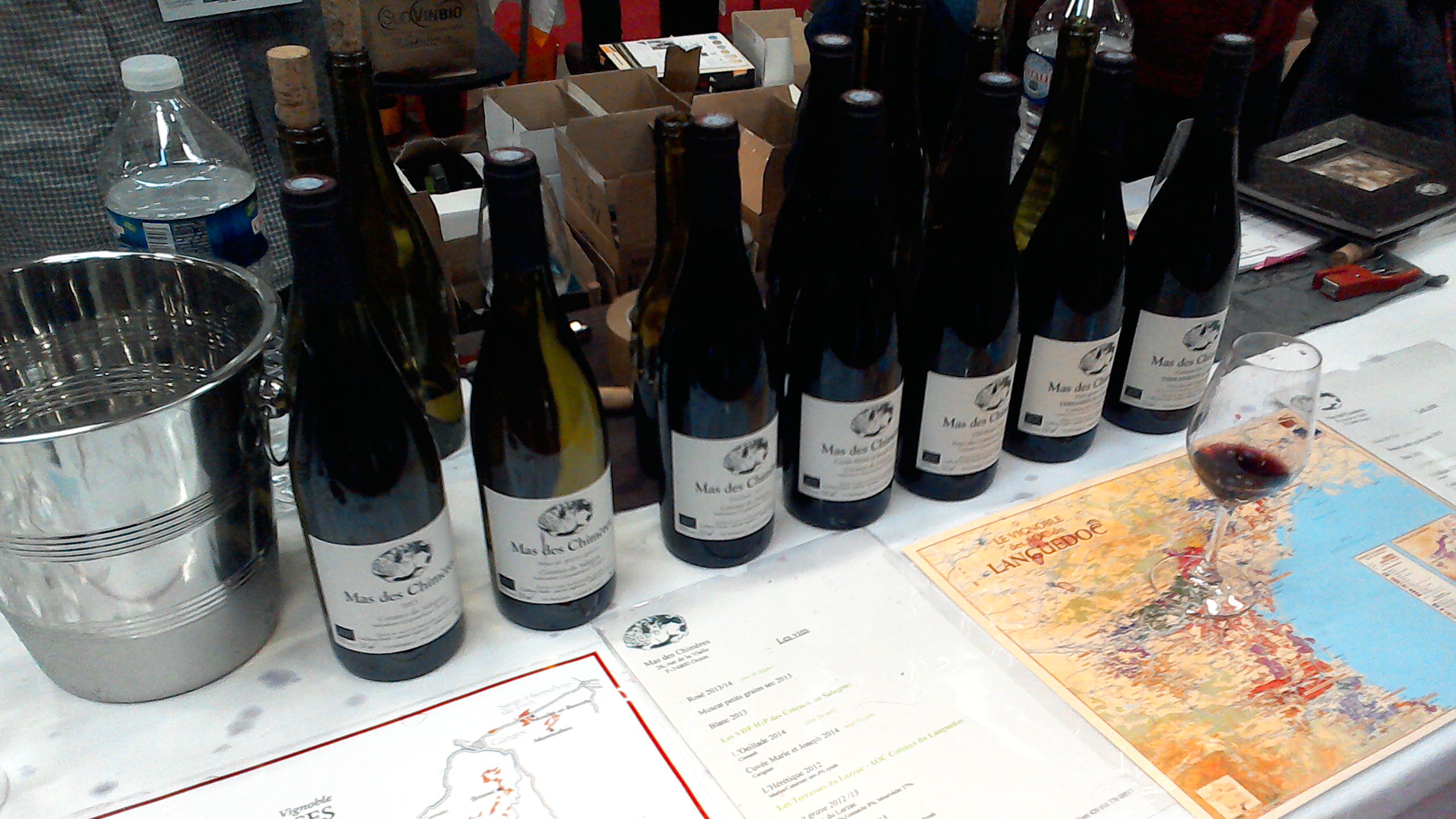
 Four or five years ago I drank a bottle of ‘L’Oeillade’ of Mas Des Chimeres, a domaine near Lac Salagou. Oeillade is a local name for Cinsault (possibly a forerunner of Cinsault) and the wine is a light, dangerously gluggable red which was an excellent wine for the summer when I drank it. That makes the wine sound simple but it has complexity too. Incidentally, I tasted the Chimeres range at Millésime Bio and enjoyed them a great deal. Look out for Domaine La Fontude in the same area which is also making lovely wines including Cinsault.

Jpeg

Mas De Chimeres range including L’Oeillade

That Cinsault wine surprised me as I associated the grape with rosé wines and indeed that is how most winemakers use it in the region. However, since then I have come across more red Cinsault bottles which have excited me. Les Chemins De Traverse is produced by La Baronne in Corbieres (see Day 3) whilst L’Oiselet is a lovely wine made by Yannick Pelletier in the St Chinian area. Incidentally all of  Yannick’s wines are absolutely terrific. Truly a viticulteur to look out for and buy if possible, you would not regret it. Just today (March 30th) I also tasted a really good Cinsault from Julien Peyras called ‘Gourmandise’, part of another excellent range of wines, again look out for him.

All of these Cinsaults are deceptively easy to drink but have complexity too.

I must also add two Cinsaults produced by Mas Coutelou. 5SO is a light version ready for drinking and delicious it is too, including the newly bottled 2014 which I can confirm is excellent.

Picture

Then there is Copains a Cinsault which is again apparently easy to drink but carries real weight and will be at its best in years to come, and if you think I might be being biased read this review from the excellent blog by David Farge (Abistodenas).

Cinsault is a variety enjoying a renaissance as winemakers realise its potential and vinify it to be something more than just a quaffing wine. There is room for both types of wine so give them a go.


3 Comments

Ten (thousand) green bottles

IMG_0971


Air pressure was high, the moon waning, wind from the north – a good time to bottle wine. Yes these things do make a difference. The week of March 9th -12th saw around 10,000 bottles filled with wine and thousands labelled ready for a large wine tasting. Bottling is a tense time for the winemaker, risks abound. Contamination and exposure to oxygen are the main two risks; it is estimated that the wine interacts with more oxygen during the bottling process than in years inside the bottle whatever the closure. Most winemakers will add sulphur dioxide at this stage in order to protect the wine from bacteria and oxydation, including many who would regard themselves as makers of natural wine.

Jeff Coutelou adds no SO2 at any stage of the winemaking process and therefore takes risks. He has to be confident in the health of his wine and everything has to be as clean as possible to minimise those risks.

IMG_0925

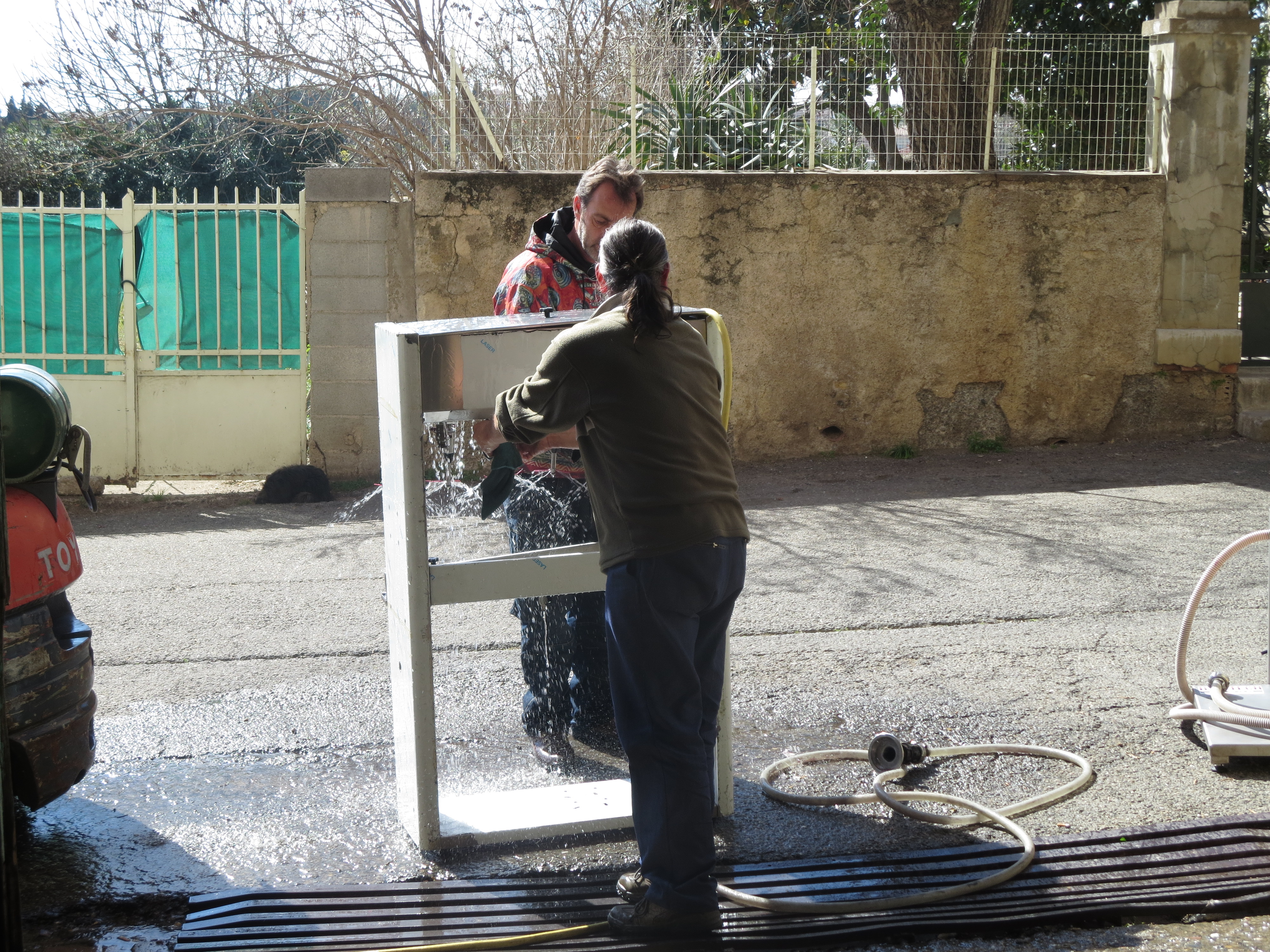
Cleaning the machinery before the process starts

As it happened the stress began before the bottling, the main machine had a part not working and the engineer was late in getting the part. Therefore, day 1 would need to use an older machine to bottle magnums of 5SO, the simpler of the Cinsault cuvées.

IMG_0944

Magnums being filled

IMG_0939

The magnum is corked

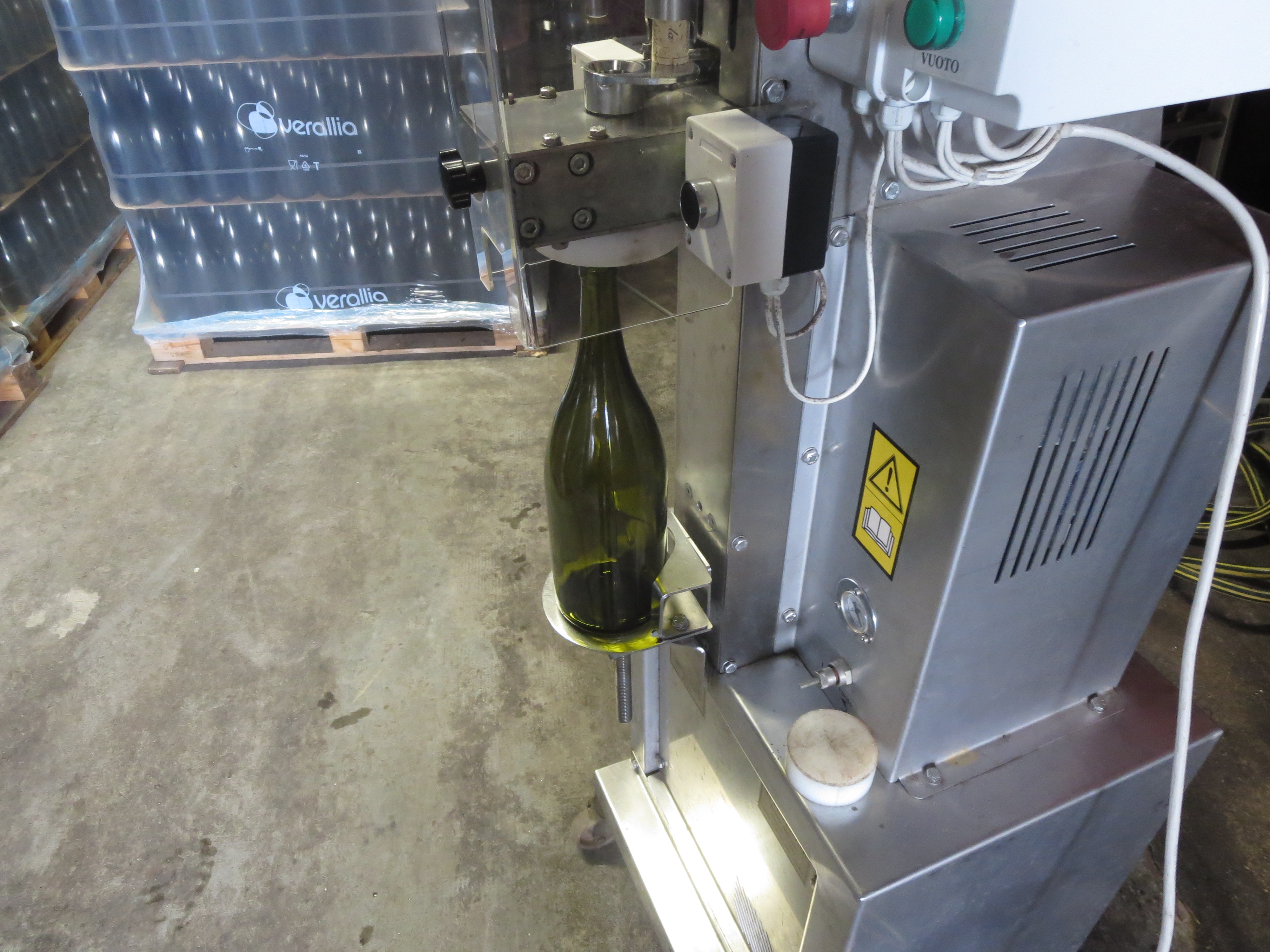
Bottling magnums is a much slower process than single bottles because of the older machine and a separate machine for corking. A few hundred can be produced in an hour rather than the 1200 single bottles. The costs are therefore greater even if the bottle retail price will not reflect that.

IMG_0950

Magnums stored upright at first

IMG_0952

Cleaning again, after bottling

Also produced were bag in box wines (BiBs) which are usually sold to restaurants. This was mostly Merlot wine (from the Le Colombié vineyard).

IMG_0930

Filling the bag with Merlot


IMG_0931

Bag is boxed


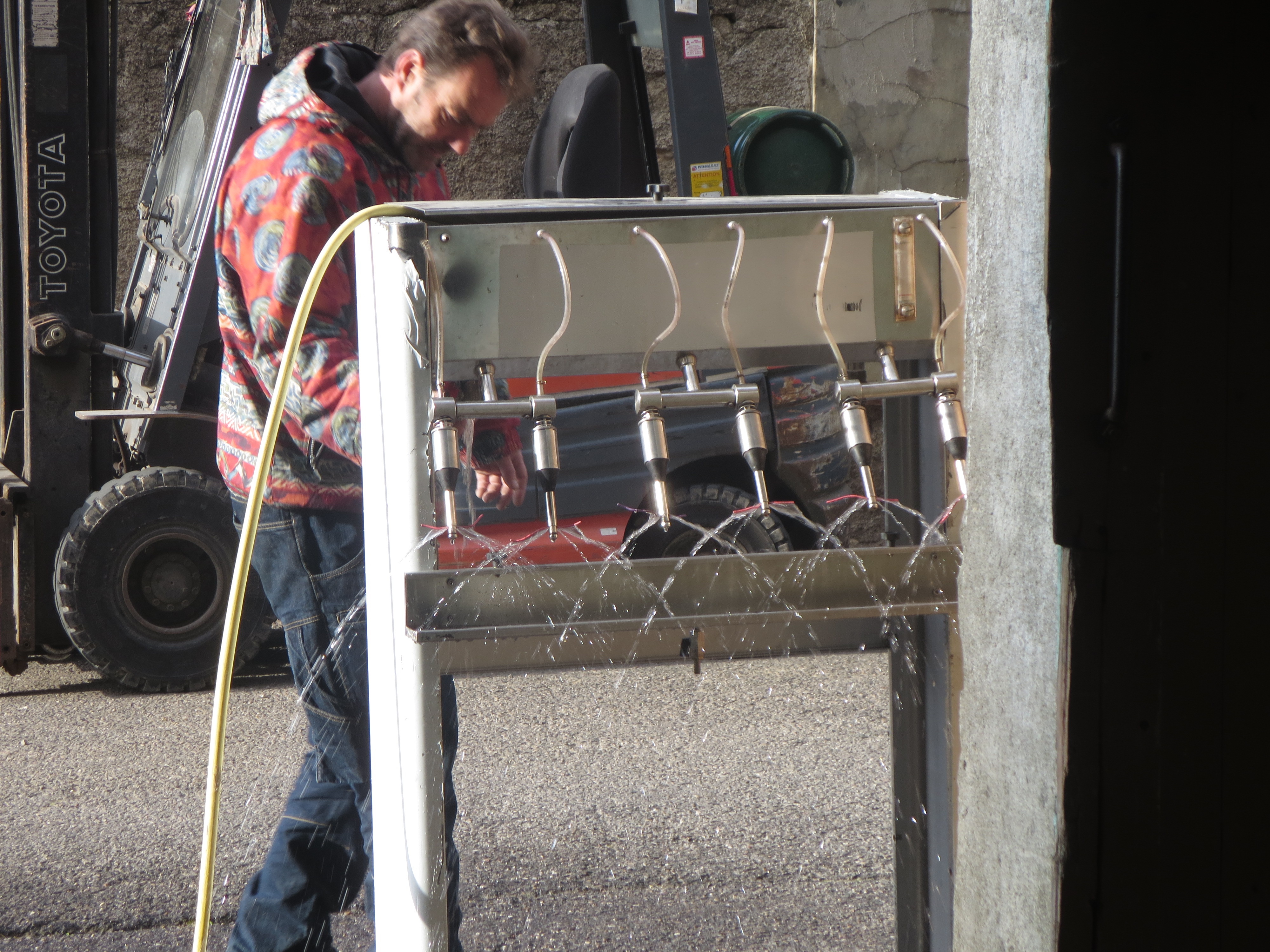
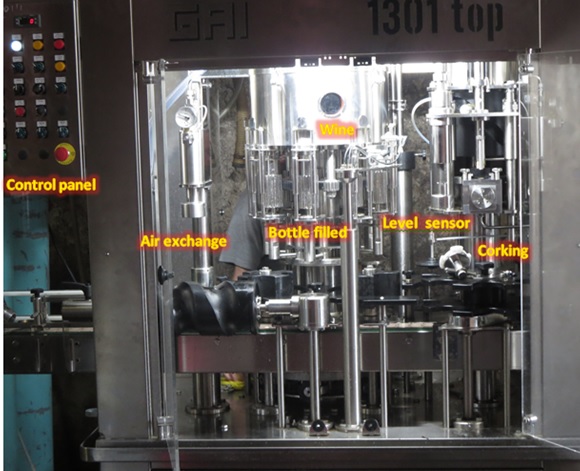
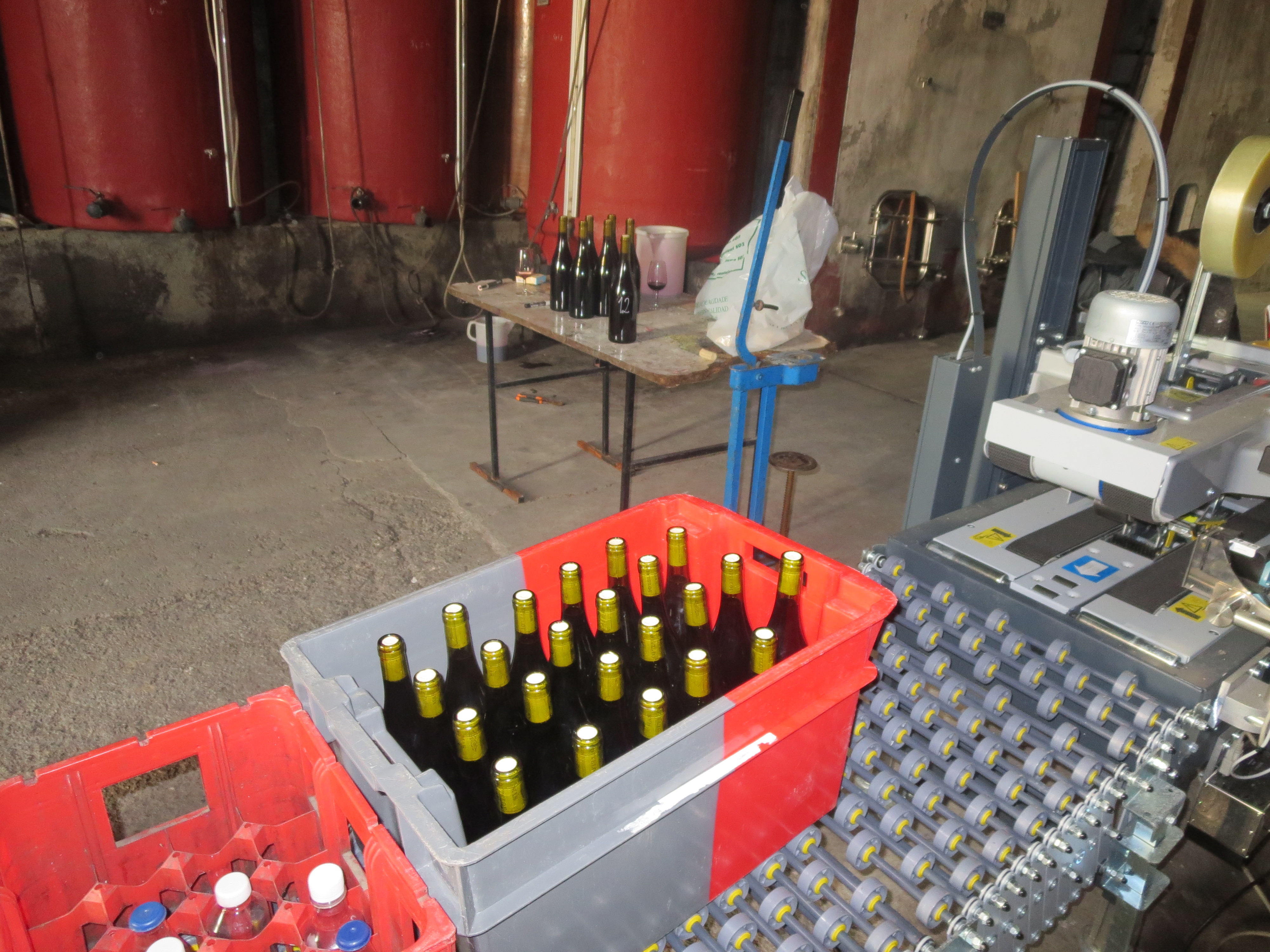
The next day the new part was fitted and the main bottling line was in action. This is an expensive machine but can bottle 1200 bottles an hour whilst controlling the risks of contamination and exposure to oxygen. Carole can be seen here placing the bottles on the machine. It then carries the bottles through the process at the required speed.

IMG_0953

IMG_0959

Inside the main body of the machine the bottle has its air sucked out to prevent any staleness. The bottle passes to the reservoir of wine and is filled. It moves on to a sensor to ensure that the level is correct inside the bottle, and removes or adds wine as necessary.It is important that there is a small gap between wine and cork to allow air inside so that the wine can breathe and develop before consumption. The cork is then driven into the bottle which begins a 3 minute journey around a conveyor belt allowing the cork to expand in the bottle neck so that is properly closed. They do rather resemble penguins waddling or a long queue in the Post Office.

Machine


This extra video shows the sensor and corking in closer detail.

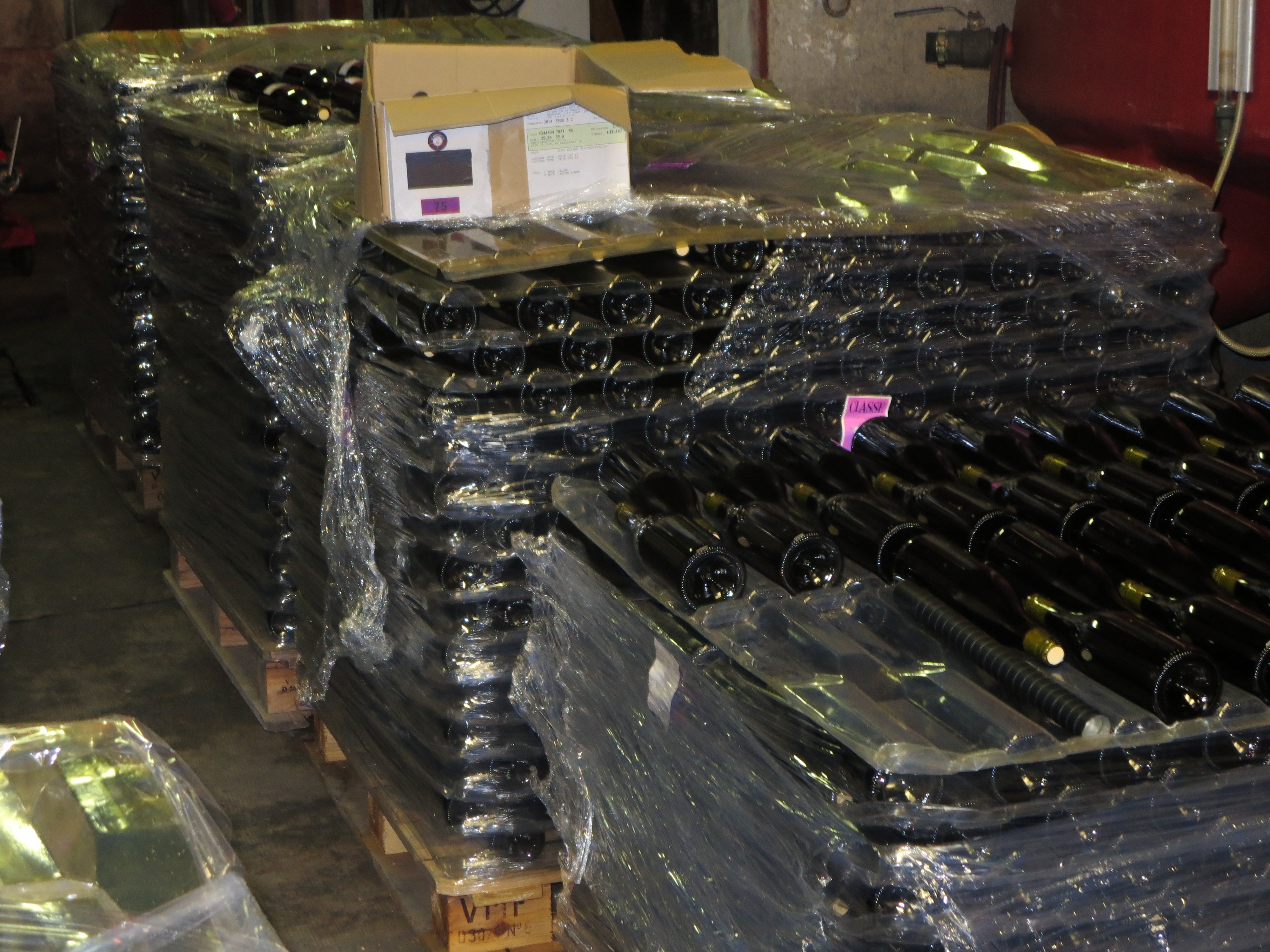
Finally the bottles are stored in large pallets and the sunlight created some stunning colours.

IMG_0970

IMG_0957

IMG_0984

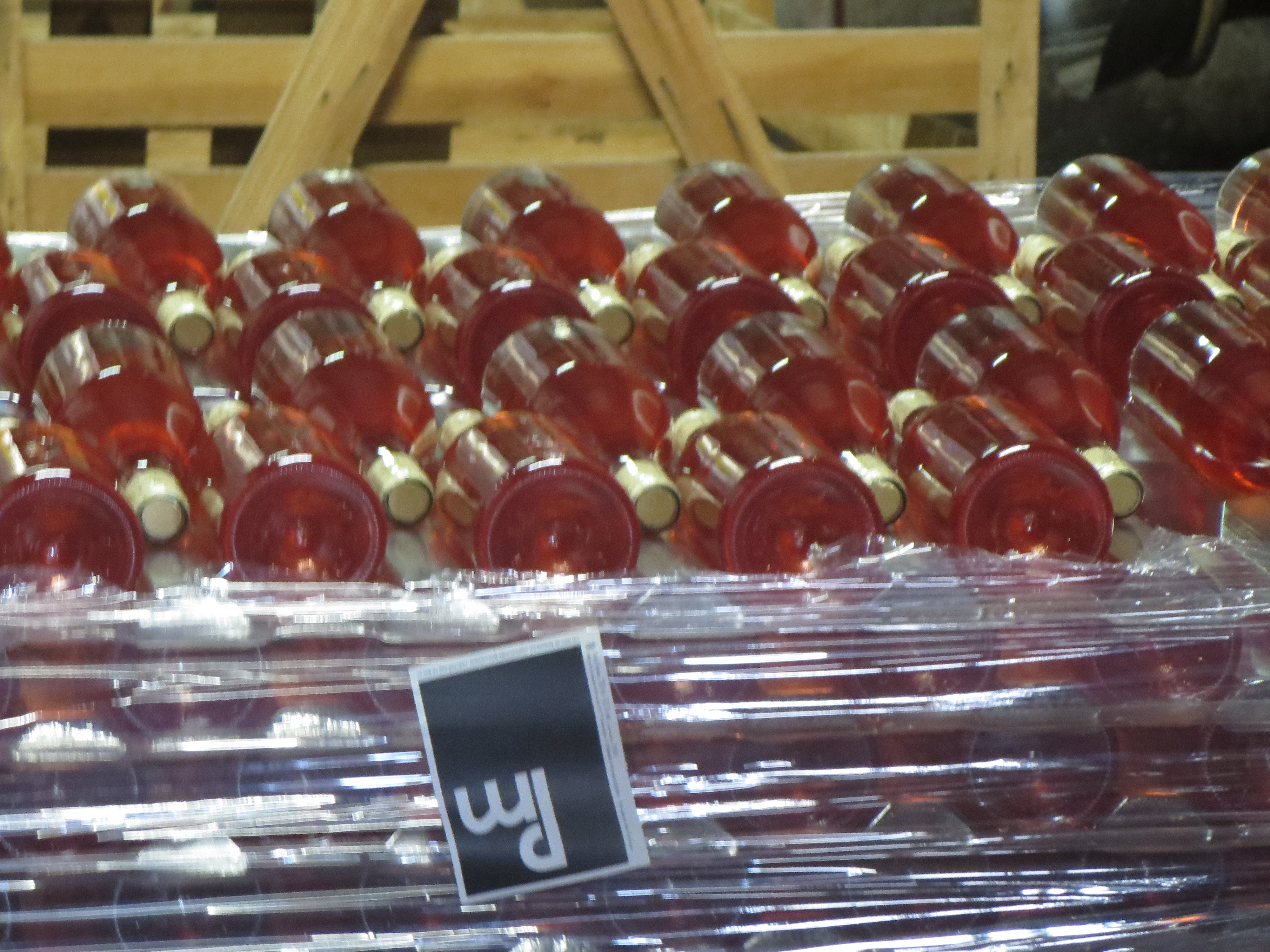
As for the wines, well the PM rosé is fruity, refreshing and yet has plenty of texture and length of flavour. However, the 5SO was my star, it is a lighter Cinsault ready for drinking. Immediately after bottling it had a slightly cloudy appearance which began to settle by day two. I opened a bottle on the fifth day and it was delicious, with real depth. Much more than a simple wine. Enjoy!

IMG_0981

The superviser!


Leave a comment

Mas Coutelou 2014

IMG_0620

‘Proof’ that drinking Mas Coutelou wines is good for you

en francais

IMG_0612

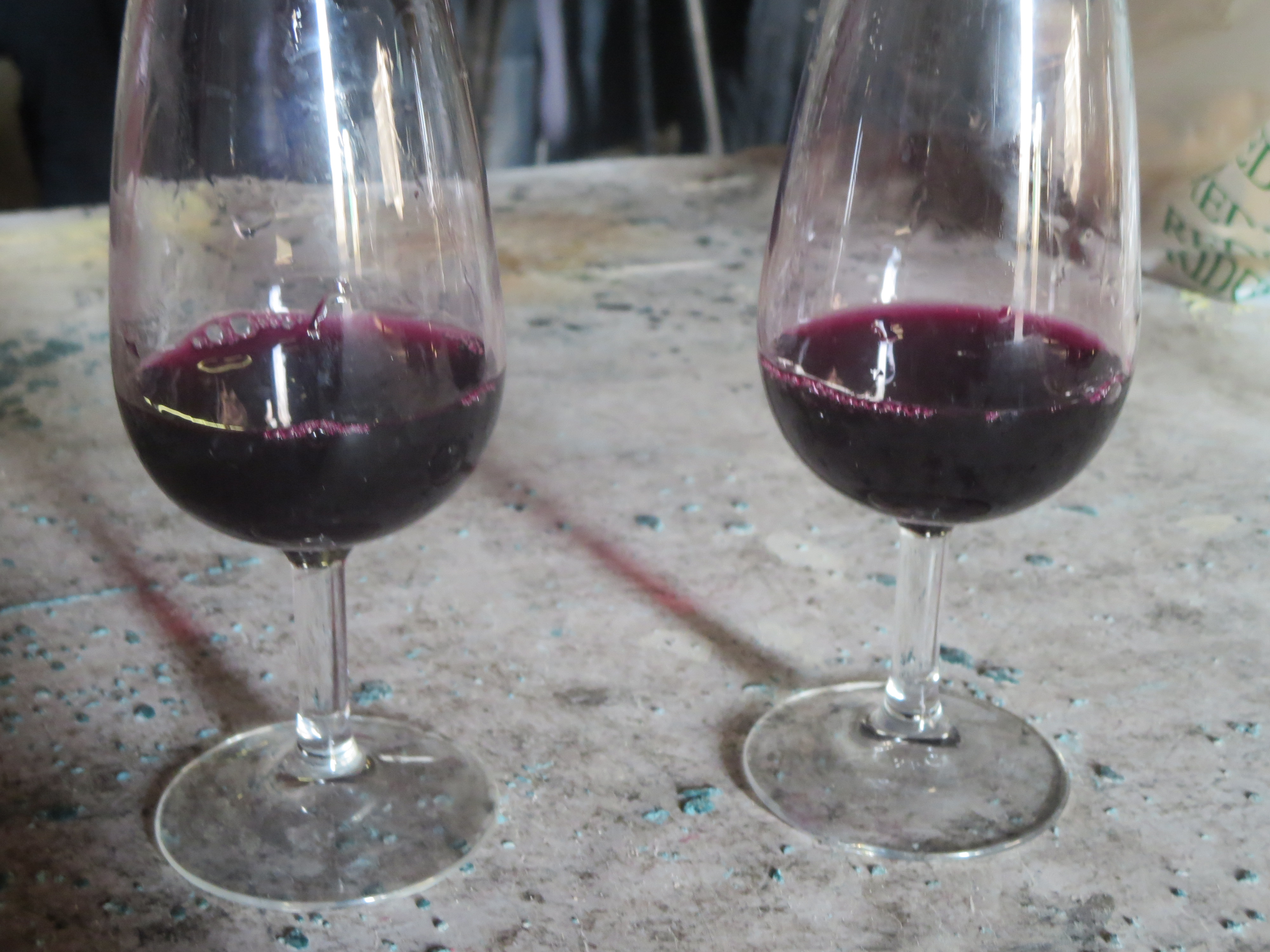
The assemblage for the 2014 wines is well under way, the wines are settling in tank for some of the well known cuvées such as Classe and Vin Des Amis. (Above are glasses of richly coloured Vin Des Amis). Both are delicious already and in the few days since I first tasted them they have shown development as they marry together. The fruit and freshness which characterise Mas Coutelou wines are evident and there is a marked concentration which shows that the wines will mature well.

Jeff has published his vintage report for 2014. Winter, spring and early summer were exceptionally dry (less than 150mm or 6 inches of rain in the 9 months to the end of June) and at that moment Jeff was far from sure that he would be able to harvest any grapes. Some relief came from a summer which was not too hot and peppered by storms. However, the vines had to dig deep into their reserves of energy in order to produce grapes. Troubles continued with some storms towards the end of harvest time and then the Marin wind with their warmth and high pressure meant that through the autumn and into December the wines in tank were not able to truly rest. It was a difficult year in short, a reminder that nature rules the life of the vigneron. Indeed some local producers have seen their crops virtually wiped out by hail and mildew so the wines that Jeff has produced are to be even more cherished.

Nevertheless there are some drawbacks. The harvest was smaller especially for Syrah, (down by 40%), Carignan and Mourvedre. Syrah is a major part of many Coutelou wines so Jeff has had to improvise and make the most of what he has. The lack of Mourvedre may mean that one of his popular wines ‘Sauvé De La Citerne’ will not be made. In addition the effort made by the vines means that they would benefit from a rest and yet this winter (thus far) has been so mild that they are starting to show signs of producing buds even in January (débourrement) Instead of resting they are starting to work hard already.

The wines I tasted from tank are marked by concentration and minerality. The vines had to push deep into the soil for water in the arid early part of 2014 so they have drawn up minerals from the soil’s depths. The mineral flavours are evident when drinking. A difficult vintage has produced some highly promising wines but in smaller quantity, so guard what you already have and appreciate the quality of the new wines.

Two wines to note.

PM, the rosé,  is already gorgeous, full of fruit and perfume yet dry and absolutely delicious. At only 11% alcohol it is a wine to drink and enjoy.

A new wine made from old Cinsault, Aramon, Oeillade and Muscate. Tasted from tank this was already sensational, a red wine with grapey, perfumed scents and deep, concentrated red fruits. Can’t wait to see how this develops.

Jeff will be showing some of these new wines at a couple of tastings in the next 10 days, in Montpellier and the Loire. Today Jeff put the bottles together for those tastings, including some corking by hand. Nothing was easy about 2014!!

IMG_0616

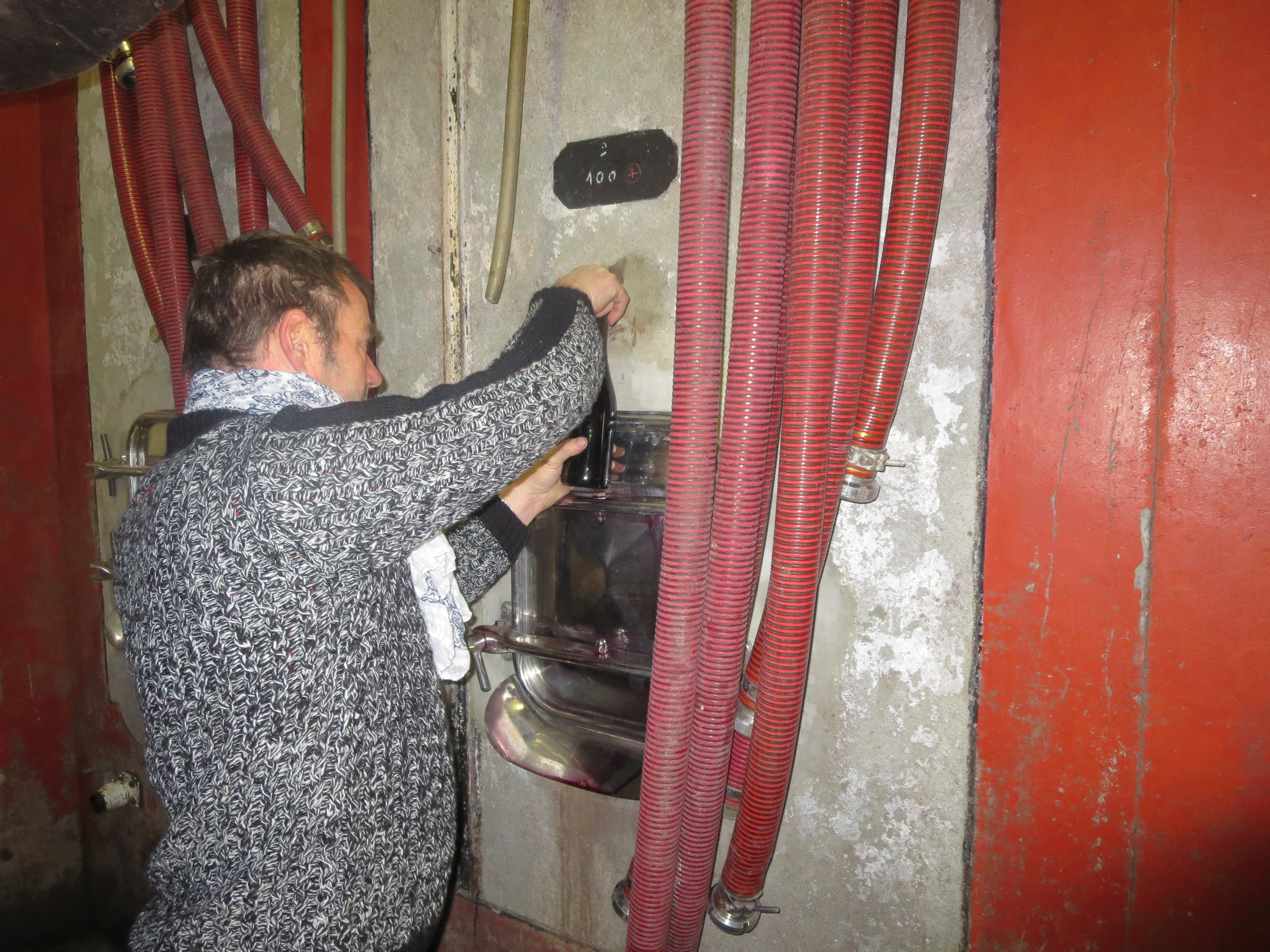
Taking Classe from tank

IMG_0613

IMG_0617

Bottles prepared


1 Comment

Being a vigneron – Part 3

No you haven’t missed Parts 1 & 2! It is widely acknowledged that the work of a vigneron involves three locations; the vineyard, the cellar and the office. The first two parts are the most well known of course and what people like me think of first when we think about the ‘glamorous’ lifestyle of winemakers. However, if you don’t sell the wine and get it delivered safely to merchants, restaurants etc then it is pointless trying to make wine.

Now that harvest is done and the wines are stored in tanks, either fermenting or maturing, the more mundane, but equally important, aspect of a winemaker’s job comes to the fore. Wines have to be bottled, packaged, sent to market and, above all, sold. Jeff said to me that this was not especially interesting but, for me, it was.

IMG_0289

Bottles waiting to be packaged

Classe bottles waiting

Classe bottles waiting

Jeff has built a strong demand for his wines both in France and abroad. Our recent visit to Paris and the fact that his wines are sold out there proved the case. Visitors to the cellars call on a regular basis looking for wine, merchants phone wanting to place orders – his mobile phone is never far from Jeff’s ear.

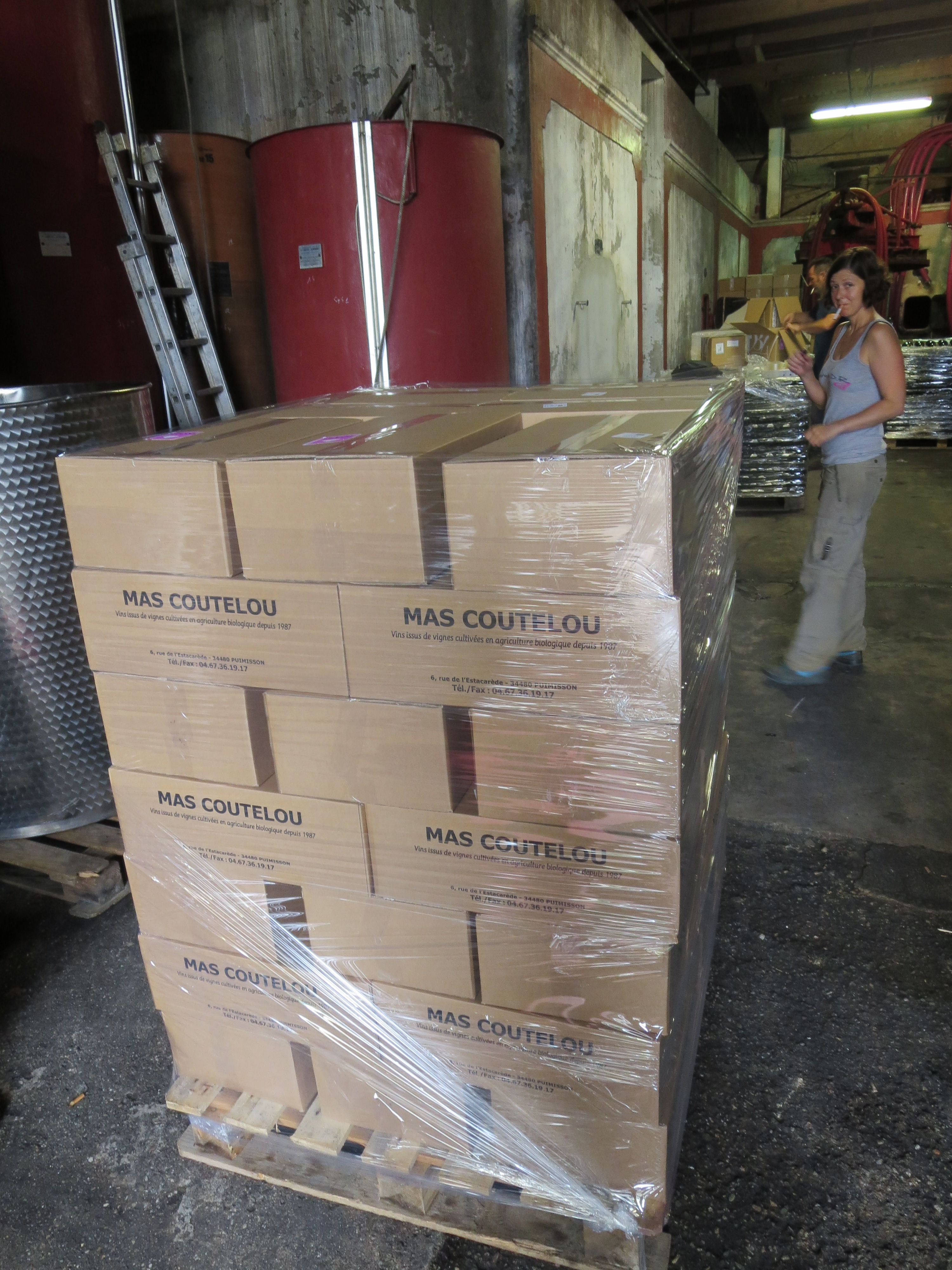
On Friday last week a new ‘toy’ arrived to help the packaging. It seals the cardboard cartons and prints the name of the wine on the side, speeding up the packaging process. Nonetheless teamwork and humour keep that process very human.

The job is hard, repetitive, physical work. In the video you will see Jeff at one point to place 4 bottles in the box at a time, routines and practice are everything. But without the boxes of wine the rest of the business cannot happen. It is less attractive but it is as important as harvesting or winemaking.

Two new wine treats came to the fore this week. Firstly, a slightly sparkling white wine, blanc frisant made from Macabeu and Grenache Gris. Secondly a cuvée made for the first time since 2003, Copains, made mostly from Cinsault but with Grenache and Syrah grapes vinified all together – truly delicious with the latter grapes adding body and depth to the Cinsault and giving the bottle longevity I would think.

Parts 1 & 2 of winemaking are still very strong, Part 3 too and I shall investigate more about commercial decisions in future.


Ready to go

Ready to go

Icare remains underwhelmed by the new packaging machine

Icare remains underwhelmed by the new packaging machine


2 Comments

Grapes, work and love

It has been a stormy week in the Languedoc and the weather has certainly disrupted the plans of vignerons in the region. Tragically five people were killed in a flood in Lamalou Les Bains and that event puts winemaking into perspective. However, the fortunes of wine growers and makers have also been hit by such extreme weather. Driving past Pézenas up the A75 on Thursday swathes of vineyards were under water on the low lying plains. The humidity also means that where grapes are left to pick there is a real risk of disease and even rot. I was talking to the excellent winemaker Emmanuel Pageot this morning as we visited Gabian for the jour patrimoine and he was explaining how complicated such problems have made the harvest. I was invited to join Emmanuel for a tasting soon and I will definitely report here on his latest wines. They are amongst my favourite wines of the region but I shall try to be objective.

In Margon Wednesday saw thunder and lightning and sheets of rain non stop through the day. Yet, in Puimisson, where Jeff lives and has his vineyards there was only a small rainfall, a reflection of the dry year there which has caused the smaller harvest. Normally Jeff would harvest 200-250 hectolitres from his 4 hectares of Syrah grapes, this year that production is down to 145 hectolitres. This means less wine, of course, and also a lot more thinking on his feet as smaller quantities mean that he has to decide which of his wines he uses the grapes for. Therefore it seems unlikely that there will a cuvée of 7, Rue De la Pompe this year as the grapes are needed for other cuvées. The quality of grapes is high though, for example the Syrah which is going into the Paf cuvée is concentrated and finer, partly due to a miserly production of only 25 hl per hectare.

(l-r) Vin Des Amis, & Rue De La Pompe, Paf

(l-r) Vin Des Amis, 7 Rue De La Pompe, Paf

Other grapes have been small in size and so because there is a lot of skin and pips compared to juice the wine needs to be blended with other fuller grapes. Jeff is also thinking of introducing new cuvées to use what he has. Cinsault, for example, has done well this year so offers new possibilities and there is also the possibility of producing a cuvée which Jeff’s father used to make. I will write more about that as the year develops and decisions are finalised.

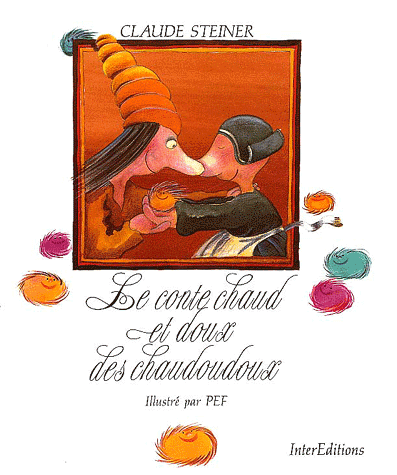
As picking was on hold at some points due to the weather Tuesday lunch was more leisurely and Jeff had more time to relax and talk. He recounted a French fairy story The Chaud Doudou. Basically it is about sharing and how everyone feels better for having done so.

le-conte-chaud-et-doux-des-chaudoudoux

Jeff went on to share an Occitan proverb which translated means “What you give flourishes, what you keep to yourself perishes” and I think this sums up Jeff Coutelou’s wines, he shares his skills and his passion for the land and for nature. The title of this post are the words he uses to describe his winemaking philosophy; grapes, work and love. To produce such high quality wines he needs the best grapes, he works tirelessly and he instills endless love into the wines he produces. If you think that sounds far fetched then try some, he is telling the truth.