amarchinthevines

Learning about wine, vines and vignerons whilst living in the Languedoc


1 Comment

Slipping back into the vines

https://amarchinthevines.org/2019-en-francais/P1040542

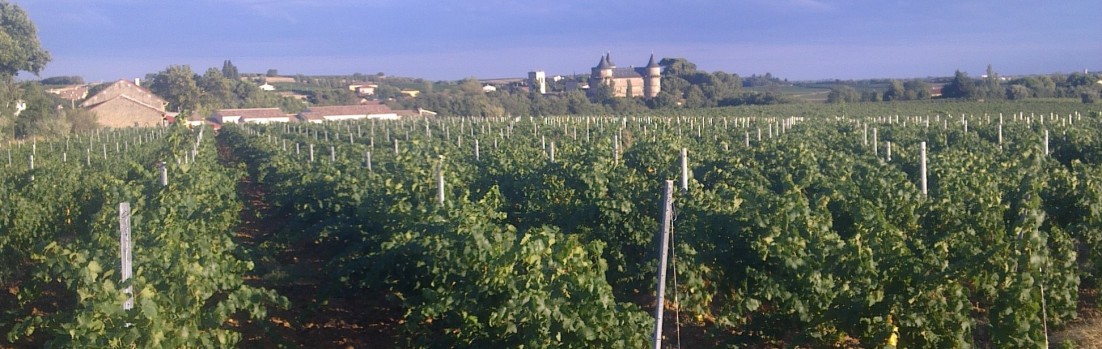
Back in the Coutelou vineyards. As I drive into them there’s a sense of never being away but also of anticipation – what’s new? That may sound strange as the vineyards don’t change too much year to year, yet every vintage is different. In 2018 the vines were already suffering from the widespread mildew following a wet Spring. This year the weather has been very different. A dry Winter and Spring  with cool, sunny weather has benefited the vines. They look as healthy as I can remember in the years I have been here.

Healthy Grenache leaves, left and débourrement in Rome

New plantings and grafts mean that there is always change in the vineyards, this year it has been mostly a case of replacing vines which had failed, some Cinsault, Clairette and Macabeu amongst others. It is time to let the rare and old grape variety plantations of 2018 mature and establish themselves.

New Clairette and Macabeu, Ste Suzanne’s vines in the background, right

However, one new plantation of note. A small parcel next to Sainte Suzanne has been too wet to work in for the last 2 years, it is now planted with Macabeu and Clairette so more white wine will be produced in future.

New vine; the plantation can be seen as the brownish patch on the left of the 2nd photo from La Garrigue’s Syrah vines

The dry year has also meant that Jeff has been able to lightly plough vineyards which have been too damp in recent years, Rome was given a light scratching for example. Nothing too serious that would upset the life in the soil, just enough to aerate.

Flower Power, Julien and Christian attching the vines to stakes

They really do look well. Flower Power has been lightly worked too, to allow the young vines there to thrive without so much competition from the grass. If you look at the photos you will see the neighbouring vineyards belonging to others, planted much more densely. Those vines are flourishing with their irrigation and fertilisers, almost uniform, dark green with the nitrogen they are fed. The Flower Power vines are shorter and more delicate for sure, they are growing at a natural pace, finding their own maturity slowly. Here, and in all the other vineyards, flowering is almost complete, the bunches are set (débourrement).

After last year’s much reduced harvest it would be good to have an abundant year, to restock the vats and barrels which have been emptied to make up shortfalls in wine and income. The signs are propitious, let us hope the northerly winds and sunshine continue to maintain the health of the vines and allow them to fulfil such a promising start.

One curiosity over the winter. In late 2018 artist Anthony Duchene wanted to create a display to highlight the effect of healthy soils. In many of the natural vineyards of the region underwear was buried. At Jeff’s a pair of underpants was buried in Rome vineyard. This Spring they were dug up and reveal the activity taking place in the soils by animal and microbial life. An unusual but effective demonstration. Duchene’s work is on display in Liège at the Yoko Uhoda Gallery.

And, of course, regular readers frequently ask how Icare is getting along. Coincidentally it was his summer haircut on Tuesday so you can see that he has been well prepared for the warmer weather. He is a happy dog.

It was a beautiful, sunny day as I toured around on the 21st May. Rome was vibrant with colour from broom and flowers, roses lined the vineyards in Peilhan and Rec D’Oulette. It was good to be back.


4 Comments

The good, the very good and the ugly

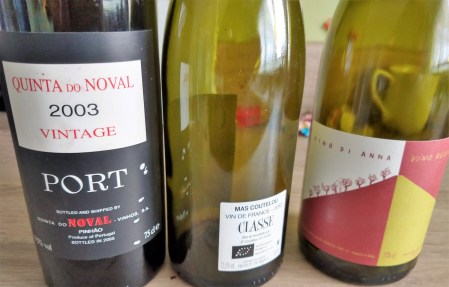
Some recent wines. I was on a roll of good wine after good wine since the start of the year but that came to a stop on Saturday. The wine responsible for that was a Georgian amber wine from Pheasant’s Tears. I have had the good fortune to drink a number of similar Georgian wines from the Rkatsiteli grape and many were excellent. Sadly, this wine was full of volatile acidity. VA is caused by bacteria which create acetic acid (the acid which gives vinegar its taste). The bacteria could be produced during fermentation or by contamination by unclean equipment.

IMG_20190202_185606442_HDR

Sometimes a little VA adds something interesting to the flavour of the wine, Chateau Musar in Lebanon is famous for having  a little. It depends on individual preference whether you like it. I quite like it myself. However, this was way too tainted to be drinkable. Unfortunate.

IMG_20190202_144726367_HDR

As for the good wines. Unsurprisingly one was a Coutelou wine, Classe 2013, Grenache, Syrah and a little Carignan Jeff informed me. Still a lively purple colour with delicious red fruit flavours with soft tannins to support and add complexity. Classe ages so well, it is hard to resist when young but this showed the benefits of letting the wine knit together over a number of years.

From Sicily the Vino Rosso 2016 from Vino Di Anna was a fine example of how good the wines from this island are. I was fortunate to visit and taste many wines there a few years ago and met Anna Martens at a tasting a couple of years ago. This red made from 90% Nerello Mascalese and 10% Nerello Cappuccio had fresh, cherry flavours the clean acidity helping the red fruits. Lovely.

IMG_20190202_144806874_HDR

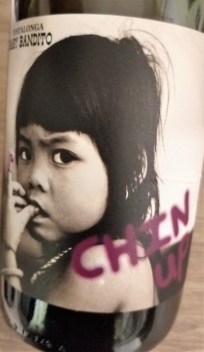
South African wines, on the other hand, are more of a mystery to me. Testalonga is the domaine of Craig and Carla Hawkins in the Swartland. Chin Up 2018 is pure Cinsault, one of my favourite grapes. This was very light in colour, almost a rosé or clairet. Yet Chin Up had power and plenty of light, juicy fruit. This was a genuine pleasure to drink and I am looking forward to trying more of the Testalonga wines.

IMG_20190129_220808802_HDR

Finally a port, Quinta Da Noval 2003. There was a lovely balance in this wine, the alcohol had blended perfectly with the Touriga Nacional grapes, there was no alcohol aftertaste that often happens with lesser ports. Apparently the vines are at high altitude and there was a lightness and freshness to this wine, full fruit which was long, long lasting. A reminder of how good port can be.

IMG_20190202_144817156_HDR


2 Comments

After the 2017s, the Coutelou 2018s


IMG_1363

Just before leaving the Languedoc for hibernation in the UK I was invited by Jeff Coutelou to taste through this year’s wines. Most are now finishing both fermentations and starting to settle for the winter in cuve. They will change and develop over the next few months of course, they are living wines and still in their infancy. Consequently, these observations are preliminary but, after five years of similar tastings, I feel more confident about predicting which way the wines will go.

2018 has undoubtedly been a troubled year for Jeff and fellow Languedoc producers, in particular those who follow organic and biodynamic principles. The damage began with the long period of rain in Spring and the mildew outbreak which ensued. Mildew damaged the flowers, buds and young grapes. It damaged the leaves making it more difficult for the vines to produce the energy to feed those grapes. Jeff cannot recall a year of such blight. This was followed by a very hot, very dry summer making the vines suffer still further, compounding their difficulty in producing good sized fruit. Yields are down some 50-60% following on from 2017 when they were down 20%.

With all those problems could good wines be made?

We started with white wines. The white grapes from the 2015 Peilhan plantation have been blended with others from older vines in Peilhan such as Carignan Blanc, Maccabeu and Grenache Gris. The small quantity means this will be used for a barrel aged wine. It had finished fermentation and had good fruit with a liquorice streak and depth of flavour. Another batch of the Grenache Gris and Maccabeu was still in malolactic fermentation and cloudy with apples and a directness. Similarly the whites from La Garrigue were still fermenting but with great depth of flavour. There will only be small quantities of any Coutelou white wine, the last couple of years have not been kind to them.

P1040469

Onto the reds.

Grenache was the variety which was most affected by mildew, the vines were not pretty and yields were very small. Many of the bunches did not form, many which did suffered from coulure (where only a few berries form) or produced dried, dessicated fruit. The vendangeurs had to be very selective. So was it worth picking? The Grenache from La Garrigue tasted clean with good fruit and a nice acidity. The Grenache from Sainte Suzanne was worst hit of all. Jeff made the wine with only a couple of days on stems as the fruit was delicate. The wine is light as a result, juicy with red fruits, light but tasty.

Cinsault usually provides another light wine and this vintage was no exception. Despite that it was very fruity on the nose and on the finish, a surprising depth of flavour. For rosé, 5SO or both? Jeff will decide as the wine develops.

The tank which will make Flower Power 2018 has a bewildering mix of grapes, from the Flower Power vineyard itself, Rome, some Syrah from Segrairals and the reds from the 2015 Peilhan plantation, eg Morastel and Riveyrenc Noir. There was a lot of mouth feel in the wine, with tannin and substance and a concentration of dark fruits.

Cabernet Sauvignon from the last picking has produced a real glouglou wine, light and juicy. It will bring a fruity freshness to any wine it is used for.

Carignan was one grape which resisted mildew for a long time. This is the parcel producing Flambadou, one of the flagship Coutelou wines. Once again it has produced a high quality wine. Lighter in alcohol than usual yet managing to produce a full, ripe and fresh wine whose flavours lingered long after swallowing it. I look forward to this one a lot.

Carignan 2

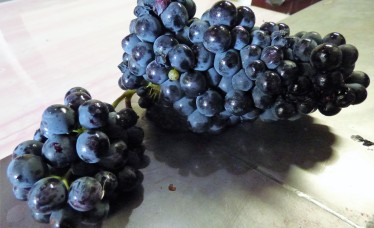
Carignan grapes

Perhaps the biggest surprise was the Mourvèdre. It has made good wines before, try the 2015 or 2016 for example. However it could be a real star this year. There was a great depth and freshness with dark fruit flavours made to feel lighter by light acidity leading to an almost saline finish. It would be almost drinkable now but will keep for many years and develop beautifully, I am sure of that.

Syrah from Sainte Suzanne was made using grappe entire or whole bunch. Around 14% abv it has a clean acidity with red fruits and soft tannins (from the stems?) which will support a good wine. The Syrah from Segrairals was quite different, the place and destemming produced a more upfront fruity wine with a clean, dry finish.

And, of course, there was the Syrah from La Garrigue, home of my favourite wine La Vigne Haute. Amazingly, in such a horrible year, the quality of these grapes was excellent. Only made in very good years and yet, hopefully, there will be a 2018 La Vigne Haute. The wine has great character already, freshness, fruit, long flavours supported with lovely tannins which will help the wine to age well. Exciting.

So, out of the ashes rises the phoenix, very good wines despite the vintage. The resilience and quality of the vineyards and vines as well as the winemaking skills of Jeff Coutelou.


1 Comment

Wine with friends, the 2017 Coutelou wines

20180911_223114

One of the highlights of the last few weeks of the 2018 vendanges was tasting the wines from 2017. A group of our friends gathered to enjoy bottles kindly given by Jeff and we tasted through them, scoring them as went. I am not a great fan of wine scores but it was a simple way of tracking our preferences, we revisited scores regularly to ensure there was some context for the earlier marks.

We started with the OW of 2016, so a different vintage but yet to be released. I have tasted it regularly in recent weeks at vendanges lunches and I really like it. Many orange wines are being made but often they are based on grapes which have fairly neutral skins. OW is made from Muscat D’Alexandrie and the skins have a lot of flavour which the long maceration brings out together with the tannins. This has real character, one of my wines of the night. It must be said that for some of my friends it was too much of a shock, unused to skin contact wines they found it too different. If you like orange wines though, believe me, this is excellent.

20180911_223132

On to the reds. 2017 was a vintage of low yields due to the long, dry summer. However, it must be said one of the consequences is a concentration of flavour and high quality. The six wines we shared were all very good and consistent in their length and full flavour. Perhaps the most consistent of any vintage I have been involved with since I started in 2014.

Vin De Table is a supposedly simple wine. Don’t be fooled, it is very good. Assembled from wines left over from the main cuvées with quite a large portion of Merlot for good measure. It received consistently good scores from everyone, it was simply enjoyable and very drinkable, belying its simple status with good fruit, freshness and length. A bargain at the price of well under 10€ seen in many caves.

Tête À Claques was a wine originally made for London restaurants but now sold from the cellars. It is based on Le Vin Des Amis (what was left) to which was added Mourvèdre and other remaining wine. The Mourvèdre boosts the wine with some crunchy, dark fruit flavours and this was one person’s favourite wine of the night.

20180911_223156

The natural successor was Le Vin Des Amis. For two of the group this was their favourite wine of the evening. The 2017 version is based on Cinsault, not the norm. Blended with Syrah and Grenache the Cinsault gives a real lift of red fruit and the result is a classic VDA, a bottle which will please anyone and disappear quickly.

On to the other headlining wine of the Coutelou range, Classe. Syrah, Grenache and more Mourvèdre (there was also a pure Mourvèdre released in 2017 under the name of On Peut Pas Vraiment Dire Que). Classe usually adds a depth and silkiness compared to VDA, it lives up to its name and label. This was no exception, it really is a very good wine and one I would love to age for a year or two even though it would be hard to resist now. One person chose it as their highlight.

Flambadou has been one of the best wines of the domaine for the last few years. Pure Carignan from a vineyard with complex geology the 2017 version is up to those high standards with dark fruits, freshness and ripe tannins. It needs time to mature before it reaches its peak but this is one of my favourite wines and, from experience of this wine, I can tell this will develop into a top class wine.

My absolute favourite Coutelou wine is La Vigne Haute, the pure Syrah from La Garrigue. North facing, villefranchien rock the wine is only released as La Vigne Haute when Jeff decides it is of the required quality, just seven of the last nineteen years. This is the first time I have been involved with making LVH and I am thrilled with it. The fruit is already evident, it is complex, has dark edges as well as the fruit. The flavours are long and fresh with more ripe tannins. It is a beauty, it could be mistaken for a wine from the Rhone or Ardèche. Previous examples of this wine have shown me that it needs 5 years or more to be at it best, 2009 is excellent at present. This will be a wine to treasure for years to come. Three of us chose it as wine of the night.

Overall, my friends showed great taste in selecting La Vigne Haute as the clear leader in scoring (I hope my influence wasn’t too strong!). Classe and Le Vin Des Amis followed on a few points behind. However, all agreed as we enjoyed a wonderful half bottle of Vieux Grenache that the wines were excellent, consistently so.

Thanks to May and Martin for being such great hosts and providing lovely food to accompany the wines. And to Pat, Afshin, Denise, Matt and Jonathan for joining in and making it so enjoyable.

A special night. Jeff told me from the beginning that he makes his wines to be shared with friends and loved ones. This was a night to prove the wisdom of those words as well as the immense talent and passion of Jeff Coutelou.

20180911_223143


1 Comment

Vendanges 2018 – Part 4

Monday 10th to Friday 14th

P1040334

Cuves containing new wine including, potentially, La Vigne Haute. Note how the near one is far from full, this is 2018!

A hectic and busy week, including 12 hour days. The picking team had reduced in number therefore Jeff Coutelou had to make the time work to best advantage. Grenache Gris was amongst grapes picked on Monday to head towards rosé and other cuvées. The main focus though was the Carignan of Flambadou, the flagship of the domaine for the last few years. It may well be joined in cuve by the small, juicy berries of that rare Cépage, Castets.

Cabernet Sauvignon followed on Tuesday and Wednesday with more Syrah and Cinsault from different parts of the vineyards. Mourvèdre was the last big block of vines to be tackled and took a very full day on Thursday to pick. This parcel in Segrairals has varied topography, the lower parts become a little damp and are more prone to rot. It is important for Michel to convey not just the grapes but also the location of the grapes picked so that triage is made more efficient.

Top left – Carignan, top right – Castets, below Grenache Gris

By now Jeff was concerned that some of the vines were becoming so stressed by all the issues this year, mildew above all, that they were struggling to ripen the grapes. In order to ensure the health of the vines for next year it was no longer worth pushing them that little bit further so that next year would be compromised. Vines are fragile, living things which need to be looked after, Jeff nurtures them carefully.

Whilst picking was in full swing and cases were stacked up for sorting there was plenty of activity in the cellar. Wines in cuve or tank need treating carefully too, ensuring the juice ferments into wine with nothing added to it requires the vigneron makes good decisions about, for example, levels of acidity and alcohol, exposure to air and skins. I shall be coming back to this in the next post in a couple of days time.

And, after all that work, it is all too tiring for some of us!


Leave a comment

Vendanges 2018 – Part 3

Friday 7th and Saturday 8th

P1040223

Some serious hard work. A lot of grapes came through the cellars in these two days and we worked longer hours than usual. I can almost hear regular readers thinking, “Hang on, you said there were fewer grapes this year!” That is, sadly, still the case. Whereas in previous years all the grapes that came through in similar quantities might have been from one or two parcels this time it was grapes from several different parcels. All the grapes from those parcels. What might have taken three or four days was done in two.

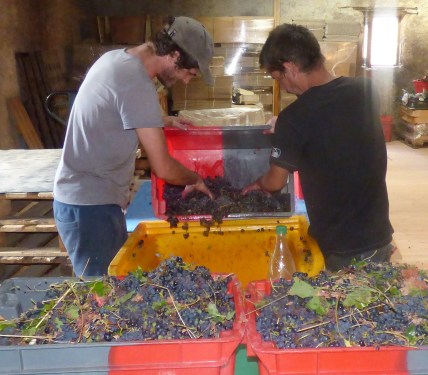
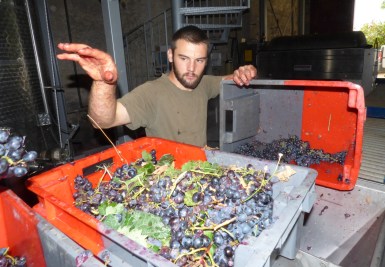
White grapes from Peilhan, Cinsault from Segrairals came in thick and fast on Friday. Cinsault is a generous grape with big, floppy leaves and big, juicy grapes to match. Problematically the size of those grapes means that bunches can grow to quite a size but with large gaps between the round berries. Into those gaps rot, leaves, insects and moths find their way. Therefore it needs careful sorting, the rolling sorting table was needed. Amongst the usual leaves, grass, snails, earwigs and spiders I spotted an unwelcome visitor.

Lobesia botrana or European grape moth (ver de la grappe in French) lays its eggs inside bunches of grapes and the cocoon resembles cotton wool. They emerge as worms which eat into the grapes for nourishment, leaving a trail of juice which can attract rot. The moth’s main predators are birds and bats which is why Jeff Coutelou and others try to attract these species into their vineyards. As you can see I found one worm clinging to its Cinsault grape.  I need to add this is rare, you will not be drinking worm juice in your wine!

P1040222

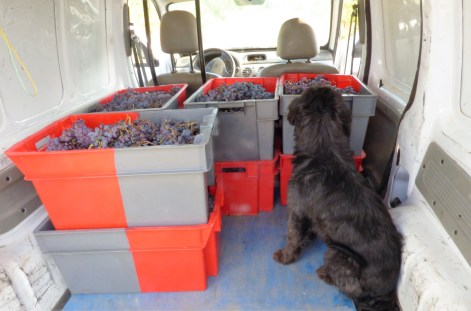
So keen to bring home the Syrah and part of the van!

Saturday and more parcels. My favourite wine of Jeff’s is La Vigne Haute, the pure Syrah from La Garrigue vineyard with its north facing vines with some villefranchien soils. Jeff only makes this when the grapes are very good, seven times in the last seventeen years, this decade there are only three. I love LVH and always hoped to help to make it and last year was the first time, having tasted it in bottle (not yet released) I can promise that the wait was worth it. Surprisingly, despite the problems of 2018, the Syrah from this vineyard is in very good shape and might just make it as La Vigne Haute. A lot less sorting, healthy bunches, fingers crossed for the first star wine of this troublesome vintage.

Syrah from La Garrigue

The afternoon brought in the Grenache from La Garrigue. Sadly, this is not of the same quality as Grenache was most susceptible to and damaged by the mildew epidemic. The juice will receive a short maceration before being separated from its skins and then used for a project as yet undecided. There were some lovely bunches harvested, you can only think of what might have been. That the Grenache and Syrah from this vineyard was picked in one day tells its own story.

Lovely bunch of Grenache which Julien and Élise help to sort

Meanwhile soutirages, débourbages and pressings all take place, the cellar is a hive of activity. And of course there is the endless cleaning of everything. Analyses of the wines so far are positive and the juices taste very good, I particularly liked the Flower Power / Rome assemblage.

As I said long hours, hard work, aching back, stained hands and dirty fingernails. In between there were the usual laughs and camaraderie, bottles shared at lunchtime and after work. Despite everything the year has thrown at the Languedoc and Coutelou we know that there will be some good wines.


Leave a comment

Vendanges 2018 – Part 2


P1040186

Tuesday 4th to Thursday 6th September

After the break harvest really kicked into gear this week. One of the effects of mildew (and compounded by the hail storm later) was damage to foliage. The vine uses the foliage to ripen the grapes but also to nourish itself via photosynthesis. Damaged and desiccated leaves mean that there comes a point where the vine struggles to ripen the grapes any more and, even worse for the winemaker, things go into reverse; the vine begins to take back nutrients from the grapes in order to feed itself. This will have consequences not just this year but into the future, as the vine has struggles so much and is weak, it will not be at its best next year and further ahead.

P1040193

Riveyrenc Gris grapes in good health but note the mildewed leaves 

Therefore, Jeff Coutelou has had to spend a lot of time in the vines ensuring that he knows exactly the health and condition of the vines to get the best possible grapes for this year whilst being mindful about the health of the vines. A balancing act to cause him more stress in a difficult year.

P1040183


Tuesday saw some lovely Muscat being harvested from Peilhan, the grape which smells of grapes. The video below shows them being pressed and I wish I could convey the lovely fresh, grapey aromas which emerged from the press.


Error
This video doesn’t exist

This is Muscat being made for dry wine, in 2016 for example the Muscat D’Alexandrie made a lovely orange wine which we have shared at lunch. Afterwards the pickers moved into the 2015 plantation at the top of Peilhan, the 12 rows of Morastel, Terret Noir and Riveyrenc Noir picked to blend with Syrah from Sainte Suzanne where the pickers headed next.

On a beautiful Wednesday morning the remaining Syrah was picked. Jeff decided to make a grappe entière wine so Julien and I headed into the top of the cellar to sort the grapes and send them through the chute into the tank. This had been given a dose of CO2 to encourage the fermentation of the grapes inside their skins. After a short period the skins will burst and the resulting juice will have a light, fruitiness. This process is called carbonic maceration. Sorting meant removing any leaves and other vineyard products such as spiders and snails. Mainly though we were looking for the dried grains of berries damaged by mildew and the green, unformed berries caused by millerandage.

P1040198

Onto Thursday and the deployment of two teams of pickers. The Moroccan crew picked some lovely bunches of Macabeu from Peilhan before moving on to Syrah from Segrairals.


Macabeu and Syrah (note the green unformed berries needing to be sorted

We were also joined by a number of pickers who would tackle some of the more interesting vineyards. As a result of mildew damage in Faugères some growers have little or nothing to harvest and some of their pickers came to join the Coutelou team. And we were joined by Louis who, having completed his professional baccalauréat has begun a course to help him achieve his ambition of becoming a sommelier. His stage will certainly teach him a lot about vines and wines, the numerous cépages he picked will certainly have opened his eyes to the wide world of wine.

This team picked my favourite vineyard, Rome, with its old Cinsault vines, Muscats of various kinds and all three versions of Grenache. In the afternoon the moved on to Font D’Oulette now simply referred to as Flower Power after the wine made from the numerous cépages in there. Using two teams meant that cases were returned thick and fast by Michel and Julien and I had a long, back breaking day sorting these grapes.

P1040219

Julien and Nathan sort the last case on Thursday from Flower Power

I have to say the juice tastes great, fruity with good acidity. Now all we need is for the yeasts to play their part and ferment that juice into good wines. The picture below shows yeasts at work in a tank where some of the skins from the pressing of last week’s Grenache. As with the grapey Muscat these bready aromas deserve to be more widely shared. Vendanges is all about the senses.

And, for Icare lovers around the world, he is taking a very keen interest in this year’s harvest.

P1040188


4 Comments

Tasting the 2017s

Vigne Haute

Version francaise

Last weekend I should have been in the Languedoc with Jeff and attending a wine tasting at Latour De France. Sadly, a 48 hour bug put a stop to that.

Instead I reflected on a tasting we did at Jeff’s on October 3rd of all the 2017 wines in cuve. Regular readers will recall that they vintage is of high quality but low quantity. Quantities will be in short supply of what will be seriously good wines. There was a tinge of sadness about that as we tasted through the range.

1

These were my notes on the evening.

  • Maccabeu / Grenache Gris – still some residual sugar. Fresh nose, Fruity, pears. Slight sweetness which will disappear. Clean and lovely.
  • Sauvignon Blanc – fresh apple, bright and zesty. A true Sauvignon character, refreshing.
  • Carignan Blanc – lovely, full, clean, direct – fresh and fruity. Very good.
  • Rosé – very pale, flowery aroma, fresh and clean, exactly what you’d want from a rosé.
  • Syrah (Ste Suzanne) – whole bunch, red fruit, round tannins, good finish, full, very good.
  • Cinsault – lovely, fresh and juicy red fruit, cherry, 13,5% but tastes lighter. Good.
  • Syrah (Segrairals) – amazing passion fruit nose which carries into taste. Fresh, citrus and lovely red fruit, a real star.
  • Syrah (La Garrigue) – La Vigne Haute (fingers crossed). Terrific, direct full tannnins, splendid fruit, full, long – stunner.
  • Flower Power – Maccabeu, Syrah (St Suz), Grenache (St Suz), Grenache Gris, Cinsault, Terret Noir and Flower Power – Despite the different assemblage this has the character of previous Flower Power – fruity, silky tannin and very appealing. Lovely.
  • Grenache – blend of Ste Suzanne / La Garrigue – 2015 St Suz provided 80hl, this year the 2 vineyards made 60hl. Lovely, fresh cherry flavours with a spicy finish.
  • Mourvėdre – crunchy, spicy good tannins and dark fruits. Very true to the grape. Good.
  • Carignan – top of the class. Lovely fresh red and black fruits, excellent balance of freshness and complexity. Star yet again.
  • Merlot – lovely fruit nose, fresh, touch of wildness which should settle. Nice.
  • Cabernet Sauvignon – still some sugar, plenty of fruit, easy to drink with classic blackcurrant notes.

We went on to drink a couple of the 2016 wines which were still in cuve, a very floral and spicy Syrah and an assemblage of Grenache, Syrah and Mourvèdre which had good fruits with a soft tannin finish.

Reflections on the evening? The quality of 2017 is clear it is up there with the 2015s, just such a shame that fewer people will get to drink them. The whites are very good but the reds shine especially the future La Vigne Haute and Flambadou. The wines had all fermented beautifully causing few worries. A vintage to cherish, can’t wait until it is in bottle.


Leave a comment

From vine to wine – Vendanges 17

There are numerous different tasks during the vendanges, I thought I’d expand on a few as I reflect on the last two days. Both Thursday and Friday began with lovely sunrises over the vines as we picked, almost worth the early start to the day.

Picking was done by the half dozen Moroccan workers who work non-stop and chatter away even faster. This year there was a more stable team working with Jeff, on previous vendanges there has been a core of people with lots of others coming to spend a couple of days and then moving on. Many of these did sterling work, such as Thomas and Charles, but with an unchanging team for three weeks progress has been smooth.

In the vineyard Julien and Vincent took charge along with Selene, Max, Roxane, Ambroise and  Jeremy. Michel ferried the grapes to the cellar where Jeff controls the process of turning fruit into wine. The team (including myself) would also help out in the cellar as needed, Jeff aiming to give opportunities to learn about the winemaking process to everyone. Ever the teacher.

P1020946

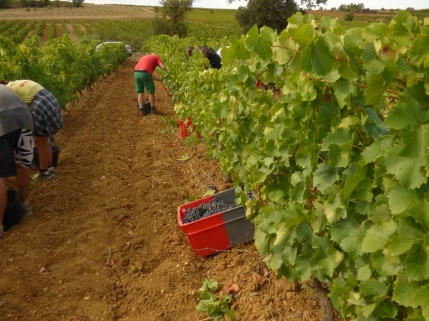
This photo shows Roxane, Selene and Max picking Carignan. Roxane is cutting the bunches whilst Selene and Max carefully sort through their bunches to remove anything untoward such as insects, leaves, rotten or dried berries. On the other side of the vines are other pickers to ensure everything is taken. The bunches go into buckets and when they are filled they are emptied into the cases stored under the vine.

Michel arrives in the vineyard and drives between two rows to collect the cases, often supported by Julien. The grapes are returned to the cellar as quickly as speed limits allow, unloaded and subjected to further sorting.

P1020954

In the photo below Ambroise is checking for anything which escaped the pickers or fell into the cases whilst waiting to be collected. This year the grapes have been very healthy and so no need for the sorting table to be used. However, snails often sneak into the bunches and cases seeking some nourishment in the very dry weather.

P1020943

The bunches are either pressed immediately, eg for white wine or sent to vat. In the latter case they will be destemmed first or sent as whole bunches depending on the style of wine Jeff decided will be most suited to the grapes. They will spend a day or two there before the process of debourbing or délestage. The juice has now been sitting on the skins, flesh and pips which form a cap on the top of the juice or sink to the bottom of the vat. Délestage involves removing the juice from this mass when it has absorbed as much colour, flavour, tannin as Jeff deems optimal. The juice heads to a new tank to recover. In the video below you will see that it passes through a machine which cools down the juice. Fermentation produces a lot of heat, too much can bring problems which would spoil the wine. That is the main reason why Jeff also invested in new temperature controlled stainless steel tanks this year, especially for white wines.

Error
This video doesn’t exist

The fermentation begins promptly, the healthy yeasts produced by the grapes themselves triggers the process of turning grape juice and its sugars into alcoholic wine. Odours of bread making and fresh fruits fill the cellar, hints of the pleasures of Mas Coutelou 2017 wines ahead.

P1020990

Skins after pressing

Meanwhile, after pressing the grapes skins are recovered from the press itself and put into a large container. There they will ferment and produce the base for brandy and spirits, nothing is wasted.

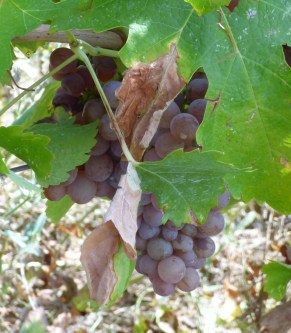
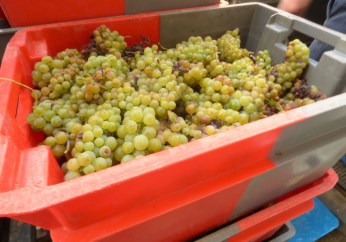
More interesting varieties were harvested these two days. Top left above is Muscat D’Alexandrie, large oval grapes tasting of pure grape juice. Carignan Blanc is one of my favourite white grapes from the region, it makes dry, complex wines. The middle row shows Carignan and Cinsault picked these days. Last but certainly not least, Castets is a rare red variety, less than 1 hectare in the world and much of that is in Peilhan. Sadly, it too has been hit by the dry summer, lovely quality but lacking in volume, a summary of this vintage.

And, after a hard day for some of us my T shirt shows the fruit of the day. Whilst Icare takes things at his own pace.


3 Comments

Visitors – Vendanges 17

P1020936

An unusual few days to report upon. Let’s start with some bad news. Twice in the last week people have dumped their rubbish in Jeff’s vineyards. As these were at opposite ends of the village it must be assumed that there are two selfish, anti-social idiots who would prefer to spoil the local environment than drive to the local tip (déchetterie).

Another unwelcome arrival was Hurricane Irma in the Caribbean. Jeff’s sister Catherine and her husband live on Guadeloupe so we were all concerned for their welfare. Happily she reported that the worst of the storm missed the island. Others may not have been so lucky of course.


For me there was one more unwelcome visitor. As I entered the cellar on Tuesday morning I mentioned the smell of Carbon Dioxide in the air. This had built up from fermenting grapes and with the cellar being less busy than usual the CO2 had built up. As Tuesday was hot the cellar doors stayed shut as much as possible and with remontages and open vats the CO2 was strong. Alas it seems I am particularly sensitive to it and it made me breathless and nauseous. I can understand better how some people have serious accidents with gas build up when they are working at open cuves. Maybe it’s because I’m getting old but the others were unaffected, and I’m the non – smoker! Happily, I have soon recovered.

Yet another visitor arrived in the form of the inspector who controls organic certification for Ecocert. I wrote about her annual visit in 2014, this was a spot check during vendanges to ensure that everything is done following organic principles. Reassuring for those of us who want to know that Bio wines are truly organic. Obviously, there was no concern as Mas Coutelou goes well beyond the standards required.

Animal visitors too. Buried in a case of Grenache from Sainte Suzanne was this 6cm caterpillar, quite a size. And, amongst the Carignan vines today was this dragonfly who was there with others and many butterflies. Which makes the actions of the fly tippers even more senseless.

And so to grapes. More cépages to keep me happy. Piquepoul Gris and Terret Blanc along with Maccabeu picked from Peilhan on Tuesday morning will form a new white wine. The pink tint of the Piquepoul Gris will not colour the wine as it was pressed directly to remove the juice from the skins.

The aforementioned Grenache was supplemented with more Grenache on Wednesday this time from La Garrigue. So good was this harvest that Jeff is considering making a special cuvée with it. Together with the excellent Syrah from the vineyard La Garrigue has certainly performed well this year. Cinsault from Segrairals followed on.

With smaller yields and dry weather the picking has been quick this year, efficient too with an excellent team working well. You will see in the photo below how they work in pairs across a vine to ensure that all the fruit is picked, hopefully avoiding each others’ fingers.

P1020930

So, what remains? Well probably five days of vendanges with Cabernet, Mourvèdre and Carignan still to come, the latter of course being the headline act in recent years. There are also a few rows of vines in Peilhan, eg the reds such as Oeillade and Castets and more Muscat too. All is set fair for a good finish.