amarchinthevines

Learning about wine, vines and vignerons whilst living in the Languedoc


8 Comments

Natural Wine -where to find out more

The growth of interest in natural wine continues unabated and I am often asked where people can find out more about them. Hopefully the answer is partly within the pages of this blog but there are other sources which I would recommend.

Books

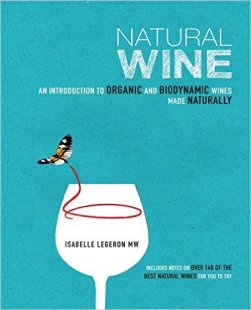
My favourite book on matural wines is called, not unreasonably, “Natural Wine” written by Isabelle Legeron. Isabelle is a long term natural wine supporter and organises RAW which runs wine fairs in London (March 12/13 this year) and elsewhere including New York. Her book explains vineyard and cellar practices as well as tackling misconceptions about natural wines. It is a very well written and illustrated book and would be my advice to anyone wanting to learn about the subject.
51gua0zp3rl-_sx402_bo1204203200_

Two other books worth buying:

Per and Brit Karlsson’s “Biodynamic, Organic and Natural Winemaking” and Jamie Goode’s “Authentic Wine”. Both look at the technical side of winemaking and how natural wines have to adapt to overcome the lack of a safety net. I am a big fan of Jamie Goode’s writing. His book “Wine Science” is possibly the most used book I own and his website (link below) is also well worth following as he writes well about all wines, including natural wines.

There is also the writing of Alice Feiring, perhaps natural wine’s most famous advocate in the USA.

Websites

There are dozens of websites on natural wine, I could recommend many but these are a handful I read regularly (apologies for overlooking some).

My top website recommendation would be vinsnaturels.fr which includes valuable detail on producers, salons and retailers with lots of detail about vineyard, cellar and bottle. And Cédric has now produced an English version (small declaration of interest in that I helped with the translation).

Jamie Goode’s Wine Anorak is updated most days with articles and wine reviews across many styles of wine. Jamie is open minded and fair and includes regular pieces about natural wine.

Wine terroirs includes visits to many French natural winemakers and has thorough details on the winemaking and different cuvées of each producer. It is often where I turn for detail first.

I include my friend David Crossley’s website without any apology. David has tasted wine around the world and has great insight into quality wine. From Austria to the Jura David was often there long before others and his website includes terrific tasting notes and guides to the regions.

In French the blogs of Vincent Pousson and David Farge are must follows.

Video

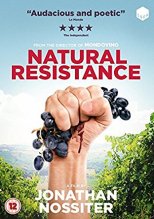
The film “Natural Resistance” looks at the Italian natural wine scene and promotes the producers’ ethical and philosophical approaches to winemaking. Jonathan Nossiter portrays natural wine as a form of resistance. It’s worth watching though a little over stated at times.
dvd

This, my own, blog tries to explain natural wines, how they are made and the philosophy behind them. I hope that by searching the blog posts you will find plenty of information. Just this week Jancis Robinson’s site included an extraordinary attack on natural wine by Caroline Gilby MW, repeating many inaccurate clichés on the subject. I do hope that the recommendations above will help to counter the prejudice of so many involved in the wine business who seem threatened by the new wave of wine.

Leave a comment

New year, new start

Version francaise

cselqcavuai7i9

If only winemaking was like this! Bottles, however, do not produce themselves. The year round process of winemaking I have previously described on this blog. Readers will be aware of the work, effort and stress involved.

As 2017 began Julien returned from his travels in Iberia to Puimisson to start the long, finger numbing job of pruning (la taille). He will be joined by Carole who also returned to the village and who has pruned for many years at Mas Coutelou.

Jeff tells me that there is plenty of other work going on. I referred in a previous post to January being named after the Roman god, Janus. He was two faced, one looking to the old year, the other looking forward. So too in winemaking.

The pruning, for example, is finishing off the work of the vines of 2016, cutting away the last vestiges if that vintage whilst preparing the vines for the year ahead. Normally the wines of the previous vintage would be approaching readiness for bottle, the first wave. However, Jeff tells me that they have developed more slowly from 2016 and he is likely to wait until they tell him that they are ready. That may happen when I return to the area at the end of this month or maybe later. In which case he will have to prepare wines for the major salons ahead straight from the tank.

P1000991

Floor renewal

Other work is taking place in the cellars. Half of the floor was replaced in early 2016 and the rest will now be done. Other changes will add more facilities such as an office.

Meanwhile the weather is not playing its part so far. It has been warm again allowing no rest to the vines. However, a forecast I saw today suggests that freezing conditions will arrive this weekend. Perhaps, after two years, the vines will finally shut down and rest. This would certainly help 2017 be a more promising vintage. New year, new hopes.


2 Comments

The case for 2016

20161231_143000

Hard to defend 2016, it has been a dreadful year in so many ways, Brexit, Trump, Aleppo, Bowie and so many other deaths.

However, there were highlights, friendships, the Languedoc, the vendanges, grafting vines and some excellent wines tasted including great salons in London, Montpellier, Arles and the Loire.

So what were my top wines of 2016? I could write about wines I tasted at salons and would include great ranges from Kreydenweiss (père et fils), Pittnauer, Tscheppe, Forja del Salnes, Stentz and Thörle amongst others. Austria provided many of my highlights, so many good wines red and white. Alsace and the Loire were my other top sources of favourite wines.

So here is my case for 2016.

Whites

Clos du Rouge Gorge, Sisyphe 14 – This was in my 2015 selection and it returns this year. Fresh, zesty, long Grenache Gris from one of Roussillon’s great producers. I do love this.

Domaine Ribiera, Y’A Un Terret 13 – Even more zestiness, but balanced and lots of character from a small parcel of Terret, a traditional Languedoc grape. Lovely wine from a lovely couple in Régis and Christine Pichon.

Gérard Schueller, Pinot Blanc 2010 – Schueller’s wines need a few minutes to let them settle after opening. Riesling, Gewürz, and this Pinot Blanc were all characterful, fresh and balanced. This was the pick, from a grape which I have never previously associated with much flavour and showing the benefit of a few years in bottle. Delicious.

Domaine des Miroirs, Mizuiro ‘Les Saugettes’, 13 – A bolt from the blue like the label. I tasted this and got hold of a bottle at the Real Wine Fair in London. It is pure Chardonnay from the Jura from Japanese producer Kenjiro Kagami. It is pure in every sense. Clean and fresh. Nutty, lemon and long. Just superb expression of the variety. The Jura is a source of many great wines, this is well up there with any bottle.

Domaine Montesquiou, Terre De France, 14 – Any collection of white wines is incomplete without the wonderful wines of Montesquiou in Jurancon. Manseng grapes, this particular bottle had too much residual sugar for the appellation so the brothers made it into a Vin de France and it is a beauty. Still thrilling in its freshness but with the slightest hint of honey to boot.

Davenport, PetNat, 15 – Another unexpected delight. I had heard great reports of this English wine but was delighted by it when I managed to get hold of some. Indeed it was much more characterful than the champagnes I tasted recently. Auxerrois grapes, very sparkling but lots of character and acidity to leave you wanting more. An eye opener for me regarding English wine.

Mas Coutelou, RobertA, 2003 – A wine which would not stop fermenting in its barrel (named RobertA) and yet turned into a great wine in Jeff’s first year sans sulfites. A blend of Grenaches Noir, Gris and Blanc, it has nutty notes from barrel but pear and apple too. And still youthful. This was my star of so many great Coutelou wines this year. Despite the bottle this is RobertA.

Reds

Occhipinti, SP 68 Rosso, 15 – I am a real fan of Sicilian wines. COS is one of my favourite producers and the niece of its winemaker is Arianna Occhipinti. Her Frappato is even better than COS’ version and yet it was this bottle with Nero d’Avola added to Frappato which captured me. Black cherry, plum with a lot of floral aromas it is very Sicily,  and just very good.

Christian Venier, La Roche, 11 – The highlight of a fabulous weekend at Christian’s Portes Ouvertes was this wine in magnum. Gamay from a special parcel, with great depth, fruit and one of those wines which got better with every sip. Terrific. (Photo shows a different vintage).

Cédric Bernard, La Cabane A Marcel, 15 –  no writer’s trick this. Cédric’s wine is actually the same parcel as Christian’s wine. Remarkably Christian gave it to his protegé and this litre bottle was very very different. Lighter, more overt fruit but joyful Gamay like the very best Beaujolais but with added pepper and spice.

L’Ostal, Anselme, 14 – Great Cahors wine. Malbec of course and deep purple with dense chewy fruits charcateristic of the area. However, Charlotte and Louis Pérot add amazing drinkability to their wines with the fruit overy enough to make them a pleasure and acidity to cut through the tannins. They will certainly age well but it’s hard to resist L’Ostal wines.

Sweet

David Caer, L’Autre Vendange, 13 – David Caer makes wine in Aspiran the same village as the Pichons (see above). He makes a nice red (Exorde) but this dessert wine is special. 100% Roussanne dried on the vine, aged in barrel. Lovely cinder toffee aromas and flavours with a real twist of acidity. Lovely.

So there we are, I could have chosen many others believe me.

So, all that remains is to wish you a very happy 2017, may it bring you health and happiness.


2 Comments

A year in the vines, Mas Coutelou in photos (Part 2)

July

p1010428

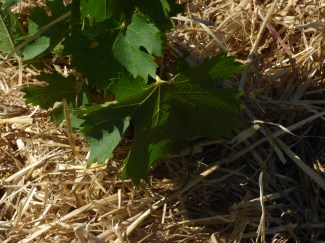
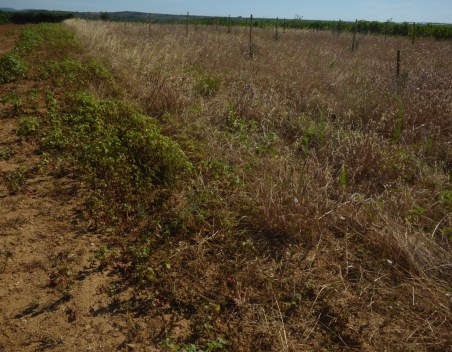
Young vines freshly grafted in March (see above) surrounded by straw? What is going on? The weather was so hot and dry over  a prolonged period that the vines were stressed. As these young vines would not be producing any grapes they could be watered to protect them, the straw keeps the moisture in the soil.

The grapes continued to grow though and July saw véraison, the colouring of the red grapes. They were smaller than most years but healthy in the main. Other than those vines affected by the widespread mildew of the spring and early summer, those grapes were dried and shrivelled by the disease.

August

More grape ripening, Carignan to the left, Grenache to the right. There were some beautiful bunches despite the weather problems of the year. Time to start thinking about harvest and that work began in the cellar itself where Jeff had taken out some very large fibre tanks and replaced them with smaller stainless steel tanks with a new steel staircase to take us above the tanks to place in the grapes and to carry out pigeage or remontage during the vendanges. And on the 24th Jeff was testing the grapes to check for ripeness and acidity to see if they were ready for harvest to begin (they weren’t quite!).

September

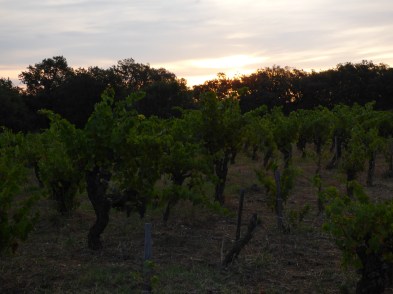
As dawn rose over Rome vineyard probably the most important month of the year began.

p1010639

Vendanges means hard work, fun, pressure, grapes and cleaning amongst other things. Selecting the best fruit from the vines’ year of growth, making the best of that fruit in the cellar to make a natural process work by using care, patience and analysis.

For each of the three harvests in which I have now taken part at Mas Coutelou my main memory is of the people, the teams who work to support Jeff. Friends all, and so many happy memories.

October

Cellar work continues as this year’s wines ferment and start their journey to bottle. Meanwhile time to prepare bottles of more of the 2015s, this time magnums. And in both photos Julien to the left and Michel to the right. The two figures who have been most present in Puimisson working at Mas Coutelou through the year. Two of the best, kindest people you would ever meet. Is it a coincidence that good people congregate together and that the best wines come from the best people?

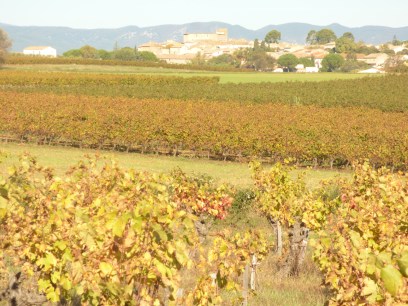
Meanwhile autumn arrives in the vines, Puimisson in the background.

p1020227

November

Cases of wine leave Puimisson to head around the world. Mas Coutelou is sold in Australia, Japan, the USA, all over Europe and at the cellar door. As the end of year and Christmas holidays approach merchants want their wines and exporting the cases involves planning, spreadsheets and collation of the various cases.

Meanwhile, in one corner of North East England one happy vineyard worker sorts his own collection of Coutelou treasures.

December

15439861_10154009671412595_5814305575539506409_n

A photo from Camille Rivière who imports Jeff’s wines into the USA, those cases above have arrived safely and Camille shares her happiness with the bottles she has opened and enjoyed.

Jeff tells me that there has been a lot of rain in recent weeks, 400mm last month. That is certainly welcome but the weather has also been very mild. Reports of mimosa blossoming (it should happen in February) and Jeff told me he had seen a neighbour’s vines preparing to bud!! Frost is needed for the vines to enter a dormant stage and rest, recover after  a difficult year. More mild weather would mean two years of non-stop activity, which would weaken the vines.

A fantastic year, a memorable year, a complex year in the vines.  But also a year marked with sadness at the passing of Jean-Claude Coutelou. I raise my glass once more in his memory.

ddfce457-16d5-4dcf-9236-afcb4c40987b

Grapes, work and love


Leave a comment

A year in the vines, Mas Coutelou in photos (Part 1)

January

The year begins with a series of wine salons and assembling wines for those tastings from the previous year. Jeff took me through the various cuves to see how the 15s were developing. Meanwhile the serious work of pruning (la taille) dominates the early months of the year and Julien was hard at work, patiently shaping the vines to enable them to produce their best. This was especially important in such a mild winter where the vines were unable to lie dormant.

February

Bottling of the 2015s began, this time Vin Des Amis, perennial favourite. Jeff has his own bottling line and the full crates of wine now head to storage for a few months to get over the ‘shock’ of bottling (mise en bouteille).

March

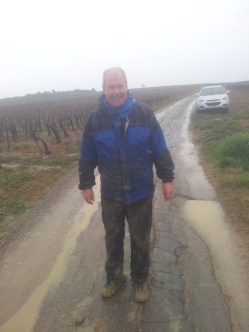
A March in the vines for sure. One of the highlights of 2016 was also the wettest and filthiest I could possibly be. Grafting vines (la greffe) in Flower Power (Font D’Oulette) on a day when it became impossible to lift the pioche because of all the mud stuck on it. I learned a lot and I loved the whole day.

April

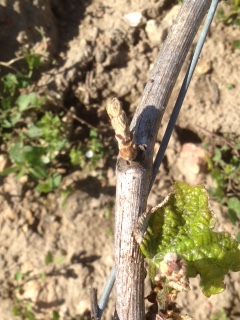
Spring brings the vines truly to life (though the mild winter meant they were restless all winter). Look at the tendril extending from the pink bud on the left, this vine is already growing fast. Small shoots in Rome vineyard and also the ladybirds, sign of  a healthy vineyard. (ébourgeonnage)

May

The grappes begin to form in clusters and spring flowers are everywhere around the various vineyards of Mas Coutelou. May is perhaps the most beautiful month of all in the vine, warm days, clear light and the colourful natural world – blossom, flowers, butterflies, birds. There is literally no place on earth I would rather be.

June

In the vines the flowering season (fleuraison) lasts just a few days. They are very delicate and easily damaged by strong winds or heavy rain. Here the Carignan vines of Rec D’Oulette (which make Flambadou) are in full flower.

Meanwhile in the cellar the bottling season restarts and the tanks are emptied and then cleaned with a vivid colouring for the floor. And welcome visitors arrive sometimes bringing delicious gifts of food with which we can accompany the wines. It’s a hard life, believe me.


8 Comments

Sailing on a sea of prosecco

Not a pleasant image. I did taste a very nice Prosecco at Vinisud this year so I am sure there are some very pleasing wines. However, since returning to the UK last month everywhere I turn I see Prosecco taking over. It is apparently the chosen tipple of women, young women in particular. In supermarkets trolleys seem to be incomplete without a bottle, in bars people ask for it. Not any particular Prosecco, no thought towards vineyard and production methods let alone quality. Just Prosecco.

I hear people asking for a Chardonnay or Merlot in bars too and it made me realise just how rarified is the world of wine in which I am now happily rooted. For the general wine drinker terroir means nothing, SO2 even less. This blog and the many other forms of writing about wine are a minority interest as we sail the good ship ‘Quality’ against the tide of commercial prosecco.

51yi1wyojkl-_sx322_bo1204203200_

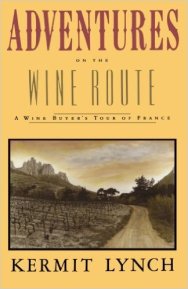
Nevertheless quality does matter and little things mean a lot to those of us who are fascinated by wine. I am currently re-reading American wine importer and writer Kermit Lynch’s 1990 book ‘Adventures On The Wine Route’ and was highly amused by a decription of his early work. He was bowled over by the Burgundy wines of Hubert de Montille in the 1970s but, sadly,  when they arrived in the USA he was devastated because the wines were dumb. He contacted de Montille to complain they weren’t the same wines, which of course was not true. The wines had simply cooked on board the ship as they travelled through Panama. De Montille explained that his were ‘natural wines’.

He meant, of course, that his wines were living and are altered by conditions around them and by time etc. Nobody would question de Montille’s statement. Wine is a living thing. Yet just yesterday at a wine conference in Verona an audience member at a session about natural wine made the statement that ‘natural wine does not travel’. Presumably s/he believes that SO2 is travel insurance for wine!


As de Montille said back in the 70s all wine will suffer if not transported correctly. The answer lay in Lynch usung refrigerated containers to take wine to California. Jeff Coutelou’s wine travels to the USA, Japan, Australia and all over Europe without problem. Kermit Lynch himself imports plenty of natural wine (the modern version) such as Barral and Ganévat. In the same conference Alice Feiring reported that in 2015 there were no natural wine fairs in the USA, this year there were six and demand is growing. Natural wine doesn’t travel?? Nonsense.

Does this matter? In the wider world these are academic concerns, of little matter to most wine drinkers. Yet amongst those of us to whom wine really matters the argument rages on, full of hot air cooking rational debate as surely as those wines in the 70s. Carried along on the waves of Prosecco rather than the Panama Canal.


Leave a comment

Nature can be harsh: Part 3 -pests

In Parts 1 & 2 I have tried to explain some of the difficulties encountered at Mas Coutelou during 2016 due to natural influences such as climate and disease. In this final part of the series I look at pests which have added to those woes.

Vers de la grappe

These are literally grape worms, more specifically caterpillars, which form and grow on bunches of grapes. The caterpillars are the larvae of Eudémis moths which prefer to lay their eggs on shiny surfaces, so grapes are the target more than the rest of the vine. The larvae obviously damage the grapes themselves but that damage is worsened because of juice running on the bunches attracting infection and disease.

The warm weather and humidity of 2016 definitely encouraged vers de la grappe though it is an ongoing problem. It can be treated chemically of course though that is not an option for organic producers. Substances such as clay can be sprayed in spring to add a chalkier, duller surface to new grapes so that moths are not attracted to them. However, the solution favoured by Jeff Coutelou is to plant hedges and trees. These not only act as barriers to less environmentally aware neighbours, add polyculture to a region which can appear solely planted by vines but also they can shelter bats.

img_0227

Bat shelter in Sainte Suzanne

Bats feed on Eudémis larvae and moths and can eat thousands every day. Bat shelters are to be found around Mas Coutelou, eg in Sainte Suzanne and Rome vineyards.

The photographs above show a vers de la grappe cocoon and, on the right distinctive holes showing where the moth laid its eggs. When the vendanges begin the pickers and sorters must look out for signs such as these but also damaged, shrivelled grapes in bunches where the larvae have been.

Snails

If I could have named 2016 in the Chinese form  I would have called it the year of the snail. They were everywhere. The two photos below show an olive tree in Segrairals. This was  one of many which were completely covered by snails, blanched by the sun and feeding on the greenery and moisture in the tree.

However, vines were equally attractive to them. I spent whole mornings picking snails from vines during the Spring only to find them covered again a day or two later. Flower Power (Font D’Oulette) was particularly badly affected with the snails heading straight for the new growth and buds in April and May.

The virtual drought in the first six months of 2016 meant that the snails were desperate for moisture and food and so the healthy, young vines were too good to miss. The consequence was obvious, production of this much lauded new wine was reduced drastically, partly by the weather but equally the work of the snails. Birds and other predators would help solve the problem but the monoculture of the area (outside of Mas Coutelou) means there are, sadly, no great numbers of them.

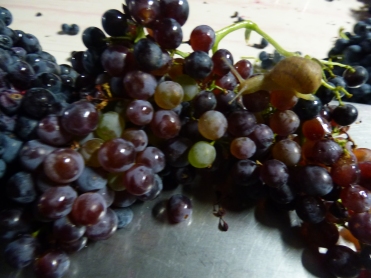
Vendangeurs and sorters must try to pick off snails as they hide in the bunches. Dozens get through to the cellar especially in the early morning when there is moisture around. The photo on the right shows a lot of rejected material, leaves, poor grapes but lots of snails as you will see if you enlarge it. Just imagine how many get through into the wine with machine picking and limited triage.

Neighbours

Yes they can be included under the title of pests. Well, one of them can be. As regular readers will know 2016 has been punctuated by two occasions of vandalism by one particular neighbour, both upon the Carignan Noir vineyard of Rec D’Oulette. First he mowed a patch of wildflowers which Jeff had sown to encourage insects and birds (for reasons identified above). Then he took a machine to some of the young trees Jeff planted around the vines, destroying four year old trees such as hazelnut.

p1010463

Vandalised trees with tyre tracks revealing the culprit

Jeff was justifiably upset by these attacks. He was simply trying to enrich the area, bring diversity to it but that was clearly too much for a traditionalist, more used to destroying wildlife for his own short term gain and dreadful wine. However, he was encouraged and revitalised by the massive support of friends and colleagues around the world. The flowers grew back and more densely, the trees replanted in greater numbers and Jeff Coutelou stands tall as the man trying hard to improve the reputation of Puimisson and its wines.

p1010116


6 Comments

Nature can be harsh: Part 2 – Disease

The mild weather over winter was followed in the Languedoc by a slow start to summer heat. The resulting warm, humid weather brought disease as it did in many regions of France. Mildew, oidium and couloure are all vine diseases which occur regularly and 2016 was no different but with a bigger hit than usual.

Mildew (downy mildew)


Sadly, humid days in the mid 20s and cool nights are exactly the conditions favoured by downy mildew, and it prospered. The humidity in the soils created ever more favourable conditions for mildew. Downy mildew lives as spores in the soils and any rain splashes them onto the vines. Mildiou is not a fungus as commonly believed, it is a one celled spore which germinates in warm, humid conditions especially between 16 and 24 Centigrade – exactly the conditions we saw in April and May of this year.

Jeff Coutelou spent many nights out on his tractor spraying the vines to try to protect them. As an organic producer (and much more) he cannot (and does not want to) use manufactured, chemical sprays. Instead he used sprays based on rainwater with seaweed, nettles, horsetail and essential oils of sweet orange and rosemary. These are better absorbed by the vines in the cool of the night.

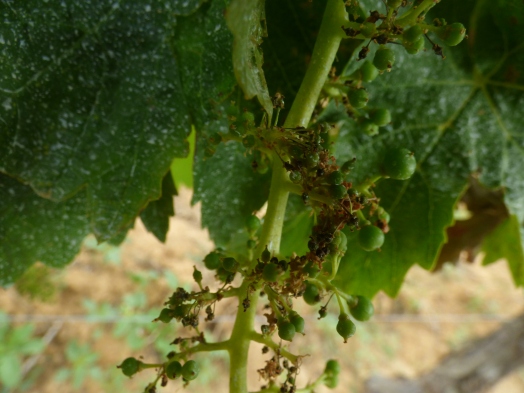
Mildew appears as small yellow / green spots on the upper surface of the leaf which gradually turn brown and spread to leave an unsightly vine. Underneath downy white /grey spots appear, the mildew is well established by this point. It affects the grape bunches and leaves them dried out and shrivelled.

car-mildew-grappe

Mildew on a Carignan bunch, organic spray residue on the leaves

By the time harvest arrives the bunches contain a mix of healthy and diseased grapes. Severe triage is required. Bunches such as the one in the photo above will be discarded immediately. Where there are health sections though the bunches will arrive at the triage table and be sorted rigorously. Jeff reckoned that in some vineyards, especially the white vines of Peilhan, losses were up to 60% from mildew. Seriously damaging.

Here is a clear demonstration of the advantage of hand harvest (vendange manuelle), machines would simply swallow the lot and in less thorough domaines or caves the bunches will all go into the wine.

Oidium (powdery mildew)

IMG_1552

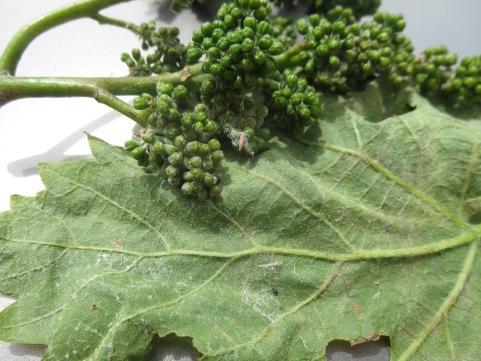
Oidium on buds and leaf

Oidium is a related problem to mildew but slightly different. It too thrives in warm days and cold nights (so springtime is its peak period) , it too loves humidity. So, spring 2016 was ideal though oidium was less rampant than mildew. Unlike mildew it is a fungal based spore.

Conventional treatments would be chemical and even organic producers will use sulphur, a naturally occurring element. Organic producers are limited to the amounts they can use as sulphur does damage the fauna of the soils. Jeff Coutelou uses less than a quarter of the permitted amounts because he sees it as  a last resort. Instead he prefers treatments based on horsetail weed, nettles and other beneficial plants made into a tisane which can be sprayed. It may not be as all-destroying as synthetic chemicals but Jeff prefers the soils to be healthy in the long term by using these natural plant based treatments.

These photos show grape bunches hit by oidium in 2016, the powdery residue is clear though the bunches are less damaged than mildew affected ones. Nevertheless oidium is destructive and spoils wine so, again, careful work in the vineyard and cellar is needed to keep oidium out of the grape juice.

Coulure

Like most fruit plants vines grow flowers which then develop into the fruit. Vine flowers are very beautiful but also very delicate and don’t live long on the plants, a matter of a few days.

If heavy rain and wind hits the vines at this stage of their development then the flowers can be easily damaged or broken off the plant.

The result is that fruit cannot develop where there is no flower, coulure. Where flowers are damaged then berries might grow very small and seedless, this is called millerandage. Similarly berries might ripen unevenly within a bunch, green berries alongside healthy, ripe grapes.

There is nothing that the vigneron can do of course, the damage is done by the weather and no producer can successfully combat weather. Nature wins in the end. So, once again, the vendangeur and those sorting in the cellar are crucial in ensuring that only healthy fruit goes into the wine.
I cannot emphasise enough the importance of all stages of wine growing and production. From their budding through to vendanges the vines must be tended, and in the cellar observation, determination and care are needed too. To make good wine requires hard work, healthy grapes and love as Jeff has said many times.

And have a look at one of those last photos again.

snail-and-uneven

In the top right corner you will see another of 2016’s natural problems, one subject of the final part of this series.


3 Comments

Nature can be harsh – Part 1: Weather

wet

It’s not all sunshine in the Languedoc

The stunning BBC Planet Earth II television programme  of snakes attacking baby marine iguanas was a recent reminder of how cruel nature can be. 2016 has seen vineyards across France attacked by a multitude of problems and in this series of three articles I want to show how the vines and the grapes are affected by these problems. Firstly, the weather.

The year began with no frost in the Languedoc throughout the winter. This meant that the vines found it hard to recuperate from 2015’s exertions as they could not sleep. When pruning got under way in earnest during January many vignerons reported sap flowing from the vines. This was bad news, the sap and the vines should have been resting, storing their energy for the year ahead. Consequently, when other problems arrived during the course of the year the vines were always vulnerable, struggling to resist them.

venier

Frost damaged vine in the Loire

Ironically, after such a warm winter, frost and hail damaged vines across France. The Loire, Rhone, Cahors and Pic Saint Loup were all hit at various stages, Burgundy and Champagne too. When I visited the Loire in early May it was sad to see many vineyards hit by frost, especially those adjacent to other crops whose humidity helped frost to form. Some vignerons faced huge losses of vines and potential grapes.

On August 17th hail hit the Languedoc, especially the Pic St Loup region where vines laden with grapes were smashed leaving some producers with no harvest at all in 2016. Mas Coutelou in Puimisson was also damaged though not so seriously. The storm ran through a corridor across Sainte Suzanne to La Garrigue and on to Segrairals. Even here vine branches were snapped, grapes shredded and bunches ruined. It was possible to see how one side of the vines was damaged where they faced the storm, yet the leeward side was virtually unscathed. Jeff was forced to pick these damaged vines much earlier than normal before the damaged grapes brought disease and rot to them.

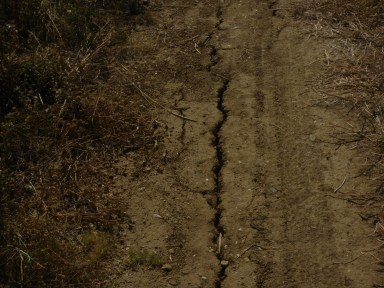
The other major weather problem was drought. There was virtually no rain for months in the Languedoc, especially from winter to early summer. Cracks appeared in the soil, plants turned brown. The lack of rainfall meant that when the grapes began to mature the vines could not provide much water, small berries with little juice were the norm. Vignerons everywhere in the region reported much reduced yields, at Mas Coutelou reds down by 20-30%, some whites down by as much as 60%. Rain just before vendanges saved the day but massaged rather than cured the problem.

p1010435

When rain did come it was often in the form of storms. Sharp, heavy rainfall does not absorb into the soil so easily. Moreover where vignerons spray herbicides on their land the soils often wash away as there is nothing to hold the soil in place. For more environmentally aware producers this can be frustrating as chemically treated soils could wash onto their land.

This is one reason why Jeff plants trees, bushes and flowers and digs ditches, to protect his vines from the risk of contamination.

The combination of sun (and even sunburned grapes), drought, rain, frost and hail made this a difficult year. However, that is not the end of the story. Climate conditions bring disease and it is that aspect of nature which I shall examine next.


8 Comments

Is it natural?

facebook_1477124843243

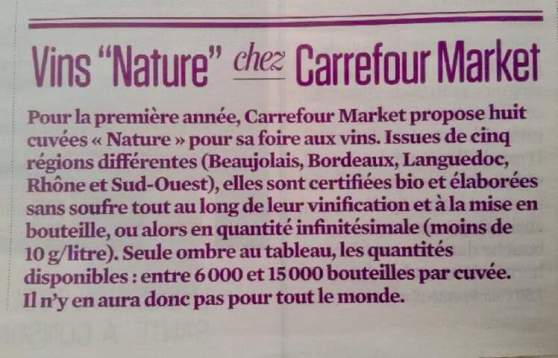
Autumn is the time of  the Foire Aux Vins in France, supermarkets and other large stores discounting their wines. One advert stood out and that was Carrefour’s, offering 10 wines which they called «Nature». Interesting to see that they feel there is a demand for such wines (something UK supermarkets clearly don’t see) and that natural wines have a market. However, on closer examination it turned out that the ten wines on offer were «Nature» only in the sense that they were «sans sulfites ajoutés» (no added SO2). Only three of the ten were produced organically, so are they truly natural wines?

There are, of course, some pedantics (including one well known British wine writer on Twitter on Nov 7th) who would argue that no wine is natural, that it does not make itself. The word natural has indeed become something of a millstone around the bottle neck. So, what do we understand by the term?

rage

One definition which carries some weight is that of Doug Wregg, a director of the UK’s biggest natural wine importer Les Caves De Pyrene:
1. Vineyards farmed organically or biodynamically (with or without certification)
2. Hand-harvested fruit
3. Fermentation with indigenous yeasts
4. No enzymes
5. No additives (like acid, tannin, colouring) other than SO2, used in moderation if at all
6. Light or no filtration
7. Preferably no fining
8. Preferably no new oak

The RAW Wine Fair of Isabelle Legeron adds two other qualifications, a limit of 70mg/l of added sulphites and “no heavy manipulation” such as micro oxygenation or flash pasteurisation.                                                                                                                  (see more here)

I think those definitions hit the main points though perhaps are a little too broad themselves, points 6-8 are especially vague and Legeron’s 70mg/l seems very high. They would, however, exclude the Carrefour wines which have seen flash pasteurisation.

At Mas Coutelou Jeff adds nothing to the wines, does not filter or fine and the only oak used is from old barrels. There are NO added sulphites. Is he an extremist? Are his wines unclean or unstable? The answer to both is no.  They are sent in bottle around the world, to Japan, Australia and all parts of Europe. And then there is the USA.

The Americans have much tighter rules and restrictions for their certification. Wines which are classed as organic have to be recognised as such by regulating bodies such as Ecocert. In addition, in the USA, organic wines must be sulphite free. Wines which have sulphites added can be described as grown with organic grapes but not organic. (see more here)

Jeff’s wines can be classified as organic in the USA, the back labels from two cuvées are shown here. In effect they are being identified as natural wines by the USA. This is not a costly process, Jeff’s importer, Camille Riviėre, pays a fee of around $250 to be able to use the title “organic wine”.

Other people have started to campaign for certification of natural wines to help consumers make informed choices of just how “natural” are the wines they drink. Writers such as Antonin Iommi-Amunategui have set out the arguments for such certification however many are still reluctant to head down that route. Some, for example, fear that rules and regulations fly in the face of the outsider role and rebellious reputation of natural producers.

antonin

Antonin with his manifesto for natural wine including regulation

In my opinion perhaps the time has come for certification. Consumers should be able to buy with confidence. Look at this article from the newspaper “Liberation” describing some of the many processes and additives which can legitimately be put into wines.

vins-chimiques

Should the consumer not be more protected? I do understand the desire of winemakers to be left free to make wine in the manner they choose but standards need to be established.

100-organic-wine-usa

The US Department of Agriculture shows the way, natural wine must be organic and then interfered with as little as possible. The SO2 regulation there deters some producers from organics as they feel it is not worth their while to be organic at all if they intend to add sulphites thus preventing their wines from being classed as organic. Some, like Jeff, might insist upon that restriction, others would be more liberal. In addition, Wregg’s list forms the basis for rules, if tightened up a little.

Natural wine is often completely dismissed by some on the experience of one or two bottles not being correct, a level of criticism not applied to more conventional wines. Not all natural wines are good, I personally like some more than others. In my view, it does need to be clear about what it is and that certain standards are being met, otherwise it risks being an easy target for many, however unfairly. And wines which are not natural (as most would understand the term) will continue to be sold as the same as those of Jeff, Barral, Texier, Foillard and many others.

Further reading

Le Figaro

Vincent Pousson