amarchinthevines

Learning about wine, vines and vignerons whilst living in the Languedoc


2 Comments

Let a hundred flowers blossom

Around 4pm this afternoon I received a text from Jeff to say that Rec D’Oulette, the vineyard of the Carignan of Flambadou had been vandalised. I had been in the nearby Flower Power parcel this morning but passed that parcel noticing nothing amiss.

1

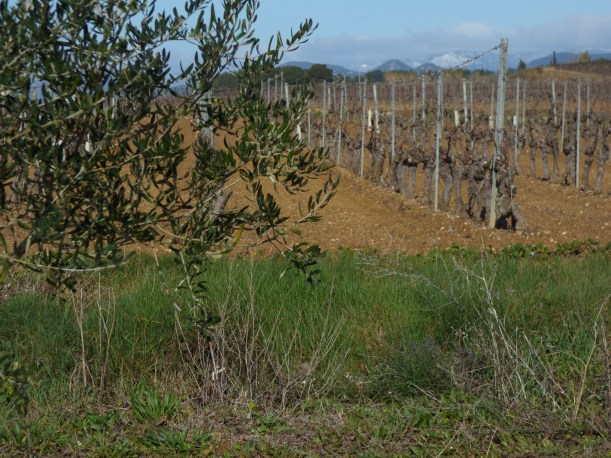
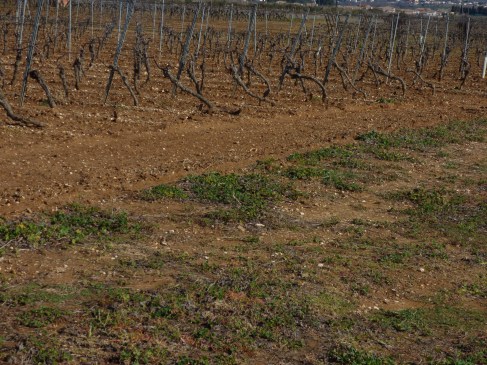
I was horrified to hear and then see the photos which Jeff published on Facebook. Someone has passed through the middle of the vineyard with a machine to cut the flowers and plants which Jeff had planted amongst the olive trees. These are designed to attract insects, bees and other biodiversity to the area. Surely a benefit for all vignerons and people?

It is unbelievable that some pathetic individual or individuals see some twisted reason to destroy what is beneficial for the area and for vineyards. Jealousy? Who knows but they are wrong headed. And just wrong. Because Jeff will plant more. When someone cut down ten trees he had planted, he replanted ten. With another thousand for good measure. Flowers, plants will bloom again in Rec D’Oulette.

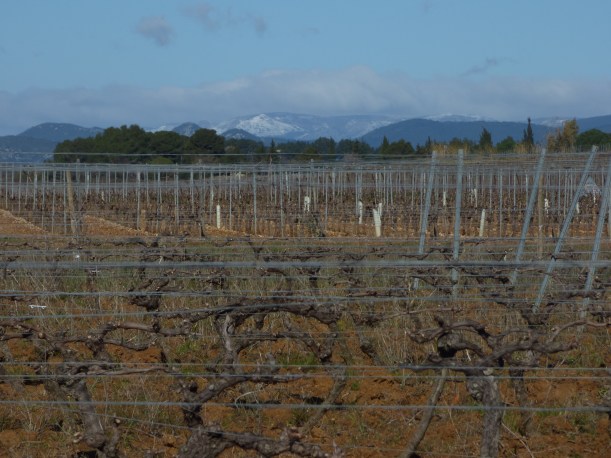
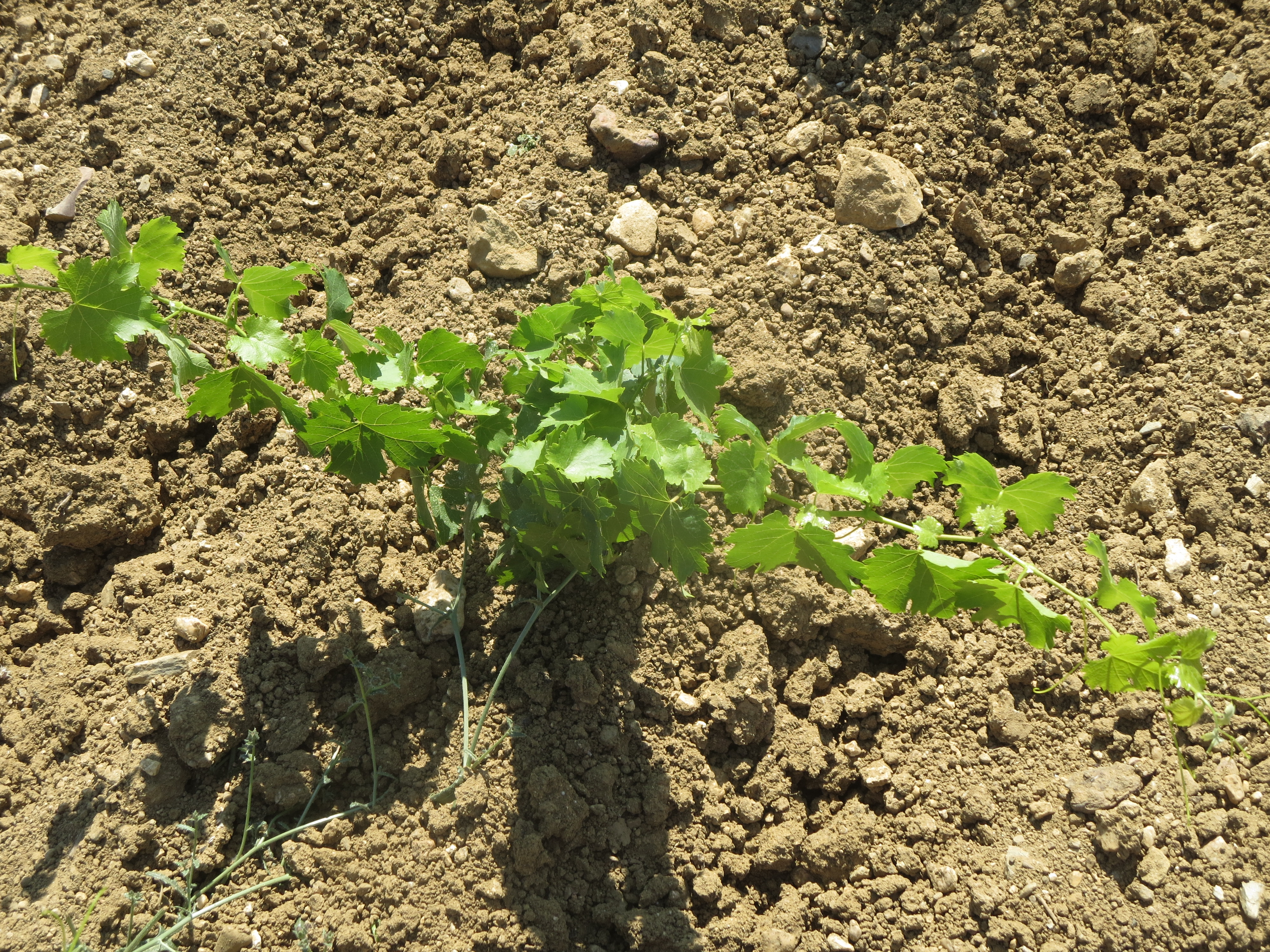
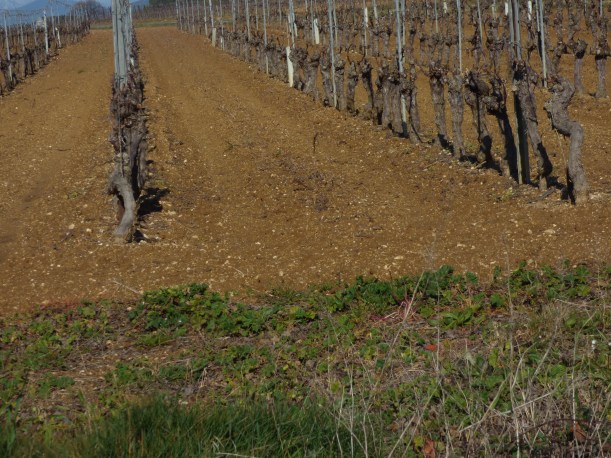
These photos were taken a few weeks ago in the vineyard, wild and planted flowers will return. And though one, or even a few, may not like his work for some reason, the support shown to Jeff comes from thousands of people. Let one hundred flowers blossom.


2 Comments

First days of Spring

P1000470

En francais

Winter has been relatively mild here in the Languedoc, as elsewhere. However, the last 2 weeks have seen definite signs of the first days of Spring. The blossom, insects and flowers have appeared, and, as I write the temperature is a very pleasant 23C on the terrace. All the flowers below were photographed in the vineyards of Mas Coutelou.

As the weather warms the vineyard beckons. Pruning is complete at Mas Coutelou, bravo Julien. But other tasks await. The dry winter lasted until a couple of weeks ago when 55mm fell at Puimisson in one day. Until then Jeff was reluctant to plough, the dry soils would be easily scattered by wind and the ground cover helps to retain what little moisture there was. With the rain it was time to lightly plough. Not deep, 15cm or so as the soil was still dry and compact beneath and Jeff doesn’t want to disturb the vine roots or the wildlife which lives in the soils.

As I wrote in the last article it was time to plant new vegetation. Trees and bushes to protect the vineyards from careless neighbours and to provide biodiversity in an area of monoculture. Biodiversity which in itself will repay the vines by attracting birds, bats and insects which will feed on potential vine pests. So, olive, apple, hazelnut and cherry trees, rose bushes and many other varieties were planted on a lovely Spring day.

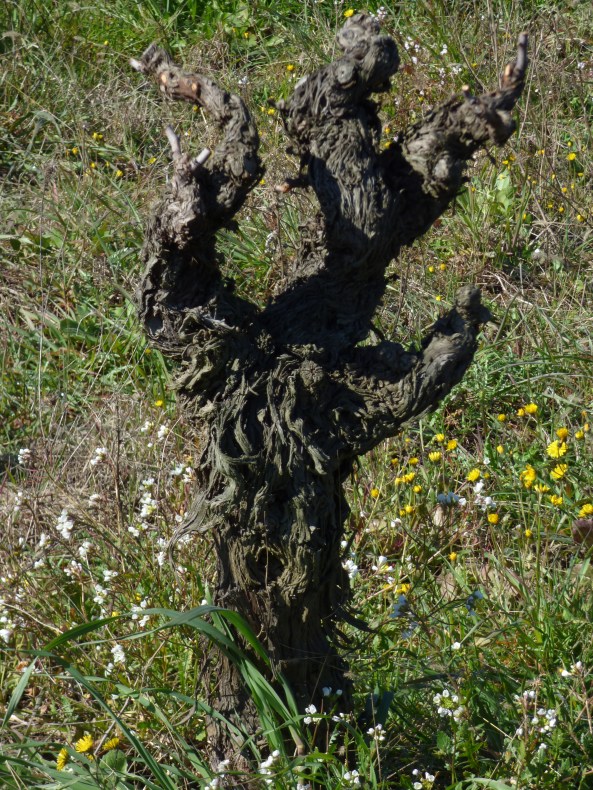
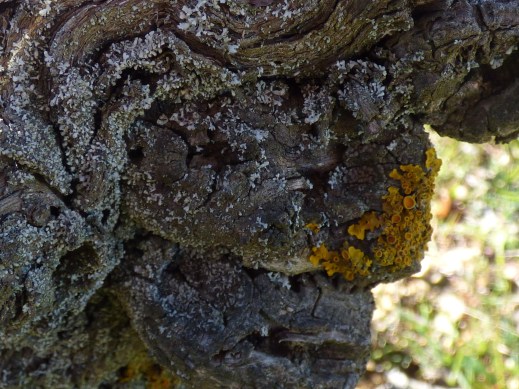
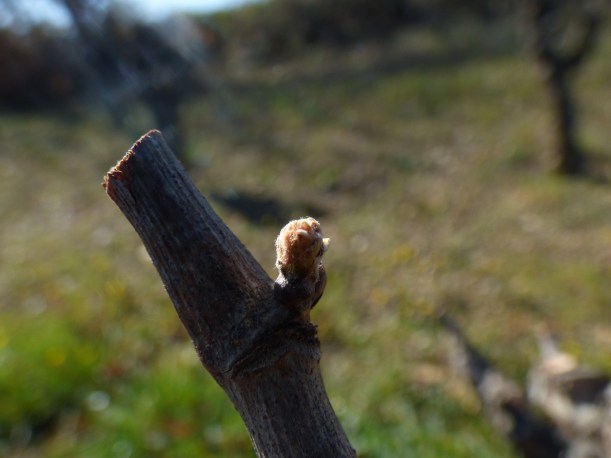
In Rome vineyard (where else?) I found the first buds of 2016 at Mas Coutelou on some muscat vines. Lichen on some vines also showed the good quality of air in that special place.

P1000460

Muscat bud covered with a fine layer of ‘coton’

P1000471

And then came Thursday March 17th. Where had Spring gone? We worked in Font D’Oulette through a day of firstly drizzle, then steadily increasing amounts of rain. Replanting vines which had not grown and also grafting new vines onto root stock already in place. Traditional Languedoc varieties such as Aramon Noir and Cinsault but also something rare, indeed unique. For more on that you will have to wait until next time however.

By the end of the day, as the pioche (hoe) was so heavy with mud as to be unusable and the soil turned to mud, we were cold, soaked to the skin and muddy from head to foot. And yet, inspired by a lunchtime magnum of Flower Power, the wine made from this very vineyard, we worked happily in the knowledge that our labours will bear fruit. And what lovely fruit!

Spring is here, the vineyards are coming to life again, a joyful time of year.

P1000476


2 Comments

Songs of our soil

maxresdefault

Another hero

All good vignerons strive to produce the most healthy grapes from healthy vines living in healthy soils. The best wines are made from healthy grapes, in the cellar the winemaker can make good wine out of ordinary grapes but can only make great wine from great grapes. The soil matters. It feeds the vine, it provides water, minerals and nutrients. A good vigneron will take the best possible care of those soils because they are the basis of their wines.

P1000449

Rec D’Oulette (foreground) and its Carignan vines

On March 10th I went out to visit the vineyards, a morning when Spring was showing itself. Jeff was working with Vincent and Julien to plant trees at Rec D’Oulette and Rome vineyards. These add biodiversity to an area which is largely given to monoculture but they also help to break down the soils whilst adding air, bacteria and wildlife which will make the soils healthier.

P1000407

The trees play another role too. Many of the neighbours to Mas Coutelou vineyards are not organic, indeed some are prolific users of chemicals on their soils and vines. Trees, bushes, plants and ditches act as a barrier to those contaminated soils, protecting soils which have been certified organic since 1987 under the management of Jean-Claude, Jeff’s father. The 30 years and more of organic practice have undoubtedly improved the soils and there was a clear demonstration today.

parcel map cropped

The brown areas are planted with trees, bushes etc as a barrier around the vines in green

P1000432

The blue/grey tinge on the grass at the edge of the parcel is from the neighbour’s weedkiller

Jeff was justifiably annoyed by one of his neighbours who had been spraying weedkiller and had encroached onto Jeff’s land to turn his tractor and sprayer.  Some of the chemical had spilled onto Coutelou land, admittedly only on to the edge of the buffer zone between the vines but unacceptable nonetheless.

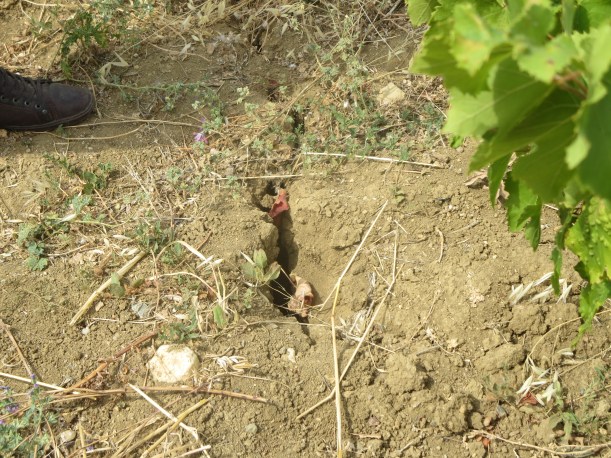
He then showed me two of the holes dug to plant the trees. One was at the side of the Carignan vines well away from the neighbours. The soil inside was fine, friable and a rich brown. The other hole, 50m further from the vines, next to a slope running from the neighbours, had greyer soils with big clods of earth.

The lesson was obvious. The neighbouring vineyard is eroded with every rainfall, the clays are carried down and they clump together. Erosion is the result of the weedkiller, the soils are bare and unprotected. The work done by the Coutelous in the vine planted area has enriched the soils, there is more organic matter in them, flowers, grasses, herbs as well as animal life. As you walk on the vineyard soils there is a sponginess, a spring in them, they are open because of the air within.

P1000404

Chemical land versus organic land

That is why Jeff has grubbed up vines close to his neighbours and planted olives, apples, cherries and dozens of other varieties of tree. The improvement in soil quality has helped to improve the wines. Don’t take my word for it, ask La Revue Du Vin De France, Jancis Robinson, Jamie Goode et al who have praised them. The wine is the product of healthy grapes from healthy vines in healthy soils.

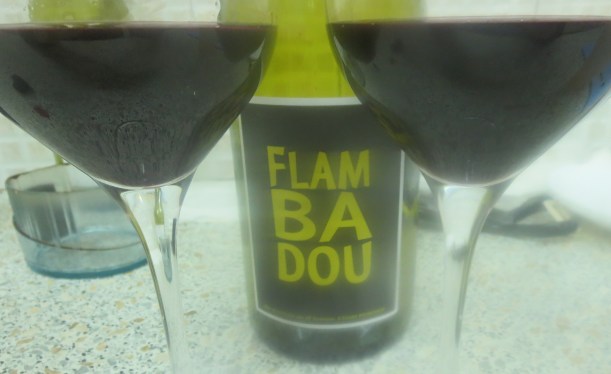
Does it all make a difference? Well, yes. Aesthetically, morally, even spiritually. And in the wine? Well, open a bottle of Flambadou 13 or 14, the wine made from these Carignan vines. Taste that wine. Does it make a difference? The answer is in your glass.

IMG_3587


2 Comments

MIllésime Bio 2016

millesime-bio-banner

The world’s biggest organic wine fair took place in Montpellier last week and I attended all three days of the main salon as well as a number of the offline events around the main event.

Last year I reported on the 2015 event in two posts about the salon and the offs and I shall do the same over the course of the next week. However, a brief introduction with an overview of thoughts and preferences.

1 salon attended

6 offline events attended

7 countries’ wines tasted

84 domaines’ wines tasted

373 wines tasted


Although my main interest is the wines of Languedoc – Roussillon I deliberately chose not to concentrate on them as I get to taste them throughout the year at other events. In addition I think I ought to taste wines from other regions and countries to broaden my experience and place the Languedoc – Roussillon in better context. That said I did taste some very good local wines at the offline events from the likes of Joe Jefferies, Mas Sibert, Escarpolette and Fontude.

IMG_3378

Wines from Joe Jefferies

However one country’s wines stood out, Austria. I tasted with a number of Austrian producers and they were consistently good, some outstanding, for example Sepp Muster, Ewald Tscheppe, Preisinger and Pittnauer above all. I have always enjoyed the white wines of Austria but the reds were a revelation, local grapes with character, distinction and drinkability.

The Rhone Valley was another source of top wines, so many elegant, fine wines such as those of Domaine des Aphillantes, Domaine du Coulet (Matthieu Barret) and Domaine Lombard in Brézème, an area I didn’t really know before. Interestingly Brise Cailloux from Barret was one of my choices of outstanding wines of 2015.

There were outstanding wines from Marc Kreydenweiss in the Rhone (as well as from his son in Alsace).

Just to the north of the Rhone I also enjoyed a number of Beaujolais wines (Lapierre, Séléné for example). The other outstanding wines were those of Aimé Stentz from Alsace, wines of great finesse, flavour and sheer drinkability.

There were many more interesting features and wines which I shall report on this week, the presence of an English vineyard certainly created a stir for example.  Most surprising wine of the week was a delicious Viognier from Greece, Domaine Giannikos. I expected a flabby or blousy wine and instead the Neo∑ Anemo∑ was dry, clean, citrussy and truly elegant.

All in all it was a very good week.


4 Comments

2016 – whether the weather

Whether the weather be fine
Or whether the weather be not,
Whether the weather be cold
Or whether the weather be hot,
We’ll weather the weather
Whatever the weather,
Whether we like it or not.

(Unknown poet)

I read an interesting article this morning, from the iDealwine website, about the weather. Yes a British preoccupation but one shared by vignerons around the world. It was ironic timing as, returning to Margon yesterday (January 17th), I awoke this morning to flakes of snow falling!

Hardly the snowfalls I saw in December in the UK but surprising. Not enough of a cold snap however for the good of the vines. They need a period of cold to go to sleep. The sap needs to fall and concentrate at the heart of the vine, pruning (taille) can then remove the surplus wood from last year and prepare the vines for this year.

Instead, as the article points out, the winter here has been unusually warm, possibly the warmest since 1900. Temperatures in Montpellier were more than 3° above average in December and some vignerons have reported that as they have pruned they have seen sap running out of the vine, which means the vines are not resting. Indeed, even worse, the vines could be damaged by a sudden cold snap as the wood could break if the sap has not fallen.

As I drove south through France it was noticeable at the sides of the autoroutes that blossom was out on some trees, and if the vines follow suit and start to grow early then that could also bring problems. Finally, the lack of a cold spell does not help to fight diseases or the conditions in which diseases such as mildew can thrive.

The article supports what Jeff has told me about the situation in the Languedoc. There was also very little rainfall after September, next to none in fact. A few showers in January so far but that will not replenish the reserves in the soil. Some cracks in the soil are actually bigger than they were at the end of summer.

IMG_1935

The vines have been too active and a lack of water is the last thing they will need. The 2016 vintage already faces significant problems, three weeks into the year!

Therefore, although today’s snow is welcome a sustained cold snap and steady rain would have been much more so. We may weather the weather, whether the vines will is another matter.


2 Comments

Twenty 15 highlights

I have already chosen my favourite wines of the year, both red and white. However 2015 has been probably the best year of my life offering me opportunities to fulfill lots of ambitions such as travelling and living in France, a full vendanges and lots of wine tasting. These have been 15 highlights.

  • Wine of the year – Casa Pardet Cabernet Sauvignon 2011. One of those great, rare moments when a wine stops you in your tracks and wraps up all your attention in the wine as it unveils its aromas and flavours. Simply great wine.
wpid-20150330110839.jpg

The Cabernet on the right, Chardonnay on the left (see below)

  • Tasting of the year – Lots of competition such as Biodyvin with wines from the likes of Zind Humbrecht and Huet, La Bande De Latour and the excellent series of tastings organised by Le Wine Shop in Pézenas (see Wine Tastings page). However, one salon stood out.

wpid-screenshot_2015-04-20-22-14-06.jpgLa Remise in Arles was a two day joy. In its own grounds, with excellent food and a range of excellent producers, including the Casa Pardet above and Jeff Coutelou, La Remise had a lively, friendly atmosphere. The inclusion of producers from Spain and Italy as well as various parts of France and the welcome addition of new, young producers provided a rich, enjoyable and rewarding experience.

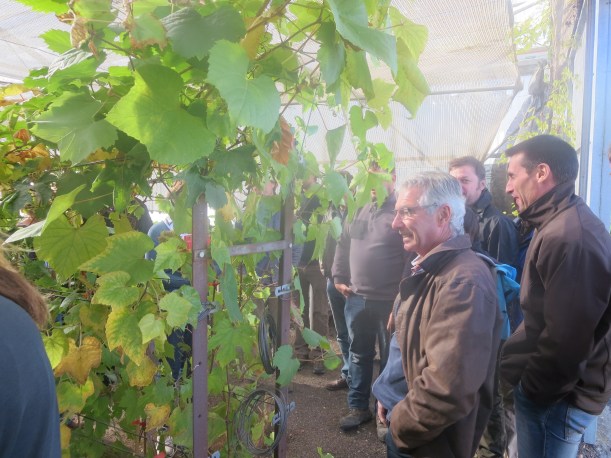
  • Visit of the year – I was tempted to choose my visit to Jurancon’s Domaine Montesquiou, the family produce a supreme range of wines with a great philosophy behind them. However, the visit which highlighted my interest in the different cépages and sheer variety of vines was to Domaine Vassal in Marseillan Plage. Here, for the time being, is maintained France’s repository of vines. The work and effort to acquire, conserve, classify and valorise vines was fascinating and inspirational. Being there with some of my favourite vignerons was an added bonus on a memorable day.

IMG_2739

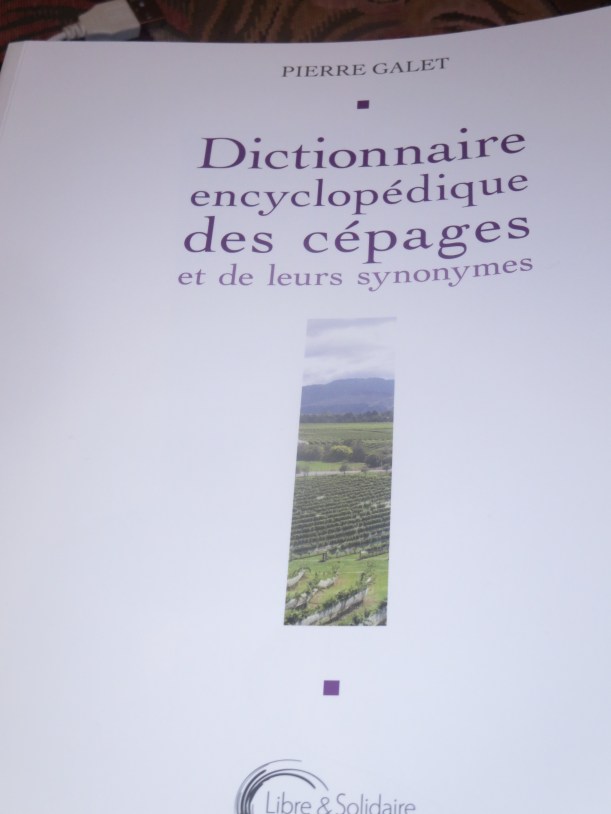
  • Book of the year – Pierre Galet’s ‘Dictionnaire Encyclopédique des Cépages’ was a gift from Jeff and is, like Domaine Vassal, a treasure trove of information about every wine and grape variety. Almost a thousand pages of facts, photos and drawings, it will be a book which will accompany me forever.

IMG_3107

  • Blog of the year – I have enjoyed reading about wine from so many sources, however, it seems to me that blogs provide me best these days with opinion, entertainment and information. Michel Smith, David Farge, Rosemary George, Steve Slatcher, Jamie Goode and others would be worthy of your time. However, the one which has opened my eyes to wines from Australia, Austria, the Jura and many other areas of wine is the blog of my friend David Crossley and I strongly recommend it. Written with authority, wit and style, David has a broad tasting experience and an open mind, a rare combination in wine writing.
  • Wine region of the year – Faugères, simple. So many excellent wines this year have come from Faugères, Clos Fantine, Domaine Cébène, Haut Lignières, Mas Sibert, Causse Noir, Mas d’Alézon amongst others. If you don’t know Faugères wines, then please seek some out.
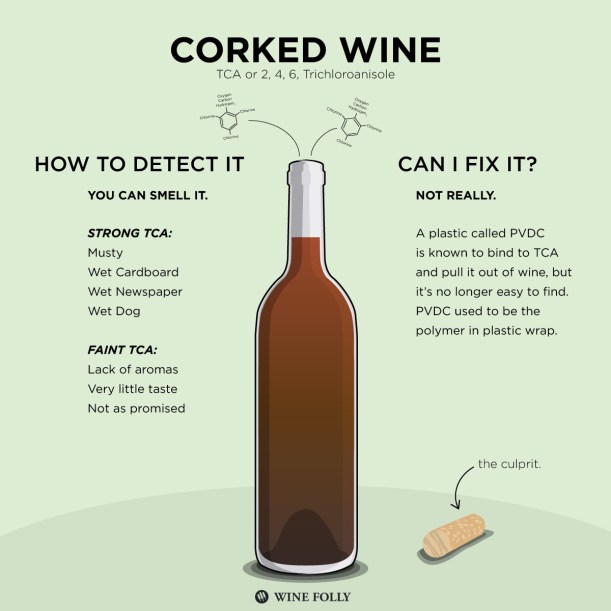
  • Dud of the year – corked wines. It’s an ongoing debate about which closures are best and I know that corks are of better quality than ever. Memories may fade of pouring a whole case of top Chablis down the sink but they are still there. And this year an expensive bottle of Beaujolais was just one disappointment amongst far too many. It really is the most frustrating aspect of wine when you pour a wine you have anticipated keenly only to find it spoiled.

how-to-tell-if-wine-is-corked

  • Restaurant of the year – Bouchon Bistrot in Hexham is always a treat and my favourites this year included; Le Terminus at Cruzy, La Very’Table in Neffiès, Cave St. Martin in Roquebrun and L’Amphitryon in Pézenas. Best though was Octopus in Béziers. Excellent cooking and service, imaginative food and a lunch menu at 32€ for 3 courses including wine and coffee. A close second was Les Papilles Insolites in Pau, a wine shop with a Michelin listed restaurant offering fantastic fresh, tasty food and no corkage fee at lunchtime for wines bought in the shop.
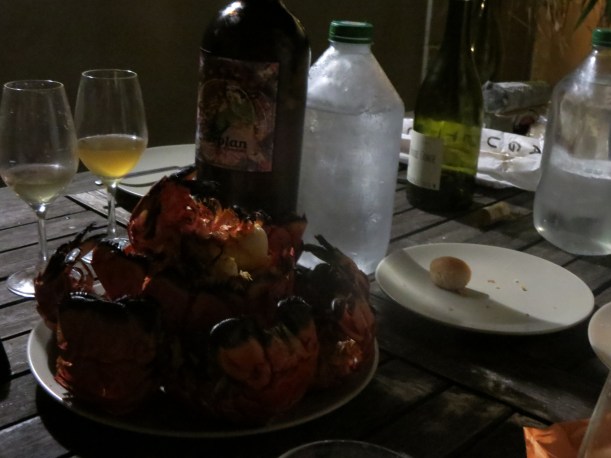
  • Meal of the year –  not a restaurant in fact. During the vendanges we were joined by a number of friends of Jeff and one, Karim, brought some fresh lobsters and scallops. Fresh, cooked simply with great skill and timing, they were simply delicious. Matched with a magnum of Casa Pardet (again!) Chardonnay, with Jeff, Cameron, Karim and Pat it was a superb evening, all the better for following a good day of vendange and the conviviality of friends.

IMG_2367

  • Location of the year – the Languedoc Roussillon. Varied, exciting, beautiful, friendly, fascinating.

UK readers will know that the BBC runs a Sports Personality Of The Year competition and my next five highlights follow their categories.

  • Team of the year – Team Coutelou during the vendanges. Jeff, Michel, Cameron, myself, Carole plus a host of special guest appearances from lots of friends. The camaraderie, hard work and spirit was something special and it was almost a let down when harvest finished and that tight team stopped working together every day.

Terminus

  • Young producer of the year – I met Joe Jefferies first at the Pub Quiz in Pézenas and it was a surprise when I met him at La Remise (see above) in Arles in his role as a vigneron. To be honest the wines were still very raw and unformed when I first tasted them but at subsequent tastings they developed into excellent wines, with Pierre De Sisyphe Blanc a particular favourite. It was a blow when Joe told me there were none left to buy! I look forward to watching him develop his talents with time.

Special mention also to Simon Bertschinger and Sara Frémine at Mas Sibert in Fos, their Fosénot is a wine which has become a real favourite.

  • Overseas producer of the year – in other words not French. Clear winner, Casa Pardet for the most memorable bottles of the year the Cabernet and the Chardonnay we shared at Jeff’s with the lobsters. Outstanding producers.
  • Personality of the year – well no shock here, it has to be Jeff Coutelou. Yes he’s a great winemaker and a passionate advocate for, and defender of, nature. However, he’s also a teacher, coach and friend. So many of the opportunities and so much of the learning I have enjoyed have been due to Jeff. His wines are a constant delight and a reflection of his personality.
  • Joy of the year – This blog. I started it as a hobby to occupy myself. Amazingly it has opened doors for me, taught me a lot and been a great way to meet people. I never imagined 11,000 people would read it within a year and that people in 106 countries would do so. So my final post of 2015 is written to thank you all for reading and sharing my experiences and enjoyment of wine, vines and the people who care for them. May 2016 bring you good wine, health and happiness.


8 Comments

Merry ChristMas Coutelou

IMG_3319

All I want for Christmas is?

oz-clarke-interview-new-book

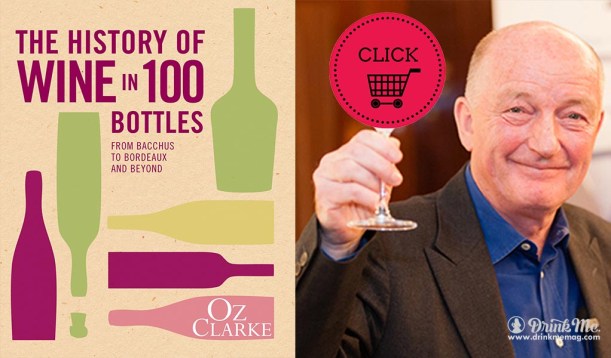
Well I’m hoping for a new camera to try to make better photos for the blog and also maybe a copy of Oz Clarke’s ‘The History Of Wine In 100 Bottles’ but obviously the focus here is on wine itself.

IMG_3313

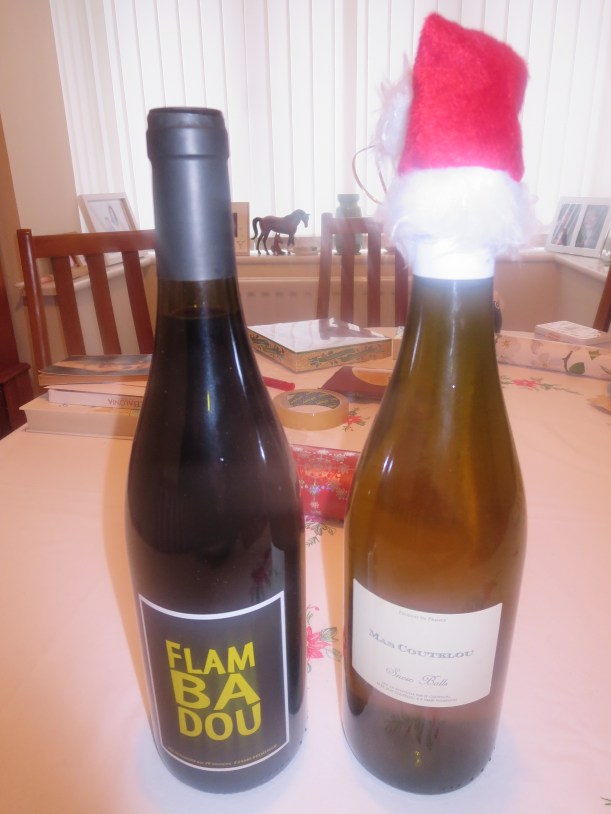
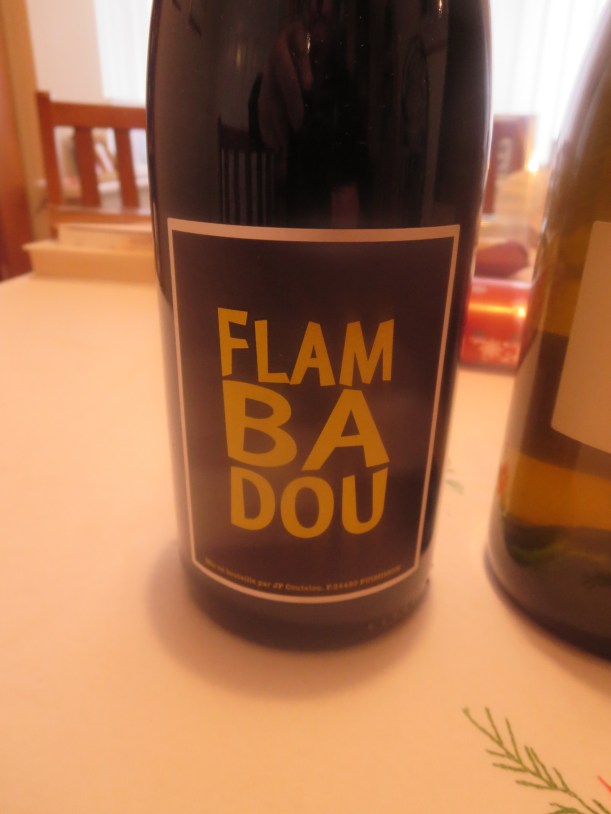
Christmas colours are red and white so I shall look forward to great red and white wines. So top of my list are Flambadou 2013 and 2014, perhaps the best wine in both vintages from Mas Coutelou. Pure Carignan and stunning.

IMG_3315

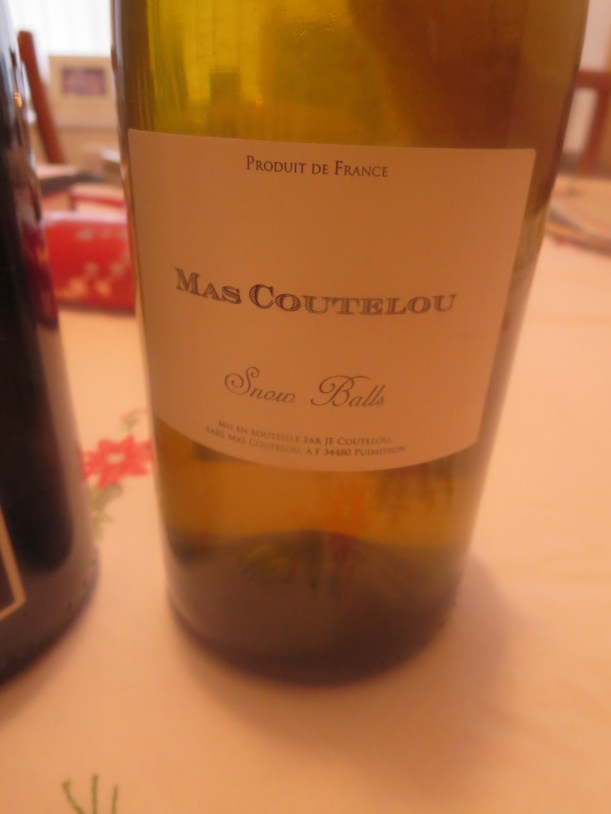
Snow Balls will be my white wine, appropriate for the time of year. Sauvignon Blanc, Grenache Gris, Maccabeu and Muscat grapes, very dry, full of white fruit flavours and incredibly moreish.

IMG_3316

And of course there is a sparkling element to the season, glitter and tinsel so:

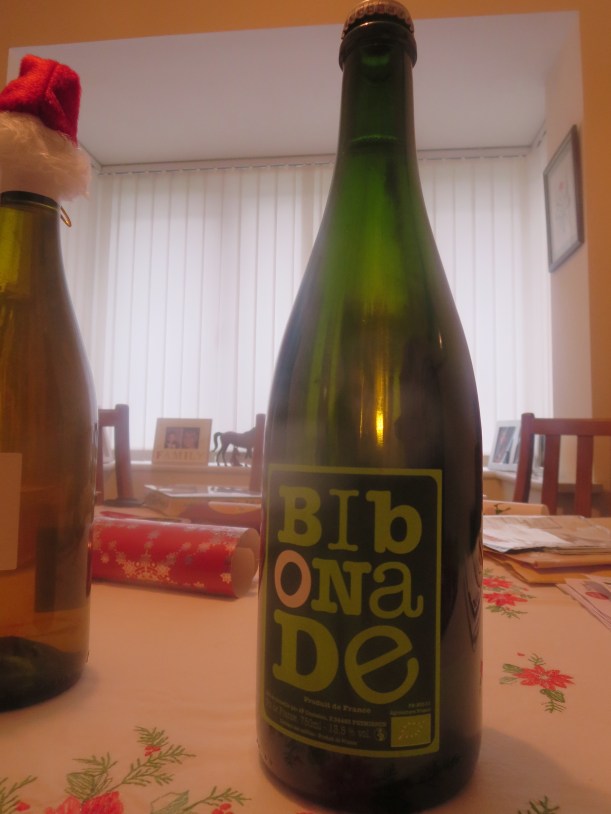
IMG_3317 More Sauvignon Blanc, Muscat and Grenache which are complanted in La Garrigue vineyard and made into a sparkling wine with a degree of sweetness, Bibonade is a lovely aperitif, my wife’s favourite!

Meanwhile there’s lots of games and fun. Blind tasting for example:

IMG_3318 Well last night Iain, my brother in law, served up a Romanian red made from the Negru De Dragasani grape – I’d love to be able to say that I identified it immediately but as I’d never heard of it before! It was actually good, very spicy and refreshing.

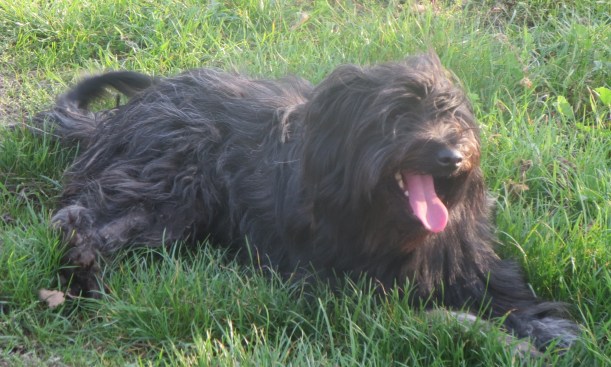
So my wishes are simple. For Jeff, lots of rest and sunshine as he holidays with his sister Catherine in Guadeloupe. For Puimisson and the Languedoc lots of rain as there has been so little for months and water levels are falling fast. For Icare, lots of treats, postmen to chase and mud to roll in.

IMG_3260 For you kind people who take the trouble to read my blog I wish you nothing but the very best; peace happiness and health. It has given me so much pleasure to hear from you and know that my love of wine, the Languedoc and learning are shared by you in the 106 countries from which you come. Thank you so much and a very happy Christmas.

IMG_2830

Margon’s lights (on October 12th!!)


8 Comments

Case of 2015 – reds

caseofwine_grande

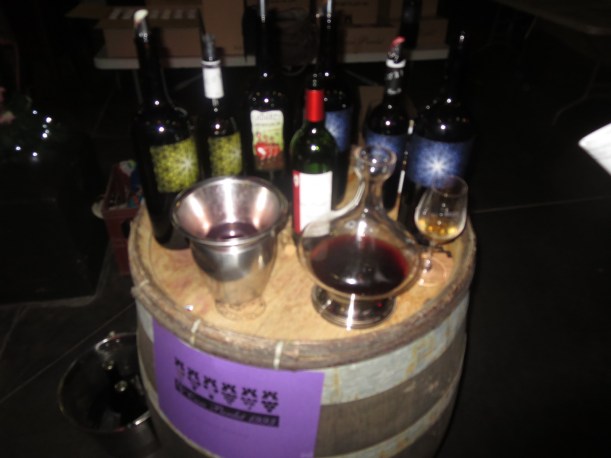
My favourite wine of the year and, therefore, a definite for this selection was the Casa Pardet Cabernet Sauvignon 2011, Costers Del Segre. This is how I described the tasting at La Remise in Arles in March. “The breathtaking wines were Cabernet Sauvignons, not usually my favourite cépage. These wines, from Tarragona, were stunning, amongst the best wines I have tasted in my 30 years of wine drinking. I was served this wine from 2014, 13, 11 and 2003. Every one was a stunner, rich, deep and complex. Marrying power and elegance, fruit and some oak the flavours simply rolled around the mouth and left me reeling. The 2003 was still youthful, hugely aromatic with dark, brooding fruits and yet a light touch. Beautiful. Just joyful wines.”

The 2011 was my favourite though all four would qualify for the case. A rare moment when drinking a great wine makes nothing else matter for that moment, just the sheer delight of what was in my glass. Superb. I just hope I can find some to buy in 2016!
wpid-20150330110839.jpg

Casa Pardet wines, Cabernet on the right with blue label

Other than Mas Coutelou wines Clos Fantine Tradition, Faugères 2013 has consistently given me the great pleasure throughout 2015. I started the year with the 2012, also great wine, but, as the 2013 was released, it was this vintage which appeared again and again on my table. Corine, Olivier and Carole took over their father’s domaine in La Liquière, part of the Faugères appellation, and have gradually built it up and transformed the vineyards and winemaking. This is a natural wine of clear freshness, fruit, complexity and depth. Carignan and Grenache, those quintessential Mediterranean varieties, dominate and deliver a wine which I would choose as quintessential Languedoc, Faugères and natural wine. My visits to the domaine were some of the highlights of 2015 for me, I greatly admire the family, and this wine is such a reflection of their passion and their beautiful, gobelet vineyards.

Faugères was the wine region which became my favourite of the Languedoc during 2015. I was fortunate to taste most of the domaines’ wines across various tastings and events and to make friends of many excellent winemakers from there. I would recommend wines from Haut Lignières, Ch. La Liquière, Barral, Causse Noir, Mas D’Alezon, Mas Sibert, Capitelles and, the domaine which first attracted me to the Languedoc, Ollier Taillefer.
IMG_1834

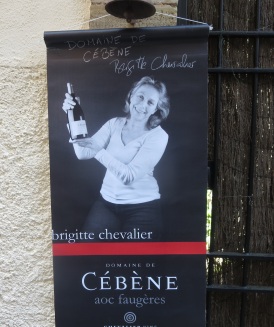
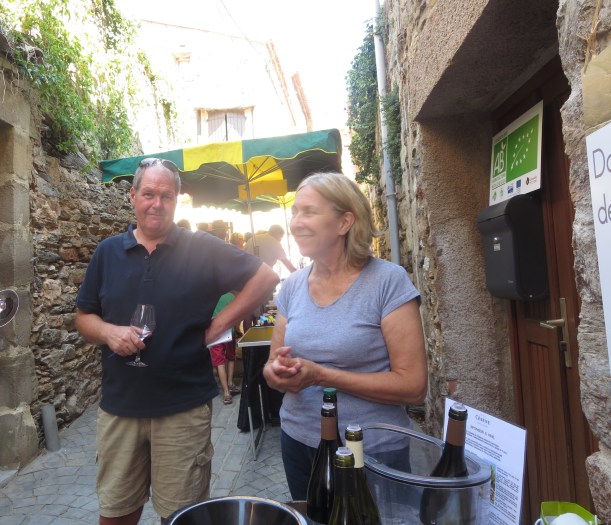
One Domaine though which I rank very highly is Cébène. Brigitte Chevalier had experience of winemaking, especially in her native Bordeaux but came to Faugères because of its schist soils and the freedom to make wines as she wanted. I have been fortunate to become a friend but that is not why I have chosen Domaine De Cébène, Felgaria 2013 for my case. This was one of those wines which, when I first tasted it, made me think ‘this is good’ but which I didn’t rank as outstanding. Then I tasted it again in July at the village wine fair and it had developed into something exceptional, the extra few months had brought it together. As I tasted it was another wine which made me stop analysing, stop thinking about it and just revel in the moment. Mourvèdre, Syrah and Grenache come together in a stunning wine.
IMG_1833

Despite appearances I was thrilled to taste the Felgaria and meet Brigitte again!

The Languedoc Roussillon region naturally dominated my tasting this year. I did taste great reds from Italy (Le Carline), Gaillac (De Brin and Plageoles), the Ardèche (Bock and Les Deux Terres), Burgundy (Magnien and Ardhuy), Rhone (Ferme St. Martin, Vieux Télégraphe), Spain (Descendentes Palacios) plus many others. However, there were so many great Languedocs from La Marfée, Maris, La Baronne, 2 Ànes, Mas Des Chimères, Pelletier, Navarre etc etc. It was difficult to select just a few for this case and then I opened a bottle on December from the back of my collection and it leaped into this case.

IMG_3281

In fact it is from Roussillon and from another wine first supplied by Leon Stolarski. This led me to Domaine Treloar when I started to travel in the region. Founded by Jonathan Hesford and Rachel Treloar, they have established themselves in the region and won plaudits and respect for their work and wines. Their first wines were produced in 2006 and it was a wine from that vintage which I enjoyed so much. Domaine Treloar, Motus 2006 is 80% Mourvèdre with 10% each of Grenache and Syrah. This was always a favourite of mine but the extra years in bottle have added even more complexity to the dark fruits and classic Mourvèdre notes of leather and spice. With the work they have put into their vineyards and further winemaking experience Treloar wines will continue to improve but this debut wine has really hit its stride and deserves its place in the case.
IMG_0267

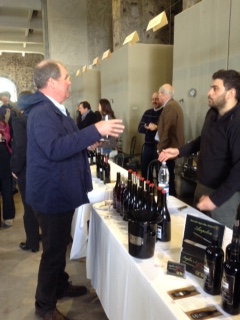
At Etna Contrade about to taste Cornelissen wines

Wine 5 is more controversial and I’d never have thought I would choose it at the start of this year. In 2014 I had a great holiday on the beautiful island of Sicily and had the good fortune to attend the Contrade Etna, the local wine fair. Amongst very many good wines I tasted those of Frank Cornelissen, the natural producer of all natural producers, making wines without sulphur on the most active volcano in the world. His wines divide critics and are used to berate natural wines by many. And at the Contrade I hated them, they were unbelievably wild, strange and seemed to be made of components fighting each other. So when I tasted the wines again in Arles I had low expectations. I still did not like some of the wines but one amazed me, Frank Cornelissen, Magma 10 (2012). All sorts of aromas from fruit to caramel, flavours of strawberry, plums and spice which opened gradually and lasted a long, long time. Would I want to drink it regularly? Probably not, it is a wine which I admire and remember as a landmark in my tasting history, it was so explosive (appropriately for Etna) and memorable but not easy drinking. Plus enormously expensive and rare. I had to include it here because it was a wine which challenged expectations and made such a big impact.
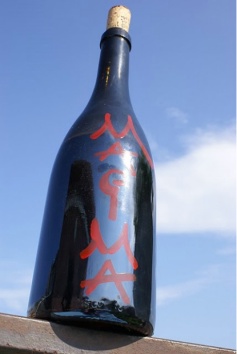
144691

Incidentally it also speaks volumes about Casa Pardet that I tasted their Cabernet after tasting Magma and was even more mesmerised by their wine than the Cornelissen

Other ‘challenging’ wines I really enjoyed included Terre Inconnue, Léonie 2005 and a fascinating wine from Georgia, cradle of winemaking, from the Alaverdi Monastery, Rkatsiteli 1011.

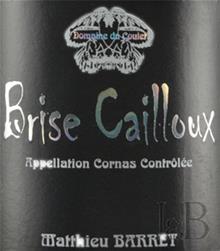
My final choice though goes to the Rhone. Back in June we were bottling at Mas Coutelou when Carole brought along a bottle which was instantly something special, Domaine De Coulet, Brise Cailloux, Cornas 2012. Mathieu Barret’s wine is obviously pure Syrah being a Cornas, and the word pure is very apt. It is clean, fresh and fruity with a razor sharp purity of flavour, aroma and acidity. I have always struggled a little with Cornas because it is so often dense and tannic but this is already drinking brilliantly and yet has the freshness which indicates a wine that will age and become even better. I am in the fortunate position of being able to taste so many great wines but this Cornas stood out immediately as something special. Thanks to Carole for sharing it.
Label

So there we go an almost impossible decision to refine my list to just six wines. Any feedback and choices of your own would be very welcome.

3 Comments

If July is beautiful…

Version française

Si juillet est beau, prépare les tonneaux

IMG_1811

Rome’s Cinsault centurions July 10th

After 3 weeks in the UK I was keen to see how the vines had developed in the meantime. I was aware that there had been a real heatwave with temperatures in the high 30s every day (even the UK was hot for a few days!) but there was little sign of stress in the vines, they are green, voluminous and with some big bunches of grapes. Indeed the grapes are now at around 50% of their final volume and the bunches are closing up with the berries touching each other. Jeff’s latest estimate for the main harvest is that it will start around August 23rd, a fairly typical vintage in that respect.

IMG_1796

Peilhan July 10th, ploughing evident

IMG_1803

Vines are now taller than Pat

I did notice that Jeff had been busy with a further ploughing. This is partly the consequence of the dry weather. Weeds and other plants amongst the vines offer competition for resources such as water and when it is so dry as 2015 (following a generally dry 2014) the vines could have been stressed so ploughing was deemed wise.

IMG_1798

Grapes developing nicely. Spots of sulphur on the leaves from spraying against oidium

There has also been some oïdium (powdery mildew) in the the last few weeks and, indeed, for much of this growing season. Therefore there had been some spraying of sulphur and the oïdium is under control.

IMG_1797

Aoutement, the stems are lignifying

The main change in the vines was aoûtement. This is where the stems of the vines are starting to harden and turn to wood, lignification. The stems turn a reddish brown colour as can be seen in the photo below. The pips in the grapes are also now firm.

Vines can effectively feed and support between 100 and 200 grapes. They produce more in case of damage and therefore many vignerons will be in the vines carrying out a green harvest, éclaircissage, where they cut off leaves, stems and bunches so that the number of grapes is limited to help the vine to provide optimal development.  Normally this would be done on the side of the vine which is least exposed to the sun as the foliage is needed on the more exposed side to protect the grapes from too much direct sun.

IMG_1807

More signs of aoutement

Ironically this process has not been needed at Mas Coutelou so far because of the earlier damage of coulure. (see previous post here). This reduced the number of grapes which developed by around 20% in some vineyards, so green harvesting is not required. There will still be lower quantities of grapes harvested this year, coulure is bad news for the vintage supply and some cuvées will be missing.

IMG_1800

The new vines at Peilhan were watered to help their growth

IMG_1799

Overall, however, the vines are in good health and preparing for the final stages of their annual growth cycle. Rain would be very welcome, reducing the risk of stress and also helping the grapes to swell and to produce more. We didn’t even bring any back from the UK! Maybe the 14th July celebrations will bring some. If you listen to the video below you will hear that the cicadas in Rome vineyard are apparently already celebrating!

Error
This video doesn’t exist


2 Comments

Doctor Doctor

Penicillin cures, but wine makes people happy. -Alexander Fleming

A short addendum to the post about the problems of disease.
Recently when talking to a visitor to his cellar Jeff was asked about using sulphur. His answer is worth repeating. He said that treating vines is like when you have a cold. You start by using cold remedies, hot lemon, tisanes etc and it’s the same with vines. You treat them with the tisanes of horsetail, nettles and ferns.

However, sometimes the cold can become more serious and you have to seek help from a doctor with more drastic treatments. So too sulphur is the dramatic, interventionist treatment. You’d rather not have to use it but if needs must. It remains a natural treatment at least.

Which reminded me of some publicity material Mas Coutelou put out in January 🙂

La preuve que les vins Coutelou sont bons pour la santé