amarchinthevines

Learning about wine, vines and vignerons whilst living in the Languedoc


8 Comments

Merry ChristMas Coutelou

IMG_3319

All I want for Christmas is?

oz-clarke-interview-new-book

Well I’m hoping for a new camera to try to make better photos for the blog and also maybe a copy of Oz Clarke’s ‘The History Of Wine In 100 Bottles’ but obviously the focus here is on wine itself.

IMG_3313

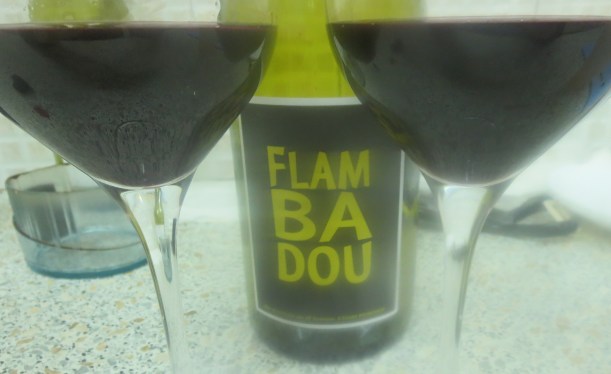
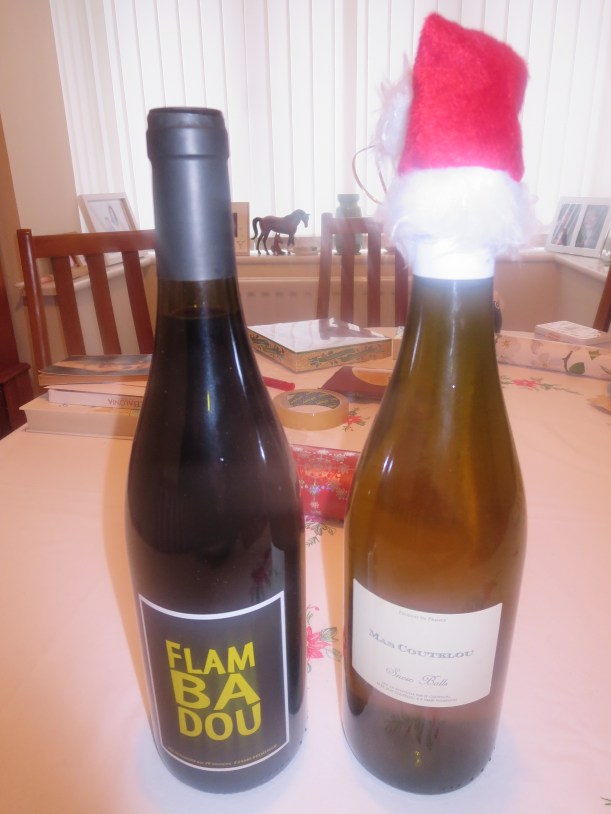
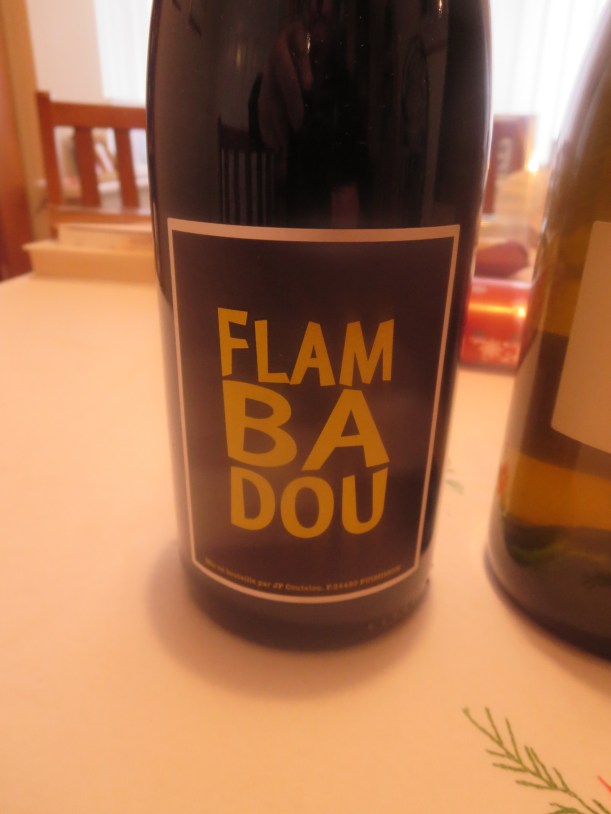
Christmas colours are red and white so I shall look forward to great red and white wines. So top of my list are Flambadou 2013 and 2014, perhaps the best wine in both vintages from Mas Coutelou. Pure Carignan and stunning.

IMG_3315

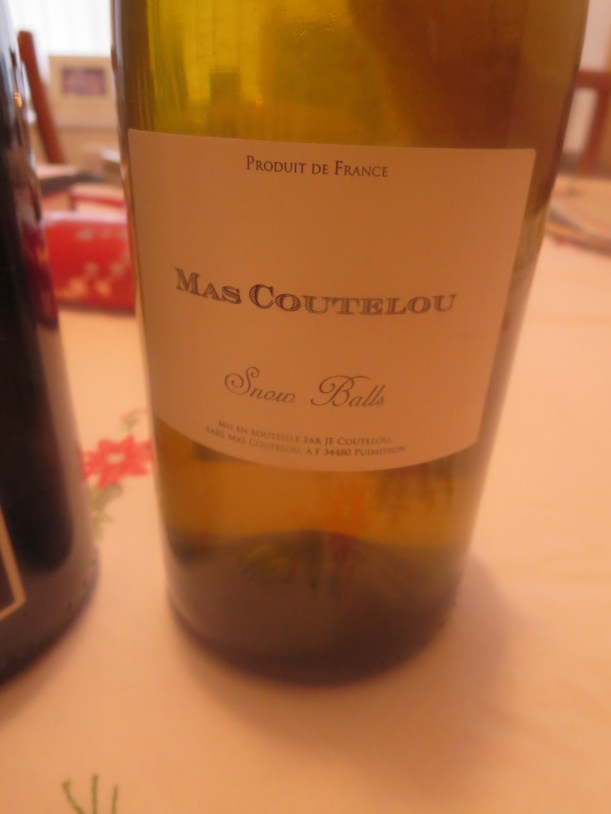
Snow Balls will be my white wine, appropriate for the time of year. Sauvignon Blanc, Grenache Gris, Maccabeu and Muscat grapes, very dry, full of white fruit flavours and incredibly moreish.

IMG_3316

And of course there is a sparkling element to the season, glitter and tinsel so:

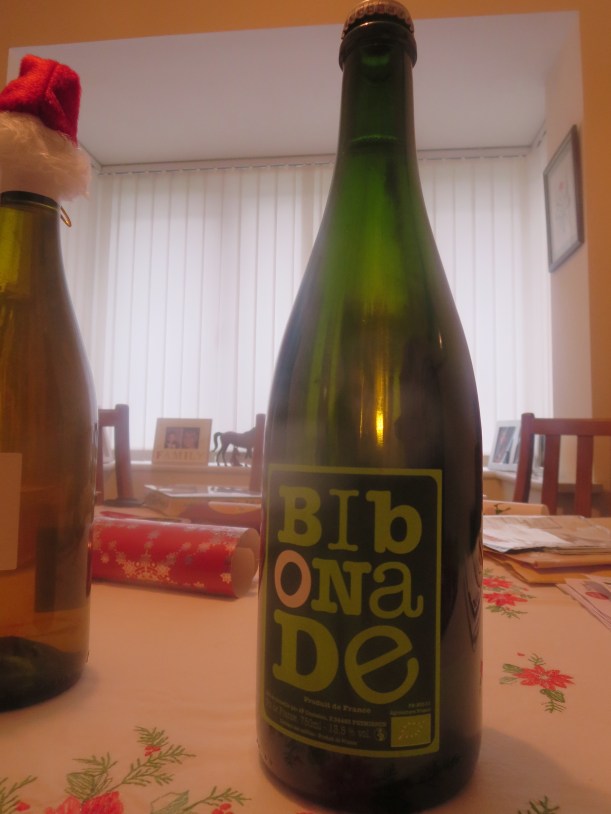
IMG_3317 More Sauvignon Blanc, Muscat and Grenache which are complanted in La Garrigue vineyard and made into a sparkling wine with a degree of sweetness, Bibonade is a lovely aperitif, my wife’s favourite!

Meanwhile there’s lots of games and fun. Blind tasting for example:

IMG_3318 Well last night Iain, my brother in law, served up a Romanian red made from the Negru De Dragasani grape – I’d love to be able to say that I identified it immediately but as I’d never heard of it before! It was actually good, very spicy and refreshing.

So my wishes are simple. For Jeff, lots of rest and sunshine as he holidays with his sister Catherine in Guadeloupe. For Puimisson and the Languedoc lots of rain as there has been so little for months and water levels are falling fast. For Icare, lots of treats, postmen to chase and mud to roll in.

IMG_3260 For you kind people who take the trouble to read my blog I wish you nothing but the very best; peace happiness and health. It has given me so much pleasure to hear from you and know that my love of wine, the Languedoc and learning are shared by you in the 106 countries from which you come. Thank you so much and a very happy Christmas.

IMG_2830

Margon’s lights (on October 12th!!)


8 Comments

Case of 2015 – reds

caseofwine_grande

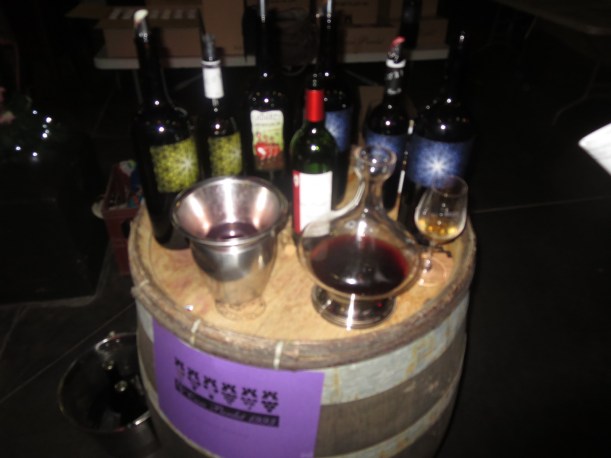
My favourite wine of the year and, therefore, a definite for this selection was the Casa Pardet Cabernet Sauvignon 2011, Costers Del Segre. This is how I described the tasting at La Remise in Arles in March. “The breathtaking wines were Cabernet Sauvignons, not usually my favourite cépage. These wines, from Tarragona, were stunning, amongst the best wines I have tasted in my 30 years of wine drinking. I was served this wine from 2014, 13, 11 and 2003. Every one was a stunner, rich, deep and complex. Marrying power and elegance, fruit and some oak the flavours simply rolled around the mouth and left me reeling. The 2003 was still youthful, hugely aromatic with dark, brooding fruits and yet a light touch. Beautiful. Just joyful wines.”

The 2011 was my favourite though all four would qualify for the case. A rare moment when drinking a great wine makes nothing else matter for that moment, just the sheer delight of what was in my glass. Superb. I just hope I can find some to buy in 2016!
wpid-20150330110839.jpg

Casa Pardet wines, Cabernet on the right with blue label

Other than Mas Coutelou wines Clos Fantine Tradition, Faugères 2013 has consistently given me the great pleasure throughout 2015. I started the year with the 2012, also great wine, but, as the 2013 was released, it was this vintage which appeared again and again on my table. Corine, Olivier and Carole took over their father’s domaine in La Liquière, part of the Faugères appellation, and have gradually built it up and transformed the vineyards and winemaking. This is a natural wine of clear freshness, fruit, complexity and depth. Carignan and Grenache, those quintessential Mediterranean varieties, dominate and deliver a wine which I would choose as quintessential Languedoc, Faugères and natural wine. My visits to the domaine were some of the highlights of 2015 for me, I greatly admire the family, and this wine is such a reflection of their passion and their beautiful, gobelet vineyards.

Faugères was the wine region which became my favourite of the Languedoc during 2015. I was fortunate to taste most of the domaines’ wines across various tastings and events and to make friends of many excellent winemakers from there. I would recommend wines from Haut Lignières, Ch. La Liquière, Barral, Causse Noir, Mas D’Alezon, Mas Sibert, Capitelles and, the domaine which first attracted me to the Languedoc, Ollier Taillefer.
IMG_1834

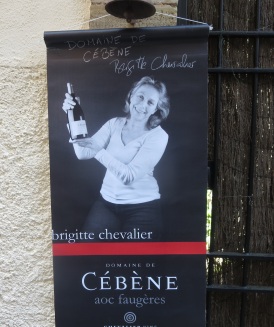
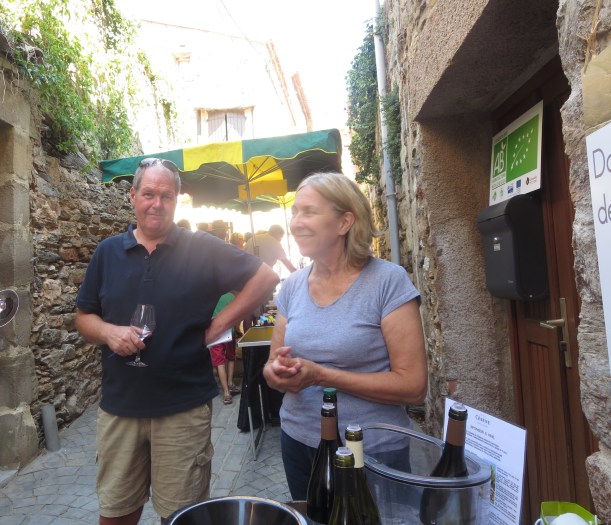
One Domaine though which I rank very highly is Cébène. Brigitte Chevalier had experience of winemaking, especially in her native Bordeaux but came to Faugères because of its schist soils and the freedom to make wines as she wanted. I have been fortunate to become a friend but that is not why I have chosen Domaine De Cébène, Felgaria 2013 for my case. This was one of those wines which, when I first tasted it, made me think ‘this is good’ but which I didn’t rank as outstanding. Then I tasted it again in July at the village wine fair and it had developed into something exceptional, the extra few months had brought it together. As I tasted it was another wine which made me stop analysing, stop thinking about it and just revel in the moment. Mourvèdre, Syrah and Grenache come together in a stunning wine.
IMG_1833

Despite appearances I was thrilled to taste the Felgaria and meet Brigitte again!

The Languedoc Roussillon region naturally dominated my tasting this year. I did taste great reds from Italy (Le Carline), Gaillac (De Brin and Plageoles), the Ardèche (Bock and Les Deux Terres), Burgundy (Magnien and Ardhuy), Rhone (Ferme St. Martin, Vieux Télégraphe), Spain (Descendentes Palacios) plus many others. However, there were so many great Languedocs from La Marfée, Maris, La Baronne, 2 Ànes, Mas Des Chimères, Pelletier, Navarre etc etc. It was difficult to select just a few for this case and then I opened a bottle on December from the back of my collection and it leaped into this case.

IMG_3281

In fact it is from Roussillon and from another wine first supplied by Leon Stolarski. This led me to Domaine Treloar when I started to travel in the region. Founded by Jonathan Hesford and Rachel Treloar, they have established themselves in the region and won plaudits and respect for their work and wines. Their first wines were produced in 2006 and it was a wine from that vintage which I enjoyed so much. Domaine Treloar, Motus 2006 is 80% Mourvèdre with 10% each of Grenache and Syrah. This was always a favourite of mine but the extra years in bottle have added even more complexity to the dark fruits and classic Mourvèdre notes of leather and spice. With the work they have put into their vineyards and further winemaking experience Treloar wines will continue to improve but this debut wine has really hit its stride and deserves its place in the case.
IMG_0267

At Etna Contrade about to taste Cornelissen wines

Wine 5 is more controversial and I’d never have thought I would choose it at the start of this year. In 2014 I had a great holiday on the beautiful island of Sicily and had the good fortune to attend the Contrade Etna, the local wine fair. Amongst very many good wines I tasted those of Frank Cornelissen, the natural producer of all natural producers, making wines without sulphur on the most active volcano in the world. His wines divide critics and are used to berate natural wines by many. And at the Contrade I hated them, they were unbelievably wild, strange and seemed to be made of components fighting each other. So when I tasted the wines again in Arles I had low expectations. I still did not like some of the wines but one amazed me, Frank Cornelissen, Magma 10 (2012). All sorts of aromas from fruit to caramel, flavours of strawberry, plums and spice which opened gradually and lasted a long, long time. Would I want to drink it regularly? Probably not, it is a wine which I admire and remember as a landmark in my tasting history, it was so explosive (appropriately for Etna) and memorable but not easy drinking. Plus enormously expensive and rare. I had to include it here because it was a wine which challenged expectations and made such a big impact.
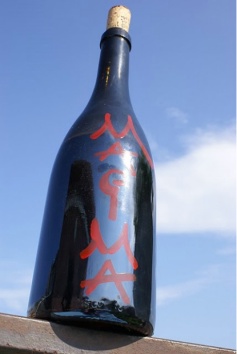
144691

Incidentally it also speaks volumes about Casa Pardet that I tasted their Cabernet after tasting Magma and was even more mesmerised by their wine than the Cornelissen

Other ‘challenging’ wines I really enjoyed included Terre Inconnue, Léonie 2005 and a fascinating wine from Georgia, cradle of winemaking, from the Alaverdi Monastery, Rkatsiteli 1011.

My final choice though goes to the Rhone. Back in June we were bottling at Mas Coutelou when Carole brought along a bottle which was instantly something special, Domaine De Coulet, Brise Cailloux, Cornas 2012. Mathieu Barret’s wine is obviously pure Syrah being a Cornas, and the word pure is very apt. It is clean, fresh and fruity with a razor sharp purity of flavour, aroma and acidity. I have always struggled a little with Cornas because it is so often dense and tannic but this is already drinking brilliantly and yet has the freshness which indicates a wine that will age and become even better. I am in the fortunate position of being able to taste so many great wines but this Cornas stood out immediately as something special. Thanks to Carole for sharing it.
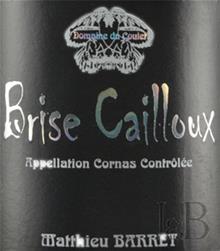
Label

So there we go an almost impossible decision to refine my list to just six wines. Any feedback and choices of your own would be very welcome.

3 Comments

If July is beautiful…

Version française

Si juillet est beau, prépare les tonneaux

IMG_1811

Rome’s Cinsault centurions July 10th

After 3 weeks in the UK I was keen to see how the vines had developed in the meantime. I was aware that there had been a real heatwave with temperatures in the high 30s every day (even the UK was hot for a few days!) but there was little sign of stress in the vines, they are green, voluminous and with some big bunches of grapes. Indeed the grapes are now at around 50% of their final volume and the bunches are closing up with the berries touching each other. Jeff’s latest estimate for the main harvest is that it will start around August 23rd, a fairly typical vintage in that respect.

IMG_1796

Peilhan July 10th, ploughing evident

IMG_1803

Vines are now taller than Pat

I did notice that Jeff had been busy with a further ploughing. This is partly the consequence of the dry weather. Weeds and other plants amongst the vines offer competition for resources such as water and when it is so dry as 2015 (following a generally dry 2014) the vines could have been stressed so ploughing was deemed wise.

IMG_1798

Grapes developing nicely. Spots of sulphur on the leaves from spraying against oidium

There has also been some oïdium (powdery mildew) in the the last few weeks and, indeed, for much of this growing season. Therefore there had been some spraying of sulphur and the oïdium is under control.

IMG_1797

Aoutement, the stems are lignifying

The main change in the vines was aoûtement. This is where the stems of the vines are starting to harden and turn to wood, lignification. The stems turn a reddish brown colour as can be seen in the photo below. The pips in the grapes are also now firm.

Vines can effectively feed and support between 100 and 200 grapes. They produce more in case of damage and therefore many vignerons will be in the vines carrying out a green harvest, éclaircissage, where they cut off leaves, stems and bunches so that the number of grapes is limited to help the vine to provide optimal development.  Normally this would be done on the side of the vine which is least exposed to the sun as the foliage is needed on the more exposed side to protect the grapes from too much direct sun.

IMG_1807

More signs of aoutement

Ironically this process has not been needed at Mas Coutelou so far because of the earlier damage of coulure. (see previous post here). This reduced the number of grapes which developed by around 20% in some vineyards, so green harvesting is not required. There will still be lower quantities of grapes harvested this year, coulure is bad news for the vintage supply and some cuvées will be missing.

IMG_1800

The new vines at Peilhan were watered to help their growth

IMG_1799

Overall, however, the vines are in good health and preparing for the final stages of their annual growth cycle. Rain would be very welcome, reducing the risk of stress and also helping the grapes to swell and to produce more. We didn’t even bring any back from the UK! Maybe the 14th July celebrations will bring some. If you listen to the video below you will hear that the cicadas in Rome vineyard are apparently already celebrating!

Error
This video doesn’t exist


2 Comments

Doctor Doctor

Penicillin cures, but wine makes people happy. -Alexander Fleming

A short addendum to the post about the problems of disease.

Recently when talking to a visitor to his cellar Jeff was asked about using sulphur. His answer is worth repeating. He said that treating vines is like when you have a cold. You start by using cold remedies, hot lemon, tisanes etc and it’s the same with vines. You treat them with the tisanes of horsetail, nettles and ferns.

However, sometimes the cold can become more serious and you have to seek help from a doctor with more drastic treatments. So too sulphur is the dramatic, interventionist treatment. You’d rather not have to use it but if needs must. It remains a natural treatment at least.

Which reminded me of some publicity material Mas Coutelou put out in January 🙂

La preuve que les vins Coutelou sont bons pour la santé


5 Comments

The Joe Strummer of wine?

wpid-screenshot_2015-04-21-07-36-11.jpg

Interesting article in The Guardian this week about natural wine and its development. I think David Williams has it about right. There is a spirit of punk about the natural wine movement. As someone who lived through the punk music scene of 77 and saw all the top punk bands, other than the Sex Pistols sadly, I can see the parallels. The reaction against convention and the big business aspects, the desire for something more straightforward and honest, no more overblown music / wine. Maybe that is why natural wines appeal to me, that link to the music of my past and the similar philosophy. Though I can’t spike my hair anymore.

The unconventional signage of domaine names

The unconventional signage of domaine names

Have a look at this poster for La Remise, a natural wine salon in Arles in March which I described on the Tastings page.

wpid-screenshot_2015-04-20-22-14-06.jpg

 Remind you of anything? This?

wpid-collage_20150420223047166.jpg

David points out that many people have a real antipathy towards natural wines just as many people did towards punk. Never mind that you haven’t experienced it just criticise because it’s new and it doesn’t fit convention. Or because you missed its start so don’t want to be seen as a latecomer. Utter boll**** as the album says.

He is right too that not everything is good. I saw and heard and bought some absolute rubbish in punk music. For every New Rose there was a Generation X song. Or Plastic Bertrand! I have tasted some of the ‘bacterial murk’ in natural wines and many that I would never want to taste again. But there was New Rose and Anarchy and White Riot and Blank Generation. And there is Barral and Fahl and Pardet and Foillard and Métras and ….

However punk had a long lasting influence in the way that music was made from grunge to thrash metal to rap. And the way that music is made, the independent labels etc and the publish it yourself attitude we see online these days. It makes people think and question the way they do things. Many winemakers are rethinking their approaches to sulphur even if they don’t want to eliminate their use. So too natural producers often forego the big labels and go their own way, Vin de France rather than AOP for example. And look at some of these:

wpid-20150330143635.jpg wpid-20150330131330.jpg

Punk was a reaction to triple albums of mind numbing drum solos performed by posing, preposterous public schoolboys. Natural wines are a reaction to overextracted, 200% oaked, jammy Parkerised gloop. Instead of twiddling the knobs on the mixing desk or reverse osmosis machine let the music or the grape speak for itself.

Perhaps too press reaction is coloured by its loss of control? No longer the arbiters of taste and what is good. Instead fanzines for punk and now blogs for music and wine are the, apologies for this, grapevine.  Fewer free tours to Bordeaux, Beaune or Buenos Aires can make those journalists turn sour.

Many natural winemakers will fall away, as did punk bands. Some will shine then fade quickly. Others will live long or develop. A new wave. But natural wine is here to stay as Williams says. The movement is widespread in the heartlands of France, Italy and Spain. People do like the freshness and vibrancy. Yes there is an annoying trendiness but as that settles we are left with some great wines which will endure.

A magnum of Classe

A magnum of Classe

The article recommends Classe of Jeff Coutelou and it is a great wine. This is a wine that should definitely stay and not go. This is wine made by a free thinker and a creative artist. Joe Strummer’s songs led The Clash from punk fringe to recognition as top class. Oh and notice anything?

Joe Strummer

IMG_0249

Joe, I mean Jeff

Now then who’s the Johnny Rotten?


2 Comments

Vineyard practices – some answers

Some answers to the issues posed in my last article.

wpid-p_20150412_123017_hdr.jpg

Firstly the vines which were not pruned (taillage). This could be because it’s a way of saving money and resources. Instead of pruning, which is very labour intensive, the vines are allowed to grow and then the growth is regulated and checked through the growing season. This approach has become more common around my part of the Languedoc, led by the domaine in question.

An alternative explanation is that the parcel will be grubbed up but the government officials have to measure the vineyard and enaure regulations are met regarding the grubbing up (arrachage).

The yellowish colour could be disease or the fact that the root stock is having difficulty in the sub soil causing some iron deficiency.

IMG_0821

The vine. Not guyot after all but marcotté. Jonathan was right that this is form of nursery propagation. Apparently marcottage is an ancient Chinese form of propagating fruit trees and widely used in horticulture. Read more. NB, it is in French!

The vine sarment is trained underground to persuade it to grow roots. Growth on the sarment is removed so that it concentrates on growth and root growth. The new growth emerges from the ground to form a new vine. It can be separated from the parent vine or left intact which means that it does not need to be grafted on American rootstock to protect against phylloxera as it is still protected by the parent. Chris Kissick on his wine doctor website described the process at Chateau Boyd Cantenac in Margaux. (Thanks to Chris for his permission to use his work).


2 Comments

Tastings and travels

I have updated other pages on the site and urge you to have a look there by clicking the links at the top of the page.

On the Out and About page there are lots of photos of Spring here in the Languedoc and on a stay in Provence.

The moon over the arenas of Arles

The moon over the arenas of Arles

On the Tasting page I have 3 updates of exciting wines tasted in Pézenas, Arles and Bédarieux. Some of my favourite ever wines and some wonderful people too.

wpid-20150329162856.jpgwpid-20150330110839.jpg wpid-20150330110940.jpg


Leave a comment

Springing to life

I wrote in my last post how, whilst some vineyards in the area were showing plenty of leaves and buds were opening, those of Mas Coutelou were more reticent. Well a visit to Peilhan and La Garrigue vineyards today showed that spring has arrived. Buds are opening, leaves are forming. Even the snails were heading for the foliage, this one had its photo taken and then was removed.

image

What struck me though was the variation in development of the vines. Some were still dormant, others were showing leaves, most were in between with buds just opening.

image

This is partly due to the cépage as some are more precocious than others, often white varieties.

image

The photo above shows a Sauvignon Blanc vine and as you can see it has leaves which are well developed but also flowers already out. Yet vines in the next row were still hardly budding. This was a clear example of how the position of the vine makes a difference, the vine above was on the side of the vineyard (La Garrigue) facing south west, therefore in full sunshine more than other vines. Indeed I was taken aback to see this.

image

In the centre of the leaf you will see the formation of a grappe, the future bunch of grapes. Whilst other vines are still asleep!

image

In the new plantation at Peilhan the wax protection on some of the vines is giving way as these babies begin to grow. Though of course they are many years from providing grapes for wine, it was quite something to see them begin their life. This was a Ribeyrenc Gris vine.

image

The region has had a relatively cool Spring by all accounts (though those of us used to NE England might be surprised to hear it). It has been dry and sunny but strong winds for many weeks have kept down temperatures and dried the soil quickly. This helps to explain why the vines have been slow to start their growth this year.
Moreover, the local newspaper, Midi Libre, today carried a warning story. In the Aude, western Languedoc, Monday and Tuesday brought frosts at night which have damaged many vines which had begun their growth. This is the risk which vignerons face and why they remain nervous about the weather. Traditionally mid May is the time when the risk of frost is past, the saints de glace as those days are known. So fingers crossed, some warm nights and a bit of rain would be very welcome.

image


3 Comments

A March in the vines

After all the diversions around Languedoc Roussillon with my 7Cs it’s time to refocus on the vineyards of Mas Coutelou. March was a warm month and other than a couple of rainy days it was fairly dry which together with regular strong winds meant that the soils themselves became quite dry. Certainly Jeff reported that his olive trees, of which there are many (see vineyard portrait), were showing some signs of stress. They too were pruned this month.

IMG_0739

New olive plantation in Rec d’ Oulette

Prairie olive plantation

La Prairie olive plantation

After more than two months of back breaking work Carole completed la taille. It says so much for her skills and hard work that her meticulous pruning was finished early. She chose to leave the lovely gobelet vines of Rome vineyard until last as, like me, it is her favourite parcel. See her at work here.

I have already written about some of the other March tasks in planting old varieties of grapes in Peilhan vineyard and in bottling some of the lighter cuvées such as PM rosé and 5SO. Note that light is a general comparative term, both wines are on top form. A number of wine salons were attended, eg in the Loire and recently in Arles, a tasting I shall be writing about soon. A second ploughing has been taking place the last few days as the drier weather allowed easier churning and less risk of compacting the soil. IMG_0799 In many parts of the Languedoc the vines are starting to debud, the leaves are showing through. It is a beautiful sight to see them shooting away like this, life returning to the vineyards and the promise of a great vintage ahead. Fingers crossed.

wpid-p_20150405_111445_hdr.jpg

Some buds on a guyot trained vine are just about to burst out.

wpid-p_20150405_124837_hdr.jpg

First leaves on this old vine

wpid-p_20150405_111954_hdr.jpg

Margon vineyard with leaves emerging

In Puimisson however, the vines are just being a little more timid, apparently unconvinced that winter is not still holding a surprise in store.

20150327105411

Shy Syrah vine in La Garrigue

20150327105401_1

Syrah parcel of La Garrigue

The other major task for March has been the preparation of the palissage, the wires which are used to support the vines as they grow later in the year. Gobelet vines are usually self supporting but many of the Syrah vines you see in the photographs above are cordon trained and will grow up the wires. The weight of last year’s vines and the passage of winter means that the wires are sagging a little and need to be tightened for 2015. Michel and Renaud have been tackling this using a specialist tool but, believe me, this was hard work and happily I left them to it.

wpid-20150327103448.jpg

20150327103454Instead I enjoyed the wine tasting. Well it was March!

20150330110940