In March and April I was able to visit a number of wine tastings with the emphasis on natural wines, in Bédarieux, Arles and London. The latter, Real Wine Fair, I wrote about recently and also featured organic and biodynamic wines. One of the features of all three events, upon reflection, was the rise of a number of talented younger vignerons. Now, that should be no surprise, there have always been a number of young vignerons attached to the natural wine scene. Indeed there is a youthful core to the crowds who attend though, again noticeable, the age profile of attendees this year seemed to me to be much higher.
The buzz around natural wines has certainly created interest in the whole world of wine and been an entry point to many younger people who like the ideas and principles of many vignerons who seek to make wine with as little intervention as possible in the vineyard and cellar. It has struck a chord with many. As natural wines have become more widespread, vignerons more experienced in making wines without a safety net then their appeal has broadened. Many wine enthusiasts were put off by the (in my view false) reputation that natural wines were often faulty and wrong. I do believe that winemaking has improved and that consumers have more confidence in the wines, hence the arrival of a broader cross section of clients. As an older wine enthusiast myself I welcome the fact that I am, usually, not the oldest person in the room.
In the three salons there were many familiar faces, vignerons whose wines I have tasted, drunk and bought many times. Others whose wines are not for me. I shall return to these people in the next article. Many moons ago I likened the natural wine movement to punk rock in that it was creating an alternative scene and would introduce change on the whole industry. Just as punk was followed by a new wave of music, artists such as Joy Division, Talking Heads, Blondie and Elvis Costello who were influenced by punk but channelled its energy in a different way, I believe that there is a new wave of younger winemakers in the natural movement who are building on the work of the pioneers, the punk winemakers. Some for better, some for worse.
Here are some of those winemakers from the salons whom I would heartily recommend as vignerons to follow, whose wines I would gladly drink.
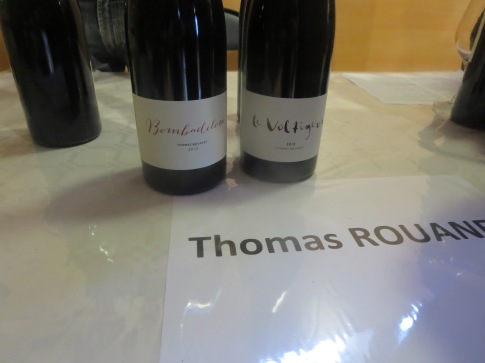
Thomas Rouanet from the St Chinian area I met at Bédarieux and enjoyed his wines especially the pure Carignan of ‘Le Voltigeur’ 14 with lovely fruit and freshness. I look forward to trying more from him.
Bastien Baillet has a 2ha domaine called La Bancale in the Fenouillèdes area of Roussillon. I gather he has been working with Jean Louis Tribouley, a very good producer himself of course. I very much enjoyed his ‘En Carême’ a Carignan based wine with plenty of red fruits and a nice balanced finish.
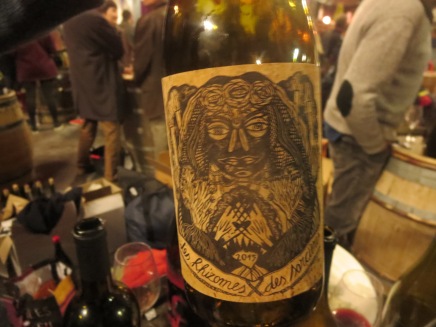
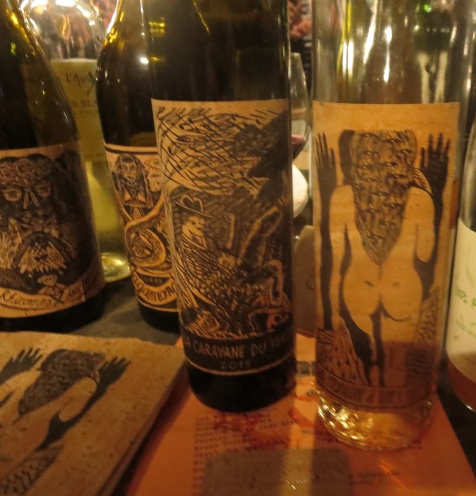
La Cave Des Nomades is also in Roussillon but this time in one of my favourite French towns, Banyuls sur Mer. Run by a young Portuguese and Polish couple their wines were without any question one of the big hits of La Remise. I tasted them on the Sunday and by the evening word was out just how good they were. On Monday I saw a number of prominent cavistes at the stand. With only 3ha their wines will run out quickly I am sure. José and Paulina’s domaine is part of the excellent 9 Caves project in Banyuls. A lovely range including an excellent vin doux naturel, my favourites were a very deep, balanced and fresh Grenache Noir 15 and a beautiful Grenache Gris 15 called ‘Les Rhizomes des Sorcières’, real depth of fruit with a delicious, clean finish. Fascinating labels too, one of my favourite range of wines this year.
John Almansa runs Zou Mai in the Gard. He has worked with the excellent Philippe Pibarot and so, like Bastien Baillet above, he has learned about winemaking from a good teacher. Surely this must be a huge help. His first wine is a Cinsault and it was a very drinkable, fruity wine with a clean finish.
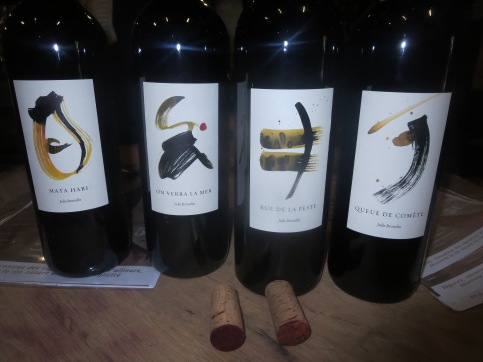
Julie Brosselin used to work with another domaine in Montpeyroux but has now struck out on her own. A number of people told me to go taste her wines, including excellent judges such as sommelier Sandra Martinez, and I am glad that they did so. Her white wine ‘Mata Hari’ was good and also the unusual combination of Cinsault and Mourvèdre in ‘Queue de Comète, full of juicy fruit. As a new domaine these were both 2015s and will improve still further.
Thierry Alexandre has been working with Les Miquettes in the Ardèche and has now produced wines of his own from just 1ha of vines. His Pet Sec (Marsanne/Roussanne) 15 was one of the best PetNats on offer at La Remise, fresh pears, clean and round. He showed the 14 and 15 St Joseph and they were both good, the 14 more rounded of course but both with good fruit and a round but clear finish, classic Syrah.
Most links I can find to Samuel Boulay say he is a Loire producer but the address given at La Remise was for Ardèche. A good Viognier/Marsanne was deliciously fresh and a Grenache / Merlot blend was very good, lots of round fruits and a fresh aftertaste.
Most of these winemakers were in a group of young producers invited by La Remise, an idea which I find encouraging and supportive. More salons should follow. From last year’s group a number returned as part of the main salon in 2016.
Firstly, Christelle Duffours of Mas Troqué, whose wines from Aspiran in the Languedoc are really starting to express themselves very well, improving all the time. Equally so Joe Jefferies of Bories Jefferies in Caux whose wines sell out quickly. I know Joe and so declare a partisanship, but I can honestly say that his white Pierre De Sisyphe (mostly Terret) is one of the best natural white wines I know. The reds are very good too.
One other domaine from that group in 2015 was L’Ostal from near Cahors. I wrote about them then and again after Labande De Latour in November. It was great to hear from Louis and Charlotte Pérot that they are doing well and that a 3* Michelin restaurant has taken their wine. I am not surprised. They are extremely talented winemakers as well as lovely people. Their wines are very drinkable, even young, and yet retain the spine of Malbec and Cahors which is traditionally a tough wine. Wines such as ‘Anselme’ and ‘Zamble’ are of high quality but there is always a refreshing lick of acidity which makes them so good to drink.
On my return from Arles I was talking to Jeff Coutelou about the wines I had tasted and he told me that he was very impressed by L’Ostal and that it is rare to find such talented winemakers as Louis and Charlotte. That was good to hear, as it meant I wasn’t mistaken in my praise for them but in particular it was good for the Pérots.
These are all skilled winemakers, I would happily drink their wines anytime. I do hope that I don’t patronise them by calling them young winemakers as though that makes them lesser producers. With more experience they will surely be looking to improve their wines still further and in their hands the future of natural wine looks healthy and successful.
Whilst making a brief return to the UK I noticed that The Real Wine Fair was taking place in London, a showcase for organic, biodynamic and natural producers. Thus, I endured a 5.30am start to the day to travel down to London, returning home at 11pm – but it was worth the long day. Above all it was an opportunity to taste outside of my usual wine list of France, wines were on show from all around the world. My plan, therefore, was to taste from these other places to give myself a better context and understanding of wines.
I liked the set up where producers were set out across the rooms by country and region. It allowed easy movement and planning, the catalogue was well set out and there were good food stalls available too from the likes of Ottolenghi and Galvin. The seminars were another good feature, I’d have loved to hear Alice Feiring or Jamie Goode on the Sunday but it was a real pleasure to listen to Wink Lorch speaking on the Jura.
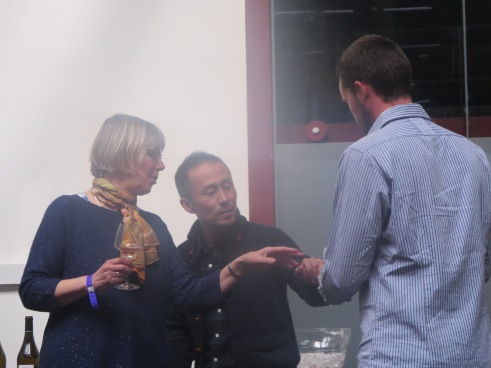
Wink Lorch with Kenjiro Kagami and Julien Maréchal
So these were the wines I enjoyed the most, as ever it was impossible to get round all of the producers I would have liked to visit.
France
Mouthes Le Bihan, Cotes de Duras Les Apprentis 2010 Merlot 60% with Cab Franc, Malbec and Cab Sauv – rich cassis nose and blackberry fruit. Nice whites especially 100% Semillon Pérette et les Noisetiers 14
Roc Des Anges,Maury Blanc Terres de Fagayra 14 (GrGris/GrBl/Macc) dense fresh, a lovely style of vin doux naturel – I liked this white version a lot
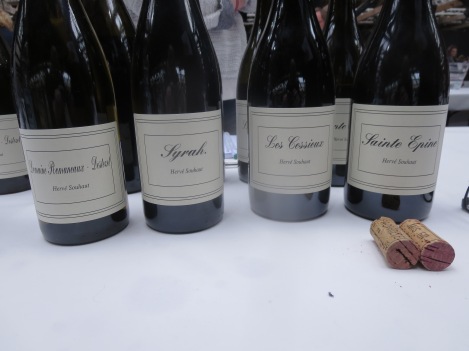
Domaine Romaneaux-Destezet (Hervé Souhaut), whole range good especially the 2014 VdP Ardèche wines Roussanne/Viognier and Syrah and the 2 2014 St Josephs, Cessieux and Saint-Epine with great depth yet balanced and fresh
Foillard, Morgon Classique and Cote De Py both 14s both classic Beaujolais, the latter very concentrated
Lapierre, Raisins Gaulois, VdF 2015 – lovely fruit, simple style but extraordinary freshness and flavour from this top Beaujolais domaine
De Moor, Chablis Vendangeur Masqué 14, lovely zesty but round finish with long, dry finish
Derain, St Aubin Blanc ‘En Vesvau’ 14, concentrated, fresh, long and round
Buisson, St Romain Blanc especially the 13 (no so2) and the Meursault ‘Marguerite’ 14 with lovely aromas and fruit and good use of oak
Domaine de la Borde, Arbois. 2014 Chardonnay ‘Caillot’ lovely, 14 Savagnin lively, zesty but yellow fruit and balance, 15 Ploussard Les Charmines looked to be older but very good soft red fruits
Domaine Des Miroirs (Kagami), Chardonnay Sonorité du Vent 13 – terrific, textured, light golden colour with fresh nutty white fruits
Alexandre Bain – all wines especially ‘Pierre Precieuse’ with 30% botrytised fruit yet still dry with roundness and length
Italy
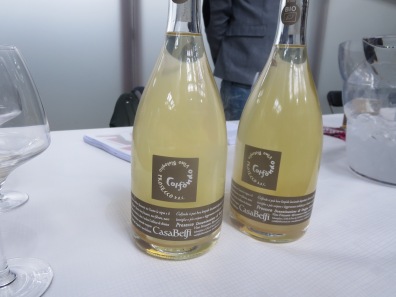
Proseccos from Casa Coste Plane di Loris Follador and Casa Belfi especially latter
Princic, older wines, they do need time eg 11 Vino Bianco Trebez (PinotGrigio/Chard/SauvBl) 8 days on skins showed long, stone fruit flavours
Vodopivec, 12 Carso Vitovska Anfore with textured pure fruit, 12 Vitovska Solo MM12 over 6 months skins, 2.5 years in foudre – orange colour lovely minerality, almost liquorice
La Stoppa, Reds best, eg Trebbilo Rosso 14 with fresh cherry acidity and best of all the intense red fruits, long maceration and years in foudre of the 07 Macchiona (possibly my favourite wine of the day)
COS, 14 Rami Bianco zesty and golden, 14 Cerasuolo deep, dark red fruits with lovely acid and best of all 14 Nero di Lupo, darker still, raspberry and cherry
Occhipinti, favourite of the Italian producers; SP 68 Rosso 2015, bright vibrant fruit and colour, tremendous Frappato 14 rounder than COS with red fruits, almost menthol freshness, lovely
Spain
Forja del Salnes, Rias Baxas – brilliant wines from old vines Albarino, 13 Leirana Finca Genoveva great concentration and depth (100 year old vines) yet still zesty, 2011 Golliardo A Telleira (60 year old vines at highe altitude) concentration, rich flavours but still clean. Red 13 Bastion de la Luna Tinto (Caino, Espadeiro and Loureiro grapes) – pure red fruits.
Celler Batlliu de Sort, Costers del Segre – reds a bit woody but lovely 13 Biu Riesling pure slatey Riesling, almost piercing citrus freshness
Germany
Thörle, excellent range, the dry Rieslings were all good especially Saulheimer Kalkstein 14 and impressive Schlossberg 14 (slate dry mineral). The Kabinett Riesling 15 was gorgeous, green apple with 56g of residual sugar. Spätburgunders too especially Kalkstein 14 and the single parcels 13 Probstey and 13 Holle with good concentration and depth.
Austria
I said hello to Messrs. Tscheppe and Muster but did not taste due to time pressures as I had tasted their wines in Montpellier at Les Affranchis. They remain top of the class for me.
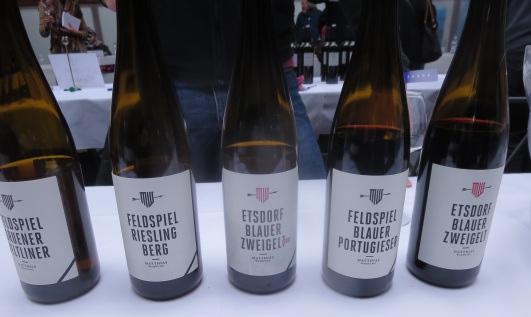
Warnung, 2013 Skin Contact Grüner Veltliner and 13 Riesling Berg especially the latter with spicy freshness. Nice Portuguieser Feldspiel 13 with round fruit and 13 Etsdorf Blauer Zweigelt, a rosé wine with citrus freshness and white fruit flavours.
Schnabel, Morillon 14, a golden Chardonnay, mineral / texture and long nutty flavours, good Pinot Noir Hochegg 14 classic Pinot Noir
Georgia
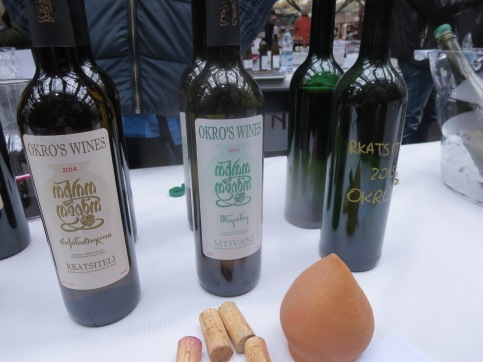
Okro’s Wines, Rkatsiteli 14 more rounded than some of the other whites, tighter, Rkatsiteli Pet Nat 15 also very good appley fruit
Bitarishvili, 14 Iago with skin contact was actually fruitier than the non contact version, a little reduced but nice
Mandidli, 2015 Mandili Mtsvane grape, fruitier and rounder than other examples of this grape elsewhere, fruity, balanced
Revasashvili, 15 Chinuri clear pear / apple fresh and textured.
South Africa
Testalonga, lovely range. El Bandito skin contact 15, lovely Chenin Blanc, apple fruit and clean. Sweet Cheeks 15, Muscat d’Alexandrie skin contact, dry, fruity clean (impressive for a grape which can become very blousy). Dark Side Syrah 15, spicy, coloured. El Bandito, Mangaliza apple and pear with lovely balance. Keep On Punching 15 Baby Bandito, Chenin, stainless steel dry, fresh clean apples. Baby Bandito Follow Your Dream (Carignan) 15, fresh, spicy light. Very keen on these wines from Craig Hawkins, a good man to talk with too.
Australia
Patrick Sullivan, Haggis 15, assemblage of leftover wines but really good fruit
USA
La Garagista, Vermont – Unusual varieties due to climate. Harlots and Ruffians 14 – Frontenac Gris 5 weeks contact but nice and fresh. Frontenac Noir (related to Aramon) in Loups Garoux 14 lovely aromas but a bit foxy and wild.
Kelley Fox, Oregon – Momtazi Pinot Noir 13 with concentration, depth and flavour. Maresh Pinot Noir 13, lighter colour but more fruit and elegance
Clos Saron, California Sierra Mountains– Carte Blanche 14 (Albarino) green, zesty fruity. Blue Cheer 14 nice blend with Cinsault lifting the Carignan to a lighter feel, spicy. Heart Of Stone Syrah 09, truffley, good deep and balanced. Stone Soup Syrah 12, fresh, tannic but good fruit
Ambyth, California Paso Robles – nice whites especially Grenache Blanc 13 but best was Venustas 11, (Tempranillo/Sangiovese) lovely balance of fruit and spice, complex and long
Overall impressions. Well it was good to see how the world of wine is being influenced by organic, biodynamic and natural ideas. Whatever your thoughts about these influences they are making winemakers think about the way they produce wines. Interesting to see how producers as far afield as Oregon and Georgia, South Africa and Wales have embraced similar ideas and thinking, encouraged by events such as this no doubt.
There were some negatives for me. Skin contact is fine and clearly very fashionable for white wines. However, there were a lot of clumsy wines made in this style with overlong maceration or over extraction. They ended up tasting harsh and lacked fruit or freshness.I know some people like that, but not for me. Other producers did long maceration but kept fruit, freshness and balance. Maybe it is a learning process but I had really heard enough about skin contact wines by the end of the day. There were also some reductive wines, others with brett and mousiness. However, these were few in number in a Fair where I tasted over 300 wines.
There were many interesting wines, there were many very pleasing wines, and some excellent wines. I particularly loved the ranges from Occhipinti, Testalonga, Thörle, Clos Saron, Alexandre Bain and Romaneaux-Destezet. My top half dozen wines were:
How do you follow the Perfect Day? Apparently you just wait and, like the proverbial London bus, two come along together.
March 8th dawned chilly, just 2°C when I left Margon at 8am, bright and clear, a perfect day for the last Spring bottling. The biodynamic calendar was favourable too, last day of the descending moon and a flower day.
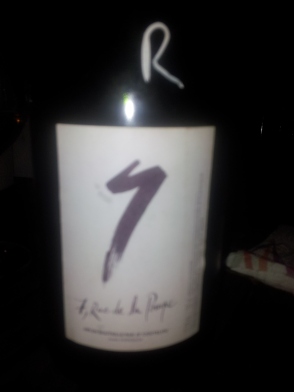
In fact we started with a morning of habillage (labelling and packaging). The start of a longer process of habillage to prepare wines to send to cavistes around the world, it’s time to earn some money! This morning palettes of ‘5SO Simple’ and ‘7, Rue De La Pompe’ were put together, a smooth enough process as Jeff, Michel, Vincent and I have all done this many times now (I’m getting to be an old hand!). One interesting feature is how different regions require different labels, customs stamps and even palettes, the USA different to Europe for example. So making sure you have the right matériel demands some time and attention.
So far, so good. The banter was enjoyable as ever, Icare provided some amusement when, hiding under the rollers, he gave himself a shock when a case of bottles passed over his head. The day improved with the arrival of Thomas, a sommelier who spent time with us at vendanges, excellent company. However, the day then took an unexpected turn for the better with a phone call from Sylvain, one of Jeff’s myriad friends. He is a scientist, intellectual and fisherman and phoned to say he was on his way. With him was a cool-box full of sea urchins, sea bass and black mullet – all freshly caught.
So, just after noon, we repaired to 7, Rue De La Pompe, the house rather than the bottle. There Sylvain prepared a feast. The oursins, fresh with their delicate tongues of iodine, concentrated flavours of the ocean; a sea urchin butter spread on fresh bread; sashimi of bass and mullet; sea bass marinated in olive oil and Jeff’s white wine vinegar; sea bass chips (little fried nuggets of flesh and skin); chunks of bass and mullet fried lightly in a tempura beer batter; fish egg omelette; barbecued sea bass; black mullet grilled with broccoli, then coated in a Japanese sauce. Totally delicious, everything was a delight, every morsel.
The freshness of the fish and Sylvain’s imagination and skill provided us with a 3 hour banquet, conversation around the role of fish and wine in religions, lighter topics too. Sometimes I have to pinch myself.
And, of course, wines.
Snow Balls 14, that curious cuvée of Sauvignon Blanc, Grenache Gris, Muscat and others, it shouldn’t work but it always does – so fresh, clean, dry and fruity, a perfect match with the sashimi for example.
5SO Simple 15, ( the best 5SO ever?), perfumed cherry Cinsault, dangerously fruity and moreish but with a little more texture this year. A good match for the cooked fish with its cleansing acidity.
La Vigne Haute 2010. Oh my word. This is my favourite Coutelou cuvée and the 2010 is stunning. Pure, pure Syrah, bottled joy. Deep brambly red fruit scents, as you sniff the wine you are drawn in to the luscious aromas. Rich, smooth texture with the softest of tannins supporting it, cassis and red fruit flavours and soooo long with flavours of chocolate and coffee emerging. OK I’m sounding poncey but seriously, this is fantastic wine. It will improve for a few years yet and I have some in my ‘cellar’, happy man.
2010 La Vigne Haute and its maker
An indulgence, the whole meal. The kind of life affirming meal which everyone should enjoy from time to time.
And yet, back to bottling on this clear, fresh day. A special cuvee, one of the little cuvées. A barrel of Maccabeu and Grenache Gris from 2012 which will be named after the top Spanish ham, 5J. The aim was to produce a wine like a light Fino, slightly oxidised but concentrated and fresh to match those hams. The barrel was formerly used for making cognac (adding more flavour) and the wine succeeds in its ambition.
Vincent, Sylvain (standing centre), Thomas (kneeling) and Jeff
It resembles a light fino, it is dry and the slight oxidation adds complexity but it is the clear fruit which lingers, lifted by that barrel influence. I was reminded of the Jura white wines I love, a Ganévat for example, but the fino / light amontillado sherry reference rings true. It is utterly delicious. A special cuvée demands a special bottle, so 50cl flute bottles were used with a glass stopper rather than a cork. Just a few hundred bottles of something very special.
The Maccabeu / Grenache Gris pressed in 2012 (photo by Jeff)
The barrel was then refilled with some of the top quality Maccabeu of 2015, ready for another delight in a few years. The treats continued though. Little fish are sweet. These were the words used by one of my heroes, WA (Arthur) Stephenson. He was a hugely successful horse racing trainer from my home area in County Durham and when his horse won the Cheltenham Gold Cup (jump racing’s top race) in 1987 he explained why he was at his local track instead of at the big meeting, “little fish are sweet”. As I had referenced Bowie last time I thought it was an apt and indulgent reference to the great man, who shared his time and thoughts generously whenever I spoke with him.
There was time to taste the Grenache wine which I made for my 100th blog post with the help of my friends. I intend to write a little more about this, suffice to say that the wine is developing very well in two different sized barrels and one super-sized glass bottle.
Tasting the grenache
A tasting too of the 2015 Grenache Sélection De Grains Nobles, quietly maturing. Dark plummy colour, rich and round but it was black grapes that I could taste believe it or not with a sweet, raisin edge. A wine to wait for, and it will repay the patience I am sure.
SGN Grenache
Finally, a 40 year old Muscat. Figgy aromas, black olive and molasses. No sign at all of tiredness just intense, thick, sweet nectar yet still an acidity to keep it in balance. Liquid sunshine, a long past summer captured in a bottle, revived in the glass for us. A perfect end to (another) perfect day.
And so, to the Languedoc and I visited a number of domaines, some I knew already some were names I wanted to follow up. I am glad to report that the region more than held its own against the others represented. The Languedoc, and Roussillon, are sources of great wines.
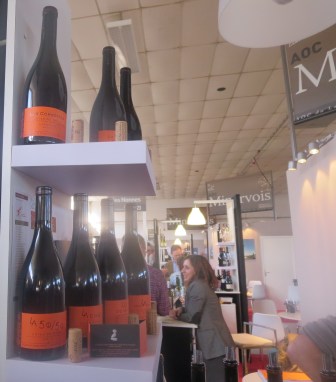
Chateau Maris is in the Minervois area, I enjoyed their wines at Millésime Bio last year and was pleased to taste the new vintages. Some were brut de cuve (straight from the tank so immature) and still a little young for me to really appreciate but there were some good bottles especially Las Combes 2014, 100% Grenache with ripe, round fruit balanced with soft tannins. Lovely now, better in a couple of years.
Domaine Gros-Tollot produce Minervois wines as well as other wines which are made outside the appellation rules. I confess to some bias against the domaine at first, two top Burgundy producers with a side project in the Languedoc? Surely this can’t be honest Languedoc wines. I was proved completely wrong. The wines are excellent, soft fruits with structure and complexity behind them, often from an outstanding use of oak which really does melt into the wine, adding to its aromas and flavours. I liked all the wines such as 2014 La 50/50, Fontanilles 14, and Combettes 14 which is produced from Marselan grapes, very much a Languedoc wine. Best of the bunch for me was La Ciaude 14 made from one vineyard of Syrah, Carignan and a little Grenache.
Mas Gabriel is a firm favourite of mine, almost a neighbour in the village of Caux. We enjoyed a chat with Deborah Core as well as tasting the new vintages of some of my favourite Languedoc wines such as the Carignan Blanc Clos Des Papillons. Special mention though for Les Fleurs Sauvages 2015, the rosé is medium coloured, clear though delicate red fruits and scents of those wild flowers. Very clean and dry it is a top quality rosé, which deservedly sells out very quickly.
Le Conte Des Floris comes next, also based in Caux, though the new cellar is in Pézenas. I love the wines of this domaine, I can’t remember a dull one. Driving forces behind the Wine Mosaic project Daniel and Catherine Conte Des Floris make a great Carignan Blanc Lune Blanche, the 13 was excellent. I really liked Carbonifère 12 and Homo Habilis 12 but my favourite was the Carignan Noir wine Basaltique 2014. Classic Carignan red fruits with an earthy, dark side adding complexity and, undoubtedly, longevity. Amazingly long, very fresh, full of flavour – one of my favourite wines of the whole event. This is one of the very best Languedoc domaines.
Alain Chabanon is a renowned Languedoc producer, I am told he takes no prisoners but it was his wife who presented the wines. I have tasted them before, eg at last year’s Montpeyroux Portes Ouvertes, but they were on better form here. Campredon 14 and Saut De Côté 12 were both very good but my star was Les Boissières 2012. A classic Languedoc blend of Grenache/ Syrah/ Mourvèdre there was a depth of red fruits on the nose and in the mouth with complexity from 24 months of maturing before bottling. I preferred these three wines with classic Languedoc cépages to the more famous Merlot based wines which he makes. Incidentally his website is terrific with a short video of him presenting each of the cuvées and good technical detail.
Domaine De La Marfée is another which I would consider to be one of the very best Languedoc producers, and another I know thanks to Leon. I highlighted every single one of the wines in my notebook, from the lovely Blanc 13 to the most structured of their wines Champs Murmures 12. Complex, full, fruity, Della Francesca 12 and Les Vignes Qu’On Abat 12 were equally good but I actually chose the simplest of their red wines as my star on this occasion. Les Gamines 2013 is Mourvèdre/ Syrah and a little Grenache with a lighter structure than the other reds but no less complexity and fruit. I liked it so much that when we went out to eat at Trinque Fougasse in Montpellier that night I chose this wine to accompany the excellent food. Rare to find a whole range which is outstanding but Domaine De La Marfée achieves it.
Domaine Canet Valette is yet another Languedoc star name, this time from the St. Chinian area. The reds are the stand out wines, Marc Valette described Antonyme as a vin de soif, his beaujolais, and it is a good everyday wine. I have often bought bottles of Une Et Mille Nuits in the past and the 2013 has delicious soft red fruits. The most famous name here though is Maghani and with reason. Marc served three vintages, 08, 10 and 14 and though the older vintages showed just how well it ages it was the Maghani 14 which I liked most. Concentrated and tannic still (this was a bottle made just for the event) there is an enormous depth of red fruits and real power, yet beautifully balanced.
With Marc Valette
Mas Des Capitelles is a Faugères producer whose Carignan, Loris, was a wine which I really liked at a Millésime Bio offline where tasting reds was difficult. I wondered how in better conditions their wines would hold up and I am delighted to say they were even better. Catiède is classic Faugères from a vineyard under biodynamic conversion, 13 and 14 were good. The Vieilles Vignes 13 and 14 were even better, nice gentle use of oak to add complexity and extra depth from the greater use of Mourvèdre. Loris was good again, a new favourite of mine. Then we came to a series of three wines which the Laugé family make only in special years when they have an exceptional crop of one grape. Collection no. 1 2007 was made from Mourvèdre (with a small amount of Carignan and Syrah), and was chosen by the magazine Terre De Vins as one of their top 12 Languedoc wines. And for once I agree with a magazine! Complexity in a bottle, still fresh and youthful after all these years, great wine in short. Collection No. 2 is from 2011 and this time it was the Syrah which was exceptional and so dominates this wine. And no spitting this wine, I drank my glass. The Syrah leaps from the glass with its dark and red fruit aromas, the flavours match up and are deep and long. Great Syrah, great Faugères. I was also treated to a sample of the Collection No. 3 which will again be Mourvèdre led and it didn’t disappoint. Hard to choose just one wine but Collection No. 2 and that memorable Syrah just edges it for me.
Faugères is, in my opinion, the Languedoc’s star region and I enjoyed meeting up with other favourite producers in their area of Vinisud (incidentally it was very useful to have the producers from one region all in on area). My friend and top class producer Brigitte Chevalier of Domaine De Cébène was there; Jérôme Py of Causse Noire whose wines are getting better and better including a lovely Mathias 2011; and Jérôme Rateau of Haut Lignières as well as his eponymous range including an excellent Sur Le Fil 14 which is not yet bottled.
Finally it was a pleasant surprise to run into one stand just as I was preparing to leave Vinisud. Les Beaux Nezs Rouges was a group of natural wine producers sharing the stand. Amongst them were three very good producers from Aspiran, David Caer (Clos Mathélisse), Grégory White and Régis Pichon (Domaine Ribiera). I like the wines of all three and it was good to finish the salon on a high with a just a hint of the new style of winemaking. (More on David Caer on my wine of the week page.)
Régis and Grégory beneath their red nose images
A very enjoyable salon, lots of good wines and a range of food stalls, wine accessories and various wine related activities. This is a salon for the trade and lots of business was being done all around. At the heart though is the wine and, happily, it remained the star of the show.
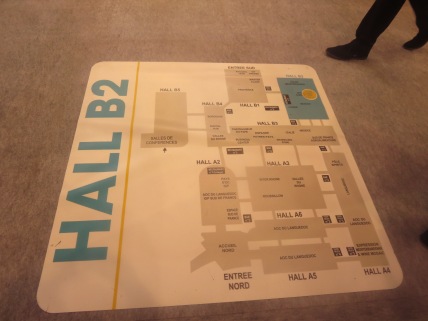
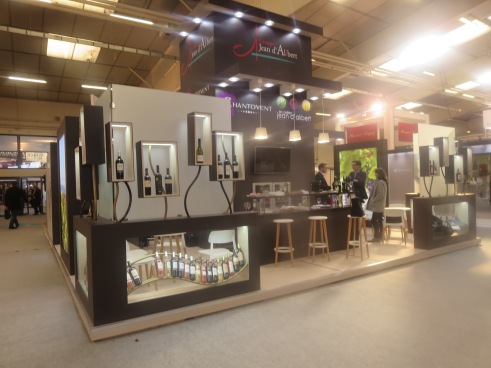
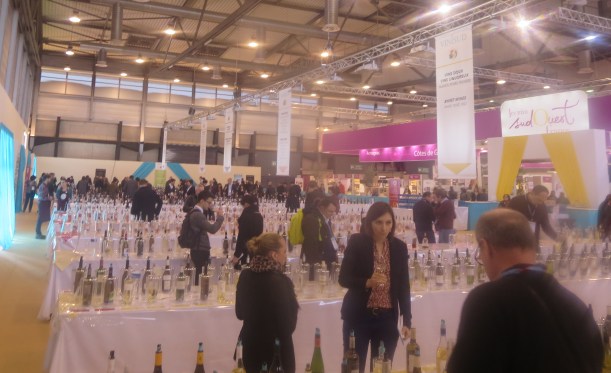
I thought Millésime Bio was big, Vinisud is almost double the size. It showcases wines from around the Mediterranean. 1380 producers were listed as being present though as some shared stands there were probably more. Unlike Millésime Bio where all the producers are given a bare table to present their wines, Vinisud allows producers to pay for different size stands with full publicity displays. Thus some of the big producers such as Chapoutier, Paul Mas and Gérard Bertrand had huge stands with displays of wine, tables to meet and greet clients and various PR offerings. To be honest that’s not my thing and I prefer the more egalitarian approach.
One of the big commercial stands
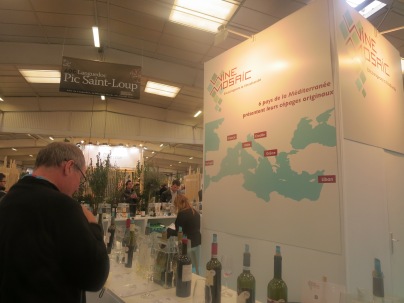
It was interesting to note some regions club together to create big stands to rival the big commercial outfits, Pic St. Loup was one example. There were also some very interesting areas, the Palais Mediterranée for example, where hundreds of bottles were available to taste without the producers so I was free to taste at leisure. It was there that I tasted some very big names from the Languedoc and other regions whose wines were not very good at all. Conversely, there were some nice discoveries and good bottles.
Palais Méditerranée
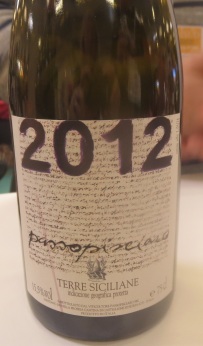
Even better was the Wine Mosaic area, perhaps my favourite part of the whole event. Wine Mosaic is a group of producers and wine enthusiasts who promote more obscure grape varieties, an objective which matches one of my wine enthusiasms. Again we were left to taste freely and I experienced amongst others, Brachetto, Bouchalès, Agiorgitiko, Aleatico, Obeidi and Mavrodaphne as well as others more familiar to me such as Aramon, Carignan and Nerello Mascalese. There were grapes to represent almost every letter of the alphabet, and the Greek alphabet too! I found it fascinating, some interesting flavours and good bottles such as a Ghisolfi Barolo 2012, Passopisciaro 2012 Nerello Mascalese from Sicily and Montirius Mineral Bourboulenc 2014 from the Rhone.
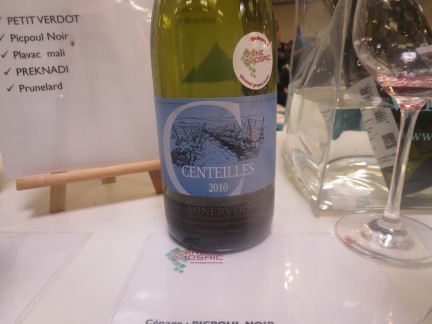
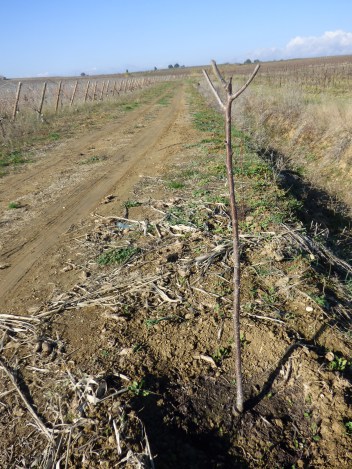
Most relevant and interesting was a Piquepoul Noir blended with Morastel and Terret Noir which is most of the same blend as the new plantation established at Mas Coutelou last March, a foretaste of things to come perhaps.
Piquepoul Noir
So to my favourite wines. In such a huge event it is impossible to cover more than a smattering of the wines, so my experiences would be completely different to anyone else. I read one review which said that the writer was taken by the number of wines being aged in concrete eggs, I never came across one. I did so at Millésime Bio but none at Vinisud. Therefore, if I missed out on some great wines I regret doing so.
My plan was to taste more from the Languedoc than I had at Millésime Bio, to follow up the great Rhone wines I tasted there and to experience some individual producers whom I knew of or who were recommended to me. I tasted some 400 wines and more so these are just a few highlights. Part two of my report will focus on the Languedoc.
Chateau D’Estoublon in Provence is a producer I know from buying their wines from Leon Stolarski in the UK. A very smart stand shows that this is a serious domaine and I apprciated some new cuvées such as a 100% Mourvèdre. Their most famous wine Mogador was shown from different vintages and is very good but my highlight was the Blanc, IGP Alpilles. I tasted both the 12 and 13 of this Roussanne/ Marsanne/ Grenache Blanc blend and the 12 was my favourite, more restrained and delicate with waxy, clean white fruits.
Domaine Brana from Irouléguy next. I tasted a couple of their wines when I visited Biarritz last October. They seem to be a big concern and I wasn’t taken by all their wines but the Irouléguy Blanc 2014 was lovely. Fresh and zesty with a slight hint of oak but the Gros Manseng/ Petit Courbu/ Petit Manseng acidity keeps this clean and long.
Lots of food stalls
Unusual, interesting wine storage system
The Rhone provided many of my Millésime Bio highlights and so I wanted to compare those wines with some of the top domaines from the region such as Mont Redon, Chapoutier and Cuilleron. I would still choose Kreydenweiss, Lombard and Barret to be honest. The following producers did provide some very good wines though.
Domaine Brusset offered a large range and I very much liked their basic Côtes Du Rhone 15 and Cairanne 14. However, their star wines are very much the Gigondas wines. The Gigondas Tradition 14 was generous Grenache (70%) with spice and fruit, clear and direct though still youthful and with soft tannins. Unusually I preferred the bigger wine Gigondas Les Hauts De Montmirail 14, more Mourvèdre in the blend, fuller and rounder.
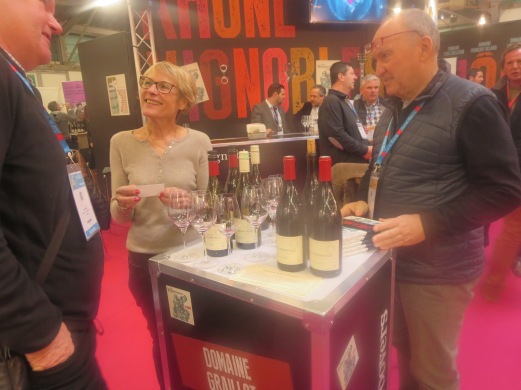
With the Graillots
Alain Graillot was the first Rhone producer that I visited, many years ago and I was pleased to taste them again. I liked the Crozes Hermitage Blanc and Rouge both 2014s very fresh and plenty of fruit. Best was the Crozes La Guiraude 13 with lovely aromas of red fruit with a chewy, texture balanced with lots of those red fruits. It needs a year or two yet but it was very good.
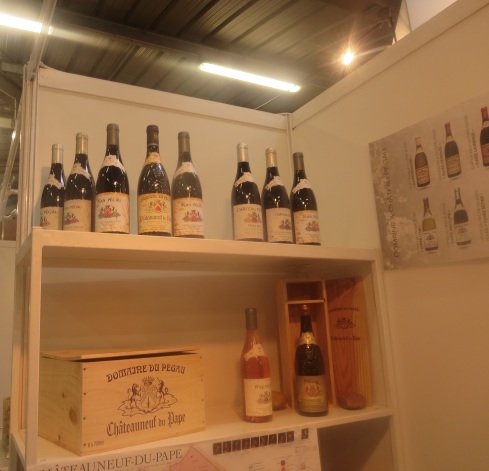
Domaine Du Pégau is a producer of big, sturdy Chateauneuf Du Pape wines amongst others. The white Chateauneuf A Tempo 15 was very full, complex and yet fresh and clean. The reds were quite tannic, built for the long term but the Chateauneuf Réserve 13 with 80% Grenache had plenty of fruit and a soft tannins to balance. Best, for me, was Chateauneuf Cuvée Laurence 2011, aged in a big foudre (large barrel) used just for this cuvée. Again 80% Grenache I liked the full round spicy flavours with a red fruit finish.
Alain Voge was probably my favourite of the Rhine producers at Vinisud. From the white wines to the sparkling Bulles d’Alain they were all good. I particularly liked the 100% Marsanne St. Péray Fleur Du Crussol 14, concentrated apple and yellow fruit flavours with a rich texture but very clean. The Côtes Du Rhone Les Peyrouses 14 had a freshness which appealed with bright red fruits and a definite mineral note. My favourite though was the Cornas Vieilles Vignes 13, very concentrated Syrah with new oak which should not be my style of wine. Yet it was. There was a good fruit profile as well as a hallmark freshness and though built for the future it was already a wine which could be enjoyed now.
Azienda Corvezzo, really good prosecco
I tasted some Spanish and Corsican wines, I was a little disappointed by the latter. It was disappointing to see the Italian area of the halls fairly quiet and I wish I had spent more time there myself. As it happened a chance visit to Azienda Corvezzo was well rewarded. It was their organic Prosecco 15 which caught the eye of my wife in its attractive packaging. Lightly cloudy in appearance it was much more textured than most Proseccos (including the others in their range) it had lots of pear flavour, was very clean and refreshing, a gentle sparkle, certainly the best Prosecco I have tasted. The cloudiness results from the second fermentation taking place in bottle. I also liked their Manzoni Bianco 15, made from Manzoni grapes which are a cross of Riesling and Pinot Blanc. It was Riesling in character but with a softer rounder profile than most Rieslings.
In the second part of my report on Vinisud I shall report on my home region, the Languedoc.
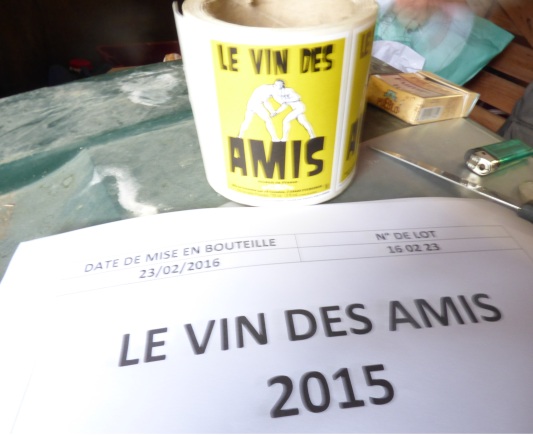
Yesterday (February 23rd) was the first big bottling day of Mas Coutelou 2015 wines. First in line was Vin Des Amis and 11,400 bottles were prepared. As Jeff put it, “Le vrai jour pour la belle cuvée”. (The bringing into the world of the beautiful wine). It proved to be the most aptly named of wines as Jeff welcomed friends from far and wide.
Vincent, a friend of many years who has featured before, was here from Paris. Another Paris based teacher, Sébastien, is spending a week in Puimisson in order to learn about being a vigneron (see his report on the domaine here). The most important visitor yesterday was Céline who was celebrating her birthday.
Birthday girl
Bordeaux based Céline has been a regular visitor to Puimisson for many years and helped me with picking grapes for my 100th blog wine last September. Her husband, restaurateur Brice, and friends Thibaut and Anne from Monein in the Béarn, were here to help her to celebrate and threw themselves into the bottling work with gusto. Michel, Julien and I were present too.
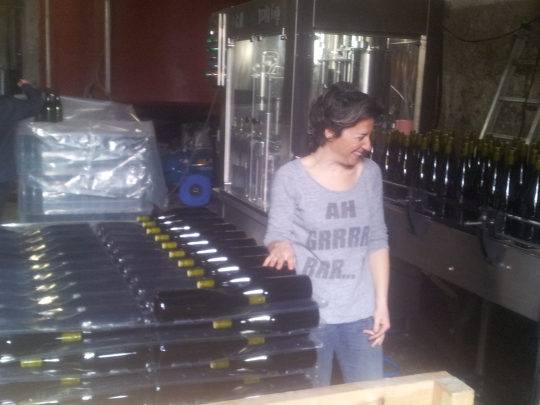
The bottling line was in operation from 7.30am to around 5.30pm. Cuve 7, which contains up to 100hl, was emptied and the bottles taken to be stored for a few months until they are ready to label and to market in springtime. With 10 of us available we were able to share the load and take the occasional break as Jeff provided food and wine to ease us through the day. The Vin Des Amis was opened of course and it is already a bright, clear, delicious vintage of this popular cuvée, fresh red fruits with a lingering spiciness. Another sign of how good the 2015 will be. Jeff also opened a 1997 Mas Coutelou, a wine from his first solo vintage which had a lovely earthy perfume combined with red fruits which carried into the taste. The age was showing, the flavours cut short a little but still very drinkable. We also tasted some of the white wines from tank, they are developing beautifully, an amazing Maccabeu in particular. Could this be the year white wines steal the show at Mas Coutelou?
I thought I was the star!
The theme of friendship continued as Pat and I were invited along to dinner at Jeff’s to celebrate Céline’s birthday. Brice prepared some delicious fish dishes; marinated mackerel, squid in garlic and parsley, fresh cockles in a seafood broth, monkfish with garlicky potato purée and delicious sauce. He is clearly a very talented chef as well as restaurateur, ably assisted by Thibaut who made some very tasty flour-free crêpes.
And then there were the wines. A veritable who’s who of natural wine’s top producers. Plageoles’ sparkling Mauzac was a good start with which to toast Céline. Her phone rang throughout the day, she clearly personifies vin des amis.
A delicious rosé from Clos Des Grillons in the Gard followed, full flavoured, very appetising. Much more fruity than many rosés, this originates in Tavel.
Perhaps my favourite wine was the Pinot Blanc 2010 of Gérard Schueller, very full, a honey edge but dry – not sure that I have ever tasted a Pinot Blanc of such quality. I must track down some other wines from the domaine.
Céline had brought along a 2012 Leon Barral Blanc, Terret Blanc and Gris with some Viognier and Roussanne. Textured, a golden colour but very fresh and a good match with the fish.
La Bégou 14 made by Maxime Magnon in the Corbières was lovely, fresh white peach flavoured and very round, Grenaches Gris and Blanc. I liked this wine a lot, more evidence of how good Grenache Gris can be.
JF Ganévat’s J’en veux encore is a light red wine from an amazing blend of umpteen local Jura grapes by a producer who makes up to 40 cuvées (he must have amazing powers of memory to keep on top of so many wines). I tasted some of the range earlier this year and must admit to preferring the white wines but this was nice, very drinkable red fruits and a good match with the monkfish in its seafood sauce.
Back to Barral for Jadis 2001. Shy at first but this opened up in carafe through the night. Plummy, spicy, very long and terrific Faugères, the Carignan shone through with roundness from the Grenache. I have not always ‘got’ Barral’s wines but this showed me that they need time and patience. Very good.
Sébastien brought along a biodynamic Sauternes from Rousset-Peyraguey, a 2000 yet youthful with lovely sweetness but also freshness.
And then, just when you think you have got to grips with Jeff’s wines, there appeared two remarkable bottles. The first was Robert A, despite the label. This was Grenache Gris and Blanc from 2003, his first year of going sulphur free in the cellar. It passed through some interesting stages in its development and early bottles spat out their cork so it was put into sparkling wine bottles. It was amazing. Unbelievably fresh for a 12-13 year old white wine, white fruits with a tight edginess but clean and bright. It continued to develop in glass and in bottle through the evening, wine of the night.
R for Robert
Then came another new cuvée to me BL002, also from 2003. A Sauvignon Blanc but I’d never have identified it as such, with a sweetness (from the Muscat in the blend) and delicious freshness. Many around the table chose this as their preferred wine and it was another amazing wine. How does he do it? Vincent chose this because it reminded him of those early days of Jeff’s winemaking adventures and of their long friendship, a perfect fit for the theme of the day.
A birthday. A long day. A rewarding day. A memorable day. A day for friends, for vin des amis.
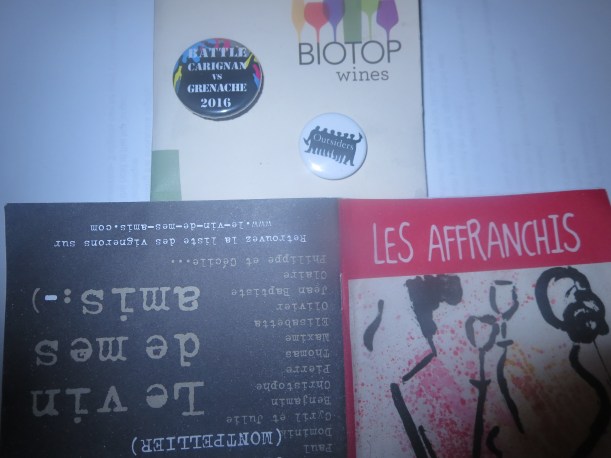
Three of the offline events around Millésime Bio feature natural wine producers alongside others who are biodynamic. Indeed this includes two of the most attended of the offlines, Le Vin De Mes Amis and Les Affranchis. Last year 1,100 people attended the former and judging by the queues to get in this year I would think those numbers were at least equalled. Though some people decry natural wines, are suspicious of them and see natural wine as some kind of deception, thousands of others actively seek them out and seem to be convinced by them.
I like many conventional wines, organic wines and biodynamic wines. I have an open mind but I am one of those convinced by natural wines. My time with Jeff Coutelou and visiting other natural producers has led to me taste wines which I genuinely think are thrilling and offer something special. So, I was one of those queuing to get into Domaine Verchant for Vin de Mes Amis and to Les Affranchis as well as a new offline event, Les Vignerons De L’Iréel.
Of course there are some bad wines, naive wines and wines which did not appeal to me. However, there were bad, naive and unappealing wines in the main salon and elsewhere too. So, these are the wines and producers whose wines I did enjoy and heartily recommend.
Les Affranchis
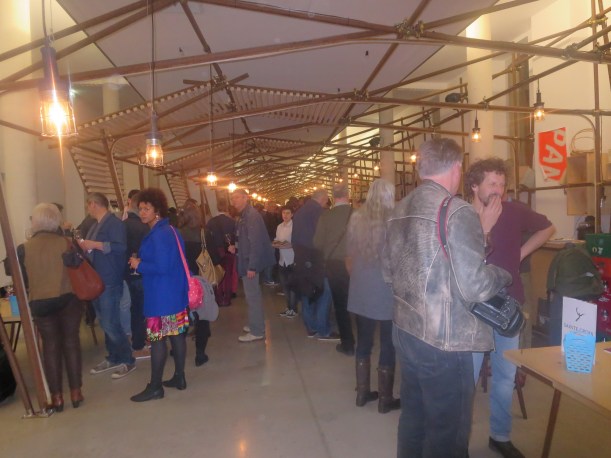
Held in the Chateau de Flaugergues as last year though this time in a marquee. I have to say it was a little cramped in there and that the provision of only one lunch truck with long queues (for an 8€ cup of risotto!) were not the best conditions for a tasting. Nevertheless there were many good producers present, including Jeff, and the event was a success in my view but could have been so much better.
Once again the highlight was Austria this time supported by Beaujolais. I enjoyed the champagnes of Valerie Frison especially the Pinot dominated Goustan 2012. I always enjoy the wines of Nicolas Carmarans from the unlikely wine region of Aveyron. Using grapes such as Fer Servadou, the Cabernets and Chenin Blanc he produces amazing wines such as Maximus and Mauvais Temps. Talking with James Dunstan, who imports wines in Japan, we agreed that Carmarans is one of the most talented producers, no matter what type of wine.
The Beaujolais producers whose wines I enjoyed were Jean-Claude Lapalu and Romain Zordan.
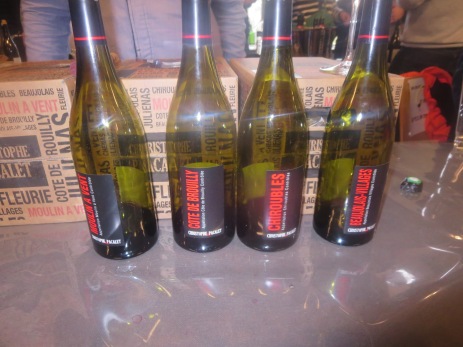
Lapalu is one of the more famous names in the natural wine world and on this showing I understand why. All the wines on tasting were 2014s and all showed lots of fresh red fruits, were clear and, while enjoyable to drink now, would age well for a few years. These are classic Beaujolais wines, pleasurable but with a serious side to please the brain and palate. The Côte De Brouilly and Beaujolais Villages were lovely, accessible wines, the oak aged Brouilly Fûts and amphora aged Alma Mater were more serious but still pleasurable. Great wines by any standards.
Romain Zordan was a new name to me. The Fleurie and Fleurie Cuvée Spatiale both offered lots of long fruit flavours, the village wine having real character. These were like the Beaujolais wines I grew to love from producers such as Champagnon, yet natural. The Morgons were more serious, restrained wines as is normal and yet there was sweet fruit in both the Vieilles Vignes 14 and the Morgons from 14 and 15. Definitely a name to remember.
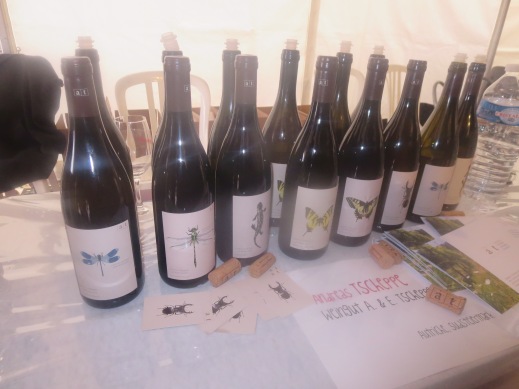
Austria was the star though. I enjoyed the wines of Andreas Tscheppe, the labels showing dragon flies and butterflies. Made from grapes such as Chardonnay and Sauvignon Blanc they showed character, clear, zesty fruit and good length. the Green Dragon Fly 2014 Sauvignon was my highlight.
Ewald Tscheppe’s Weingut Werlitsch wines were a highlight of the 2015 Affranchis and repeated that success. Again made from various combinations of Chardonnay and Sauvignon Blanc the wines were more natural in character but always with clean, fresh fruit and long flavours. There is a series of wines called Ex Vero (I, II and III) and I (2012) was my favourite with zest and round fruit. III, grown at higher altitude had a real freshness, cleansing yet lingering. The macerated Werlitsch was lovely, with 5 weeks on skins adding texture. I found the Werlitsch II, macerated for 12 months, a little too dried.
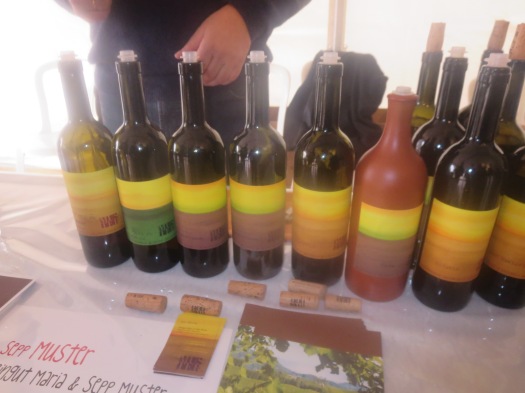
Sepp Muster also uses maceration and I really enjoyed those wines, the Grafin 12 for example is Sauvignon Blanc macerated for 3 months, giving the freshness of the grape combined with texture and roundness, truly excellent. Graf Morillon (the local name for Chardonnay) 11 was fermented for 3 years! Fresh pear and apples, pure fruit with a razor sharp freshness behind it. Even the simpler wines such as Sauvignon 2012 were clean and fruity and way above the usual bottles of that type. Sgaminegg 2008, a blend of Chardonnay and Sauvignon from high slopes showed complexity from aging yet still fresh and long. The reds too were good, plenty of spice, pepper and red fruit – wines such as Rotwein 07 and Zweigelt 11. Muster is a great winemaker, restless in pursuing ways to improve his wines.
Finally, I was eager to taste the wines of Jean Francois and Anne Ganévat from the Jura. I had heard so many good reports of this domaine from trusted sources such as David Crossley. I like Jura wines, I stayed int he region over 20 years ago and was taken by their unique grapes in particular, Poulsard, Trousseau, Savagnin. The region was under a cloud at the time but is now very much at the cutting edge, a centre for natural winemaking. I loved the Chardonnay wines of Ganévat. Le Montceau 14 was like a top Burgundy village wine with well judged oak supporting the lovely fresh, clean fruit. The Chalasses Vieilles Vignes 13 was even more concentrated, a terrific depth of zesty, appley flavours and light oak. The red wines were perhaps eve better. The Gamay wine Le Jaja du Ben 14 clean, red fruit flavours and very long. Madelon 14, also Gamay, was fuller and more structured but already lovely along with the Poulsard wine L’Enfant Terrible 14. Ironically the Savagnin was the only wine which did not hit the mark but Ganévat lived up to expectations, another huge talent.
Les Vignerons de L’Irréel
A new event organised by Ivo Ferreira. I went along to meet up with a number of producers whom I know well and whose wines I like, such as Julien Peyras, Grégory White and François Aubry of Domaine La Fontude. I tasted François’ wines and they were as pleasing as ever. I consider Fontude wines to be seriously underrated, any merchant seeking a consistent, quality range of wines should head straight to Brenas. The Pierre De Lune 14 and Entremonde 13 showed how these wines are serious, complex and well made as well as fruity and enjoyable. The latter was kept back a year for it to straighten out (indication of someone who cares about the wine first and commerce second), I wrote the word ‘lovely’ twice in my notes.
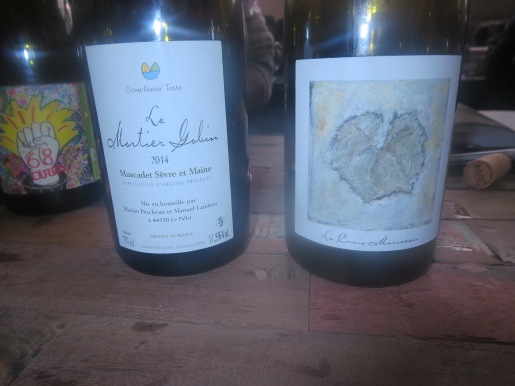
I liked the Mortier Gobin Muscadet 14 from Jo Landron, Soleu 14 from L’Escarida in the Ardèche, ever improving Mas Troqué wine of Christelle Duffours and, from Le Raisin Et L’Ange (also in the Ardèche) the cuvées Fable and Brân, both from tank, the latter very concentrated and fresh. Ivo Ferreira‘s wines were also very good, especially the Escarpolette Rouge 14 a full, round fruity wine with classic Languedoc richness balanced by a nice fresh streak.
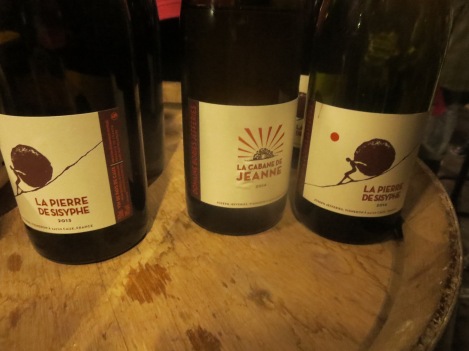
One reason for going here was to meet up with my friend Joe Jefferies, an Englishman, long resident in the Languedoc. His Bories Jefferies wines are showing real quality. The white wines Pierre De Sisyphe 14 and La Cabane de Jeanne 14 are both fresh, fruity with clear texture and bite from longer maceration. The Terret grape forms the majority of the former wine and is fast becoming one of my favourites, complex pear and apple flavours. The Carignan dominated Pierre De Sisyphe rouge is also very good, the 2013 more rounded and together than the 14 thanks to the extra year, both very good but promising even better with time.
Fleur Godart and Camille Rivière, former students of Jeff and now selling his wine in Paris and New York respectively, recommended Domaine Séléné, a Beaujolais producer. Their good taste was proved correct again. The Beaujolais and Beaujolais Vieilles Vignes (both 2015) have lovely fruit, structure and freshness and the oak aged Vieilles Vignes 14 was even better with the oak adding sweetness and a little power.
Finally it was good to get to taste again the wines of Vino di Anna from Sicily, which I first tasted two years ago at the Etna Contrade on the island. The Bianco 14 was lovely, a saline, fruity pleasure. Reds such as Palmento and Rosso had lively, cherry, acidic freshness from grapes such as Nerello Mascalese, indeed the latter is pure, whole bunch Mascalese. They are experimenting with qvevri (amphorae) though I was a little unconvinced at what they added so far. I am partial to Etna wines and these are amongst the best.
Le Vin De Mes Amis
And so to the grandest of the offlines. Seventy of the most respected and talented producers in biodynamics and natural wines. Gathered in the 5* Verchant hotel, a grand setting for the natural wine world. Lovely rooms, more space and a very good free lunch! I would happily have spent a couple of days going around every one the producers but time was short and so I had four hours to try to sample from my selected few. Local producers such as Barral and Pelletier I left alone and I followed recommendations from trusted palates such as Céline Burgué who harvested at Mas Coutelou and is a regular visitor.
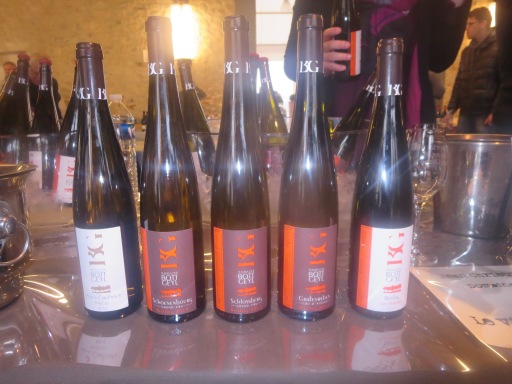
Domaine Bott Geyl continued the excellent run of Alsace wines I tasted during the week. The introductory level Elements wines are good but the Grand Crus, especially Riesling had real concentration and quality. Schlossberg 12 was classic almost Germanic Riesling, lean, slatey, racy and zesty. The Schoenenbourg 12 was fruitier, rounder Riesling, a lovely demonstration of terroir, the former being from granite soils, the latter marl and limestone. The Pinot Gris Furstentum 11 was concentrated with classic spicy notes but clean and dry. Lovely wines.
On that theme so too were the wines of Albert Mann, a domaine seeking a dry, fresh style which, as you will have gathered by now, is exactly what I like. The various Cuvée Albert wines, entry level for each cépage, showed typical characteristics for the grape but always had a clean, dry edge. This version of Riesling Grand Cru Schlossberg 14 had texture and a long chewy finish and the Grand Cru Furstentum of Gewürztraminer 14 and Pinot Gris 13 controlled the spiciness and floweriness which can let down wines from other domaines, with that dry edge leaving you want more whilst admiring the complexity. Delicious wines.
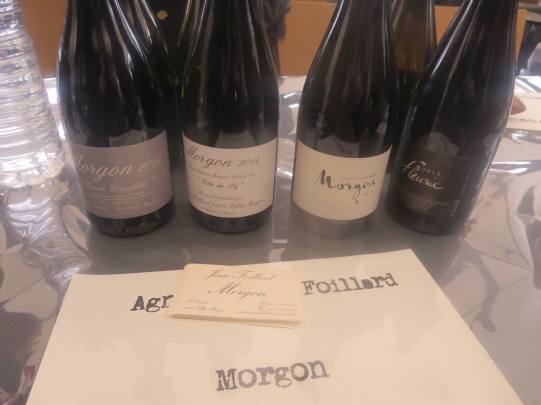
To Beaujolais, again. First port of call was Domaine Foillard, genuine star name in the natural movement, wines which apart from one glass in 2014 I had long wanted to taste. And I was not disappointed. These are wines which are living proof that natural wines are classic wines, just made with a different philosophy. The Morgon Corcelette 14 was juicy, fruity with an austere edge and, as with classic Morgon Côte De Py2014, was more concentrated and restrained but with fruit bubbling under the surface waiting to emerge and complete the wine. The Fleurie 13 was more fruity and aromatic, exactly as you might expect. Morgon Trois Quatorze (the number for π) 2013 was wilder, complex and lovely. Great wines.
Christophe Pacalet is another renowned Beaujolais producer. More clean, red fruits with tannins and spice. These were all brut de cuve, straight from tank and not yet bottled but they show that 2015 will be a very good vintage. The Julienas was very good, the Chénas a little tougher, St Amour had more floral aromas and was lighter, less spicy. The Blanc was also very good, all pear and fresh minerality.
Mathieu Lapierre now runs the domaine formerly run by his father Marcel, one of natural wine’s forerunners. These were my favourite Beaujolais wines of the week, as their website says “pure grape wine”. Raisins Gaulois 15 is designed to be drunk young and was ultra juicy red fruit, classic simple Beaujolais, completely addictive. Morgon 15 was a little wild because of being brut de cuve but was full, fruity with a core of soft tannins and texture. Beaujolais 14 is a deceptively simple name for a complex wine, balancing clean fruit and a dry edge. I can’t do these justice, they were lovely, lovely wines. Good, informative website too.
I have praised Rhone wines in the previous articles and there were more to enjoy here. Domaine Charvin‘s Chateauneuf du Pape wines 12 and 13 were old fashioned in some senses. Big flavours, quite a light structure but packing power, fruit and tannins. Elegant and needing time. James Dunstan imports these wines to Japan and I was happy to taste them alongside him and his wife.
Tasting with James
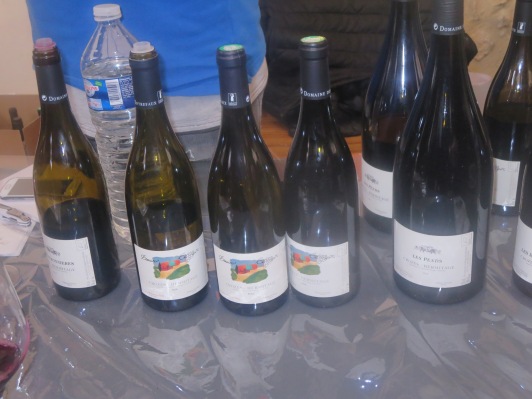
Domaine des Entrefaux of Charles and François Tardy is based in the Crozes Hermitage wine area and those Crozes wines are delicious. The basic Crozes Hermitage 14 is round and fruity Syrah supported by ripe tannins , elegance in a bottle. Other cuvées such as Les Pends 14 and Les Machonnières 13 were more complex but always fresh with fruit and power. I actually liked the basic cuvée most but these were all very good, though the white wine I liked less.
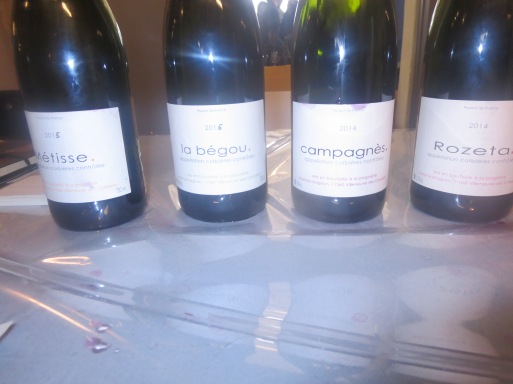
Maxime Magnon makes wines in the Corbières, a region I believe to be emerging as one of the Languedoc’s best. Jeff is a fan of Magnon’s wines so I wanted to try them. The rosé Métisse 15 is light but elegant and full flavoured, the white La Bégou 15 had lots of white fruits supported by a gentle acidity. Best of the three was Campagnes 14, 95% Carignan, dark, plummy and spicy with a clean finish. As with the Beaujolais wines I described above Magnon’s wine was further evidence that natural producers are making classic regional wines though bolstered by their philosophy and freshness.
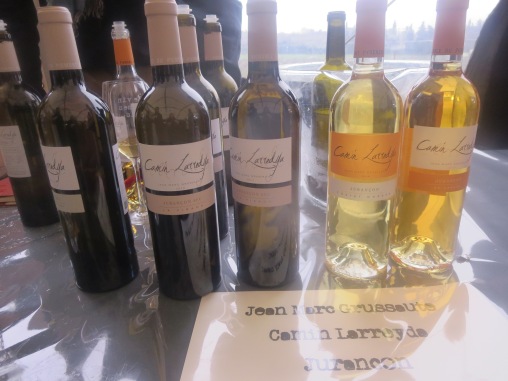
One last producer to mention. When I visited the Jurancon region last autumn I was unaware of Domaine Larredya. My loss. The dry La Part Davant 14 was zingy, zesty with a round yellow fruit note, similar to the great dry wines of Domaine Montesquieu. The moelleux Costat Darrèr 14 was balanced with sweetness and acidity and the even sweeter Au Capcèu 14 had honey with a zesty freshness on the finish, really top class wine. Further evidence for me that Jurancon is a great wine region.
I could go on but these were my highlights. There were other producers I would like to have visited but didn’t get to and there were also some disappointments, including some big names. If you want to know about them then feel free to contact me. I want to remain positive and this was a very positive event. Le vin de mes amis? Definitely.
So, three long posts about Millésime Bio and its satellite events. A thoroughly enjoyable four days with some great wines. Lessons? I genuinely do believe that organic, especially biodynamic wines, have a real freshness and vitality which appeals to me. I am pleased to see organic wine’s progress in the vineyard and in the market place.
Highlights? Pittnauer, Moser, Stentz, Kreydenweiss in Alsace and Rhone, Lombard, Coulet, Ganévat, Lapierre, Foillard.
Plus the social side of meeting up with familiar and new faces whose company, kind words and advice I enjoyed immensely.
Before and during the salon of Millésime Bio I attended six offline events. They are proliferating, probably too many of them in all honesty. Yet during those six events I tasted some of the best wines of the whole week, just as I did at the offs last year. So, I am torn – are the offs good for Millésime Bio?
Well, they do distract and take away attention from the growth of organics and the benefits of organic viticulture as well as the very good wines in the salon itself, some of which I described in the last article. Would I have tasted more good wines in the salon if I hadn’t attended the offs?
On the other hand, I’d be less tempted to go along to the whole event and spend four days in Montpellier if it were not for the offs and the chance to taste wines not to be found in the main salon. Last year wines from the likes of Huët and Zind-Humbrecht were major attractions for me. This year there were a lot of natural producers especially whose wines I wanted to try. The offs create a buzz around the main event, drawing people to it. It can stand the opposition, producers such as Kreydenweiss (père et fils!) and Pittnauer were at least the equal of anything tasted at the offs.
As there were so many events and so many good wines I have decided to split the report on them in two parts. In the next article I shall deal with those centred more around the natural movement. So here I shall be describing Outsiders, Carignan vs Grenache and Biotop.
Outsiders
Jon Bowen (right) talking to photographer Ken Payton
Louise Hurren does a great job in promoting the Outsiders group of vignerons, producers in the Languedoc-Roussillon who originated outside the region. Held at La Panacée on the eve of the salon this was very well organised in a bright, modern space with excellent food served as a bonus. I am a fan of many of the producers in the group, some of whom I think of as friends. I have described the wines of Turner Pageot and Cébène many times in these pages. Both are sources of outstanding wines. Manu Pageot was in discomfort having cracked some ribs but it was good to catch up with him. Brigitte Chevalier’s wines were well on form across the whole range, Bancels 13 was especially good here.
It was especially pleasing to see present Simon and Sara from Mas Sibert as guest producers. I first wrote about Mas Sibert last February and hope that I have helped to spread their name a little in the following year. They now have a UK importer and higher profile and I couldn’t be more pleased. The wines have a freshness and depth of fruit which is rare. New planting of white grapes (as ever unusual cépages) will widen the range and I can’t wait. I would drink these wines happily every day. Incidentally, their rosé, Saramon (mainly Sangiovese!), is amongst the very best in the Languedoc.
Talking to Simon in animated form
I also enjoyed the Pouilly Fumé wines of guest Jonathan Pabiot. They are classic wines from the appellation but with extra steeliness and minerality. I have had the good fortune to visit the domaine in the past and recommend them heartily. Especially good were the Pouilly Fumé 15 and the excellent Aubaine 14 grapes selected from special parcels, matured in gentle oak, more concentration and white fruit flavours.
Finally, Domaine Modat in the Roussillon produces very good wines. Lucioles 14, the white wine from mainly Grenache Gris was lovely, fresh and fruity with a little texture. Comme Avant and Le Plus Joli 11 were rich, spicy and clean from classic Roussillon grapes varieties. Great website too.
Hats off to Louise for such a well run event.
Bataille Carignan – Grenache
I like the idea of this, pitting two great cépages against each other. The venue was good, Salle Pétrarque, a 14thC building with beautiful vaulting. However, truth be told I didn’t really enjoy the event. The room was packed, it was hard to get around the tables, there was (very) loud hip-hop music playing some of the time which made it hard to talk. It was also difficult to taste the red wines, most came across as heavy and tannic. I was not alone in thinking so from the conversations I had.
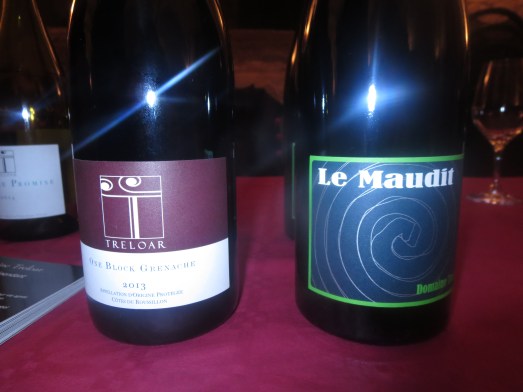
I went mainly to meet up with my friend Jonathan Hesford of Domaine Treloar in the Roussillon. You will have to trust me that when I say his wines were amongst the best that evening that I am not saying so out of loyalty. Le Maudit is the Treloar Carignan dominated wine and was spicy, fresh and very good. Jonathan also had his One Block Grenache on tasting, a proper interpretation of the event’s title.
Another which came out well from the evening was Domaine Sainte Croix, coincidentally one of the Outsiders producers. Jon and Elizabeth Bowen produce very good wines in the Corbières, I have enjoyed them many times. Tonight the Carignan was very good, cherry fruits and spice. Star of the night though was La Part Des Anges, a late harvest Carignan with deep fig, coffee and chocolate notes. Lovely, a little sweetness matched by freshness on the finish.
Incidentally, I met Jon during the main salon as he visited various other stands to taste, his search for wider wine experience clearly promotes his winemaking knowledge. This was also true of Jonathan Hesford who went to the salon simply to taste. It wa she who tipped me off to go and taste Pittnauer wines, one of my stars of the show. I am sure many vignerons do the same but it seemed no coincidence that their wines emerge so well when I see them learning elsewhere, always seeking to improve their understanding.
The other wine I enjoyed at the event was from Mas des Capitelles. A Faugères wine this was 95% Carignan with a touch of Mourvèdre and it was delicious, lots of fruit and spice and very drinkable. I shall look out for Capitelles in the future.
Biotop
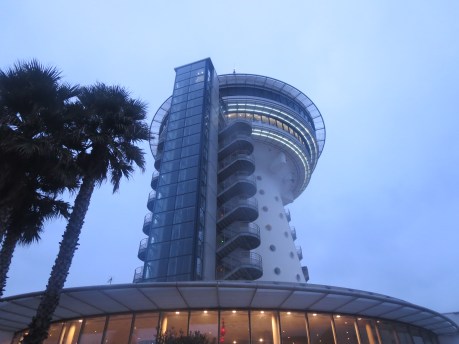
The Phare, home of Biotop
Fifty vignerons gathered in the lighthouse at Palavas. Organised by Isabelle Jomain, Biotop was one of my favourite events in 2015 and no doubt it will be one of my highlights this year. Once again time caught up with me and I was unable to get to the tables of many vignerons I would have liked to visit. My friend, sommelier Sandra Martinez from La Table 2 De Julien near Uzès, accompanied me round some of the tables and it was good to learn from her expertise. Incidentally for a different account of Biotop have a look at the blog of Michel Smith.
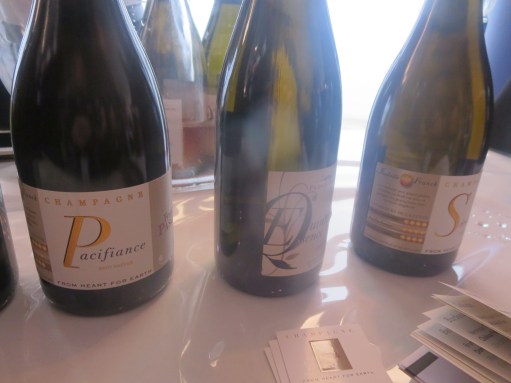
Highlights included the champagnes of Fleury and Franck Pascal. Michel was underwhelmed by Fleury but I enjoyed the range, especially the Pinot Noir dominated wines Nature and Bolène 05 both marked by round, fresh fruit and the latter, more expensive of course, having real depth and gravity. The Sonates Nº9 was especially good, delicate fruit, fresh, long. Pinot Noir 100% and no added sulphur. Sorry Michel, I enjoyed these wines.
Franck Pascal’s champagnes were an eye opener for me last year, I selected the cuvée Quintessence as my favourite sparkling wine tasted last year. Not surprisingly it was once again a favourite here, beautifully aromatic from the Pinot domination (Noir and Meunier) this was fuller than the Fleury wines, still structured and yet fresh and fruity. This was the 2005 rather than 04 but the quality is undiminished. I also loved the Sérénité 2010, sulphur free Chardonnay and Pinot Meunier, dry, clean with lingering delicate fruits. The price tag of 120€ is a bit of an issue however.
From champagne to dessert wine. Domaine Juchepie‘s Coteaux Du Layon wines are just lovely. The dry wine is good but it with moelleux and liquoureux wines that they shine brightest. The word ‘lovely’ reappears through my tasting notes for every wine. The 2011 and 2014 moelleuxs have a light touch whilst being rich, mouth filling pleasure. Take a wine like Quintessence 05 (yes the same name as the champagne above). Yields of 5-10 hectolitres per hectare are miniscule, the grapes hand picked with great care and vinified with enough acidity (pH 3.84) to cut through the 223 grammes of residual sugar. In other words it is a sticky, sweet, explosion of flavours with a refreshing finish. And those flavours go on and on, stunning.
Saskia van der Horst is another familiar name on this site with her Domaine Les Arabesques. I tasted her wines first at Labande de Latour in November 2014 and they have been favourites ever since. Yet even within the last year those wines have improved in quality and, as the work in the vines done by Saskia and her partner bears fruit, they will continue to improve. The refreshing white Elianon 14 is good but the reds are the stars. The pure Syrah Lou Pal 14 had lovely raspberry notes; Champs d’Andrillou 13 (Grenache and Carignan) plummy and spicy; Les Arabesques 100% Grenache with rich tannins and chocolate flavours. All very good wines. Saskia is 8 months pregnant, I wish all concerned well and congratulate them on their wines and personal futures.
Old photo of Saskia’s wines
And so to the Rhone Valley. One of my wines of the year for 2015 was Cornas Brise Cailloux of Domaine Coulet made by Matthieu Barret. It was Sandra Martinez who introduced me to it. So, I was delighted when Matthieu was present at Biotop and was rewarded by the range of his wines. The structured, fresh and elegant Crozes Hermitage 2014 was very good, the 2013 Brise Cailloux spicy, aromatic and fresh (every bit as good as the 2012), the Cornas Billes Noires was darker, spicier with fresh, dusty tannins. Even simple wines like the Mourvèdre 15 were elegant. Matthieu is a very skilled winemaker, these were top wines by any standard. Thanks Sandra.
I was unfamiliar with the Brézème region south of Valence though I must have driven through it many times. I can only say that the wines of Domaine Lombard will make me stop off in future. Julien and Emmanuelle Montagnon are making superb wines. From the dry, textured Viognier 14 to the top of the Brézème range Eugène de Monicault 13 every cuvée was clear, full of character and a pleasure to taste. Marked by fruit and freshness they reflect their terroir and the Syrah in particular is classic Rhone Valley, as good as it gets. Whether whole bunch fermented such as Grand Chêne 14 or made from old vines like that top cuvée they are wines to please the palate and the brain. I would imagine their Hermitage wines are very special. I really loved these wines, thanks again to Sandra for introducing me to them.
From the Yapp Brothers website, Lombard’s UK importer
So many great wines, so many domaines which deserve more space and time devoted to them. And there were other lovely wines too. And that is why the offs are a valued part of the whole Millésime Bio experience. They are separate but I feel they add more choice and more experience of good wines.
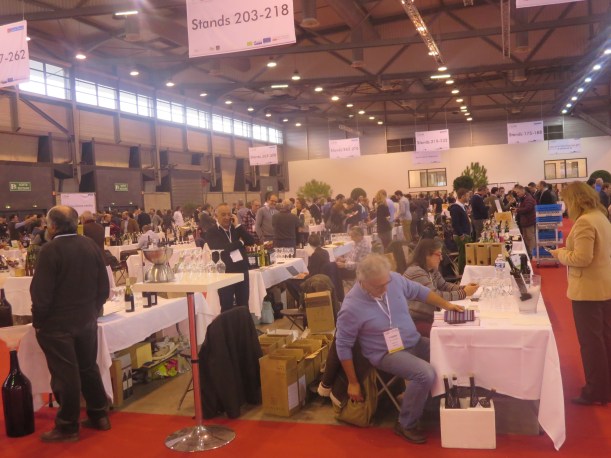
A small part of one of the three halls in the salon
Austria, the Rhone and Alsace were the wine regions which impressed me most over the four days I was in Montpellier and this was reflected in the main salon and the offlines. The main event hosts 900 winemakers, impossible to get around them all and I didn’t even manage 10% of them. As stated in my previous post the plan was to taste wines outside of the Languedoc-Roussillon in order to widen my understanding and appreciation of wines generally and to place my region in context more accurately.
The overwhelming feature of the wines I tasted was freshness, a common feature of so many organic wines. It was also interesting to note that 250 or more of the producers are biodynamic. Some were also experimenting with natural wines, offering a cuvée or two which had no sulphites added. Proof to me that natural wine is making inroads and winning the argument and that there is a market for natural wine which winemakers are eager to supply. Warning however, some of those cuvées were not very good, the exceptions were from Domaine Py in the Corbières and, also, the Austrian producer Pittnauer, of whom more later.
So to my favourites.
Kreydenweiss (Alsace and Rhone)
I want to start with a father and son team with a difference, they work in different regions of France. Marc moved to the Gard where he produces a range of wines whilst the domaine in Alsace which bears his name is now run by his son Antoine. I found the wines of both domaines to be completely thrilling.
Rhone
Alsace
Let’s start with Alsace, the home of the family. From the basic Riesling 2014 to the Grand Crus all the wines are marked by round fruitiness but with a core of clean, fresh acidity which leaves you wanting more. I can honestly say I liked every wine on tasting but especially the Clos Rebberg Grand Cru Riesling 14 and the Kastelberg Grand Cru 2014 Riesling. The Pinot Gris and Pinot Blanc wines were also excellent. I had tasted the range before and knew how good they could be, what I did not know about was the Rhone range of wines. Again I loved every wine here. From the fruity, herbal long maceration white Ansata 14 to Chateauneuf Du Pape 08 these were wines marked by elegance, precision, fruit and cleanliness. Thrilling. Single variety wines such as Ansata 13 (Syrah) and Ka 13 (Carignan) were lovely wines but so too were the pure Grenache Chateauneufs 08 and 09. If I had to choose the range which summarised Millésime Bio 2016 this was it. Great wines of character (like their producers), elegance, liveliness and sheer enjoyment.
Marc Kreydenweiss
Aimé Stentz (Alsace)
Marc and Etienne
Whilst on the Alsace theme I was very impressed by the range of wines from Domaine Aimé Stentz. I spoke with father and son, Étienne and Marc, for some time whilst tasting and they explained how being organic was a moral rather than commercial choice. Those hoping that it would bring a premium would need to consider the extra work involved. The wines themselves were very well balanced, a fine edge of acidity running through the fruit. They taste of the classic grape flavours but have a nice dry edge. Other producers I tased from Alsace such as Jean Becker go for much dryer styles, very gastronomic, other such as Bott Geyl seemed to prefer more fruit and sweetness.
The Stentz wines pleased me more because of the balance. All three domaines were good but these were my preferred wines. When the entry level wines taste long, fresh and balanced you know that the higher wines are going to be special and Grand Crus wines such as Riesling Sommerberg 13 and Pinot Gris Hengst 12 delivered everything I had hoped for. Full but elegant, fruit but dry, very well balanced. The Vendanges Tardives were also balanced, lovely sweet notes but clean and fresh leaving you wanting to drink another mouthful.
Domaine des Aphillanthes (Rhone)
Run by Daniel and Hélène Boulle, it was good to talk with Hélène whilst tasting the wines. The various Côtes Du Rhone, such as Plan De Dieu 13, were marked by fruit, freshness and length. The grape varieties such as Syrah, Grenache, Carignan and Cinsault are the same as Languedoc wines and there was resemblance of course. Like the best of both regions the wines had elegance and balance, fruity but dry with fine tannins. None of the Aphillanthes wines come from the more famous regions of the Rhone yet the wines carry a quality resembling the big southern villages such as Cahteauneuf or Gigondas. That they are to be found on the wine lists of top restaurants shows the respect they richly deserve.
Preisinger and Judith Beck (Austria)
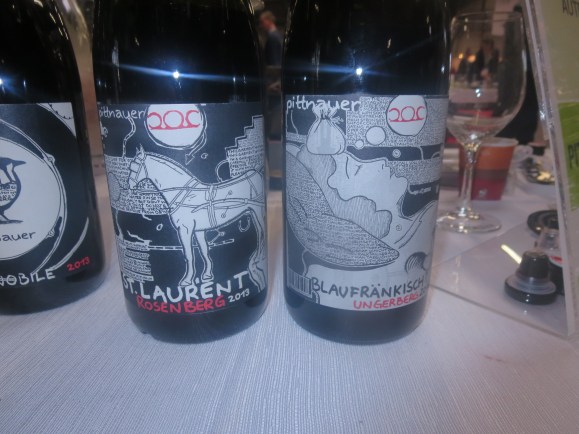
Austria was the origin of many of my favourite wines throughout the Salon and the offlines. Claus Preisinger and Judith Beck run separate domaines in the same Burgenland region but share similar biodynamic philosophy and practices. Their wines make something special out of Pinot Blanc, Chardonnay and Grüner Veltliner grapes, I particularly enjoyed the white wines of Preisinger, for example the amphora matured GV. All again showed the fruitiness and freshness I love. The red wines were the real revelation however. Zweigelt, Blaufränkisch and St. Laurent are particular to the country and they showed great power, elegance and balance, great with food and yet good to drink on their own. The two are part of a wider group of nine producers making a series of wines called Pannobile which are designed to reflect the local grapes, soils and characteristics. Wines such as Beck Ink 2013 and Preisinger’s Zweigelt 2012 were top class wines, heartily recommended. I also recommend the website of Claus Preisinger, a model of innovation and information.
Pittnauer (Austria)
Producer of probably my favourite series of wines in the whole salon, Gerhard Pittnauer has the appearance of a wild rocker with restless personality and his wines reflect him. There is a touch of wildness, unpredictability and of being on the edge. The wines are alive, full of long flavours and aromas, truly delicious. The entry white wine was called Mash Pit (that rock reference again), whole bunch maceration, no sulphites, natural, clean and sharp. The reds were the standout however. Light, Pinot like, the St Laurent 14 carried sweet fruit with freshness. The Pannobile 13 (Gerhard is in the same Burgenland region as Preisinger and Beck) and single vineyard St. Laurent Rosenberg 13 were equally good. Much richer and darker plum flavours in the Blaufränkisch Ungerberg 2010 showed that this a domaine producing a good range, every one of which would deserve to be in my personal wine stocks. Outstanding wines.
Others
More recommendations for Austria, wines from Jurtschitsch, Weininger and Weninger were very good, especially the white wines based on Riesling and Grüner Veltliner. This is a country which is really on the move in the wine world, top of my list for wines to explore and to drink.
Italy had its good producers too. Le Carline is a producer in the Veneto whose wines I praised last year and I enjoyed them again especially the local grapes such as Lison. From Abruzzo, mainly using the Montepulciano grape, very good wines by Villa Reale. The rosé Cerasuolo 15 was the best rosé I tasted in the salon, the red Montepulcianos from simplest to more complex were all delicious. From Sicily the Frappato and Cerasuolo di Vittoria made by Feudo di Santa Tresa were lovely wines.
The Chablis wines of Domaine Bernard Defaix were lovely. The Premier Cru wines in particular were lovely, fresh, dry and truly reflecting their vineyard such as Vaillons 14 and Côtes de Lechet 14 with varying degrees of mineral, saline and fruit characteristics.
Most surprising wine of the salon was from Greece, I liked the Giannikos wines generally but my heart sank when I saw a Viognier, surely Greece would be too warm for this grape which often becomes flabby and heavy? Yet they have made a delicious dry, fresh wine with apricotty, citrus flavours. They harvested on July 25th last year, to capture the freshness of the grapes. Their new sweet wine was also lovely and fresh.
It was a very good salon. I will undoubtedly have overlooked many excellent wines due to the size of the event but I tasted some fantastic wines, notably those mentioned above. I reiterate my praise for Austria, the Rhone and Alsace and I believe you will find that the various offline events offer further support to the wines of these exciting vineyards.
With Denis Jamain of Chateau de Reuilly, very good wines
First visit of 2016 to Mas Coutelou this morning. We tasted the 2015 wines, now mostly assembled, and whilst I am sworn to secrecy about what they will be I can confirm that the cuvées are looking excellent. There is a real elegance and refinement to them already, Jeff has compared them to Rhone and Loire wines rather than the typical, fuller Languedoc wines. They are still in their infancy of course, tasted from tank, and in midwinter they are still coming around. However, the structure, aromas and flavours are in place for wines of real quality.
The weather was much discussed as the temperatures in Puimisson and the Languedoc remain above average (see last post). The effect on the wines can be important, the wines restive, troubled in warm conditions, for example they don’t clarify. A few colder days early this week has helped them to settle a little more, Jeff has already noted changes.
The warm temperatures were evident in the vineyard too. I went to see Julien who is carrying out la taille (pruning) this year. He showed me how some of the precocious vines, such as Muscat, are showing signs of the buds swelling already, way too early. This fits in with the wider vegetation, fruit trees showing signs of blossom, even our tomato plants have flowers!
Bud swelling in the vine
Julien was busy in Peilhan vineyard and explained how he was trying to prune the Muscat in a gobelet sur fil style, rather like guyot, pruning to create two main canes for growth in 2016.
Before
After
This weekend sees a huge wine salon, Millésime Bio, in Montpellier. Nine hundred domaines represented with many more at various ‘off’ events around the city. Jeff will be preparing bottles for Les Affranchis. Then it’s on to the Loire for more salons. So the cuvées will make their first public appearance. I shall be explaining some of the different Coutelou cuvées in my next couple of posts as well as reporting on the Montpellier salons.
Icare playing with his Christmas present from Pat, a toy sheep
























































 amarchinthevines