amarchinthevines

Learning about wine, vines and vignerons whilst living in the Languedoc


Leave a comment

Busy times

busy

En français

Busy times. In the vines and in the cellar.

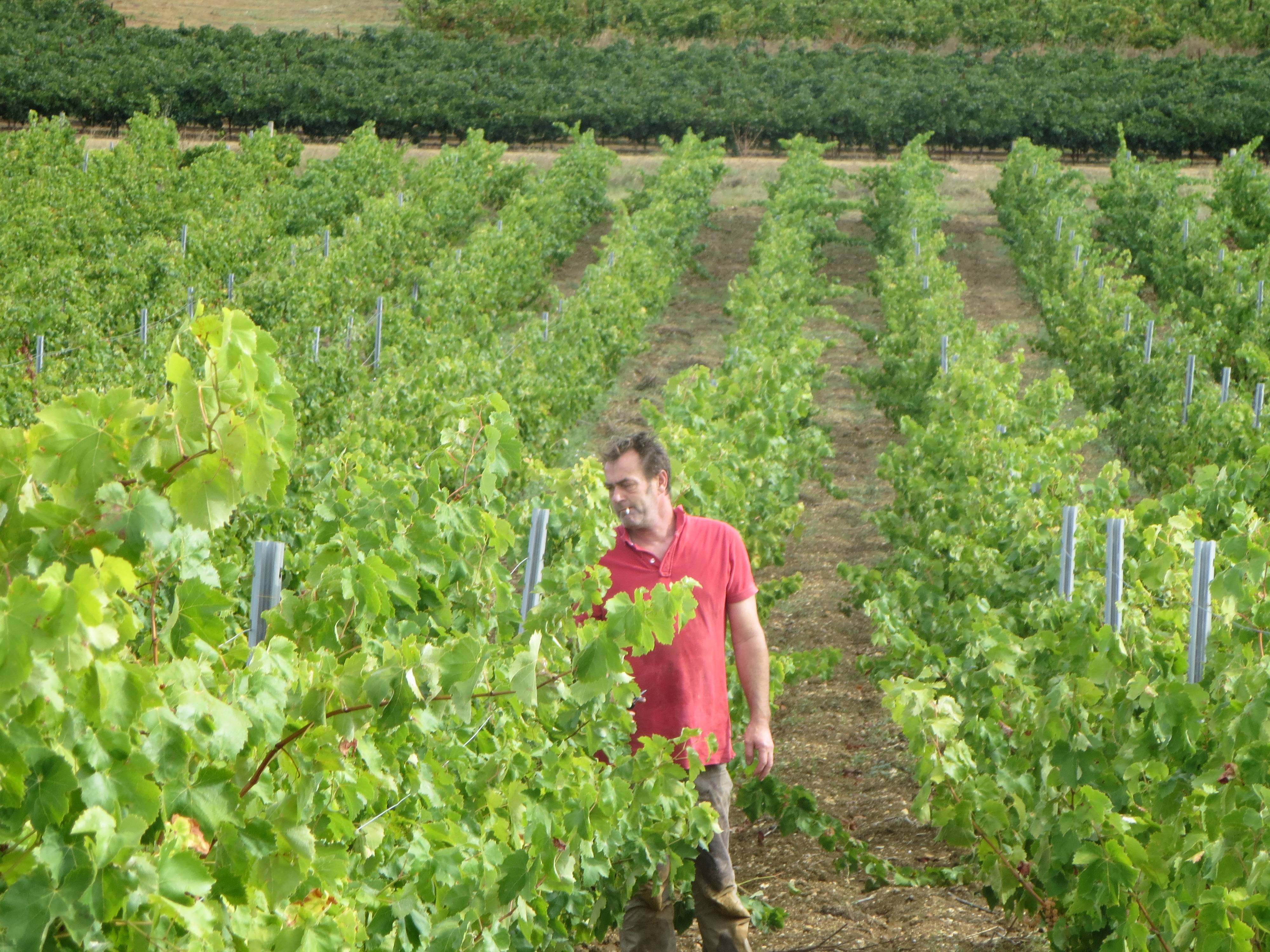
I mentioned recently that the cooler weather had delayed some of the growth in the vines and that flowering was late. Well, recent hotter weather has brought sudden change. Flowering happened around the turn of the month and was over very quickly, perhaps catching up lost time. In particular there was a heavy thunderstorm on Saturday June 4th which brought a torrent of rain. The water and the sunshine has really got the vines going. Tendrils reach for the skies and there is more bushiness to the vines.

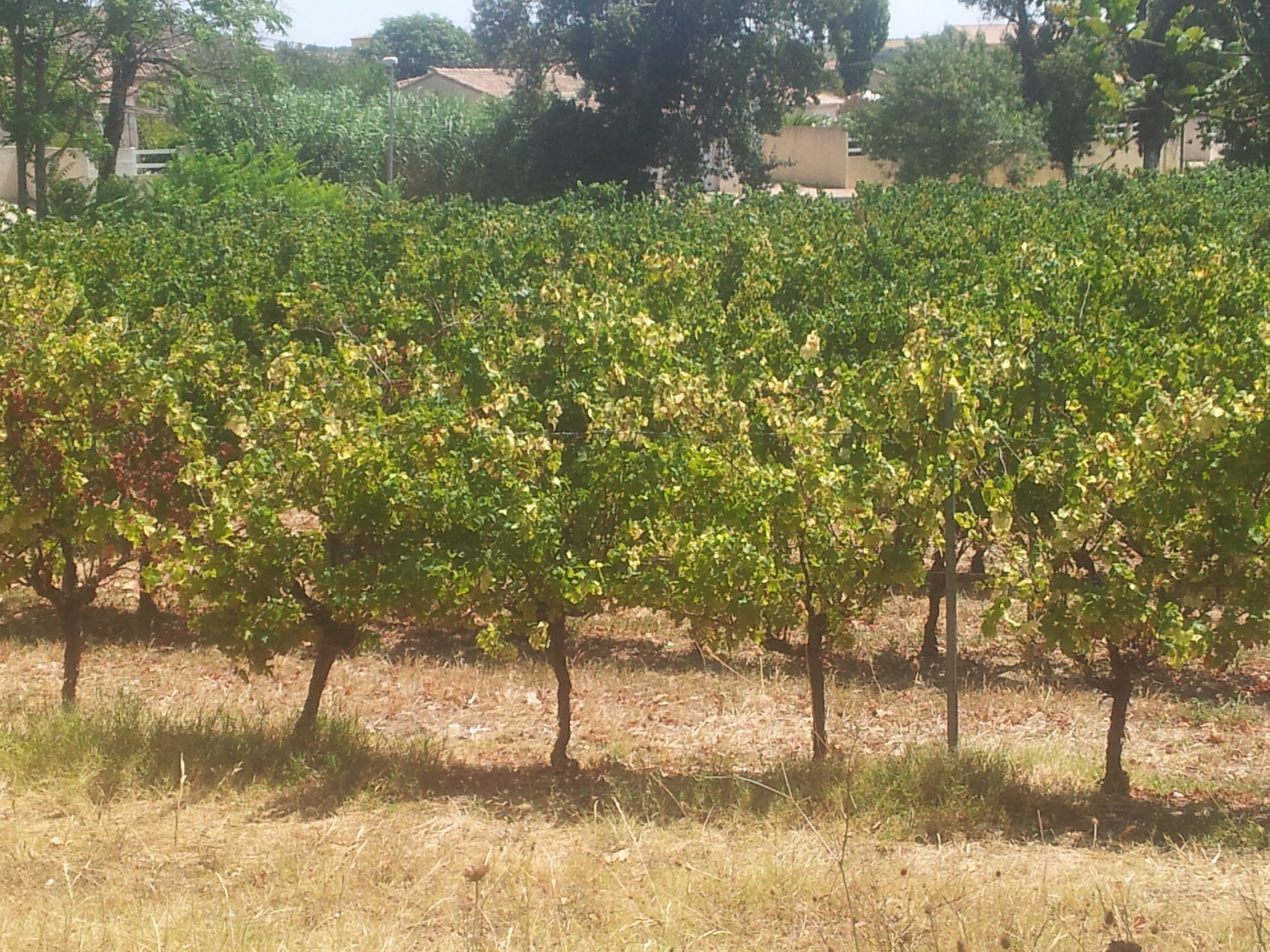
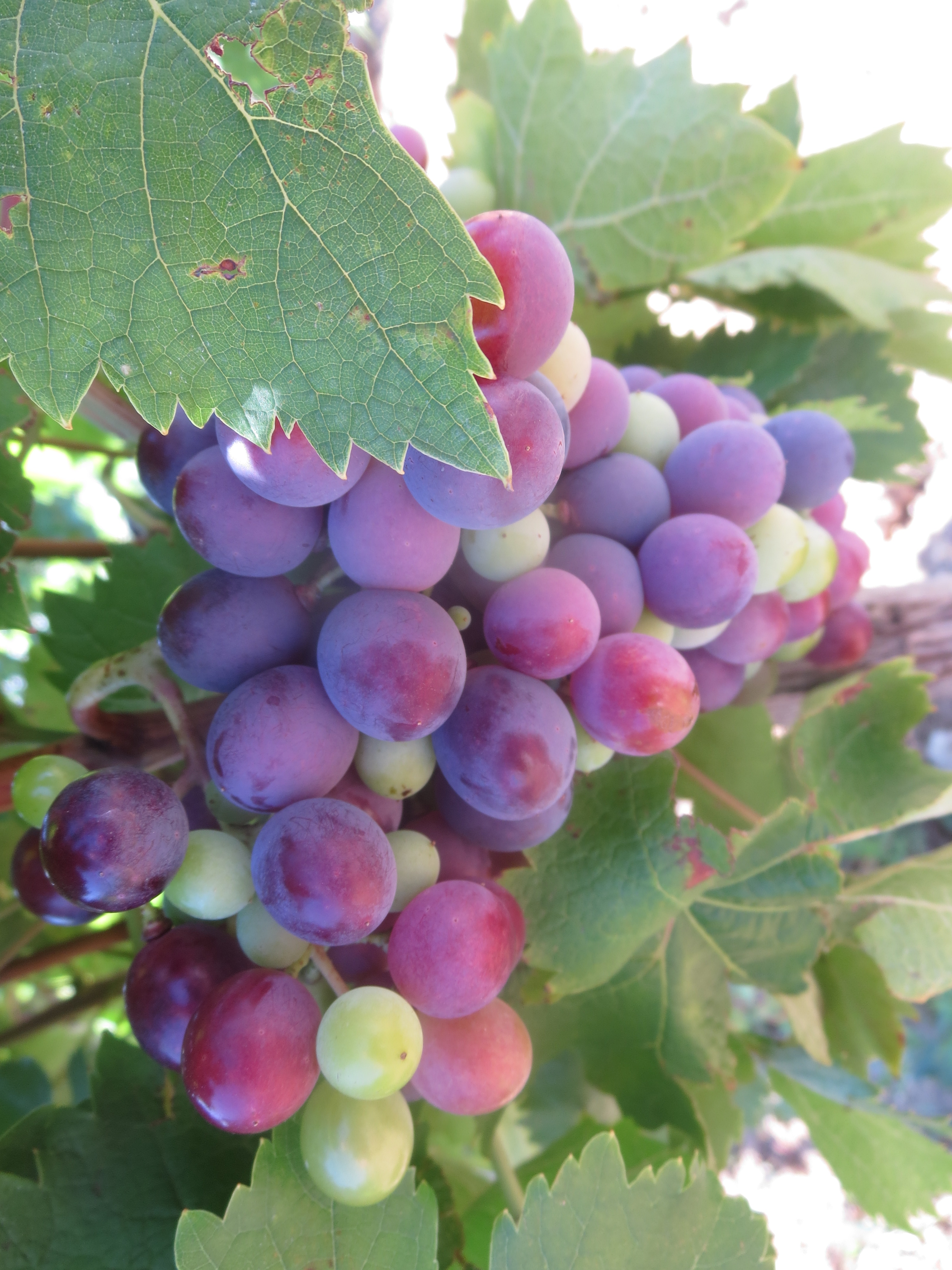
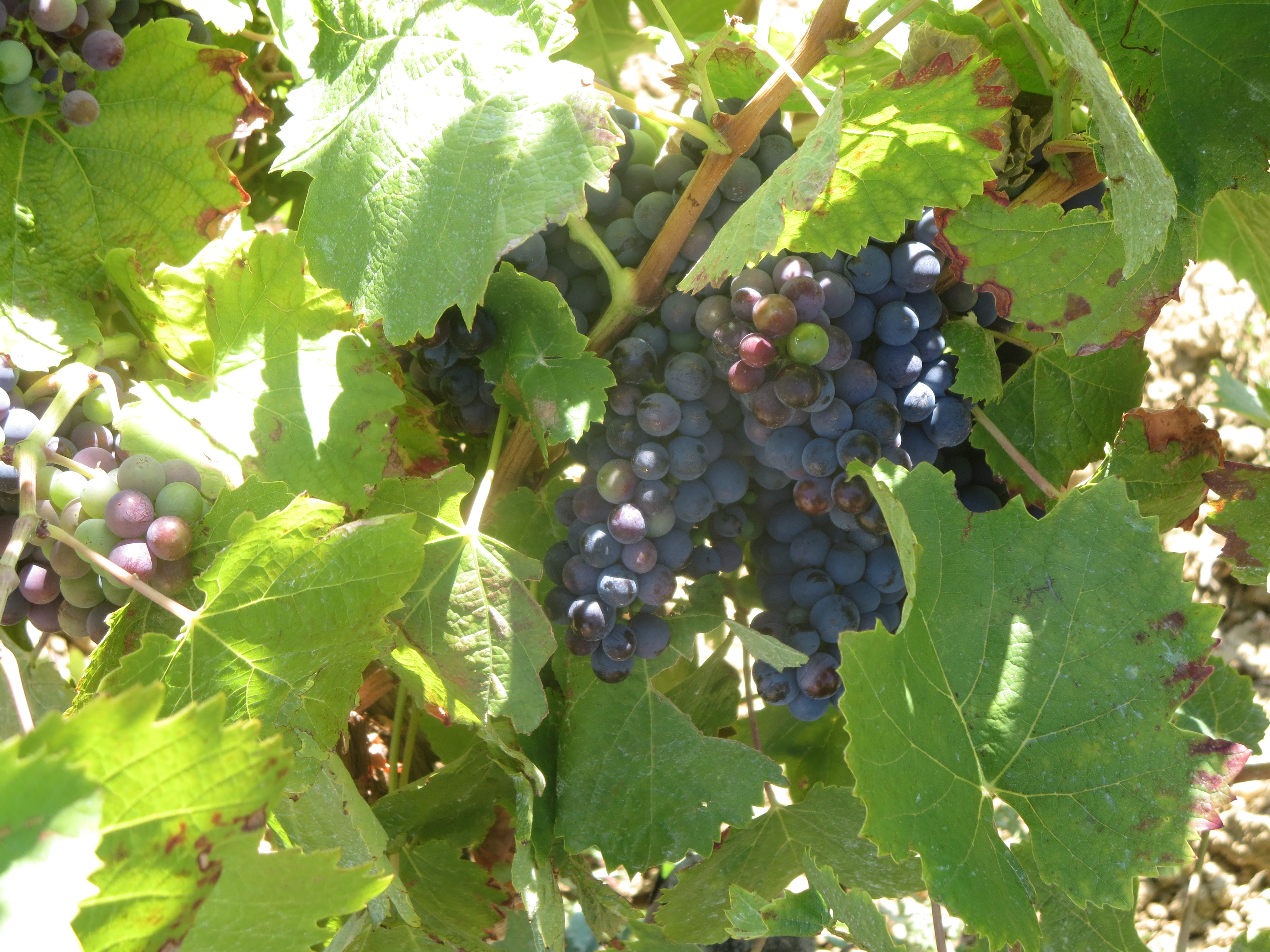
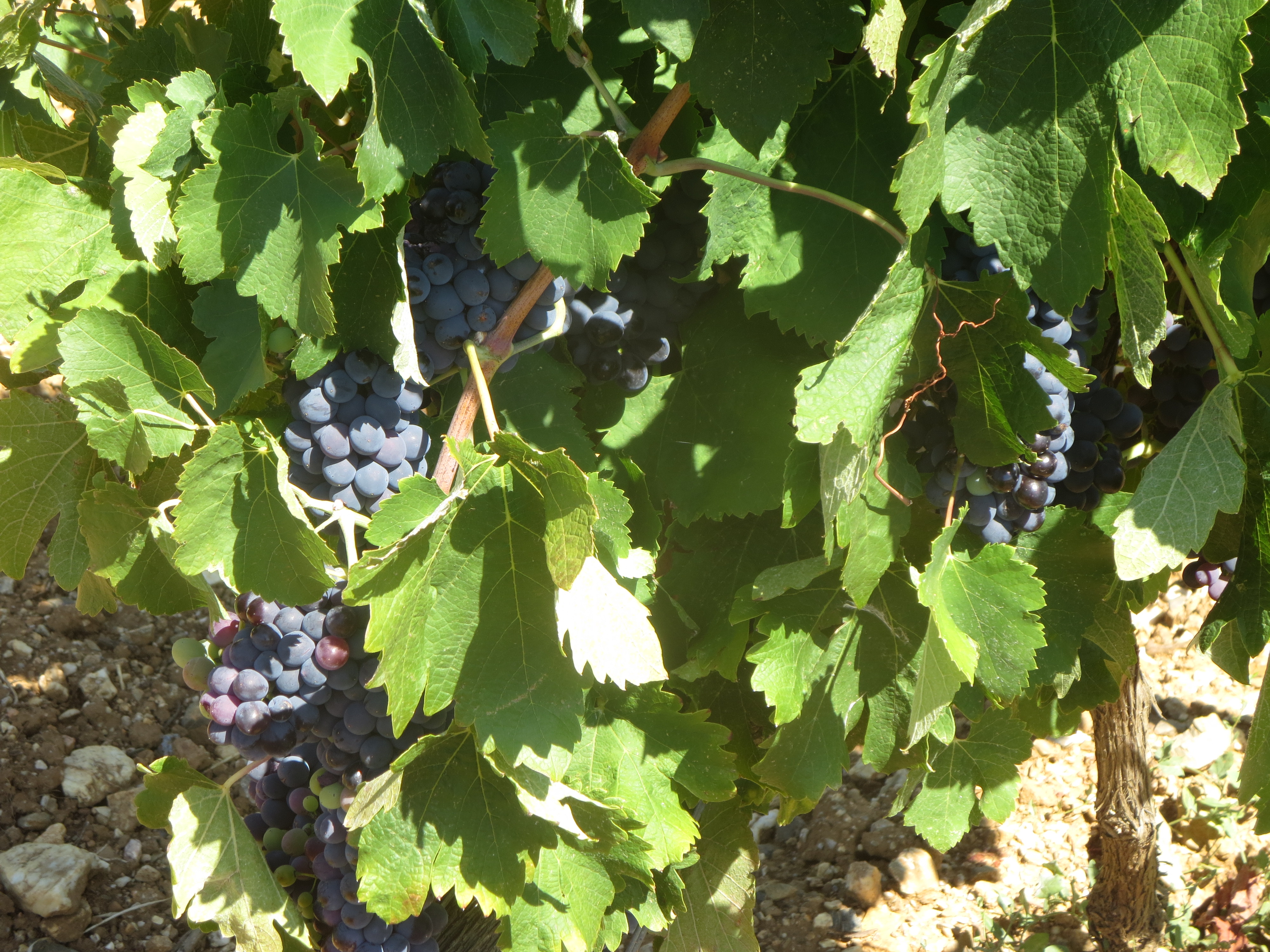
The flowers gave way to the little hoods which cover the nascent grapes, capuchons. These quickly fall away too revealing the grapes for 2016. On some vines all of this is happening at the same time such as this Carignan (above) in Rec D’Oulette. The weather has also encouraged the growth of the grafted vines which we did back in March.

This brings work too. The palissage has to be lifted to support the vines, hard physical labour. And, sadly, the heat and rain bring problems of disease. Mildew has been around for a couple of weeks and I mentioned that Jeff was spraying in the very early hours and late at night last week. He worked until 1am Friday/Saturday and started again at 6am. Just as things seemed to be settling a big attack of mildew on the Grenache at Ste. Suzanne meant more treatment on Tuesday morning. This ‘curious’ year is proving to be hard work.

Not all negatives though. The storm brought such a downfall that I was fearful for the flowering bunches. damage to them means no grapes. I happened to be in Puimisson during the storm (next article!) and the rain was lashing down, converting streets and roads to waterfalls and lakes. Yet as the rain eased I went to a couple of vineyards and the flowers were coping just fine. A trip round the vines on Monday morning revealed healthy growth and the soils had absorbed the rainfall.

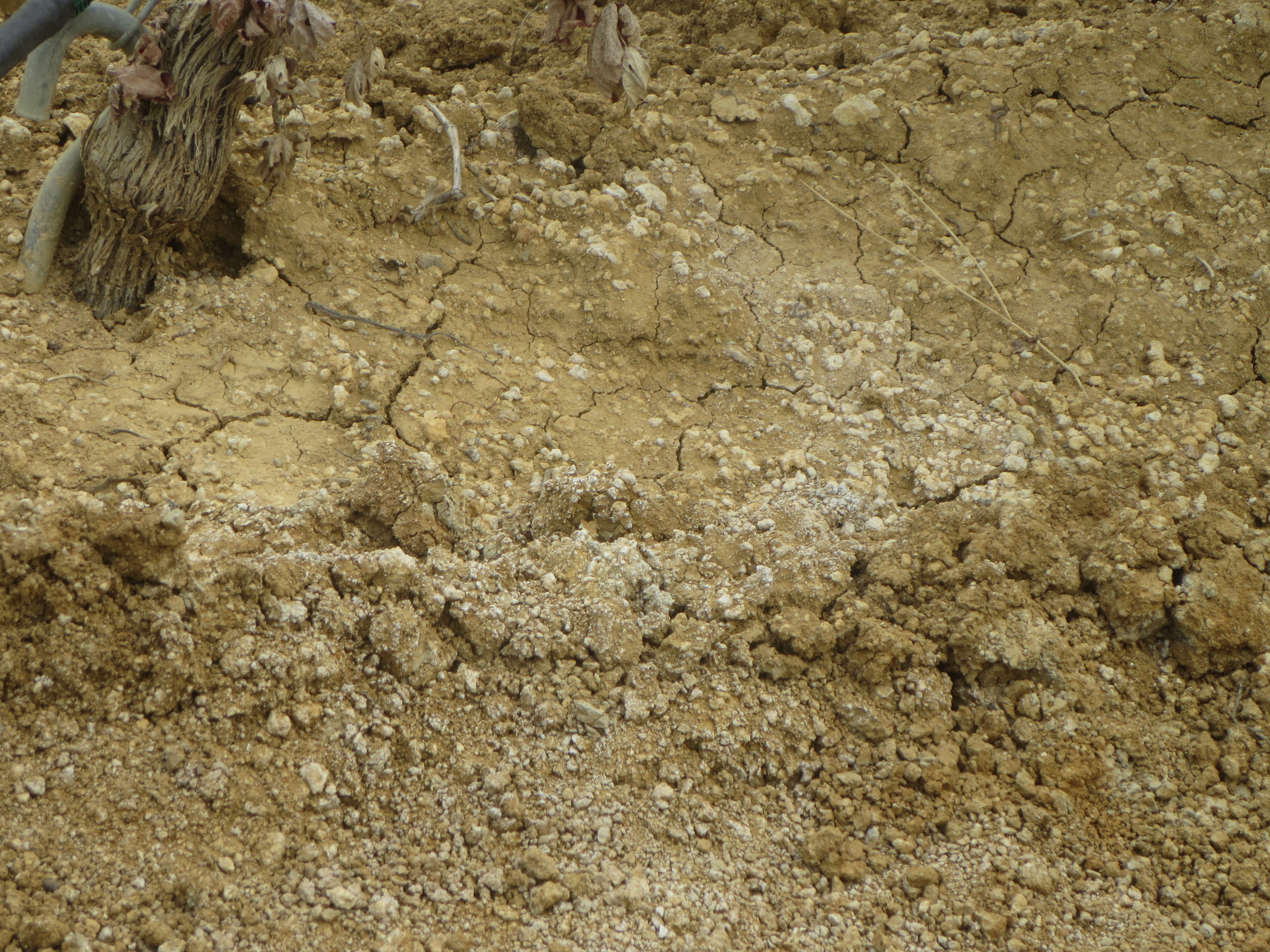
This is not true of everyone. Much of the water on the roads was also full of clay from vineyards nearby, hence the yellowy brown colour. Vineyards which are treated with weedkillers, where the soils are ploughed deeply, even irrigated, were unable to cope so well with the heavy rain. Soils were carried away. Compare these photographs of Jeff’s vineyards with the parcel next door belonging to someone else. The difference is marked. Water can help or can damage.

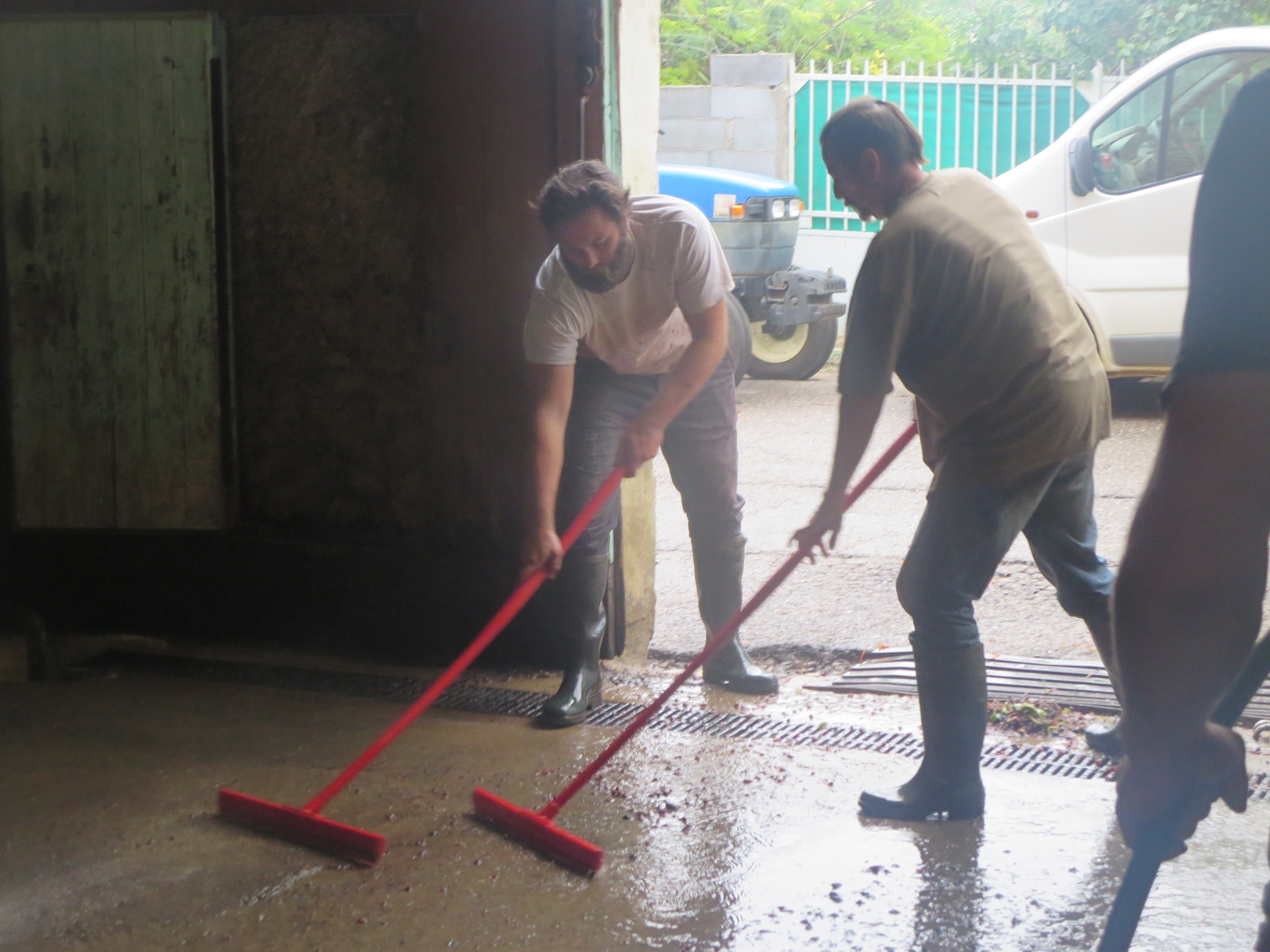
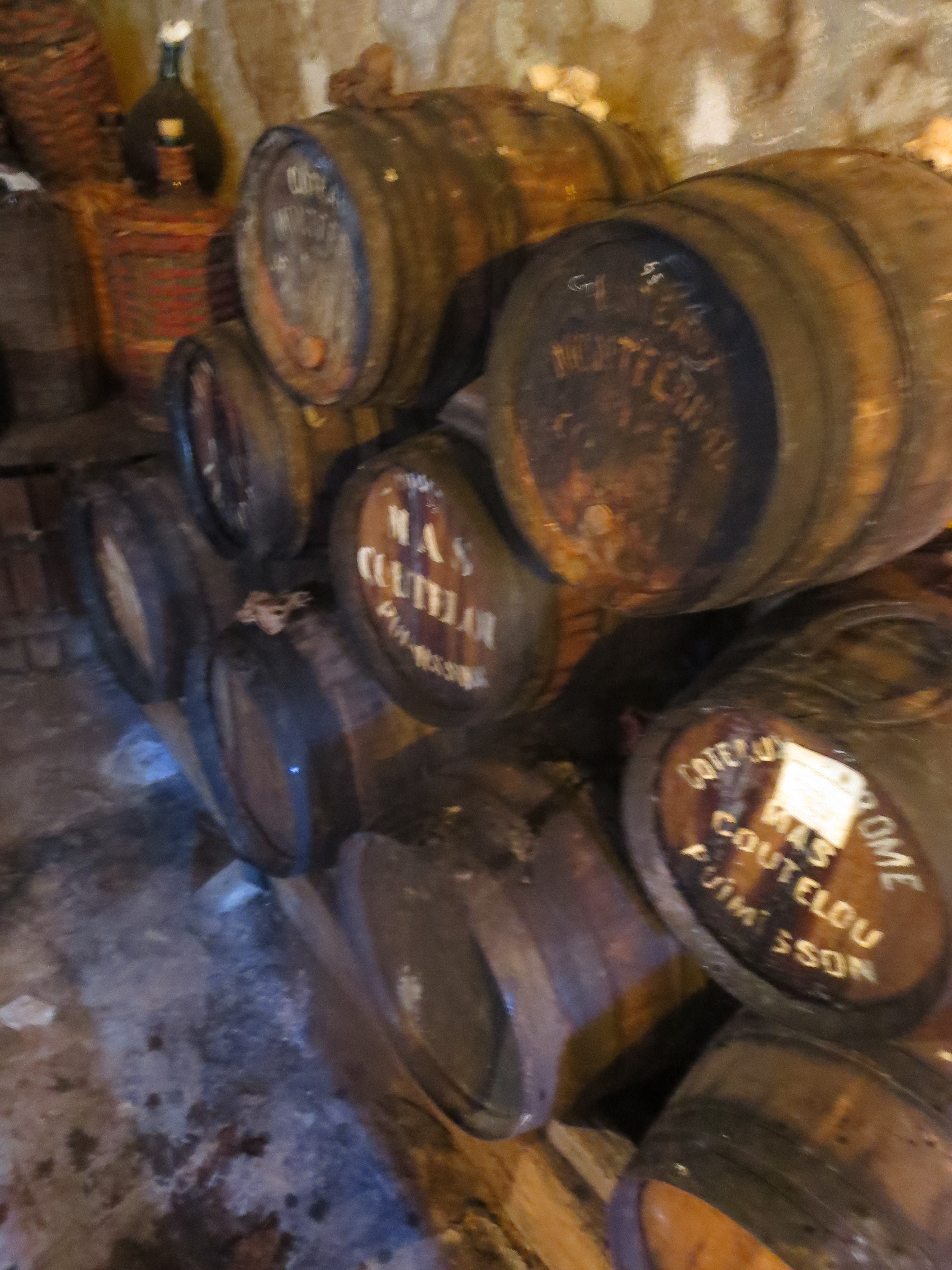
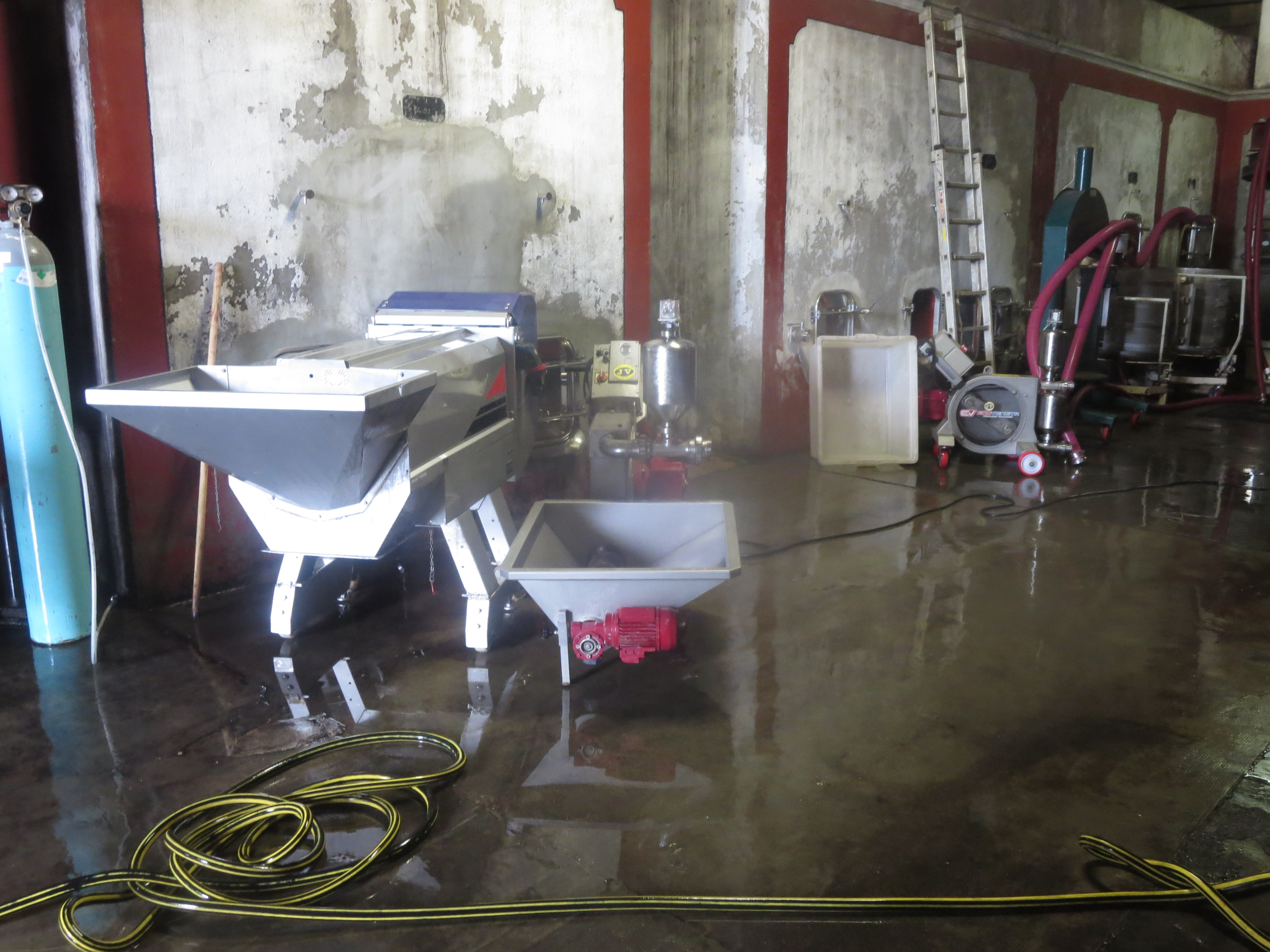
Meanwhile back in the cellar there was more work to be done. Recent changes to the fabric of the cellar, especially the floor, have brought more efficient drains and a smoother surface, easier to clean. Further work will soon be done to the rest of the floor so the bottling of the next wave of wines had to be brought forward to allow the works to be done and dusted before vendanges.

The spring bottling of wines such as 5SO, PM Rosé, 7 Rue De La Pompe I described earlier. These are wines for early drinking, vins de plaisir. Now it was time for wines with a little more body. On Thursday June 2nd 10,000 bottles of Classe were made, and it is really something special in 2015. It took almost 12 hours and went very smoothly but believe me it is a hard day’s work. On Friday, Flambadou, made from the Carignan vines above, was bottled along with other smaller cuvées.

Before anyone rushes in with orders Jeff will let these bottles rest for a few months to allow them to be at their peak when released, Flambadou probably in 2017 for example. There remains one or two cuvées still in tank which need a little more time, Flower Power being one.

So, most of the 2015  wine is now in bottle, the vines are revealing the grapes for 2016 and there are wines stored for 2017. Busy times at Mas Coutelou for everyone, well except one.


4 Comments

Vendanges Diaries – #9 Dream

IMG_2773

Our last picking of 2015, Rome vineyard, October 9th; Michel, Cameron and Jeff

Version française

The very last week of vendanges, definitely.

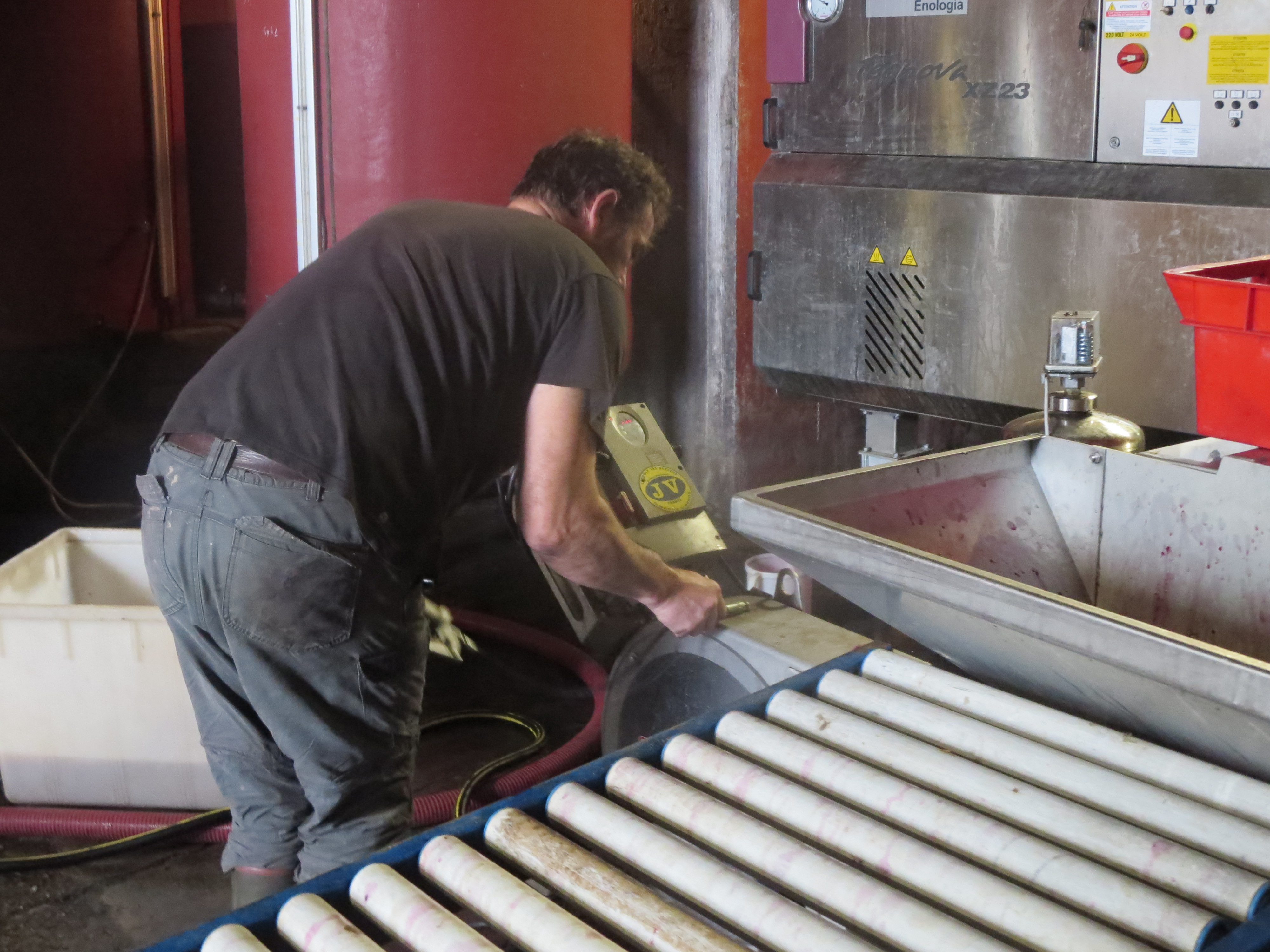
Lots of work continued in the cellar during the week, pigeage and remontage as described in the previous post, and more wines which are now completing fermentation and being put into tanks to mature or to allow malolactic fermentation if it hasn’t already happened. This fermentation produces softer lactic acid which will make the wine taste more supple and fruity. The cellar is now much quieter and there is a sense of job done.
IMG_2720

                              Pigeage

IMG_2732

                      Carignan in tank

IMG_2734

Cameron cleaning tanks, cleanliness remains the priority

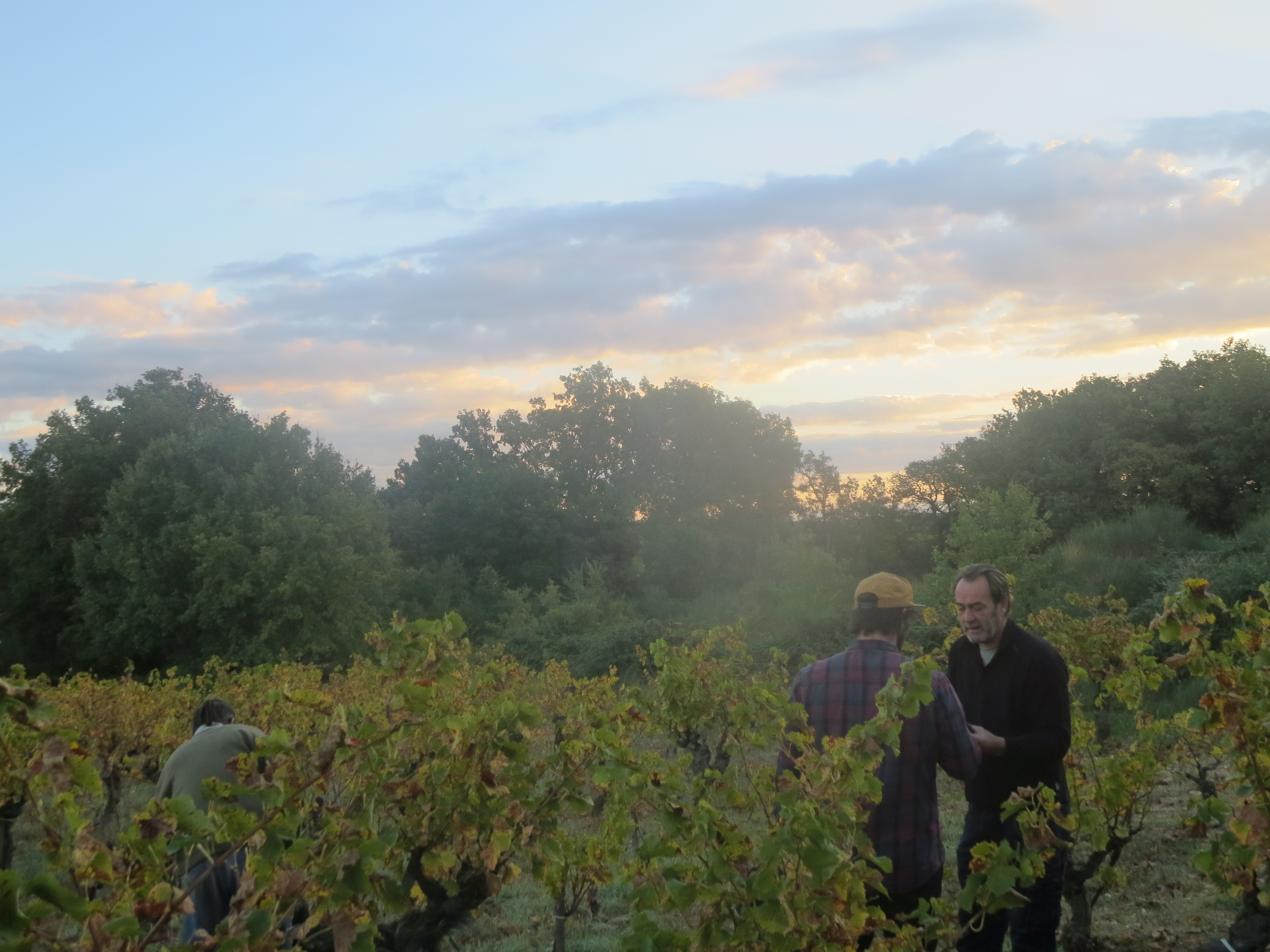
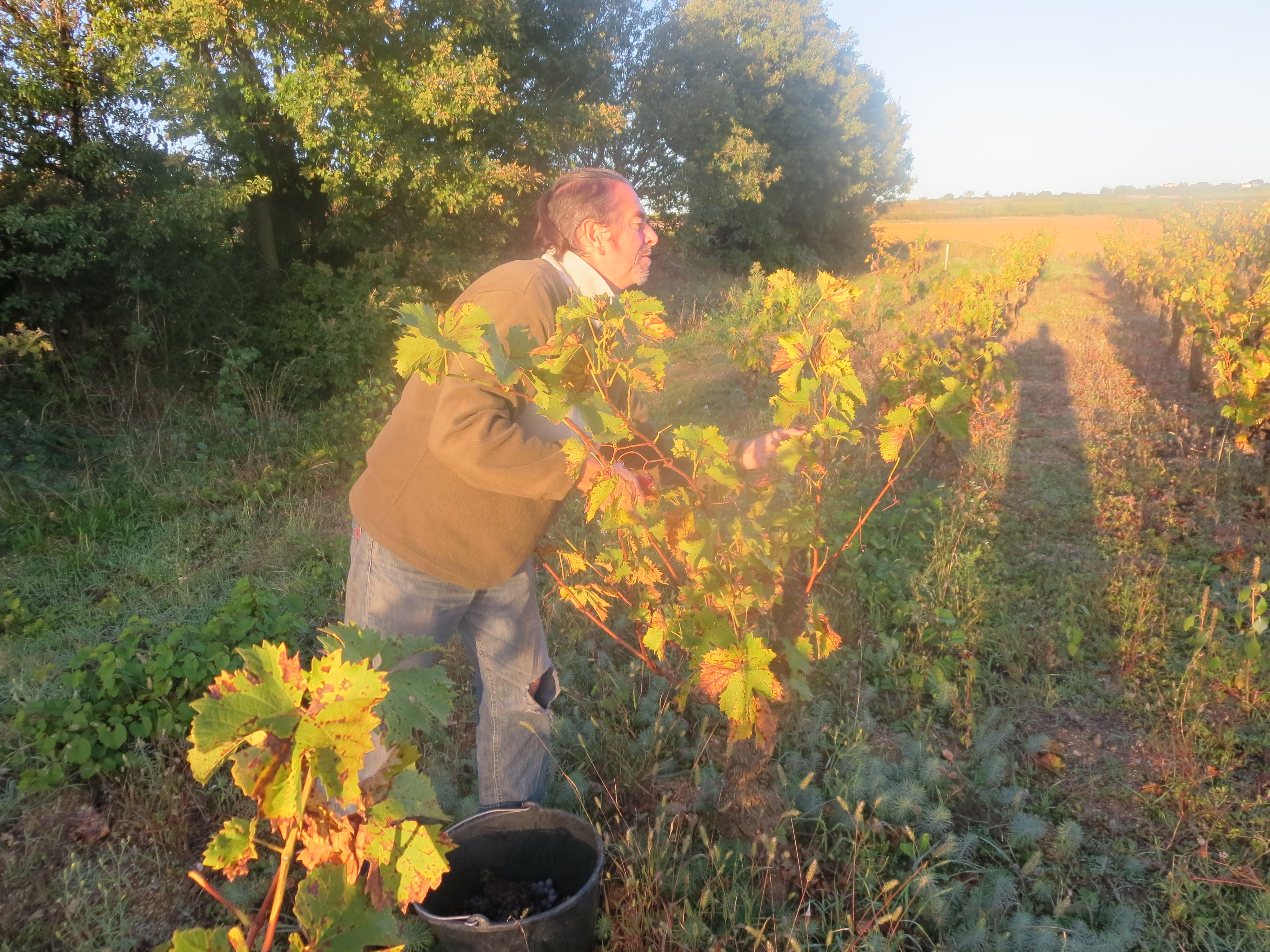
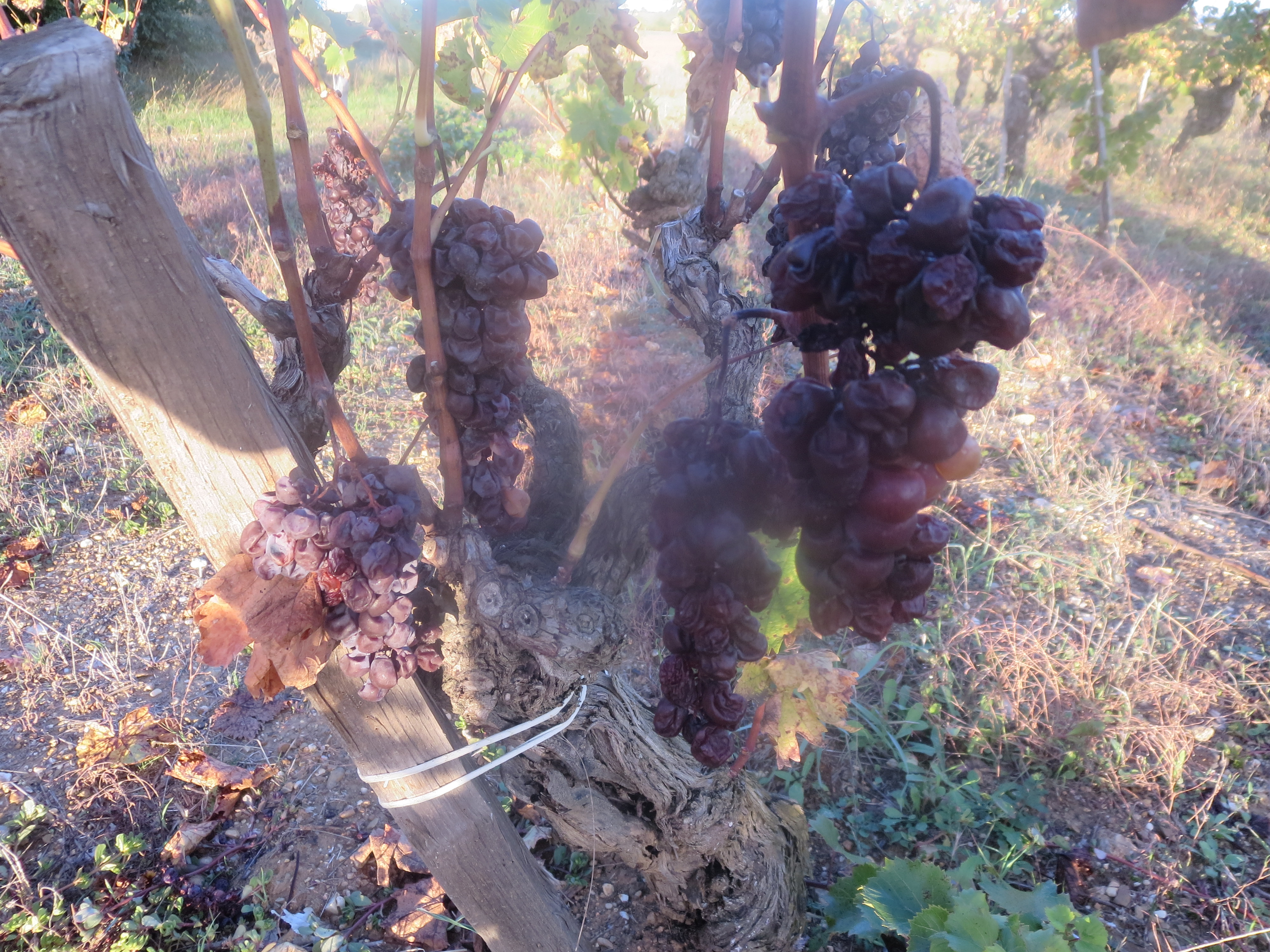
However, the final wine remained as grapes in the vineyards. Muscat grapes in Rome vineyard and Grenache in Sainte Suzanne have concentrated their sugars, developed a little noble rot even. So, on Friday October 9th Jeff, Michel, Cameron and myself ventured out to pick the Muscat and some of the Grenache. (The remaining Grenache was picked by the experienced Moroccan team on Saturday morning.) A beautiful autumnal morning cast shafts of sparkling sunlight on to the myriad colours of the leaves. It was incredibly peaceful and dreamlike.

IMG_2776

IMG_2777


IMG_2784

The Muscat was dried out in the main, the berries now like raisins with a lot of sweetness but not too much juice. The Grenache would give more juice to produce around 4.5hl of sweet wine in the end, which Jeff was happy with.

IMG_2780

IMG_2778


IMG_2781

                     My first bucket of Muscat

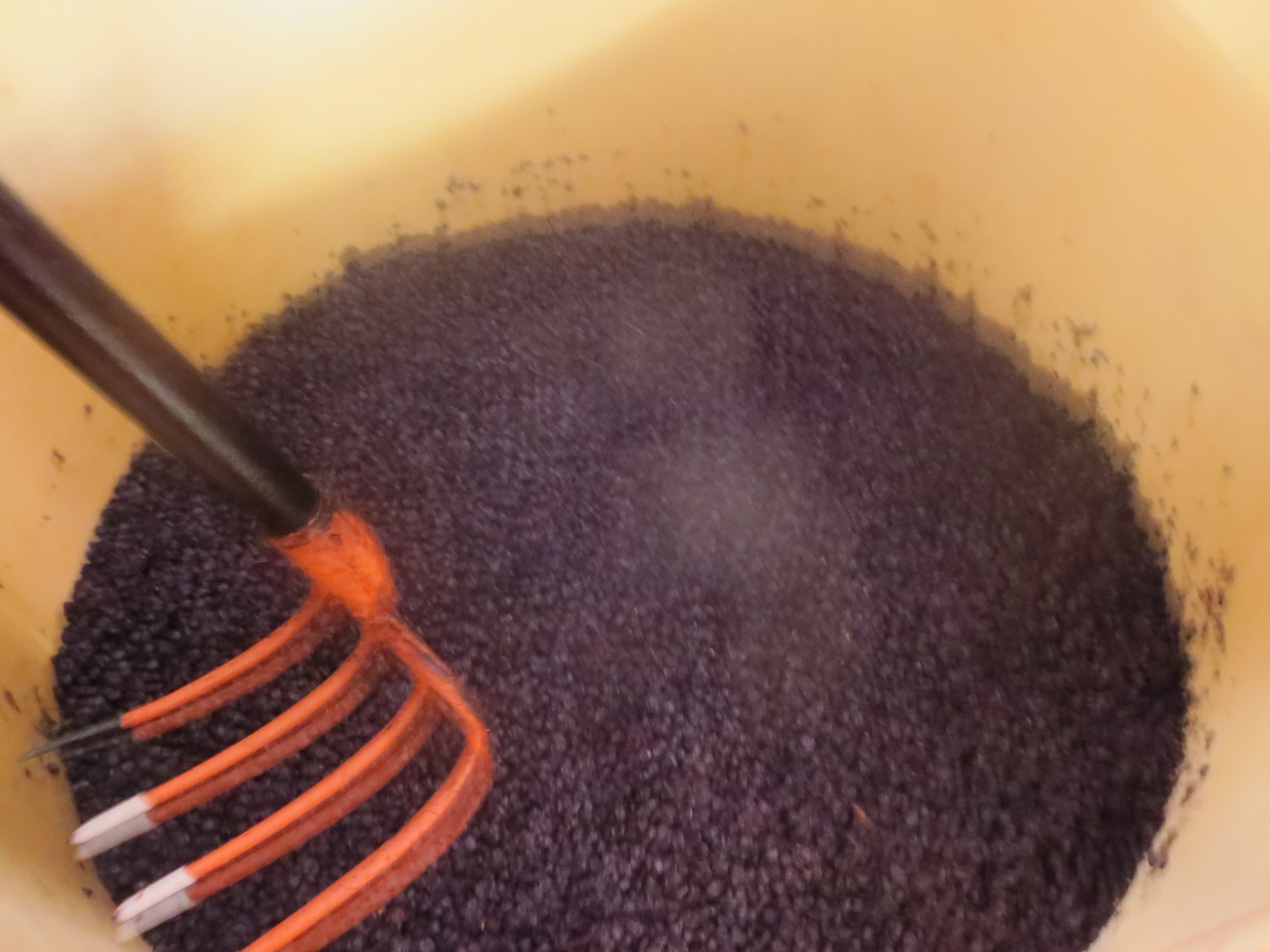
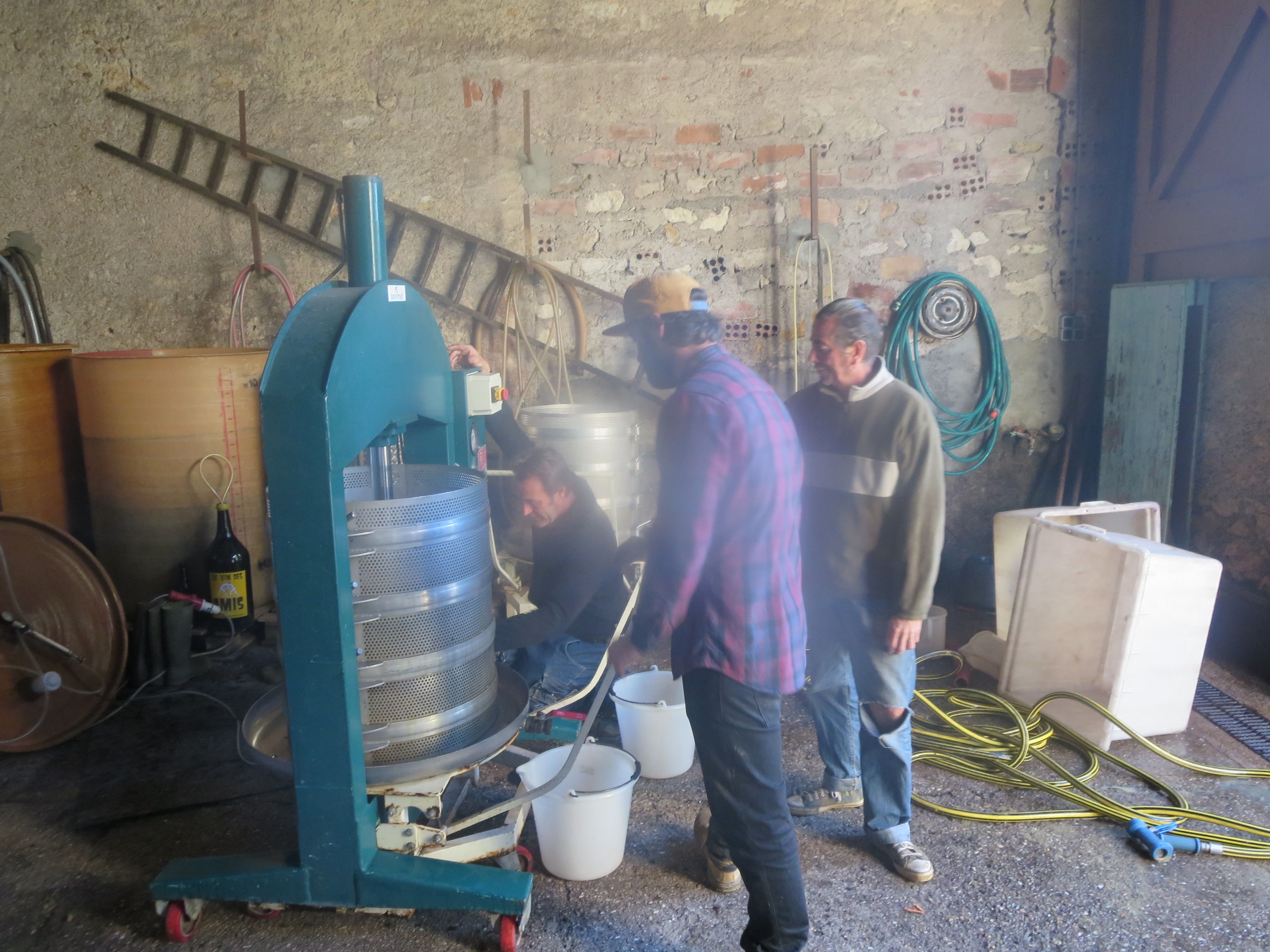
In the press the Muscat and Grenache were added one on top of the other in successive layers to give more complexity and allow the Grenache to fill out the Muscat. The juice was slow in emerging but eventually arrived in a lovely, light red colour with strong aromas of sweet raspberries.

IMG_2790

IMG_2793

The following day, Saturday 10th, the Grenache arrived and the last cagette of 2015 grapes entered the press.

IMG_2787

                   Grenache in Saint Suzanne

IMG_2799

  The last cagette of 2015 grapes goes into the press

IMG_2796

IMG_2801

     Pressing the button for the last time this year

It was a moment to breathe a sigh of relief, to feel a sense of pride in what has been achieved in the last 2 months and, a hint of sadness as the bonds of a team, which worked so hard and so well together, are gently loosened.

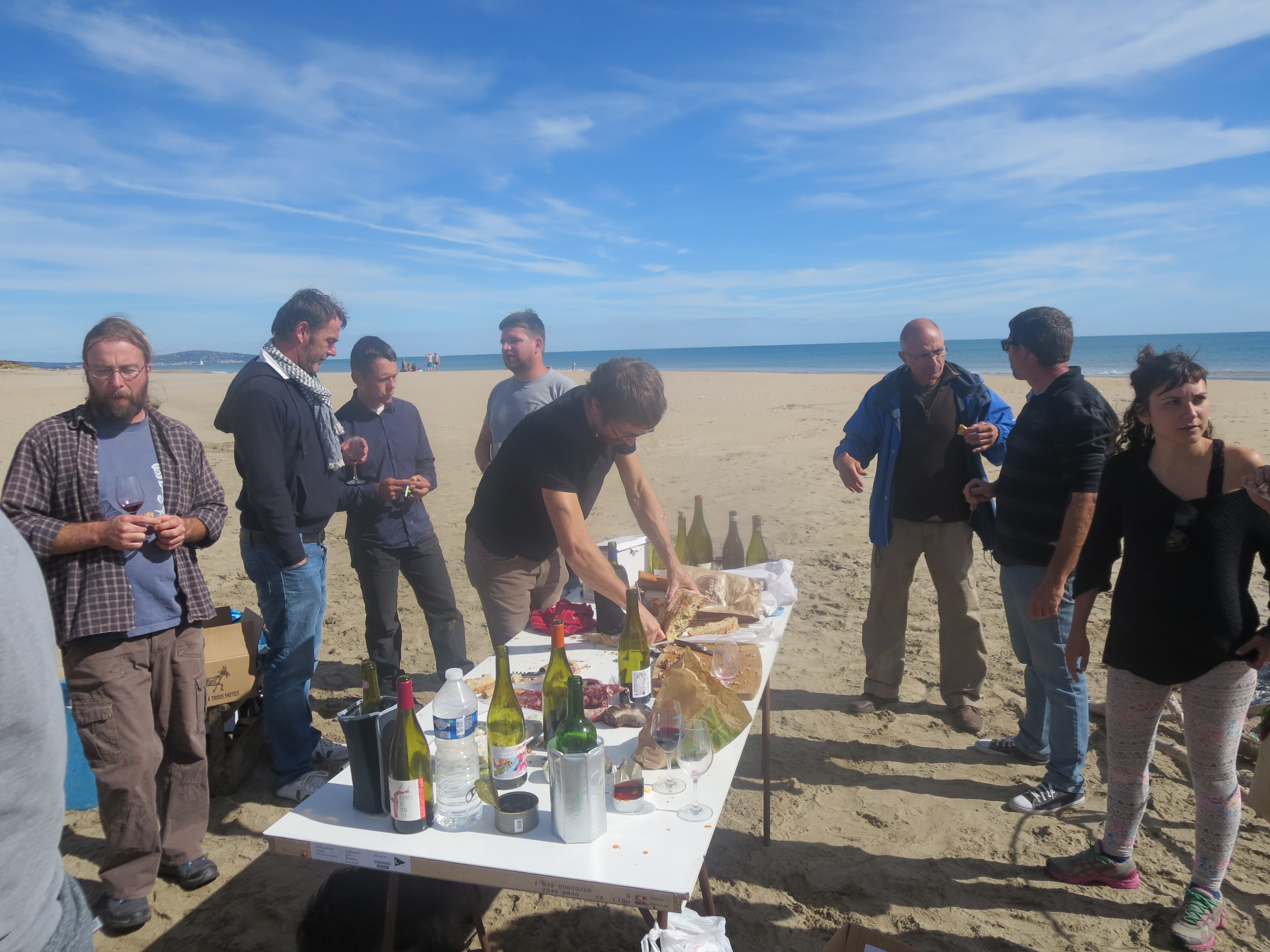
The relief also showed in recent days by getting together with other vignerons. An evening in Roquebrun at the excellent Cave St. Martin and then on Thursday a visit to Domaine Vassal, a conservatory of vines, with a who’s who of natural producers in the area. I shall write more about Vassal in a future post.

IMG_2714

Vignerons including Julien Peyras, Alain Castex, Axel Prufer, Yannick Pelletier, Jean Marie Rimbert, Carole Andrieu celebrate with Raymond Le Coq (red shirt) at his Cave St Martin

IMG_2767

l-r Rémy Poujol, Jeff, Yannick Pelletier, Julien Peyras, Joe Jefferies, Bernard Bellahsen (Fontedicto), Olivier Andrieu (Clos Fantine)

Then, on Sunday, team Coutelou gathered at Le Terminus in Cruzy, one of the best restaurants in the Languedoc. Jeff kindly paid for our celebration lunch together, the food and wine were excellent (including Clos Fantine and Julien Peyras wines) and the company could not be better. Cameron will be heading back to London this week though hopefully returning soon. So, it was an occasion to say ‘au revoir’ too.

Terminus

    l-r me, Cameron, Michel, Jeff – team Coutelou

IMG_2813

Jeff wondering how Cameron got a bigger glass! (It’s actually a decanter)

And to show that we really are moving into the next stage after vendanges Monday October 12th saw the first bottling of 2015 wines. Bibonade rosé is a sparkling, sweetish wine with 20 grams of residual sugar to produce 4 bars of pressure and, consequently, the sparkle. Jeff stopped the fermentation on Sunday and bottling under capsule took place this morning.

IMG_2820

IMG_2826

           Bibonade rosé, bottled and stored

So 2015 vendanges is done, 2015 wines are on the way. Job very well done. It has been a joyful experience for me to take a full part, thanks to Jeff, Michel, Cameron, Carole and everyone else who has been part of the team. A dream come true.
IMG_2617


2 Comments

Vendanges Diaries #6 – Mystery, Mourvedre and Flambadou

Mourvedre 17th

Version française

The storms which brought so much rain to Puimisson and the Languedoc on Saturday meant that there would be no picking on Monday or Tuesday the 14th and 15th.
IMG_2457

             Preparations for cellar work

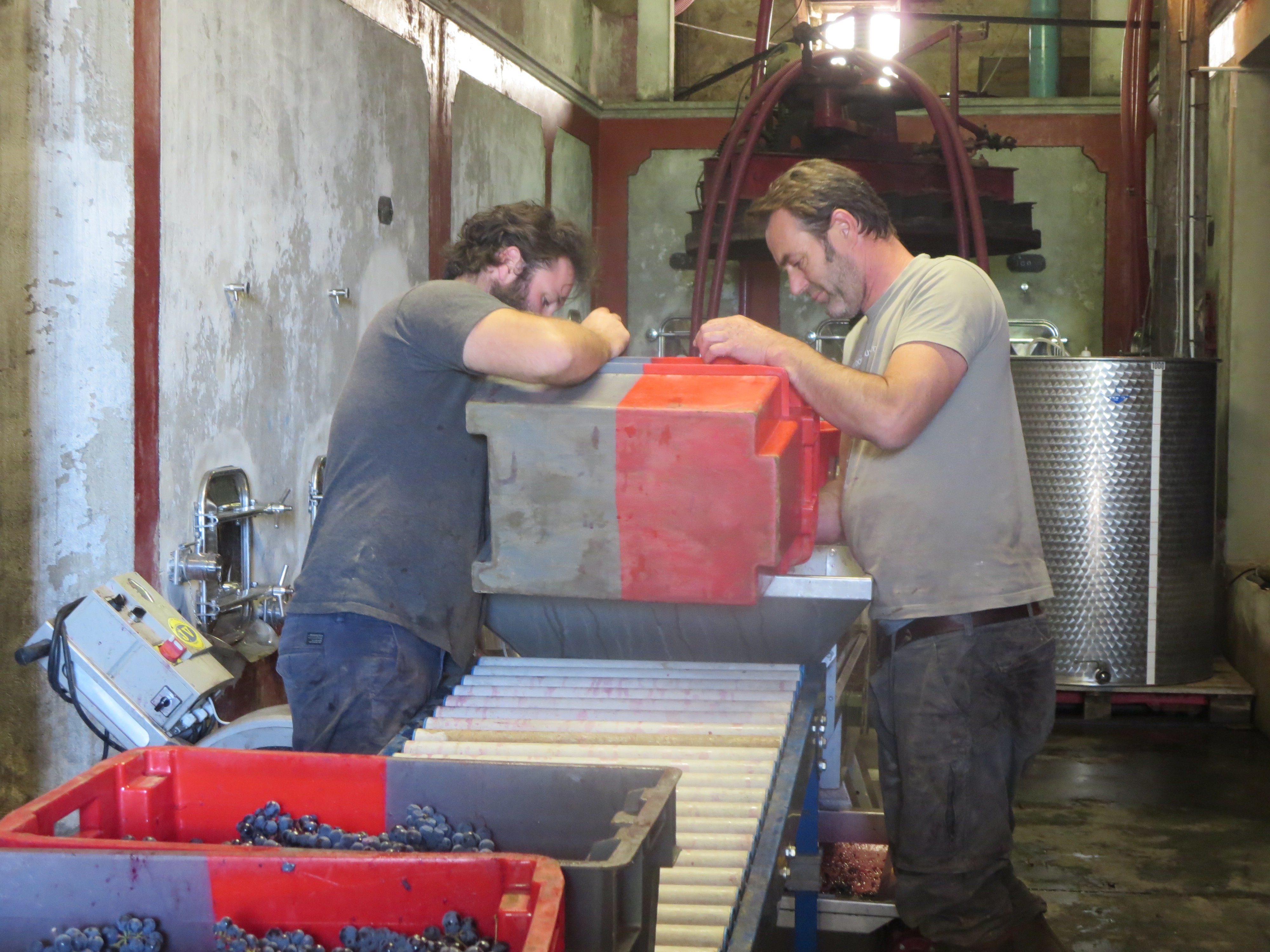
Instead Jeff, Michel and Cameron were hard at work in the cellar for the two days. There is lots to do there so it was an opportunity to get everything on track. Lots of remontage, sous tirage etc. On Monday the 14th the Syrah which was to be made with carbonic maceration was pressed after its few days in tank with the fermentation inside the skins.

IMG_2476

                     The Syrah being pressed

The video shows Michel in the cuve moving the grapes to the front where Jeff forks them into the pump. You will see the grapes moving through the pipe into the press.


By Wednesday 16th the weather had turned much clearer and good winds meant that the grapes and soil were beginning to dry out nicely and so picking recommenced. The centre of attention was Rec D’Oulette known locally as Chemin De Pailhès and the Carignan grapes which grow there. These are the grapes which make the excellent cuvée «Flambadou», perhaps the outstanding wine of 2013 (and Jeff tells me of 2014 too). The bunches which arrived were excellent in quality, so fingers crossed for another great wine.

IMG_2511

                         Picking the Carignan

Carignan

                                    Carignan

IMG_2506

                         The Carignan in tank

IMG_2508

          Analysing the Carignan

Meanwhile cellar work continued as Cameron carried out more remontages and analyses. Today one of the wines to be moved was the Merlot which was bright, fresh and colourful.

Merlot being moved

                         Délestage of Merlot

As each wine is moved around the cellar, for example to take it off its skins, each cuve has to be cleaned thoroughly and then it will be filled with another set of grapes or fermenting wine. There is a seemingly never ending merry-go-round of wines and quite how Jeff keeps track of them all remains a mystery to me. Each move has to be planned to ensure that cuves are available, cleaned and big enough.

IMG_2521

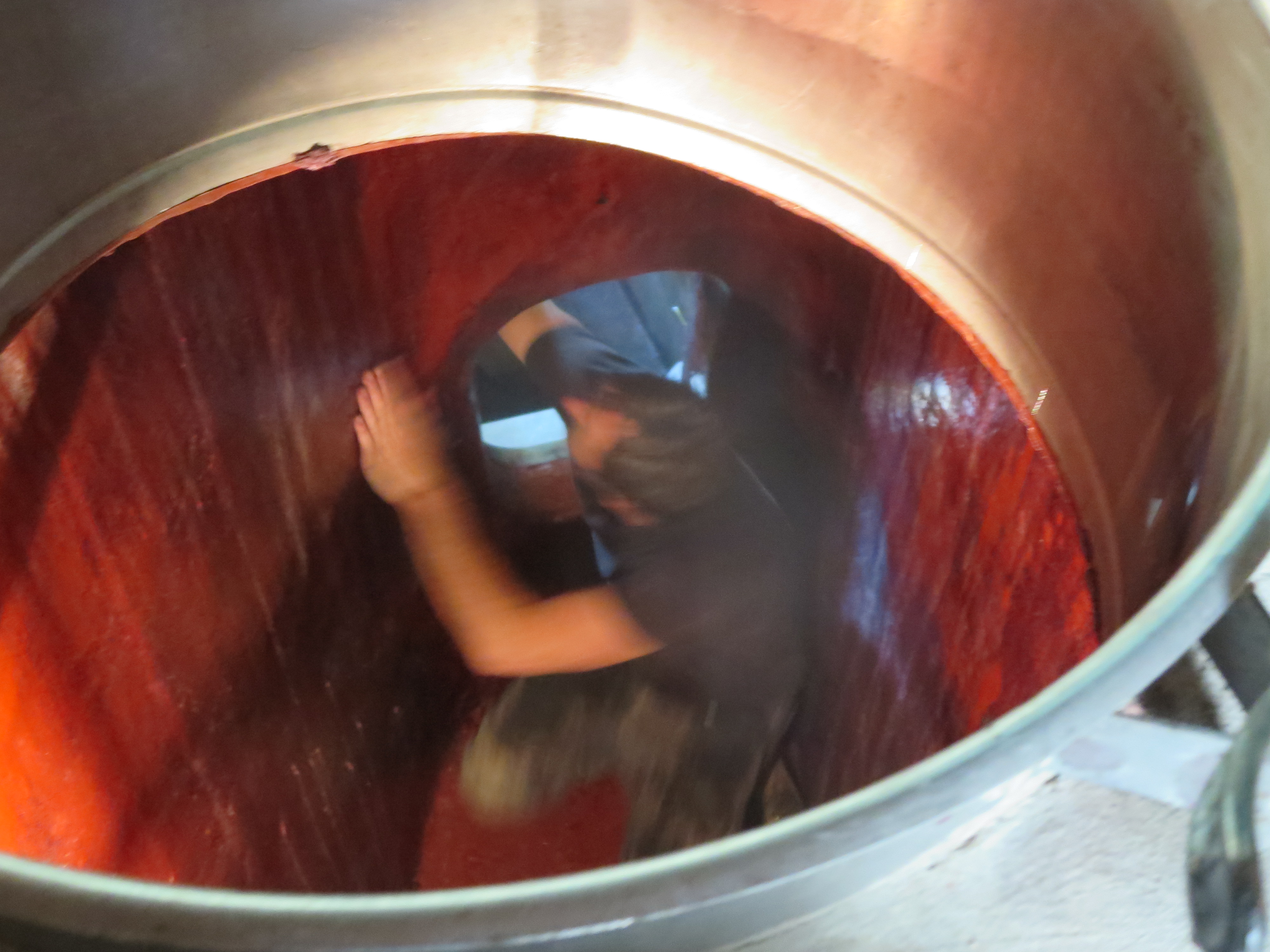
                 Cleaning from the inside

As a former teacher it reminds me of planning a timetable fitting in students, teachers and classrooms into the correct combination. Add in working as a mechanic to keep all the machines ticking over and the work of a vigneron becomes more complex, the job description is long.

IMG_2489

              Maintenance of the égrappoir

Thursday 17th brought Grenache from Sainte Suzanne (Metaierie), again carbonic maceration was to be used so back to the top of the cement tanks. Thomas was back and he, Cameron and I shared duties up there filling the tank.

IMG_2517

IMG_2526

        l-r Cameron, Michel and Thomas

Then cleaning of the cagettes ready for the next new cépage. Following the Carignan of Wednesday it was time to harvest the Mourvèdre from Segrairals. One of my favourite grapes, somewhat fickle in character but when grown by good producers it adds a complexity and depth with a hint of dark mystery. The bunches which arrived were certainly amongst the best of the whole harvest at Mas Coutelou.

Mourvedre 17th

                            Magnificent Mourvedre


They were clean, big bunches, the grapes with thick skins and smelling already of spice and blackcurrants. Some of the bunches were very heavy and it wouldn’t take many to produce a bottle of wine, on average you need about 1.25kg of grapes to make the 75cl of a normal wine bottle. Sorting was quick and easy, the pickers had done a good job and the fruit was in such good condition. I look forward eagerly to finding out what Jeff has in mind for these grapes, when I have asked he simply smiles mysteriously, something is afoot!

IMG_2532

Friday 18th brought the rest of the Mourvèdre still in tip top condition. When the pickers reached some of the lower parts of that parcel the quality did begin to dip a little so these bunches were taken away to be used separately, possibly for a rosé wine. I say possibly because final plans are a long way from being ready. Other jobs included pressing the Cinsault grapes which will make a rosé (definitely!!) and more remontages and analyses.

IMG_2533

                           Remontage

We were joined today by Charles, a young Frenchman who works in a restaurant in Berlin, and whose mother was a former colleague of Jeff when he was a teacher in Paris. Coincidentally his boss in Berlin was a student of Jeff! Charles added a real sense of fun and worked hard.

IMG_2537

                     Charles fills the press

By Saturday I was ready for a rest and so the 19th was the work of the Jeff, Michel and Cameron as they processed the last red grapes from Peilhan. Some of these will be used for blending but amongst them was the famous Castets. This you might remember is a cépage produced by only two winemakers in France, Chateau Simone in Palette and Mas Coutelou. The first harvest was in 2014 and we had watched eagerly its development. In fact we have been drinking some during harvest lunches and it is very promising, brooding with deep, dark fruit flavours and a freshness to lift it. Only 3hl was produced again this year, the same as last year.

Castets

                 Castets in tank

On Sunday 20th Jeff carried out a débourbage of the Cinsault rosé which was pressed on Friday. Débourbage means taking out the pips and skins etc to leave the juice on its own. The harvest is starting to slow down a little though much work remains to be done in the cellar. Jeff and the ‘Coutelou Gang’ will have certainly benefited from a little siesta in Sunday.

IMG_2500

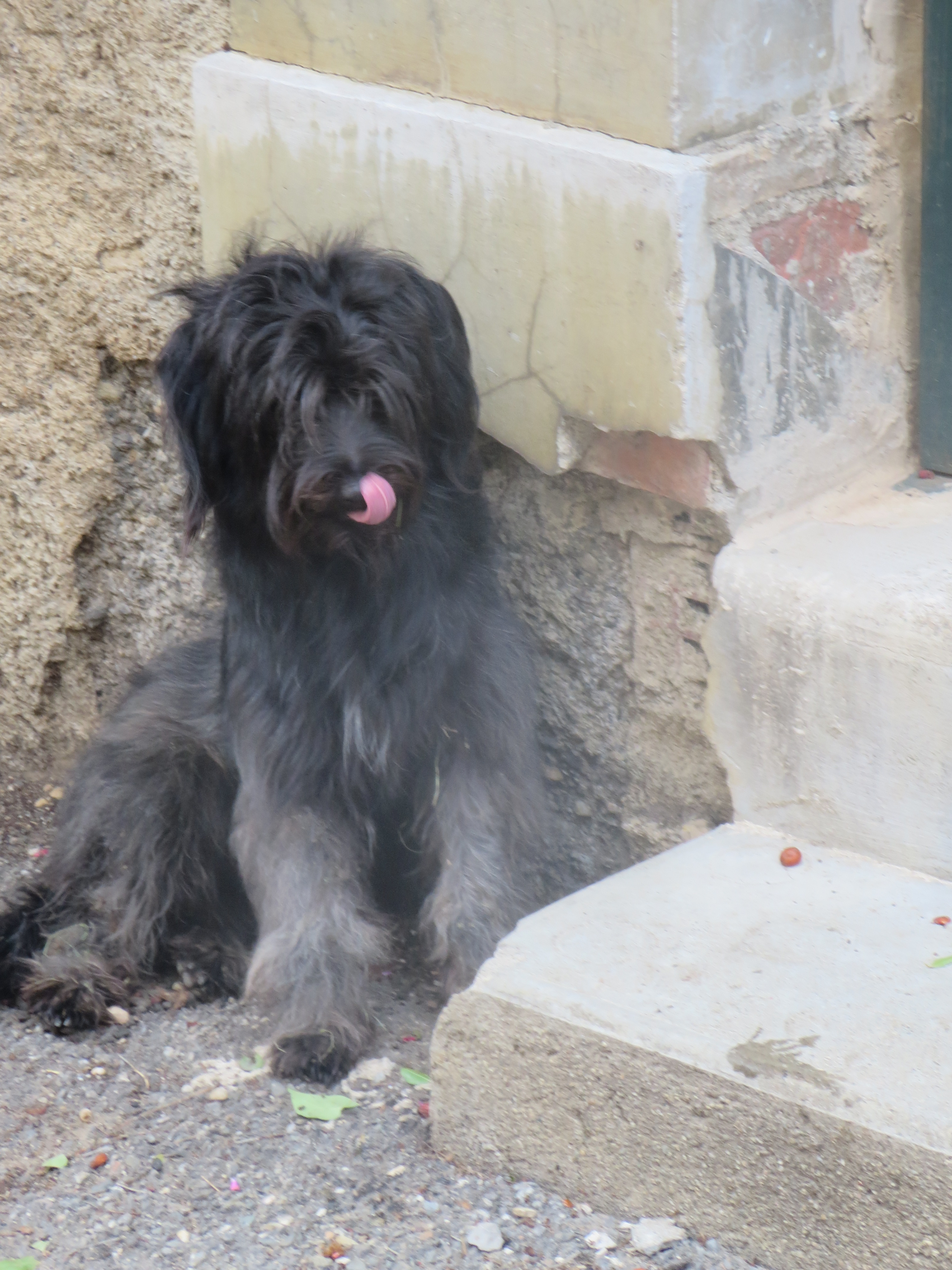
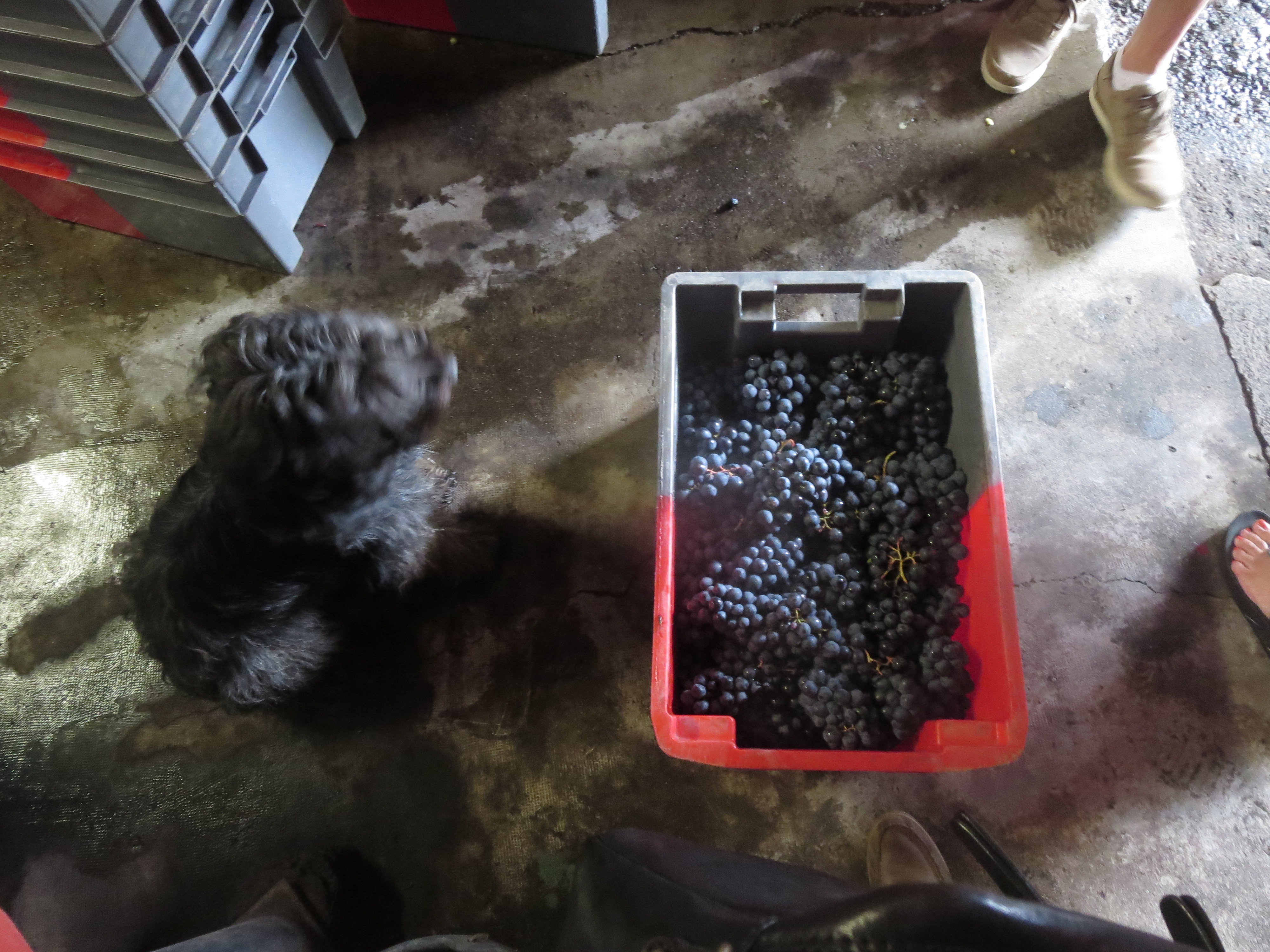
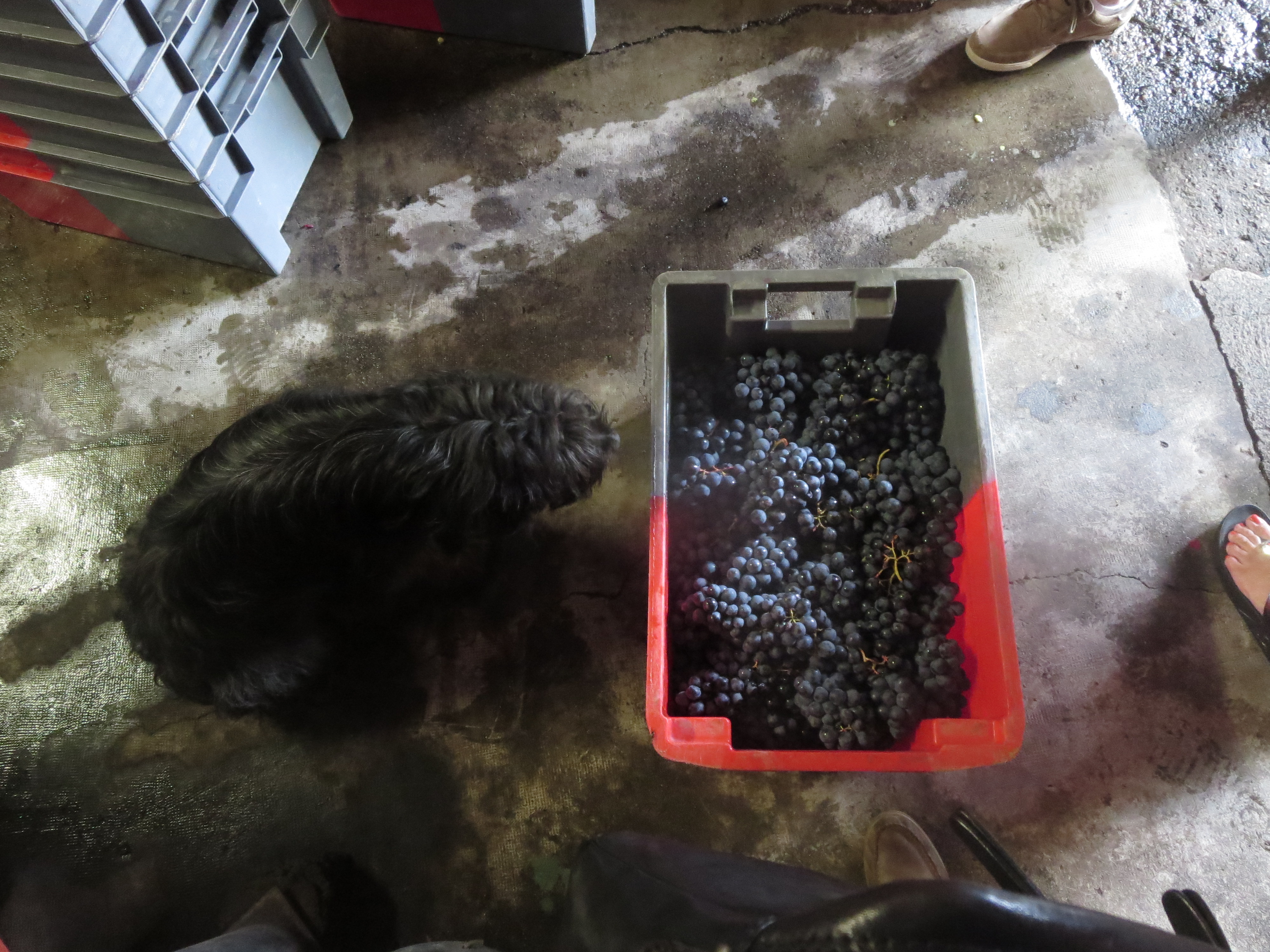
Icare licking his lips at the great wine being made (maybe)


Leave a comment

Vendanges Diaries (3)

IMG_2297

Grenache Gris waiting to be collected

Version française

September 3rd began with further picking at the southern quarter of the vineyards of Mas Coutelou, Peilhan and Font D’Oulette, followed by an afternoon of picking in the northern end in Segrairals.

Untitled

Peilhan and Font D’Oulette are both complanted, ie they have lots of different grape varieties being grown and often in the same rows. However it was the Grenache Gris in Peilhan which was being picked first to provide the juice for a rosé wine. Grenache Gris is, in my opinion, one of the most interesting cépages in the Languedoc Roussillon providing many of its best white wines. It also has a grey, pink skin which can provide a little colour to the wine if the juice is allowed to stay in contact with those skins for a few hours. In this case it would provide a very pale rosé wine, I heard the style described recently as a gris de gris. How this turns out we shall see, it could yet make a white wine.

IMG_2295

Cameron loading the press with the Grenache Gris

Error
This video doesn’t exist

When the Grenache Gris was through the press it was time to bring in the grapes from Font D’Oulette. This has a whole variety of cépages from the traditional Aramon Noir to the more unusual Oeillade Muscat, Clairette Blanche and Aramon Gris along with many others.

Clairette Blanche

          Clairette Blanche

Clairette Musquée

         Clairette Musquée

IMG_2305

                Aramon Gris

Oeillade Muscat

                   Oeillade Muscat

Oeillade Noir

              Oeillade Noir

This assemblage will be added to some Cinsault (perhaps from Rome vineyard, perhaps not) to make Flower Power which was made for the first time in 2014 and has proved to be a big success. Indeed we shared a magnum on Friday at lunch and it was excellent, starting to really open up.

Syrah from Segrairals

                 Syrah from Segrairals

Then onto Syrah, some lovely bunches from Segriarals and Caraillet, the biggest of the Coutelou vineyards. The rich juice provided plenty of colour as you might see!

IMG_2313

IMG_2312

And then, of course….

IMG_2315

 Cameron and Michel are becoming a true double act

This was a long day, we finished around 7.15 pm, the day starts at 7.30am. I slept well that night.

September 4th brought a whole day of Syrah grapes from Segrairals and Caraillet again. It was also the last day we had the superb Carole with us for the harvest as she heads to Champagne for picking there. Carole is a true expert in all aspects of the vineyard and cellar and she is always willing to teach and to share, she will be a big miss.

IMG_2321

Boxes of Syrah waiting for destemming on Friday (Sept. 4th)

Whilst we worked on the sorting of the Syrah Jeff and Cameron set about testing and remontage (pumping over the grapes already in the tanks).

IMG_2324

          Remontage of Flower Power grapes

We also tasted samples from the various tanks. The Syrah shows real fruit and is already developing different characteristics. Segrairals was gaining weight and power, Sainte Suzanne much more floral and elegant. The white juice from the complanted Peilhan, still in contact with skins, is beginning to ferment quickly as the yeasts get to work, perhaps because the yeasts are on those skins.  It is a treat to watch the development of these wines from infancy as they take their first steps towards the final wine.

And of course….

IMG_2320

We finished around 6.15 and then went to Jeff’s for a special treat to send off Carole in some style. Oysters and mussels together with some Chardonnay from the brilliant Spanish domaine, Casa Pardet, lovely. Even the sky responded.

IMG_2330

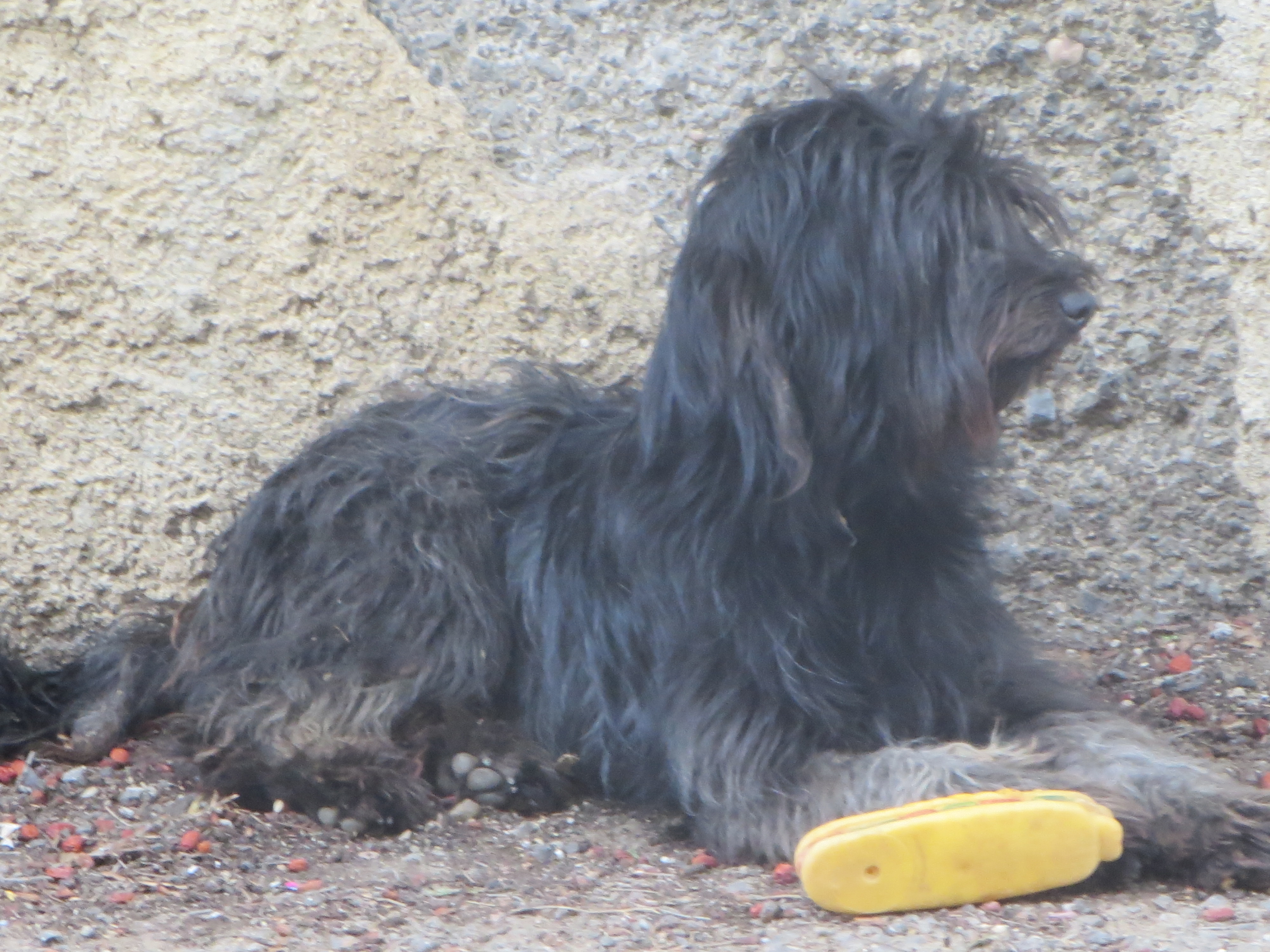
Meanwhile Icare fans, your hero was guarding his favourite toy, a plastic, squeaky sandwich. And sleeping, it is fun to watch him as he dreams because his tail wags furiously.

IMG_2328

Saturday September 5th was a day off for me but not for the rest as they continued to process the Syrah form Segrairals, I did say it is a big parcel. The Grenache and Cinsault are still not quite ready and they will dictate when the team can start to harvest them but that will not be before Tuesday. The weather forecast is good for next week so conditions should be right.

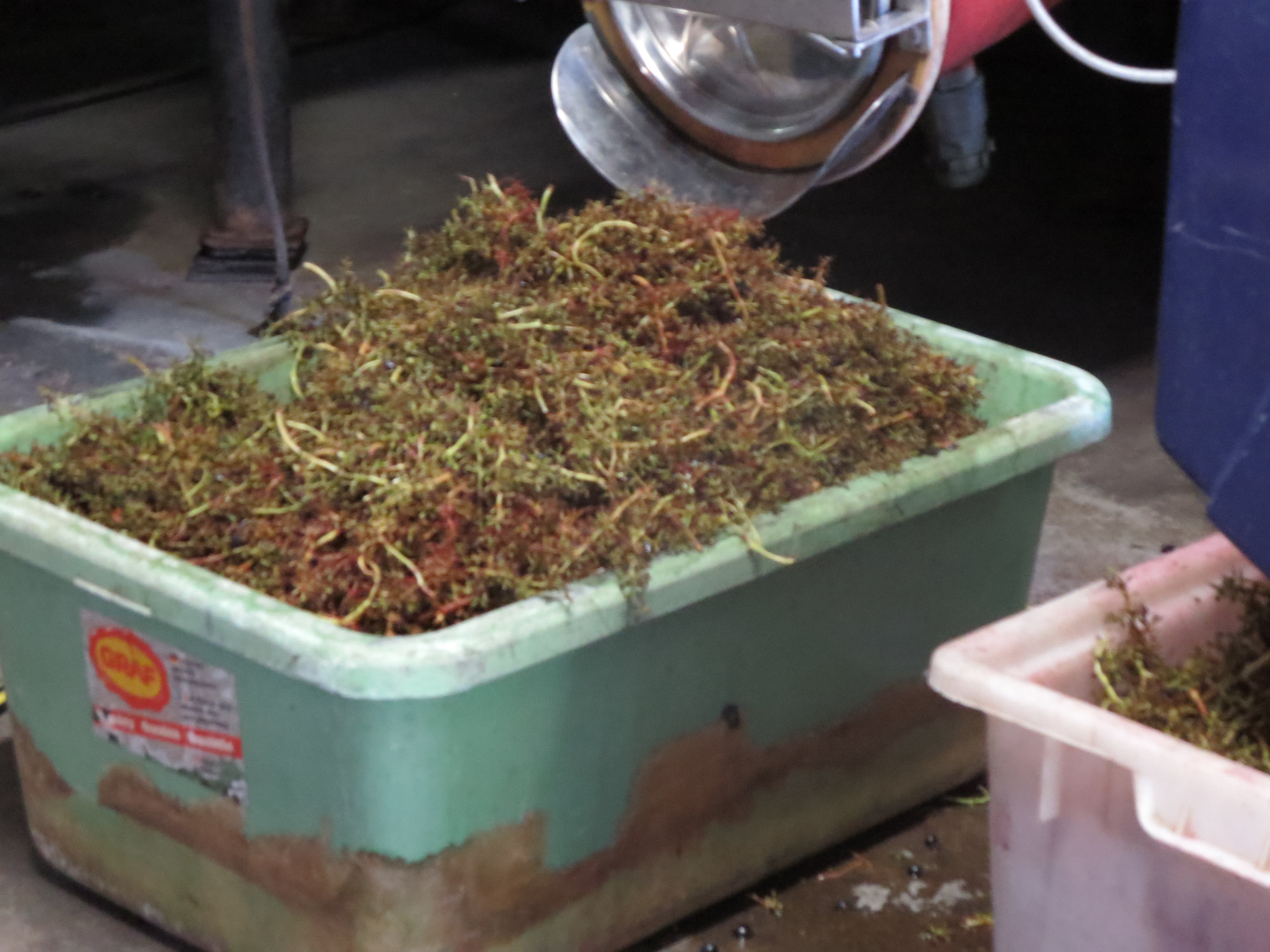
I did call round however and the work had certainly been going on as you can see from the bacs of the stalks (rafle) .

IMG_2332

And of course….

IMG_2333

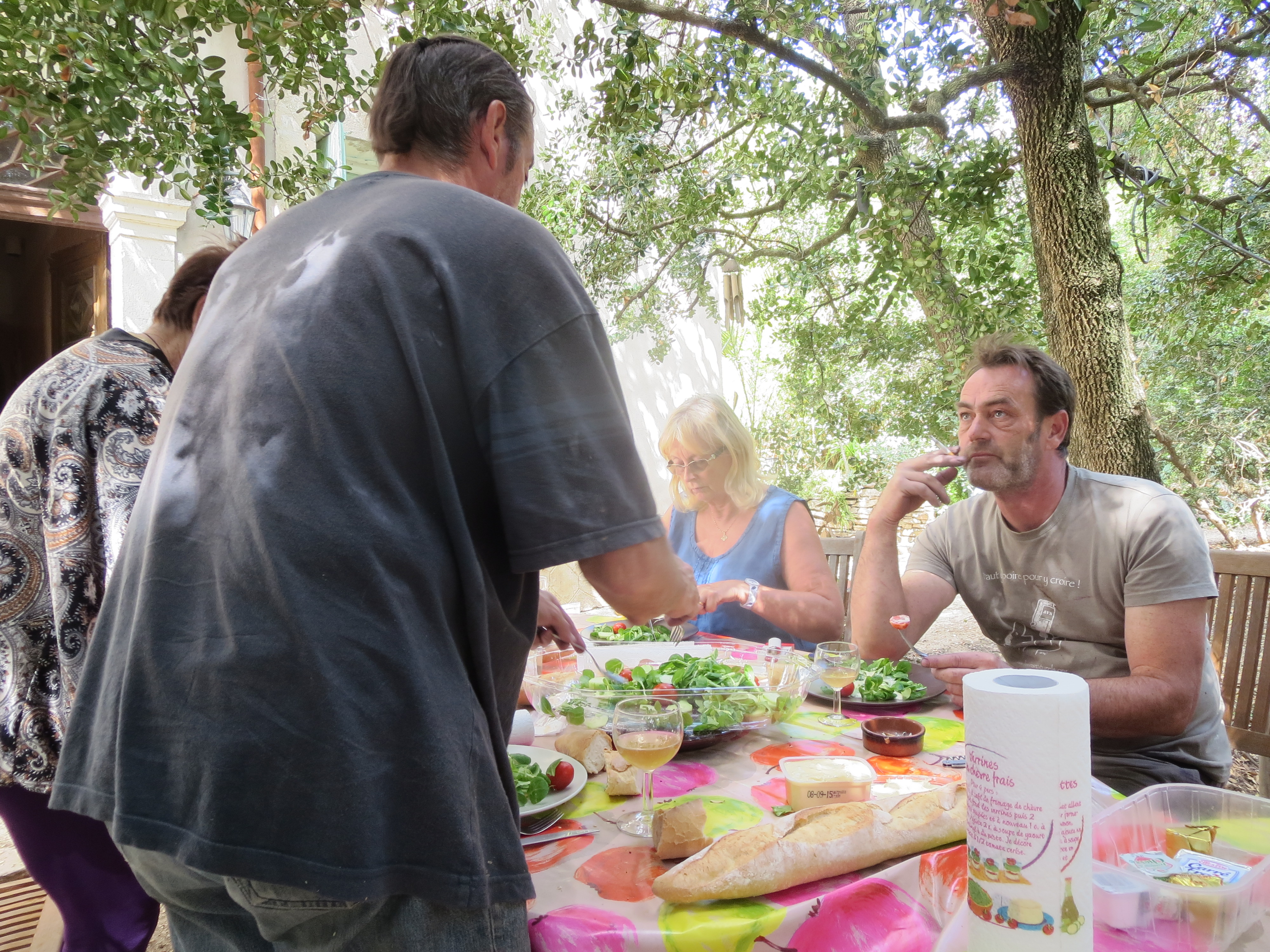
I did manage to sneak into lunch however. These are a highlight of the harvest season, with food prepared by Marie France from Puimisson and bottles opened including a terrific bottle of Castets, that rare grape I have described before. We sit at a big table int he garden of Jeff’s father, right next to the cellar.

Sunday will be a day of rest except for Jeff and Cameron who will do a round of the tanks to check on their progress and carry out more remontage. There is already a lot for Jeff to be thinking about, which wines are where, how are they progressing, have the remontages been done, are the analyses done. Plus all the options about which grapes to blend, what cuvées to make and, for example, whether the Grenache Gris will be white or rosé. Then off to the vineyards to check on the grapes and their readiness for harvest. Pressure, worries, and hard work – spare a thought for the vigneron.

IMG_2334

Even during lunch Jeff is up and down checking on things in the cellar


4 Comments

Vendanges Diaries (2)

IMG_2233

Version française

Aug 30th was a Sunday so no picking but Jeff was still in the cellar working. The early wines needed to be checked and moved as necessary.

Monday 31st dawned cloudy again and it was time to tackle the biggest of the vineyards at Mas Coutelou, Segrairals. The Syrah was ready to be picked and Jeff had decided to use carbonic maceration to ferment the grapes which are probably not of the same top quality as those from La Garrigue or Sainte Suzanne which were picked last week.

Grapes which are pressed like those described last week ferment in tank as yeasts react with the juice to change the sugar to ethanol, ie alcohol. The yeasts are natural from the skins of the grapes and the atmosphere of the cellar. In the case of Mas Coutelou and many artisanal winemakers this is the case though other winemakers will buy yeasts some of which are designed to add particular flavours to the wine. None of that in Puimisson, these are natural wines.
IMG_2232

        Carbon dioxide pumped into the tank

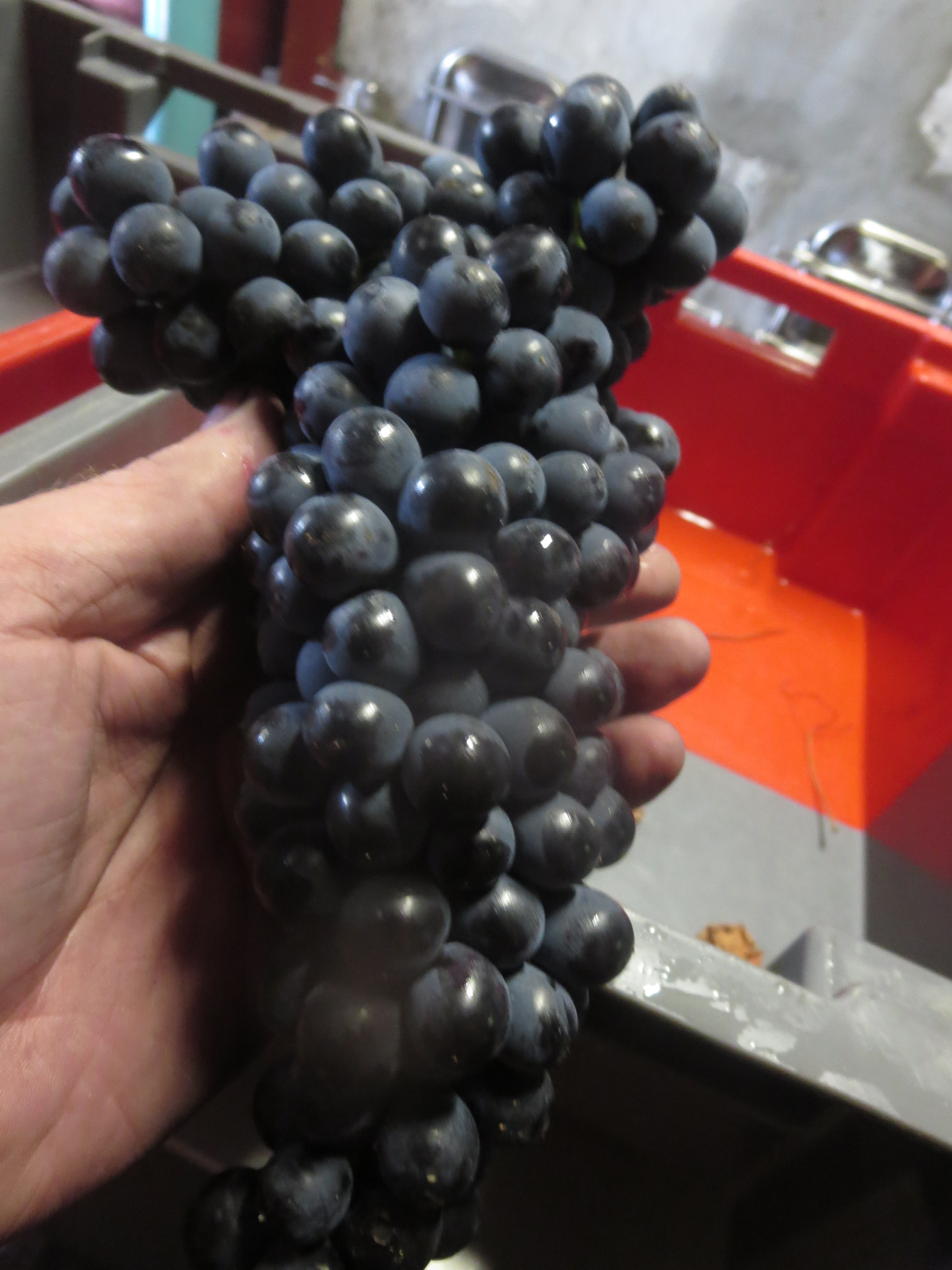
Carbonic maceration means that the whole bunches go into the tanks, grapes and stalks alike. The tank is filled with carbon dioxide which permeates the grape skins and starts the fermentation within the cells of the berry. Some of the berries at the bottom of the tank will be crushed by the weight of the grapes and so there will be some conventional fermentation too.

IMG_2245

Whole bunches in the tank

All the grapes are given a light crushing later by which time ethanol will have formed inside the skins and so the resultant juice is ready made wine. The result is often more fruity and juicy wine.

IMG_2239

Grapes arrive through the little back door above the cement tanks

To achieve this the tanks are filled from above so we worked in the space above the cement tank with the grapes arriving at the back door which is a level higher than the front door. The space is smaller and the heat from the grapes was high. It was hard work, believe me. Sorting still had to be done before the grapes could go into the tank, quality comes first.

IMG_2243

                 Some of the rejected bits

IMG_2246

 The pipe carries the CO2 into the tank

And after 9 hours of back breaking lifting, carrying and sifting it was, as ever, time to clean everything from top of the cellar to bottom as we see here with Jeff and Michel.

IMG_2248

IMG_2251

IMG_2247

        One visitor from the vineyard

IMG_2242

The boss letting us know we should get a move on

The night of the 31st brought a big storm with lots of rain, not the ideal conditions for harvest at all. Rain can cause rot and problems. However, it could have been much worse as news arrived of huge damage caused by hail in the Chablis region. For all the forecasts of how the harvest might turn out it is only when the grapes are safely in the tank that a vigneron can be assured of the quality of wine they might make. Commiserations to the Chablis producers.

September 1st was a quiet day as the rains from the storms meant the grapes were too wet to harvest. In the cellar more checking and remontage, the process of pumping the wine over the cap of skins and must. Further analysis of the wines showed that the yeasts are acting quickly and the fermentation is progressing very well.

IMG_2262

      Hard work!

Today, September 2nd, the remaining white grapes, Grenache Blanc, from La Garrigue. Then on to Peilhan to gather some of the white grapes there, Maccabeu, Grenache Gris, Carignan blanc and Clairette Musquée.

Grenache Gris

                                  Grenache Gris

Carignan Blanc

                                  Clairette Musquée

IMG_2260

      Michel

The core team of Jeff, Carole, Michel, Cameron and myself were joined by Matthieu who has worked the harvest before here. There were some lovely bunches though the wet weather has caused some rot inside some of them, Careful sorting took place in the vineyard to take only the best grapes which tasted really sweet and juicy, the Clairette was especially tasty.

IMG_2267

Cameron especially pleased with this bunch of Clairette

The white grapes were taken back to the cellar and placed in tank after being destemmed. It is possible that Jeff will make his first orange wine with them. An orange wine is a white wine made like a red wine, ir the wine is fermented on the skins thus extracting more colour, texture and flavour from them and giving the wine an orange tint. However, analysis and the next few days will be needed before the final decision is made.

Whites

In tank and the future might be orange

In the afternoon, Matthieu, Jeff and myself did more remontage of the Syrah grapes harvested in the last week, which is already tasting well, with very healthy technical analysis and beautiful aromas. And, then, as ever, the cleaning.

IMG_2277

              Matthieu carrying out remontage

IMG_2283

  Remontage, the juice flows over the cap of must

Syrah from Ste Suzanne

    Beautiful colour of the Syrah from Ste Suzanne

IMG_2269


4 Comments

Vendanges diaries (1)

IMG_2201

                       Syrah so good you have to taste it now

Version française

The harvest (vendange) began on Friday August 21st with a small parcel of Muscat grapes as described here.  The next few days saw further preparations for the main harvest, for example clearing space in the barrels of the solera system for this year’s grapes. I shall write more about the solera later in the year.

IMG_2173

                                     Solera system

So, it was Thursday 27th which was the start of the real vendanges with parcels of white and Syrah grapes collected from La Garrigue. This day was described here.

Friday 28th saw more Syrah being harvested, this time the Syrah of Metaierie usually referred to as Sainte Suzanne by Jeff. This is the vineyard of Vin Des Amis though options are always open. The pickers, led by Carole and Julien, worked through a cloudy morning to collect some high quality bunches.

IMG_2200

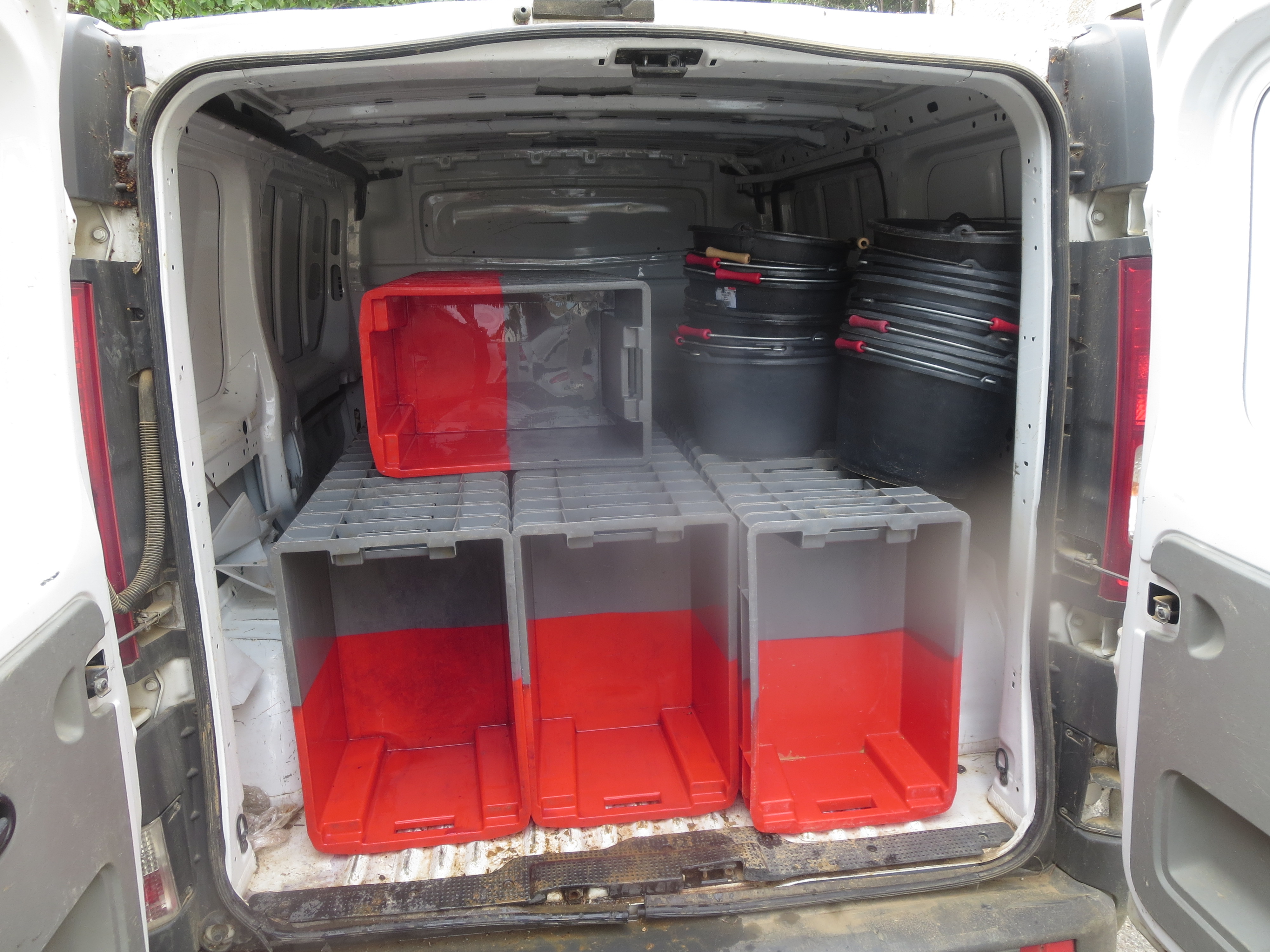
Michel transported the cagettes  back to the cellar as quickly as possible. The cagettes are about two thirds filled so as not to overload the grapes in there which might damage them.

IMG_2199

                  No, these cagettes are not full!

Upon arrival at the cave the cagettes are quickly taken for triage, sorting through the grapes to select only the best quality. Foreign objects such as snails and spiders are removed as are unripe grapes, any damaged or rotten grapes. It is important that only the best goes into the wines to keep them fresh and at the high quality we expect from Mas Coutelou. Two people sift through the cagette, removing any inferior grapes for further sorting by a third person. Jeff, Cameron and I took these roles on Friday. It is hard work, on your feet all day and lifting, carrying and sorting requires physical effort and also full concentration. There is, happily, also time to chat and laugh.

IMG_2203

IMG_2205

Cameron is from Melbourne, Australia and has been living and working in London as a sommelier for four years. He decided to learn more about the winemaking process and to “get his hands dirty”. He is already proving his worth and is a great addition to the team.

IMG_2202

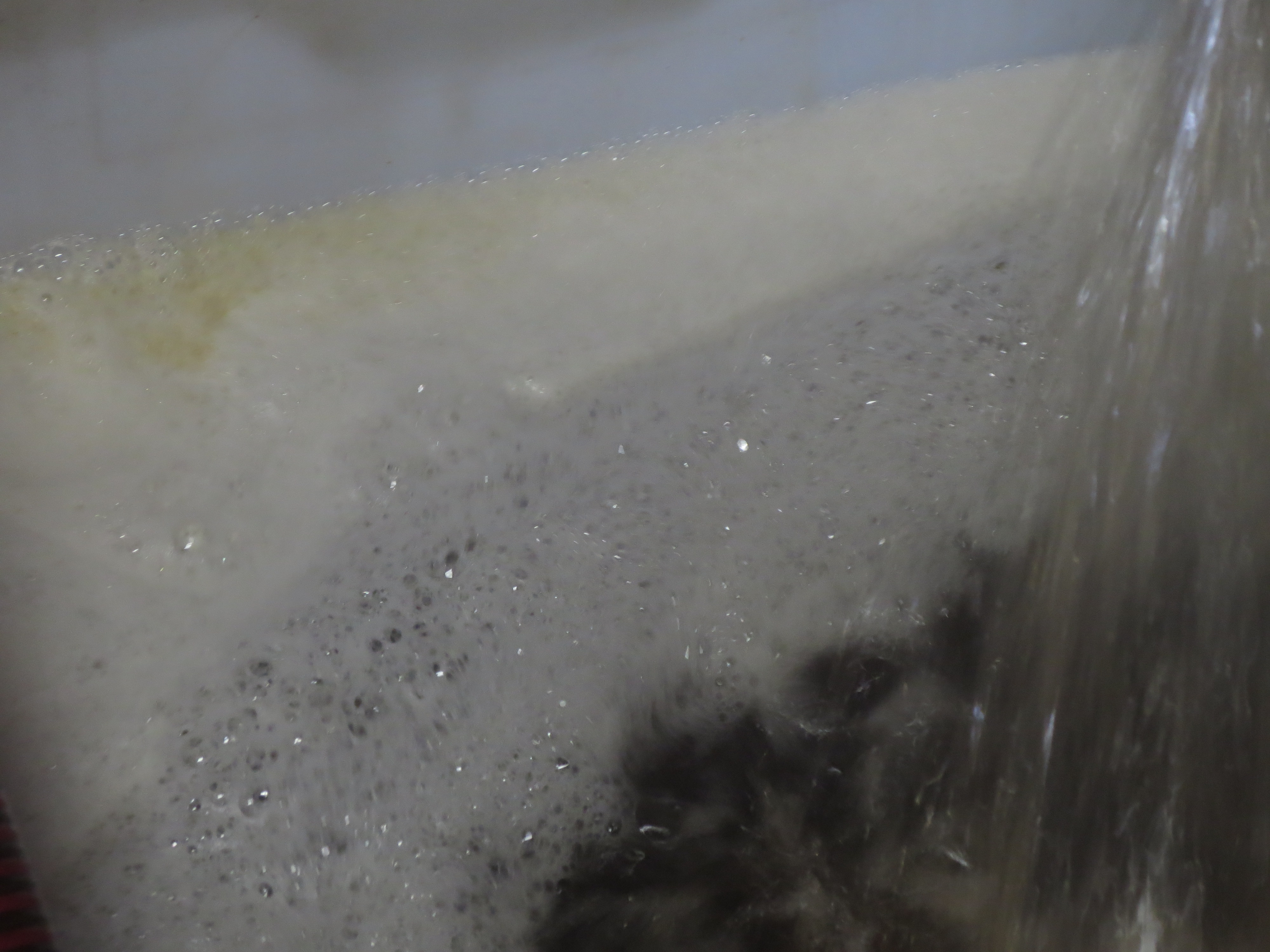
Meanwhile, the grapes which had gone to vat (cuve) have to be taken care of. Fermentation has started and the wine is already producing material which needs to be removed to keep the wines clean. They are, therefore, pumped out of their original cuve into another to allow the waste to be cleaned away and the fresh, juice ready to settle for its longer journey of fermentation.

IMG_2210

Fermentation beginning in the Sauvignon Blanc grapes collected yesterday (Thursday)

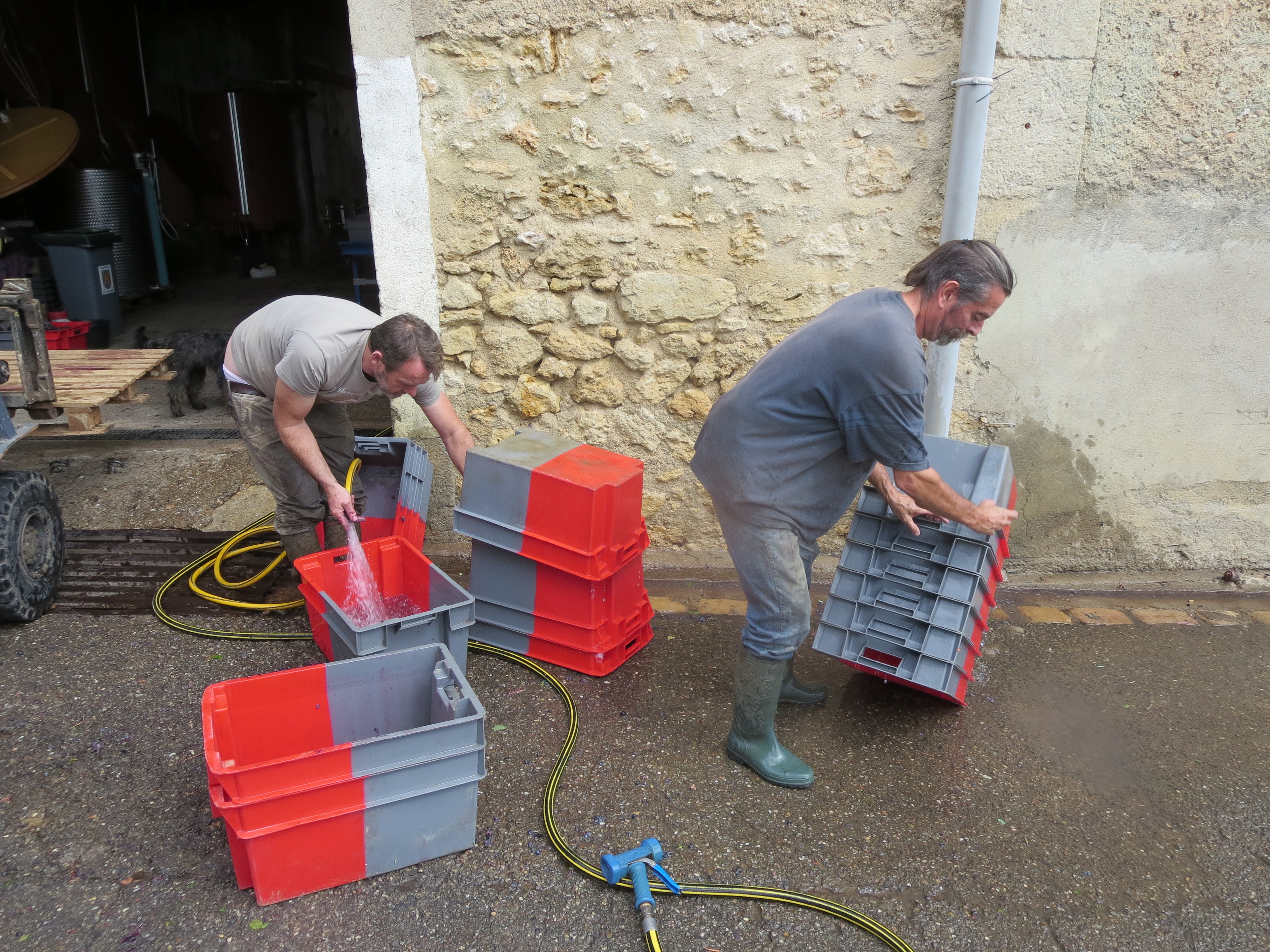
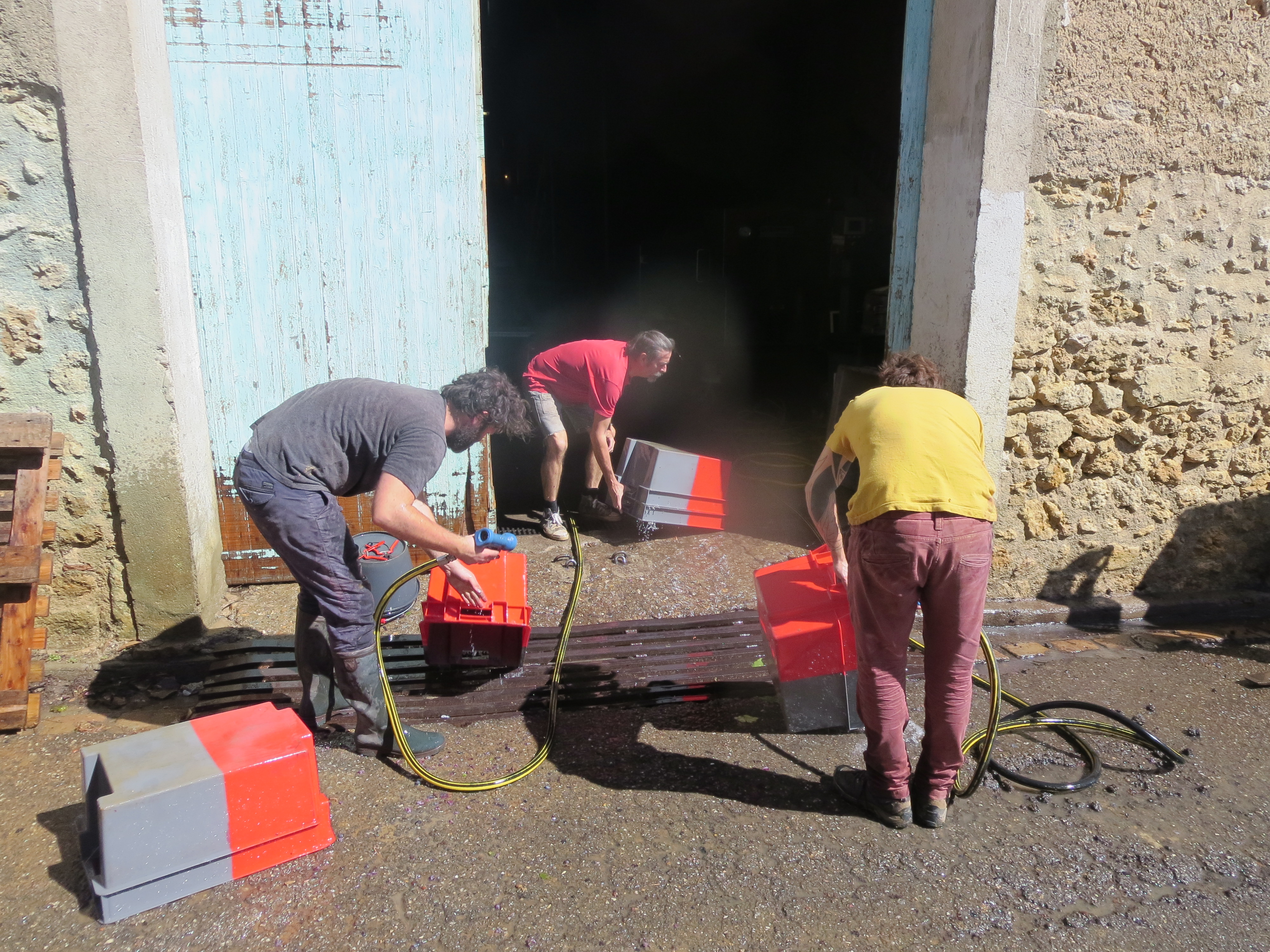
And at the end of the day the cleaning work is intense. Everything is cleaned throughout the day but at its end another full clean takes place. This removes the risk of contamination from dirt or damaged fruit which would ruin the wine. It is laborious but necessary.

IMG_2213

                                Julien cleaning the cagettes

IMG_2212

                                         Ready for tomorrow

IMG_2215

    The égrappoir (destemmer) ready for tomorrow too

IMG_2216

   What else needs cleaning? Proof that I did work!

Analysis of the Syrah showed that the alcohol level was around 12.7% with medium levels of acidity. Later picking would have added more sugar and more potential alcohol but would have lowered levels of acidity. The skins are essential to the quality of the wine as they contain the colour, tannin and much of the flavour of the wine. These were in excellent condition according to the analysis, good news.

IMG_2214

Jeff’s own calculations from cellar tests. Samples go to the oenologue for full analysis

IMG_2208

   Classic shape for a bunch of Syrah grapes

There have already been some concerns expressed by winemakers and analysts that the heat of 2015 might affect the quality of wines around France especially regarding acidity. The decision to harvest the Syrah was therefore the right one, fresh, cleansing acidity is a hallmark of Jeff’s wines. Many winemakers have been waiting to start harvest as, on August 30th, the moon is at a perigee, the time when it is closest to Earth in its orbit. As it begins to wane and move away from Earth many winemakers will start their harvest. Jeff has chosen to put the quality of the grapes first rather than principles about biodynamics.

IMG_2224

   Moon over Margon at its perigee on August 30th

Saturday 29th was a work day for the cellar and the pickers and saw the harvesting of Cinsault grapes from my favourite vineyard, Rome. The grapes were big and juicy though some were uneven and needed more careful sorting. Clearly these were precious grapes as Icare was guarding and watching over them assiduously. The harvest was not as big as many years and so the pickers moved onto Sainte Suzanne again for more Syrah grapes whilst yesterday’s grapes have begun to ferment already.

IMG_2222

                      Carole picking in Ste Suzanne

Cinsault from Rome

   Cinsault from Rome, big and juicy

IMG_2221

        Friday’s Syrah ferments in cuve

             IMG_2219        IMG_2220

                                                                   Icare, connoisseur and guard dog


2 Comments

July’s parting gift

Colourful Cinsault

Colourful Cinsault

Version française

All photos taken on August 2nd unless otherwise stated

It was June 12th when rain last fell on Margon and the vines in the region, although generally doing well, were starting to show signs of fatigue and heat stress; leaves curled in upon themselves, some yellowing, a slight shrivelling.

Vines near Pézenas showing some stress

Vines near Pézenas showing some stress

Vines in Margon which were not pruned in spring and are really suffering

Vines in Margon which were not pruned in spring and are really suffe

A few drops fell on July 25th but the skies had been very dark and had promised much more, it was almost cruel to have that rain, a tease of what might have been. However, July 31st brought around 10mm to Puimisson. A decent rainfall, enough to give the vines a drink and to stop the drying out process. Not enough of course after weeks of lack of moisture and some more rain in the next few weeks would be very much welcome to swell the grapes and the harvest. The vines are now pouring their energy into their fruit rather than their vegetation, but they need the nutrients to do so.

Untitled

So, how had the vines responded to the rain which fell? Well a tour on Sunday (August 2nd) showed the vineyards of Mas Coutelou to be in rude health, a decent harvest is now predicted though that extra rain would be most welcome.

Segrairals in full bloom, healthy, happy vines

Segrairals in full bloom, healthy, happy vines

Segrairals, biggest of the vineyards, showed some healthy Cinsault, Syrah and Grenache with no signs of stress or disease. As the home of Classe, 7,Rue De La Pompe and 5SO this is especially welcome, as they are some of the big sellers.

IMG_1980

Cinsault in Segrairals

To Rome, my favourite vineyard. The gobelets were looking well, plenty of grapes both the white varieties and the Cinsault. There was a little mildew around the entrance but minimal, no cause for concern. Could there be a cuvée of Copains in 2015? Jeff tells me that no decisions are made as yet, caution prevails and he will wait to see what the harvest gives him before he makes final choices about how to use the grapes and the wines which result.

Rome's centurion vines in good health

Rome’s centurion vines in good health

Muscat Noir grapes, a tiny bit of mildew top left

Muscat Noir grapes, a tiny bit of mildew top left

Sainte Suzanne (Metaierie) suffered from coulure in May with the strong winds blowing off some of the flowers on the vines, which will reduce yields a bit. However, the grapes there are growing well, what might have been a problem looks now a much brighter picture, good news for fans of Vin Des Amis.

Peilhan, just a little more tired and suffering

Peilhan, just a little more tired and suffering

The only vineyard parcel which has shown stress is Peilhan, There was a lot of regrafting and replanting in the spring and the dryness has caused problems for these new vines. There was also oidium in this parcel, the only vineyard to be attacked by this powdery mildew. Yet amongst those problems there are plenty of healthy grapes, some careful picking and sorting will be needed but it will produce good wine.

The famous Castets grapes of Peilhan

The famous Castets grapes of Peilhan

La Garrigue was blooming, the white varieties such as the Muscats are swollen and changing hue to lovely golden shades.

Muscat a Petits Grains in La Garrigue

Muscat a Petits Grains in La Garrigue

The Syrah is well advanced, a dark purple colour across virtually the whole bunches, the pips though betray a little immaturity as they taste and look green and sappy. A little more time and patience will pay dividends. As the world’s biggest fan of La Vigne Haute, I have my fingers crossed.

Syrah in La Garrigue, ripening beautifully in the shade of the vine

Syrah in La Garrigue, ripening beautifully in the shade of the vine

The Grenache in La Garrigue, despite facing south, is a little more delayed in colour but getting there and very healthy.

Grenache in La Garrigue

Grenache in La Garrigue

In fact despite risks of disease earlier in the year (see here) Jeff has been able to use minimal treatments in 2015. Oidium and mildew (powdery and downy mildew) can be controlled by copper sulphate, sometimes called the Bordeaux mix when added to slaked lime. This is a bluish colour when sprayed by conventional and organic vignerons and is often seen on the leaves of vines. Vignerons might also use chemical fungicides if they are not organic producers.

Neighbouring vineyard which was given herbicide shortly after harvest last year and whose new vines have been treated regularly

Neighbouring vineyard which was given herbicide shortly after harvest last year and whose new vines have been treated regularly

Some neighbours have also irrigated their vines and one alarming consequence is the changing of the soil and its pH as the calcium carbonate in the water shows through, you can see it in the white parts of the soil in this photo taken on July 22nd.

IMG_1932

The irrigation is also causing the vines to grow quickly and tall with thin trunks as seen below. It should be acknowledged that there are many conventional producers who take great pride in the health of their soils and vines and would be horrified by some practices described here.

IMG_2002

As a proud holder of Ecocert organic status and as a natural wine maker Jeff must use natural products only. Tisanes of plants which fight mildew such as horse tail, fern and nettles can be sprayed and this is the basis of many biodynamic treatments. However, the two main weapons in the armoury of organic producers are copper and sulphate, both natural products.

Copper is used against mildew, but is harmful to the soils and kills life in them if used in significant quantities. Organic producers are limited to 30kg per hectare over a 5 year period, allowing more to be used in years with more downy mildew for example but only if less is used in the other years. In fact Jeff has used just 200g per hectare in 2015 and this after years of well below average use, his use of copper is on a major downward trend. He is reluctant and very careful in using copper as he is aware of its danger to the soils, yet mildew has not been a major threat this year.

IMG_1552

Oidium seen in May

Similarly Jeff has used sulphur in soluble form at doses much lower than the permitted level, three treatments over the course of the growing season. In addition one dose of sulphur powder was sprayed when the risk of oidium was high (May) and a second spraying for Peilhan only as it is the vineyard which was attacked by oidium. In contrast to neighbouring vignerons who have sprayed every 10 days including after the bunches closed up (so more than a dozen treatments) this really is minimal intervention.

So July’s parting gift of 10mm of rain was welcome, August might like to follow by offering some rain soon. Too near the harvest is bad as it would dilute the juice rather than help the grapes to reach a good size. Things look promising, let us hope that nature completes its bounty. There is an old saying that June makes the wine and August makes the must, ie the character of the wine with its colour, yeast and flavour. With 3 weeks or so until picking begins it is an exciting, and nervous, time, waiting to see what that character will be.

No Icare this time but look what we found amongst the vines, he's been here!

No Icare this time but look what we found amongst the vines, he’s been here!

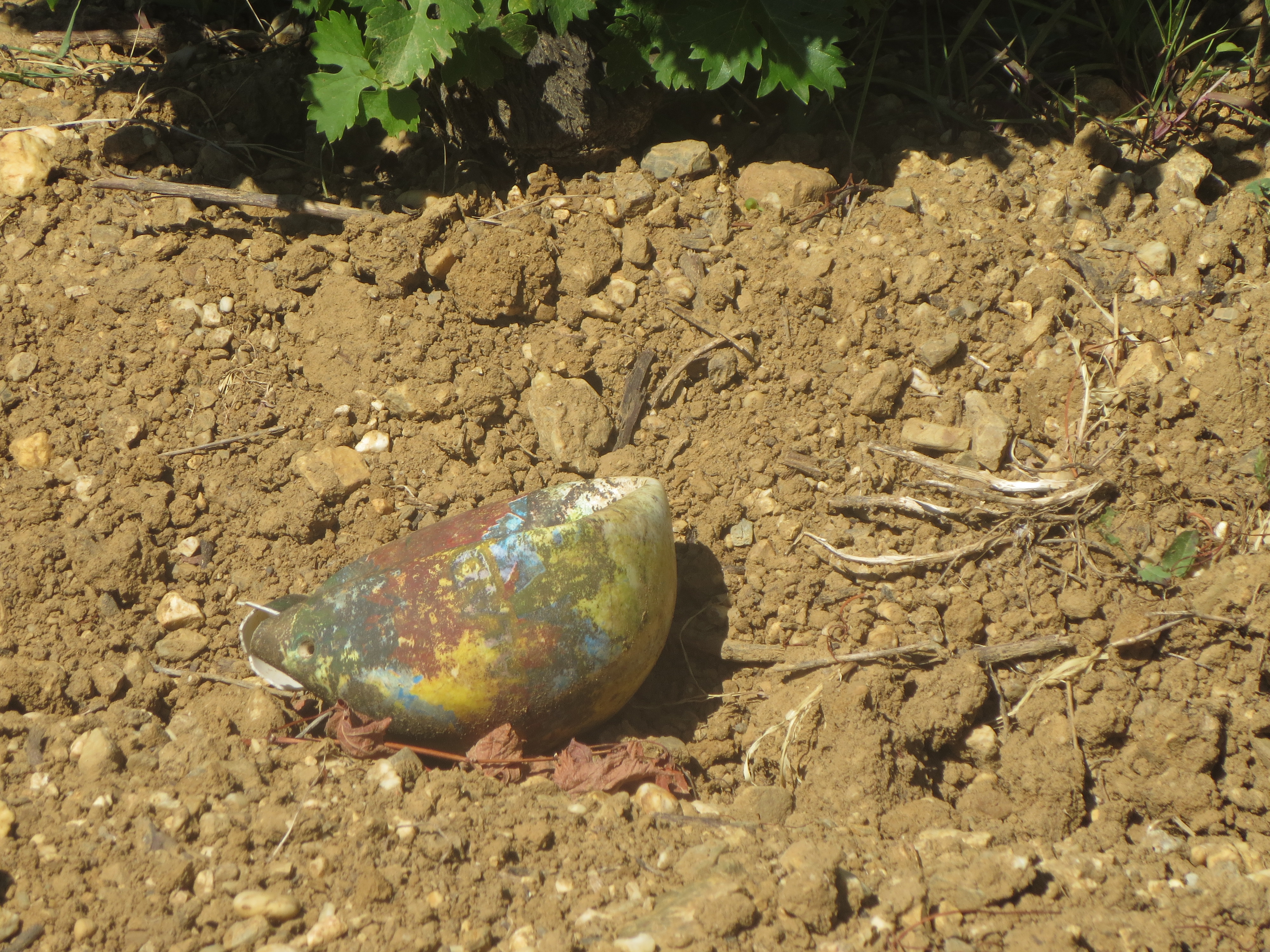
NB there are lots of reports about recent wine tastings here.