First visit of 2016 to Mas Coutelou this morning. We tasted the 2015 wines, now mostly assembled, and whilst I am sworn to secrecy about what they will be I can confirm that the cuvées are looking excellent. There is a real elegance and refinement to them already, Jeff has compared them to Rhone and Loire wines rather than the typical, fuller Languedoc wines. They are still in their infancy of course, tasted from tank, and in midwinter they are still coming around. However, the structure, aromas and flavours are in place for wines of real quality.
The weather was much discussed as the temperatures in Puimisson and the Languedoc remain above average (see last post). The effect on the wines can be important, the wines restive, troubled in warm conditions, for example they don’t clarify. A few colder days early this week has helped them to settle a little more, Jeff has already noted changes.
The warm temperatures were evident in the vineyard too. I went to see Julien who is carrying out la taille (pruning) this year. He showed me how some of the precocious vines, such as Muscat, are showing signs of the buds swelling already, way too early. This fits in with the wider vegetation, fruit trees showing signs of blossom, even our tomato plants have flowers!
Bud swelling in the vine
Julien was busy in Peilhan vineyard and explained how he was trying to prune the Muscat in a gobelet sur fil style, rather like guyot, pruning to create two main canes for growth in 2016.
Before
After
This weekend sees a huge wine salon, Millésime Bio, in Montpellier. Nine hundred domaines represented with many more at various ‘off’ events around the city. Jeff will be preparing bottles for Les Affranchis. Then it’s on to the Loire for more salons. So the cuvées will make their first public appearance. I shall be explaining some of the different Coutelou cuvées in my next couple of posts as well as reporting on the Montpellier salons.
Icare playing with his Christmas present from Pat, a toy sheep
I read an article recently by renowned wine writer Eric Asimov in the New York Times in which he outlined the twelve wines he would always want to have around, his everyday case of wine. As I read it I naturally began to consider which wines I would include in such a case.
Issues to consider included the balance of red and white, sweet and fortified as well as sparkling wines. I could make a case just from the Languedoc, even from Mas Coutelou alone. In the end I went for a balance of wines. As an everyday case I have chosen still wine over £15 (€20) and sparkling / fortified wine less than £25 (€33).
I decided on a balance of white and red together with one example each of sparkling wine, sherry, port and sweet wine.
I have to start with Riesling, my ultimate white grape. I like Alsace examples a great deal but nothing surpasses the Mosel for me and the Kabinett / Spätlese styles in particular. JJ Prum or Bürklin Wolff Kabinetts would fit the bill nicely, easily within the price bracket, I shall go with the former.
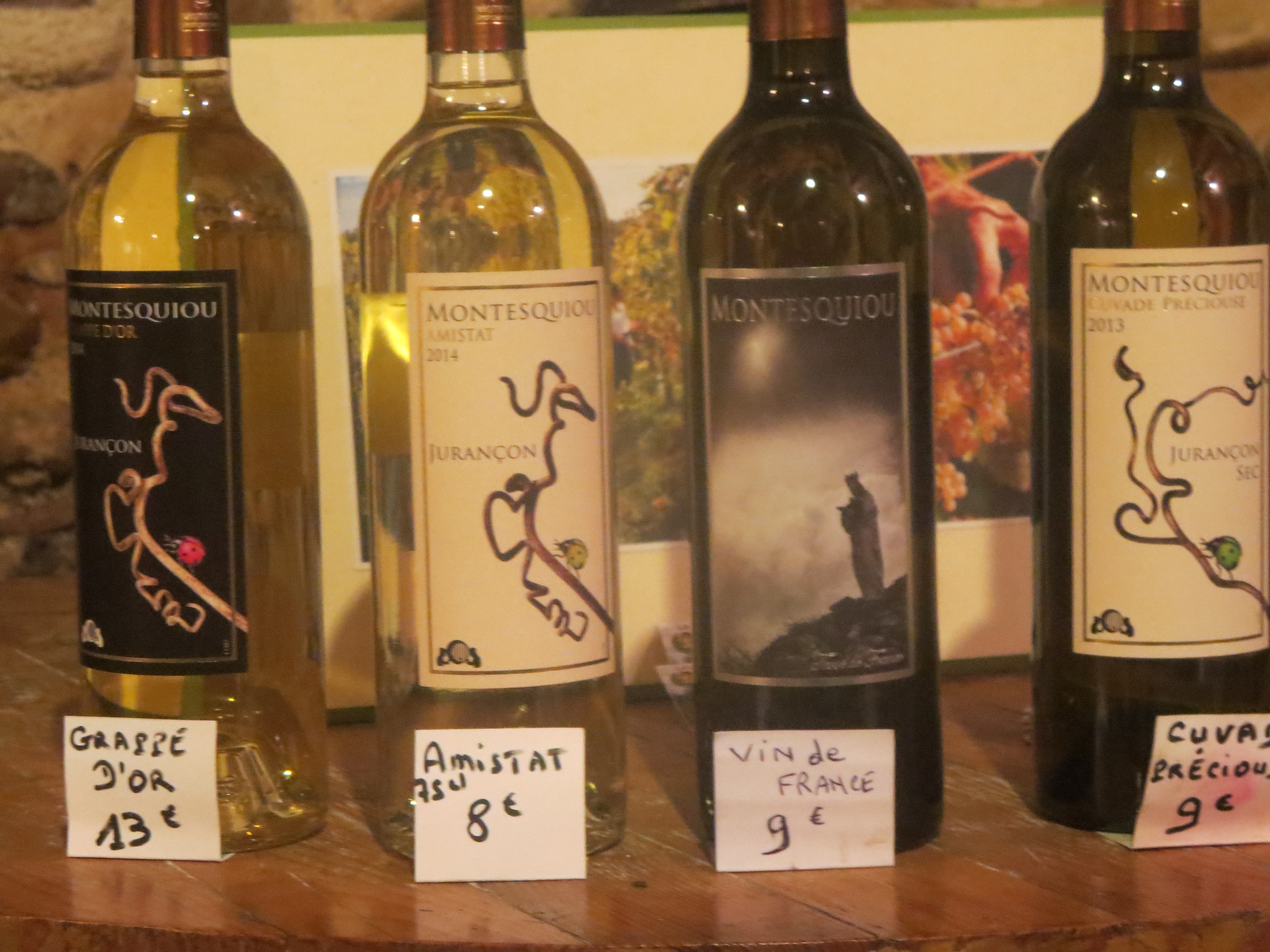
The last few years have given me a great love of Jurancon dry white wines, heightened by a recent visit. In particular Domaine Montesquiou strike me as amongst the great white wines of the world. The balance of fruit, acidity, hint of sweetness enriched by the lightest oak influence is just my thing. I loved the new Vin De France and L’Estela is a favourite (unoaked) but will stick with Cuvade Préciouse for that extra complexity of oak.
Vouvray was the first wine village I visited in France and remains a favourite for its mix of dryness and hints of sweetness in the demi-sec style. The Loire is a centre of natural winemaking and I shall opt for Vincent Carême’s Vouvray Le Clos, though not all his his cuvées are sulfite free . Champalou would be an alternative.
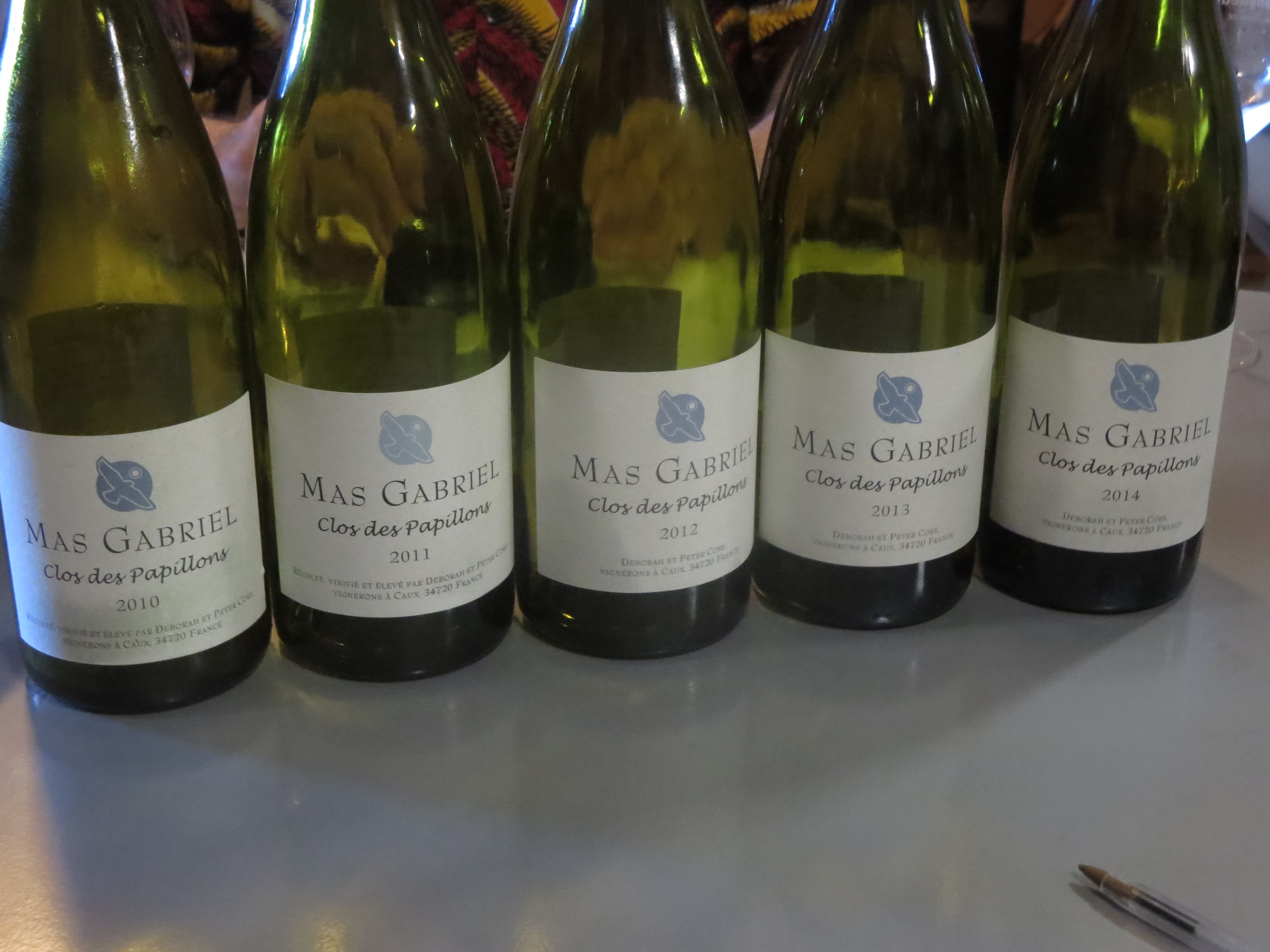
I would love to include a white Burgundy but price makes it difficult, I was close to choosing a Grenache Gris from Roussillon. Instead I shall opt for Mas Gabriel’s Clos Des Papillons. A firm favourite for many years I was fortunate enough to attend the 10th anniversary dinner of the Domaine this summer and to taste through a number of brilliant vintages of this superb Carignan Blanc and it is a wine which gives me so much pleasure and a reminder of how great the Languedoc can be.
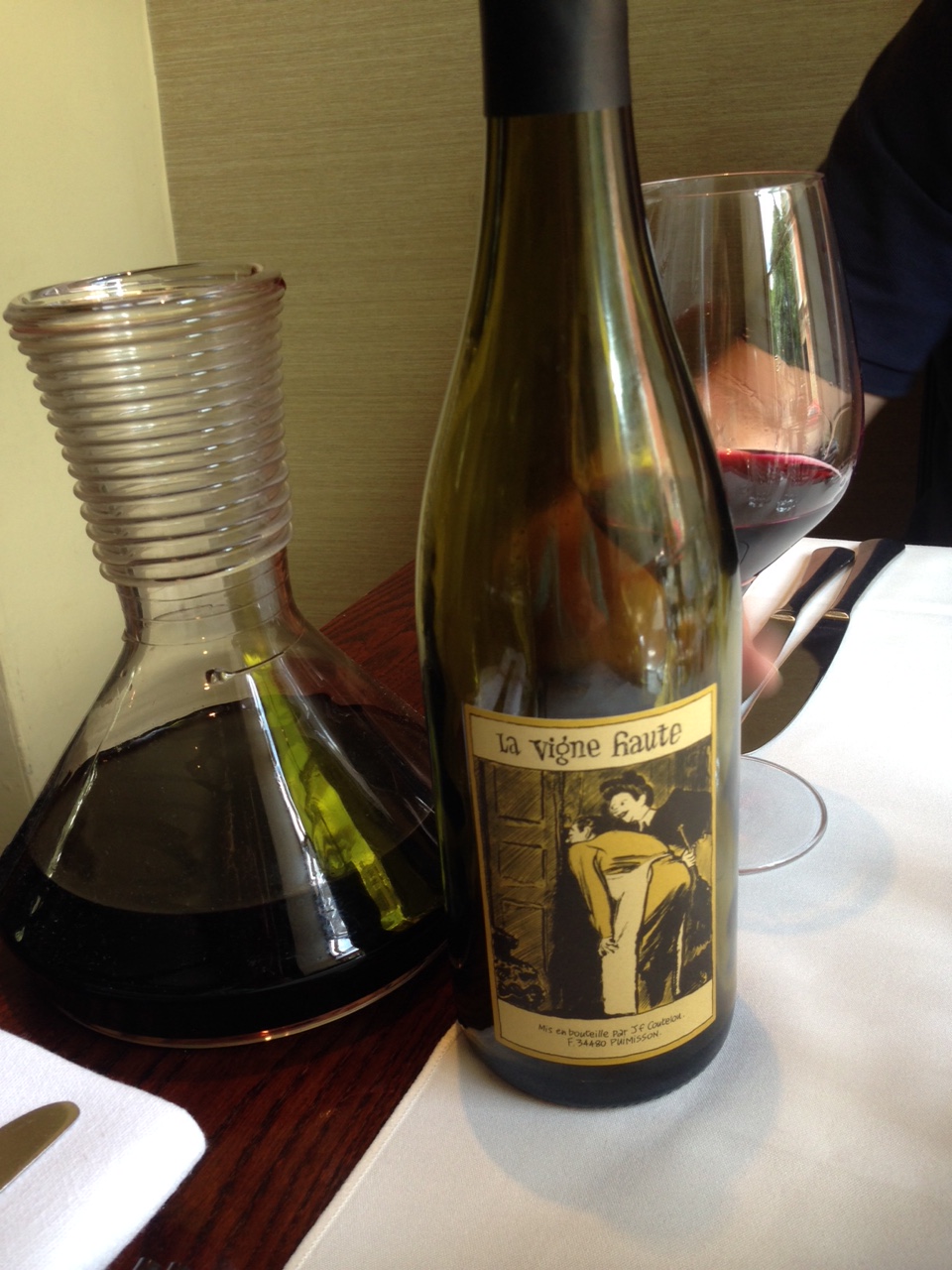
Red wines and the choice becomes even harder. I have to include a Languedoc – Roussillon wine because I love it and there is no better value for quality wine. How to choose? There are so many wins I love but how could I not include a Mas Coutelou? A week without one is too long so there has to be one in my everyday case. Vin Des Amis was the wine which hooked me, Copains and Flambadou would be amongst my favourites. La Vigne Haute and its pure Syrah with drinkability and complexity combined is the choice though. If I had to choose one bottle to drink for a final meal this would be it and yet I can fit it into this everyday price bracket, great.
I love lighter structured red wines and I would definitely want one in the case. Beaujolais is a favourite but my preferences are, sadly, above the price bracket. Just fitting it however, my choice would be a Sicilian Frappato from the excellent producer COS. I really fell for this on a trip to the island in 2014 and its fruit, complexity yet light touch fits the bill perfectly.
My favourite red wine grape is Pinot Noir. I was lucky enough to visit Burgundy when prices were high but not stratospheric. I soon learned that one memorable bottle would be followed by a number of disappointments but that one bottle was so good that it made me keep searching for more, very addictive. No New World Pinot can match Burgundy though there are some very good ones. But at less than €20? Well there are good Bourgogne Rouges available and villages such as Fixin offer better prices but even they push that limit. One producer whose wines I really like is Guillot-Broux in the Maconnais. The wines are much more serious than you’d expect from that area, equal to many Côte D’Or producers. I notice the Macon Pierreclos is £15.95 with the excellent Leon Stolarski so maybe he will do a discount for a bulk order. Cheat? Probably, but I have to include a Burgundy.
Other than Sicily my choices have been all from France and I want to remind myself that good wine comes from around the world. Te Mata Coleraine was the first new world red to really make me realise how good it could be but the price has risen way too high. Australian reds were a staple for so many years though I find so many too heavy these days, especially in this price range, much as I love some Penfolds, Wakefield and Tim Adams. Spain is a source of good value wines though I find too many overoaked. Casa Pardet (Costers del Segre) was a great discovery this year but too expensive for this. Instead I have opted for another Italian wine, Le Carline Refosco which is sulphite free and has great freshness and fruit, a great food wine. And a reminder of how unusual cépages have been a great interest for me this year.
Daniele explaining his Carline wines
Sparkling wine means champagne to me. I love some Pet Nats such as that of Vincent Carême, I appreciate some crémants and sparkling wines such as the Nyetimber I tasted recently but nothing quite matches Champagne for quality. I have always liked Roederer and nothing has been better than Charles Heidsieck in recent years but they are too pricey for this case. Barbichon, Lassaigne and Franck Pascal are all producers which pleased me through the year and I could buy wines from all three in France for under €30 so I shall opt for the Quatre Cépages of Barbichon, with its Pinot character adding some extra weight.
Barbichon
Sherry is a must, nothing beats its variety from the clean dry fino or manzanilla to the intense sweetness of pedro xinenez. I am a fan of them all but a Cayetano del Pino Palo Cortado really caught my attention this month with a real balance of dryness with a touch of sweetness and great complexity. Like many sherries it is great value too.
Port is another wonderful wine style and I love its variety, from tawny to vintage. At this price I would choose Late Bottled Vintage and probably Niepoort just above Warres, it is more in a vintage style, not quite so rich.
Finally, a sweet wine. The Jurancons of Montesquiou and Nigri were a delight, great wines from Huet too. Natural sweet wines from De Brin and Clos Mathélisse would fit the bill too but in the end one range of sweet wines stood out this year and they were the Coteaux Du Layon from Juchepie and I would select Les Quarts for the case.
At a push I would merge the port and sweet wine choice and opt for another red wine but I would be very happy with my case. Feedback and your own selections would be very welcome.
The immediate period after harvest could easily be perceived as a time to relax a little. The hard work of picking, transporting, sorting, crushing and pressing grapes is done. The remontages, délestages, pigeages are memories. The wines quietly ferment in cuve, gently moving to their magical transformation into wine.
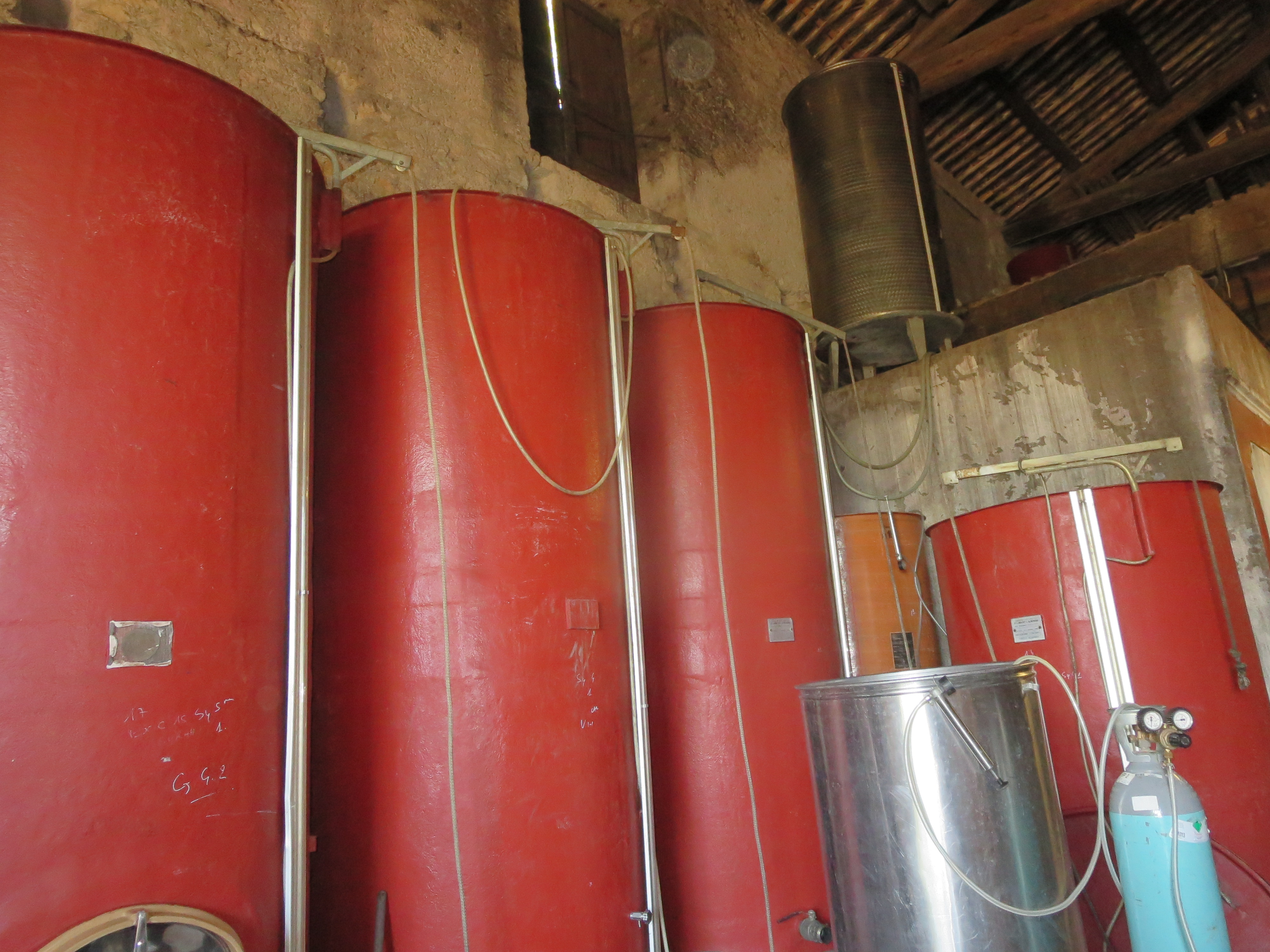
Cuves now containing wines such as Syrah and Flambadou
Sadly, that is not the case. The work continues apace, there is no time to relax just yet. The wines are in a delicate stage, fermentation is a violent chemical reaction and lots could go wrong. Therefore, they are checked frequently and analyses are sent away to ensure that everything is proceeding as it should. This is the top of the sheet which comes back from the analysis laboratory.
For each sample you receive information about the amount of residual sugar, alcohol, volatile acidity, the pH of the wine and the amount of Sulphur Dioxide (SO2) in total and free in the wine. SO2 is the controversial additive which most winemakers add to their wines to stabilise it and to provide elements of prevention against oxidation. Natural winemakers, such as Jeff Coutelou, are against using SO2 as they want wines as natural as they can be without additions.
SO2 is a natural product of grapes and winemaking so there will always be a small amount of SO2 in any wine. It combines with the chemicals of wine and so most is absorbed (bound). The rest which is free is what conventional producers use as an anti-oxidative and anti-bacterial agent in the wine. They might add sulphur at various points of the winemaking process but most likely at crushing, fermentation and bottling.
EU regulations limit the amount of sulphur as you can see in the table below. Red wines produce their own natural anti-oxidants so less SO2 is allowed. Sweet wines contain more sugar which binds SO2 so more is added so that free SO2 can work. Levels of permitted SO2 rise according to the type of sweet wine. The figures are all mg per litre.
Organic regulators allow less SO2 to be used as you can see, indeed some organic bodies such as Demeter have even more strict limits than those below.
Natural wine guidelines are exactly that, guidelines. There are no official rules for natural producers as there are no rules for any aspect of natural wines. The figures in the table are those suggested by AVN one of the groups which some producers have established.
Type of wine
EU
Organic rules (Demeter)
Natural guidelines
Red
160
100 (70)
30
White, rosé
210
150 (90)
40
Sweet
200+
170+ (80+)
40
Some natural wine makers have gone further and eschew any use of added SO2. Jeff is one of those producers.
I have chosen not to identify the figures for the analyses of particular wines he received on October 15th from which the heading is shown above, as they are not mine to share. I can say that the highest SO2 figure is 10mg/l and that is for one cuve only. Fifteen of the nineteen wines analysed contained 3 mg/l or less. In other words every cuve has negligible levels of free SO2, humans cannot taste it at less than 11mg/l in water let alone wine. No sulphites are added. Mas Coutelou wines are natural wines but also very healthy wines. The analyses showed they are all 13.5% to 15% in alcohol and volatile acidity is well under the guidelines, one or two cuves were a little elevated but that is normal during fermentation.
Cement tanks including one which contains Flower Power
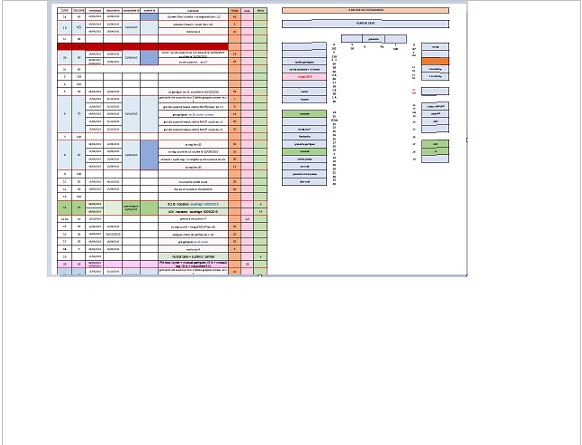
So the wines are progressing well, it looks like a very good vintage. They have been put into the cuves appropriate for them to spend the winter. Jeff produces a plan to show where they all are.
On the left is a spreadsheet showing each cuve, how much wine is in it, when it was harvested, when it was moved, when assembled with other wines, date of sous-tirage, the wine and grapes, and quantities for red, rosé and white. I have made it a little hazy so as not to spoil the surprises which the patron will unleash in the next few months.
To the right is a map of the cellar showing where the wines are.
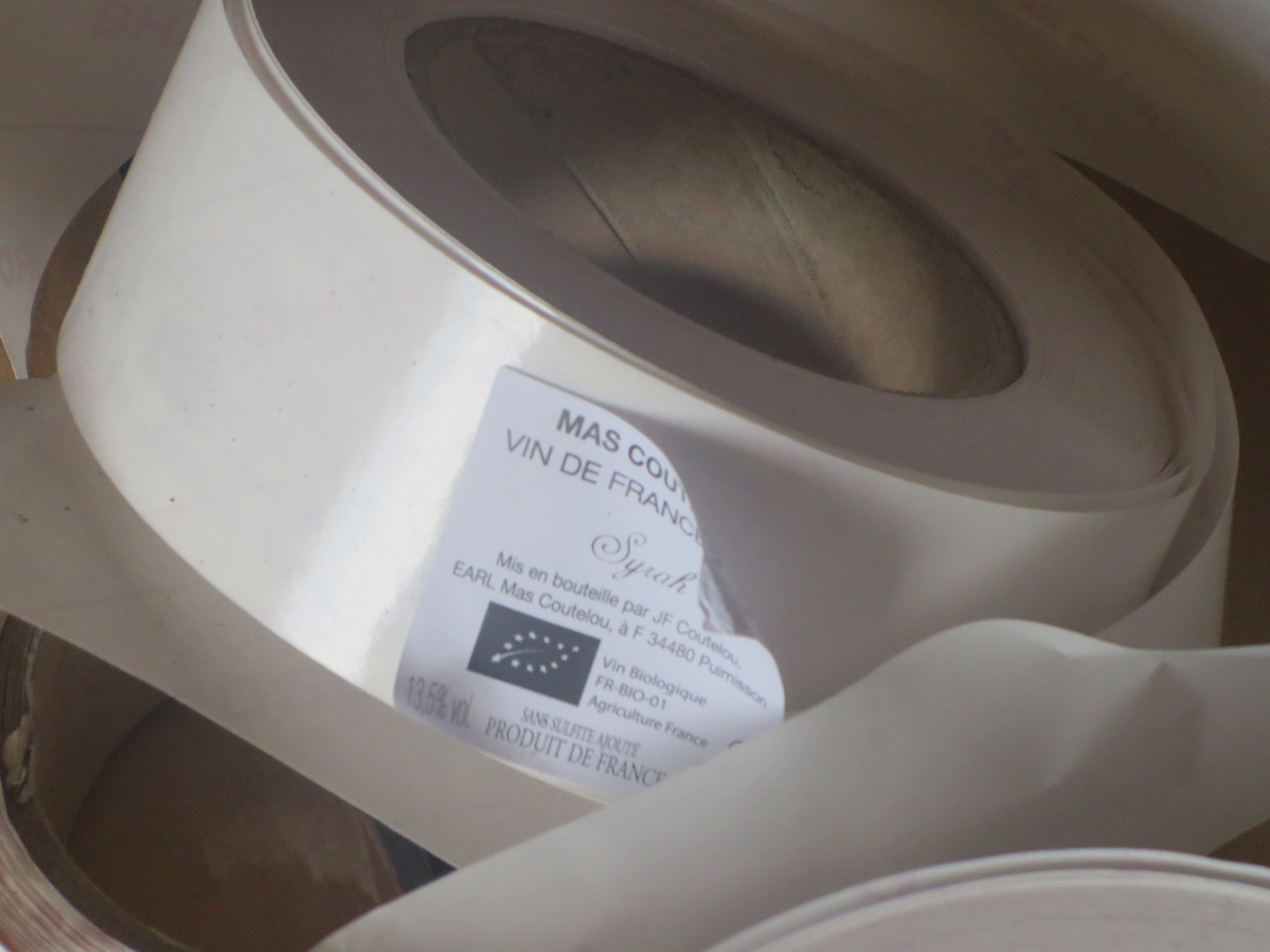
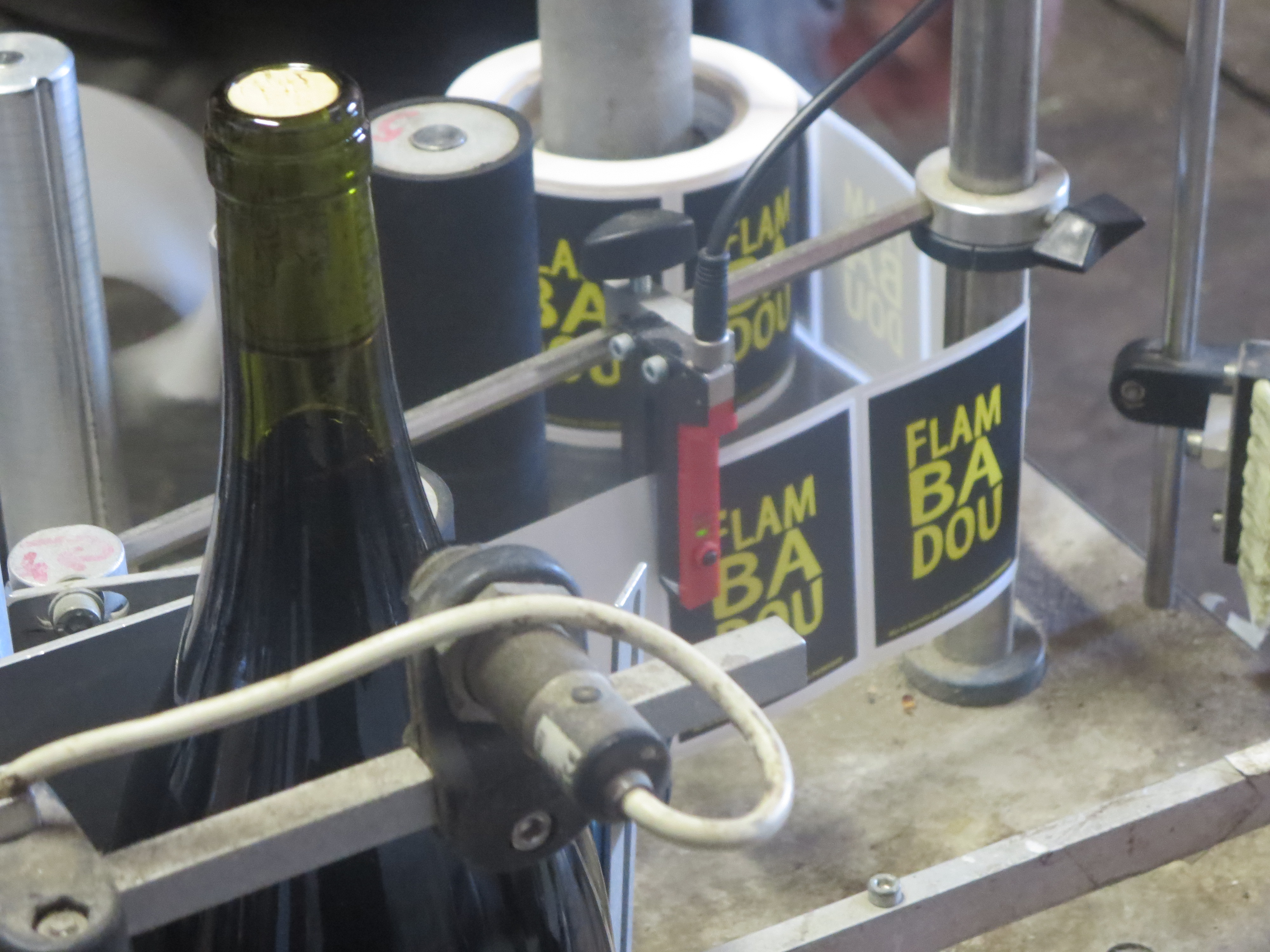
Jeff has also been receiving plenty of phone calls. It is now several months since wines left Puimisson to head to cavistes and merchants in France, Europe, the USA, Asia and Australia. Now stocks are low there is a demand for wines to be sent to them. Therefore, the 2014s which were bottles earlier this year are now being furnished with their labels and capsules and then packaged into boxes. Different regions, eg the EU, UK and USA, all have different requirements even for this packaging so even this job is not as simple as it may seem. For more on the process and a video I took last year see here.
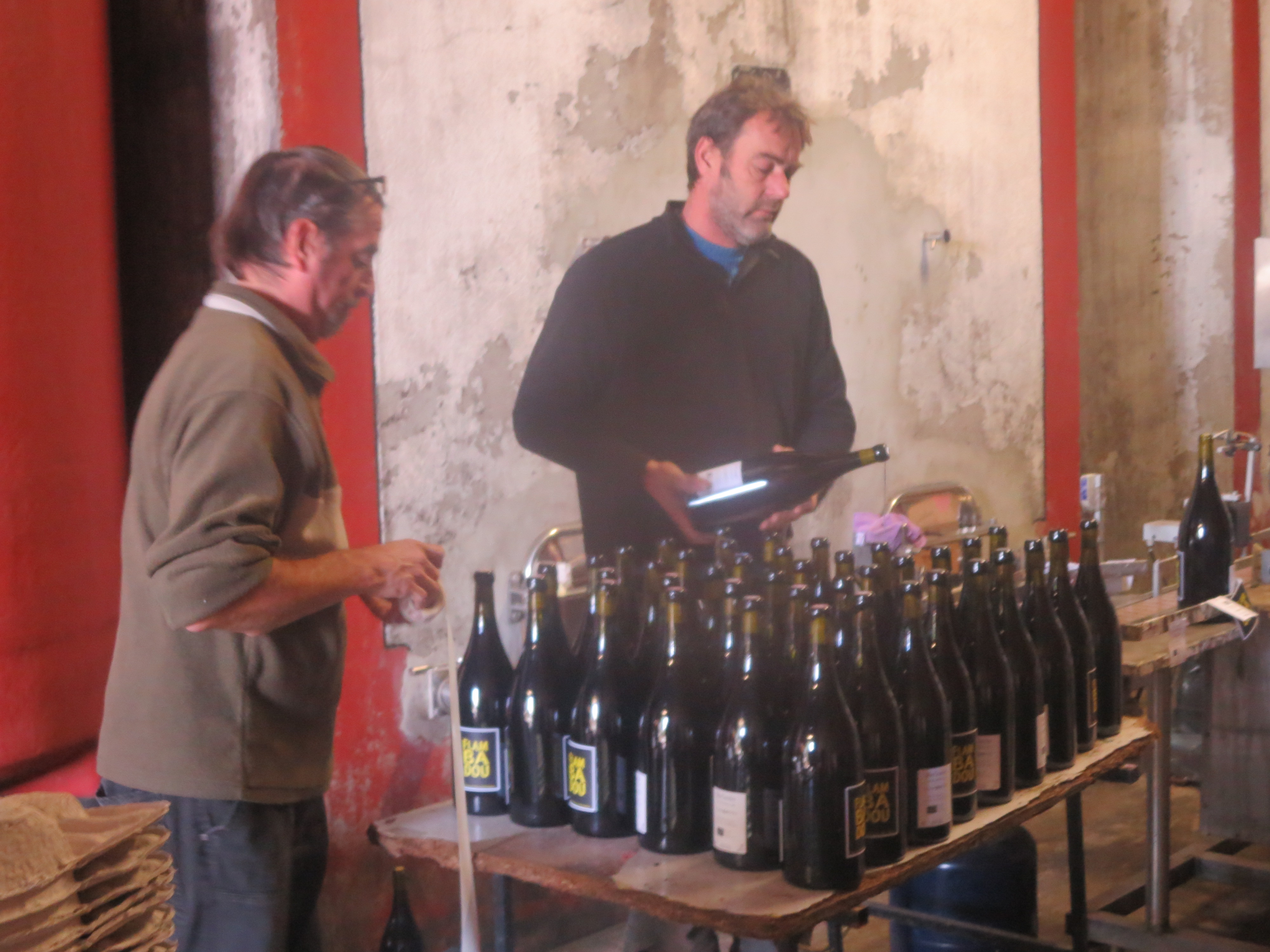
Thursday October 22nd was a day for preparing magnums and for some markets these are sealed with wax. Appropriately Flambadou, named after a barbecue implement, was therefore held over the flames of the gas burner which heated the wax.
Jeff and Michel, waxing lyrical
On Friday Jeff was due to head north on the long drive to Nancy and a wine salon. We are entering the season for these events and that means more journeys, more selling and more work. The vendanges may be over, the work certainly is not.
This was the final big week of harvest and it centred around Cabernet Sauvignon. There is a big parcel (around 1.5ha) of the grape in Segrairals and it is not a variety which really excites Jeff for a Mas Coutelou wine. It has done especially well in 2015 though the small berries have swollen with the rains and the alcohol levels had therefore fallen a little to around 14%. They taste sweet and juicy and came in fantastic bunches, not the same size as the Cinsault and Mourvèdre from this vineyard, but small and healthy nonetheless.
Cabernet Sauvignon on the vine in Segrairals
Cabernet Sauvignon
Partof it was picked on Monday 21st September which will be used by Jeff, purpose as yet unknown though Cameron may be flexing his winemaking muscles with some. The other major work on Monday was to use the Muscat d’Alexandrie grapes from Peilhan which were also in good health.
Muscat d’Alexandrie
They have very thick skins so the pressing took longer than usual to extract the juice. They were mixed with some Muscat À Petits Grains grapes. I will come back to these grapes and the juice later in this article.
Michel loads the Muscat into the press
Muscat juice after pressing
Tuesday 22ndwas the big day for the Cabernet Sauvignon. I have explained before that Jeff sells most of these grapes to London Cru, an English winery as the name suggests. London Cru buy grapes from around Europe, eg Chardonnay from Limoux, Albarino from Rias Baxas, Grenache from Spain. This is the third vintage of the project and the grapes were ready at last. In 2014 they had been ready on September 4th, my first day at Mas Coutelou after our move to the Languedoc. This year the rain had delayed them so Gavin and Alex flew into Béziers on Monday evening. They had been in Italy on Saturday and only just got back to London before flying here. The refrigerated wagon was in situ as I arrived on Tuesday morning, waiting to be loaded with the grapes.
Confidence was high amongst the London Cru team after some very good reviews including one last week by Dr. Jamie Goode who gave the top mark (94/100) to the Cabernet Sauvignon using Jeff’s grapes. The fruit for 2015 should bring more high marks and good wine. We tasted the 2014 over lunch and it was very good, clear, direct fruit with ripe tannins which mean that the wine will be at its best in 2 to 3 years.
Alex and Gavin loading the grapes
Gavin, Alex and Jeff directed and led the picking carried out by the Moroccan team as usual but also by Cameron and myself together with two excellent new additions to the team in Fabrice and Romain. Fabrice puts on shows (spectacles) around France whilst Romain is an artist. They have picked here before and were good fun and hard working, more new friends. (Fabrice on the left, Romain to the right.
After picking the 6 tonnes or so of grapes they were driven straight off to London under refrigerated conditions to keep them fresh. Gavin and Alex flew back to London that evening ready to receive them at their base. London Cab, fine fare.
Fine bunch of Cab I picked
Lunch was excellent with the London Cru wine and a magnum of Flambadou 2014 which was excellent, still in its infancy but already drinking well. Afterwards Cameron and I did some pigeage of the Carignan grapes amongst others. It was also Cameron’s birthday, hopefully it was one he will remember with affection.
Birthday boy Cameron looking for his present
Pigeage of the Carignan
Wednesday 23rd was a day for working the cellar. Jeff was keen to aerate the Syrah a little and to start to maximise the cuves by assembling some of the tanks and filling the new ones. Thursday saw similar work whilst Jeff also did some admin work.
On Friday 25th I returned to the cellar. Cameron was enjoying a well earned break and so I joined Jeff and Michel. They were continuing to fill the tanks, aerate some wine and then we moved to the muscats from Monday.
Aerating some Syrah
Muscats macerating with a little older Muscat wine
The Muscats are destined for the solera system and after a few days maceration they were showing lovely aromas, already slightly sherry-like due to being mixed with some older wine. The juice went straight into barrel whilst the marc was pressed again to extract more juice and flavour. Tasted straight from the press these included lovely apricot, plum fruits along with the slight oxidised note which adds complexity. Truly delicious, I’m afraid my description fails to do it justice.The barrel will allow the wine to age and gain contact with oxygen and the wine will develop into a luscious sweet wine. As stated previously I shall write more about the solera in the near future.
Michel removes the skins for pressing
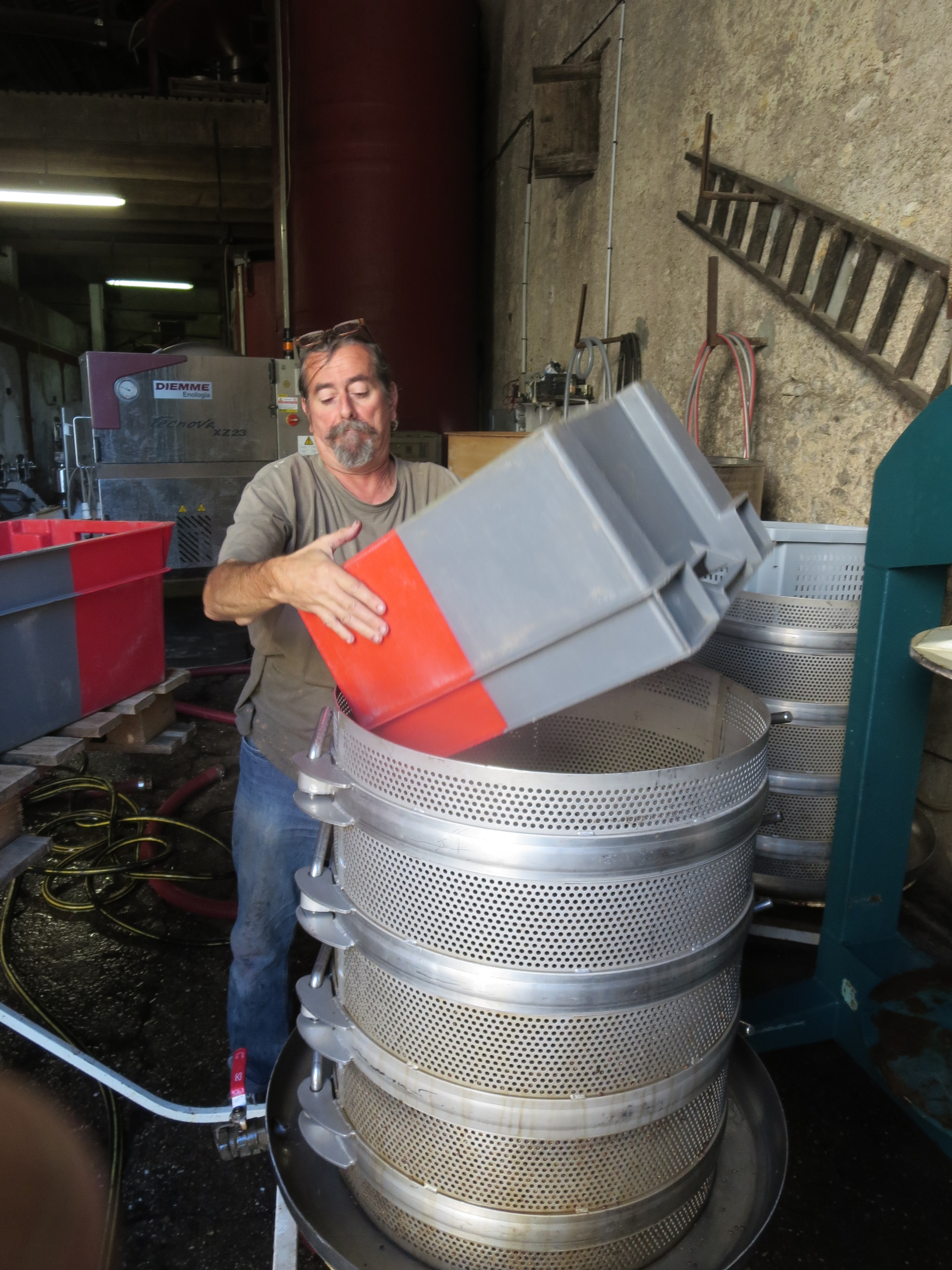
Michel then loads the press
Gateau de Muscat
There are one or two small parcels still to pick but the main harvest is now over. It began back on August 21st so lasted just over a month. I shall be reflecting upon it and the lessons I have learned from it in the next article. Meanwhile I look forward to picking the Muscat from Rome and went to the vineyard on Friday lunchtime to take some photos. I was met by a family of partridges, butterflies and birdsong – Rome really is a magical place. In La Garrigue the vines are starting to show their autumnal colours, their work is done for 2015. The vines have given everything to their fruit in the last month and the leaves which remain after harvest are looking tired after a long, hot summer. All, or nearly all, is safely gathered in.
La Garrigue, Friday. The grass across the centre marks the ridge with Grenache near side and Syrah far side.
Grenache leaves showing that autumn approaches, harvest is over
The storms which brought so much rain to Puimisson and the Languedoc on Saturday meant that there would be no picking on Monday or Tuesday the 14th and 15th.
Preparations for cellar work
Instead Jeff, Michel and Cameron were hard at work in the cellar for the two days. There is lots to do there so it was an opportunity to get everything on track. Lots of remontage, sous tirage etc. On Monday the 14th the Syrah which was to be made with carbonic maceration was pressed after its few days in tank with the fermentation inside the skins.
The Syrah being pressed
The video shows Michel in the cuve moving the grapes to the front where Jeff forks them into the pump. You will see the grapes moving through the pipe into the press.
By Wednesday 16th the weather had turned much clearer and good winds meant that the grapes and soil were beginning to dry out nicely and so picking recommenced. The centre of attention was Rec D’Oulette known locally as Chemin De Pailhès and the Carignan grapes which grow there. These are the grapes which make the excellent cuvée «Flambadou», perhaps the outstanding wine of 2013 (and Jeff tells me of 2014 too). The bunches which arrived were excellent in quality, so fingers crossed for another great wine.
Picking the Carignan
Carignan
The Carignan in tank
Analysing the Carignan
Meanwhile cellar work continued as Cameron carried out more remontages and analyses. Today one of the wines to be moved was the Merlot which was bright, fresh and colourful.
Délestage of Merlot
As each wine is moved around the cellar, for example to take it off its skins, each cuve has to be cleaned thoroughly and then it will be filled with another set of grapes or fermenting wine. There is a seemingly never ending merry-go-round of wines and quite how Jeff keeps track of them all remains a mystery to me. Each move has to be planned to ensure that cuves are available, cleaned and big enough.
Cleaning from the inside
As a former teacher it reminds me of planning a timetable fitting in students, teachers and classrooms into the correct combination. Add in working as a mechanic to keep all the machines ticking over and the work of a vigneron becomes more complex, the job description is long.
Maintenance of the égrappoir
Thursday 17thbrought Grenache from Sainte Suzanne (Metaierie), again carbonic maceration was to be used so back to the top of the cement tanks. Thomas was back and he, Cameron and I shared duties up there filling the tank.
l-r Cameron, Michel and Thomas
Then cleaning of the cagettes ready for the next new cépage. Following the Carignan of Wednesday it was time to harvest the Mourvèdre from Segrairals. One of my favourite grapes, somewhat fickle in character but when grown by good producers it adds a complexity and depth with a hint of dark mystery. The bunches which arrived were certainly amongst the best of the whole harvest at Mas Coutelou.
Magnificent Mourvedre
They were clean, big bunches, the grapes with thick skins and smelling already of spice and blackcurrants. Some of the bunches were very heavy and it wouldn’t take many to produce a bottle of wine, on average you need about 1.25kg of grapes to make the 75cl of a normal wine bottle. Sorting was quick and easy, the pickers had done a good job and the fruit was in such good condition. I look forward eagerly to finding out what Jeff has in mind for these grapes, when I have asked he simply smiles mysteriously, something is afoot!
Friday 18th brought the rest of the Mourvèdre still in tip top condition. When the pickers reached some of the lower parts of that parcel the quality did begin to dip a little so these bunches were taken away to be used separately, possibly for a rosé wine. I say possibly because final plans are a long way from being ready. Other jobs included pressing the Cinsault grapes which will make a rosé (definitely!!) and more remontages and analyses.
Remontage
We were joined today by Charles, a young Frenchman who works in a restaurant in Berlin, and whose mother was a former colleague of Jeff when he was a teacher in Paris. Coincidentally his boss in Berlin was a student of Jeff! Charles added a real sense of fun and worked hard.
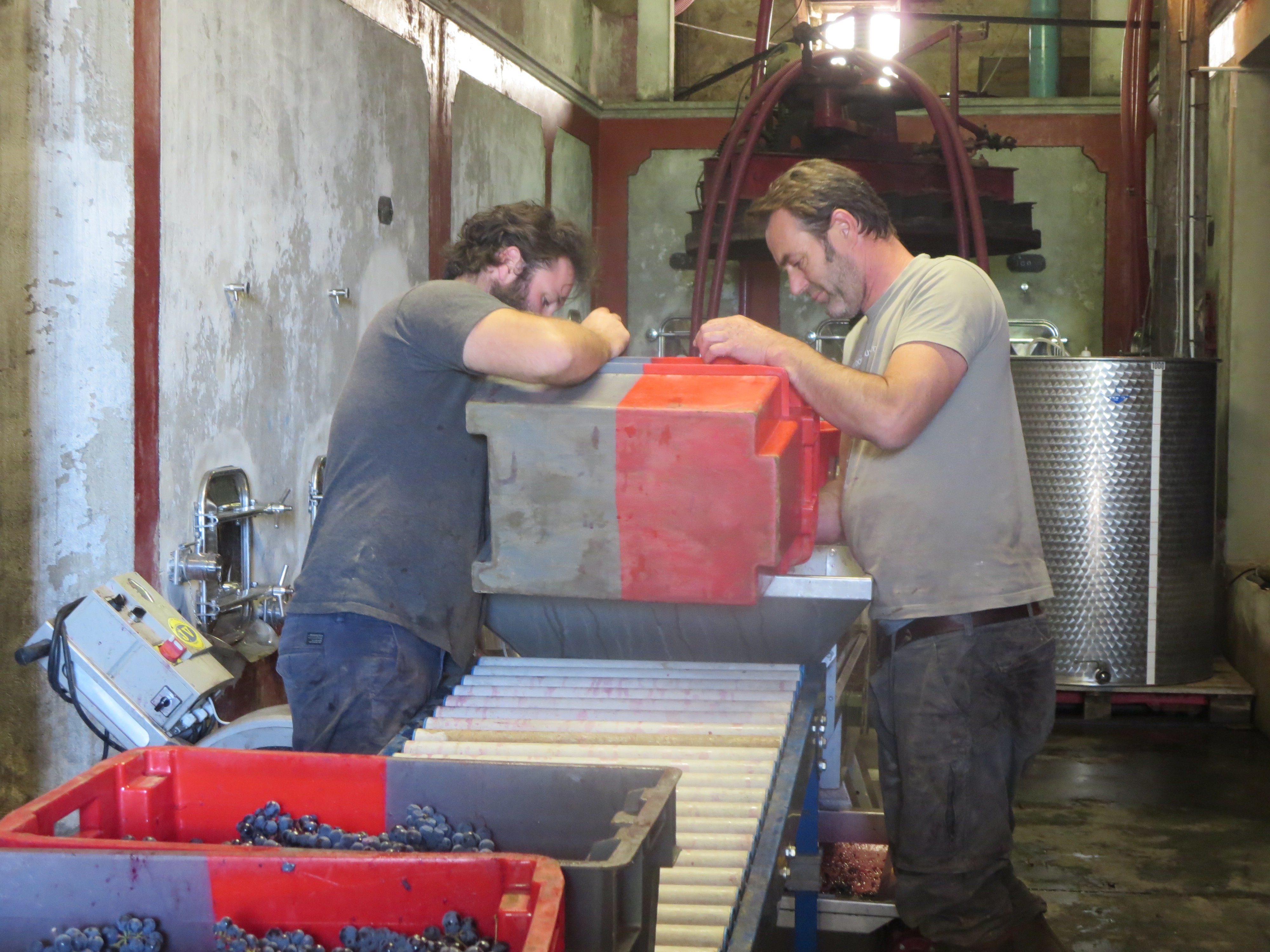
Charles fills the press
By Saturday I was ready for a rest and so the 19th was the work of the Jeff, Michel and Cameron as they processed the last red grapes from Peilhan. Some of these will be used for blending but amongst them was the famous Castets. This you might remember is a cépage produced by only two winemakers in France, Chateau Simone in Palette and Mas Coutelou. The first harvest was in 2014 and we had watched eagerly its development. In fact we have been drinking some during harvest lunches and it is very promising, brooding with deep, dark fruit flavours and a freshness to lift it. Only 3hl was produced again this year, the same as last year.
Castets in tank
On Sunday 20th Jeff carried out a débourbage of the Cinsault rosé which was pressed on Friday. Débourbage means taking out the pips and skins etc to leave the juice on its own. The harvest is starting to slow down a little though much work remains to be done in the cellar. Jeff and the ‘Coutelou Gang’ will have certainly benefited from a little siesta in Sunday.
Icare licking his lips at the great wine being made (maybe)
This was the busiest week of the vendanges and required long hours of picking, sorting, pressing, remontage as well as lots and lots of carrying, lifting and often in confined spaces. In short it was hard work.
Why so busy? Well, Syrah which was the first of the red wine grapes to ripen makes up around a third of all the vines at Mas Coutelou and Grenache, the next to ripen, is also the next main cépage with up to 12% of the harvest. Together this meant that around half the 2015 harvest would be picked this week. Add in other smaller picking and the parcel of Merlot and this was definitely the crunch time.
Sunday September 6th was a day of rest for most but Cameron and Jeff were in the cellar working as usual, carrying out checks and analyses and remontages as necessary.
Monday 7th was a long day at work. It was around 8.45pm before we stopped. Syrah in Segrairals makes up around 2ha in total, though as with all land there are some prime areas whilst other vines, around the edges and in a few hollows where water gathers, are not of the same quality. In a typical year these would go towards cuvées such as Classe and 7, Rue De La Pompe but, as ever, plans are fluid.
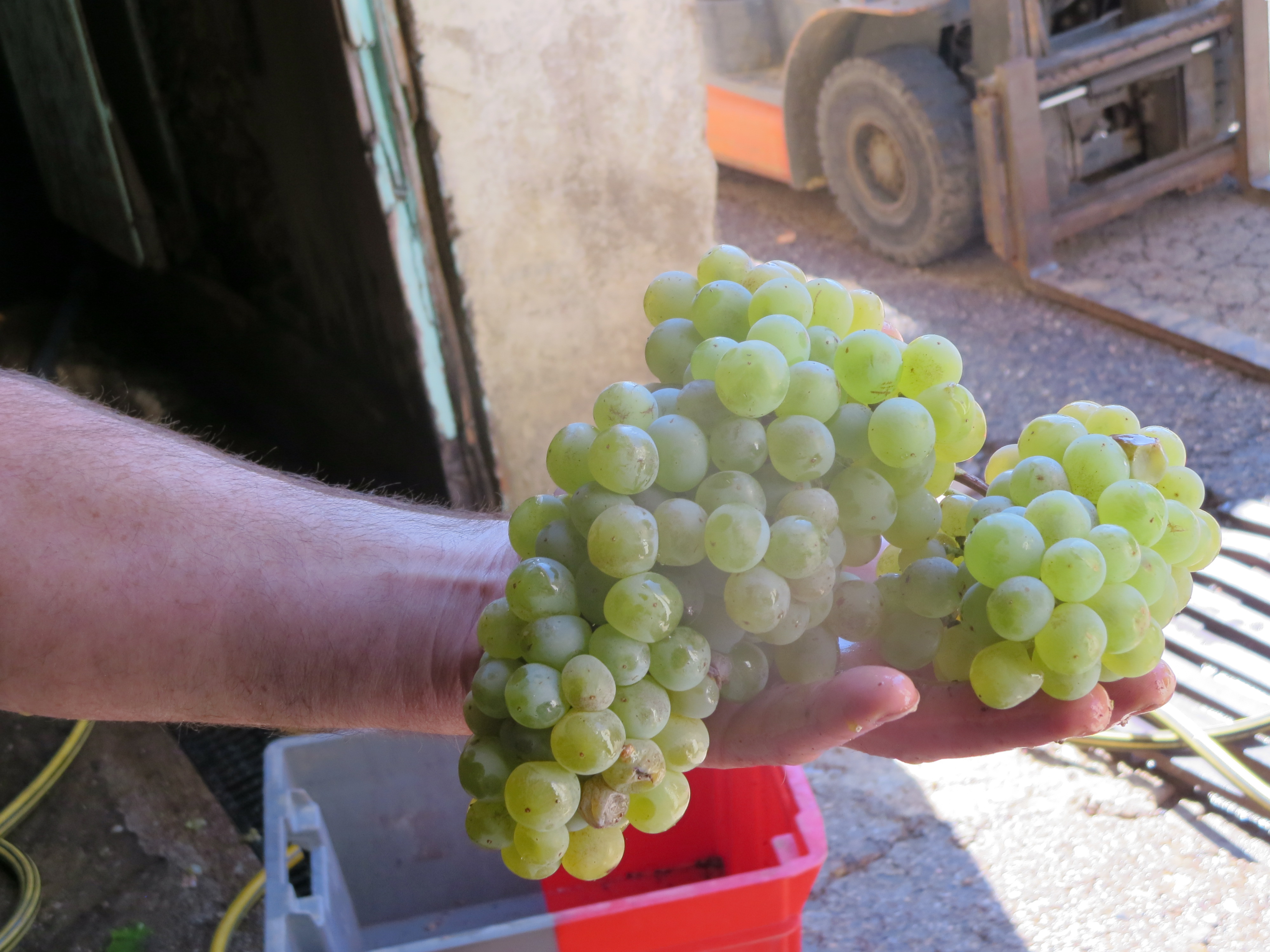
Superb bunch of Carignan Blanc
In addition a parcel of Carignan Blanc was harvested from Peilhan vineyard. There were some wonderful grapes and they were given special treatment, carefully sorted and then pressed using the small hydraulic press. The juice ran very clear and green and then gradually took on a slightly brown colour as it developed light oxidation. This is actually good as it helps to protect the juice later in its life and prevents damaging oxidation. Moreover, the effects of the oxidation from the pressing are removed through fermentation. Around 600l were produced in total, around 750 bottles worth. This makes a very good wine, something I was to be reminded of on Tuesday night, as we shall see.
This was a long day but much good work had been done.
Tuesday 8th brought more Syrah to the cellar, this time from La Garrigue. These are the vines I have described before which face north on a slight slope to preserve the freshness and fruit flavours, good quality grapes which are often used for my favourite cuvée, La Vigne Haute, so I was even more keen to help to sort carefully and there were some lovely bunches of healthy fruit. Here’s hoping for a good vintage of LVH, as ever Jeff will make the call.
Cameron unloading some Grenache Gris
Yet again another smaller harvest was done, again from Peilhan, this time with Grenache Gris. The lovely pink, grey berries are flexible in their use and might produce, white or rosé wines or be added to red wine as you will remember from my special cuvée post.
Grenache Gris after being pressed
Meanwhile lots of analysis of the wines in tank and work to ensure that they are in good health. This even involved Jeff removing his trousers and jumping into the Flower Power tank to do some pigeage! Modesty means that I shall not share these photographs!
Cameron getting a sample for analysis
The after effects
And of course there was plenty of this… (I couldn’t resist adding the tune)
Error
This video doesn’t exist
A bonus was to come though. We had been joined by two new additions to the team. Thomas is from Toulouse originally but has been working as a sommelier in the Languedoc and spent most of the week with us and will return next week. Karim is a fishmonger from Tours with an extensive knowledge of natural wines. He spent the week in Puimisson and brought a lovely surprise in the form of lobsters and scallops which made a wonderful dinner on Tuesday as Karim is also an excellent cook. We shared a magnum of Casa Pardet Chardonnay to accompany the shellfish as well as two Carignan Blancs, one from Mas Coutelou and the other from Jeff’s friend Cyril Fahl of Domaine Rouge Gorge in Roussillon. It was a special and hugely enjoyable meal, thanks to Karim and Jeff for the food and wine.
Aug 30th was a Sunday so no picking but Jeff was still in the cellar working. The early wines needed to be checked and moved as necessary.
Monday 31st dawned cloudy again and it was time to tackle the biggest of the vineyards at Mas Coutelou, Segrairals. The Syrah was ready to be picked and Jeff had decided to use carbonic maceration to ferment the grapes which are probably not of the same top quality as those from La Garrigue or Sainte Suzanne which were picked last week.
Grapes which are pressed like those described last week ferment in tank as yeasts react with the juice to change the sugar to ethanol, ie alcohol. The yeasts are natural from the skins of the grapes and the atmosphere of the cellar. In the case of Mas Coutelou and many artisanal winemakers this is the case though other winemakers will buy yeasts some of which are designed to add particular flavours to the wine. None of that in Puimisson, these are natural wines.
Carbon dioxide pumped into the tank
Carbonic maceration means that the whole bunches go into the tanks, grapes and stalks alike. The tank is filled with carbon dioxide which permeates the grape skins and starts the fermentation within the cells of the berry. Some of the berries at the bottom of the tank will be crushed by the weight of the grapes and so there will be some conventional fermentation too.
Whole bunches in the tank
All the grapes are given a light crushing later by which time ethanol will have formed inside the skins and so the resultant juice is ready made wine. The result is often more fruity and juicy wine.
Grapes arrive through the little back door above the cement tanks
To achieve this the tanks are filled from above so we worked in the space above the cement tank with the grapes arriving at the back door which is a level higher than the front door. The space is smaller and the heat from the grapes was high. It was hard work, believe me. Sorting still had to be done before the grapes could go into the tank, quality comes first.
Some of the rejected bits
The pipe carries the CO2 into the tank
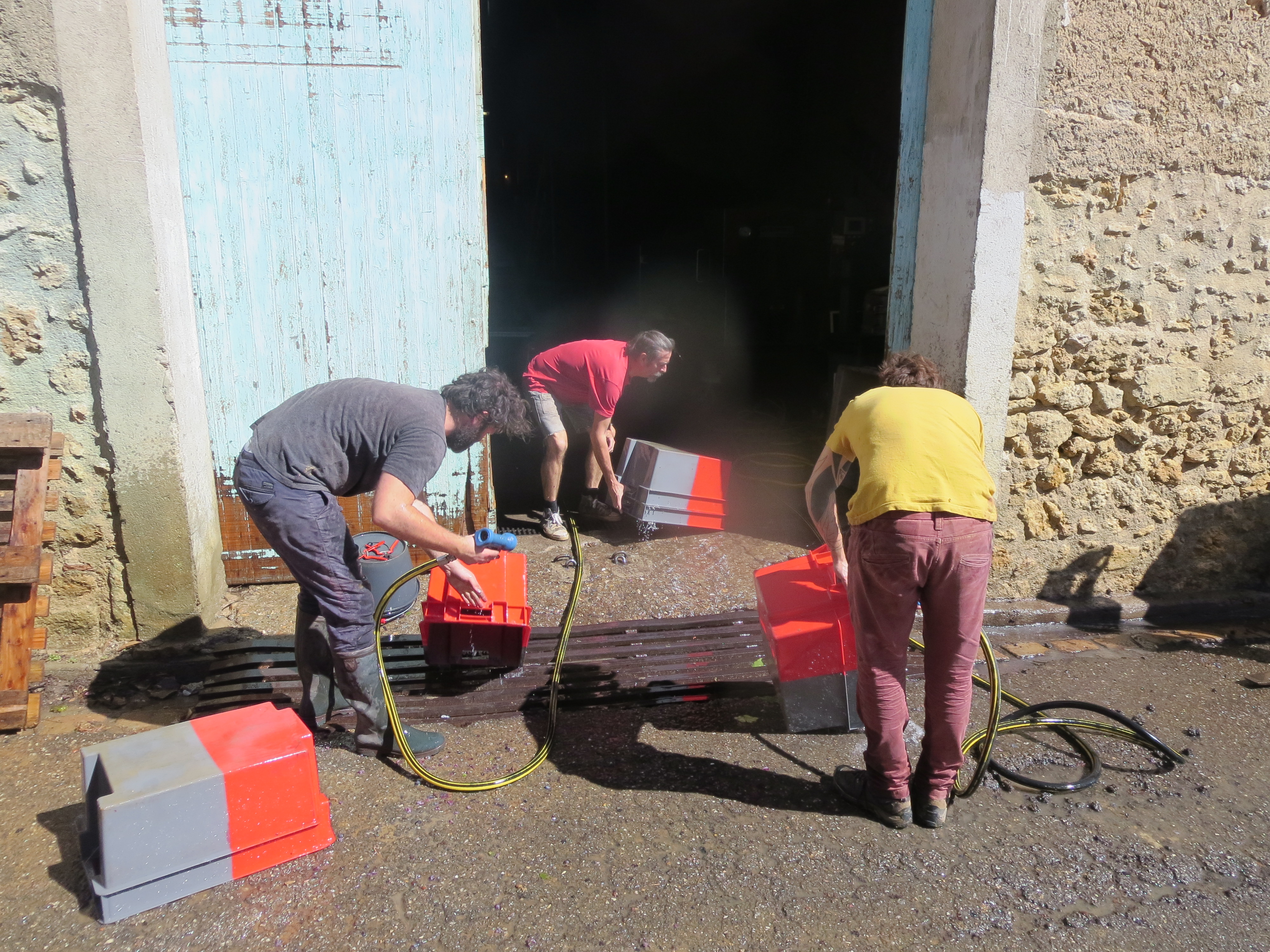
And after 9 hours of back breaking lifting, carrying and sifting it was, as ever, time to clean everything from top of the cellar to bottom as we see here with Jeff and Michel.
One visitor from the vineyard
The boss letting us know we should get a move on
The night of the 31st brought a big storm with lots of rain, not the ideal conditions for harvest at all. Rain can cause rot and problems. However, it could have been much worse as news arrived of huge damage caused by hail in the Chablis region. For all the forecasts of how the harvest might turn out it is only when the grapes are safely in the tank that a vigneron can be assured of the quality of wine they might make. Commiserations to the Chablis producers.
September 1st was a quiet day as the rains from the storms meant the grapes were too wet to harvest. In the cellar more checking and remontage, the process of pumping the wine over the cap of skins and must. Further analysis of the wines showed that the yeasts are acting quickly and the fermentation is progressing very well.
Hard work!
Today, September 2nd, the remaining white grapes, Grenache Blanc, from La Garrigue. Then on to Peilhan to gather some of the white grapes there, Maccabeu, Grenache Gris, Carignan blanc and Clairette Musquée.
Grenache Gris
Clairette Musquée
Michel
The core team of Jeff, Carole, Michel, Cameron and myself were joined by Matthieu who has worked the harvest before here. There were some lovely bunches though the wet weather has caused some rot inside some of them, Careful sorting took place in the vineyard to take only the best grapes which tasted really sweet and juicy, the Clairette was especially tasty.
Cameron especially pleased with this bunch of Clairette
The white grapes were taken back to the cellar and placed in tank after being destemmed. It is possible that Jeff will make his first orange wine with them. An orange wine is a white wine made like a red wine, ir the wine is fermented on the skins thus extracting more colour, texture and flavour from them and giving the wine an orange tint. However, analysis and the next few days will be needed before the final decision is made.
In tank and the future might be orange
In the afternoon, Matthieu, Jeff and myself did more remontage of the Syrah grapes harvested in the last week, which is already tasting well, with very healthy technical analysis and beautiful aromas. And, then, as ever, the cleaning.
All photos taken on August 2nd unless otherwise stated
It was June 12th when rain last fell on Margon and the vines in the region, although generally doing well, were starting to show signs of fatigue and heat stress; leaves curled in upon themselves, some yellowing, a slight shrivelling.
Vines near Pézenas showing some stress
Vines in Margon which were not pruned in spring and are really suffe
A few drops fell on July 25th but the skies had been very dark and had promised much more, it was almost cruel to have that rain, a tease of what might have been. However, July 31st brought around 10mm to Puimisson. A decent rainfall, enough to give the vines a drink and to stop the drying out process. Not enough of course after weeks of lack of moisture and some more rain in the next few weeks would be very much welcome to swell the grapes and the harvest. The vines are now pouring their energy into their fruit rather than their vegetation, but they need the nutrients to do so.
So, how had the vines responded to the rain which fell? Well a tour on Sunday (August 2nd) showed the vineyards of Mas Coutelou to be in rude health, a decent harvest is now predicted though that extra rain would be most welcome.
Segrairals in full bloom, healthy, happy vines
Segrairals, biggest of the vineyards, showed some healthy Cinsault, Syrah and Grenache with no signs of stress or disease. As the home of Classe, 7,Rue De La Pompe and 5SO this is especially welcome, as they are some of the big sellers.
Cinsault in Segrairals
To Rome, my favourite vineyard. The gobelets were looking well, plenty of grapes both the white varieties and the Cinsault. There was a little mildew around the entrance but minimal, no cause for concern. Could there be a cuvée of Copains in 2015? Jeff tells me that no decisions are made as yet, caution prevails and he will wait to see what the harvest gives him before he makes final choices about how to use the grapes and the wines which result.
Rome’s centurion vines in good health
Muscat Noir grapes, a tiny bit of mildew top left
Sainte Suzanne (Metaierie) suffered from coulure in May with the strong winds blowing off some of the flowers on the vines, which will reduce yields a bit. However, the grapes there are growing well, what might have been a problem looks now a much brighter picture, good news for fans of Vin Des Amis.
Peilhan, just a little more tired and suffering
The only vineyard parcel which has shown stress is Peilhan, There was a lot of regrafting and replanting in the spring and the dryness has caused problems for these new vines. There was also oidium in this parcel, the only vineyard to be attacked by this powdery mildew. Yet amongst those problems there are plenty of healthy grapes, some careful picking and sorting will be needed but it will produce good wine.
The famous Castets grapes of Peilhan
La Garrigue was blooming, the white varieties such as the Muscats are swollen and changing hue to lovely golden shades.
Muscat a Petits Grains in La Garrigue
The Syrah is well advanced, a dark purple colour across virtually the whole bunches, the pips though betray a little immaturity as they taste and look green and sappy. A little more time and patience will pay dividends. As the world’s biggest fan of La Vigne Haute, I have my fingers crossed.
Syrah in La Garrigue, ripening beautifully in the shade of the vine
The Grenache in La Garrigue, despite facing south, is a little more delayed in colour but getting there and very healthy.
Grenache in La Garrigue
In fact despite risks of disease earlier in the year (see here) Jeff has been able to use minimal treatments in 2015. Oidium and mildew (powdery and downy mildew) can be controlled by copper sulphate, sometimes called the Bordeaux mix when added to slaked lime. This is a bluish colour when sprayed by conventional and organic vignerons and is often seen on the leaves of vines. Vignerons might also use chemical fungicides if they are not organic producers.
Neighbouring vineyard which was given herbicide shortly after harvest last year and whose new vines have been treated regularly
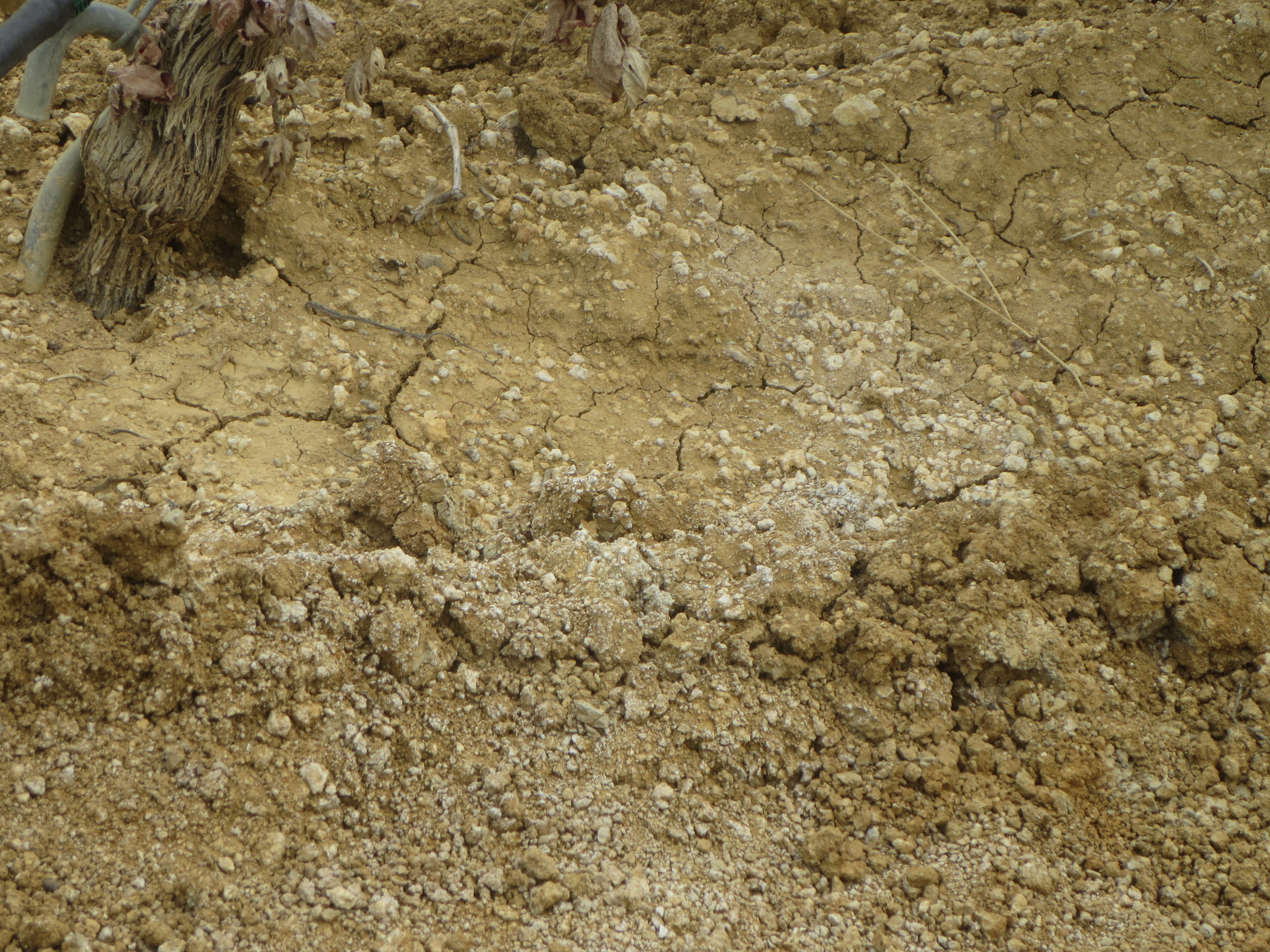
Some neighbours have also irrigated their vines and one alarming consequence is the changing of the soil and its pH as the calcium carbonate in the water shows through, you can see it in the white parts of the soil in this photo taken on July 22nd.
The irrigation is also causing the vines to grow quickly and tall with thin trunks as seen below. It should be acknowledged that there are many conventional producers who take great pride in the health of their soils and vines and would be horrified by some practices described here.
As a proud holder of Ecocert organic status and as a natural wine maker Jeff must use natural products only. Tisanes of plants which fight mildew such as horse tail, fern and nettles can be sprayed and this is the basis of many biodynamic treatments. However, the two main weapons in the armoury of organic producers are copper and sulphate, both natural products.
Copper is used against mildew, but is harmful to the soils and kills life in them if used in significant quantities. Organic producers are limited to 30kg per hectare over a 5 year period, allowing more to be used in years with more downy mildew for example but only if less is used in the other years. In fact Jeff has used just 200g per hectare in 2015 and this after years of well below average use, his use of copper is on a major downward trend. He is reluctant and very careful in using copper as he is aware of its danger to the soils, yet mildew has not been a major threat this year.
Oidium seen in May
Similarly Jeff has used sulphur in soluble form at doses much lower than the permitted level, three treatments over the course of the growing season. In addition one dose of sulphur powder was sprayed when the risk of oidium was high (May) and a second spraying for Peilhan only as it is the vineyard which was attacked by oidium. In contrast to neighbouring vignerons who have sprayed every 10 days including after the bunches closed up (so more than a dozen treatments) this really is minimal intervention.
So July’s parting gift of 10mm of rain was welcome, August might like to follow by offering some rain soon. Too near the harvest is bad as it would dilute the juice rather than help the grapes to reach a good size. Things look promising, let us hope that nature completes its bounty. There is an old saying that June makes the wine and August makes the must, ie the character of the wine with its colour, yeast and flavour. With 3 weeks or so until picking begins it is an exciting, and nervous, time, waiting to see what that character will be.
No Icare this time but look what we found amongst the vines, he’s been here!
NB there are lots of reports about recent wine tastings here.
I was reflecting on two wine blogs which I read recently (Frankie Cook and David Crossley) Independently they were writing about how we got into wine and how, over the years, our tastes have changed.
Pat and myself with our tasting guide at Olivier Leflaive, Puligny Montrachet
I was brought up in a County Durham small town, Crook. My family were teetotal and brought me up as a Methodist. This meant that alcohol had virtually no impact upon my life for many years, the pub was not a part of lives other than the occasional meal whilst on holidays. Wine was an alien concept, something which posh people and foreigners drank. Even during my time at Liverpool University I drank some beer but never wine. That I should turn out to be horse racing fan with passion for wine may be seen as something of a reaction to that upbringing though it should be said that my childhood and youth were wonderful and I would not change anything about them.
So it was a school trip which ignited my interest in wine. As a teacher. I was asked to accompany a visit to the Rhine Valley in Germany in 1982. The hotel where we stayed was big and old fashioned, in the centre of Bacharach not far from Rüdesheim.
Bacharach am Rhein
The hotel owner was a very sociable and generous host and every evening he would offer us wine to accompany our meal and then he would teach us about the local wines and how they could vary in levels of dryness or sweetness and according to site and winemaker. (I hasten to record that two teachers would abstain to supervise the children). Well his teaching was a revelation! As far as I knew wine came in two types, red and white just as there were different flavours of soft drinks such as Cola, lemonade etc. Our host opened up a whole new world of how wines could vary so much even within the same place and vintage never mind from other regions. How I wish that I could remember the name of that German tutor, he set me on the road which leads to the Languedoc in 2015.
With Oz Clarke at a London tasting, his books taught me so much
From Germany to Australia. 1980s Britain saw a boom in wine interest in Britain, fuelled by television coverage, magazines and books. My chosen guides were Oz Clarke and Hugh Johnson, different in approach but knowledgeable and with a great ability to communicate their enthusiasm and to educate me with their words. At the same time the arrival of New World wines, especially from Australia, and Oz’s championing of those wines widened my tastes from German Riesling, though that remains my favourite white wine type it should be said. Huge stonking Shiraz, colourful Chardonnay and cassis-heavy Cabernet Sauvignons were the order of the day. Wyndhams Bin 222 and 444, Penfolds Bins 128 and 389, then cheap! Massive amounts of oak (often from wood chips added to the barrel) which today would make me shudder and wince.
Add in the Sauvignon Blancs which were starting to arrive from New Zealand, tropical fruits, cut grass and cat’s pee aromas. Cloudy Bay Sauvignon was the bottle to find, indeed it was rationed out. And trips to Oddbins, the most dynamic of wine retailers, who offered Penfolds Grange Hermitage for around £20 (now over £200), why didn’t I buy it all?
Iain and I using Oz Clarke and Hugh Johnson to help us navigate Beaune
From the Antipodes to France. By the mid 1980s I was a regular holidaymaker in France, profiting from school holidays in summer. The Loire was the first region visited and particularly tasting wines in Vouvray. Dry, appley Chenin Blanc wines which could magically also be sweet and luscious vins moelleux in the hands of winemakers such as Huët, Foreau and Fouquet.
A startlingly youthful me with my brother in law Iain in the Cave Madeleine, Vouvray.
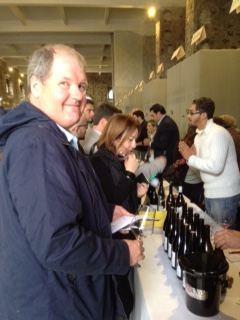
My first wine fair was in the troglodyte Cave Madeleine on August 15th. I assumed you drank rather than spitting the wines and rolled happily down the street back to the accommodation. Then onto Burgundy, Alsace, Beaujolais, the Rhone Valley, Bordeaux and Jura. Some were more welcoming to wine drinkers than others. Great welcomes from people like Martin Schaetzel in Ammerschwihr who opened bottles generously. I met lovely people whose passion for their work and wines was freely shared with visitors. Louis Champagnon in Chénas was always a man who greeted you with a smile, food, a joke and great modesty.
With the great Louis Champagnon, Chénas
The Échezeaux producer who shared her Grand Crus, knowing that as a young teacher I couldn’t afford them (sadly I still couldn’t 25 years later!). Sadly, Bordeaux was different, most producers kept their doors firmly closed, though I still loved the wines. I tasted first growths such as Haut Brion at generous merchants such as Hungerford Wines. I bought en primeur in 1990 and struck lucky with a great vintage and wines from La Lagune and d’Angludet at just over £100 a case.
My experiences broadened, more tastings, more wines from around the world but especially France. As a teacher my budget was limited and I relied upon Oddbins, The Wine Society and supermarkets to find good wines. Plus I got bolder in knocking on doors, a remarkable visit to Didier Dagueneau and his wonderful Pouilly Fumés for example. In Germany trockenbeerenauslese wines were offered and I even learned to pronounce it.
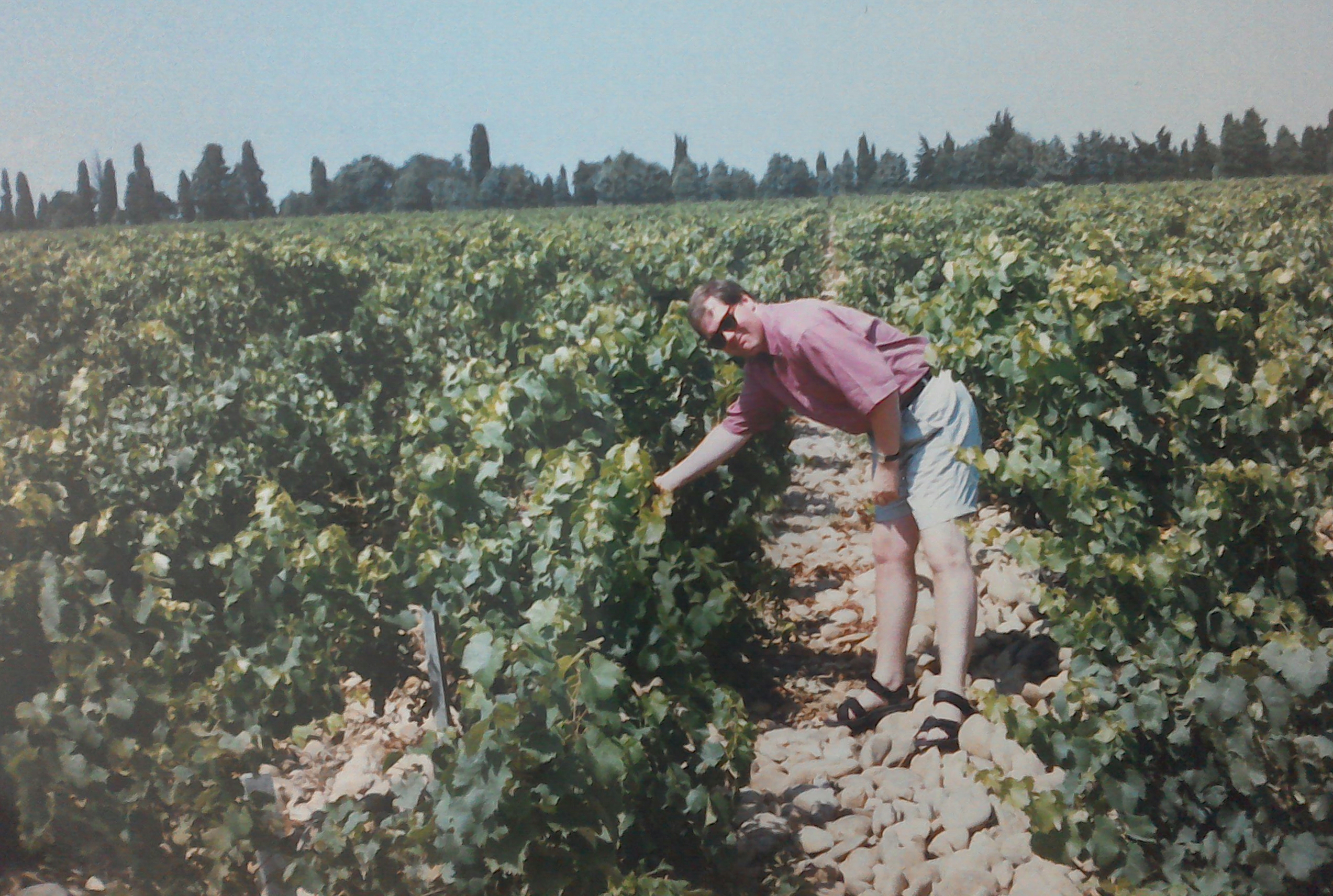
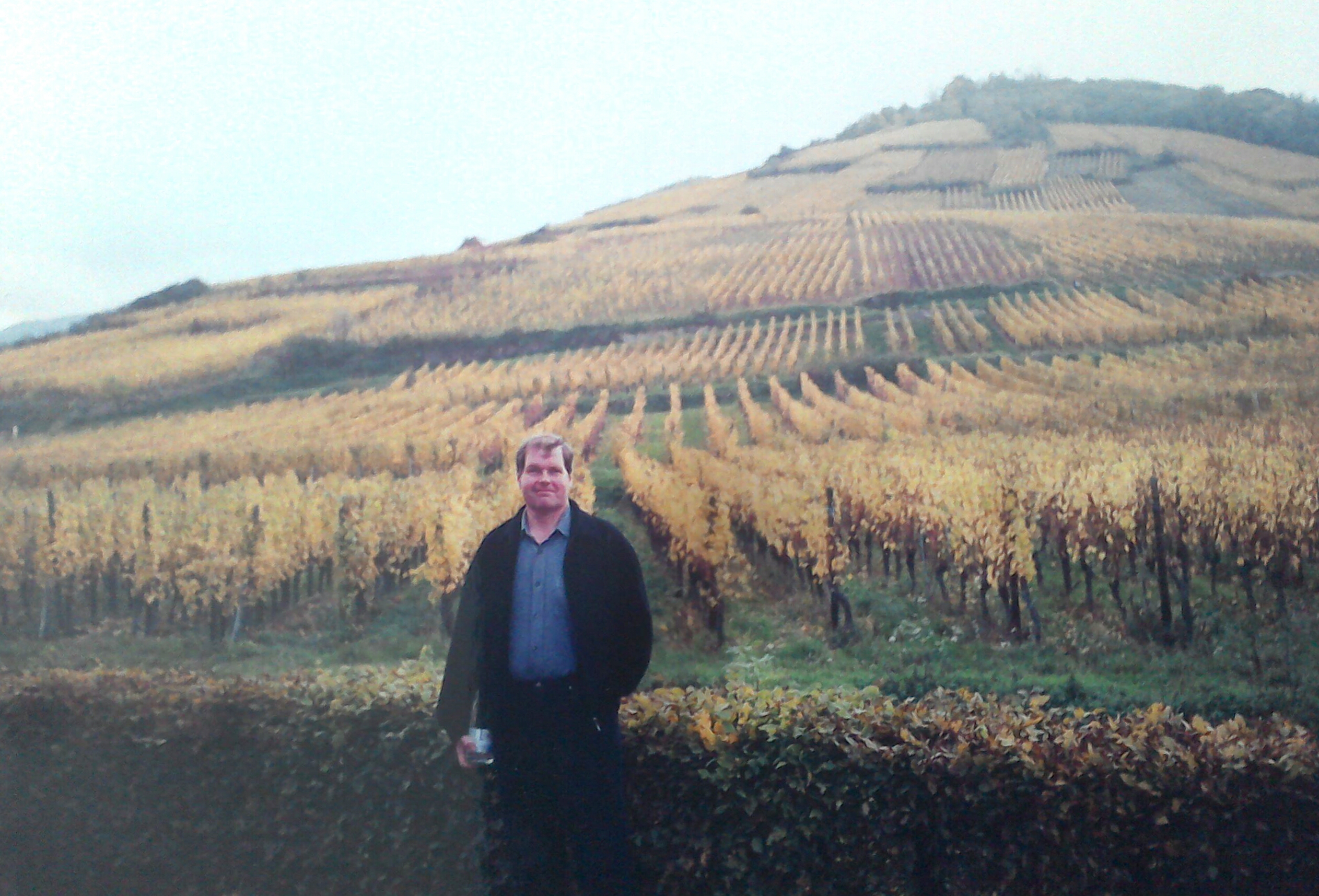
A March in the vines of the Loire
A March in the vines of the Rhone
A March in the vines of Alsace, golden autumn 2001
Blind spots remained however, Italy and Spain in particular, much to my brother in laws’s disbelief. California too though a visit to the USA (South Dakota and Seattle) showed me that good wines were abundant there, and oh those ice wines in Canada! Lovely. A trip to Sicily also opened my eyes to the possibilities of Italian wines, the Frappato grape and Etna wines were revelations.
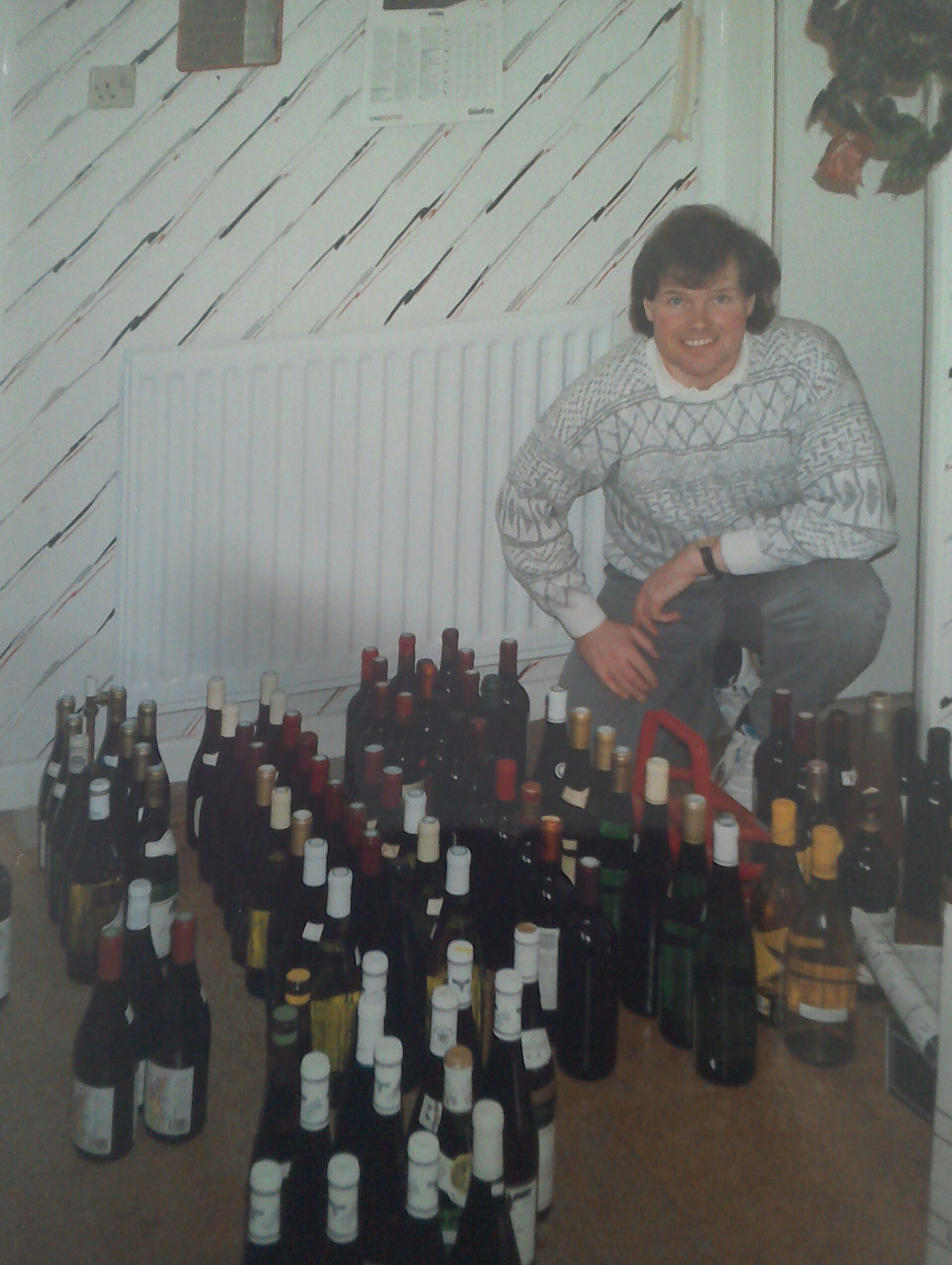
Well 30 years of wine drinking brought joys and disappointments, bargains and rip offs. Memorable bottles, glasses and also corked wines, a whole case of expensive Chablis was one painful low. A hundred bottles stored away has turned into five hundred. And then with age the question, when will I drink it? Why buy expensive en primeur which won’t be at its best until I’m too feeble to drink it or indeed incapable of drinking it.
Sorting and happy (and hair!)
Wine fair in Cahors
Tentative steps further south in France in the last decade. The Languedoc. Rosemary George was my guide through her book and blog to discovering the well priced and under rated wines of the region. Wines which offered pleasure but also, from many producers, complexity. A chance visit to Puimisson and Mas Coutelou as that was the domaine Rosemary wrote about when I was in the area. The expected half hour visit turned into three and a half hours. Even after visiting hundreds of vineyards and cellars I was flabbergasted. Vineyards without chemicals, wines without sulphur, a solera! In Puimisson?? All true. Above all a generous, passionate man and generous friend who happens to be a great winemaker. And a teacher about the vineyards and winemaking who encouraged my interest and deepens my understanding and who agreed to being the focus of a blog to keep me busy. Le Vin Des Amis indeed. Retirement, the chance to spend a year, indeed more, in this fabulous region. Learning, living.
We are a third of the way through 2015 already and the work of making wine has been hard throughout those 4 months. I have put the links together to show a summary of everything that Jeff, Carole, Michel and Renaud have been up to so far. And occasionally me too.



















































 amarchinthevines