“When all the parts of the puzzle start to look like they fit Then I must remember there’ll be days like this” (Van Morrison, Days Like This)
l-r, Morgane, Jeff, Julien, Thierry, Michel, me, James, Howard
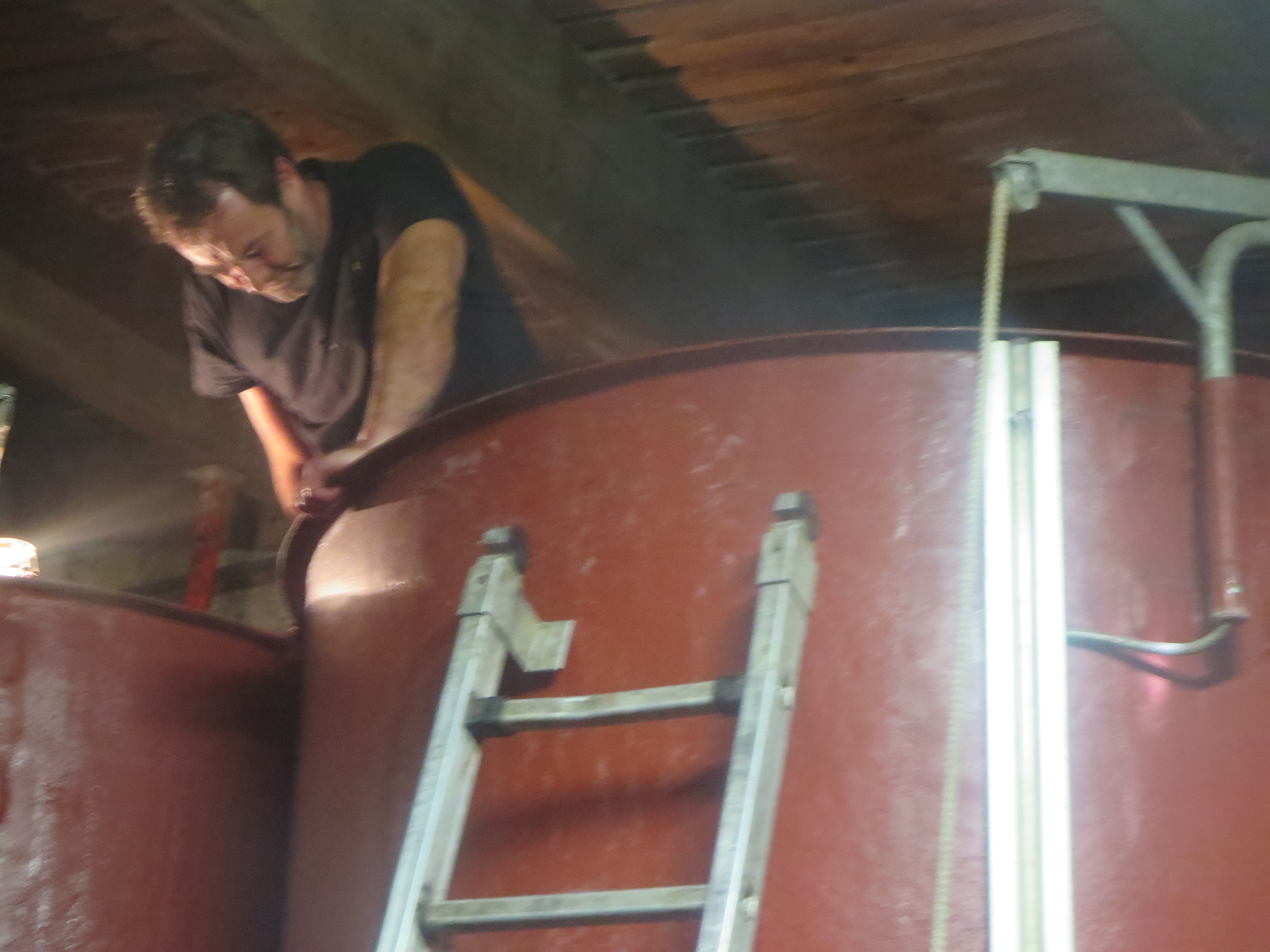
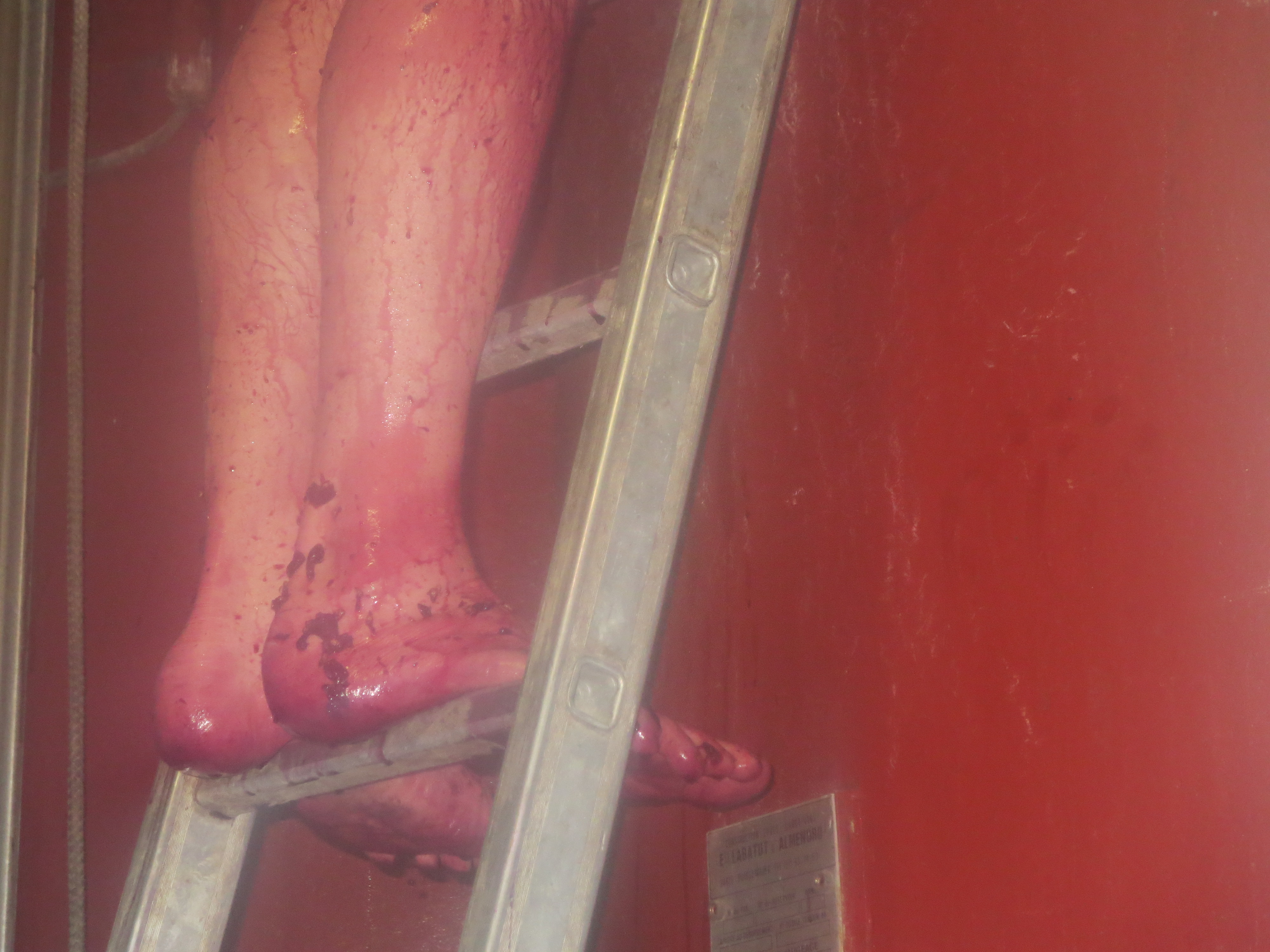
As we approached the end of vendanges a number of the team were moving on. It was an inspired move to have a farewell day, picking, tasting and celebrating together, though we were already missing some like Charles, Carole and Maylis.
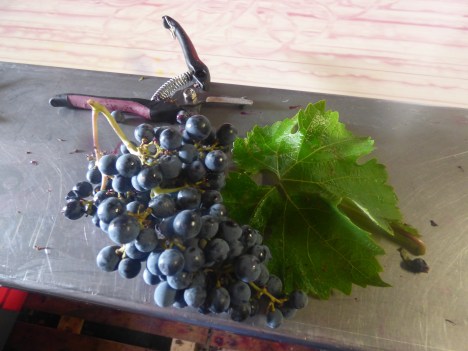
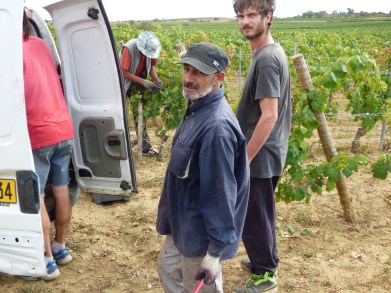
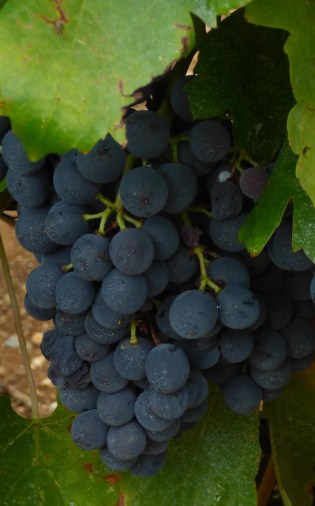
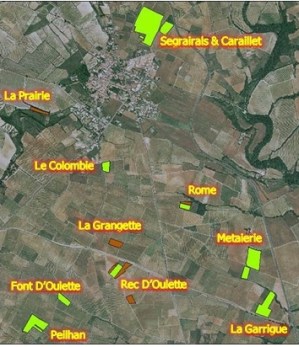
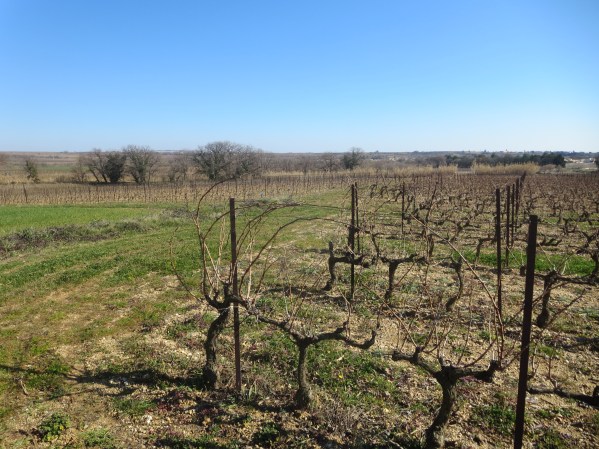
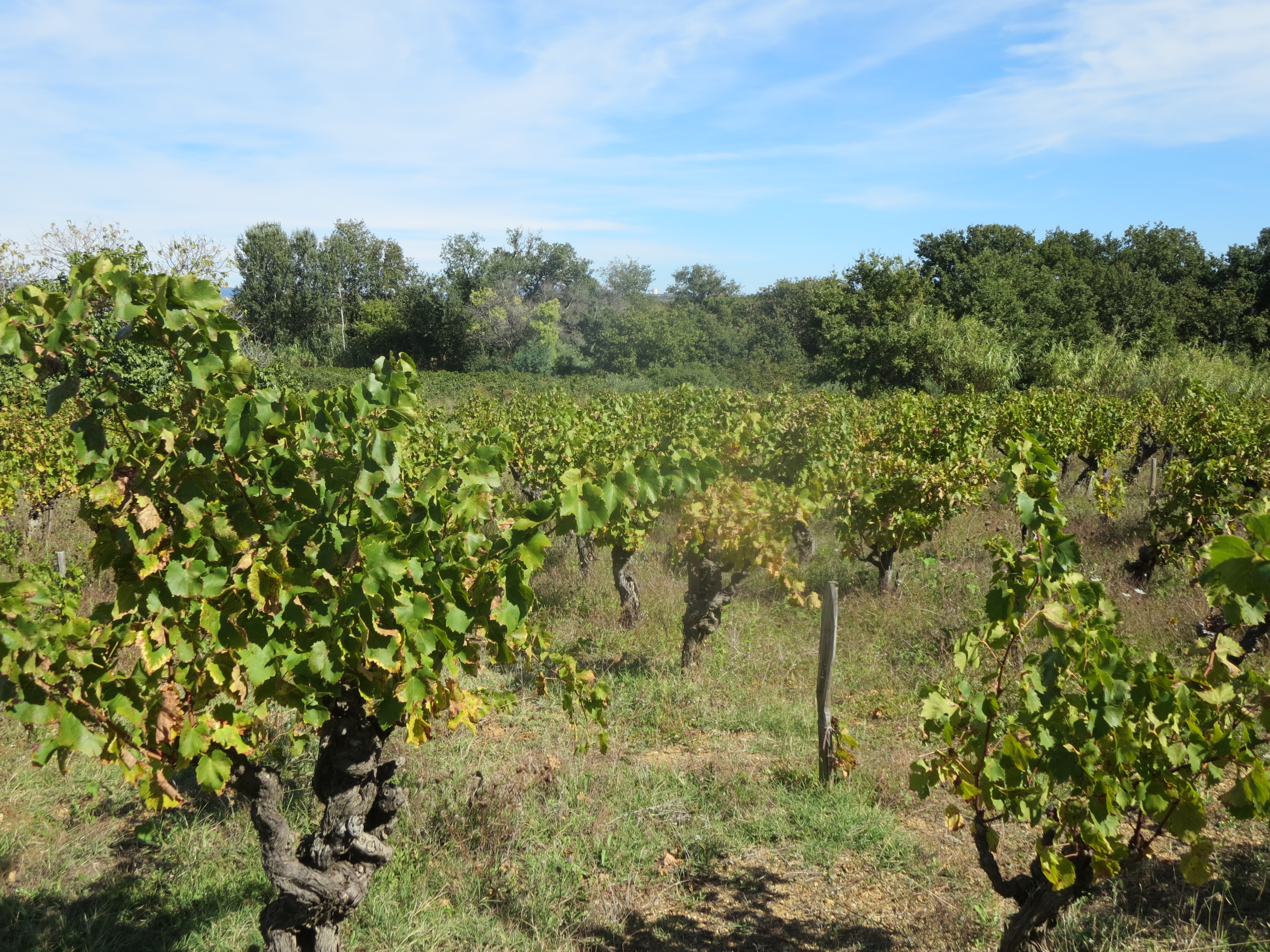
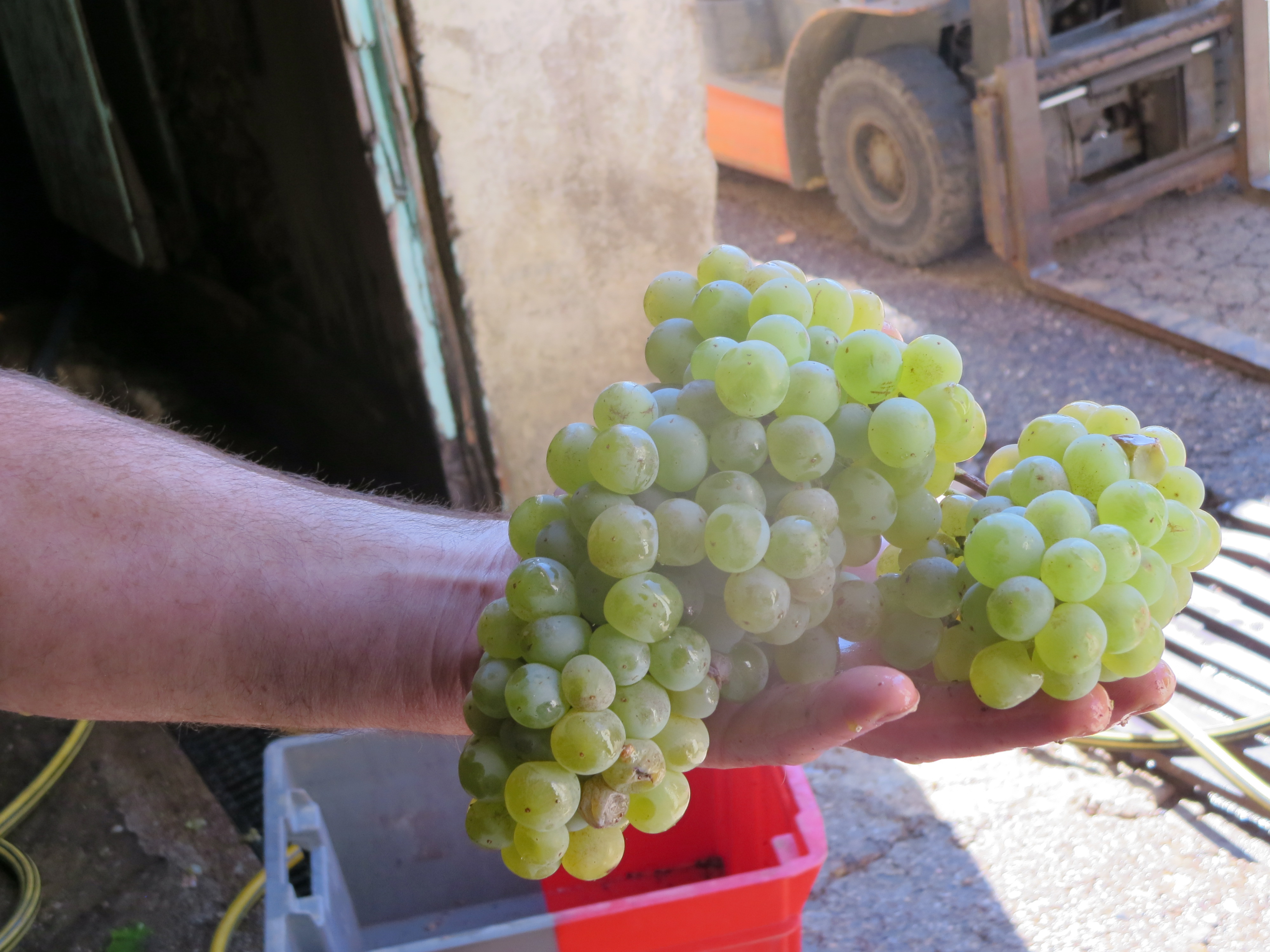
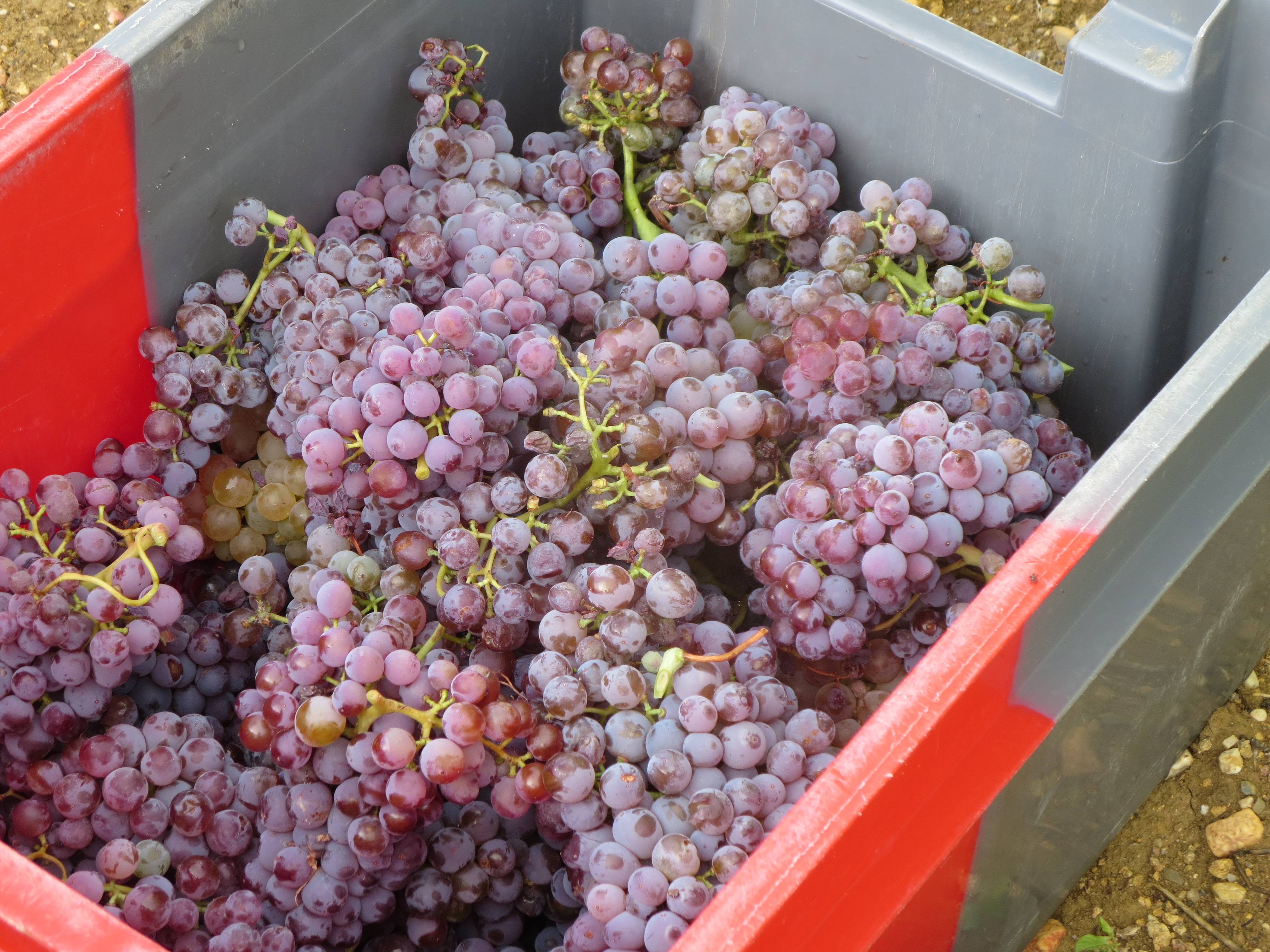
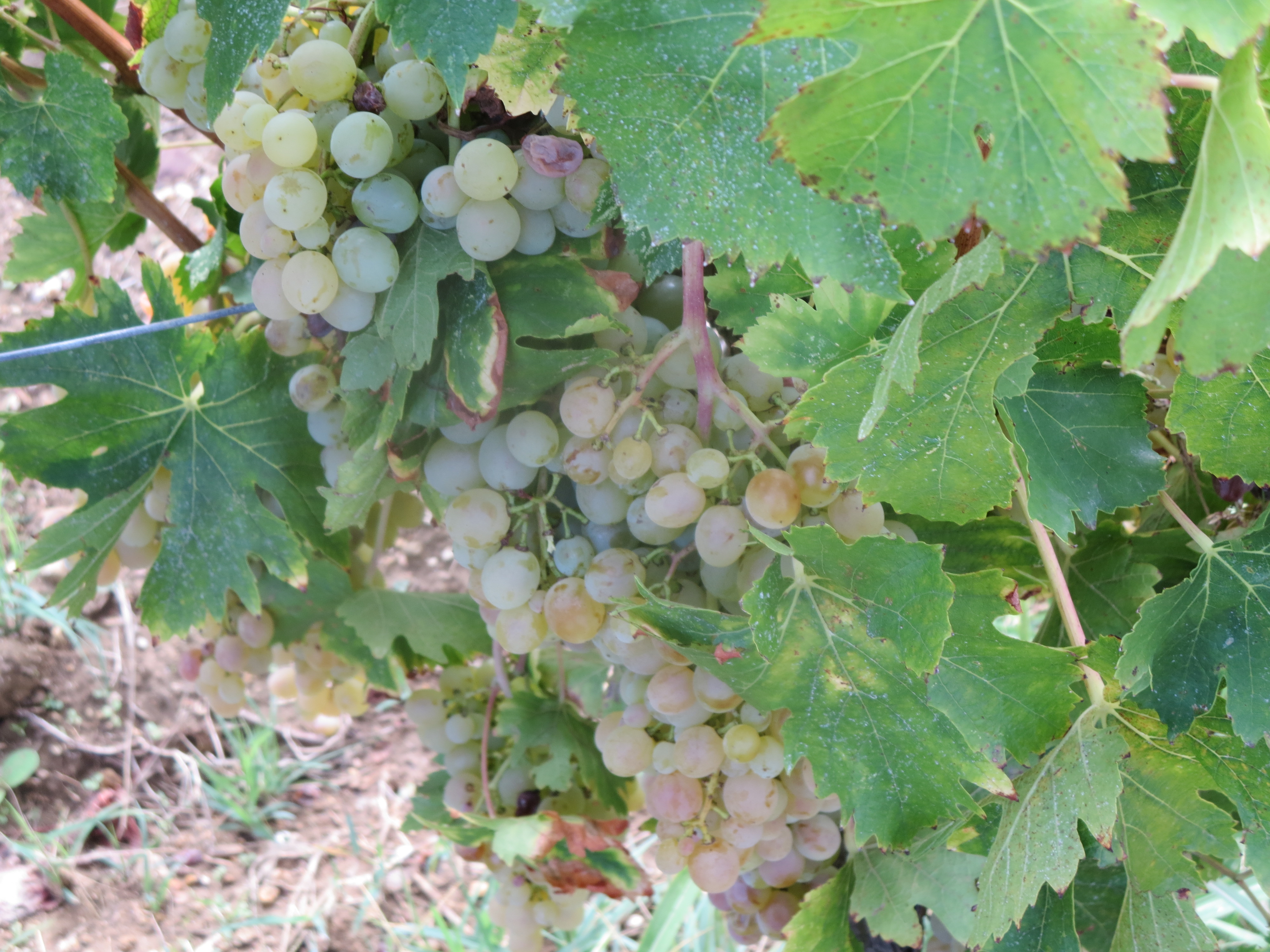
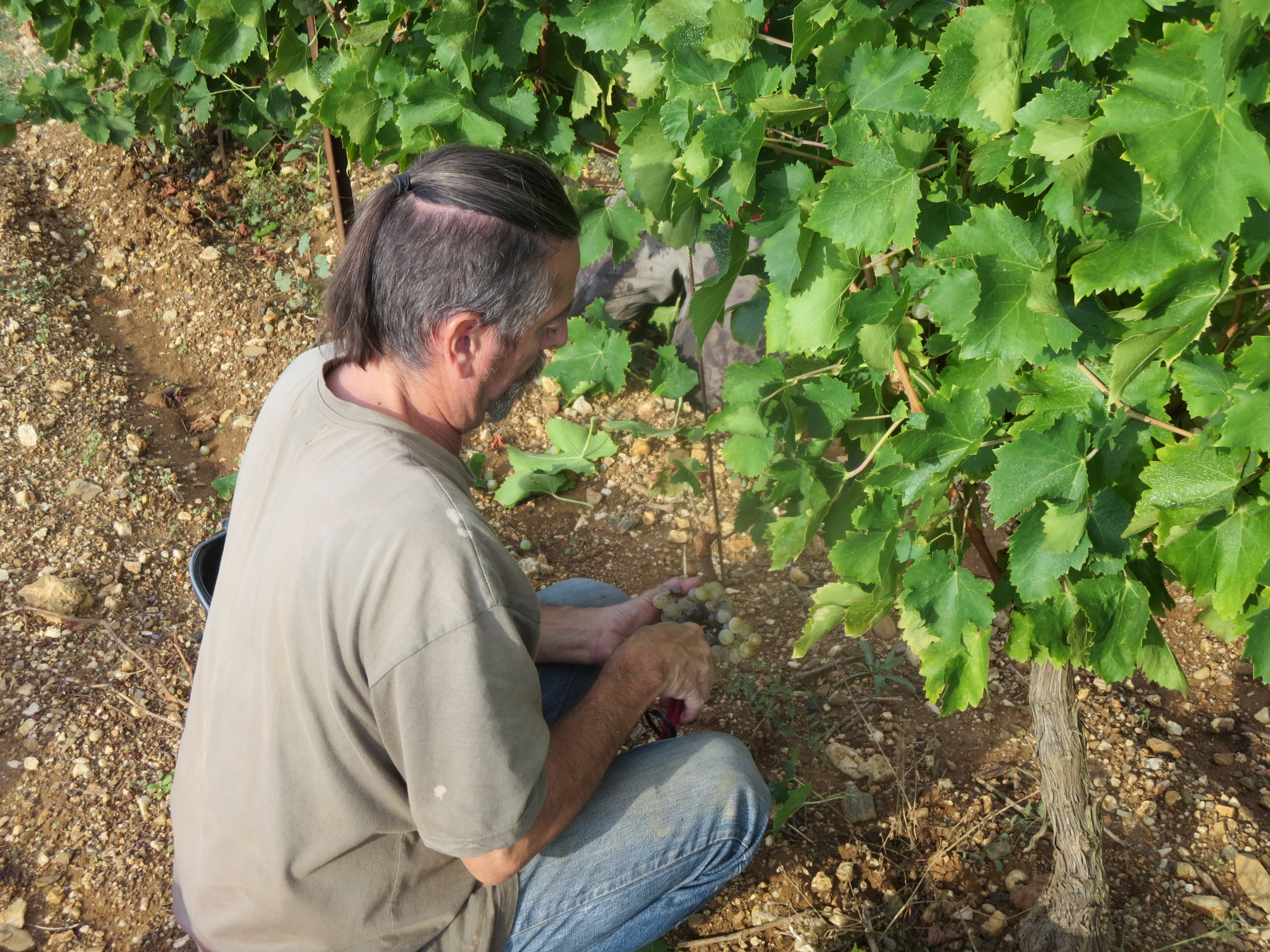
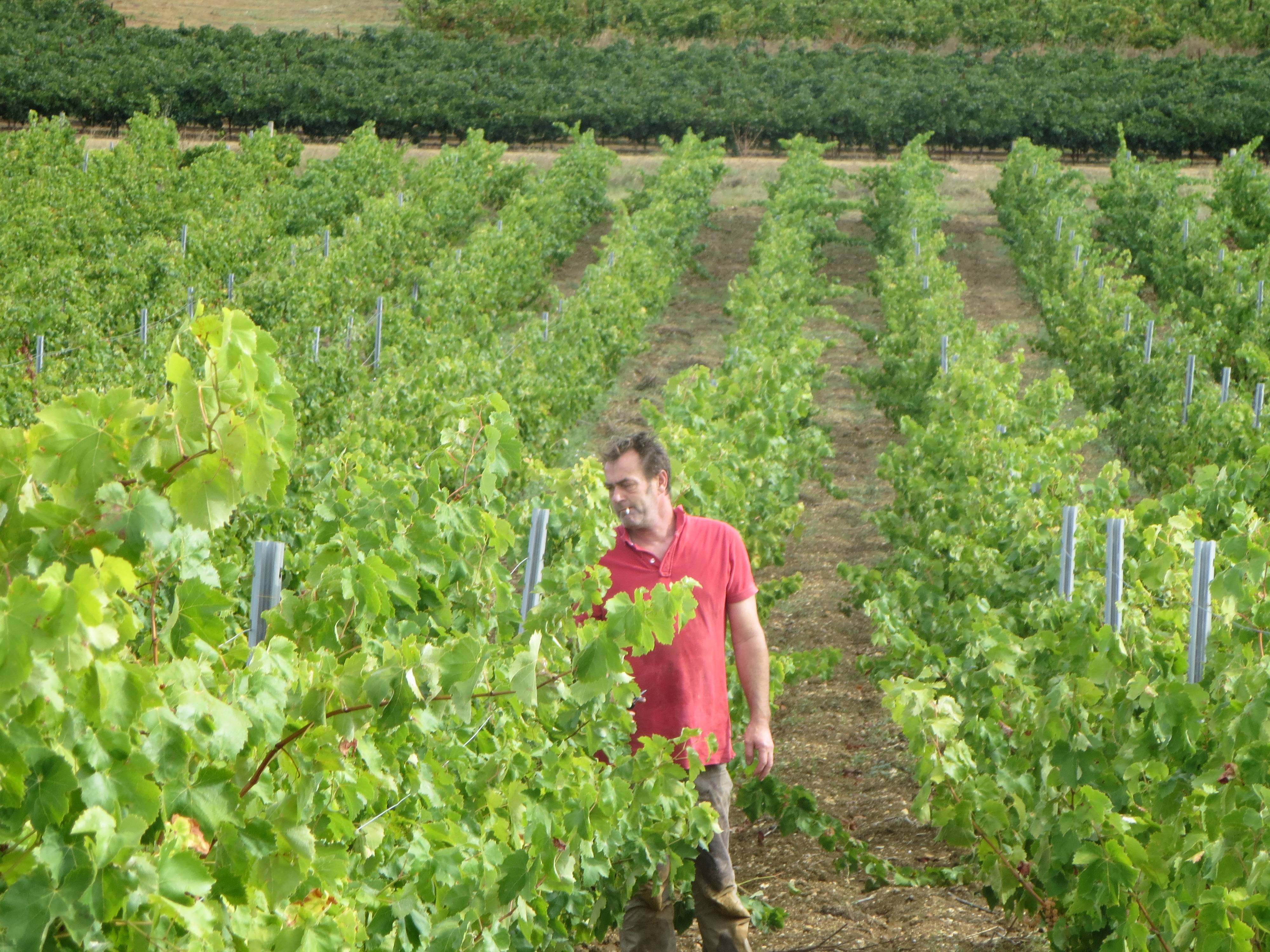
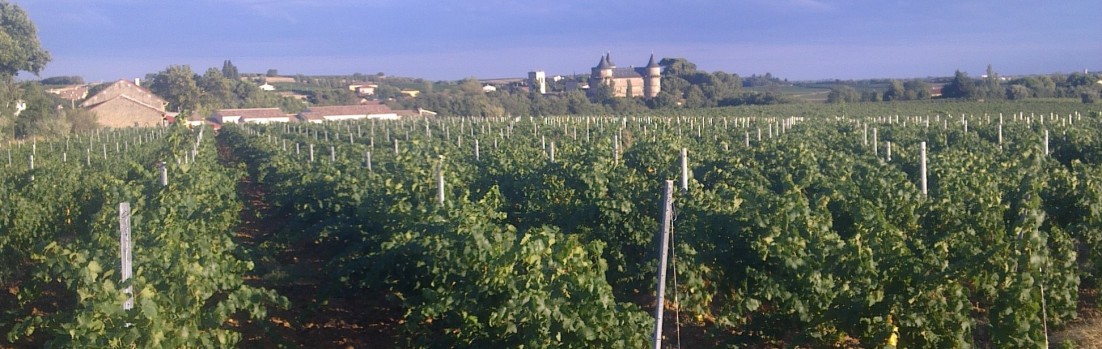
The morning dawned over Peilhan and the vineyard which we planted in March 2015. Rows of Terret Blanc and Noir, Riveyrenc Gris and Noir, Piquepoul Noir and Morastel produced grapes this year. They cannot be used in major cuvées sold to the public as they are too youthful. However, Jeff decided to pick them to make something for himself out of interest. So, on a bright, warm autumnal morning we gathered, picked, chatted and laughed.
Terret Blanc
Piquepoul Gris
Riveyrenc Gris
Piquepoul Noir
Morastel
Meagre Terret Noir
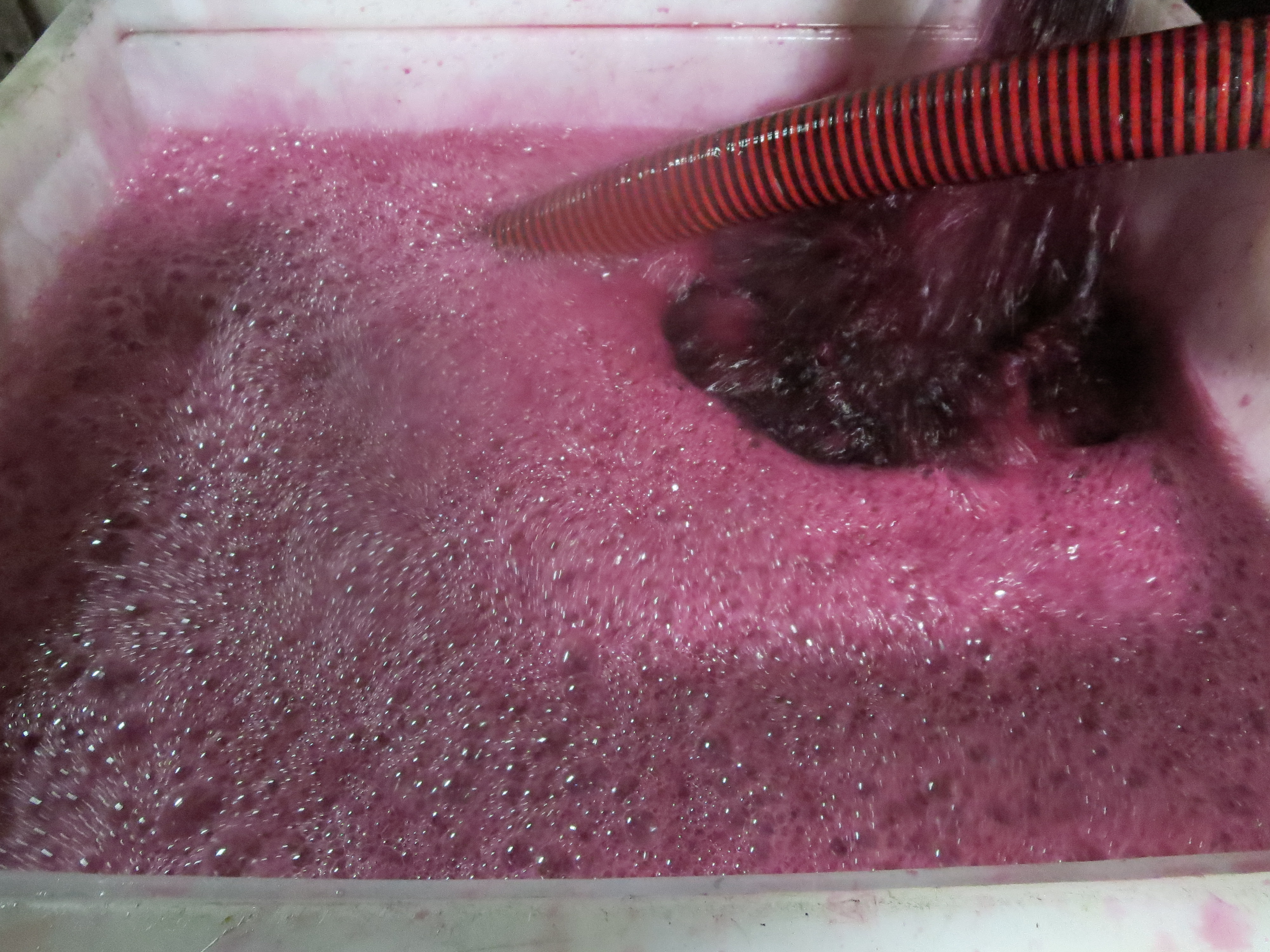
Interesting to see how some varieties produce more than others already, more precocious perhaps, the Terret Noir being especially shy. Altogether we picked around six cases only but there was a real mix of colour and some nice looking fruit which went into a small cuve in whole bunches.
Howard
James and Julien
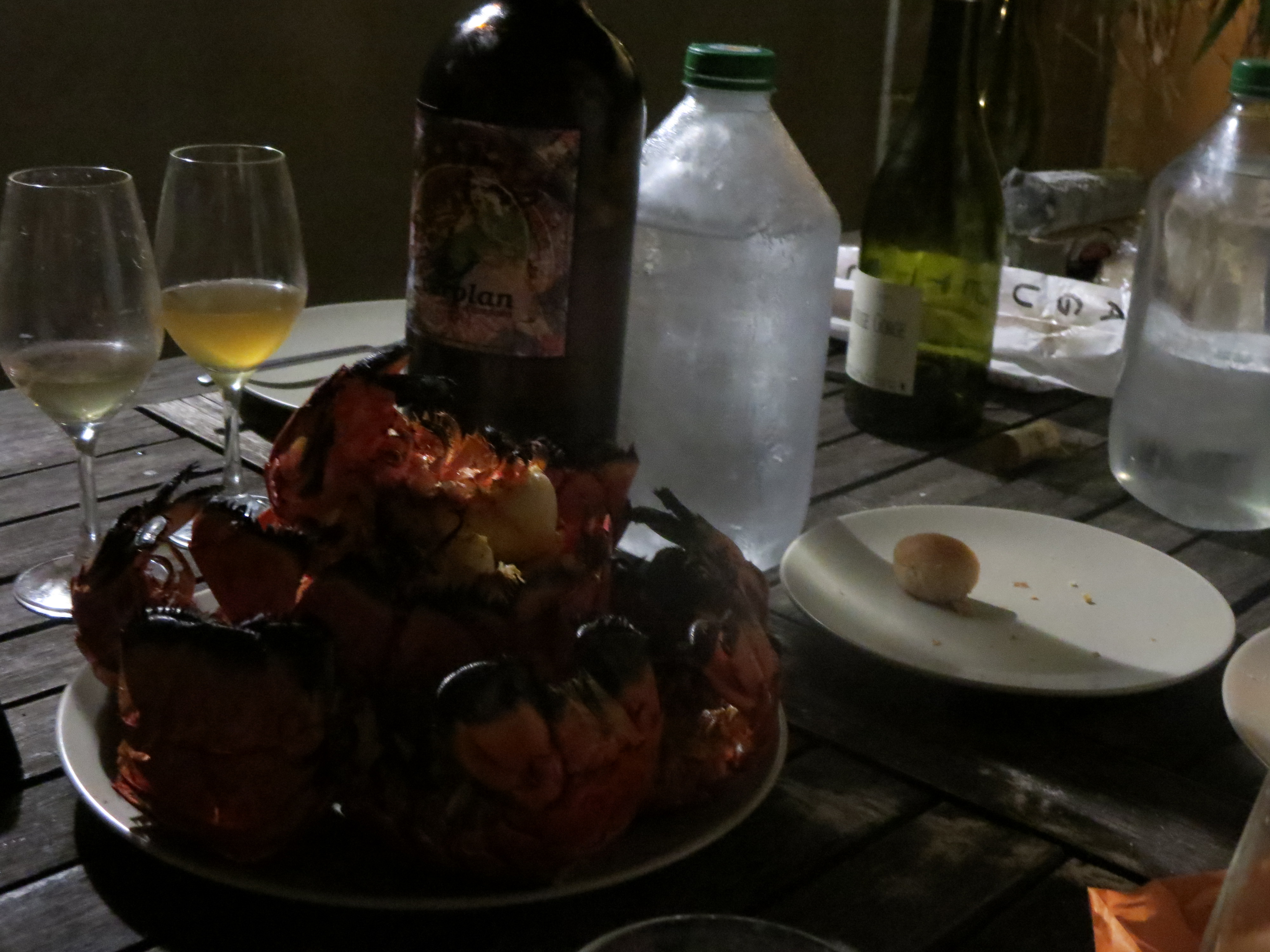
Later that day we gathered again, this time in the main cellar along with Thierry Toulouse, Jeff’s oenologue. We tasted through the whole range of 2016 wines in cuve before heading to a local restaurant for a meal. The results of the tasting were fascinating. Clearly, they are in a stage of transition, fermentations still progressing. Nonetheless the wines were already showing their character. I won’t go into too much detail here, though I did take notes to help me record how the wines change in coming months.
Me, Thierry and Priscilla
Priscilla, Morgane, Jeff and Julien
l-r, Morgane, Jeff, Julien, Thierry, Michel, me, James, Howard
In summary though I was amazed. I have said many times on here how difficult this year has been. A very warm winter, drought, mildew, delayed summer being just some of the problems. Yet here we tasted some lovely fresh fruit, lively acidity and other promising signs. I would mention the Carignan Blanc, lovely Syrah and Grenache from La Garrigue, juicy Mourvèdre and in particular the wonderful Carignan Noir of Flambadou. All those puzzles which Jeff had to hold in his head about harvesting dates, moving wines, possible assemblages etc, well those puzzles were solved in the glass. I had expected some disappointments but somehow Jeff has conjured some potentially top quality wines.
2003 Roberta
At the end of the current wines Jeff also shared a 2003 bottle of white wine based on Grenache Blanc, Noir and Gris, called Roberta (it’s a long story!). This was one of three cuvées which were the first that Jeff made sans sulfites. Yet it was complex; fresh, fruity, nutty. A wine which made my heart sing, proof that SO2 is not required for ageing wines as we are often told. Perhaps in 13 years time we shall be tasting the 2016 wines and marveling at them too.
A fitting way to close the vendanges period, a team rightly proud of what it had achieved.
“When all the parts of the puzzle start to look like they fit
Then I must remember there’ll be days like this”
Wednesday (September 21st) was officially the last day of summer and, appropriately, the last day of picking at Mas Coutelou. It was, as in 2015, the Cabernet Sauvignon of Segrairals which was the last major parcel gathered in. Lovely, clean bunches of small, healthy berries, classic Cabernet and virtually nothing to sort in the vineyard or in the cellar.
Cabernet Sauvignon
The day before had seen the start of the Cabernet in the afternoon following a morning of picking Mourvèdre, also from Segrairals. As I hadn’t ventured into the vineyard much in 2016 I took the opportunity to do so that morning. Our friend Jill had expressed a wish to do some grape picking and Jeff kindly agreed so I accompanied her (so at least there was one less experienced picker than me!). I really enjoyed being out in the fresh air but it was also good to get a grip on how the vineyard topography can have such an impact upon the grapes.
Jill in action
Sticky hands, lovely Mourvedre
Mourvedre juice with more Mourvedre on the table
The Mourvèdre grows on an easterly slope with the rows running down the slope. The vines at the bottom of the slope gave lower quality bunches than those at the top, indeed we stopped picking the last few vines at the bottom of each row. The reason was that when it does rain the water runs down the slope taking nutrients etc. The grapes there tend to ripen much sooner with more humidity in the ground, it was a clear example of terroir. Rest assured that only good grapes went into cuve, much was left behind in the vineyard and at the side of the sorting table.
The slope in the Mourvedre vines, rejected fruit on the ground
On Monday the lovely Carignan Noir of Rec D’Oulette (Chemin De Pailhès) was added to the tanks. The quality was high and signs are promising for yet another good vintage of Flambadou, arguably the domaine’s best wine in recent years.
Carignan bunches
A Carignan leaf
Since the last article the other major harvest was some bountiful, good quality Grenache from La Garrigue on Saturday 17th.
Gorgeous Grenache
There remain a few rows here and there with some grapes left and they may or may not be picked in coming days and weeks. However, the Cabernet marked the last of the major picking. Time to say farewell to the Moroccan pickers, part of the Coutelou crew for the last month.
Last cases arrive
Last case
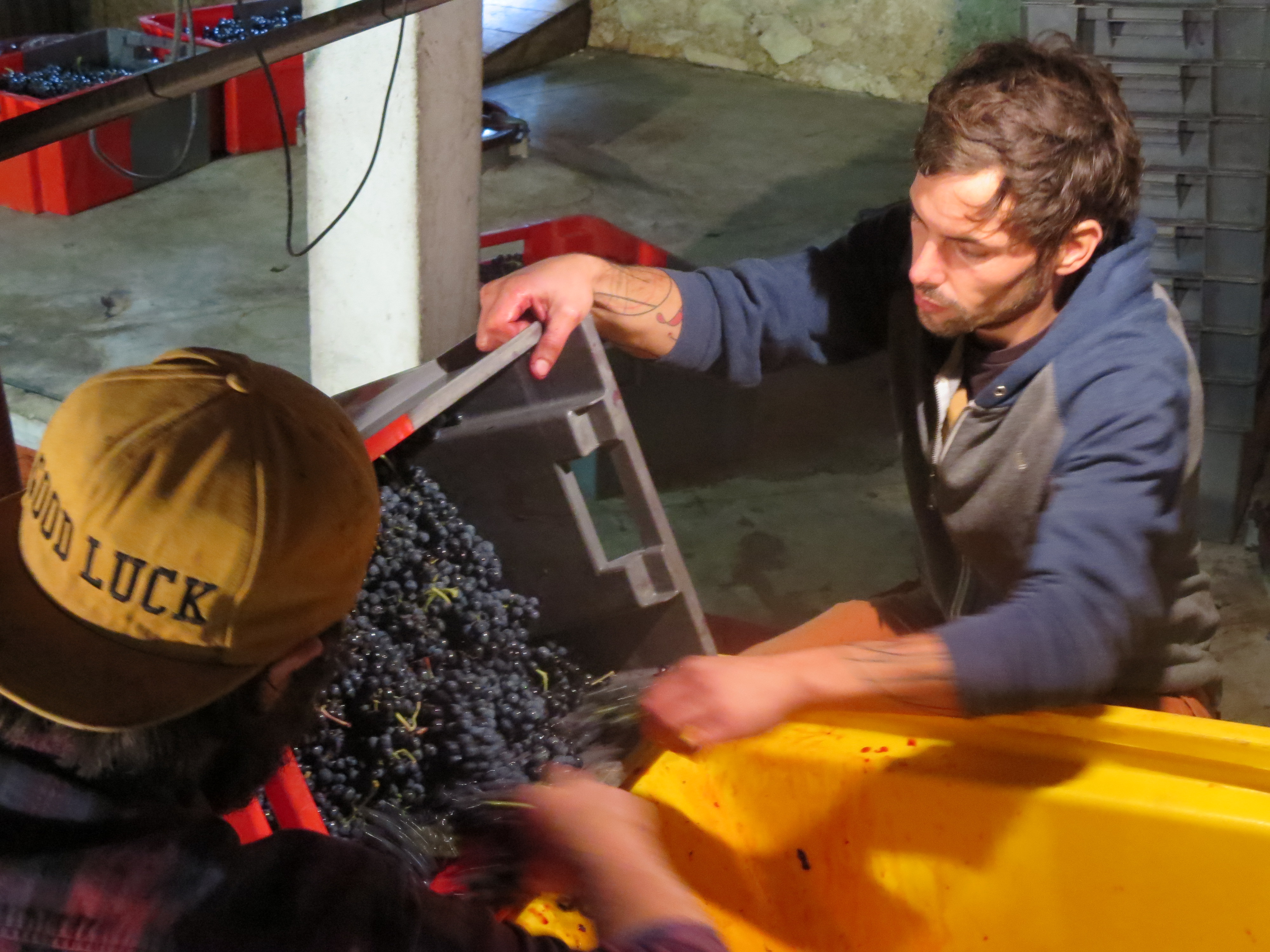
Sorting the last case, (clockwise from left) Vincent, James, Morgane, Julien, Charles, Priscilla
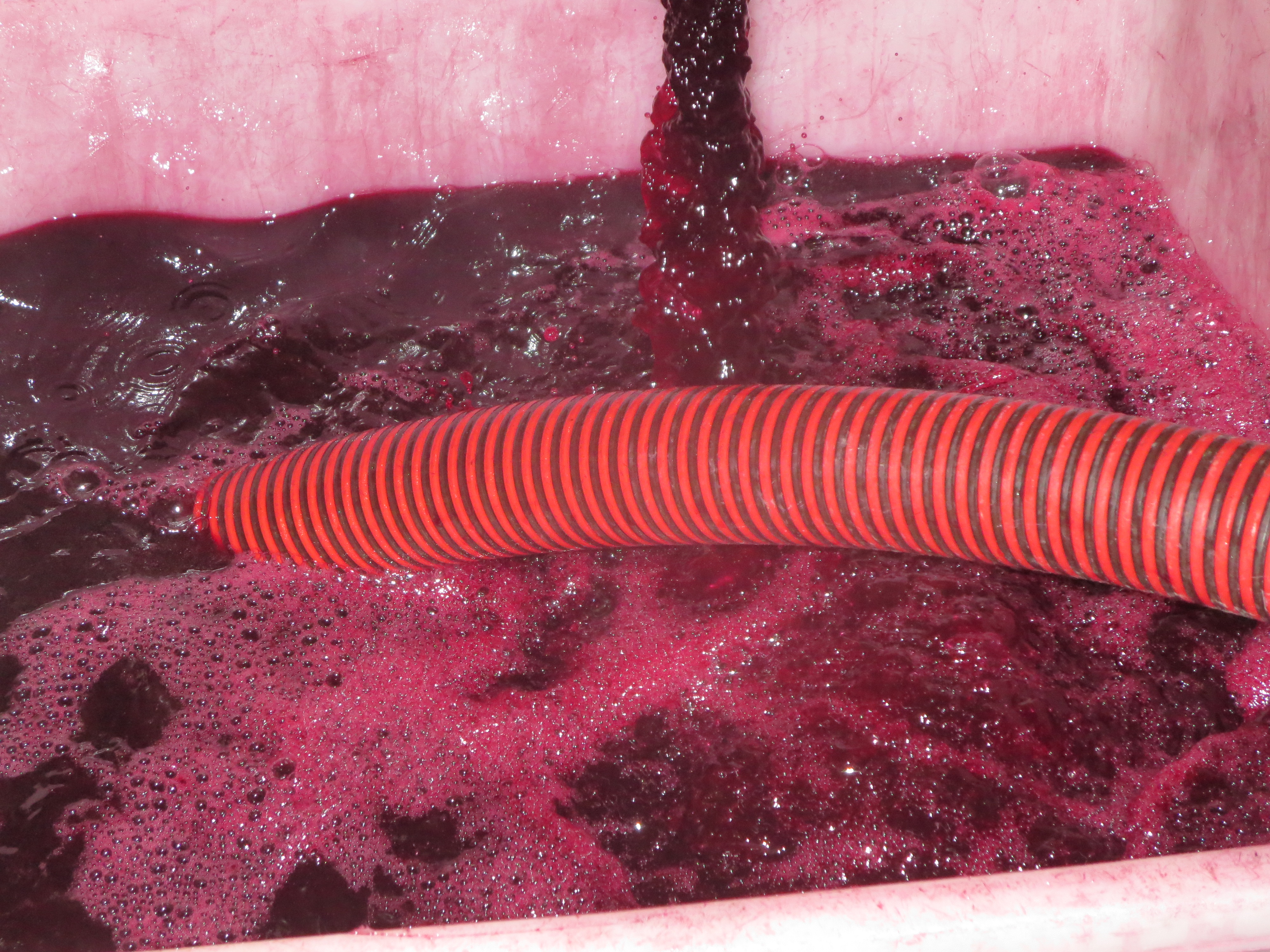
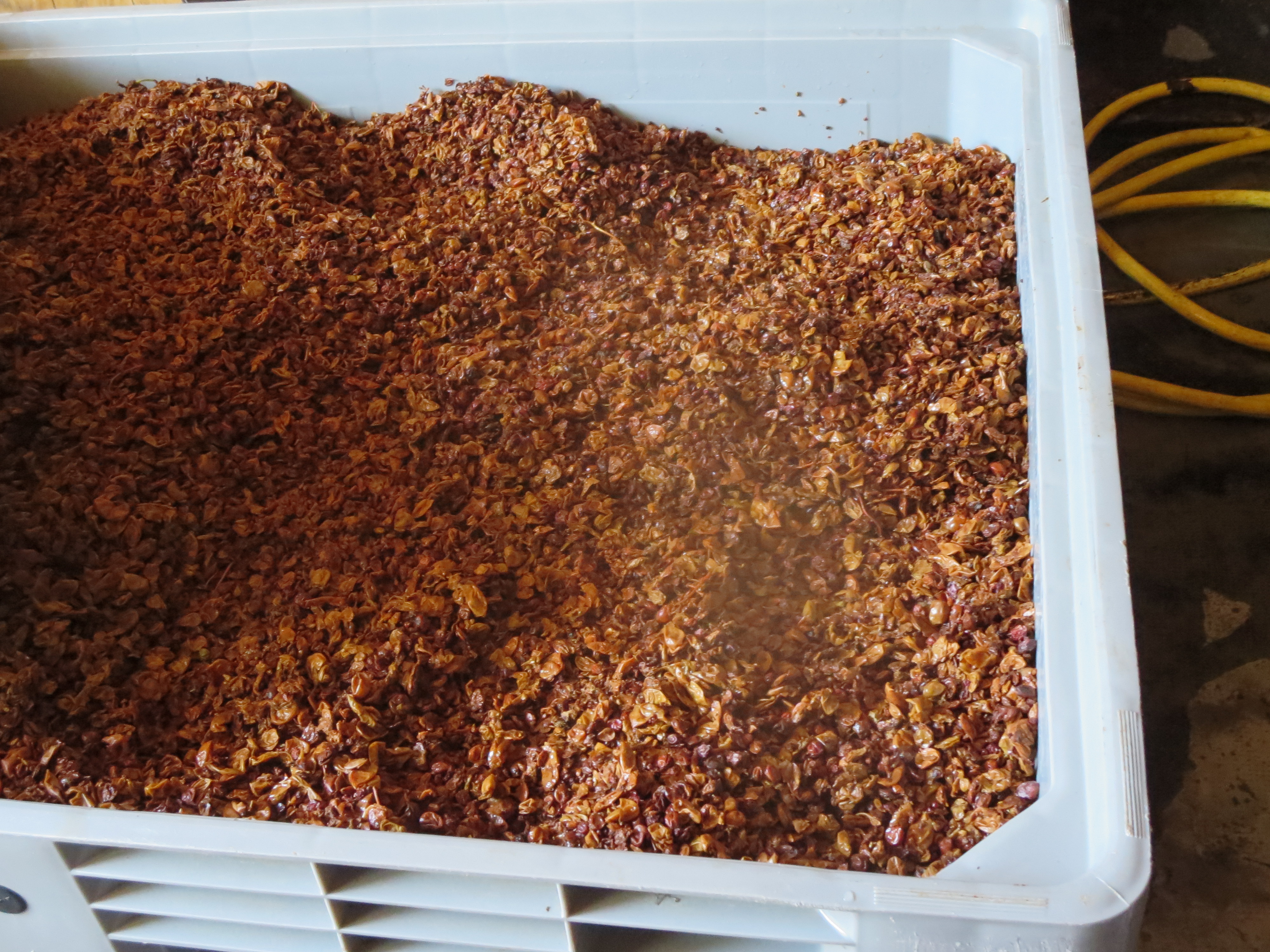
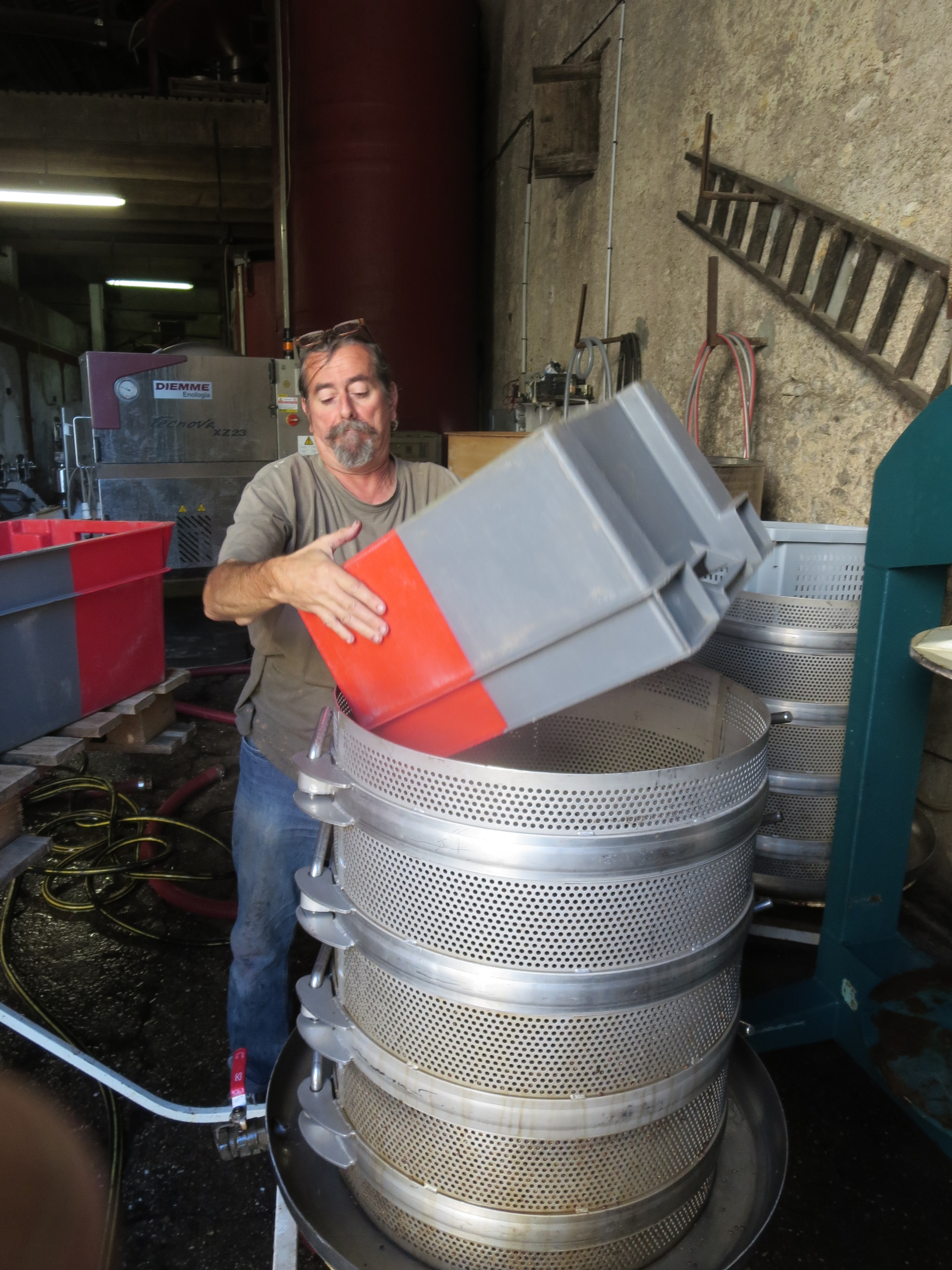
Stage 1 is therefore over. Stage 2 the cellar work of remontages and pigeage continues apace as most cuves are now full and need looking after. Stage 3, pressing, is also in full swing as grapes from previous weeks have now gone through fermentation on skins and need to be pressed to take the juice away. I shall be writing about this more in the next article.
So, we head into autumn, the vines are fatigued after a very stressful year. The leaves are already changing colour and the Languedoc will be an even more beautiful place in coming weeks. The picking may be over but the vendanges are not.
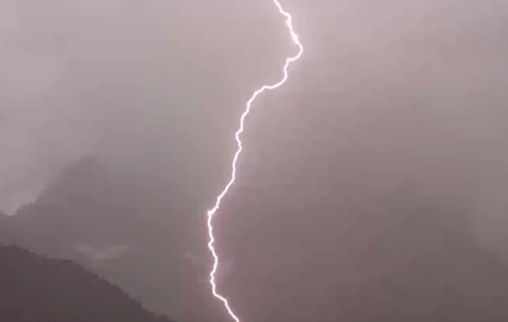
La foudre s’est abattue sur le cirque de Gavarnie, dans les Hautes-Pyrénées, dans la nuit du 13 au 14 septembre. (Photo : capture d’écran webcam Gîte Oxygène Gavarnie)
Tuesday September 13th, the return of picking, with a little urgency in light of the weather forecast for heavy storms that night. The objective was to collect the Syrah from La Garrigue, the grapes which go into La Vigne Haute, my personal «cuvée mythique» of Mas Coutelou.
The grapes started a little messy requiring some careful triage both in the vineyard and cellar.
Syrah moving fast, the juice is in the glass
Tri
However, the quality improved after the first few cases which had been picked in a lower part of the vineyard. Certainly by the end of the day we had sorted a good quantity and quality of fruit, my shirt can certainly testify to their juiciness.
That night came the predicted thunderstorm, violent though not as long lasting as perhaps expected. I saw that some parts of the region saw over 200mm of rain, fortunately Puimisson did not reach those levels. However, there was enough to stop picking for the next few days. As I said last time wet grapes are not ideal. In addition the soft ground in the vineyards would be churned up by feet and wheels.
James working hard as usual
In a way the storm came at a good time on a personal level. I developed a mild case of bronchitis out of the blue on Tuesday which would have prevented me from working on Wednesday and Thursday. So, I have left cellar work to the experts whilst I recharge my batteries for Saturday when we may get to the Grenache in La Garrigue which looks bountiful and ripe.
Grenache in La Garrigue Sept. 10th
Meanwhile analysis of the grapes continues. There was the result of Ecocert’s evaluation showing that Mas Coutelou successfully retains its organic certification and also their analysis proving that no sulphites were or are added in the wines. And then there is the daily analysis from the oenologue which shows information such as alcohol levels, total acidity, pH levels, residual sugar etc. These help Jeff to think about how to look after the wines and which ones might blend together successfully in future.
The weather is now set fair until we finish; Grenache, Carignan, Mourvèdre, Cabernet Sauvignon should arrive in good conditions with a light north wind and under blue skies.
The weather has had its say and threatens to shout out loud in the next few days. Should we expect anything different in this most problematic of years? Saturday (Sept. 10th) was supposed to be a day for picking but a heavy shower fell in the morning and that was enough to stop the day in the vineyards. Grapes covered in rainwater would provide diluted juice, no good for quality producers though that did not stop some in the area.
Some picked on Saturday
Charles
Remontage
Priscilla
James and Charles
However, there was still work to do in the cellar, remontages and pressing. The previous day some of the team had been clearing space in the solera cave so that the Muscat and Grenache picked from Rome vineyard would have room.
Michel moves my Grenaches wine
Charles bottles some solera wine
Sunday was a day off though more remontage and cellar work was done. There is no rest. Today (Monday 12th) was a normal day for many vignerons but at Mas Coutelou a big part of the team are the Moroccan pickers and it is Eid Mubarak. Therefore Jeff decided that they deserved the opportunity to celebrate their holy day and so no major picking. An act of respect which deserves mention.
Remontage
Sadly, that act seems unlikely to be rewarded by the weather. There is a major threat of a large storm on Wednesday which would halt work again and require a few days for the grapes to recover before they could be harvested. More careful triage will also be required. Let us hope that the storm weakens or diverts.
Carignan Noir Saturday
Meanwhile Carole, James, Vincent and Charles were out picking Carignan Blanc this morning in Peilhan and the Grenache from Sainte Suzanne was pressed. Work continues despite everything this year throws at us. Tomorrow will see the harvest of Syrah from La Garrigue, the grapes which usually make La Vigne Haute.
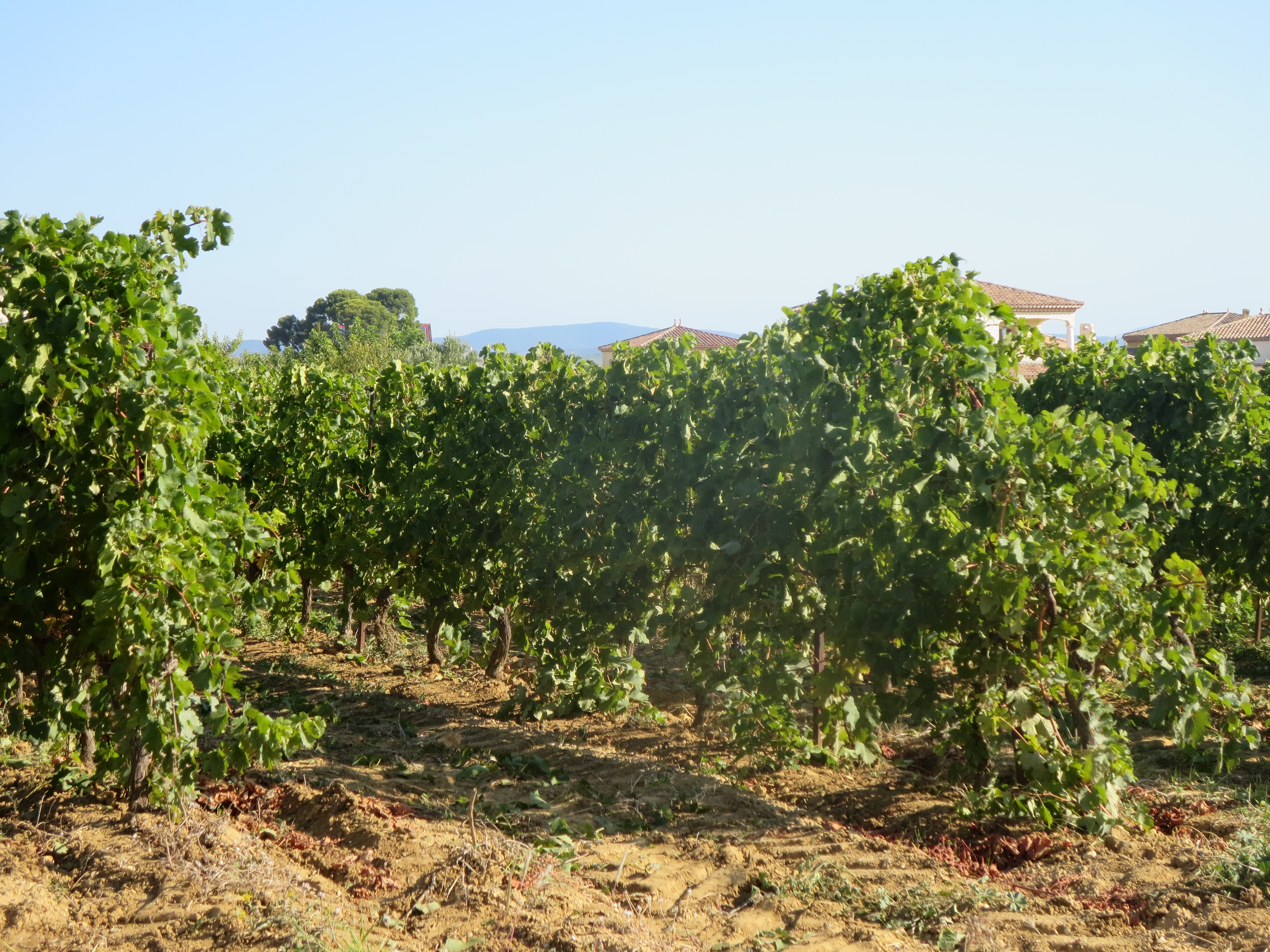
Back in the Languedoc and, the first morning, I went over to see the vines. Jeff had sent me a message that they were in real stress because of the lack of rainfall. Ironically we had driven south through France under leaden skies and through fairly steady rain, until we reached the Languedoc where the skies turned blue and the temperatures rose. It has been very hot here throughout the three weeks I was away and, following a very dry autumn last year and not much rainfall in 2016, the vines are definitely in need of a good drink.
Stressed vines
Clear signs of drought
I have written many times this year about the vine stress due to very unusual seasons, the warm winter, cool spring. Sadly, summer has also added to their difficulties. Sure enough the vines look dry. The apex of the vine is often a good way to tell their health and they look tired and bare, almost burned.
Photographié de Rec D’Oulette
To safeguard the health of the young, newly planted or grafted vines Jeff and Julien were busy watering them in the Flower Power vineyard, Font D’Oulette. This is allowed as they are not grape producing this year. Straw was then placed around them to keep the moisture inside. Julien showed his dedication by doing more of this work at night time.
Even Icare was feeling the heat despite his haircut, he kept hold of the stick when it was thrown as if to say I’m not chasing after this anymore.
c/o agro.basf.fr
c/o gourgazaud.fr
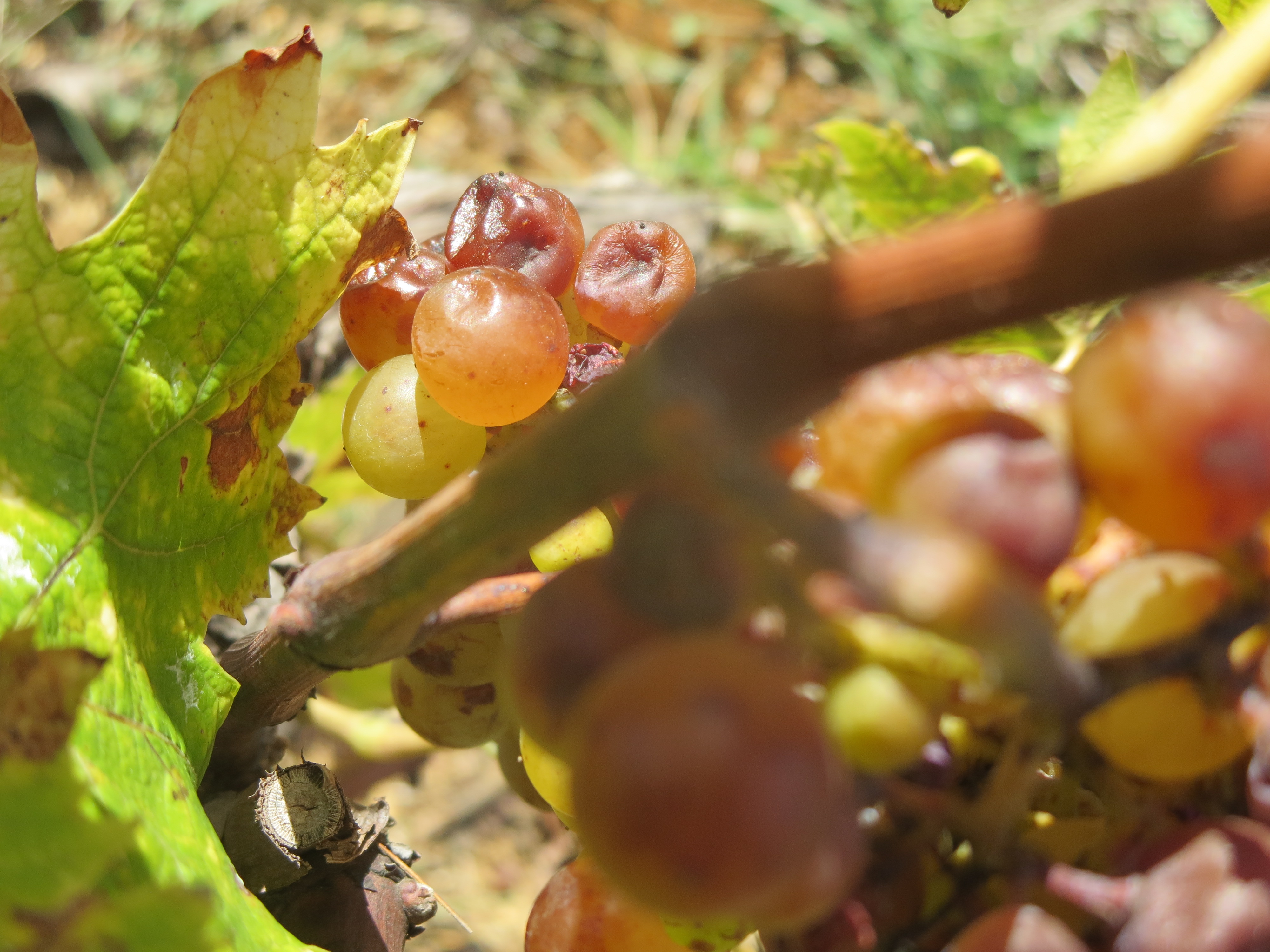
Jeff also informed me of yet another problem, ver de la grappe. This is the larvae of a moth which feeds on the grape. I took a photo of an affected grape last year.
There are chemical treatments available to prevent and to treat the problem, no use to an organic producer of course and these chemicals are especially harmful, you can’t use the grapes until 21 days after spraying.
So, for Jeff the treatment involved spraying clay onto the vines to try to make the grape skins less attractive to the moth so it will lay the eggs elsewhere. This was only the second time in twenty years that he had sprayed against ver de la grappe. Also in the spray was fern and seaweed, the fern is a natural insecticide and the seaweed gives a health boost to the vine. However, having sprayed this morning (July 31st) Jeff was hoping that the much needed rain would hold off for a couple of days to allow the spray to work.
You can guess what happened next. A storm, heavy rain, much of the spray washed off the grapes. It is that sort of year, nothing seems to be going right. The rain which did fall was minimal and only undid the good work. The worst of all worlds. To spray or not to spray? To rain or not to rain? Caught between a rock and a hard place.
Colour and life remains
As I made my way around the vineyards there were plenty of good grapes to see, véraison (the changing colour of red grapes) has begun especially amongst the Syrah and Grenache of La Garrigue.
And I spent some time in Rome, a very parched looking vineyard but the ideal place to reflect upon its creator, Jean-Claude. There are some things to be thankful for even in this difficult year.
On Peut Pas Vraiment Dire Que * is a new cuvée from Mas Coutelou in 2015. So how is a new cuvée born? This is its story.
My favourite Jeff wine over the years has been La Vigne Haute, a pure Syrah coming from the vineyard La Garrigue. This vineyard has a small ridge running west to east meaning that part of it faces north and part faces south. Jeff planted Grenache on the southward side as Grenache is a Mediterranean grape and likes the heat. On the north side is Syrah, a grape from the Rhone, which likes heat but not too much if it is to reveal its best.
La Vigne Haute is a wine of subtle Syrah. Perfumed with red fruits and tasting of silky smooth red and black fruits it carries elegance and restraint. However, in 2015 Jeff took the decision at the last minute not to make La Vigne Haute but rather to change the whole vinification of the grapes which were harvested. Here is the story in his own words, as told to Paco Mora a caviste in Ivry sur Seine. Jeff kindly gave me permission to reproduce it here.
“To thank you [for a generous comment on Facebook], I’d like to take a few minutes to tell you the story of “On Peut Pas Vraiment Dire Que.” A story which confirms that to make wine, we must first know, love and pamper both vineyards and grapes.
It comes from the parcel “La Garrigue”, my only parcel on villafranchien soil, which I planted: On the north side: Syrah (planted north / south) to be always caressed but never assaulted by the sun. On the south side: Grenache as it is not afraid of the heat.
The buffer zones in Garrigue
This decision made me lose 10 vine stocks per row of vines (300 in total) to leave a buffer zone between the two varieties but it was a decision which seemed most suited to making the Syrah I dreamed of. It normally makes “La Vigne Haute” but also produced “PAF La Syrah” in 2012. This plot has a vein of water running underneath which the presence of horsetail fern confirms. This year, even during the heat wave, it never suffered and continued to push …. It was the most beautiful vineyard at harvest time.
The day of the harvest, we had planned to make Vigne Haute by implementing the classic method; destemmed grapes, putting it into tank, maceration of 2 to 3 weeks with little pumping, to encourage infusion and not to seek extraction.
The vineyard was beautiful, beautiful grapes, everyone at the winery was excited that this would be a great vintage. The first grapes arrived, and as son as I saw them, I thought I had to change everything … .. The fact that they had not suffered from the July heat wave but instead had profited from it (because of the sun caressing that north facing slope, the heat effect lessened because of that vein of water). It had produced berries more swollen than usual … and I could really see that when they arrived in the cellar.
After an hour, I said to myself “if you do as usual, you will not get to do what you want.” The fact that the liquid / solid ratio is different, if I had made a classic wine, I would have to extend the maceration time to extract enough material relative to the juice and in that case, there is also the risk of extracting good but also the less good.
So within 10 minutes I decided to change everything.
We continued by putting whole bunches into tank with the idea of making a short vinification. On that day, everyone was down in the mouth in the cellar because I had told them that there would be no Vigne Haute …. But I trusted my grapes and they told me that they would repay my faith in them .
We just left the grapes in vats for 7 days without any intervention and then pressed. So there was almost no exchange between the skins and juice in tank. The tannins and colour were extracted because of pressing the skins, which were ripe, and released them after their short stay in the vat.
In the end, it’s just the juice of the vine and the terroir that you have in the bottle …. Nothing technical, just grapes that were cared for and nursed from their birth to their maturity ….”
So that is the story of On Peut Pas Vraiment Dire Que. I was one of those who was ‘down in the mouth’ on that day when Jeff changed everything. Yet it was, of course, the right thing to do. The wine is very like the Paf of 2012, fruity but with a lovely vein of soft tannin and bite running through it. It is elegant above all, a Syrah worthy of the great Rhone appelations but with Languedoc warmth and fruit.
And OPPVDQ is a tribute to the talent, intuition and knowledge of Jeff Coutelou. He knows his vines, his grapes and how to help them to express themselves to maximum advantage. I can’t really tell you how he does it… it’s natural.
* A phrase which can be translated as ‘we can’t really say’.
This was the final big week of harvest and it centred around Cabernet Sauvignon. There is a big parcel (around 1.5ha) of the grape in Segrairals and it is not a variety which really excites Jeff for a Mas Coutelou wine. It has done especially well in 2015 though the small berries have swollen with the rains and the alcohol levels had therefore fallen a little to around 14%. They taste sweet and juicy and came in fantastic bunches, not the same size as the Cinsault and Mourvèdre from this vineyard, but small and healthy nonetheless.
Cabernet Sauvignon on the vine in Segrairals
Cabernet Sauvignon
Partof it was picked on Monday 21st September which will be used by Jeff, purpose as yet unknown though Cameron may be flexing his winemaking muscles with some. The other major work on Monday was to use the Muscat d’Alexandrie grapes from Peilhan which were also in good health.
Muscat d’Alexandrie
They have very thick skins so the pressing took longer than usual to extract the juice. They were mixed with some Muscat À Petits Grains grapes. I will come back to these grapes and the juice later in this article.
Michel loads the Muscat into the press
Muscat juice after pressing
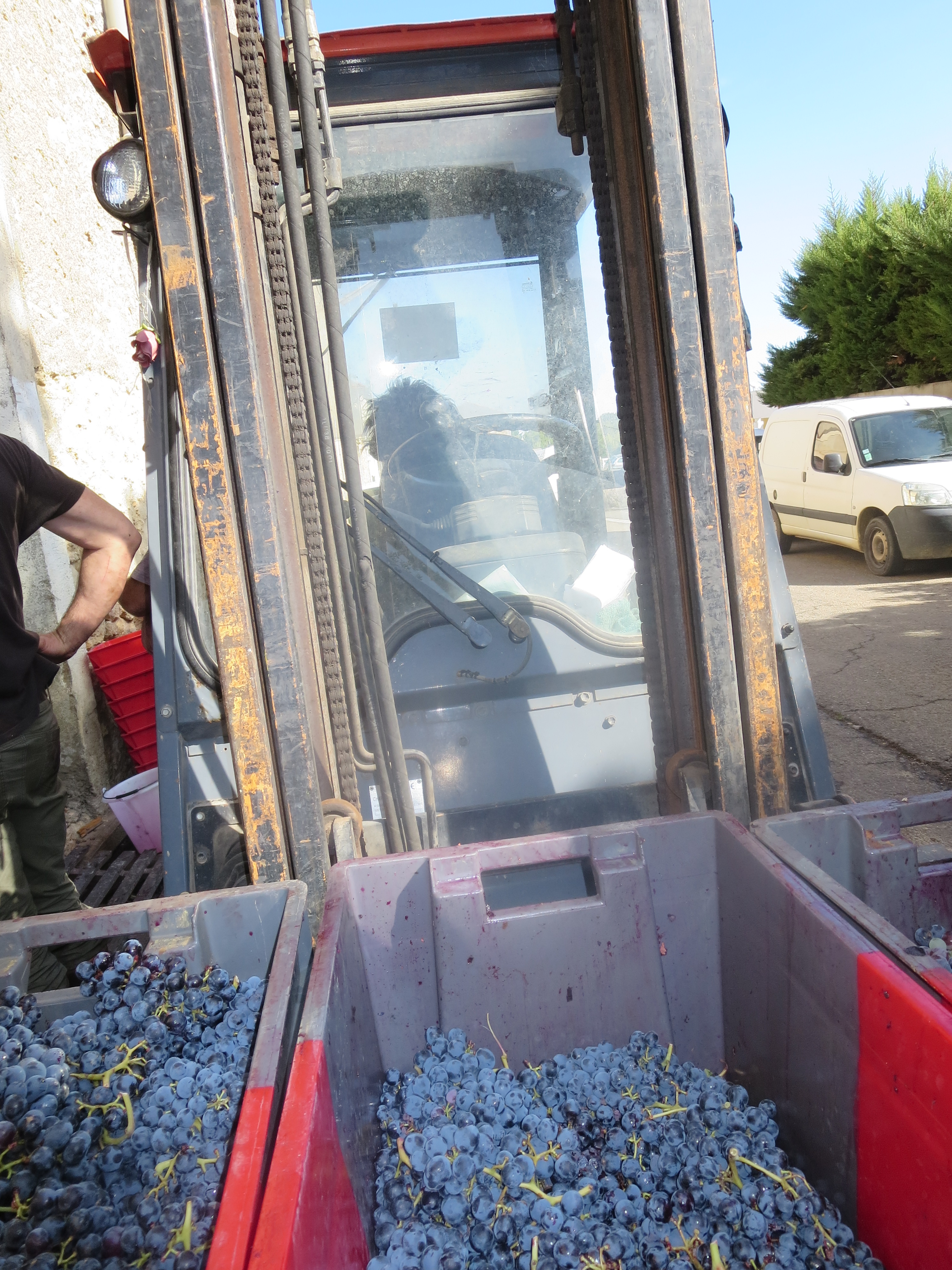
Tuesday 22ndwas the big day for the Cabernet Sauvignon. I have explained before that Jeff sells most of these grapes to London Cru, an English winery as the name suggests. London Cru buy grapes from around Europe, eg Chardonnay from Limoux, Albarino from Rias Baxas, Grenache from Spain. This is the third vintage of the project and the grapes were ready at last. In 2014 they had been ready on September 4th, my first day at Mas Coutelou after our move to the Languedoc. This year the rain had delayed them so Gavin and Alex flew into Béziers on Monday evening. They had been in Italy on Saturday and only just got back to London before flying here. The refrigerated wagon was in situ as I arrived on Tuesday morning, waiting to be loaded with the grapes.
Confidence was high amongst the London Cru team after some very good reviews including one last week by Dr. Jamie Goode who gave the top mark (94/100) to the Cabernet Sauvignon using Jeff’s grapes. The fruit for 2015 should bring more high marks and good wine. We tasted the 2014 over lunch and it was very good, clear, direct fruit with ripe tannins which mean that the wine will be at its best in 2 to 3 years.
Alex and Gavin loading the grapes
Gavin, Alex and Jeff directed and led the picking carried out by the Moroccan team as usual but also by Cameron and myself together with two excellent new additions to the team in Fabrice and Romain. Fabrice puts on shows (spectacles) around France whilst Romain is an artist. They have picked here before and were good fun and hard working, more new friends. (Fabrice on the left, Romain to the right.
After picking the 6 tonnes or so of grapes they were driven straight off to London under refrigerated conditions to keep them fresh. Gavin and Alex flew back to London that evening ready to receive them at their base. London Cab, fine fare.
Fine bunch of Cab I picked
Lunch was excellent with the London Cru wine and a magnum of Flambadou 2014 which was excellent, still in its infancy but already drinking well. Afterwards Cameron and I did some pigeage of the Carignan grapes amongst others. It was also Cameron’s birthday, hopefully it was one he will remember with affection.
Birthday boy Cameron looking for his present
Pigeage of the Carignan
Wednesday 23rd was a day for working the cellar. Jeff was keen to aerate the Syrah a little and to start to maximise the cuves by assembling some of the tanks and filling the new ones. Thursday saw similar work whilst Jeff also did some admin work.
On Friday 25th I returned to the cellar. Cameron was enjoying a well earned break and so I joined Jeff and Michel. They were continuing to fill the tanks, aerate some wine and then we moved to the muscats from Monday.
Aerating some Syrah
Muscats macerating with a little older Muscat wine
The Muscats are destined for the solera system and after a few days maceration they were showing lovely aromas, already slightly sherry-like due to being mixed with some older wine. The juice went straight into barrel whilst the marc was pressed again to extract more juice and flavour. Tasted straight from the press these included lovely apricot, plum fruits along with the slight oxidised note which adds complexity. Truly delicious, I’m afraid my description fails to do it justice.The barrel will allow the wine to age and gain contact with oxygen and the wine will develop into a luscious sweet wine. As stated previously I shall write more about the solera in the near future.
Michel removes the skins for pressing
Michel then loads the press
Gateau de Muscat
There are one or two small parcels still to pick but the main harvest is now over. It began back on August 21st so lasted just over a month. I shall be reflecting upon it and the lessons I have learned from it in the next article. Meanwhile I look forward to picking the Muscat from Rome and went to the vineyard on Friday lunchtime to take some photos. I was met by a family of partridges, butterflies and birdsong – Rome really is a magical place. In La Garrigue the vines are starting to show their autumnal colours, their work is done for 2015. The vines have given everything to their fruit in the last month and the leaves which remain after harvest are looking tired after a long, hot summer. All, or nearly all, is safely gathered in.
La Garrigue, Friday. The grass across the centre marks the ridge with Grenache near side and Syrah far side.
Grenache leaves showing that autumn approaches, harvest is over
Wednesday September 9th saw further full on action. The early morning saw the only machine harvesting of Mas Coutelou grapes. This took place in La Colombié the parcel of Merlot vines. These are grapes that don’t especially interest Jeff in terms of making a domaine bottled cuvée but the quality of the fruit is good and they are used to make restaurant house wines and bag in box wines.
The Merlot vines after picking
After that attention turned to La Garrigue, the conical landscaped vineyard to the south of Puimisson. Much of the Syrah had already been picked the previous day and the remaining bunches were harvested. These were to be used for carbonic maceration again and so it was back to the top of the main cement tanks to work, not the easiest place.
Thomas working with Cameron sorting Syrah
Tuesday had seen the arrival of two new faces to support the team as I described in Vendanges Diaries 4. Thomas was working with Cameron in sorting the Syrah whilst Karim assisted Michel in ferrying the cagettes to and fro. The team usually rotates these jobs so that people get the opportunity to try all aspects of vendanges as well as the chance to stretch your back and legs!
Karim and Michel seem happy
Then it was time to bring in the Grenache of La Garrigue. Grenache is a cépage of Spanish origins and loves the heat so it is planted on this parcel on a slope to the south to maximise the sunshine exposure. The result here was some beautiful bunches of very healthy fruit, easy to sort and giving aromas of spice and dark fruits even before it turns into wine.
Gorgeous Grenache in La Garrigue
Grenache grapes in the sunshine
Cellar work continued with Cameron carrying out analyses of the fermenting wines. It is worth noting that the natural yeasts of the grapes have been very quick to start fermentation in tank. After a couple of hours of crouching over the tanks in the morning I was happy to be stood at the égrappoir and then to help Cameron with remontages.
Cameron tying himself in knots
Me doing a remontage of Flower Power
Cameron and I doing a manual pigeage of the macerating white cuvée
And of course….
Thursday 11th September continued the harvesting of the Garrigue Grenache and then Cinsault from the opposite end of the village, to the north. More good quality fruit and more hard work from the whole team.
More gorgeous Grenache
The pressure was on however, the weather forecast was unkind with the promise of storms possibly on Friday, definitely by Saturday. Therefore the more grapes that could be harvested before the rain the better. It was full speed ahead though no let up in terms of sorting the grapes and ensuring the quality of the future wines. We were assisted by the arrival of Céline and Delphine the nurses from Bordeaux who I mentioned in ‘Centiment de Grenaches’.
Cinsault being pressed
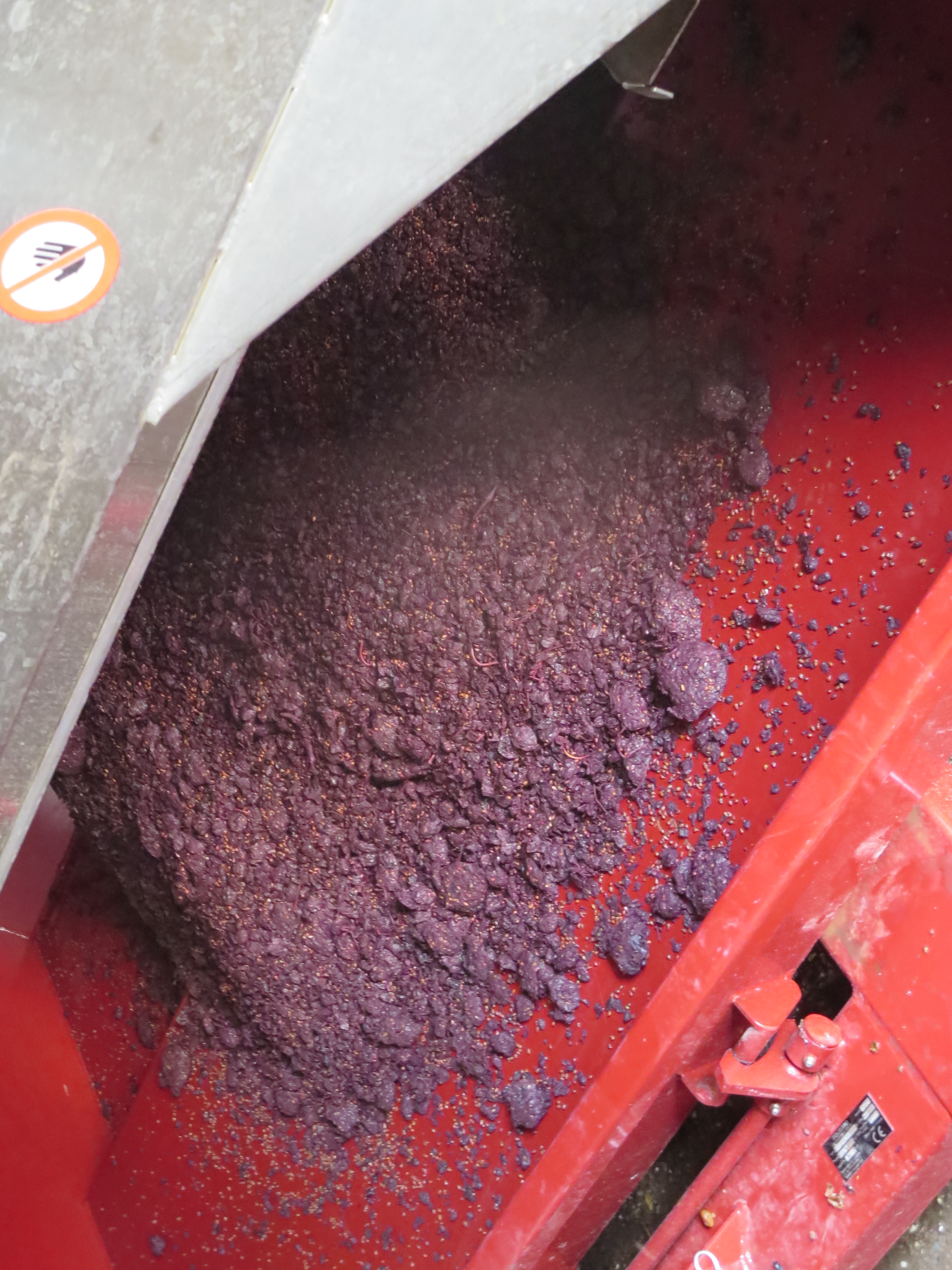
Must after pressing
There was a famous advert in the UK for tinned fish by a company called John West which said, “It’s the fish John West reject that makes John West the best”. Well that works for Mas Coutelou too. The Moroccan pickers by now were much more attuned to the strict quality demands of Jeff and were sorting the fruit, leaving any substandard grapes on the ground. Then the sorting in the cellar to check anything which did manage to get through that first tri. It’s the grapes Jeff Coutelou rejects that make Mas Coutelou the best.
Rejected Grenache
Friday September 11thwas the day of Centiment de Grenaches, the special cuvée Jeff suggested I make to celebrate the 100th blog post. Meanwhile more Grenache was being brought in for the regular cuvées, work continued apace as the clouds started to gather as predicted.
The night of Friday into Saturday brought 45mm of rain (almost 2 inches) as storms rumbled around the Languedoc. Amazingly some areas had next to nothing, Cabrières for example, whilst rain caused floods and the subsidence of the motorway a few kilometres away near Lodève. The 45mm at Puimisson meant 93mm in total since the start of the vendanges. That makes things more difficult of course as water covered grapes can’t be harvested for quality wines (though I noticed some harvesting in some other vineyards!). The ground is also muddy so picking becomes difficult and the biggest issue is the risk of disease and rot.
Work was therefore centred in the cellar with more remontages and analysis. The wines are now settling and need to be moved to take the juice off the skins and pips, to be pressed if made by carbonic maceration, to let them settle. Therefore the 12th and 13th were hard work as usual for Jeff, Cameron and Michel. Though you will see that it is Icare who is driving the team onwards.
This was the busiest week of the vendanges and required long hours of picking, sorting, pressing, remontage as well as lots and lots of carrying, lifting and often in confined spaces. In short it was hard work.
Why so busy? Well, Syrah which was the first of the red wine grapes to ripen makes up around a third of all the vines at Mas Coutelou and Grenache, the next to ripen, is also the next main cépage with up to 12% of the harvest. Together this meant that around half the 2015 harvest would be picked this week. Add in other smaller picking and the parcel of Merlot and this was definitely the crunch time.
Sunday September 6th was a day of rest for most but Cameron and Jeff were in the cellar working as usual, carrying out checks and analyses and remontages as necessary.
Monday 7th was a long day at work. It was around 8.45pm before we stopped. Syrah in Segrairals makes up around 2ha in total, though as with all land there are some prime areas whilst other vines, around the edges and in a few hollows where water gathers, are not of the same quality. In a typical year these would go towards cuvées such as Classe and 7, Rue De La Pompe but, as ever, plans are fluid.
Superb bunch of Carignan Blanc
In addition a parcel of Carignan Blanc was harvested from Peilhan vineyard. There were some wonderful grapes and they were given special treatment, carefully sorted and then pressed using the small hydraulic press. The juice ran very clear and green and then gradually took on a slightly brown colour as it developed light oxidation. This is actually good as it helps to protect the juice later in its life and prevents damaging oxidation. Moreover, the effects of the oxidation from the pressing are removed through fermentation. Around 600l were produced in total, around 750 bottles worth. This makes a very good wine, something I was to be reminded of on Tuesday night, as we shall see.
This was a long day but much good work had been done.
Tuesday 8th brought more Syrah to the cellar, this time from La Garrigue. These are the vines I have described before which face north on a slight slope to preserve the freshness and fruit flavours, good quality grapes which are often used for my favourite cuvée, La Vigne Haute, so I was even more keen to help to sort carefully and there were some lovely bunches of healthy fruit. Here’s hoping for a good vintage of LVH, as ever Jeff will make the call.
Cameron unloading some Grenache Gris
Yet again another smaller harvest was done, again from Peilhan, this time with Grenache Gris. The lovely pink, grey berries are flexible in their use and might produce, white or rosé wines or be added to red wine as you will remember from my special cuvée post.
Grenache Gris after being pressed
Meanwhile lots of analysis of the wines in tank and work to ensure that they are in good health. This even involved Jeff removing his trousers and jumping into the Flower Power tank to do some pigeage! Modesty means that I shall not share these photographs!
Cameron getting a sample for analysis
The after effects
And of course there was plenty of this… (I couldn’t resist adding the tune)
Error
This video doesn’t exist
A bonus was to come though. We had been joined by two new additions to the team. Thomas is from Toulouse originally but has been working as a sommelier in the Languedoc and spent most of the week with us and will return next week. Karim is a fishmonger from Tours with an extensive knowledge of natural wines. He spent the week in Puimisson and brought a lovely surprise in the form of lobsters and scallops which made a wonderful dinner on Tuesday as Karim is also an excellent cook. We shared a magnum of Casa Pardet Chardonnay to accompany the shellfish as well as two Carignan Blancs, one from Mas Coutelou and the other from Jeff’s friend Cyril Fahl of Domaine Rouge Gorge in Roussillon. It was a special and hugely enjoyable meal, thanks to Karim and Jeff for the food and wine.
Aug 30th was a Sunday so no picking but Jeff was still in the cellar working. The early wines needed to be checked and moved as necessary.
Monday 31st dawned cloudy again and it was time to tackle the biggest of the vineyards at Mas Coutelou, Segrairals. The Syrah was ready to be picked and Jeff had decided to use carbonic maceration to ferment the grapes which are probably not of the same top quality as those from La Garrigue or Sainte Suzanne which were picked last week.
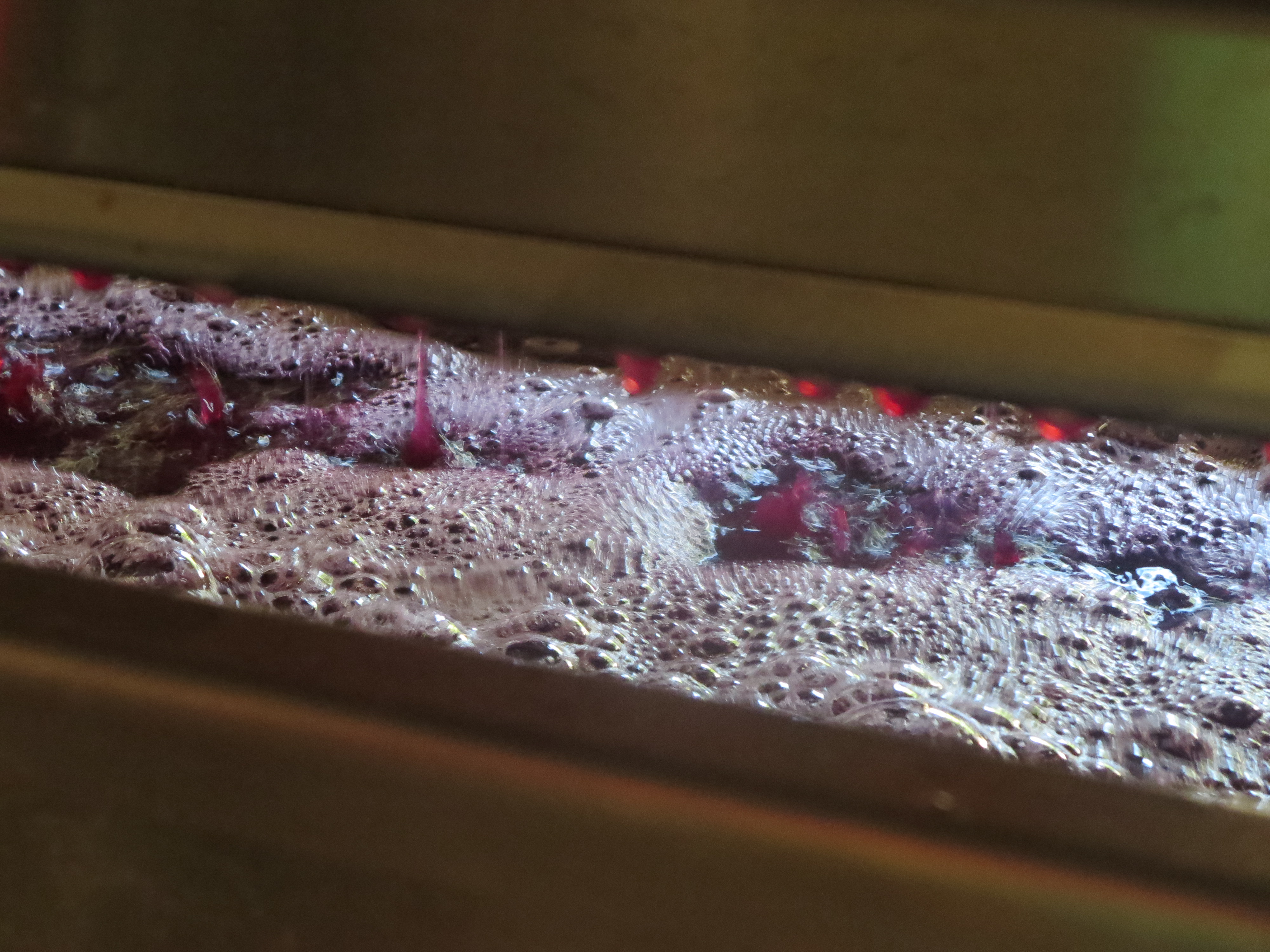
Grapes which are pressed like those described last week ferment in tank as yeasts react with the juice to change the sugar to ethanol, ie alcohol. The yeasts are natural from the skins of the grapes and the atmosphere of the cellar. In the case of Mas Coutelou and many artisanal winemakers this is the case though other winemakers will buy yeasts some of which are designed to add particular flavours to the wine. None of that in Puimisson, these are natural wines.
Carbon dioxide pumped into the tank
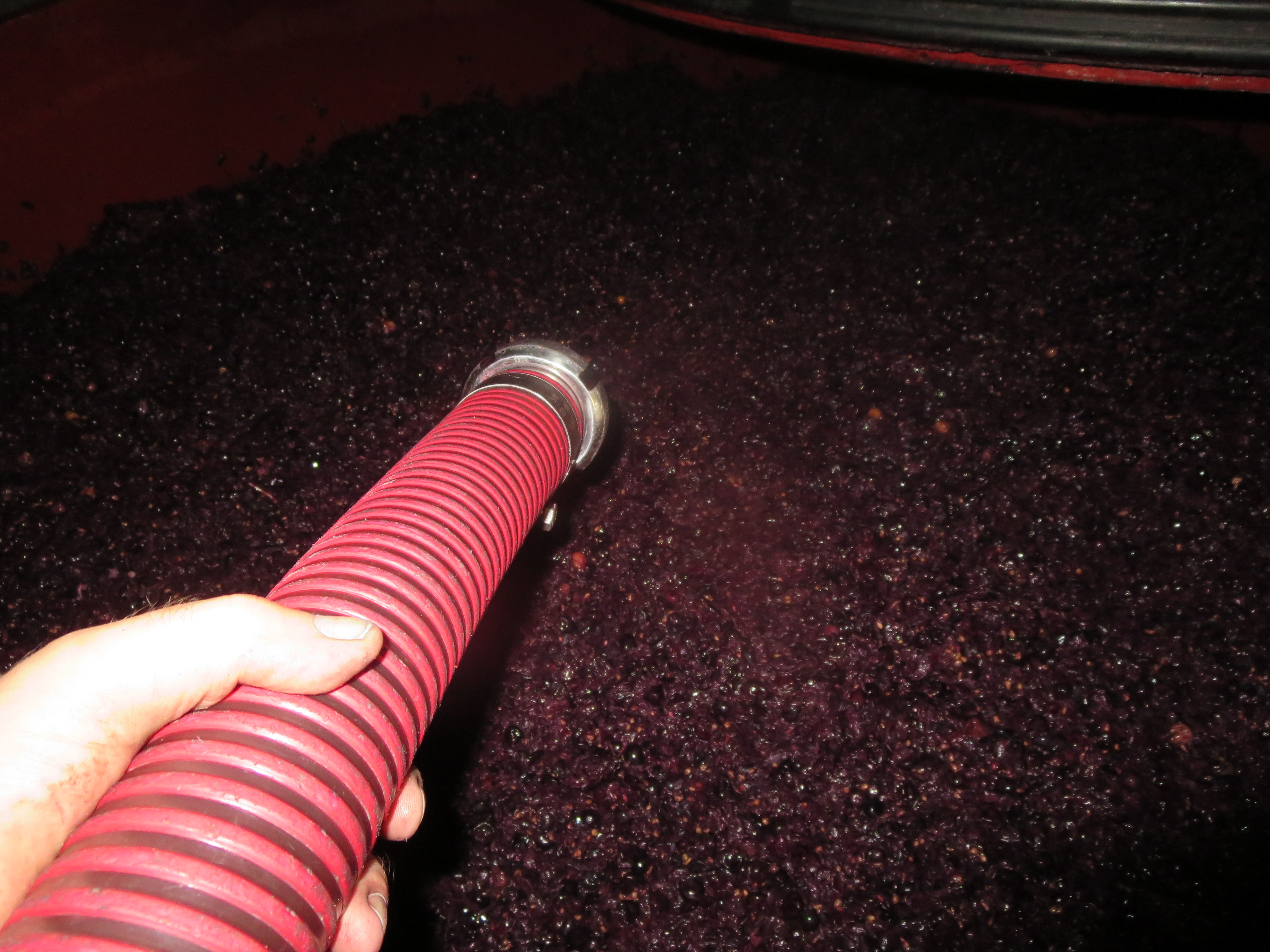
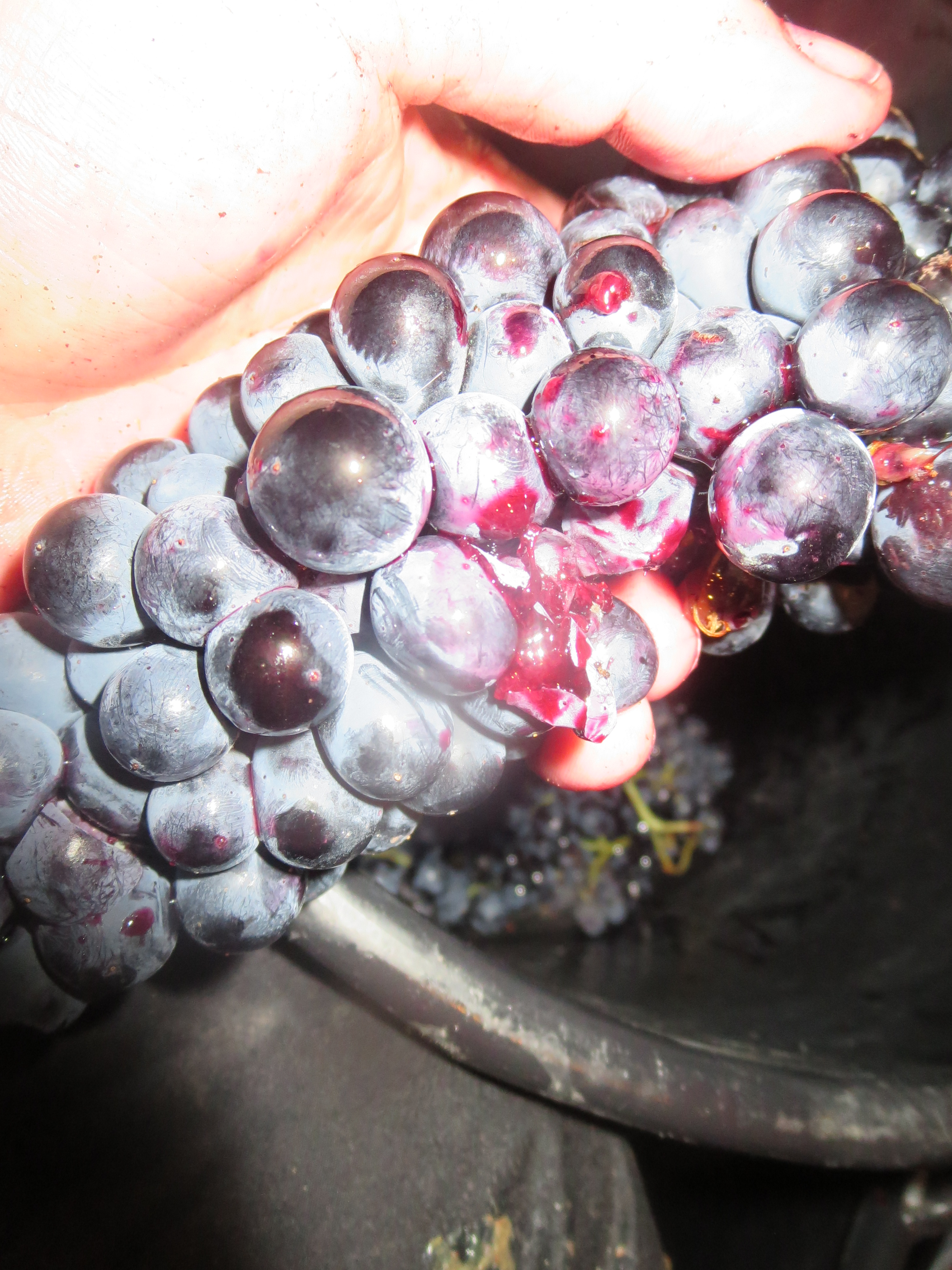
Carbonic maceration means that the whole bunches go into the tanks, grapes and stalks alike. The tank is filled with carbon dioxide which permeates the grape skins and starts the fermentation within the cells of the berry. Some of the berries at the bottom of the tank will be crushed by the weight of the grapes and so there will be some conventional fermentation too.
Whole bunches in the tank
All the grapes are given a light crushing later by which time ethanol will have formed inside the skins and so the resultant juice is ready made wine. The result is often more fruity and juicy wine.
Grapes arrive through the little back door above the cement tanks
To achieve this the tanks are filled from above so we worked in the space above the cement tank with the grapes arriving at the back door which is a level higher than the front door. The space is smaller and the heat from the grapes was high. It was hard work, believe me. Sorting still had to be done before the grapes could go into the tank, quality comes first.
Some of the rejected bits
The pipe carries the CO2 into the tank
And after 9 hours of back breaking lifting, carrying and sifting it was, as ever, time to clean everything from top of the cellar to bottom as we see here with Jeff and Michel.
One visitor from the vineyard
The boss letting us know we should get a move on
The night of the 31st brought a big storm with lots of rain, not the ideal conditions for harvest at all. Rain can cause rot and problems. However, it could have been much worse as news arrived of huge damage caused by hail in the Chablis region. For all the forecasts of how the harvest might turn out it is only when the grapes are safely in the tank that a vigneron can be assured of the quality of wine they might make. Commiserations to the Chablis producers.
September 1st was a quiet day as the rains from the storms meant the grapes were too wet to harvest. In the cellar more checking and remontage, the process of pumping the wine over the cap of skins and must. Further analysis of the wines showed that the yeasts are acting quickly and the fermentation is progressing very well.
Hard work!
Today, September 2nd, the remaining white grapes, Grenache Blanc, from La Garrigue. Then on to Peilhan to gather some of the white grapes there, Maccabeu, Grenache Gris, Carignan blanc and Clairette Musquée.
Grenache Gris
Clairette Musquée
Michel
The core team of Jeff, Carole, Michel, Cameron and myself were joined by Matthieu who has worked the harvest before here. There were some lovely bunches though the wet weather has caused some rot inside some of them, Careful sorting took place in the vineyard to take only the best grapes which tasted really sweet and juicy, the Clairette was especially tasty.
Cameron especially pleased with this bunch of Clairette
The white grapes were taken back to the cellar and placed in tank after being destemmed. It is possible that Jeff will make his first orange wine with them. An orange wine is a white wine made like a red wine, ir the wine is fermented on the skins thus extracting more colour, texture and flavour from them and giving the wine an orange tint. However, analysis and the next few days will be needed before the final decision is made.
In tank and the future might be orange
In the afternoon, Matthieu, Jeff and myself did more remontage of the Syrah grapes harvested in the last week, which is already tasting well, with very healthy technical analysis and beautiful aromas. And, then, as ever, the cleaning.