amarchinthevines

Learning about wine, vines and vignerons whilst living in the Languedoc


12 Comments

Centiment de Grenache

IMG_2455

IMG_2405

Version française

No excuses for using a  French title and a misspelling too. This is the hundredth article on my blog and so a play on the word cent is justified. I mentioned to Jeff Coutelou that this post would be a landmark and he decided that it should be celebrated with something special. I had thought about a review of the previous ninety nine, a greatest hits if you will, but Jeff had something much more spectacular lined up; I should make a special cuvée from the Coutelou vines, and not just any parcel but my absolute favourite vineyard, Rome.
IMG_2414

This was such a lovely gift, in the middle of the harvest, a time of increasing pressure and stress, Jeff allowed me to take up time, grapes and equipment to make a special wine. How generous is that?

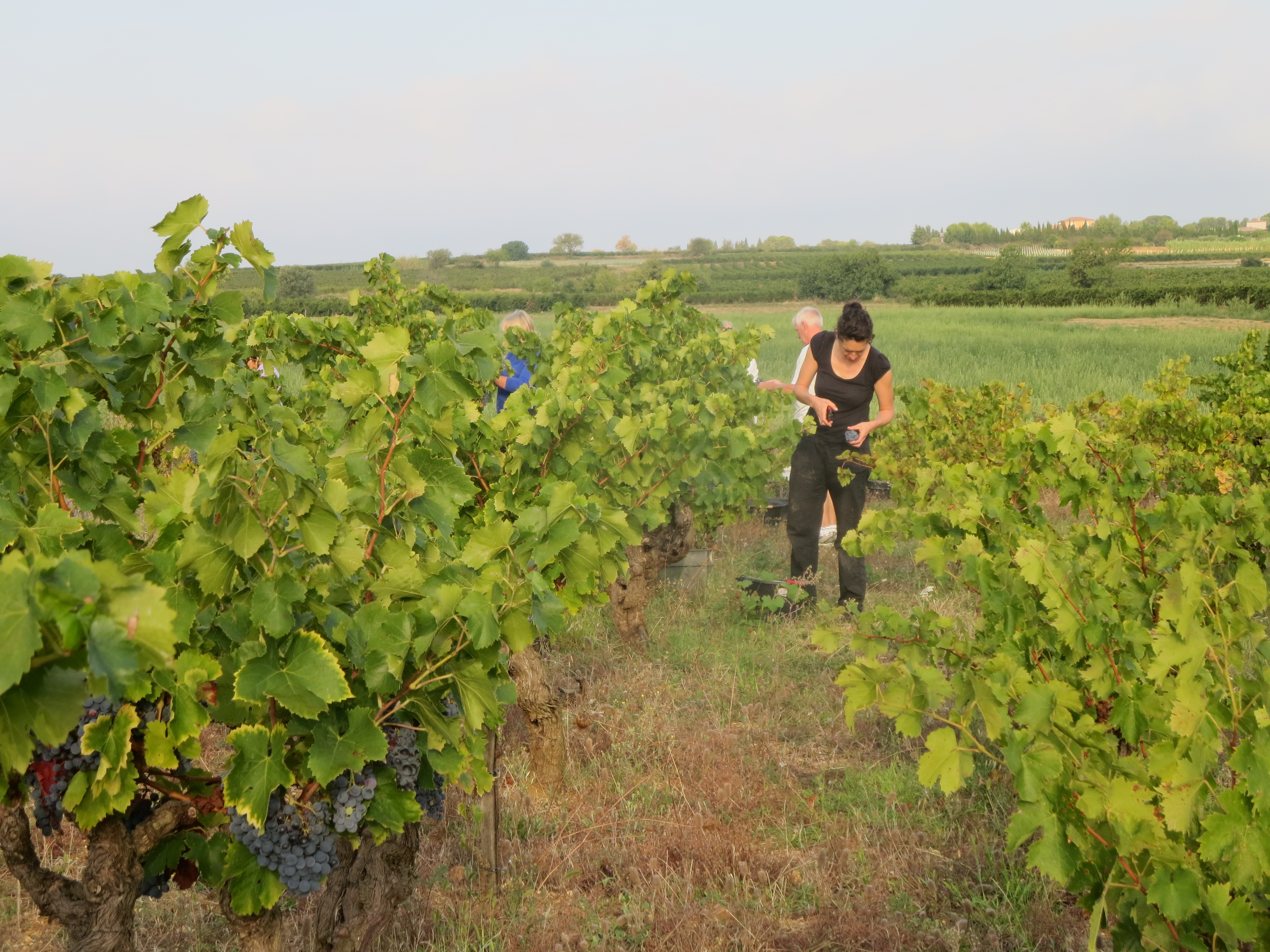
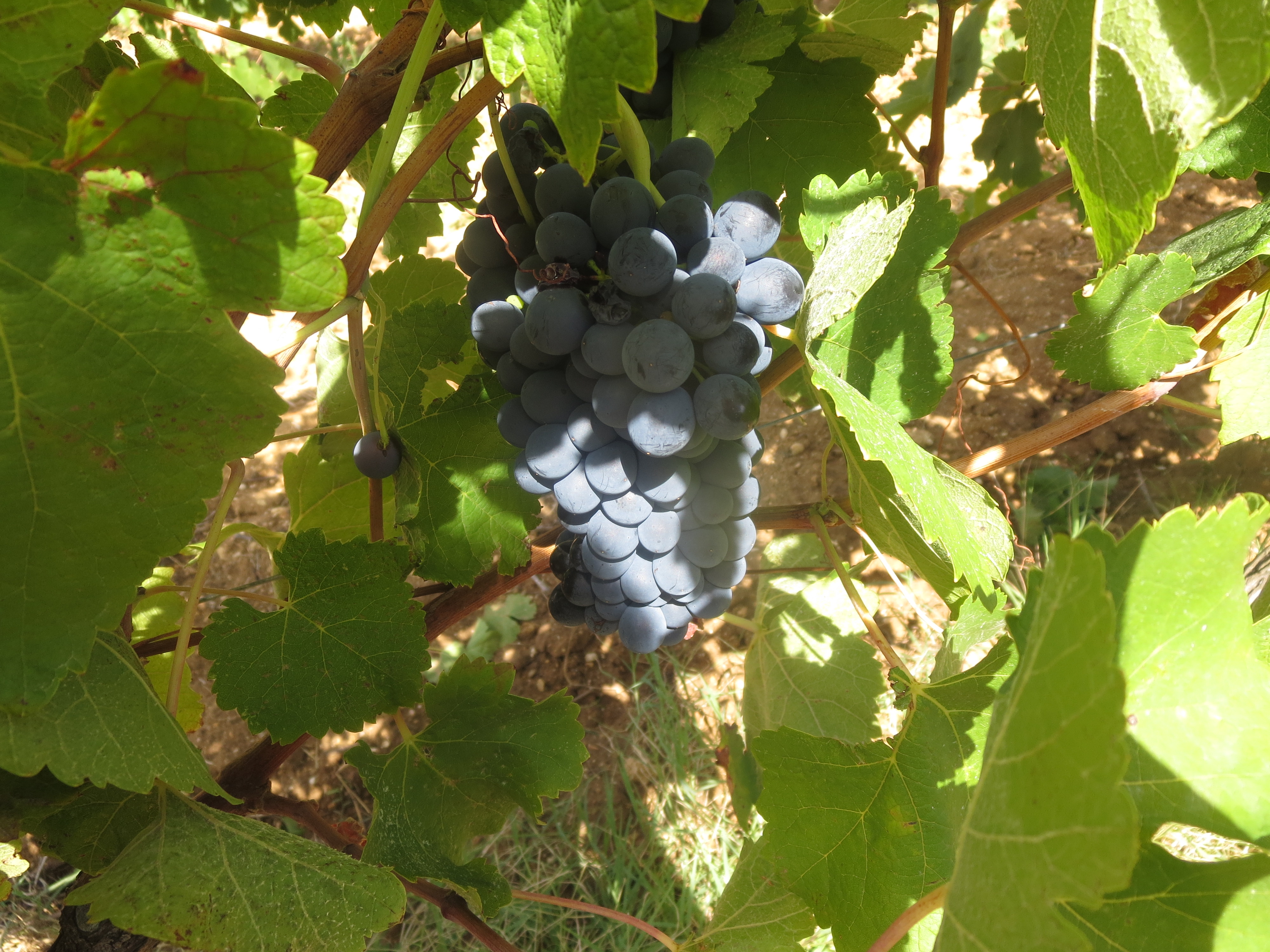
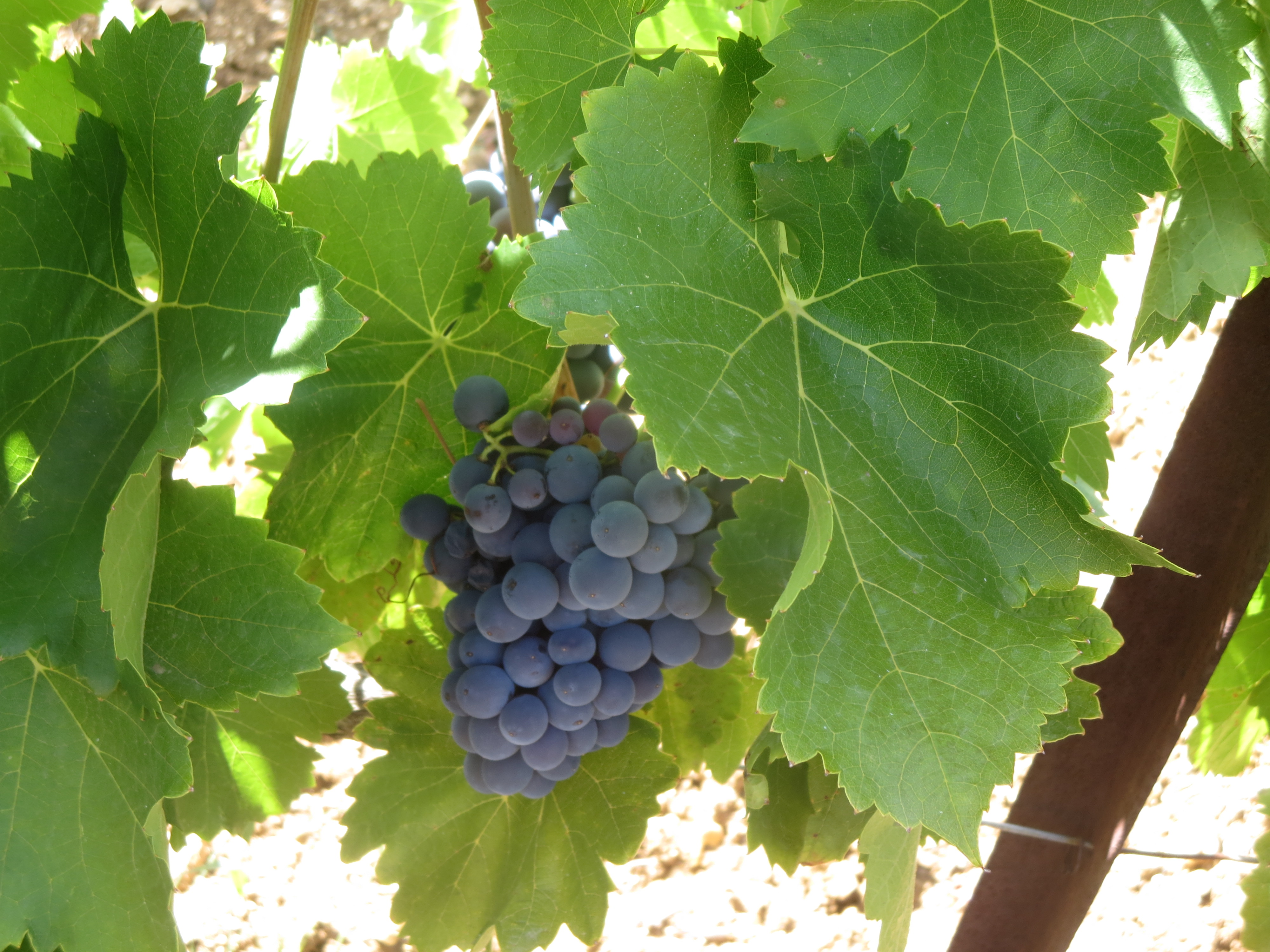
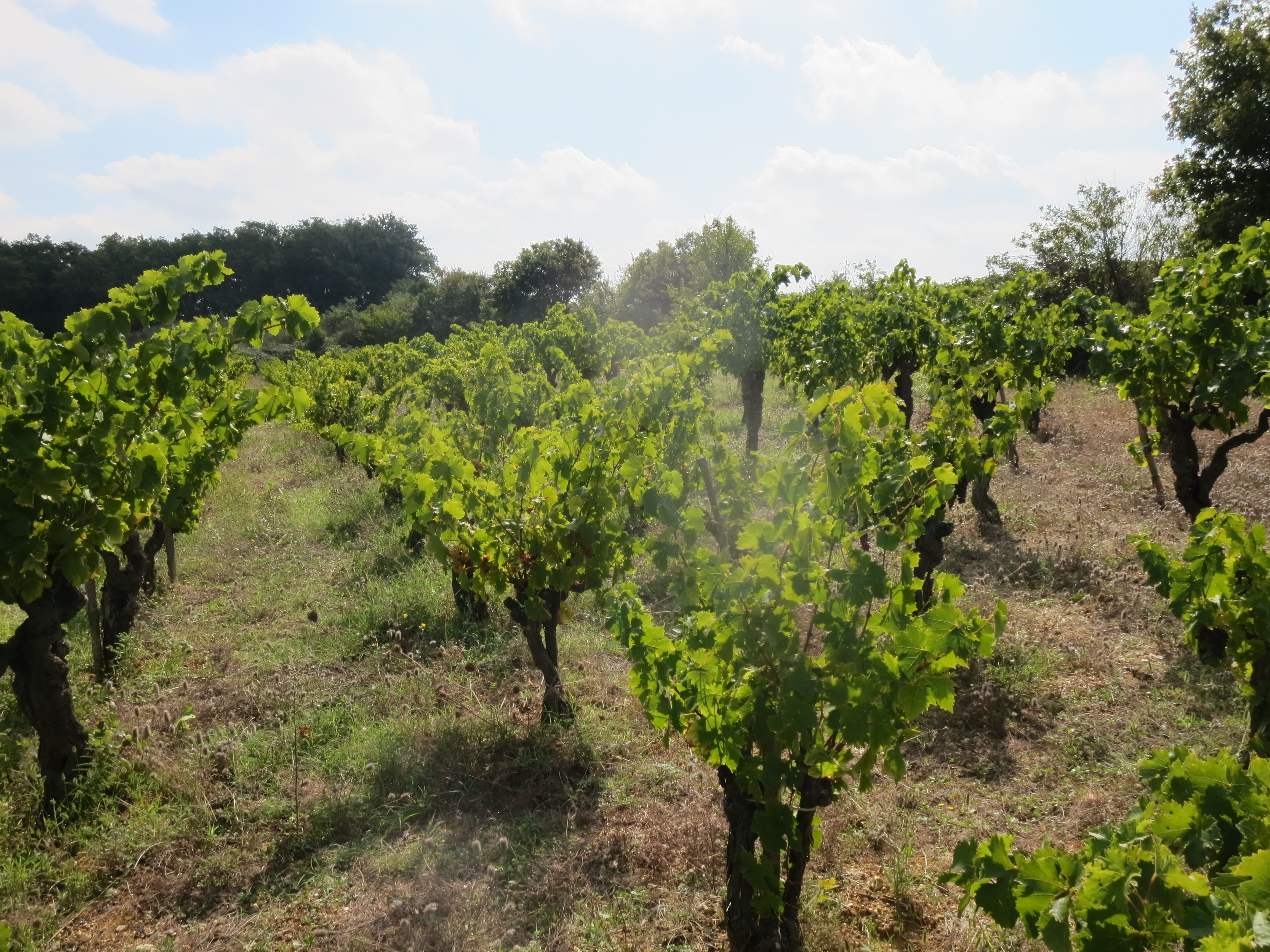
So it was decided to use the Grenache grapes from Rome a complanted vineyard of traditional, gobelet vines. The Grenaches were planted back in 1962 by Jean Claude Coutelou, Jeff’s father who told me about them at lunch on Friday, the day of the harvest and pressing. There are approximately 4 rows of Grenache Noir but mixed in there are quite a few Grenache Blanc vines and a smaller number of Grenache Gris. These would make a true assemblage of Grenache, a real feeling for Grenache, “sentiment de Grenache”.
IMG_2401                          IMG_2400

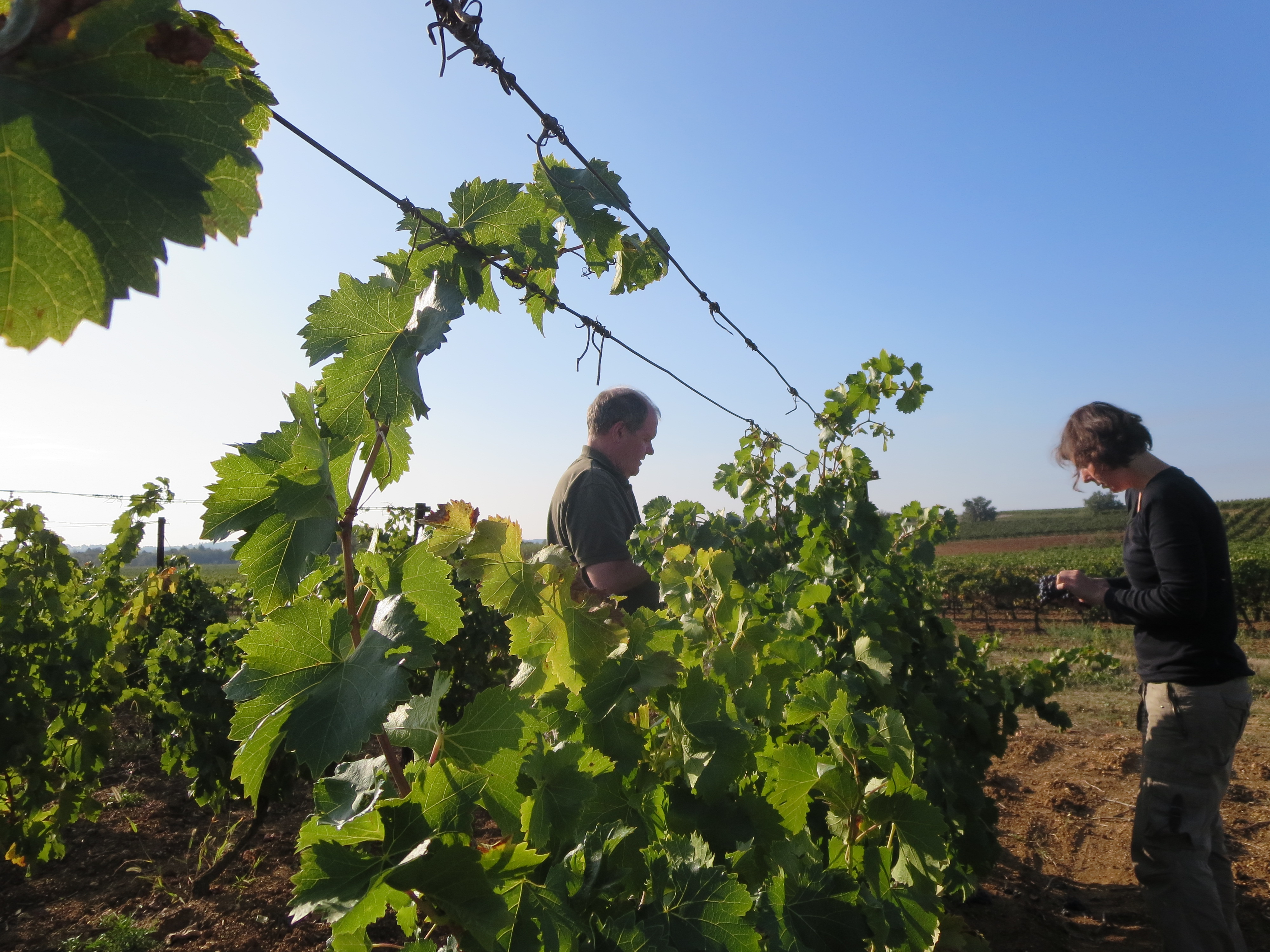
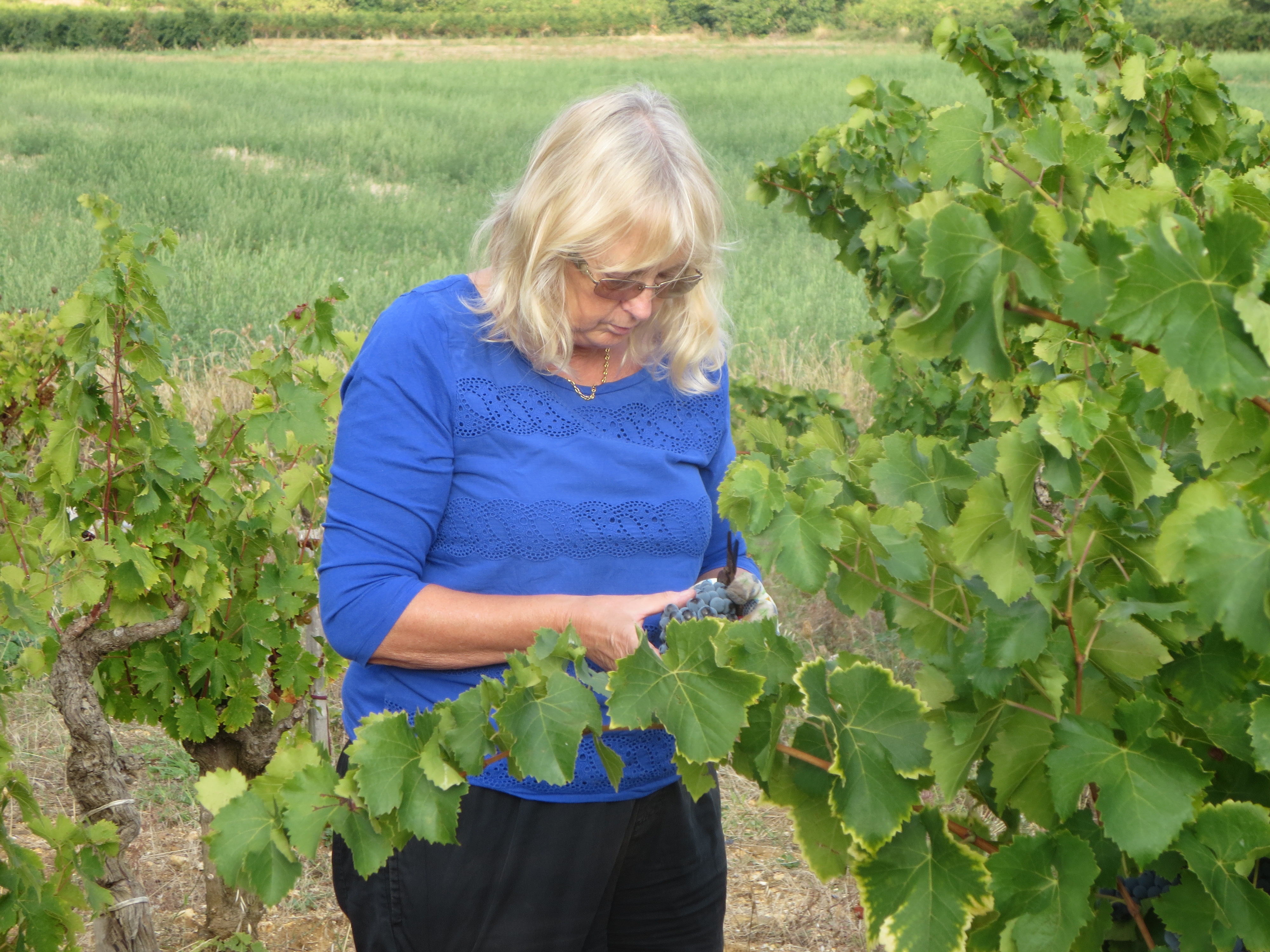
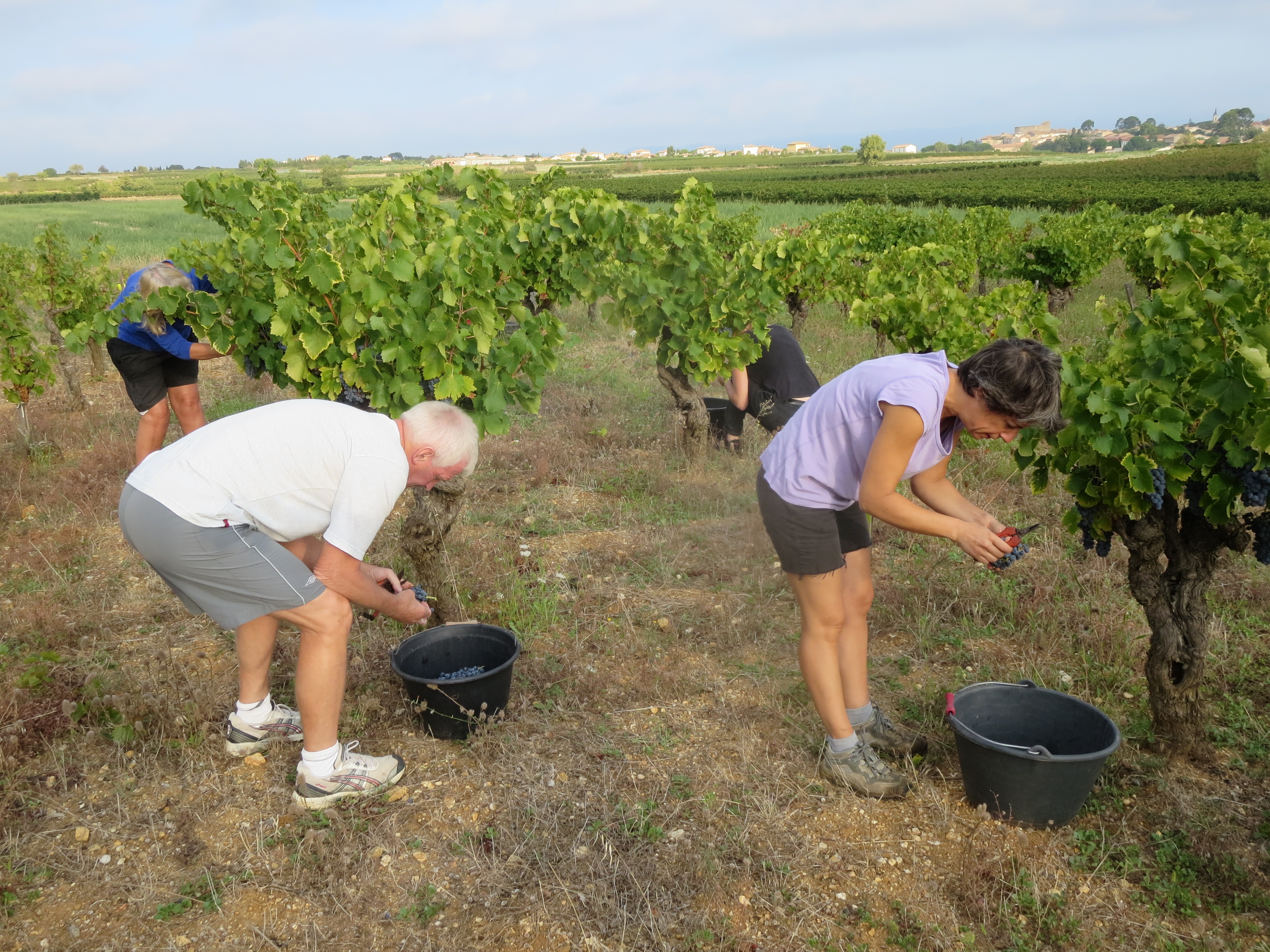
My wife Pat was persuaded to come along and do some picking along with our friends Martin and May Colfer, neighbours in Margon, and great people. They had expressed interest in finding out about the harvest and were to get first hand experience! I was also delighted that we were joined by Céline and Delphine, two nurses from Bordeaux who had come down to Puimisson to take part in harvest. It is a mark of how highly Jeff is valued by his friends that many come along to help out and I shall mention more in the next vendanges diaries. Céline had done some picking in the first week of harvest when she and her family were staying with Jeff and had clearly enjoyed it, returning with Delphine.

IMG_2399       IMG_2404

IMG_2398

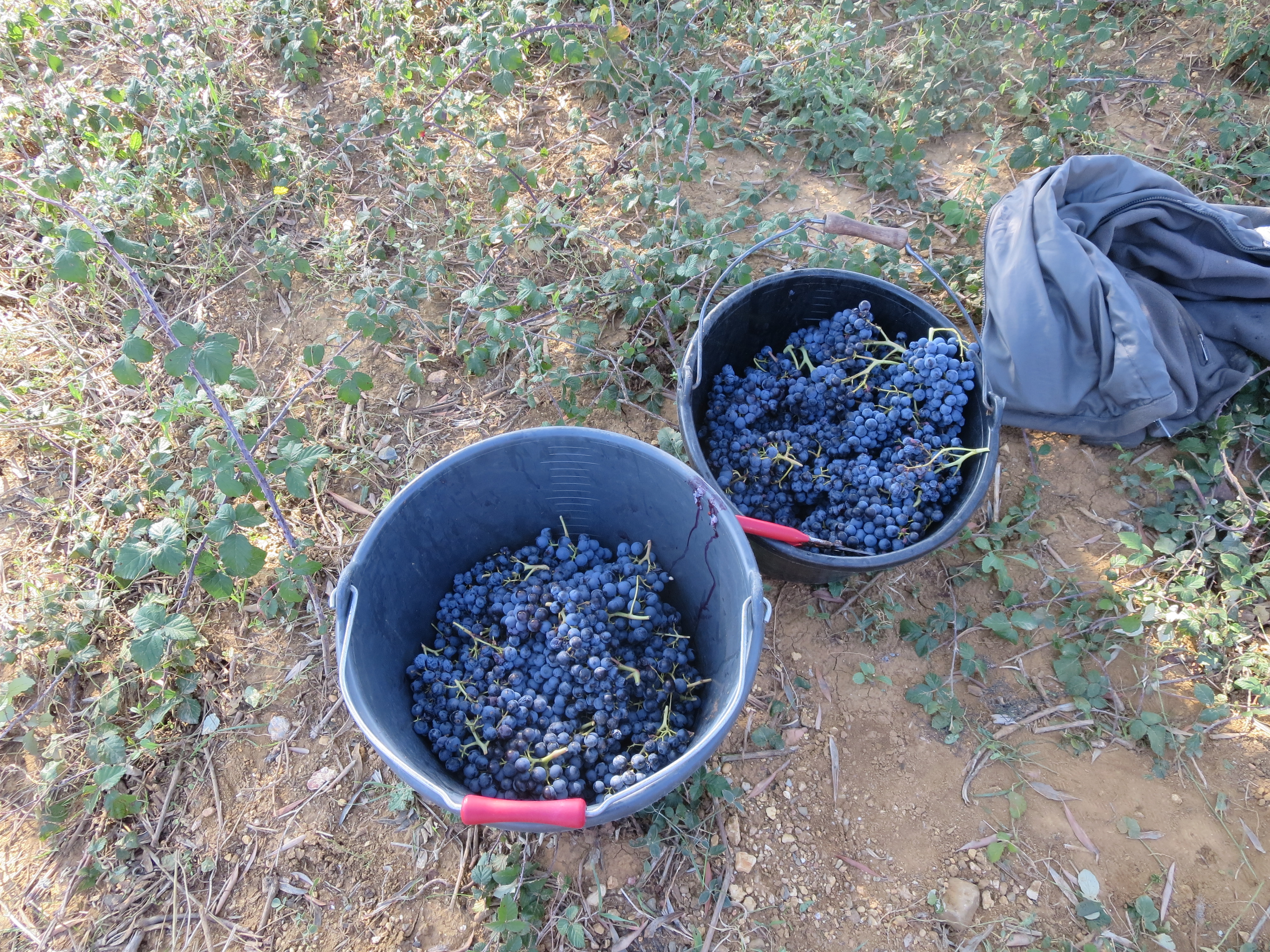
It has to be said that none of us were the most experienced pickers and it took us around two and a half hours to harvest the four rows. One issue proved to be the complantation as mixed in with the Grenache Blanc were some Muscat vines and the Cinsault and Muscat Noir vines were easily mistaken for Grenache Noir. Fortunately my recent articles on ampelography meant that I was able to guide us into collecting the sought after Grenaches with just a few extras. It was made easier by the grapes themselves which were in excellent condition, really healthy. Mixed with Queen tunes and chatter we worked hard to pick and the first grapes were transported back to the cellar along with myself, there to start the pressing.

IMG_2407

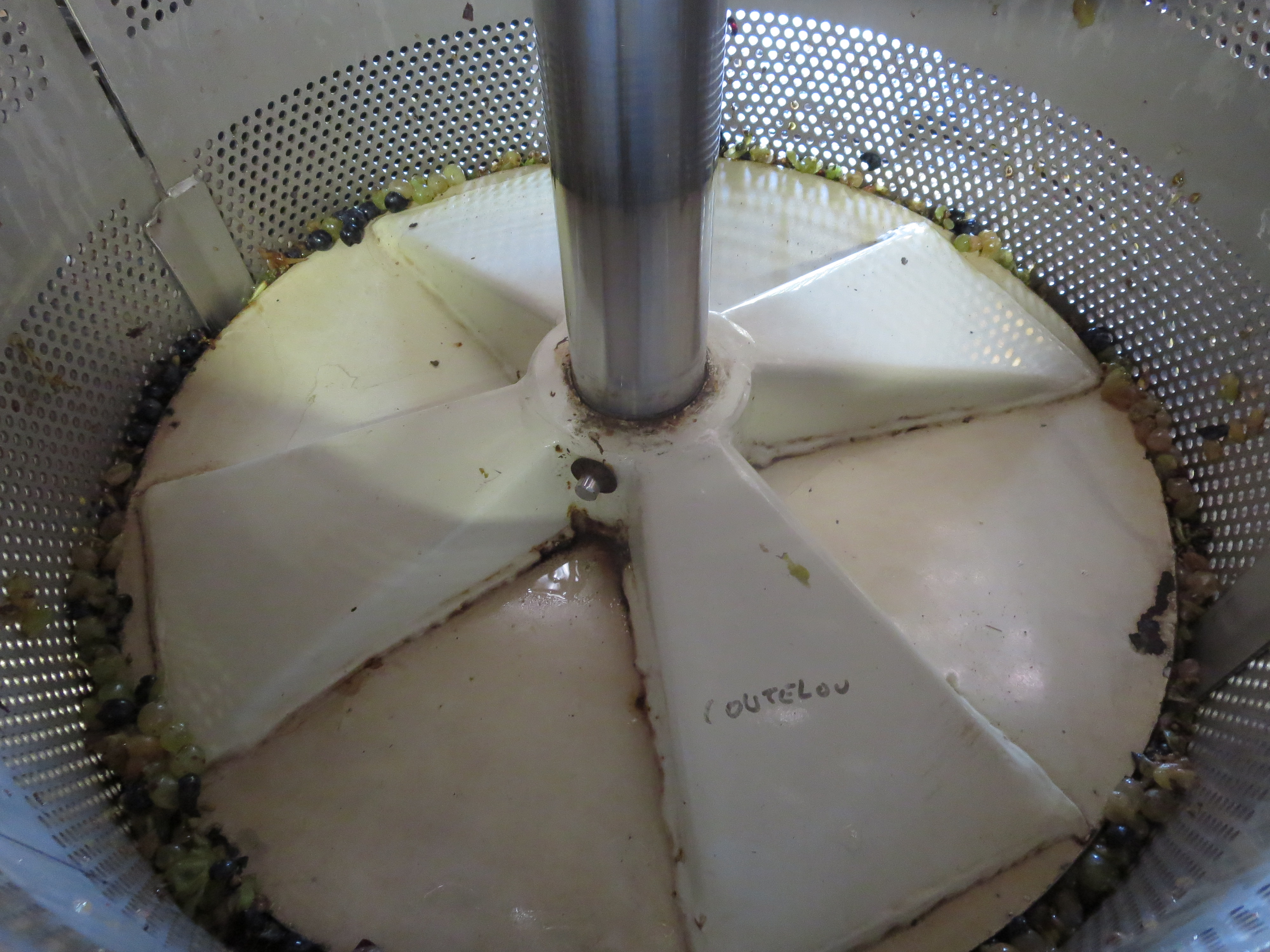
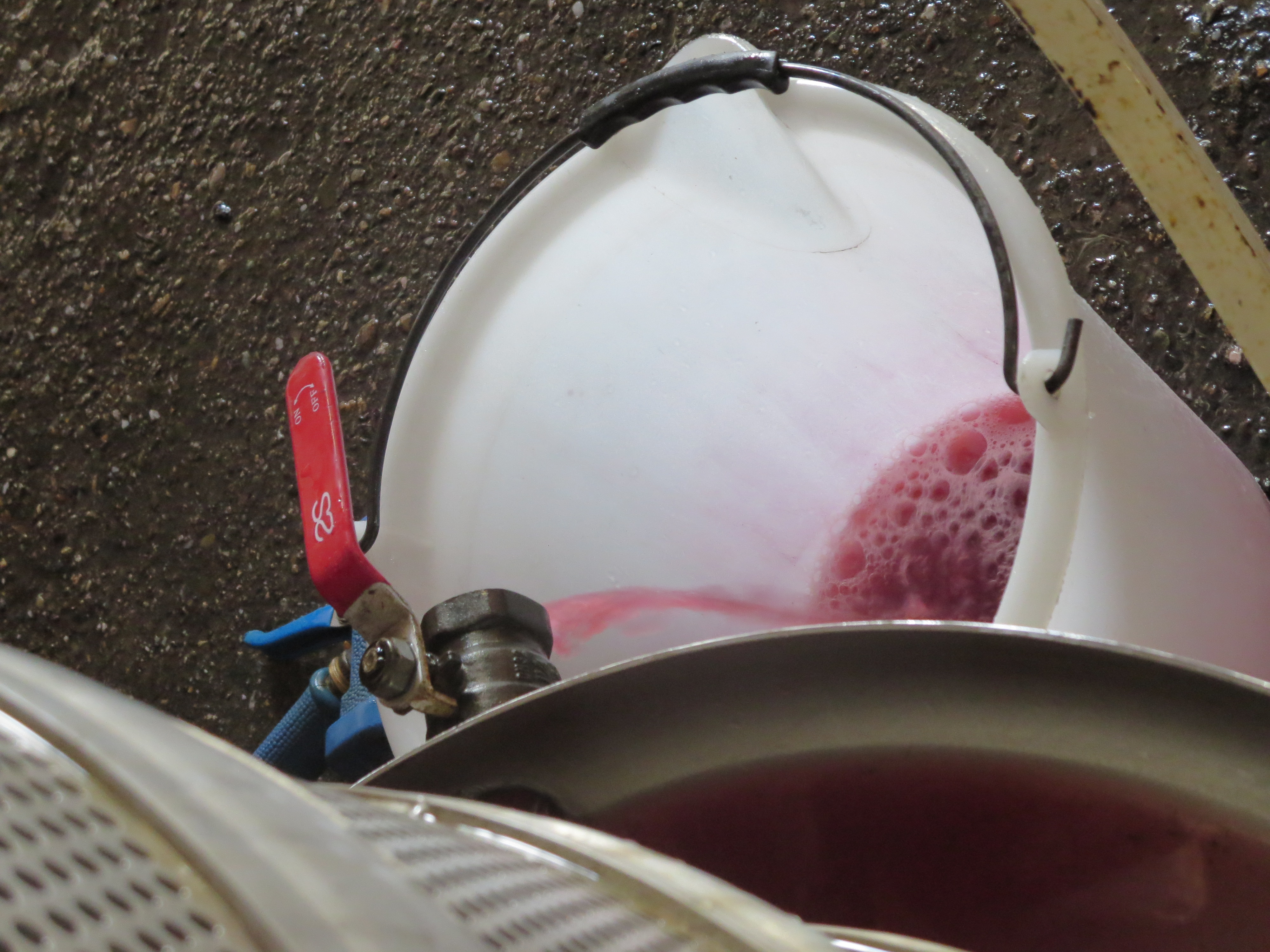
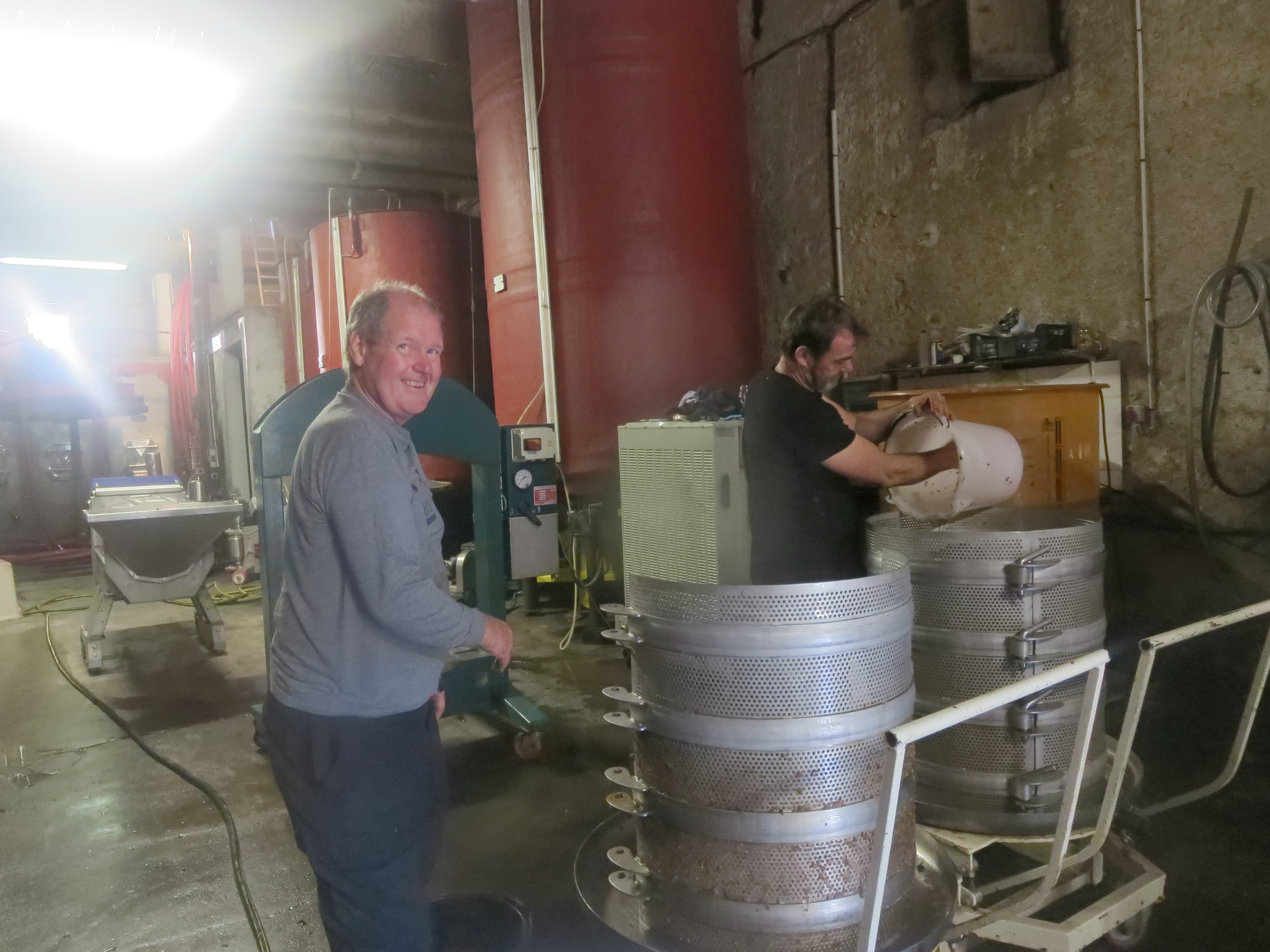
As this was a small quantity of grapes they would be pressed in one of the small hydraulic presses and so I had to tread them first so that they would not burst in the press, squirting juice everywhere. Then into the cage and the juice began to flow, sweet, clear and weighing in at over 15º of potential alcohol.
IMG_2411    IMG_2423

IMG_2412         IMG_2425

Back to the vineyards to rejoin my friends in order to complete the picking. At 11.45 we had completed all the Grenache vines. I have said before in this blog that I call the vines of Rome vineyard ‘centurions’, as they stand tall and proud. Roman centurions were older, were trained and gave everything for each other. These vines are exactly the same and making an assemblage of the different Grenaches seems appropriate, centurions stand together.

IMG_2409

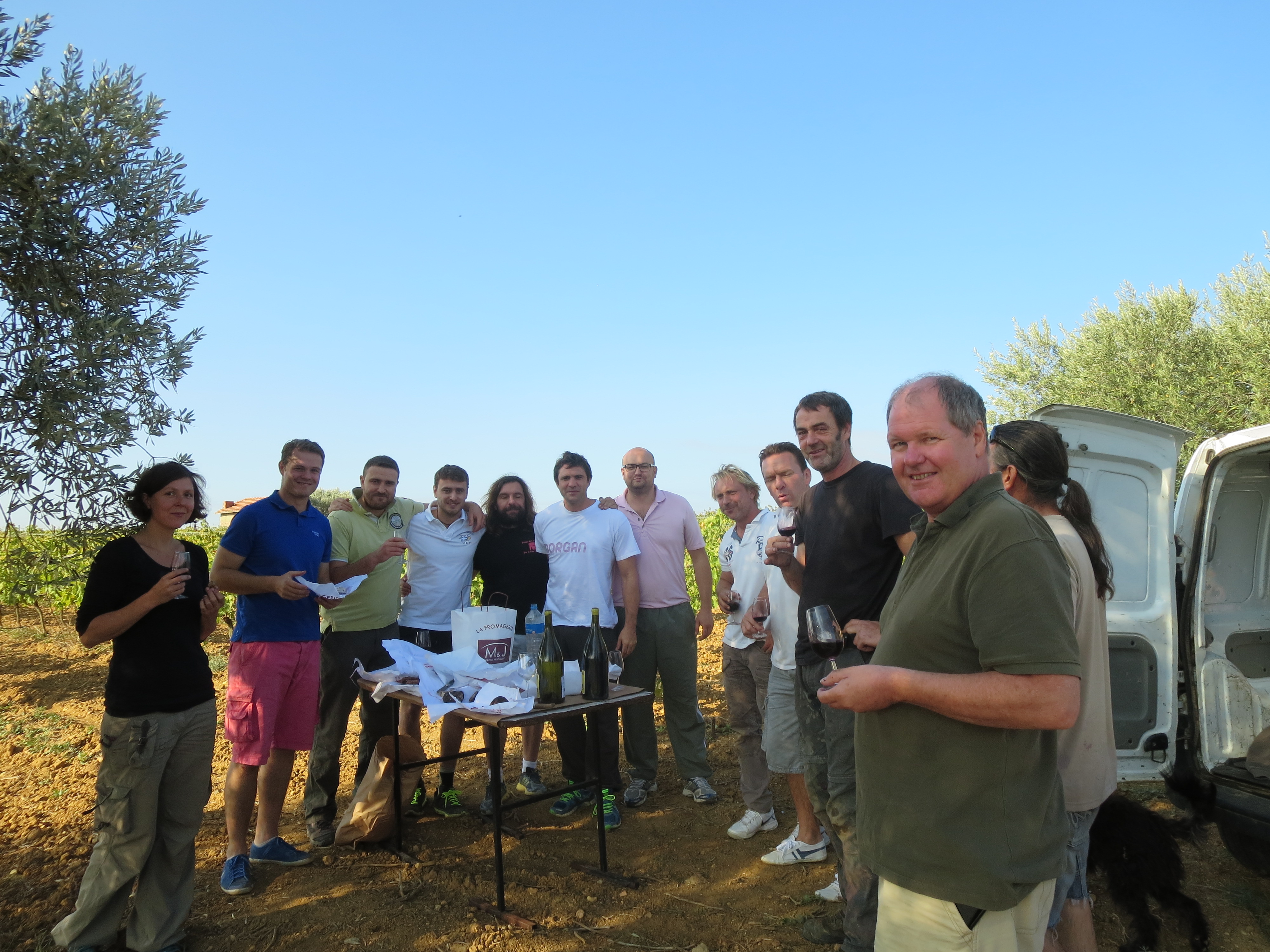
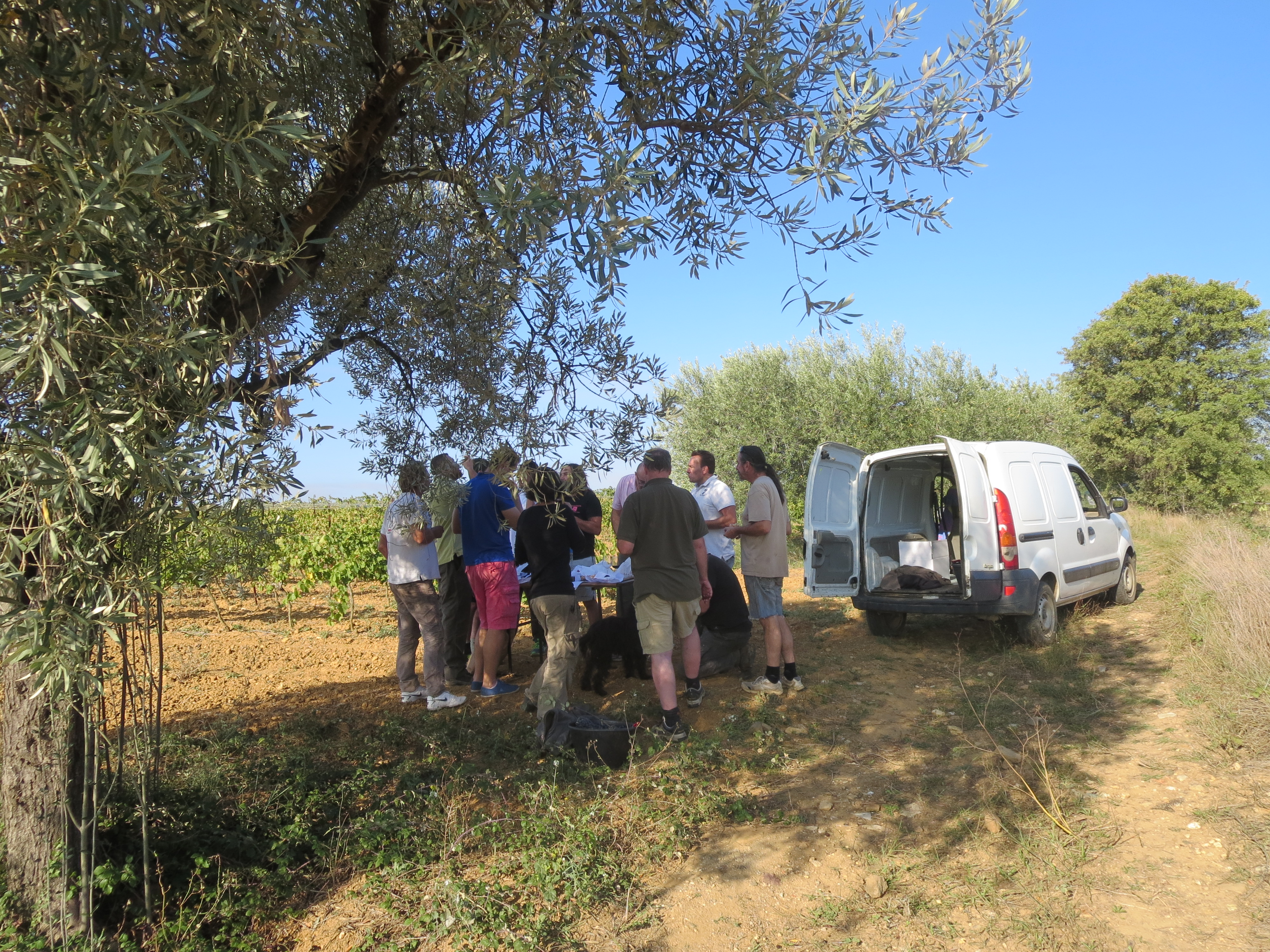
Lunch beckoned and it was good to share together and enjoy some of the bottles of Mas Coutelou, coincidentally including a magnum of ‘Grenache, Mise De Printemps 2014’. As this is the 100th article it also made me think of a year ago when I sat around that table and Jeff told me his story of the <Chaud Doudou>, a fairytale with a moral of sharing and love, very much Jeff’s philosophy. Looking around the table with Jeff, Jean-Claude, Michel from Puimisson with visitors from the Loire, Bordeaux, UK, Ireland and Australia it was hard not to think that this was exactly what that philosophy is all about.

IMG_2431             IMG_2432

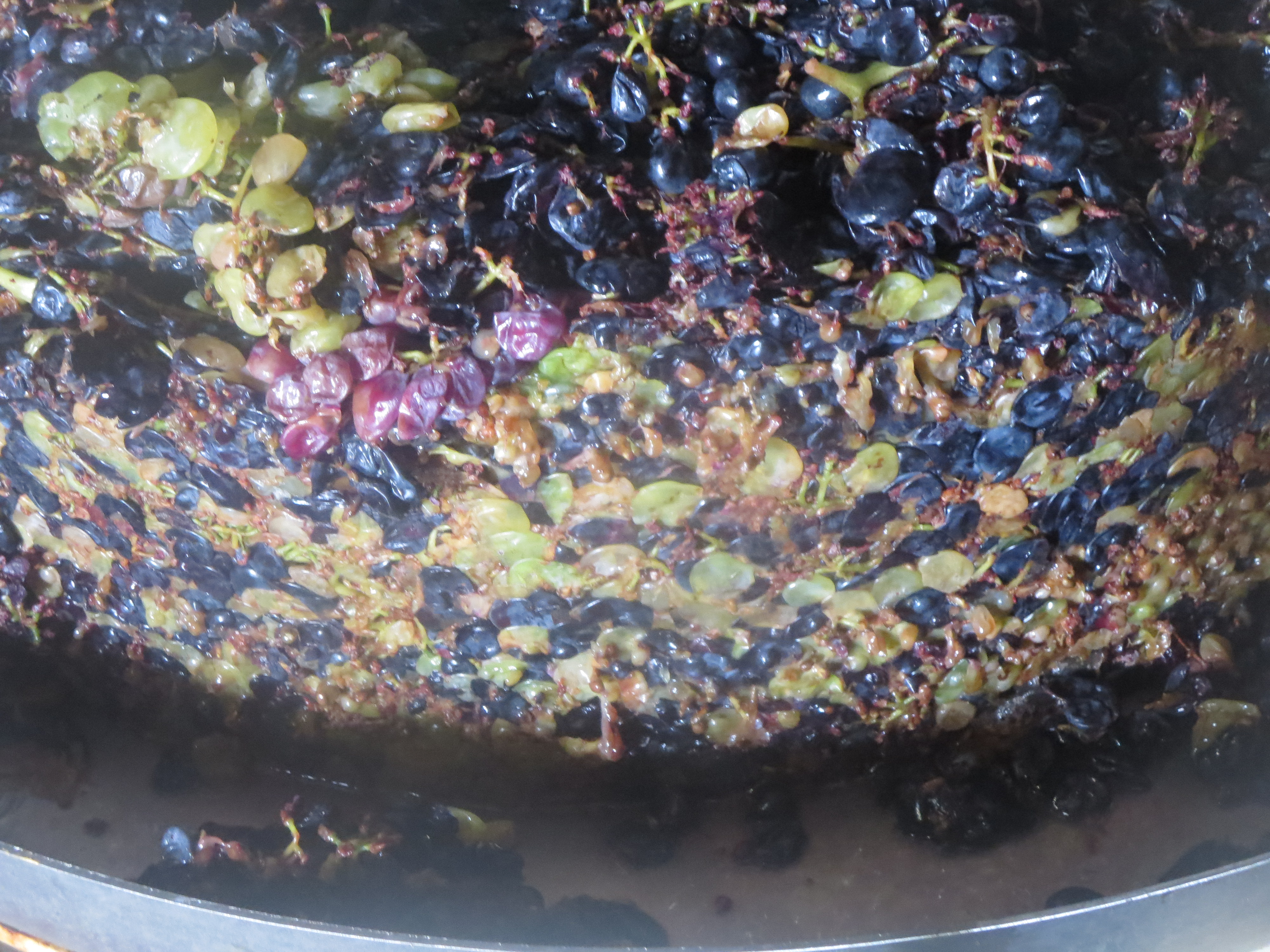
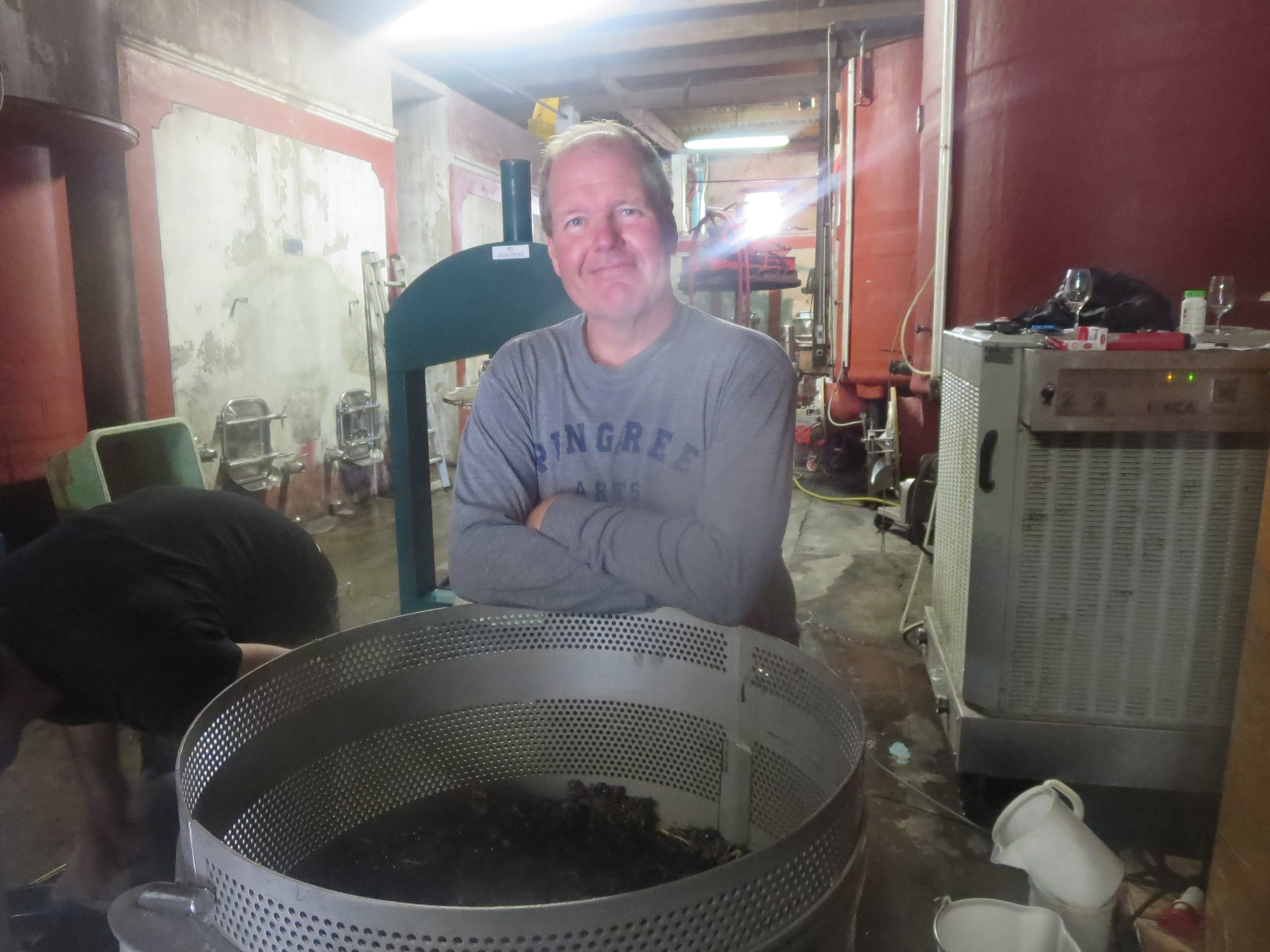
In the afternoon I pressed the grapes three times in total. Between each one I carried out a rebeche, dismantling the gateau of grapes made by the press and rearranging them for the next pressing. The contrast between the black, pink and white grapes was beautiful to look at.

IMG_2421

IMG_2442

IMG_2428

IMG_2451

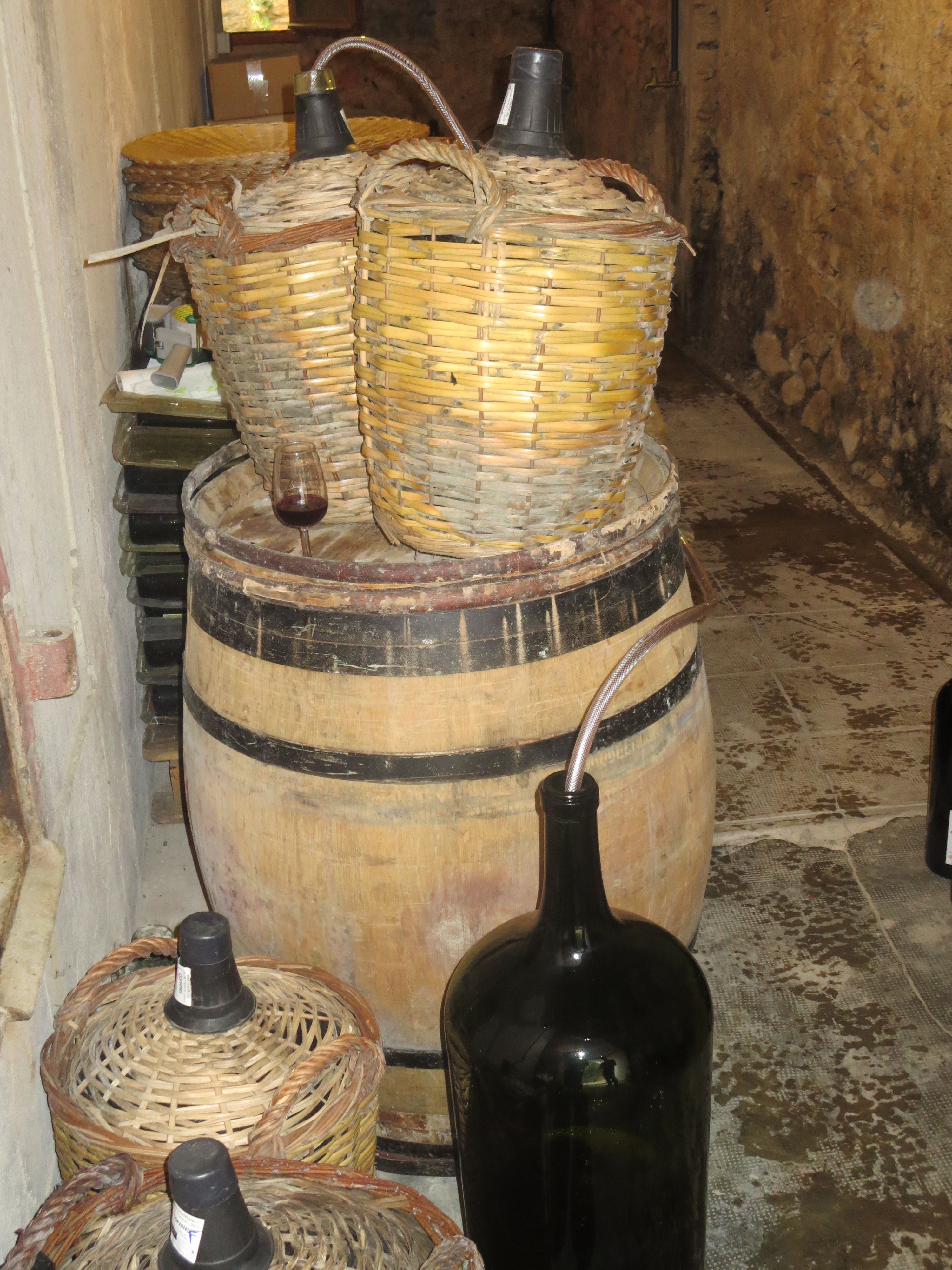
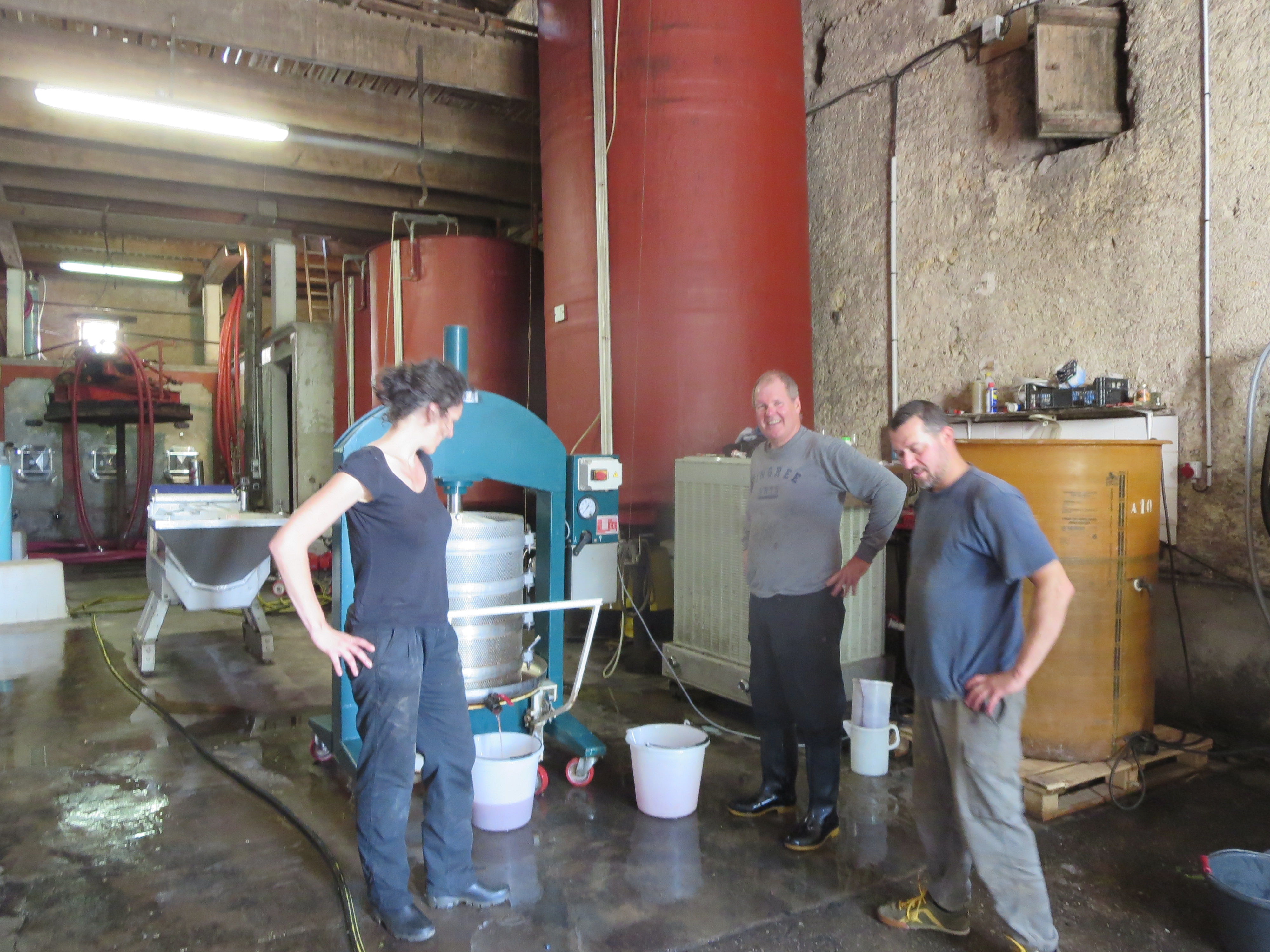
The end product was only around 125 litres of wine after all that effort, this will be a true collectors item so send your bids in now! Jeff thought it would be interesting to see how the wine will develop in different containers, so some went into a 60 litre barrel, more into two, older 15 litre barrels and the rest into a big 27 litre bottle.

First pressing

First pressing

IMG_2445

Second pressing, slightly darker in colour
IMG_2418

Delphine and Karim checking my work

IMG_2443          IMG_2446

IMG_2449

During the whole process other parts of the cellar were busy as more Grenache from Sainte Suzanne were brought in. Yet Jeff gave me his time, advice and encouragement through it all. What can I say? I am a very lucky man to have been able to share my experiences with you all through this blog and I am grateful to very one of the 10,000 people who have read my words in just over a year. It has been an exciting and hugely enjoyable time and hopefully this cuvée will embody the sentiment of sharing and love and represent the beautiful Rome vineyard and the amazing generosity and talents of its owner.

IMG_2420
                                             Santé

IMG_2437


6 Comments

Turning over a new leaf

IMG_0365

Version française

When you live in the Languedoc you are surrounded by vines. They are everywhere and form the world’s biggest vineyard area, producing one third of all France’s wine. Vines stretch over hill and valley, coastline and plains. As you walk around it is easy to think of vines as all being the same, part of one big plantation, but when we have received visitors and we go on walks through the vineyards they often ask me what sort of vine we are passing. Cue guesswork on my part unless I am in the vineyards of Mas Coutelou. To remedy this ignorance and to meet the brief at the top of this blog that I should be “learning about wine, vines and vignerons” I set myself the challenge of being able to identify the main types of vine in the region.


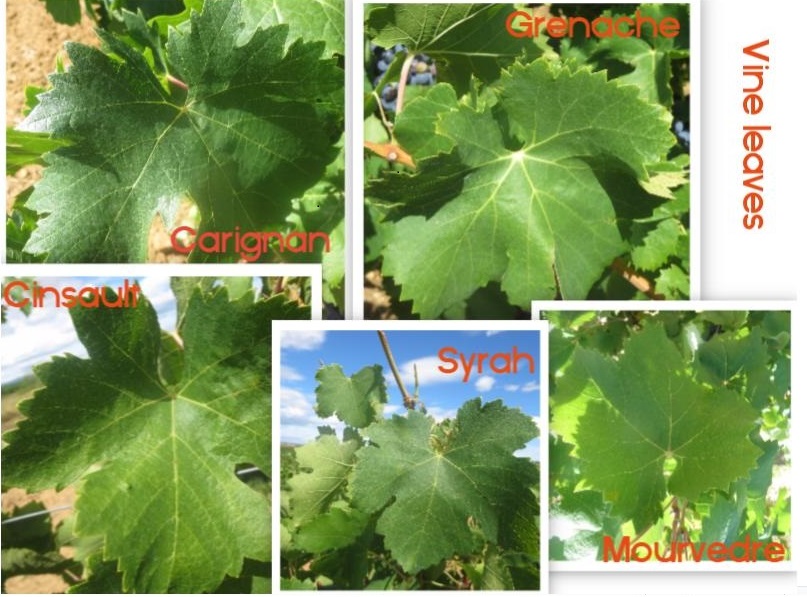
Ampelography is the study of identifying and classifying grapevines. There are many learned books on the subject, some running to hundreds of pages. However, I wanted a simple guide, to learn the basic varieties before expanding to others. I took some photographs in the parcels of vines of Mas Coutelou and using the internet and Jeff himself I hope I have put together a simple reference piece. As we enter harvest it has proved useful to me so that I know what I am picking or sorting. Hopefully it will be useful to you too, whether you visit vineyards or just take an interest in wine and vines.

Experts use features such as the shape of the grape bunches, size and colour of the grapes. However, for me the most obvious way of distinguishing between vines are the shape of the leaves.

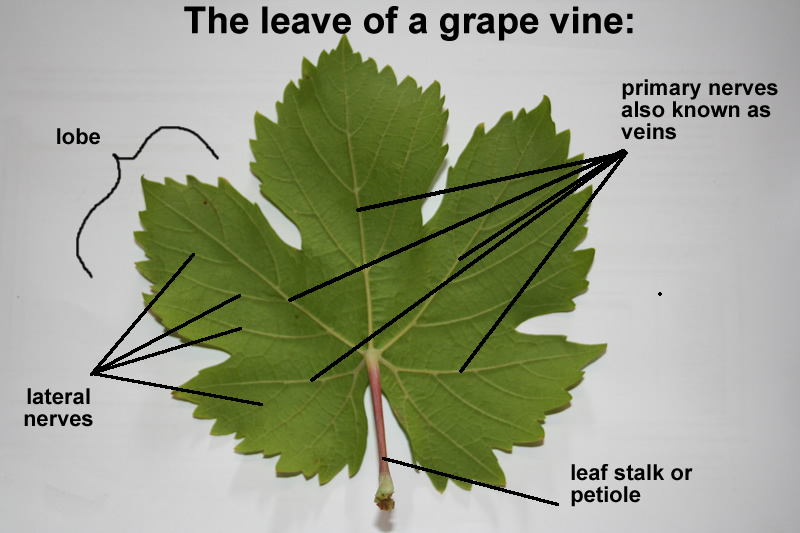
The colour of leaves varies but so too the number of lobes (from just one to seven), the colour of the veins and the shape of the sinus around the stalk (pétiole). The sinus is the gap between the lobes. So here is my simple guide to identifying some Languedoc vines. I have started in this post with the five main red wine varieties.

Red wine vines

Syrah

Syrah2

                              Syrah in Segrairals vineyard

Syrah is one of the great varieties of the Languedoc. Famous for its wines in the Rhone Valley and around the world (Shiraz in Australia) Syrah produces great wines here too. The leaves are quite a light green in colour with 5 lobes which are well separated out including a big sinus (V shaped) around the stalk (pétiole). The veins are quite light and stand out. The leaf edge has small, gentle teeth shapes. The grapes tend to be oblong shaped and fairly small in size. Syrah is one of the earlier red varieties to ripen.

Recommended wines:

Mas Coutelou – La Vigne Haute

Others – Sylvain Bock, Raffut;      Plan De L’Homme, Alpha;      Haute Lignières, Sur Le Fil;      Terre Inconnue, Sylvie

Syrah3

                                    Syrah grapes

Grenache

Grenache

                                        Grenache in La Garrigue

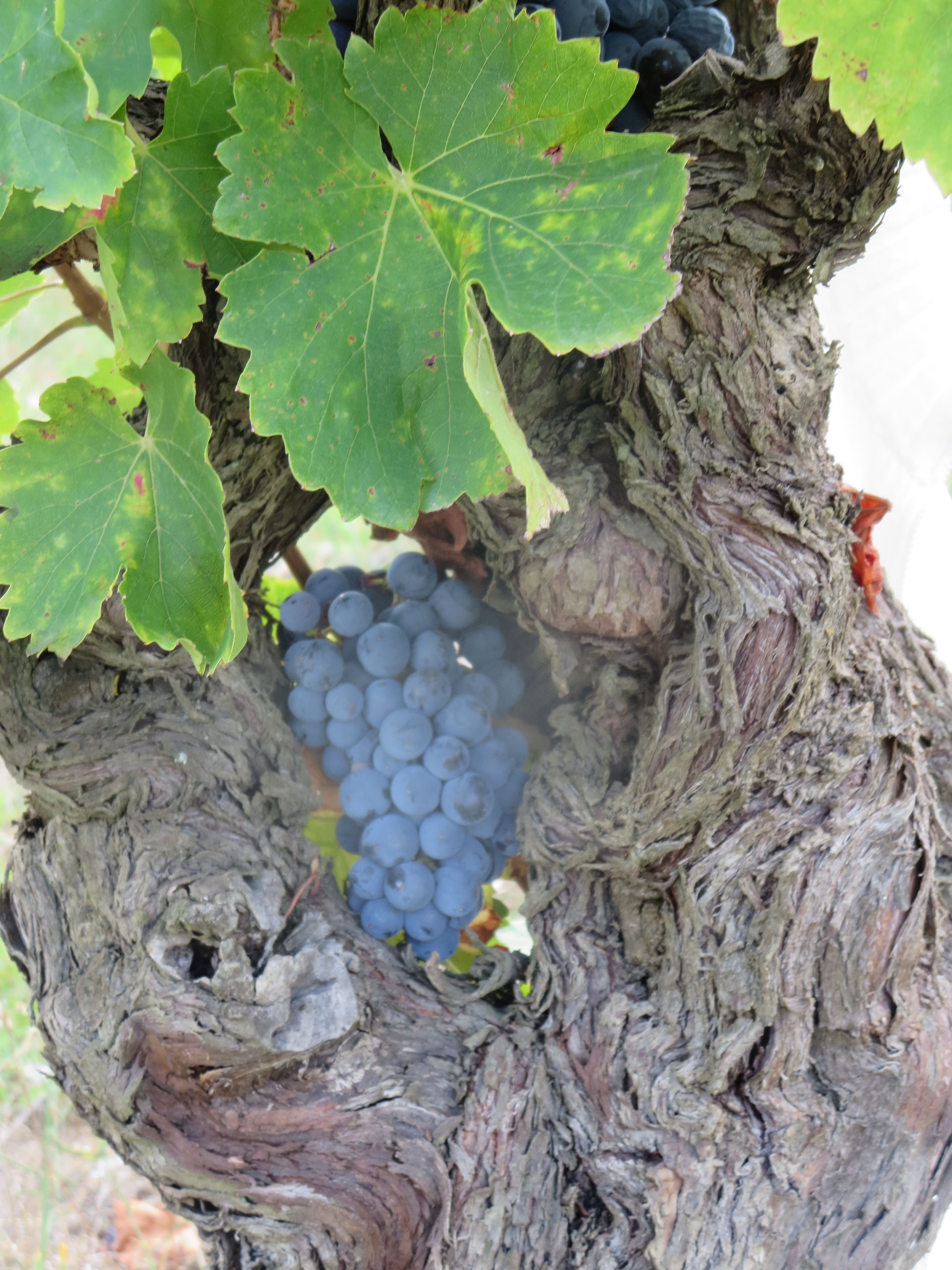
A variety which loves the heat, very much a Spanish and Mediterranean grape. Grenache leaves have a more round appearance than Syrah with big, wide lobes which are not so separated as the Syrah giving the impression of a big, whole leaf. There is a wide sinus around the stalk. The leaf edges have saw teeth which are quite marked. Light veins and round, medium sized grapes. Grenache is a late ripening variety. Often used to blend it is not often used for single variety wines.

Mas Coutelou – Grenache, Mise De Printemps

Others – Engelvin, Même-Si and Vieux Ronsard;       Treloar, One Block Grenache;

Grenache (2)

                                         Grenache grapes

Mourvèdre

Mourvedre2

                                        Mourvedre in Segrairals

                 Mourvedre3

Mourvèdre is a late ripening and, sometimes, a difficult grape to ripen. The lobes are broad and form three rather than five as you can see in the photo on the right of the page above.  There is a little green colouring in the veins and the sinus around the stalk is a lyre shape. The teeth around the edge are distinct and quite big all around. The grapes come in biggish bunches though the grapes are medium in size.

Mas Coutelou – Sauvé De La Citerne

Others – Clos Fantine, Cuvée Courtiol;     La Liquière, Tucade;     Treloar, Motus

Mourvedre grapes

                                Mourvedre grapes

Carignan

Carignan

                                 Carignan in Rec D’Oulette

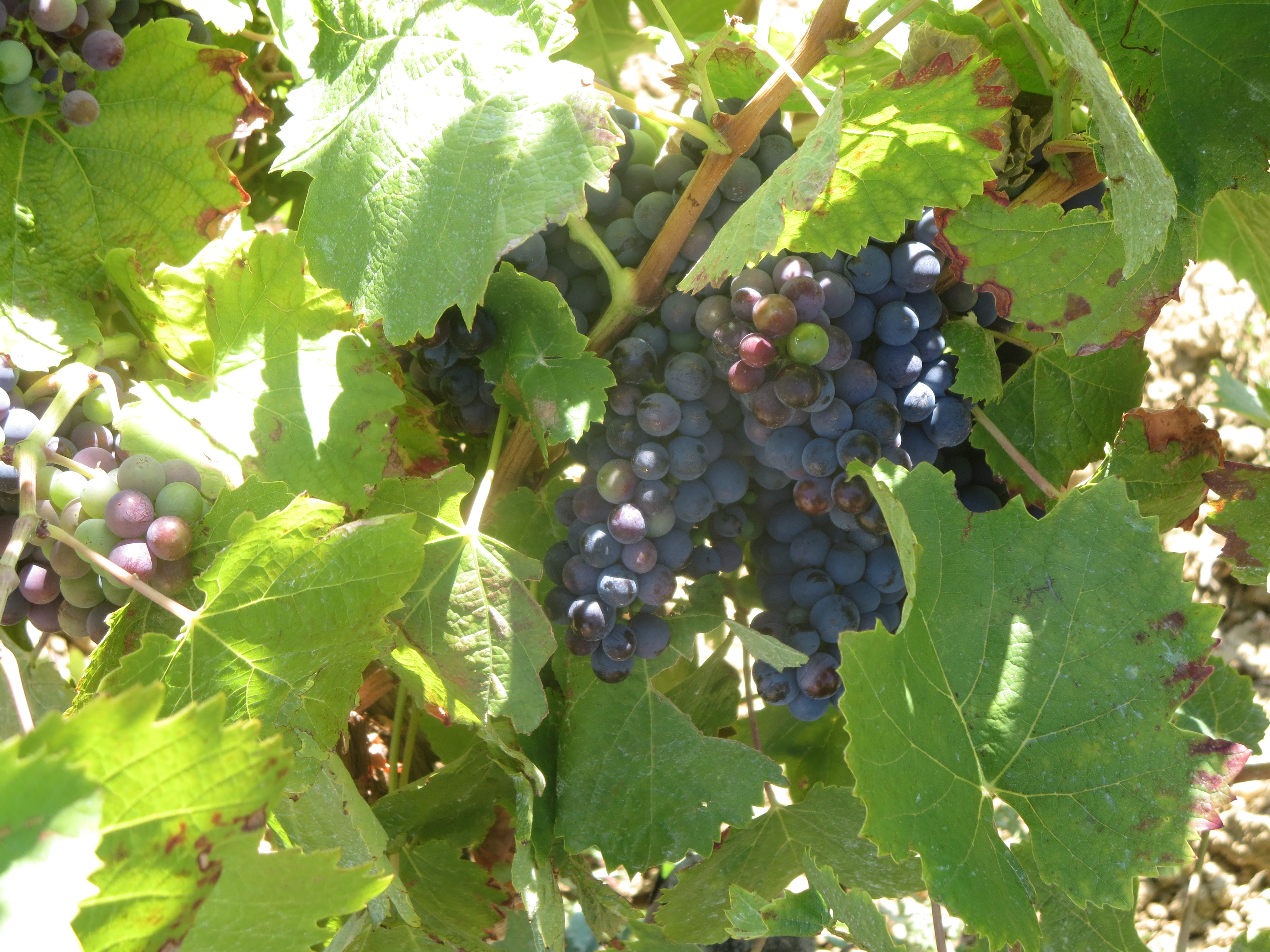
Carignan has big leaves which are quite hairy underneath and have a more dimply appearance than most in the upper surface. Five lobes usually though in the photo above the lower lobes are small with big upper lobes and a distinct top lobe. The teeth are tapered and distinct. The veins are hardly coloured. This is a late ripening variety and you can see the grapes below which are still turning black, even though this was taken at the same time as the other photos. The grapes and clusters are medium to large in size.

Carignan grapes

                                Carignan grapes

Mas Coutelou – Flambadou

Others – Mas Des Capitelles, Loris;      Coume Mayou, La Loute     Mas Gabriel, Trois Terrasses    Deux Ânes – L’Enclos

Cinsault

Cinsault3

                       Cinsault in Segrairals

I like to think of Cinsault leaves as being very like the grape’s flavours, open, friendly and welcoming. These are big widely spaced lobes and a deep, open sinus around the stalk. The veins are light and clear and the teeth are big, almost rounded which cover all the leaf edge. Often used in rosé wines Cinsault is starting to be used to make some great red wines in the region.

Cinsault Rome

     Older Cinsault in Rome vineyard

Cinsault grapes are big and form big clusters.

Cinsault Rome (2)

  Cinsault grapes

Mas Coutelou – 5SO and Copains

Others – Pelletier, L’Oiselet;   La Fontude, Fontitude;     Thierry Navarre, L’Oeillade    Julien Peyras, Gourmandises

leaves


2 Comments

Countdown

Version française 

IMG_2134

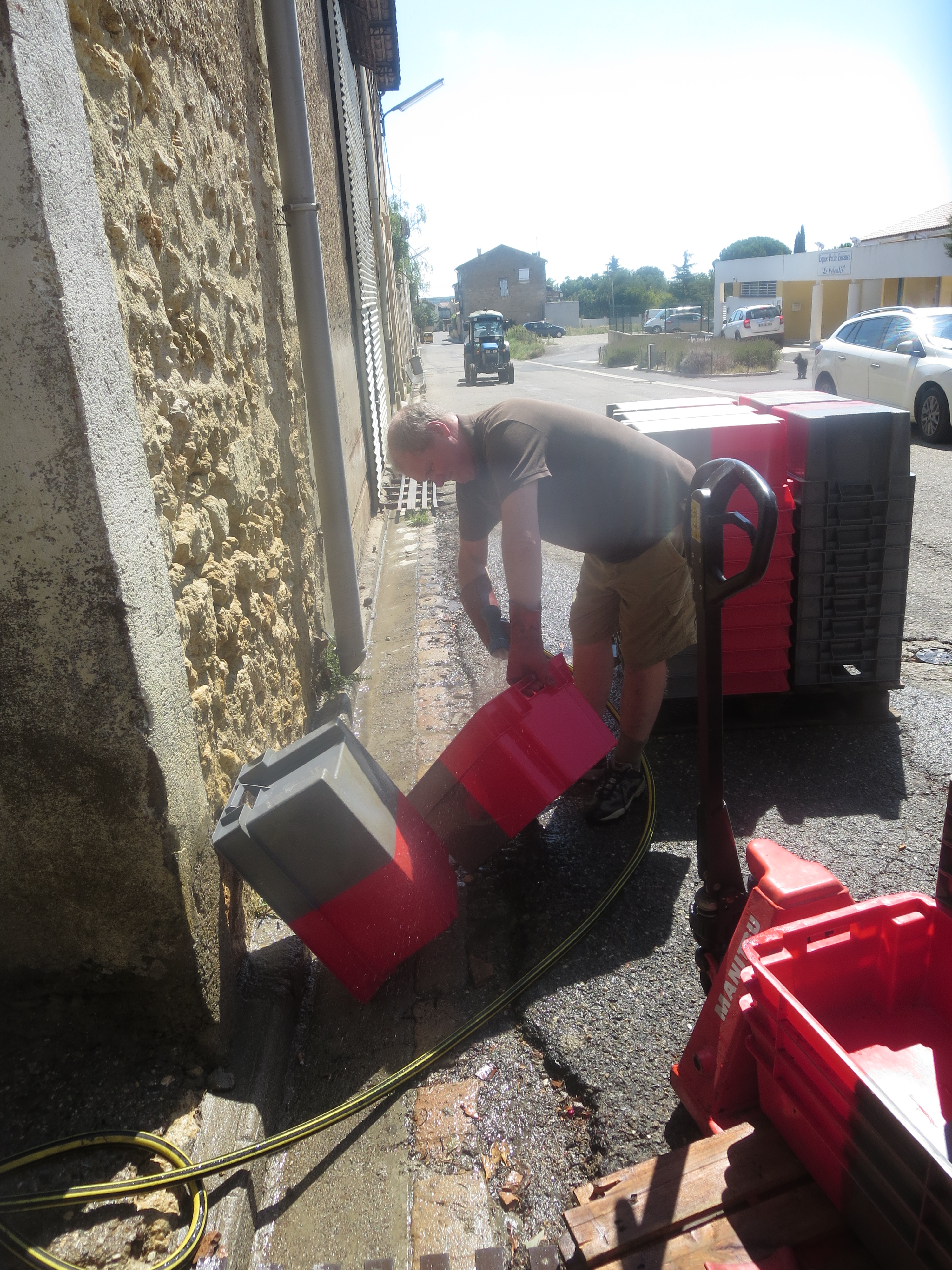
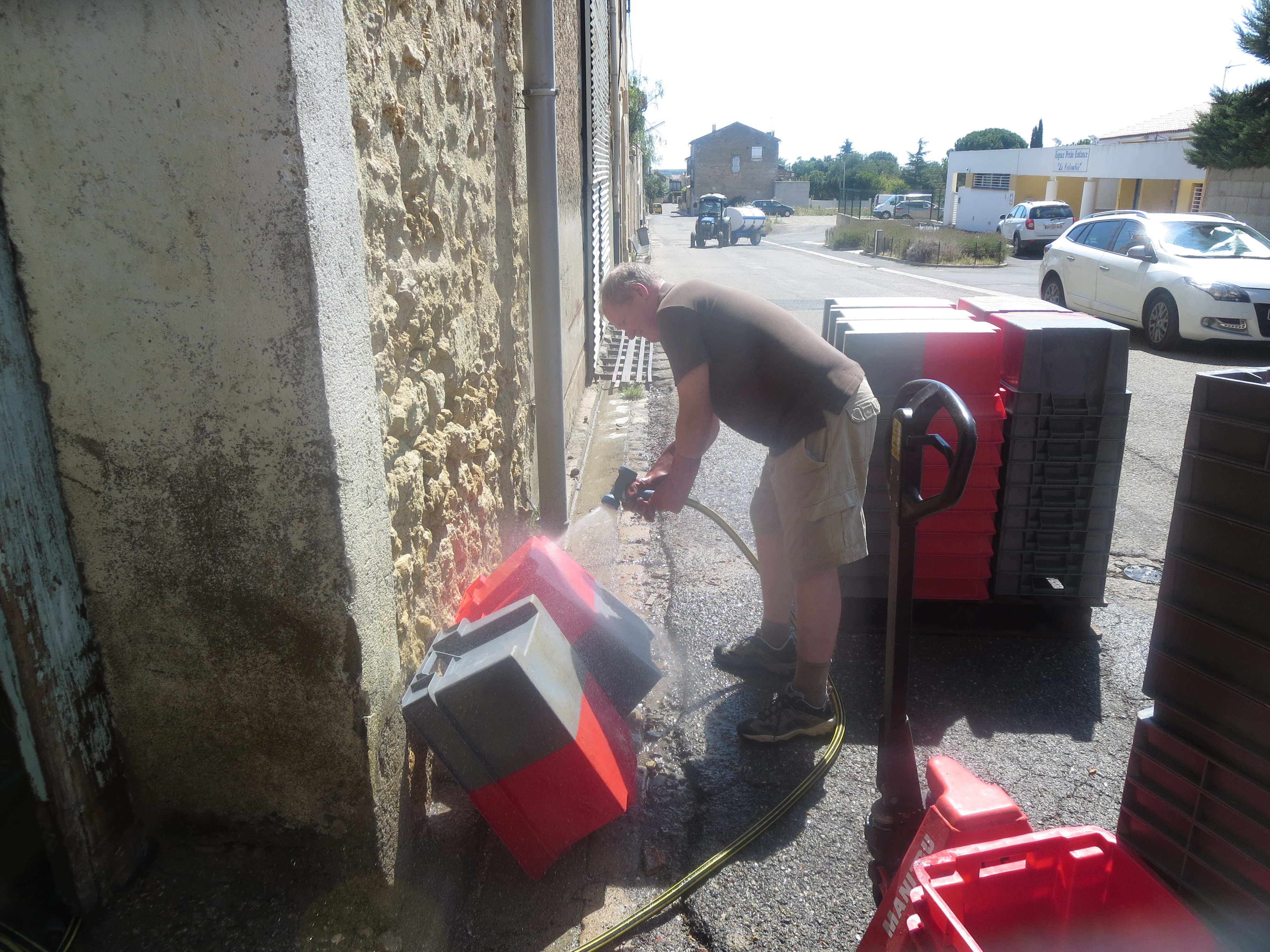
These plastic boxes haven’t appeared for a while, but they are a sure sign of what is soon to come. They are, of course, the cagettes vendanges, into which the grapes are placed when they are harvested. Today (August 19th) and the last few days have seen hard work in cleaning and preparing. I wrote earlier this month about the work which has been carried out to repair and update the cellar and work brings dust and debris which have had to be cleared up. Then everything has to be pristine ready for the start of picking. All vignerons will be doing this but when you make wines without the safety net of sulphur cleanliness is even more important.

And in case you think that I simply turn up to take photos and drink the wines:

                    IMG_2138               IMG_2137

Well it is one way of staying cool on a hot day. However, job accomplished.

IMG_2135

Inside the cellar the new cuves have to be prepared too with new equipment, Michel and Julien were busy with that.

IMG_2132

Jeff was busy too, moving some of the fibre glass and stainless steel cuves into position so that when harvest begins the grapes can be moved as quickly as possible into tank for fermentation.

IMG_2133

Indeed everyone was busy except for one member of the team who decided that this was all beneath him, besides that water is not something which appeals!

IMG_2139

The harvest itself is likely to begin next week, Monday or Tuesday. Recent weather has been cooler at night and this will help keep the grapes in good condition but they are not quite ripe just yet. Having tasted a few in recent days the juice is getting sweeter and but the pips are still green and hard. They are healthy though and some, like the Syrah, look tremendous.

IMG_2104

Evening sky over Puimisson

As the hard work will begin shortly it was a timely occasion to celebrate last week. Jeff’s father and niece celebrated birthdays and a very enjoyable party was held on Sunday at Rue De La Pompe. Some bottles included a 100% Mauzac from Plageoles, a Gaillac wine which confirmed for me that Mauzac is the best of white wine grapes in that region. (See here). And two lovely champagnes from Drappier with no dosage of sugar added and in one case no sulfites. Natural wines are beginning to influence all regions and some big names.

IMG_2140

Naturally the stars were closer to home however. Lots of great wines including Coutelou classics such as Classe, La Vigne Haute, Vin Des Amis but also some new ones for me. Grenache Mise De Printemps was lovely velvety and fruity, a great rejoinder to those who say Grenache can’t make good wine without blending.  And it had the most lovely aromas. ‘Snowball’ is a white wine of real texture and depth, very long.

IMG_2141

The celebrations went on long into the night and things got a little hazy including my camera so this photograph is not one of my best. This was Jeff’s first sparkling wine made in 2007 and in fantastic condition, fresh, clean and very full. So much for natural wines being only for the short term.

IMG_2121

Now the countdown is really ticking so that this year’s grapes can produce wines of such quality all over again. Or indeed, even better.

IMG_2101


2 Comments

July’s parting gift

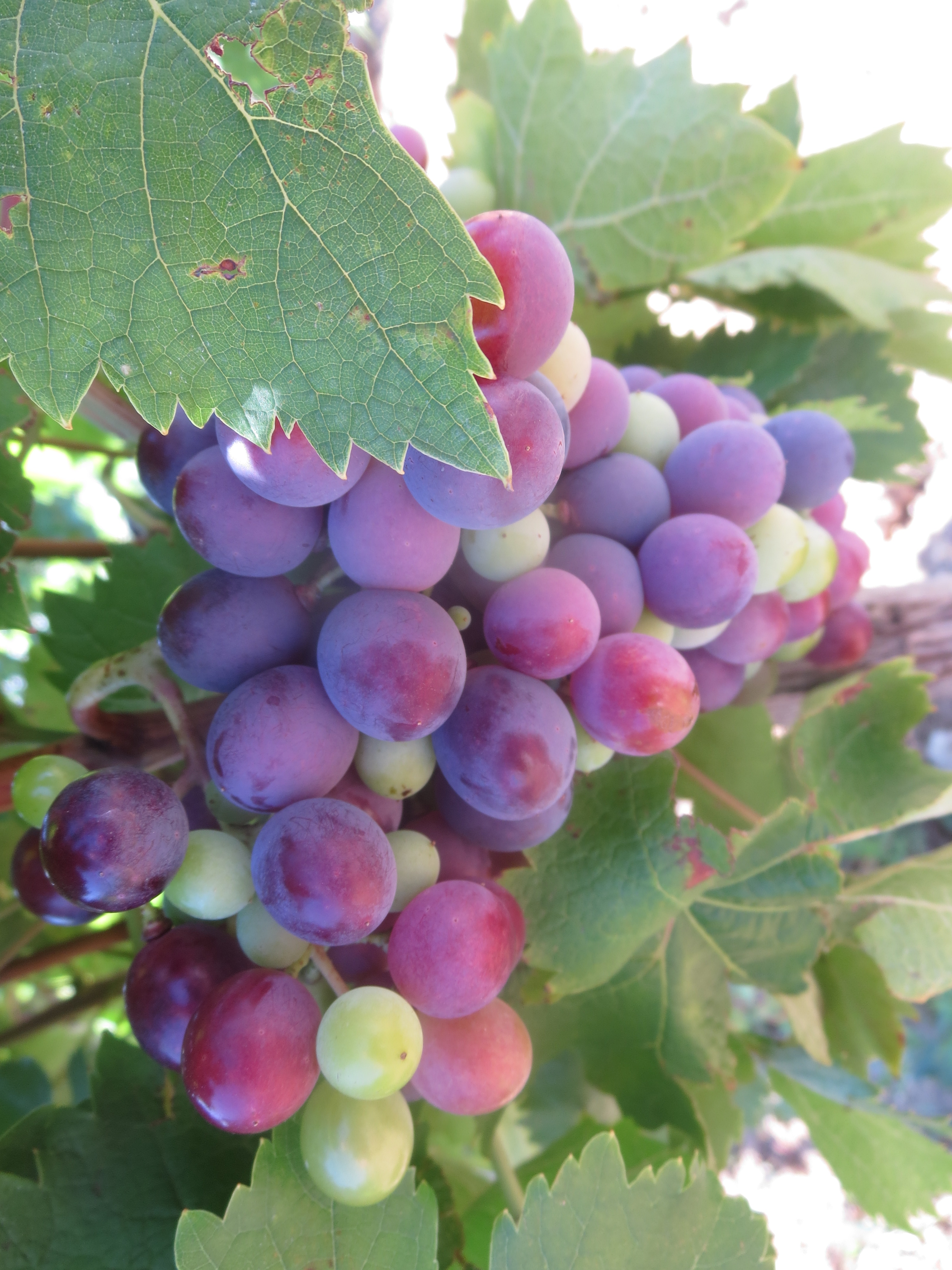
Colourful Cinsault

Colourful Cinsault

Version française

All photos taken on August 2nd unless otherwise stated

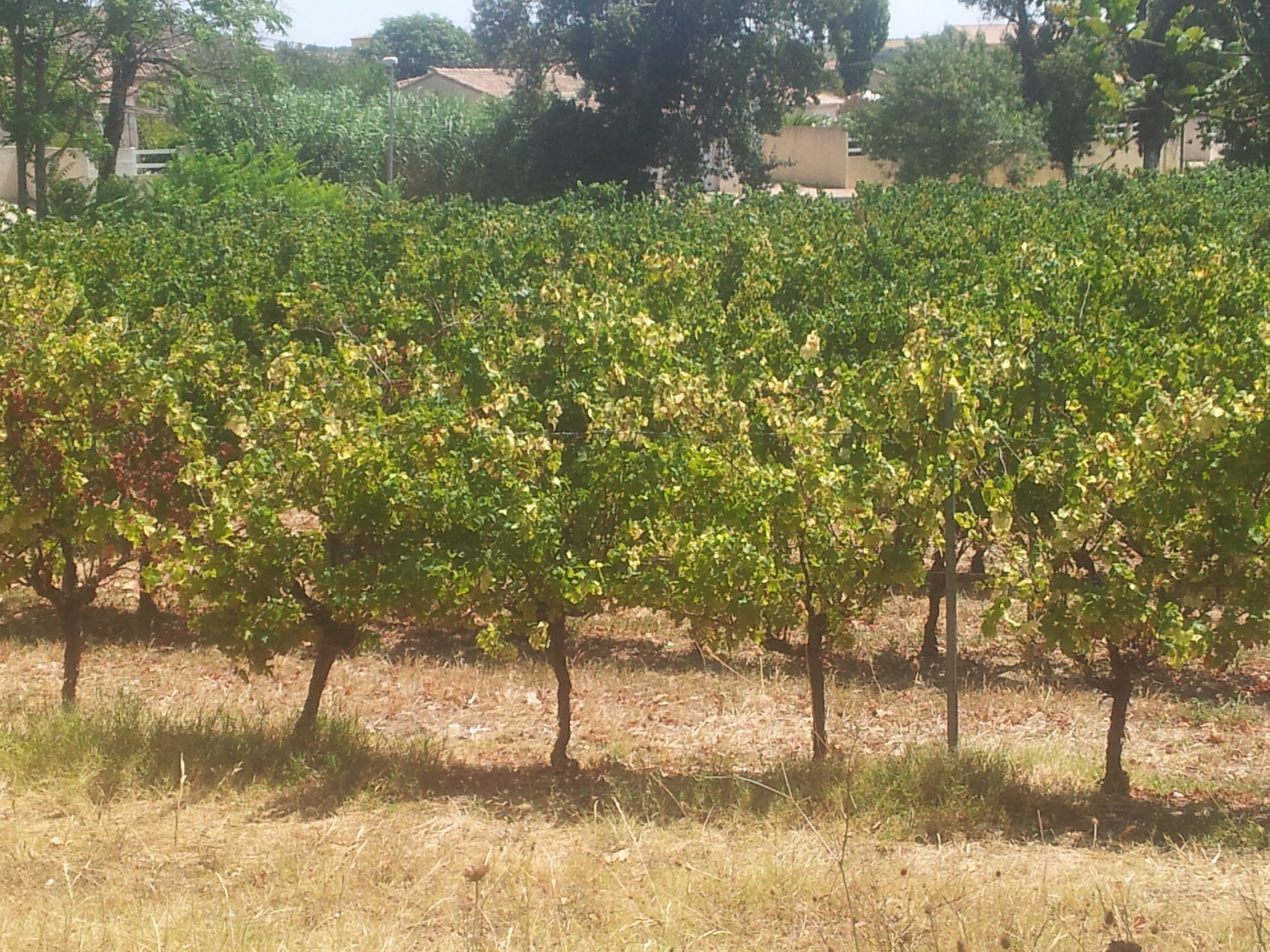
It was June 12th when rain last fell on Margon and the vines in the region, although generally doing well, were starting to show signs of fatigue and heat stress; leaves curled in upon themselves, some yellowing, a slight shrivelling.

Vines near Pézenas showing some stress

Vines near Pézenas showing some stress

Vines in Margon which were not pruned in spring and are really suffering

Vines in Margon which were not pruned in spring and are really suffe

A few drops fell on July 25th but the skies had been very dark and had promised much more, it was almost cruel to have that rain, a tease of what might have been. However, July 31st brought around 10mm to Puimisson. A decent rainfall, enough to give the vines a drink and to stop the drying out process. Not enough of course after weeks of lack of moisture and some more rain in the next few weeks would be very much welcome to swell the grapes and the harvest. The vines are now pouring their energy into their fruit rather than their vegetation, but they need the nutrients to do so.

Untitled

So, how had the vines responded to the rain which fell? Well a tour on Sunday (August 2nd) showed the vineyards of Mas Coutelou to be in rude health, a decent harvest is now predicted though that extra rain would be most welcome.

Segrairals in full bloom, healthy, happy vines

Segrairals in full bloom, healthy, happy vines

Segrairals, biggest of the vineyards, showed some healthy Cinsault, Syrah and Grenache with no signs of stress or disease. As the home of Classe, 7,Rue De La Pompe and 5SO this is especially welcome, as they are some of the big sellers.

IMG_1980

Cinsault in Segrairals

To Rome, my favourite vineyard. The gobelets were looking well, plenty of grapes both the white varieties and the Cinsault. There was a little mildew around the entrance but minimal, no cause for concern. Could there be a cuvée of Copains in 2015? Jeff tells me that no decisions are made as yet, caution prevails and he will wait to see what the harvest gives him before he makes final choices about how to use the grapes and the wines which result.

Rome's centurion vines in good health

Rome’s centurion vines in good health

Muscat Noir grapes, a tiny bit of mildew top left

Muscat Noir grapes, a tiny bit of mildew top left

Sainte Suzanne (Metaierie) suffered from coulure in May with the strong winds blowing off some of the flowers on the vines, which will reduce yields a bit. However, the grapes there are growing well, what might have been a problem looks now a much brighter picture, good news for fans of Vin Des Amis.

Peilhan, just a little more tired and suffering

Peilhan, just a little more tired and suffering

The only vineyard parcel which has shown stress is Peilhan, There was a lot of regrafting and replanting in the spring and the dryness has caused problems for these new vines. There was also oidium in this parcel, the only vineyard to be attacked by this powdery mildew. Yet amongst those problems there are plenty of healthy grapes, some careful picking and sorting will be needed but it will produce good wine.

The famous Castets grapes of Peilhan

The famous Castets grapes of Peilhan

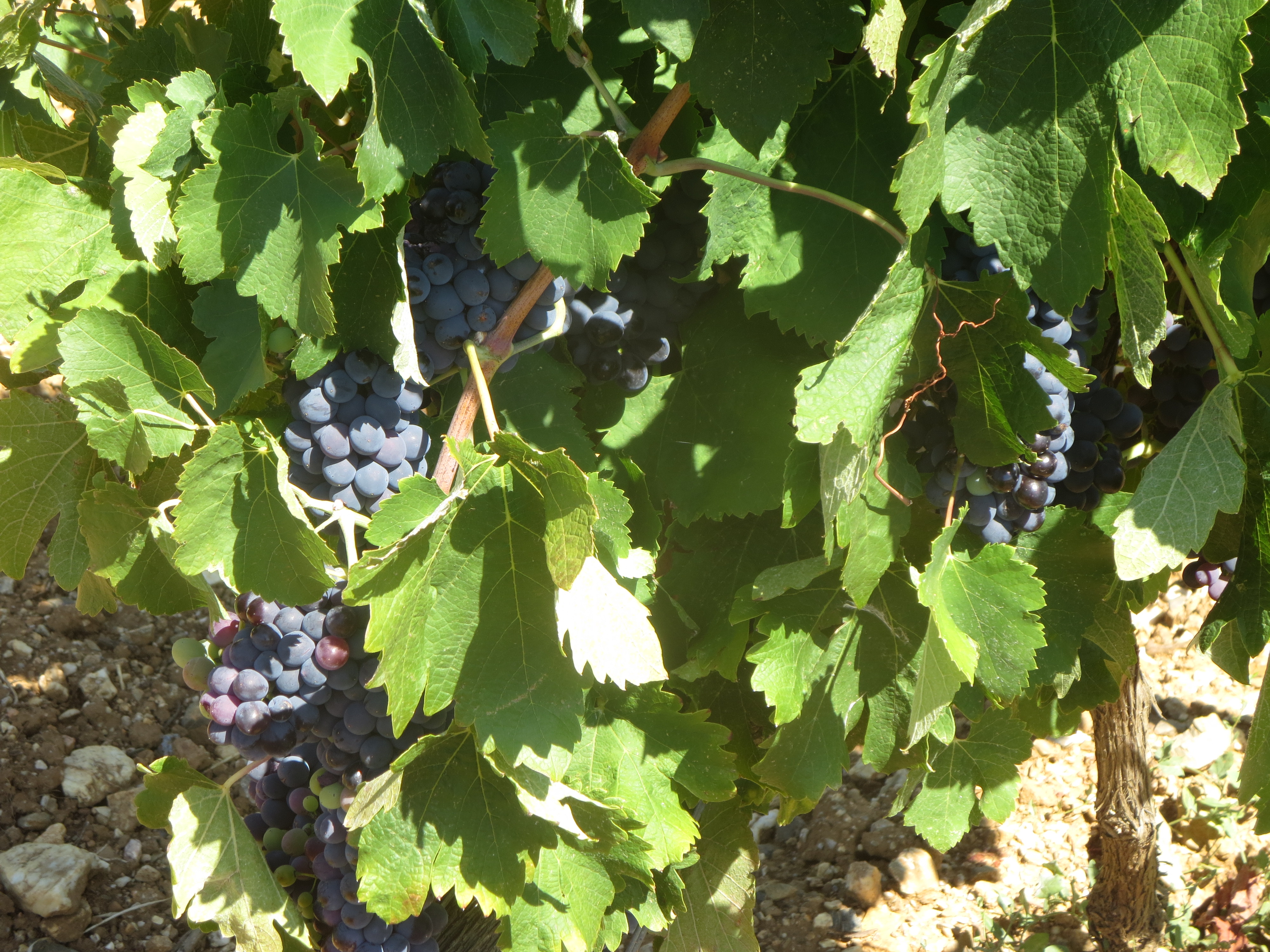
La Garrigue was blooming, the white varieties such as the Muscats are swollen and changing hue to lovely golden shades.

Muscat a Petits Grains in La Garrigue

Muscat a Petits Grains in La Garrigue

The Syrah is well advanced, a dark purple colour across virtually the whole bunches, the pips though betray a little immaturity as they taste and look green and sappy. A little more time and patience will pay dividends. As the world’s biggest fan of La Vigne Haute, I have my fingers crossed.

Syrah in La Garrigue, ripening beautifully in the shade of the vine

Syrah in La Garrigue, ripening beautifully in the shade of the vine

The Grenache in La Garrigue, despite facing south, is a little more delayed in colour but getting there and very healthy.

Grenache in La Garrigue

Grenache in La Garrigue

In fact despite risks of disease earlier in the year (see here) Jeff has been able to use minimal treatments in 2015. Oidium and mildew (powdery and downy mildew) can be controlled by copper sulphate, sometimes called the Bordeaux mix when added to slaked lime. This is a bluish colour when sprayed by conventional and organic vignerons and is often seen on the leaves of vines. Vignerons might also use chemical fungicides if they are not organic producers.

Neighbouring vineyard which was given herbicide shortly after harvest last year and whose new vines have been treated regularly

Neighbouring vineyard which was given herbicide shortly after harvest last year and whose new vines have been treated regularly

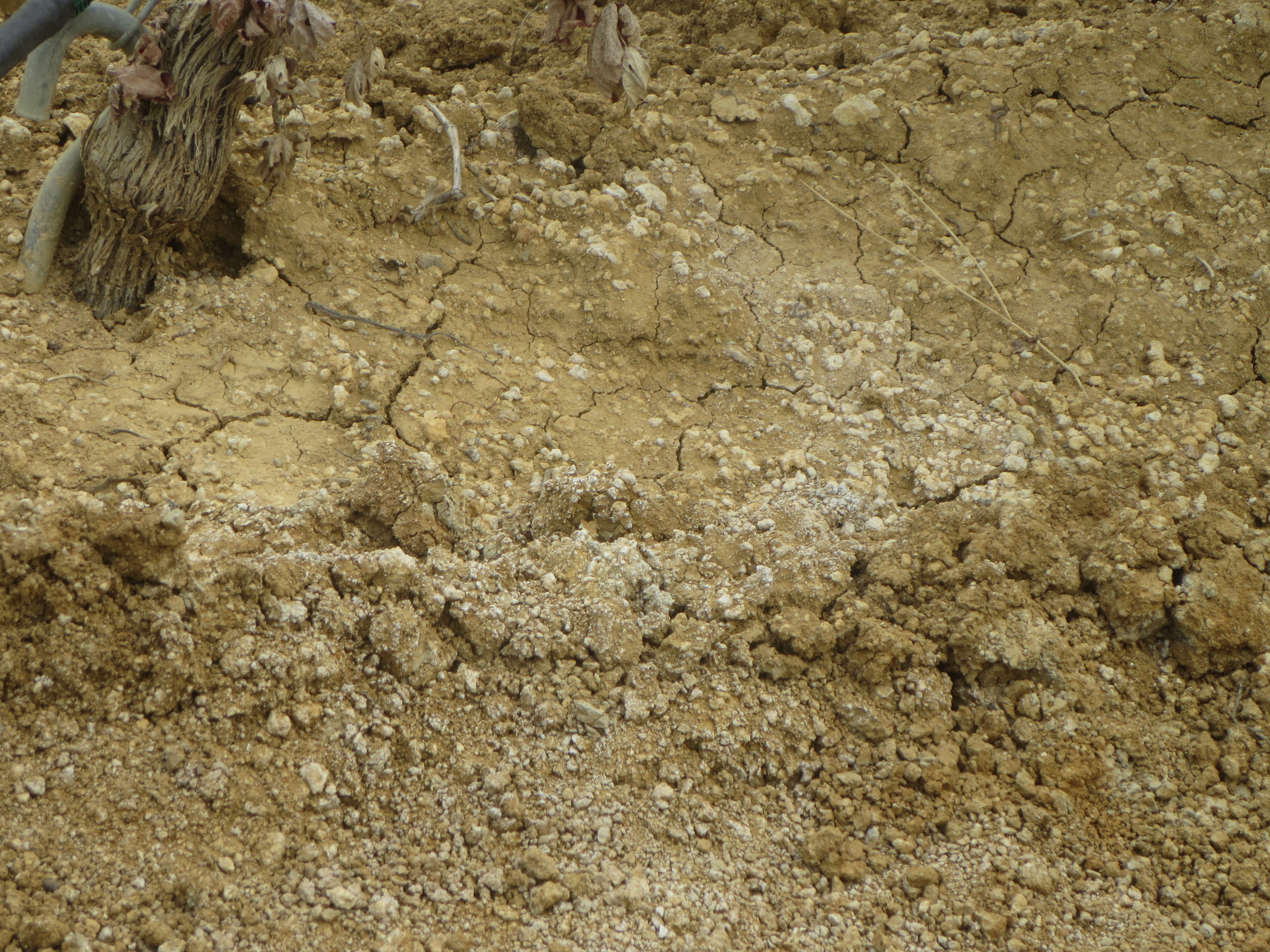
Some neighbours have also irrigated their vines and one alarming consequence is the changing of the soil and its pH as the calcium carbonate in the water shows through, you can see it in the white parts of the soil in this photo taken on July 22nd.

IMG_1932

The irrigation is also causing the vines to grow quickly and tall with thin trunks as seen below. It should be acknowledged that there are many conventional producers who take great pride in the health of their soils and vines and would be horrified by some practices described here.

IMG_2002

As a proud holder of Ecocert organic status and as a natural wine maker Jeff must use natural products only. Tisanes of plants which fight mildew such as horse tail, fern and nettles can be sprayed and this is the basis of many biodynamic treatments. However, the two main weapons in the armoury of organic producers are copper and sulphate, both natural products.

Copper is used against mildew, but is harmful to the soils and kills life in them if used in significant quantities. Organic producers are limited to 30kg per hectare over a 5 year period, allowing more to be used in years with more downy mildew for example but only if less is used in the other years. In fact Jeff has used just 200g per hectare in 2015 and this after years of well below average use, his use of copper is on a major downward trend. He is reluctant and very careful in using copper as he is aware of its danger to the soils, yet mildew has not been a major threat this year.

IMG_1552

Oidium seen in May

Similarly Jeff has used sulphur in soluble form at doses much lower than the permitted level, three treatments over the course of the growing season. In addition one dose of sulphur powder was sprayed when the risk of oidium was high (May) and a second spraying for Peilhan only as it is the vineyard which was attacked by oidium. In contrast to neighbouring vignerons who have sprayed every 10 days including after the bunches closed up (so more than a dozen treatments) this really is minimal intervention.

So July’s parting gift of 10mm of rain was welcome, August might like to follow by offering some rain soon. Too near the harvest is bad as it would dilute the juice rather than help the grapes to reach a good size. Things look promising, let us hope that nature completes its bounty. There is an old saying that June makes the wine and August makes the must, ie the character of the wine with its colour, yeast and flavour. With 3 weeks or so until picking begins it is an exciting, and nervous, time, waiting to see what that character will be.

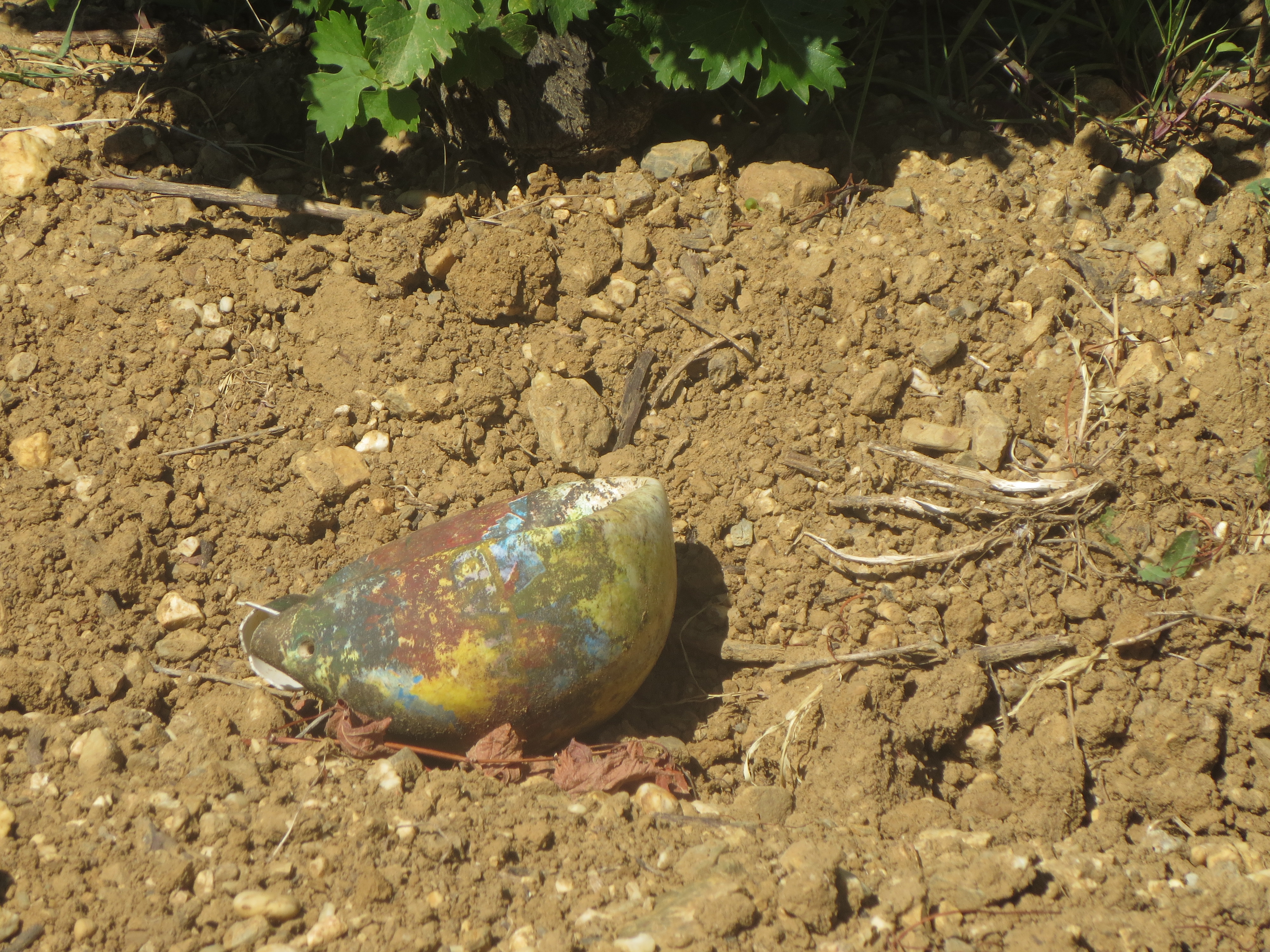
No Icare this time but look what we found amongst the vines, he's been here!

No Icare this time but look what we found amongst the vines, he’s been here!

NB there are lots of reports about recent wine tastings here.


3 Comments

Working in the vines (January)

Wintry vineyard

January vineyard

Version francaise

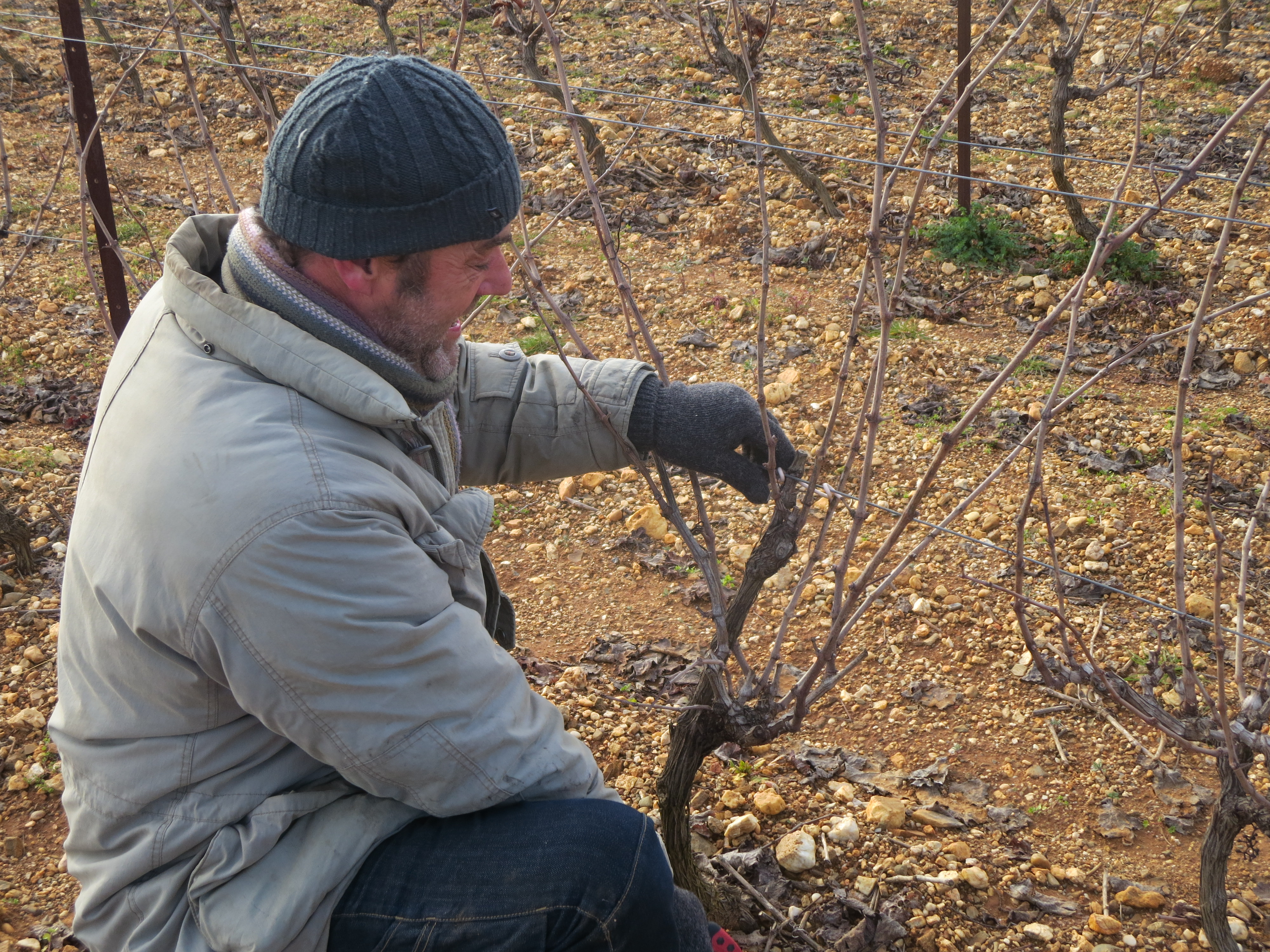
It was the 30th January and having promised to write about vineyard work in each month of the year, I felt that a deadline was looming! After tasting wines in Montpellier for a few days it was definitely time to get back to the vineyard the key component of those wines. Jeff took me to the vineyard called La Garrigue which is to the south east of Puimisson, home of Mas Coutelou. It is one of around a dozen parcels of land which Jeff owns, though some are home to olive and fig trees as well as hedgerows and other methods of reintroducing biodiversity into a district which has become one large vineyard. I shall be writing soon about the various parcels and Jeff’s work to safeguard and boost the local environment and biodiversity.

La Garrigue is rather like a small pyramid in form with a peak in the middle and vines around the sides.

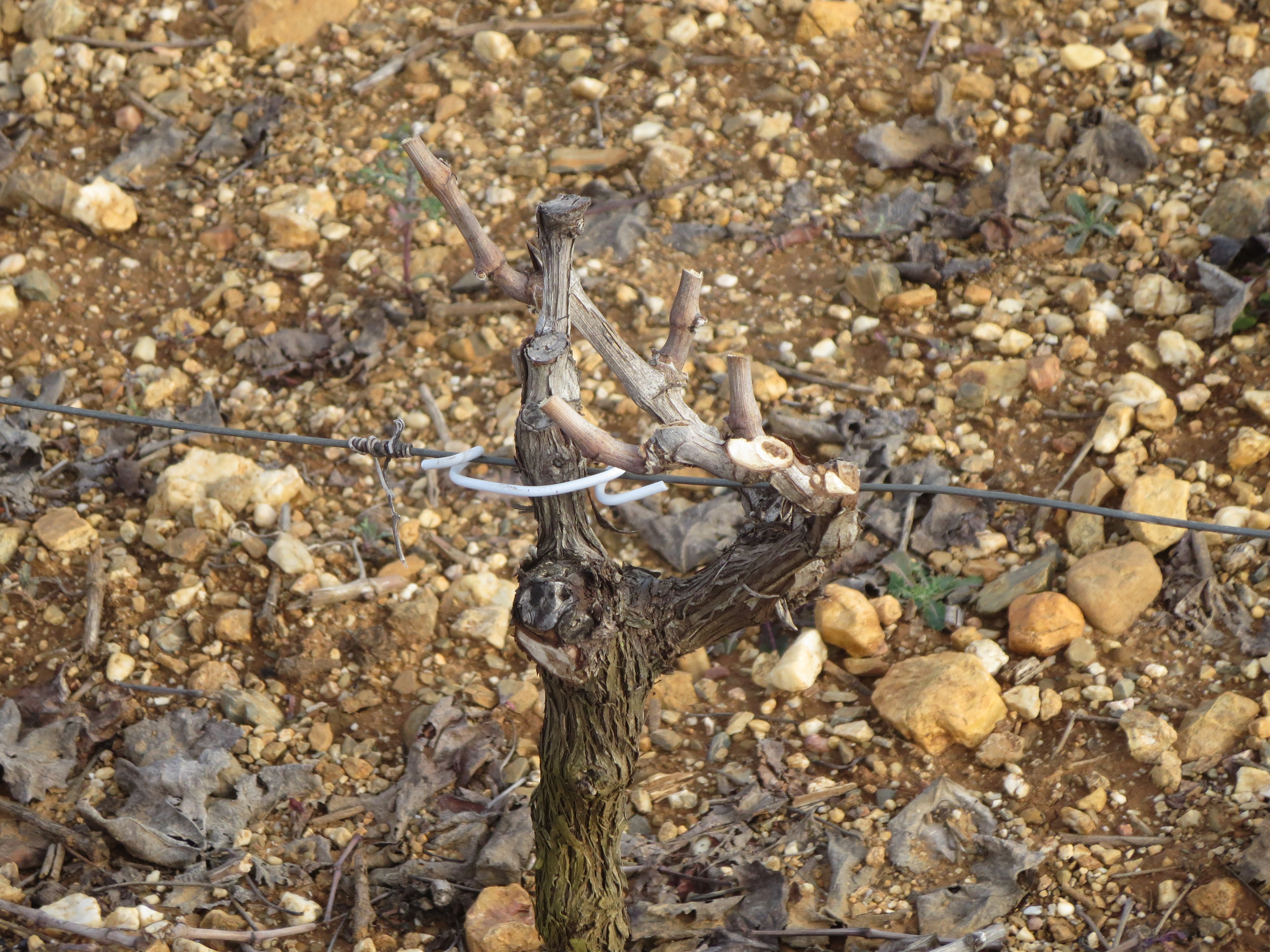
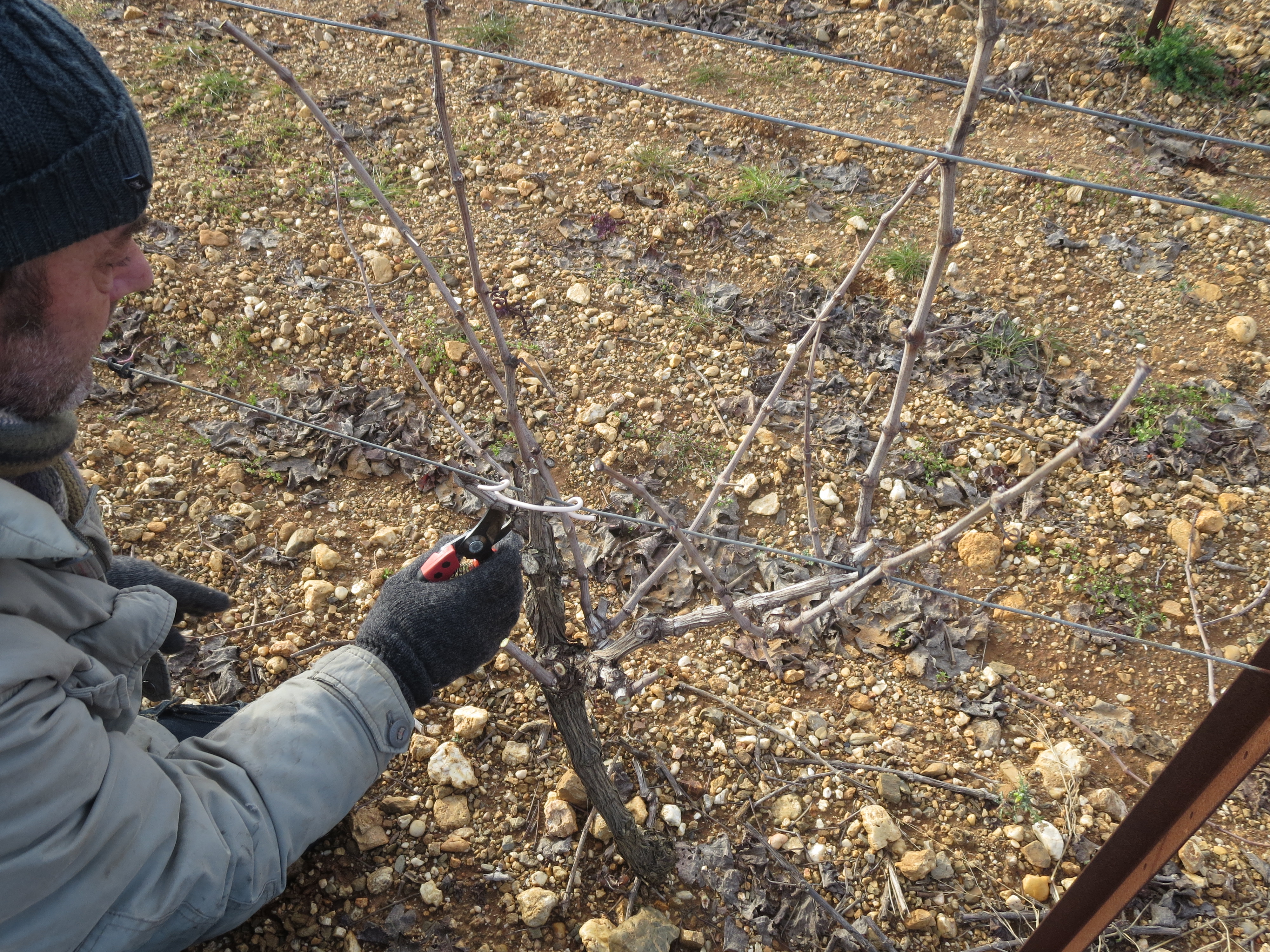
Facing north is a parcel of Syrah planted in 2006, so the vines are still young. They face north so that the freshness and spiciness of the grape variety are preserved rather than being overcooked. They are also planted in rows facing north to south so that the wind blows down the rows, helping to prevent disease and to dry the grapes after rain. Carole was busy pruning this area and the preferred method is the gobelet style. This is the traditional and most natural way of growing vines in the Languedoc and Jeff has preferred to use this method for his vines for a number of years and so these Syrah vines are grown using gobelet.

Syrah vine pruned in the gobelet style

Syrah vine pruned in the gobelet style

However, as you will see in the video, Carole studies each vine carefully and if she feels it would benefit from a different style she will prune in the more suitable way. This may be because the vine canes are growing too vigorously between the rows of vines and need shaping along the rows. As these are young vines they are being supported by wire trellising. In this case a cordon de royat system might be used.

Syrah vine pruned in cordon rather than the gobelet style which most of the Syrah vines are. It was felt its needs suited cordon better

Syrah vine pruned in cordon rather than the gobelet style which most of the Syrah vines are. It was felt its needs suited cordon better


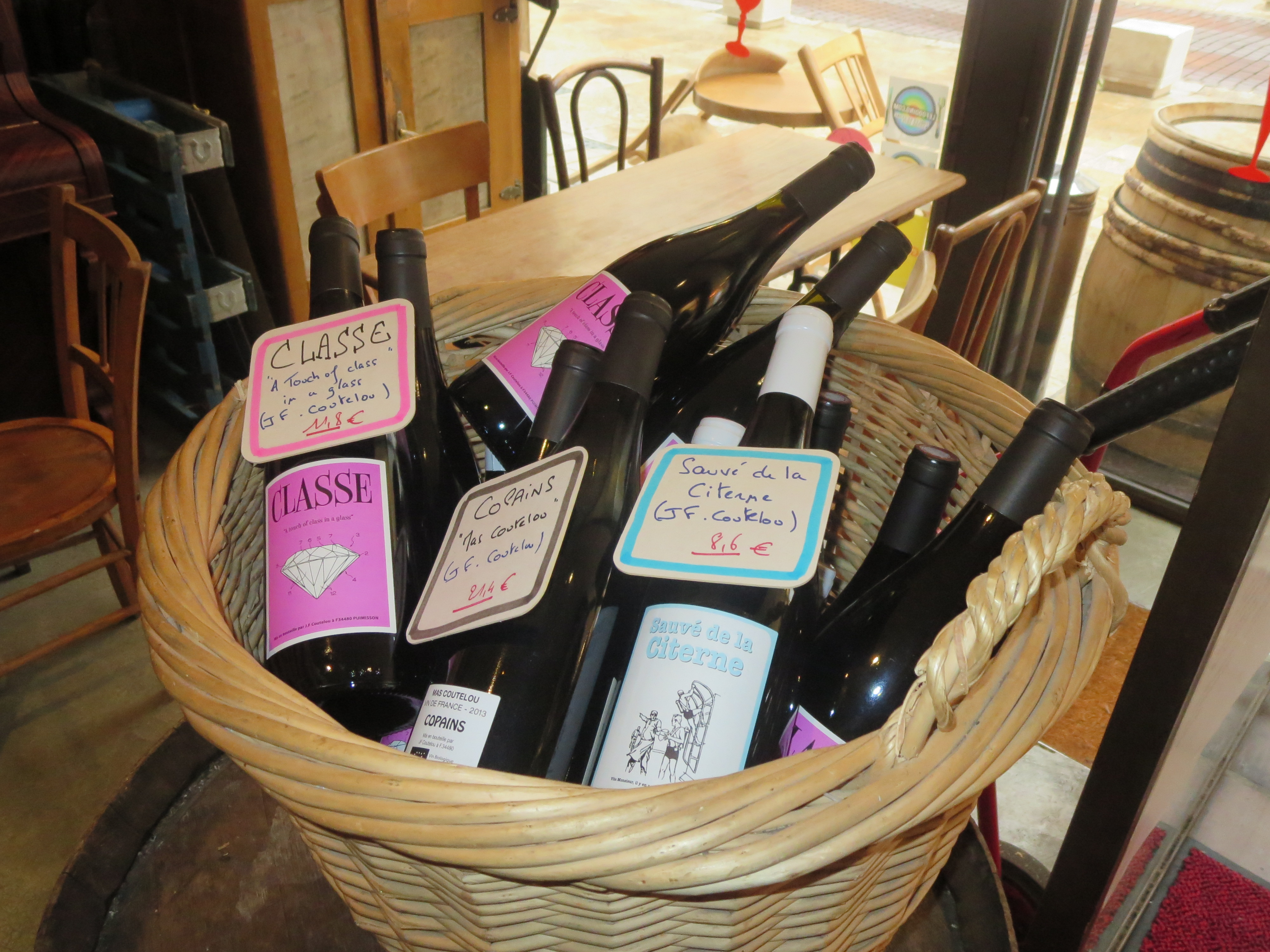
Facing south is a parcel of Grenache vines. This is a variety which welcomes heat and is grown through Spain and around the Mediterranean. It adds spice and complexity to wines and, facing south, the sunshine brings out these characteristics. In this parcel cordon de royat is used as the pruning method.  This was the system used when the Grenache vines were planted back in 2000 and so they continue to be grown in that style as it is not advisable or even possible to change them to gobelet now. The Grenache is usually used in the popular cuvee Classe.

Grenache vines,cordon pruning

Grenache vines,cordon pruning

A magnum of Classe

A magnum of Classe

To the easterly side of La Garrigue is a block of Sauvignon Blanc. This is not a variety often grown in the Languedoc as it gives green, fresh almost acidic notes in its wines and the region is often too hot for it to show those qualities. Facing east, however, means that the sun hits the grapes in the morning so does not overheat or over ripen them, preserving the freshness of the fruit. In this parcel guyot is the preferred system of pruning. This system allows more air to circulate around the grapes and as the white grapes are more fragile guyot training helps to protect their health. The white grapes are usually used in the white blend, PM.

Sauvignon Blanc vines pruned in guyot style up the wire trellising

Sauvignon Blanc vines pruned in guyot style up the wire trellising

 What struck me most, other than a bitingly cold, northerly wind, was how carefully Carole and Jeff study each vine to ensure that it is given a pruning which suits its needs. Direction, quality of the wood, crowding are all considered before they decide what to cut and at what length the remaining cane should be left. Some canes were cut very short, others had 8 to 10 eyes which will produce bunches of grapes. It depended upon the capability of the vine to bear such fruit. It is this care and attention which characterises the work of the skilled artisanal vineyard worker and winemaker.

Jeff studying a Syrah vine

Jeff studying a Syrah vine

First cuts

First cuts

Getting to the heart of the vine

Getting to the heart of the vine

The finished vine

The finished vine

I would compare this with a machine I watched around Margon which cut the vines to the same shape and size regardless of their health and

needs. The cutting was fast and much easier work but the pruning was brutal and imprecise with no regard for the individual vines. For vignerons producing cheap, bulk wines I can understand their actions.However, it confirmed in my mind that artisanal vignerons are the ones producing the wines I want to drink

Machine pruning vines, the yellow arm contains the blades

Machine pruning vines, the yellow arm contains the blades

Pruning is not glamorous. But is a vital part of the winemaking year, preparing the vines for when they reawaken in spring and enabling them to produce the right quantity of healthy grapes which in turn will produce great wine.

015


1 Comment

Attention les Rugbymen!!

(Version française)

The Grenache you harvested and pressed has been added to large 26 litre bottles and is beginning its journey towards maturity and drinking.

Moving from bonbonnes to bottles

Moving from bonbonnes to bottles

Yesterday was a superb day to be at Mas Coutelou.

It started fairly routinely by continuing habillage, preparing bottles for sending to merchants around the world. But then Jeff took me out into the vineyards to meet up with Michel who was already out there. He was in a vineyard of young vines, including some of the almost forgotten variety Aramon Noir as well as other cépages. There is a mix of ages too with vines from this year and the last two or three years. Michel, and then Jeff, were checking each vine to check on their health and progress since they were grafted. If the graft had not taken then they will be replaced later. If everything was looking good then stakes were added to support the young vines in their growth. As it was a lovely, warm and sunny day it was good to be out in the open air.

Michel has checked that this vine is healthy and will add a wooden stake

Michel has checked that this vine is healthy and will add a wooden stake

Jeff and Icare get to work

Jeff and Icare get to work

The weather has been remarkably mild and the vineyards were full of unusual sights for mid November such as flowering roses, wild leeks and wild rocket.

IMG_0474 IMG_0476


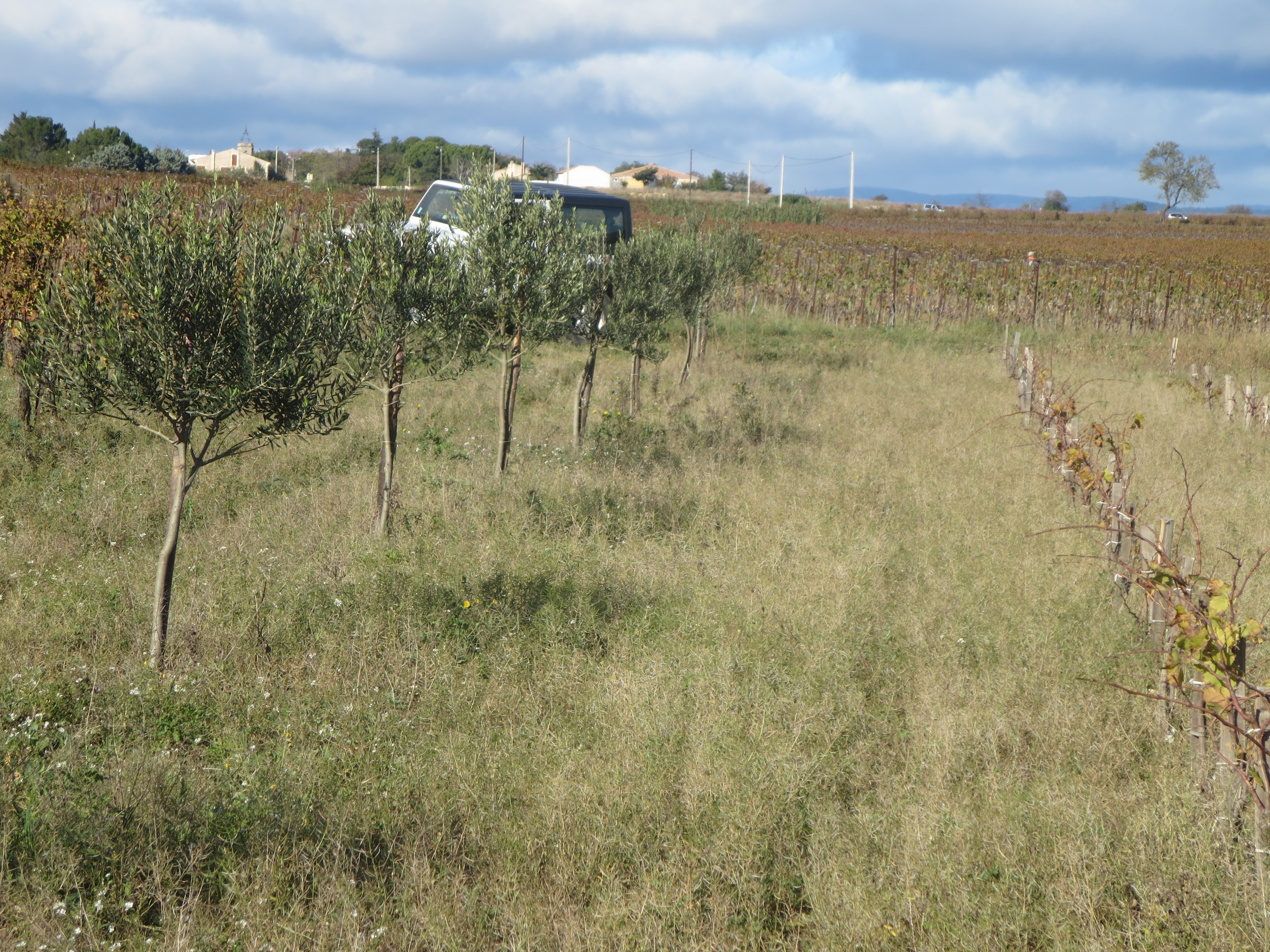
It was interesting to note the differences between two neighbouring vineyards. Jeff’s has vines living in soil which supports wildlife and olive trees for diversity. A neighbour’s vineyards show clean soils with neat rows of vines. How are they so clean? Fertilisers and chemicals. Here are obvious differences in ideas about wine and agriculture in general. Personally I am becoming ever more convinced that organic, minimal intervention is the way to healthy and tasty wines but others will disagree.

IMG_0469

Biodiversity


A regiment of vines

A regiment of vines


After lunch Jeff decided it was time to put into bottles the Grenache harvested in late September by the Rugbymen and ourselves. The wine had been placed in a series of bonbonnes after pressing and we tasted each one to look for the best assemblages, eg bonbonnes B and E had a sweeter edge so were mixed together in a large 26 litre bottle. The bottles were enormous and 8 were filled with the Grenache.

Michel tasting the Grenache as we agree on best assemblages

Michel tasting the Grenache as we agree on best assemblages


Bottles, sample bottles and emptied bonbonnes

Bottles, sample bottles and emptied bonbonnes


As the work finished for the afternoon we were joined by Jeff’s niece Flora, a talented photographer. Jeff opened some Vieux Grenache as he checked on the progress of some new small barrels used in a new solera system to supplement the older more established one. Some bottles from 20, 30 and even 40 years ago were sampled and were truly delicious, rich with layers and layers of different flavours and varying from dry to sweet. Finally he took a sample of a very special bottle, Sélection Des Grains Nobles 2012 made with Grenache Noir. Apparently some of the Grenache was affected by noble rot that year and Jeff and Michel spent a whole day doing triage to ensure only the right grapes were selected. The result even after two years is astonishing. My mind was truly blown. How to describe something so stunning, ethereal and rewarding? One of the very best wines I have tasted and a fitting climax to a truly memorable day which was full of sunshine, teamwork and friendship.

Icare in control again

Icare in control again


1 Comment

Being a vigneron – Part 3

No you haven’t missed Parts 1 & 2! It is widely acknowledged that the work of a vigneron involves three locations; the vineyard, the cellar and the office. The first two parts are the most well known of course and what people like me think of first when we think about the ‘glamorous’ lifestyle of winemakers. However, if you don’t sell the wine and get it delivered safely to merchants, restaurants etc then it is pointless trying to make wine.

Now that harvest is done and the wines are stored in tanks, either fermenting or maturing, the more mundane, but equally important, aspect of a winemaker’s job comes to the fore. Wines have to be bottled, packaged, sent to market and, above all, sold. Jeff said to me that this was not especially interesting but, for me, it was.

IMG_0289

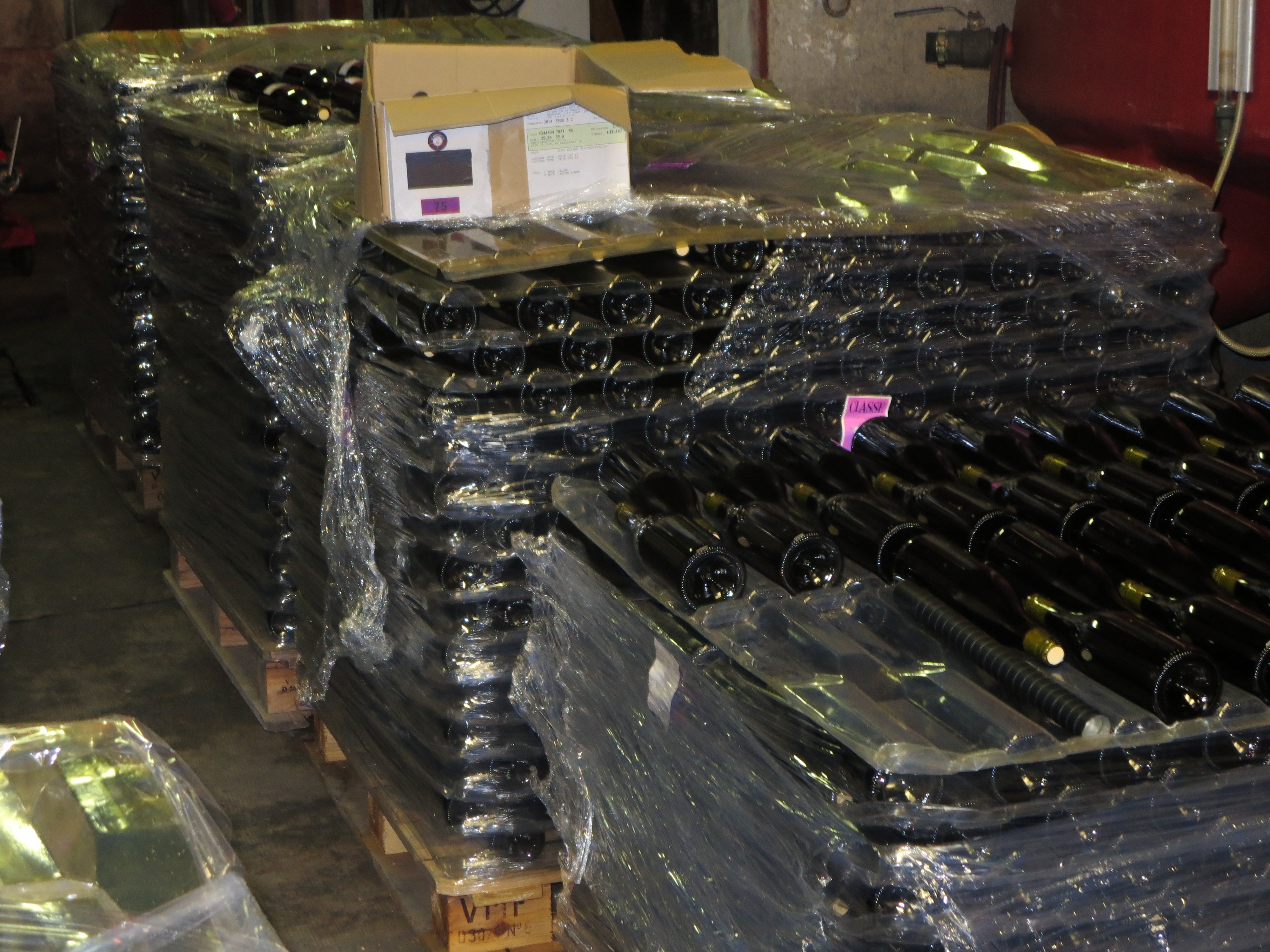
Bottles waiting to be packaged

Classe bottles waiting

Classe bottles waiting

Jeff has built a strong demand for his wines both in France and abroad. Our recent visit to Paris and the fact that his wines are sold out there proved the case. Visitors to the cellars call on a regular basis looking for wine, merchants phone wanting to place orders – his mobile phone is never far from Jeff’s ear.

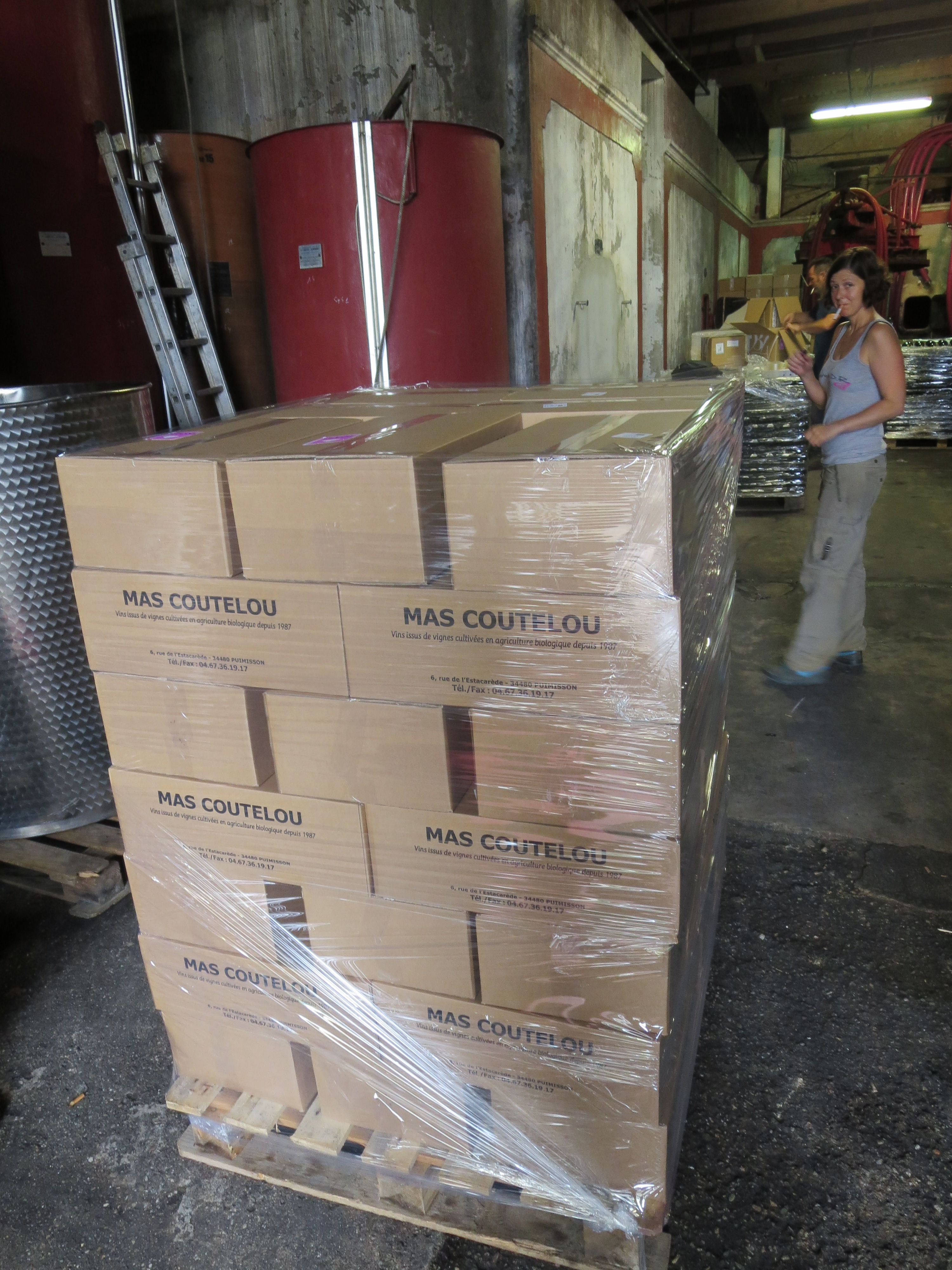
On Friday last week a new ‘toy’ arrived to help the packaging. It seals the cardboard cartons and prints the name of the wine on the side, speeding up the packaging process. Nonetheless teamwork and humour keep that process very human.

The job is hard, repetitive, physical work. In the video you will see Jeff at one point to place 4 bottles in the box at a time, routines and practice are everything. But without the boxes of wine the rest of the business cannot happen. It is less attractive but it is as important as harvesting or winemaking.

Two new wine treats came to the fore this week. Firstly, a slightly sparkling white wine, blanc frisant made from Macabeu and Grenache Gris. Secondly a cuvée made for the first time since 2003, Copains, made mostly from Cinsault but with Grenache and Syrah grapes vinified all together – truly delicious with the latter grapes adding body and depth to the Cinsault and giving the bottle longevity I would think.

Parts 1 & 2 of winemaking are still very strong, Part 3 too and I shall investigate more about commercial decisions in future.


Ready to go

Ready to go

Icare remains underwhelmed by the new packaging machine

Icare remains underwhelmed by the new packaging machine


2 Comments

Fin de Vendanges a Mas Coutelou, One Day Like This

Vendange under a perfect sky

Vendange under a perfect sky

As my favourite band Elbow sang in their biggest hit, one day like this a year would see me right!

Saturday September 27th was the last day of vendanges chez Coutelou and, apparently, many other domaines in the region. After some iffy weather in the previous 10 days the sun had been out for the last 2 or 3 and today was no different. There was an autumnal, morning chill as Pat and I arrived in the vineyard to help collect the last of the Grenache Noir.

Grenache Noir

Grenache Noir


Pat picking


However, the sun soon became hot and the panama was soon donned to protect my head since hair no longer bothers to do so. The usual pickers had departed and Jeff called in his friends from the Béziers rugby club to help out. The ‘rugbymen’ proved to be hard working, fun and very welcoming towards novices such as ourselves even when I declared my lack of interest in their sport.

As ever harvesting grapes is only the first part of the job in the vineyard as it is the first step in the process of triage (sorting), any underripe, mildewy or poor quality grapes being cut out before being placed in buckets, then cases. The best way to check the health of a bunch that has been cut is to smell it. There should be the clean, fruity smell of grapes. If not, then search for the problem and eliminate it. Any grape left should be one that you would be happy to eat, and that we did too!

A grape with a hole created by a ver de la grappe (worm)

A grape with a hole created by a ver de la grappe (worm). The grape would soon be cut away

Healthy and delicious Grenache grapes


As the morning heated up it was time to casse croute. A drink of water I thought, wrong! Out came the picnic table, a collection of charcuterie (my pescatarian ways raising more rugbymen mirth!) and then some cheeses from La Fromagerie, a shop in Béziers. These were some of the best cheeses I have ever tasted, including a runny and perfect St Marcellin. Naturally, in every sense of the word, to accompany these treats were a couple of magnums of Vin Des Amis, the most appropriate of wines for today.

Tina, the 'rugbymen', Jeff, Michel and myself

Tina, the ‘rugbymen’, Jeff, Michel and myself

Welcome shade


Michel does the honours

Michel does the honours


Icare checks that everything is up to scratch

Icare checks that everything is up to scratch


12.30pm, grapes picked it was time to return to the cellars. The Grenache was put into tank to be fermented by carbonic maceration. This is where whole bunches of grapes are put in tank and the weight of the grapes gradually bursts the skins and starts fermenting the grapes at the bottom of the tank. Most of the grapes begin to ferment inside their skins. The result is usually more fruit and less tannin and adds a different layer of complexity when blended with other grapes fermented traditionally after being pressed

We came, we picked, we sorted

We came, we picked, we sorted

La force des rugbymen


Jeff shared some of the juice / wines from various tanks from the harvests of the last few weeks. These are, obviously, at different stages of development according to date of picking, speed of fermentation etc. There were  a multitude of flavours, richness and acidity and so much promise for another excellent vintage despite the dry spring and summer. Low in quantity but high in quality.

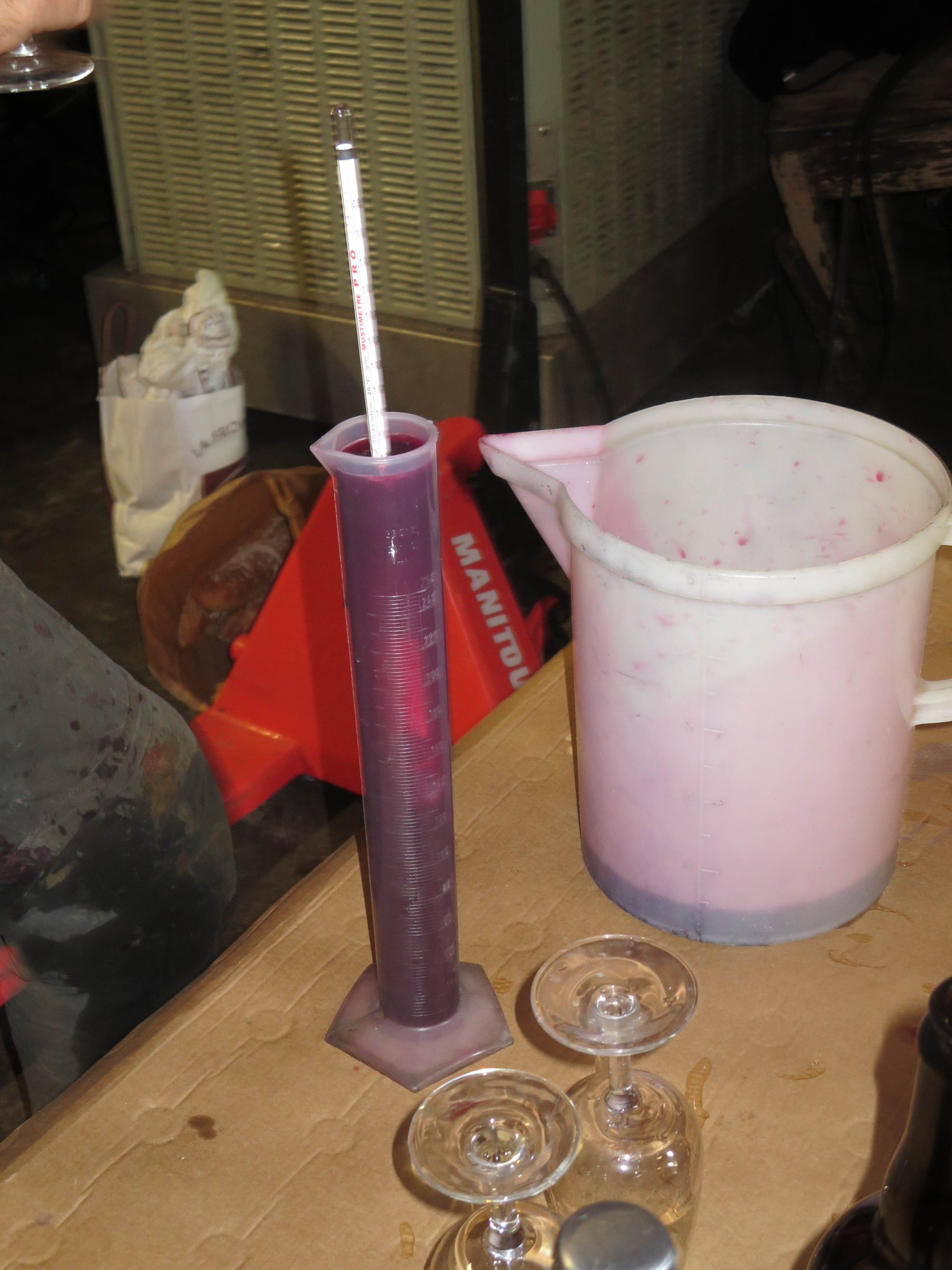
The Mourvedre being checked for density

The Mourvedre being checked for density, it was a delicious fruitbomb to taste

At work at the sorting table checking Mourvedre grapes which have a beautiful blood coloured juice

At work, the previous Tuesday, at the sorting table checking Mourvedre grapes which have a beautiful blood coloured juice


And that I thought was that. Wrong again! Back to Jeff’s house,

the celebrated 7, Rue De La Pompe (name of one of Jeff’s cuvées) and into the garden where, joined by families of the rugbymen, children and 17 adults sat down to a delicious meal of salads, a giant seafood pasta, more La Fromagerie cheeses, and several huge fruit tarts. Just fantastic, many thanks to the cooks, Michel for cooking the pasta through, and to Jeff for his generosity. Why so few pictures of the meal? Well I’d like to claim a technical hitch but it was probably more due to this…

Jeff and Balthazar

Jeff and Balthazar

I don’t think I have ever seen a Balthazar bottle actually filled with wine. This was Vin Des Amis 2013, all 12 litres of it. As the afternoon wore on it was amazing to taste how the wine developed and opened up allowing the Grenache fruit to really express itself. And, to make a comparison, a magnum of 2010 Vin Des Amis which was beautiful. Fresh yet complex and long lasting. Thus it was after 6pm when we finally stood up from the table. Pat had been very abstemious as we had to get back to Margon and then to the theatre in Pézenas. I admit to being a little merry.

It had been a fantastic day, one I shall always cherish and remember. I have always wanted to pick grapes and take part in a wine harvest. Dream fulfilled in the company of some terrific people who were welcoming, friendly and tolerant of the two English incomers. What a treat to spend the day in the company of French people at work and at play, even if the speed of their French became way too fast for me at times. Work to do there. And, work aplenty still to do in the year ahead – the wines have still to be made, bottling to do, pruning and taillage in the vineyards. I can’t wait!

I must say a huge thank you to Jeff whose patience, friendship and generosity are the stuff of legend. I posted recently about the story of the Chaud Doudou and its moral of sharing everything good. The gathering of friends and colleagues in his vineyard, cellars and garden was living proof that he carries on that tradition of chaud doudou. He wants to share his work and his passion for nature and the wines he creates. This he achieved magnificently today.

Surrounded and sharing

Surrounded and sharing


Error
This video doesn’t exist

The scenes of trees in the video show some bat houses erected for them to shelter, part of the diversity encouraged at Mas Coutelou. The music is, of course, Elbow. And, for those who can’t get enough of him, Icare makes an appearance!