Penicillin cures, but wine makes people happy. -Alexander Fleming
A short addendum to the post about the problems of disease.
Recently when talking to a visitor to his cellar Jeff was asked about using sulphur. His answer is worth repeating. He said that treating vines is like when you have a cold. You start by using cold remedies, hot lemon, tisanes etc and it’s the same with vines. You treat them with the tisanes of horsetail, nettles and ferns.
However, sometimes the cold can become more serious and you have to seek help from a doctor with more drastic treatments. So too sulphur is the dramatic, interventionist treatment. You’d rather not have to use it but if needs must. It remains a natural treatment at least.
Which reminded me of some publicity material Mas Coutelou put out in January 🙂
May was a drying month. Lots of sunshine with temperatures comfortably in the high 20s almost every day. However, this year was also marked by high winds. The Tramontane / Mistral blew for over a week and was truly maddening. Other winds meant the vines spent almost three weeks blowin’ in them.
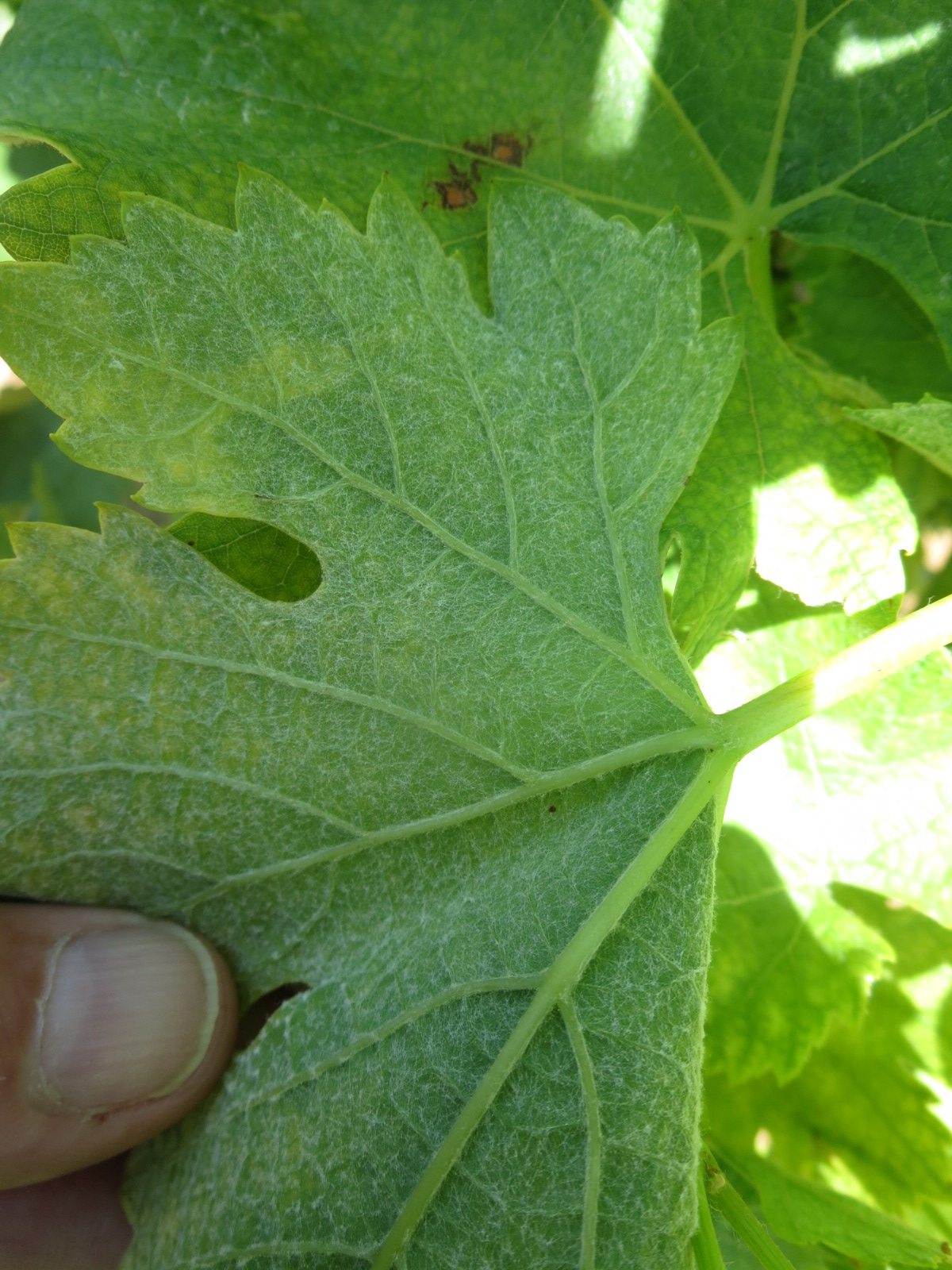
With the rise in temperatures during the day and cool nights natural problems emerged. Oidium or powdery mildew showed itself first encouraged by the humidity resulting from daytime heat and cold nights.
Oidium on buds and leaves
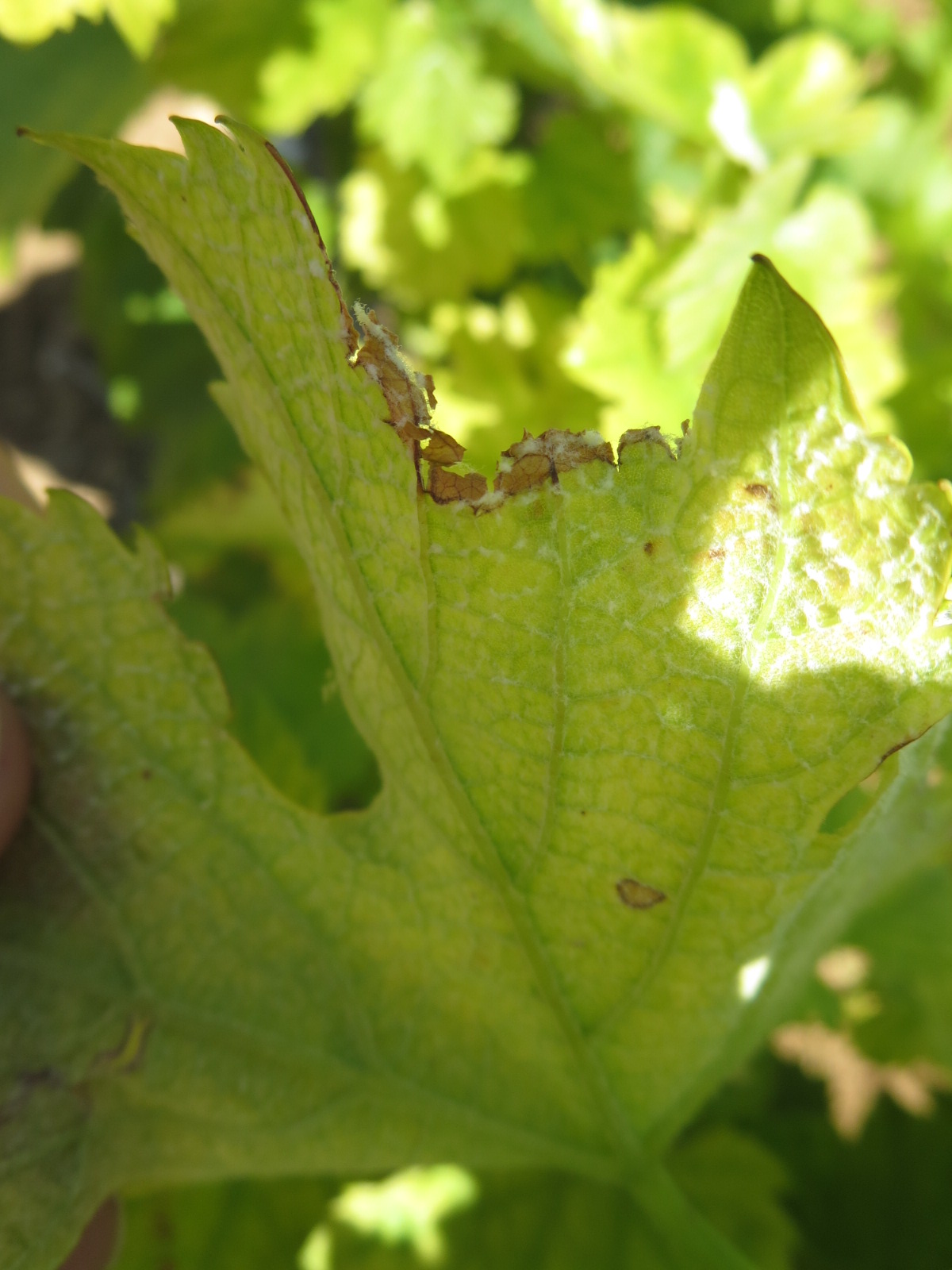
This was followed by mildiou or downy mildew and vignerons all around the region were talking about its appearance by mid May. And in fact the high winds were helpful here, drying the vines and lessening the impact of mildew. At this stage if the vigneron can get on top of the disease then it is not a huge problem unlike if it were to get amongst the grapes later in the season as this could influence the taste of the wine.
Mildiou on a leaf near Margon
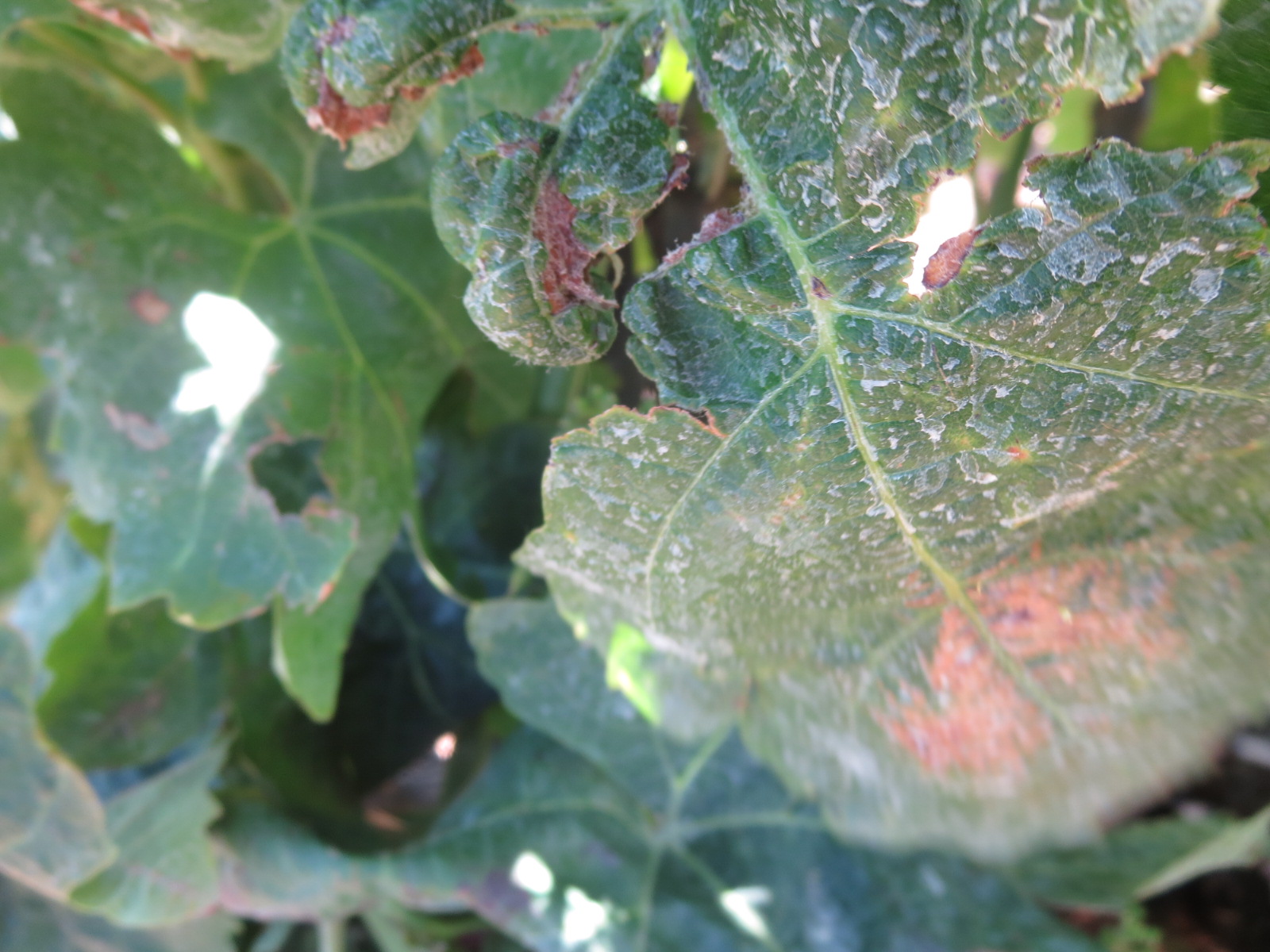
Mildiou scars and chemical treatment used to treat it (Margon)
Oidium can be treated by pesticides. Pesticides refers to any treatment which will get rid of problems, animal or fungal. Conventional vignerons will use chemicals or synthetic products to spray onto the vines. Organic producers also use a chemical, sulphur (I shall use the UK spelling of sulfur). Many non organic producers point out that sulphur is chemical and does damage life in the vineyard such as yeasts. Organic producers would counter that sulphur has little lasting effect especially on the soils and that sulphur is natural. The amount used will vary depending on the year, in 2014 Jeff used less than a quarter of the amount he had to use in 2013 when there was more oidium around. Other organic / natural producers will no doubt have used more as Jeff uses the least possible. Indeed on Saturday morning he was spraying between 2 and 5 in the morning as he feels that during the night the vines are more relaxed and take the sulphur better, so needing less of it. Not all vignerons would be doing that! In addition he uses horsetail weed and nettles in a tisane to treat the vines so as to use less sulphur. This practice is common amongst organic and biodynamic producers. Conventional producers can use various chemicals instead.
A conventional spray
Organic producers would say that these are absorbed by the plant rather than just being in contact with it and so the vine becomes resistant and needs more of the treatment. Many conventional vignerons would deny this and say that synthetic chemicals are longer lasting and reduce quantities.
This monstrous looking machine directs spray onto the vines more directly (Alignan du Vent)
Mildew is more complex. The traditonal treatment is copper, again a natural product but one which does leave its impact upon the soils and their ecosystem, for example killing worms and some mushrooms/fungae which support the soil. This inevitably draws criticism from conventional producers. Organic producers in one of the licensing bodies, Ecocert, are allowed to use up to 30kg per hectare over a 5 year period, averaging 6kg per year but amounts can vary annually according to the risk of mildew within the 5 year limit. Jeff used 2.9kg in 2013 but only 0.9kg in 2014 so well under the limits allowed.
So as a wine buyer you have choices to make. As ever much depends on the producer. There are some who spray chemicals in large quantities, usually for cheaper, bulk wines. Select wines by the producer if you know them, knowing that their practices aim to support the health of their soils and their vines.
Healthy flowering
However, May brought one final twist in its tail. Just as the winds helped relieve the problem of mildew they created a new problem. Jeff contacted me on Friday to say that coulure was showing in the Syrah vines of one vineyard. Coulure is the uneven development of grapes. Flowering is a highly delicate time for the vigneron as they are very fragile. The wind damaged some of them and the Syrah vines especially. Without a flower the grape can’t develop. So the bunch will have some but not all grapes, leading to reduced yields.
Coulure, missing flowers means missing grapes
Not a clear picture but you can see the uneven development
The remaining grapes will grow a little larger to compensate but not enough to make up the losses. Not good news, especially for lovers of Vin Des Amis like me. All the vigneron can do is wait and see how things develop, patience is required. As ever nature rules the day.
A month ago or so I wrote a piece about how some people seem to get very hot under the collar about natural wines. I thought that I would leave it there but the argument has come up again in French social media and I can’t help stirring the pot a little.
It actually started with a well known British writer who attended RAW the wine fair in London devoted to natural wines. His comments bugged me a little, saying that he was going but not sure why as the wines would be wild and murky. So why bother going if you’ve already made up your mind to dislike them?
There followed an article in Le Monde which upset many people because a) Le Monde hardly ever covers wine and b) having chosen to do so the article was an attack on conventional and organic winemaking and the use of sulphites and pesticides. Its preference for biodynamic and natural wines angered some with comments in response that included one claiming that organic wines tasted blind are ‘nefarious plonk’ (infâmes piquettes).
On Facebook one winemaker stated that he could tell those who like organic and natural wines at a dégustation because they are the sandal wearing ones who never smile. Clearly he hasn’t seen me!
Then today an interview with Stéphane Derenoncourt, well known winemaker and consultant in Bordeaux. He made some valid points about Bordeaux losing touch with reality because of its collector status and high prices and how lower down the scale Bordeaux winemakers are suffering and out of fashion. So far so much in agreement. But then a final statement in which he attacked natural wines as undrinkable and badly made. Out of the blue. Now he may have been asked this as a final question to make headlines for the new magazine in which the interview is a feature but it did seem somewhat gratuitous.
Why are these people so angry and hostile towards natural wine and even organic and biodynamic wines?
I suspect because they are trendy and therefore some might see them as a fad which will disappear.
Partly because some in the natural wine movement do proselytise rather and other wine makers must get fed up of being told they are damaging the earth etc. Understandable. Many conventional winemakers do minimise their use of pesticides and see the use of sulphur and copper as part of organic winemaking as rather hypocritical.
Perhaps it’s the lack of clarity about what constitutes natural wine, but then those who make it often don’t like regulations. But they do not follow the winemaking which many were brought up with and educated in so it makes them uncomfortable.
However, to dismiss all natural wines as murky bacterial soups is nonsense and lazy generalising. Yes there are some bad natural wines, bad organic wines and bad biodynamic wines. But equally there are many more examples of bad conventional wines. There are many great wines in all categories.
Ironically I was at a very good tasting this morning of older vintages of conventional wines from around France including excellent Grand Cru Chablis 1989, Vieux Télégraphe Chateauneuf Du Pape 1996 and Le Pape Sauternes 2005. There is room for all kinds of wine and personal choice is paramount. I like some wines, I don’t like others. I like conventional, organic, biodynamic and natural wines. I do not criticise a type of wine and, by extension, those who like them. I do not generalise about types of wine and those who drink them.
It’s only natural. So calm down, enjoy a glass of wine and try before you criticise. It’s Languedoc Wine Day tomorrow (May 29th) so make it a Languedoc wine, in whatever style you prefer.
During the last week the vines have started to change, again. Flowering (Floraison) has begun in Puimisson. The buds (boutons) which formed in the last few weeks and divided on the grappes are starting to flower as you can see in the photo. The boutons have little hoods (capuchons) which protect the forming flower and as they fall away the flower emerges. Technically it is officially called floraison when 50% of the buds have flowered but the process is usually given the name.
Capuchons on some of the buds
The flowers are in the form of stamens or pistils. Vines self fertilise and the pollen produced in the anther part of the stamen will be carried into the ovule of the pistil. The vines have no need for bees or other insects to pollinate and fertilise them despite popular belief. The flowers will then give way to the fruit, as with other fruit and vegetables.
Pistils and stamens are evident in this vine in Rome vineyard
Floraison is also a marking point in the vineyard calendar as traditionally there are 100 days between the flowering of the bud and the harvesting of the grape. In reality it is the white grape producing vines and precocious ones at that which are flowering, though the rest will follow in the next couple of weeks. So plans can be made for the harvest, the countdown starts … but let’s enjoy summer first.
I have updated the Tastings page with a number of events including Montpeyroux Portes Ouvertes, Saint Saturnin Printemps du Vin, Coteaux Du Languedoc 30th anniversary and two natural wine events in Adissan and Béziers. Lots of good wines, some great wines and some recommendations.
( How the wine will turn out no-one can say, before the end of the month of May)
Hopefully the rest of this post will be better than my rhyming translation. The point is however, that May is the turning point. The preparation of pruning, ploughing and pampering paves the way for the lush growth of May. In the wild vines grow in forests and are climbing plants using trees to help them reach sunlight so that photosynthesis can take place to feed the grapes and their seeds. Cultivated vines still climb relentlessly and the growth is stunning to see. Tendrils reach for the sky pulling the vine higher and the leaves fill out.
Tendrils reach up
The buds have grown showing the development of the bunches and these in turn are now dividing ready for the start of flowering which will bring pollination and then the fruit.
Early buds
The grappes divide
The division accelerates
As for the vignerons it has become a very busy time. In the vineyards a second ploughing to prepare the soils with organic matter as they need help to sustain their rapid growth. In addition the first treatments of pesticides to protect the new growth. Insects are also growing fast and tender buds, leaves and shoots are welcome nourishment. Conventional vignerons use chemical sprays, those who prefer a lutte raisonnée use synthetic chemicals which do less damage to the soils.
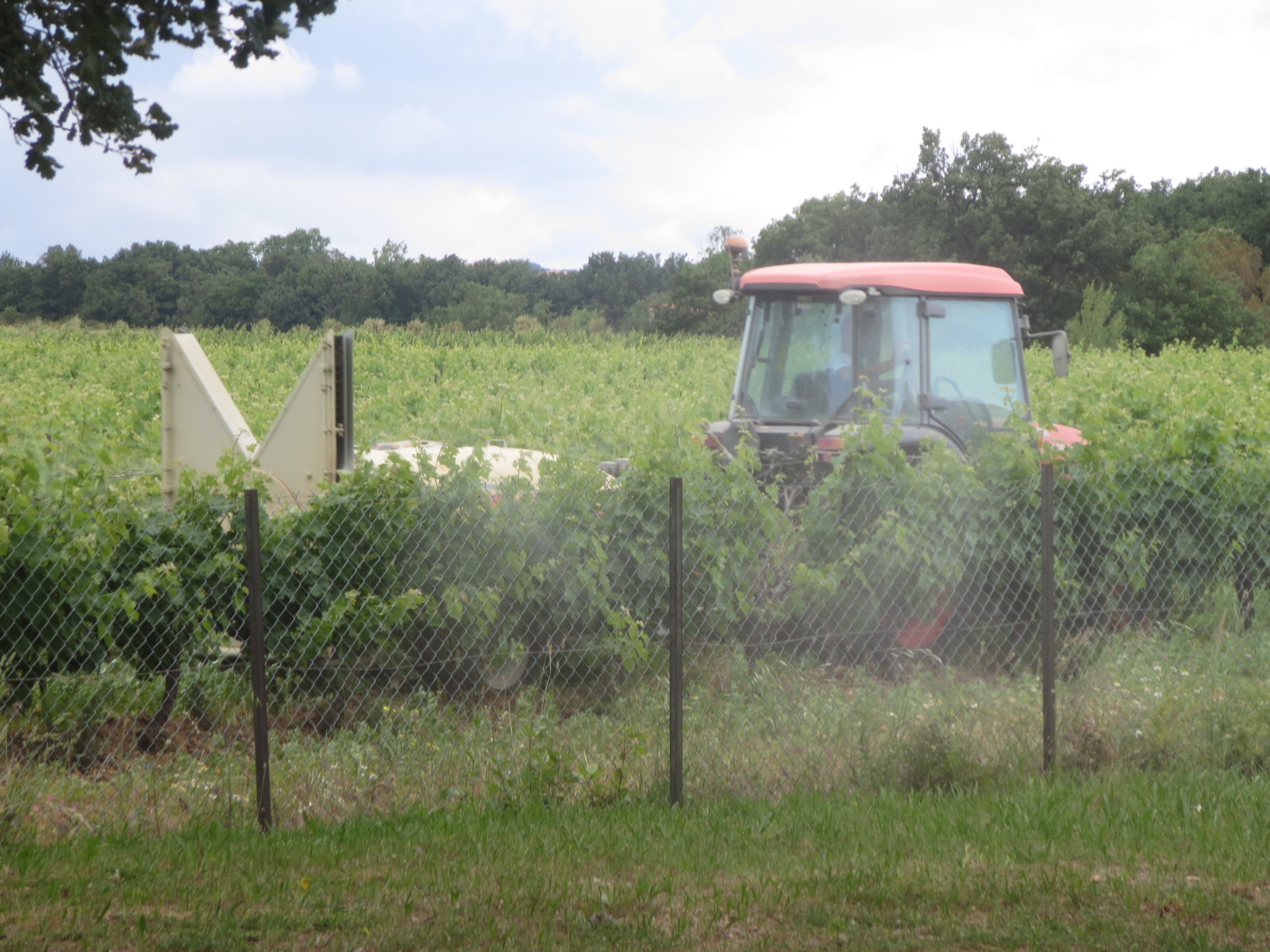
Conventional spraying
A spraying machine with octopus like arms to reach different rows of vines, this one is used on a conventional vineyard
For organic producers the choice is a little diluted sulphur (some use more than others) but also treatments based on plants such as nettles, horsetail weeds and ferns. I shall be picking up this topic in a later post as it is a controversial issue.
Tractor with tank of organic treatment for spraying
The other risk has been the development of mildew. Powdery mildew (oidium) is a threat as colder nights and hot days encourage humidity which oidium requires. The first signs appeared this week (May 10-17) and this is why sulphur and horsetail are used in the spray.
Oidium, powdery mildew, photographed this week. Happily the only vine affected in Peilhan
The nettles and ferns act as insecticides. I am told that mildiou or downy mildew is also appearing in some vineyards in the area though not so far at Mas Coutelou, fingers crossed it stays away.
The other major job in the vineyard has been ébourgeonnage, the removal of some of the lush growth of the vines, sometimes also known as épamprage. They are so fertile at present that the vines need to be cut back so that their energy is not dissipated on surplus leaves and growth.
Carole ties a young vine to support it
Carole is back in Puimisson and she demonstrated to me how ébourgeonnage works in the video below. She was working on newly grafted vines which won’t necessarily be producing much fruit this year but the process is the same. No prisoners are taken.
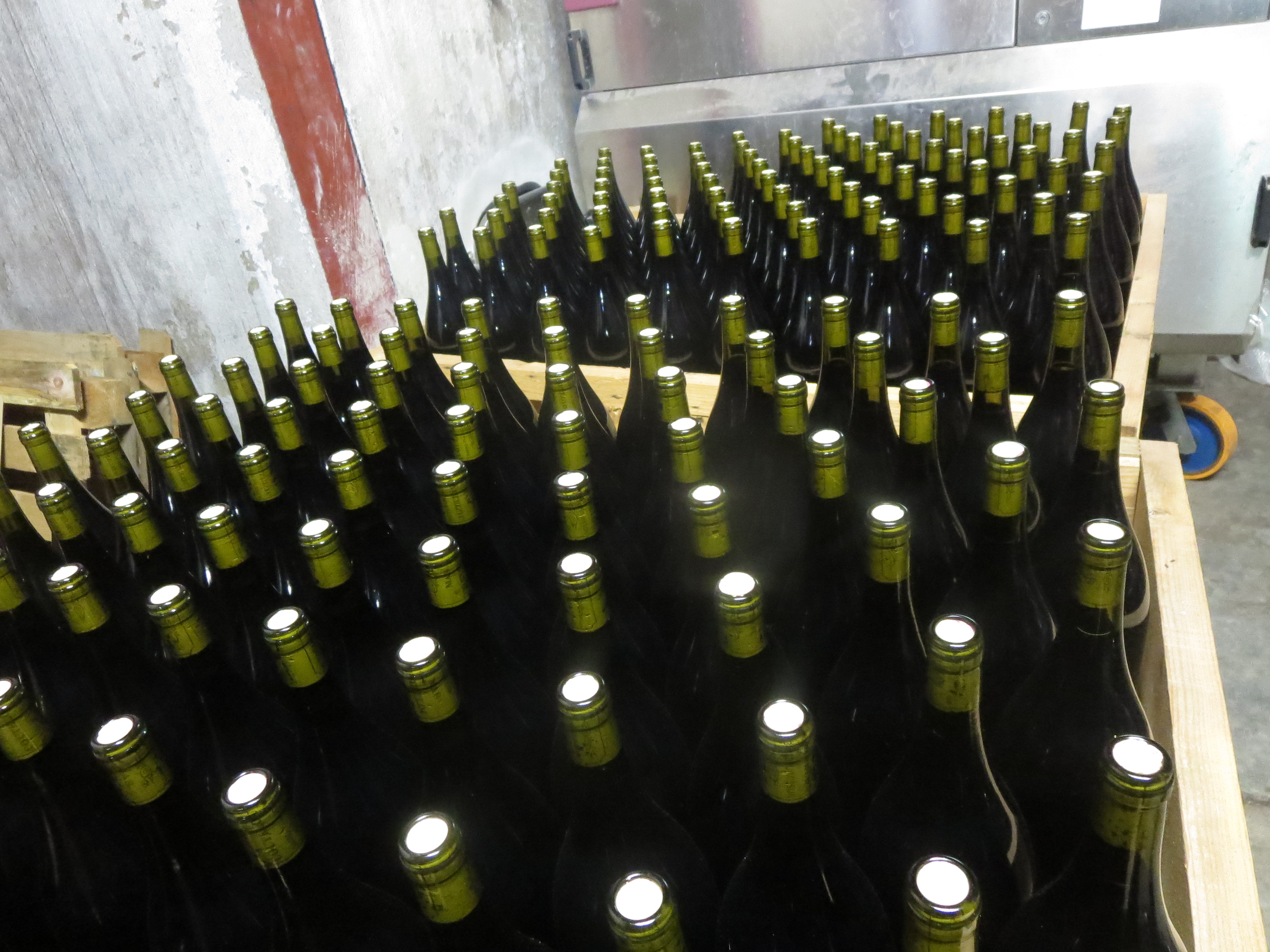
In the cellar work continues apace. As more of the 2014 wines are ready further bottling has been taking place. Not helped by the breakdown of one machine but older equipment was brought out to continue. In the picture you will see Jeff and Renaud corking a jereboam of Vin Des Amis. Magnums and even Balthazars were also bottled as well as the regular 75cl bottles. More deliveries were sent to various countries around Europe and the USA.
Jeff at the controls of the bottling machine
Magnums standing after bottling. They stand to allow the large corks to expand and seal the bottle. They will then be laid horizontally
A third part of the work is commercialisation and there have been a number of salons where amateurs and professionals have tasted the wines and placed orders or bought wine. Jeff has been to salons in Paris and in the Languedoc and will shortly be heading to the Loire. All time consuming but a necessary part of the job, sales are after all what keep the vines growing.
Finally the office work. France loves its bureaucracy and there are many hours of paperwork to complete. Daily record keeping of work done, treatments used, employment data etc etc etc.
So whilst May has been a beautiful month to be here in the Languedoc with temperatures now consistently high and sunshine aplenty the vignerons are working hard. Ironically France has numerous bank holidays in May, yet I know at least one vigneron who doesn’t get time off.
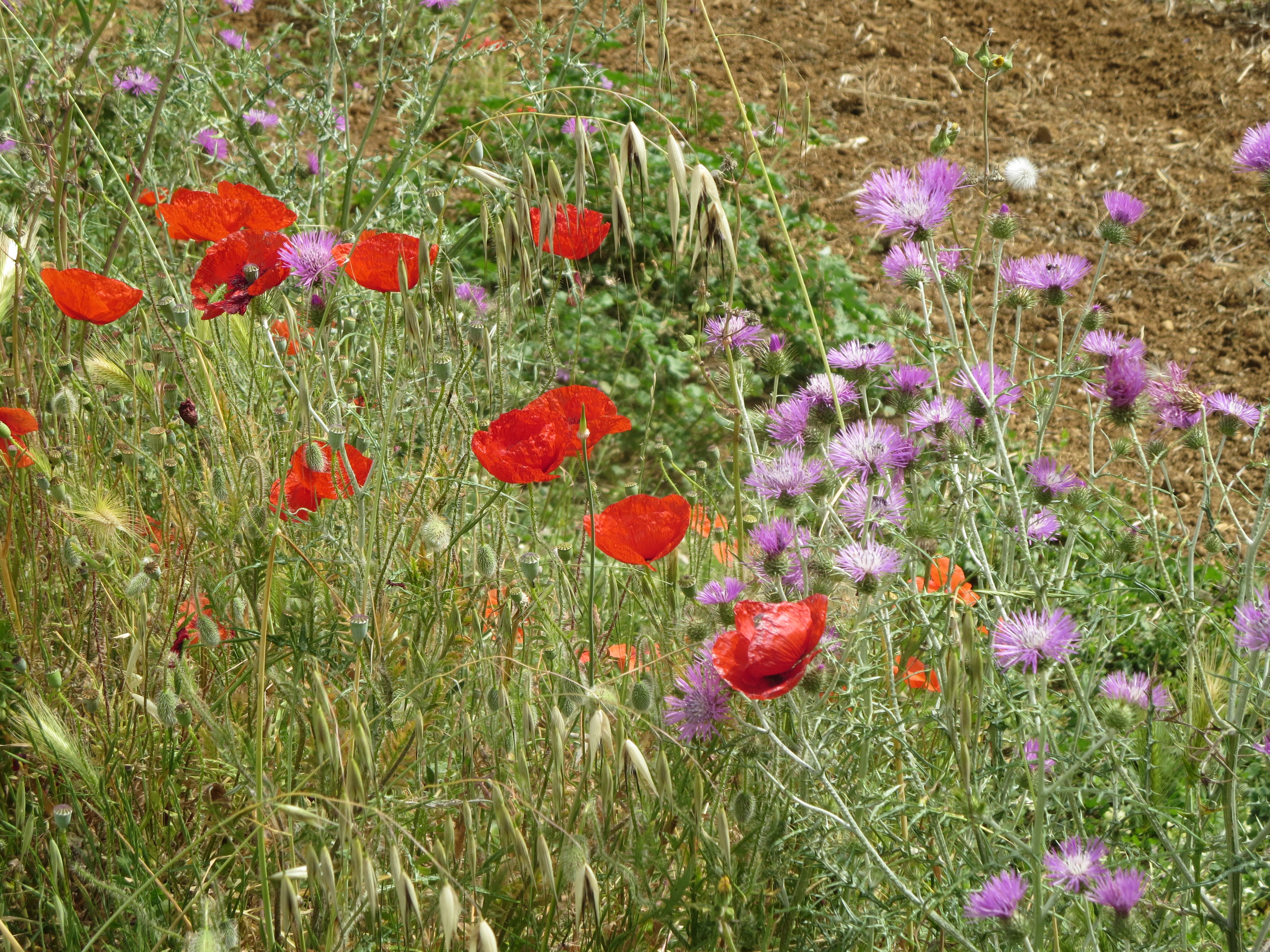
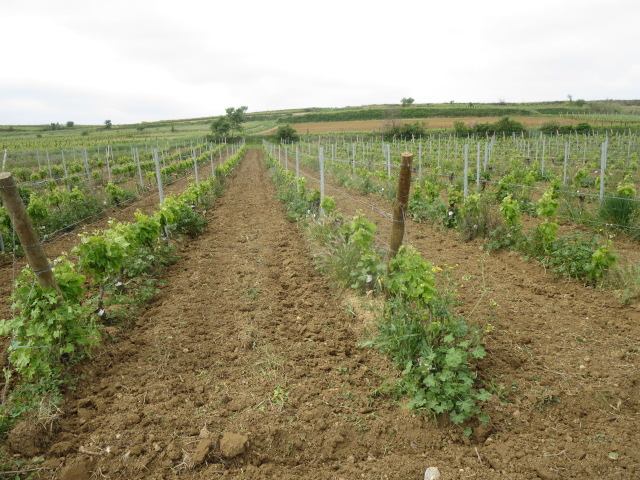
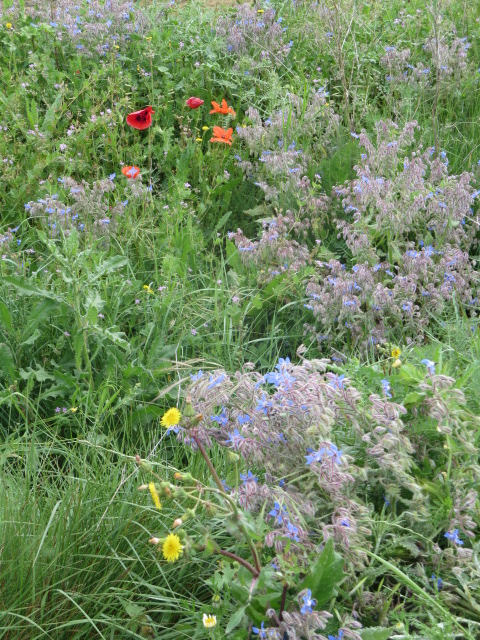
My favourite vineyard Rome is a lovely place to be at present, the work with the pioche (pick axe or hoe) and grass cutting has prepared the vines. Flowers, butterflies and birds enjoy the peace and shelter of this parcel, two partridges were there on Friday but sadly flew off before I could get my camera ready. The video shows Rome and its beautiful centurion gobelet vines and you can hear the birdsong in all its glory including a hoopoe.
We are a third of the way through 2015 already and the work of making wine has been hard throughout those 4 months. I have put the links together to show a summary of everything that Jeff, Carole, Michel and Renaud have been up to so far. And occasionally me too.
“Come gather ’round people Wherever you roam And admit that the waters Around you have grown”
(Bob Dylan)
Magnificent old vine in Rome vineyard, a centurion
After a couple of months of dry and windy weather in the main April brought some relief for vignerons with some good rainfall. Indeed not so much April showers as steady rain on a couple of weekends. The results were immediate in terms of the vine growth as they have shot away in the last week or so as temperatures rise too.
Beginning of April, La Garrigue
Mid April, ploughing evident
End of April
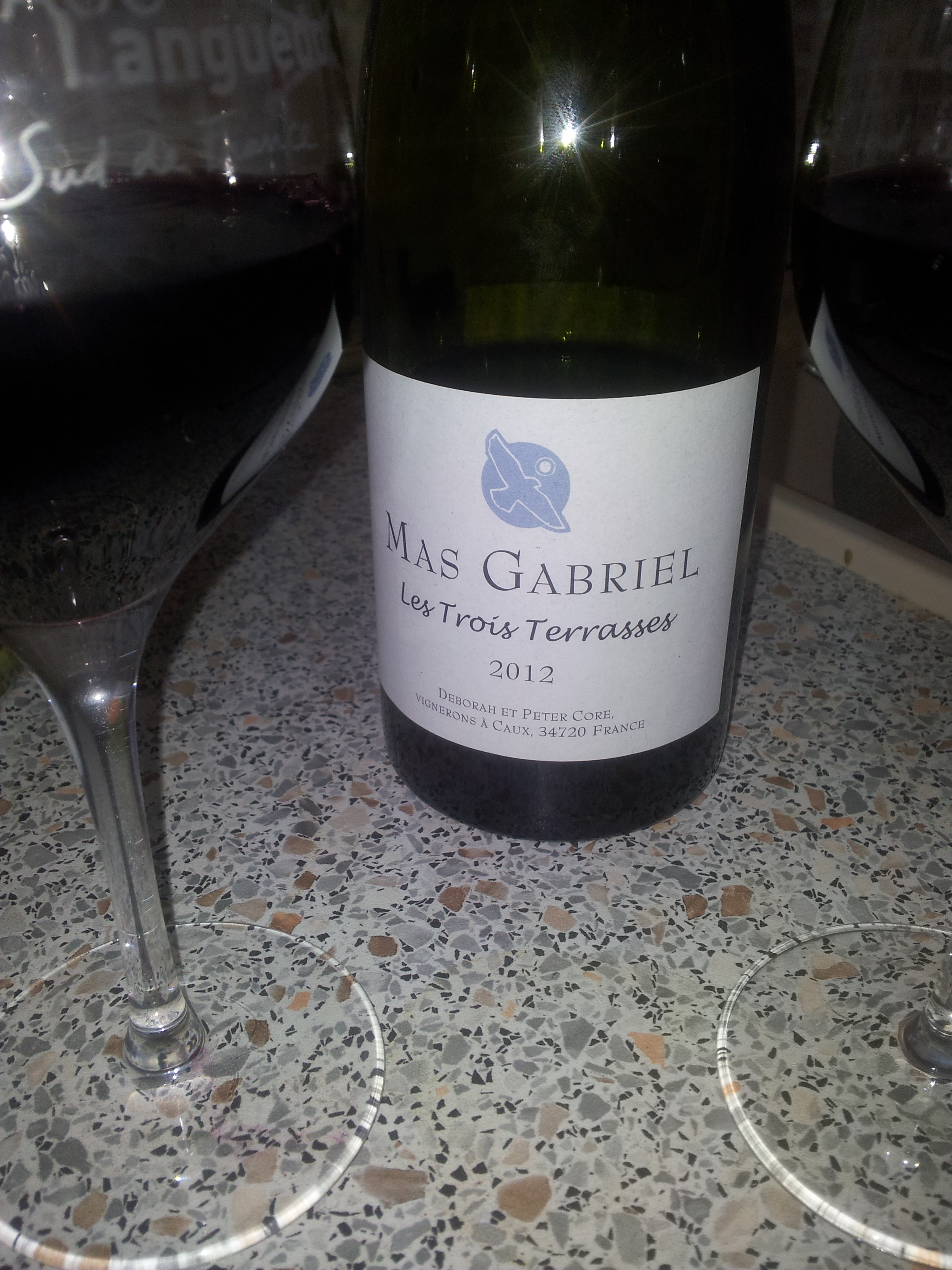
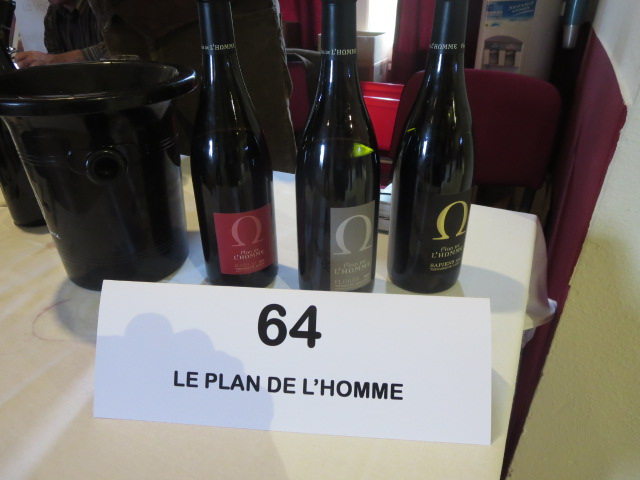
The work of previous months continued; hard work, unglamorous work but vital work for the vineyards and domaines to prosper. I spoke to a very good producer (Plan de l’Homme) and he told me that the commercial side of winemaking is hard work. He was at a salon in Montpellier to celebrate 30 years of Coteaux du Languedoc, one of many salons throughout the month. He and others attend regularly to find buyers, especially cavistes. Deborah Core of Mas Gabriel assured me that such salons do pay for themselves and are worth the effort but they are hard work, long days of repeating the same information to tasters who all matter of course, though some are more receptive than others. Reminds me of being a teacher! I shall come back to the commercial side another time as it is the third important part of the job after vineyard and cellar work.
With Corine Andrieu of Clos Fantine at a Faugeres tasting
Bottling also continued as well as habillage, getting the bottles ready to send to cavistes across the world. Previous posts have shown this work so please have a look for them if you have not seen them before. More of the 2014 wines are now in bottle including my old favourite Vin Des Amis which in my view is the best of this cuvée since 2010.
Cases sent to Belgium, early April
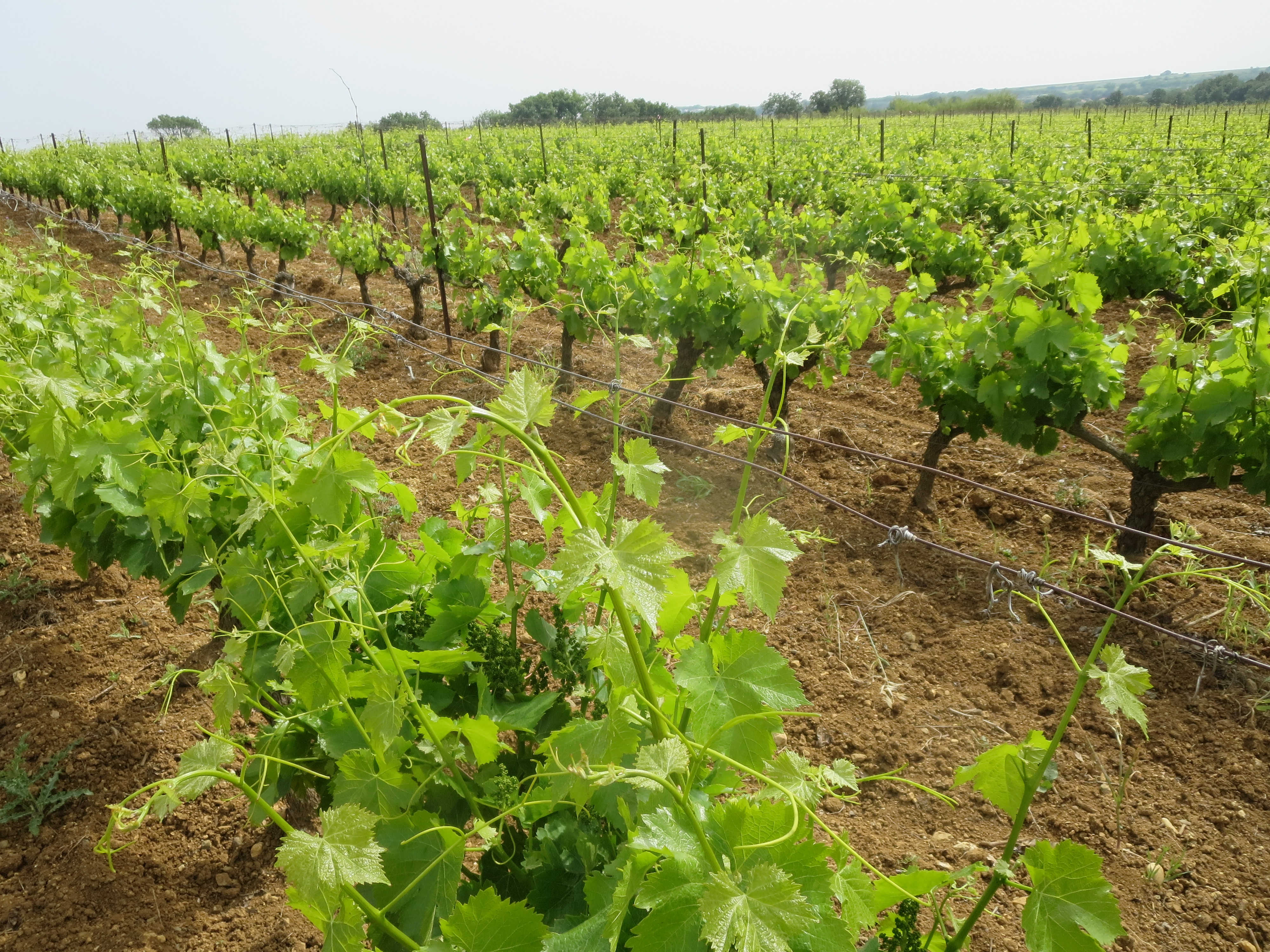
However, the real change has been in the vineyards and it is there that the work has been centred as they are literally blossoming. Vines are a climbing plant and will grow very quickly in the next few months. It has been a joy for me to watch their early development, seeing in real life what I had only read about before.
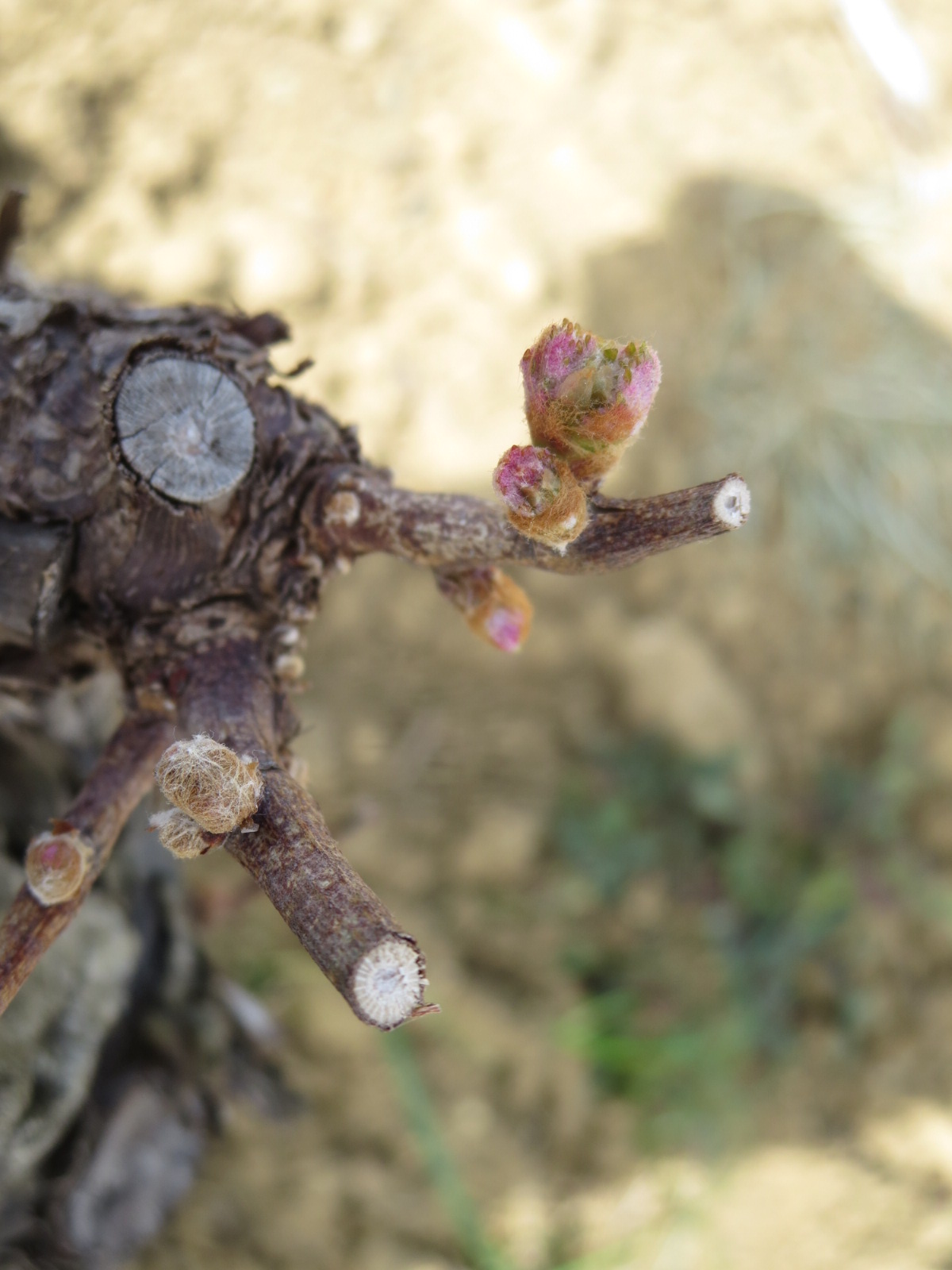
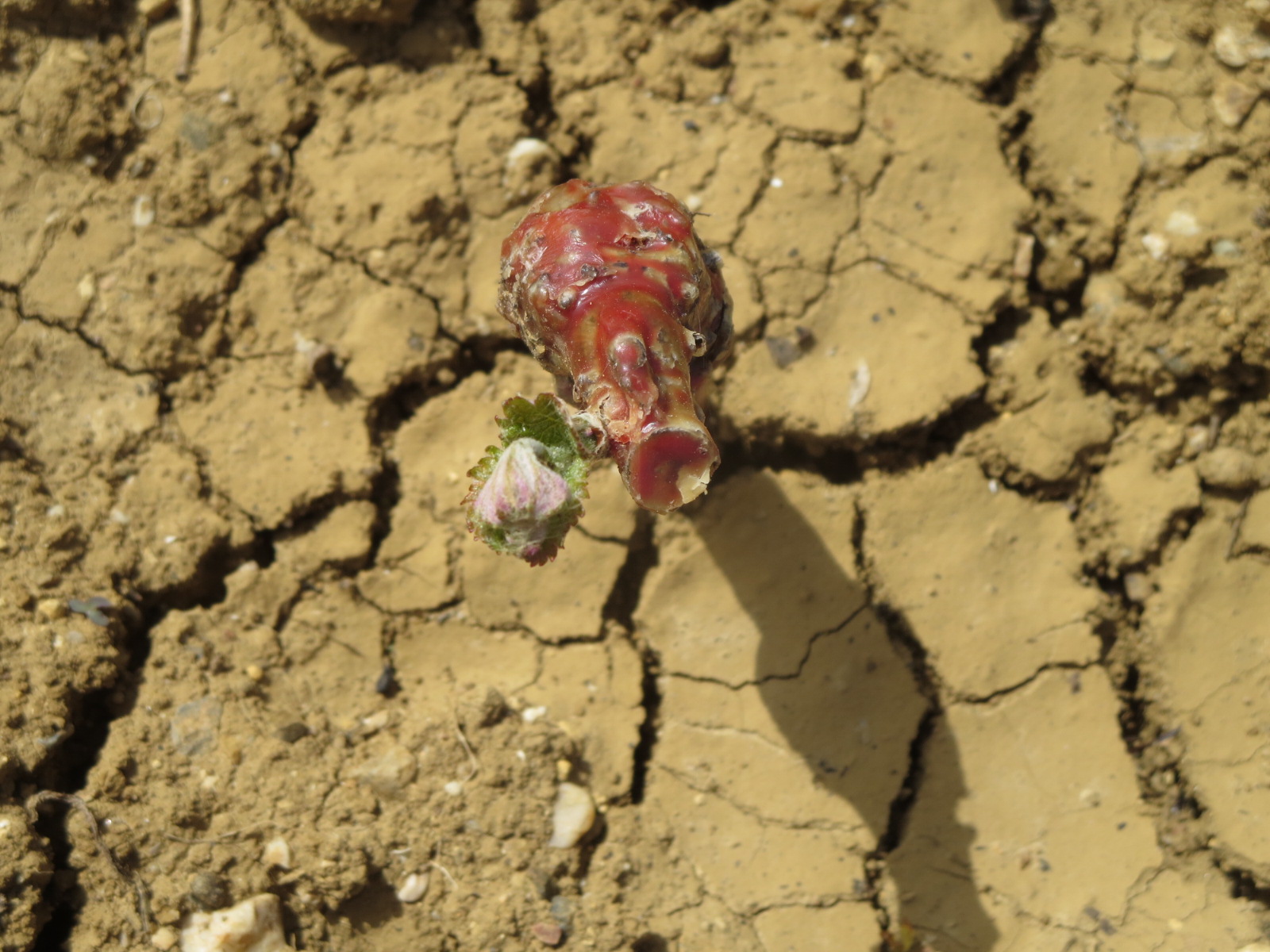
The buds emerged towards the end of March and the beginning of April and as I described their emergence varied in time according to the cépage and the position of the vine. Leaf break, flowering and the formation of the grape bunches, grappes, all quickly followed. In the last week or so the small grappes began to divide showing how they will form.
Buds form, the leaves just visible
Leaves and flowers
Grappe formation
Bunches form
To encourage and support this growth the vineyards were ploughed twice to provide organic matter from last year’s growth of grass, flowers and other plants. Long hours on a tractor going up and down the rows makes for tough days. Then further weeding using a pioche or intercep, forms of hoe, to get inbetween the vines. In some vineyards the base of the vines were covered a bit more in autumn to protect against frost, cavaillonage. These are now removed and the vines stand ready for the heat to come.
Syrah vine, La Garrigue beginning of April
Syrah vine, La Garrigue, mid April
Same vine, La Garrigue, end of April
I went to Barcelona for a few days last week and the difference in the vines was staggering in that short space of time. Nature and the dedication of the vigneron are at work.
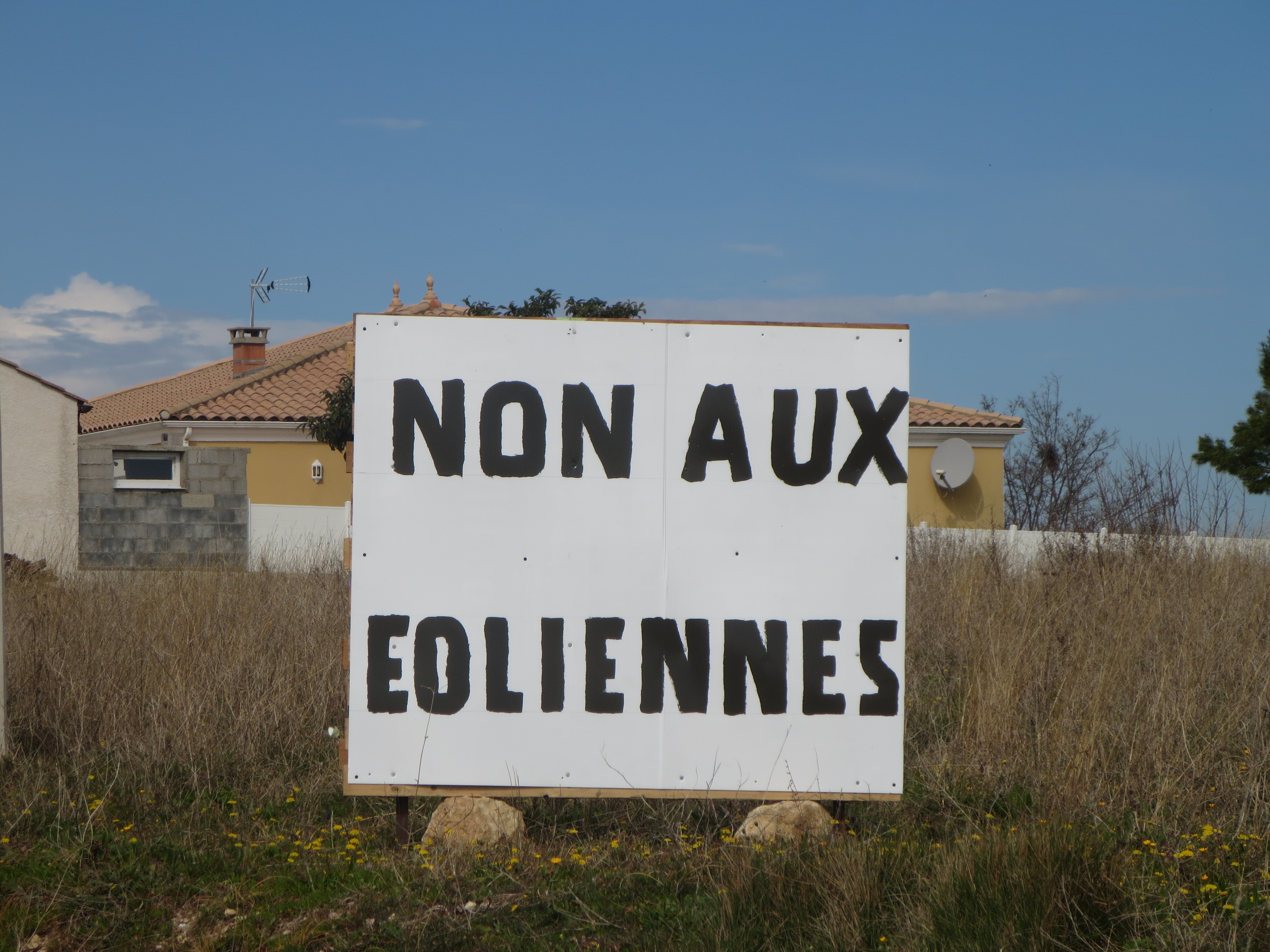
On March 11th I posted about the threat to some of the vineyards of Mas Coutelou. A neighbouring village drew up plans to install wind turbines across the lower end of the community, which happened to run across some of Jeff’s vineyards, Peilhan and Rec d’Oulette, as well as altering the nature of the whole area.
A thousand readers responded to the blog and many of Jeff’s friends rallied to his cause by signing the petition and sending messages of support. I was at the cellar when the lady who organised the online petition called to thank Jeff for mobilising support, it did make a difference.
The local campaign was undoubtedly helped by the timing of departmental elections across France so pressure was put on local candidates to oppose the plans. The mayor of the local village was standing in those elections and he announced his opposition to the turbines. The council then went further and passed a motion stopping their development in future.
Clearly this is great news for everyone in the locality, especially Puimisson. It is, for this blog, the best possible news for Mas Coutelou and all of us who love the wines and the man behind them. The plans he has for Peilhan in particular can now move ahead with a renewed confidence, the new plantation of old cépages has a brighter future. We are all boosted.
So thank you to everyone who read, supported and signed. Your actions counted.
Interesting article in The Guardian this week about natural wine and its development. I think David Williams has it about right. There is a spirit of punk about the natural wine movement. As someone who lived through the punk music scene of 77 and saw all the top punk bands, other than the Sex Pistols sadly, I can see the parallels. The reaction against convention and the big business aspects, the desire for something more straightforward and honest, no more overblown music / wine. Maybe that is why natural wines appeal to me, that link to the music of my past and the similar philosophy. Though I can’t spike my hair anymore.
The unconventional signage of domaine names
Have a look at this poster for La Remise, a natural wine salon in Arles in March which I described on the Tastings page.
Remind you of anything? This?
David points out that many people have a real antipathy towards natural wines just as many people did towards punk. Never mind that you haven’t experienced it just criticise because it’s new and it doesn’t fit convention. Or because you missed its start so don’t want to be seen as a latecomer. Utter boll**** as the album says.
He is right too that not everything is good. I saw and heard and bought some absolute rubbish in punk music. For every New Rose there was a Generation X song. Or Plastic Bertrand! I have tasted some of the ‘bacterial murk’ in natural wines and many that I would never want to taste again. But there was New Rose and Anarchy and White Riot and Blank Generation. And there is Barral and Fahl and Pardet and Foillard and Métras and ….
However punk had a long lasting influence in the way that music was made from grunge to thrash metal to rap. And the way that music is made, the independent labels etc and the publish it yourself attitude we see online these days. It makes people think and question the way they do things. Many winemakers are rethinking their approaches to sulphur even if they don’t want to eliminate their use. So too natural producers often forego the big labels and go their own way, Vin de France rather than AOP for example. And look at some of these:
Punk was a reaction to triple albums of mind numbing drum solos performed by posing, preposterous public schoolboys. Natural wines are a reaction to overextracted, 200% oaked, jammy Parkerised gloop. Instead of twiddling the knobs on the mixing desk or reverse osmosis machine let the music or the grape speak for itself.
Perhaps too press reaction is coloured by its loss of control? No longer the arbiters of taste and what is good. Instead fanzines for punk and now blogs for music and wine are the, apologies for this, grapevine. Fewer free tours to Bordeaux, Beaune or Buenos Aires can make those journalists turn sour.
Many natural winemakers will fall away, as did punk bands. Some will shine then fade quickly. Others will live long or develop. A new wave. But natural wine is here to stay as Williams says. The movement is widespread in the heartlands of France, Italy and Spain. People do like the freshness and vibrancy. Yes there is an annoying trendiness but as that settles we are left with some great wines which will endure.
A magnum of Classe
The article recommends Classe of Jeff Coutelou and it is a great wine. This is a wine that should definitely stay and not go. This is wine made by a free thinker and a creative artist. Joe Strummer’s songs led The Clash from punk fringe to recognition as top class. Oh and notice anything?




















 amarchinthevines