amarchinthevines

Learning about wine, vines and vignerons whilst living in the Languedoc


2 Comments

200


20170208_224559

Version française

This is the 200th blog post of amarchinthevines.org. For the 100th post I wrote about the making of a wine which Jeff Coutelou encouraged me to make in celebration. It was based on the three types of Grenache (Noir, Blanc et Gris) which grow in Rome vineyard. The wine was then put into three separate containers; a younger barrel (60l), an older barrel (30l) and a 27l glass bottle.

IMG_2423

I have reported on their development in previous posts and, in particular, about the influence of the three containers. The older barrel has been used many times before and is almost  airtight, so, the fruit in the barrel is still youthful. The younger barrel shows more wood influence as the staves are less sealed and, therefore, there is more contact with the air. The wine tasted slightly less fruity and has a drier flavour. The glass bottle took much longer to finish fermentation and the wine tasted much more like new grape juice, full of fresh red fruits and still sweet as the sugars remained in the wine awaiting the completion of fermentation.

P1000771

Old and new barriques showing clear difference in October 2016

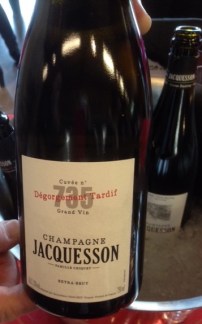
Well, on February 8th it was the day before my birthday and Jeff, as so often, was very generous in making  a bouillabaisse for our dinner and a lovely bottle of Boulard Champagne ‘Les Murgiers’ (the very cuvée I wrote about in my review of Les Affranchis in blog post 199!)

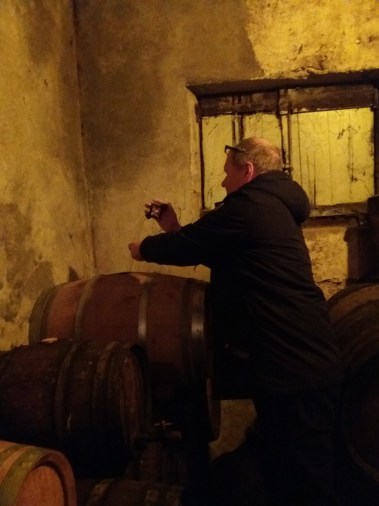
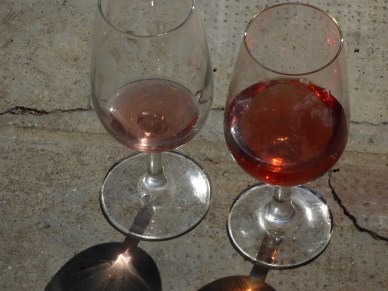
He suggested that we should re-taste the wine so that I could report on its development and make each century an update. So, as the hour approached midnight we were in the solera cellar and the tasting began. The wines tasted much rounder and more complete than the last time I tasted them in October, we discussed the possibility of bottling in early summer when I return to Puimisson. The two barrels showed the same influences, more fruit from the older barrel, more complex, secondary flavours from the newer barrel. The biggest change was from the glass bottle, still very fruity but much less residual sugar as fermentation has completed. This wine is now rounder, it is real wine rather than fermenting juice.

20170208_225324

The glass bottle

Then, in yet another act of incredible kindness, Jeff went into the family cellar and found a bottle of wine from birth year. The 1959 was a Muscat De Frontignan which Jeff thinks was gathered by his grandfather when he worked for an agricultural company, possibly the domaine of the owners of that company.

I have never tasted a 1959 wine before and when it was opened it delivered a delicious depth of old Muscat, deep brown in colour and deep, raisiny fruits which lingered long on the tongue. Just as the memories of a special night will linger long in my memory.


4 Comments

Les Affranchis 2017

affranchis

Two of the main salons of the year take place in Montpellier in January, Les Affranchis and Le Vin De Mes Amis. Both are based around natural producers though there are other producers present who follow organic or biodynamic methods but who do use SO2 in their wines.

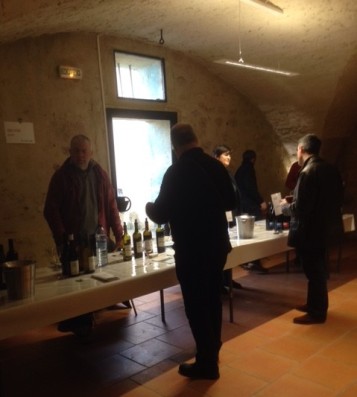
Les Affranchis (The Liberated) meet at Chateau de Flaugergues, happily this year the event was back in the main rooms of the domaine rather than the marquees of 2016. The Sunday was relatively quiet and it made it easy to get around and talk to the producers as well as taste their wines. Though some were familiar, Jeff Coutelou and Olivier Lemasson for example, there was plenty of opportunity to meet producers whose wines were new to me.

0b2b027e-8273-4907-90c5-42558ff4d98e

A familiar range

Rather than a bottle by bottle description here are my highlights from Les Affranchis:

La Busattina (Tuscany) – completely new to me but what an impression. The white San Martino was lovely and came in two forms, the traditional and the longer maceration which I actually preferred with cleaner, direct fruit and acidity though both versions were very good. Legnotorto 2012 was a Sangiovese of real cherry fruit and impressive length, and the Ciliegiolo 2008 was even better showing the value of aging these wines with truffle, cherry and round flavours. It was pleasing to hear other friends also praise these wines, the real highlight of the day.

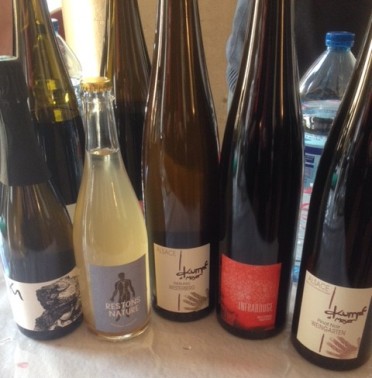
Kumpf et Meyer (Alsace) – I am a fan of Alsace wines but this was a new domaine to me and quickly became a favourite. Julien Albertus presented an excellent range from a lovely fresh PetNat, top still wines and a delicious sweeter wine. Favourites were a Crémant of Chardonnay and Auxerrois plus a Pinot Noir Weingarten 2014 of lovely fruit and depth. I never thought an Alsace Pinot Noir and Crémant would be highlights of any tasting so these were a lovely surprise. Best of all though was the Riesling Westerberg 2014, classic Riesling flavours with a freshness and drinkability all too rare. I shall be looking out for Julien’s wines in future.

d9933c68-0018-467b-93da-b616cf1fbfd6

Binner et Cie, Les Vins Pirouettes (Alsace) – yes Alsace again. This is a range of wines where Christian Binner has enabled young producers to move away from the co-ops and bottle their own wines. There was one producer, Stéphane, whose wines shone here. His Tutti Fruti, a blend, was lovely classic Alsace wines but the single cépage Riesling Bildstoeckle, Pinot Gris and Gewurztraminer were all just lovely, marked by freshness, fruit and flavour. The Riesling was top class and Gewurz is a grape I find difficult but was delicious. Prices are very affordable too.

More familiar wines which again proved worthy of a place at the top table came from:

  • La Ferme Saint Martin (Rhone), a long term favourite of mine and this time it was the Beaumes De Venise Vieilles Vignes 2015 and the delicious Le Blanc 15 which took the prize
  • La Sénéchalière (Muscadet), proving how the region has really moved on and is producing top fruity wines of distinction. Favourite cuvées were the well named Miss Terre 16 and, especially, the longer macerated Nuitage 15.
  • Pierre-Olivier Bonhomme (Touraine), more lovely, fresh Loire white wines from all across the river’s length. Lovely Melon De Bourgogne 16, round apple and pear fruits made from grapes bought from the Landon family. Very nice Pouilly Fumé 15 of real minerality and clean fruit and lots of other good cuvées too.
  • Boulard (Champagne), lovely wines, champagnes of real freshness and length. Les Murgiers was my favourite cuvée and came in two forms, non-dosage and 5mg dosage. Both had their merits though the former had clearer floral notes and a zesty finish.

Other wines I really enjoyed were:

  • Les Roches Sèches (Anjou) – Pentes Douces with a lovely, dry fruit and a well-judged touch of sweetness from Chenin Blanc
  • Tetramythos (Greece) – Muscat Sec 15, fresh and grapey
  • La Paonnerie (Anjou) – Les Champs Jumeaux 15, a lovely Chenin Blanc, clean, fresh and mineral; Loire white wine at its best


  • Rémi Dufaître (Beaujolais) – Côte De Brouilly 16, darker fruit and lovely Gamay, joyful
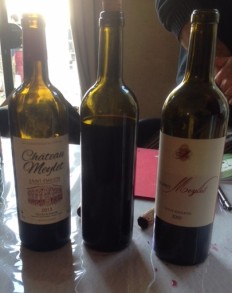
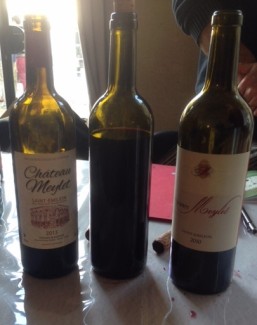
  • Chateau Meylet (Saint Ėmilion) – the 2010 showed the benefits of age for this lovely wine. I had forgotten how good Bordeaux wines can be and this has freshness and very deep fruits. The other vintages were good but this was lovely.

6aa32647-a908-485c-9ac3-28e62cfd4a87

An excellent event, relaxed atmosphere, great producers and not too crowded. I missed out on some other top producers as always at any tasting, however the wines above and many more made for a lovely day. Surprises in the form of enjoying Crémant and St Émilion, variety from Greece and Italy, favourites from previous years – liberating.

9245f926-0175-4e83-a81a-c0401c34d7a2


7 Comments

Vinisud 2017

bandeau_fr

En francais

January and February see wine fairs, or salons, appearing regularly including some of the bigger events. For some reason best known to themselves two of the larger fairs, Millésime Bio and Vinisud, fell out and decided to hold their events simultaneously, meaning that Millésime Bio moved to Marseilles from its usual Montpellier home. However as Many of the offline events remained in Montpellier I decided to attend those and Vinisud. (It was announced on Feb. 4th that a rapprochement has been found and next year will see both events back in Montpellier).

Vinisud is a huge event, 900+ producers from all around the Mediterranean gather and professional wine buyers, cavistes, restaurateurs and journalists make appointments with them, it is big business. For someone like me, who cannot offer to buy thousands of bottles it is a little daunting so I prefer to attend some of the help yourself areas such as the sparkling zone which is self- explanatory. Sadly, there was little of any real interest for me in this zone, some neutral Limoux and Proseccos which offered nothing exciting. Sadly neither did the Picpoul zone really offer much of interest.

19

There was also the Palais Méditerranéan where hundreds of bottles from some of the producers are available to serve yourself. If a bottle appeals then you can always pop along to the stand of that producer. I tasted almost a hundred wines here. Some decent white wines from:

  • Crouseilles co-op (Pacherenc du Vic Bilh)
  • Chateau Estanilles (Faugères), Inverso 2015, nice use of wood to add complexity
  • Jacques D’Albas (Minervois), Blanc 2013, fresh and zesty
  • Frères Laffitte, Côtes De Gascogne 2016, really well balanced demi-sec
  • Domaine Barreau (Gaillac), Caprice D’Automne 2014, nice clean, sweet wine

And reds from:

  • Dondona, ‘Chemin Des Cayrades’ 2014, a nice, fresh pure Carignan (Montpeyroux)
  • Cébène, ‘Ex Arena 2015’, (IGP Pays D’Oc from Faugères), fresh, full fruits
  • Mas Champart, ‘Causse Du Bousquet’ 2015 (St. Chinian), soft red fruits

22

My favourite area was that of Wine Mosaic, an organisation which promotes rare and unusual grape varieties. Again, you can serve yourself wines from unusual and rare grapes from Turkey, Greece, France etc. A real opportunity to try something different and to promote the growth of these cépages oubliés. Mollard, Viosinho, Sidalan, Kotsifali were just some of the cépages I had never even heard of before. Ironically, it was the very familiar Carignan which provided my favourite wine produced by Domaine Nizas near Pézenas.

I did also attend some producer stands notably Mas Des Capitelles, the Faugėres domaine which I really like. The Laugé family have converted to organic production in the last couple of years but they have been making classic Faugėres for many years. They reward patience in bottle developing real complexity and maintaining an admirable freshness. They are big, well-structured wines but they remain balanced between fruit and power ensuring you can enjoy them in the short or long term. My particular favourite is the Carignan based Loris 2013 but other older bottlings of special vintages (cuvées such as No.1 and No.2) are a real treat and deserve the multiple awards they garner.

Corvezzo is another domaine which captured my attention and admiration at the 2016 event, like Capitelles. This large Prosecco producer (125 hectares of vines) is again organic and, unlike any other Prosecco I have tried, these cuvées have depth, fruit, freshness and length. They hold their own against many champagnes. The Extra Dry, for example, has lovely spice and lemongrass notes, very good. They also produce some lovely white wines such as Manzoni and their Pinot Grigio Ramato full of fresh fruit flavours.

23

Even better was an amazing red, Rosso Riserva, produced in Amarone style with dried Robosa grapes and had great flavours and aromas of dark fruits along with a leathery complexity and which built in the mouth long after drinking the wine. A truly excellent wine.

8

The other stand of interest for me was Les Beaux Nez Rouges, a group of natural wine producers under the umbrella of oenologue Hervé Chabert. I declare an interest as I know some of these producers quite well, eg, Regis and Christine Pichon of Domaine Ribiera, Grégory White, David Caer (Clos Mathélisse) and Lionel Maurel (Mas D’Agalis). Hervé kindly gave up half an hour to lead me through tastings from Ribiera, Domaine Henry (St Georges D’Orques) and his own wines, Wine Drop.

Ribiera is a favourite of mine and wines such as Causse Toujours 2015 shows lovely fruit with some complexity. The Cartagène was also dangerously drinkable. Top on the day though was La Vista 2016 a pure Cinsault of lovely sweet fruit with a touch of tannin too. Lovely.

Domaine Henry was new to me and I really liked wines such as the fruity Paradines 2015 (not yet bottled for sale). Fascinating was a cuvée called Vermeille (pictured top left) which is a saignée from all the cuves of the year, ie they run some of the juice from each tank – sounds mad but it is an old practice in the region and Vermeille was light, fruity and delicious. Equally of interest was Le Mailhol 2015, a complantation of old Languedoc cépages which gave lovely fruit with a touch of raisin to add complexity.

Hervé’s own Wine Drop bottles were good, Cuvée No.5 2014 had lovely Cinsault red fruits with a touch of body from some Grenache. Grenache to the fore in No.6 2014 which had lovely aromas and a touch of spice and fruit. The 2013 No.4 had more structure and shows how well natural wines can develop with time, good balance of fruit, power and complexity.

20

Vinisud offered a very interesting day for me after the offline events I had visited the previous two days. There is much to offer the visitor from classic wines to natural, wines from all around the Mediterranean, business opportunities, masterclasses, seminars and the chance to match wine and food amongst others. A valuable day in my wine education.


3 Comments

Fair Play

En francais

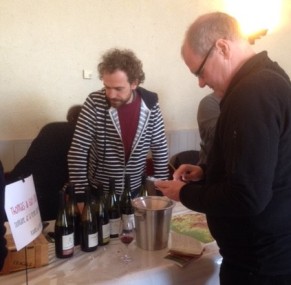
The numerous salons at this time of year bring into play various tactics when attending. Faced with dozens, even hundreds, of producers at the wine fairs where do you start? I look though the list in advance and highlight some I must visit, but things never work out so smoothly in situ.

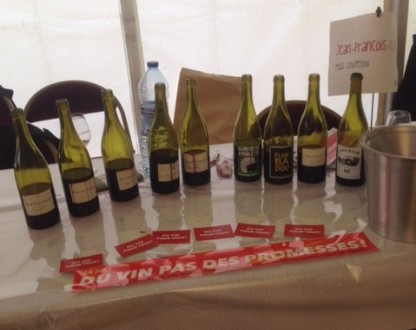
Take Le Vin De Mes Amis an event featuring dozens of very good producers with organic, biodynamic and natural backgrounds from France but also Italy and Spain. Here is the website with the list of producers. Now, there are dozens of great winemakers listed there and I have only a few hours to get around. So, strategy time.

ec4e7d96-33aa-4f46-9282-f8143a94388f

Get there early

  1. Random chance – just go where the fancy takes me on the day, often because there is nobody else at the stand / table of that particular person. Some of my best discoveries have been like that, Corvezzo at Vinisud last year, Casa Pardet at La Remise. Sure enough the day before this event I tasted Chateau Meylet from Saint Ėmilion at Les Affranchis purely because he was next to a producer I had been tasting at and happened to have nobody there, and I really liked the wines even though Bordeaux, especially Merlot based Bordeaux, would never have been my usual choice.
6aa32647-a908-485c-9ac3-28e62cfd4a87

Chateau Meylet

2. By region. Faced with so many wines how can I get a really fair comparison of the quality of the wines when I am comparing a tough Cahors with a light Loire Gamay? One method is to try to select a region and try wines from different producers so that house styles emerge, eg Alsace wines taste different from Bott Geyl, Albert Mann and Hausherr. The problem here is that most salons have winemakers scattered all over the room(s) and it becomes difficult to track them all. The Real Wine Fair in London was a notable and welcome exception where regions were grouped together, I found that useful.

3. By style of wine. When I first attended wine fairs I used to try to taste whites in the morning, reds in the afternoon. Reds do become more difficult as tannins begin to coat the mouth. These days I find that that mixing things up and tasting a range from one producer at a time, through the different styles, helps to keep me fresher.

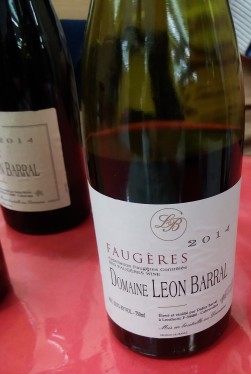
4. By selection. As I said I look through the list of producers and pick out ones that interest me most. That might be because I have tried them before and really like them and I want to taste the new vintage. It may be a name I have had recommended to me and wish to try for myself. The problem here is moving from one stand to another and finding that everybody wants to try Barral, Foillard and other big names, time is lost and patience required. Often these producers are so pressed that they simply pour and move on to the next person without any real opportunity to describe the wine and its provenance, something which is part of the pleasure of a salon.20170130_134143

In the end my strategy is … not to be too bound by a strategy. Go early, try to get in first to the producers you really want to meet and then play things by ear as you see gaps, empty stands. By all means work your way through the list you made but accept that it may not be possible to taste all of the wines and that there will be another day.

Etiquette at the fair (based on real incidents in Montpellier)

20170129_152042

The best behaved attendee, Icare

  1. Please don’t wear heavy perfume or aftershave and then stand next to me at a wine tasting, your smell is much less interesting to me than the aromas of the wines I am tasting.
  2. Just because you are a representative for a big buyer does not mean that you should barge though and demand to be served and never mind the poor sucker (ie me) who is waiting his/her turn
  3. If you are spitting into the provided vessel please bear in mind that as I stand behind it I would rather not have your saliva / wine sample splashing all over me
  4. Please, don’t have a conversation with someone else about your night out last evening whilst standing at the front of the stand and there’s a queue of people behind waiting to taste the wines. As a mild mannered Englishman I will smile and say “Je vous en prie” when you finally move over but inside I am fuming at you.
233deba7-bdd2-41ba-bfc1-78b5f064277a

Pleasure of talking with Thomas from La Ferme Saint Martin

5. Wearing light coloured clothes and then spitting red wine is a mistake, I often make it.

6. Getting into your car to drive when you have been drinking the wines, not spitting them, is just wrong.

0b2b027e-8273-4907-90c5-42558ff4d98e

I have seen this range before somewhere

Salons are great, they are fun, educational, social. But they can be frustrating, even stressful. I need a glass to chill out before La Dive Bouteille this weekend.

fa5f3309-3377-4d21-b9af-4dcbfa7619b4

Is that… water?


Leave a comment

Return to Mas Coutelou – in the cellar

Version francaise 

p1020310

As pretty as the vineyards are, even in winter, it is the main cellar at Mas Coutelou which attracts attention this January. The continuing modernisation of the cave continues apace. Last year saw the relaying of much of the floor, new stainless steel tanks to replace some of the very large fibre glass ones and the introduction of a new mezzanine built on ironwork. On this level some of the cuves are stored but now there is the addition of two new rooms made from wood. These will form a new office for Jeff to work from (freeing up space in his own home) and, also, a tasting room with bottles laid out for visitors to try and buy. The old windows mean there will be plenty of light and air in here, as well as a good view over the village and countryside. A good view of those of us working down below too!

The cellar has changed so much in the last 3 years, all to make the winemaking more manageable and, now too, the admin side of Mas Coutelou moves forward. Not that the admin gets any easier, Jeff spent two hours on the phone the other day on a minor issue!

p1020301

Meanwhile, there were two main jobs being done in the cellar. Habillage of more 2015 wines (Buvette À Paulette, Classe and Flambadou) with Jeff, Michel and Lucas hard at work.

Then, Julien and Carole returned from pruning as the rain had started again They set to work preparing sample bottles for the salons which will dominate the next two weekends, in Montpellier and Saumur. The 2016 wines are still some time from going into bottle and so samples are taken to give clients a chance to taste how the wines are coming along. So, golden opportunity to taste 2-3 wines from cuve, with the Carignan (Flambadou) and one of the Syrahs really shining. With Michel, Carole, Julien and Vincent all there it really was a gathering of the Coutelou clan. And more friends will arrive this next two days as people gather for the salons. Of which, more next time.


3 Comments

Return to the vines of Mas Coutelou

p1020266

Looking from La Garrigue towards Sainte Suzanne

Version francaise

After almost three months away it is good to be back in the Languedoc, and especially to be back in Puimisson, the home of Mas Coutelou. Jeff and Icare greeted us warmly and it didn’t take me long to get back into the vines.

Carole and Julien were hard at work pruning in Rome vineyard, my favourite of all, I was happy to see them all. Fortunately, the day I was there (24th January) was a lovely, sunny afternoon and quite warm but recent weeks have seen freezing temperatures overnight and pruning on such mornings is brutal. However, it is vital work.

p1020291

Dead vines removed, their place ready for new ones

The vine needs to be trained for the season to come, cutting away dead wood and restricting the growth of the vine so that it is does not overproduce which would reduce the quality of the wine. Pruning also offers the opportunity to check the health of each vine and to identify vines which need to be replaced.

The vine is studied, first cuts remove the growth of last year and then decisions made about which branches to remove and which to leave as spurs, which direction the growth will take and, also, about which spurs might be prepared for the following year too. All with freezing fingers and aching back.

Much work had already been done but much remains ahead. In the photos below the Grenache of Sainte Suzanne has been pruned but the Syrah remains to be done. Similarly, the reds of Peilhan are pruned but the white parcel remains to do.

Work has also begun on preparing a parcel next to Sainte Suzanne which has remained fallow for a few years giving recovery to the soil. Known as Théresette this parcel will be planted with Aramon (Noir and Gris) which is what used to be planted in this parcel many years ago and which was well suited to the soil.

p1020256

The ‘new ‘ parcel under preparation. La Garrigue in the background.

The winter also offers the chance to see the bare vineyards and their topography. When people talk about the value of a particular parcel or vineyard it is easy to overlook how even within a small area there are variations of slope and gradient which would alter drainage and exposition to the sun. Vines are all different even within a parcel and the pruning process treats each vine on its own merits to help it to produce the best fruit it can.

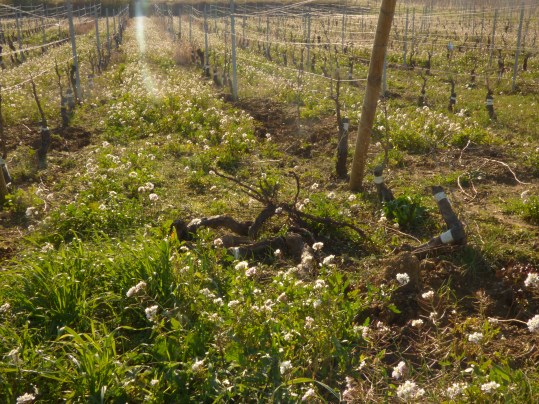
The vineyard soils are covered in white this January, not with snow, not here in the Languedoc at least. The white flowers of wild rocket form a spectacular blanket contrasting with the stark wood of the vines themselves. Even in winter there is something special and beautiful about being in this place, a march in the vines is so fulfilling.


8 Comments

Natural Wine -where to find out more

The growth of interest in natural wine continues unabated and I am often asked where people can find out more about them. Hopefully the answer is partly within the pages of this blog but there are other sources which I would recommend.

Books

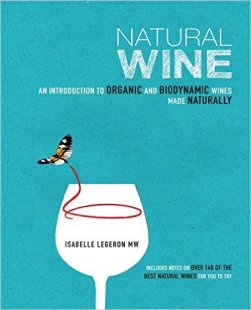
My favourite book on matural wines is called, not unreasonably, “Natural Wine” written by Isabelle Legeron. Isabelle is a long term natural wine supporter and organises RAW which runs wine fairs in London (March 12/13 this year) and elsewhere including New York. Her book explains vineyard and cellar practices as well as tackling misconceptions about natural wines. It is a very well written and illustrated book and would be my advice to anyone wanting to learn about the subject.

51gua0zp3rl-_sx402_bo1204203200_

Two other books worth buying:

Per and Brit Karlsson’s “Biodynamic, Organic and Natural Winemaking” and Jamie Goode’s “Authentic Wine”. Both look at the technical side of winemaking and how natural wines have to adapt to overcome the lack of a safety net. I am a big fan of Jamie Goode’s writing. His book “Wine Science” is possibly the most used book I own and his website (link below) is also well worth following as he writes well about all wines, including natural wines.

There is also the writing of Alice Feiring, perhaps natural wine’s most famous advocate in the USA.

Websites

There are dozens of websites on natural wine, I could recommend many but these are a handful I read regularly (apologies for overlooking some).

My top website recommendation would be vinsnaturels.fr which includes valuable detail on producers, salons and retailers with lots of detail about vineyard, cellar and bottle. And Cédric has now produced an English version (small declaration of interest in that I helped with the translation).

Jamie Goode’s Wine Anorak is updated most days with articles and wine reviews across many styles of wine. Jamie is open minded and fair and includes regular pieces about natural wine.

Wine terroirs includes visits to many French natural winemakers and has thorough details on the winemaking and different cuvées of each producer. It is often where I turn for detail first.

I include my friend David Crossley’s website without any apology. David has tasted wine around the world and has great insight into quality wine. From Austria to the Jura David was often there long before others and his website includes terrific tasting notes and guides to the regions.

In French the blogs of Vincent Pousson and David Farge are must follows.

Video

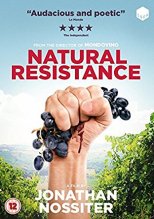
The film “Natural Resistance” looks at the Italian natural wine scene and promotes the producers’ ethical and philosophical approaches to winemaking. Jonathan Nossiter portrays natural wine as a form of resistance. It’s worth watching though a little over stated at times.

dvd

This, my own, blog tries to explain natural wines, how they are made and the philosophy behind them. I hope that by searching the blog posts you will find plenty of information. Just this week Jancis Robinson’s site included an extraordinary attack on natural wine by Caroline Gilby MW, repeating many inaccurate clichés on the subject. I do hope that the recommendations above will help to counter the prejudice of so many involved in the wine business who seem threatened by the new wave of wine.


Leave a comment

New year, new start

Version francaise

cselqcavuai7i9

If only winemaking was like this! Bottles, however, do not produce themselves. The year round process of winemaking I have previously described on this blog. Readers will be aware of the work, effort and stress involved.

As 2017 began Julien returned from his travels in Iberia to Puimisson to start the long, finger numbing job of pruning (la taille). He will be joined by Carole who also returned to the village and who has pruned for many years at Mas Coutelou.

Jeff tells me that there is plenty of other work going on. I referred in a previous post to January being named after the Roman god, Janus. He was two faced, one looking to the old year, the other looking forward. So too in winemaking.

The pruning, for example, is finishing off the work of the vines of 2016, cutting away the last vestiges if that vintage whilst preparing the vines for the year ahead. Normally the wines of the previous vintage would be approaching readiness for bottle, the first wave. However, Jeff tells me that they have developed more slowly from 2016 and he is likely to wait until they tell him that they are ready. That may happen when I return to the area at the end of this month or maybe later. In which case he will have to prepare wines for the major salons ahead straight from the tank.

P1000991

Floor renewal

Other work is taking place in the cellars. Half of the floor was replaced in early 2016 and the rest will now be done. Other changes will add more facilities such as an office.

Meanwhile the weather is not playing its part so far. It has been warm again allowing no rest to the vines. However, a forecast I saw today suggests that freezing conditions will arrive this weekend. Perhaps, after two years, the vines will finally shut down and rest. This would certainly help 2017 be a more promising vintage. New year, new hopes.


2 Comments

The case for 2016

20161231_143000

Hard to defend 2016, it has been a dreadful year in so many ways, Brexit, Trump, Aleppo, Bowie and so many other deaths.

However, there were highlights, friendships, the Languedoc, the vendanges, grafting vines and some excellent wines tasted including great salons in London, Montpellier, Arles and the Loire.

So what were my top wines of 2016? I could write about wines I tasted at salons and would include great ranges from Kreydenweiss (père et fils), Pittnauer, Tscheppe, Forja del Salnes, Stentz and Thörle amongst others. Austria provided many of my highlights, so many good wines red and white. Alsace and the Loire were my other top sources of favourite wines.

So here is my case for 2016.

Whites

Clos du Rouge Gorge, Sisyphe 14 – This was in my 2015 selection and it returns this year. Fresh, zesty, long Grenache Gris from one of Roussillon’s great producers. I do love this.

Domaine Ribiera, Y’A Un Terret 13 – Even more zestiness, but balanced and lots of character from a small parcel of Terret, a traditional Languedoc grape. Lovely wine from a lovely couple in Régis and Christine Pichon.

Gérard Schueller, Pinot Blanc 2010 – Schueller’s wines need a few minutes to let them settle after opening. Riesling, Gewürz, and this Pinot Blanc were all characterful, fresh and balanced. This was the pick, from a grape which I have never previously associated with much flavour and showing the benefit of a few years in bottle. Delicious.

Domaine des Miroirs, Mizuiro ‘Les Saugettes’, 13 – A bolt from the blue like the label. I tasted this and got hold of a bottle at the Real Wine Fair in London. It is pure Chardonnay from the Jura from Japanese producer Kenjiro Kagami. It is pure in every sense. Clean and fresh. Nutty, lemon and long. Just superb expression of the variety. The Jura is a source of many great wines, this is well up there with any bottle.

Domaine Montesquiou, Terre De France, 14 – Any collection of white wines is incomplete without the wonderful wines of Montesquiou in Jurancon. Manseng grapes, this particular bottle had too much residual sugar for the appellation so the brothers made it into a Vin de France and it is a beauty. Still thrilling in its freshness but with the slightest hint of honey to boot.

Davenport, PetNat, 15 – Another unexpected delight. I had heard great reports of this English wine but was delighted by it when I managed to get hold of some. Indeed it was much more characterful than the champagnes I tasted recently. Auxerrois grapes, very sparkling but lots of character and acidity to leave you wanting more. An eye opener for me regarding English wine.

Mas Coutelou, RobertA, 2003 – A wine which would not stop fermenting in its barrel (named RobertA) and yet turned into a great wine in Jeff’s first year sans sulfites. A blend of Grenaches Noir, Gris and Blanc, it has nutty notes from barrel but pear and apple too. And still youthful. This was my star of so many great Coutelou wines this year. Despite the bottle this is RobertA.

Reds

Occhipinti, SP 68 Rosso, 15 – I am a real fan of Sicilian wines. COS is one of my favourite producers and the niece of its winemaker is Arianna Occhipinti. Her Frappato is even better than COS’ version and yet it was this bottle with Nero d’Avola added to Frappato which captured me. Black cherry, plum with a lot of floral aromas it is very Sicily,  and just very good.

Christian Venier, La Roche, 11 – The highlight of a fabulous weekend at Christian’s Portes Ouvertes was this wine in magnum. Gamay from a special parcel, with great depth, fruit and one of those wines which got better with every sip. Terrific. (Photo shows a different vintage).

Cédric Bernard, La Cabane A Marcel, 15 –  no writer’s trick this. Cédric’s wine is actually the same parcel as Christian’s wine. Remarkably Christian gave it to his protegé and this litre bottle was very very different. Lighter, more overt fruit but joyful Gamay like the very best Beaujolais but with added pepper and spice.

L’Ostal, Anselme, 14 – Great Cahors wine. Malbec of course and deep purple with dense chewy fruits charcateristic of the area. However, Charlotte and Louis Pérot add amazing drinkability to their wines with the fruit overy enough to make them a pleasure and acidity to cut through the tannins. They will certainly age well but it’s hard to resist L’Ostal wines.

Sweet

David Caer, L’Autre Vendange, 13 – David Caer makes wine in Aspiran the same village as the Pichons (see above). He makes a nice red (Exorde) but this dessert wine is special. 100% Roussanne dried on the vine, aged in barrel. Lovely cinder toffee aromas and flavours with a real twist of acidity. Lovely.

So there we are, I could have chosen many others believe me.

So, all that remains is to wish you a very happy 2017, may it bring you health and happiness.


2 Comments

A year in the vines, Mas Coutelou in photos (Part 2)

July

p1010428

Young vines freshly grafted in March (see above) surrounded by straw? What is going on? The weather was so hot and dry over  a prolonged period that the vines were stressed. As these young vines would not be producing any grapes they could be watered to protect them, the straw keeps the moisture in the soil.

The grapes continued to grow though and July saw véraison, the colouring of the red grapes. They were smaller than most years but healthy in the main. Other than those vines affected by the widespread mildew of the spring and early summer, those grapes were dried and shrivelled by the disease.

August

More grape ripening, Carignan to the left, Grenache to the right. There were some beautiful bunches despite the weather problems of the year. Time to start thinking about harvest and that work began in the cellar itself where Jeff had taken out some very large fibre tanks and replaced them with smaller stainless steel tanks with a new steel staircase to take us above the tanks to place in the grapes and to carry out pigeage or remontage during the vendanges. And on the 24th Jeff was testing the grapes to check for ripeness and acidity to see if they were ready for harvest to begin (they weren’t quite!).

September

As dawn rose over Rome vineyard probably the most important month of the year began.

p1010639

Vendanges means hard work, fun, pressure, grapes and cleaning amongst other things. Selecting the best fruit from the vines’ year of growth, making the best of that fruit in the cellar to make a natural process work by using care, patience and analysis.

For each of the three harvests in which I have now taken part at Mas Coutelou my main memory is of the people, the teams who work to support Jeff. Friends all, and so many happy memories.

October

Cellar work continues as this year’s wines ferment and start their journey to bottle. Meanwhile time to prepare bottles of more of the 2015s, this time magnums. And in both photos Julien to the left and Michel to the right. The two figures who have been most present in Puimisson working at Mas Coutelou through the year. Two of the best, kindest people you would ever meet. Is it a coincidence that good people congregate together and that the best wines come from the best people?

Meanwhile autumn arrives in the vines, Puimisson in the background.

p1020227

November

Cases of wine leave Puimisson to head around the world. Mas Coutelou is sold in Australia, Japan, the USA, all over Europe and at the cellar door. As the end of year and Christmas holidays approach merchants want their wines and exporting the cases involves planning, spreadsheets and collation of the various cases.

Meanwhile, in one corner of North East England one happy vineyard worker sorts his own collection of Coutelou treasures.

December

15439861_10154009671412595_5814305575539506409_n

A photo from Camille Rivière who imports Jeff’s wines into the USA, those cases above have arrived safely and Camille shares her happiness with the bottles she has opened and enjoyed.

Jeff tells me that there has been a lot of rain in recent weeks, 400mm last month. That is certainly welcome but the weather has also been very mild. Reports of mimosa blossoming (it should happen in February) and Jeff told me he had seen a neighbour’s vines preparing to bud!! Frost is needed for the vines to enter a dormant stage and rest, recover after  a difficult year. More mild weather would mean two years of non-stop activity, which would weaken the vines.

A fantastic year, a memorable year, a complex year in the vines.  But also a year marked with sadness at the passing of Jean-Claude Coutelou. I raise my glass once more in his memory.

ddfce457-16d5-4dcf-9236-afcb4c40987b

Grapes, work and love