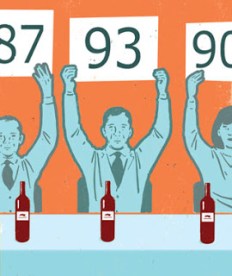
Having written about my concerns with wine tasting notes, medals and competitions it is time to offer my more positive thoughts. Wine tasting is fun, the chance to try wines from known or new producers, to learn more about wine, to find the familiar and the unexpected. Professional tasters are doing things differently I accept but the fun element is sadly missing far too often. Most wine drinkers are not interested in technical details and in-depth descriptions, indeed they deter most people from thinking of wine as anything but elitist, poncey as we might say in Britain.


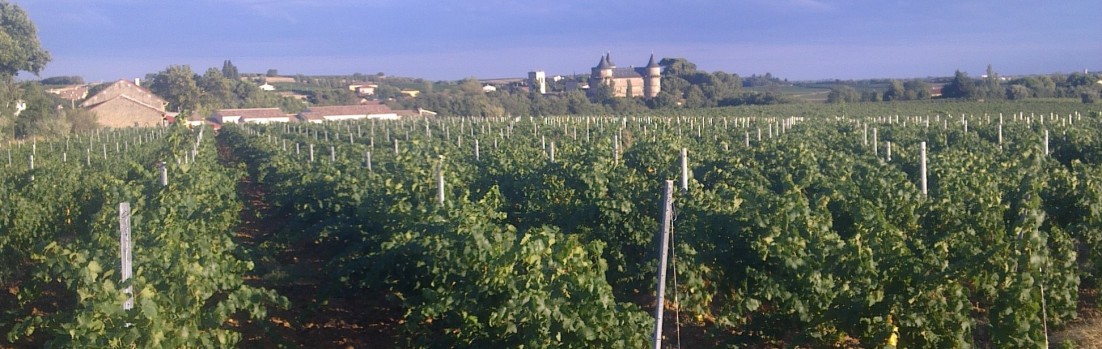
Jeff Coutelou always tells me that wine is for sharing (see above) and he is right as usual. Wine tasting is by nature a solitary exercise in that wine tastes differently to different people because of physiology, mood and preference. However, my favourite tastings have been where I can then share my thoughts with others to garner those different views. That fun element again, and I make no apology for referring to the f word again. If those of us fascinated by the subject really want to educate others to appreciate wine then my first lesson would be, let them speak. Encourage people to say what they think about the wine, not just in terms of fruit and flower comparisons but just whatever comes to mind. If they like it because it tastes good then that is an effective wine note to my mind. If they can explain further then all the better but let’s not get hung up on it all. I was interested in the comment on the previous post from my friend Graham Tigg that he runs a tasting class for elderly people and sees it as a social gathering rather than a teaching process. Is there a better reason to hold a wine tasting?


One of my favourite tastings, La Remise gives the chance to talk with producers
My favourite wines have often emerged from tastings. Almost every time they have been tastings with the producers themselves. Why? The story. What marks a wine as special to me is that I know something about it, its origin and the people behind it who have worked so hard to bring me that wine. Yes I can taste wines and appreciate them without knowing the story but the special ones are the wines which have an attachment. Years of travelling in France meant that when I went to Alsace I would visit Martin Schaetzel in Ammerschwihr because of a first visit there where he patiently shared the story of his wines. In Beaujolais we came to get to know and love Louis Champagnon, who was always so kind and generous with his time.

With the wonderful Louis Champagnon
In the Languedoc I have been lucky to get to know so many wonderful people and therefore, their wines mean more to me. Most importantly, of course, was getting to know and become firm friends with Jeff whose wines would always be first choice for me.
Not every wine drinker wants to travel in France or other wine countries, many would be deterred from visiting producers because of language barriers. The task is to share the story, make the wine personal to the consumer. It will mean more. Achieving that is no easy matter, back labels are often a missed opportunity for example. Blogs, media columns, youtube videos all demand more interest, piquing that interest is the challenge. I am convinced that is the crucial point. Stories sell wine.

Taken from California Wine Club









 amarchinthevines