amarchinthevines

Learning about wine, vines and vignerons whilst living in the Languedoc


Leave a comment

Harvest 2019 – Rain

En francais

Finally. Maybe a few weeks too late but we had around ten hours of rain on Tuesday to relieve the parched Languedoc. That said, it soon dried out again and much more rain will be needed for the well being of the region. However, for the vines it was a welcome relief and should revive some parched vines.

Jeff Coutelou told me that in Peilhan vineyard for example the grapes were pretty much skins and pulp, now there is some juice to balance them. We have had some lovely fruit through the vendanges but it is very concentrated and lacking juice. Whilst for Jeff’s bank balance the rain would have been more welcome a month ago to fill out all the grapes and provide more wine, this was better than nothing. I saw one southern Rhone producer say it was like 100€ notes falling from the sky. That may be true for Chateauneuf du Pape but not for Jeff who said maybe a few centimes coins would be nearer the mark.

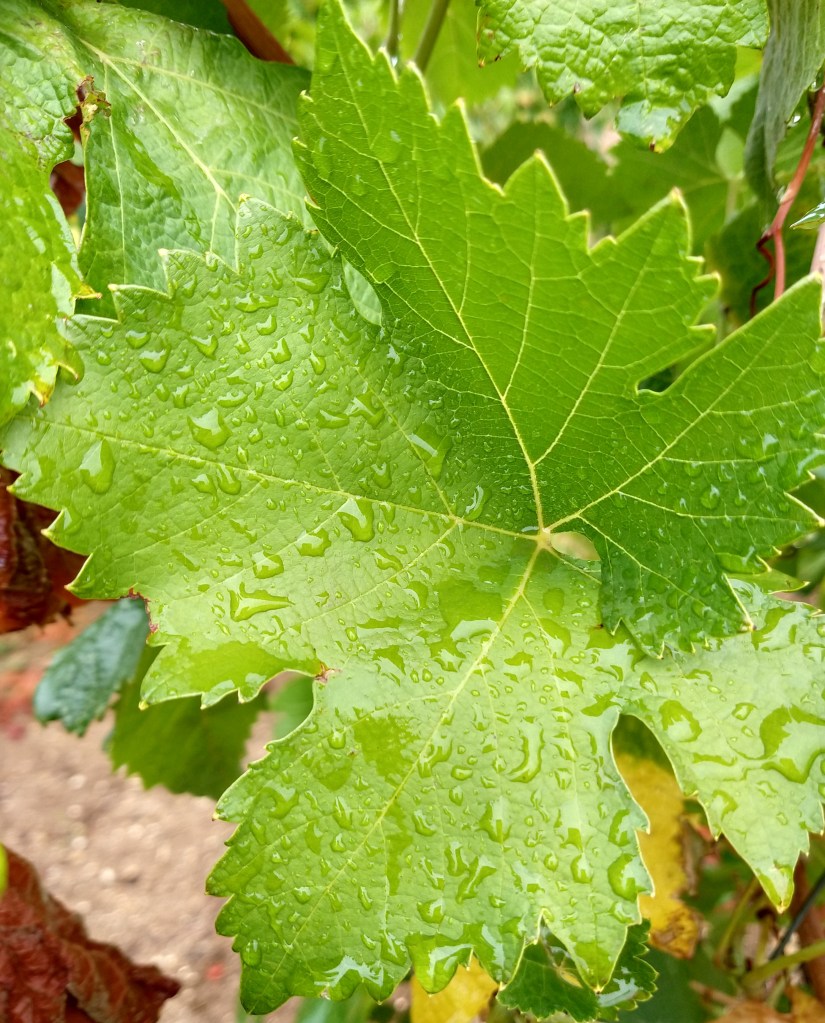
Cinsault in the rain, some of these were picked Wednesday
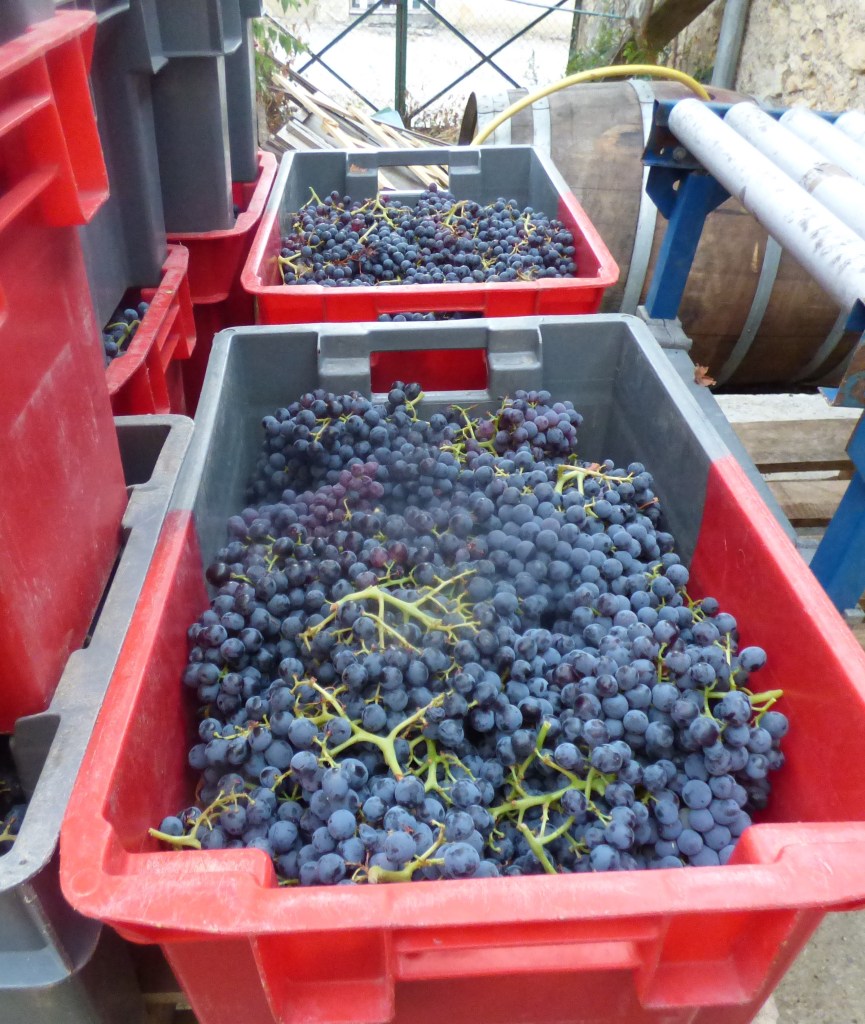
Grenache being put whole bunch into tank

The day before the rain, Monday 9th (Day 8 of vendanges) was a picking of Grenache from Sainte Suzanne. It was put into tank in whole bunches to give a more fruit driven wine, a semi carbonic maceration.
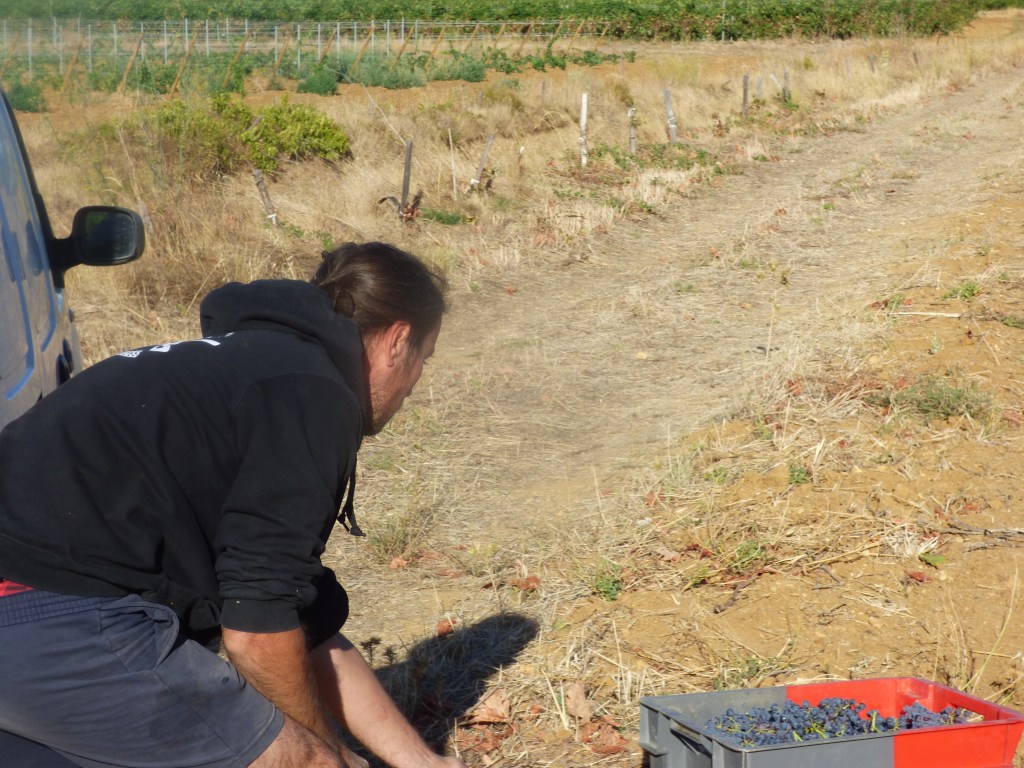
Anthony collecting cases, star over the stable

No picking on the Tuesday or Wednesday morning , the photos show why with water standing on the grapes. Wednesday afternoon (Day 9) saw more Grenache and the first Cinsault of the year. This was destemmed as usual.
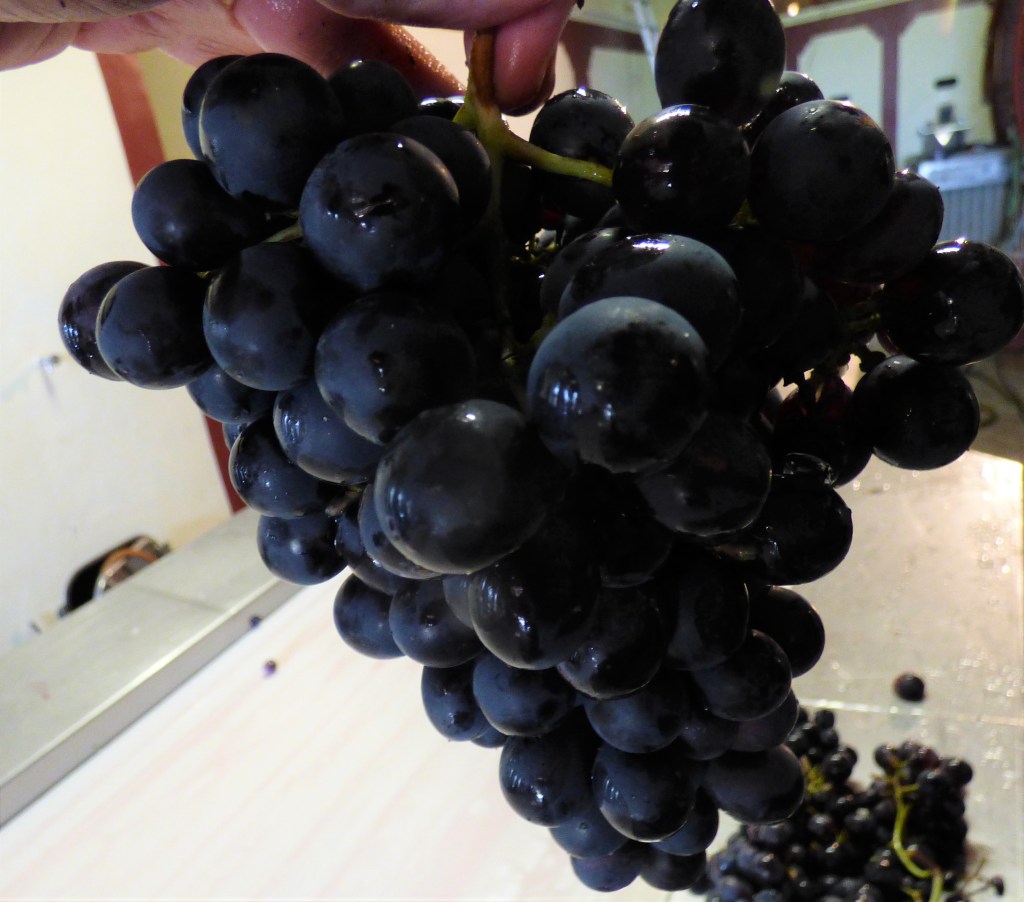
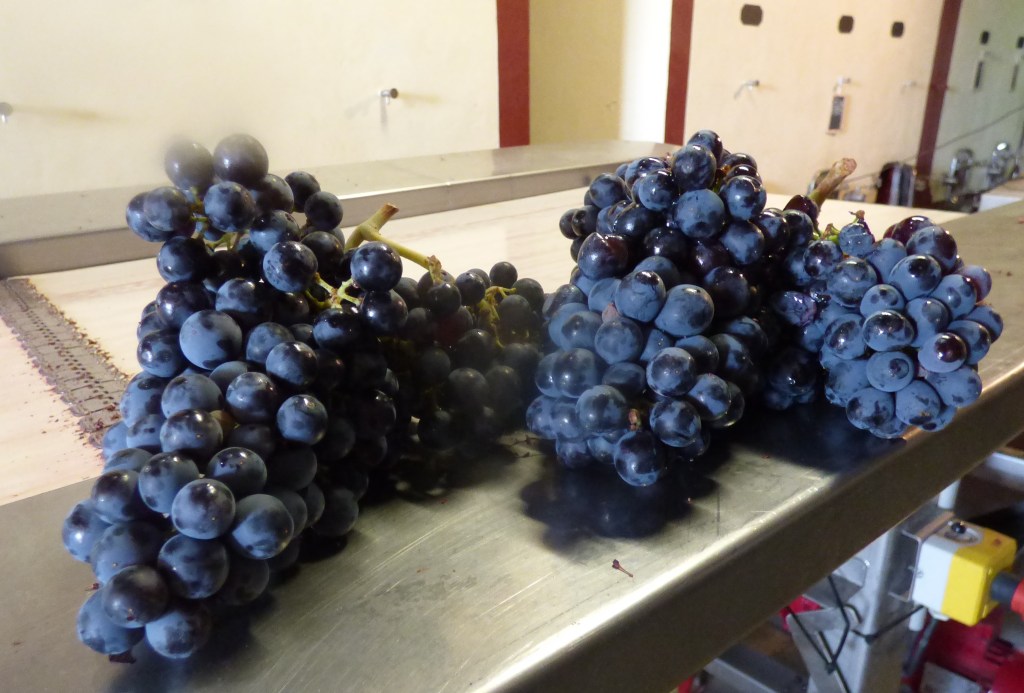
Cinsault (left) and Grenache

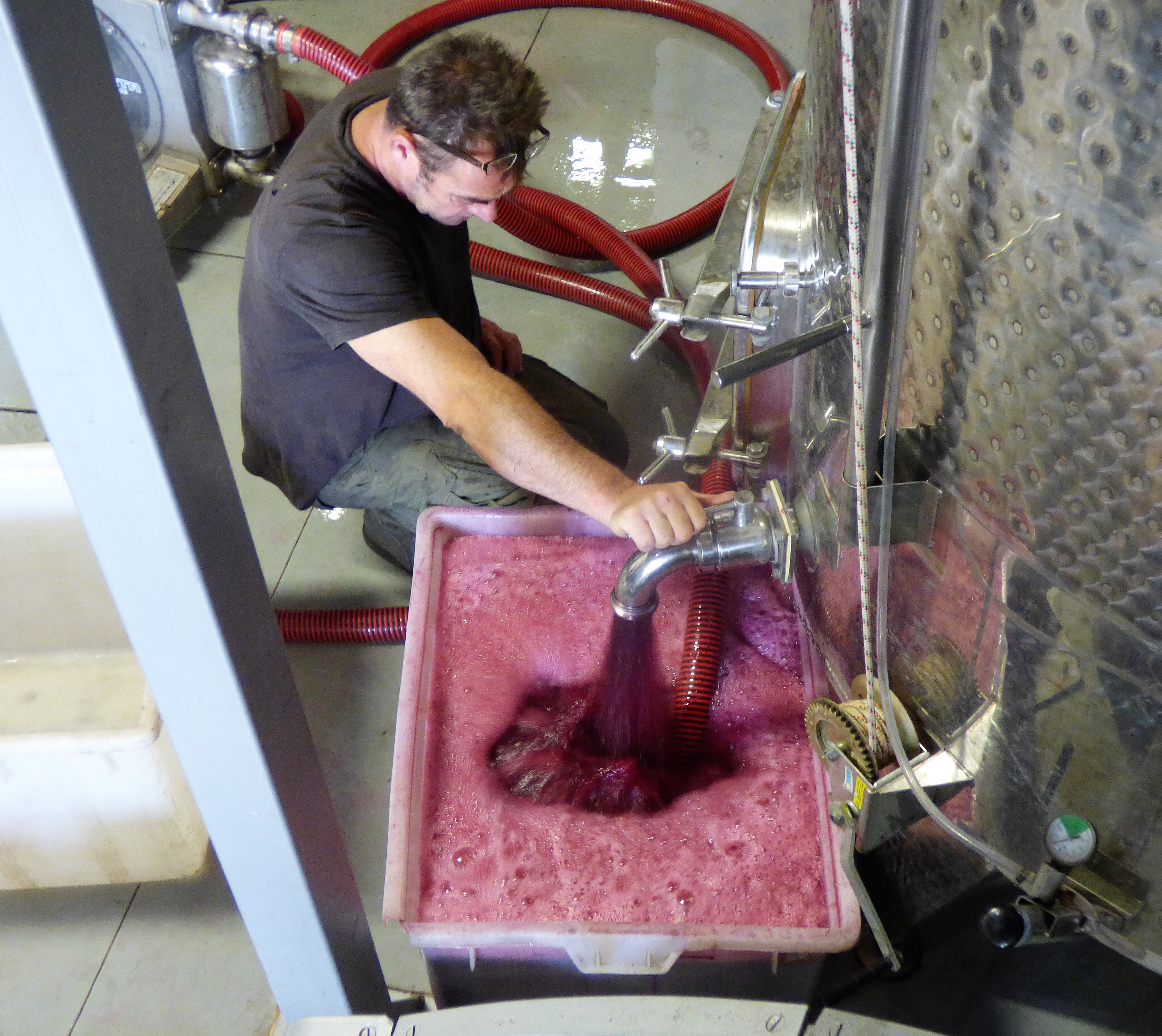
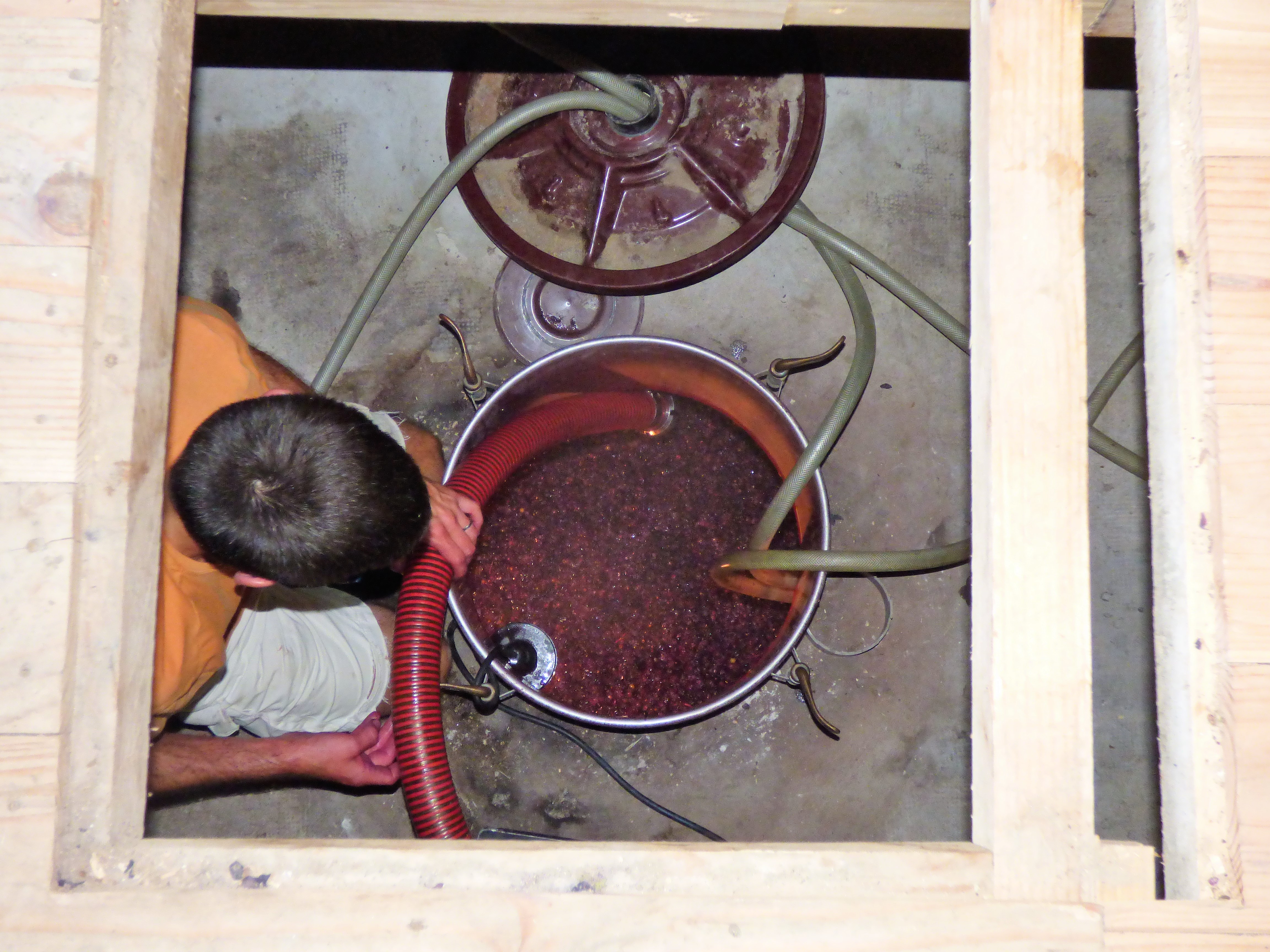
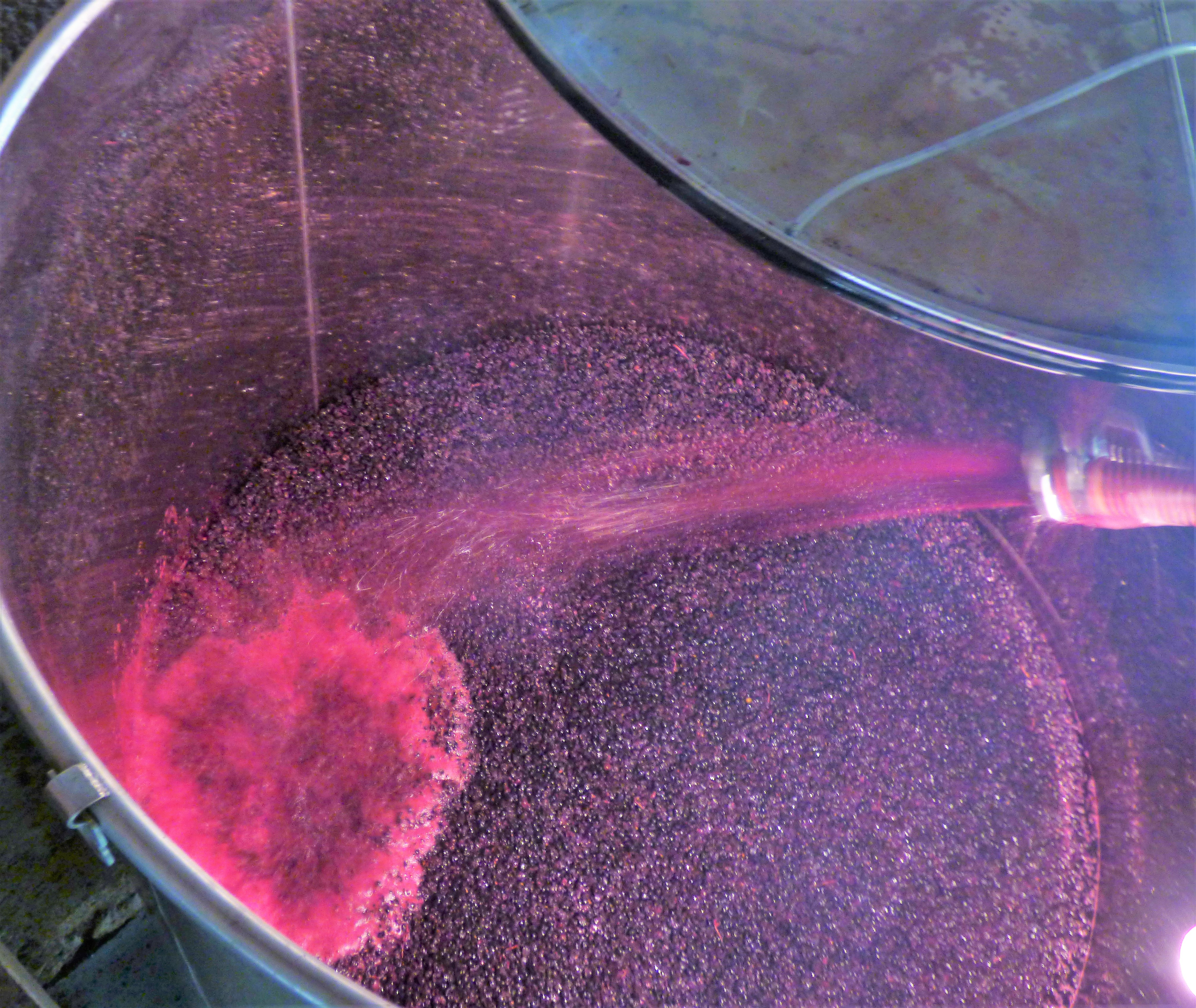
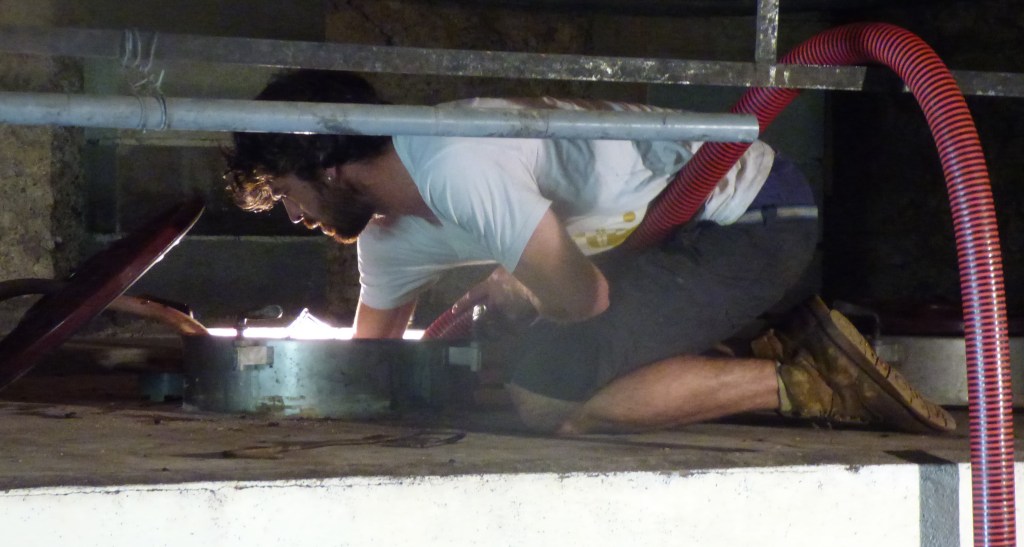
Meanwhile the break gave Jeff the opportunity to do more work on the wines in tank which have all begun their fermentations, the whites took a little longer in their temperature cooled tanks but have started too: Remontage, pouring or pumping wine over the top of the crust of grape skins and pulp; Batonnage, stirring the white wines in tank; Pigeage, pushing down the cap or crust into the wine for the same reason as remontage.

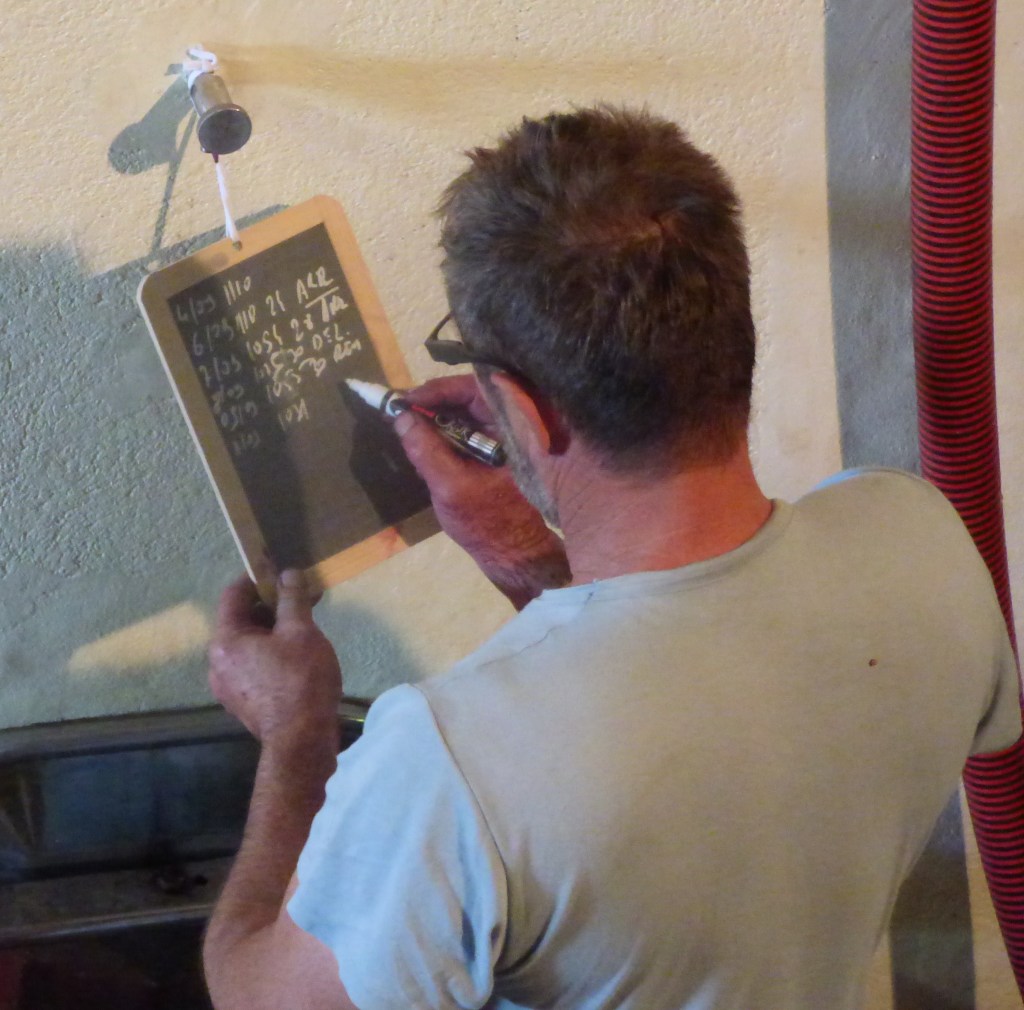
Meanwhile the figures on specific gravity for the wines continue to decline, indicating the fermentation process is going ahead successfully.

To give you some idea of how hard that crust can be and how much effort it takes to punch it down have a look at the video of Jeff treading on the cap of the Syrah from La Garrigue.


Leave a comment

Harvest 2019 – Magical Mystery Tour

En francais

The magical mystery tour which is the vendanges is under way. That’s an invitation to read on for the next few weeks to follow the course of what happens in Puimisson with Jeff Coutelou and the gang. Satisfaction guaranteed, I hope.

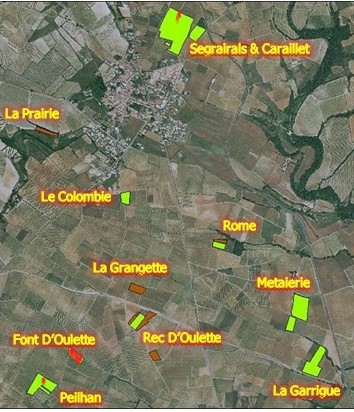
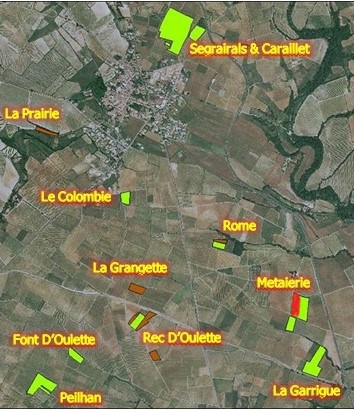
Red vineyards or squiggles indicate picking Day 1

Regular readers will be aware that nature has not been kind this year. What promised to be a great vintage in June with bountiful, beautiful fruit has been undermined by drought. It has not rained since then and so the bunches are still bountiful but they are made up of small grapes, quantities will be meagre. The ratio of juice to skins, pips and stalk is nowhere near the average meaning choices about winemaking have to be made, for example removing stalks rather than whole bunch to improve the ratio.

The 8 cases from Flower Power

We began on Friday August 30th with a morning pick to make a new cuvee. Flower Power vineyard (Font D’Oulette) was the starting point. This vineyard was planted with a rich variety of grapes, twenty or more – some rare. Clairette Musquée (originally the Hungarian Org Tokosi), Delizia Di Vaprio, Aramon Gris to name just three. Jeff has invested heavily in this parcel, for example bringing volcanic soils to add life, and the vines have looked healthier than previous years with more fruit. However, as a prime example of the ravaging effects of drought, despite more bunches on the vines, we harvested only eight cases, as opposed to seven last year.

Clairette Musquée and Aramon Gris, amongst the rare Flower Power grapes

To supplement the Flower Power, more Clairette Musquée from Peilhan and some Syrah from Segrairals at the other end of the village. The grapes were taken back to the cellar, and put into stainless steel tank with some dry ice to stop fermentation and allowing the juice to soak up some of the colour and flavours from the skins. (The wine was pressed three days later and will now ferment).

Syrah is sorted then put into the dry ice filled tank

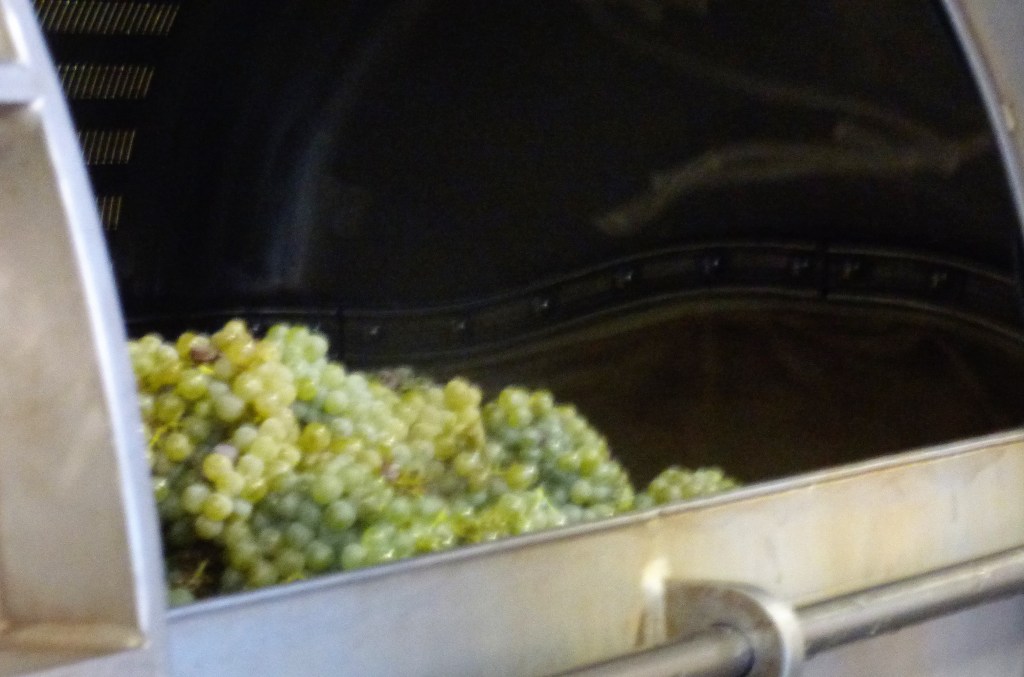
Day two, Monday September 2nd began with the white grapes of La Garrigue; Sauvignon Blanc (low alcohol, bright acidity, very Sauvignon), Muscat d’Alexandrie, Viognier. Straight into the press, sent into stainless steel upstairs in the cellar, a fresh dry white wine in the making.

La Garrigue’s white grapes, Julien loading the press, brown pips show ripeness, the grapes are fleshy rather than juicy

Afterwards time for the Merlot of Le Colombié. Not the grape which Jeff favours particularly but year after year it produces good wine to be blended with others in cuvées such as Sauvé De La Citerne and Vin De Table.

Day 2

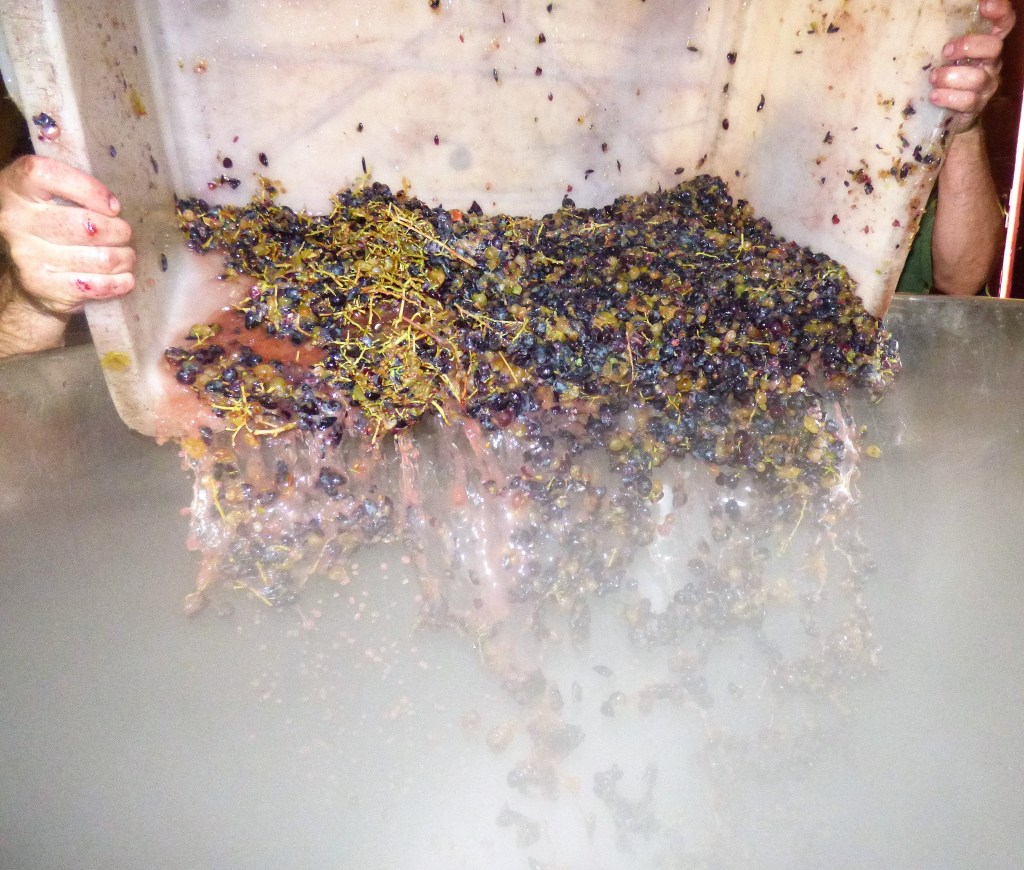
This year the grapes were very small, they were destemmed and into one of the original concrete tanks. I had been sorting it for 4 hours or so and the tank was less than half full, such is the paucity of juice. More was added but yields were well down.

Alain and Alan sorting Merlot, one of us has hair

The fruit is clean, dry and disease free so sorting is mainly about removal of leaves, snails and unformed grapes. The quality is excellent, the juice tastes delightful with plenty of fruit profile and acidity – just wish there was more of it. Jeff ‘joked’ feelingly that with the small tank of Merlot he might make 10 euros profit.

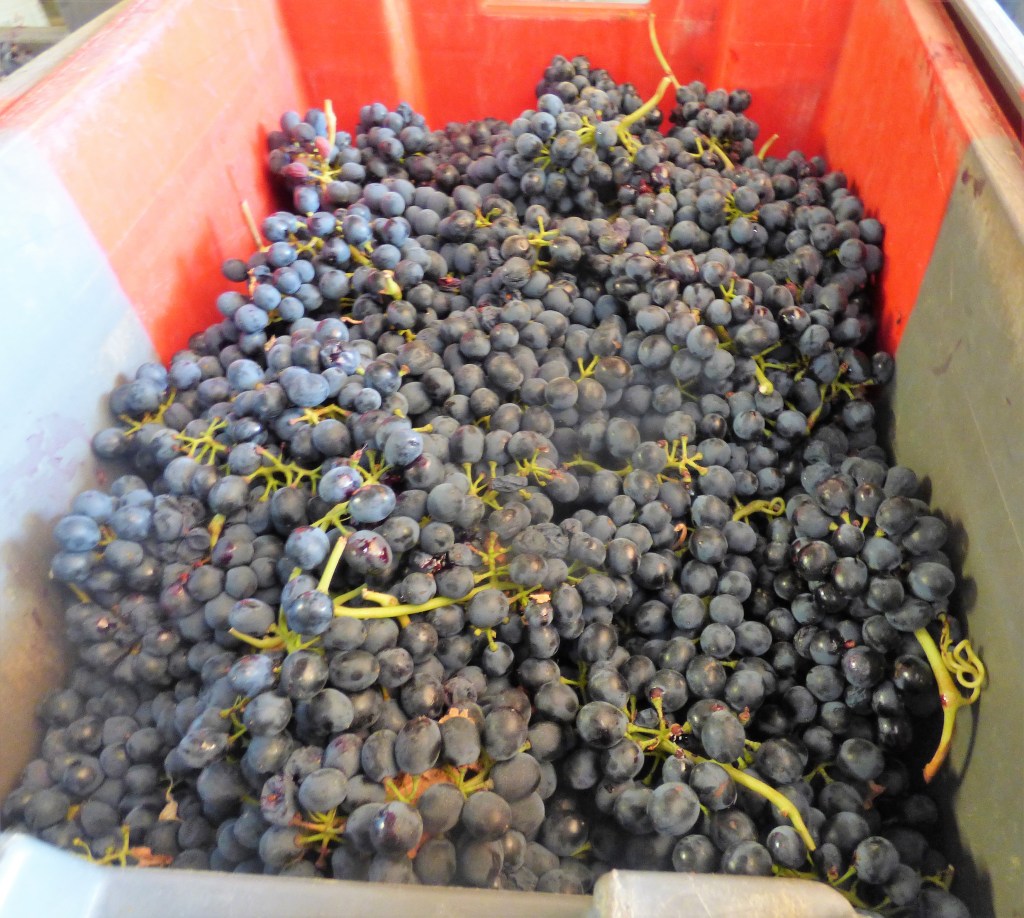
Beautiful Syrah from Ste. Suzanne

Day 3 and the Syrah of Sainte Suzanne (Metaierie on the map). This is the parcel which provides much of the fruit for the much loved Coutelou wine, Le Vin Des Amis. More of the same, very healthy fruit, concentrated and tasting sweet and ripe but… small berries.

Day 3

A losing argument with a boiling hot cup of tea put me out of action on Day 3 but I did manage to get some photos (of the grapes not my blisters you will be relieved to know).

There will be twists and turns ahead in the next few weeks, sadly there is no forecast of any rain to help us. Let us see where the mystery tour takes us.

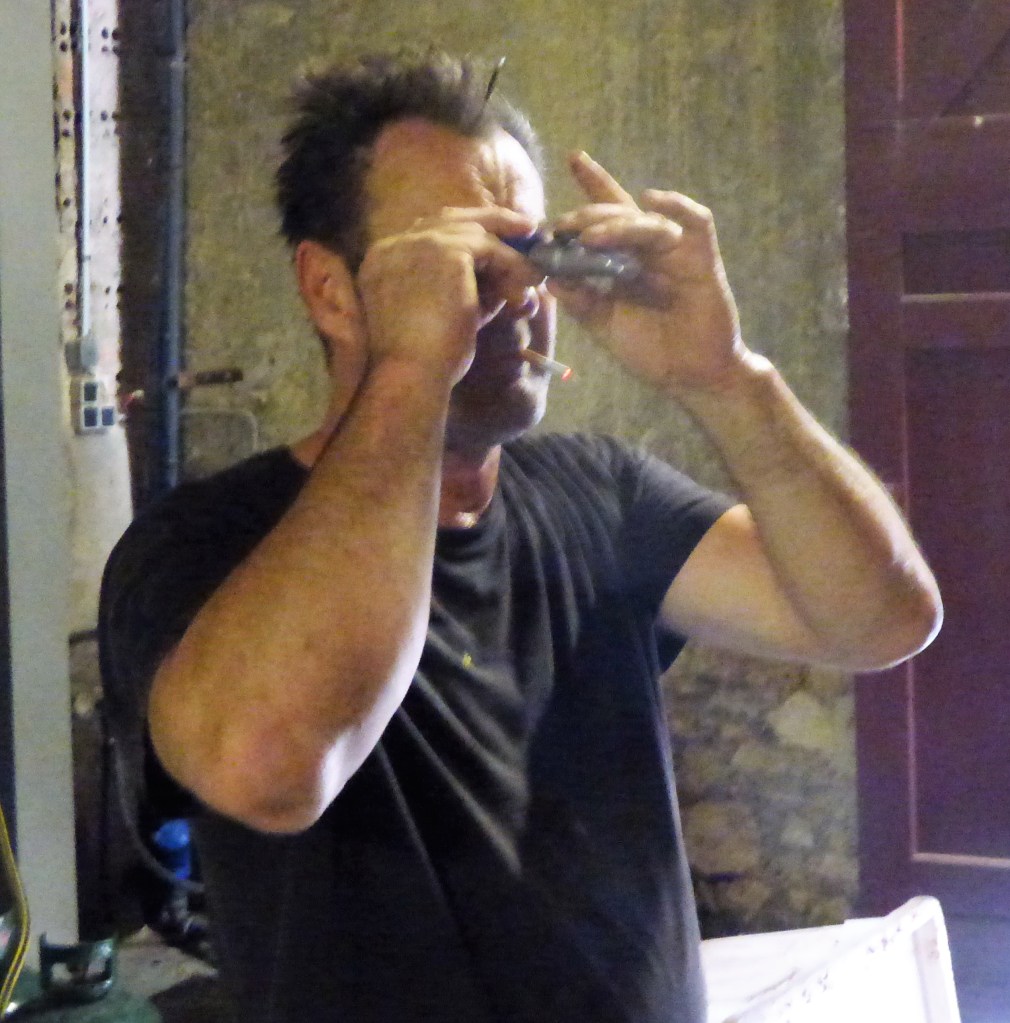
Jeff checking alcohol levels or trying to find a big grape


2 Comments

As if burned with a blowtorch

Version en francais

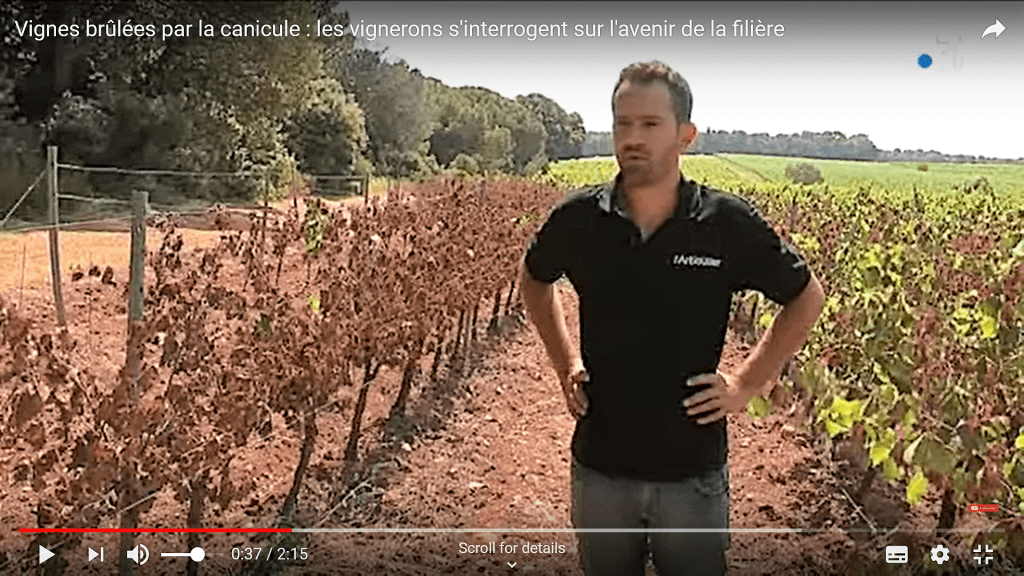
Photo de la vidéo de France 3 sur Youtube

Sad to report extensive damage across the Occitanie region from Roussillon through the Aude, Hérault and Gard which took place last Friday, June 28th. A heatwave (canicule) had been widely forecast but the ferocity of the heat that day still took everybody by surprise. In the Gard a recorded temperature of 45.9c is the hottest ever recorded in France. I was driving back from Spain and in the early evening the temperature was showing at 44c from Perpignan to Béziers. Those temperatures are recorded in the shade, in full sun the vines were enduring searing heat, combined with strong, hot, southerly winds.

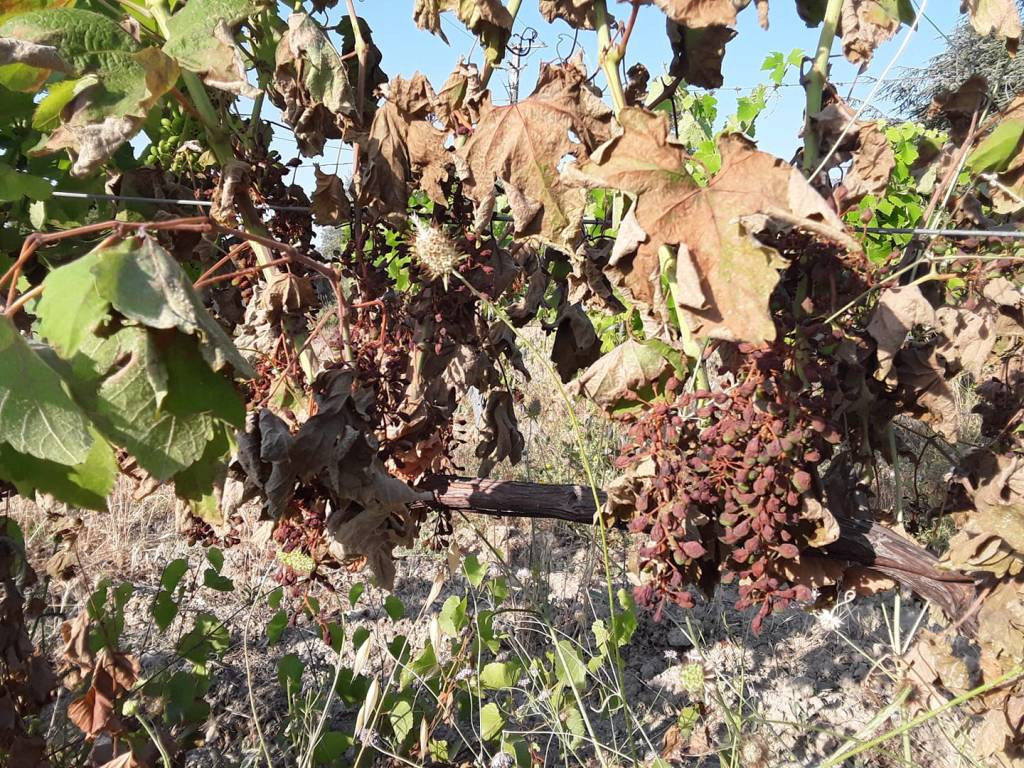
Some hot weather can be beneficial in drying up mildew for example but this was new ground. Reports began to filter through of the damage done to vines. Friends such as Bernard Isarn (Domaine Cadablès in Gabian) were reporting extensive damage, he was joined by others. Some reported losses up to 50% in some parcels.

Photo de Bernard Isarn

This would be difficult enough to accept but it is the fourth year in succession where the climate has dealt a blow to production. Mildew in 2018, drought in 2017, frost and hail in 2016 all brought economic and agricultural damage. 2019 had begun so well until recent days, many people I spoke to, including Bernard, had been excited by how well the vines were progressing. So, I can only imagine the heavy hearts of vignerons whose vines were burned ‘as if by a blowtorch’ .

The combination of heat and wind was the crucial factor, others played a part. Languedoc vines are long used to great heat, years such as 2003 were hot but never with this damage. One difference is that the heatwave was early in the growing season. The younger growth was less hardy, more susceptible. This might also explain why so many of those affected were organic producers. Vines grown with lots of nitrogen and nitrates are further advanced in their growing cycle, perhaps the organic vines were more vulnerable because they were relatively immature.

Another reason put forward is the use of sulphur treatments. This is one of the organic vigneron’s tools, from a toolbox smaller in scope than conventional producers. With oidium menacing last week many organic producers sprayed with sulphur to combat the fungus. Unfortunately the combination of sulphur and hot temperatures leads to burning. Jeff Coutelou resisted spraying last week because of the forecast, he is thankful for having made that decision.

Photo du domaine Matassa en Roussillon

However, these explanations are tentative, enquiries are going on. Bernard reported that vines damaged included those not sprayed for 20 days. Ill fortune must be a factor. One other curious feature is that many report that the vines most damaged were the traditional, local varieties such as Carignan, which might be expected to resist heat better.

Whatever the reasons, it is extremely sad for those affected and my sympathies go out to them all. Local producer Catherine Bernard published her heart felt thoughts and they are well worth your time to read. The climate is raising questions which we all need to address urgently, vignerons seem to be in the front line of the struggles ahead.


7 Comments

The melting pot of Puimisson

En Francais

In the last weekend there have been visitors to the cellars of Jeff Coutelou from the USA, Sweden, Russia and the UK. In recent times I can recall visitors from Israel, Australia, Taiwan and Japan. No doubt there have been many others. What draws everyone to Puimisson is the wine, admired and coveted from all over the world.

Mats-Eric, family and friends with Jeff.

I had great pleasure in showing the renowned Swedish writer Mats-Eric Nilsson around the vineyards looking at how the vines relate to the wines themselves. As temperatures have risen markedly in the last week it was good to see the vines in very good health despite the heat. Mats-Eric is working on a new book on wine, his previous one Chateau Vada is available now.

As you can see the Kina disappears quickly!

Within the cellar change was stirring. Whilst it is still the wines which are the flagship and main substance of the domaine there has been a shift in emphasis. The name ‘Vins et Spiritueux Coutelou’ tells the story. Vermouth (kina), gin, brandy, triple sec are now for sale. With a Coutelou twist of course. No industrial alcohol as an ingredient, meaning that labels have to carefully following guidelines. Not gin but Djinn (as in genie) for example. You may recall I reported on the making of the vermouths. There are three styles, a very dry, one with a little more sweetness from residual sugar and a red vermouth too.

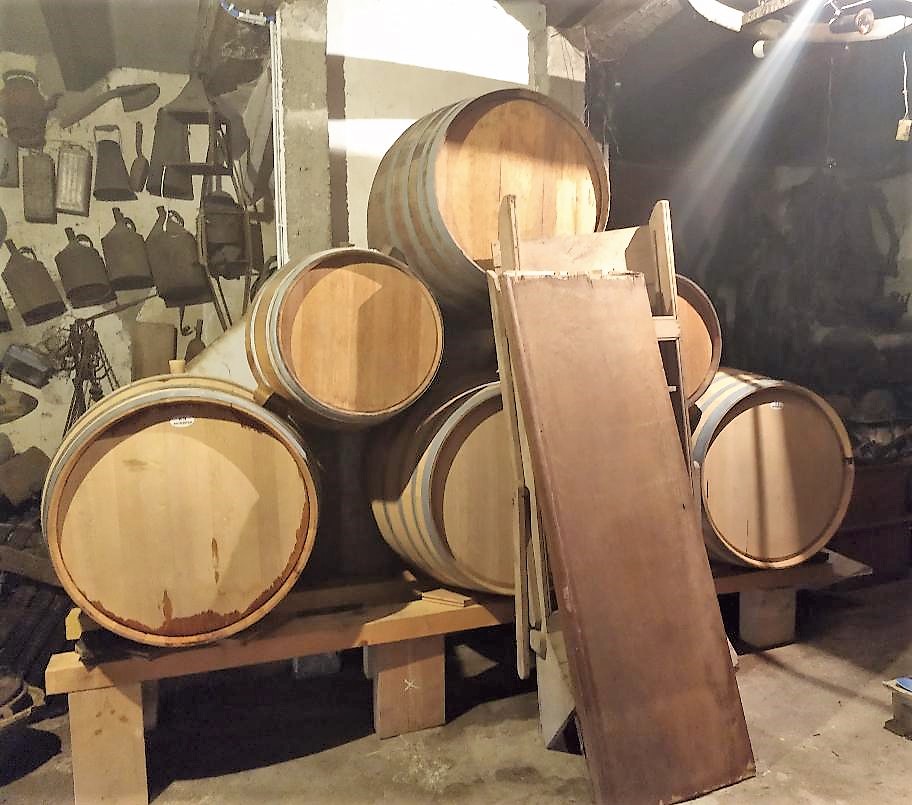
To reflect this new arm of the domaine Jeff, Julien and Nathan were re-arranging barrels within the cellar to create distinct areas for the spirits. And out of that rearrangement came a new discovery for me, a port.

Made in 2012, stored in barrel (see photo above) it is in the style of a Late Bottled Vintage port. The barrel ageing had given it a hint of wood but there was a rich fruit and, as with the spirits, no strong alcohol sensation because of the natural alcohol used. Having spent some time in Porto this year and being a fan of port in general I can honestly say this wine is very good, another top quality addition to the range.

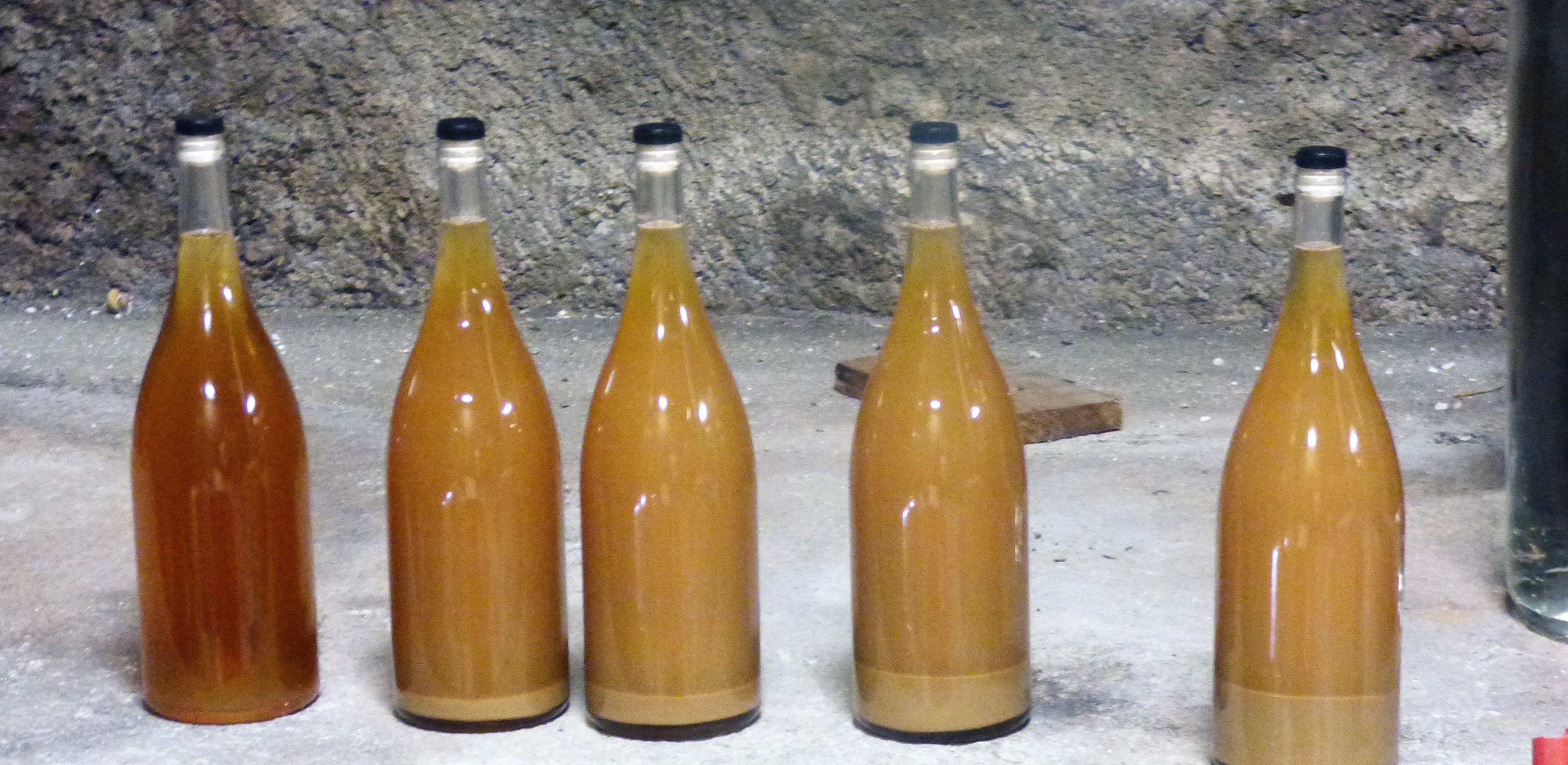
The triple sec, an orange flavoured spirit, was made in a stainless steel tank. Have a look at how it emerged at different stages from there to be allowed to settle in large bottles. The various stages are evident.

Vermouth stored in the solera cellar, the barrel on the left needs attention

With Jeff there is always change, experimenting and new wines and products. He enjoys the challenge of conjuring up and mastering the different styles. And that is without mentioning the solera system again. This really is a melting pot, a crucible of discovery. The fact that he attracts support from all over the planet suggests that many others appreciate that work and creativity.


Leave a comment

Expert eye

Version francaise

I regularly tour the Coutelou vineyards, looking at the changes and growth, relishing the tranquillity and connection with nature, the vines, flora and fauna. Nonetheless, far more interesting is to tour with Jeff himself. His expert knowledge of his land and the vines adds so much. Jeff was a teacher for many years and I always learn a great deal from him.

Living soils of Rome

We began in my favourite vineyard, Rome. This parcel, surrounded by trees, is a haven for wildlife. The tall Grenache gobelet vines are 40 years old and more and Jeff explained how the soil in Rome is around 30-40cm deep, made up mostly of forest residue, for example rotted leaves. The soil is a rich humous and full of life. Lifting a clump revealed fungal threads, insects (look for the black bodies) and worms.

Syrah with its large leaves and bunches forming

On to Sainte Suzanne and its Syrah and Grenache, so much a part of le Vin Des Amis, a famous part of the Coutelou range. Flowering completed in the main, the Syrah more forward than other varieties as is usual. The bunches resemble peas. Huge leaves such as this Syrah and Muscat in Peilhan show how Mediterranean varieties protect their grapes from the fierce sun because of their size and thick, quilted texture.

Flowering on the right whilst Jeff indicates coulure

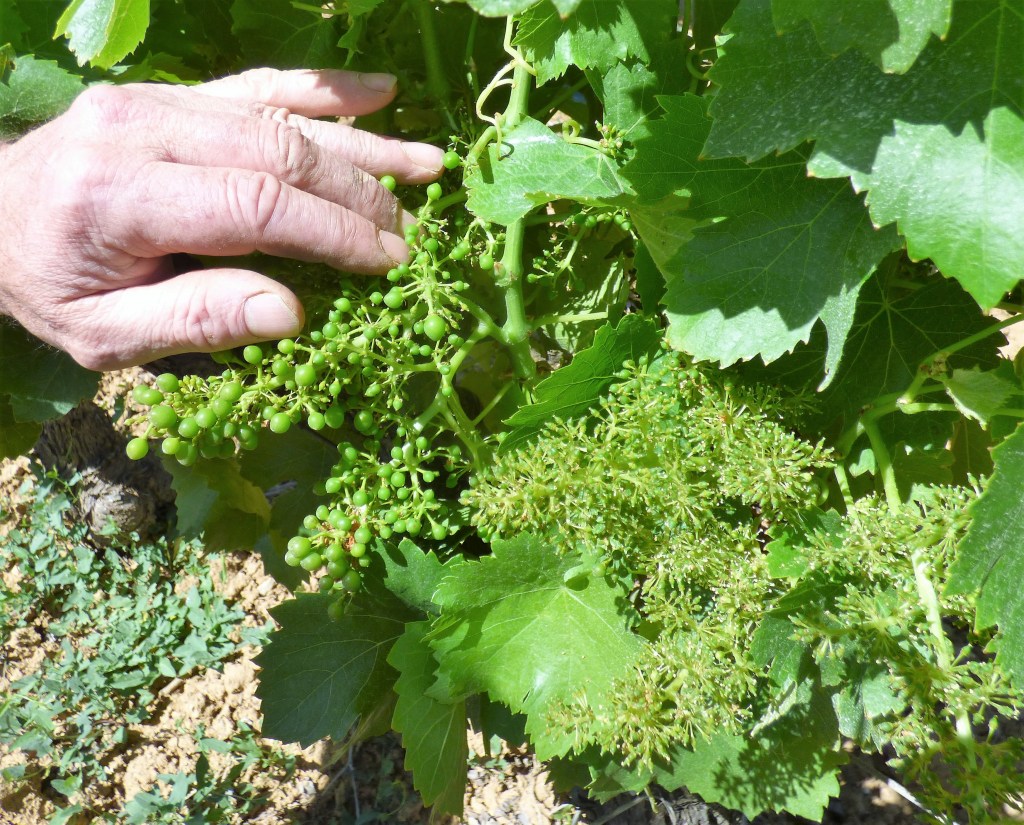
Disappointingly there was also evidence of coulure, here and in La Garrigue especially with Grenache, which flowers later. Flowering has lasted longer this year, making them more susceptible to coulure.

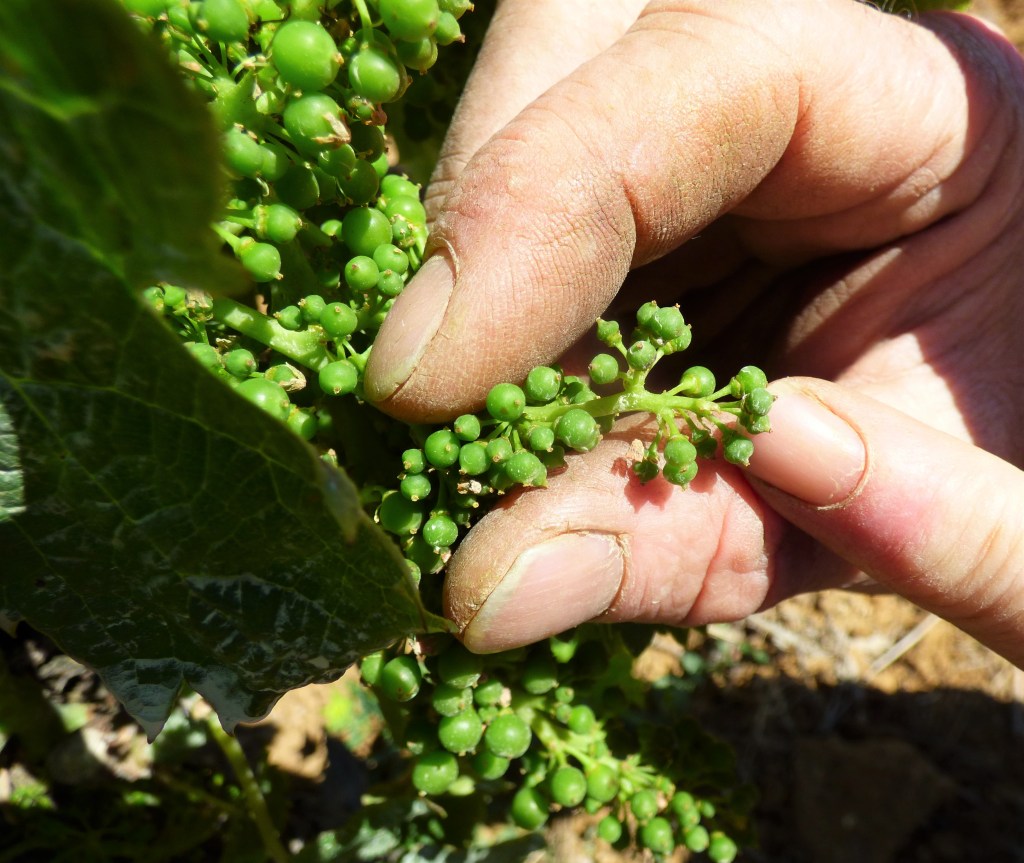
This happens when wind or rain damages the flowers and the fruit cannot set on the vine. A shower of unformed grapes fell into Jeff’s hand as he ran it across a bunch. The consequence is that the harvest will be good but not as big as hoped for, especially after last year’s mildew hit year.

Oidium on bunch

That disease was downy mildew, this year the greater threat is powdery mildew or oidium. As we toured the Carignan vineyard, Rec D’Oulette, Jeff immediately spotted the signs, I would likely not have seen it. Oidium usually attacks the leaf and stem, leaving a white, powdery residue. Here the oidium had attacked the bunch directly, leaving a grey tinge to the green pea-like grape. Encouraged by the alternation between hot days and cold nights which we have had recently oidium needs to be treated. Jeff uses sulphur mixed with clay which helps the sulphur to stick to the plant. So far the damage is limited and the weather has heated up which might help to dry out the disease. Certainly there was evidence of that, the black spots on these stems and leaves is evidence of that, see the photo below.
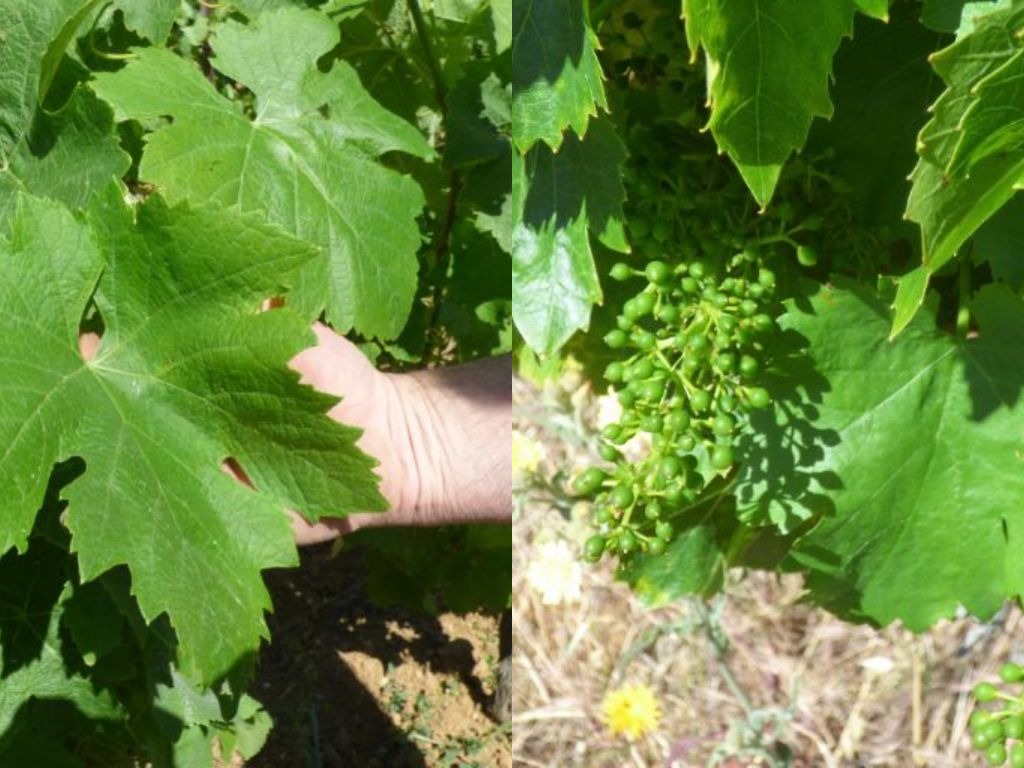
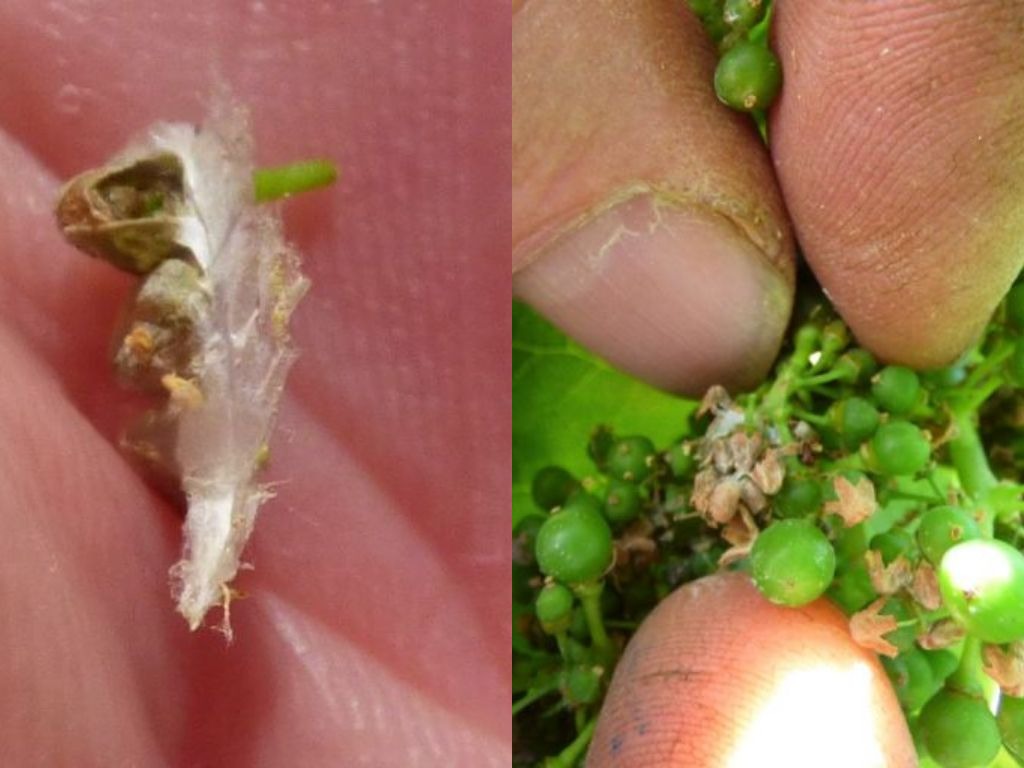
Another pest was seen too. This white, cottony substance on my hand is the cocoon of ver de la grappe, a moth which will lay eggs in the grapes and the larvae pierce the skins causing bacterial spoilage. Insecticides would be the conventional response but not for organic vignerons. Natural predators such as bats are the solution, one reason why Jeff has bat houses in the trees around the vines.

More trees have been planted, Nathan and Julien were tending the border of Peilhan vineyard where fruit trees such as this pear are beginning to grow and become established. In the vines things looked good, such as this Carignan Blanc, Piquepoul Gris and Muscat in Peilhan and the Mourvèdre in Segrairals.

A 3 hour tour revealed so much about the state of the vines this year. Things are set for a good quality harvest, though it is still early days. Coulure means that it will not be a bumper crop, oidium that there is much work to be done to tend the vines which Jeff nurtures so carefully.

Healthy vines

New plantings such as that next to Sainte Suzanne of Clairette and Maccabeu are signs of a healthy future too.

Plantation, Clairette right, Maccabeu left

No matter what some British politicians would tell you it is always good to listen to experts and this was no exception. The strapline of my blog says “learning about wines, vines and vignerons”, this was a morning which certainly helped me to achieve that goal thanks to Jeff and his expert eye.


1 Comment

Slipping back into the vines

https://amarchinthevines.org/2019-en-francais/P1040542

Back in the Coutelou vineyards. As I drive into them there’s a sense of never being away but also of anticipation – what’s new? That may sound strange as the vineyards don’t change too much year to year, yet every vintage is different. In 2018 the vines were already suffering from the widespread mildew following a wet Spring. This year the weather has been very different. A dry Winter and Spring  with cool, sunny weather has benefited the vines. They look as healthy as I can remember in the years I have been here.

Healthy Grenache leaves, left and débourrement in Rome

New plantings and grafts mean that there is always change in the vineyards, this year it has been mostly a case of replacing vines which had failed, some Cinsault, Clairette and Macabeu amongst others. It is time to let the rare and old grape variety plantations of 2018 mature and establish themselves.

New Clairette and Macabeu, Ste Suzanne’s vines in the background, right

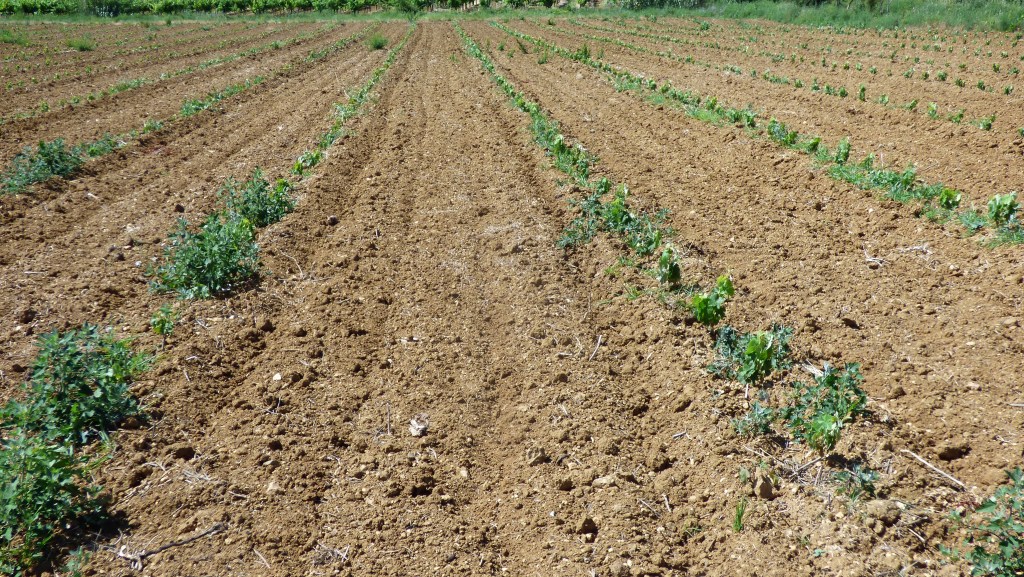
However, one new plantation of note. A small parcel next to Sainte Suzanne has been too wet to work in for the last 2 years, it is now planted with Macabeu and Clairette so more white wine will be produced in future.

New vine; the plantation can be seen as the brownish patch on the left of the 2nd photo from La Garrigue’s Syrah vines

The dry year has also meant that Jeff has been able to lightly plough vineyards which have been too damp in recent years, Rome was given a light scratching for example. Nothing too serious that would upset the life in the soil, just enough to aerate.

Flower Power, Julien and Christian attching the vines to stakes

They really do look well. Flower Power has been lightly worked too, to allow the young vines there to thrive without so much competition from the grass. If you look at the photos you will see the neighbouring vineyards belonging to others, planted much more densely. Those vines are flourishing with their irrigation and fertilisers, almost uniform, dark green with the nitrogen they are fed. The Flower Power vines are shorter and more delicate for sure, they are growing at a natural pace, finding their own maturity slowly. Here, and in all the other vineyards, flowering is almost complete, the bunches are set (débourrement).

After last year’s much reduced harvest it would be good to have an abundant year, to restock the vats and barrels which have been emptied to make up shortfalls in wine and income. The signs are propitious, let us hope the northerly winds and sunshine continue to maintain the health of the vines and allow them to fulfil such a promising start.

One curiosity over the winter. In late 2018 artist Anthony Duchene wanted to create a display to highlight the effect of healthy soils. In many of the natural vineyards of the region underwear was buried. At Jeff’s a pair of underpants was buried in Rome vineyard. This Spring they were dug up and reveal the activity taking place in the soils by animal and microbial life. An unusual but effective demonstration. Duchene’s work is on display in Liège at the Yoko Uhoda Gallery.

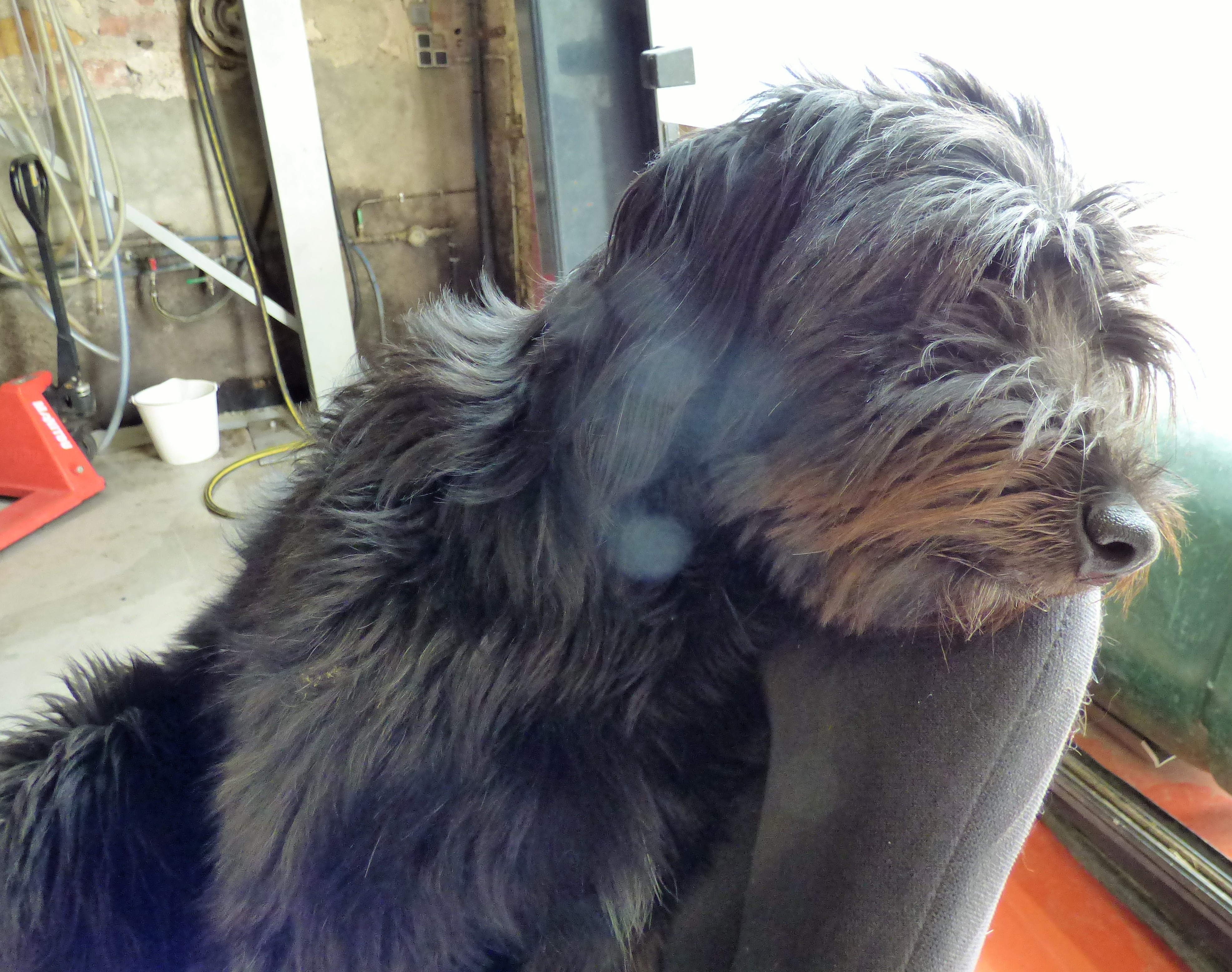
And, of course, regular readers frequently ask how Icare is getting along. Coincidentally it was his summer haircut on Tuesday so you can see that he has been well prepared for the warmer weather. He is a happy dog.

It was a beautiful, sunny day as I toured around on the 21st May. Rome was vibrant with colour from broom and flowers, roses lined the vineyards in Peilhan and Rec D’Oulette. It was good to be back.


Leave a comment

300


20170209_000255

Tasting the older barrel in 2017


En francais

Back in September 2015 I wrote my 100th blog post about a great day. Jeff had suggested I do something special to celebrate the event and offered me the chance to pick grapes from my favourite vineyard, Rome. The grapes were a mix of all three Grenaches, Blanc, Gris and Noir as well as a few Muscat grapes. To make it even more special our great friends Martin and May came along to help pick the grapes, it was a day when I was truly blessed to be surrounded by friendship, a day when the Coutelou motto of ‘Grapes, work and love’ was evident.


I trod the grapes, pressed them and stored the juice in two barrels and two large 27l bottles. I even used airlocks provided by my friend Barry back in the UK. One of the those bottles was used to top up the barrels over the intervening three years before the wines were ready to be bottled. The wine was racked occasionally to separate the juice from the sediment and dead lees. From time to time we tasted from all three containers and it was fascinating to monitor their development and how they matured differently according to the container they were in.

The newer 60l barrel allowed more oxygen into the wine and this added a drier note to the wine which aged quicker than the other two. The smaller, older 30l barrel had been used for more wines and the wood staves had sealed more as a result. The wine was fruitier, tasted younger and fresher. That was the reverse of what I had expected from the barrels at first but it is logical. Meanwhile the large glass bottle produced a wine like imprisoned fruit, almost as grapey and fruity as the day the juice first went in.

After three years it was time to assemble and bottle the wine. That was supposed to happen in the week before I left France in October but climatic conditions were unfriendly for bottling, heavy atmospheric conditions. Jeff, Michel and Julien kindly did the bottling when conditions were more suitable. I can’t wait to see them, and open one in January when I return.

24


I am a winemaker! It has been one of the great experiences of my life. That it is the result of the generosity and kinship of my friends made it even more so. In particular Jeff’s kindness and inspiration is something I appreciate more than he can know.

This is the 300th blog article. I have been delighted and amazed that people from 118 countries have turned to these pages over the last four years, often several thousand a day. Thank you for doing so, it means a lot. I started simply to occupy time and keep my own personal record, your readership has helped it become so much more. I hope that my love for wine, the Languedoc, real wines and, especially, the Coutelou team and wines have brought you some pleasure. And who knows, we may get to share a glass of the century wine.

4

A March in the vines (photo by Flora Rey)


Leave a comment

One More Time

En francais

“They think it’s all over, it is now,” were the famous words of commentator Kenneth Wolstenholme when England scored their fourth goal to win the World Cup of 1966. Well to mix metaphors one more time, Jeff decided it was time to get the band back together after we had thought the vendanges were completed.

P1040481

Not again! I’m sleeping

There remained a parcel of Cabernet Sauvignon that Jeff thought not to be worth collecting but the last couple of weeks they had ripened a bit more and there was enough to warrant one last pick on Tuesday 2nd October. The pickings were meagre, it took 7 or 8 pickers up to two hours to fill the 16 cases which are brought back to the cellar to be sorted again and then put in tank. Aching muscles and stuttering machinery protested a little at the reprise but the stainless steel tank in the photo was just about half filled by the end of the day. The grapes themselves were very good, Cabernet always gives small berries but they were healthy.

The juice went to Thierry for analysis as usual. A solid 14% potential alcohol, though lacking a little acidity. It tastes juicy and clean and I am sure will be used either for blending or in the spirits made for the Coutelou range.

Analyses old and new taking place

We went on to taste more of the tanks and the results are promising. The Syrah of La Garrigue is undoubtedly the star (even allowing for my bias towards this perennial favourite), the Carignan, Flower Power also very good. Perhaps the biggest surprise was a very long, fruity Grenache – the grape which had suffered most from this year’s dreadful mildew. Grapes are very hardy it would seem, helped by a skilful winemaker of course. That will not make up for the loss in yields this year, 50% would appear to be the figure. Sadly this might well bring price rises. We had another caviste at the cellar wanting to buy wine that day, the latest in a long line through the vendanges. Sadly, there is not enough to satisfy existing customers’ demand let alone new outlets.

P1040485

A lot more smaller tanks have been needed this year, a sign of low yields

it was good to have a day together again, the financial cost of picking was undoubtedly higher than usual but there is more wine in tank and hopefully that will offset some of this year’s hardships.

Traditional end of vendanges, the boss does some cleaning of the cases

and the workers are crowned with vines


2 Comments

Vendanges 2018 – Part 6 (Grapes, work and love)

P1040363

2018 will be remembered by team Coutelou for mildew, hail, mechanical breakdowns and successive problems. Yet as we reached the end of the vendanges the habitual feelings of pride, camaraderie and friendship were to the fore.

Though the harvest of Mourvèdre the previous week was the last of the major parcels Jeff had left grapes in Peilhan to pick. The reason was a visit by a film crew from Netflix making a programme (or series) about different ways of making wine in the region from cave co-ops to big scale producers and négotiants like Bertrand to the natural producer which is Jeff Coutelou.

P1040382

Some of the camera equipment

Carignan Blanc and Muscat D’Alexandrie was picked in the morning, even I did 4.5 hours of picking. Over the final harvest lunch (my favourite Fideua plus jeroboams of the first Amphora wine) the crew joined us and then filmed the afternoon picking of the new plantation of Peilhan with its Piquepoul Gris and Riveyrenc Gris. They shot scenes in the cellar as we sorted and then carried out a long interview with Jeff. I am not really allowed to say much more until the broadcast and shall update when we get the date.

And that was it. The last grapes. There remains much work to do with the processes I described here needing to continue for all the wines in tank, from the first to these last. The Muscat will go to make a maceration orange wine as in 2016, a wine I truly love and which has featured regularly through harvest lunches.

Carignan Blanc, Riveyrenc Gris, sorting the last cases

It is time for Jeff to count the costs of these vendanges in terms of actual production and I shall feedback when things settle down. Suffice to say we had a big drop in quantity, the Coutelou wines will be even harder to find. Having tasted most, if not all, as they ferment steadily I can say that quality remains high, Flower Power, Carignan, La Garrigue Syrah and Mourvedre especially.

Muscat and the new plantation grapes in cuve

Jeff’s motto of “grapes, work and love” is never more true than at this time of year. We have worked hard, we have formed friendships and made the best of what nature gave.

Amphora jeroboam poured by our resident sommelier Louis, Michel shows his team loyalty


1 Comment

Vendanges 2018 – Part 5

Monday 10th to Friday 14th – in the cellar

Tanks before vendanges and on Friday

Cellar work becomes the focus of vendanges as more and more of the cuves are filled. The grapes pass through a variety of actions to produce the wine. Hopefully this post will help to explain some of these actions.

White grapes are usually pressed quickly after entering the cellar to get the juice without too much contact with skins which would colour the juice. Orange wines, becoming more popular every year, are made by such contact, macerating the juice on the skins, to extract colour and tannins.

P1040286

To prove I do some work!! (photo by Flora Rey)


After sorting, red grapes are sent to the tanks either destemmed or in whole bunches as I have described before in this series. That decision would be influenced by the quality of the grapes and what Jeff feels will be the best for that particular harvest. In either case, as with orange wine, the juice sits with the skins, flesh and pips for a while to extract colour, flavour and tannins.

Busy cellar; Louis putting the destemmer to work

Too much skin contact becomes counter productive though. As fermentation begins the grapes become hot and it easy to extract too much tannin for example which will make the wine tough and harsh. Yeasts which feed the fermentation produce lees as they die off and these can become a cause of rot and off flavours unless removed. Therefore the infant wines pass through actions known as débourbage and délestage.

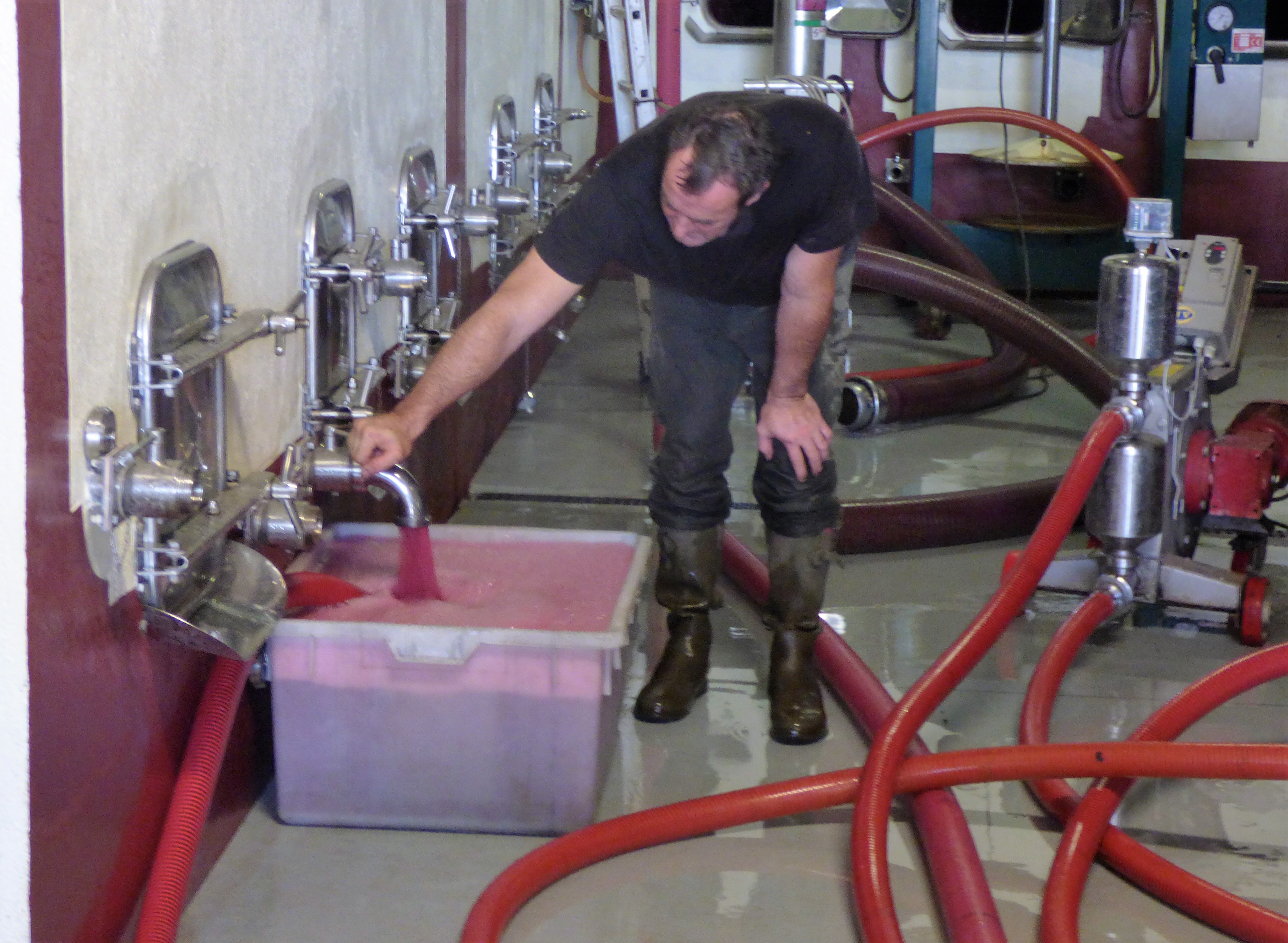
Débourbage is where the juice is run off from the cuve leaving the marc behind, the sludge of skins and stems. The juice goes into another cuve where fermentation will continue without the risk of going off. The marc can be used for distilling alcohol.

P1040309

Débourbage

Délestage is similar but as the juice is run off it passes through a basket to collect seeds which might add bitter tannins. The marc might then be lightly pressed, producing more juice which can be added to the original juice, adding more tannin and alcohol.

P1040300

These two processes mean that the wine becomes clearer and, for a natural producer like Jeff, that filtering is not needed at a later stage. The wine will be clear, juicy and fruity.

P1040326

Looking into this cuve before remontage you can see the skins lying on top of the juice

Whilst in contact with the juice the skins rise to the top of the tank and form a crust (chapeau) on top of the juice. If left like that this cap would become dried out and add bitterness to the wine. Meanwhile the juice fermenting below would produce lots of carbon dioxide which would be trapped inside. Therefore the juice needs to be passed over the crust to moisten it, release the CO2 and to get the best out of the skins and grape flesh.

P1040274

Remontage (photo by Flora Rey)

There are two methods of doing this, remontage and pigeage. Remontage is pumping the juice from the bottom back over the crust, rather like a fireman hosing down a blaze. Pigeage is where the crust is pushed down into the juice, traditionally by treading but, more usually, by pushing it with a fork or tool. This is hard work believe me. When Steeve, a friend of Jeff’s from Besancon, carried out pigeage on the La Garrigue Syrah on Friday the crust was easily 30-40cm thick.

Jeff wants to interfere with the wines as little as possible but these actions are an important part of winemaking. Experience and observation helped him to find the balance between overworking the wine and helping it to make itself.

P1040268

Pipes running in all directions, a good memory is required