amarchinthevines

Learning about wine, vines and vignerons whilst living in the Languedoc


3 Comments

The first Coutelou of Spring

Version francaise

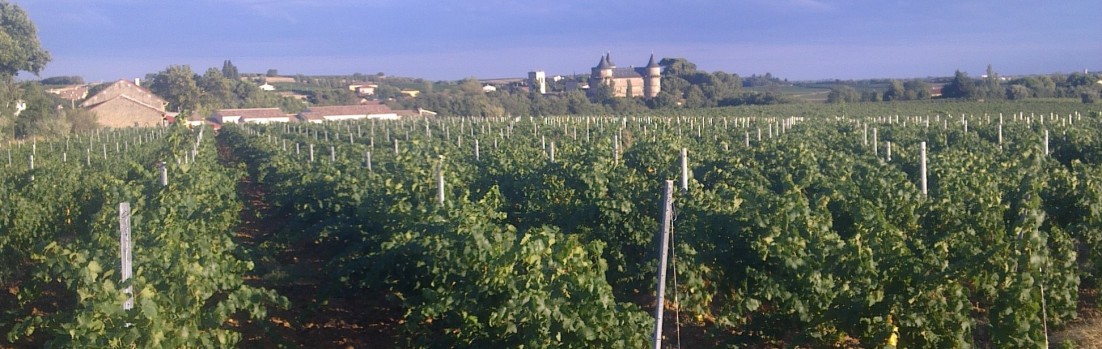
It’s a while since I wrote about the happenings at Mas Coutelou, so time for an update. I am thankful to Jeff, Vincent and Julien for keeping me up to date in my absence.

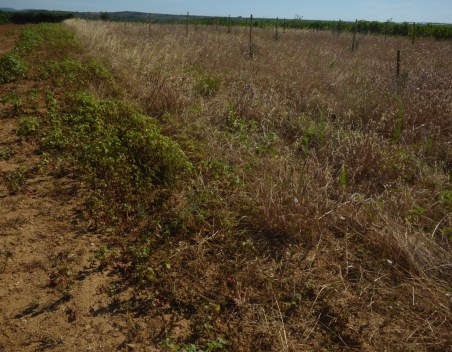
The first few months of 2017 have been damp in the Languedoc, a contrast to the arid 2016. The photos by Julien above show water standing a week after rain and his feet sinking into the soil as he pruned. Jeff had planned to plant a vineyard of different types of Aramon at Théresette next to La Garrigue which has lain fallow for the last few years. However, the soil remains very damp and planting has not been possible, unless things change quickly the project will be postponed until next year. For the same reason, the first ploughing would have begun by now in most years, but is on hold for drier conditions.

vigour from every bud last year

Pruning the last vines (photo and work by Julien)

Julien completed pruning (taille) around March 10th. He photographed the first budding (débourrement) amongst precocious varieties such as the Muscat. However, Jeff told me this week that, generally, budding is later this year, the damper, cooler weather again responsible. That is not necessarily a bad thing. Remember that frost can cause great damage to vines, especially buds, and the Saints De Glace (date when traditionally frost risk is over) is May 11-13. I recall visiting the Loire last April and seeing frost damage, whole vineyards with no production for the year.
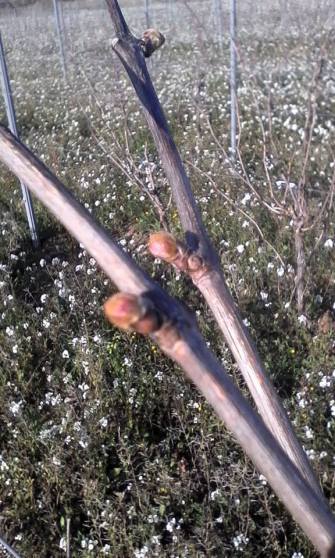
buds

Julien photographed some early buds

The weather conditions are favourable for something, sadly not good news either. Snails, which ravaged large numbers of buds and leaves in Flower Power and Peilhan last year, have found the damp much to their advantage. They are a real pest, a flock of birds would be very welcome or we’ll see more scenes like these from 2016. Of course, one of the reasons why birds and hedgehogs are lacking is the use of pesticides by most vignerons in the region.

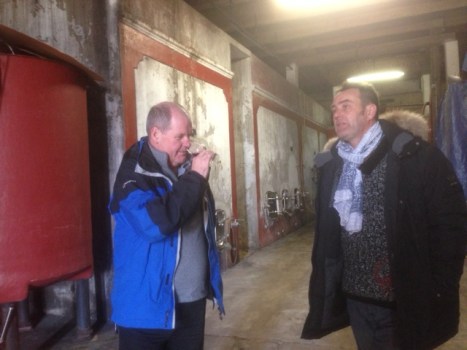
In the cellar the new office and tasting room is complete. Our friend Jill completed a montage of Mas Coutelou labels which we gave to Jeff as a gift. Hopefully that may decorate the walls of the new rooms.

The floor which was half covered in resin last year has been finished all over and another new inox (stainless steel) cuve has arrived. (photos by Vincent).

On March 22nd the assemblages of the 2016 wines took place. Or at least most of them. One or two cuves still have active fermentation with residual sugar remaining but otherwise the wines were ready and the conditions were favourable. I won’t reveal what cuvées are now blended, that is for Jeff to unveil. However, I can say that the reduced harvest of 2016 means fewer wines are available and fewer cuvées made. In the next article I shall be giving my thoughts on the 2016 wines from tastings in October and February.

Finally, there was an award for Jeff himself. On March 30th he was made an official ambassador for the Hérault by the Chamber of Commerce of the département. This was an honour for Jeff himself and the generations of the Mas and Coutelou families who made the domaine what it is. Founded in the 1870s at 7, Rue De La Pompe by Joseph Étienne Mas who planted vines and kept cows after he had fought in the Franco – Prussian War of 1870-1. Five generations later Jeff is an ambassador for Puimisson, vignerons and the Hérault and with his wines he is really spoiling us.


6 Comments

The RAW and the cooked

7F92AC5B-92F8-4B77-8B2E-670AB323011E

Version française

French anthropologist Claude Lévi-Strauss proposed that cultural commonalities and differences and similarities are based on everyday opposites such as raw and cooked. I was reminded of that in attending the annual RAW Fair in London March 12th and 13th. It too served up some opposite emotions, to mix my metaphors a game of two halves.

RAW was formed by Isabelle Legeron whose book “Natural Wine” would be the best starting point for anyone who wants to find out about low intervention wines. On its website it describes itself thus: “RAW WINE (rɔː) – adj in a natural state; not treated by manufacturing or other processes.”

There begins my reflection of opposites after attending. Yes there were many wines there which were not treated by manufacturing or other processes but there were also many which, to my mind, are about wines being manipulated by various techniques and by additives, as up to 70 mg per litre of added sulfites are allowed for RAW. Are these natural wines? As there is no actual binding definition then I suppose they are but I doubt that some of the wines at the Fair are truly in the spirit of natural wine. During the posts which I will write about the event, the most important Fair in the UK based on natural wines, I shall be writing about different categories based on the amount of SO2 used.

20170313_115805

No added sulfites for Italian producer Azienda Vitivinicola Selve

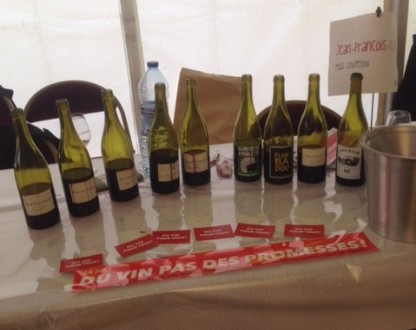
The game of two halves? Well, that refers to the two days. Sunday was open to the public as well as press and trade and it was very, very busy. Crowds around the tasting tables, wines running out, no seats for eating, very warm conditions do not make sense of for an optimal tasting experience. Plans for the day (to taste everything bar France, Italy and Spain) were put aside as it was more a case of find a table where it was not necessary to barge through to the wine. The effect was that I was probably too harsh in judging the wines that day, my mood was affected. Monday was much more like it, more opportunity to access the tables, talk to the producers and, it was when I tasted my favourite wines of the weekend.

Other opposites?

  • Amphorae. It is THE most trendy winemaking technique, ferment and age your grapes in clay amphorae, usually 800l or bigger. I have tasted and enjoyed quite a few amphorae wines but generally I am not partial to the drying effect they have on wines (in my opinion). They do seem to give a sense of licking the clay container before drinking the wine ( a description given to me by my friend David Crossley). Winemakers do add a manufacturing process to their wine and quite rightly experiment to make the wines they want, but I don’t necessarily always enjoy the results. I prefer my wine truly raw rather than cooked earth.
  • Young and old. The natural wine movement is growing. Producers from all around the world, traditional producers experimenting with lesser amounts of sulfites (it was interesting to see a big name from Burgundy  at RAW) and most of all amongst younger wine drinkers. It seems to be true that younger wine drinkers, perhaps less weighed down by conventional expectations of what makes good wine, are attracted to natural wines. Those who predicted its demise are being defied by this growing band of supporters. I heard accents and languages from all around the world, long may it continue. And, meanwhile, older wine enthusiasts like myself can appreciate the energy and life in the wines and the people linked to them.
B1B8BD1D-14D2-4C67-8785-D9EDDD7700AE

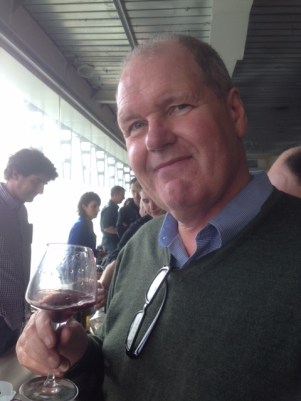
One older drinker enjoying his wine

  • Faults. Critics of natural wines most often levy accusations of faulty winemaking. I tasted several hundred wines during RAW and I found faults in less than a dozen, mainly mousiness and two corked wines. Some are a little volatile and acidic but personally I enjoy such wines if the volatility is not completely out of control. The winemakers should be praised for their skill, the % of faulty wines was certainly a lot less than the % of dull wines I taste at many conventional wine tastings.

The two days were very enjoyable overall despite the crowding on day one. I was able to get round most tables and to taste some excellent wine. The next posts will describe some of those and some conclusions I drew from the event. The RAW website has excellent profiles of the producers and the wines on show, I will provide links to this site whenever I can. Let me start with my favourite range of the weekend which epitomises the feeling of opposites I had after RAW.

The Scholium Project (California) RAW link

Abe Schoener is a winemaker who pushes the boundaries, restless in trying to improve his wines. The wines are superb, very drinkable yet with great complexity. They made me smile, gave me great pleasure but also made me think. By accident as much as design it was found that by not topping up the barrels and not using pigeage the juice protected itself, the cap of skins helping rather than hindering. Indeed the Chardonnay, Michael Faraday 2014, developed a flor like sherry does. The result was pure juice, no hint of off notes either in aroma or taste. I liked all four wines on show, but especially the 26 day skin contact, no SO2 added Sauvignon Blanc, The Prince In His Caves 2015, and the Petite Sirah, Babylon 2013, which spent 3 years in barrels, again not topped up. I would normally be put off wines aged for so long in wood, I am not a great fan of too much skin contact yet here the wines were full of life and energy. Truly outstanding wines.

See what I mean about contradictions and opposites! RAW played with my expectations and prejudices.

Next time: the sulfite free wines which pleased me.


2 Comments

Sorry Pasteur, you were wrong

Version française 

Two years ago I wrote an article whose title was a quote by my historical hero Louis Pasteur, “Wine is the most healthful and most hygienic of beverages.” Well my recent visit to the Languedoc gave me cause to doubt that Pasteur was wrong, in at least half of his statement.

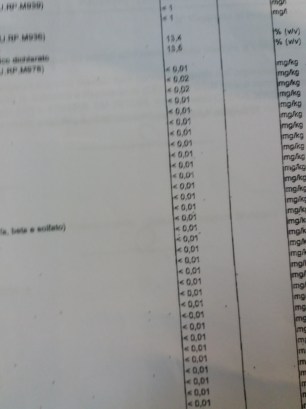
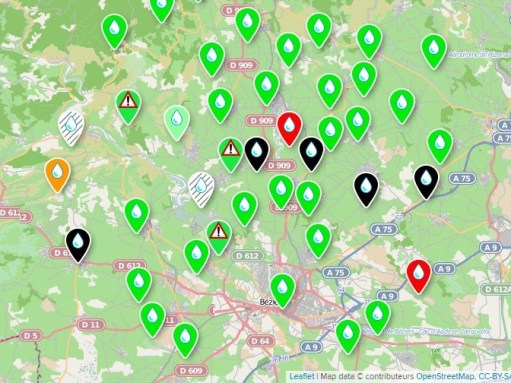
A friend (Chris) drew my attention to a website showing the quality of water in every commune throughout France. The results for the area of the Hérault centred around Puimisson, Puissalicon, Espondeilhan and Thézan-lès-Béziers showed that they along with other communes in the area have poor quality drinking water.

herault

So why is that? Simply put it is agricultural pollutants and in this area what that means is pollutants from vineyards. In particular it means pesticides getting into the drinking water.

puimisson

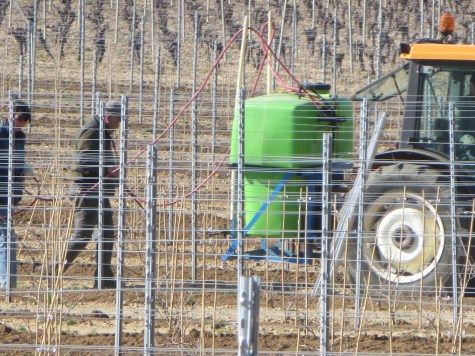
The area is full of vineyards, mostly managed under a régime of chemical intervention. Weedkillers, herbicides, fertilisers are all used to ensure maximum yields as vignerons are paid by the quantity of grapes they produce, though they do have to respect the maximum yields permitted by, for example, AOP regulations. Unfortunately when it rains, and it often rains very hard in the Hérault, the chemicals are often washed from the vineyards onto the surrounding roads and into the drains and sewers.

I was talking to an Italian vigneron in January and he was telling me that, as an organic producer, he was shocked at the last vendanges. His lovely grapes were growing on vines which had already begun to shed their leaves or were changing colour as the energy of the plant had been channelled into the fruit rather than the leaves. He felt somewhat embarrassed as his neighbours’ vines were pristine, bright green and laden with grapes. That was the result of the chemicals and nitrates sprayed on to those vines, whereas his were treated only with organic tisanes.

p1010061

That is the same experience which I have observed in the area around Mas Coutelou. Jeff’s vineyards are surrounded in the main by conventionally tended vines. I remember him telling me as we stood in Rec D’Oulette (the Carignan vineyard) to look around at the bright green sea of vines with his own vines looking rather tired in comparison.

Well, the chemicals which make the greenery and heavy crops are polluting the water. The drinking water of the very place where the vignerons and their families live. When Pasteur spoke about wine being healthy and hygienic he was speaking at a time when most drinking water was polluted, even untreated. He was right, wine was healthier and cleaner than the water. And now, ironically, it is wine production which is making the water of ‘very bad quality’. Nevermind the 100+ additives which are legally allowed into wine, the wine is also a pollutant. That is why I challenge Pasteur’s claim.

img_0785

I am amazed that this report created so little reaction, surely the very water which nourishes the vines and slakes the thirst of wine producers should be be safe to drink? At what cost are we producing wine unless producers take more seriously the effects of their farming methods. And you wonder why I prefer to drink mainly organic and natural wines?


Leave a comment

Coutelou crew

20170209_180815

l-r Me, Vincent, (Icare in front), Julien, Carole (with Maya) and Fabrice

Version francaise

One of the greatest pleasures of being involved at Mas Coutelou is the friendships which are formed with people from all around France and the rest of the world. There is a core group of local people who work most of the time with Jeff at Puimisson, notably Michel and Julien. However, many others come along from week to week to spend time with Jeff because they love his wines and, of course, Jeff himself.

My recent visit was typical. Carole who has worked for many years on the domaine was there to prune the vines alongside Julien. Vincent, a former teaching colleague of Jeff’s was also there, learning the job of vigneron and winemaker as he has planted his own vines in his native Béarn. Fabrice arrived, who harvested Cabernet Sauvignon in Segrairals one day with me in 2015 was back to help plan an event later in the year. Céline (who helped to pick the Grenaches I am making) and her husband Brice were around for a few days too. And Jérom arrived.

p1020332

Jérom(e) is a fascinating guy, a skilled metalworker who has made racks for the large format bottles in Jeff’s own cellar (what he calls ‘the library’) and was here to add finishing  touches to the new rooms in the cellar, the office and tasting room. He explained to me how he loves working with iron as it comes from the earth and, like a vigneron, he is working with natural things. I look forward to seeing his finished work when I go back, it will certainly add a touch of class.

Julien and Vincent also shared their own wines, Puimisson is a training ground for future star producers. Julien showed a white and red, I was really taken with his Chateau Des Gueux white last year (Julien’s first vintage) from Terret and Clairette grapes. The 2016s promise to be even better. Vincent had taken the juice from the grapillons of his new vines and though high in acid there was plenty of Manseng character already present.

p1010694

James

Whilst there I also heard from James who worked the vendanges last year. He is back in Australia and a proud new father but also about to produce his first wines. As I said Puimisson is a crucible of winemaking talent.

I am very fortunate as yet another incomer from outside the area to have made such great friends who share a passion for wine and, especially, the wines of Mas Coutelou. There is a truth in the belief that wines reflect their producer and the open, warm friendships surrounding Jeff are a parallel of his wines.

20170128_211231

Jeff surrounded by friends


3 Comments

Fair Play

En francais

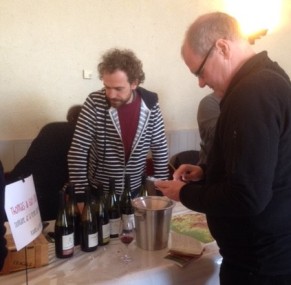
The numerous salons at this time of year bring into play various tactics when attending. Faced with dozens, even hundreds, of producers at the wine fairs where do you start? I look though the list in advance and highlight some I must visit, but things never work out so smoothly in situ.

Take Le Vin De Mes Amis an event featuring dozens of very good producers with organic, biodynamic and natural backgrounds from France but also Italy and Spain. Here is the website with the list of producers. Now, there are dozens of great winemakers listed there and I have only a few hours to get around. So, strategy time.

ec4e7d96-33aa-4f46-9282-f8143a94388f

Get there early

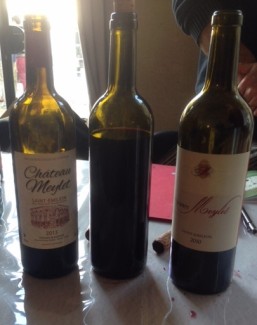
  1. Random chance – just go where the fancy takes me on the day, often because there is nobody else at the stand / table of that particular person. Some of my best discoveries have been like that, Corvezzo at Vinisud last year, Casa Pardet at La Remise. Sure enough the day before this event I tasted Chateau Meylet from Saint Ėmilion at Les Affranchis purely because he was next to a producer I had been tasting at and happened to have nobody there, and I really liked the wines even though Bordeaux, especially Merlot based Bordeaux, would never have been my usual choice.
6aa32647-a908-485c-9ac3-28e62cfd4a87

Chateau Meylet

2. By region. Faced with so many wines how can I get a really fair comparison of the quality of the wines when I am comparing a tough Cahors with a light Loire Gamay? One method is to try to select a region and try wines from different producers so that house styles emerge, eg Alsace wines taste different from Bott Geyl, Albert Mann and Hausherr. The problem here is that most salons have winemakers scattered all over the room(s) and it becomes difficult to track them all. The Real Wine Fair in London was a notable and welcome exception where regions were grouped together, I found that useful.

3. By style of wine. When I first attended wine fairs I used to try to taste whites in the morning, reds in the afternoon. Reds do become more difficult as tannins begin to coat the mouth. These days I find that that mixing things up and tasting a range from one producer at a time, through the different styles, helps to keep me fresher.

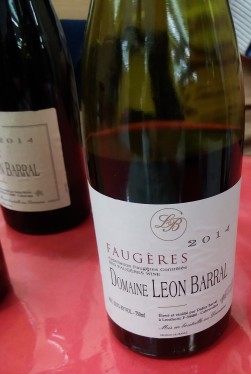
4. By selection. As I said I look through the list of producers and pick out ones that interest me most. That might be because I have tried them before and really like them and I want to taste the new vintage. It may be a name I have had recommended to me and wish to try for myself. The problem here is moving from one stand to another and finding that everybody wants to try Barral, Foillard and other big names, time is lost and patience required. Often these producers are so pressed that they simply pour and move on to the next person without any real opportunity to describe the wine and its provenance, something which is part of the pleasure of a salon.20170130_134143

In the end my strategy is … not to be too bound by a strategy. Go early, try to get in first to the producers you really want to meet and then play things by ear as you see gaps, empty stands. By all means work your way through the list you made but accept that it may not be possible to taste all of the wines and that there will be another day.

Etiquette at the fair (based on real incidents in Montpellier)

20170129_152042

The best behaved attendee, Icare

  1. Please don’t wear heavy perfume or aftershave and then stand next to me at a wine tasting, your smell is much less interesting to me than the aromas of the wines I am tasting.
  2. Just because you are a representative for a big buyer does not mean that you should barge though and demand to be served and never mind the poor sucker (ie me) who is waiting his/her turn
  3. If you are spitting into the provided vessel please bear in mind that as I stand behind it I would rather not have your saliva / wine sample splashing all over me
  4. Please, don’t have a conversation with someone else about your night out last evening whilst standing at the front of the stand and there’s a queue of people behind waiting to taste the wines. As a mild mannered Englishman I will smile and say “Je vous en prie” when you finally move over but inside I am fuming at you.
233deba7-bdd2-41ba-bfc1-78b5f064277a

Pleasure of talking with Thomas from La Ferme Saint Martin

5. Wearing light coloured clothes and then spitting red wine is a mistake, I often make it.

6. Getting into your car to drive when you have been drinking the wines, not spitting them, is just wrong.

0b2b027e-8273-4907-90c5-42558ff4d98e

I have seen this range before somewhere

Salons are great, they are fun, educational, social. But they can be frustrating, even stressful. I need a glass to chill out before La Dive Bouteille this weekend.

fa5f3309-3377-4d21-b9af-4dcbfa7619b4

Is that… water?


Leave a comment

Return to Mas Coutelou – in the cellar

Version francaise 

p1020310

As pretty as the vineyards are, even in winter, it is the main cellar at Mas Coutelou which attracts attention this January. The continuing modernisation of the cave continues apace. Last year saw the relaying of much of the floor, new stainless steel tanks to replace some of the very large fibre glass ones and the introduction of a new mezzanine built on ironwork. On this level some of the cuves are stored but now there is the addition of two new rooms made from wood. These will form a new office for Jeff to work from (freeing up space in his own home) and, also, a tasting room with bottles laid out for visitors to try and buy. The old windows mean there will be plenty of light and air in here, as well as a good view over the village and countryside. A good view of those of us working down below too!

The cellar has changed so much in the last 3 years, all to make the winemaking more manageable and, now too, the admin side of Mas Coutelou moves forward. Not that the admin gets any easier, Jeff spent two hours on the phone the other day on a minor issue!

p1020301

Meanwhile, there were two main jobs being done in the cellar. Habillage of more 2015 wines (Buvette À Paulette, Classe and Flambadou) with Jeff, Michel and Lucas hard at work.

Then, Julien and Carole returned from pruning as the rain had started again They set to work preparing sample bottles for the salons which will dominate the next two weekends, in Montpellier and Saumur. The 2016 wines are still some time from going into bottle and so samples are taken to give clients a chance to taste how the wines are coming along. So, golden opportunity to taste 2-3 wines from cuve, with the Carignan (Flambadou) and one of the Syrahs really shining. With Michel, Carole, Julien and Vincent all there it really was a gathering of the Coutelou clan. And more friends will arrive this next two days as people gather for the salons. Of which, more next time.


3 Comments

Return to the vines of Mas Coutelou

p1020266

Looking from La Garrigue towards Sainte Suzanne

Version francaise

After almost three months away it is good to be back in the Languedoc, and especially to be back in Puimisson, the home of Mas Coutelou. Jeff and Icare greeted us warmly and it didn’t take me long to get back into the vines.

Carole and Julien were hard at work pruning in Rome vineyard, my favourite of all, I was happy to see them all. Fortunately, the day I was there (24th January) was a lovely, sunny afternoon and quite warm but recent weeks have seen freezing temperatures overnight and pruning on such mornings is brutal. However, it is vital work.

p1020291

Dead vines removed, their place ready for new ones

The vine needs to be trained for the season to come, cutting away dead wood and restricting the growth of the vine so that it is does not overproduce which would reduce the quality of the wine. Pruning also offers the opportunity to check the health of each vine and to identify vines which need to be replaced.

The vine is studied, first cuts remove the growth of last year and then decisions made about which branches to remove and which to leave as spurs, which direction the growth will take and, also, about which spurs might be prepared for the following year too. All with freezing fingers and aching back.

Much work had already been done but much remains ahead. In the photos below the Grenache of Sainte Suzanne has been pruned but the Syrah remains to be done. Similarly, the reds of Peilhan are pruned but the white parcel remains to do.

Work has also begun on preparing a parcel next to Sainte Suzanne which has remained fallow for a few years giving recovery to the soil. Known as Théresette this parcel will be planted with Aramon (Noir and Gris) which is what used to be planted in this parcel many years ago and which was well suited to the soil.

p1020256

The ‘new ‘ parcel under preparation. La Garrigue in the background.

The winter also offers the chance to see the bare vineyards and their topography. When people talk about the value of a particular parcel or vineyard it is easy to overlook how even within a small area there are variations of slope and gradient which would alter drainage and exposition to the sun. Vines are all different even within a parcel and the pruning process treats each vine on its own merits to help it to produce the best fruit it can.

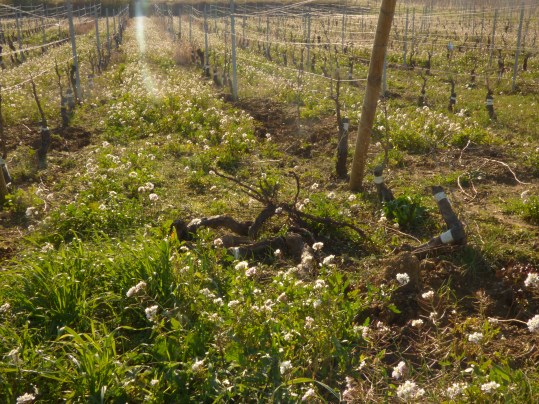
The vineyard soils are covered in white this January, not with snow, not here in the Languedoc at least. The white flowers of wild rocket form a spectacular blanket contrasting with the stark wood of the vines themselves. Even in winter there is something special and beautiful about being in this place, a march in the vines is so fulfilling.


2 Comments

A year in the vines, Mas Coutelou in photos (Part 2)

July

p1010428

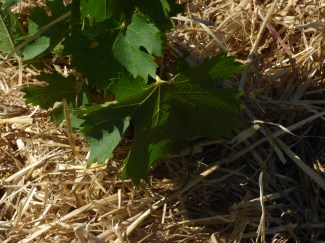
Young vines freshly grafted in March (see above) surrounded by straw? What is going on? The weather was so hot and dry over  a prolonged period that the vines were stressed. As these young vines would not be producing any grapes they could be watered to protect them, the straw keeps the moisture in the soil.

The grapes continued to grow though and July saw véraison, the colouring of the red grapes. They were smaller than most years but healthy in the main. Other than those vines affected by the widespread mildew of the spring and early summer, those grapes were dried and shrivelled by the disease.

August

More grape ripening, Carignan to the left, Grenache to the right. There were some beautiful bunches despite the weather problems of the year. Time to start thinking about harvest and that work began in the cellar itself where Jeff had taken out some very large fibre tanks and replaced them with smaller stainless steel tanks with a new steel staircase to take us above the tanks to place in the grapes and to carry out pigeage or remontage during the vendanges. And on the 24th Jeff was testing the grapes to check for ripeness and acidity to see if they were ready for harvest to begin (they weren’t quite!).

September

As dawn rose over Rome vineyard probably the most important month of the year began.

p1010639

Vendanges means hard work, fun, pressure, grapes and cleaning amongst other things. Selecting the best fruit from the vines’ year of growth, making the best of that fruit in the cellar to make a natural process work by using care, patience and analysis.

For each of the three harvests in which I have now taken part at Mas Coutelou my main memory is of the people, the teams who work to support Jeff. Friends all, and so many happy memories.

October

Cellar work continues as this year’s wines ferment and start their journey to bottle. Meanwhile time to prepare bottles of more of the 2015s, this time magnums. And in both photos Julien to the left and Michel to the right. The two figures who have been most present in Puimisson working at Mas Coutelou through the year. Two of the best, kindest people you would ever meet. Is it a coincidence that good people congregate together and that the best wines come from the best people?

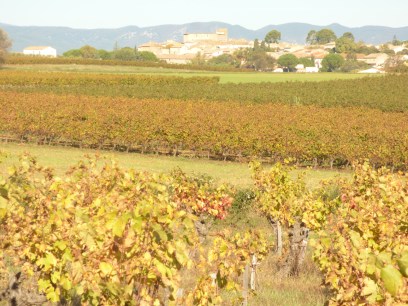
Meanwhile autumn arrives in the vines, Puimisson in the background.

p1020227

November

Cases of wine leave Puimisson to head around the world. Mas Coutelou is sold in Australia, Japan, the USA, all over Europe and at the cellar door. As the end of year and Christmas holidays approach merchants want their wines and exporting the cases involves planning, spreadsheets and collation of the various cases.

Meanwhile, in one corner of North East England one happy vineyard worker sorts his own collection of Coutelou treasures.

December

15439861_10154009671412595_5814305575539506409_n

A photo from Camille Rivière who imports Jeff’s wines into the USA, those cases above have arrived safely and Camille shares her happiness with the bottles she has opened and enjoyed.

Jeff tells me that there has been a lot of rain in recent weeks, 400mm last month. That is certainly welcome but the weather has also been very mild. Reports of mimosa blossoming (it should happen in February) and Jeff told me he had seen a neighbour’s vines preparing to bud!! Frost is needed for the vines to enter a dormant stage and rest, recover after  a difficult year. More mild weather would mean two years of non-stop activity, which would weaken the vines.

A fantastic year, a memorable year, a complex year in the vines.  But also a year marked with sadness at the passing of Jean-Claude Coutelou. I raise my glass once more in his memory.

ddfce457-16d5-4dcf-9236-afcb4c40987b

Grapes, work and love


Leave a comment

A year in the vines, Mas Coutelou in photos (Part 1)

January

The year begins with a series of wine salons and assembling wines for those tastings from the previous year. Jeff took me through the various cuves to see how the 15s were developing. Meanwhile the serious work of pruning (la taille) dominates the early months of the year and Julien was hard at work, patiently shaping the vines to enable them to produce their best. This was especially important in such a mild winter where the vines were unable to lie dormant.

February

Bottling of the 2015s began, this time Vin Des Amis, perennial favourite. Jeff has his own bottling line and the full crates of wine now head to storage for a few months to get over the ‘shock’ of bottling (mise en bouteille).

March

A March in the vines for sure. One of the highlights of 2016 was also the wettest and filthiest I could possibly be. Grafting vines (la greffe) in Flower Power (Font D’Oulette) on a day when it became impossible to lift the pioche because of all the mud stuck on it. I learned a lot and I loved the whole day.

April

Spring brings the vines truly to life (though the mild winter meant they were restless all winter). Look at the tendril extending from the pink bud on the left, this vine is already growing fast. Small shoots in Rome vineyard and also the ladybirds, sign of  a healthy vineyard. (ébourgeonnage)

May

The grappes begin to form in clusters and spring flowers are everywhere around the various vineyards of Mas Coutelou. May is perhaps the most beautiful month of all in the vine, warm days, clear light and the colourful natural world – blossom, flowers, butterflies, birds. There is literally no place on earth I would rather be.

June

In the vines the flowering season (fleuraison) lasts just a few days. They are very delicate and easily damaged by strong winds or heavy rain. Here the Carignan vines of Rec D’Oulette (which make Flambadou) are in full flower.

Meanwhile in the cellar the bottling season restarts and the tanks are emptied and then cleaned with a vivid colouring for the floor. And welcome visitors arrive sometimes bringing delicious gifts of food with which we can accompany the wines. It’s a hard life, believe me.


Leave a comment

Nature can be harsh: Part 3 -pests

In Parts 1 & 2 I have tried to explain some of the difficulties encountered at Mas Coutelou during 2016 due to natural influences such as climate and disease. In this final part of the series I look at pests which have added to those woes.

Vers de la grappe

These are literally grape worms, more specifically caterpillars, which form and grow on bunches of grapes. The caterpillars are the larvae of Eudémis moths which prefer to lay their eggs on shiny surfaces, so grapes are the target more than the rest of the vine. The larvae obviously damage the grapes themselves but that damage is worsened because of juice running on the bunches attracting infection and disease.

The warm weather and humidity of 2016 definitely encouraged vers de la grappe though it is an ongoing problem. It can be treated chemically of course though that is not an option for organic producers. Substances such as clay can be sprayed in spring to add a chalkier, duller surface to new grapes so that moths are not attracted to them. However, the solution favoured by Jeff Coutelou is to plant hedges and trees. These not only act as barriers to less environmentally aware neighbours, add polyculture to a region which can appear solely planted by vines but also they can shelter bats.

img_0227

Bat shelter in Sainte Suzanne

Bats feed on Eudémis larvae and moths and can eat thousands every day. Bat shelters are to be found around Mas Coutelou, eg in Sainte Suzanne and Rome vineyards.

The photographs above show a vers de la grappe cocoon and, on the right distinctive holes showing where the moth laid its eggs. When the vendanges begin the pickers and sorters must look out for signs such as these but also damaged, shrivelled grapes in bunches where the larvae have been.

Snails

If I could have named 2016 in the Chinese form  I would have called it the year of the snail. They were everywhere. The two photos below show an olive tree in Segrairals. This was  one of many which were completely covered by snails, blanched by the sun and feeding on the greenery and moisture in the tree.

However, vines were equally attractive to them. I spent whole mornings picking snails from vines during the Spring only to find them covered again a day or two later. Flower Power (Font D’Oulette) was particularly badly affected with the snails heading straight for the new growth and buds in April and May.

The virtual drought in the first six months of 2016 meant that the snails were desperate for moisture and food and so the healthy, young vines were too good to miss. The consequence was obvious, production of this much lauded new wine was reduced drastically, partly by the weather but equally the work of the snails. Birds and other predators would help solve the problem but the monoculture of the area (outside of Mas Coutelou) means there are, sadly, no great numbers of them.

Vendangeurs and sorters must try to pick off snails as they hide in the bunches. Dozens get through to the cellar especially in the early morning when there is moisture around. The photo on the right shows a lot of rejected material, leaves, poor grapes but lots of snails as you will see if you enlarge it. Just imagine how many get through into the wine with machine picking and limited triage.

Neighbours

Yes they can be included under the title of pests. Well, one of them can be. As regular readers will know 2016 has been punctuated by two occasions of vandalism by one particular neighbour, both upon the Carignan Noir vineyard of Rec D’Oulette. First he mowed a patch of wildflowers which Jeff had sown to encourage insects and birds (for reasons identified above). Then he took a machine to some of the young trees Jeff planted around the vines, destroying four year old trees such as hazelnut.

p1010463

Vandalised trees with tyre tracks revealing the culprit

Jeff was justifiably upset by these attacks. He was simply trying to enrich the area, bring diversity to it but that was clearly too much for a traditionalist, more used to destroying wildlife for his own short term gain and dreadful wine. However, he was encouraged and revitalised by the massive support of friends and colleagues around the world. The flowers grew back and more densely, the trees replanted in greater numbers and Jeff Coutelou stands tall as the man trying hard to improve the reputation of Puimisson and its wines.

p1010116