amarchinthevines

Learning about wine, vines and vignerons whilst living in the Languedoc


3 Comments

A Tour Down Under, Otago

P1030425

On to New Zealand with an interesting flight into Queenstown, mountains either side of the plane as we came into land. Any qualms were soon allayed by the region we were in, Otago is simply one of the most beautiful regions I have ever visited. Lakes, mountains, unusual wildlife, small towns, little villages. Undoubtedly tourism keeps the economy buoyant, Queenstown itself is a busy town of 16,000 residents, which population doubles every night with visitors.

Otago is a relatively new vineyard region. There had been tentative plantings from the 19thC but when Northern Ireland born Alan Brady planted a first commercial vineyard in the Gibbston Valley in the early 1980s he was mocked for being a dreamer. Yet Brady had realised that at a latitude of 45˚C South the area was at a similar level to Burgundy at 45˚C North. Success followed as did other growers and Otago is now widely regarded in the wine world as one of the most promising, up and coming wine regions. Pinot Noir dominates (that Burgundy parallel) with 75% of planting, whites make up the rest with Chardonnay, Sauvignon Blanc (just 2%), Pinot Gris and Gewurztraminer amongst the most common grapes.

                   Fighting two problems: small turbines to combat frost in the air                                      and netting to stop wax eyes from eating and damaging grapes

Within the region there are sub regions which do have different climates and geology. The Gibbston Valley, for example, is relatively cool and on schist whereas other major growing areas such as Bannockburn are warmer, more open and on sandy, silty soils. This has an effect on growing time, ripeness etc. We must also bear in mind that the wines being produced are from relatively young vines, most are around the 20 year old mark and will mature and produce more complex wines with age.

Not knowing the region at all I decided to take one of the wine tours available and travelled with Appellation Wine Tours, which proved to be a wise decision. We were taken to 4 wineries in different areas of the region and tasted over 20 wines, not to be recommended if driving. Our guide Gavin was very well informed, enthusiastic, patient and extremely helpful with a good sense of humour.  He certainly made it a very good day for everybody. Lunch was provided too, a very good platter (vegetarian in my case) with a glass of choice at Wooing Tree winery in Cromwell.

The main domaines we visited were Mt. Rosa, Domain Road and Kinross which is a type of co-operative where 5 different wineries sell their wines.

Mt. Rosa is in Gibbston Valley and we tasted a range of whites and Pinot Noirs. The Sauvignon Blanc was textural and not your typical Kiwi SB, nice. I was unconvinced by the Pinot Gris but liked the Pinot Blanc 2017 with its fruity, melon flavours. Trish MacKenzie kindly poured 3 vintages of the Pinot Noir, it was interesting to see vintage difference from this relatively cool area. The 2016 was juicy and fruity, the 14 starting to show forest floor, earthy flavours. The 15 was much more austere, apparently it snowed at the end of harvest time. The Pinot Noir Reserve 2016 was more intense with oak influence.

P1030430

Domain Road is in Bannockburn on a hillside with lovely views. The vines are covered in nets as most are in New Zealand because of the Wax Eye bird which eats grapes but also leaves some leaking juice so that rot can set in. They are a real nuisance. The Estate Pinot Noir 14 was plummy but already showing those earthy notes and the French oak was apparent. Single vineyard Defiance 2016 was more juicy and serious with the oak influence again. 2013 single vineyard Paradise Reserve was darker still. The best of the grapes are taken and given extra barrel ageing. However, the whites were much more to my taste to be honest. The Sauvignon Blanc 15 had typical NZ flavours but was subtle, concentrated and very clean, one of the best examples from NZ that I recall. Defiance Chardonnay 16 was barrel aged and though the wood gave crème brulée aromas the flavours were more subtle, stone fruits and spice. I liked it a lot. On to two Rieslings. Water Race 16 is very dry with only 9gms of residual sugar, not very aromatic but lime and citrus flavours more than compensated. Very refreshing. Duffer’s Creek 15 has 20gms of residual sugar and in an off dry style. Very appley on the nose with lime flavours again and a touch of sweetness. I very much liked this and bought some too!

P1030442

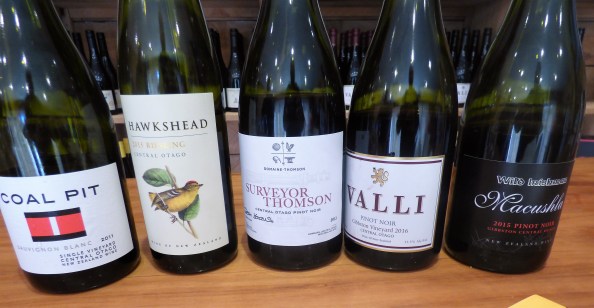
Finally, on to Kinross. Coal Pit wines have been running since 2006, we tasted their Sauvignon Blanc 2011. Interesting to taste an older SB and what an aroma, sweetcorn! Classic NZ Sauvignon Blanc flavours. Hawkshead Riesling 2015 was organic and has 11gms of residual sugar. Very kerosene on the nose but clean, citrussy flavours. Domain Thomson’s Surveyor Thomson Pinot Noir 13 is made on biodynamic principles. This 5 year old wine was very mushroomy and savoury. Fascinating to taste Valli Pinot Noir Gibbston Valley 2016 made by Grant Taylor, 4 time winner of Decanter’s Best Pinot Noir in the world award. The fruit was apparent but there were already savoury notes and quite apparent oak. Finally, and appropriately, The Wild Irishman Macushla Pinot Noir 15. This is made by Alan Brady and with minimal intervention, a slight use of SO2 on bottling but otherwise a classic natural wine. Interesting to see that this was the favourite wine of others in the group with its wilder, spicy freshness. The godfather of Central Otago still leading the way!
P1030444

I had the opportunity to taste other wines during my time in Queenstown. Carrick winery is organic and its Chardonnay 15 was one of the best examples of that grape that I have tasted in some time, delicious. Of other Pinots, I liked Prophet’s Rock 15 more than Two Paddocks 11. And that highlighted an issue for me. I found many of the Otago Pinots were showing very savoury flavours at a relatively early age. My personal taste is towards the fruitier Pinot and so, the younger bottles appealed more to me. There was also a lot of oak use, not all subtle either. So maybe it’s just me but I wasn’t completely convinced by Otago Pinots, much more so by the white wines. I go against expert opinion in saying this I have to say.

This really is the most stunning wine region and as vines mature and winegrowers learn more and more about their terroir and vines it will certainly produce increasingly good wines. I would be very, very happy to return and find out for myself one day.


2 Comments

A Tour Down Under, Adelaide wine

P1030328

Adelaide Hills vines

We were fortunate to be staying for a few days with James and Sam in the Adelaide Hills for a few days (5* on Trip Advisor definitely) and they ensured that we were able to travel around the wine areas and meet some of the new wave producers who are making this possibly the most interesting wine region in Australia. What follows is necessarily an impressionistic approach but I hope that my enthusiasm for the area will persuade many to try wines from South Australia and especially from the winemakers I mention.

Let me start with the Barossa Valley, the iconic region for Australian wine for those of my generation who were essentially brought up on Shiraz and Cabernet Sauvignon from producers such as Wyndhams, Seppelt, Wolf Blass and Penfolds. Some of those are based elsewhere but source grapes from the Barossa. It was interesting, therefore, to drive into the region and see it for myself. What a surprise in many ways. I expected it to be dry but with a large central area of vines as might be seen in the Rhone for example. Not at all. It was dry certainly, indeed arid in parts. The vineyards shone out like oases of greenery set amongst the brown, parched landscape. Irrigation is important, indeed vital, to these producers.

We visited Seppeltsfield, home to Seppelt of course. There was a tremendous cellar door experience with tasting rooms, restaurant and lots of craft shops. Visitors are made to feel very welcome, this is how wine tourism should be. The wines are not necessarily my thing but I have to admire the people who established wineries in such uncompromising conditions and went on to make such a success of it.

P1030306

The Seppelt restaurant

I was aware that there are producers such as Tom Shobbrook, based in Seppeltsfield, who farm biodynamically and embrace natural styles. I have met Tom before and was happy to do so again when we came across him at The Summertown Astrologist. This is a restaurant/wine bar run by some local natural producers in the Hills notably Anton von Klopper of Lucy Margaux wines. Tom’s wines are always interesting, often very good. Given the terroir, my admiration is increased enormously.

I knew there were a number of producers making natural style wines in the Adelaide Hills. We met Tim Webber, who makes Manon wines with partner Monique Milton. Over coffee he explained that they farm other crops, vegetables and animals as well as making wine. All on sound organic principles. Favourite wine of Manon that I tasted was the Pinot Noir Love Lies Bleeding 2017. Interesting to hear that as well as the usual Australian grapes there was Garganega and that Tim and Monique are interested in different varieties. He is unusual in having his own vines, many such as James, buy fruit from growers with input about how they want the vines looked after. It can be difficult to source quality grapes, especially organic. James has to travel up to an hour from his winery to get to some vines.

James Erskine with James and checking progress of some Grenache

James Erskine, of Jauma wines, is somewhat of a mentor to James and he was brilliant to visit. He is an enthusiast, embraces life and was keen to share wines from tank and bottle even in the midst of a harvest afternoon. I have been fortunate to taste Jauma wines before and thoroughly enjoyed the chance to taste in situ, they are very good indeed.

Gareth Belton and some of his barrels

Gareth Belton is the producer behind Gentle Folk wines. I was familiar with his wines before but they really stood out here. Again generous with his time mid harvest Gareth let us taste wines from barrel and bottle. There were many excellent wines, Pinot and Chardonnay stood out but I could list a dozen. The fruit stands out, it is clean, expressive and long lasting on the palate but there is good use of barrel, especially on the whites, adding lovely complexity. One wine I really loved was the Scary White. Named after the vineyard Scary Gulley rather than anything scary about the wine itself, it is a field blend of Chardonnay, Sauvignon Blanc, Riesling and other white grapes. I do love field blend wines, they do offer a sense of place and this was one of my favourite wines of the trip so far. A gently spoken man, Gareth’s passion for his wines is evident and I heartily recommend them.

Alex Schulkin makes wines under the name The Other Right. I liked his Pet Nat rosé and his Chardonnay in particular, a very good Shiraz called Love Potion was also enjoyed. Alex has the shed where James now makes his wine, they help each other out a lot, indeed Alex’s father was picking for James on the day we left. Alex is also a scientist who works in wine research and I enjoyed chatting to him about closures, yeasts and other topics. I love the strap line for The Other Right, ‘Untamed Wines’.

Interestingly the Chardonnay which Alex, Gareth and James all make comes from the same vineyard and is made in pretty much the same method. Tasting the wines from all three did show a great similarity in profile, a true sense of terroir as well as common shared values in winemaking.

There is a real sense of community in the Hills between this group of winemakers, they help each other, advise each other and work for each other. When visiting Gareth’s lovely place in the beautiful hills three other winemakers arrived to chat, share stories and experiences. I found that truly inspirational, I was very much reminded of the groups of natural producers in the Languedoc.

Australian wines fell off my radar many years ago when the big, blockbuster style began to tire me out. French subtlety and elegance became my preference. It seems that many Australians share that view and some are now producing wines of the style which would please any Francophile whilst still retaining distinctive Australian character. This was a memorable time with some excellent wine producers. Adelaide Hills and the Barossa, I salute you.


3 Comments

Wine tasting, tell the story

Having written about my concerns with wine tasting notes, medals and competitions it is time to offer my more positive thoughts. Wine tasting is fun, the chance to try wines from known or new producers, to learn more about wine, to find the familiar and the unexpected. Professional tasters are doing things differently I accept but the fun element is sadly missing far too often. Most wine drinkers are not interested in technical details and in-depth descriptions, indeed they deter most people from thinking of wine as anything but elitist, poncey as we might say in Britain.

Jeff Coutelou always tells me that wine is for sharing (see above) and he is right as usual. Wine tasting is by nature a solitary exercise in that wine tastes differently to different people because of physiology, mood and preference. However, my favourite tastings have been where I can then share my thoughts with others to garner those different views. That fun element again, and I make no apology for referring to the f word again. If those of us fascinated by the subject really want to educate others to appreciate wine then my first lesson would be, let them speak. Encourage people to say what they think about the wine, not just in terms of fruit and flower comparisons but just whatever comes to mind. If they like it because it tastes good then that is an effective wine note to my mind. If they can explain further then all the better but let’s not get hung up on it all. I was interested in the comment on the previous post from my friend Graham Tigg that he runs a tasting class for elderly people and sees it as a social gathering rather than a teaching process. Is there a better reason to hold a wine tasting?

One of my favourite tastings, La Remise gives the chance to talk with producers

My favourite wines have often emerged from tastings. Almost every time they have been tastings with the producers themselves. Why? The story. What marks a wine as special to me is that I know something about it, its origin and the people behind it who have worked so hard to bring me that wine. Yes I can taste wines and appreciate them without knowing the story but the special ones are the wines which have an attachment. Years of travelling in France meant that when I went to Alsace I would visit Martin Schaetzel in Ammerschwihr because of a first visit there where he patiently shared the story of his wines. In Beaujolais we came to get to know and love Louis Champagnon, who was always so kind and generous with his time.

wpid-20150630_162216.jpg

With the wonderful Louis Champagnon

In the Languedoc I have been lucky to get to know so many wonderful people and therefore, their wines mean more to me. Most importantly, of course, was getting to know and become firm friends with Jeff whose wines would always be first choice for me.

Not every wine drinker wants to travel in France or other wine countries, many would be deterred from visiting producers because of language barriers. The task is to share the story, make the wine personal to the consumer. It will mean more. Achieving that is no easy matter, back labels are often a missed opportunity for example. Blogs, media columns, youtube videos all demand more interest, piquing that interest is the challenge. I am convinced that is the crucial point. Stories sell wine.


9 Comments

Wine tasting, expert opinion

En francais

In the last blog I said that wine should be about enjoyment, whether you like the wine is surely the most important aspect of wine tasting. Yet, when I read tasting notes that issue is hardly ever mentioned. There are long descriptions of colour, aroma and flavours. There may be mention of the persistence of taste in the mouth, possibly of wine faults and, perhaps, of the typicity of the wine in terms of grape, origin and year. But not very often do you read whether the taster actually liked the wine.

I was, and still am, asked to judge in professional tastings whilst in France. I attended two, one for a well known wine guidebook and another for regional medal awarding. I have to say I came away rather disillusioned. There were some true benefits, having to analyse the wine according to sight, smell and taste with guidelines for marking those. Having to do so in a short space of time concentrated the mind and my French language skills.

One of my judging experiences

However, in one tasting the group I was working in was told in advance how many medals would be awarded, that is before the wines were tasted! Some bottles received medals which truly didn’t deserve them. In the other tasting there was discussion about our individual marks and thoughts but then as lunch approached the chair said he would just hand in his results so that lunch was not missed. In neither case was actually liking the wine ever discussed or taken into account. Importantly there was huge disagreement amongst the tasters, all of whom were professionals. Marks varied, they are always subjective no matter how much the guidelines are given to establish an objective framework for scoring.

Just this week two well known professionals had a little spat on Twitter about the reliability of scores. Many professionals defend their accuracy, but then they would wouldn’t they?

I have often tasted wines which were correct, well made, ripe grapes. Technically they deserved high scores but they were dull, lacking personality or excitement. Would I buy them? Certainly not. Yet they are the ones which often wear their medals on the bottle and that is a real boost to sales in supermarkets etc. This is one example of how a little education would benefit the wine drinker who simply wants a nice glass of wine and is not interested too much in the story behind it. Medals and high scores, in my opinion, can be misleading and a red herring.

award-winning-medals_for_wine-620x300

This must be a terrific wine! But, note the different opinions

Similarly I have drunk wines which had a hint of faults, a touch of volatility or a bit farmyardy and yet, they were exciting wines with personality. Not that the fault made them good, just that the wine could accommodate it.

I shall return to the question of the story behind wines in the next article.

As for newspapers and wine magazines. Too often they are basically publicity puff pieces, advertorials for wines. I gave up on wine magazines a long time ago. Until they are more honest and describe poor wines as well as good then I shall stick to tasters whose opinions I respect on the web or in person. And trust my own judgement too.


4 Comments

Wine tasting should be simple

I have been thinking and reading quite a lot recently about wine tasting and why many people find wine, and its advocates, so off-putting. Most people who buy wine in the UK do so in supermarkets, choose from a wide variety from the shelves based on price, promotions and puff pieces. By the latter I mean the labels on the shelves quoting wine ‘experts’ on why this particular wine is terrific value for money. And sometimes those customers get a bargain and a good bottle of wine.

IMG_3795

Tasting with the excellent Fred Rivaton

Ask many of those people to buy from a merchant and they would be deterred by price and the language surrounding wine. Many people I talk to about wine like a particular style, feel comfortable about that and picking it from an anonymous supermarket shelf. They do not want to have to talk about yields, pruning style or fermentation temperatures because it is too technical and not what interests them. We the wine geeks are absorbed by such issues, most people are not. It bores people, it creates the image of the wine snob.

Readers in the UK will recall how one wine broadcaster made a name for herself by describing wine aromas and flavours by ever more outlandish descriptions. Whilst amusing did this in fact simply confirm the image of wine tasting as an elitist activity, worthy merely of satire?

Wine is a topic of endless fascination to me but I know I am in a minority. And a snob, I often find myself staring in horror at the bottles in those supermarket trollies. However, I do think that wine tasting is often made over complicated and found myself nodding in agreement repeatedly with this article by Jenn Rice on the Food And Wine  website.

The basic question is do I like the wine? Does its mixture of fruit, flavours, acidity, sweetness etc appeal to me and deliver what I want? No matter the price, no matter the reputation of the producer or vineyard area. I like the advice int he article to simply close the eyes and let the wine deliver its smell, taste and allow it to trigger the memory. I shall be returning to memory and story in the next article.

So, instead of worrying about producing lists of fruits, flowers or fungi, of texture, tint or taint just let the wine do its work in your mouth and then decide if you like it. Wine can be simple.

P1020317

Vincent, taken by a wine


Leave a comment

Festive bottles

20171224_133306

Christmas Eve, a time to celebrate. It could have been Champagne but instead I opened one of my favourite wines, Flower Power, this time the 2016 in magnum. This is a field blend of many types of grape largely based around Aramon Noir and Gris but many more besides. This was very young, fresh and fruit filled. It was rounder two days afterwards, another sign that it needs more time. Regular 75cl bottles will mature quicker of course but no matter how long you wait the wine is worth it. Flower Power is a relatively new wine from a young vineyard, yet it is developing into a real star.

Christmas Day lunch is often a time when we share good bottles with my brother in law Iain. This year was no exception. Iain brought a Portuguese white based on Alvarinho (Albarino in Spain) to match the smoked salmon starter. Fresh, zesty but with a fruity roundness this was very good and a great match with the salmon, cutting through the smokiness and richness. Portugal is becoming a source of excellent table wines which are still undervalued.

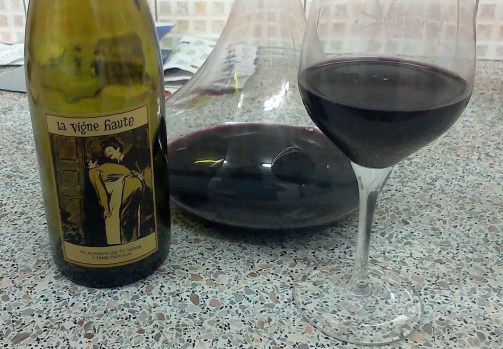
Then, following the article I wrote for Frankie Cook’s website, it was time for my favourite Mas Coutelou wine La Vigne Haute 2013. Pure Syrah and everything I hoped for. Plummy, dark fruits, spice and with great length it matched perfectly with my vegetarian crumble and, I am told, with the turkey and ham. Brilliant wine.

For dessert I brought along a Jurancon from Domaine Montesquiou, La Grappe D’Or 2014. Pure Petit Manseng this is another exceptional wine from one of the very best white wine producers in  France. Sweet, of course, with baked apple, spice and a pure acidity to cut through the Christmas Pudding. Finished two days later it was still on top form, there are many years ahead for this wine. Happily I have some more.

A few days later we shared another meal and more great wines. I opened the 2015 barrel aged Macabeo from Mas Coutelou. The grapes were in excellent condition (as so many were in that exceptional vintage) so Jeff chose a special barrel. The result is something unusual for the domaine, not many oak aged wines emerge. Macabeo is the same grape as Viura in Spain, especially Rioja. And this wine reminds us of white Rioja. There is an unctuous, round pear flavour with a slight resin/oak influence. It is a food wine rich and long. Another which aged well opened over the next 24 hours.

Iain brought along a very special wine. RWT is another pure Syrah or Shiraz in this case (another example of grapes with multiple names!). It is one of Penfolds top wines, made from specially selected grapes. This bottle was 1999 and was a full, rich wine with plenty of dark fruits, a subtle oak influence and great length, In truth, it would age for many years to come but it was great now. A special bottle. Note the sticker on the bottle. Iain bought this for £9 a few years ago, bottles of more recent vintages sell at around £100! Australian wines, especially those from Penfolds, emerged on the market at very reasonable prices, these days they are very much wines for special occasions.

Finally, another treat. I opened a bottle of Vieux Grenache from Jeff. This is, of course, from the solera cellar, built on wines from up to 150 years old, topped up every year with Grenache, and Muscat in some barrels. Nutty, dry, raisiny – very resonant of top notch sherry. Amazing length, evocative of the place and of the Coutelou family. And a fantastic match for the bread and butter pudding.


4 Comments

Tasting the 2017s

Vigne Haute

Version francaise

Last weekend I should have been in the Languedoc with Jeff and attending a wine tasting at Latour De France. Sadly, a 48 hour bug put a stop to that.

Instead I reflected on a tasting we did at Jeff’s on October 3rd of all the 2017 wines in cuve. Regular readers will recall that they vintage is of high quality but low quantity. Quantities will be in short supply of what will be seriously good wines. There was a tinge of sadness about that as we tasted through the range.

1

These were my notes on the evening.

  • Maccabeu / Grenache Gris – still some residual sugar. Fresh nose, Fruity, pears. Slight sweetness which will disappear. Clean and lovely.
  • Sauvignon Blanc – fresh apple, bright and zesty. A true Sauvignon character, refreshing.
  • Carignan Blanc – lovely, full, clean, direct – fresh and fruity. Very good.
  • Rosé – very pale, flowery aroma, fresh and clean, exactly what you’d want from a rosé.
  • Syrah (Ste Suzanne) – whole bunch, red fruit, round tannins, good finish, full, very good.
  • Cinsault – lovely, fresh and juicy red fruit, cherry, 13,5% but tastes lighter. Good.
  • Syrah (Segrairals) – amazing passion fruit nose which carries into taste. Fresh, citrus and lovely red fruit, a real star.
  • Syrah (La Garrigue) – La Vigne Haute (fingers crossed). Terrific, direct full tannnins, splendid fruit, full, long – stunner.
  • Flower Power – Maccabeu, Syrah (St Suz), Grenache (St Suz), Grenache Gris, Cinsault, Terret Noir and Flower Power – Despite the different assemblage this has the character of previous Flower Power – fruity, silky tannin and very appealing. Lovely.
  • Grenache – blend of Ste Suzanne / La Garrigue – 2015 St Suz provided 80hl, this year the 2 vineyards made 60hl. Lovely, fresh cherry flavours with a spicy finish.
  • Mourvėdre – crunchy, spicy good tannins and dark fruits. Very true to the grape. Good.
  • Carignan – top of the class. Lovely fresh red and black fruits, excellent balance of freshness and complexity. Star yet again.
  • Merlot – lovely fruit nose, fresh, touch of wildness which should settle. Nice.
  • Cabernet Sauvignon – still some sugar, plenty of fruit, easy to drink with classic blackcurrant notes.

We went on to drink a couple of the 2016 wines which were still in cuve, a very floral and spicy Syrah and an assemblage of Grenache, Syrah and Mourvèdre which had good fruits with a soft tannin finish.

Reflections on the evening? The quality of 2017 is clear it is up there with the 2015s, just such a shame that fewer people will get to drink them. The whites are very good but the reds shine especially the future La Vigne Haute and Flambadou. The wines had all fermented beautifully causing few worries. A vintage to cherish, can’t wait until it is in bottle.


5 Comments

The ageing process

A few weeks ago I wrote about some wines from 2009 and how good they were. Ageing wines is a tricky business for a number of reasons:

  • Storing wines is fraught with risk; temperature, light, vibration and humidity (or lack of it) can all spoil bottles so care must be taken.
  • Some wines benefit from keeping, others are designed to be drunk fairly early.
  • How long to keep them so that they are at their best? Some people prefer younger wines when fruit is more upfront, others prefer more flavours from age; leathery, earthy, more complex perhaps.

If possible it can be interesting to have a few bottles of the same wine and drink some early, some over time. I have done this with 1990 Bordeaux wines and still have a couple of bottles of cases I bought all those years ago. It has been interesting to watch their development from tough and tannic, through balanced and fruitful with classic cigar box notes to the dry, mushroom and port like flavours when tasted this year. The colour too changed from purple/red to claret and ruby to orange brown. The last bottles need drinking now, they are less pleasurable perhaps than even 2-3 years ago though they are still enjoyable and pleasing in a more academic manner.

20170815_143934

However, buying a case is not always possible or desirable. Some wines are intended to be aged for a few years, certainly the more expensive bottles from classic regions of Bordeaux, Burgundy and the Rhone. Sweet wines too age well and develop richer flavours (I generalise of course). Wines from grapes such as Mourvèdre, Syrah, Grenache, Carignan can age very well because of the levels of tannin in the wine, Italian grapes such as Nebbiolo likewise. Back labels might offer advice about how long to keep the wines, otherwise search vintage charts or the producer’s website. Some like Domaine Treloar offer clear advice on each vintage of each wine.

I bring this all up because this week I opened two bottles of Languedoc wines from 2007. Both were excellent and were perfect examples of the advantages of ageing wines.

Domaine D’Aupilhac in Montpeyroux is one of the most famous of Languedoc wine producers. Sylvain Fadat has long produced a range of very good wines. Les Cocalières 2007, a blend of Syrah, Mourvèdre and Grenache it was still fruity but had aromas of herbs and the age had developed leathery, earthy notes. Very good, the flavours lingered long.

20170815_135515

Even better, one of the best wines I have tasted this year was Domaine La Marfée’s Les Vignes Qu’On Abat 2007. Pure Carignan made by this domaine on the outskirts of Montpellier by Thierry Hasard. If you need proof of how good Carignan can be (other than Flambadou) then make a beeline for this wine. Brambly, liquorice flavours with almost citrus freshness, the wine improved over the course of several hours, developing yet more flavours and aromas. This would have kept for many more years, the colour was still bright ruby and there was no sign of tiredness. Truly excellent.

20170806_095920

I am sure these wines would have been excellent a few years ago, though would have needed to be opened for a while to allow their flavours to open up, perhaps by decanting which can be an alternative to keeping bottles for a long time and is something I do with many, even most, wines.


Jpeg


3 Comments

Faugères, Le Grand Saint-Jean

download

The annual wine event in the village of Faugères took place last weekend and I duly went along on Sunday for the tasting. Twenty five vignerons with stands along the streets and corners of the medieval village, all sharing their finest products, what is not to like? I have said many times before on these pages that Faugères is my favourite appellation in the region. The schist based vines produce deep flavours and a final twist of refreshment which leaves you wanting to taste more of the wine. I am looking for clean fruit, depth and compexity and that enjoyable palate cleansing finish.

Some of my favourite domaines were not present at the event, Barral, Clos Fantine, Domaine des Capitelles but that meant the opportunity to try other domaines as well as reacquainting myself with other favourites. * Rosemary George was present signing copies of her authoritative book on Faugères and asked me whether I had discovered anything new, happily I had.

(plus Mas Sibert based in Fos but whose wines are more Pézenas and not strictly appellation wines either)

download (1)

Domaine De L’Ancienne Mercerie is one I have tasted previously and is a firm favourite of my friend Graham Tigg whose palate I trust implicitly. These wines wee certainly on good form today; a refeshing Blanc 16, a big oaky Couture 13 but best for me was the Petites Mains 15. This is a classic Faugères full of long flavours of dark fruits with an earthy note and that lick of acidity to cleanse the mouth. An assemblage of Carignan, Syrah, Grenache and Mourvèdre Petites Mains would be a excellent introduction to the Languedoc and to Faugères.                                                                                             Website

Chateau Des Peyregrandes is based in Roquessels. With 25ha this is a large domaine and there were multiple bottles on taste. These ranged from a good Blanc 16 to big oaky reds. Personally two wines stood out for me. The Rosé 16 was much darker than many rosés, the Syrah had given it colour. Nice red fruits and a long textured finish, this would be a good aperitif or match many foods. I also liked Prestige 13 with good character and complexity from Syrah, Carignan and Mourvèdre.                                                        Website

Domaine Valambelle was new to me though it is a well established, independent producer in Laurens since 2002. Another large domaine with many cuvées I tried a handful. Millepeyres 15 offered a classic Carignan with red fruits, an earthiness too. I also liked the Mourvèdre led Caprice 15 (well named for this grape) with plummy fruits. Keenly priced, good wines.                                                                                            Website


Domaine Du Causse Noir is the Cabrerolles domaine of Jérome Py and he always greets me with a big smile and firm handshake. His wines are regulars on my table and firm favourites, indeed I had opened a bottle two nights before. It was good to meet this great guy again and share his wines with some Arbroath converts who were at the stand at the same time. Low yields of 20-25 hl/ha give a rich full bodied fruit profile in the cuvées. 3,14 (a pun on π) 2015 is so complex for an entry wine, full of fruit and life. Caius 14 was even fresher and Mathias 13, serious and lovely. Favourites again.                                    Website

Jérome Rateau makes wines under his own name as well as his domaine Haut Lignières. Based at the top of the village of Faugères Jérome’s wines are always good. New to me this year was a premium white Empreinte Carbone (same name as the prestige red). Made with the same juice as the Petites Plumes white but given 9 months in a very lightly charred new barrel with acacia top and bottom. The effect was certainly impressive, very little oak flavour surprisingly but lots of nutty complexity.          Website 

Domaine De Cébène was one of the first Languedoc domaines I visited and remains a favourite. Brigitte Chevalier has made a name for herself and her wines through hard work and skill, she has lovely vines high on the hills around Caussiniojouls along with a brand new chai. Brigitte showed the wines of her partner who makes St. Martin D’Agel whose traditional red I like very much. Brigitte was showing the excellent Carignan Belle Lurette 15 with fruit, complexity and a long life ahead. She explained that the schist soils mean the vines send out very long roots to fins nourishment and their contact with the soils adds complexity. My personal favourite of the Cébène wines is Les Bancels, classic combination of Grenache, Syrah and Mourvèdre. The 14 was expressive, round with full fruits and the classic Faugères refreshing finish. Brigitte kindly opened a 15 to compare, and it will be great. Still a little reticent it packs flavour and, yes, that finish.     Website

Mas Angel / La Graine Sauvage  is the domaine of Alexandre Durand and Sybil Baldassarre also based in Caussiniojouls. Sybil is, first and foremost, an oenologue and I have been privileged to meet her and Alexandre numerous times at Mas Coutelou and various events. They have ventured into winemaking for themselves and the results are impressive. The white Rocalhas was star of the day. Grenache Blanc, Roussanne and Marsanne grapes blended to give a gorgeous fruit nose with soft, peachy fruit and a nice sharp finish. Very drinkable, very good. A lovely red fruits and textured Prestige 15 red (Carignan/Grenache) and very deep, complex Syrah Marius 15 converted me completely. These are very good Faugères wines, very good natural wines. If you want proof that natural wines can express terroir then here you are.                                      Facebook
A very enjoyable morning, lots of parades, stalls, music and fun. But most of all, a reminder that Faugères is so good. Incidentally all of these domaines are organic, other than Haut Lignières, this really is a pioneering appellation.

73FAF03B-FEAD-4693-9D74-BA6B0F7370C1


2 Comments

Dégustation, Bédarieux


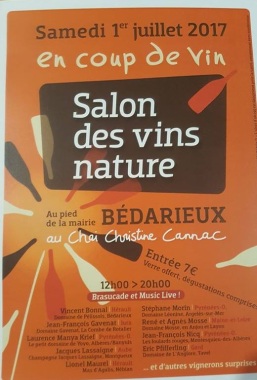
poster

It was good to be able to attend a local tasting after being in NE England for so long, I’m afraid they are rare in my home region. Christine Cannac runs a wine bar, which offers good food too, in Bédarieux. These sort of caves/restos are to be found all over France and are my favourite eating places of my time in France. Places such as Christine’s,  Cave St Martin (Roquebrun), Pas Comme Les Autres (Béziers) and Picamandil (Puissalicon) offer good wines with quality food in the Languedoc. Not to mention Verre Volé and Cave Insolite in Paris, Aux Crieurs in Troyes and the peerless Papilles Insolites in Pau. Highly recommended.

Christine organised a dégustation of some of her producers as she regularly does. There were 9 winemakers present and they offered a high standard of wine.

Domaine Léonine (Roussillon) had some very good red wines with my favourite the Bottle Neck, a full, complex combination of Grenache and Syrah with plenty of fruit and power.

20170701_123337

Bernard talking with my friend Vincent

Domaine Plageoles (Gaillac) is a domaine rightly renowned for its quality, pioneering work and championing of local and old grape varieties. Bernard Plageoles was present and it was good to chat with him. The Mauzac Nature 16 seems richer than usual and truly delicious. However, his Contre Pied 16, made from Duras was my highlight. Made to be drunk young it is refreshing, light, fruity with typicity of the grape and its dusty aromas.

20170701_123701

Domaine Mosse (Anjou) offered bright, clear Chenin wines. The highlight was the Rouchefert with round, full apple and honey notes, a wine which will develop for many years.

Yannick Pelletier (St Chinian) is a regular on these pages. His wines are always good, often excellent with concentrated fruits, local character and very drinkable. As so often Engoulevent was my favourite, classic St Chinian notes of dark fruit and lovely depth.

Mas D’Agalis (Hérault) is a long term favourite too, Lionel Maurel offered Yo No Puedo, perhaps his most famous wine. Largely Carignan but with Syrah,Grenache and Cinsault it is classic Languedoc and the 2016 has really come together from when I tasted it in Montpellier in January.

Domaine Yoyo (Roussillon) with yields of less than 10hl/ha in places has serious wines and features one of my favourite grapes, Grenache Gris. However, it is made into a light and darker red by maceration on skins. Both are very good but the lighter La Vierge Rouge is a favourite, lots of red fruits with power and a refreshing finish.

20170701_130145

Léonine (left), Foulards Rouges served by Laurence Manya Krief who makes Yoyo wines

Les Foulards Rouges (Roussillon) is another well known producer. I really like Glaneurs, pure Grenache with dark, complex fruits and a clean, refreshing finish.

20170701_124802

Justifiably proud Vincent

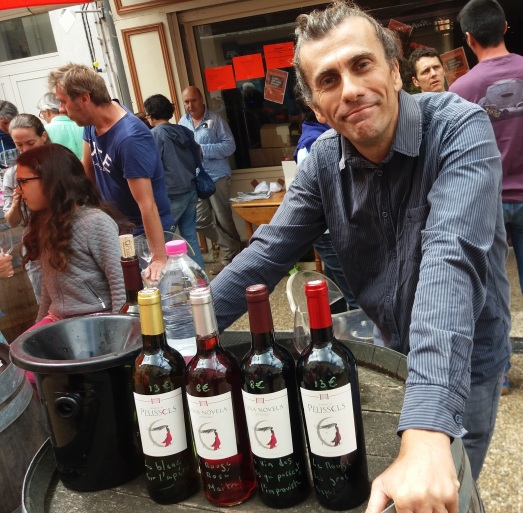
Domaine De Pélissols (Bédarieux), the local boy done good. Vincent Bonnal has really upped his game and these were very good wines. I liked everything, would happily drink his Luna Novela red at any time. However, star was the clairet style rosé. 36 hours maceration gives the Grenache (and tiny amount of Syrah) time to extract a deep colour with a depth of flavour to match. Lots and lots of fruit, not many wines will be more suited to the Languedoc summer, a real success.

Champagne Jacques Lassaigne (Montgueux near Troyes). I first tasted Lassaigne champagnes at the aforementioned Aux Crieurs in Troyes and have sought them out since. Pure Chardonnay they are wines of pure fruit, concentration, complexity and sunshine in a glass. Jacques was present and I loved his Blanc De Blancs from 10 parcels, La Colline with added complexity from the barrel ageing and the blend of 2010, 2011 and 2012. Star though was the vintage 2008. Such power, fruit; pleasure for the palate and mind. I have been lucky enough to enjoy some fantastic champagnes this year and these rank as high as any.

So, a small friendly tasting with a lovely mussel brasucade to add to the pleasure. If you are in the Bédarieux area seek out Chai Christine Cannac.