Some reflections on a trip around the Corbieres and Limoux
Author Archives: amarch34
Festa de la Vendemia – Valflaunès (Pic Saint Loup)
I have often said that Pic Saint Loup is one of my favourite wine growing areas, and that I have rarely had a disappointing wine from there. Domaines such as Mas Bruguiere, Hortus and Foulaquier are some of my personal favourites. It is also a beautiful area to visit with stunning scenery.
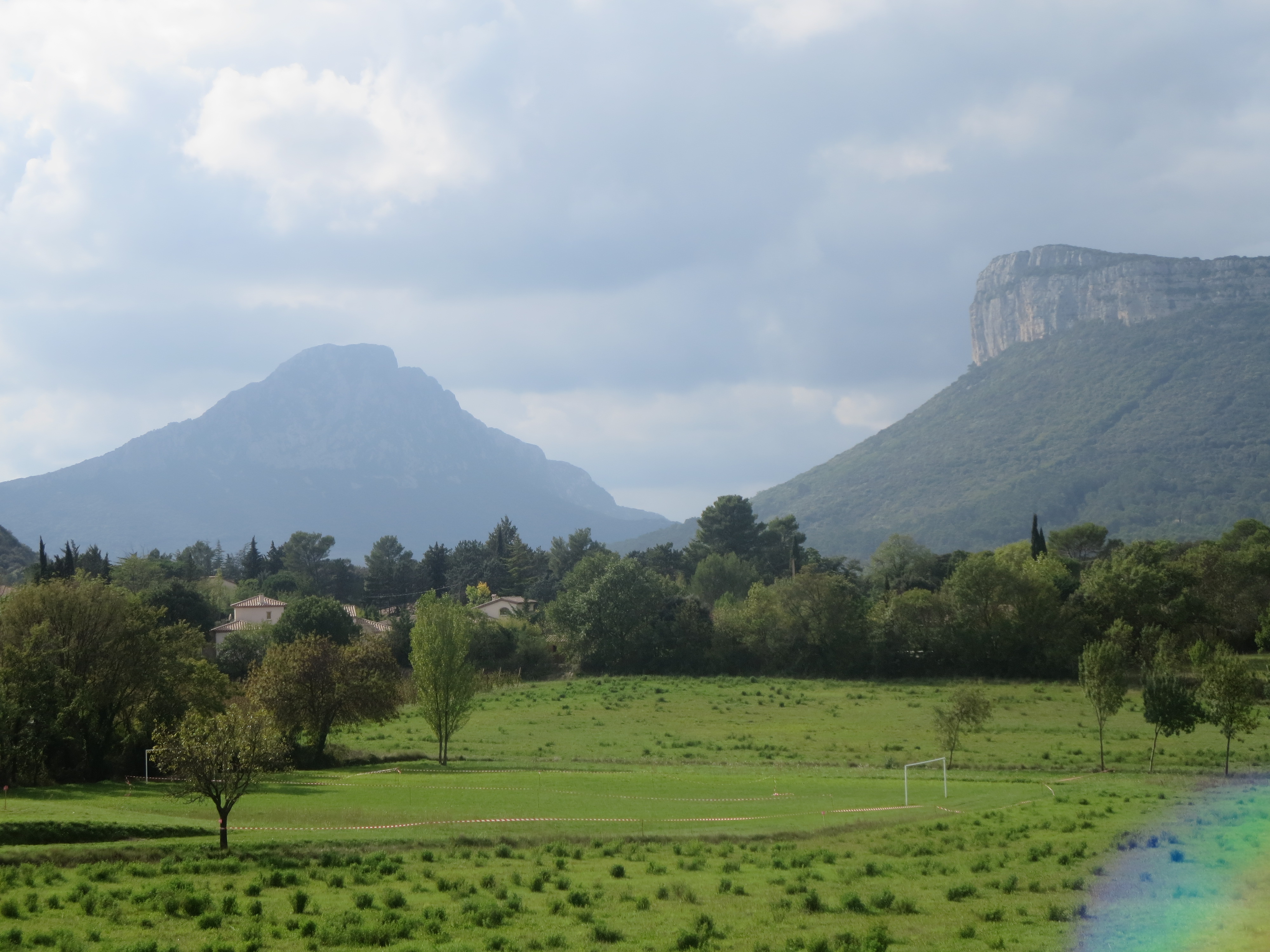
Hortus and Pic Saint Loup dominate the area
I was delighted to see, therefore, that the village of Valflaunès was holding its Festa De La Vendemia. It was a great opportunity to go along and try out more PSL domaines.
What we found when we got there was so much more than a wine festival though. There were lots of great food stalls selling everything from cheese, honey and bread to chestnut tapenade and vegetable pakoras. This made it easy for people to put together picnics or choose from local cafés or the village restaurant.
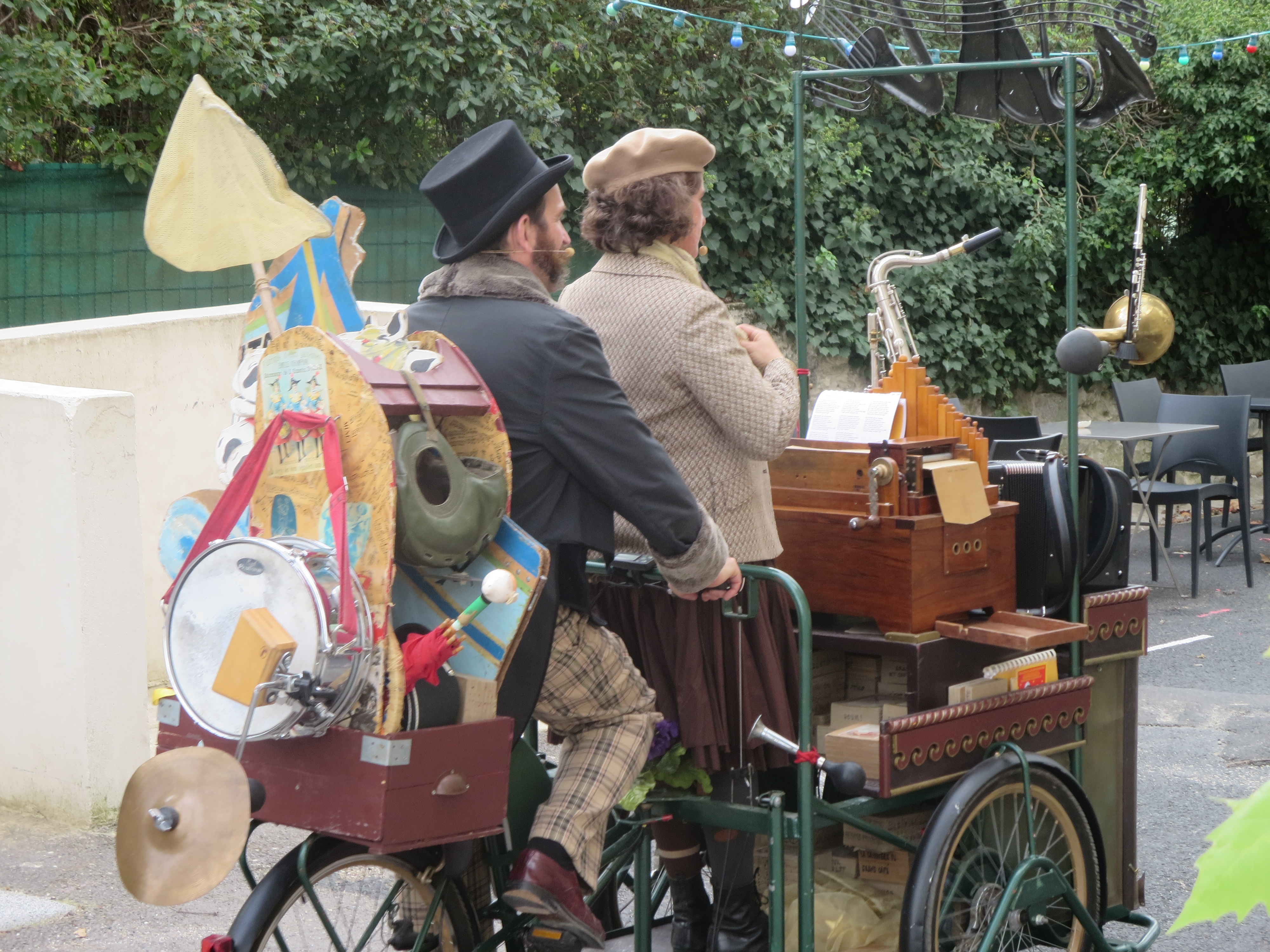
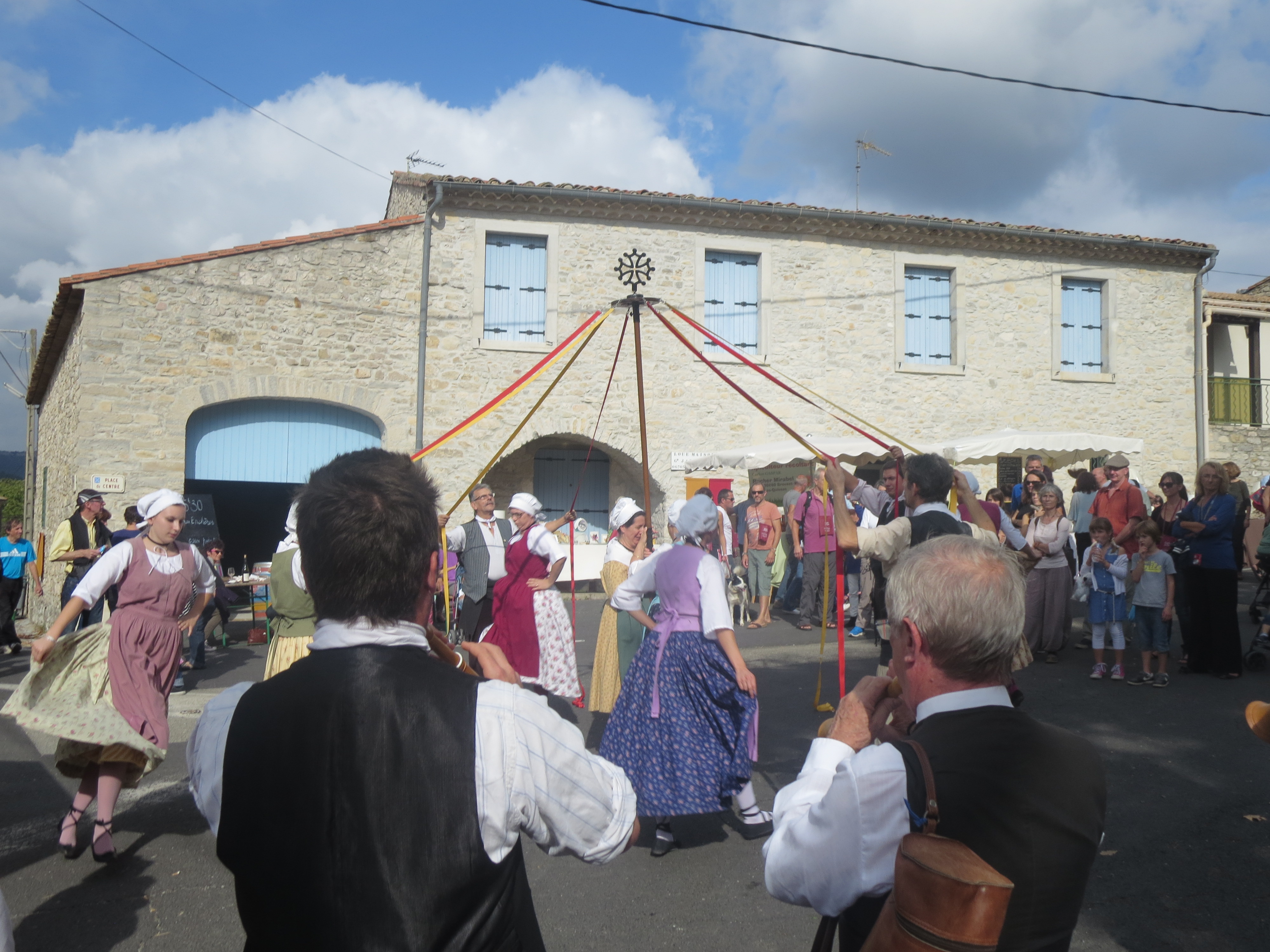
There were some really well put together exhibitions on a range of subjects such as how the region was involved in World War 1, 19thC local dress, what a vigneron’s cave would have looked like in 1930, local wildlife and so on. Street musicians, folklore dancing, choirs and other street animations meant that the whole village was full of life and activity and it seemed like everyone who lives there was involved in the events. Top class organisation, a real model of how a village can show itself at its best.

Of course, wine was our principal reason for being there and there were plenty of domaines represented. I could not get round them all especially in the afternoon when the crowds around the stalls became larger. These are some impressions from the tastings I did.
White wines were rather disappointing to be honest. They were not ideal conditions for serving white wine of course, temperatures in the low to mid 20s and wines standing on stalls for a while. However, many white wines seemed a little flabby and almost sweet. Roussanne and Marsanne (the main grapes used in the area) would be expected to produce drier, fresher wines than most of those I found here. The exception was Chateau Lancyre’s La Rouvière 2012 which did offer the elusive freshness I personally want in white wine. Otherwise, the best two whites I tasted included a Sauvignon Blanc, not something I expected, and a Chardonnay/Viognier/Roussanne blend from Hortus. I honestly was not tempted to buy any white wine that I tasted. At around 10€ I expected better. Perhaps the conditions were to blame but …
Red wines were much better though there were few outstanding wines. All wines were variations of Syrah and Grenache usually blended with other varieties such as Mourvedre and Carignan. Hortus and Bruguiere showed their entry level wines and neither really shone. My preferred wines were Domaine Mortiès’ classic Pic St Loup 2012 and Chateau de Moucheres’ Tradition 2012 both wines I would happily buy, again priced around 10€. Hats off to Domaine Zumabum Tomasi for showing a 2006 wine, it is rare to be offered older vintages and this wine showed how well PSL can age. I was less impressed by one producer who ignored visitors, not just me!, so that she could chat with a friend, I shan’t give a name but I wouldn’t go back. There were a number of quite thin wines from other domaines too, so I now know that Pic St Loup, like every area, has its good and weaker producers.
Top of the class was an easy choice. Domaine Saint Daumary is in the village of Valflaunès itself and was recommended to me by one of the Rugbymen. Thank you for the recommendation Romain, you were right. Julien Chapel is a young producer and I thought the two reds he offered for tasting were both delicious; full, satisfying wines with the silkiness I associate with my favourite Pic St Loup wines. I was especially taken by the Syrah dominant wine Troisième Mi-Temps. I returned to buy some of the wine but Julien was surrounded by large numbers of people wanting to taste his wine. I shall definitely make a return journey to buy.
Overall, a really enjoyable day out. The wine kept me happy but there was so much going on that children, families and non wine drinkers would be entertained. Well done to Valflaunès and thank you.
Castets II – return of the Rugbymen
In a previous post on October 1st (Fin de Vendanges a Mas Coutelou, One Day Like This) I described the hugely enjoyable day spent harvesting Grenache Noir grapes in the company of the Rugbymen of Béziers. Well, the grapes were placed in tank and left to ferment using carbonic maceration. After 3 weeks it was time to press the grapes and the Rugbymen were back.

The grapes in tank, the cage and press stand ready

Jeff kickstarts the pressing, with very clean boots!
The grapes tasted wonderful, full of fruit but with added layers of strength and alcoholic sweetness from fermenting within their skins. Then it was time for the Rugbymen to show the results of all that training.
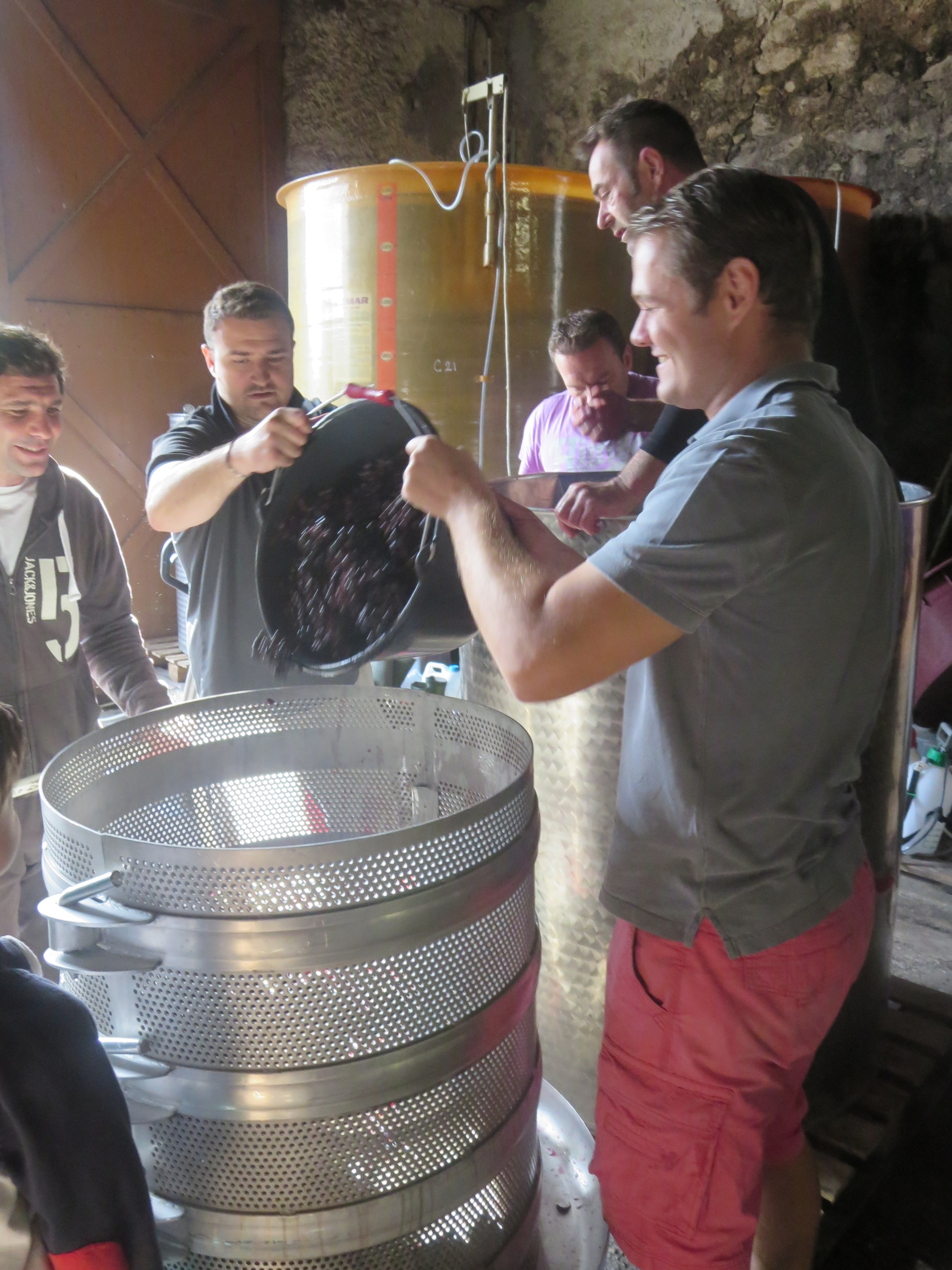
Loading the grapes into the cage
The juice ran freely even as the cage was being loaded and then the press began its work.
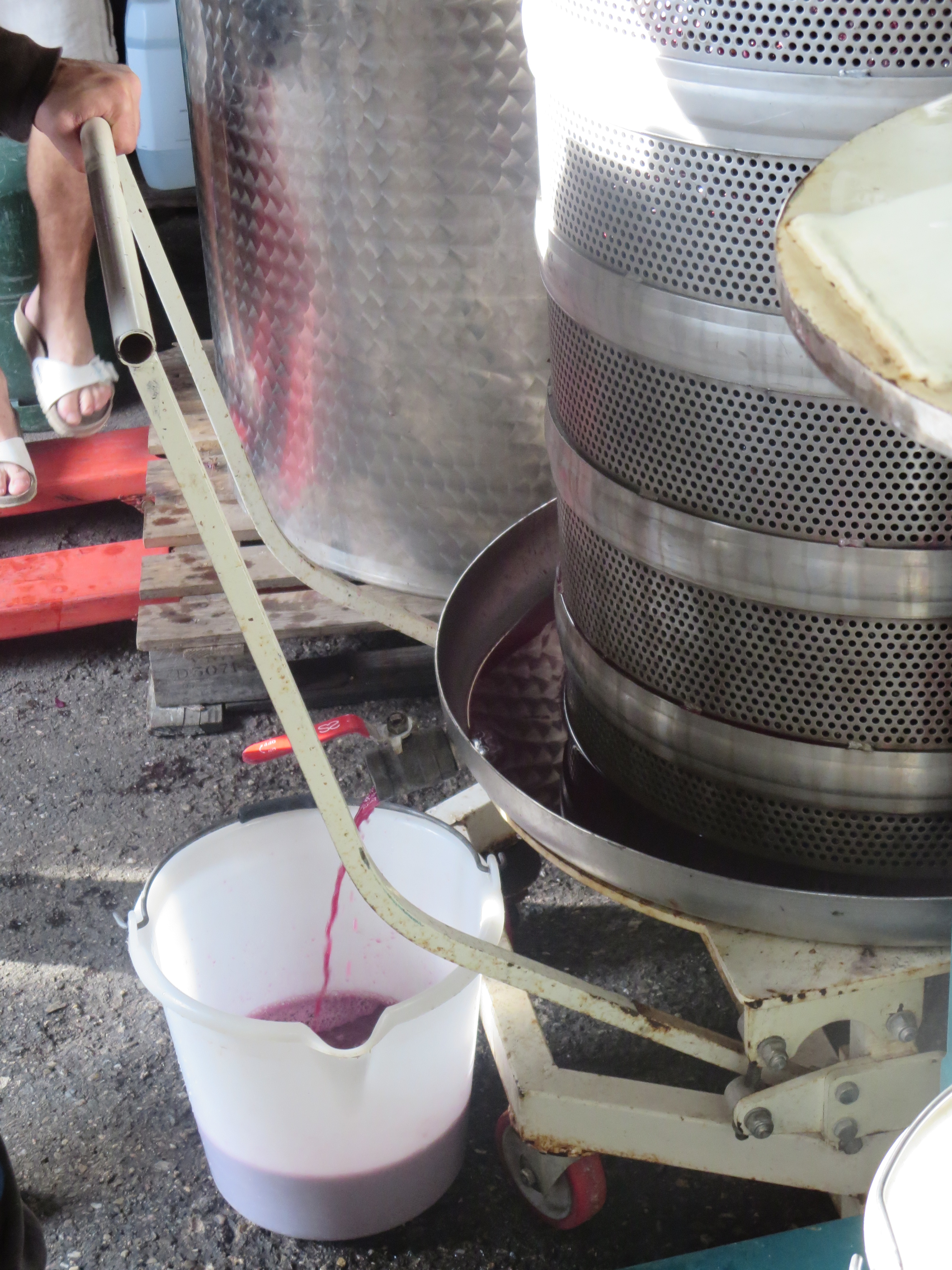
First juice runs freely even before the pressing

Look at that stunning colour!
The wine was put into bidons (bonbonnes) of glass wrapped in straw for safe keeping and to avoid light damaging the wine. Each bonbonne was carefully marked to ensure that it will be possible to taste the different stages of the wine pressing, from the first freely flowing juice to the last of the pressed wine. It was interesting to taste the wine as it appeared through these stages, there were distinct differences. Various Rugbymen, Jeff and myself all had their own,differing preferences. It will be fascinating to monitor their evolution.

Transferring wine into the bonbonnes
Once again thanks to the Rugbymen, they really are good fun, warm hearted and top men!

Preparing the grapes for a final pressing, called a rebeche
It was also a good opportunity to taste the wine from Castets, the rare variety which is grown by Jeff as one of only two producers in the world.
WOW! This is already something special. Fruit, light at first just grows in flavour and depth as it coats the mouth and lingers there for a long time. It is amazing and with time in tank and then in bottle (magnums are the likely future) this is a wine I really want to drink when it is mature.
Being a vigneron – Part 3 update
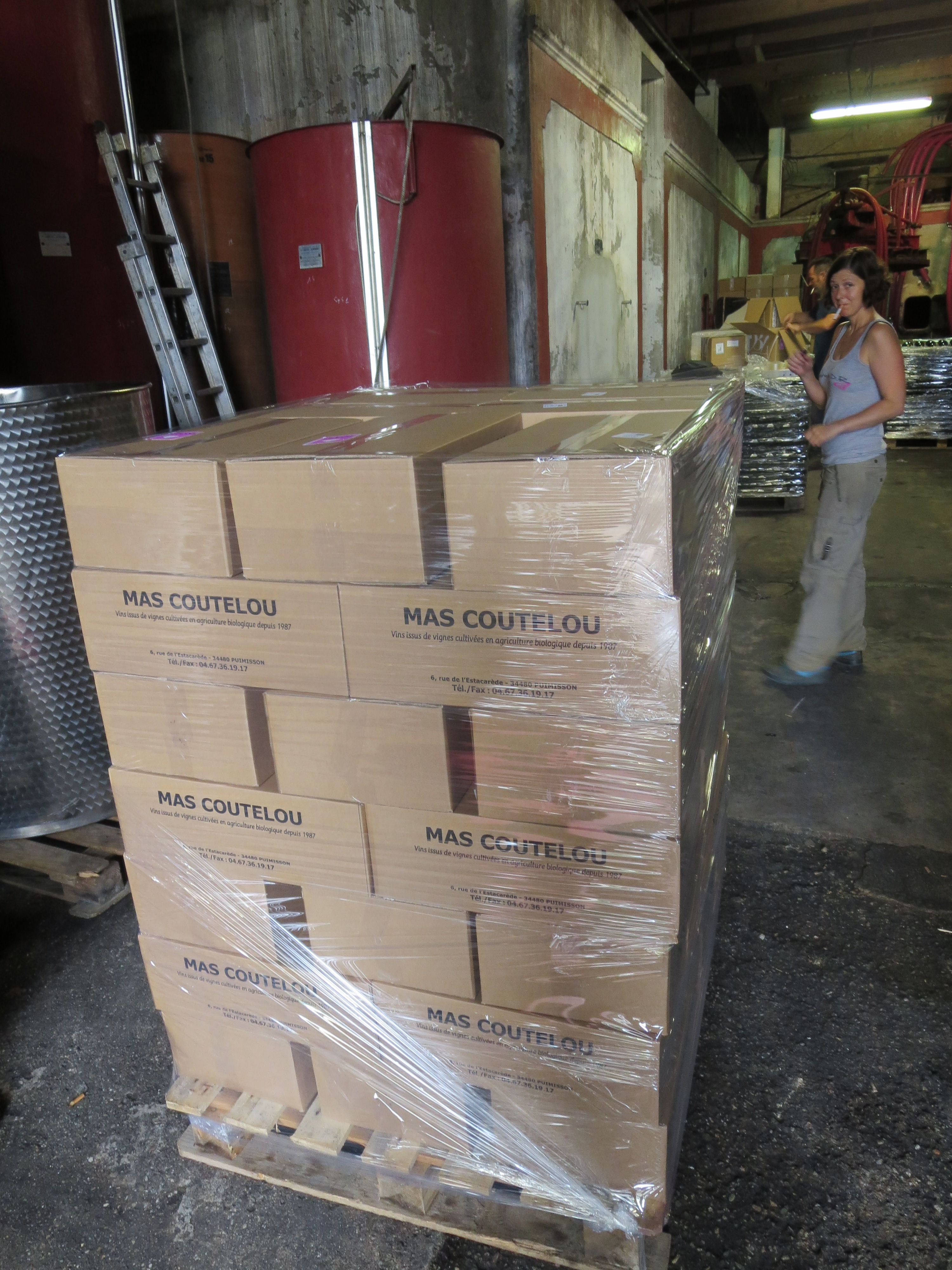
Ready to go
Remember the photo above from the last post? Well, I was delighted to see this post on Facebook from a wine merchant called La Nature Du Vin showing the arrival of some of the cases we packed and the evident delight of the merchant as well as customers. So, I thought I’d complete the picture. The Cave is at 3 route des Vignes, Saint Julien en Genevois, Rhone-Alpes, near the Swiss border. I would definitely call off there if in the area as they have an excellent range of wines.

Being a vigneron – Part 3
No you haven’t missed Parts 1 & 2! It is widely acknowledged that the work of a vigneron involves three locations; the vineyard, the cellar and the office. The first two parts are the most well known of course and what people like me think of first when we think about the ‘glamorous’ lifestyle of winemakers. However, if you don’t sell the wine and get it delivered safely to merchants, restaurants etc then it is pointless trying to make wine.
Now that harvest is done and the wines are stored in tanks, either fermenting or maturing, the more mundane, but equally important, aspect of a winemaker’s job comes to the fore. Wines have to be bottled, packaged, sent to market and, above all, sold. Jeff said to me that this was not especially interesting but, for me, it was.

Bottles waiting to be packaged
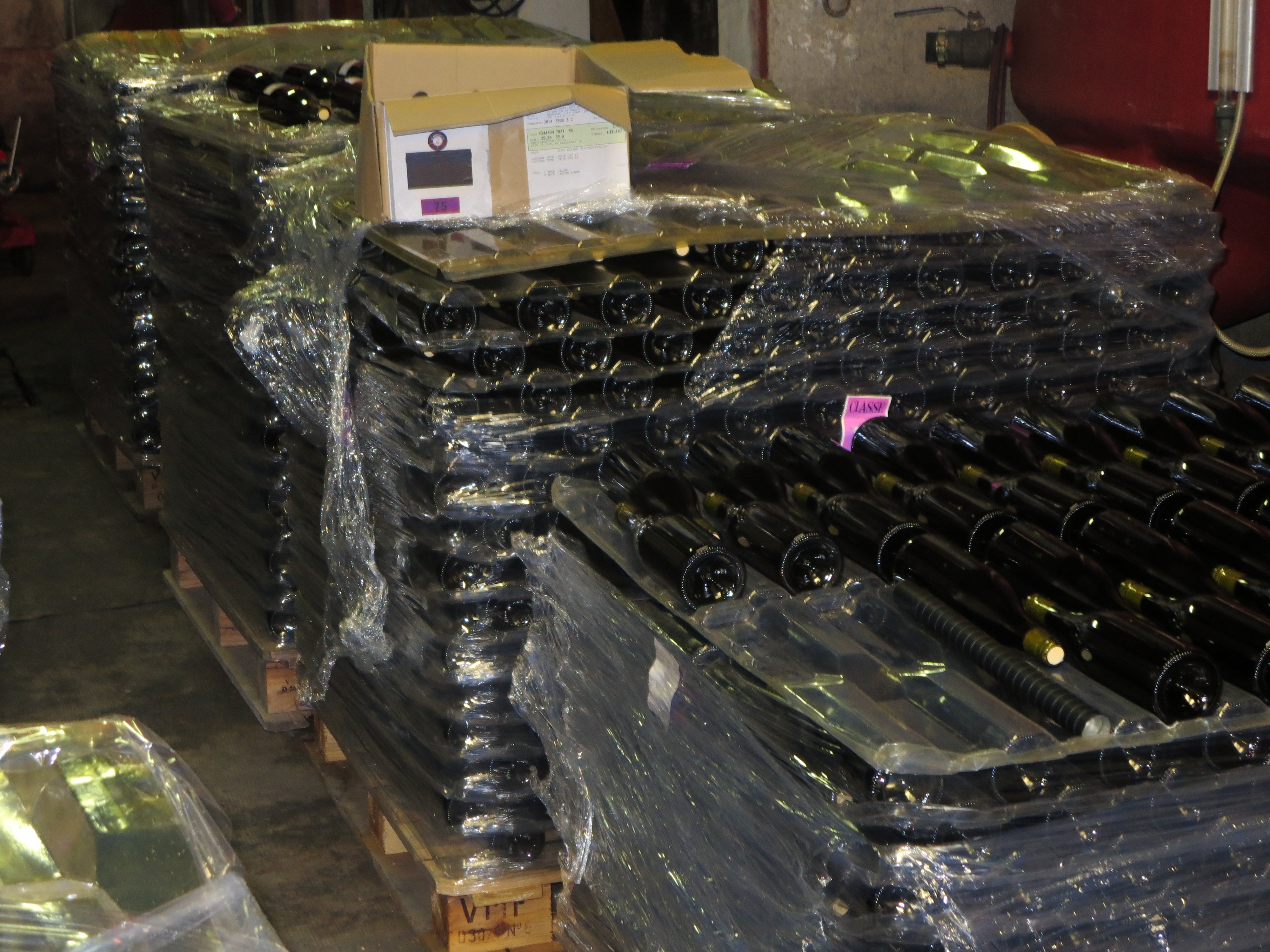
Classe bottles waiting
Jeff has built a strong demand for his wines both in France and abroad. Our recent visit to Paris and the fact that his wines are sold out there proved the case. Visitors to the cellars call on a regular basis looking for wine, merchants phone wanting to place orders – his mobile phone is never far from Jeff’s ear.
On Friday last week a new ‘toy’ arrived to help the packaging. It seals the cardboard cartons and prints the name of the wine on the side, speeding up the packaging process. Nonetheless teamwork and humour keep that process very human.
The job is hard, repetitive, physical work. In the video you will see Jeff at one point to place 4 bottles in the box at a time, routines and practice are everything. But without the boxes of wine the rest of the business cannot happen. It is less attractive but it is as important as harvesting or winemaking.
Two new wine treats came to the fore this week. Firstly, a slightly sparkling white wine, blanc frisant made from Macabeu and Grenache Gris. Secondly a cuvée made for the first time since 2003, Copains, made mostly from Cinsault but with Grenache and Syrah grapes vinified all together – truly delicious with the latter grapes adding body and depth to the Cinsault and giving the bottle longevity I would think.
Parts 1 & 2 of winemaking are still very strong, Part 3 too and I shall investigate more about commercial decisions in future.
Ready to go

Icare remains underwhelmed by the new packaging machine
Four nights in Paris
I seem to be developing a link between wines and songs. I am cheating a little, as 10CC sang about One Night In Paris on their album The Original Soundtrack.
I digress. As well as being mad about wines I am a passionate horse racing fan, a turfiste. Following my retirement it is now possible for me to attend race meetings I have always longed to visit. Top of the list was a trip to Paris to the Arc De Triomphe race meeting at Longchamp. So we booked 4 nights in Paris for a little sightseeing and an art gallery as well as the races on Saturday and Sunday. The racing was excellent (and, happily, profitable), highlighted by the victory of Treve in the big race following up her success in 2013.

Treve coming back after her victory
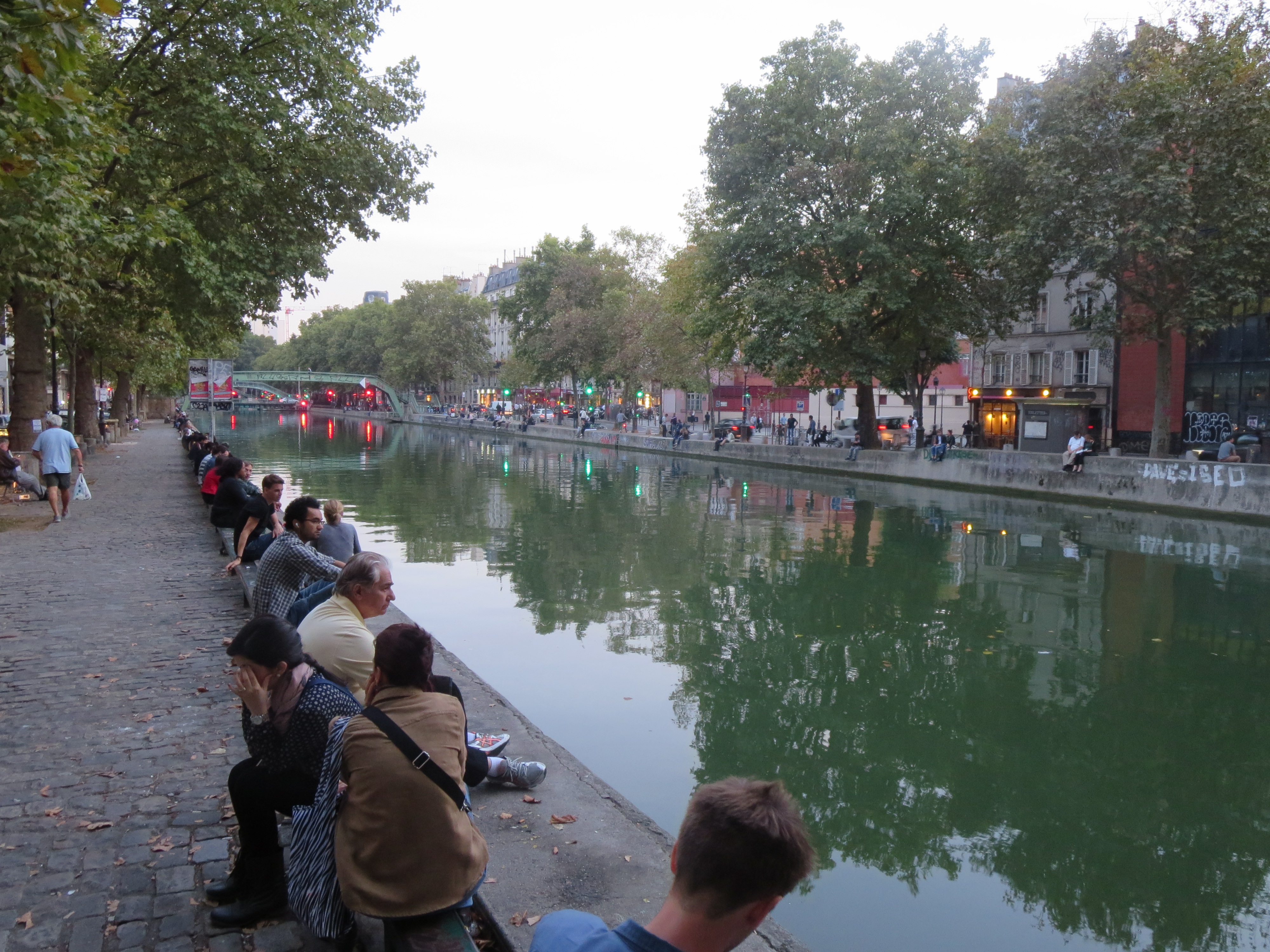
We stayed in the 11e arrondissement which was a new area to me and it proved to be upcoming and trendy with a buzzy café and restaurant culture. The Canal St Martin for example was a pleasant surprise with Parisians enjoying the warm evening looking over the water.
We ate at a number of good restaurants, especially those based around wine. The trend of wine bars serving excellent food is one I love. Paying around 7€ for corkage it means that good wines are affordable to accompany the food rather than the usual restaurant mark ups. Two strong wine bar/ restaurant recommendations:
Le Verrre Volé beside the Canal was excellent. They had sold out of Coutelou wines (as had everyone in Paris!) and we wanted to drink something non Languedoc in any case. The natural wine movement is strong in Beaujolais so I chose Jean Paul Thévenet’s Morgon 2012 which was excellent. I don’t write good tasting notes so I won’t start here but well worth a try, available in UK here
La Cave De L’Insolite was just around the corner from our apart-hotel and was a chance discovery in some ways as it was one of the few places open on Sunday evening. I loved this place and would return in a heartbeat. It soon filled up and had a warm, welcoming and was far more trendy than I am! The food was excellent, seriously good. We drank a white wine to accompany perfectly cooked pollock. It was Clos Des Grillons Cotes Du Rhone Blanc 2013, organic and very good. Interesting to read in Midi Libre that the vigneron Nicolas Renaud is a History teacher, as I was for 33 years. How could he not produce good wine. If you are in the area go to La Cave De L’Insolite for a meal, it’s a terrific place.
On Monday we walked around the Marais, Ile De La Cité and central Paris before lunch at Glou in the Marais. A very good menu fixe included a vegetable main course so I was happy to go there and it was very good too. To accompany we chose another of the Beaujolais natural wine big four producers, Guy Breton and his wine, Le P’tit Max. This was delicious too, perhaps less typically Beaujolais than the Thévenet but a memorable wine. I can’t find an English merchant for Breton or Grillons sadly but there is information about Breton on this well known US website
The other welcome visit was to Philippe Cuq owner of Le Lieu Du Vin on Avenue Gambetta next to Pere Lachaise cemetery. A great wine shop with a tremendous range including Mas Coutelou of course. What a friendly man Philippe is and if I hadn’t been travelling by plane I’d have been buying too many bottles for my credit card. One of his recommendations was a Vin De Pays du Puy De Dome called Badoulin from Stéphan Elziere, the only organic producer in Cantal apparently. I was unaware of any wine producers in Cantal! It was an unusual but inspired suggestion by Philippe as I asked for a wine to drink with light food back in our hotel. I think it is Gamay (again – the weekend was a true Gamay celebration) and it was full and spicy, a real surprise. No English links here but an article from Le Figaro on Philippe showing his Classe, and Elziere
So Group 1 racing, top food and wine and some lovely people, it all left me with a smile on my face almost as wide as:

Ribbons smiling at me before finishing an excellent 2nd in the Prix De L’Opéra
Competition – where am I? (Je me trouve où?)
OK so where is this small vineyard? (C’est où cette petite vignoble?)
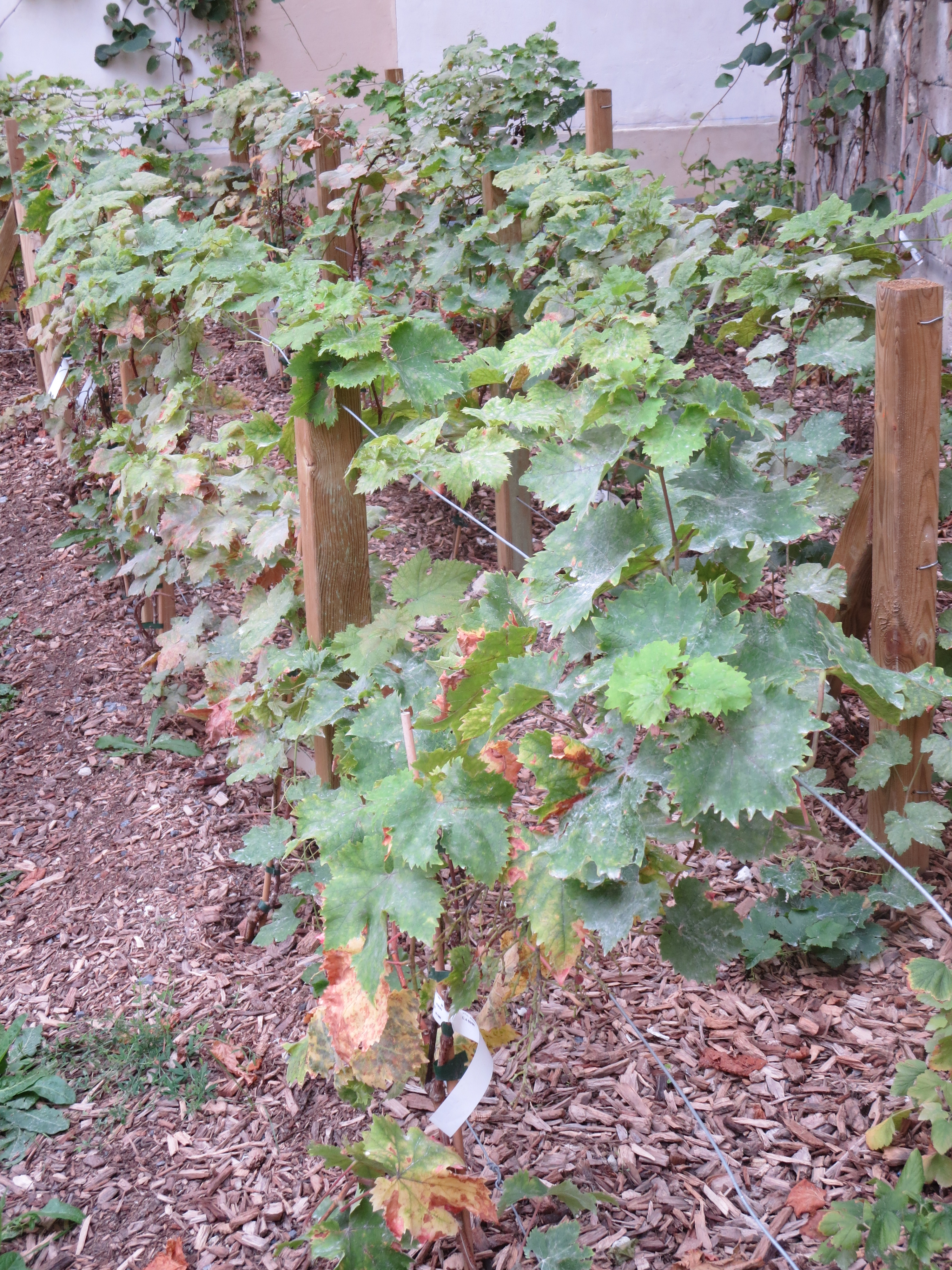 No prize but you will be named if you are the first to tell me a correct answer.
Aucun prix mais je vous accrediterai si vous êtes le premier à me dire la bonne réponse.
Fin de Vendanges a Mas Coutelou, One Day Like This

Vendange under a perfect sky
As my favourite band Elbow sang in their biggest hit, one day like this a year would see me right!
Saturday September 27th was the last day of vendanges chez Coutelou and, apparently, many other domaines in the region. After some iffy weather in the previous 10 days the sun had been out for the last 2 or 3 and today was no different. There was an autumnal, morning chill as Pat and I arrived in the vineyard to help collect the last of the Grenache Noir.
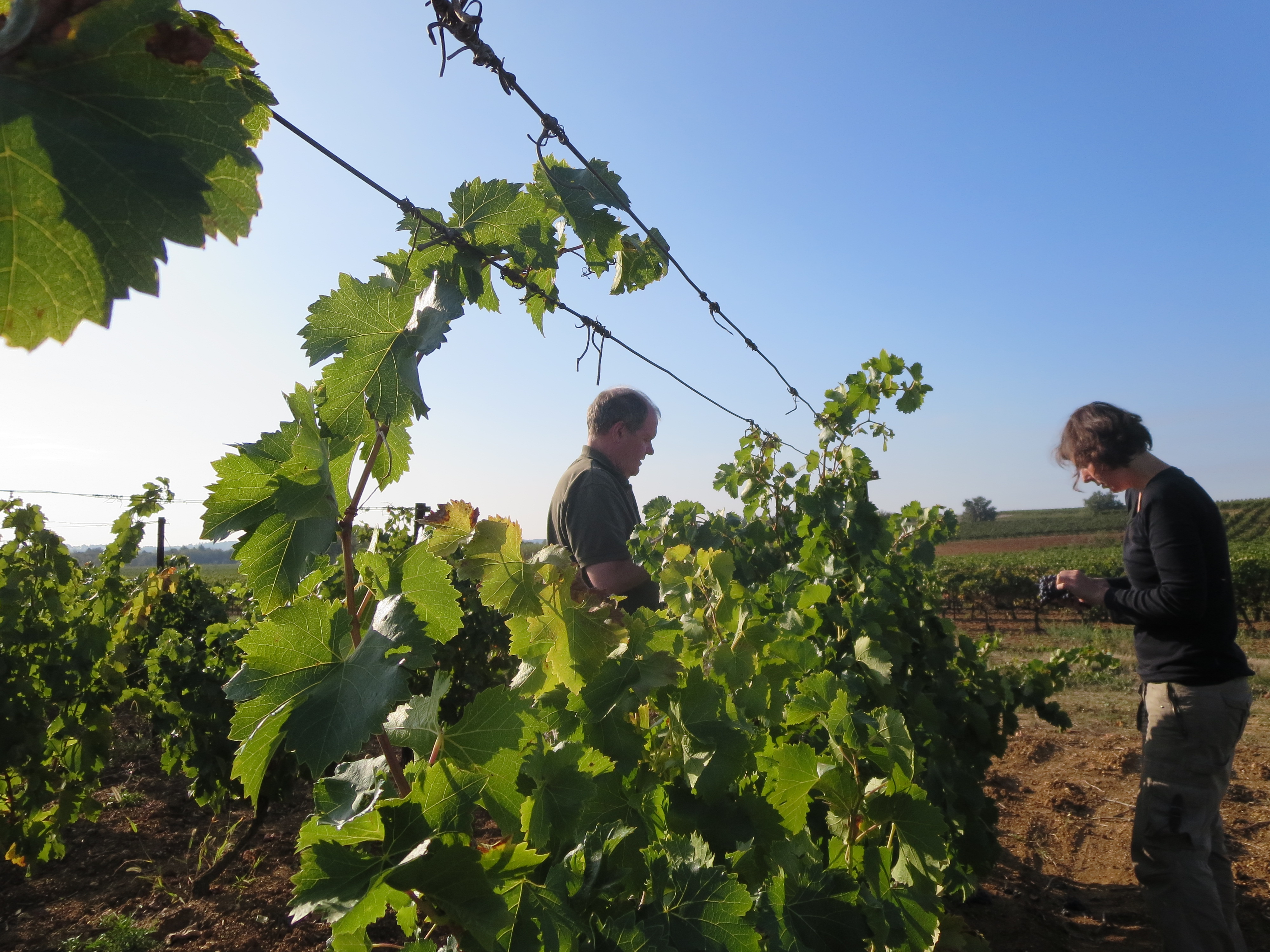
Grenache Noir

Pat picking
However, the sun soon became hot and the panama was soon donned to protect my head since hair no longer bothers to do so. The usual pickers had departed and Jeff called in his friends from the Béziers rugby club to help out. The ‘rugbymen’ proved to be hard working, fun and very welcoming towards novices such as ourselves even when I declared my lack of interest in their sport.
As ever harvesting grapes is only the first part of the job in the vineyard as it is the first step in the process of triage (sorting), any underripe, mildewy or poor quality grapes being cut out before being placed in buckets, then cases. The best way to check the health of a bunch that has been cut is to smell it. There should be the clean, fruity smell of grapes. If not, then search for the problem and eliminate it. Any grape left should be one that you would be happy to eat, and that we did too!
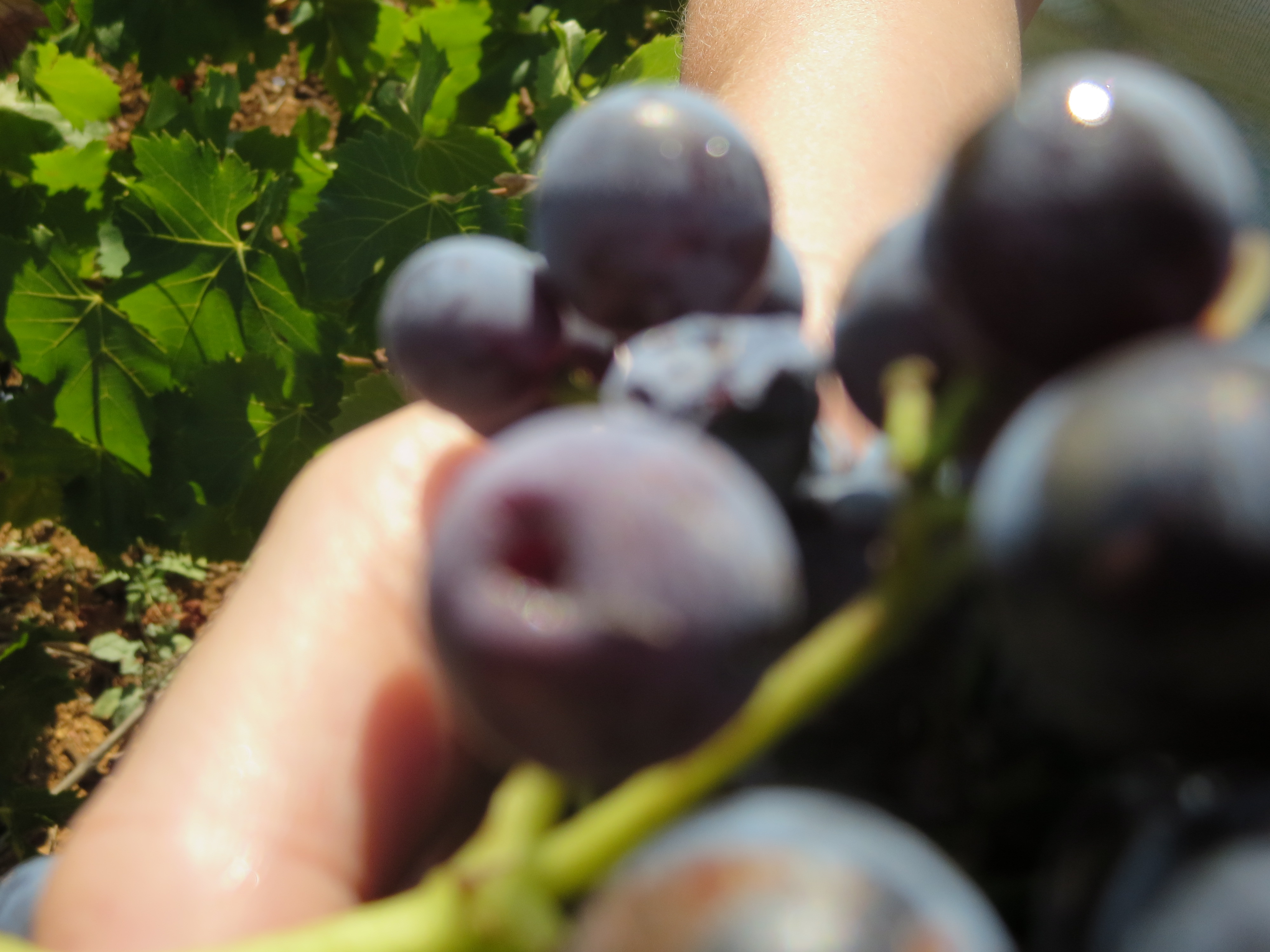
A grape with a hole created by a ver de la grappe (worm). The grape would soon be cut away
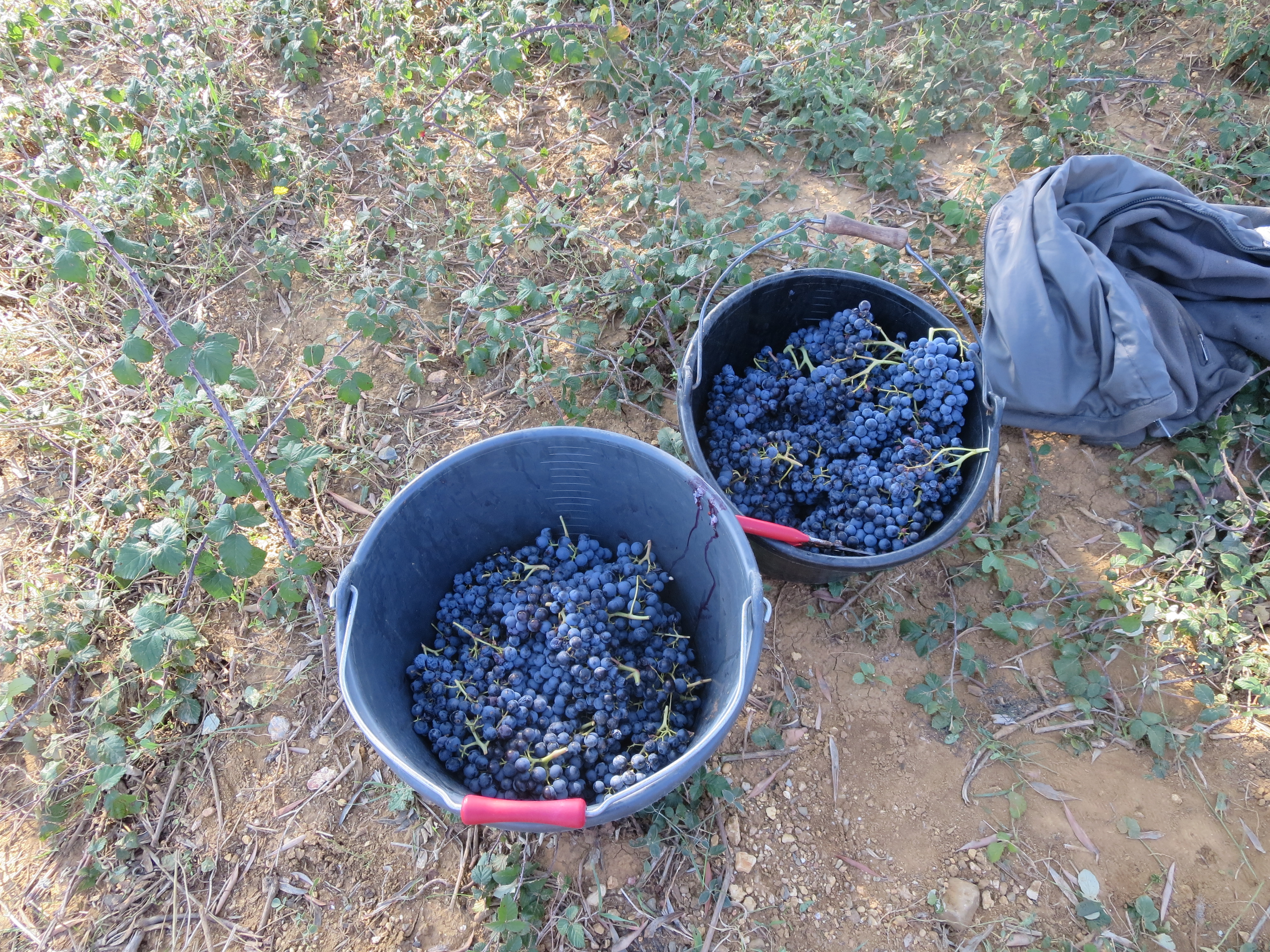
Healthy and delicious Grenache grapes
As the morning heated up it was time to casse croute. A drink of water I thought, wrong! Out came the picnic table, a collection of charcuterie (my pescatarian ways raising more rugbymen mirth!) and then some cheeses from La Fromagerie, a shop in Béziers. These were some of the best cheeses I have ever tasted, including a runny and perfect St Marcellin. Naturally, in every sense of the word, to accompany these treats were a couple of magnums of Vin Des Amis, the most appropriate of wines for today.
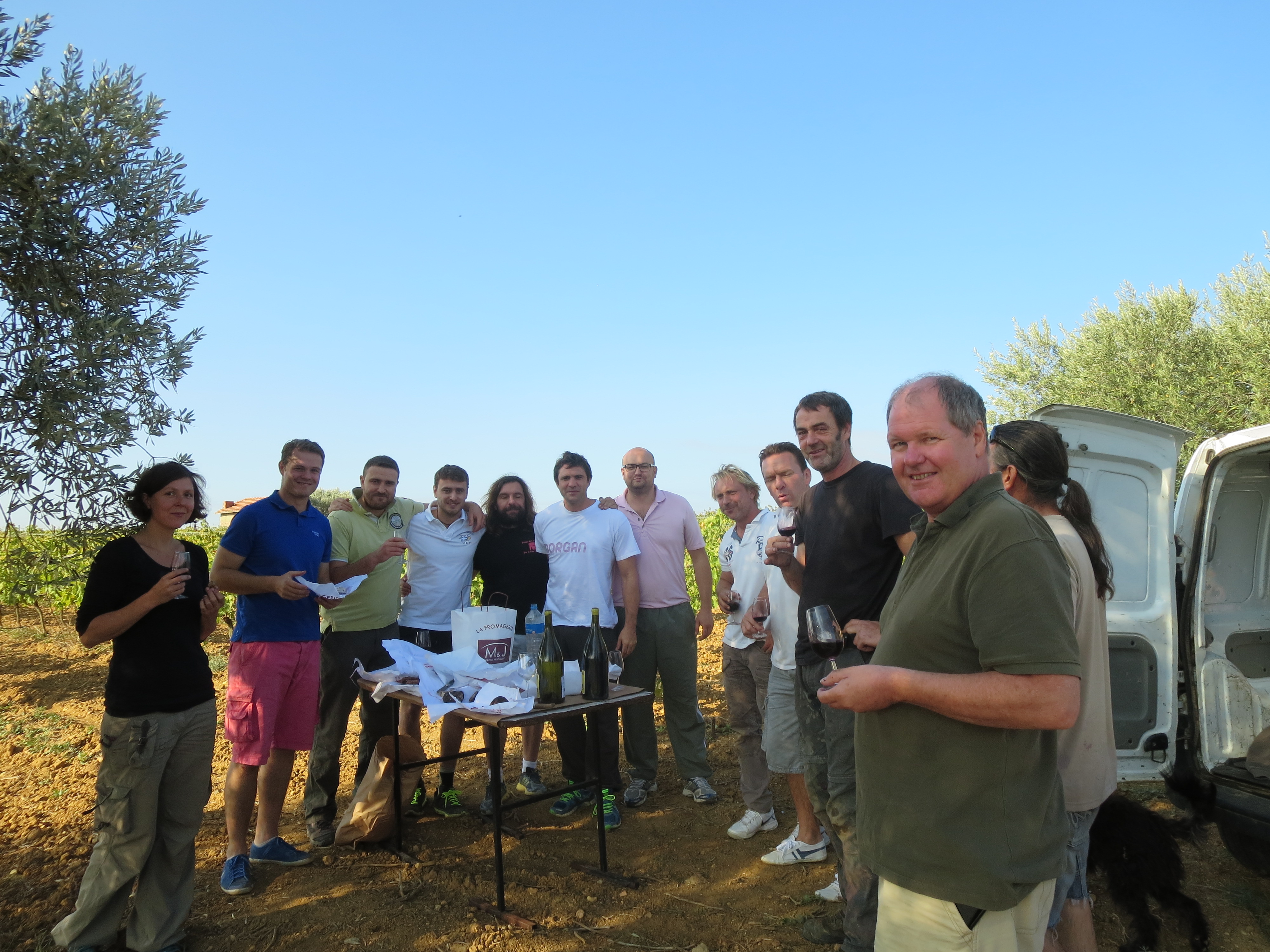
Tina, the ‘rugbymen’, Jeff, Michel and myself
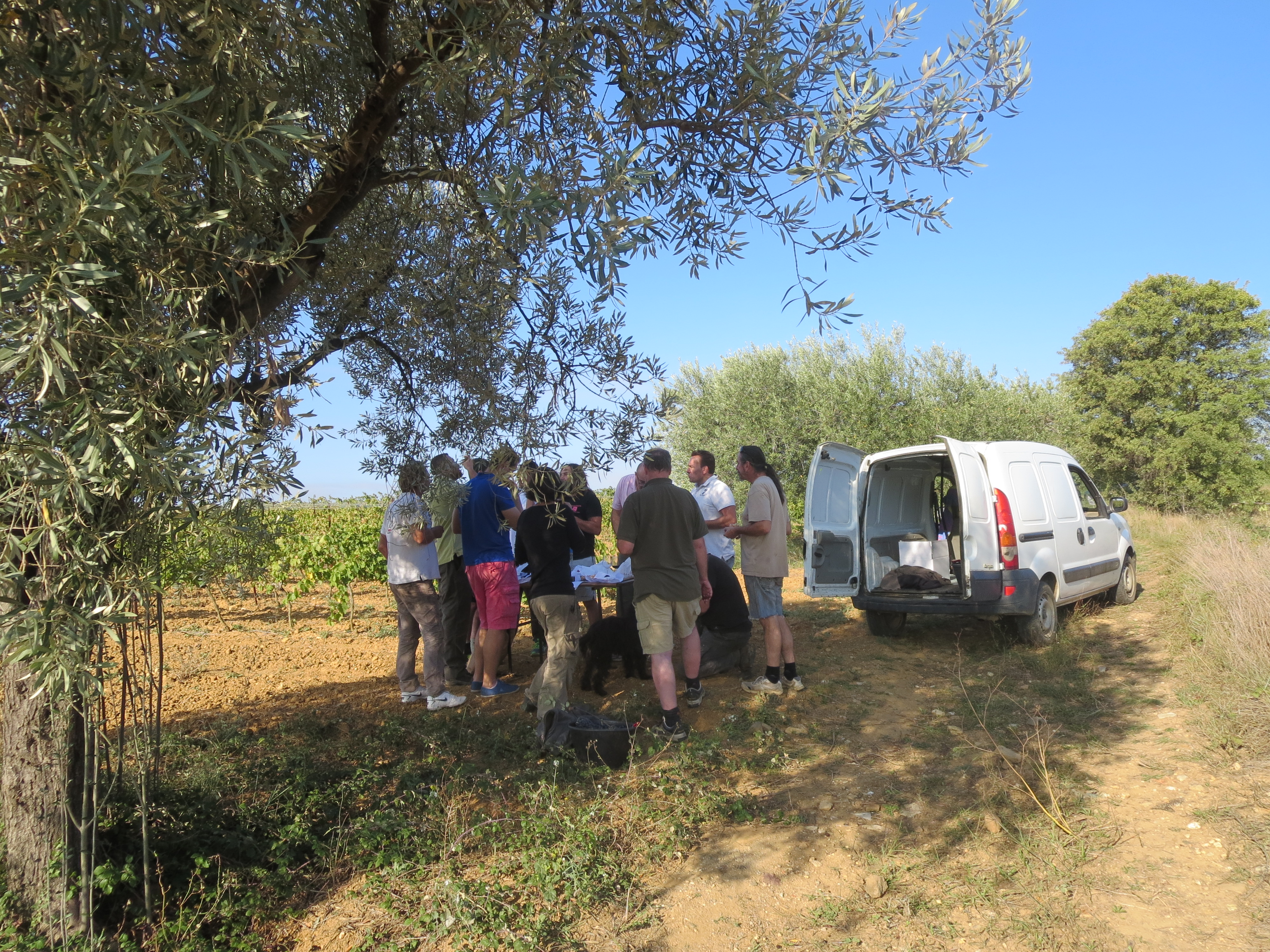
Welcome shade

Michel does the honours

Icare checks that everything is up to scratch
12.30pm, grapes picked it was time to return to the cellars. The Grenache was put into tank to be fermented by carbonic maceration. This is where whole bunches of grapes are put in tank and the weight of the grapes gradually bursts the skins and starts fermenting the grapes at the bottom of the tank. Most of the grapes begin to ferment inside their skins. The result is usually more fruit and less tannin and adds a different layer of complexity when blended with other grapes fermented traditionally after being pressed

We came, we picked, we sorted

La force des rugbymen
Jeff shared some of the juice / wines from various tanks from the harvests of the last few weeks. These are, obviously, at different stages of development according to date of picking, speed of fermentation etc. There were a multitude of flavours, richness and acidity and so much promise for another excellent vintage despite the dry spring and summer. Low in quantity but high in quality.
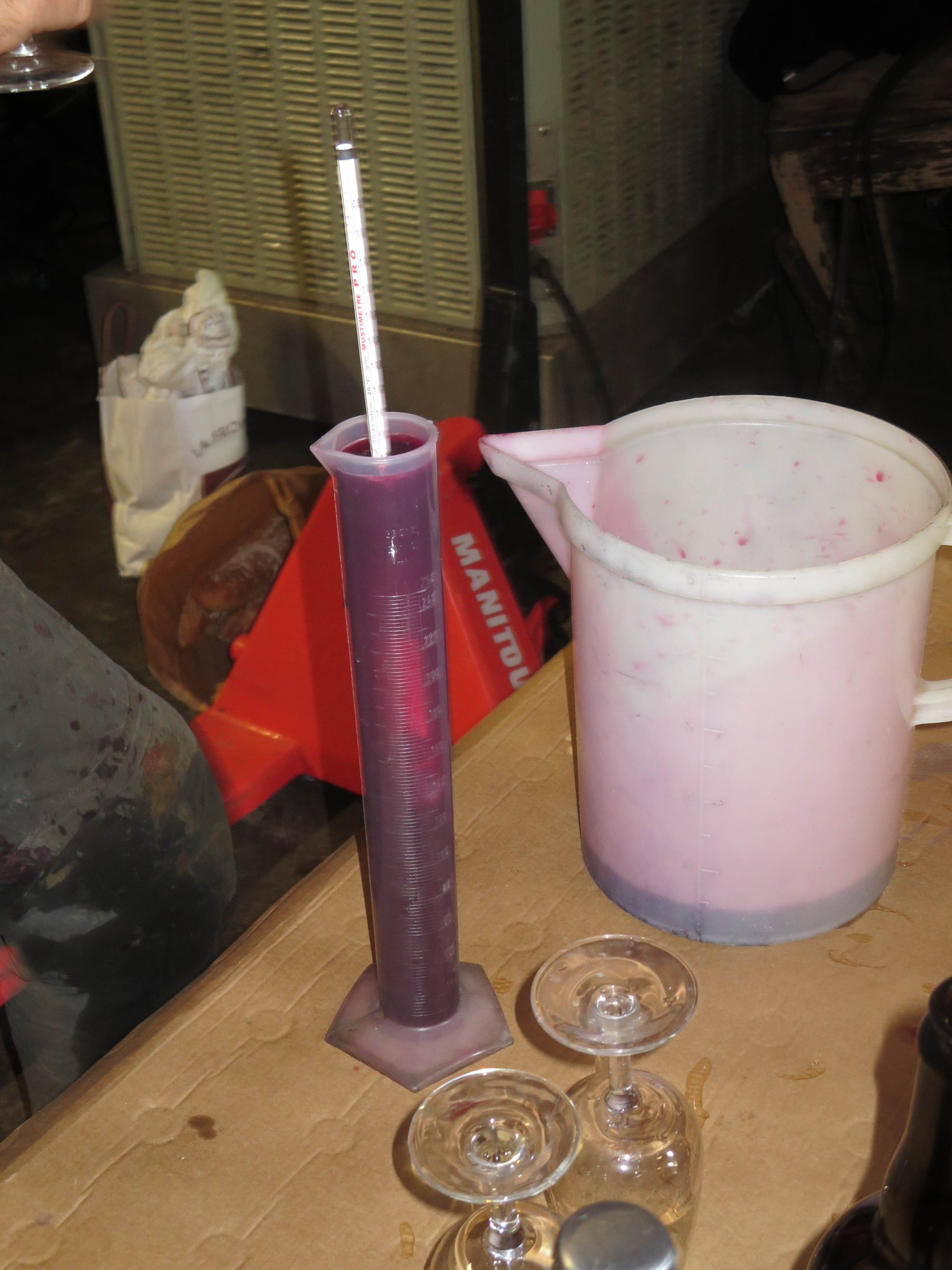
The Mourvedre being checked for density, it was a delicious fruitbomb to taste

At work, the previous Tuesday, at the sorting table checking Mourvedre grapes which have a beautiful blood coloured juice
And that I thought was that. Wrong again! Back to Jeff’s house,
the celebrated 7, Rue De La Pompe (name of one of Jeff’s cuvées) and into the garden where, joined by families of the rugbymen, children and 17 adults sat down to a delicious meal of salads, a giant seafood pasta, more La Fromagerie cheeses, and several huge fruit tarts. Just fantastic, many thanks to the cooks, Michel for cooking the pasta through, and to Jeff for his generosity. Why so few pictures of the meal? Well I’d like to claim a technical hitch but it was probably more due to this…

Jeff and Balthazar
I don’t think I have ever seen a Balthazar bottle actually filled with wine. This was Vin Des Amis 2013, all 12 litres of it. As the afternoon wore on it was amazing to taste how the wine developed and opened up allowing the Grenache fruit to really express itself. And, to make a comparison, a magnum of 2010 Vin Des Amis which was beautiful. Fresh yet complex and long lasting. Thus it was after 6pm when we finally stood up from the table. Pat had been very abstemious as we had to get back to Margon and then to the theatre in Pézenas. I admit to being a little merry.
It had been a fantastic day, one I shall always cherish and remember. I have always wanted to pick grapes and take part in a wine harvest. Dream fulfilled in the company of some terrific people who were welcoming, friendly and tolerant of the two English incomers. What a treat to spend the day in the company of French people at work and at play, even if the speed of their French became way too fast for me at times. Work to do there. And, work aplenty still to do in the year ahead – the wines have still to be made, bottling to do, pruning and taillage in the vineyards. I can’t wait!
I must say a huge thank you to Jeff whose patience, friendship and generosity are the stuff of legend. I posted recently about the story of the Chaud Doudou and its moral of sharing everything good. The gathering of friends and colleagues in his vineyard, cellars and garden was living proof that he carries on that tradition of chaud doudou. He wants to share his work and his passion for nature and the wines he creates. This he achieved magnificently today.

Surrounded and sharing
Error
This video doesn’t exist
The scenes of trees in the video show some bat houses erected for them to shelter, part of the diversity encouraged at Mas Coutelou. The music is, of course, Elbow. And, for those who can’t get enough of him, Icare makes an appearance!
Skull crusher

Jeff (Jean Francois if you want to be formal) Coutelou is passionate about nature, about plants and trees as well as vines. He sees his job very much as making the best from nature whilst doing as much as possible to protect and enhance it. Mas Coutelou has been organic since 1987, long before it became fashionable. Jeff has now gone further and has been making natural wines for a number of years, the first small tests in 2003. Natural wines are wines which have minimal chemical or mechanical intervention. To prevent or combat diseases only natural products are allowed to be used. Equally, in the cellar minimal intervention is required for example in using, for example, only natural yeasts. The wine which results is the natural result and product of the grapes. There are bad natural wines for sure but winemakers such as Jeff pour huge efforts into their vineyards to make sure that the grapes are as healthy as nature allows and, in cellar, hygiene and close supervision ensure that quality prevails and top quality wine is produced. Moreover, in recent years he has gone further and has used no added sulphur. This is usually used by vignerons to fight the risk of oxidation and help preserve the wine. Many people don’t like sulphur in wines, some are sensitive to its effects. It is a risk not to add it but Jeff has been able to avoid it for the last few years.
My first visit to Mas Coutelou many years ago included a tour of the vineyards in Jeff’s van with my wife sat on a concrete block in the back and Héro, Jeff’s previous dog, keeping her company. As we travelled around and stopped to look at vines and grapes what shone out was Jeff’s passion for the land, the vines and the olive and fig trees which he has planted to ensure polyculture and a varied landscape. At one point he stopped the van and pointed to two sets of vines. To the left was a neighbour’s vines, They looked beautiful; vivid brown soil with bright green vines in straight rows, all cut to the same shape and size, all neat and tidy. So beautiful that a film company was actually filming with them as a background. But Jeff asked us to look closer. There was no life in the vines or the soil, it was devoid of insects, butterflies, herbs, nothing. Next to these vines were Jeff’s. They looked, to my untrained eyes, much more messy – the vines weren’t regular, there was grass and herbs and flowers between the rows. But they were absolutely teeming with life, insects, butterflies and, as if on cue, partridges running through them. And it’s that life which emerges in the wines. As soon as I tasted them I was blown away by their vivacity. powerful fruit and flavour. These are not just in your face wines though. They have complexity and age very well. I have tasted some from 2001 which are still drinking well and show no sign of being tired. Jeff opened a Flambadou (100% Carignan) from 2007 at lunch last week which was still bright, lively but deep and with layers of flavour. I find it hard to not drink these wines young because they are so delicious young. Vin Des Amis I have usually drunk in the first few months after purchase. Yet a 2010 magnum tasted on Saturday was still full of that freshness but also with more complex flavours. A lesson for me that I must put some bottles away.
As part of his determination to look after his land and plants (of all kinds) Jeff is interested in preserving wine varieties. He is one of only two vignerons in the world to have a variety called Castets (Break your head, or skull crusher as I have liberally translated. In fact it is named after the man who developed and spread the variety). (The other is Chateau Simone in Palette neat Aix-en-Provence).

Jeff with some Casse Tete grapes
There are only a few rows of the grapes and not enough to vinify separately so they are being blended with Carignan. Can’t wait to taste the results.
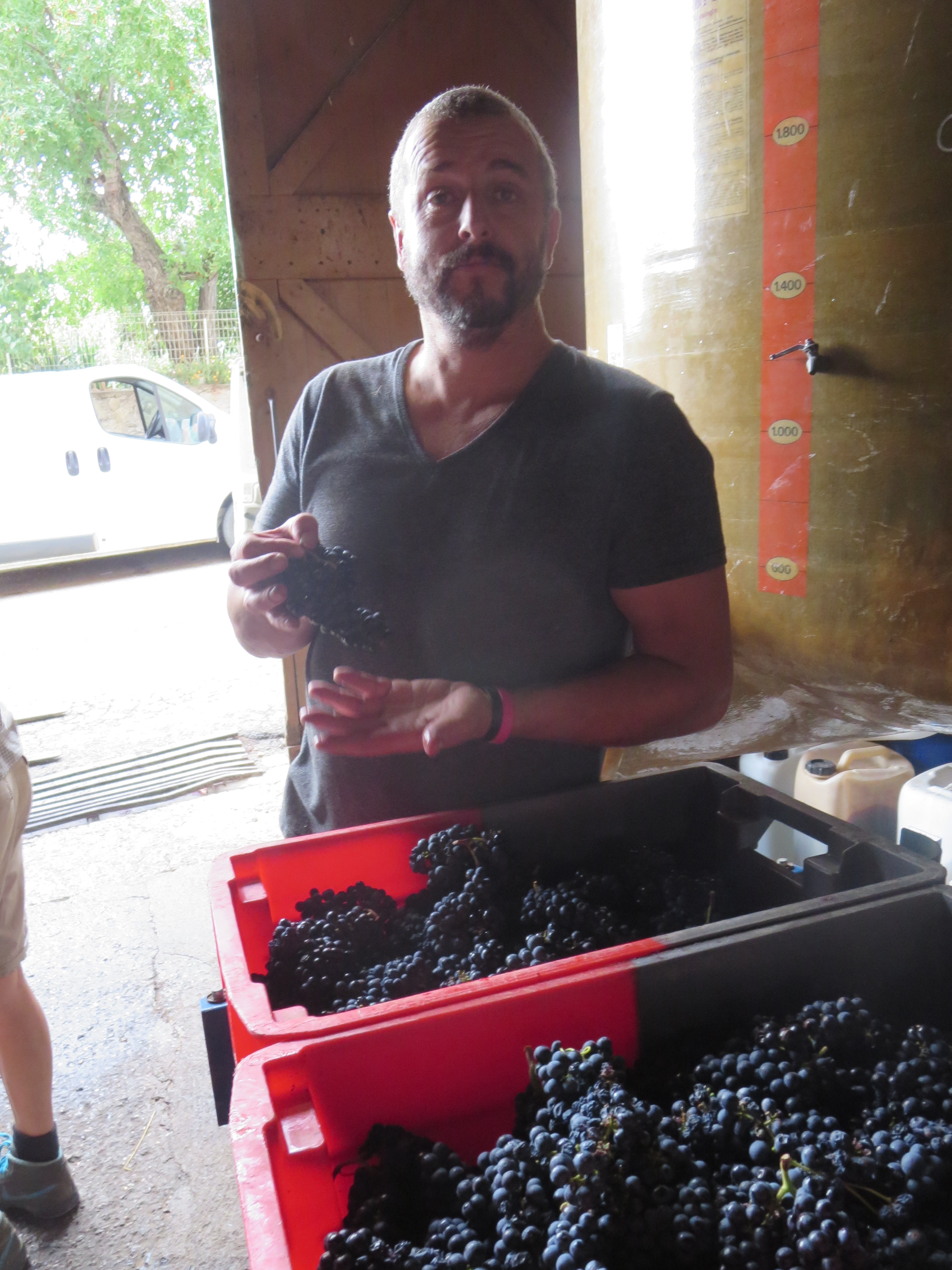
Castets being prepared for pressing by Michael, a fellow Liverpool fan and genuine top class Scouser
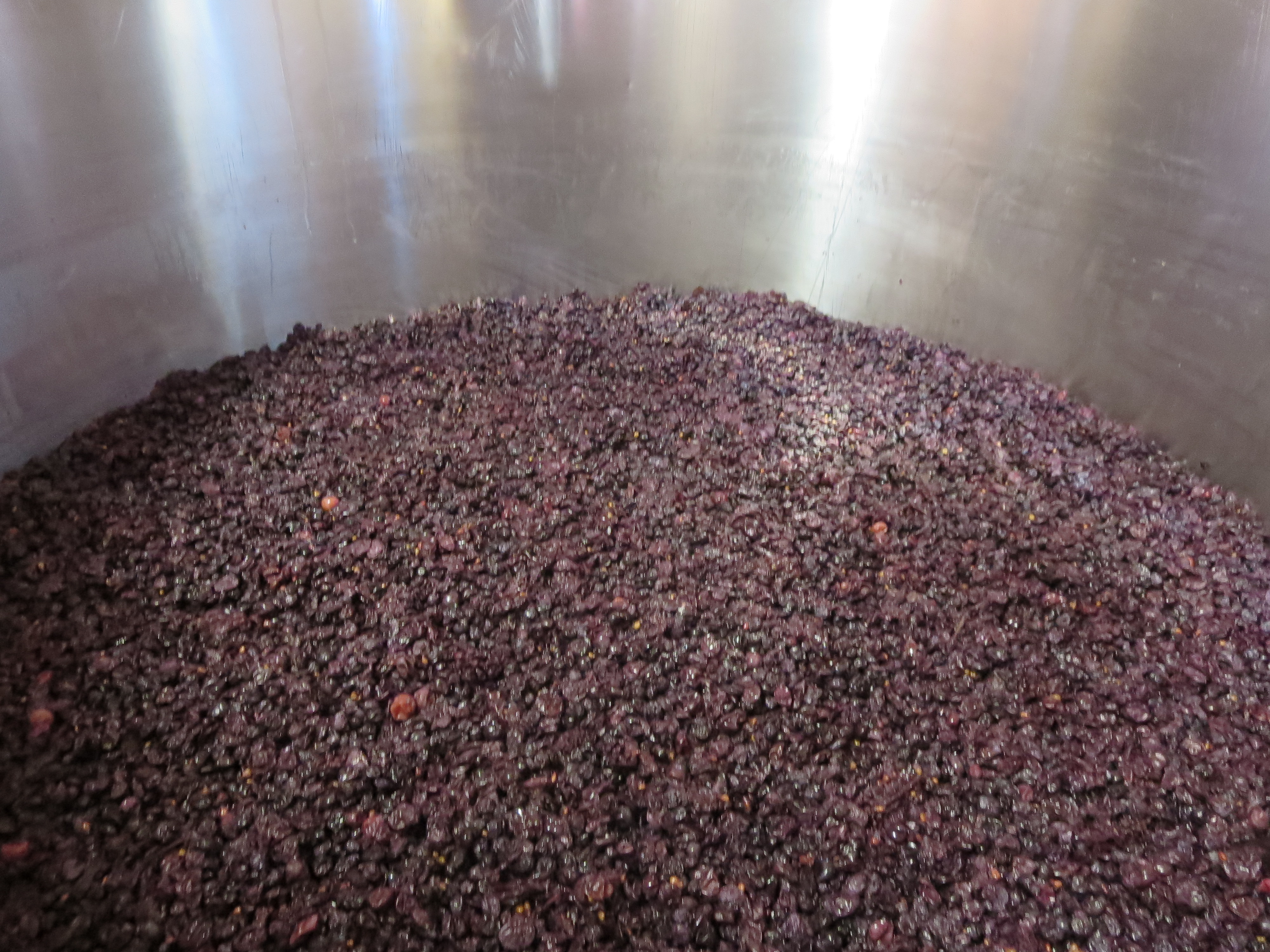
Castets in tank, the skins, pips etc on top of the wine

The chapeau is really tough and so Tina has to really force it down into the juice (pigeage)

My wife, Pat, clearly liked the Castets!!
Hold the presses!

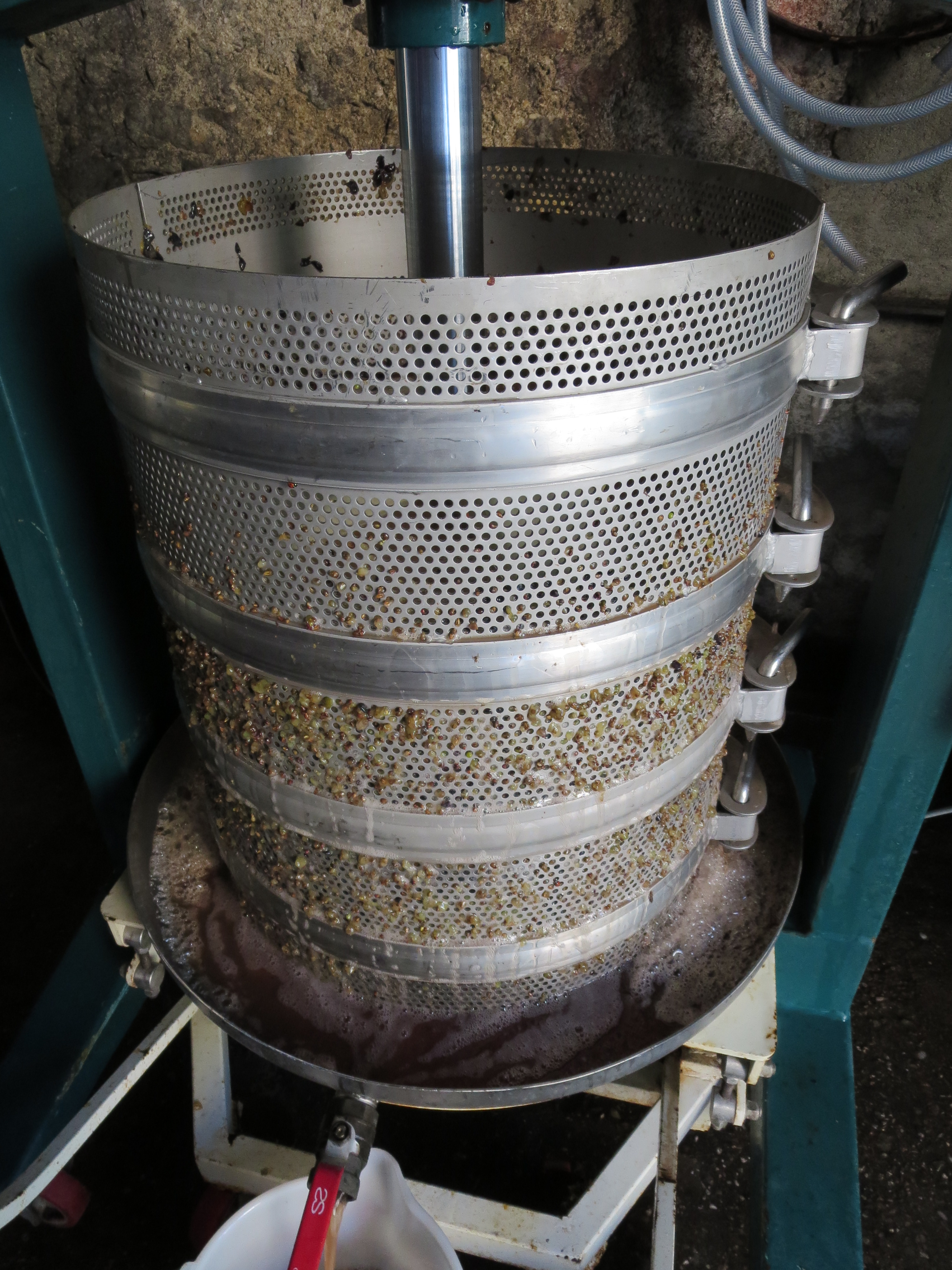
Both of these objects are wine presses, one more modern than the other. Whilst the large press has taken the bulk of the work in recent weeks the small press has its role too. It is also an olive press incidentally. It is used mainly for small production wines and I was lucky enough to be trusted to supervise its use for the pressing of muscat and grenache grapes which will make into the fortified wines which Jeff Coutelou produces in addition to his table wines. The ‘vieux grenache’ wines are made in different methods as I shall describe in future posts including a fantastic solera type system with wines dating back many, many years to previous generations of the Coutelou family. They are, of course, delicious.

Michel unloads the grapes, he is in Jeff’s words his ‘main gauche’ (left hand)

Grenache and muscat grapes ready for pressing
The grapes are sorted and then loaded into the cage and wheeled into place. The press is lowered and the juice begins to flow.

Pressing
The major lesson is to be careful about how much pressure is used as if you press too hard the mass of grapes, stalks and pips becomes too hard and the juice will not flow freely. I confess to pressing a little too hard at first but fortunately rectified it before any damage was done. The juice is taken to container for fermentation and the pressed grapes, the gateau, is disassembled and returned to press for a second and third time. The gateau becomes almost a work of art.

Gateau in the sunshine
The wine begins its fermentation in the tank and after this has finished the wine is put into barrel for the first time. Depending on its development Jeff will blend this wine with previous vintages or allow it to develop in barrel for a number of years.

Tina transfers the fermented wine into barrel
The other pressing I supervised was the Carignan Blanc. Jeff was pleased with this crop and decided that he would make a new white wine using only these grapes. The procedure was identical though I thought I’d highlight one extra feature. Many people commented after a previous post that they were disappointed I did not get my socks and shoes off and start to tread the grapes. Well I was rather shocked to see that treading does still happen! Instead of bare feet though new, perfectly clean wellington boots do the job, a light pressing (so that ruled me out!) to start the process moving even before the press gets to work.

Treading

Yours truly at the press
The gateau was just as spectacular and you can see in the photo below the layers created by the 3 pressings.
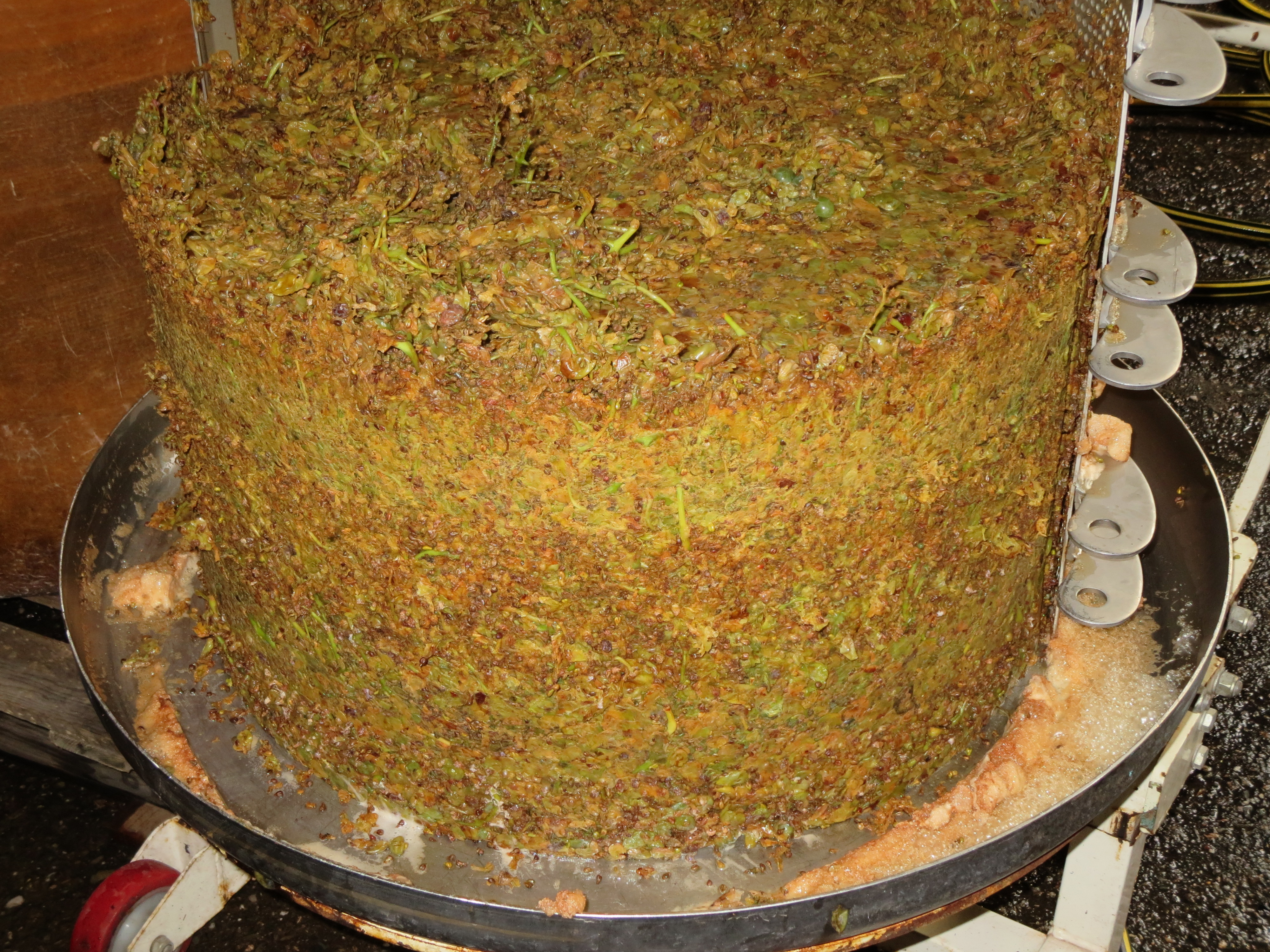
A serious point. Jeff was keen to point out that the Carignan Blanc grapes took 10 people 2 hours to pick. We took a whole day to press the grapes, myself and supervision from the patron with others helping to take the gateau apart and then reassemble it for the various pressings. The grapes will be fermented, pumped over, stored in barrel. So when we think twice about the price of wine think about the amount of work which has gone into it, especially for crafted, artisanal wines such as these. And after all that only 420 litres were produced, around 500 bottles or so.
On a less serious note, we now know who is the patron, let me introduce Icare, the real driving force behind Mas Coutelou.
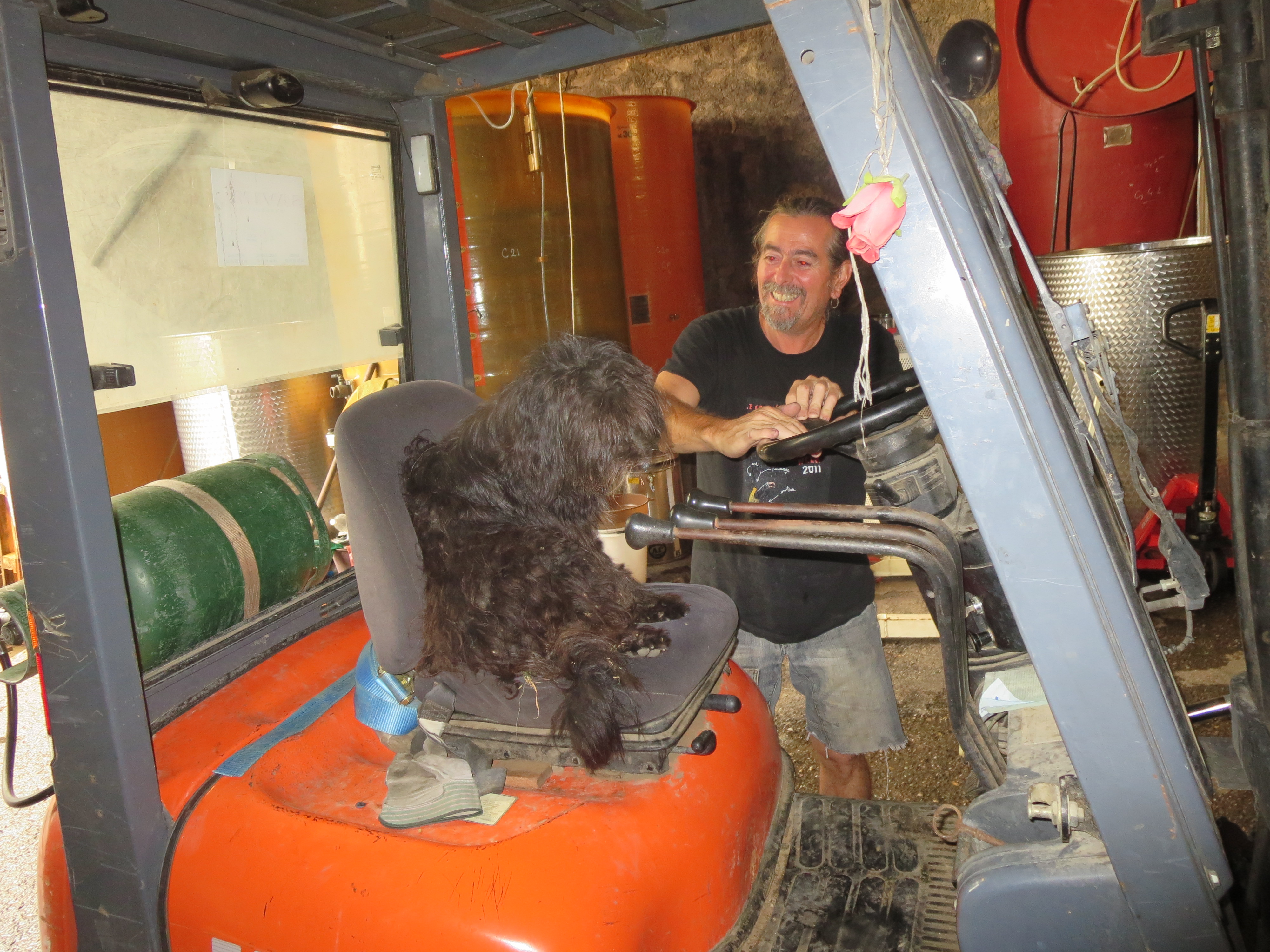
Icare takes the wheel

