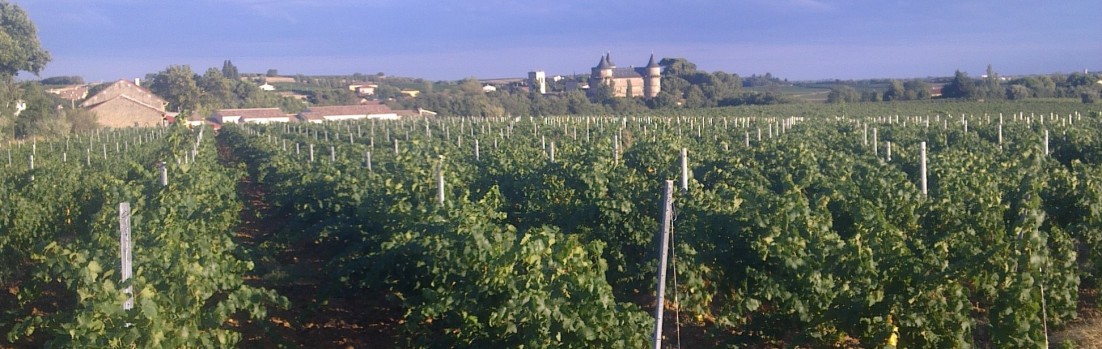
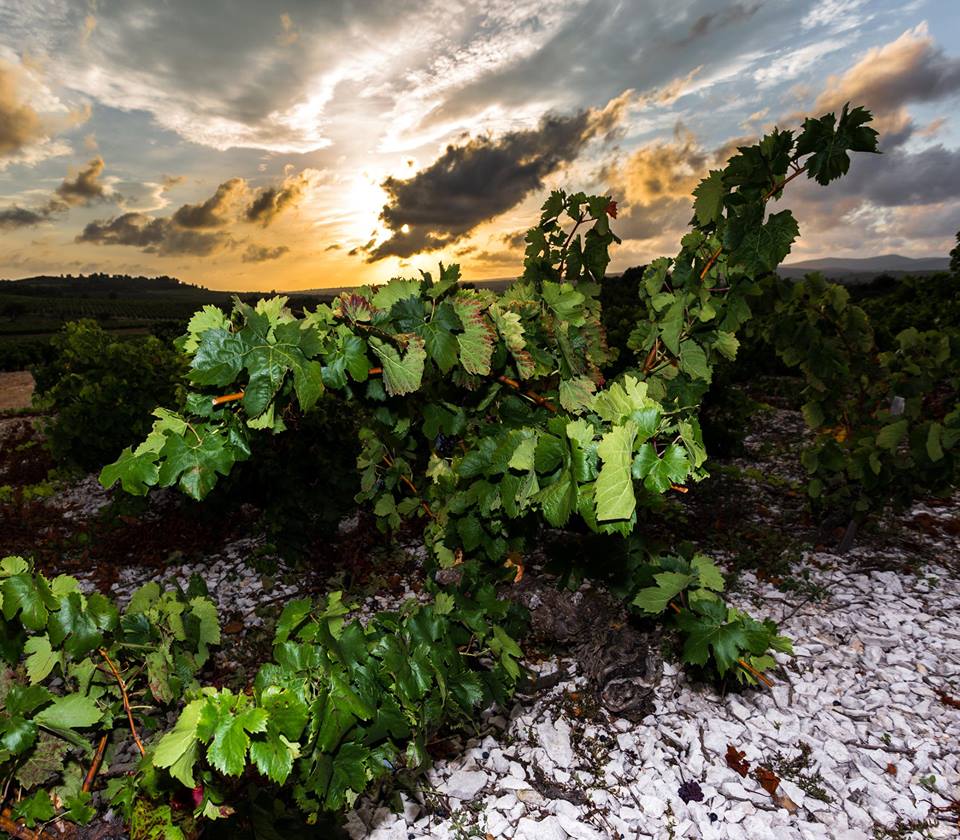
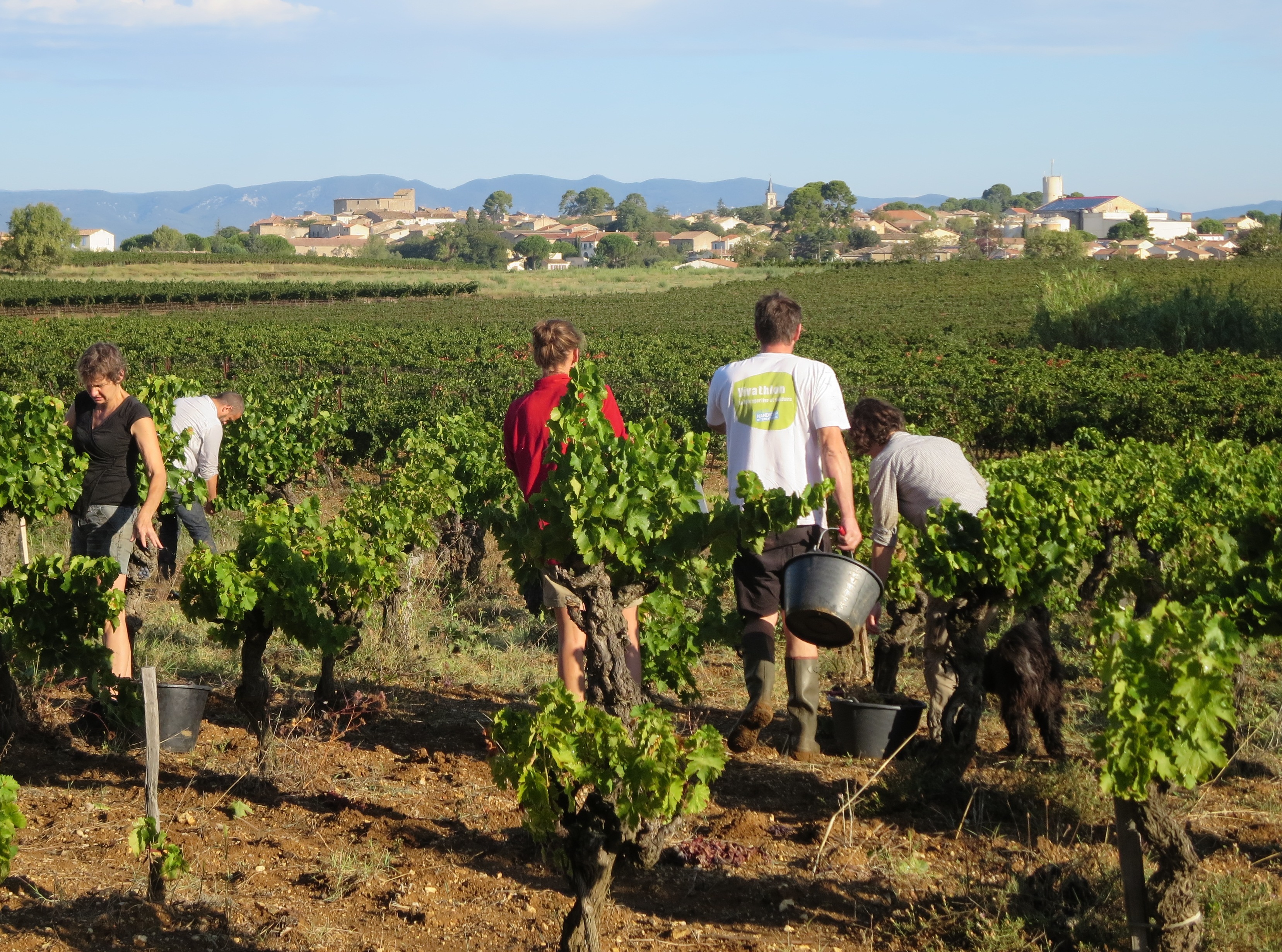
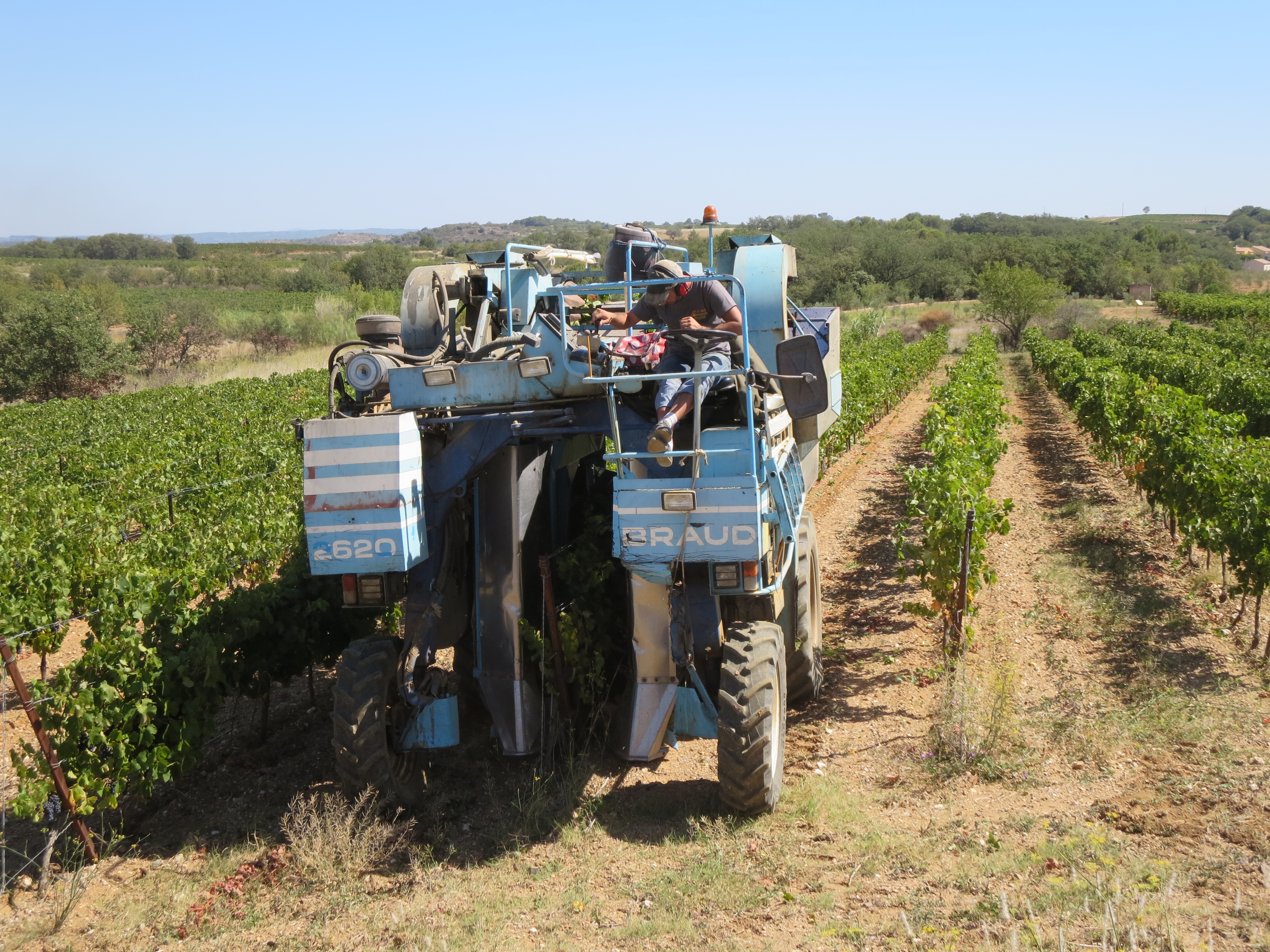
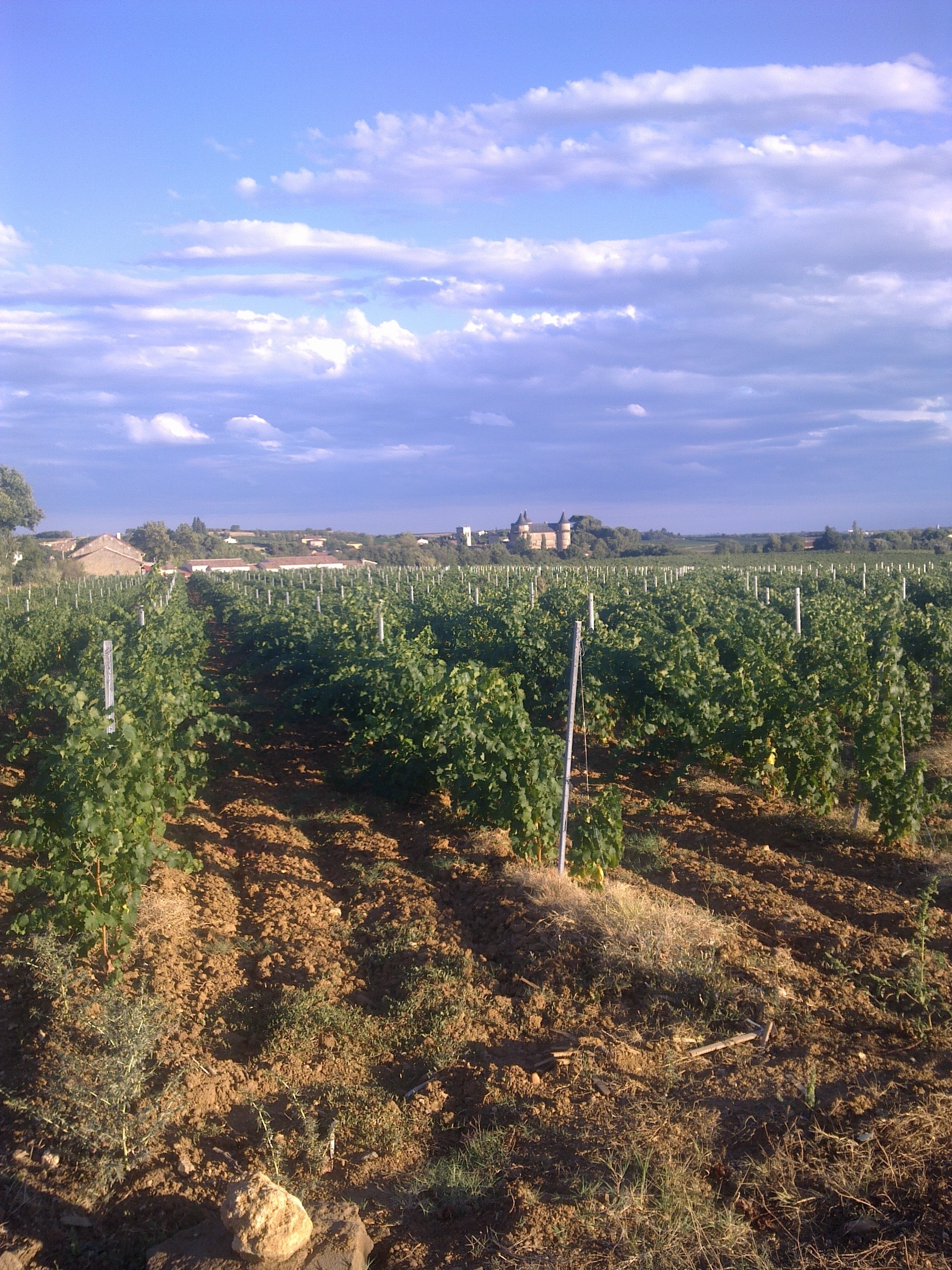
Gaylord Burguiere posts some wonderful photographs on Facebook. He works in the St Chinian area of the Languedoc and his photographs have long been a highlight of the internet for me. This one is called, “Le soleil est de retour pour plus de sérénité pendant les vendanges.” (The sunshine has returned to bring more calm during the harvest) a reflection of the recent storms I described in my last post.
To find more of his photographs go to Gaylord’s timeline on Facebook.
It has been a stormy week in the Languedoc and the weather has certainly disrupted the plans of vignerons in the region. Tragically five people were killed in a flood in Lamalou Les Bains and that event puts winemaking into perspective. However, the fortunes of wine growers and makers have also been hit by such extreme weather. Driving past Pézenas up the A75 on Thursday swathes of vineyards were under water on the low lying plains. The humidity also means that where grapes are left to pick there is a real risk of disease and even rot. I was talking to the excellent winemaker Emmanuel Pageot this morning as we visited Gabian for the jour patrimoine and he was explaining how complicated such problems have made the harvest. I was invited to join Emmanuel for a tasting soon and I will definitely report here on his latest wines. They are amongst my favourite wines of the region but I shall try to be objective.
In Margon Wednesday saw thunder and lightning and sheets of rain non stop through the day. Yet, in Puimisson, where Jeff lives and has his vineyards there was only a small rainfall, a reflection of the dry year there which has caused the smaller harvest. Normally Jeff would harvest 200-250 hectolitres from his 4 hectares of Syrah grapes, this year that production is down to 145 hectolitres. This means less wine, of course, and also a lot more thinking on his feet as smaller quantities mean that he has to decide which of his wines he uses the grapes for. Therefore it seems unlikely that there will a cuvée of 7, Rue De la Pompe this year as the grapes are needed for other cuvées. The quality of grapes is high though, for example the Syrah which is going into the Paf cuvée is concentrated and finer, partly due to a miserly production of only 25 hl per hectare.
(l-r) Vin Des Amis, 7 Rue De La Pompe, Paf
Other grapes have been small in size and so because there is a lot of skin and pips compared to juice the wine needs to be blended with other fuller grapes. Jeff is also thinking of introducing new cuvées to use what he has. Cinsault, for example, has done well this year so offers new possibilities and there is also the possibility of producing a cuvée which Jeff’s father used to make. I will write more about that as the year develops and decisions are finalised.
As picking was on hold at some points due to the weather Tuesday lunch was more leisurely and Jeff had more time to relax and talk. He recounted a French fairy story The Chaud Doudou. Basically it is about sharing and how everyone feels better for having done so.
Jeff went on to share an Occitan proverb which translated means “What you give flourishes, what you keep to yourself perishes” and I think this sums up Jeff Coutelou’s wines, he shares his skills and his passion for the land and for nature. The title of this post are the words he uses to describe his winemaking philosophy; grapes, work and love. To produce such high quality wines he needs the best grapes, he works tirelessly and he instills endless love into the wines he produces. If you think that sounds far fetched then try some, he is telling the truth.
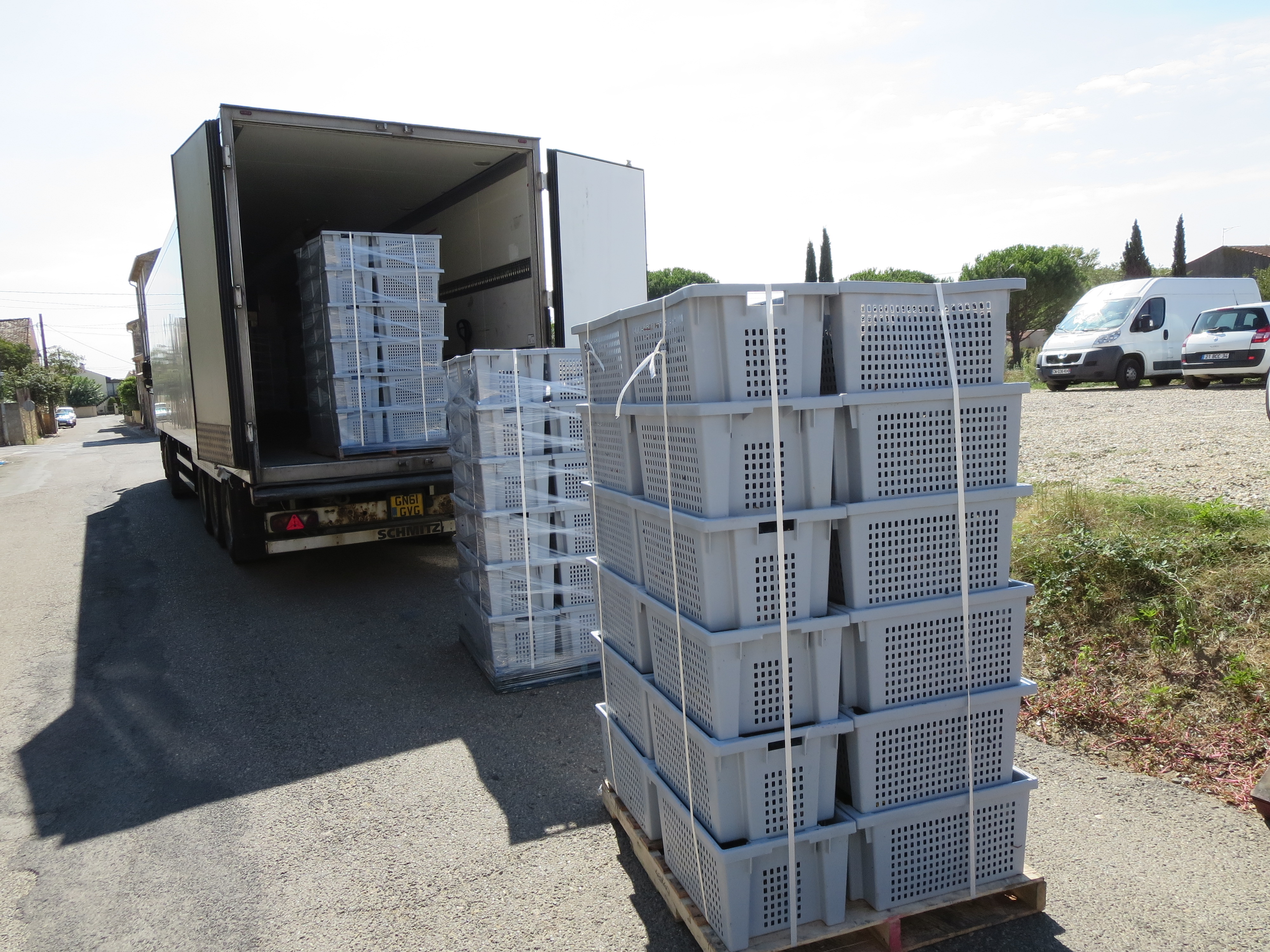
The grapes are loaded into a lorry fitted with equipment to keep them chilled at 8C for the journey to London
Mas Coutelou sells its wines in the UK through Roberson Wines in London, web address at the bottom of this post. Robersons have introduced a new initiative in the last couple of years called London Cru involving them buying grapes from producers, including Jeff, and transporting them back to London to be made into wine. Gavin Monery is making the wines, the first of which have been released this week. Gavin said this on Jamie Goode’s Wine Anorak blog, “We work the Cab Sauv because the vigneron is Jeff Coutelou, one of the most talented growers I’ve met.”
Preparing the grapes chez Coutelou ready for transport
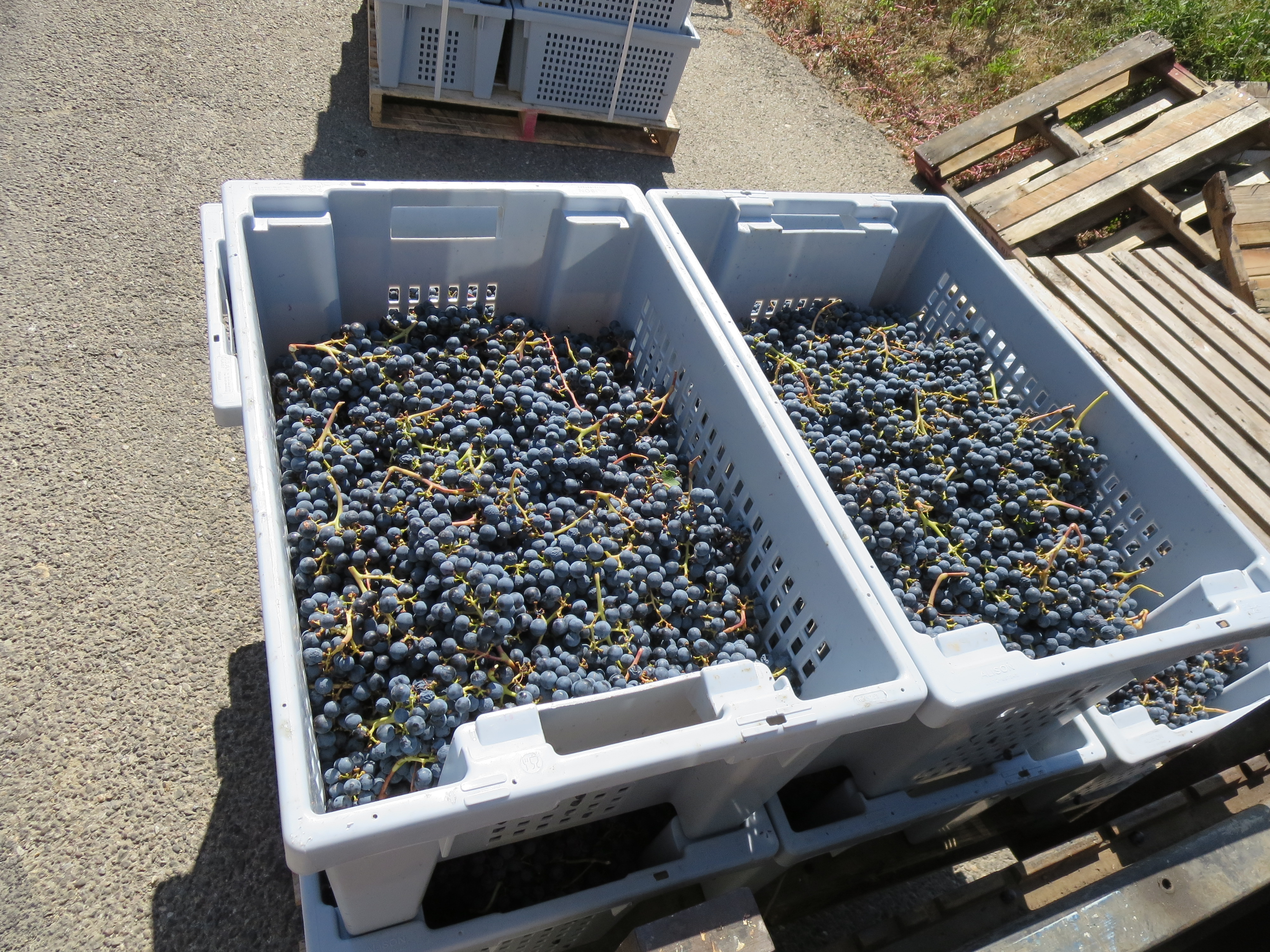
Jeff provides some Cabernet Sauvignon grapes. The review by Jamie Goode quoted below explains their provenance. The first London Cru vintage coincides with one of the Languedoc Roussillon’s very best so the quality of grapes which went to London was very high. This year’s are of equally good quality though in smaller quantity due to the long drought in the area in 2014.
The 2014 Cabernet Sauvignon grapes, freshly picked
Jamie’s review of the London Crus are available here but this is the review of the Cabernet Sauvignon. Jamie’s is one of the internet’s most respected wine blogs and winner of the best overall wine blog at The Wine Blog Awards.
SW6 Cabernet Sauvignon 2013 Jeff Coutelou supplies this, and he was previously giving these excellent grapes to the coop because he just wanted to make wine from local varieties. Lovely pure, sweet blackcurrant fruit nose with some blackcurrant leaf. So classic and expressive. The palate is beautifully balanced with nice structure and classic Cabernet characters. A lovely wine with real potential. 91/100
Louis Pasteur is one of my historical heroes. As well as showing the links between germs and disease (by investigating alcohol) he discovered how vaccines work (partly by working to prevent the vine disease phylloxera). The quote above is also very topical after working in Jeff’s cellar. Let me explain.
The Mas Coutelou team (left to right) – Annie, Michael, Carole, Jeff and Tina (sadly Michel was not in this photo)
The year has been a trying one for Jeff. The very dry weather through spring and summer has caused a major drop in production, Jeff reckons most parcels are 30-50% down on quantity even if the quality is very good. That is a big burden to bear and must be a financial blow.
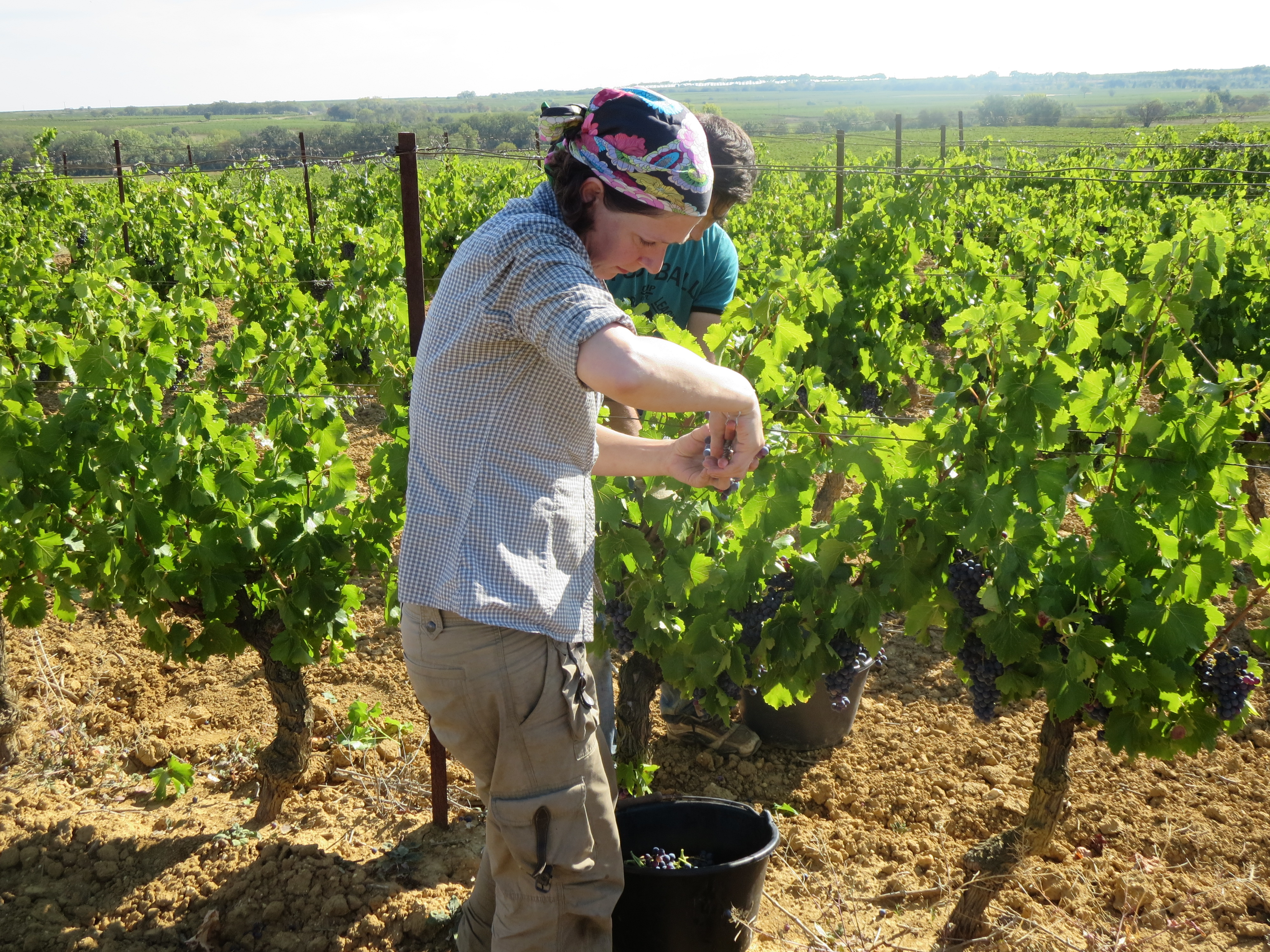
The team which Jeff assembled for the harvest were cheerful, helpful and hard working. Carole has been working periodically with Jeff for 8 years and her experience allied to his leadership meant that work was done according to his wishes but with plenty of smiles and respect. Michel who works for Jeff was also a steady and reassuring presence. Harvest took place this week in hot, sunny weather. The team in the vineyard picked mainly under the stewardship of Carole and the grapes were ferried back to the cellar within half an hour or so of being picked.
Cabernet Sauvignon grapes, freshly picked
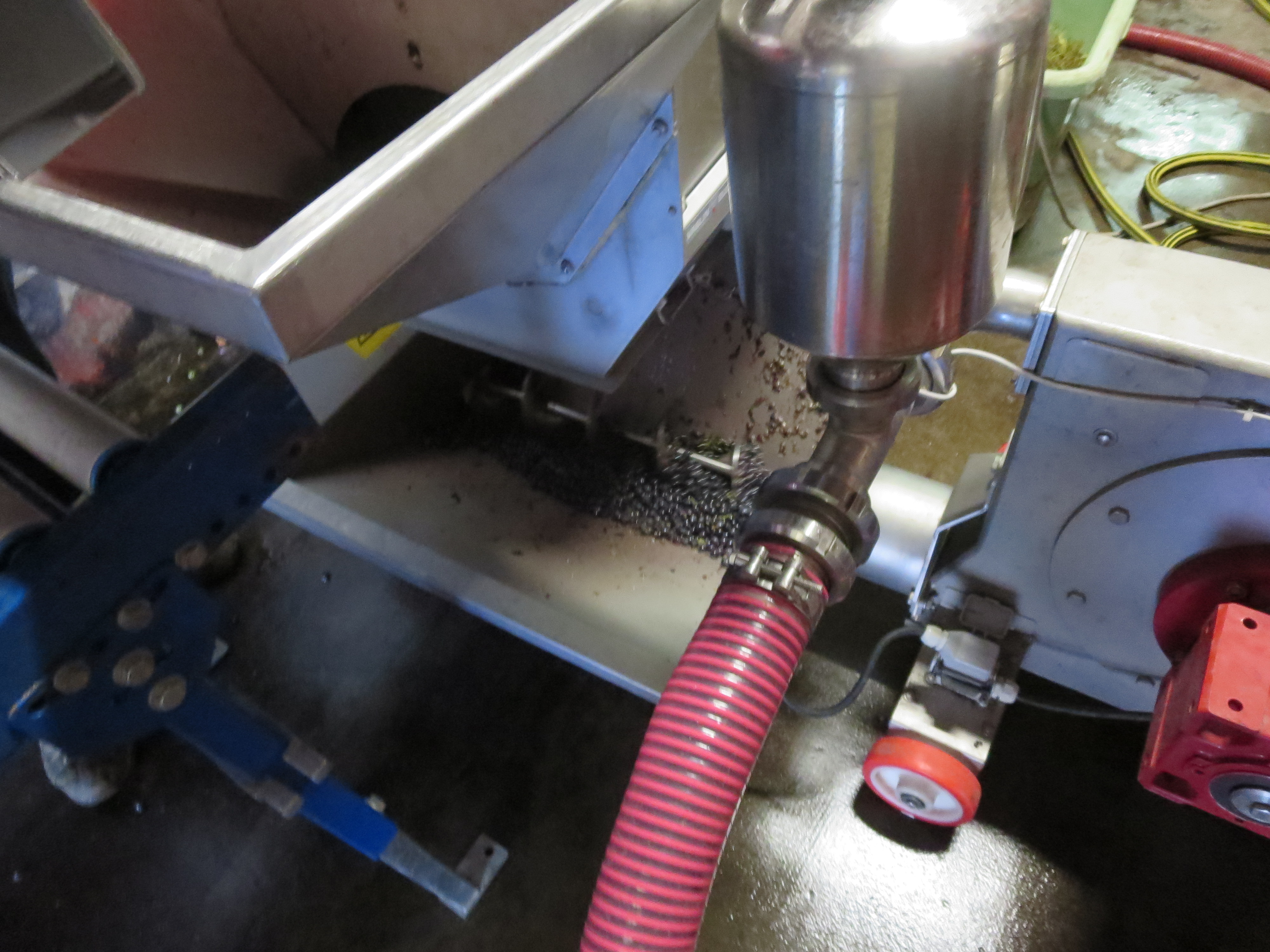
The ‘caisses’ of grapes are then placed on the sorting line. I worked on triage on Wednesday. The grapes are taken out of the caisse and inspected for any signs of disease, under ripeness or foreign bodies such as leaves or snails. Ripe grapes are placed in the égrappeur which destems the grapes.
The destemmer at work
The grapes are then pumped into tank ready to await pressing and to allow the first stages of fermentation. The bunches which were taken out are then checked, and healthy grapes added to the tank. This is slow and careful work, after all Jeff wants only the best quality grapes to go into his wines. The grapes are given as light a pressing as possible.
Healthy, ripe Grenache grapes being pumped to tank
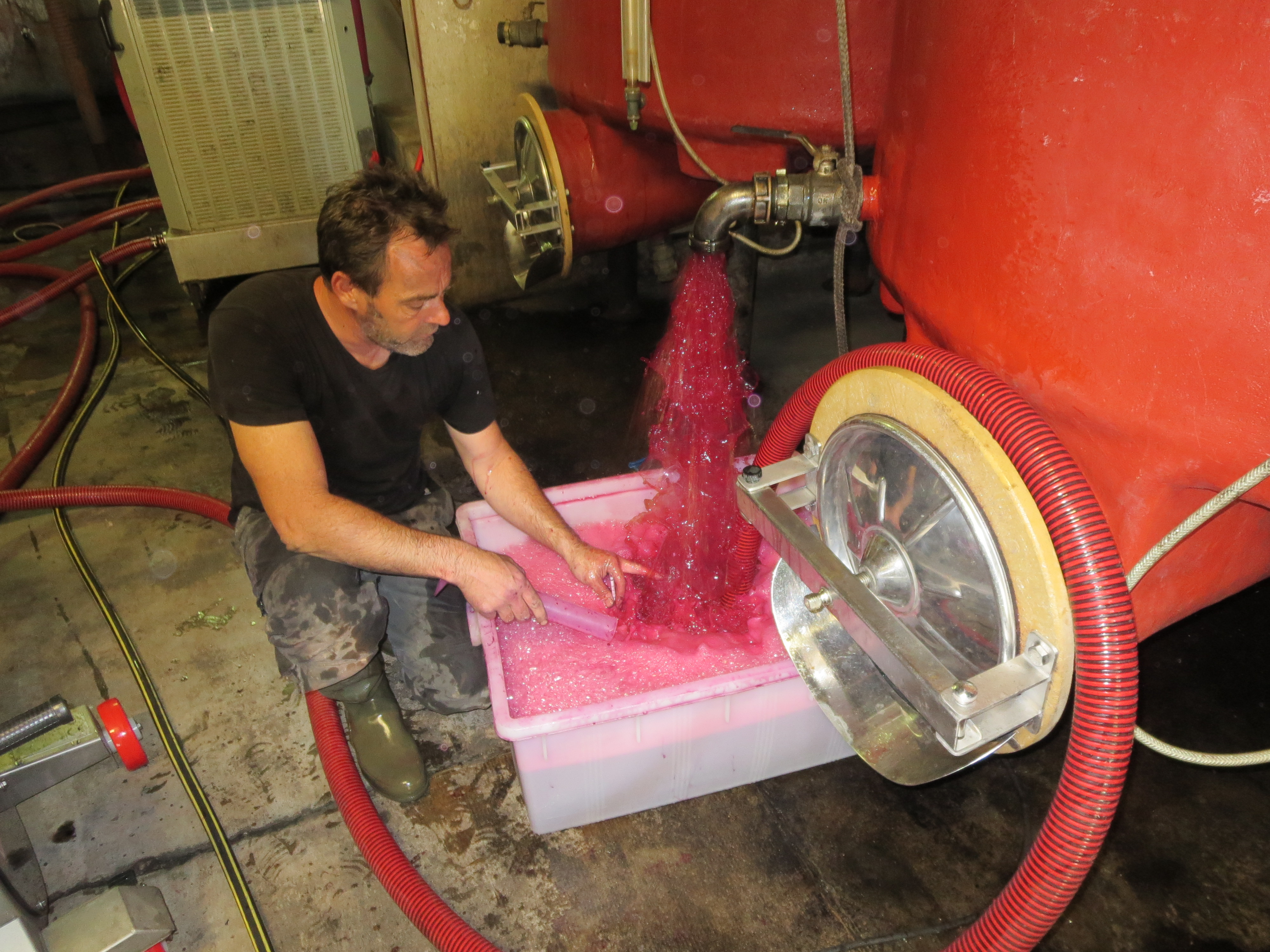
Jeff uses a range of containers for the wines, cement, stainless steel and wood. He is seeking neutral influence in the main as he wants the grapes to tell their own story rather than, for example, new wood. After the grapes have settled and begun to ferment they are pumped into another tank and some of the skins, pips etc are removed as they pass through very broad sieve like stainless steel. Jeff checks the wines at every stage to measure the stage which they are at, alcohol levels, sugar levels etc
Jeff testing the first stages
After that initial pumping the wine is allowed to settle and the solids which are left in the wine begin to rise to the top of the tank as they are lighter than the grape juice. This produces a thick layer or ‘cap’ (chapeau in French). The skins in the cap though contain flavouring and colour for the wine and so it needs to be mixed with the juice. The cap has to be physically pushed down into the juice.
Error
This video doesn’t exist
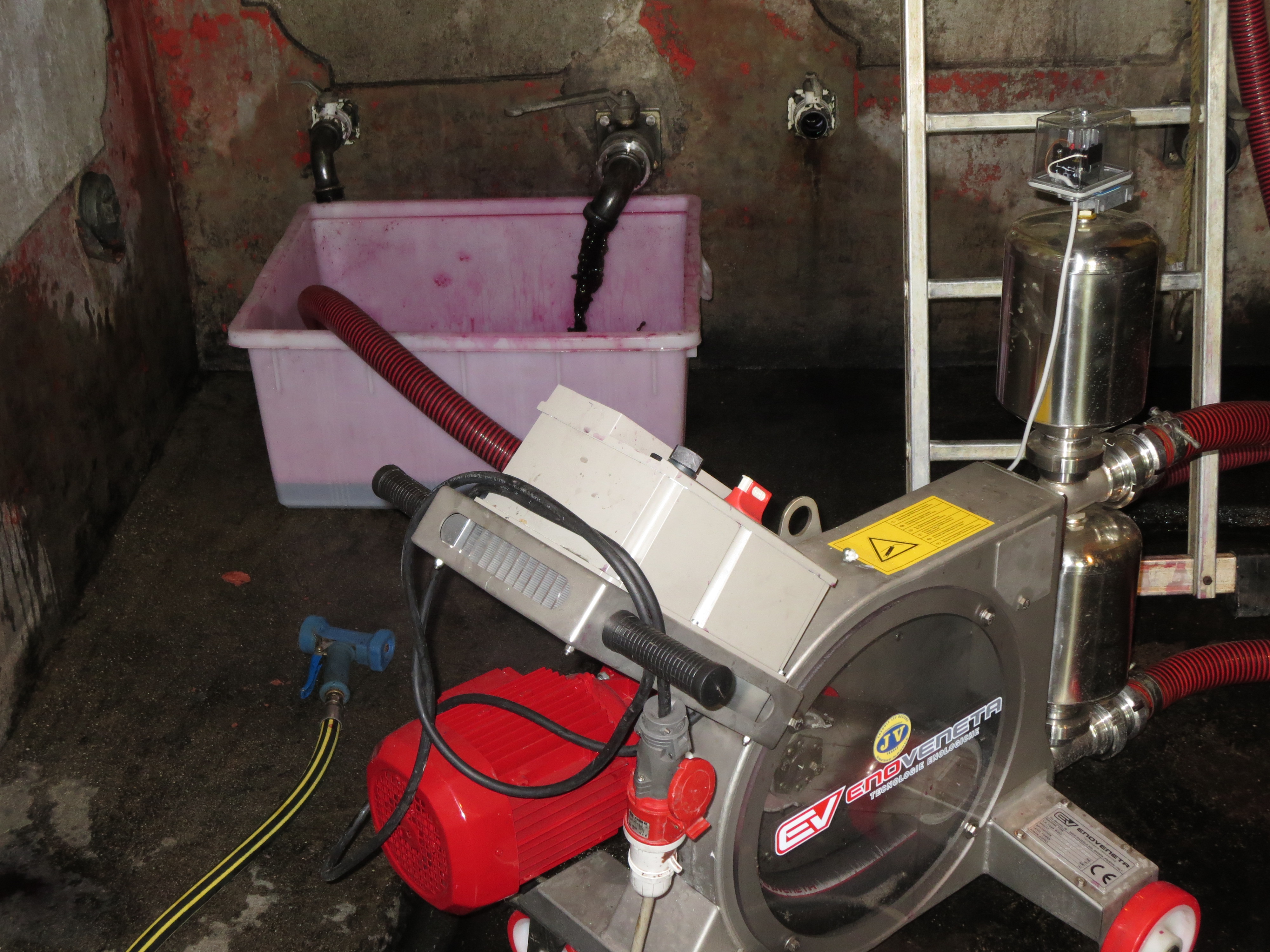
The wines are also ‘pumped over’ (remontage) every day. This means the red wine in the bottom of the tank is pumped over the top of the cap to moisten it and to extract the required amount of colour, flavour etc. This requires the working of an expensive but vital pump to caress the wine rather than force it. This pump works non stop all day (there are back ups!).
The (very) expensive pump
As the harvest progresses more tanks are filled so more and more pumping over takes place. The cellar begins to resemble a plate of spaghetti as hoses run from one tank to another. Yet another machine also chills the wine slightly or heats it up if fermentation needs to be encouraged. This machine is in the top right of the photo underneath.
How does Jeff keep all these sorted in his head?
All the while Jeff tastes the juice which is gently turning into wine and testing its progress using equipment such as a refractometer and other scientific equipment. A real mix of personal judgement and science mixing to best advantage.
This continues until Jeff is happy that the wine is right. Several weeks of pumping, testing, tasting – an enormous task. There are so many pieces of information for him to keep in his head about the development of each cuve, an amazing effort which leaves him with a definite air of fatigue during the very enjoyable lunches and the post work drink.
So what of the Pasteur quotation? Well as I was working (oh yes I was) two things really struck me apart from the sheer physicality of lugging cases of grapes, hoses, pumps and various items of equipment.
Firstly, patience. Jeff waits patiently for the grapes to be just right before picking, he wants the best and is prepared to give nature the time it requires to deliver its best. In the cellar he nurtures each cuve and each drop of wine, each stage of the process takes place when the wine dictates to him. The temptation to rush or to do things because it suits the winemaker is resisted with determination and confidence. He knows because he produces great wines that if he waits he will produce more great wine.
Secondly, cleanliness.
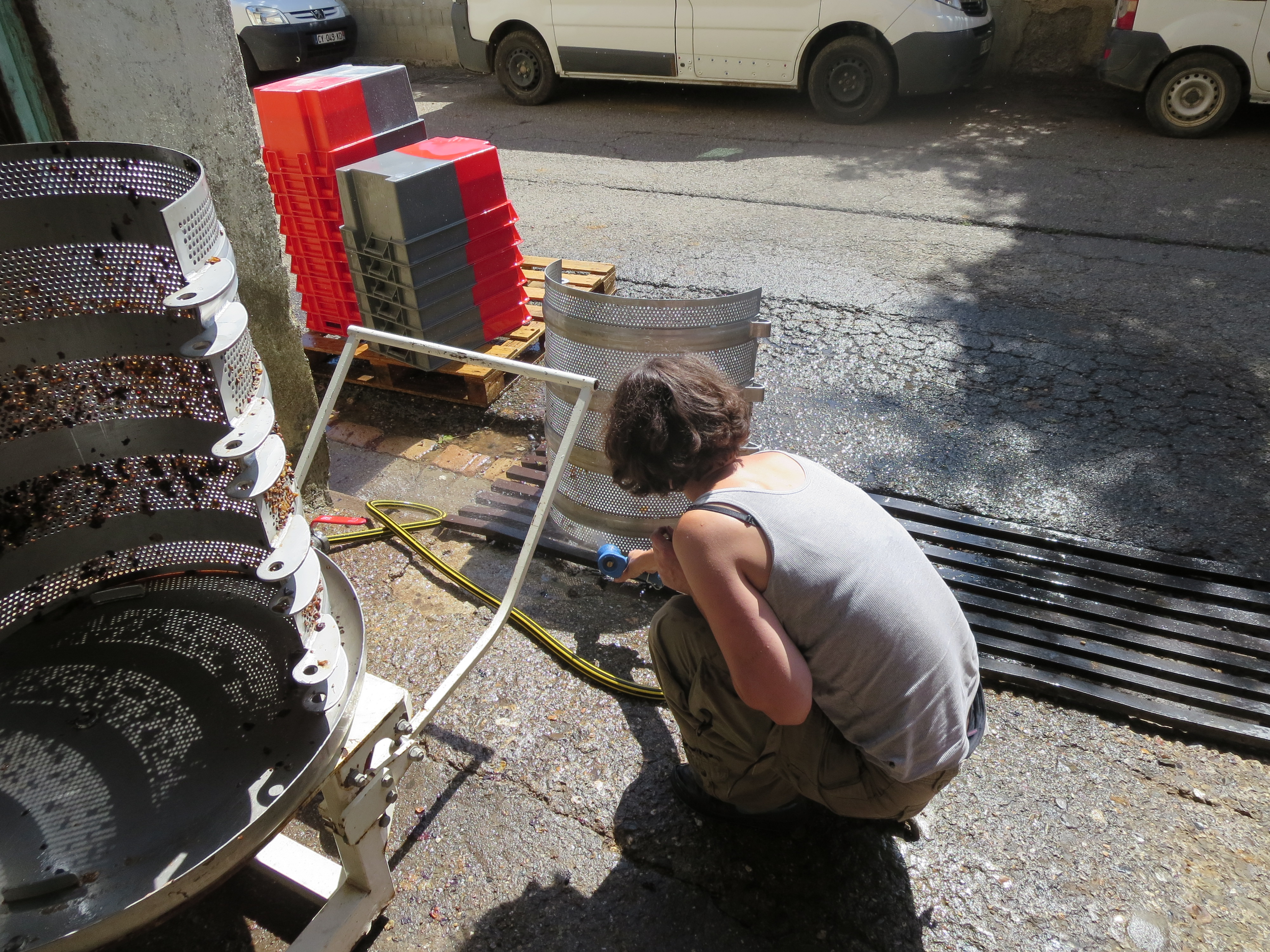
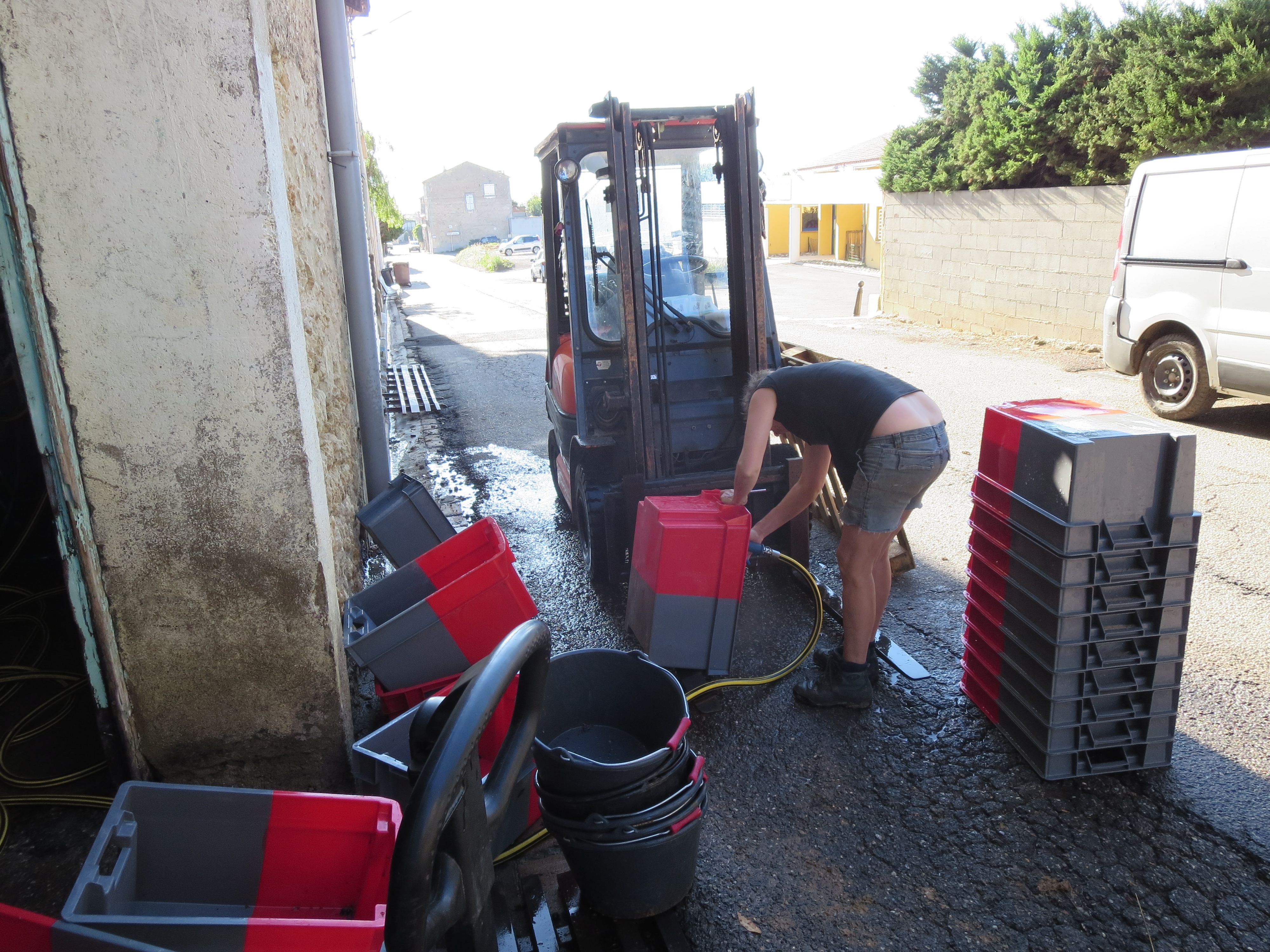
Jeff makes natural wines and for the last couple of years without the use of sulphur to stabilise the wine and help it to fight dangers such as oxidation. To do so everything has to be clean. At every step equipment is washed down and cleaned. Again and again and again. This is drilled into all of us. The risk of harmful bacteria is reduced by hyper vigilance and cleanliness. Jeff told me that for each litre of wine produced he estimates that he uses a litre of water for washing and cleaning. I can believe it and in fact it must be much more. Now before I upset other winemakers who clean rigorously and take every care with hygiene I am not claiming that Jeff is unique in this. I was just amazed at how much washing and cleaning takes place. Hence my Pasteur quotation.
Cleaning
More cleaning
And, yes, more cleaning
My other job this week was pressing some grapes for some very special wines. More of that in the next post.
Vendange is in full swing across the region. If, like me, you thought winemaking is a glamorous and romantic calling then believe me it is also very, very hard work. I have spent two and a half days working in the cellars with my friend Jeff Coutelou (Mas Coutelou). They were great days, fascinating and enjoyable and, however hard the work, it was good to look at my surroundings and the blue skies and think that this is why I wanted to come to France and how different to being in a classroom or a meeting.
I intend to go through the winemaking process that I witnessed and I shall keep it simple as I am a novice, don’t understand the full science and most people looking at this would not want all the technical details I suspect. Please let me know if I am wrong.
Fair to say it has been a beautiful week here in Margon and the area around. These are a few scenes from our trips around to favourite towns and villages
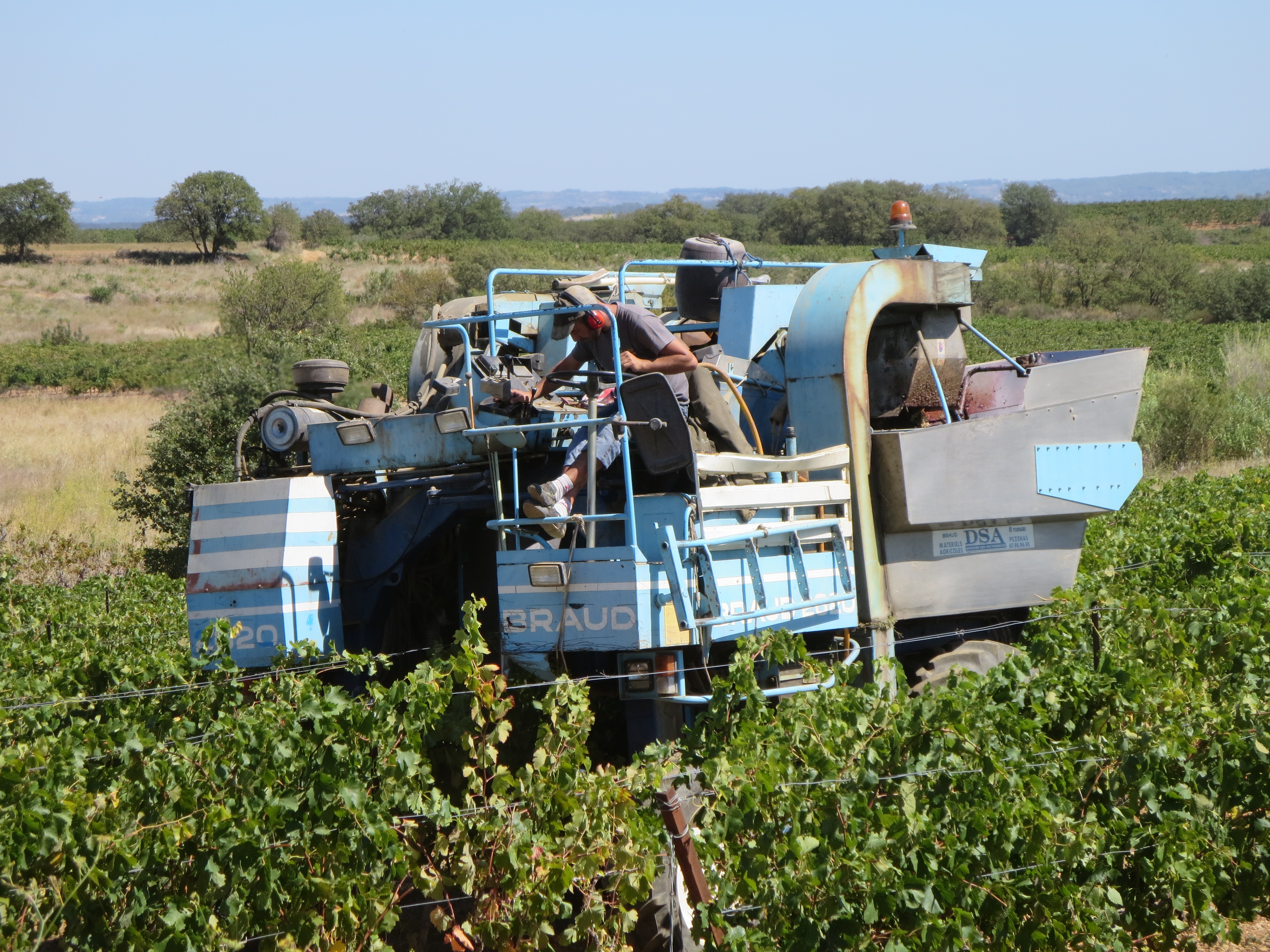
Yesterday, a rumbling noise grabbed my attention from a neighbouring field and looking into the distance I saw a harvesting machine working away. I walked up to get a closer look and had a chat with some of the men who were there whilst the machine continued its rumbling. I passed the initiation test by correctly identifying the grapes being harvested as Syrah (the trellis was the key clue) and they told me about the machine and how its harvest would go the local co-operative. The machine is huge yet turns in a tight circle at the end of a row, it shakes the vines as it passes over them and sucks up the grapes before being loaded into trailers to be taken away.
Now my instinct tells me that machines are not the right thing because of shaking vines and gobbling up rotten or under ripe grapes along with the good ones. Yet these vignerons were dedicated and want to create good wines and for some this is the only financially viable approach to harvesting. It is certainly not the romantic wine harvest that I imagine but it is effective.
Next week I shall find out for myself as I am going to be joining my friend Jeff Coutelou for a bit of picking by hand. Am I ready for this??
So 956 miles and two and a half days of travel and we arrived in Margon. The journey south was smooth, Eurotunnel efficient and fast, traffic fairly light and even the dreaded périphique was ‘fluide’. As you can see the car was heavy loaded, basically all the space from the front seats to the back window was occupied with something. Two good hotels eased the journey and what a treat on Monday driving down the A75 after an overnight stay in the Auvergne next to Eiffel’s spectacular viaduct at Garabit. Beautiful clear weather meant breathtaking views of the Massif Central and the beautiful Millau Bridge. The fact that this coincided with my first official day of retirement and that I was not sitting in the school hall was the icing on the cake.
And so we are settling in, unpacking continues and 30C sunshine means that life is pretty good. No wines as yet, harvesting has begun though there are lots of red grapes still hanging on vines. This will be the next stage of my journey, finding out more about the harvest and first steps in turning grape juice into wine.
As you may have noticed from the first post the areas we stayed in around France were wine regions. Not a coincidence.
I became interested in wine when I visited Germany as a young teacher who was asked to accompany a trip to the Rhine valley. A very generous hotel keeper in Bacharach insisted on sharing bottles and the different types of wine produced. This was news to me as I knew nothing about wine and assumed it was either white and light or red and sturdy.
From there to the Australian invasion of Wyndhams and Penfolds and then on to France. I still love the wines of Alsace, Burgundy and Beaujolais as well as the white wines of the Loire. Some terrific holidays and tastings spring readily to mind. Sadly the price of Burgundy and Bordeaux has long since outstripped the bank balance of a teacher.
However, good fortune struck. Alongside a growing liking for heat and the Languedoc was the rise of new, exciting winemakers in the region. Inspired by the writing of Rosemary George, Paul Strang and the admirable Andrew Jefford I began to explore their wines and I am hooked by their quality and sheer drinkability. Winemakers such as Jeff Coutelou, Turner Pageot, Mas Gabriel, Domaines Treloar and Cébene, amongst many others, have set standards for me which help me to judge the wines of Languedoc-Roussillon.
Happily I now have the opportunity to explore more deeply and to spend more time with some of these winemakers, find out about their work and produce and seek out more top notch wines. This blog will, hopefully, narrate this adventure and share my discoveries. It may not be original but it will be the honest words of a wine amateur seeking to deepen his understanding of that passion.
I have wanted to live in France for as long as I can remember. From ‘learning’ the language in the second year of primary school (aged 8) all things French have intrigued, inspired and irritated me ever since. In the last 20 years or so my wife Pat and I have spent most summer holidays in various regions of France and during that time we have grown to love it. First tentative steps into northern and central France meant that we imagined life in Burgundy or particularly Beaujolais. Then we began to creep further south and seek the warmth of summer sunshine, the Rhone Valley, Provence, Bordeaux. Finally, we arrived in the Languedoc (or more precisely, Languedoc Roussillon). A brief stay near Castelnau de Guers, a further fortnight in Pinet and then to the village of Margon (see photo). In unprecedented fashion we went back to Margon and stayed a whole month, and further holidays there followed. As our friend Tony says we have developed Margonitis and now it will hold us for most of the next year. An ambition fulfilled