amarchinthevines

Learning about wine, vines and vignerons whilst living in the Languedoc


Leave a comment

Rare grapes and Vin De France

Version francaise

thumbnail

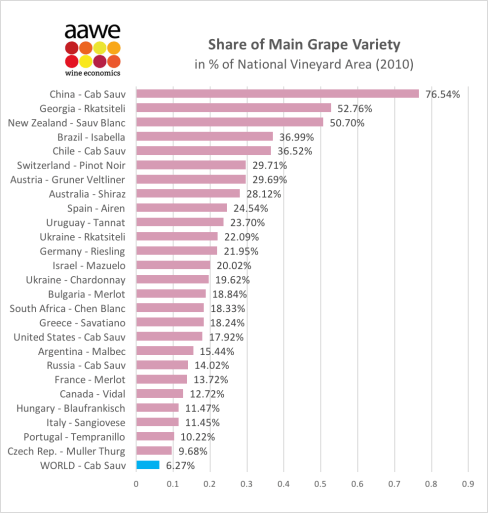
This chart was published two weeks ago even though the information refers to 2010. I found it fascinating (I am a sad case I understand). Some of the information would be expected, New Zealand with its Sauvignon Blanc for example, Australia with its Shiraz. I was rather surprised to see Merlot as 13.7% of the French vineyard area however. Admittedly this is partly because it is one of my least favourite grape varieties, though, as always, fine examples are available from good vignerons.

Merlot, like Cabernet Sauvignon, Chardonnay and Viognier, were in vogue in the 80s and 90s when I became interested in wine. Languedoc producers reacted to this popularity by planting these cépages, it was commercial sense. One of those producers was Jean-Claude Coutelou and Mas Coutelou still has his Cabernet and Merlot parcels.

However, one of the more recent trends in the region has been the revival of older and rare grape varieties. At Mas Coutelou Jeff has planted grapes such as Riveyrenc Noir, Riveyrenc Gris, Morastel, Piquepoul Noir and Terret Noir in Peilhan (see photos below).

Earlier this year Jeff received a visit from Domaine De Vassal, guardian of the national treasury of grape vines. They record and keep examples all grape varieties as I described after a visit to Vassal. On this occasion they were intrigued by two vines in particular; firstly Clairette Musquée, planted in Peilhan and, secondly, the unknown variety in Segrairals. These are just part of the programme of replanting and grafting which has taken place at Mas Coutelou. The photos below show grafting of other cépages in Flower Power such as Aramon Noir and one unknown variety.

After months of research the experts at Vassal have concluded that Clairette Musquée has its origins in Hungary where it was known as Org Tokosi. It was planted in the Maghreb and after Algerian independence it was probably brought to France by those who repatriated to France.

The unnown variety turns out to be an Italian cépage, quite rare, called Delizia Di Vaprio. This is, according to my copy of Pierre Galet’s “Dictionnaire Encyclopédique des Cépages”, a grape authorised in Italy and Portugal. Under the rules of France’s AOC system it would not be allowed. Jeff, however, chooses to issue his wines under the Vin De France label which means he is free to choose his own methods and grape varieties. Whereas a Languedoc AOC wine must include grapes such as Syrah and Grenache Jeff can choose what to put in his wines including wines from just one grape variety. It also means he can plant these rare grapes and make wines from them which he truly loves and wants to make.

whites

Interestingly one AOC, Burgundy, is starting to show signs of concern that Vin De France is becoming more popular. They have started a campaign criticising Vin de France. To my mind they should be looking to their own failings and regulations. For example, as climate change bites harder vignerons will have to adapt, investigating different grape varieties will be part of that.

So, yes Merlot has its place (and thrives in the Colombié vineyard in Puimisson) but is it not exciting to see rare, old, traditional grapes being cherished and brought back to prominence? Let us appreciate the range and variety of grapes and the vignerons who bring out their best.

reds


Leave a comment

Every Picture Tells A Story (2) – Terroir

P1030219

Version francaise

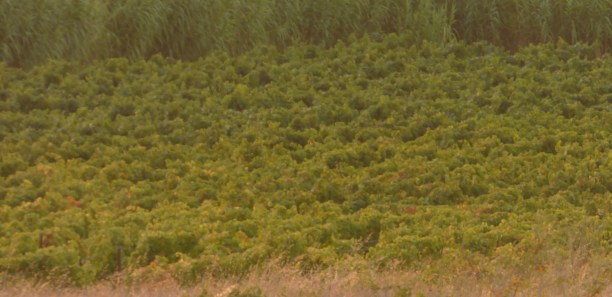
This is one corner of Segrairals vineyard, found in the North East corner of Puimisson. I took the photo on October 6th and it clearly shows a demarcation in this part of the vineyard. The far side of it still has green vines, further towards me the vines are changing colour as Autumn arrives. Why are the vines at different stages of development? Even a month before on September 7th there was a clear line.

P1020938

The reason is that a stream used to run down here many years ago. Its legacy is to have left richer soil behind in the corner where the cannes de Provence now stand. The vines planted on that richer soil find life easier than their peers. They remain greener, feed their grapes more easily. All good?

Well, no. The grapes can be too well fed, ripen earlier than their neighbours, become too sweetened. They will also begin to deteriorate earlier if not picked. So, in one small corner of one vineyard we see how the terroir makes a difference to the vines. We see how a vigneron must know his / her vines to ensure that the highest quality is maintained. The vigneron is part of the whole mystique of terroir and it is a subject to which I shall be turning soon.


1 Comment

…XYZ – Vendanges 17

P1030042

The last case of 2017, Julien looks happy!

In other words, the finish. Well, the finish of the picking. Tuesday September 12th was so much calmer than the previous day as the Cabernet Sauvignon from Segrairals arrived.

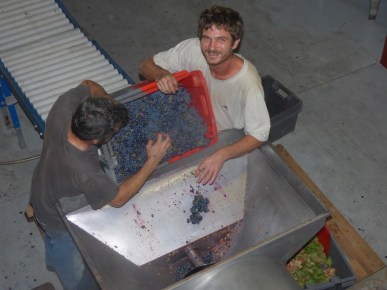
Thoughout the vendanges the grapes have been good, smaller than the norm because of the dryness, but in excellent health. The Cabernet was no exception. Sorting was all about snails and dry leaves rather than any problems with the grapes and the vat filled gradually, problem – free, as the day progressed. The stalks were brown showing the maturity of the bunches as the third érafloir of yesterday completed its job efficiently.


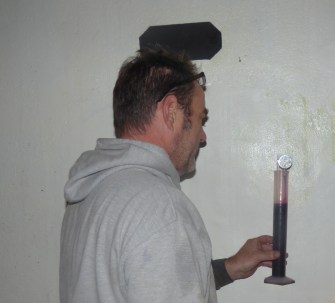
As we awaited the first cases Jeff and I went around some of the vats and took samples for analysis as well as tasting the wines. I wish that I could convey the bready aromas filling the cellar of the yeasts at work, they give such a sense of change, optimism, alchemy.

P1030021

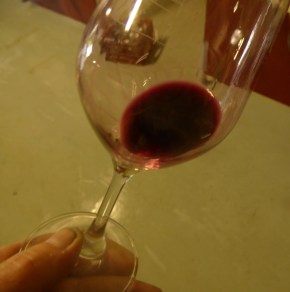
Amongst the wines we tasted were two from 2016, Syrah and Grenache, which have been sparked back into fermentation by the very presence of this year’s grapes in the cellar. The process is truly amazing. The glass in the photo below shows the top Syrah from La Garrigue harvested two weeks ago, which just may become La Vigne Haute. It is a stunner.

Vigne Haute

Quality across the board is undoubtedly high though Jeff is counting the cost of the quantity, his first estimates are that the overall yield will be around 39 hectolitres per hectare. Average years would give between 50 and 60 hl/ha.

P1030028

Joining us on the day was a  former student of Jeff and Vincent restaurateur Régis Lamazère and his wife and baby. Régis runs his autonymous restaurant in Berlin where Charles who was here for vendanges 2016 used to work.

After the grapes were in and the last cases sorted by Julien and Vincent it was time to start serious cleaning of all the equipment which will be put away for 2018. The picking may be over but the work never stops. A full programme of pressing, remontages etc is in place for the next week. Stay tuned.

P1030043

Selene and Matthie, remontage


4 Comments

Routine and variety – Vendanges 17

Ambroise, Selene and Vincent in the Syrah

A week into picking and the team is in a routine, working smoothly to steadily bring in the grapes. The quality remains high but there can now be no doubt that the ongoing dry spell has taken its toll. Quantities are down by up to 50%, bottles of the 2017 Mas Coutelou wines will be more difficult to seek out I’m afraid and, inevitably, more expensive.

P1020870

Flower Power

Thursday saw the Flower Power vineyard picked (Rec D’Oulette to give it the proper name) and just 7 cases of grapes were returned from the 0,4ha of vines. They are young still and will have found it hard to cope with the arid conditions.

Julien and Max in Rome

Rome, too, was picked and I went along as this is my favourite vineyard. Cinsault, Muscat and all three types of Grenache were harvested. From Peilhan came Grenache Gris and a few rows of the Maccabeu which will go into the PM rosé wine.

Muscat, Grenache Blanc and Cinsault (left from Rome), Grenache Gris and Maccabeu from Peilhan on the right

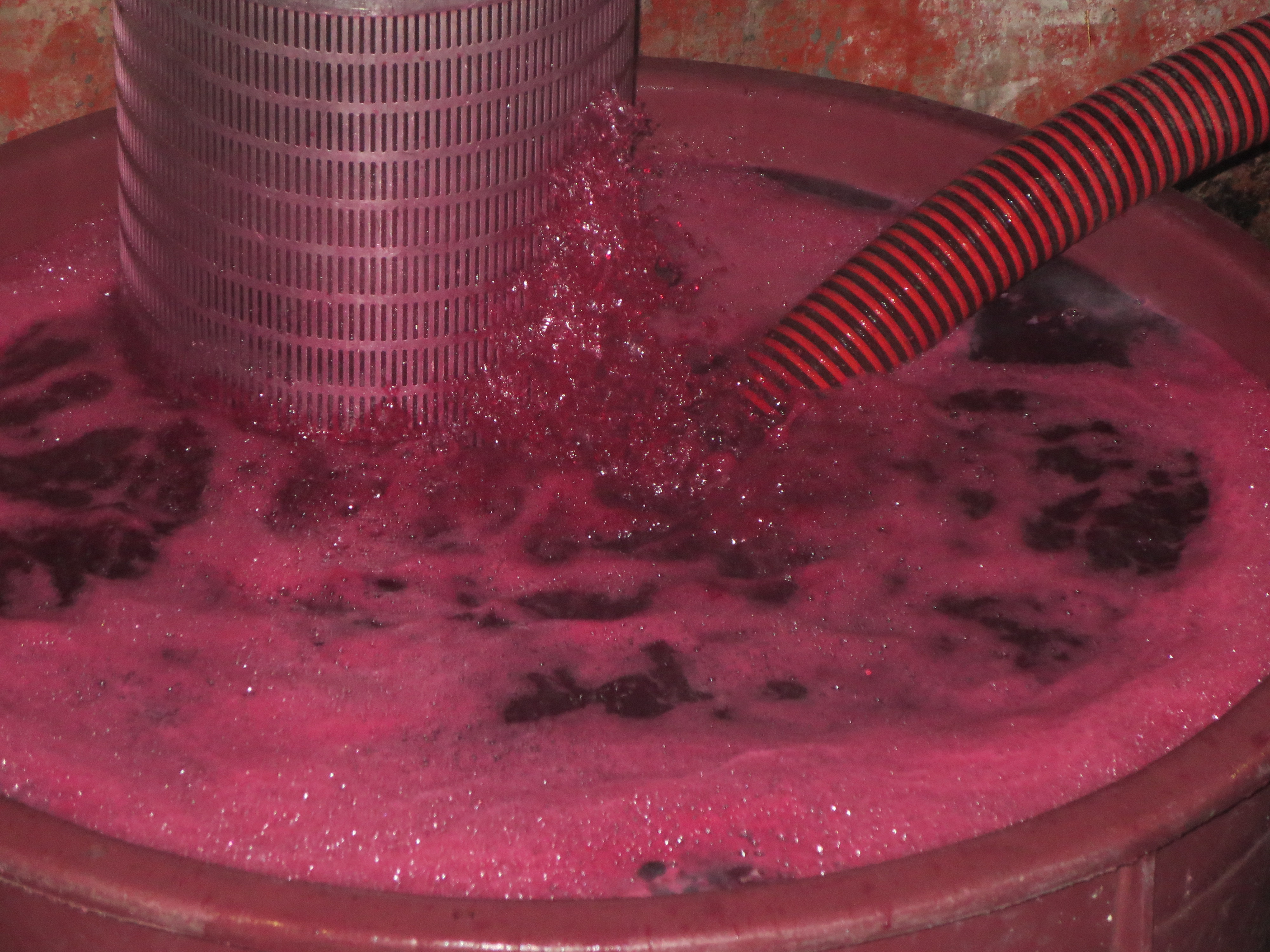
By now we are into the second stage of the vendanges. The grapes picked previously have been sitting on skins for varying lengths of time to extract colour and flavour but they will be separated when Jeff decides that further contact will not enhance the wine further. The juice is pumped to a new tank leaving the skins and pips behind to be used as marc for distilling.


This process of remontage is carried out increasingly as more tanks fill up. Tracking which wines are where is a skill in itself, each time the wine will be tasted and sent for analysis to ensure that acidity, sugars, potential alcohol are all correct and no nasty surprises await.

Jeff took me round a few of the vineyards to check on their progress for picking. We started with the Carignan, then on to the Mourvèdre and Cinsault of Segrairals. In all cases the pips and stalks showed us that more time was needed, they are still a little too green. Tasting the grapes showed plenty of sweet fruit but that greenness would not be good in the finished wine.

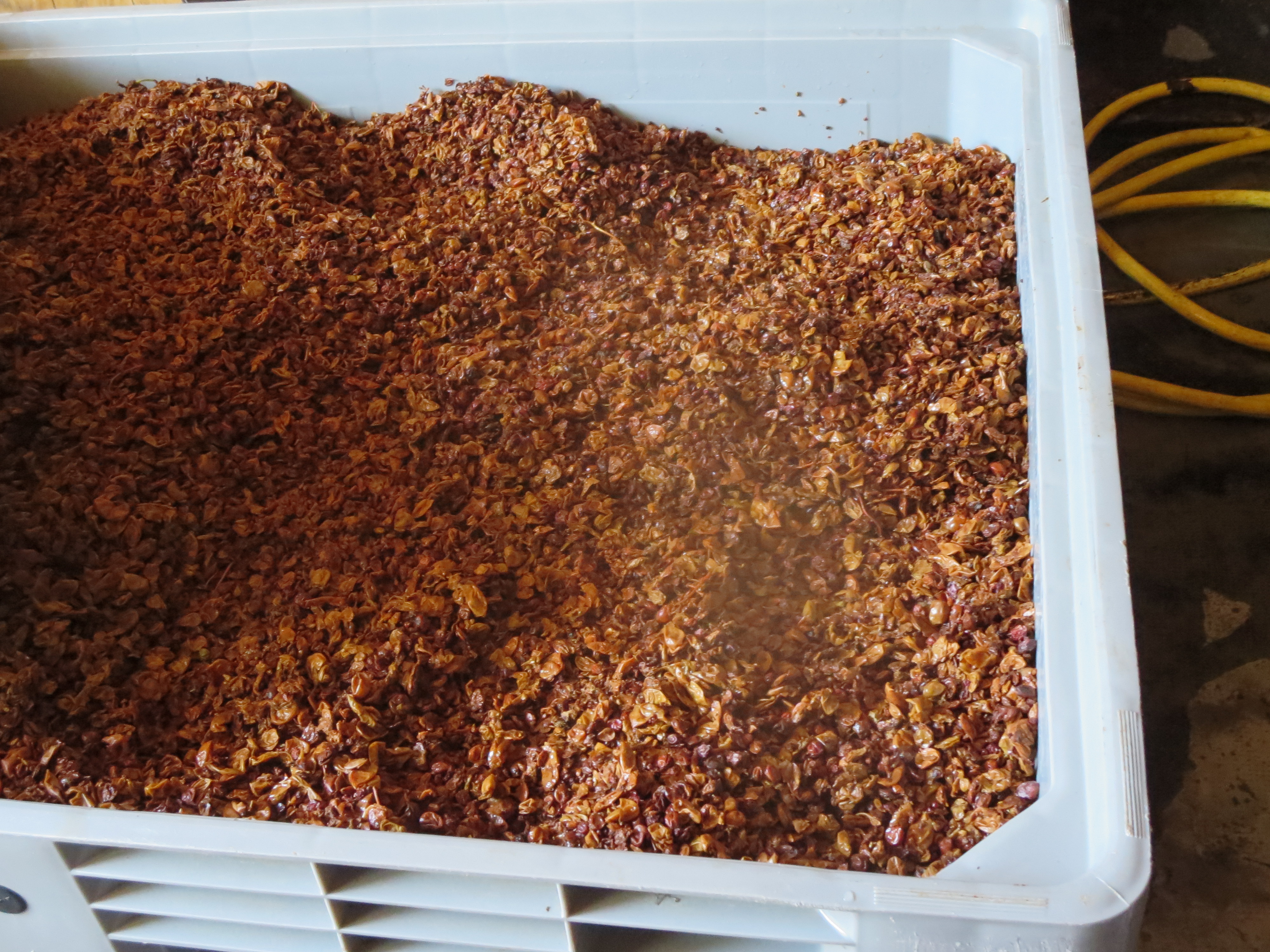
Cinsault after pressing

Cinsault after pressing, like modern art


Friday was based in the biggest parcel, Segrairals. Cinsault grapes first, to be pressed immediately so that a light pink juice emerges ready to be blended with the other rosé grapes. This happened on Saturday so that all the rosé grapes will ferment together to blend fully. Jeff explained to me that Cinsault is harder to press than most, the large berries contain a lot of pulp which breaks down less easily.

Syrah Segr

Syrah, Segrairals


Afterwards the remaining Syrah was tackled, again I went along to help with a bit of picking as well as doing the sorting with Jeff back in the cellar. The tri was not too difficult as good, firm bunches of healthy grapes came in case after case. Never mind the width feel the quality seems to be the motto, for Jeff’s sake greater quantity would be welcome.

More remontage, more testing in the cellar. It was good to see the white wines in good condition with fermentation already lively; bready, yeasty smells began to fill the cellar. More Syrah would be picked on Saturday morning but, readers, I admit that I took a break. The hard work, rich variety of grapes and early mornings meant that this time AMarch was not in the vines.

20170901_135759


3 Comments

Brief return to Mas Coutelou

P1020411

Version francaise

After my sojourn in Alsace it was great to return to the Languedoc. Sadly I was already aware that due to a bereavement I would have to leave within a couple of days to return to the UK. However, I was able to spend one of my two days there with Jeff and amongst those vines which I had missed so much.

It was a great time to be there, the vines were in full flower, many already past that stage showing the new grapes, firstly with their brown hoods and then just the green baby berry itself.

P1020424

The vines were looking very healthy, plentiful rain in the winter and a sharp frost in early spring had allowed the vines to rest, to gather their strength for the season ahead – a sharp contrast to 2016. Greenery aplenty, wild flowers blooming and, during my visit to Peilhan, I saw a young deer running through the vines and a pheasant. Clearly the Coutelou vines attract wildlife to its oasis amongst the surrounding desert of chemically treated soils.

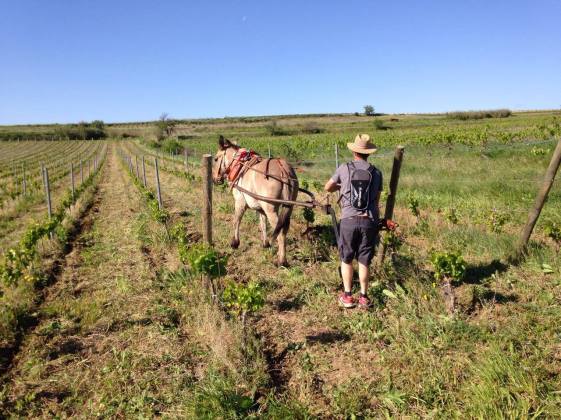
During the previous weeks the soils of Peilhan had been ploughed, by a horse. Gentler on the soils Jeff asked a local man to till.

Peilhan horse

He himself was giving the soil a light rotivation that afternoon, turning the plants and flowers amongst the vines into the soil, a natural composting. Icare, with an injured paw, and I watched on in the sunshine.


The only real problem this year has been the return of the snails. Last year they ravaged Font D’Oulette (the Flower Power vineyard) so that only a few cases of grapes could be picked. Fortunately, that vineyard has been spared this year but they are out in force in the largest vineyard, Segrairals. It was there that I also found Michel, Julien and Vincent working, tightening the wires of the palissage and removing side shoots etc from the vines.

In the afternoon we tasted through the 2016 vines and, they are so different even from February when I tasted them last. The whites are splendid, highlight a hugely successful long maceration Muscat. The reds such as the Carignan were very good and the top wine of the year will be the Mourvèdre, a silky, complex wine with huge depth of flavour – a treat for the short and long term. 2016 was a difficult year but Jeff has still produced some great wines.

So, I look forward to getting back to Puimisson as soon as possible, to follow the vintage further and see the latest progress. There is bottling to be done and plenty more besides.

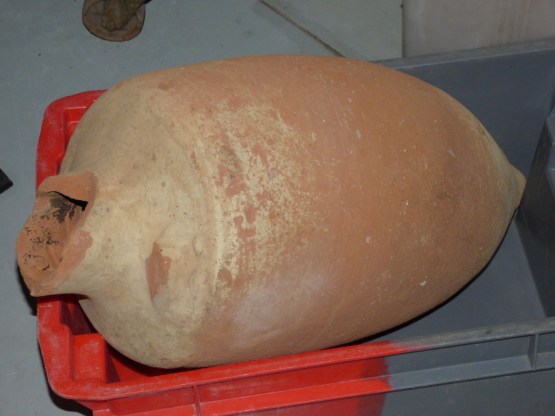
The cellar is transformed, painted with the new office and floor and the stainless steel cuves plumbed in for temperature control. And perhaps, most interesting of all, there is an amphora. This is the trendy method of vinification around the world. However, very few winemakers have an amphora dating from the time of Julius Caesar with which to make wine. Jeff plans to use it this year, connecting his wine to those made 2,000 years ago. Wines with links to the past, present and future, Mas Coutelou has soul!

P1020473


Leave a comment

Vendanges 2016 #7 – Last Pickings

p1010935

Cabernet Sauvignon sheltering the Moroccan pickers

En français

Wednesday (September 21st) was officially the last day of summer and, appropriately, the last day of picking at Mas Coutelou. It was, as in 2015, the Cabernet Sauvignon of Segrairals which was the last major parcel gathered in. Lovely, clean bunches of small, healthy berries, classic Cabernet and virtually nothing to sort in the vineyard or in the cellar. 

p1010923

Cabernet Sauvignon

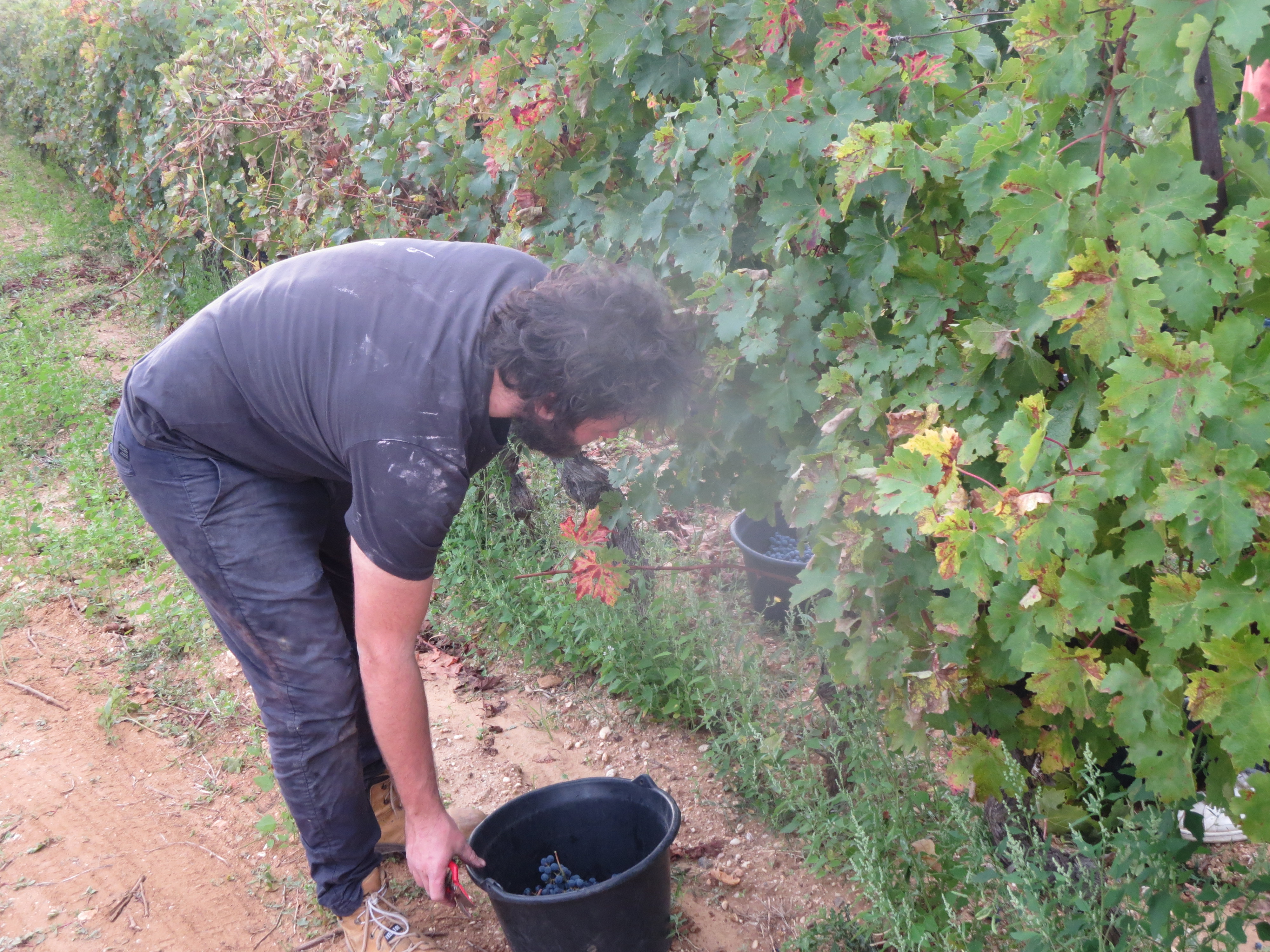
The day before had seen the start of the Cabernet in the afternoon following a morning of picking Mourvèdre, also from Segrairals. As I hadn’t ventured into the vineyard much in 2016 I took the opportunity to do so that morning. Our friend Jill had expressed a wish to do some grape picking and Jeff kindly agreed so I accompanied her (so at least there was one less experienced picker than me!). I really enjoyed being out in the fresh air but it was also good to get a grip on how the vineyard topography can have such an impact upon the grapes.

The Mourvèdre grows on an easterly slope with the rows running down the slope. The vines at the bottom of the slope gave lower quality bunches than those at the top, indeed we stopped picking the last few vines at the bottom of each row. The reason was that when it does rain the water runs down the slope taking nutrients etc. The grapes there tend to ripen much sooner with more humidity in the ground, it was a clear example of terroir. Rest assured that only good grapes went into cuve, much was left behind in the vineyard and at the side of the sorting table.

p1010931

The slope in the Mourvedre vines, rejected fruit on the ground

On Monday the lovely Carignan Noir of Rec D’Oulette (Chemin De Pailhès) was added to the tanks. The quality was high and signs are promising for yet another good vintage of Flambadou, arguably the domaine’s best wine in recent years.

Since the last article the other major harvest was some bountiful, good quality Grenache from La Garrigue on Saturday 17th.

lovely-grenache

Gorgeous Grenache

There remain a few rows here and there with some grapes left and they may or may not be picked in coming days and weeks. However, the Cabernet marked the last of the major picking. Time to say farewell to the Moroccan pickers, part of the Coutelou crew for the last month.

p1010896

Stage 1 is therefore over. Stage 2 the cellar work of remontages and pigeage continues apace as most cuves are now full and need looking after. Stage 3, pressing, is also in full swing as grapes from previous weeks have now gone through fermentation on skins and need to be pressed to take the juice away. I shall be writing about this more in the next article.

So, we head into autumn, the vines are fatigued after a very stressful year. The leaves are already changing colour and the Languedoc will be an even more beautiful place in coming weeks. The picking may be over but the vendanges are not. 

p1010930

Mourvedre in autumnal glory


Leave a comment

Vendanges 2016 #2 – adolescence

En français

When I mention vendanges to most people they think of grape picking and, maybe, putting the grapes into a tank (cuve). However, vendanges means much more than that and we are now entering stage two of the process.

When the grapes have been picked and sorted they are stored in a cuve where the juice interacts with the skins extracting flavour, colour and also coming into contact with the yeasts which grow naturally on the skins. These yeasts then begin the process of fermentation which turns the sugars in the juice into an alcoholic wine. This mix of juice, skins, pips and flesh is known as must.

p1010698

Checking progress

So, whilst picking continues at Mas Coutelou Jeff must already plan what is happening to those cuves of grapes which were picked a few days ago, You will remember from #1 that we picked Grenache and Syrah on days 1 and 2 and that they were in cuves 2A and 2B. They are picking up colour and the fermentation means that the sweet grape juice of last Wednesday is already very different. Still plenty of raspberry and red fruit flavours but the sugar levels have fallen and the liquid is now more austere, a little acidic and with a weight of alcohol. It has turned from child into young adult.

p1010697

Today – Grenache and Syrah has matured

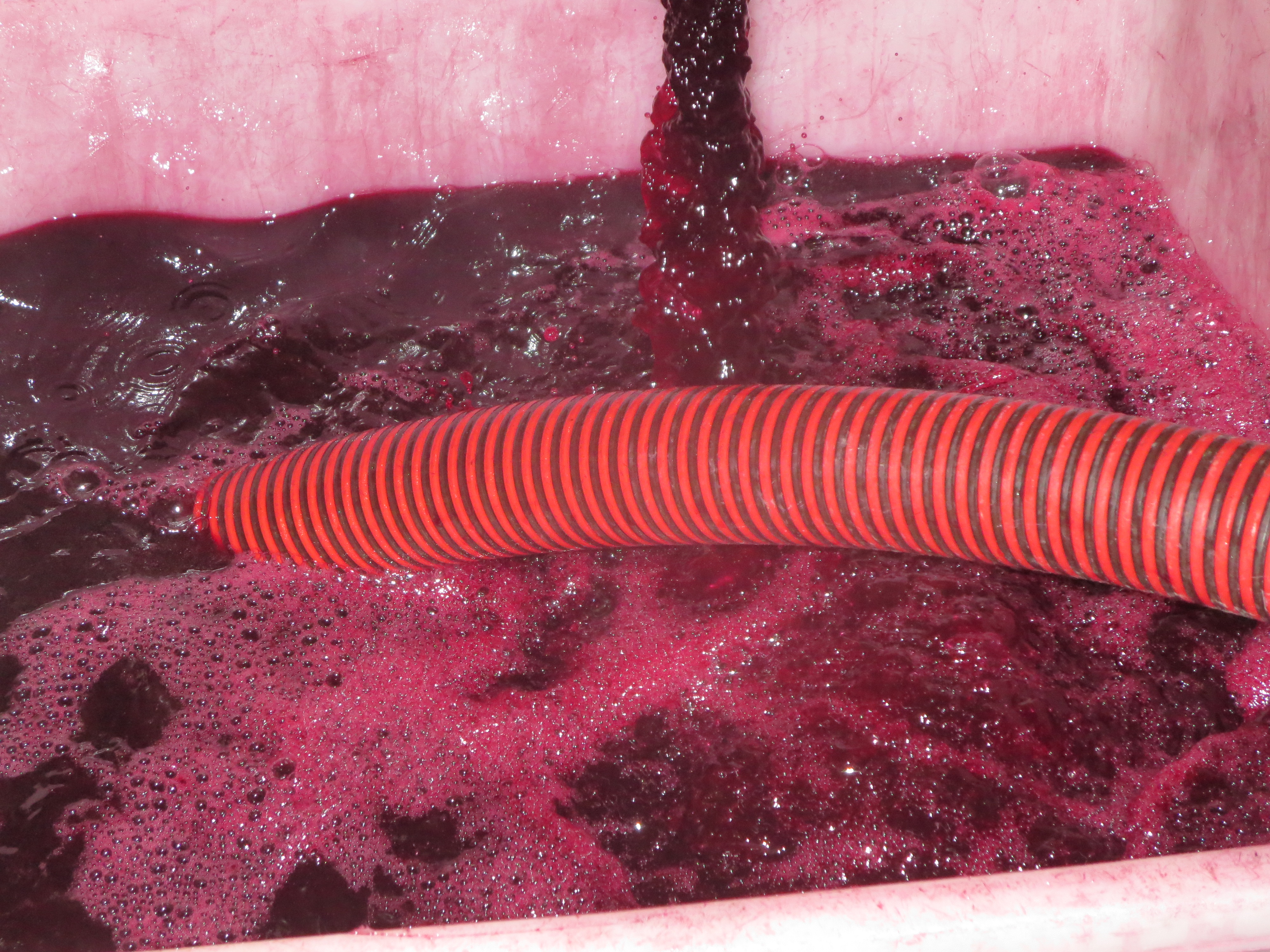
To ensure that the grape skins do not give unpleasant flavours, volatility etc., Jeff must ensure they do not dry out as they float on the juice, forming what is known as the cap (chapeau). Therefore, wine is pumped from the bottom of the cuve over the top of the chapeau to push it down a little and to moisten it. This is known as remontage.

p1010696

Carole carries out a remontage

Alternatively, an instrument or hand can be used to push the chapeau down into the juice, a process called pigeage.

p1010670

James performs a pigeage

When Jeff is satisfied that the juice is ready and has had optimal skin contact he will begin pressing the must to leave the final juice. We await the first press as yet but it will be in the next couple of days as the Grenache and Syrah are already showing their adolescence.

Meanwhile picking continues. Friday saw Sauvignon Blanc and Muscat À Petits Grains as the first white grapes of 2016 at the domaine. Monday saw the picking of the Merlot from Colombié which will, unusually, find its place in the Coutelou cuvées. I am no great fan of Merlot but the grapes were lovely and the juice tastes especially rich and full.

Today (Tuesday) was Flower Power day, sadly the snails won the battle this year. They ate so many of the buds in Spring that the vines struggled to produce much. The dryness merely confirmed Font D’Oulette would be low yielding in 2016. Around twenty cases is not much return for such a lovely parcel of vines. High quality grapes from the various cépages but very low quantity.

Clairette and Oeillade from Peilhan with some Grenache Gris and Muscat Noir was added to the mix. Also picked was the Cinsault from Rome which was in good condition with nice big berries. So my two favourite vineyards are already harvested.

p1010694

James models the lovely Segrairals Syrah

Finally, some lovely Syrah from Segrairals was picked and there will be much more of this tomorrow. This Syrah is such good quality that Jeff is already excited about what he can do with it. Segrairals is the biggest vineyard of the domaine and is also serving up some of its best fruit.

p1010688

Charles, Vincent and the new sorting table

A new sorting table was brought into play this week and it is certainly much more efficient than the previous method of sorting from the cases themselves. Triage of better quality but also much speedier too. The table is already paying for itself.

So, stage 1 (picking) is well under way, stage 2 (the must in cuve) is under way for some and stage 3 (pressing) will shortly begin. The jigsaw is already becoming more complicated for Jeff Coutelou.

p1010667

There really is a puzzle under there


6 Comments

Vendanges Diary #7 – London Cab

Version française

This was the final big week of harvest and it centred around Cabernet Sauvignon. There is a big parcel (around 1.5ha) of the grape in Segrairals and it is not a variety which really excites Jeff for a Mas Coutelou wine. It has done especially well in 2015 though the small berries have swollen with the rains and the alcohol levels had therefore fallen a little to around 14%. They taste sweet and juicy and came in fantastic bunches, not the same size as the Cinsault and Mourvèdre from this vineyard, but small and healthy nonetheless.

IMG_2547

Cabernet Sauvignon on the vine in Segrairals

Cab Sauv2

                              Cabernet Sauvignon

Part of it was picked on Monday 21st September which will be used by Jeff, purpose as yet unknown though Cameron may be flexing his winemaking muscles with some. The other major work on Monday was to use the Muscat d’Alexandrie grapes from Peilhan which were also in good health.

IMG_2545

         Muscat d’Alexandrie

IMG_2543

They have very thick skins so the pressing took longer than usual to extract the juice. They were mixed with some Muscat À Petits Grains grapes. I will come back to these grapes and the juice later in this article.

IMG_2550

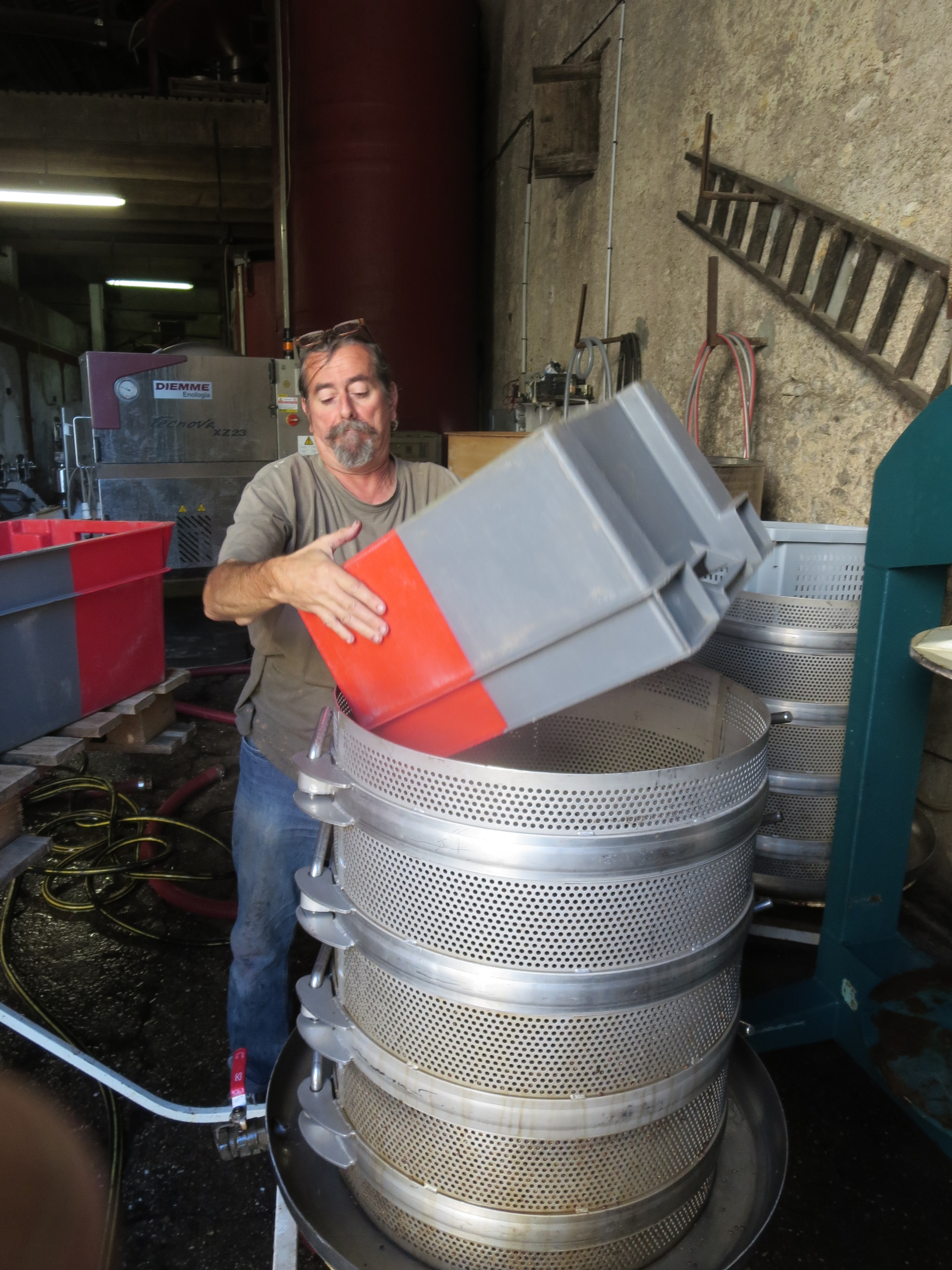
      Michel loads the Muscat into the press

Muscat pressed

               Muscat juice after pressing

Tuesday 22nd was the big day for the Cabernet Sauvignon. I have explained before that Jeff sells most of these grapes to London Cru, an English winery as the name suggests. London Cru buy grapes from around Europe, eg Chardonnay from Limoux, Albarino from Rias Baxas, Grenache from Spain. This is the third vintage of the project and the grapes were ready at last. In 2014 they had been ready on September 4th, my first day at Mas Coutelou after our move to the Languedoc. This year the rain had delayed them so Gavin and Alex flew into Béziers on Monday evening. They had been in Italy on Saturday and only just got back to London before flying here. The refrigerated wagon was in situ as I arrived on Tuesday morning, waiting to be loaded with the grapes.

IMG_2573

Confidence was high amongst the London Cru team after some very good reviews including one last week by Dr. Jamie Goode who gave the top mark (94/100) to the Cabernet Sauvignon using Jeff’s grapes. The fruit for 2015 should bring more high marks and good wine. We tasted the 2014 over lunch and it was very good, clear, direct fruit with ripe tannins which mean that the wine will be at its best in 2 to 3 years.

IMG_2570

                Alex and Gavin loading the grapes

Gavin, Alex and Jeff directed and led the picking carried out by the Moroccan team as usual but also by Cameron and myself together with two excellent new additions to the team in Fabrice and Romain. Fabrice puts on shows (spectacles) around France whilst Romain is an artist. They have picked here before and were good fun and hard working, more new friends. (Fabrice on the left, Romain to the right.

IMG_2561                      IMG_2560

After picking the 6 tonnes or so of grapes they were driven straight off to London under refrigerated conditions to keep them fresh. Gavin and Alex flew back to London that evening ready to receive them at their base. London Cab, fine fare.

IMG_2568

                  Fine bunch of Cab I picked

Lunch was excellent with the London Cru wine and a magnum of Flambadou 2014 which was excellent, still in its infancy but already drinking well. Afterwards Cameron and I did some pigeage of the Carignan grapes amongst others. It was also Cameron’s birthday, hopefully it was one he will remember with affection.

IMG_2559

Birthday boy Cameron looking for his present

IMG_2579

        Pigeage of the Carignan

Wednesday 23rd was a day for working the cellar. Jeff was keen to aerate the Syrah a little and to start to maximise the cuves by assembling some of the tanks and filling the new ones. Thursday saw similar work whilst Jeff also did some admin work.

On Friday 25th I returned to the cellar. Cameron was enjoying a well earned break and so I joined Jeff and Michel. They were continuing to fill the tanks, aerate some wine and then we moved to the muscats from Monday.

IMG_2581

                       Aerating some Syrah

IMG_2586

Muscats macerating with a little older Muscat wine

The Muscats are destined for the solera system and after a few days maceration they were showing lovely aromas, already slightly sherry-like due to being mixed with some older wine. The juice went straight into barrel whilst the marc was pressed again to extract more juice and flavour. Tasted straight from the press these included lovely apricot, plum fruits along with the slight oxidised note which adds complexity. Truly delicious, I’m afraid my description fails to do it justice.The barrel will allow the wine to age and gain contact with oxygen and the wine will develop into a luscious sweet wine. As stated previously I shall write more about the solera in the near future.

IMG_2588

Michel removes the skins for pressing

IMG_2591

     Michel then loads the press

IMG_2594

               Gateau de Muscat

There are one or two small parcels still to pick but the main harvest is now over. It began back on August 21st so lasted just over a month. I shall be reflecting upon it and the lessons I have learned from it in the next article. Meanwhile I look forward to picking the Muscat from Rome and went to the vineyard on Friday lunchtime to take some photos. I was met by a family of partridges, butterflies and birdsong – Rome really is a magical place. In La Garrigue the vines are starting to show their autumnal colours, their work is done for 2015. The vines have given everything to their fruit in the last month and the leaves which remain after harvest are looking tired after a long, hot summer. All, or nearly all, is safely gathered in. 

IMG_2610

La Garrigue, Friday. The grass across the centre marks the ridge with Grenache near side and Syrah far side.

IMG_2608

Grenache leaves showing that autumn approaches, harvest is over

Rome on a beautiful autumn day

                   Rome on a beautiful autumn day

IMG_2603

Luscious Muscat bunch

IMG_2605

Berries shriveling and concentrating the sugars

IMG_2574

    Jeff seems to approve of the London Cab


2 Comments

Vendanges Diaries #6 – Mystery, Mourvedre and Flambadou

Mourvedre 17th

Version française

The storms which brought so much rain to Puimisson and the Languedoc on Saturday meant that there would be no picking on Monday or Tuesday the 14th and 15th.

IMG_2457

             Preparations for cellar work

Instead Jeff, Michel and Cameron were hard at work in the cellar for the two days. There is lots to do there so it was an opportunity to get everything on track. Lots of remontage, sous tirage etc. On Monday the 14th the Syrah which was to be made with carbonic maceration was pressed after its few days in tank with the fermentation inside the skins.

IMG_2476

                     The Syrah being pressed

The video shows Michel in the cuve moving the grapes to the front where Jeff forks them into the pump. You will see the grapes moving through the pipe into the press.


By Wednesday 16th the weather had turned much clearer and good winds meant that the grapes and soil were beginning to dry out nicely and so picking recommenced. The centre of attention was Rec D’Oulette known locally as Chemin De Pailhès and the Carignan grapes which grow there. These are the grapes which make the excellent cuvée «Flambadou», perhaps the outstanding wine of 2013 (and Jeff tells me of 2014 too). The bunches which arrived were excellent in quality, so fingers crossed for another great wine.

IMG_2511

                         Picking the Carignan

Carignan

                                    Carignan

IMG_2506

                         The Carignan in tank

IMG_2508

          Analysing the Carignan

Meanwhile cellar work continued as Cameron carried out more remontages and analyses. Today one of the wines to be moved was the Merlot which was bright, fresh and colourful.

Merlot being moved

                         Délestage of Merlot

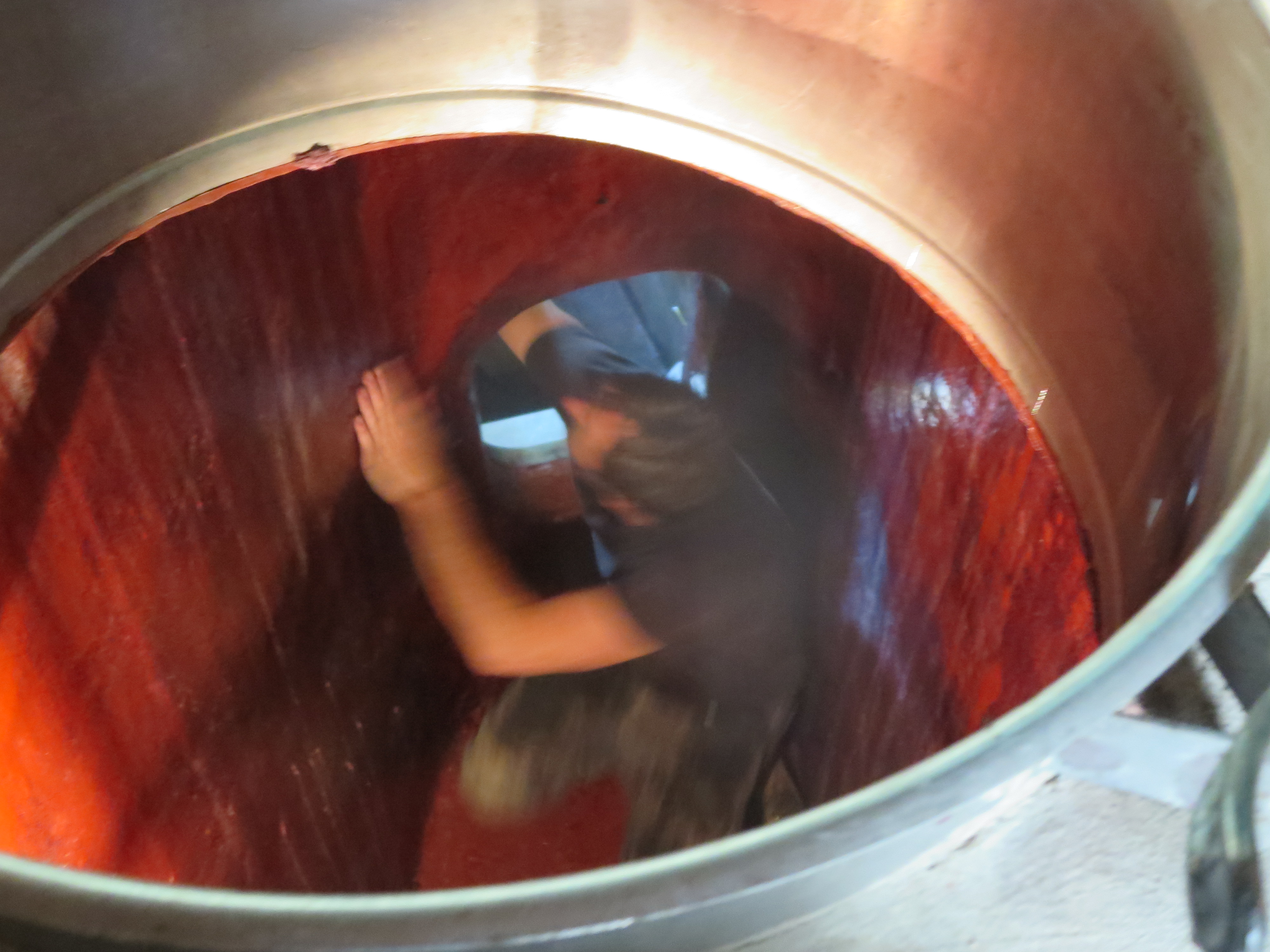
As each wine is moved around the cellar, for example to take it off its skins, each cuve has to be cleaned thoroughly and then it will be filled with another set of grapes or fermenting wine. There is a seemingly never ending merry-go-round of wines and quite how Jeff keeps track of them all remains a mystery to me. Each move has to be planned to ensure that cuves are available, cleaned and big enough.

IMG_2521

                 Cleaning from the inside

As a former teacher it reminds me of planning a timetable fitting in students, teachers and classrooms into the correct combination. Add in working as a mechanic to keep all the machines ticking over and the work of a vigneron becomes more complex, the job description is long.

IMG_2489

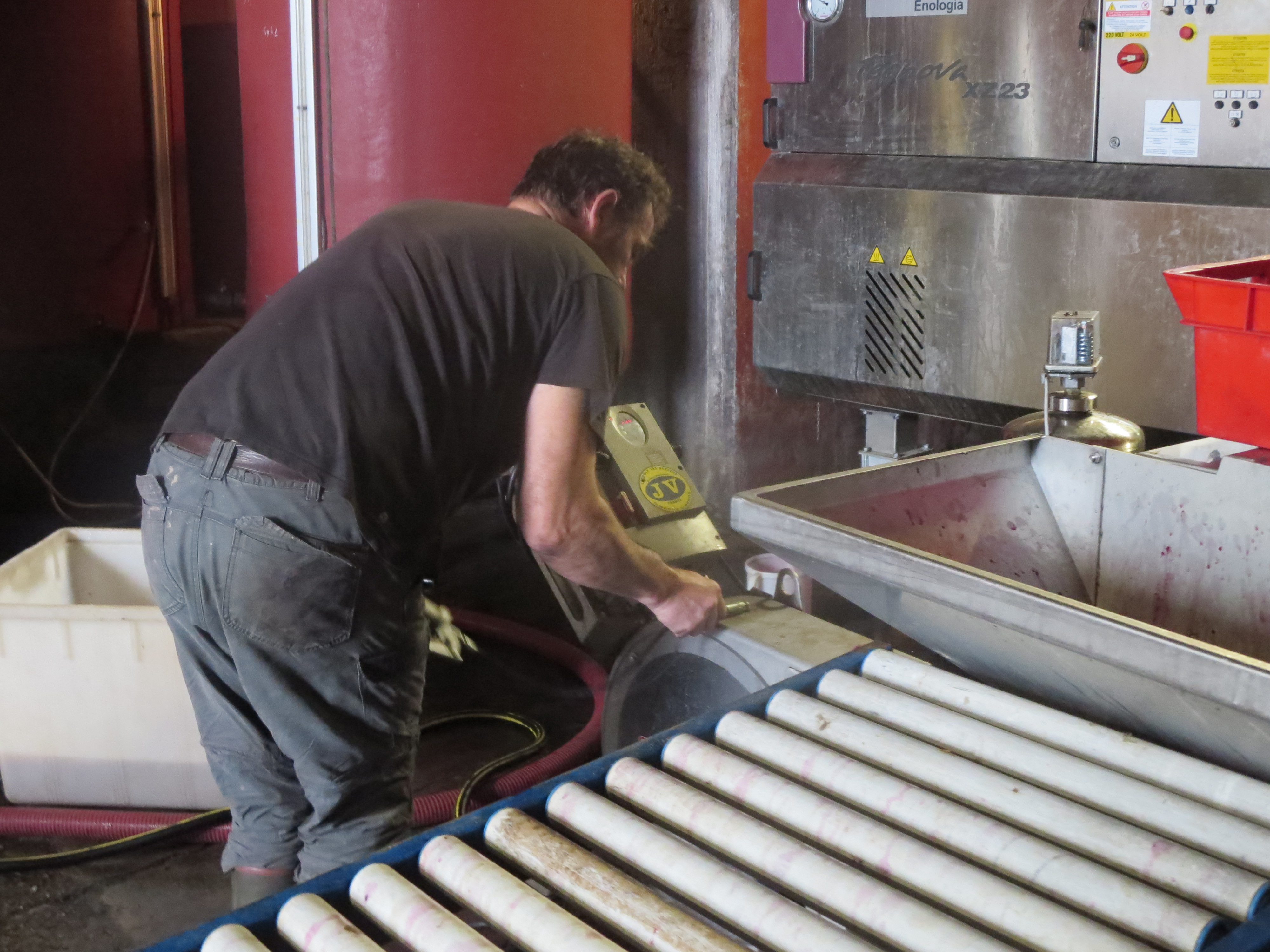
              Maintenance of the égrappoir

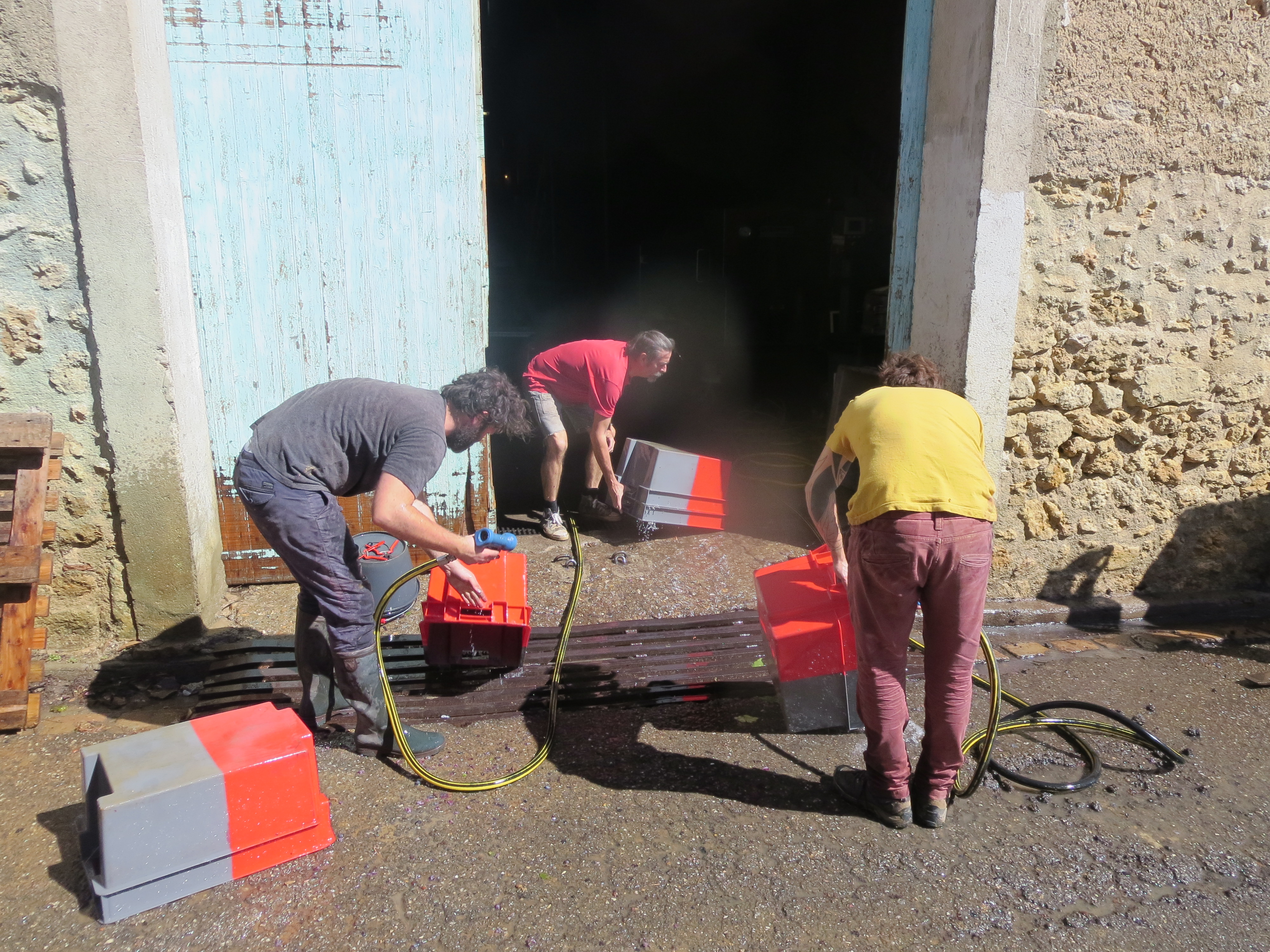
Thursday 17th brought Grenache from Sainte Suzanne (Metaierie), again carbonic maceration was to be used so back to the top of the cement tanks. Thomas was back and he, Cameron and I shared duties up there filling the tank.

IMG_2517

IMG_2526

        l-r Cameron, Michel and Thomas

Then cleaning of the cagettes ready for the next new cépage. Following the Carignan of Wednesday it was time to harvest the Mourvèdre from Segrairals. One of my favourite grapes, somewhat fickle in character but when grown by good producers it adds a complexity and depth with a hint of dark mystery. The bunches which arrived were certainly amongst the best of the whole harvest at Mas Coutelou.

Mourvedre 17th

                            Magnificent Mourvedre


They were clean, big bunches, the grapes with thick skins and smelling already of spice and blackcurrants. Some of the bunches were very heavy and it wouldn’t take many to produce a bottle of wine, on average you need about 1.25kg of grapes to make the 75cl of a normal wine bottle. Sorting was quick and easy, the pickers had done a good job and the fruit was in such good condition. I look forward eagerly to finding out what Jeff has in mind for these grapes, when I have asked he simply smiles mysteriously, something is afoot!

IMG_2532

Friday 18th brought the rest of the Mourvèdre still in tip top condition. When the pickers reached some of the lower parts of that parcel the quality did begin to dip a little so these bunches were taken away to be used separately, possibly for a rosé wine. I say possibly because final plans are a long way from being ready. Other jobs included pressing the Cinsault grapes which will make a rosé (definitely!!) and more remontages and analyses.

IMG_2533

                           Remontage

We were joined today by Charles, a young Frenchman who works in a restaurant in Berlin, and whose mother was a former colleague of Jeff when he was a teacher in Paris. Coincidentally his boss in Berlin was a student of Jeff! Charles added a real sense of fun and worked hard.

IMG_2537

                     Charles fills the press

By Saturday I was ready for a rest and so the 19th was the work of the Jeff, Michel and Cameron as they processed the last red grapes from Peilhan. Some of these will be used for blending but amongst them was the famous Castets. This you might remember is a cépage produced by only two winemakers in France, Chateau Simone in Palette and Mas Coutelou. The first harvest was in 2014 and we had watched eagerly its development. In fact we have been drinking some during harvest lunches and it is very promising, brooding with deep, dark fruit flavours and a freshness to lift it. Only 3hl was produced again this year, the same as last year.

Castets

                 Castets in tank

On Sunday 20th Jeff carried out a débourbage of the Cinsault rosé which was pressed on Friday. Débourbage means taking out the pips and skins etc to leave the juice on its own. The harvest is starting to slow down a little though much work remains to be done in the cellar. Jeff and the ‘Coutelou Gang’ will have certainly benefited from a little siesta in Sunday.

IMG_2500

Icare licking his lips at the great wine being made (maybe)


2 Comments

Vendanges Diaries (4) – Sept 6th to 8th

Carignan Blanc

                                        Carignan Blanc

Version française

This was the busiest week of the vendanges and required long hours of picking, sorting, pressing, remontage as well as lots and lots of carrying, lifting and often in confined spaces. In short it was hard work.

Why so busy? Well, Syrah which was the first of the red wine grapes to ripen makes up around a third of all the vines at Mas Coutelou and Grenache, the next to ripen, is also the next main cépage with up to 12% of the harvest. Together this meant that around half the 2015 harvest would be picked this week. Add in other smaller picking and the parcel of Merlot and this was definitely the crunch time.

Sunday September 6th was a day of rest for most but Cameron and Jeff were in the cellar working as usual, carrying out checks and analyses and remontages as necessary.

Monday 7th was a long day at work. It was around 8.45pm before we stopped. Syrah in Segrairals makes up around 2ha in total, though as with all land there are some prime areas whilst other vines, around the edges and in a few hollows where water gathers, are not of the same quality. In a typical year these would go towards cuvées such as Classe and 7, Rue De La Pompe but, as ever, plans are fluid.

Car Blanc grapes

              Superb bunch of Carignan Blanc

In addition a parcel of Carignan Blanc was harvested from Peilhan vineyard. There were some wonderful grapes and they were given special treatment, carefully sorted and then pressed using the small hydraulic press. The juice ran very clear and green and then gradually took on a slightly brown colour as it developed light oxidation. This is actually good as it helps to protect the juice later in its life and prevents damaging oxidation. Moreover, the effects of the oxidation from the pressing are removed through fermentation. Around 600l were produced in total, around 750 bottles worth. This makes a very good wine, something I was to be reminded of on Tuesday night, as we shall see.

IMG_2347

This was a long day but much good work had been done.

Tuesday 8th brought more Syrah to the cellar, this time from La Garrigue. These are the vines I have described before which face north on a slight slope to preserve the freshness and fruit flavours, good quality grapes which are often used for my favourite cuvée, La Vigne Haute, so I was even more keen to help to sort carefully and there were some lovely bunches of healthy fruit. Here’s hoping for a good vintage of LVH, as ever Jeff will make the call.

IMG_2337

Cameron unloading some Grenache Gris

Yet again another smaller harvest was done, again from Peilhan, this time with Grenache Gris. The lovely pink, grey berries are flexible in their use and might produce, white or rosé wines or be added to red wine as you will remember from my special cuvée post.
IMG_2343

            Grenache Gris after being pressed

Meanwhile lots of analysis of the wines in tank and work to ensure that they are in good health. This even involved Jeff removing his trousers and jumping into the Flower Power tank to do some pigeage! Modesty means that I shall not share these photographs!

IMG_2355

Cameron getting a sample for analysis

IMG_2348

IMG_2354

The after effects

And of course there was plenty of this… (I couldn’t resist adding the tune)

Error
This video doesn’t exist

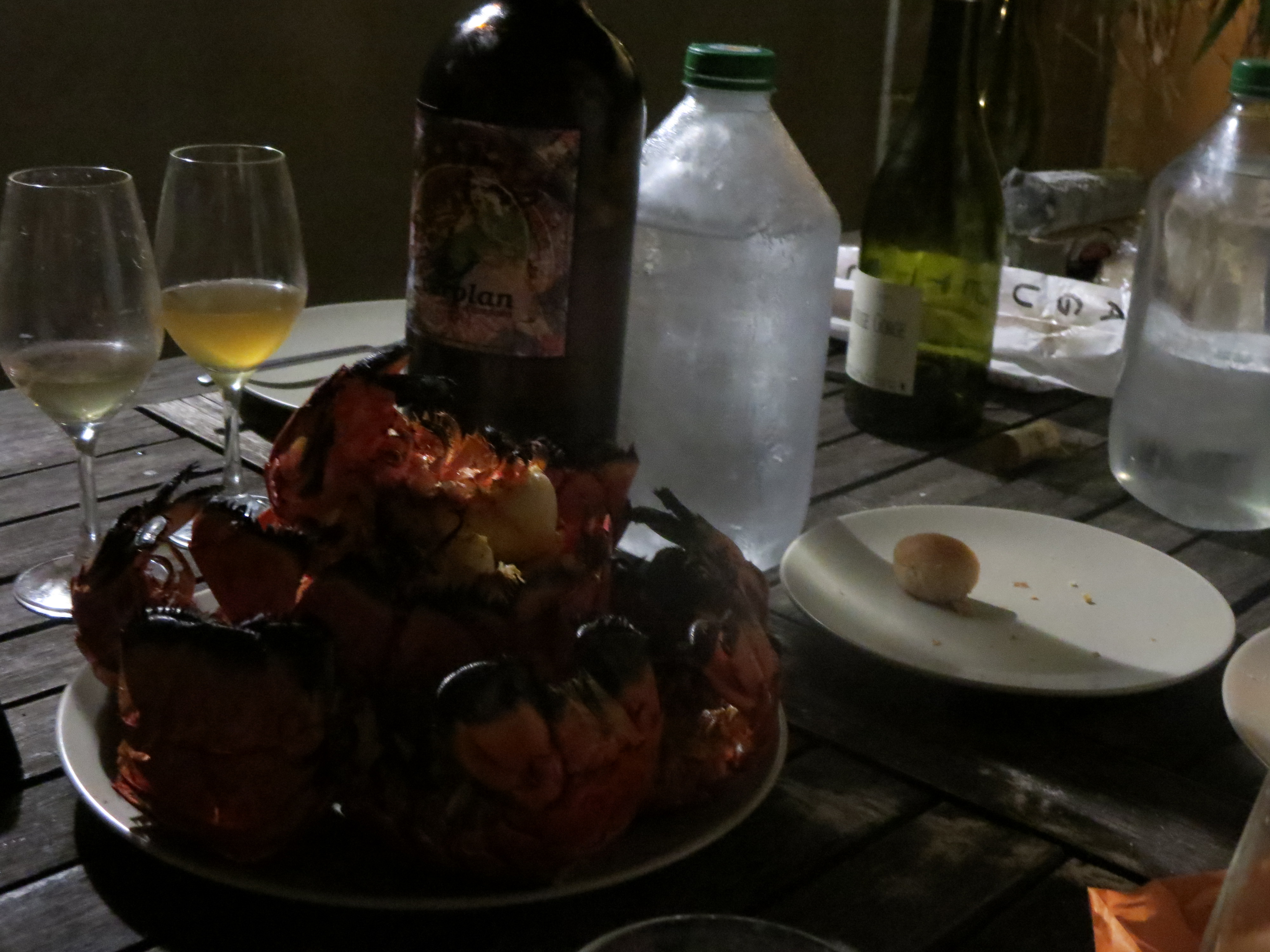
A bonus was to come though. We had been joined by two new additions to the team. Thomas is from Toulouse originally but has been working as a sommelier in the Languedoc and spent most of the week with us and will return next week. Karim is a fishmonger from Tours with an extensive knowledge of natural wines. He spent the week in Puimisson and brought a lovely surprise in the form of lobsters and scallops which made a wonderful dinner on Tuesday as Karim is also an excellent cook. We shared a magnum of Casa Pardet Chardonnay to accompany the shellfish as well as two Carignan Blancs, one from Mas Coutelou and the other from Jeff’s friend Cyril Fahl of Domaine Rouge Gorge in Roussillon. It was a special and hugely enjoyable meal, thanks to Karim and Jeff for the food and wine.

IMG_2367