Lots of work continued in the cellar during the week, pigeage and remontage as described in the previous post, and more wines which are now completing fermentation and being put into tanks to mature or to allow malolactic fermentation if it hasn’t already happened. This fermentation produces softer lactic acid which will make the wine taste more supple and fruity. The cellar is now much quieter and there is a sense of job done.
Pigeage
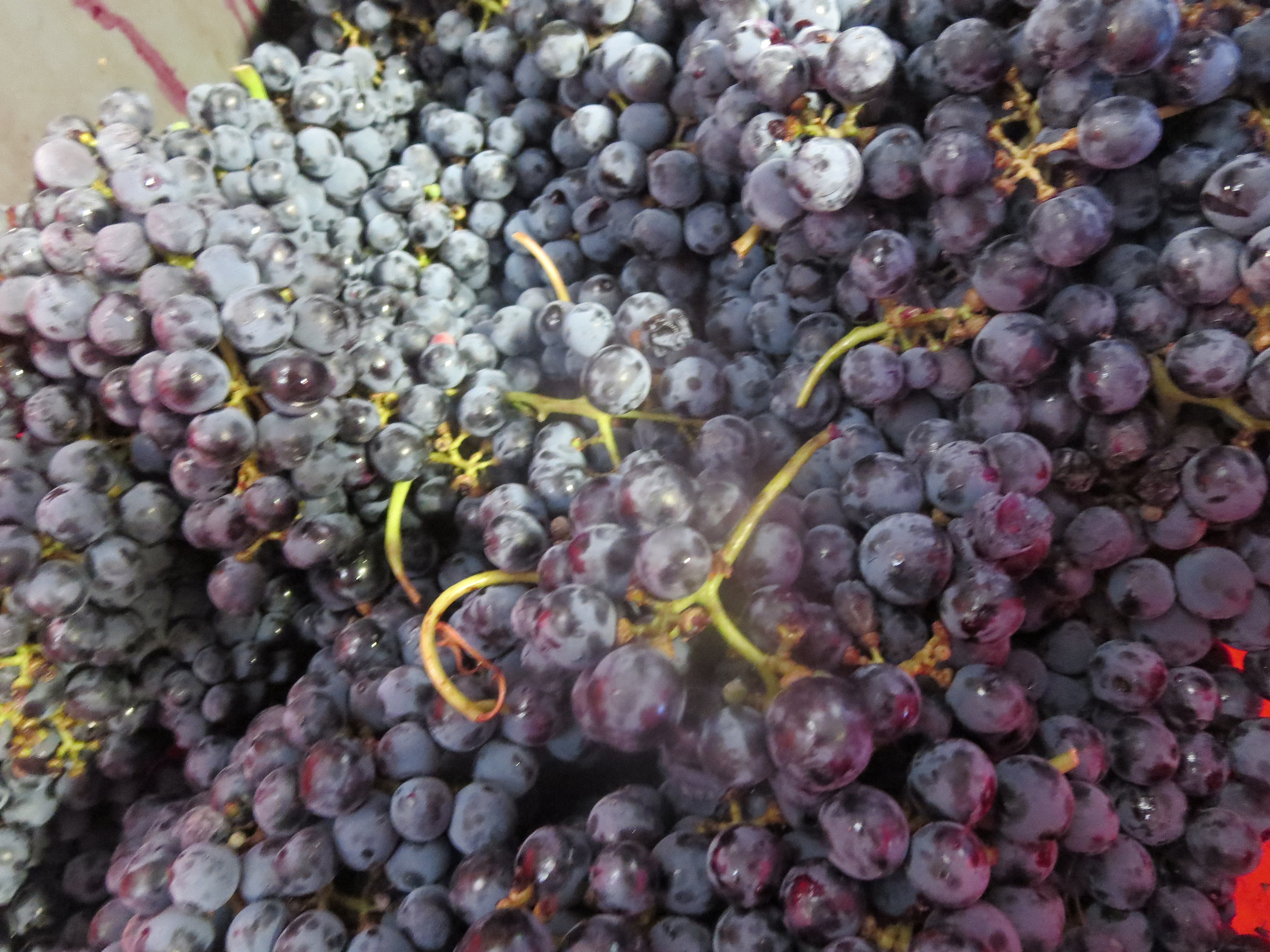
Carignan in tank
Cameron cleaning tanks, cleanliness remains the priority
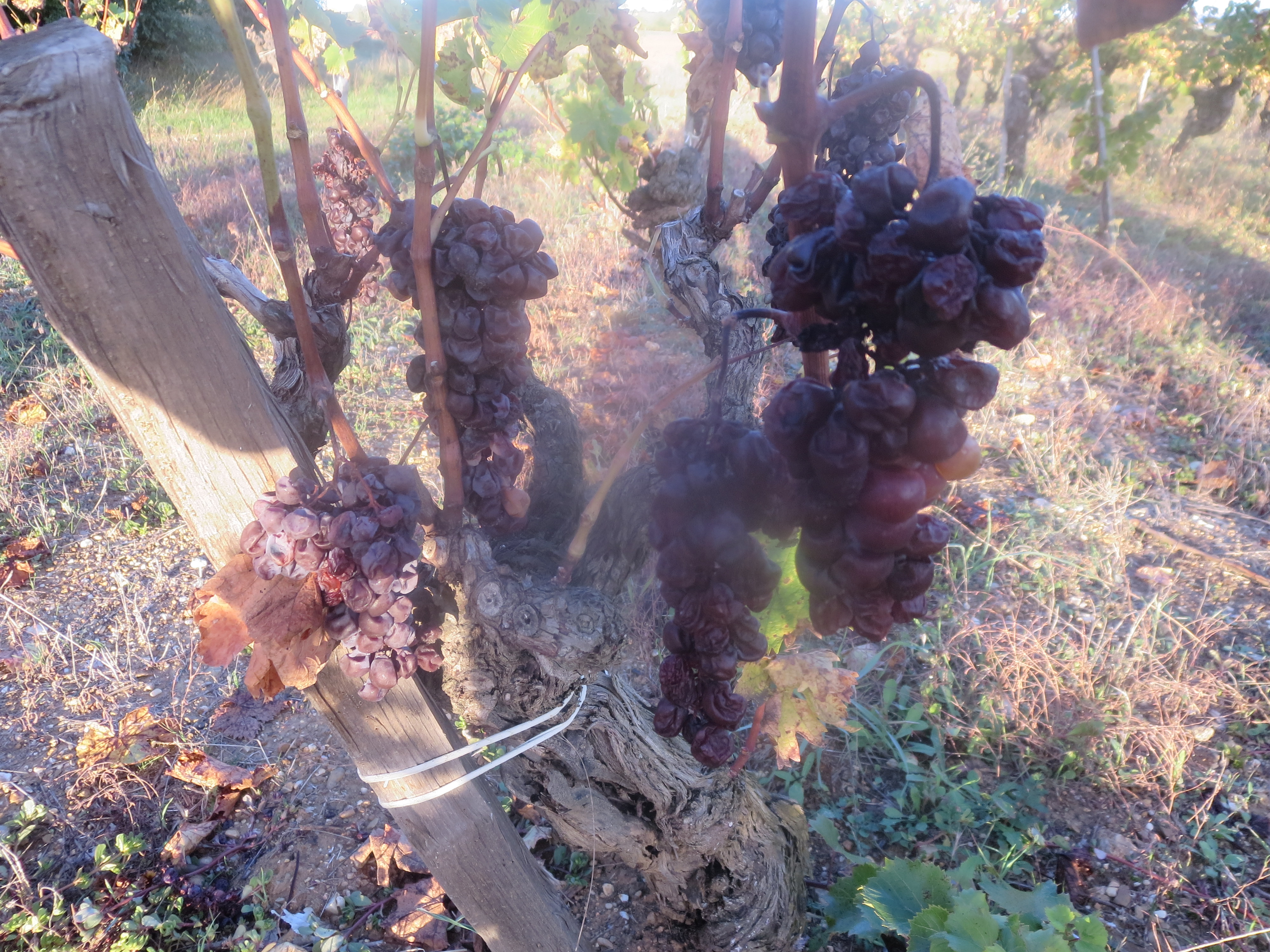
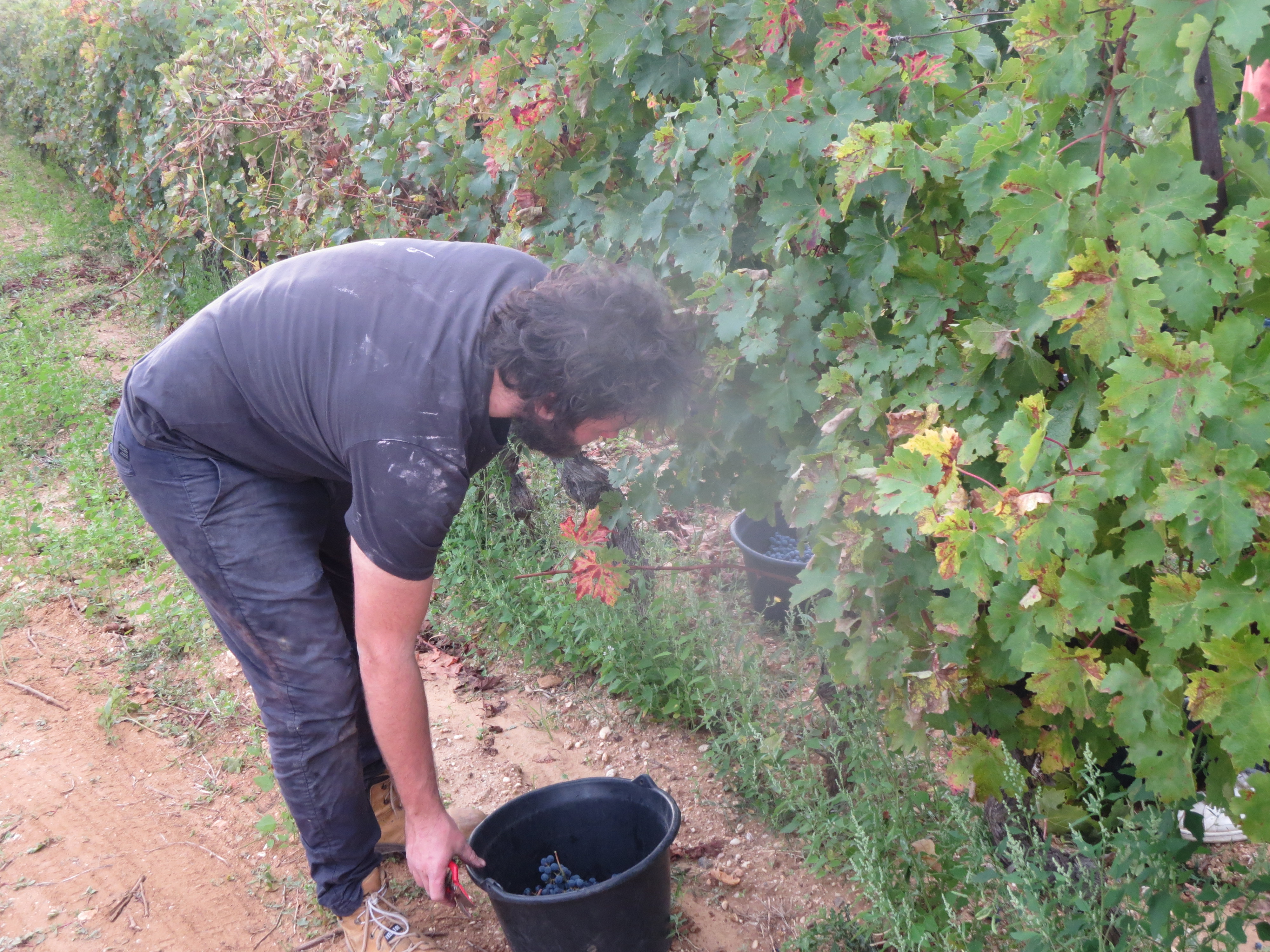
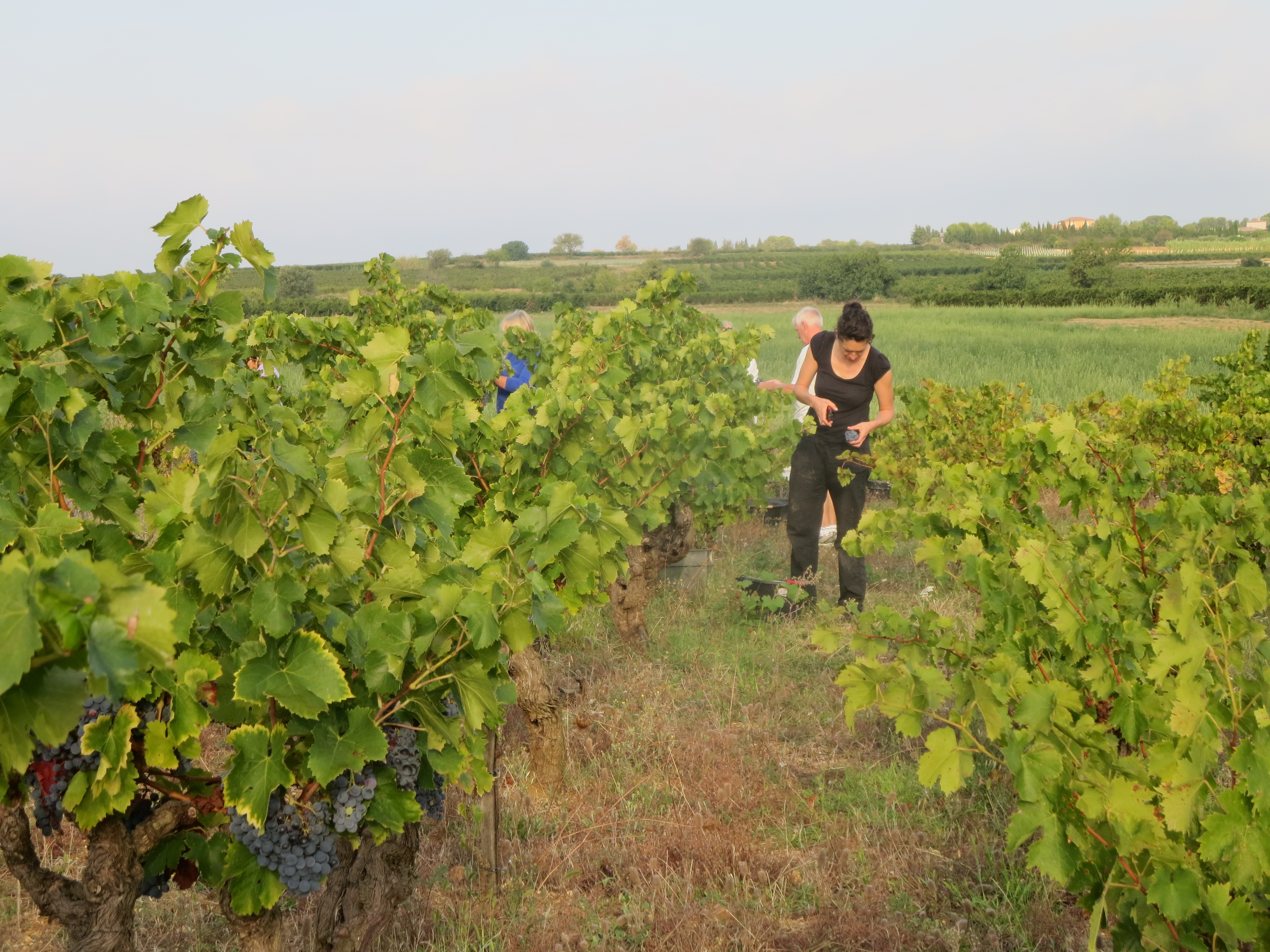
However, the final wine remained as grapes in the vineyards. Muscat grapes in Rome vineyard and Grenache in Sainte Suzanne have concentrated their sugars, developed a little noble rot even. So, on Friday October 9th Jeff, Michel, Cameron and myself ventured out to pick the Muscat and some of the Grenache. (The remaining Grenache was picked by the experienced Moroccan team on Saturday morning.) A beautiful autumnal morning cast shafts of sparkling sunlight on to the myriad colours of the leaves. It was incredibly peaceful and dreamlike.
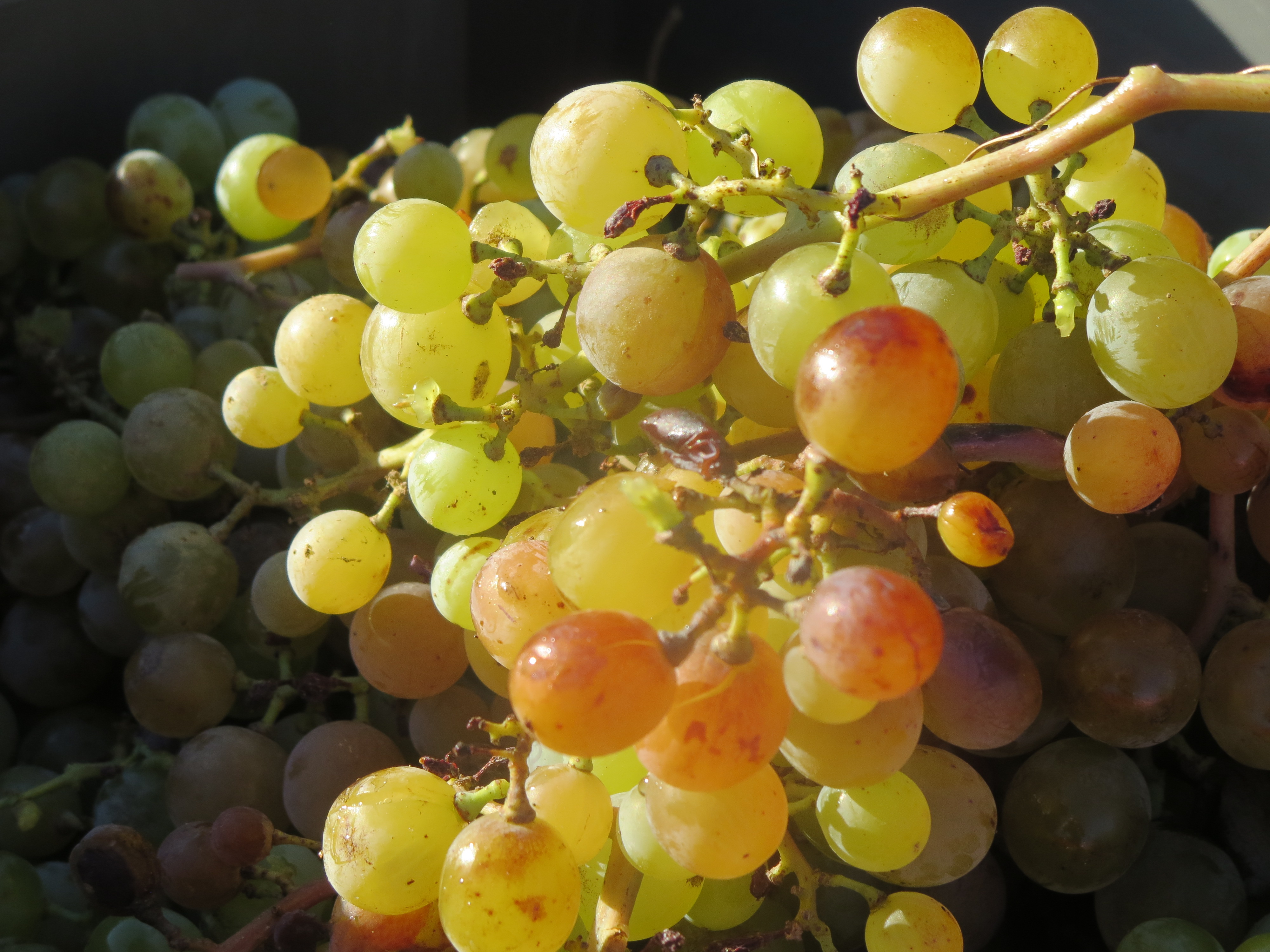
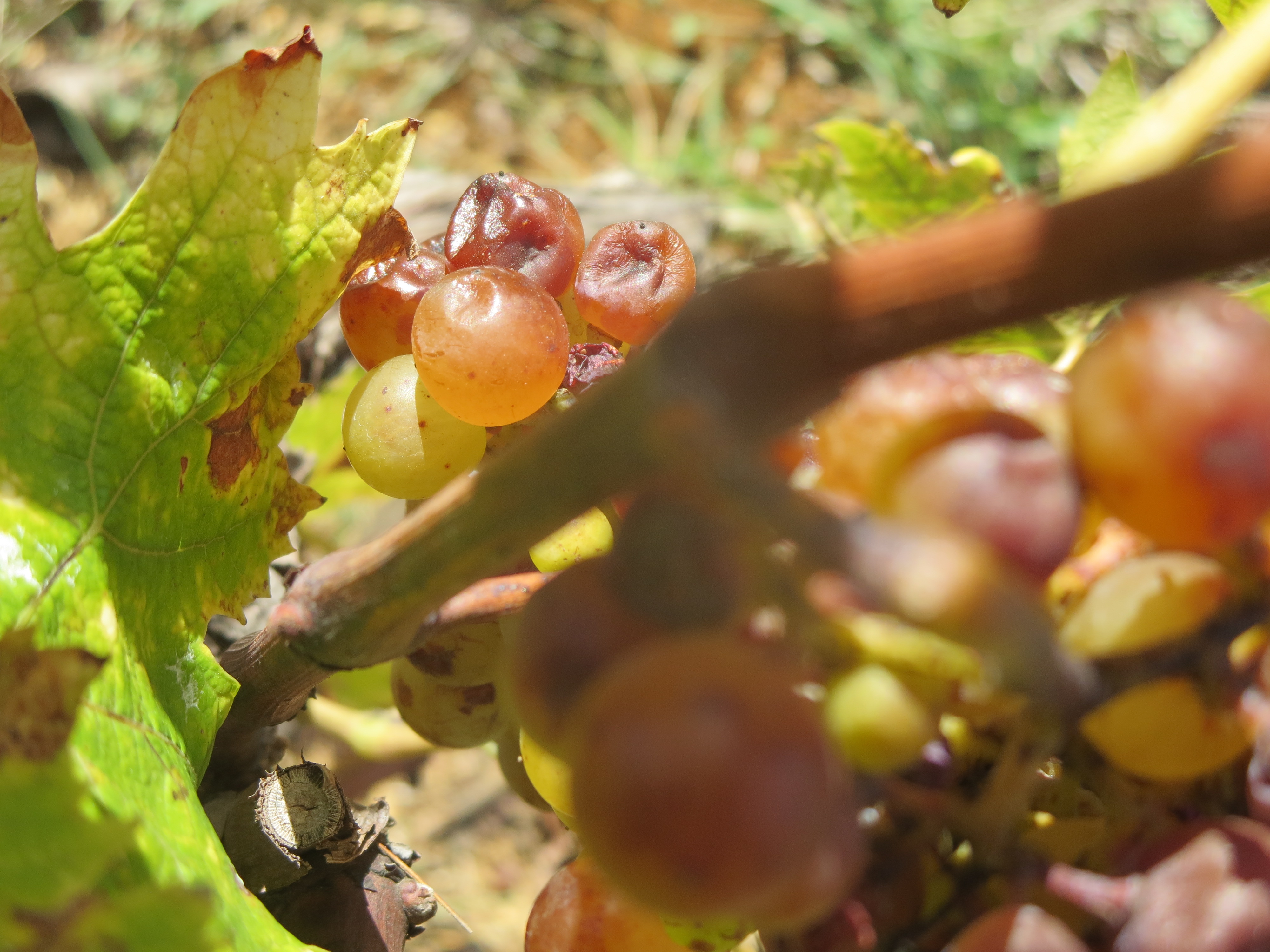
The Muscat was dried out in the main, the berries now like raisins with a lot of sweetness but not too much juice. The Grenache would give more juice to produce around 4.5hl of sweet wine in the end, which Jeff was happy with.
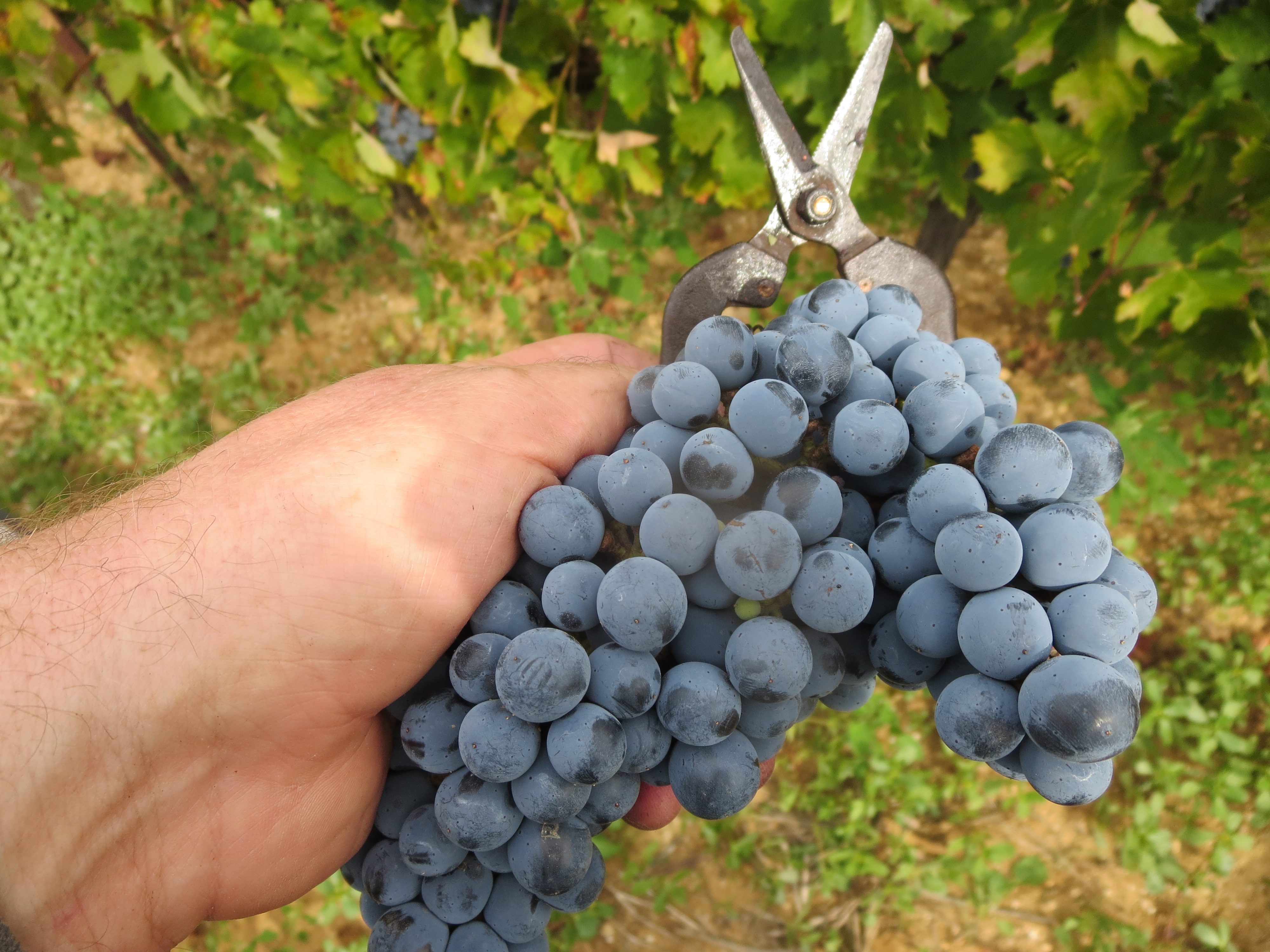
My first bucket of Muscat
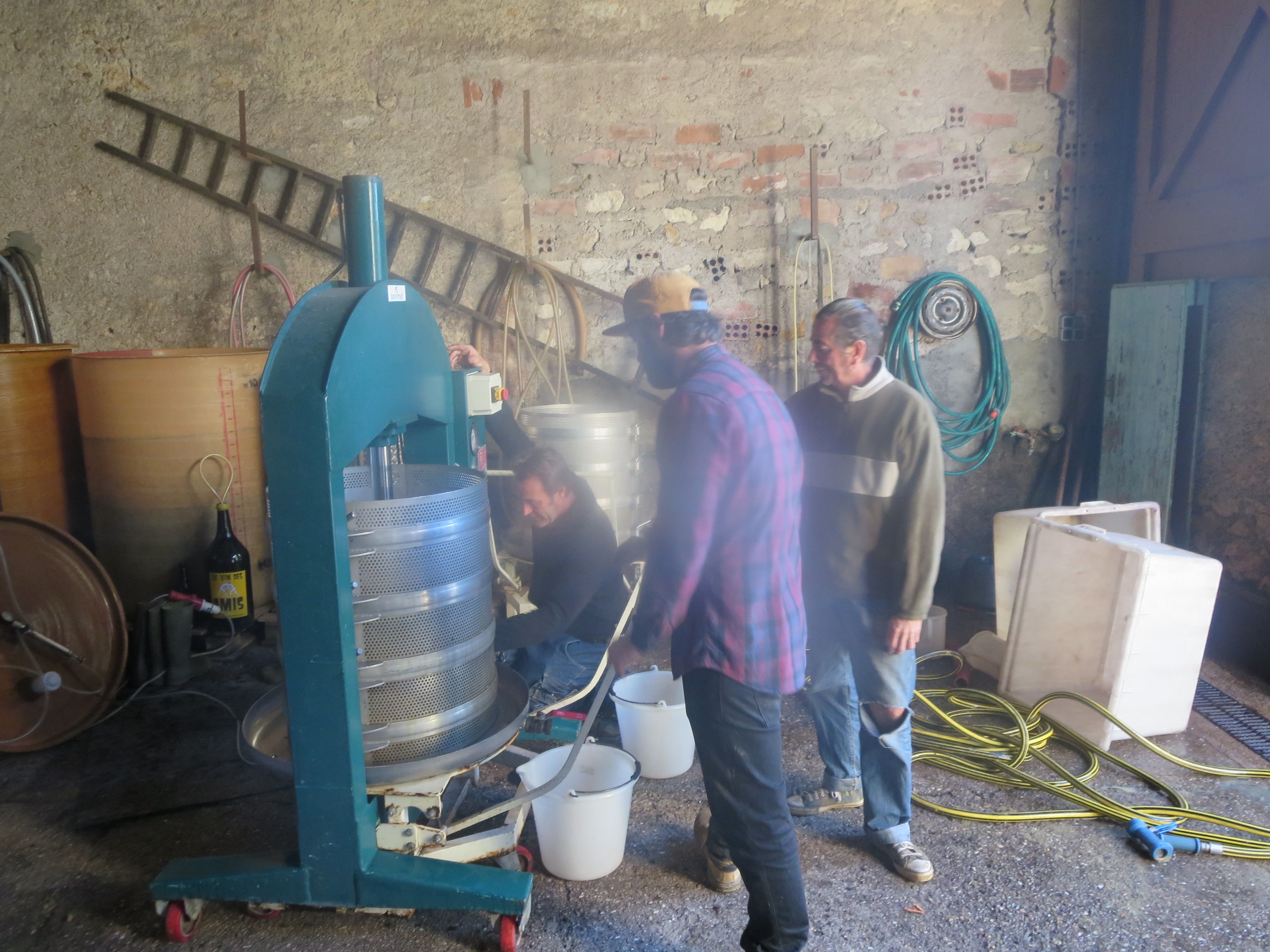
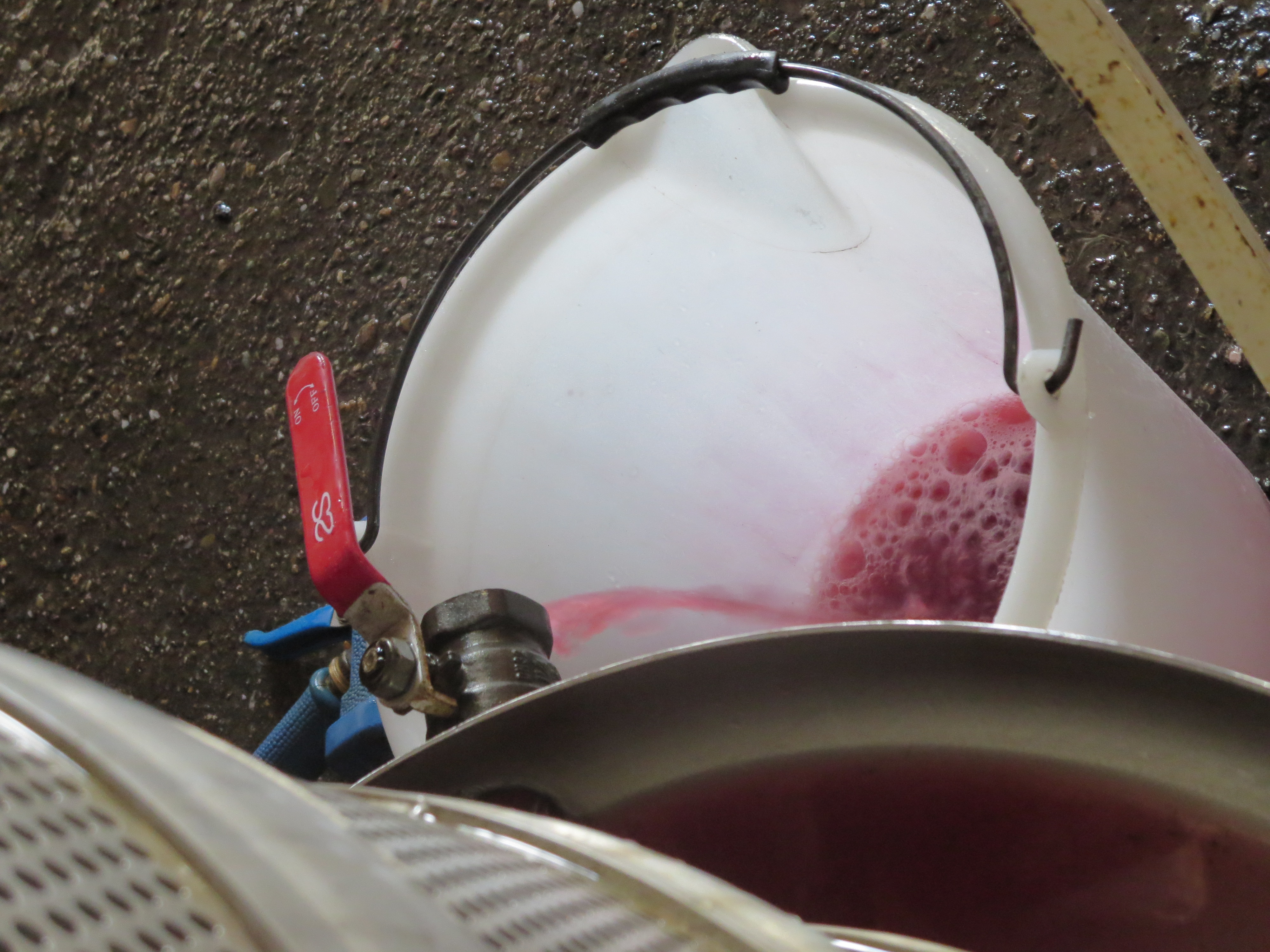
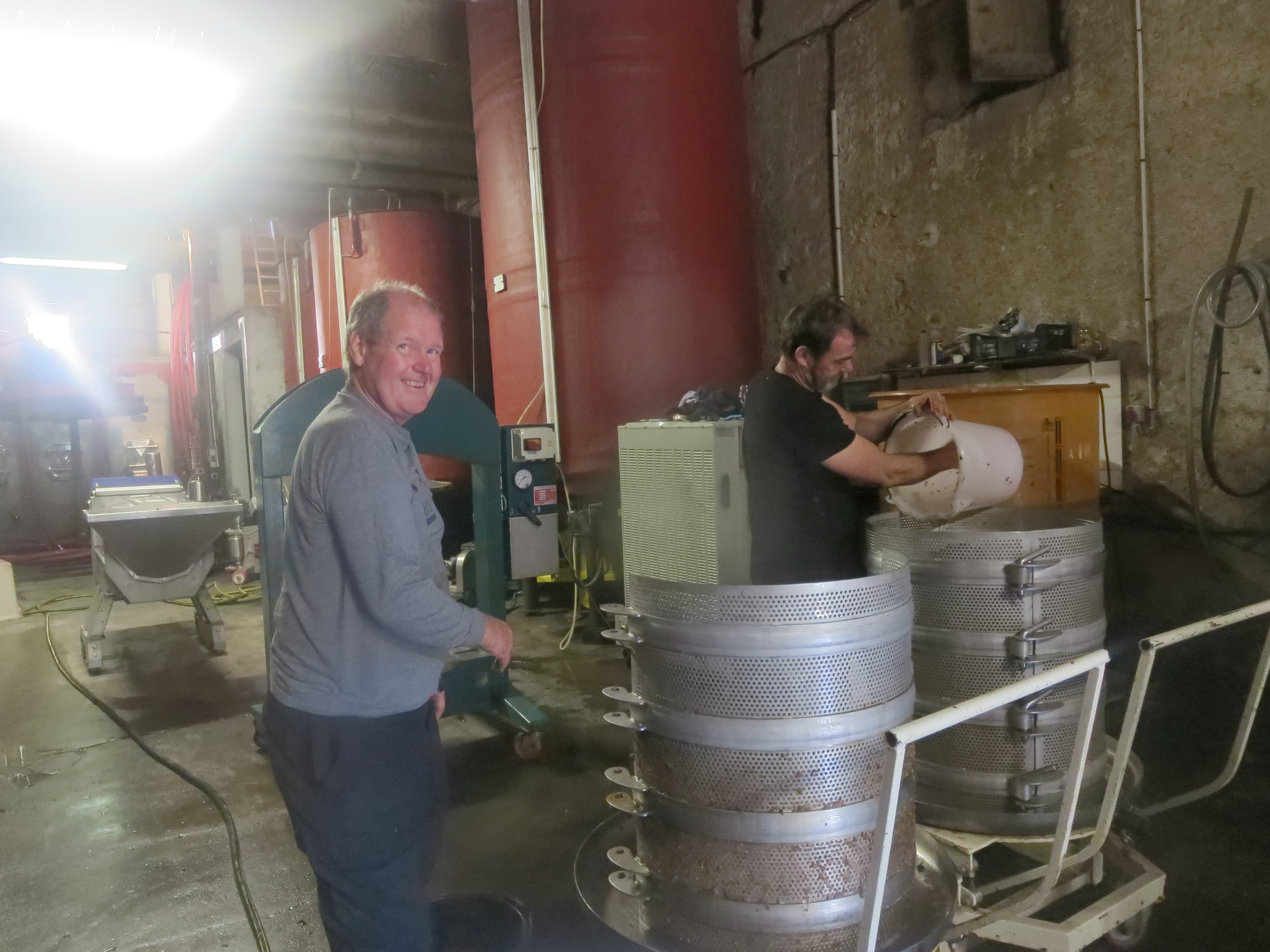
In the press the Muscat and Grenache were added one on top of the other in successive layers to give more complexity and allow the Grenache to fill out the Muscat. The juice was slow in emerging but eventually arrived in a lovely, light red colour with strong aromas of sweet raspberries.
The following day, Saturday 10th, the Grenache arrived and the last cagette of 2015 grapes entered the press.
Grenache in Saint Suzanne
The last cagette of 2015 grapes goes into the press
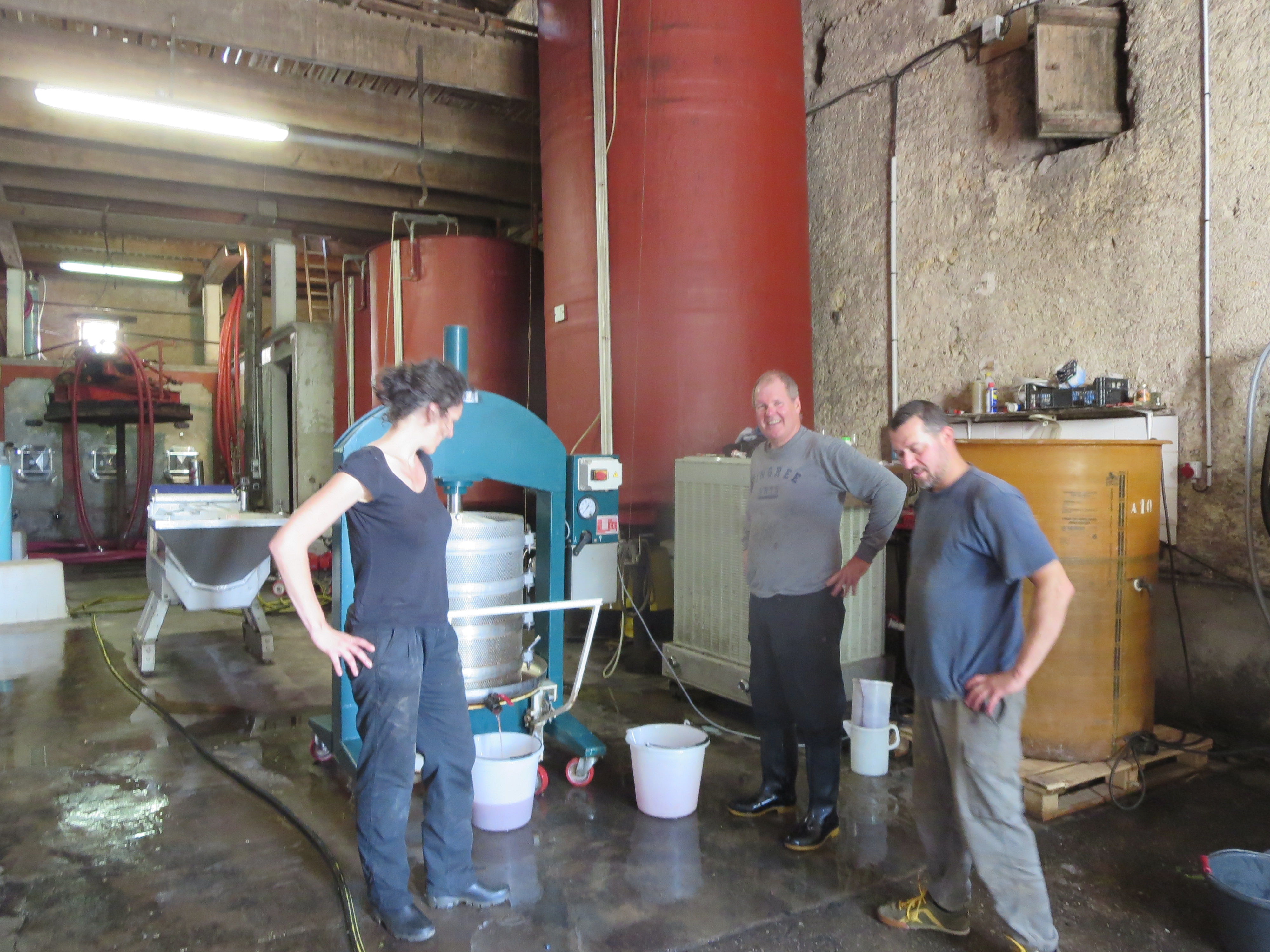
Pressing the button for the last time this year
It was a moment to breathe a sigh of relief, to feel a sense of pride in what has been achieved in the last 2 months and, a hint of sadness as the bonds of a team, which worked so hard and so well together, are gently loosened.
The relief also showed in recent days by getting together with other vignerons. An evening in Roquebrun at the excellent Cave St. Martin and then on Thursday a visit to Domaine Vassal, a conservatory of vines, with a who’s who of natural producers in the area. I shall write more about Vassal in a future post.
Vignerons including Julien Peyras, Alain Castex, Axel Prufer, Yannick Pelletier, Jean Marie Rimbert, Carole Andrieu celebrate with Raymond Le Coq (red shirt) at his Cave St Martin
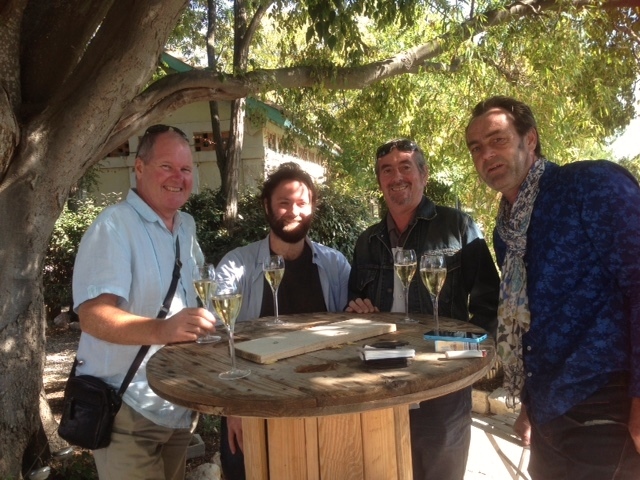
l-r Rémy Poujol, Jeff, Yannick Pelletier, Julien Peyras, Joe Jefferies, Bernard Bellahsen (Fontedicto), Olivier Andrieu (Clos Fantine)
Then, on Sunday, team Coutelou gathered at Le Terminus in Cruzy, one of the best restaurants in the Languedoc. Jeff kindly paid for our celebration lunch together, the food and wine were excellent (including Clos Fantine and Julien Peyras wines) and the company could not be better. Cameron will be heading back to London this week though hopefully returning soon. So, it was an occasion to say ‘au revoir’ too.
l-r me, Cameron, Michel, Jeff – team Coutelou
Jeff wondering how Cameron got a bigger glass! (It’s actually a decanter)
And to show that we really are moving into the next stage after vendanges Monday October 12th saw the first bottling of 2015 wines. Bibonade rosé is a sparkling, sweetish wine with 20 grams of residual sugar to produce 4 bars of pressure and, consequently, the sparkle. Jeff stopped the fermentation on Sunday and bottling under capsule took place this morning.
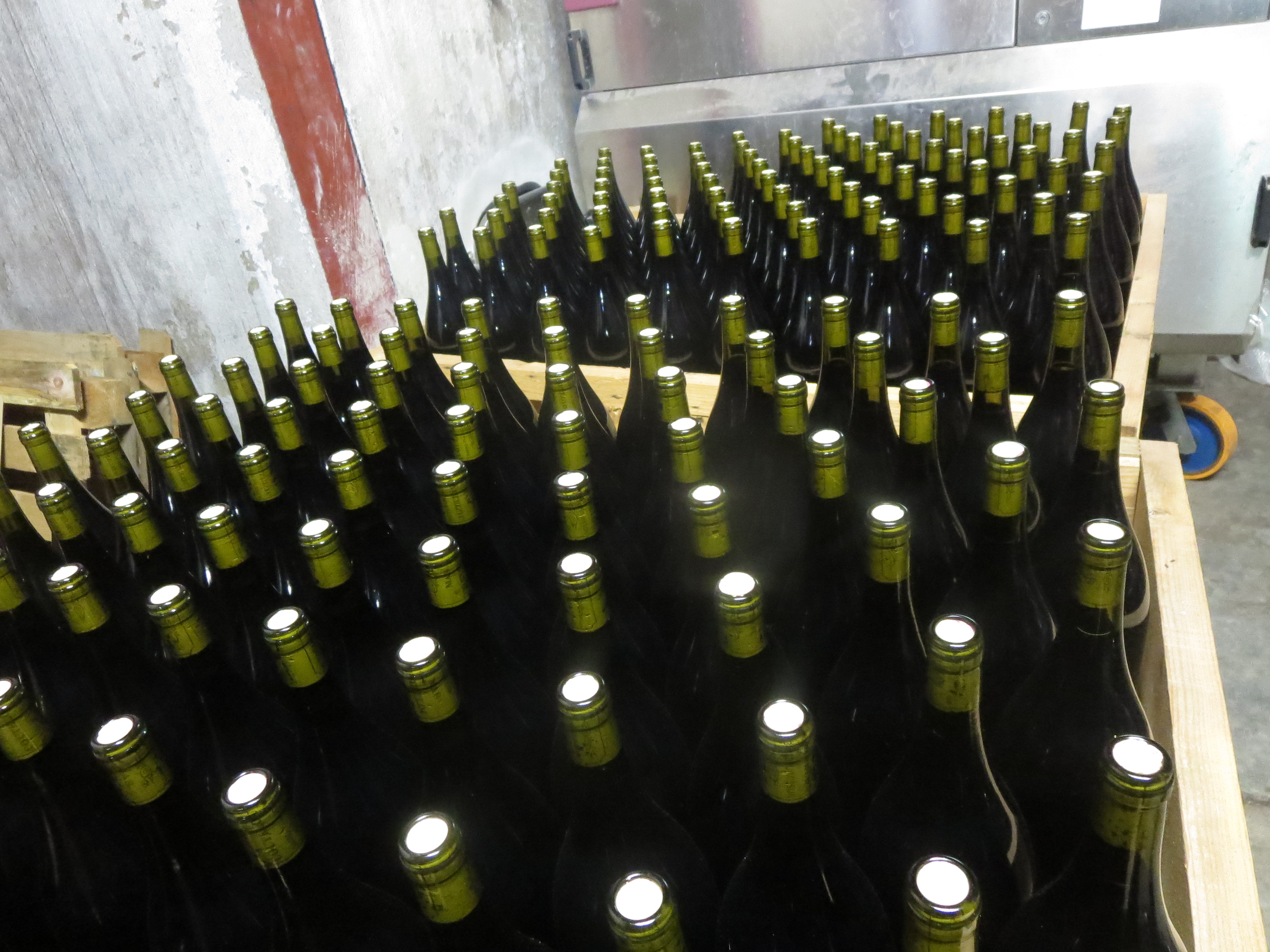
Bibonade rosé, bottled and stored
So 2015 vendanges is done, 2015 wines are on the way. Job very well done. It has been a joyful experience for me to take a full part, thanks to Jeff, Michel, Cameron, Carole and everyone else who has been part of the team. A dream come true.
This was the final big week of harvest and it centred around Cabernet Sauvignon. There is a big parcel (around 1.5ha) of the grape in Segrairals and it is not a variety which really excites Jeff for a Mas Coutelou wine. It has done especially well in 2015 though the small berries have swollen with the rains and the alcohol levels had therefore fallen a little to around 14%. They taste sweet and juicy and came in fantastic bunches, not the same size as the Cinsault and Mourvèdre from this vineyard, but small and healthy nonetheless.
Cabernet Sauvignon on the vine in Segrairals
Cabernet Sauvignon
Partof it was picked on Monday 21st September which will be used by Jeff, purpose as yet unknown though Cameron may be flexing his winemaking muscles with some. The other major work on Monday was to use the Muscat d’Alexandrie grapes from Peilhan which were also in good health.
Muscat d’Alexandrie
They have very thick skins so the pressing took longer than usual to extract the juice. They were mixed with some Muscat À Petits Grains grapes. I will come back to these grapes and the juice later in this article.
Michel loads the Muscat into the press
Muscat juice after pressing
Tuesday 22ndwas the big day for the Cabernet Sauvignon. I have explained before that Jeff sells most of these grapes to London Cru, an English winery as the name suggests. London Cru buy grapes from around Europe, eg Chardonnay from Limoux, Albarino from Rias Baxas, Grenache from Spain. This is the third vintage of the project and the grapes were ready at last. In 2014 they had been ready on September 4th, my first day at Mas Coutelou after our move to the Languedoc. This year the rain had delayed them so Gavin and Alex flew into Béziers on Monday evening. They had been in Italy on Saturday and only just got back to London before flying here. The refrigerated wagon was in situ as I arrived on Tuesday morning, waiting to be loaded with the grapes.
Confidence was high amongst the London Cru team after some very good reviews including one last week by Dr. Jamie Goode who gave the top mark (94/100) to the Cabernet Sauvignon using Jeff’s grapes. The fruit for 2015 should bring more high marks and good wine. We tasted the 2014 over lunch and it was very good, clear, direct fruit with ripe tannins which mean that the wine will be at its best in 2 to 3 years.
Alex and Gavin loading the grapes
Gavin, Alex and Jeff directed and led the picking carried out by the Moroccan team as usual but also by Cameron and myself together with two excellent new additions to the team in Fabrice and Romain. Fabrice puts on shows (spectacles) around France whilst Romain is an artist. They have picked here before and were good fun and hard working, more new friends. (Fabrice on the left, Romain to the right.
After picking the 6 tonnes or so of grapes they were driven straight off to London under refrigerated conditions to keep them fresh. Gavin and Alex flew back to London that evening ready to receive them at their base. London Cab, fine fare.
Fine bunch of Cab I picked
Lunch was excellent with the London Cru wine and a magnum of Flambadou 2014 which was excellent, still in its infancy but already drinking well. Afterwards Cameron and I did some pigeage of the Carignan grapes amongst others. It was also Cameron’s birthday, hopefully it was one he will remember with affection.
Birthday boy Cameron looking for his present
Pigeage of the Carignan
Wednesday 23rd was a day for working the cellar. Jeff was keen to aerate the Syrah a little and to start to maximise the cuves by assembling some of the tanks and filling the new ones. Thursday saw similar work whilst Jeff also did some admin work.
On Friday 25th I returned to the cellar. Cameron was enjoying a well earned break and so I joined Jeff and Michel. They were continuing to fill the tanks, aerate some wine and then we moved to the muscats from Monday.
Aerating some Syrah
Muscats macerating with a little older Muscat wine
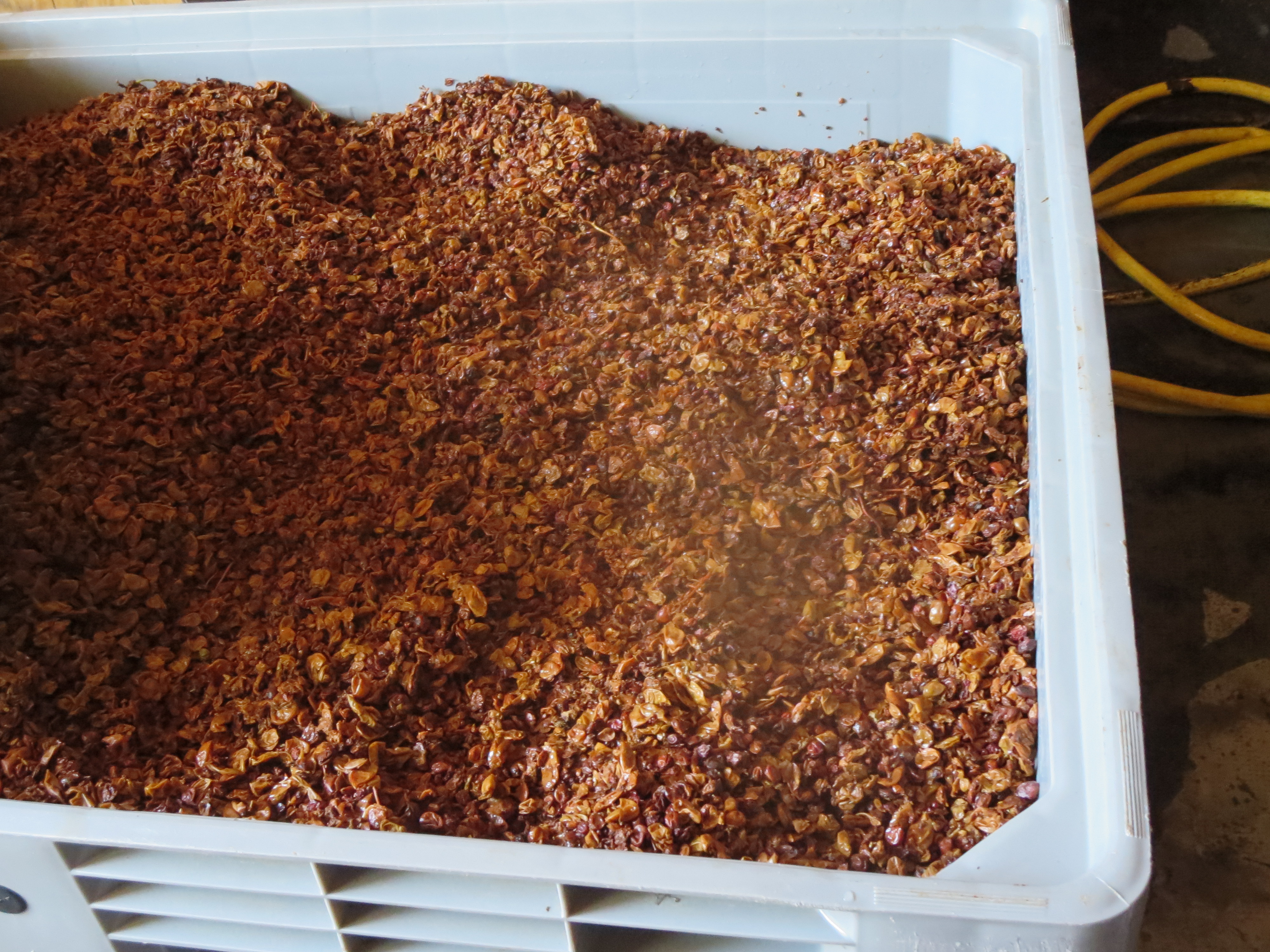
The Muscats are destined for the solera system and after a few days maceration they were showing lovely aromas, already slightly sherry-like due to being mixed with some older wine. The juice went straight into barrel whilst the marc was pressed again to extract more juice and flavour. Tasted straight from the press these included lovely apricot, plum fruits along with the slight oxidised note which adds complexity. Truly delicious, I’m afraid my description fails to do it justice.The barrel will allow the wine to age and gain contact with oxygen and the wine will develop into a luscious sweet wine. As stated previously I shall write more about the solera in the near future.
Michel removes the skins for pressing
Michel then loads the press
Gateau de Muscat
There are one or two small parcels still to pick but the main harvest is now over. It began back on August 21st so lasted just over a month. I shall be reflecting upon it and the lessons I have learned from it in the next article. Meanwhile I look forward to picking the Muscat from Rome and went to the vineyard on Friday lunchtime to take some photos. I was met by a family of partridges, butterflies and birdsong – Rome really is a magical place. In La Garrigue the vines are starting to show their autumnal colours, their work is done for 2015. The vines have given everything to their fruit in the last month and the leaves which remain after harvest are looking tired after a long, hot summer. All, or nearly all, is safely gathered in.
La Garrigue, Friday. The grass across the centre marks the ridge with Grenache near side and Syrah far side.
Grenache leaves showing that autumn approaches, harvest is over
No excuses for using a French title and a misspelling too. This is the hundredth article on my blog and so a play on the word cent is justified. I mentioned to Jeff Coutelou that this post would be a landmark and he decided that it should be celebrated with something special. I had thought about a review of the previous ninety nine, a greatest hits if you will, but Jeff had something much more spectacular lined up; I should make a special cuvée from the Coutelou vines, and not just any parcel but my absolute favourite vineyard, Rome.
This was such a lovely gift, in the middle of the harvest, a time of increasing pressure and stress, Jeff allowed me to take up time, grapes and equipment to make a special wine. How generous is that?
So it was decided to use the Grenache grapes from Rome a complanted vineyard of traditional, gobelet vines. The Grenaches were planted back in 1962 by Jean Claude Coutelou, Jeff’s father who told me about them at lunch on Friday, the day of the harvest and pressing. There are approximately 4 rows of Grenache Noir but mixed in there are quite a few Grenache Blanc vines and a smaller number of Grenache Gris. These would make a true assemblage of Grenache, a real feeling for Grenache, “sentiment de Grenache”.
My wife Pat was persuaded to come along and do some picking along with our friends Martin and May Colfer, neighbours in Margon, and great people. They had expressed interest in finding out about the harvest and were to get first hand experience! I was also delighted that we were joined by Céline and Delphine, two nurses from Bordeaux who had come down to Puimisson to take part in harvest. It is a mark of how highly Jeff is valued by his friends that many come along to help out and I shall mention more in the next vendanges diaries. Céline had done some picking in the first week of harvest when she and her family were staying with Jeff and had clearly enjoyed it, returning with Delphine.
It has to be said that none of us were the most experienced pickers and it took us around two and a half hours to harvest the four rows. One issue proved to be the complantation as mixed in with the Grenache Blanc were some Muscat vines and the Cinsault and Muscat Noir vines were easily mistaken for Grenache Noir. Fortunately my recent articles on ampelography meant that I was able to guide us into collecting the sought after Grenaches with just a few extras. It was made easier by the grapes themselves which were in excellent condition, really healthy. Mixed with Queen tunes and chatter we worked hard to pick and the first grapes were transported back to the cellar along with myself, there to start the pressing.
As this was a small quantity of grapes they would be pressed in one of the small hydraulic presses and so I had to tread them first so that they would not burst in the press, squirting juice everywhere. Then into the cage and the juice began to flow, sweet, clear and weighing in at over 15º of potential alcohol.
Back to the vineyards to rejoin my friends in order to complete the picking. At 11.45 we had completed all the Grenache vines. I have said before in this blog that I call the vines of Rome vineyard ‘centurions’, as they stand tall and proud. Roman centurions were older, were trained and gave everything for each other. These vines are exactly the same and making an assemblage of the different Grenaches seems appropriate, centurions stand together.
Lunch beckoned and it was good to share together and enjoy some of the bottles of Mas Coutelou, coincidentally including a magnum of ‘Grenache, Mise De Printemps 2014’. As this is the 100th article it also made me think of a year ago when I sat around that table and Jeff told me his story of the <Chaud Doudou>, a fairytale with a moral of sharing and love, very much Jeff’s philosophy. Looking around the table with Jeff, Jean-Claude, Michel from Puimisson with visitors from the Loire, Bordeaux, UK, Ireland and Australia it was hard not to think that this was exactly what that philosophy is all about.
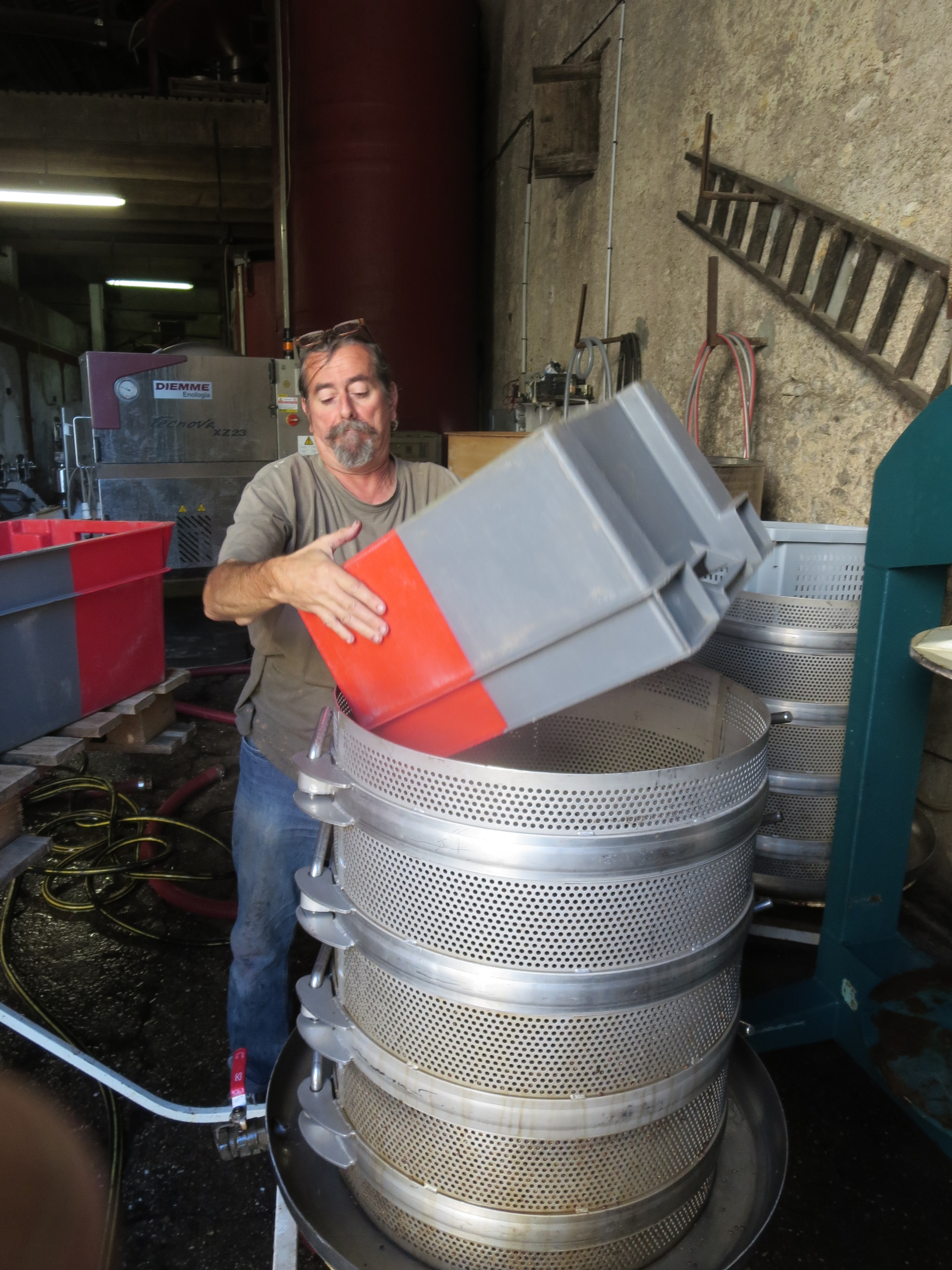
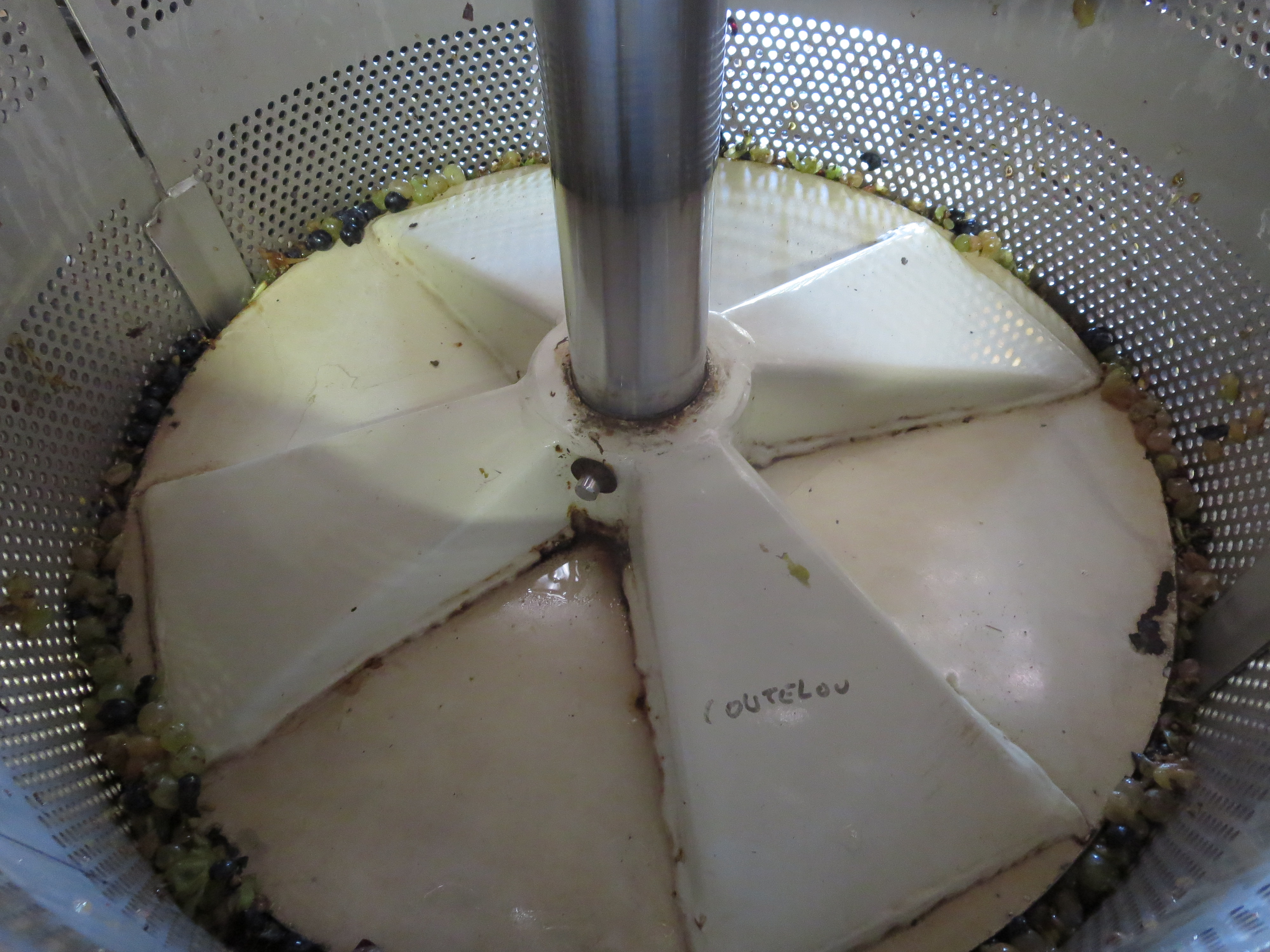
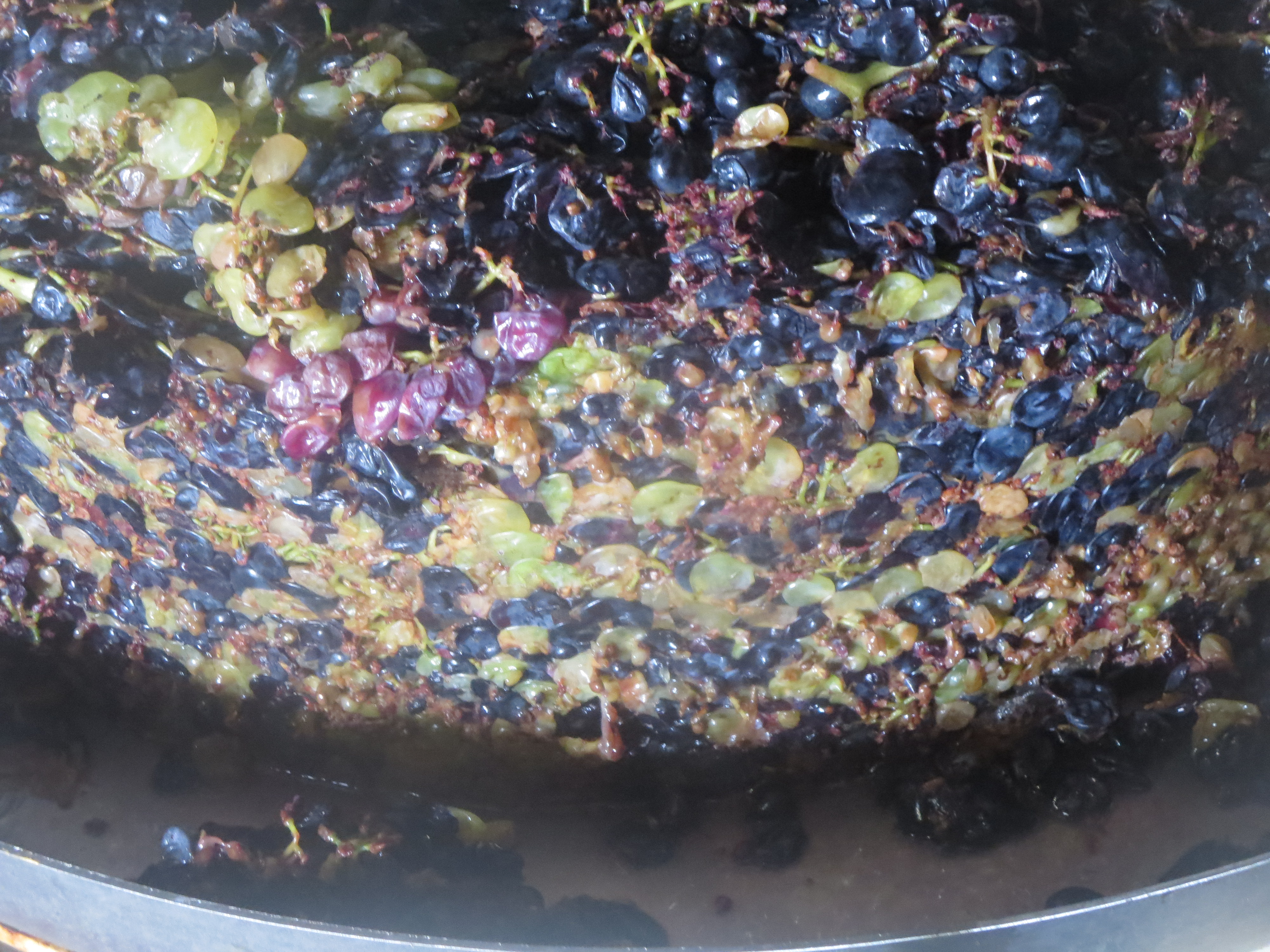
In the afternoon I pressed the grapes three times in total. Between each one I carried out a rebeche, dismantling the gateau of grapes made by the press and rearranging them for the next pressing. The contrast between the black, pink and white grapes was beautiful to look at.
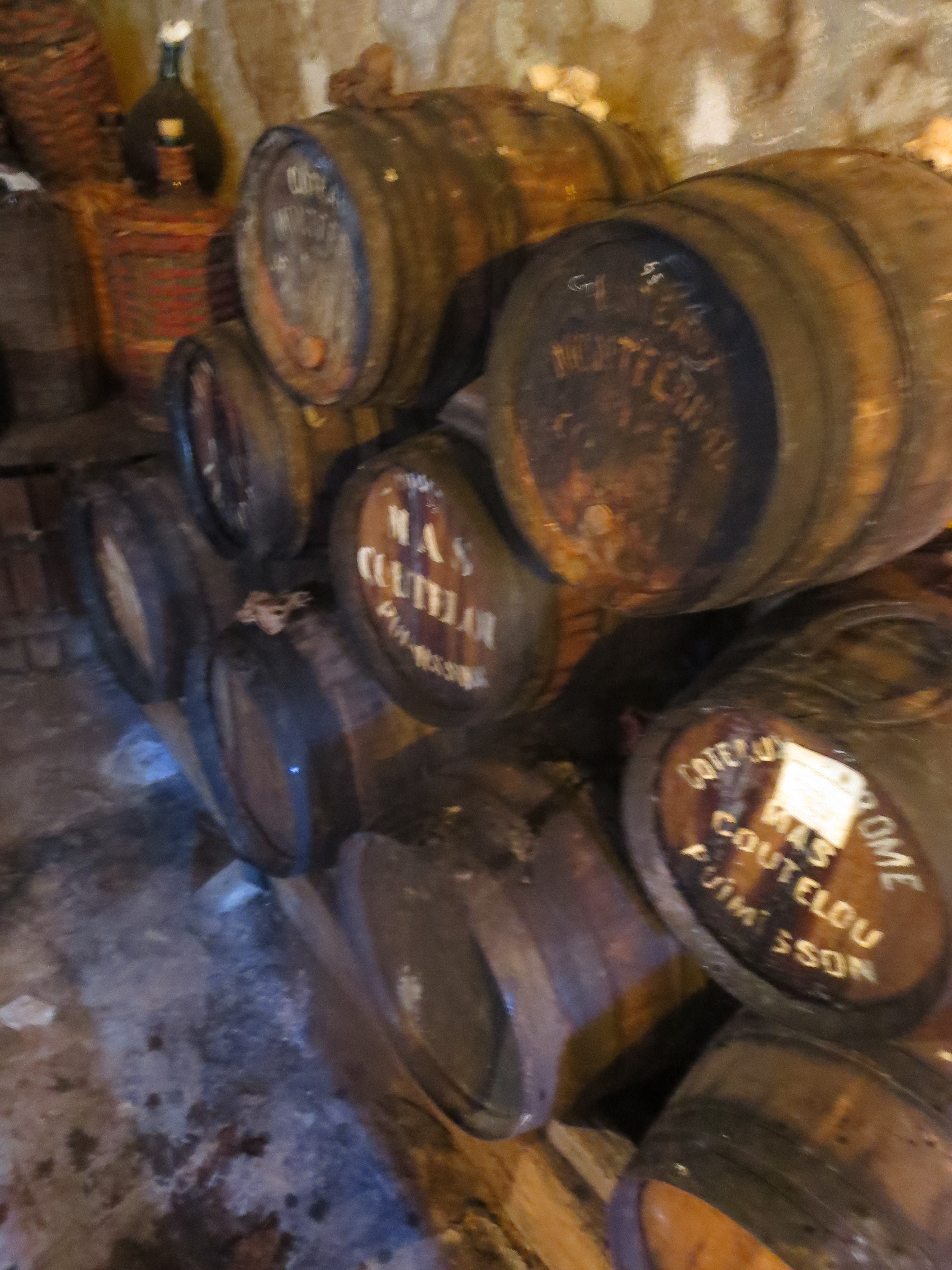
The end product was only around 125 litres of wine after all that effort, this will be a true collectors item so send your bids in now! Jeff thought it would be interesting to see how the wine will develop in different containers, so some went into a 60 litre barrel, more into two, older 15 litre barrels and the rest into a big 27 litre bottle.
First pressing
Second pressing, slightly darker in colour
Delphine and Karim checking my work
During the whole process other parts of the cellar were busy as more Grenache from Sainte Suzanne were brought in. Yet Jeff gave me his time, advice and encouragement through it all. What can I say? I am a very lucky man to have been able to share my experiences with you all through this blog and I am grateful to very one of the 10,000 people who have read my words in just over a year. It has been an exciting and hugely enjoyable time and hopefully this cuvée will embody the sentiment of sharing and love and represent the beautiful Rome vineyard and the amazing generosity and talents of its owner.
The harvest (vendange) began on Friday August 21st with a small parcel of Muscat grapes as described here. The next few days saw further preparations for the main harvest, for example clearing space in the barrels of the solera system for this year’s grapes. I shall write more about the solera later in the year.
Solera system
So, it was Thursday 27th which was the start of the real vendanges with parcels of white and Syrah grapes collected from La Garrigue. This day was described here.
Friday 28th saw more Syrah being harvested, this time the Syrah of Metaierie usually referred to as Sainte Suzanne by Jeff. This is the vineyard of Vin Des Amis though options are always open. The pickers, led by Carole and Julien, worked through a cloudy morning to collect some high quality bunches.
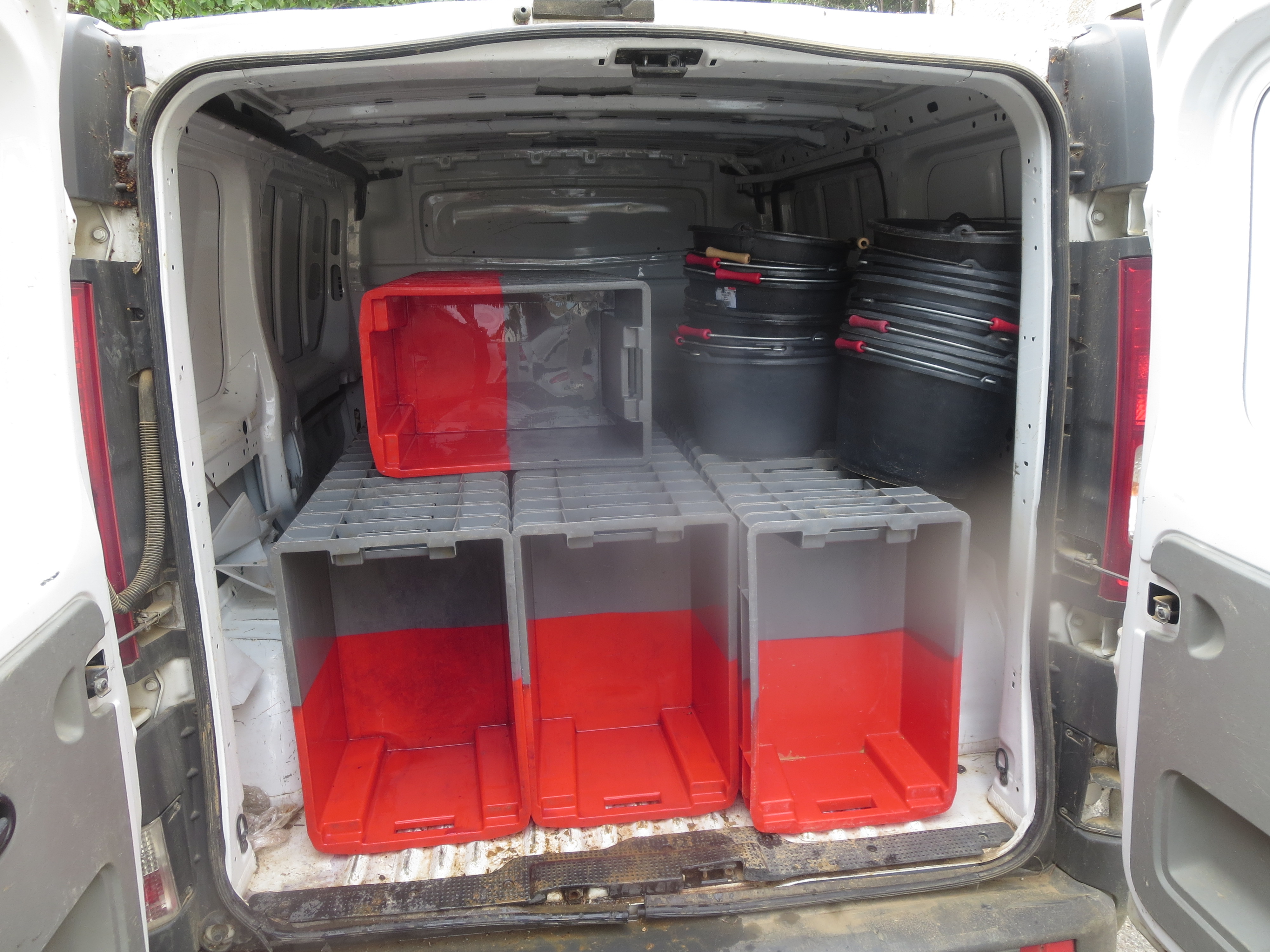
Michel transported the cagettes back to the cellar as quickly as possible. The cagettes are about two thirds filled so as not to overload the grapes in there which might damage them.
No, these cagettes are not full!
Upon arrival at the cave the cagettes are quickly taken for triage, sorting through the grapes to select only the best quality. Foreign objects such as snails and spiders are removed as are unripe grapes, any damaged or rotten grapes. It is important that only the best goes into the wines to keep them fresh and at the high quality we expect from Mas Coutelou. Two people sift through the cagette, removing any inferior grapes for further sorting by a third person. Jeff, Cameron and I took these roles on Friday. It is hard work, on your feet all day and lifting, carrying and sorting requires physical effort and also full concentration. There is, happily, also time to chat and laugh.
Cameron is from Melbourne, Australia and has been living and working in London as a sommelier for four years. He decided to learn more about the winemaking process and to “get his hands dirty”. He is already proving his worth and is a great addition to the team.
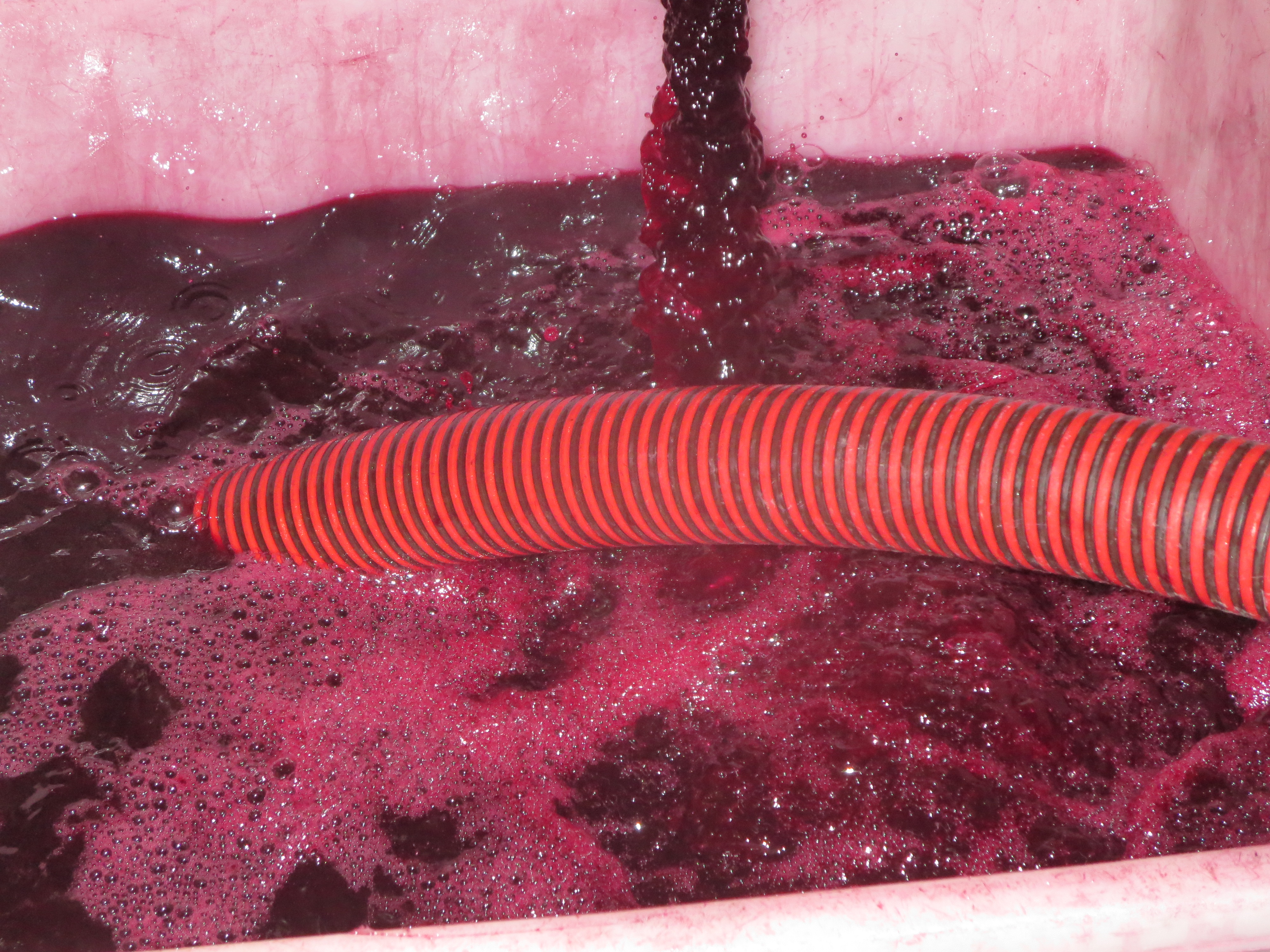
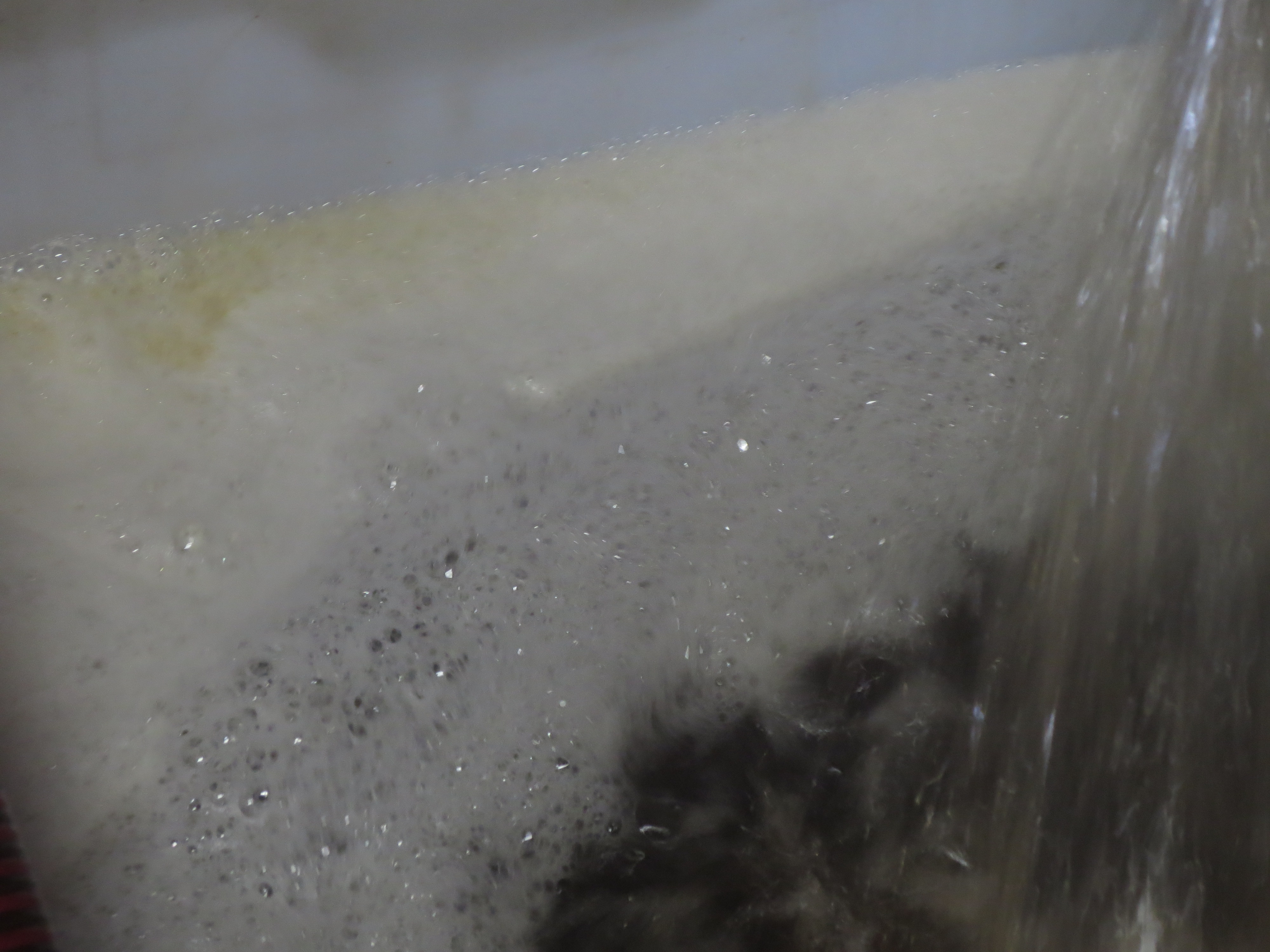
Meanwhile, the grapes which had gone to vat (cuve) have to be taken care of. Fermentation has started and the wine is already producing material which needs to be removed to keep the wines clean. They are, therefore, pumped out of their original cuve into another to allow the waste to be cleaned away and the fresh, juice ready to settle for its longer journey of fermentation.
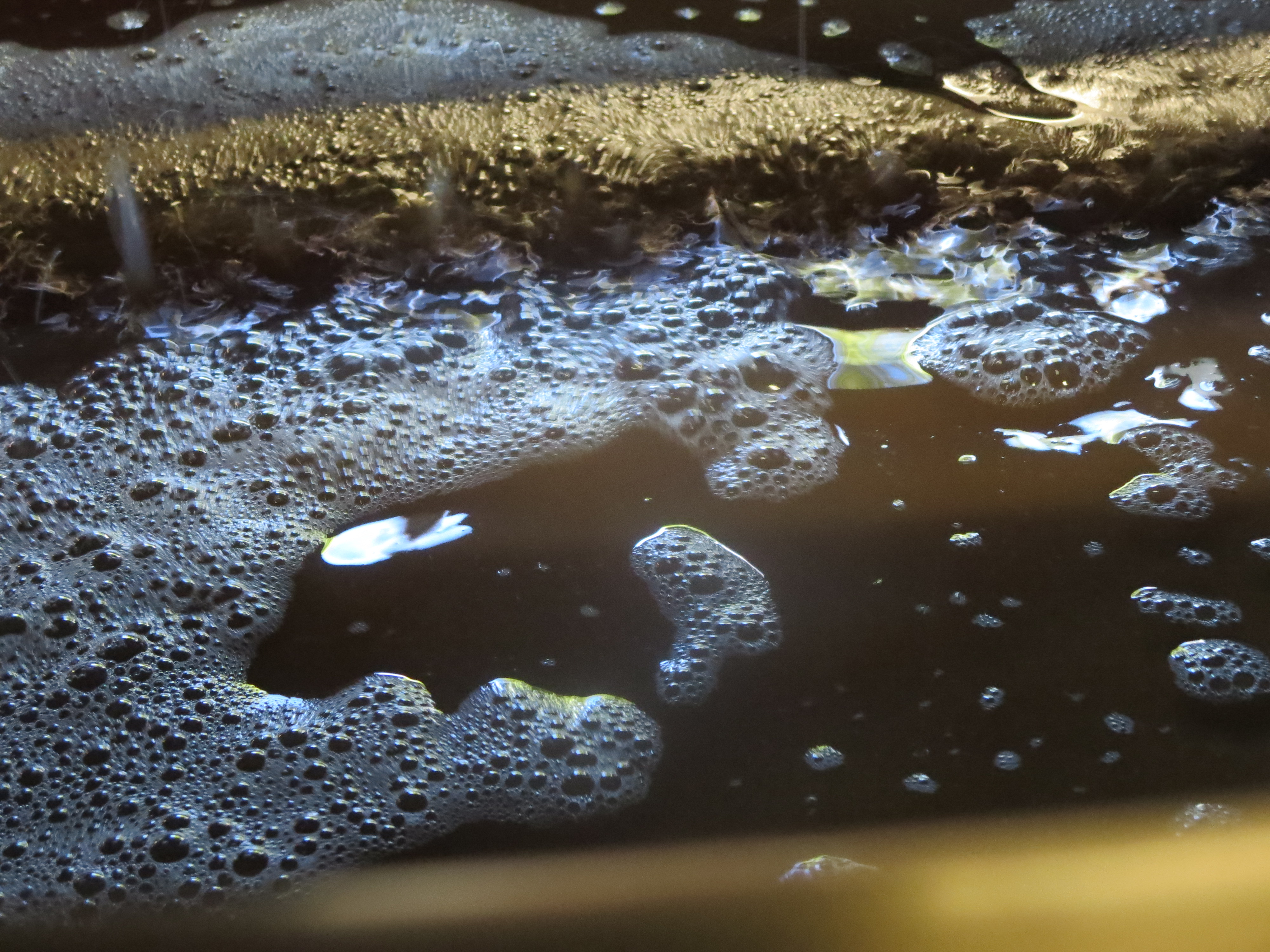
Fermentation beginning in the Sauvignon Blanc grapes collected yesterday (Thursday)
And at the end of the day the cleaning work is intense. Everything is cleaned throughout the day but at its end another full clean takes place. This removes the risk of contamination from dirt or damaged fruit which would ruin the wine. It is laborious but necessary.
Julien cleaning the cagettes
Ready for tomorrow
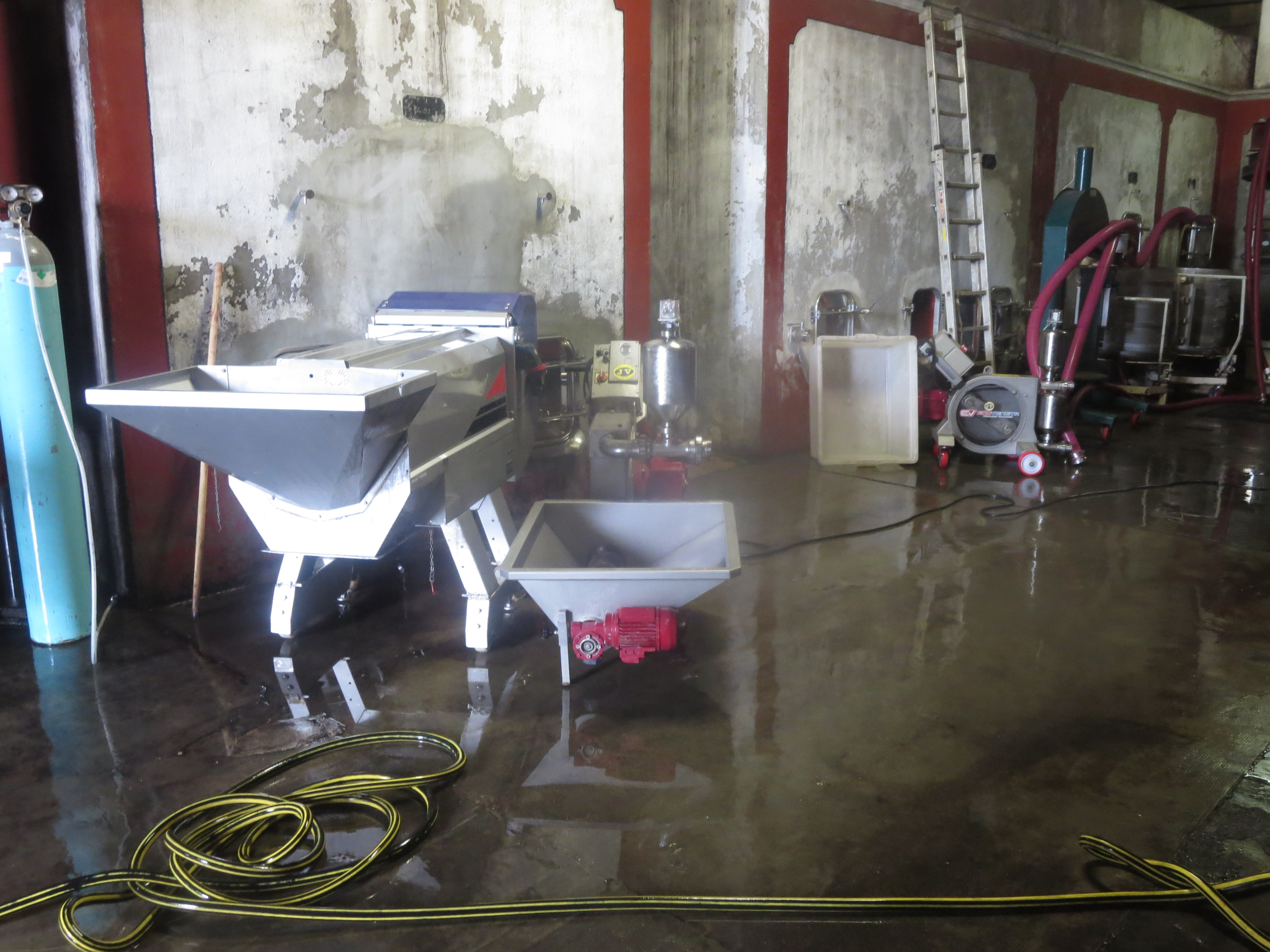
The égrappoir (destemmer) ready for tomorrow too
What else needs cleaning? Proof that I did work!
Analysis of the Syrah showed that the alcohol level was around 12.7% with medium levels of acidity. Later picking would have added more sugar and more potential alcohol but would have lowered levels of acidity. The skins are essential to the quality of the wine as they contain the colour, tannin and much of the flavour of the wine. These were in excellent condition according to the analysis, good news.
Jeff’s own calculations from cellar tests. Samples go to the oenologue for full analysis
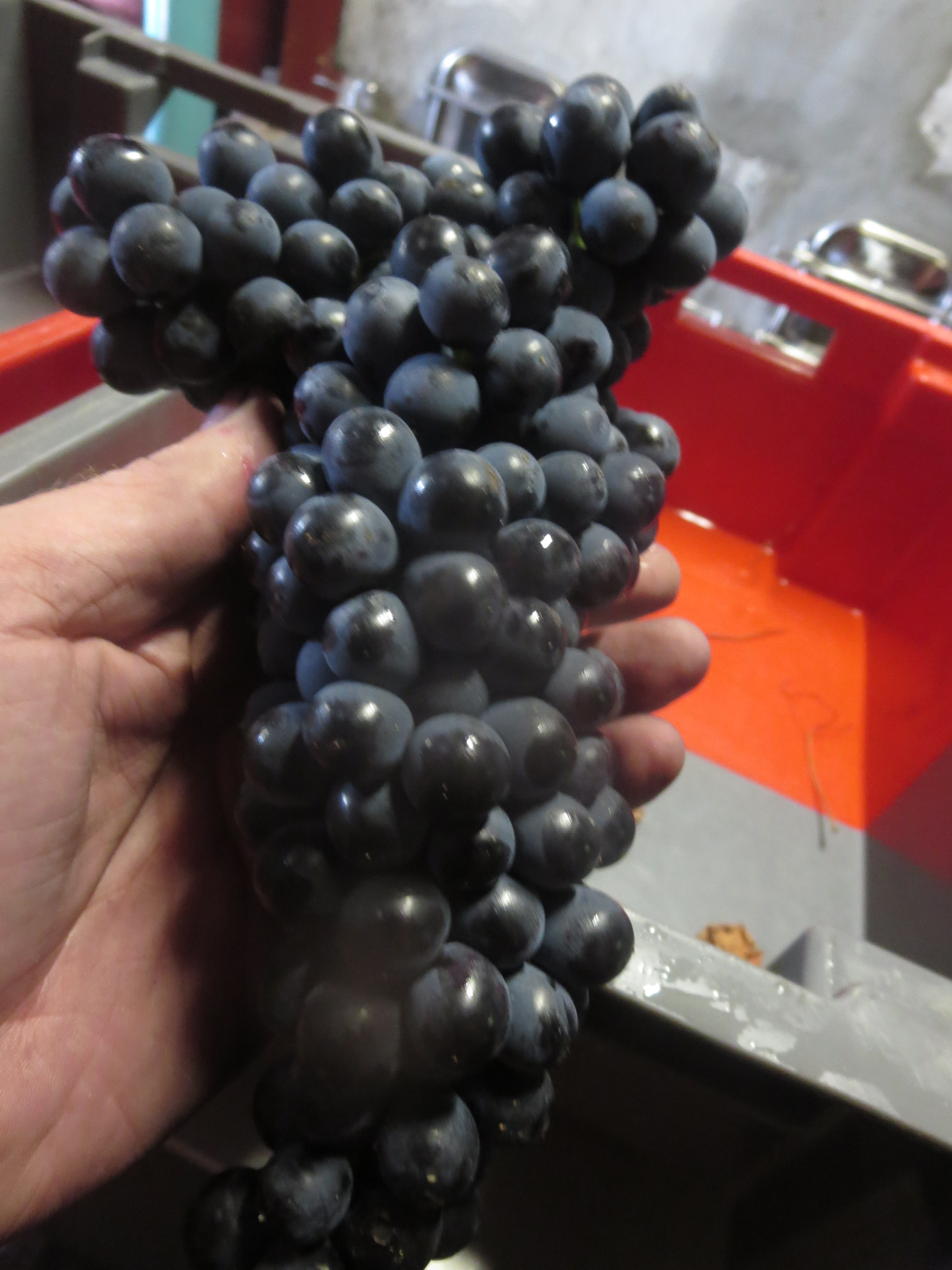
Classic shape for a bunch of Syrah grapes
There have already been some concerns expressed by winemakers and analysts that the heat of 2015 might affect the quality of wines around France especially regarding acidity. The decision to harvest the Syrah was therefore the right one, fresh, cleansing acidity is a hallmark of Jeff’s wines. Many winemakers have been waiting to start harvest as, on August 30th, the moon is at a perigee, the time when it is closest to Earth in its orbit. As it begins to wane and move away from Earth many winemakers will start their harvest. Jeff has chosen to put the quality of the grapes first rather than principles about biodynamics.
Moon over Margon at its perigee on August 30th
Saturday 29th was a work day for the cellar and the pickers and saw the harvesting of Cinsault grapes from my favourite vineyard, Rome. The grapes were big and juicy though some were uneven and needed more careful sorting. Clearly these were precious grapes as Icare was guarding and watching over them assiduously. The harvest was not as big as many years and so the pickers moved onto Sainte Suzanne again for more Syrah grapes whilst yesterday’s grapes have begun to ferment already.
All photos taken on August 2nd unless otherwise stated
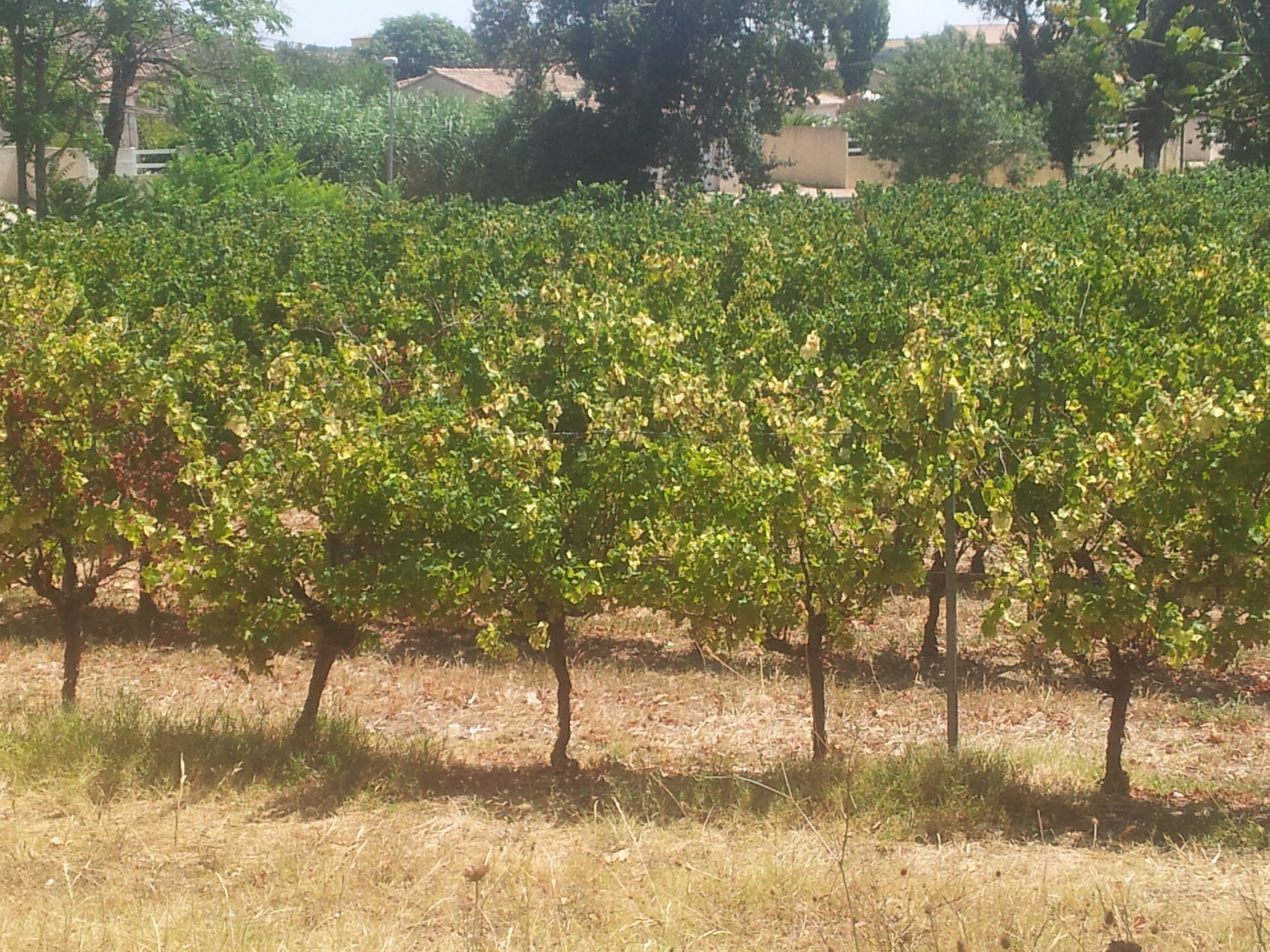
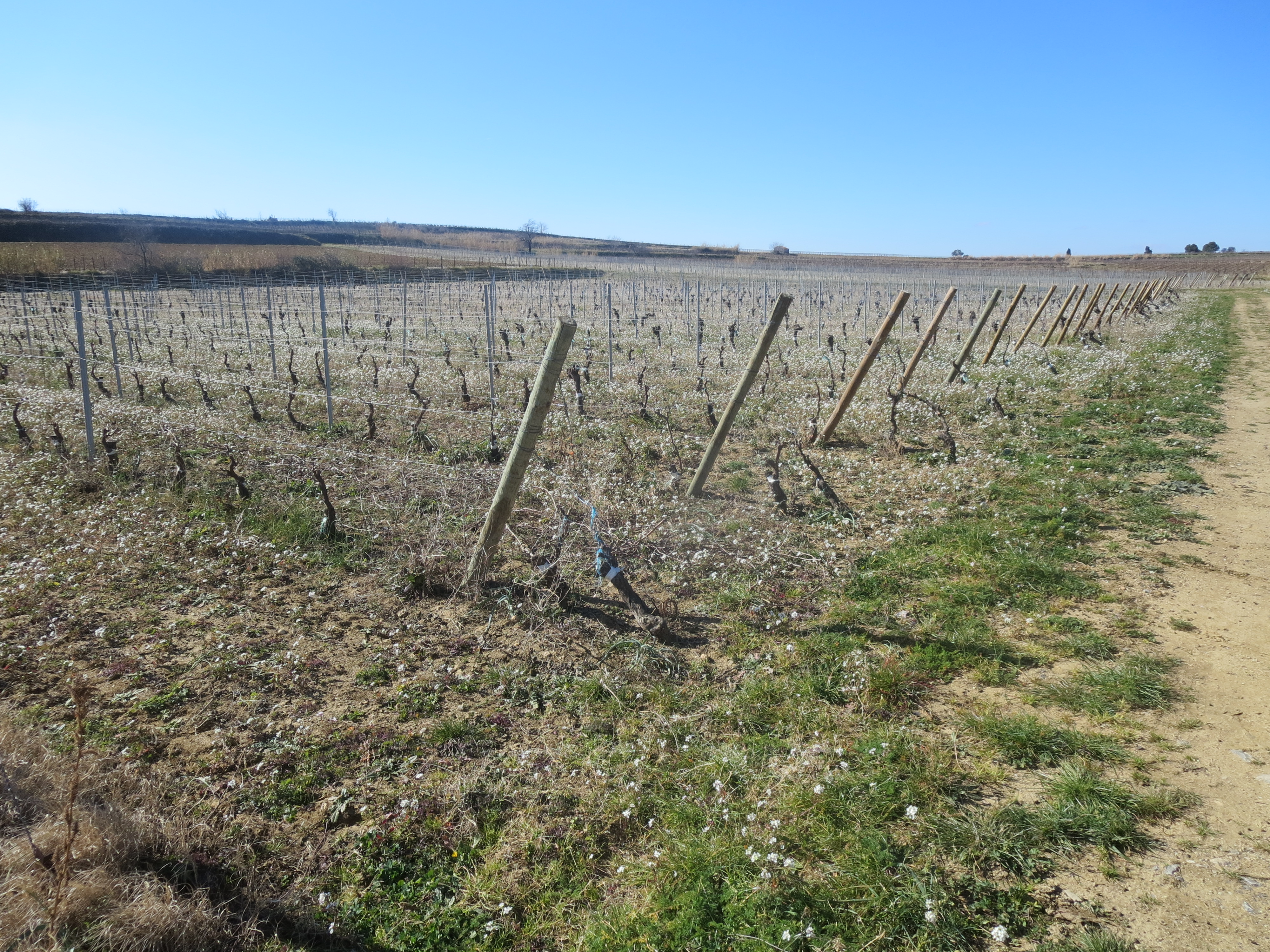
It was June 12th when rain last fell on Margon and the vines in the region, although generally doing well, were starting to show signs of fatigue and heat stress; leaves curled in upon themselves, some yellowing, a slight shrivelling.
Vines near Pézenas showing some stress
Vines in Margon which were not pruned in spring and are really suffe
A few drops fell on July 25th but the skies had been very dark and had promised much more, it was almost cruel to have that rain, a tease of what might have been. However, July 31st brought around 10mm to Puimisson. A decent rainfall, enough to give the vines a drink and to stop the drying out process. Not enough of course after weeks of lack of moisture and some more rain in the next few weeks would be very much welcome to swell the grapes and the harvest. The vines are now pouring their energy into their fruit rather than their vegetation, but they need the nutrients to do so.
So, how had the vines responded to the rain which fell? Well a tour on Sunday (August 2nd) showed the vineyards of Mas Coutelou to be in rude health, a decent harvest is now predicted though that extra rain would be most welcome.
Segrairals in full bloom, healthy, happy vines
Segrairals, biggest of the vineyards, showed some healthy Cinsault, Syrah and Grenache with no signs of stress or disease. As the home of Classe, 7,Rue De La Pompe and 5SO this is especially welcome, as they are some of the big sellers.
Cinsault in Segrairals
To Rome, my favourite vineyard. The gobelets were looking well, plenty of grapes both the white varieties and the Cinsault. There was a little mildew around the entrance but minimal, no cause for concern. Could there be a cuvée of Copains in 2015? Jeff tells me that no decisions are made as yet, caution prevails and he will wait to see what the harvest gives him before he makes final choices about how to use the grapes and the wines which result.
Rome’s centurion vines in good health
Muscat Noir grapes, a tiny bit of mildew top left
Sainte Suzanne (Metaierie) suffered from coulure in May with the strong winds blowing off some of the flowers on the vines, which will reduce yields a bit. However, the grapes there are growing well, what might have been a problem looks now a much brighter picture, good news for fans of Vin Des Amis.
Peilhan, just a little more tired and suffering
The only vineyard parcel which has shown stress is Peilhan, There was a lot of regrafting and replanting in the spring and the dryness has caused problems for these new vines. There was also oidium in this parcel, the only vineyard to be attacked by this powdery mildew. Yet amongst those problems there are plenty of healthy grapes, some careful picking and sorting will be needed but it will produce good wine.
The famous Castets grapes of Peilhan
La Garrigue was blooming, the white varieties such as the Muscats are swollen and changing hue to lovely golden shades.
Muscat a Petits Grains in La Garrigue
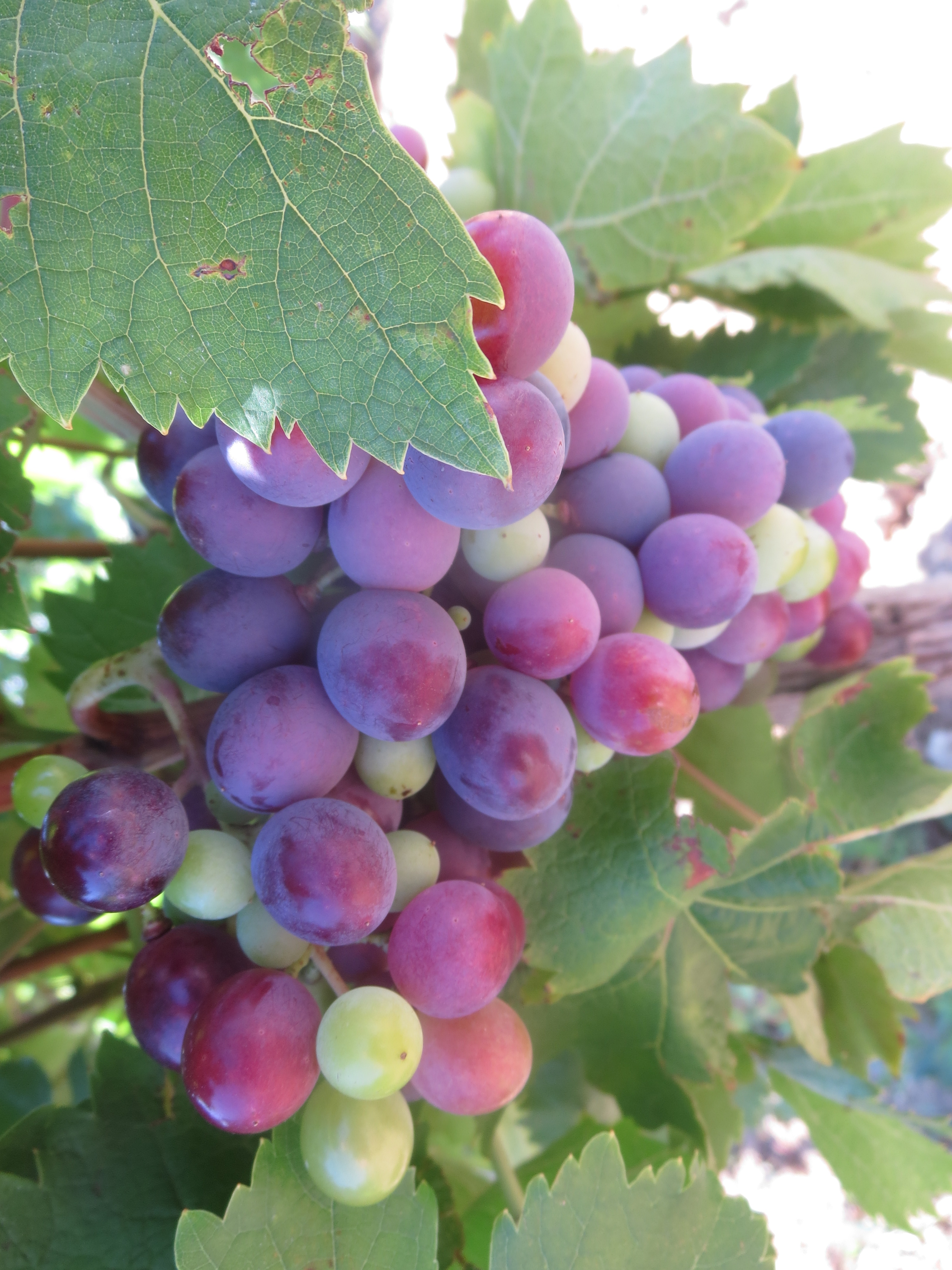
The Syrah is well advanced, a dark purple colour across virtually the whole bunches, the pips though betray a little immaturity as they taste and look green and sappy. A little more time and patience will pay dividends. As the world’s biggest fan of La Vigne Haute, I have my fingers crossed.
Syrah in La Garrigue, ripening beautifully in the shade of the vine
The Grenache in La Garrigue, despite facing south, is a little more delayed in colour but getting there and very healthy.
Grenache in La Garrigue
In fact despite risks of disease earlier in the year (see here) Jeff has been able to use minimal treatments in 2015. Oidium and mildew (powdery and downy mildew) can be controlled by copper sulphate, sometimes called the Bordeaux mix when added to slaked lime. This is a bluish colour when sprayed by conventional and organic vignerons and is often seen on the leaves of vines. Vignerons might also use chemical fungicides if they are not organic producers.
Neighbouring vineyard which was given herbicide shortly after harvest last year and whose new vines have been treated regularly
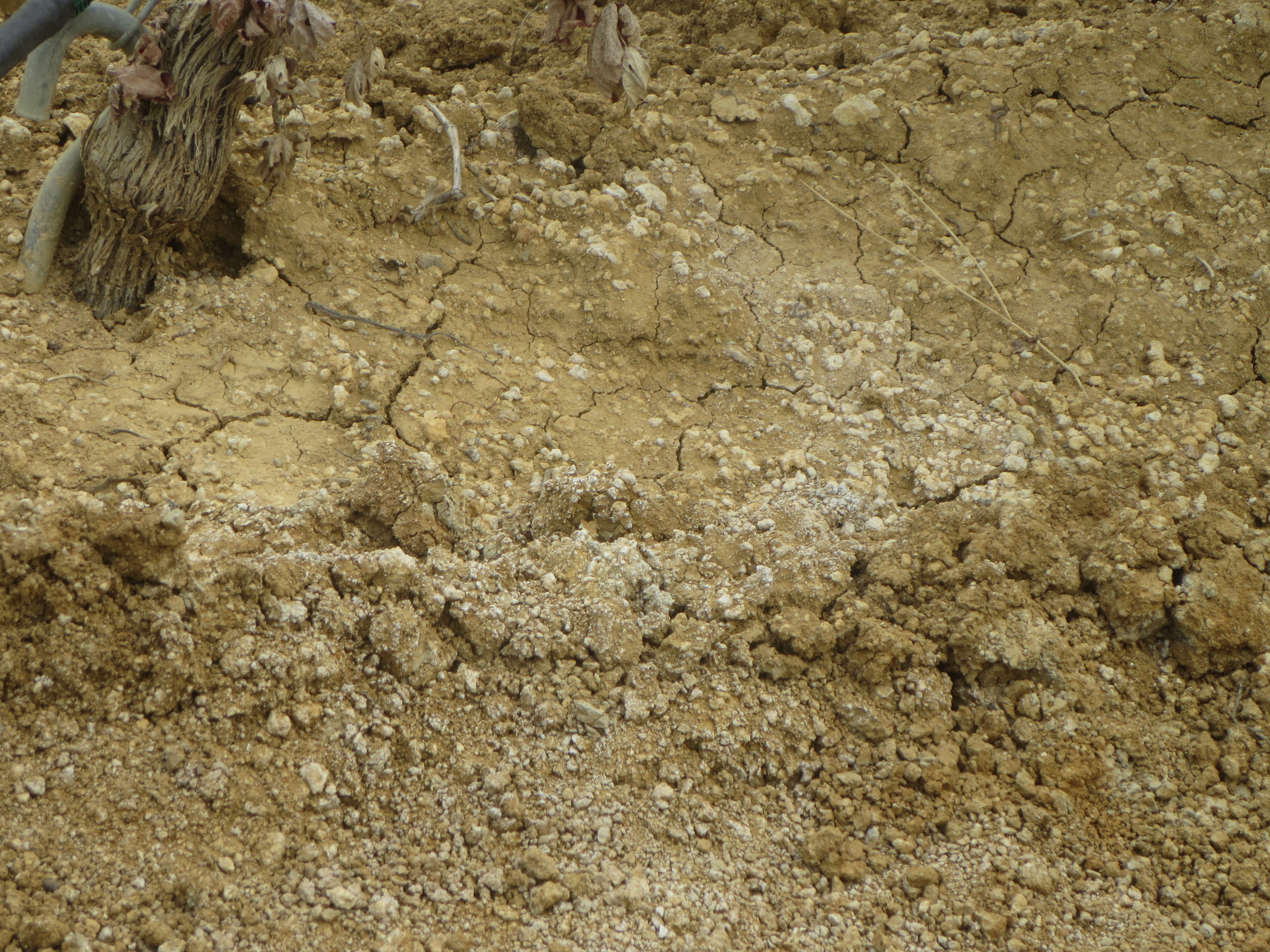
Some neighbours have also irrigated their vines and one alarming consequence is the changing of the soil and its pH as the calcium carbonate in the water shows through, you can see it in the white parts of the soil in this photo taken on July 22nd.
The irrigation is also causing the vines to grow quickly and tall with thin trunks as seen below. It should be acknowledged that there are many conventional producers who take great pride in the health of their soils and vines and would be horrified by some practices described here.
As a proud holder of Ecocert organic status and as a natural wine maker Jeff must use natural products only. Tisanes of plants which fight mildew such as horse tail, fern and nettles can be sprayed and this is the basis of many biodynamic treatments. However, the two main weapons in the armoury of organic producers are copper and sulphate, both natural products.
Copper is used against mildew, but is harmful to the soils and kills life in them if used in significant quantities. Organic producers are limited to 30kg per hectare over a 5 year period, allowing more to be used in years with more downy mildew for example but only if less is used in the other years. In fact Jeff has used just 200g per hectare in 2015 and this after years of well below average use, his use of copper is on a major downward trend. He is reluctant and very careful in using copper as he is aware of its danger to the soils, yet mildew has not been a major threat this year.
Oidium seen in May
Similarly Jeff has used sulphur in soluble form at doses much lower than the permitted level, three treatments over the course of the growing season. In addition one dose of sulphur powder was sprayed when the risk of oidium was high (May) and a second spraying for Peilhan only as it is the vineyard which was attacked by oidium. In contrast to neighbouring vignerons who have sprayed every 10 days including after the bunches closed up (so more than a dozen treatments) this really is minimal intervention.
So July’s parting gift of 10mm of rain was welcome, August might like to follow by offering some rain soon. Too near the harvest is bad as it would dilute the juice rather than help the grapes to reach a good size. Things look promising, let us hope that nature completes its bounty. There is an old saying that June makes the wine and August makes the must, ie the character of the wine with its colour, yeast and flavour. With 3 weeks or so until picking begins it is an exciting, and nervous, time, waiting to see what that character will be.
No Icare this time but look what we found amongst the vines, he’s been here!
NB there are lots of reports about recent wine tastings here.
( How the wine will turn out no-one can say, before the end of the month of May)
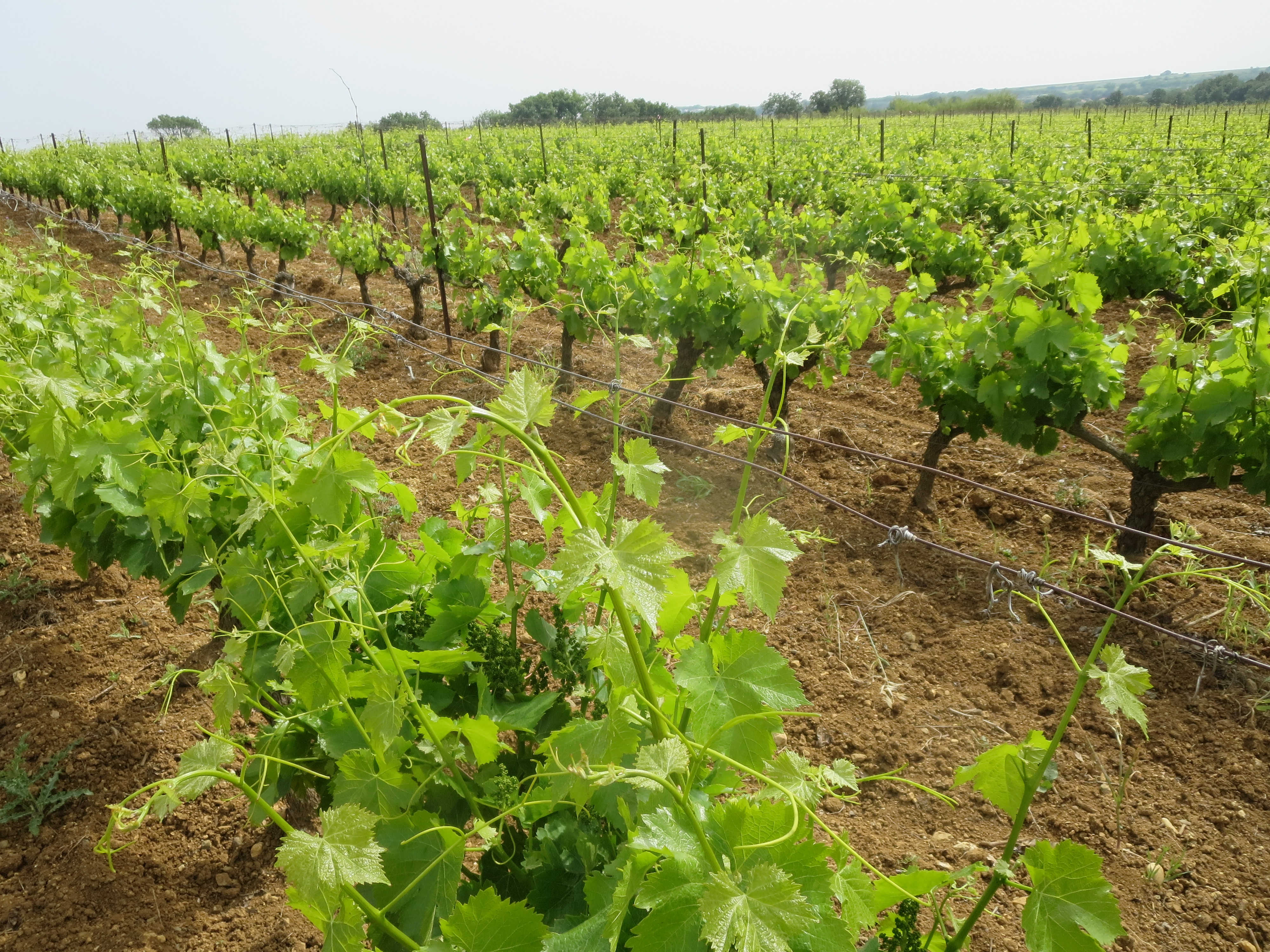
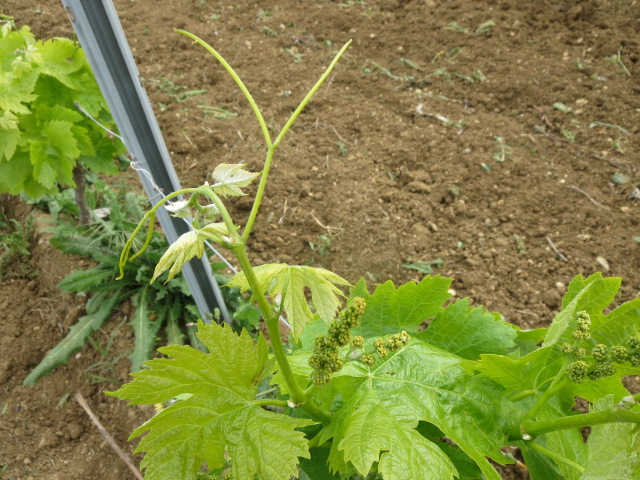
Hopefully the rest of this post will be better than my rhyming translation. The point is however, that May is the turning point. The preparation of pruning, ploughing and pampering paves the way for the lush growth of May. In the wild vines grow in forests and are climbing plants using trees to help them reach sunlight so that photosynthesis can take place to feed the grapes and their seeds. Cultivated vines still climb relentlessly and the growth is stunning to see. Tendrils reach for the sky pulling the vine higher and the leaves fill out.
Tendrils reach up
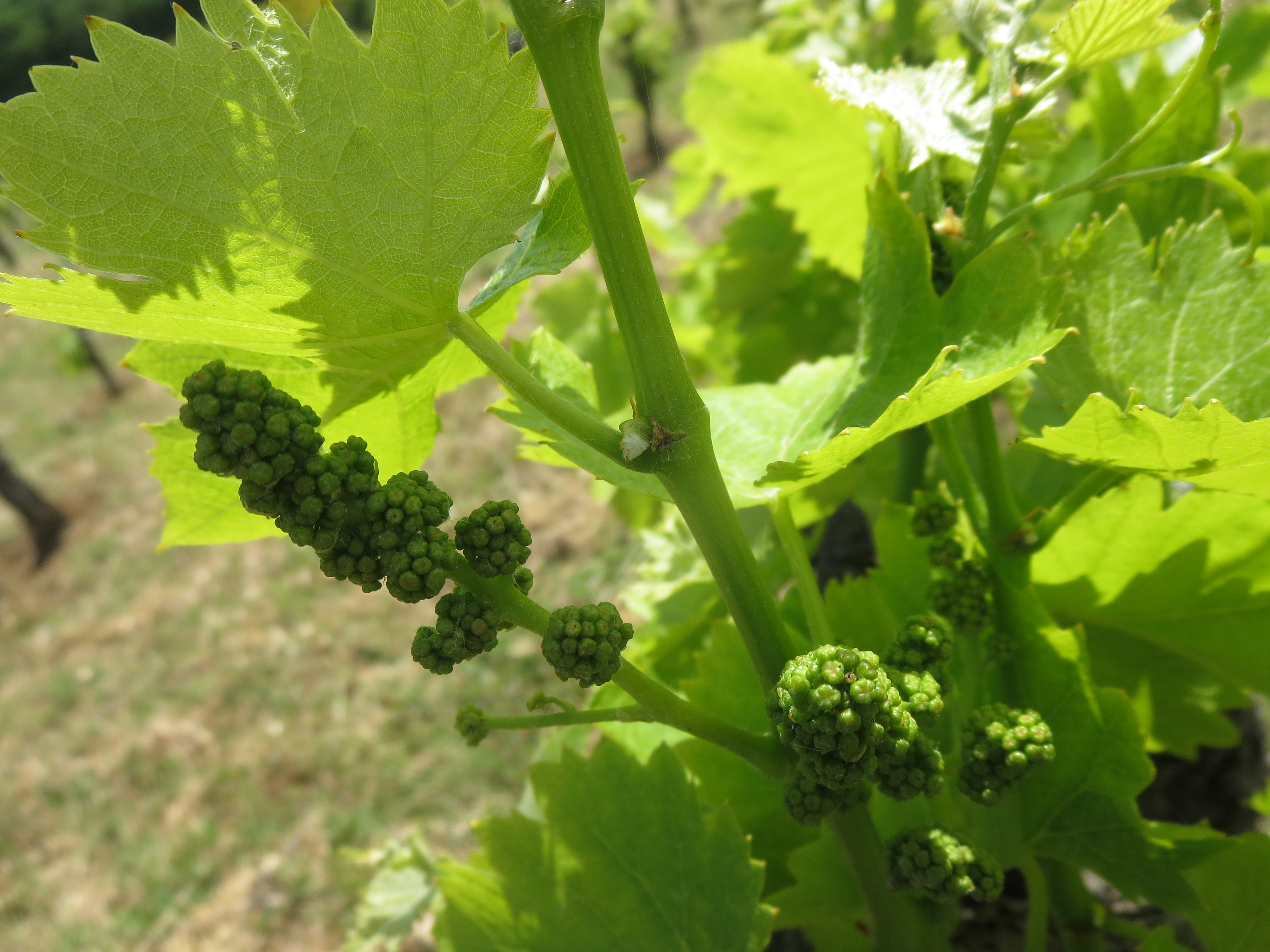
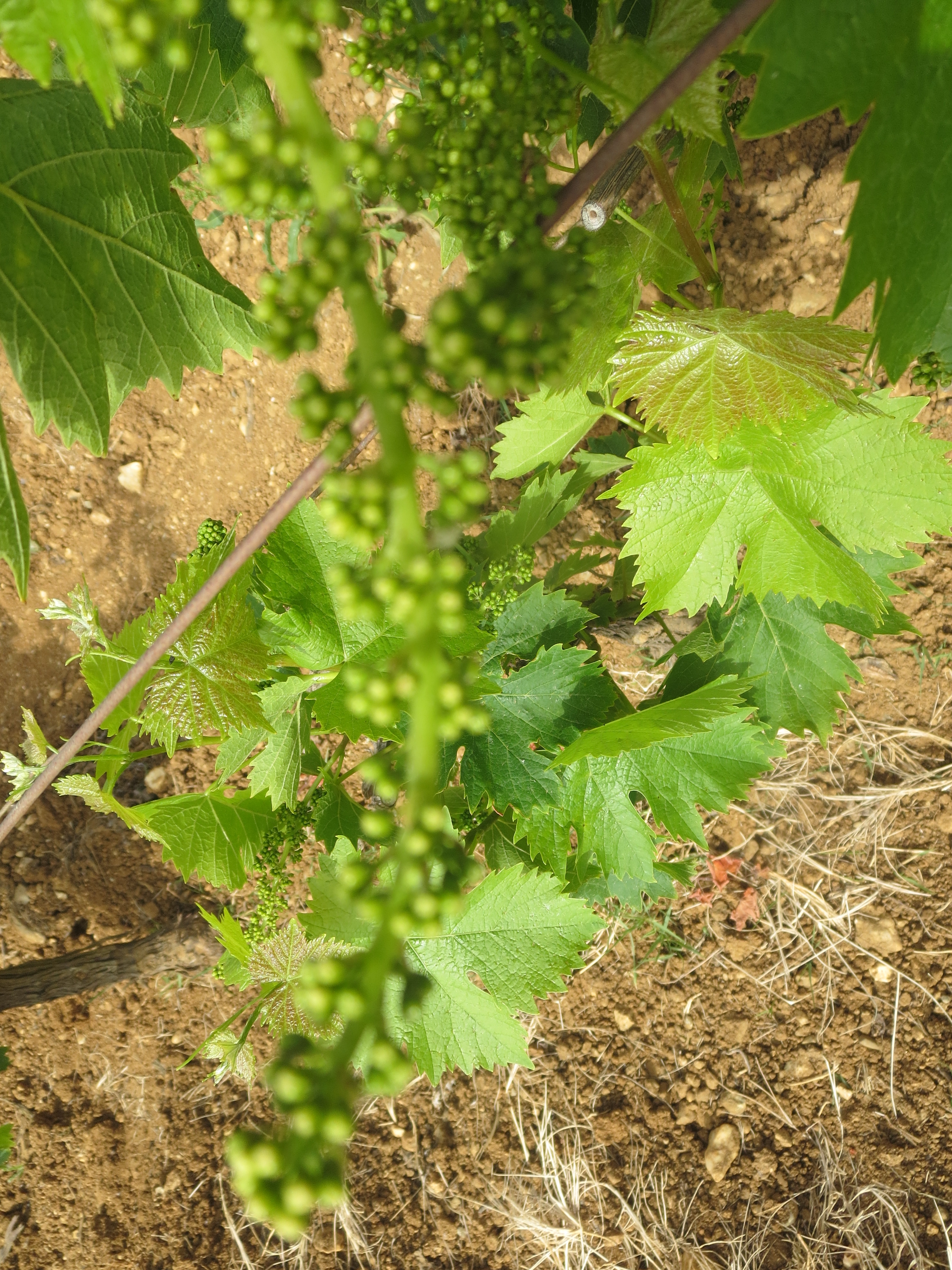
The buds have grown showing the development of the bunches and these in turn are now dividing ready for the start of flowering which will bring pollination and then the fruit.
Early buds
The grappes divide
The division accelerates
As for the vignerons it has become a very busy time. In the vineyards a second ploughing to prepare the soils with organic matter as they need help to sustain their rapid growth. In addition the first treatments of pesticides to protect the new growth. Insects are also growing fast and tender buds, leaves and shoots are welcome nourishment. Conventional vignerons use chemical sprays, those who prefer a lutte raisonnée use synthetic chemicals which do less damage to the soils.
Conventional spraying
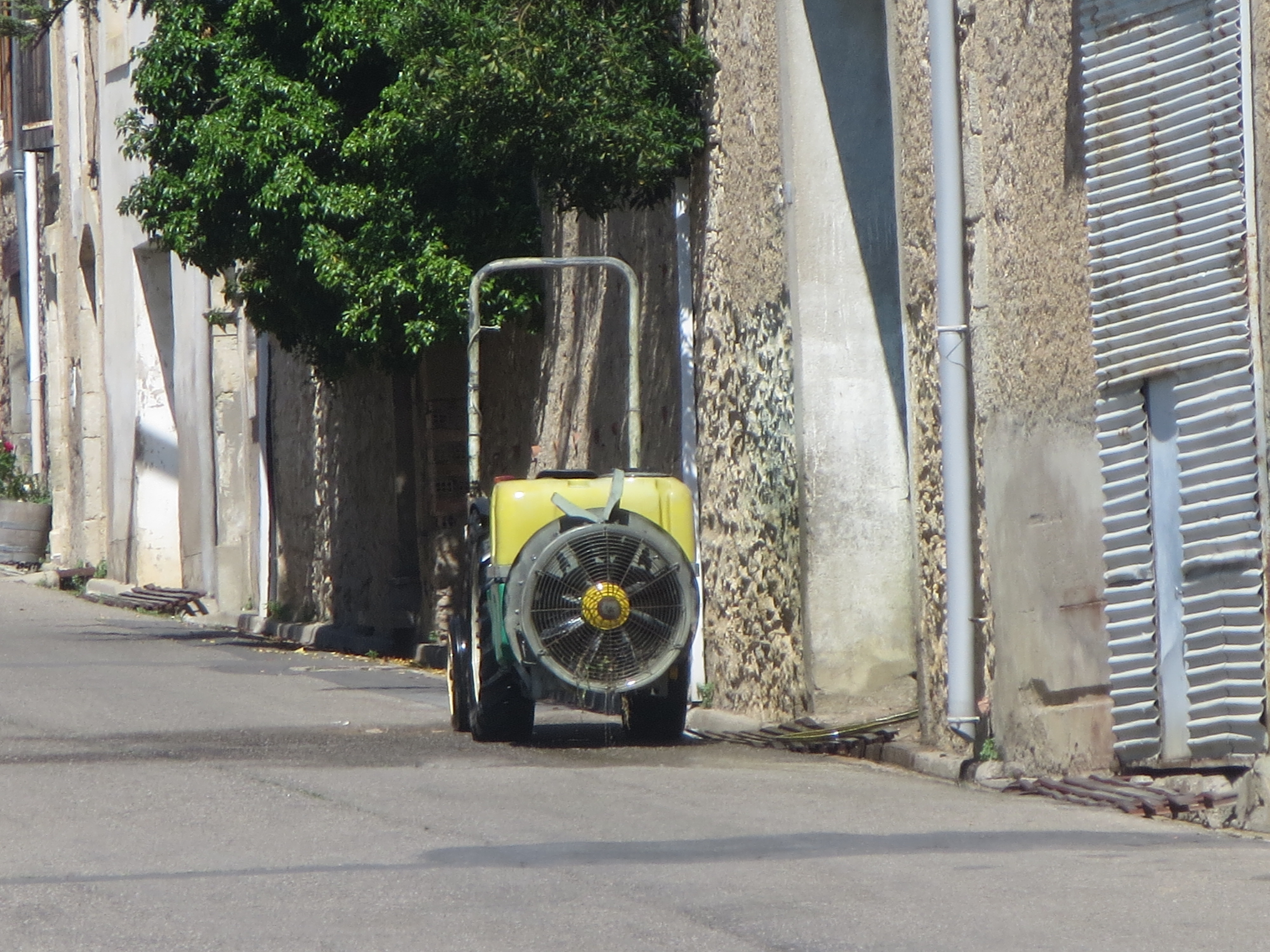
A spraying machine with octopus like arms to reach different rows of vines, this one is used on a conventional vineyard
For organic producers the choice is a little diluted sulphur (some use more than others) but also treatments based on plants such as nettles, horsetail weeds and ferns. I shall be picking up this topic in a later post as it is a controversial issue.
Tractor with tank of organic treatment for spraying
The other risk has been the development of mildew. Powdery mildew (oidium) is a threat as colder nights and hot days encourage humidity which oidium requires. The first signs appeared this week (May 10-17) and this is why sulphur and horsetail are used in the spray.
Oidium, powdery mildew, photographed this week. Happily the only vine affected in Peilhan
The nettles and ferns act as insecticides. I am told that mildiou or downy mildew is also appearing in some vineyards in the area though not so far at Mas Coutelou, fingers crossed it stays away.
The other major job in the vineyard has been ébourgeonnage, the removal of some of the lush growth of the vines, sometimes also known as épamprage. They are so fertile at present that the vines need to be cut back so that their energy is not dissipated on surplus leaves and growth.
Carole ties a young vine to support it
Carole is back in Puimisson and she demonstrated to me how ébourgeonnage works in the video below. She was working on newly grafted vines which won’t necessarily be producing much fruit this year but the process is the same. No prisoners are taken.
In the cellar work continues apace. As more of the 2014 wines are ready further bottling has been taking place. Not helped by the breakdown of one machine but older equipment was brought out to continue. In the picture you will see Jeff and Renaud corking a jereboam of Vin Des Amis. Magnums and even Balthazars were also bottled as well as the regular 75cl bottles. More deliveries were sent to various countries around Europe and the USA.
Jeff at the controls of the bottling machine
Magnums standing after bottling. They stand to allow the large corks to expand and seal the bottle. They will then be laid horizontally
A third part of the work is commercialisation and there have been a number of salons where amateurs and professionals have tasted the wines and placed orders or bought wine. Jeff has been to salons in Paris and in the Languedoc and will shortly be heading to the Loire. All time consuming but a necessary part of the job, sales are after all what keep the vines growing.
Finally the office work. France loves its bureaucracy and there are many hours of paperwork to complete. Daily record keeping of work done, treatments used, employment data etc etc etc.
So whilst May has been a beautiful month to be here in the Languedoc with temperatures now consistently high and sunshine aplenty the vignerons are working hard. Ironically France has numerous bank holidays in May, yet I know at least one vigneron who doesn’t get time off.
My favourite vineyard Rome is a lovely place to be at present, the work with the pioche (pick axe or hoe) and grass cutting has prepared the vines. Flowers, butterflies and birds enjoy the peace and shelter of this parcel, two partridges were there on Friday but sadly flew off before I could get my camera ready. The video shows Rome and its beautiful centurion gobelet vines and you can hear the birdsong in all its glory including a hoopoe.
The traditional image of a vineyard is that of one big parcel of vines surrounding a chateau as in Bordeaux, with its smart house and cellar buildings for making and storing wine. However, that is not the reality for most vineyard owners. Jeff Coutelou has his home and his cellars in the centre of Puimisson in the Hérault, surrounded by a childrens’ nursery, houses and work buildings. The vineyard itself surrounds the village but comes in a number of small parcels rather than one big vineyard. Each brings its own characteristics in terms of soil, surroundings and exposure to the elements, ie its own terroir. The parcels have been accumulated over the years by Jeff’s grandfather, father and himself. In the satellite photograph below you will see the parcels and how they relate to the village. Vineyards are shown in green, olive groves in red.
(Photo taken from Rapport Biodiversité d’Exploitation Mas Coutelou produced by Agrifaune)
There are about 17.5 hectares (43 acres) of land though olive trees occupy about 2.5ha (6.7 acres) and well over 1 ha (3 acres) is fallow land or has other trees, hedges and plants. The soil is virtually all clay and limestone. As you may be able to see in the satellite photograph much of the land to the south of Puimisson is vineyard, to the point of monoculture. Jeff wants to use his land to produce biodiversity so olives, figs, roses and hedges help to create little oases of wildlife. More details are outlined at the end of this post.
Segrairals and Caraillet (6.8ha, 5.7 under vines)
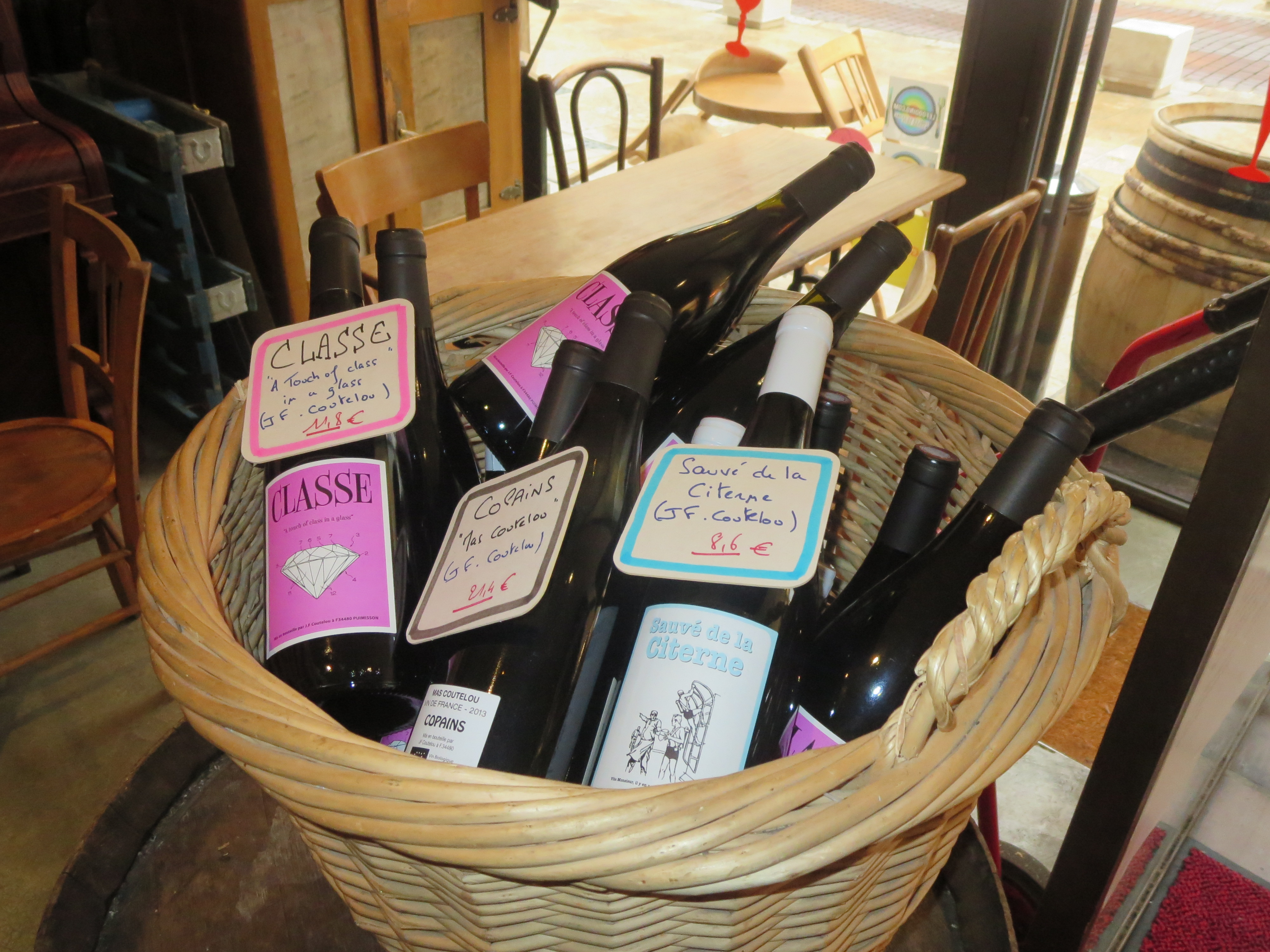
This is the biggest of the parcels and the only one situated to the north of the village and closest to it. Surrounded by the village and a couple of roads it is well protected by trees and hedges, including figs and olives. A variety of grapes are planted with the oldest being some Syrah planted in 1993, Cabernet Sauvignon planted 1998 and younger plantings of Mourvedre, Syrah and especially Cinsault. The Syrah goes into bottles such as Classe and 7, Rue De La Pompe. Mourvedre goes into Sauvé De La Citerne and the Cinsault into 5SO. The Cabernet grapes will be used for blending in various cuvées or sold to the UK to make the new London Cru Cabernet Sauvignon, a project run by Roberson in London.
Main body of Syrah and Cabernet grapes
Planted olive trees in the foreground with some younger Cinsault and Syrah vines in the background
La Prairie (0.5ha)
To the west of Puimisson La Prairie is an olive grove in a very pleasant area with an official ecology walk going past it. No vineyard planted.
Mountains seen from La Prairie
Prairie olive plantation
Le Colombié (0.6ha)
Just at the southern tip of the village Le Colombié is planted entirely with Merlot vines. These will produce grapes used to blend for cuvées prepared for restaurants, bag in box etc. Merlot is not a typical Languedoc variety, these were planted in 1999.
Le Colombié – Merlot vines
Rome (0.7ha)
Possibly my personal favourite vineyard of them all. It is quite isolated even though there are other vineyards around. Isolated, because there is a wood which shelters it. The gobelet Cinsault vines date back to 1966 and 1975 and go into the Copains or,in some years, Vin Des Amis or Classe. These old vines are also surrounded with young olive trees and the parcel is an attractive and quiet haven. There is also a planting of some 20 different varieties of grapes including various types of Muscat which are used in a solera system. This was started many years ago by Jeff’s grandfather and ever since wines have been used to top up the old barrels to make Vieux Grenache and Vieux Muscat. Sensational wines. The added benefit is that because there are so many different types of vine they cross pollinate and this adds an extra layer of complexity to the Cinsault in the Rome vineyard.
All vines lead to Rome
Gobelet Cinsault vines, olive trees and the surrounding woods
Metaierie (2.3ha)
The parcel which was the basis of my post One Day Like This when we harvested the last grapes of 2014, some Grenache. There are a few older Merlot vines (to be replaced in 2015) but the parcel is mainly the home of Grenache and Syrah grapes which are used to make the ever popular Vin Des Amis.
Smaller Metaierie parcel
Main Metaierie vineyard, home of Vin Des Amis
La Garrigue (1.8ha)
Described in some detail in the post Working In The Vineyards (January). Made up of three sections: some younger Syrah facing north for freshness, a section of Grenache facing south, as it likes the heat and some 20 year old Sauvignon Blanc vines too. The Sauvignon is used to make the white blend PM or other white cuvées, the Syrah goes into my favourite La Vigne Haute and the Grenache is used to make Classe along with the Syrah from Segrairals.
Grenache
Sauvignon Blanc
La Grangette (0.5ha)
A parcel of half a hectare (just over an acre) surrounded by vines, Jeff decided that it is compromised in terms of quality grapes so he planted 112 olive trees in 2011 to provide contrast to the fairly barren land and vines surrounding Grangette.
Rec D’Oulette (1ha plus a smaller, separate parcel of 0.3ha)
Actually made up of two parcels of land. This has seen a lot of work in recent years as Jeff has tried to diversify it. The central block is half a hectare of 30 year old Carignan, used in making Flambadou, a wine which is really improving and was one of the stars of 2013. Surrounding these vines Jeff has planted half a hectare of olive trees to keep them away from the chemicals of neighbouring vineyards. The second part of Rec resembles Grangette as an isolated small parcel and again Jeff has planted olive trees to diversify as it is too small and isolated in its organic nature for grapes.
Carignan vines for Flambadou
Font D’Oulette (0.65ha)
A parcel where Jeff has worked hard in recent years. More olive trees planted in 2011 as were those in the small section of Rec. In addition he has grafted an older variety Aramon into the vineyard covering over half a hectare. These grapes will be used to create new cuvées and the first blend of grapes produced in 2014 is highly promising tasted from tank.
Olive trees to protect the new Aramon vines
Aramon vines
Les Roques (1ha, not on satellite photo)
One hectare of land to the south east of the village heading into Lieuran-les-Béziers, this was the vineyard I showed after the storms of November 28th 2014 when it was flooded. In fact the vines have been grubbed up and there is a programme in place to plant trees and to provide a barrier to the Libron river in case it should flood gain.
Les Roques shortly after the November storms
Peilhan (2.2ha)
An attractive vineyard nicely protected. About a hectare is planted with white grape varieties, including a section of Carignan Blanc which has been used to make a cuvée all on its own. Maccabeu, Grenache Gris and different types of Muscat make up the other white varieties and these are usually picked, assembled and vinified together as part of the PM white blend. This also the home of the Castets vines I have written about a lot, one of only two Castets vineyards in France. More Carignan vines are joined by another interesting grape variety, Clairette Musquée which was blended with the Aramon from Font D’Oulette last year. This is the vineyard where a recent plantation took place to bring back older varieties to the area. Terret Blanc, Riveyrenc Gris and Piquepoul Gris were planted along with Terret Noir, Morastel and Riveyrenc Noir. picked, assembled and vinified together as part of the PM white blend. This also the home of the Castets vines I have written about a lot, one of only two Castets vineyards in France. More Carignan vines are joined by another interesting grape variety, Clairette Musquée which was blended with the Aramon from Font D’Oulette last year. This is the vineyard where a recent plantation took place to bring back older varieties to the area. Terret Blanc, Riveyrenc Gris and Piquepoul Gris were planted along with Terret Noir, Morastel and Riveyrenc Noir.
Main parcel with white vines, Castets, Carignan and Clairette Musquée
Planting the new parcel of Peilhan
The domaine
Overall Syrah is the predominant grape variety making up around one third of production, although 2014 saw a big reduction in the harvest due to the dry spring and early summer. Red grapes dominate with well over 90% of production.
Jeff and his Castets
(L-R) Vin Des Amis, 7 Rue De La Pompe, Paf
Organic since 1987, no synthetic chemical products have been used on the soils for over 25 years now. No artificial yeasts are added in the winemaking process, the grapes produce healthy yeasts themselves to stimulate fermentation. Grapes also naturally produce tiny quantities of sulphites but Jeff has been experimenting with using no added sulphur since 2003 and has successfully completed the last three harvests without adding any sulphur to the wines. This dedication to producing wines which are as natural as possible, made with as little intervention as possible means that Jeff is restless in seeking to improve the quality of his soils and in protecting them from the non-organic practices of neighbouring vineyards. He has also brought in Agrifaune to put together a project to plant over I kilometre of hedges. These will help to prevent soil erosion, protect Coutelou vines from surrounding vineyards and also provide shelter to wildlife which in turn will help to protect the vines, for example by eating damaging insects. Trees such as oak, laurel and elder are being planted along with plants such as agrypis and wild rose. Around the vineyards wider borders of grasses and wild plants are being allowed to grow even if that means that vines have to be scrubbed up. Similarly ditches and fallow land will be used to encourage biodiversity. So in an area of monoculture these oases of biodiversity and wildlife will help to enrich nature, the vineyards and, ultimately, the wines.
































































 amarchinthevines