amarchinthevines

Learning about wine, vines and vignerons whilst living in the Languedoc


4 Comments

Routine and variety – Vendanges 17

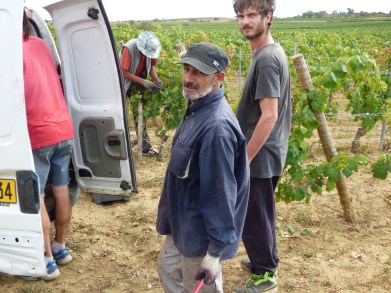
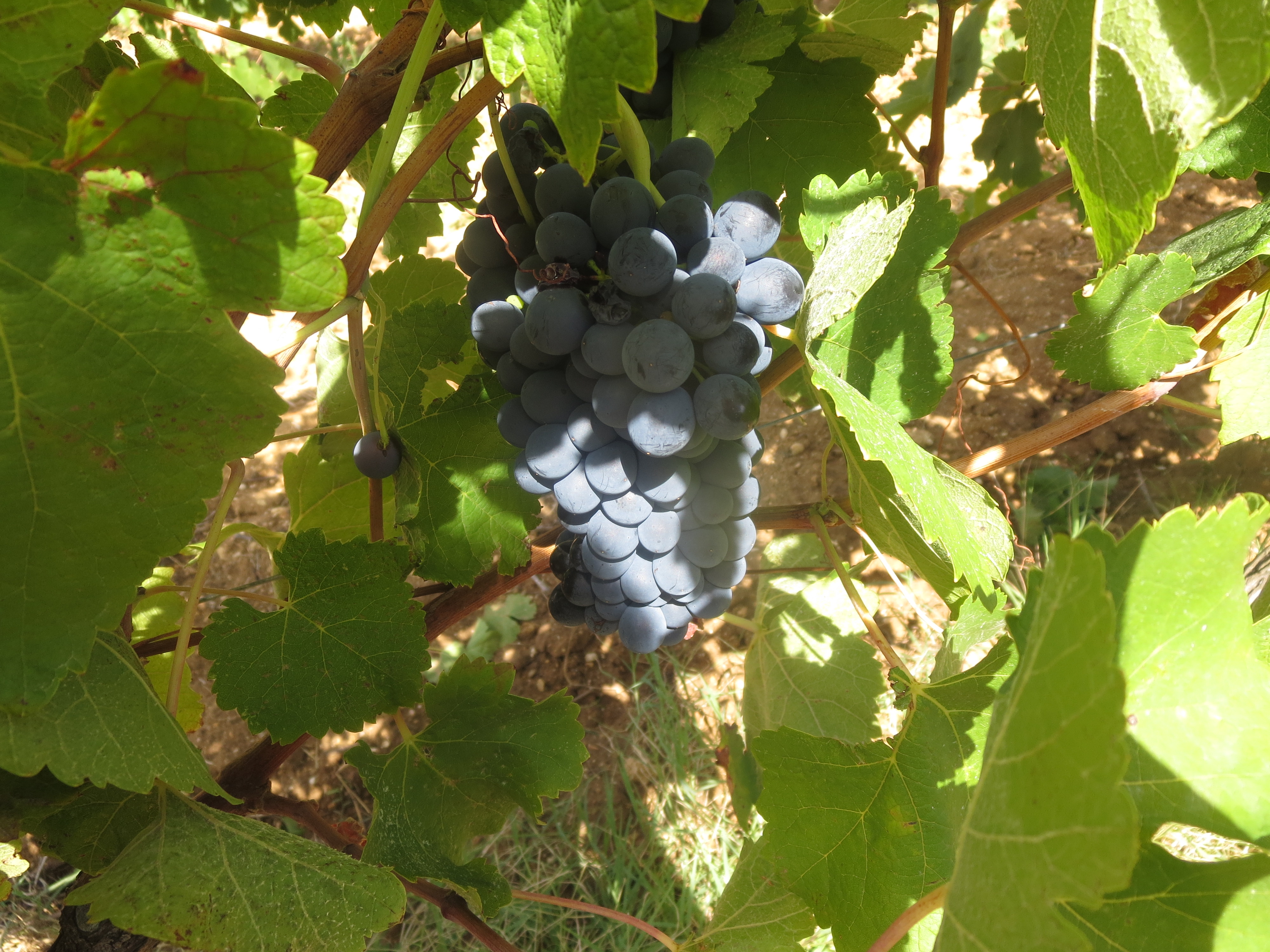
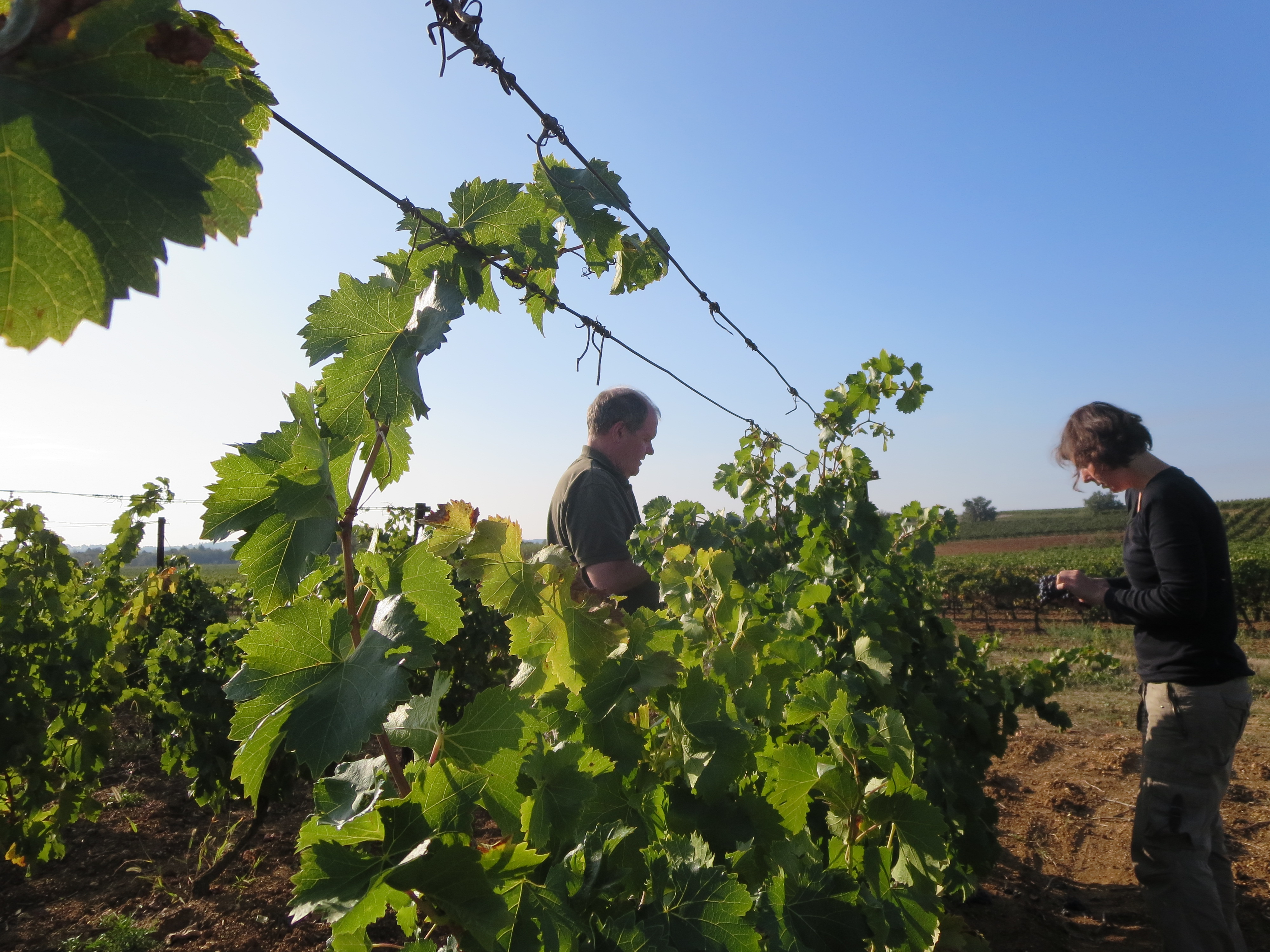
Ambroise, Selene and Vincent in the Syrah

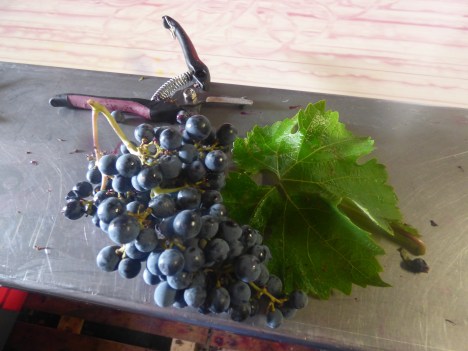
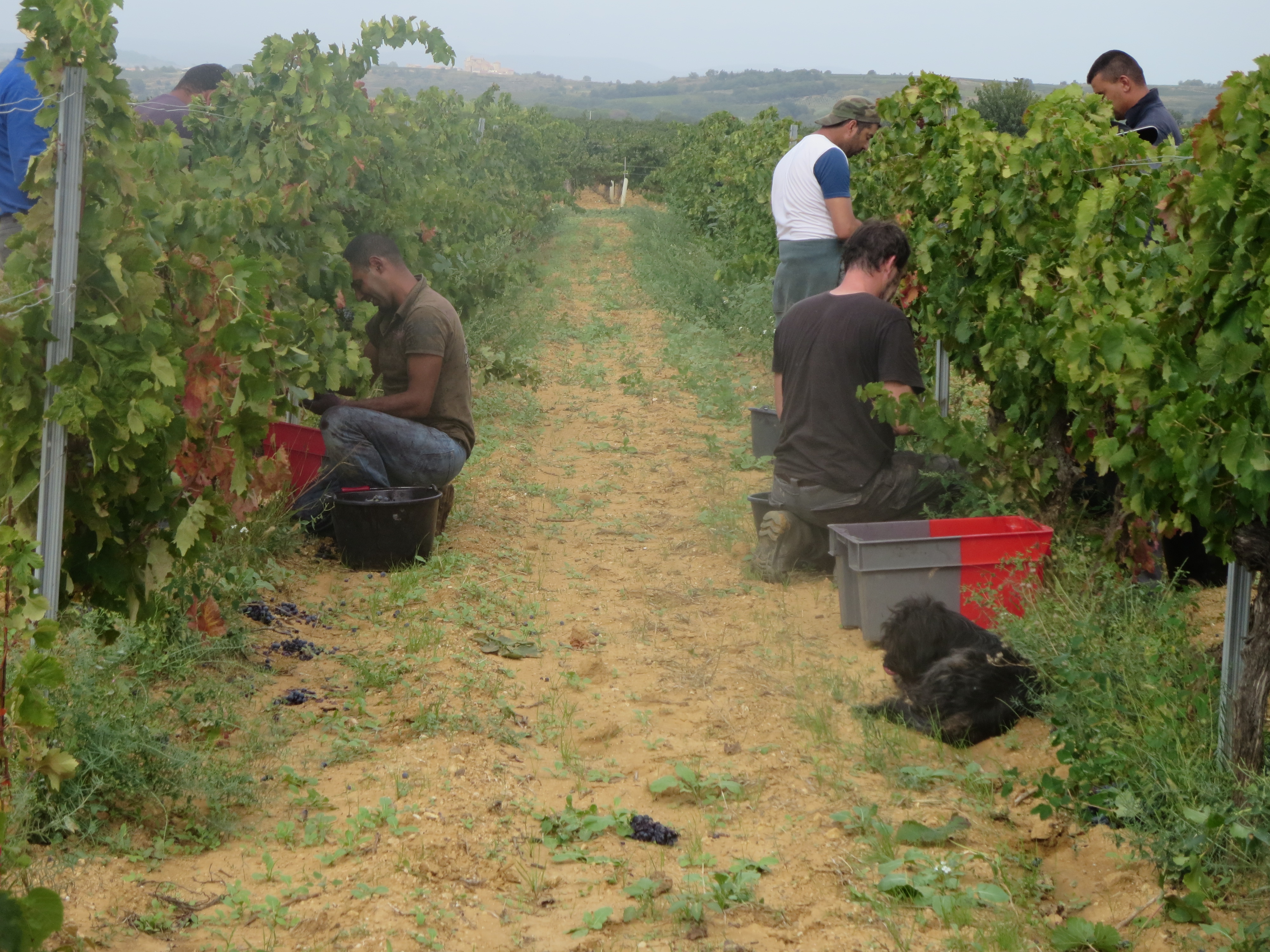
A week into picking and the team is in a routine, working smoothly to steadily bring in the grapes. The quality remains high but there can now be no doubt that the ongoing dry spell has taken its toll. Quantities are down by up to 50%, bottles of the 2017 Mas Coutelou wines will be more difficult to seek out I’m afraid and, inevitably, more expensive.

P1020870

Flower Power

Thursday saw the Flower Power vineyard picked (Rec D’Oulette to give it the proper name) and just 7 cases of grapes were returned from the 0,4ha of vines. They are young still and will have found it hard to cope with the arid conditions.

Julien and Max in Rome

Rome, too, was picked and I went along as this is my favourite vineyard. Cinsault, Muscat and all three types of Grenache were harvested. From Peilhan came Grenache Gris and a few rows of the Maccabeu which will go into the PM rosé wine.

Muscat, Grenache Blanc and Cinsault (left from Rome), Grenache Gris and Maccabeu from Peilhan on the right

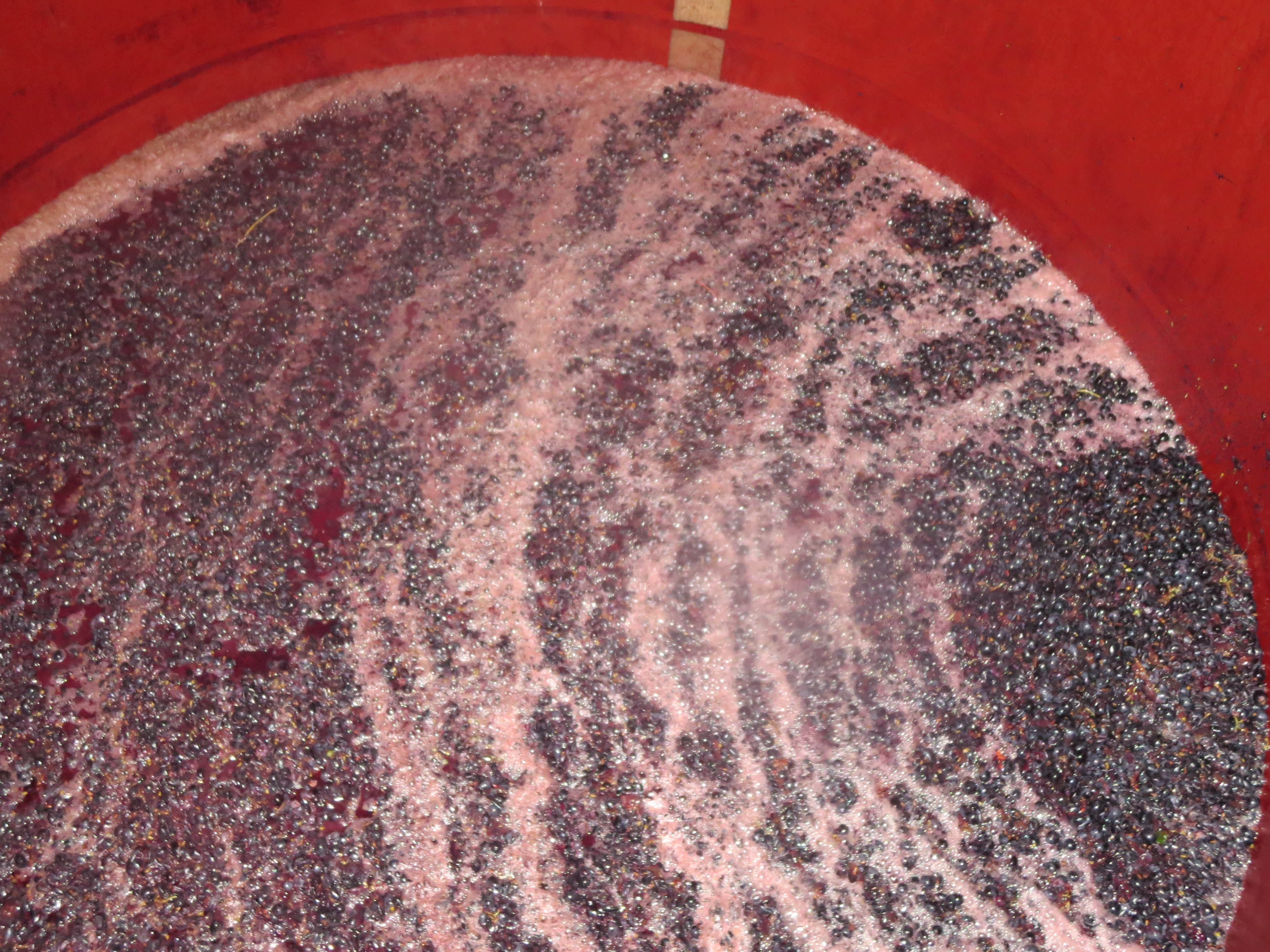
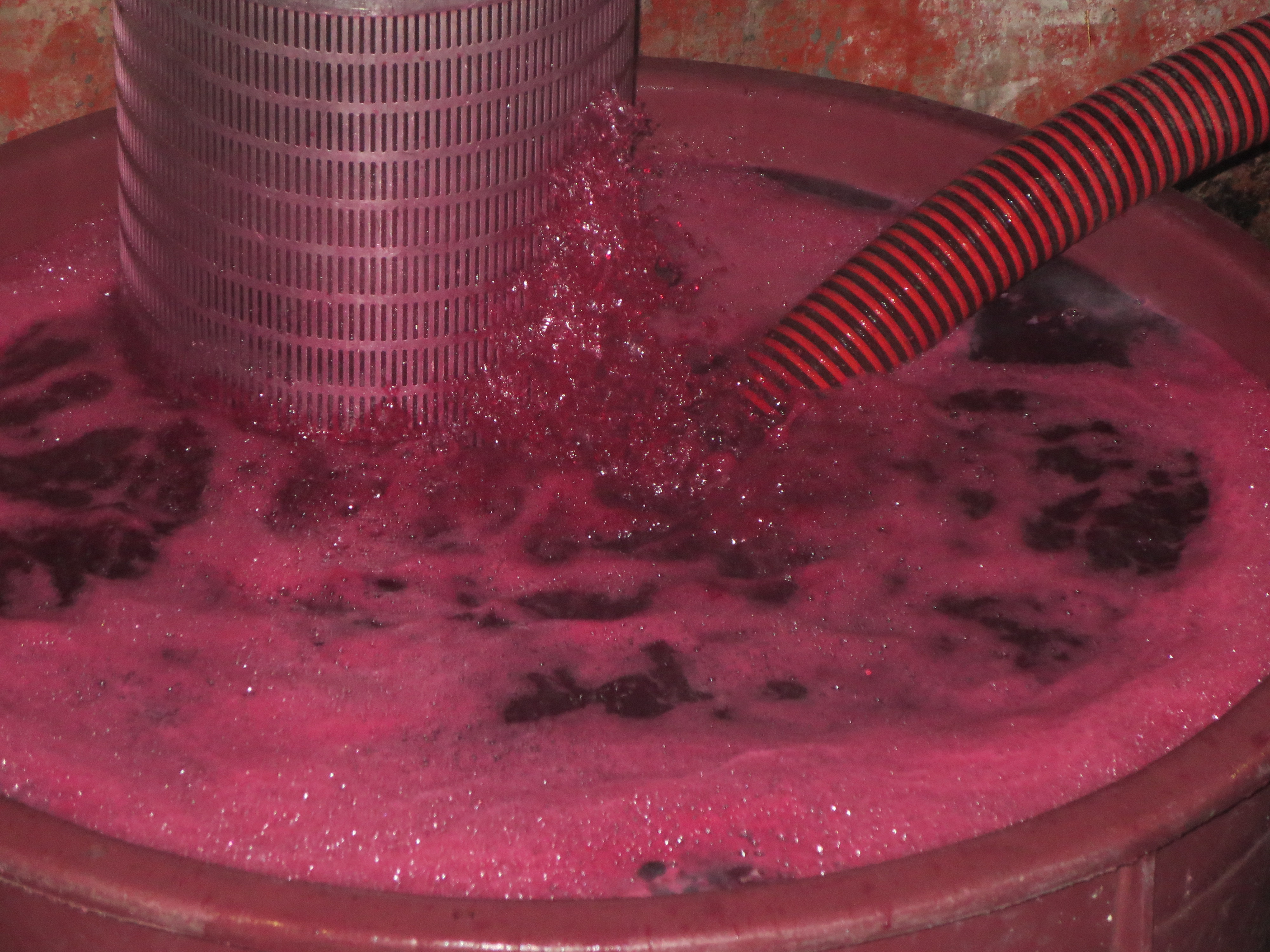
By now we are into the second stage of the vendanges. The grapes picked previously have been sitting on skins for varying lengths of time to extract colour and flavour but they will be separated when Jeff decides that further contact will not enhance the wine further. The juice is pumped to a new tank leaving the skins and pips behind to be used as marc for distilling.


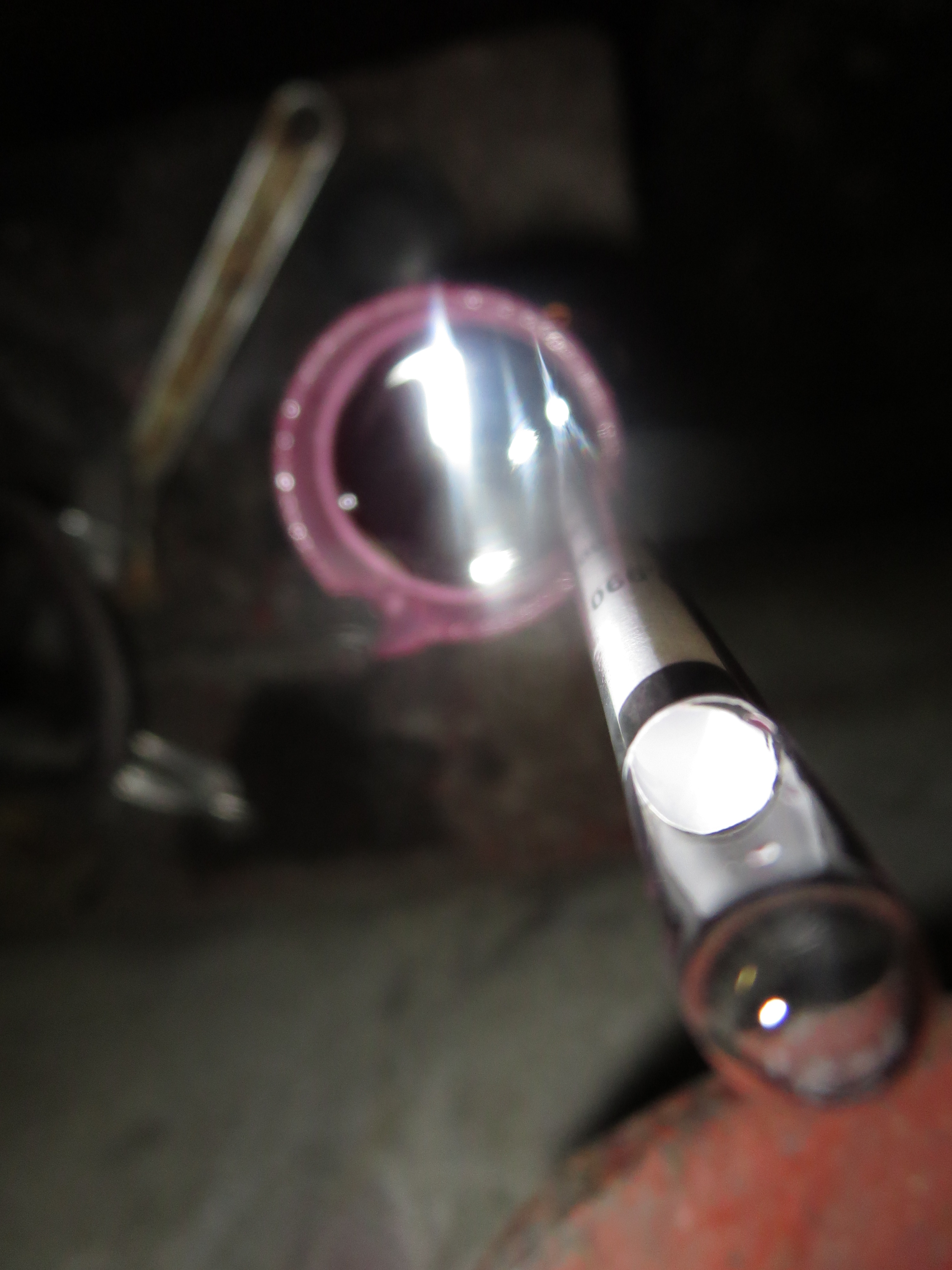
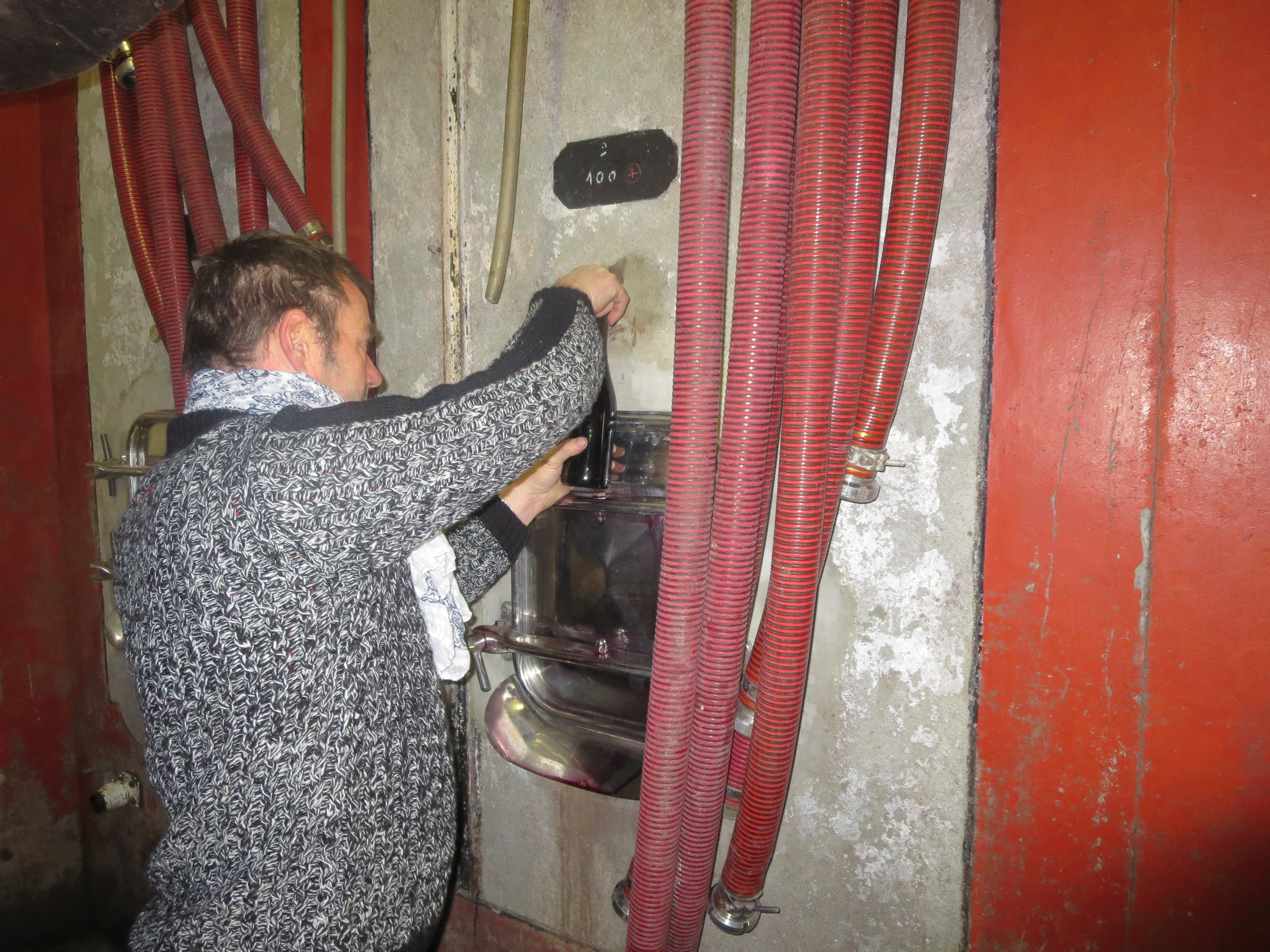
This process of remontage is carried out increasingly as more tanks fill up. Tracking which wines are where is a skill in itself, each time the wine will be tasted and sent for analysis to ensure that acidity, sugars, potential alcohol are all correct and no nasty surprises await.

Jeff took me round a few of the vineyards to check on their progress for picking. We started with the Carignan, then on to the Mourvèdre and Cinsault of Segrairals. In all cases the pips and stalks showed us that more time was needed, they are still a little too green. Tasting the grapes showed plenty of sweet fruit but that greenness would not be good in the finished wine.

Cinsault after pressing

Cinsault after pressing, like modern art


Friday was based in the biggest parcel, Segrairals. Cinsault grapes first, to be pressed immediately so that a light pink juice emerges ready to be blended with the other rosé grapes. This happened on Saturday so that all the rosé grapes will ferment together to blend fully. Jeff explained to me that Cinsault is harder to press than most, the large berries contain a lot of pulp which breaks down less easily.

Syrah Segr

Syrah, Segrairals


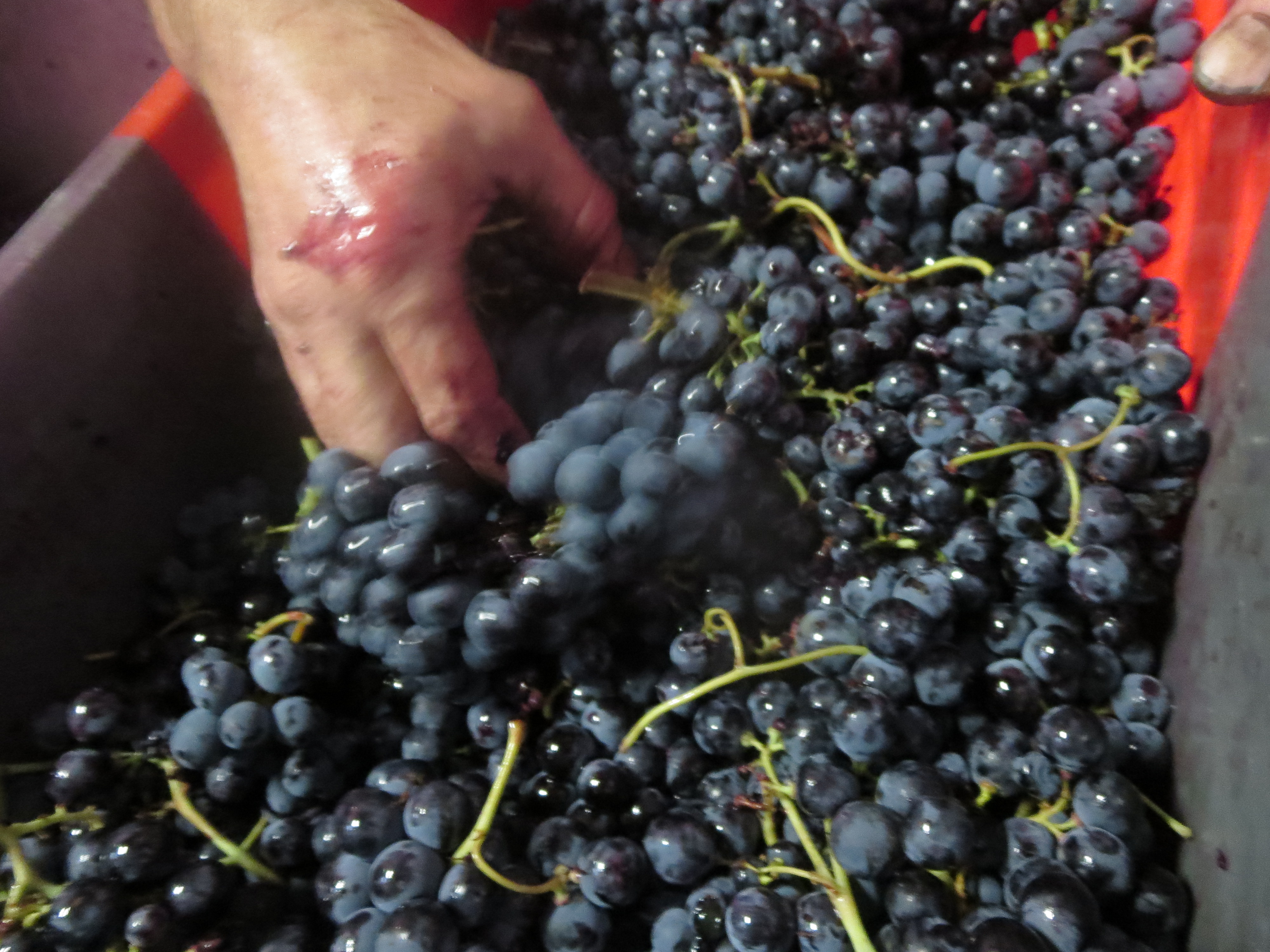
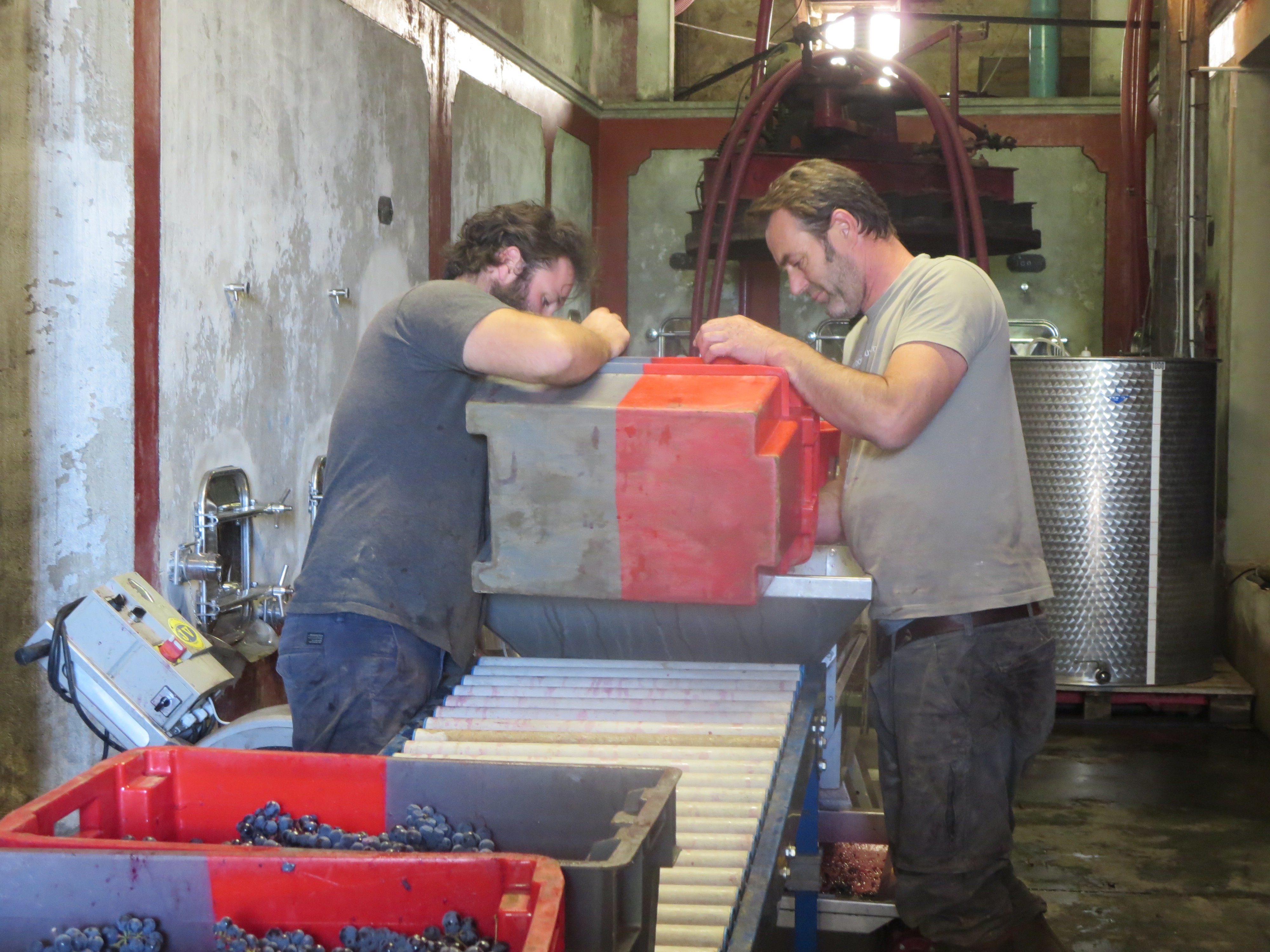
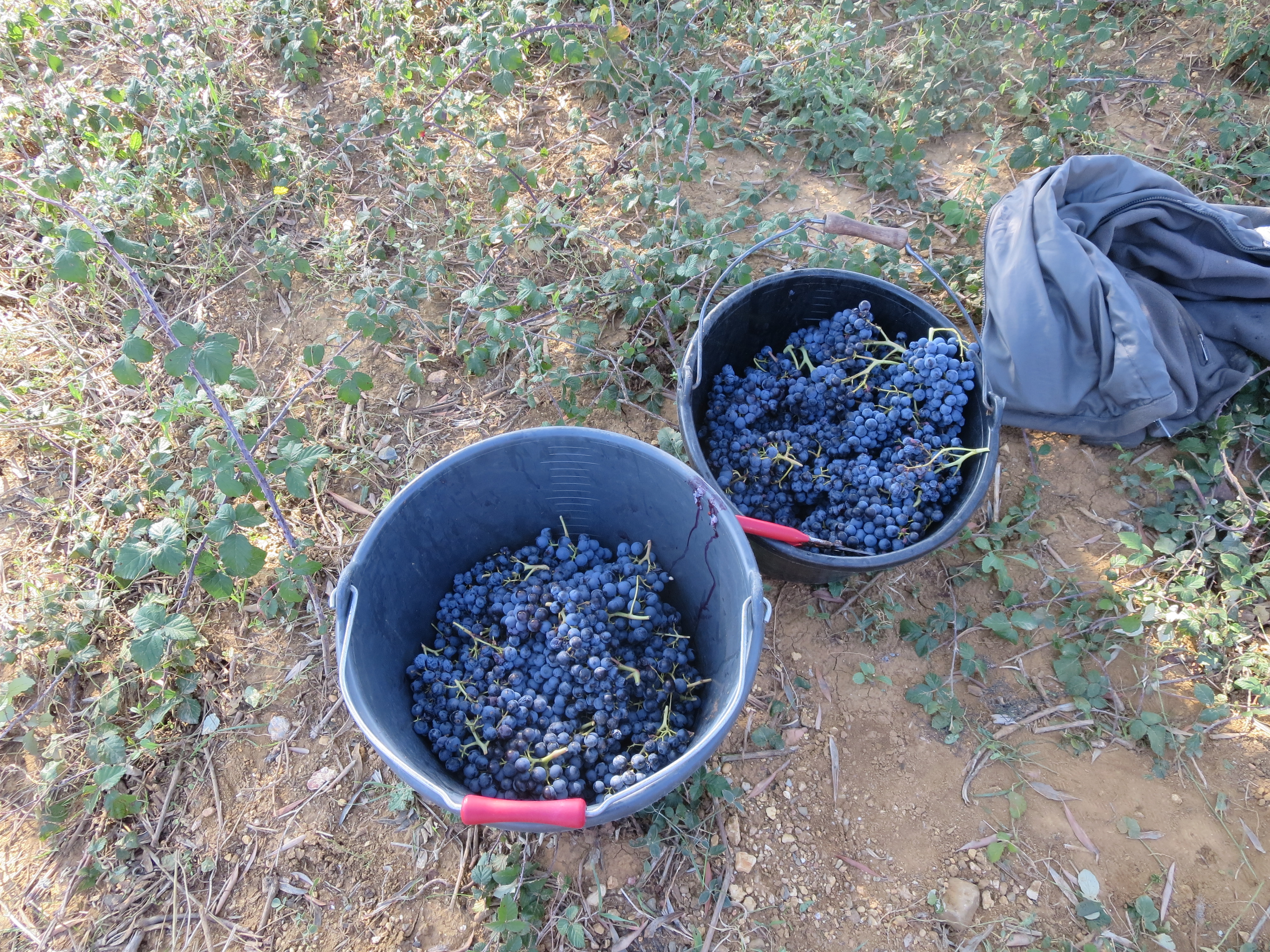
Afterwards the remaining Syrah was tackled, again I went along to help with a bit of picking as well as doing the sorting with Jeff back in the cellar. The tri was not too difficult as good, firm bunches of healthy grapes came in case after case. Never mind the width feel the quality seems to be the motto, for Jeff’s sake greater quantity would be welcome.

More remontage, more testing in the cellar. It was good to see the white wines in good condition with fermentation already lively; bready, yeasty smells began to fill the cellar. More Syrah would be picked on Saturday morning but, readers, I admit that I took a break. The hard work, rich variety of grapes and early mornings meant that this time AMarch was not in the vines.
20170901_135759


3 Comments

Brief return to Mas Coutelou

P1020411

Version francaise

After my sojourn in Alsace it was great to return to the Languedoc. Sadly I was already aware that due to a bereavement I would have to leave within a couple of days to return to the UK. However, I was able to spend one of my two days there with Jeff and amongst those vines which I had missed so much.

It was a great time to be there, the vines were in full flower, many already past that stage showing the new grapes, firstly with their brown hoods and then just the green baby berry itself.

P1020424

The vines were looking very healthy, plentiful rain in the winter and a sharp frost in early spring had allowed the vines to rest, to gather their strength for the season ahead – a sharp contrast to 2016. Greenery aplenty, wild flowers blooming and, during my visit to Peilhan, I saw a young deer running through the vines and a pheasant. Clearly the Coutelou vines attract wildlife to its oasis amongst the surrounding desert of chemically treated soils.

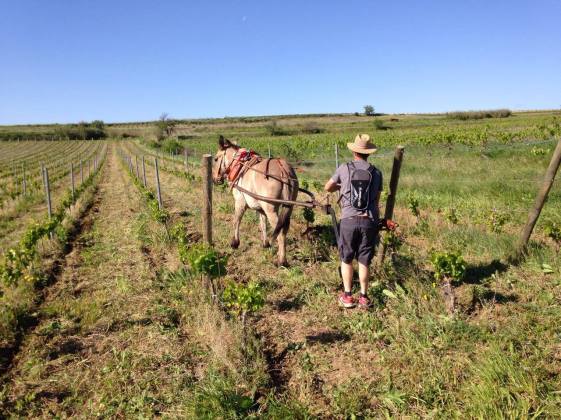
During the previous weeks the soils of Peilhan had been ploughed, by a horse. Gentler on the soils Jeff asked a local man to till.

Peilhan horse

He himself was giving the soil a light rotivation that afternoon, turning the plants and flowers amongst the vines into the soil, a natural composting. Icare, with an injured paw, and I watched on in the sunshine.


The only real problem this year has been the return of the snails. Last year they ravaged Font D’Oulette (the Flower Power vineyard) so that only a few cases of grapes could be picked. Fortunately, that vineyard has been spared this year but they are out in force in the largest vineyard, Segrairals. It was there that I also found Michel, Julien and Vincent working, tightening the wires of the palissage and removing side shoots etc from the vines.

In the afternoon we tasted through the 2016 vines and, they are so different even from February when I tasted them last. The whites are splendid, highlight a hugely successful long maceration Muscat. The reds such as the Carignan were very good and the top wine of the year will be the Mourvèdre, a silky, complex wine with huge depth of flavour – a treat for the short and long term. 2016 was a difficult year but Jeff has still produced some great wines.

So, I look forward to getting back to Puimisson as soon as possible, to follow the vintage further and see the latest progress. There is bottling to be done and plenty more besides.

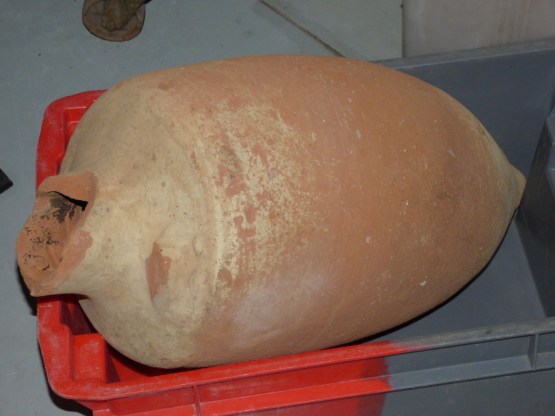
The cellar is transformed, painted with the new office and floor and the stainless steel cuves plumbed in for temperature control. And perhaps, most interesting of all, there is an amphora. This is the trendy method of vinification around the world. However, very few winemakers have an amphora dating from the time of Julius Caesar with which to make wine. Jeff plans to use it this year, connecting his wine to those made 2,000 years ago. Wines with links to the past, present and future, Mas Coutelou has soul!

P1020473


2 Comments

Mas Coutelou 2016

Version francaise

P1020162

Tasting September 27th

It was a year of difficulties as I have reported on here many times. From a virtually arid winter and spring to a chilly early summer and then a very hot summer the vines had a struggle to cope with the bizarre climate. Add in a hail storm, snails eating away large numbers of grapes and mildew. No surprise then that the quantity of wine produced was much reduced, bottles will be much scarcer than previous years – so when you get the chance buy them. If quantity is down then what about quality?

I have had the good fortune to taste through the range of wines on two occasions. On September 27th the wines were in their infancy settling in tank, the team got together to gain first impressions. In late January and in February this year I tasted them again with a number of visitors. What I tasted was the wine from the different vineyards before it was then assembled into the various cuvées which Jeff will eventually put out. Therefore, my notes are about the ingredients rather than the finished dish.

P1020321

Tasting January 28th

I decided to simply publish my notes as I wrote them on the two occasions – no editing, just my personal impression at the time. Already these wines had changed a great deal after 4-5 months and they will have changed again even before being assembled into Le Vin Des Amis etc.  I have chosen only the main wines, there are several other cuves with other wines but these are the main wines of Mas Coutelou.

September 2016

January / February 17

  1. Muscat Petits Grains – 2 weeks maceration, fairly neutral nose but fresh Muscatty flavour with tannins / texture. Orange flavour in there – G

Nose is Muscatty and orange blossom. No real grapey Muscat flavours but a dry                   wine, fresh,  direct and clean. Little drying on finish but coming together well. – G

138da189-1095-4227-969a-8356828039df

  1. Carignan Blanc – little reduced on nose, nice fresh acidity and appley fruit. Still cloudy – G

This has improved, white flower aromas, fresh, white fruits, very long – VG

20170203_161150

  1. Maccabeu/Grenache Gris/ Muscat – Lovely pears and red apples. Fresh acidity, lovely. Full, nice texture – VG

Some residual sugar still but direct fresh fruit – pears and apples – G

  1. Cinsault (Segrairals) – assembled with marc from Syrah. Nice fresh acidity – OK

Not tasted 

5. Grenache Ste Suzanne – Little green, quite acid, some spicy after notes. A bit tart –             OK

 11.5%, light but fruity and grapey, lost its tartness, more round – QG

Lovely grenache

Grenache just picked

6. Syrah Ste Suzanne – Nice, perfumed, red fruits, good acidity and soft tannins – G

Very attractive red fruit nose, has some heft yet only 12%, rich and easy to drink – G

P1010567

Syrah from Ste Suzanne

 7. Flower Power (plus others) – Round red fruits, lively, red fruit flavours – QG

Syrah and Cinsault in there too, nose is lovely, really attractive with red fruits and              floral. Nice round easy fruits – G

8. Syrah Segrairals – Still fermenting, quite a lot of residual sugar. Nice, fresh acidity,              red fruits – G

Not tasted

9. Syrah La Garrigue – Slight acetate nose, Round dark fruits. Nice texture and mouth             filling – G

Dark, ripe round fruits on nose and flavour, plummy, a little closed, good tannins –             G

10. Grenache La Garrigue – Nice ripe cherry aromas, good acidity and texture. Ripe –                G+

Very fresh and open, round ripe fruits. A little residual sugar still – G+

11. Mourvedre – Very attractive floral aromas, some sugar still, raspberry fruit – G

Improved a lot, a little reduced but liquorice flavours, dark and how it builds in                  the mouth, could be a surprise star – VG

P1010919

Mourvedre I picked

12. Carignan – lovely dark fruit, very fruity and fresh flavours. Very clean finish,                      almost slatey minerality – VG

Still working, a little spritz. Quite acidic as yet but there are dark ripe fruits and                  these are playing together on the palate, will develop well – G

20170203_163548

Still fermenting

Overall, the general impression is of good quality with plenty of freshness and fruit to balance. Mourvedre could provide the star wine of the year which would be a surprise, though the Carignan will no doubt improve and be a star once again. The whites, in various styles, are again showing how good white wines can be in this region.  After a very problematic year it is surprising that the wines emerged so well, testament to healthy vines and a skilled winemaker.

P1020322

Celebrating 2016 with a lovely Bibonade rosé


1 Comment

Vendanges 2016 #9 – Days Like This

“When all the parts of the puzzle start to look like they fit
Then I must remember there’ll be days like this”               (Van Morrison, Days Like This)

As we approached the end of vendanges a number of the team were moving on. It was an inspired move to have a farewell day, picking, tasting and celebrating together, though we were already missing some like Charles, Carole and Maylis.

The morning dawned over Peilhan and the vineyard which we planted in March 2015. Rows of Terret Blanc and Noir, Riveyrenc Gris and Noir, Piquepoul Noir and Morastel produced grapes this year. They cannot be used in major cuvées sold to the public as they are too youthful. However, Jeff decided to pick them to make something for himself out of interest. So, on a bright, warm autumnal morning we gathered, picked, chatted and laughed.

Interesting to see how some varieties produce more than others already, more precocious perhaps, the Terret Noir being especially shy. Altogether we picked around six cases only but there was a real mix of colour and some nice looking fruit which went into a small cuve in whole bunches.


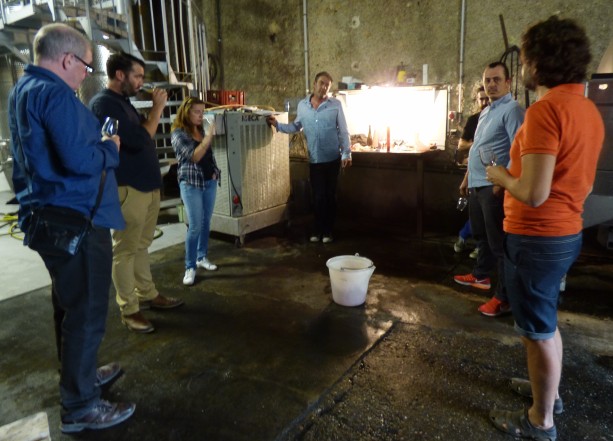
Later that day we gathered again, this time in the main cellar along with Thierry Toulouse, Jeff’s oenologue. We tasted through the whole range of 2016 wines in cuve before heading to a local restaurant for a meal. The results of the tasting were fascinating. Clearly, they are in a stage of transition, fermentations still progressing. Nonetheless the wines were already showing their character. I won’t go into too much detail here, though I did take notes to help me record how the wines change in coming months.

In summary though I was amazed. I have said many times on here how difficult this year has been. A very warm winter, drought, mildew, delayed summer being just some of the problems. Yet here we tasted some lovely fresh fruit, lively acidity and other promising signs. I would mention the Carignan Blanc, lovely Syrah and Grenache from La Garrigue, juicy Mourvèdre and in particular the wonderful Carignan Noir of Flambadou. All those puzzles which Jeff had to hold in his head about harvesting dates, moving wines, possible assemblages etc, well those puzzles were solved in the glass. I had expected some disappointments but somehow Jeff has conjured some potentially top quality wines.

138da189-1095-4227-969a-8356828039df

2003 Roberta

At the end of the current wines Jeff also shared a 2003 bottle of white wine based on Grenache Blanc, Noir and Gris, called Roberta (it’s a long story!). This was one of three cuvées which were the first that Jeff made sans sulfites. Yet it was complex; fresh, fruity, nutty. A wine which made my heart sing, proof that SO2 is not required for ageing wines as we are often told. Perhaps in 13 years time we shall be tasting the 2016 wines and marveling at them too.

A fitting way to close the vendanges period, a team rightly proud of what it had achieved.

“When all the parts of the puzzle start to look like they fit
Then I must remember there’ll be days like this”

p1020104


Leave a comment

Vendanges 2016 #7 – Last Pickings

p1010935

Cabernet Sauvignon sheltering the Moroccan pickers

En français

Wednesday (September 21st) was officially the last day of summer and, appropriately, the last day of picking at Mas Coutelou. It was, as in 2015, the Cabernet Sauvignon of Segrairals which was the last major parcel gathered in. Lovely, clean bunches of small, healthy berries, classic Cabernet and virtually nothing to sort in the vineyard or in the cellar. 

p1010923

Cabernet Sauvignon

The day before had seen the start of the Cabernet in the afternoon following a morning of picking Mourvèdre, also from Segrairals. As I hadn’t ventured into the vineyard much in 2016 I took the opportunity to do so that morning. Our friend Jill had expressed a wish to do some grape picking and Jeff kindly agreed so I accompanied her (so at least there was one less experienced picker than me!). I really enjoyed being out in the fresh air but it was also good to get a grip on how the vineyard topography can have such an impact upon the grapes.

The Mourvèdre grows on an easterly slope with the rows running down the slope. The vines at the bottom of the slope gave lower quality bunches than those at the top, indeed we stopped picking the last few vines at the bottom of each row. The reason was that when it does rain the water runs down the slope taking nutrients etc. The grapes there tend to ripen much sooner with more humidity in the ground, it was a clear example of terroir. Rest assured that only good grapes went into cuve, much was left behind in the vineyard and at the side of the sorting table.

p1010931

The slope in the Mourvedre vines, rejected fruit on the ground

On Monday the lovely Carignan Noir of Rec D’Oulette (Chemin De Pailhès) was added to the tanks. The quality was high and signs are promising for yet another good vintage of Flambadou, arguably the domaine’s best wine in recent years.

Since the last article the other major harvest was some bountiful, good quality Grenache from La Garrigue on Saturday 17th.

lovely-grenache

Gorgeous Grenache

There remain a few rows here and there with some grapes left and they may or may not be picked in coming days and weeks. However, the Cabernet marked the last of the major picking. Time to say farewell to the Moroccan pickers, part of the Coutelou crew for the last month.

p1010896

Stage 1 is therefore over. Stage 2 the cellar work of remontages and pigeage continues apace as most cuves are now full and need looking after. Stage 3, pressing, is also in full swing as grapes from previous weeks have now gone through fermentation on skins and need to be pressed to take the juice away. I shall be writing about this more in the next article.

So, we head into autumn, the vines are fatigued after a very stressful year. The leaves are already changing colour and the Languedoc will be an even more beautiful place in coming weeks. The picking may be over but the vendanges are not. 

p1010930

Mourvedre in autumnal glory


4 Comments

Vendanges, values and valued

still

             Photo courtesy of #QCQBM (see below)

Version française

There will be one more vendanges diary entry as the parcel of Muscat awaits, ready to make some sweet, delicious wine. However, after a month of work, the grapes are nearly all gone. Their juice lies quietly fermenting or sulkily just waiting in the tanks. So what have I learned from this month of effort? Well, reflecting on it I remembered last year’s vendanges and a video. Both are linked below. The title I used then seems, a year later, the right one so no apologies for using it again, though in French this time.

grapes

                                           Now That’s What I Call Grapes 2015


The main feature has been the grapes themselves. It was not the easiest year for growing in terms of weather. Strong winds at flowering damaged some vines, a real heatwave for a month in June/July with months of dry weather too, then rain just as harvest began. There have been moments of doubt, it has been a slippery road as this Pézenas road sign suggests.

slippery road

The berries were small and perhaps lacking in some acidity as harvest approached and then the rains threatened rot and damage. At times the tri had to be severe both in the vineyard and in the cellar. And yet. I remember beautiful bunches of Syrah, of Cinsault (almost 1kg in weight some of them), Cabernet Sauvignon and Muscat. In particular I remember some champion Carignan and magnificent Mourvèdre. Much needs to be done with vinification but, happily, the wines they produced are already showing the same quality, promising some great 2015s.

Syrah from Segrairals

                                      Syrah

IMG_2267

Even when the juice was in the cuves it misbehaved at times, like naughty students in a classroom. There were moments when volatile acidity threatened and then when acidity was low. Through it all Jeff kept his head. And I recall his words at the time, “Il faut avoir la confiance en les raisins” / “You have to trust in your grapes”. No clever tricks, no resorting to sulphur dioxide to act as a safety net – just have faith that the work that has been done in the vineyard over the last years and recent months will bring healthy grapes which will make healthy wine. The pruning (taille), ploughing (labour), careful spraying at 3 in the morning – all of this effort leads to the grapes being able to produce high quality wines. Like a winner of the Tour De France you don’t just turn up on the day, it takes months of planning, training and hard work, so too the vigneron who produces top quality wine. And that faith has been rewarded, any problems have sorted themselves out, with a guiding hand from time to time.

Getting to the heart of the vine

                            Taille (February)

IMG_0798

                              Labour (March)

IMG_2582

         Filled cuves containing the 2015 wines                                                  (September)

That means hard work and this is the second lesson I have learned. The vendanges are hard work. There is a glamour to them. As an enthusiastic wine amateur I often used to think how nice it must be to take part in the harvest. Sunshine, grapes, drinking wine – idyllic. The reality is all of those things but it is not all idyllic; it is back breaking, physically gruelling, hard work. Picking means bending over vines, insect bites, whilst trying to not cut your fingers instead of the grapes. In the cellar, long hours of standing to sort grapes, lifting and carrying heavy cases and twisting around with them, sometimes in confined spaces. The heat above a tank is tiring and sweaty. The drenching as you clean everything again and again. And I worked less than most. Add in all those hours of vineyard work, the background work in sorting the equipment, labour, paperwork and then the pressure of making the right decisions – you have to love this job to make a success of it.

IMG_2400

            Bent backs (Martin and Céline)

IMG_2393

    Standing for long hours while sorting (Karim     and Cameron)

IMG_2550

          Twisting to lift a cagette (Michel)

IMG_2386

Confined space, hot, back breaking – Thomas, Cameron

IMG_2526

     Soaked, Cameron, Michel and Thomas                cleaning

And love is the third and final part of my lesson. The love which Jeff has for his vines and his commitment to making them the best they can be in order to produce the wines which people around the world will love. It is no coincidence that during the harvest we welcomed many friends who arrived to spend a few days with us, to play their part in the vendanges. They do so because they love the wines and they are friends of Jeff. He makes his wines to share, the best wines are those which you share with other people. Le Vin des Amis! Copains! the names of the cuvées tell a story.

IMG_2620

Remember the story of the Chaud Doudou from last harvest? Well, I have been lucky to share the experience of the vendanges with a fantastic group of people over the last month. The camaraderie and friendship are part of the process of making the wine. And that spirit vanquishes any aches and pains.

IMG_2585

         My boots join the team (a proud moment)

IMG_2431

        Happy times

So, grapes, work and love. And if you don’t believe me, have a look at the video on this link to the excellent #QCQBM website. It is in French but the message is clear. Grapes. work and love.

Des raisins, du travail et de l’amour – Jeff Coutleou


2 Comments

Vendanges Diaries #6 – Mystery, Mourvedre and Flambadou

Mourvedre 17th

Version française

The storms which brought so much rain to Puimisson and the Languedoc on Saturday meant that there would be no picking on Monday or Tuesday the 14th and 15th.

IMG_2457

             Preparations for cellar work

Instead Jeff, Michel and Cameron were hard at work in the cellar for the two days. There is lots to do there so it was an opportunity to get everything on track. Lots of remontage, sous tirage etc. On Monday the 14th the Syrah which was to be made with carbonic maceration was pressed after its few days in tank with the fermentation inside the skins.

IMG_2476

                     The Syrah being pressed

The video shows Michel in the cuve moving the grapes to the front where Jeff forks them into the pump. You will see the grapes moving through the pipe into the press.


By Wednesday 16th the weather had turned much clearer and good winds meant that the grapes and soil were beginning to dry out nicely and so picking recommenced. The centre of attention was Rec D’Oulette known locally as Chemin De Pailhès and the Carignan grapes which grow there. These are the grapes which make the excellent cuvée «Flambadou», perhaps the outstanding wine of 2013 (and Jeff tells me of 2014 too). The bunches which arrived were excellent in quality, so fingers crossed for another great wine.

IMG_2511

                         Picking the Carignan

Carignan

                                    Carignan

IMG_2506

                         The Carignan in tank

IMG_2508

          Analysing the Carignan

Meanwhile cellar work continued as Cameron carried out more remontages and analyses. Today one of the wines to be moved was the Merlot which was bright, fresh and colourful.

Merlot being moved

                         Délestage of Merlot

As each wine is moved around the cellar, for example to take it off its skins, each cuve has to be cleaned thoroughly and then it will be filled with another set of grapes or fermenting wine. There is a seemingly never ending merry-go-round of wines and quite how Jeff keeps track of them all remains a mystery to me. Each move has to be planned to ensure that cuves are available, cleaned and big enough.

IMG_2521

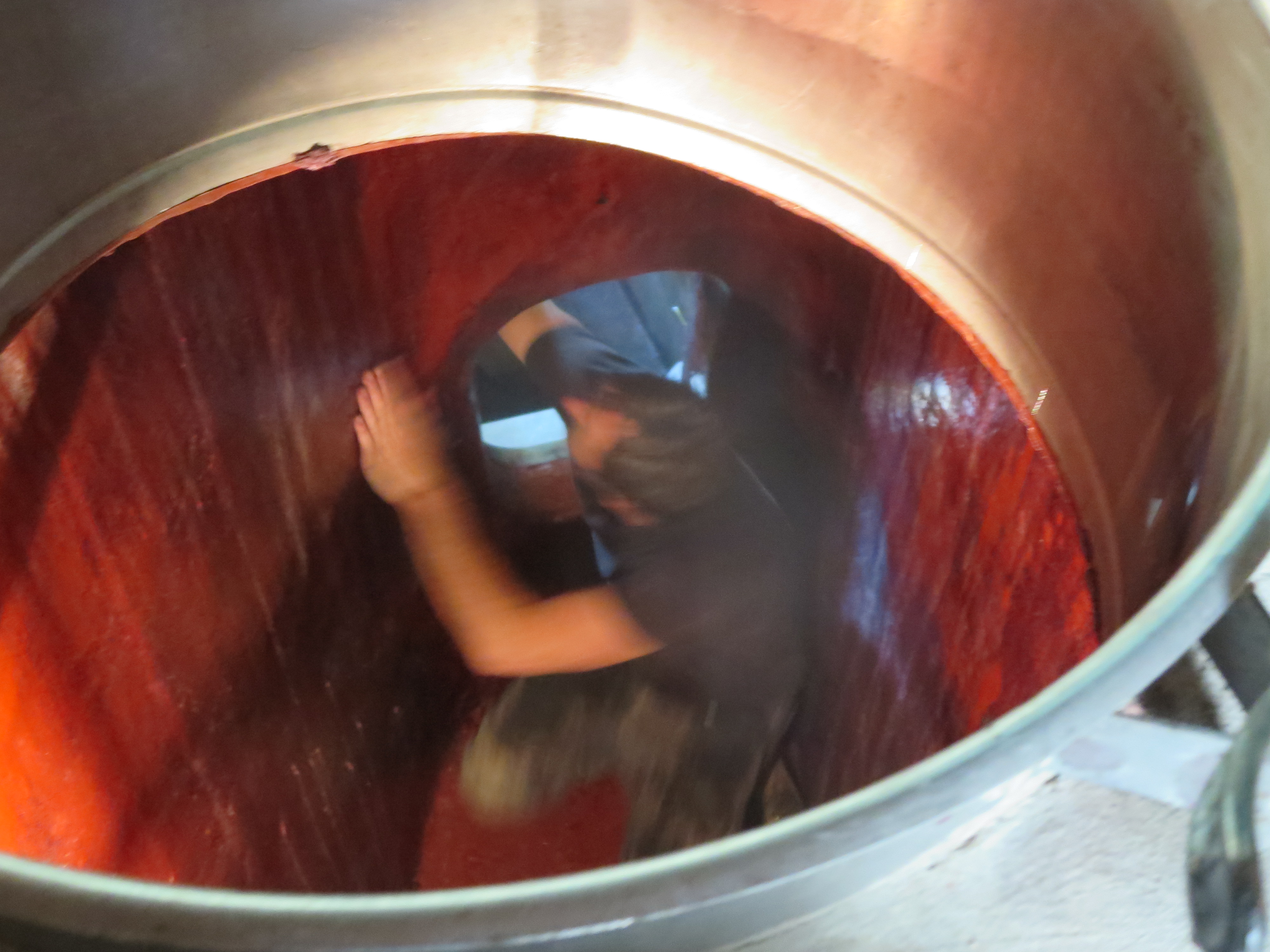
                 Cleaning from the inside

As a former teacher it reminds me of planning a timetable fitting in students, teachers and classrooms into the correct combination. Add in working as a mechanic to keep all the machines ticking over and the work of a vigneron becomes more complex, the job description is long.

IMG_2489

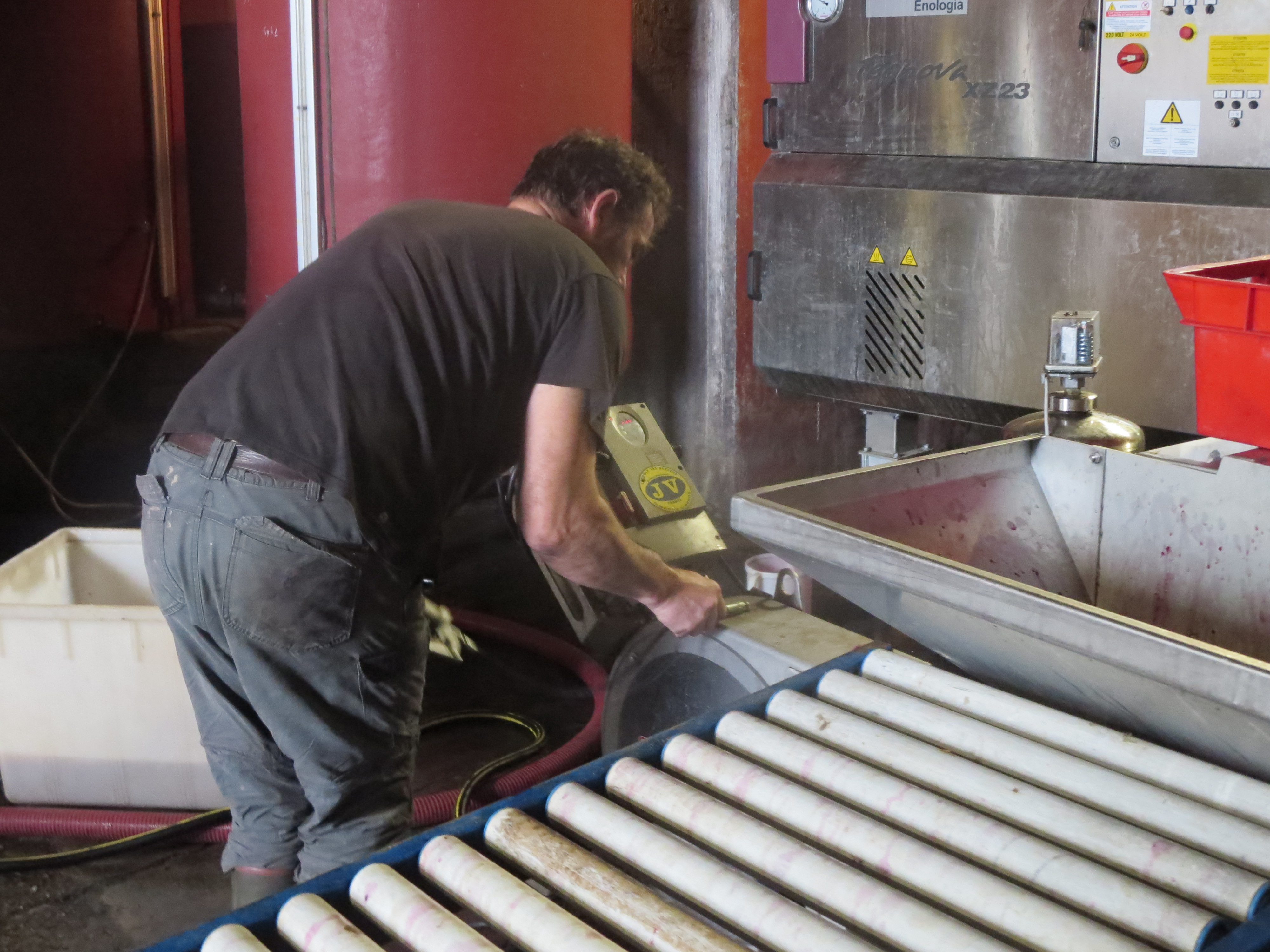
              Maintenance of the égrappoir

Thursday 17th brought Grenache from Sainte Suzanne (Metaierie), again carbonic maceration was to be used so back to the top of the cement tanks. Thomas was back and he, Cameron and I shared duties up there filling the tank.

IMG_2517

IMG_2526

        l-r Cameron, Michel and Thomas

Then cleaning of the cagettes ready for the next new cépage. Following the Carignan of Wednesday it was time to harvest the Mourvèdre from Segrairals. One of my favourite grapes, somewhat fickle in character but when grown by good producers it adds a complexity and depth with a hint of dark mystery. The bunches which arrived were certainly amongst the best of the whole harvest at Mas Coutelou.

Mourvedre 17th

                            Magnificent Mourvedre


They were clean, big bunches, the grapes with thick skins and smelling already of spice and blackcurrants. Some of the bunches were very heavy and it wouldn’t take many to produce a bottle of wine, on average you need about 1.25kg of grapes to make the 75cl of a normal wine bottle. Sorting was quick and easy, the pickers had done a good job and the fruit was in such good condition. I look forward eagerly to finding out what Jeff has in mind for these grapes, when I have asked he simply smiles mysteriously, something is afoot!

IMG_2532

Friday 18th brought the rest of the Mourvèdre still in tip top condition. When the pickers reached some of the lower parts of that parcel the quality did begin to dip a little so these bunches were taken away to be used separately, possibly for a rosé wine. I say possibly because final plans are a long way from being ready. Other jobs included pressing the Cinsault grapes which will make a rosé (definitely!!) and more remontages and analyses.

IMG_2533

                           Remontage

We were joined today by Charles, a young Frenchman who works in a restaurant in Berlin, and whose mother was a former colleague of Jeff when he was a teacher in Paris. Coincidentally his boss in Berlin was a student of Jeff! Charles added a real sense of fun and worked hard.

IMG_2537

                     Charles fills the press

By Saturday I was ready for a rest and so the 19th was the work of the Jeff, Michel and Cameron as they processed the last red grapes from Peilhan. Some of these will be used for blending but amongst them was the famous Castets. This you might remember is a cépage produced by only two winemakers in France, Chateau Simone in Palette and Mas Coutelou. The first harvest was in 2014 and we had watched eagerly its development. In fact we have been drinking some during harvest lunches and it is very promising, brooding with deep, dark fruit flavours and a freshness to lift it. Only 3hl was produced again this year, the same as last year.

Castets

                 Castets in tank

On Sunday 20th Jeff carried out a débourbage of the Cinsault rosé which was pressed on Friday. Débourbage means taking out the pips and skins etc to leave the juice on its own. The harvest is starting to slow down a little though much work remains to be done in the cellar. Jeff and the ‘Coutelou Gang’ will have certainly benefited from a little siesta in Sunday.

IMG_2500

Icare licking his lips at the great wine being made (maybe)


6 Comments

Turning over a new leaf

IMG_0365

Version française

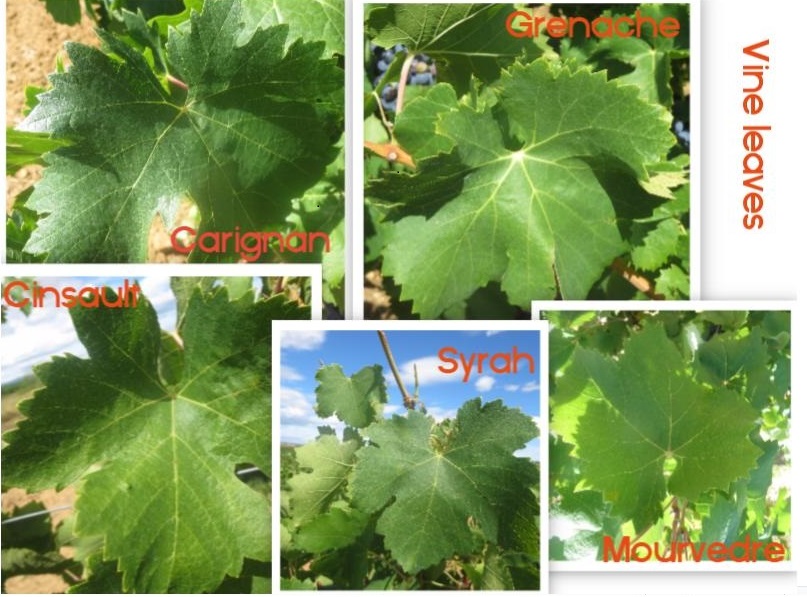
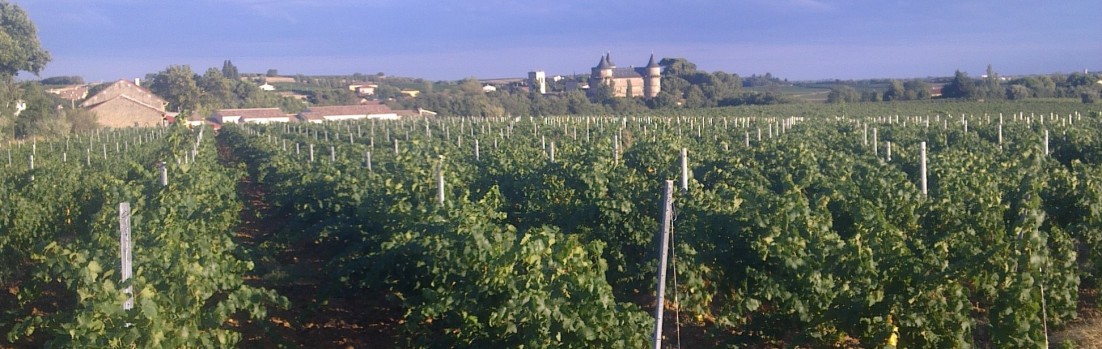
When you live in the Languedoc you are surrounded by vines. They are everywhere and form the world’s biggest vineyard area, producing one third of all France’s wine. Vines stretch over hill and valley, coastline and plains. As you walk around it is easy to think of vines as all being the same, part of one big plantation, but when we have received visitors and we go on walks through the vineyards they often ask me what sort of vine we are passing. Cue guesswork on my part unless I am in the vineyards of Mas Coutelou. To remedy this ignorance and to meet the brief at the top of this blog that I should be “learning about wine, vines and vignerons” I set myself the challenge of being able to identify the main types of vine in the region.


Ampelography is the study of identifying and classifying grapevines. There are many learned books on the subject, some running to hundreds of pages. However, I wanted a simple guide, to learn the basic varieties before expanding to others. I took some photographs in the parcels of vines of Mas Coutelou and using the internet and Jeff himself I hope I have put together a simple reference piece. As we enter harvest it has proved useful to me so that I know what I am picking or sorting. Hopefully it will be useful to you too, whether you visit vineyards or just take an interest in wine and vines.

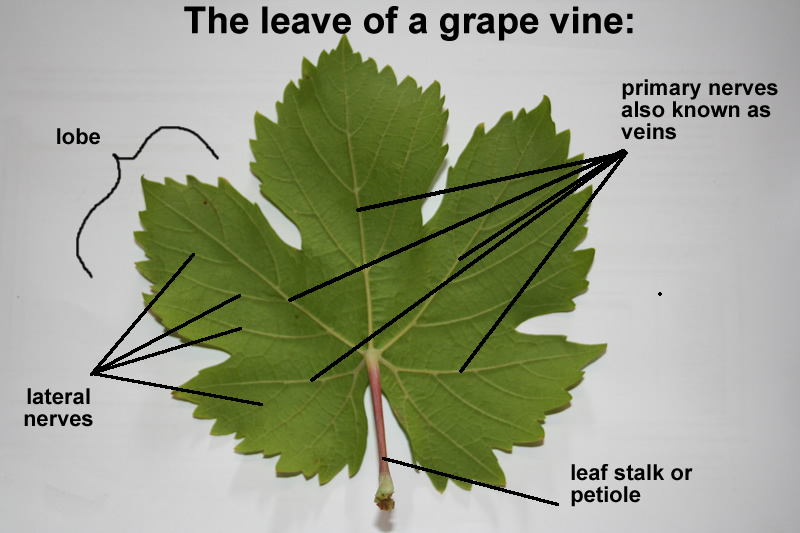
Experts use features such as the shape of the grape bunches, size and colour of the grapes. However, for me the most obvious way of distinguishing between vines are the shape of the leaves.

The colour of leaves varies but so too the number of lobes (from just one to seven), the colour of the veins and the shape of the sinus around the stalk (pétiole). The sinus is the gap between the lobes. So here is my simple guide to identifying some Languedoc vines. I have started in this post with the five main red wine varieties.

Red wine vines

Syrah

Syrah2

                              Syrah in Segrairals vineyard

Syrah is one of the great varieties of the Languedoc. Famous for its wines in the Rhone Valley and around the world (Shiraz in Australia) Syrah produces great wines here too. The leaves are quite a light green in colour with 5 lobes which are well separated out including a big sinus (V shaped) around the stalk (pétiole). The veins are quite light and stand out. The leaf edge has small, gentle teeth shapes. The grapes tend to be oblong shaped and fairly small in size. Syrah is one of the earlier red varieties to ripen.

Recommended wines:

Mas Coutelou – La Vigne Haute

Others – Sylvain Bock, Raffut;      Plan De L’Homme, Alpha;      Haute Lignières, Sur Le Fil;      Terre Inconnue, Sylvie

Syrah3

                                    Syrah grapes

Grenache

Grenache

                                        Grenache in La Garrigue

A variety which loves the heat, very much a Spanish and Mediterranean grape. Grenache leaves have a more round appearance than Syrah with big, wide lobes which are not so separated as the Syrah giving the impression of a big, whole leaf. There is a wide sinus around the stalk. The leaf edges have saw teeth which are quite marked. Light veins and round, medium sized grapes. Grenache is a late ripening variety. Often used to blend it is not often used for single variety wines.

Mas Coutelou – Grenache, Mise De Printemps

Others – Engelvin, Même-Si and Vieux Ronsard;       Treloar, One Block Grenache;

Grenache (2)

                                         Grenache grapes

Mourvèdre

Mourvedre2

                                        Mourvedre in Segrairals

                 Mourvedre3

Mourvèdre is a late ripening and, sometimes, a difficult grape to ripen. The lobes are broad and form three rather than five as you can see in the photo on the right of the page above.  There is a little green colouring in the veins and the sinus around the stalk is a lyre shape. The teeth around the edge are distinct and quite big all around. The grapes come in biggish bunches though the grapes are medium in size.

Mas Coutelou – Sauvé De La Citerne

Others – Clos Fantine, Cuvée Courtiol;     La Liquière, Tucade;     Treloar, Motus

Mourvedre grapes

                                Mourvedre grapes

Carignan

Carignan

                                 Carignan in Rec D’Oulette

Carignan has big leaves which are quite hairy underneath and have a more dimply appearance than most in the upper surface. Five lobes usually though in the photo above the lower lobes are small with big upper lobes and a distinct top lobe. The teeth are tapered and distinct. The veins are hardly coloured. This is a late ripening variety and you can see the grapes below which are still turning black, even though this was taken at the same time as the other photos. The grapes and clusters are medium to large in size.

Carignan grapes

                                Carignan grapes

Mas Coutelou – Flambadou

Others – Mas Des Capitelles, Loris;      Coume Mayou, La Loute     Mas Gabriel, Trois Terrasses    Deux Ânes – L’Enclos

Cinsault

Cinsault3

                       Cinsault in Segrairals

I like to think of Cinsault leaves as being very like the grape’s flavours, open, friendly and welcoming. These are big widely spaced lobes and a deep, open sinus around the stalk. The veins are light and clear and the teeth are big, almost rounded which cover all the leaf edge. Often used in rosé wines Cinsault is starting to be used to make some great red wines in the region.

Cinsault Rome

     Older Cinsault in Rome vineyard

Cinsault grapes are big and form big clusters.

Cinsault Rome (2)

  Cinsault grapes

Mas Coutelou – 5SO and Copains

Others – Pelletier, L’Oiselet;   La Fontude, Fontitude;     Thierry Navarre, L’Oeillade    Julien Peyras, Gourmandises

leaves


Leave a comment

Mas Coutelou 2014

IMG_0620

‘Proof’ that drinking Mas Coutelou wines is good for you

en francais

IMG_0612

The assemblage for the 2014 wines is well under way, the wines are settling in tank for some of the well known cuvées such as Classe and Vin Des Amis. (Above are glasses of richly coloured Vin Des Amis). Both are delicious already and in the few days since I first tasted them they have shown development as they marry together. The fruit and freshness which characterise Mas Coutelou wines are evident and there is a marked concentration which shows that the wines will mature well.

Jeff has published his vintage report for 2014. Winter, spring and early summer were exceptionally dry (less than 150mm or 6 inches of rain in the 9 months to the end of June) and at that moment Jeff was far from sure that he would be able to harvest any grapes. Some relief came from a summer which was not too hot and peppered by storms. However, the vines had to dig deep into their reserves of energy in order to produce grapes. Troubles continued with some storms towards the end of harvest time and then the Marin wind with their warmth and high pressure meant that through the autumn and into December the wines in tank were not able to truly rest. It was a difficult year in short, a reminder that nature rules the life of the vigneron. Indeed some local producers have seen their crops virtually wiped out by hail and mildew so the wines that Jeff has produced are to be even more cherished.

Nevertheless there are some drawbacks. The harvest was smaller especially for Syrah, (down by 40%), Carignan and Mourvedre. Syrah is a major part of many Coutelou wines so Jeff has had to improvise and make the most of what he has. The lack of Mourvedre may mean that one of his popular wines ‘Sauvé De La Citerne’ will not be made. In addition the effort made by the vines means that they would benefit from a rest and yet this winter (thus far) has been so mild that they are starting to show signs of producing buds even in January (débourrement) Instead of resting they are starting to work hard already.

The wines I tasted from tank are marked by concentration and minerality. The vines had to push deep into the soil for water in the arid early part of 2014 so they have drawn up minerals from the soil’s depths. The mineral flavours are evident when drinking. A difficult vintage has produced some highly promising wines but in smaller quantity, so guard what you already have and appreciate the quality of the new wines.

Two wines to note.

PM, the rosé,  is already gorgeous, full of fruit and perfume yet dry and absolutely delicious. At only 11% alcohol it is a wine to drink and enjoy.

A new wine made from old Cinsault, Aramon, Oeillade and Muscate. Tasted from tank this was already sensational, a red wine with grapey, perfumed scents and deep, concentrated red fruits. Can’t wait to see how this develops.

Jeff will be showing some of these new wines at a couple of tastings in the next 10 days, in Montpellier and the Loire. Today Jeff put the bottles together for those tastings, including some corking by hand. Nothing was easy about 2014!!

IMG_0616

Taking Classe from tank

IMG_0613

IMG_0617

Bottles prepared


2 Comments

Fin de Vendanges a Mas Coutelou, One Day Like This

Vendange under a perfect sky

Vendange under a perfect sky

As my favourite band Elbow sang in their biggest hit, one day like this a year would see me right!

Saturday September 27th was the last day of vendanges chez Coutelou and, apparently, many other domaines in the region. After some iffy weather in the previous 10 days the sun had been out for the last 2 or 3 and today was no different. There was an autumnal, morning chill as Pat and I arrived in the vineyard to help collect the last of the Grenache Noir.

Grenache Noir

Grenache Noir


Pat picking


However, the sun soon became hot and the panama was soon donned to protect my head since hair no longer bothers to do so. The usual pickers had departed and Jeff called in his friends from the Béziers rugby club to help out. The ‘rugbymen’ proved to be hard working, fun and very welcoming towards novices such as ourselves even when I declared my lack of interest in their sport.

As ever harvesting grapes is only the first part of the job in the vineyard as it is the first step in the process of triage (sorting), any underripe, mildewy or poor quality grapes being cut out before being placed in buckets, then cases. The best way to check the health of a bunch that has been cut is to smell it. There should be the clean, fruity smell of grapes. If not, then search for the problem and eliminate it. Any grape left should be one that you would be happy to eat, and that we did too!
A grape with a hole created by a ver de la grappe (worm)

A grape with a hole created by a ver de la grappe (worm). The grape would soon be cut away

Healthy and delicious Grenache grapes


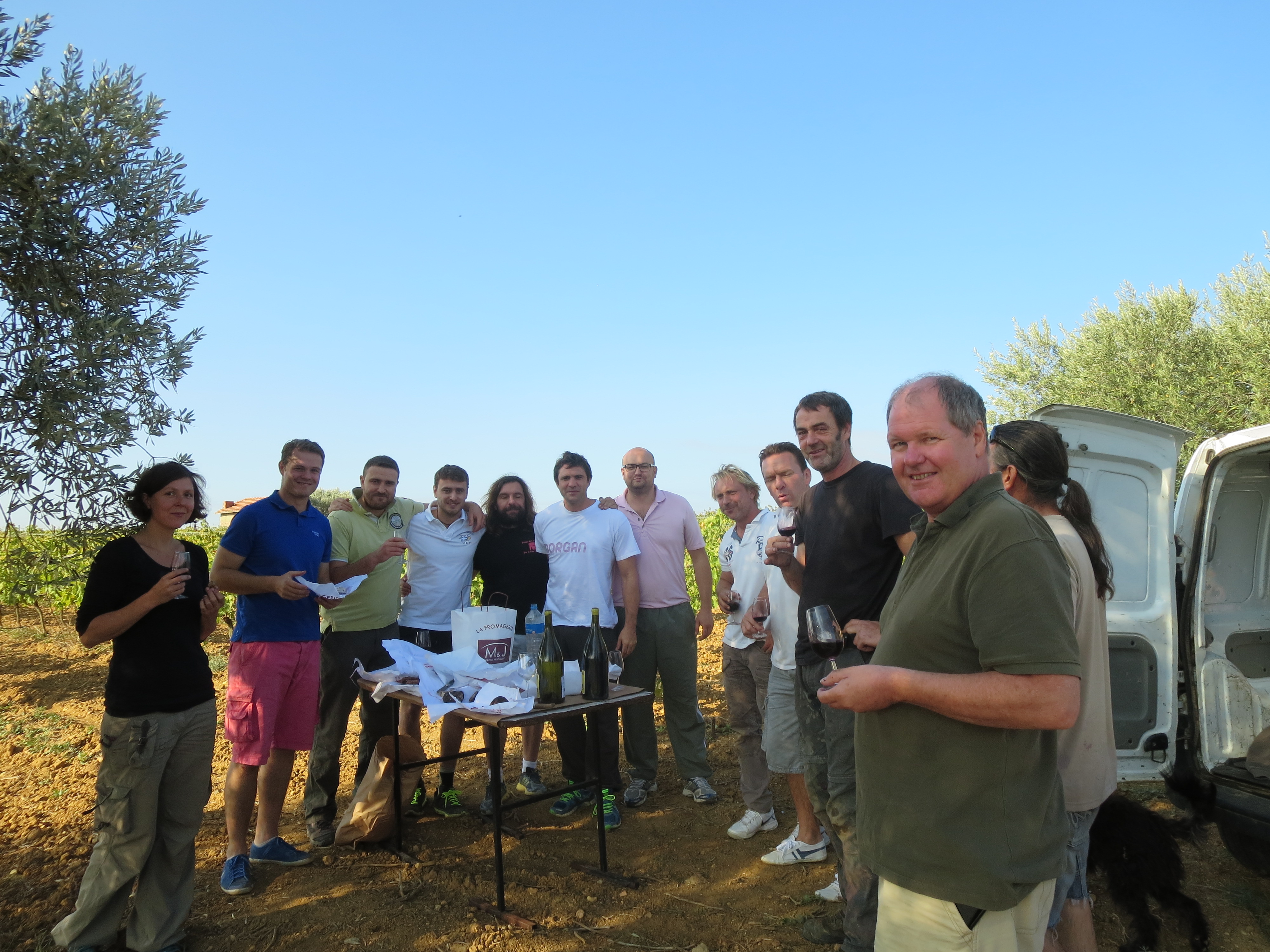
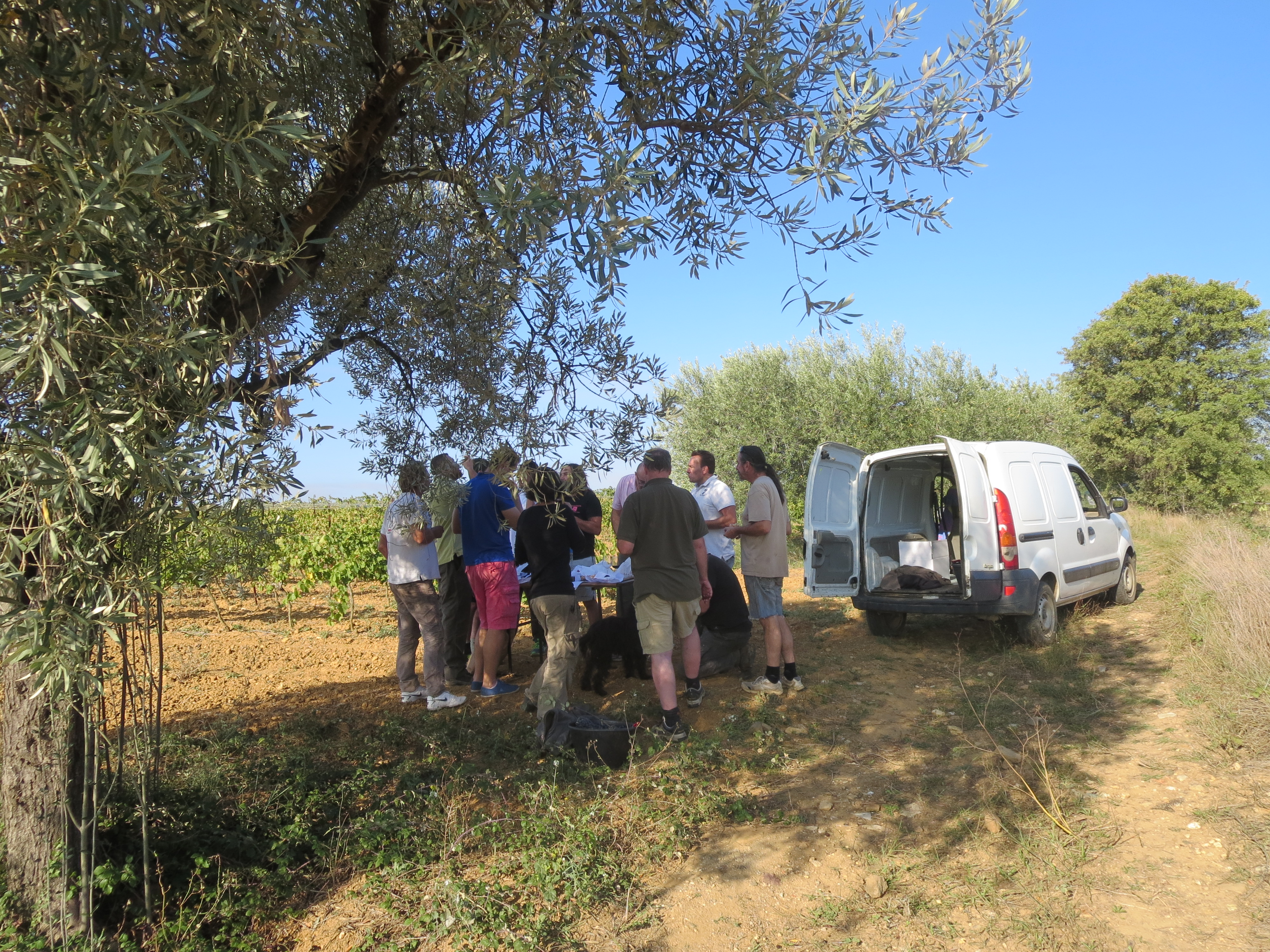
As the morning heated up it was time to casse croute. A drink of water I thought, wrong! Out came the picnic table, a collection of charcuterie (my pescatarian ways raising more rugbymen mirth!) and then some cheeses from La Fromagerie, a shop in Béziers. These were some of the best cheeses I have ever tasted, including a runny and perfect St Marcellin. Naturally, in every sense of the word, to accompany these treats were a couple of magnums of Vin Des Amis, the most appropriate of wines for today.

Tina, the 'rugbymen', Jeff, Michel and myself

Tina, the ‘rugbymen’, Jeff, Michel and myself

Welcome shade


Michel does the honours

Michel does the honours


Icare checks that everything is up to scratch

Icare checks that everything is up to scratch


12.30pm, grapes picked it was time to return to the cellars. The Grenache was put into tank to be fermented by carbonic maceration. This is where whole bunches of grapes are put in tank and the weight of the grapes gradually bursts the skins and starts fermenting the grapes at the bottom of the tank. Most of the grapes begin to ferment inside their skins. The result is usually more fruit and less tannin and adds a different layer of complexity when blended with other grapes fermented traditionally after being pressed

We came, we picked, we sorted

We came, we picked, we sorted

La force des rugbymen


Jeff shared some of the juice / wines from various tanks from the harvests of the last few weeks. These are, obviously, at different stages of development according to date of picking, speed of fermentation etc. There were  a multitude of flavours, richness and acidity and so much promise for another excellent vintage despite the dry spring and summer. Low in quantity but high in quality.

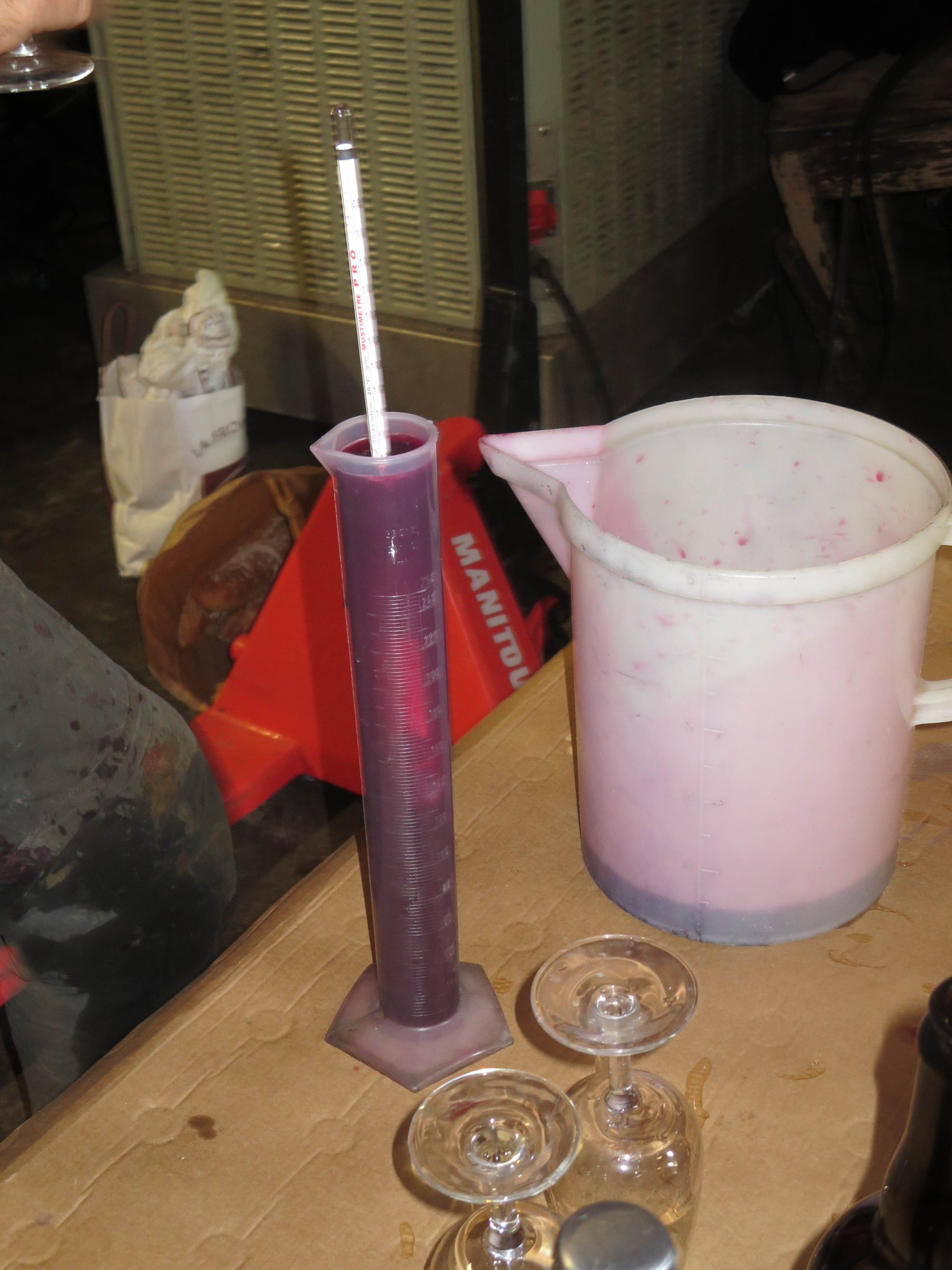
The Mourvedre being checked for density

The Mourvedre being checked for density, it was a delicious fruitbomb to taste

At work at the sorting table checking Mourvedre grapes which have a beautiful blood coloured juice

At work, the previous Tuesday, at the sorting table checking Mourvedre grapes which have a beautiful blood coloured juice


And that I thought was that. Wrong again! Back to Jeff’s house,

the celebrated 7, Rue De La Pompe (name of one of Jeff’s cuvées) and into the garden where, joined by families of the rugbymen, children and 17 adults sat down to a delicious meal of salads, a giant seafood pasta, more La Fromagerie cheeses, and several huge fruit tarts. Just fantastic, many thanks to the cooks, Michel for cooking the pasta through, and to Jeff for his generosity. Why so few pictures of the meal? Well I’d like to claim a technical hitch but it was probably more due to this…

Jeff and Balthazar

Jeff and Balthazar

I don’t think I have ever seen a Balthazar bottle actually filled with wine. This was Vin Des Amis 2013, all 12 litres of it. As the afternoon wore on it was amazing to taste how the wine developed and opened up allowing the Grenache fruit to really express itself. And, to make a comparison, a magnum of 2010 Vin Des Amis which was beautiful. Fresh yet complex and long lasting. Thus it was after 6pm when we finally stood up from the table. Pat had been very abstemious as we had to get back to Margon and then to the theatre in Pézenas. I admit to being a little merry.

It had been a fantastic day, one I shall always cherish and remember. I have always wanted to pick grapes and take part in a wine harvest. Dream fulfilled in the company of some terrific people who were welcoming, friendly and tolerant of the two English incomers. What a treat to spend the day in the company of French people at work and at play, even if the speed of their French became way too fast for me at times. Work to do there. And, work aplenty still to do in the year ahead – the wines have still to be made, bottling to do, pruning and taillage in the vineyards. I can’t wait!

I must say a huge thank you to Jeff whose patience, friendship and generosity are the stuff of legend. I posted recently about the story of the Chaud Doudou and its moral of sharing everything good. The gathering of friends and colleagues in his vineyard, cellars and garden was living proof that he carries on that tradition of chaud doudou. He wants to share his work and his passion for nature and the wines he creates. This he achieved magnificently today.

Surrounded and sharing

Surrounded and sharing


Error
This video doesn’t exist

The scenes of trees in the video show some bat houses erected for them to shelter, part of the diversity encouraged at Mas Coutelou. The music is, of course, Elbow. And, for those who can’t get enough of him, Icare makes an appearance!