amarchinthevines

Learning about wine, vines and vignerons whilst living in the Languedoc


7 Comments

Grafting vines

P1000577

On March 17th we were in Font D’Oulette vineyard which, at just over 0,6 ha, is a small parcel replanted around 6 years ago with a variety of old Languedoc cépages such as Aramon Noir, Aramon Gris, Oeillade and the very rare Clairette Musquée. The grapes are picked together to make a single cuvée representing the parcel , Flower Power. This first appeared in 2014 and has made an impact already, selected by La Revue Du Vin De France as one of the Languedoc’s top 50 wines. As the vines age we can only anticipate eagerly what they will produce in future.


However, not all young vines thrive and some needed to be replaced. Two alternatives were in place this day as the rain fell steadily.

The first is to plant vines which are pre-grafted in the conservatory / nursery. These are covered in wax to protect the graft, the wax will fall away in a few weeks. I described this process last March with the new plantation in Peilhan vineyard.

The second method was to graft onto the root stocks already in situ, something I had not seen before. The American root stock has to be used to protect against phylloxera which destroyed much of France’s vineyards in the 19th century. There are different methods of grafting such as ‘chip and bud’ but Jeff brought in a specialist, Tanguy, who uses a method known as ‘greffe en fente’.

The old vine is cut away to reveal the root stock. A very sharp knife, repeatedly sharpened through the day, cleans the surface and then inserts a cut through the wood revealing its core.

The cut is supported by tying string around it. The vine wood is also cut, as if sharpening it to make a thin wedge which is inserted into the cut root stock. The idea is to get the core of the two pieces as close as possible. This is then fastened tightly with the string. The graft is complete.

It looks simple but isn’t that the mark of a skilful worker, making something complicated look easy? Have a look at the video below to see the process in one go.

The vine is staked for support, always to the side which will help the vine against the prevailing north westerly winds. Jeff had brought some basalt soil from the Auvergne and this was then placed around the grafted vine poured into the body of a plastic bottle placed around the vine .

Basalt is one of the oldest forms of rock, roche mère (mother earth or bedrock) and is packed with nutrients. This will help the vine to grow well and by filling the bottle around the vine it is surrounded with top quality soil. Organic compost is added to the hole and then the earth is hoed back over it all, removing the bottle of course.

There is a risk. Up to 20% of vine grafts do not take in theory and with greffe en fente the whole vine would have to be grubbed up next year and replanted. Other methods can simply replace the graft. However, this method is the best for the vine itself and the most likely to take.

So what were the vines? Cinsault, Aramon Noir and Inconnue No.3. Inconnue means unknown, so why is it called this? The original vine was found in an old vineyard where it had never been catalogued. It was taken by the organic nursery where Jeff buys his vines and it was studied but was discovered to have never been indexed. it is unique, unknown, hence its name. One of its benefits is that it is resistant to oidium and it will also add diversity to this complanted vineyard with about 100 of the Inconnue No.3 vines being added. A hint of mystery to the blend.
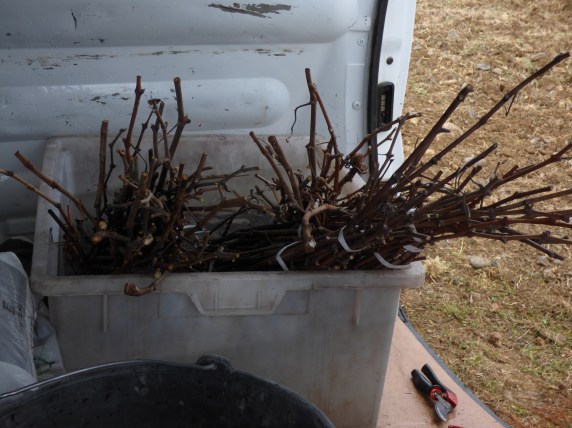
P1000516

The vine canes, only about 7-8 cm will be used

A fascinating day despite the rain which soaked us all to the skin. It was hard graft but a rich, rewarding day celebrated at lunchtime with a magnum of… well it had to be Flower Power.

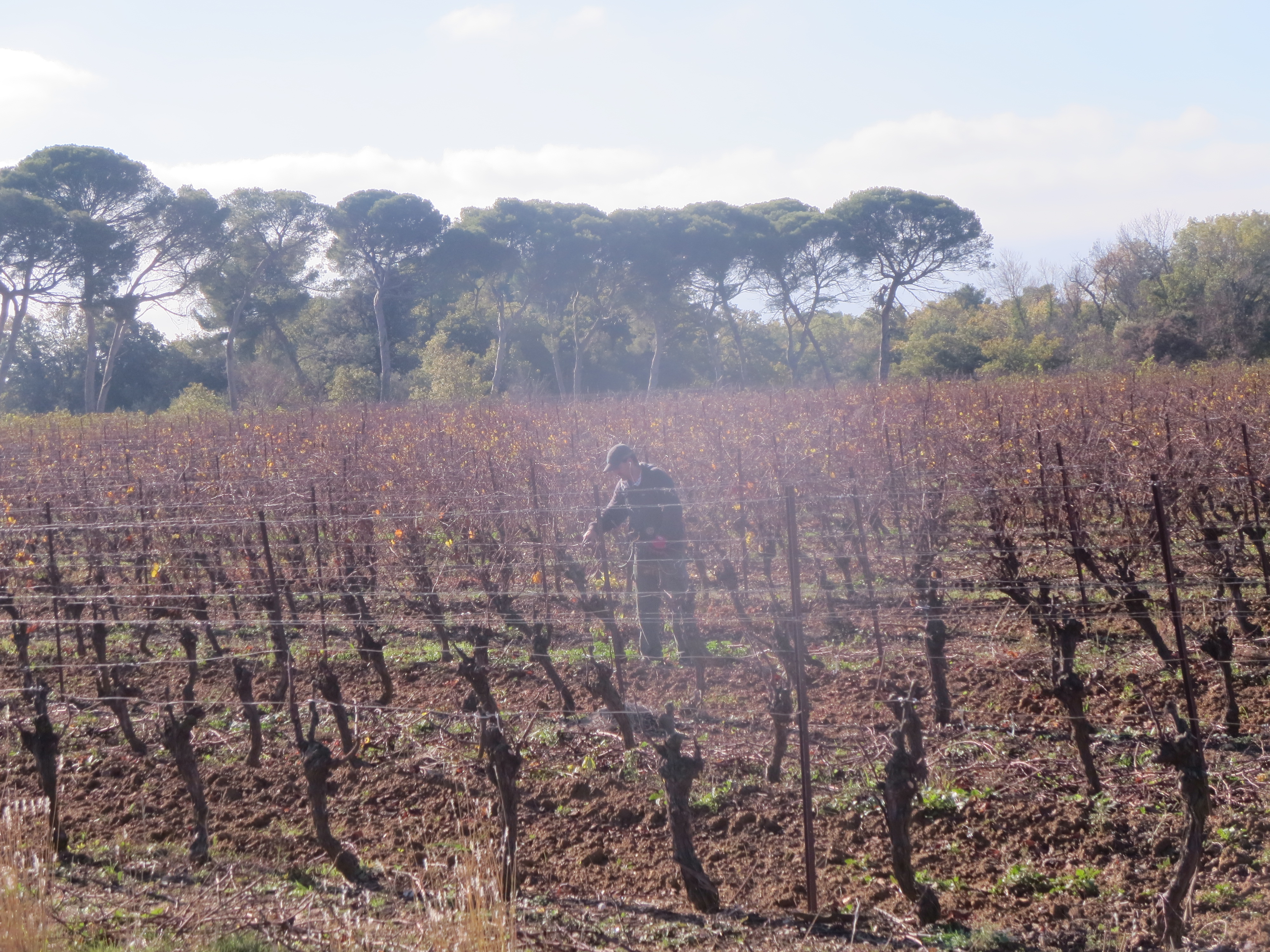
P1000597

A damp guardian of the new vines


2 Comments

The Falling Leaves

IMG_3133

Vine leaves which will become compost in the vineyard

Version française

Autumn is often a melancholy time as the days shorten, temperatures drop and the first signs of winter approach. And yet 2015 in the Languedoc has seen a most untypical autumn. Last week the warmest November day ever was recorded and we have enjoyed blue skies, warm sunshine and hot afternoons, 26°C has been regularly seen on our garden thermometer. The resulting sunshine has produced the most breathtaking scenery, with colours across a wide spectrum of autumn. As I wrote on the Out And About page, every time you turn a corner there is another heart stopping view.

IMG_3220 IMG_3096

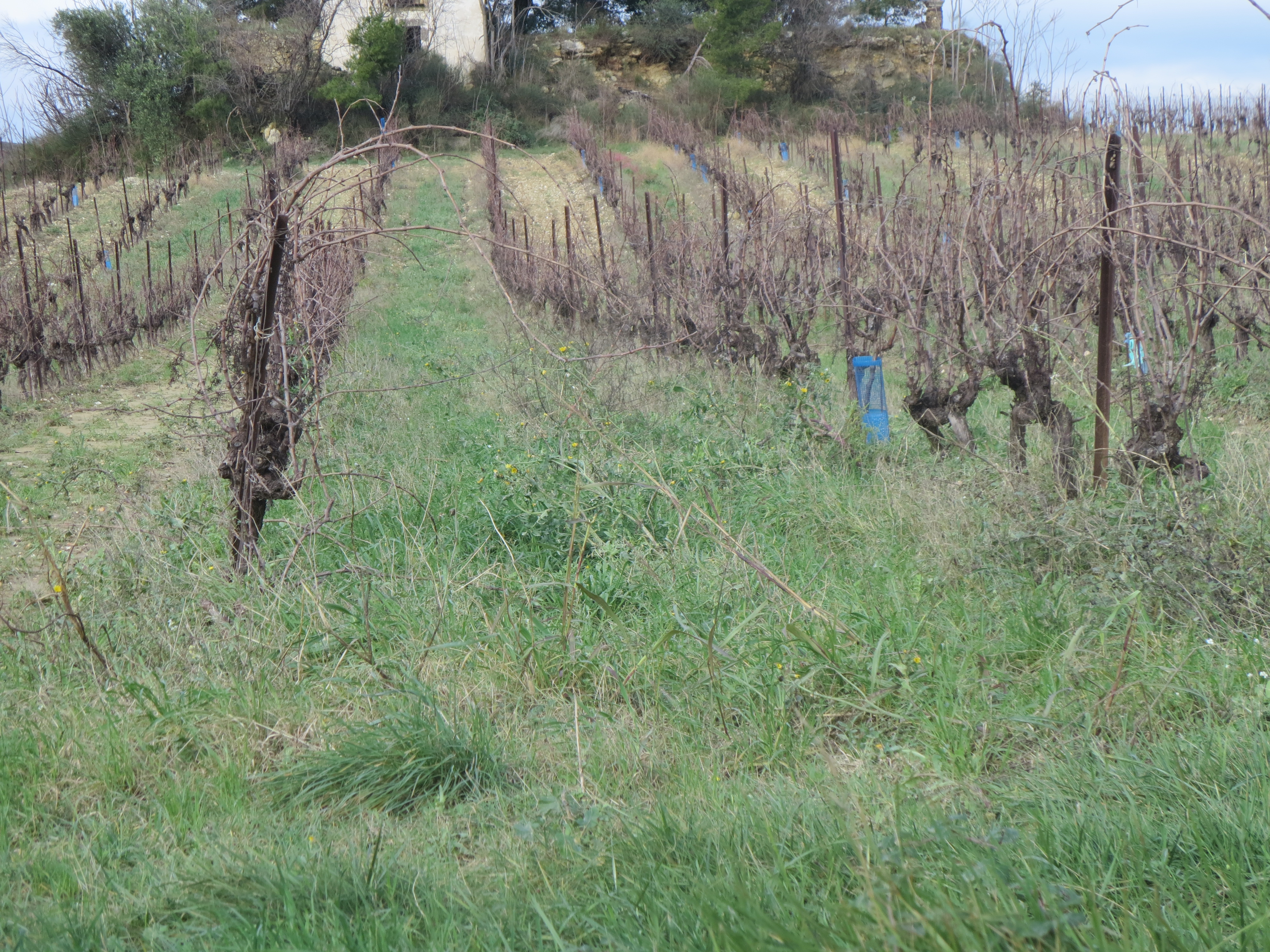
The vines are now closing down, preparing for winter. Their fruit has gone except for a few overlooked grapes which the birds, wasps and insects have been enjoying. Their leaves are shedding and the skeleton of the vine stands out again for the first time since early May, their form revealed, cordon or guyot for example.
     IMG_3119   IMG_3123

IMG_3225

       First taille of autumn 2015, guyot vines

Indeed, some vignerons have actually started to prune again ready for 2016. I suspect they are working to a pre-prepared timetable as the vines have been slow to lose their leaves and still show some life. At Mas Coutelou the taille will not take place until next year and most top vignerons will leave it until then, just before the growing season. The extra wood helps to protect against frosts for example. Some vignerons are starting to cavailloner, in other words to move earth from between the rows of vines towards the plants themselves, the extra soils will again act as a blanket against the frosts.
IMG_3130

       Puimisson basks in autumn sunshine

IMG_3125

Dew on some Grenache Blanc grapes left behind in Rome

Other jobs remain to be done. After the months of busy vineyard work and harvest it is a time for sending wine to be sold. Pallets have left Puimisson to cavistes and restaurants around the world. Last Friday, November 6th, they set off to Germany, Finland and various regions of France. More have already gone to New York, London, Melbourne amongst many cities.
 IMG_0488

The season of salons has started in earnest too. This weekend I was in the Roussillon for La Bande De Latour, highlighting many of the best natural wines of the Roussillon and elsewhere.

IMG_3200

The following day I was in Autignac for a tasting of some of the best Faugères wines and also their fines or brandies. I shall post about these soon. I was talking to the excellent Hausherrs, vignerons who had driven to the Pyrenees from Alsace for La Bande, a long, long way. Hard work.

In the next few weeks Jeff will be starting to assemble the wines for the main cuvées of 2015, the likes of Classe and Vin Des Amis. Decisions to be made about what proportions of which cuves to blend for the wines. Sadly, I shall miss this process as we head back to the UK for a wedding. Into every life a little rain must fall.

It has been a beautiful autumn, the weather and the vendanges have made it a magical time. Thanks as ever to Jeff for allowing me to share the experiences and insights of the season.

IMG_3135

IMG_3115


6 Comments

Turning over a new leaf

IMG_0365

Version française

When you live in the Languedoc you are surrounded by vines. They are everywhere and form the world’s biggest vineyard area, producing one third of all France’s wine. Vines stretch over hill and valley, coastline and plains. As you walk around it is easy to think of vines as all being the same, part of one big plantation, but when we have received visitors and we go on walks through the vineyards they often ask me what sort of vine we are passing. Cue guesswork on my part unless I am in the vineyards of Mas Coutelou. To remedy this ignorance and to meet the brief at the top of this blog that I should be “learning about wine, vines and vignerons” I set myself the challenge of being able to identify the main types of vine in the region.


Ampelography is the study of identifying and classifying grapevines. There are many learned books on the subject, some running to hundreds of pages. However, I wanted a simple guide, to learn the basic varieties before expanding to others. I took some photographs in the parcels of vines of Mas Coutelou and using the internet and Jeff himself I hope I have put together a simple reference piece. As we enter harvest it has proved useful to me so that I know what I am picking or sorting. Hopefully it will be useful to you too, whether you visit vineyards or just take an interest in wine and vines.

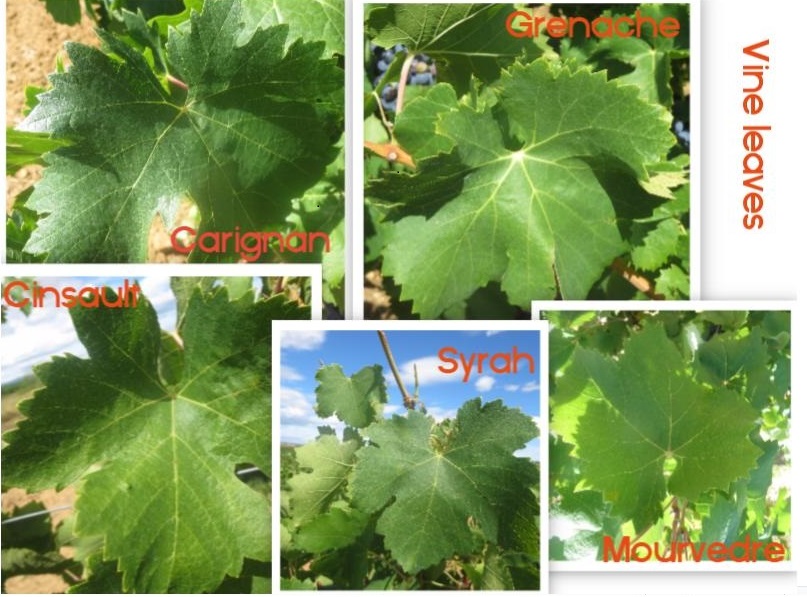
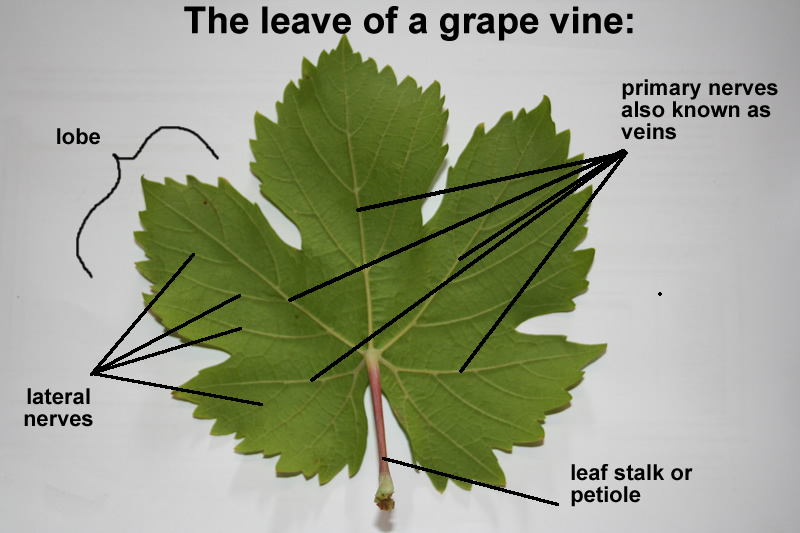
Experts use features such as the shape of the grape bunches, size and colour of the grapes. However, for me the most obvious way of distinguishing between vines are the shape of the leaves.

The colour of leaves varies but so too the number of lobes (from just one to seven), the colour of the veins and the shape of the sinus around the stalk (pétiole). The sinus is the gap between the lobes. So here is my simple guide to identifying some Languedoc vines. I have started in this post with the five main red wine varieties.

Red wine vines

Syrah

Syrah2

                              Syrah in Segrairals vineyard

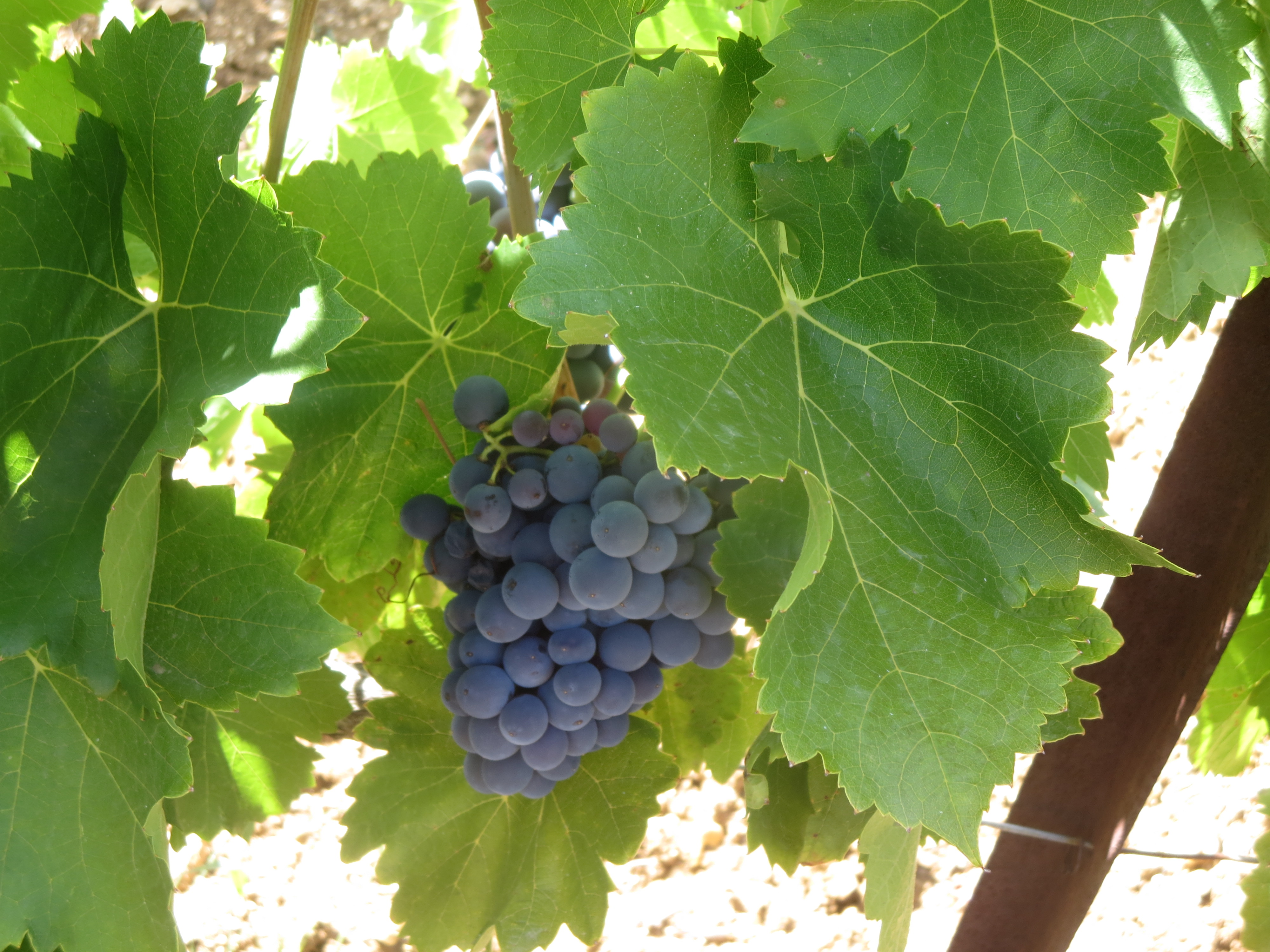
Syrah is one of the great varieties of the Languedoc. Famous for its wines in the Rhone Valley and around the world (Shiraz in Australia) Syrah produces great wines here too. The leaves are quite a light green in colour with 5 lobes which are well separated out including a big sinus (V shaped) around the stalk (pétiole). The veins are quite light and stand out. The leaf edge has small, gentle teeth shapes. The grapes tend to be oblong shaped and fairly small in size. Syrah is one of the earlier red varieties to ripen.

Recommended wines:

Mas Coutelou – La Vigne Haute

Others – Sylvain Bock, Raffut;      Plan De L’Homme, Alpha;      Haute Lignières, Sur Le Fil;      Terre Inconnue, Sylvie

Syrah3

                                    Syrah grapes

Grenache

Grenache

                                        Grenache in La Garrigue

A variety which loves the heat, very much a Spanish and Mediterranean grape. Grenache leaves have a more round appearance than Syrah with big, wide lobes which are not so separated as the Syrah giving the impression of a big, whole leaf. There is a wide sinus around the stalk. The leaf edges have saw teeth which are quite marked. Light veins and round, medium sized grapes. Grenache is a late ripening variety. Often used to blend it is not often used for single variety wines.

Mas Coutelou – Grenache, Mise De Printemps

Others – Engelvin, Même-Si and Vieux Ronsard;       Treloar, One Block Grenache;

Grenache (2)

                                         Grenache grapes

Mourvèdre

Mourvedre2

                                        Mourvedre in Segrairals

                 Mourvedre3

Mourvèdre is a late ripening and, sometimes, a difficult grape to ripen. The lobes are broad and form three rather than five as you can see in the photo on the right of the page above.  There is a little green colouring in the veins and the sinus around the stalk is a lyre shape. The teeth around the edge are distinct and quite big all around. The grapes come in biggish bunches though the grapes are medium in size.

Mas Coutelou – Sauvé De La Citerne

Others – Clos Fantine, Cuvée Courtiol;     La Liquière, Tucade;     Treloar, Motus

Mourvedre grapes

                                Mourvedre grapes

Carignan

Carignan

                                 Carignan in Rec D’Oulette

Carignan has big leaves which are quite hairy underneath and have a more dimply appearance than most in the upper surface. Five lobes usually though in the photo above the lower lobes are small with big upper lobes and a distinct top lobe. The teeth are tapered and distinct. The veins are hardly coloured. This is a late ripening variety and you can see the grapes below which are still turning black, even though this was taken at the same time as the other photos. The grapes and clusters are medium to large in size.

Carignan grapes

                                Carignan grapes

Mas Coutelou – Flambadou

Others – Mas Des Capitelles, Loris;      Coume Mayou, La Loute     Mas Gabriel, Trois Terrasses    Deux Ânes – L’Enclos

Cinsault

Cinsault3

                       Cinsault in Segrairals

I like to think of Cinsault leaves as being very like the grape’s flavours, open, friendly and welcoming. These are big widely spaced lobes and a deep, open sinus around the stalk. The veins are light and clear and the teeth are big, almost rounded which cover all the leaf edge. Often used in rosé wines Cinsault is starting to be used to make some great red wines in the region.

Cinsault Rome

     Older Cinsault in Rome vineyard

Cinsault grapes are big and form big clusters.

Cinsault Rome (2)

  Cinsault grapes

Mas Coutelou – 5SO and Copains

Others – Pelletier, L’Oiselet;   La Fontude, Fontitude;     Thierry Navarre, L’Oeillade    Julien Peyras, Gourmandises

leaves


3 Comments

A walk in the vines

(En français)

The Languedoc Roussillon region was struck by huge storms on November 28th. Lightning and thunder which lasted almost a whole day, torrential rain all day (over 210mm at Bédarieux), hail for half an hour, winds well over 100kph. Even local people were surprised by the storm. There are some scary pictures on Midi Libre.

Outside our door in Margon

Outside our door in Margon

Puimisson, the stream in the background reached the height of the tree branches

Puimisson, the stream in the background reached the height of the tree branches


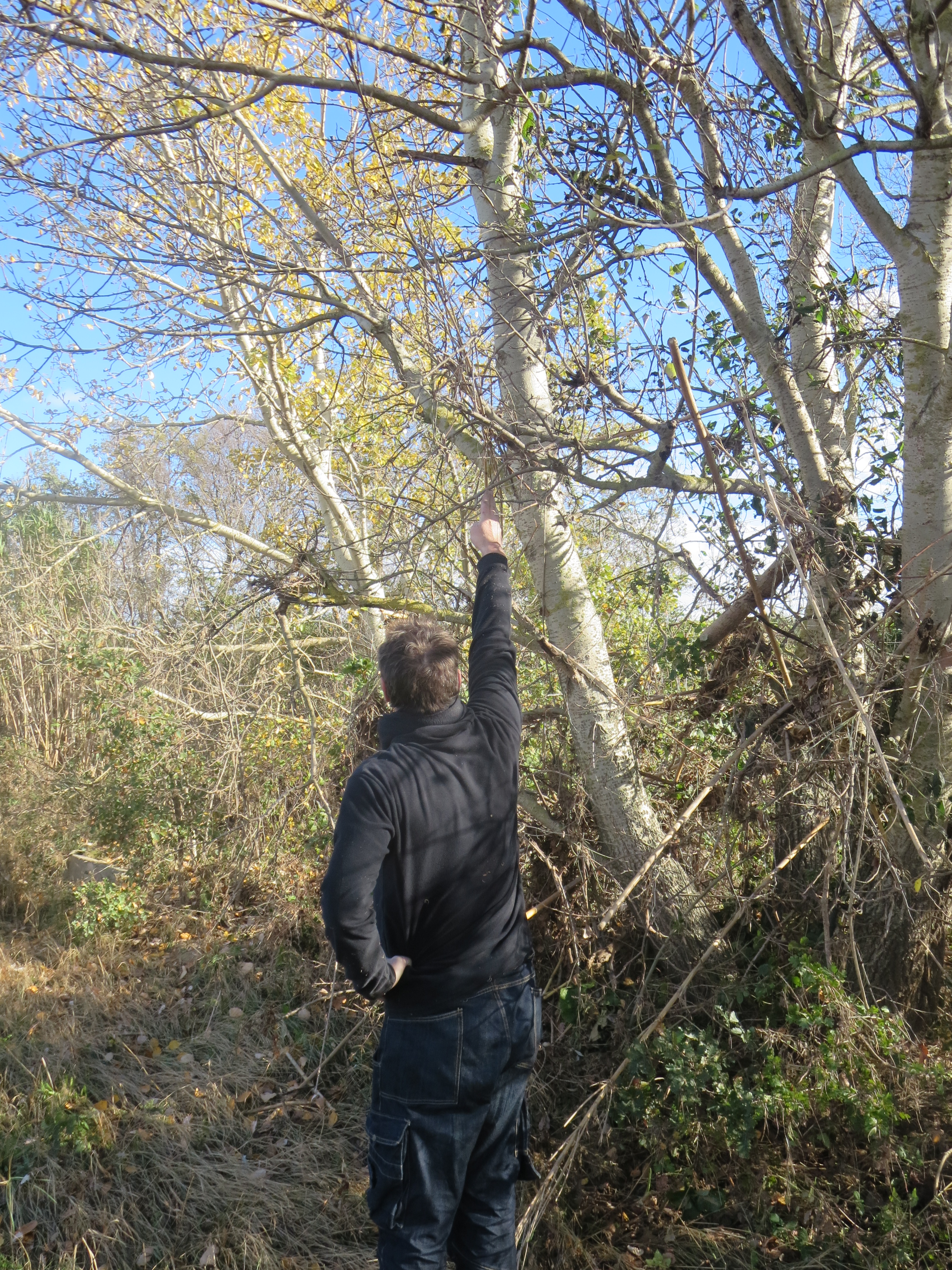
Jeff pointing to debris from the stream in the tree branches

Jeff pointing to debris from the stream in the tree branches


A walk around Margon, our home village, 3 days later showed that many vineyards had been damaged. At this time of the year the vines themselves are not so vulnerable of course, there are no grapes left on there. However, the soils themselves were damaged in many places by erosion.

Water standing in the vines

2. Water standing in the vines

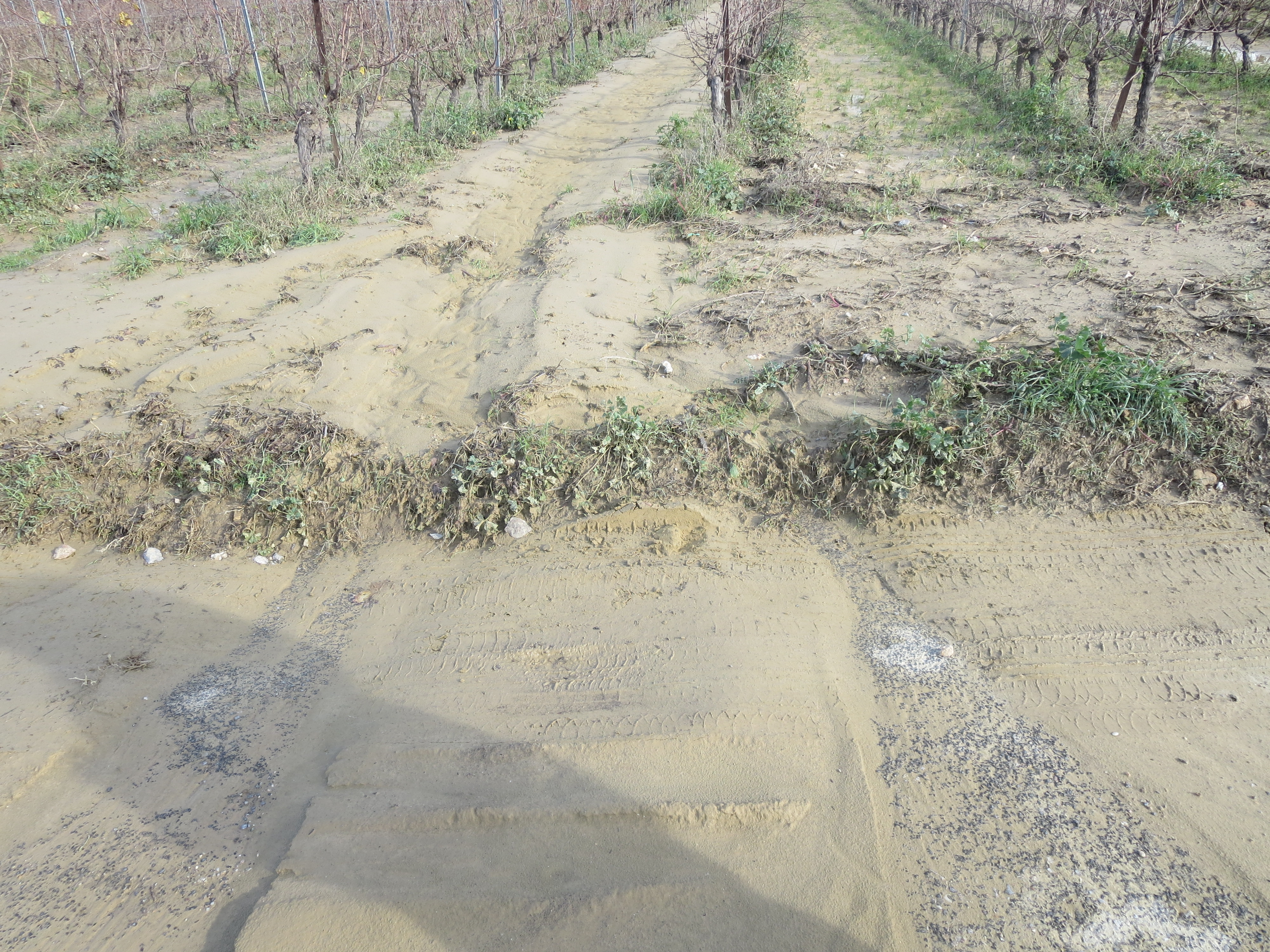
Clay (argile) run off on the road

1. Clay (argile) run off on the road


Much of our area has clay soils which are not the easiest to drain. However, many modern agricultural practices exacerbate this problem. Using heavy machinery such as tractors, harvesting machines and large sprayers means that the soils become compacted and, therefore, even more impermeable (photo 2). Inappropriate use of herbicides and weed killers to get rid of grass and other plants means that the soil has nothing to bind it together and, consequently, heavy rain will cause erosion as we see in photo 1. Overploughing will combine both problems.

I remember when I first visited French vineyards 30 years ago that most were like this. Times have changed though and more artisanal, more environmentally aware viticulturists have realised that the soil has to be treated with respect. In a previous post I mentioned that the soil experts Claude and Anne Bourguignon gave a talk recently which I attended. They explained that the soil is what gives a crucial 6% of the vine’s needs which can make all the difference in terms of flavour and quality. Vine roots need to reach down into the soil to extract the water and minerals which they require to grow and to fruit. They confirmed that the best practice is what many winemakers have been doing in recent years. Allowing grass and other plants to grow amongst the vines brings many benefits:

  • binding the soil, making it stronger and less prone to erosion
  • stronger soil makes it easier to withstand machinery
  • competition for nutrients drives the vine roots deeper where more of the species which benefit the plants live
  • retaining moisture in summer which can also be used by the vines
  • providing shelter to other wildlife which eat the insects that damage vines and grapes
Covered vineyard with no sign of erosion

Covered vineyard with no sign of erosion

Ruts developing between vines

Ruts developing between vines


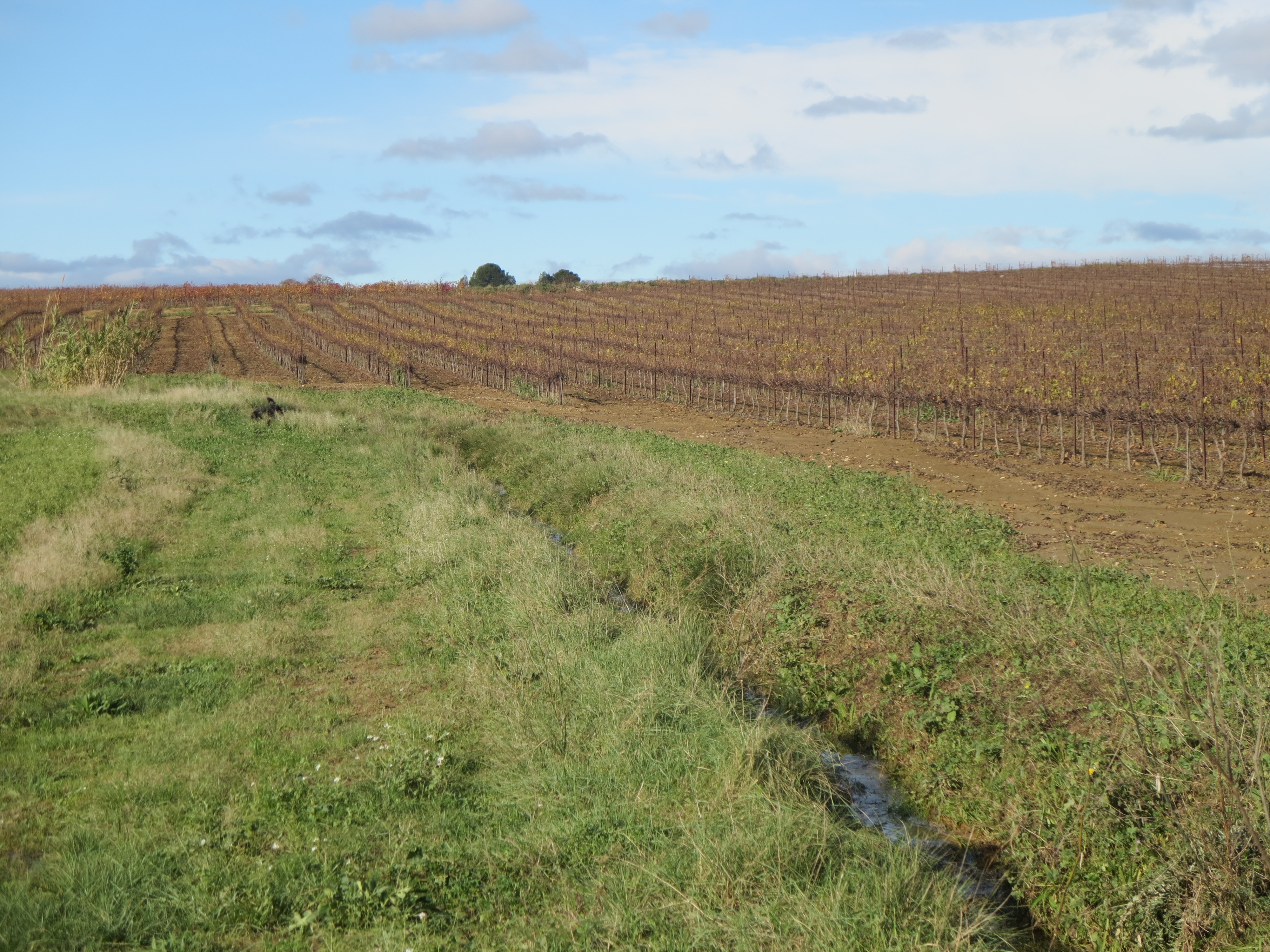
The photos above show how two parcels of vines just metres apart responded to the storms. The difference is obvious.

Vines with shallow roots do not access the deeper minerals and ecosystem. The roots also overheat being nearer to the surface and this can mean that they shut down some of their work and grapes will not ripen so well or evenly.

Yet there are vignerons in the area who have installed or are installing irrigation. This can only compound the problem in a region where there are occasional droughts but not on the scale of Australia for example.

Jeff Coutelou reported to me that there had been no erosion in his vines unlike those of some of his neighbours, the reason may be seen in the photos below.

A stark contrast between the Mas Coutelou vineyard and that of his neighbour

A stark contrast between the Mas Coutelou vineyard and that of his neighbour

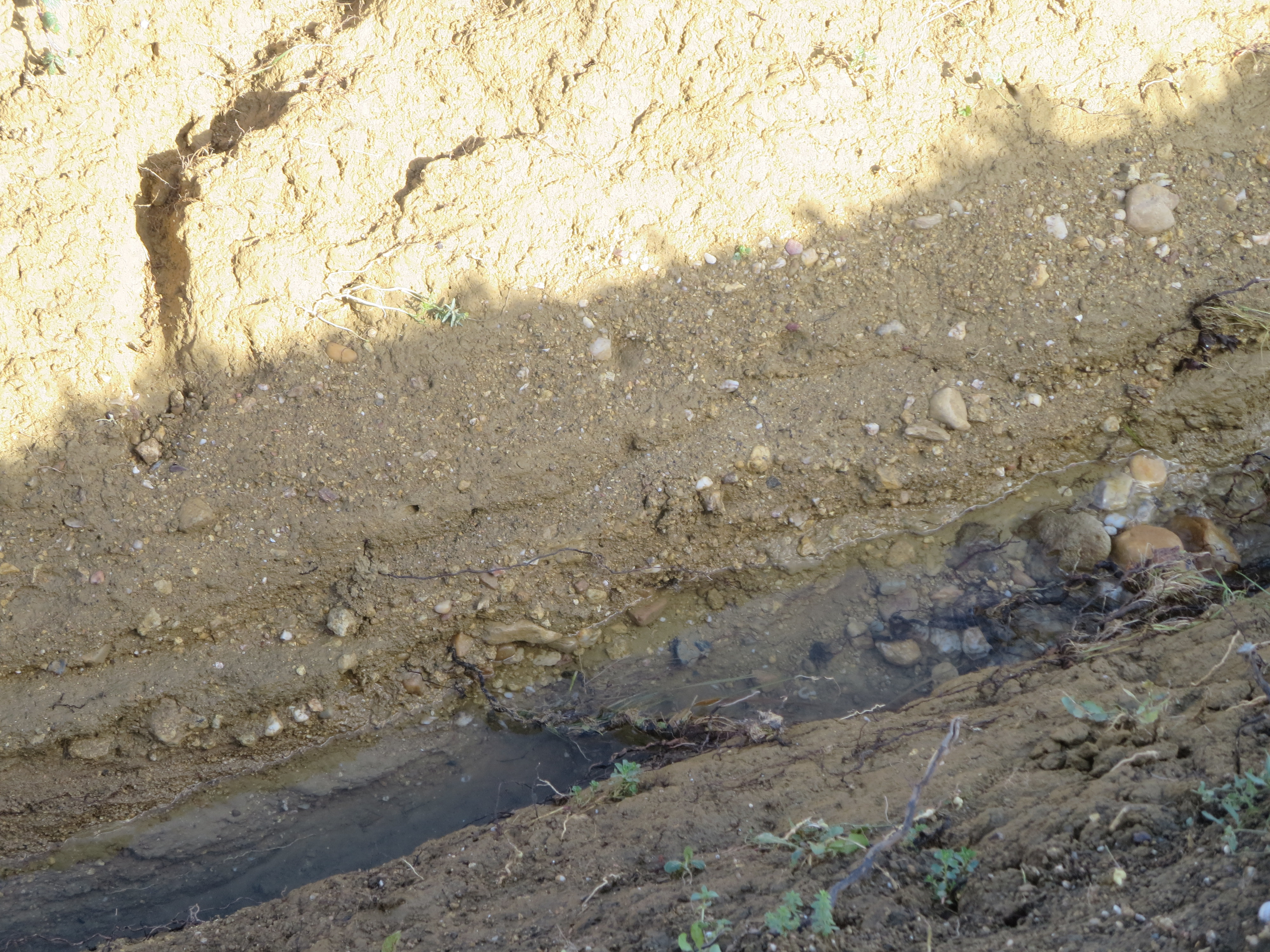
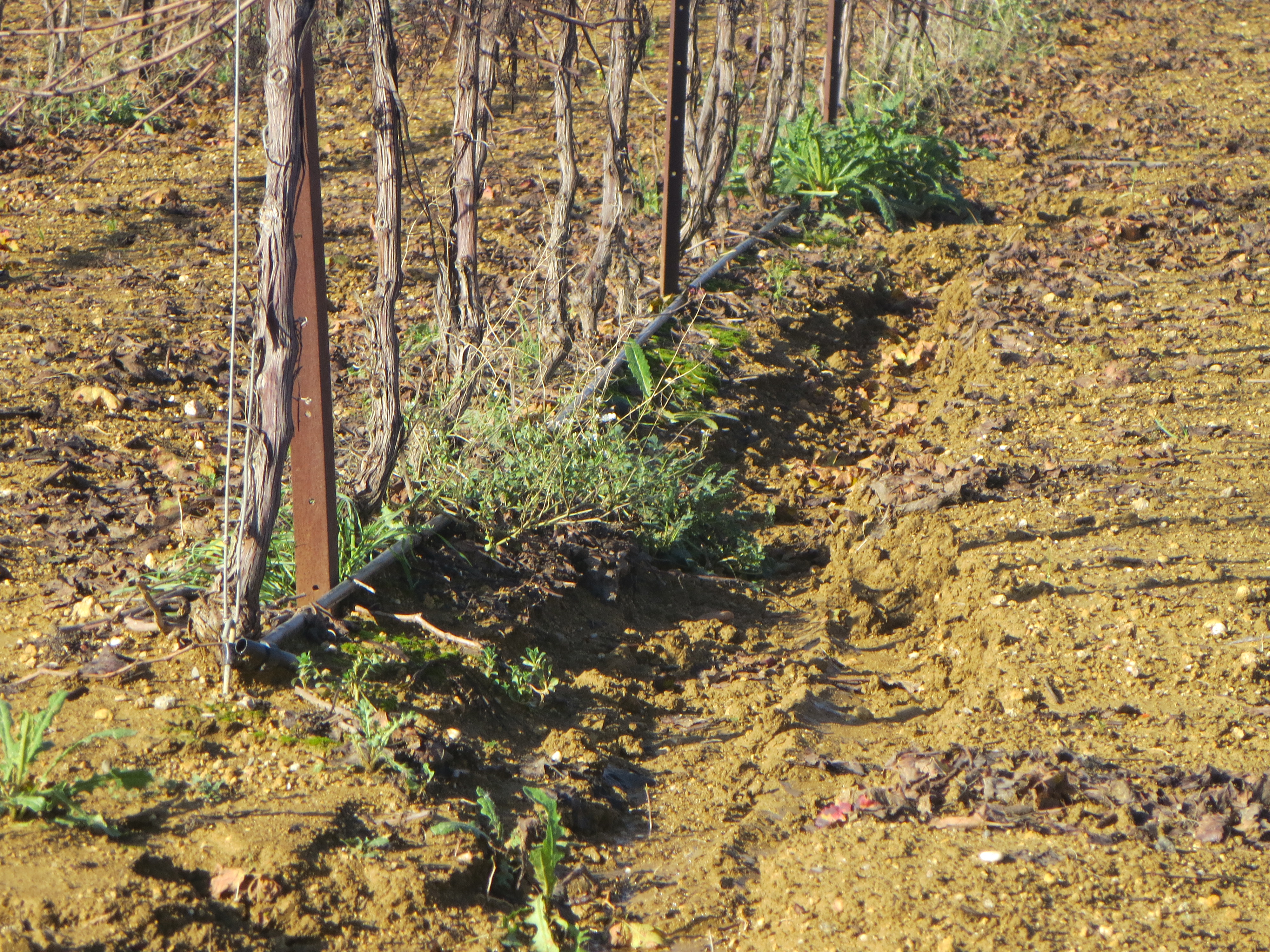
Irrigation pipes run along the vines. Look closely at the channel which has been cut into the soil by the rain.

Irrigation pipes run along the vines. Look closely at the channel which has been cut into the soil by the rain.

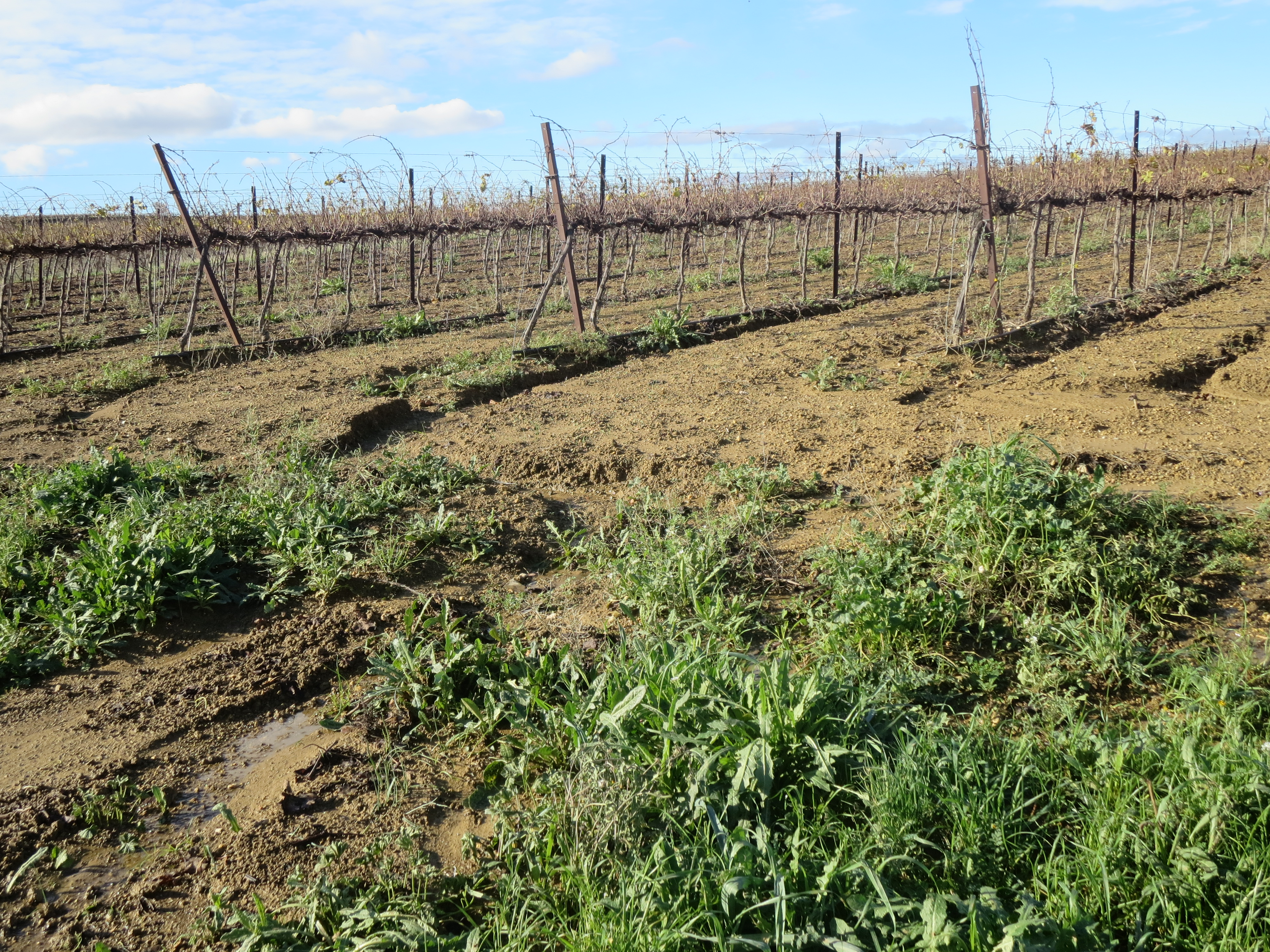
Water flowing off vineyards which have had the grass removed

Water flowing off vineyards which have had the grass removed


The run off from the vines has caused a new stream and channels

The run off from the vines has caused a new stream and channels


Meanwhile Jeff's vines have drained and there is no damage to soil below

Meanwhile Jeff’s vines have drained and there is no damage to soil below


Vine roots washed into the new stream next to the neighbours' land

Vine roots washed into the new stream next to the neighbours’ land


Biodiversity - analysis showed over 30 types of grass in one square metre of Jeff's vineyard.

Biodiversity – analysis showed over 30 types of grass in one square metre of Jeff’s vineyard.


One sad casualty of the storms was the tree with a bat shelter installed by Jeff. Bats are good friend to vines as they eat many insects which might damage them or their grapes. Encouraging them and other friendly wildife, such as wagtails and hoopoes, helps to keep the grapes in good health. Unfortunately the tree, which was dead, was uprooted and so a new bat home will be established soon.

Bat shelter

Bat shelter

And finally how to control that grass and plant life? Ploughing or working the soil is needed at times but there are some novel alternatives. At Mas Gabriel a local farmer brings his sheep into the vineyard at this time of year. And then, as I was driving to Cabrieres the other day I came across this.

IMG_0512


Being in the vines is always interesting!


2 Comments

Grapes, work and love

It has been a stormy week in the Languedoc and the weather has certainly disrupted the plans of vignerons in the region. Tragically five people were killed in a flood in Lamalou Les Bains and that event puts winemaking into perspective. However, the fortunes of wine growers and makers have also been hit by such extreme weather. Driving past Pézenas up the A75 on Thursday swathes of vineyards were under water on the low lying plains. The humidity also means that where grapes are left to pick there is a real risk of disease and even rot. I was talking to the excellent winemaker Emmanuel Pageot this morning as we visited Gabian for the jour patrimoine and he was explaining how complicated such problems have made the harvest. I was invited to join Emmanuel for a tasting soon and I will definitely report here on his latest wines. They are amongst my favourite wines of the region but I shall try to be objective.

In Margon Wednesday saw thunder and lightning and sheets of rain non stop through the day. Yet, in Puimisson, where Jeff lives and has his vineyards there was only a small rainfall, a reflection of the dry year there which has caused the smaller harvest. Normally Jeff would harvest 200-250 hectolitres from his 4 hectares of Syrah grapes, this year that production is down to 145 hectolitres. This means less wine, of course, and also a lot more thinking on his feet as smaller quantities mean that he has to decide which of his wines he uses the grapes for. Therefore it seems unlikely that there will a cuvée of 7, Rue De la Pompe this year as the grapes are needed for other cuvées. The quality of grapes is high though, for example the Syrah which is going into the Paf cuvée is concentrated and finer, partly due to a miserly production of only 25 hl per hectare.

(l-r) Vin Des Amis, & Rue De La Pompe, Paf

(l-r) Vin Des Amis, 7 Rue De La Pompe, Paf

Other grapes have been small in size and so because there is a lot of skin and pips compared to juice the wine needs to be blended with other fuller grapes. Jeff is also thinking of introducing new cuvées to use what he has. Cinsault, for example, has done well this year so offers new possibilities and there is also the possibility of producing a cuvée which Jeff’s father used to make. I will write more about that as the year develops and decisions are finalised.

As picking was on hold at some points due to the weather Tuesday lunch was more leisurely and Jeff had more time to relax and talk. He recounted a French fairy story The Chaud Doudou. Basically it is about sharing and how everyone feels better for having done so.

le-conte-chaud-et-doux-des-chaudoudoux

Jeff went on to share an Occitan proverb which translated means “What you give flourishes, what you keep to yourself perishes” and I think this sums up Jeff Coutelou’s wines, he shares his skills and his passion for the land and for nature. The title of this post are the words he uses to describe his winemaking philosophy; grapes, work and love. To produce such high quality wines he needs the best grapes, he works tirelessly and he instills endless love into the wines he produces. If you think that sounds far fetched then try some, he is telling the truth.


Leave a comment

Wines


   mascoutelou2


As you may have noticed from the first post the areas we stayed in around France were wine regions. Not a coincidence.
I became interested in wine when I visited Germany as a young teacher who was asked to accompany a trip to the Rhine valley. A very generous hotel keeper in Bacharach insisted on sharing bottles and the different types of wine produced. This was news to me as I knew nothing about wine and assumed it was either white and light or red and sturdy.
From there to the Australian invasion of Wyndhams and Penfolds and then on to France. I still love the wines of Alsace, Burgundy and Beaujolais as well as the white wines of the Loire. Some terrific holidays and tastings spring readily to mind. Sadly the price of Burgundy and Bordeaux has long since outstripped the bank balance of a teacher.
However, good fortune struck. Alongside a growing liking for heat and the Languedoc was the rise of new, exciting winemakers in the region. Inspired by the writing of Rosemary George, Paul Strang and the admirable Andrew Jefford I began to explore their wines and I am hooked by their quality and sheer drinkability. Winemakers such as Jeff Coutelou, Turner Pageot, Mas Gabriel, Domaines Treloar and Cébene, amongst many others, have set  standards for me which help me to judge the wines of Languedoc-Roussillon.
Happily I now have the opportunity to explore more deeply and to spend more time with some of these winemakers, find out about their work and produce and seek out more top notch wines. This blog will, hopefully, narrate this adventure and share my discoveries. It may not be original but it will be the honest words of a wine amateur seeking to deepen his understanding of that passion.


Leave a comment

A Year in Margon

Image0041

I have wanted to live in France for as long as I can remember. From ‘learning’ the language in the second year of primary school (aged 8) all things French have intrigued, inspired and irritated me ever since. In the last 20 years or so my wife Pat and I have spent most summer holidays in various regions of France and during that time we have grown to love it. First tentative steps into northern and central France meant that we imagined life in Burgundy or particularly Beaujolais. Then we began to creep further south and seek the warmth of summer sunshine, the Rhone Valley, Provence, Bordeaux. Finally, we arrived in the Languedoc (or more precisely, Languedoc Roussillon). A brief stay near Castelnau de Guers, a further fortnight in Pinet and then to the village of Margon (see photo). In unprecedented fashion we went back to Margon and stayed a whole month, and further holidays there followed. As our friend Tony says we have developed Margonitis and now it will hold us for most of the next year. An ambition fulfilled