amarchinthevines

Learning about wine, vines and vignerons whilst living in the Languedoc


Leave a comment

Harvest 2019 – Magical Mystery Tour

En francais

The magical mystery tour which is the vendanges is under way. That’s an invitation to read on for the next few weeks to follow the course of what happens in Puimisson with Jeff Coutelou and the gang. Satisfaction guaranteed, I hope.
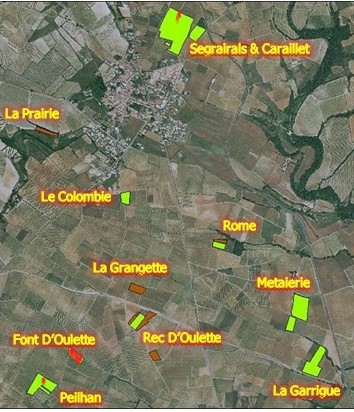
Red vineyards or squiggles indicate picking Day 1

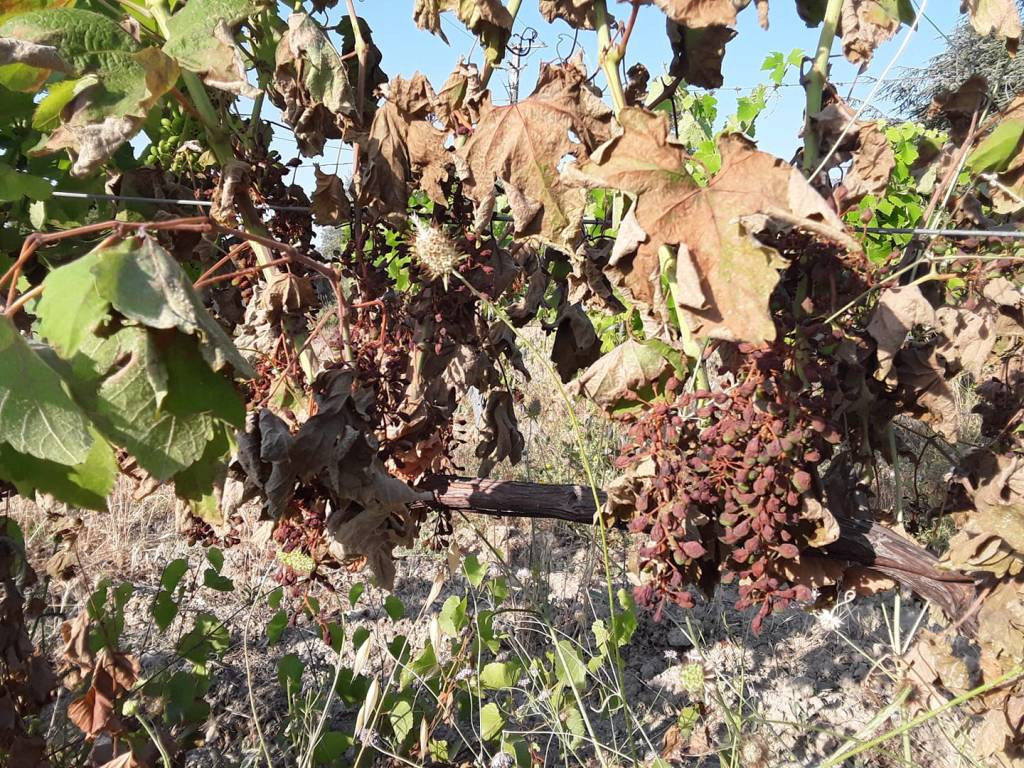
Regular readers will be aware that nature has not been kind this year. What promised to be a great vintage in June with bountiful, beautiful fruit has been undermined by drought. It has not rained since then and so the bunches are still bountiful but they are made up of small grapes, quantities will be meagre. The ratio of juice to skins, pips and stalk is nowhere near the average meaning choices about winemaking have to be made, for example removing stalks rather than whole bunch to improve the ratio.

The 8 cases from Flower Power

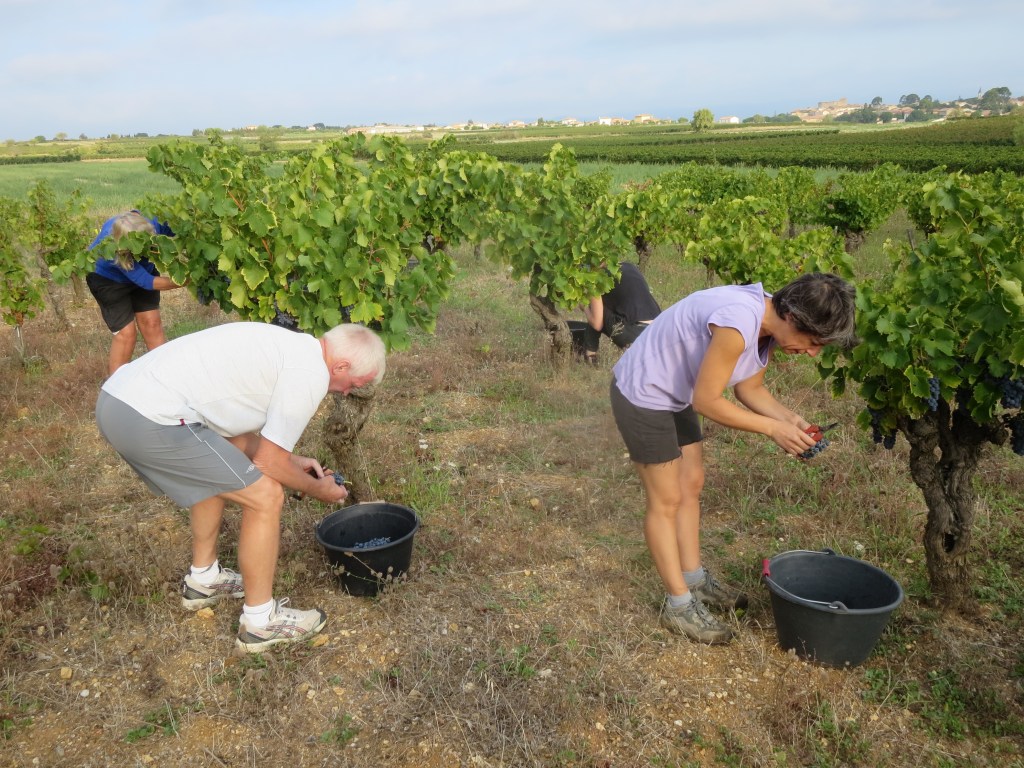
We began on Friday August 30th with a morning pick to make a new cuvee. Flower Power vineyard (Font D’Oulette) was the starting point. This vineyard was planted with a rich variety of grapes, twenty or more – some rare. Clairette Musquée (originally the Hungarian Org Tokosi), Delizia Di Vaprio, Aramon Gris to name just three. Jeff has invested heavily in this parcel, for example bringing volcanic soils to add life, and the vines have looked healthier than previous years with more fruit. However, as a prime example of the ravaging effects of drought, despite more bunches on the vines, we harvested only eight cases, as opposed to seven last year.

Clairette Musquée and Aramon Gris, amongst the rare Flower Power grapes

To supplement the Flower Power, more Clairette Musquée from Peilhan and some Syrah from Segrairals at the other end of the village. The grapes were taken back to the cellar, and put into stainless steel tank with some dry ice to stop fermentation and allowing the juice to soak up some of the colour and flavours from the skins. (The wine was pressed three days later and will now ferment).

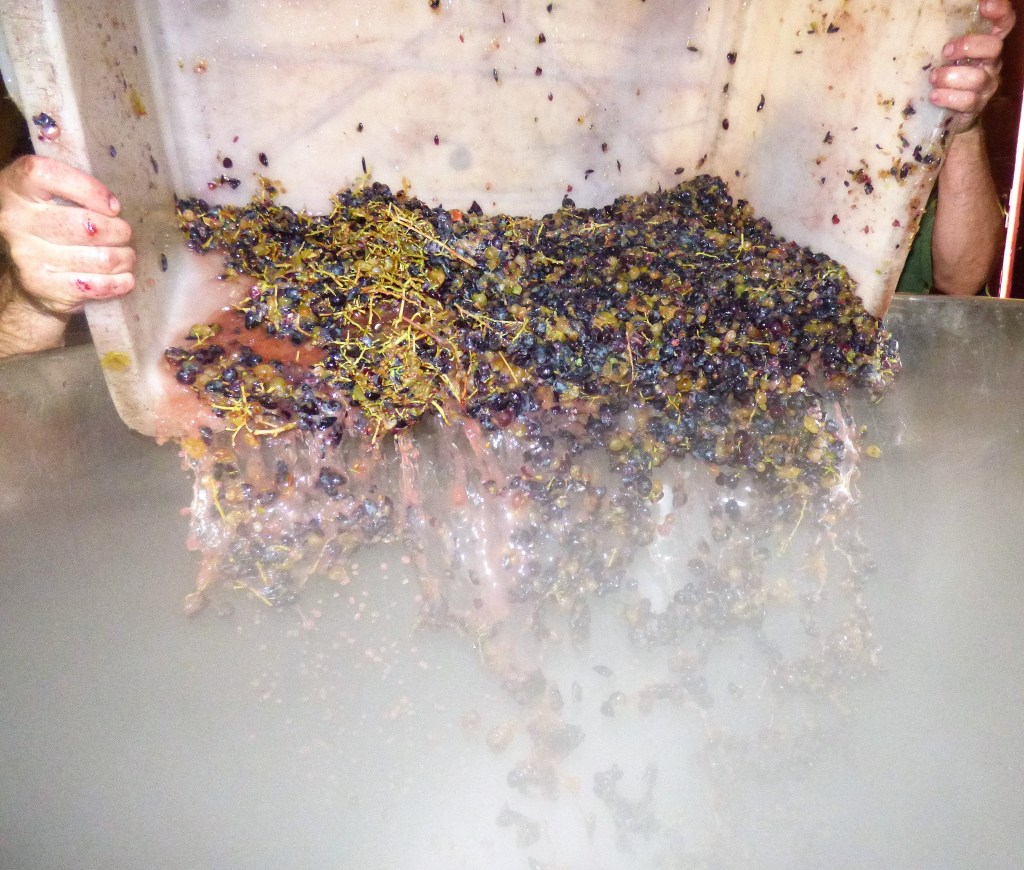
Syrah is sorted then put into the dry ice filled tank

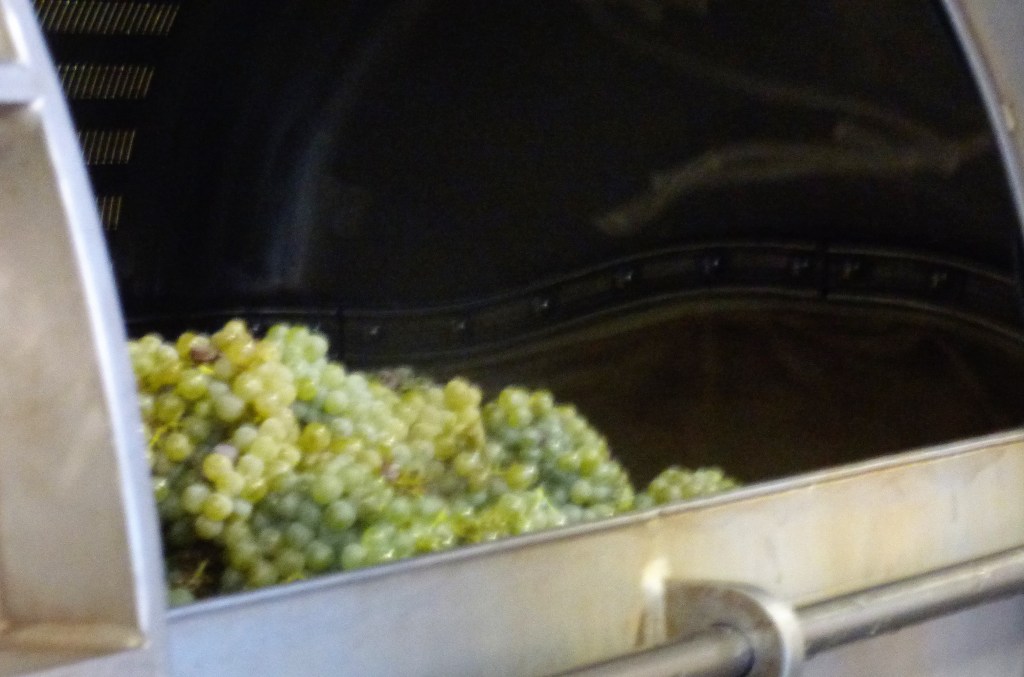
Day two, Monday September 2nd began with the white grapes of La Garrigue; Sauvignon Blanc (low alcohol, bright acidity, very Sauvignon), Muscat d’Alexandrie, Viognier. Straight into the press, sent into stainless steel upstairs in the cellar, a fresh dry white wine in the making.

La Garrigue’s white grapes, Julien loading the press, brown pips show ripeness, the grapes are fleshy rather than juicy

Afterwards time for the Merlot of Le Colombié. Not the grape which Jeff favours particularly but year after year it produces good wine to be blended with others in cuvées such as Sauvé De La Citerne and Vin De Table.

Day 2

This year the grapes were very small, they were destemmed and into one of the original concrete tanks. I had been sorting it for 4 hours or so and the tank was less than half full, such is the paucity of juice. More was added but yields were well down.

Alain and Alan sorting Merlot, one of us has hair

The fruit is clean, dry and disease free so sorting is mainly about removal of leaves, snails and unformed grapes. The quality is excellent, the juice tastes delightful with plenty of fruit profile and acidity – just wish there was more of it. Jeff ‘joked’ feelingly that with the small tank of Merlot he might make 10 euros profit.
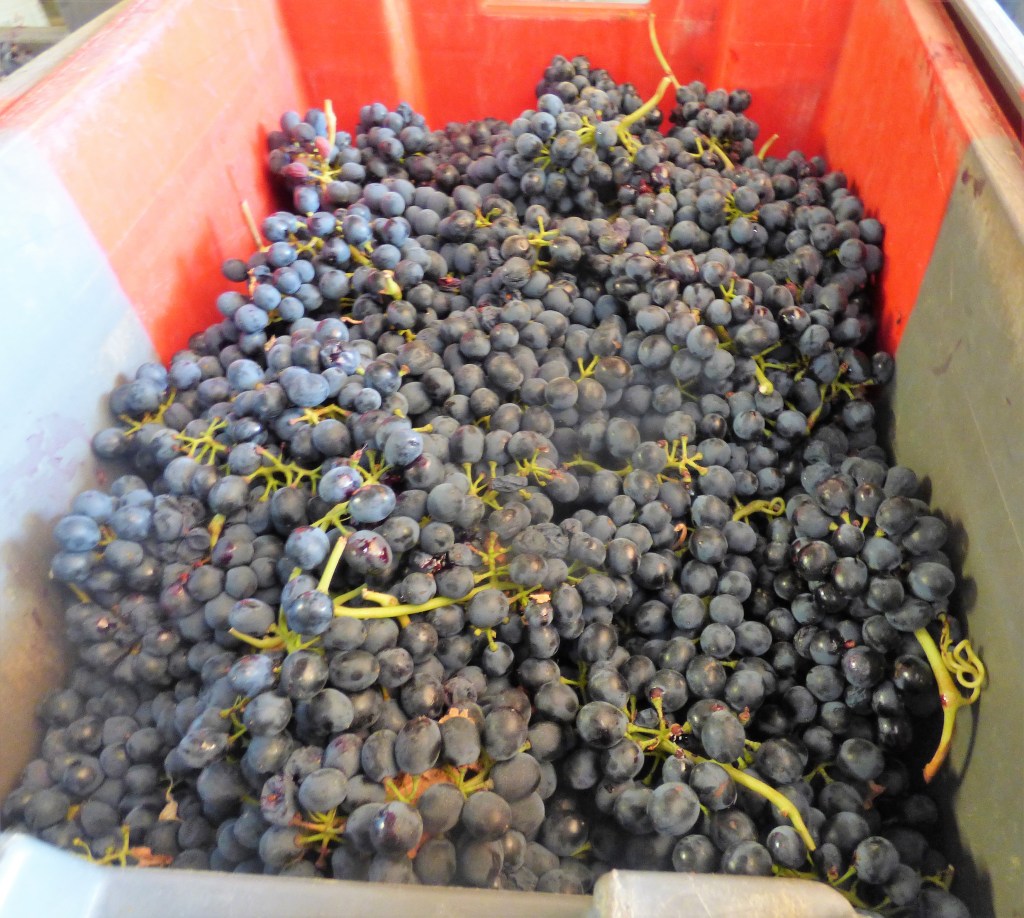
Beautiful Syrah from Ste. Suzanne

Day 3 and the Syrah of Sainte Suzanne (Metaierie on the map). This is the parcel which provides much of the fruit for the much loved Coutelou wine, Le Vin Des Amis. More of the same, very healthy fruit, concentrated and tasting sweet and ripe but… small berries.
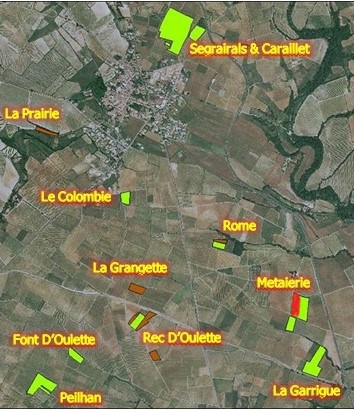
Day 3

A losing argument with a boiling hot cup of tea put me out of action on Day 3 but I did manage to get some photos (of the grapes not my blisters you will be relieved to know).

There will be twists and turns ahead in the next few weeks, sadly there is no forecast of any rain to help us. Let us see where the mystery tour takes us.
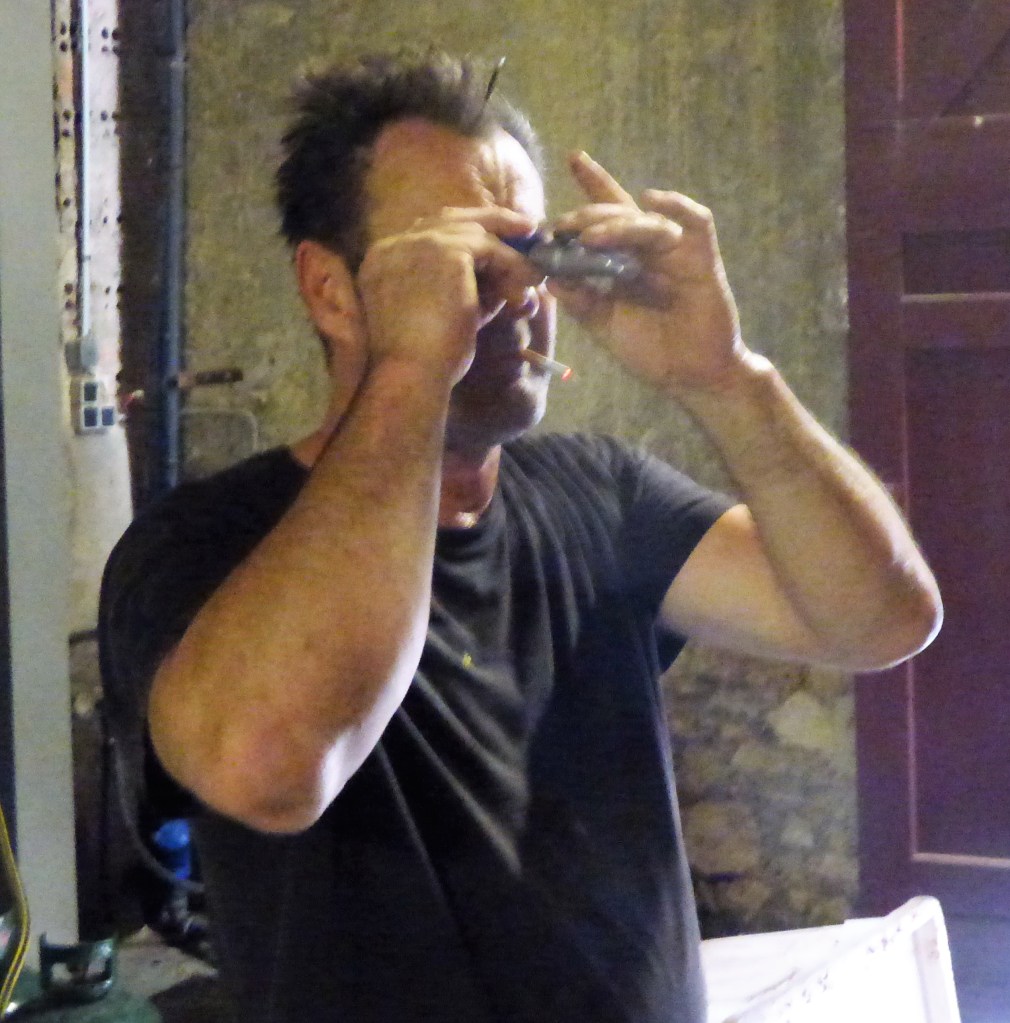
Jeff checking alcohol levels or trying to find a big grape


2 Comments

Amicis

En francais

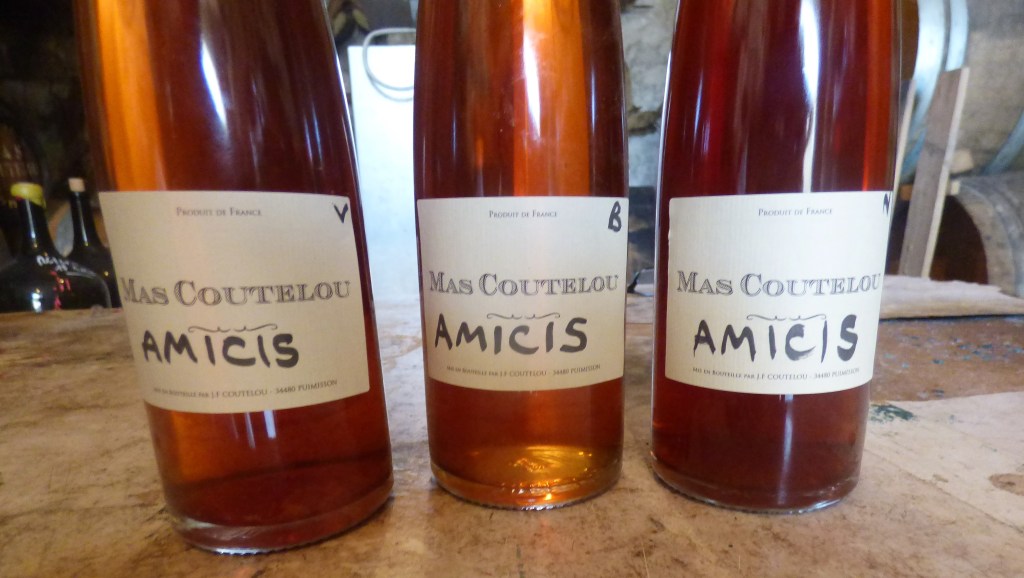
In 2015, to celebrate the 100th post of this blog, Jeff invited me to make my own wine. Together with friends and my wife Pat we picked in Rome vineyard some Muscat but mostly a mix of Grenache Noir, Grenache Gris and Grenache Blanc. I then pressed the grapes, supervised their fermentation and, finally, put the wine into three types of container, an old barrel, a newer barrel and a large glass bottle. The idea was to see how these containers would influence the maturity of the wine.

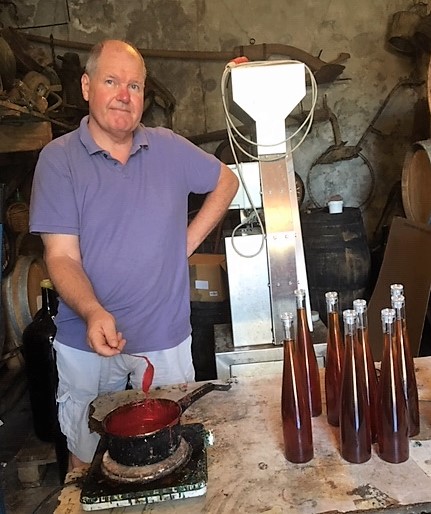
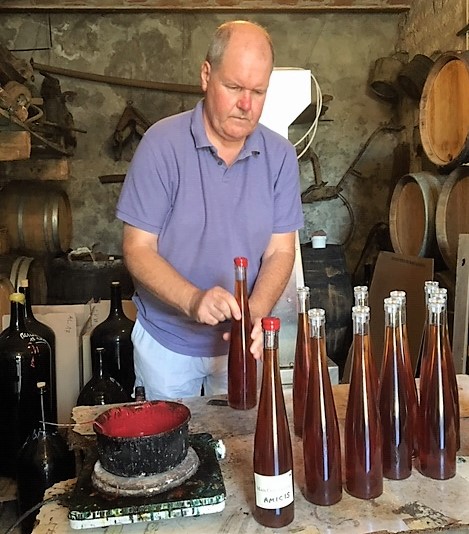
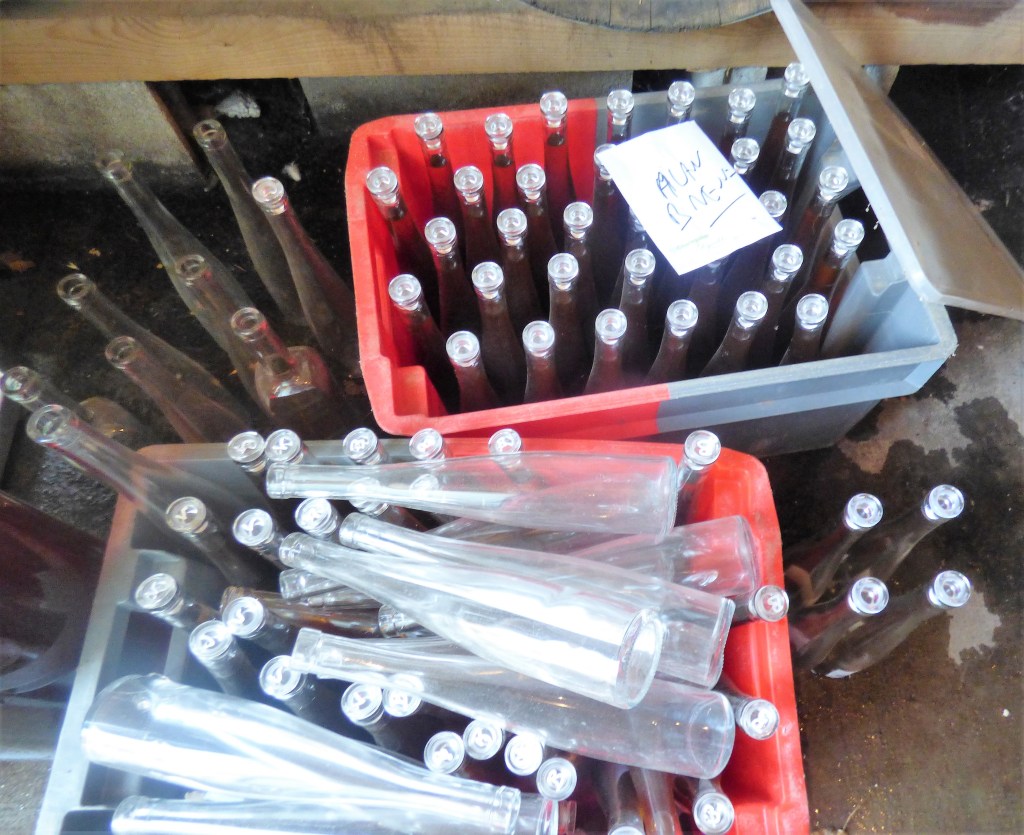
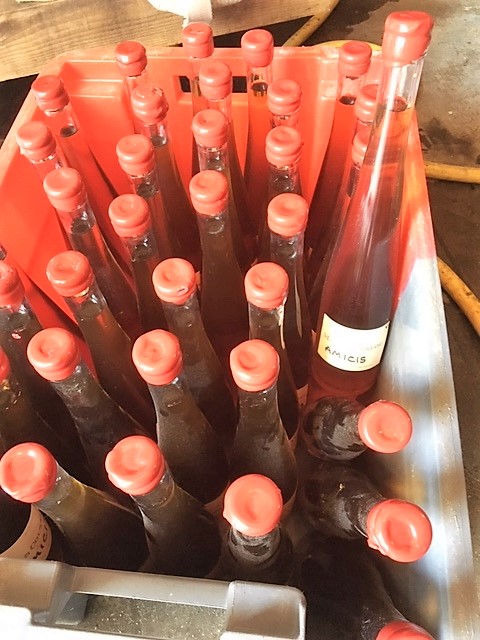
Last October the wine was ready to bottle after three years of ageing. And, on Friday 23rd August I labelled and sealed the bottles. We had opened a few in the intervenng period for visitors to the cellar to taste and there remains 68 bottles. The seal was wax which Jeff prefers. The bottles were labelled according to their élevage, V for verre (glass), B for barrique (the old barrel) and N for neuve (the newer barrel).

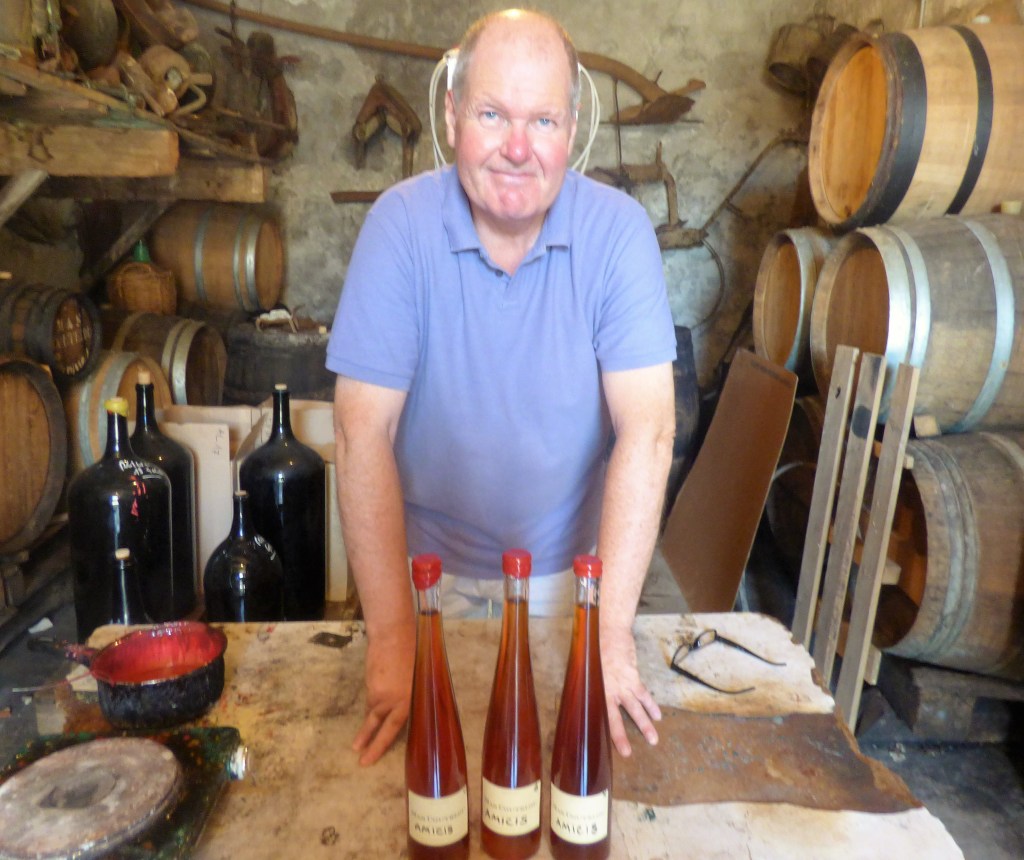
I decided to name the wine Amicis. As the wine is the produce from my favourite vineyard, Rome, I wanted a Latin name. In previous years Jeff had made a wine called Copains from Rome, the Latin equivalent is Amicis. It also has my initials as the first two letters and a C for hundred, the blog post which began this adventure.

What about the wine? Well, happily, I like it a lot, Jeff too (well at least he tells me he does!) Version V has fresh fruit sweetness, the glass container having allowed little ageing, capturing the post fermentation wine. It is noticeably different to the barrel aged wines, the grapey Muscat more evident.

B, the older barrel is the next in terms of freshness. The staves of the barrel have become sealed over the years after soaking up some of the many wines aged in it. My wine has had some exchange with the air and has developed more tertiary notes, not just the original fruit of the V wine.

N is the most influenced by age, a slightly darker colour, flavours which include not just the fruit but woody influence, slightly drier in the mouth. The newer barrel certainly allowed more oxygen exchange with the wine which is clearly different to the older barrel wine.

So, there it is. I must once again thank Jeff for this fantastic opportunity and for his generosity in allowing me to use his grapes, barrels and time. He is the best of men.

Thanks too to Martin, May, Pat, Céline and Delphine for their work in picking with me, and to Julien and Michel for their work in carrying out soutirage during the three years.

Now, who would like to try it?


Leave a comment

Almost there

En francais

Grenache Noir in Rome

Vendanges will begin on September 2nd, hopefully. A tour of the vineyards on August 19th brought me up to speed with their progress. Mostly it is good news with a little bit of not so good news, take your pick. Let’s start with the negatives which are outweighed by the positives I promise.

Look at how dry the vegetation is in the background and in the Carignan to the left

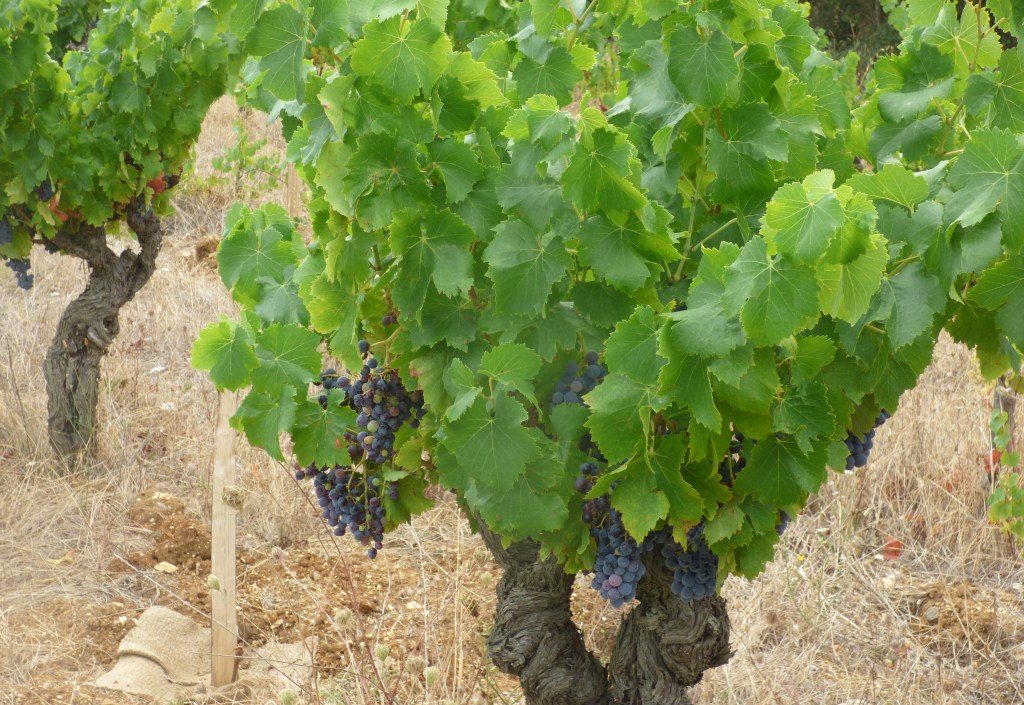
This has been another year of drought in the region. Sceptics of climate change, if they remain, need to meet up with life in southern France. From 45c temperatures to lack of rainfall agriculturalists such as vignerons have had to cope for the present and plan for the future. Bordeaux is permitting new grape varieties into their blends as these grapes will cope better with higher temperatures (incidentally Castets is one of those grapes, one which we know from Jeff Coutelou’s vines). Many producers here in the Languedoc are using irrigation, no longer frowned upon by authorities. Others, like Jeff refuse to do so believing that irrigation is not natural and disguises the true taste of a vintage and the terroir.

Small Syrah grapes in La Garrigue

The consequence for the vines this year is that whilst the berries are healthy they are smaller than usual, lacking in juice. Unless we get some rain before harvest quantities will be much reduced, the wine may be very concentrated. In such drought conditions vines even start to take back water from the berries so as to survive for the future. After several years of problems from frost, hail, mildew and drought it would have been a relief for many producers to have a bountiful yield, it looks unlikely.

Green berries in the Carignan, millerandage

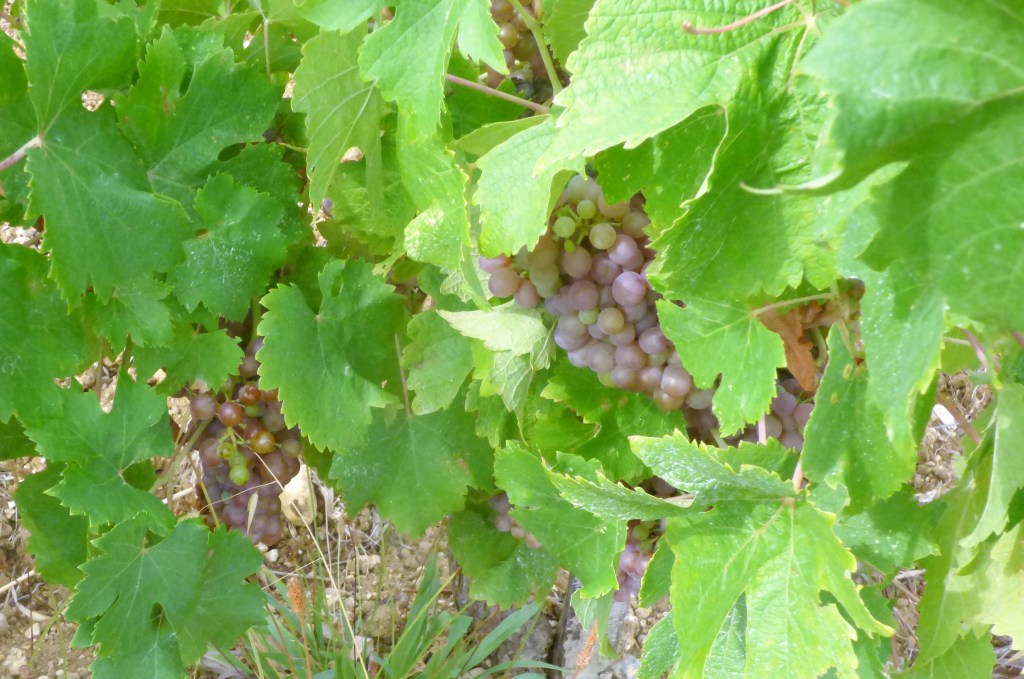
The other main negatives will also mean lower yields this year, millerandage and coulure. The photo above shows a lot of green berries in the Carignan bunches amongst the black grapes. This is the result of problems in Spring when a cooler, windy spell damaged the flowers and fruit set. This means some bunches don’t grow at all or have many berries missing, coulure. Sometimes the berries mature at different rates or not at all, millerandage. There will need to be careful sorting in the vineyard and cellar when harvest is under way.

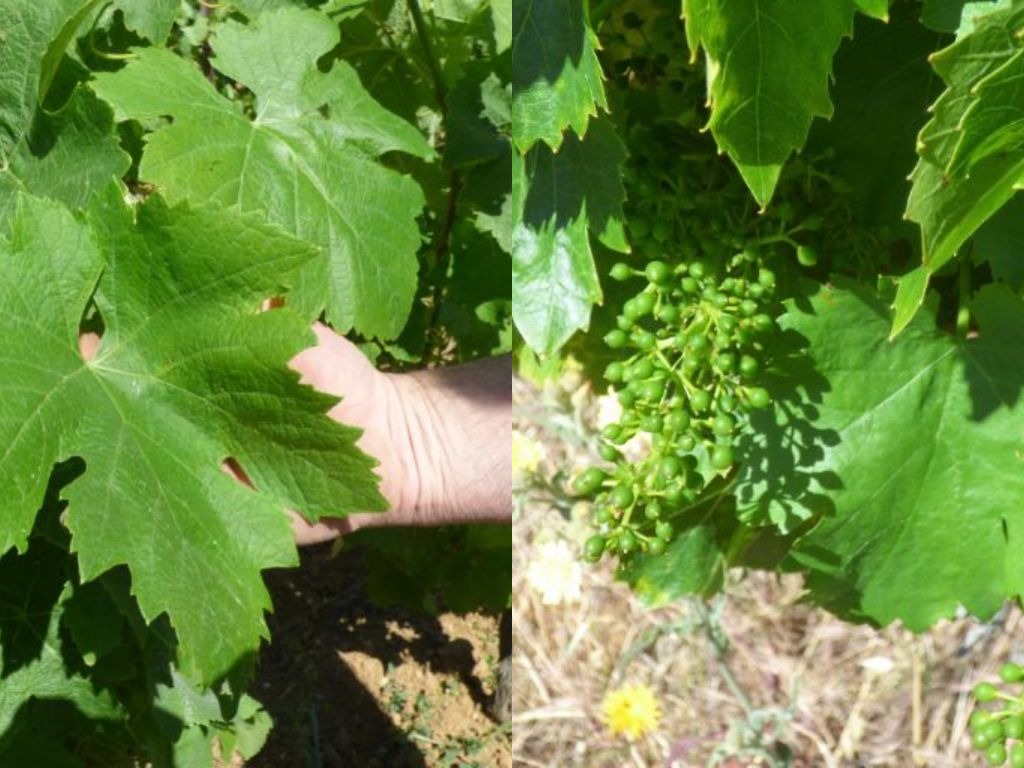
Millerandage in Piquepoul Gris to the left, coulure in June on the right

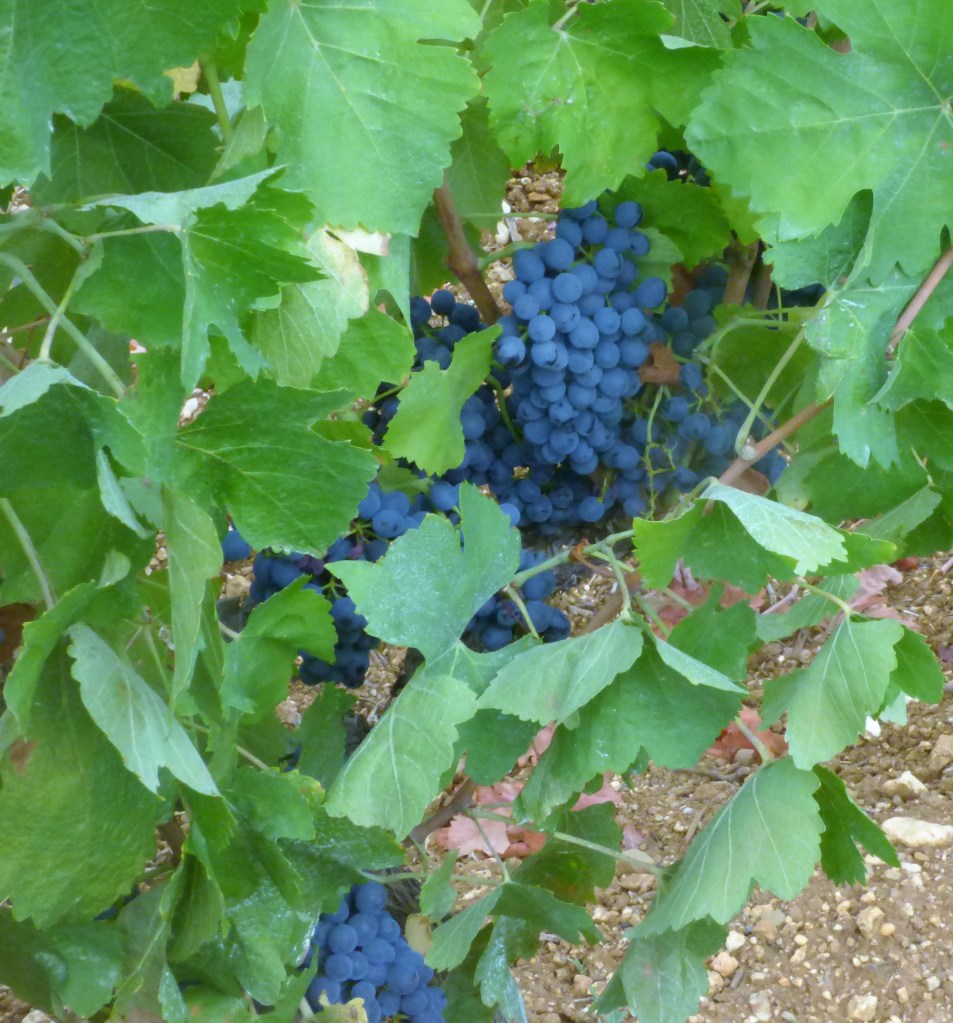
However, there are plenty of positives, let’s not get too gloomy. The bunches are healthy and plentiful for one. From Grenache in La Garrigue to Cinsault in Rome I tasted some sweet and flavoursome grapes. They are still acidic and need time but the fruit flavour is developing well, the pips starting to turn brown, a sign of maturity.

Seeing the many varieties of grapes in the Coutelou range was also rewarding, the Riveyrenc Noir, Piquepoul Gris, Muscat Noir in these photos (left to right) being just three of dozens. There’s even a Chasselas in Rome, the variety which is used as a benchmark for ripening. All other varieties are compared to Chasselas’ average ripening time, a clue as to when to pick.

Chasselas

Jeff has rested a few days during the local féria, a lovely party was held with some special bottles. Next up will be the cleaning of machinery and tanks, we are set fair.

PS – just after publishing this I saw a tweet from Louis Roederer in Champagne saying their harvest would be limited by … lack of rain and millerandage. Plus ca change…


4 Comments

Still here

It has been a month since my last post, time spent back in the UK with family and friends. I will update on the state of the vines and what has happened with Jeff Coutelou upon my return there next week. Meanwhile, I have been enjoying some bottles from my ‘cellar’ and decided to share some of my favourites.

For a week or so it was actually hot weather here and white wines have taken centre stage.

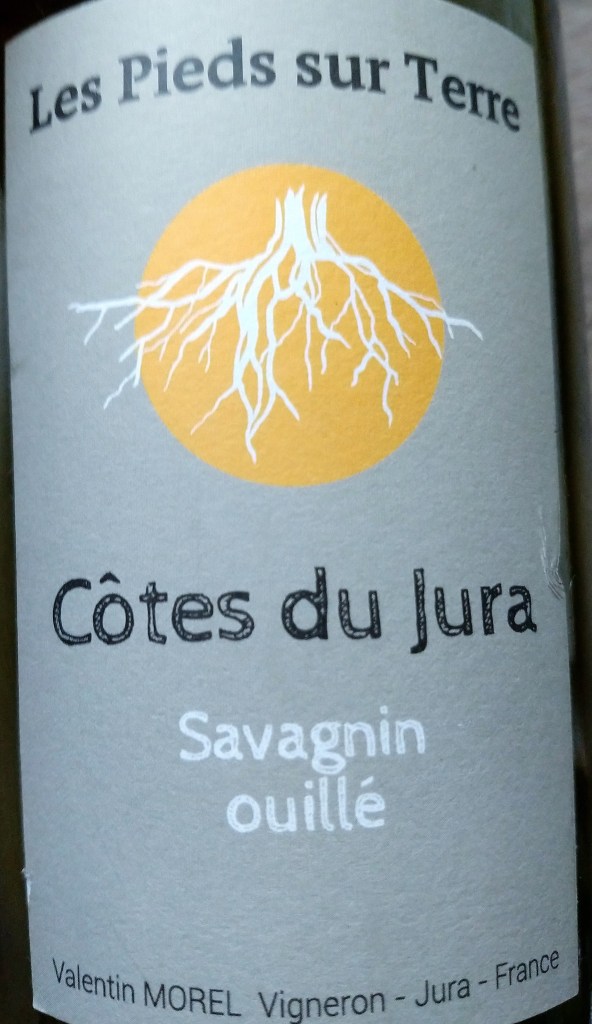
Valentin Morel is a Jura producer with whom I am unfamiliar. This Savagnin is made in a ouillé style which means that the wine is topped up in the barrel. Jura wines can be made sous voile where the wines are left to age under a layer, or flor, of yeast in the same method that sherries are made. This ouillé style makes for a fresher flavour rather than oxidative notes and, though I like the oxidative style for which the region is more celebrated, I do think the fresher wines suit the cool climate wines. This was green apple and pear flavours with lingering acidity. Very nice.

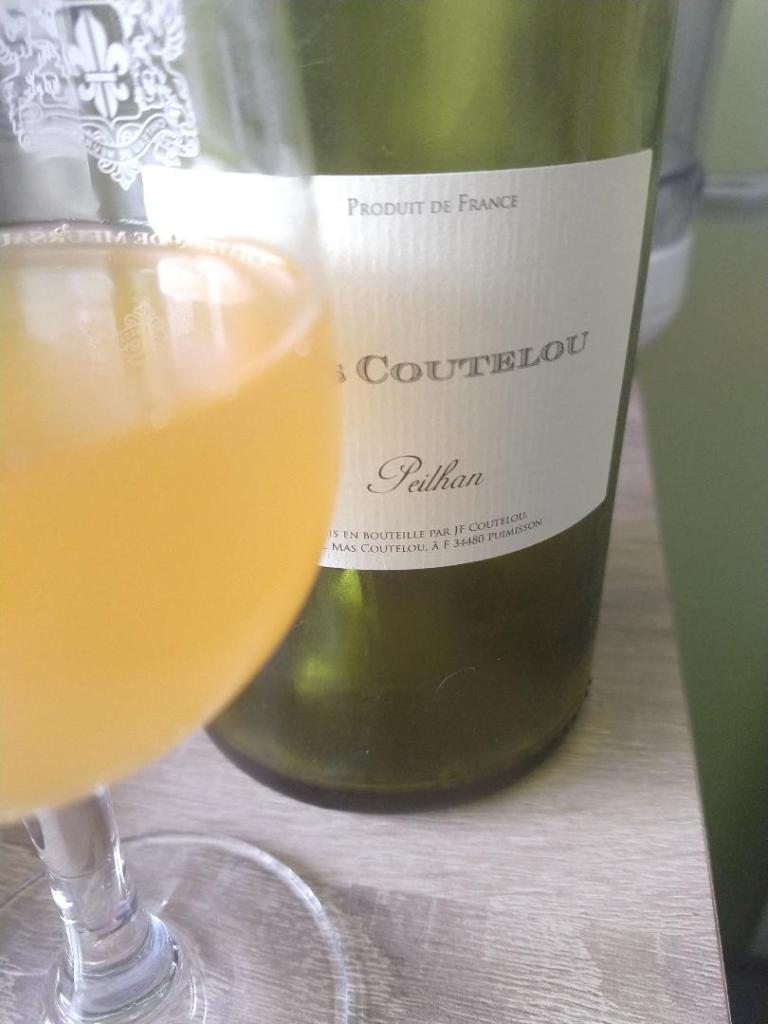
Peilhan 2016 from Jeff was another success story. Pure Carignan blanc, looking like an orange wine but as fresh and clean as the Jura wine. White fruit notes, delicious.

Testalonga Keep On Punching 2017 is a South African pure Chenin Blanc. Grown on bush vines, the grapes made, you’ve guessed it, a fresh clean and dry wine, purer in style than the Loire Chenins which I also like a lot. I have had a few of the domaine’s wines recently and they are on top form. I enjoyed one of those Loire Chenins too. Vincent Carême’s Vouvray Spring is made from grapes grown by friends but made by him. Lighter than many Vouvray wines and with a clean lick of apple acidity. Very good, different to the Testalonga but still enjoyable.

Red wines also featured on my list. Star was probably the Brouilly 2017 of Jean Claude Lapalu, a classic light, fruity Beaujolais with strawberry and raspberry notes. Lingering, mouth filling and just lovely.
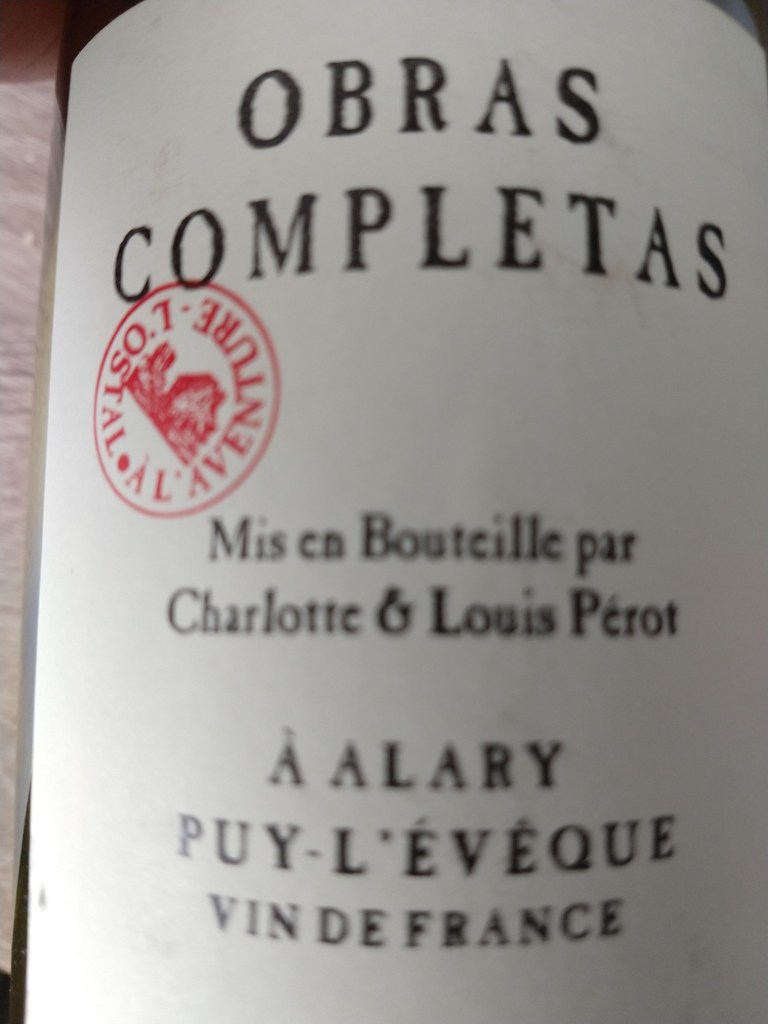
Charlotte and Louis Pérot of L’Ostal make excellent wines in Cahors and their Obras Completas 2016 was a prime example. Cahors wines can be dense and tough but the Pérots manage to produce a lightness of touch, fruity and drinkable wines. I have been lucky enough to know their wines almost from the start of their domaine and to see their development as top class winemakers.

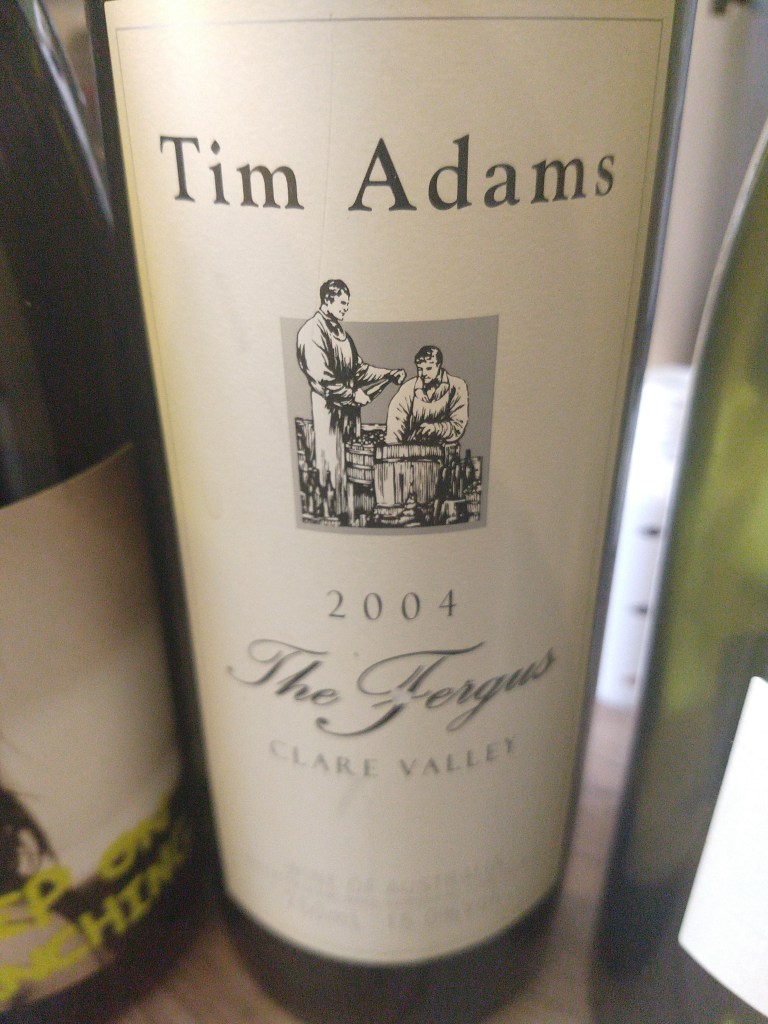
Finally a point of interest from this bottle. Australian wines were long my reference point, my introduction to wine. I often bought wines from Tim Adams because he didn’t make the big blockbusters for which Australia became infamous. The Fergus is a pure Grenache, this bottle was the 2004 and stored under screwcap. It was often said that screwcaps would not allow wines to age so well as cork. This was evidence to the contrary, the wine was still bright red, fruity and full of flavour. Cork may have the romance but screwcaps seem to be able to mature wines equally as well without the risk of cork taint.

Some lovely wines, some points of interest. There were some less interesting wines too but let’s be positive.


Leave a comment

A great bunch

En francais

In the vineyards the grapes have had little respite from the heat, the extreme temperatures of Friday, June 28th may have eased but it has been a very hot week. There has been little rainfall this year in the region so the vines are having to dig deep into the soils for moisture. That is one reason why Jeff Coutelou does a very light raking of the soil in early summer, to create small ridges which will help moisture to be retained rather than evaporate.

Raked soils in Flower Power

Nonetheless, the risk is that without some rain the vines, unable to find moisture in the soil or air, will begin to use up its store of water and energy which should be going into the grapes.

At present that danger has not manifested into vine stress but, with no rain forecast, it is one weighing on Jeff’s mind. As one who refuses to irrigate his vines Jeff runs a risk, as he does through many aspects of organic agriculture, 2018’s mildew epidemic being the most recent example. Indeed as I toured the vines in the last few days there are some lovely bunches forming. The pea sized grapes of a fortnight ago have grown. As they continue to do so, rain would certainly help them to swell, the bunch will close up, the grapes rubbing up against each other to form the classic bunch we know from vendanges.

And, but of course, there is a risk at this stage too. As the bunch closes up any grape damage will be spread across the bunch. A lack of air inside the bunch will encourage any rot or disease there may be. The ver de la grappe moth might have lain eggs and these will form the caterpillar / worm (ver) which damages grapes especially in a bunch. However, let me not be too gloomy. The bunches are there, the vast majority in good health. It is a matter of vigilance.

A bunch of another sort brought a very happy day a couple of weeks ago. Cédric, who runs the website* vinsnaturels.fr, and some of his friends from Grenoble visited. A lunchtime visit said Jeff. A nine hour lunch it turned out to be!

Case filled with cold water to keeping bottles cool, Coutelou spirits and olive oil, new cuvées

We tasted lots of wines now on sale such as the Blanc and Grenache Mise De Printemps. However, it was the barrels tucked away and the older bottles which made this yet another special day. Tasting the 2018 blend of Maccabeu and Grenache Gris from different barrels and containers. A fortified Grenache Gris. Amazing bottles of the legendary Roberta 2003 and La Vigne Haute 2010.

Surprise after surprise, delight after delight. Accompanied by an unusual but very tasty barbecue, yes that is a wheelbarrow. Add in an amazing plateau of cheeses and it was a feast fit for a king.

So, great bunches all round. May they all stay healthy and prosper.

*also in English Deutsch Italiano Español


2 Comments

As if burned with a blowtorch

Version en francais

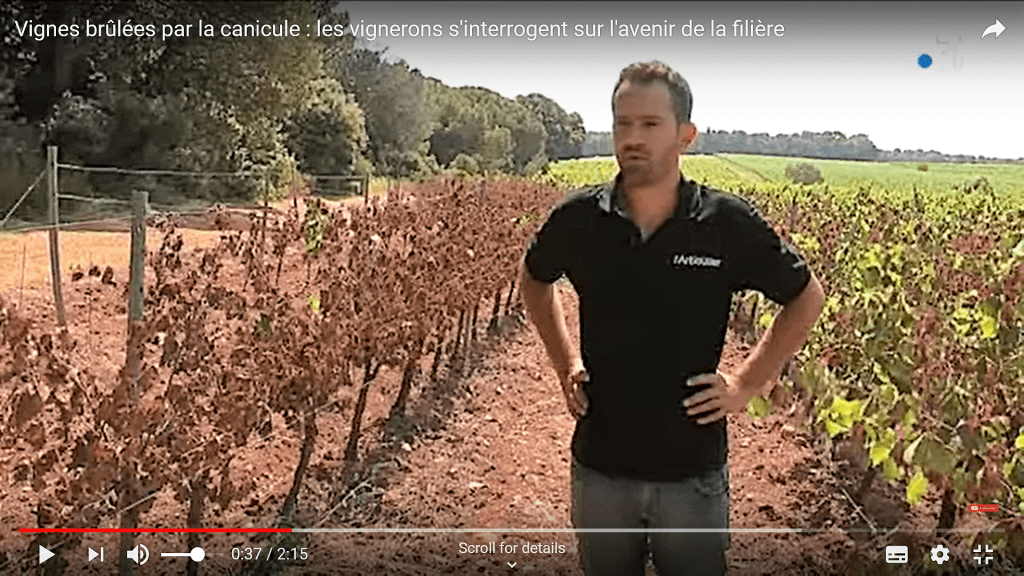
Photo de la vidéo de France 3 sur Youtube

Sad to report extensive damage across the Occitanie region from Roussillon through the Aude, Hérault and Gard which took place last Friday, June 28th. A heatwave (canicule) had been widely forecast but the ferocity of the heat that day still took everybody by surprise. In the Gard a recorded temperature of 45.9c is the hottest ever recorded in France. I was driving back from Spain and in the early evening the temperature was showing at 44c from Perpignan to Béziers. Those temperatures are recorded in the shade, in full sun the vines were enduring searing heat, combined with strong, hot, southerly winds.

Some hot weather can be beneficial in drying up mildew for example but this was new ground. Reports began to filter through of the damage done to vines. Friends such as Bernard Isarn (Domaine Cadablès in Gabian) were reporting extensive damage, he was joined by others. Some reported losses up to 50% in some parcels.

Photo de Bernard Isarn

This would be difficult enough to accept but it is the fourth year in succession where the climate has dealt a blow to production. Mildew in 2018, drought in 2017, frost and hail in 2016 all brought economic and agricultural damage. 2019 had begun so well until recent days, many people I spoke to, including Bernard, had been excited by how well the vines were progressing. So, I can only imagine the heavy hearts of vignerons whose vines were burned ‘as if by a blowtorch’ .

The combination of heat and wind was the crucial factor, others played a part. Languedoc vines are long used to great heat, years such as 2003 were hot but never with this damage. One difference is that the heatwave was early in the growing season. The younger growth was less hardy, more susceptible. This might also explain why so many of those affected were organic producers. Vines grown with lots of nitrogen and nitrates are further advanced in their growing cycle, perhaps the organic vines were more vulnerable because they were relatively immature.

Another reason put forward is the use of sulphur treatments. This is one of the organic vigneron’s tools, from a toolbox smaller in scope than conventional producers. With oidium menacing last week many organic producers sprayed with sulphur to combat the fungus. Unfortunately the combination of sulphur and hot temperatures leads to burning. Jeff Coutelou resisted spraying last week because of the forecast, he is thankful for having made that decision.

Photo du domaine Matassa en Roussillon

However, these explanations are tentative, enquiries are going on. Bernard reported that vines damaged included those not sprayed for 20 days. Ill fortune must be a factor. One other curious feature is that many report that the vines most damaged were the traditional, local varieties such as Carignan, which might be expected to resist heat better.

Whatever the reasons, it is extremely sad for those affected and my sympathies go out to them all. Local producer Catherine Bernard published her heart felt thoughts and they are well worth your time to read. The climate is raising questions which we all need to address urgently, vignerons seem to be in the front line of the struggles ahead.


7 Comments

The melting pot of Puimisson

En Francais

In the last weekend there have been visitors to the cellars of Jeff Coutelou from the USA, Sweden, Russia and the UK. In recent times I can recall visitors from Israel, Australia, Taiwan and Japan. No doubt there have been many others. What draws everyone to Puimisson is the wine, admired and coveted from all over the world.

Mats-Eric, family and friends with Jeff.

I had great pleasure in showing the renowned Swedish writer Mats-Eric Nilsson around the vineyards looking at how the vines relate to the wines themselves. As temperatures have risen markedly in the last week it was good to see the vines in very good health despite the heat. Mats-Eric is working on a new book on wine, his previous one Chateau Vada is available now.

As you can see the Kina disappears quickly!

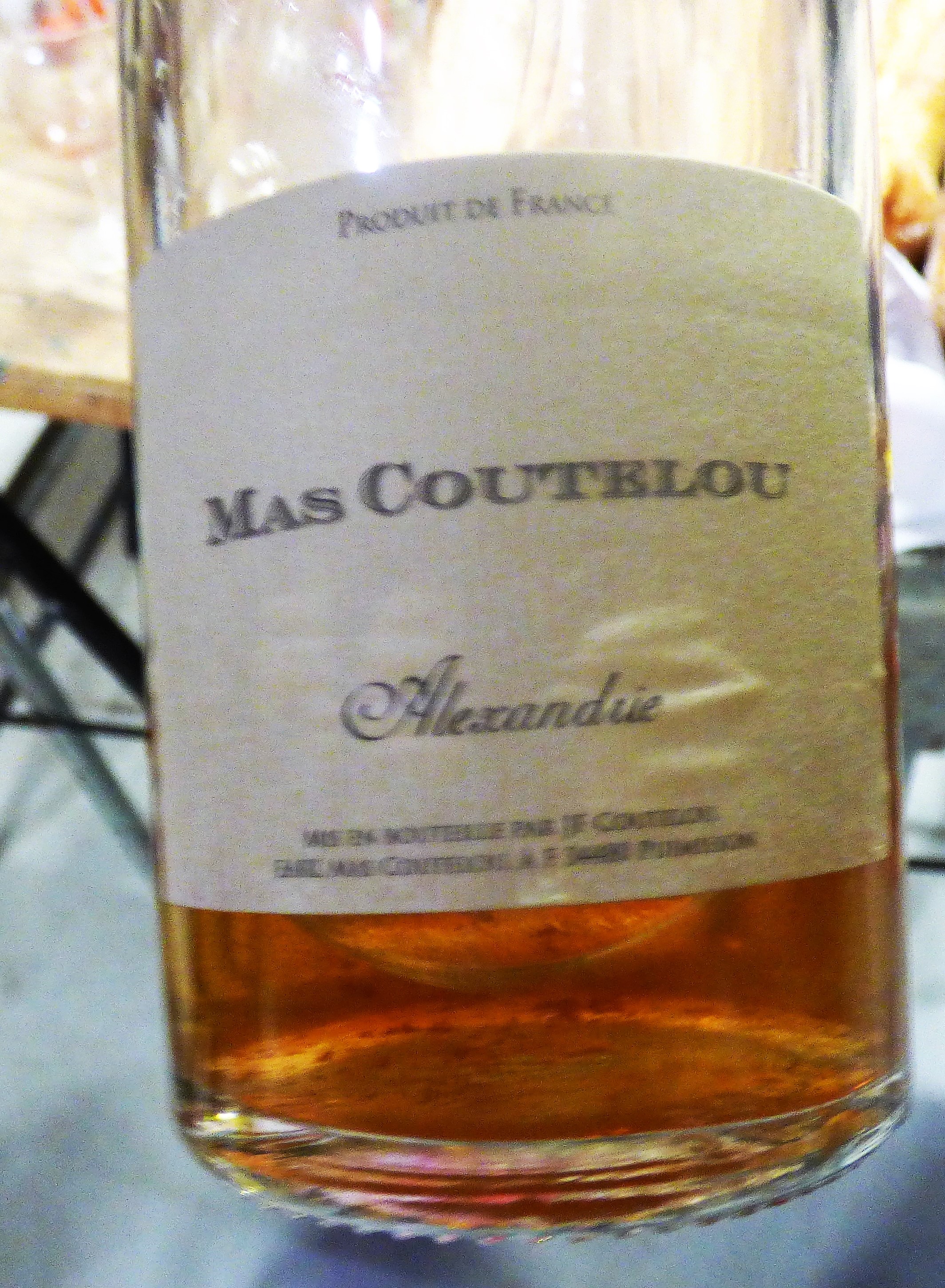
Within the cellar change was stirring. Whilst it is still the wines which are the flagship and main substance of the domaine there has been a shift in emphasis. The name ‘Vins et Spiritueux Coutelou’ tells the story. Vermouth (kina), gin, brandy, triple sec are now for sale. With a Coutelou twist of course. No industrial alcohol as an ingredient, meaning that labels have to carefully following guidelines. Not gin but Djinn (as in genie) for example. You may recall I reported on the making of the vermouths. There are three styles, a very dry, one with a little more sweetness from residual sugar and a red vermouth too.

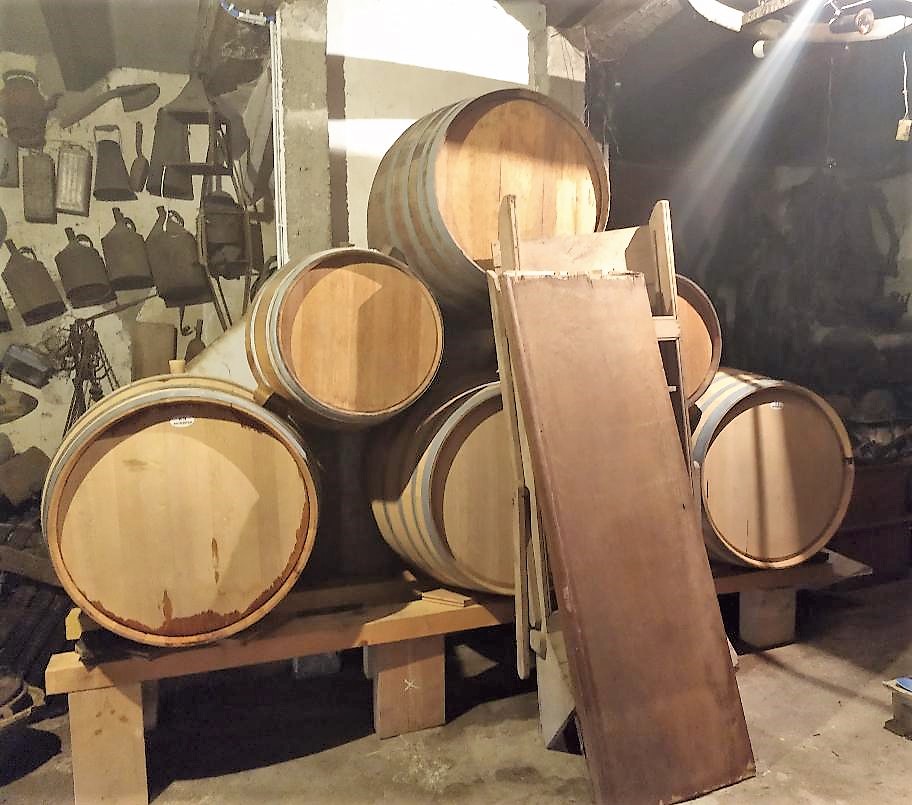
To reflect this new arm of the domaine Jeff, Julien and Nathan were re-arranging barrels within the cellar to create distinct areas for the spirits. And out of that rearrangement came a new discovery for me, a port.

Made in 2012, stored in barrel (see photo above) it is in the style of a Late Bottled Vintage port. The barrel ageing had given it a hint of wood but there was a rich fruit and, as with the spirits, no strong alcohol sensation because of the natural alcohol used. Having spent some time in Porto this year and being a fan of port in general I can honestly say this wine is very good, another top quality addition to the range.

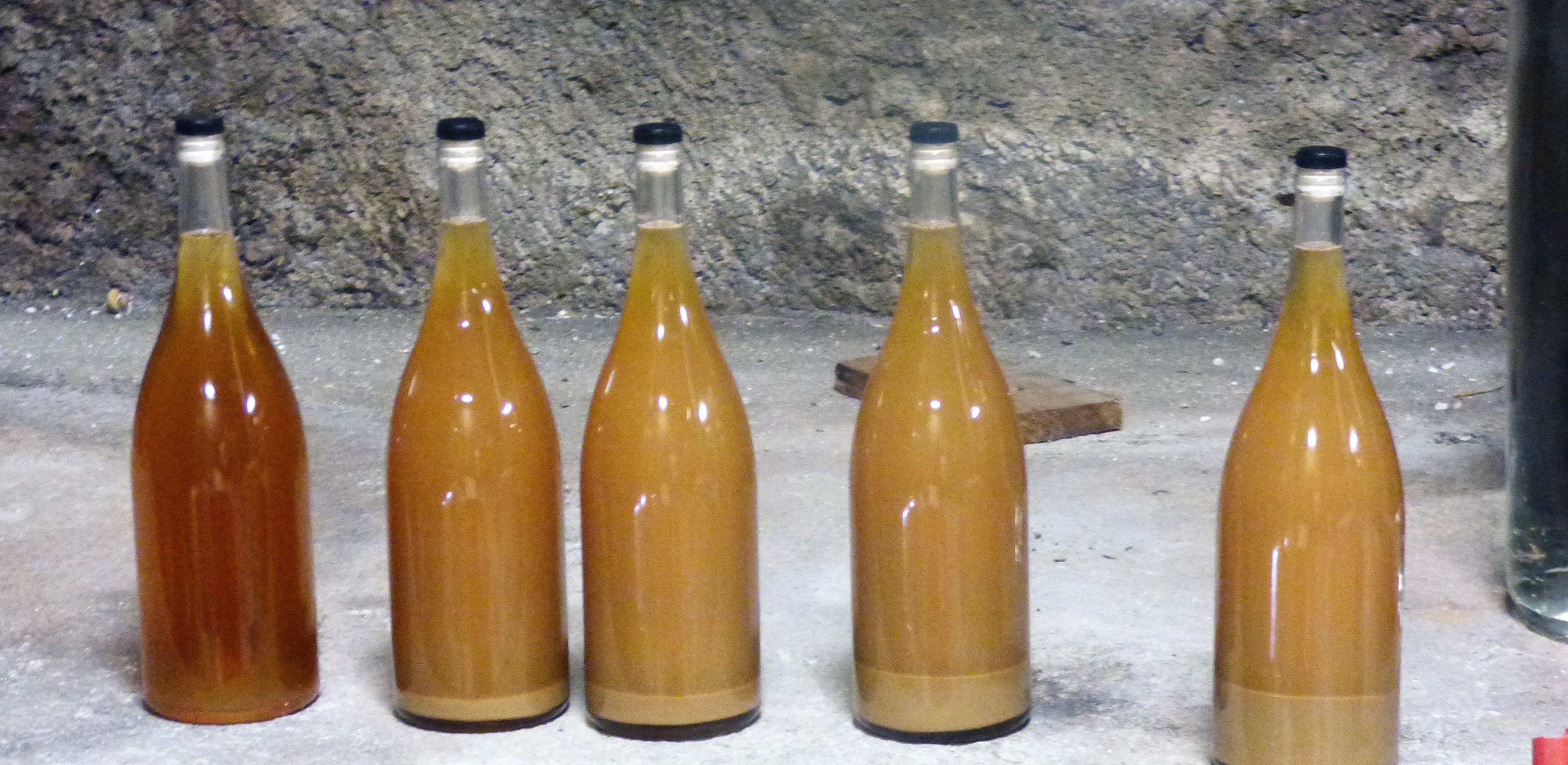
The triple sec, an orange flavoured spirit, was made in a stainless steel tank. Have a look at how it emerged at different stages from there to be allowed to settle in large bottles. The various stages are evident.

Vermouth stored in the solera cellar, the barrel on the left needs attention

With Jeff there is always change, experimenting and new wines and products. He enjoys the challenge of conjuring up and mastering the different styles. And that is without mentioning the solera system again. This really is a melting pot, a crucible of discovery. The fact that he attracts support from all over the planet suggests that many others appreciate that work and creativity.


Leave a comment

Expert eye

Version francaise

I regularly tour the Coutelou vineyards, looking at the changes and growth, relishing the tranquillity and connection with nature, the vines, flora and fauna. Nonetheless, far more interesting is to tour with Jeff himself. His expert knowledge of his land and the vines adds so much. Jeff was a teacher for many years and I always learn a great deal from him.

Living soils of Rome

We began in my favourite vineyard, Rome. This parcel, surrounded by trees, is a haven for wildlife. The tall Grenache gobelet vines are 40 years old and more and Jeff explained how the soil in Rome is around 30-40cm deep, made up mostly of forest residue, for example rotted leaves. The soil is a rich humous and full of life. Lifting a clump revealed fungal threads, insects (look for the black bodies) and worms.

Syrah with its large leaves and bunches forming

On to Sainte Suzanne and its Syrah and Grenache, so much a part of le Vin Des Amis, a famous part of the Coutelou range. Flowering completed in the main, the Syrah more forward than other varieties as is usual. The bunches resemble peas. Huge leaves such as this Syrah and Muscat in Peilhan show how Mediterranean varieties protect their grapes from the fierce sun because of their size and thick, quilted texture.

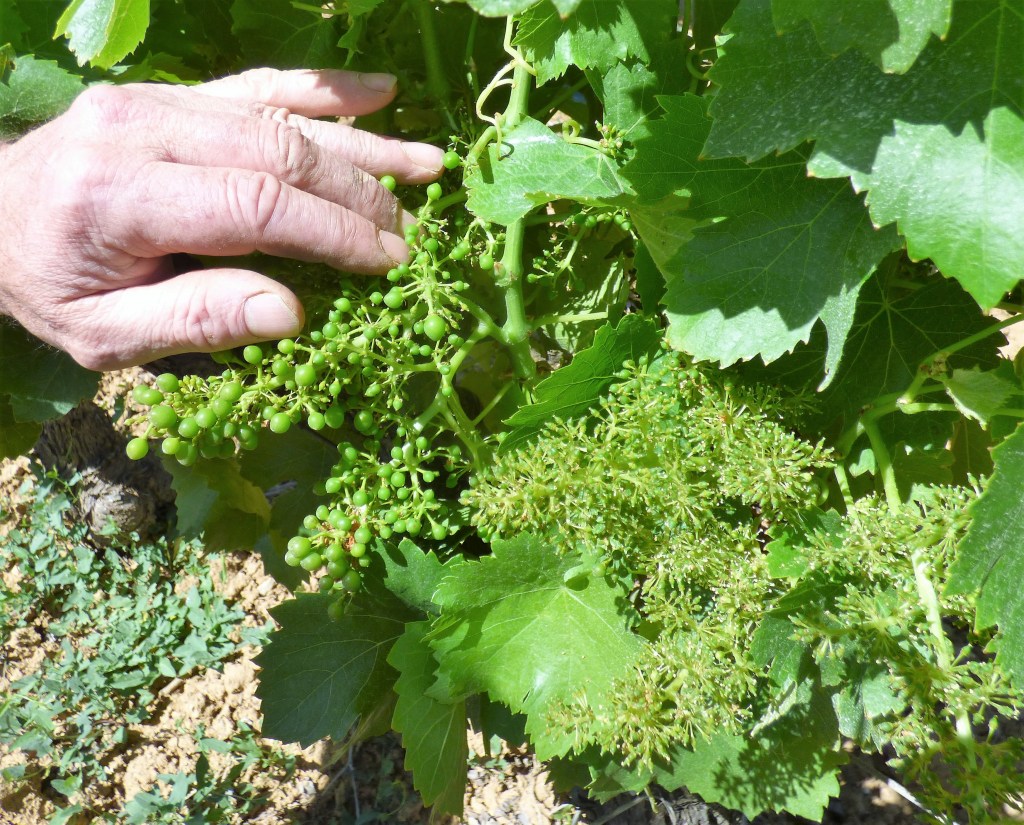
Flowering on the right whilst Jeff indicates coulure

Disappointingly there was also evidence of coulure, here and in La Garrigue especially with Grenache, which flowers later. Flowering has lasted longer this year, making them more susceptible to coulure.

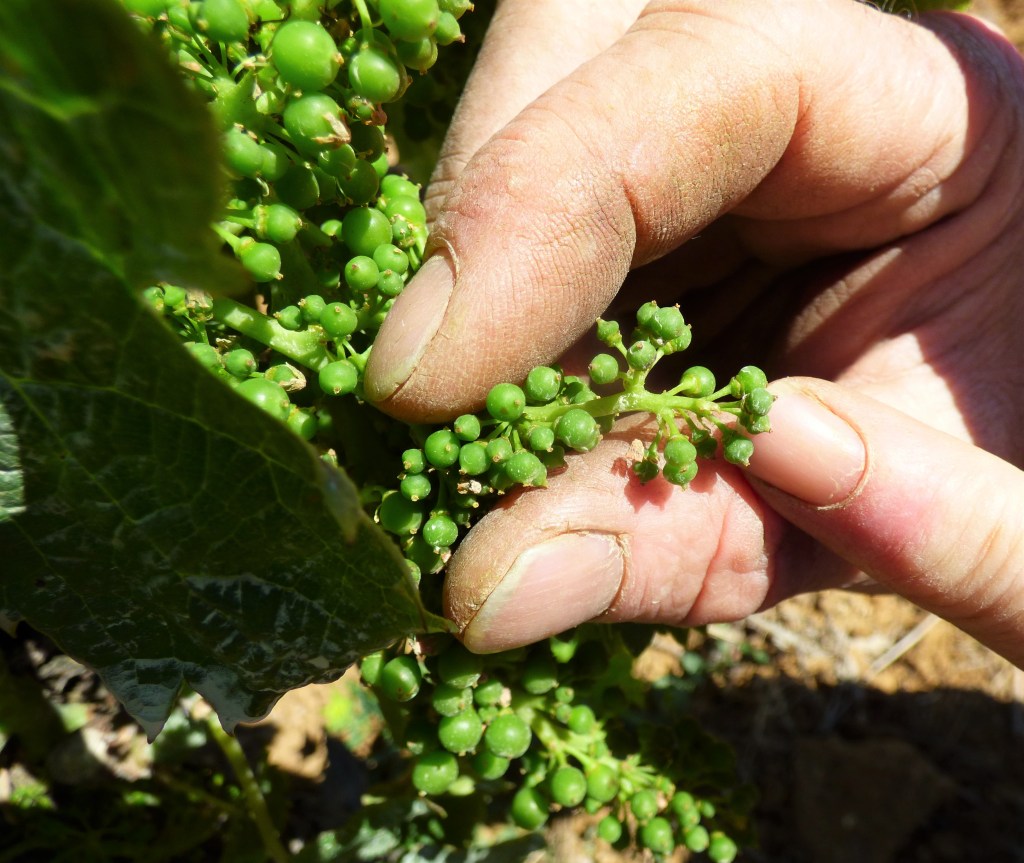
This happens when wind or rain damages the flowers and the fruit cannot set on the vine. A shower of unformed grapes fell into Jeff’s hand as he ran it across a bunch. The consequence is that the harvest will be good but not as big as hoped for, especially after last year’s mildew hit year.

Oidium on bunch

That disease was downy mildew, this year the greater threat is powdery mildew or oidium. As we toured the Carignan vineyard, Rec D’Oulette, Jeff immediately spotted the signs, I would likely not have seen it. Oidium usually attacks the leaf and stem, leaving a white, powdery residue. Here the oidium had attacked the bunch directly, leaving a grey tinge to the green pea-like grape. Encouraged by the alternation between hot days and cold nights which we have had recently oidium needs to be treated. Jeff uses sulphur mixed with clay which helps the sulphur to stick to the plant. So far the damage is limited and the weather has heated up which might help to dry out the disease. Certainly there was evidence of that, the black spots on these stems and leaves is evidence of that, see the photo below.

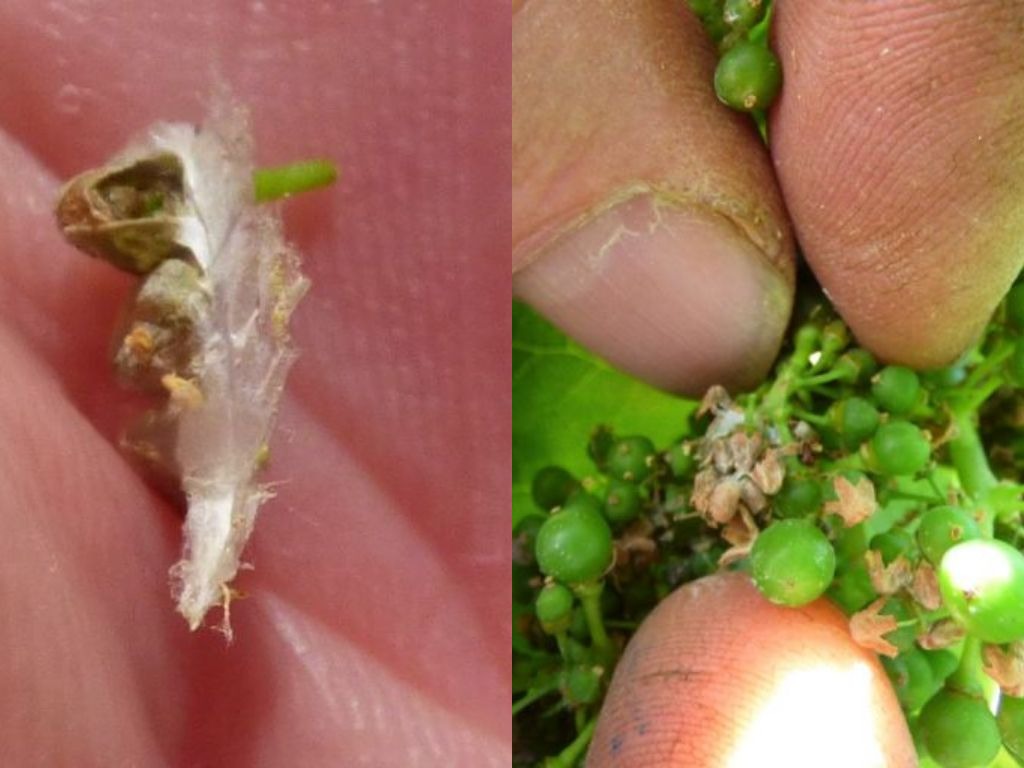
Another pest was seen too. This white, cottony substance on my hand is the cocoon of ver de la grappe, a moth which will lay eggs in the grapes and the larvae pierce the skins causing bacterial spoilage. Insecticides would be the conventional response but not for organic vignerons. Natural predators such as bats are the solution, one reason why Jeff has bat houses in the trees around the vines.

More trees have been planted, Nathan and Julien were tending the border of Peilhan vineyard where fruit trees such as this pear are beginning to grow and become established. In the vines things looked good, such as this Carignan Blanc, Piquepoul Gris and Muscat in Peilhan and the Mourvèdre in Segrairals.

A 3 hour tour revealed so much about the state of the vines this year. Things are set for a good quality harvest, though it is still early days. Coulure means that it will not be a bumper crop, oidium that there is much work to be done to tend the vines which Jeff nurtures so carefully.

Healthy vines

New plantings such as that next to Sainte Suzanne of Clairette and Maccabeu are signs of a healthy future too.

Plantation, Clairette right, Maccabeu left

No matter what some British politicians would tell you it is always good to listen to experts and this was no exception. The strapline of my blog says “learning about wines, vines and vignerons”, this was a morning which certainly helped me to achieve that goal thanks to Jeff and his expert eye.


Leave a comment

New moon

En francais

Delicate flowers, brown hoods which fall off the bunches

The weather continues to confound here in the Languedoc. A couple of days of sunshine and heat and then back to grey clouds, warmth and wind. And now we have humidity and a few short but heavy showers.

The vines have been in terrific health until now and they still are as I write on June 10th. The new moon was on June 3rd and that is a time when biodynamic producers start to get twitchy as they believe it can bring out disease. The alternation between heat and chilly nights with humidity certainly encourages oidium and there have been a few hints of it emerging, for example in the Maccabeu. Nothing too concerning yet but Jeff used an organic treatment last week to nip any danger in the bud.

A tour of the vines the day after the new moon showed what good condition they are in and how quickly they have grown.

Sainte Suzanne Grenache, growth in one week

It also showed how mistaken I was when I wrote recently about the end of flowering. In fact everything is a couple of weeks delayed due to the dry winter and spring so there were flowers in profusion. A week later flowering is done, there are a lot of bunches on the vines and it is still very promising but let’s hope this humidity disappears soon.

One point of interest, the new plantings in Rome. The thick material around the base of the vines is to deter weeds from competing with the young plants and also to preserve moisture in the soil for their benefit.

Meanwhile the radio show I mentioned recently was broadcast and the podcast is well worth a listen, not least for The Clash classic.


Leave a comment

Wine into bottle, wine out of bottle

En francais

Descending moon, favourable high air pressure, time to bottle some of the 2018 wines. This also means that the vats can be emptied and cleaned in readiness for the 2019 harvest. Yes a winemaker does have to think about that already even as the grape bunches are just forming and 3 or 4 months from being ready to pick.

Filling magnums

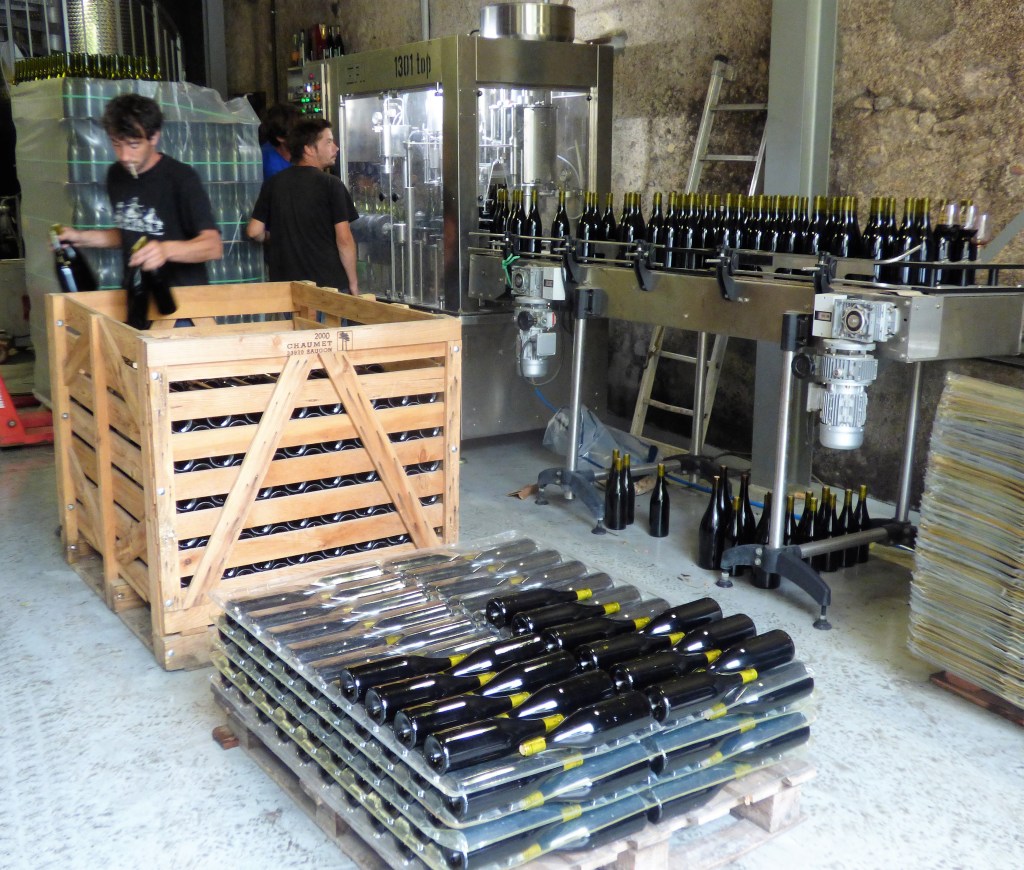
Two of my favourite Coutelou wines were being bottled on Friday May 24th, Classe and La Vigne Haute. As the latter is my desert island wine Jeff invited me along for the day to help out. He is fortunate to have his own bottling line so he can choose exactly when conditions are right for this crucial process. The wine must be in bottle and corked as quickly as possible to avoid any oxidation.

The bottling machine automatically:

  • fills the bottle
  • tests the level of wine in there, adding or removing accordingly
  • corks the bottle
  • sends the bottle on a 3 minute journey to let the cork seal in the neck

It is mesmerising to watch as you can see for yourselves.

The bottles are stocked on moulded plastic sheets or in a pallox which is much more difficult to do, the bottles stubbornly find ways to fit awkwardly together causing lumps and bumps in the layers.

Pallox

Julien, Nathan, Christian and myself took turns at the various tasks for a 10 hour day with each of us taking a break for food and drink. We have to check every bottle to ensure that the cork has sealed and there is no leakage of wine. Any that do are set aside for use in up and coming tastings.

Christian and Nathan storing bottles in pallox and pallet
Magnum whose cork has leaked

Jeff, took his turns too, of course, but was also busy with other tasks, tastings for a restaurateur, a radio interview.

Interview

Both wines were in good form, Classe more immediate, La Vigne Haute with more structure and tannins but lovely fruit, it will be great. As with all 2018s though there will not be very much of it.

Another wine was tried too. Jeff sent me to the solera cellar to find one of the bottles of my wine, the one I made from Rome vines in 2015 to celebrate my 100th blog post. This was one from the old barrique. I liked it, the others were generous in their comments. There’s a little residual sweetness as well as the tertiary flavours of 3 years in barrel, a drier influence with a raisiny influence. It will be interesting to compare with the wines from the newer barrique and from the glass bottle.

A long, physically tiring day but, as ever, rewarding. Bottling is such an important process in getting the wine to the customer, imperative that it should be done correctly. It doesn’t improve the wine but it could spoil it. Happily all was well this day and these bottles will be well worth seeking out.

Julien filling magnums, the vat is cleaned including the sparkling tartrate crystals