Category Archives: Vines
Vendanges 2016 #9 – Days Like This
“When all the parts of the puzzle start to look like they fit
Then I must remember there’ll be days like this” (Van Morrison, Days Like This)


l-r, Morgane, Jeff, Julien, Thierry, Michel, me, James, Howard
As we approached the end of vendanges a number of the team were moving on. It was an inspired move to have a farewell day, picking, tasting and celebrating together, though we were already missing some like Charles, Carole and Maylis.


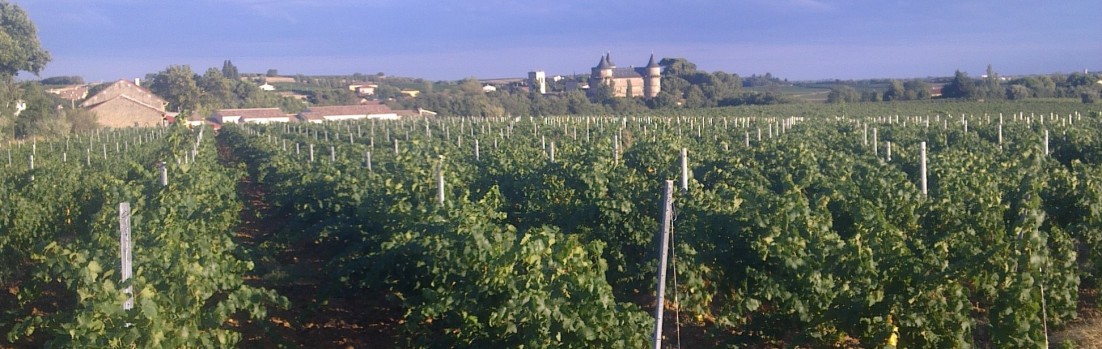
The morning dawned over Peilhan and the vineyard which we planted in March 2015. Rows of Terret Blanc and Noir, Riveyrenc Gris and Noir, Piquepoul Noir and Morastel produced grapes this year. They cannot be used in major cuvées sold to the public as they are too youthful. However, Jeff decided to pick them to make something for himself out of interest. So, on a bright, warm autumnal morning we gathered, picked, chatted and laughed.

Terret Blanc

Piquepoul Gris

Riveyrenc Gris

Piquepoul Noir

Morastel

Meagre Terret Noir
Interesting to see how some varieties produce more than others already, more precocious perhaps, the Terret Noir being especially shy. Altogether we picked around six cases only but there was a real mix of colour and some nice looking fruit which went into a small cuve in whole bunches.


Howard

James and Julien
Later that day we gathered again, this time in the main cellar along with Thierry Toulouse, Jeff’s oenologue. We tasted through the whole range of 2016 wines in cuve before heading to a local restaurant for a meal. The results of the tasting were fascinating. Clearly, they are in a stage of transition, fermentations still progressing. Nonetheless the wines were already showing their character. I won’t go into too much detail here, though I did take notes to help me record how the wines change in coming months.

Me, Thierry and Priscilla

Priscilla, Morgane, Jeff and Julien

l-r, Morgane, Jeff, Julien, Thierry, Michel, me, James, Howard

In summary though I was amazed. I have said many times on here how difficult this year has been. A very warm winter, drought, mildew, delayed summer being just some of the problems. Yet here we tasted some lovely fresh fruit, lively acidity and other promising signs. I would mention the Carignan Blanc, lovely Syrah and Grenache from La Garrigue, juicy Mourvèdre and in particular the wonderful Carignan Noir of Flambadou. All those puzzles which Jeff had to hold in his head about harvesting dates, moving wines, possible assemblages etc, well those puzzles were solved in the glass. I had expected some disappointments but somehow Jeff has conjured some potentially top quality wines.

2003 Roberta
At the end of the current wines Jeff also shared a 2003 bottle of white wine based on Grenache Blanc, Noir and Gris, called Roberta (it’s a long story!). This was one of three cuvées which were the first that Jeff made sans sulfites. Yet it was complex; fresh, fruity, nutty. A wine which made my heart sing, proof that SO2 is not required for ageing wines as we are often told. Perhaps in 13 years time we shall be tasting the 2016 wines and marveling at them too.
A fitting way to close the vendanges period, a team rightly proud of what it had achieved.
“When all the parts of the puzzle start to look like they fit
Then I must remember there’ll be days like this”

Vendanges 2016 #7 – Last Pickings

Cabernet Sauvignon sheltering the Moroccan pickers
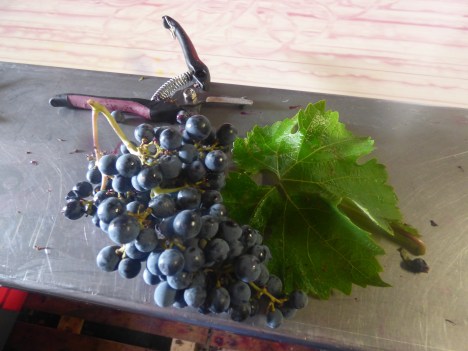
Wednesday (September 21st) was officially the last day of summer and, appropriately, the last day of picking at Mas Coutelou. It was, as in 2015, the Cabernet Sauvignon of Segrairals which was the last major parcel gathered in. Lovely, clean bunches of small, healthy berries, classic Cabernet and virtually nothing to sort in the vineyard or in the cellar.
Cabernet Sauvignon
The day before had seen the start of the Cabernet in the afternoon following a morning of picking Mourvèdre, also from Segrairals. As I hadn’t ventured into the vineyard much in 2016 I took the opportunity to do so that morning. Our friend Jill had expressed a wish to do some grape picking and Jeff kindly agreed so I accompanied her (so at least there was one less experienced picker than me!). I really enjoyed being out in the fresh air but it was also good to get a grip on how the vineyard topography can have such an impact upon the grapes.

Jill in action

Sticky hands, lovely Mourvedre

Mourvedre juice with more Mourvedre on the table
The Mourvèdre grows on an easterly slope with the rows running down the slope. The vines at the bottom of the slope gave lower quality bunches than those at the top, indeed we stopped picking the last few vines at the bottom of each row. The reason was that when it does rain the water runs down the slope taking nutrients etc. The grapes there tend to ripen much sooner with more humidity in the ground, it was a clear example of terroir. Rest assured that only good grapes went into cuve, much was left behind in the vineyard and at the side of the sorting table.

The slope in the Mourvedre vines, rejected fruit on the ground
On Monday the lovely Carignan Noir of Rec D’Oulette (Chemin De Pailhès) was added to the tanks. The quality was high and signs are promising for yet another good vintage of Flambadou, arguably the domaine’s best wine in recent years.

Carignan bunches

A Carignan leaf
Since the last article the other major harvest was some bountiful, good quality Grenache from La Garrigue on Saturday 17th.

Gorgeous Grenache
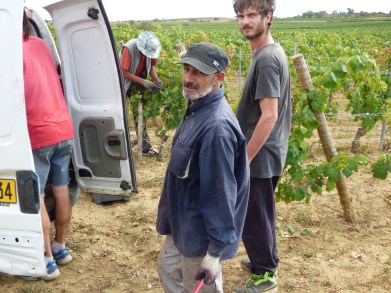
There remain a few rows here and there with some grapes left and they may or may not be picked in coming days and weeks. However, the Cabernet marked the last of the major picking. Time to say farewell to the Moroccan pickers, part of the Coutelou crew for the last month.

Last cases arrive

Last case

Sorting the last case, (clockwise from left) Vincent, James, Morgane, Julien, Charles, Priscilla
Stage 1 is therefore over. Stage 2 the cellar work of remontages and pigeage continues apace as most cuves are now full and need looking after. Stage 3, pressing, is also in full swing as grapes from previous weeks have now gone through fermentation on skins and need to be pressed to take the juice away. I shall be writing about this more in the next article.


So, we head into autumn, the vines are fatigued after a very stressful year. The leaves are already changing colour and the Languedoc will be an even more beautiful place in coming weeks. The picking may be over but the vendanges are not.

Mourvedre in autumnal glory
Vendanges 2016 #6 – Sort It Out
What do you look for when hundreds of bunches of Grenache grapes come towards you? What is your job on the sorting table?
Every winemaker wants the healthiest grapes to go into their vats to make the best possible wine. In some of the smartest chateaux and domains in Bordeaux and Burgundy each grape is sorted, even scanned. However, those are wineries which charge hundreds of pounds for a bottle of wine. For a natural Languedoc wine producer such expense is not feasible, so no scanners at Mas Coutelou. However, the need for only healthy fruit to go into tank is even more important for those who will not use additives such as SO2.

The sorting table is new this year, previously we sorted direct from the case. The table means that you can see more of the grapes, move them around and search for any problems with greater ease. Undoubtedly it has led to better triage of the grapes which should help the wines. In a very difficult vintage such as 2016 the table has easily repaid its cost.
So, what are you looking for?
Michel brings in the cases and information about the grapes
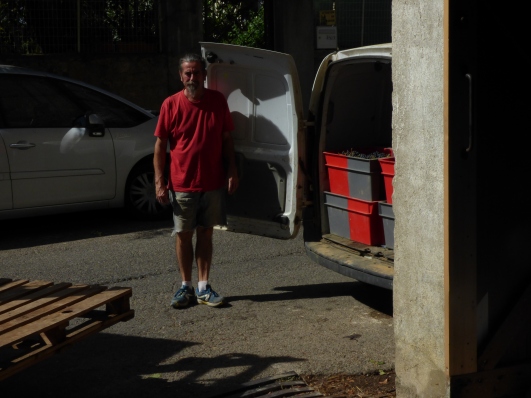
Well, first of all you get information from Michel as he brings the cases direct from the vines. He talks to the pickers and they will tell him if they have been in a good part of the vineyard with few problems or, conversely, if they have had to do a lot of sorting and cutting themselves. Michel relays this information to us on the sorting table with warnings to look out for snails or rot for example. Forewarned is forearmed.
In the video you see Vincent empty the case onto the table. He immediately looks for leaves, snails, spiders etc and removes them. Priscilla starts to sort. I or someone else would be on the other side so that we can see the bunches from different angles and turn them over to inspect.
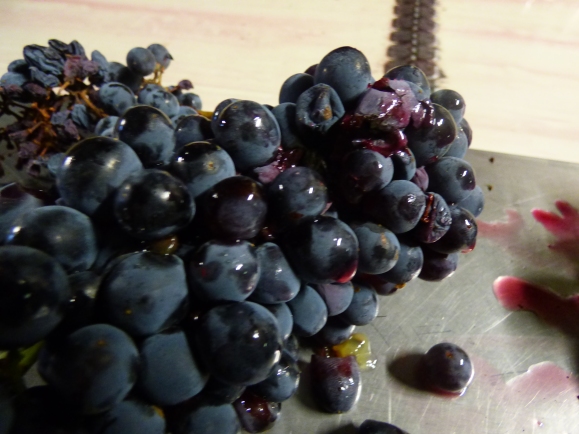
Some squishy grapes
When I first joined the Coutelou team in millésime 2014 it was Carole who taught me what to look for. There are the obvious things, more snails and leaves but then look at the bunches. Or rather, not so much look, but touch and smell. Feel the bunch, are the grapes firm and springy or squishy? In the latter case warning bells ring. Is the squishiness due to juice or to rot? Smell the bunch. Does it have aromas of clean fruit or vinegary, rotten odours? Obviously if that is the case you cut into the bunch and seek out the rot and remove any affected grapes. Usually cut some of the ones around too as they might have been tainted by the rot.
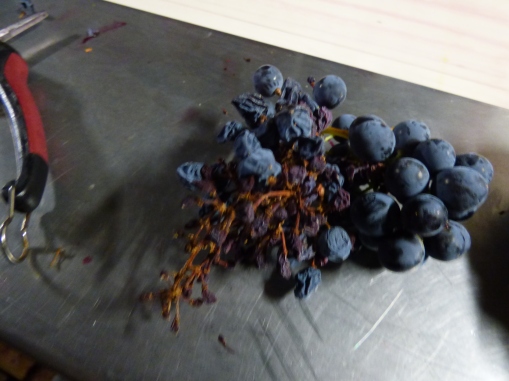
Mildewed grapes
Look out too for mildewed grapes which have dried and become unpleasant. There are grapes which have naturally dried out and their raisiny sweetness is actually good in the wine, so you have to learn what you are looking for. Are there hail damages grapes? Grapes with holes from vers de la grappe (grape worms)? Black rot? Oidium? In a future article I shall be looking at how these problems show themselves on the final grapes.
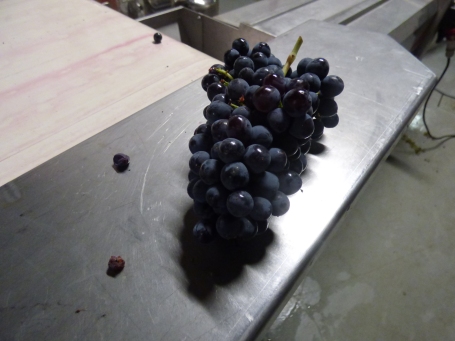
Lovely Grenache bunch but check the interior
Of course, the vast majority of bunches are great, no problems at all, just lovely fruit. But, beware, those big closed up bunches are the very ones where problems might lurk inside. Don’t be deceived by something which looks good, you must still check it over.

Nice, loose bunches – air can circulate to keep the grapes healthy
And meanwhile, whilst you look at that bunch another one is passing you on the table. Work fast, eyes, fingers, nose on the alert. Secateurs cutting whilst your fingers are already touching the next bunch. Be careful, no blood on those grapes please.
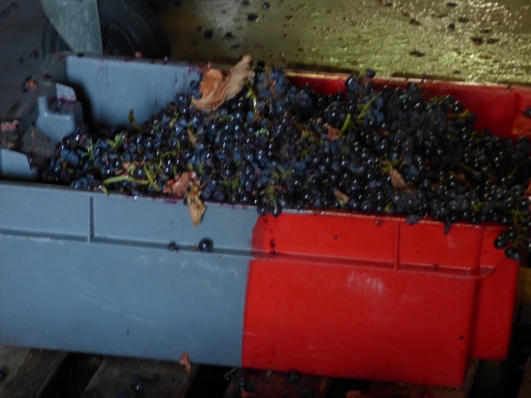
Sorted!!
For Martin, hope you enjoyed it!
Vendanges 2016 #5 – Bolts from the blue
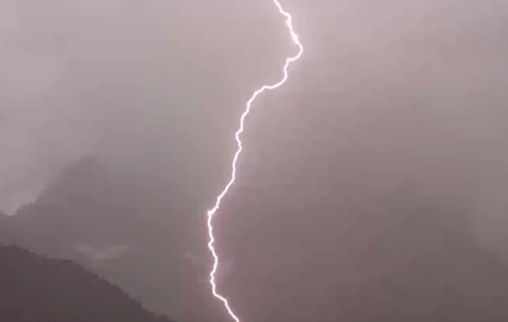
La foudre s’est abattue sur le cirque de Gavarnie, dans les Hautes-Pyrénées, dans la nuit du 13 au 14 septembre. (Photo : capture d’écran webcam Gîte Oxygène Gavarnie)
Tuesday September 13th, the return of picking, with a little urgency in light of the weather forecast for heavy storms that night. The objective was to collect the Syrah from La Garrigue, the grapes which go into La Vigne Haute, my personal «cuvée mythique» of Mas Coutelou.


Last year the grapes were slightly swollen so Jeff decided to make another cuvée instead, On Peut Pas Vraiment Dire Que, and it is now 3 or 4 years since we saw LVH. It remains to be seen whether Jeff decides that the grapes were of high enough quality in 2016 for such a prestigious wine.
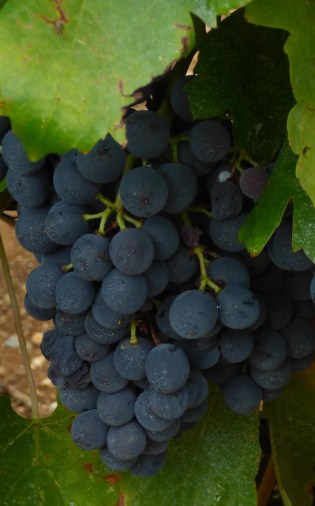
Syrah in La Garrigue on Saturday 10th
The grapes started a little messy requiring some careful triage both in the vineyard and cellar.

Syrah moving fast, the juice is in the glass

Tri
However, the quality improved after the first few cases which had been picked in a lower part of the vineyard. Certainly by the end of the day we had sorted a good quantity and quality of fruit, my shirt can certainly testify to their juiciness.
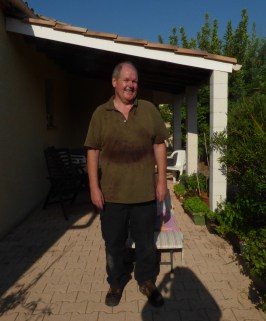
That night came the predicted thunderstorm, violent though not as long lasting as perhaps expected. I saw that some parts of the region saw over 200mm of rain, fortunately Puimisson did not reach those levels. However, there was enough to stop picking for the next few days. As I said last time wet grapes are not ideal. In addition the soft ground in the vineyards would be churned up by feet and wheels.

James working hard as usual
In a way the storm came at a good time on a personal level. I developed a mild case of bronchitis out of the blue on Tuesday which would have prevented me from working on Wednesday and Thursday. So, I have left cellar work to the experts whilst I recharge my batteries for Saturday when we may get to the Grenache in La Garrigue which looks bountiful and ripe.

Grenache in La Garrigue Sept. 10th
Meanwhile analysis of the grapes continues. There was the result of Ecocert’s evaluation showing that Mas Coutelou successfully retains its organic certification and also their analysis proving that no sulphites were or are added in the wines. And then there is the daily analysis from the oenologue which shows information such as alcohol levels, total acidity, pH levels, residual sugar etc. These help Jeff to think about how to look after the wines and which ones might blend together successfully in future.

The weather is now set fair until we finish; Grenache, Carignan, Mourvèdre, Cabernet Sauvignon should arrive in good conditions with a light north wind and under blue skies.
Vendanges 2016 #4 -cellar and weather

The weather has had its say and threatens to shout out loud in the next few days. Should we expect anything different in this most problematic of years? Saturday (Sept. 10th) was supposed to be a day for picking but a heavy shower fell in the morning and that was enough to stop the day in the vineyards. Grapes covered in rainwater would provide diluted juice, no good for quality producers though that did not stop some in the area.
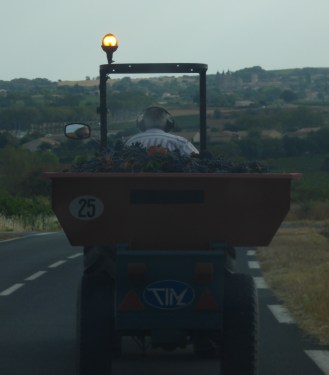
Some picked on Saturday

Charles

Remontage

Priscilla

James and Charles
However, there was still work to do in the cellar, remontages and pressing. The previous day some of the team had been clearing space in the solera cave so that the Muscat and Grenache picked from Rome vineyard would have room.

Michel moves my Grenaches wine

Charles bottles some solera wine
Sunday was a day off though more remontage and cellar work was done. There is no rest. Today (Monday 12th) was a normal day for many vignerons but at Mas Coutelou a big part of the team are the Moroccan pickers and it is Eid Mubarak. Therefore Jeff decided that they deserved the opportunity to celebrate their holy day and so no major picking. An act of respect which deserves mention.

Remontage


Sadly, that act seems unlikely to be rewarded by the weather. There is a major threat of a large storm on Wednesday which would halt work again and require a few days for the grapes to recover before they could be harvested. More careful triage will also be required. Let us hope that the storm weakens or diverts.

Carignan Noir Saturday
Meanwhile Carole, James, Vincent and Charles were out picking Carignan Blanc this morning in Peilhan and the Grenache from Sainte Suzanne was pressed. Work continues despite everything this year throws at us. Tomorrow will see the harvest of Syrah from La Garrigue, the grapes which usually make La Vigne Haute.

La Garrigue, Syrah on the left
Vendanges 2016 #3 – Press review


In the last vendanges update I wrote about stages 1-3 of harvest; picking, care in the cuve and pressing. Well, all three are moving on apace.

More and more wines to analyse, Jeff can’t keep up!
Today (Sept. 9th) was the first pressing of the year. In the small basket press was the Grenaches from Rome vineyard picked earlier this morning. These were the same vines as the ones I picked last year for my special cuvée. By chance, or design, the younger barrel of that cuvée was given a soutirage this morning. It tasted very well just showing the influence of the barrel. As the other barrel and 27 litre glass bottle are much more fruity the eventual assemblage should be nicely balanced. Here is last year’s Grenache saying hello to its younger brother.

In the big press was the white picked last week, Maccabeu, Muscat (Alexandrie and Petits Grains) and Grenache Gris. The press is big but the bladder inside lightly squeezes the grapes to release the juice, a gentle giant. The juice now goes into cuve and will ferment into the finished wine.
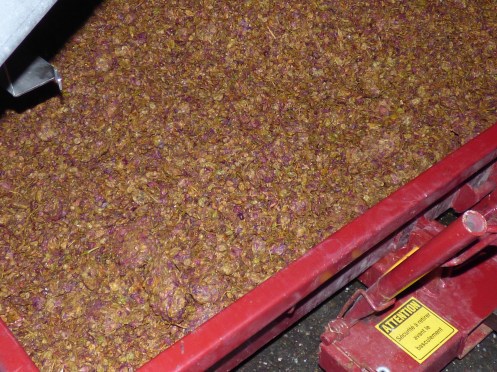
Skins after pressing, the pinkish coloured ones are Grenache Gris
Meanwhile stage 2 continues apace with remontage and pigeage of the growing number of wines now in cuve. Stages 2&3 require increasing effort, there was very little picking today though tomorrow will be busy again.
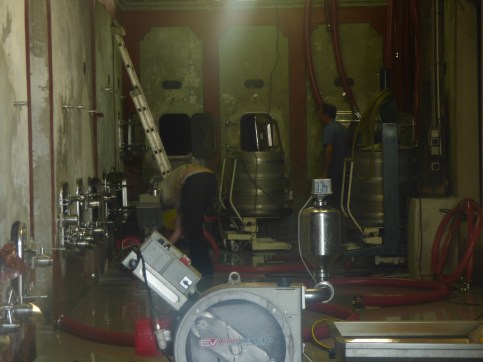
Jeff and Louis Pérot working on the cuves
Wednesday saw a full day of Syrah from Segrairals. The grapes were good and often very juicy. There are sections of the parcel which seem to retain moisture and help the grapes even in such a dry year as 2016.

Syrah

Maccabeu
Thursday was the busiest day so far. A morning of picking Peilhan white grapes, mostly Maccabeu, Grenache Gris and Muscat. These had suffered through the attack of mildew in spring time and some careful triage was necessary. Nevertheless, small in quantity but good quality.

5SO 2015 greets this year’s grapes
In the afternoon arrived the Cinsault from Segrairals which makes 5SO Simple. Cinsault gives bigger berries with lots of juice. The juice came in at around 10.5%, Jeff said that it would be a ‘vin dangereux’ as it would be very easy to just keep drinking it.

Team Coutelou
Plus one sleepy dog
Vendanges 2016 #2 – adolescence

TWednesday – Grenache right, Syrah left

Today – Grenache and Syrah has matured
When I mention vendanges to most people they think of grape picking and, maybe, putting the grapes into a tank (cuve). However, vendanges means much more than that and we are now entering stage two of the process.

Flower Power in cuve

Muscat in cuve
When the grapes have been picked and sorted they are stored in a cuve where the juice interacts with the skins extracting flavour, colour and also coming into contact with the yeasts which grow naturally on the skins. These yeasts then begin the process of fermentation which turns the sugars in the juice into an alcoholic wine. This mix of juice, skins, pips and flesh is known as must.

Checking progress
So, whilst picking continues at Mas Coutelou Jeff must already plan what is happening to those cuves of grapes which were picked a few days ago, You will remember from #1 that we picked Grenache and Syrah on days 1 and 2 and that they were in cuves 2A and 2B. They are picking up colour and the fermentation means that the sweet grape juice of last Wednesday is already very different. Still plenty of raspberry and red fruit flavours but the sugar levels have fallen and the liquid is now more austere, a little acidic and with a weight of alcohol. It has turned from child into young adult.

Today – Grenache and Syrah has matured
To ensure that the grape skins do not give unpleasant flavours, volatility etc., Jeff must ensure they do not dry out as they float on the juice, forming what is known as the cap (chapeau). Therefore, wine is pumped from the bottom of the cuve over the top of the chapeau to push it down a little and to moisten it. This is known as remontage.
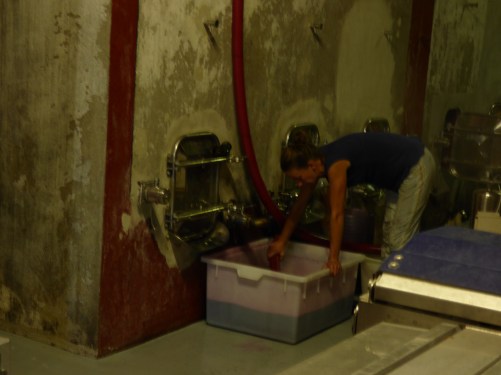
Carole carries out a remontage
Alternatively, an instrument or hand can be used to push the chapeau down into the juice, a process called pigeage.

James performs a pigeage
When Jeff is satisfied that the juice is ready and has had optimal skin contact he will begin pressing the must to leave the final juice. We await the first press as yet but it will be in the next couple of days as the Grenache and Syrah are already showing their adolescence.


Meanwhile picking continues. Friday saw Sauvignon Blanc and Muscat À Petits Grains as the first white grapes of 2016 at the domaine. Monday saw the picking of the Merlot from Colombié which will, unusually, find its place in the Coutelou cuvées. I am no great fan of Merlot but the grapes were lovely and the juice tastes especially rich and full.
Today (Tuesday) was Flower Power day, sadly the snails won the battle this year. They ate so many of the buds in Spring that the vines struggled to produce much. The dryness merely confirmed Font D’Oulette would be low yielding in 2016. Around twenty cases is not much return for such a lovely parcel of vines. High quality grapes from the various cépages but very low quantity.

Flower Power

Flower Power
Clairette and Oeillade from Peilhan with some Grenache Gris and Muscat Noir was added to the mix. Also picked was the Cinsault from Rome which was in good condition with nice big berries. So my two favourite vineyards are already harvested.

James models the lovely Segrairals Syrah
Finally, some lovely Syrah from Segrairals was picked and there will be much more of this tomorrow. This Syrah is such good quality that Jeff is already excited about what he can do with it. Segrairals is the biggest vineyard of the domaine and is also serving up some of its best fruit.
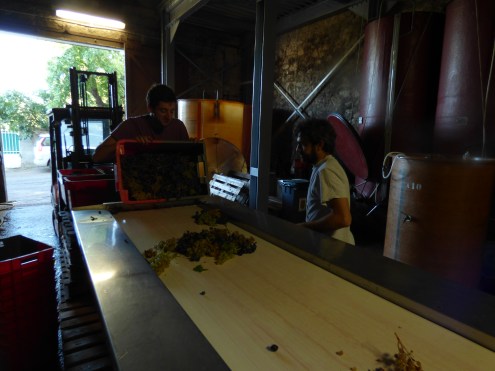
Charles, Vincent and the new sorting table
A new sorting table was brought into play this week and it is certainly much more efficient than the previous method of sorting from the cases themselves. Triage of better quality but also much speedier too. The table is already paying for itself.
So, stage 1 (picking) is well under way, stage 2 (the must in cuve) is under way for some and stage 3 (pressing) will shortly begin. The jigsaw is already becoming more complicated for Jeff Coutelou.
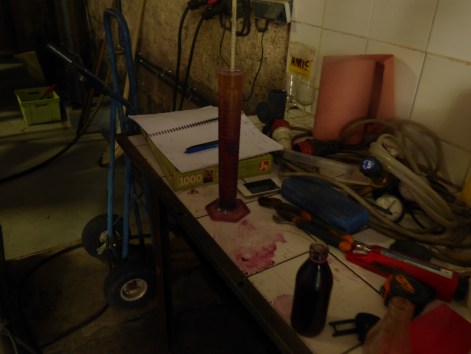
There really is a puzzle under there
Vendanges 2016 #1
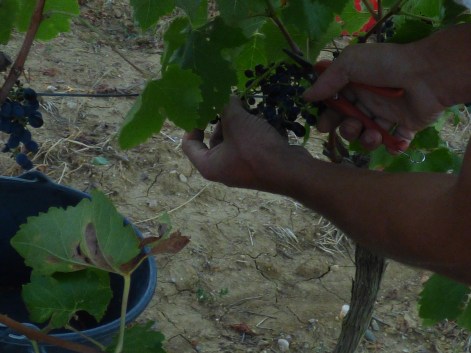
First cuts of 2016 at Mas Coutelou
In 2015 vendanges began on August 21st, in 2016 things kicked off on August 30th. The protracted cool spring and the drought contributed to a later harvest though not so late as predicted because of the hail on 17th August. This damaged some grapes especially in Sainte Suzanne (Metaierie) and Jeff decided that the grapes needed to be picked as they would lose acidity if left on the vine.


On the 30th it was the Syrah which was picked, unusual for a vendanges not to start with white grapes. Syrah normally produces small berries but these were especially small. The cagettes in which the grapes are transported back to the cave are usually running with grape juice, requiring regular cleaning. Today they were virtually dry. Jeff calculated that the volume of juice produced was around half of the normal harvest which is not good news. Hopefully other grapes in other vineyards have fared better but we shall see. This is all the result of the protracted dry spell in the region. Rainfall, other than the occasional storm where the rain comes too heavily. has been pitiful. The vines have found it hard to cope and give water to swell the grapes. The hail confounded the problem by shredding leaves which would help to nourish the grapes.


The good news was that the grapes gave lovely juice; fresh, very raspberry fruit and they smelled of beautiful warm spices. The measure showed potential alcohol of 12% so it will make a light, fresh Syrah wine or blend.

There was a full house to help out. Michel, Julien and Vincent as usual. We were joined by James, an Australian who is staying for the harvest to help his learning for making wine in the future. Charles who spent a few days with us last year is also here for a longer spell, he adds humour and energy. Jeff’s primary school classmate Maylis was also present spending the day in the vineyards. And Céline, Brice and their two girls were here on the way back from their holidays, it is always fun to see them.

Vincent and Charles

Cé;ine
One or two bits of machinery creaked under the strain of a new harvest but the changed cellar made cleaning so much easier. The team is taking shape for the challenges ahead. The Syrah sits in cuve 2A, I shall keep you up to date with its progress and path to the bottle.

Egrappoir in action

The rafle

Hard day’s work
Day 2, August 31st

The last of the Syrah was picked first. If you look at the photo of the vines with James picking you will notice the lack of foliage and therefore why Jeff felt the need to harvest now. First official analysis of the Syrah from yesterday showed healthier than expected acidity and potential alcohol, a welcome fillip.

Julien

James
Then came the Grenache from Ste. Suzanne, in many ways more problematic than the Syrah due to mildew earlier in the year. However, when it came in there were many good firm bunches of healthy fruit with possibly a little more juice than the Syrah. It was a very hot day so Jeff worked some magic by using frozen pellets of CO2 to stop the juice from starting to ferment too soon so that it doesn’t extract too much of the flavours of the dryer grapes before it is moved for the first time. This was the first time that Jeff has tried this method due to the nature of the vintage and its drought. Difficult to take a photo as all you could see was the mist of the frozen gas.

The juice tasted healthy and fresh with red fruits, a little vegetation still present. Yesterday’s Syrah was already darker, more weighty and very different to yesterday. Wine alchemy. It now sits in cuve 2B next door to the Syrah.

Grenache grapes

Grenache at 13%

TWednesday – Grenache right, Syrah left
Tomorrow (September 1st) is a new moon and so no picking or work. It is also the 2nd anniversary of my arrival in France, days like this remind me why that decision was a good one.
Salut to Jean-Claude, tu nous manques

The guardian
Full steam ahead


There was something of the nautical in these two photographs hence the title.
The preparations for the vendanges are in full swing, the hail has speeded up the start date as damaged grapes, especially, the Grenache in Sainte Suzanne, need to be picked earlier than foreseen. A tour of the vineyards on Wednesday morning with Jeff was an opportunity for him to taste the grapes and use the refractometer to measure the sugar and potential alcohol in them.
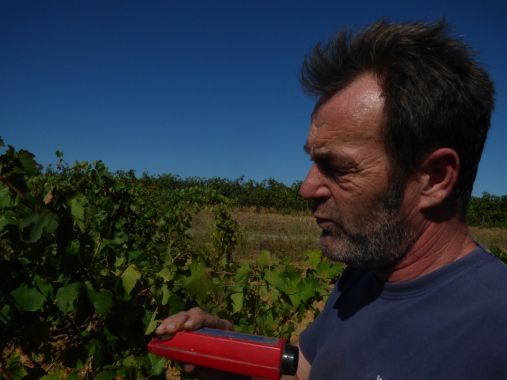
Picking will require even more care than usual in some parcels as the bunches will need to be checked thoroughly for any damage due to mildew, hail, vers de la grappe or any other issue. Many grapes will be left on the ground. The rest will be sorted back in the cave and Jeff has invested in a new sorting table to ensure scrutiny can be absolute. No chances will be taken as always, only healthy fruit will go into the wine. That is the how natural wines have to be, made from the healthiest fruit as nothing will be added to it to disguise faults, unripe grapes or unhealthy grapes.
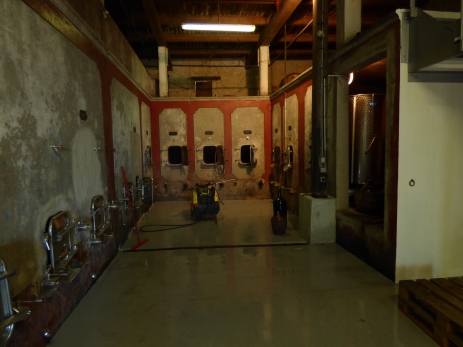
Karcher washer has been well used
In similar vein everything has been cleaned down, washing equipment is a time consuming but vital part of ensuring healthy grapes. Harmful bacteria are the enemy, with no SO2 antiseptics we have to make sure that everything is spotless.

Before

After
And there have been plenty of other changes in the cellar to ensure that the winemaking will be top quality. Out has gone the old press and some big tanks (cuves) as I have mentioned before. In has arrived new stainless steel cuves, temperature controlled. There is more room, a new resin covered floor to make cleaning easier.


Steel gantries have been erected to make it easier to access the cuves from above. This will make it easier for any whole bunch winemaking as the grapes can be put in tank much more simply and with more checks on quality. It will also be easier to carry out pigeage (punching the grape skins, pips etc down into the juice) and remontage (where the juice is pumped over the top of the cap of grape skins etc). A new staircase to the gantry makes life a lot easier and safer too.

La presse départ

Vieux pressoir et vieilles cuves

Michel porte la grande cuvée
Some of the big cement cuves have been divided to enable Jeff to make smaller quantity wines which will offer more options at the time of assemblage.

Before


After
So, Monday. We are ready. The grapes will be ready. Let the vendanges begin.
 amarchinthevines