amarchinthevines

Learning about wine, vines and vignerons whilst living in the Languedoc


4 Comments

A Tour Down Under, Little Things Mean A Lot

Since this article was written James changed the name of his winery to Scintilla Wines.

P1030314

During our holiday in the Adelaide Hills we stayed with James Madden, Sam Bateman and their beautiful year old daughter Flo together with James’ mother Pat. James and Sam travelled in France a couple of years ago and visited Jeff Coutelou which led to James returning to Puimisson a year later to play a  major role in the vendanges of 2016, which is how I got to know him. He became a valued friend in that time and when I told him that we were heading to Australia he invited us to stay with them.

A lot had happened in that 18 months, the birth of Flo, the loss of his father and the establishment of his own winery, Little Things. With all those emotional pulls it would have been easy for his first vintage to be a learning curve, instead James smashed it. The wines he produced from 2017 are extremely good by any standard, extraordinary for a first year. I would understand if you thought me biased, (I am of course), but honestly these are terrific wines.

James’ background is in catering, working in a number of restaurants in Australia, for example Movida in Melbourne. He became fascinated by wine and started to work harvests in 2011 in the Adelaide Hills often with James Erskine of Jauma wines as well as in the Mornington Peninsula and, as I said, with Jeff in the Langeudoc. That experience has instilled in him a desire to make wine with minimal intervention, he is one of the very few in Australia who resists the safety net of SO2. As we recalled over a glass, Jeff used to tell him to believe in his grapes and let them express themselves. When Sam encouraged James to give it a go on his own he took the plunge and from Little Things big things will surely follow.

James sources grapes from trusted organic growers over quite a large area. Vineyard management is done by the growers though in consultation with James and in 2018 he has taken over the running of a couple of vineyards. Ideally the couple want to buy somewhere with their own vines but in the interim, as is the norm here, James buys in the grapes, harvesting them himself.

P1030298

The Shed

When James poured me the wines from 2017 I expected to have to be polite and encouraging. Not that I underestimated him, just that it is hard to get things right first time around. There was no need for politeness. I was struck by the purity of the wines, the fruit is clear, pure and typical of the variety, it is not hard to identify Grenache, Shiraz or Chardonnay. Yet there is complexity, seriousness and everything you would want in your glass. As I said, he smashed it.

The wines are made in a shed he shares with Alex Schulkin (The Other Right). Pressing in small batches, maceration in small plastic containers and then the wine goes into old barrels. I recall that James was a master of cleanliness at Jeff’s and this is apparent in the way he works in his own winery. He has listened to advice, observed the right ways to work and made his own path with his own wines. He is still learning, playing around with fermentation techniques etc, and it will be fascinating to watch his, and the wines’, development. I only hope that we in Europe can get hold of some, importers take note.

The Sauvignon Blanc Pet Nat, Flo’s Fizz and the Chardonnay, Sweet Child Of Mine (there’s a theme here!) sold out quickly and it was not hard to understand why. The PetNat is just fresh fruit fun, goes down way too easily but at under 11% not too much danger. The Chardonnay is from 28 year old vines, whole bunch pressed, tank fermented and then aged in old barrels. It is a delight. There is a creamy note but a clean acidity runs through with lemon and spice notes. Seriously good wine.

Purple Patch Shiraz is dry grown Shiraz from Clarendon in the McLaren Vale, nice and light (just 11% abv) and very drinkable. I remember lots of good wines from this area when I first got into Australian reds and this would be a good example. More Shiraz, this time blended with Grenache (75/25%) in Sum Of Many, the fruity Shiraz being spiced up by the hit of Grenache. That Grenache was to cause a few problems for James as he discovered just before the 2018 harvest that there had been a spray on the vineyard and that it was, consequently, not organic. James decided to be open and honest about this and shared his disappointment with buyers. He decided the 2018 could not be used by him because of it not being organic, however he did find another winemaker who would welcome the grapes. In this way the grower, who had made an honest mistake, did not lose out and James will be able to use the vineyard’s grapes in future. I think that was an honest, commendable decision. The Grenache wine Comes A Time was inadvertently made from the vineyard in 2017, I found it a little more subdued than the others even before I found out about its history.

My favourite red though has to be Joy’s Wild Fruits Field Blend. The vineyard is next to the sea at Fleurieu Peninsula and most of the grapes are technically white, eg Pinot Gris, Savagnin, Chardonnay, but they are picked with the Pinot Noir, Merlot and Cabernet from the same vineyard, pressed together and left on skins for more than a week. This is heady wine; bright, light and mighty good. Fresh and zesty from the whites, fruity and spicy from the reds. I love field blends and this just works.

I am really excited for James and Sam that their venture is taking off. The bottles are selling well. Whilst in Adelaide and Melbourne we were in bars and restaurants with Little Things on the list (alongside Mas Coutelou in some places!). James can hold his head high whilst he mixes with James Erskine, Tom Shobbrook and Gareth Belton, his wines stand comparison and promise great things for the future. Proud of you mate!

P1030312


2 Comments

A Tour Down Under, Adelaide wine

P1030328

Adelaide Hills vines

We were fortunate to be staying for a few days with James and Sam in the Adelaide Hills for a few days (5* on Trip Advisor definitely) and they ensured that we were able to travel around the wine areas and meet some of the new wave producers who are making this possibly the most interesting wine region in Australia. What follows is necessarily an impressionistic approach but I hope that my enthusiasm for the area will persuade many to try wines from South Australia and especially from the winemakers I mention.

Let me start with the Barossa Valley, the iconic region for Australian wine for those of my generation who were essentially brought up on Shiraz and Cabernet Sauvignon from producers such as Wyndhams, Seppelt, Wolf Blass and Penfolds. Some of those are based elsewhere but source grapes from the Barossa. It was interesting, therefore, to drive into the region and see it for myself. What a surprise in many ways. I expected it to be dry but with a large central area of vines as might be seen in the Rhone for example. Not at all. It was dry certainly, indeed arid in parts. The vineyards shone out like oases of greenery set amongst the brown, parched landscape. Irrigation is important, indeed vital, to these producers.

We visited Seppeltsfield, home to Seppelt of course. There was a tremendous cellar door experience with tasting rooms, restaurant and lots of craft shops. Visitors are made to feel very welcome, this is how wine tourism should be. The wines are not necessarily my thing but I have to admire the people who established wineries in such uncompromising conditions and went on to make such a success of it.

P1030306

The Seppelt restaurant

I was aware that there are producers such as Tom Shobbrook, based in Seppeltsfield, who farm biodynamically and embrace natural styles. I have met Tom before and was happy to do so again when we came across him at The Summertown Astrologist. This is a restaurant/wine bar run by some local natural producers in the Hills notably Anton von Klopper of Lucy Margaux wines. Tom’s wines are always interesting, often very good. Given the terroir, my admiration is increased enormously.

I knew there were a number of producers making natural style wines in the Adelaide Hills. We met Tim Webber, who makes Manon wines with partner Monique Milton. Over coffee he explained that they farm other crops, vegetables and animals as well as making wine. All on sound organic principles. Favourite wine of Manon that I tasted was the Pinot Noir Love Lies Bleeding 2017. Interesting to hear that as well as the usual Australian grapes there was Garganega and that Tim and Monique are interested in different varieties. He is unusual in having his own vines, many such as James, buy fruit from growers with input about how they want the vines looked after. It can be difficult to source quality grapes, especially organic. James has to travel up to an hour from his winery to get to some vines.

James Erskine with James and checking progress of some Grenache

James Erskine, of Jauma wines, is somewhat of a mentor to James and he was brilliant to visit. He is an enthusiast, embraces life and was keen to share wines from tank and bottle even in the midst of a harvest afternoon. I have been fortunate to taste Jauma wines before and thoroughly enjoyed the chance to taste in situ, they are very good indeed.

Gareth Belton and some of his barrels

Gareth Belton is the producer behind Gentle Folk wines. I was familiar with his wines before but they really stood out here. Again generous with his time mid harvest Gareth let us taste wines from barrel and bottle. There were many excellent wines, Pinot and Chardonnay stood out but I could list a dozen. The fruit stands out, it is clean, expressive and long lasting on the palate but there is good use of barrel, especially on the whites, adding lovely complexity. One wine I really loved was the Scary White. Named after the vineyard Scary Gulley rather than anything scary about the wine itself, it is a field blend of Chardonnay, Sauvignon Blanc, Riesling and other white grapes. I do love field blend wines, they do offer a sense of place and this was one of my favourite wines of the trip so far. A gently spoken man, Gareth’s passion for his wines is evident and I heartily recommend them.

Alex Schulkin makes wines under the name The Other Right. I liked his Pet Nat rosé and his Chardonnay in particular, a very good Shiraz called Love Potion was also enjoyed. Alex has the shed where James now makes his wine, they help each other out a lot, indeed Alex’s father was picking for James on the day we left. Alex is also a scientist who works in wine research and I enjoyed chatting to him about closures, yeasts and other topics. I love the strap line for The Other Right, ‘Untamed Wines’.

Interestingly the Chardonnay which Alex, Gareth and James all make comes from the same vineyard and is made in pretty much the same method. Tasting the wines from all three did show a great similarity in profile, a true sense of terroir as well as common shared values in winemaking.

There is a real sense of community in the Hills between this group of winemakers, they help each other, advise each other and work for each other. When visiting Gareth’s lovely place in the beautiful hills three other winemakers arrived to chat, share stories and experiences. I found that truly inspirational, I was very much reminded of the groups of natural producers in the Languedoc.

Australian wines fell off my radar many years ago when the big, blockbuster style began to tire me out. French subtlety and elegance became my preference. It seems that many Australians share that view and some are now producing wines of the style which would please any Francophile whilst still retaining distinctive Australian character. This was a memorable time with some excellent wine producers. Adelaide Hills and the Barossa, I salute you.


3 Comments

Wine tasting, tell the story

Having written about my concerns with wine tasting notes, medals and competitions it is time to offer my more positive thoughts. Wine tasting is fun, the chance to try wines from known or new producers, to learn more about wine, to find the familiar and the unexpected. Professional tasters are doing things differently I accept but the fun element is sadly missing far too often. Most wine drinkers are not interested in technical details and in-depth descriptions, indeed they deter most people from thinking of wine as anything but elitist, poncey as we might say in Britain.

Jeff Coutelou always tells me that wine is for sharing (see above) and he is right as usual. Wine tasting is by nature a solitary exercise in that wine tastes differently to different people because of physiology, mood and preference. However, my favourite tastings have been where I can then share my thoughts with others to garner those different views. That fun element again, and I make no apology for referring to the f word again. If those of us fascinated by the subject really want to educate others to appreciate wine then my first lesson would be, let them speak. Encourage people to say what they think about the wine, not just in terms of fruit and flower comparisons but just whatever comes to mind. If they like it because it tastes good then that is an effective wine note to my mind. If they can explain further then all the better but let’s not get hung up on it all. I was interested in the comment on the previous post from my friend Graham Tigg that he runs a tasting class for elderly people and sees it as a social gathering rather than a teaching process. Is there a better reason to hold a wine tasting?

One of my favourite tastings, La Remise gives the chance to talk with producers

My favourite wines have often emerged from tastings. Almost every time they have been tastings with the producers themselves. Why? The story. What marks a wine as special to me is that I know something about it, its origin and the people behind it who have worked so hard to bring me that wine. Yes I can taste wines and appreciate them without knowing the story but the special ones are the wines which have an attachment. Years of travelling in France meant that when I went to Alsace I would visit Martin Schaetzel in Ammerschwihr because of a first visit there where he patiently shared the story of his wines. In Beaujolais we came to get to know and love Louis Champagnon, who was always so kind and generous with his time.

wpid-20150630_162216.jpg

With the wonderful Louis Champagnon

In the Languedoc I have been lucky to get to know so many wonderful people and therefore, their wines mean more to me. Most importantly, of course, was getting to know and become firm friends with Jeff whose wines would always be first choice for me.

Not every wine drinker wants to travel in France or other wine countries, many would be deterred from visiting producers because of language barriers. The task is to share the story, make the wine personal to the consumer. It will mean more. Achieving that is no easy matter, back labels are often a missed opportunity for example. Blogs, media columns, youtube videos all demand more interest, piquing that interest is the challenge. I am convinced that is the crucial point. Stories sell wine.


1 Comment

Coutelou, news on 2016, 2017 and 2018

En francais

Cartes des voeux 2015 and 2016

thumbnail

Carte des Voeux 2017, election year

Every January Jeff Coutelou sends out to customers a Carte Des Voeux, a New Year’s card, in which he sends out information about the previous year’s events in Puimisson, thoughts about the vintage and general news. The card is always fronted by a striking, witty image and this year’s was no exception.

1

2018


The main headlines from this year’s card concerning the wines were:

  • The difficulties of the 2017 vintage, the extremely hot weather and drought and how only a timely wind from the sea (brise marine) saved the harvest
  • The small harvest, though one of very good quality
  • Details of the likely cuvées which Jeff blended in November, these include regulars such as 7, Rue De La Pompe, Vin Des Amis, PM Rosé, Classe, Flambadou, Flower Power and the Blanc but also the Amphora wine from 2016 and …… La Vigne Haute! (Happy writer here)
  • New products, spirits and ‘tonics’. Gin, Fine and Grappa together with a Kina (a wine flavoured with plants) which is delicious.

Other news headlines:

  • The 2016 vintage as proof of how nature decides. The wines were slow to develop and, so, Jeff decided to sit on up to 75% of them rather than commercialise unready wines. (That said, the 2016 bottles which I have opened recently have been very good indeed, well worth waiting for. Good news for the customer with patience, less so for Jeff’s turnover).
  • Problems in the vineyards due to heavy rain in late 2016 meant that new plantings had to be postponed.The problems caused by vandalism in autumn 2017 have damaged the work and progress of biodiversity in the vineyards, eg hedges and trees burned.

Perhaps most startling of all the Domaine will, in future, no longer be named Mas Coutelou. The authorities informed Jeff that a domaine releasing wines as Vin De France rather than AOC or IGP is not permitted to use the term Mas. In Jeff’s case this seems daft as that is the family name of his mother and founders of the Domaine. No matter the logic and common sense, the wines will now simply be called Coutelou.

As for 2018.

The plantations foreseen for 2017 will, hopefully, take place this Spring, eg next to Ste Suzanne where traditional and older grape varieties will take their place amongst the dozens already planted across the domaine.

P1020252

The sodden vineyard which could not be planted in 2017

Jeff intends to bring back to life the parcels in the Saint Chinian area which belonged to his father. They will be tidied, replanted as necessary and improved with biodiversity as a core principle. In ten years we can look forward to a whole new range of Coutelou wines from this renowned region.


Leave a comment

Grapes and climate change

Jeff forwarded me an interesting article from Le Figaro this week. The subject was research published in the journal Nature, Climate, Change focusing on the effects of climate change on viticulture and the likely need for change.

NCC

Some, such as Trump, deny such change of course but those of us in the real world can consider evidence. Vendanges in France now take place on average 2-3 weeks before they used to around 1970. The long history of wine writing means that we know that in Burgundy, for example, harvests are at their earliest in 700 years. Extreme weather in all seasons is more common, made worse by some agricultural practices such as soil impaction from machinery as well as the effects of herbicides which discourage rain from soaking into the soils.

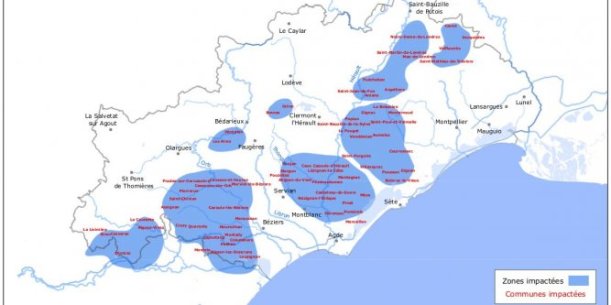
As average temperatures rise seemingly year on year and water shortages occur more frequently in the Languedoc and other regions then viticulteurs face the problem that traditional grape varieties ripen earlier and earlier and struggle in drought conditions such as those shown in the map below indicating ’emergency’ zones in summer 2017.

en-bleu-les-zones-touchees-en-rouge-les-communes-touchees_2371463_667x333

The researchers, such as Elizabeth Wolkovich from the Harvard University Centre for the Environment, suggest that testing different grape varieties will be necessary. At present many of the world’s leading wine producing countries are dominated by 12 ‘international varieties’ such as Cabernet Sauvignon, Merlot, Chardonnay, Sauvignon Blanc, Syrah, Riesling and Pinot Noir.* The list at the bottom of the page shows how much these vineyards are dominated by the international varieties.

France is more varied with 43.5% planted with these grapes (though 85% under the top 20 grapes). Altogether more than 300 grape varieties are planted around France. Organisations promoting rare and forgotten grapes, eg Wine Mosaic, are gaining traction and the researchers believe that by finding grapes with longer growing seasons and later ripening then regions badly affected by climate change might find ways to preserve their vineyards and traditions.

Labelled

I have reported many times how Jeff Coutelou has been planting many different cépages. He believes that not only do they provide variety in the vineyard and bottle but that the mix of different grapes in vineyards helps to prevent disease spreading. Castets, Piquepoul Noir, Terret Blanc, Morastel, and even an Inconnue (unknown) are grapes planted int he last few years and he is looking at others such as Picardan which is related to Clairette and Mauzac. Great wines such as Flower Power have resulted from these plantings, more will follow.

This is the way forward, experimenting to find grapes which make good quality wine and which can stand the climatic changes which we face.


* % area of vineyards under the 12 varieties

China – 93 (almost 75% Cabernet Sauvignon)

New Zealand 91.6

Australia 84.5

Chile 77.6

USA 70


2 Comments

My wines of 2017

Sparkling

I was fortunate to taste many excellent sparkling wines this year. Excellent PetNats such as Éxilé from Domaine Jousset in the Loire, Jeff’s Bibonade rosé and the excellent Restons Nature from Kumpf et Meyer in Alsace. However, I have to admit that champagne always comes out as my favourite sparkling wine. From Boulard, Pascal, Jacquesson and others I was able to appreciate some lovely wines.

Top of my class this year though was Jacques Lassaigne, who I was very happy to meet at Chai Christine Cannac in Bédarieux. His vintage 2008 was sheer delight, a top class champagne with freshness, complexity and sheer pleasure.

White

So many good white wines this year. The unexpectedly good Georgian amphora wine from Marks and Spencer was a late favourite. Alexandre Bain’s excellent Pouilly Fumés are always a joy, especially Pierre Précieuse 2015, proving that Sauvignon Blanc can be a wine of true quality. Okanagan Crush Pad from Canada was another source of excellent Sauvignon Blanc, Free Form 2015 which had nine months of skin contact. Austria provided many highlights, the wines of the Rennersistas, Koppitsch, Gut Oggau, Meinklang and the brilliant Andreas Tscheppe.

Alsace, however, was the star of the year. I visited the region in May and had the great pleasure to spend time with the inspirational Patrick Meyer and the rising star Julien Albertus. The quality of wines, typicity of grape, freshness and pleasure provided were remarkable. Patrick’s wines astonished me, even many days after opening they were precise, fresh and stunning.

Special mention to the orange wine from Languedoc producers Régis and Christine Pichon of Domaine Ribiera, Orange sur les Canilles a wine which more than any other persuaded me of the benefit of skin contact wines.

20170625_130223

Red

From the Languedoc Maxime Magnon’s Métisse 2016 readily springs to mind along with some older vintages of Barral’s Faugères. Olivier Cohen and Mas D’Alezon were other Languedoc producers whose wines I enjoyed.

Italy’s I Mandorli and Azienda Vitivinicola Selve made an impact at RAW in London. I enjoyed the Pinot Noirs from the aforementioned Patrick Meyer and Julien Albertus. This was a year when white wine provided most of the memorable moments however. Highlight of reds will be described in the next post.

Sweet and fortified

A lovely Banyuls Cuvée Méditeranée 2005 from Piétri-Géraud was a highlight but the most memorable was the 1959 Muscat De Frontignan which Jeff opened for me on my birthday. Not often you get to drink a wine from your birth year, especially as the years slip by! It was sticky, sweet and very rich, a real taste of history.


4 Comments

Reading

Version francaise

I may be away from the action of the Coutelou vineyards but my fascination with wine, and particularly natural wine, continues to grow. I have recently read two things which I thought were worth sharing on here.

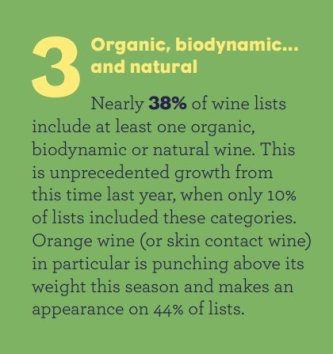
Firstly from Bibendum came this piece of information about the UK.

bibendum report

This growth of interest in natural wines is, of course, very pleasing to me, a long time advocate of the style. Not all these wines are natural but the interest in this sector shows a shift in demand and, also, realisation from merchants that the demand is there.

Caveat emptor! Not all wines labelled as ‘natural’ are that, a consequence of the lack of regulation. In particular beware high street retailers with wines from big companies. Artisans who practice natural methods in the vineyard and cellar are what matter to me. To identify such producers you could do worse than look at the website ‘vinsnaturels’ which is in French and English. The app Raisin is another useful way to locate producers and retailers.

1

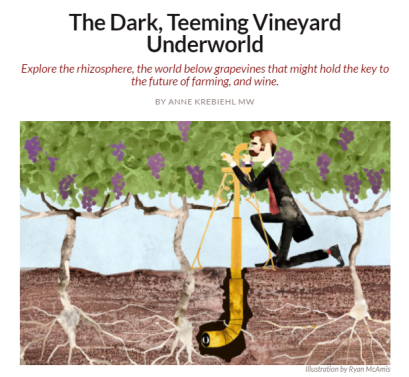
The most interesting article I have read though was from The Wine Enthusiast, written by Anne Krebiehl MW. In it she describes what we are learning about soils and the life which is in there. The rhizosphere is the soil immediately surrounding the vine roots and research is revealing the microbial and fungal life in there. This is something which Jeff has described to me over the years and it is fascinating to look at soils with small white fungal fibres which form a network around the vines, supporting them with nutrition and chemicals whilst benefiting themselves from the vines in a symbiotic relationship. Encouraging life in the soils is, therefore, hugely important; reducing their compaction from tractors etc as much as possible, composting them, avoiding chemicals where possible.

Mycorrhizae in Rome vineyard

There is much research still to be done and we are in the early days of understanding how the soils influence the vine and, consequently, the wine. However, early research supports the careful management of soils and vines by vignerons such as Jeff Coutelou. Respect the environment, encourage life. As he said after the recent damage done to his vineyards the best response is to plant. Trees, bushes, flowers, any plants. Encourage ecosystems and they will repay our guardianship.


Leave a comment

In Laudem

IMG_0879

Version francaise

In typically moderate and generous fashion Jeff Coutelou’s response to the vandalism on his vineyard was to remind us of his philosophy for viticulture.

He reminded us that generations of vignerons, as with agriculture in general, were persuaded that mass production aided by mechanisation, chemical fertilisers was the way forward. Grubbing up hedgerows and trees to create space for more vines would boost production and income. Irrigation by water from the Rhone was just the latest of these modernisations.

The consequences have shown how those generations were misled. Compacted soils with little or no life in them, falling numbers of birds and insects, diseases spread through waves of monoculture, vines hooked on fertilisers to keep production high.

In 1987 when Jean-Claude Coutelou made the leap to organic viticulture there were only 200ha of organic vines in the Hérault. Now there are 20,000ha. A tide has turned but it is not easy for everyone to accept that mistakes were made. Those who have returned to traditional methods, planting hedges, bushes, flowers and trees for diversity are, ironically, viewed with suspicion. The birds, bats and insects which shelter there help to fight disease. Thirty years of organic practice make for soils rich with life. And yet some don’t get it.

It is a privilege to stand in Rome vineyard in Spring, listening to the birdsong, bees and cicadas, watching the butterflies and bats, enjoying the colours of the flowers. Knowing that this rich diversity helps the vines makes it even more special. It is the right path aesthetically, morally but, crucially, for the wines too. Nature wins and benefits us as all.

So, Jeff is right. I stand with him.


Leave a comment

Rare grapes and Vin De France

Version francaise

thumbnail

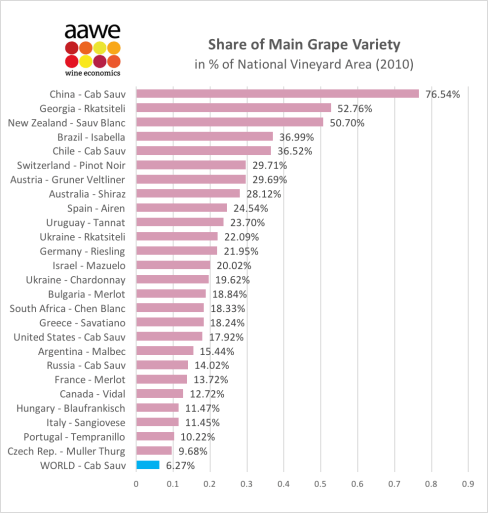
This chart was published two weeks ago even though the information refers to 2010. I found it fascinating (I am a sad case I understand). Some of the information would be expected, New Zealand with its Sauvignon Blanc for example, Australia with its Shiraz. I was rather surprised to see Merlot as 13.7% of the French vineyard area however. Admittedly this is partly because it is one of my least favourite grape varieties, though, as always, fine examples are available from good vignerons.

Merlot, like Cabernet Sauvignon, Chardonnay and Viognier, were in vogue in the 80s and 90s when I became interested in wine. Languedoc producers reacted to this popularity by planting these cépages, it was commercial sense. One of those producers was Jean-Claude Coutelou and Mas Coutelou still has his Cabernet and Merlot parcels.

However, one of the more recent trends in the region has been the revival of older and rare grape varieties. At Mas Coutelou Jeff has planted grapes such as Riveyrenc Noir, Riveyrenc Gris, Morastel, Piquepoul Noir and Terret Noir in Peilhan (see photos below).

Earlier this year Jeff received a visit from Domaine De Vassal, guardian of the national treasury of grape vines. They record and keep examples all grape varieties as I described after a visit to Vassal. On this occasion they were intrigued by two vines in particular; firstly Clairette Musquée, planted in Peilhan and, secondly, the unknown variety in Segrairals. These are just part of the programme of replanting and grafting which has taken place at Mas Coutelou. The photos below show grafting of other cépages in Flower Power such as Aramon Noir and one unknown variety.

After months of research the experts at Vassal have concluded that Clairette Musquée has its origins in Hungary where it was known as Org Tokosi. It was planted in the Maghreb and after Algerian independence it was probably brought to France by those who repatriated to France.

The unnown variety turns out to be an Italian cépage, quite rare, called Delizia Di Vaprio. This is, according to my copy of Pierre Galet’s “Dictionnaire Encyclopédique des Cépages”, a grape authorised in Italy and Portugal. Under the rules of France’s AOC system it would not be allowed. Jeff, however, chooses to issue his wines under the Vin De France label which means he is free to choose his own methods and grape varieties. Whereas a Languedoc AOC wine must include grapes such as Syrah and Grenache Jeff can choose what to put in his wines including wines from just one grape variety. It also means he can plant these rare grapes and make wines from them which he truly loves and wants to make.

whites

Interestingly one AOC, Burgundy, is starting to show signs of concern that Vin De France is becoming more popular. They have started a campaign criticising Vin de France. To my mind they should be looking to their own failings and regulations. For example, as climate change bites harder vignerons will have to adapt, investigating different grape varieties will be part of that.

So, yes Merlot has its place (and thrives in the Colombié vineyard in Puimisson) but is it not exciting to see rare, old, traditional grapes being cherished and brought back to prominence? Let us appreciate the range and variety of grapes and the vignerons who bring out their best.

reds


Leave a comment

Every Picture Tells A Story (2) – Terroir

P1030219

Version francaise

This is one corner of Segrairals vineyard, found in the North East corner of Puimisson. I took the photo on October 6th and it clearly shows a demarcation in this part of the vineyard. The far side of it still has green vines, further towards me the vines are changing colour as Autumn arrives. Why are the vines at different stages of development? Even a month before on September 7th there was a clear line.

P1020938

The reason is that a stream used to run down here many years ago. Its legacy is to have left richer soil behind in the corner where the cannes de Provence now stand. The vines planted on that richer soil find life easier than their peers. They remain greener, feed their grapes more easily. All good?

Well, no. The grapes can be too well fed, ripen earlier than their neighbours, become too sweetened. They will also begin to deteriorate earlier if not picked. So, in one small corner of one vineyard we see how the terroir makes a difference to the vines. We see how a vigneron must know his / her vines to ensure that the highest quality is maintained. The vigneron is part of the whole mystique of terroir and it is a subject to which I shall be turning soon.