I have updated other pages on the site and urge you to have a look there by clicking the links at the top of the page.
On the Out and About page there are lots of photos of Spring here in the Languedoc and on a stay in Provence.
The moon over the arenas of Arles
On the Tasting page I have 3 updates of exciting wines tasted in Pézenas, Arles and Bédarieux. Some of my favourite ever wines and some wonderful people too.
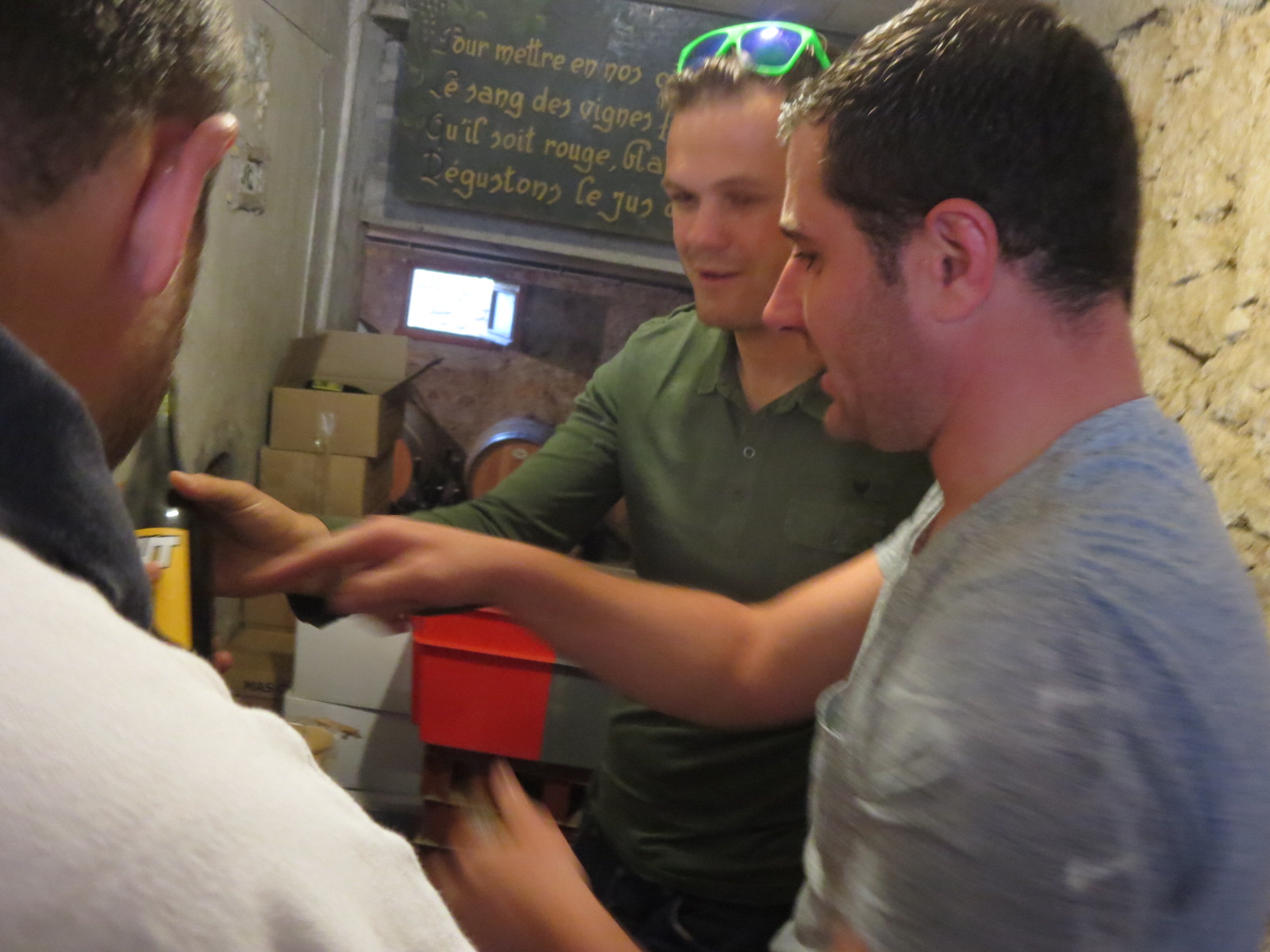
Well today it was time for the Rugbymans to return and bottle their wine. Fresh from celebrating the victory of Béziers in the local derby against Narbonne, they were eager to make their cuvée. Well maybe not so fresh after last night’s celebrations.
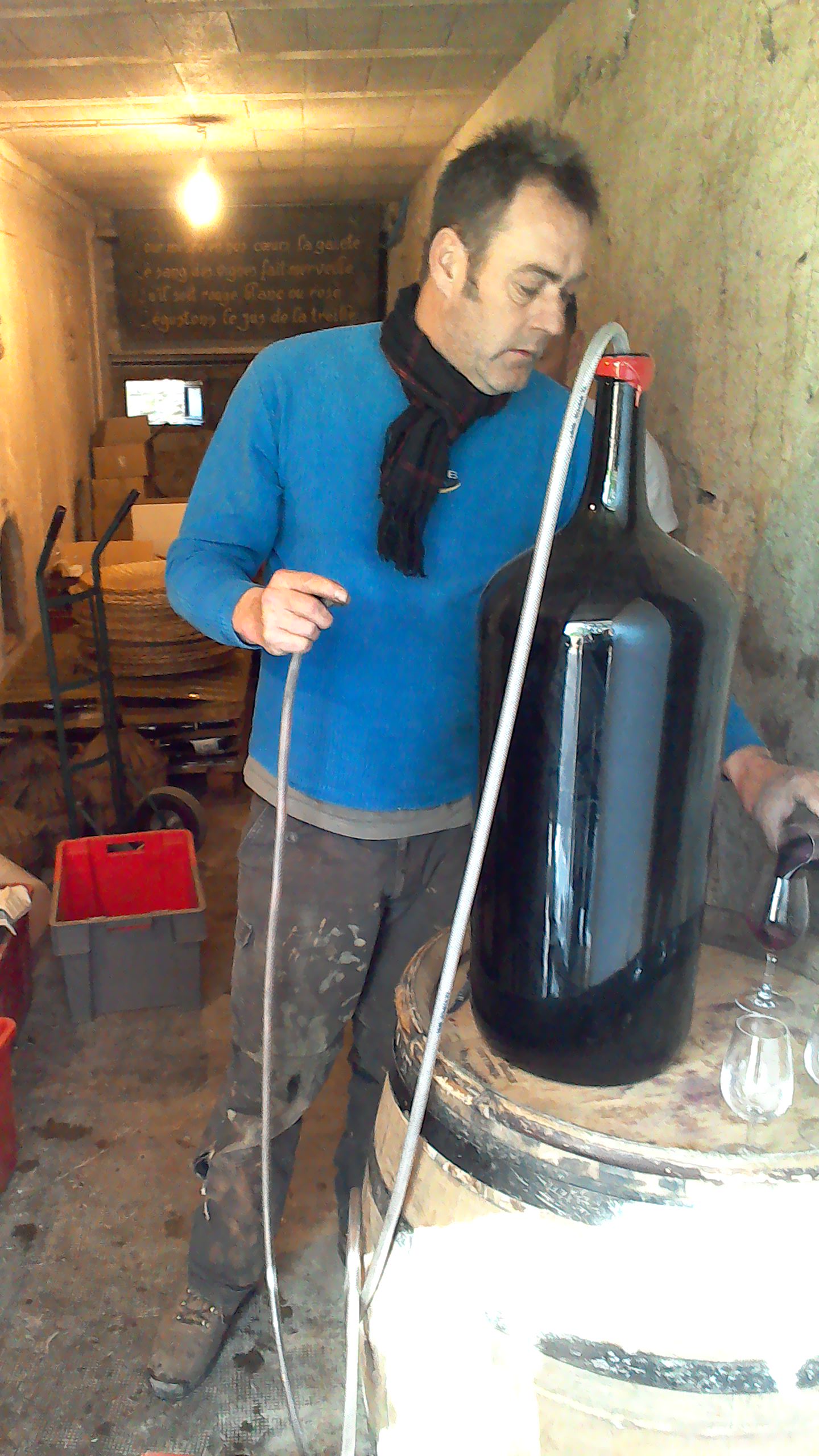
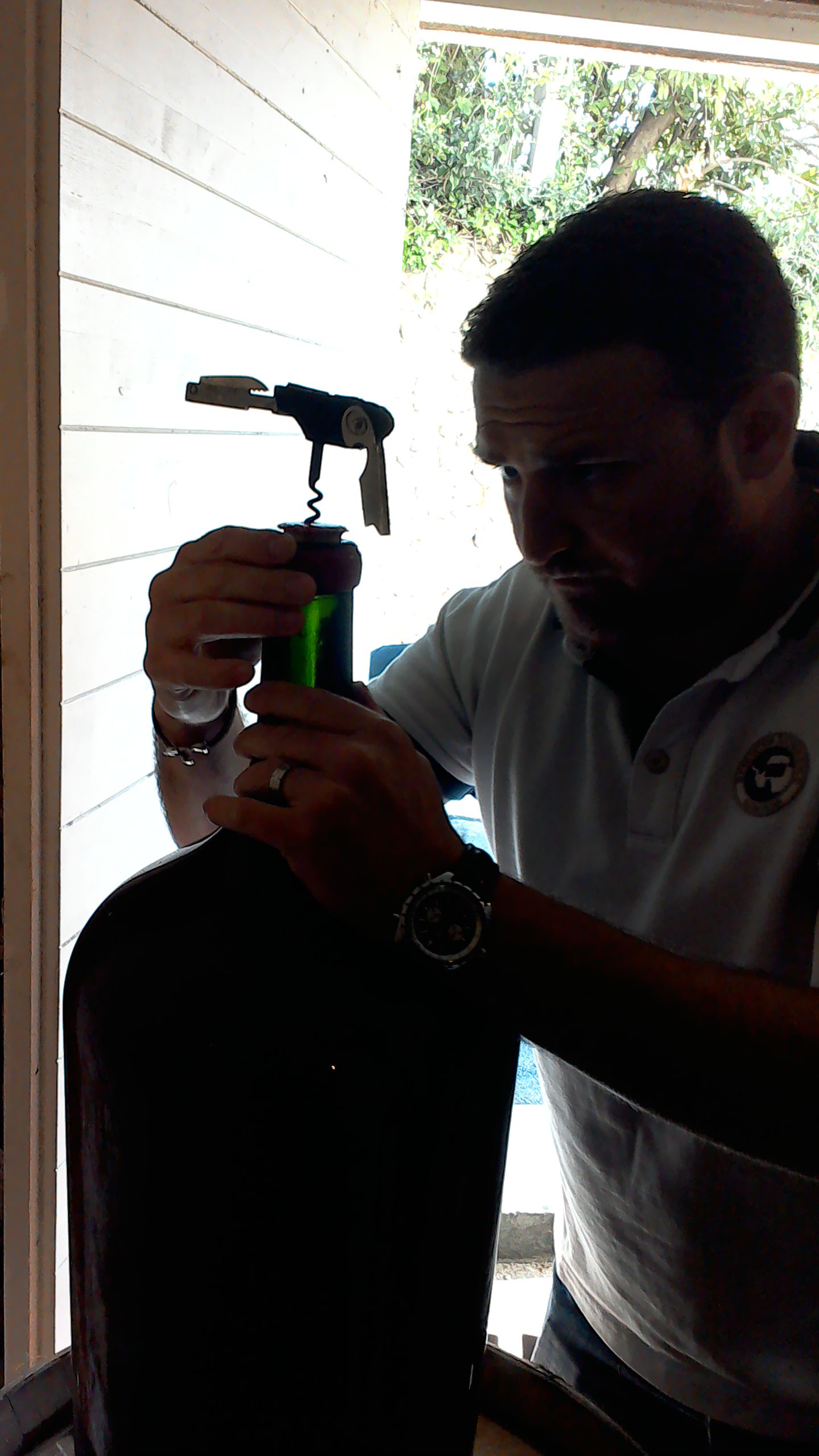
First Jeff had to open the large bottles and suction the wine.
Jeff demonstrates
The men quickly chose their roles and set to work. Jeff explained, they followed on.
Of course the quality has to be checked.
Corking the bottle by hand requires the strength of, well, a Rugbyman!
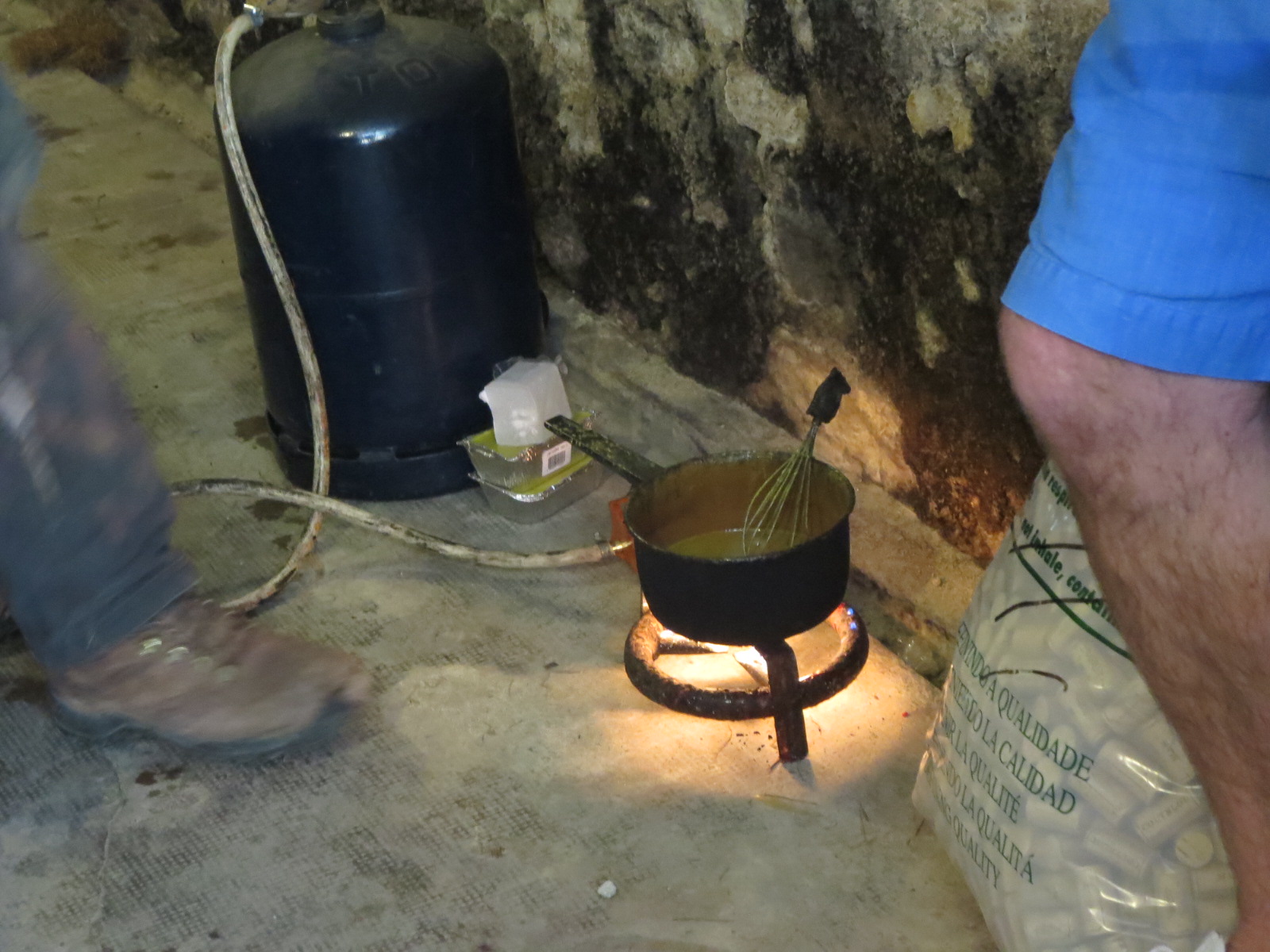
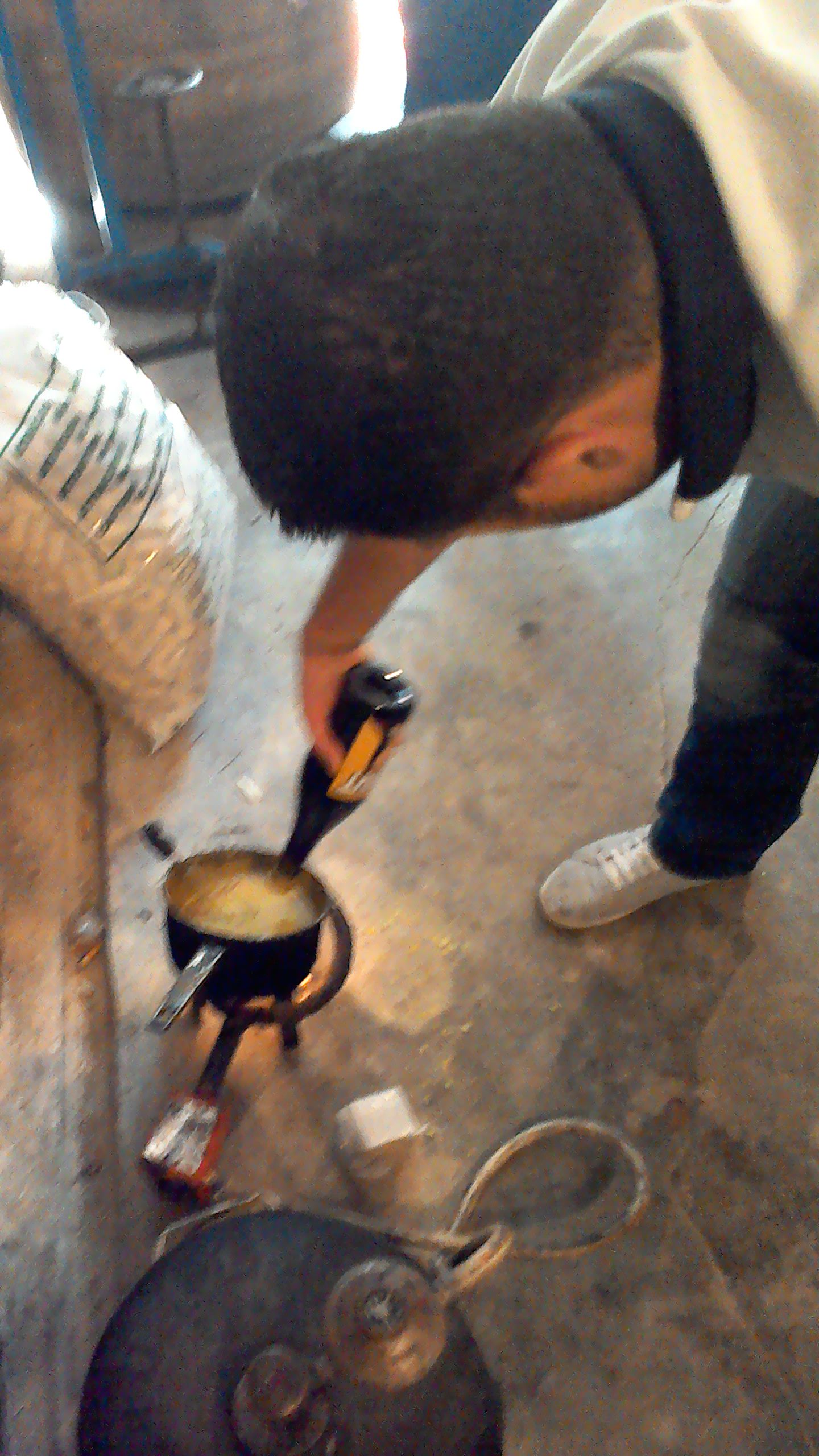
The bottles were to be sealed with wax, the way it used to be done and some cuvées still are at Mas Coutelou.
Heating the wax
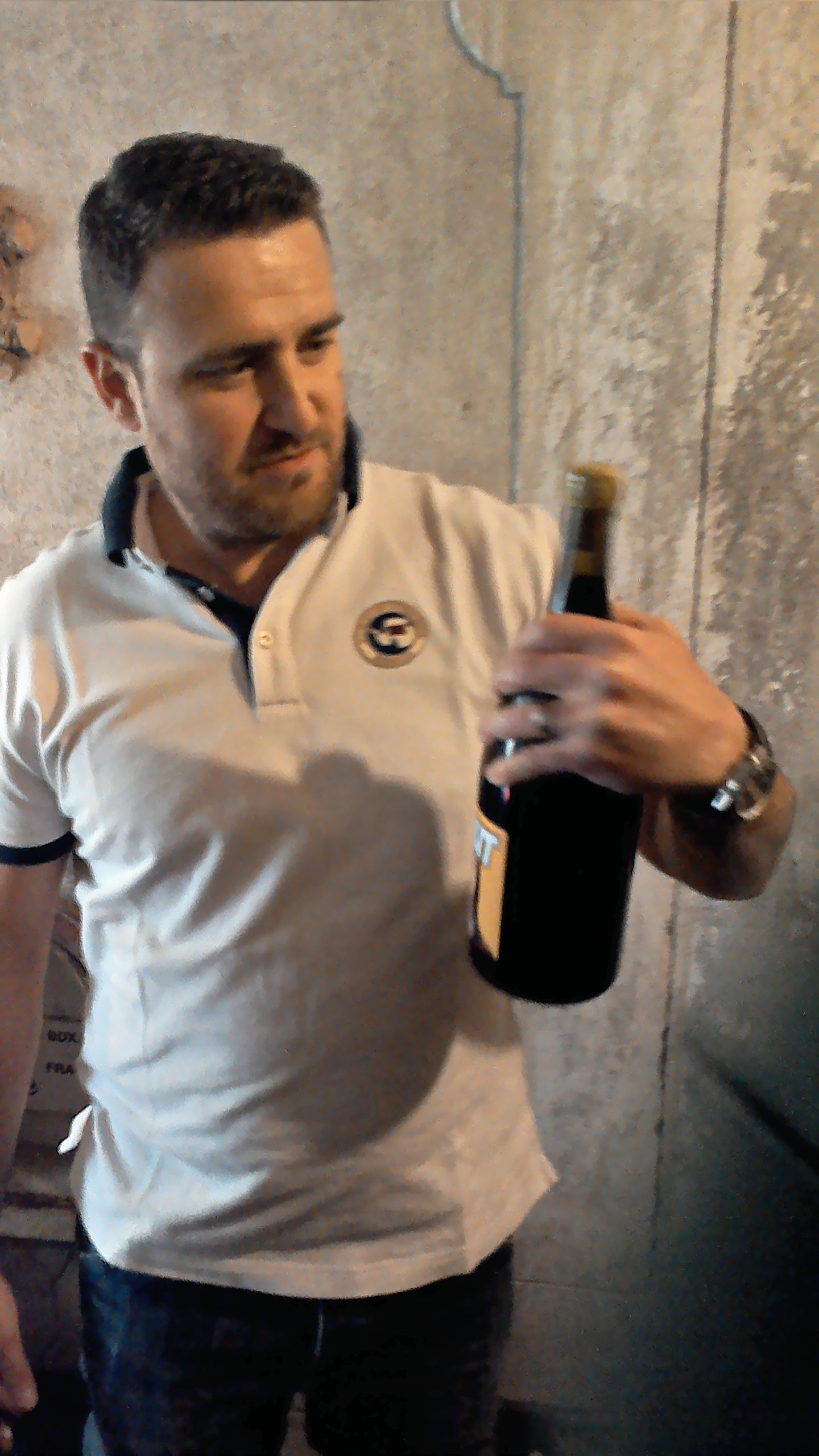
Quality control
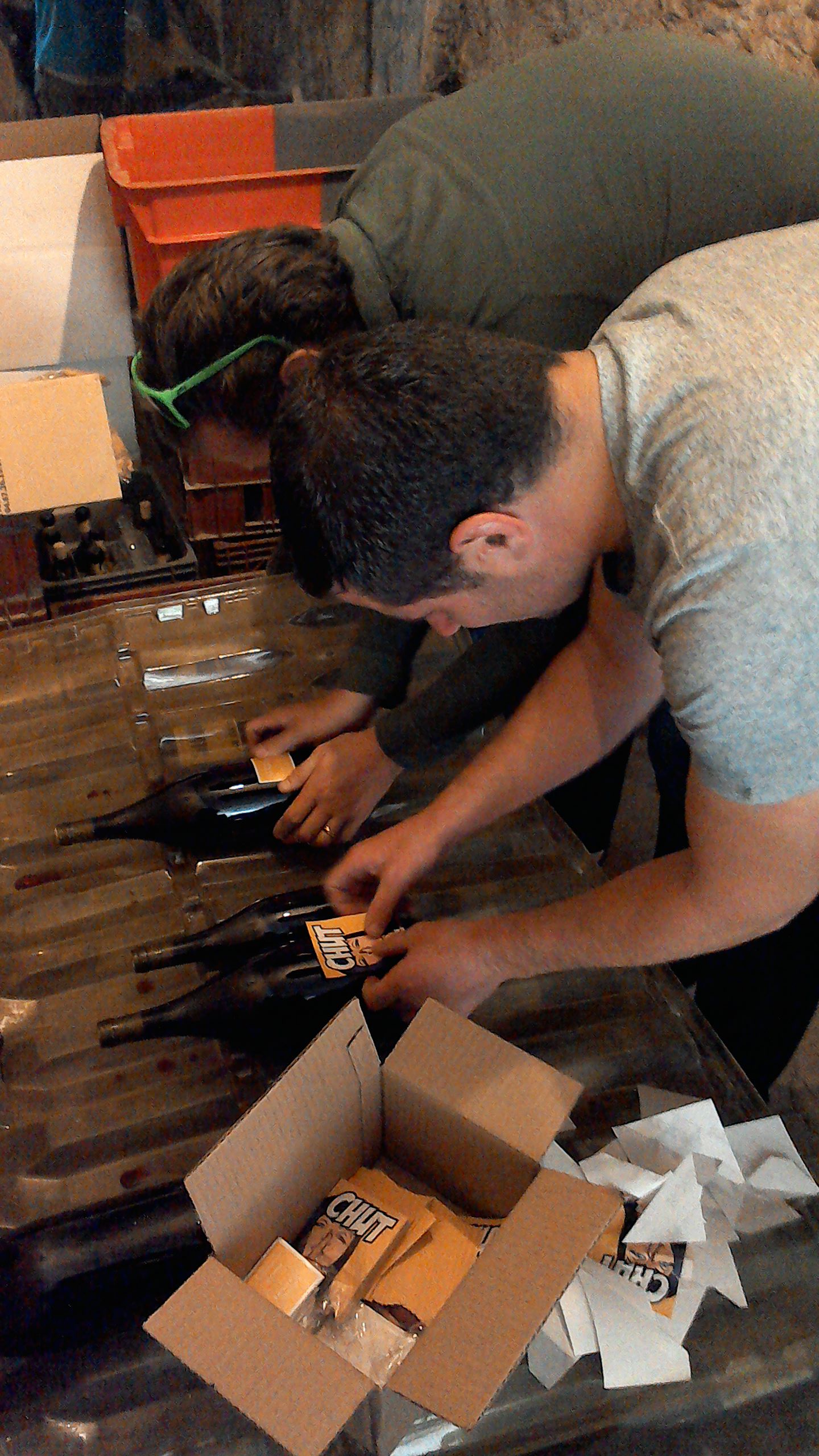
The bottles were labelled with their specially designed étiquette and the name chosen by the Rugbymans, Chut. The back label is the photo at the top.
Onto the second bottle!
As always the Rugbymans are great fun to be around, the jokes run as freely as the wine. So, Chut, a collector’s item. Definitely a bottle that belongs in the best of cellars.
I wrote in my last post how, whilst some vineyards in the area were showing plenty of leaves and buds were opening, those of Mas Coutelou were more reticent. Well a visit to Peilhan and La Garrigue vineyards today showed that spring has arrived. Buds are opening, leaves are forming. Even the snails were heading for the foliage, this one had its photo taken and then was removed.
What struck me though was the variation in development of the vines. Some were still dormant, others were showing leaves, most were in between with buds just opening.
This is partly due to the cépage as some are more precocious than others, often white varieties.
The photo above shows a Sauvignon Blanc vine and as you can see it has leaves which are well developed but also flowers already out. Yet vines in the next row were still hardly budding. This was a clear example of how the position of the vine makes a difference, the vine above was on the side of the vineyard (La Garrigue) facing south west, therefore in full sunshine more than other vines. Indeed I was taken aback to see this.
In the centre of the leaf you will see the formation of a grappe, the future bunch of grapes. Whilst other vines are still asleep!
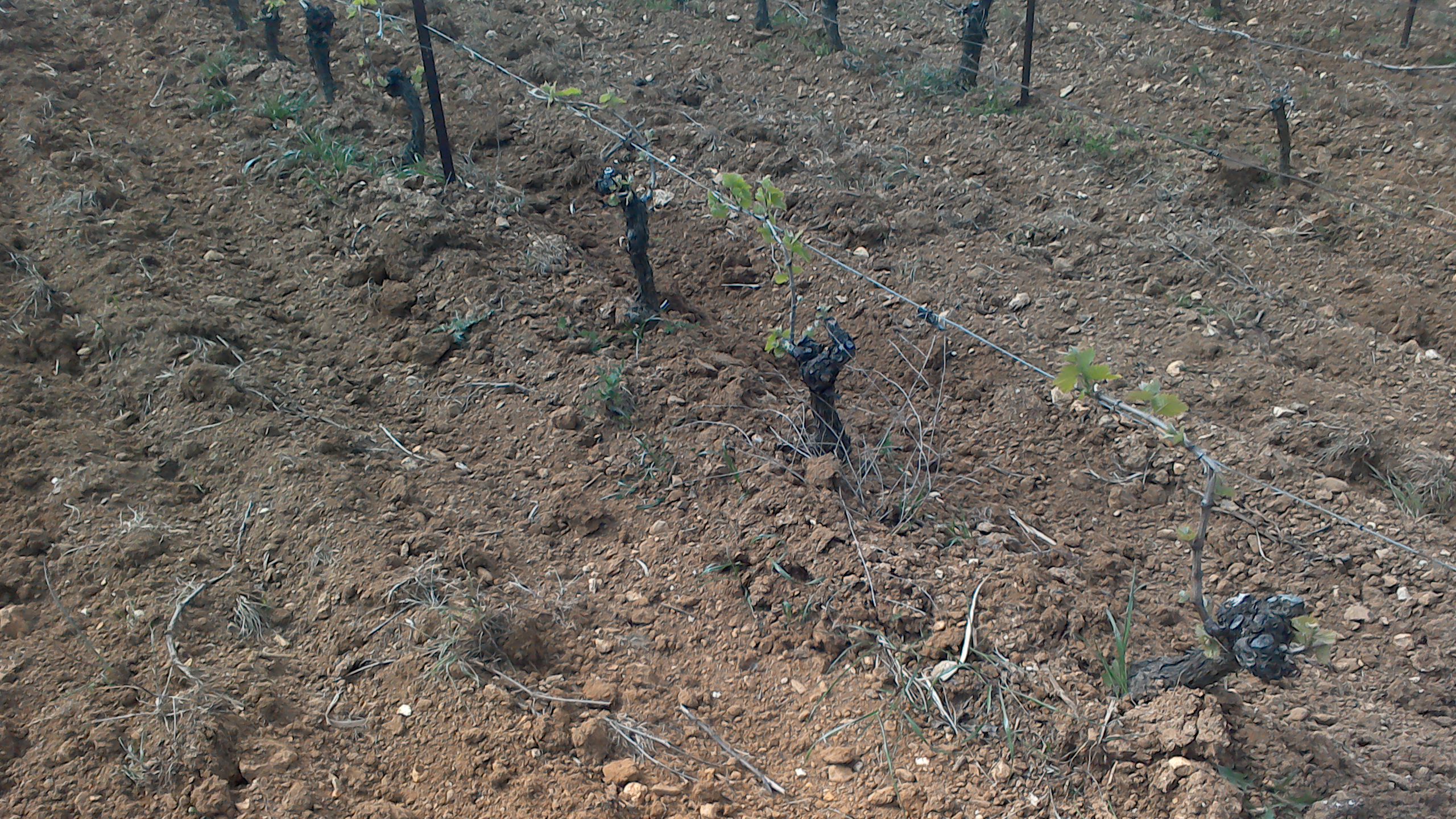
In the new plantation at Peilhan the wax protection on some of the vines is giving way as these babies begin to grow. Though of course they are many years from providing grapes for wine, it was quite something to see them begin their life. This was a Ribeyrenc Gris vine.
The region has had a relatively cool Spring by all accounts (though those of us used to NE England might be surprised to hear it). It has been dry and sunny but strong winds for many weeks have kept down temperatures and dried the soil quickly. This helps to explain why the vines have been slow to start their growth this year.
Moreover, the local newspaper, Midi Libre, today carried a warning story. In the Aude, western Languedoc, Monday and Tuesday brought frosts at night which have damaged many vines which had begun their growth. This is the risk which vignerons face and why they remain nervous about the weather. Traditionally mid May is the time when the risk of frost is past, the saints de glace as those days are known. So fingers crossed, some warm nights and a bit of rain would be very welcome.
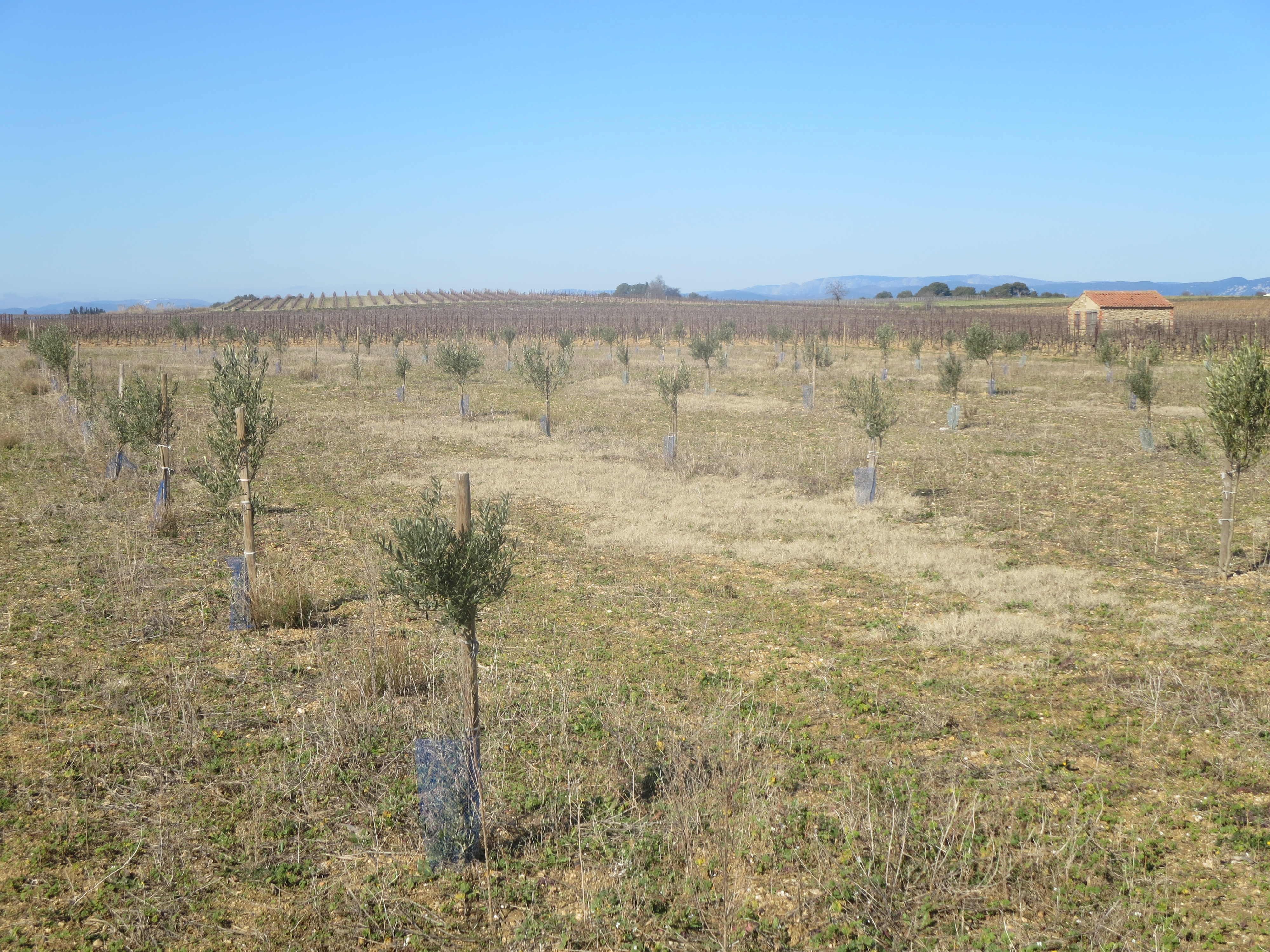
After all the diversions around Languedoc Roussillon with my 7Cs it’s time to refocus on the vineyards of Mas Coutelou. March was a warm month and other than a couple of rainy days it was fairly dry which together with regular strong winds meant that the soils themselves became quite dry. Certainly Jeff reported that his olive trees, of which there are many (see vineyard portrait), were showing some signs of stress. They too were pruned this month.
New olive plantation in Rec d’ Oulette
La Prairie olive plantation
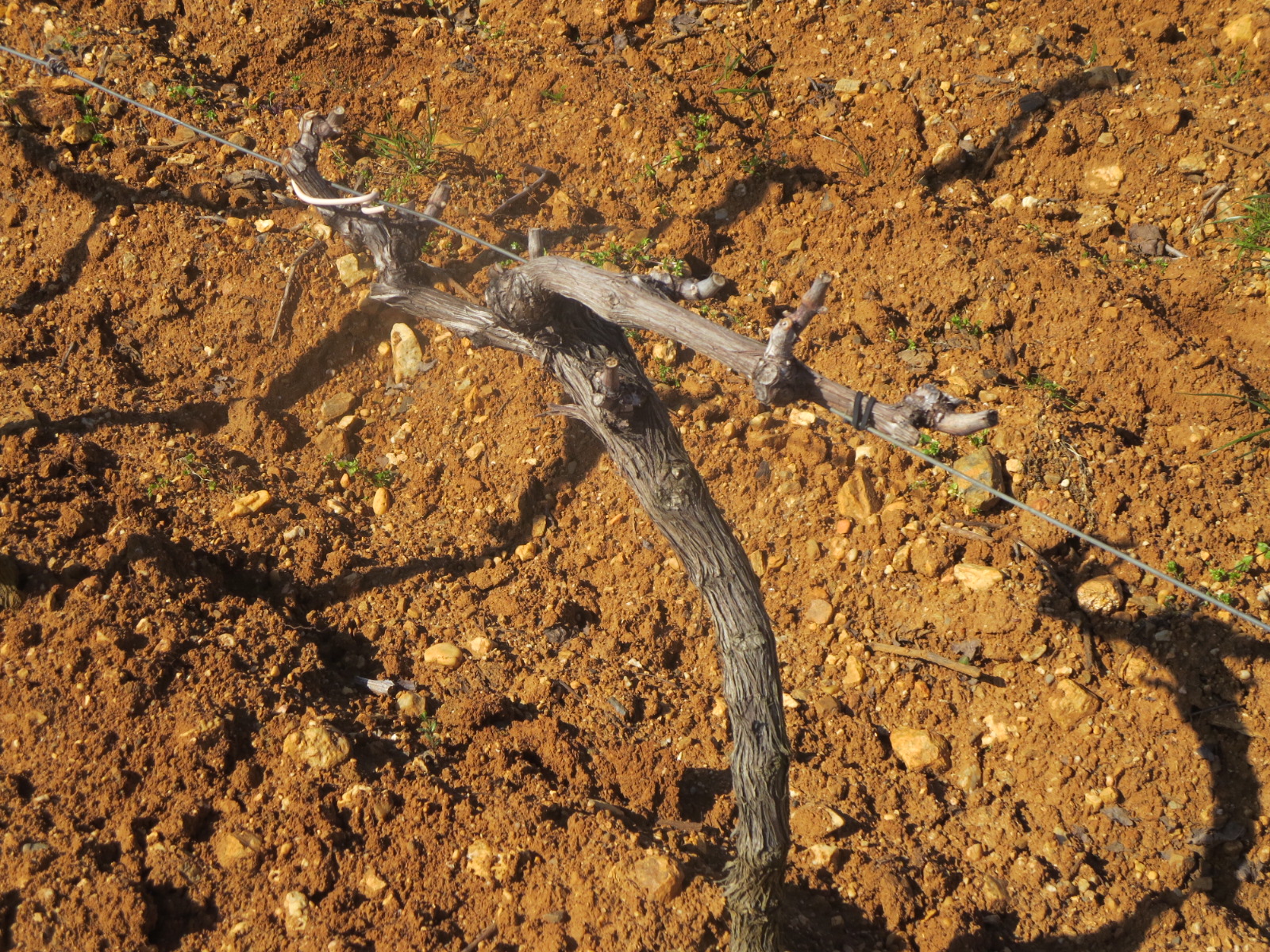
After more than two months of back breaking work Carole completed la taille. It says so much for her skills and hard work that her meticulous pruning was finished early. She chose to leave the lovely gobelet vines of Rome vineyard until last as, like me, it is her favourite parcel. See her at work here.
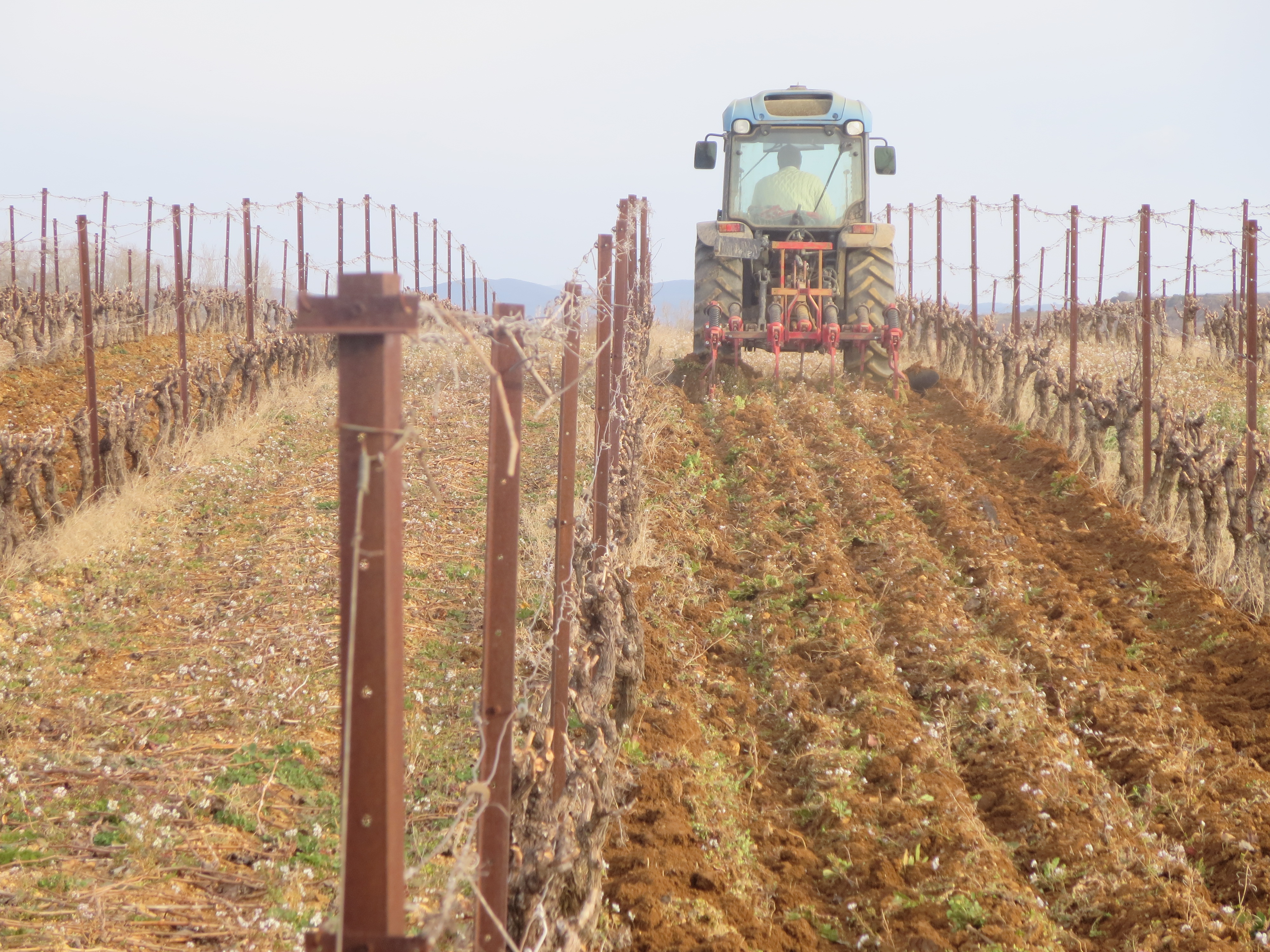
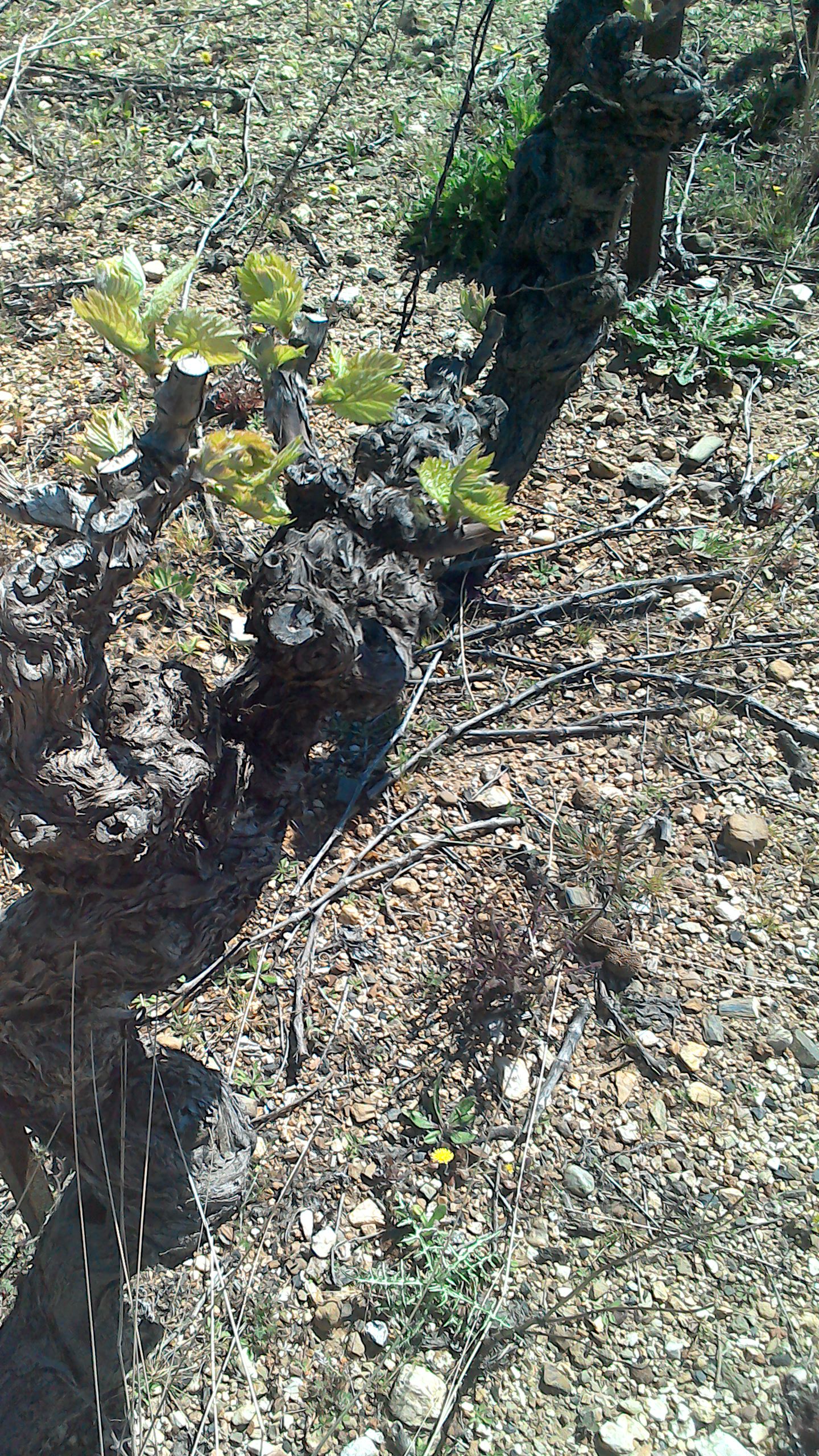
I have already written about some of the other March tasks in planting old varieties of grapes in Peilhan vineyard and in bottling some of the lighter cuvées such as PM rosé and 5SO. Note that light is a general comparative term, both wines are on top form. A number of wine salons were attended, eg in the Loire and recently in Arles, a tasting I shall be writing about soon. A second ploughing has been taking place the last few days as the drier weather allowed easier churning and less risk of compacting the soil. In many parts of the Languedoc the vines are starting to debud, the leaves are showing through. It is a beautiful sight to see them shooting away like this, life returning to the vineyards and the promise of a great vintage ahead. Fingers crossed.
Some buds on a guyot trained vine are just about to burst out.
First leaves on this old vine
Margon vineyard with leaves emerging
In Puimisson however, the vines are just being a little more timid, apparently unconvinced that winter is not still holding a surprise in store.
Shy Syrah vine in La Garrigue
Syrah parcel of La Garrigue
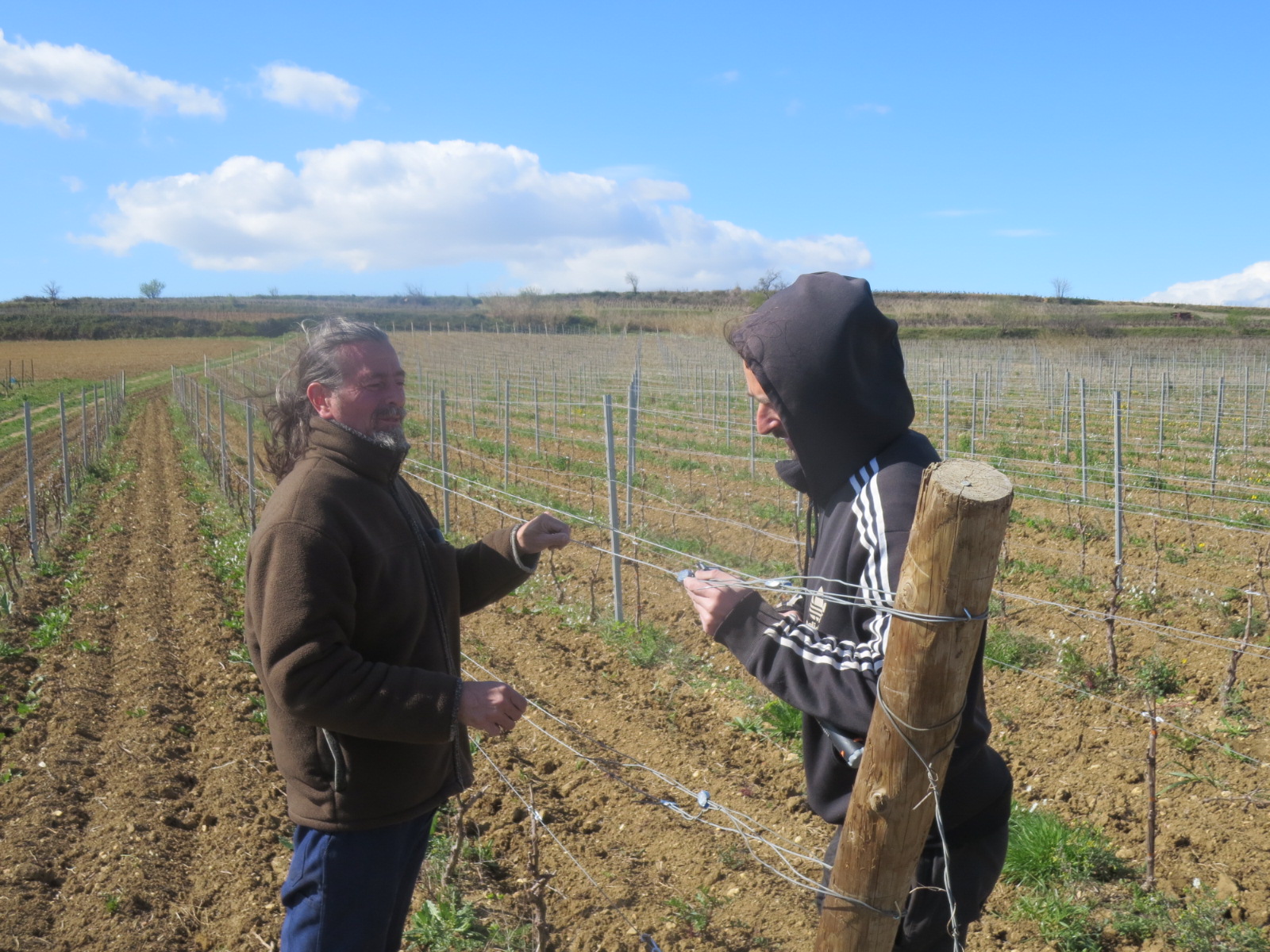
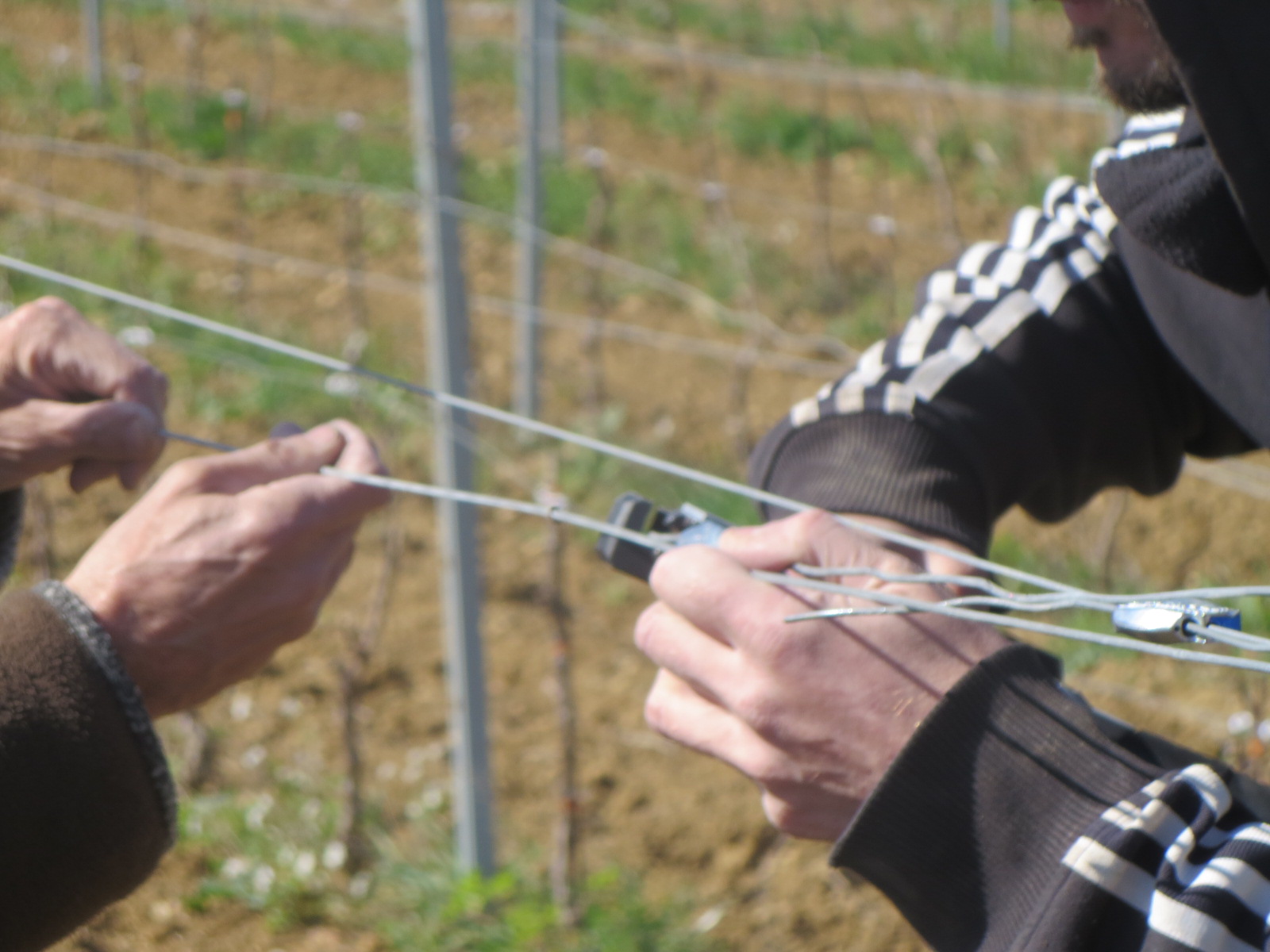
The other major task for March has been the preparation of the palissage, the wires which are used to support the vines as they grow later in the year. Gobelet vines are usually self supporting but many of the Syrah vines you see in the photographs above are cordon trained and will grow up the wires. The weight of last year’s vines and the passage of winter means that the wires are sagging a little and need to be tightened for 2015. Michel and Renaud have been tackling this using a specialist tool but, believe me, this was hard work and happily I left them to it.
Instead I enjoyed the wine tasting. Well it was March!
Since moving down to Margon it has been evident to me that many of my favourite bottles have been based around Carignan. A variety which received so much scorn for many years is now fighting back. The excellent wine writer Michel Smith has been in the vanguard by writing a series of articles called Carignan Story on the les5duvin blog, championing the variety and the people who produce great bottles of it. Moreover he is producing some himself in the Roussillon. (The blog is a must follow incidentally).
I shall start with Mas Coutelou this time as Flambadou is the star of the 2013 vintage at the domaine and is a wine which ages brilliantly as a memorable 2007 testified during a vendange lunchtime. If you opened the link to Michel’s Carignan Story you will have already seen his support for this wine too.
Jeff himself rates Cyril Fahl’s Clos du Rouge Gorge as one of the outstanding Carignan wines and based on my tasting in November (see Day 5) I would not argue. Domaine d’Aupilhac in Montperoux is another which has championed Carignan, blended in some cuvées or on its own in Le Cargnan which is a lovely wine showing the leathery, dark fruit flavours of the grape.
I must mention the wine ‘Les vignes qu’on abat’ of Domaine La Marféeproduced in Murviel lès Montpellier, a deep, dark joyful wine which needs a little patience in cellaring.
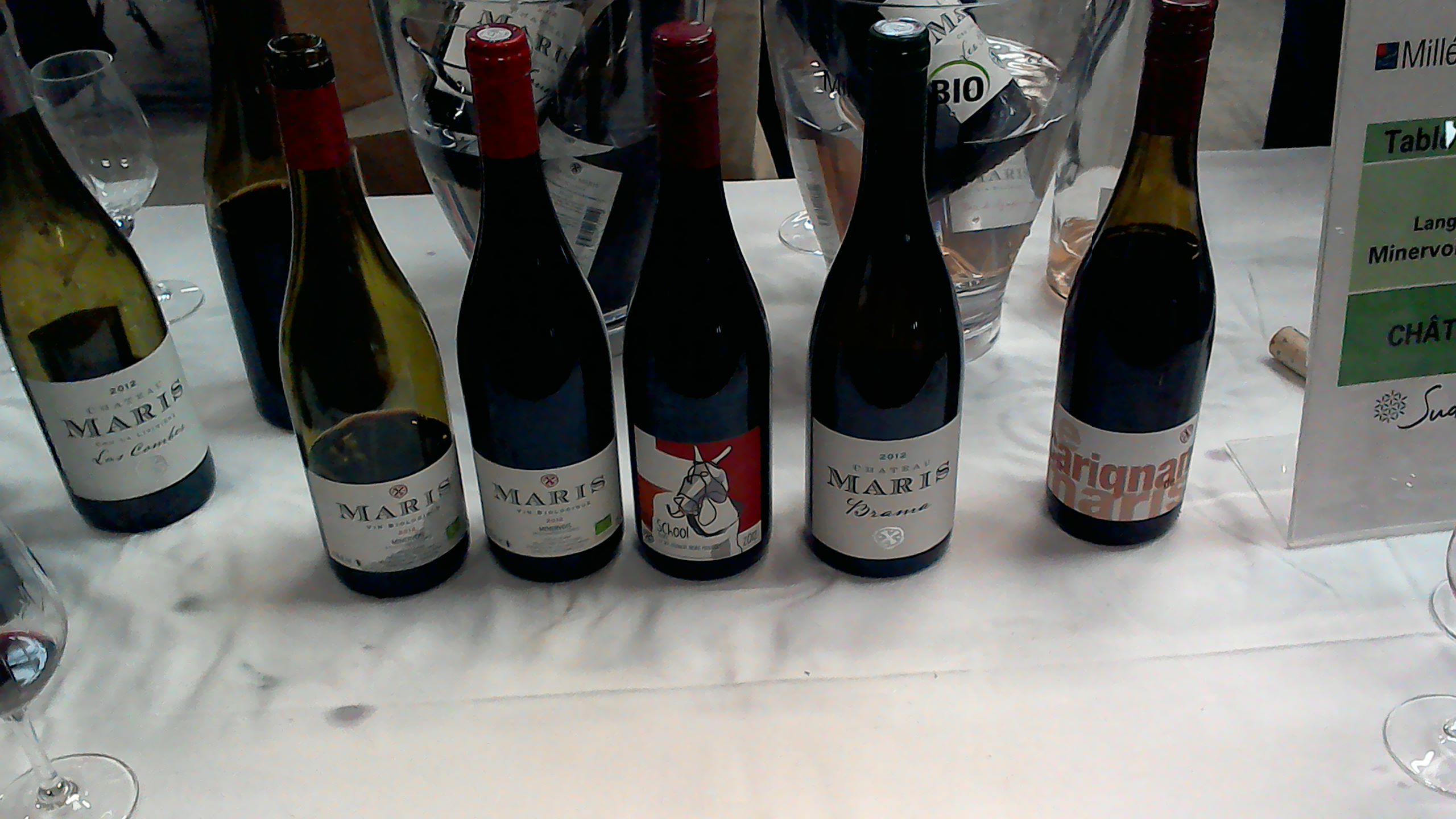
Other lovely Carignan bottles tasted include Cébene‘s Belle Lurette and Treloar‘s Le Maudit, plus the cuvées Les Premiers Pas and Fontanilles from Les 2 Anes. Domaine Sainte Croix (see Corbieres, Day 3) produces a couple of Carignan – led wines Magneric and Le Carignan, both express the wild garrigue of the Corbieres hillsides, lovely wines. In the Minervois, Chateau Maris also produces lovely Carignans such as Anciens and (again) Le Carignan.
Finally, I should mention a domaine close to me in Gabian, Cadablès run by Bernard Isarn is starting to produce some really good wines not least the Carignan led Champ de Pierres.
These are all wines I would heartily recommend, but that’s not the end of the story.
Carignan Blanc is fairly unsual in the region but two of my favourite white wines come from this grape and both from Caux where we started. Mas Gabriel‘s Clos Des Papillons is dry, fruity and clean, with a rich texture that fills the mouth, simply delicious. Le Conte De Floris produces Lune Blanche which is just as good and I was happy to find some bottles in the wine bar in Pézenas recently. So Carignan, red and white, is a variety to investigate. Dare I mention that Jeff produces another very good example of Carignan Blanc? Well I did leave him out of my 7Cs so I think it’s only fair.
So those are my 7Cs, villages, areas and grapes which are all a source of great wine pleasure. I could have added more with St Chinian as just one example. Proof that Languedoc Roussillon is a region of great variety, a region of great excitement as winemakers rediscover and redevelop the character of wine in this fabulous part of France. Any feedback is always welcome.
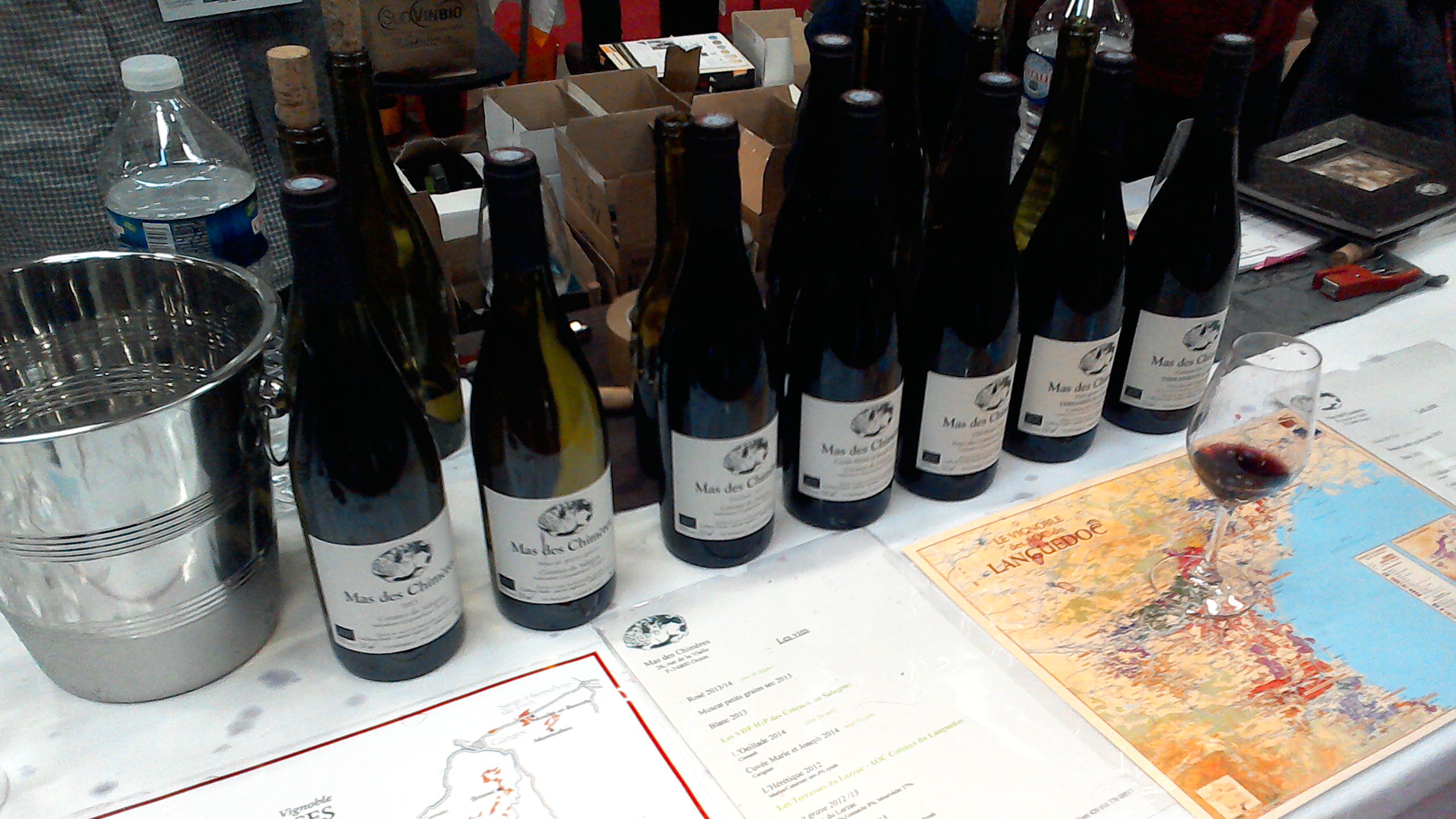
Four or five years ago I drank a bottle of ‘L’Oeillade’ of Mas Des Chimeres, a domaine near Lac Salagou. Oeillade is a local name for Cinsault (possibly a forerunner of Cinsault) and the wine is a light, dangerously gluggable red which was an excellent wine for the summer when I drank it. That makes the wine sound simple but it has complexity too. Incidentally, I tasted the Chimeres range at Millésime Bio and enjoyed them a great deal. Look out for Domaine La Fontude in the same area which is also making lovely wines including Cinsault.
Mas De Chimeres range including L’Oeillade
That Cinsault wine surprised me as I associated the grape with rosé wines and indeed that is how most winemakers use it in the region. However, since then I have come across more red Cinsault bottles which have excited me. Les Chemins De Traverse is produced by La Baronne in Corbieres (see Day 3) whilst L’Oiselet is a lovely wine made by Yannick Pelletier in the St Chinian area. Incidentally all of Yannick’s wines are absolutely terrific. Truly a viticulteur to look out for and buy if possible, you would not regret it. Just today (March 30th) I also tasted a really good Cinsault from Julien Peyras called ‘Gourmandise’, part of another excellent range of wines, again look out for him.
All of these Cinsaults are deceptively easy to drink but have complexity too.
I must also add two Cinsaults produced by Mas Coutelou. 5SO is a light version ready for drinking and delicious it is too, including the newly bottled 2014 which I can confirm is excellent.
Then there is Copains a Cinsault which is again apparently easy to drink but carries real weight and will be at its best in years to come, and if you think I might be being biased read this review from the excellent blog by David Farge (Abistodenas).
Cinsault is a variety enjoying a renaissance as winemakers realise its potential and vinify it to be something more than just a quaffing wine. There is room for both types of wine so give them a go.
The Roussillon is a region which is producing some elegant, complex and very enjoyable wines. It is a large area stretching from the edges of the Corbieres down to the Spanish border and including areas such as Calce, Latour De France, Maury, Banyuls and the foothills of the Pyrenees. A wide variety of wines match the rich variety of landscapes from coast to mountains. Fortified dessert wines such as Banyuls, crisp whites especially those based around Grenache Gris and rich, elegant reds. Established producers such as Gauby and Pithon have raised the bar and there are many new producers in the region picking up that challenge to make Roussillon one of the great wine regions of the world.
Vineyards with the Pyrenees as background
In November I attended a very good Portes Ouvertes event at Latour De France, a showcase of natural wines (report here) and was really taken by the wines of Cyril Fahl at Domaine Rouge Gorge. His wines are to be found in many top restaurants and deserve their excellent reputation. Wines which reflect the beauty and also the ruggedness of the area.
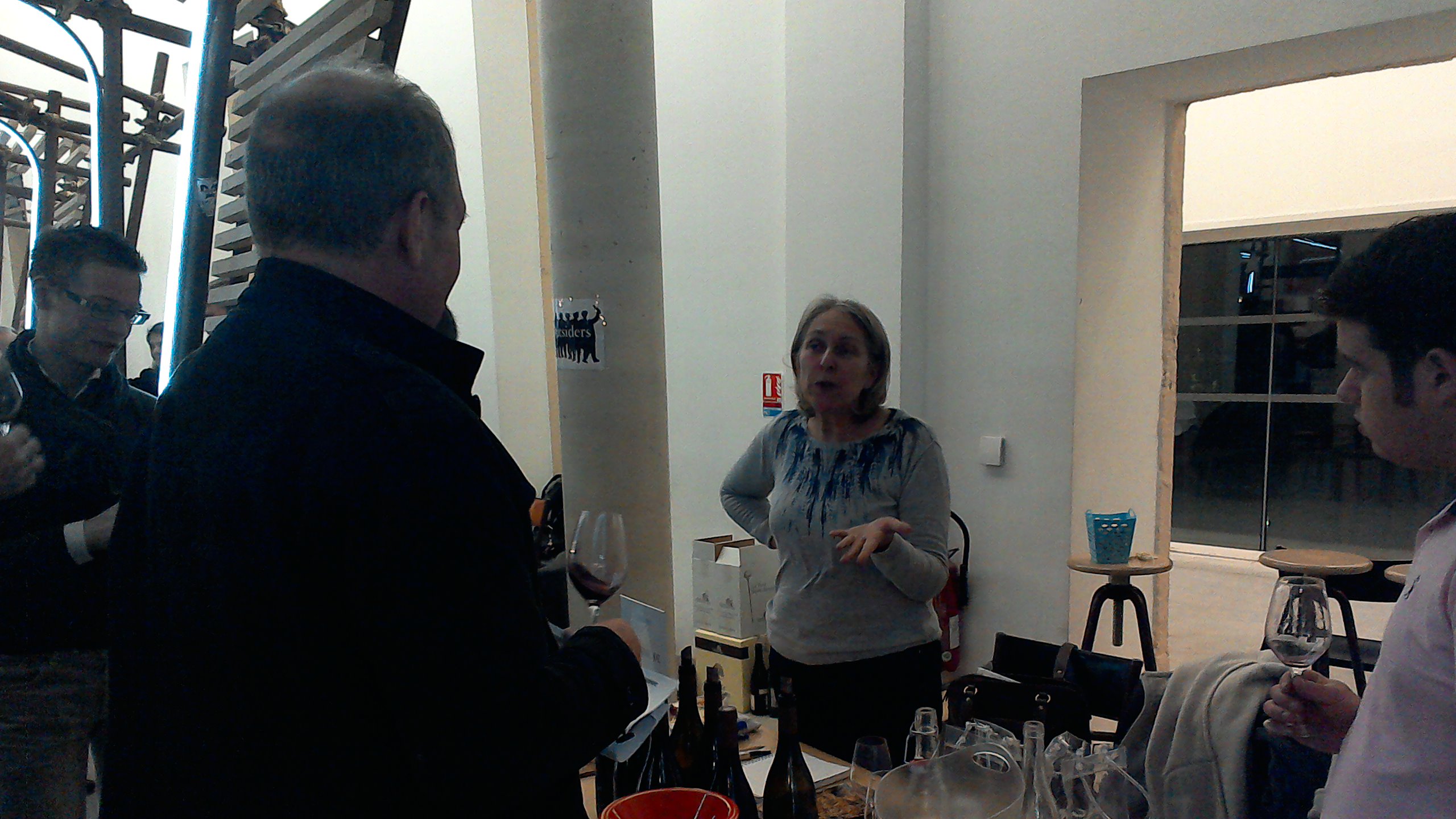
I also met Saskia van der Horst of Domaine Les Arabesques and was happy to taste her wines again at Biotop at Millésime Bio. Saskia is a relatively new winemaker running a small domaine but is already producing lovely, well balanced wines. I look forward to following her career. Look out for her at RAW in London in May.
Saskia van der Horst talking to me
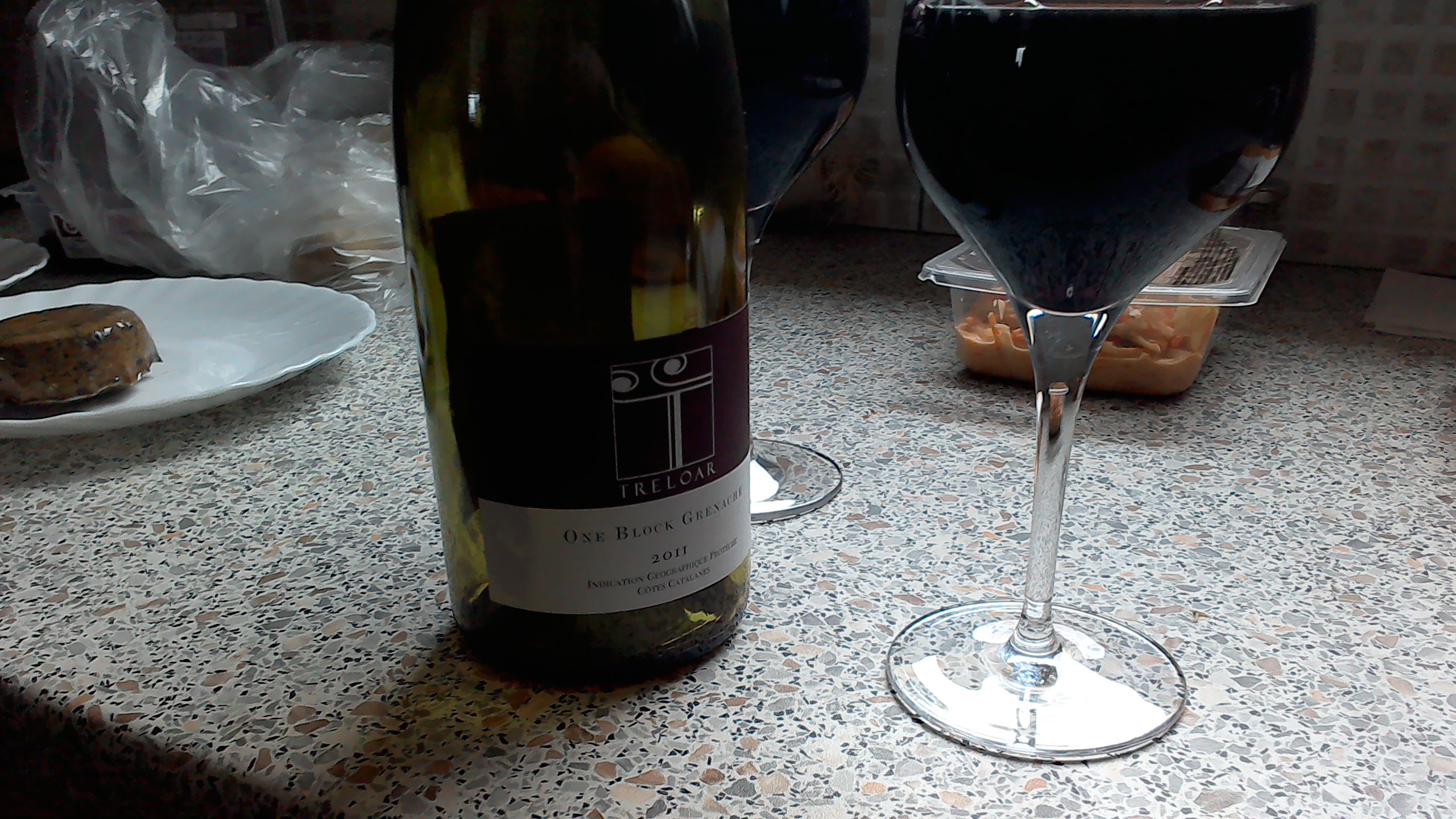
Domaine Treloar is in Trouillas and run by Jonathan and Rachel Hesford. I have mentioned them many times and I love their wines, the white Terre Promise is one of my favourite white wines of any region and the reds are just as good, cuvées such as Tahi and Le Maudit, (not forgetting a beautifully balanced Muscat de Rivesaltes).
I look forward to returning to Roussillon soon as it is a hugely exciting area of established and upcoming producers who are transforming the region’s wines.
(Update: already met a number of new Roussillon producers today March 29th in Arles who confirm my opinion that this is a region producing exciting wines,more to follow soon)
OK this is a bit of a cheat but I wanted to fit Faugeres into this post and these are two of the central villages to the AOP. As it happens the domaines I have really enjoyed recently are based in the communes of the two Cs. There is little doubt that Faugeres is on the march, a caviste I spoke to a few weeks ago was telling me he can charge at least an extra euro or two for Faugeres compared to wines of similar quality from other AOPs.
I should start with the wines of Didier Barral (based in Lentheric a hamlet in the commune of Cabrerolles) whose domaines is called Leon Barral, I believe named in honour of Didier’s grandfather. It was Jeff Coutelou who told me that Didier is “a star” and I finally tasted a couple of the wines and the judgement is accurate. These are great wines by any standards, produced in a natural way on a domaine where Didier grows other crops too and has cows pastured on the vineyards over the winter period. They are relatively expensive but not compared to wines of lesser quality from regions such as Bordeaux or Burgundy.
Domaine de Cébène has been a favourite for many years, again after buying some from Leon Stolarski. Brigitte Chevalier was based in Caussiniojouls when I first visited her domaine though now has a new cellar in Faugeres. These are complex wines which age beautifully but are lovely to drink young too if you can’t wait. Brigitte has quickly earned herself a lot of top awards together with wide recognition. I remember a lovely afternoon touring her vineyards 4 years ago and she was planning how to improve the quality of the vineyards, a plan which is certainly bearing fruit. A book about the working of the domaine is being written by Janice Macdonald, I am sure it will be well worth reading, as you drink a Cébène wine, eg my personal favourite Les Bancels.
Brigitte talking to me in January
The other domaine which has captured my attention is Clos Fantine also based in Lentheric. This family run domaine works organically and produces delicious natural wines, fruity, long and complex. These are wines I shall be buying increasingly and I hope to be visiting the domaine next month.
Faugeres is an exciting area with its soils of schist and granite as well as basalt and limestone. So many good wines from the AOP are available but these three are my selections from the ‘C’ villages. Look out elsewhere for the likes of Alquier, Mas Sibert (read more), Trinités and Ollier Taillefer.
Cabrières, Corbières and there is also Cabrerolles in the Languedoc, easy to get confused. The Corbières is a hilly, wild area to the west of Narbonne and has long been known for its cheap, big, fruity simple wines. However, I have tasted a number of very good domaine based wines in recent months and visited some too. There seems to be a new wave of producers who are raising quality in the region.
Chief amongst these is Maxime Magnon, a winemaker whose reputation is very high with other winemakers in the region and beyond. Based on just one wine tasted personally I could see why there is a buzz around his name and I hope to taste more soon. Another exciting domaine I got to know through a bottle in the well known O Tonneau restaurant in the seaside village of Peyriac de Mer. Domaine Des 2 Anes is based in that village and I was able to taste ore of their range at Millésime Bio, very exciting too. Natural in style and really well made wines, rich with power and elegance.
Wines of Les 2 Anes, one of my favourite domaines
Le Grand Guilhem, La Baronne and Sainte Croix (gold medal winners at Millésime Bio) are all domaines whose wines excited me at Millésime Bio (see notes here and here) and are worth seeking out.
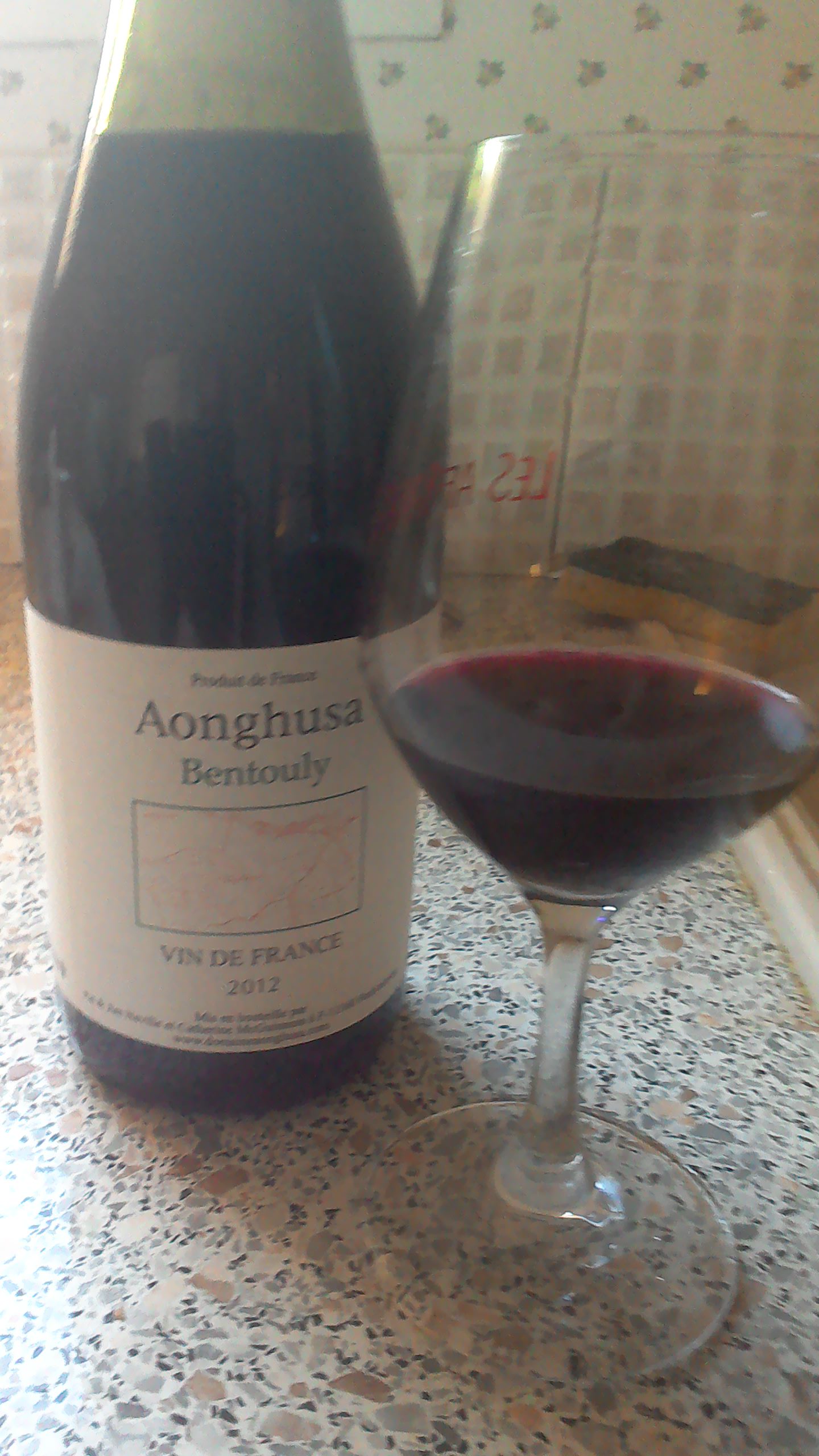
Another domaine introduced to me by Dominic George at Le Wine Shop in Pezenas is Aonghusa, I have tried 3 of the wines and they are all full, rich and have a hint of spice and of the wild garrigue in the area’s hills. Owned and run by an Irishman, Pat Neville, Aonghusa has quickly become my house wine. I really like the wines so thank you Dominic!
Aonghusa Laval 2012, delicious
Aonghusa’s Bentouly 2012
My final recommendation would be Pech Latt which I visited last October, a remote domaine near Ribaute producing lovely wines including some interesting sweet wines from Grenache. Long standing organic producers Pech Latt is areliable source of good wine.
There are also some good white wines from Les Cascades though I found the reds a little oaky for my taste, other than the entry level which is good. This can be a region difficult to master but there appears to be a group of producers who are succeeding in doing so and improving the profile of the Corbières. For me this is the most improved region in the Languedoc. The sleeping giant is awakening.


























 amarchinthevines