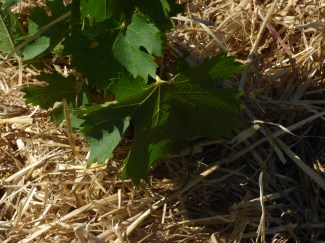
amarchinthevines

Learning about wine, vines and vignerons whilst living in the Languedoc


Leave a comment

Nature can be harsh: Part 3 -pests

In Parts 1 & 2 I have tried to explain some of the difficulties encountered at Mas Coutelou during 2016 due to natural influences such as climate and disease. In this final part of the series I look at pests which have added to those woes.

Vers de la grappe

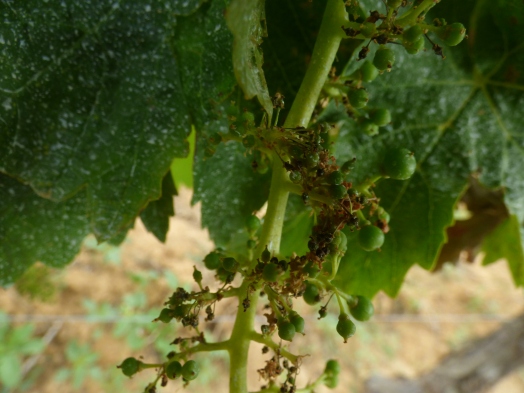
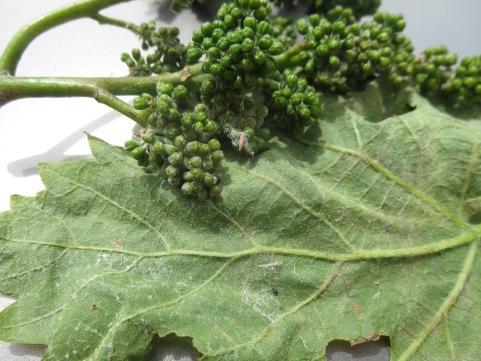
These are literally grape worms, more specifically caterpillars, which form and grow on bunches of grapes. The caterpillars are the larvae of Eudémis moths which prefer to lay their eggs on shiny surfaces, so grapes are the target more than the rest of the vine. The larvae obviously damage the grapes themselves but that damage is worsened because of juice running on the bunches attracting infection and disease.

The warm weather and humidity of 2016 definitely encouraged vers de la grappe though it is an ongoing problem. It can be treated chemically of course though that is not an option for organic producers. Substances such as clay can be sprayed in spring to add a chalkier, duller surface to new grapes so that moths are not attracted to them. However, the solution favoured by Jeff Coutelou is to plant hedges and trees. These not only act as barriers to less environmentally aware neighbours, add polyculture to a region which can appear solely planted by vines but also they can shelter bats.

img_0227

Bat shelter in Sainte Suzanne

Bats feed on Eudémis larvae and moths and can eat thousands every day. Bat shelters are to be found around Mas Coutelou, eg in Sainte Suzanne and Rome vineyards.

The photographs above show a vers de la grappe cocoon and, on the right distinctive holes showing where the moth laid its eggs. When the vendanges begin the pickers and sorters must look out for signs such as these but also damaged, shrivelled grapes in bunches where the larvae have been.

Snails

If I could have named 2016 in the Chinese form  I would have called it the year of the snail. They were everywhere. The two photos below show an olive tree in Segrairals. This was  one of many which were completely covered by snails, blanched by the sun and feeding on the greenery and moisture in the tree.

However, vines were equally attractive to them. I spent whole mornings picking snails from vines during the Spring only to find them covered again a day or two later. Flower Power (Font D’Oulette) was particularly badly affected with the snails heading straight for the new growth and buds in April and May.

The virtual drought in the first six months of 2016 meant that the snails were desperate for moisture and food and so the healthy, young vines were too good to miss. The consequence was obvious, production of this much lauded new wine was reduced drastically, partly by the weather but equally the work of the snails. Birds and other predators would help solve the problem but the monoculture of the area (outside of Mas Coutelou) means there are, sadly, no great numbers of them.

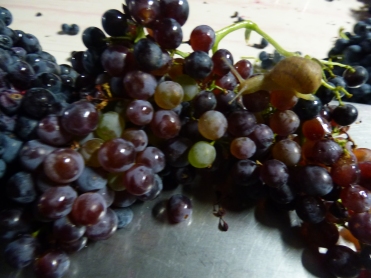
Vendangeurs and sorters must try to pick off snails as they hide in the bunches. Dozens get through to the cellar especially in the early morning when there is moisture around. The photo on the right shows a lot of rejected material, leaves, poor grapes but lots of snails as you will see if you enlarge it. Just imagine how many get through into the wine with machine picking and limited triage.

Neighbours

Yes they can be included under the title of pests. Well, one of them can be. As regular readers will know 2016 has been punctuated by two occasions of vandalism by one particular neighbour, both upon the Carignan Noir vineyard of Rec D’Oulette. First he mowed a patch of wildflowers which Jeff had sown to encourage insects and birds (for reasons identified above). Then he took a machine to some of the young trees Jeff planted around the vines, destroying four year old trees such as hazelnut.

p1010463

Vandalised trees with tyre tracks revealing the culprit

Jeff was justifiably upset by these attacks. He was simply trying to enrich the area, bring diversity to it but that was clearly too much for a traditionalist, more used to destroying wildlife for his own short term gain and dreadful wine. However, he was encouraged and revitalised by the massive support of friends and colleagues around the world. The flowers grew back and more densely, the trees replanted in greater numbers and Jeff Coutelou stands tall as the man trying hard to improve the reputation of Puimisson and its wines.

p1010116


6 Comments

Nature can be harsh: Part 2 – Disease

The mild weather over winter was followed in the Languedoc by a slow start to summer heat. The resulting warm, humid weather brought disease as it did in many regions of France. Mildew, oidium and couloure are all vine diseases which occur regularly and 2016 was no different but with a bigger hit than usual.

Mildew (downy mildew)


Sadly, humid days in the mid 20s and cool nights are exactly the conditions favoured by downy mildew, and it prospered. The humidity in the soils created ever more favourable conditions for mildew. Downy mildew lives as spores in the soils and any rain splashes them onto the vines. Mildiou is not a fungus as commonly believed, it is a one celled spore which germinates in warm, humid conditions especially between 16 and 24 Centigrade – exactly the conditions we saw in April and May of this year.

Jeff Coutelou spent many nights out on his tractor spraying the vines to try to protect them. As an organic producer (and much more) he cannot (and does not want to) use manufactured, chemical sprays. Instead he used sprays based on rainwater with seaweed, nettles, horsetail and essential oils of sweet orange and rosemary. These are better absorbed by the vines in the cool of the night.

Mildew appears as small yellow / green spots on the upper surface of the leaf which gradually turn brown and spread to leave an unsightly vine. Underneath downy white /grey spots appear, the mildew is well established by this point. It affects the grape bunches and leaves them dried out and shrivelled.

car-mildew-grappe

Mildew on a Carignan bunch, organic spray residue on the leaves

By the time harvest arrives the bunches contain a mix of healthy and diseased grapes. Severe triage is required. Bunches such as the one in the photo above will be discarded immediately. Where there are health sections though the bunches will arrive at the triage table and be sorted rigorously. Jeff reckoned that in some vineyards, especially the white vines of Peilhan, losses were up to 60% from mildew. Seriously damaging.

Here is a clear demonstration of the advantage of hand harvest (vendange manuelle), machines would simply swallow the lot and in less thorough domaines or caves the bunches will all go into the wine.

Oidium (powdery mildew)

IMG_1552

Oidium on buds and leaf

Oidium is a related problem to mildew but slightly different. It too thrives in warm days and cold nights (so springtime is its peak period) , it too loves humidity. So, spring 2016 was ideal though oidium was less rampant than mildew. Unlike mildew it is a fungal based spore.

Conventional treatments would be chemical and even organic producers will use sulphur, a naturally occurring element. Organic producers are limited to the amounts they can use as sulphur does damage the fauna of the soils. Jeff Coutelou uses less than a quarter of the permitted amounts because he sees it as  a last resort. Instead he prefers treatments based on horsetail weed, nettles and other beneficial plants made into a tisane which can be sprayed. It may not be as all-destroying as synthetic chemicals but Jeff prefers the soils to be healthy in the long term by using these natural plant based treatments.

These photos show grape bunches hit by oidium in 2016, the powdery residue is clear though the bunches are less damaged than mildew affected ones. Nevertheless oidium is destructive and spoils wine so, again, careful work in the vineyard and cellar is needed to keep oidium out of the grape juice.

Coulure

Like most fruit plants vines grow flowers which then develop into the fruit. Vine flowers are very beautiful but also very delicate and don’t live long on the plants, a matter of a few days.

If heavy rain and wind hits the vines at this stage of their development then the flowers can be easily damaged or broken off the plant.

The result is that fruit cannot develop where there is no flower, coulure. Where flowers are damaged then berries might grow very small and seedless, this is called millerandage. Similarly berries might ripen unevenly within a bunch, green berries alongside healthy, ripe grapes.

There is nothing that the vigneron can do of course, the damage is done by the weather and no producer can successfully combat weather. Nature wins in the end. So, once again, the vendangeur and those sorting in the cellar are crucial in ensuring that only healthy fruit goes into the wine.

I cannot emphasise enough the importance of all stages of wine growing and production. From their budding through to vendanges the vines must be tended, and in the cellar observation, determination and care are needed too. To make good wine requires hard work, healthy grapes and love as Jeff has said many times.

And have a look at one of those last photos again.

snail-and-uneven

In the top right corner you will see another of 2016’s natural problems, one subject of the final part of this series.


3 Comments

Nature can be harsh – Part 1: Weather

wet

It’s not all sunshine in the Languedoc

The stunning BBC Planet Earth II television programme  of snakes attacking baby marine iguanas was a recent reminder of how cruel nature can be. 2016 has seen vineyards across France attacked by a multitude of problems and in this series of three articles I want to show how the vines and the grapes are affected by these problems. Firstly, the weather.

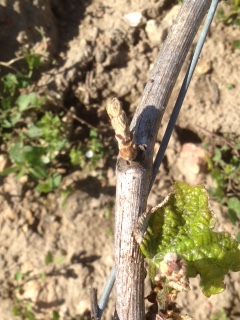
The year began with no frost in the Languedoc throughout the winter. This meant that the vines found it hard to recuperate from 2015’s exertions as they could not sleep. When pruning got under way in earnest during January many vignerons reported sap flowing from the vines. This was bad news, the sap and the vines should have been resting, storing their energy for the year ahead. Consequently, when other problems arrived during the course of the year the vines were always vulnerable, struggling to resist them.

venier

Frost damaged vine in the Loire

Ironically, after such a warm winter, frost and hail damaged vines across France. The Loire, Rhone, Cahors and Pic Saint Loup were all hit at various stages, Burgundy and Champagne too. When I visited the Loire in early May it was sad to see many vineyards hit by frost, especially those adjacent to other crops whose humidity helped frost to form. Some vignerons faced huge losses of vines and potential grapes.

On August 17th hail hit the Languedoc, especially the Pic St Loup region where vines laden with grapes were smashed leaving some producers with no harvest at all in 2016. Mas Coutelou in Puimisson was also damaged though not so seriously. The storm ran through a corridor across Sainte Suzanne to La Garrigue and on to Segrairals. Even here vine branches were snapped, grapes shredded and bunches ruined. It was possible to see how one side of the vines was damaged where they faced the storm, yet the leeward side was virtually unscathed. Jeff was forced to pick these damaged vines much earlier than normal before the damaged grapes brought disease and rot to them.

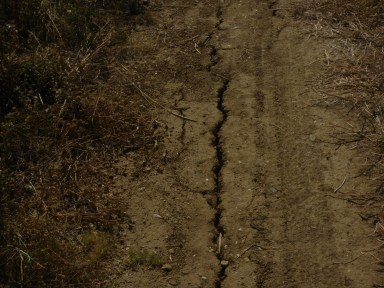
The other major weather problem was drought. There was virtually no rain for months in the Languedoc, especially from winter to early summer. Cracks appeared in the soil, plants turned brown. The lack of rainfall meant that when the grapes began to mature the vines could not provide much water, small berries with little juice were the norm. Vignerons everywhere in the region reported much reduced yields, at Mas Coutelou reds down by 20-30%, some whites down by as much as 60%. Rain just before vendanges saved the day but massaged rather than cured the problem.

p1010435

When rain did come it was often in the form of storms. Sharp, heavy rainfall does not absorb into the soil so easily. Moreover where vignerons spray herbicides on their land the soils often wash away as there is nothing to hold the soil in place. For more environmentally aware producers this can be frustrating as chemically treated soils could wash onto their land.

This is one reason why Jeff plants trees, bushes and flowers and digs ditches, to protect his vines from the risk of contamination.

The combination of sun (and even sunburned grapes), drought, rain, frost and hail made this a difficult year. However, that is not the end of the story. Climate conditions bring disease and it is that aspect of nature which I shall examine next.


8 Comments

Is it natural?

facebook_1477124843243

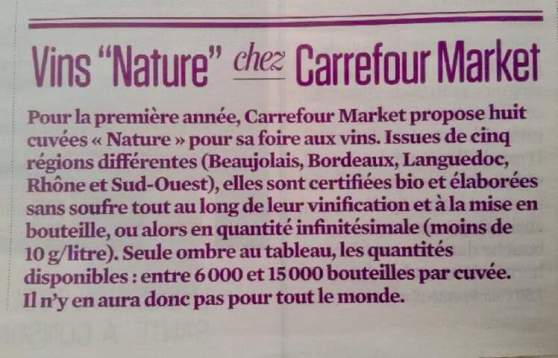
Autumn is the time of  the Foire Aux Vins in France, supermarkets and other large stores discounting their wines. One advert stood out and that was Carrefour’s, offering 10 wines which they called «Nature». Interesting to see that they feel there is a demand for such wines (something UK supermarkets clearly don’t see) and that natural wines have a market. However, on closer examination it turned out that the ten wines on offer were «Nature» only in the sense that they were «sans sulfites ajoutés» (no added SO2). Only three of the ten were produced organically, so are they truly natural wines?

There are, of course, some pedantics (including one well known British wine writer on Twitter on Nov 7th) who would argue that no wine is natural, that it does not make itself. The word natural has indeed become something of a millstone around the bottle neck. So, what do we understand by the term?

rage

One definition which carries some weight is that of Doug Wregg, a director of the UK’s biggest natural wine importer Les Caves De Pyrene:
1. Vineyards farmed organically or biodynamically (with or without certification)
2. Hand-harvested fruit
3. Fermentation with indigenous yeasts
4. No enzymes
5. No additives (like acid, tannin, colouring) other than SO2, used in moderation if at all
6. Light or no filtration
7. Preferably no fining
8. Preferably no new oak

The RAW Wine Fair of Isabelle Legeron adds two other qualifications, a limit of 70mg/l of added sulphites and “no heavy manipulation” such as micro oxygenation or flash pasteurisation.                                                                                                                  (see more here)

I think those definitions hit the main points though perhaps are a little too broad themselves, points 6-8 are especially vague and Legeron’s 70mg/l seems very high. They would, however, exclude the Carrefour wines which have seen flash pasteurisation.

At Mas Coutelou Jeff adds nothing to the wines, does not filter or fine and the only oak used is from old barrels. There are NO added sulphites. Is he an extremist? Are his wines unclean or unstable? The answer to both is no.  They are sent in bottle around the world, to Japan, Australia and all parts of Europe. And then there is the USA.

The Americans have much tighter rules and restrictions for their certification. Wines which are classed as organic have to be recognised as such by regulating bodies such as Ecocert. In addition, in the USA, organic wines must be sulphite free. Wines which have sulphites added can be described as grown with organic grapes but not organic. (see more here)

Jeff’s wines can be classified as organic in the USA, the back labels from two cuvées are shown here. In effect they are being identified as natural wines by the USA. This is not a costly process, Jeff’s importer, Camille Riviėre, pays a fee of around $250 to be able to use the title “organic wine”.

Other people have started to campaign for certification of natural wines to help consumers make informed choices of just how “natural” are the wines they drink. Writers such as Antonin Iommi-Amunategui have set out the arguments for such certification however many are still reluctant to head down that route. Some, for example, fear that rules and regulations fly in the face of the outsider role and rebellious reputation of natural producers.

antonin

Antonin with his manifesto for natural wine including regulation

In my opinion perhaps the time has come for certification. Consumers should be able to buy with confidence. Look at this article from the newspaper “Liberation” describing some of the many processes and additives which can legitimately be put into wines.

vins-chimiques

Should the consumer not be more protected? I do understand the desire of winemakers to be left free to make wine in the manner they choose but standards need to be established.

100-organic-wine-usa

The US Department of Agriculture shows the way, natural wine must be organic and then interfered with as little as possible. The SO2 regulation there deters some producers from organics as they feel it is not worth their while to be organic at all if they intend to add sulphites thus preventing their wines from being classed as organic. Some, like Jeff, might insist upon that restriction, others would be more liberal. In addition, Wregg’s list forms the basis for rules, if tightened up a little.

Natural wine is often completely dismissed by some on the experience of one or two bottles not being correct, a level of criticism not applied to more conventional wines. Not all natural wines are good, I personally like some more than others. In my view, it does need to be clear about what it is and that certain standards are being met, otherwise it risks being an easy target for many, however unfairly. And wines which are not natural (as most would understand the term) will continue to be sold as the same as those of Jeff, Barral, Texier, Foillard and many others.

Further reading

Le Figaro

Vincent Pousson


7 Comments

Au revoir not goodbye

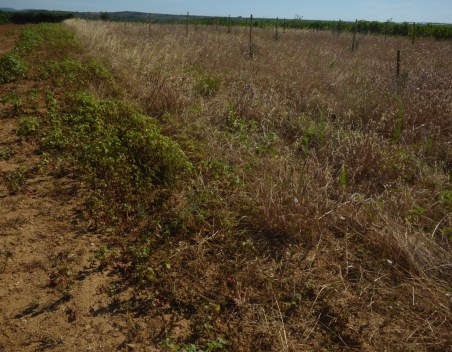
After 26 glorious months of living in the Languedoc it is time to return to the UK. Temporarily.

It has been, without question the happiest time of my life. I love the region and all it has to offer. We have been made most welcome by local people, friends and neighbours. Martin and May Colfer have become the closest of friends despite me persuading them to pick grapes one day.

Afshin and Denise Hosseiny have also become great friends this year and, together with Jill McGregor (another grape picker!) have been very generous in allowing us to store things in their homes. And that is the guarantee that we will be back. The house hunt continues and it is our aim to have a home here as soon as possible.

Most of all though this has been the most wonderful opportunity to learn about wine, vines and the people involved. The local winemakers could not have been more helpful but, of course it is the team of Mas Coutelou who have become my great friends. The wonderful Michel, the most generous, kind and lovely man. Julien, shy, good fun and caring. Vincent, knowledgeable, witty and kind. Carole, who took me under her wing when I first arrived during the vendanges of 2014 and taught me so much. Charles and Thomas both youthful, energetic but welcoming to this old man. Cameron and James, two Australians who became friends and who earned everyone’s respect with their hard work and humour. Priscilla, Tina, Céline, Brice, Jérom, Karim, the Rugbymen and so many others – thank you. Friendship makes life worthwhile.

We were also fortunate to get to meet Jean – Claude and to pass some lovely times with him, he will stay in our memories.

During that first few weeks I remember Jeff telling me the story of the Chaud Doudou, a fable about the need to work together and support each other. It is a story which embodies him and the people who work for him. Jeff is the most generous of men who loves nothing more than sharing his passion for nature and wine. When Vincent Pousson described him as the last of the left wing vignerons he was referring to Jeff’s sharing and low prices. And it was a most apt description. Pat and I cannot begin to recount the number of kindnesses he has shown us and the care he has taken of us. He is the truest of friends and we love him. He goes to the last drop of his energy to make his wines the best they can be, they reflect his energy, vitality and generosity.

And, of course, there is the most beautiful dog in the world. Icare.

From planting to pruning to picking and pigeage I have been fortunate to see and have a go at it all. And, best of all, to taste and revel in those peerless Coutelou wines.

This is not the end of the story, we shall be back in January for a few weeks and then for a few months in spring. Jeff’s motto of «Grapes, Work and Love» will continue to motivate this blog which will continue. It began as a way for me to record my experiences, it has more than achieved its goals. Thank you for reading it, there are now readers in 131 countries at a rate of up to 12,000 per day, way beyond anything I ever imagined.

At present I have a heavy heart at leaving this beautiful place, but Mas Coutelou and the Languedoc will draw me back.

With special thanks to Pat for allowing all this to happen and for falling in love with the region as well.
img_2496


3 Comments

All dressed up

p1020219

Happily the wines have plenty of places to go, from France to Australia, the United States, Japan and all around the world. As Christmas approaches the demand for wines reaches a peak and bottles from 2015 are prepared for sending off to those places. The process of putting on labels, capsules etc is known as habillage (dressing).
On Wednesday October 19th we dressed magnums of Classe and Sauvé De La Citerne as well as bottles of 5SO Simple, all from 2015. 5SO was first released in the Spring but  a second wave is now ready. All of these wines are sold out already, demand outstrips supply.

The bottles which were filled back in Spring are checked first to ensure there is no leakage from the corks, a handful do where a cork was not up to scratch. These bottles are known as couleuses. Every effort is made to ensure that the bottle should reach the consumer in premium condition.

p1020218

Michel puts on the capsule which is tightened by the machine which then sticks on the labels

The labelling is done by means of a machine which seals the capsule and pastes the label and back label onto the bottle. For the magnums the seal was actually made with wax which requires more work and time. The wax also needs time to dry off before being packed in boxes.

After the single bottles have their capsules and labels added they are placed in their box with protective cardboard to keep them in good condition during transport. This is a fiddly job, it has taken me two years of trying to do it quickly but I have finally got there.

This is the sort of day which I never really considered when I arrived at Mas Coutelou. The vines yes, bottling yes but, as a typical wine drinker, I never really considered the 101 jobs which go into preparing the bottles for market. Meanwhile, Jeff is sorting through his orders and, unfortunately, having to turn down some orders as there simply is not enough wine to meet the requests which he receives. The wines are justifiably in demand, and if you are fortunate to be drinking one, have a thought for the work which goes into preparing the bottle and raise your glass to Jeff, Michel, Julien and everyone else who has helped to make it so good.


4 Comments

Becoming naturalised

flags

En français

I have spent most of the last 25 months living in the Languedoc and as that period draws to an end I have begun to feel naturalised: my French has started to adopt a local accent such as ‘veng’ for ‘vin’; I tut at anybody and everybody; I rush for a jumper if the temperature dips below 20°C; I even went to a rugby match!

We are searching for a house to move more definitively to the area, it is where I feel happy, healthy and home. Sadly, when I look back across the Channel I see little to make me feel at home there. Brexit has seen a fall in the £ of more than 20% in less than four months. There has been a startling increase in racist and homophobic attacks. The government (with an unelected Prime Minister) is hell bent on going it alone, prepared to do without the EU single market even if it means damaging the economy. Companies such as Nissan have warned they will leave the UK if that is the case yet the government ploughs on determinedly. The 48% who voted to Remain in the EU are ignored, reviled and, today, told that they should be silenced.

2016-10-12

Mrs. May told her Party, “If you believe you’re a citizen of the world, you’re a citizen of nowhere. You don’t understand what the very word ‘citizenship’ means.”

Worrying times. Is it any wonder that I, proud to be a citizen of the world, feel more naturalised here in the Hérault? Though Robert Ménard, the far right mayor of Béziers, is doing his best to out do May’s government by opposing the housing of immigrants relocated from Calais to the town. He sanctioned this poster for example:


As for wine?

After a few tranquil months natural wine has again become the focus of attacks and disparaging remarks by those who seem threatened by it.

In France, Michel Bettane, elder statesman of wine critics, accused natural wine drinkers of being ‘peu democratique’ in their words and ways. No great surprise from a man whose connections make him part of the wine establishment.

In the UK one of the most respected and established of wine merchants, The Wine Society, published this statement from one of their senior buyers.

img_20161009_085649

“Prone to spoilage, high proportion not particularly pleasant to drink, rarely demonstrate varietal character or sense of place.” A damning list. And I am a member of this co-operative group!

Again I feel alienated from mainstream opinion. Sykes is talking complete rubbish and dismisses great wines and talented winemakers with generalisations and prejudice.

I don’t always agree with Alice Feiring, one of natural wine’s more celebrated advocates. However, in a recent article she stated that she cannot support faulty winemaking and those who seem to favour it as an expression of their anti-establishment credentials. I agree. Wine must be drinkable, must be pleasurable, must, above all, be interesting. I could name dozens of natural wine producers who make great wine, it just happens to be natural wine. Are Barral, Foillard, Métras, Coutelou, Occhipinti, Radikon, Ganévat etc making wines as Bettane or Sykes describe?

casa-pardet

Tasting Casa Pardet in 2015, a moment when wine stops you in your tracks and makes you say, wow

I have tasted many natural wines which sing of their cépage and origins, wines from France, Italy, Spain, South Africa, Australia. They tell a tale of their producer and their terroir. They are interesting, some stop you in your tracks and make you reflect on their beauty. Rather those than the very many dull, monotonous wines which taste the same as everybody else’s from Otago to Oregon.

I do enjoy conventional wines, I really like some of them. However, I often find more excitement and interest in the many, well-made natural wines.

Long live freedom of movement, long live the Languedoc and long live great wine.

I am becoming naturalised.


138da189-1095-4227-969a-8356828039df

Mas Coutelou Roberta 2003, fresh as a daisy in 2016. Take note Mr. Sykes


Leave a comment

When the tank is empty

p1010991

En français

The vendanges may be over but the hard work continues for Jeff Coutelou and the team. Everyone is tired, back aches and minor ailments prevail, yet though the workforce is running near empty there is work to be done. Ironically, emptying the tanks.

p1020179

Grape must after décuvage

The grape must has played its role in the tanks, adding tannin, colour, texture, aroma etc to the juice. It has reached the point though for some of the wines that the must would begin to have a negative effect, too much tannin or colour and, potentially, an increased risk of contamination.

Therefore décuvage has been the theme of the week, emptying those cuves, pressing the must and returning the juice to a cuve where it will remain for several months finishing fermentation and completing its transformation into wine.

It is a critical time. Moving the wine brings risks especially that of too much contact with air leading to oxidation. So, it was time to muster those last reserves of energy and press ahead.

The juice is pumped to the press along with the skins and grape flesh which are in suspension in the wine. The parts which have sunk to the bottom of the tank are left behind and removed by fork or by hand. The pressing sends the juice to another, clean cuve via another pump. The marc (solid materials left in tank and from the pressing) can be sent to the distillery to make eau de vie, as you will see in the video at the bottom of the page.

Error
This video doesn’t exist

The new wine will reflect the grapes and terroir but also the length of time in cuve. Shorter time on skins brings lighter, fresher, juicier wine. That is why décuvage takes place at different times for different wines.

Here Jjeff and Michel ensure that all the wine is in the cuve.

The aches and pains are plentiful, the wines remain full of energy and life.


1 Comment

Vendanges 2016 #9 – Days Like This

“When all the parts of the puzzle start to look like they fit
Then I must remember there’ll be days like this”               (Van Morrison, Days Like This)

As we approached the end of vendanges a number of the team were moving on. It was an inspired move to have a farewell day, picking, tasting and celebrating together, though we were already missing some like Charles, Carole and Maylis.

The morning dawned over Peilhan and the vineyard which we planted in March 2015. Rows of Terret Blanc and Noir, Riveyrenc Gris and Noir, Piquepoul Noir and Morastel produced grapes this year. They cannot be used in major cuvées sold to the public as they are too youthful. However, Jeff decided to pick them to make something for himself out of interest. So, on a bright, warm autumnal morning we gathered, picked, chatted and laughed.

Interesting to see how some varieties produce more than others already, more precocious perhaps, the Terret Noir being especially shy. Altogether we picked around six cases only but there was a real mix of colour and some nice looking fruit which went into a small cuve in whole bunches.


Later that day we gathered again, this time in the main cellar along with Thierry Toulouse, Jeff’s oenologue. We tasted through the whole range of 2016 wines in cuve before heading to a local restaurant for a meal. The results of the tasting were fascinating. Clearly, they are in a stage of transition, fermentations still progressing. Nonetheless the wines were already showing their character. I won’t go into too much detail here, though I did take notes to help me record how the wines change in coming months.

In summary though I was amazed. I have said many times on here how difficult this year has been. A very warm winter, drought, mildew, delayed summer being just some of the problems. Yet here we tasted some lovely fresh fruit, lively acidity and other promising signs. I would mention the Carignan Blanc, lovely Syrah and Grenache from La Garrigue, juicy Mourvèdre and in particular the wonderful Carignan Noir of Flambadou. All those puzzles which Jeff had to hold in his head about harvesting dates, moving wines, possible assemblages etc, well those puzzles were solved in the glass. I had expected some disappointments but somehow Jeff has conjured some potentially top quality wines.

138da189-1095-4227-969a-8356828039df

2003 Roberta

At the end of the current wines Jeff also shared a 2003 bottle of white wine based on Grenache Blanc, Noir and Gris, called Roberta (it’s a long story!). This was one of three cuvées which were the first that Jeff made sans sulfites. Yet it was complex; fresh, fruity, nutty. A wine which made my heart sing, proof that SO2 is not required for ageing wines as we are often told. Perhaps in 13 years time we shall be tasting the 2016 wines and marveling at them too.

A fitting way to close the vendanges period, a team rightly proud of what it had achieved.

“When all the parts of the puzzle start to look like they fit
Then I must remember there’ll be days like this”

p1020104