amarchinthevines

Learning about wine, vines and vignerons whilst living in the Languedoc


2 Comments

Spring vines and wines

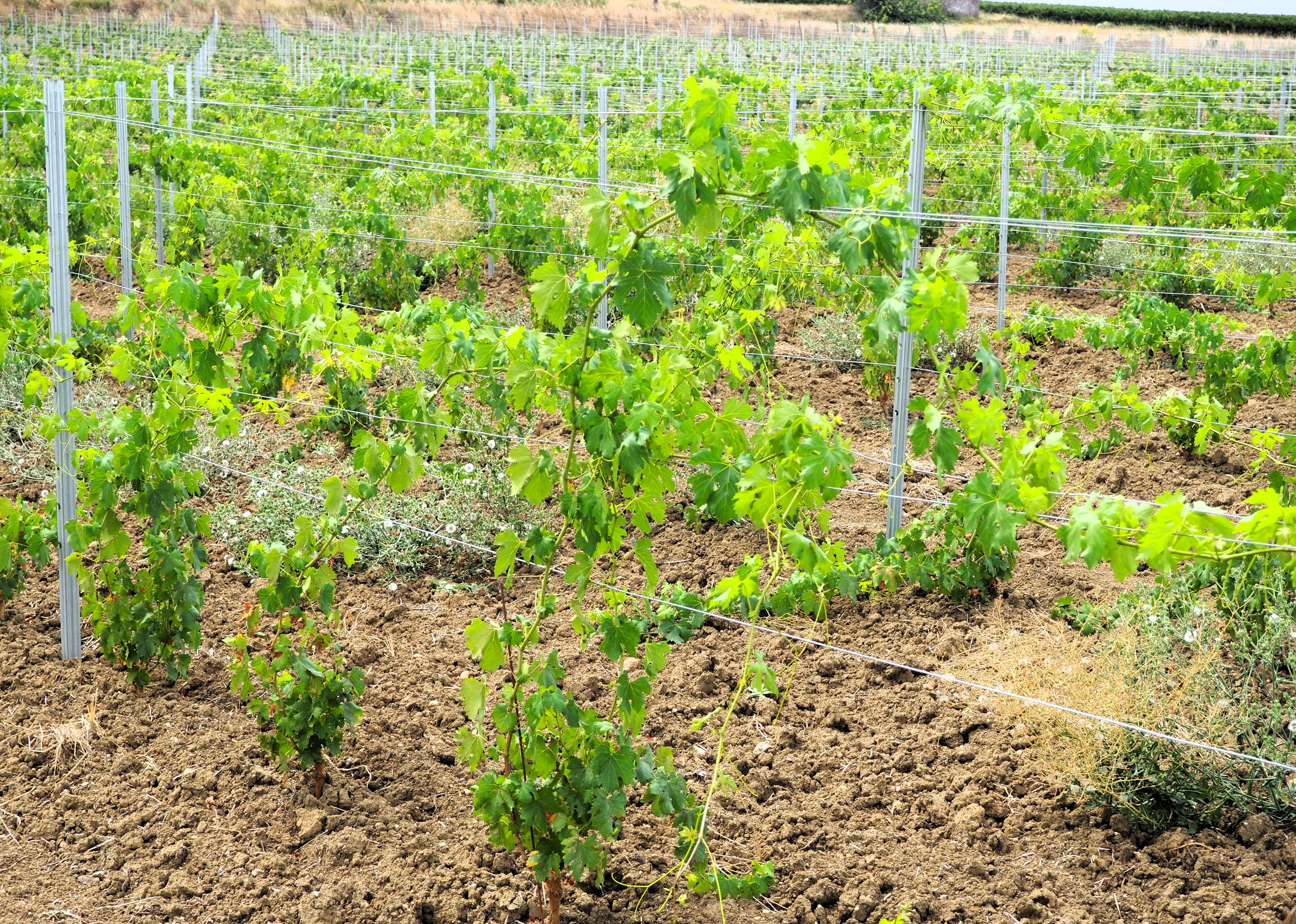
My vines are thriving after a very warm Spring (until the last couple of weeks) though Jeff Coutelou played a part from a distance.

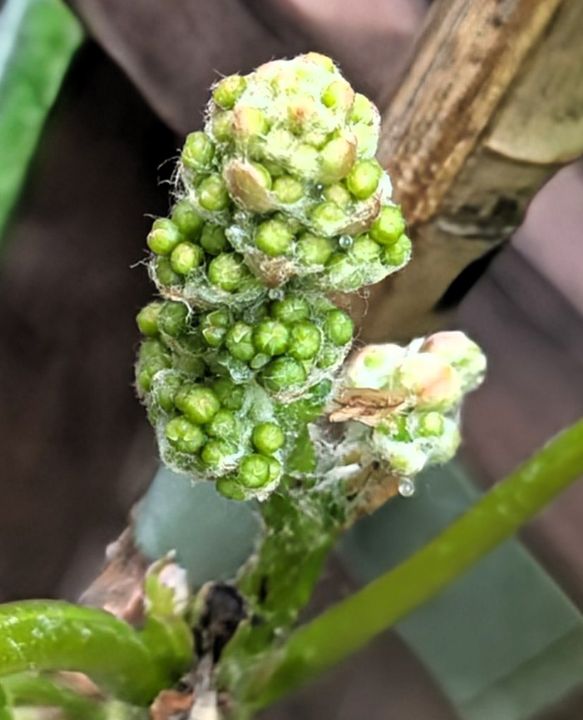
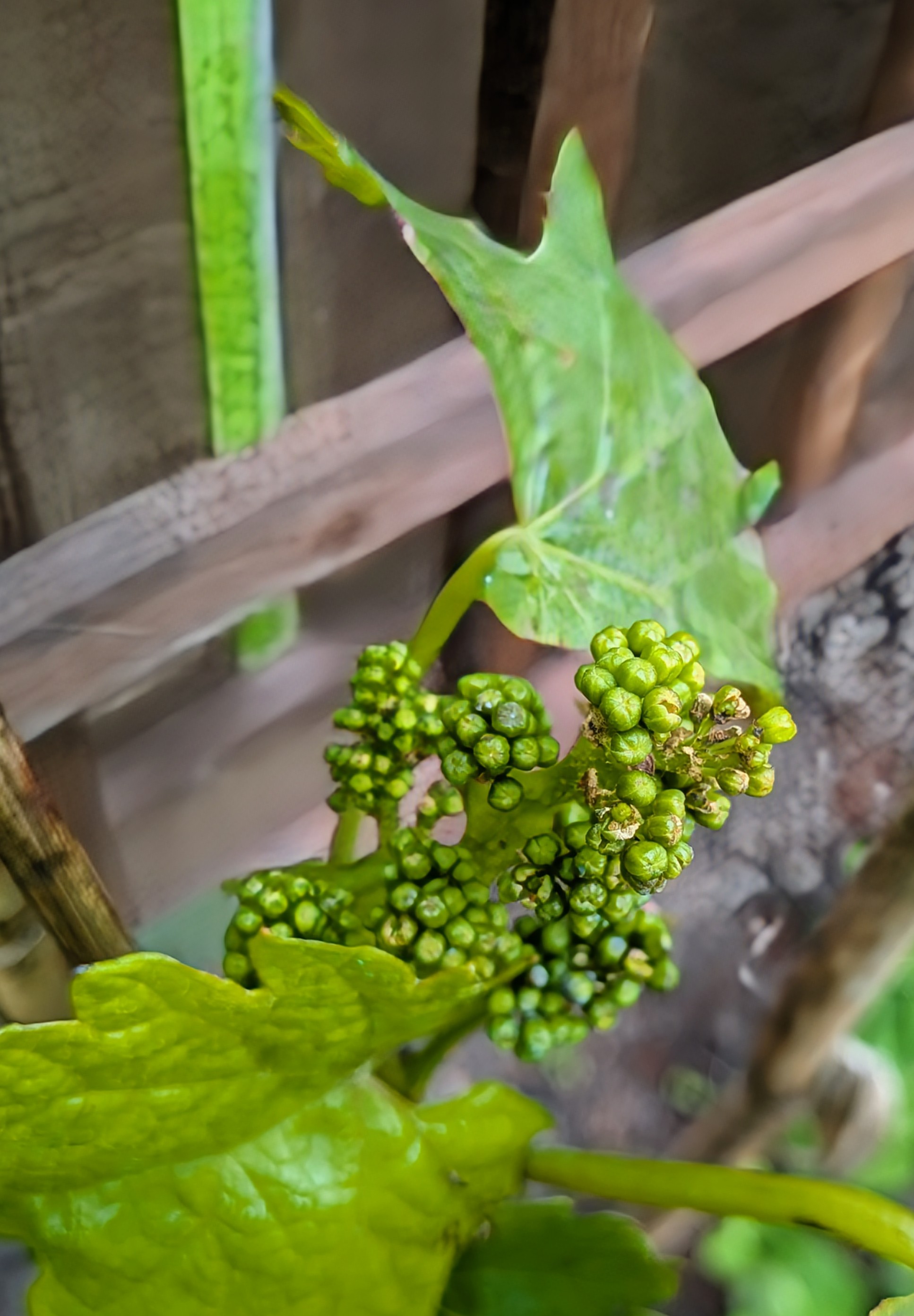
One of the photos on a previous post prompted Jeff to message me to say that he could see mildew developing. If you look at the developing grapes you can see a white filament. I acted quickly to get some of the ‘Bordeaux mix’ with sulphur and copper to spray them and this helped to stave off the disease in the main though the dreaded brown, dried patches did appear in the days after Jeff’s message. I removed the affected parts of the leaves too and, touchwood, all has gone well since even though we have had a much more humid period of weather. So, as ever, thank you Jeff.

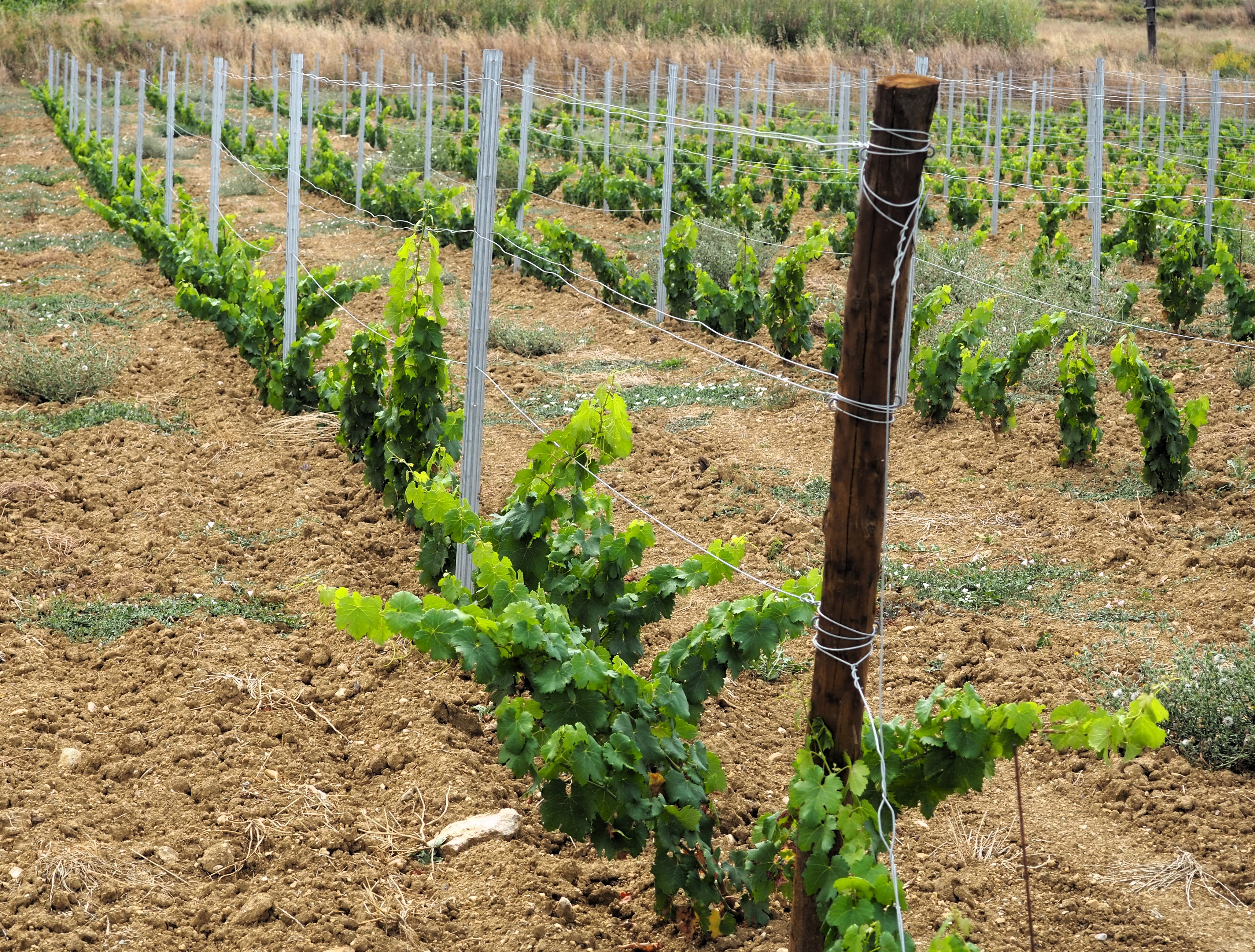
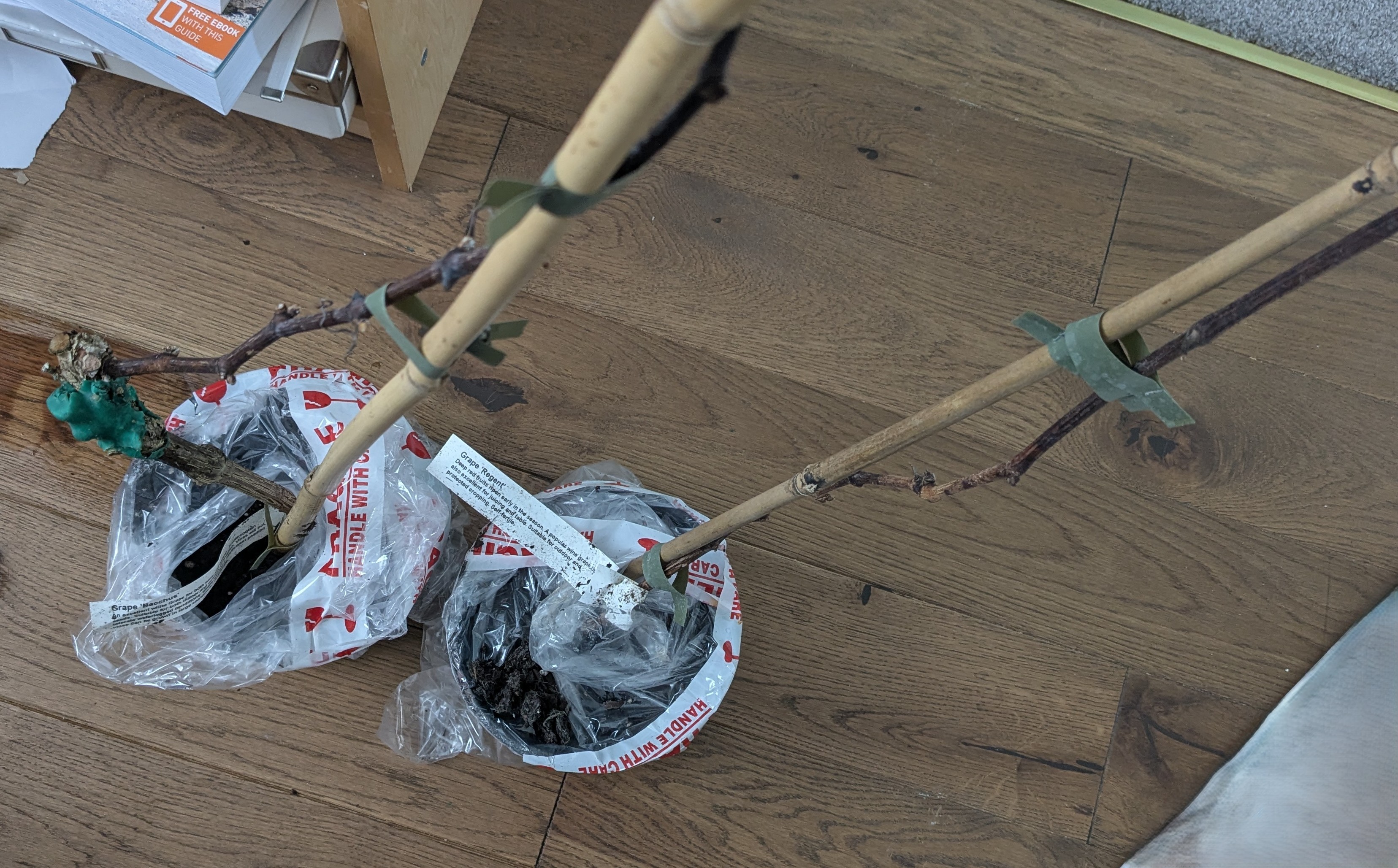
The bordeaux mix left some little dark brown spots on the leaves which wash off in the rain but you might notice in the photos. I don’t want to add too much of the spray as copper is damaging for the soil and the life within it. The soil is undoubtedly too rich for vines really as they are developing lots of leaves which I don’t really want as yet, I’d rather they concentrated on strengthening and thickening. I am removing most of the new growth and buds to achieve that. The bunch on the Regent vine is developing, opening up and starting to resemble grapes more. The Regent is ungrafted and I wonder if that is why it is developing quicker than the grafted Bacchus vine. It’s been interesting to watch them and that was the main purpose of acquiring the vines so job done.

To bottles and wines. We spent a lovely week in Ireland and I can confirm that Guinness is so much better there than anywhere else! Of the wines tried there a couple of bottles stood out, both organic but not natural. The nicest bottle of Quincy that I can remember was Domaine Mardon Cuvée St. Edme 2022, full of flavour, good acidity and a Sauvignon Blanc of real depth. Camin Larredya La Part Davane 2022 was a really enjoyable Jurancon, one of my favourite sources of white wine. The classic citrus notes and white fruit with the barest hint of sweetness, excellent. The wine is fruity and rich yet fresh with a distinct lime note.

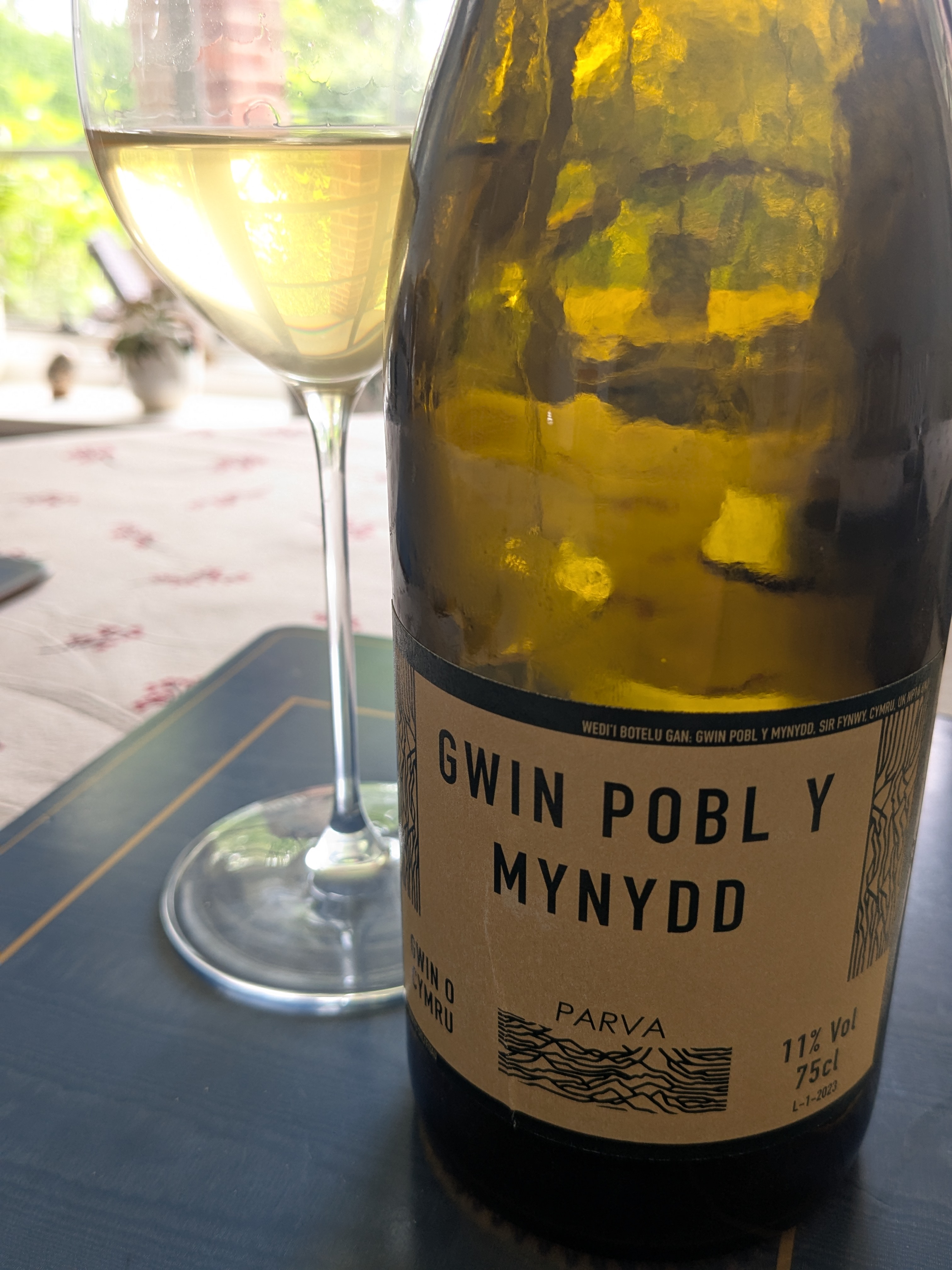
My other favourite white wines both came from Mountain People, produced in Wales by David Morris which I described in my article on a tasting in Edinburgh. His Bacchus wine, Gwin Pobl Y Mynnd Parva 23 was lovely. I like Bacchus as a grape, hence my choice of vine above. It can, however, be a bit blousy and flowery but David has made a refreshing wine with lovely fruit but always dry and clean. Even better was the wine I so loved at that tasting, his Chardonnay TAM 2023. The label on this bottle was different to the one at Edinburgh but the wine is the same. I am not a great fan of oak in wine flavours but David masters it here with the barrels certainly noticeable but underlying the clean white fruit, almost fino like in some ways but certainly like a top Jura Chardonnay.
I enjoy different ways of tasting wines and comparisons of the same wine or grape. I bought wine from one of the more celebrated Provence producers, Chateau d’Estoublon from my friend Leon Stolarski many years ago and decided to open the two I had left, 2005 and 2006. Made from Syrah, Mourvedre and Cabernet Sauvignon it is a big, powerful wine needing time. The 05 was a bit past its best but still showed dark fruits though mainly more autumnal, tertiary notes. The 06 was much more youthful and showed the real dark fruit profile, still with light tannins. Perhaps this was vintage, perhaps just the condition of two bottles but an interesting evening.

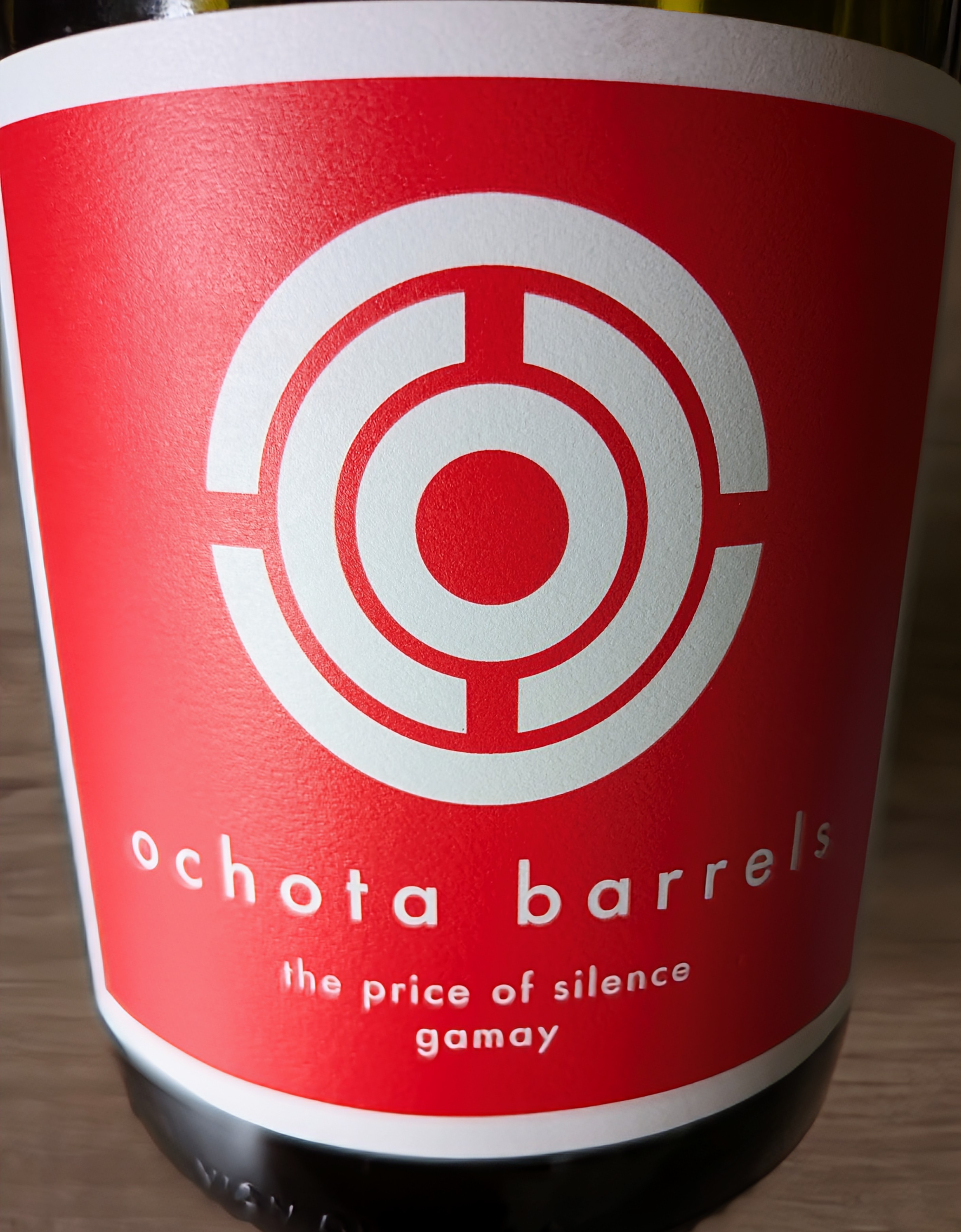
Three interesting reds. An article by Jamie Goode on the Itata region of Chile prompted me to try the Pais Granitico 2021 from A Los Vinateros Bravos. I like Pais as a grape, one of those which produces lighter, fresher wines mainly. Formerly it was made for cheap, local wines but producers have realised that it can make quality wines and this was one. A great wine for midweek with light, red fruits and nice freshness. The Morgon 2019 was from my favourite Beaujolais producer, Guy Breton. Classic Beaujolais red fruit but with added power, typical from the Morgon cru but not to be underrated as just typical, there was a lot of class. Best of all though was another Gamay, this time from Ochota Barrels, The Price Of Silence 2022. This was made after the sad, early death of Taras Ochota but shows the great work he put into his wines and the skill of his wife Amber and friends who continued his passion in the Basket range of Adelaide Hills. More fruity than the Morgon and unmistakably Australian in style but lovely depth and length, an excellent wine.

Finally, back to Jeff. I opened a bottle of Classe 2017. This was always one of my favourite bottles from any vintage of Coutelou. Mainly Grenache and Syrah with a 10% dash of Mourvedre, it has aged beautifully with the acidity calmed down and the fruit thriving, red and dark fruits with really smooth tannins supproting them still. On top form, fortunately I have a couple of bottles left.

Some difficult times on a personal level have made it difficult to focus on writing so apologies for the lack of articles recently.


Leave a comment

Spring and Spain

I am proudly a francophile and French wines are dearest to me. Of course I like wines from many other places but my wine collection is dominated by French wines as is my list of favourite wines which I post every December. This last few weeks though have been dominated by a series of very good wines from Spain which I wanted to share.

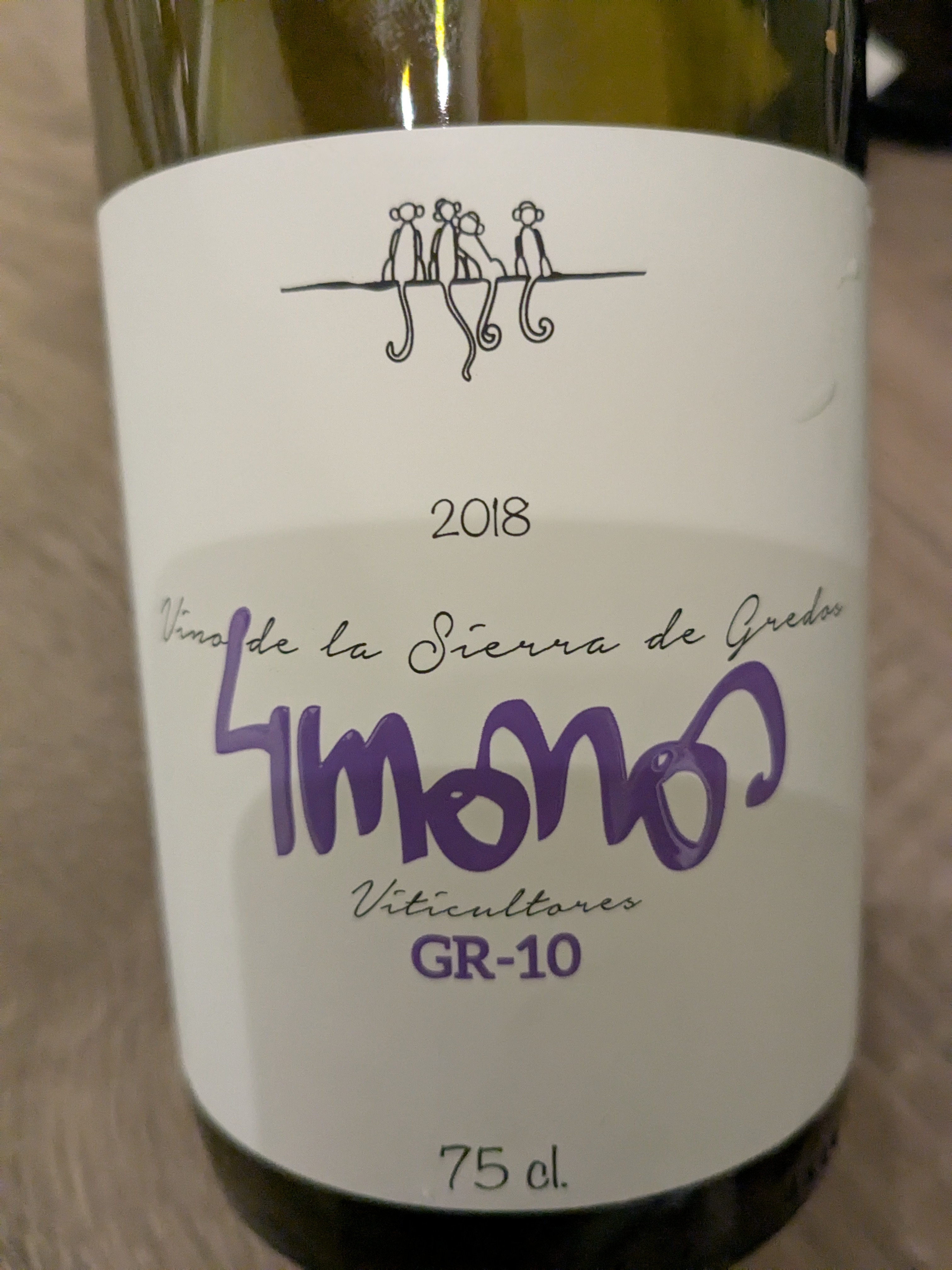
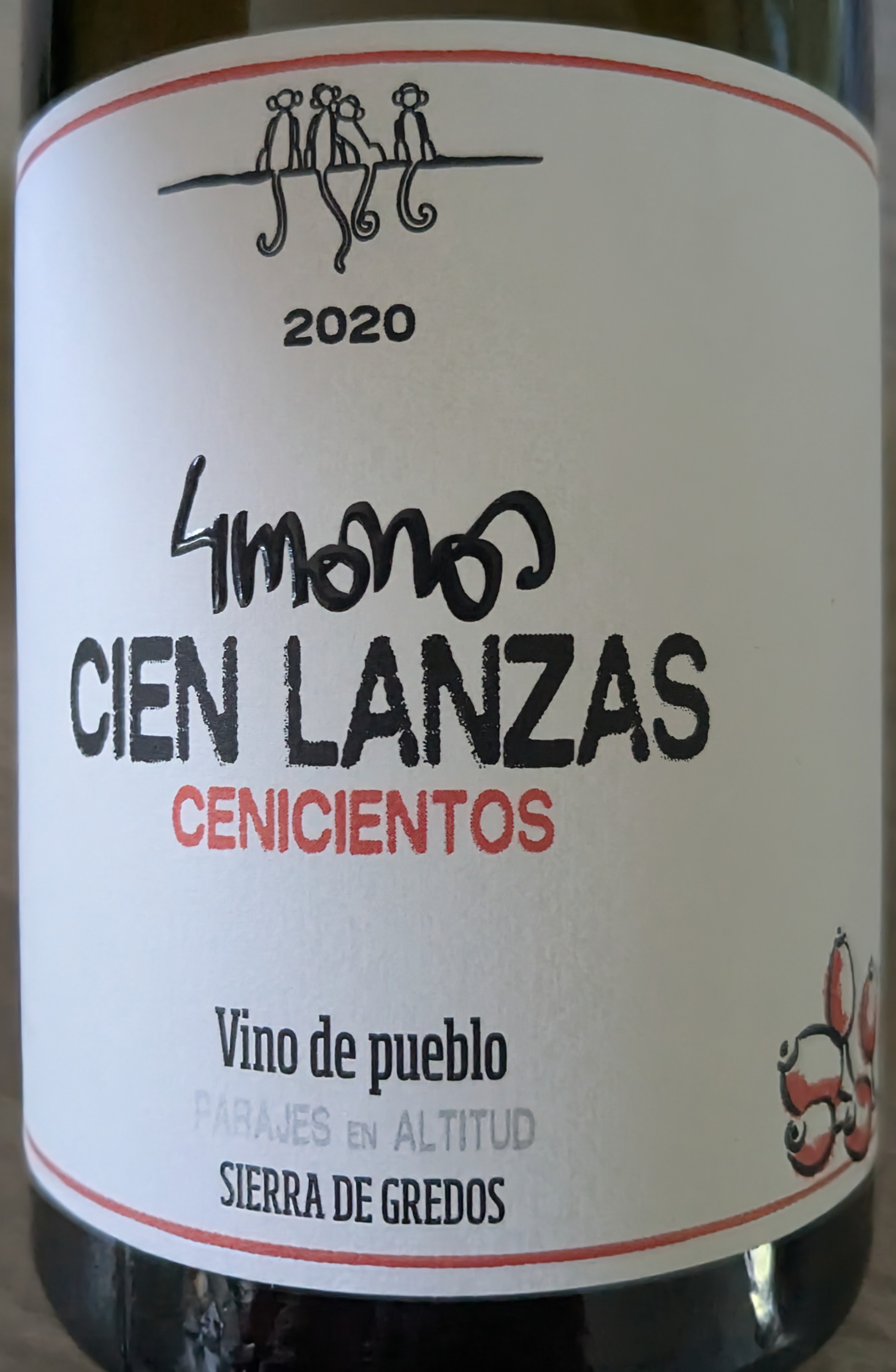
At the Element event in Edinburgh which I described last time I mentioned wines from Abeica and Jose Gil and, happily, I have hit a very strong streak of bottles since. Two came from the 4 Manos team who produce their wines in the Sierra de Gredos, 80km west of Madrid. These mountains offer the altitude (750m-1000m) necessary to temper the heat of central Spain. The eponymous four monkeys are friends who came together to share their passion for organic viticulture, local grapes and minimalist winemaking techniques. I opened two bottles recently. GR-10 Tinto is a blend of Syrah, Cariñena and Garnacha. It is their basic red wine and whilst not complex the 2018 is full of pleasure with fruits and a little texture and plenty of light, refreshing notes. Cien Lanzas Cenicientos is mainly Garnacha with small additions of Cariñena and Garnacha Blanca. Aged in old barrels for a year there is more weight and concentration in this 2020 bottle than the GR-10 but the same drinkability and freshness, a really good wine.

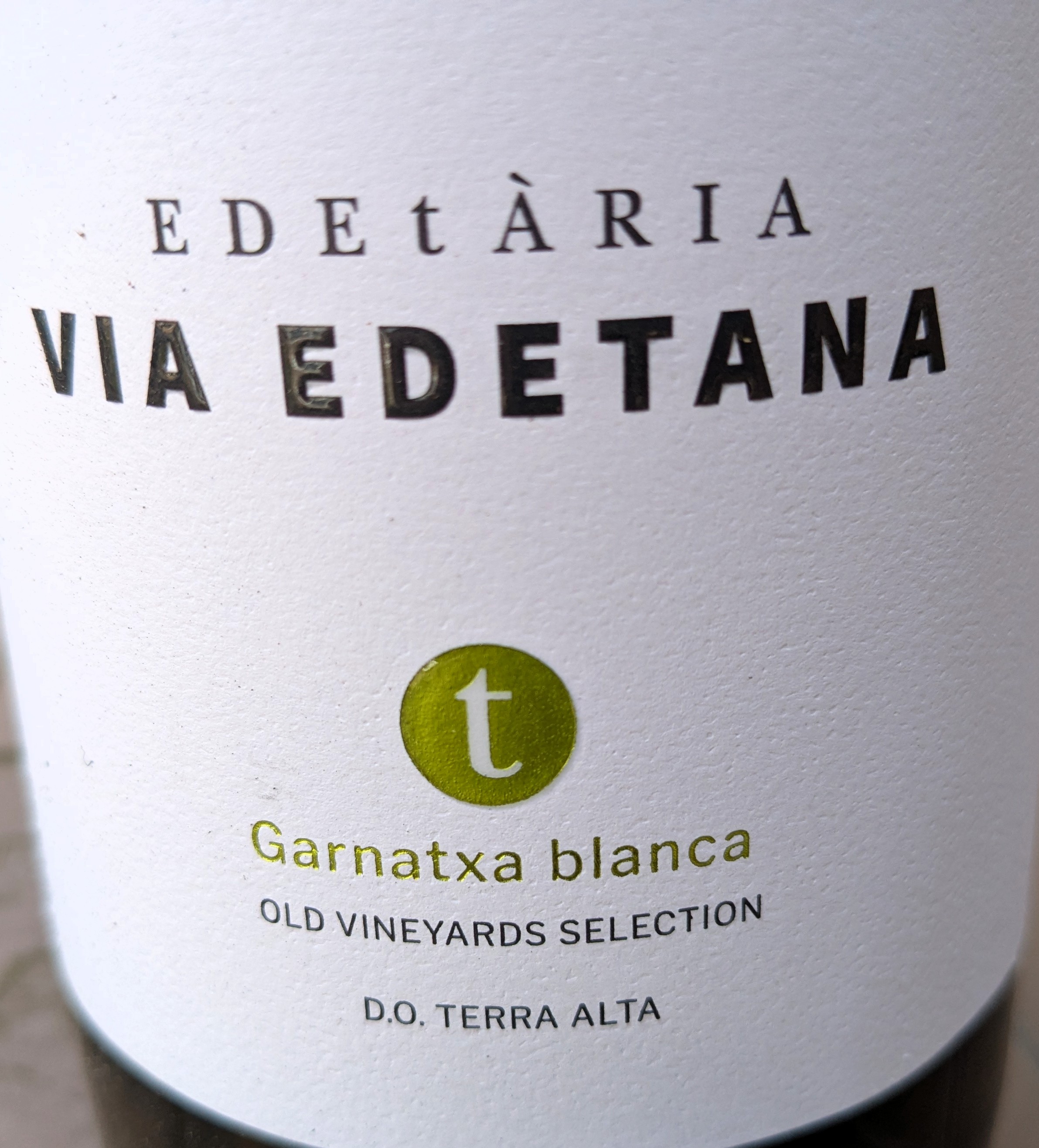
In the aforementioned list of wines of the year was a superb Garancha Blanca from Edetària in the Terra Alta region. I opened one of their lower priced Garnacha Blanca wines, Via Edetana 2023, and it was a real delight. There was that lovely white fruit flavour but with a creaminess and great freshness, perhaps from the 50% of grapes maintained on lees before joining the other half aged in barrel. I’d happily have this as my house wine!

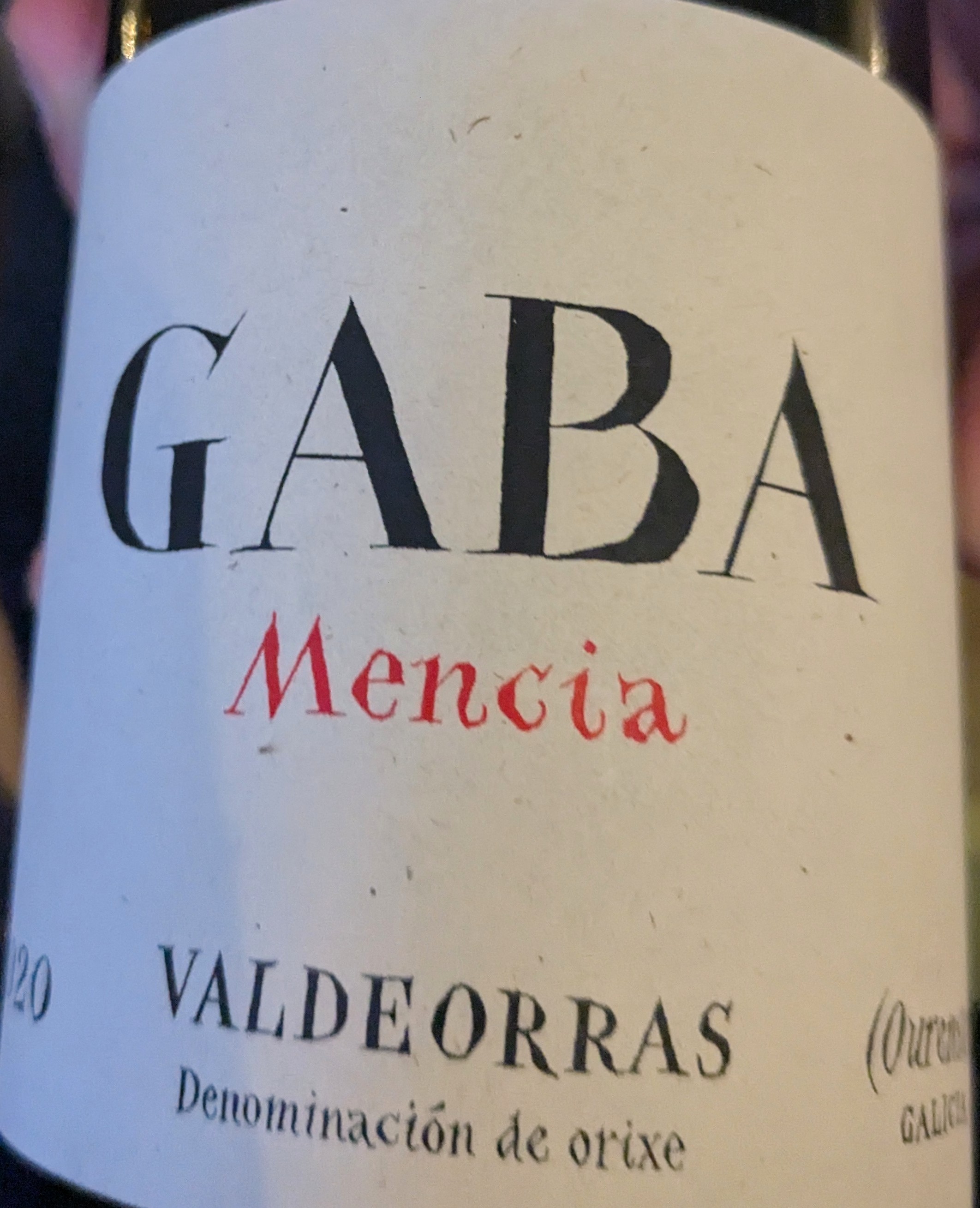
Mencia is a red grape , possibly a clone from Cabernet Franc, which is becoming increasingly appreciated for its freshness and fruit. Grown mainly in North West Spain and Portugal this particular version is made by Telmo Rodriguez who has made wines across Spain, helping to boost the reputation of those wines. Gaba Mencia 2020 has lovely fresh fruit with breezy acidity, like biting into fresh rhubarb. Proximity to the Atlantic has clearly left a mark on the nature of the wine. I have had a few very nice Mencia bottles, such as Veronica Ortega’s, but this one was possibly my favourite.

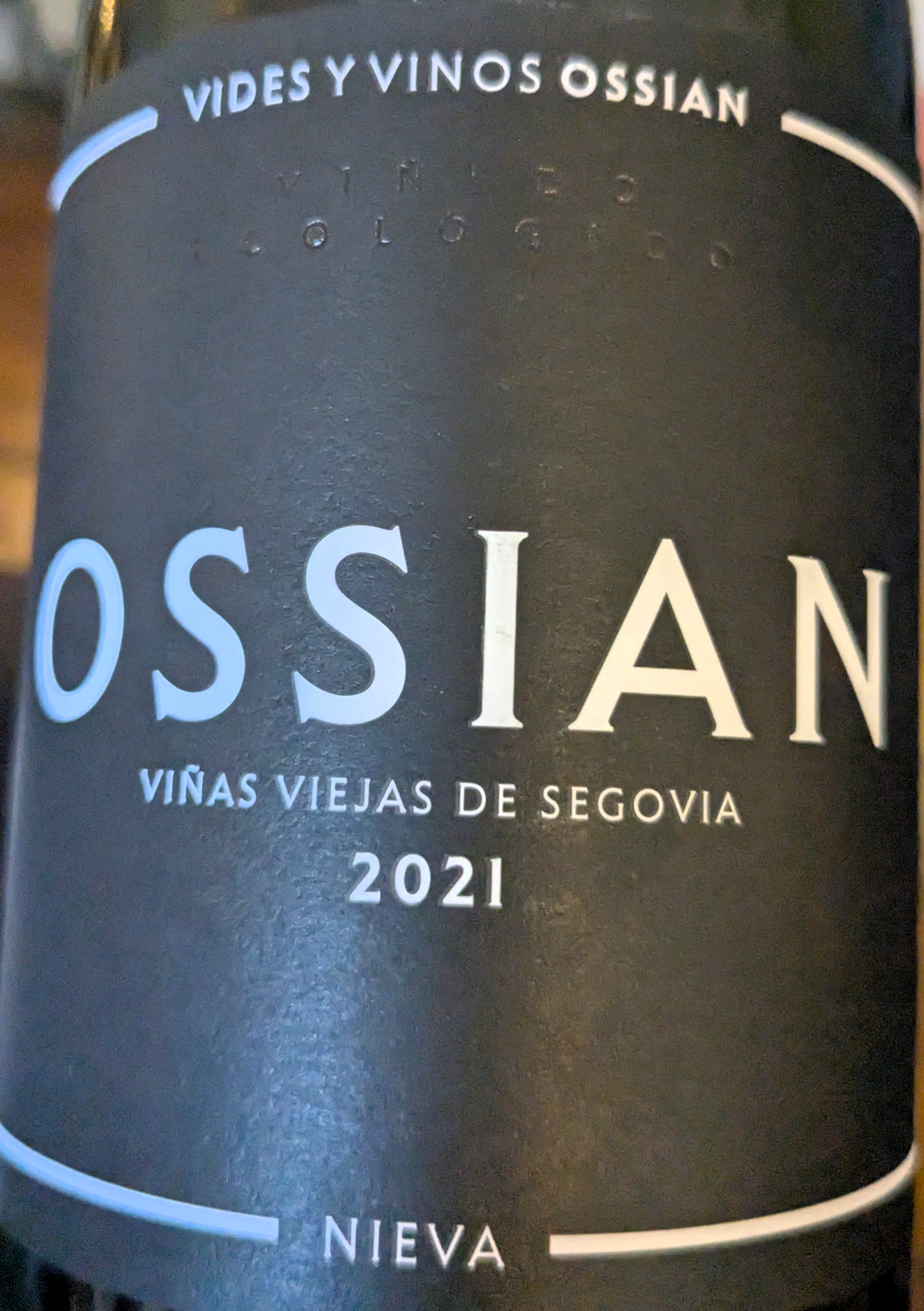
My favourite wine though has been Ossian Segovia 2021 from Nieva in Segovia, north west from Madrid. This is made from Verdejo grapes, not a variety to usually get the pulse racing to be honest. The vines for this though are pre-phylloxera and ungrafted because the soil is full of sand which has protected the vines from the louse which brings the disease. The vines are at almost 1000m altitude and have to endure extremes of temperature, down to -15c in winter and well over 30c in summer. The 2021 followed a winter which had seen several weeks of minus temperatures. This gives the Verdejo grown in these terraced vineyards a unique character. Aged in old barrels and on lees for 9 months the wine is organic and minimal sulphites are added. The colour is golden, there are fresh, white fruit and citrus aromas with long, clean flavours of those white fruits and a slight nuttiness. This is complex, drinkable and delicious.

From bold Garnacha, deep Monastrell and Cariñena, to fresh Albarino and Godello as well as these lovely Garnacha Blanca and Verdejo. Spain is rapidly taking up a bigger proportion of my favourite wines. Deservedly so.

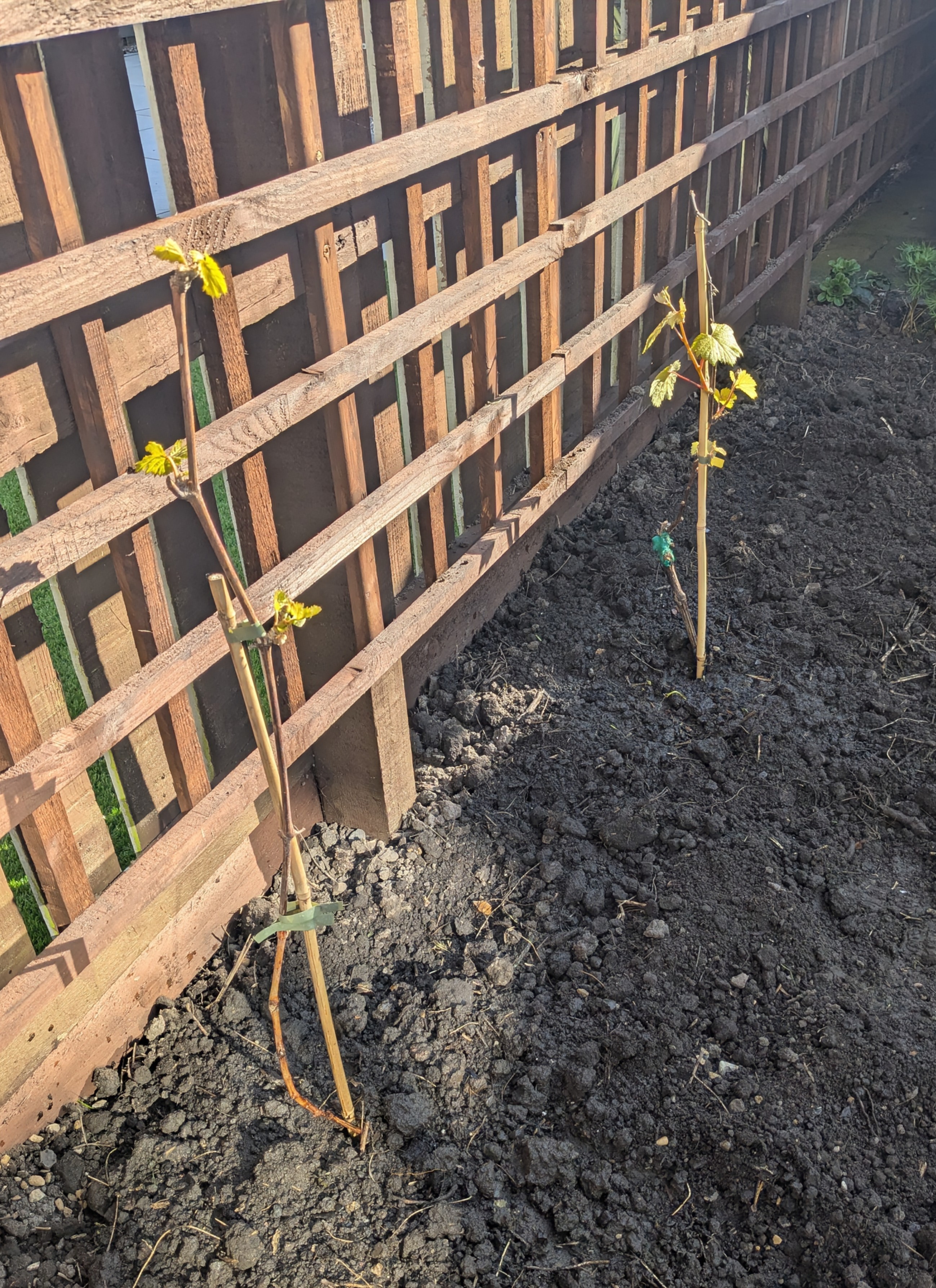
Meanwhile I have been working with the vines I received a few weeks ago. I have planted them and the recent sunny, dry weather has helped them to become established. I have been a bit surprised at how soon they budded and developed leaves, fortunately there has been no frost risk as they would have been vulnerable. I have removed side shoots to help build up the trunk before I train them next year.

Consett’s climate is certainly different to Spain’s, hopefully my vines can eventually highlight the adaptability of vitis vinifera.


Leave a comment

Elements of Spring

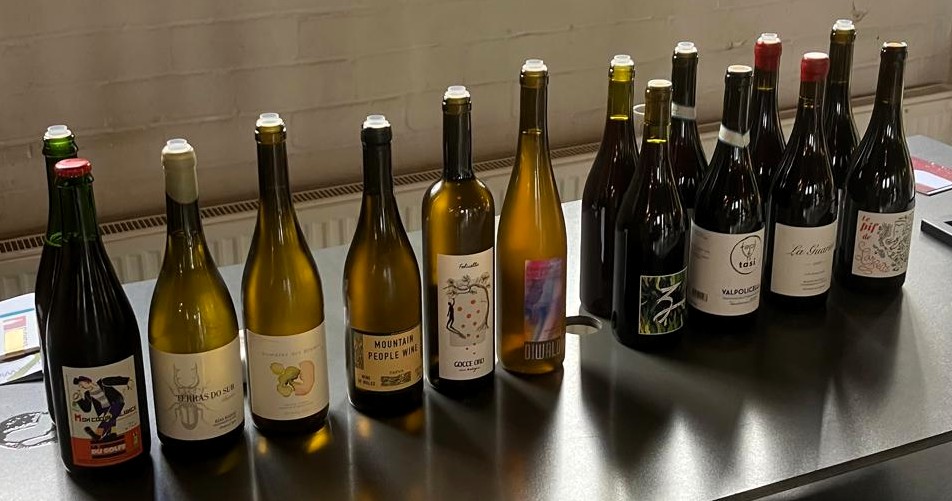
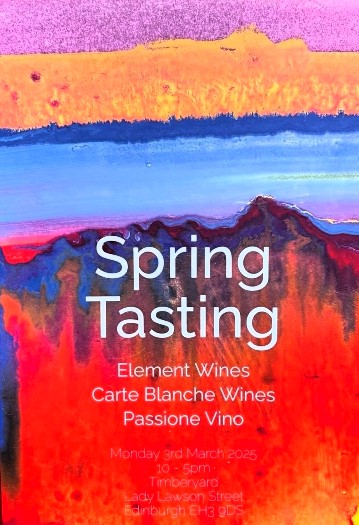
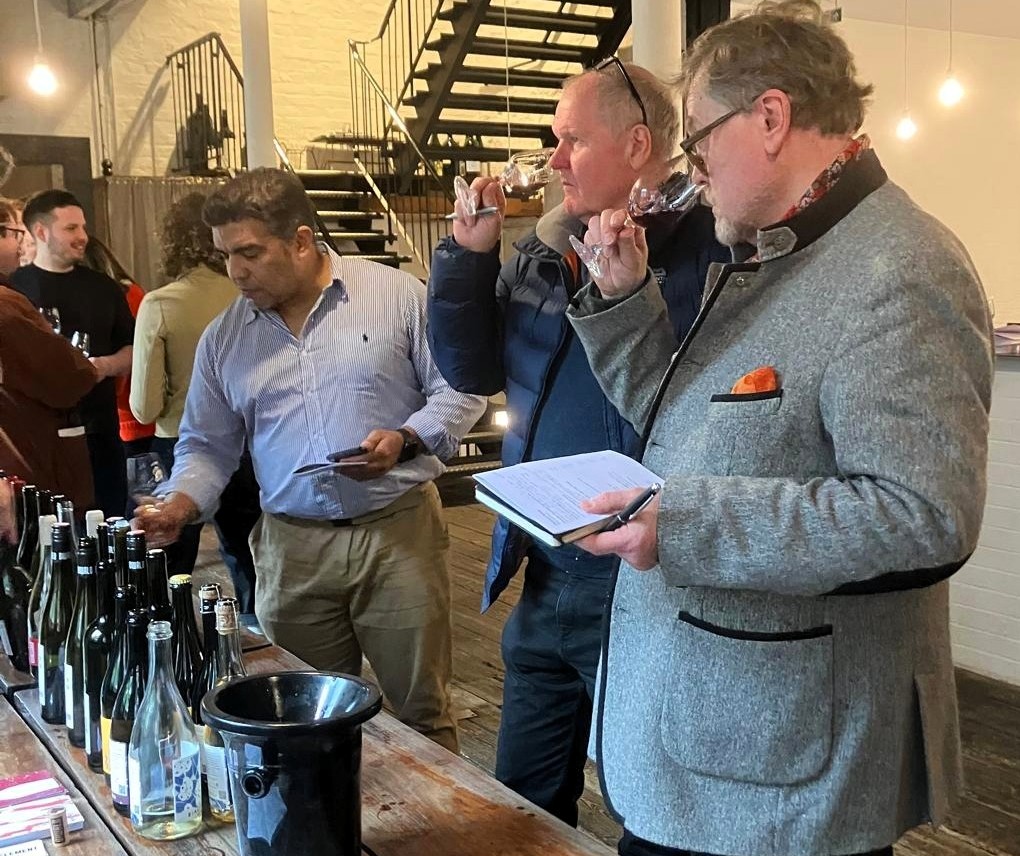
According to Chinese philosophy there are five elements which form Qi or life energy and explain natural rhythms of health and well being. Spring is represented by the wood element with new growth and healthy livers. Therefore, how appropriate for my first wine event of the year to be organised by Element Wines with support from Carte Blanche and Passione Vino. It took place in Edinburgh on March 3rd at Montrose restaurant and proved to be well organised with lots of space and lots of very interesting wines from these three companies and a few of their growers.

It is always a pleasure to meet up with my friend and fellow blogger, David Crossley and he has written three excellent reports on the event with detailed notes and information about many of the wines. I strongly recommend the reports even though I have deliberately waited to read them until after I had prepared this article so as not to be influenced by his choices. I decided to highlight my favourites from the tasting rather than write such an exhaustive analysis.

David (right) and myself

Things I didn’t expect.

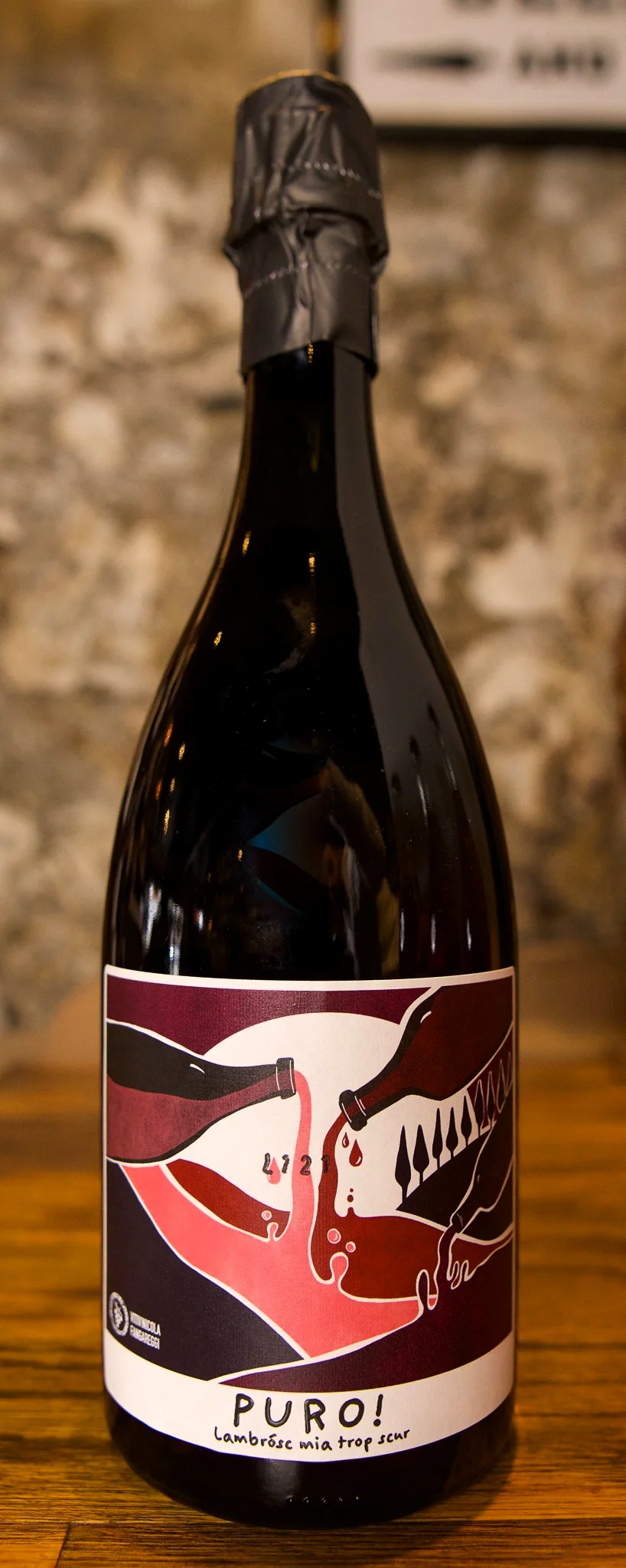
  • One of my favourite wines was a Lambrusco, the butt of so many jokes and disparaging remarks over the years. Happily a number of younger producers in the region are working to restore the reputation of Lambrusco wines. Made from the Salamino grape Puro 23 is the produce of Vitivinicola Fangareggi formed only in 2005 and run by a young man, Matteo, born and raised in the middle of the vineyards he now farms, converting them to organic viticulture since 2021. Bright red, bursting with fruit but clean and dry, Puro would be very easily consumed with a pleasingly low 11% alcohol. A perfect aperitif. (EW)
Mountain People Wines
  • My favourite wine of the day came from English grapes vinified in Wales. It should not have been a surprise because I have raved about the winemaker David Morris since first meeting him six years ago when he was making very good wines at Ancre Hill in Monmouthshire. I took some of his wines for Jeff Coutelou to taste and he praised them too. These days David has his own production called Mountain People Wine, still in Monmouthshire where he is revitalising vineyards with biodynamics including one from his former employer. From his own Parva vineyard I loved the wine listed in the catalogue as Rosé 23 but labelled in Welsh as Gwin Poble y Mynydd Rhosyn 23 made from a field blend of fourteen grapes, It had bright aromatic red fruit and was concentrated for a rosé but very clean with lively and lovely cherry and red fruit flavours. However, the wine I loved most was This Ain’t Macon 23, made under the Cowboys Don’t Have Curls label, from Chardonnay grown in Somerset. TAM was outstanding and I have since bought some bottles. Apple and white fruits burst out but there is a complexity from ageing in barrel with traces of oxidation. Weight and concentration yet there is lightness and drinkability. TAM immediately reminded me of top Jura Chardonnay and I was amused to see David make that same comparison. I repeat, David is a gifted winemaker. (EW)
  • The other top highlight was a sweet wine, Buccia Nera Vin Santo 20 from Tuscany’s Arezzo region. Vin Santo has become expensive and too many are far too sweet so that I would take some persuasion to spend that money on a bottle. However, this was a revelation. Made from Trebbiano and Malvasia grapes dried for four months, it had aromas and flavours of dried fruits such as figs and apricots but had good acidity and freshness. Very well balanced. (PV)

More expected.

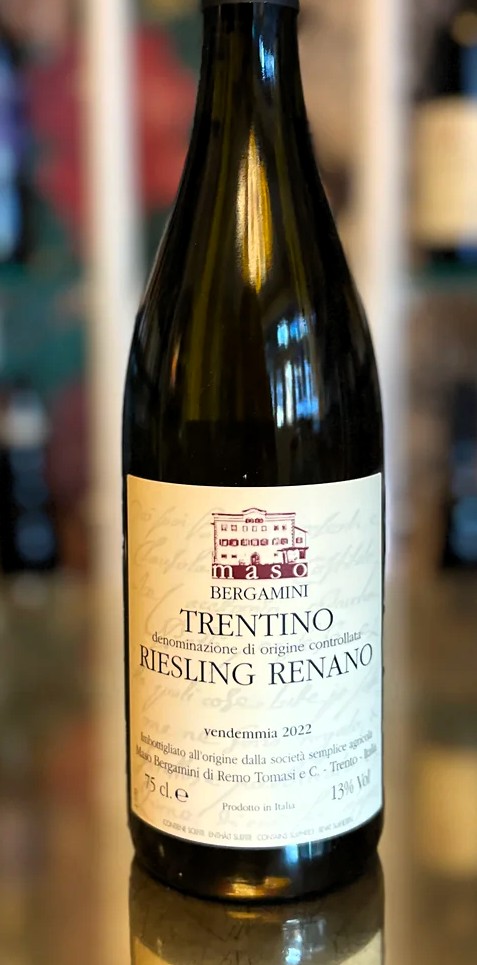
  • Riesling wins. Possibly my favourite grape of all because of its flexibility and flavours Riesling was a highlight on a number of tables. Element Wines were showing Weingut Diwald’s Riesling Fuchsentanz 23 which was classic Austrian wine with limey notes and a refreshing bitter notes. Carte Blanche had an Alsace version, Camille Braun’s Riesling Pfignstberg 21 from a very warm area of the region in the south. The winemaking is biodynamic and designed to highlight freshness and this Grand Cru had piercing acidity (in a good way), clean white fruits and a long time ahead of it if allowed. (The domaine’s Edelzwicker was also very good). Best of all though was on the Passione Vino table, Maso Bergamini Riesling Renano 22 from the north of Trentino. Grown at 550m of altitude, bringing freshness, this combines dry grapes with some harvested later to blend in some sweetness. The aromatics were lifted yellow fruits and these continued into the flavours which lingered long. Really lovely wine, possible my second favourite of the day.
  • The white wine trend continues. As well as the wines listed already the white wines stood out for me at the event. Element had two very nice Vinho Verde wines from Adega 100 Igual. I liked the red version very much but the white Sem Igual Branco 21 was the star, made from Arinto and Azal grapes and delivering the fresh, citrus notes you want from a Vinho Verde. The name means ‘without equal’ which is maybe an overstatement but this natural wine really was on form. Carte Blanche had Jose Antonio Garcia’s Palomino Corullon 21 which had great concentration of yellow fruit with texture from a few days of maceration. Only one barrel is made from Palomino in a vineyard shared in the Bierzo region with the celebrated Alvaro Palacios. Very expensive but I could see why.
from Vivino
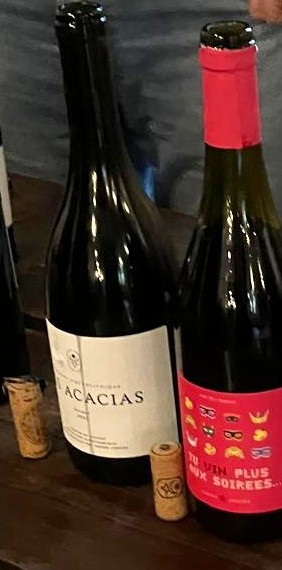
  • There were some good red wines on show too of course. Mas Del Périé (Fabien Jouves) is one of the stars of Cahors and his Les Acacias 21 showed depth and fruit worthy of its prized vineyard. (CB). I really enjoyed Sergio Genuardi’s Salgemma 22, a pure Nero D’Avola grown at high altitude in Sicily nicely balanced with fresh, dark fruits. (PV).
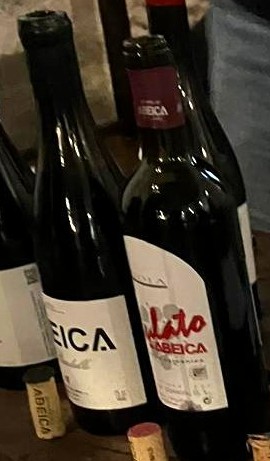
  • Most enjoyable of the reds for me was Abeica’s El Bardallo 22. A blend of red and white grapes, mostly Tempranillo and Viura (this is the Rioja region!) the wine is very aromatic with blueberry notes and has lightness of body but full flavours, spicy and smooth. Interestingly the best red was from exactly the same area José Gil’s Bardallo 23. Unlike Abeica’s the emphasis is on red grapes, 95% Tempranillo with just 5% of Viura. It is deep, concentrated yet fresh and already showing dark and red fruits though time will be its friend. I’ve never been a Rioja fan but these last two wines from Carte Blanche would convert me.

Thanks to everyone who organised the tasting, it was really enjoyable and the proportion of hits was very high, I could have included many more wines. Renewed and refreshed as the Chinese said.


3 Comments

More odds and bin ends

Some interesting reading of recent months is worth sharing I think with my comments added, not so interesting.

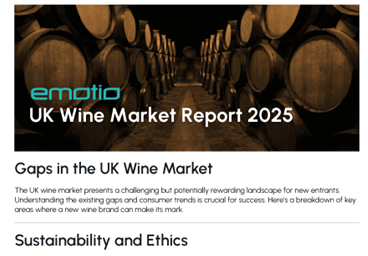
Emotio is a wine business offering digital and web based support to the drinks industry. I read their 2024 end of year report and saw that yesterday this had been updated on their website by Damon Segal. It is interesting because it follows up some of what I wrote last time about the decline in wine sales. The article says that though value of wine sales in the UK has risen the actual number of wine consumers has fallen by 12.5%, much higher than I expected. That is particularly the case with younger consumers who are turning to beer, cocktails and gin rather than wine. Depressing reading for those of us who are wine nuts and want to share their passion.

On the other hand there are some interesting trends in wine consumption. Encouragingly the main one is towards sustainability, drinkers seeking out low intervention and organic wines. Music to my ears, of course, though I do recognise that there are some outstanding conventional wines out there. People are also buying more online, increasingly drinking their purchases at home, purchases which are moving up in quality. That said supermarkets are still dominant and bulk wine sales form the backbone of wine sales. Even there though labels are starting to recognise the value of storytelling with label information, tying in with the Dariusz Galasiński article I quoted last time.

Amongst other trends: sustainable packaging such as lightweight bottles and alternatives such as bags, boxes and cans; low and no alcohol wines (this writer sighs deeply); English wines expanding their share of the sparkling wine market in particular; tax rises and supermarket offerings such as the excellent M&S Found range are encouraging consumers to experiment with new wines.

Elsewhere it has been widely reported that consumers across the world as well as the UK are shifting preferences towards white wines from reds. I looked at my own purchases and, once again, I am not on trend though regular readers will recall that most of my favourite wines of 2024 were white wines such as Edetaria’s Finca La Terrenal and Domaine Aux Moines’ Savennières Roche Aux Moines and, putting my money where my keyboard is, I have purchased some more of these.

I have also reported that I do believe that increasingly the most interesting wines made by Jeff Coutelou are his white wines, such as Macabeu, OW and Clairette. Indeed, he has expanded the plantings of white grapes including Spanish varieties such as Xarel-lo, Parellada and Malvasia de Sitges. That change is, of course in response to climate change in the region with increasing drought and heat.

Peilhan’s new Spanish grapes plantation

Climate change or chaos has also been the focus of much of my reading this year. Journals such as Nature Reviews Earth and Environment and the National Research Institute for Agriculture, Food and Environment give clear warnings about what is happening and what might follow. It reports:

  • Traditional wine regions are found in mid-latitudes where grapes can ripen with a little struggle. If the global temperature rises by 2° then 90% of coastal and lowlands regions of Spain, Greece, Italy and southern California will likely be unsuited for wine production (though cooler regions such as England, Tasmania, Washington State will benefit)
  • Winemakers will have to adapt to warmer climate conditions in the choice of grapes (like Jeff’s whites), methodology such as different vine pruning and training and, more controversially, irrigation
  • Increased temperatures will advance grape phenology, ripening in the hottest part of summer and harvest will be still earlier (already 2-3 weeks earlier than 40 years ago). This will affect grape aromatics, ripeness and maturity
  • Reduced yields because of drought
  • Damage increases from new pests and diseases and unpredictable weather episodes such as hail and heatwaves

Bleak predictions and yet all too credible given the presidency of Trump and that BP has announced they are moving back to investment in fossil fuel rather than renewable energy.

Another interesting read with an article by Julia Harding MW on Jancis Robinson’s website. It points out that much of the vocabulary around wine is ‘daft’. Many of the descriptors such as gentle and optimum are meaningless without context. In particular though words such as sustainable and clean are often used to describe wines. Is this virtue signalling rather than the result of meaningful work in the vineyard and cellar? In my view (and I know Jeff agrees) certification such as Ecocert or Demeter offers the consumer proof of genuine environmental responsibility on the part of the winemaker in vineyard and cellar. Using words on labels does not unless it is backed up by such proof.

And finally.. climate change may be boosting the English wine scene but will it help me to grow vines in North East England? For my birthday I decided to try and received two vines. The grafted vine is Bacchus, the white variety I think is English still wine’s best. The non-grafted vine is Regent, a hybrid red grape grown in Germany and England giving deep, musky notes. I’ll update on their progress, planting will not be for another month and I doubt much will happen this year. Orders for future bottles are not being taken!


Leave a comment

Odds and bin ends

Not a busy time on the wine front but the first tasting of the year for me is approaching and I have been busy reading about the world of wine, drinking some good bottles and I’m about to become a viticulteur. In the North East of England, so don’t expect to find anything on the shelves of your local merchant. (More on that micro venture soon).

Jeff reports that all is well so far in the Languedoc. As with all my winemaking friends in the region pruning has been the principal activity. They have had some cold weather which helps the vines to rest and prepare themselves for the seasons ahead and, hopefully, kills off some diseases and bugs. He has been busy bottling, racking and blending as his Instagram and Youtube channels affirm. Meanwhile in the Adelaide Hills James Madden of Scintilla Wines tells me that vendanges is under way, slowly at first due to great heat. The cycle of viticulture shown across the world.

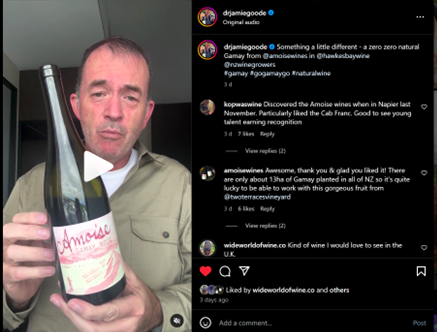
It was a real pleasure to see Jamie Goode posting about Amoise Wines who I highlighted on my visit to New Zealand last November and chose as one of my favourite wines of the year. It is good to see a young winemaker quickly earning such acclaim. I do hope that they are soon imported into the UK.

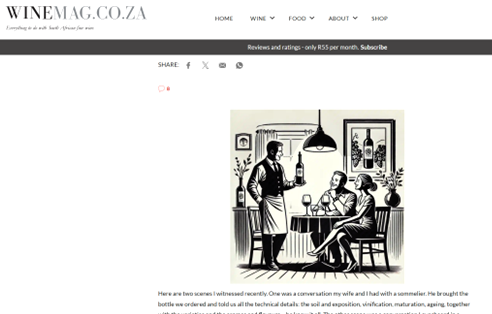
A couple of articles have grabbed my attention and I thought worth passing on. The first was from South African Winemag.co.za, written by Dariusz Galasiński. I think it includes a number of salient points about wine appreciation and the wider public based on an experience in a restaurant. He argues convincingly that while wine enthusiasts are captivated by details of vineyard and cellar practices, the average consumer sees them as mere background noise, adding little or nothing to their enjoyment of wine. Instead, Galasiński suggests, “Wine in a restaurant is not about technicalities, it is about stories.”

I think he makes a valid case. When I meet with winemakers, at their cellar or at a tasting, I am fascinated by the technical information, and how they approach the task of making the best wine possible from their grapes. However, I am aware that I am a wine snob and, with experience of working in the vines and more than ten harvests, I have an insight and interest not shared by most. Even then I love to hear their own story and that of the bottles they make, why they make it and its character. It brings the wine to life and personalises it, I have a connection between it and the winemaker which I will recall when I drink it later.

When I have led tastings I do pass on details of the wines, the grape varieties and some winemaking notes which make the wine interesting. I have tried to add some narrative of the vigneron and wine but, after reading Galasiński’s article I think I need to relate even more of the story.

The second article was by my friend Aaron Ayscough on his blog / website Not Drinking Poison. Aaron runs an occasional series called Droplets in which he comments about various events, articles and happenings from the world of wine. It’s fair to say that Aaron takes no prisoners with his views, he is a purist regarding natural wine and how it should be made and that he can upset other wine commentators as a consequence. In the most recent article Aaron wrote about the fall in sales of wine in general and natural wine in particular. The latest manifestation was some poor attendances at recent salons in the Loire. The reaction on Instagram and Bluesky was swift, with traditional commentators, such as a couple of older male Masters of Wine, seizing the opportunity to express their biases and generalizations about natural wine.

Though I don’t always agree with Aaron and so consider some of his views extreme I did feel the criticism was way over the top. Natural wine sales are stalled but then so are wine sales and per capita consumption in general. It is not a sign of people rejecting natural wines more a commentary on the world economy and the growth of an anti-alcohol lobby. There are more and more natural producers around the world, competition which impacts on some producers’ sales. Salons are a barometer of interest and sales but I do believe that Aaron is correct, there are just so many salons now that it is impossible for cavistes to attend them all. Even the winter Loire salons saw new events cropping up into what is a packed period of time. I do agree that consumers want wines to be drinkable and enjoyable and that faulty wines should not be available but, then, I have opened many a faulty bottle of conventional wine over the years. I had hoped such sniping was a thing of the past and that the benefits of the natural movement were clear, many conventional producers have cut back on sulfites and additives for example.

One interesting quote in the Droplets article was from American buyer Joshua Eubank of Percy Selections, “I’m still a believer in wine salon culture,” he says. “But I had a finite number of days to be away from my family and chose to prioritize one-on-one time with our growers.”

That ties in nicely with the Galasiński article. Knowing the winemaker and their story is the way forward to combat the pressure on sales. I hope that articles on this site about Jeff, James, Steeve and others are part of that storytelling. And that there will be more to come.


5 Comments

The Coutelou ’24 and best wishes for ’25

The start of each year brings Jeff Coutelou’s carte des voeux, with its satirical look at events in the world together with a summary of the previous year and the wines that will emerge from it. The poster this time features the chaotic political scene in France after last year’s elections and changes of government, neatly combining it with a call to restock with some of the best natural wines of the world, his of course.

2025 Carte des Voeux

Much of Jeff’s summary of 2024 focuses on the weather and complications which it has brought to winemaking in a region which is, seemingly, facing an intensifying crisis from worsening drought and relentless heat. Here is a précis of Jeff’s words.

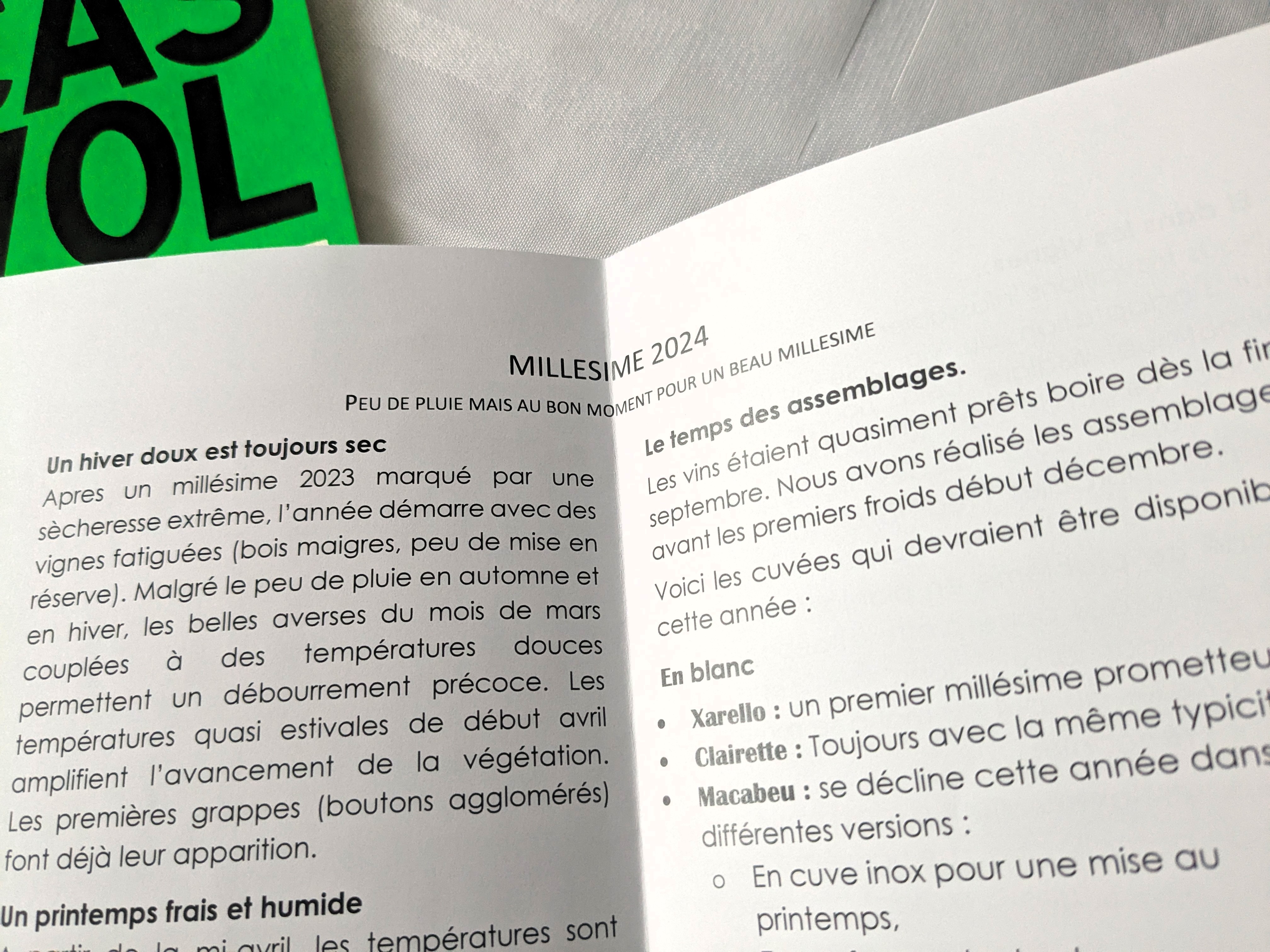
2023 left the vines much weakened by the extreme dry conditions, compounded by a lack of rain in the autumn and winter. However, March brought welcome heavy showers and they, together with mild temperatures, led to an earlier budding of the vines than normal. By early April bunches of little button-like grapes had appeared.

Mid April brought a cold snap which slowed the vines’ growth (I know only too well as that’s when I spent some time with Jeff!). The chill continued through May and flowering actually started a bit later than average in early June and around twelve days behind by the start of July.

Wrapped up warm in mid April
Early bunches of Xarel-lo, mid April

Summer brought only one real heatwave at the start of August, the good weather allowing ideal conditions for the grapes to mature, the red bunches changed colour (véraison) by early August, again a little later than recent vintages. Indeed the vendanges were almost ideal, beginning at the end of August and lasting around three weeks with cool nights and days which were warm but not too hot. The grapes ripened superbly, fermented easily leading to tanks full of balanced wines with alcohol levels to match. In Jeff’s words, “C’est un millésime presque parfait, marqué par la finesse et la fluidité”. (It was an almost perfect vintage, marked by finesse and fluidity).

By the end of September the wines were just about ready to drink but they were left to rest until the beginning of December, before the cold weather, when blending (assemblage) began. So, what wines will be available from this top vintage?

Whites:

  • Xarel-lo – the first crop of my favourite grapes of the vintage
  • Clairette – very good version of a wine with lovely character in recent years
  • Macabeu – there will be three versions; steel tank for a Spring bottling, another from concrete egg and the third which was aged on skins in amphora
  • Grenache Gris – also aged on skins in amphora
  • Another cuvée which will be blended at a later date
Xarel-lo

Reds:

  • A glouglou – Mourvèdre, Cinsault and Muscat
  • Ploutelou – Aramon and Cinsault for one of the new favourites of recent years
  • 5SO – pure Cinsault
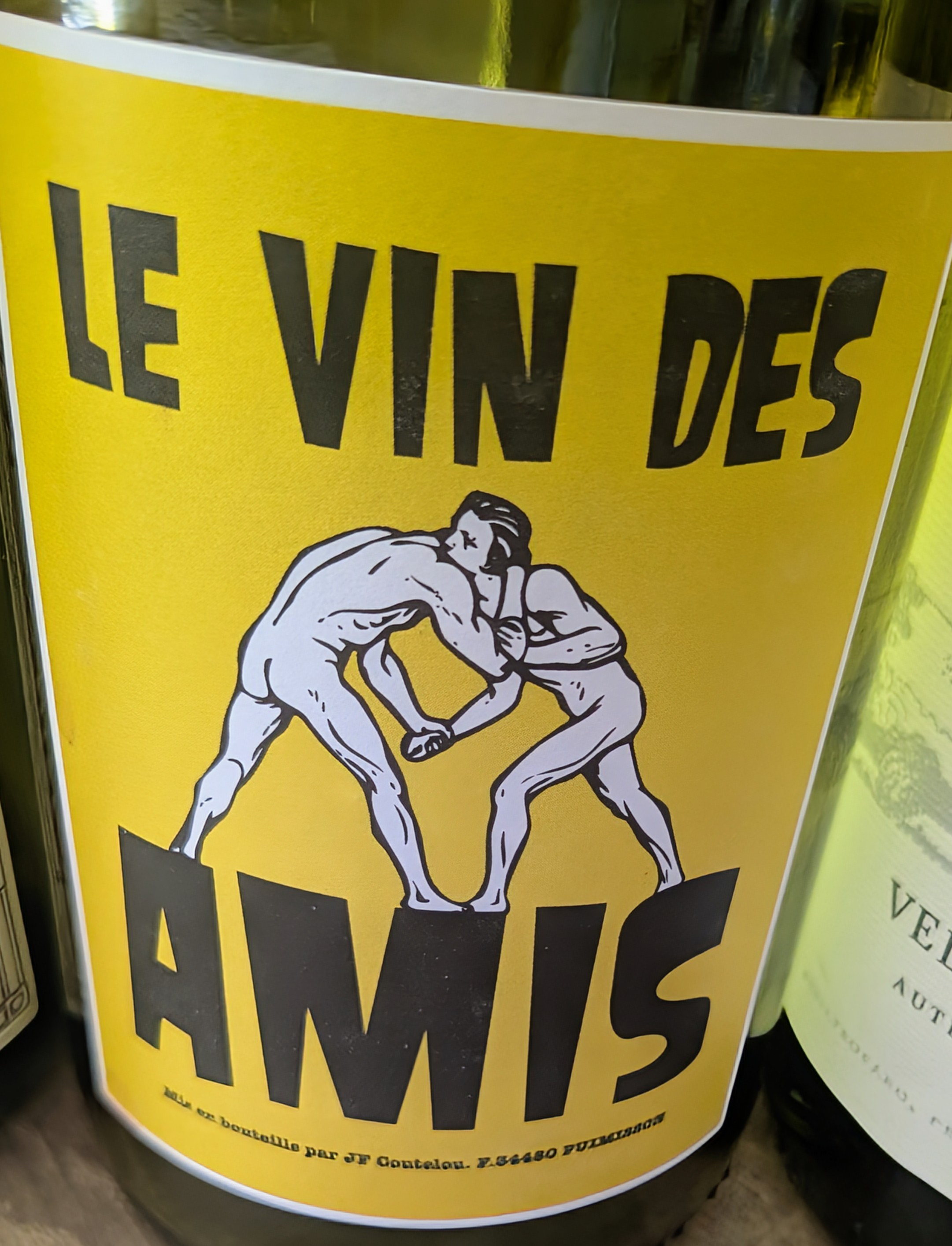
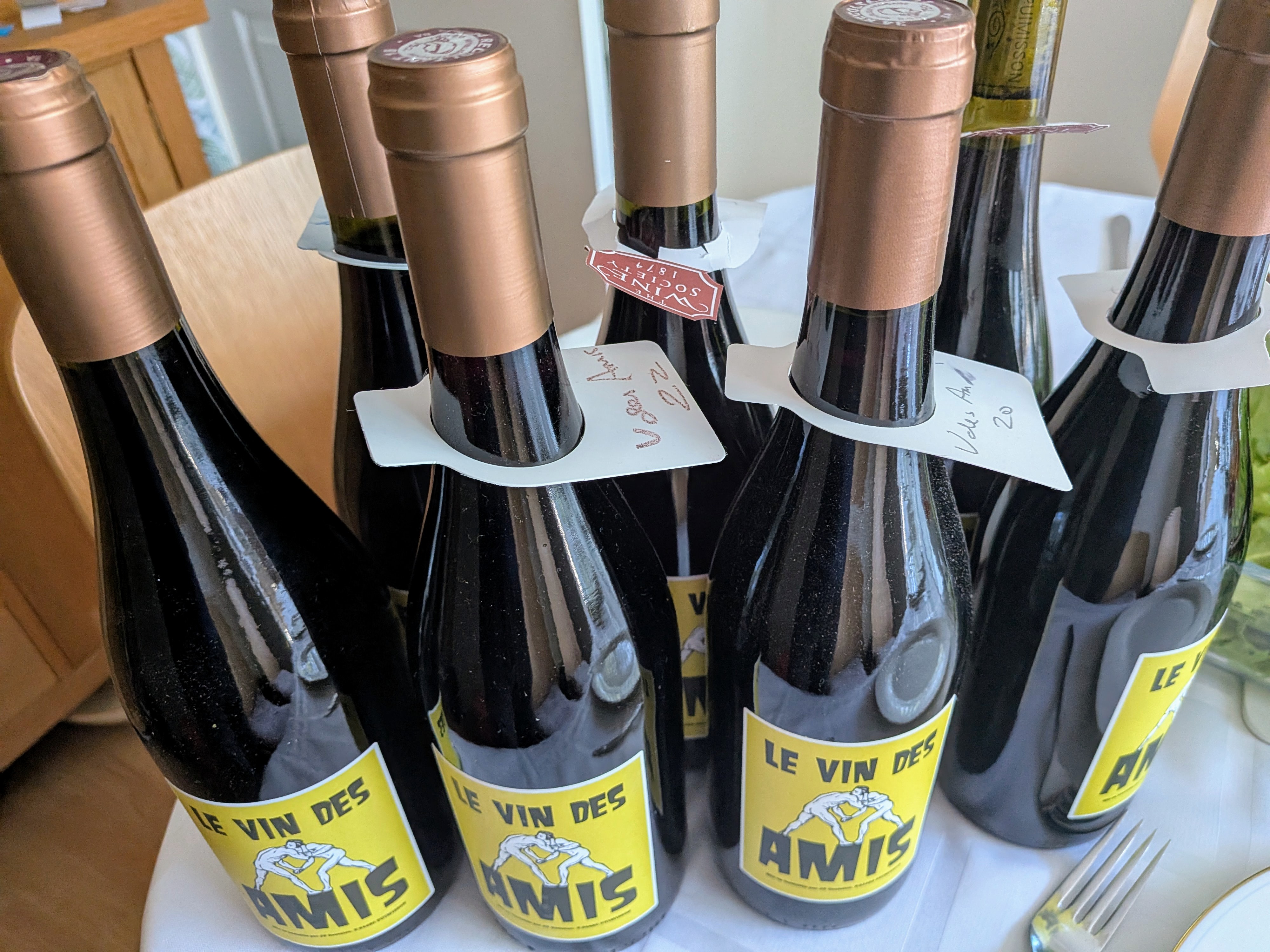
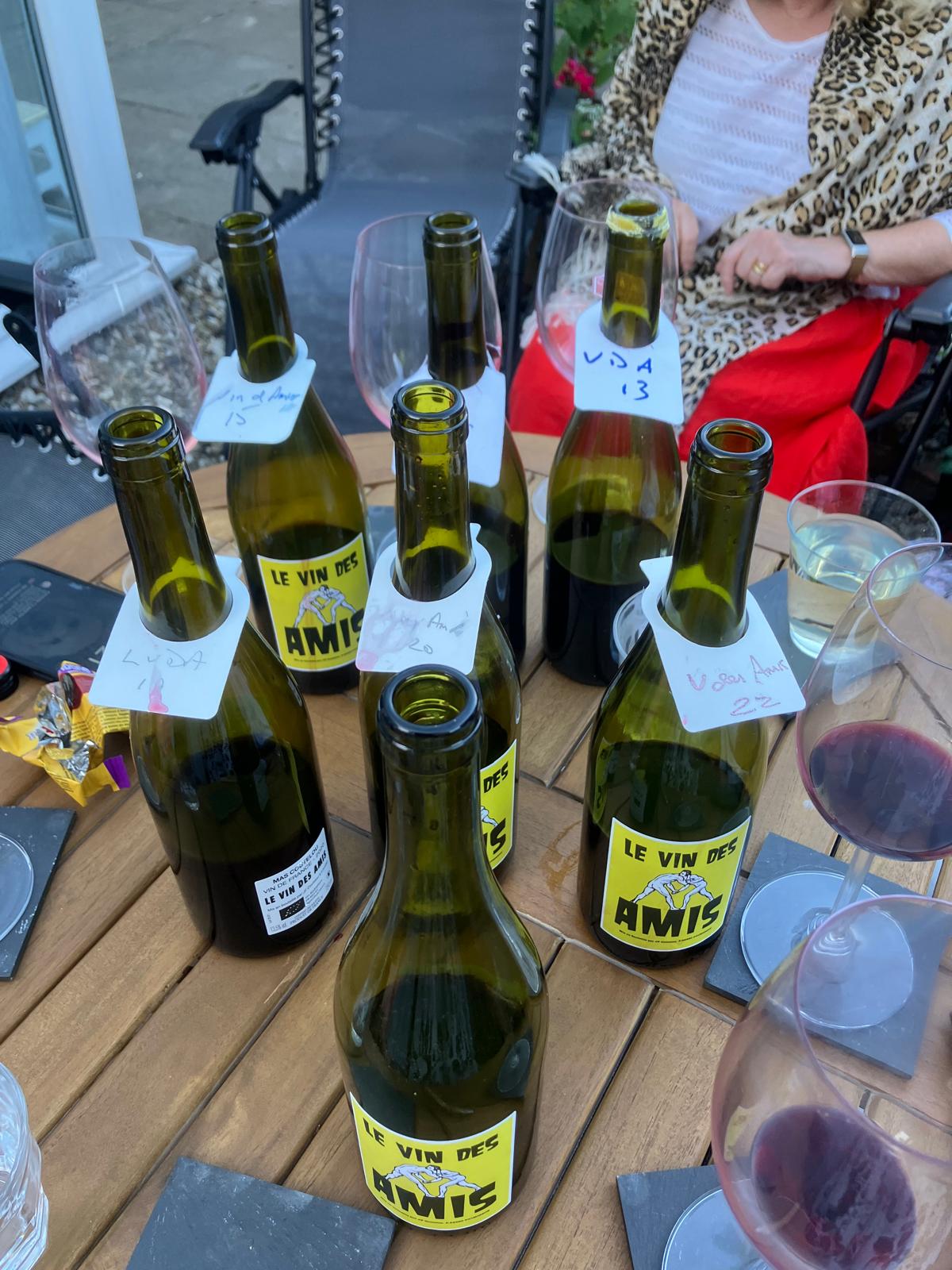
  • Vin Des Amis – Cinsault, Syrah and Grenache
  • Grenache Mise De Printemps – another favourite of recent years 100% light, fruity Grenache
  • Sauvé de la Citerne – Syrah, carignan and Mourvèdre
  • Classe – Syrah with a small addition of Morrastel ( a new blend for this Coutelou classic)
  • Rome – a complantation of my favourite vineyard, mostly Cinsault but some Grenache and Muscat

There will be an OW and Macaboeuf 2023 (Macabeu raised in egg) released in Spring of this year. Much to anticipate too with a Bibonade recently disgorged from 2023 grapes aged for 26 months and available to buy from Spring.

In the vines Jeff is all too aware of having to adapt his vineyards to cope with climate change / chaos. The frost of 2021, drought every year from 2022 have brought weakened vines, raised levels of vine mortality and low yields. To face this Jeff has planted root stock and grape varieties more adapted to the new reality. The big new parcel at Peilhan, for example, has been planted with grapes such as Malvasia de Sitges, Parellada and Llardoner. It looks in magnificent shape. Unfortunately in the same vineyard the hedge has been burned down for a third time. Watering and replanting will hopefully bring a renewal of life and a defeat of vandalism and stupidity.

The new plantation of Peilhan

Covid, economic crisis, climate hazards, war, political uncertainty in France, America and the rest of Europe and a marked decline in wine consumption – these are all headwinds facing winemakers. Nonetheless Jeff sends his wishes for happiness, health, sharing and resilience to face the challenges of 2025.

Previous years’ posters


1 Comment

The case for 2024

I have been fortunate to drink or taste a lot of very good wines this year, I am here to make my annual choice of twelve wines for my case of the year. Apparently the trend generally is towards white wines and I seem to reflect that trend. My top three wines have all been white wines and I could have added quite a few more to the case but wanted to balance it out. Let’s start with two tasted in good restaurants during my trip to South West France in April. The first, from magnum, was a beautifully balanced older Jurancon with lovely fresh acidity and citrus but the typical hint of sweetness too. The Bordeaux Blanc was clean, fresh and complex, if this is an example of why Bordeaux producers are switching to white wine production then it clearly justifies that move, delicious.

The only orange wine in this year’s selection was one I had cellared for a few years, Nando Primorska 2017. Full of deep, nutty, citrus and spice aromas and flavours, textural and growing in complexity with every sip. The Becker Grauburgunder 2021 has appeared here a few times. It is a wine of great complexity for a relatively cheap bottle. Lots of spice and fresh acidity with lingering white fruit notes. Sadly, it is no longer available in Majestic stores.

Two from my travels and both would be on the podium for wine of the year. I had Finca La Terrenal 2020 in Cambrils, Spain. The wine is Garnacha Blanca and the Terra Alta specialises in the grape. A truly complex, balanced wine walking a lovely line of freshness and fruit. The other is a bit of a compromise. A visit to Anton von Klopper’s fabulous Lucy Margaux in the Adelaide Hills with next door neighbour James Madden (see below) involved a fabulous range of excellent wines. My favourite was a Sauvignon Blanc though every wine was outstanding. I think this is the handmade label of that wine before it is stamped with the details of the cuvée. Anton’s American assistant worked with the Tscheppes in Austria who make exceptional Sauvignon Blancs and maybe his influence reached this wine. A fantastic range.

To reds. At the Dynamic tasting in London in February I came across many good wines but the Cosse Blaye 2020 was one which stood out for me. Classically Bordeaux in style (and better than the ones I had in that city two months later) but with added freshness and lifting red fruits, light yet full. A visit to my friends at Mas Des Capitelles in Faugères was another memorable tasting. This is my favourite part of the Languedoc for red wines and the Laugé family make undersung wines full of rich, garrigue influenced red wines balanced by lovely freshness. They deserve more attention, including their patience in ageing the wines before release. Crescendo 2019 comes from 80 year old Carignan vines with Mourvèdre and Grenache too. Buy!!

I very much enjoyed a tasting of Basket Press wines in Edinburgh in springtime and it fuelled an interest (and purchases) of Central and Eastern European wines. There were many good wines, my standouts white and red were made by Vykoukal in the Czech Republic. The standout was the Cabernet Moravia 2021 made from this cross of Cabernet Franc and Zweigelt. Deep, lively red fruits and very persistent, this was a memorable bottle and I have bought a few bottles since. Xingloei 2021 is a wine made from Tannat and Cabernet Franc grapes in the Pyrenees and has typical tannins but they are well integrated and though I’d decant this bottle before drinking it is full of very attractive, spicy plum notes. An unexpected pleasure.

My trip to Australia and New Zealand allowed me to taste several excellent wines and the following two were my standouts, one from each country. Payten and Jones in the Yarra Valley was my favourite winery visited by far and the Nebbiolo 2016 was wonderful, certainly reminiscent of Italian examples but with added Australian fruit. The Pinot Noirs of Otago won me over this year and the best was certainly this youthful 2023 from High Garden made by the excellent Jane Parr, as good as just about any Burgundy that I have enjoyed.

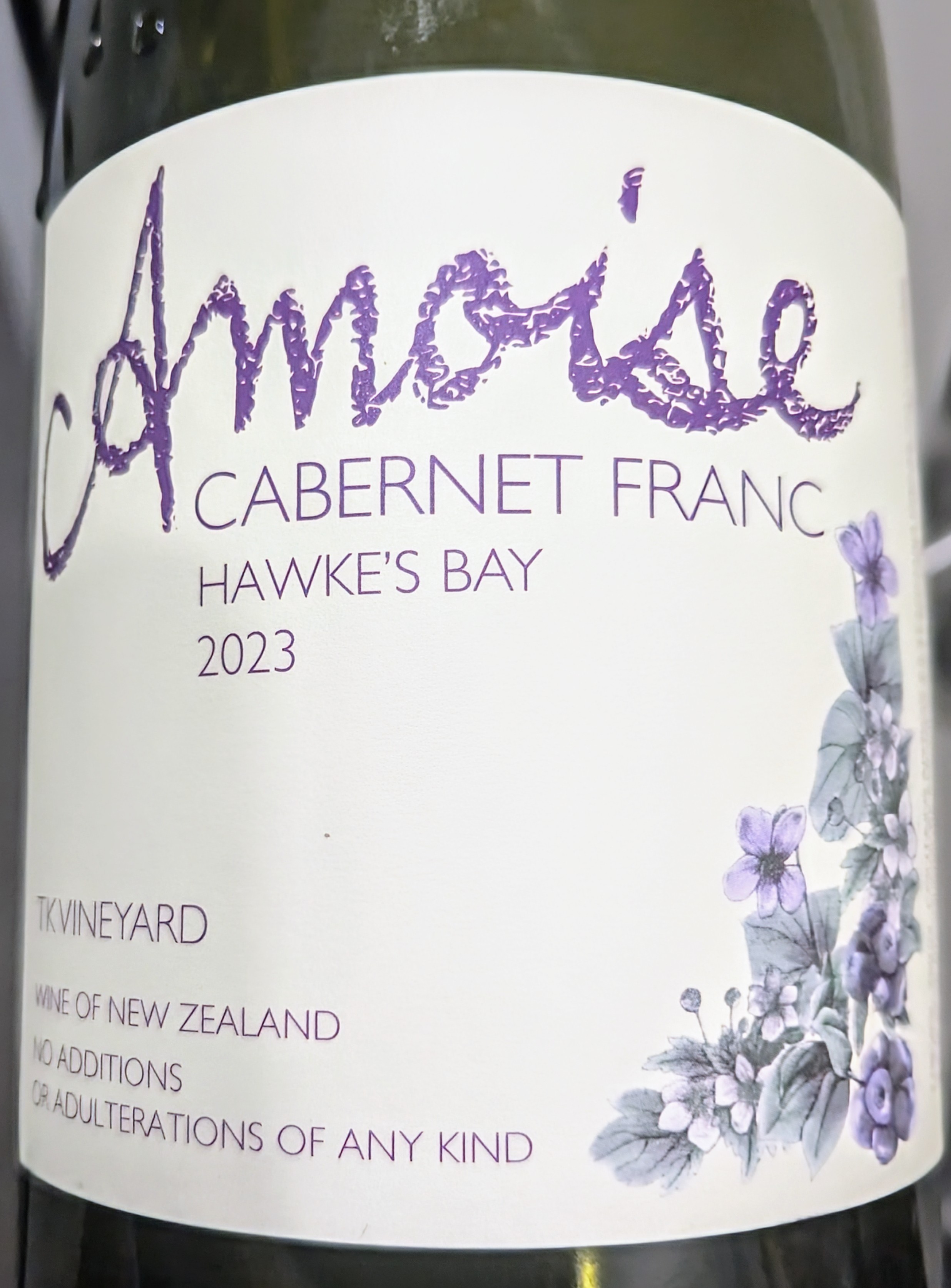
2024 though will be the year of Cabernet Franc for me. I have struggled with the variety for most of my life, put off by too many under ripe Loire examples in the past. Times have changed, for climate and winemaking, and I experienced so many great bottles of Cab Franc wines this year, it became almost embarrassing for me. The Loire visit in April brought lots of good ones, Bordeaux examples too. The white wine made by Bobinet from Cab Franc grapes was the biggest surprise, it was lively and exciting. Maybe it is recency bias but the most memorable bottle was the Amoise Hawke’s Bay 2023 I bought in Napier, rich fruit but with finely judged balancing acidity. Made by a new producer Amy Farnsworth, I’d love to be able to source more of her wines.

Wines with friends. One of the best things about my time with Jeff Coutelou (a decade now!) has been making friends with many visitors to his cellars. I have been fortunate to visit the cellars of two of those this year. I stayed a few nights with James Madden of Scintilla Wines in the Adelaide Hills and he is making lovely, clean, fruity wines with good depth and persistence. The Forrest 2023 Chardonnay was possibly my favourite bottle but he is making many very good bottles. In August I visited Steeve Dejardin in his new Minervois winery, Domaine du Partage. He has just a few hectares of mainly Carignan and Syrah and his first vintage was of a quality much greater than anyone has a right to expect. Nouveau-Nez 2023 is Carignan based and classic Languedoc spice and red fruits. And the maestro of course delivers more great bottles, Classe 2020 perhaps my favourite this year though the white wines are becoming ever more interesting.

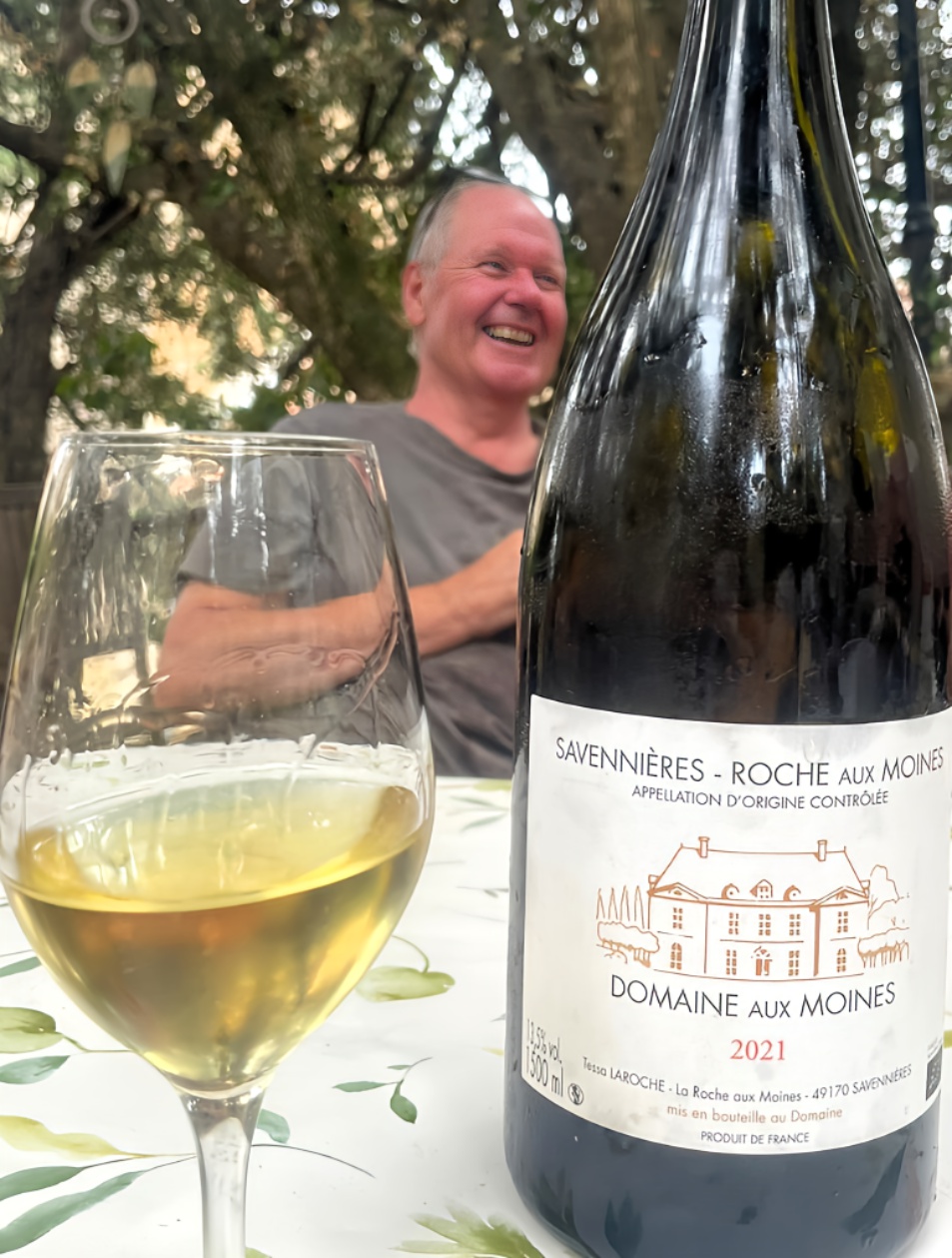
To my favourite wine of the year. At Noble Rot’s restaurant in February I ordered a bottle of Savennières Roche Aux Moines 2021 from Domaine aux Moines. It was fabulous and I predicted that it would be unlikely that I would taste a better wine this year. I stick to that. I visited Tessa Laroche in April and that only confirmed that she is a great winemaker and this magnum opened on my last day of vendanges proved it. No wonder I look so happy in both photographs! Chenin Blanc was certainly the white grape which I enjoyed most in 2024, the Loire ruled.


Leave a comment

New Zealand

Apologies for the lack of a post about my wine experiences in New Zealand. Whilst there I was caught up with just appreciating being there and since my return a week ago the jetlag has not helped me focus. Plus, I’m a bit hesitant about what to say.

I absolutely love the country of New Zealand (Aotearoa) let me make that clear from the start. The scenery is incredible, the people are very welcoming and friendly and there is so much variety across the country from the warm beaches of the Bay of Islands to the fjords of the west and the wildness of the southlands. Add in volcanoes, earthquakes, unique wildlife and you begin to see the fascinating nature of the country. If I was a lot younger then I’d seriously consider living there. So, why am I hesitant to speak about the wines?

Art deco cinema, Hastings (left) and Queenstown

New Zealand has a long tradition of wine production dating back to the 19thC as immigrants from Europe took vine cuttings with them and made wine principally for their own use. One of my winery visits was to Mission Estate in Hawke’s Bay, the country’s first winery founded in 1851 by French missionaries. It was not until the 1970s though that this nascent winemaking blossomed into a large commercial venture. The UK’s entry into the Common Market (EU) made exports of wool, lamb and other products more difficult and many farmers turned to wine. The early success of Sauvignon Blanc wines with their upfront, appealing tropical flavours quickly brought names like Cloudy Bay, Hunter’s and Jackson to the fore around the world.

Mission Estate
Cloudy Bay

As I became interested in wine in the 1980s I enjoyed those Savvies (as the Kiwis call them) and still do but I also began to appreciate some of the other wines being produced. The key bottle was Te Mata Coleraine which opened my eyes to the possibilities of NZ red wines, in this case Cabernet Sauvignon and Merlot. It was a real treat. therefore, to be able to visit Te Mata winery and taste some of their wines though, sadly, not the Coleraine which now retails for very large sums and was the draw for most of the many visitors to the cellar door. Incidentally, if you are in that area then drive (or walk if you are brave) up Te Mata hill itself for the stunning views it affords.


Coleraine vineyard at Te Mata
Spectacular views from Te Mata hill

So, why am I hesitant to speak about the wines? Answer the question!!

Well, though I enjoyed many very good, interesting and enjoyable wines whilst in New Zealand I have to say that the majority were a bit dull, interchangeable regardless of place or winery. As well as and tasting a large number of wines during my stay I visited fourteen or fifteen wineries and they became predictable, offering pretty much the same formula of Sauvignon Blanc, Pinot Gris, Rosé, Pinot Noir. I won’t name names here but some of the wines I tasted in Hawke’s Bay were very much the same as the wines I tasted in Marlborough, Canterbury or Otago and so on. Formulaic, commercial wines made for easy drinking, often passing off time in oak as if it was a magic formula to good wine.

Now, there is a place for such wines and many people do enjoy them but for me, they lacked any real character or interest. Like Australia many New Zealand wineries seem to exist because of the cellar door experience, restaurants and bars. Some of these, like Cloudy Bay, were excellent and I like the idea of going to a winery and enjoying food and wines, it is very appealing. However, quite a few were aiming for quantity rather than quality. Good for them if that makes them a living but it doesn’t make necessarily for interesting wine for a wine enthusiast (snob) like me.

Jackson Estate’s cellar door designed by the set designer of The Hobbit films, it reconstructs the original cellar door (photo from tripadvisor)

When wineries offered something different, whether that be grape variety or winemaking methods, it lifted the spirits. I tasted some excellent wines and I will be highlighting some of those next time. It is easy to forget that the NZ wine industry is young and is catching up with the Old World and its experience. Many of the vineyards are vast swathes of Sauvignon Blanc (75% of Marlborough vines) on flat land and the wineries have massive tanks of wine. The artisanal side of winemaking is younger still and wineries such as Hans Herzog, Felton Road and Valli are beginning to spread their influence but it’s an uphill struggle as yet. The natural wine scene is tiny though The Hermit Ram, Halcyon Days, Cambridge Road are making good wines and I discovered one exciting new addition. I am sure that in a decade or so there will be more variety of wine being produced.

It is good to go into any bar in New Zealand and find wines readily available at good prices by the glass or bottle. I hope that some of those will experiment a bit more and help build a demand for variety. One such is Matisse in Napier which offered the well known wines of New Zealand alongside new producers and with sections on its list for unusual grapes. On more than one occasion I was warned in other establishments that some wines were organic so might taste different. I hope that attitude can be put to one side. There is so much going for New Zealand wine; the climate, clean air, fresh water and some producers are using those natural blessings to make wine I want to buy and drink. I just hope that more will follow their example and not just settle for being the same.

Each of the 40 vintages of Cloudy Bay Savvie


1 Comment

Yarra Valley visit

From Sydney’s most famous wine region to Melbourne’s, the Yarra Valley. Another name which featured prominently in my early wine education. Names such as de Bertoli, Coldstream Hills and Yarra Yering were part of that learning the latter two showing that Australian wines weren’t all big and gutsy. Pinot Noir from Coldstream Hills was a particular favourite.

On a brief visit to Melbourne, and without a car, options were limited for getting to the Yarra but we chose another half day visit with Local Way, a good choice it proved to be as our guide Ray was knowledgeable, amusing and helpful. Other options involved 10 hour days of 6 or 7 wineries and whilst that has some appeal the half day suited well, offering a flavour of the region and its wines.

There are ninety wineries in the Valley about an hour’s drive out of the city. Like the Hunter many offer tourist cellar door visits with tasting rooms, cafés and restaurants, again weekends are peak time for them being open so the visitor needs to weigh up what’s available versus how busy that might be.

Grapes just forming after flowering

The Yarra is perhaps less scenic than the Hunter (my view only) but it opens into rolling hills and grasslands with vineyards spread out, certainly not concentrated in French fashion. Many take advantage of slopes but not all, irrigation seems fairly universal.

Our first visit was to St. Hubert at the entrance to the Valley, apparently the second oldest winery of the area. The tasting room, restaurant and art gallery are in a new building set in beautiful grounds, little wonder that their website concentrates largely on tourism, events, weddings etc. We were offered the basic tasting wines and the estate’s entry level. They were fairly innocuous in truth, clean and light fruited but not a lot of character. The Pinot Noir was well made and the pick of these. In fairness our host did open their Reserve Cabernet Sauvignon 23 which had only been in bottle for three weeks and there was a lot more depth and character there. Highlight though was the art gallery with some beautiful aboriginal art on display.

On to Helen and Joey, just up the road. Another beautiful setting with new buildings and winery constructed just last year though the estate has been running since 1996 having been purchased from someone who grew grapes to sell on. The wines were much more characterful, the Blanc de Blancs having a cleaner, more refreshing fizz, the Pinot Grigio having more depth and aromatics. The 2020 Wayward Pinot Noir here, made in old oak barrels showed good Pinot character, nice to see a commercial winery hold back wines until they are at their peak. There was even a no SO2 Merlot, NoSo 23, which was ok without exciting me.

At this point we had a choice to go into Healesville, try some gin or go to a third winery. Fortunately (and unsurprisingly) we chose the latter and what a great decision, easily the best wines I have enjoyed in a month here in Australia. Payten and Jones is in Healesville and is a small, organic winery and farm, see the photo for their story.

Andy, our guide, opened up a range of wines from entry level to more serious and they were genuinely exciting. Lots of fruit character but serious, complex and well structured with a freshness and drinkability that pleased me after so many fatiguing, woody wines in the last few weeks. The entry level Chardonnay, even more the Pinot Noir, showed good character and fruit but step up to the next level, named Hollow Bone and there was more depth and character. The Hollow Bone Chardonnay 23 was oaked but so well judges, complimenting the fruit not mastering it. The Hollow Bone Pinot Noir 22 was made with 40% whole bunch from a single vineyard and made in a plastic egg! The results were exciting (priced at $40 a real bargain) and the plastic egg seems to work, Adam and Behn praising the way it energises the wine, just as Jeff Coutelou does with his concrete eggs. They have stainless steel versions too.  The Pinot clone MV6 is used because it has been phylloxera free from the start. Seeing all the vines without grafts is quite an eye opener, they look so much thinner and neater. Long may it remain so.

I really enjoyed the Sangiovese with a character much closer to Chianti than the previous examples I have had this holiday, good acidity and freshness to cut through the red fruits. Nebbiolo 2016 was actually made in the winery by a friend of Payten and Jones and was delicious, the years have mellowed the tannins and the wine has fruit and tertiary forest notes.

Chatting with Andy and Behn

Best of all though was the Mataro 22, FFS. Now, I struggle with Mourvèdre a lot of the time, too many examples of leathery, composty notes and I know that it is a grape which can be a swine to grow. It hates water and any serious rain can cause the grapes to turn to much in a few hours, indeed Andy reported that is what happened to them in 23. Thus Mataro 22 though was singing. Dark, plummy fruit, freshness and acidity and definite aromas of mushroom and forest. The grapes were on skins for 8 months and extracted deep colour but still soft tannins. I admire their boldness in leaving the juice on skin for so long, and that bravery has been well rewarded. A great wine. (The name comes from lockdowns, with the wine first made in 2020 names F*** Twenty and the next year S*** Show).

It was good to talk with Behn and swap notes and stories before we had to leave to return to the city. Payten and Jones have a UK importer, ABS Wines, please leave some for when I get back!!

Stainless steel egg

There was a lot of beautiful scenery in the Yarra, it would have been good to spend more time there and visit some of those educational producers from my younger days as well as the excellent producer Mac Forbes who is based here though does not offer cellar door. And, with Payten and Jones, I have a new favourite to remind me of this visit and another excellent wine region.


Leave a comment

Hunting my wine past

I have recorded on here before how Australian wines formed a big part of my introduction to wine. One of the regions which cropped up repeatedly in those days was Hunter Valley with producers such as Tyrrell’s and McGuigan amongst others. Unlike the Barossa with its big, oaky wines the Hunter was a little more restrained though still in thrall to the power of oak. As we embarked on another trip to Australia I thought it would be good to visit a region which I thought I knew.

How little I really did. Arriving in the valley the first question was, ‘where are the vines?’ I had lazily expected a valley like the Loire or Rhone with vines on the slopes of a narrow strip of land bordering the river. Well, the Hunter is huge and looks nothing much like a typical valley. There are hills but it is a flattish area with sporadic patches of vines planted, seemingly at random. There are around 160 wineries producing about 3% of Australian wine, based on a mix of five soils, from alluvial sands to limestone and basalt. The wineries are generally geared around tourism, proximity to Sydney bringing large numbers out especially on weekends. We were there midweek and most of the winery restaurants were closed but it was less crowded, plan for your preference. It is Spring here in Australia and the vines are just in flower, a lovely time to visit.

24 to the left, the 2012 right

On arrival we went for a drive around armed with a fairly useless map but the wineries are all over and it was a question of which one to try. We settled on Tamburlaine, an organic winery with white wines made here in the Hunter and its reds up in the Orange area. A warm reception in the visitors’ centre from a knowledgeable and friendly woman who led us through the white wines in particular. The name Tamburlaine refers a Mongol warrior though it was named in honour of the first owner’s son and his battle with cerebral palsy. The wines were fresh, clean and characterful. I had forgotten how Semillon is such an important grape here yet all those years ago it was a regular purchase. We were kindly served a 2012 as well as a 2024, Semillon ages so well developing all sorts of complexity and a golden hue. Verdelho too was to feature on many of the visits of the next two days and became possibly my favourite grape of the visit.

How to sample wines with a car? Well the answer was to book a tour, there were a number available though I opted for Two Fat Blokes and their half day experience and what a good decision. Three wineries with different approaches, a cheese and wine pairing and a very enthusiastic and helpful guide who drove our group of six. First up was the Two Fat Blokes themselves (sadly only one is still with us) whose wines are called after the seven deadly sins. Good, well made and honest wines matched with a range of seven excellent cheeses, particularly a sensational lime and black pepper labna. Note the patch of Shiraz out the front but the winery was an example of a methodology I had again seriously underestimated.

After so long with Jeff Coutelou and being in France I am used to producers making wines from their own grapes. Of course many French winemakers do négociant production too from bought in grapes but here it was the norm. That Shiraz patch produces around 400 bottles, nowhere near enough for a commercial venture. Every producer seems to buy in grapes often from great distances. If it comes from out of state then the grapes must be transported as must or juice as The Hunter has no phylloxera so no whole bunches can be brought in to lower any risk. (Not sure how that makes a difference but there we go).

Oakvale winery was next on the tour and another organic producer though only around 6% of Australian wine is made this way. I liked the wines here and it was interesting to compare the Semillons and Verdlhos from the three producers, the Verdelho here was richer but had a nice clean streak of acidity. The winemaker is James Becker who has his own winery with his wife but unfortunately they were closed for visits as it was probably the winery I most wanted to try. He is just starting to experiment with amphora and concrete egg at Oakvale. The Shiraz 22 was very good too, good weight and red fruits and persistent.

Finally we moved on to First Creek winery. I thought these were the best wines of the morning overall but especially an older Semillon (2015) which was kindly shared with us and revealed again how this variety really takes on another character with age, adding much more concentrated citrus notes. The Verdelho was very good. Chardonnays generally disappointed all morning, oak seems to be de rigueur and though its use was moderate and carefully judged the wines lacked real character often a little flabby. Here though First Creek aim for a more mineral, lean style and the wines benefited, clean and fresh with nice fruit.

The Cabernet Sauvignons were also a little underwhelming, lacking mid weight. The Shiraz wines were nice, often more akin to French Syrah, avoiding the big blousy style and aiming for more subtle fruit and balance.

After a suitable break we headed to one last winery and decided on Brokenwood, one which I know from purchases in the past. This was a serious visitor centre with tasting bays all around a large hall and several young people in charge.

We struck lucky with James who poured us fourteen wines instead of the seven we should have had. I was on sip only duty being the driver but this was a very good tasting. Three Semillons, three Chardonnays, different Shiraz wines and others too. It was good to be able to compare the bottles and see the quality levels. Once again James explained that much of the fruit was bought in to make some of the bottles though Brokenwood has some extensive vineyards of its own including the Graveyard which provides one of Australia’s iconic wines according to expert James Halliday. Top of my class was the Tallawanta Shiraz 2019 with layers of flavour, red fruits, plums, fresh acidity too. Unfortunately, I have expensive taste, $150 a bottle! To be fair I liked the Oakey Creek vineyard whites more than the more expensive bottles. All of these were from local grapes, maybe home production wins out after all. The Cabernet was from Margaret River in Western Australia, a huge distance away!

My second favourite Shiraz from the visit, from Margan in the Upper Hunter and some of that delicious Labna

A hugely enjoyable trip to The Hunter Valley, it more than matched any expectations while confounding them at the same time. If you were planning a visit think about weekends when there will be more open restaurants and wineries but it was much quieter midweek. I left wanting more, always a good sign.