amarchinthevines

Learning about wine, vines and vignerons whilst living in the Languedoc


Leave a comment

Hunting my wine past

I have recorded on here before how Australian wines formed a big part of my introduction to wine. One of the regions which cropped up repeatedly in those days was Hunter Valley with producers such as Tyrrell’s and McGuigan amongst others. Unlike the Barossa with its big, oaky wines the Hunter was a little more restrained though still in thrall to the power of oak. As we embarked on another trip to Australia I thought it would be good to visit a region which I thought I knew.

How little I really did. Arriving in the valley the first question was, ‘where are the vines?’ I had lazily expected a valley like the Loire or Rhone with vines on the slopes of a narrow strip of land bordering the river. Well, the Hunter is huge and looks nothing much like a typical valley. There are hills but it is a flattish area with sporadic patches of vines planted, seemingly at random. There are around 160 wineries producing about 3% of Australian wine, based on a mix of five soils, from alluvial sands to limestone and basalt. The wineries are generally geared around tourism, proximity to Sydney bringing large numbers out especially on weekends. We were there midweek and most of the winery restaurants were closed but it was less crowded, plan for your preference. It is Spring here in Australia and the vines are just in flower, a lovely time to visit.

24 to the left, the 2012 right

On arrival we went for a drive around armed with a fairly useless map but the wineries are all over and it was a question of which one to try. We settled on Tamburlaine, an organic winery with white wines made here in the Hunter and its reds up in the Orange area. A warm reception in the visitors’ centre from a knowledgeable and friendly woman who led us through the white wines in particular. The name Tamburlaine refers a Mongol warrior though it was named in honour of the first owner’s son and his battle with cerebral palsy. The wines were fresh, clean and characterful. I had forgotten how Semillon is such an important grape here yet all those years ago it was a regular purchase. We were kindly served a 2012 as well as a 2024, Semillon ages so well developing all sorts of complexity and a golden hue. Verdelho too was to feature on many of the visits of the next two days and became possibly my favourite grape of the visit.

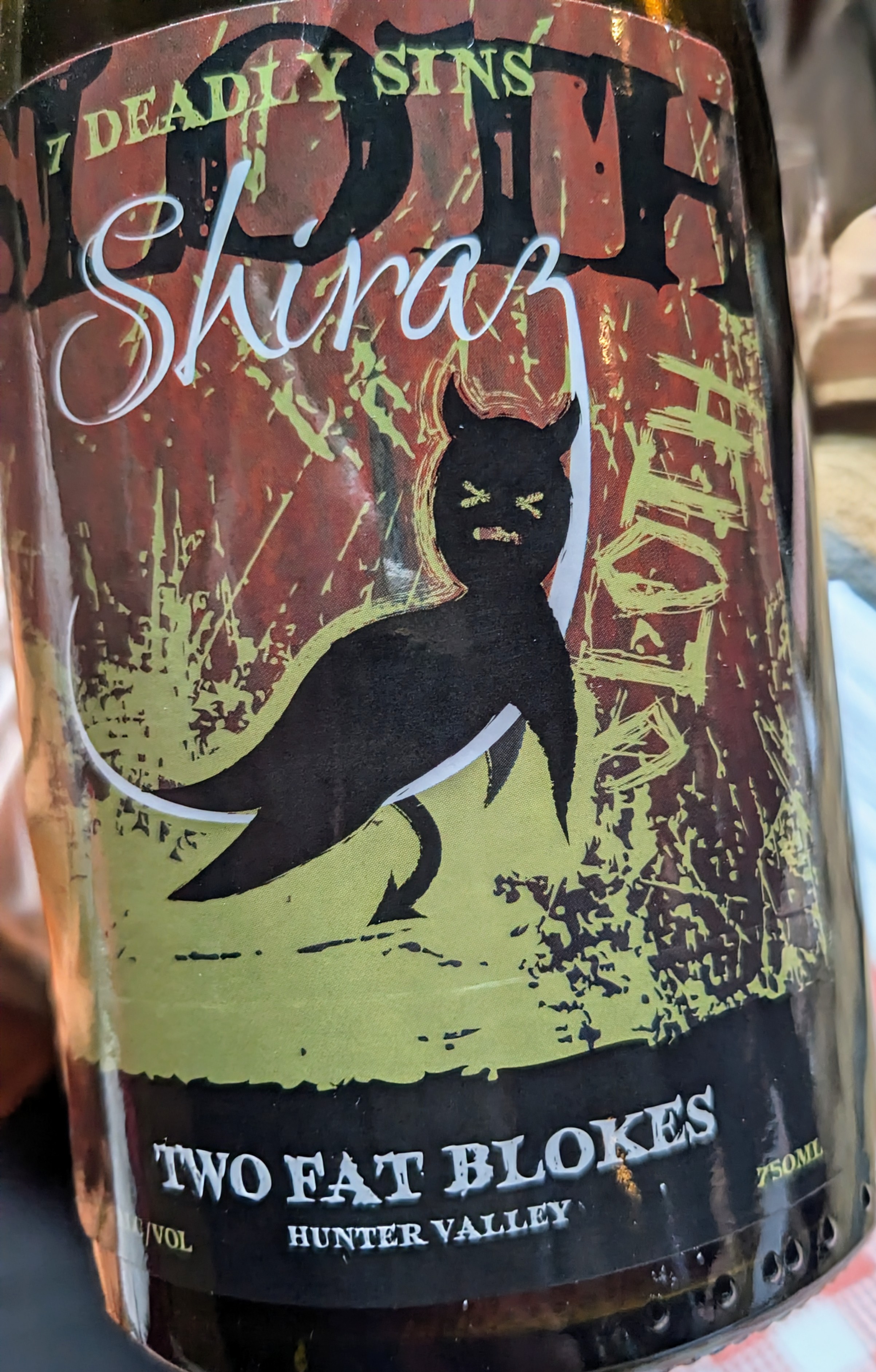
How to sample wines with a car? Well the answer was to book a tour, there were a number available though I opted for Two Fat Blokes and their half day experience and what a good decision. Three wineries with different approaches, a cheese and wine pairing and a very enthusiastic and helpful guide who drove our group of six. First up was the Two Fat Blokes themselves (sadly only one is still with us) whose wines are called after the seven deadly sins. Good, well made and honest wines matched with a range of seven excellent cheeses, particularly a sensational lime and black pepper labna. Note the patch of Shiraz out the front but the winery was an example of a methodology I had again seriously underestimated.

After so long with Jeff Coutelou and being in France I am used to producers making wines from their own grapes. Of course many French winemakers do négociant production too from bought in grapes but here it was the norm. That Shiraz patch produces around 400 bottles, nowhere near enough for a commercial venture. Every producer seems to buy in grapes often from great distances. If it comes from out of state then the grapes must be transported as must or juice as The Hunter has no phylloxera so no whole bunches can be brought in to lower any risk. (Not sure how that makes a difference but there we go).

Oakvale winery was next on the tour and another organic producer though only around 6% of Australian wine is made this way. I liked the wines here and it was interesting to compare the Semillons and Verdlhos from the three producers, the Verdelho here was richer but had a nice clean streak of acidity. The winemaker is James Becker who has his own winery with his wife but unfortunately they were closed for visits as it was probably the winery I most wanted to try. He is just starting to experiment with amphora and concrete egg at Oakvale. The Shiraz 22 was very good too, good weight and red fruits and persistent.

Finally we moved on to First Creek winery. I thought these were the best wines of the morning overall but especially an older Semillon (2015) which was kindly shared with us and revealed again how this variety really takes on another character with age, adding much more concentrated citrus notes. The Verdelho was very good. Chardonnays generally disappointed all morning, oak seems to be de rigueur and though its use was moderate and carefully judged the wines lacked real character often a little flabby. Here though First Creek aim for a more mineral, lean style and the wines benefited, clean and fresh with nice fruit.
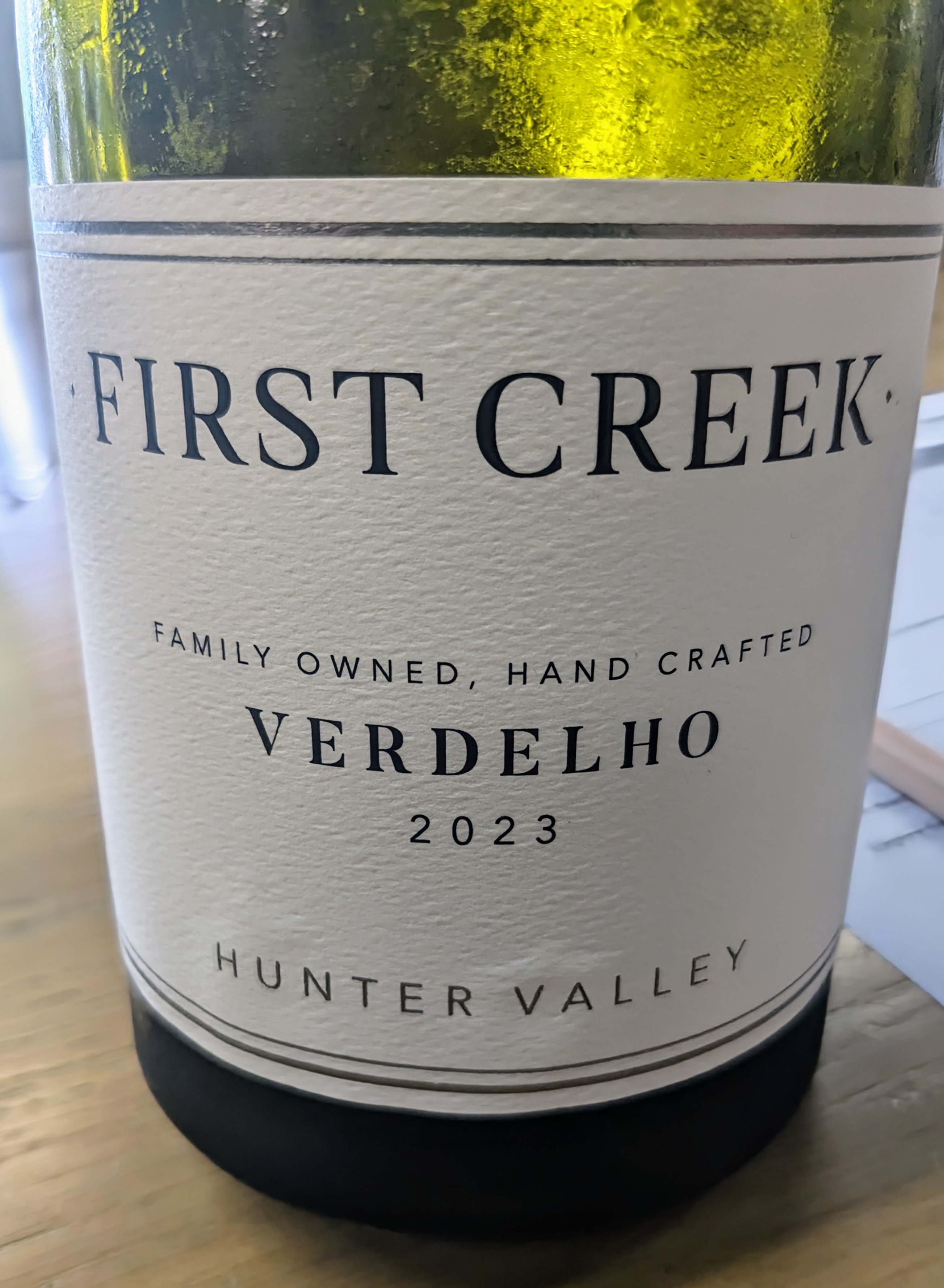
The Cabernet Sauvignons were also a little underwhelming, lacking mid weight. The Shiraz wines were nice, often more akin to French Syrah, avoiding the big blousy style and aiming for more subtle fruit and balance.

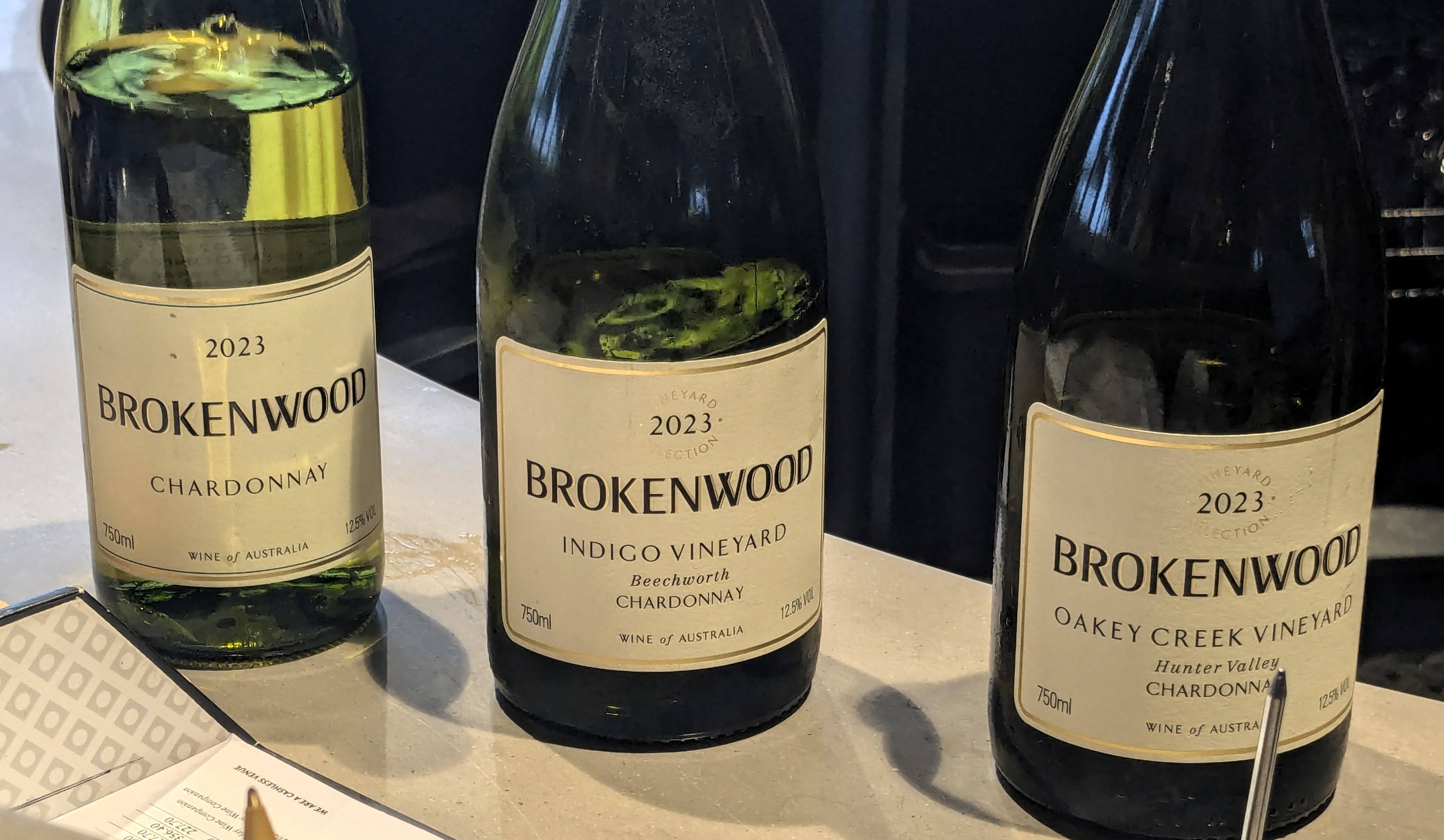
After a suitable break we headed to one last winery and decided on Brokenwood, one which I know from purchases in the past. This was a serious visitor centre with tasting bays all around a large hall and several young people in charge.

We struck lucky with James who poured us fourteen wines instead of the seven we should have had. I was on sip only duty being the driver but this was a very good tasting. Three Semillons, three Chardonnays, different Shiraz wines and others too. It was good to be able to compare the bottles and see the quality levels. Once again James explained that much of the fruit was bought in to make some of the bottles though Brokenwood has some extensive vineyards of its own including the Graveyard which provides one of Australia’s iconic wines according to expert James Halliday. Top of my class was the Tallawanta Shiraz 2019 with layers of flavour, red fruits, plums, fresh acidity too. Unfortunately, I have expensive taste, $150 a bottle! To be fair I liked the Oakey Creek vineyard whites more than the more expensive bottles. All of these were from local grapes, maybe home production wins out after all. The Cabernet was from Margaret River in Western Australia, a huge distance away!

My second favourite Shiraz from the visit, from Margan in the Upper Hunter and some of that delicious Labna

A hugely enjoyable trip to The Hunter Valley, it more than matched any expectations while confounding them at the same time. If you were planning a visit think about weekends when there will be more open restaurants and wineries but it was much quieter midweek. I left wanting more, always a good sign.


Leave a comment

Domaine du Partage, made for sharing

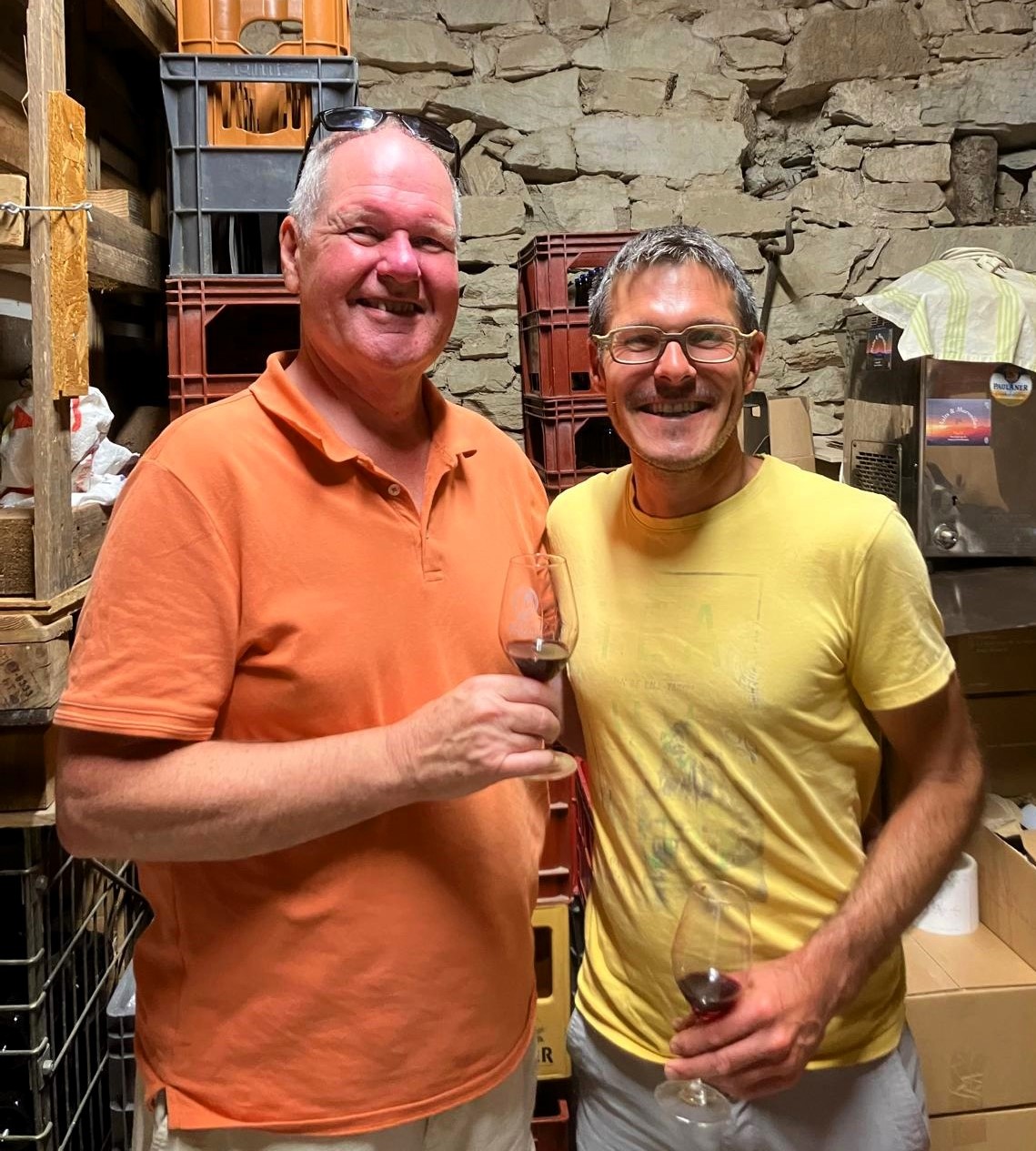
Wine should be about sharing. Pleasure, knowledge, thoughts, skill, friendship and passion to name but a few. Nearly all of my favourite wine moments have been shared with others, around a table, at a tasting, on special occasions. The name of Steeve Dejardin’s new wine venture is, therefore, well chosen and apposite. Not least because Steeve himself has always been one of the most generous people I have ever met. Back in 2015 he came to Jeff Coutelou’s cellar with a few bottles and cheeses from his native Jura and we enjoyed a great evening. We met a few times in similar circumstances at Jeff’s including a Saturday lunchtime where Jeff shared a few bottles of older wines including the legendary ‘Roberta’ and several vintages of La Vigne Haute.

Saturday sharing, 2018
The last case of 2021

Steeve decided a few years ago to change his lifestyle and become a winemaker. He came down to Jeff’s and spent over a year working alongside him, learning the ins and outs. He had already spent time with the excellent Michel Gahier in the Jura and after his time with Jeff returned to his home region to work at Domaine De La Loue amongst others. Eventually though he returned to the Languedoc and has started his venture in the Minervois.

The decision was taken to rent around 2.5ha of vines and part of a cellar in that region from Julien Audard and Laure Boussu who run Monts et Merveilles. They were making wines under that name and retain some vines but are starting to concentrate on brewing beer and their ecotourism business. The couple have been a great help to Steeve who is eternally grateful to them for the opportunity to fulfil his ambitions.

Camplong

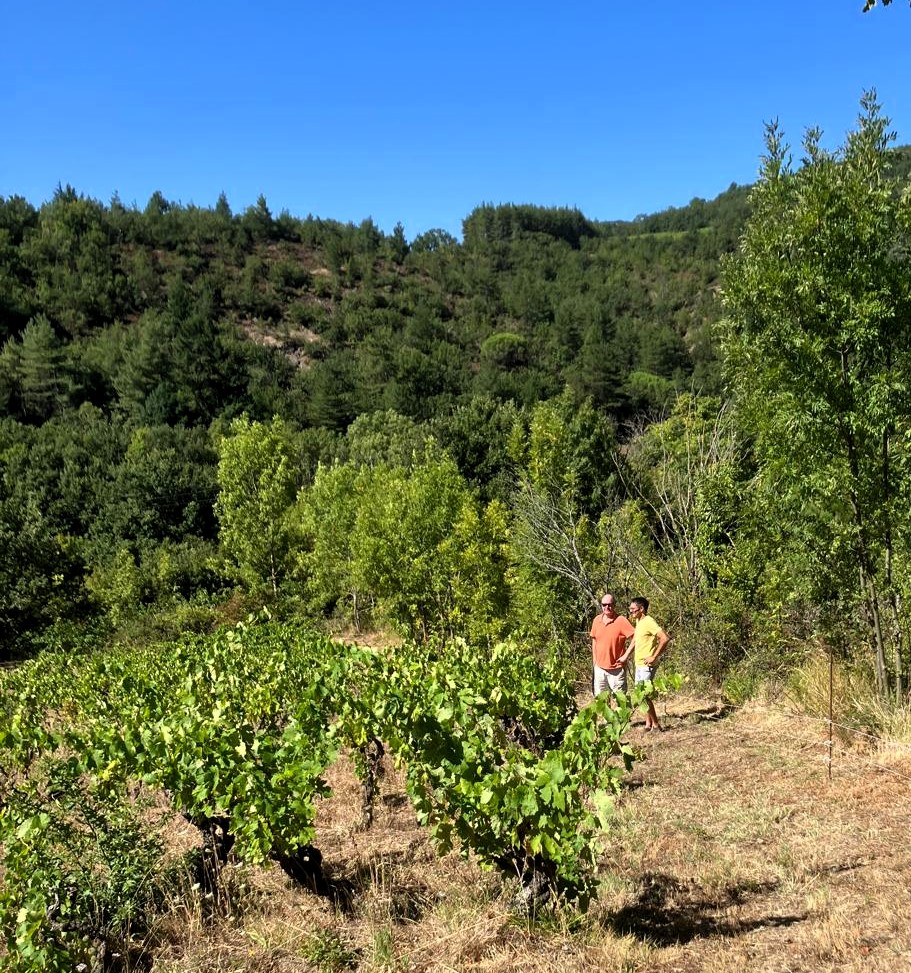
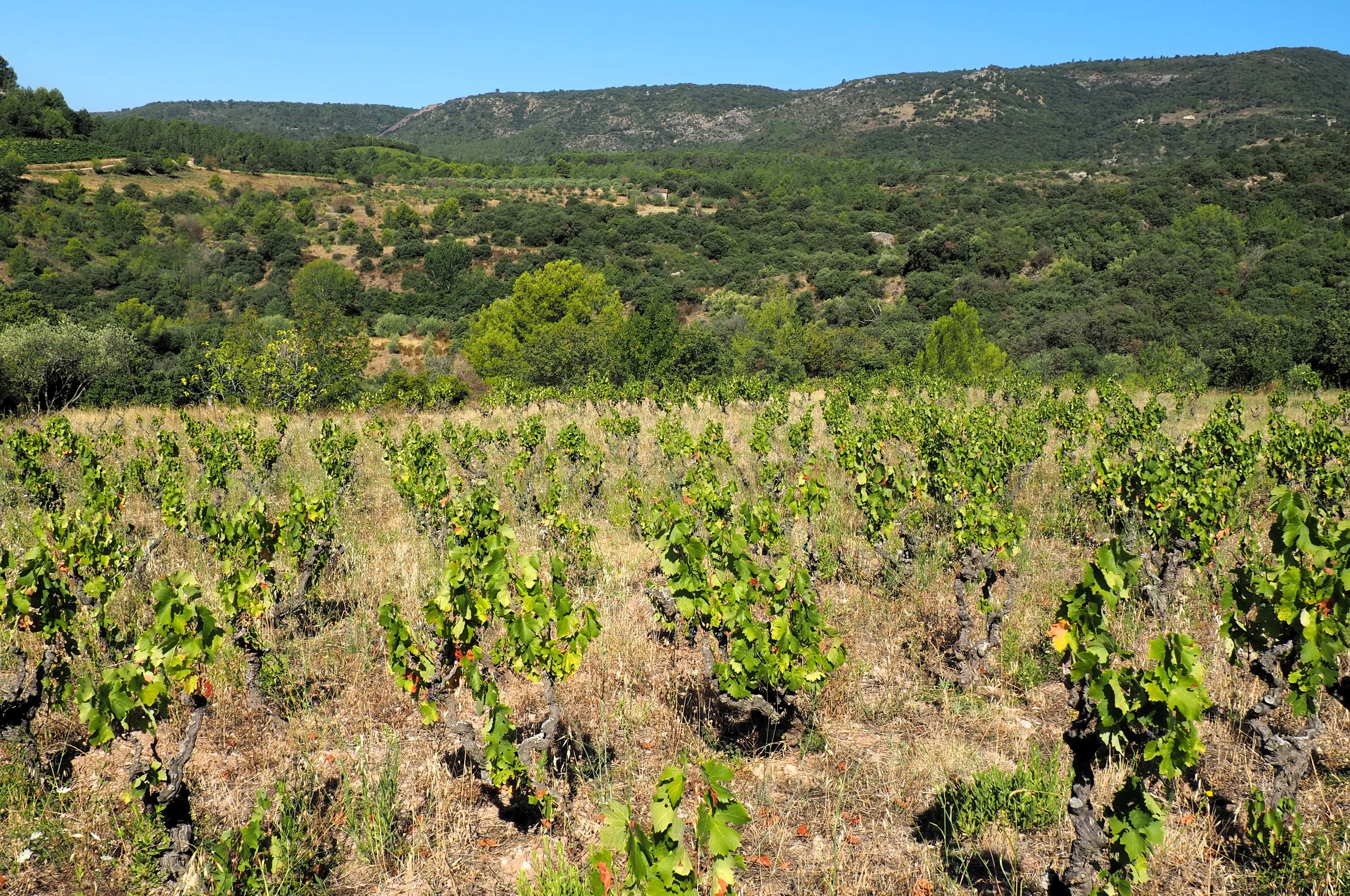
We visited on August 22nd reaching St Julien des Meulières in the Haut Minervois after a lovely drive through that area with its limestone scenery and beautifully clean air. In the plains we had passed early harvesting in the heavily herbicided vineyards, dust flying everywhere. The contrast up in the hills was marked, vineyards covered with plants of all kinds surrounded by forest. Unfortunately the bulk winemaking of the plains has given Minervois a moderate reputation, winemakers like Steeve face a challenge to change that image in order to sell their wines. And sell they should because, I’m happy to say in all honesty, that Steeve’s first wines are excellent. Yes I am biased towards my friend but I wouldn’t have written that sentence unless I meant it.

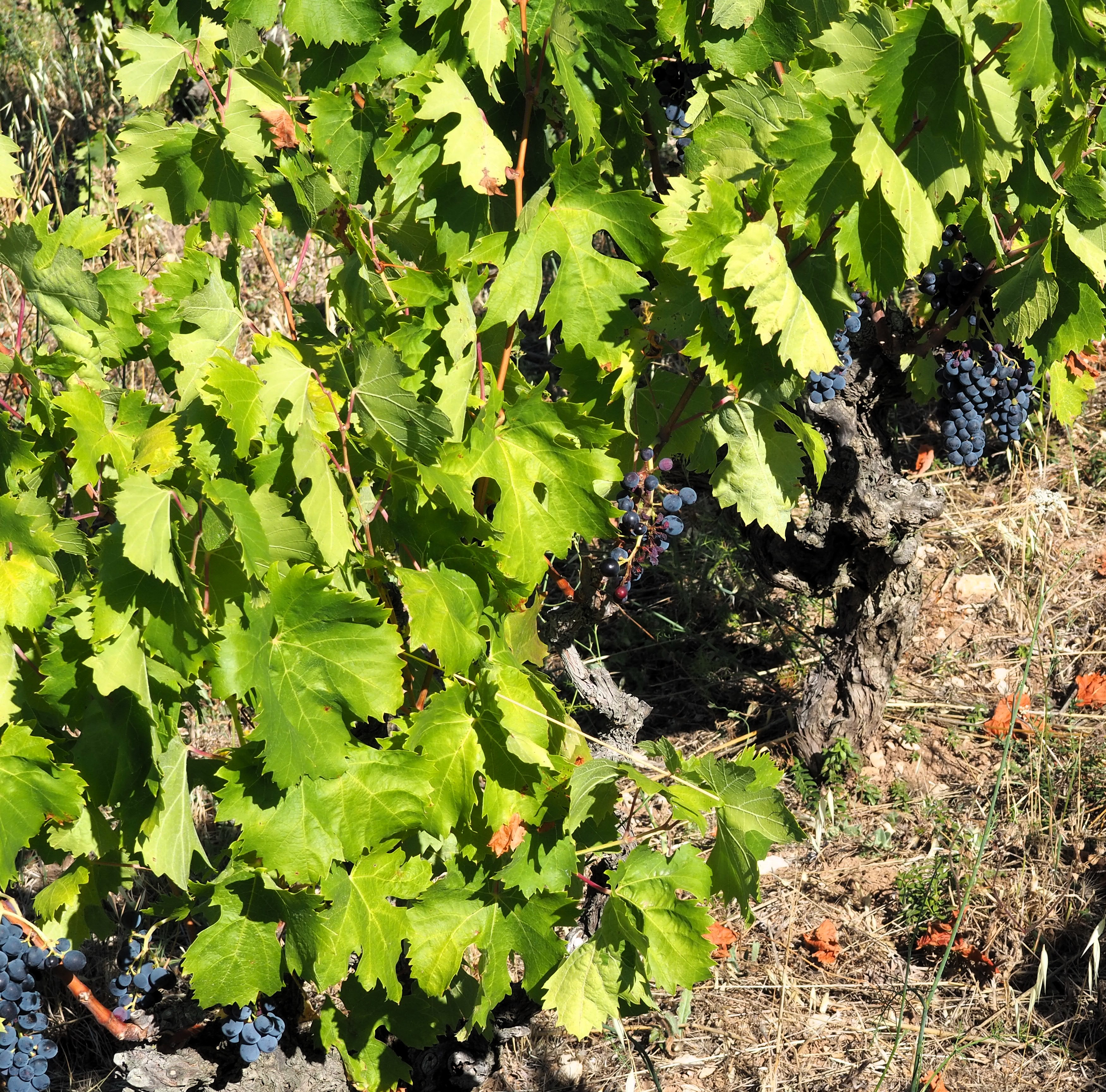
Carignan in Camplong

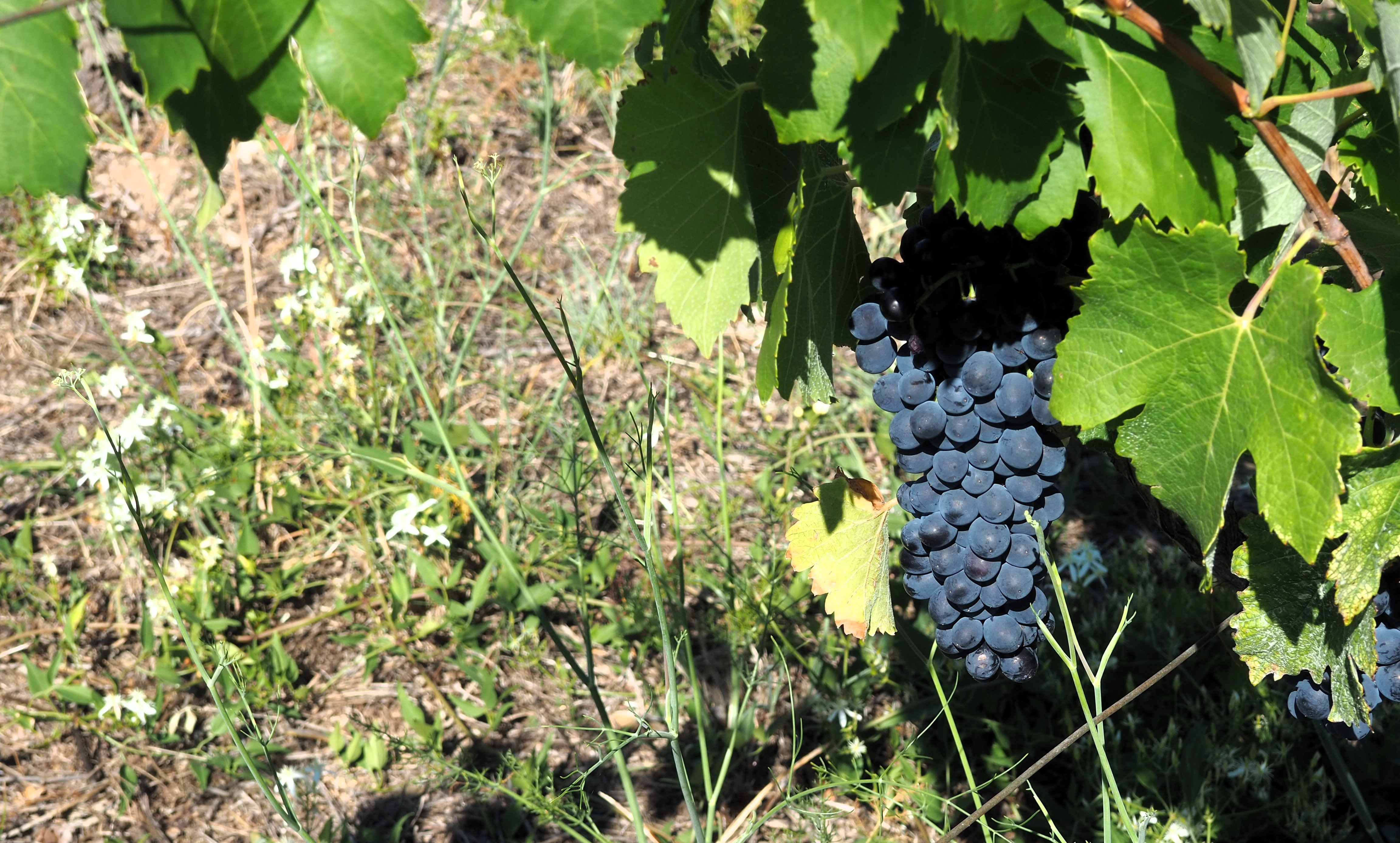
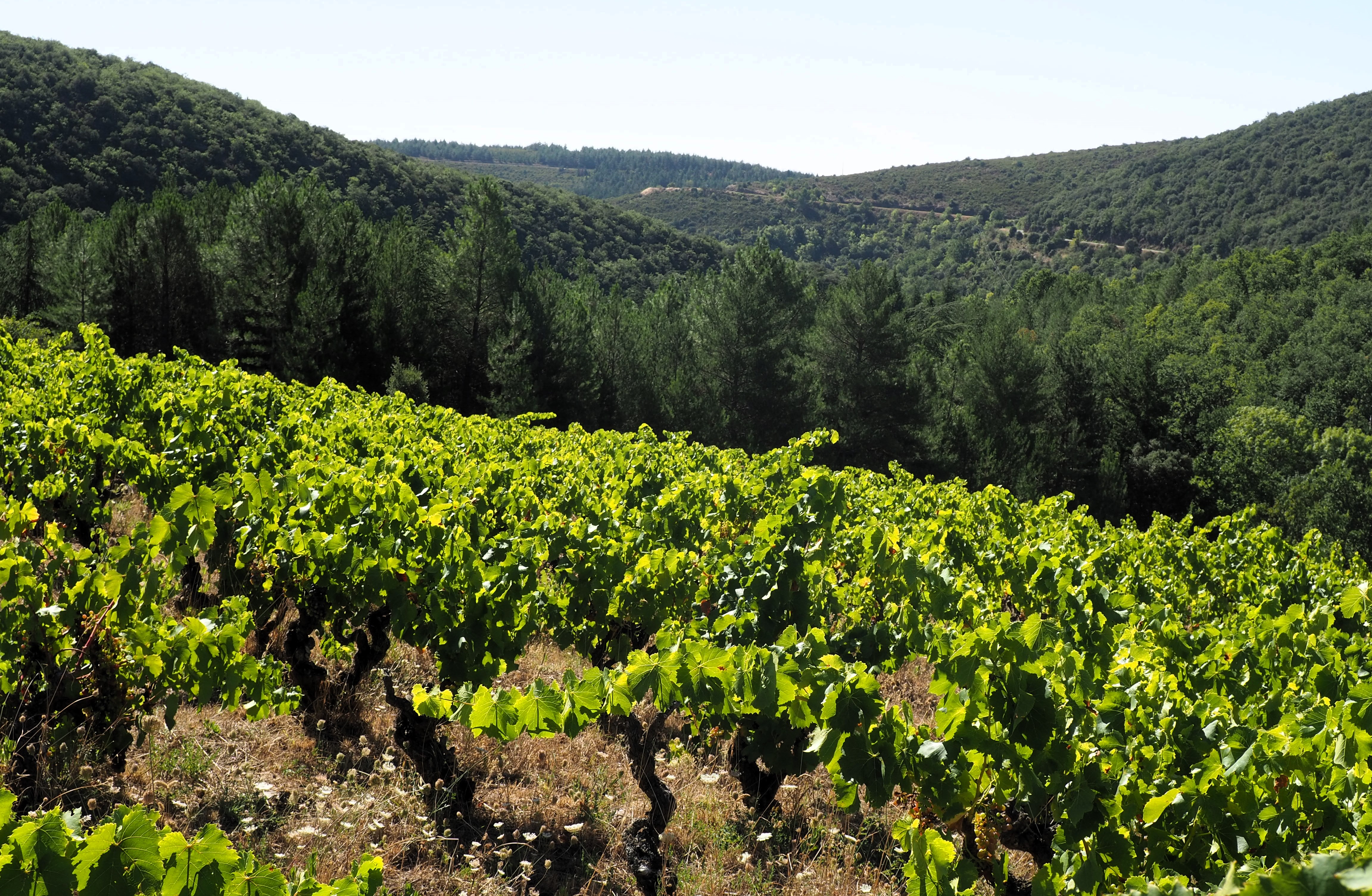
His two vineyards are a few miles apart and named after their nearby villages. We headed to Camplong first, around a hectare of vines divided mathematically and physically half and half between Carignan and Syrah. The Carignan vines are around 50-60 years old and in gobelet, free standing on a sloping hill. The top part of the vineyard is argilo-calcaire, limestone and clay, whilst the lower slope also has schist mixed in. That lower part has a few vines which have struggled and Steeve is working hard to improve the soils there using compost based on nettles. A fence separates the two parts with their different grapes, in the Syrah the vines are trained on wires.

Syrah, Camplong

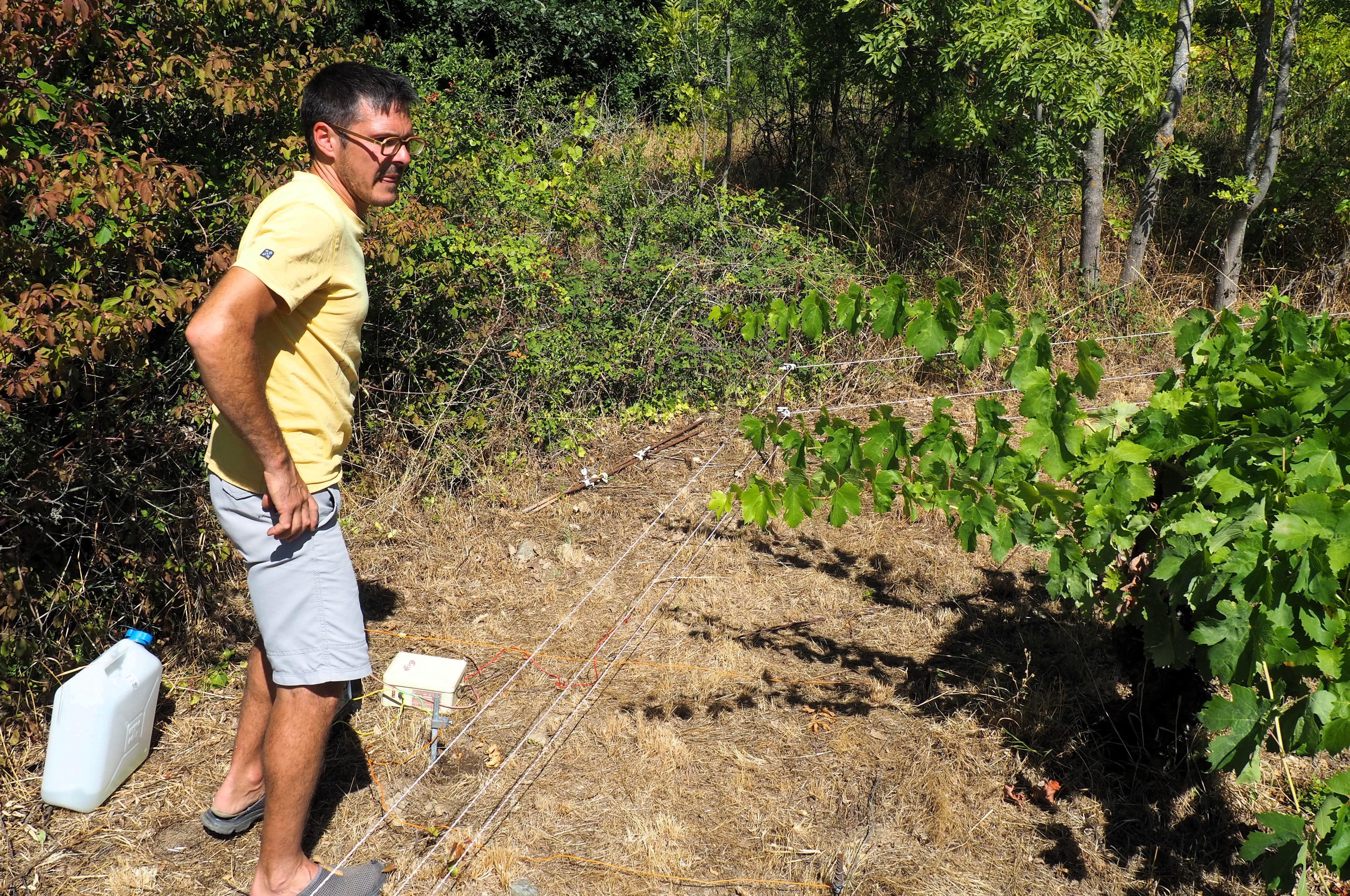
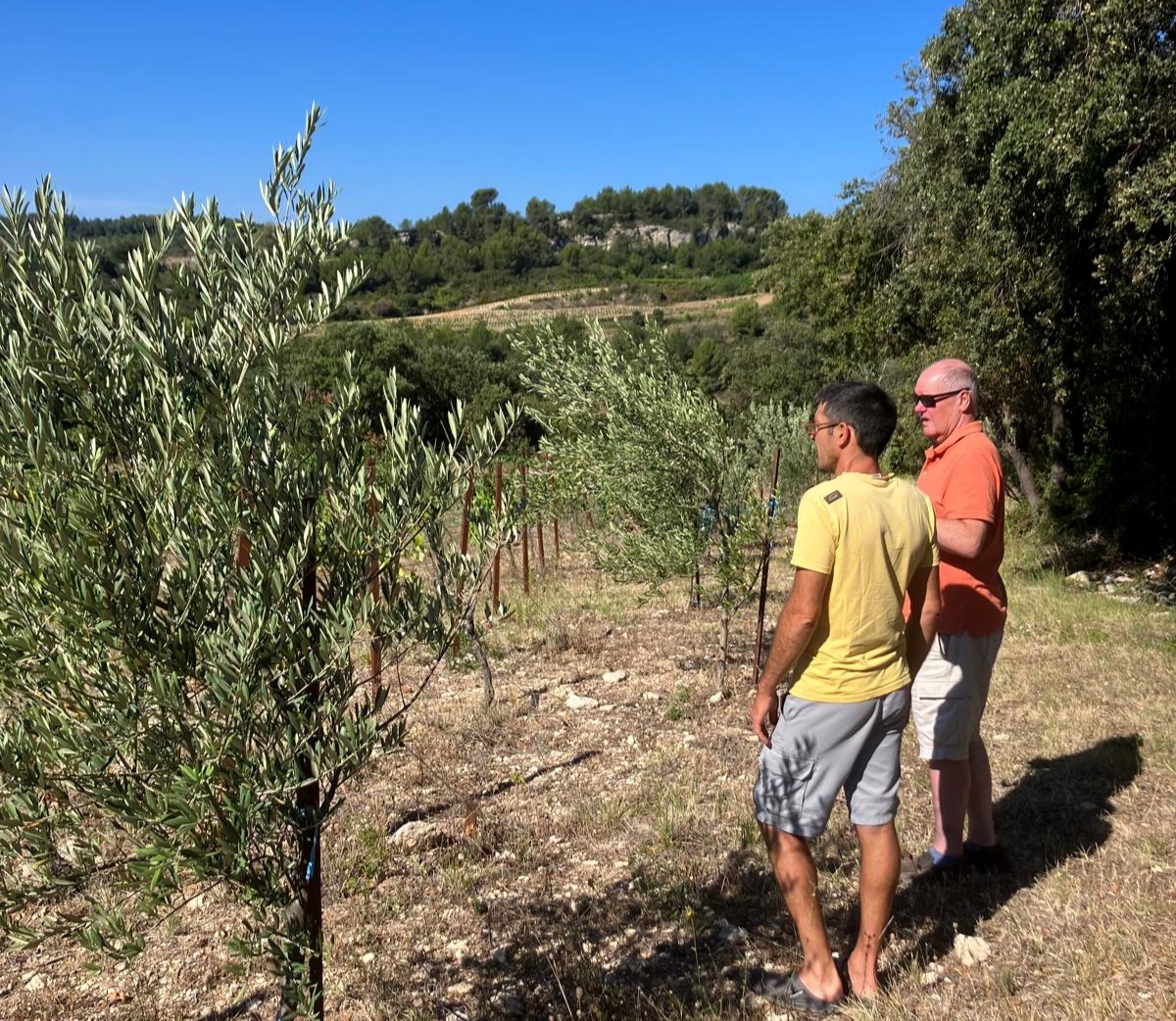
The other vineyard, Cassagnoles, is on the other side of Steeve’s home village and even higher in the hills. Just over a hectare of Carignan vines on a steep hillside greeted us. They are 60 years old and gobelet trained too. The vineyard is surrounded by a small electric fence because the forest has a lot of wild boar living in it. At Camplong there are no boar but badgers have been eating some of the bunches! Once again Steeve has found the lower parts of the parcel have needed more work to improve the soils, he’s used some manure but not too much and more nettle and organic composts. There are a few white grape vines such as Grenache Gris and Steeve is hoping to develop more white grapes.

Carignan, Cassagnoles with steep slope and electric defence

Both vineyards were a joy to visit, surrounded by lovely oak trees and countryside and views to lift the soul whilst working there.

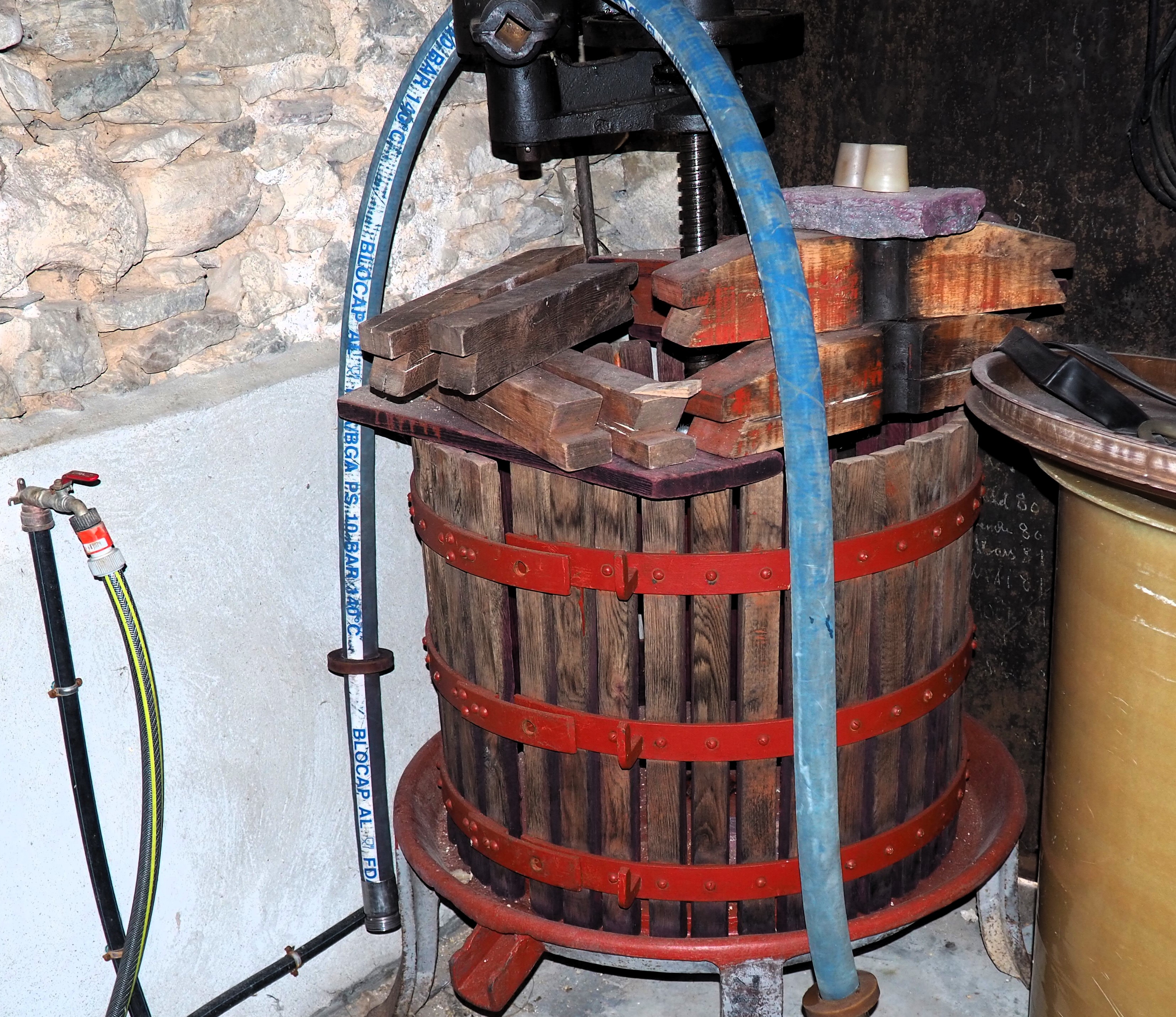
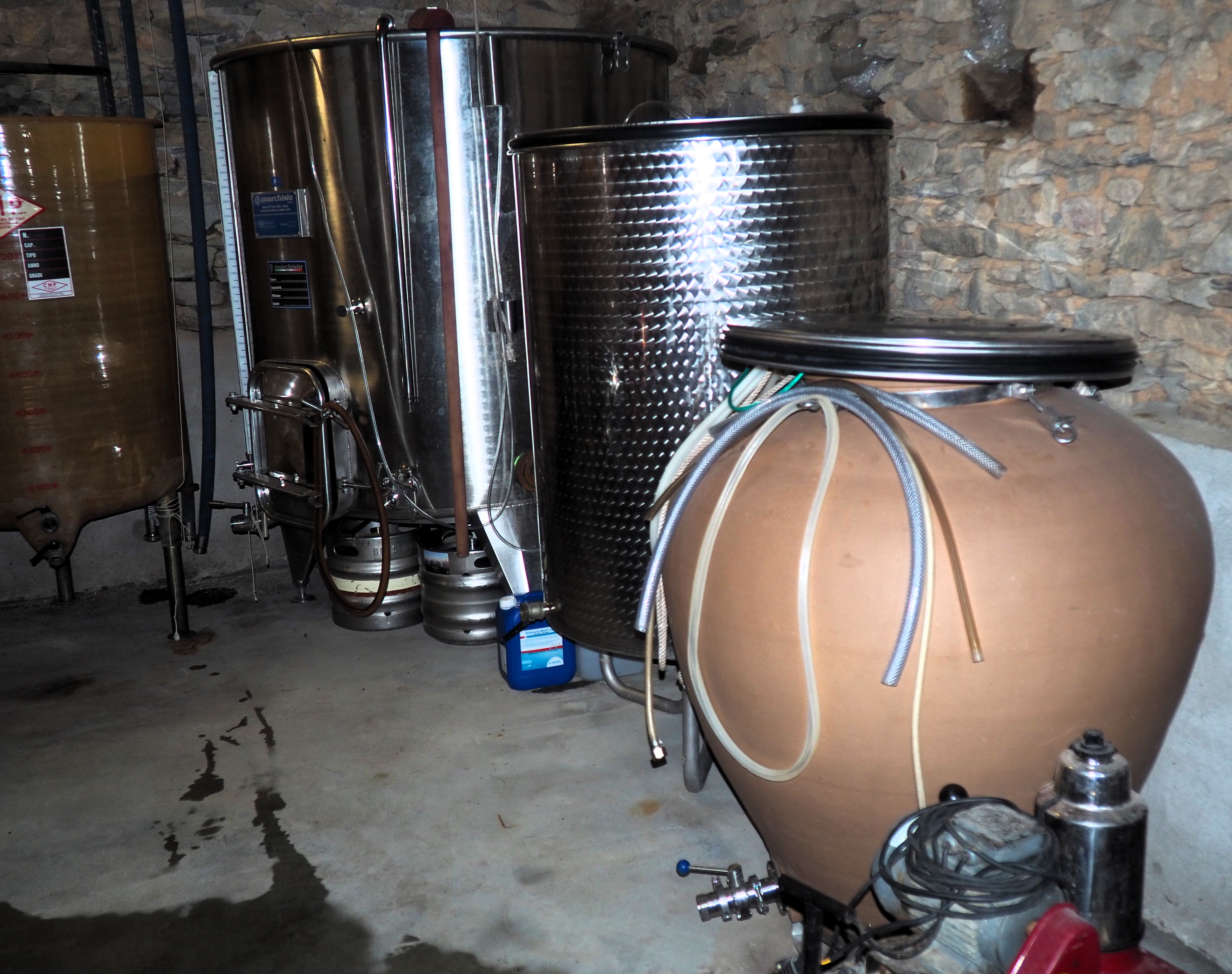
Winemaking is simple and natural, a small destemmer and basket press make up the equipment and the wines are fermented and aged in a variety of containers from stainless steel and fibre to a small concrete amphora shaped vessel. The Carignan from 2023 fermented easily and is bottles but the Syrah has stubbornly not completed fermentation with 25-30g of residual sugar remaining. One caviste, impressed by the Carignan, offered to buy all the Syrah even with its sugar but Steeve is confident it will complete, perhaps when the 2024 grapes are fermenting in other tanks. I have seen it happen before, where one tank seems to trigger others so, fingers crossed.

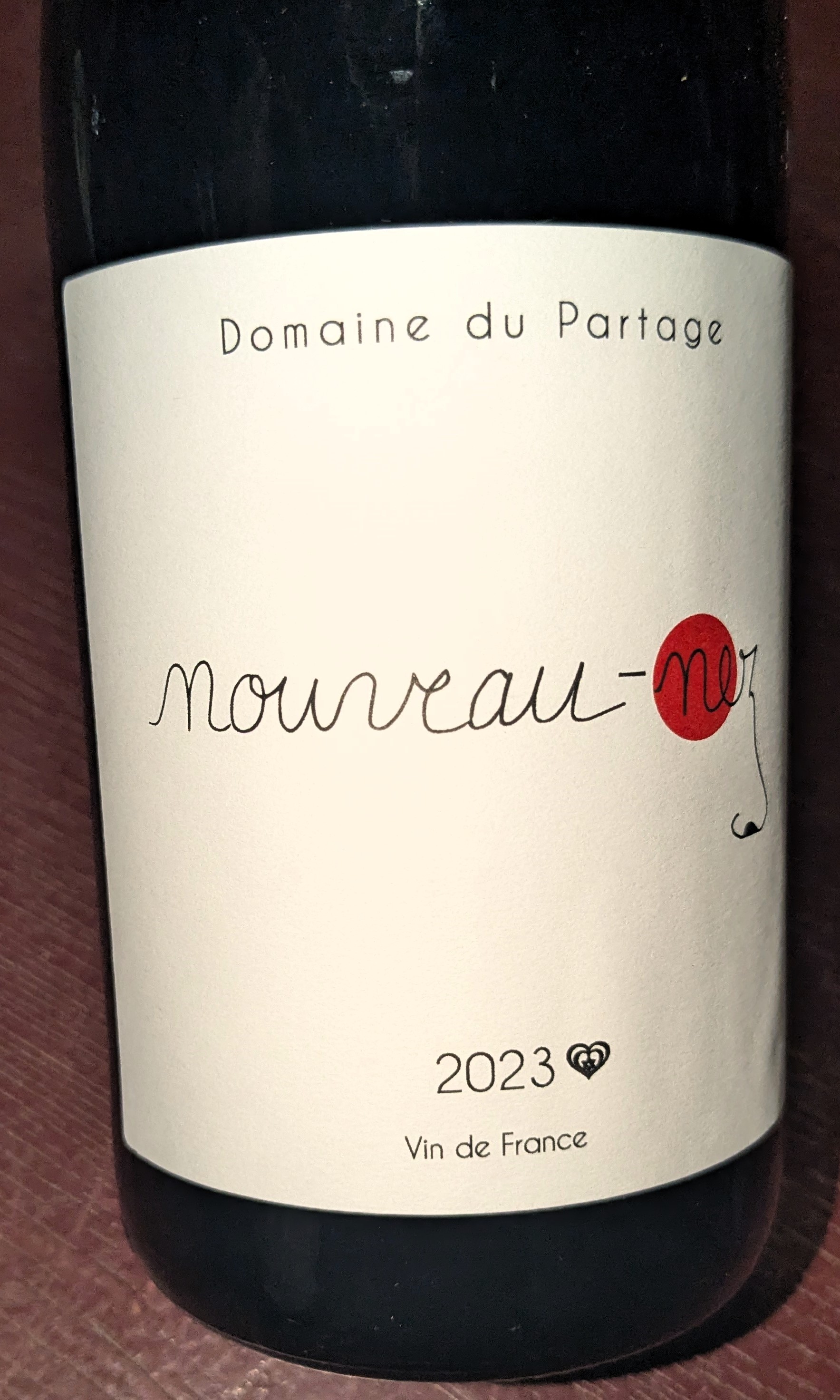
Steeve had generously been busy baking, a delicious tomato and goats’ cheese tart and blackberry clafoutis accompanied our wine tasting. His Carignan from Cassagnoles, bottled as Nouveau Nez, was excellent. Red and black fruit aromas and flavours abounded with real energy and freshness to the wine meaning that you were eager to try more. I kept the remainder of the bottle until the next day and it was still in prime form, suggesting that the wine would easily keep for a few years if you could resist its bright purple colour and fruitiness right now. For a first wine this was exceptional, it brought back memories of the first wines from L’Ostal Levant in Cahors at La remise salon in Arles in 2015. I know Steeve has a few bottles left but events such as ViniCircus have helped him to get his name out there to cavistes. I was delighted to hear that the excellent Picamandil in Puissalicon near to Jeff has some bottles.

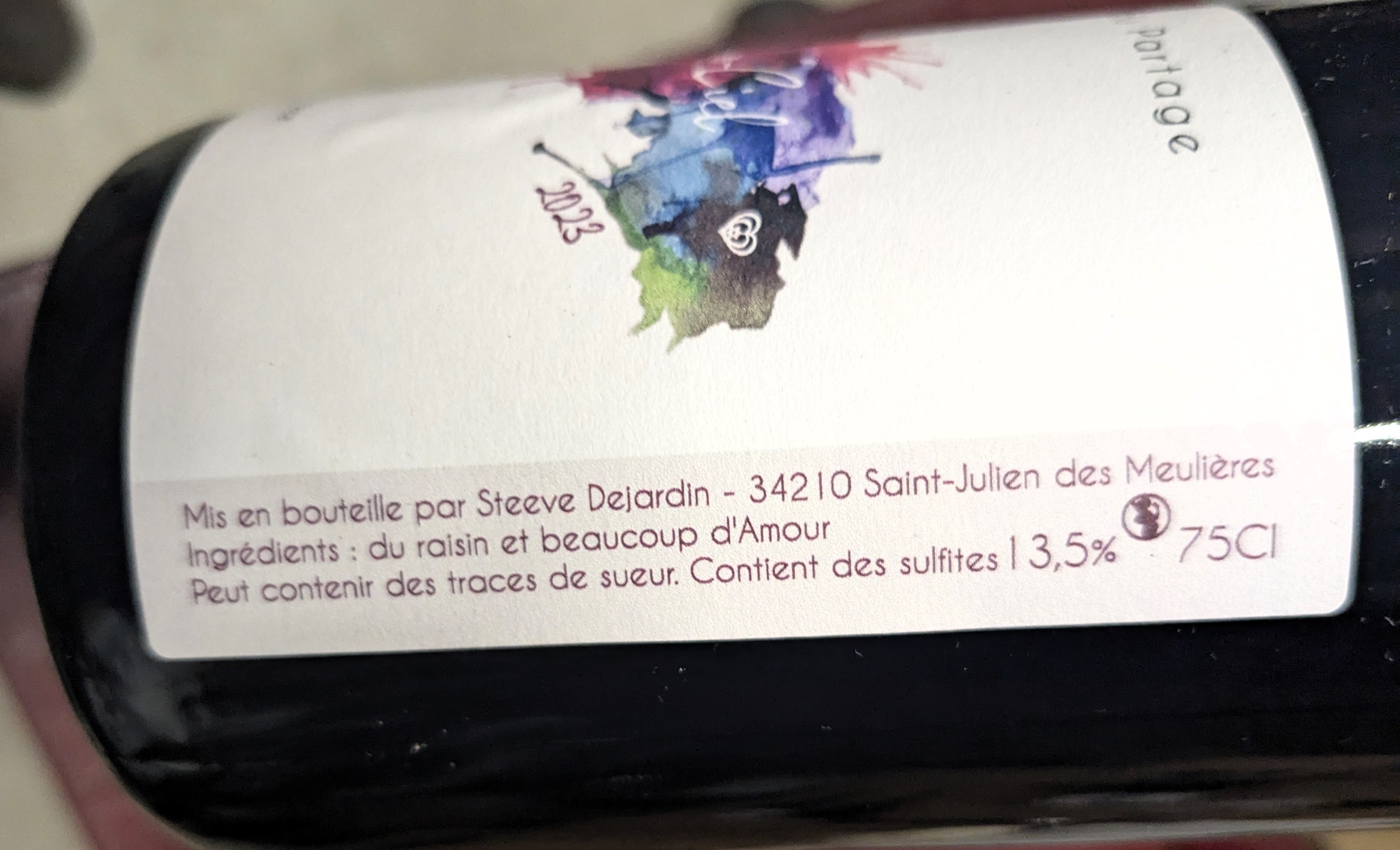
A nice touch of humour, ‘Might contain traces of sweat’

With the Syrah forcing a delay Steeve was happy to discover an organic producer in the area who was selling her Languedocian varieties to the local cave cooperative. He found the grapes in excellent condition, Aramon, Terret Noir and Gris to name just some. It reminded him of the Couleurs Réunies cuvée of Jeff with its vast array of local grapes and so, Steeve bought up the grapes to make a wine which he is calling Arc En Ciel. It was full of black and red fruit notes, upfront fruit but also some tannins for longer keeping. Very good indeed and those grapes deserved their own moment in the spotlight rather than being blended in with inferior grapes like the ones we saw in the plains.

Steeve had made a few bottles of Syrah given to him by Julien and Laure and he put it into bottles but also magnums to see how it developed. It too was very good, I promise. Very Syrah like, with upfront fruits but a nice backbone of tannin and acidity.
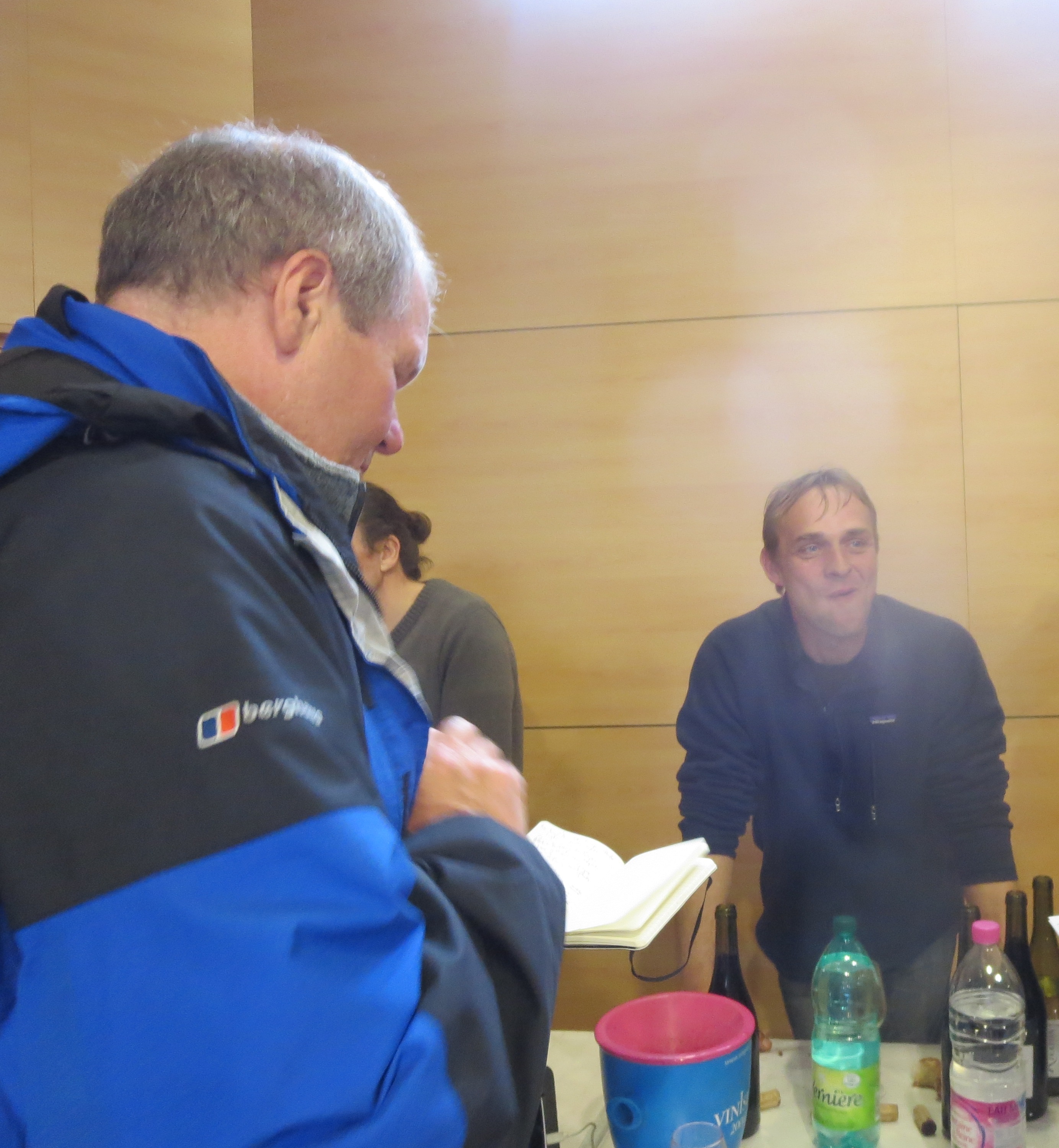
It was a real delight to visit Steeve, someone I admire so much and value as a friend, it was good to see that he and his son Martin are happy in their new environment making friends and contacts and becoming part of the community. The vineyards are lovely and Steeve will improve them with his care and passion for them. Meanwhile he has already shown his skills as a winemaker and when the new grapes are picked around the second week of September I am sure they will confirm that promise and Steeve will share more great wine with the world.


Leave a comment

Go Ouest

1. Anjou – Domaine Mosse (and guests)

Last year the route south to Puimisson and Jeff Coutelou saw us heading down the eastern side of France with visits in Champagne, the Jura, Burgundy and Beaujolais en route. Logically, therefore, this year we decided to take a couple of weeks travelling down the western side of the Hexagon. This is the side we have travelled in least, it is almost thirty years since being in Bordeaux, where I type this article, with scheduled visits having to be cancelled through illness or pandemic. Oddly, we had never been to Angers at all, a major omission as Anjou is such an important wine region, especially with its burgeoning natural wine scene. Previous visits to the Loire have focussed on central and eastern parts reaching west only as far as Saumur. Since the Loire and Chenin Blanc played a huge part in my wine education this was a shocking gap in my wine journeys, happily now set right but there is much more to discover.

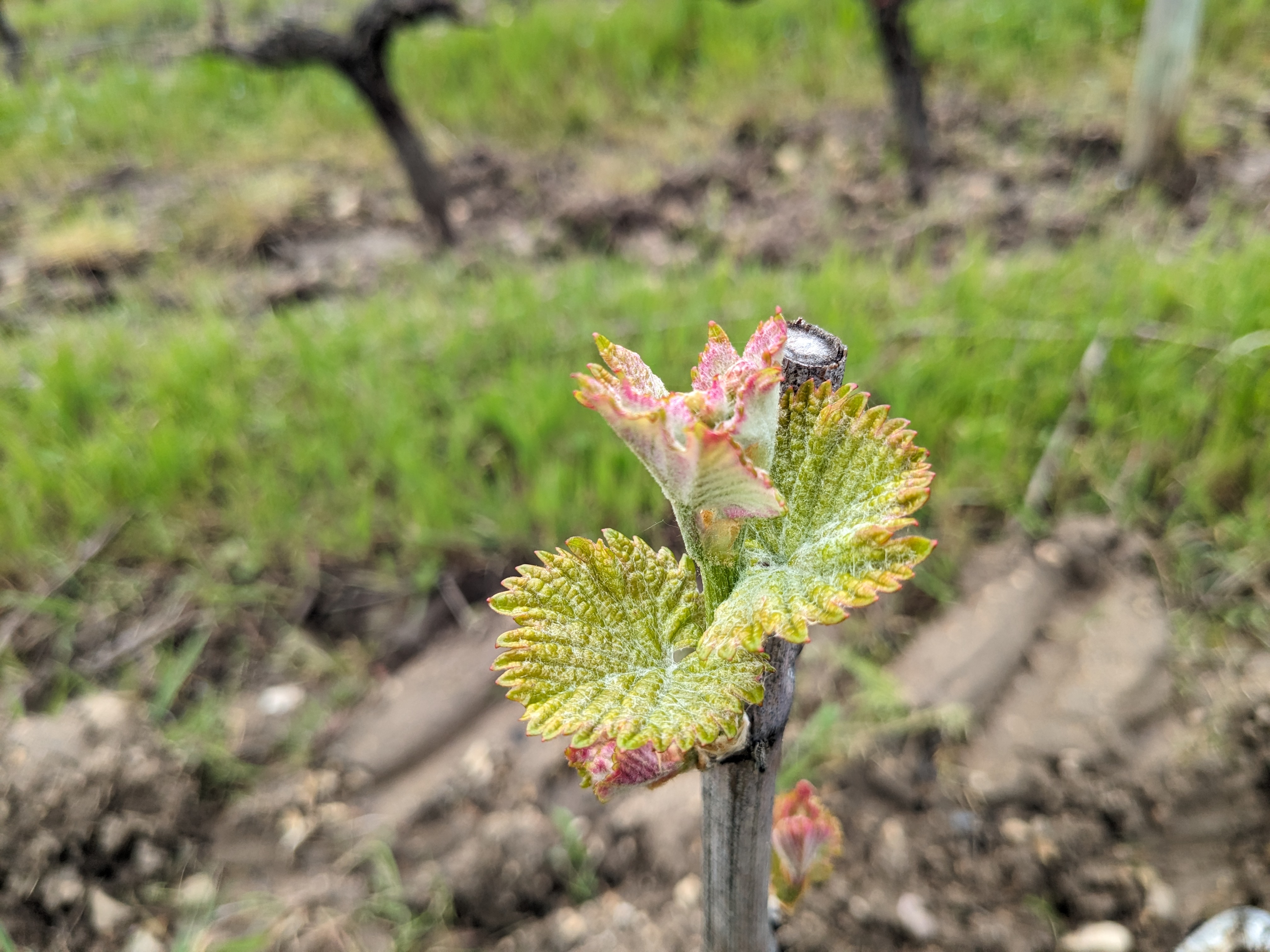
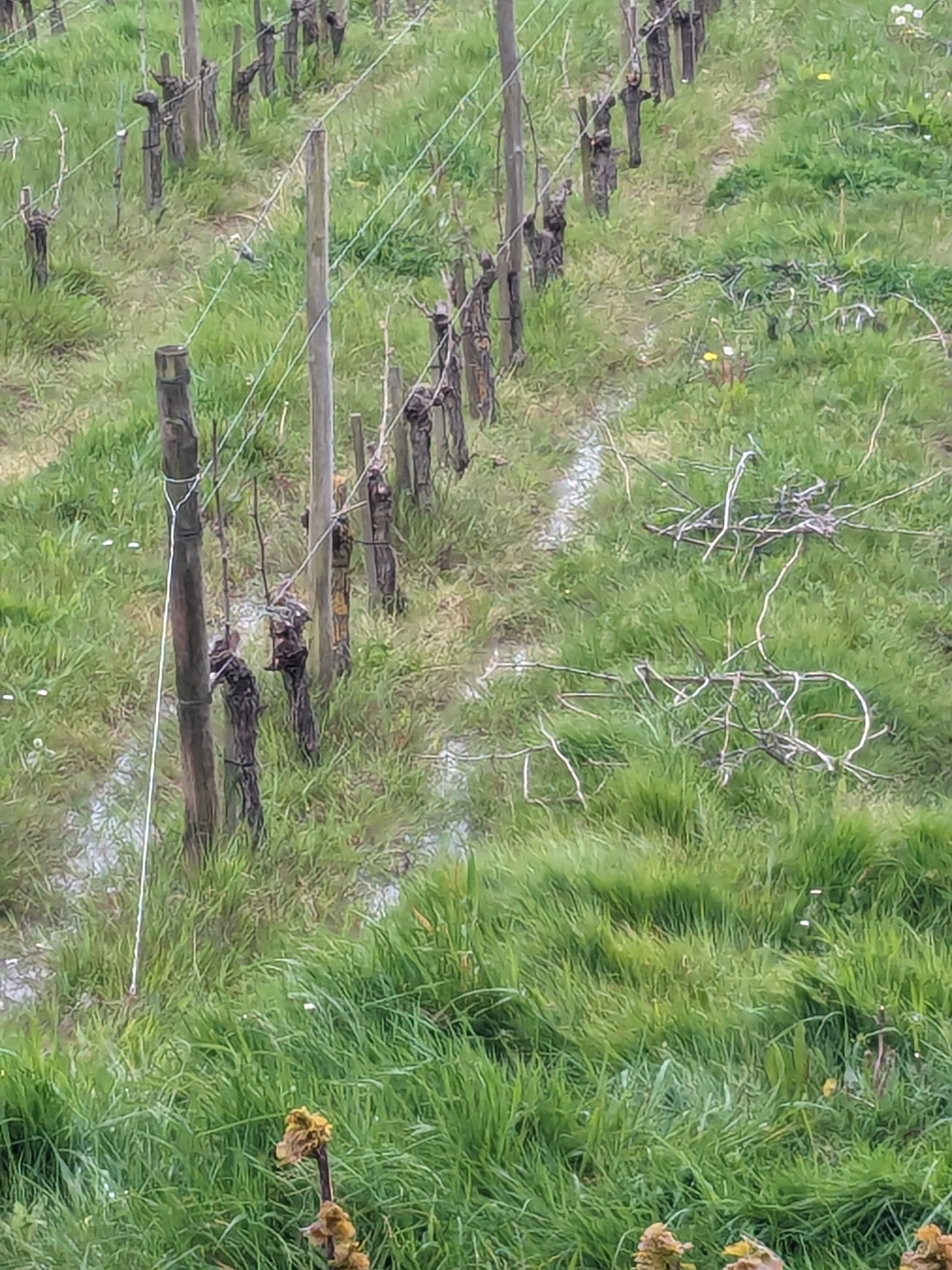
As Spring struggled to emerge through rainclouds, with severe flooding in Anjou, the vines were just starting to bud when we arrived at the start of April. It was interesting to note how many vineyards are now completely grass covered, there was some evidence of herbicide use around the vines but viticulteurs seem to have settled on this practice after so many years of bare soils. Given the rainfall recently this must have helped to prevent erosion. However, Tessa Laroche of Domaine Aux Moines told me that she cannot take any machinery into the vines at all as the ground is so sodden, so far it is very much a vintage dependant on nature to look after the vines.

Water lying around the vines at Dmne. aux Moines

I organised visits to two producers, Domaine Mosse and Domaine Aux Moines itself. I had enjoyed wines from both before and they were both given the thumbs up from Jeff.

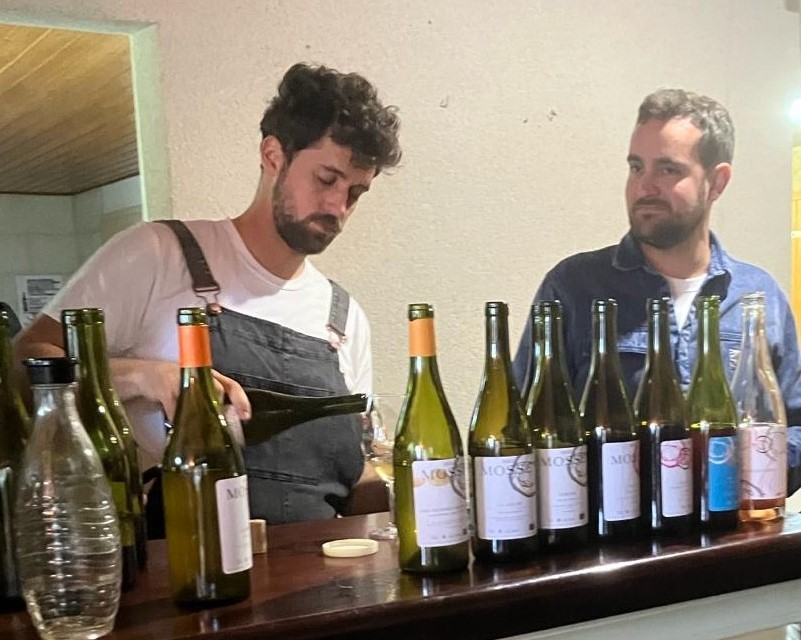
Domaine Mosse is to be found in St. Lambert du Lattay and from our base in Brissac it was an interesting drive through famous wine villages such as Faye d’Anjou. We were greeted by Joseph Mosse who runs the estate with his brother Sylvestre after they took over from their parents. We were joined by a young couple who are opening a pizzeria in Angers and a Japanese couple who run a restaurant in Tokyo, it made for an interesting tasting.

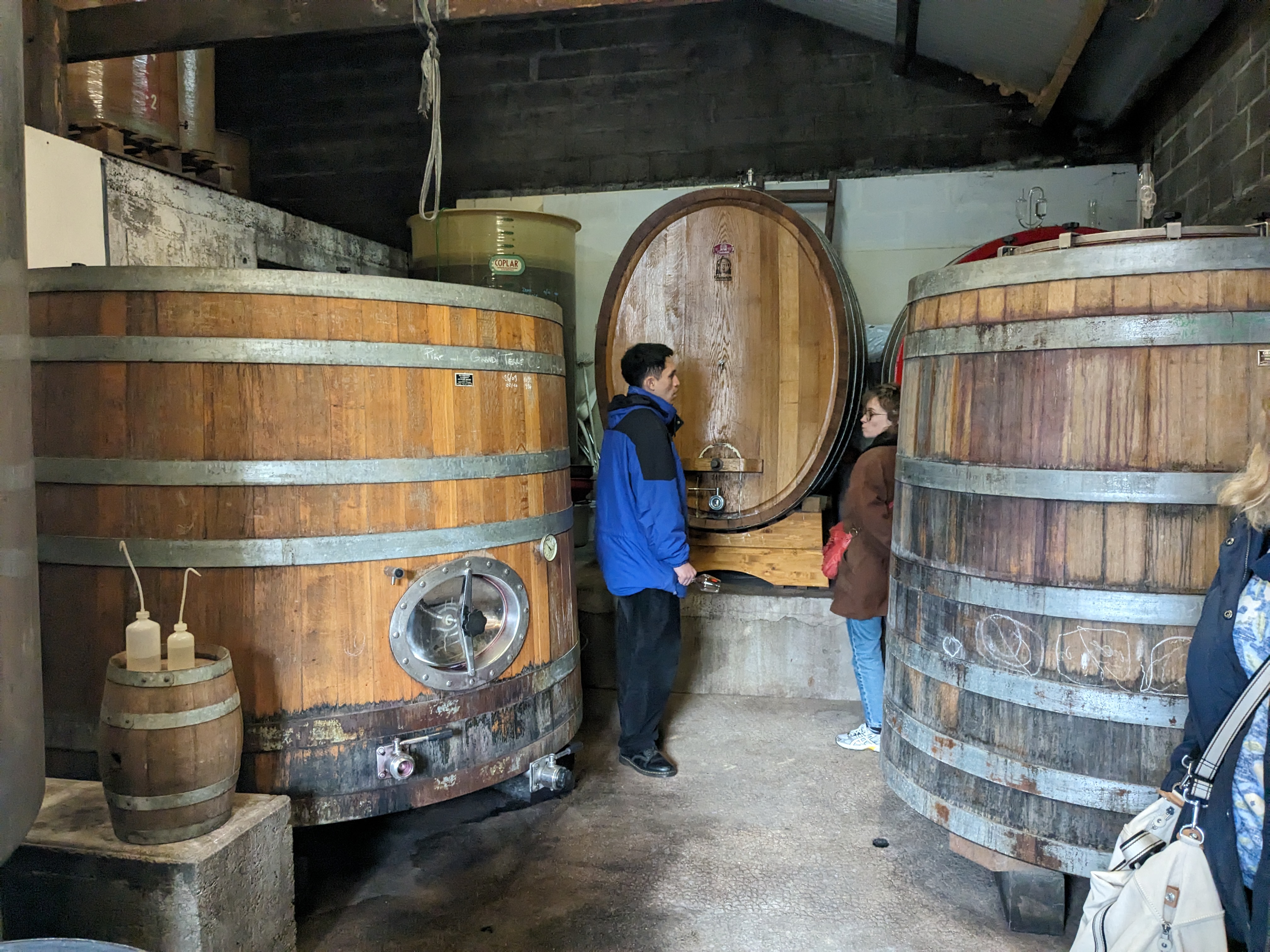
We began with a trip to the barrels of 2023 wines, Joseph revealing that they will be the last wines made in the current cellar as they are having a new one constructed with more space and planned to meet modern winemaking needs. Joseph explained that 23 was a difficult harvest, a view echoed by Tessa Laroche. The year had given abundant fruit with a need to green harvest in July but the harvest went through four seasons in a short time, starting warm and sunny but followed by rain, wind and cold. This resulted in rot and having to leave huge amounts of grapes on the ground. The wines from barrel though tasted well, good clear fruit showing through (the 22s in bottle would later show that some of the 23s maybe lacked the same concentration but then 22 is a very good year). In a rainy harvest it takes courage and a good picking team to make clean wines from grapes touched by rot, well done to Sylvestre and Joseph.

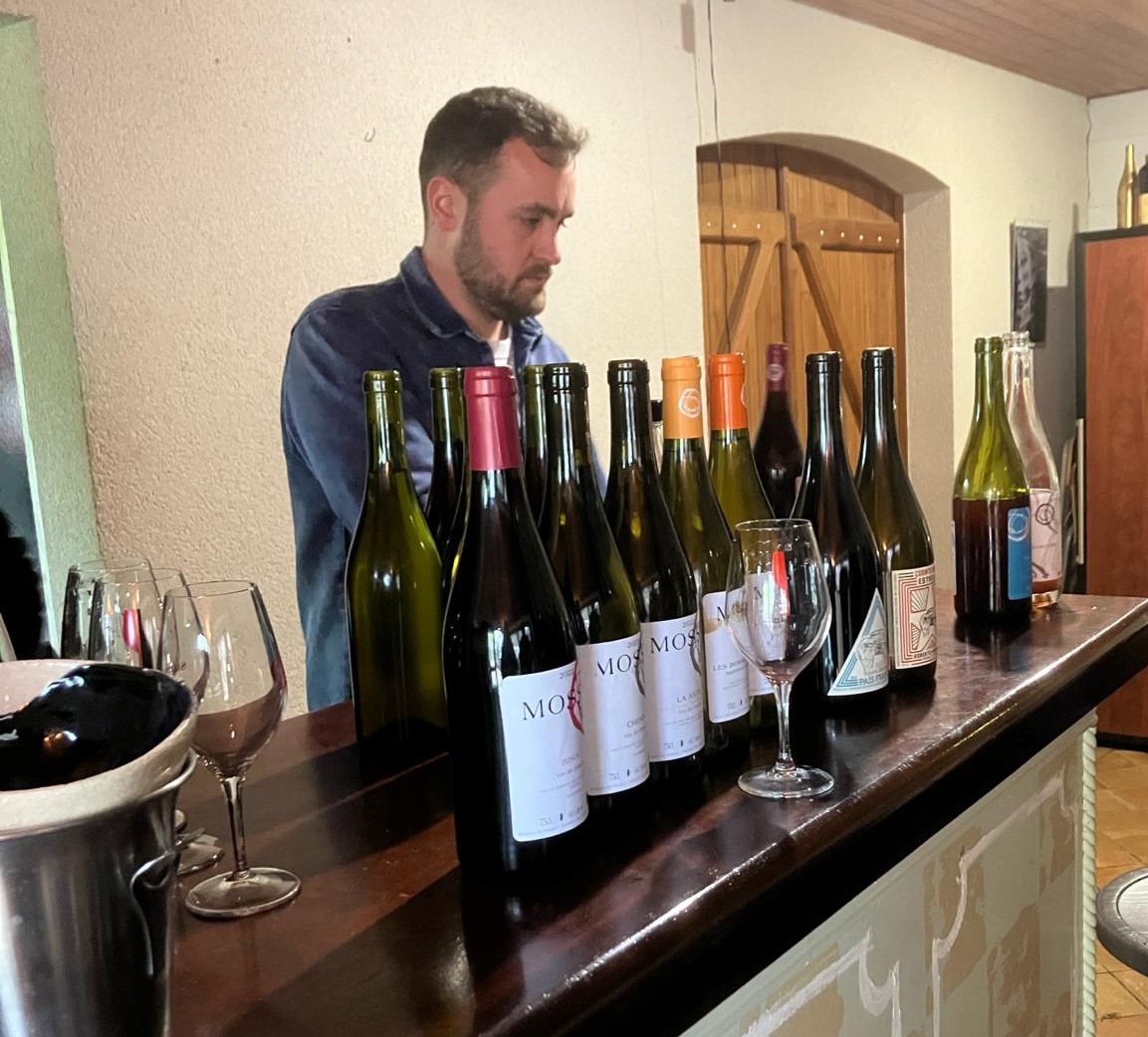
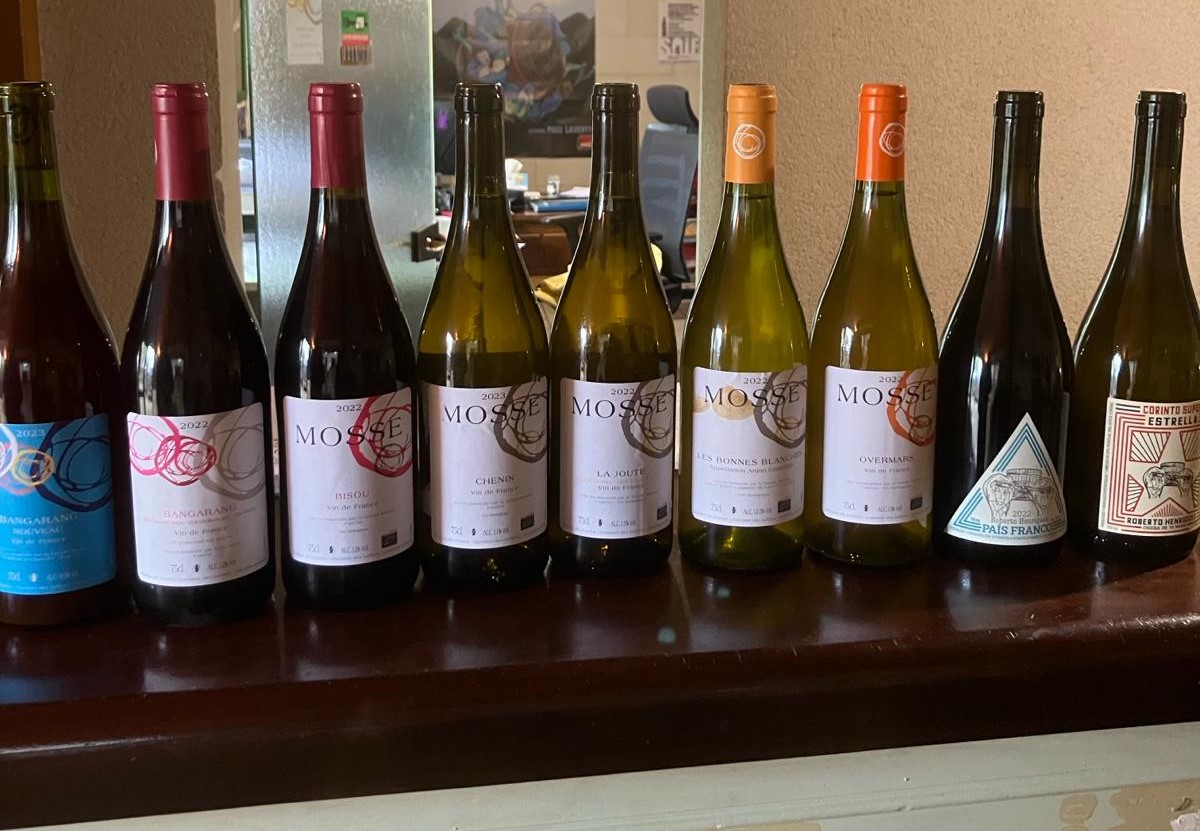
Back in the tasting room and we started with some wines produced by the brothers as négociants, buying grapes from trusted, local vignerons. The PetNat, Mousse À Mousse, and a primeur 23 Bangarang nouveau were both enjoyable and light but the pick was Bangarang 22 with lovely grippy red fruits from Cabernet Franc, Gamay and Grolleau Gris (another new grape to my knowledge but more later).

On to the wines from their own vineyards. Bisou 22 from Grolleau Noir and Gris, Cabernet Franc and Côt/Malbec was very nice, the whole bunch approach bringing fruit to the fore. Chenin 23, the rain vintage bringing a light easy drinking but characterful example of the grape with 11% alcohol. Wines from two single vineyards came next. La Joute 22 is 80% Chenin and 20% Chardonnay, aged in barrique for a year was lovely with rich fruits balanced well by a clean acidity, nice persistence too. Joseph said this was a little mousy at first but by adding the Chardonnay lees the wine sorted itself out and there was nothing to spoil a really good wine. Les Bonnes Blanches 22 from 50 year old Chenin vines on schist soil was dry, clear, vibrant and persistent too, very good.

Tasting Bonnes Blanches and writing notes – life can be hard!

Overmars 22 is their skin contact wine from terraces next to the Layon river which gives the Anjou sweet wines the mists which encourage noble rot. No sign of sweetness here though, the week long maceration with daily punching down producing a textured, grippy characterful wine with clear Chenin notes. I bought all of the wines noted in the last two paragraphs as well as the 22 Bangarang.

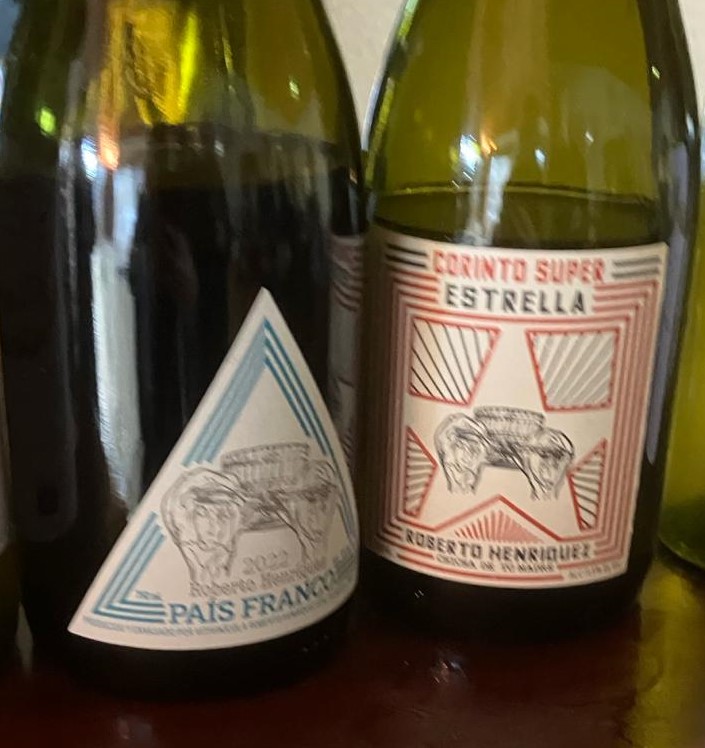
The Mosse brothers are also now importing wines and we tasted two interesting Chilean wines from Roberto Henriquez based in the Bio Bio and Itata area of southern Chile. The twist here was that the young man opening a pizzeria is Chilean, so it was fascinating listening to his thoughts on two very good wines. First was a skin contact Chasselas, Corinto Super Estrella, which started with a real pop of fruit but dissipated a little quickly. The Pais Franco, however, that was very good, full of bright red fruit and spice. It was made from 200 year old vines which pre-date phylloxera, a fascinating wine which I hope to seek out in future. There was also a lovely Austrian wine from Kamptal, a Malinga Rötburger (Zweigelt) from producer Christoph Heiss. Made by carbonic maceration the wine was fresh with spicy red fruit notes, very good.

We were also joined by a young winemaker with his first wines. Timothée Hurez worked and trained with the Mosse family but now has a couple of hectares of his own vines and he showed us a lovely Chenin and two reds which he intends to blend before bottling this week. A good start. One of the things I love most about the natural wine community is how young people learn from skilled winemakers and then go their own way. There are numerous examples with Jeff, such as Steeve Dejardin, Thomas Anglès and James Maddison and Tim will have benefited hugely from his time with such a great family as the Mosses.

An enjoyable visit, with lots of unexpected wines as well as the very good domaine bottles. I like Anjou, I liked Domaine Mosse and recommend them to you. I bought wines, I’m sure you would not regret it if you did. Next stop Domaine aux Moines!


Leave a comment

The Rule of Three

1. Dynamic Vines

The Rule of Three is a principle that suggests things that come in threes are inherently more satisfying and effective than other numbers of things. Well, in the last few weeks I have enjoyed three very good wine tasting events, time to share some thoughts and findings as well as recommendations and one very surprising outcome for me.

Tasting #1 was in Bermondsey, London and run by the excellent wine company Dynamic Vines, specialising in biodynamic and organic producers. I encountered Jean Christophe one of the Dynamic team at a tasting in Newcastle last August and it was good to meet up with him again. (Also very pleasing to hear that Soaked will be repeated this year).

Unsurprisingly some of the wines I really enjoyed at Soaked were still amongst my favourites here; Cosse, Radikon, Béru and Le Puy. The Blaye wines of Matthieu Cosse are very good indeed and reasonably priced too, the white has beautiful aromatics and full flavours whilst the red is even better with full fruits lifting the Bordeaux backbone. Radikon‘s skin contact wines are, unfortunately, becoming very pricey but the level of consistency across the range is admirable and the entry wine Slatnik is fresh and complex whilst a 2009 example of Ribolla was delicious and shows the potential for ageing these excellent wines. The Chablis wines of Chateau de Béru are exemplary, clean, steely Burgundy Chardonnay with the characteristic minerality but fruit too. Again, like all Burgundy, the prices are climbing fast. I chose Le Puy‘s ‘Emilien’ as my wine of the year after Soaked, it’s still lovely. However, they were put in their place by the Merlot Barthélemy wines of 2020 and 2014, deep and full but £150+.

Another Bordeaux producer, Ormiale, showed some excellent wines. Made by hand (even de-stemming) and with very low yields all the wines were lovely including a red sparkling wine. My favourites were the Malbec ‘Mialbec 22’ fresh with deep plummy fruit and the outstanding Merlot/Cabernet Franc blend ‘Borto 19’ the name suggesting its port like flavours, full, fruity and powerful.

One of my favourite wine regions is Jurancon in the South West of France. I am heading there soon, very exciting. Two new (to me) estates were on show here and I thought the wines of both were excellent. Both of the 2021 dry wines of Domaine De Souche were lovely, the Petit Manseng and Gros Manseng grapes offering the freshness I like but with apple and pear fruit and hints of sweetness whilst remaining clean and dry. Clos Larrouyat wines showed nice citrussy fruit (especially ‘Météore 21), acidity as well as salinity and texture in the ‘Comète 21’. The moelleux ‘Phoenix’ was very good, the sweetness balanced by fresh acidity.

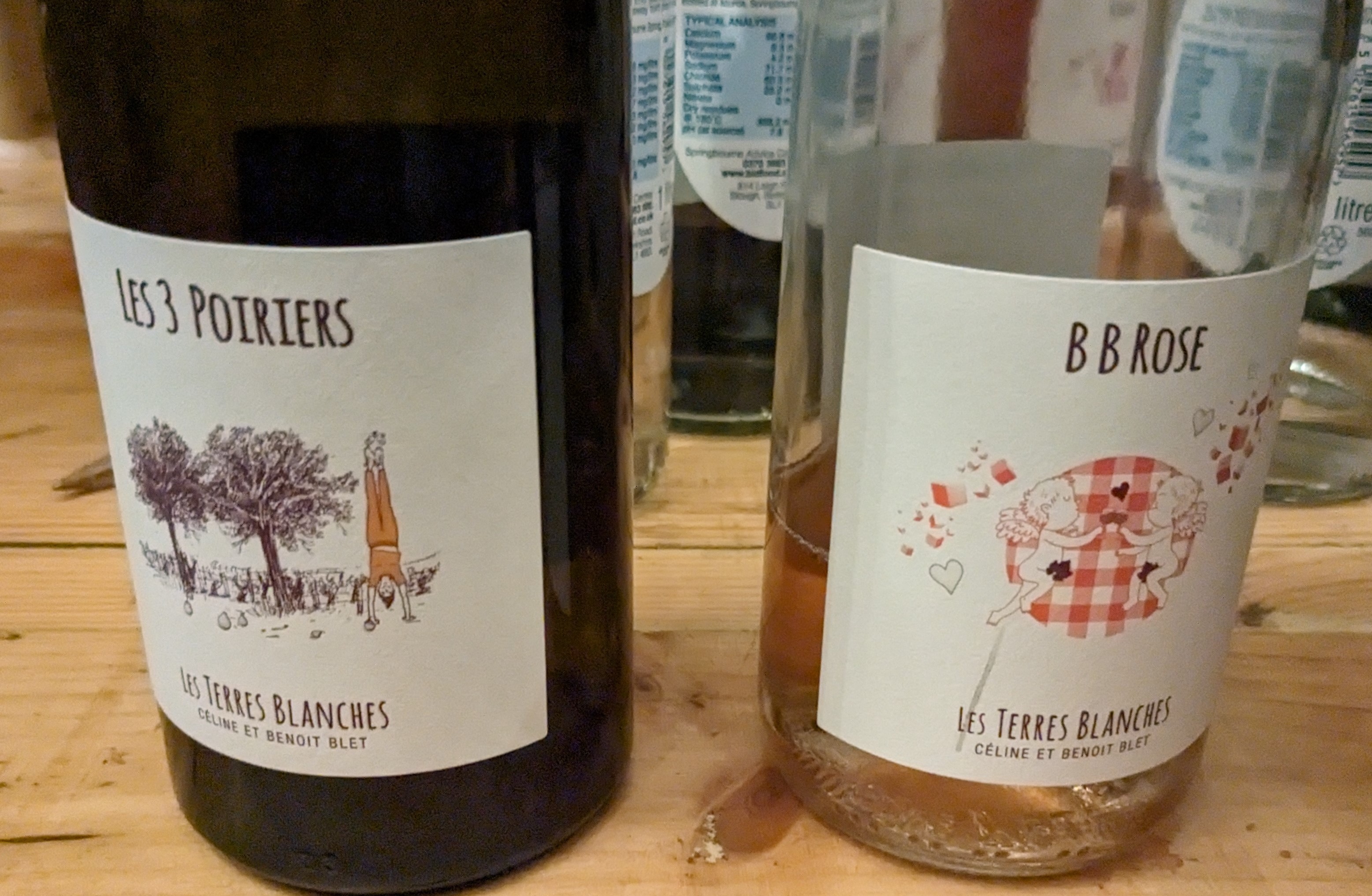
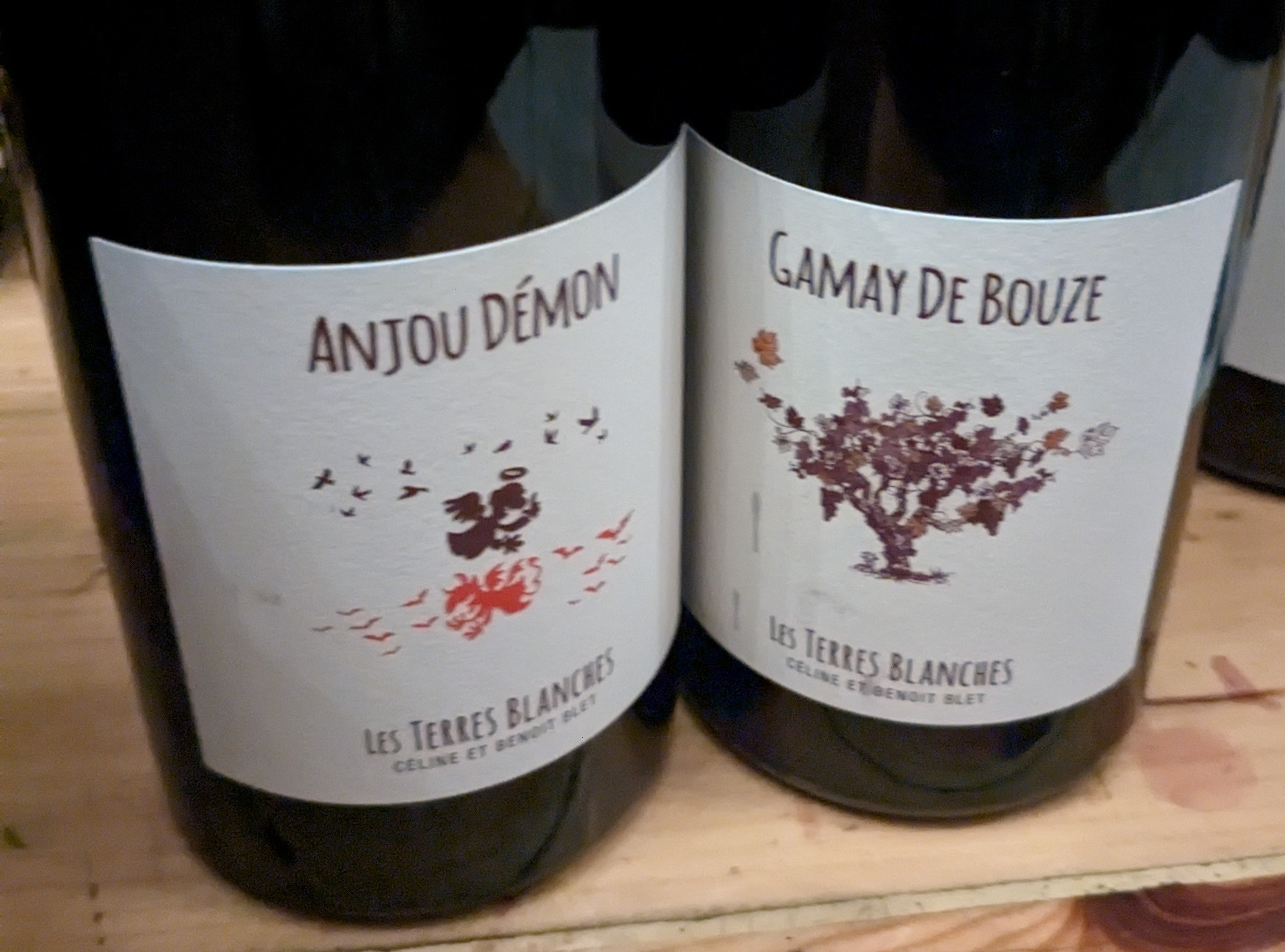
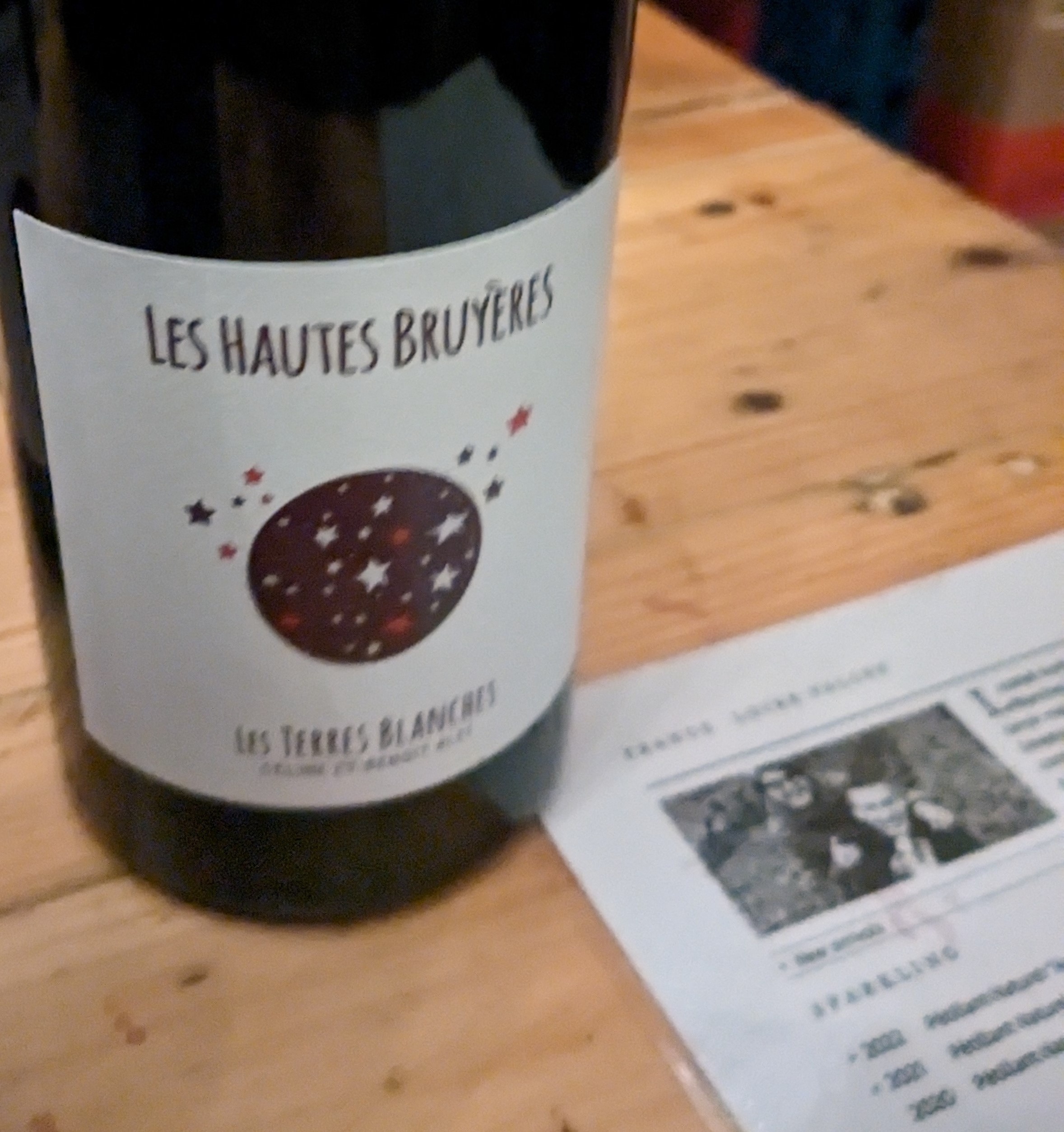
To the Loire (another region I am visiting soon). The Chenin Blanc of La Grange Tiphaine‘s Montlouis was very good but I particularly enjoyed the wines of Les Terres Blanches. The PetNat was persistent and very good, the Chenin Blanc ‘Les Trois Poiriers’ beautifully balanced between freshness, rich fruit and full of lingering apple and white fruit notes. The ‘Gamay de Bouze’ (a rare type of Gamay) had nice spice and crunchy red fruit. The two Cabernet Franc wines stunned me, I’ve not been a fan of the grape but the rich fruit and spice were lovely, ‘Les Hautes Bruyères’ 20 aged in barriques for 30 months was my wine of the day. How was that possible? Cabernet Franc, barriques – not me at all but….

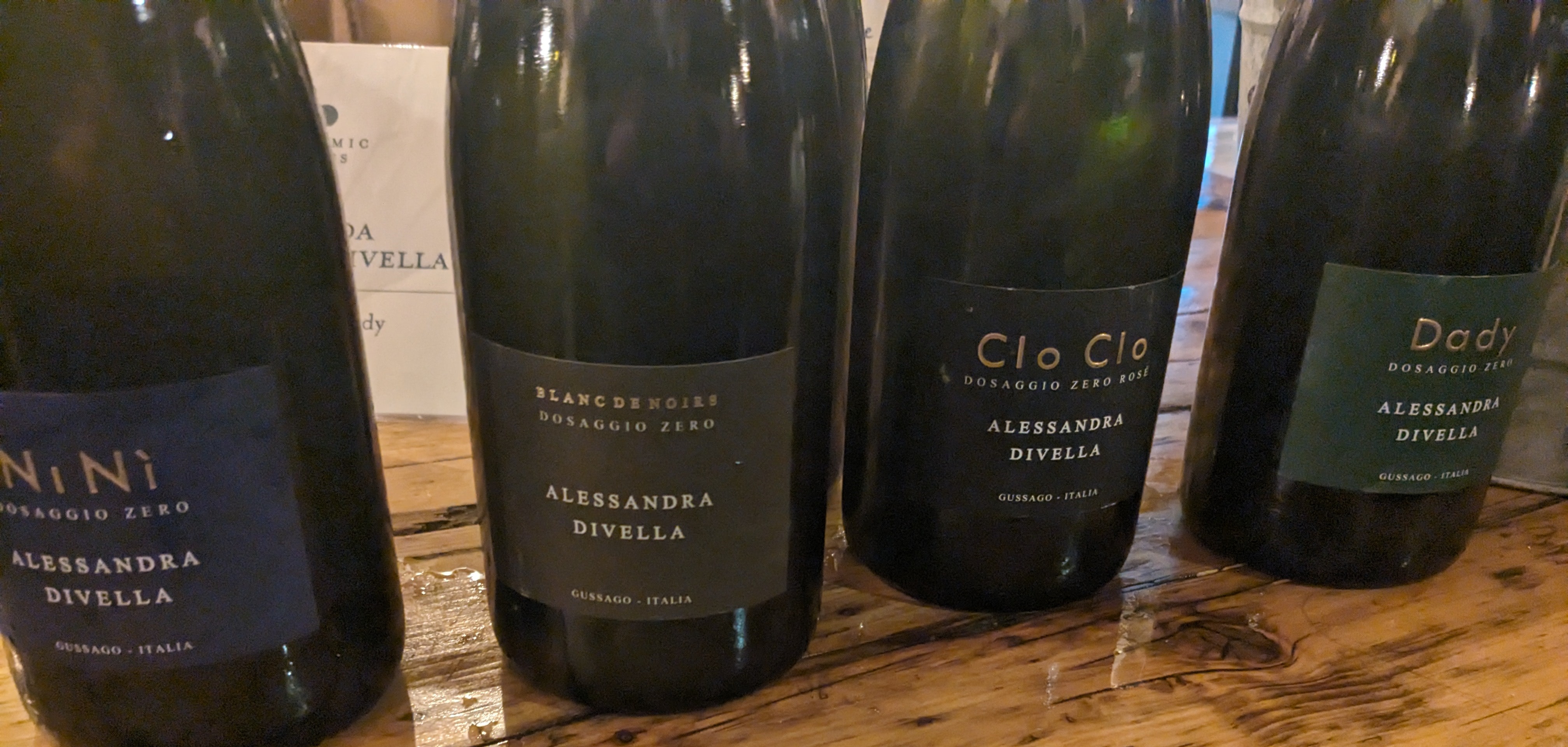
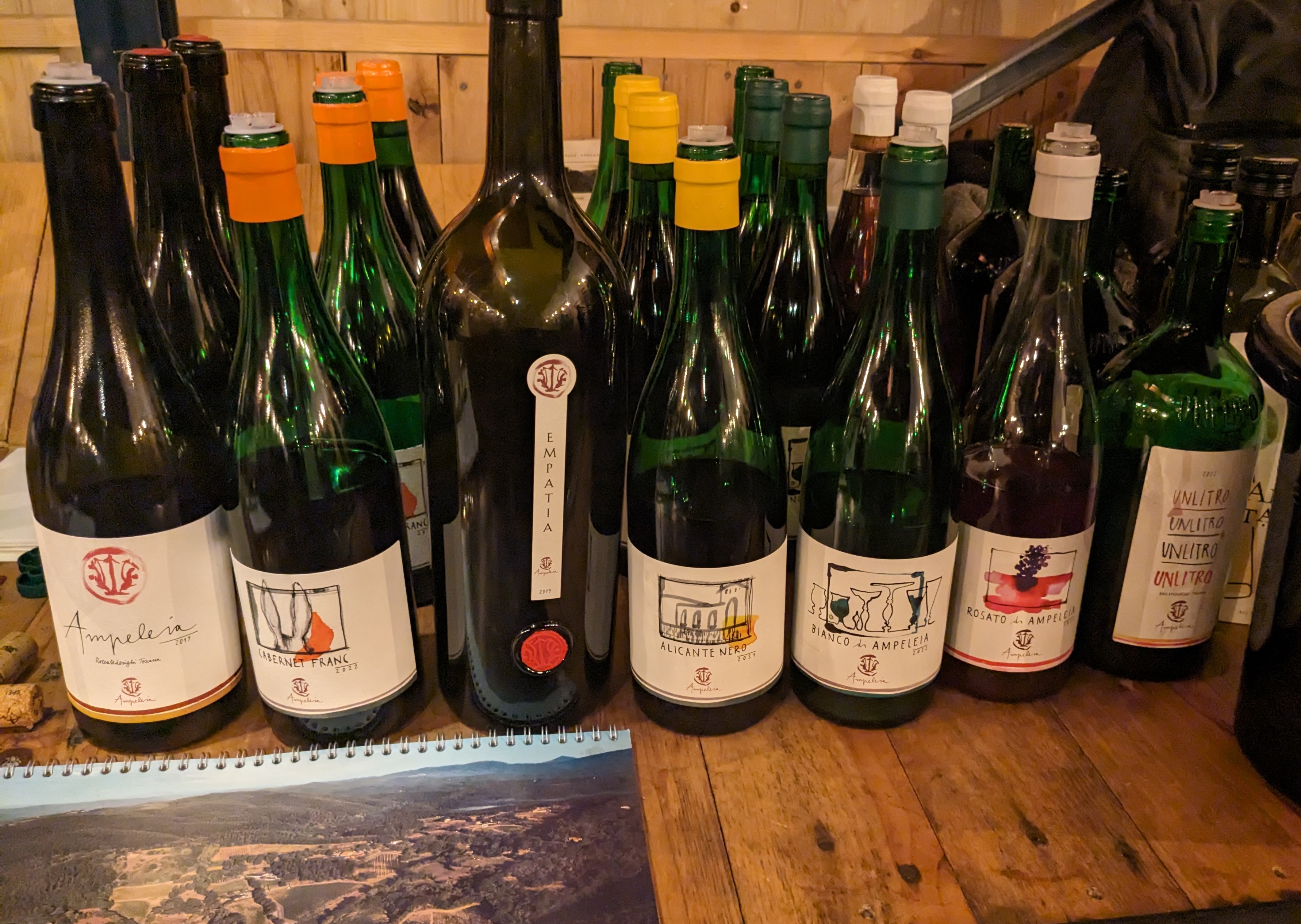
I had heard a lot about the Spumantes of AA Divella which are bringing Italian sparkling wines into the spotlight. Made in the champagne method and using Chardonnay and Pinot Noir they can easily stand comparison with the French region. Freshness, fruit and concentration abounded in all the wines the 2019 Blanc De Noirs in particular was aromatic and rich whilst fresh and clean – very well made. I also liked the wines of Tuscan estate Ampeleia as usual, best of all being the bottle of the same name, ‘Ampeleia 19’. Deep, rich fruits and freshness and made from….. Cabernet Franc. Again!

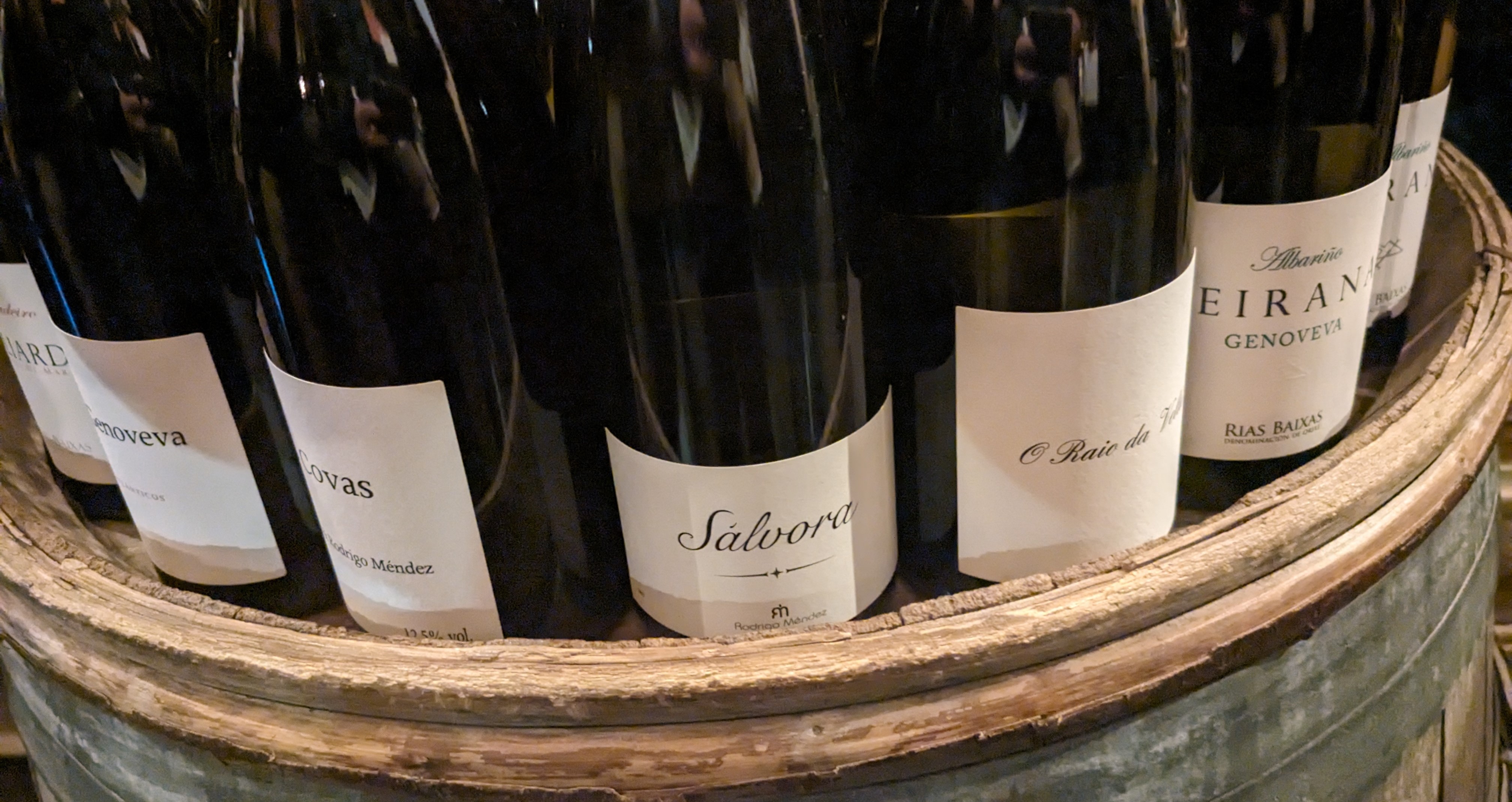
There were other Italian and Spanish wineries represented, unfortunately I couldn’t get round them all in time. However, I liked a lot the Albarino wines from both Forjas Del Salnes and Rodrigo Mendez, especially the Rias Baixas ‘Salvora 19’ of the latter made from 115 year old vines with incredible depth of both fruit and minerality – very intense yet pleasurable too. Finally, a Swiss producer La Maison Carrée, one of the few I have encountered. The ‘Auvernier Chasselas 22’ and ‘Auvernier Pinot Noir 21’ wines were very good, sadly the prices are high, rarity costs.

This was a gathering of some exceptional producers and some outstanding wines. I wish I had the time to explore other wineries and write about some of the other producers I did visit. However, these wines come with my full recommendation. Dynamic indeed.

Now, what is going on with this newfound appreciation of Cabernet Franc????


9 Comments

Wine tasting, expert opinion

En francais

In the last blog I said that wine should be about enjoyment, whether you like the wine is surely the most important aspect of wine tasting. Yet, when I read tasting notes that issue is hardly ever mentioned. There are long descriptions of colour, aroma and flavours. There may be mention of the persistence of taste in the mouth, possibly of wine faults and, perhaps, of the typicity of the wine in terms of grape, origin and year. But not very often do you read whether the taster actually liked the wine.

I was, and still am, asked to judge in professional tastings whilst in France. I attended two, one for a well known wine guidebook and another for regional medal awarding. I have to say I came away rather disillusioned. There were some true benefits, having to analyse the wine according to sight, smell and taste with guidelines for marking those. Having to do so in a short space of time concentrated the mind and my French language skills.

One of my judging experiences

However, in one tasting the group I was working in was told in advance how many medals would be awarded, that is before the wines were tasted! Some bottles received medals which truly didn’t deserve them. In the other tasting there was discussion about our individual marks and thoughts but then as lunch approached the chair said he would just hand in his results so that lunch was not missed. In neither case was actually liking the wine ever discussed or taken into account. Importantly there was huge disagreement amongst the tasters, all of whom were professionals. Marks varied, they are always subjective no matter how much the guidelines are given to establish an objective framework for scoring.

Just this week two well known professionals had a little spat on Twitter about the reliability of scores. Many professionals defend their accuracy, but then they would wouldn’t they?

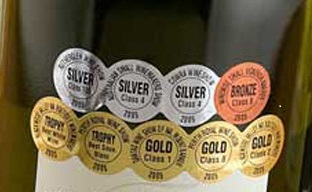
I have often tasted wines which were correct, well made, ripe grapes. Technically they deserved high scores but they were dull, lacking personality or excitement. Would I buy them? Certainly not. Yet they are the ones which often wear their medals on the bottle and that is a real boost to sales in supermarkets etc. This is one example of how a little education would benefit the wine drinker who simply wants a nice glass of wine and is not interested too much in the story behind it. Medals and high scores, in my opinion, can be misleading and a red herring.

award-winning-medals_for_wine-620x300

This must be a terrific wine! But, note the different opinions

Similarly I have drunk wines which had a hint of faults, a touch of volatility or a bit farmyardy and yet, they were exciting wines with personality. Not that the fault made them good, just that the wine could accommodate it.

I shall return to the question of the story behind wines in the next article.

As for newspapers and wine magazines. Too often they are basically publicity puff pieces, advertorials for wines. I gave up on wine magazines a long time ago. Until they are more honest and describe poor wines as well as good then I shall stick to tasters whose opinions I respect on the web or in person. And trust my own judgement too.


4 Comments

Wine tasting should be simple

I have been thinking and reading quite a lot recently about wine tasting and why many people find wine, and its advocates, so off-putting. Most people who buy wine in the UK do so in supermarkets, choose from a wide variety from the shelves based on price, promotions and puff pieces. By the latter I mean the labels on the shelves quoting wine ‘experts’ on why this particular wine is terrific value for money. And sometimes those customers get a bargain and a good bottle of wine.

IMG_3795

Tasting with the excellent Fred Rivaton

Ask many of those people to buy from a merchant and they would be deterred by price and the language surrounding wine. Many people I talk to about wine like a particular style, feel comfortable about that and picking it from an anonymous supermarket shelf. They do not want to have to talk about yields, pruning style or fermentation temperatures because it is too technical and not what interests them. We the wine geeks are absorbed by such issues, most people are not. It bores people, it creates the image of the wine snob.

Readers in the UK will recall how one wine broadcaster made a name for herself by describing wine aromas and flavours by ever more outlandish descriptions. Whilst amusing did this in fact simply confirm the image of wine tasting as an elitist activity, worthy merely of satire?

https://www.youtube.com/watch?v=8UvF2_k0eZI

Wine is a topic of endless fascination to me but I know I am in a minority. And a snob, I often find myself staring in horror at the bottles in those supermarket trollies. However, I do think that wine tasting is often made over complicated and found myself nodding in agreement repeatedly with this article by Jenn Rice on the Food And Wine  website.

The basic question is do I like the wine? Does its mixture of fruit, flavours, acidity, sweetness etc appeal to me and deliver what I want? No matter the price, no matter the reputation of the producer or vineyard area. I like the advice int he article to simply close the eyes and let the wine deliver its smell, taste and allow it to trigger the memory. I shall be returning to memory and story in the next article.

So, instead of worrying about producing lists of fruits, flowers or fungi, of texture, tint or taint just let the wine do its work in your mouth and then decide if you like it. Wine can be simple.

P1020317

Vincent, taken by a wine