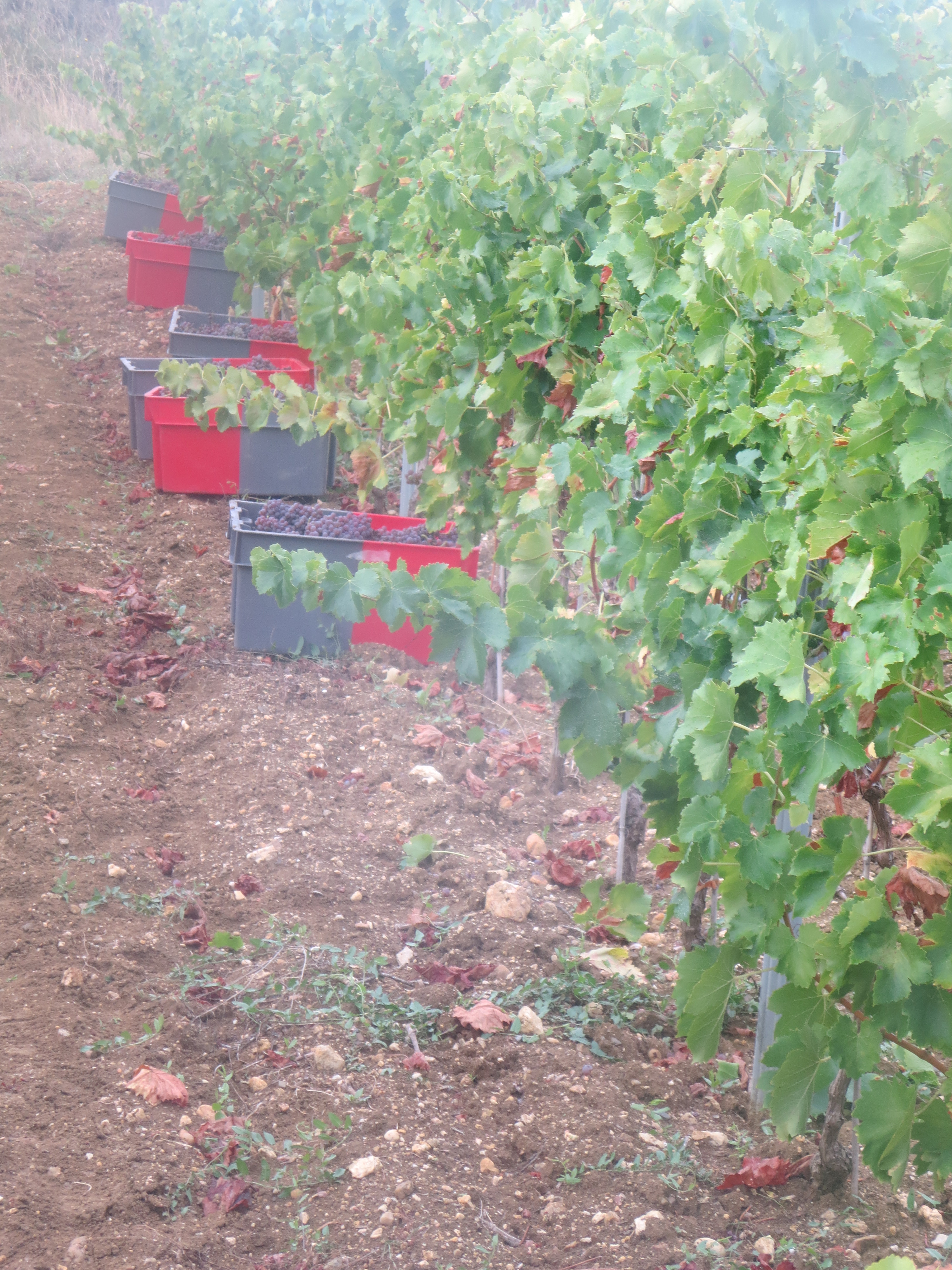
September 3rd began with further picking at the southern quarter of the vineyards of Mas Coutelou, Peilhan and Font D’Oulette, followed by an afternoon of picking in the northern end in Segrairals.
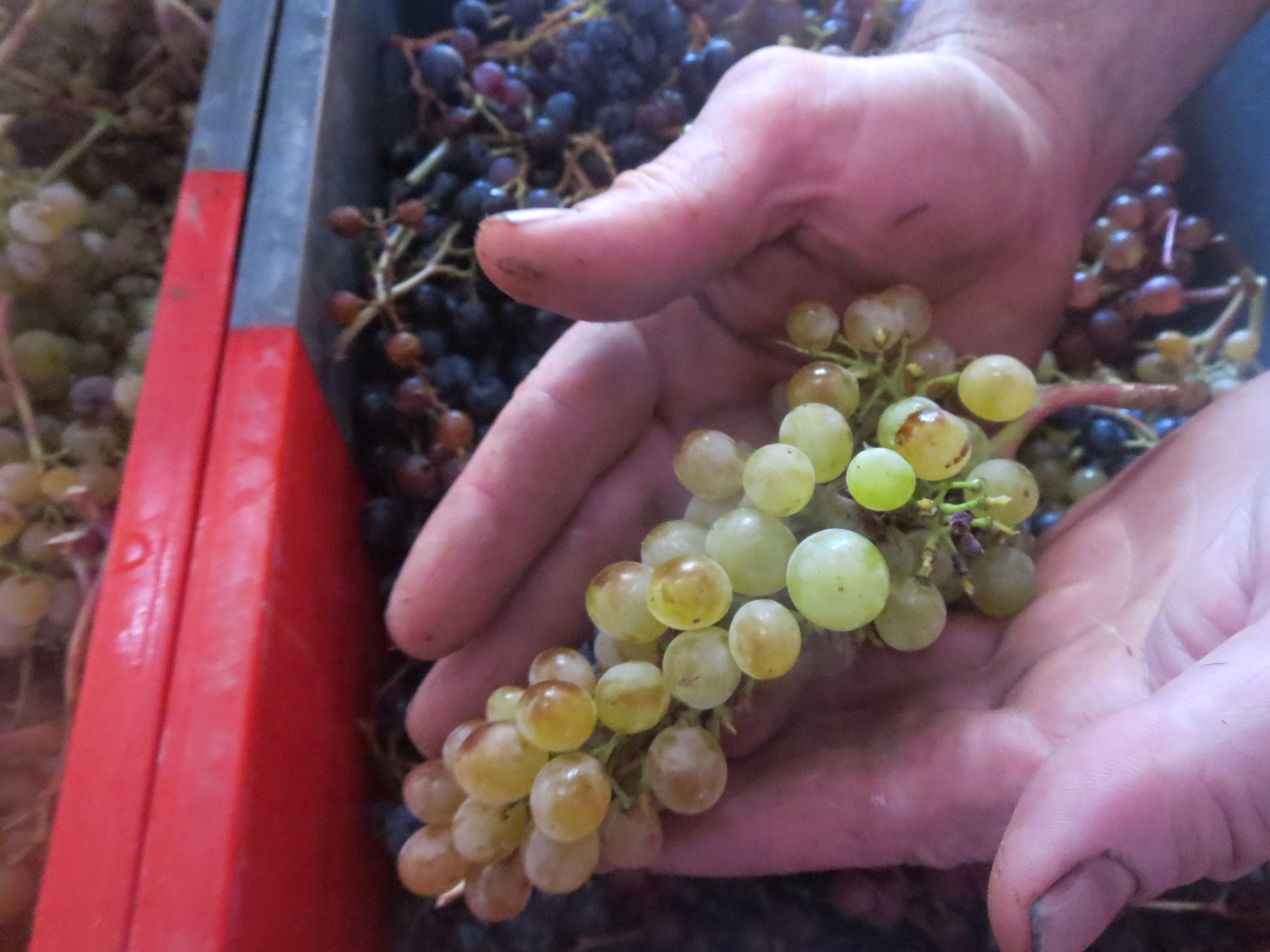
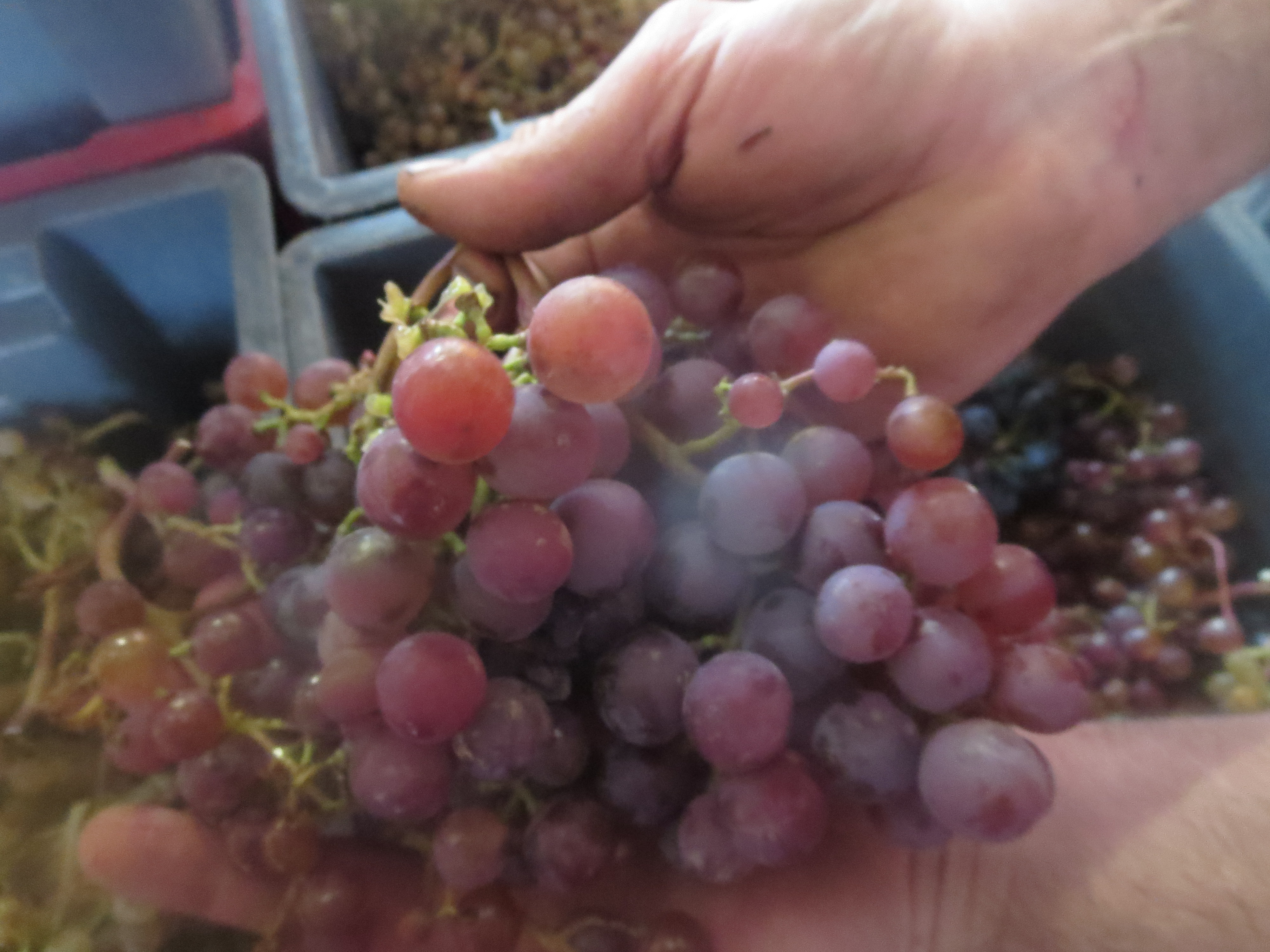
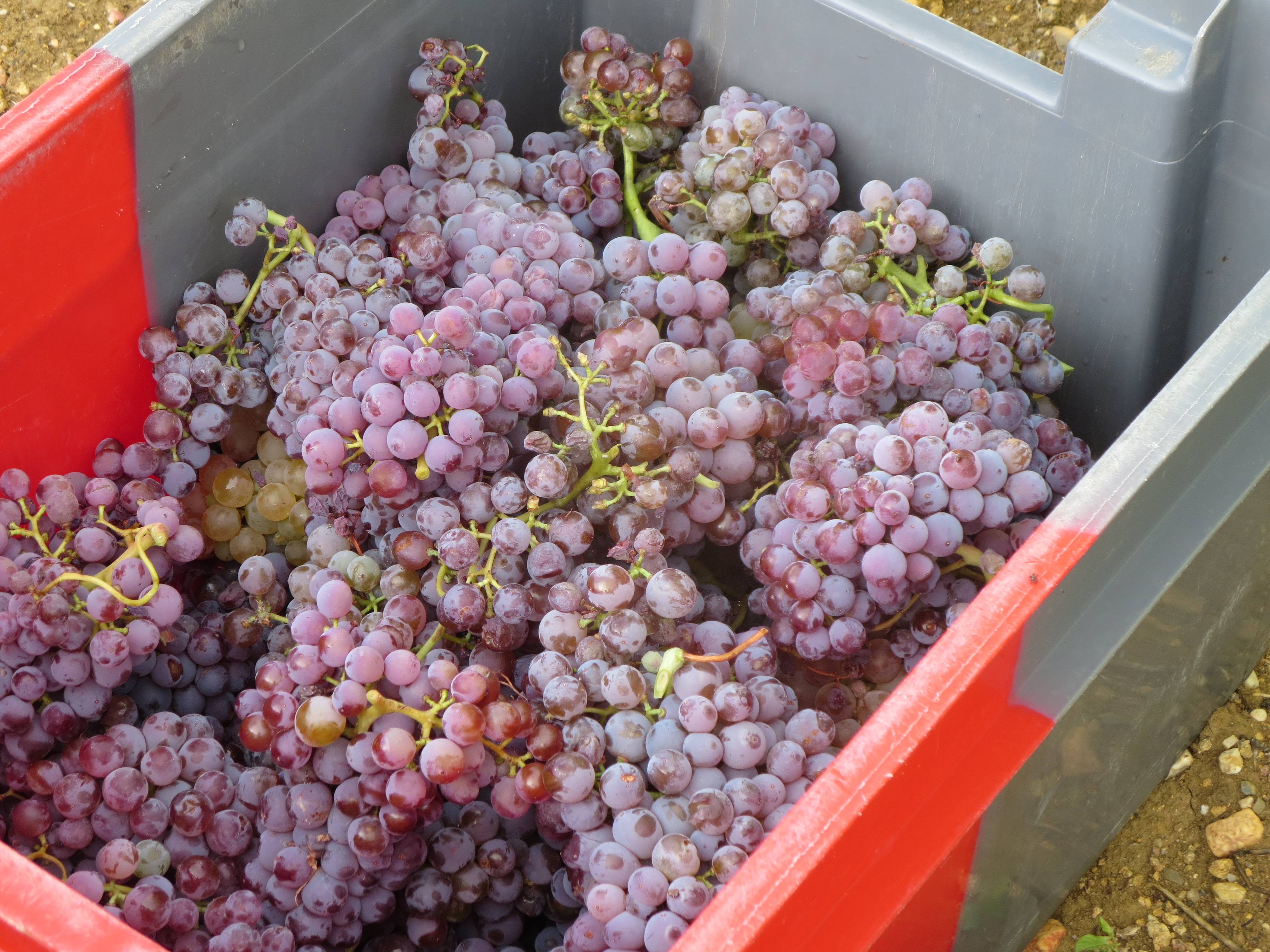
Peilhan and Font D’Oulette are both complanted, ie they have lots of different grape varieties being grown and often in the same rows. However it was the Grenache Gris in Peilhan which was being picked first to provide the juice for a rosé wine. Grenache Gris is, in my opinion, one of the most interesting cépages in the Languedoc Roussillon providing many of its best white wines. It also has a grey, pink skin which can provide a little colour to the wine if the juice is allowed to stay in contact with those skins for a few hours. In this case it would provide a very pale rosé wine, I heard the style described recently as a gris de gris. How this turns out we shall see, it could yet make a white wine.
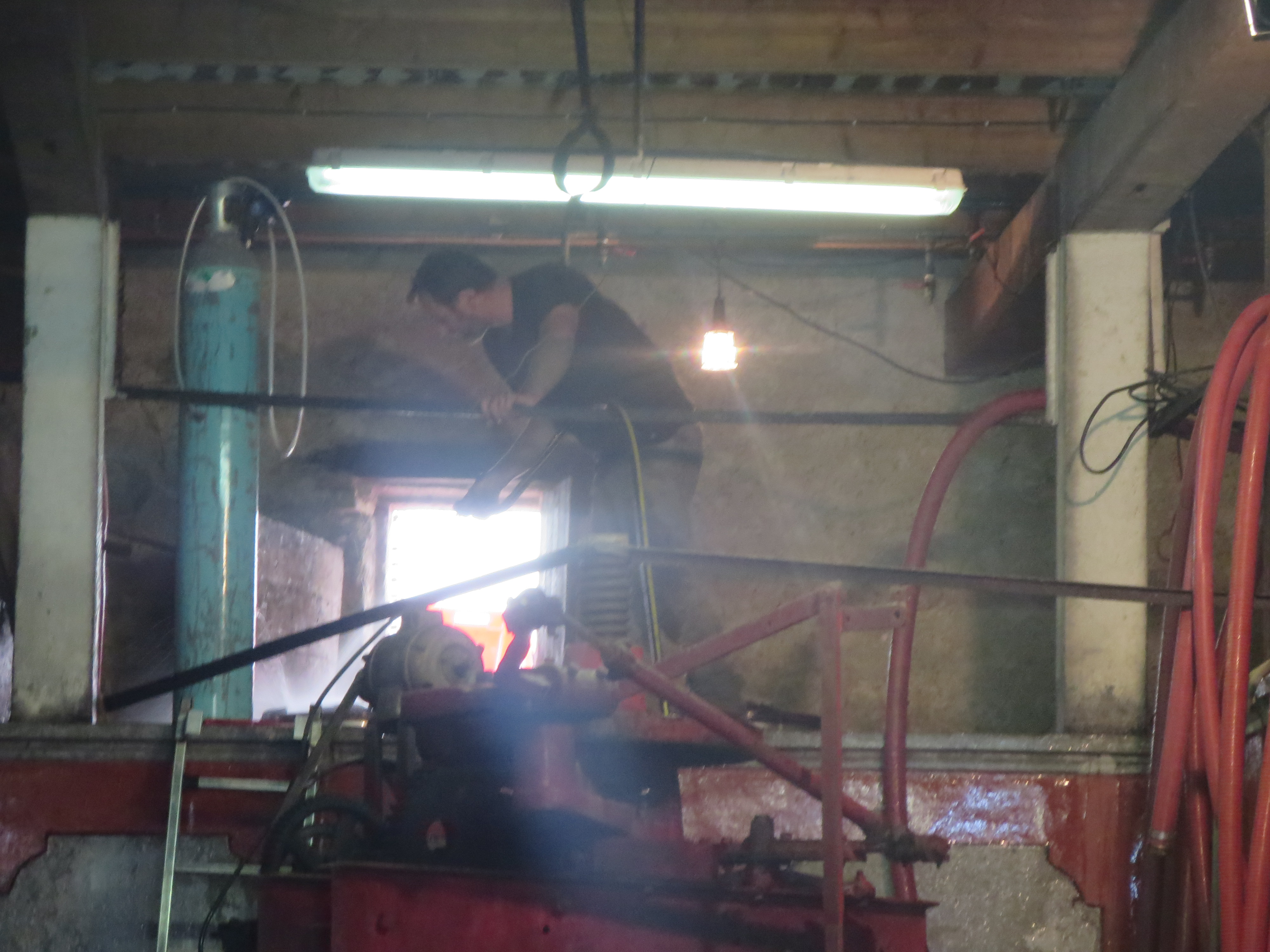
Cameron loading the press with the Grenache Gris
Error
This video doesn’t exist
When the Grenache Gris was through the press it was time to bring in the grapes from Font D’Oulette. This has a whole variety of cépages from the traditional Aramon Noir to the more unusual Oeillade Muscat, Clairette Blanche and Aramon Gris along with many others.
Clairette Blanche
Clairette Musquée
Aramon Gris
Oeillade Muscat
Oeillade Noir
This assemblage will be added to some Cinsault (perhaps from Rome vineyard, perhaps not) to make Flower Power which was made for the first time in 2014 and has proved to be a big success. Indeed we shared a magnum on Friday at lunch and it was excellent, starting to really open up.
Syrah from Segrairals
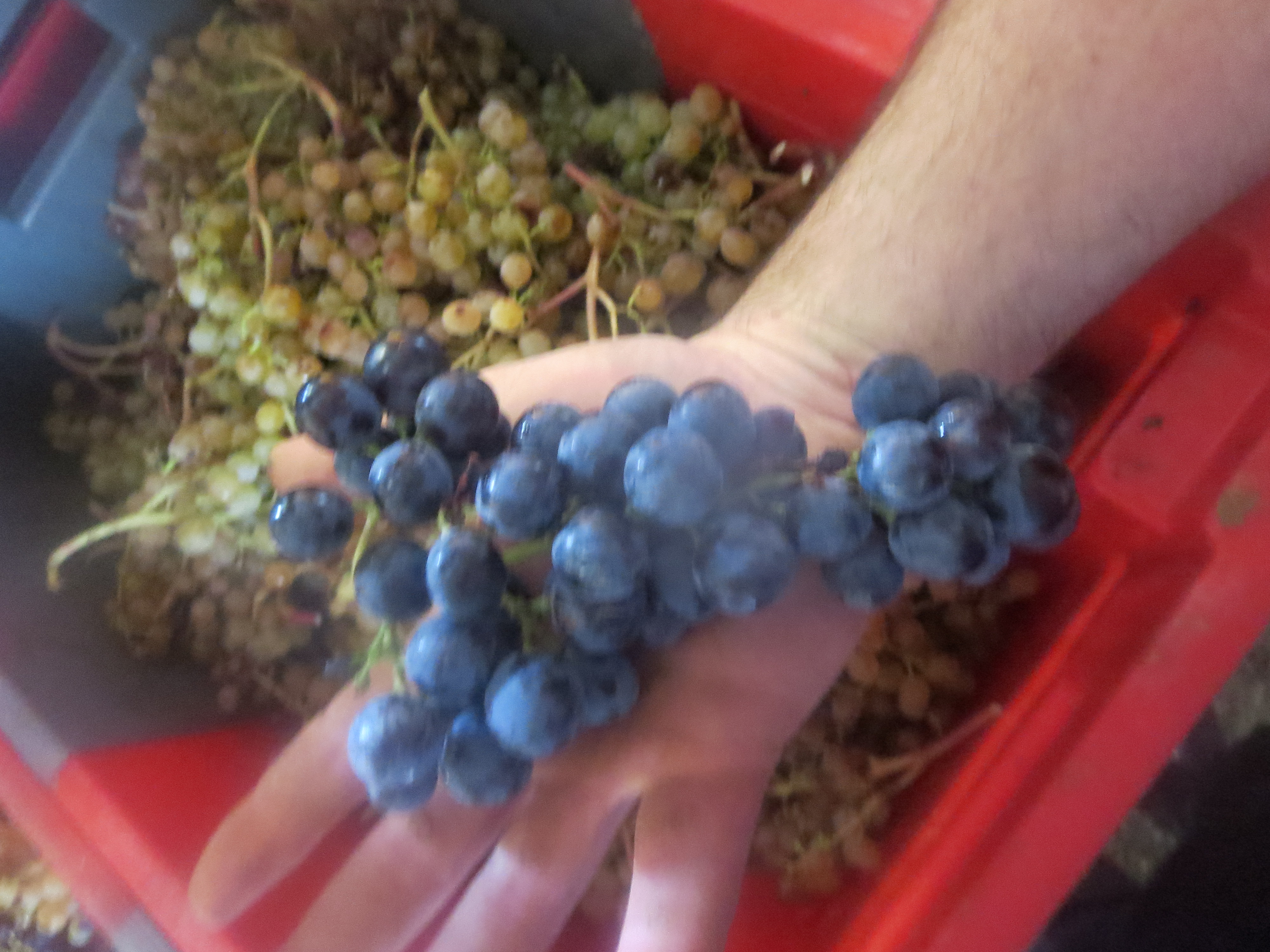
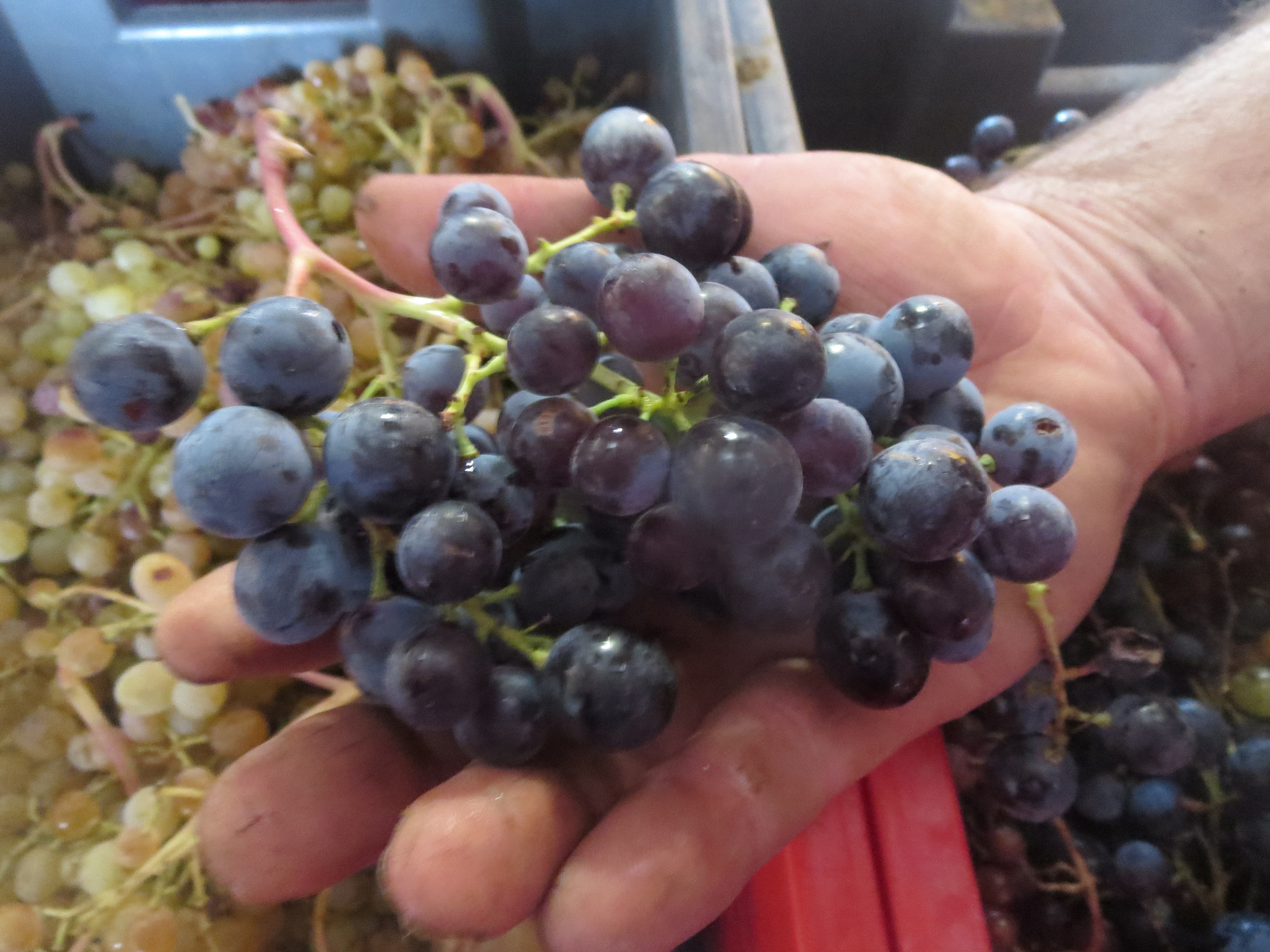
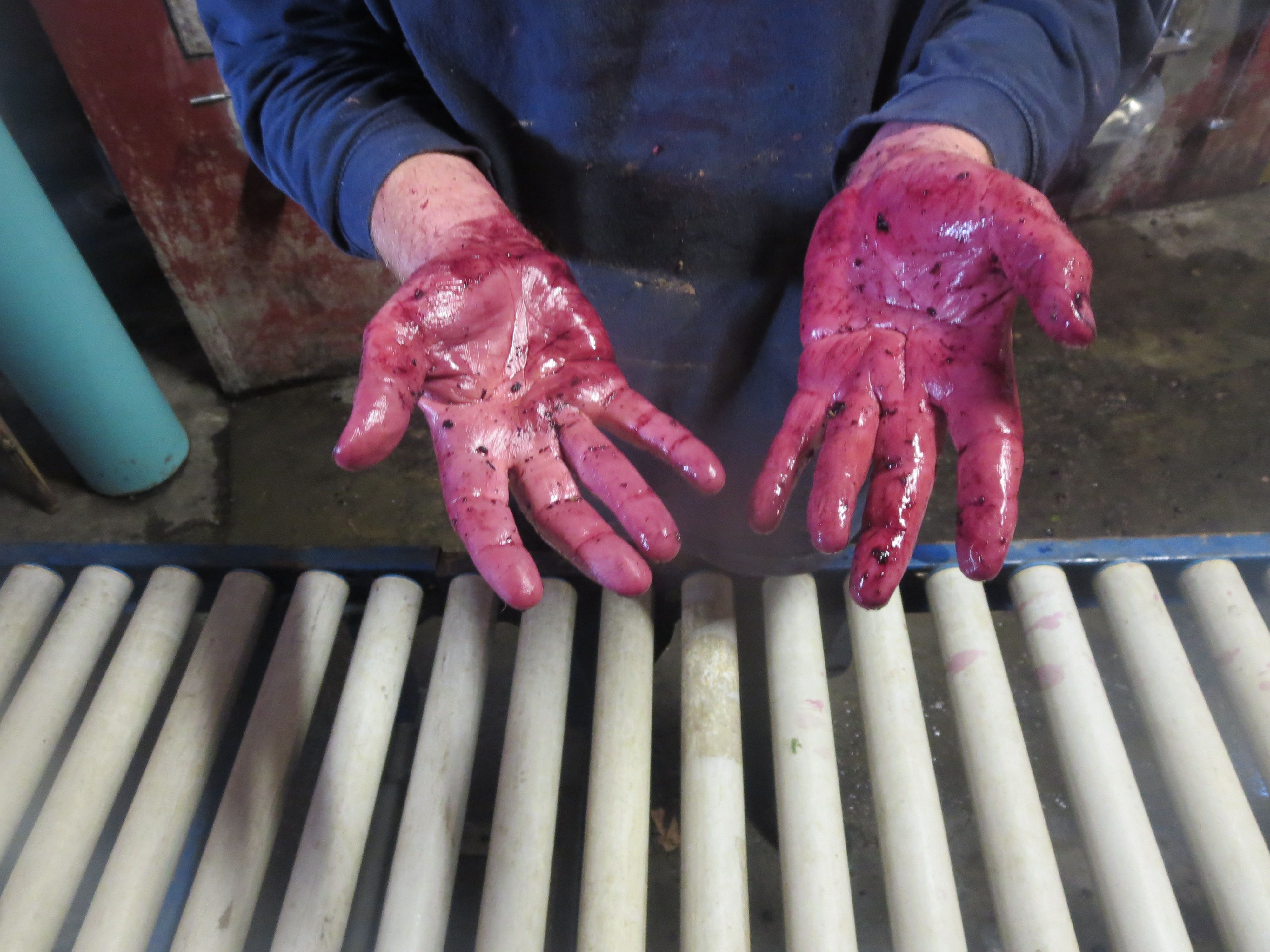
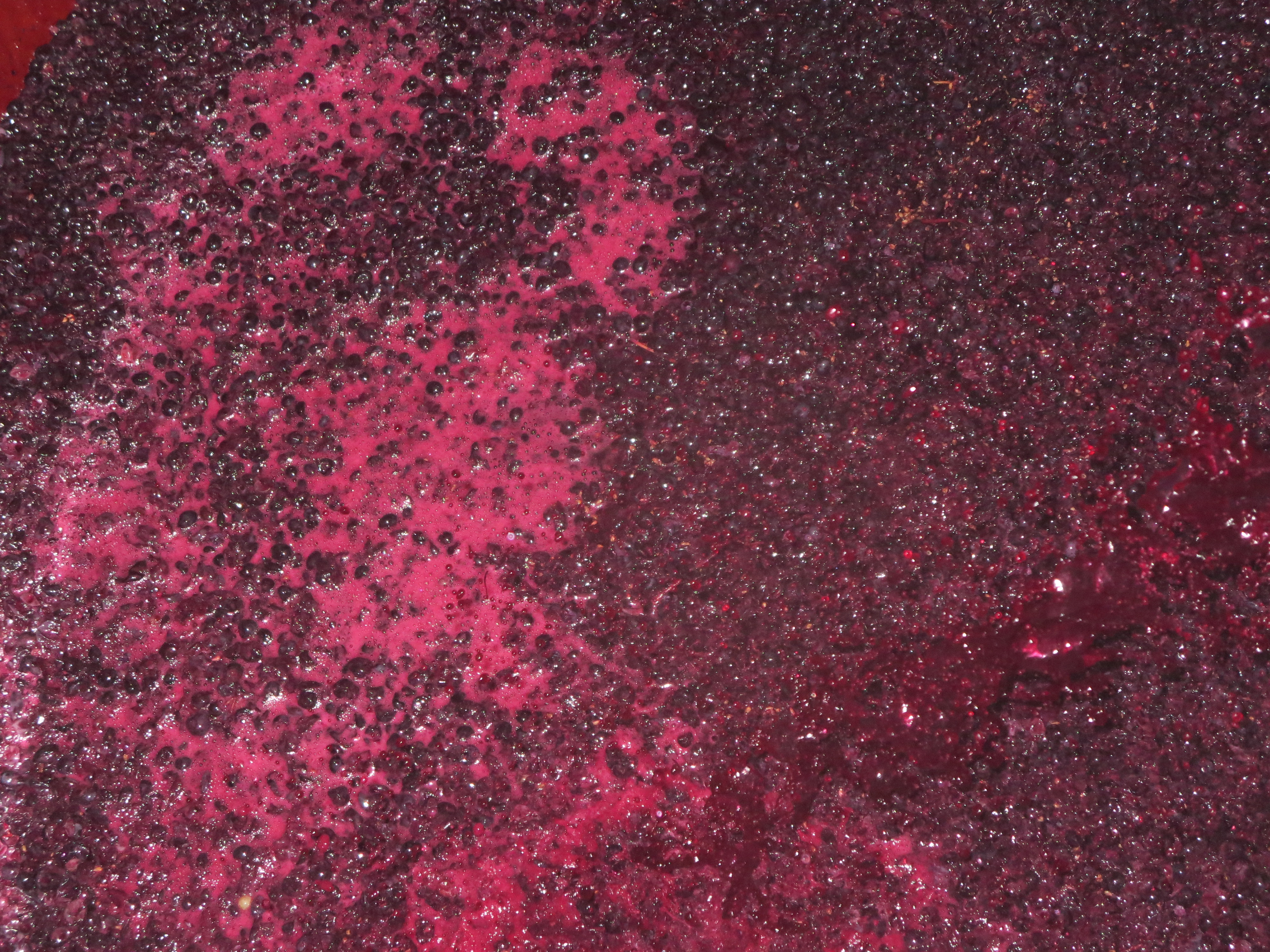
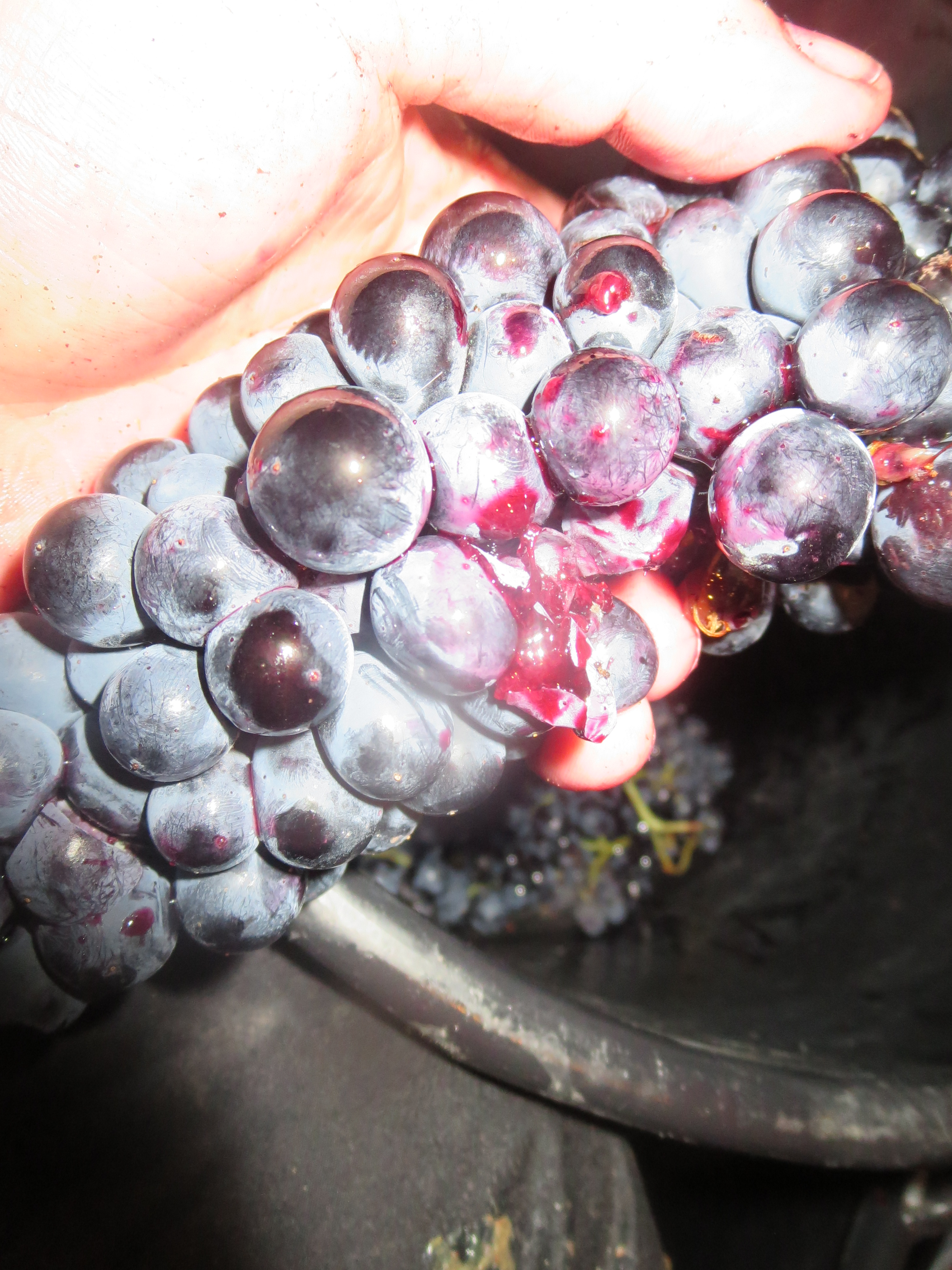
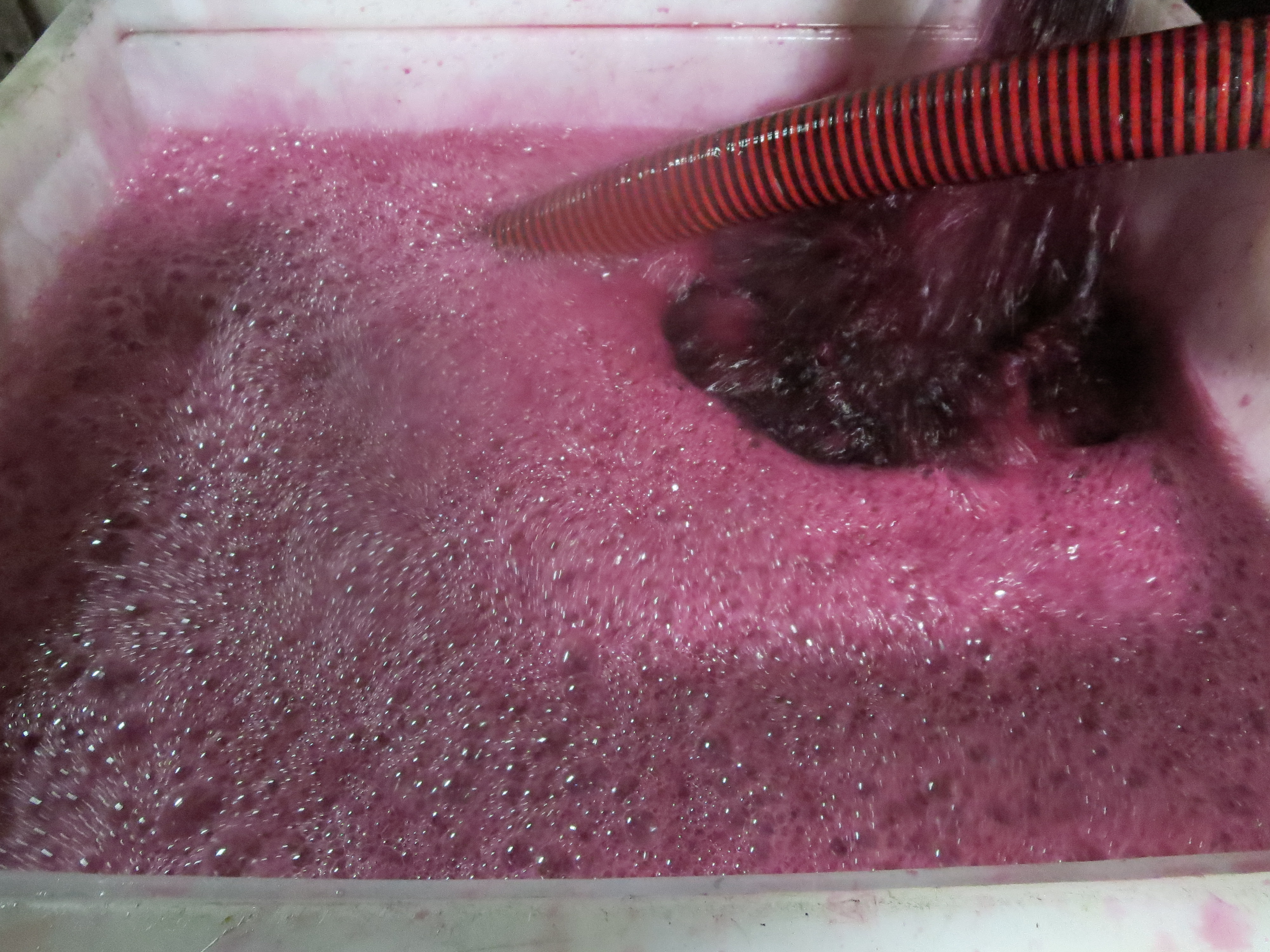
Then onto Syrah, some lovely bunches from Segriarals and Caraillet, the biggest of the Coutelou vineyards. The rich juice provided plenty of colour as you might see!
And then, of course….
Cameron and Michel are becoming a true double act
This was a long day, we finished around 7.15 pm, the day starts at 7.30am. I slept well that night.
September 4th brought a whole day of Syrah grapes from Segrairals and Caraillet again. It was also the last day we had the superb Carole with us for the harvest as she heads to Champagne for picking there. Carole is a true expert in all aspects of the vineyard and cellar and she is always willing to teach and to share, she will be a big miss.
Boxes of Syrah waiting for destemming on Friday (Sept. 4th)
Whilst we worked on the sorting of the Syrah Jeff and Cameron set about testing and remontage (pumping over the grapes already in the tanks).
Remontage of Flower Power grapes
We also tasted samples from the various tanks. The Syrah shows real fruit and is already developing different characteristics. Segrairals was gaining weight and power, Sainte Suzanne much more floral and elegant. The white juice from the complanted Peilhan, still in contact with skins, is beginning to ferment quickly as the yeasts get to work, perhaps because the yeasts are on those skins. It is a treat to watch the development of these wines from infancy as they take their first steps towards the final wine.
And of course….
We finished around 6.15 and then went to Jeff’s for a special treat to send off Carole in some style. Oysters and mussels together with some Chardonnay from the brilliant Spanish domaine, Casa Pardet, lovely. Even the sky responded.
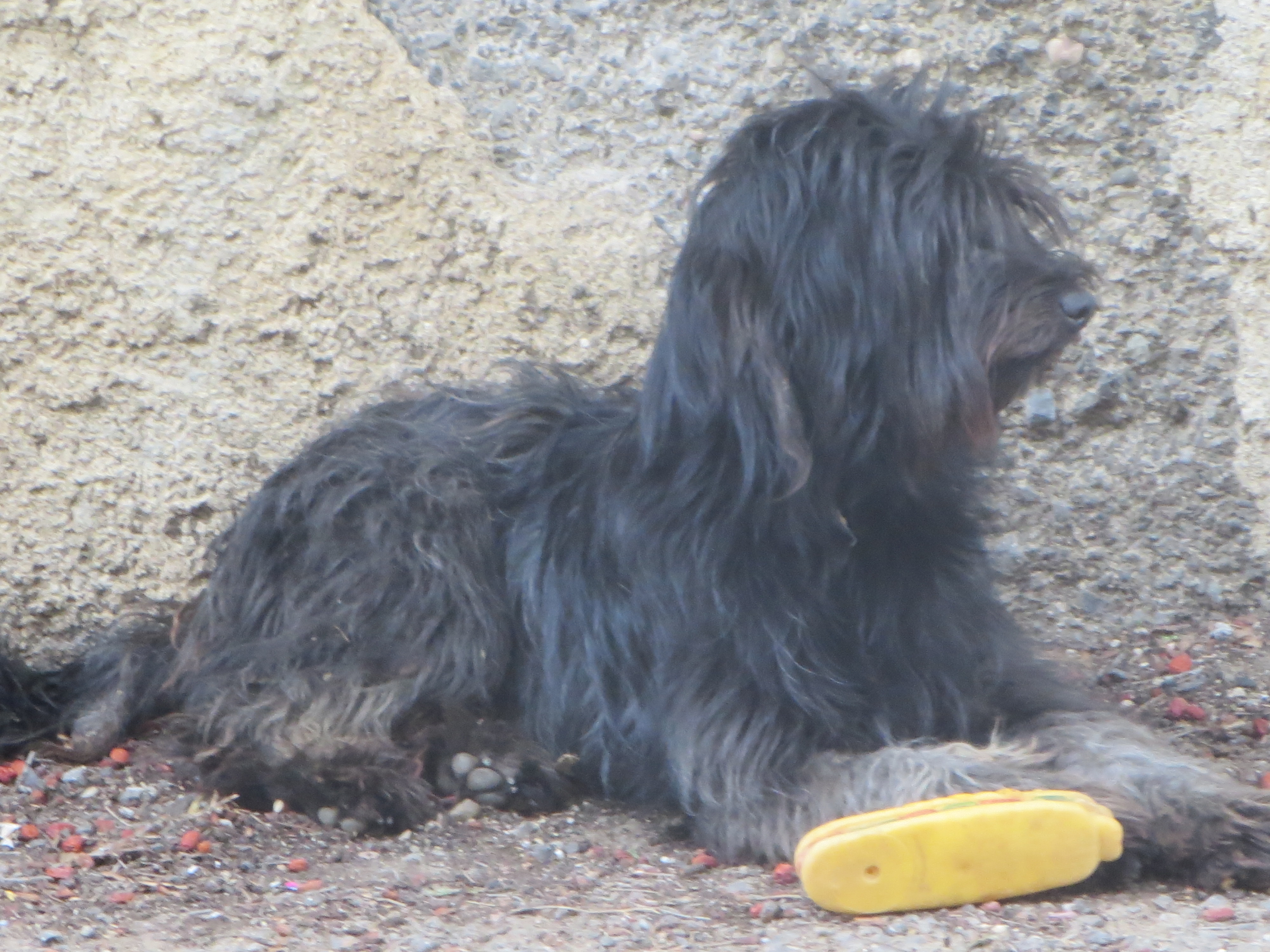
Meanwhile Icare fans, your hero was guarding his favourite toy, a plastic, squeaky sandwich. And sleeping, it is fun to watch him as he dreams because his tail wags furiously.
Saturday September 5th was a day off for me but not for the rest as they continued to process the Syrah form Segrairals, I did say it is a big parcel. The Grenache and Cinsault are still not quite ready and they will dictate when the team can start to harvest them but that will not be before Tuesday. The weather forecast is good for next week so conditions should be right.
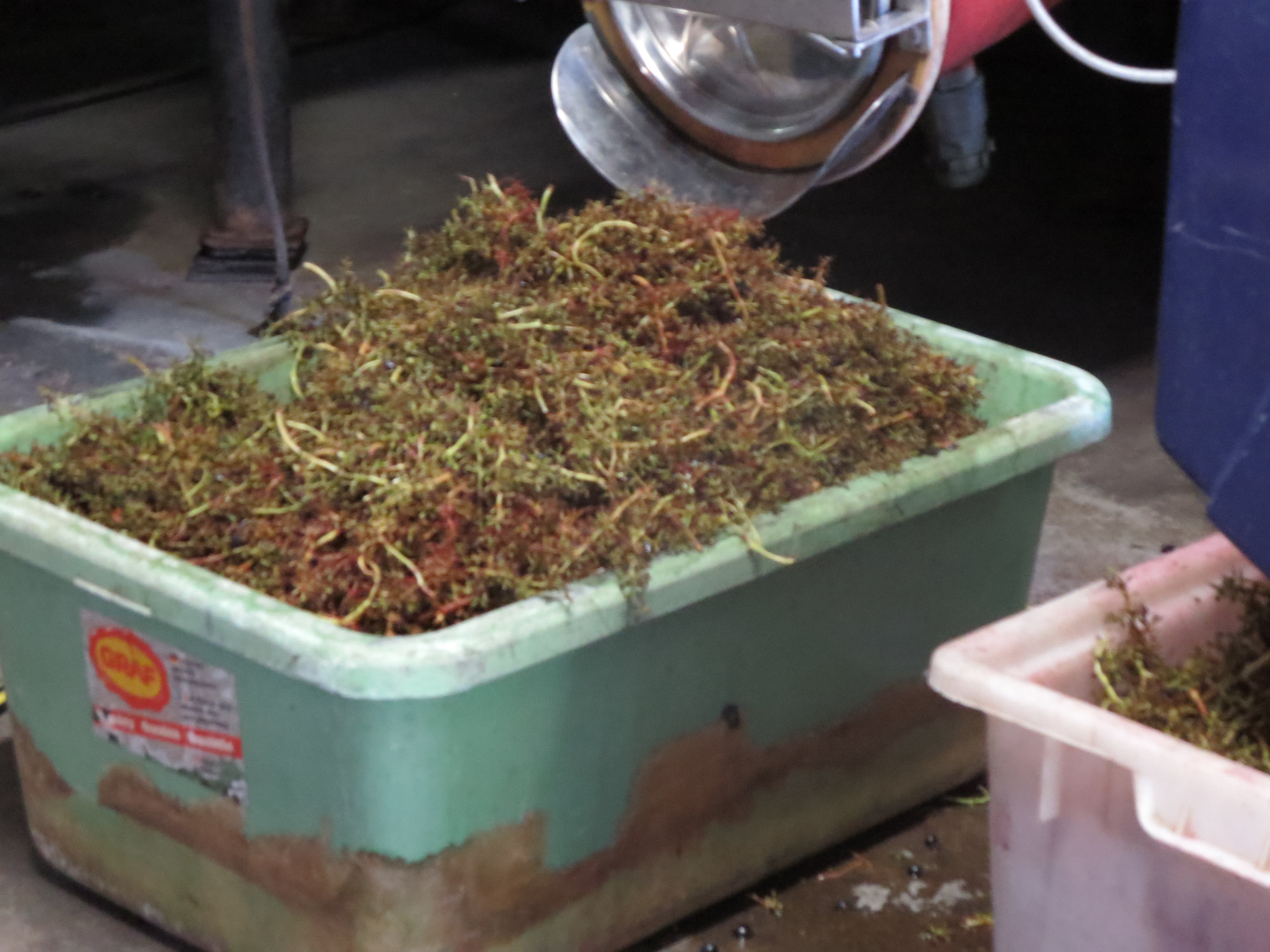
I did call round however and the work had certainly been going on as you can see from the bacs of the stalks (rafle) .
And of course….
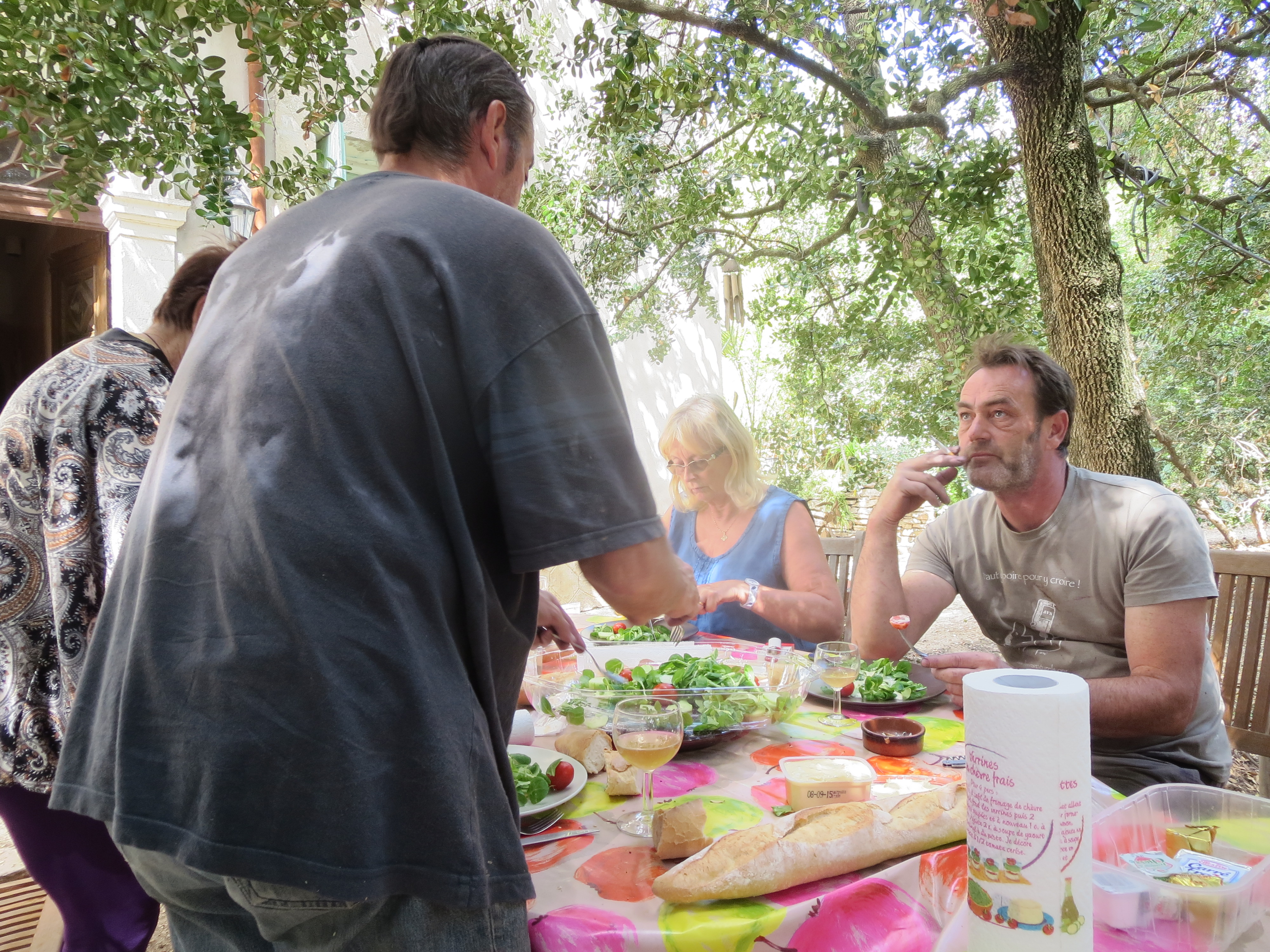
I did manage to sneak into lunch however. These are a highlight of the harvest season, with food prepared by Marie France from Puimisson and bottles opened including a terrific bottle of Castets, that rare grape I have described before. We sit at a big table int he garden of Jeff’s father, right next to the cellar.
Sunday will be a day of rest except for Jeff and Cameron who will do a round of the tanks to check on their progress and carry out more remontage. There is already a lot for Jeff to be thinking about, which wines are where, how are they progressing, have the remontages been done, are the analyses done. Plus all the options about which grapes to blend, what cuvées to make and, for example, whether the Grenache Gris will be white or rosé. Then off to the vineyards to check on the grapes and their readiness for harvest. Pressure, worries, and hard work – spare a thought for the vigneron.
Even during lunch Jeff is up and down checking on things in the cellar
Aug 30th was a Sunday so no picking but Jeff was still in the cellar working. The early wines needed to be checked and moved as necessary.
Monday 31st dawned cloudy again and it was time to tackle the biggest of the vineyards at Mas Coutelou, Segrairals. The Syrah was ready to be picked and Jeff had decided to use carbonic maceration to ferment the grapes which are probably not of the same top quality as those from La Garrigue or Sainte Suzanne which were picked last week.
Grapes which are pressed like those described last week ferment in tank as yeasts react with the juice to change the sugar to ethanol, ie alcohol. The yeasts are natural from the skins of the grapes and the atmosphere of the cellar. In the case of Mas Coutelou and many artisanal winemakers this is the case though other winemakers will buy yeasts some of which are designed to add particular flavours to the wine. None of that in Puimisson, these are natural wines.
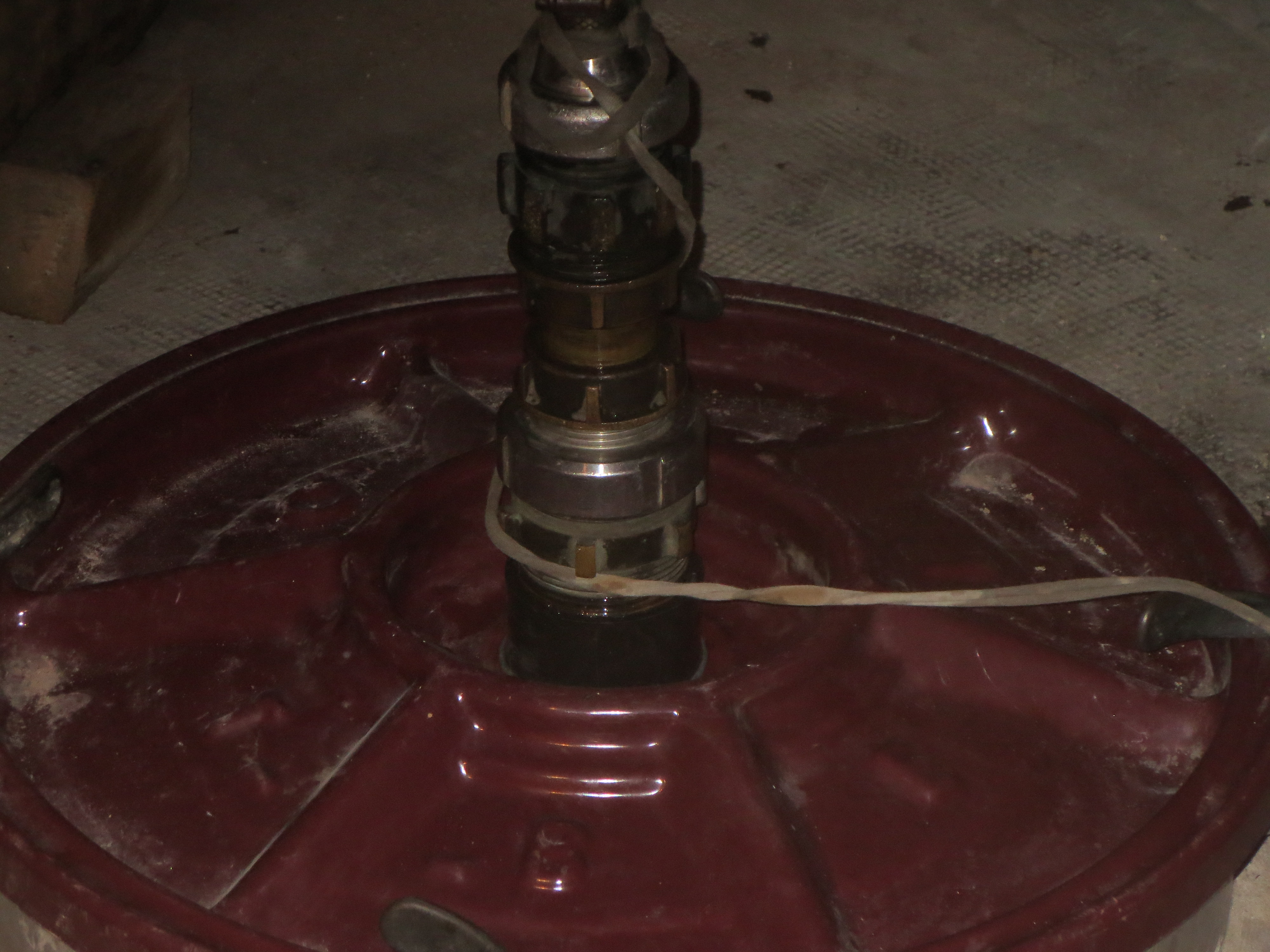
Carbon dioxide pumped into the tank
Carbonic maceration means that the whole bunches go into the tanks, grapes and stalks alike. The tank is filled with carbon dioxide which permeates the grape skins and starts the fermentation within the cells of the berry. Some of the berries at the bottom of the tank will be crushed by the weight of the grapes and so there will be some conventional fermentation too.
Whole bunches in the tank
All the grapes are given a light crushing later by which time ethanol will have formed inside the skins and so the resultant juice is ready made wine. The result is often more fruity and juicy wine.
Grapes arrive through the little back door above the cement tanks
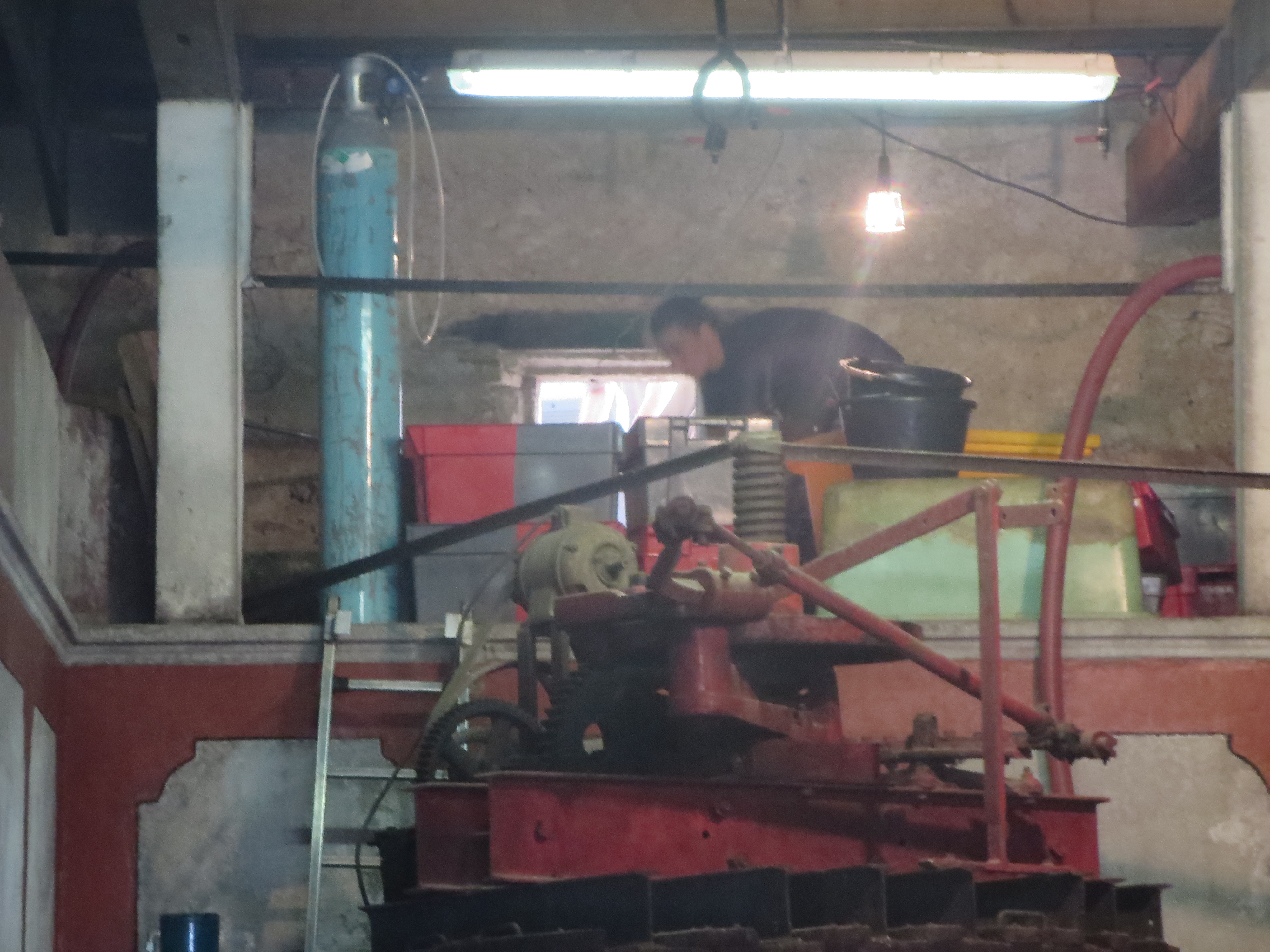
To achieve this the tanks are filled from above so we worked in the space above the cement tank with the grapes arriving at the back door which is a level higher than the front door. The space is smaller and the heat from the grapes was high. It was hard work, believe me. Sorting still had to be done before the grapes could go into the tank, quality comes first.
Some of the rejected bits
The pipe carries the CO2 into the tank
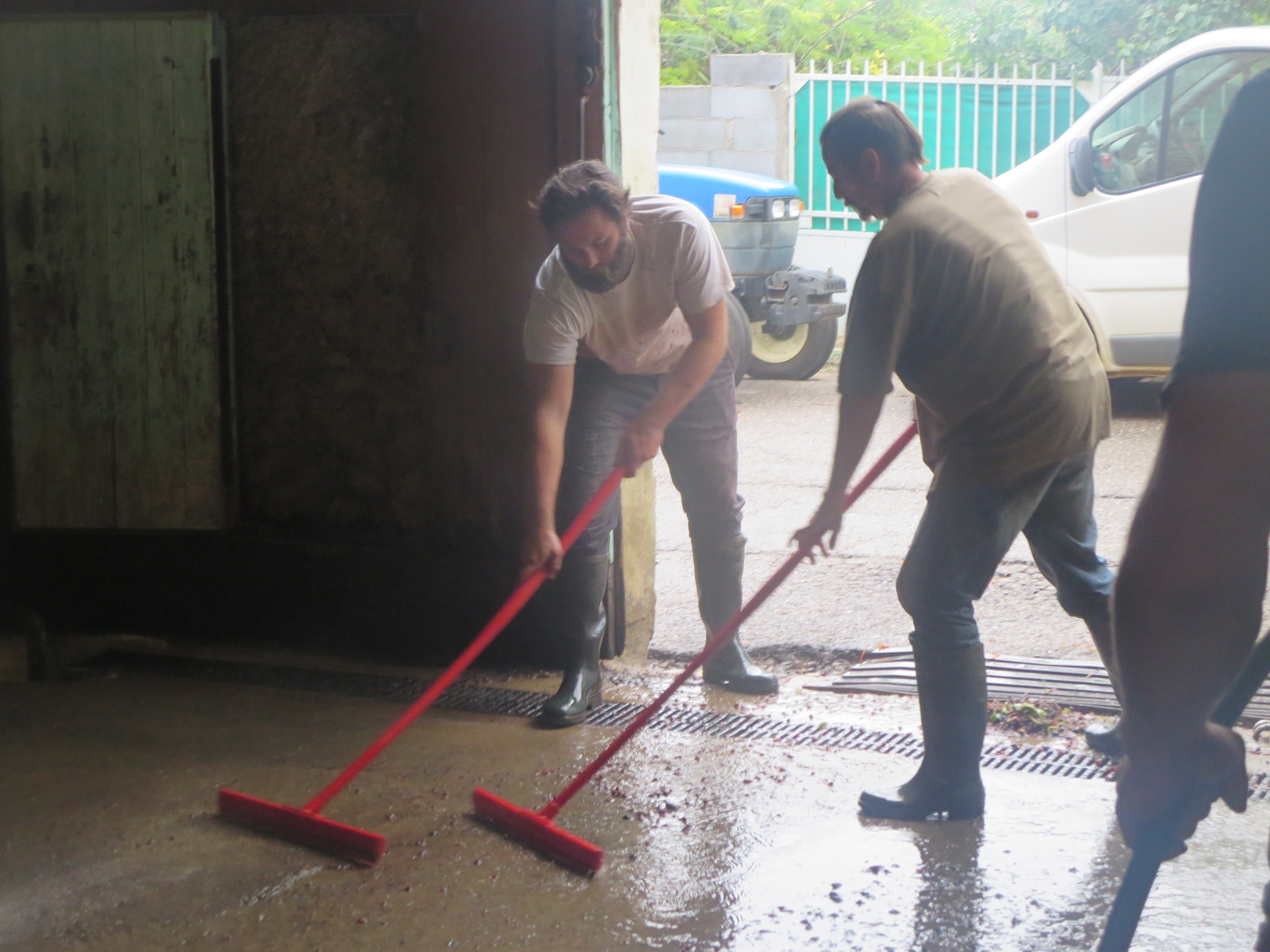
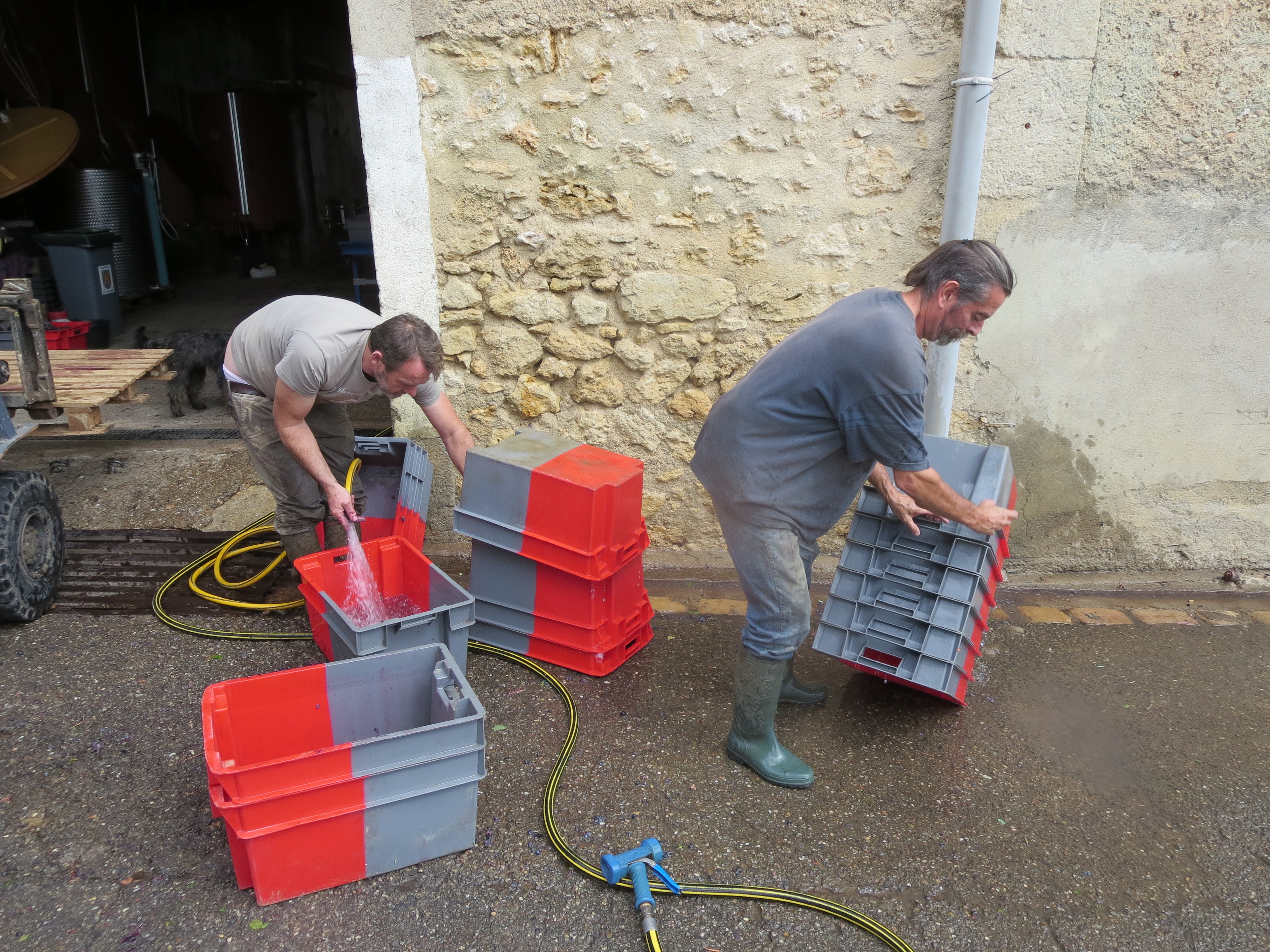
And after 9 hours of back breaking lifting, carrying and sifting it was, as ever, time to clean everything from top of the cellar to bottom as we see here with Jeff and Michel.
One visitor from the vineyard
The boss letting us know we should get a move on
The night of the 31st brought a big storm with lots of rain, not the ideal conditions for harvest at all. Rain can cause rot and problems. However, it could have been much worse as news arrived of huge damage caused by hail in the Chablis region. For all the forecasts of how the harvest might turn out it is only when the grapes are safely in the tank that a vigneron can be assured of the quality of wine they might make. Commiserations to the Chablis producers.
September 1st was a quiet day as the rains from the storms meant the grapes were too wet to harvest. In the cellar more checking and remontage, the process of pumping the wine over the cap of skins and must. Further analysis of the wines showed that the yeasts are acting quickly and the fermentation is progressing very well.
Hard work!
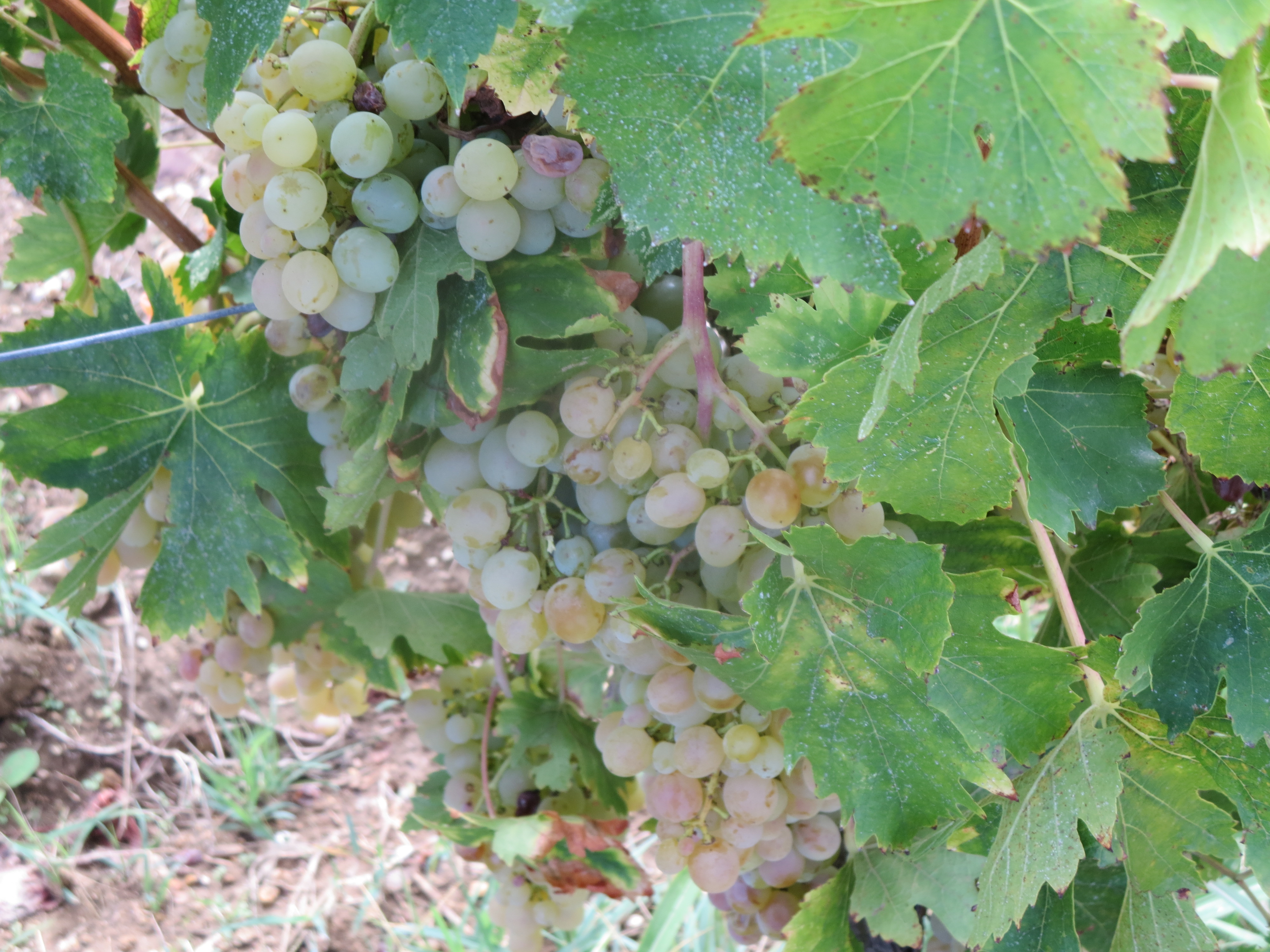
Today, September 2nd, the remaining white grapes, Grenache Blanc, from La Garrigue. Then on to Peilhan to gather some of the white grapes there, Maccabeu, Grenache Gris, Carignan blanc and Clairette Musquée.
Grenache Gris
Clairette Musquée
Michel
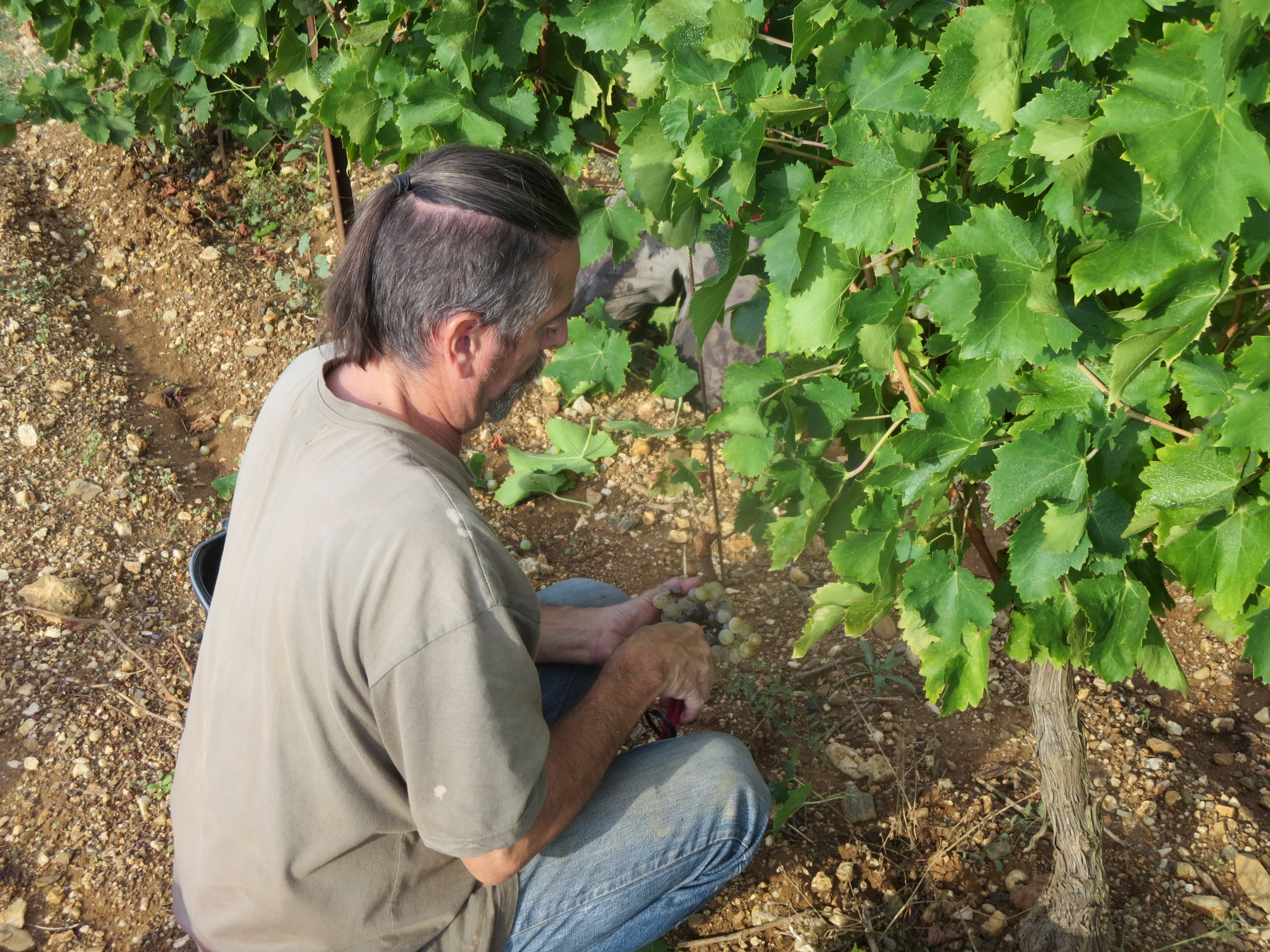
The core team of Jeff, Carole, Michel, Cameron and myself were joined by Matthieu who has worked the harvest before here. There were some lovely bunches though the wet weather has caused some rot inside some of them, Careful sorting took place in the vineyard to take only the best grapes which tasted really sweet and juicy, the Clairette was especially tasty.
Cameron especially pleased with this bunch of Clairette
The white grapes were taken back to the cellar and placed in tank after being destemmed. It is possible that Jeff will make his first orange wine with them. An orange wine is a white wine made like a red wine, ir the wine is fermented on the skins thus extracting more colour, texture and flavour from them and giving the wine an orange tint. However, analysis and the next few days will be needed before the final decision is made.
In tank and the future might be orange
In the afternoon, Matthieu, Jeff and myself did more remontage of the Syrah grapes harvested in the last week, which is already tasting well, with very healthy technical analysis and beautiful aromas. And, then, as ever, the cleaning.
All photos taken on August 2nd unless otherwise stated
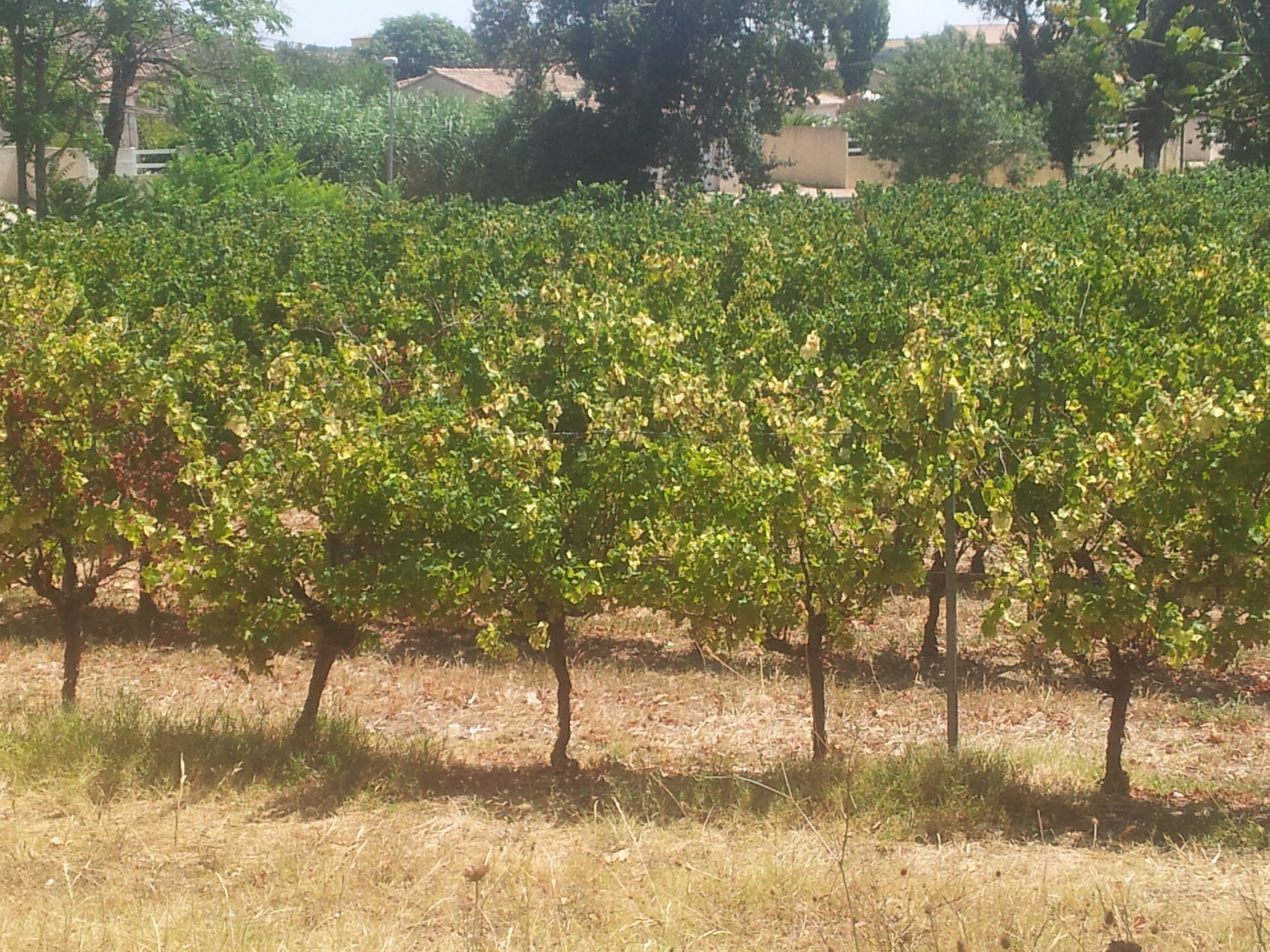
It was June 12th when rain last fell on Margon and the vines in the region, although generally doing well, were starting to show signs of fatigue and heat stress; leaves curled in upon themselves, some yellowing, a slight shrivelling.
Vines near Pézenas showing some stress
Vines in Margon which were not pruned in spring and are really suffe
A few drops fell on July 25th but the skies had been very dark and had promised much more, it was almost cruel to have that rain, a tease of what might have been. However, July 31st brought around 10mm to Puimisson. A decent rainfall, enough to give the vines a drink and to stop the drying out process. Not enough of course after weeks of lack of moisture and some more rain in the next few weeks would be very much welcome to swell the grapes and the harvest. The vines are now pouring their energy into their fruit rather than their vegetation, but they need the nutrients to do so.
So, how had the vines responded to the rain which fell? Well a tour on Sunday (August 2nd) showed the vineyards of Mas Coutelou to be in rude health, a decent harvest is now predicted though that extra rain would be most welcome.
Segrairals in full bloom, healthy, happy vines
Segrairals, biggest of the vineyards, showed some healthy Cinsault, Syrah and Grenache with no signs of stress or disease. As the home of Classe, 7,Rue De La Pompe and 5SO this is especially welcome, as they are some of the big sellers.
Cinsault in Segrairals
To Rome, my favourite vineyard. The gobelets were looking well, plenty of grapes both the white varieties and the Cinsault. There was a little mildew around the entrance but minimal, no cause for concern. Could there be a cuvée of Copains in 2015? Jeff tells me that no decisions are made as yet, caution prevails and he will wait to see what the harvest gives him before he makes final choices about how to use the grapes and the wines which result.
Rome’s centurion vines in good health
Muscat Noir grapes, a tiny bit of mildew top left
Sainte Suzanne (Metaierie) suffered from coulure in May with the strong winds blowing off some of the flowers on the vines, which will reduce yields a bit. However, the grapes there are growing well, what might have been a problem looks now a much brighter picture, good news for fans of Vin Des Amis.
Peilhan, just a little more tired and suffering
The only vineyard parcel which has shown stress is Peilhan, There was a lot of regrafting and replanting in the spring and the dryness has caused problems for these new vines. There was also oidium in this parcel, the only vineyard to be attacked by this powdery mildew. Yet amongst those problems there are plenty of healthy grapes, some careful picking and sorting will be needed but it will produce good wine.
The famous Castets grapes of Peilhan
La Garrigue was blooming, the white varieties such as the Muscats are swollen and changing hue to lovely golden shades.
Muscat a Petits Grains in La Garrigue
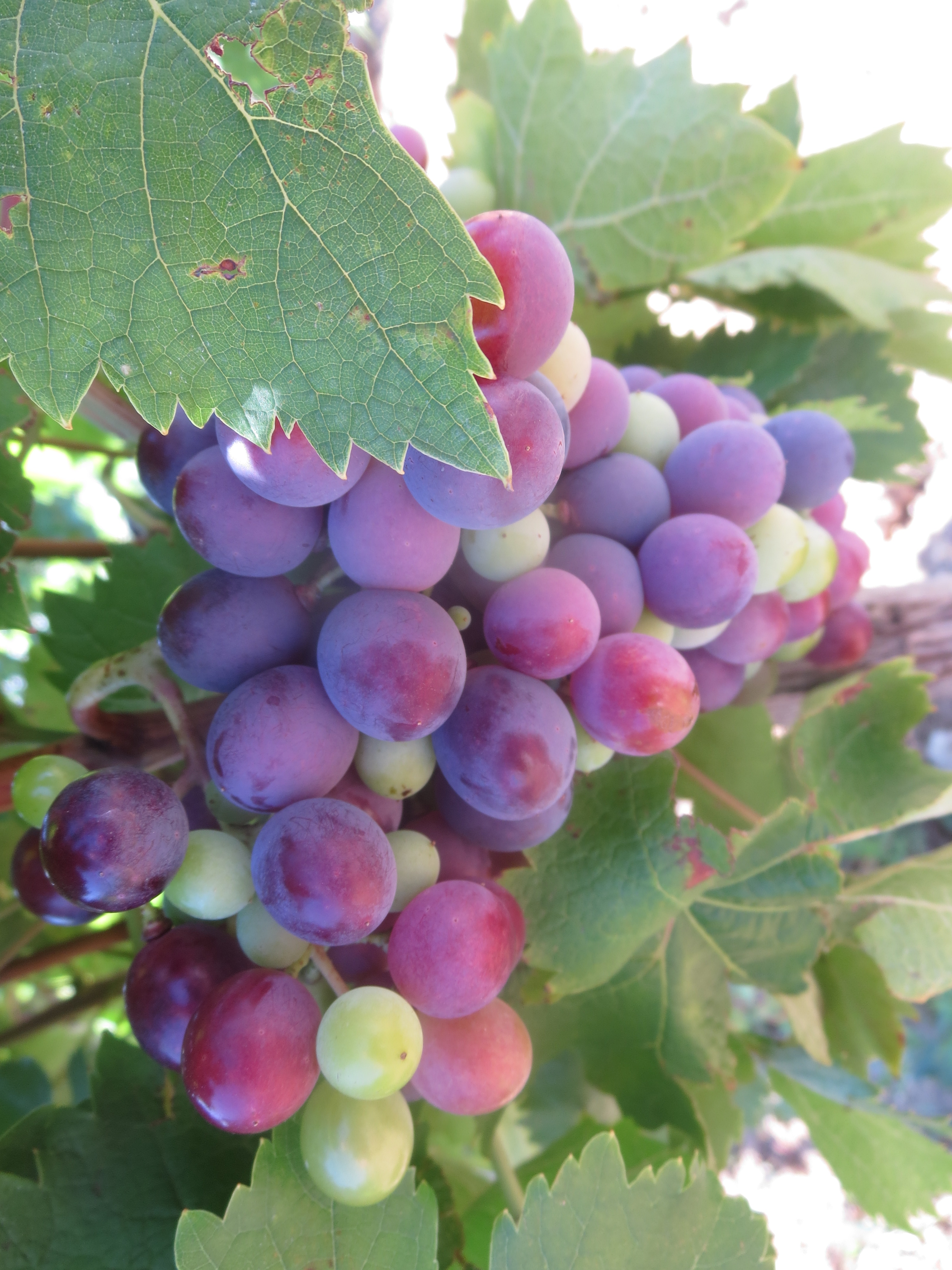
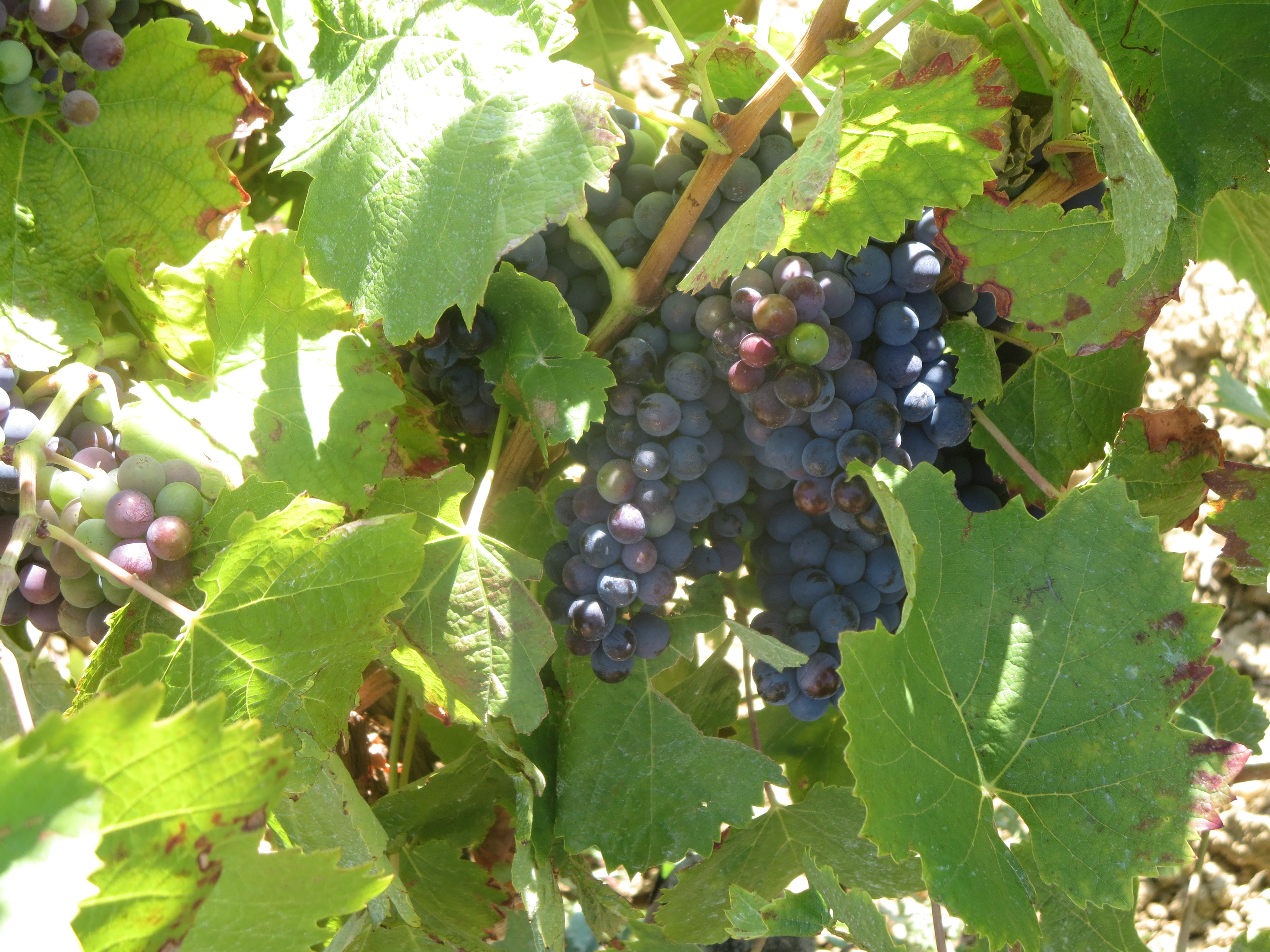
The Syrah is well advanced, a dark purple colour across virtually the whole bunches, the pips though betray a little immaturity as they taste and look green and sappy. A little more time and patience will pay dividends. As the world’s biggest fan of La Vigne Haute, I have my fingers crossed.
Syrah in La Garrigue, ripening beautifully in the shade of the vine
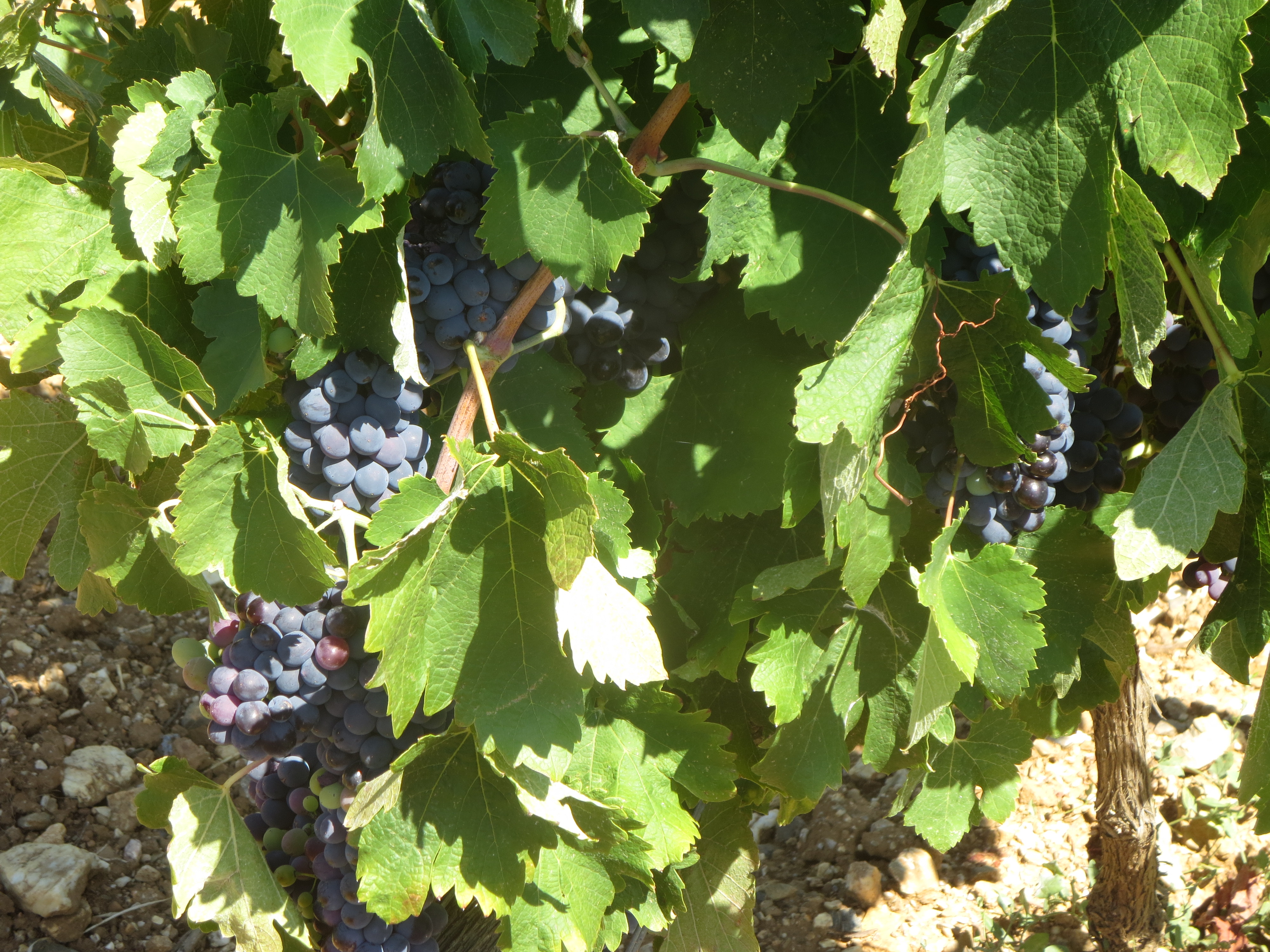
The Grenache in La Garrigue, despite facing south, is a little more delayed in colour but getting there and very healthy.
Grenache in La Garrigue
In fact despite risks of disease earlier in the year (see here) Jeff has been able to use minimal treatments in 2015. Oidium and mildew (powdery and downy mildew) can be controlled by copper sulphate, sometimes called the Bordeaux mix when added to slaked lime. This is a bluish colour when sprayed by conventional and organic vignerons and is often seen on the leaves of vines. Vignerons might also use chemical fungicides if they are not organic producers.
Neighbouring vineyard which was given herbicide shortly after harvest last year and whose new vines have been treated regularly
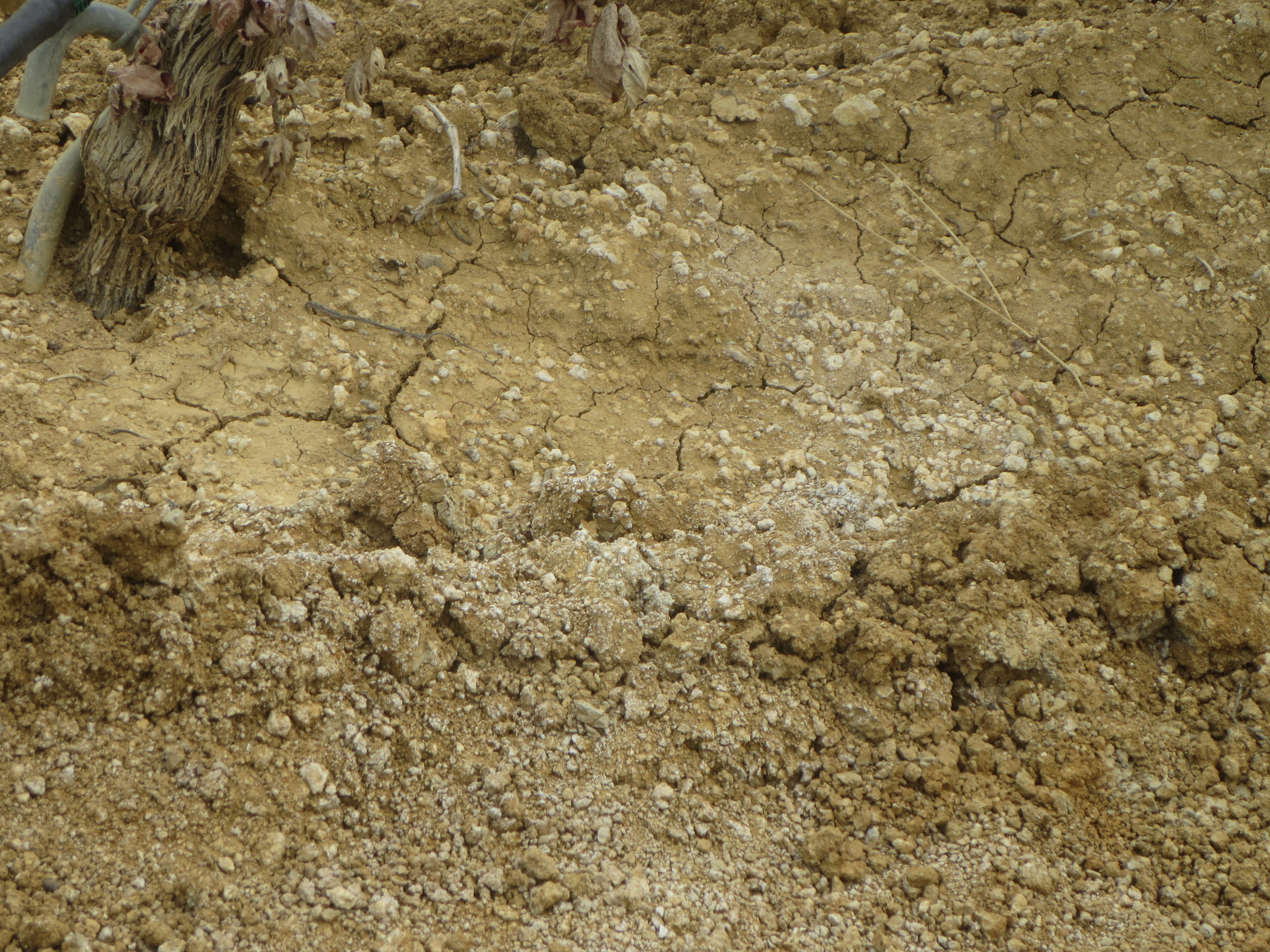
Some neighbours have also irrigated their vines and one alarming consequence is the changing of the soil and its pH as the calcium carbonate in the water shows through, you can see it in the white parts of the soil in this photo taken on July 22nd.
The irrigation is also causing the vines to grow quickly and tall with thin trunks as seen below. It should be acknowledged that there are many conventional producers who take great pride in the health of their soils and vines and would be horrified by some practices described here.
As a proud holder of Ecocert organic status and as a natural wine maker Jeff must use natural products only. Tisanes of plants which fight mildew such as horse tail, fern and nettles can be sprayed and this is the basis of many biodynamic treatments. However, the two main weapons in the armoury of organic producers are copper and sulphate, both natural products.
Copper is used against mildew, but is harmful to the soils and kills life in them if used in significant quantities. Organic producers are limited to 30kg per hectare over a 5 year period, allowing more to be used in years with more downy mildew for example but only if less is used in the other years. In fact Jeff has used just 200g per hectare in 2015 and this after years of well below average use, his use of copper is on a major downward trend. He is reluctant and very careful in using copper as he is aware of its danger to the soils, yet mildew has not been a major threat this year.
Oidium seen in May
Similarly Jeff has used sulphur in soluble form at doses much lower than the permitted level, three treatments over the course of the growing season. In addition one dose of sulphur powder was sprayed when the risk of oidium was high (May) and a second spraying for Peilhan only as it is the vineyard which was attacked by oidium. In contrast to neighbouring vignerons who have sprayed every 10 days including after the bunches closed up (so more than a dozen treatments) this really is minimal intervention.
So July’s parting gift of 10mm of rain was welcome, August might like to follow by offering some rain soon. Too near the harvest is bad as it would dilute the juice rather than help the grapes to reach a good size. Things look promising, let us hope that nature completes its bounty. There is an old saying that June makes the wine and August makes the must, ie the character of the wine with its colour, yeast and flavour. With 3 weeks or so until picking begins it is an exciting, and nervous, time, waiting to see what that character will be.
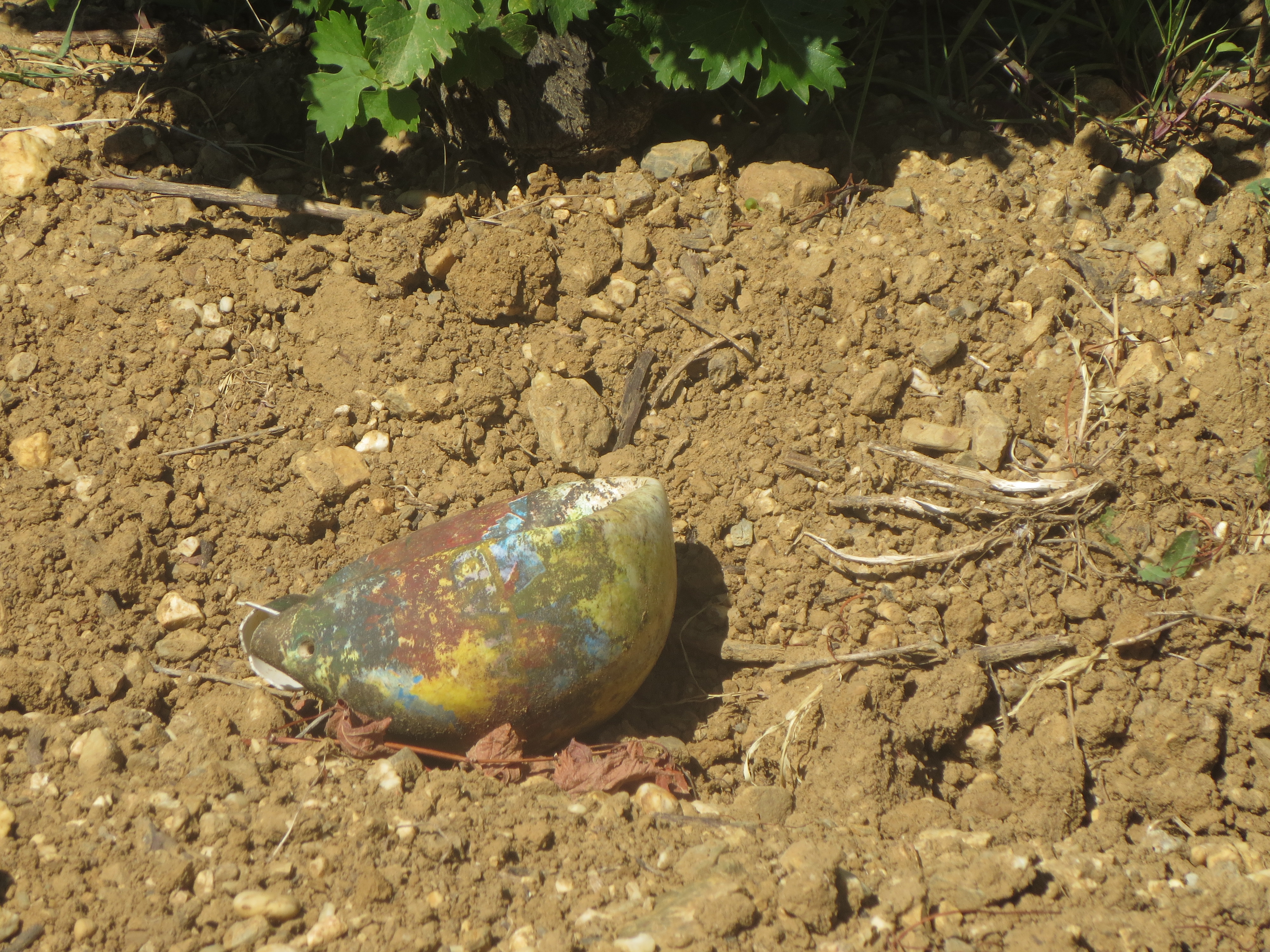
No Icare this time but look what we found amongst the vines, he’s been here!
NB there are lots of reports about recent wine tastings here.
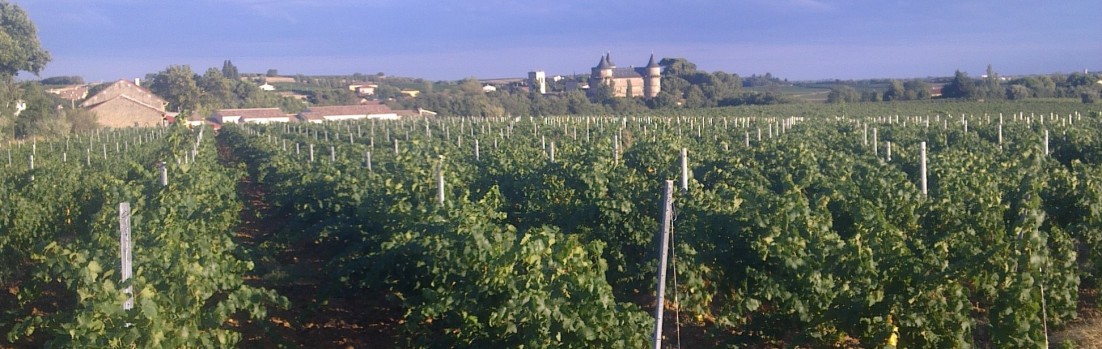
The traditional image of a vineyard is that of one big parcel of vines surrounding a chateau as in Bordeaux, with its smart house and cellar buildings for making and storing wine. However, that is not the reality for most vineyard owners. Jeff Coutelou has his home and his cellars in the centre of Puimisson in the Hérault, surrounded by a childrens’ nursery, houses and work buildings. The vineyard itself surrounds the village but comes in a number of small parcels rather than one big vineyard. Each brings its own characteristics in terms of soil, surroundings and exposure to the elements, ie its own terroir. The parcels have been accumulated over the years by Jeff’s grandfather, father and himself. In the satellite photograph below you will see the parcels and how they relate to the village. Vineyards are shown in green, olive groves in red.
(Photo taken from Rapport Biodiversité d’Exploitation Mas Coutelou produced by Agrifaune)
There are about 17.5 hectares (43 acres) of land though olive trees occupy about 2.5ha (6.7 acres) and well over 1 ha (3 acres) is fallow land or has other trees, hedges and plants. The soil is virtually all clay and limestone. As you may be able to see in the satellite photograph much of the land to the south of Puimisson is vineyard, to the point of monoculture. Jeff wants to use his land to produce biodiversity so olives, figs, roses and hedges help to create little oases of wildlife. More details are outlined at the end of this post.
Segrairals and Caraillet (6.8ha, 5.7 under vines)
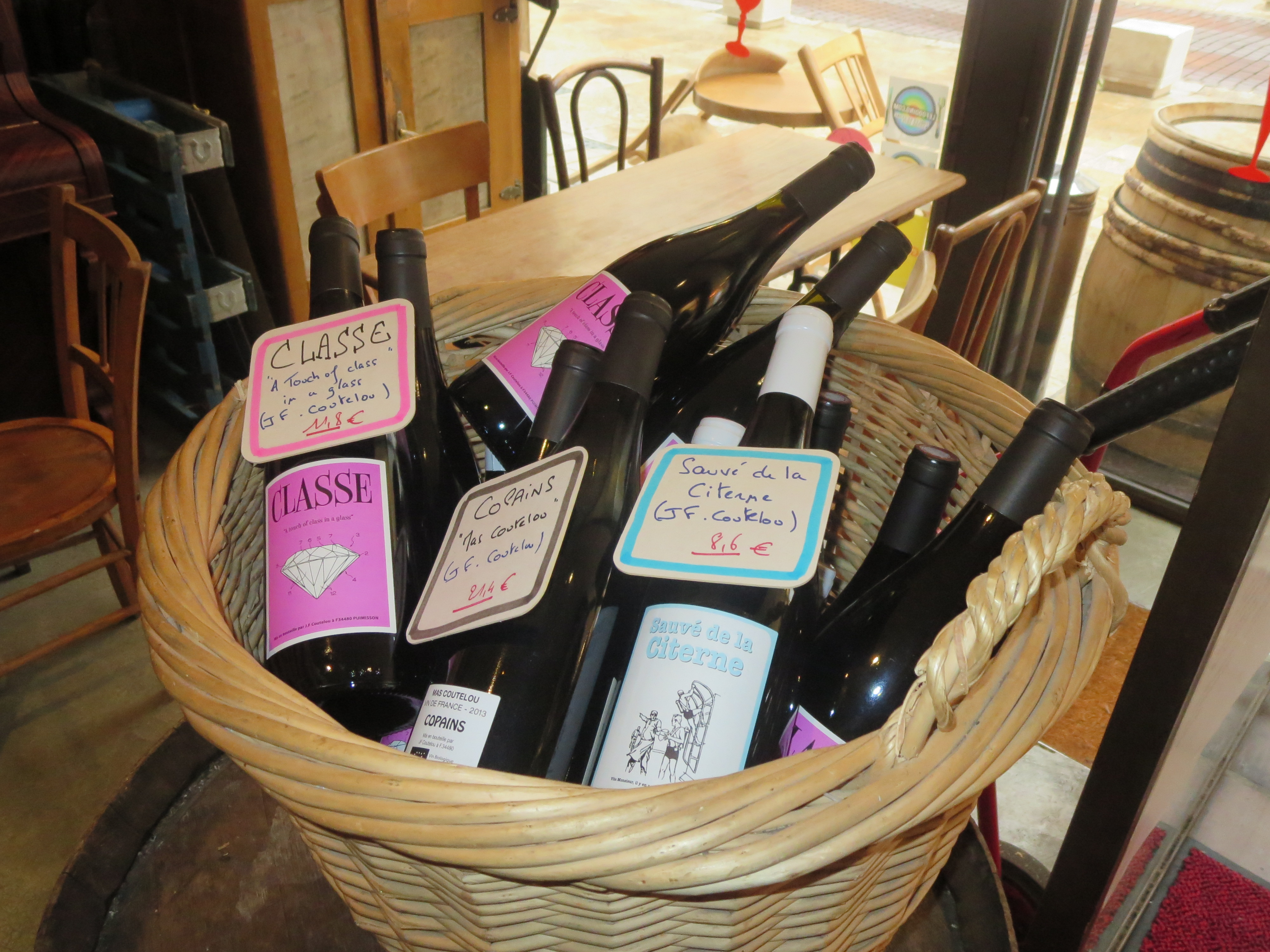
This is the biggest of the parcels and the only one situated to the north of the village and closest to it. Surrounded by the village and a couple of roads it is well protected by trees and hedges, including figs and olives. A variety of grapes are planted with the oldest being some Syrah planted in 1993, Cabernet Sauvignon planted 1998 and younger plantings of Mourvedre, Syrah and especially Cinsault. The Syrah goes into bottles such as Classe and 7, Rue De La Pompe. Mourvedre goes into Sauvé De La Citerne and the Cinsault into 5SO. The Cabernet grapes will be used for blending in various cuvées or sold to the UK to make the new London Cru Cabernet Sauvignon, a project run by Roberson in London.
Main body of Syrah and Cabernet grapes
Planted olive trees in the foreground with some younger Cinsault and Syrah vines in the background
La Prairie (0.5ha)
To the west of Puimisson La Prairie is an olive grove in a very pleasant area with an official ecology walk going past it. No vineyard planted.
Mountains seen from La Prairie
Prairie olive plantation
Le Colombié (0.6ha)
Just at the southern tip of the village Le Colombié is planted entirely with Merlot vines. These will produce grapes used to blend for cuvées prepared for restaurants, bag in box etc. Merlot is not a typical Languedoc variety, these were planted in 1999.
Le Colombié – Merlot vines
Rome (0.7ha)
Possibly my personal favourite vineyard of them all. It is quite isolated even though there are other vineyards around. Isolated, because there is a wood which shelters it. The gobelet Cinsault vines date back to 1966 and 1975 and go into the Copains or,in some years, Vin Des Amis or Classe. These old vines are also surrounded with young olive trees and the parcel is an attractive and quiet haven. There is also a planting of some 20 different varieties of grapes including various types of Muscat which are used in a solera system. This was started many years ago by Jeff’s grandfather and ever since wines have been used to top up the old barrels to make Vieux Grenache and Vieux Muscat. Sensational wines. The added benefit is that because there are so many different types of vine they cross pollinate and this adds an extra layer of complexity to the Cinsault in the Rome vineyard.
All vines lead to Rome
Gobelet Cinsault vines, olive trees and the surrounding woods
Metaierie (2.3ha)
The parcel which was the basis of my post One Day Like This when we harvested the last grapes of 2014, some Grenache. There are a few older Merlot vines (to be replaced in 2015) but the parcel is mainly the home of Grenache and Syrah grapes which are used to make the ever popular Vin Des Amis.
Smaller Metaierie parcel
Main Metaierie vineyard, home of Vin Des Amis
La Garrigue (1.8ha)
Described in some detail in the post Working In The Vineyards (January). Made up of three sections: some younger Syrah facing north for freshness, a section of Grenache facing south, as it likes the heat and some 20 year old Sauvignon Blanc vines too. The Sauvignon is used to make the white blend PM or other white cuvées, the Syrah goes into my favourite La Vigne Haute and the Grenache is used to make Classe along with the Syrah from Segrairals.
Grenache
Sauvignon Blanc
La Grangette (0.5ha)
A parcel of half a hectare (just over an acre) surrounded by vines, Jeff decided that it is compromised in terms of quality grapes so he planted 112 olive trees in 2011 to provide contrast to the fairly barren land and vines surrounding Grangette.
Rec D’Oulette (1ha plus a smaller, separate parcel of 0.3ha)
Actually made up of two parcels of land. This has seen a lot of work in recent years as Jeff has tried to diversify it. The central block is half a hectare of 30 year old Carignan, used in making Flambadou, a wine which is really improving and was one of the stars of 2013. Surrounding these vines Jeff has planted half a hectare of olive trees to keep them away from the chemicals of neighbouring vineyards. The second part of Rec resembles Grangette as an isolated small parcel and again Jeff has planted olive trees to diversify as it is too small and isolated in its organic nature for grapes.
Carignan vines for Flambadou
Font D’Oulette (0.65ha)
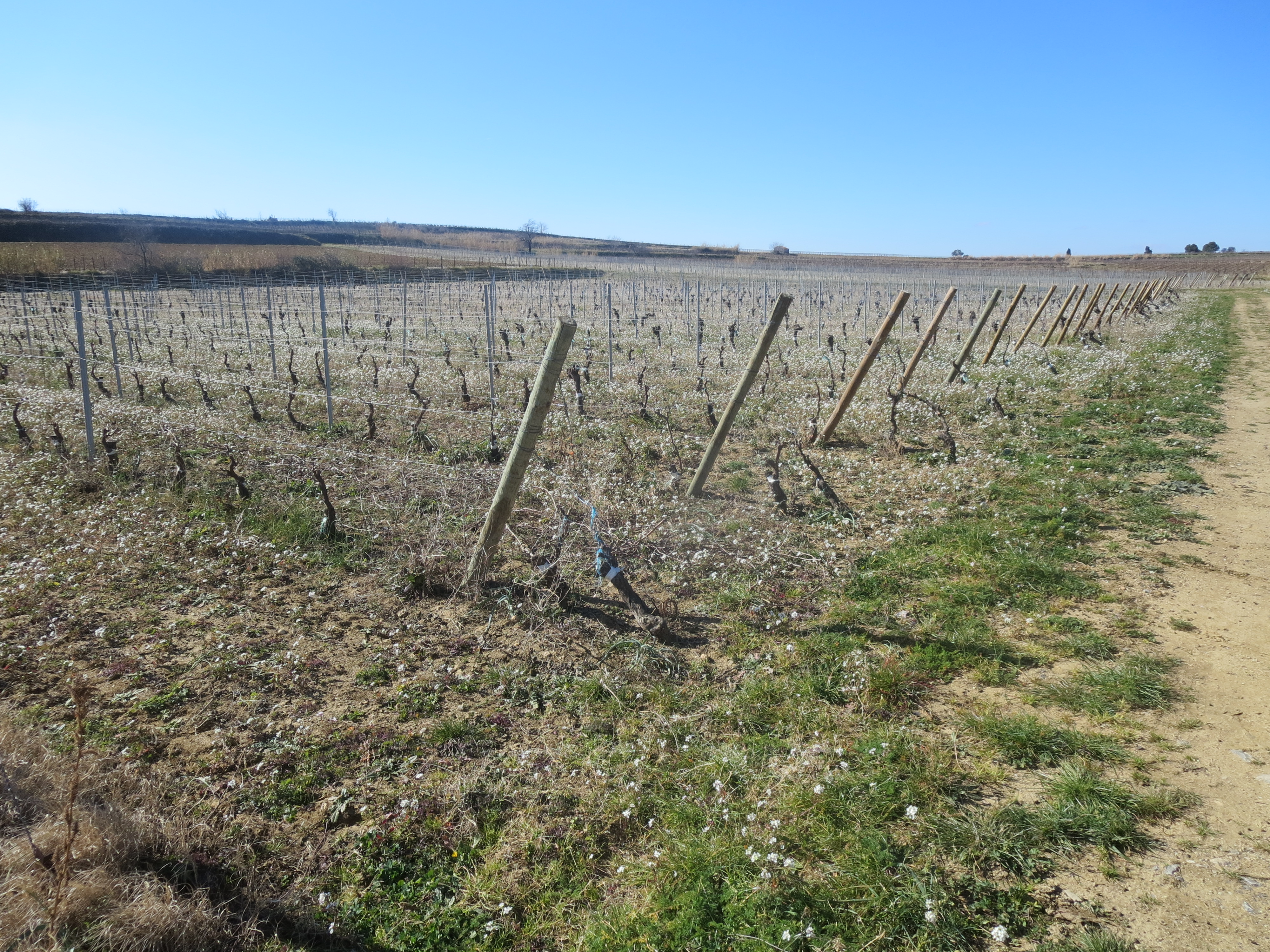
A parcel where Jeff has worked hard in recent years. More olive trees planted in 2011 as were those in the small section of Rec. In addition he has grafted an older variety Aramon into the vineyard covering over half a hectare. These grapes will be used to create new cuvées and the first blend of grapes produced in 2014 is highly promising tasted from tank.
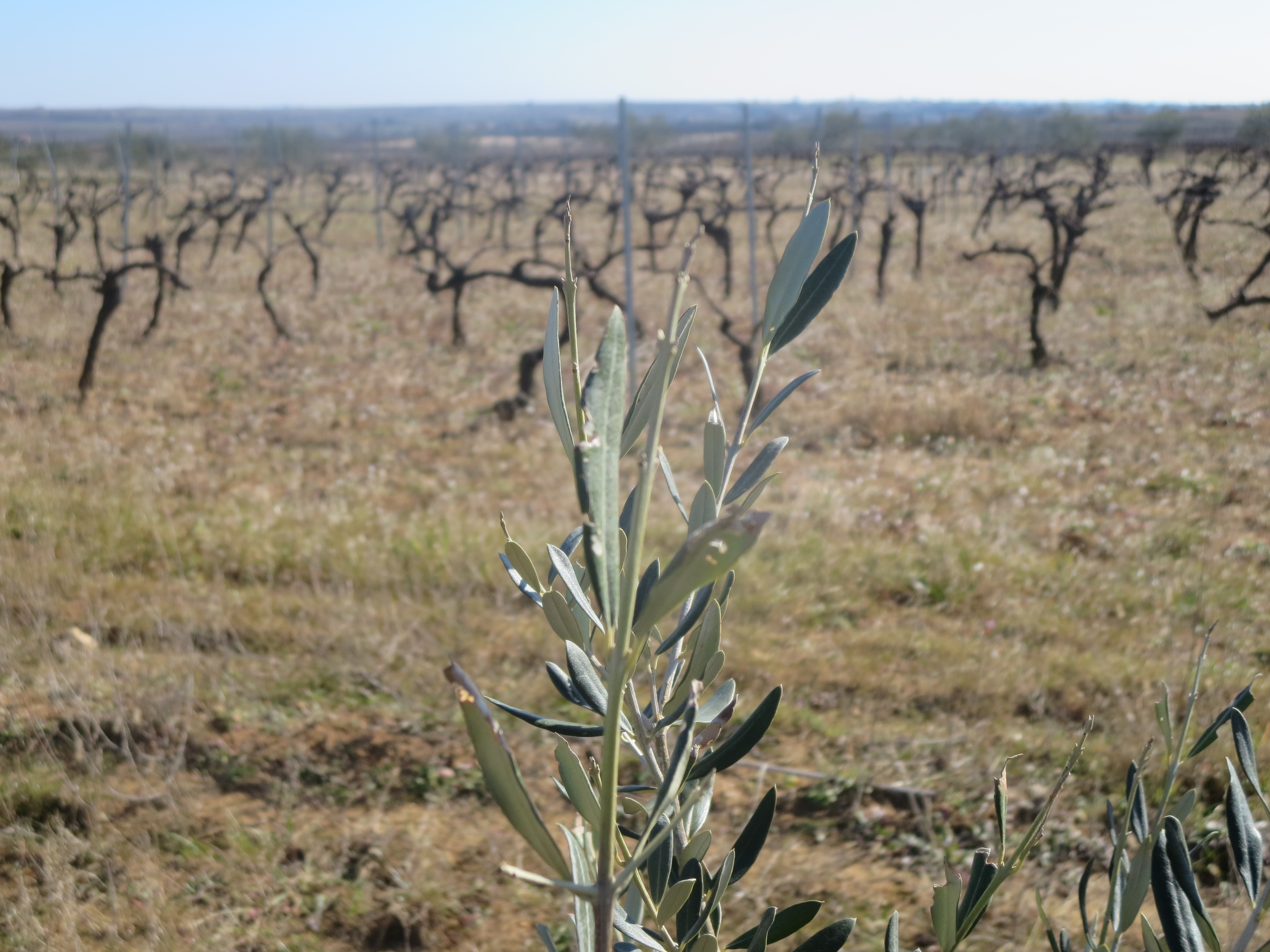
Olive trees to protect the new Aramon vines
Aramon vines
Les Roques (1ha, not on satellite photo)
One hectare of land to the south east of the village heading into Lieuran-les-Béziers, this was the vineyard I showed after the storms of November 28th 2014 when it was flooded. In fact the vines have been grubbed up and there is a programme in place to plant trees and to provide a barrier to the Libron river in case it should flood gain.
Les Roques shortly after the November storms
Peilhan (2.2ha)
An attractive vineyard nicely protected. About a hectare is planted with white grape varieties, including a section of Carignan Blanc which has been used to make a cuvée all on its own. Maccabeu, Grenache Gris and different types of Muscat make up the other white varieties and these are usually picked, assembled and vinified together as part of the PM white blend. This also the home of the Castets vines I have written about a lot, one of only two Castets vineyards in France. More Carignan vines are joined by another interesting grape variety, Clairette Musquée which was blended with the Aramon from Font D’Oulette last year. This is the vineyard where a recent plantation took place to bring back older varieties to the area. Terret Blanc, Riveyrenc Gris and Piquepoul Gris were planted along with Terret Noir, Morastel and Riveyrenc Noir. picked, assembled and vinified together as part of the PM white blend. This also the home of the Castets vines I have written about a lot, one of only two Castets vineyards in France. More Carignan vines are joined by another interesting grape variety, Clairette Musquée which was blended with the Aramon from Font D’Oulette last year. This is the vineyard where a recent plantation took place to bring back older varieties to the area. Terret Blanc, Riveyrenc Gris and Piquepoul Gris were planted along with Terret Noir, Morastel and Riveyrenc Noir.
Main parcel with white vines, Castets, Carignan and Clairette Musquée
Planting the new parcel of Peilhan
The domaine
Overall Syrah is the predominant grape variety making up around one third of production, although 2014 saw a big reduction in the harvest due to the dry spring and early summer. Red grapes dominate with well over 90% of production.
Jeff and his Castets
(L-R) Vin Des Amis, 7 Rue De La Pompe, Paf
Organic since 1987, no synthetic chemical products have been used on the soils for over 25 years now. No artificial yeasts are added in the winemaking process, the grapes produce healthy yeasts themselves to stimulate fermentation. Grapes also naturally produce tiny quantities of sulphites but Jeff has been experimenting with using no added sulphur since 2003 and has successfully completed the last three harvests without adding any sulphur to the wines. This dedication to producing wines which are as natural as possible, made with as little intervention as possible means that Jeff is restless in seeking to improve the quality of his soils and in protecting them from the non-organic practices of neighbouring vineyards. He has also brought in Agrifaune to put together a project to plant over I kilometre of hedges. These will help to prevent soil erosion, protect Coutelou vines from surrounding vineyards and also provide shelter to wildlife which in turn will help to protect the vines, for example by eating damaging insects. Trees such as oak, laurel and elder are being planted along with plants such as agrypis and wild rose. Around the vineyards wider borders of grasses and wild plants are being allowed to grow even if that means that vines have to be scrubbed up. Similarly ditches and fallow land will be used to encourage biodiversity. So in an area of monoculture these oases of biodiversity and wildlife will help to enrich nature, the vineyards and, ultimately, the wines.
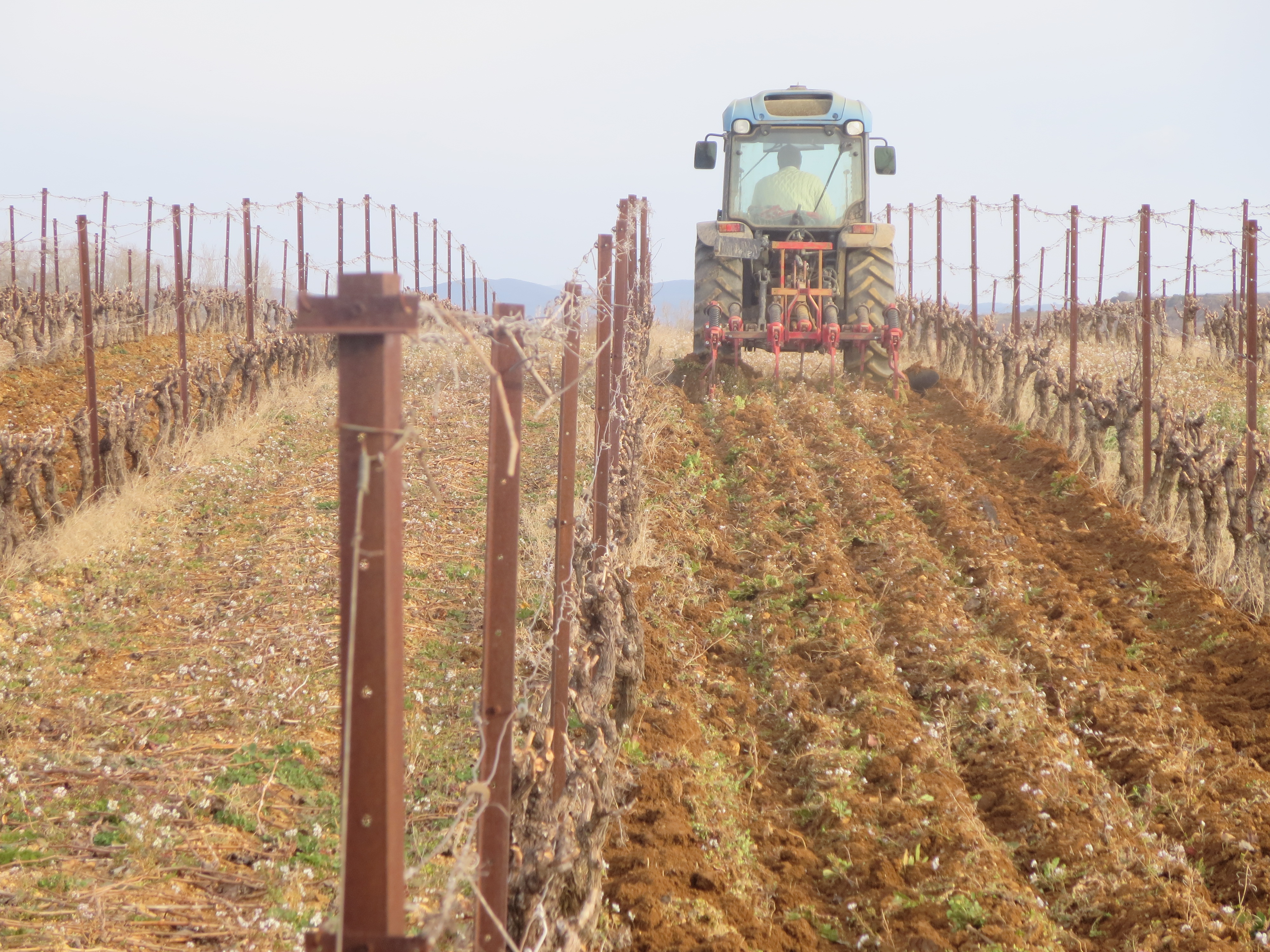
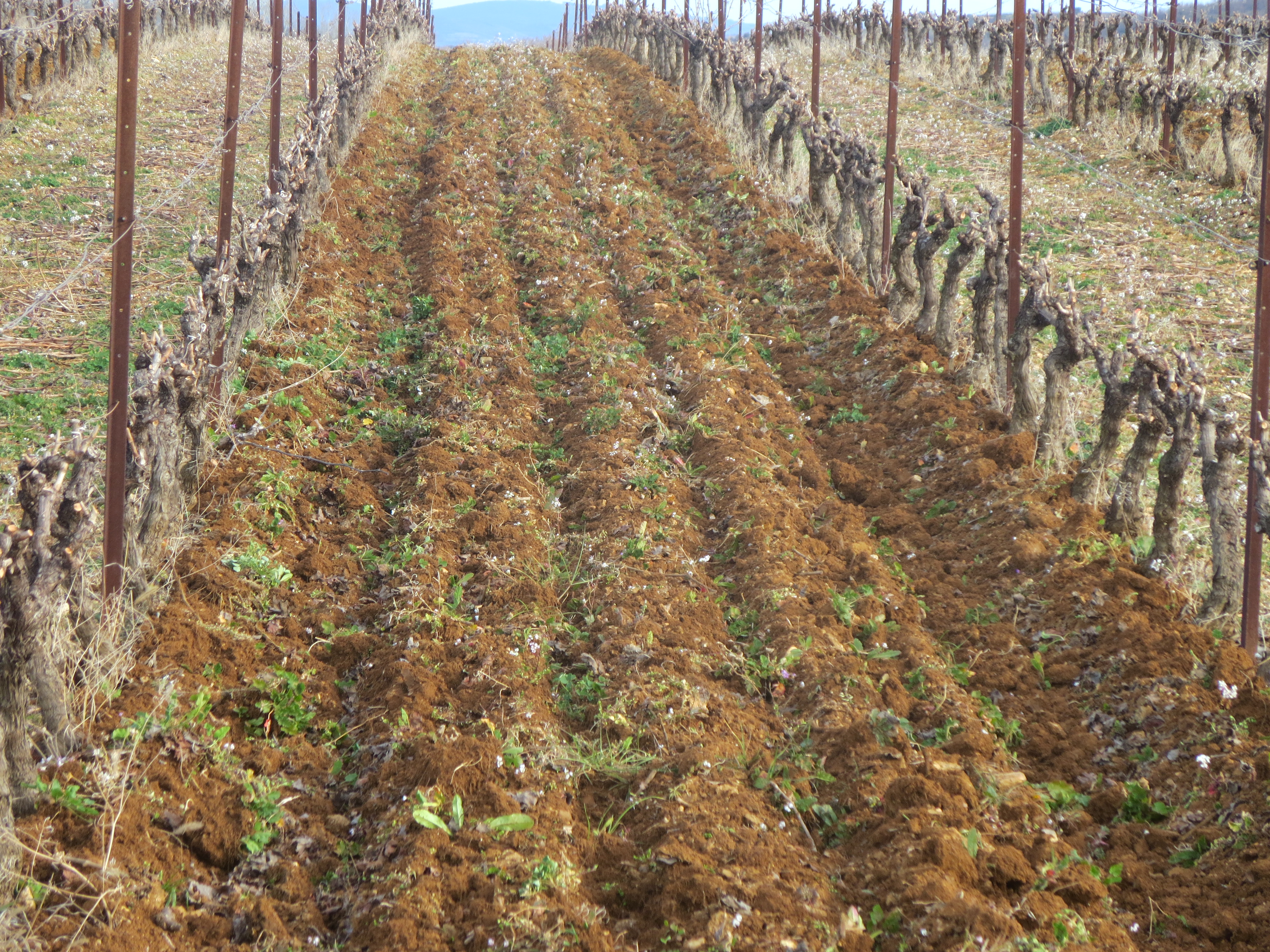
So February is turning out to be a very busy month in the vines. On Wednesday Jeff invited me over to see the first ploughing (labour)of the year. The plant cover of winter is ploughed into the soil to add organic matter. This has been a long established practice and as scientific research continues it is proving to be another example of traditional practice being based unwittingly in sound theory. According to research** by leading soil expert Claire Chenu in 2011 the organic matter which is ploughed into the soil helps to boost microbial and animal life in the soil. In turn this adds air to the soil which the vine roots can use to help them take up water and nutrients. Healthy vines make good wine and will hopefully be able to resist diseases. Certainly as the plough turned over the soil some big worms were speedily digging back into the earth, a clear sign of healthy soils.
The plough was set to a very shallow depth,no more than 20cm as this is a first plough of the year. Jeff worked the soil in every two rows allowing the tractor to turn easily, the other row will be ploughed in two or three days. The tractor is not a full size that you might see farmers using but more lightweight to try to minimise compaction of the soil.
Blades set to be shallow
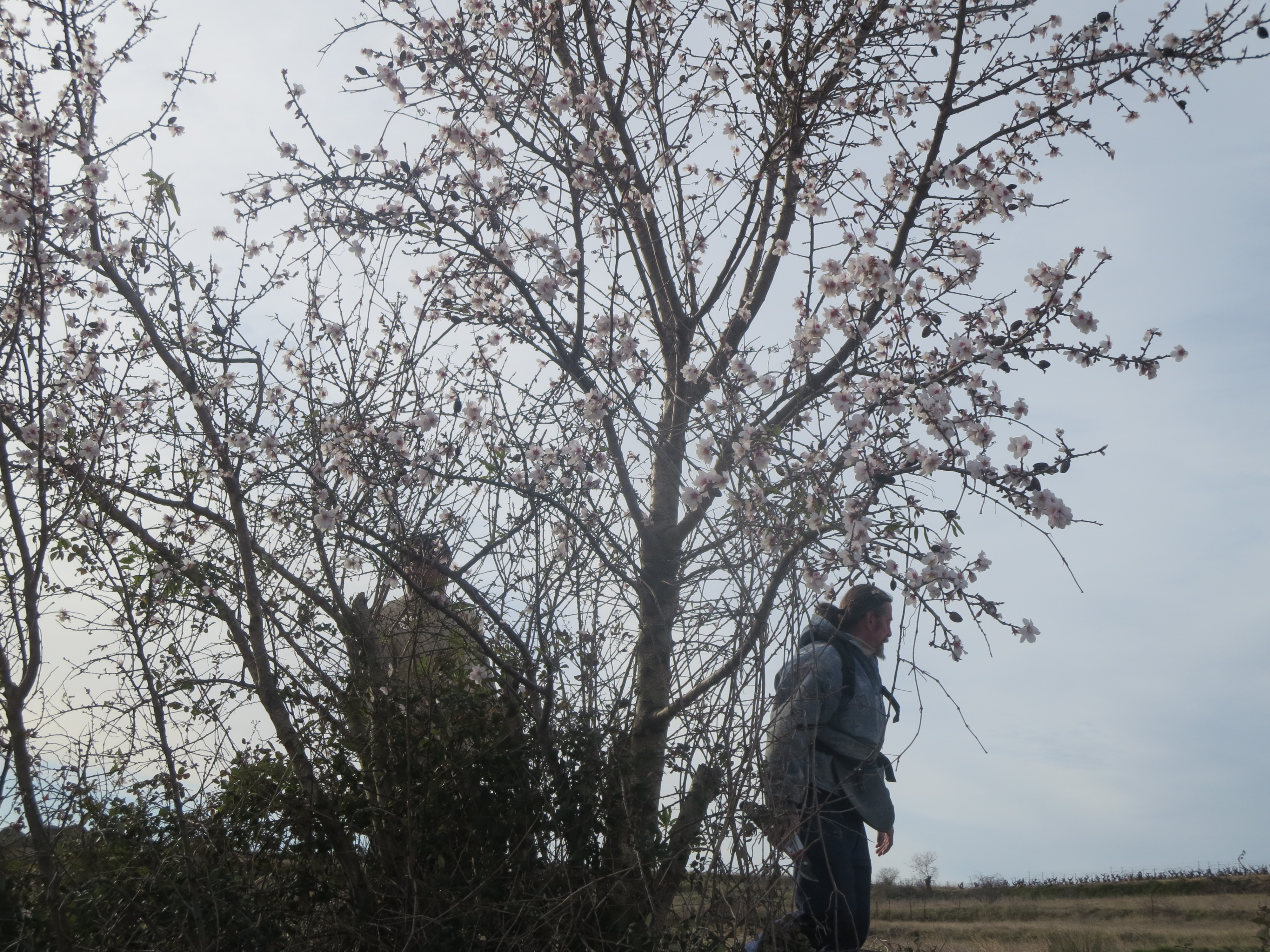
Meanwhile at the Peilhan vineyard Michel and Renaud were busy working on the trees and plants which guard part of the parcel.They were cutting down cannes de provence, pruning the blossoming almond trees and strimming the plants between them. All part of the effort Jeff makes to improve the ecology of his vineyards.
Renaud and Michel at work
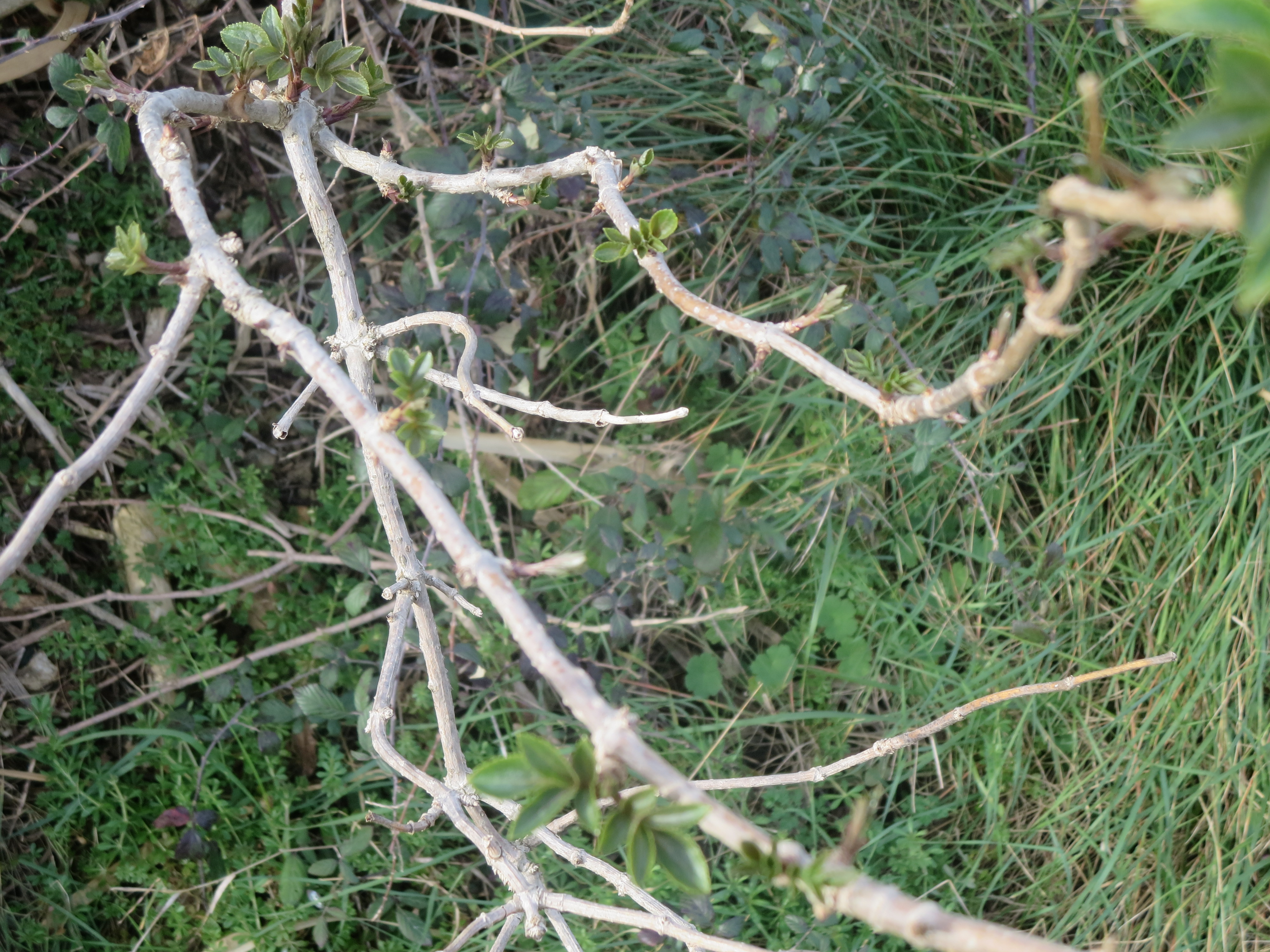
Elderflower just starting to bud at Peilhan
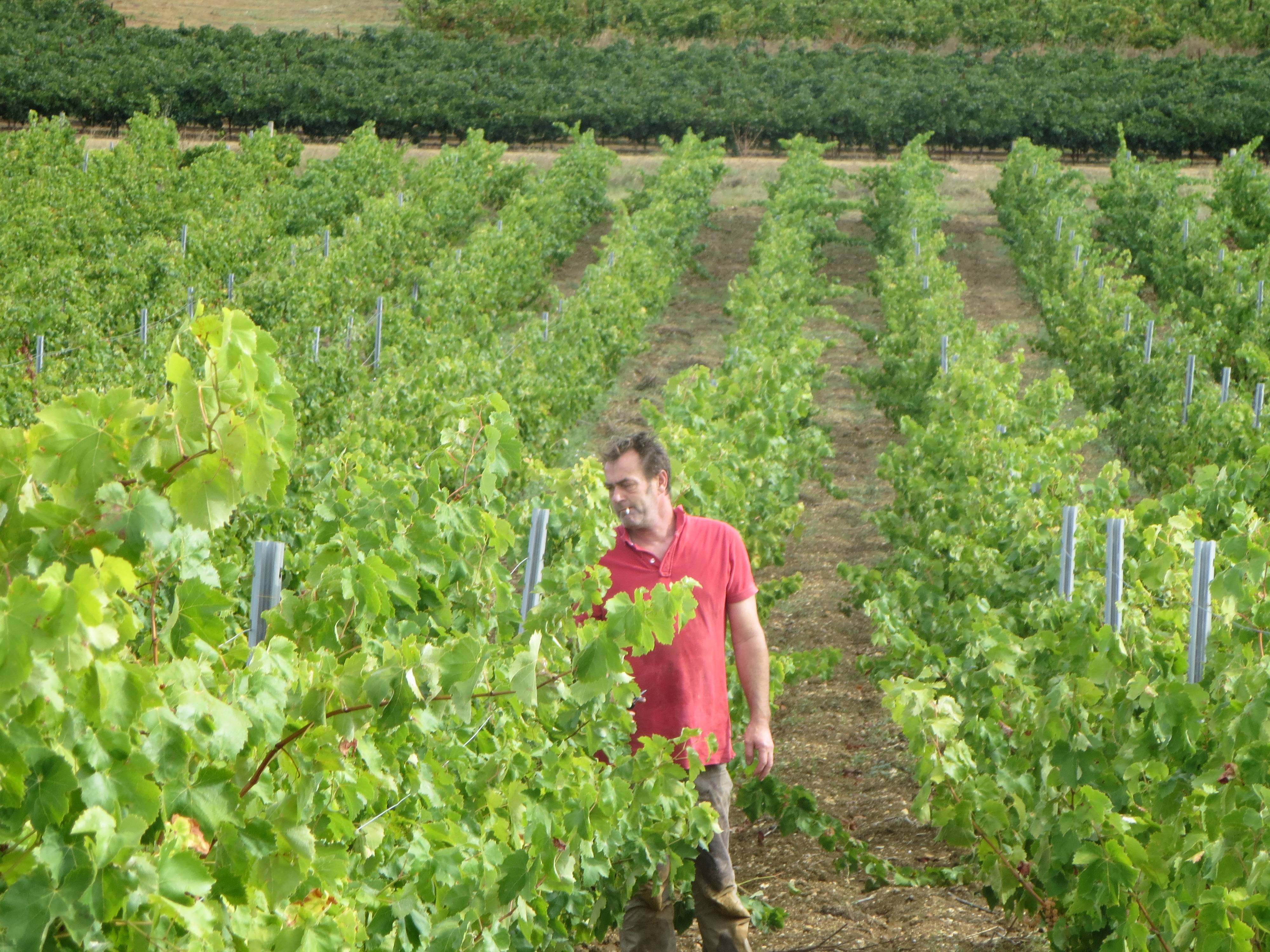
Carole was busy over in La Garrigue vineyard pruning the grenache section. She talked me through the decisions she was making at each cut to explain how the vines would benefit. What struck me was how she was thinking ahead to how the vine would grow not just this year but in the next 2 – 3 years. A skilled worker is always great to watch in action and I was honoured to listen to Carole explain it to me. You can see her at work in the video here.
So,the patron, Carole, Michel and Renaud were hard at work. What about me? Well, Jeff offered to let me drive the tractor but I doubt I could afford to pay him the compensation for all the vines I would have ripped up! Meanwhile there was one very critical observer, a crucial part of the team.


























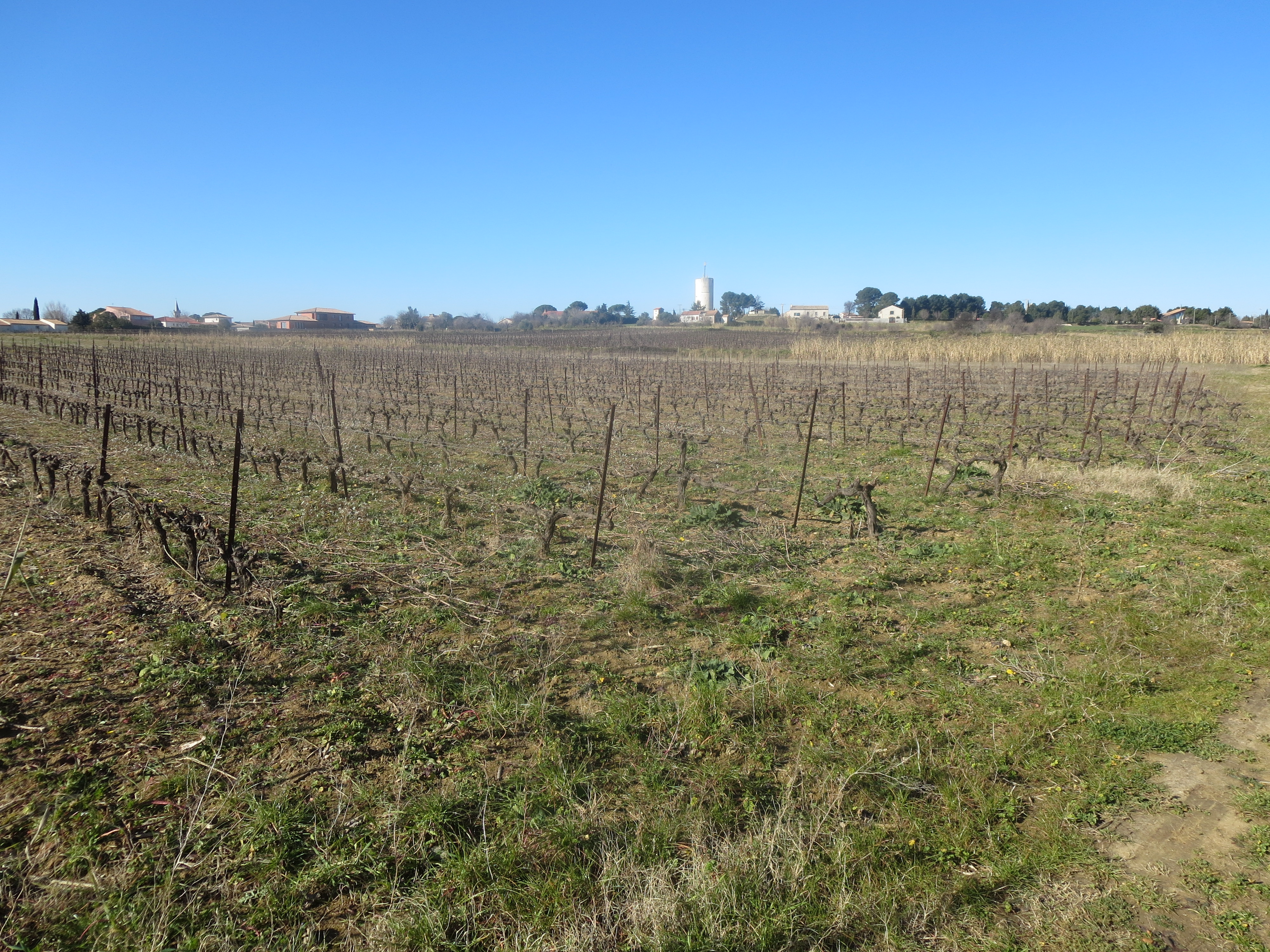


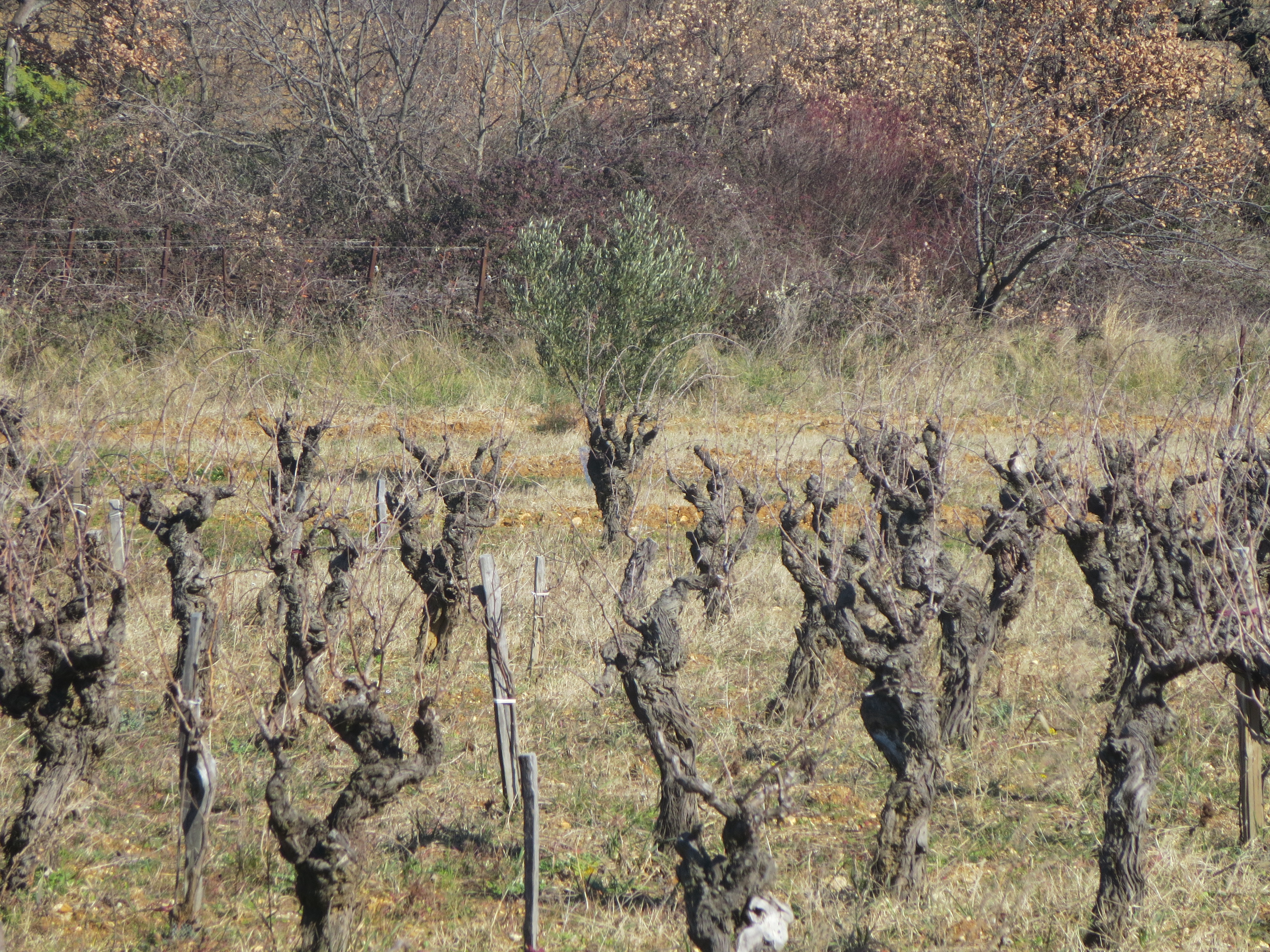
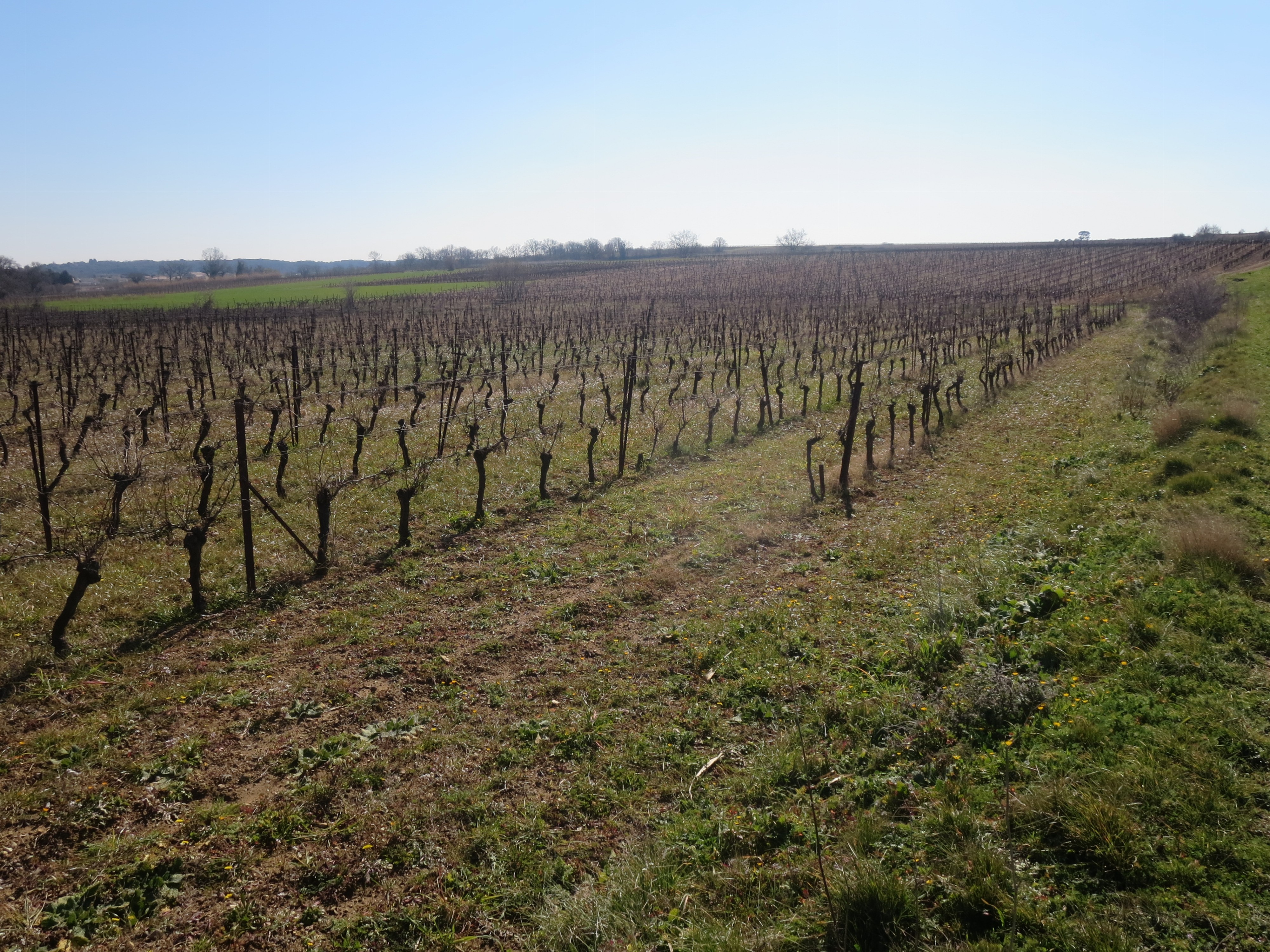


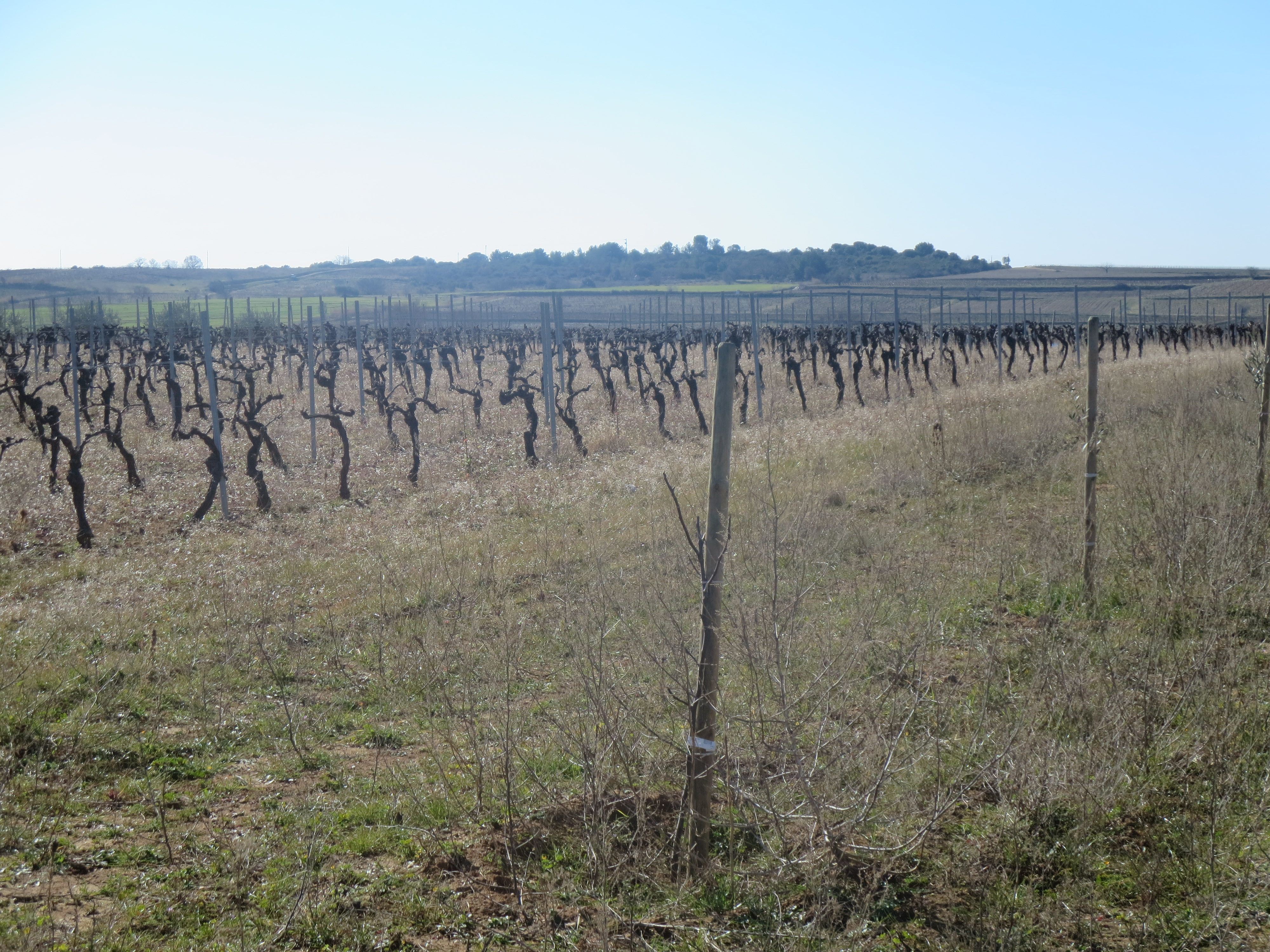









 amarchinthevines