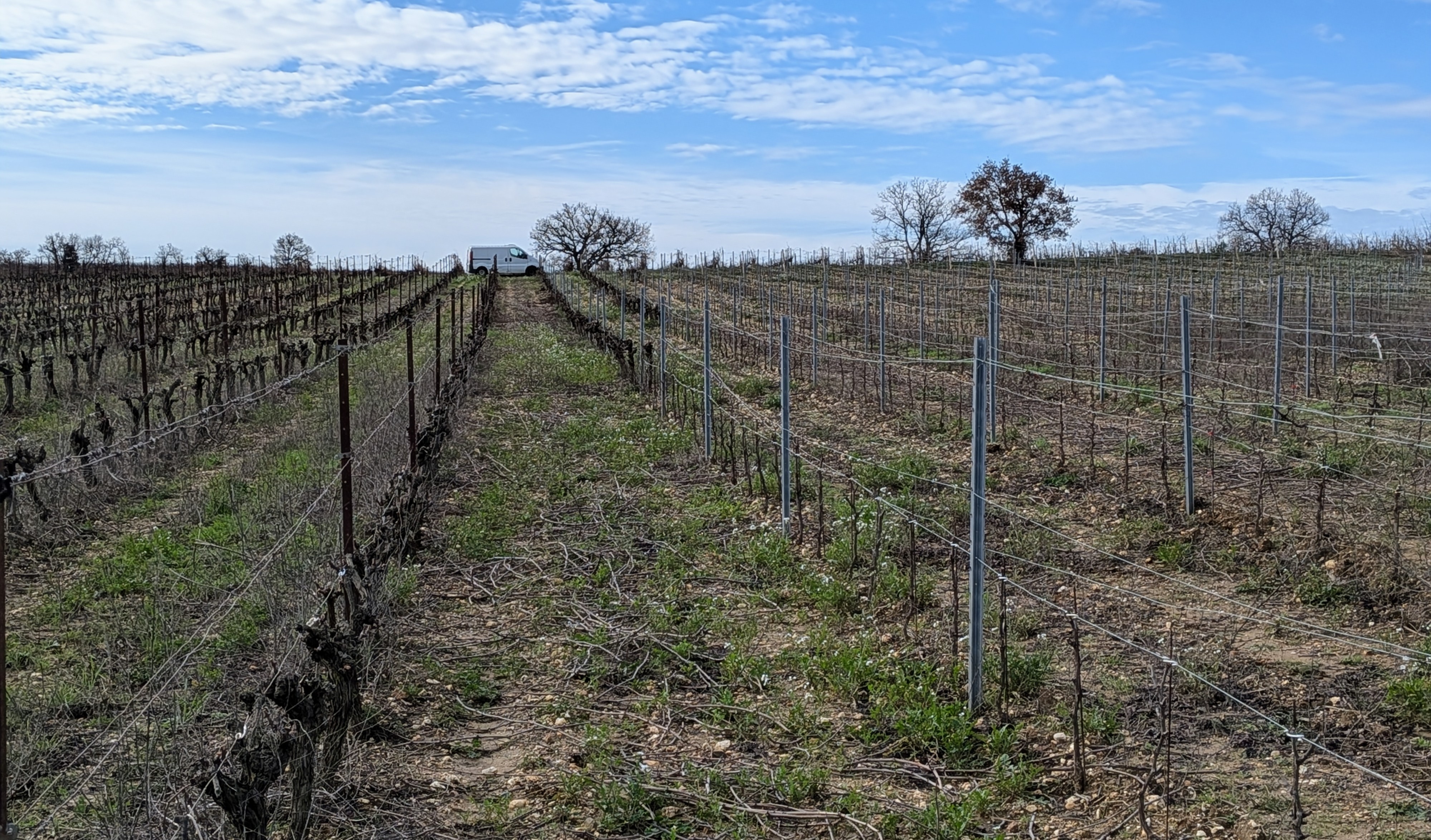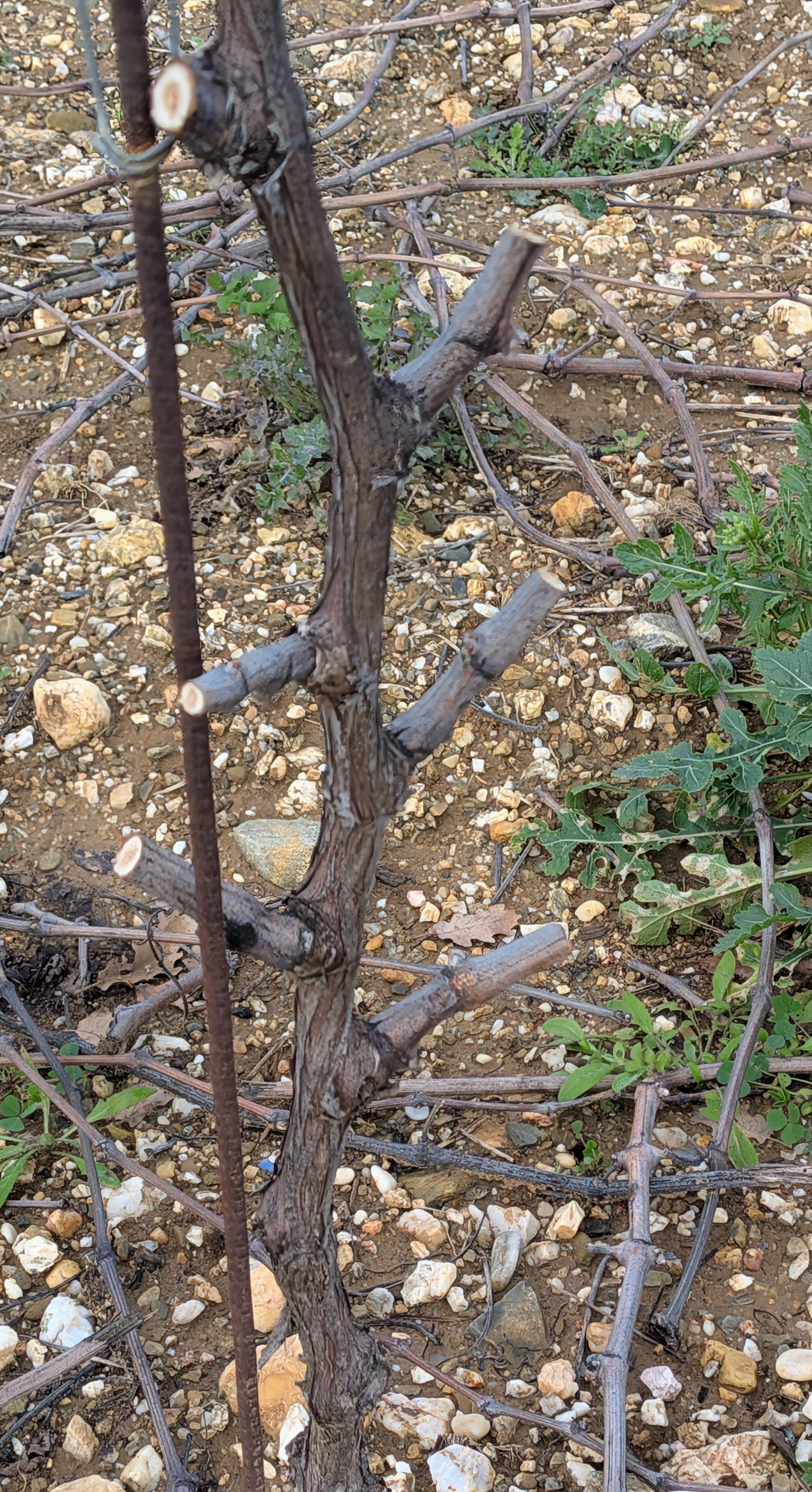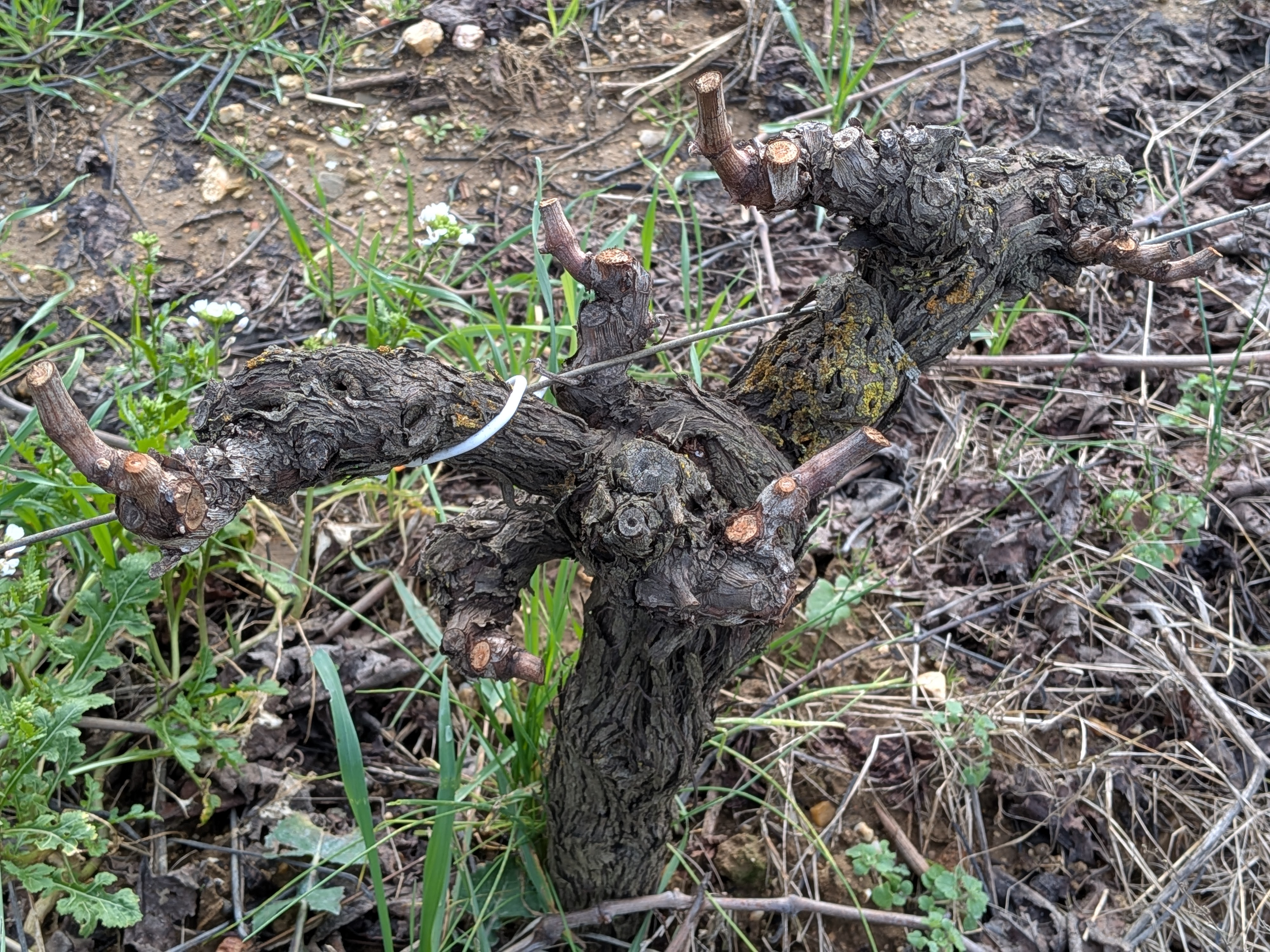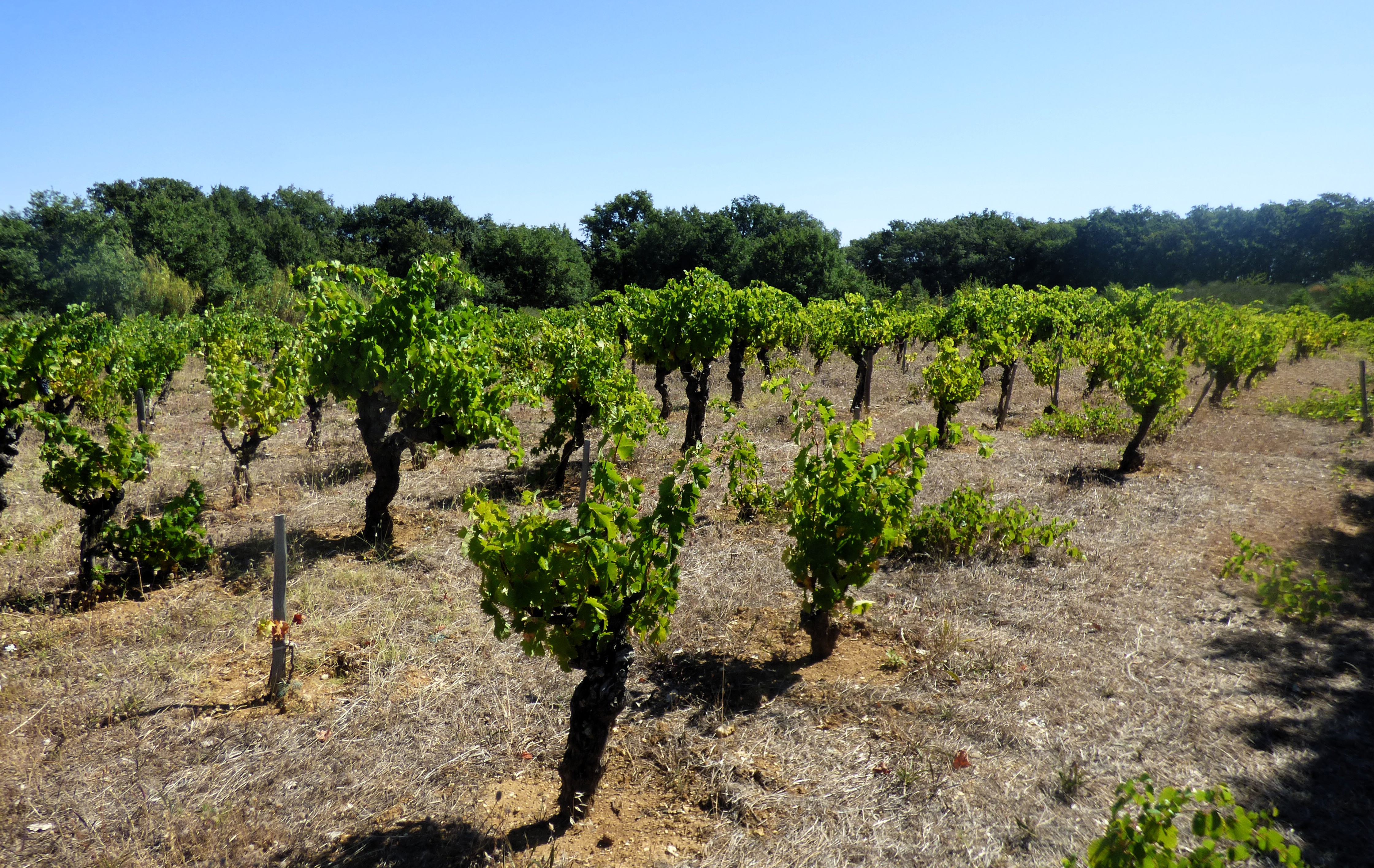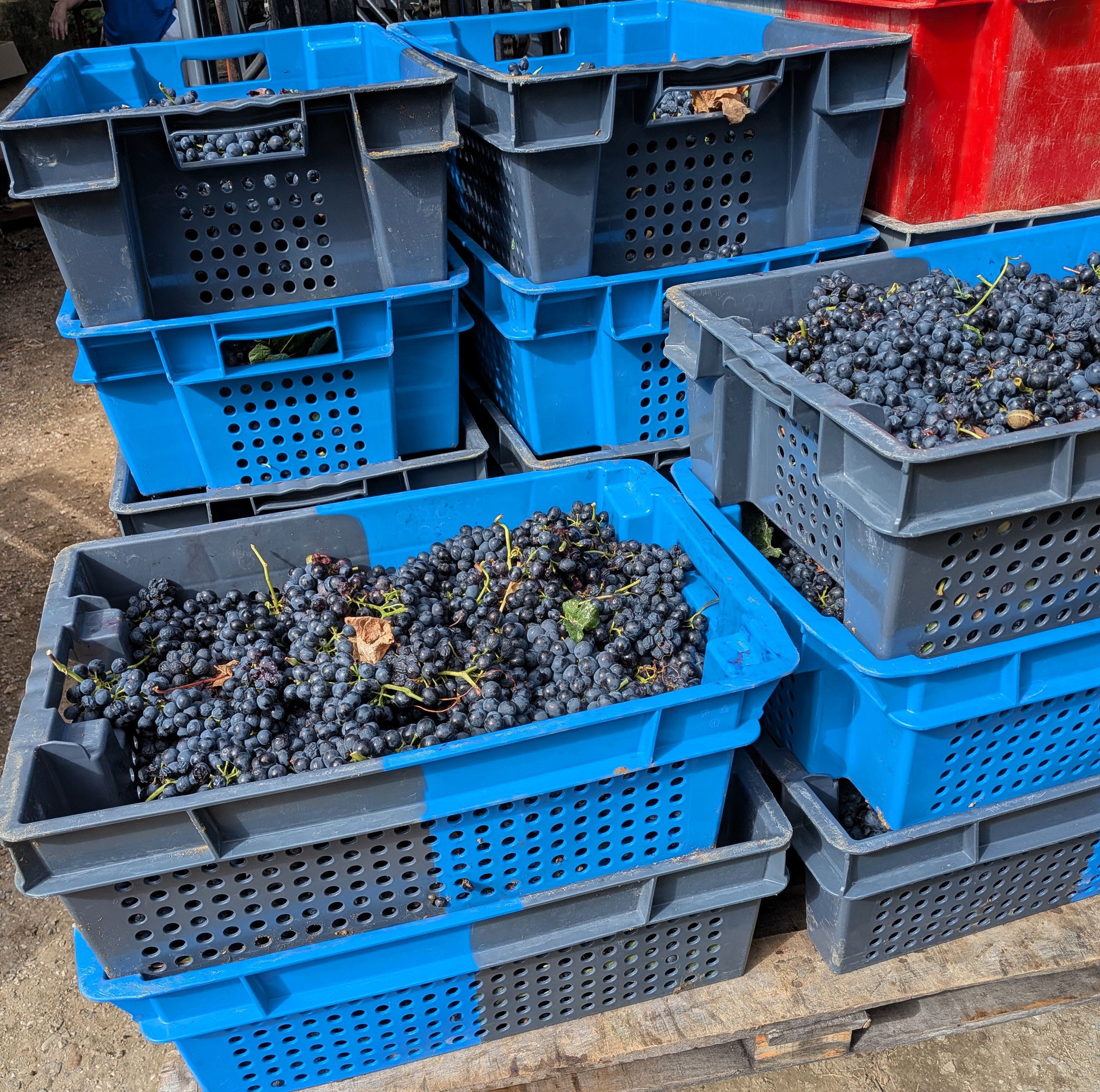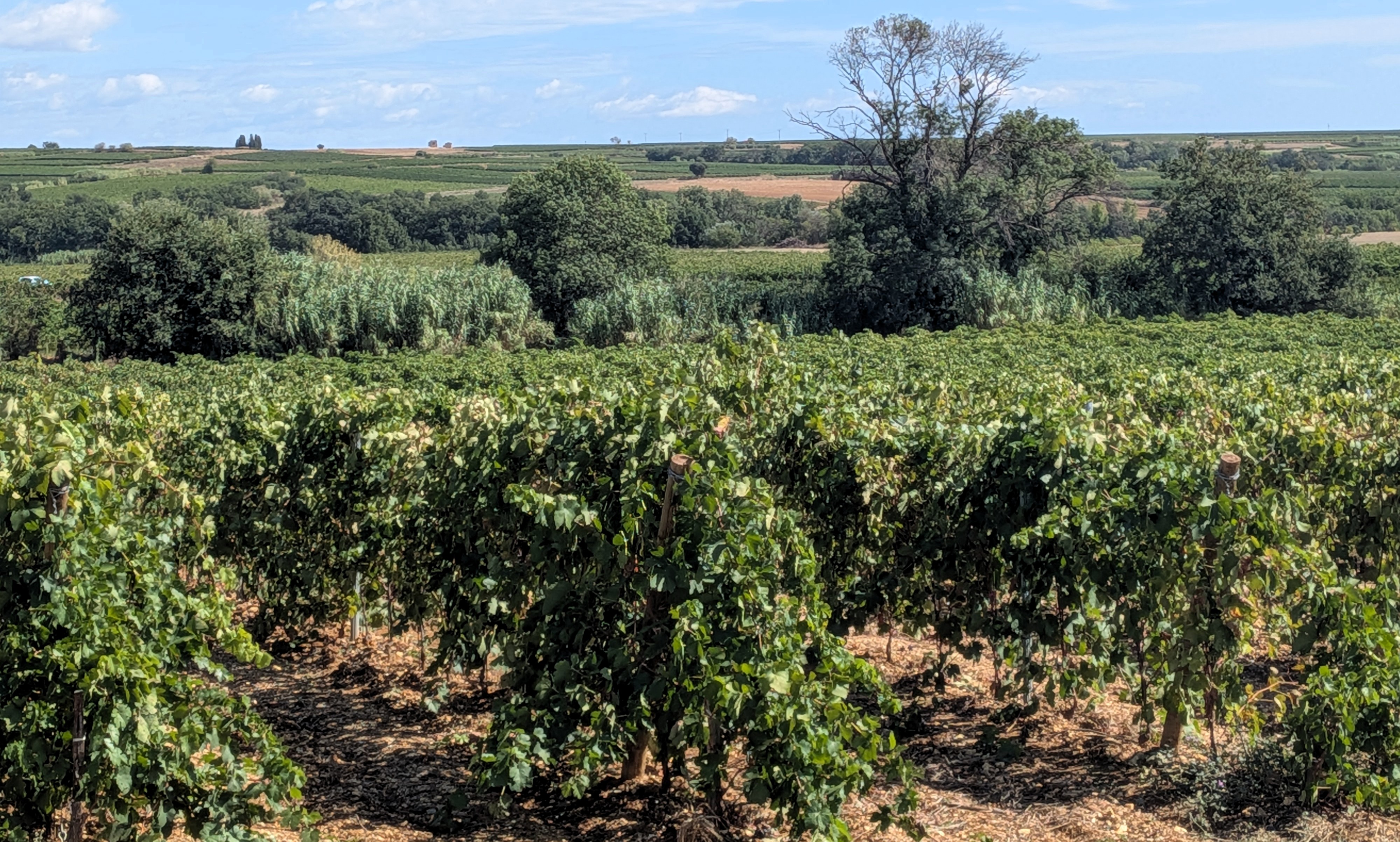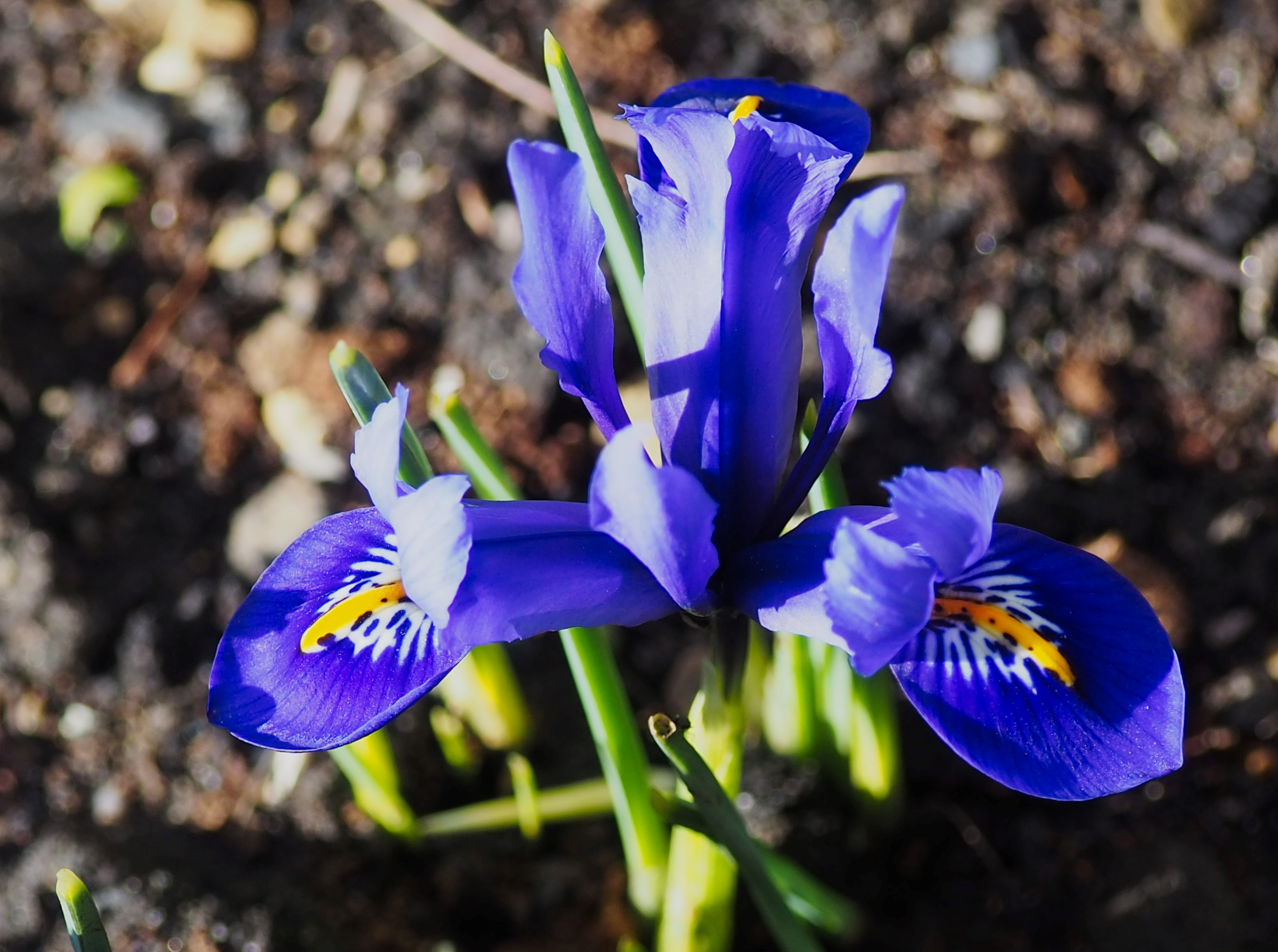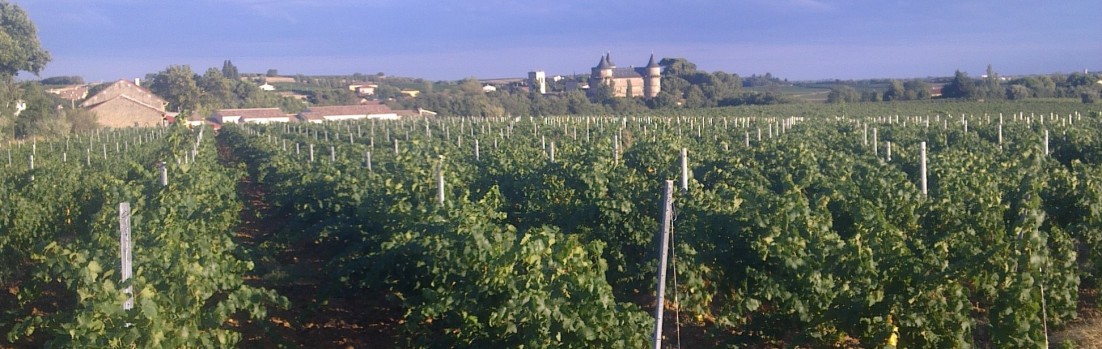
The image above is of the last leaf to fall from the two vines I planted this year, one Regent and one Bacchus. With such a warm year they grew well, both are babies though and will strengthen with time. The warm weather also brought humidity and mildew however, something I realise will be an annual problem in the NE of England. It was fun to watch their progress this year and I look forward to seeing them grow in 2026 and beyond.
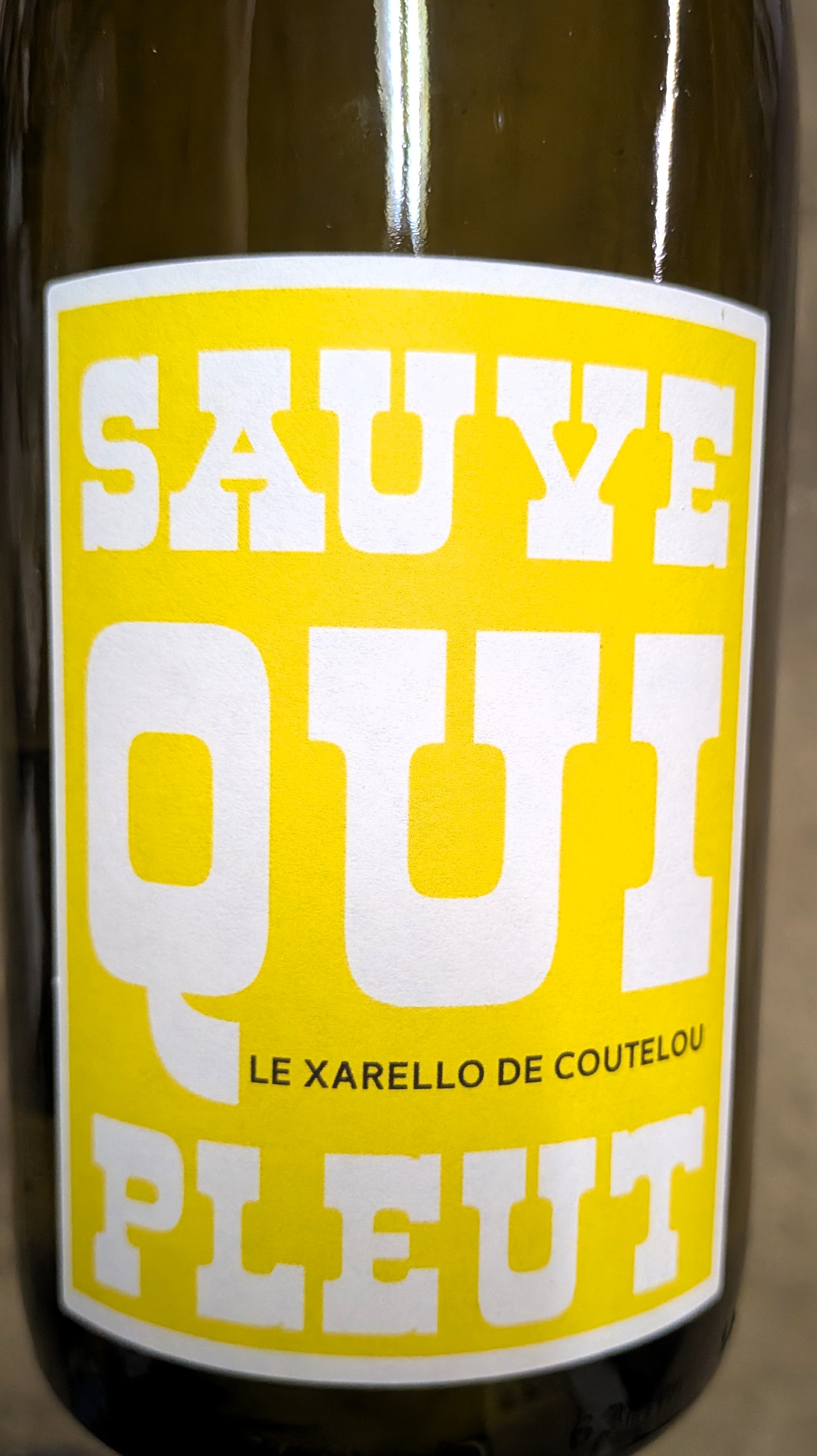
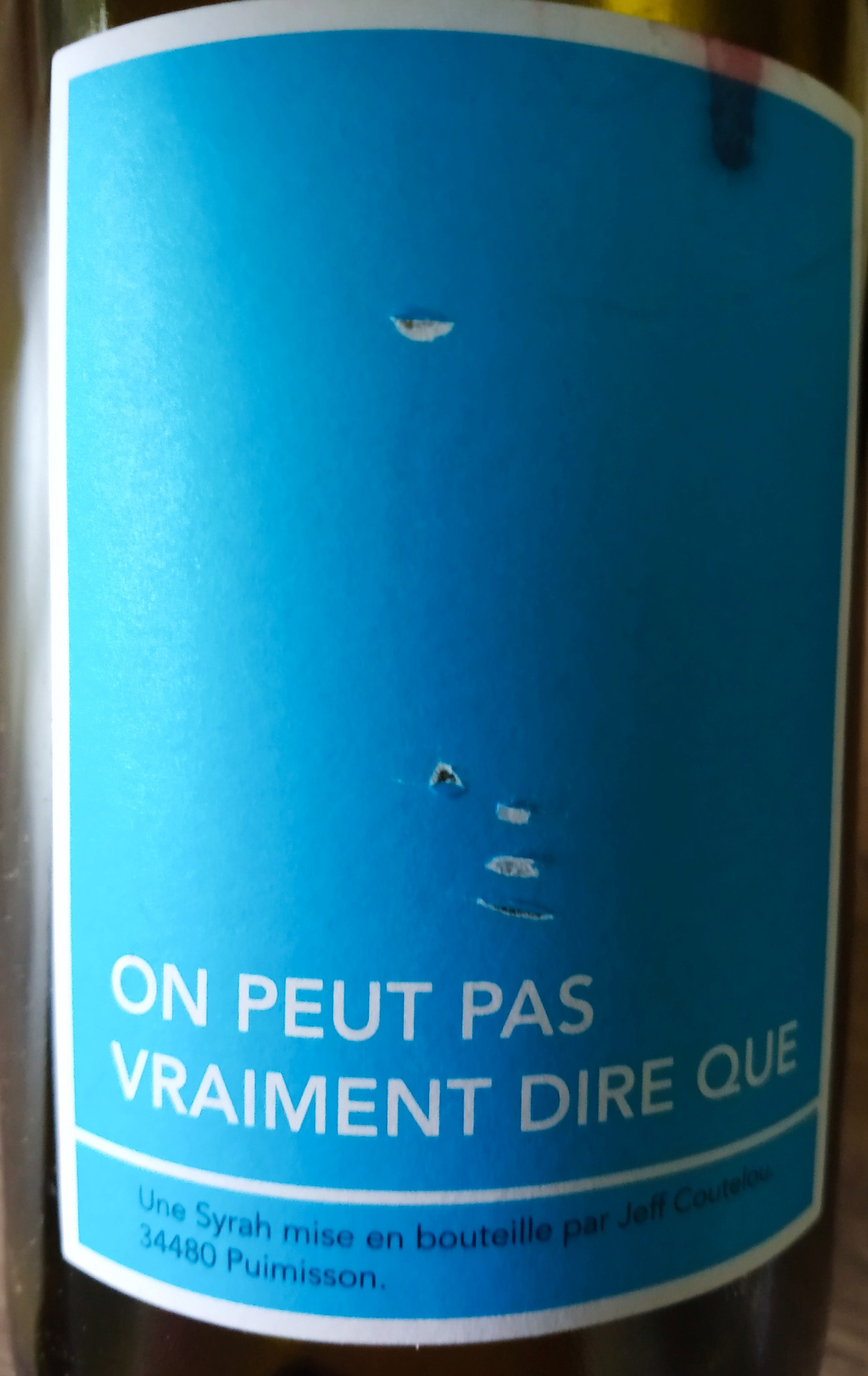
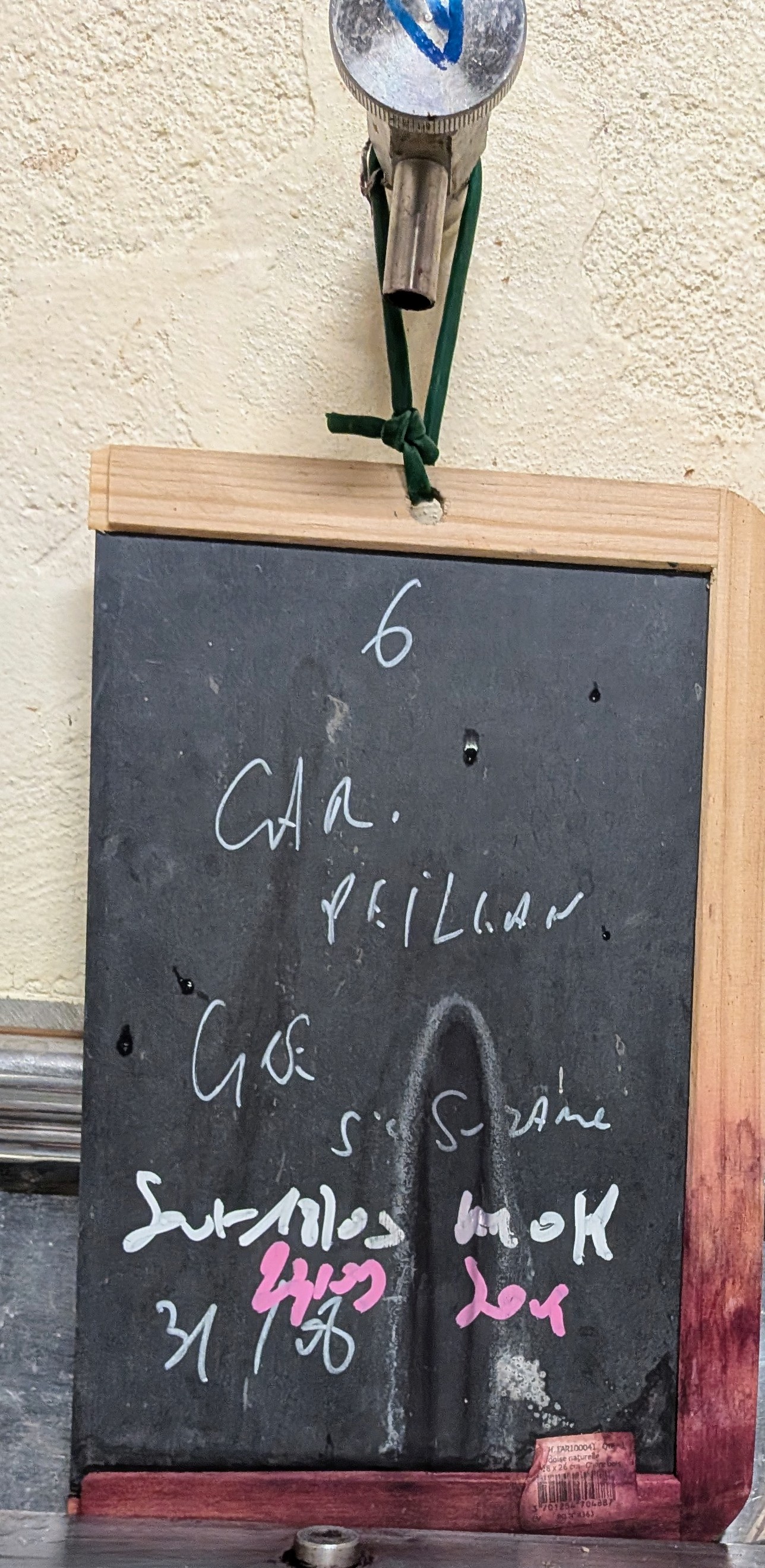
Part one of this recap of the year’s wines concentrated on those from around the world. This one will focus on European producers, the heart of my wine consumption. Naturally the wines of Jeff Coutelou make up the most important for me and the vendanges were a true joy this year. The most notable wine of Jeff’s this year was the new cuvée Sauve Qui Pleut, based on the Xarel-lo grape from the new plantation on the terrace of Peilhan vineyard. These vines thrived from the first day and the first wine shows lovely fresh minerality and texture, I can’t wait to see how the wine and vines will develop in the years to come.
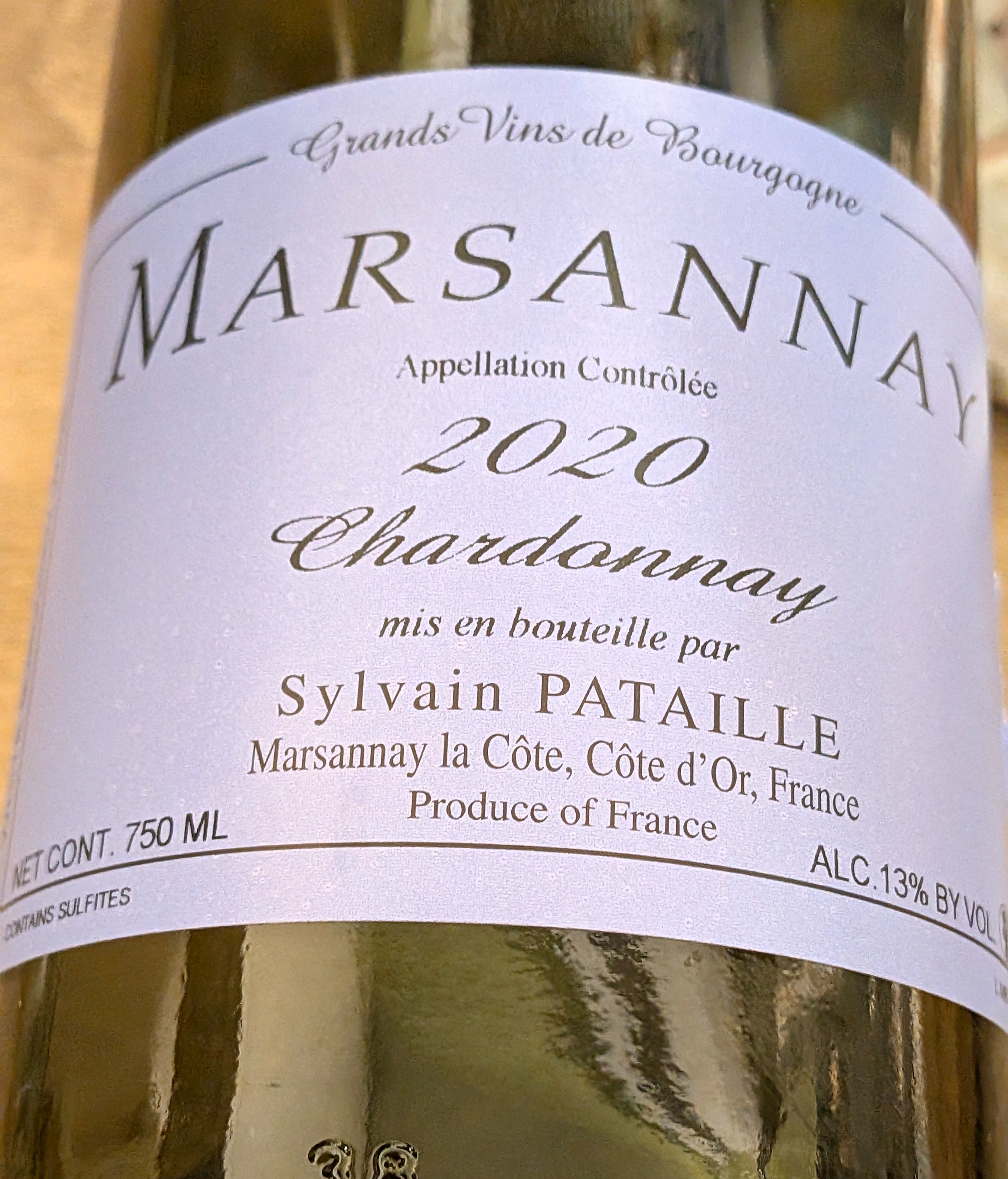
France has always been, and always will be, my favourite wine producing country. Wines from Alsace and the Jura shone for me. Charlotte and Cyril Delval have a tiny amount of vines near Poligny and I imagine they shower care on the production they have. The result in the cuvée Céline 2020 was outstanding, Pinot Gris grapes macerated to produce a rosé colour from the natural skin taint of that grape. The maceration adds texture and flavour of red fruit, a lovely wine. Vignoble Du Rêveur is the project of Mathieu Deiss and Emmanuelle Milan, both from well known viticultural families. Rien Ne Bouge 2023 is made of Pinot Noir grapes which are macerated in Gewurztraminer grape juice for 15 days. The result is another light red wine with Pinot red fruit boosted by the spice and floral notes of the Gewurz, intriguing, enjoyable and characterful.
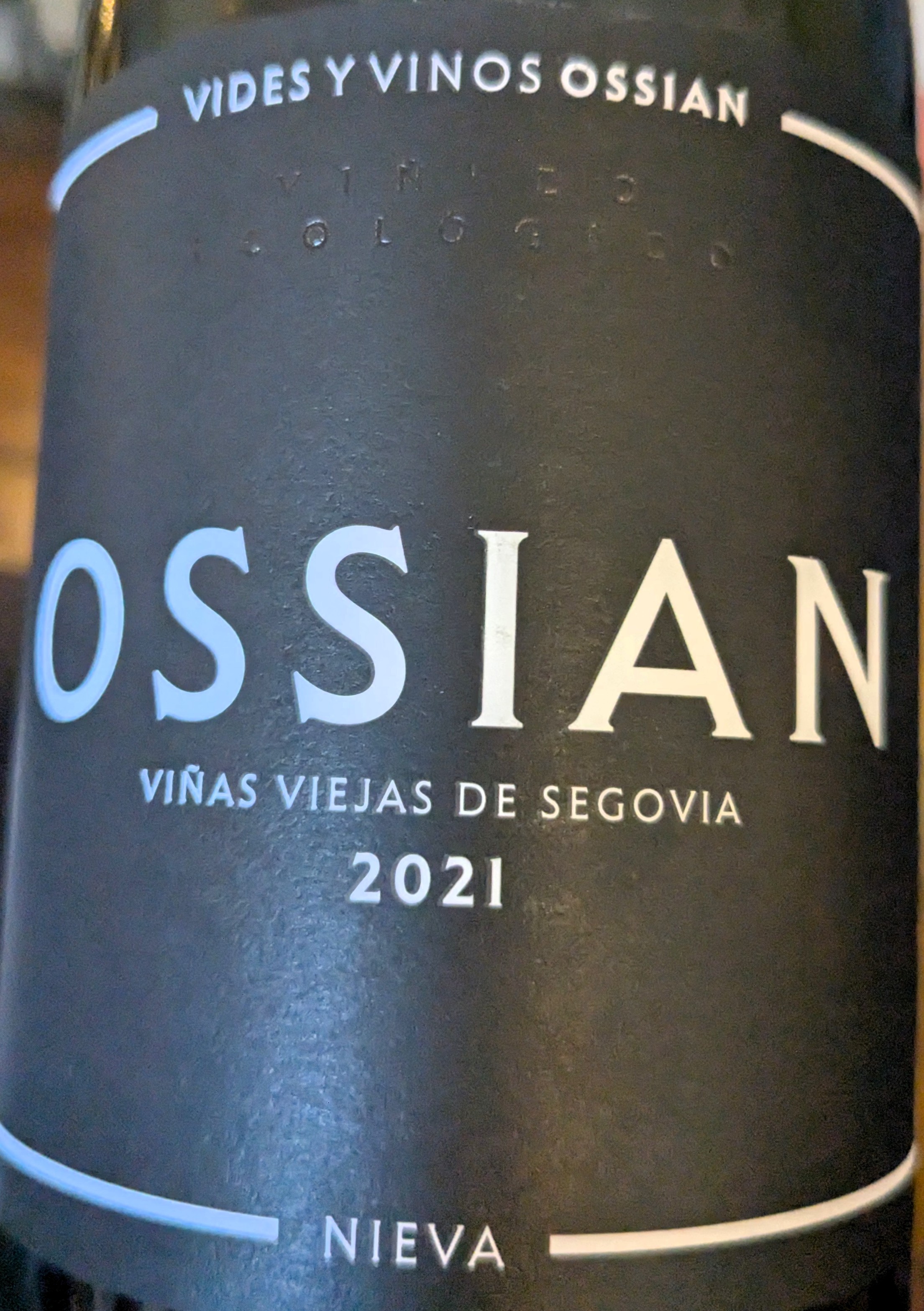
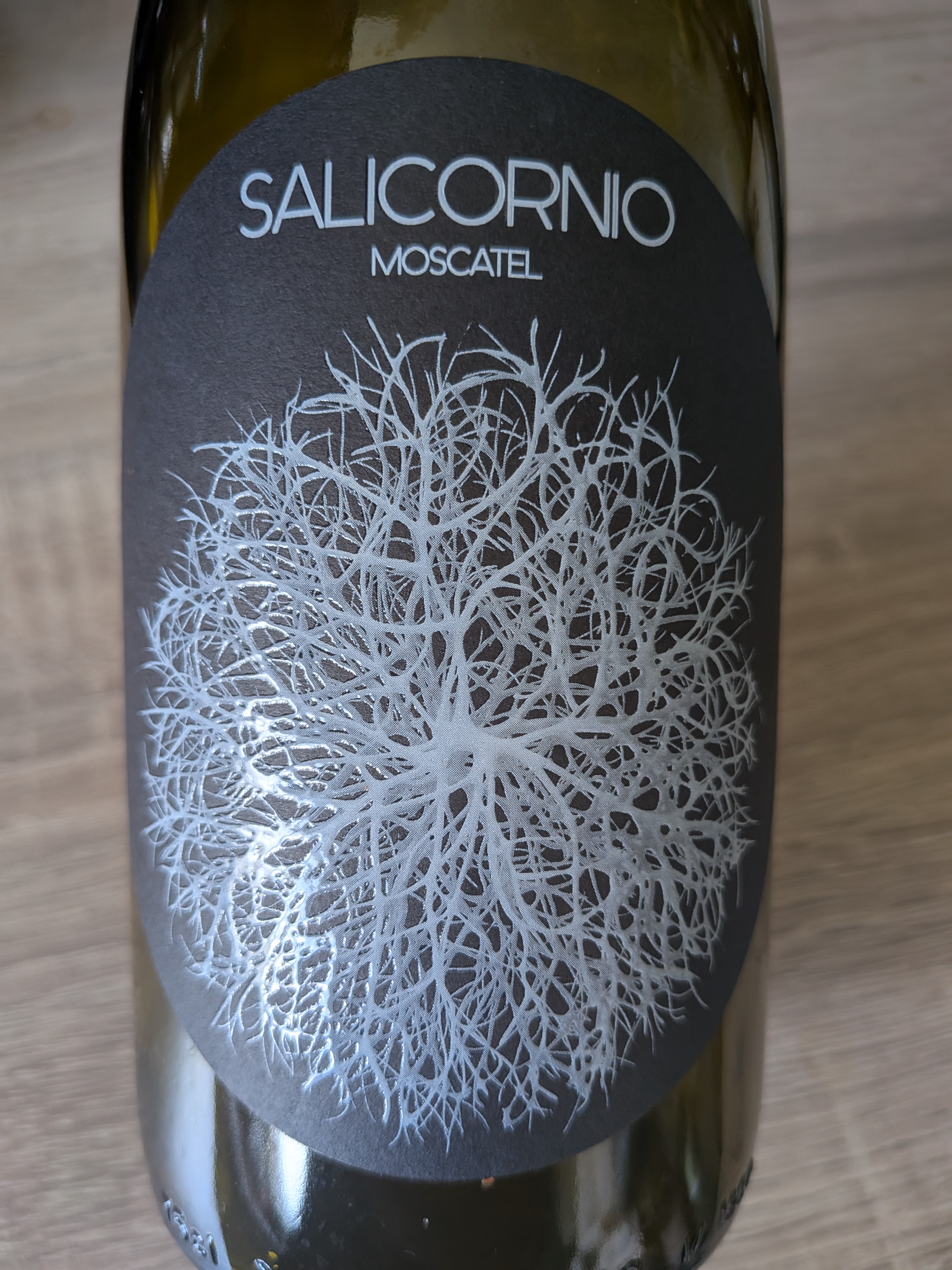
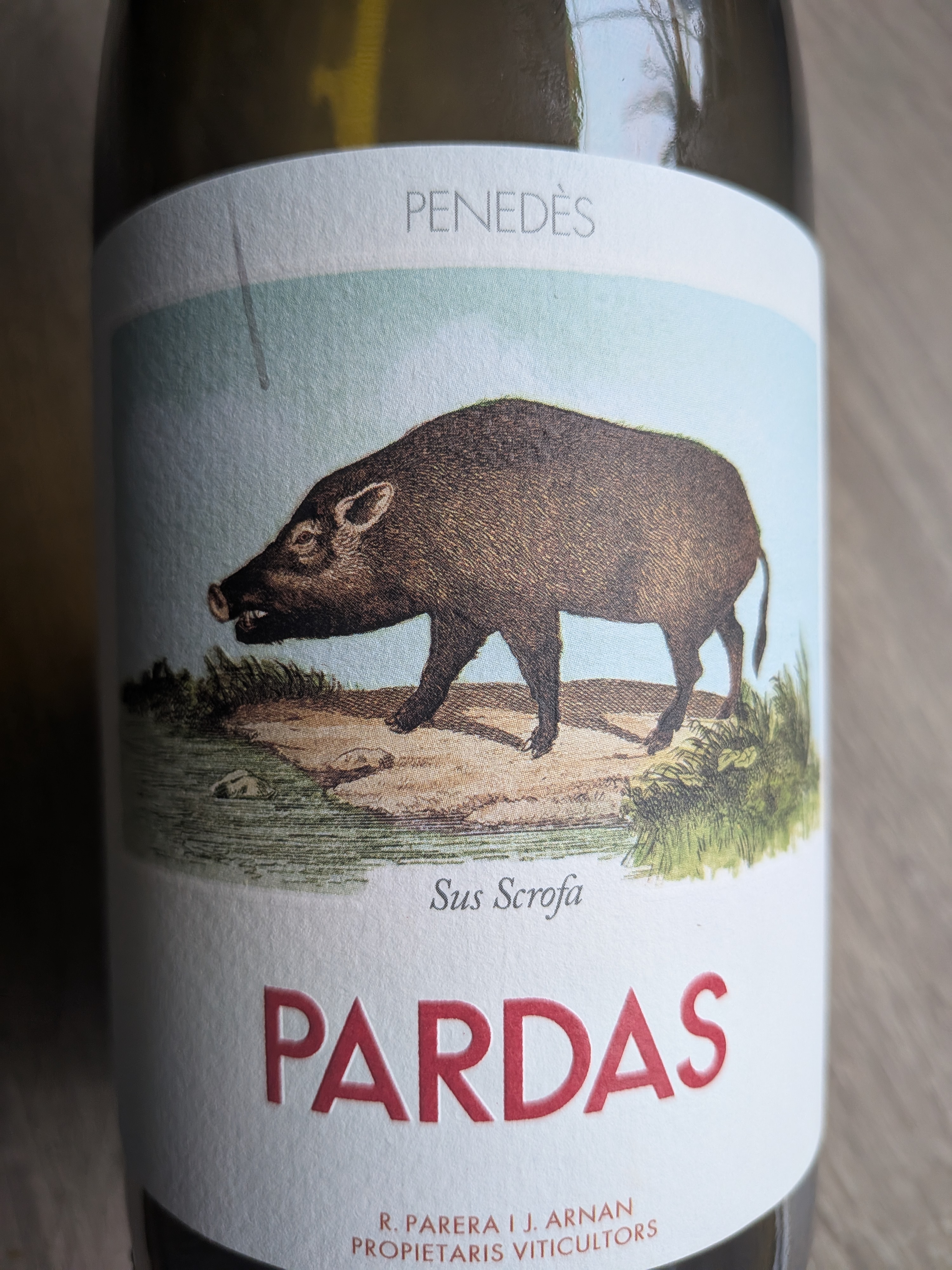
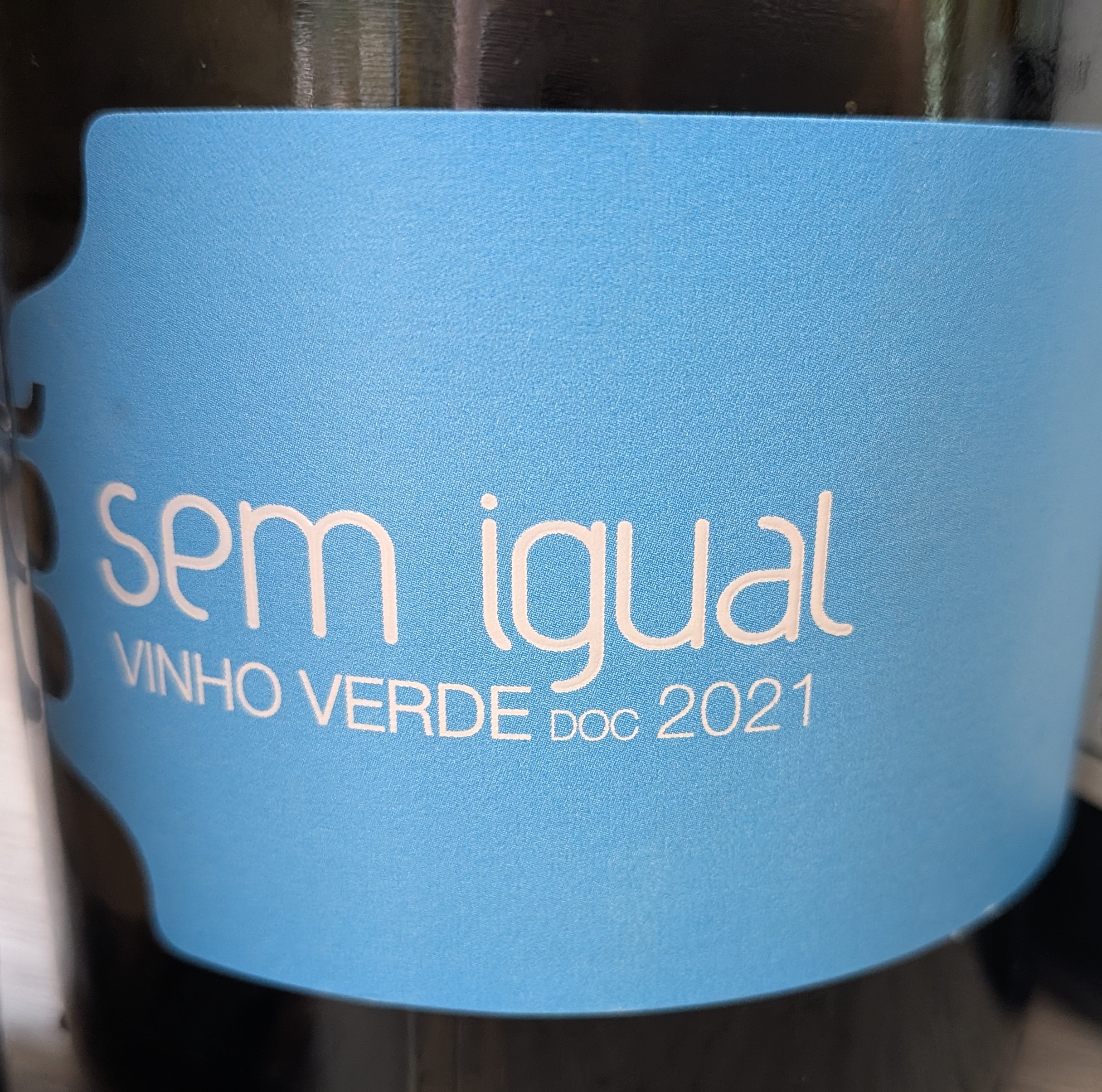
Iberia has become a growing source of excellent wines for me, the combination of indigenous grapes, ancient vineyards and variations in climate help to produce wines of great character in the hands of talented producers. For example, Ossian 2021 is made from Verdejo grapes produced by pre-phylloxera vines in the Segovia region north of Madrid. The wine was fascinating with its mix of viscous citrus, spice and nutty oxidative notes – a really great wine telling a story. Casa Balaguer’s Salicorno Moscatel 2024 was one of my favourite orange wines of the year. Moscatel / Muscat d’Alexandrie grapes grown just 50m from the Mediterranean near Alicante on sandy soils (like the Ossian). Skin contact for 5 days and then 6 months in tank and the result is a wine of depth, distinct notes of yellow fruits and, dare I say, oranges with a lovely saline, fresh finish. Another example of this grape making excellent orange wines. Celler Pardas ‘Sus Scrofa’ 2022 comes from Penedes, Catalonia made with the local Sumoll grape variety. Bright, juicy red fruits almost like a Beaujolais, a wine I’d enjoy at any time. Finally, from the Sousa region of Portugal, east from Porto, was a very drinkable, refreshing and mineral white Vinho Verde 2021 made by Sem Igual. I enjoyed a number of bottles through the year (and will over Christmas) and it’s white flower and citrus / apple profile really hits the spot.
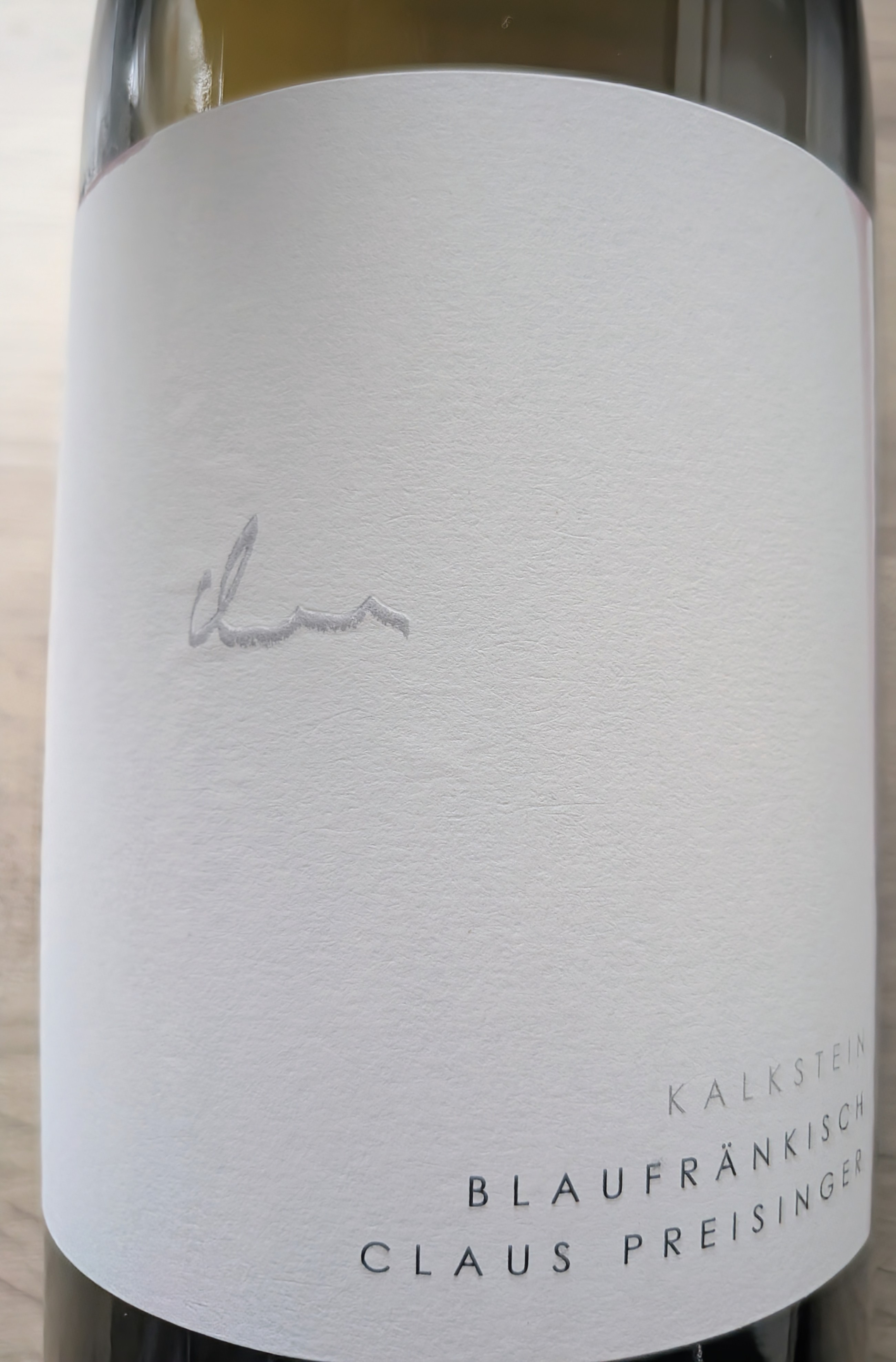
2026 will bring a trip to Austria and hopefully a better familiarity with some of the excellent wines being made there. Claus Preisinger’s Kalkstein 2023 comes from the Neusiedlersee, Burgenland, south of Vienna. Preisinger produces quite a wide range but this Blaufränkisch is my favourite so far, pure cherry and dark fruits with freshness and very drinkable. Lovely, and it has whetted my appetite for the trip next June and the promise of another exciting wine year.
I hope you have enjoyed my selection of wines of 2025 and I would like to thank you for taking the trouble to read about them. Numbers have risen greatly this year and I am very appreciative, it makes the writing worthwhile. May I wish you a very happy and healthy New Year.
Jeff’s cork from 2024, says it all – Share with joy
Character. That’s what I enjoy in a wine. Whether it be natural, organic or conventional I want a wine that tells me a story and shows character. That could be the character of the grape, the winemaker, the place – preferably more than one of those. We have all had wines, often by the glass, which taste ok but could be anything – identifiable by only the most brilliant blind taster. Supermarkets sell these by the thousand. Nor do I want a wine recognisable by its faults, whether mousiness, cork taint or bad decisions by winemakers such as too much oak.
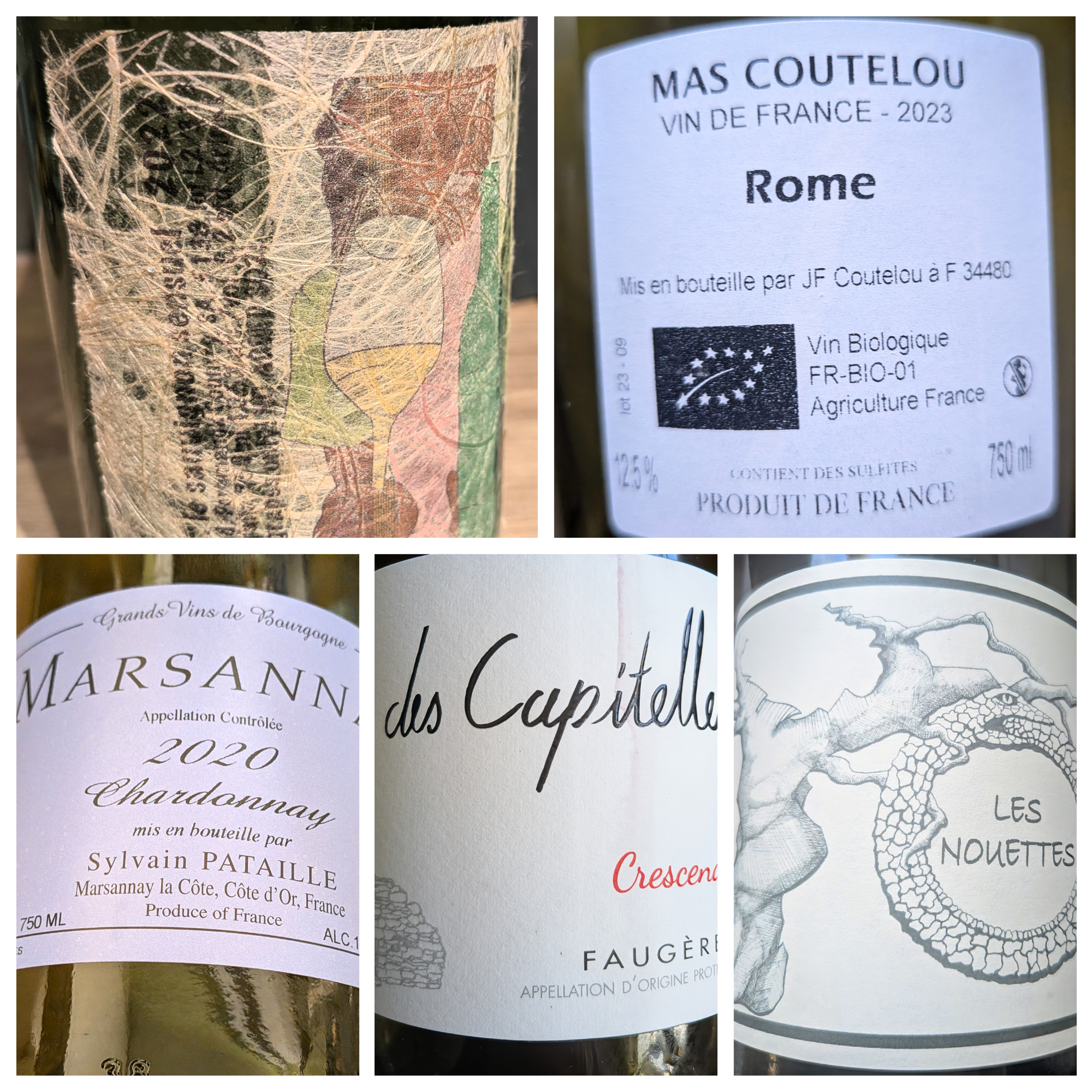
So, when I looked back through photos of the bottles I had enjoyed this year it was character that influenced my pick of wines which made most impact and which I enjoyed the most.
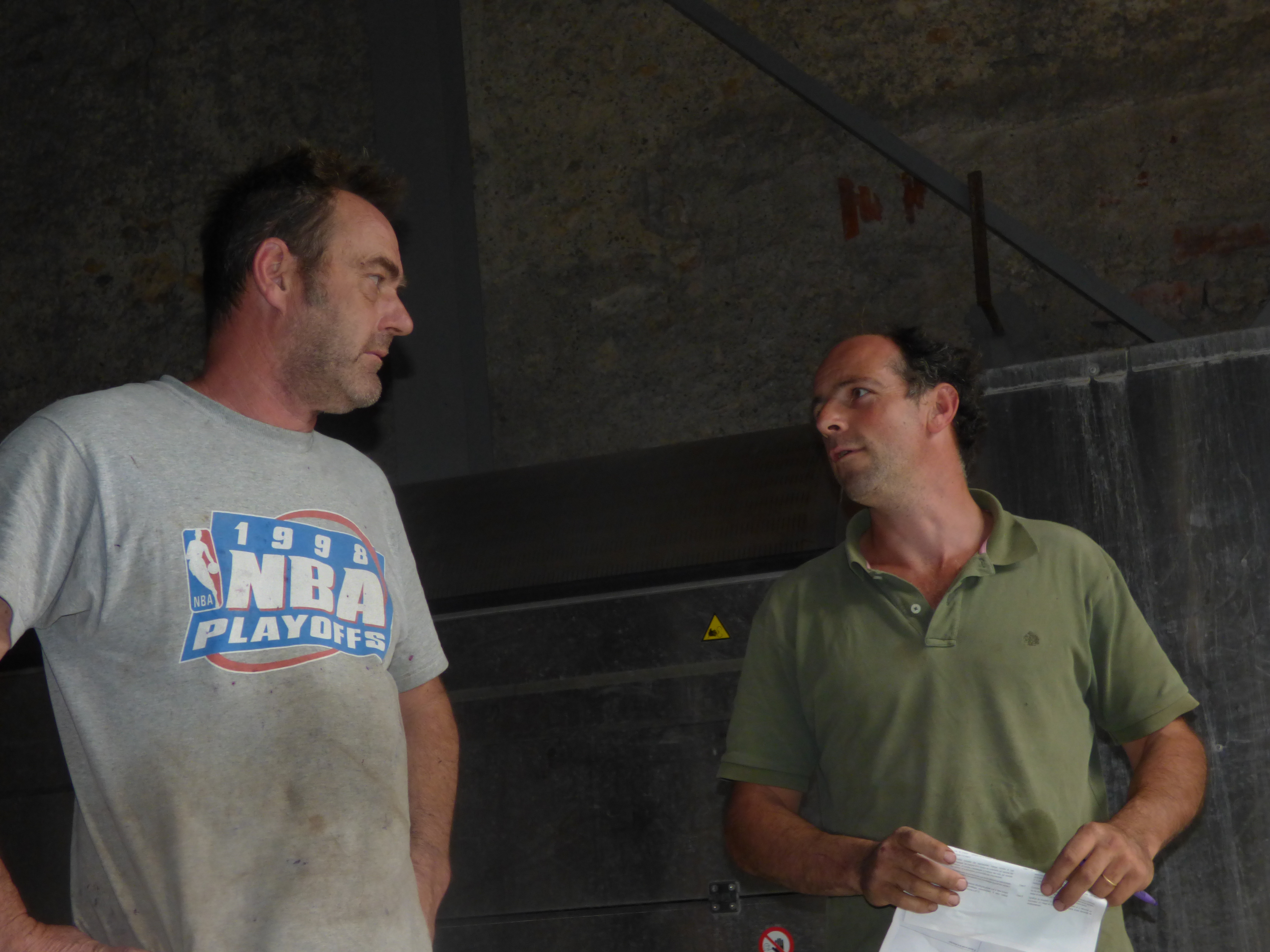
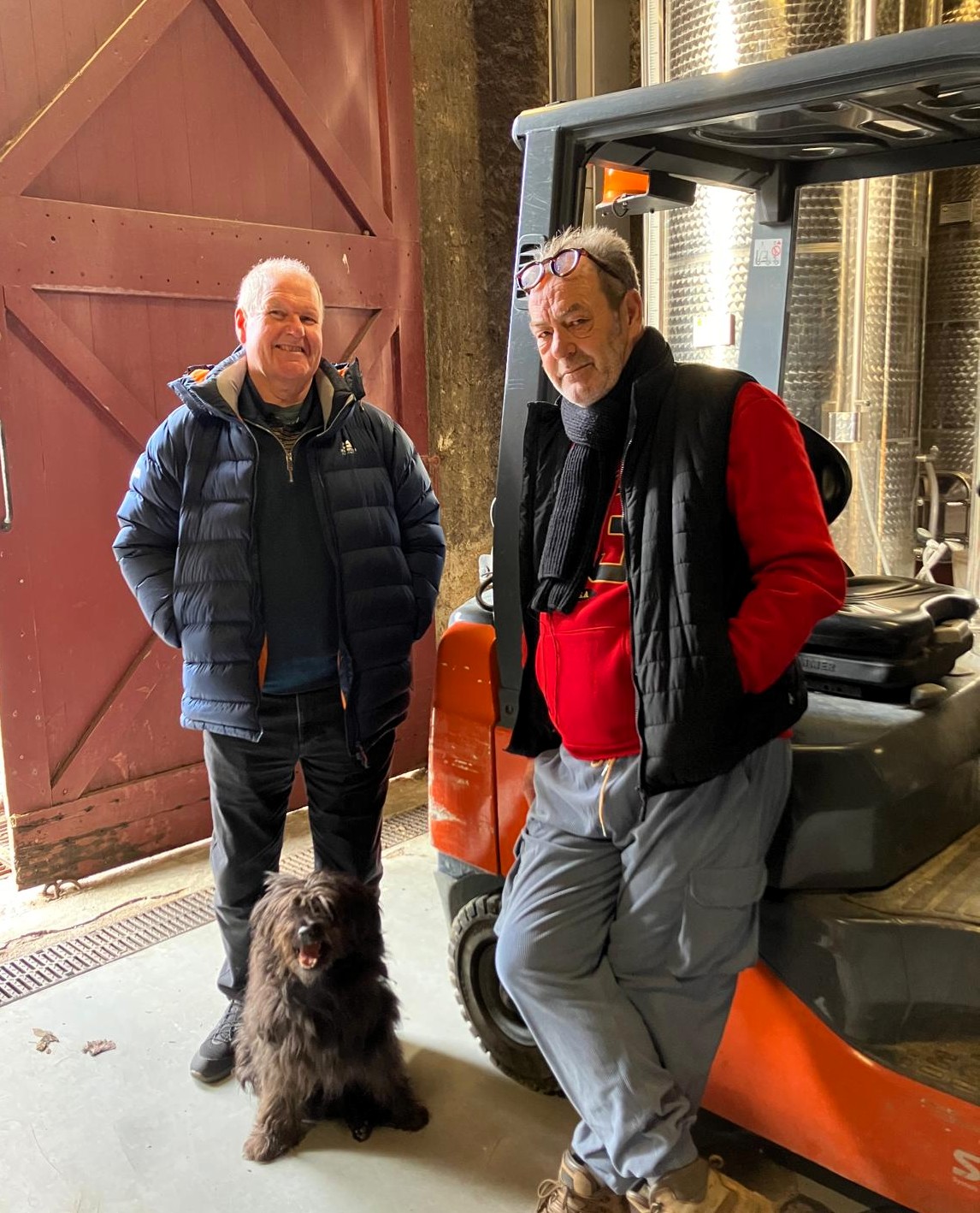
English (and Welsh) wines made a big impression on me in 2025. I have enjoyed a fair number in the past from producers such as Davenport and Westwell but this year I was able to enjoy more examples and I think that the quality is rising at a serious pace. My favourite bottle is one I have described here a number of times, Mountain People‘s TAM 2023, a Chardonnay made in Wales by the excellent David Morris. Actually produced from grapes grown in Somerset this would easily rival many a top Jura wine. I had a few bottles through the year including this one shared with Jeff Coutelou (background left) who liked it a lot.
Westwell sold a really lovely wine called A Little Bit, 2023, which I really enjoyed. Made from the third pressing of Pinot Noir and Meunier grapes and therefore the press had to be firm making the juice too tannic and coloured for sparkling wine. yet, it made a light but fruity rosé/red with a nice grip. A triumph of getting the most from your grapes. Blackbook winery is based in Battersea, London and makes grapes from within two hours of its base. I could choose a number of their wines but Pinot Meunier 2022 was my favourite. Nicely judged skin contact gave a lovely colour and mouthfeel as well as stone fruit flavours.
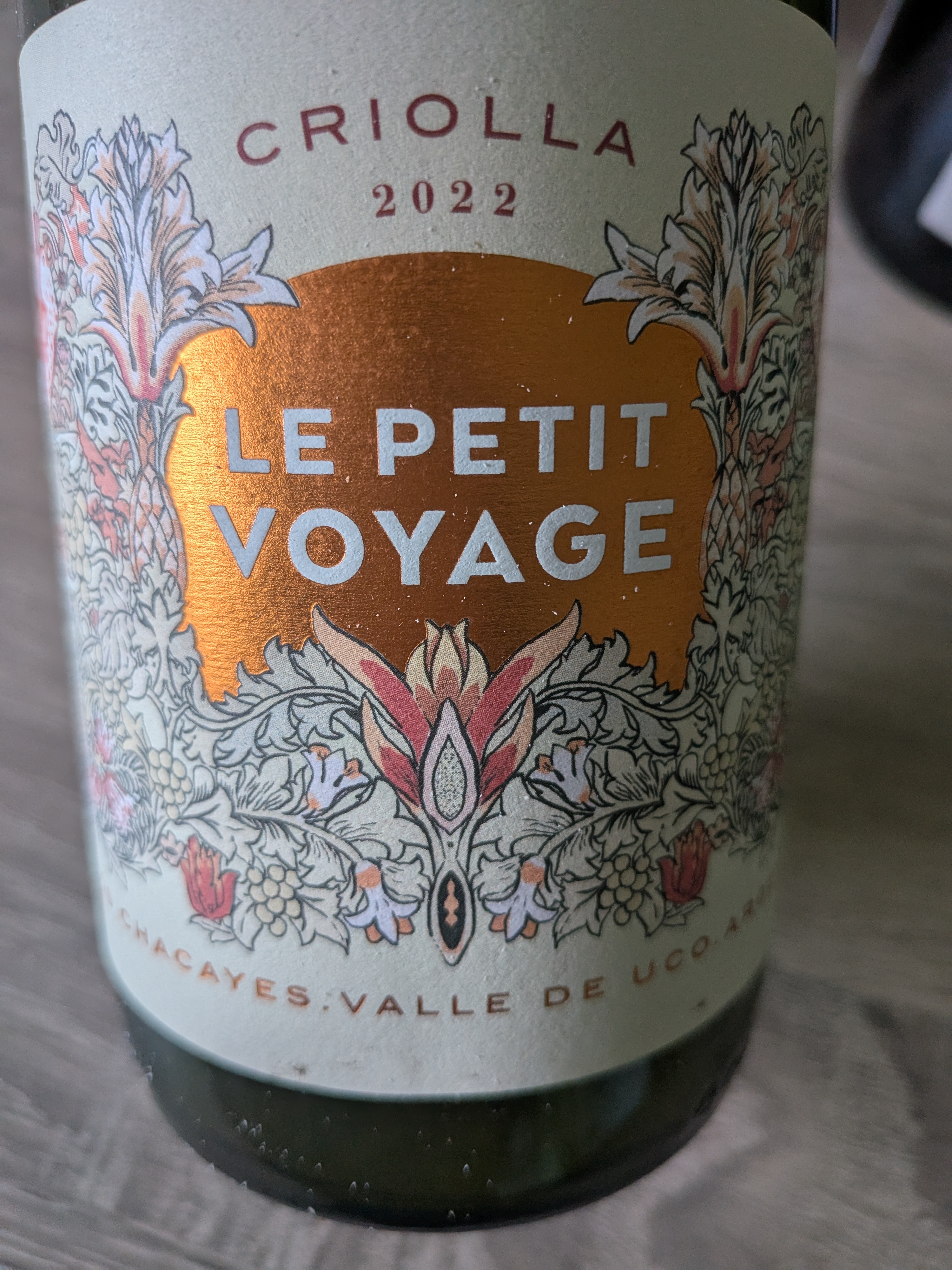
The New World continues to produce some great wines, South America included. I bought a bottle of Le Petit Voyage Criolla 2020 on a quick visit to a wine bar in Durham on a whim. It turned out to have bags of fresh red fruit flavour, a real treat from Argentina’s Uco Valley. A nice discovery. I enjoyed a few wines from Chile’s A Los Vinateros Bravos but especially the Pais Granitico 2022, nice acidity balanced by cherry fruit flavours. Both of these wines tell the story of early colonial vines imported into the continent by the Spanish but finding a home there which brings out a real sense of place, grape and enjoyment too!
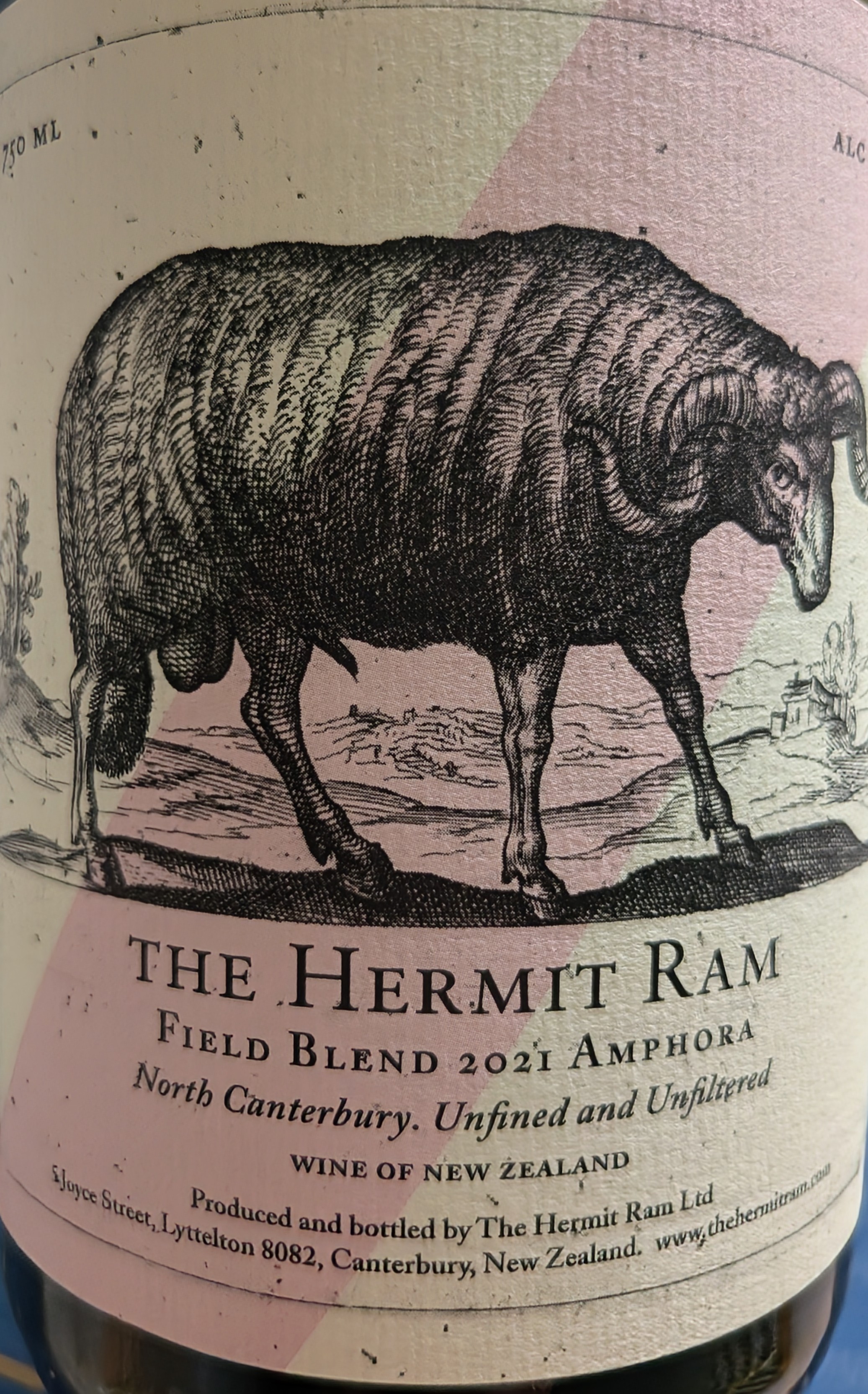
Three wines from Australia and New Zealand complete this first section of my 2025 selections. I do think that Canterbury producer Hermit Ram‘s Theo Coles is one of the best winemakers around and any bottle of his is memorable but the Field Blend Amphora 2021 was particularly so. Riesling, Pinot Noir, Chardonnay, Cabernet Sauvignon and Gewurztraminer make for an unusual combination but the fruit of the red grapes is lifted by the freshness of the whites making for joyful aroma and flavour. The amphora gives texture to the mix too so that those flavours lingered long in the mouth.
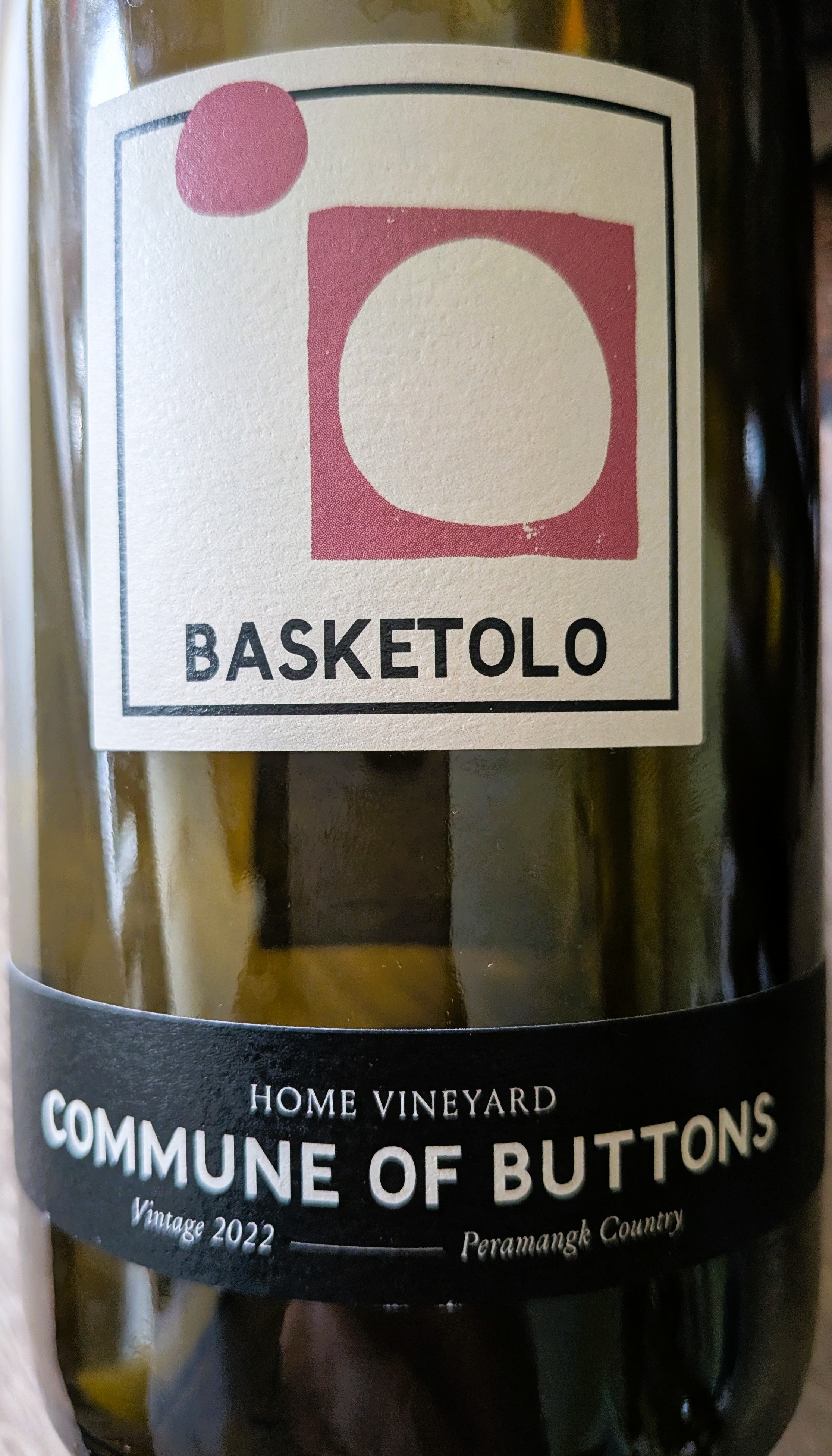
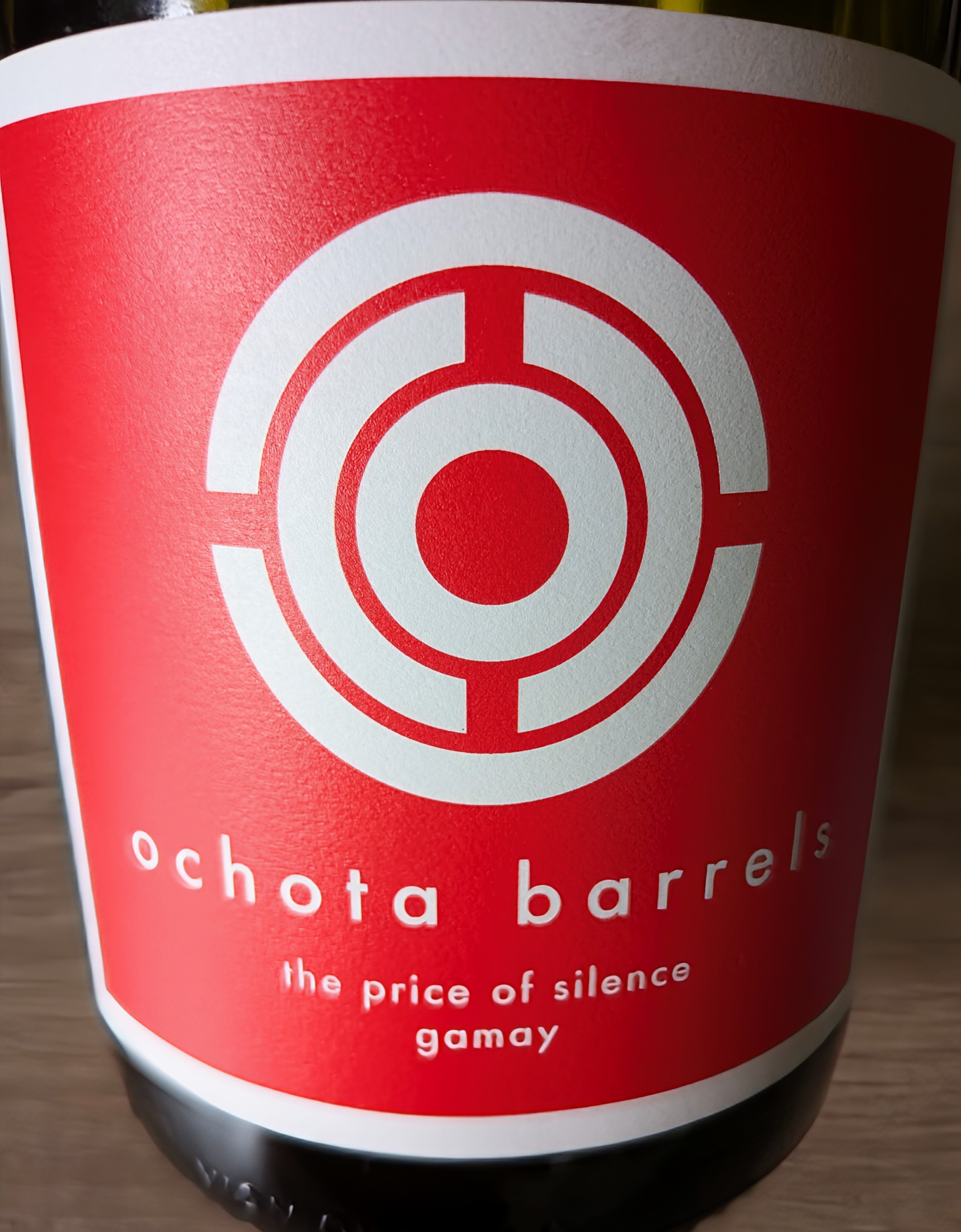
Ochota Barrels is another excellent source from Down Under. Amber Ochota has continued the fine work of her husband Taras after his tragically early death and I thoroughly enjoyed The Price of Silence Gamay 2023 with its fruitiness and spice highlighting the pleasures of the grape. Also from the Adelaide Hills region came Commune of Buttons‘ Basketolo 2022 made from Nebbiolo and again so full of that grape’s character with its fresh acidity and bite as well as generous red fruits, a lovely food wine.
Wines from around the world rather than mainland Europe but it is to there I shall turn in my next article.
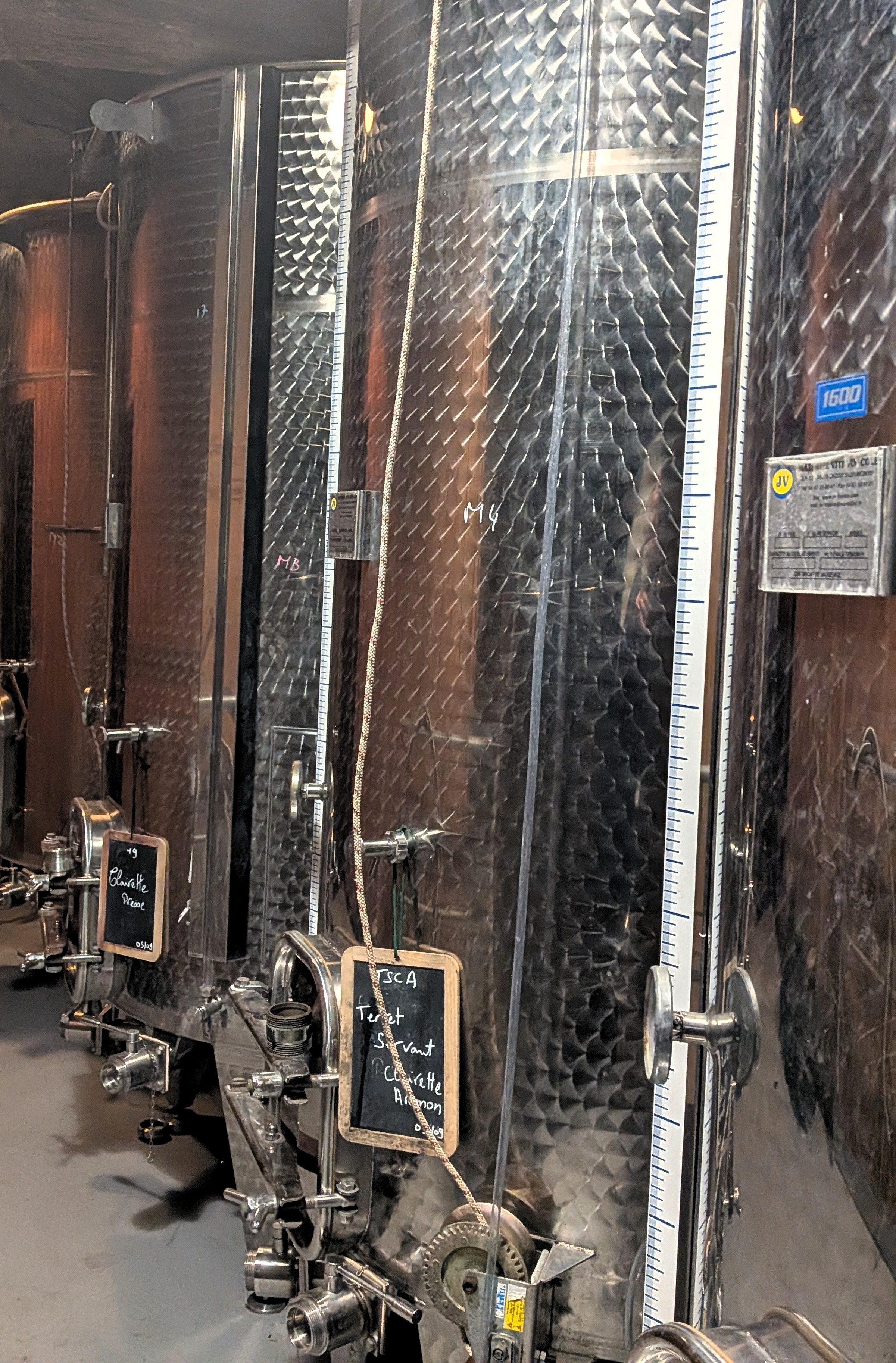
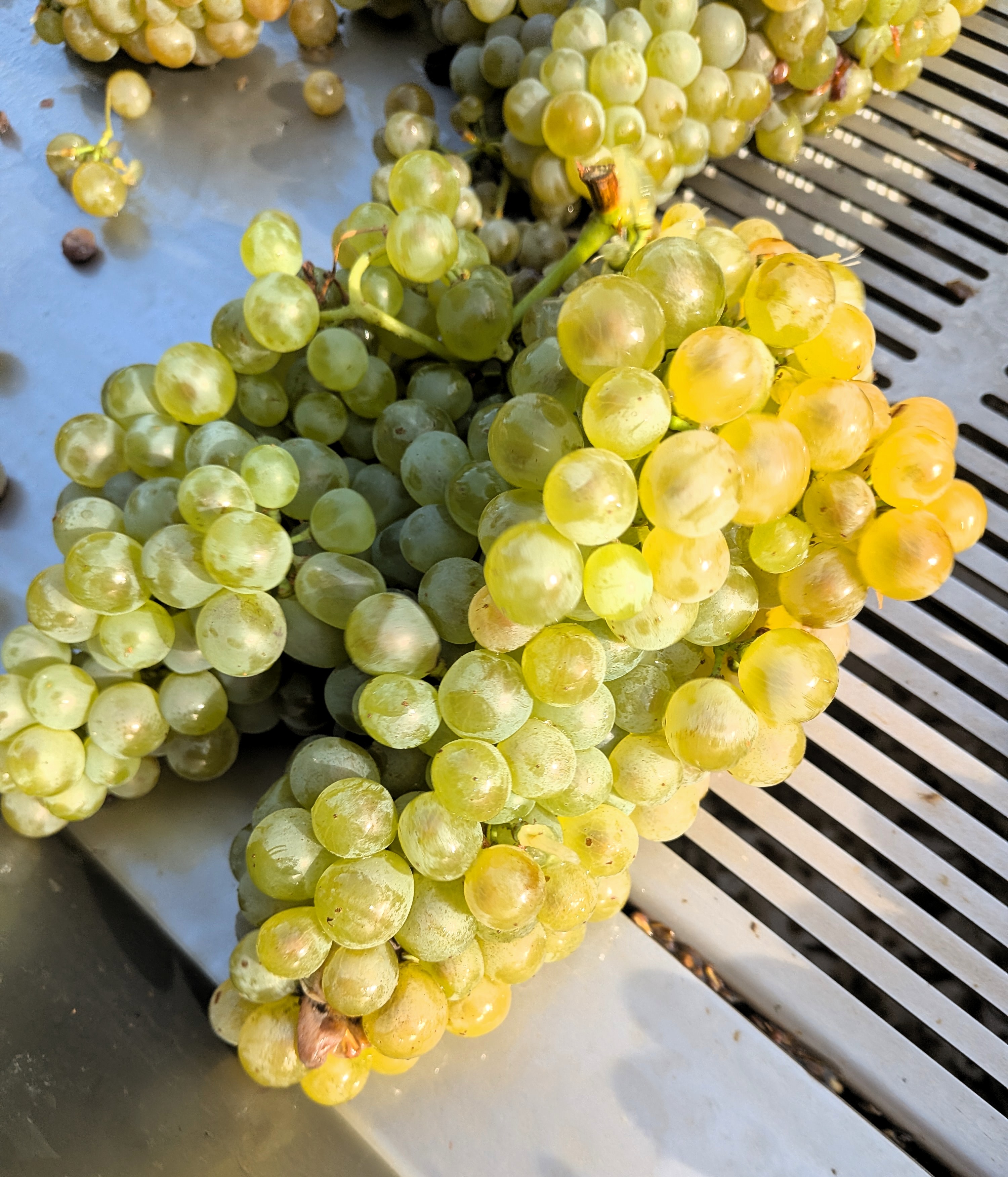
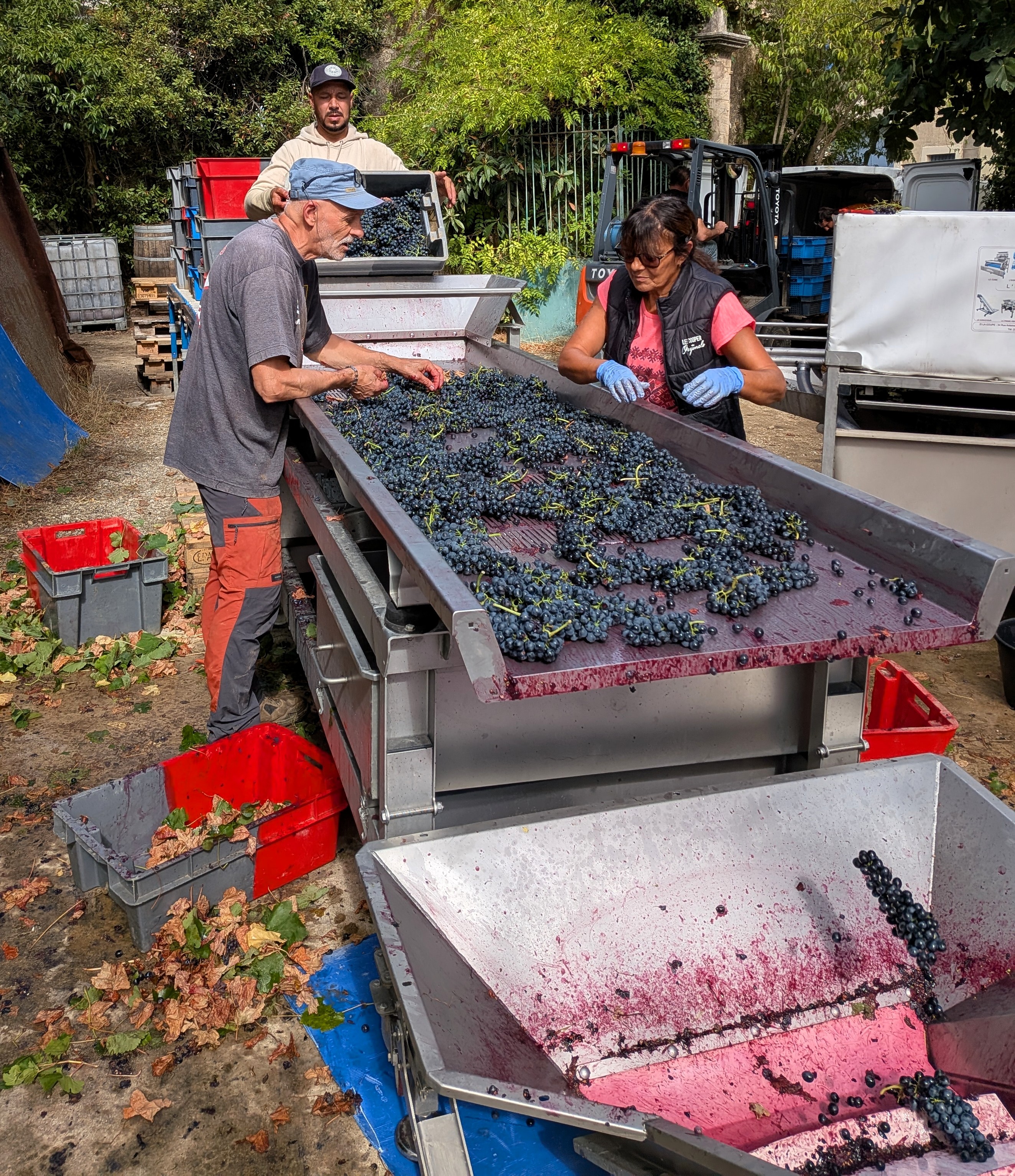
Time to get back to work. A thunderstorm overnight meant there was no picking on Monday September 1st and so I turned up on Tuesday ready for action. I popped over to Sainte Suzanne first as the newish parcel of whites, Maccabeu and Clairette were the focus for the day. On a clear morning with the sun not long risen it was fresh after the rain, a good time to be back. The vines showed ravages from mildew with the brown spots of the disease but the grapes were in good nick.
Clairette with mildew marks on leaves
Maccabeu
Into the cellar and the Maccabeu was beginning to arrive, pressed directly. Pièr, this year’s stagiaire, was the one loading the grapes into the press. He’s a bright, enthusiastic lad from the Anjou and has experience in the work, he is the son of Jean Christophe Garnier, so it’s a real help to Jeff to be able to leave him to do tasks along with Flora in the cellar.
A busy cellar, the Maccabeu in press and remontages
From there upstairs into the courtyard of the house leading into the upper cellar where the sorting table has been positioned since 2020 when being outside was a healthy option for all. It works very well, there is more space for everyone there and in the cellar itself. Plus the fresh air and dappled sunshine make it a pleasant place to be. Alongside me on the table were Boris, who has been coming to help Jeff for many years now, Mari from the village and Jean-Jacques from nearby Bédarieux. These two have worked together before in wine, with Didier Barral for example. So we form an experienced team and they are good company as we chat over the course of the day.
Jean-Jacques,me, Boris and Jeff (left to right) (photo by Flora Rey)
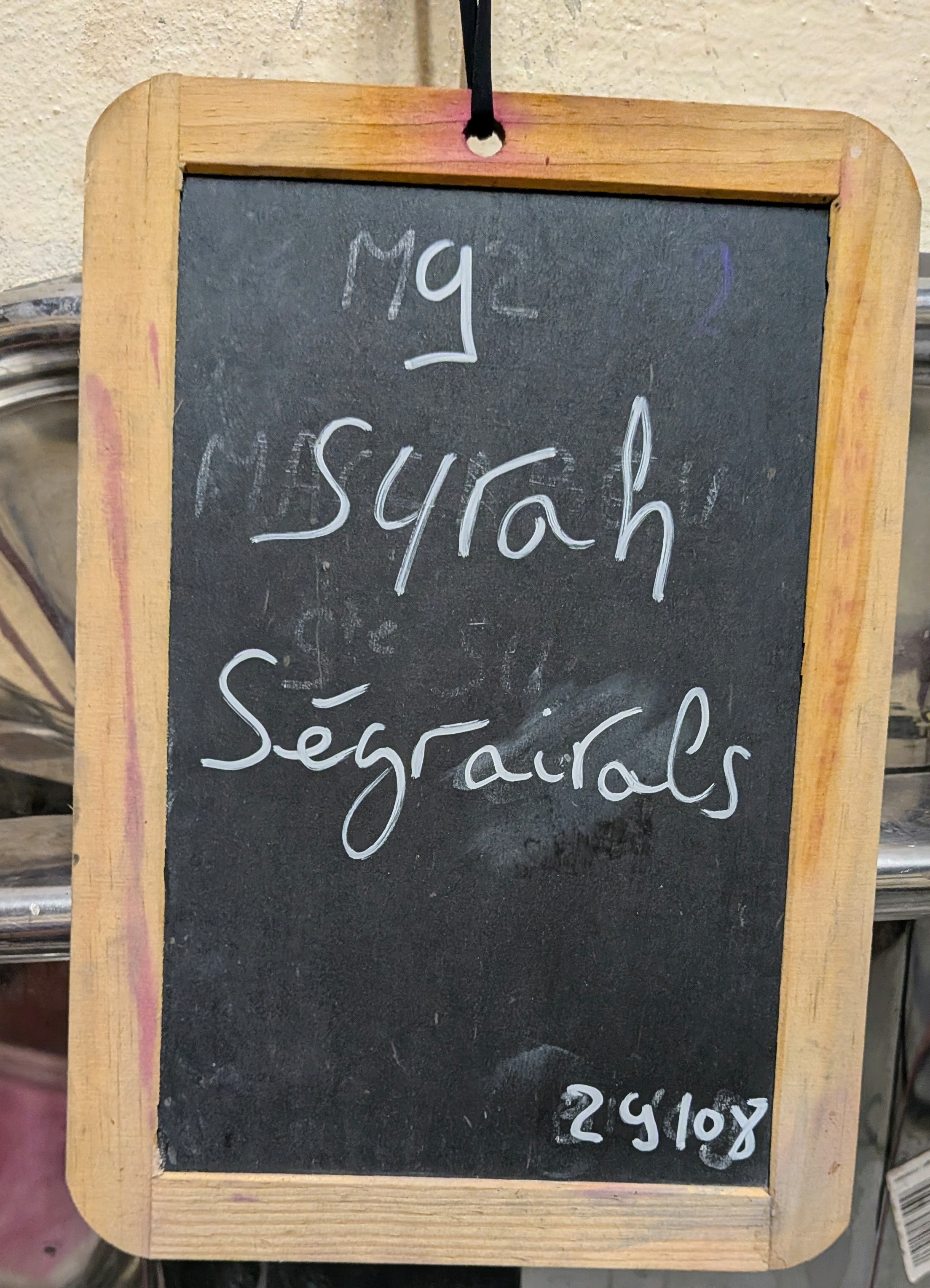
The Clairette was in good order other than a few dried stems from mildew and the morning passed swiftly. The Clairette from Segrairals also arrived including the attractive pink Clairette Rose which brightens the mix. These grapes have been making the eponymous cuvée for the last few years and it has become one of my favourite bottles from Jeff, the Clairette has a lovely freshness but a bitter note too to add a touch of grown up complexity. A year or two in bottle is recommended, at least to my taste.
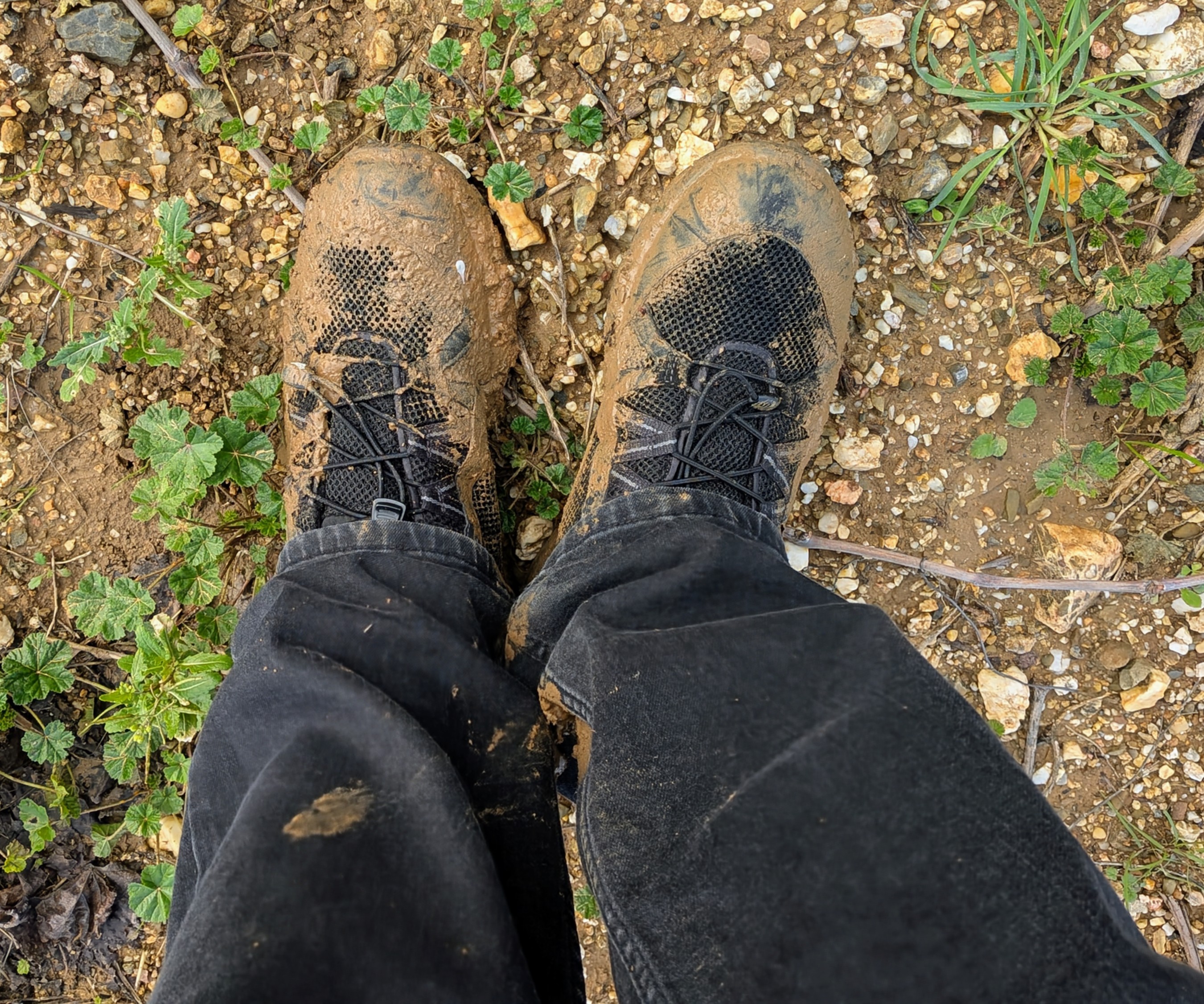
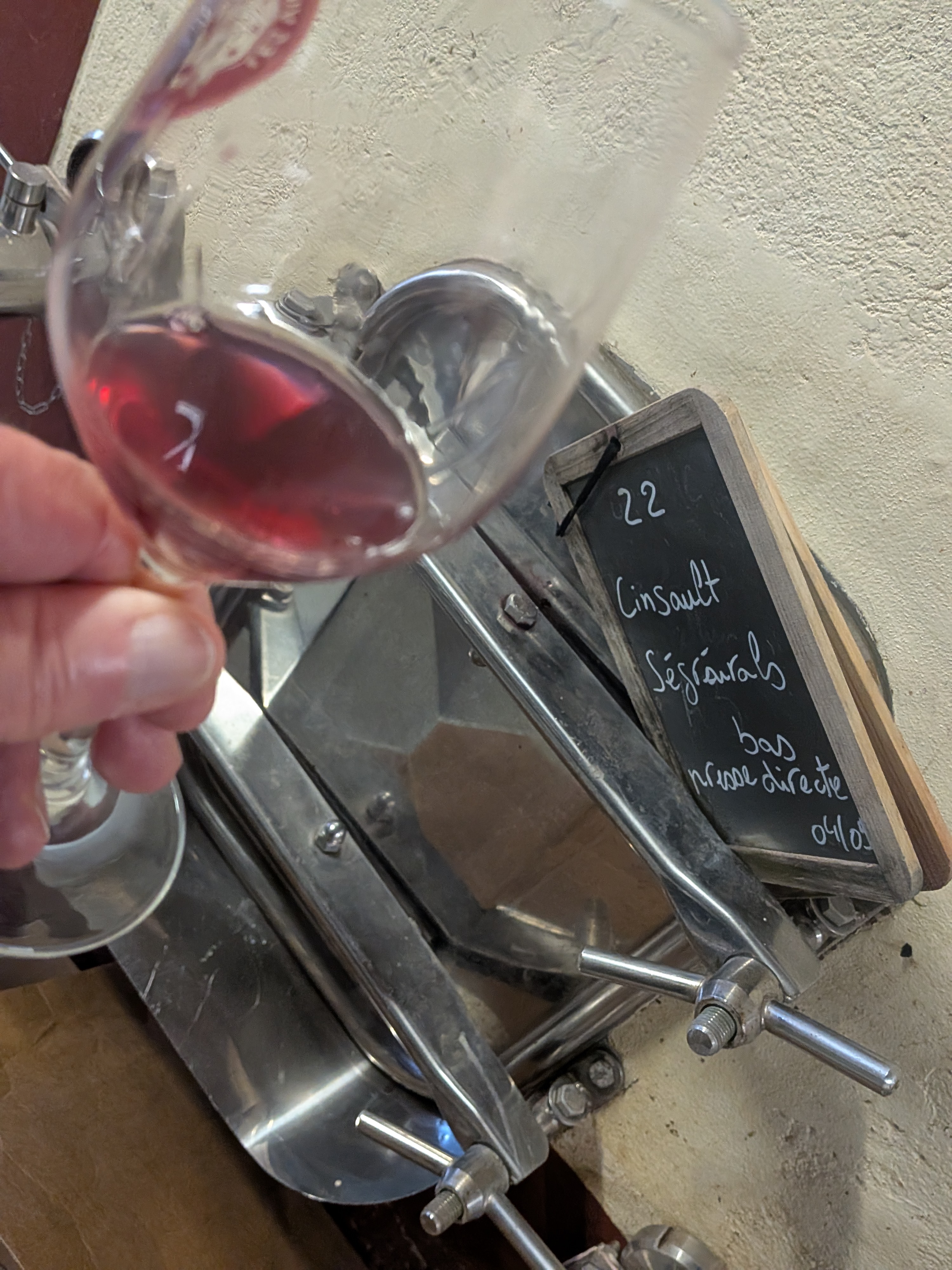
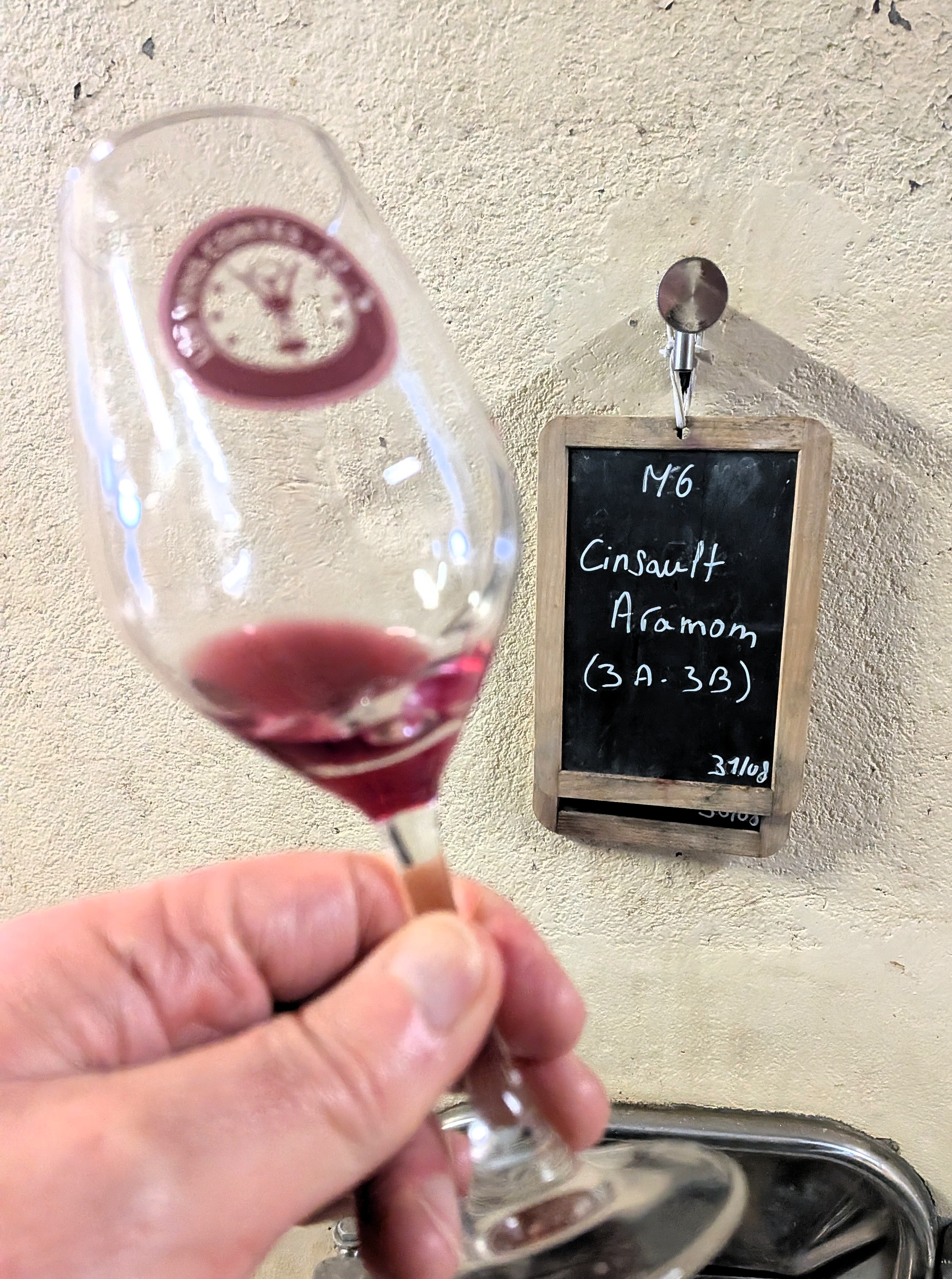
It was a hot day and my body was aching after my first day. I have chosen to just work some days this year, I am now officially a pensioner! Wednesday went ahead without me at the winery and Jeff told me that evening there’d been one calamity (not because I wasn’t there I hasten to add). One of the pumps had broken down and couldn’t be repaired for a few days therefore he was having to redraft plans. The day was given to the Cinsault from Segrairals, now one of the biggest crops of all and the source of fruit for cuvées 5SO and Vin Des Amis.
Some of the fragile Cinsault
Big, juicy Cinsault
I returned on Thursday and again the early grapes were going directly into press. This was still the Cinsault but from a part of the vineyard which had suffered a little so the grapes were fragile and Jeff wanted to extract the juice without the skins. When that couple of rows had gone into the press the rest of the Cinsault was taken back to sorting table for fermentation on skins.
Mari showing some of the Cinsault
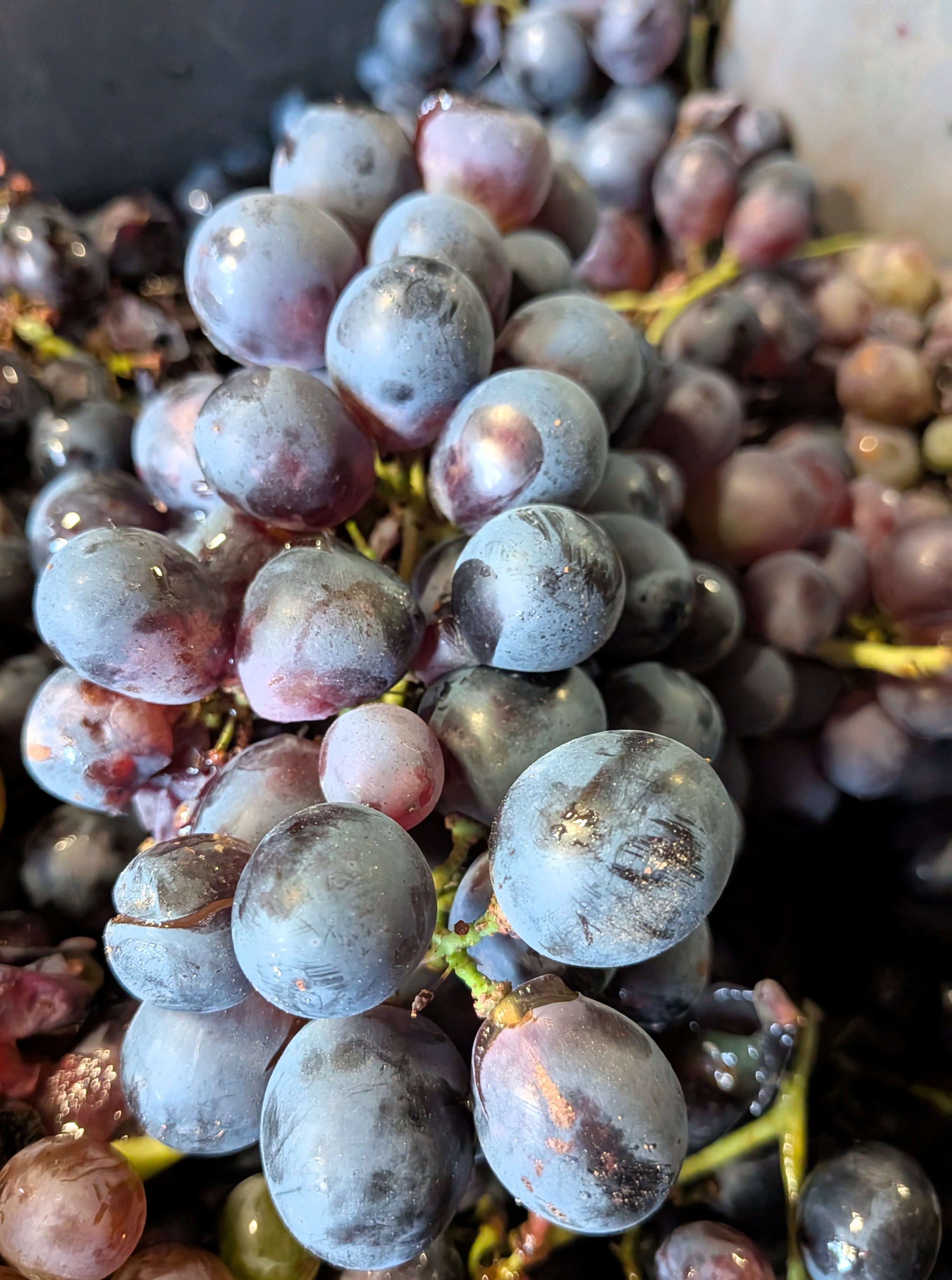
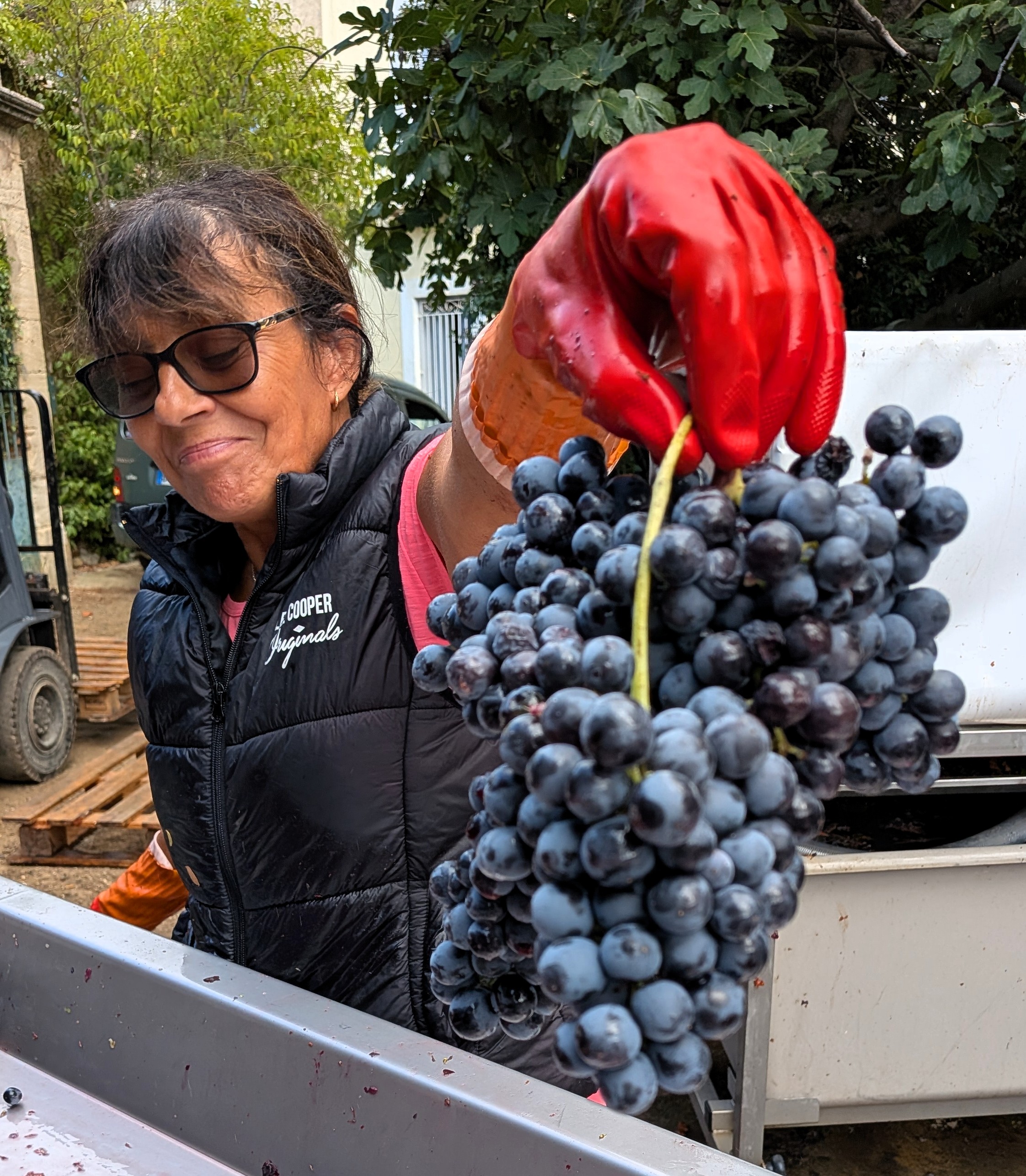
Cinsault is so generous, the big open leaves seem to hint at the friendly fruitiness of the juice, the typically big sized grapes almost bursting through the thin skins. It has to be picked at the right moment or it will cross over into over ripe and flabby. These bunches were good sized and healthy. Well the vast majority. Frustratingly some of the bigger, tighter packed bunches have to be checked carefully, breaking them open because ver de la grappe, the grape moth larva loves these bunches. The moth lays its eggs in the young bunch and the larva eat their way through the centre leaving a powdery black mess. Not what you want in your wine. Careful selection, in the vineyard and sorting table, is needed to ensure only good grapes go into the tank.
I have highlighted an area damaged by ver de la grappe
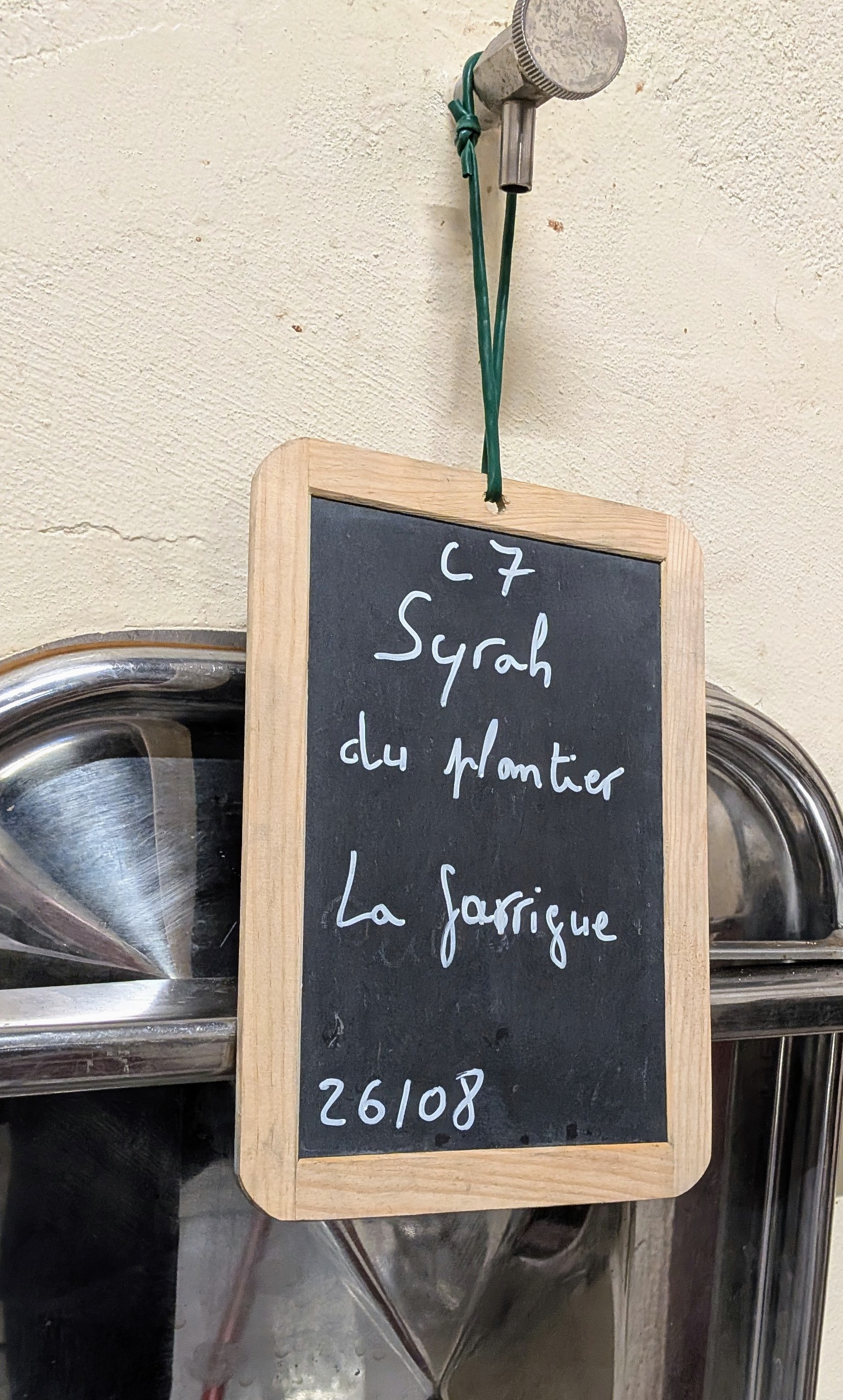
The afternoon brought a change of grape variety, Grenache from La Garrigue. I had noted the bunches when touring the vineyards last week and they arrived in good order. Hardly any ver de la grappe thankfully, the major issue was effects from mildew. The leaf marking is unsightly but not serious however, when the mildew affects the bunches it dries out the fruit causing buds not to develop into grapes and leaving gaps on the stalks or hard, dried grains.
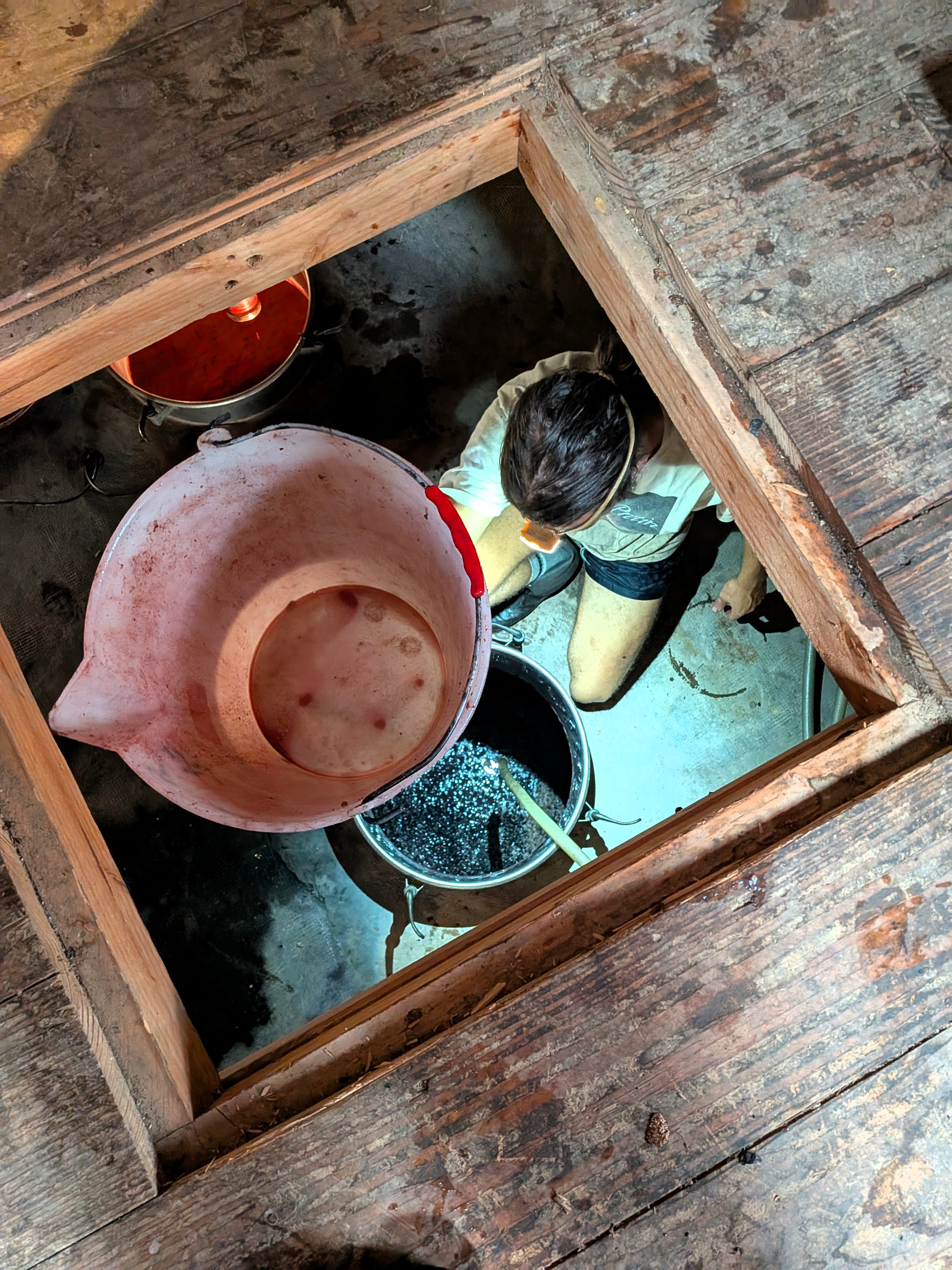
Fortunately the vast majority of bunches were in very good condition and the tanks began to fill with Pièr keeping a close watch. After that, everyone’s full effort is given to cleaning the equipment thoroughly, none spared in ensuring that cleanliness rules so that we make wine in healthy, optimal conditions. This is essential for any winemaking but particularly when no chemical additions are made to the wine, the wine has to look after itself.
Pièr checking the level in tank
Boris and Flora cleaning
Two good days of work, encouraging signs from the grapes and the infant wines. It was a pleasure to be back even if I am not as involved as previous years. And all supervised by another old chap.
With or without you. A bad year for me with bereavements and serious operations for family and friends and then, to crown it, a car accident prevented us from getting out to the Languedoc for the start of vendanges as intended. To continue the metaphor, an annus horribilis.
Grenache, La Garrigue
Xarel-lo, Peilhan
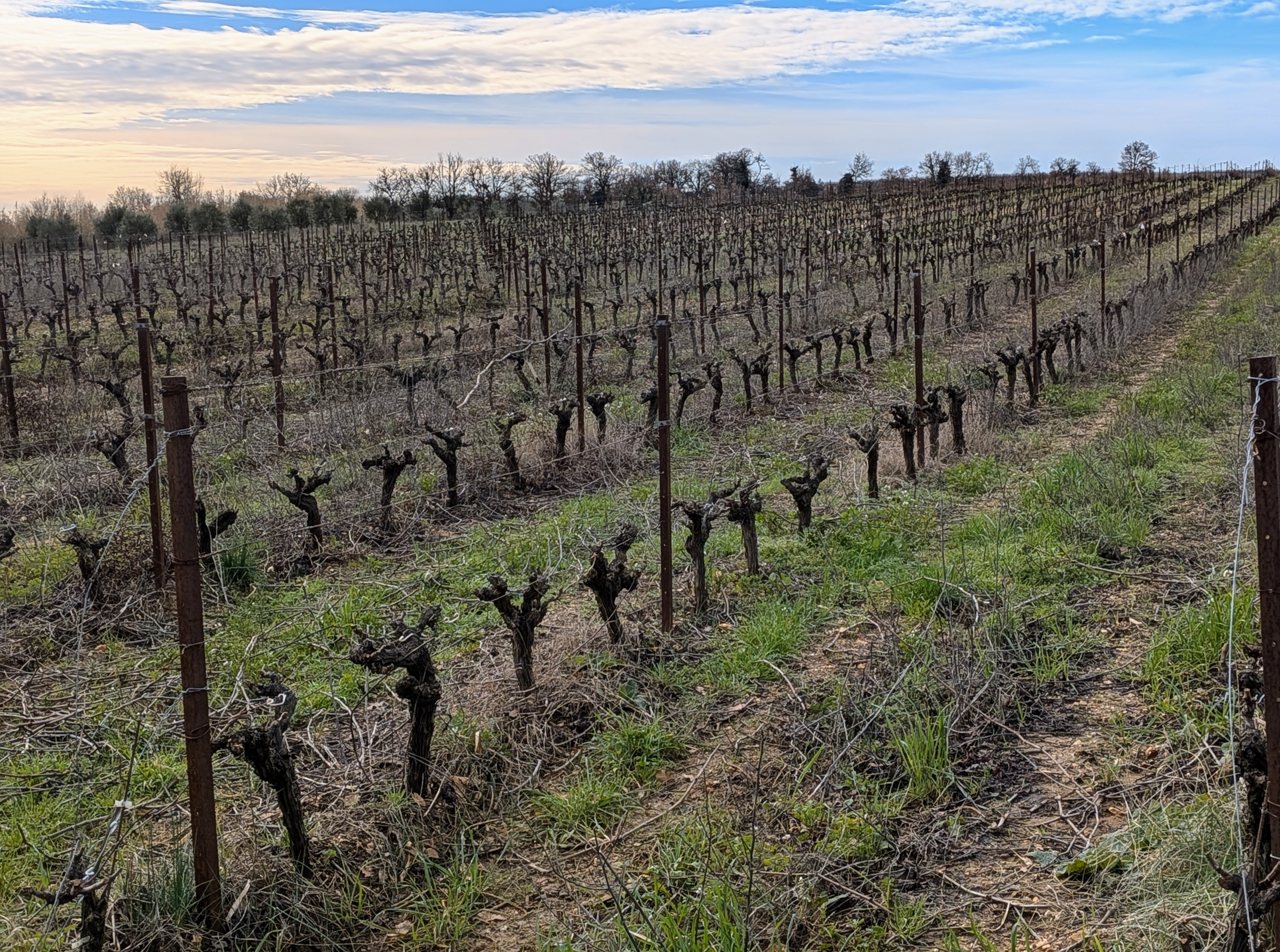
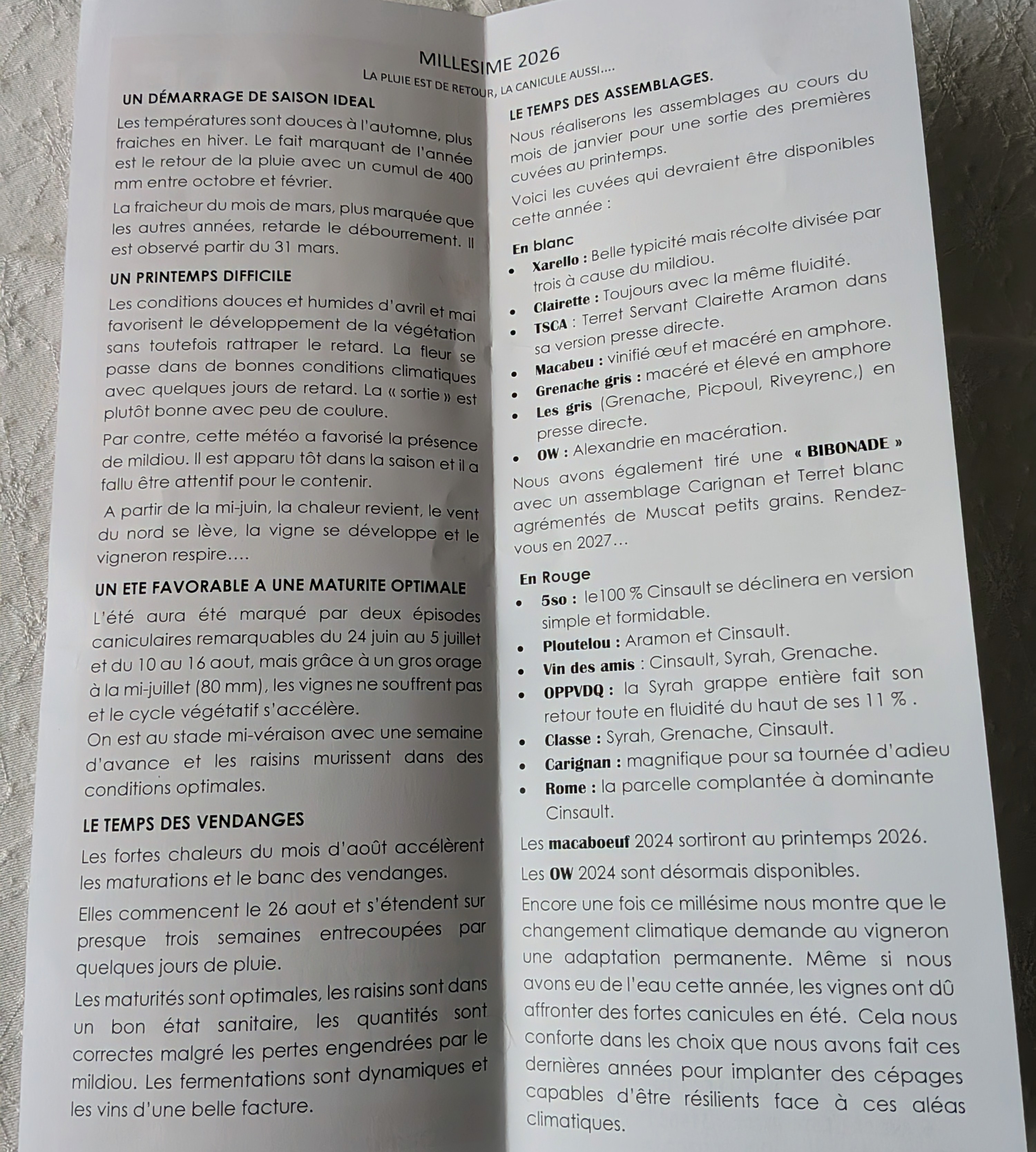
Was it a tale of woe for Jeff Coutelou? Well, no. Abundant rain in Spring went a long way to restoring the water table but that was followed by extreme heat for a long period over the summer. Rain and heat bring disease and downy mildew in particular. Temperatures over 40c which endured for a significant time also stress the vines and cause then to go into survival mode rather than ripening fruit. Nonetheless Jeff told me that he was reasonably content with how things were looking as vendanges loomed close. The start date was August 26th which is in line with recent vintages. Sadly, that accident meant that I would not be part of the team for the first week as I’d hoped.
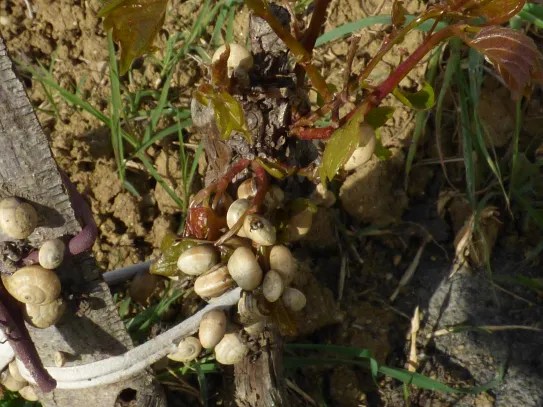
Snails in Flower Power 2016
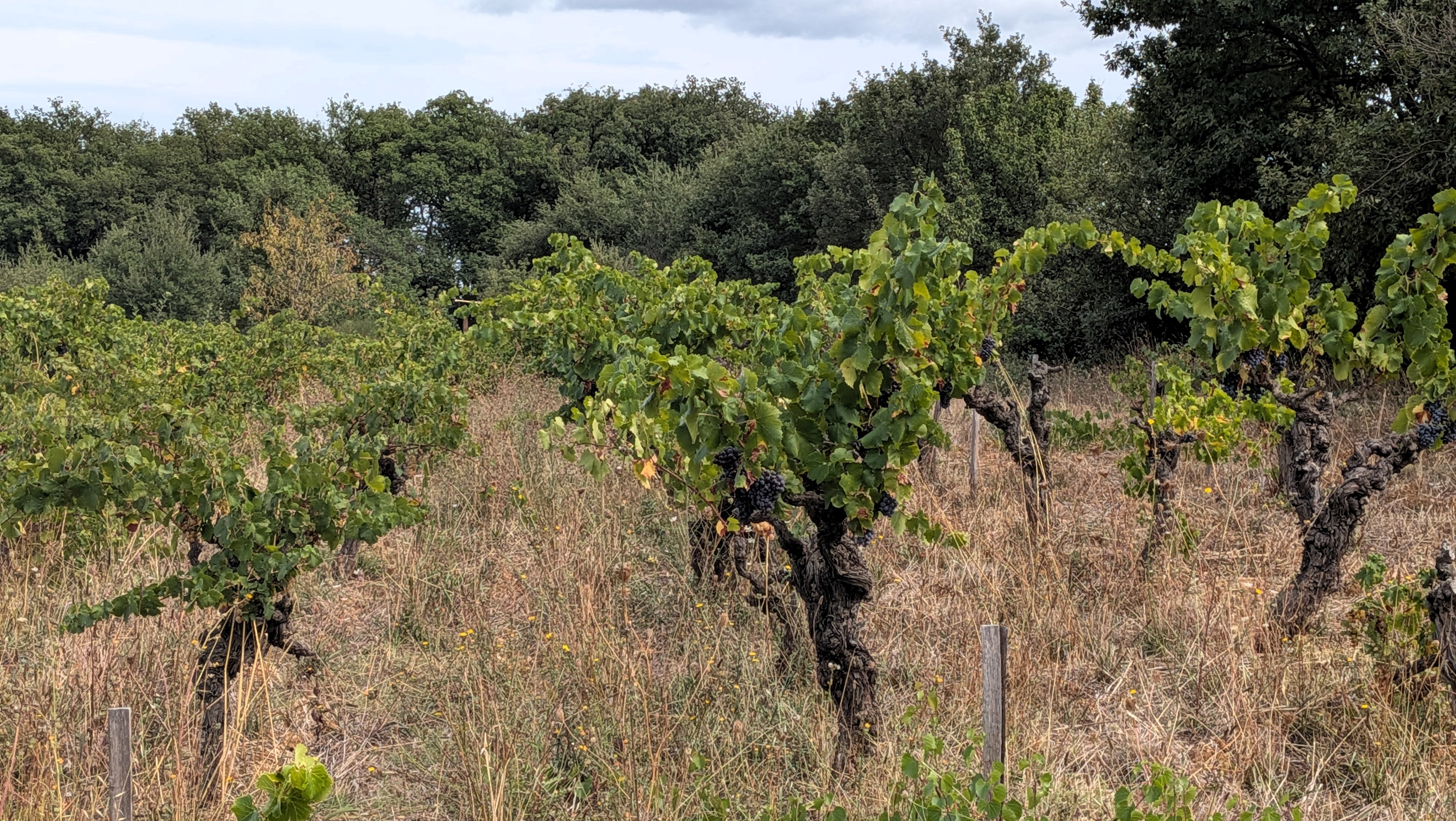
Upon arrival I did a tour of the vines and received quite a surprise. I knew that Jeff had given up on Flower Power vineyard (Font D’Oulette) the imaginative field co-plantation of over 20 grape varieties. Sadly, after a promising start and favourable reviews in magazines the Flower Power project was fatally damaged back in 2016 when snails ravaged the vineyard. The vines never properly recovered from that episode. I recall spending a whole day collecting snails from the vines and still they came! Recent harvests had seen tiny quantities from the parcel, a few cases and Jeff finally lost patience. So the vines were grubbed up, that I expected.
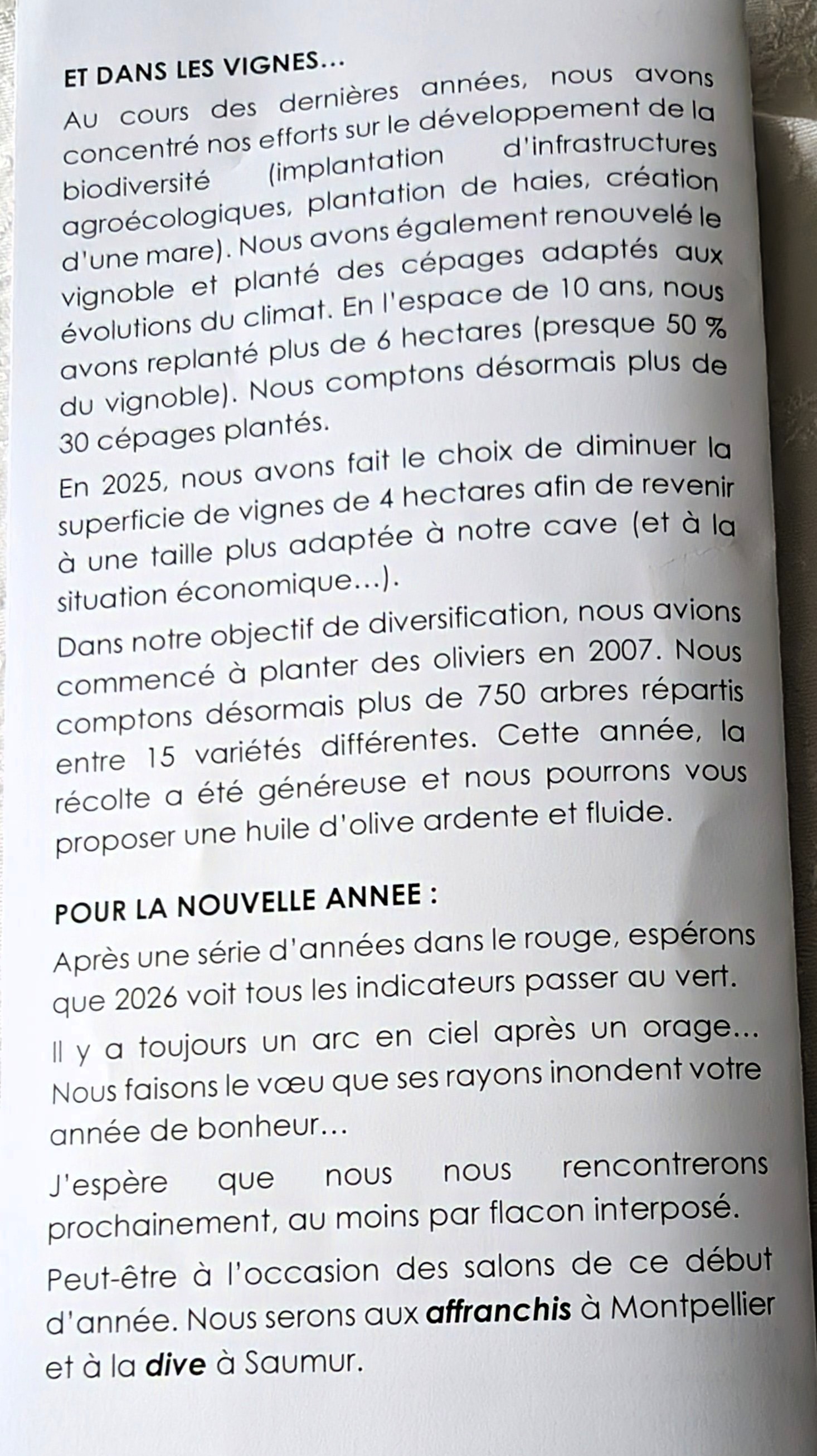
What I didn’t know was that Jeff had also decided to pull up (arrachage) other parcels too. The original red grape section of Peilhan with varieties such as Carignan and the rare Castets were gone. The area above it was planted in 2015 with a range of unusual, local varieties such as Piquepoul Gris and Noir, Terret Gris and Noir and Monastrell. They are now producing good quantities of interesting wine and the new Xarel-lo parcel made its first wines last year too from Peilhan. Add on the two year old plantation of Parellada, Malvasia de Sitges and Maccabeu and the vineyard will actually be producing greater quantities than before but I was sad to see Castets disappear.
Reds gone from Peilhan
New plantation of Peilhan
Disease, particularly in the trunks of the vines, was the main reasoning for pulling out that red section and also for grubbing out the old Mourvedre vines in Segrairals vineyard. In truth I never liked the grapes much from there, a small amount of rain would often send them over the edge to rot. And then..
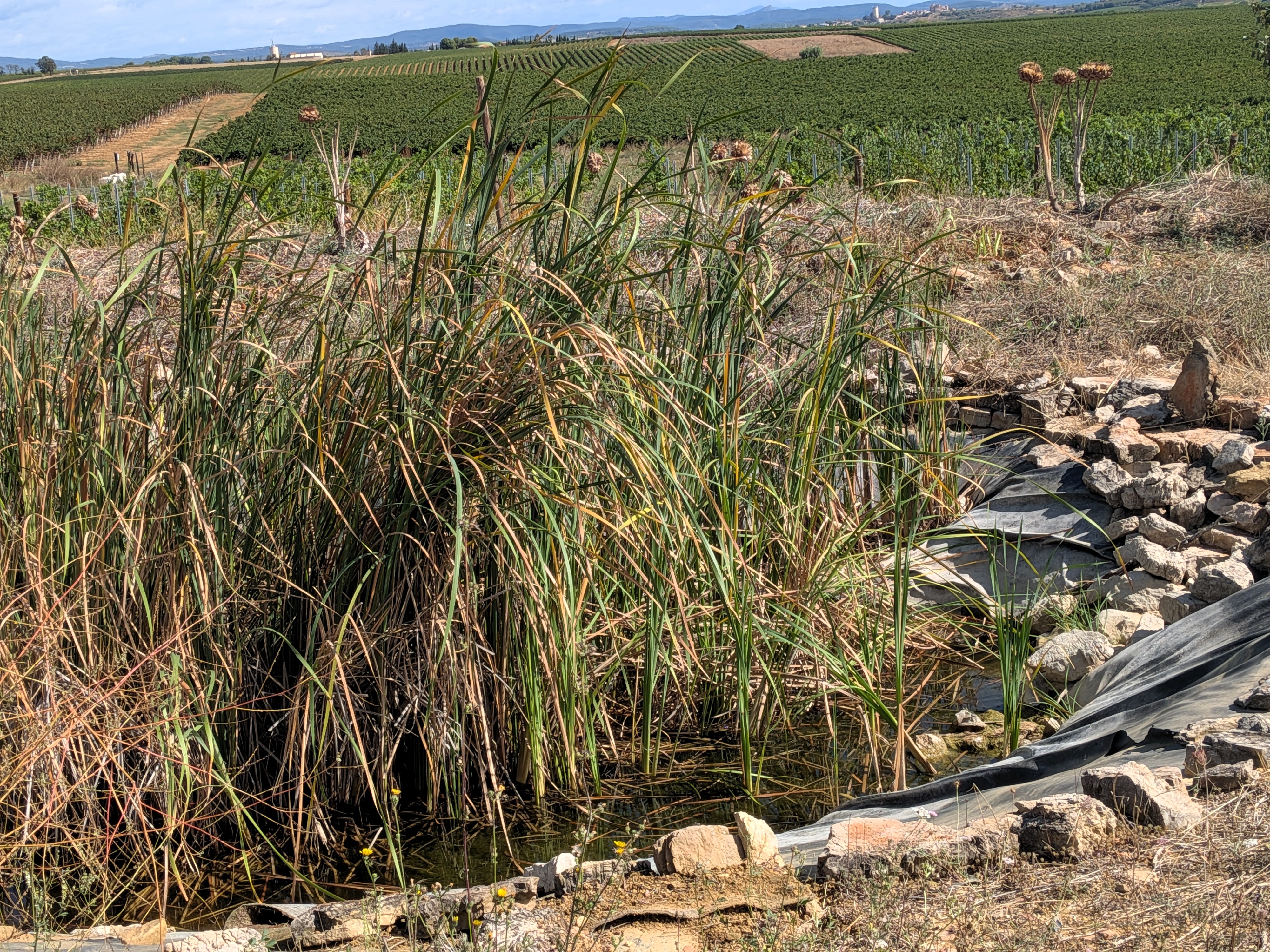
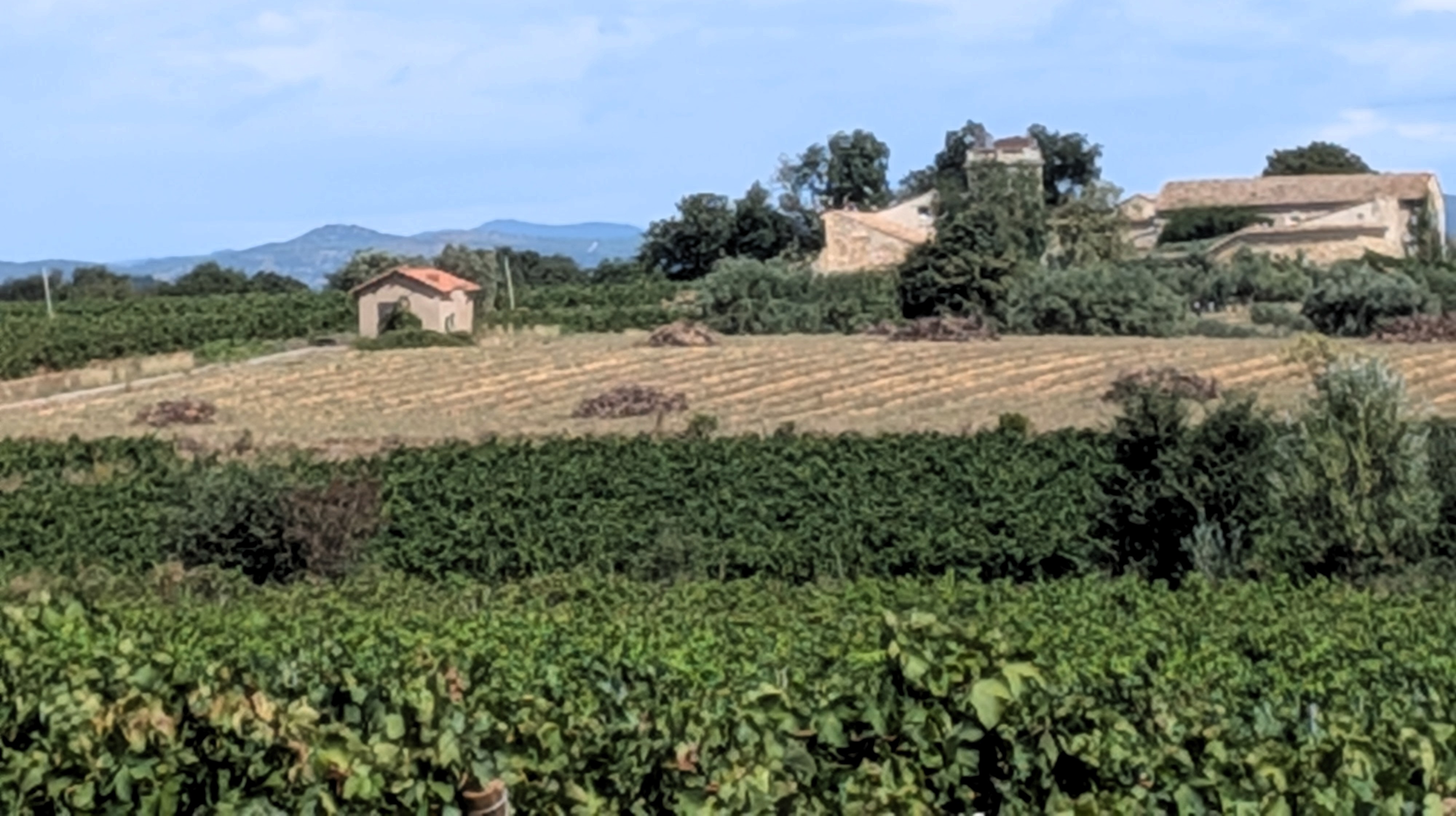
Sainte Suzanne is a vineyard I always liked a lot. It was where I did a lot of my early picking back in 2014 and 2015 and the Syrah and Grenache were usually the source of Vin des Amis, the cuvée which first hooked me to Jeff’s wines. Standing on top of the ridge in La Garrigue you get a good view across to Ste. Suzanne and I was astonished to see that the original parcel is empty too!
The view from La Garrigue to Ste. Suzanne
The newer white parcel of Clairette and Maccabeu is in fine form but the big empty space made me sad. Jeff told me that the Grenache vines were starting to develop too much wood disease and the Syrah had become problematic. I knew of the latter, Syrah tends to be the first variety to ripen for us and Jeff has found it gets too ripe too soon in that parcel which has a south facing slope. Contrasting with the Syrah of La Garrigue which was deliberately planted on a north facing slope.
There will be a significant change to white grape production from red as a result of all these changes, with the plantations in the main three vineyard of Peilhan, Segrairals and Sainte Suzanne. Much has changed in my 12 year of vendanges here.
The new Syrah vines at La Garrigue, north facing
As for the vines still there. Mildew was evident in the leaves but I have to say I was pleased to see that there were a lot of very healthy looking bunches with good sized grapes. In the first few days the team had been flat out. The pickers arrived, fifteen rather than the usual eight! They made short shrift of much of the crop in the first few days and it was the team in the cellar which had to try to keep up, working until 7pm on the first day for example. I regretted missing out and offering a helping hand.
Syrah from Segrairals and in tank (right)
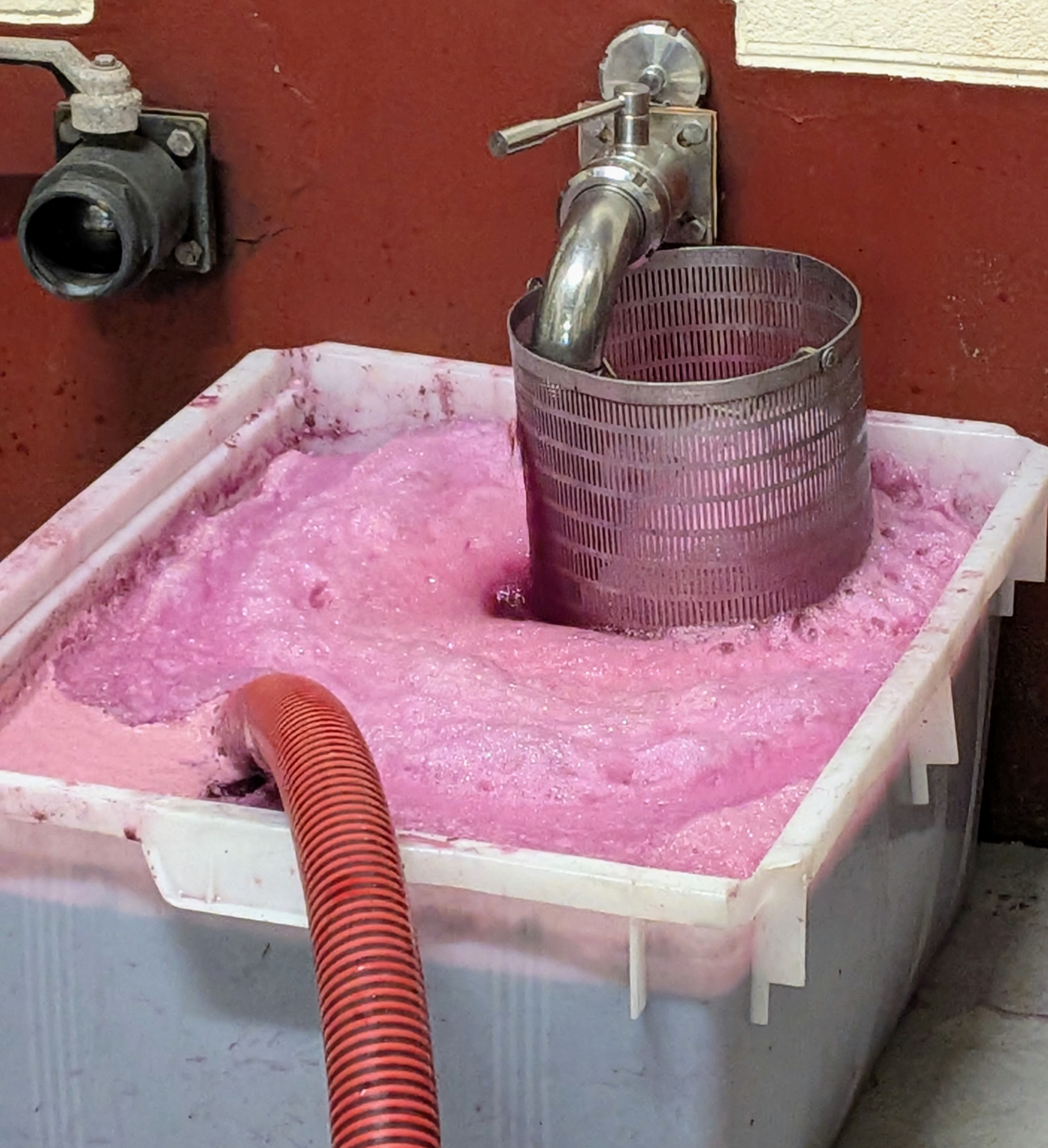
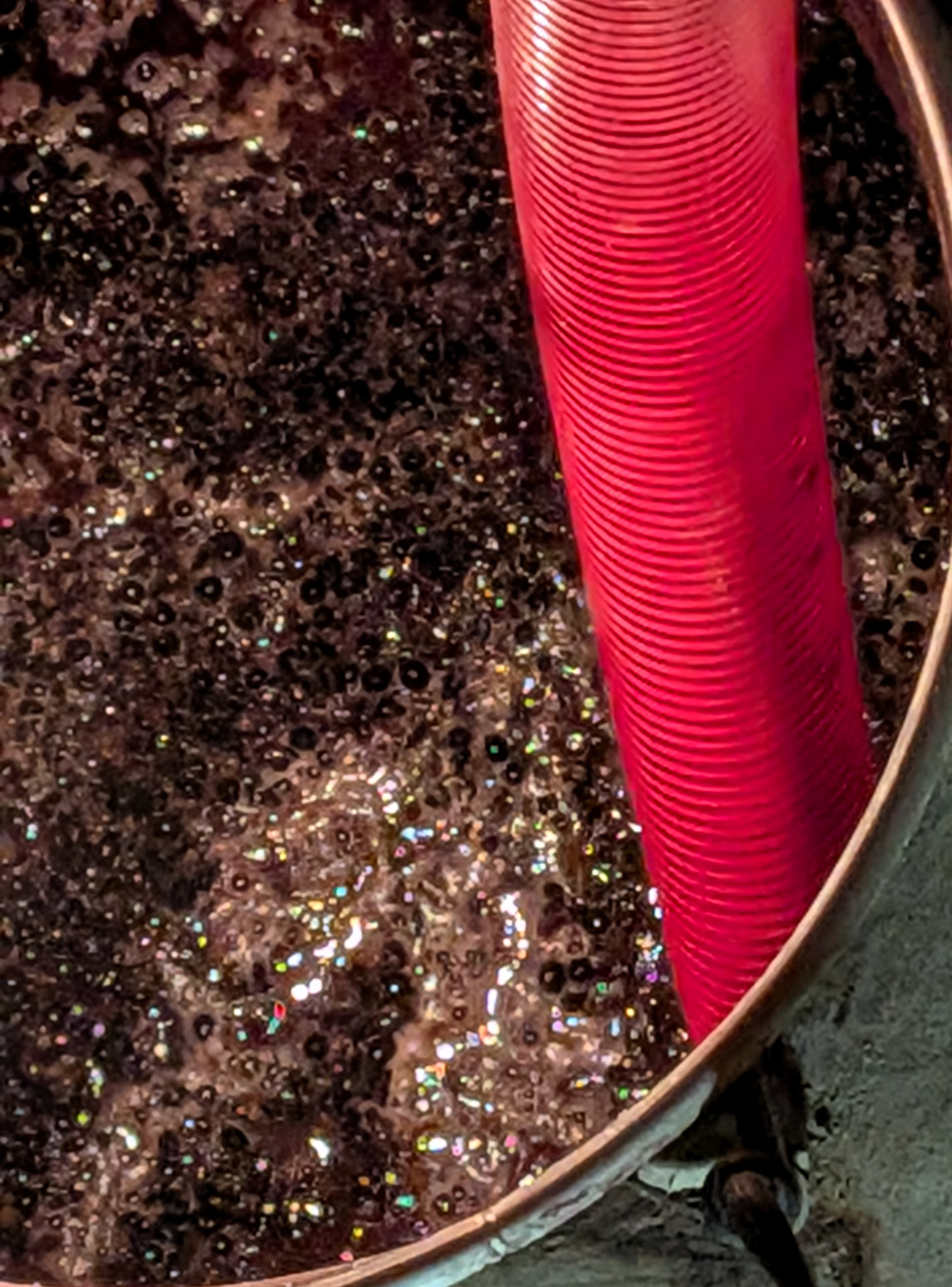
Then I was due to start today Monday September 1st, only for a thunderstorm to cancel picking. Damp grapes and very muddy soils do not make for good winemaking. It was time to press the first of the red grapes, the whites already harvested were pressed quickly. Fair to say that fermentations have started well as you can see in the video.
So, much of the harvest is in. Still plenty for me to help out with in coming days. Congrats to the team who have been busy as you can see below.
Regular readers will know that Jeff Coutelou’s wines are my favourites, for personal and vinous reasons. The last article described some of those wines as well as others from my homeland. In the last few weeks I have enjoyed wines from other parts of France and the rest of the world.
Nicolas Carmarans has been the source of excellent examples from the emerging wine region of the Aveyron in the northern Languedoc / Central Massif. The two bottles I opened were both based on the Fer Servadou grape, most famously grown in the Marcillac AOC, further west towards Bordeaux. Good examples from there produce a peppery, light red with a nice fresh tannic grip. the bell pepper notes may come from its genetic connections to Cabernet Franc and Carmenere. Carmarans (curious tie in of names) is a former Parisian wine bar owner who turned to wine making in the Aveyron, not far from where the famous Laguiole cutlery is made. Altitude and cooler climate gives his wines a lovely freshness and lighter profile whilst still carrying serious flavour and complexity. The Mauvais Temps 19 and Maximus 18 were both showing the benefits of time in bottle, delicious with food and on their own.
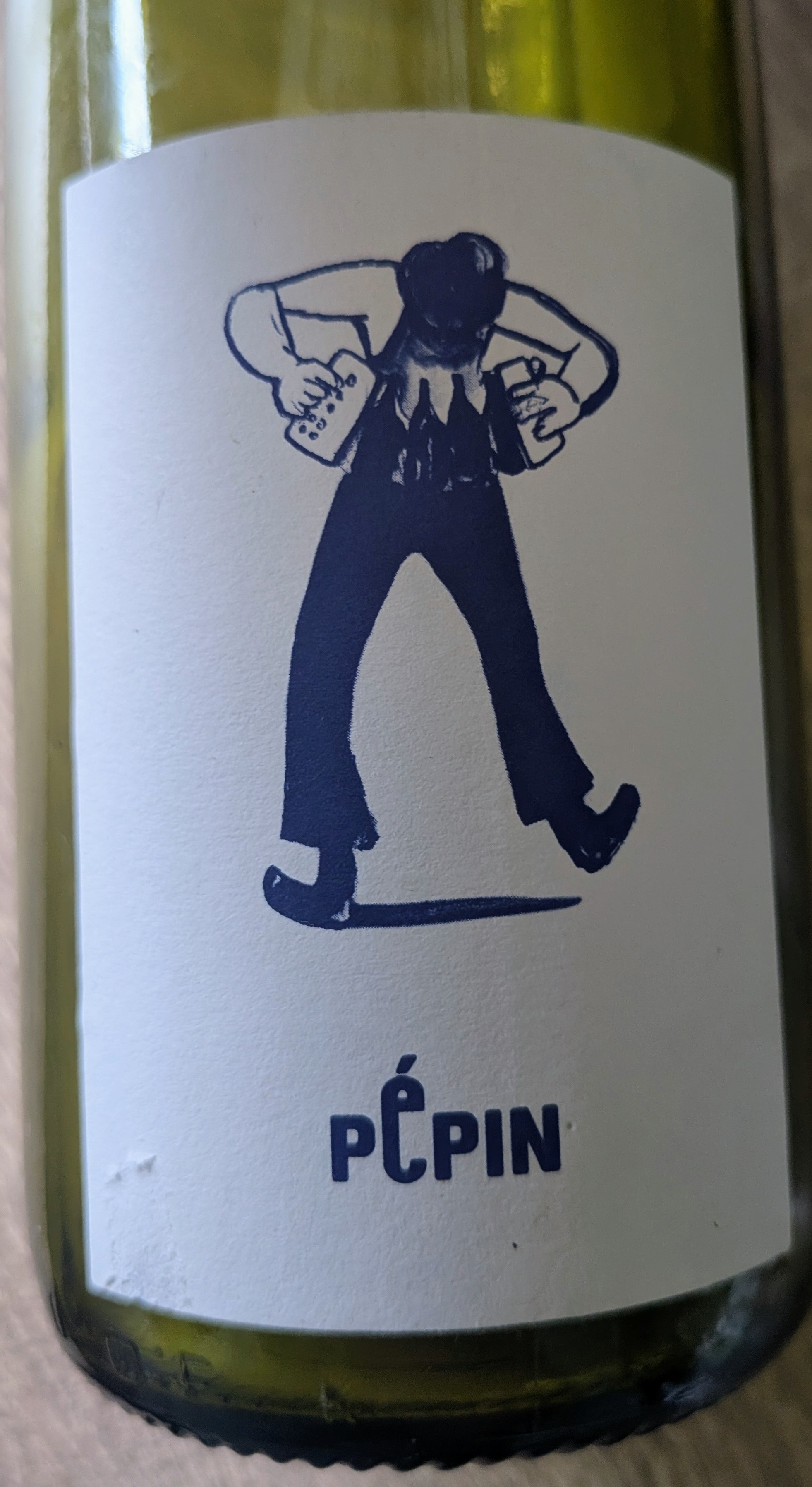
Still in France, no idea where I purchased Céline 2020 from Charlotte et Cyril Delval. They are a young Belgian couple based in Poligny in the Jura and I know little more. Searches don’t seem to uncover many more wines which is a shame as this macerated Pinot Gris was very enjoyable. Light red from the grape’s pink skins it had nice tannins whilst still showing red fruit flavours. Only downside was the very heavy bottle. If anyone knows anymore about them, drop a comment. More Pinot Gris, along with Muscat, Klavner, Sylvaner, Riesling and Auxerrois – of course it’s Alsace. Achillee Pépin is a non vintage collaboration of friends who grow grapes organically and make a lovely fresh orange wine from their shared work, nice aromatics and fruit.
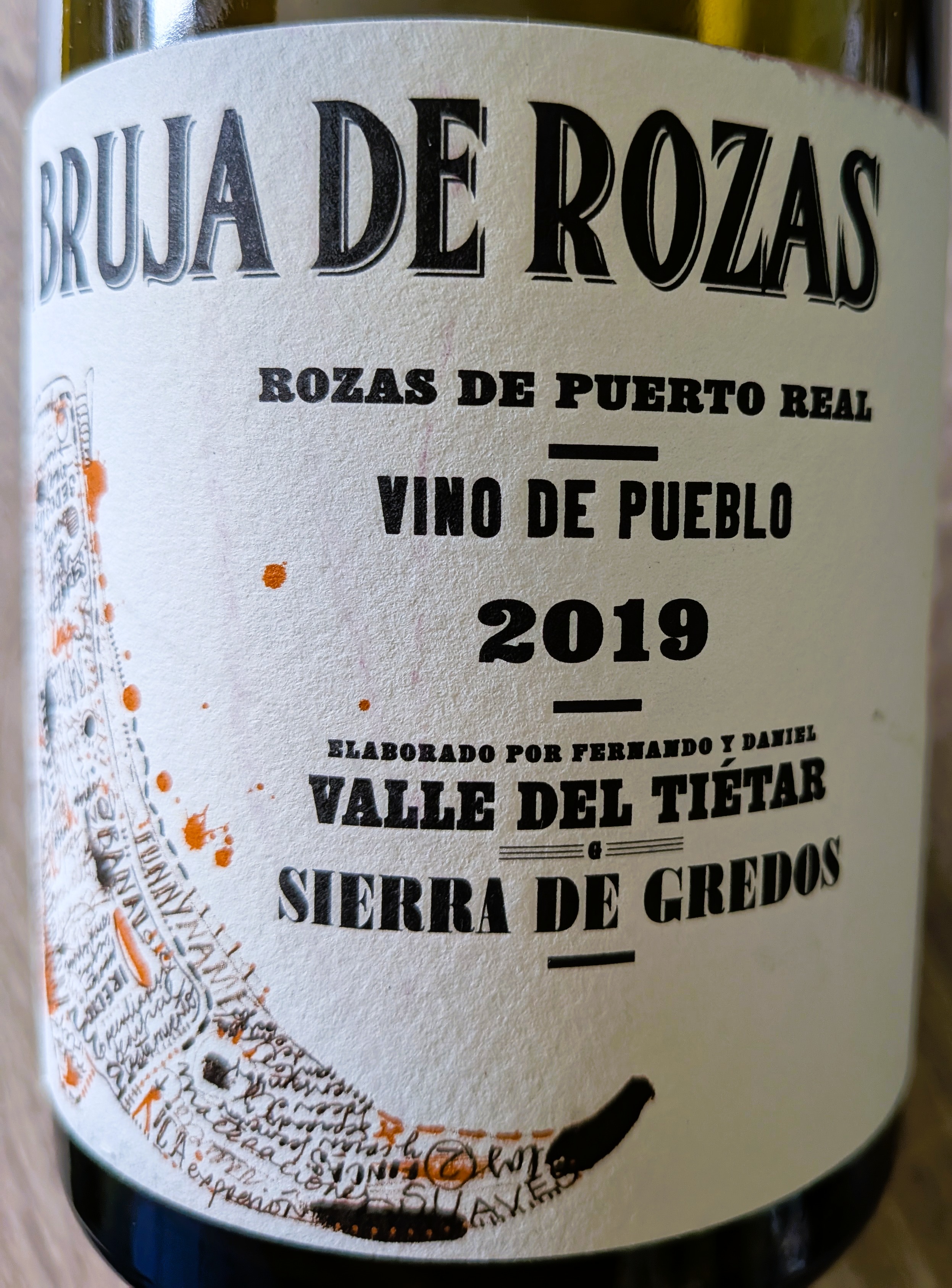
Another orange wine and, another example of why I like them based on aromatic grapes, this time a bottle from Spain. Casa Balaguer in the Valencia region makes Salicornio 23 from Moscatel grapes, a variety of Muscat. The grapes spend 6 months in old concrete tanks and produce a fragrant orange blossom aroma with lovely yellow fruit flavours and dusty tannins. One of the tastiest orange wines for some time. Commando G is a well known producer from the Sierra De Gredos mountains near Madrid. Their speciality is Garnacha and the 900m of altitude, as with Carmarans, mean that there is a freshness to the wine despite its proximity to a very hot climate. Bruja De Rozas 19 was very Pinot like in its aromas and flavours, almost meaty notes and saline too. Again bottle ageing proved a success, the tannins were soft and supportive. Lovely.
Still in the Iberian Peninsula but from Portugal two wines from Sem Igual which I tasted back at the Edinburgh tasting in Spring. I bought a few of thee white and red Vinho Verde and would like some more., they are right up my street. The white Vinho Verde 21 used Arinto and Azal grapes to produce a fresh, citrus and yellow fruit profile, simply delicious. The Tinto Vinho Verde 21 is made from Touriga Nacional and Baga grapes and is light, full of raspberry and red cherry fruit and freshness, lip smacking and yet full. These two have definitely made the shortlist for my wines of the year.
Finally to Australia and three excellent wines, two from my favourite region of the Adelaide Hills. Ochota Barrels was the project of Taras Ochota before his tragically early death and it is his wife Amber who has continued his fine work. Out Of My Head 23 (named after a song by a local Adelaide group), is pure Grenache and fizzes with energy. Very unlike the Commander G version it is lighter and fresher still. I sometimes read about wines described as having tension and this is definitely one. Acidity, fruit, tannins merge seamlessly but then one pops up its head for a time to dominate before settling back down. Quite something.
Jasper and Sophie Button run Commune Of Buttons in the Hills and I was fortunate to meet them back in 2018 when visiting the area for the first time. Influenced by the remarkable Anton van Klopper Jasper has quickly established himself as one of the country’s best winemakers. Gloria Pinot Noir 21 was everything I had hoped for. Generous but not over ripe fruit, aromatic and fresh – a classic example of top Pinot Noir, not much gets better in a bottle than that.
Talking of top Ozzie producers, Luke Lambert. I heard so much praise for his wines that I almost wanted to dislike them but I remember drinking one in Sydney in 2018 and it was terrific. Syrah 22 from the Yarra Valley was too. It’s Syrah not Shiraz, fresh, fruit but just ripe not overdone. Lovely acidity, opening up in glass from first glass to last a few hours later. My advice , don’t be daft like me, leave it for a couple of years no matter how delicious it is now.
My friend David Crossley has an excellent website called wideworldofwine and I hope that I have emulated his spirit and shown that I am not single minded in my wine drinking. There are fabulous wines being made around the globe from producers growing vines with care and attention to the environment. Support them please.
From Sydney’s most famous wine region to Melbourne’s, the Yarra Valley. Another name which featured prominently in my early wine education. Names such as de Bertoli, Coldstream Hills and Yarra Yering were part of that learning the latter two showing that Australian wines weren’t all big and gutsy. Pinot Noir from Coldstream Hills was a particular favourite.
On a brief visit to Melbourne, and without a car, options were limited for getting to the Yarra but we chose another half day visit with Local Way, a good choice it proved to be as our guide Ray was knowledgeable, amusing and helpful. Other options involved 10 hour days of 6 or 7 wineries and whilst that has some appeal the half day suited well, offering a flavour of the region and its wines.
There are ninety wineries in the Valley about an hour’s drive out of the city. Like the Hunter many offer tourist cellar door visits with tasting rooms, cafés and restaurants, again weekends are peak time for them being open so the visitor needs to weigh up what’s available versus how busy that might be.
Grapes just forming after flowering
The Yarra is perhaps less scenic than the Hunter (my view only) but it opens into rolling hills and grasslands with vineyards spread out, certainly not concentrated in French fashion. Many take advantage of slopes but not all, irrigation seems fairly universal.
Our first visit was to St. Hubert at the entrance to the Valley, apparently the second oldest winery of the area. The tasting room, restaurant and art gallery are in a new building set in beautiful grounds, little wonder that their website concentrates largely on tourism, events, weddings etc. We were offered the basic tasting wines and the estate’s entry level. They were fairly innocuous in truth, clean and light fruited but not a lot of character. The Pinot Noir was well made and the pick of these. In fairness our host did open their Reserve Cabernet Sauvignon 23 which had only been in bottle for three weeks and there was a lot more depth and character there. Highlight though was the art gallery with some beautiful aboriginal art on display.
On to Helen and Joey, just up the road. Another beautiful setting with new buildings and winery constructed just last year though the estate has been running since 1996 having been purchased from someone who grew grapes to sell on. The wines were much more characterful, the Blanc de Blancs having a cleaner, more refreshing fizz, the Pinot Grigio having more depth and aromatics. The 2020 Wayward Pinot Noir here, made in old oak barrels showed good Pinot character, nice to see a commercial winery hold back wines until they are at their peak. There was even a no SO2 Merlot, NoSo 23, which was ok without exciting me.
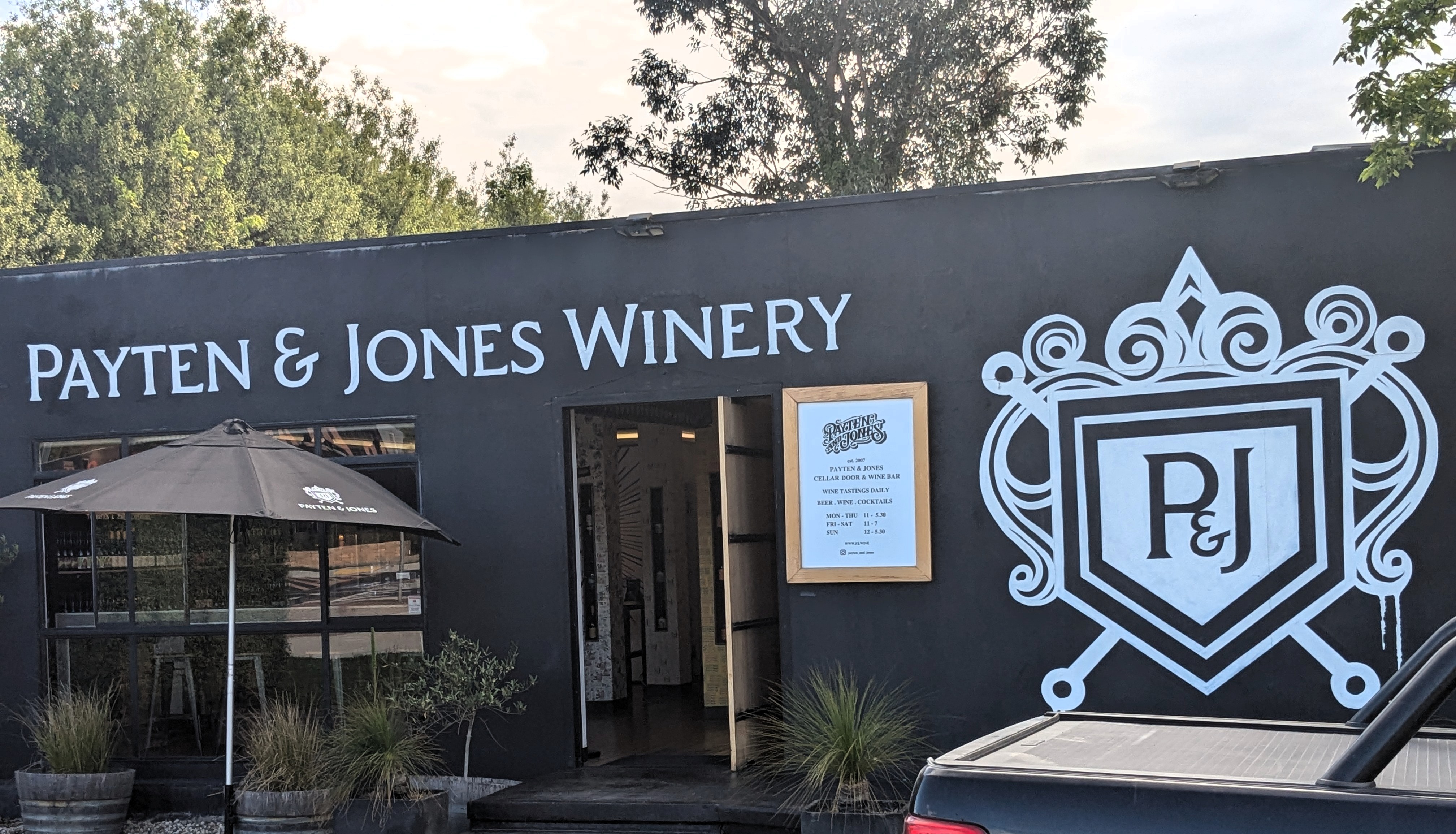
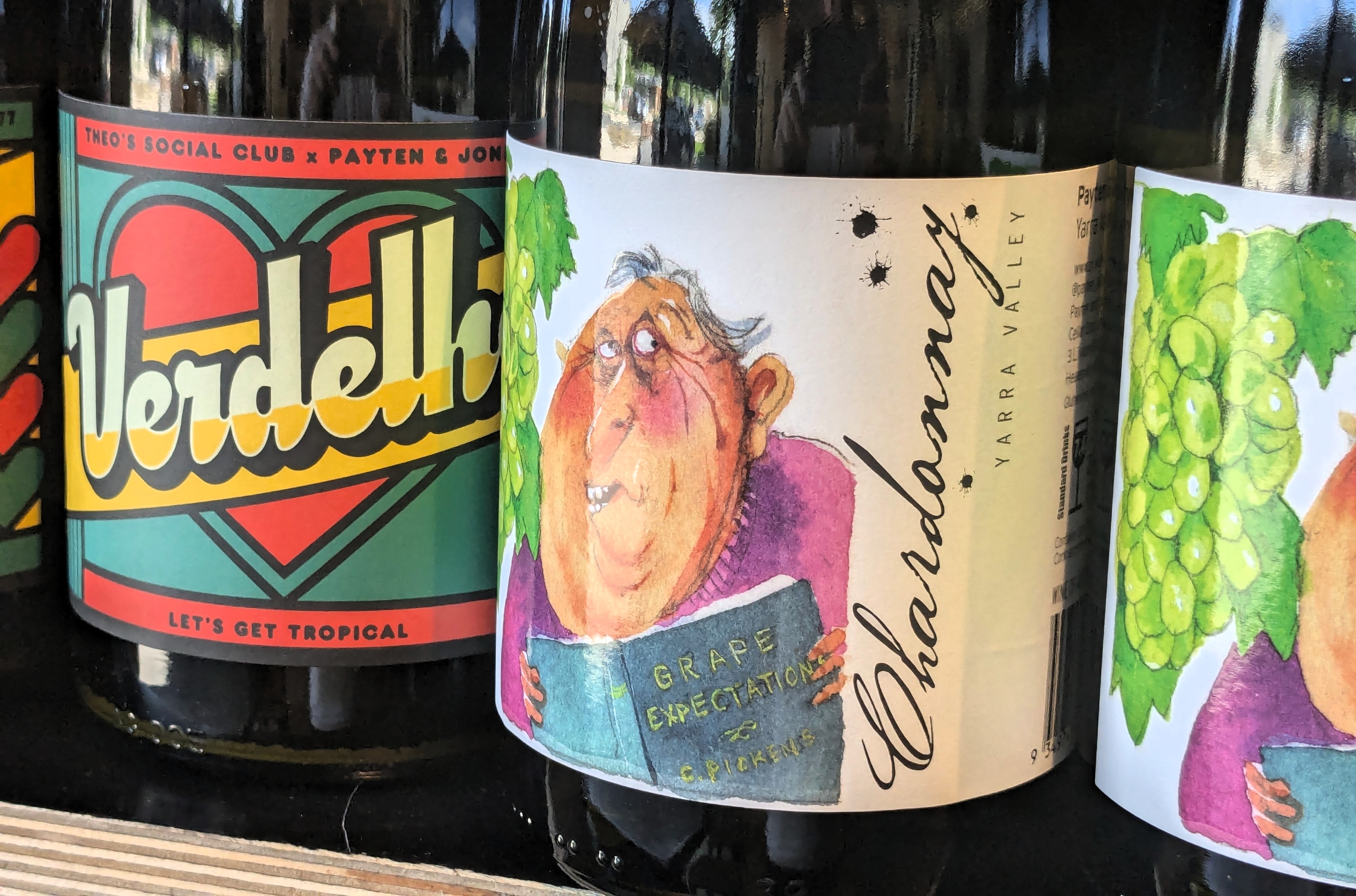
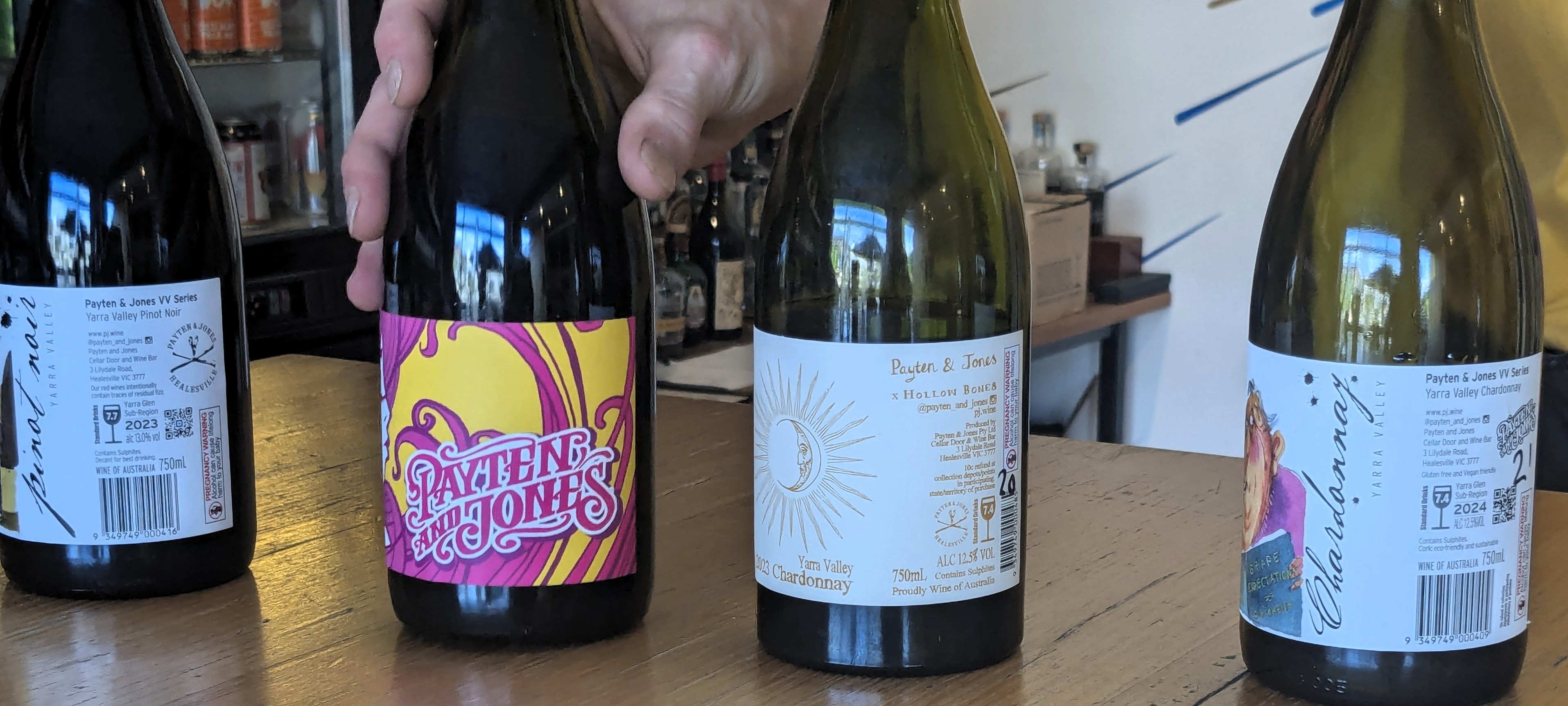
At this point we had a choice to go into Healesville, try some gin or go to a third winery. Fortunately (and unsurprisingly) we chose the latter and what a great decision, easily the best wines I have enjoyed in a month here in Australia. Payten and Jones is in Healesville and is a small, organic winery and farm, see the photo for their story.
Andy, our guide, opened up a range of wines from entry level to more serious and they were genuinely exciting. Lots of fruit character but serious, complex and well structured with a freshness and drinkability that pleased me after so many fatiguing, woody wines in the last few weeks. The entry level Chardonnay, even more the Pinot Noir, showed good character and fruit but step up to the next level, named Hollow Bone and there was more depth and character. The Hollow BoneChardonnay 23 was oaked but so well judges, complimenting the fruit not mastering it. The Hollow Bone Pinot Noir 22 was made with 40% whole bunch from a single vineyard and made in a plastic egg! The results were exciting (priced at $40 a real bargain) and the plastic egg seems to work, Adam and Behn praising the way it energises the wine, just as Jeff Coutelou does with his concrete eggs. They have stainless steel versions too. The Pinot clone MV6 is used because it has been phylloxera free from the start. Seeing all the vines without grafts is quite an eye opener, they look so much thinner and neater. Long may it remain so.
I really enjoyed the Sangiovese with a character much closer to Chianti than the previous examples I have had this holiday, good acidity and freshness to cut through the red fruits. Nebbiolo 2016 was actually made in the winery by a friend of Payten and Jones and was delicious, the years have mellowed the tannins and the wine has fruit and tertiary forest notes.
Chatting with Andy and Behn
Best of all though was the Mataro 22, FFS. Now, I struggle with Mourvèdre a lot of the time, too many examples of leathery, composty notes and I know that it is a grape which can be a swine to grow. It hates water and any serious rain can cause the grapes to turn to much in a few hours, indeed Andy reported that is what happened to them in 23. Thus Mataro 22 though was singing. Dark, plummy fruit, freshness and acidity and definite aromas of mushroom and forest. The grapes were on skins for 8 months and extracted deep colour but still soft tannins. I admire their boldness in leaving the juice on skin for so long, and that bravery has been well rewarded. A great wine. (The name comes from lockdowns, with the wine first made in 2020 names F*** Twenty and the next year S*** Show).
It was good to talk with Behn and swap notes and stories before we had to leave to return to the city. Payten and Jones have a UK importer, ABS Wines, please leave some for when I get back!!
Stainless steel egg
There was a lot of beautiful scenery in the Yarra, it would have been good to spend more time there and visit some of those educational producers from my younger days as well as the excellent producer Mac Forbes who is based here though does not offer cellar door. And, with Payten and Jones, I have a new favourite to remind me of this visit and another excellent wine region.
March seemed like a long month in lockdown though, after three months, the end of the month saw a family reunion in my sister’s garden. Together with beautiful Spring flowers in the garden that brought some optimism at last. Sadly, the news from France was not so good as they enter another lockdown to fight a third wave of COVID. Jeff keeps me up to date with what’s going on and his niece Flora has sent some lovely photos, I shall share both in the next week or so.
Let’s start with Jeff Coutelou and, after that opening paragraph, Flower Power 2015. This was, of I recall correctly, the first Flower Power made from the field plantation of Font D’Oulette with added grapes such as Castets from Peilhan. The wine received high praise in La Revue Des Vins De France magazine back in 2016. It was lovely, the 5-6 years of age bringing it to its apogee with fruit and complexity and lingering flavours of plums and blackberries. The tannins and acidity have softened nicely, a lovely bottle. Flambadou 2015 was also at its peak, classic Carignan notes with red fruit and then darker notes coming through. This is consistently one of the best wines from Puimisson and the 2015 is a fine example.
Jeff and Louis
L’Ostal “Plein Chant” has a connection with Coutelou too even though it is a Cahors through and through. There is no vintage clearly marked but it is a 2016. I have recounted how I first met Louis Pérot at La Remise in Arles where he was one of the new producers. I fell in love with his wines, praised them to the high heavens enough that he was able to get some listed in good restaurants. Jeff was also taken by the wines and the strict natural approach of Louis and Charlotte. They became friends and Louis has visited us many times. This pure Malbec (known as Cot locally) has deep berry flavours, the power of Cahors and benefits from decanting in softening out the tannins a little. I loved the wines back in 2016 and I still do.
Brigitte Chevalier of Domaine Cébène in Faugeres has become a renowned producer, praised widely in wine circles for the purity of her fruit and excellent work in the vineyard. I bought her wines from Leon Stolarski long before moving to the region and whilst there met Brigitte on a number of occasions including visits to her vineyards and cellar many times. These are precise, structured wines expressing the schist soils beautifully. Les Bancels 2016 is Syrah and Grenache and a classic example of why the Languedoc. and Faugeres in particular, is my favourite wine region. Fruit, depth, tannins, pleasure.
If you ever needed an example of how wine has changed during my lifetime then the Rieffel Pinot Noir Nature 2018 is it. I first started visiting Alsace 35 years ago or so and Pinot Noirs were largely thin, acidic and fairly undrinkable. Maybe I just didn’t find good examples but at several tastings I left shaking my head even from some famous producers. Nowadays I love Alsace Pinots in general, they have fresh fruit, usually red fruit flavours, they are softer and just enjoyable. I’d rather drink an Alsace Pinot such as this very good example of the grape, region and producer than most Burgundies of similar price. Very enjoyable. Climate change? Better vineyard and cellar management? Winemaking improvements? Probably a combination of all, but heartily recommended.
Morgon 2018 from celebrated producer Jean Foillard was the wine we shared when my family met up again on the 30th. Morgon in Beaujolais is traditionally the most serious of the ten crus producing more structured wines than the typical regional light, juicy wines. This is usually attributed to the schist soils marked by red iron oxide and manganese, most famously on the Mont du Py. This wine is certainly in that tradition, probably opened a year or two early. The Gamay fruit is masked at first by the power though comes through, more ageing should release it sooner in the glass. Foillard is one of the natural pioneers of the region and a source of benchmark wines.
Finally, to balance out this post with a second I have added Franz Weninger’s Ponzichter 2018. Weninger is Austrian but his father bought some vines in Hungary when communism ended and this bottle is made from those vines. A blend of Pinot Noir and Zweigelt this was a lighter style with very enjoyable red fruit showing through and soft tannins to balance it and add a little depth. Very enjoyable and well made.
Garden Spring flowers, optimism for better times ahead.
So many good wines at Real Wine Fair, I include a selection of wines worthy of anybody’s attention and money. How to order them for this blog was the difficult choice.
The buzzy, busy Bs? Binner, Bain, Ballorin were amongst more established natural producers whose wines showed up very well.
Gilles Ballorin is based in Morey St. Denis in the heart of the Côte De Nuits. I liked the freshness of his wines, plenty of characterful fruit flavours, supported by a cleansing finish of acidity in the Marsannay wines but especially the lovely Fixin “Les Chenevières”. Fixin was the first Burgundy village I visited, it has happy memories and this wine lived up to all hopes.
Christian Binner is based in Ammerschwihr in Alsace. Yet another village which was the centre for my early visits to that region. I have been trying Christian’s wines for many years and, to my taste, they get better and better. The whole range was excellent, a lovely rosé (Si Rose) made from Pinot Gris, the beautifully named Amour Schwihr, but above all, the tremendous Rieslings, the 2016 Grand Cru Schlossburg being as fine an example of place and grape as you could ever taste. Lovely guy, and give a listen to his fun interview on the Bring Your Own podcast.
Alexandre Bain from Pouilly in the Loire is another firm favourite. His Pouilly Fumé wines are brilliant proof of how Sauvignon Blanc is a noble grape. It is mad that the authorities there make life difficult for him to get the Pouilly Fumé label because he doesn’t meet strict guidelines. The wines are superior to virtually anything else in the area. 2017 Terre d’Obus from young vines gives a real taste of the region, sharp, flinty (yes I use that word deliberately). The Pierre Précieuse 17 from older vines has more concentration and elegance whilst keeping the freshness, precious indeed. Mademoiselle M 2015 has a hint of sweetness even, very ripe, very fruity and just lovely.
Sometimes the wine world rushes to the new and more established figures such as Christian and Alexandre can be overlooked. Do not make that mistake. These men are making wines with love and precision based on experience. Buy, buy, buy.
Other Bs were new to me but well worth sharing with you.
Social media and a mutual friend in the Languedoc, Guillaume Deschamps, meant that I have got to ‘know’ Emma Bentley without ever meeting her. It was a pleasure to finally do so along with her partner Alessandro. He now manages La Biancara after the retirement of his father Angiolino Maule, running it with his 3 brothers. The range of wines was excellent including the main Masieri white and red wines. The Garganega grape is to the fore in the whites, showing its quality in the 2017 Sassaia and Pico Bianco, the latter with oak age. Both fresh, fruity and lingering. Star of the show for me though was So San 2016, made from Tocai Rosso grapes, the local name for Grenache. Aged in barrel for 15 months this was a big wine with lovely fruit up front backed by ripe tannins which will surely allow the wine to age for many years. It was perfectly balanced, a terrific wine from one of my favourite grapes.
Gareth Belton (it begins with a B!!) and his wife Rainbo make Gentle Folk wines in the Adelaide Hills and I wrote about them last year after visiting with my friend James Madden of Little Things winery. Indeed, it was exciting to taste some of the wines because they were the very 2018s which I saw being made during my visit as harvest came to an end there. There is a terrific range of juicy, fruity and complex wines from classic Riesling (Clouds) to fresh Sauvignon Blanc (Schist), smashable rosé (Blossoms) and serious reds. Tiersman Syrah 18 from bought in fruit was one of my favourite wines tasted all weekend. Round, characterful, Rhone like rather than typical Aussie Shiraz. Lovely wine. Favourite of all though was the 2018 Village Pinot Noir with classic Pinot flavours, lovely freshness and deceivingly complex for such a joyful wine.
Bencze Birtok wines come from Hungary and left me eager to try more wines from there. Clean, fresh whites such as Riesling 17 (the 18 was even better), Kek 17 made from Bokator grapes. A lovely amphora raised wine called Keknyelu 18 with fresh stone fruit flavours. Round, enjoyable and lingering Pinot Noir 18, even better Pinot Atlas 18 from higher vineyards with more complexity, drier and purer. Best of all 2018 Rozsako (a local grape), an amber or orange wine with full, round apricot and stone fruit flavours. One of the best orange/amber wines I have tasted. This was a real discovery for me, great wines from a lovely couple.
Finally, Serbia (there’s a stressed b in the middle!). I had never tasted wines from there before but I am glad that was rectified at RWF. Oszkar Maurer is a 4th generation winemaker and I really took to his wines, highlighting 3 which was just about the highest number of any range at the Fair. The 2017 Furmint was cracking, balancing generous fruit with clean acidity, one of the best white wines of the tasting. Kadarka is one of the local grapes which Maurer specialises in tending and it provided 3 excellent wines. The oldest vines are 138 years in age, and the Kadorka 1880 was structured, fruity and generous. However, perversely enough the other two Kadarka wines were my favourites on this occasion. the 2017 Kadarka was fresh, fruity, round and just very drinkable, really good. Even better was 2017 Kadarka Nagy Krisztus, giving strawberry aromas and more fruit. There was a hint of medicinal tonic in there, it makes no sense but it’s true, which highlighted the fruit profile and added to a very successful wine.
Reflecting still on my trip down under, my thoughts turned to the question of taste. It is personal of course, a wine which appeals to me may not be to your palate and vice versa. I was delighted to receive an email from Peter Gorley about his recent trip to New Zealand and specifically his tastings of Pinot Noir. Peter is someone whose wine knowledge and appreciation I have great respect for and trust in. His book on the Languedoc is a must buy based on his experience of living there for many years.
It was clear that Peter was much more enthusiastic about the Pinots he tasted than I was. There were a few we tasted in common though Peter’s tastings were far more extensive especially in the North Island and Marlborough. I honestly trust Peter’s judgements, so why was I less convinced?
The Surveyor Thomson was one we both tasted
I think it is fair to say that Jeff Coutelou has changed my taste in wine. And I am very happy that he has done so before anyone thinks that sounds like a complaint. Before I really got to know Jeff 10 years ago my taste in wine was very conventional and I rated most highly the wines which garnered praise and were ‘typical’ of their type, variety and place. After sharing so much with Jeff, his own fabulous wines and wines from many other natural producers, I know that my taste has altered.
I rate enjoyment and excitement much more highly than other factors these days. Does the wine taste good? Is it fruity, clean? Does it make me want to try another glass? Is there a vibrancy about the wine?
I taste wines, both natural and conventional, that can give me positive answers to those questions and much more besides. I taste wines, both natural and conventional, which unfortunately do not. These days it is natural wines which form the majority of wines which fall into the first category. In New Zealand I found too many Pinot wines trying to be aged Burgundy rather than a genuine expression of their place. There is a convention of how good wine tastes and many producers, not just Kiwis, seem to want to be included in that convention. I get more excitement from those who let the grapes speak and produce wine where they are not manipulated to meet a convention.
Kindeli, one of the NZ producers I enjoyed most. I have bought some since returning to the UK
That is not to criticise Peter in any way. He included Jeff in his book, has an open mind about wine and I share many of his favourites. We are different. I have spent so much time with Jeff that my palate is inevitably the one which has changed to prefer the natural style. That doesn’t make me right or wrong. We are different, taste is different. Chacun à son gout.
The most famous wine region of New Zealand, Marlborough, is found in the north East corner of South Island. No less than 77% of the country’s wine originates from Marlborough, around the towns of Blenheim and Renwick in particular. Factor in the fact that 85% of Marlborough’s grapes are Sauvignon Blanc and we begin to see the importance of this variety to the reputation of wines from the region and, indeed, the rest of the country.
Certainly, the region is very different to Nelson, the focus of my last blog. There the vineyards are part of a much bigger agricultural scene, fruit orchards, hops, cattle and sheep mix with vineyards in the Nelson area to create a true pastoral landscape, e.g. in the Moutere Valley.
Journeying into Marlborough across the hills from Nelson the vines do not appear until shortly before reaching Renwick. But then vines stand, row after row, mile after mile. Wineries which put the country on the world wine scene stand side by side, Wither Hills with its many vineyards, Hunter’s, Villa Maria are all producers which played a major role in my personal learning about wine and, especially, wines from New Zealand.
The winery which first drew attention to and recognition of the potential of Marlborough Sauvignon Blanc was Cloudy Bay. Named after the beautiful bay to the East of the vineyards. This winery now produces a number of different wines but it was the Sauvignon which really made its name and established New Zealand as a quality producer. Cloudy Bay Sauvignon Blanc is also the long time favourite of my wife so a visit was obligatory.
Cloudy Bay itself
A very professional tasting room and comfortable garden allowed us to taste the celebrated Sauvignon 2017 which was classic Cloudy Bay but also the oaked version Te Koko 2014 which wears its wood ageing well. In addition we were able to taste a rare old version of the Sauvignon, from 2005. There was still plenty of acidity, the wine had become a little flabbier but had a dry finish. Not many bottles of 12 year old Cloudy Bay still exist I’d imagine, it was interesting to see that they do age quite well though I would drink any bottles younger. Pelorus NV sparkling wine and the Pelorus vintage 2010 (only available at the cellar) were both pleasant enough, the latter definitely had more weight and flavour. Chardonnay 15 was wild fermented in barrel (82% of it at least) and the oak was subtly done, a good example of the grape.
Herbicides and machine harvesting but a lovely setting
On to reds and the Pinot Noir 15 was very good, one of the best Pinots of the trip so far, fresh, fruity, juicy with good length. The Pinot Noir 2010 had already gone the way of so many older NZ Pinots, all forest floor and mushroom. It obviously appeals to Kiwis but not to this Rosbif. Neither did the Central Otago sourced Pinot Te Wahi 15, there was some rose scented fruit but this was very oaky and tannic, again not my style. There was also a very good Late Harvest Riesling, good Riesling notes, acidity balancing the sweetness.
Interestingly, Cloudy Bay has made the decision to reduce the varieties it uses. Riesling and Pinot Gris are out, they will concentrate on Sauvignon Blanc, Chardonnay and Pinot Noir alone. Cloudy Bay owns 50% of the vineyards it uses to make its wines and works with growers for the other 50%. This is common in the region, growers provide the grapes, the winery gives instructions on how they want the vines to be tended.
There are wineries which grow all their own grapes and I visited two, both organic producers. I had tasted Fromm wines before, notably a very nice Sauvignon Blanc La Strada 2016. On this visit we mainly concentrated on reds. Pinot Noir La Strada 16 was a little unforgiving to my taste, not much fruit showing. For once the older wine was more to my taste, the La Strada 10 being more open and balanced, red fruits and just a little earthiness. On to two single vineyard Pinot Noirs. Churton 16, more weight and concentration than the entry level, still very young and tight. Quarters 16 was different, more spicy and fruity, grown on more clay soils than the Churton. On to Syrah and I liked the La Strada 16 with its peppery, spicy notes and more friendly flavours. The Fromm Syrah 16 was more concentrated with rich pepper notes, quite tannic still, I am sure this will be very good. I must add that Syrah has been my favourite grape amongst red wines in New Zealand.
Fromm vines
Two white wines to finish, the highlight of the tasting for me was the Riesling Spätlese 17, well named being very much in the style of a Mosel spätlese, lovely apple fruit with zingy acidity and a lick of sweetness too. Finally, a Late Harvest Gewurztraminer 15 had classic aromas of the grape, spicy and floral but the wine had very fresh acidity cutting through the sweetness. Apparently this variety suffered in 2018 but I liked this wine, very well made.
My favourite visit of the day though was undoubtedly to Hans Herzog. The domaine is next to the Wairau river on one vineyard which the Herzogs have planted with lots of different grape varieties. They have planned this carefully so that sunnier aspects get grapes such as Montepulciano and Tempranillo whilst cooler areas are planted with white grapes and Pinot Noir. The plan makes for fascinating reading.
This is a biodynamic domaine and only a small amount of SO2 is added at bottling, these would qualify as natural wines for many people though I was surprised that harvesting is mostly by machine. There is a beautiful restaurant in the gardens next to the vines, with a splendid trellis supporting lots of different grape varieties and notes to explain each one. A treat for those, like me, who love to study ampelography. The food was very good too.
The Herzogs are Swiss and Hans comes from a family of winemakers of long standing. It was a young Swiss woman, Petra, who gave us a very generous tasting. Wild Gewurztraminer 2017 is named after its open fermentation and longer period on skins. It had vibrant aromas in the glass, spicy and dry flavours, a real treat and a sign of good things to come. Pinot Gris 16, 5 days on skins, was apple and pear notes, lovely and fresh.
Very ripe Roussanne grapes
The Sauvignon Blanc 15 was made on lees which are stirred and there was a yeasty aroma to the wine which was very dry and quite textural, one of those rare wines which actually tasted of …. grapes. Very good. A sparkling rosé wine to follow, Cuvée Therese made from Chardonnay and Pinot Noir with red fruit notes and a dry finish. Finally Gruner Veltliner 14, yellow in colour, pear and quince aromas and lovely texture and clean finish, lovely.
On to the reds. Pinot Noir 2011 was macerated 18 days on skins, aged for two years in bottle. My favourite Pinot Noir of New Zealand so far, fresh, vibrant spicy red fruit with a balancing acidity and complexity and gentle tannins. This is how Pinot Noir should be in my opinion. Tempranillo 14 was a lovely surprise. This is not a grape I usually like that much but this example was just lovely. The light red fruity notes of a young Rioja but without any oaky notes even though it was aged in barrels for 22 months. Energetic, lively, smashable. Spirit of Marlborough 09 is a Bordeaux style wine made from Merlot and Cabernet Sauvignon, aged 26 months in barrel and then more years in bottle. Again this would not be my favourite style of wine but somehow this works. Finally, and definitely worth waiting for, was the Nebbiolo 2013. Petra told us that this was the wine which is opened as a treat at the end of harvest, only one barrel was made. It is a stunning wine, easily my favourite in this New Zealand trip. Aromas of rose and fresh tropical fruits (yes in a red wine) and then, amazingly, hints of peach and apricot as well as red fruits. Light in the mouth yet with concentrated, long flavours. I loved this wine and was very impressed by the range, there is a real energy and vivacity in them. So different to a lot of the more commercial wines produced in the area and, hopefully, a sign that quality will win through.