amarchinthevines

Learning about wine, vines and vignerons whilst living in the Languedoc


2 Comments

July’s parting gift

Colourful Cinsault

Colourful Cinsault

Version française

All photos taken on August 2nd unless otherwise stated

It was June 12th when rain last fell on Margon and the vines in the region, although generally doing well, were starting to show signs of fatigue and heat stress; leaves curled in upon themselves, some yellowing, a slight shrivelling.
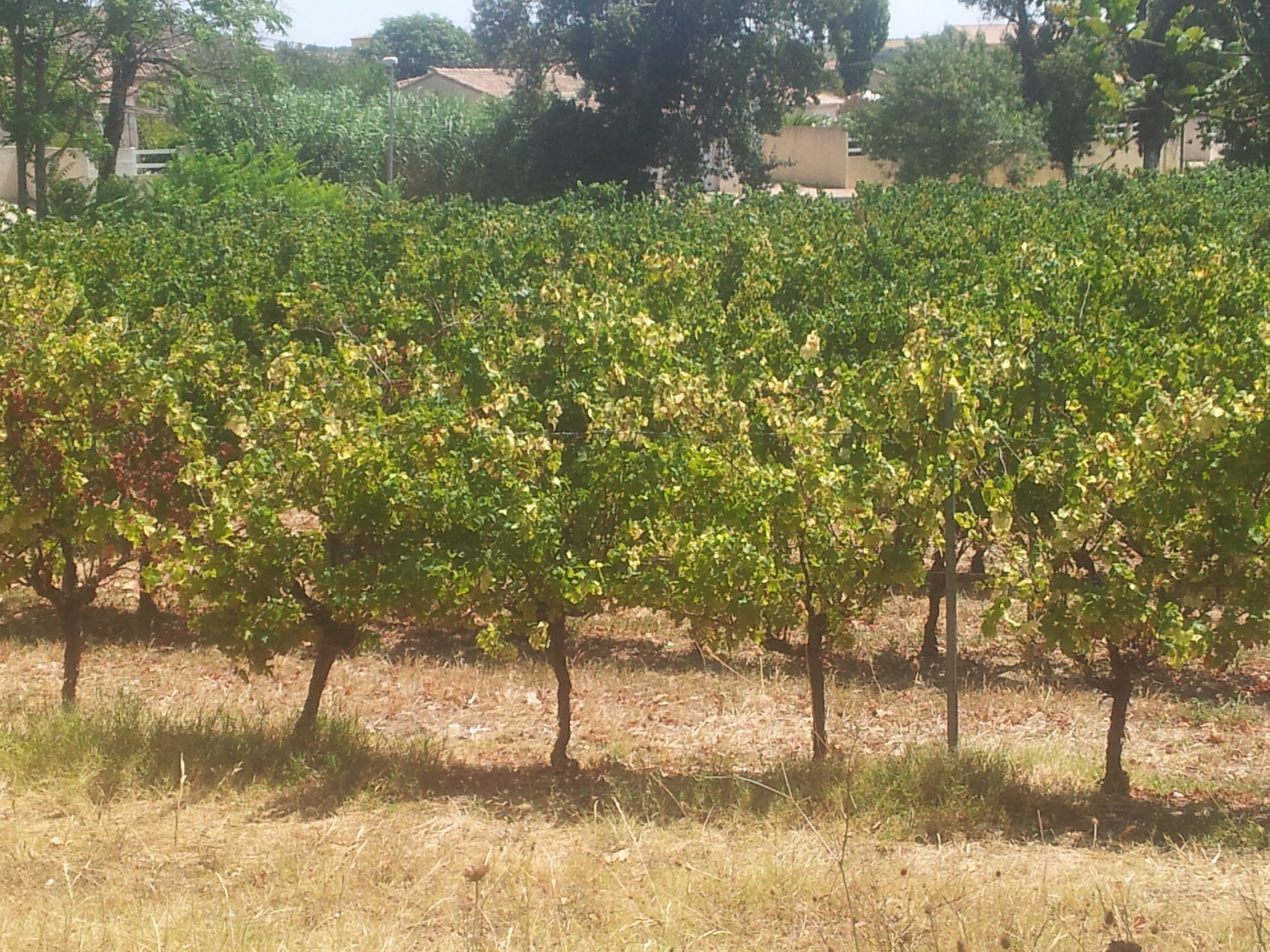
Vines near Pézenas showing some stress

Vines near Pézenas showing some stress

Vines in Margon which were not pruned in spring and are really suffering

Vines in Margon which were not pruned in spring and are really suffe

A few drops fell on July 25th but the skies had been very dark and had promised much more, it was almost cruel to have that rain, a tease of what might have been. However, July 31st brought around 10mm to Puimisson. A decent rainfall, enough to give the vines a drink and to stop the drying out process. Not enough of course after weeks of lack of moisture and some more rain in the next few weeks would be very much welcome to swell the grapes and the harvest. The vines are now pouring their energy into their fruit rather than their vegetation, but they need the nutrients to do so.

Untitled

So, how had the vines responded to the rain which fell? Well a tour on Sunday (August 2nd) showed the vineyards of Mas Coutelou to be in rude health, a decent harvest is now predicted though that extra rain would be most welcome.

Segrairals in full bloom, healthy, happy vines

Segrairals in full bloom, healthy, happy vines

Segrairals, biggest of the vineyards, showed some healthy Cinsault, Syrah and Grenache with no signs of stress or disease. As the home of Classe, 7,Rue De La Pompe and 5SO this is especially welcome, as they are some of the big sellers.
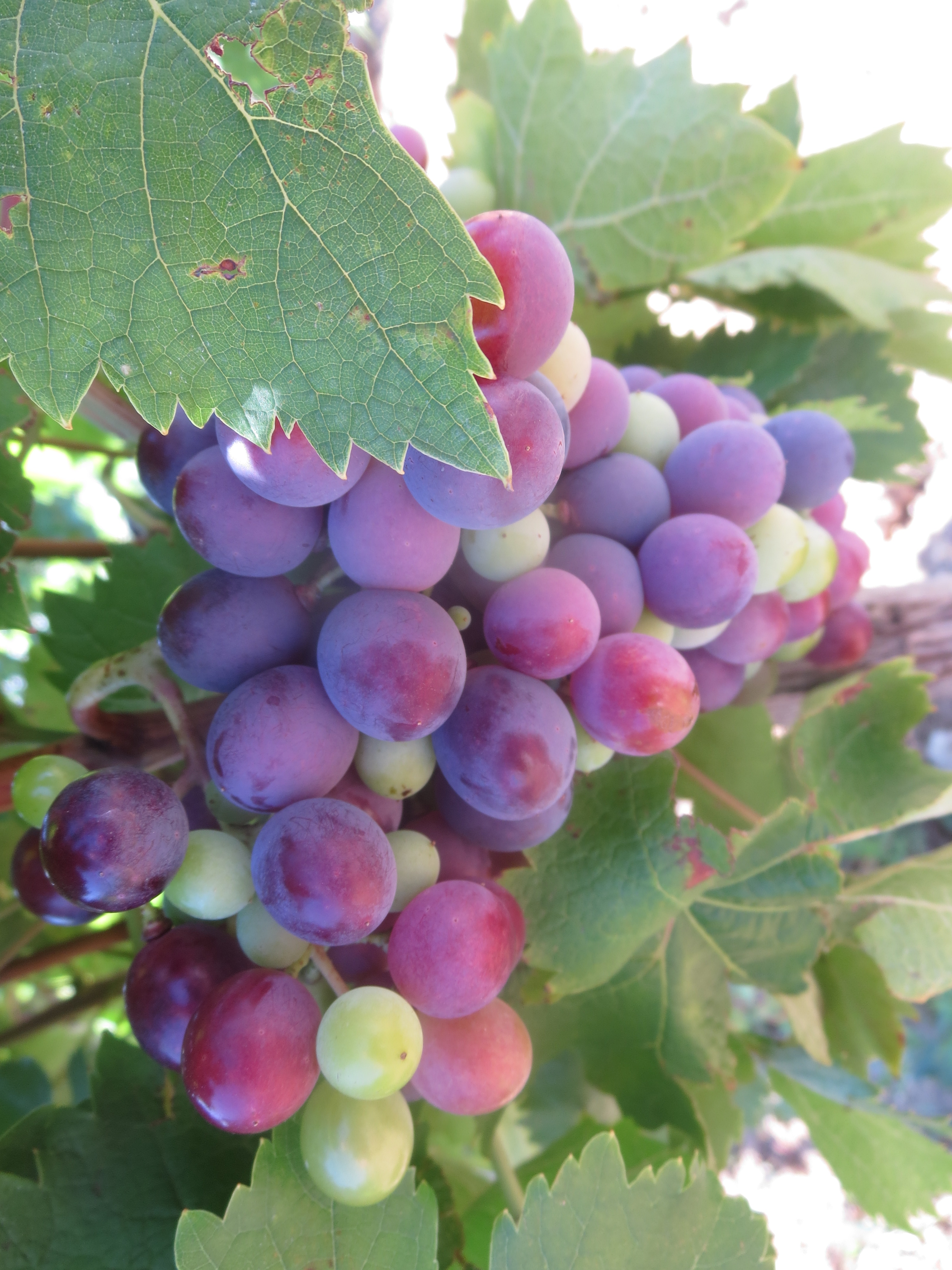
IMG_1980

Cinsault in Segrairals

To Rome, my favourite vineyard. The gobelets were looking well, plenty of grapes both the white varieties and the Cinsault. There was a little mildew around the entrance but minimal, no cause for concern. Could there be a cuvée of Copains in 2015? Jeff tells me that no decisions are made as yet, caution prevails and he will wait to see what the harvest gives him before he makes final choices about how to use the grapes and the wines which result.

Rome's centurion vines in good health

Rome’s centurion vines in good health

Muscat Noir grapes, a tiny bit of mildew top left

Muscat Noir grapes, a tiny bit of mildew top left

Sainte Suzanne (Metaierie) suffered from coulure in May with the strong winds blowing off some of the flowers on the vines, which will reduce yields a bit. However, the grapes there are growing well, what might have been a problem looks now a much brighter picture, good news for fans of Vin Des Amis.

Peilhan, just a little more tired and suffering

Peilhan, just a little more tired and suffering

The only vineyard parcel which has shown stress is Peilhan, There was a lot of regrafting and replanting in the spring and the dryness has caused problems for these new vines. There was also oidium in this parcel, the only vineyard to be attacked by this powdery mildew. Yet amongst those problems there are plenty of healthy grapes, some careful picking and sorting will be needed but it will produce good wine.
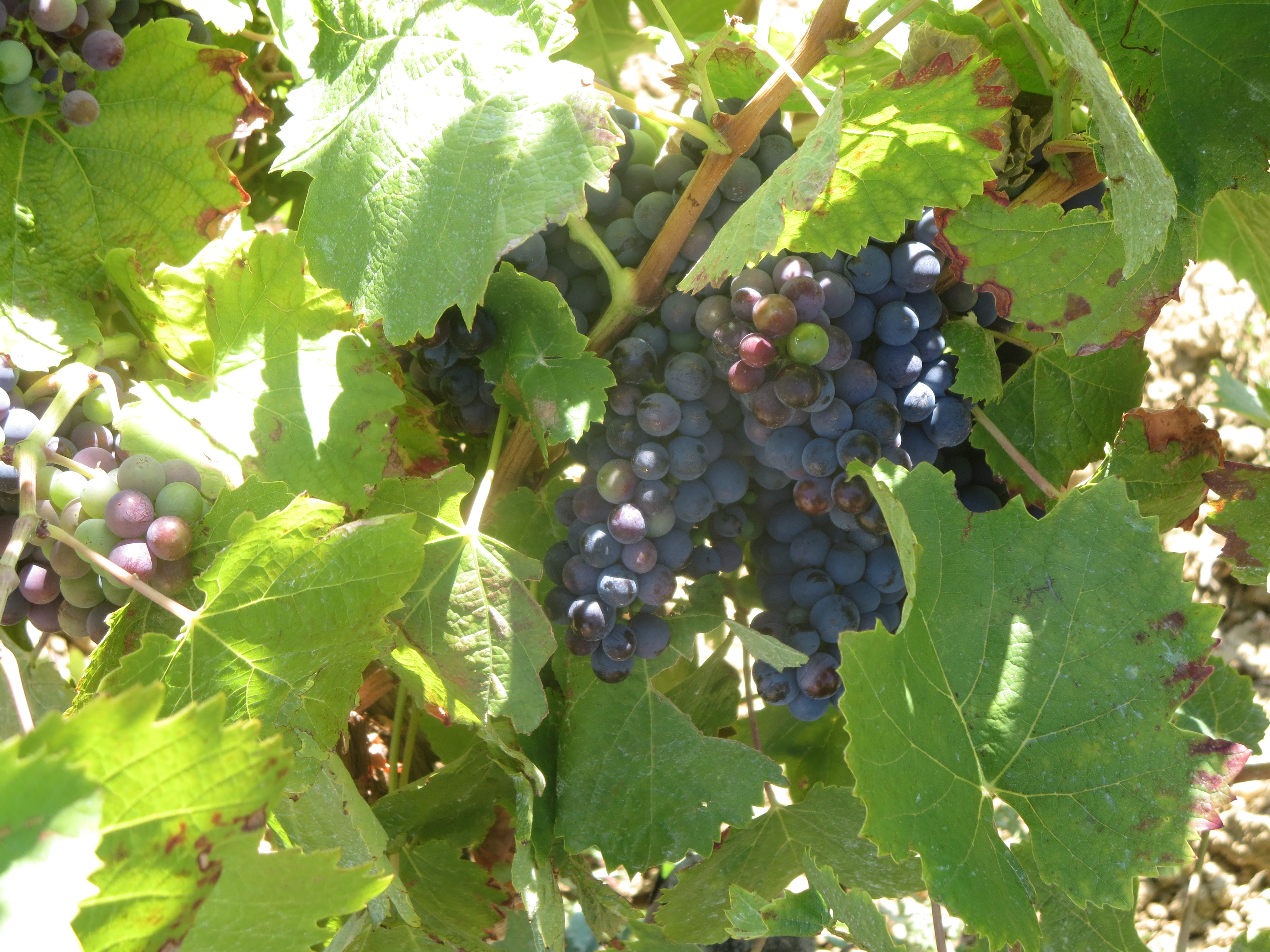
The famous Castets grapes of Peilhan

The famous Castets grapes of Peilhan

La Garrigue was blooming, the white varieties such as the Muscats are swollen and changing hue to lovely golden shades.

Muscat a Petits Grains in La Garrigue

Muscat a Petits Grains in La Garrigue

The Syrah is well advanced, a dark purple colour across virtually the whole bunches, the pips though betray a little immaturity as they taste and look green and sappy. A little more time and patience will pay dividends. As the world’s biggest fan of La Vigne Haute, I have my fingers crossed.
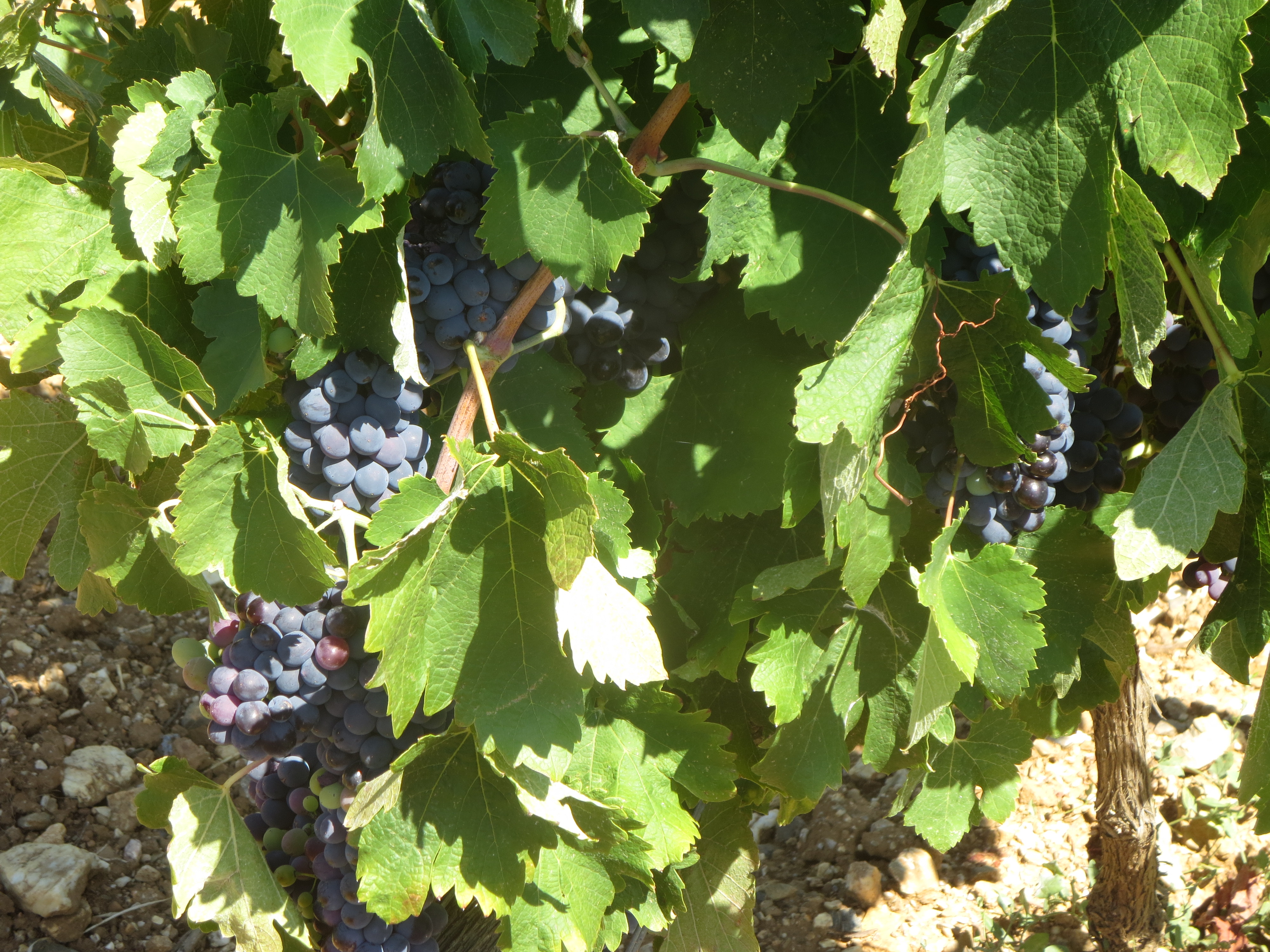
Syrah in La Garrigue, ripening beautifully in the shade of the vine

Syrah in La Garrigue, ripening beautifully in the shade of the vine

The Grenache in La Garrigue, despite facing south, is a little more delayed in colour but getting there and very healthy.

Grenache in La Garrigue

Grenache in La Garrigue

In fact despite risks of disease earlier in the year (see here) Jeff has been able to use minimal treatments in 2015. Oidium and mildew (powdery and downy mildew) can be controlled by copper sulphate, sometimes called the Bordeaux mix when added to slaked lime. This is a bluish colour when sprayed by conventional and organic vignerons and is often seen on the leaves of vines. Vignerons might also use chemical fungicides if they are not organic producers.

Neighbouring vineyard which was given herbicide shortly after harvest last year and whose new vines have been treated regularly

Neighbouring vineyard which was given herbicide shortly after harvest last year and whose new vines have been treated regularly

Some neighbours have also irrigated their vines and one alarming consequence is the changing of the soil and its pH as the calcium carbonate in the water shows through, you can see it in the white parts of the soil in this photo taken on July 22nd.
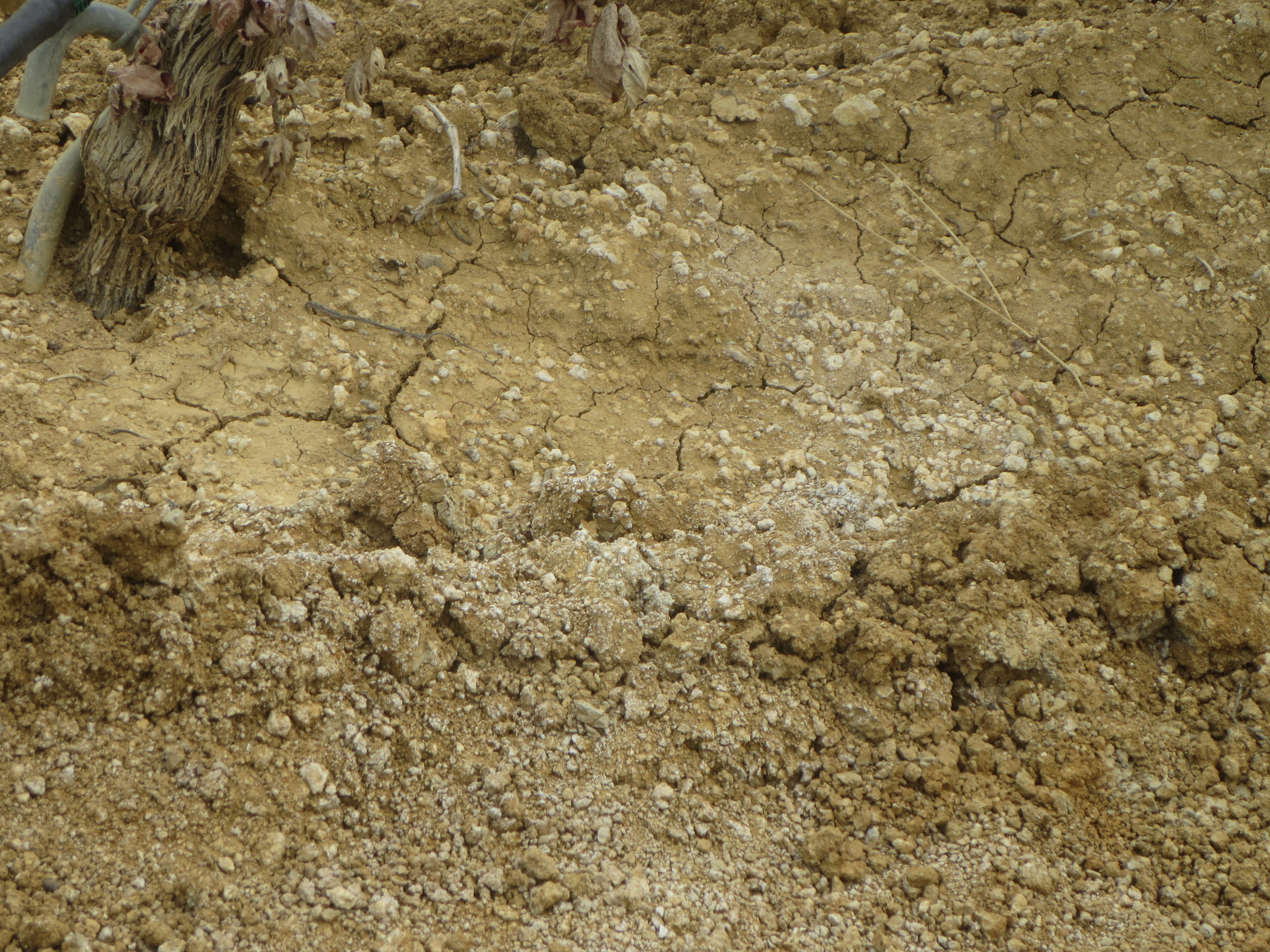
IMG_1932

The irrigation is also causing the vines to grow quickly and tall with thin trunks as seen below. It should be acknowledged that there are many conventional producers who take great pride in the health of their soils and vines and would be horrified by some practices described here.

IMG_2002

As a proud holder of Ecocert organic status and as a natural wine maker Jeff must use natural products only. Tisanes of plants which fight mildew such as horse tail, fern and nettles can be sprayed and this is the basis of many biodynamic treatments. However, the two main weapons in the armoury of organic producers are copper and sulphate, both natural products.

Copper is used against mildew, but is harmful to the soils and kills life in them if used in significant quantities. Organic producers are limited to 30kg per hectare over a 5 year period, allowing more to be used in years with more downy mildew for example but only if less is used in the other years. In fact Jeff has used just 200g per hectare in 2015 and this after years of well below average use, his use of copper is on a major downward trend. He is reluctant and very careful in using copper as he is aware of its danger to the soils, yet mildew has not been a major threat this year.

IMG_1552

Oidium seen in May

Similarly Jeff has used sulphur in soluble form at doses much lower than the permitted level, three treatments over the course of the growing season. In addition one dose of sulphur powder was sprayed when the risk of oidium was high (May) and a second spraying for Peilhan only as it is the vineyard which was attacked by oidium. In contrast to neighbouring vignerons who have sprayed every 10 days including after the bunches closed up (so more than a dozen treatments) this really is minimal intervention.

So July’s parting gift of 10mm of rain was welcome, August might like to follow by offering some rain soon. Too near the harvest is bad as it would dilute the juice rather than help the grapes to reach a good size. Things look promising, let us hope that nature completes its bounty. There is an old saying that June makes the wine and August makes the must, ie the character of the wine with its colour, yeast and flavour. With 3 weeks or so until picking begins it is an exciting, and nervous, time, waiting to see what that character will be.
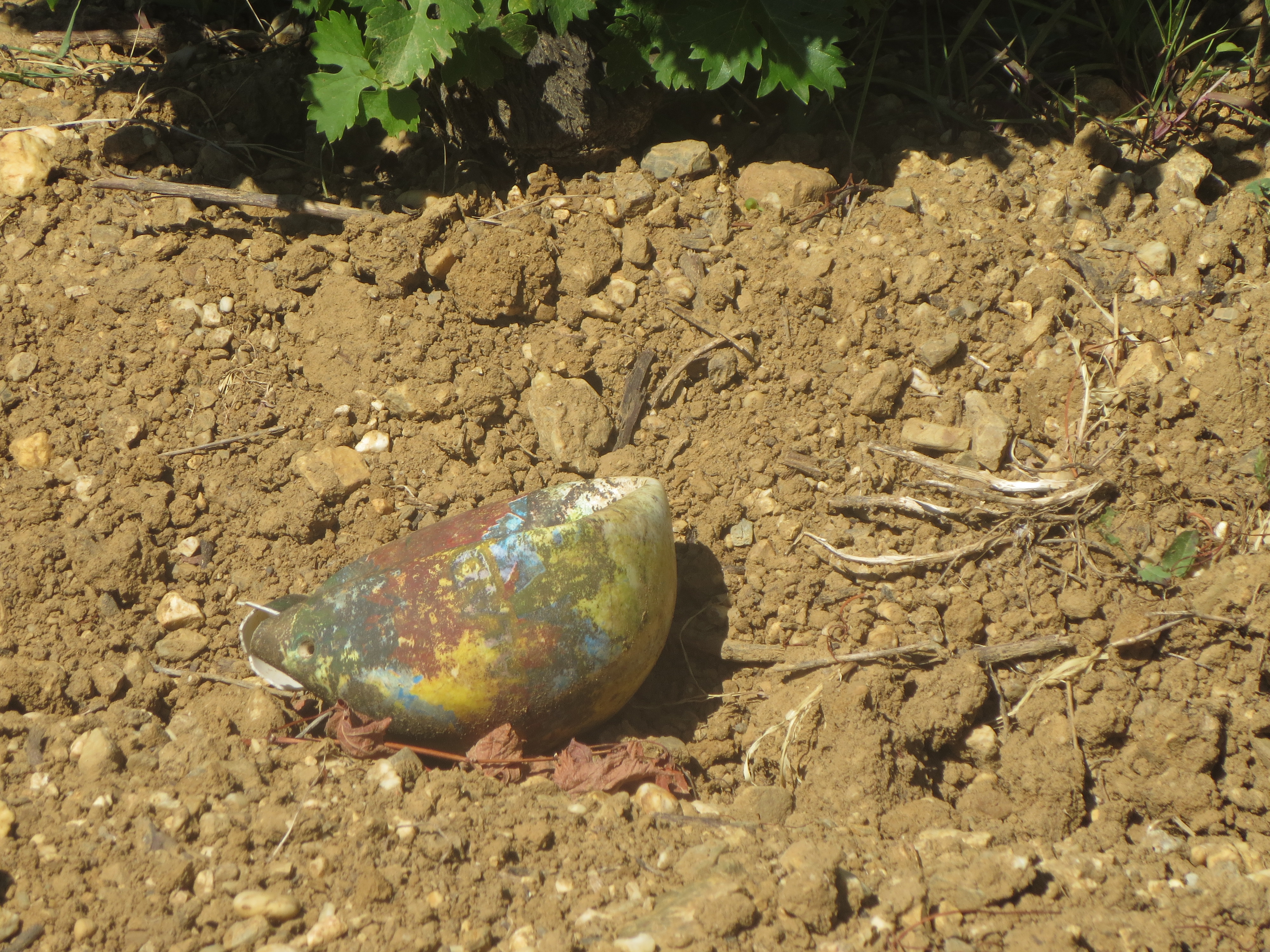
No Icare this time but look what we found amongst the vines, he's been here!

No Icare this time but look what we found amongst the vines, he’s been here!

NB there are lots of reports about recent wine tastings here.


2 Comments

Turbine boosted

IMG_0977

Version française

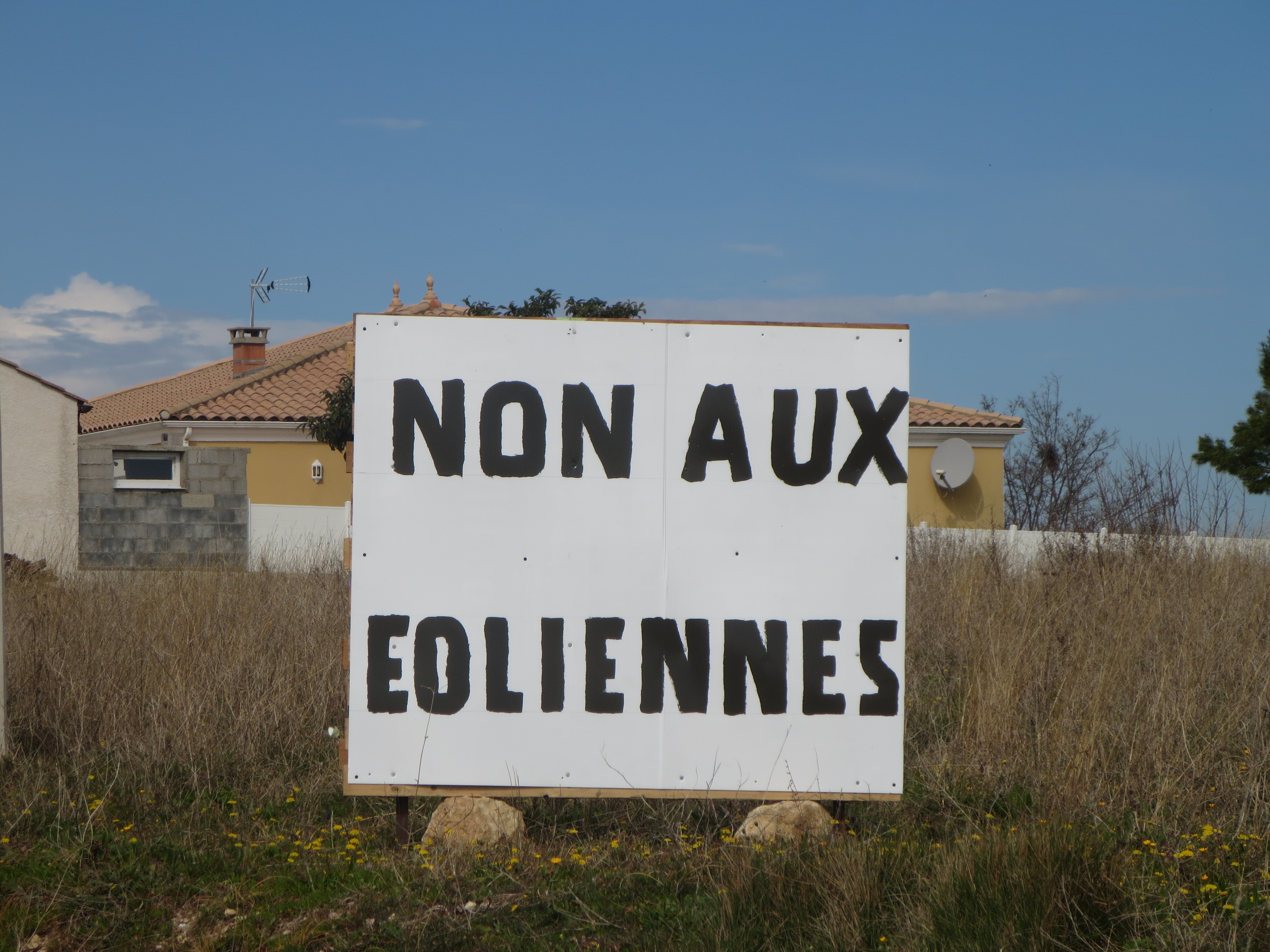
On March 11th I posted about the threat to some of the vineyards of Mas Coutelou. A neighbouring village drew up plans to install wind turbines across the lower end of the community, which happened to run across some of Jeff’s vineyards, Peilhan and Rec d’Oulette, as well as altering the nature of the whole area.

A thousand readers responded to the blog and many of Jeff’s friends rallied to his cause by signing the petition and sending messages of support. I was at the cellar when the lady who organised the online petition called to thank Jeff for mobilising support, it did make a difference.

The local campaign was undoubtedly helped by the timing of departmental  elections across France so pressure was put on local candidates to oppose the plans. The mayor of the local village was standing in those elections and he announced his opposition to the turbines. The council then went further and passed a motion stopping their development in future.

Clearly this is great news for everyone in the locality, especially Puimisson. It is, for this blog, the best possible news for Mas Coutelou and all of us who love the wines and the man behind them. The plans he has for Peilhan in particular can now move ahead with a renewed confidence, the new plantation of old cépages has a brighter future. We are all boosted.

wpid-20150423160343.jpg

So thank you to everyone who read, supported and signed. Your actions counted.

wpid-20150423150906.jpg


Leave a comment

Mas Coutelou – vineyard portrait

Version francaise

The traditional image of a vineyard is that of one big parcel of vines surrounding a chateau as in Bordeaux, with its smart house and cellar buildings for making and storing wine. However, that is not the reality for most vineyard owners. Jeff Coutelou has his home and his cellars in the centre of Puimisson in the Hérault, surrounded by a childrens’ nursery, houses and work buildings. The vineyard itself surrounds the village but comes in a number of small parcels rather than one big vineyard. Each brings its own characteristics in terms of soil, surroundings and exposure to the elements, ie its own terroir. The parcels have been accumulated over the years by Jeff’s grandfather, father and himself. In the satellite photograph below you will see the parcels and how they relate to the village. Vineyards are shown in green, olive groves in red.

satellite

(Photo taken from Rapport Biodiversité d’Exploitation Mas Coutelou produced by Agrifaune)

There are about 17.5 hectares (43 acres) of land though olive trees occupy about 2.5ha (6.7 acres) and well over 1 ha (3 acres) is fallow land or has other trees, hedges and plants. The soil is virtually all clay and limestone. As you may be able to see in the satellite photograph much of the land to the south of Puimisson is vineyard, to the point of monoculture. Jeff wants to use his land to produce biodiversity so olives, figs, roses and hedges help to create little oases of wildlife. More details are outlined at the end of this post.

Untitled

Segrairals and Caraillet (6.8ha, 5.7 under vines)

This is the biggest of the parcels and the only one situated to the north of the village and closest to it. Surrounded by the village and a couple of roads it is well protected by trees and hedges, including figs and olives. A variety of grapes are planted with the oldest being some Syrah planted in 1993, Cabernet Sauvignon planted 1998 and younger plantings of Mourvedre, Syrah and especially Cinsault. The Syrah goes into bottles such as Classe and 7, Rue De La Pompe. Mourvedre goes into Sauvé De La Citerne and the Cinsault into 5SO. The Cabernet grapes will be used for blending in various cuvées or sold to the UK to make the new London Cru Cabernet Sauvignon, a project run by Roberson in London.

Main body of Syrah and Cabernet grapes

Main body of Syrah and Cabernet grapes

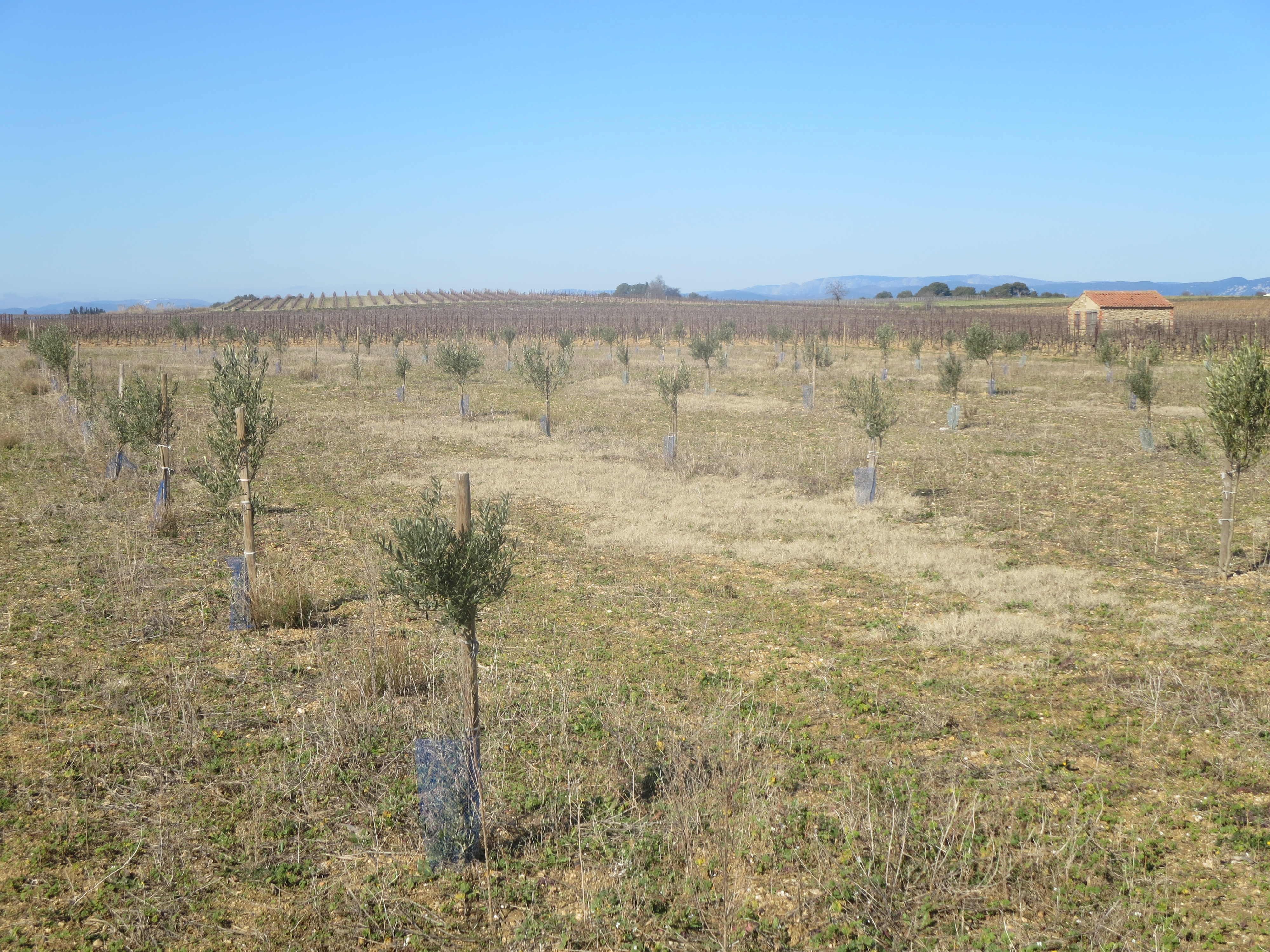
Planted olive trees in the foreground with some younger Cinsault and Syrah vines in the background

Planted olive trees in the foreground with some younger Cinsault and Syrah vines in the background


La Prairie (0.5ha)

To the west of Puimisson La Prairie is an olive grove in a very pleasant area with an official ecology walk going past it. No vineyard planted.

Mountains seen from La Prairie

Mountains seen from La Prairie

Prairie olive plantation

Prairie olive plantation

Le Colombié (0.6ha)

Just at the southern tip of the village Le Colombié is planted entirely with Merlot vines. These will produce grapes used to blend for cuvées prepared for restaurants, bag in box etc. Merlot is not a typical Languedoc variety, these were planted in 1999.

Colombié - Merlot vines

Le Colombié – Merlot vines

Rome (0.7ha)

Possibly my personal favourite vineyard of them all. It is quite isolated even though there are other vineyards around. Isolated, because there is a wood which shelters it. The gobelet Cinsault vines date back to 1966 and 1975 and go into the Copains or,in some years, Vin Des Amis or Classe. These old vines are also surrounded with young olive trees and the parcel is an attractive and quiet haven. There is also a planting of some 20 different varieties of grapes including various types of Muscat which are used in a solera system. This was started many years ago by Jeff’s grandfather and ever since wines have been used to top up the old barrels to make Vieux Grenache and Vieux Muscat. Sensational wines. The added benefit is that because there are so many different types of vine they cross pollinate and this adds an extra layer of complexity to the Cinsault in the Rome vineyard.

All vines lead to Rome

All vines lead to Rome


Gobelet Cinsault vines, olive trees and the surrounding woods

Gobelet Cinsault vines, olive trees and the surrounding woods

Metaierie (2.3ha)

The parcel which was the basis of my post One Day Like This when we harvested the last grapes of 2014, some Grenache. There are a few older Merlot vines (to be replaced in 2015) but the parcel is mainly the home of Grenache and Syrah grapes which are used to make the ever popular Vin Des Amis.

Smaller Metaierie parcel

Smaller Metaierie parcel

Main Metaierie vineyard, home of Vin Des Amis

Main Metaierie vineyard, home of Vin Des Amis

La Garrigue (1.8ha)

Described in some detail in the post Working In The Vineyards (January). Made up of three sections: some younger Syrah facing north for freshness, a section of Grenache facing south, as it likes the heat and some 20 year old Sauvignon Blanc vines too. The Sauvignon is used to make the white blend PM or other white cuvées, the Syrah goes into my favourite La Vigne Haute and the Grenache is used to make Classe along with the Syrah from Segrairals.

IMG_0763

Grenache

IMG_0764

Sauvignon Blanc


La Grangette (0.5ha)

A parcel of half a hectare (just over an acre) surrounded by vines, Jeff decided that it is compromised in terms of quality grapes so he planted 112 olive trees in 2011 to provide contrast to the fairly barren land and vines surrounding Grangette.

Rec D’Oulette (1ha plus a smaller, separate parcel of 0.3ha)

Actually made up of two parcels of land. This has seen a lot of work in recent years as Jeff has tried to diversify it. The central block is half a hectare of 30 year old Carignan, used in making Flambadou, a wine which is really improving and was one of the stars of 2013. Surrounding these vines Jeff has planted half a hectare of olive trees to keep them away from the chemicals of neighbouring vineyards. The second part of Rec resembles Grangette as an isolated small parcel and again Jeff has planted olive trees to diversify as it is too small and isolated in its organic nature for grapes.

IMG_0743

Carignan vines for Flambadou

  IMG_0744


Font D’Oulette (0.65ha)

A parcel where Jeff has worked hard in recent years. More olive trees planted in 2011 as were those in the small section of Rec. In addition he has grafted an older variety Aramon into the vineyard covering over half a hectare. These grapes will be used to create new cuvées and the first blend of grapes produced in 2014 is highly promising tasted from tank.

IMG_0766

Olive trees to protect the new Aramon vines

IMG_0770

Aramon vines

Les Roques (1ha, not on satellite photo)

One hectare of land to the south east of the village heading into Lieuran-les-Béziers, this was the vineyard I showed after the storms of November 28th 2014 when it was flooded. In fact the vines have been grubbed up and there is a programme in place to plant trees and to provide a barrier to the Libron river in case it should flood gain.

Les Roques shortly after the November storms

Les Roques shortly after the November storms

Peilhan (2.2ha)

An attractive vineyard nicely protected. About a hectare is planted with white grape varieties, including a section of Carignan Blanc which has been used to make a cuvée all on its own. Maccabeu, Grenache Gris and different types of Muscat make up the other white varieties and these are usually picked, assembled and vinified together as part of the PM white blend. This also the home of the Castets vines I have written about a lot, one of only two Castets vineyards in France. More Carignan vines are joined by another interesting grape variety, Clairette Musquée which was blended with the Aramon from Font D’Oulette last year. This is the vineyard where a recent plantation took place to bring back older varieties to the area. Terret Blanc, Riveyrenc Gris and Piquepoul Gris were planted along with Terret Noir, Morastel and Riveyrenc Noir. picked, assembled and vinified together as part of the PM white blend. This also the home of the Castets vines I have written about a lot, one of only two Castets vineyards in France. More Carignan vines are joined by another interesting grape variety, Clairette Musquée which was blended with the Aramon from Font D’Oulette last year. This is the vineyard where a recent plantation took place to bring back older varieties to the area. Terret Blanc, Riveyrenc Gris and Piquepoul Gris were planted along with Terret Noir, Morastel and Riveyrenc Noir.

IMG_0774

Main parcel with white vines, Castets, Carignan and Clairette Musquée

IMG_0886

Planting the new parcel of Peilhan

The domaine

Overall Syrah is the predominant grape variety making up around one third of production, although 2014 saw a big reduction in the harvest due to the dry spring and early summer. Red grapes dominate with well over 90% of production.

Jeff et ses Castets

Jeff and his Castets

(g-d) Vin Des Amis, & Rue De La Pompe, Paf

(L-R) Vin Des Amis, 7 Rue De La Pompe, Paf

   015

Organic since 1987, no synthetic chemical products have been used on the soils for over 25 years now. No artificial yeasts are added in the winemaking process, the grapes produce healthy yeasts themselves to stimulate fermentation. Grapes also naturally produce tiny quantities of sulphites but Jeff has been experimenting with using no added sulphur since 2003 and has successfully completed the last three harvests without adding any sulphur to the wines. This dedication to producing wines which are as natural as possible, made with as little intervention as possible means that Jeff is restless in seeking to improve the quality of his soils and in protecting them from the non-organic practices of neighbouring vineyards. He has also brought in Agrifaune to put together a project to plant over I kilometre of hedges. These will help to prevent soil erosion, protect Coutelou vines from surrounding vineyards and also provide shelter to wildlife which in turn will help to protect the vines, for example by eating damaging insects. Trees such as oak, laurel and elder are being planted along with plants such as agrypis and wild rose. Around the vineyards wider borders of grasses and wild plants are being allowed to grow even if that means that vines have to be scrubbed up. Similarly ditches and fallow land will be used to encourage biodiversity. So in an area of monoculture these oases of biodiversity and wildlife will help to enrich nature, the vineyards and, ultimately, the wines.

IMG_0879


3 Comments

Mas Coutelou vineyards under threat

IMG_0775

Peilhan vineyard


IMG_0776

Puimisson from Rec D’Oulette and the ‘Flambadou’ Carignan vines

Version francaise

In my last blog entry I wrote about the planting of a new vineyard with a range of old varieties of vine. The parcel of land is part of the Peilhan vineyard and sad to say it is under threat together with the vineyard (Rec D’Oulette) which provides the Carignan grapes for the Flambadou cuvée, one of the most highly rated bottles of Mas Coutelou.

The threat comes from a plan by the company Quadran to plant 6 or 7 wind turbines on the plain behind the commune of Corneilhan. Ironically the village of Corneilhan will profit from the plan but is on the other side of a small hill from where the turbines will be situated, therefore the impact upon Corneilhan will be minimal unlike that upon neighbouring villages such as Pailhes and Puimisson whose residents will have to look at the turbines every day. Planning restrictions means that the turbines would have to be built on a stretch of land running across the area where Peilhan and RecD’Oulette are to be found.

Windfarm plans

Some neighbouring viticulteurs might be tempted to have a turbine on their land as they will receive a payment of 3000€ per megawatt per year created as compensation for not being able to produce wine from their vineyard. Jeff, and others, will not do so but the turbines will have a significant effect on the climate and terroir of his vineyards, if the project comes to fruition. Air turbulence, noise and the movement of the turbines will clearly alter growing conditions such as temperature and humidity but there are other consequences. Jeff has been working to provide biodiversity in the form of hedges, trees and plant life which shelter birds, bats and insects that provide a means of controlling vine pests such as ver de grappe and wasps. This helps to prevent the use of chemical pesticides and thus helps the environment. The presence of these ‘environmentally friendly’ turbines will undoubtedly upset the healthy ecosystem provided by these birds, bats and insects.

IMG_0738

Puimisson from Peilhan, how much would wind turbines dominate this landscape!!

IMG_0743

Trees and plants border the vineyard

IMG_0739

Olive trees in Rec D’Oulette


However, Jeff’s main concern is simply for the visual and auditory impact upon the area as a whole rather than just his personal loss. The area will be completely changed by the project and it does seem strange that they would build wind farms on agriculturally useful land rather than unproductive land elsewhere. It is ironic that so called green energy threatens the local environment. Without mentioning the threat to tourism which is economically important in the area.

In any case the best renewable energy is the one you don’t consume!

To show support for the people of the area as well as the vineyards you can sign this epetition now. I shall, of course, update with further news.

The fight begins..

IMG_0977

Notice in Pailhes Wednesday March 11th


3 Comments

Old vines, new vineyard

Version francaise

Friday March 6th brought a hot sunny afternoon and the birth of a new vineyard at Mas Coutelou. Well, a new section of vineyard at least. Peilhan is the most southerly of Jeff’s parcels and already contains a variety of grape varieties ranging from Carignan planted in 1992 to fairly new white grapevines such as Maccabeu, Grenache Gris, and Carignan Blanc. However, also planted are some rarer old varities such as Clairette Muquée and the Castets which I have so praised before.

IMG_0775

Peilhan

If you look in the photo towards the top you will see a sloping area of land just beyond the planted vines and it was this section which, after lying fallow for many years, was to be planted. I have highlighted it below.

peilhan highlightedBeing Jeff Coutelou though this would not be a simple planting of Grenache, Syrah or Mourvedre but instead he wants to increase the diversity of vines in the vineyard and contribute to the movement of restoring old Languedoc vines to a prominent role in  the region. So 24 rows of vines would be planted, almost 2,500 plants of 6 cépages ;

  • Terret Blanc 1 row
  • Piquepoul Gris 6 rows
  • Riveyrenc Gris 2 rows
  • Riveyrenc Noir 6 rows
  • Terret Noir 3 rows
  • Morastel 6 rows

They would be planted as a mix to help resist disease as well as diversity.

IMG_0885

Piquepoul Gris vine

IMG_0882

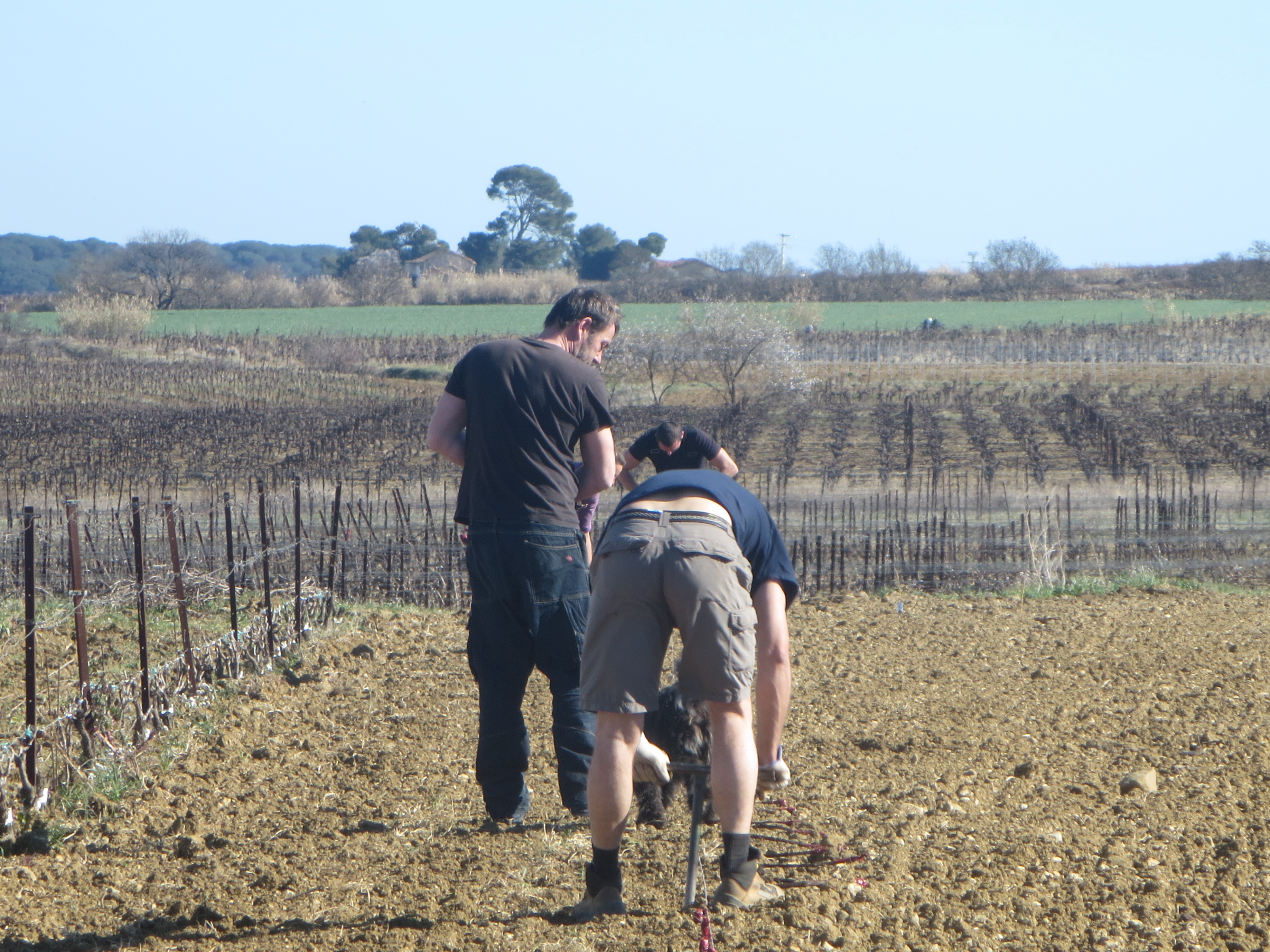
The plants are laid out ready, roots in water. Renaud, Michel, Carole and Jeff lead the way. Jeff, as usual, is on the phone as someone wants some wine!


IMG_0892

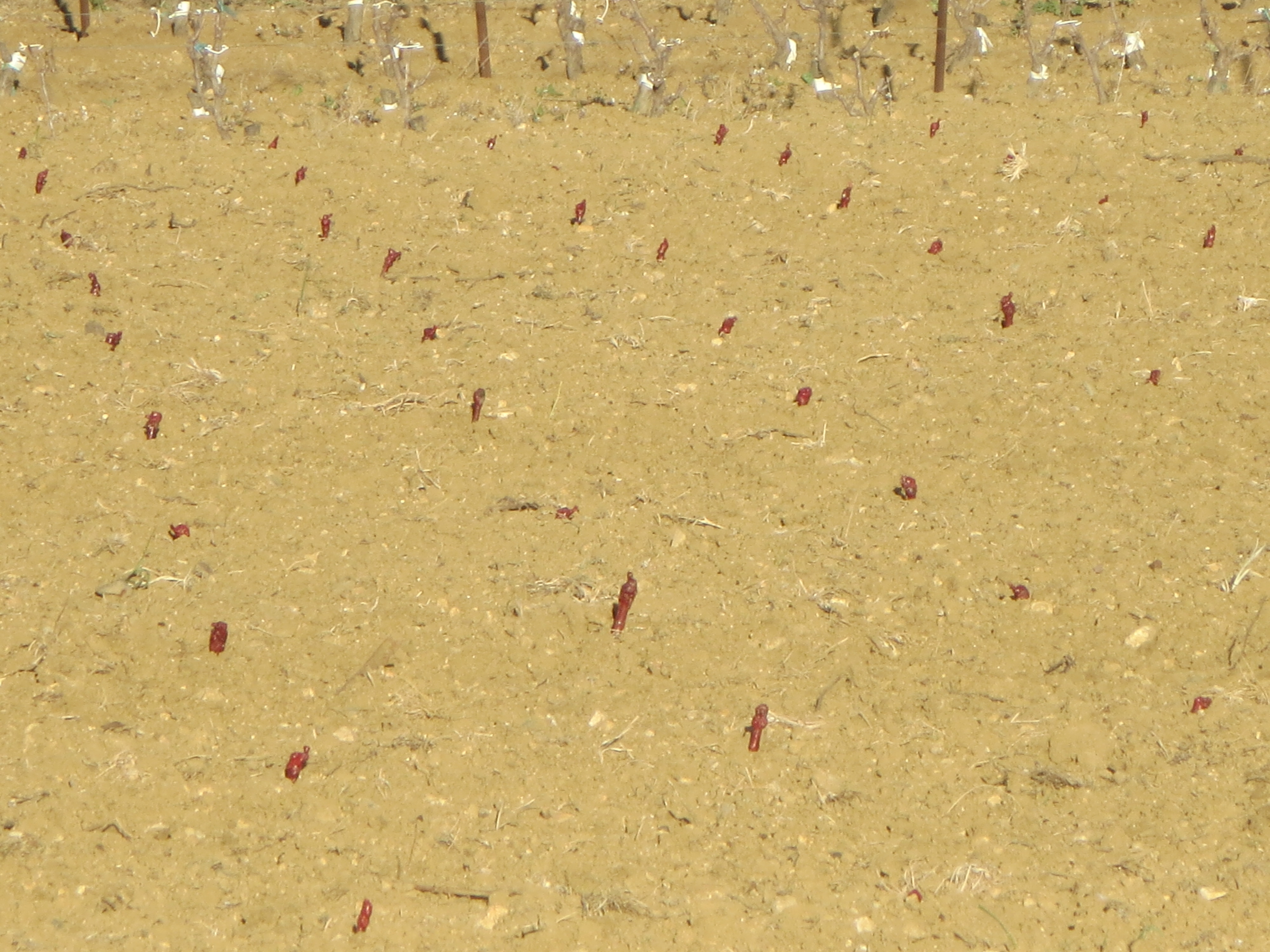
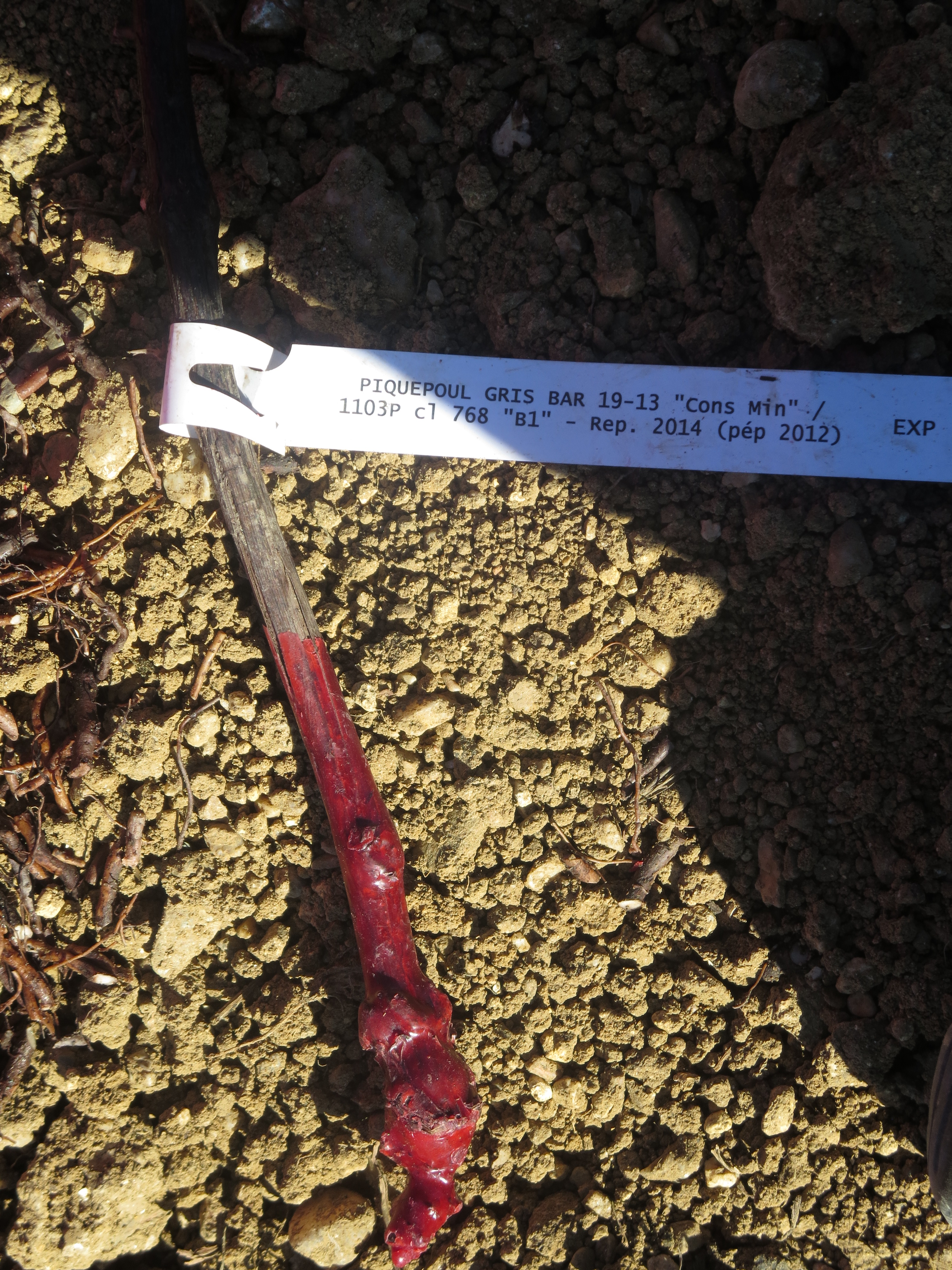
The vines came from a trusted supplier in Carcassonne and resembled large matchsticks. The vine foot is an American rootstock, the only ones capable of resisting the phylloxera beetle which almost wiped out French vineyards in the 19thC. The plant is grafted onto this root stock and then covered with the red wax to protect the grafting stopping air getting between the plant and the root stock. The wax will fall away naturally in the next few days. As you can see they arrived with long roots and we had to cut these down to make them easier to plant.

IMG_0883

Jeff had hired two expert plantsmen to lead the way, the two to the right in the photo above. They demonstrated how short the roots should be and left Renaud, Michel and myself to carry on whilst Jeff and Carole (in the photo) went to help the planting.

IMG_0884

The field was marked out to show where the vines would be planted. Each variety was to be planted at different intervals according to its specific needs, some need wider planting such as the Piquepoul Gris, others should be planted more densely such as the Terret Noir. The spaced to the right of the rope will be planted with hedges, including rose trees. These will provide shelter for birds and bats, natural predators of damaging insects and vers de grappe (worms) as well as providing a natural boundary to the parcel.

IMG_0891Wire cables ran along where each row was to be planted, in the photo you will see a blue mark where the vine was to be planted. The two experts did the planting with Jeff and Carole (later Michel) dropping the vine  for them to plant.

IMG_0887

This video shows just how fast they work, on a hot day it very impressive. There was a welcome beer break (with English beers from County Durham no less!) but the work continued solidly for 4 hours.

IMG_0894

New vineyard takes shape

IMG_0902

Icare supervised, of course


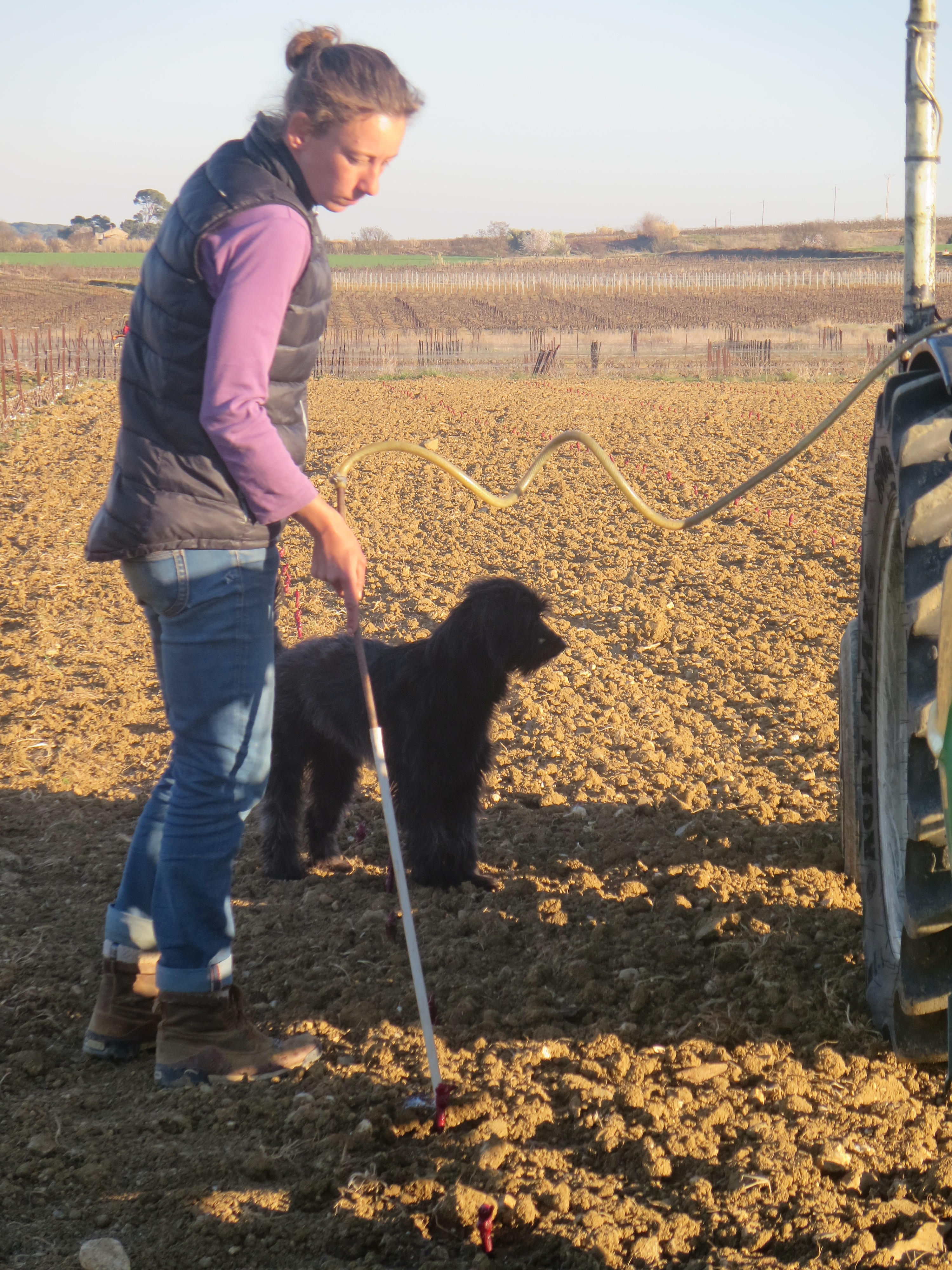
The new plants need water of course so Jeff and Carole set to work. 1500 litres were used for 2 rows of vines!


IMG_0900

IMG_0899


IMG_0898

Jeff asked me at the end of the day what my thoughts were about the planting, how I felt about it. I had to think about it for a while. It had seemed like hard work but it was with a real sense of being present at a new beginning. The vines have a 99%+ survival rate and they will in a few years be producing white and red wine of great quality. And I was there for the birth of this project, a privilege. It was impossible not to feel excitement about what was to come and to wonder at how these small sticks would become beautiful vines. And to feel proud that Jeff is willing to plant something which reaches back into the past as well as providing for the future. Let’s hope we are here to enjoy the wine in a few years.

As if to crown my day of feeling close to nature I was able to take these photos of bees on the rocket flowers in the main parcel at Peilhan. This is one corner of the Languedoc where nature still rules, with a little help.

IMG_0880 IMG_0879


3 Comments

Teamwork – February Part 3

IMG_0799

What’s that coming over the hill?

Version francaise

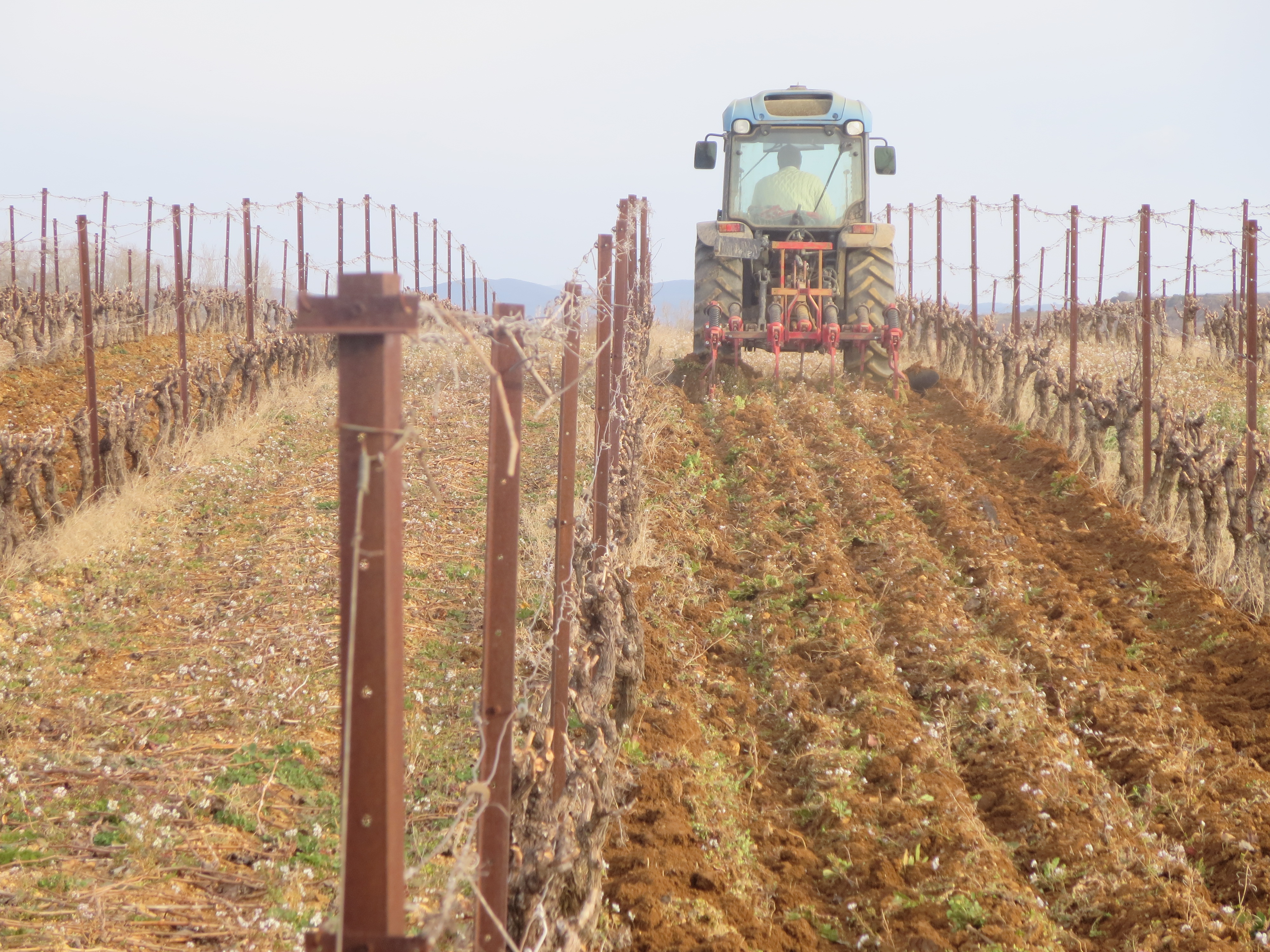
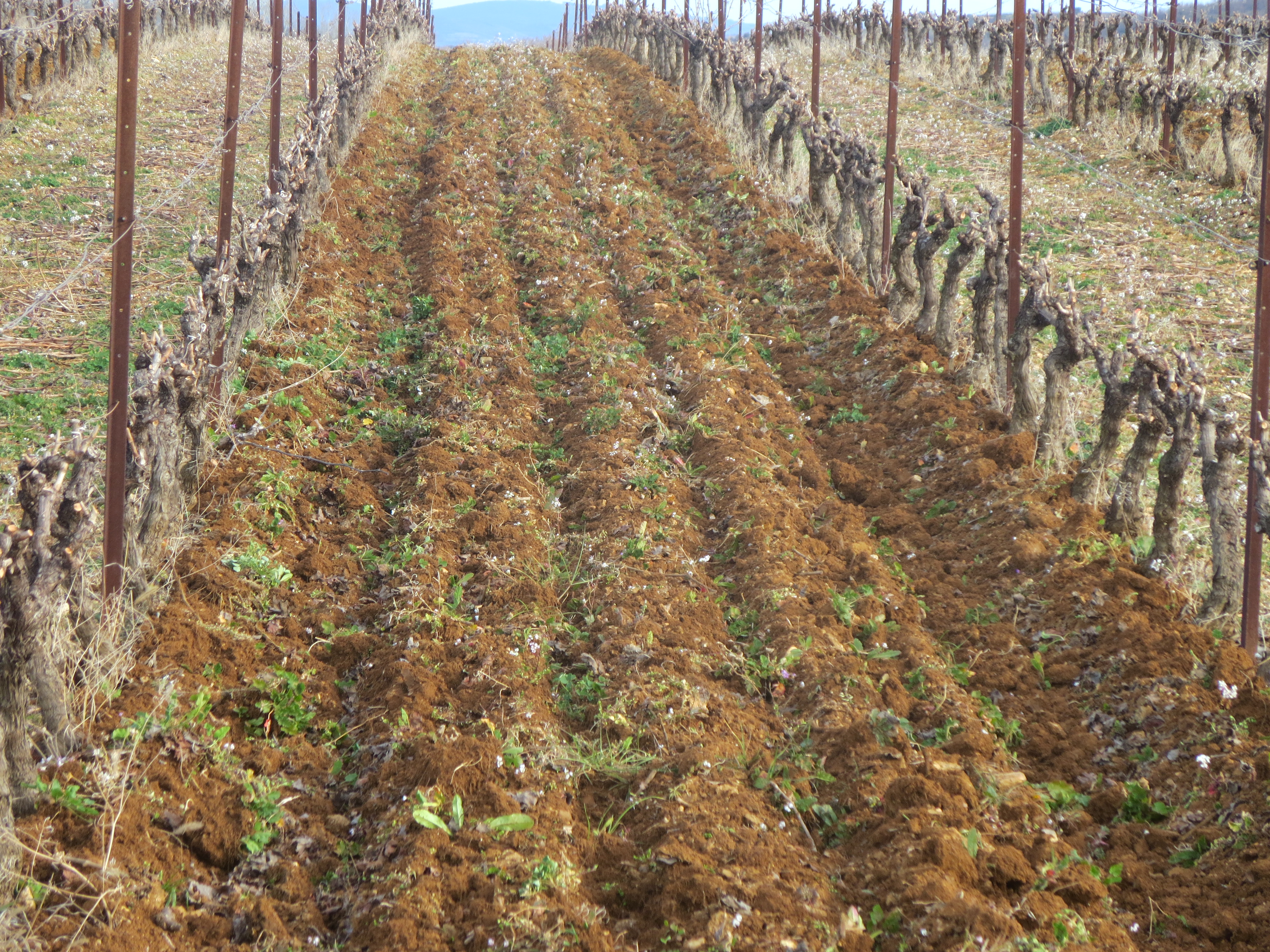
So February is turning out to be a very busy month in the vines. On Wednesday Jeff invited me over to see the first ploughing (labour)of the year. The plant cover of winter is ploughed into the soil to add organic matter. This has been a long established practice and as scientific research continues it is proving to be another example of traditional practice being based unwittingly in sound theory. According to research** by leading soil expert Claire Chenu in 2011 the organic matter which is ploughed into the soil helps to boost microbial and animal life in the soil. In turn this adds air to the soil which the vine roots can use to help them take up water and nutrients. Healthy vines make good wine and will hopefully be able to resist diseases. Certainly as the plough turned over the soil some big worms were speedily digging back into the earth, a clear sign of healthy soils.

IMG_0798

IMG_0808

IMG_0804

The plough was set to a very shallow depth,no more than 20cm as this is a first plough of the year. Jeff worked the soil in every two rows allowing the tractor to turn easily, the other row will be ploughed in two or three days. The tractor is not a full size that you might see farmers using but more lightweight to try to minimise compaction of the soil.

IMG_0816

Blades set to be shallow

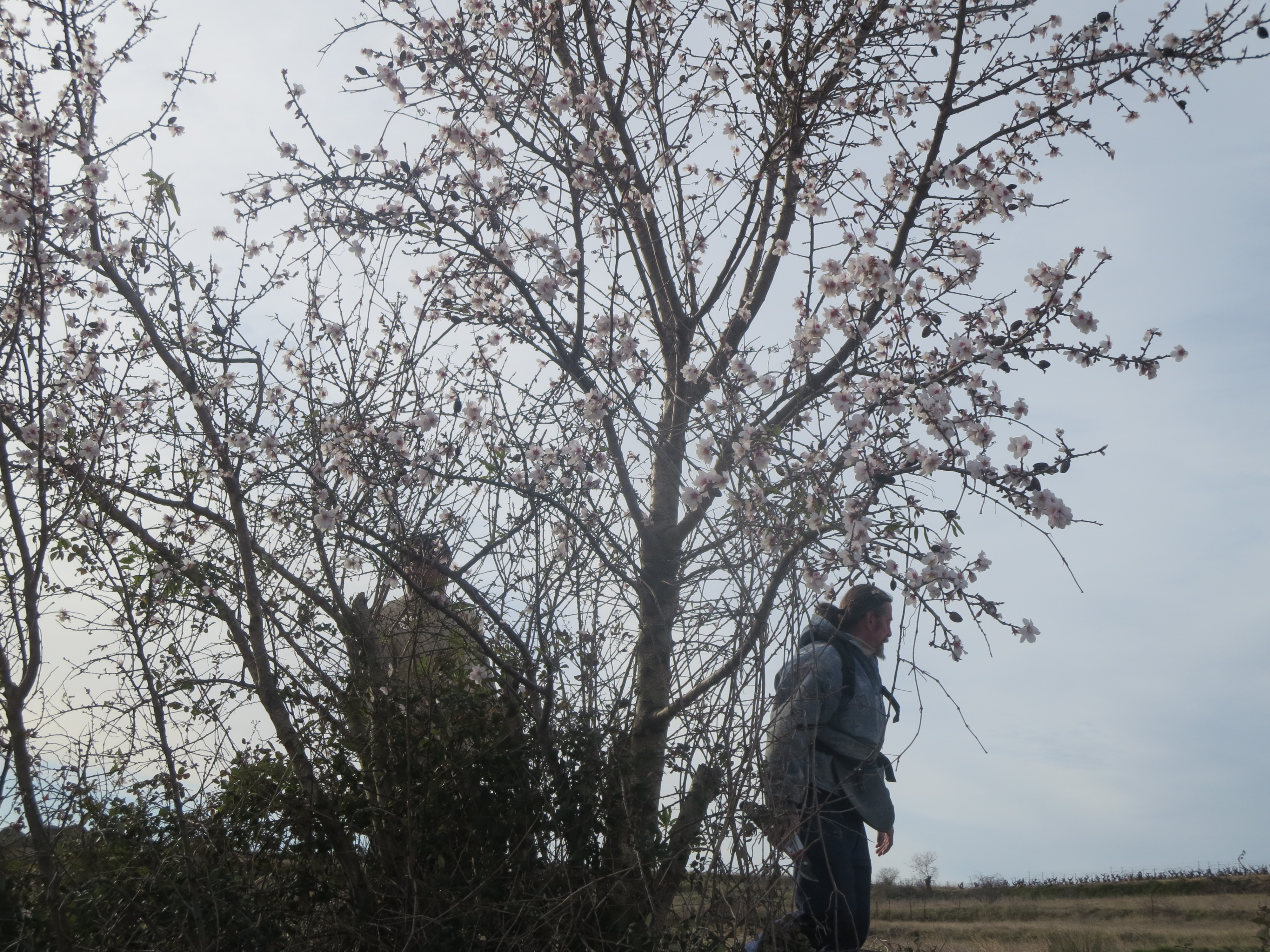
Meanwhile at the Peilhan vineyard Michel and Renaud were busy working on the trees and plants which guard part of the parcel.They were cutting down cannes de provence, pruning the blossoming almond trees and strimming the plants between them. All part of the effort Jeff makes to improve the ecology of his vineyards.

IMG_0809

Renaud and Michel at work

IMG_0810

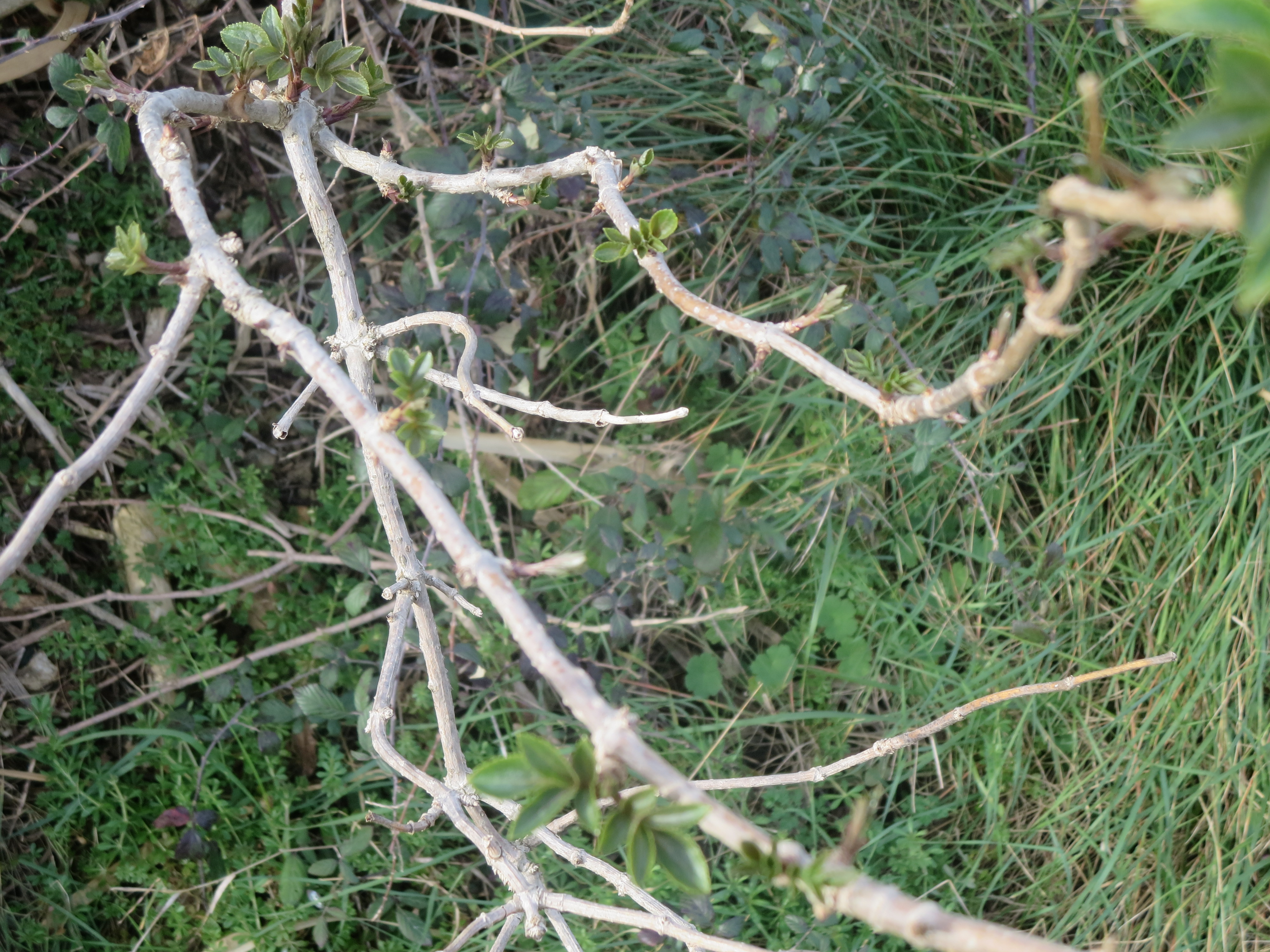
Elderflower just starting to bud at Peilhan

Carole was busy over in La Garrigue vineyard pruning the grenache section. She talked me through the decisions she was making at each cut to explain how the vines would benefit. What struck me was how she was thinking ahead to how the vine would grow not just this year but in the next 2 – 3 years. A skilled worker is always great to watch in action and I was honoured to listen to Carole explain it to me. You can see her at work in the video here.
So,the patron, Carole, Michel and Renaud were hard at work. What about me? Well, Jeff offered to let me drive the tractor but I doubt I could afford to pay him the compensation for all the vines I would have ripped up! Meanwhile there was one very critical observer, a crucial part of the team.

IMG_0818

Icare, a hard taskmaster

** Quoted in Jamie Goode, “Wine Science, p32”


3 Comments

February

Version francaise

The Romans were late to add February as a month to their calendar having previously put together December, January and February as one long winter month. When it did become a distinct month February was seen as a month of purification, the end of winter feasting and preparation for the year ahead (February was actually seen as the last month of the year for a long time). In the Christian calendar the beginning of Lent and the tradition of Mardi Gras reflect this Roman influence.

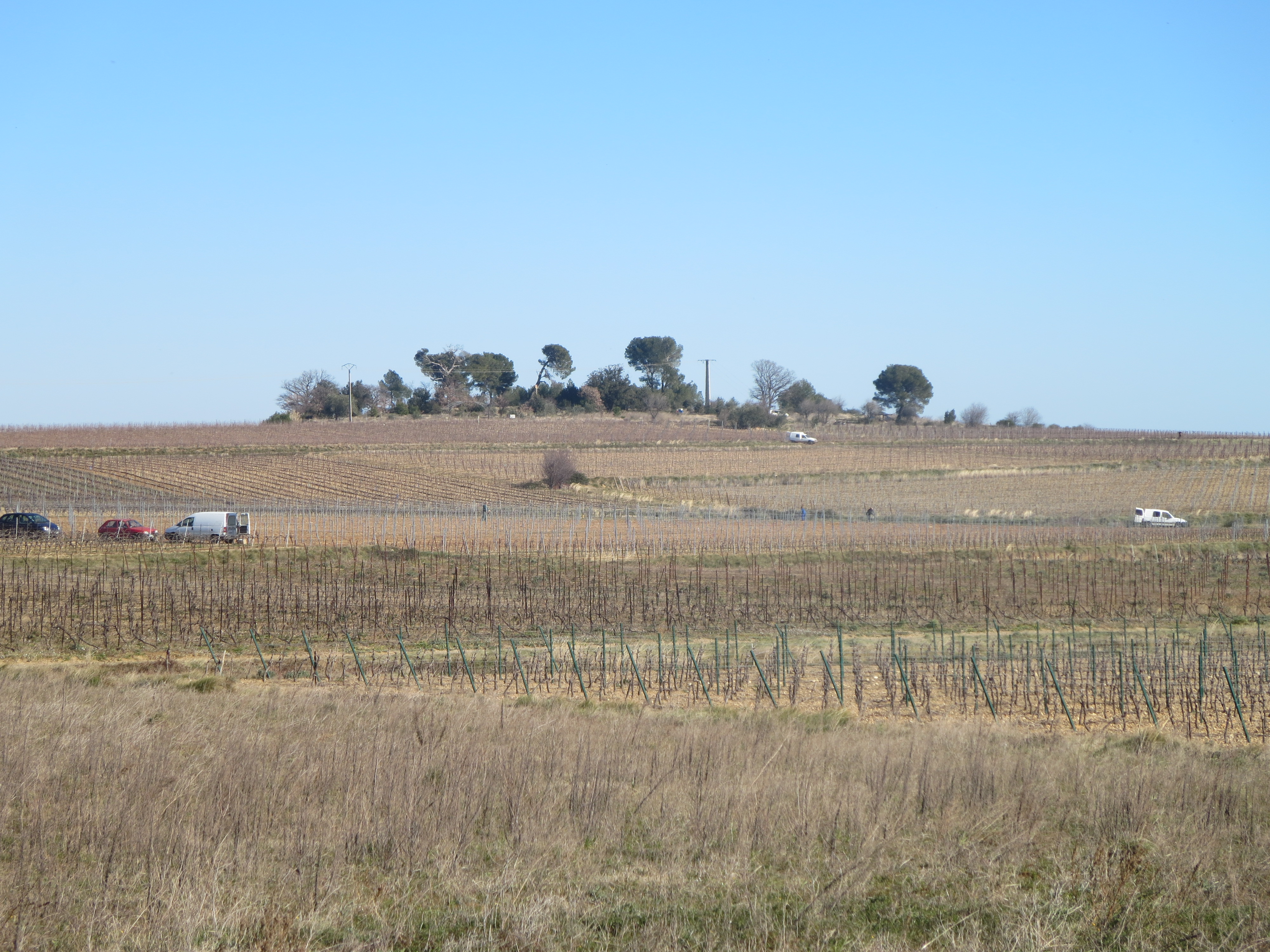
Similarly, in the vineyard the work reflects the calendar. The Languedoc vineyards are still dormant. White vans are dotted amongst them containing the workers and their tools seeking to prune and to palisade their vines in preparation for the growing season ahead. I have described this work in detail recently so I won’t repeat myself but la taille proceeds all around us. (See here and here)


Vans and cars parked amongst the vines

Vans and cars parked among the vines

Sauvignon Blanc vines grafted short to reduce the yield and concentrate flavour

Sauvignon Blanc vines (at Turner Pageot) grafted short to reduce the yield and so concentrate flavours

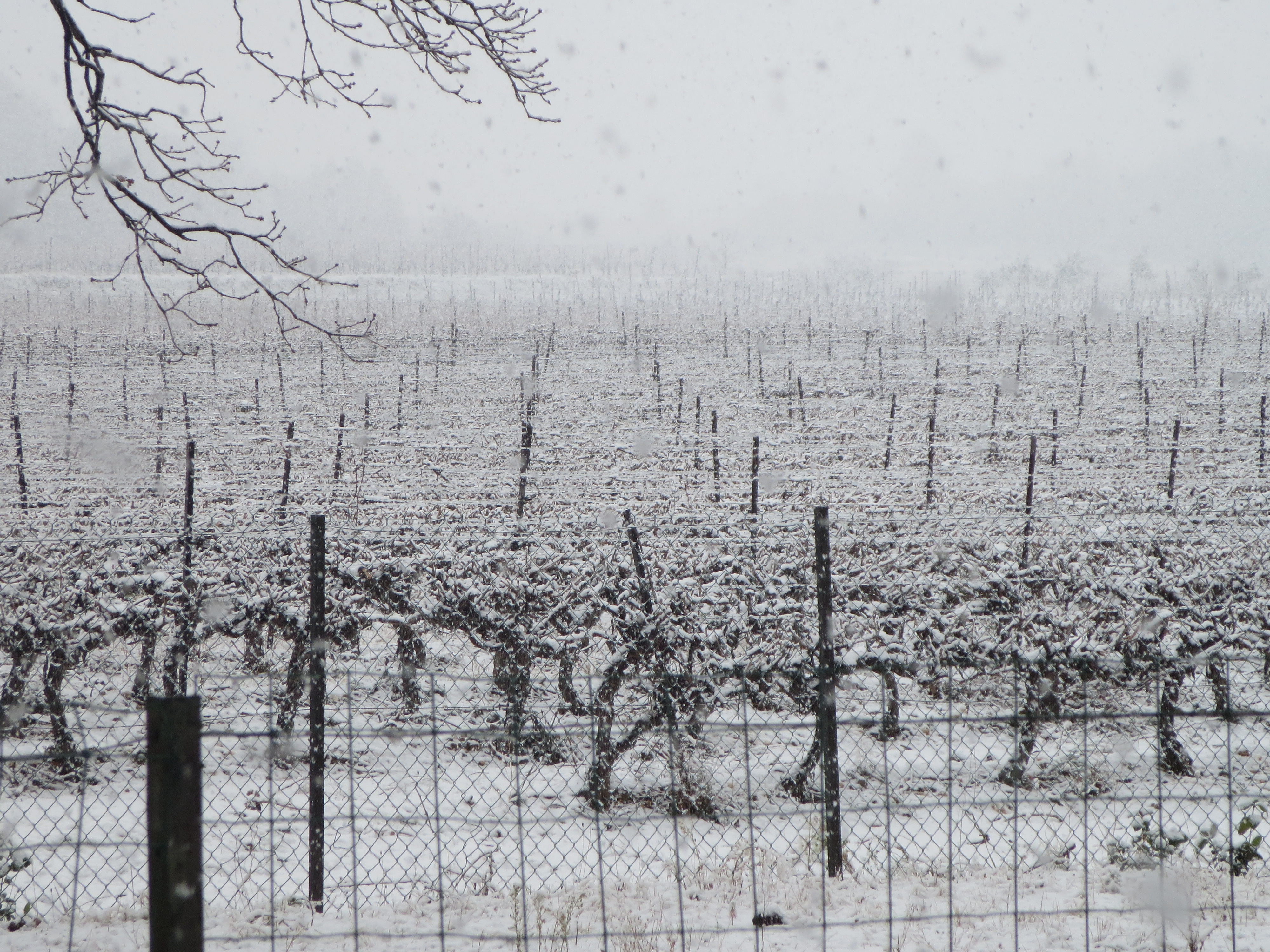
The month began with very cold northerly and easterly winds and even one morning of snow (Feb 3rd).

February 3rd - the view from our back window

February 3rd – the view from our back window

The cold was needed to remind the vines not to start to emerge from their hibernation too soon. Early budding (bourgeonnement) can be disastrous as frosts can hit for a couple of months yet, traditionally it is mid May when the risk of frost is said to be over in the region. Those who pruned early run more risk as budding can sometimes happen sooner. Whether there was enough cold weather remains to be seen as by February 9th we were enjoying temperatures between 15C and 18C. I have heard of almond trees budding already, the mimosas were out for the festival in their name at Roquebrun on the 8th and so the vines may well be stirring already.

The mimosa is out to the left of the tower at Roquebrun

The mimosa is out to the left of the tower at Roquebrun

At Mas Coutelou there was also work to be done in preparing new vine canes to be grafted onto older vine stocks. Jeff is trying to establish some parcels with a mix of grape varieties as these cross pollinate during flowering and help to protect each other in resisting disease. He wants to bring older varieties (cépages) into his vineyards such as Aramon (noir and gris) and the Castets I wrote about in October. These are already producing great results in the quality of wine produced so far, even if it is in small quantity so far. Therefore, some old Cabernet Sauvignon vines are being removed from a vineyard such as Peilhan and being replaced by these more traditional Languedoc cépages.

Michel, Renaud and Jeff work amongst the wild rocket

Michel, Renaud and Jeff work amongst the wild rocket

Believe it or not it was quite warm despite Jeff's attire

Believe it or not it was quite warm despite Jeff’s attire

The grafting itself will not take place until around May time. For those who are interested in the technical side of this I can highly recommend this article which raises some interesting points and questions about grafting, vines and terroir. Steve Slatcher has a very good blog, well worth reading.

February also continues to bring lots of paperwork, customs and taxes for example. Many hours of such work are certainly unglamorous. Selling wine is also vital and Jeff took some cases to Gabian on the 13th to Domaine Turner Pageot to form a groupement (a pallet of wines made up from different producers) to head to Leon Stolarski, a very good merchant based in Nottingham. I have sung the praises of Turner Pageot many times on here and so it was a pleasure to see two of my favourite winemakers come together and visit Manu’s vineyards as well as tasting his wines.

Jeff and Manu study the grass which Manu has sewn between vines. This will retain moisture in summer, strengthen the structure of the soil and attract helpful insects amongst other advantages

Jeff and Manu study the grass which Manu has sewn between vines. This will retain moisture in summer, strengthen the structure of the soil and attract helpful insects amongst other advantages

There is also a belief that February is named after Febris the Latin for fever. Jeff has been suffering from flu, there is an epidemic in the Hérault at present, and Manu too was far from well. Fortunately their passion for their vines and wines shone through, a reminder that February also has its other big date on the 14th.

A warm, sunny birthday for me on February 9th but snow in the mountains still lingers

A warm, sunny birthday for me on February 9th but snow in the mountains still lingers