amarchinthevines

Learning about wine, vines and vignerons whilst living in the Languedoc


4 Comments

Vendanges Diaries (2)

IMG_2233

Version française

Aug 30th was a Sunday so no picking but Jeff was still in the cellar working. The early wines needed to be checked and moved as necessary.

Monday 31st dawned cloudy again and it was time to tackle the biggest of the vineyards at Mas Coutelou, Segrairals. The Syrah was ready to be picked and Jeff had decided to use carbonic maceration to ferment the grapes which are probably not of the same top quality as those from La Garrigue or Sainte Suzanne which were picked last week.

Grapes which are pressed like those described last week ferment in tank as yeasts react with the juice to change the sugar to ethanol, ie alcohol. The yeasts are natural from the skins of the grapes and the atmosphere of the cellar. In the case of Mas Coutelou and many artisanal winemakers this is the case though other winemakers will buy yeasts some of which are designed to add particular flavours to the wine. None of that in Puimisson, these are natural wines.
IMG_2232

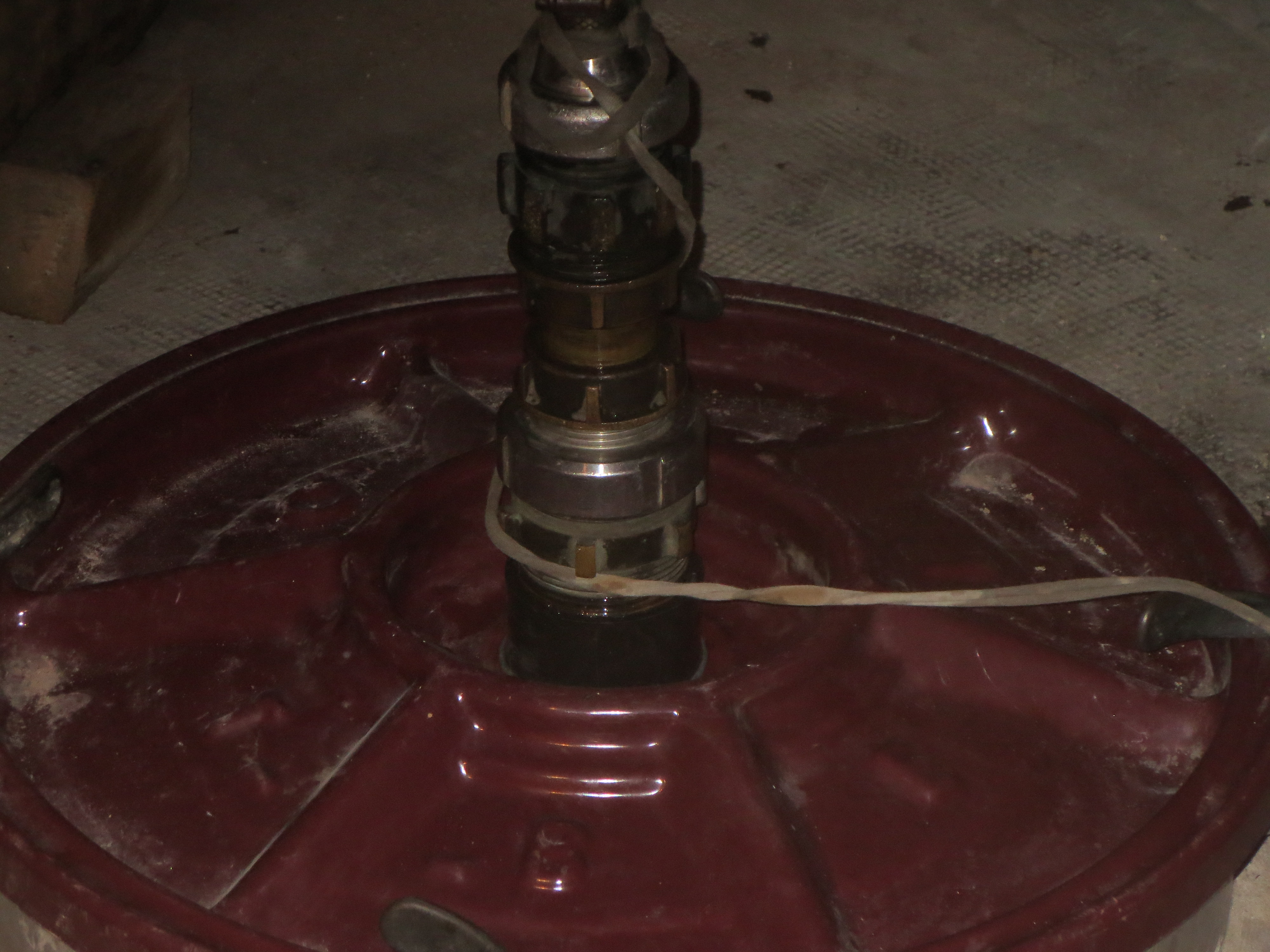
        Carbon dioxide pumped into the tank

Carbonic maceration means that the whole bunches go into the tanks, grapes and stalks alike. The tank is filled with carbon dioxide which permeates the grape skins and starts the fermentation within the cells of the berry. Some of the berries at the bottom of the tank will be crushed by the weight of the grapes and so there will be some conventional fermentation too.

IMG_2245

Whole bunches in the tank

All the grapes are given a light crushing later by which time ethanol will have formed inside the skins and so the resultant juice is ready made wine. The result is often more fruity and juicy wine.
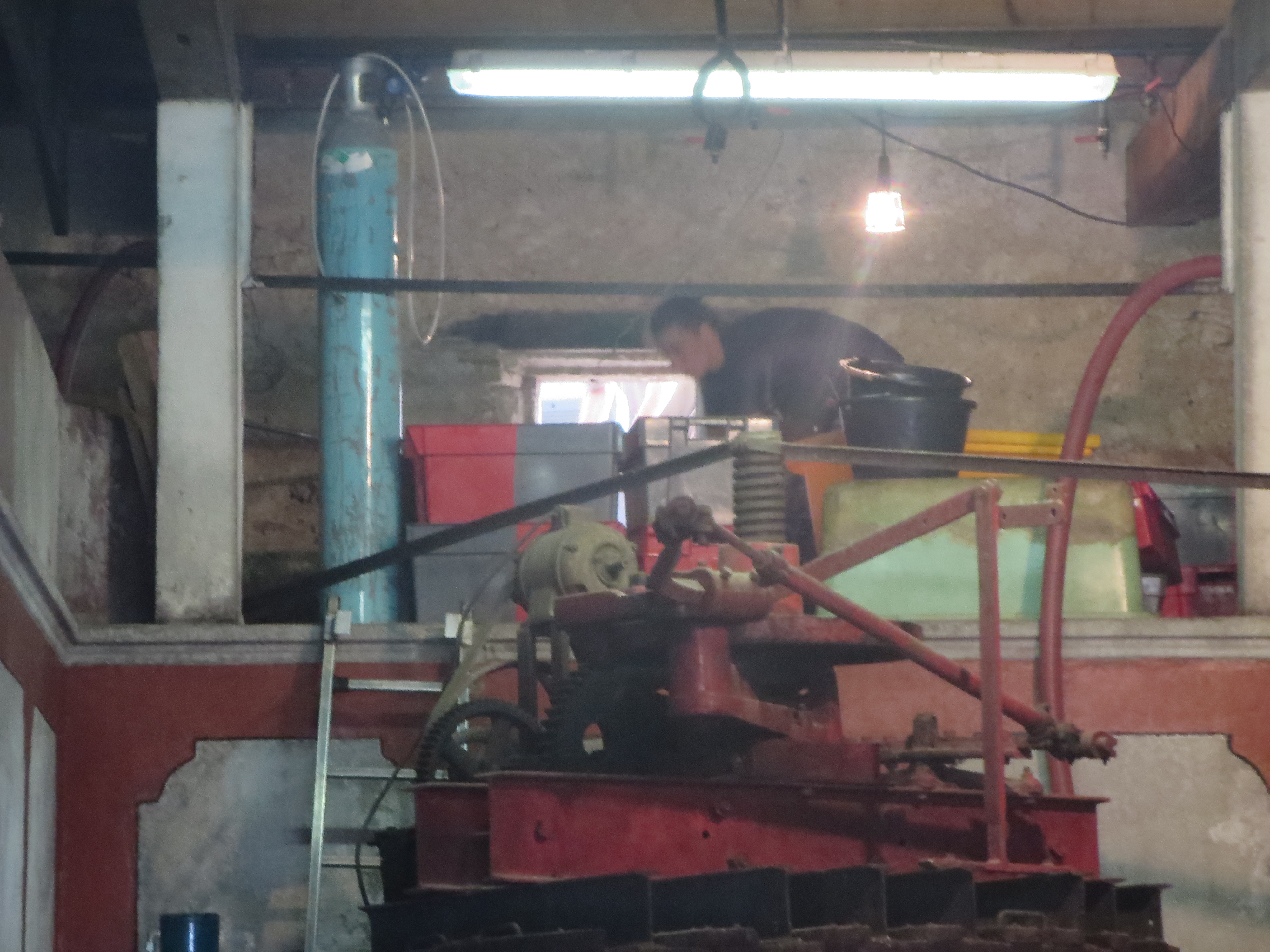
IMG_2239

Grapes arrive through the little back door above the cement tanks

To achieve this the tanks are filled from above so we worked in the space above the cement tank with the grapes arriving at the back door which is a level higher than the front door. The space is smaller and the heat from the grapes was high. It was hard work, believe me. Sorting still had to be done before the grapes could go into the tank, quality comes first.

IMG_2243

                 Some of the rejected bits

IMG_2246

 The pipe carries the CO2 into the tank

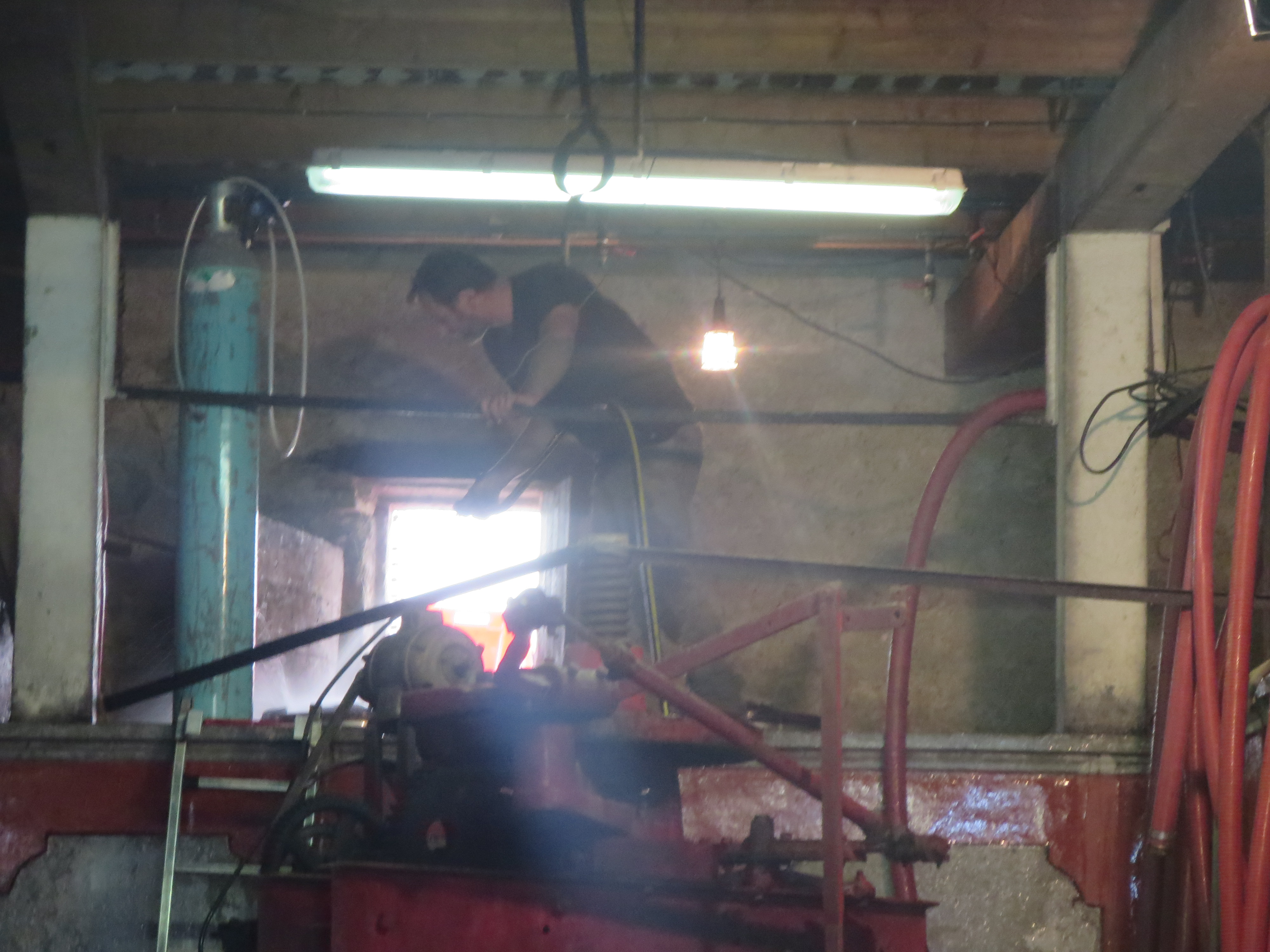
And after 9 hours of back breaking lifting, carrying and sifting it was, as ever, time to clean everything from top of the cellar to bottom as we see here with Jeff and Michel.
IMG_2248

IMG_2251

IMG_2247

        One visitor from the vineyard

IMG_2242

The boss letting us know we should get a move on

The night of the 31st brought a big storm with lots of rain, not the ideal conditions for harvest at all. Rain can cause rot and problems. However, it could have been much worse as news arrived of huge damage caused by hail in the Chablis region. For all the forecasts of how the harvest might turn out it is only when the grapes are safely in the tank that a vigneron can be assured of the quality of wine they might make. Commiserations to the Chablis producers.

September 1st was a quiet day as the rains from the storms meant the grapes were too wet to harvest. In the cellar more checking and remontage, the process of pumping the wine over the cap of skins and must. Further analysis of the wines showed that the yeasts are acting quickly and the fermentation is progressing very well.

IMG_2262

      Hard work!

Today, September 2nd, the remaining white grapes, Grenache Blanc, from La Garrigue. Then on to Peilhan to gather some of the white grapes there, Maccabeu, Grenache Gris, Carignan blanc and Clairette Musquée.
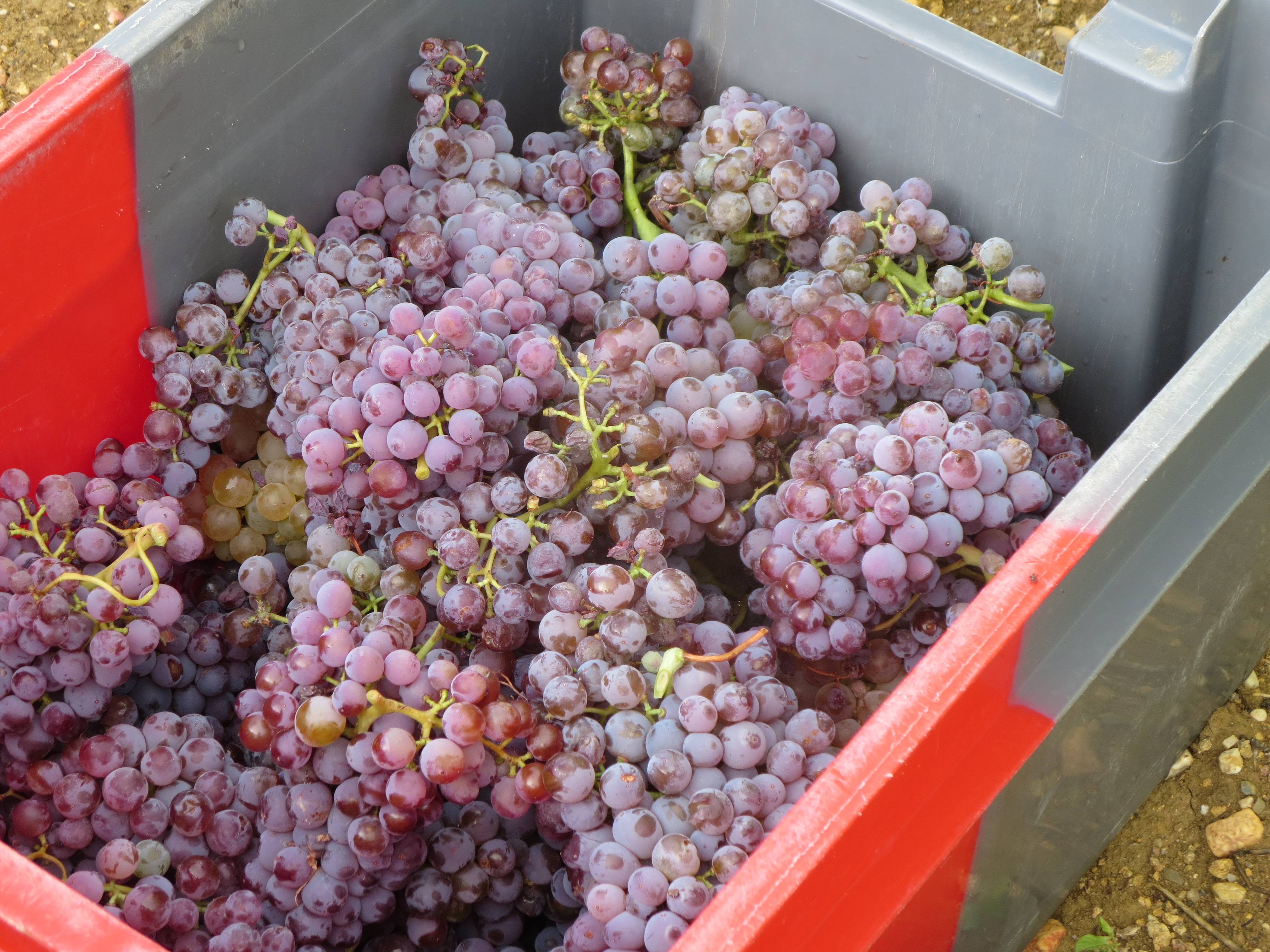
Grenache Gris
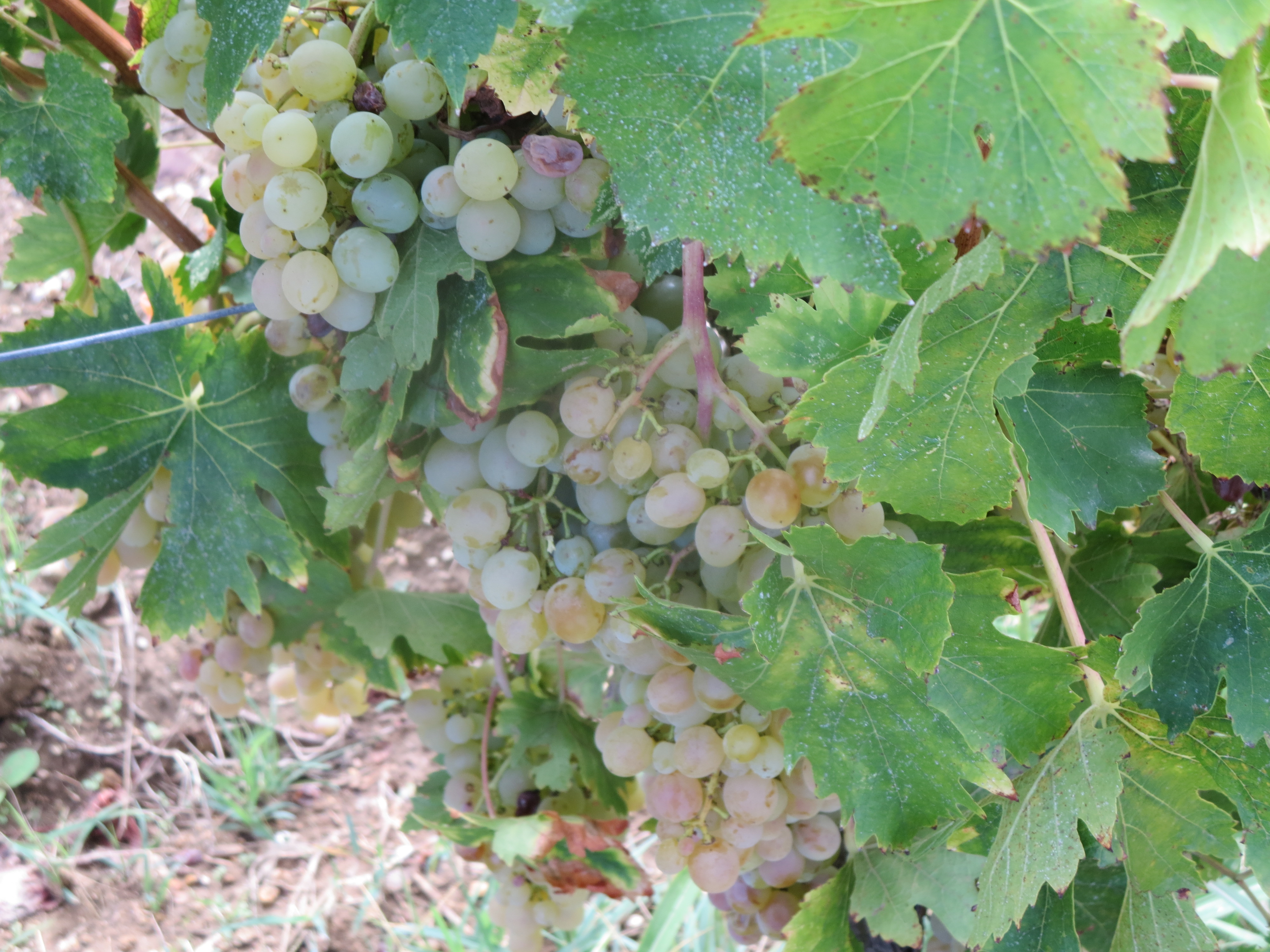
                                  Grenache Gris

Carignan Blanc

                                  Clairette Musquée

IMG_2260

      Michel

The core team of Jeff, Carole, Michel, Cameron and myself were joined by Matthieu who has worked the harvest before here. There were some lovely bunches though the wet weather has caused some rot inside some of them, Careful sorting took place in the vineyard to take only the best grapes which tasted really sweet and juicy, the Clairette was especially tasty.

IMG_2267

Cameron especially pleased with this bunch of Clairette

The white grapes were taken back to the cellar and placed in tank after being destemmed. It is possible that Jeff will make his first orange wine with them. An orange wine is a white wine made like a red wine, ir the wine is fermented on the skins thus extracting more colour, texture and flavour from them and giving the wine an orange tint. However, analysis and the next few days will be needed before the final decision is made.

Whites

In tank and the future might be orange

In the afternoon, Matthieu, Jeff and myself did more remontage of the Syrah grapes harvested in the last week, which is already tasting well, with very healthy technical analysis and beautiful aromas. And, then, as ever, the cleaning.

IMG_2277

              Matthieu carrying out remontage

IMG_2283

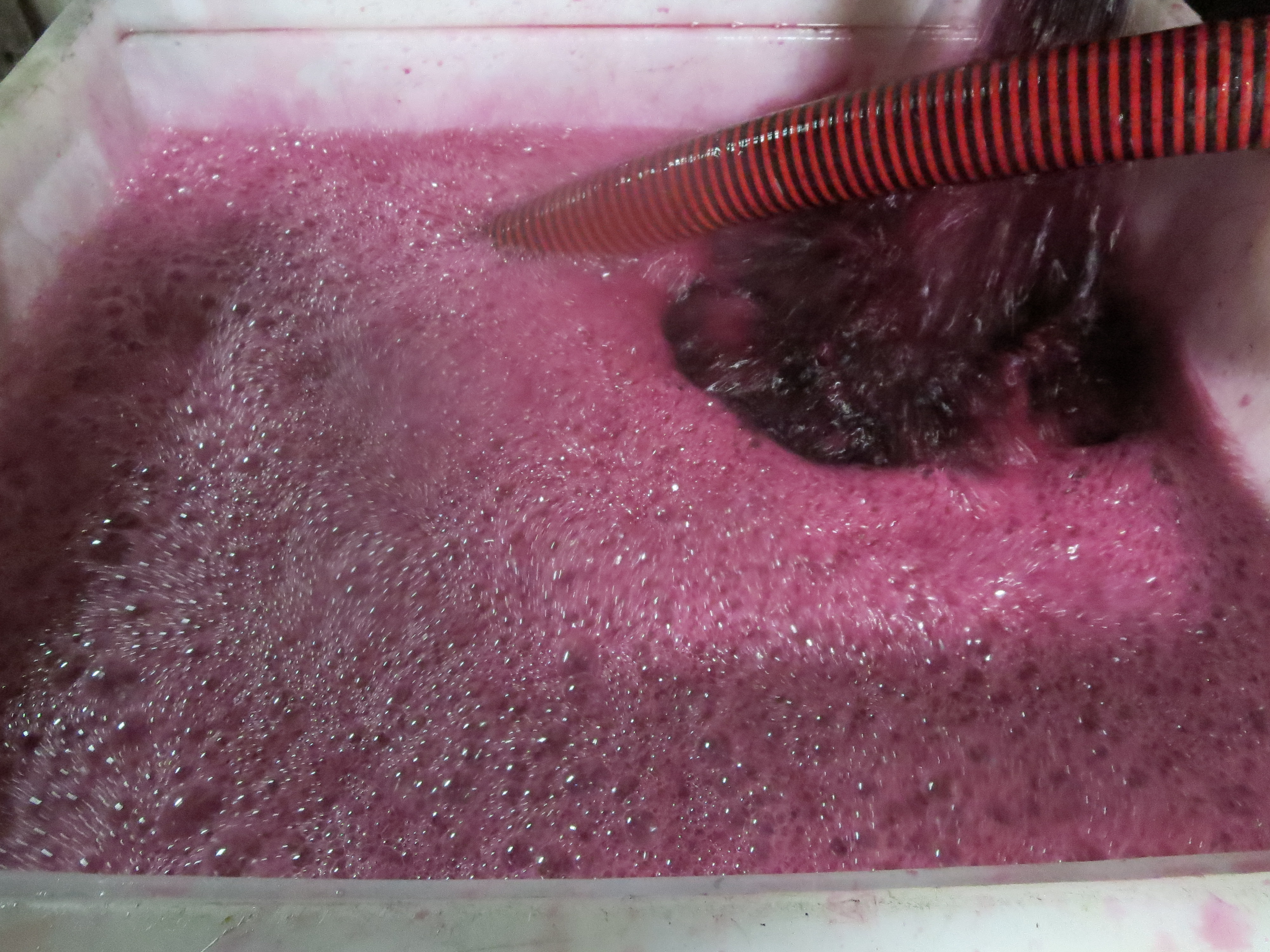
  Remontage, the juice flows over the cap of must
Syrah from Ste Suzanne

    Beautiful colour of the Syrah from Ste Suzanne
IMG_2269


4 Comments

Vendanges diaries (1)

IMG_2201

                       Syrah so good you have to taste it now

Version française

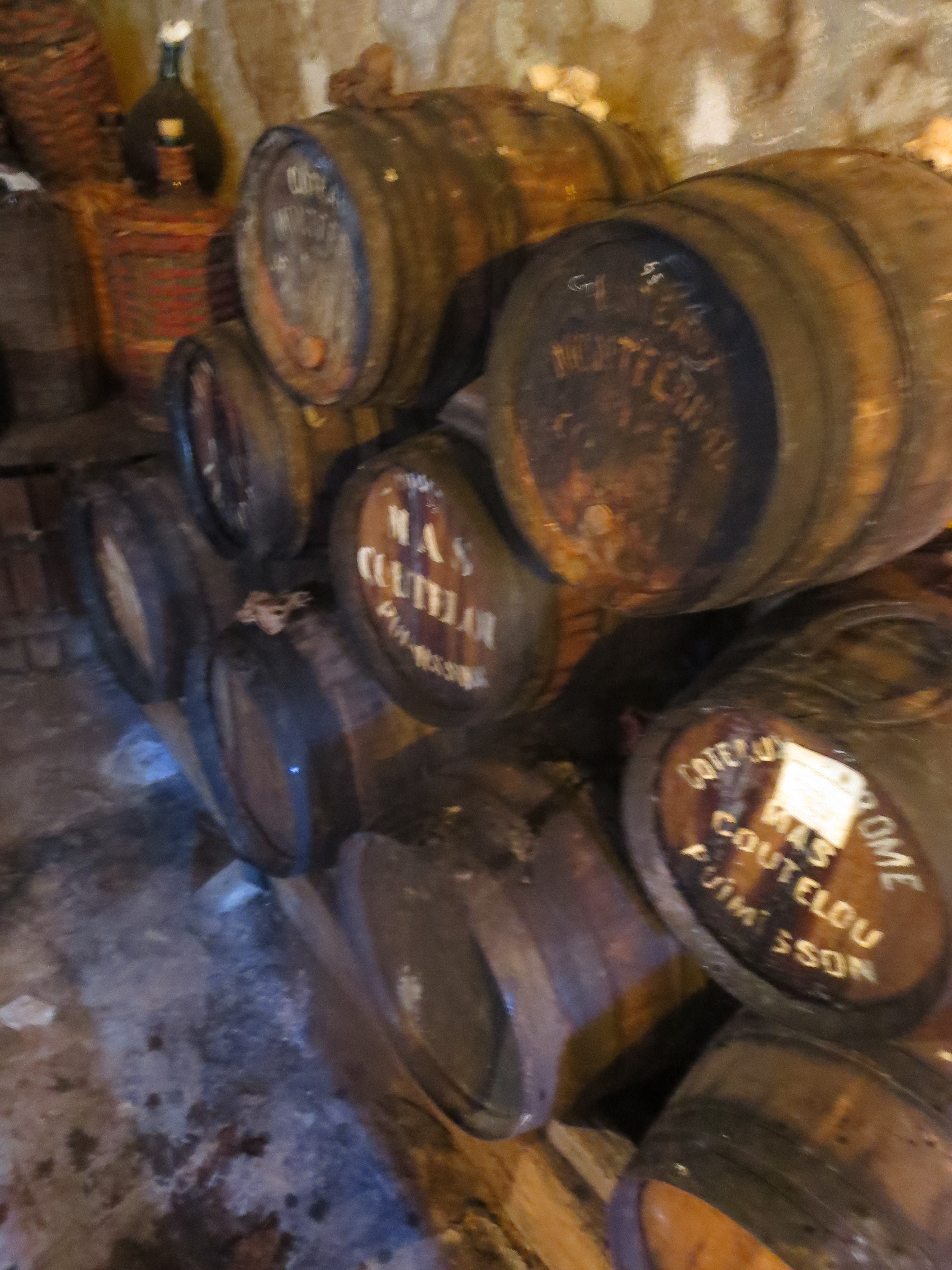
The harvest (vendange) began on Friday August 21st with a small parcel of Muscat grapes as described here.  The next few days saw further preparations for the main harvest, for example clearing space in the barrels of the solera system for this year’s grapes. I shall write more about the solera later in the year.

IMG_2173

                                     Solera system

So, it was Thursday 27th which was the start of the real vendanges with parcels of white and Syrah grapes collected from La Garrigue. This day was described here.

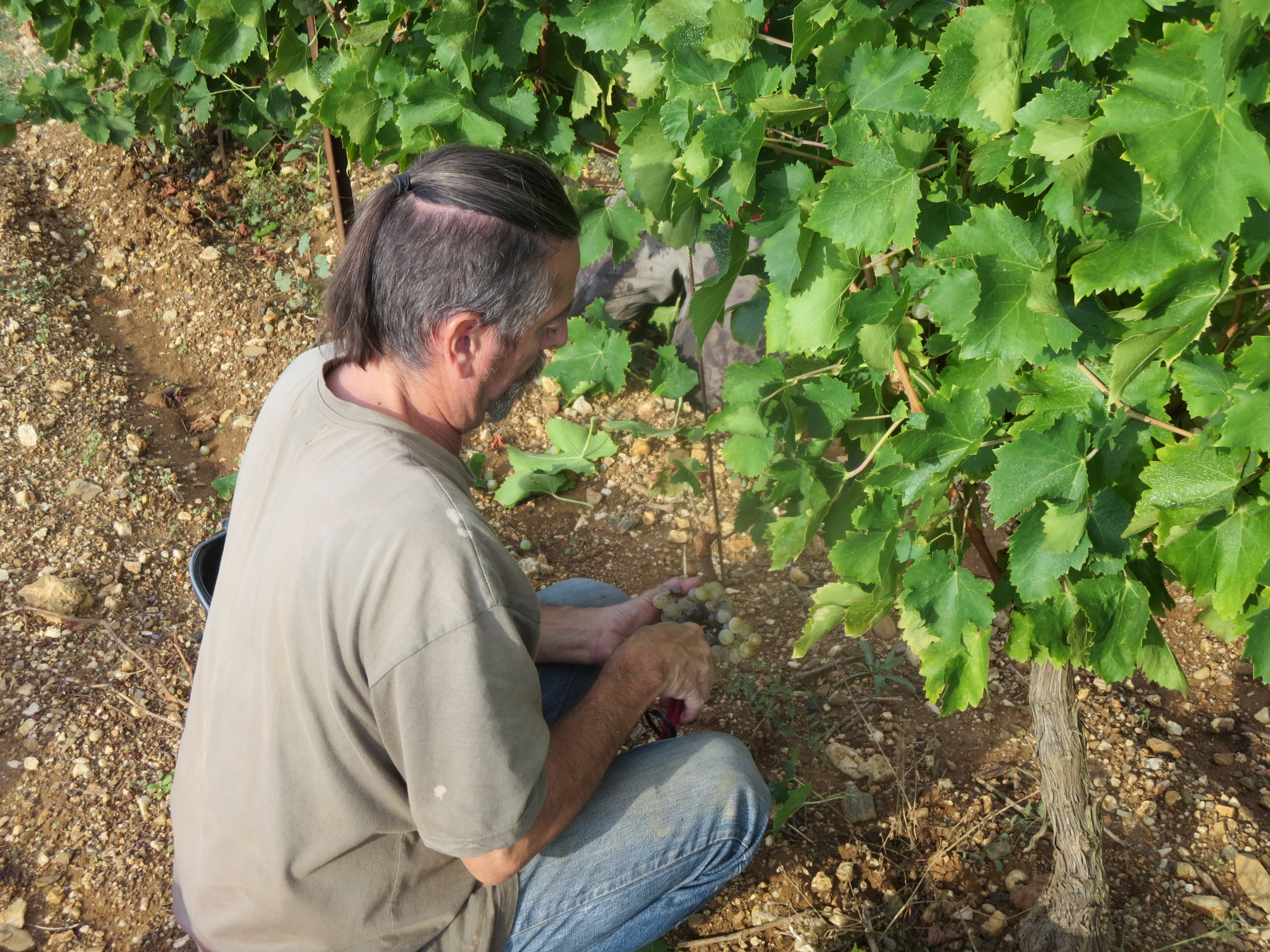
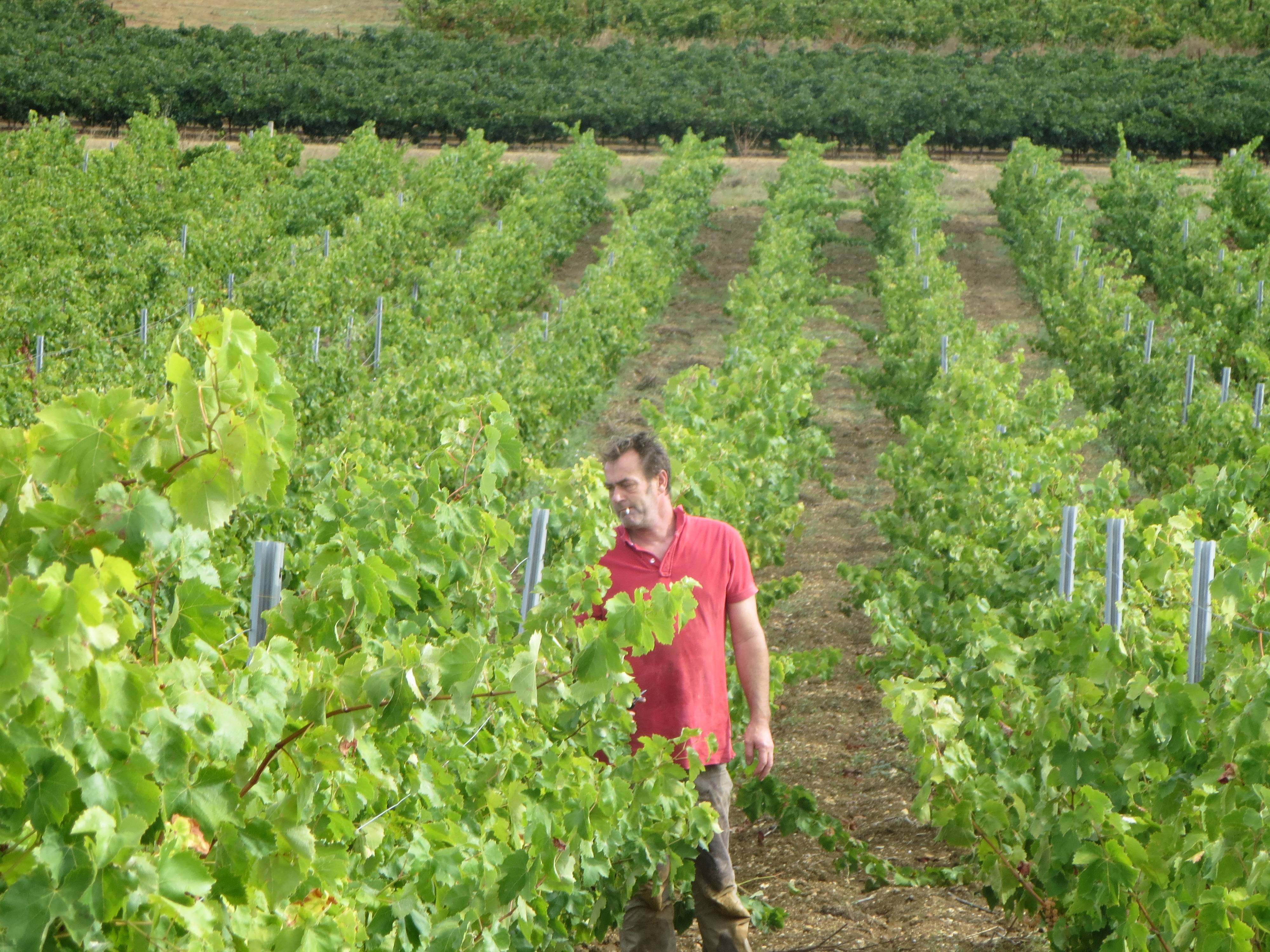
Friday 28th saw more Syrah being harvested, this time the Syrah of Metaierie usually referred to as Sainte Suzanne by Jeff. This is the vineyard of Vin Des Amis though options are always open. The pickers, led by Carole and Julien, worked through a cloudy morning to collect some high quality bunches.

IMG_2200

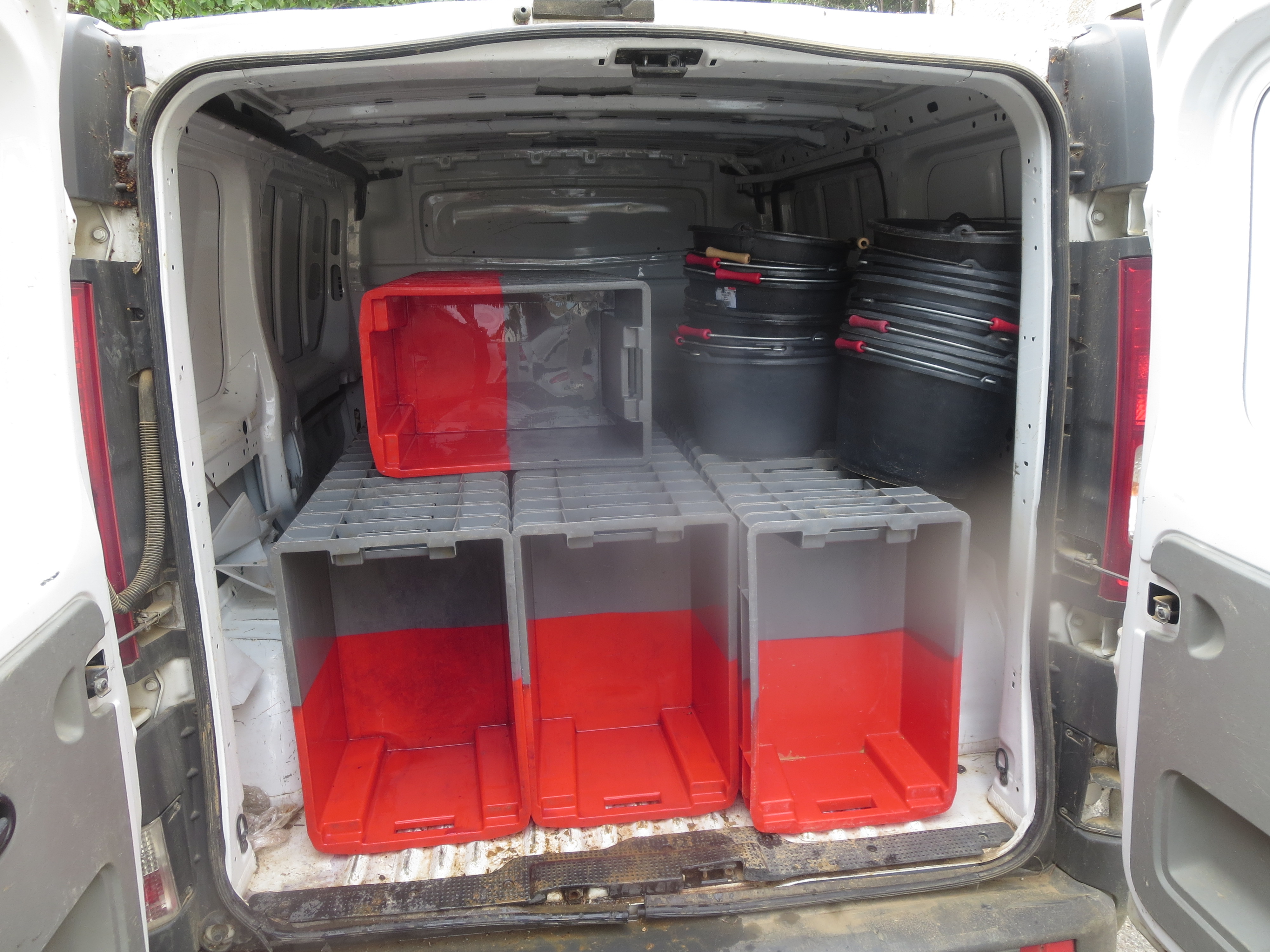
Michel transported the cagettes  back to the cellar as quickly as possible. The cagettes are about two thirds filled so as not to overload the grapes in there which might damage them.

IMG_2199

                  No, these cagettes are not full!

Upon arrival at the cave the cagettes are quickly taken for triage, sorting through the grapes to select only the best quality. Foreign objects such as snails and spiders are removed as are unripe grapes, any damaged or rotten grapes. It is important that only the best goes into the wines to keep them fresh and at the high quality we expect from Mas Coutelou. Two people sift through the cagette, removing any inferior grapes for further sorting by a third person. Jeff, Cameron and I took these roles on Friday. It is hard work, on your feet all day and lifting, carrying and sorting requires physical effort and also full concentration. There is, happily, also time to chat and laugh.

IMG_2203

IMG_2205

Cameron is from Melbourne, Australia and has been living and working in London as a sommelier for four years. He decided to learn more about the winemaking process and to “get his hands dirty”. He is already proving his worth and is a great addition to the team.

IMG_2202

Meanwhile, the grapes which had gone to vat (cuve) have to be taken care of. Fermentation has started and the wine is already producing material which needs to be removed to keep the wines clean. They are, therefore, pumped out of their original cuve into another to allow the waste to be cleaned away and the fresh, juice ready to settle for its longer journey of fermentation.

IMG_2210

Fermentation beginning in the Sauvignon Blanc grapes collected yesterday (Thursday)

And at the end of the day the cleaning work is intense. Everything is cleaned throughout the day but at its end another full clean takes place. This removes the risk of contamination from dirt or damaged fruit which would ruin the wine. It is laborious but necessary.

IMG_2213

                                Julien cleaning the cagettes

IMG_2212

                                         Ready for tomorrow

IMG_2215

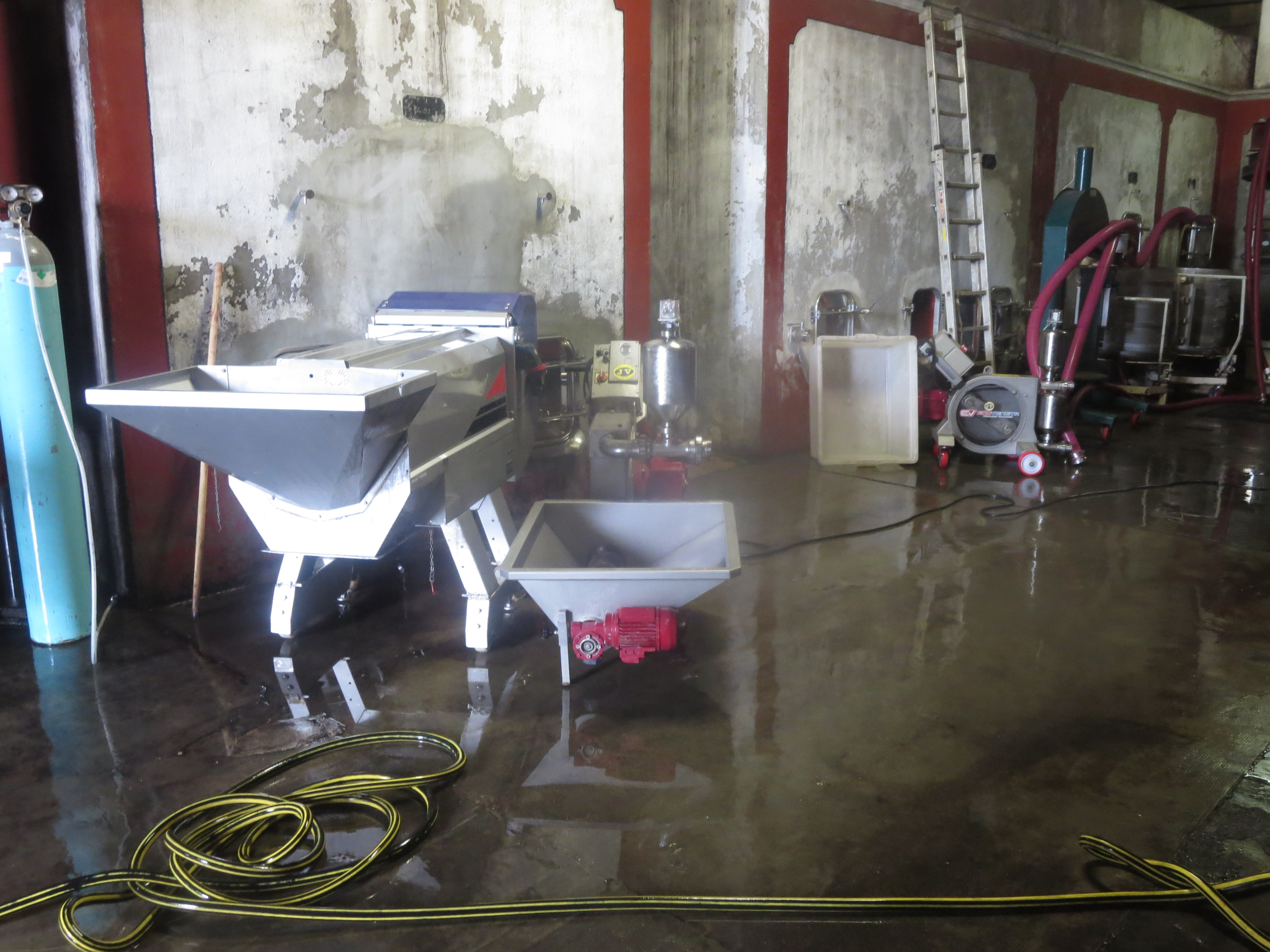
    The égrappoir (destemmer) ready for tomorrow too

IMG_2216

   What else needs cleaning? Proof that I did work!

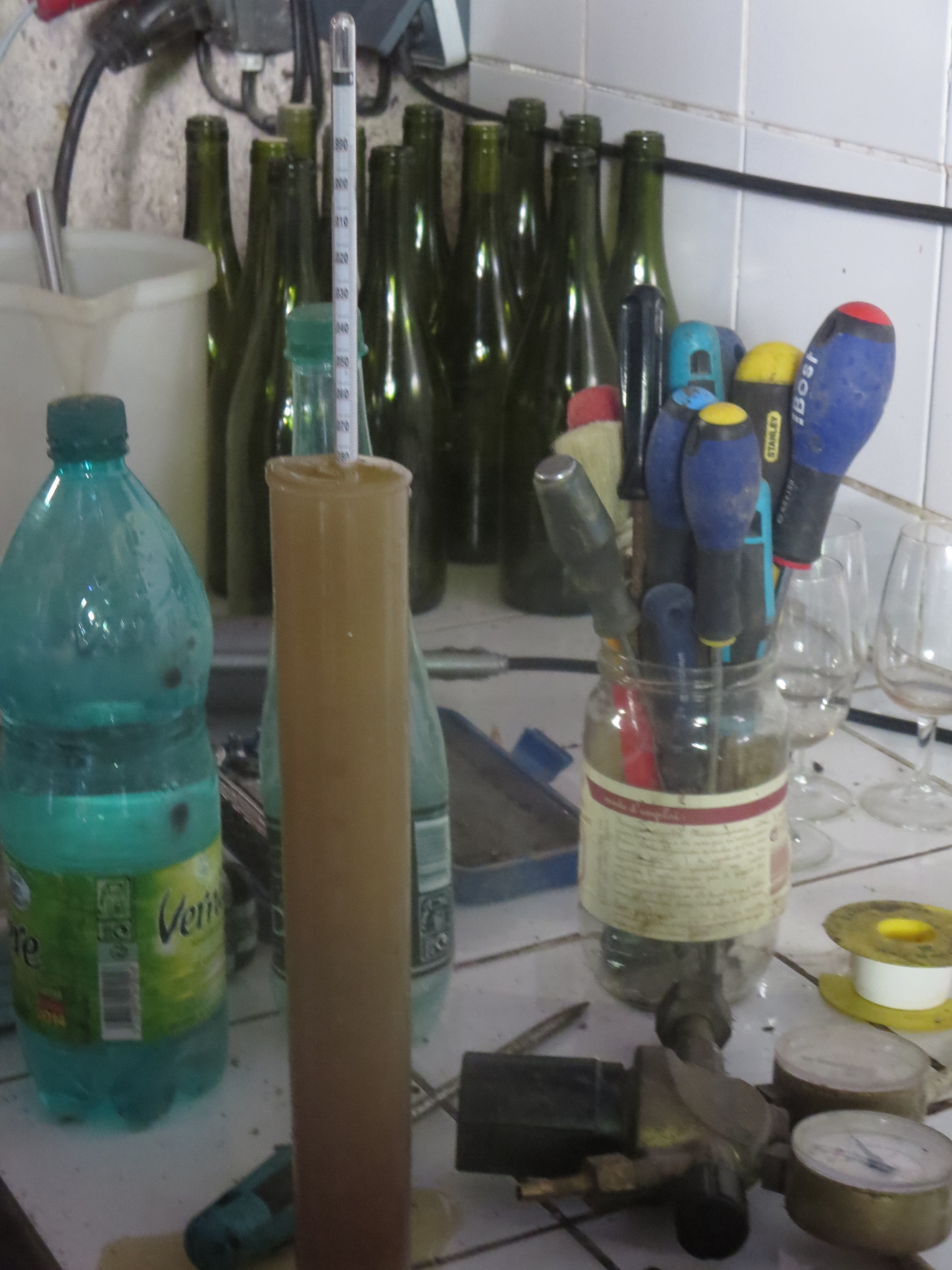
Analysis of the Syrah showed that the alcohol level was around 12.7% with medium levels of acidity. Later picking would have added more sugar and more potential alcohol but would have lowered levels of acidity. The skins are essential to the quality of the wine as they contain the colour, tannin and much of the flavour of the wine. These were in excellent condition according to the analysis, good news.

IMG_2214

Jeff’s own calculations from cellar tests. Samples go to the oenologue for full analysis

IMG_2208

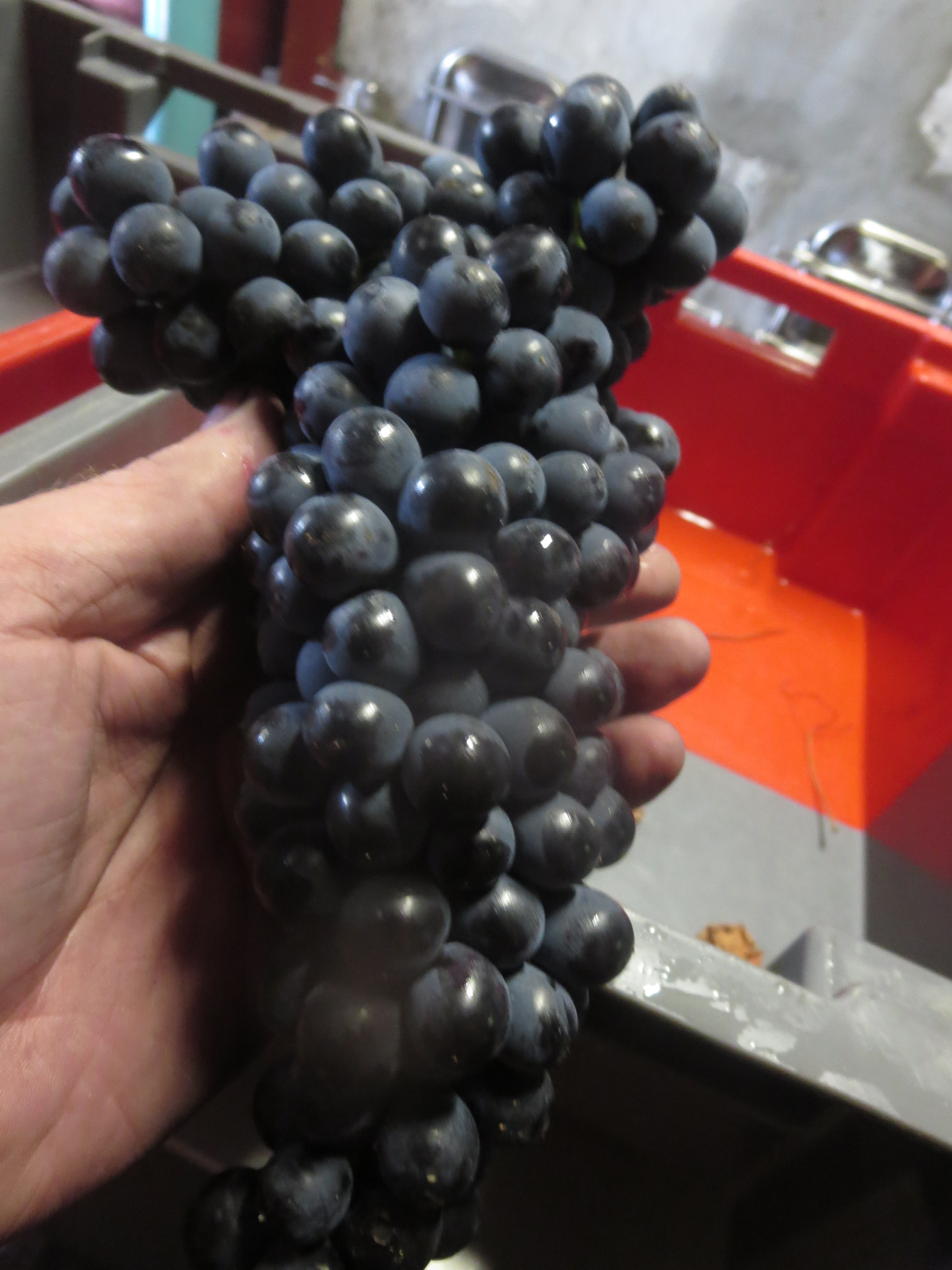
   Classic shape for a bunch of Syrah grapes

There have already been some concerns expressed by winemakers and analysts that the heat of 2015 might affect the quality of wines around France especially regarding acidity. The decision to harvest the Syrah was therefore the right one, fresh, cleansing acidity is a hallmark of Jeff’s wines. Many winemakers have been waiting to start harvest as, on August 30th, the moon is at a perigee, the time when it is closest to Earth in its orbit. As it begins to wane and move away from Earth many winemakers will start their harvest. Jeff has chosen to put the quality of the grapes first rather than principles about biodynamics.

IMG_2224

   Moon over Margon at its perigee on August 30th

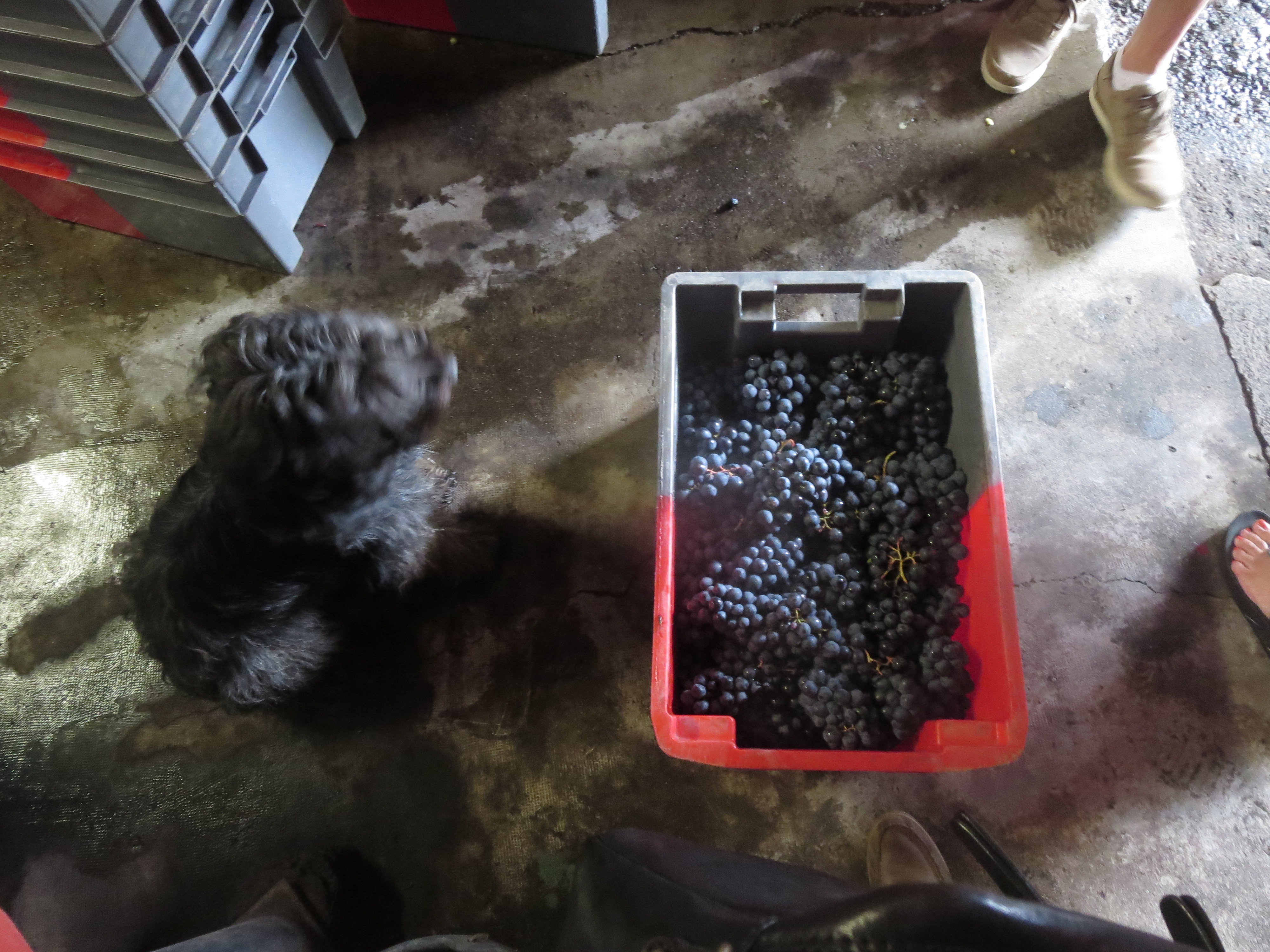
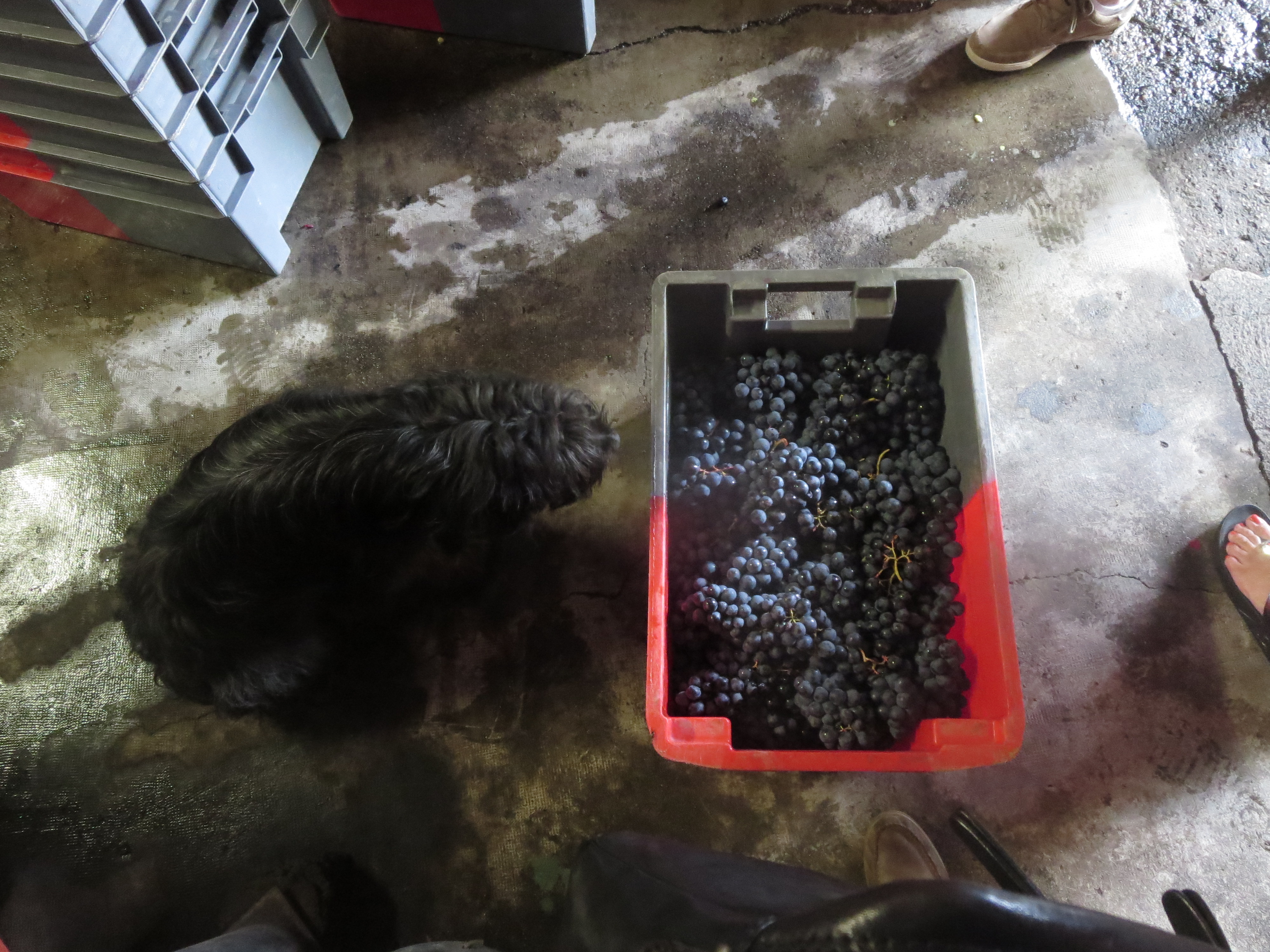
Saturday 29th was a work day for the cellar and the pickers and saw the harvesting of Cinsault grapes from my favourite vineyard, Rome. The grapes were big and juicy though some were uneven and needed more careful sorting. Clearly these were precious grapes as Icare was guarding and watching over them assiduously. The harvest was not as big as many years and so the pickers moved onto Sainte Suzanne again for more Syrah grapes whilst yesterday’s grapes have begun to ferment already.

IMG_2222

                      Carole picking in Ste Suzanne
Cinsault from Rome

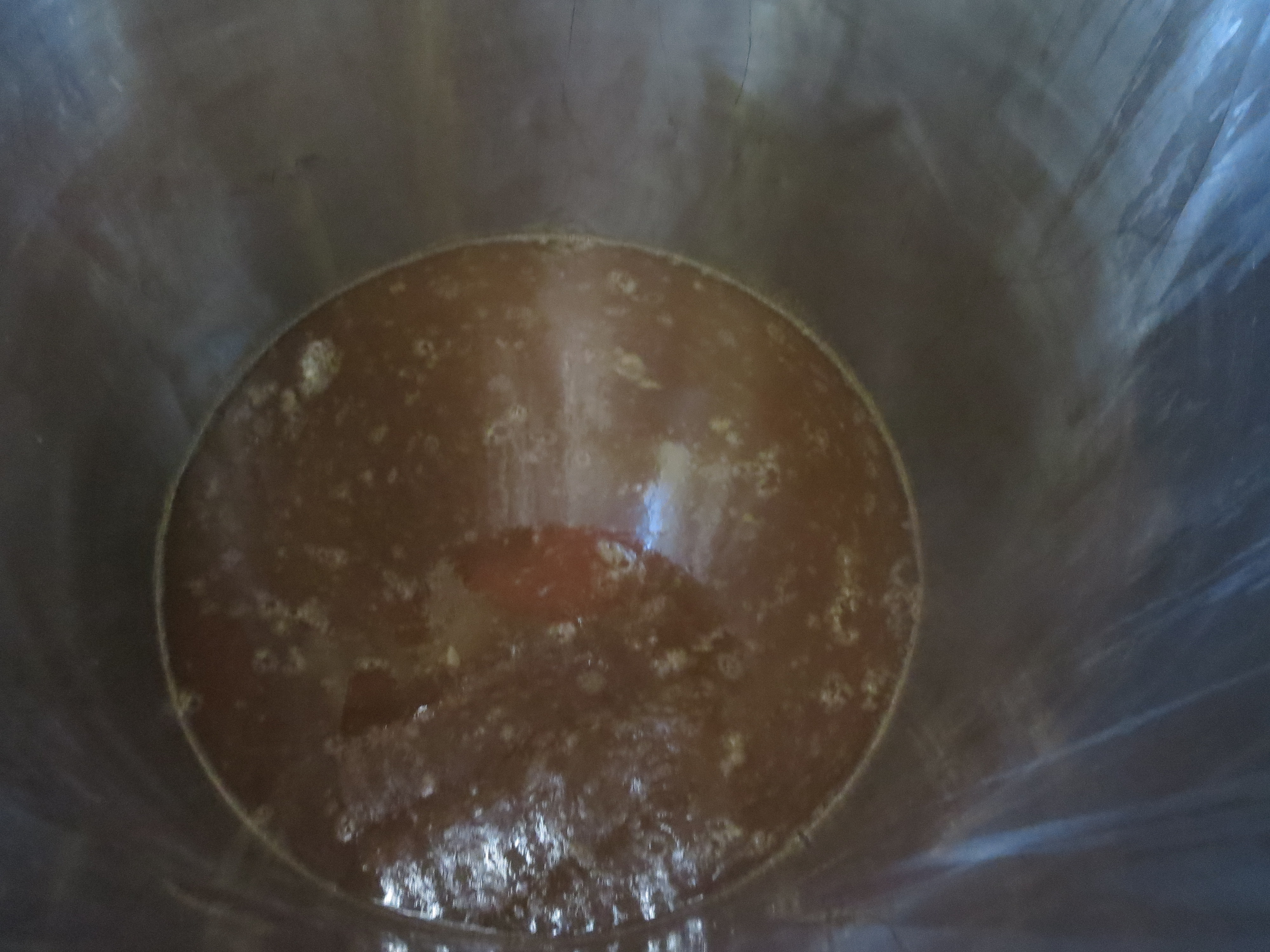
   Cinsault from Rome, big and juicy

IMG_2221

        Friday’s Syrah ferments in cuve

             IMG_2219        IMG_2220

                                                                   Icare, connoisseur and guard dog


4 Comments

And they’re off

IMG_2144

Version française

When I arrived in Puimisson I was rather taken aback to find Michel turn up with a van full of grapes. Jeff had decided that the Muscat was ready and there was no reason to delay.

IMG_2147

Blogger and teacher David Farge was present with his young son Jules who got things flowing by treading the grapes.

IMG_2148

A dozen cagettes of grapes were quickly transferred to the small press and the first juice of the 2015 vintage was flowing within a few minutes of the grapes being picked.

IMG_2149

The first juice was showing around 11,5 degrees of alcohol which will develop into around 13 to 14 when finished. Three pressings were made with stronger juice flowing.

IMG_2151

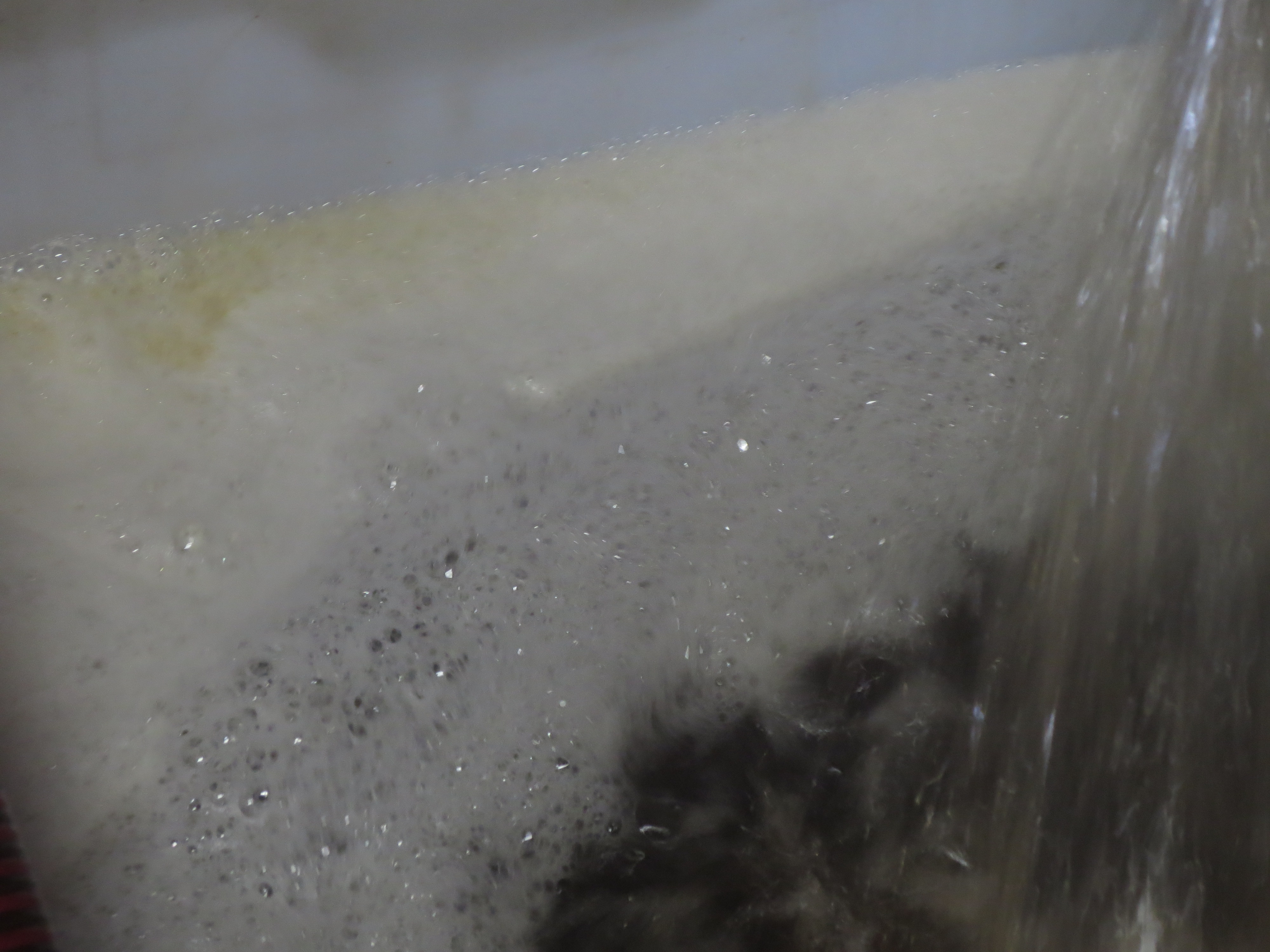
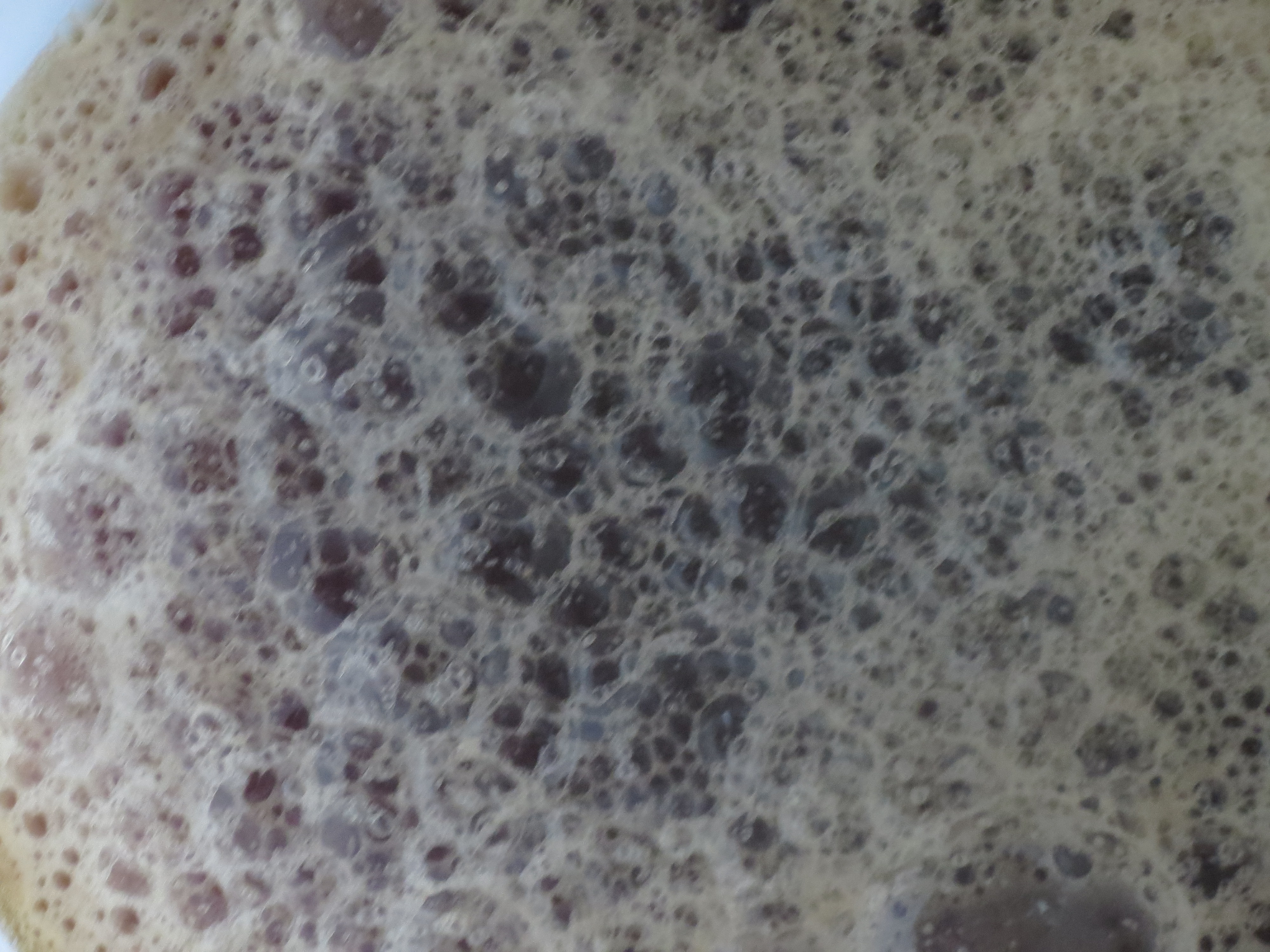
And the fermentation was starting almost as soon as the juice flowed as you can see in this bucket. If only there was smellavision to let you share the glorious juicy sweet grape aromas which filled the cuve and the cave. And of course the juice tasted just lovely.

IMG_2157        IMG_2159

And so, it has started, the vendanges are underway and next week things will move onto a much bigger scale. As you can see everything is ready. And the team is now already in the groove thanks to the muscat.

   IMG_2162             IMG_2160


2 Comments

Hold the presses!

IMG_0160

   IMG_0141

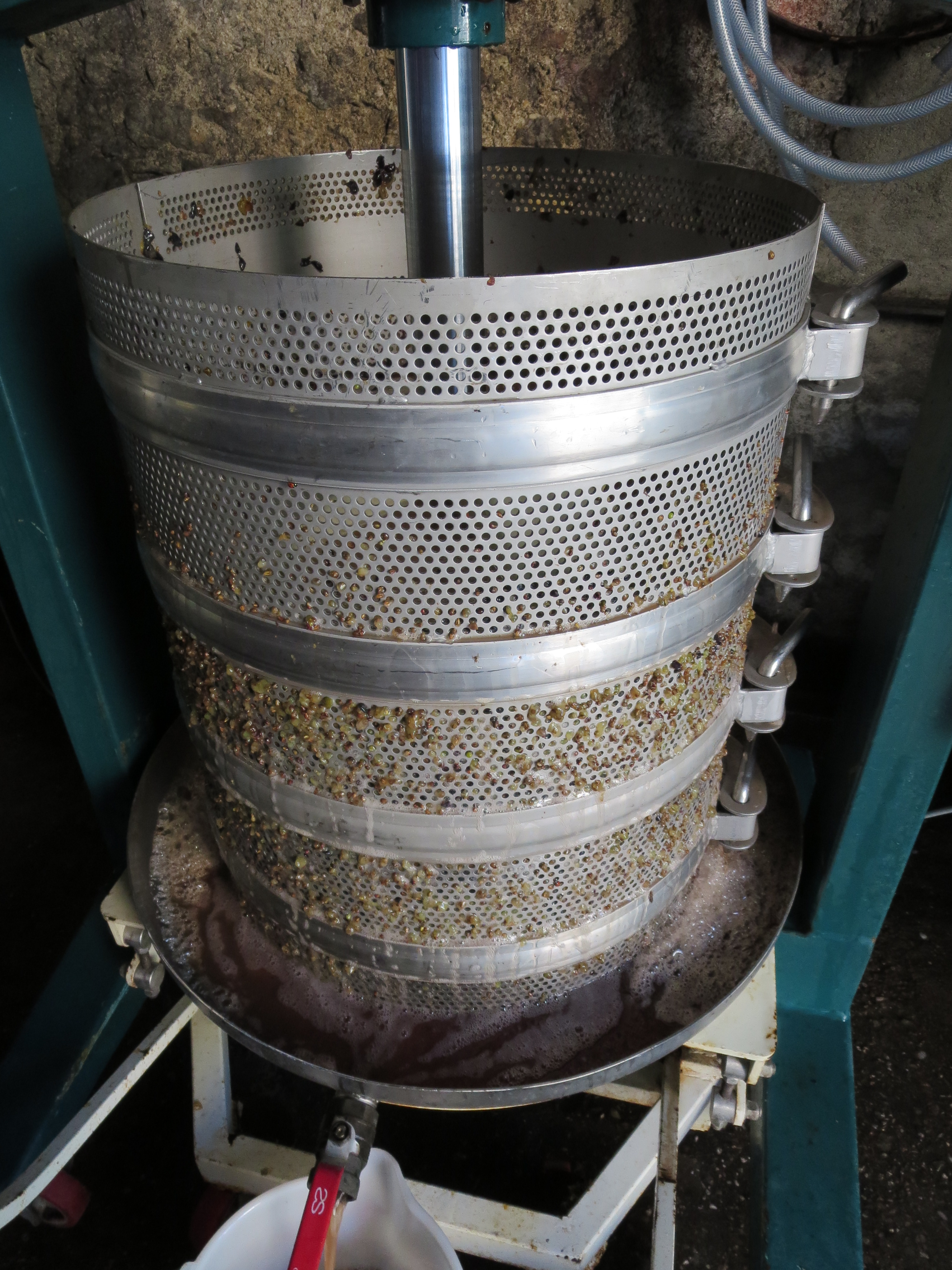
Both of these objects are wine presses, one more modern than the other. Whilst the large press has taken the bulk of the work in recent weeks the small press has its role too. It is also an olive press incidentally. It is used mainly for small production wines and I was lucky enough to be trusted to supervise its use for the pressing of muscat and grenache grapes which will make into the fortified wines which Jeff Coutelou produces in addition to his table wines. The ‘vieux grenache’ wines are made in different methods as I shall describe in future posts including a fantastic solera type system with wines dating back many, many years to previous generations of the Coutelou family. They are, of course, delicious.

Michel unloads the grapes, he is in Jeff's words his 'main gauche' (left hand)

Michel unloads the grapes, he is in Jeff’s words his ‘main gauche’ (left hand)


Grenache and muscat grapes ready for pressing

Grenache and muscat grapes ready for pressing


The grapes are sorted and then loaded into the cage and wheeled into place. The press is lowered and the juice begins to flow.

Pressing

Pressing

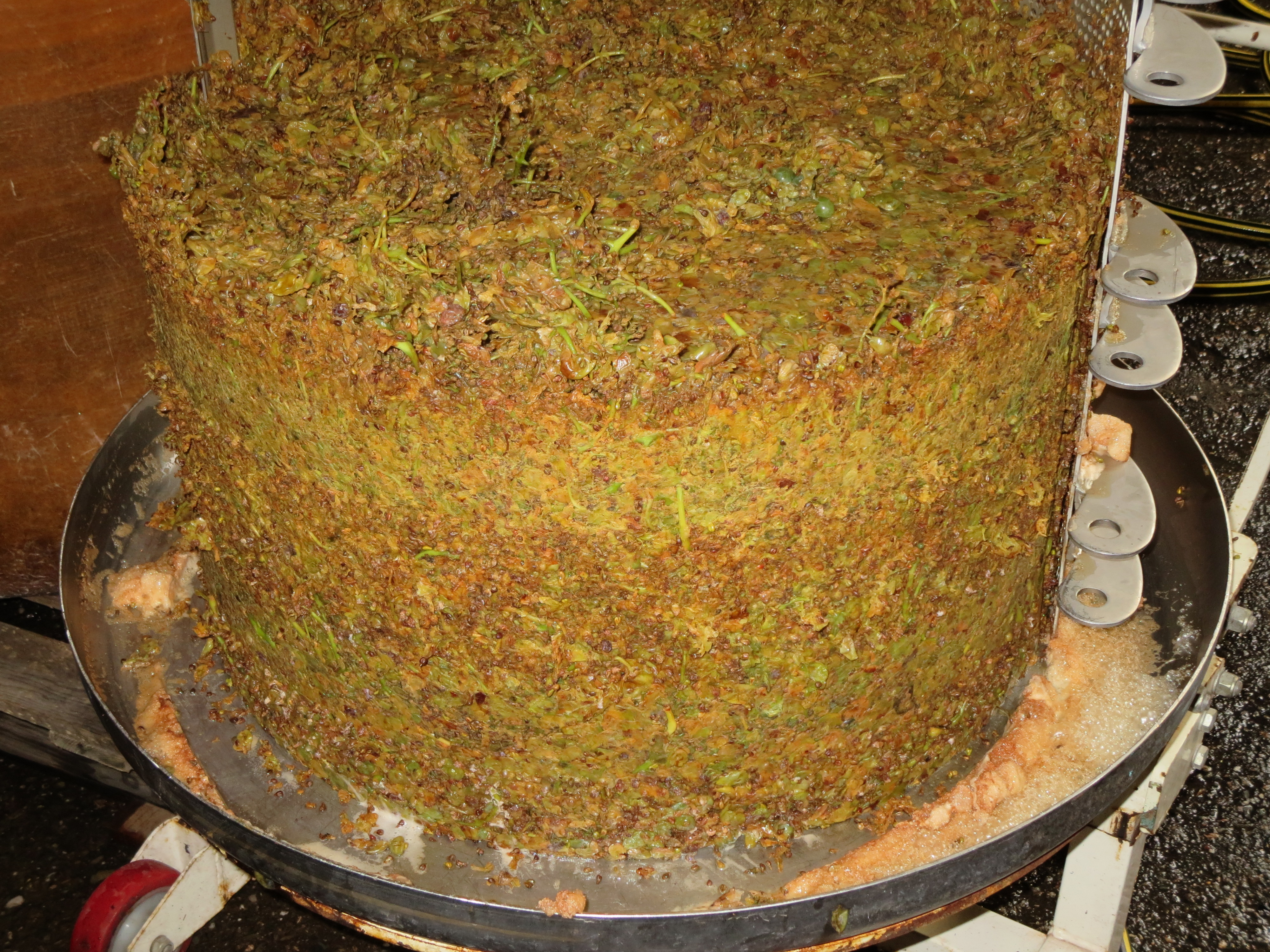
The major lesson is to be careful about how much pressure is used as if you press too hard the mass of grapes, stalks and pips becomes too hard and the juice will not flow freely. I confess to pressing a little too hard at first but fortunately rectified it before any damage was done. The juice is taken to container for fermentation and the pressed grapes, the gateau, is disassembled and returned to press for a second and third time. The gateau becomes almost a work of art.

Gateau in the sunshine

Gateau in the sunshine

The wine begins its fermentation in the tank and after this has finished the wine is put into barrel for the first time. Depending on its development Jeff will blend this wine with previous vintages or allow it to develop in barrel for a number of years.

IMG_0188

Tina transfers the fermented wine into barrel

The other pressing I supervised was the Carignan Blanc. Jeff was pleased with this crop and decided that he would make a new white wine using only these grapes. The procedure was identical though I thought I’d highlight one extra feature. Many people commented after a previous post that they were disappointed I did not get my socks and shoes off and start to tread the grapes. Well I was rather shocked to see that treading does still happen! Instead of bare feet though new, perfectly clean wellington boots do the job, a light pressing (so that ruled me out!) to start the process moving even before the press gets to work.

Treading

Treading

Yours truly at the press

Yours truly at the press

The gateau was just as spectacular and you can see in the photo below the layers created by the 3 pressings.

IMG_0178

A serious point. Jeff was keen to point out that the Carignan Blanc grapes took 10 people 2 hours to pick. We took a whole day to press the grapes, myself and supervision from the patron with others helping to take the gateau apart and then reassemble it for the various pressings. The grapes will be fermented, pumped over, stored in barrel. So when we think twice about the price of wine think about the amount of work which has gone into it, especially for crafted, artisanal wines such as these. And after all that only 420 litres were produced, around 500 bottles or so.

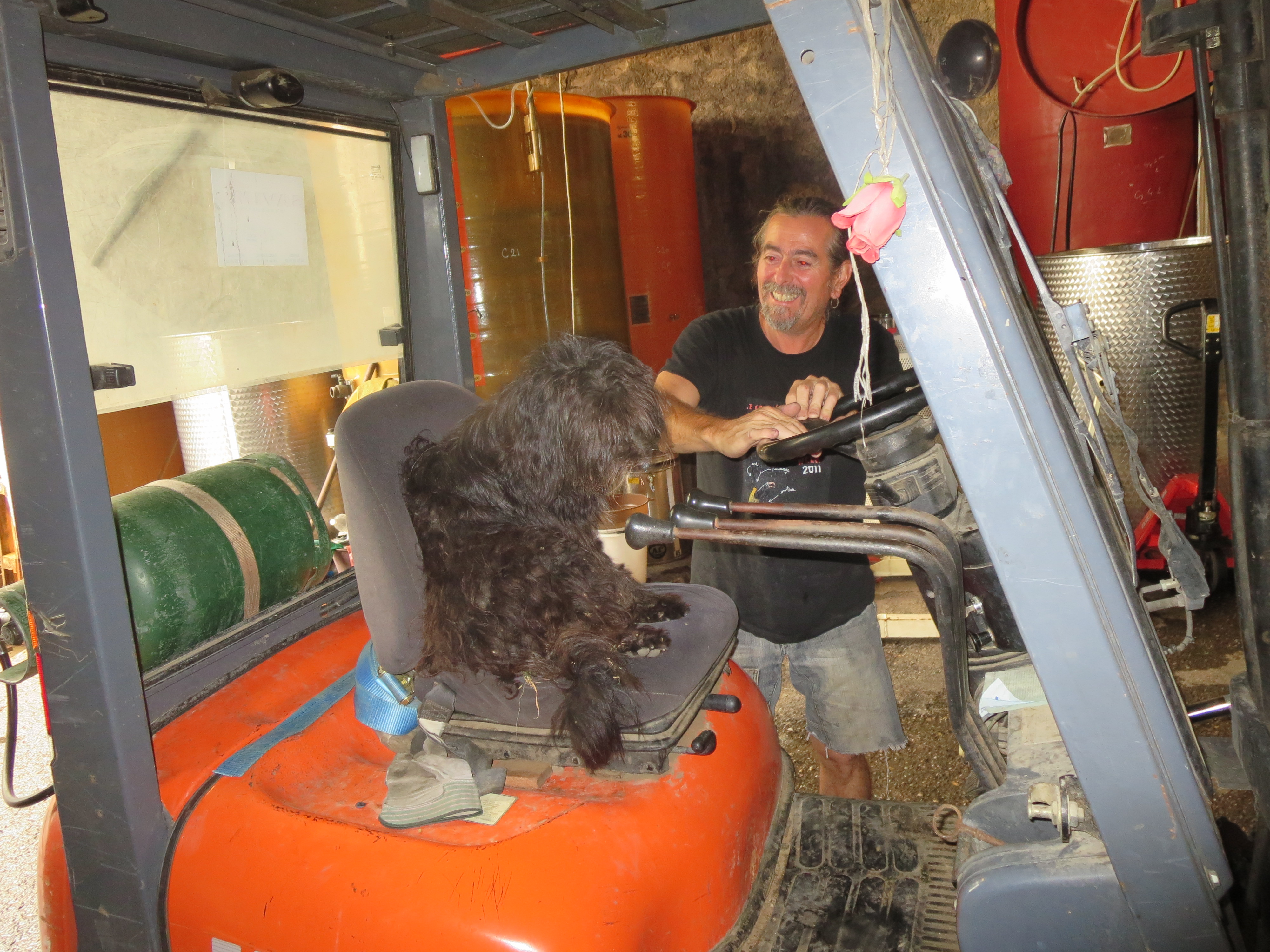
On a less serious note, we now know who is the patron, let me introduce Icare, the real driving force behind Mas Coutelou.

IMG_0179

Icare takes the wheel