Some interesting reading of recent months is worth sharing I think with my comments added, not so interesting.
Emotio is a wine business offering digital and web based support to the drinks industry. I read their 2024 end of year report and saw that yesterday this had been updated on their website by Damon Segal. It is interesting because it follows up some of what I wrote last time about the decline in wine sales. The article says that though value of wine sales in the UK has risen the actual number of wine consumers has fallen by 12.5%, much higher than I expected. That is particularly the case with younger consumers who are turning to beer, cocktails and gin rather than wine. Depressing reading for those of us who are wine nuts and want to share their passion.
On the other hand there are some interesting trends in wine consumption. Encouragingly the main one is towards sustainability, drinkers seeking out low intervention and organic wines. Music to my ears, of course, though I do recognise that there are some outstanding conventional wines out there. People are also buying more online, increasingly drinking their purchases at home, purchases which are moving up in quality. That said supermarkets are still dominant and bulk wine sales form the backbone of wine sales. Even there though labels are starting to recognise the value of storytelling with label information, tying in with the Dariusz Galasiński article I quoted last time.
Amongst other trends: sustainable packaging such as lightweight bottles and alternatives such as bags, boxes and cans; low and no alcohol wines (this writer sighs deeply); English wines expanding their share of the sparkling wine market in particular; tax rises and supermarket offerings such as the excellent M&S Found range are encouraging consumers to experiment with new wines.
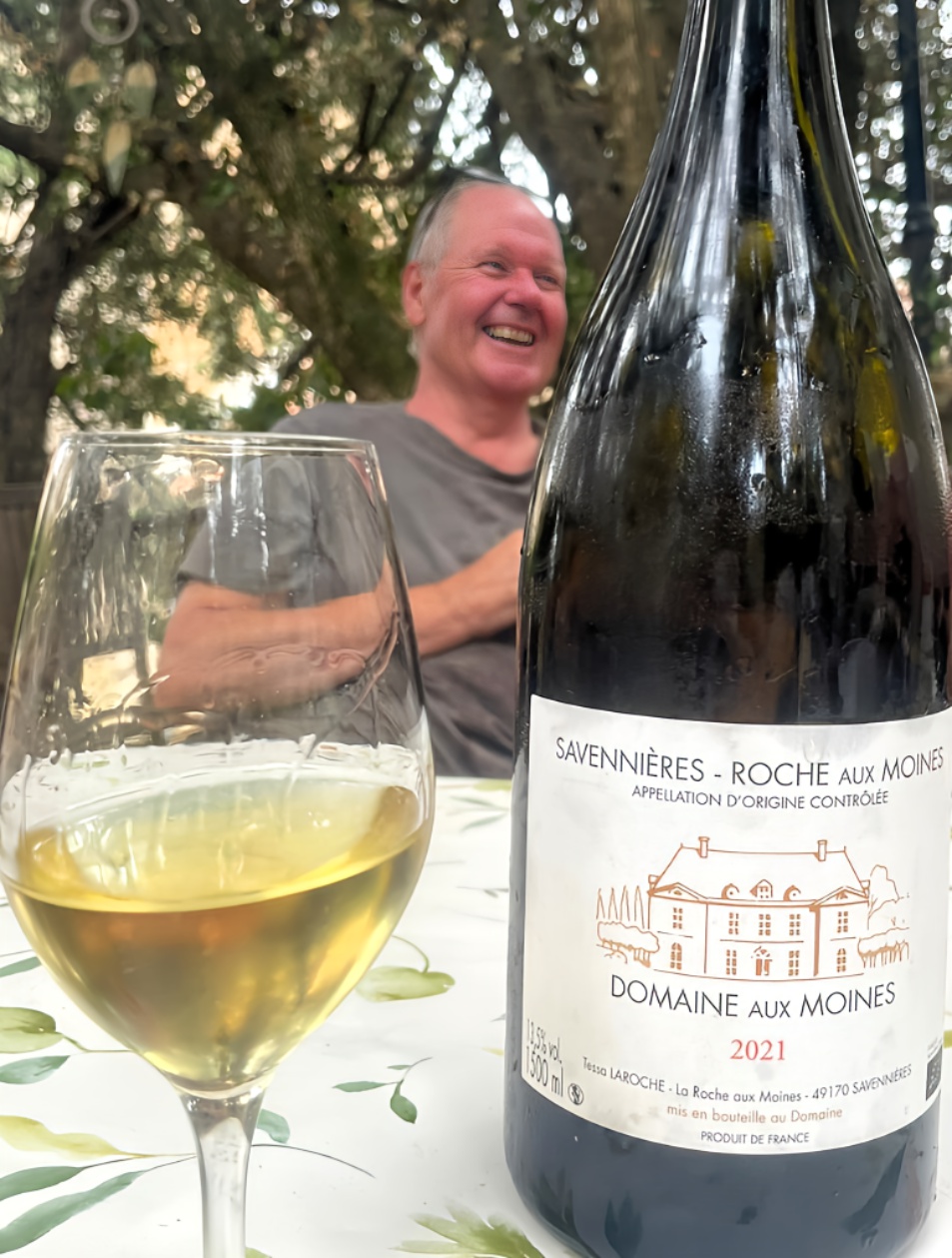
Elsewhere it has been widely reported that consumers across the world as well as the UK are shifting preferences towards white wines from reds. I looked at my own purchases and, once again, I am not on trend though regular readers will recall that most of my favourite wines of 2024 were white wines such as Edetaria’s Finca La Terrenal and Domaine Aux Moines’ Savennières Roche Aux Moines and, putting my money where my keyboard is, I have purchased some more of these.

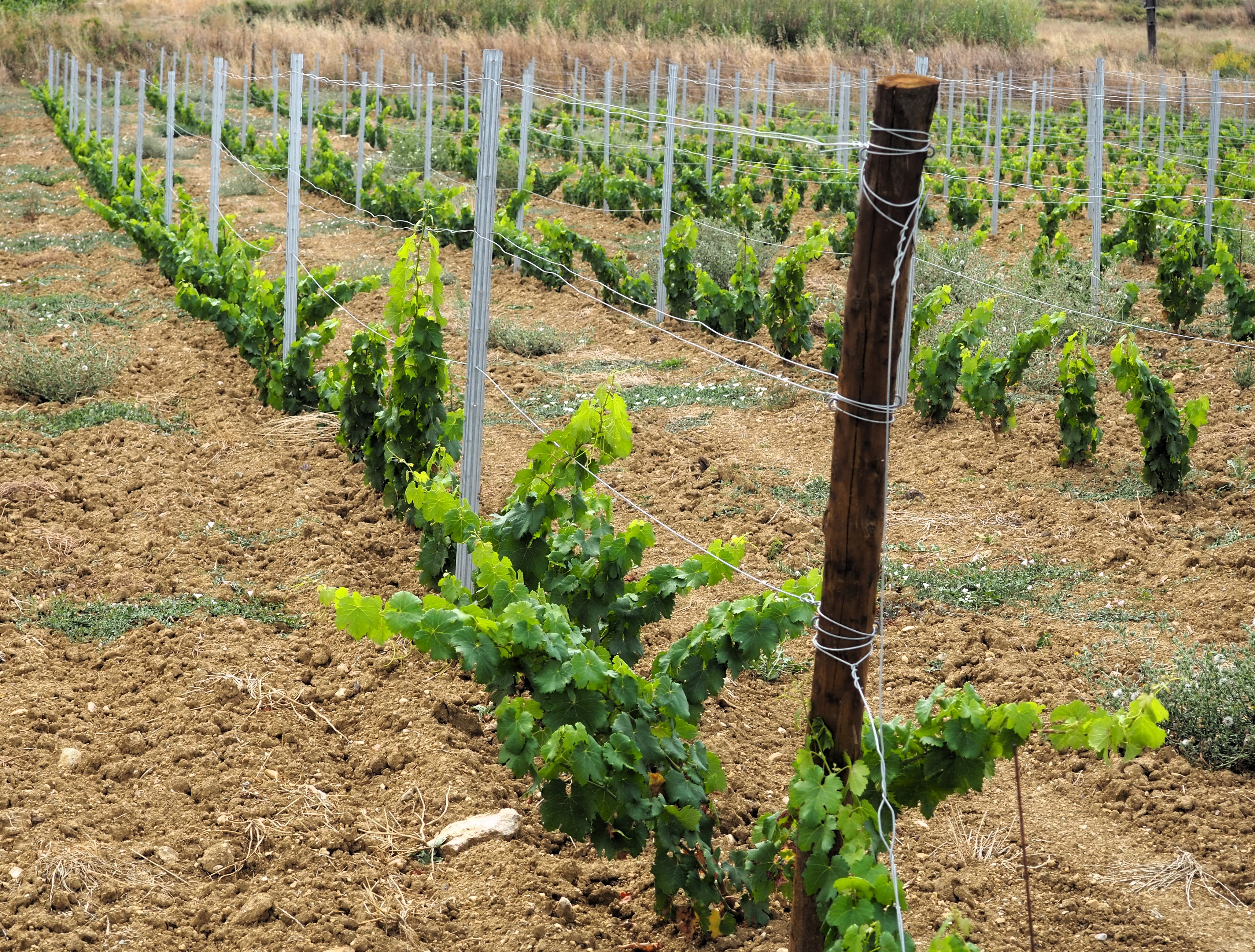
I have also reported that I do believe that increasingly the most interesting wines made by Jeff Coutelou are his white wines, such as Macabeu, OW and Clairette. Indeed, he has expanded the plantings of white grapes including Spanish varieties such as Xarel-lo, Parellada and Malvasia de Sitges. That change is, of course in response to climate change in the region with increasing drought and heat.
Climate change or chaos has also been the focus of much of my reading this year. Journals such as Nature Reviews Earth and Environment and the National Research Institute for Agriculture, Food and Environment give clear warnings about what is happening and what might follow. It reports:
- Traditional wine regions are found in mid-latitudes where grapes can ripen with a little struggle. If the global temperature rises by 2° then 90% of coastal and lowlands regions of Spain, Greece, Italy and southern California will likely be unsuited for wine production (though cooler regions such as England, Tasmania, Washington State will benefit)
- Winemakers will have to adapt to warmer climate conditions in the choice of grapes (like Jeff’s whites), methodology such as different vine pruning and training and, more controversially, irrigation
- Increased temperatures will advance grape phenology, ripening in the hottest part of summer and harvest will be still earlier (already 2-3 weeks earlier than 40 years ago). This will affect grape aromatics, ripeness and maturity
- Reduced yields because of drought
- Damage increases from new pests and diseases and unpredictable weather episodes such as hail and heatwaves
Bleak predictions and yet all too credible given the presidency of Trump and that BP has announced they are moving back to investment in fossil fuel rather than renewable energy.

Another interesting read with an article by Julia Harding MW on Jancis Robinson’s website. It points out that much of the vocabulary around wine is ‘daft’. Many of the descriptors such as gentle and optimum are meaningless without context. In particular though words such as sustainable and clean are often used to describe wines. Is this virtue signalling rather than the result of meaningful work in the vineyard and cellar? In my view (and I know Jeff agrees) certification such as Ecocert or Demeter offers the consumer proof of genuine environmental responsibility on the part of the winemaker in vineyard and cellar. Using words on labels does not unless it is backed up by such proof.
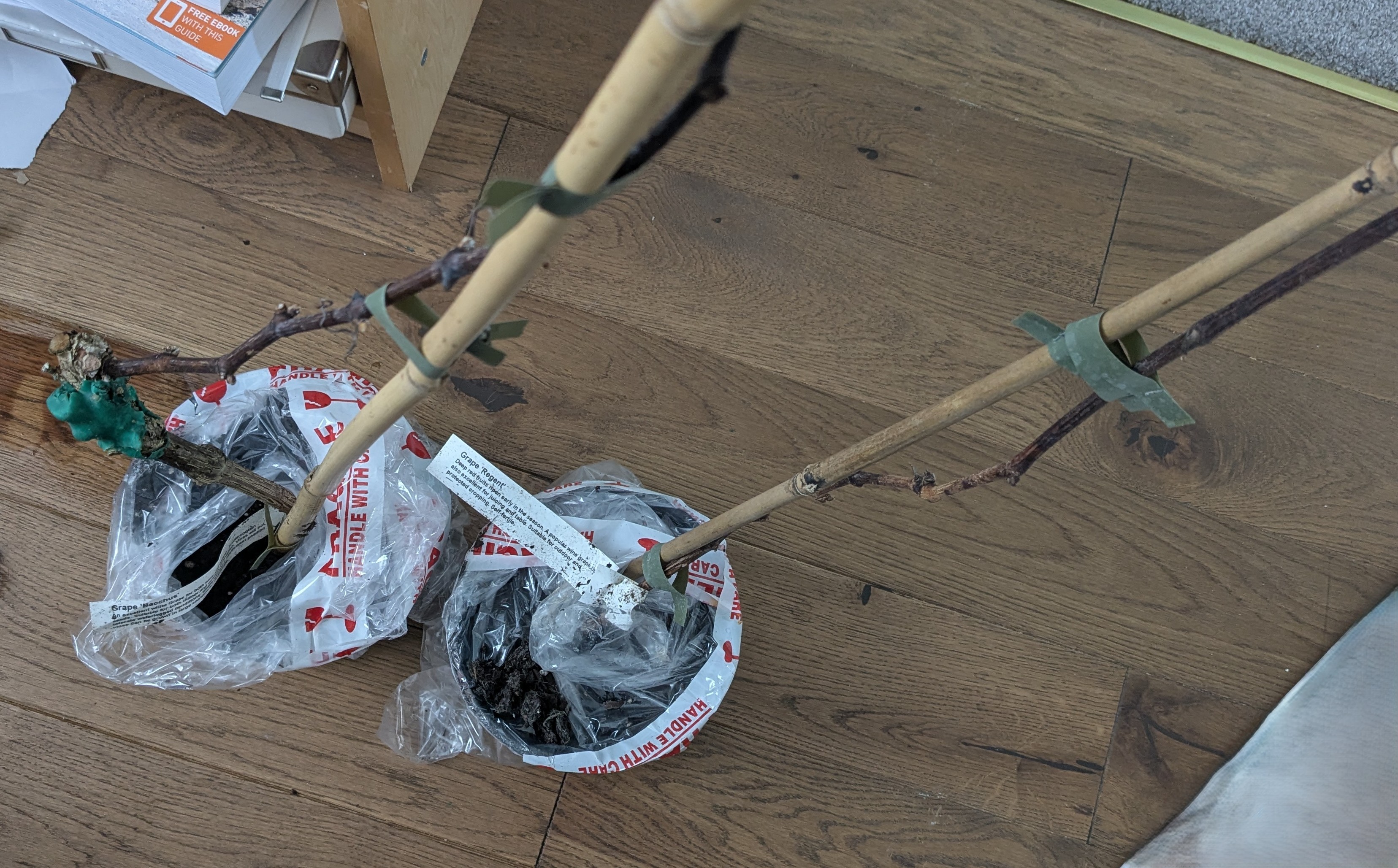
And finally.. climate change may be boosting the English wine scene but will it help me to grow vines in North East England? For my birthday I decided to try and received two vines. The grafted vine is Bacchus, the white variety I think is English still wine’s best. The non-grafted vine is Regent, a hybrid red grape grown in Germany and England giving deep, musky notes. I’ll update on their progress, planting will not be for another month and I doubt much will happen this year. Orders for future bottles are not being taken!

 amarchinthevines