amarchinthevines

Learning about wine, vines and vignerons whilst living in the Languedoc


3 Comments

Terroir


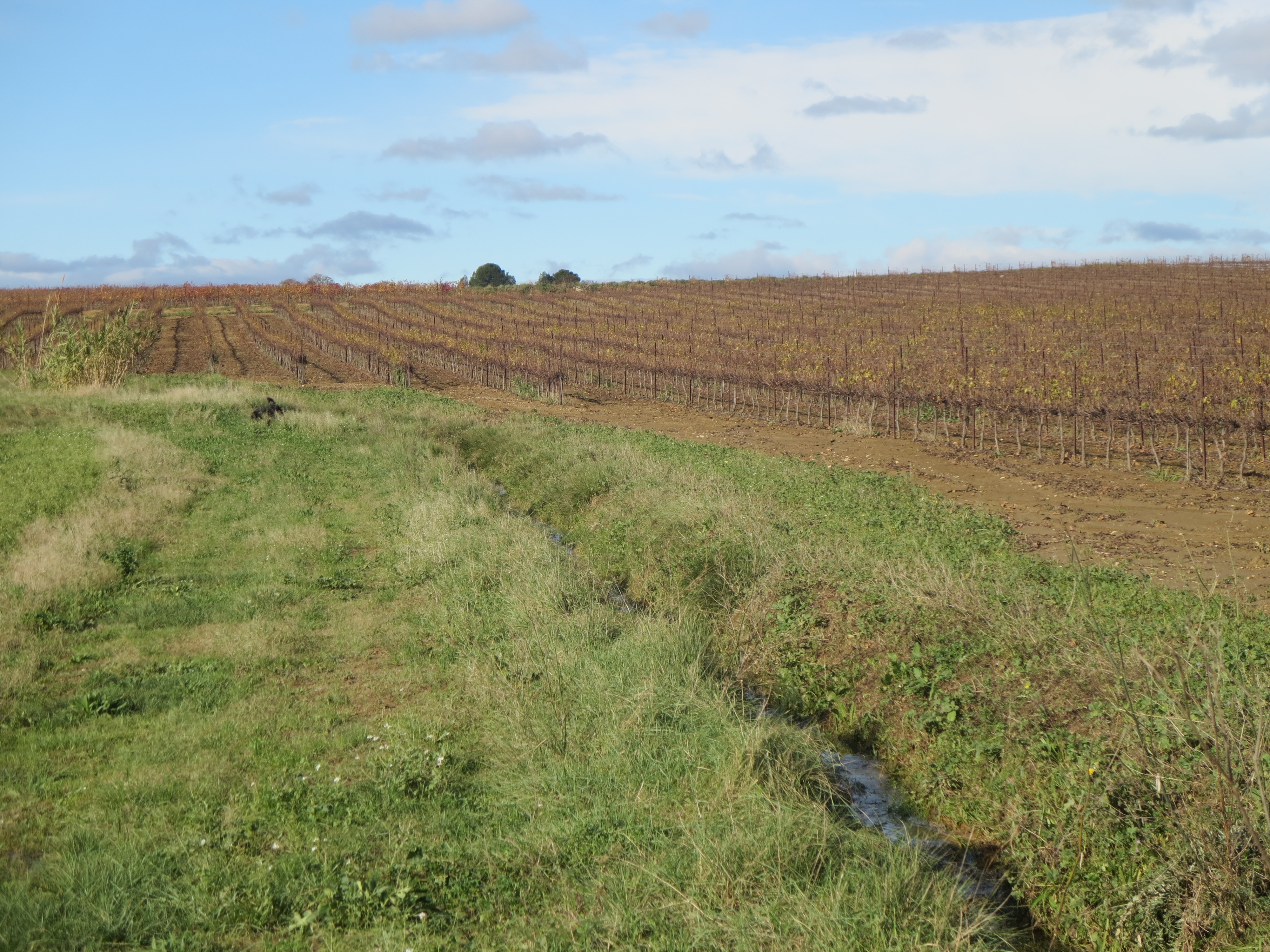
Un contraste absolu entre les vignes de Jeff Coutelou et celles d'un voisin   Version française

I posted this photo recently showing a contrast between the vineyard of Jeff Coutelou on the left, with grass growing between the vines and separating his vineyard from that of his neighbour who uses herbicides and chemicals which an organic producer does not want on his/her land.

I mention it again because as we travelled north last week to celebrate Christmas and New Year in the UK I was reminded of the clichéd but nonetheless relevant French word terroir. There is famously no direct English translation of the term, it means the soil but also the particular climate, aspect, position and subsoils of the vineyard. The French have said for years that terroir was what makes their wines special whereas New World wine producers were more willing to say that great wines come from great grapes and great winemakers, they often would call a wine by its variety, eg Cabernet Sauvignon or Chardonnay, rather than by where it came from. In recent years the argument appears to be won as Australia and other countries have begun to look to terroir to identify their best wines too.

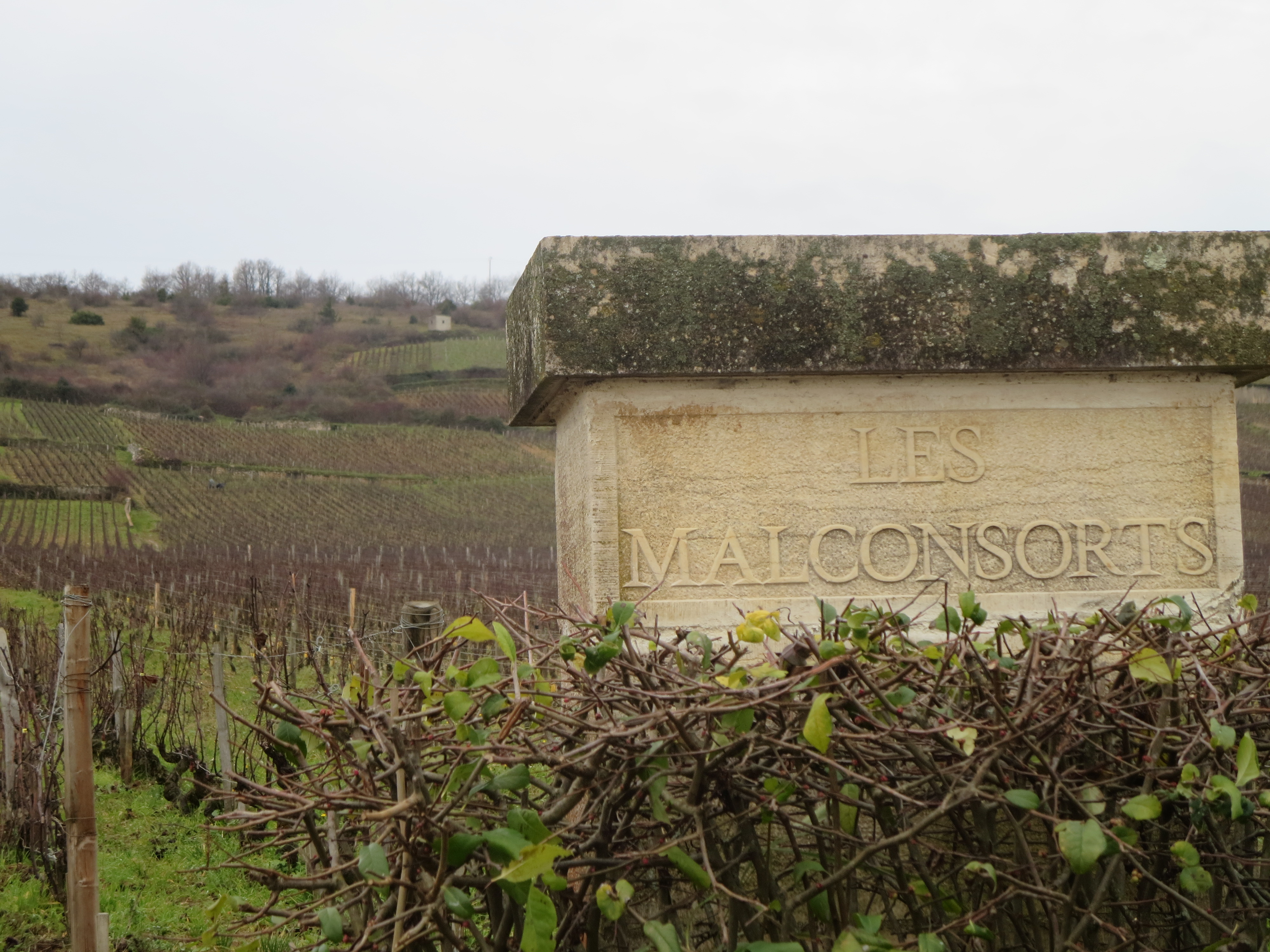
As I travelled through Burgundy last week the terroir issue sprang to mind. The region is made of many vineyards, of which large numbers are tiny and even they are (usually) divided between numerous winemakers. It is the region of terroir par excellence. The following photo shows Les Malconsorts a 1er Cru vineyard in Vosne Romanée. You can see different parcels of land clearly divided. Wines from one parcel will taste different to those from another. Terroir advocates will tell us that this is due to changes in soil, angle of the land facing the sun, drainage etc. Others would say it is more to do with the winemaker, the way s/he tends the soils and vines and how they work in the cellar.
005


007


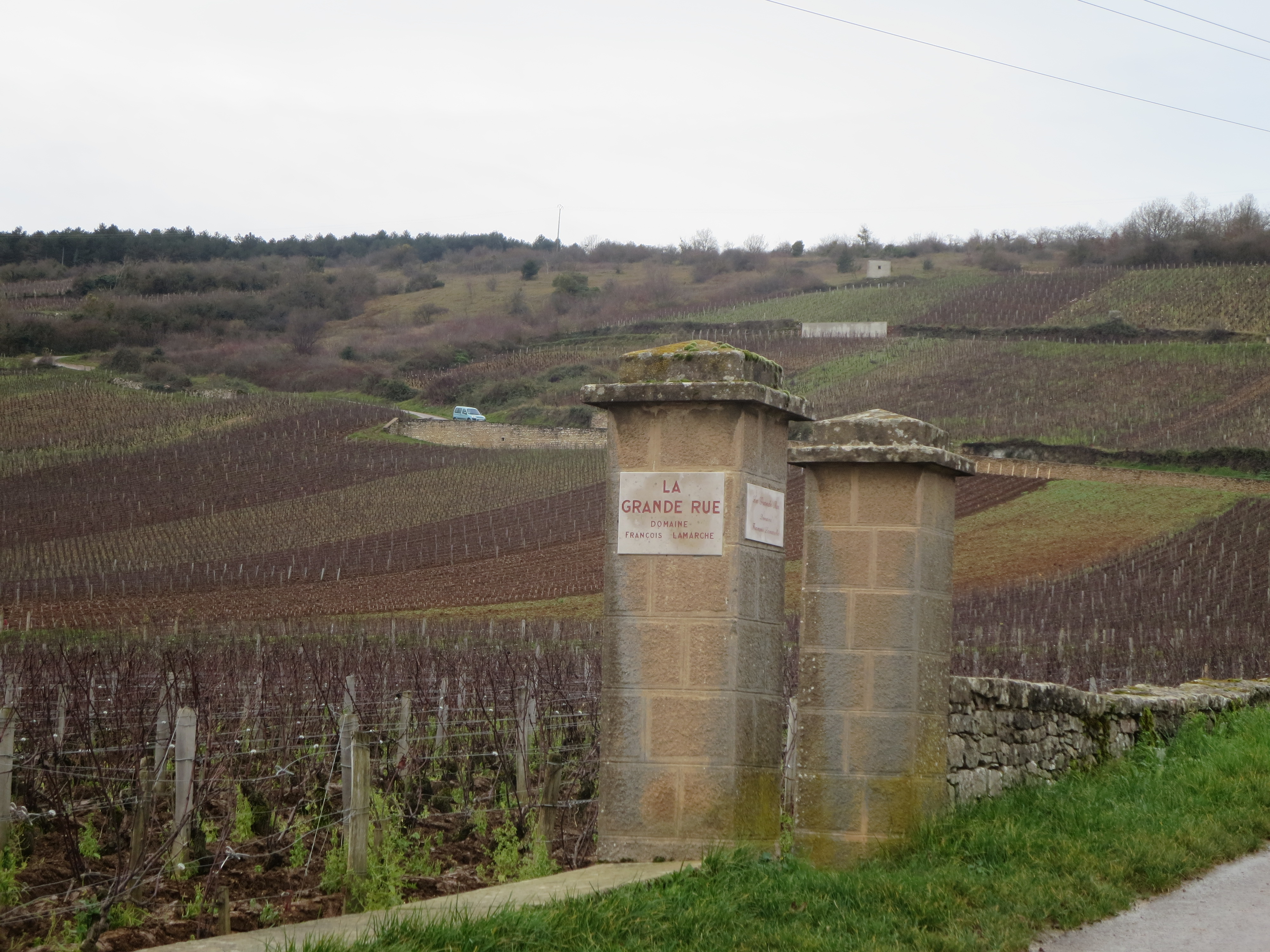
La Grande Rue is another Vosne Romanée vineyard but this time rated even higher at Grand Cru status. It is owned wholly by one estate and the wines cost well over £100 a bottle. Yet look a few metres to the side the wines are worth half of that as they are not Grande Rue. This is the price of terroir or is it the expertise of the producer Lamarche which merits that premium?

Clos Vougeot is a famous vineyard which has multiple producers working inside its walls. The prices vary from around £55 to £400 depending on the producer.

My take on it is that terroir is hugely important. Vineyards which are well looked after and have good climate, soils etc should produce good wine. However, a good winemaker has a role to play and can make average vineyards produce very good wine and good terroir into a memorable bottle.

Jamie Goode wrote this on the subject and sums it up very well in my opinion. I hope these photos might help to illustrate why.

“I reckon terroir deserves to remain at the heart of fine wine. It’s the soul of wine, and like the soul, it’s very hard to define, but that doesn’t stop it being of utmost importance.”
015

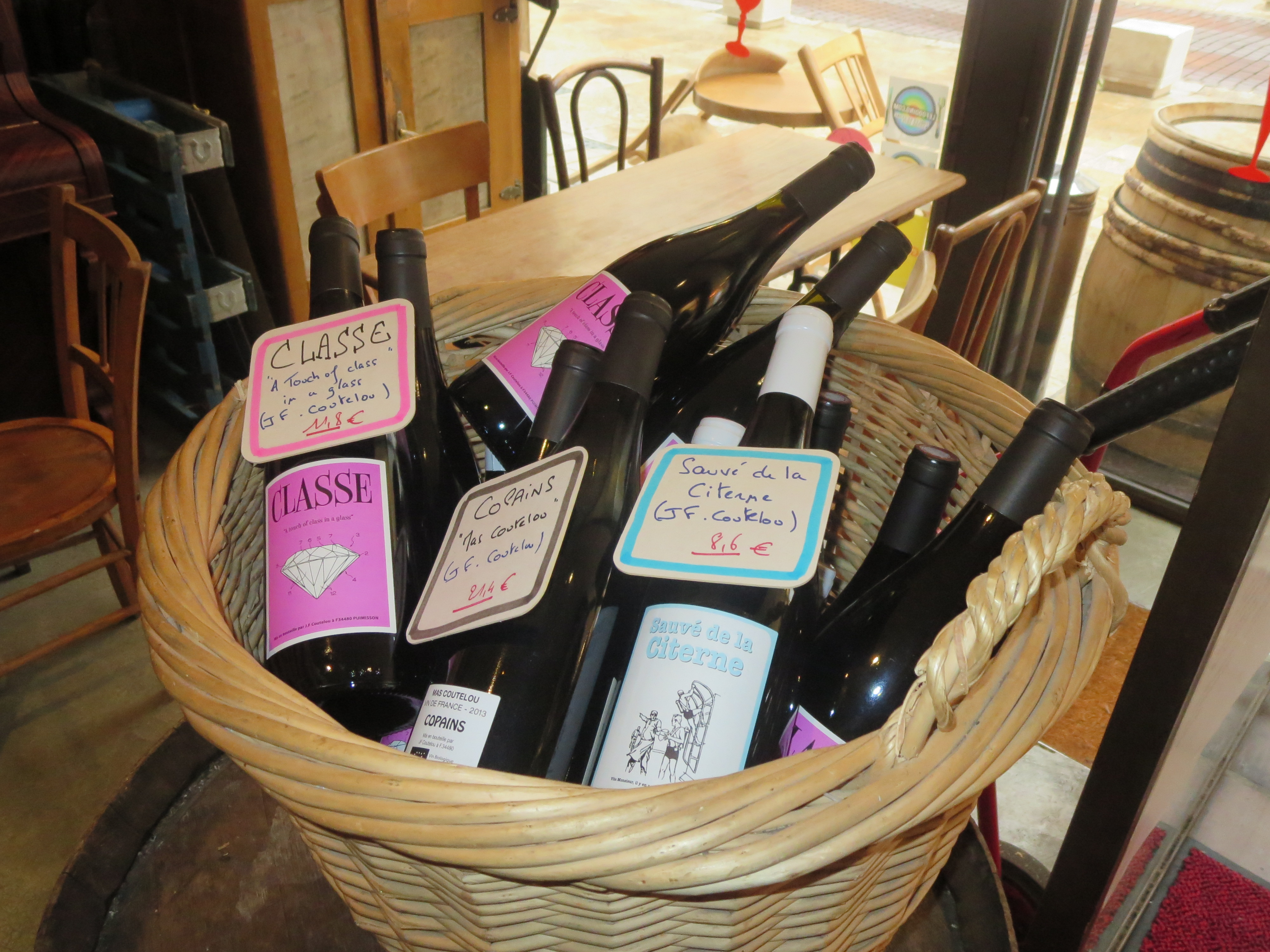
Jeff Coutelou works vineyards which are traditionally not in the best of places. The work done by his father and by himself has helped to hugely improve that terroir. Combined with great winemaking this is why his wines take pride of place, like this display I came across in a Troyes restaurant / wine bar last week.



2 Comments

Fin de Vendanges a Mas Coutelou, One Day Like This

Vendange under a perfect sky

Vendange under a perfect sky

As my favourite band Elbow sang in their biggest hit, one day like this a year would see me right!

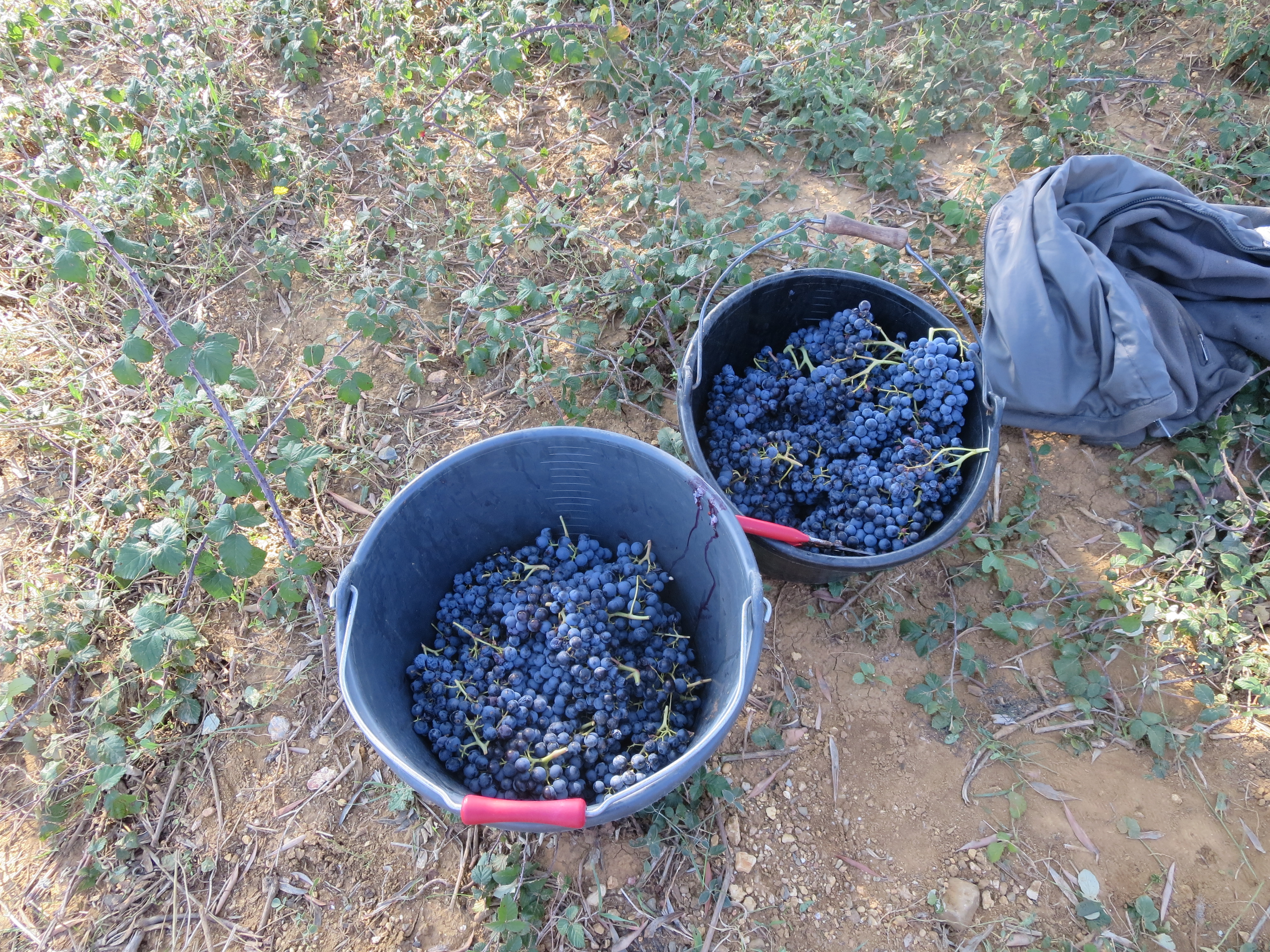
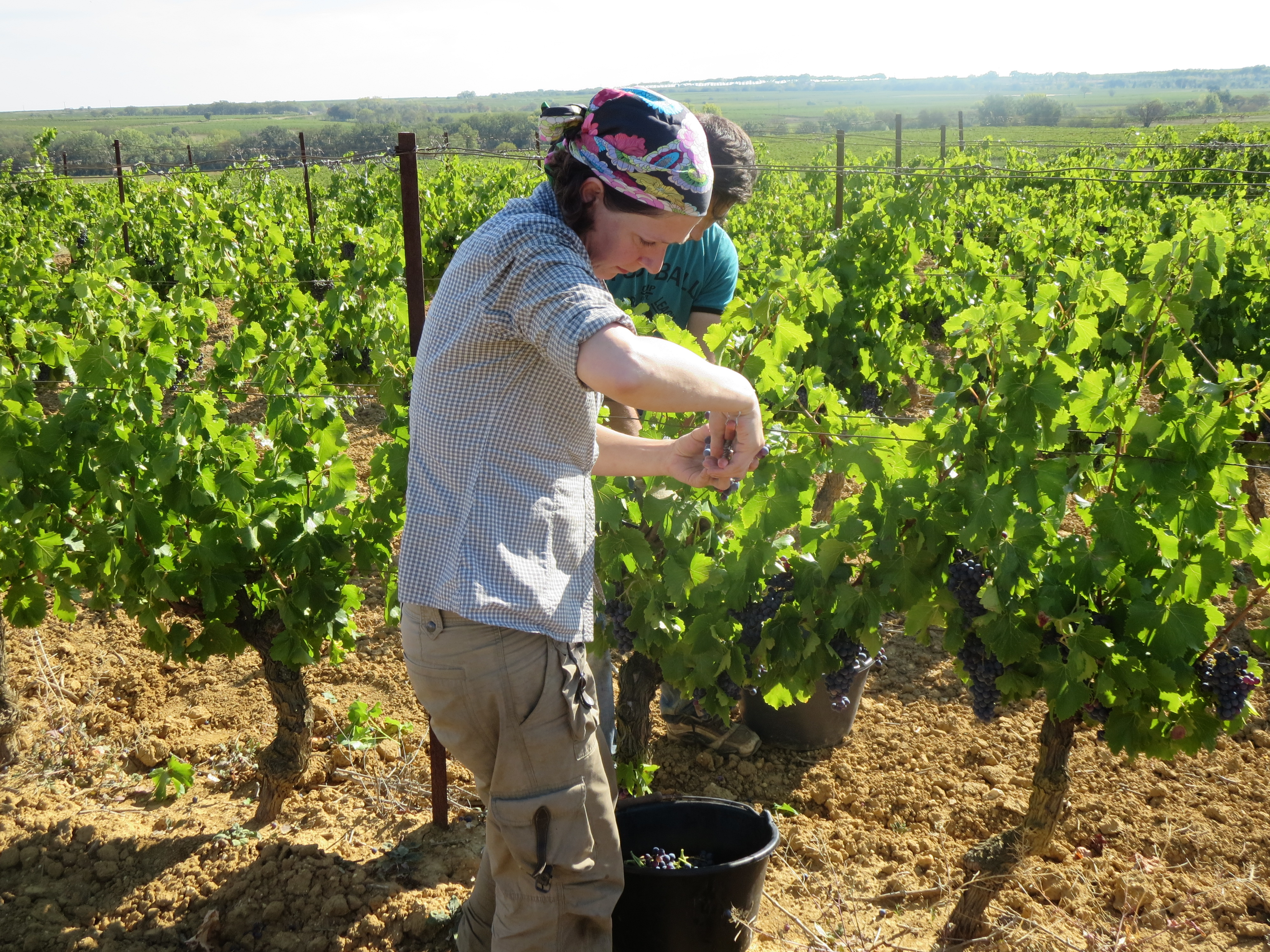
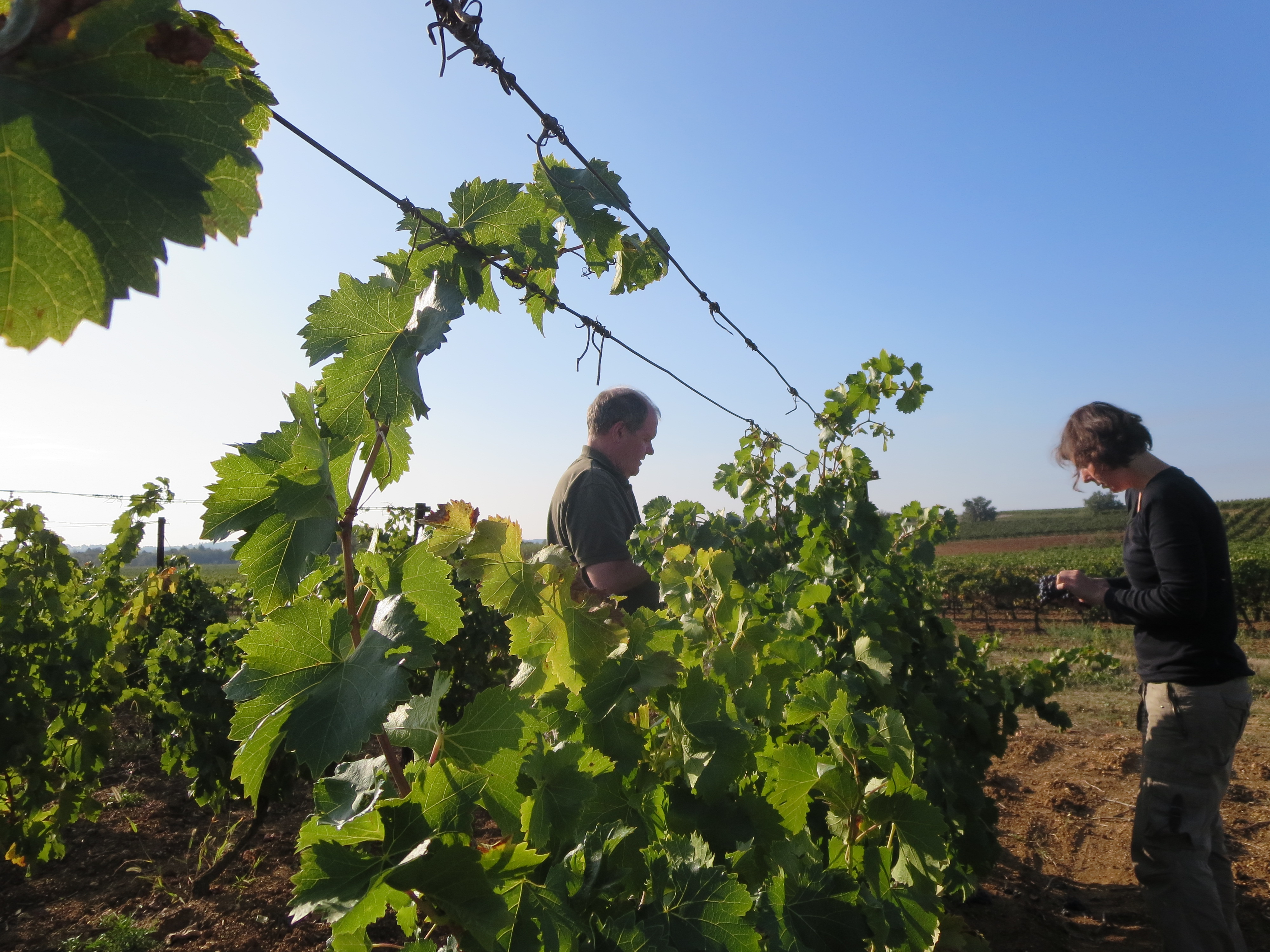
Saturday September 27th was the last day of vendanges chez Coutelou and, apparently, many other domaines in the region. After some iffy weather in the previous 10 days the sun had been out for the last 2 or 3 and today was no different. There was an autumnal, morning chill as Pat and I arrived in the vineyard to help collect the last of the Grenache Noir.

Grenache Noir

Grenache Noir


Pat picking


However, the sun soon became hot and the panama was soon donned to protect my head since hair no longer bothers to do so. The usual pickers had departed and Jeff called in his friends from the Béziers rugby club to help out. The ‘rugbymen’ proved to be hard working, fun and very welcoming towards novices such as ourselves even when I declared my lack of interest in their sport.

As ever harvesting grapes is only the first part of the job in the vineyard as it is the first step in the process of triage (sorting), any underripe, mildewy or poor quality grapes being cut out before being placed in buckets, then cases. The best way to check the health of a bunch that has been cut is to smell it. There should be the clean, fruity smell of grapes. If not, then search for the problem and eliminate it. Any grape left should be one that you would be happy to eat, and that we did too!

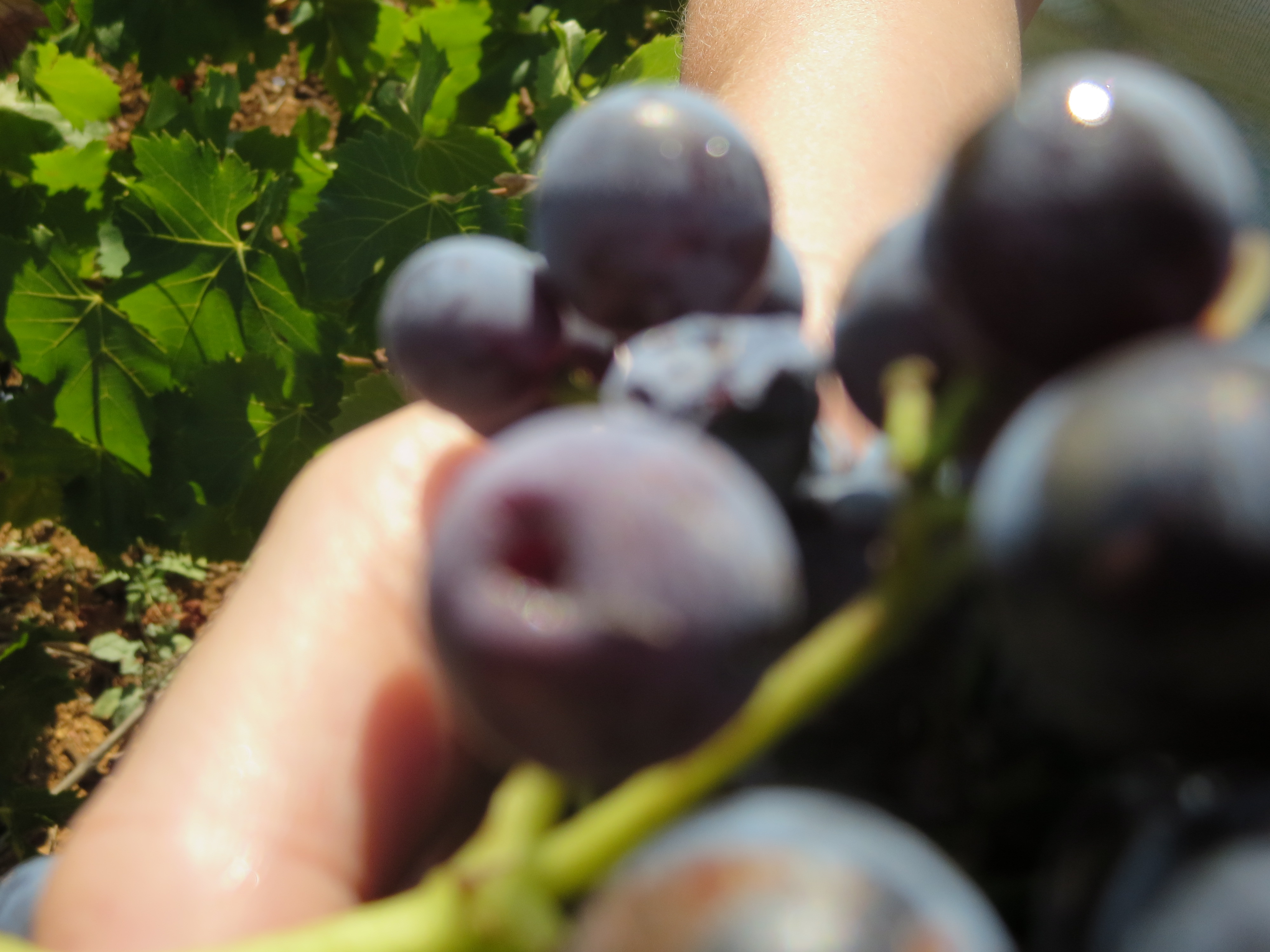
A grape with a hole created by a ver de la grappe (worm)

A grape with a hole created by a ver de la grappe (worm). The grape would soon be cut away

Healthy and delicious Grenache grapes


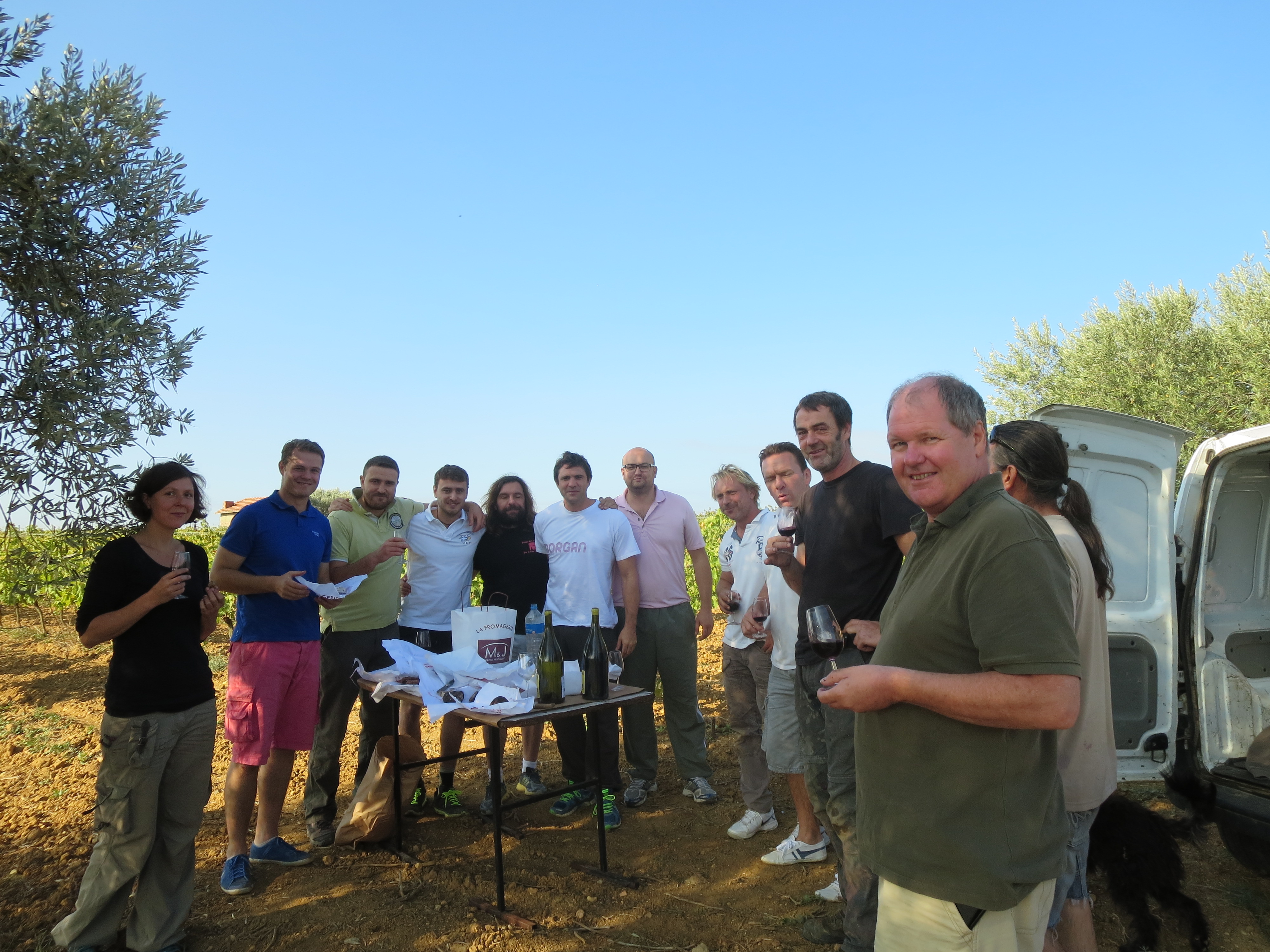
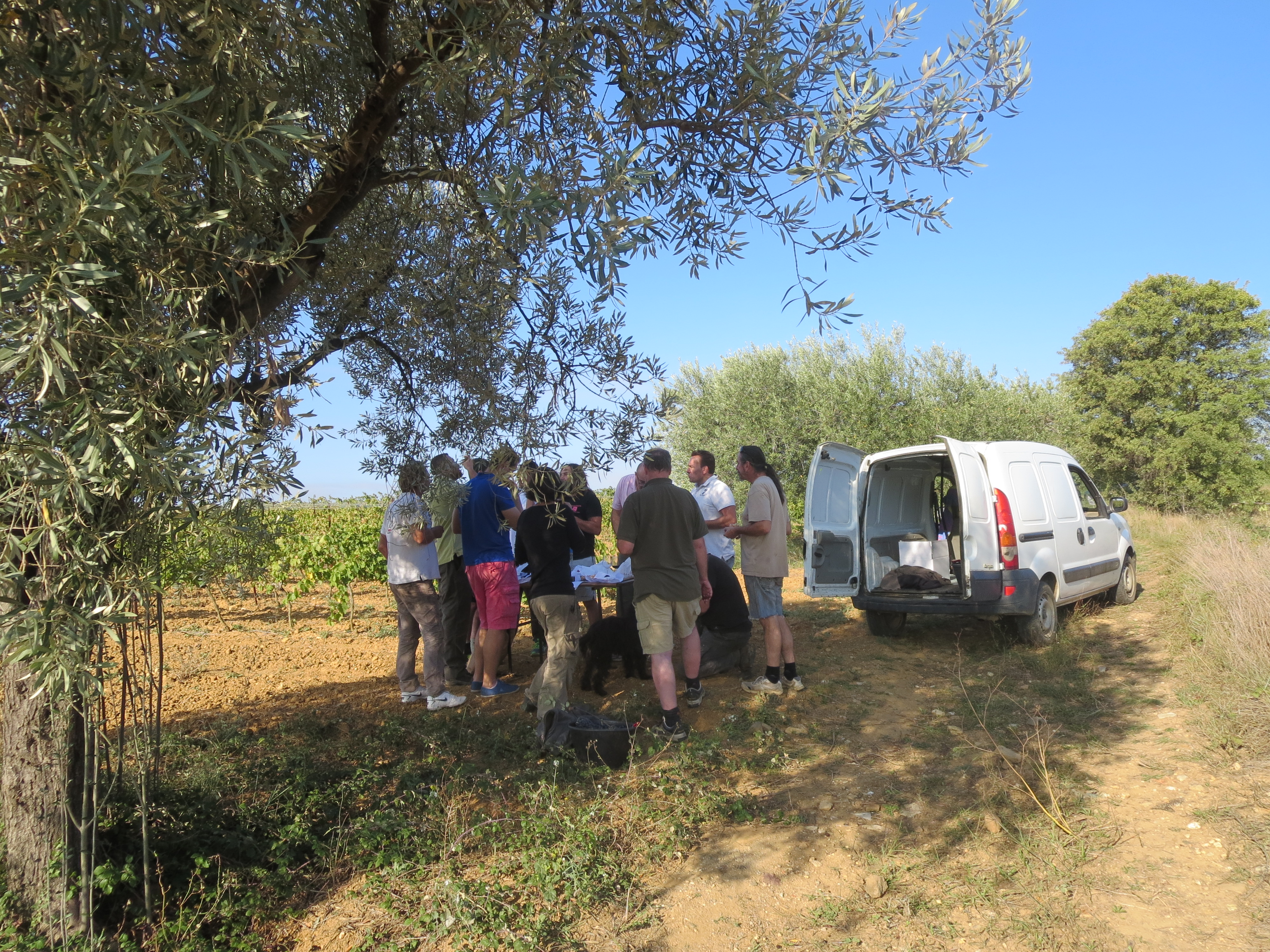
As the morning heated up it was time to casse croute. A drink of water I thought, wrong! Out came the picnic table, a collection of charcuterie (my pescatarian ways raising more rugbymen mirth!) and then some cheeses from La Fromagerie, a shop in Béziers. These were some of the best cheeses I have ever tasted, including a runny and perfect St Marcellin. Naturally, in every sense of the word, to accompany these treats were a couple of magnums of Vin Des Amis, the most appropriate of wines for today.

Tina, the 'rugbymen', Jeff, Michel and myself

Tina, the ‘rugbymen’, Jeff, Michel and myself

Welcome shade


Michel does the honours

Michel does the honours


Icare checks that everything is up to scratch

Icare checks that everything is up to scratch


12.30pm, grapes picked it was time to return to the cellars. The Grenache was put into tank to be fermented by carbonic maceration. This is where whole bunches of grapes are put in tank and the weight of the grapes gradually bursts the skins and starts fermenting the grapes at the bottom of the tank. Most of the grapes begin to ferment inside their skins. The result is usually more fruit and less tannin and adds a different layer of complexity when blended with other grapes fermented traditionally after being pressed

We came, we picked, we sorted

We came, we picked, we sorted

La force des rugbymen


Jeff shared some of the juice / wines from various tanks from the harvests of the last few weeks. These are, obviously, at different stages of development according to date of picking, speed of fermentation etc. There were  a multitude of flavours, richness and acidity and so much promise for another excellent vintage despite the dry spring and summer. Low in quantity but high in quality.

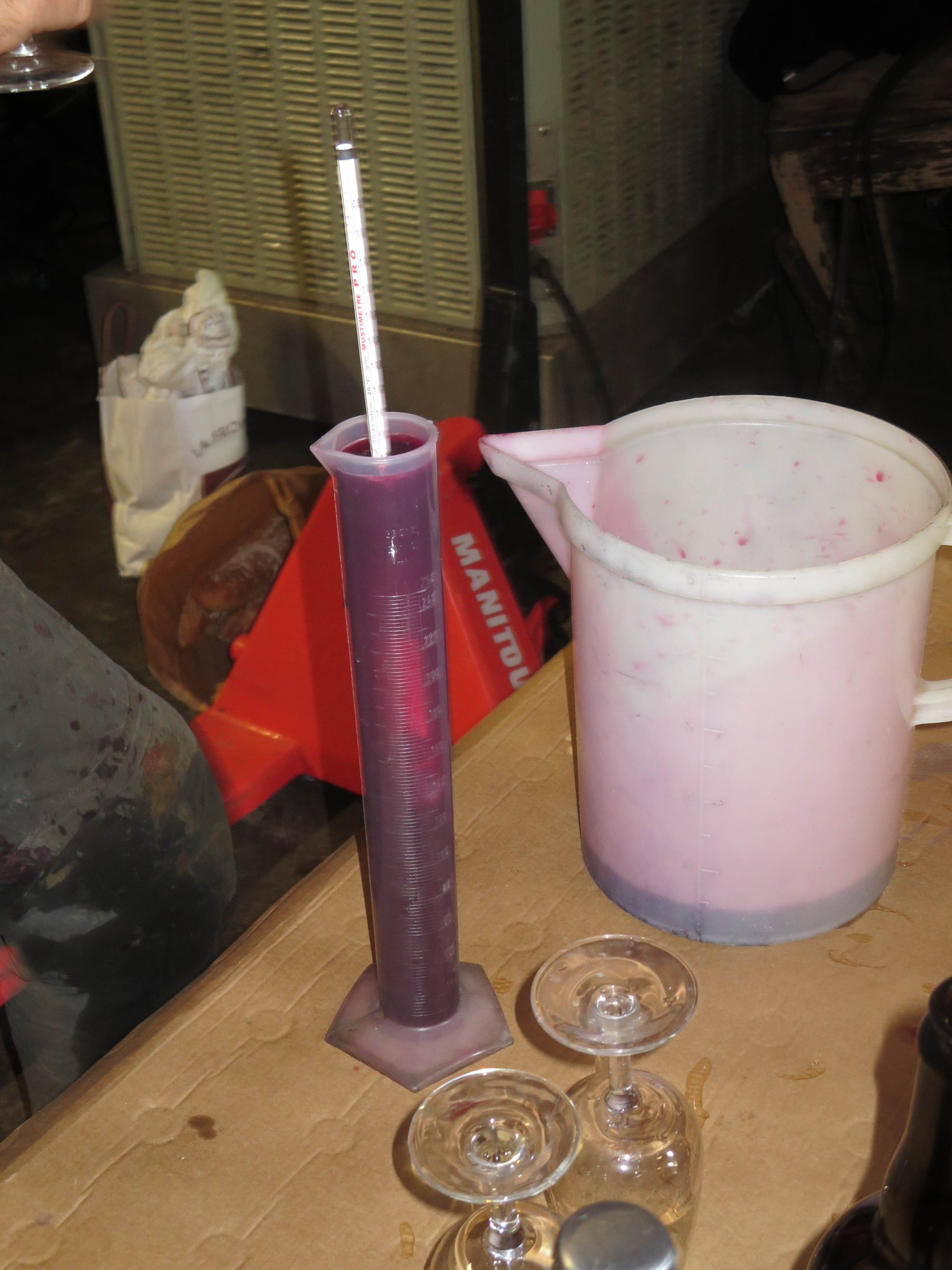
The Mourvedre being checked for density

The Mourvedre being checked for density, it was a delicious fruitbomb to taste

At work at the sorting table checking Mourvedre grapes which have a beautiful blood coloured juice

At work, the previous Tuesday, at the sorting table checking Mourvedre grapes which have a beautiful blood coloured juice


And that I thought was that. Wrong again! Back to Jeff’s house,

the celebrated 7, Rue De La Pompe (name of one of Jeff’s cuvées) and into the garden where, joined by families of the rugbymen, children and 17 adults sat down to a delicious meal of salads, a giant seafood pasta, more La Fromagerie cheeses, and several huge fruit tarts. Just fantastic, many thanks to the cooks, Michel for cooking the pasta through, and to Jeff for his generosity. Why so few pictures of the meal? Well I’d like to claim a technical hitch but it was probably more due to this…

Jeff and Balthazar

Jeff and Balthazar

I don’t think I have ever seen a Balthazar bottle actually filled with wine. This was Vin Des Amis 2013, all 12 litres of it. As the afternoon wore on it was amazing to taste how the wine developed and opened up allowing the Grenache fruit to really express itself. And, to make a comparison, a magnum of 2010 Vin Des Amis which was beautiful. Fresh yet complex and long lasting. Thus it was after 6pm when we finally stood up from the table. Pat had been very abstemious as we had to get back to Margon and then to the theatre in Pézenas. I admit to being a little merry.

It had been a fantastic day, one I shall always cherish and remember. I have always wanted to pick grapes and take part in a wine harvest. Dream fulfilled in the company of some terrific people who were welcoming, friendly and tolerant of the two English incomers. What a treat to spend the day in the company of French people at work and at play, even if the speed of their French became way too fast for me at times. Work to do there. And, work aplenty still to do in the year ahead – the wines have still to be made, bottling to do, pruning and taillage in the vineyards. I can’t wait!

I must say a huge thank you to Jeff whose patience, friendship and generosity are the stuff of legend. I posted recently about the story of the Chaud Doudou and its moral of sharing everything good. The gathering of friends and colleagues in his vineyard, cellars and garden was living proof that he carries on that tradition of chaud doudou. He wants to share his work and his passion for nature and the wines he creates. This he achieved magnificently today.

Surrounded and sharing

Surrounded and sharing


Error
This video doesn’t exist

The scenes of trees in the video show some bat houses erected for them to shelter, part of the diversity encouraged at Mas Coutelou. The music is, of course, Elbow. And, for those who can’t get enough of him, Icare makes an appearance!


2 Comments

Hold the presses!

IMG_0160

   IMG_0141

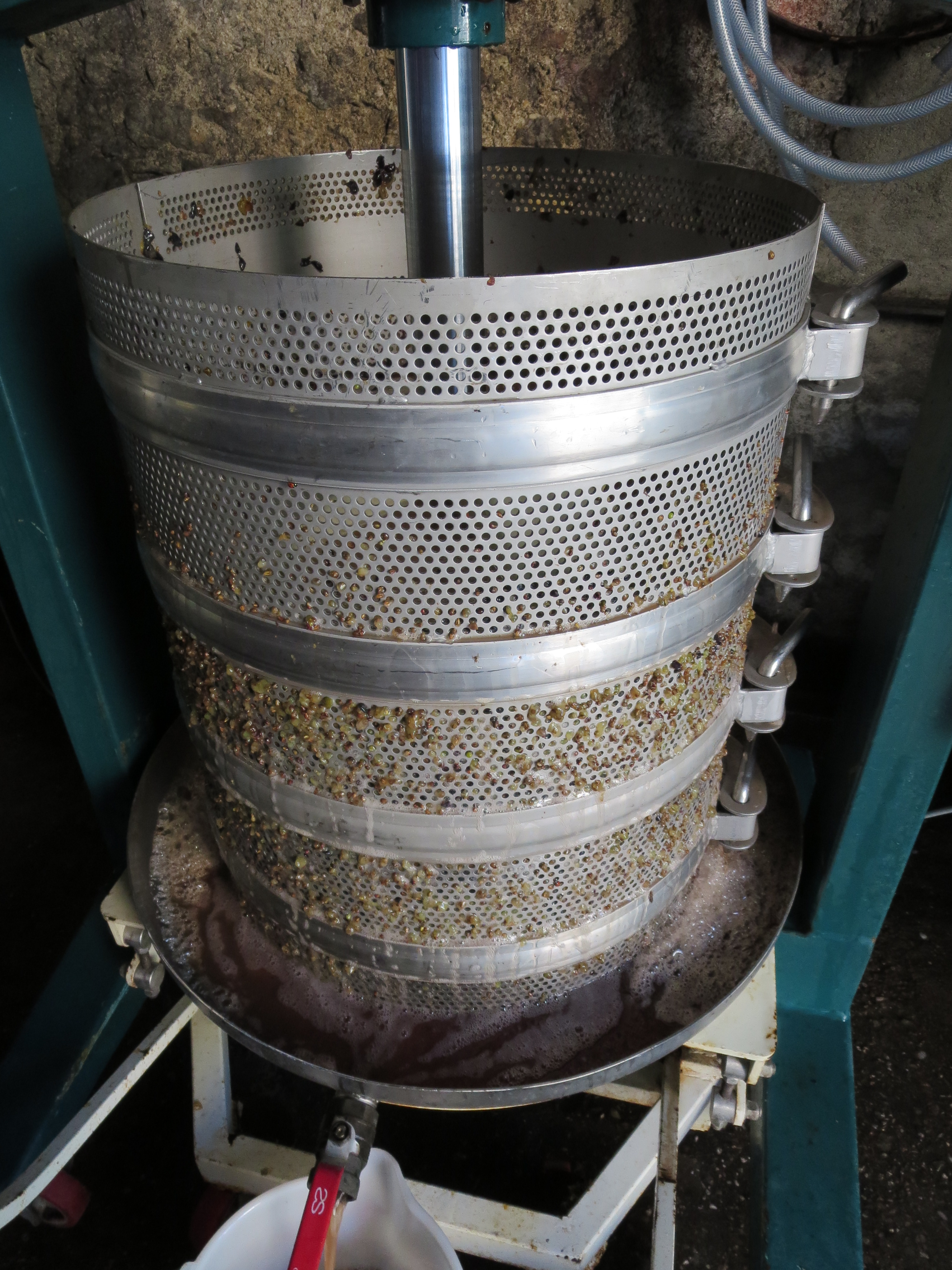
Both of these objects are wine presses, one more modern than the other. Whilst the large press has taken the bulk of the work in recent weeks the small press has its role too. It is also an olive press incidentally. It is used mainly for small production wines and I was lucky enough to be trusted to supervise its use for the pressing of muscat and grenache grapes which will make into the fortified wines which Jeff Coutelou produces in addition to his table wines. The ‘vieux grenache’ wines are made in different methods as I shall describe in future posts including a fantastic solera type system with wines dating back many, many years to previous generations of the Coutelou family. They are, of course, delicious.

Michel unloads the grapes, he is in Jeff's words his 'main gauche' (left hand)

Michel unloads the grapes, he is in Jeff’s words his ‘main gauche’ (left hand)


Grenache and muscat grapes ready for pressing

Grenache and muscat grapes ready for pressing


The grapes are sorted and then loaded into the cage and wheeled into place. The press is lowered and the juice begins to flow.

Pressing

Pressing

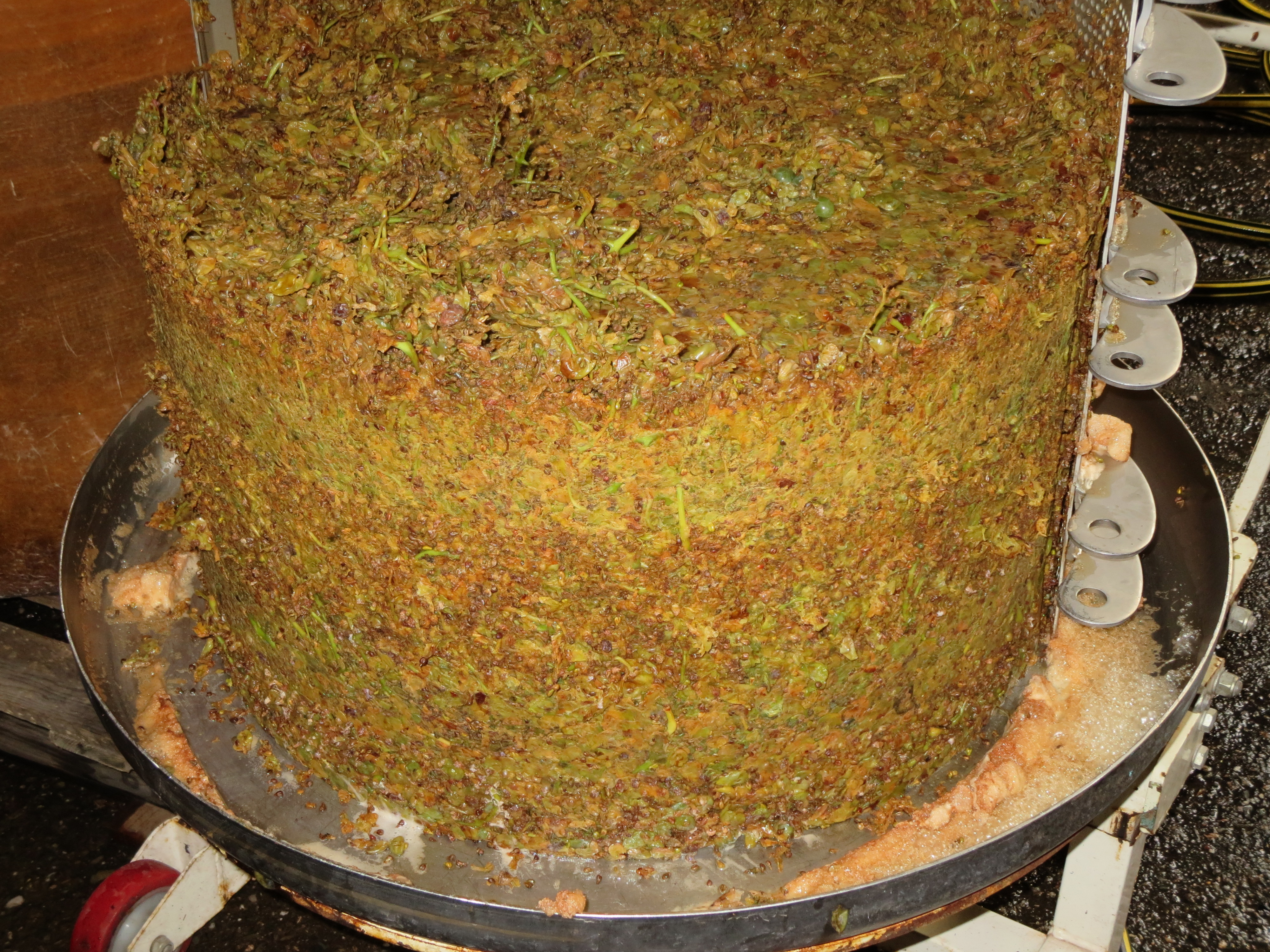
The major lesson is to be careful about how much pressure is used as if you press too hard the mass of grapes, stalks and pips becomes too hard and the juice will not flow freely. I confess to pressing a little too hard at first but fortunately rectified it before any damage was done. The juice is taken to container for fermentation and the pressed grapes, the gateau, is disassembled and returned to press for a second and third time. The gateau becomes almost a work of art.

Gateau in the sunshine

Gateau in the sunshine

The wine begins its fermentation in the tank and after this has finished the wine is put into barrel for the first time. Depending on its development Jeff will blend this wine with previous vintages or allow it to develop in barrel for a number of years.

IMG_0188

Tina transfers the fermented wine into barrel

The other pressing I supervised was the Carignan Blanc. Jeff was pleased with this crop and decided that he would make a new white wine using only these grapes. The procedure was identical though I thought I’d highlight one extra feature. Many people commented after a previous post that they were disappointed I did not get my socks and shoes off and start to tread the grapes. Well I was rather shocked to see that treading does still happen! Instead of bare feet though new, perfectly clean wellington boots do the job, a light pressing (so that ruled me out!) to start the process moving even before the press gets to work.

Treading

Treading

Yours truly at the press

Yours truly at the press

The gateau was just as spectacular and you can see in the photo below the layers created by the 3 pressings.

IMG_0178

A serious point. Jeff was keen to point out that the Carignan Blanc grapes took 10 people 2 hours to pick. We took a whole day to press the grapes, myself and supervision from the patron with others helping to take the gateau apart and then reassemble it for the various pressings. The grapes will be fermented, pumped over, stored in barrel. So when we think twice about the price of wine think about the amount of work which has gone into it, especially for crafted, artisanal wines such as these. And after all that only 420 litres were produced, around 500 bottles or so.

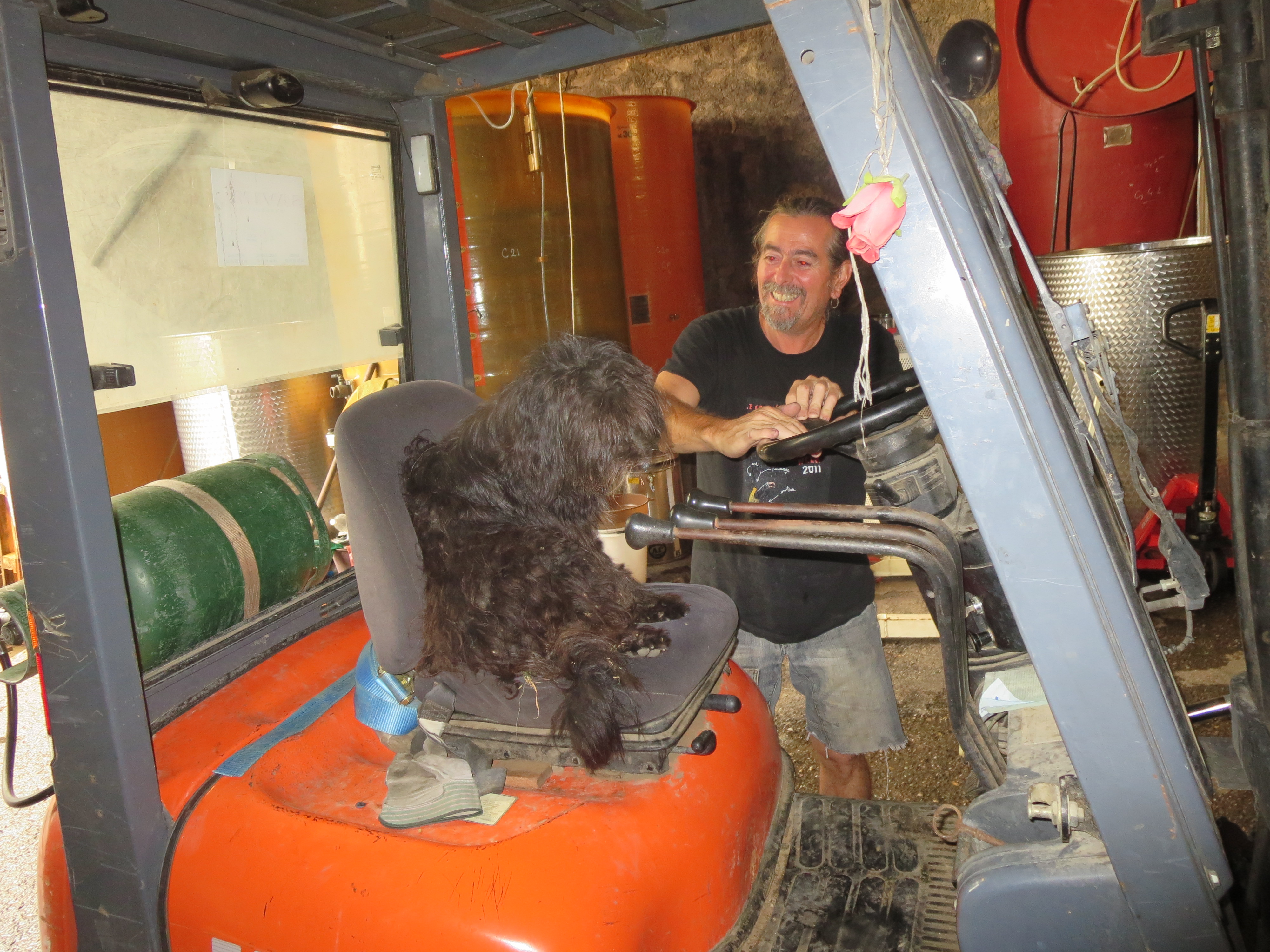
On a less serious note, we now know who is the patron, let me introduce Icare, the real driving force behind Mas Coutelou.

IMG_0179

Icare takes the wheel


Leave a comment

Harvest

Be warned the next post means harvest is back!!   IMG_0150   IMG_0129

Vendange is in full swing across the region. If, like me, you thought winemaking is a glamorous and romantic calling then believe me it is also very, very hard work. I have spent two and a half days working in the cellars with my friend Jeff Coutelou (Mas Coutelou). They were great days, fascinating and enjoyable and, however hard the work, it was good to look at my surroundings and the blue skies and think that this is why I wanted to come to France and how different to being in a classroom or a meeting.

I intend to go through the winemaking process that I witnessed and I shall keep it simple as I am a novice, don’t understand the full science and most people looking at this would not want all the technical details I suspect. Please let me know if I am wrong.


Leave a comment

Wines


   mascoutelou2


As you may have noticed from the first post the areas we stayed in around France were wine regions. Not a coincidence.
I became interested in wine when I visited Germany as a young teacher who was asked to accompany a trip to the Rhine valley. A very generous hotel keeper in Bacharach insisted on sharing bottles and the different types of wine produced. This was news to me as I knew nothing about wine and assumed it was either white and light or red and sturdy.
From there to the Australian invasion of Wyndhams and Penfolds and then on to France. I still love the wines of Alsace, Burgundy and Beaujolais as well as the white wines of the Loire. Some terrific holidays and tastings spring readily to mind. Sadly the price of Burgundy and Bordeaux has long since outstripped the bank balance of a teacher.
However, good fortune struck. Alongside a growing liking for heat and the Languedoc was the rise of new, exciting winemakers in the region. Inspired by the writing of Rosemary George, Paul Strang and the admirable Andrew Jefford I began to explore their wines and I am hooked by their quality and sheer drinkability. Winemakers such as Jeff Coutelou, Turner Pageot, Mas Gabriel, Domaines Treloar and Cébene, amongst many others, have set  standards for me which help me to judge the wines of Languedoc-Roussillon.
Happily I now have the opportunity to explore more deeply and to spend more time with some of these winemakers, find out about their work and produce and seek out more top notch wines. This blog will, hopefully, narrate this adventure and share my discoveries. It may not be original but it will be the honest words of a wine amateur seeking to deepen his understanding of that passion.