Most readers will already know that this has been a difficult year for winemakers across France and Germany amongst others. Here in France a series of frosts in April damaged vines in regions from the Jura to Provence. When I spoke to Jeff Coutelou on April 11th he was reassured that Puimisson had avoided such calamity, but then disaster struck. On April 12th the frost, unforeseen by forecasters, struck many parcels with temperatures sinking to -7˚C. The Languedoc is no stranger to frosts even if not as vulnerable as other regions but this was sharp and the timing was disastrous. Vines had begun budding and flowering in the previous couple of weeks and the young growth was dried to a crisp by the cold. Jeff predicted that yields might be down as much as 70%.
Photo of a frost hit vine in 2015 from my blog
The vines fought back a little through Spring and Summer, secondary bunches forming but they cannot replace the original growth properly, being smaller and of lesser quality. However, the frost was also part of an ongoing problem with lack of water. Jeff told me that there had been little rain since the end of vendanges 2020, with just one sustained period of rainfall this year. Vines, weakened by drought and frost, become susceptible to other problems too. Every summer downy mildew and oidium (powdery mildew) are present and they found easy targets in 2021.
Oidium on a leaf this year, and on the right a bunch with grey oidium from 2016
Ironically, after my first tour of the vineyards this year, it was the Grenache of La Garrigue which stood out as being the best with healthy foliage and beautiful, good sized bunches of grapes. Ironically because last year that was the parcel worst hit by mildew, nature was giving back a little this year in compensation. La Garrigue is also the home of the Syrah which makes my favourite wine, La Vigne Haute. Unfortunately those vines had been damaged this year and were looking sorry for themselves. Syrah does seem to have been particularly badly affected. The first days of this year’s harvest concentrated on Syrah from Sainte Suzanne, Segrairals and, then, La Garrigue. Yields were one third of last year.
OLYMPUS DIGITAL CAMERA
OLYMPUS DIGITAL CAMERA
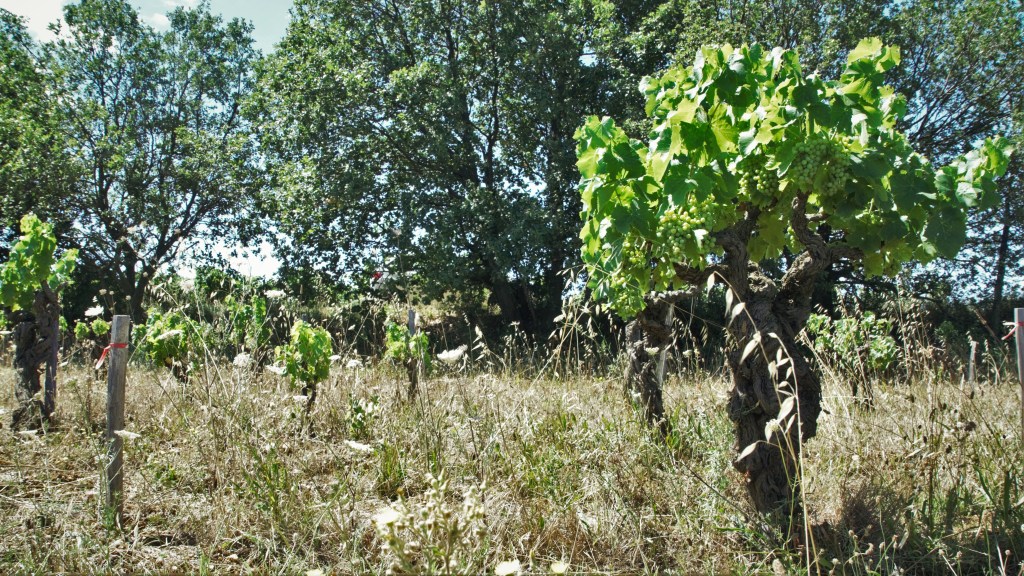
La Garrigue 2021, Grenache to the left with verdant foliage, Syrah to the right with struggling vines
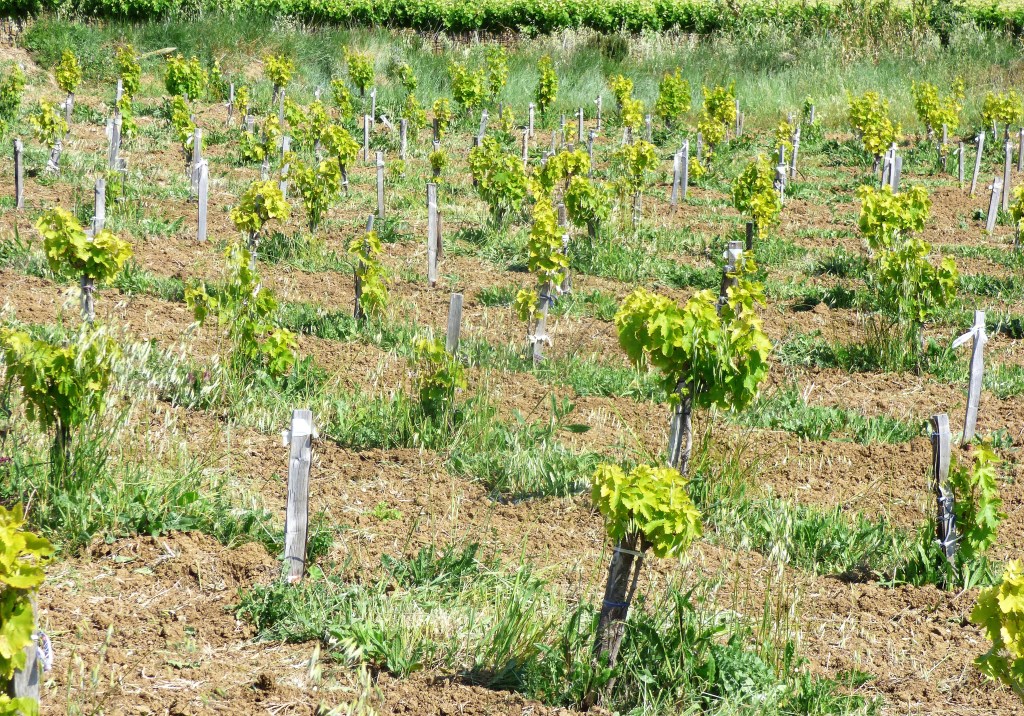
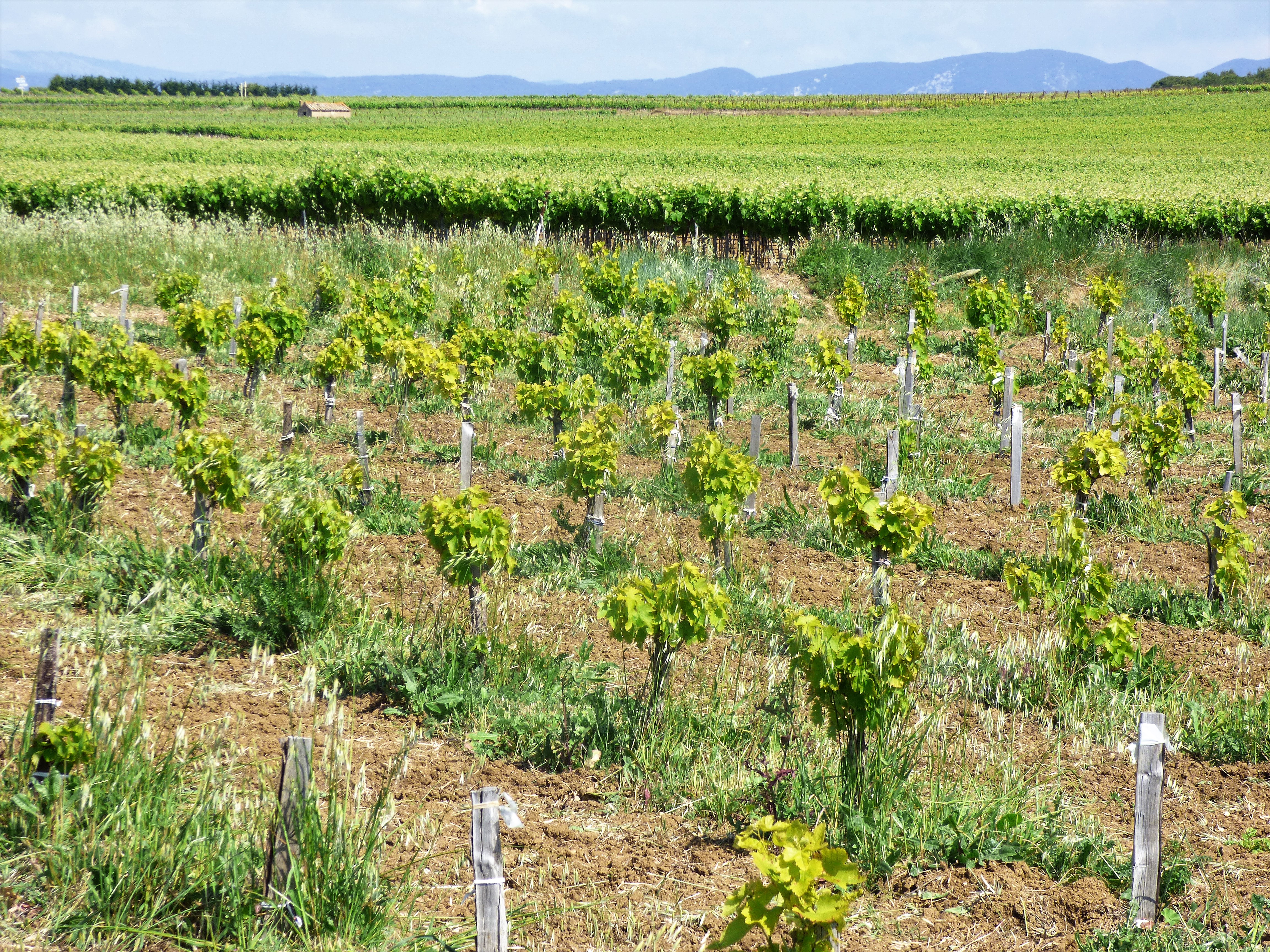
In the last 5-6 years Jeff has replanted many vineyards, some of which had been fallow for some years. The fruit of these young vines can be used this year to help produce wines such as the PetNat, Bibonade, that will boost production a little. The estimate is now that there will be just under 50% of a normal year. So, the scene is set. I wish I had a prettier picture to paint, it is the least promising of the seven vintages I have witnessed here. Let us hope for a twist in the tale.
Getting out of bed on Thursday morning, back aching in various places, the tips of my fingers stained black and blue and a matching bruise on the palm of my right hand. How did I feel? Just great thank you. These were the signs that I was back after two years, back in the Languedoc, back in Puimisson, back in the vines and back with my dear friend Jeff Coutelou.
For six vintages I had reported on how the year on a wine domaine wound its way through peaks and troughs. Six vendanges, hesitant the first time in 2014 then with growing understanding of what was happening, why it was happening and what I could do, in a small way, to help produce the excellent Coutelou wines.
2014
During that time I had progressed from basically standing guard over a basket press (when in reality nothing much could go wrong) and doing rudimentary sorting as the grapes arrived to becoming a much more confident ‘cellar rat’ knowing how to carry out remontage, pigeage, operate the pumps and to stand at the sorting table knowing exactly what I was looking for as the bunches arrived, from disease to ver de la grappe, the feel and the smell of the grapes able to tell me that those grapes did not belong in the tanks of quality wines we were making.
2019
I came to love the various vineyards and to get to know their quirks, strengths and weaknesses. But especially Rome, sheltered from the world by surrounding trees, teeming with wildlife, complex in its geology and filled with its gnarly, gobelet old vines, standing free. My oasis. I came to love the philosophy behind Jeff’s winemaking; biodiversity, supporting nature not exploiting it, grapes, work and love. I already loved the wines but being part of their story made them even more special. And, above all, I came to love the people I met through the years, the revolving cast of characters who spent time with us.
Rome
Whether based in France pretty much full time for three years or spending half a year there I felt at home, but I took my happiness and good fortune for granted. If the COVID-19 pandemic did one positive thing for me, in preventing me from being in France and the 2020 vintage, it was to make me realise how much I missed being part of the wine, how much I did love the place, vines and people.
It is a pure joy to be back, the aches, bruises and stains are very welcome.
A continuing absence from Jeff, Puimisson and France. This blog was started in 2014 in order to share my experiences as a novice about winemaking spending time with my friend Jeff Coutelou, an expert. The pandemic has made that next to impossible. I am grateful that Jeff and his niece, Flora Rey, keep me updated with messages and photos. Fortunately, they are happy for me to pass them on and I continue to hope that I shall be able to join them soon, fingers crossed.
The vines are ten days or so behind the usual dates for véraison (when red grapes begin to colour) and this will mean later vendanges of course, usually 40 days after véraison. You will recall that April brought devastating losses to this year’s production with up to 70% being damaged by the frosts of April 12th. The grapes which there are look to be in good health though Jeff was worried this week about a weather forecast which could raise the risk of oidium (powdery mildew) due to a northerly wind. This meant he has been out in the vines in a week which was supposed to be a rest time spraying with organic treatments (and made more complicated and time consuming by a puncture).
Meanwhile the plants which are allowed to grow between vines, such as grass and flowers, have been cut down as they start to offer competition for water in the hot summer and will also compost the soils. It has been a very dry year, just a couple of storms worth of real rainfall since last year’s vendanges, so water levels are very low. There was some useful rain a couple of weeks ago to everyone’s relief.
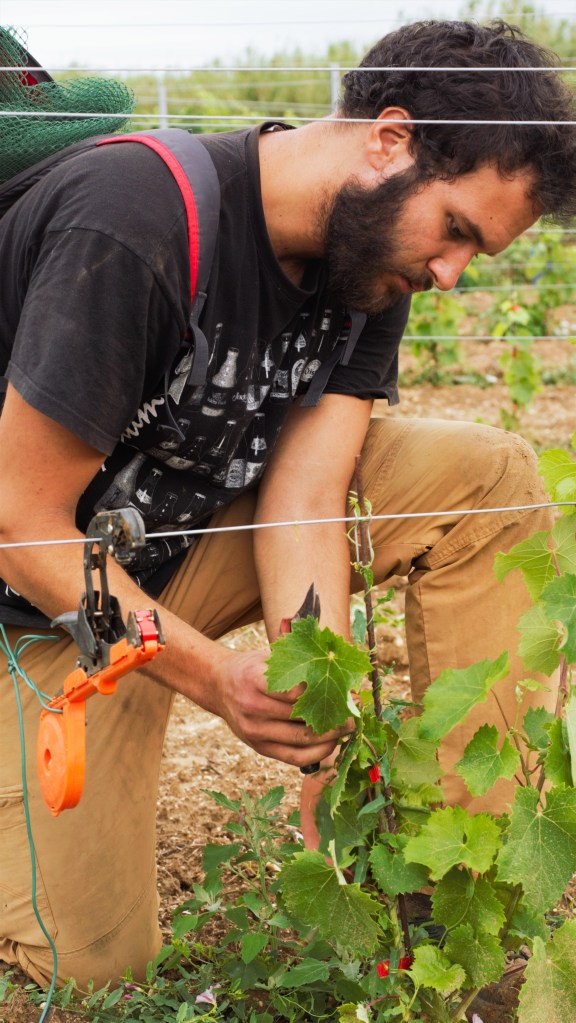
Meanwhile the new plantations need care, they will have been watered as they will produce no crop this year. At the Ste. Suzanne plantation of 2020 young vines need tying up (palissage) a labour intensive job. These are Clairette vines producing their first grapes, not that they will go into the wines.
Matteo tying up young vines (palissage)
The week beginning July 7th was an intense period of bottling most of the 2020 wines, I recall long days of hard work in the past. There’s an intriguing new name for one cuvée and a topical inscription on the corks. The wines are apparently very good and I can’t wait to try them. The third cellar at Jeff’s is his stock cellar, always a good place to visit as you can see here.
Meanwhile there was a new delivery last week, a concrete egg. Many wineries now use them to age wines as the shape of the egg is believed to make for better fermentations and ageing, adding more energy and vitality. We shall see. When I asked Jeff what would be going into it he told me that I would see when I got there for vendanges and I hope that will indeed be the case.
March seemed like a long month in lockdown though, after three months, the end of the month saw a family reunion in my sister’s garden. Together with beautiful Spring flowers in the garden that brought some optimism at last. Sadly, the news from France was not so good as they enter another lockdown to fight a third wave of COVID. Jeff keeps me up to date with what’s going on and his niece Flora has sent some lovely photos, I shall share both in the next week or so.
Let’s start with Jeff Coutelou and, after that opening paragraph, Flower Power 2015. This was, of I recall correctly, the first Flower Power made from the field plantation of Font D’Oulette with added grapes such as Castets from Peilhan. The wine received high praise in La Revue Des Vins De France magazine back in 2016. It was lovely, the 5-6 years of age bringing it to its apogee with fruit and complexity and lingering flavours of plums and blackberries. The tannins and acidity have softened nicely, a lovely bottle. Flambadou 2015 was also at its peak, classic Carignan notes with red fruit and then darker notes coming through. This is consistently one of the best wines from Puimisson and the 2015 is a fine example.
Jeff and Louis
L’Ostal “Plein Chant” has a connection with Coutelou too even though it is a Cahors through and through. There is no vintage clearly marked but it is a 2016. I have recounted how I first met Louis Pérot at La Remise in Arles where he was one of the new producers. I fell in love with his wines, praised them to the high heavens enough that he was able to get some listed in good restaurants. Jeff was also taken by the wines and the strict natural approach of Louis and Charlotte. They became friends and Louis has visited us many times. This pure Malbec (known as Cot locally) has deep berry flavours, the power of Cahors and benefits from decanting in softening out the tannins a little. I loved the wines back in 2016 and I still do.
Brigitte Chevalier of Domaine Cébène in Faugeres has become a renowned producer, praised widely in wine circles for the purity of her fruit and excellent work in the vineyard. I bought her wines from Leon Stolarski long before moving to the region and whilst there met Brigitte on a number of occasions including visits to her vineyards and cellar many times. These are precise, structured wines expressing the schist soils beautifully. Les Bancels 2016 is Syrah and Grenache and a classic example of why the Languedoc. and Faugeres in particular, is my favourite wine region. Fruit, depth, tannins, pleasure.
If you ever needed an example of how wine has changed during my lifetime then the Rieffel Pinot Noir Nature 2018 is it. I first started visiting Alsace 35 years ago or so and Pinot Noirs were largely thin, acidic and fairly undrinkable. Maybe I just didn’t find good examples but at several tastings I left shaking my head even from some famous producers. Nowadays I love Alsace Pinots in general, they have fresh fruit, usually red fruit flavours, they are softer and just enjoyable. I’d rather drink an Alsace Pinot such as this very good example of the grape, region and producer than most Burgundies of similar price. Very enjoyable. Climate change? Better vineyard and cellar management? Winemaking improvements? Probably a combination of all, but heartily recommended.
Morgon 2018 from celebrated producer Jean Foillard was the wine we shared when my family met up again on the 30th. Morgon in Beaujolais is traditionally the most serious of the ten crus producing more structured wines than the typical regional light, juicy wines. This is usually attributed to the schist soils marked by red iron oxide and manganese, most famously on the Mont du Py. This wine is certainly in that tradition, probably opened a year or two early. The Gamay fruit is masked at first by the power though comes through, more ageing should release it sooner in the glass. Foillard is one of the natural pioneers of the region and a source of benchmark wines.
Finally, to balance out this post with a second I have added Franz Weninger’s Ponzichter 2018. Weninger is Austrian but his father bought some vines in Hungary when communism ended and this bottle is made from those vines. A blend of Pinot Noir and Zweigelt this was a lighter style with very enjoyable red fruit showing through and soft tannins to balance it and add a little depth. Very enjoyable and well made.
Garden Spring flowers, optimism for better times ahead.
Let’s start with the Jeff Coutelou wines first. 5SO Simple 2018 has really found its feet now, which is probably too late for the vast majority of bottles opened as it is usually a wine opened for early drinking as a ‘glou glou’. Cinsault is light, the grapes tend to be large and juicy and not have too much acidity. Jeff likes acidity in his wines to help maintain their condition and health, without SO2 as a preservative the acidity can be a useful substitute as well as adding freshness to the wine. The acidity of this 18 bottle was calmed and the fruit was showing more roundness than the last bottle I had. It’s in a very good place, very enjoyable.
I opened two bottles of La Vigne Haute, my favourite wine. A 2013 was in excellent shape, the Syrah black fruit and spice still prominent, the tannins soft and the age was adding another layer of complexity and depth. No rush to drink up but definitely ready. However, the 2017 was on another level. I opened it on my birthday and it was a highlight of the month. It is ready to drink now and very enjoyable too but I’ll hang on to my other bottles a little while. The acidity is fresh but well balanced, the fruit is open and mouth filing. It has a youthful energy but it’s also round and enjoyable from the outset. On this evidence La Vigne Haute 2017 has the potential to be one of the best vintages of this great wine.
Amicis is the wine I made at Jeff’s in 2015 with grapes from Rome vineyard, the three types of Grenache. Aged in three different containers (old barrel, newer barrel and glass). You can read more here. I opened a bottle of the older barrel aged wine meaning the staves were tighter and so there was less exchange with air, the wine is more youthful than the wine in the newer barrel. Cherry red, fresh acidity and the residual sugar giving a sweetness. It is more an aperitif wine than a food wine and it will age for years.
Let’s stay in the Languedoc and near neighbours and friends the Andrieu family of Clos Fantine. Their vineyards are high in the Faugères hills and the vines are gobelet to give them a freedom and energy, described by Corine here. The Fantine reds need time, they have concentrated fruit and tannin which take time to marry and mature. Give them that time and the rewards are plentiful. This bottle of the traditional Faugères is non vintage. They had some Carignan from 2016 and 2017 which took their time to finish fermentation, they were a bit stuck. When they finally completed Corine added some Grenache and Syrah from 2017 and also some Cinsault and Mourvedre from 2019. The blending is therefore similar to what Jeff does with his L’Oublié bottle. The result was excellent, a full bodied, complex wine with a freshness from the 2019 wines. Power and elegance. I must order some more.
Still in the Faugères area and a young winemaking couple whom I first visited in the snow! Simon and Sara Bertschinger have a few hectares around Fos with unusual grape varieties for the region, the Armélot 2015 I opened contains Merlot and Petit Verdot, they also have some Sangiovese. Like the Fantine wine this is unmistakably Faugères, depth, power, freshness to the fore. The 5-6 years of age have brought a lovely maturity, another bottle at its peak. The Merlot adds a roundness to the wine, it is lovely.
Heading down towards Spain, Banyuls. I tasted La Cave des Nomades wines for the first time at La Remise in Arles in 2016 when Jose (Zé) Carvalho was the talk of the town. The wines were exciting and fresh with incredible depth. I haven’t had the chance to drink many since then and was pleased to find Camino Rojo 19 available. Grenache and Syrah (taken direct from pressing) produces a light coloured wine but it is packed with flavour, red fruits and cleansing acidity. More please.
Two examples of Gamay next, both French. I recall visiting and holidaying in the Forez region in central France many years ago and the local wines were a rarity and simply a quaffing wine in local restaurants. Some producers have worked hard to add quality to the region and the leading domaine is Verdier-Logel. They work organically and this Poycelan Cuvée des Gourmets 2019 is made from grapes grown on granite soils, they also have Gamay on volcanic soils. I enjoyed it, there is plenty of fruit though it was fuller and a little heavier than most Gamays. Interesting and good to try wines from less well known areas. More classic Gamay in the form of Beaujolais, indeed a Beaujolais Nouveau 2020. Guy Breton is one of the great producers of the region, I remember a P’tit Max I had in Paris a few years ago as one of the bottles which converted me to a love of natural wine. Cuvée Fanchon was lovely, round, soft red fruits – absolutely classic Beaujolais and Gamay – delicious.
My biggest surprise of the month though was a Malbec from Argentina, Familia Cecchin 2019 no added sulfites. Argentinian Malbec has become very popular in supermarkets with a range of big, powerful wines – I usually find them too big and heavy for my taste. This, though, was a really pleasant surprise. There is a lightness and freshness to the wine as well as plenty of big flavours. Very good winemaking, a real deftness. I decided to try wines from further afield this year and this bottle really supported that decision, a genuine treat.
Long time readers may recall that every January Jeff Coutelou sends out a New Year card and update to his clients and customers. The card includes a summary of the previous vintage in vineyard and cellar and I pass on its contents as well as other bits of news from Puimisson.
The story of the 2020 vintage begins with the weather from the time of the previous harvest. From October through the winter the weather was mild with a lot of showery rain, there was hardly any frost and unfortunately not enough to ensure that the vines went into a period of ‘hibernation’, shutting down to aid their recovery from the hard work of 2019 and to ensure their health for 2020. Unfortunately, this has become the norm in recent years, climate change is leaving its mark. Budding (débourrement) occurred around the end of March, ten days earlier than the average.
The period from budding to véraison (when red grapes develop their colour) was a time of worry for Jeff, not just because of the consequences of COVID-19 but in the vines. The weather remained wet, indeed there was stormy, heavy rain from mid April to mid May – damp and warmth together bring mildew in their wake. Moreover, the very wet ground meant that he could not take his tractor or other machinery into the vines because they were so muddy. Instead he had to carry a sprayer on his back and walk through the vines in order to try and protect them from the mildew. I recall messages from Jeff, which I mentioned on here, showing his concern that 2020 would be a repeat of the widespread outbreak of 2018.
Fortunately the weather solved the problem it had caused in the first place. June was cool, too cool for mildew to flourish and then, suddenly, heat and wind dried out the vines and mildew. Flowering began on May 25th, still very early. A hot, dry summer meant that the vines, despite the long period of rain from October to May, began to suffer a little from drought. Véraison began on July 20th, once again, early. Harvest usually begins a hundred days from flowering and these early dates meant that vendanges would be nudging the bank holiday of August 15th.
Photos by Flora Rey
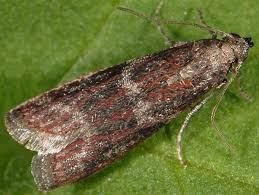
In fact harvest began on August 19th, the earliest of any vintage since Jeff took charge of the domaine in 2002. They would last for just over two weeks. The hot, dry summer meant the grapes were in excellent health, conversely they were small. Those parcels which had been touched by mildew required severe sorting at the cellar door. In the last few days of the vendanges another problem flew in, a moth called Pyrale du Daphné (Cryptoblabes gnidiella) or honeydew moth as I described here. Overall, with small grapes and the damage from mildew and moth the volume of wine from the 2020 harvest was 20% below average yield.
photo from Alchetron
By November with two months in tank the reds had completed their fermentations and were ready to be blended (assemblage). The whites proved a little more troublesome. Just like 2019 they moved through fermentation but then seemed to falter and were completed like an exhausted runner falling over the finishing line. Fortunately this was a hiccup rather than a cough and the wines look to be very good. As well as the usual range of container to hold the wines Jeff bought in some barrels from Cognac which had recently been emptied, they will be used for the oxidative wines.
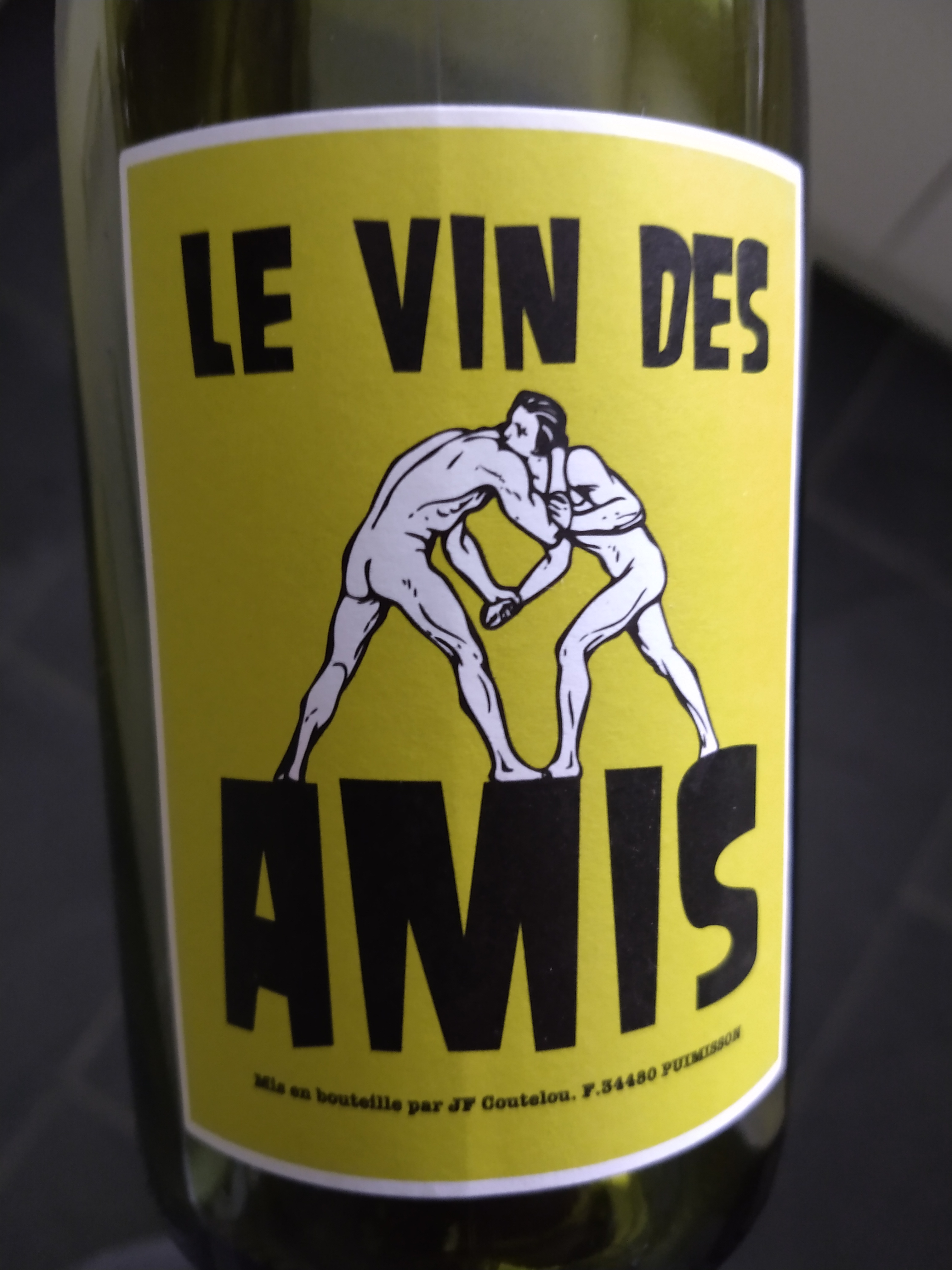
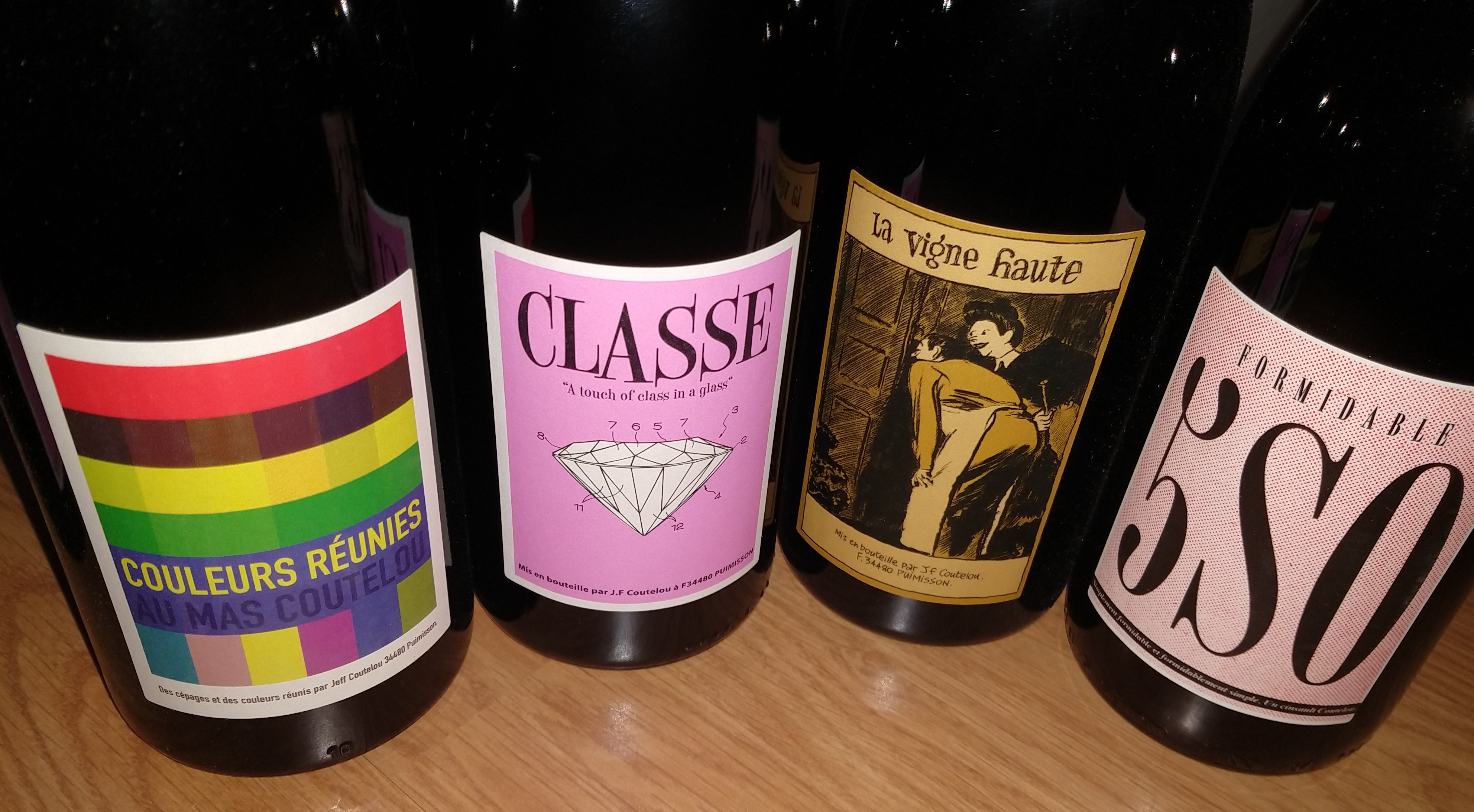
So, what are the wines likely to produce? In reds there will be Le Vin Des Amis for the first time in a few years, a welcome return, made up of Cinsault, Syrah and Grenache. Classe will be there from Syrah, Grenache, Carignan and Mourvedre, and there will be a separate single variety Mourvedre. A simple Vin Rouge of Syrah and Carignan sounds interesting and others will no doubt appear, Jeff is contemplating over a new version of Oublié, a wine made from the old, traditional varieties such as Morastel, Castets and Terret Noir and Blanc. The 2019 amphora wine is also now ready, a Syrah.
The name of the domaine is now Vins et Spiritueux Coutelou and so I should mention a new spirit, based on gentian from the Aubrac in the Haut Languedoc, some of it aged in barrel blended with the rest which was distilled. Finally, there will be Fine from 2014 in two versions, a 40% and a 64% aged in barrel.
Meanwhile in the vineyards. Jeff has planted more traditional grape varieties replacing grapes such as Merlot and Cabernet which have been grubbed up. Aramon Blanc and Noir, Servant and a grape called ‘Grappy’ which is taken from one vine in an old vineyard an unknown red grape. Jeff has purchased some abandoned parcels next to his Peilhan vineyard creating a 6 hectare parcel in the one place, which should make work much easier. He is planting hedges and olive trees around these new areas to secure their health and separation from conventional vineyards around. A 6 hectare oasis. Vines will gradually be planted over the course of a number of years to ensure the soils are organically sound and certifiable.
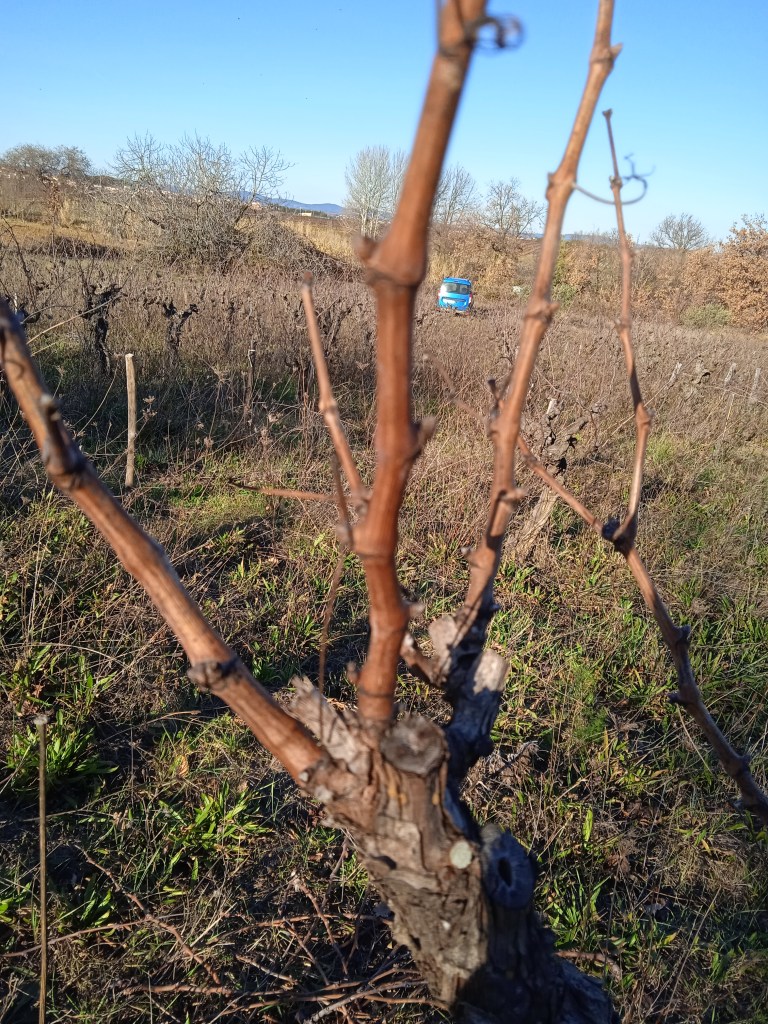
Meanwhile my friend Steeve spent some time in Puimisson in January to help out with pruning (taille). He felt honoured to be trusted with Rome vineyard, my favourite and sent me photos of his work which he has kindly allowed me to share. The aim is always to cut back the canes of the previous vintage and encourage others to develop this year, ensuring they are growing in a way to suit the overall vineyard, eg direction. In Rome, as the vines are gobelet, there is no real training of the vines as there are no wires. I hope with all my heart that I will soon be able to go and inspect Steeve’s work!
Nothing to do with food I promise. That’s an avenue I never really venture into, drink whatever you like provided it doesn’t clash tends to be my motto. Reflecting on January wines consumed it occurred to me that the most interesting aspect came in pairs of bottles. After all, this of all years is not the time for Dry January.
Let’s start with Jeff Coutelou. I opened two bottles which I thought would form an interesting comparison. Both are Syrah, made in exactly the same way from the same vineyard. The principle difference is the vintage but that is also the point of the comparison. The two bottles are from vines on a north facing slope in La Garrigue. The soil is the ubiquitous argilo-calcaire, limestone with clay but this part of the vineyard has more complex geology with various types of soil as this, like Rome vineyard, was at the end of a moraine thousands of years ago and all kinds of rocks were left behind. The vines face north to protect from the direct Languedoc sunshine in afternoons, Syrah likes heat but not too much.
Syrah of La Garrigue
La Vigne Haute is the top wine made from the site, my own favourite wine too. This bottle was a 2013, the wine ages superbly with the vibrant fruit of youth settling and maturing into something gentler and much more complex. Natural wines don’t age without sulphur protection we used to be told, LVH is the perfect riposte to such nonsense. In some years Jeff feels that the fruit hasn’t been absolutely top quality. Perhaps the stream which runs well under the surface of the slope has been swollen by rain and the grapes become dilute. Or maybe a hot vintage stresses the vines, north facing or not. In those vintages Jeff makes a Syrah which is bottled under a different name so that LVH remains a guarantee of top quality. Nonetheless those bottles offer a really good wine, with fresh, fruity Syrah. In recent years Jeff has named this wine On Peut Pas Vraiment Dire Que. The bottle I opened was a 2017 and was pure pleasure.
Onto another pairing, Jeff and one of his best friends, Christian Venier. Christian’s vineyards and home are in the Loire in the Cheverny region. He and Jeff are firm friends with almost identical outlooks on how to tend their vines and make their wines. When Christian holds his annual weekend Portes Ouvertes event Jeff is always there, I have attended too and even hosted the Coutelou stand.
Les Couleurs Réunies 18 is a wine Jeff made for the first time in that vintage. The grapes come from over twenty varieties of vine, planted in Font D’Oulette which we commonly call Flower Power. The vines are still young and yields are tiny. Jeff fleshed them out with grapes such as Castets from Peilhan vineyard, blended in tank to ferment and mature and the result is LCR. The 2018 is on fine form just now, lovely fruit and complexity. To pair it up I chose one of Christian’s white wines, Les Perrières 2018.
With Christian and Jeff in Christian’s vines 2016
How is that a pairing? Well, just as LCR contains grapes of the most obscure varieties (see this article) Les Perrières is made of one I hardly recognise, Menu Pineau. This variety is also known as Arbois and Orbois, by 2011 only a hundred hectares grown around the world, mostly in the Jura and the area around Vouvray in the Loire. My copy of Galet’s Dictionnaire tells me that it is used mostly for adding alcohol and softening the acidity of other grapes by means of blending. Christian’s wine is made purely of Menu Pineau. There is a density to the wine, exotic fruit aromas and the wine tastes dry but it’s aromatic and almost musky. Two vignerons embracing old grapes, old ways of working and producing wines of character and authenticity.
Menu Pineau, Orbois, Arbois in Galet
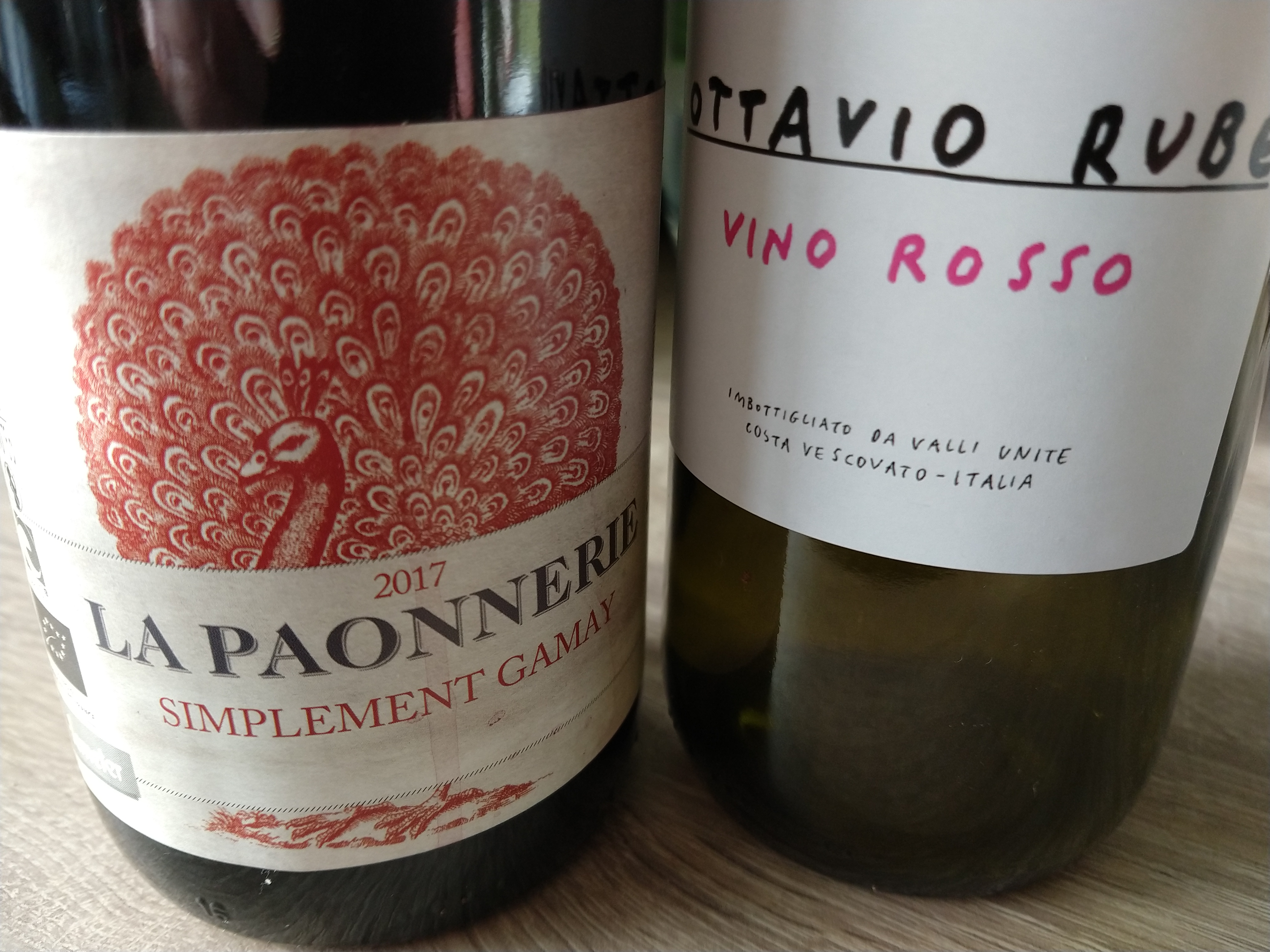
Finally, to a less successful pairing. Last year one of my favourite wines was the Simplement Gamay from La Paonnerie in the Loire. I bought more and disaster struck. The corkscrew met little resistance, the cork was very soft and I knew what the wine would be like. Sure enough a slight mustiness in the glass and fungal, coarse woody flavours. Bad enough but then I turned to a wine which is a regular, a simple red from the excellent Valle Unite in Piedmont, Ottavio Rube 2018 made from Dolcetto and Croatina grapes. The first glass was exactly what I hoped for, fresh acidity, bright red fruit. A second brought disappointment. Mousey flavours were present at the end of the mouthful. By the third glass the mousiness couldn’t be ignored, I simply can’t drink mousey wine.
I had a second bottle so I opened that the following evening to see whether that too would be spoiled. Same wine, same vintage. No mousiness. I can’t explain it, please feel free to offer suggestions. Mouse is a natural wine issue, it disappears with added SO2. I have experienced it too many times and in various circumstances. It is not as simple as bacterial infection, I have known wines which are mousey when tasted after the bottles have travelled but not mousey in the cellar of the producer. This was a fascinating, frustrating pairing but leaves more questions than answers.
A healthy glass of the wine
If you can, try to find pairs of bottles, they do add another layer of interest to the whole wine experience.
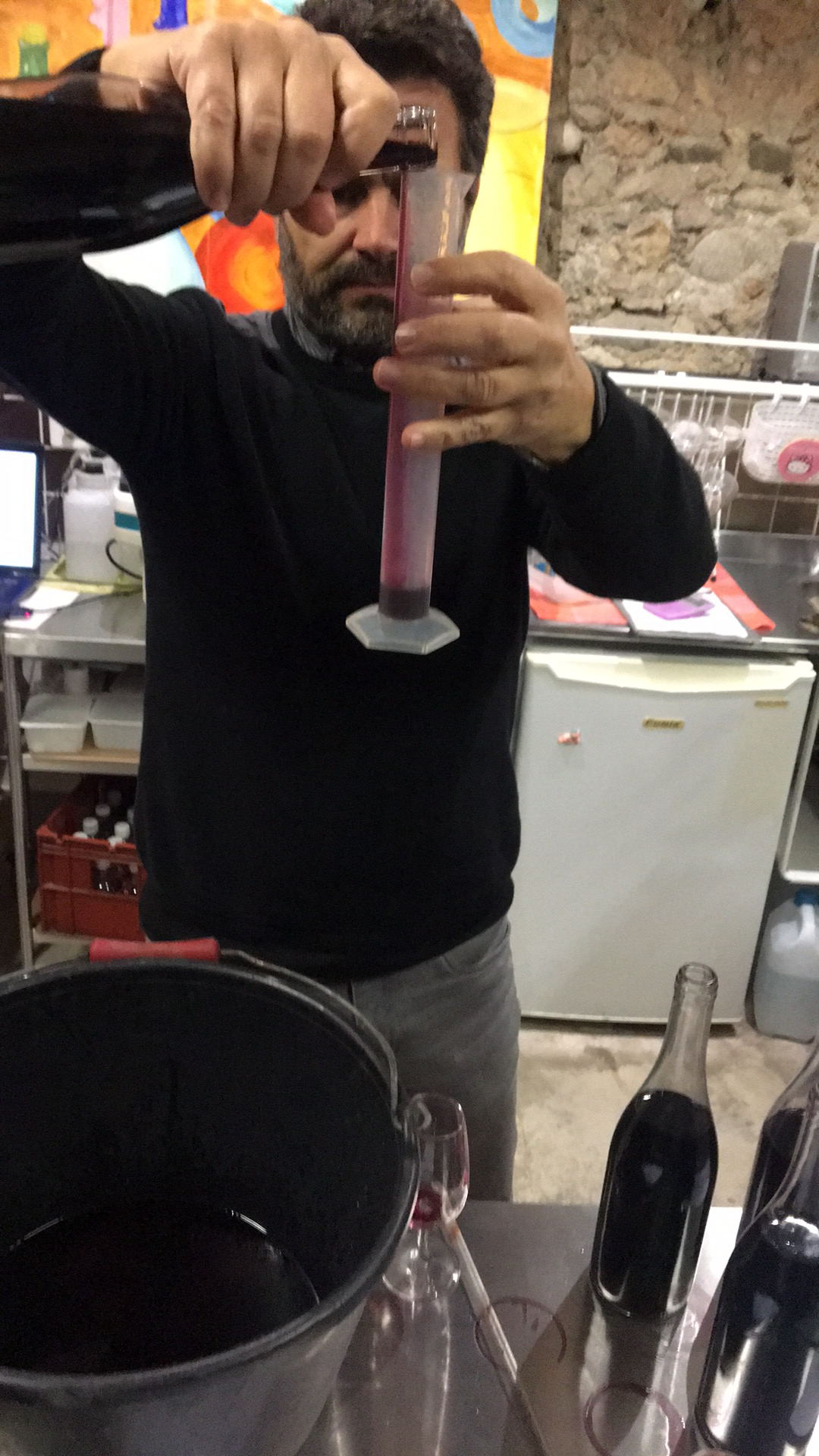
Thierry measures proportions of the component wines
I am aware of publishing posts all too rarely this year. I don’t post unless I have something to say which I feel may be worthy of your time though you may argue that the quality assurance fails sometimes! The vast majority of posts are about my time working alongside Jeff Coutelou and relating what is happening at his Puimisson domaine. Indeed this is the first year I can recall when I will have spent not one minute in France. Restrictions around COVID-19 made it impossible to spend time with him in 2020 so I have posted updates from Jeff as well as more general posts.
So, what news from the Languedoc? After vendanges the wines complete fermentation and settle in the various tanks for 2-3 months before Jeff makes final decisions about what to do with each of them. The large cement tanks are filled with one grape variety and often from one vineyard, e.g. Syrah from Sainte Suzanne is separate from Syrah of Peilhan. Though Jeff makes some wines from one grape, known as monocépage (5SO Simple for example), he is best known for his wines made from different varieties, Classe, Le Vin Des Amis being the best known.
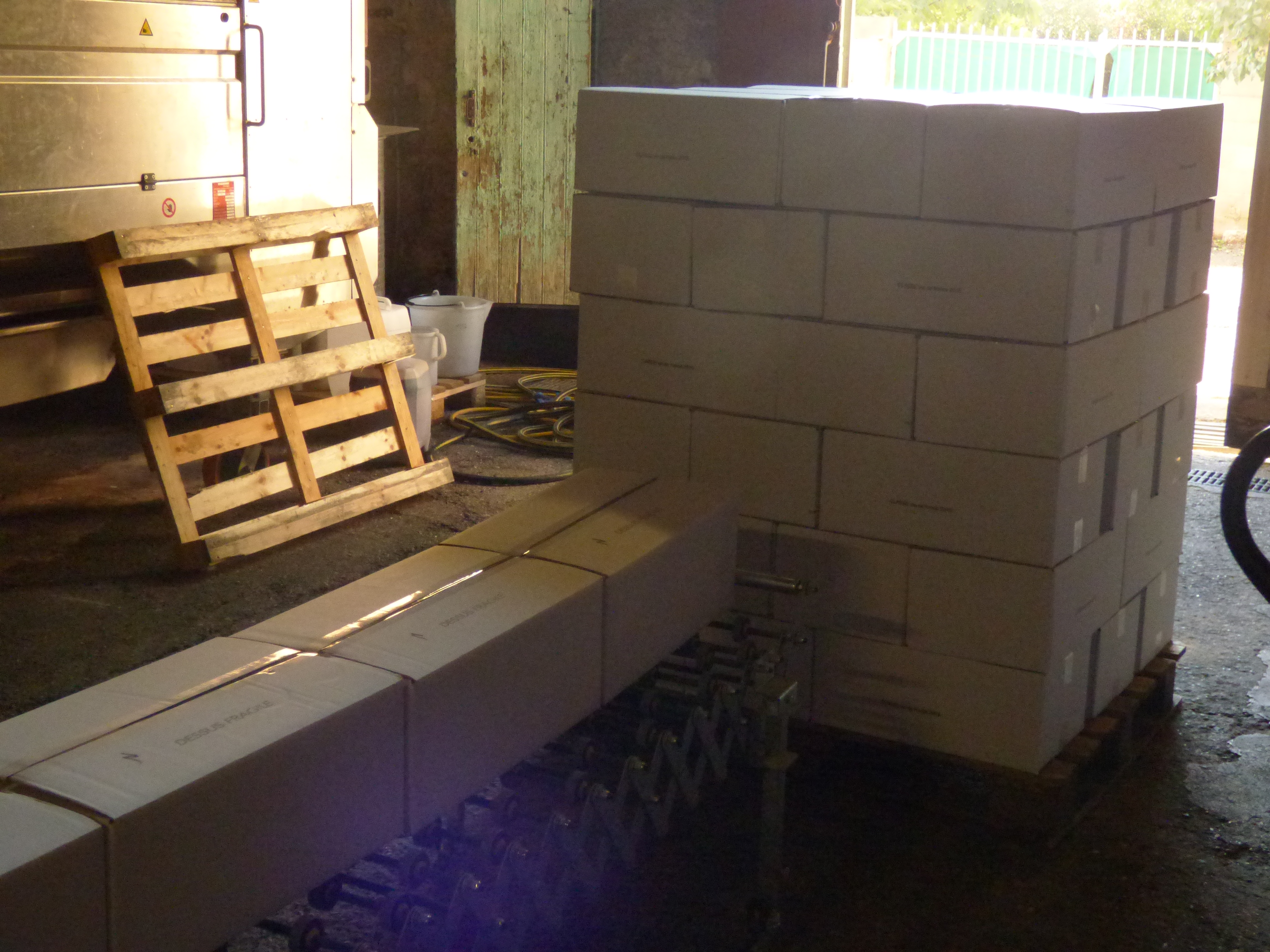
Bottling with the cement tanks in the background
In order to give these blended wines (assemblages) time to truly mix and marry their flavours and textures it is usually in November that Jeff will make the decisions about what to blend. Last week was the right time, fermentations completed, wines maturing. Thierry, his analyst, joined Jeff to try different blendings. They tasted the various wines, then mix together the typical assemblages for the wines, Classe for example will contain Grenache and Syrah. So they tried different percentages mixed and then judge whether the wine would benefit from another component, perhaps some Cinsault for freshness or some Mourvedre for body. Having played around with various blends they agreed upon the final blend.
An assemblage when I was there in 2016
Some wines will remain in tank, a new blend of those might be put together or they may be used for a small amount of single variety wine. I have been involved in these tastings and though it is fun it is also very important and serious as the decision is final, once the wines are put together there is no going back. Get it wrong and the customer may not like the wine. From there, of course, Jeff will have to physically move the wines, thousands of litres at a time from one tank to another and make the assemblage. There they will settle over winter and spring ready for bottling at some point next year. 2020 wines, a good harvest, promising well for a year which needs something to rescue it.
My Coutelou 2019 purchases
Meanwhile the wines of 2019 which were delayed by slow fermentations have reached the market. Bottling took place before vendanges in order to free up the tanks for the 2020 wines and during October thousands of bottles were habillées (labelled and capsuled). This is hard work, lots of carrying heavy boxes. It is also repetitive but an opportunity for the team to talk and joke together (as well as sampling the odd bottle, purely for more quality assurance of course). Jeff told me that over 32,000 bottles went out in one week and I acted quickly to snap some up from French suppliers as my usual source has been denied me this year. I noticed that the Coutelou wines remain amongst the cheapest on any website, below 10 euros in some cases. And today when I checked one site had already run out of 5SO Simple. I have opened a couple of the bottles so far but will give a fuller tasting when I have opened all of the different cuvées.
I will be posting more regularly this month with not just those tasting notes but also with my choices of recent wines and wines of the year. It has been a pleasant surprise to see reading figures actually go up in recent weeks and months, perhaps the less I write the better it is! But thank you.
In the course of the year I drink many different wines from all over the world but there can be little doubt that the mainstay is the range of Jeff Coutelou. Partly this is due to loyalty and payment for work done but it is also because, well, I do think they are special wines. Last week, by chance, I opened two bottles from the early to later stages of Jeff’s career in winemaking. They tell a story.
Sud2001 was part of a case of wine I bought at auction earlier this year. I had thought the wines were all Ouest about which I wrote here. I obviously didn’t look closely enough at the bottles as it turned out some were Sud. Where Ouest is made from Cabernet Sauvignon and Merlot, Sud is based on the more traditionally Languedoc grapes of Carignan, Grenache and Syrah. I honestly only noticed that this was Sud when I tasted the wine, markedly different to Ouest.
Being 2001 the wine had a similar appearance to Ouest, a brick red colour. Aromas began to tell a different story with a more open, fruity profile than Ouest. Sure enough on drinking there was less of the earthy Cabernet flavour and more pruny, black fruits with more richness than the more austere Bordeaux style of Ouest. It was excellent and still full of life, I shall hang on to my remaining bottle to see how it develops further. Really enjoyable. A little research found that, like Ouest, Jancis Robinson was a fan of Sud, describing it as ‘stunning value’ at £14.95 in 2011. She wasn’t wrong.
Carignan vines in Rec D’Oulette
Sud and Ouest were amongst the first wines which Jeff made after taking over the domaine from his father, Jean Claude. That they live so long and contain such pleasure was a sign of things to come. I always drink Coutelou wines youngish but tuck away bottles too so that I can track their development. The overt fruitiness, a hallmark of Jeff’s wines, tends to ease back a little with more complexity and depth emerging. Cuvées such as La Vigne Haute, Flambadou, 7,Rue De La Pompe and L’Oubliée all benefit from time but I find that even bottles such as Le Vin Des Amis and Classe are worth hiding away from temptation for a couple of years. Temptation often does win though.
Font D’Oulette (rather different to neighbouring vineyards)
Some of the wines are meant to be drunk early however, for example 5SO, Tete A Claques and Grenache Mise De Printemps. The latter has been one of my favourites in recent years, light and fruity like a pleasurable Beaujolais. One of the new additions to the range in recent years is Couleurs Réunies. I wrote about this wine here. Reading reviews of this wine the words, juicy, fruit and rich are repeated time and again. Again, they aren’t wrong. It is a joy bringer. The fact that it is made from the field blend of Flower Power’s vineyard Font D’Oulette together with additions of Carignan and the rare Castets from Peilhan is a unique selling point of the wine. The grapes are from every colour (as the name suggests), rare and more familiar varieties which together make a truly enjoyable wine. I believe Jeff has made it again.
From first to later wines the signature fruitiness, drinkability and sheer pleasure of the wines are present. The use of more traditional Languedoc grapes has become more important to Jeff with time, climate change has also confirmed to him that biodiversity and the use of grapes more resistant to heat and later maturing are essential for the future of quality in the region. These two wines show the skills of Jeff and how his wines can age well or be drunk at any stage. And that’s why Coutelou wines will always be a mainstay of the wines I drink and enjoy most.
The two reports on the 2020 vendanges with Jeff Coutelou featured the photography of Flora Rey, Jeff’s niece. I thought it was worth highlighting some of the other photos Flora took as well as my favourites. Flora is very skilled, I gave her my camera last year and her photos were on a completely different level to mine. It inspired me to go on a course, sadly I haven’t had the opportunity to apply that learning. Anyway, here are the photos
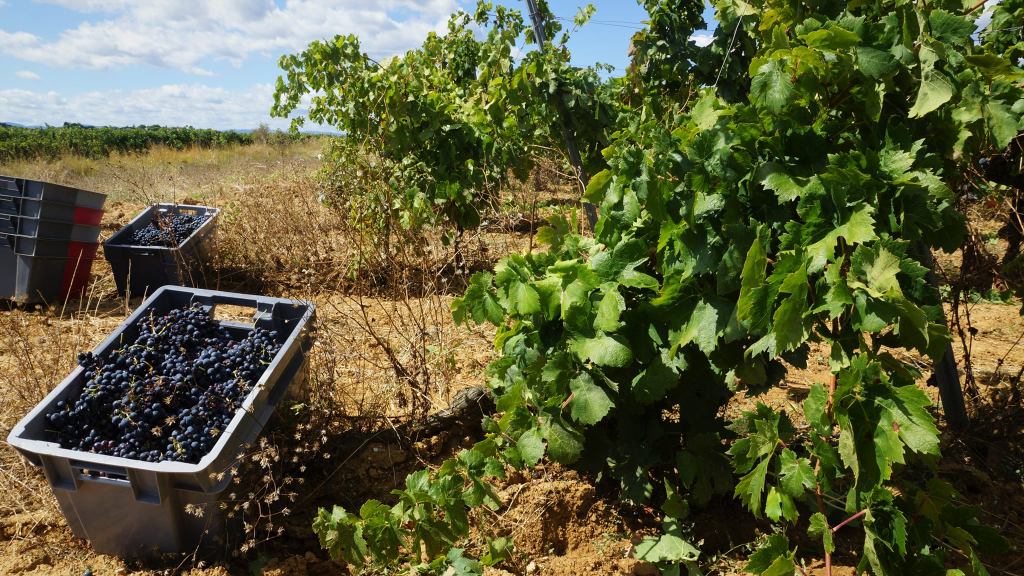
The grapes which make the vendanges, in 2020 they were in fantastic condition
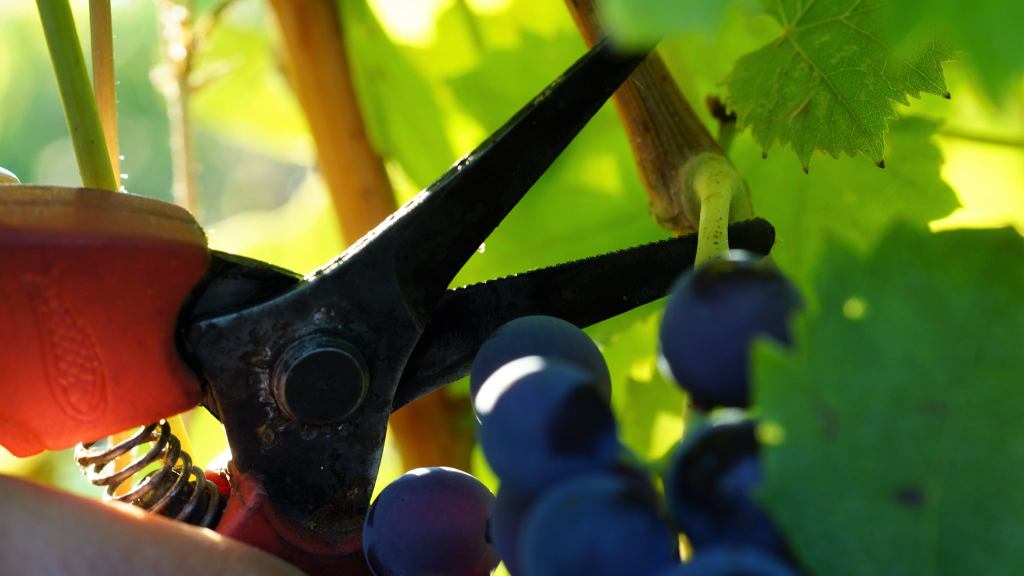
Harvesting, in Rome, Sainte Suzanne and La Garrigue
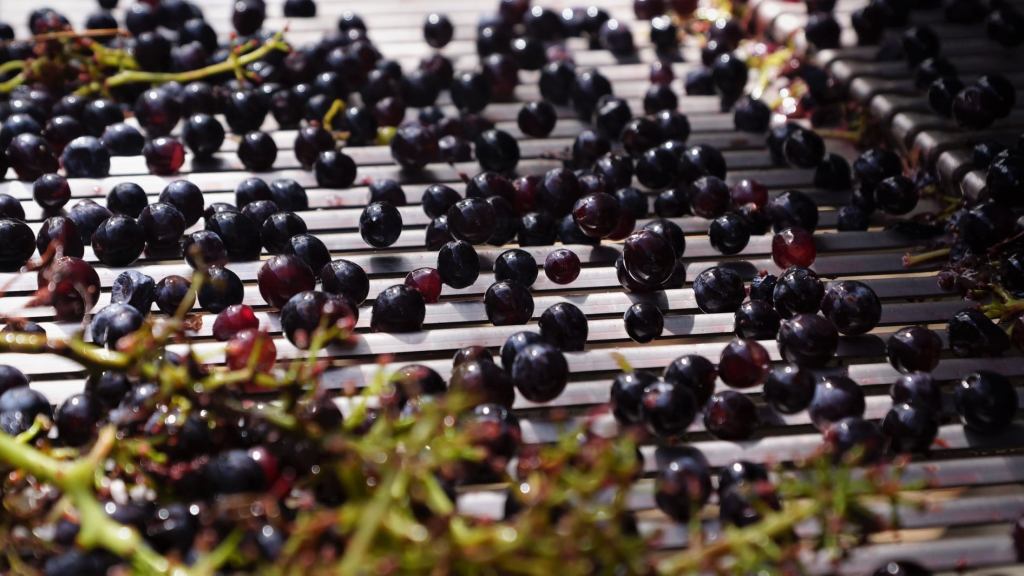
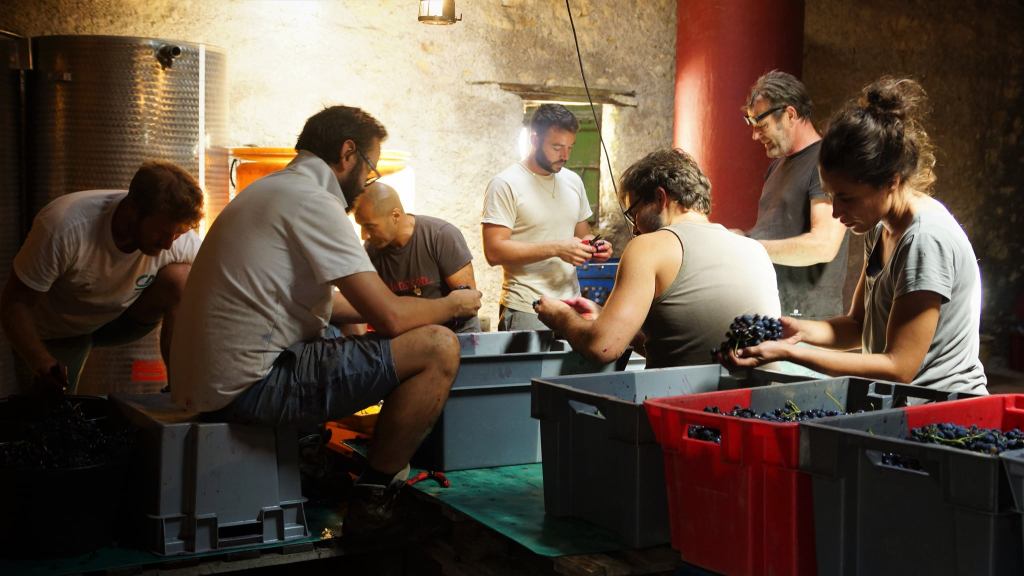
Sorting the grapes, crucial for ensuring quality
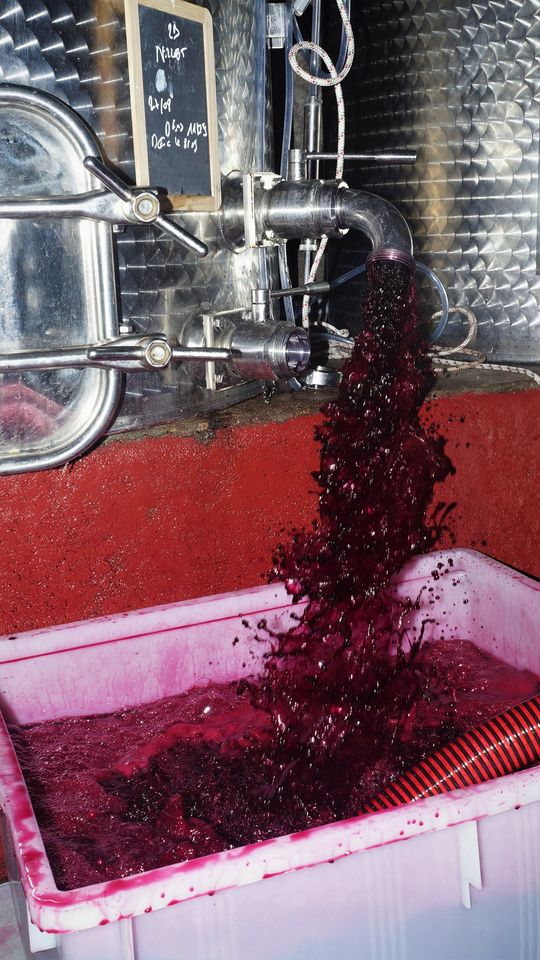
The grapes go into tank and begin to ferment, as you can see on the left
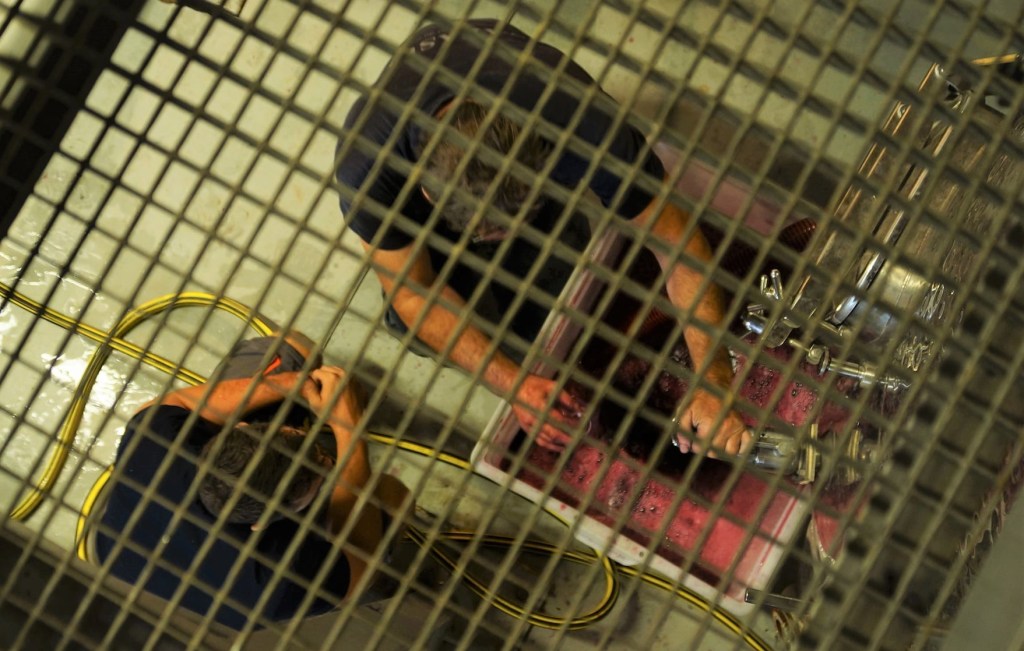
Remontages, pigeages and helping the wine to form
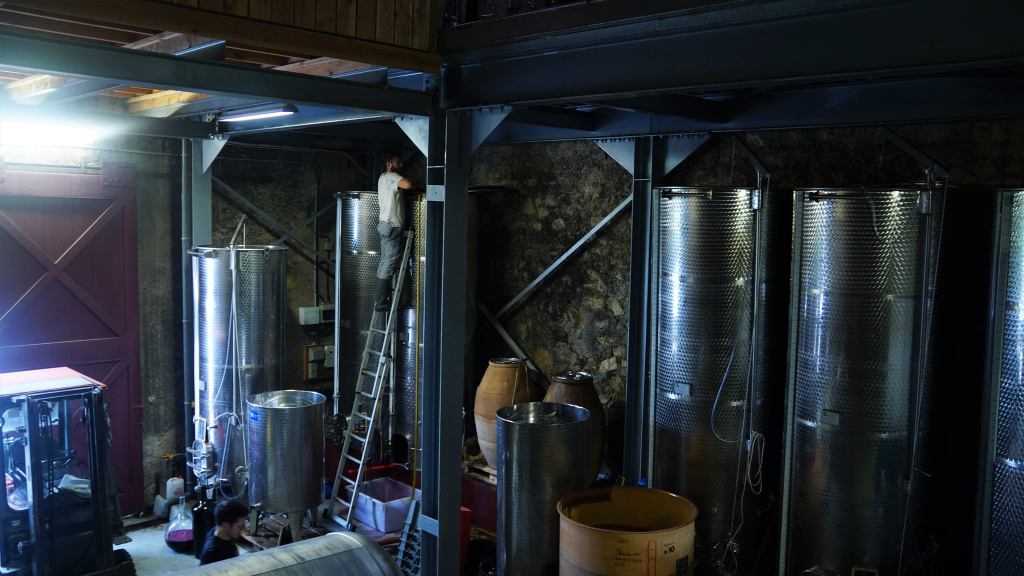
A busy cellar
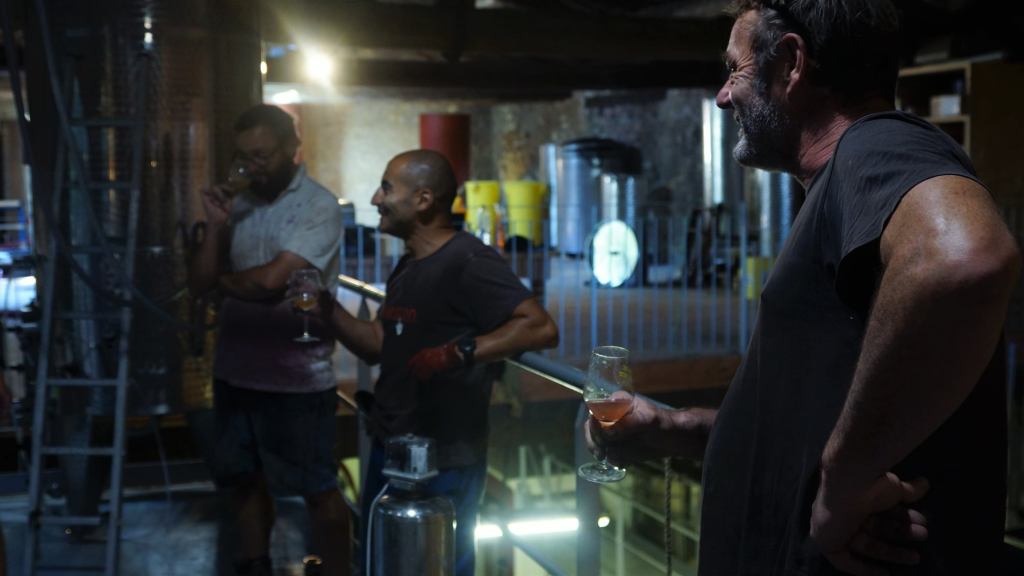
Analyses and careful records ensure the wine is in healthy condition and all is well in its makingEnjoying the product of the work
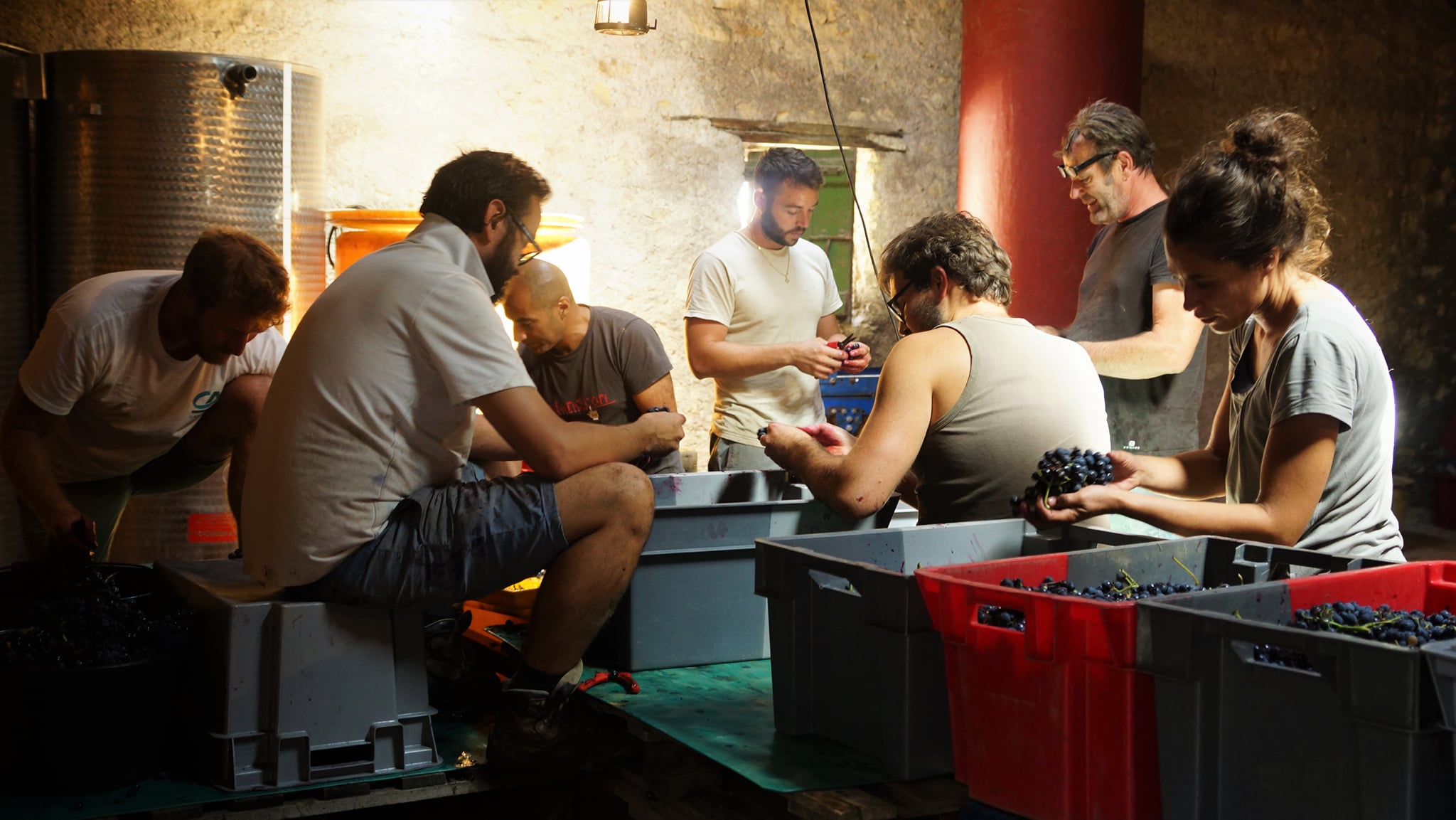
And my favourite photograph, showing the camaraderie and work of vendanges in an ethereal light. What a great photo this is Flora.


























 amarchinthevines