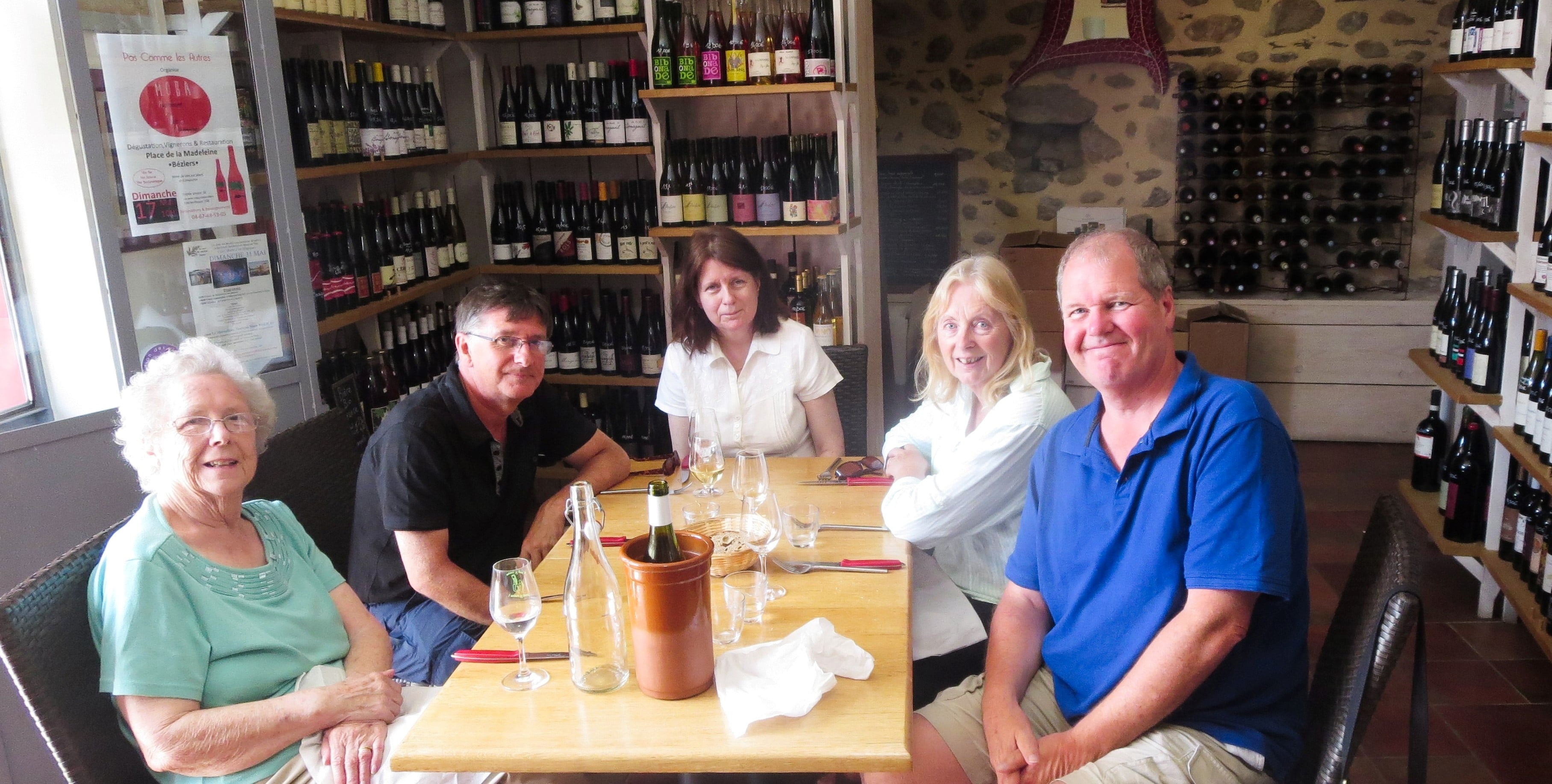
As my spell in June was coming to an end it was fortunate that Jeff had arranged with one of his longest standing importers to taste though the 2022 vintage wines on the 29th. Emil Broomé and Ulf Ringius have been running Vin & Natur in Malmö, Sweden since 2009 and Jeff has been one of their winemakers for most, if not all, of that time. They were visiting several of their producers in June and were heading home the next day. We started the tasting in the garden, moved into the cellar and finished at the excellent Picamandil wine bar / restaurant in nearby Puissalicon. After months of drought it was unlucky that we ended with a thunderstorm which curtailed the evening. However, a fun evening as you can imagine.
EmilOlaf
So, let’s start with the white wines. All vintages are 2022 unless shown otherwise. Clairette, macerated for 2 days on skins, was one of the hits of the previous vintage was showing well again, the characteristic bitterness of the grape offering plenty of refreshment. Three different versions of Macabeu were made. Macabeu 2 (though we drank it first) was from young vines at the southerly end of Sainte Suzanne vineyard. There was a cassis note to the wine, surprising in a white wine, zesty, leafy and lengthy, nice.
The young Macabeu and Clairette vines of Ste Suzanne
Macabeu 1 made from the Peilhan vines was given ten days maceration in a concrete egg. It was much more complex than Macabeu 2 with tannins showing to support the white fruits, very dry and lovely. Macabeu 3, the same Peilhan grapes but raised in amphora for six months in total. The difference in vessel was clear with greater concentration and depth. The flavours gathered in the centre of the tongue, white fruits and very long lasting. Not much was made, I am not sure whether it will even be released for sale. It was excellent.
La Vie En Grose is a new wine, made from Carignan Blanc, Grenache Gris and Terret Blanc grapes, macerated for a short time in tank. Dry. clean and direct with clean fruit. The Grenache Gris adds a tint of red making this a very light, onion skin type rosé wine. Amazingly, there was even a red fruit note in the flavours on show. I had a bottle a month later and this is a real gem of a wine.
Amphore Métissé continues the not red wine, métissé means a wine that is a blend of red and white grapes I recall spending a half day carefully sorting the grapes for this, removing every little stalk. Macabeu, Grenache Gris and many other varieties went into the amphora.
This year’s version of the wine is much lighter in colour than previous vintages, very dry, soft tannins with light red fruit flavours, raspberry and cherry. This needs time to settle and soften a little but it’s really good.
To the reds. Ploutelou is a bistro type wine, made for easy drinking and food. Red fruits again, light and far too gluggable. Fast becoming a favourite like the Grenache Mise De Printemps cuvée simply because it is so enjoyable. La Buvette À Paulette is another wine made for early drinking, a little fuller than Ploutelou, made for food. 50% whole bunch Carignan Noir and 50% Grenache from La Garrigue. Good acidity supports the plummy fruit, very nice.
Classe, one of the Coutelou star wines, has been blended from Syrah, Grenache and Mourvedre this year. Tropical fruit aromas practically jumped out of the glass, red fruits and blackberry flavours followed on. This will maintain the wine’s popularity for sure. Couleurs Réunies has become another regular cuvée in recent years. Jeff told us that there had been an issue with gas in the tank but this had settled after a month or so. It doesn’t have the smoothness of previous bottlings so Jeff is considering giving it a new name and label. Fresh with red fruits, still good.
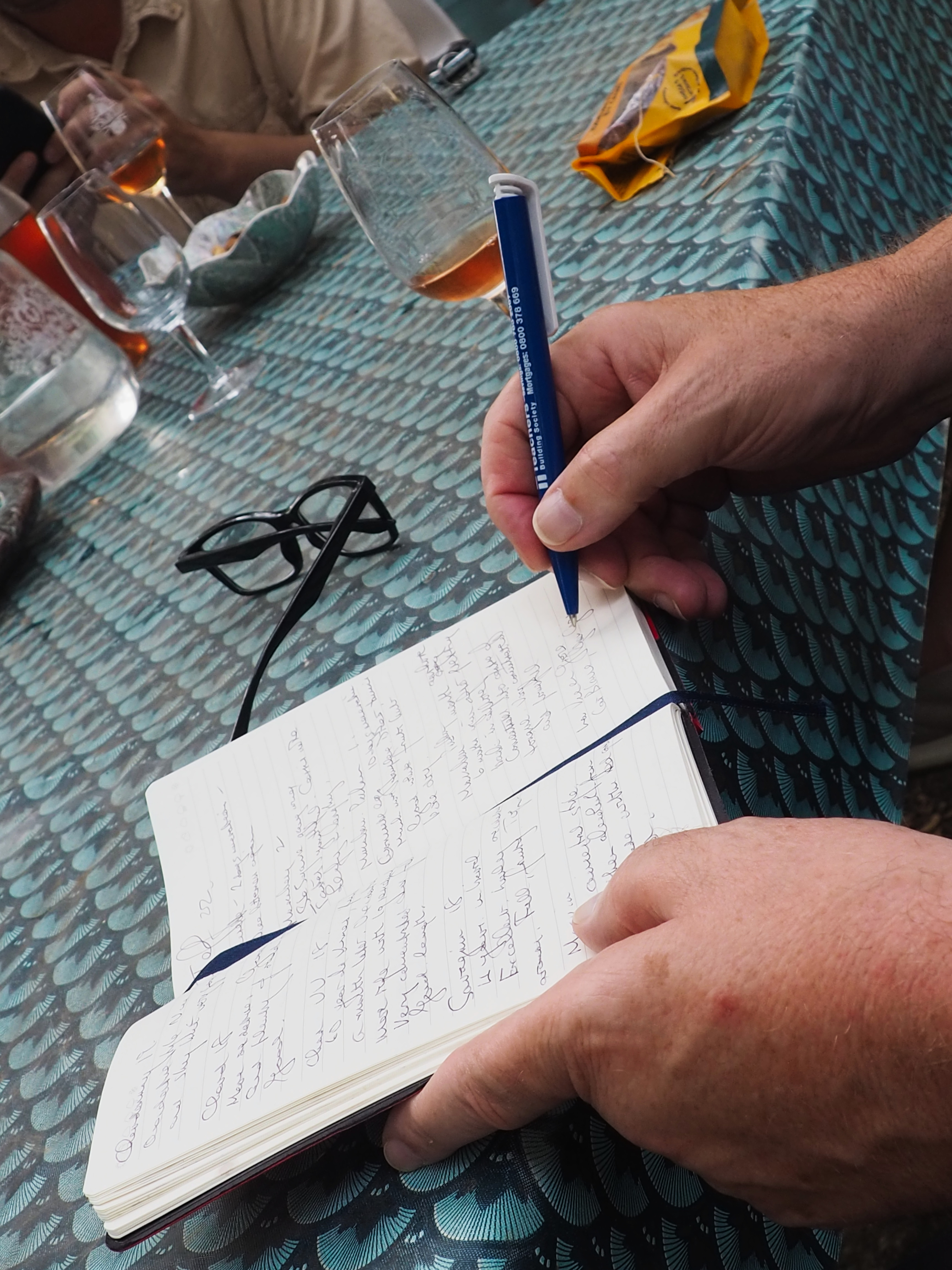
Making my notes
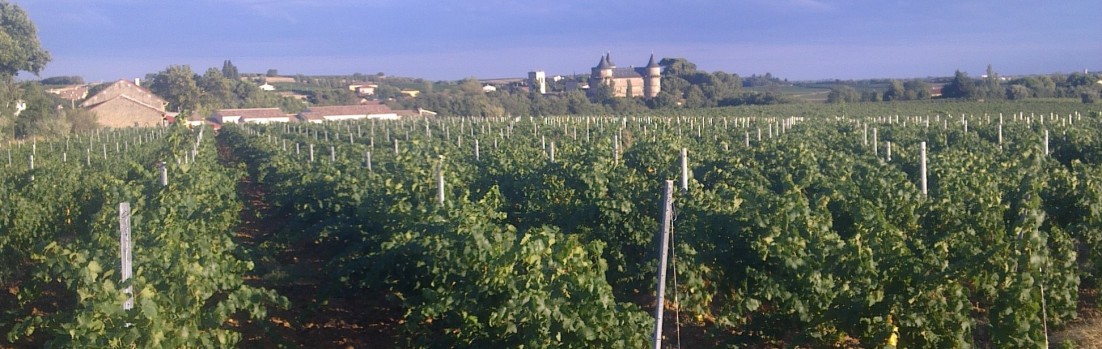
La Vigne Haute, my favourite. Made as ever with the Syrah from La Garrigue vineyard (just visible in the top photograph next to the white van in the distance), this vintage is very aromatic, cassis leaf, Olaf detected watermelon aromas. The wine was beautifully balanced, good acidity but not too much, light tannins but not too evident, bright fruits but built to age too – it’s a Goldilocks wine, just right. Mourvedre is lighter and spicier than previous vintages, I enjoyed this more, it’s not often one of my preferred wines. Unlike Flambadou, another Coutelou headline act, pure Carignan from Rec D’Oulette. The wine is closed on the nose for the moment but in the glass ripe, concentrated fruits with good acidity, with just a hint of greenness on the finish.
Amphore Syrah 21, made from Ste. Suzanne grapes. This was very pure Syrah, darker than La Vigne Haute. It carried lovely power and concentration, full yet still smooth with dark fruits. Jeff has also made a lovely wine which will be available in magnum only, a blend of La Vigne Haute and the Amphore Syrah. It is the latter which is more apparent for now though Jeff suspects LVH will start to show more with time. This definitely needs some ageing to bring everything to its best but it will be worth the wait, I shall be at the front of the queue.
A very enjoyable evening with good people and excellent wines. There are other 22 wines already on the market such as the Gris De Coeur made from gris grapes such as grenache, carignan and riveyrenc. However, it was good to unveil this promising vintage with wines which are being gently aged in bottle in Jeff’s cellars for now. Make sure to watch for their release, in Sweden or around the world.
I shall soon be heading south again ready for vendanges, the tenth year of my involvement. It’s a period of very hard work, aches and great fun. For Jeff though it is a period of very hard work, aches and great stress. This is his bottom line, will he make money this year or not? I remember reading one winemaker saying that he would only get thirty or so opportunities to make wine in his life and therefore he felt a duty to make the best wine he possibly could each year. Jeff thinks similarly, he wants to produce wine of the best possible quality, but he also needs to make enough wine to pay for salaries, equipment and all the other costs he faces. So, how is 2023 shaping?
Mourvedre looking healthy
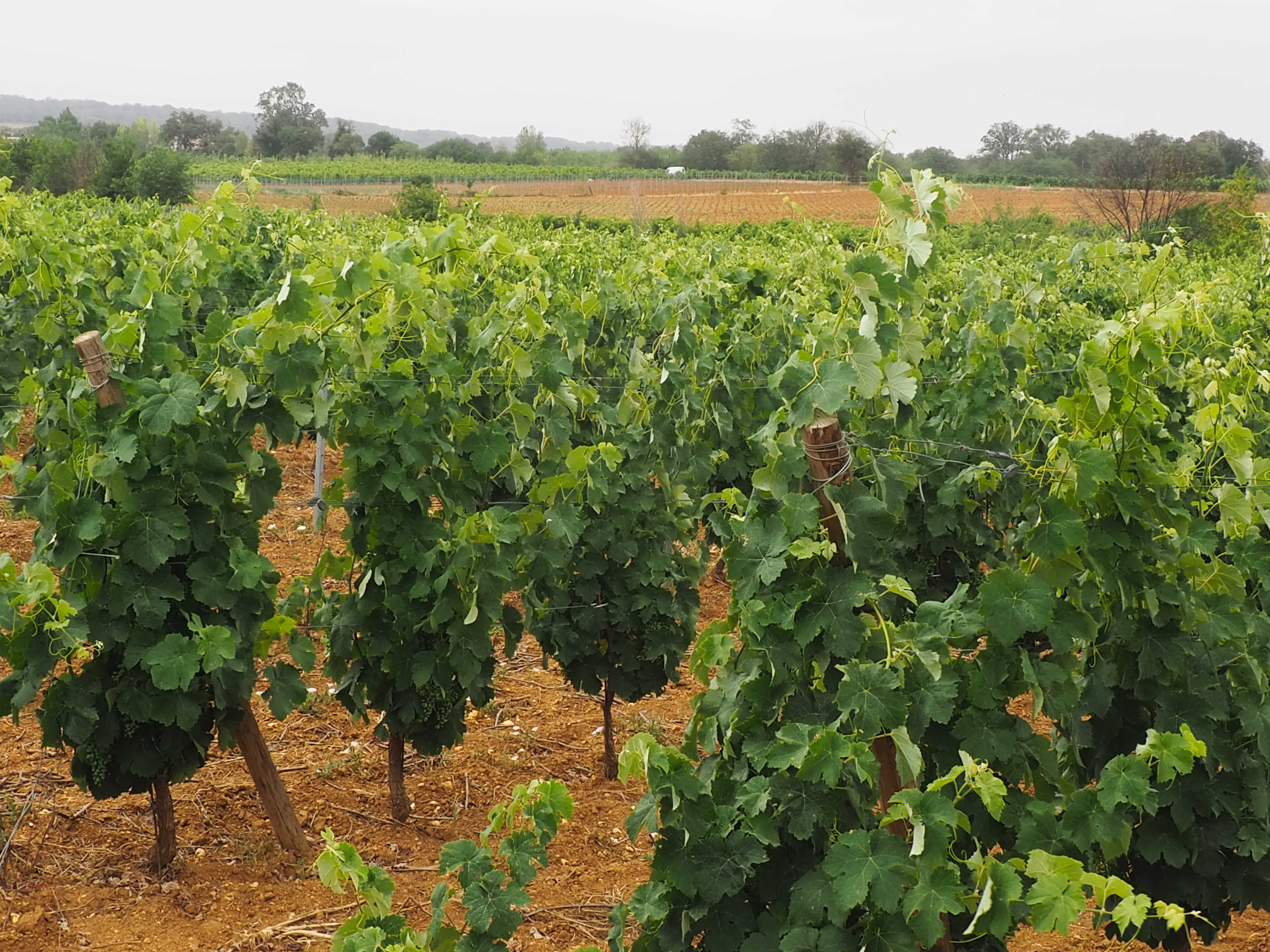
In my last post I explained that I did two full vineyard tours in June. In the first, alone, I saw vines in excellent condition. The vines had few signs of disease, well below average. The dry, hot conditions were good for preventing mildew for example. There were lots of bunches of grapes in all vineyards, I felt very optimistic for the vintage. However, on my second tour, with Jeff, he revealed some of the problems caused by those same dry, hot conditions.
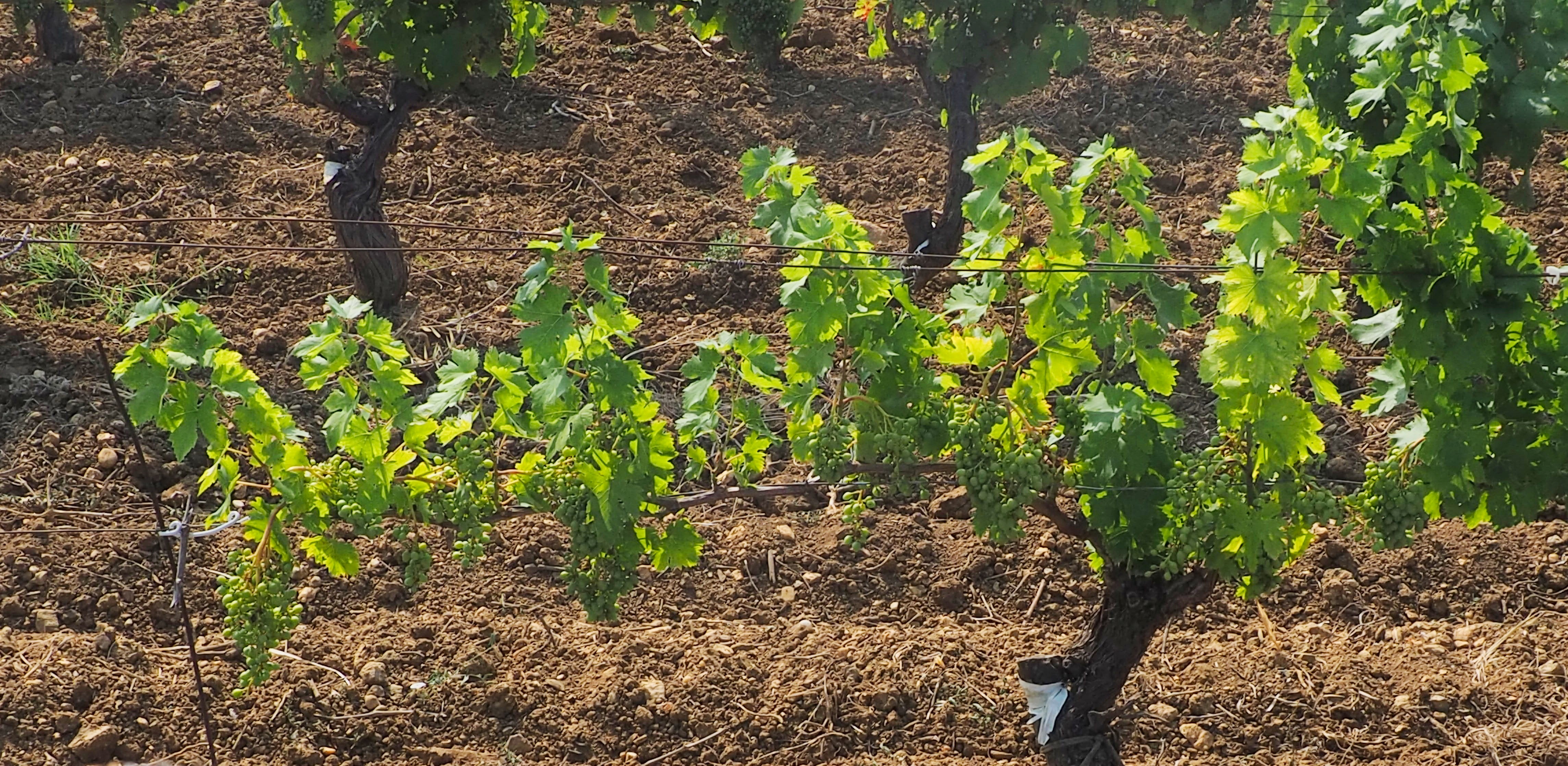
One reason why Jeff, Ines and Jérome were tying up the vines, as I described in the last post, is to stop the vines pushing growth of more greenery and foliage so that they can concentrate on developing and ripening fruit. However, the drought also means that some of the vines were already making that decision for themselves. These Clairette vines in Segrairals were producing limited vegetation at the end of June.
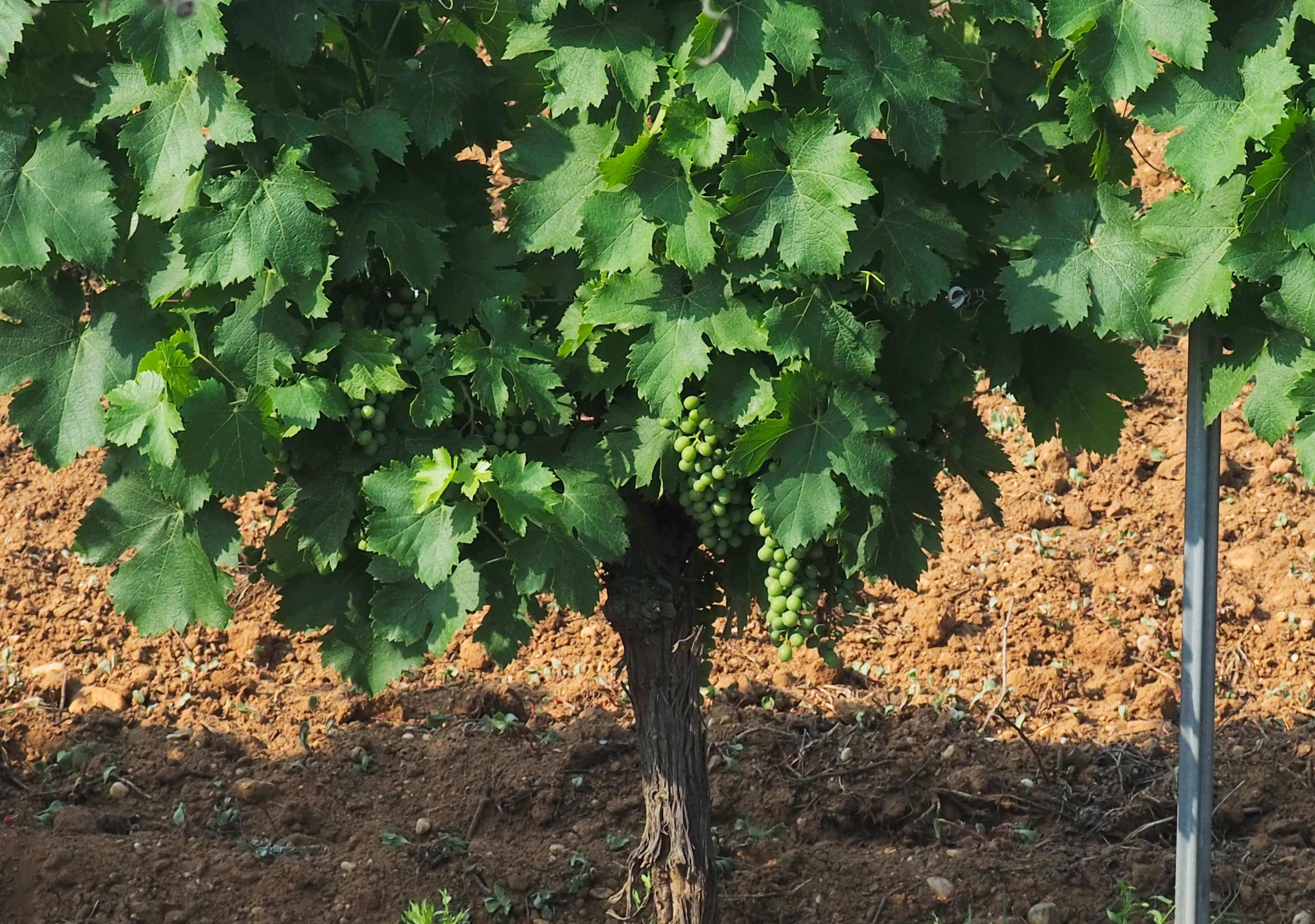
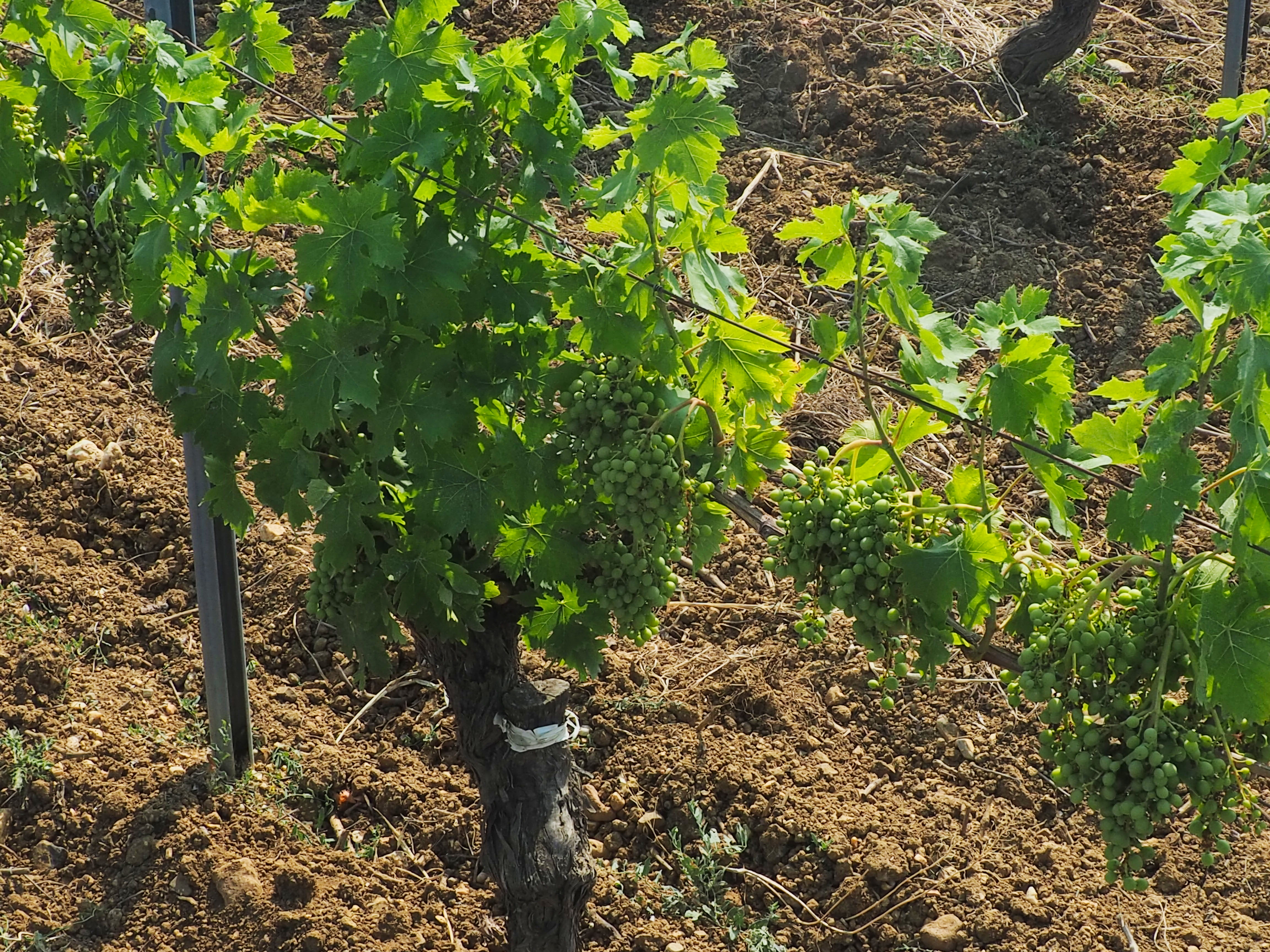
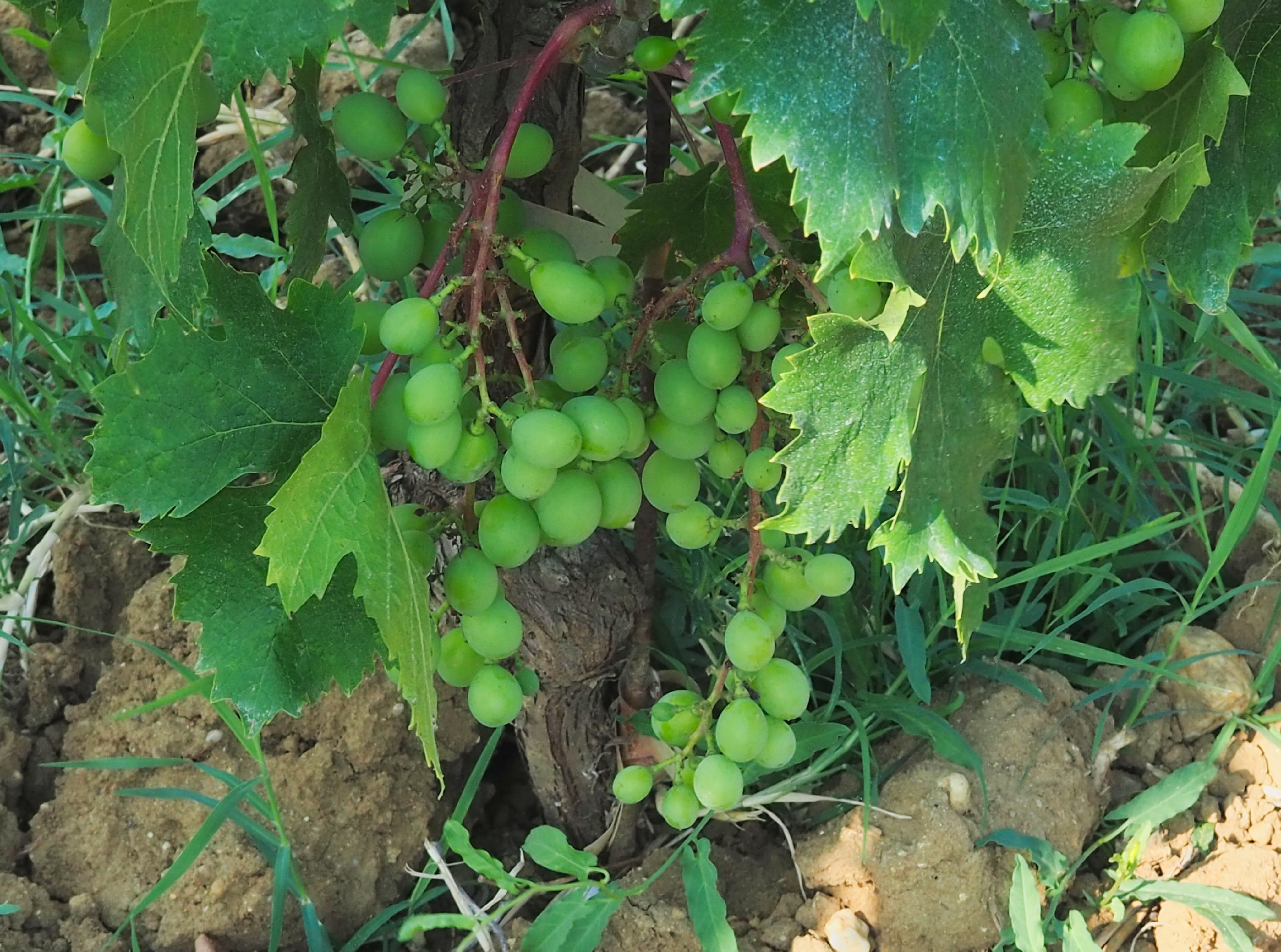
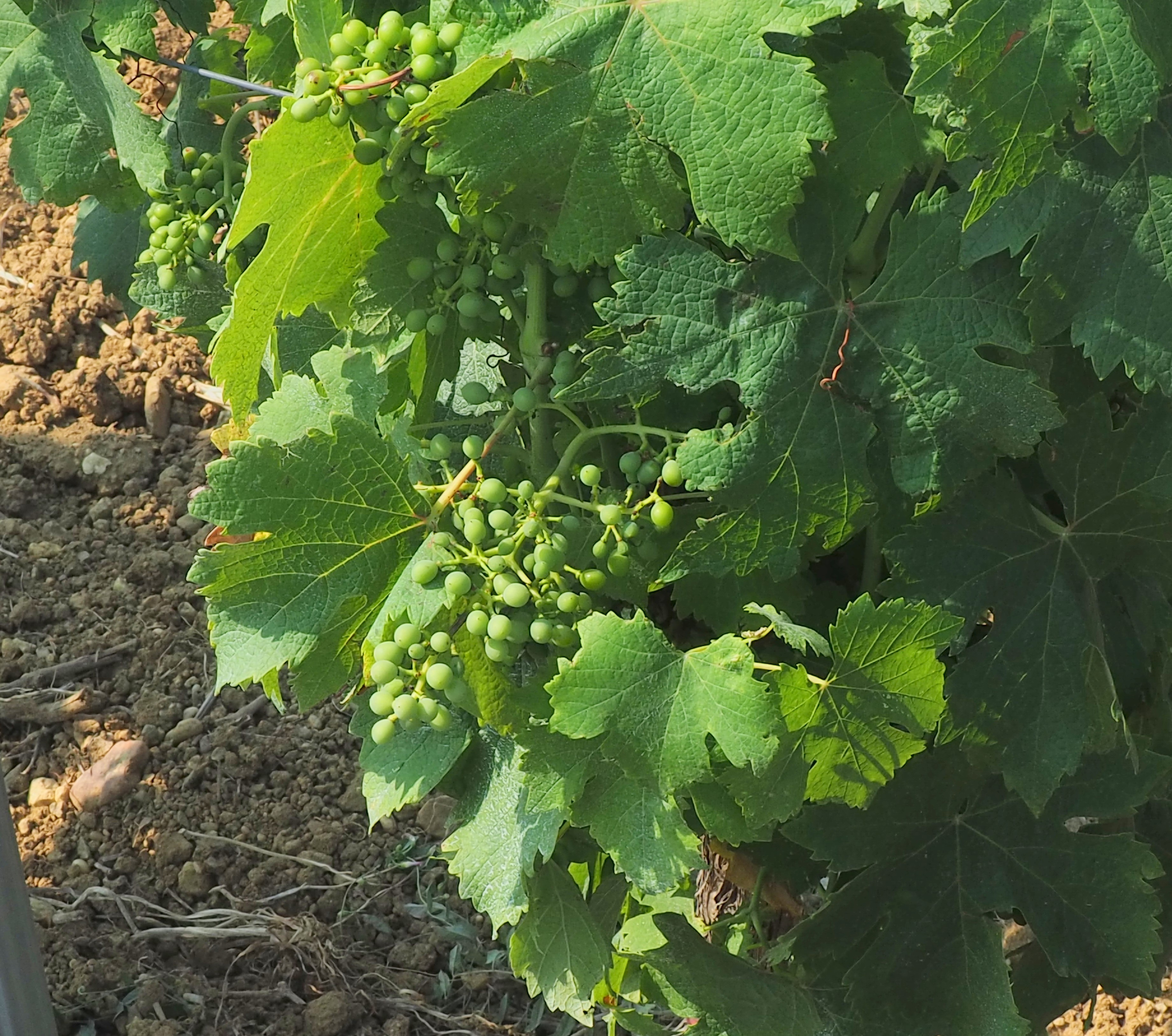
The vines were already beginning to take measures to prioritise fruit. Across all the vineyards the vines had many bunches but Jeff pointed out that most of those bunches were half full. Jeff explained that the vines are aborting some of the berries in order that some mature and ripen fully. Better some than none, or all of them being unripe.
Jeff pointing out an incomplete Cinsault bunch
ServantClarette
This all means that harvest will be difficult. Fewer grapes means a smaller harvest, less wine and income for Jeff. 20mm of rain from October to June was bound to cause problems, that is tantamount to desert conditions. Some storms in July might have brought some relief but 2023 is looking a far from ideal vintage.
After an eight-month absence, I was back in the vineyards, and the first task, and pleasure, was to assess any changes that had taken place. Based here from 2014 to 2017, I had witnessed all of Jeff Coutelou’s vineyard and cellar developments. Though he keeps me updated, there is nothing quite like experiencing everything in person. On June 20th, I embarked on a tour of the vines myself, followed by a more enlightening one with Jeff a week later. As always, his expertise extends beyond vines and encompasses all aspects of horticulture. I will delve further into that in my next update. Stay tuned!
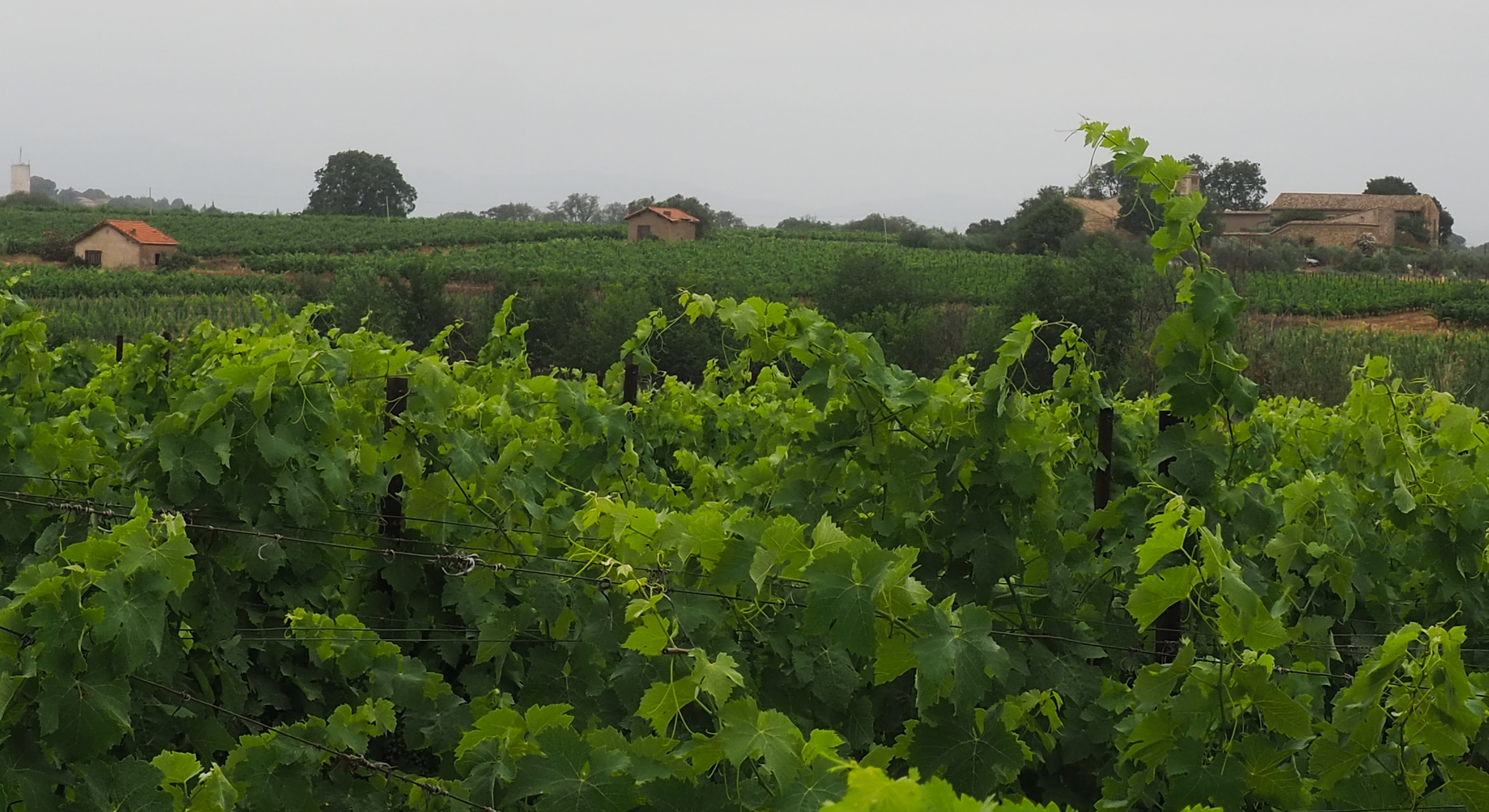
Syrah of La Garrigue in the foreground with Ste Suzanne Syrah and Grenache in the distance and Maccabeu and Clairette below the hut on the left
My first tour took place on a grey, cooler day, but unfortunately, there was no rain. The region has been experiencing paltry amounts of rainfall since last October. Even when other areas in the region received some rain, the plains, where Jeff’s vineyards are located, remained dry. Despite the lack of rain, the vines surprisingly looked in good condition, largely due to the dry period having a beneficial impact on disease prevention. During my visit, I noticed that Jeff and Gilles had been diligently raking the ground, incorporating the plant growth into the soil to use it as compost. This practice is crucial for maintaining the vineyard’s health and fertility.
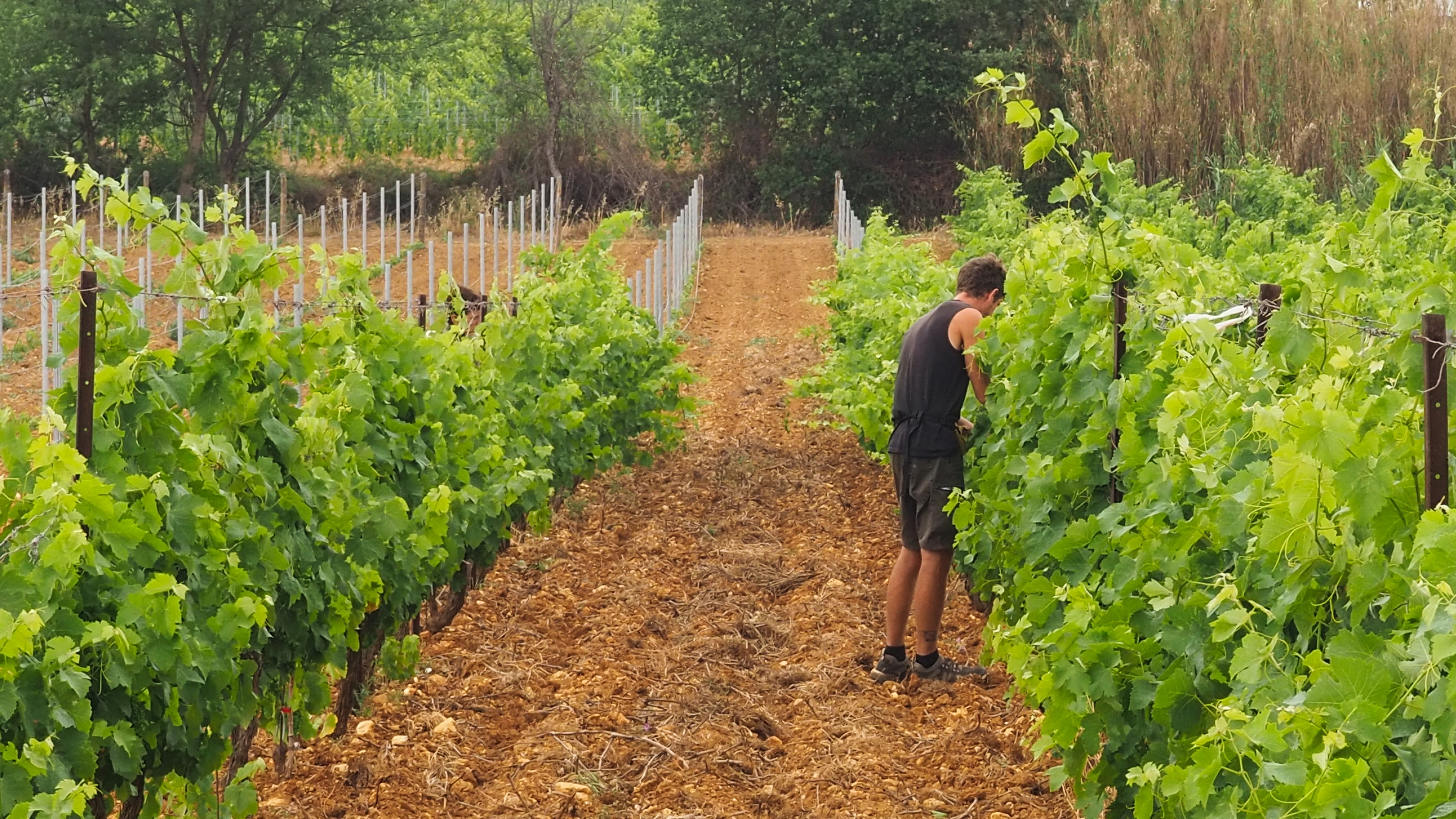
During my visit, I observed that most vines displayed full foliage. Ines and Jérôme were busy in La Garrigue, meticulously tying up the vines onto the wire trellises, a practice known as “pallisage.” A week later, Jeff explained to me the purpose behind his technique of knotting the tops of the vines together.
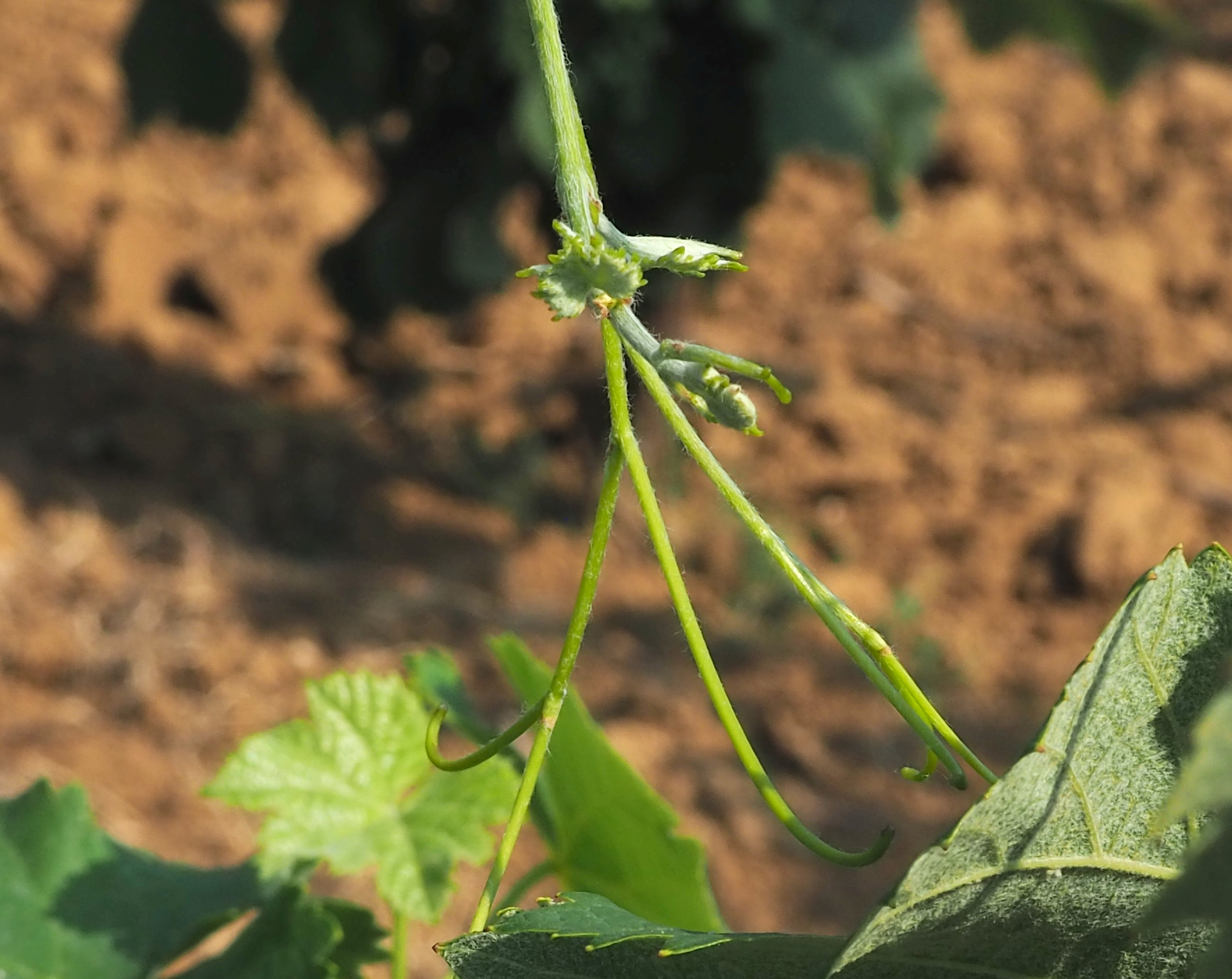
Vines have a remarkable ability to produce leaf buds in abundance. Being climbing plants, they continuously grow and extend their branches. However, by tying them together, Jeff aims to restrict the further expansion of foliage and overall size. This strategy encourages the vines to channel their energy more into fruit production. By diverting their resources away from excessive foliage growth, the vines are encouraged to focus on developing healthier and more robust fruits, ultimately leading to improved grape quality and yield. It’s an essential method in vineyard management to strike the right balance between vegetative growth and fruit production.
Relentless vine growthTresse formed by knotting the vines
The recently planted vineyards were thriving, benefiting from irrigation. Since these young vines are not yet producing fruit for wine, they require proper nurturing to establish strong root systems and healthy growth. Jeff ensures they receive adequate water through irrigation to support their early development.
Some people wonder why, despite being in a time of drought, Jeff opposes the idea of irrigating his older vines. The reason behind this decision primarily lies in his principles as a natural winemaker. He firmly believes in minimal intervention and allowing the vines to express themselves as much as possible.
While it is true that viticulteurs do engage in various vineyard practices, including planting, pruning, trellising, and spraying, Jeff’s approach leans towards allowing the vines to thrive in their natural environment. He is cautious about introducing elements from outside the region through irrigation sourced from the Rhone river, which would alter the purity of the wine’s terroir expression.
Instead, the water used for the young vines comes from Jeff’s own well and other local sources. By using water that is specific to the area, he ensures that the vines maintain a pure connection with their terroir, reflecting the unique characteristics of the land in the wine they eventually produce. This dedication to preserving the essence of terroir in his natural wines distinguishes Jeff’s winemaking philosophy and practices from those of conventional viticulteurs.
La Vigne Haute Syrah and new extensionYear old Xarel-lo
Nonetheless, the overall condition of the vines was impressive notably Flower Power (Font D’Oulette), looked more vibrant and healthy than ever before. Over the past eight years or so, the vines in this vineyard have become well-established and significantly more productive. The efforts and care put into nurturing them have certainly paid off.
The Xarel-lo parcel which was planted just last year, is also thriving remarkably well. These young vines are showing robust growth and are on track to start producing grapes next year. These grapes will likely be utilized for blending purposes in early years, adding to the complexity and character of the wines.
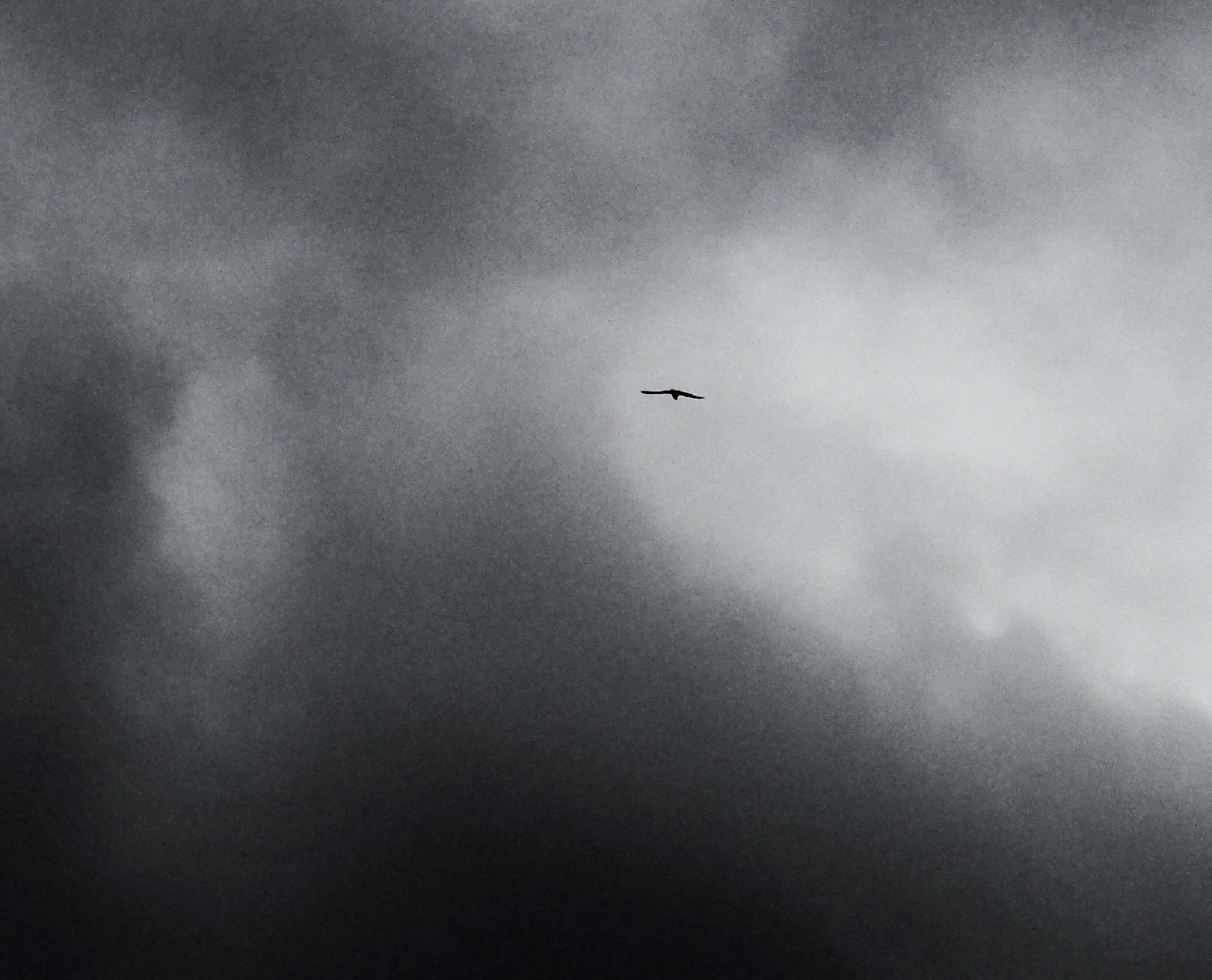
Adjacent to the Xarel-lo plantation is a small reservoir that Jeff created last year. Despite the prevailing drought, the reservoir has managed to retain a good amount of water, thanks to its steep sides. This reservoir has become a habitat for a diverse range of animals, as evidenced by the tracks left behind. During my visit, I even had the pleasure of observing a kestrel soaring in the vicinity of the reservoir, attentively eyeing its prey among the small creatures drawn to the water source.
The ecosystem and balance that Jeff fosters within his vineyard are a testament to his commitment to sustainable and thoughtful viticulture practices. By creating these natural reservoirs and allowing wildlife to thrive, he not only preserves the biodiversity of the area but also contributes to the overall health and resilience of his vineyard ecosystem.
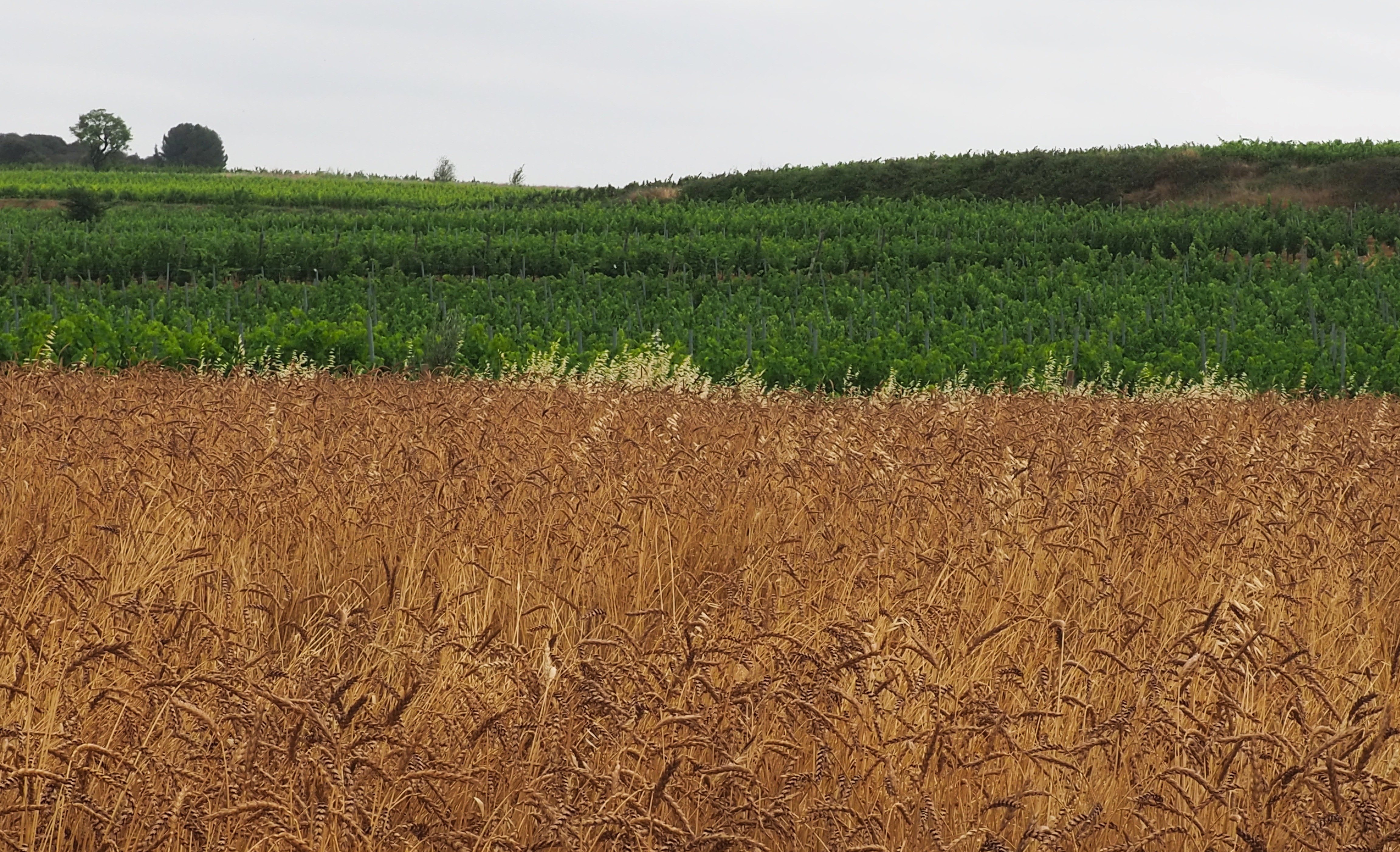
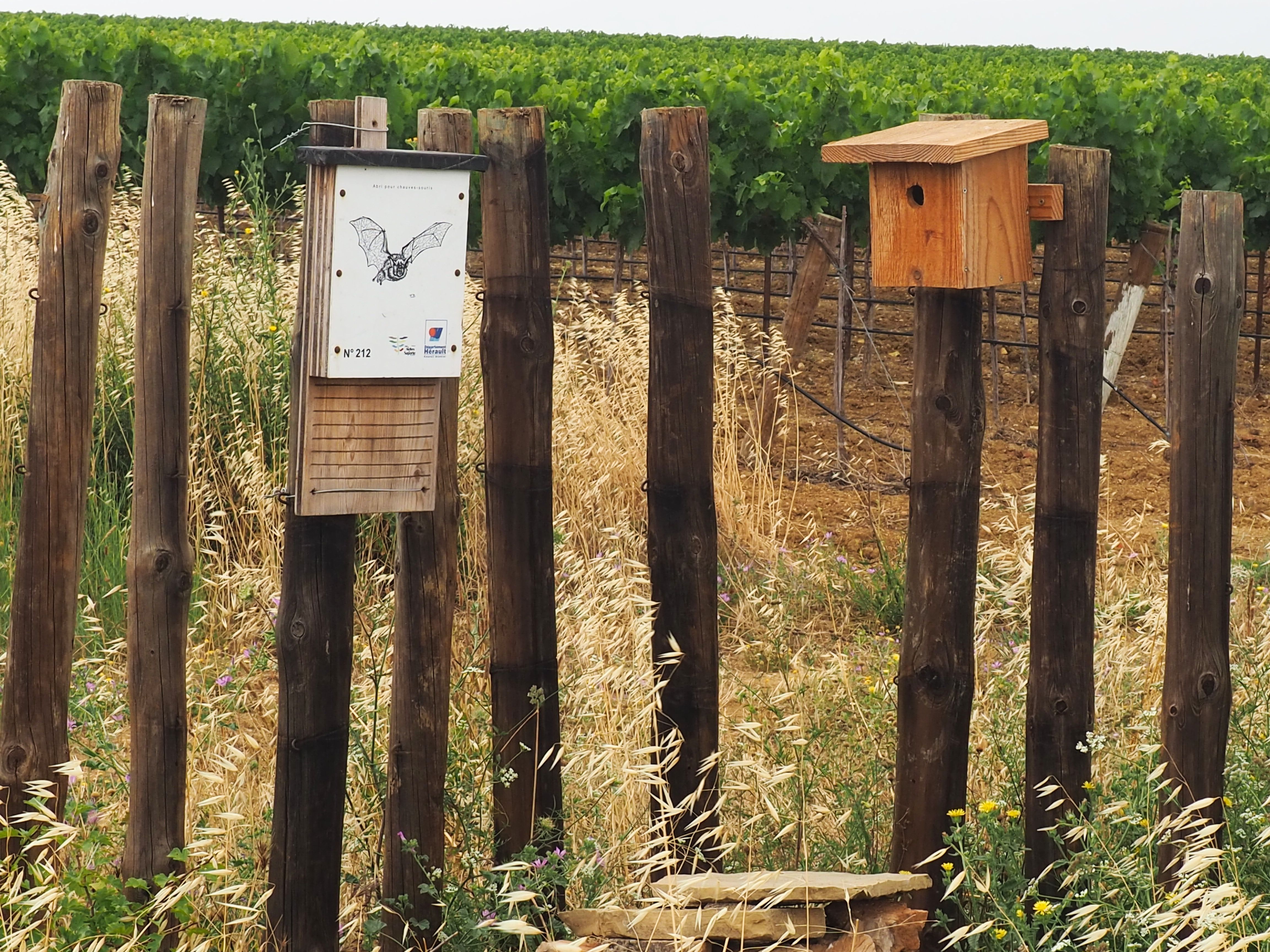
Kestrel over the marneRed wheat in front of the Peilhan terraceBat shelters
The field of red wheat was now ripe and ready for harvest. Jeff had decided to leave this land free of vines to give it time towards its conversion to organic production. The harvested wheat will be sent to a local miller, and the flour will be used by a nearby village baker. This sustainable approach not only supports local businesses but also promotes ecological practices.
Furthermore, in one corner of the wheat field, Jeff has created a new area specifically designated for bats. By providing these nocturnal creatures with a safe shelter, he invites them to take up residence on his property. Bats are incredibly beneficial as natural pest controllers. They play a vital role in maintaining ecological balance by preying on insects and pests, including the moths responsible for ver de la grappe without the need for chemical intervention. Jeff’s commitment to biodiversity and ecological balance is evident in every aspect of his vineyard management.
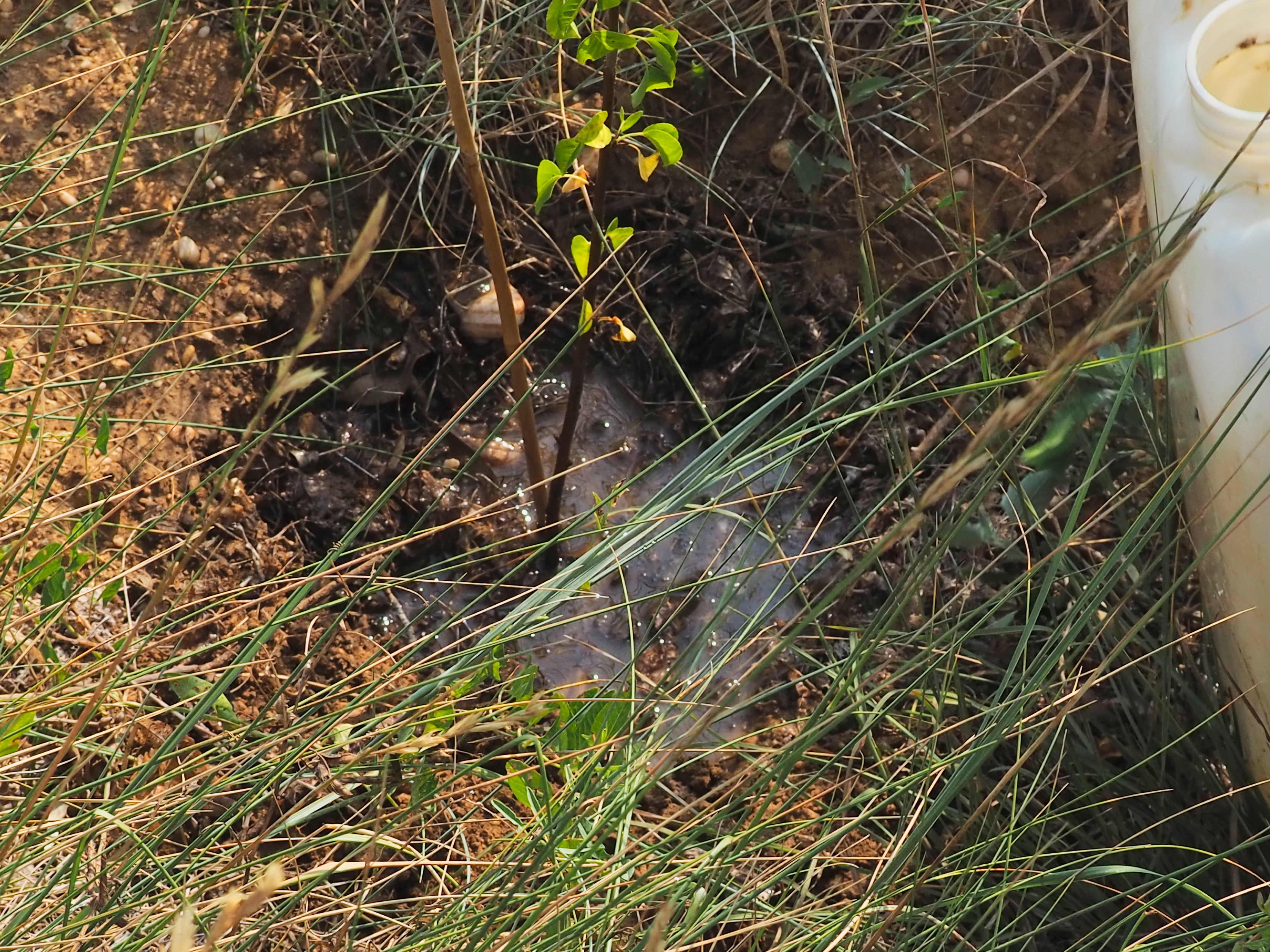
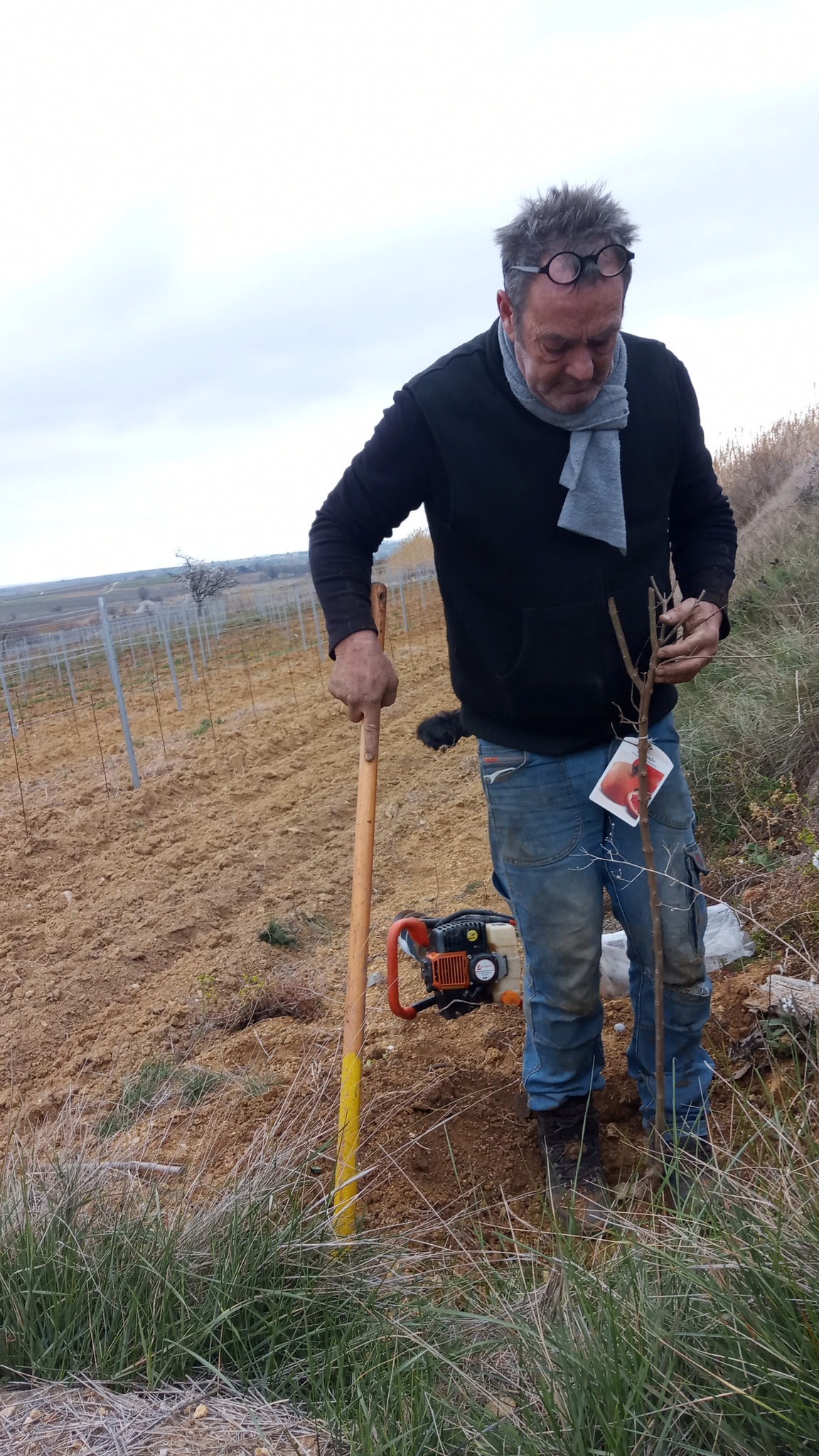
Despite facing vandalism in the past, Jeff remains unwavering in his belief of the importance of planting trees and shrubs around his vineyards. In addition to olive trees, he has introduced various fruit and nut trees as well. During our tour on the 27th, I noticed a collection of large water containers in the back of Jeff’s Jeep. These containers play a crucial role in irrigating the young trees, ensuring their survival in the challenging conditions of heat and drought.
To give these young trees the best chance to thrive, copious amounts of well water were added to the soil. To minimize water loss through evaporation, the soil was then covered with additional layers of soil and compost. This careful approach to irrigation reflects Jeff’s commitment to preserving water resources and using them efficiently.
Fruit and nut trees on the border of Peilhan
Beyond their aesthetic value, the trees and shrubs serve multiple purposes within the vineyard ecosystem. They contribute to biodiversity by providing habitats and food sources for various fauna and flora. Some of the vegetation also acts as a protective shield, offering shelter to the vineyards and preventing run-off from neighboring vineyards.
Jeff’s dedication to planting trees is deeply moving, especially knowing that these trees will mature long after he has retired and passed on. Yet, he is devoted to the idea of creating a positive impact on the land’s ecology in both the short and long term. By investing in the health of the ecosystem, Jeff demonstrates a profound sense of stewardship and a desire to leave a sustainable and thriving legacy for future generations to appreciate and benefit from.
Back in Puimisson and all the better for being there. After travelling around vineyards and cellars in the Grand Est it was a relief to be in one place and reacquaint myself with the Coutelou domaine. The familiar and the new, people, wines and vineyards.
Exciting news came quickly as Flora, Jeff’s niece, is now working full time as his assistant. Exciting because the domaine is being tended by the Coutelou family, now and into the future. Flora has been working with Jeff for a couple of years, learning the role of the winemaker in the cellar and vineyard. Jeff is very happy with Flora’s role, I am delighted.
Flora at work
Gilles is still around, working mainly in the vines, driving the tractor and other specialist jobs. New to the scene is a lovely young couple in Ines and Jérôme, experienced in the cellar and vineyard and hoping to establish their own vineyard at some point.
Jerome and Ines at work
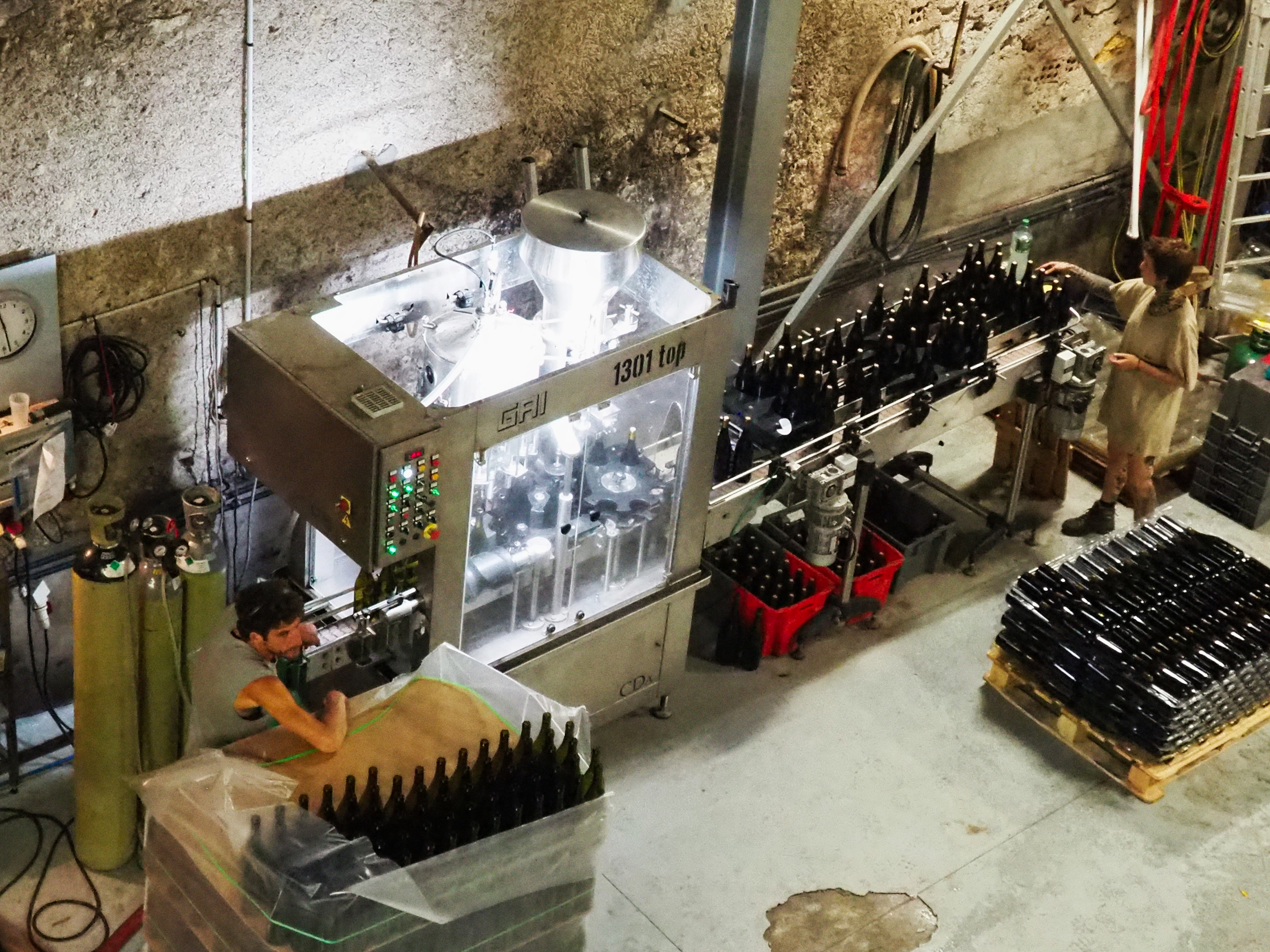
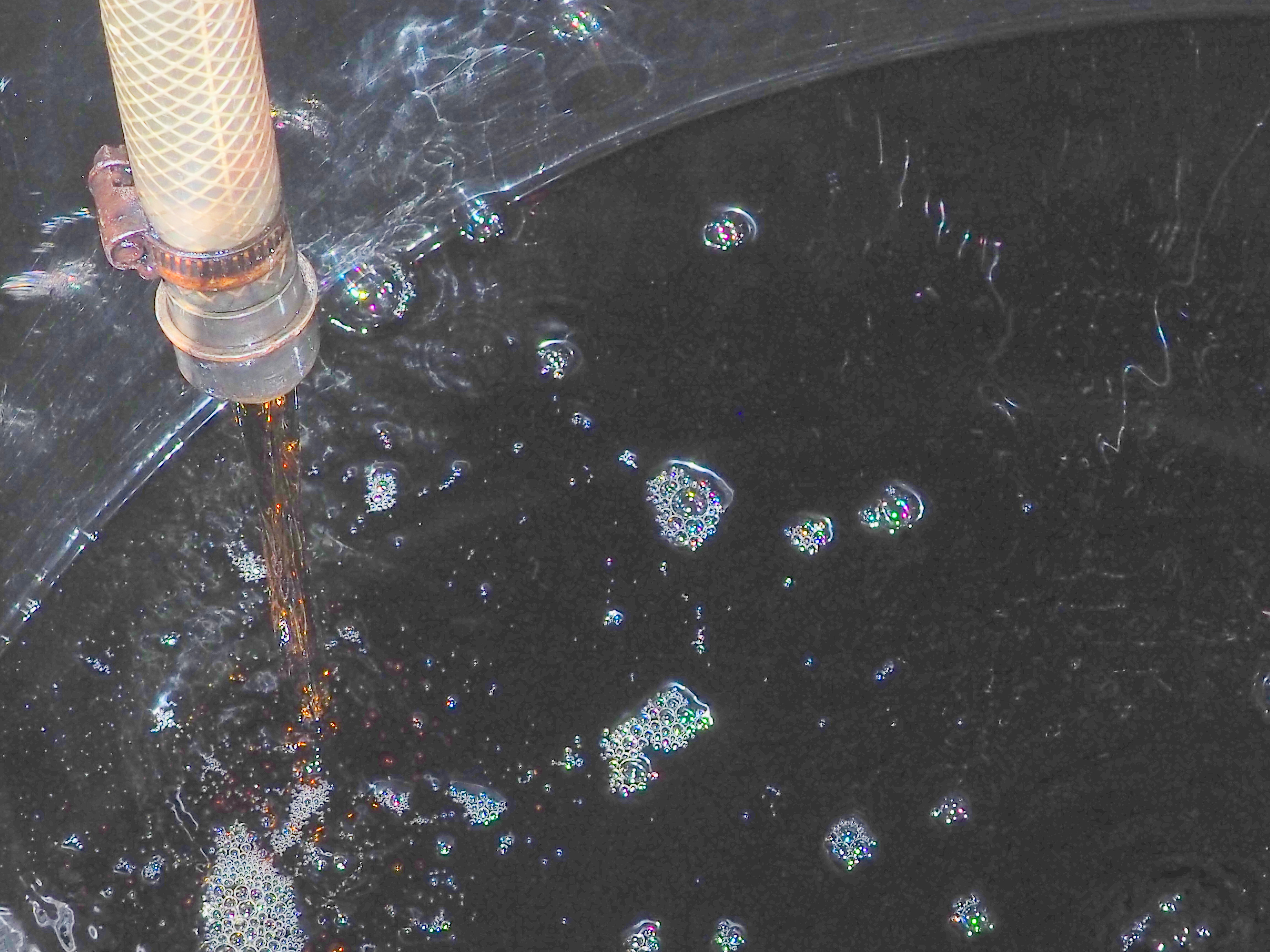
My arrival was well timed, with a bit of manoeuvring by Jeff. He had told me bottling (la mise) was taking place in the week, wines such as Classe, Buvette À Paulette, Flambadou* and La Vigne Haute. Summer means the wines have been in tank for a good time and ready for bottle and as autumn approaches those tanks will be needed again. Jeff left La Vigne Haute to last so that I could be there, knowing it is my absolute favourite wine. It’s a familiar process after all these years, described in detail here. I was able to taste the four wines bottled and the signs are very good for the 22 wines, Classe was a joy but La Vigne Haute did steal the show, I believe that Jeff did utter the words “best ever” though he’d probably deny it! The remaining wine is taken out of tank and will be blended with other wine, magnums had already been made with the hand operated machine.
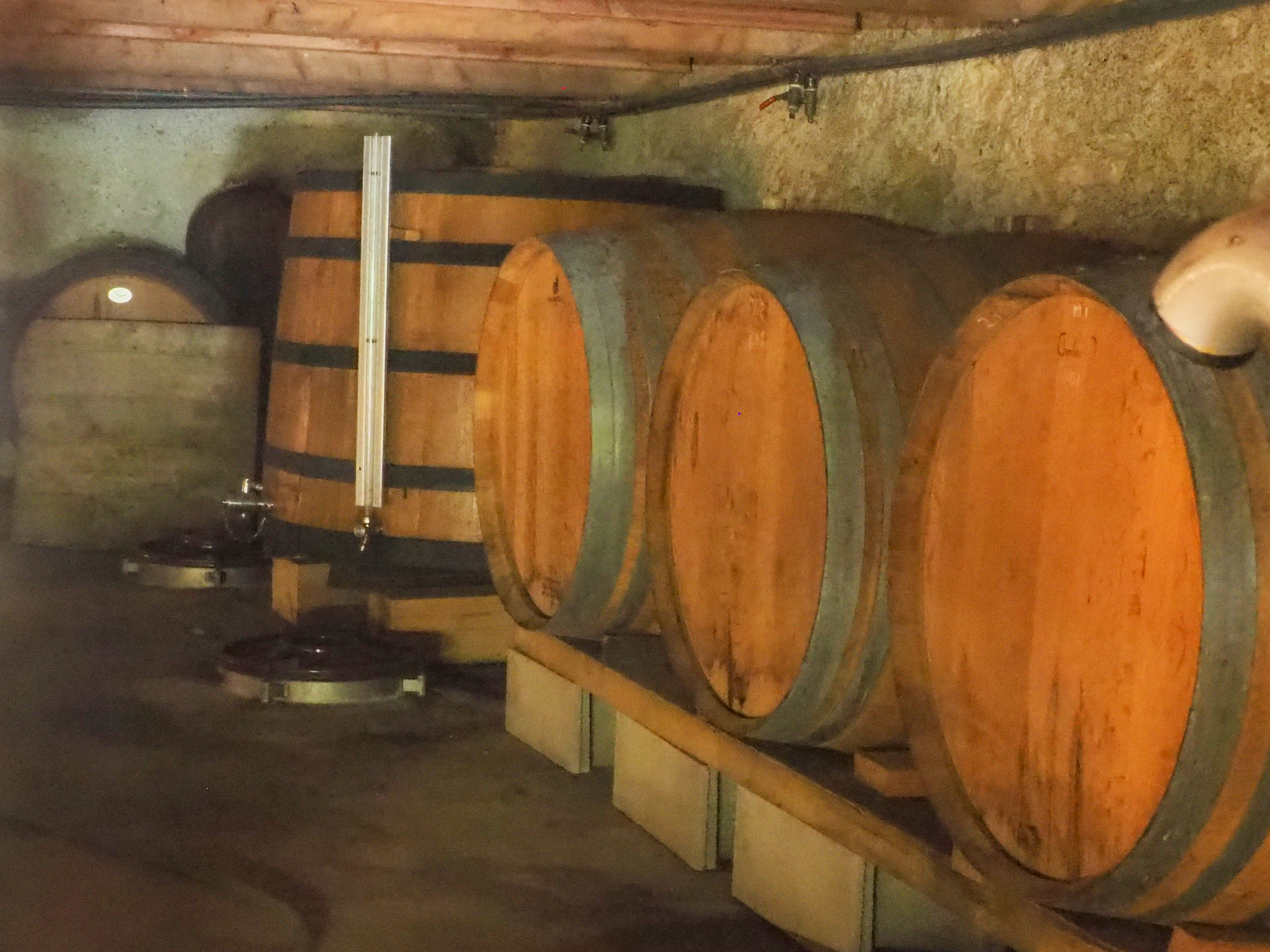
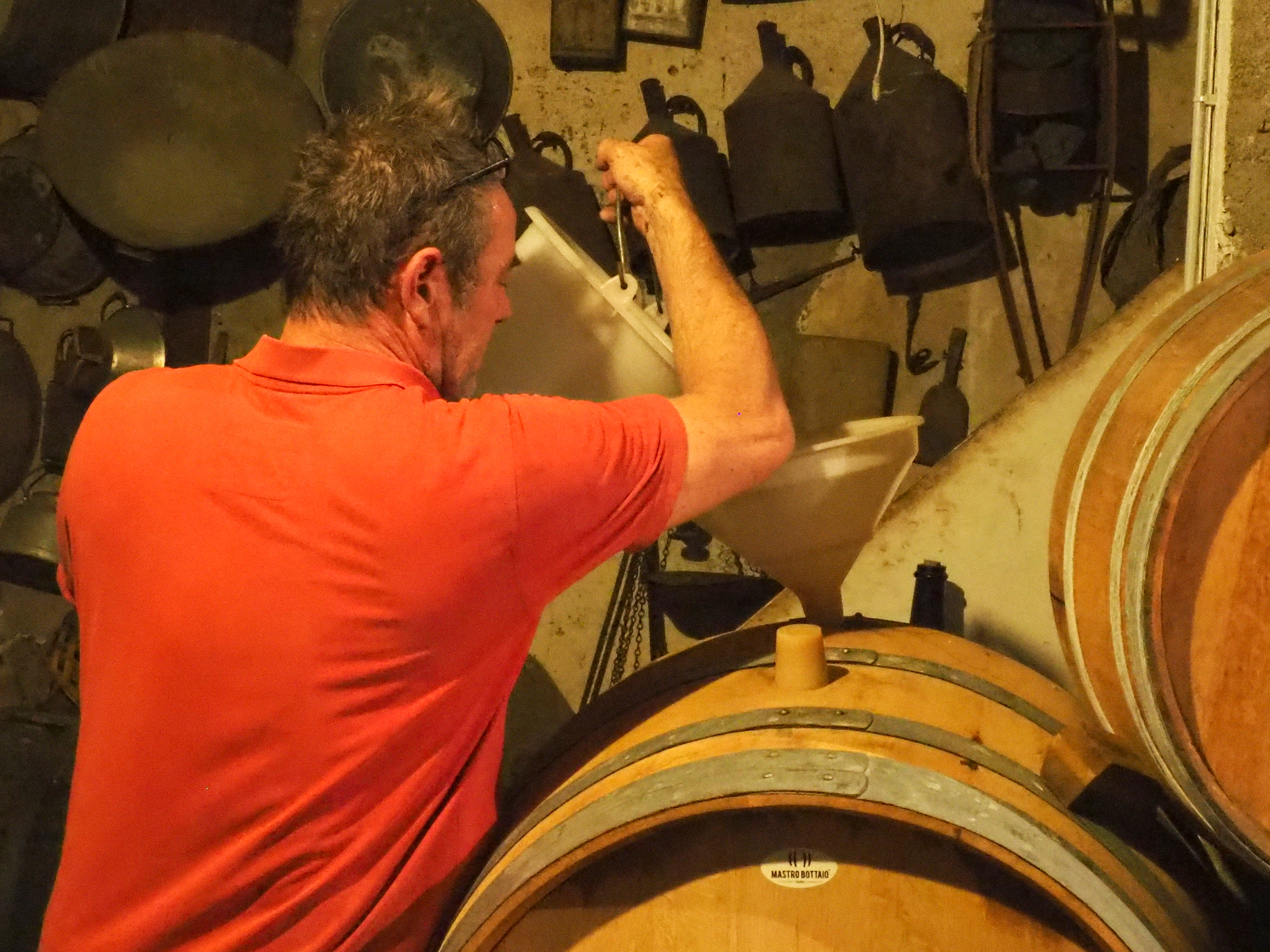
A few days later I was back as Jeff was tidying up some of the barrels. Some needed to be topped up (ouillage) with wine kept for that purpose in smaller containers. A barrel of fortified alcohol, was put into a steel tank to use in making some of the spirits and fortified wines which are now part of Vins et Spiritueux Coutelou, the proper name for the domaine these days.
The fortified alcohol
As usual I am taken aback by the complexity of what wine is in what container. I know Jeff keeps spreadsheets with the details but in a flash he can tell you what is in each tank, barrel or other container. There are dozens of such containers, and Jeff is always thinking of how he can use some of the wines to show them at their best individually or to meet commercial needs.
There are always new wines, more in a future post as we tasted through the 22 range. There is also consistent change in the vineyards, more in the next post.
La Vigne Haute 2022
*In a recent tasting of Languedoc wines by a panel of experts Flambadou 2007 and 2017 both emerged with flying colours and praise, for the quality and for their longevity.
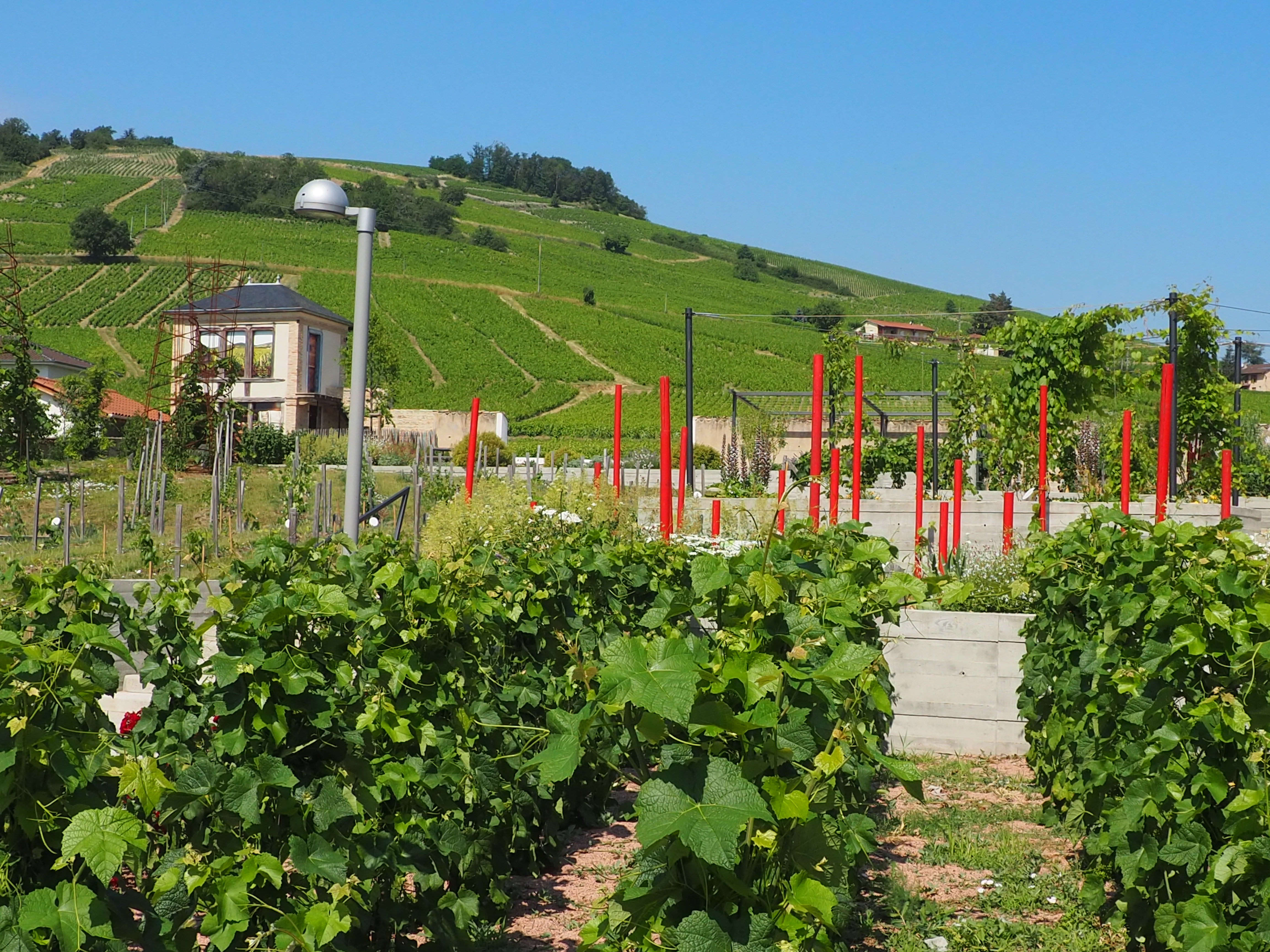
Mont Brouilly behind an interesting collection of hybrid and rare vines in the village of Brouilly
When Pat and I arranged this couple of weeks tour around the East the aim was to go back to places we used to visit regularly but not for a few years. Based in the Languedoc these days we travel down the centre of France when flitting between there and the UK. It was also a reminder of how we used to spend our summer holidays travelling from one place to another rather than being based in one village. From the Jura it was but a short hop to Beaune and then another, a few days later, to the heart of Beaujolais which was once our preferred region in all of France.
Burgundy is interesting for any wine lover. When I first went forty years ago the wine was expensive but not stratospheric, winemakers drove Peugeots and BMWs rather than Porsches and Ferraris (and, yes, I saw more than a few it isn’t just a cheap shot by me). We once visited a cellar there and were offered Échezeaux, I explained I wouldn’t be able to afford it but our generous host said that one day we might return when we could. Well, I may be better off these days but the price of such wine makes it something I wouldn’t realistically purchase. And yet… There is something about Burgundy. I love red Burgundy, it has a quality which no other wine can produce. Occasionally. I have had too many disappointing wines, okay wines which were fine but lacked the excitement that the best wines offer. Those best wines though just tempt you to try again and again. A half bottle of 2012 Ladoix-Serrigny 1er cru in a Saturday lunchtime Beaune restaurant was a reminder of just how beguiling Pinot Noir can be.
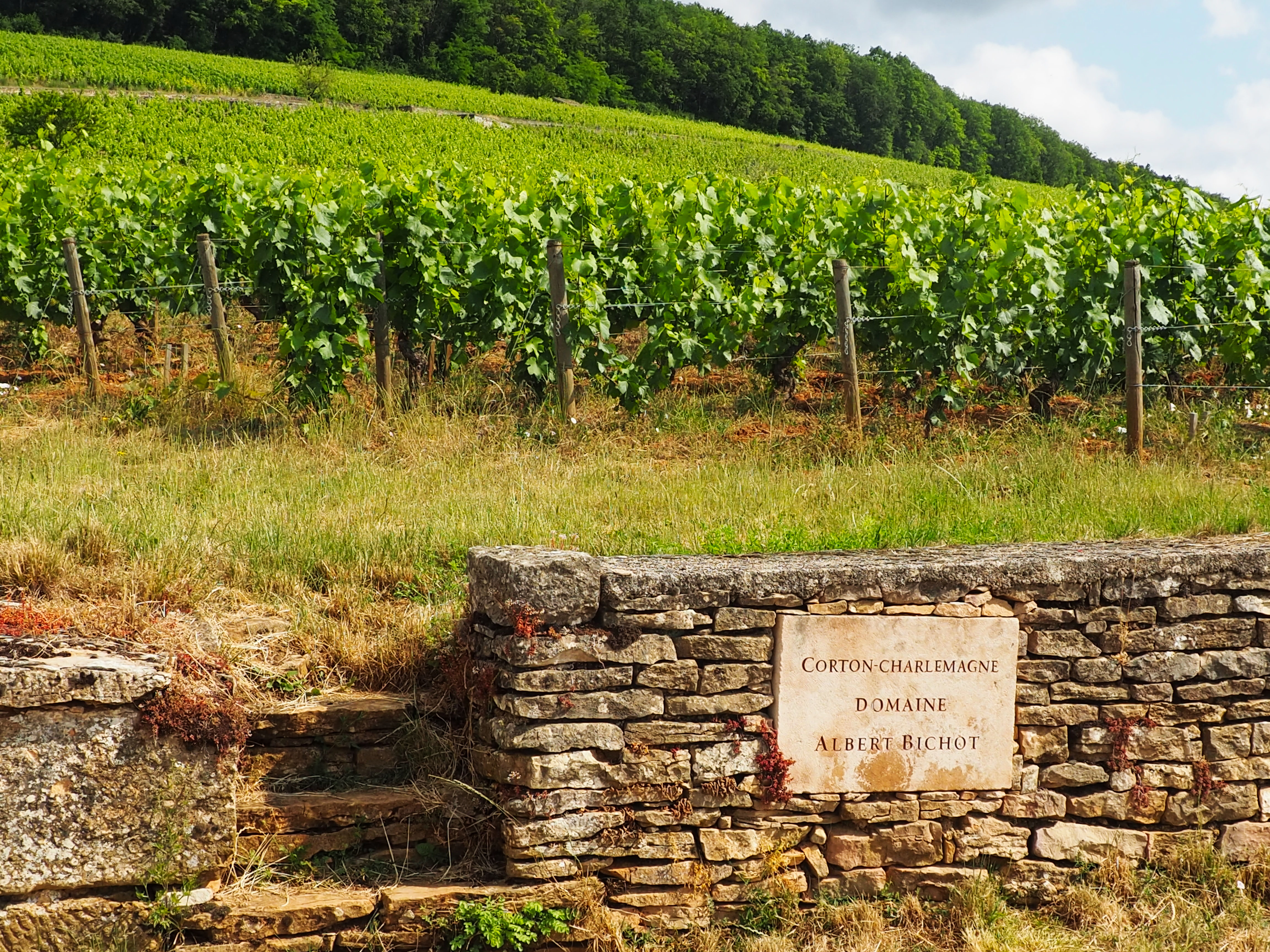
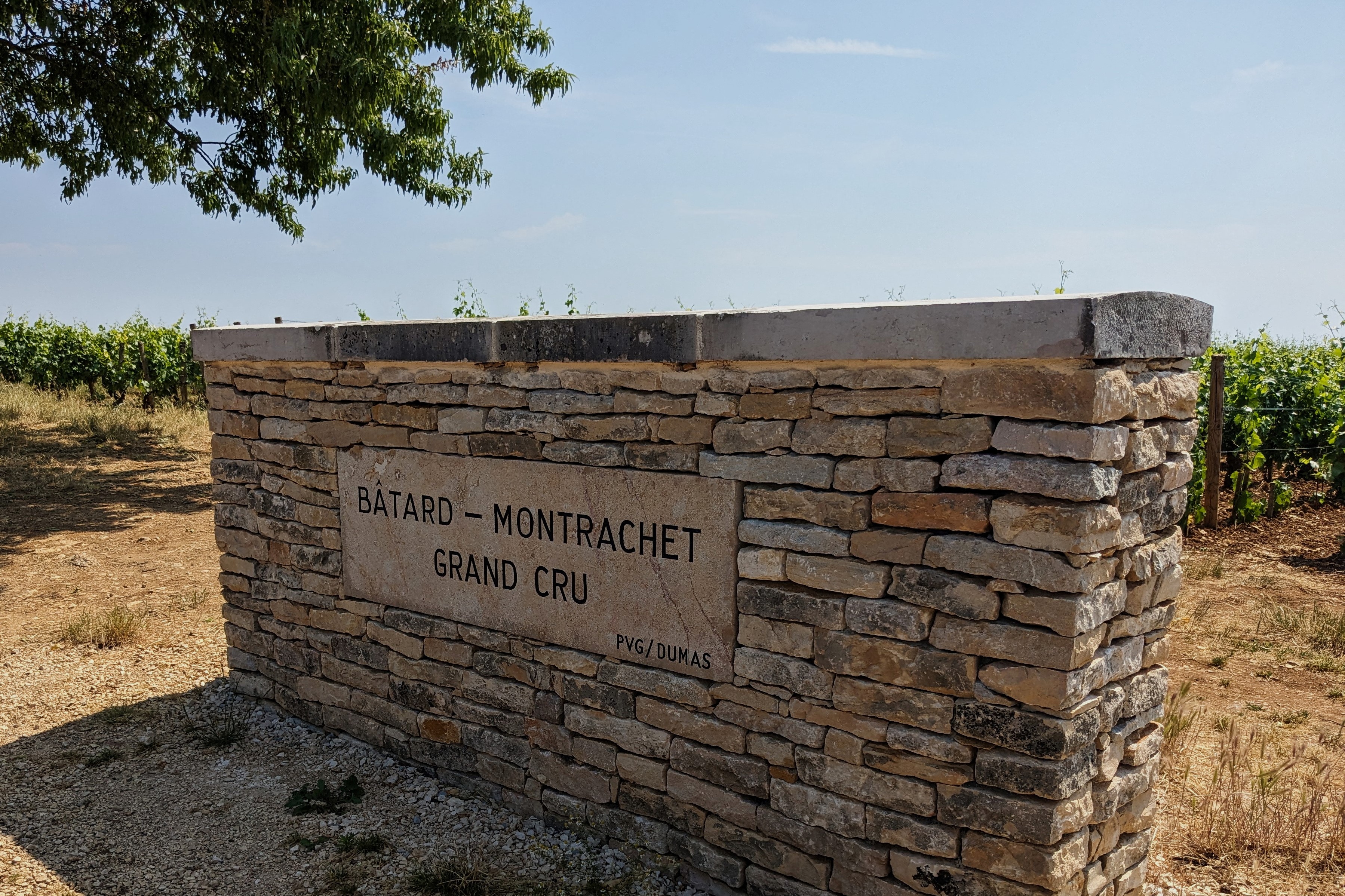
The other fascination is the geography of the vineyards, the subtleties of one parcel against another, next door neighbours but a world apart in esteem and value. Le Montrachet with its Chevalier and Bâtards nearby, Le Charlemagne looking haughtily down at Les Grèves. To wander around some of these and try to spot the nuances of hills facing the sun at different hours is engrossing for the likes of me and the many others who were doing exactly the same thing.
MontrachetMontrachet again
It was alarming though to see the number of distressed vines in those celebrated and pampered vineyards. Great swathes of yellow vines in Le Montrachet for example, lacking iron or magnesium perhaps? (carence).
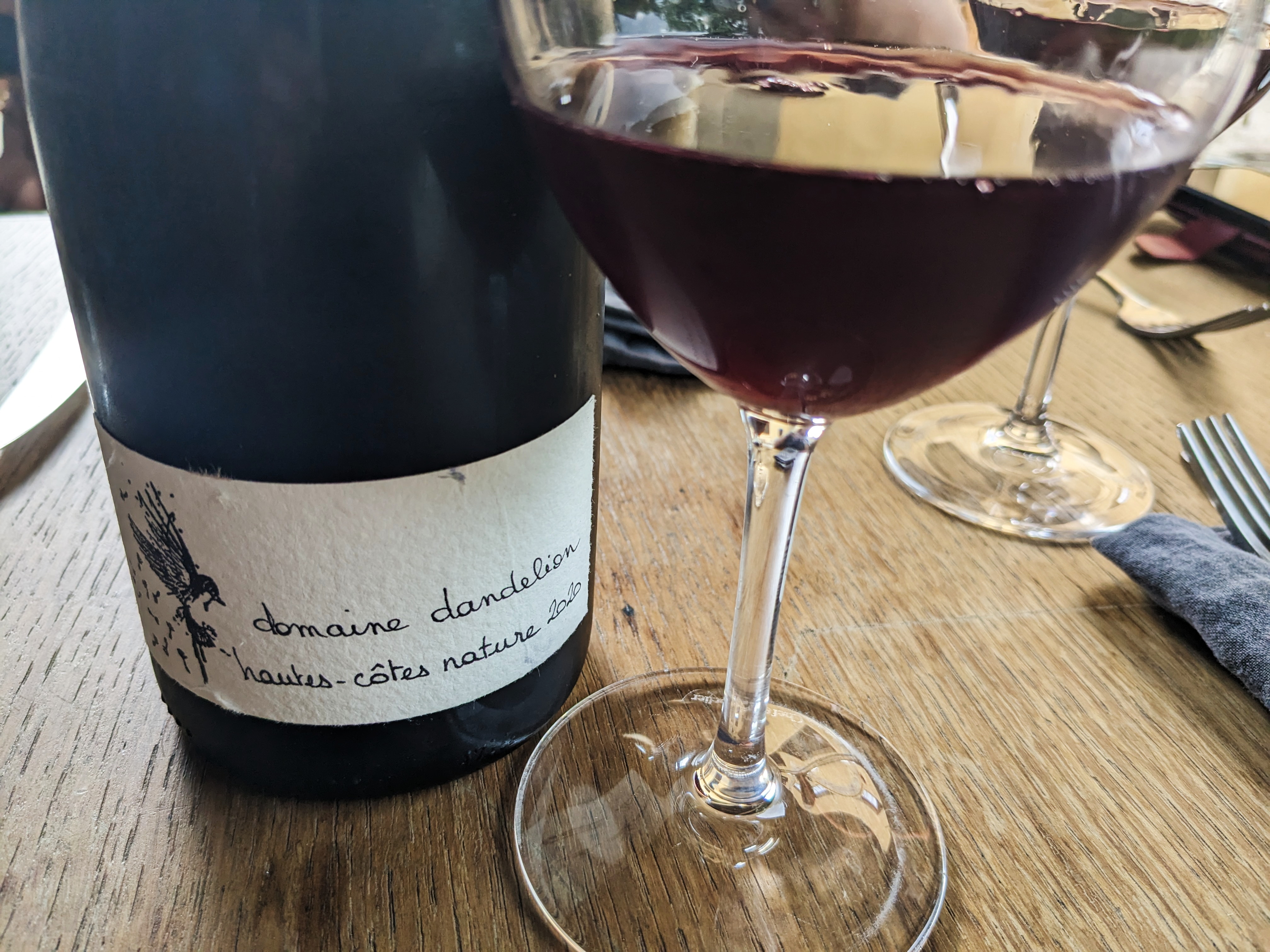
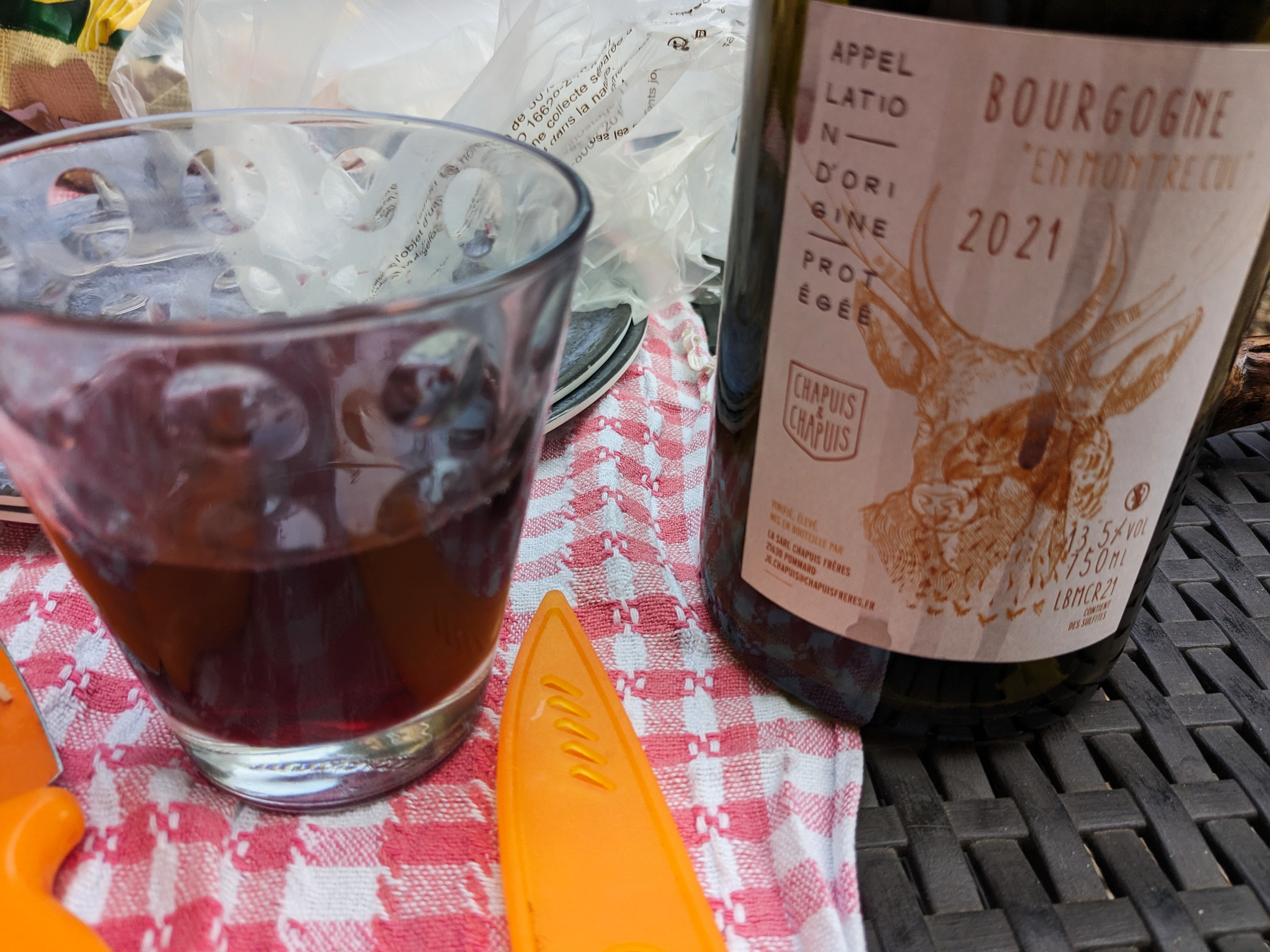
I wanted to try some of the new wave of producers and enjoyed wines from Chapuis & Chapuis, Dandelion, Le Grappin, AMI and Fiona Leroy. I was also able to buy a few bottles to take back to the UK from the excellent Beaune shop Athenaeum which is worth a visit from any wine enthusiast for its wine related books, equipment and bottles. I hadn’t expected to find natural wines there but they stocked a section from Burgundy and other regions as well as a thorough collection of natural wine related books including Aaron Ayscough’s, ‘The World of Natural Wine’ which I reviewed here. Indeed, I ran into Aaron in Savigny-les-Beaune restaurant Le Soleil, which I would heartily recommend. Unlike the Gevrey Chambertin wine bar with its customer unfriendly host who wasn’t happy to see us even when the bar was empty.
On to Beaujolais. Home of natural wine in many ways with the famous Gang of Four in the Morgon area, Lapierre, Foillard, Thévenet and Breton led by négociant Jules Chavet (we stayed in La Chapelle de Guinchay which now has a street named after Chavet). It was a busy time in the vineyards and I didn’t get organised very well for visits but we were able to hunt down some of my favourite producers’ bottles from some of the cru villages and the excellent Maison de Beaujolais in Belleville.
ChiroublesMont Brouilly
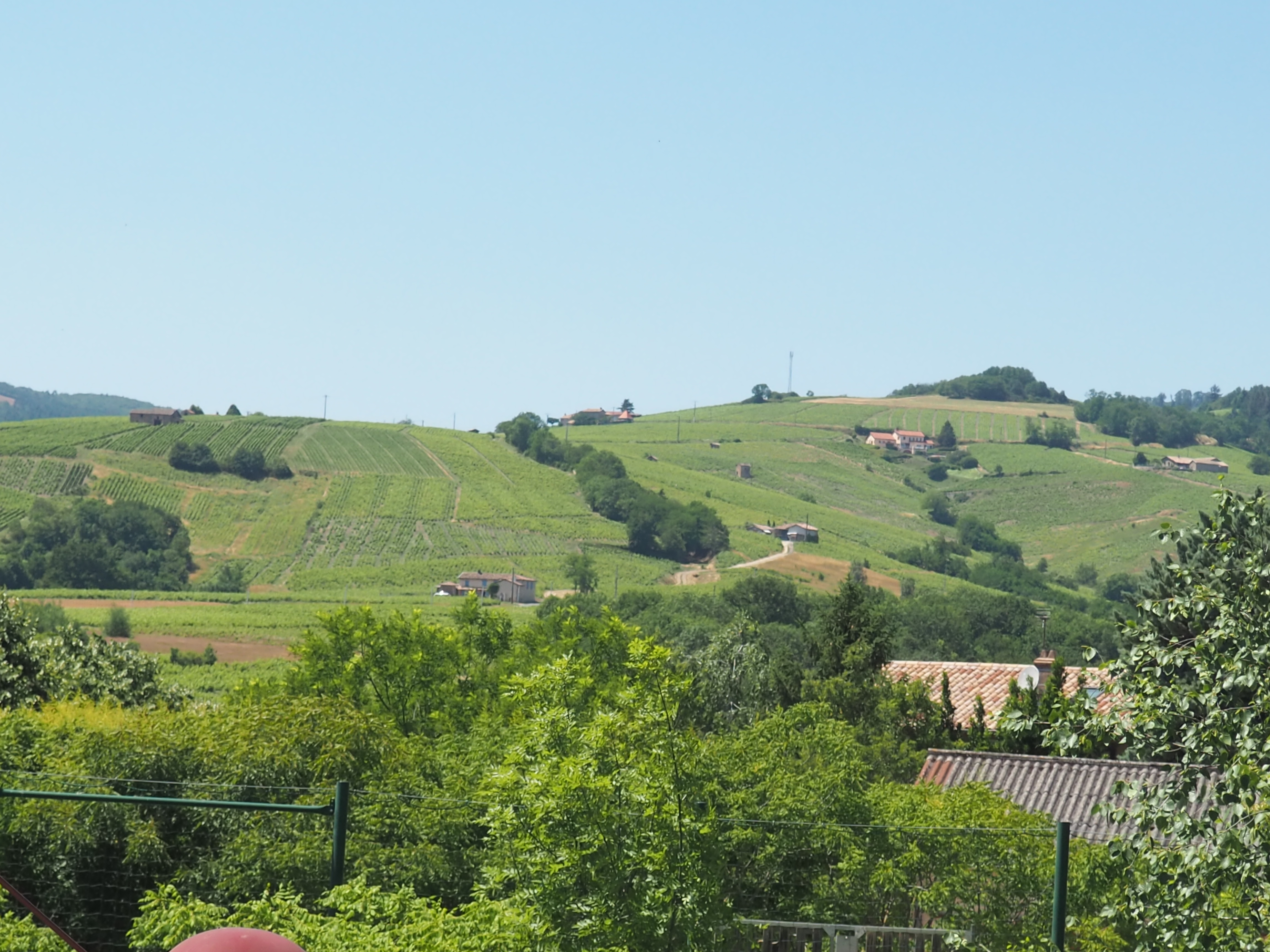
We had a drive round all of the ten Beaujolais cru villages for the first time in twenty years and it really is a treat to do so. It is lovely countryside with its rolling hills, we easily recalled why this was once our preferred region. Many of the villages have central stores offering wines from their producers at cellar door prices (as did Savigny-les-Beaune to be fair).
One point of interest. With the success of Beaujolais natural producers it was a reality check to see just how few winemakers are actually organic in the region, let alone natural. As I drink mainly natural wines I had assumed that they were much more widespread. There are plenty of young natural producers coming through however, I had good wines from Bonnet-Cotton, Domaine des Grottes as well as the children of that Gang of Fourm Charly Thévenet and Alex Foillard.
Not the best organised visit of producers (I managed to miss one of the local salons by a couple of days too) nevertheless an enjoyable visit to regions producing exciting wines.
Just as I had finished writing this article I was saddened to hear of the death of Julie Balagny who had so quickly made herself a star of the Beaujolais. Thoughts with all her friends and family.
Last time I stayed in the Jura was around thirty years ago, it rained non stop and was around 13c in mid August. This time we enjoyed lovely sunshine and temperatures in the 20s. Also very different from that time is the profile of Jura wines. Thirty years ago they were, generally, unloved and unknown outside of the region. Now, they are in huge demand especially from the USA and prices have rocketed as supply is limited due to it being a small vineyard area and following a number of bad years of frost damage. I fell for Jura wines back then, the unusual grape varieties and, at the time, unfashionable embrace of oxidation. I’m glad that those who fought to make their wines well loved are earning rewards but it is sad to find many producers reaching pricing levels too high for me.
I love so much about the region and if you are intending to visit then I suggest you start by reading this guide from my friend David Crossley who has been staying in the Jura for many years and knows many of the winemakers as well as places to stay, eat and visit.
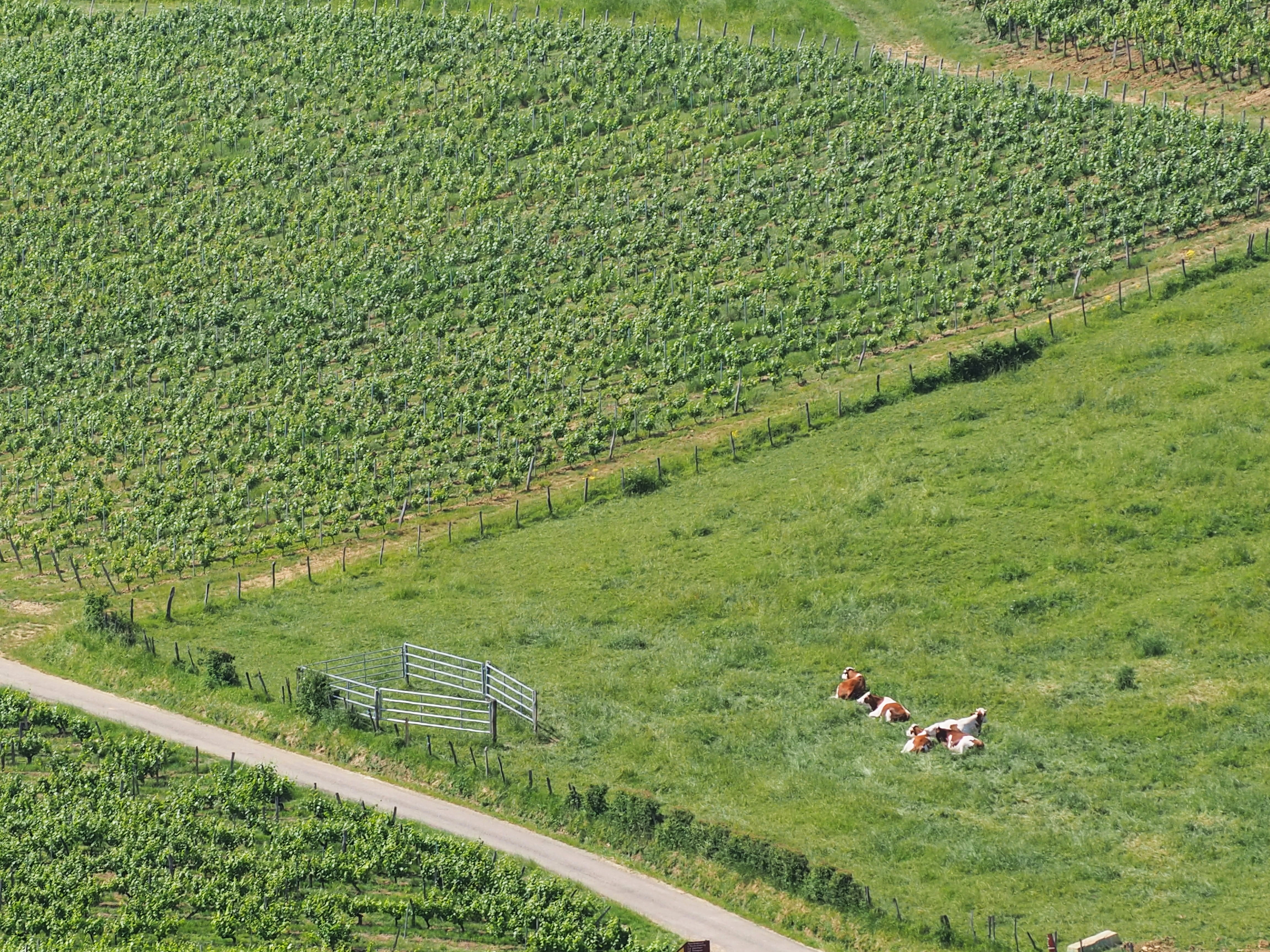
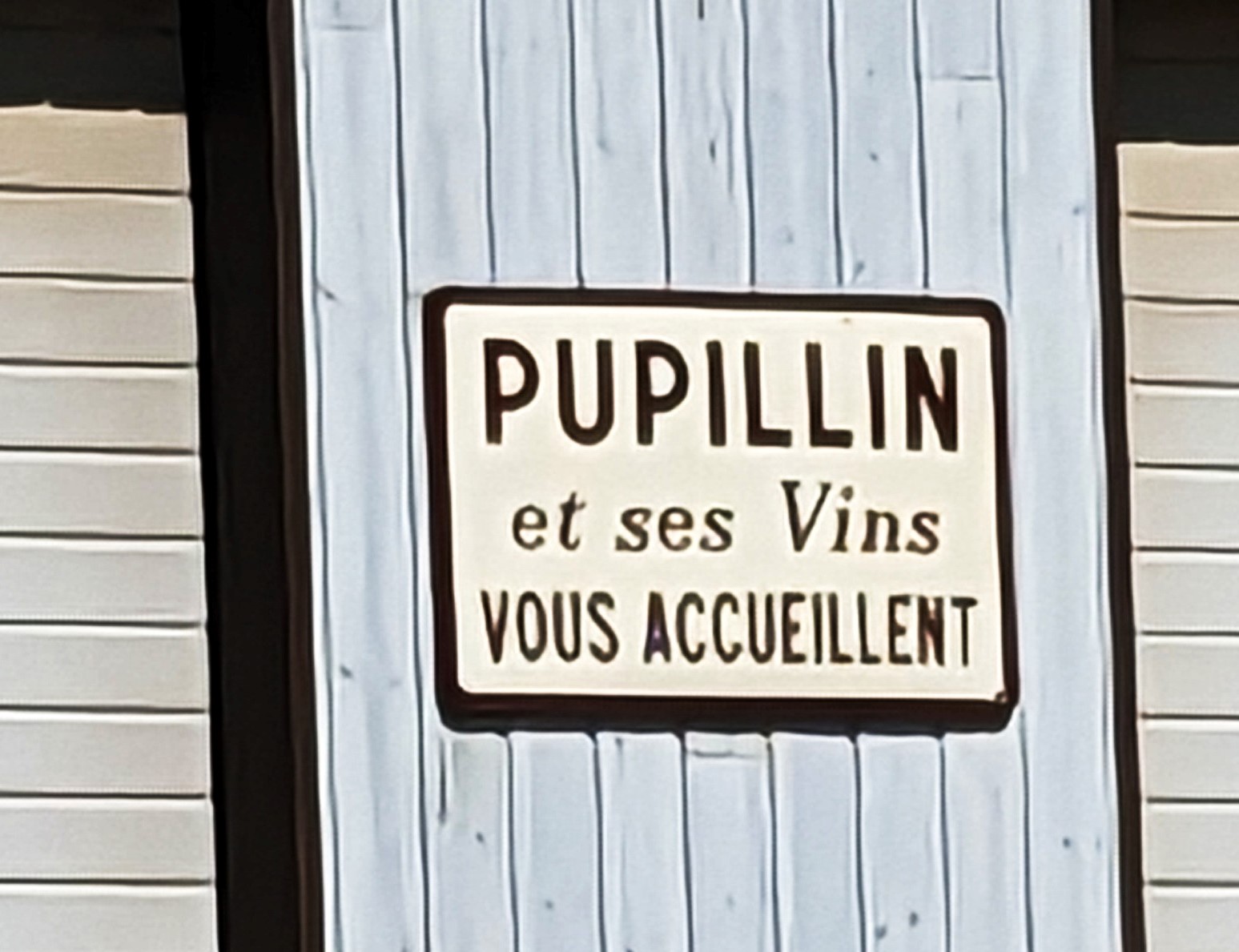
We stayed in Pupillin, near Arbois, home to Pierre Overnoy who did so much to promote Jura wines and the development of natural wines there. Our host is a relative of Overnoy, and, with his brother, has vines and Montbeliarde cows – trademarks of the region, the latter providing the milk for the region’s famous cheeses such as Conté. More on our host’s wines later. One of the attractions of the Jura is the mixed agriculture, reminiscent of the Jurancon area for example. This is not a vineyard monoculture by any means.
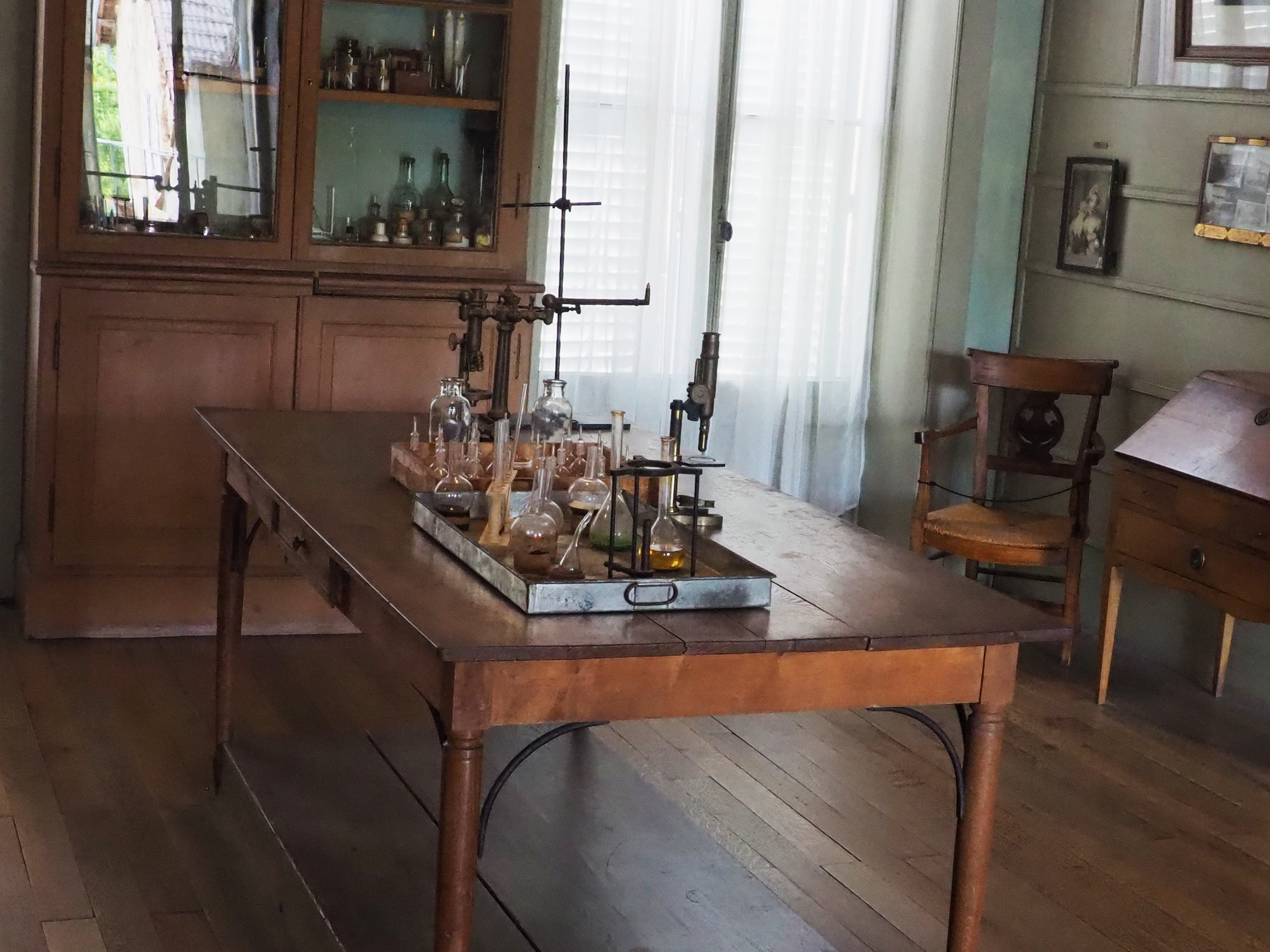
The famous swan necked flaskSimple laboratory
There is plenty of walking, beautiful scenery and interesting small towns to occupy the visitor. Arbois was home to one of my heroes Louis Pasteur and I made my second visit to his home with its basic laboratory where he did some of the research into developing Germ Theory, vaccines and saving the French wine industry from the phylloxera epidemic of the 1850s and 60s. He had laboratories in nearby Dole as well as Paris but it is fascinating to see how a genius made such profound progress in such simple surroundings in a quiet town.
Being in the area for a week also provided me with the opportunity to reunite with my great friend Steeve who worked with Jeff for almost two years. He moved back to his native region to work with winemakers there and he introduced me to some of them and we tasted together. The good news is that Steeve is returning to the Languedoc, renting 2ha of vines in the Minervois, not too far from us, and will be harvesting his first vintage this year. I look forward to visiting his new domaine and will report back here of course.
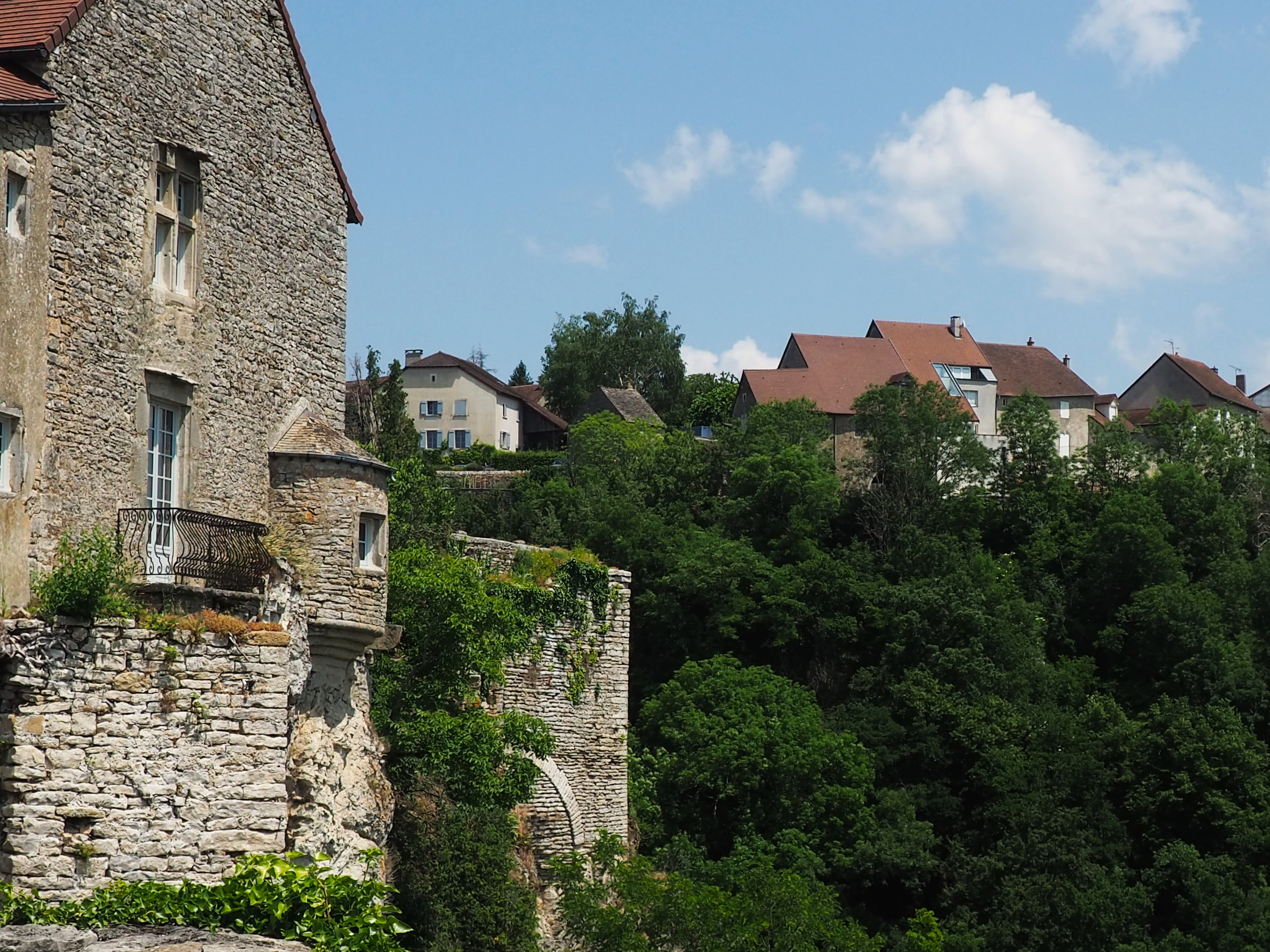
Of course the Jura is also famed for its Vin Jaune and I took the opportunity to taste some and to visit the beautiful village of Chateau Chalon, which specialises in this style of wine and has the right to call its examples by the name of the village rather than just Vin Jaune. I particularly enjoyed the Berthet-Bondet Chateau Chalon, with a delicacy, finesse and length that stood out from the others. Vin Jaune is made from Savagnin grapes aged in barrels which are not topped up allowing a thin layer of yeast (the voile) to develop, the wine taking on oxidative flavours. The barrels must be carefully watched as the wine could easily be affected by volatile acidity, even vinegar. After six years and three months the wine can be bottled, this is not a hasty process! The final wine is sherry like with dry, nutty and spicy aromas and flavours. The best examples I have had, such as Berthet-Bondet and Michel Gahier, are beautifully balanced, clean acidity, full flavoured yet light at the same time. For much more on Vin Jaune please read this recent article by David on a tasting he went to in Australia.
As mentioned I visited a number of domaines for tastings, mostly organised by Steeve. He has done a lot of work for Catherine Hannoun of Domaine De La Loue in Port Lesney, near the UNESCO site of Salins-les-Bains. Catherine offered us a number of white wines from barrel and red wine from bottle. A smallish 3.2ha of vines, not unusual for the Jura, produce the classic regional varieties and from talking with her it is clear she has taken on board a lot of advice from working alongside Emmanuel Houillon (now running Pierre Overnoy’s estate) and other leading winemakers. It was also apparent that Catherine is still trying out different approaches such as longer macerations and later picking.
Of the wines we tasted I enjoyed the whites more, particularly the Savagnins. Again Catherine is trying different barrels and my own favourite wine was a 2022 Savagnin aged in a foudre (larger barrel) rather than the standard 225l barrique. I liked the 2020 Savagnin with its citrus notes and the interesting 2022 later picked Savagnin which was fuller in the mouth and added spiciness to the citrus notes.
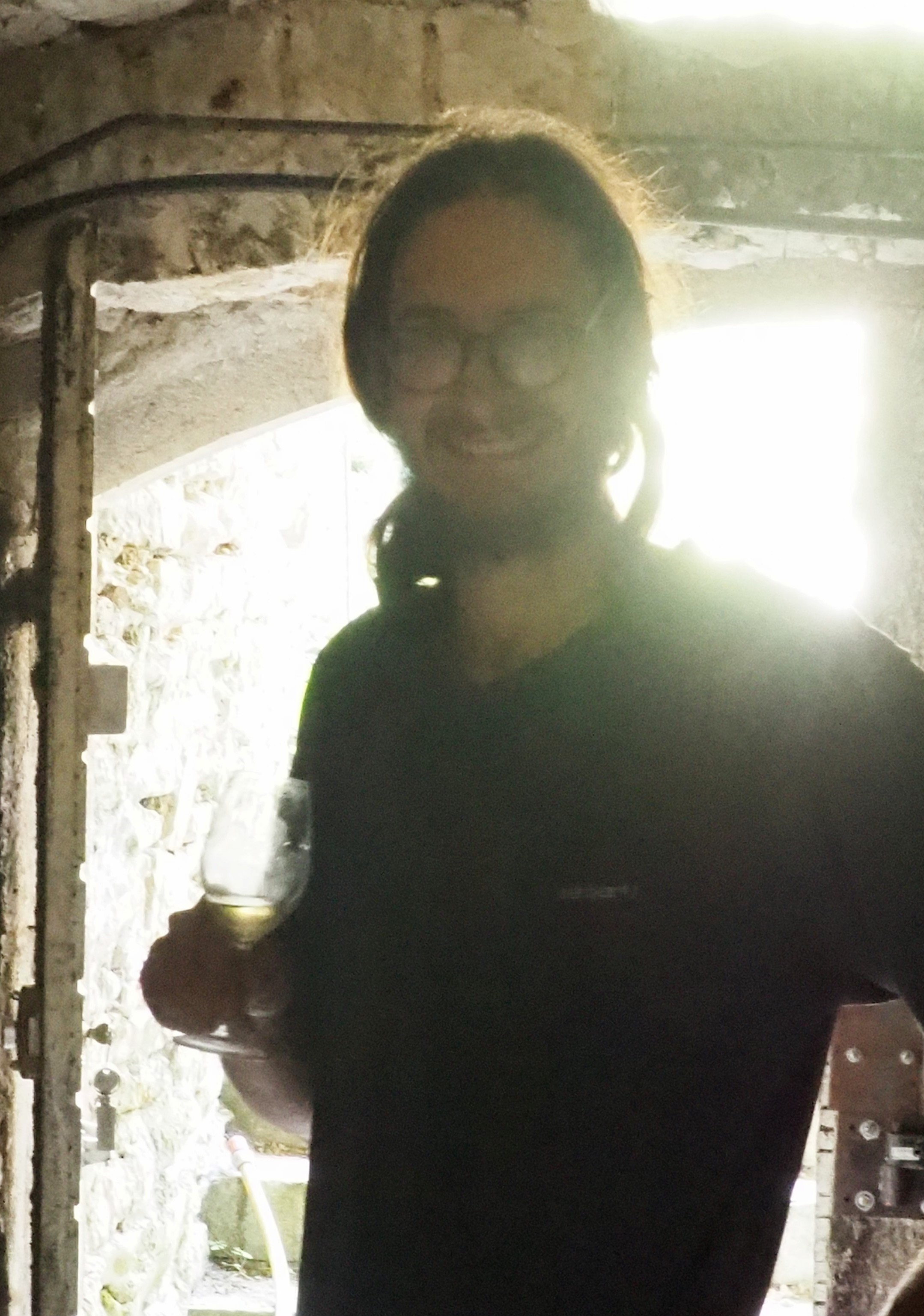
The following day we went along to Cramans, not far from Catherine’s base. Steeve was working with Thomas Jacquin that day bottling wines by hand. Thomas has around 1ha of vines near Arbois and has to supplement his winemaking with work for others. He spent a few years working with Jura star Stéphane Tissot and already sells his own wines around Europe including the UK (Tutto wines) though bear in mind that there is a very limited number of bottles available. I loved Thomas’ wines.
Thomas Jacquin
With such small quantities it would be easy for him to overwork his wines but he allows the quality of his fruit to express itself. All the wines tasted were from barrel or foudre. The Savagnin 20 carried lovely minerality under the yellow fruits, the 22 (foudre) even more depth to the flavours and that minerality cutting through and cleansing. Best of all was the Savagnin 21 with a tension, balancing fruit and, again, that cleansing minerality – long lasting flavours which seemed almost fragile, excellent. Very good too was the Poulsard 22 with its red fruit profile and lovely tannins which were part of the wine not separate and harsh like some Poulsards (or Ploussard as many here spell it) I tasted. This really needs time but will be a lovely wine. I will be trying to find Thomas’ wines whenever possible as unfortunately he carries no stock at present. Hopefully his and Steeve’s bottling that day will soon rectify that problem.
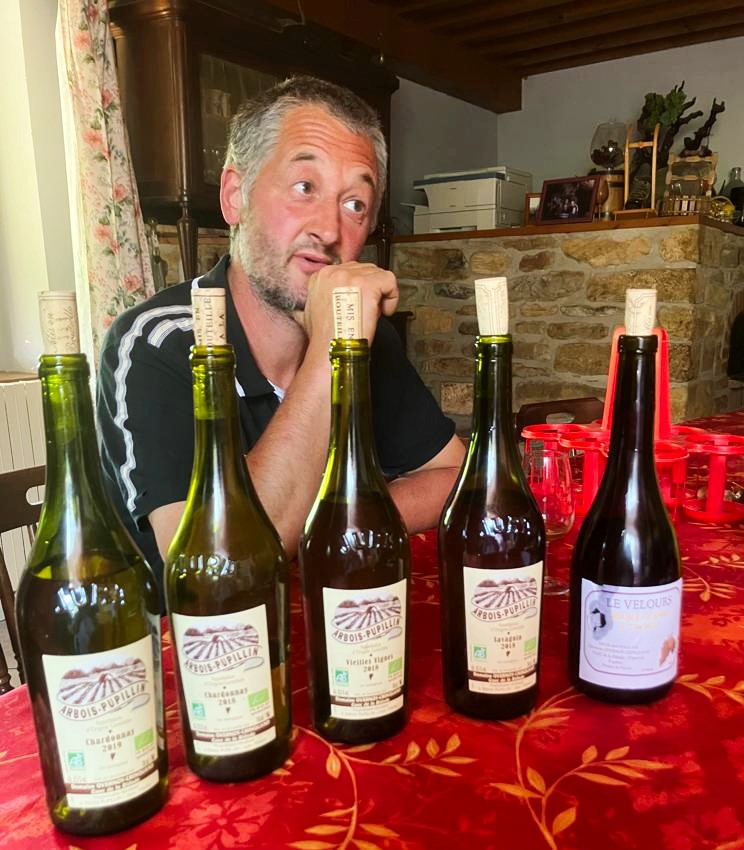
As mentioned above the gite where we stayed was run by a family which runs dairy and wine farming. Mikael Cronquand takes charge of the Overnoy Cronquand vines and winemaking whilst his brother runs the dairy side, though they obviously help each other as required. It was a real treat to discover that the wines are not only organic but would be classed as natural wines, with only some bottles having tiny sulfite addition at bottling.
Mikael led us through a very pleasing tasting of the wines. The Crémants were a nice surprise, not something which I usually enjoy very much but the rosé and brut had clean fruit flavours as well as the acidity needed for dry sparkling wine. In classic Jura fashion we tasted reds before whites, Pupillin being the home of Ploussard, it provided most of the wines. The Ploussards 19 and 20 had a dark colour and good black fruits with a nice aromatic profile but clean and direct. Trousseau 19 was lighter in style more red fruit character, slightly surprising since Ploussard has such thin skins it is usually the lighter coloured wine.
White wines were the star though. Chardonnay Ouillé 20 was round and fruity but bone dry. Ouillé means that the barrels are topped up so that the voile does not develop. Savagnin 21 was almost austere but savoury and refreshing. On to the oxidative wines. Chardonnay 18 was reductive but spicy and white fruits to the fore, the 19 was more oxidative in style but fuller in fruit and more balanced – very nice. Savagnin 18 had spent four years in barrel and was excellent, spicy yellow fruits and bone dry again, very good balance and length. In 2018 Mikael also left a parcel of 60 year old Chardonnay vines to stay on vine for a full month after the other grapes had been picked. There remains 1g of residual sugar but there is just a hint of sweetness balanced by concentrated fruit and clean acidity. Very interesting wine, a success. Finally, another Jura speciality, Macvin. This is wine to which distilled marc is added, in this case made from their own grapes including some red grapes. Again an oxidative note and a full, spicy aperitif style wine. An excellent tasting and wines to match.
Window of Michel Gahier’s door
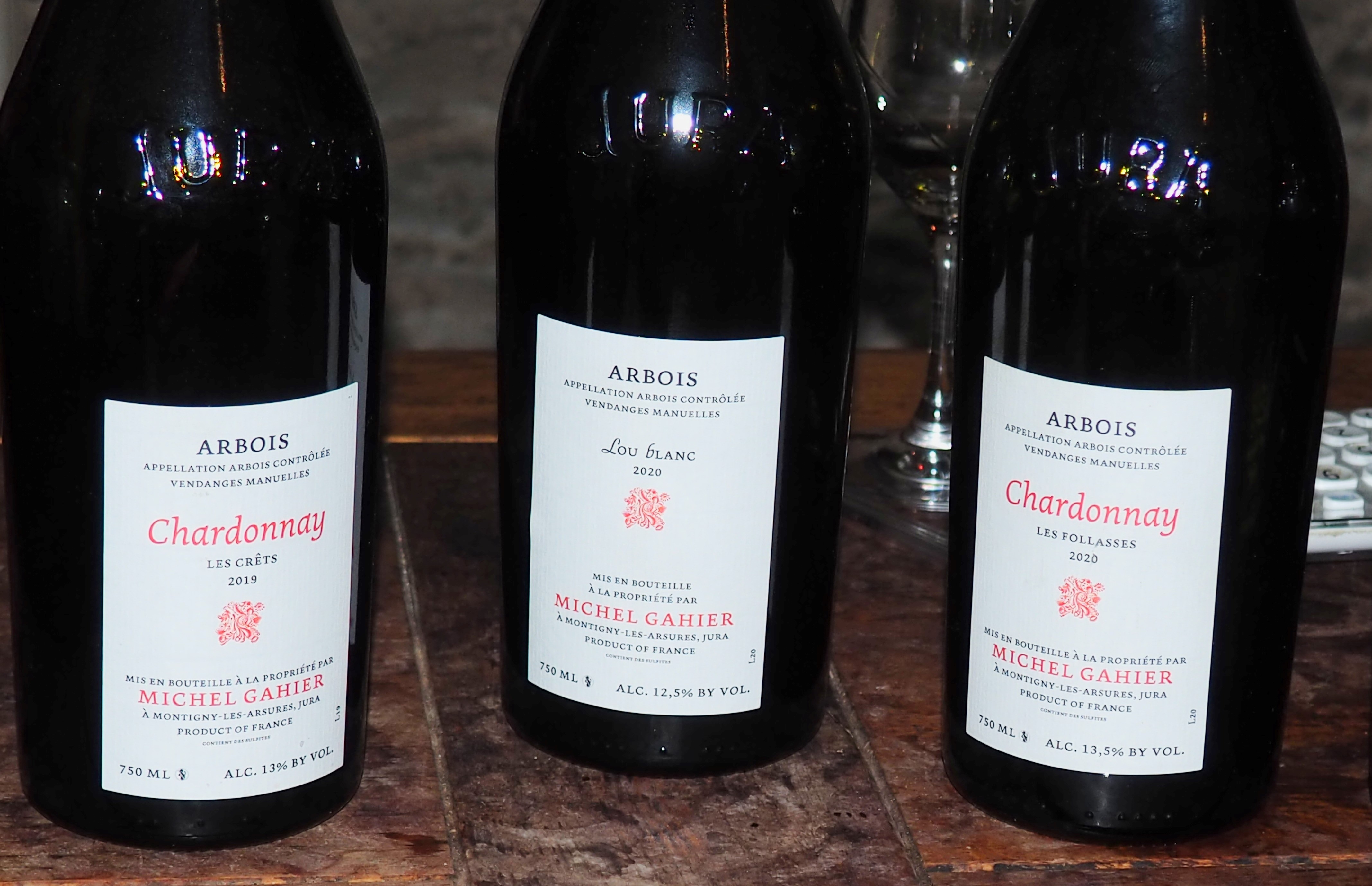
I have long been a fan of Michel Gahier‘s wines, again hard to get hold of but certainly worth the effort. Steeve a friend of Michel’s treated us in Puimisson to some of his bottles including the Vin Jaune which was a star wine of 2021 for me. Michel doesn’t seek limelight and it was a real treat for me to be invited with Steeve to visit him in Montigny-lès-Arsures near Arbois. We were there for two hours or so as Michel poured from bottle and then samples from barrel. This village labels itself as the capital of Trousseau just as Pupillin does for Ploussard (and very much Ploussard not Poulsard). Michel’s family have been making wine here since 1525 (it should be a big celebration in two years time!) and he spent a lot of time with the Jura legend Jacques Puffeney who was based in the village, indeed he now uses the barrels to make his vin jaune which once did the job for Puffeney. Quietly spoken, almost shy at first, Michel led us through 14 wines in total and every one had something special, each coming from one vineyard to express the terroir rather than the variety.
There were six Chardonnay wines, a clean, fresh 22 from new vines. Les Crêts 20, from dark marne soils, was full and fruity. Les Follasses, from white marne soils, is cleaner and fresher to my palate, the 21 with white fruits bit still closed, whilst the 22, with protective reduction, had that directness but also fuller fruit. My favourite was actually Lou Blanc raised in foudre which balanced the fruit and minerality very well. (There’s a theme emerging here with me and foudre wines!). Melon à queue rouge is a Jura grape variety which many, though not all, believe to be a type of Chardonnay. Michel is an advocate of this variety and the Melon wine La Fauquette is often regarded as his outstanding white wine, I am now one of those who would agree. The wine is made without topping up the barrel where it spent four years. The voile gives the classic oxidative note to the wine but the elegance of the fruit still shines through. The 2017 was full, nutty and spicy but clean with white fruit notes. The 22 barrel sample, obviously far from the completed wine, showed more minerality and a sherbet like acidity which lifted the apple fruit profile. Lovely wines.
The red wines are, of course, based on Trousseau grapes. Michel let us try a new vine red from a vineyard with four distinct soil types, it was fruity and had some complexity. La Vigne de Louis 22 (barrel) was still closed but spicy and direct. Le Rouge du Max is labelled Vin De France as it includes a tiny amount of Mondeuse grapes as well as Pinot Noir, all from a vineyard which was owned by his late brother. The sample from foudre gave off a waft of pepper aromas and the spicy fruit was backed with good, soft tannins. The 22 example opened in glass after being initially closed up, revealing the pepper, spice and dark fruits. Grands Vergers is regarded as Michel’s top red made from 80 year old vines and the 22 was grand indeed, big and powerful yet approachable with a fresh, black fruit character. Finally, a real treat as Michel opened a bottle of Grands Vergers 1997 – wow. Aromas of strawberry, blackberry, pepper and truffle. Flavours had a truffley note from age but big red fruits and rich, full. A memorable wine to end a memorable evening, thank you Michel.
A week in a special region. The countryside, towns, history as well as the agriculture and people make it special. The Dauphiné cycle race even passed through with last year’s Tour De France winner Jonas Vingegaard (left of photo) amongst others. I left it thirty years before returning to the Jura but I hope to return much sooner. Thank you to all those who received us for visits and especially to Steeve for organising so much of it.
Summer has arrived and with it a new trip to France. A journey south to Coulobres and Jeff Coutelou in Puimisson of course but time to stop off in various parts of eastern France and rediscover areas not visited for many years if at all. Time also to meet up with friends such as Steeve who worked with Jeff for a year and a half before returning to work in his native Jura region.
In the next few posts I will describe impressions of regions such as Champagne’s Cote des Bar, Jura, Burgundy and Beaujolais as well as the wines and winemakers I encountered, established and new.
Cotes de BarArboisCorton Charlemagne
First stop was the Cotes de Bar. Timing was poor as this was a busy time in the vineyards with producers raising their vines on trellises. I had hoped to visit Val Frison whose ‘Lalore’ was my wine of the year in 2022. Unfortunately Val has given up and sold her stocks too, disappointing but I wish her well. Other producers were busy but I squeezed in visits to a couple of organic producers, Horiot and Cheurlin. Both offered pleasing wines.
It was interesting to see the infrastructure used in the region to combat the frost risk after years of damage. Windmills to keep air moving around the vines are dotted around the hillsides but even more noticeable are the pipes. These are not meant for irrigating the vines but to spray water over the vines when there is a Spring frost to protect the buds. Water freezing releases heat, 1 gram of water produces 80 calories and this small amount of heat keeps the plant safe.
This part of Champagne is not a tourist trap like Reims and Epernay but with towns such as Essoyes, with Renoir’s house, it was well worth a visit.
My favourite Coutelou wine, as you well know by now, is La Vigne Haute made only in the best vintages from Syrah grapes grown in La Garrigue vineyard. The vines face north on a slope meaning they are not overexposed to the most extreme heat of the Languedoc sun. In vintages which Jeff Coutelou considers less than ideal the grapes go into other wines or are bottles under a different label such as On Ne Peut Pas Vraiment Dire Que. La Vigne Haute appeals to me because it offers rich red fruit flavours, typical of the best Languedoc wines with a nice streak of acidity and minerality to balance the fruit. It is, in my opinion, every bit as good as much more expensive Syrahs from the Northern Rhone or Australia.
Showing the position next to the existing Syrah vines
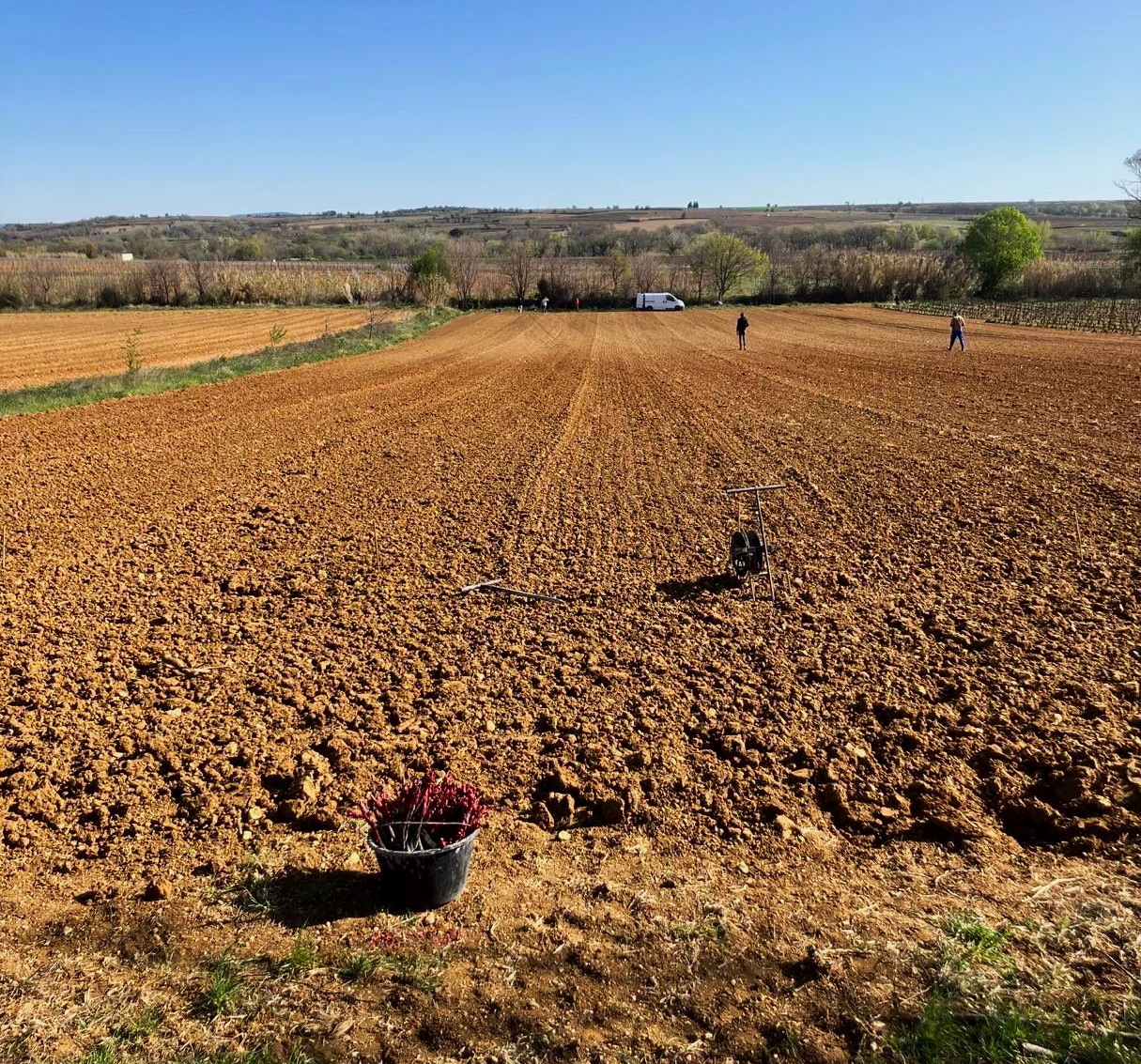
Three years ago Jeff was able to buy the adjoining parcel of land, took out the vines of the previous owner and left the soils to refresh themselves as well as allowing them to become certifiably organic. On Wednesday April 5th it was time to plant new vines, an extension of the Syrah vineyard. Jeff had intended to plant a month earlier but the ground has been unusually dry for the time of year, rainfall has been lamentably low. There has been a little more rain and the plants were ready so it was time to go. I had intended to be there for this special day but family commitments left me in England though my wife Pat was able to be there and take the photos you see here other than the two by Jeff’s niece Flora..
Cords to help keep straight lines, the vines with wax to protect the young plants
I wrote about planting a vineyard previously when we set up the terrace at Peilhan. The process was the same here of course. The new vines won’t produce grapes for a couple of years and not of the quality necessary to be included in La Vigne Haute for several more years after that so patience is required. Jeff’s commitment to planting for the future is admirable, even more that he also planted more trees and shrubs around the vineyard, plants which will not even be fully mature in his lifetime.
Rows of vines planted, watering afterwards
Even on a day of hard work there is always time to enjoy yourself when working with Jeff and what other bottle would he open this day to go with the cheese and charcuterie?
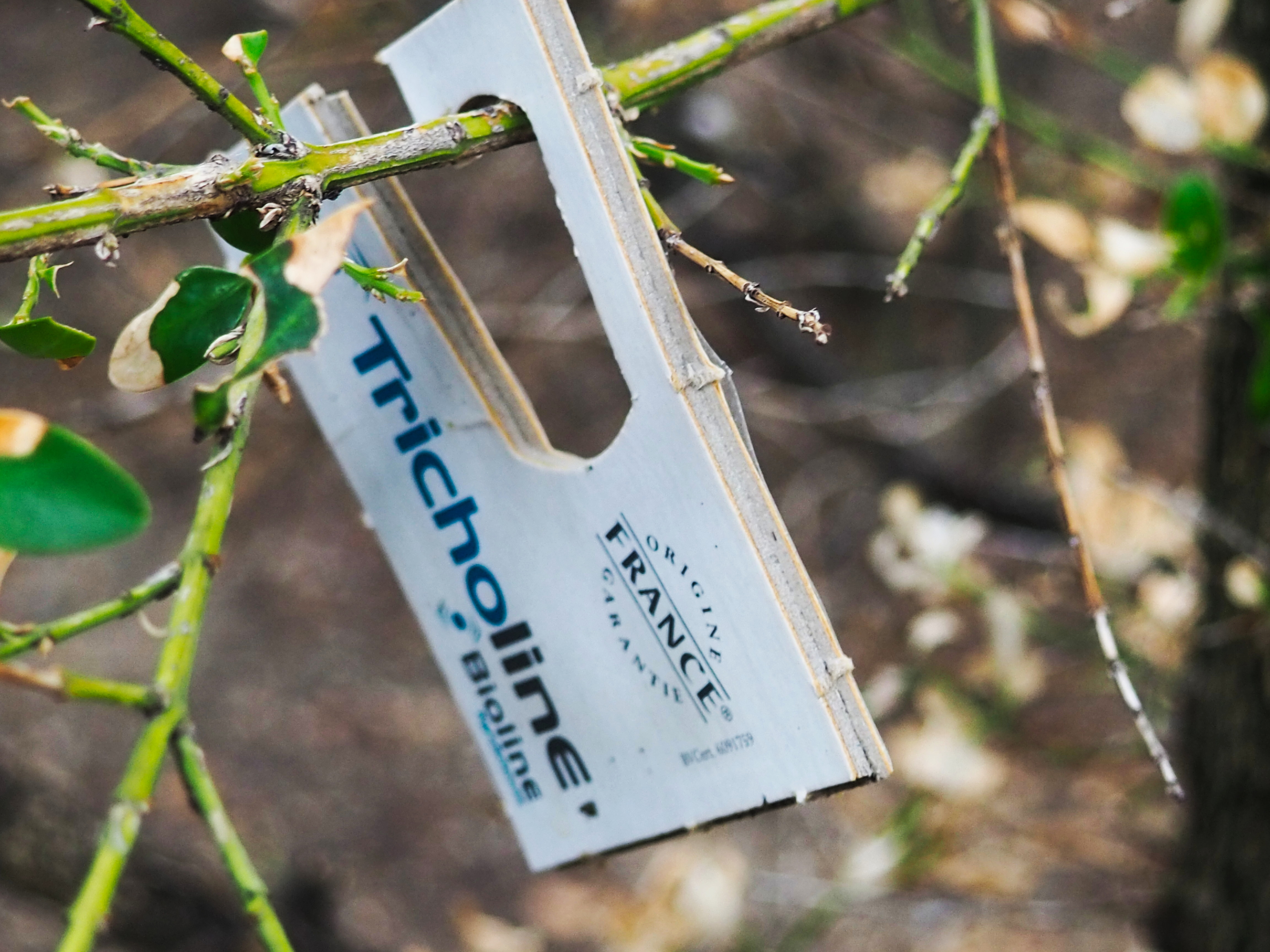
Whilst harvesting at Jeff Coutelou’s last September I couldn’t help but notice white cardboard hanging from the trees and bushes around the vineyards. They were certainly not there in 2021 so what was going on?
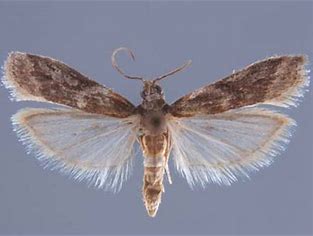
It turns out that this is one solution to the increasing problem of Cryptoblabes gnidiella or honeydew moth. I wrote about the emergence of this new type of moth in 2020 here. This moth has spread rapidly from Italy to Provence and now into the Hérault and Aude areas of the Languedoc and is moving inland too. Scientists believe that one of the reasons for the increase in numbers and range is climate change. The moth takes 93 days from egg to adult when the temperature is around 18c but at 26c that reduces to 32 days and at 29c just 23 days. There is less time for the farmers and viticulteurs to react. Moreover the moth seems to be less present in the vineyards until July/August, just in time for grape harvest. (Scientists are still trying to establish where the moths go in the Spring and early summer though they do live on up to 80 different types of plant).
photo, Mississippi State University
The larvae live inside the bunches of grapes, the female lays around 100 – 230 eggs and the grapes are emptied of juice and pulp as the larvae feed. The damage spreads to other bunches as juice drips on to them inviting rot.
What can be done? Well, chemical sprays as I mentioned in the previous article but organic producers cannot resort to those. Theoretically they could destroy bunches of grapes left after harvest either on the vine or on the ground as that is where the moths and eggs spend winter. However, that would be prohibitively expensive for all but the wealthiest producers. Sexual confusion traps (mentioned in that 2020 article) might also not work well as scientists don’t know whether the eggs are already fertilised in summer, remember how they aren’t sure where the moths spend Spring.
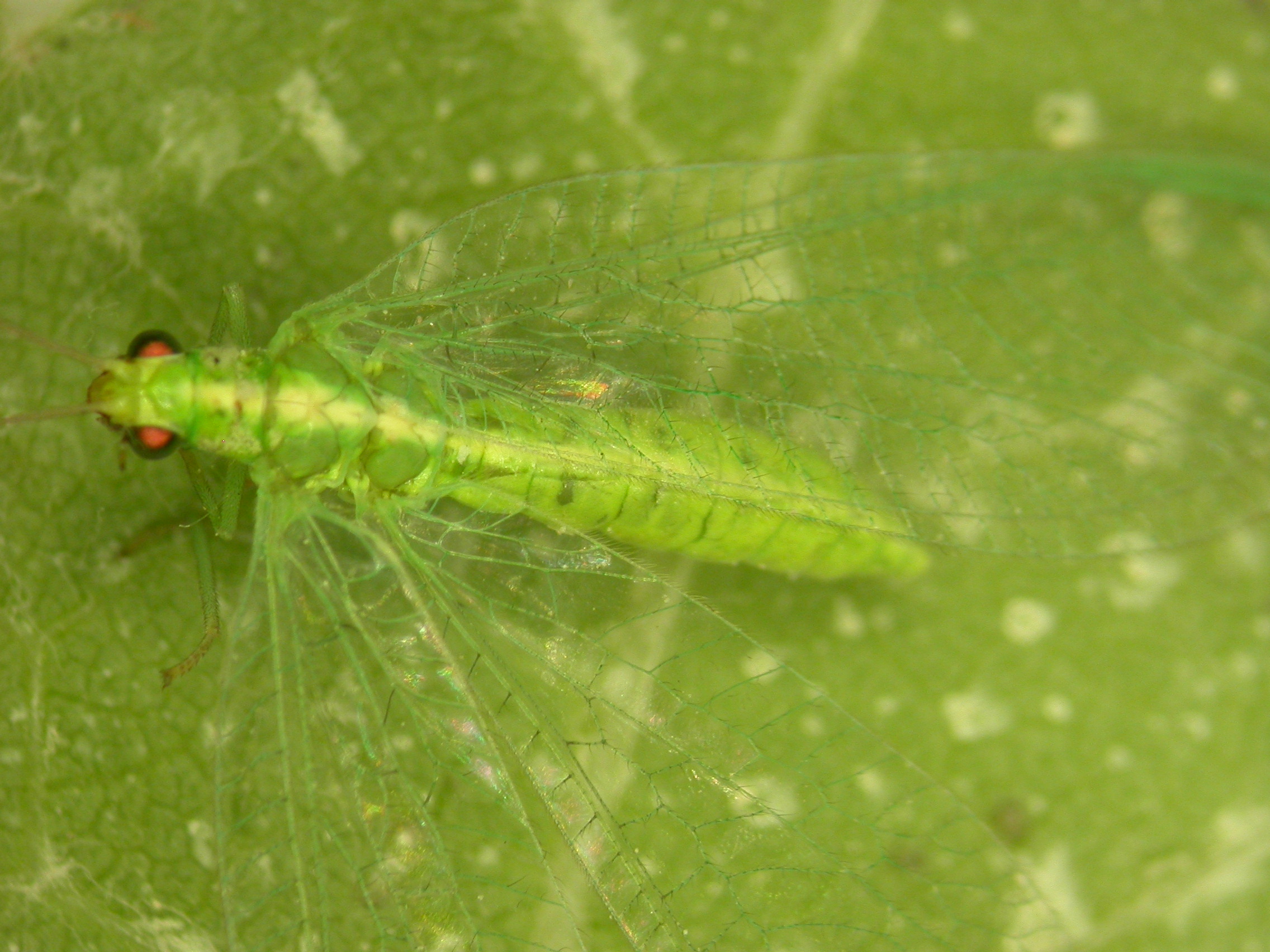
Jeff is also trying to encourage green lacewings to live in the vineyards, these also predate on moths and their eggs and would form an extra defence. They also spend winter in the vineyards and are available to combat the moths all year round as needed. Until he finds out whether that will be successful Jeff must hope that the cards are successful. Unfortunately 2022 saw a significant increase in the number and spread of vines affected by honeydew moths.
French company Bioline have produced one answer and that is the white card in the trees. The cards contain microscopic wasps 0.8mm in length, called trichotop buxus as they are usually used to combat box wood moths. The wasps eat the eggs of the moth so by placing and opening the cards Jeff and others bring a parasite to the vineyard to solve the moth problem. Two potential problems remain, the cards need to be renewed every 3 – 4 weeks and adding a new insect to the biodiversity may have its own consequences (though no evidence of that has emerged yet).
I started this blog in the summer of 2014 when Pat and I moved to the Languedoc and I began to spend time with Jeff Coutelou learning about wine, vines and winemaking. It was intended as a simple way for me to let my mother, Edna March, know what we were up to and how I was spending my time, a modern form of letter writing.
Mam died on February 5th aged 88. She had no interest in wine, as a Methodist she never drank alcohol other than a pretend sip of champagne on Christmas morning before passing the glass to one of us. She was amused and bemused by the success of the blog in following years and why thousands would want to read it. However, it achieved its purpose, she did read it in the early days and after visiting us in France she told me how pleased she was that I was learning about nature and plants and, in particular, how lucky I was to have a great friend in Jeff. How I wish I had taken a photo of the two of them together.
In Jeff’s vines with my brother in law Iain
Mam was a teacher, headteacher, Guide and Brownie leader and loved people, especially children. Her faith guided her life and she worked tirelessly to help others and act as a true disciple. My sister, Linda, and I were fortunate to have two wonderful parents and a great childhood. Mam was my guiding light and this blog was just one tiny example. If you have enjoyed reading it at any time, then it’s thanks to her.






































 amarchinthevines