amarchinthevines

Learning about wine, vines and vignerons whilst living in the Languedoc


2 Comments

My Christmas wine


1

I was recently honoured to be asked to contribute to the blog of well known Irish wine expert Frankie Cook in a series of posts about wines people would choose for Christmas. Naturally I chose a Mas Coutelou and, in particular, my favourite wine of all from Jeff.

Here is the article but I recommend a visit to Frankie’s website and reading articles from other contributors too, there is a rich variety of wine selected from all around the world as well as lots of other good reading.

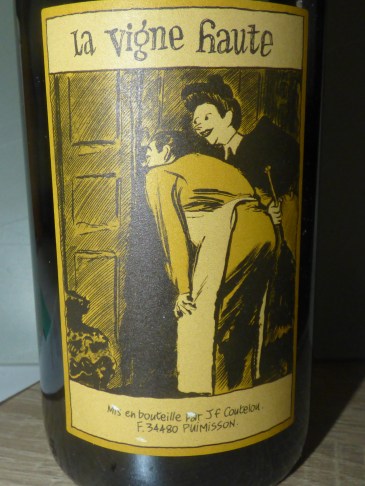
“Christmas is about family and friends, sharing and reflection on the year which is fading. My choice of wine reflects these. I have lived most of the last 3 years in the Languedoc and spent much of the time helping at and writing about Mas Coutelou. Jean-Francois (Jeff) Coutelou makes a series of excellent natural wines but for this special occasion I shall choose La Vigne Haute 2013.

The wine is pure Syrah, it is labelled as a Vin De France because Jeff chooses to avoid the rules of appellation status which would, for example, mean that a single grape wine would not be allowed. Syrah is one of the main five Languedoc red grapes along with Grenache, Carignan, Cinsault and Mourvèdre. The grapes which make La Vigne Haute are grown in a vineyard called La Garrigue planted on two sides of a ridge, Grenache facing the southerly sun and Syrah, more sheltered and cool, facing north.

2013 was the last vintage of La Vigne Haute, if the grapes and quality are not high enough they will be used in other wines. (Happily, 2017 will see a new vintage!). The 2013 offers warmth, long flavours of red fruits and soft tannins, great with Christmas food. Made by my friend, shared with family and a reminder of so many happy days in Puimisson.”
P1030221


4 Comments

Mas Coutelou in the UK


map

After an absence of two to three years I am delighted to say that Mas Coutelou wines are available once more in the UK. I won’t go over the reasons for the absence but instead celebrate their return.

Leon Stolarski will be the main source of the wines for UK customers from his online store. There is a real cross section of the range with whites, reds and, a true treasure, the Vieux Grenache. This is the page where you will find the wines. I am delighted to have been the connection between Jeff and Leon and I have already placed an order to restock some wines in my collection and add some that have been recently bottled like the excellent Flambadou 2016.

P1020489

Leon tasting in Puimisson in June

I know that Jeff was also keen to send wines to Noble Rot wine bar in London as one of the owners, Mark Andrew, was the man who first imported his wines into the UK when he worked with his former company. Noble Rot garners rave reviews for its food and wine list as well as its wine magazine. I really must make a visit soon.

So, no excuses. It’s time for the UK to embrace Mas Coutelou.


3 Comments

Explosive

F4A077C6-64C3-4898-8613-D869ECDB0BFB

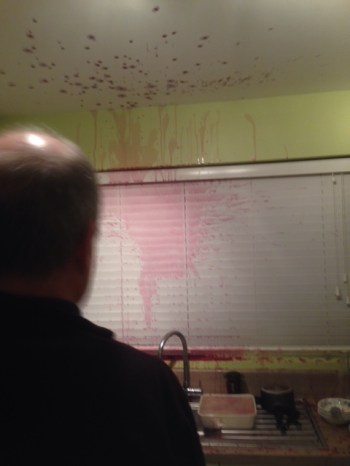
In September I gave a talk to The Tuesday Club in Pézenas about the 2017 vendanges. Jeff bottled some Cinsault and Cabernet Sauvignon for me, the latter still fermenting. When I opened a bottle at the talk it overflowed because of the CO2 being produced. Well, on Saturday I opened the other bottle and I did say it might produce a lot of foam so I opened it over the sink. In fact all but about 5cm of the bottle flew out of the bottle and went everywhere. The power of fermentation! Thank you to Linda and Iain for helping to clean up. I can say that the wine which survived was very good!!

76C38BCE-A858-4BA3-8F50-8C7328698CD5

On a cleaner note. I don’t often buy wine from the high street these days. However, I read a report about a Georgian white vinified in amphorae or qvevri as they are called in Georgia. As orange wines have been one of my highlights of 2017 I decided to buy a bottle. Well, it was really good. Made from the Rkatsiteli grape it had a lovely long flavour of pear and apple with nice tannins and real character. Hats off to Marks & Spencer, I went back and bought some more bottles.

georgia2


4 Comments

Reading

Version francaise

I may be away from the action of the Coutelou vineyards but my fascination with wine, and particularly natural wine, continues to grow. I have recently read two things which I thought were worth sharing on here.

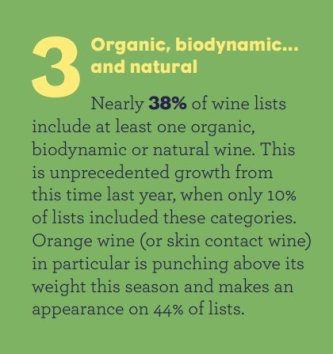
Firstly from Bibendum came this piece of information about the UK.

bibendum report

This growth of interest in natural wines is, of course, very pleasing to me, a long time advocate of the style. Not all these wines are natural but the interest in this sector shows a shift in demand and, also, realisation from merchants that the demand is there.

Caveat emptor! Not all wines labelled as ‘natural’ are that, a consequence of the lack of regulation. In particular beware high street retailers with wines from big companies. Artisans who practice natural methods in the vineyard and cellar are what matter to me. To identify such producers you could do worse than look at the website ‘vinsnaturels’ which is in French and English. The app Raisin is another useful way to locate producers and retailers.

1

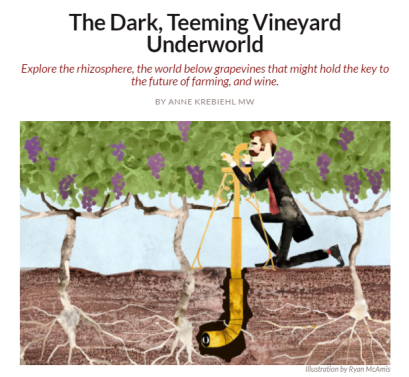
The most interesting article I have read though was from The Wine Enthusiast, written by Anne Krebiehl MW. In it she describes what we are learning about soils and the life which is in there. The rhizosphere is the soil immediately surrounding the vine roots and research is revealing the microbial and fungal life in there. This is something which Jeff has described to me over the years and it is fascinating to look at soils with small white fungal fibres which form a network around the vines, supporting them with nutrition and chemicals whilst benefiting themselves from the vines in a symbiotic relationship. Encouraging life in the soils is, therefore, hugely important; reducing their compaction from tractors etc as much as possible, composting them, avoiding chemicals where possible.

Mycorrhizae in Rome vineyard

There is much research still to be done and we are in the early days of understanding how the soils influence the vine and, consequently, the wine. However, early research supports the careful management of soils and vines by vignerons such as Jeff Coutelou. Respect the environment, encourage life. As he said after the recent damage done to his vineyards the best response is to plant. Trees, bushes, flowers, any plants. Encourage ecosystems and they will repay our guardianship.


4 Comments

Tasting the 2017s

Vigne Haute

Version francaise

Last weekend I should have been in the Languedoc with Jeff and attending a wine tasting at Latour De France. Sadly, a 48 hour bug put a stop to that.

Instead I reflected on a tasting we did at Jeff’s on October 3rd of all the 2017 wines in cuve. Regular readers will recall that they vintage is of high quality but low quantity. Quantities will be in short supply of what will be seriously good wines. There was a tinge of sadness about that as we tasted through the range.

1

These were my notes on the evening.

  • Maccabeu / Grenache Gris – still some residual sugar. Fresh nose, Fruity, pears. Slight sweetness which will disappear. Clean and lovely.
  • Sauvignon Blanc – fresh apple, bright and zesty. A true Sauvignon character, refreshing.
  • Carignan Blanc – lovely, full, clean, direct – fresh and fruity. Very good.
  • Rosé – very pale, flowery aroma, fresh and clean, exactly what you’d want from a rosé.
  • Syrah (Ste Suzanne) – whole bunch, red fruit, round tannins, good finish, full, very good.
  • Cinsault – lovely, fresh and juicy red fruit, cherry, 13,5% but tastes lighter. Good.
  • Syrah (Segrairals) – amazing passion fruit nose which carries into taste. Fresh, citrus and lovely red fruit, a real star.
  • Syrah (La Garrigue) – La Vigne Haute (fingers crossed). Terrific, direct full tannnins, splendid fruit, full, long – stunner.
  • Flower Power – Maccabeu, Syrah (St Suz), Grenache (St Suz), Grenache Gris, Cinsault, Terret Noir and Flower Power – Despite the different assemblage this has the character of previous Flower Power – fruity, silky tannin and very appealing. Lovely.
  • Grenache – blend of Ste Suzanne / La Garrigue – 2015 St Suz provided 80hl, this year the 2 vineyards made 60hl. Lovely, fresh cherry flavours with a spicy finish.
  • Mourvėdre – crunchy, spicy good tannins and dark fruits. Very true to the grape. Good.
  • Carignan – top of the class. Lovely fresh red and black fruits, excellent balance of freshness and complexity. Star yet again.
  • Merlot – lovely fruit nose, fresh, touch of wildness which should settle. Nice.
  • Cabernet Sauvignon – still some sugar, plenty of fruit, easy to drink with classic blackcurrant notes.

We went on to drink a couple of the 2016 wines which were still in cuve, a very floral and spicy Syrah and an assemblage of Grenache, Syrah and Mourvèdre which had good fruits with a soft tannin finish.

Reflections on the evening? The quality of 2017 is clear it is up there with the 2015s, just such a shame that fewer people will get to drink them. The whites are very good but the reds shine especially the future La Vigne Haute and Flambadou. The wines had all fermented beautifully causing few worries. A vintage to cherish, can’t wait until it is in bottle.


Leave a comment

The wine lottery


So much of wine enjoyment is personal taste, but chance plays a role too. It is often ignored but some recent wine experiences brought the issue to mind.

A dinner with friends. I took one of my favourite wines, a chance to share it with others. Remove the cork, pour, swirl … alarm bells. There’s a dry, musty aroma. Sip, and yes, there it is: the wretched mushroom, wet cardboard taste of a corked wine. Previous bottles of this wine and vintage have been excellent, this was a one off. Sadly, it spoiled my evening, such a disappointment, expectations dashed by TCA.

angludet

Two bottles opened in successive nights, a 1990 Chateau D’Angludet and a 2005 Cahors, Chateau de Cayrou. The last bottle of the Angludet I opened had been disappointing, showing its age, brown in colour and dried out. This one was dark red with a brown edge, fruit still to the fore coupled with interesting notes of nuts and dark plums. It was a lovely surprise, expectations had been low based on the previous bottle. These two bottles had been stored together, the bottle variation like chalk and cheese. If I had only tasted the first I would have a bad impression of this venerable wine. How many times must that have happened to me?

The second bottle comes from a stellar vintage in Cahors and a domaine with a good reputation. The result? Meh. It was OK, nothing more. Little character, no charm. A food wine some would call it. Which to me is a wine lacking fruit and personality. I bought that bottle many years ago on recommendation, was it a disappointing bottle like that first Angludet? Or was it just a dull wine? Would I spend my money to buy another and find out the answer, certainly not. There are Cahors wines which appeal far more, notable from Charlotte and Louis Pérot’s Domaine L’Ostal.

faugeres

Wine drinking is personal taste, this bottle of 2009 Faugères was one my wife enjoyed but I found dull. However, before being definitive let us admit that sometimes fortune can influence our wine experience.


Leave a comment

Amphorae

P1030145

Version francaise

One of the winemaking trends of recent years has been a return to the learning of our forefathers. The revival of old grape varieties, use of horses for ploughing, many of the practices of natural winemaking are references to the past. As a historian these practices are very welcome to me.

Another welcome revival has been the use of amphorae for fermenting or ageing wines. Of course this was the methodology of the Greeks and Romans thousands of years ago but they had all but disappeared in western Europe. Certainly the practice survived in the East, especially Georgia, partly due to the poverty of Soviet times. The fall of communism and this search for the past has brought about a revival of interest in the amphora.

P1030146

The advantage is that clay is porous and allows an exchange of the wine with air/oxygen. This is why wooden barrels have been used but the advantage of amphorae is that they do not give the familiar taste of oak. Many producers who have used amphorae claim that they keep wines fresher than barrels.

P1030162

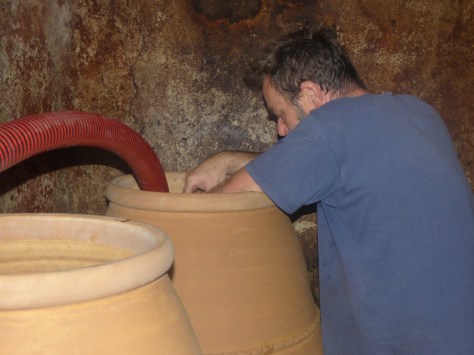
Earlier this year I reported how Jeff had been given a present by a diving friend who discovered a Roman (time of Julius Caesar) amphora in the Mediterranean. I had hoped that it could be used for winemaking but it needs a lot of reconstruction as well as disinfection. However, it seemed to inspire Jeff who went to Spain in order to buy two 400l amphorae. On September 29th it was time to fill them.

They had been filled with water for several weeks to remove dust but also to moisten the clay so that it would not soak up the wine. A cuve of Carignan and the very rare Castets was the wine to enter the amphorae which are about 1m50 high. Filled almost to the brim each was sealed with a stainless steel chapeau bought for the job. And so we await the results, regular tasting will allow Jeff to decide how long the wine will be aged.

A new departure, a return to the ways of the ancients.

P1030151


Leave a comment

Vendanges 17 – the finishing line

P1030053

Version francaise

I started my coverage of the 2017 vendanges with racing terminology and, so, I finish in the same way.

It’s definitely over. Vendanges 2017 with all its quality, with so little quantity.

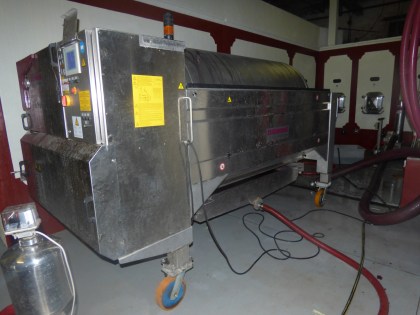
On September 27th the final press of the grapes was completed. It was the turn of the Cabernet Sauvignon, two weeks after picking. The skins, pips and other solids had done their work in giving up flavour, colour, tannins and so much more. The yeasts had started their work of fermentation. Now it was time to press before that grape must started to be problematic rather than beneficial.

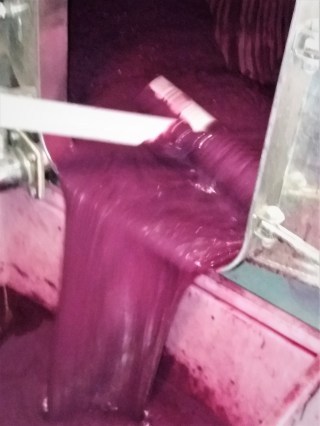
The must was pumped from the cuve by the powerful pompe à marc directly into the press. Julien ensured that the press was filled in all corners and then the press began. It inflates a membrane inside which gently presses the must to extract the juice without releasing the more bitter, astringent tannins left in the skins and pips.

20170927_101542

Sediment after the must has gone to press

The grape variety (cépage) will determine the amount of pressure applied, Cabernet has small berries and thicker skins so needs a little more pressure than juicier, thinner skinned Cinsault for example.

Error
This video doesn’t exist


The juice flows and is sent to another cuve to continue its fermentation, then its malolactic fermentation (which removes the more acid flavours). Indeed the analyses of the 2017 wines show that fermentations have gone through quickly, without fuss or problem. There is no sign of volatility or any other problem, the wines look on course to be as high quality as the grapes themselves. Which, of course, is the goal. Jeff believes in letting the grapes express themselves with as little intervention as possible. This year interventions are minimal, the grapes have done the work.

P1030021

Sadly, the quantities do not reflect the quality and that will bring a financial blow to the domaine and to virtually all domaines in the region. When you are asked to pay a few euros for a bottle of 2017 Mas Coutelou, I hope that you will recall all the work which I have described, the stresses and strains, the love and care which has gone into that bottle and you will consider it money well spent.


Leave a comment

Solera, oh oh

P1000758

Version francaise

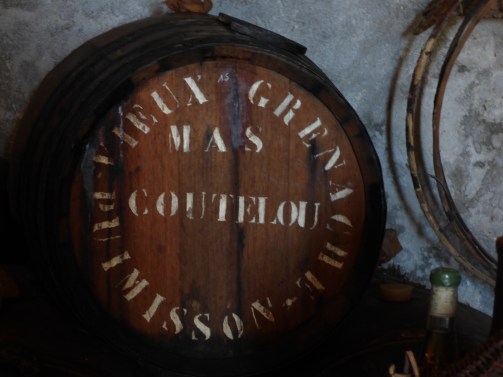
Many visitors to Mas Coutelou would cite their time in the cave des soleras as the most memorable of all. This, for new readers, is the cellar where barrels are stored containing Muscat and Grenache from many vintages. There it ages gently to make Vieux Grenache or Muscat, or a blend of course.

P1000757

The system works with new wine being put into barrique as normal but the older wines are blended with wines from previous years. Evaporation and bottling means that some of the wine in the barrels disappears each year so they need to be topped up with younger wines. Gradually, as the years pass, the wines become older and more concentrated and are passed on to older barrels. Some of the wine in the oldest barrels is 100 years old blended in with slightly younger wines.

20170925_143119

Archimedes principle to move wine from cuve to barrel by gravity

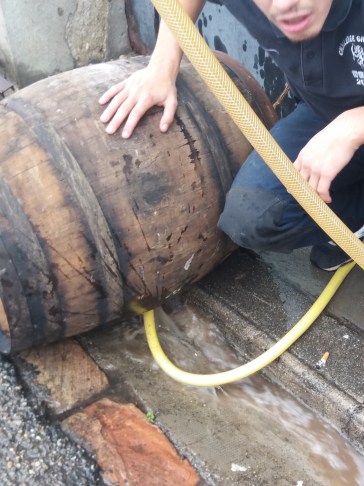
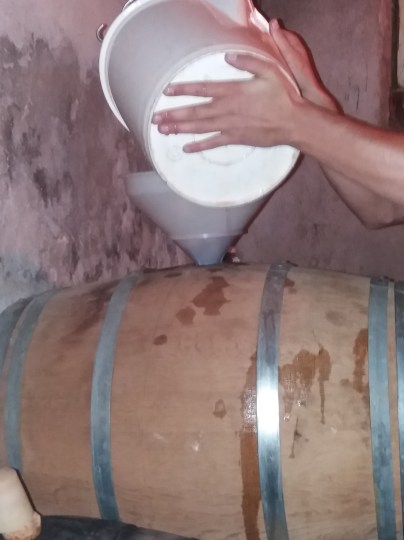
On September 20th it was time to clear space in the cellar; barrels topped up, new wine added to the system. Some of the barrels were given a soutirage, emptied of their wine leaving behind the sediment in the bottom. The barrel is then cleaned, the wine returned and topped up.

20170925_143829

Matthieu fills the barrel with water to clean it ready for refilling with wine

Two days later we were back and amongst the barrels being refreshed was one containing the Grenaches (all three varieties) wine I made in 2015. Time to taste. This was the new barrel which permits more oxygen into the wine than the more seasoned barrel. There was definitely a sherry influence to the wine, the effect of the oak and air but still there was good fruit and length. It will soon be topped up with wine from the older barrel which should add more fruit to the profile. The wine in the 27l bottle will be even more fruity and fresh, the blending should be an interesting time.

20170925_142738

Refilling the Grenaches newer barrel

The cellar is a true treasure trove of great wines, and I don’t mean mine. Time spent there is always time well spent. And the guard dog of all guard dogs ensures it is well protected.

P1030137


Leave a comment

Vendanges 17 – Presentation

Version francaise

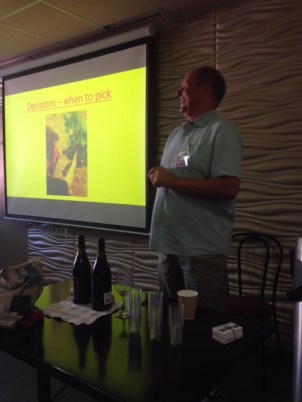
On Tuesday I was delighted to be asked to give a presentation on the 2017 vendanges at Mas Coutelou and the problems of the vintage which had been widely reported. Around 60 people were in attendance at The Tuesday Club in Pézenas and I gave a talk about the events of the vendanges, the decisions which must be made by Jeff as well as a report on the problems nationwide and Puimisson. This was followed by a tasting of Bibonade, Flambadou 2015 as well as two samples straight from tank, Cinsault and Cabernet Sauvignon to demonstrate the change in structure and taste after fermentation.

I have uploaded the presentation as a video to Youtube which you can see here.

Or simply click below.

Error
This video doesn’t exist