amarchinthevines

Learning about wine, vines and vignerons whilst living in the Languedoc


6 Comments

Nature can be harsh: Part 2 – Disease

The mild weather over winter was followed in the Languedoc by a slow start to summer heat. The resulting warm, humid weather brought disease as it did in many regions of France. Mildew, oidium and couloure are all vine diseases which occur regularly and 2016 was no different but with a bigger hit than usual.

Mildew (downy mildew)
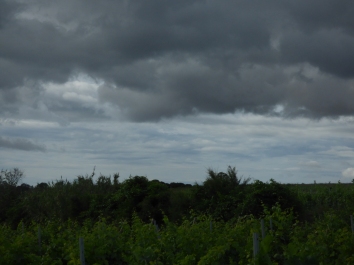
 

Sadly, humid days in the mid 20s and cool nights are exactly the conditions favoured by downy mildew, and it prospered. The humidity in the soils created ever more favourable conditions for mildew. Downy mildew lives as spores in the soils and any rain splashes them onto the vines. Mildiou is not a fungus as commonly believed, it is a one celled spore which germinates in warm, humid conditions especially between 16 and 24 Centigrade – exactly the conditions we saw in April and May of this year.

Jeff Coutelou spent many nights out on his tractor spraying the vines to try to protect them. As an organic producer (and much more) he cannot (and does not want to) use manufactured, chemical sprays. Instead he used sprays based on rainwater with seaweed, nettles, horsetail and essential oils of sweet orange and rosemary. These are better absorbed by the vines in the cool of the night.

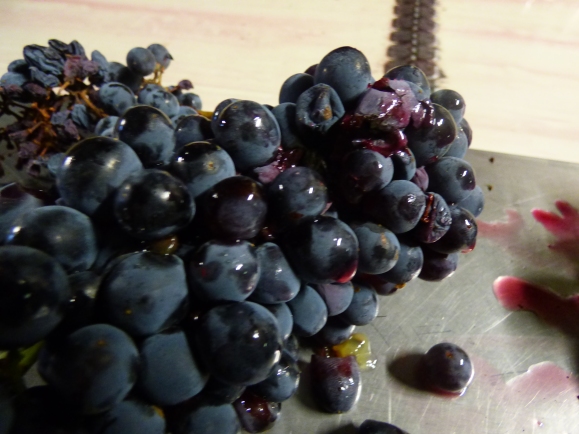
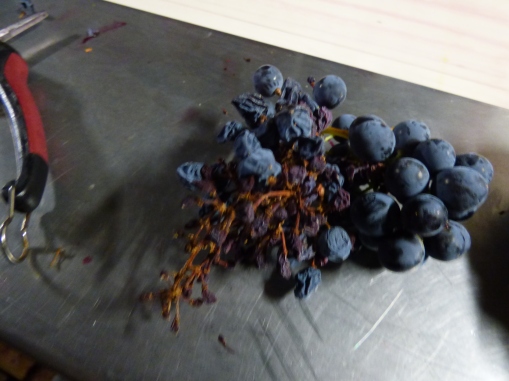
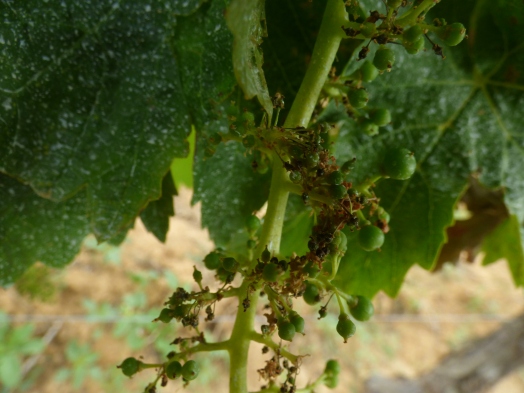
Mildew appears as small yellow / green spots on the upper surface of the leaf which gradually turn brown and spread to leave an unsightly vine. Underneath downy white /grey spots appear, the mildew is well established by this point. It affects the grape bunches and leaves them dried out and shrivelled.
car-mildew-grappe

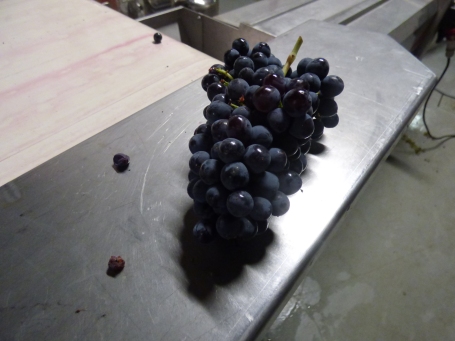
Mildew on a Carignan bunch, organic spray residue on the leaves

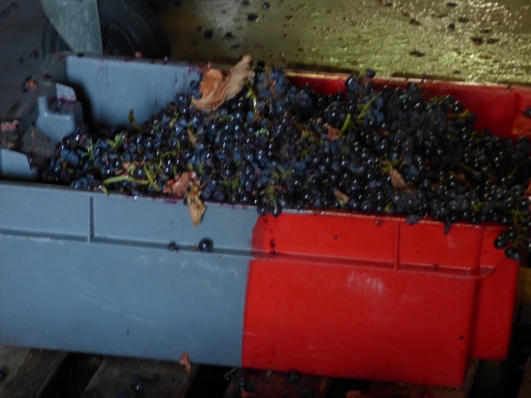
By the time harvest arrives the bunches contain a mix of healthy and diseased grapes. Severe triage is required. Bunches such as the one in the photo above will be discarded immediately. Where there are health sections though the bunches will arrive at the triage table and be sorted rigorously. Jeff reckoned that in some vineyards, especially the white vines of Peilhan, losses were up to 60% from mildew. Seriously damaging.

Here is a clear demonstration of the advantage of hand harvest (vendange manuelle), machines would simply swallow the lot and in less thorough domaines or caves the bunches will all go into the wine.

Oidium (powdery mildew)
IMG_1552

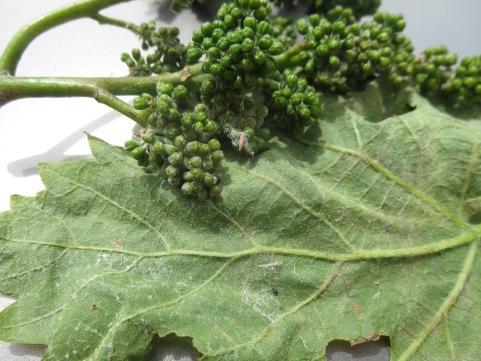
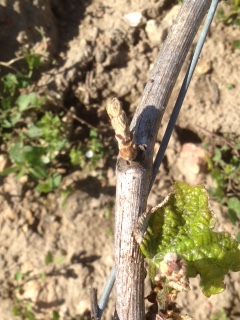
Oidium on buds and leaf

Oidium is a related problem to mildew but slightly different. It too thrives in warm days and cold nights (so springtime is its peak period) , it too loves humidity. So, spring 2016 was ideal though oidium was less rampant than mildew. Unlike mildew it is a fungal based spore.

Conventional treatments would be chemical and even organic producers will use sulphur, a naturally occurring element. Organic producers are limited to the amounts they can use as sulphur does damage the fauna of the soils. Jeff Coutelou uses less than a quarter of the permitted amounts because he sees it as  a last resort. Instead he prefers treatments based on horsetail weed, nettles and other beneficial plants made into a tisane which can be sprayed. It may not be as all-destroying as synthetic chemicals but Jeff prefers the soils to be healthy in the long term by using these natural plant based treatments.

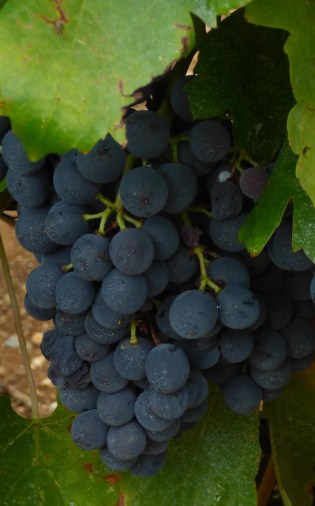
These photos show grape bunches hit by oidium in 2016, the powdery residue is clear though the bunches are less damaged than mildew affected ones. Nevertheless oidium is destructive and spoils wine so, again, careful work in the vineyard and cellar is needed to keep oidium out of the grape juice.

Coulure

Like most fruit plants vines grow flowers which then develop into the fruit. Vine flowers are very beautiful but also very delicate and don’t live long on the plants, a matter of a few days.

If heavy rain and wind hits the vines at this stage of their development then the flowers can be easily damaged or broken off the plant.

The result is that fruit cannot develop where there is no flower, coulure. Where flowers are damaged then berries might grow very small and seedless, this is called millerandage. Similarly berries might ripen unevenly within a bunch, green berries alongside healthy, ripe grapes.

There is nothing that the vigneron can do of course, the damage is done by the weather and no producer can successfully combat weather. Nature wins in the end. So, once again, the vendangeur and those sorting in the cellar are crucial in ensuring that only healthy fruit goes into the wine.

I cannot emphasise enough the importance of all stages of wine growing and production. From their budding through to vendanges the vines must be tended, and in the cellar observation, determination and care are needed too. To make good wine requires hard work, healthy grapes and love as Jeff has said many times.

And have a look at one of those last photos again.
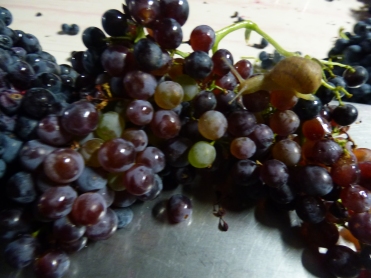
snail-and-uneven

In the top right corner you will see another of 2016’s natural problems, one subject of the final part of this series.
3 Comments

Nature can be harsh – Part 1: Weather

wet

It’s not all sunshine in the Languedoc

The stunning BBC Planet Earth II television programme  of snakes attacking baby marine iguanas was a recent reminder of how cruel nature can be. 2016 has seen vineyards across France attacked by a multitude of problems and in this series of three articles I want to show how the vines and the grapes are affected by these problems. Firstly, the weather.

The year began with no frost in the Languedoc throughout the winter. This meant that the vines found it hard to recuperate from 2015’s exertions as they could not sleep. When pruning got under way in earnest during January many vignerons reported sap flowing from the vines. This was bad news, the sap and the vines should have been resting, storing their energy for the year ahead. Consequently, when other problems arrived during the course of the year the vines were always vulnerable, struggling to resist them.

venier

Frost damaged vine in the Loire

Ironically, after such a warm winter, frost and hail damaged vines across France. The Loire, Rhone, Cahors and Pic Saint Loup were all hit at various stages, Burgundy and Champagne too. When I visited the Loire in early May it was sad to see many vineyards hit by frost, especially those adjacent to other crops whose humidity helped frost to form. Some vignerons faced huge losses of vines and potential grapes.

On August 17th hail hit the Languedoc, especially the Pic St Loup region where vines laden with grapes were smashed leaving some producers with no harvest at all in 2016. Mas Coutelou in Puimisson was also damaged though not so seriously. The storm ran through a corridor across Sainte Suzanne to La Garrigue and on to Segrairals. Even here vine branches were snapped, grapes shredded and bunches ruined. It was possible to see how one side of the vines was damaged where they faced the storm, yet the leeward side was virtually unscathed. Jeff was forced to pick these damaged vines much earlier than normal before the damaged grapes brought disease and rot to them.

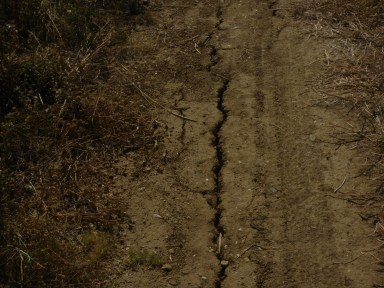
The other major weather problem was drought. There was virtually no rain for months in the Languedoc, especially from winter to early summer. Cracks appeared in the soil, plants turned brown. The lack of rainfall meant that when the grapes began to mature the vines could not provide much water, small berries with little juice were the norm. Vignerons everywhere in the region reported much reduced yields, at Mas Coutelou reds down by 20-30%, some whites down by as much as 60%. Rain just before vendanges saved the day but massaged rather than cured the problem.

p1010435

When rain did come it was often in the form of storms. Sharp, heavy rainfall does not absorb into the soil so easily. Moreover where vignerons spray herbicides on their land the soils often wash away as there is nothing to hold the soil in place. For more environmentally aware producers this can be frustrating as chemically treated soils could wash onto their land.

This is one reason why Jeff plants trees, bushes and flowers and digs ditches, to protect his vines from the risk of contamination.

The combination of sun (and even sunburned grapes), drought, rain, frost and hail made this a difficult year. However, that is not the end of the story. Climate conditions bring disease and it is that aspect of nature which I shall examine next.


3 Comments

All dressed up

p1020219

Happily the wines have plenty of places to go, from France to Australia, the United States, Japan and all around the world. As Christmas approaches the demand for wines reaches a peak and bottles from 2015 are prepared for sending off to those places. The process of putting on labels, capsules etc is known as habillage (dressing).

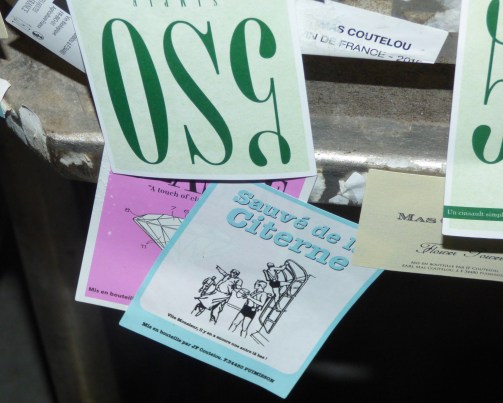
On Wednesday October 19th we dressed magnums of Classe and Sauvé De La Citerne as well as bottles of 5SO Simple, all from 2015. 5SO was first released in the Spring but  a second wave is now ready. All of these wines are sold out already, demand outstrips supply.

The bottles which were filled back in Spring are checked first to ensure there is no leakage from the corks, a handful do where a cork was not up to scratch. These bottles are known as couleuses. Every effort is made to ensure that the bottle should reach the consumer in premium condition.
p1020218

Michel puts on the capsule which is tightened by the machine which then sticks on the labels

The labelling is done by means of a machine which seals the capsule and pastes the label and back label onto the bottle. For the magnums the seal was actually made with wax which requires more work and time. The wax also needs time to dry off before being packed in boxes.

After the single bottles have their capsules and labels added they are placed in their box with protective cardboard to keep them in good condition during transport. This is a fiddly job, it has taken me two years of trying to do it quickly but I have finally got there.

This is the sort of day which I never really considered when I arrived at Mas Coutelou. The vines yes, bottling yes but, as a typical wine drinker, I never really considered the 101 jobs which go into preparing the bottles for market. Meanwhile, Jeff is sorting through his orders and, unfortunately, having to turn down some orders as there simply is not enough wine to meet the requests which he receives. The wines are justifiably in demand, and if you are fortunate to be drinking one, have a thought for the work which goes into preparing the bottle and raise your glass to Jeff, Michel, Julien and everyone else who has helped to make it so good.


Leave a comment

When the tank is empty

p1010991

En français

The vendanges may be over but the hard work continues for Jeff Coutelou and the team. Everyone is tired, back aches and minor ailments prevail, yet though the workforce is running near empty there is work to be done. Ironically, emptying the tanks.

p1020179

Grape must after décuvage

The grape must has played its role in the tanks, adding tannin, colour, texture, aroma etc to the juice. It has reached the point though for some of the wines that the must would begin to have a negative effect, too much tannin or colour and, potentially, an increased risk of contamination.

Therefore décuvage has been the theme of the week, emptying those cuves, pressing the must and returning the juice to a cuve where it will remain for several months finishing fermentation and completing its transformation into wine.

It is a critical time. Moving the wine brings risks especially that of too much contact with air leading to oxidation. So, it was time to muster those last reserves of energy and press ahead.

The juice is pumped to the press along with the skins and grape flesh which are in suspension in the wine. The parts which have sunk to the bottom of the tank are left behind and removed by fork or by hand. The pressing sends the juice to another, clean cuve via another pump. The marc (solid materials left in tank and from the pressing) can be sent to the distillery to make eau de vie, as you will see in the video at the bottom of the page.

Error
This video doesn’t exist

The new wine will reflect the grapes and terroir but also the length of time in cuve. Shorter time on skins brings lighter, fresher, juicier wine. That is why décuvage takes place at different times for different wines.

Here Jjeff and Michel ensure that all the wine is in the cuve.

The aches and pains are plentiful, the wines remain full of energy and life.


1 Comment

Vendanges 2016 #9 – Days Like This

“When all the parts of the puzzle start to look like they fit
Then I must remember there’ll be days like this”               (Van Morrison, Days Like This)

As we approached the end of vendanges a number of the team were moving on. It was an inspired move to have a farewell day, picking, tasting and celebrating together, though we were already missing some like Charles, Carole and Maylis.

The morning dawned over Peilhan and the vineyard which we planted in March 2015. Rows of Terret Blanc and Noir, Riveyrenc Gris and Noir, Piquepoul Noir and Morastel produced grapes this year. They cannot be used in major cuvées sold to the public as they are too youthful. However, Jeff decided to pick them to make something for himself out of interest. So, on a bright, warm autumnal morning we gathered, picked, chatted and laughed.

Interesting to see how some varieties produce more than others already, more precocious perhaps, the Terret Noir being especially shy. Altogether we picked around six cases only but there was a real mix of colour and some nice looking fruit which went into a small cuve in whole bunches.


Later that day we gathered again, this time in the main cellar along with Thierry Toulouse, Jeff’s oenologue. We tasted through the whole range of 2016 wines in cuve before heading to a local restaurant for a meal. The results of the tasting were fascinating. Clearly, they are in a stage of transition, fermentations still progressing. Nonetheless the wines were already showing their character. I won’t go into too much detail here, though I did take notes to help me record how the wines change in coming months.

In summary though I was amazed. I have said many times on here how difficult this year has been. A very warm winter, drought, mildew, delayed summer being just some of the problems. Yet here we tasted some lovely fresh fruit, lively acidity and other promising signs. I would mention the Carignan Blanc, lovely Syrah and Grenache from La Garrigue, juicy Mourvèdre and in particular the wonderful Carignan Noir of Flambadou. All those puzzles which Jeff had to hold in his head about harvesting dates, moving wines, possible assemblages etc, well those puzzles were solved in the glass. I had expected some disappointments but somehow Jeff has conjured some potentially top quality wines.

138da189-1095-4227-969a-8356828039df

2003 Roberta

At the end of the current wines Jeff also shared a 2003 bottle of white wine based on Grenache Blanc, Noir and Gris, called Roberta (it’s a long story!). This was one of three cuvées which were the first that Jeff made sans sulfites. Yet it was complex; fresh, fruity, nutty. A wine which made my heart sing, proof that SO2 is not required for ageing wines as we are often told. Perhaps in 13 years time we shall be tasting the 2016 wines and marveling at them too.

A fitting way to close the vendanges period, a team rightly proud of what it had achieved.

“When all the parts of the puzzle start to look like they fit
Then I must remember there’ll be days like this”

p1020104


Leave a comment

Vendanges 2016 #8 – from grapes to wine

Error
This video doesn’t exist

En français

The grapes are picked, how do we make this become wine? That has become the main objective now at Mas Coutelou.

The grape skins, pips, flesh and solids are with the juice in the tank (cuve) for as long as Jeff feels that they will benefit the juice. They give the juice chemicals such as anthocyanins which give colour to the juice (for rosé and red wines), tannins and flavour compounds. The solid parts of the mix tend to rise to the top of the tank and float on the juice. This cap must be kept moist, a dry must would give unpleasant flavours and is more prone to harmful bacteria. That is why remontage and pigeage have to be carried out, as explained before.

Jeff will taste from each cuve every day and samples are sent to oenologue Thierry Toulouse for analysis.

When he is happy that the right balance of sugars, acidity, colour and flavours is achieved it is time to press the wine. Some of the must is left behind in cuve and will be collected to use again, for example in distilling.

p1010991

Michel removing must from the cuve

The pressed juice goes into a new cuve and will continue its fermentation into wine. The yeasts on the grape skins and in the atmosphere of the cellar change the grape sugars into alcohol. The fermentation will have begun when the must was in contact but will continue when just the juice remains.

I wish I could convey the smell of the fermenting juice via the page you are reading. It is like walking into a boulangerie in the early morning,  bready aromas fill the air as the yeasts go about their work. One of the real highlights of the whole process.

p1010909

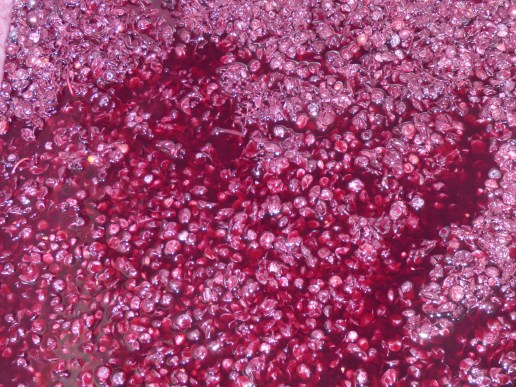
Fragrant, yeasty fermenting wine

Whilst that is all going on the equipment which has been used so much in the last month is checked over, taken apart and given a thorough cleaning. Not a pip, not a grape skin must be left in the sorting table, presses, égrappoir (destemmer) or anything else. No chance of bacteria gathering.

It is not straightforward. The process of grape juice to wine is a natural one and things can go wrong. Any vigneron who had a year where the process went without any hiccoughs would be either the luckiest alive or a liar. Yeasts can suddenly stop working, fermentations become too hot, bacteria (both helpful and harmful) are unpredictable. Jeff must be aware of every cuve and of their analyses, he must use his experience to tackle any issue which springs up at any time of day or night. He rejects the use of sulphur dioxide (SO2) to act as an antiseptic or stabiliser for the wine, therefore that experience is tested time and again. No wonder he wears an air of fatigue.

p1010844


Leave a comment

Vendanges 2016 #7 – Last Pickings

p1010935

Cabernet Sauvignon sheltering the Moroccan pickers

En français

Wednesday (September 21st) was officially the last day of summer and, appropriately, the last day of picking at Mas Coutelou. It was, as in 2015, the Cabernet Sauvignon of Segrairals which was the last major parcel gathered in. Lovely, clean bunches of small, healthy berries, classic Cabernet and virtually nothing to sort in the vineyard or in the cellar. 

p1010923

Cabernet Sauvignon

The day before had seen the start of the Cabernet in the afternoon following a morning of picking Mourvèdre, also from Segrairals. As I hadn’t ventured into the vineyard much in 2016 I took the opportunity to do so that morning. Our friend Jill had expressed a wish to do some grape picking and Jeff kindly agreed so I accompanied her (so at least there was one less experienced picker than me!). I really enjoyed being out in the fresh air but it was also good to get a grip on how the vineyard topography can have such an impact upon the grapes.

The Mourvèdre grows on an easterly slope with the rows running down the slope. The vines at the bottom of the slope gave lower quality bunches than those at the top, indeed we stopped picking the last few vines at the bottom of each row. The reason was that when it does rain the water runs down the slope taking nutrients etc. The grapes there tend to ripen much sooner with more humidity in the ground, it was a clear example of terroir. Rest assured that only good grapes went into cuve, much was left behind in the vineyard and at the side of the sorting table.

p1010931

The slope in the Mourvedre vines, rejected fruit on the ground

On Monday the lovely Carignan Noir of Rec D’Oulette (Chemin De Pailhès) was added to the tanks. The quality was high and signs are promising for yet another good vintage of Flambadou, arguably the domaine’s best wine in recent years.

Since the last article the other major harvest was some bountiful, good quality Grenache from La Garrigue on Saturday 17th.

lovely-grenache

Gorgeous Grenache

There remain a few rows here and there with some grapes left and they may or may not be picked in coming days and weeks. However, the Cabernet marked the last of the major picking. Time to say farewell to the Moroccan pickers, part of the Coutelou crew for the last month.

p1010896

Stage 1 is therefore over. Stage 2 the cellar work of remontages and pigeage continues apace as most cuves are now full and need looking after. Stage 3, pressing, is also in full swing as grapes from previous weeks have now gone through fermentation on skins and need to be pressed to take the juice away. I shall be writing about this more in the next article.

So, we head into autumn, the vines are fatigued after a very stressful year. The leaves are already changing colour and the Languedoc will be an even more beautiful place in coming weeks. The picking may be over but the vendanges are not. 

p1010930

Mourvedre in autumnal glory


4 Comments

Vendanges 2016 #6 – Sort It Out


En français

What do you look for when hundreds of bunches of Grenache grapes come towards you? What is your job on the sorting table?

Every winemaker wants the healthiest grapes to go into their vats to make the best possible wine. In some of the smartest chateaux and domains in Bordeaux and Burgundy each grape is sorted, even scanned. However, those are wineries which charge hundreds of pounds for a bottle of wine. For a natural Languedoc wine producer such expense is not feasible, so no scanners at Mas Coutelou. However, the need for only healthy fruit to go into tank is even more important for those who will not use additives such as SO2.

p1010664

The sorting table is new this year, previously we sorted direct from the case. The table means that you can see more of the grapes, move them around and search for any problems with greater ease. Undoubtedly it has led to better triage of the grapes which should help the wines. In a very difficult vintage such as 2016 the table has easily repaid its cost.


So, what are you looking for?

p1010660

Michel brings in the cases and information about the grapes

Well, first of all you get information from Michel as he brings the cases direct from the vines. He talks to the pickers and they will tell him if they have been in a good part of the vineyard with few problems or, conversely, if they have had to do a lot of sorting and cutting themselves. Michel relays this information to us on the sorting table with warnings to look out for snails or rot for example. Forewarned is forearmed.

In the video you see Vincent empty the case onto the table. He immediately looks for leaves, snails, spiders etc and removes them. Priscilla starts to sort. I or someone else would be on the other side so that we can see the bunches from different angles and turn them over to inspect.

vdlgrappe

Some squishy grapes

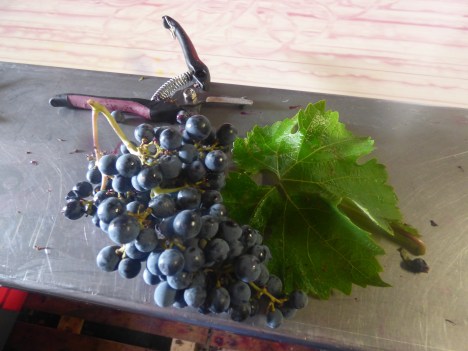
When I first joined the Coutelou team in millésime 2014 it was Carole who taught me what to look for. There are the obvious things, more snails and leaves but then look at the bunches. Or rather, not so much look, but touch and smell. Feel the bunch, are the grapes firm and springy or squishy? In the latter case warning bells ring. Is the squishiness due to juice or to rot? Smell the bunch. Does it have aromas of clean fruit or vinegary, rotten odours? Obviously if that is the case you cut into the bunch and seek out the rot and remove any affected grapes. Usually cut some of the ones around too as they might have been tainted by the rot.

mildew

Mildewed grapes

Look out too for mildewed grapes which have dried and become unpleasant. There are grapes which have naturally dried out and their raisiny sweetness is actually good in the wine, so you have to learn what you are looking for. Are there hail damages grapes? Grapes with holes from vers de la grappe (grape worms)? Black rot? Oidium? In a future article I shall be looking at how these problems show themselves on the final grapes.

lovely-grenache

Lovely Grenache bunch but check the interior

Of course, the vast majority of bunches are great, no problems at all, just lovely fruit. But, beware, those big closed up bunches are the very ones where problems might lurk inside. Don’t be deceived by something which looks good, you must still check it over.

p1010847

Nice, loose bunches – air can circulate to keep the grapes healthy

And meanwhile, whilst you look at that bunch another one is passing you on the table. Work fast, eyes, fingers, nose on the alert. Secateurs cutting whilst your fingers are already touching the next bunch. Be careful, no blood on those grapes please.

p1010794

Sorted!!

For Martin, hope you enjoyed it!


4 Comments

Vendanges 2016 #5 – Bolts from the blue

capture-decran-2016-09-14-a-11-33-47-630x0

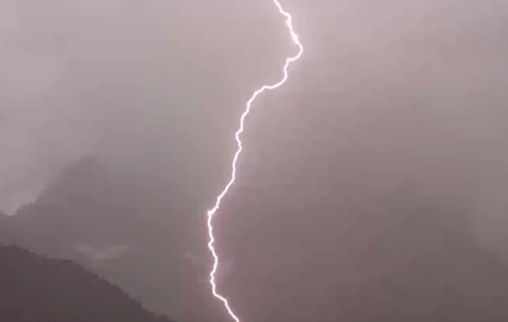
La foudre s’est abattue sur le cirque de Gavarnie, dans les Hautes-Pyrénées, dans la nuit du 13 au 14 septembre. (Photo : capture d’écran webcam Gîte Oxygène Gavarnie)

En français

Tuesday September 13th, the return of picking, with a little urgency in light of the weather forecast for heavy storms that night. The objective was to collect the Syrah from La Garrigue, the grapes which go into La Vigne Haute, my personal «cuvée mythique» of Mas Coutelou.

Last year the grapes were slightly swollen so Jeff decided to make another cuvée instead, On Peut Pas Vraiment Dire Que, and it is now 3 or 4 years since we saw LVH. It remains to be seen whether Jeff decides that the grapes were of high enough quality in 2016 for such a prestigious wine.

p1010786

Syrah in La Garrigue on Saturday 10th

The grapes started a little messy requiring some careful triage both in the vineyard and cellar.

However, the quality improved after the first few cases which had been picked in a lower part of the vineyard. Certainly by the end of the day we had sorted a good quantity and quality of fruit, my shirt can certainly testify to their juiciness.

p1010798

That night came the predicted thunderstorm, violent though not as long lasting as perhaps expected. I saw that some parts of the region saw over 200mm of rain, fortunately Puimisson did not reach those levels. However, there was enough to stop picking for the next few days. As I said last time wet grapes are not ideal. In addition the soft ground in the vineyards would be churned up by feet and wheels.

p1010796

James working hard as usual

In a way the storm came at a good time on a personal level. I developed a mild case of bronchitis out of the blue on Tuesday which would have prevented me from working on Wednesday and Thursday. So, I have left cellar work to the experts whilst I recharge my batteries for Saturday when we may get to the Grenache in La Garrigue which looks bountiful and ripe.

p1010787

Grenache in La Garrigue Sept. 10th

Meanwhile analysis of the grapes continues. There was the result of Ecocert’s evaluation showing that Mas Coutelou successfully retains its organic certification and also their analysis proving that no sulphites were or are added in the wines. And then there is the daily analysis from the oenologue which shows information such as alcohol levels, total acidity, pH levels, residual sugar etc. These help Jeff to think about how to look after the wines and which ones might blend together successfully in future.

analysis


The weather is now set fair until we finish; Grenache, Carignan, Mourvèdre, Cabernet Sauvignon should arrive in good conditions with a light north wind and under blue skies.