Some answers to the issues posed in my last article.
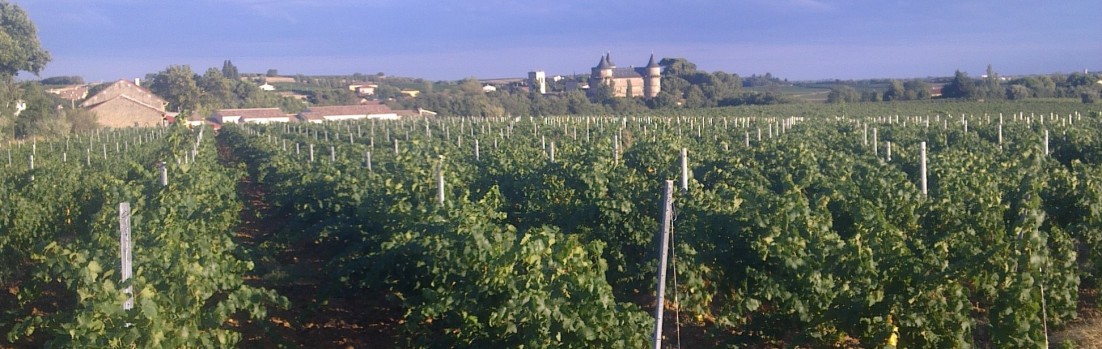
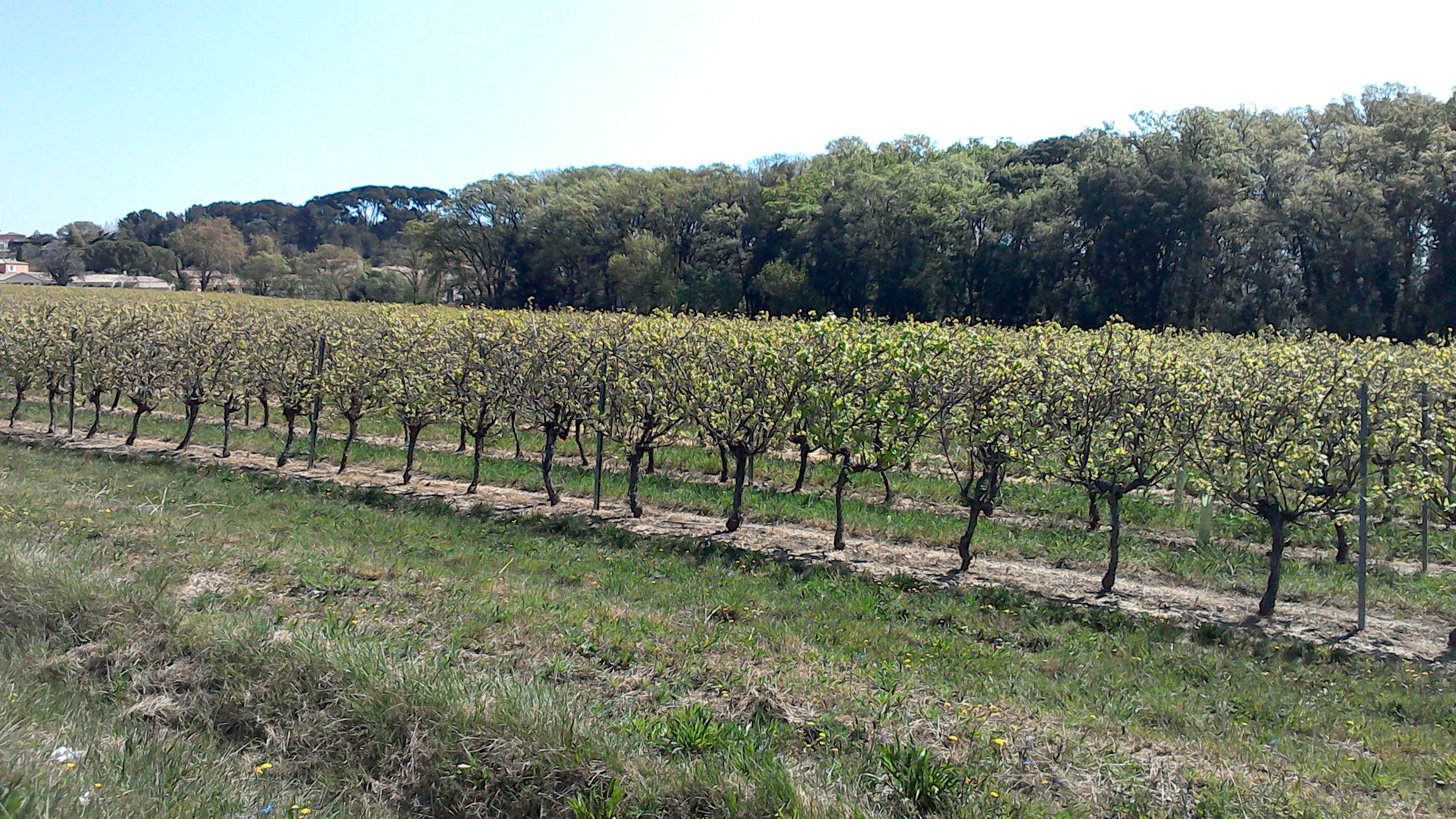
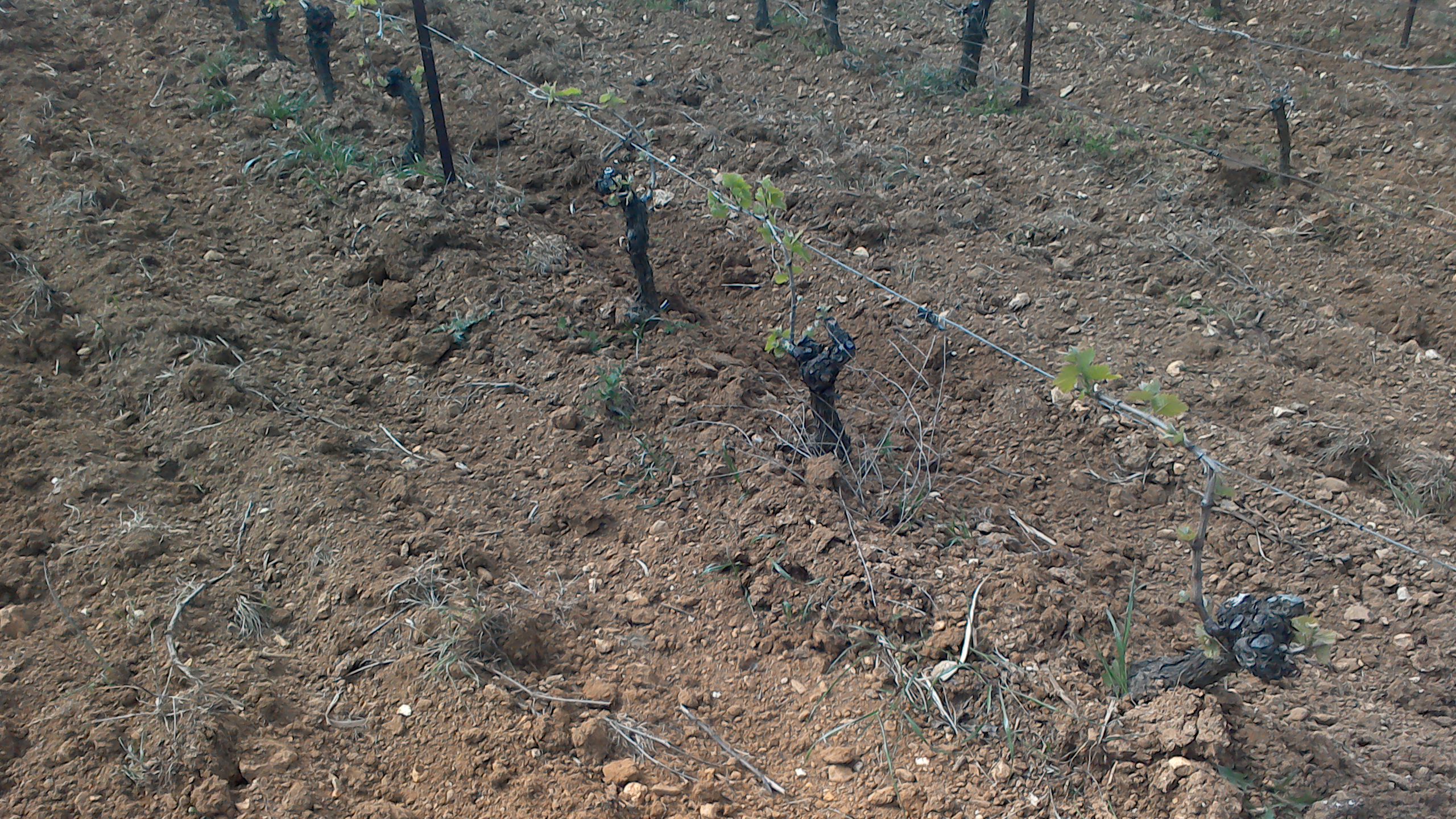
Firstly the vines which were not pruned (taillage). This could be because it’s a way of saving money and resources. Instead of pruning, which is very labour intensive, the vines are allowed to grow and then the growth is regulated and checked through the growing season. This approach has become more common around my part of the Languedoc, led by the domaine in question.
An alternative explanation is that the parcel will be grubbed up but the government officials have to measure the vineyard and enaure regulations are met regarding the grubbing up (arrachage).
The yellowish colour could be disease or the fact that the root stock is having difficulty in the sub soil causing some iron deficiency.
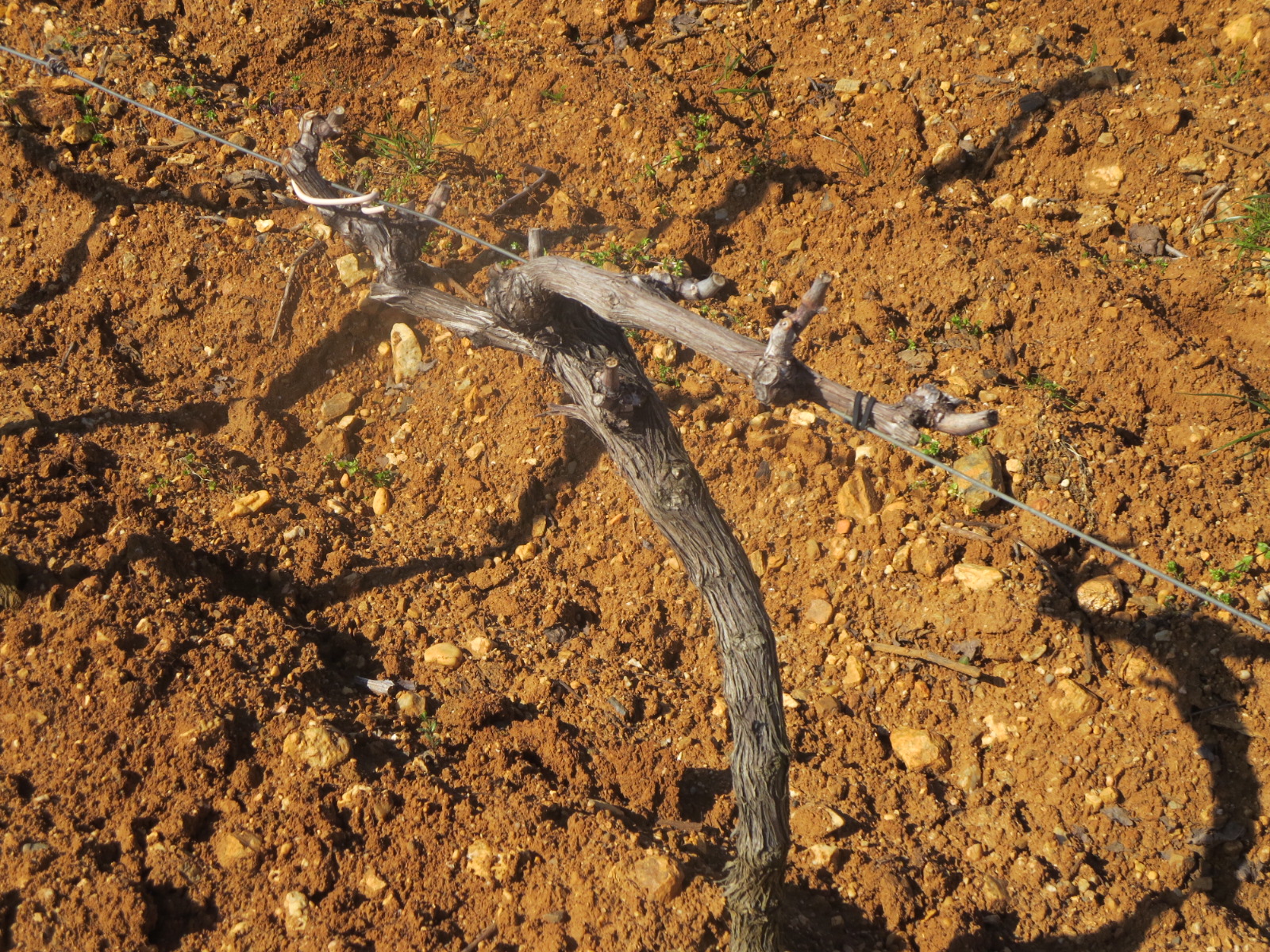
The vine. Not guyot after all but marcotté. Jonathan was right that this is form of nursery propagation. Apparently marcottage is an ancient Chinese form of propagating fruit trees and widely used in horticulture. Read more. NB, it is in French!
The vine sarment is trained underground to persuade it to grow roots. Growth on the sarment is removed so that it concentrates on growth and root growth. The new growth emerges from the ground to form a new vine. It can be separated from the parent vine or left intact which means that it does not need to be grafted on American rootstock to protect against phylloxera as it is still protected by the parent. Chris Kissick on his wine doctor website described the process at Chateau Boyd Cantenac in Margaux. (Thanks to Chris for his permission to use his work).
I have updated other pages on the site and urge you to have a look there by clicking the links at the top of the page.
On the Out and About page there are lots of photos of Spring here in the Languedoc and on a stay in Provence.
The moon over the arenas of Arles
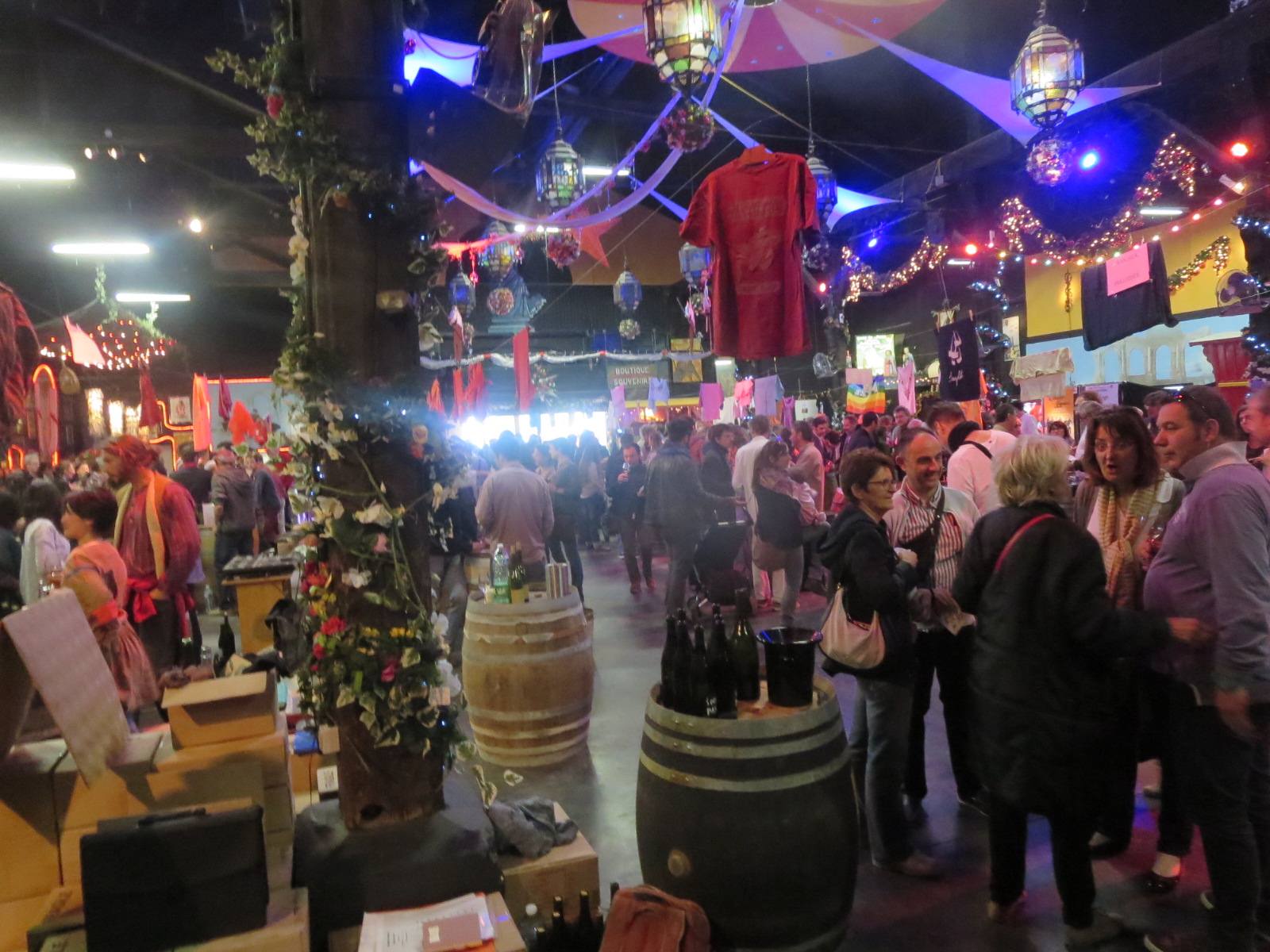
On the Tasting page I have 3 updates of exciting wines tasted in Pézenas, Arles and Bédarieux. Some of my favourite ever wines and some wonderful people too.
I wrote in my last post how, whilst some vineyards in the area were showing plenty of leaves and buds were opening, those of Mas Coutelou were more reticent. Well a visit to Peilhan and La Garrigue vineyards today showed that spring has arrived. Buds are opening, leaves are forming. Even the snails were heading for the foliage, this one had its photo taken and then was removed.
What struck me though was the variation in development of the vines. Some were still dormant, others were showing leaves, most were in between with buds just opening.
This is partly due to the cépage as some are more precocious than others, often white varieties.
The photo above shows a Sauvignon Blanc vine and as you can see it has leaves which are well developed but also flowers already out. Yet vines in the next row were still hardly budding. This was a clear example of how the position of the vine makes a difference, the vine above was on the side of the vineyard (La Garrigue) facing south west, therefore in full sunshine more than other vines. Indeed I was taken aback to see this.
In the centre of the leaf you will see the formation of a grappe, the future bunch of grapes. Whilst other vines are still asleep!
In the new plantation at Peilhan the wax protection on some of the vines is giving way as these babies begin to grow. Though of course they are many years from providing grapes for wine, it was quite something to see them begin their life. This was a Ribeyrenc Gris vine.
The region has had a relatively cool Spring by all accounts (though those of us used to NE England might be surprised to hear it). It has been dry and sunny but strong winds for many weeks have kept down temperatures and dried the soil quickly. This helps to explain why the vines have been slow to start their growth this year.
Moreover, the local newspaper, Midi Libre, today carried a warning story. In the Aude, western Languedoc, Monday and Tuesday brought frosts at night which have damaged many vines which had begun their growth. This is the risk which vignerons face and why they remain nervous about the weather. Traditionally mid May is the time when the risk of frost is past, the saints de glace as those days are known. So fingers crossed, some warm nights and a bit of rain would be very welcome.
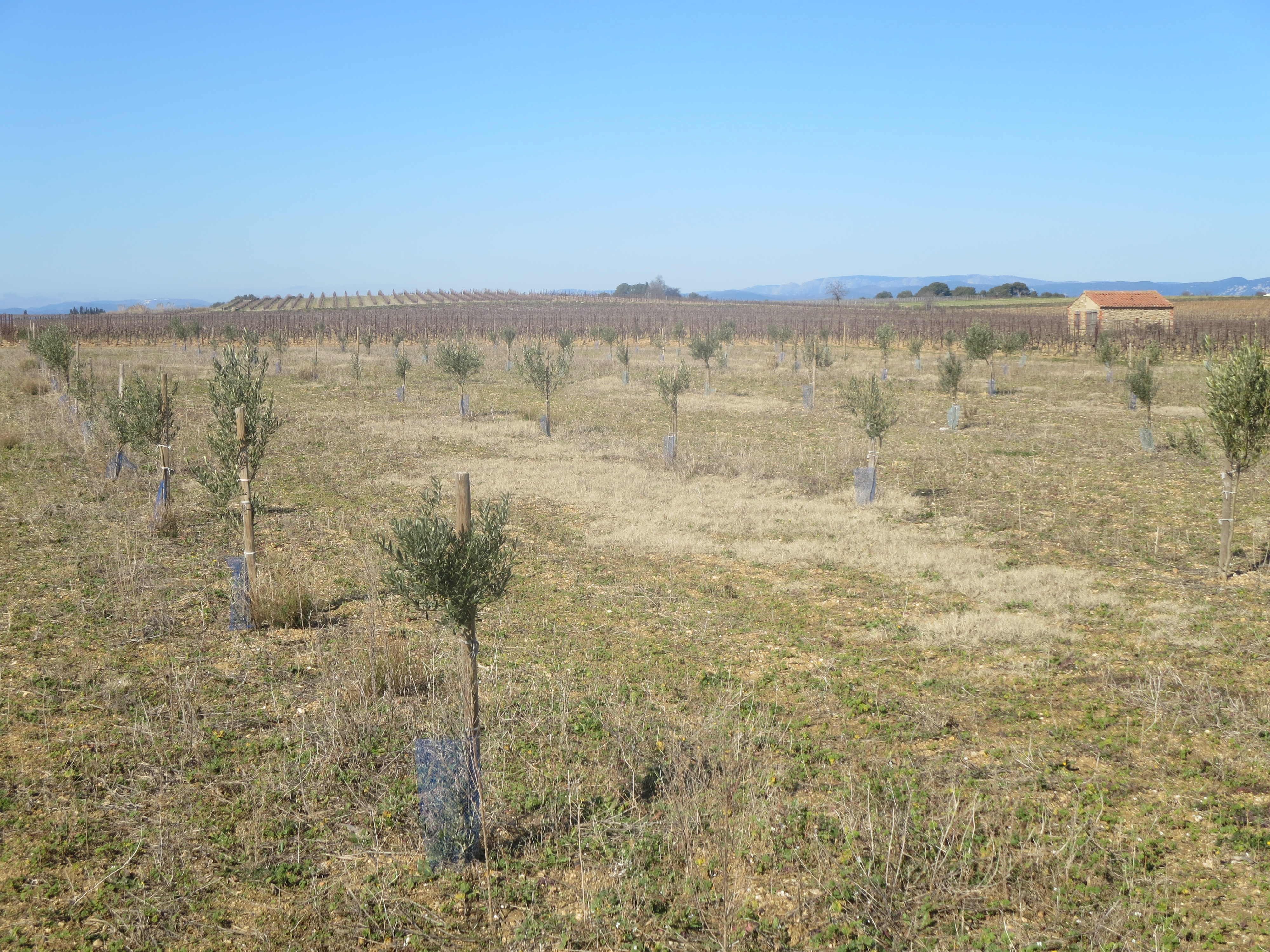
After all the diversions around Languedoc Roussillon with my 7Cs it’s time to refocus on the vineyards of Mas Coutelou. March was a warm month and other than a couple of rainy days it was fairly dry which together with regular strong winds meant that the soils themselves became quite dry. Certainly Jeff reported that his olive trees, of which there are many (see vineyard portrait), were showing some signs of stress. They too were pruned this month.
New olive plantation in Rec d’ Oulette
La Prairie olive plantation
After more than two months of back breaking work Carole completed la taille. It says so much for her skills and hard work that her meticulous pruning was finished early. She chose to leave the lovely gobelet vines of Rome vineyard until last as, like me, it is her favourite parcel. See her at work here.
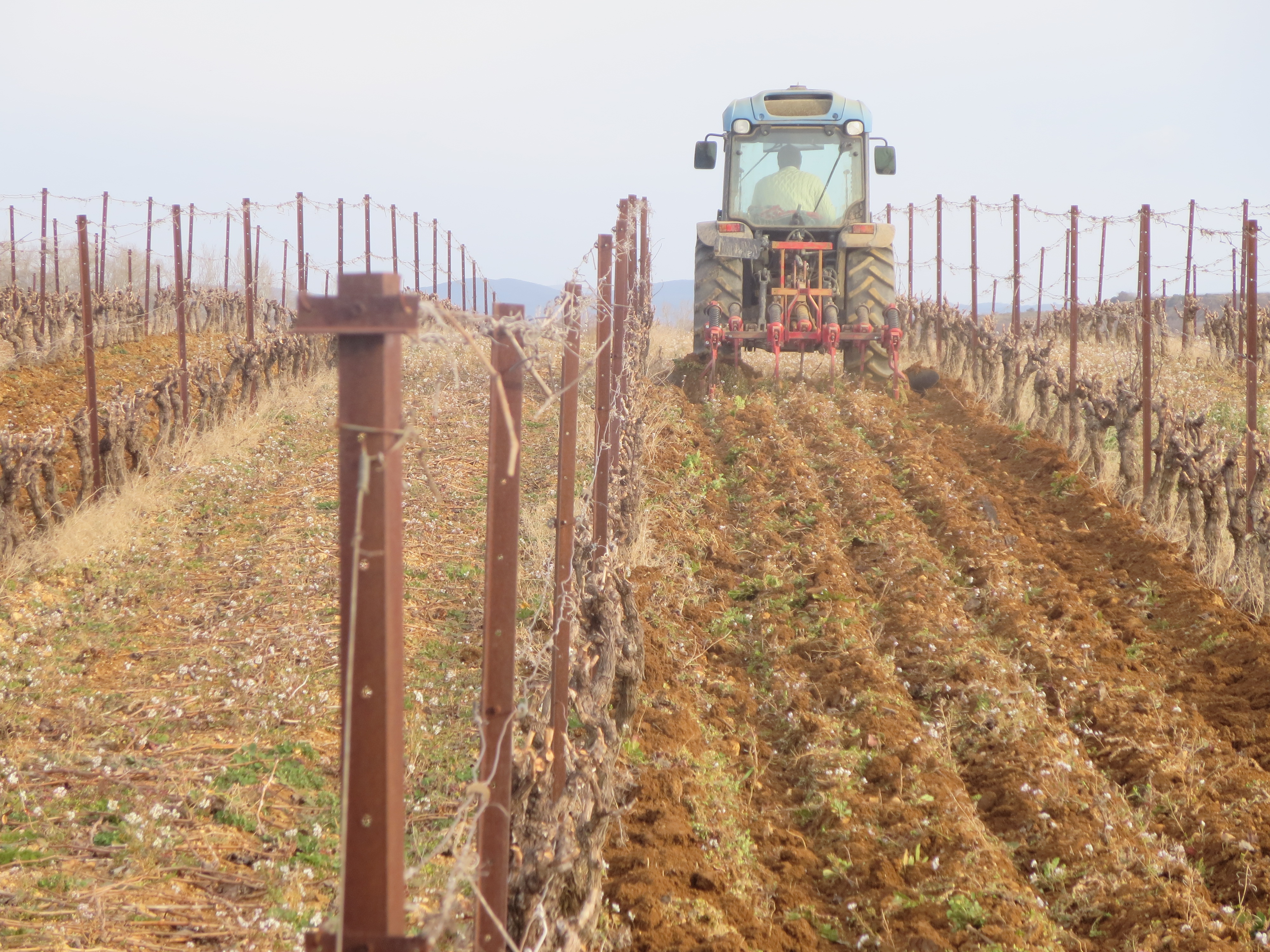
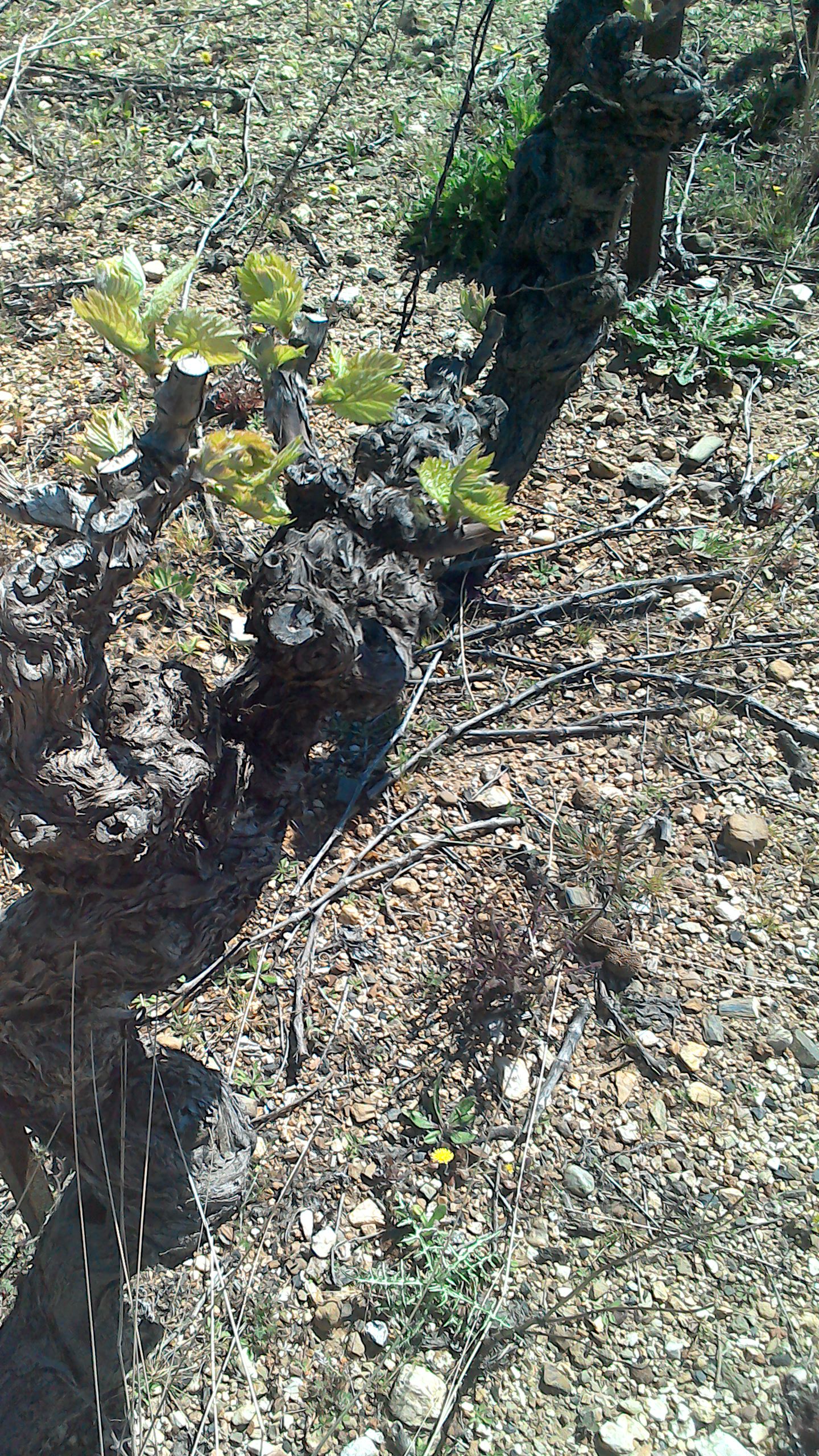
I have already written about some of the other March tasks in planting old varieties of grapes in Peilhan vineyard and in bottling some of the lighter cuvées such as PM rosé and 5SO. Note that light is a general comparative term, both wines are on top form. A number of wine salons were attended, eg in the Loire and recently in Arles, a tasting I shall be writing about soon. A second ploughing has been taking place the last few days as the drier weather allowed easier churning and less risk of compacting the soil. In many parts of the Languedoc the vines are starting to debud, the leaves are showing through. It is a beautiful sight to see them shooting away like this, life returning to the vineyards and the promise of a great vintage ahead. Fingers crossed.
Some buds on a guyot trained vine are just about to burst out.
First leaves on this old vine
Margon vineyard with leaves emerging
In Puimisson however, the vines are just being a little more timid, apparently unconvinced that winter is not still holding a surprise in store.
Shy Syrah vine in La Garrigue
Syrah parcel of La Garrigue
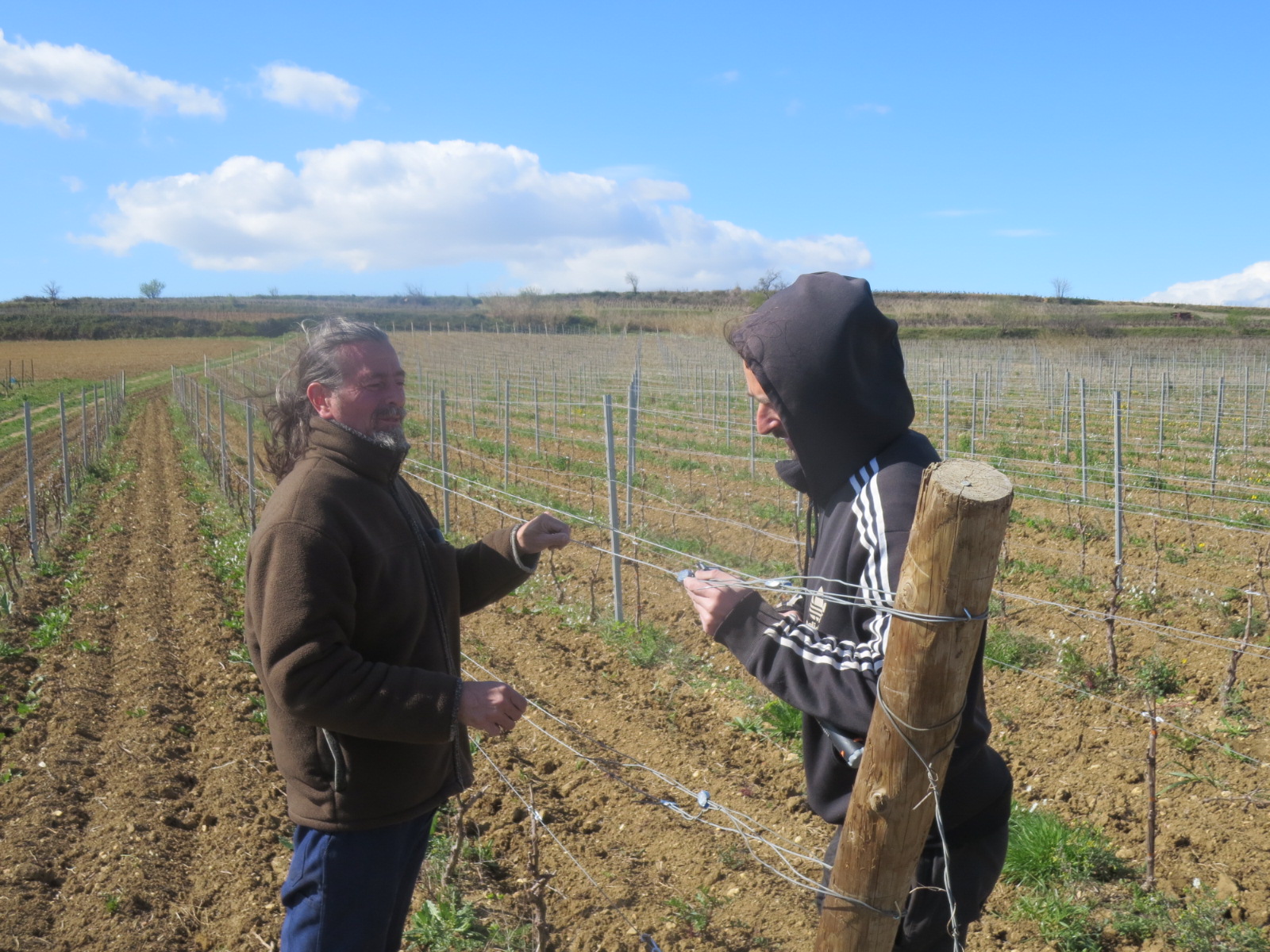
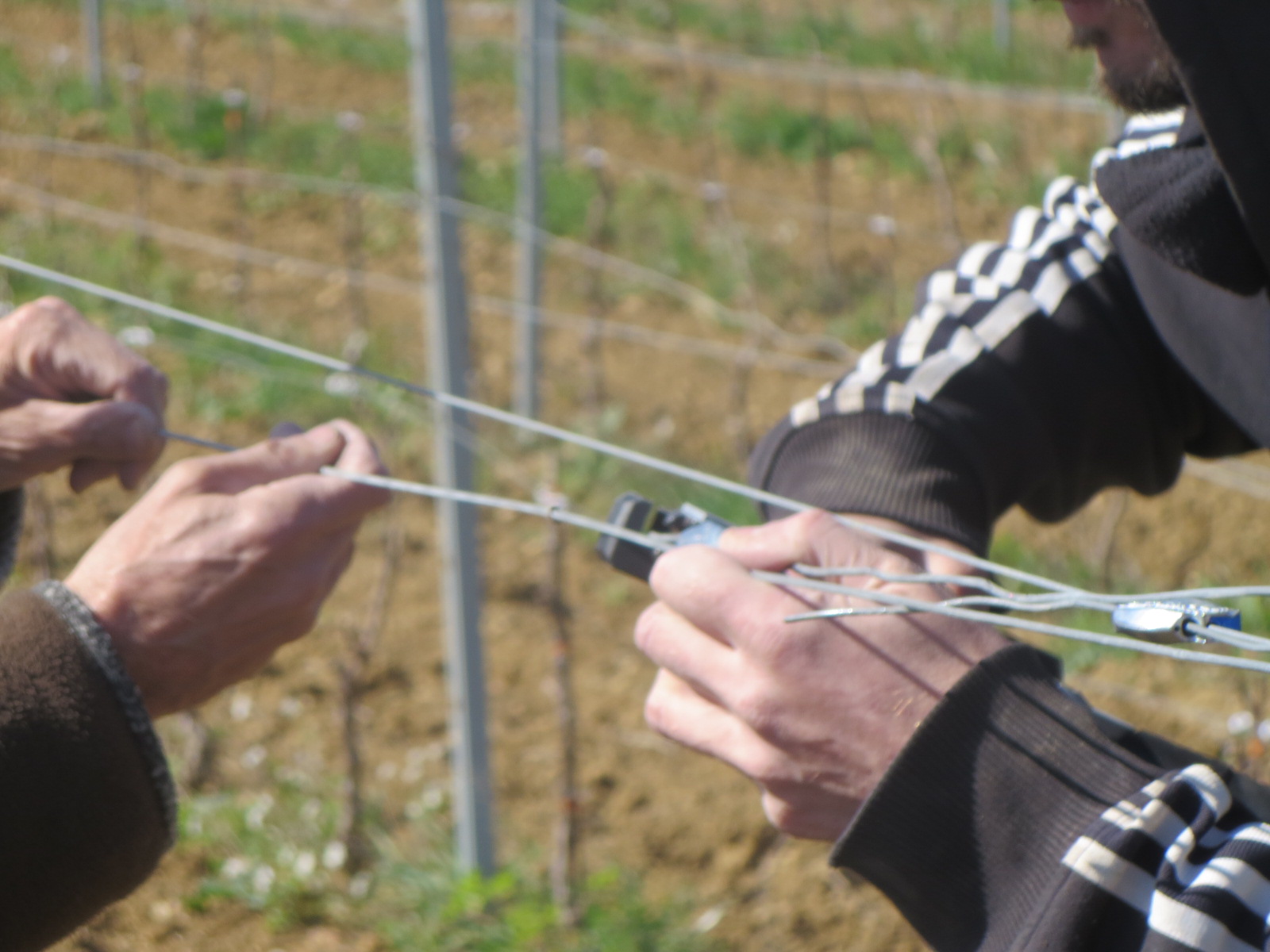
The other major task for March has been the preparation of the palissage, the wires which are used to support the vines as they grow later in the year. Gobelet vines are usually self supporting but many of the Syrah vines you see in the photographs above are cordon trained and will grow up the wires. The weight of last year’s vines and the passage of winter means that the wires are sagging a little and need to be tightened for 2015. Michel and Renaud have been tackling this using a specialist tool but, believe me, this was hard work and happily I left them to it.
Instead I enjoyed the wine tasting. Well it was March!
Speaking personally 2014 has been an amazing year.
It started with me in the depths of ME, at times unable to remember my name and physically unable to walk more than 200m or so. Whilst ME is a condition which will remain with me for some time it has released its grip to a large extent.
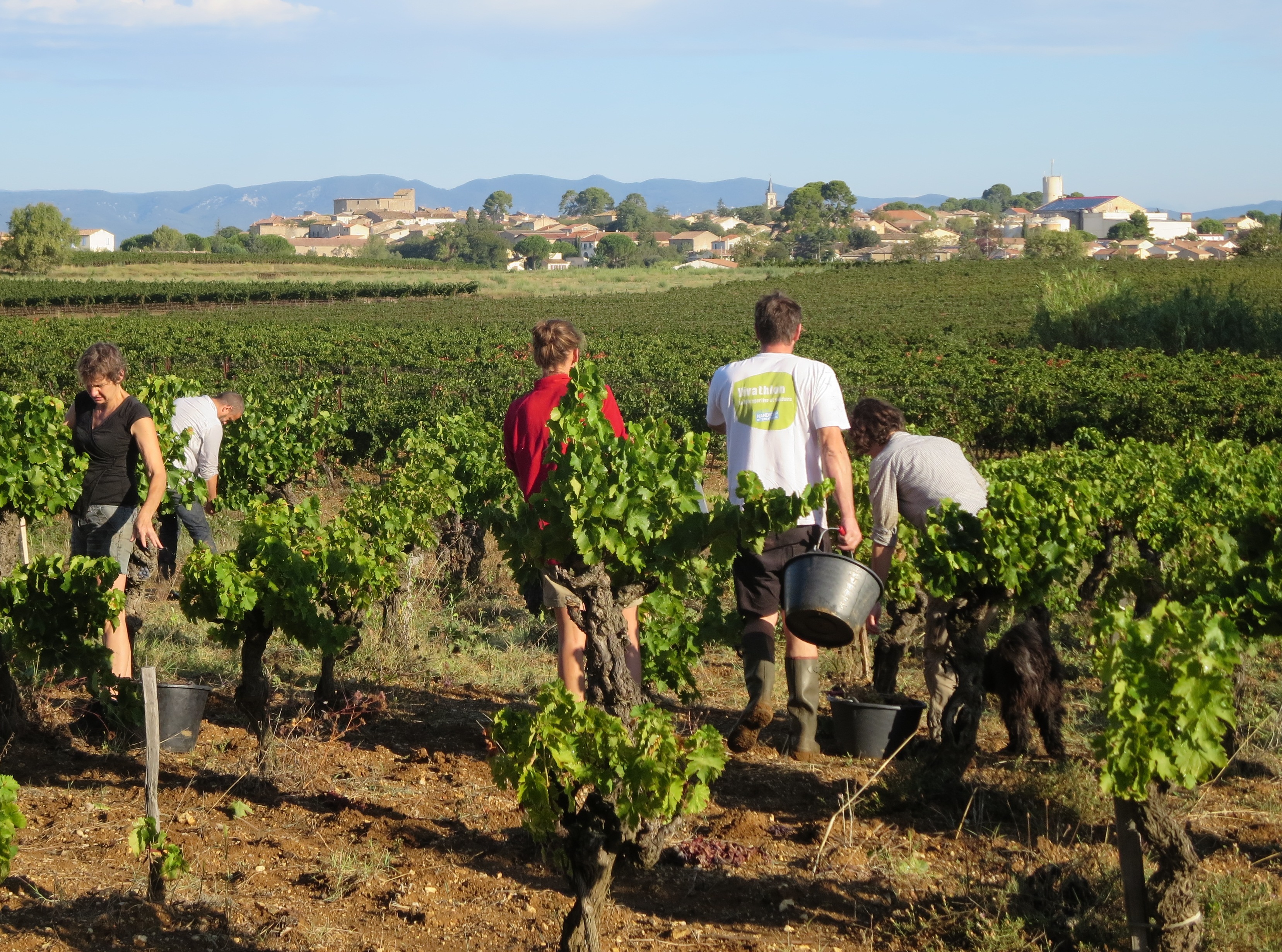
Summer brought early retirement and the end of 33 years of teaching, a job I loved but retirement has been a revelation. Most importantly it brought me the opportunity to live in France, my childhood dream, plus the chance to spend time with Jeff Coutelou, my friend and star winemaker. The ensuing 4 months brought many laughs, much enlightenment and learning about a subject I love. I have enjoyed observing and participating in the wine harvest of September, the process of winemaking and, above all, spending time in the vineyards learning about soils, vines and nature.
So for my New Year resolutions.
2015 will bring me the opportunity to find out about how the vineyard changes through a calendar year from pruning, grapes developing and ripening through to harvest. In the cellar I hope to learn about assembling the finished 2014 wines, bottling them and preparing for harvest 2015.
I shall be attending a number of wine tastings starting with Millésime Bio in Montpellier at the end of January. I hope to visit lots of new and favourite domaines and report back about the best of them.
Meanwhile I hope to travel round more areas of France and continue to enjoy the Languedoc Roussillon.
And, of course, to continue to write my blog. Than you so much for reading it and I hope that the New Year brings you health and happiness. And lots of good wines, most notably Mas Coutelou.
May I wish everyone who reads my blog a very happy Christmas. Almost 3,000 readers in the 4 months only which the blog has existed is way beyond what I expected. That those readers come from 62 different countries is even more so. That half my readers have been in France is another boost, perhaps they are all laughing at my translations!
Most of all thank you to Jeff for inspiring and educating me and for your patience. And,of course, for the wonderful wines.
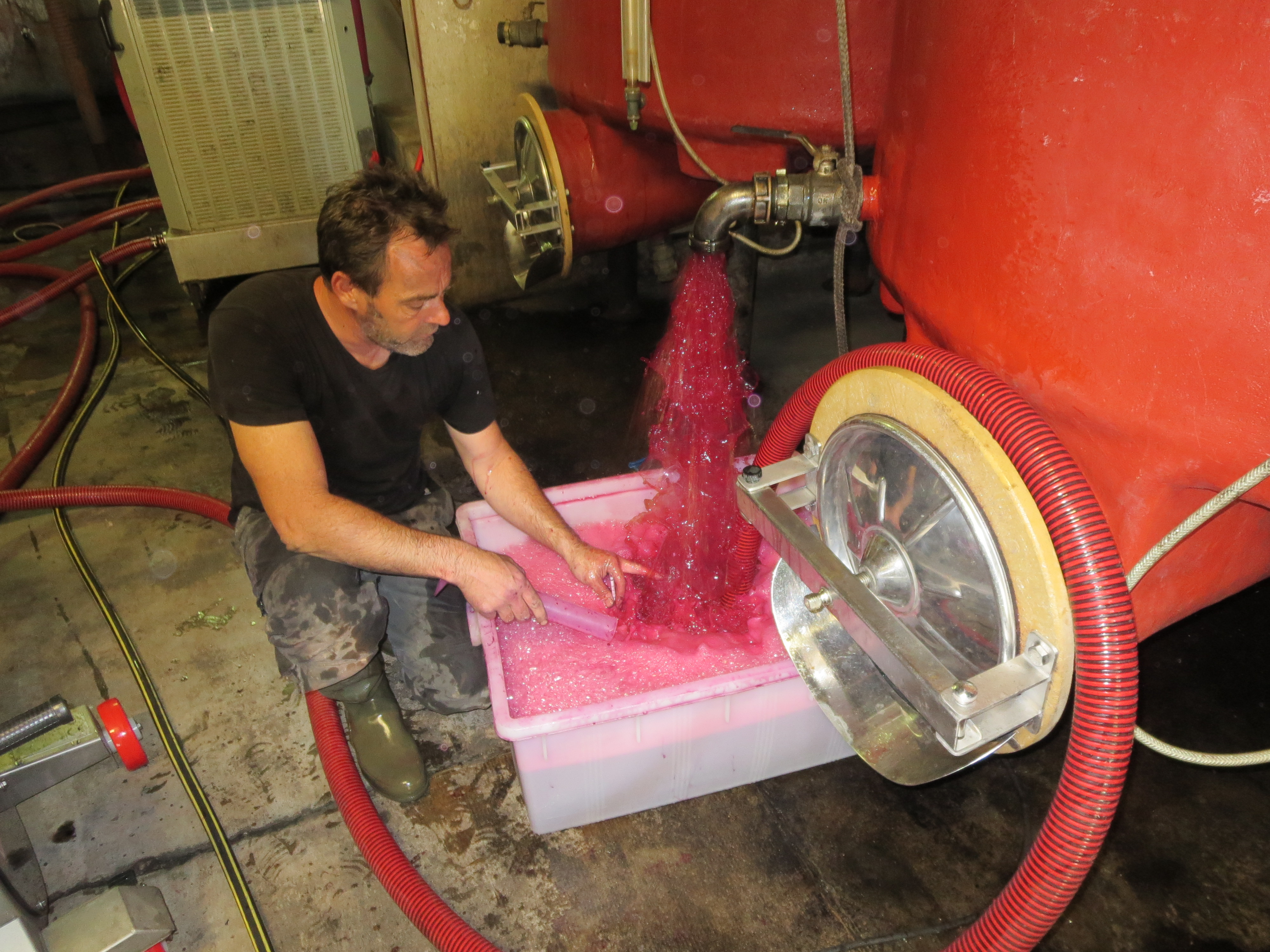
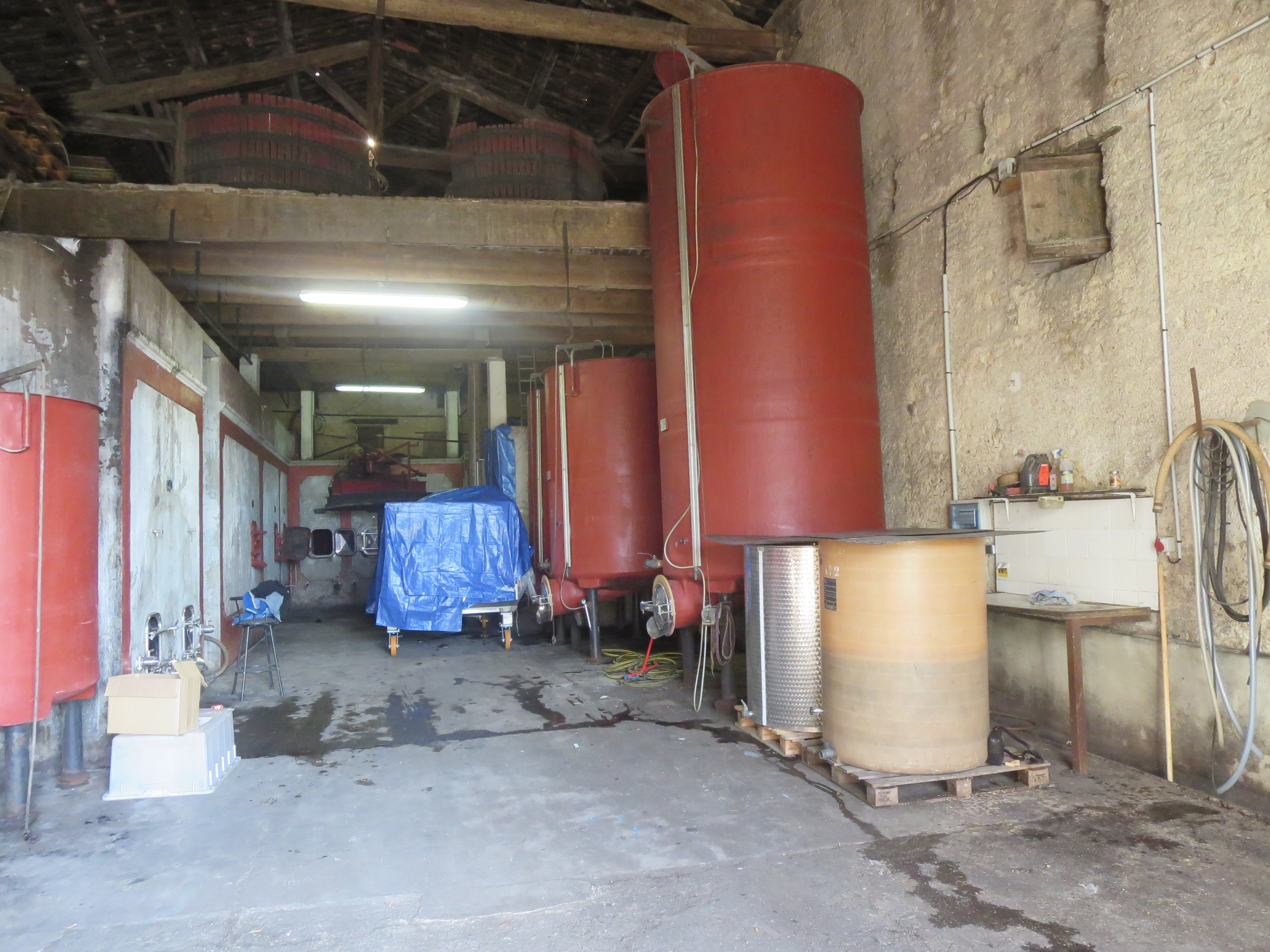
Just as these tanks and cuves contain so much to look forward to I hope that you will look forward to reading about the events and happenings at Mas Coutelou as vintage 2015 unfolds.
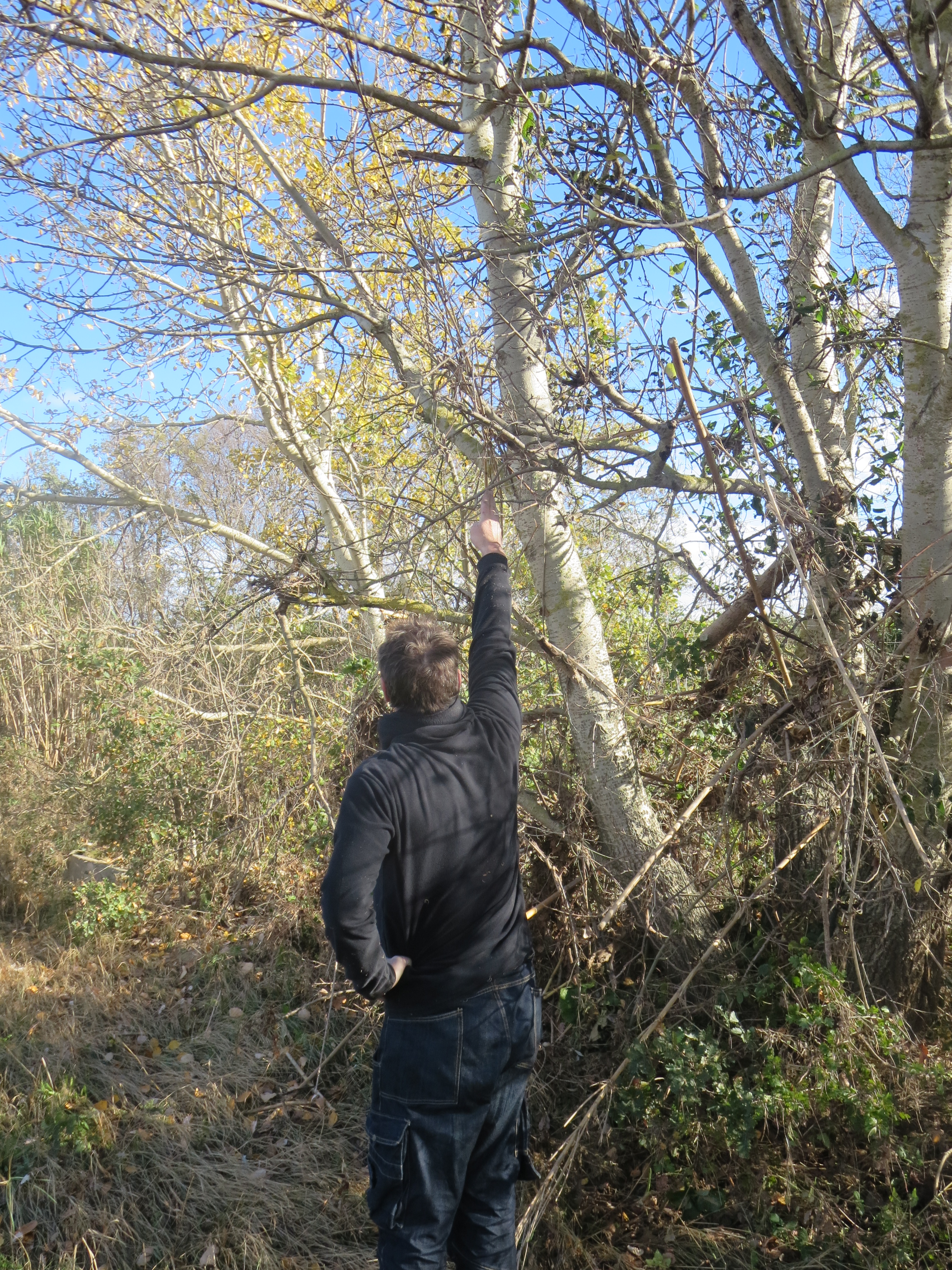
The Languedoc Roussillon region was struck by huge storms on November 28th. Lightning and thunder which lasted almost a whole day, torrential rain all day (over 210mm at Bédarieux), hail for half an hour, winds well over 100kph. Even local people were surprised by the storm. There are some scary pictures on Midi Libre.
Outside our door in Margon
Puimisson, the stream in the background reached the height of the tree branches
Jeff pointing to debris from the stream in the tree branches
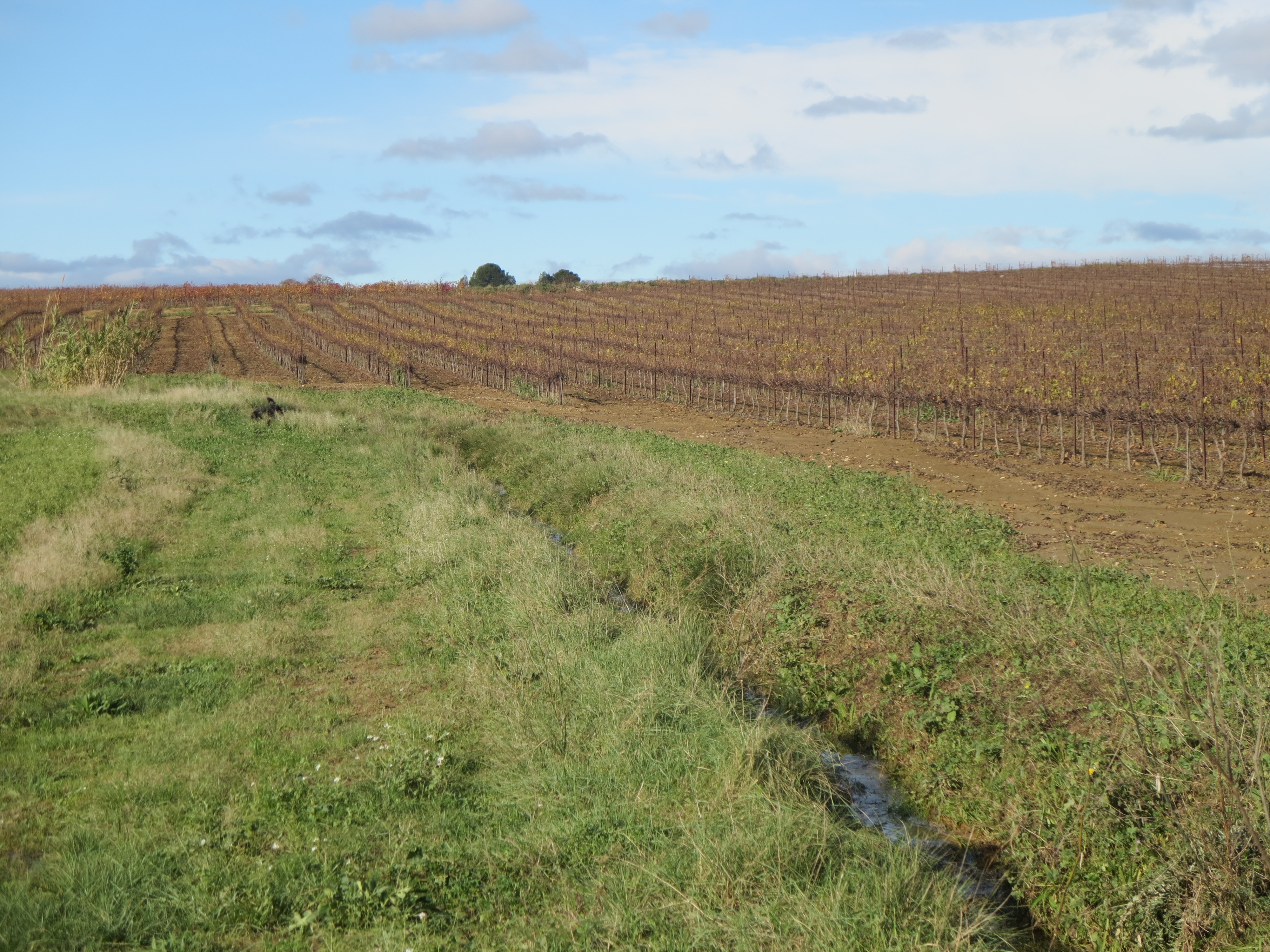
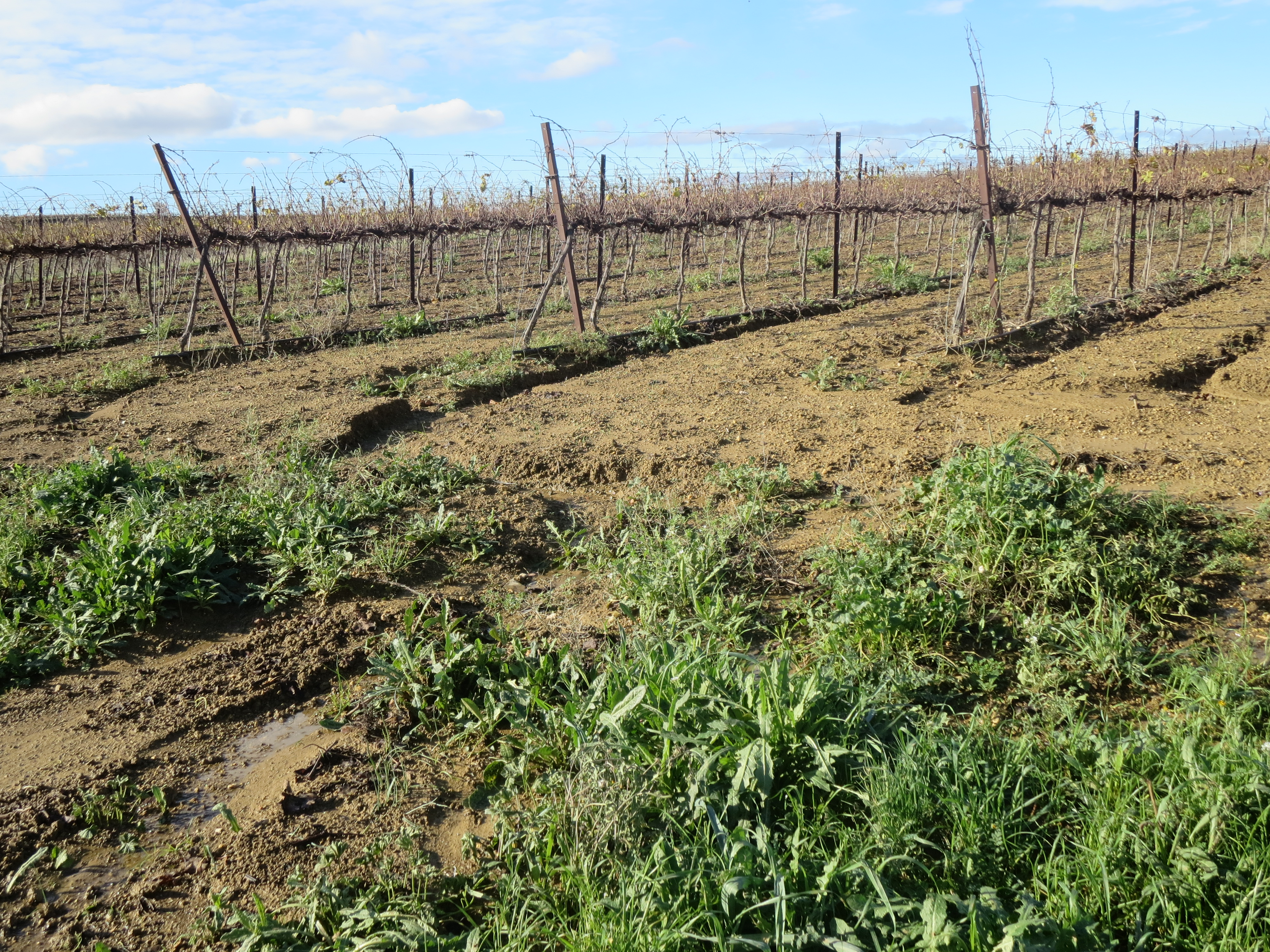
A walk around Margon, our home village, 3 days later showed that many vineyards had been damaged. At this time of the year the vines themselves are not so vulnerable of course, there are no grapes left on there. However, the soils themselves were damaged in many places by erosion.
2. Water standing in the vines
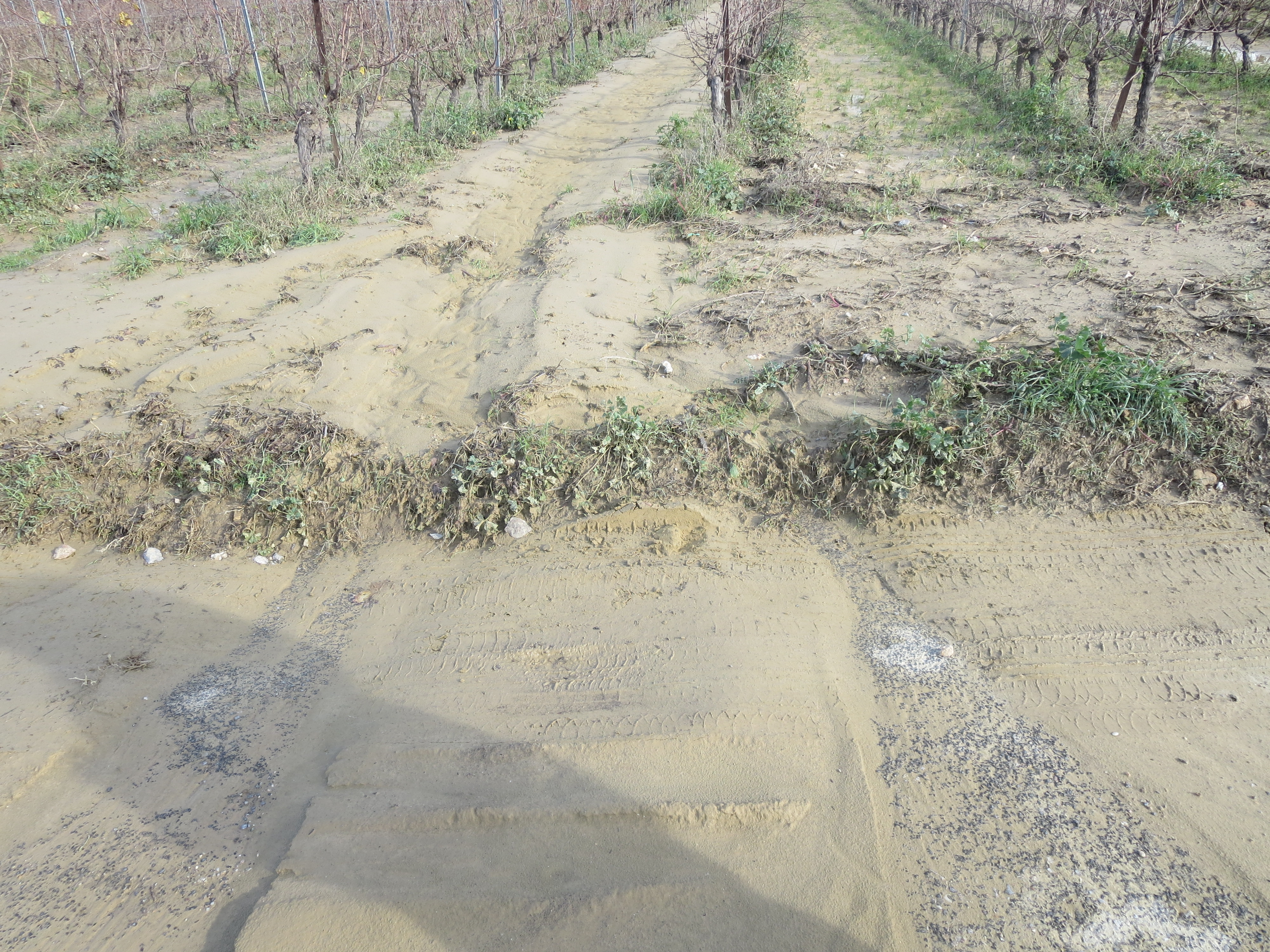
1. Clay (argile) run off on the road
Much of our area has clay soils which are not the easiest to drain. However, many modern agricultural practices exacerbate this problem. Using heavy machinery such as tractors, harvesting machines and large sprayers means that the soils become compacted and, therefore, even more impermeable (photo 2). Inappropriate use of herbicides and weed killers to get rid of grass and other plants means that the soil has nothing to bind it together and, consequently, heavy rain will cause erosion as we see in photo 1. Overploughing will combine both problems.
I remember when I first visited French vineyards 30 years ago that most were like this. Times have changed though and more artisanal, more environmentally aware viticulturists have realised that the soil has to be treated with respect. In a previous post I mentioned that the soil experts Claude and Anne Bourguignon gave a talk recently which I attended. They explained that the soil is what gives a crucial 6% of the vine’s needs which can make all the difference in terms of flavour and quality. Vine roots need to reach down into the soil to extract the water and minerals which they require to grow and to fruit. They confirmed that the best practice is what many winemakers have been doing in recent years. Allowing grass and other plants to grow amongst the vines brings many benefits:
binding the soil, making it stronger and less prone to erosion
stronger soil makes it easier to withstand machinery
competition for nutrients drives the vine roots deeper where more of the species which benefit the plants live
retaining moisture in summer which can also be used by the vines
providing shelter to other wildlife which eat the insects that damage vines and grapes
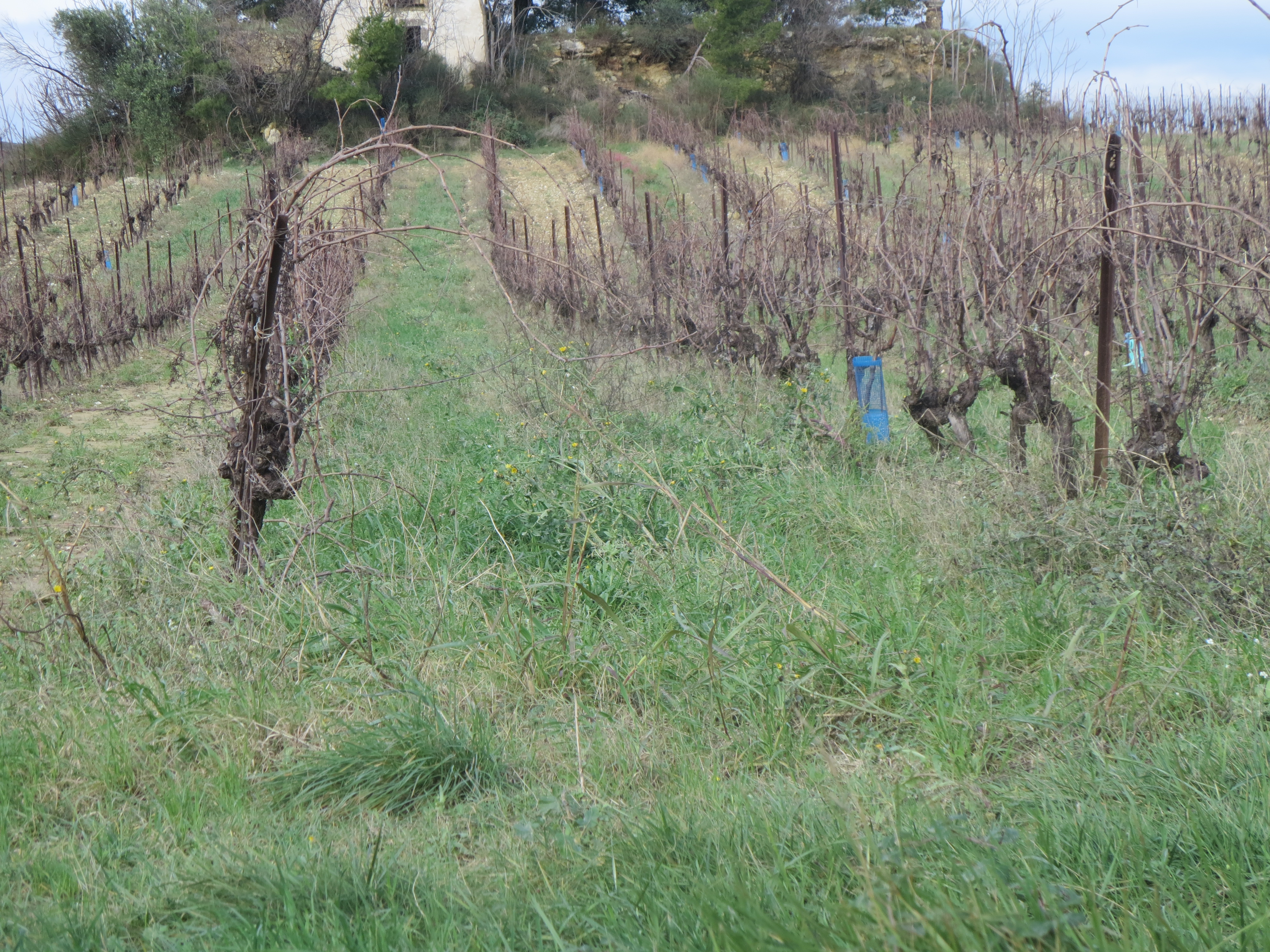
Covered vineyard with no sign of erosion
Ruts developing between vines
The photos above show how two parcels of vines just metres apart responded to the storms. The difference is obvious.
Vines with shallow roots do not access the deeper minerals and ecosystem. The roots also overheat being nearer to the surface and this can mean that they shut down some of their work and grapes will not ripen so well or evenly.
Yet there are vignerons in the area who have installed or are installing irrigation. This can only compound the problem in a region where there are occasional droughts but not on the scale of Australia for example.
Jeff Coutelou reported to me that there had been no erosion in his vines unlike those of some of his neighbours, the reason may be seen in the photos below.
A stark contrast between the Mas Coutelou vineyard and that of his neighbour
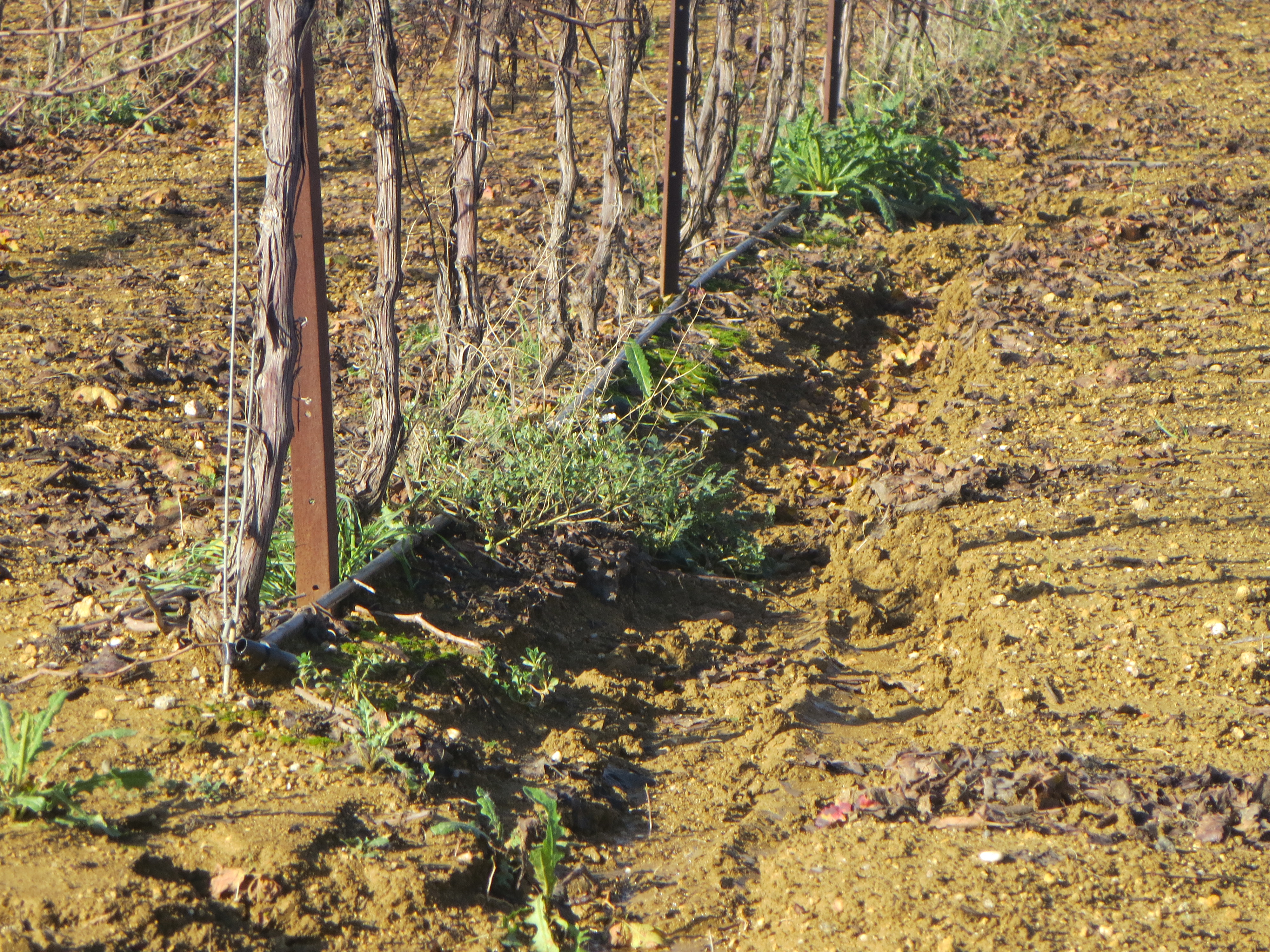
Irrigation pipes run along the vines. Look closely at the channel which has been cut into the soil by the rain.
Water flowing off vineyards which have had the grass removed
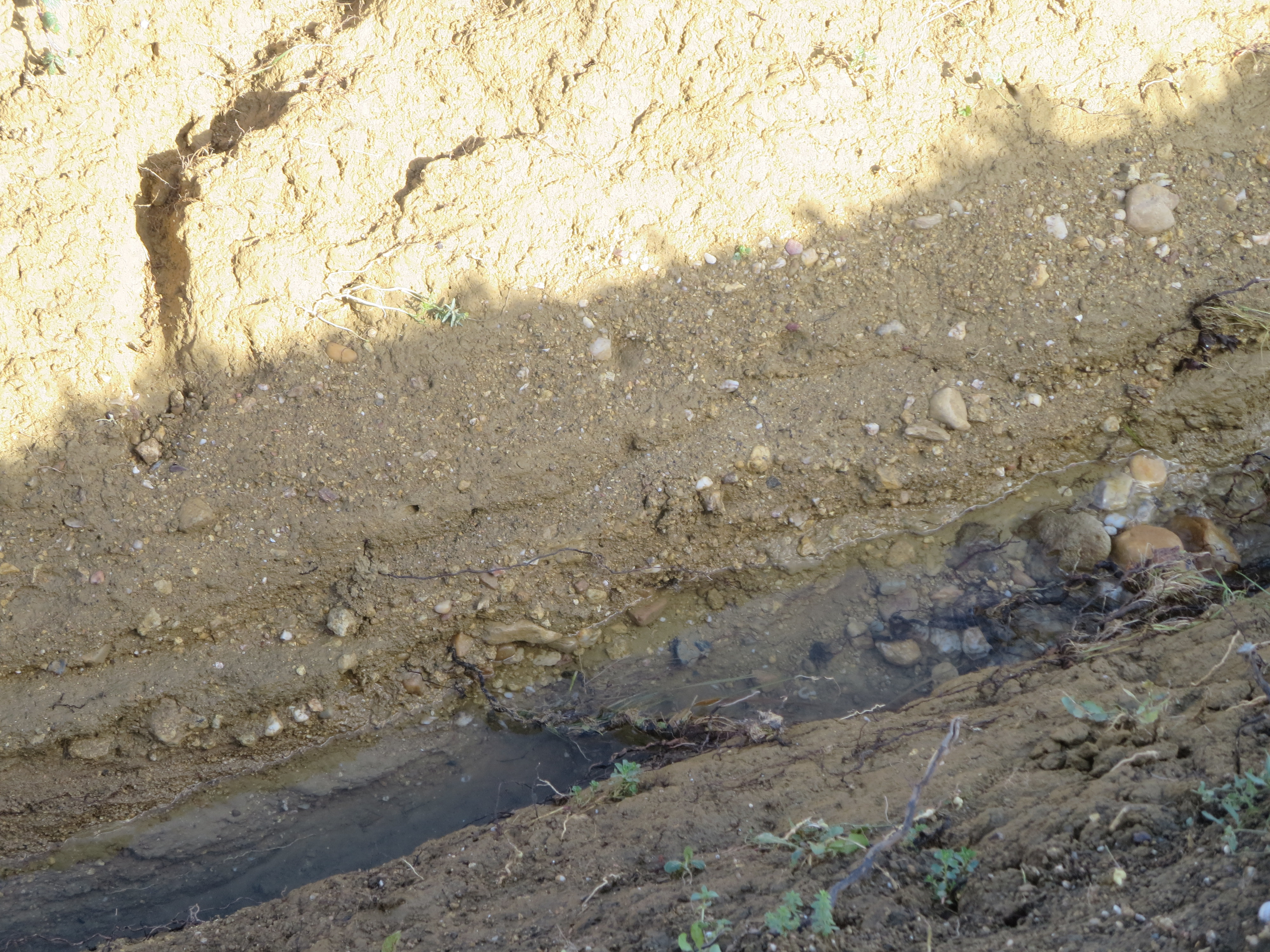
The run off from the vines has caused a new stream and channels
Meanwhile Jeff’s vines have drained and there is no damage to soil below
Vine roots washed into the new stream next to the neighbours’ land
Biodiversity – analysis showed over 30 types of grass in one square metre of Jeff’s vineyard.
One sad casualty of the storms was the tree with a bat shelter installed by Jeff. Bats are good friend to vines as they eat many insects which might damage them or their grapes. Encouraging them and other friendly wildife, such as wagtails and hoopoes, helps to keep the grapes in good health. Unfortunately the tree, which was dead, was uprooted and so a new bat home will be established soon.
Bat shelter
And finally how to control that grass and plant life? Ploughing or working the soil is needed at times but there are some novel alternatives. At Mas Gabriel a local farmer brings his sheep into the vineyard at this time of year. And then, as I was driving to Cabrieres the other day I came across this.