Back in Margon after a few weeks back in the UK, it was good to see family and friends again over Christmas. It was good to hear of many of them enjoying Mas Coutelou wines with their Christmas meals.
Santa was generous so I have new books to read. Hopefully I shall learn something to help brighten and enlighten this blog.
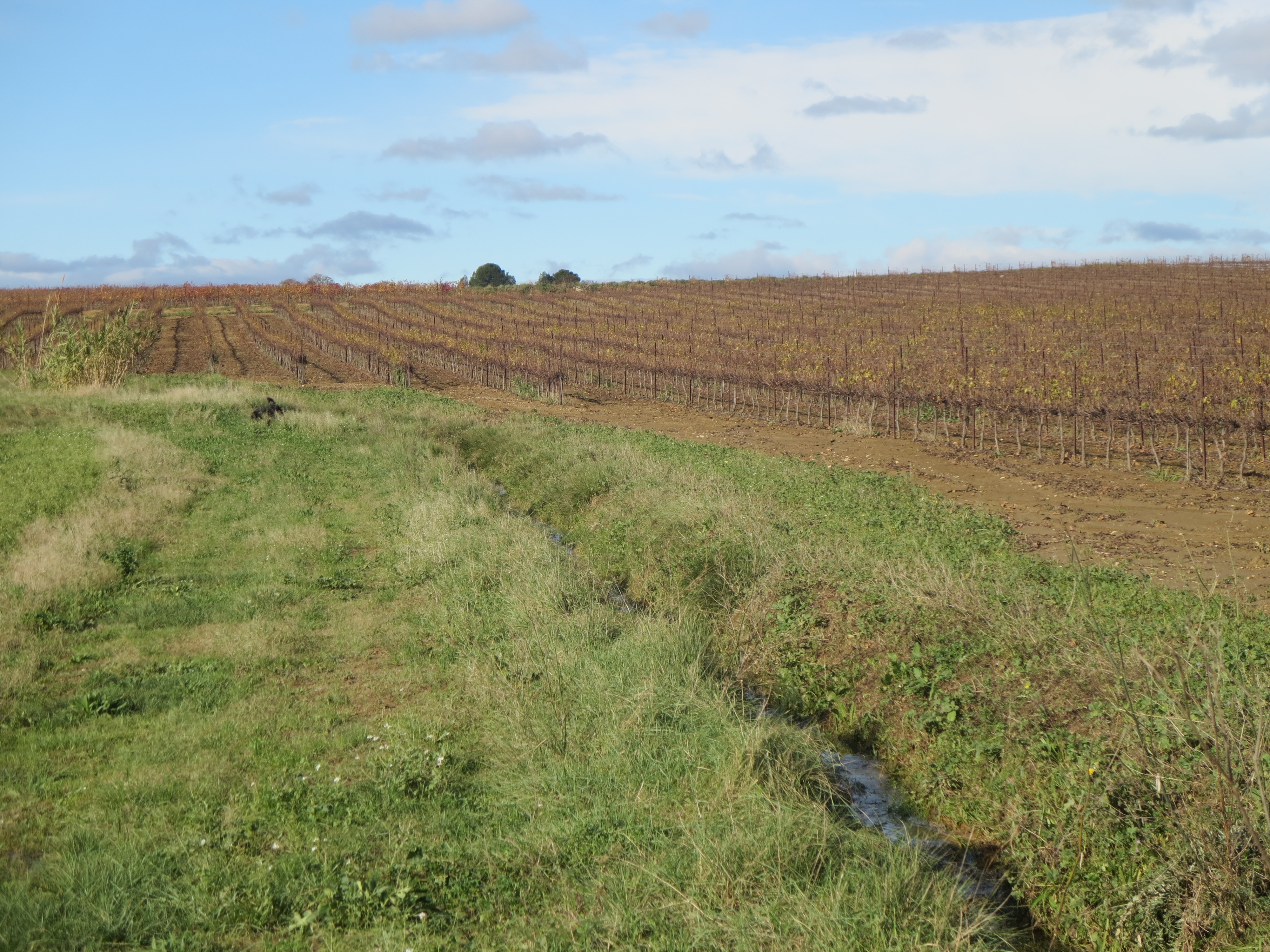
Jeff assured me that last week the temperature in the Languedoc reached 20C and he was working in the vineyards in shirtsleeves. Sadly, no sign of that this week.
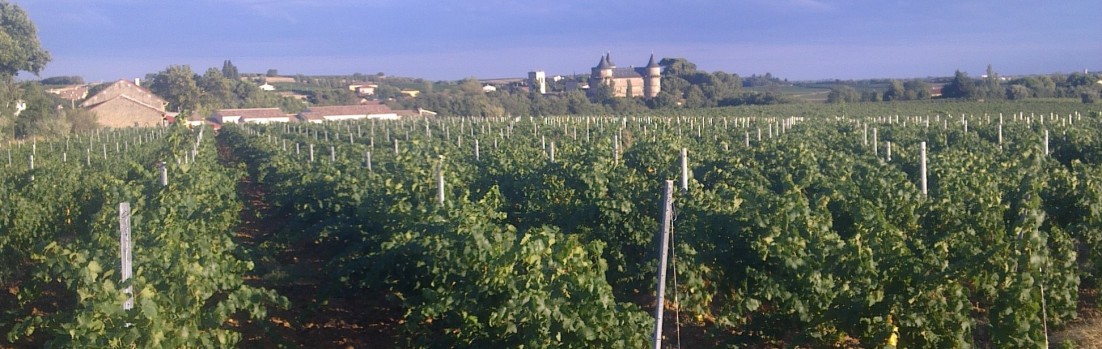
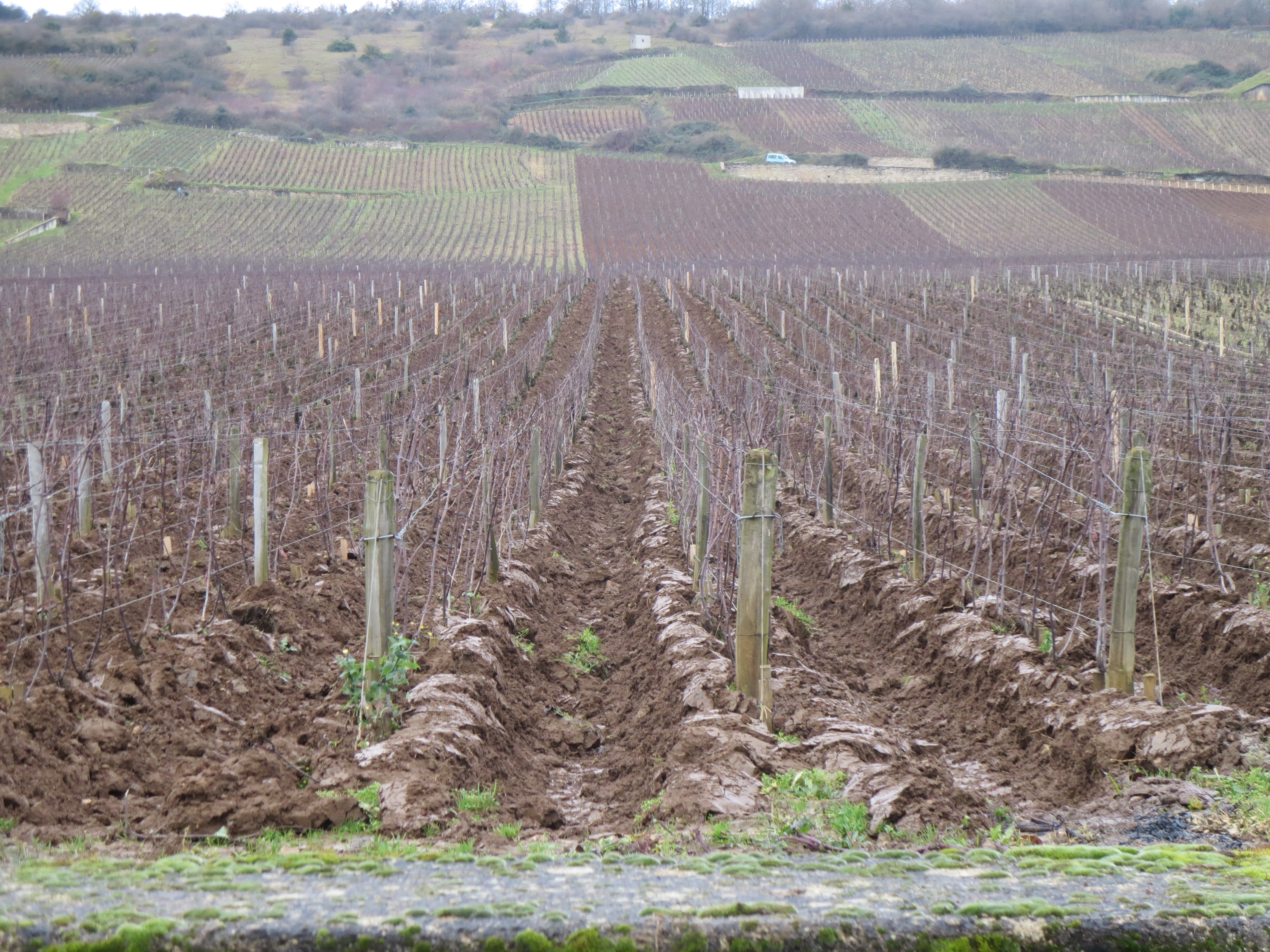
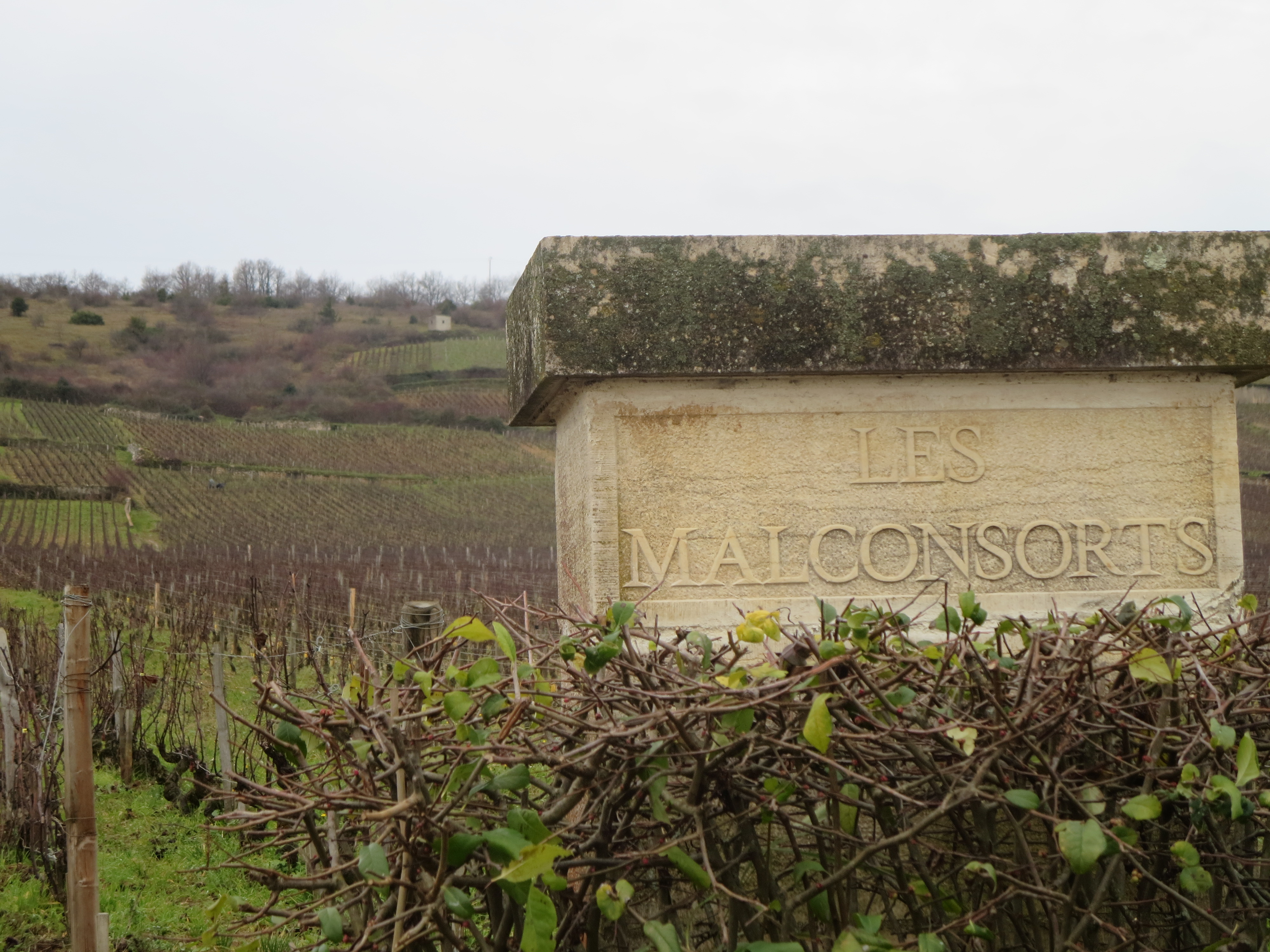
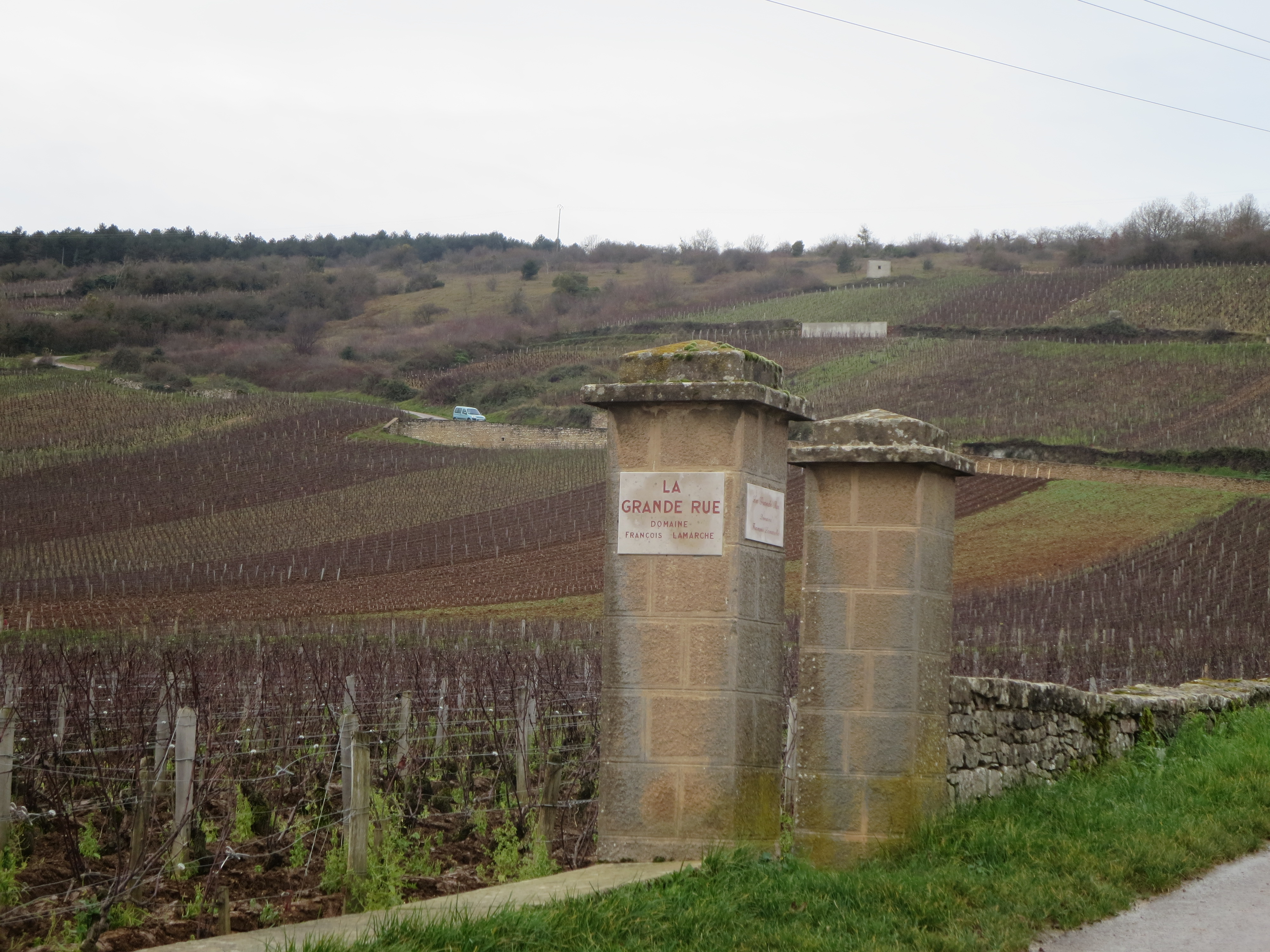
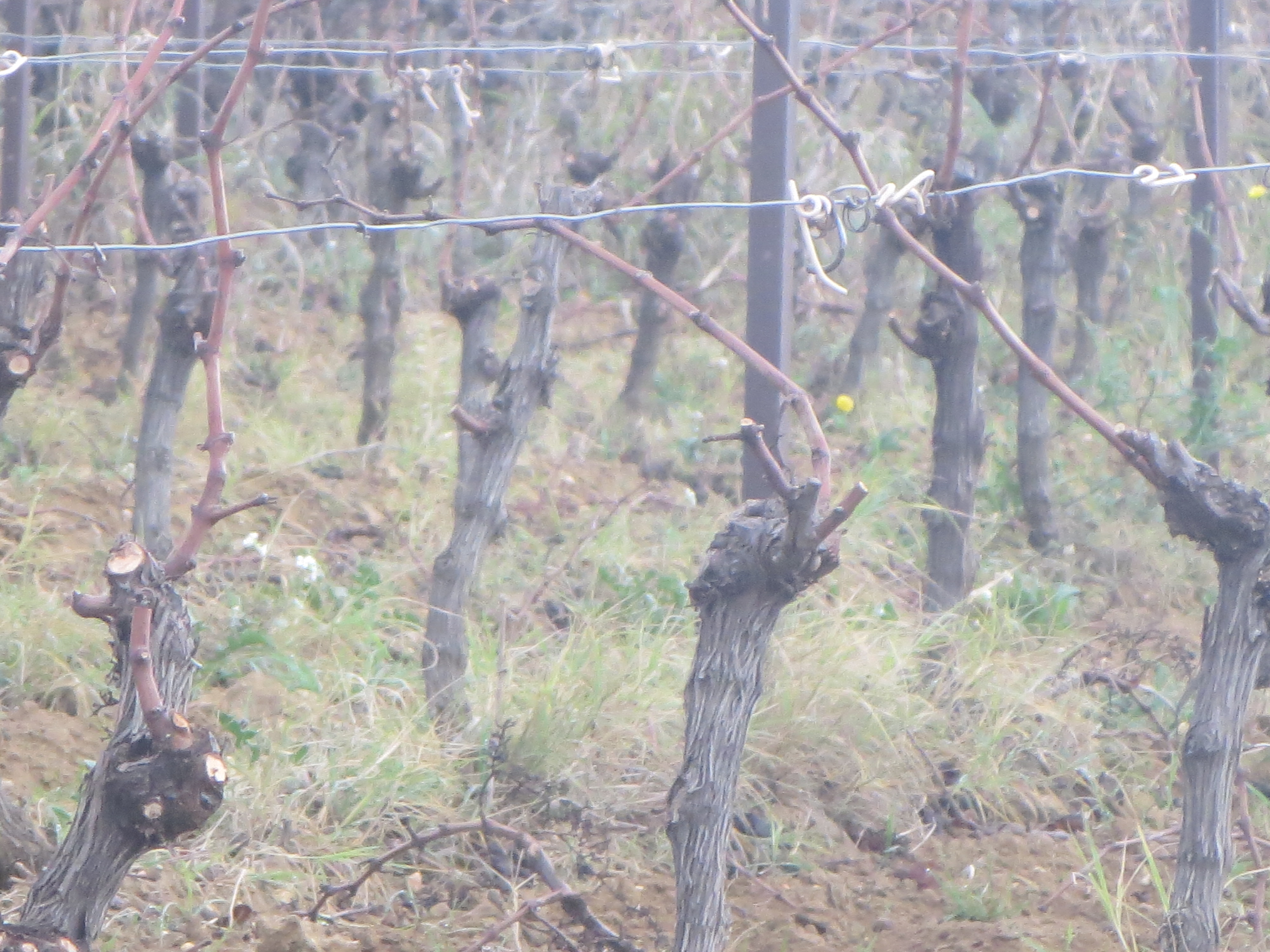
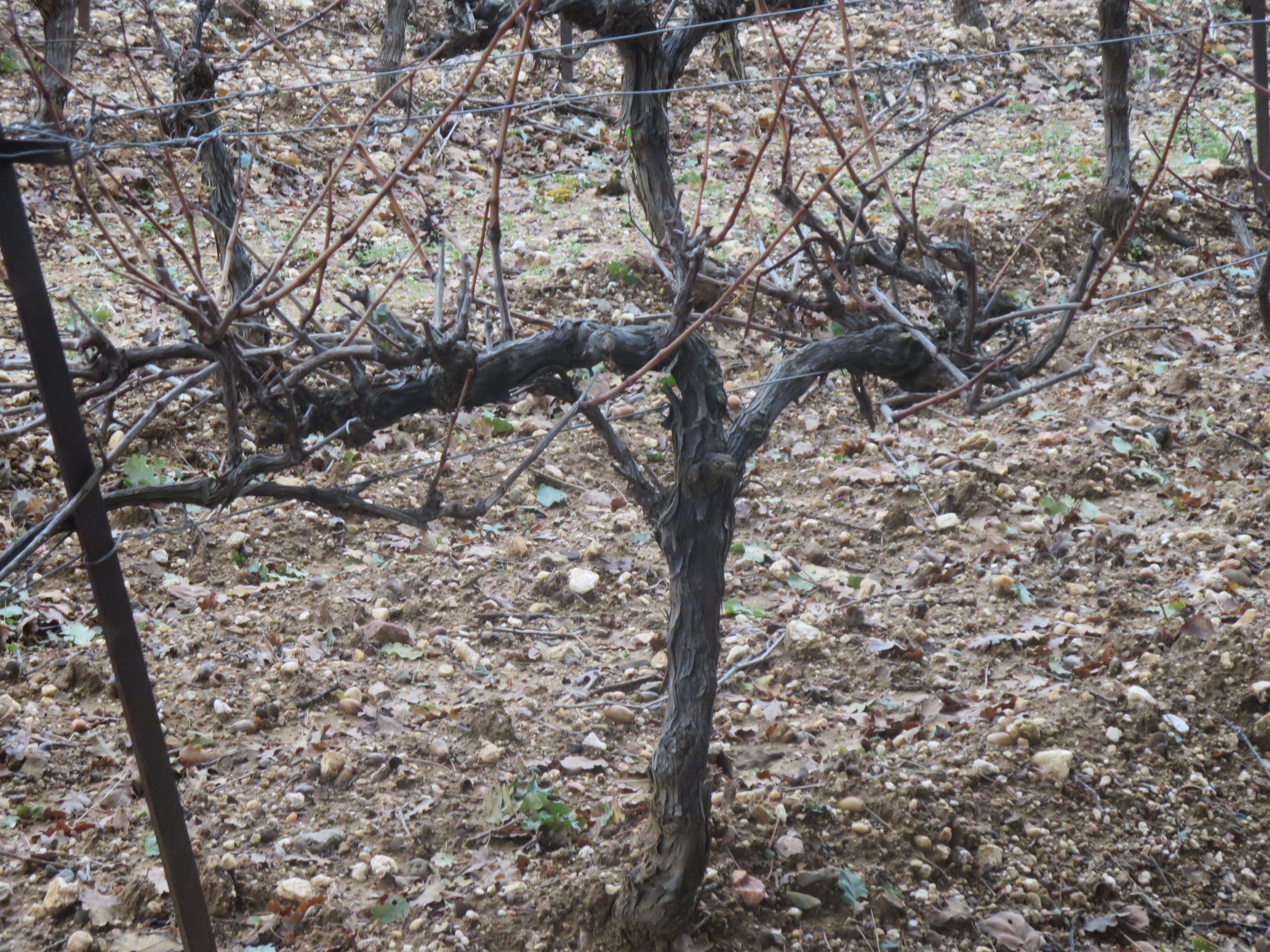
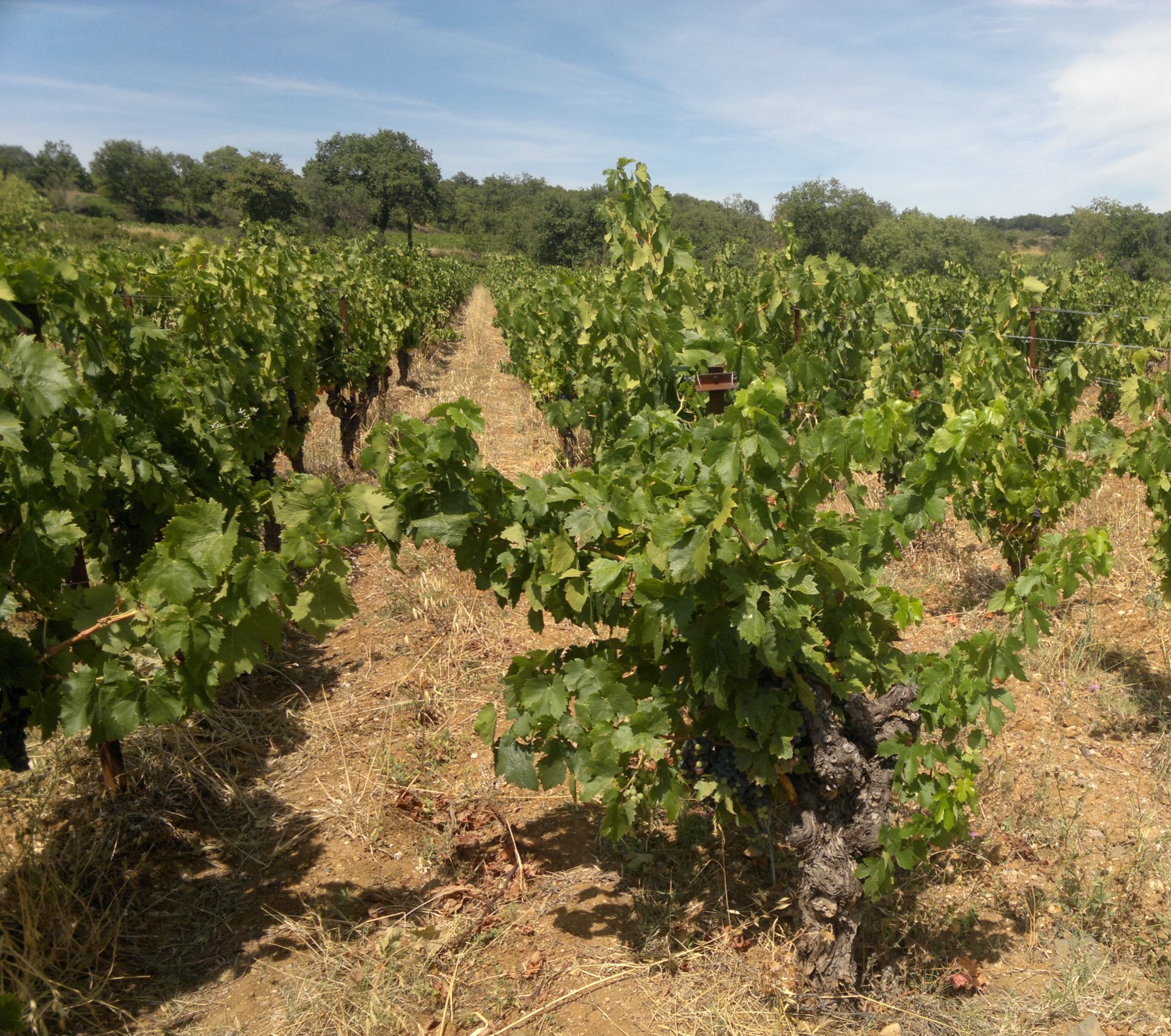
The vines are resting through the winter weather as you can see in these photos taken in Aloxe Corton on Sunday morning. Burgundy, of course, is much further north than Margon.
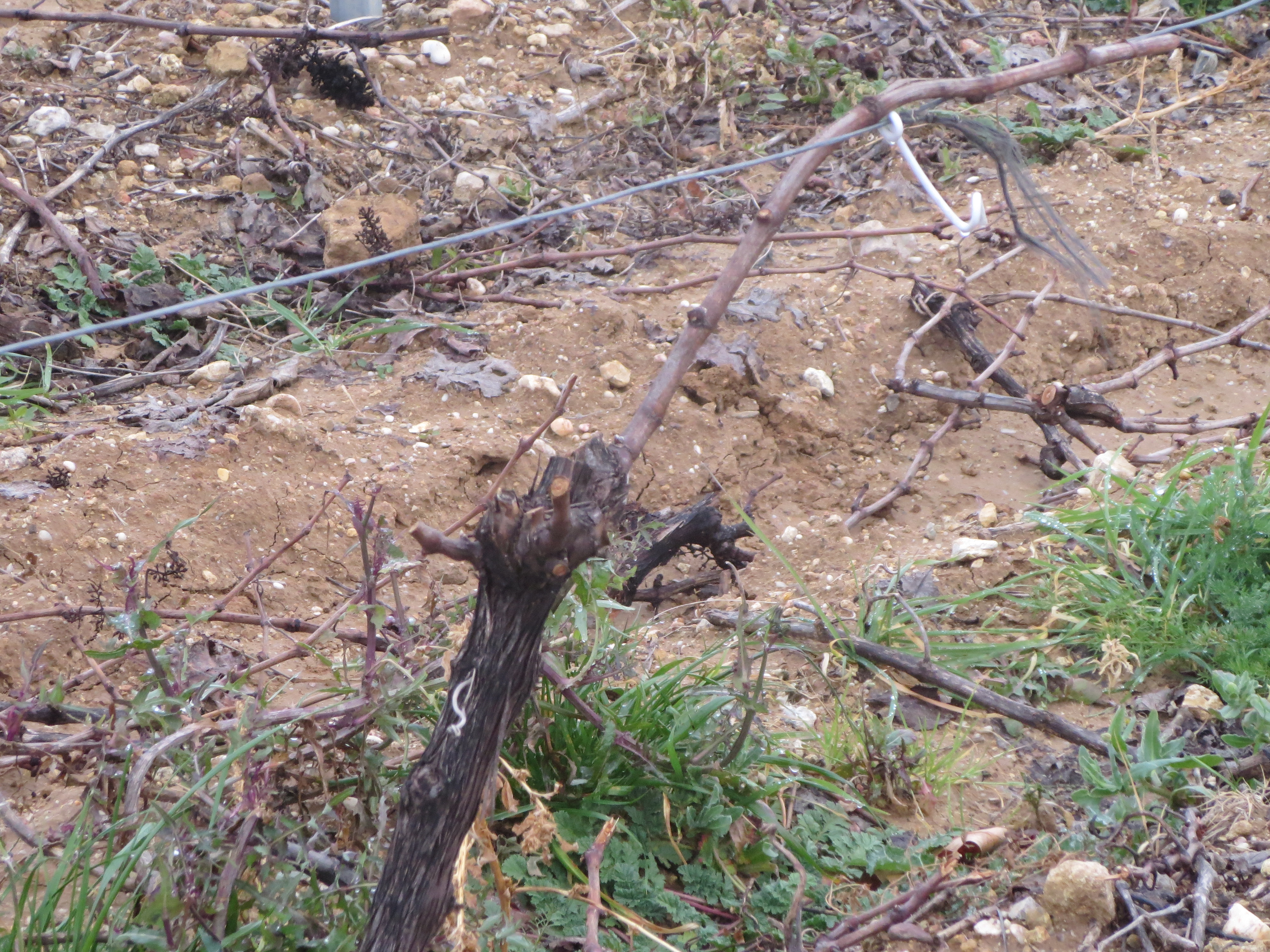
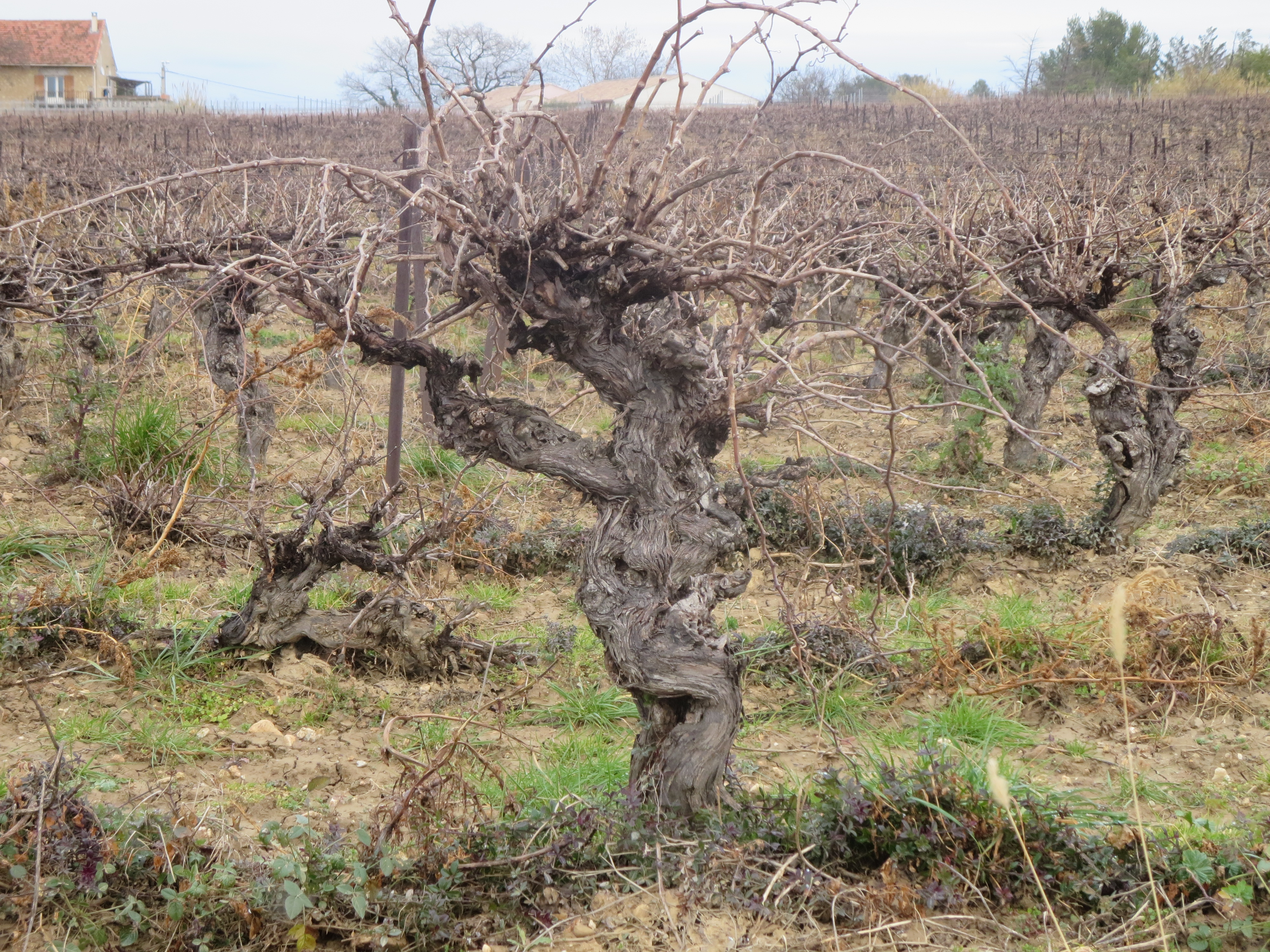
As we went for a walk in the vines (as opposed to a march in the vines) the pruning work I described in December showed clearly. Below are examples of all 3 types of pruning I described then.
Guyot trained vines. The long right branch attached to the wire will provide grapes in 2015. The cut branch will provide fruit in 2016.
I came across these cordon trained vines which are clearly older and very sturdy. They will need further pruning!
And finally we saw this really wizzened and elderly vine growing in classic Languedoc gobelet style.
So the vines are resting but I know that work for the vigneron is continuing. More pruning, assembling the wines from last year’s harvest and more vineyard work which I shall report back upon later in the week.
Janus was the Roman god of the doorway, protecting the householders within by looking out on their behalf. January is the month named after him as the god was looking back to the old year and forward to the new year. 2015 has begun tragically in France and we could do with starting it over again. However, we live two lives the public and the private and life goes on for most of us as it ought to do.
I posted in December about pruning in the vineyards and that is very much the principal activity of January too. Vines need to be cut back and the wood (sarments) removed. Some of this wood may be mulched and used for fertilising and enriching the soil. The rest may well be burned and this would certainly be the case if there had been any disease in the vines. The photograph below shows vineyard workers burning sarments in Burgundy in December.
As I said in December pruning is very repetitive, monotonous and back breaking work. In January vignerons need to wrap up warmly to protect them from the cold. Well, that would normally be the case except at the present time in the Languedoc where Jeff tells me that today saw temperatures over 20C and that he is in shirtsleeves!
Meanwhile, strange weather patterns apart, the vines remain sleeping. From the falling of the leaves in autumn (late autumn in 2014!) until the buds break in spring the vines are resting and can withstand temperatures down to about -15C. Pruning means the vines are better prepared to produce healthy grapes in the year ahead. The photograph below shows how some vignerons (in this case in Burgundy) plough soil up next to the vine to help to protect them from frost, a process called cavaillonage.
January 22nd marks the nominal midway point between the falling of the leaves and bud break. It is also the feast day of St. Vincent, patron saint of vine growers and winemakers. Many wine fairs take place around St. Vincent’s day and indeed, France’s biggest organic wine fair (Millésime Bio) will take place from January 26th to 28th in Montpellier, an event I shall be attending. I am looking forward to it immensely. Wine fairs and feasting around the midway point of winter are no doubt a great way for winemakers and vignerons to relax amidst the cold, cruel days of pruning.
Legend has it that St. Vincent’s donkey showed the benefits of pruning. As the saint was talking to vineyard workers his donkey ate the new shoots from the vines. At first annoyed by this the workers noted later in the year that the vines nibbled by the donkey actually produced more and better grapes. Pruning worked!
I am not sure that the story is much consolation to those with aching backs and freezing fingers but January is a month which prepares the way for better days ahead. Let us hope that is true for the vines and for all of us in these troubled times.
Speaking personally 2014 has been an amazing year.
It started with me in the depths of ME, at times unable to remember my name and physically unable to walk more than 200m or so. Whilst ME is a condition which will remain with me for some time it has released its grip to a large extent.
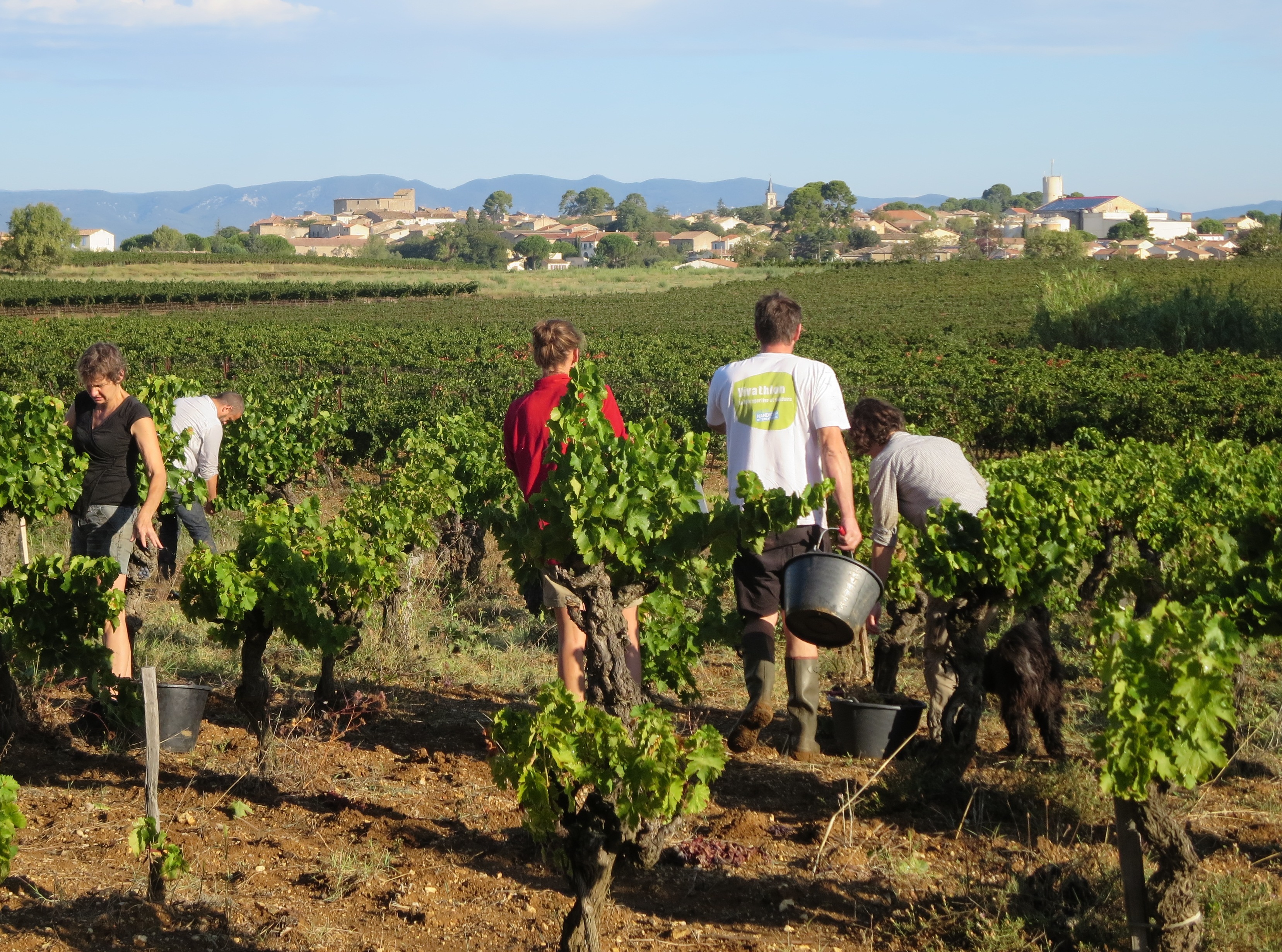
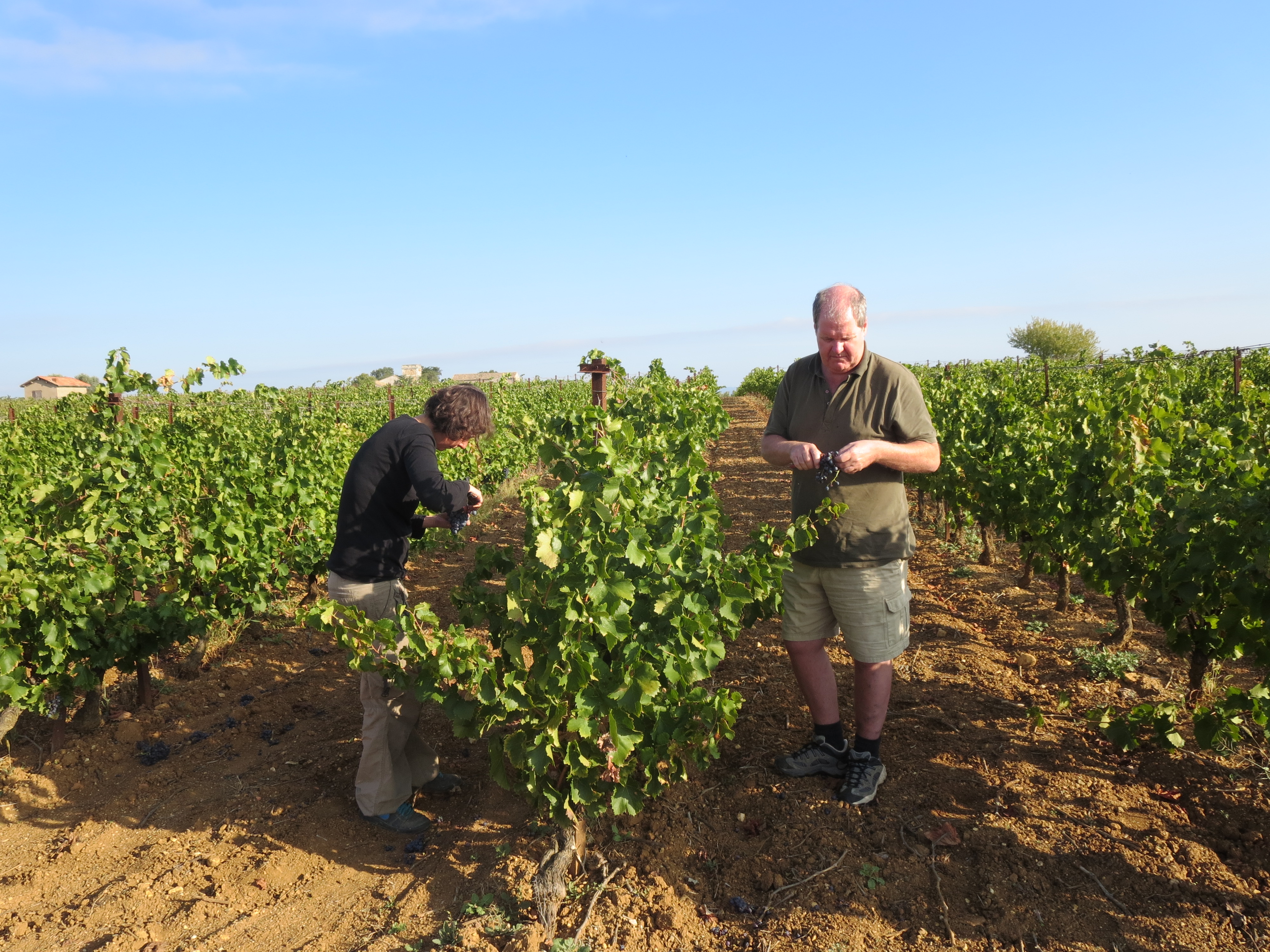
Summer brought early retirement and the end of 33 years of teaching, a job I loved but retirement has been a revelation. Most importantly it brought me the opportunity to live in France, my childhood dream, plus the chance to spend time with Jeff Coutelou, my friend and star winemaker. The ensuing 4 months brought many laughs, much enlightenment and learning about a subject I love. I have enjoyed observing and participating in the wine harvest of September, the process of winemaking and, above all, spending time in the vineyards learning about soils, vines and nature.
So for my New Year resolutions.
2015 will bring me the opportunity to find out about how the vineyard changes through a calendar year from pruning, grapes developing and ripening through to harvest. In the cellar I hope to learn about assembling the finished 2014 wines, bottling them and preparing for harvest 2015.
I shall be attending a number of wine tastings starting with Millésime Bio in Montpellier at the end of January. I hope to visit lots of new and favourite domaines and report back about the best of them.
Meanwhile I hope to travel round more areas of France and continue to enjoy the Languedoc Roussillon.
And, of course, to continue to write my blog. Than you so much for reading it and I hope that the New Year brings you health and happiness. And lots of good wines, most notably Mas Coutelou.
May I wish everyone who reads my blog a very happy Christmas. Almost 3,000 readers in the 4 months only which the blog has existed is way beyond what I expected. That those readers come from 62 different countries is even more so. That half my readers have been in France is another boost, perhaps they are all laughing at my translations!
Most of all thank you to Jeff for inspiring and educating me and for your patience. And,of course, for the wonderful wines.
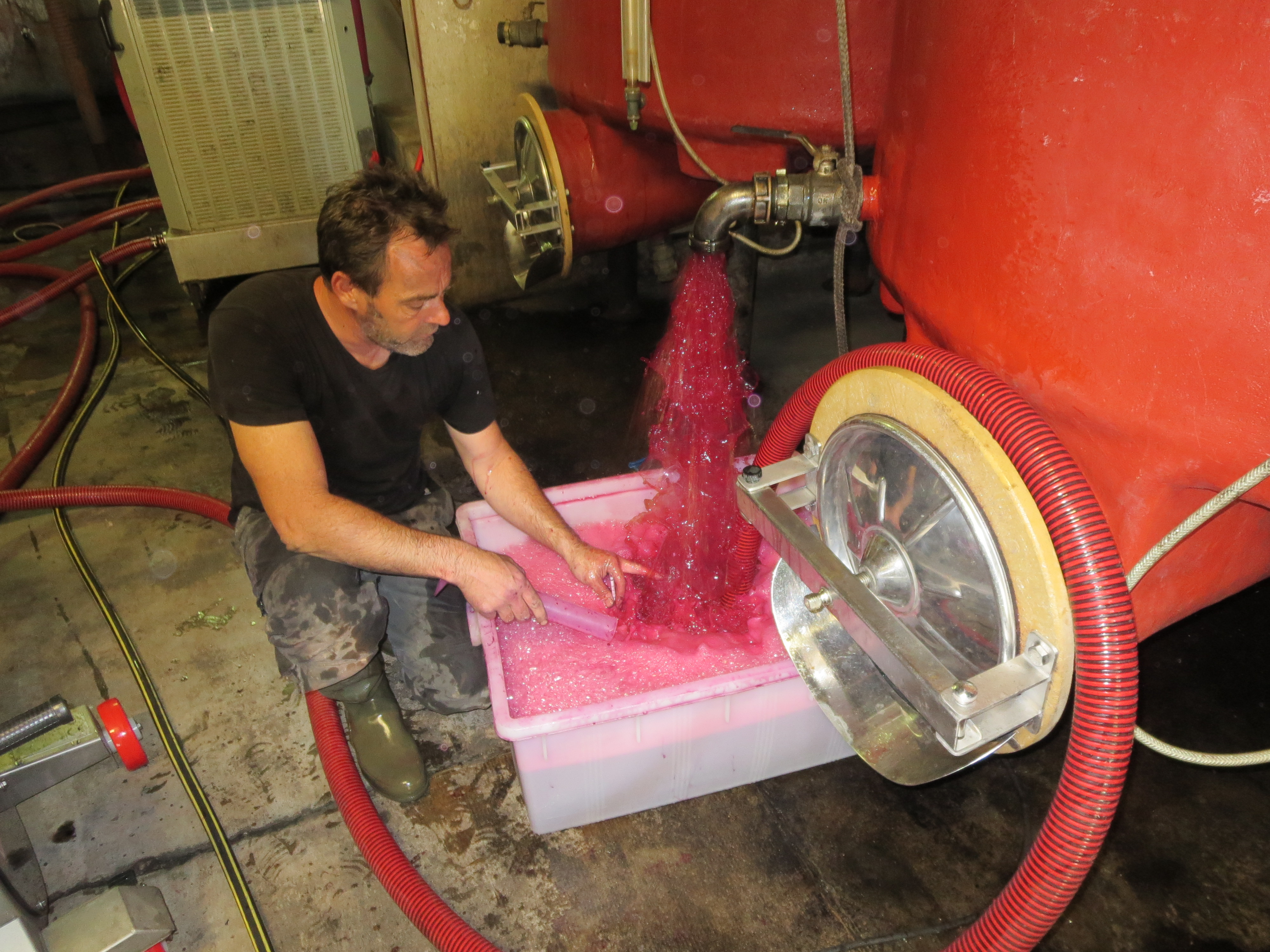
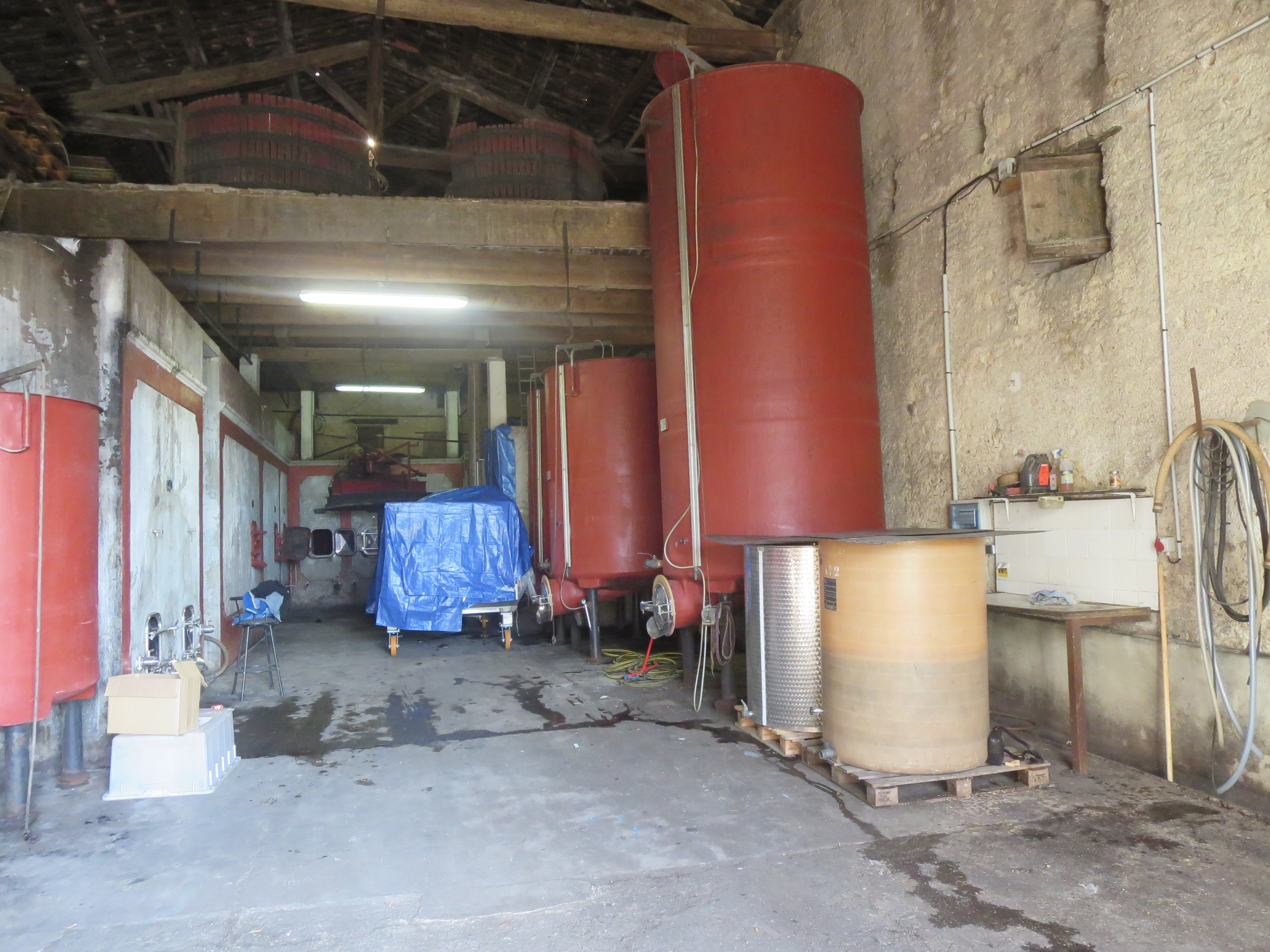
Just as these tanks and cuves contain so much to look forward to I hope that you will look forward to reading about the events and happenings at Mas Coutelou as vintage 2015 unfolds.
I posted this photo recently showing a contrast between the vineyard of Jeff Coutelou on the left, with grass growing between the vines and separating his vineyard from that of his neighbour who uses herbicides and chemicals which an organic producer does not want on his/her land.
I mention it again because as we travelled north last week to celebrate Christmas and New Year in the UK I was reminded of the clichéd but nonetheless relevant French word terroir. There is famously no direct English translation of the term, it means the soil but also the particular climate, aspect, position and subsoils of the vineyard. The French have said for years that terroir was what makes their wines special whereas New World wine producers were more willing to say that great wines come from great grapes and great winemakers, they often would call a wine by its variety, eg Cabernet Sauvignon or Chardonnay, rather than by where it came from. In recent years the argument appears to be won as Australia and other countries have begun to look to terroir to identify their best wines too.
As I travelled through Burgundy last week the terroir issue sprang to mind. The region is made of many vineyards, of which large numbers are tiny and even they are (usually) divided between numerous winemakers. It is the region of terroir par excellence. The following photo shows Les Malconsorts a 1er Cru vineyard in Vosne Romanée. You can see different parcels of land clearly divided. Wines from one parcel will taste different to those from another. Terroir advocates will tell us that this is due to changes in soil, angle of the land facing the sun, drainage etc. Others would say it is more to do with the winemaker, the way s/he tends the soils and vines and how they work in the cellar.
La Grande Rue is another Vosne Romanée vineyard but this time rated even higher at Grand Cru status. It is owned wholly by one estate and the wines cost well over £100 a bottle. Yet look a few metres to the side the wines are worth half of that as they are not Grande Rue. This is the price of terroir or is it the expertise of the producer Lamarche which merits that premium?
Clos Vougeot is a famous vineyard which has multiple producers working inside its walls. The prices vary from around £55 to £400 depending on the producer.
My take on it is that terroir is hugely important. Vineyards which are well looked after and have good climate, soils etc should produce good wine. However, a good winemaker has a role to play and can make average vineyards produce very good wine and good terroir into a memorable bottle.
Jamie Goode wrote this on the subject and sums it up very well in my opinion. I hope these photos might help to illustrate why.
“I reckon terroir deserves to remain at the heart of fine wine. It’s the soul of wine, and like the soul, it’s very hard to define, but that doesn’t stop it being of utmost importance.”
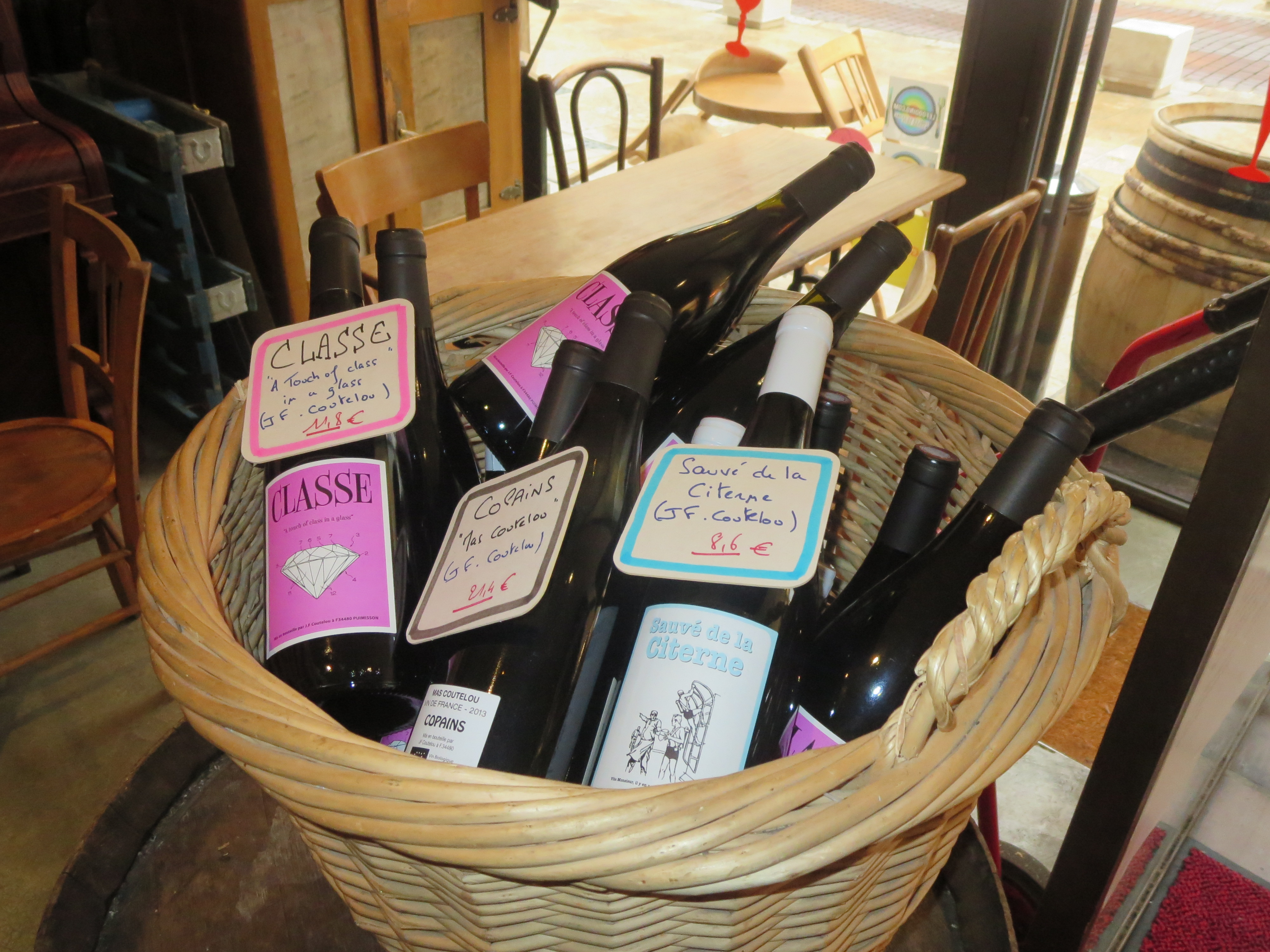
Jeff Coutelou works vineyards which are traditionally not in the best of places. The work done by his father and by himself has helped to hugely improve that terroir. Combined with great winemaking this is why his wines take pride of place, like this display I came across in a Troyes restaurant / wine bar last week.
Travelling around the area, or walking as I was when I took the photo above near Magalas, scenes like this are everywhere. It is pruning time for many viticulteurs. This is known as taillage (or prétaillage when the vines are prepared for a later pruning in the new year). Vines are freely growing plants and if left they would grow too fast, produce too many bunches of grapes which would become increasingly small and lacking in flavour. They would also be more susceptible to diseases such as mildew which would kill the vine in a matter of 3 – 5 years.
Pruning therefore is necessary to ensure that the vine produces an optimum number of bunches to enhance flavour. In the case of the viticulteur in the photo who obviously uses a lot of machinery it makes access to the vines for later pruning and treatments easier as the cut vines are trained along the lines of wires which support many vines.
The pack on the man’s back is for battery powered secateurs, making the job easier than manual cutting though it is still back breaking work.
Different viticulteurs will use different systems of pruning. This might depend on the age of the vine, the particular vineyard topography and her/his own traditions.
The classic method is known as Guyot, named after the doctor who studied viticulture in the 19th Century. There are variations but Guyot pruning usually means pruning the vine to 2 branches (sarments). One of these is cut short leaving only 2 buds (bourgeons or yeux), the other is longer with around 6 buds. The longer will be the part of the vine to produce grapes in the next harvest, the shorter branch will grow this year and be the fruit bearing sarment the following year. This allows space along the vines for air to circulate to avoid disease.
Guyot
Guyot pruning
Another system which I have seen commonly used in the area is Cordon de Royat. Here the vine is shaped with 2 branches reaching horizontally in opposite directions (but always along the row). Each branch will have 4 to 5 buds for the development of grapes the next harvest. The advantage is that the bunches will grow at a similar height making work and harvesting easier.
Cordon de royat
In the Languedoc Roussillon region the hotter, drier climate, together with frequent winds, means that disease should, in principle, be less of a problem that damper regions such as Burgundy or Bordeaux. Many viticulteurs prefer a less interventionist method than training the vines along trellises. Vines often grow like small bushes, especially varieties such as Grenache and Carignan. Jeff Coutelou prefers to use this method known as gobelet as much as possible.
Gobelet vines
However, there is one other decision which viticulteurs must make. When to prune?
In principle pruning can be done all the way from the harvest and leaves falling to bud break, around 4 – 5 months in total. Leaving it late has a number of advantages such as avoiding problems with frost or drying out and avoiding problems of wood disease such as esca, which is an increasing threat in France. Many prefer to prune when the sap is starting to rise in the early spring, an old saying goes. “Taille tôt, taille tard, rien ne vaut la taille de mars.” (Pruning early, pruning late, nothing is as good as pruning in March)
As I said I have seen many people out pruning in recent weeks. This could be for simple reasons of habit or because as wines quietly ferment and work their magic in the cellars the winemakers have time now to get into the vines. Smaller producers who must do everything themselves might decide that earlier pruning suits their timetable best. Some also like to burn as soon as possible any pruned wood which might have been affected by disease. Jeff prefers a later pruning and so work will begin from January through to March, I shall report later.
Pruning is seriously hard, repetitive and dull work but it is an essential part of the viticulteur’s year.
On a less serious note, not just the vines have been pruned!!
The Languedoc Roussillon region was struck by huge storms on November 28th. Lightning and thunder which lasted almost a whole day, torrential rain all day (over 210mm at Bédarieux), hail for half an hour, winds well over 100kph. Even local people were surprised by the storm. There are some scary pictures on Midi Libre.
Outside our door in Margon
Puimisson, the stream in the background reached the height of the tree branches
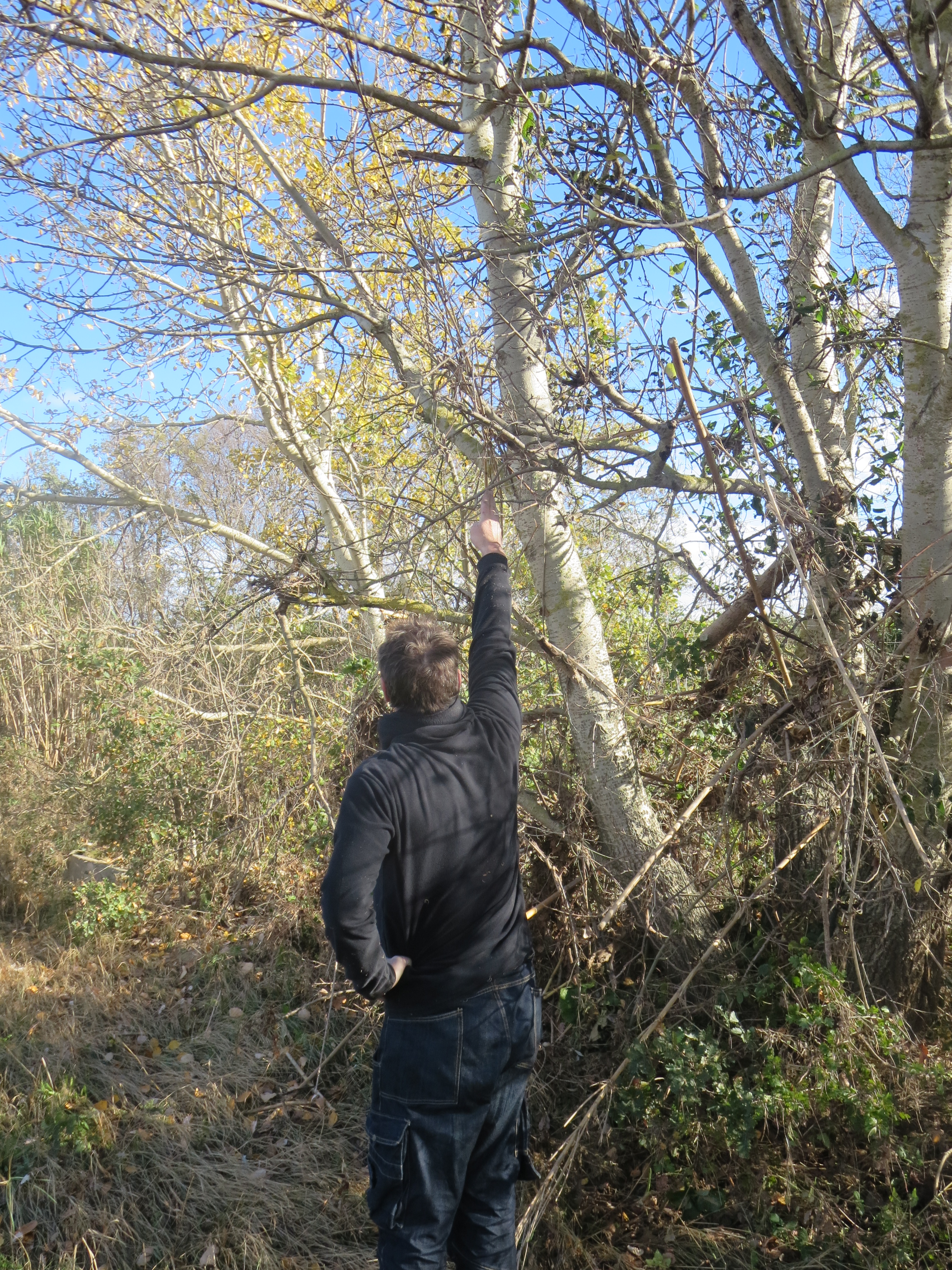
Jeff pointing to debris from the stream in the tree branches
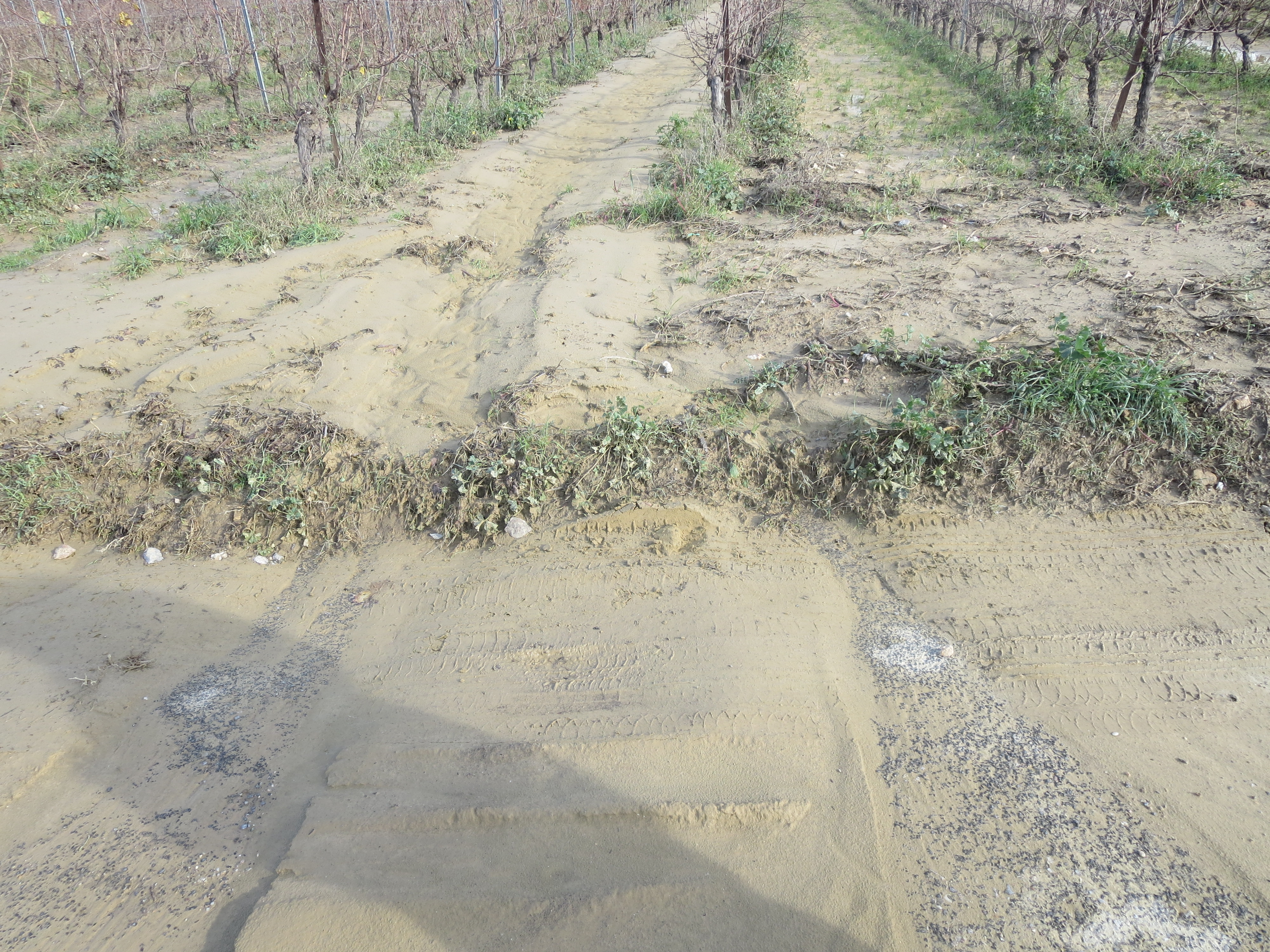
A walk around Margon, our home village, 3 days later showed that many vineyards had been damaged. At this time of the year the vines themselves are not so vulnerable of course, there are no grapes left on there. However, the soils themselves were damaged in many places by erosion.
2. Water standing in the vines
1. Clay (argile) run off on the road
Much of our area has clay soils which are not the easiest to drain. However, many modern agricultural practices exacerbate this problem. Using heavy machinery such as tractors, harvesting machines and large sprayers means that the soils become compacted and, therefore, even more impermeable (photo 2). Inappropriate use of herbicides and weed killers to get rid of grass and other plants means that the soil has nothing to bind it together and, consequently, heavy rain will cause erosion as we see in photo 1. Overploughing will combine both problems.
I remember when I first visited French vineyards 30 years ago that most were like this. Times have changed though and more artisanal, more environmentally aware viticulturists have realised that the soil has to be treated with respect. In a previous post I mentioned that the soil experts Claude and Anne Bourguignon gave a talk recently which I attended. They explained that the soil is what gives a crucial 6% of the vine’s needs which can make all the difference in terms of flavour and quality. Vine roots need to reach down into the soil to extract the water and minerals which they require to grow and to fruit. They confirmed that the best practice is what many winemakers have been doing in recent years. Allowing grass and other plants to grow amongst the vines brings many benefits:
binding the soil, making it stronger and less prone to erosion
stronger soil makes it easier to withstand machinery
competition for nutrients drives the vine roots deeper where more of the species which benefit the plants live
retaining moisture in summer which can also be used by the vines
providing shelter to other wildlife which eat the insects that damage vines and grapes
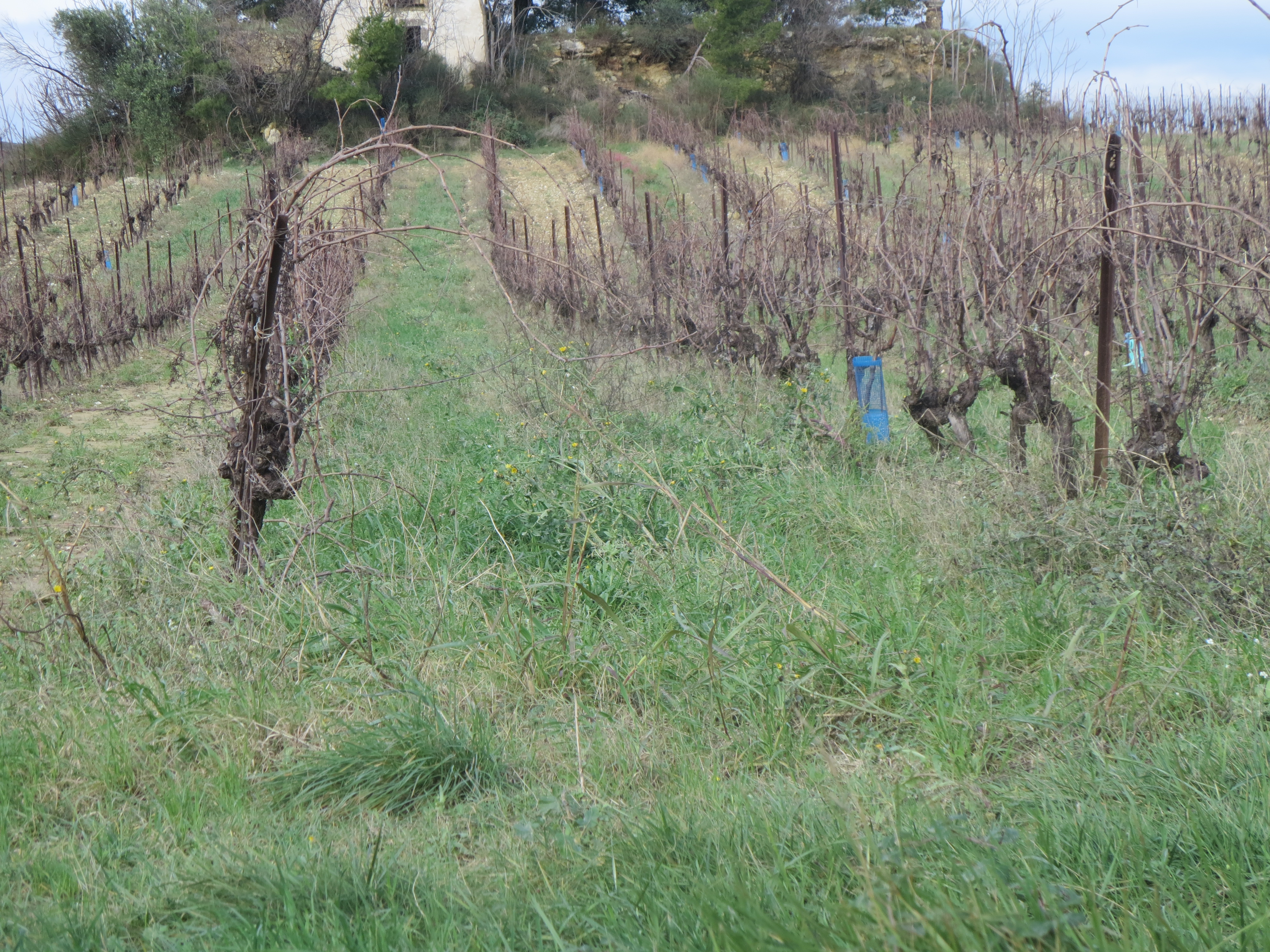
Covered vineyard with no sign of erosion
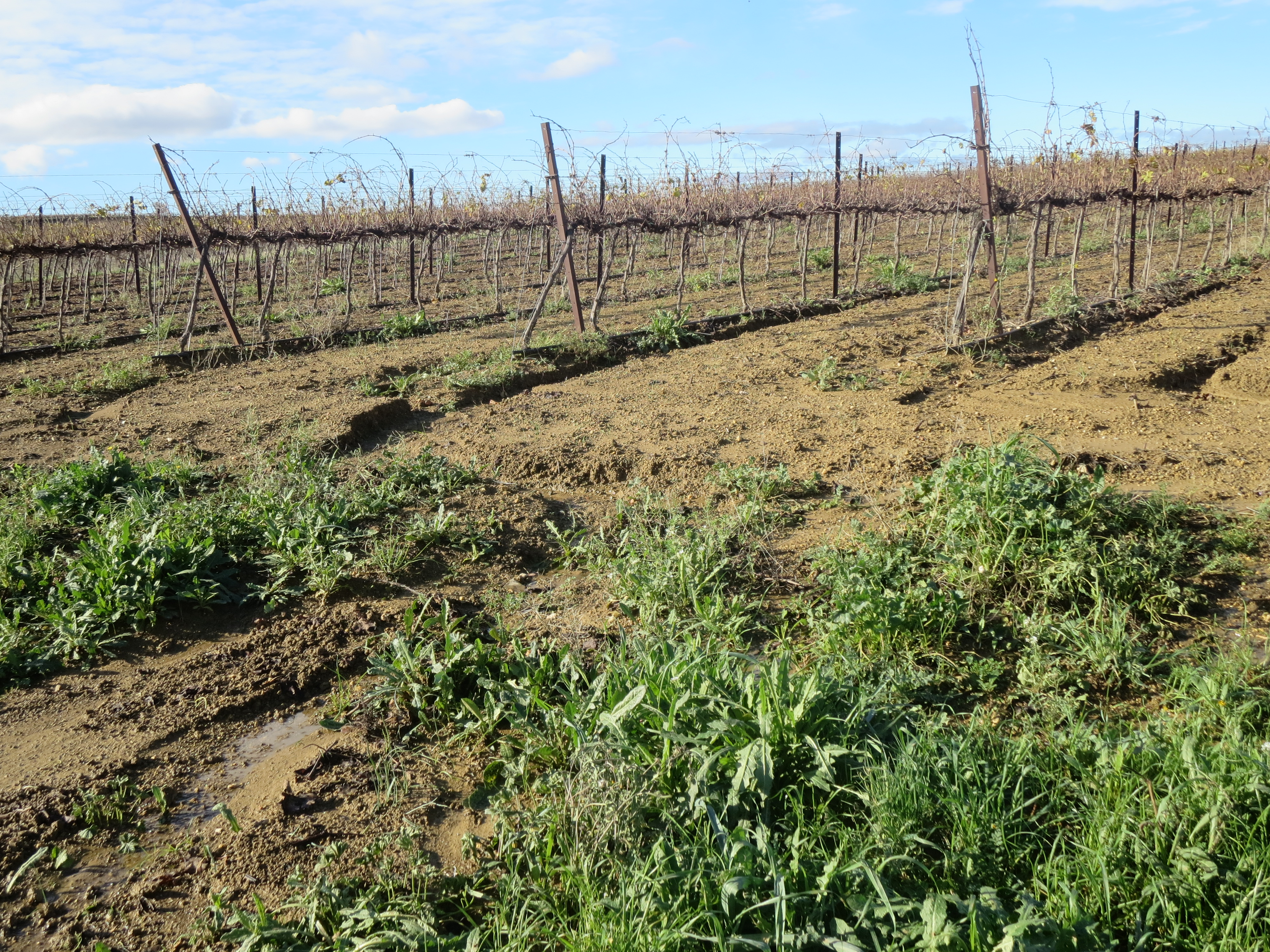
Ruts developing between vines
The photos above show how two parcels of vines just metres apart responded to the storms. The difference is obvious.
Vines with shallow roots do not access the deeper minerals and ecosystem. The roots also overheat being nearer to the surface and this can mean that they shut down some of their work and grapes will not ripen so well or evenly.
Yet there are vignerons in the area who have installed or are installing irrigation. This can only compound the problem in a region where there are occasional droughts but not on the scale of Australia for example.
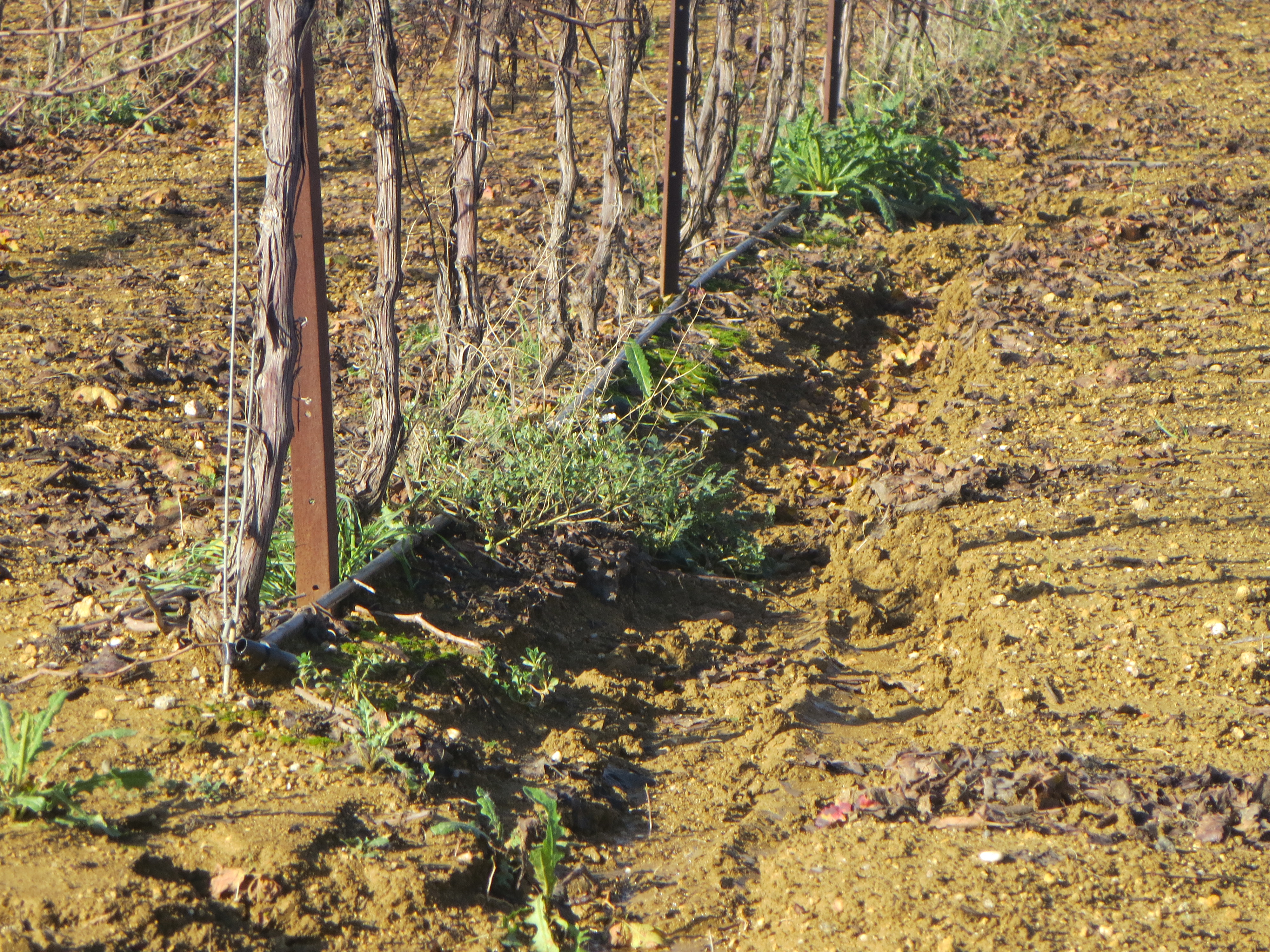
Jeff Coutelou reported to me that there had been no erosion in his vines unlike those of some of his neighbours, the reason may be seen in the photos below.
A stark contrast between the Mas Coutelou vineyard and that of his neighbour
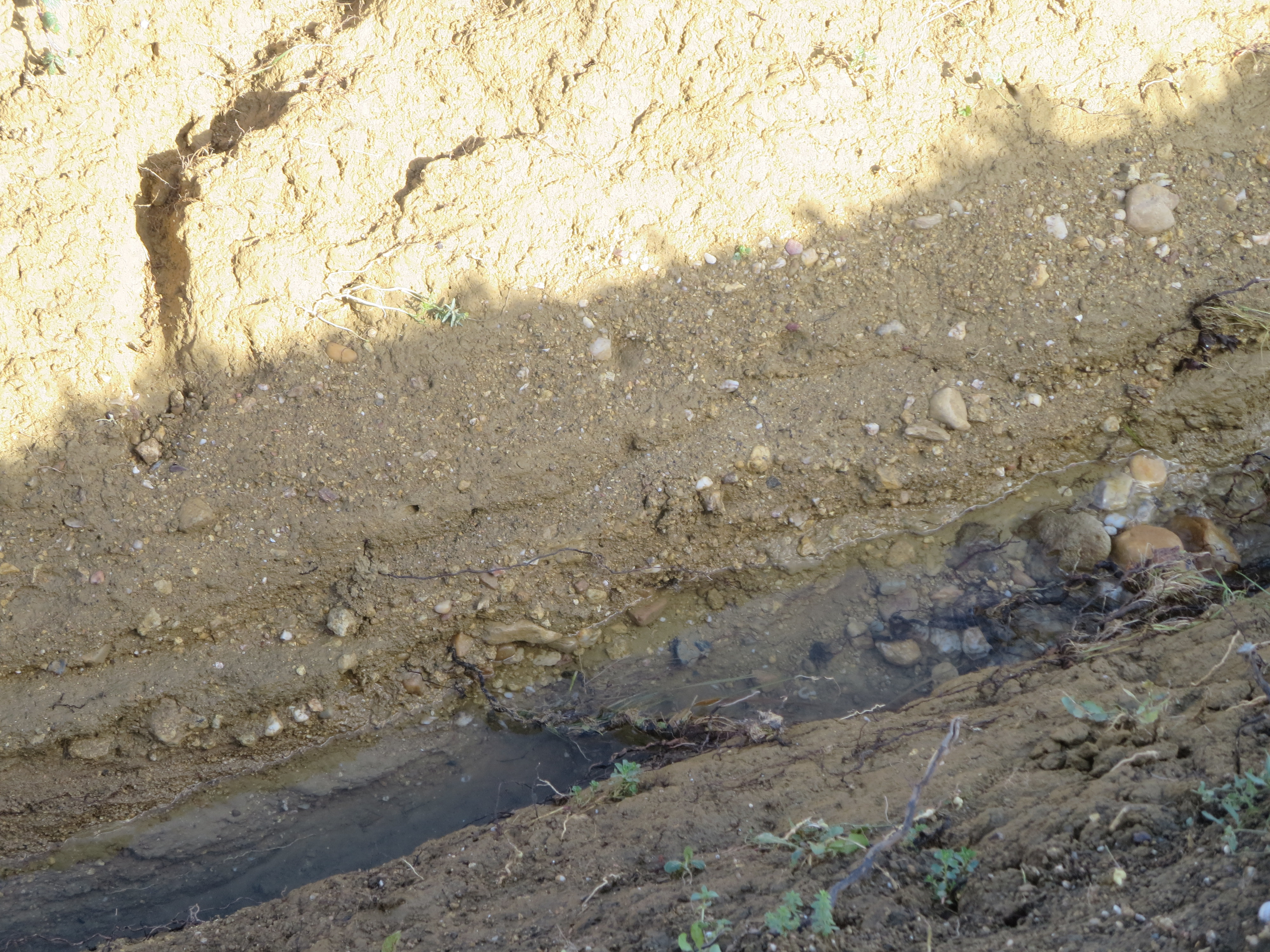
Irrigation pipes run along the vines. Look closely at the channel which has been cut into the soil by the rain.
Water flowing off vineyards which have had the grass removed
The run off from the vines has caused a new stream and channels
Meanwhile Jeff’s vines have drained and there is no damage to soil below
Vine roots washed into the new stream next to the neighbours’ land
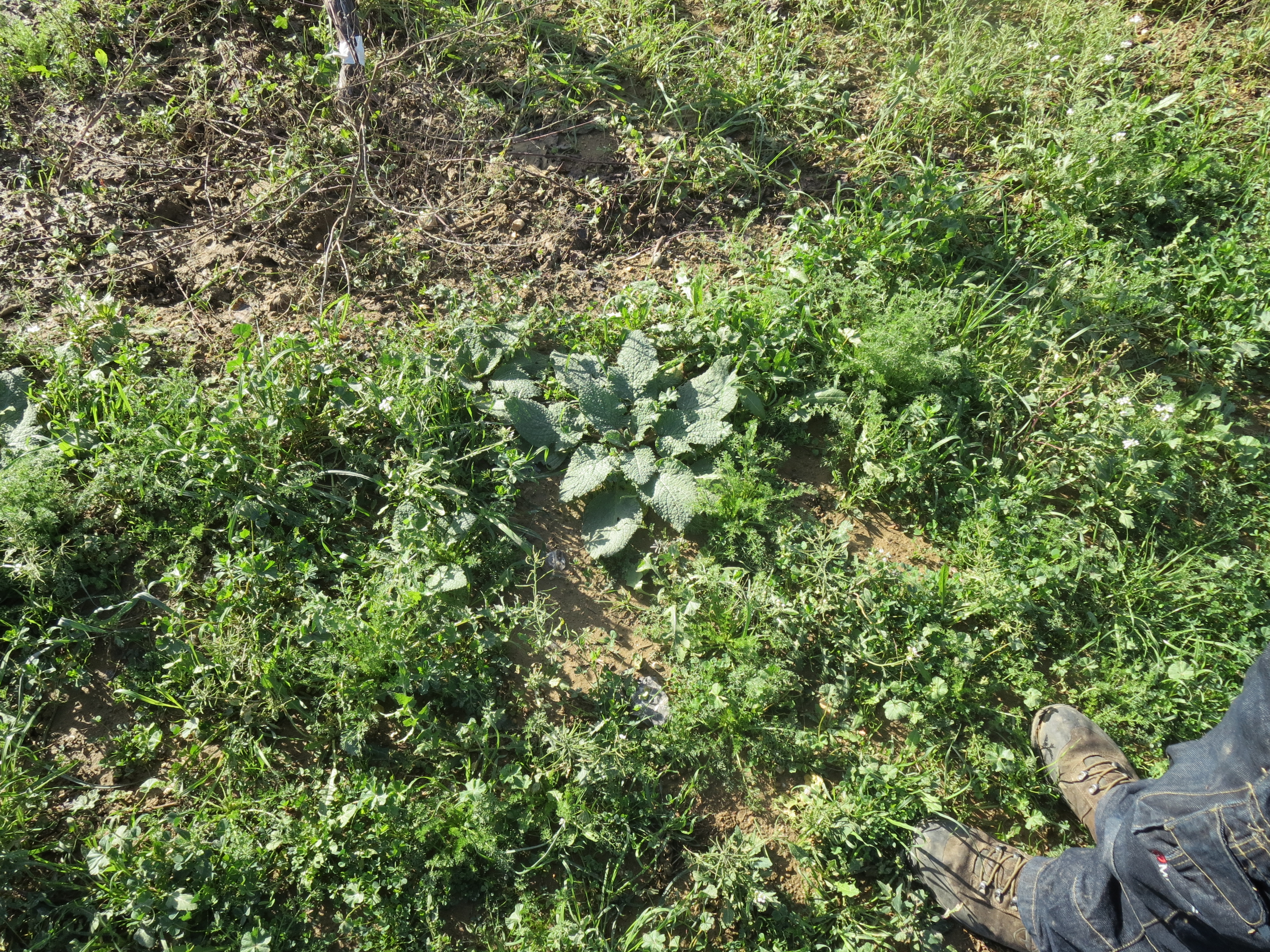
Biodiversity – analysis showed over 30 types of grass in one square metre of Jeff’s vineyard.
One sad casualty of the storms was the tree with a bat shelter installed by Jeff. Bats are good friend to vines as they eat many insects which might damage them or their grapes. Encouraging them and other friendly wildife, such as wagtails and hoopoes, helps to keep the grapes in good health. Unfortunately the tree, which was dead, was uprooted and so a new bat home will be established soon.
Bat shelter
And finally how to control that grass and plant life? Ploughing or working the soil is needed at times but there are some novel alternatives. At Mas Gabriel a local farmer brings his sheep into the vineyard at this time of year. And then, as I was driving to Cabrieres the other day I came across this.
My last post about the organic control stirred up a few reactions from a number of people. I don’t set out to upset people but I recognise the debate about organic status. This website from Domaine du Garinet in the Lot summarises the debate quite well, have a look at what it says about viticulture. Organic viticulture allows the use of some chemicals which many feel are damaging to soils and their ecosystem, eg the use of copper is allowed yet remains in the soil for many years and is damaging to potentially beneficial animals such as earthworms. Other winemakers feel that there are now alternative treatments which they can use which do less damage to the biodiversity of their vineyard but are not allowed by official organic certification.
Instead these winemakers use a system called lutte raisonnée or agriculture raisonnée.Jonathan Hesford runs Domaine Treloar in Trouillas, Roussillon with his wife Rachel using this approach. They make excellent wines across a wide range, white, red, rosé and different wines such as a Rivesaltes Muscat and a Rancio. I have visited the domaine several times and bought more in the UK and will continue to do so. Jonathan is one of a number of winemakers who have moved into the Languedoc Roussillon from outside the region and have brought new ideas and a fresh approach. Jonathan and Rachel lived within a few hundred metres of the World Trade Centre in September 2001 and witnessed 9/11. That shocking event influenced them to live differently. Wine study and time working in wineries in New Zealand (Rachel’s native country) gave them the confidence to establish their own domaine in Trouillas.
Jonathan and Rachel put as much dedication, thought and passion into their wines as any winemaker. Jonathan was quick to point out to me after my last post that many, if not most, artisanal winemakers nowadays care about their terroir and minimise chemical use, whether organic or not. Jonathan says, “My decisions are based on on what, scientifically, are best for the vines, the soils, the environment and me, the guy spraying. In many cases the organic product is more dangerous or more environmentally damaging that the synthetic product I have chosen.” He does not seek organic certification as he does not welcome the bureaucracy and feels it is often a marketing tool. I have spoken to other French winemakers recently who have said exactly the same thing. For further information on Jonathan’s approach look at his own website page.
The wines are testament to his skills and beliefs. They shine with the freshness which I love in wine and reflect the healthy fruit which he produces. Particular favourites from my visit in early November were the white La Terre Promise (Grenache Gris dominant) and the red Three Peaks (Grenache, Syrah, Mourvedre) but I can honestly recommend all the wines.
Mas Gabriel is run by Deborah and Peter Core an English couple. The domaine is based in Caux, not far from us and is run along organic and biodynamic practices. Their reasons for doing so are explained far better by themselves on their website than I could do so please have a look. There are many parallels with Jonathan and Rachel in that the Cores left successful jobs in a big city to follow a dream to be winemakers. Both Peter and Deborah studied winemaking in New Zealand and worked in wineries there and then in Bordeaux before settling in Caux.
It is interesting that despite similarities they took a different view about winemaking to Domaine Treloar by pursuing organic and biodynamic practices. Deborah and Peter spend many hours in their vines debudding them when necessary to allow more aeration and therefore less risk of humidity leading to mildew. They, like Jeff Coutelou, are allowed to use copper and sulphur but in fact use less than one third of the permitted level of copper, treating only when necessary. A recent survey by a botanist found over 40 plant varieties in their vineyards, a sign of health and diversity.
With Peter in the vines
Again the proof of their hard work and passion is in the bottle. Mas Gabriel produce 4 wines, a white (Carignan Blanc dominated), rosé, and two reds. The white, Clos Des Papillons, is one of my favourite white wines from Languedoc Roussillon, dry with fruit and body it is a wine which makes you contemplate and smile as you drink it. The reds from 2012 and 2013 which I tasted during a visit at the end of October were also fresh and fruity yet contain complexity and depth. No doubt in my mind that the range of wines is all getting better and better, a testament to their growing skills and experience both in the cellar and in the vineyard.
So there we are, two excellent domaines. They all work incredibly hard and give everything they have to produce the best, most healthy fruit from their soils. Yet in different ways. Both produce superb wines which I would strongly recommend without hesitation. Both have different views about the way to look after their terroir and I have compared them here for the sake of my debate about organic winemaking not in terms of quality. That would be unfair and impossible as they are two of my favourite domaines in France as my own wine collection would attest. Incidentally I say that not because of their English & New Zealand origins but because of the quality of their wines. I will be posting soon about some of the diversity of winemakers in the Languedoc Roussillon.
I attended a conference last Thursday where the famous vineyard analysts the Bourgignons (advisers to Romanée Conti amongst others) set out the chemical, geological and agricultural make up of healthy soil. Amongst the interesting points to emerge was that the vine takes over 90% of its needs from the air and about 6% from the soil but that 6% is what can make the difference in quality of a wine. It is certainly produced by passionate, artisanal producers. But is it best achieved through agriculture which is organic, biodynamic, natural or raisonnée? I have a lot still to learn.